Environment News: October 2026 - Issue 659

Week Two October 2026: Published Sunday October. 25 2026


Long Billed Corella - Little Corella Hybrid: Careel Bay

Long Billed Corella - Careel Bay, October 2026. Photo: A J Guesdon.

This is a new young one we haven't seen here before, possibly born this year, and is smaller (Little Corella size) than other Long Billed Corellas seen in Pittwater.

Long-billed Corellas (Cacatua tenuirostris) and Little Corellas (Cacatua sanguinea) occasionally hybridise in areas where their ranges overlap, such as urban parks and communal feeding grounds in south-eastern Australia

The Long-billed Corella is a medium-sized white cockatoo with a short crest (not always visible), short tail, stocky body and a distinctive long upper bill. They have a faint yellowish wash on the undersides of its wings and tail; orange-red splashes on its forehead and throat; and an orange-red crescent across its upper breast. The eye ring is pale grey-blue. They form monogamous pairs and both parents prepare the nest, incubate the eggs and feed the young. Nests are made in the hollows of large old eucalypts, and sometimes in cavities of loose gravelly cliffs. The eggs are laid on a lining of decayed wood.

Council to investigate Protecting Vital Ingleside wildlife corridor near Mona Vale Rd. fauna bridge

The Northern Beaches Council has announced it has agreed to progress a proposal to strengthen the long-term protection of the Ingleside wildlife corridor, including seeking the transfer of identified State-owned land to Council and to rezone it for environmental conservation.

The land is part of a corridor that links Ku-ring-gai Chase National Park, Katandra Bushland Sanctuary and Ingleside Chase Reserve, while also connecting habitat to Irrawong Reserve and Warriewood Wetlands.

A preliminary council assessment found the area contains largely intact native bushland in good condition and provides important habitat connectivity. The Ingleside corridor contains habitat that supports, or has the potential to support, more than 30 threatened species from the local area. Native vegetation within the corridor also includes areas of coastal upland swamp, an endangered ecological community.

Mayor Sue Heins said protecting the corridor would help safeguard valuable bushland and support wildlife movement across the area.

“This is a rare opportunity to strengthen protection for an important wildlife corridor and preserve habitat that supports threatened species.

“Keeping this bushland connected is also vital to the continued success of the fauna overpass and underpasses delivered as part of the Mona Vale Road East upgrade,” Mayor Heins said.

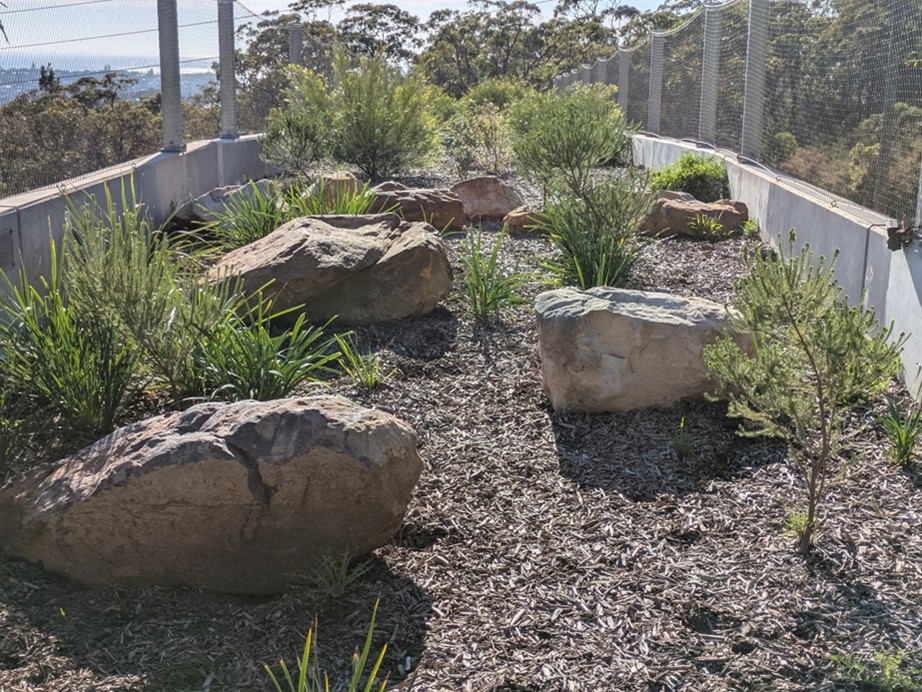
Fauna overpass on Mona Vale Road East looking towards Ingleside Chase Reserve   Photo D Palmer

Under the proposal, the council stated it would formally express interest in identified land parcels being transferred to the council from the NSW Office of Strategic Lands (OSL) and seek agreement to apply a C2 Environmental Conservation zone under council’s Local Environmental Plan.

A C2 zoning would provide a higher level of environmental protection than the currently proposed C3 Environmental Management zone by prohibiting dwelling houses and other uses that could affect the corridor’s environmental values.

“Council ownership could provide greater certainty for the corridor’s long-term protection and enable active management including bushland regeneration, weed control and hazard reduction,” Mayor Heins said.

“We’d like to acknowledge Pittwater Natural Heritage Association for its diligence in promoting the benefits and importance of the Ingleside Wildlife Corridor.

“Before any decision is made, Council would undertake detailed due diligence so the community can be confident the environmental benefits, risks and long-term costs have been carefully considered.”

The investigations would examine terms of land transfer, whole-of-life financial impacts, funding requirements, bushfire management obligations, contamination and geotechnical risks. A further report would be presented to the council before any land transfer is finalised, the council stated.

If the land is transferred to the council, it will require reclassification in accordance with the provisions of the Local Government Act 1993. Should the land be transferred to Council, it is intended that it would become Community Land and be categorised as Natural Area - Bushland, meaning that it will not be able to be sold but will be retained for conservation and sustainable community use. 

Prior to the October 2026 council meeting two members of PNHA spoke in support of saving the wildlife corridor.

Jacqui Marlow:

I want to speak about why preserving bushland connectivity is essential for the new wildlife overpass and Mona Vale Road East and protecting what the community community values.

According to the council's state of well-being 2026 report, living in a beautiful natural environment surrounded by bushland and wildlife ranked as equal first amongst 16 attributes contributing to community well-being.

This demonstrates just how much community value the community values the natural environment and the wildlife that makes the northern beaches such a special place to live. Protecting bushland is about protecting habitat and wildlife corridors that allow native animals and plants to survive and thrive. The northern beaches is home to hundreds of native species, so regional biodiversity corridors are very important. 

If you look at this map that's on page 178 of the agenda, you can see from the north where there is Ku-ring-gai National Park down through Katandra Bushland, then through Ingleside Chase and down to Narrabeen Lagoon catchment, there is a corridor of high biodiverse land.

This area of connected bushland forms an important regional biodiversity corridor. It allows animals and plants to spread through the landscapes, maintain healthy populations, and recolonise areas when local populations have disappeared. Without these connections, bushlands become pockets of isolation, and the  populations sin these pockets will become increasingly vulnerable and genetic diversity can decline and species will eventually become locally extinct. 

The importance of these corridors is particularly evident on the northern beaches where roads and urban development have progressively fragmented the natural landscape. A major habitat connection between the Narrabeen Lagoon catchment and the Manly Dam catchment has been broken by the Warringah Road upgrade near the [northern beaches] hospital.

This fragmentation makes remaining corridors even more valuable. We cannot afford to lose any more bushland that links our natural areas. 

The wildlife overpass must remain connected to surrounding bushland. 

A wildlife overpass can't be considered in isolation from the surrounding landscape. An overpass surrounded or disconnected with through cleared habitat will have limited value. 

The overpass must be connected to substantial areas of native vegetation reserves to to restore a functioning wildlife corridor.

David Palmer:

Thank you. Jacqui and I are both members of Pittwater Natural Heritage Association and our association been campaigning on this matter for quite some years.

We're pleased to know that the council has been listening and is taking action.

That is why we ask you to support the recommendation in the staff report so that staff can continue to work towards preservation of this environmentally valuable land.

The land we're concerned about is located adjacent to the Mona Vale Road East for Bridge and Underpass in Ingleside and the environmental significance of this land was recognised in 2016 when a plan for residential subdivision in Ingleside was released.

The land was classified in the release document as environmental protection. The intention being that it be conserved for a fauna corridor and managed for conservation.

This decision was based on thorough research and led to transport for New South Wales decision to build a fauna crossing or a couple of fauna crossings on Mona Vale Road East. So now we have our Fauna crossings.

We've got an overpass and underpass, but the bush land needed to support them has an uncertain future because, despite of the recognition of the environmental value of the land, we find that in the new LEP, it is planned to be zoned C3, which allows the construction of houses.

But if the land is zone C3 in the new LEP, would it be suitable for housing?

Well, we say no. And this is because the land's in a bushfire area; it has no water or sewer services, the roads are narrow and are unsuitable for egress during bushfire events, and the lands in the upper catchment of two local creeks, Mullet Creek and Narrabeen Creek, as bushland, contributes to flood mitigation water quality protection and the downstream environmental health in the Warriewood Valley.

The C3 zoning would enable uses that would harm the environmental functions required to support long-term viability of Ingleside Chase Reserve and the functioning of the fauna crossings on Mona Vale Road East. 

We ask you to support the recommendation in the report to council and most importantly we believe that the recommendation outlines a prudent responsible approach which does which does not commit council to accepting the land on unfavourable terms.

Item 11.6: 'Investigate Options for Protection of Ingleside Wildlife Corridor' was passed unanimously.

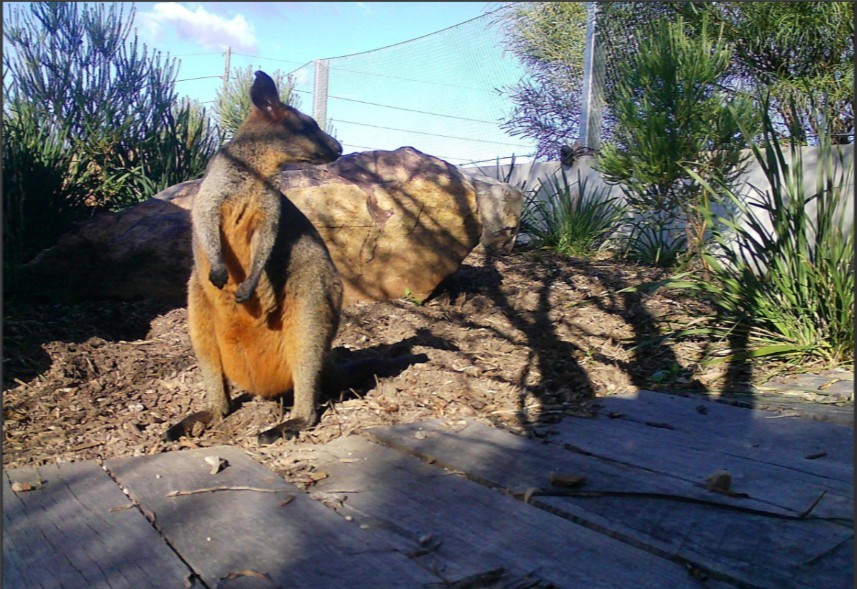
Swamp Wallaby crossing  Mona Vale Rd East on the fauna bridge. Photo supplied

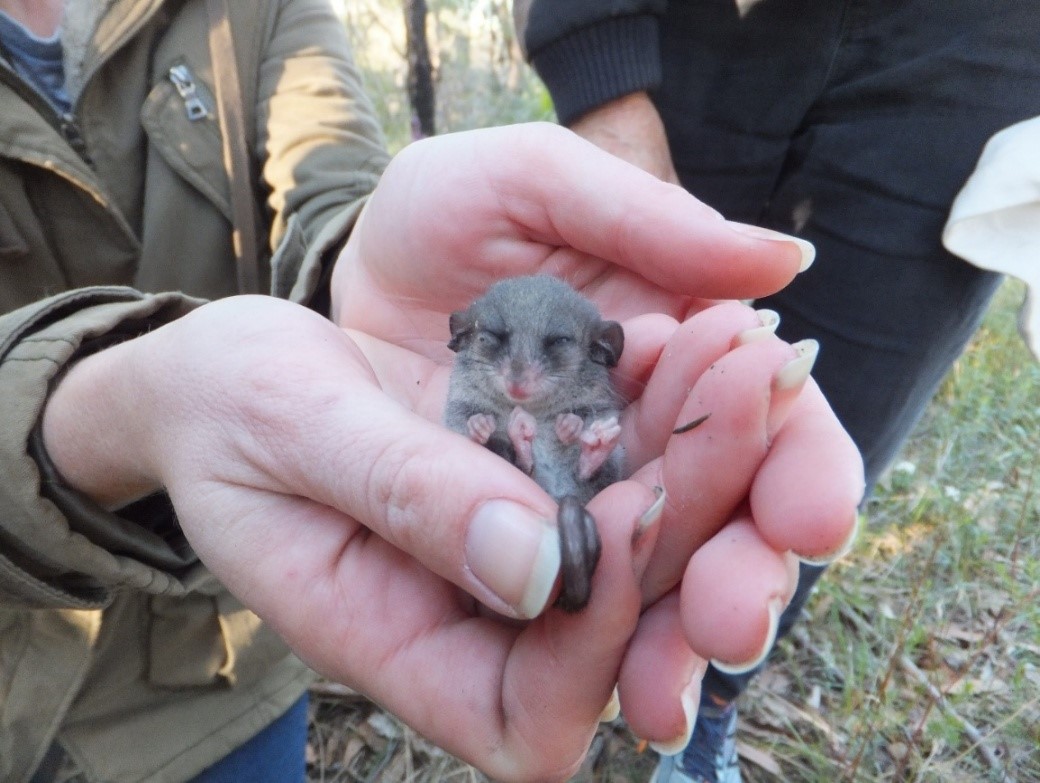
Eastern Pygmy possum near the fauna bridge on Mona Vale Road East. Photo David Palmer

The bridge was installed in August 2023. Next day the road was open and later the bridge was planted with native plants. 

The bridge lies between bushland lots owned by NSW State Government.  A permanent fauna corridor through this must be established. 

See February 2026 report: The fauna bridge on Mona Vale Road East – will it be a bridge to nowhere?

March 2026: Council - local politicians back Ingleside fauna corridor land campaign: Update March 2026

Background

In 2014 Pittwater Natural Heritage Association, Wildlife Roadkill Prevention Association (Northern Beaches) and Katandra Bushland Sanctuary Trust began campaigning to connect threatened bushland reserves in the Pittwater area in a bid to help stop the decline of our native fauna.

According to information gathered by local wildlife volunteers in 2015 – 2016 over 53 wallabies died on Mona Vale Road between Terrey Hills and Mona Vale. Although Wallabies were counted as an indicator species, many other native species have also died on Mona Vale Road, including possums and echidnas. These distressing statistics sparked members of these community groups into calling for action to reduce roadkill on this road.

In May 2016, when the National Parks and Wildlife Amendment (Adjustment of Areas) Bill 2016 was passed on Tuesday, May 31st, 2016 part of the speeches during the Reading of this Bill focused on the necessity to make provision for a fauna bridge or bridges.

In September 2017, after years of lobbying NSW Roads and Maritime Services to get more fauna underpasses and overpasses included in the upgrade of Mona Vale Road East, Jacqui Marlow, Marita Macrae and David Palmer of Pittwater Natural Heritage Association were told at a meeting with NSW Roads and Maritime Services that the fauna crossings they had been campaigning for were now included in the final plans for the eastern section of the road upgrade.

This completed the suite of fauna road crossings that have been planned for the upgraded Mona Vale Road between Mona Vale and Terrey Hills. This included both sides of the road being fenced along its entire length to guide native animals to the crossing sites.

In March 2018 the officially announcement confirming the MVR West Upgrade fauna bridge was made.

There were actually 4 fauna passes - 2 for East and 2 for West - 2 x bridges and 2 x underpass, as stated in 2018. This is the result of work by PNHA and WRPA in concert with the great staff at Transport for NSW/RMS over a few years - they commenced talks about this soon after the project was announced - along with support and backing from former Pittwater MP Rob Stokes.

More in: 


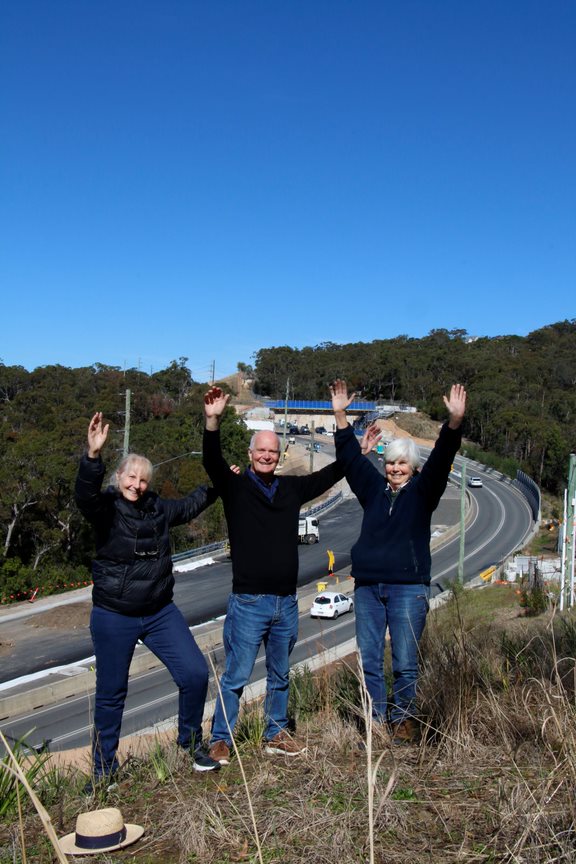
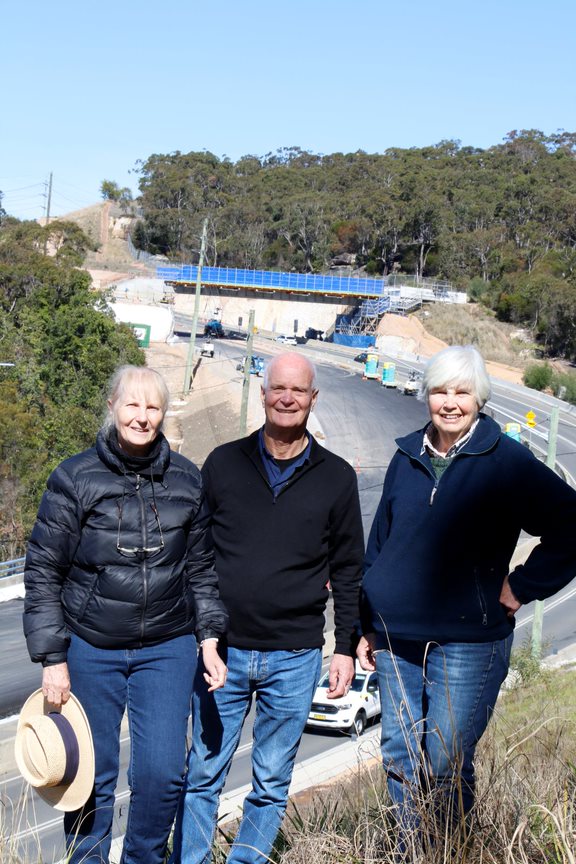
Photo: David Palmer, Jacqui Marlow and Marita Macrae celebrate the June 2017 announcement of a fauna bridge to be built over Mona Vale Rd East. 


Photo: August 19 2023 - Jacqui Marlow, David Palmer and Marita Macrae celebrate the installation of the MVR East Upgrade fauna bridge supports.

The Wildlife Roadkill Prevention Association aims to reduce the roadkill of native animals on the Northern Beaches of Sydney, Australia. In 2005, the association was formed to address wildlife roadkill and raise awareness of broader conservation issues for our area.

The Pittwater Natural Heritage Association was formed to act to protect and preserve the Pittwater areas major and most valuable asset - its natural heritage.

Pittwater Natural Heritage Association seeks to raise awareness and provide information and advice to members on issues such as:

Find out more and become a member at: https://pnha.org.au

Tougher Penalties for Tree Killers to be Introduced by NSW Government

On Tuesday October 20 the Minns Labor Government announced it is cracking down on illegal tree clearing, introducing tougher penalties for vandals and greater enforcement powers for councils.

How this will work in with their other recent announcement via the 'Community Participation Plan' for developments, which commenced on September 1, wherein 'Development types excluded from public exhibition' includes trees being removed on private land - and with so many claiming the trees they killed were on their land, including local nesting sites for powerful owls while the bubs were still in the hollow - may well be tested.

The government states the tougher measures are a direct response to recent cases of tree vandalism and illegal tree removal which have drawn community anger.

'While councils already have the option to pursue criminal charges for serious tree clearing offences, the requirement to prove such an offence beyond reasonable doubt and the costs involved means successful prosecutions have been rare.' the government stated

'These reforms will create stronger deterrents to illegal tree clearing and give councils more options to pursue penalties that reflect the seriousness of the offence.'

'Legislation will be introduced to NSW Parliament to allow councils to pursue hefty civil penalties for tree vandals on both public and private land for the first time.'

'It means individuals caught illegally clearing trees and vegetation could face court-imposed penalties of up to $500,000 and corporations up to $2.5 million.' the government said

The government stated in parallel regulatory changes will:

  • Double on-the-spot fines from $3,000 to $6,000 for individuals and triple fines for businesses from $6,000 to $18,000 for clearing trees and vegetation without necessary approvals.
  • Allow councils to issue orders to stop tree clearing works and enforce replanting.
  • Introduce permit requirements for removing dead and dying trees to eliminate incentives to poison trees.

'The reforms build on the Minns Labor Government’s $60 million investment to green urban areas and increase tree canopy to reduce heat and improve local amenity.' the government said

Research shows trees can reduce ground-level temperatures by up to six degrees, while communities with more than 30 per cent canopy-cover experience improved mental and physical health outcomes.

NSW Minister for Planning and Public Spaces, the Hon. Paul Scully, said:

“Communities across NSW are rightly fed up with seeing their local trees poisoned and ripped out of their neighbourhoods for someone else’s convenience or profit and councils are fed up with having to clear such a high legal bar when pursuing those who have done the wrong thing.

“These reforms deliver tougher penalties and stronger powers giving councils more options to stop this illegal behaviour and better protect the trees and vegetation that make neighbourhoods a great place to live.

“This is another example of the Minns Labor Government making common sense reforms to build better and more sustainable communities.”


The Council Reserve in Pittwater cleared by contractors employed by private landowners in 2020 where a pair of nesting Powerful Owls abandoned the nest, with the chicks still in it. The chocks died as a result. Photo supplied

Great Koala National Park Legislation Finally passes NSW Parliament

Announced: Friday October 23 2026

Landmark legislation to create the Great Koala National Park has passed NSW Parliament, delivering on a key election commitment of the Minns Government and securing lasting protection for one of the state’s most significant koala populations, the government announced on Friday.

The National Park Estate (Great Koala National Park Reservations) Bill 2026, An Act to transfer certain land, including State forest and Crown land, to the national park estate for the purpose of creating the Great Koala National Park; to make provision for continuing access to transferred land and other land in the same areas as the transferred land; and for related purposes, passed the lower house on October 21st and the upper house the following day.

''The passage of the legislation, combined with the Clean Energy Regulator’s approval of the park’s carbon project, clears the final hurdles to establishing the Great Koala National Park, which is on track to open before the end of the year.'' the government stated

'The National Park Estate (Great Koala National Park Reservations) Bill 2026 adds 178,000 hectares of state forest and other Crown land, home to around 12,000 koalas and more than 100 other threatened species, to the national parks estate.

This precious forest will be added to existing national park reserves on the NSW Mid North Coast, creating one of the largest protected areas in NSW, spanning more than 475,000 hectares.'

'The creation of the Great Koala National Park continues the proud Labor conservation legacy of the Wran and Carr governments, which protected vast areas of NSW’s native forests and secured their conservation for future generations.'

'The park will protect important environmental and cultural values while allowing visitors to continue enjoying activities including camping, canoeing and mountain-bike riding. It will also create opportunities for nature-based tourism and local businesses.'

'The NSW Government is supporting workers, businesses and communities affected by the transition of this land, with a comprehensive assistance package including redundancy payments, support, retraining, upskilling and other financial assistance.'

'Around 100 new NSW National Parks and Wildlife Service (NPWS) roles are being created to strengthen park operations, fire management and conservation. The Bill provides for affected Forestry Corporation of NSW employees to transition into suitable NPWS roles if they choose.

The creation of the park follows extensive consultation with industry, community and Aboriginal groups. The Minns Labor Government is incredibly grateful for their time and expertise.

The Gumbaynggirr and Dunghutti people have helped shape the Great Koala National Park and will continue to guide its management. Eight Aboriginal rangers will be employed through community-controlled organisations and some park roles will be identified for Aboriginal people.' the government stated

The Great Koala National Park is also the culmination of decades of campaigning by environmental groups up and down the coast, including supporters here in Pittwater.

''The Clean Energy Regulator’s registration of the carbon project associated with the Great Koala National Park under the Improved Native Forest Management method provides a pathway for carbon revenue to support the long-term conservation and management of these forests. Carbon credits generated through the project will not be available to coal and gas projects.' the Minns Government said

Minister for the Environment, the Hon. Penny Sharpe, said:

“This is a defining moment for conservation in NSW. After more than a decade of campaigning and years of detailed assessments, consultation and planning, we have cleared the final hurdles to delivering our biggest environmental commitment.

“We are protecting extraordinary forests that are home to thousands of koalas and more than 100 threatened species, while ensuring future generations can enjoy these incredible places.

“I want to acknowledge the Traditional Owners, conservation groups, local communities and everyone who has worked so hard for so many years to see these forests protected.”

Minister for Agriculture and Regional NSW Tara Moriarty said:

“We know creating the Great Koala National Park means significant change for forestry workers. We have been clear from the start that affected workers and businesses will receive practical support through this transition, and that will continue.

“We have a comprehensive assistance package in place, including financial support and retraining opportunities. This legislation also gives eligible Forestry Corporation workers a pathway to move into a role with national parks if they want to take their valuable skills and local knowledge.”

Minister for Small Business and the North Coast Janelle Saffin said:

“Like so many in our region, I just love our native wildlife and iconic koalas. This is a historic day for our North Coast community, who helped shape a national park that protects our environment while keeping the outdoor activities we love accessible.

“This milestone isn’t just a win for conservation – it’s also an economic driver. Opening the Great Koala National Park will attract visitors from around the world, creating fresh opportunities, vibrant town centres and lasting growth for our hard-working local small businesses.”

Alex Greenwich, MP for Sydney, stated during the Second Reading Debate:

''I strongly welcome the National Park Estate (Great Koala National Park Reservations) Bill 2026. The Great Koala National Park will be a legacy that will not only save koalas and other threatened species on the Mid North Coast from extinction but also become a global nature attraction that we can all be proud of. ''

''Sixty-six threatened fauna species, including the yellow-bellied glider, greater glider, powerful owl, sooty owl and glossy black cockatoo, and 37 threatened flora species also live within the new park boundary and rely on the natural habitat for survival. New South Wales has one of the worst records of biodiversity loss in the world because of our appalling clearing rates. Climate change is adding further pressure on native species and ecological communities, and we need to preserve what is left before the natural environment is so eroded that it can no longer sustain life. Deforestation will cease within the boundaries of the Great Koala National Park. The region will no longer be cleared for wood harvesting, with the priority now to protect and enhance the land.

There are concerns that some areas of high conservation land will be designated vested land instead of formal national park reservation, but leases in place prevent reservation at this stage. I understand that the government will work to acquire the land to preserve as national park or nature reserve, and in the meantime mining, logging or other clearing will not occur within those boundaries. There are also concerns about regional parks, which will continue to permit high-intensity recreational activities. I will monitor the impacts on koalas, but I acknowledge that those activities are important to the local community and progress requires us to bring the community along with us on the conservation journey.

Forestry workers will not be left behind. A comprehensive support package including payouts, retraining and access to financial and legal services is available. The National Parks and Wildlife Service will be able to recruit forestry workers without a competitive process, acknowledging the advantages they will bring to the park from their local knowledge and experience. I understand that the National Parks and Wildlife Service will have 100 additional positions. Grants will support tourism and local business growth, building on the increase in visitors expected from a new national park.

Last year I visited the region with my Independent colleagues the member for Pittwater and the member for Wakehurst. We heard from local businesses excited about the opportunities the park will bring. My electorate has many nature lovers who plan to visit the park and support its local economy. The Great Koala National Park is taking advantage of the substantial local First Nations knowledge and connection to country, and the rich cultural and traditional history that goes back to time immemorial. Aboriginal advisory panels have been part of the establishment of boundaries and reservations, and First Nations communities will continue to play a crucial role in the management of the park through two new Aboriginal areas and the Aboriginal ranger positions. Visitors will be able to learn about and celebrate places of significance.

I support the use of the carbon credit program to realise the Great Koala National Park. It has provided a pathway for conservation that protects communities and supports jobs, and I hope that can be a model for further protection in other areas, like the South Coast. The planet is becoming increasingly unliveable. Native land clearing rates are escalating, land and water is being poisoned, and global warming is having frightening impacts on the weather system. Mass extinction of flora and fauna and the natural systems that protect life remains a threat. We need to protect 30 per cent of the planet by 2030 to safeguard our future wellbeing. The Great Koala National Park will take us a step closer to 30 by 30, which is a global target that Australia has committed to.''

MP for Pittwater Jacqui Scruby stated:

''In my inaugural speech in this place I said, in relation to the people of Pittwater:

As fierce protectors of our own tree canopy, so too are we calling for the establishment of the long overdue Great Koala National Park and an end to native forest logging. It does not make financial sense, subsidised by the taxpayer, and it does not make environmental sense either.

This park makes environmental sense. It makes economic sense as well. And economic sense is important. The Blueprint Institute, whose strategic council included the late Bruce Baird, has undertaken extensive research into the economic benefits of environmental protection, including multiple reports on native forest logging. I have stood alongside former MPs, including the Hon. Rob Stokes, at the launch of these reports. One of the institute's papers states:

Australian state governments have long subsidised the native logging industry, despite persistent mounting financial losses and clear warning signs of the industry's deteriorating business model. State governments across the political spectrum hold a long and unenviable record of channelling taxpayer funds to subsidise and prop up failing and unprofitable state-owned forestry firms.

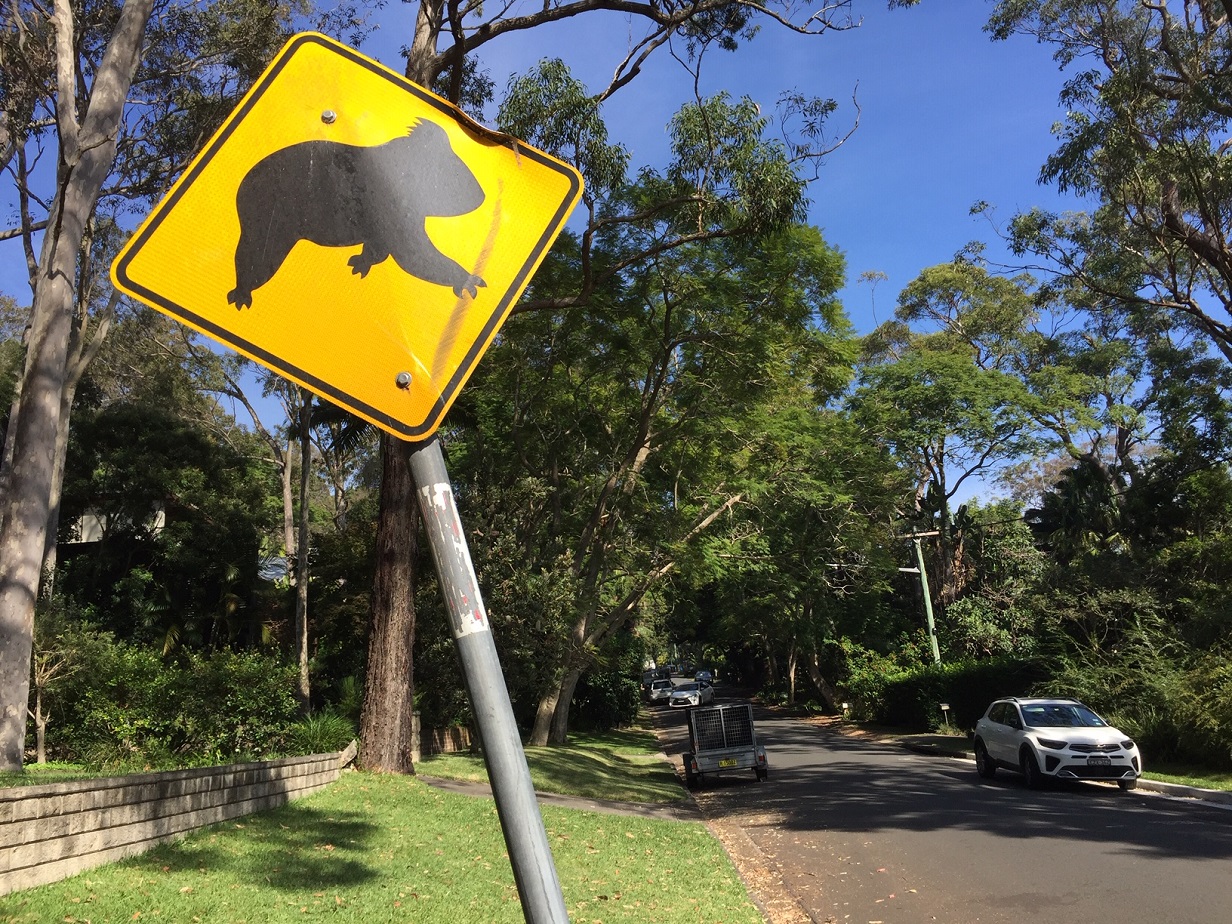
In my electorate, and in communities across New South Wales, people do not want taxpayer money funding the destruction of our native habitat. In Pittwater we know what it means to lose our koalas from urban encroachment. In 1993 our koala population was estimated at just six koalas. We now have no koalas. Our community still lives with reminders of their existence, such as road signs urging motorists to slow down for the koalas that are no longer there. The signs remind us of what is at stake when habitat is lost and fragmented, and development, land clearing and logging push wildlife out. Although we may not be able to bring back Pittwater's koalas, the bill before the House today provides an opportunity to prevent that same loss elsewhere in New South Wales.

In 2019 a parliamentary inquiry made findings—including some contentious findings—that koalas would become extinct before 2050 without government intervention, that logging in public native forests had cumulative impacts on koalas over many years, and that the NSW Koala Strategy at that time fell short of the Chief Scientist's recommendation for a whole-of-government strategy to stabilise and then increase koala numbers. Koalas face habitat loss, modification and fragmentation; vehicle strikes; feral animals; intense fires; disease; and heat stress. Isolated populations and gaps in our understanding of their movements and habitat needs compound those threats. But this park will provide them with protection. It is not just about our national icon, the koala, but also about the entire ecosystem.

Over 50 per cent of our threatened mammal species live within the proposed boundaries of the park, and they all rely on mature, unfragmented canopy to survive. The park will protect habitat for an estimated 12,000 koalas, 36,000 gliders and more than 100 threatened species of plants and animals. Of course, it is right to support forestry workers who are impacted throughout the transition. In the transition package, we must take seriously and protect the livelihoods of the workers and their families in those regional communities. Over 300 workers will be impacted across six regional timber mills. Enabling Forestry Corporation workers to move to suitable roles with the National Parks and Wildlife Service will help to retain local skills and knowledge. Alongside First Nations leadership and knowledge, those skills will help us care for country and manage the forests into the future.

There is always a balance to strike between conservation and other land uses. The importance of outdoor recreation has been acknowledged as the bill has progressed, including four-wheel driving and motor racing events on existing roads in regional parks, in appropriate circumstances. Although carbon credits remain contentious, the improved forest management method has helped to make this outcome possible. It offers an economic return for protecting those forests. However, as other members have noted, there are valid criticisms of those methods. In this debate we must also acknowledge the tourism benefits and iconic nature of the Great Koala National Park. The project should indeed be celebrated. The Government is now delivering on its 2015 announcement and its 2023 election commitment, although it is fairly late.

The park comes in response to scientists who identified that area of critical habitat. The economic value of that nature and its conservation will benefit regional communities, including the businesses I have met with. Destination NSW research highlights that Australia's demand for nature-based tourism grew by 47 per cent between 2014 and 2023. It is recognised as a driver of our visitor economy. Earlier in this term of government, I travelled to the Mid North Coast alongside my crossbench colleagues the member for Wakehurst and the member for Sydney to meet local environmental advocates, scientists, traditional custodians and regional business owners. They made clear that conservation and regional prosperity can go hand in hand.

More than 100 North Coast businesses have called for the creation of the Great Koala National Park because they know it represents a future of sustainable jobs, visitors and economic resilience through nature‑based tourism. During our trip, we met with some of those businesses. Subsequently, and together with some of those businesses, we presented the Premier with their letter of support here in Parliament House. The Great Koala National Park will be an incredible legacy of this Parliament for our State, for future generations and, of course, for wildlife. Above all, this is a community win that builds on decades of advocacy. I thank and acknowledge those who have supported and informed my own advocacy, including some of my constituents.

I thank Jenny Cullen of Scotland Island; Reverend Jason John, forest chaplain for the Uniting Church Koala Chaplaincy Project; Natalie Cuthbertson of Avalon Beach; Ashley Love of the Bellingen Environment Centre; Deanna Markovina of the Forest Ecology Alliance; Saul Deane of the Georges River koala network; Gill and Chris Yates of the Australian Conservation Foundation's northern beaches branch; Dr Grahame Douglas, AM, and all members of the National Parks and Wildlife Advisory Council; and Danielle Ryan and the National Parks Association of NSW, which has campaigned to protect 30 per cent of New South Wales' land and sea. I acknowledge also the National Parks Association Coffs Harbour branch, including its staff, members and campaign alliance; the Bellingen Environment Centre; the Nambucca Valley Conservation Association; the Clarence Environment Centre; and the North Coast Environment Council.

I thank local campaigners around Coffs Harbour and Bellingen, including those involved in the Pine Creek campaign, whose persistence helped to bring us to this moment. I acknowledge the Gumbaynggirr and Dunghutti peoples and the Aboriginal advisory panel, whose knowledge and enduring connection to country are central to the park's future. I thank the scientists and ecologists, particularly David Scotts, who established the evidence for protection as well as the local businesses and recreation groups that supported the campaign. I also acknowledge environment Minister Penny Sharpe and the New South Wales Government for delivering the Great Koala National Park. I thank the hundreds of others who contacted me about the project, including nearly 300 constituents. I foreshadow that I will move amendments to the bill to address the Forest Bridge proposal. To all those who have worked so hard, and for the generations who will inherit these forests, I commend the bill to the House.''

Pittwater MP's amendments

The MP for Pittwater also moved three amendments, stating in regards to these:

''In her second reading speech, the Parliamentary Secretary said that koala conservation is at the heart of this park's creation. In the 2019 koala population parliamentary inquiry, finding number 4 was that the fragmentation and loss of habitat pose the most serious threat to koala populations in New South Wales, and recommendations in that report focused on the need to protect nature corridors. These amendments go to the heart of those statements, findings and recommendations and are key to ensuring the integrity of the park and the population and diversity of the koalas and other fauna there.

The forest bridge, as I will refer to it, will preserve a key east-west linkage from the coast to the escarpment. Koalas require large areas for their survival and breeding. Male koalas in search of females roam the landscape, and logging key corridors disrupts the capacity of koalas to ensure that their local range is maintained. Even in Pittwater, we know the importance of wildlife corridors. They are part of the projects of Transport for NSW, including the long-awaited Mona Vale Road upgrades, which have now been funded and will be delivered soon. We know the importance of nature corridors, and this is a live issue in my electorate. It is even more important to have the corridors in the Great Koala National Park preserved for not only koalas but also all native species that inhabit the forests.

I have included a map. Compartments 15, 16 and 17 are identified as plantations. However, those areas also demonstrate mixed forests and function as such, and therefore warrant protection. I have visited those forests, and one does not need to be an expert to note the diversity of a mixed forest over that plantation. This is what I refer to as the forest bridge proposal. It extends opportunities for koalas to move from east to west and is core to these amendments. The compartments include riparian areas, which should be protected, and an extension to compartment 18, which the Government has included in the Great Koala National Park.

The community fought for decades to protect the bridge proposal. Compartments 22 and 23 have been lost due to logging. They would have been a north-south extension. When we lose connections, it takes a long time to get healthy country back, sometimes only for it to be logged again. Critically important is that adding compartments 15, 16 and 17 to the park will ensure its integrity. The area is known as a koala hub and was recognised as such by the former Government. The State forest estate is approximately 200,000 hectares in this region, and 178,000 hectares, including plantations, are going to the Great Koala National Park, leaving only about 22,000 hectares. Adding this small section I referred to previously will not have a major impact on the industry but will be critical for conservation. It is time for this bridge to come into the Bongil Bongil National Park.

I acknowledge the advocacy of the member for Balmain and support her amendments also. The proposed amendments I have moved include the Forest Bridge proposal. I wish to be clear that compartments 15, 16 and 17 are the key additions required now. This is a very modest amendment to the bill. The additional benefit in supporting this amendment is that converting this into national park means the National Parks and Wildlife Service will use its extensive knowledge and experience to manage the land. This is a unique opportunity. I acknowledge the Friends of Pine Creek for their strong advocacy in linking these two national parks with the Forest Bridge proposal.

I understand the Government will not support these amendments, but I would like a response as to why. The amendments will support connectivity and are focused only on a small amount of land. I seek these amendments on behalf of many advocacy groups, including people in my electorate who have contacted me to ensure that there is no fragmentation in this area. They want a connection to make sure the Great Koala National Park delivers on its objectives.''

Labor Parliamentary Secretary for Climate Change, Trish Doyle, MP for the Blue Mountains, stated in response:

''The Government does not support these amendments. The Government has been clear since 2023 that plantations will be excluded. Native forest areas of the Forest Bridge have been included in the park whilst plantation areas have largely been excluded, which is in line with the Government's commitment.''

Liberal MP for the North Shore, Felicity Wilson, responding on behalf of the Opposition, stated:

''I thank the member for Pittwater for her contribution this evening. I recognise her incredibly well-intentioned commitment to biodiversity, wildlife and the preservation of nature. The incorporation of this additional parcel into the Great Koala National Park is not something that the Opposition can support, which the member understands. As we have outlined throughout this debate, we believe the best way to preserve additional national park is not at the loss of more forestry areas and industry jobs. We do not support the removal of additional plantation lands, though we welcome the opportunity to discuss in the future other areas of biodiversity and conservation across New South Wales.''

Local Independent MP's have been active in supporting the establishment of this park, especially given the loss of Pittwater's koalas.

A few example reports:

Pittwater MP Jacqui Scruby, Sydney MP, Alex Greenwich, Wakehurst MP Michael Regan travelled to the site of the Great Koala Park earlier in 2025 to discuss with the human locals what they actually wanted.

NSW Greens, who chaired the Parliamentary Inquiry which confirmed koalas across New South Wales need habitat and connected  wildlife corridors to survive beyond 2050, along with seeing the National Party’s contentious Local Land Services Amendment (Miscellaneous) Bill 2020 fail to pass the NSW Upper House on Thursday, November 19th 2020, after Liberal MP Catherine Cusack crossed the floor to refer it to Inquiry, placed the establishment of the Great Koala Park firmly due to the work of thousands over decades.

Cate Faehrmann MP, who chaired the Koala populations and habitat in New South Wales Inquiry, along with Greens MP Sue Higginson, stated:

''I’m genuinely elated! After years of campaigning, the Great Koala National Park bill has just passed the Upper House and become law!! Protecting a massive 178,000 hectares of forests, home to our precious koalas and many other threatened species, from logging forever. This is such a massive win for our forests, our koalas, our community, our climate and planet. And it would never have happened without our wonderful movement of dedicated conservationists and forest campaigners who never gave up.

Thank you from the bottom of our hearts. You're SIMPLY THE BEST!!''


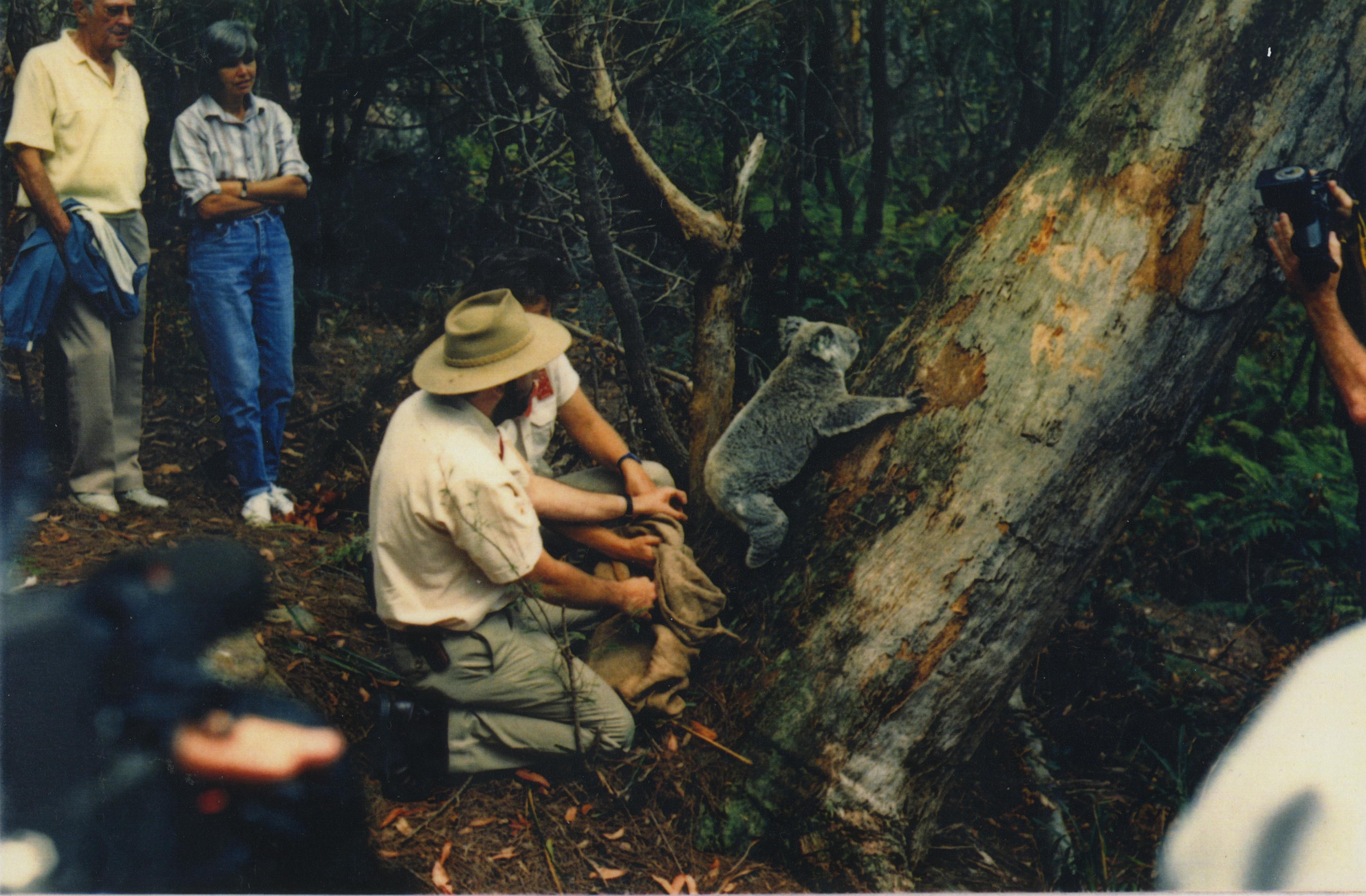
One of Pittwater's last koalas. The release of an 8 years old female back into Angophora Reserve after she had been bombarded by magpies. Taronga Zoo picked her up and nursed her back to health before the release on November 5th, 1989. Doug Bladen and Marita Macrae are in the background representing the Avalon Preservation Trust (now APA). Photo by Geoff Searl OAM

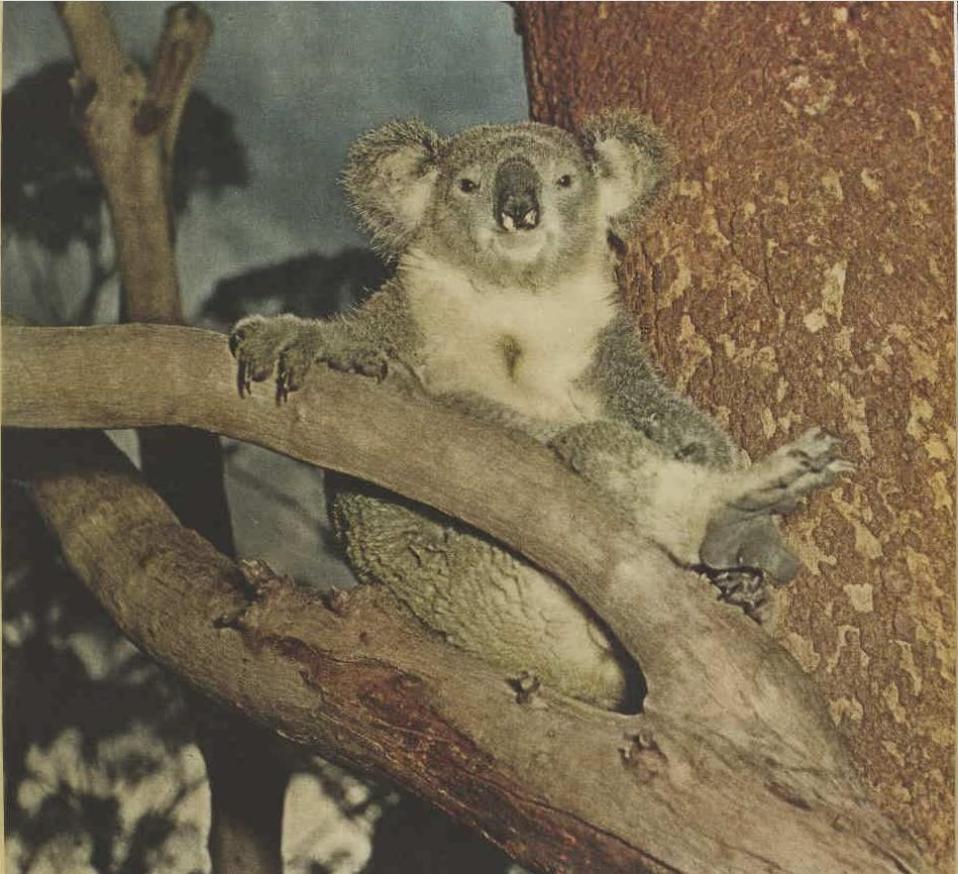
Photo: Koala in Mona Vale in 1958 from Australian Women's Weekly Article. Locals state Koalas were fairly common in the Manly Dam environs too, although the last verified sighting was circa 1996-98.

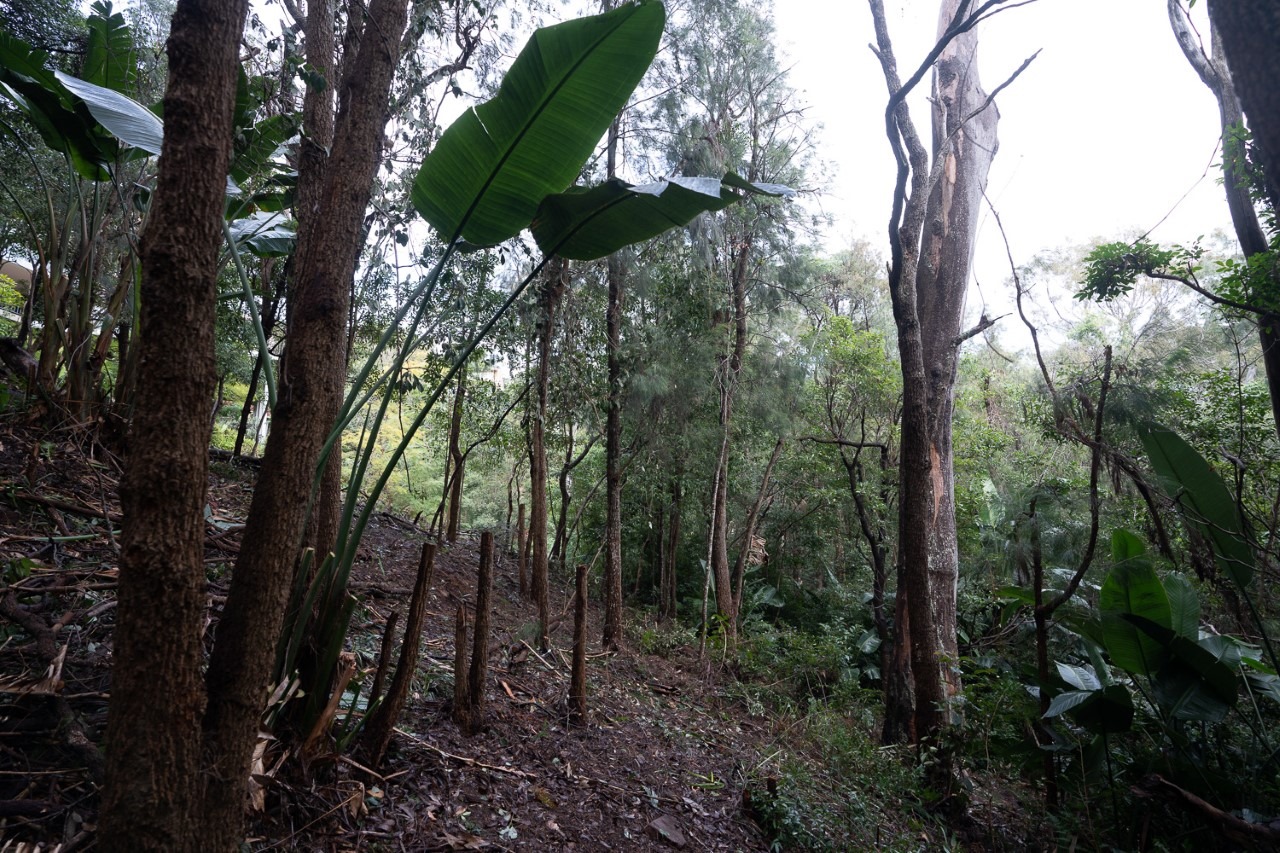
Koala signs along the routes they once travelled are still in Pittwater. Looking north towards Angophora Reserve, 2026

Previous PON reports:

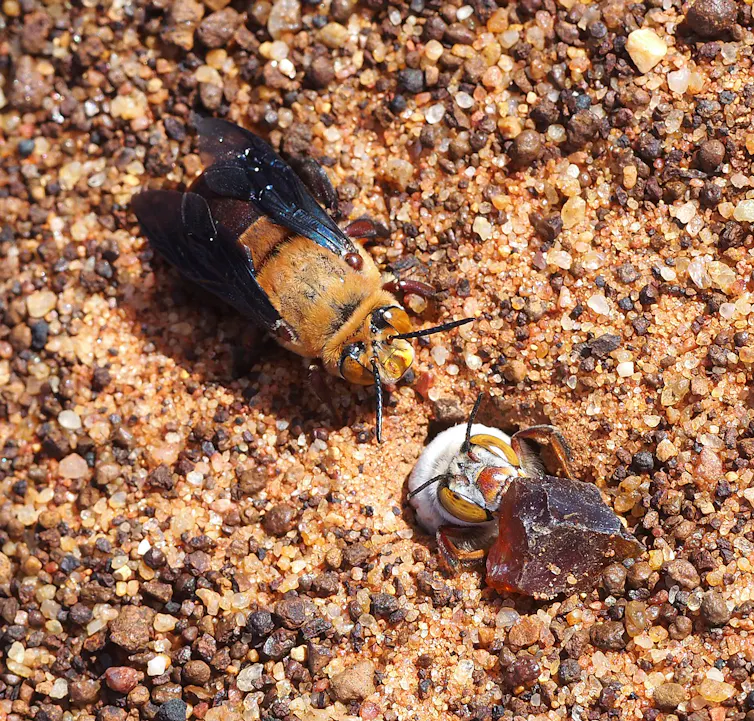
Celebrate the Diversity of Pollinators: Art + Photography Comp. for Students

Australian Pollinator Week runs from 7–15 November and celebrates Australia’s diverse pollinators and highlights the importance of engaging young people in learning about pollinators. Schools are encouraged to celebrate and support pollinator health.

Australian Pollinator Week was founded by Dr Megan Halcroft, of Bees Business, in November 2015. It followed on from a community project called “Bee Aware of Your Native Bees”, which was funded by Western Sydney University and the Environmental Trust.

Communities in the northern hemisphere have been celebrating the importance of pollinators since June 2007, however, the seasonal differences in the southern hemisphere has restricted bilateral celebrations.

Australian Pollinator Week acknowledges our important and unique insect pollinators during Australia’s southern Spring (November). It is a designated week when communities, businesses and organisations can come together to raise awareness of the importance of pollinators and support their needs.

Through group activities, community members can learn together as they help to support pollinators. By engaging communities in schools, retirement villages, art groups, gardening clubs, community gardens, local council areas, Landcare groups and neighbourhoods we can increase awareness and act on our increased knowledge.

School Pollinator Art Competition

The School Pollinator Art Competition invites students across Australia to celebrate pollinators through art.

Students can submit original artworks in any medium, including drawing, painting, digital, collage or mixed media. Prizes will be awarded for the best artwork inspired by pollinators.

All entries will be judged by the Wheen Bee Foundation.

The competition is proudly sponsored by the Centre for Bee Education.

The School Pollinator Art Competition runs alongside the popular Pollinator Photography Competition and provides an accessible way for school-aged students to learn about pollinators. Find out more about the Pollinator Photography Competition here. 

The 2026 School Pollinator Art Competition is now open and entries will close Sunday 25 October at 5pm AEDT.

Prizes

Primary School Winner

  • Individual prize: A Bees Are Amazing gift hamper and certificate valued at more than $100
  • Teacher prize: A $500 Centre for Bee Education voucher, which can be given to a teacher of the winner’s choice.  

Secondary School Winner

  • Individual prize: A Bees Are Amazing gift hamper and certificate valued at more than $100
  • Teacher prize: A $500 Centre for Bee Education voucher, which can be given to a teacher of the winner’s choice.

Find out more and enter here

Join the School Pollinator Art Webinar

Join Amelie Ecology for a special webinar celebrating pollinators, art and this year’s School Pollinator Art Competition.

Students will learn more about Australia’s pollinators and the habitats they need, with artwork from this year’s competition featured throughout the session.

The Primary and Secondary School competition winners will also be announced live during the webinar.

Webinar Details:

Tuesday, 10 November 2026, 10am AEDT - Online

Registration is free. Register here

Example of prior art work: Bee on Honeycomb. Steve N. Year 2, NSW

Pollinator Photography Competition

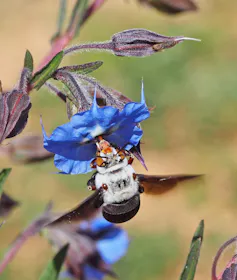
The Pollinator Photography Competition encourages everyone to get out and capture images of bees and other pollinators in their local environment, whether it’s in a garden, park, school, on a nature strip or on a farm.

The competition will award prizes to the best pictures of bees and other pollinators taken in Australia as judged by the Australian Pollinator Week Pollinator Photography Competition Judging Panel.

The Pollinator Photography Competition runs alongside the School Pollinator Art Competition providing an accessible way for school-aged students to learn about pollinators. Find out more about the School Pollinator Art Competition here. 

The Competition will close Sunday 25 October at 5pm AEDT.

Prizes

  • First place wins $1500 
  • Second place wins $750
  • Third place wins $500 
  • People’s Choice wins $750
  • Video Category winner wins $750

Winners will be announced in the Pollinator Photography Webinar during Australian Pollinator Week on Thursday, 12 November at 7.30pm AEDT.

Find out more and enter here.

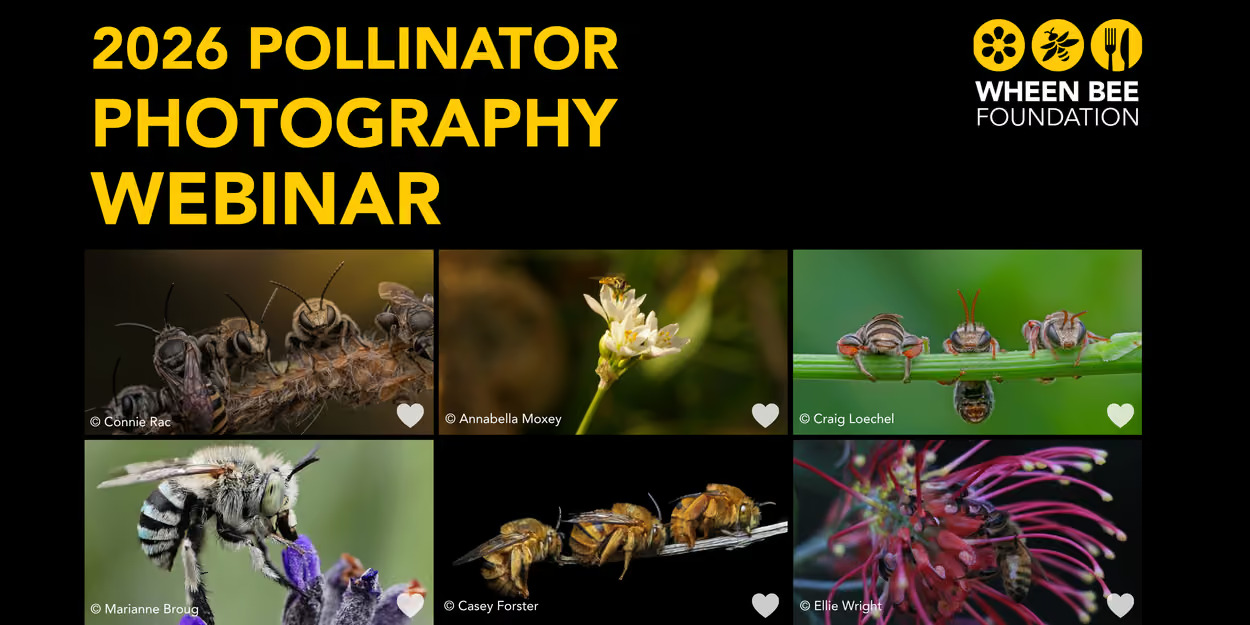
Pollinator Photography Webinar

Join a panel of experienced photographers as they share practical tips for capturing Australia’s pollinators and the stories behind some of their favourite images.

Learn how they approach photographing bees and other insects, including where and when to shoot, equipment and camera settings, and what makes a great pollinator photograph. There will also be an opportunity to ask the panel photography questions.

The webinar will also reveal the 2026 Pollinator Photography Competition winners, including the winning photographs and the inaugural Video Category winner.

Webinar Details:

Thu, 12 Nov, 7:30pm – 8:30pm AEDT, via Zoom Online

Registration is free. Register here

Draft NSW coastal management manual: Have your say

The Department of Climate Change, Energy, the Environment and Water is seeking feedback on the draft NSW coastal management manual.

Consultation period: 12th October 2026 - 30th October 2026

What’s this about?

The NSW Government is seeking feedback on a draft NSW coastal management manual. The current manual was published in 2018 and provides the requirements and guidance used to prepare, certify, implement and review coastal management programs across New South Wales. The draft manual responds to recommendations from the NSW Audit Office's Coastal management performance audit (2025) and feedback from councils, public authorities and coastal practitioners.

The proposed changes aim to:

  • make the manual easier to use
  • provide clearer requirements and practical guidance
  • improve the processes for preparing and certifying coastal management programs. 

The draft manual does not amend the Coastal Management Act 2016 or fundamentally change the statutory process for preparing and certifying coastal management programs. Existing certified programs will remain valid.

Following consultation, we will review the feedback and use it to finalise the draft manual. The updated manual will then be considered by the Minister for the Environment. If approved, once published in the NSW Government Gazette, the updated manual will replace the current manual and commence in late 2026.

NSW coastal management manual

Date: 12 Oct 2026 - PDF 22.29 MB / Pages 90 download here

Mandatory requirements and guidance for a coastal management program

The draft manual sets out mandatory requirements and supporting guidance for preparing, adopting, implementing, reviewing and amending coastal management programs under the Coastal Management Act 2016.

Draft Document cover: for ID when downloading

Proposed changes to the NSW coastal management manual consultation summary (PDF 1.59 MB / Pages 10)

This document summarises the main proposed changes and explains how they respond to recommendations from the NSW Audit Office and feedback from councils, government agencies and coastal practitioners. 

The proposed changes aim to make the manual easier to use, provide clearer requirements and practical guidance, and improve the processes for preparing and certifying coastal management programs. The draft manual also supports a more proportionate and risk-based approach to coastal management planning, stronger implementation and review, and improved recognition of Aboriginal cultural values, knowledge and participation.

We are particularly interested in whether the draft manual:

  • clearly identifies mandatory requirements
  • provides practical guidance
  • improves coastal management program preparation and certification
  • supports a proportionate and risk-based approach
  • provides clearer expectations for implementation and review
  • is easier to navigate and use than the current manual
  • allows for a simple transition for existing and in-train CMPs
  • could create any unintended practical consequences.

We invite councils, coastal practitioners, government agencies, community organisations and interested members of the public to review the draft manual and provide feedback. Your feedback will help inform the final manual before it is considered by the Minister for the Environment.

Draft Document cover: for ID when downloading

Have your say

Have your say by 11:59 pm Friday 30 October 2026.

There is one way to submit your feedback. - Online

Draft coastal management manual online feedback form

Complete this short survey to provide feedback on the draft coastal management manual and help identify any improvements needed before it is finalised.

Contact us

Marine, Coast, Estuary and Flood team - Email: coastandestuary@dcceew.nsw.gov.au

Draft Koala Conservation Strategy: Have Your Say

The Department of Climate Change, Energy, the Environment and Water is seeking feedback on the Draft Koala Conservation Strategy.

Consultation period: 12th October 2026 - 9th November 2026

The Draft Koala Conservation Strategy:

  • identifies key koala populations
  • outlines a toolbox of conservation actions that can be applied to address key threats to koalas.

What is changing?

The draft strategy adopts a landscape-scale approach to koala conservation. This approach recognises that, to protect koalas, we must protect and restore the ecosystems they depend on.

The strategy will be delivered through the Saving our Species framework, ensuring koala conservation is integrated with other threatened species conservation efforts across the state.

The strategy will be delivered through the Saving our Species framework, integrating koala conservation with other threatened species conservation efforts across NSW.

Your feedback will help shape the final strategy to ensure it is practical, effective and informed by local knowledge.

A separate Implementation Plan will translate the strategy’s priorities into targeted, on-ground actions, providing a roadmap for coordinated delivery by government agencies, conservation partners and local communities.

We are interested in what level of detail you think should be in the Implementation Plan.

Download the strategy: The koala: draft Saving our Species conservation strategy (PDF 2.47 MB)

Have your say

Have your say by 9am on Monday 9 November 2026.

There are 2 ways to submit your feedback.

Online - use the form here

Email - to koala.strategy@environment.nsw.gov.au

Draft Document cover: for ID when downloading

Namoi long-term water plan review: Have Your Say

The Department of Climate Change, Energy, the Environment and Water is seeking feedback on the draft second edition of the Namoi long-term water plan.

Consultation period: 9th October 2026 - 30th October 2026

What’s this about?

The Department of Climate Change, Energy, the Environment and Water is reviewing and updating the Namoi long-term water plan. We are seeking feedback from communities, stakeholders and Aboriginal peoples.

Long-term water plans guide how environmental water is managed across 9 NSW Murray-Darling Basin catchments. 

The plans set:

  • long-term objectives
  • targets
  • water requirements.

These support the health of:

  • rivers
  • wetlands
  • floodplains
  • and the ecosystems and communities that depend on them.

The Murray-Darling Basin Plan requires these plans to be reviewed every 5 years.

Reviewing the Namoi long-term water plan ensures it reflects the latest scientific, climate and environmental knowledge, as well as stakeholder feedback.

The review includes stronger engagement with Aboriginal communities and consideration of Aboriginal knowledge, values and objectives.

The department will consider all submissions received during consultation. Your feedback will:

  • help inform the final plan
  • guide the management of environmental water in the Namoi catchment over the next 20 years.

Namoi Long-Term Water Plan Documents Review: The draft plan

The proposed second edition of the Namoi LTWP includes:

  • updated information and analysis
  • refined objectives and targets
  • improved understanding of climate change risks
  • updates to low-flow environmental water requirements
  • strengthened recognition of Aboriginal values, knowledge and aspirations.

See a summary of the proposed changes to the plan.

To guide your input, download Part A and Part B of the Draft Namoi long-term water plan (second edition) here:

Draft Document covers: for ID when downloading

Summary of the proposed changes to the plan.

Background

As part of a 5-year review, the 9 long-term water plans (LTWPs) for NSW inland catchments within the Murray-Darling Basin are being updated to reflect the latest policy, science and stakeholder input. This second edition also responds to the 2025 update of the Murray-Darling Basin Authority’s (MDBA) Basin-wide environmental watering strategy (BWS).  

Key changes and improvements to LTWPs include: 

  • strengthened First Nations engagement and content
  • refined ecological objectives and targets
  • refined environmental water requirements (EWRs) for low flows and new or modified EWRs in some areas
  • enhanced consideration of climate change 
  • strengthened risk management and investment alignment
  • enhanced socio-economic considerations.

Strengthened First Nations engagement and content

Significant progress has been made in working with Aboriginal Traditional Owners and groups to build relationships and inform how Aboriginal people wish to be represented in updated LTWPs. Targeted engagement has identified additional cultural values, objectives and outcomes requiring careful integration into plan content.

Building on the 2025 BWS, this remains a priority for NSW to ensure LTWPs appropriately reflect cultural water values and support enduring relationships and outcomes for Aboriginal people.

Refined ecological objectives and targets

Ecological objectives and targets have been refined to improve alignment with monitoring and evaluation frameworks, enhance measurability, and support clearer tracking of environmental outcomes. 

Updated environmental water requirements

Second edition LTWPs include refined cease‑to‑flow, very low flows and baseflow EWRs to improve clarity and support assessment. These changes provide clearer definition of frequency, duration and maximum inter-event requirements.

For cease-to-flow EWRs, duration and frequency requirements have been updated at all locations based on improved analysis of cease-to-flow events in historical and modelled flow records. 

In the Namoi LTWP, additional EWR updates include revised bank full and overbank flow thresholds for the Keepit to Boggabri planning unit (Namoi River at Gunnedah gauge). At this location, bank full and overbank EWR flow rates have been reduced to better reflect river channel characteristics and observed flow and inundation patterns. 

A new guidance section for using EWRs is also included in the updated LTWP.

Enhanced climate change considerations

Climate change has been a key focus of the review, with sections strengthened through:

  • updated projections for changes to temperature, rainfall and streamflow
  • improved analysis to illustrate the sensitivity of selected EWRs to a range of water availability scenarios under climate change.

These updates enable a more robust and in-depth assessment of future flow scenarios, climate risks and potential management responses, strengthening the overall evidence base.

Strengthened risk management and investment alignment

Risks and constraints to LTWP objectives and EWRs, and their associated mitigation strategies, have been updated and are supported by revised investment opportunities. These revisions will strengthen implementation by providing better clarity on priority actions, potential partner agency roles, and opportunities to mitigate risks and enhance environmental and cultural outcomes.

Enhanced socio-economic considerations

Socio-economic considerations have been integrated into the LTWPs, in alignment with the 2025 BWS. These considerations recognise the contribution of environmental watering to regional communities and economies.

Have your say

Have your say by 30 October 2026. 

You can provide feedback in 2 ways.

Online - Have your Say via feedback form online

Email: wfte@environment.nsw.gov.au

New UNEP report lays out emission cuts needed for return to 1.5°C

Released: October 21, 2026

With global temperature rise set to exceed 1.5°C above pre-industrial levels, urgent and stringent cuts to greenhouse emissions are needed to minimize the magnitude and duration of overshoot and return to 1.5°C by the end of the century, a new UNEP report finds.

The Emissions Gap Report 2026: The Point of Return looks at a ‘lowest possible’ 1.5°C overshoot scenario, in which peak warming by around the middle of the century is limited to 1.7-1.8°C and global temperature rise is returned to or below 1.5°C by 2100, with about a 50 per cent chance.

To get onto this pathway, global greenhouse gas (GHG) emissions would have to be reduced by 18 per cent by 2030, 45 per cent by 2035 and 69 per cent by 2040, all relative to 2025 levels. By contrast, the full implementation of Nationally Determined Contributions (NDCs) would only reduce emissions by 5-8 per cent by 2030 and 11-15 per cent by 2035, relative to 2025 levels. This implies average annual reduction rates of 5.7 per cent for 2025-2035, higher than the old Sixth Assessment Report (AR6) pathways laid out by the IPCC, which required annual reduction rates of about 5 per cent.

"Overshoot is not surrender. We can still keep it as small and as short as possible – and bring temperatures back below 1.5 degrees by the end of the century," UN Secretary-General António Guterres said in a message on the report. "The new Emissions Gap Report from the United Nations Environment Programme shows us what it will take: Cutting global greenhouse gas emissions by 18 per cent by 2030 and 45 per cent by 2035 – compared with 2025 levels."

However, the report finds that there are more opportunities than ever to accelerate action. Since the adoption of the Paris Agreement, renewable energy has boomed, total energy supply from coal and oil has grown slower than projected and climate policies have cut emissions in many places.

“Every additional fraction of a degree and additional year of warming above 1.5°C increases climate impacts and risks, such as the deadly floods, heatwaves and wildfires that have plagued many nations this year,” said Inger Andersen, Executive Director of UNEP. “So, we must pull out all the stops to minimise peak warming and return to 1.5°C by the end of the century. This is possible.

“We have a wealth of success stories showing that emissions can be cut quickly. It is now up to nations to urgently put in place policies that spark fast, deep and sustained emissions reductions, and put the world on track for a more stable climate and more stable economies and societies.”

Temperature projections still far too high

The report finds that if current policies continue, warming could reach 2.8°C within this century and increase thereafter. If all NDCs are delivered and similar efforts continue, warming will be limited to 2.6°C. These outcomes are worse than last year’s projections due to the withdrawal of the United States of America from the Paris Agreement and revised estimates of historical emissions. New NDCs submitted since last year’s report have made a negligible difference for these projections.

Even in the most optimistic scenario, where all NDCs plus additional net-zero targets are achieved, global warming would only be limited to 2.1°C in this century. Without urgent action, keeping peak warming below 1.7 to 1.8°C will quickly become impossible. Every five years of CO2 emissions at current levels pushes peak warming up by around 0.1°C.

In addition, the lowest possible 1.5°C overshoot scenario creates a need for the removal from the atmosphere and permanent storage of roughly 320 gigatonnes of CO2 (equivalent to around eight years of 2024’s global CO2 emissions) over the course of this century. However, socioeconomic and technological challenges make the chances of achieving this uncertain.

Successful climate efforts need to be scaled up

Returning to or below 1.5°C can be done, particularly since there is growing evidence that climate policies across the world can and have reduced emissions. The report links the introduction or strengthening of climate-related policies to dozens of structural shifts in developed and developing countries, resulting in significant emissions reductions.

More than 220 policy evaluations provide further evidence of what works. Evaluated policies in the electricity sector reduced emissions by an average of 9 per cent, while economic instruments, including carbon cap-and-trade schemes and carbon taxes, achieved reductions of 5-13 per cent across sectors in the evaluation period considered. Yet these successes remain concentrated in specific sectors, countries and periods. Getting onto a lowest possible 1.5°C overshoot pathway requires replicating, extending, and sustaining these successes.

Accelerating implementation of Global Stocktake goals

In the first Global Stocktake (GST), nations agreed to triple renewable energy capacity and double the annual rate of energy efficiency improvements by 2030, transition away from fossil fuels in energy systems, reduce non-CO2 emissions, halt and reverse deforestation and forest degradation, and more.

However, recent rates of change across all indicators tracking absolute GHG emissions – including CO2 emissions in energy systems, road transport emissions, and non-CO2 emissions, notably methane emissions – are heading in the wrong direction. While current policy scenarios project that some of these emissions will stabilize by 2030, none show declines occurring at the pace and scale needed to minimize the magnitude and duration of overshoot of 1.5°C.

The second GST can build on the first by reaffirming priority mitigation action areas, extending quantified goals to 2035 and 2040, and making existing action areas more tangible through clearer and, where possible, quantified targets. The report provides a preliminary assessment of such extensions to 2035 and 2040, consistent with the lowest 1.5°C overshoot scenario.

For the goal to triple global renewable energy capacity and double the annual rate of energy efficiency improvement, an extension to 2035 would imply at least tripling renewable electricity capacity and reducing primary energy intensity of GDP by at least 30 per cent relative to 2025 levels. For 2040, these estimates increase to at least 4.5 times and at least 40 per cent respectively.

The good news is that since the adoption of the Paris Agreement, global renewable electricity capacity has grown three times faster than anticipated, with solar PV build-out increasing seven times faster. A continuation of these trends, supported by additional policies, would bring the world on track to triple renewable energy capacity by 2030 and increase the share of wind and solar in electricity generation to levels consistent with the lowest possible 1.5°C overshoot scenario. 

Extending the goal related to transitioning away from fossil fuels in energy systems would require globally reducing the share of coal, oil and gas in total energy supply by at least 55, 15 and 5 per cent by 2035 relative to 2025. Reductions of at least 75, 30 and 35 per cent would be required in 2040.

At the same time, electricity generation from coal would need to fall by at least 75 per cent in 2035 relative to 2025 and be effectively phased out globally by 2040. Methane emissions would need to be at least 25 per cent lower than 2025 levels by 2035 and at least 40 per cent lower by 2040.

United Nations Environment Programme (2026). Emissions Gap Report 2026: The point of return – Urgent emissions cuts needed to come back from overshoot of 1.5°C. Olhoff, A. (chief ed.), Lamb, W., Kuramochi, T., Rogelj, J., Pelz, S., Khanna, T., Boehm, S., den Elzen, M., Jeffery, L., Minx, J., Muûls, M., Pachauri, S., Pathak, M., Riahi, K. and Sudharmma Vishwanathan, S. (eds). Nairobi

Download here (PDF 6.48MB)

About the UN Environment Programme (UNEP)

UNEP is the leading global voice on the environment. It provides leadership and encourages partnership in caring for the environment by inspiring, informing and enabling nations and peoples to improve their quality of life without compromising that of future generations.

CCWA calls for answers on massive methane leak detected above Chevron's Barrow Island facility

October 20 2026

The Conservation Council of WA (CCWA) is calling on Chevron and the state government to come clean about a massive methane leak detected above its Barrow Island facility.

According to a Data Desk report published on 15 October, “massive clouds of methane have been observed at Chevron’s Gorgon liquefied natural gas (LNG) plant in Australia on five consecutive satellite overpasses dating back to November (2025)”. 

Report authors Aaron Clark and Naish Gawen said, “the most recent public observation was made on August 29 by Carbon Mapper’s Tanager-1 satellite and triggered an alert from the United Nations, which issues notifications to operators and governments on the world’s most urgent methane emissions in a bid to stop them”.   

CCWA Executive Director Matt Roberts said it was alarming that it remains unclear if the leakage has been stopped. He called on the State Government to take urgent action to seek answers from Chevron. 

“It’s unacceptable for Chevron, which is profiteering to the tune of billions of dollars from war in the Middle East, to be carelessly spewing out methane pollution from its Western Australian facilities,” Mr Roberts said. 

“Methane gas is an extra potent fossil fuel, and Chevron’s leak is adding fuel to the climate crisis, which is already costing lives around the world. 

"With hundreds of international delegates in Perth for the Global Citizen NOW summit talking about renewable energy, this is yet another example of how the State Government has failed to deal with the main source of WA's emissions problems, the gas industry. 

"A large number of delegates have spoken about the need to end further extraction of fossil fuels in order to make the transition to a renewable energy future and meet emissions reductions consistent with 1.5c alignment. 

"Gas is a dirty fossil fuel playing a key role in driving the current climate crisis. 

“WA's emissions have risen 19% since 2005 and continue to climb - we remain the only state without an interim emissions reduction target. In the meantime, we’ve got Chevron proving once again that it’s unable, or unwilling, to meet emissions obligations." 

In April this year, the National Offshore Petroleum Safety and Environmental Management Authority (NOPSEMA) approved further development of the Gorgon project.  

“The installation of new wells and pipelines will maintain production rates of about 15.6 million tonnes of LNG a year, equating to 468 million tonnes of gas over the next three decades, handing Chevron a $300 billion windfall without paying a cent in royalties. Enough is enough.” 

A cloud of the potent methane gas observed at the Gorgon LNG plant in Australia. Source: Carbon Mapper

The ABC reported this week the repeated detections, the latest far exceeding a "super emitter" event under US EPA guidelines, prompted a United Nations (UN) warning to Chevron.

According to the UN, methane is responsible for about 25 per cent of global warming and is a greenhouse gas 80 times more harmful than carbon dioxide.

Chevron confirmed it had received the alert and was working with the UN Environmental Programme (UNEP) to address it.

However, a UNEP spokesperson told the ABC it had not received formal feedback from Chevron or the Australian government, and would update its publicly available data when it had.

Further background on Chevron gas leaks: 

In July 2025, it was identified that an unknown amount of gas was seeping to the surface on Barrow Island, where the company ceased oil production two months earlier.

At the time, Chevron said it had informed the Department of Mines, Petroleum and Exploration (DMPE) of the problem and was working with them to investigate the leak from the Gearle Formation, beneath the surface of the island. 

“There have been ongoing compliance issues associated with Chevron’s Gorgon LNG project at Barrow Island, and further reports of gas releases indicate the process is continuing to fail,” Mr Roberts said.  

ACCC releases guidance on business emissions claims to consumers

Received Tuesday October 20, 2026

Australian businesses making greenhouse gas emissions claims should use credible, science-based accounting standards, be transparent about the use of purchased credits, and, above all else, consider what average consumers would understand their claims to mean.

These recommendations are contained in new ACCC guidance to assist businesses in making accurate and credible emissions claims, titled Making emissions claims to consumers – a guide for business.

Businesses that want to promote their efforts to address climate change are encouraged to use the guidance to understand potentially problematic behaviour and risks in failing to consider the consumer perspective when advertising emissions data.

False or misleading environmental claims risk breaching the Australian Consumer Law.

“Consumers should be able to trust the emissions-related claims that businesses make,” ACCC Deputy Chair Mick Keogh said.

“Greenwashing not only limits the ability of consumers to make informed purchasing decisions, but it also disadvantages businesses that have invested in the development of products or services that are genuinely more environmentally sustainable.”

“We recognise that greenhouse gas emissions accounting is complex and increasingly regulated. Our guidance is particularly aimed at helping businesses to understand their consumer law obligations when making voluntary marketing claims to consumers,” Mr Keogh said.

“We strongly encourage businesses to review their consumer facing emissions claims in light of our guidance. If any existing claims raise concerns, businesses should update their messaging, gather stronger evidence, or reconsider using it.”

The guidance emphasises the need for transparency, so consumers truly understand what emissions changes are occurring, and can distinguish direct emissions reductions from credits bought from projects that happen elsewhere.

The ACCC also urges businesses to:

  • Ensure that emissions claims are based on complete, reputable and clear accounting.
  • Avoid highly selective, broad or non-specific claims.
  • Avoid “double counting” changes to emissions.
  • Be clear in any marketing claims about individual business efforts, broader changes available to all, and legal obligations; and,
  • Only make claims about the future where they have reasonable grounds to do so.

The guidance recognises the role of carbon credits and other certificates as a complement to direct emissions reductions. However, if marketing gives the impression two activities are equivalent, neutralise or cancel each other out, businesses must have a reasonable basis to make these claims.

Consumer and fair-trading concerns in relation to environmental claims and sustainability, with a focus on greenwashing, is a current ACCC compliance and enforcement priority. 

Since making greenwashing a compliance and enforcement priority in 2023 and releasing its first set of Environmental Claims Guidance, the ACCC has observed significant changes in some of the sustainability claims of large companies across sectors such as aviation, energy, logistics and telecommunications.

The ACCC has observed some companies move away from vague, widely advertised, carbon neutral claims, distant future targets and limited transparency about their reliance on credits, to be more transparent with customers about their actual, real-world environmental impacts. This includes making clear that certain activities are not sustainable and purchasing credits is not the most effective way for consumers to reduce their emissions.

The ACCC will continue to monitor this positive trend, which supports informed consumer decision making, and will consider targeted enforcement action for on-going problematic conduct where it is appropriate.

Background

The ACCC published general guidance on environmental claims in 2023 to address growing concerns of greenwashing in the marketing claims of Australian businesses.

The new emissions claims guidance complements and builds on the 2023 general guidance, applying the same principles and providing examples in the context of emissions-related claims.

Businesses have broad obligations under the Australian Consumer Law not to make false or misleading representations or engage in misleading or deceptive conduct, including in relation to environmental claims.

ASIC also enforces laws that require businesses offering sustainability-related financial products, such as managed funds, to comply with misleading statement prohibitions under the ASIC Act.

The ACCC has taken enforcement against several companies for alleged greenwashing in recent years. This includes:

  • The Federal Court ordering Clorox Australia to pay $8.25m in penalties for misleading “ocean plastic” claims about certain GLAD products.
  • Commencing Federal Court proceedings against Australian Gas Networks over allegations of greenwashing in its renewable gas campaign.
  • Commencing Federal Court proceedings against the maker of Banana Boat and Hawaiian Tropic sunscreens for allegedly engaging in greenwashing when claiming its sunscreens were “reef friendly”.


MACH Energy High Court decision

Statement released: 7 October 2026 by NSW Minister for Natural Resources, the Hon. Courtney Houssos MLC

The NSW Government acknowledges the High Court of Australia’s ruling on MACH Energy’s Mount Pleasant coal mine extension and will carefully consider the full judgment.

We want to be very clear with workers and their families, Mount Pleasant has a separate approval to continue operating until 2032. This decision does not change that.

The Court’s decision relates to the way the mine’s expansion was assessed and approved in 2022, under the former government. It does not mean the expansion cannot be reconsidered or that coal mine extensions cannot be approved.

The Minns Labor Government’s NSW Coal Industry 2026–2050 policy provides a clear framework for the industry. It supports important coal mining jobs that sustain so many of our regional communities, while charting a course to net zero.

We have also made significant planning reforms. The recent approval of the Hunter Valley Operations project included detailed consideration of Scope 3 emissions and conditions to minimise them.

We believe the current planning framework is capable of addressing these issues, and we'll carefully examine the judgment to ensure future decisions meet the requirements of the law.

MACH Energy has indicated it will continue to pursue options for the project, and we will engage closely with the company as it does so.

Australia's reputation as a reliable coal exporter matters. That includes meeting the environmental standards and expectations of international markets, many of which have their own commitments to reducing emissions.

Coal has underpinned the state's economic prosperity for generations, powering industry and supporting regional communities. It will continue to play an important role in NSW for decades to come. 

Minns Labor Government steps in to protect 400 Hunter jobs ahead of Christmas

Statement Released: 19 October 2026

The Minns Labor Government will introduce legislation in the next sitting fortnight to protect 400 jobs at MACH Energy’s Mount Pleasant coal mine in the Hunter, providing certainty to workers and their families in the lead-up to Christmas.

As part of the intervention, MACH Energy has agreed to a Jobs Guarantee with the NSW Government to maintain its current permanent workforce until 2032.

The legislation will address the unique legal uncertainty arising from the High Court’s judgment on 7 October 2026.

The NSW Government has been working closely with MACH Energy since the decision, with the company advising that without legislative intervention, it would need to scale back production, putting hundreds of jobs at risk and affecting businesses across the mine's supply chain.

At a time when families are already under pressure, the Government is acting now to prevent hundreds of workers from facing the prospect of losing their livelihoods.

MACH Energy has been scaling up their operations in line with the Independent Planning Commission’s original decision in 2022.

The Government is taking targeted action to protect those jobs while the court process in relation to the IPC's 2022 decision continues.

It is anticipated MACH Energy will continue working through the court process to gain approval to continue its existing operations until 2048.

The Bill addresses the immediate uncertainty by authorising an increased annual production limit of 16.5 million tonnes (MT) until 2032. This is consistent with their current workforce and coal production profile.

The Jobs Guarantee will establish a legal obligation to maintain current staffing levels. Currently 826 permanent workers and contractors are employed at Mt Pleasant.

Importantly, the provisions granting the mine statutory consent will not take effect until MACH Energy has signed the Jobs Guarantee, ensuring the company makes a legally binding commitment to workers before receiving the benefit of the legislation.

The legislation will also place additional conditions on the mine to mimimise its Scope 3 emissions in line with the Independent Planning Commission’s requirements for the Hunter Valley Operations mine and the NSW Coal Industry 2026-50 document.

This legislation responds to the unique circumstances facing Mt Pleasant’s workers. It will not be extended to any other projects.

The Minister for Planning and Public Spaces and Minister for Natural Resources will produce a technical appendix to the NSW Coal Industry 2026-50 policy document to provide additional guidance for the industry and planning authorities on how Scope 3 emissions should be addressed.

A similar action was taken by the Government in 2024 when the Net Zero Act came into effect.

The Minns Labor Government has a record of stepping in to protect regional jobs and the communities that depend on them.

We’ve taken action to protect jobs and the state’s financial interests at Tahmoor Colliery.

We will continue to support the workers and industries regional communities rely on today, while creating new jobs and opportunities for the future.

Premier of New South Wales the Hon. Chris Minns, said:

“At a time when families are doing it tough, the last thing they need is the uncertainty of losing their livelihood just before Christmas.”

“For 400 workers at Mount Pleasant, that’s the uncertainty they’ve been facing, and we’re not prepared to stand by and let that happen.

“Labor has always been the party of working people, and that means standing up for jobs and the communities that depend on them.

“Our commitment to tackling climate change hasn’t changed, but neither has our commitment to protecting working people.

“We have a responsibility to cut emissions and make sure there are good jobs in the years ahead, but we can't turn our backs on the workers and families who rely on these jobs today.”

NSW Minister for Natural Resources, the Hon. Courtney Houssos, said:

“We understand miners, their families and industry want certainty. Our Minns Labor Government is making this one-off intervention to support the 400 workers and guarantee their future.

“Our NSWCoal Industry 2026-50 document now provides a clear framework for the industry to support jobs at existing mines and also address emissions. This issue – and the IPC consent – pre-dates our government, and this framework.

“We have engaged closely with MACH Energy since the High Court decision and thank the Mining and Energy Union and the Mayor of Muswellbrook Jeff Drayton for their advocacy.”

"Coal mines are writing the laws", Minns overrules High Court Climate Decision

Received Monday October 19 2026 from NSW Greens

The Minns Labor Government has announced it will bypass the independent planning process and legislate an increase in coal production at MACH Energy's Mount Pleasant mine, following the landmark High Court decision that found the mine's expansion approval was invalid because the climate pollution from exported coal had not been properly considered.

The Government has capitulated to the company and will allow extraction up to 16.5 million tonnes of coal annually until 2032, four million tonnes more than its existing approval, after MACH Energy threatened that hundreds of workers could lose their jobs before Christmas without Government intervention.

Sue Higginson, former public interest environmental solicitor and Greens Spokesperson for Climate Change and Planning, said: 

“This is an incredible new low for the Minns Labor Government, bypassing the planning process and the law as laid down by the High Court of Australia. One thing is clear, under Labor the coal mining giants are writing the laws, and they are laws that will cause significant unassessed climate pollution and hurt communities,” 

“The community have been working tirelessly to uphold the law and hold this mining giant accountable. Mach Energy have been acting outside the law and mining more coal than they were allowed under their current approval for sometime, and rather than require the corporation to operate under the law, the Premier has capitulated to their threats and taken the side of the billionaire coal company over the community,”

“Minns’ new law is explicitly to allow more coal to be mined and exported, contrary to the High Court’s decision. This is significant over reach by Premier Minns and NSW Labor, writing special laws to protect specific projects sets a dangerous precedent, nobody and no coal company should be above the law of the land and receive such special treatment. It’s threatens our democracy,”

“The multi-national mining corporations, that are now threatening to sack workers before Christmas if they don’t get their way, are the same billionaire corporations that have failed to plan for the transition to net-zero and that have made record profits off the back of the Climate crisis,”

“The NSW Government does have a responsibility to look after the people of NSW, and that should mean looking after workers that are left behind by climate polluting corporations that were only ever interested in their own profits. But, you don’t do this by selling out to the mining giant that is holding the gun,” Ms Higginson said.

Background - previous reports in Environment News October 2026 - Week One

'MACH Energy is misleading the Government - new jobs advertised': Greens

Two days later on October 21, it was revealed claims by MACH Energy, that they would sack 400 workers at the Mount Pleasant Mine unless the Minns Labor Government passes legislation to increase their rate of coal mining, are being questioned after it was revealed that new job advertisements were posted by MACH shortly after the Minns Government announced special laws to allow more coal to be mined.

The announcement by Premier Chris Minns, that special laws would be written for MACH Energy, has caused former Supreme Court Judge Anthony Whealy to call for an independent investigation into the Government decision over public integrity concerns.

Sue Higginson, public interest environmental solicitor and Greens Spokesperson for Climate Change and Planning, said:

“The Government is being fed lies about the job numbers at Mount Pleasant, and they are lapping them up while selling the integrity of the NSW planning and legal systems down the river,”

“MACH Energy’s own documents show that the increased coal mining that will be allowed by Minns’ special laws would only create around 100 jobs, completely undermining their threat to fire 400 workers if they didn’t get their way,”

“This is state capture, a form of modern day corruption in our democracy, where billion dollar corporations are writing laws that benefit them, in defiance of the law as laid down by the High Court of Australia and there is no public oversight of that process. Anthony Whealy is right to call for an independent review of this Government decision and the Greens support this,”

“The Government has decided to step over the independent planning process, they are stepping over the High Court of Australia, and they are trashing the rule of law and supplanting the rule of coal, all while the available evidence suggests that they are being lied to by a massive international mining company,”

Cate Faehrmann, Greens Spokesperson for Mining, Coal and Gas said:

“When wealthy mining companies say jump, Chris Minns says how high. Stuff what the courts say, stuff what our planning laws say and stuff the climate.

“The Premier has clearly been taken for a ride by MACH Energy and this job ad proves it. The company didn’t need special legislation to authorise it to increase coal production. It was doing it anyway.

“The Planning Minister knew for almost a year that MACH Energy was mining more coal than its approval allowed, but he sat back and did nothing.

“Despite the courts ruling that MACH Energy’s approval to mine coal out to 2048 was invalid, it told the world it had approval to do so.''

NSW Planning acting against court ruling and public interest in approving Mt Pleasant coal extension

On October 19 Greens MP and mining spokesperson Cate Faehrmann. said the NSW planning department can no longer be trusted to act in the public interest after it granted a 6-year extension to MACH Energy’s Mt Pleasant coal mine on Friday, despite a recent legal ruling declaring an approval for the mine to operate out to 2048 invalid on climate grounds.

The department’s approval also comes while the High Court of Australia was yet to rule on an appeal from MACH Energy. Cate Faehrmann wrote to the Planning Minister last Tuesday (detailed below) seeking urgent clarification about MACH Energy’s apparent breaches of development consent conditions at Mount Pleasant. 

“For the planning department to give MACH Energy the tick of approval despite the NSW Court of Appeal ruling that its consent out to 2048 is invalid is totally outrageous,” said Ms Faehrmann. 

“Worse, just last week I wrote to the Planning Minister with concerns that MACH Energy appeared to be operating outside its current consent. That is, despite the Court ruling its 2048 consent invalid, it appeared to be operating under that consent anyway.

“This action by the planning department sends a very clear message that mining companies can do whatever they like, even if they have no approval to do so, and the government will tidy things up for them afterwards.”

“The Government has also effectively rewarded MACH Energy for breaching its consent conditions by increasing the extraction limits to accommodate the very over‑extraction they were warned about. Instead of enforcing the law, the Government has changed the law to suit the company.

“This decision raises serious questions about whether the Department of Planning has investigated MACH Energy’s conduct at all and whether any enforcement action has been taken.

“The Minister also needs to explain why MACH Energy was able to get an approval granted while community groups have not even been given a response to the very legitimate concerns raised.

“There are serious questions to answer, including whether MACH Energy had been operating unlawfully and whether planning department officials have chosen to validate those activities,” said Ms Faehrmann.

High Court’s landmark ruling on coal mine is a win, with important limits

A landmark High Court decision has confirmed that decision-makers in New South Wales need to consider downstream emissions – generated when the coal is eventually burned by end users – in assessing fossil fuel projects.

A majority of the High Court has today dismissed an appeal by coal company MACH Energy Australia over the expansion of the Mount Pleasant coal mine in the Hunter Valley. 

The case is highly significant and is the first climate change case to reach Australia’s highest court. It confirmed that decision-makers in New South Wales must consider imposing conditions on fossil fuel projects to minimise to the greatest extent practicable all greenhouse gas (GHG) emissions, including scope 3 emissions.

However, this case is not a ‘home run’ for climate action. In fact, the case did not raise any issue concerning climate change other than how to interpret the relevant environmental legislation in the case. It did not consider whether or not the fossil fuel project in question ought to be approved or not in light of climate change concerns. 

The implications of the decision for future climate-related project approvals will therefore depend on how the legal principles identified by the Court are applied in subsequent cases.

The Mount Pleasant mine expansion

The case concerned MACH Energy’s proposal to extend the life of its open-cut Mount Pleasant coal mine to December 2048, as well as a proposal to substantially increase production over the extended life of the mine.

This project has a long history. 

In September 2022, the Commission approved the project expansion. This was unsuccessfully challenged by the Denman Aberdeen Muswellbrook Scone Healthy Environment Group (DAMSHEG), a community environmental organisation, in the NSW Land and Environment Court.

DAMSHEG then, however, appealed the case to the NSW Court of Appeal. In a significant turn of events, DAMSHEG were successful in the Court of Appeal and that court overturned the approval. 

However, MACH Energy appealed the decision to the High Court which led to the decision today.

The High Court decision

In a narrow decision, three of the five High Court judges found that the Commission had failed to discharge its statutory obligations in assessing the proposed coal mine. They therefore refused MACH Energy’s appeal. 

More specifically, the three judges held that the Commission had failed to consider imposing conditions directed at minimising, to the greatest extent practicable, the GHG emissions associated with the project, including its scope 3 emissions. Scope 3 emissions accounted for approximately 98 per cent of the project’s total GHG emissions. 

Scope 3 emissions are indirect GHG emissions occurring downstream in a company or project's value chain. These are usually much larger than the scope 1 and 2 emissions associated with the mine site.

This error means that the case will now have to be returned to the Commission to be re-assessed in accordance with the law. 

Getty Images/CUHRIG

The Court left the bigger climate causation question open

This case has attracted considerable attention because of a broader question: whether GHG emissions from an individual fossil fuel project can be legally connected to climate impacts in a particular locality.

The NSW Court of Appeal had approached the case through this question, finding that the Commission had failed to consider the likely environmental impacts of climate change in the Hunter Valley.

However, four judges on the High Court rejected that aspect of the Court of Appeal's reasoning. They found that it was not for the court to decide whether the project’s contribution to climate change would be disproportionately felt by the Hunter Valley. 

Significantly, two judges explicitly said that climate impacts were not relevant in this case. As they put it, this case "does not raise for consideration any issue concerning climate change outside of the meaning and application of the EPA Act. Nor does it concern any aspect of the merits of the development, which are extraneous to the questions in the appeal".

The case’s implications

The fact that scope 3 emissions must be considered when imposing conditions on a fossil fuel project is highly significant. This confirms jurisprudence, including the ruling of the International Court of Justice, that scope 3 emissions are a crucially important consideration in fossil fuel approvals. 

This will mean that in future cases in NSW, and potentially beyond, decision-makers will need to consider imposing conditions directed at minimising all GHG emissions, not just scope 1 and 2.

However, the judgment does not mean that fossil fuel projects can no longer be approved.

Nor does it establish that scope 3 emissions must always lead to refusal of a project.

Instead, where the law requires GHG emissions to be minimised, downstream emissions cannot simply be put to one side because they occur after the product leaves the project or because they may be emitted outside Australia.

This is progress, but leaves the door wide open for future cases to consider the causal contribution of fossil fuel projects to harm in particular circumstances.

This article was first published on Monash Lens. Read the original article

Coal-producing regions to lead the way under NSW Government’s new Future Jobs and Investment Authority

Announced: Wednesday October 21, 2026

The Minns Government states it has delivered on its election commitment to provide certainty to workers and communities in coal-producing regions by establishing the Future Jobs Investment Authority.

In passing the Future Jobs and Investment Bill 2025 the Minns Labor Government will boost support for the state’s four coal-producing regions – the Hunter, the Illawarra, the Central West and the North West.

This work is backed by $29.7 million of ongoing funding for the Authority and more than $170 million under the new Future Jobs and Investment Fund, with additional contributions each year.

It will place workers, their families and communities at the centre of planning for future economic change.

Coal has played an important role across the state for generations and will continue to do so for decades to come. Around 25,000 people in NSW work directly in the coal mining industry. This includes more than 1,500 at the Hunter Valley Operations project which last month received approval to extend operations into the 2040s under the NSW Government’s Coal Industry 2026-5 0 policy document.

The Authority will be a new capability within government that has the power to: 

  • attract investment to support new industries, skills development and job creation, 
  • facilitate post-mining land use for productive purposes, 
  • lead genuine community engagement through the establishment of four Local Divisions, 
  • report on mine closures to keep communities informed, and 
  • provide workforce support.

It will be set up to ensure that communities most affected by change have a direct voice in shaping their future, through the Local Divisions in each region.

The Local Divisions will include representatives of workers, industry, local government and the community. The Chair of each Local Division will sit on the Board of the Authority, alongside representatives from unions and industry.

The legislation also introduces new requirements for coal mine operators to give workers the time and certainty they need to access new employment opportunities, retraining or retirement. Requirements on operators include providing: 

  • notice of mine closure in specified timeframes and 
  • plans outlining how workers will be supported when mining operations cease.

The passing of this legislation marks a major step forward after more than three years of consultation and engagement with the community in coal-producing regions, unions, industry, local councils and community groups.

The Hunter and Central West Local Divisions will be the first to be established, with the Government to make announcements about appointments in due course.

Minister for the Illawarra and the South Coast Ryan Park said:

“The Illawarra Shoalhaven is one of Australia's great powerhouses. This region has driven the nation for generations and will continue to do so for generations to come.

"The Future Jobs and Investment Authority will place workers and communities at the heart of decision making, ensuring we continue to build a bright future for our region and the State.

“This is about supporting these key industries and their workers, and giving them and their communities the certainty they deserve now and into the future."

Minister for the Hunter Yasmin Catley said:

“The Hunter has never been a region that waits for opportunity to arrive. We build it, mine it, grow it and power it, and this week, we have legislated to protect just that.

"The Future Jobs and Investment Authority will give Hunter families a direct voice in shaping their own future and ensure the next generation has certainty and can continue to access high-quality jobs across the Hunter for generations to come.

"The people of the Hunter have highly-transferrable skills and capability that they have built over generations, and our region is enriched by the thousands of skilled workers who call the Hunter home."

Minster for Planning and Public Spaces Paul Scully said:

“The Minns Labor Government is acting now to plan for the future of our regions.

“The Future Jobs and Investment Authority will help provide a clear pathway for former mining land to support new industries, investment and jobs for decades to come.

"The Minns Labor Government has already started this work with major post-mining land transformations plans at Macquarie Coal Complex and Mt Arthur Mine which could unlock more than 7000 jobs in the future.”

Minister for Natural Resources Courtney Houssos said:

“Today our Minns Labor Government has delivered on an important election commitment. The Future Jobs and Investment Authority will empower workers, communities and industry to create opportunities across mining, manufacturing, rail, energy and infrastructure.

“The passing of this crucial legislation begins a new partnership between government and our coal-producing regions. It means the regions that have powered NSW for generations get the support they need to attract new industries and support job creation in the long term. 

“Around 25,000 people are directly employed by the coal mining industry, and these workers have sustained communities for generations. This is a new capability of government that empowers local communities to plan for their futures as the world moves to low-carbon economies.

“The establishment of the Future Jobs and Investment Authority is the culmination of extensive consultation with industry, workers and communities.


Call-Out for Iconic Trees

The council is inviting the community to nominate remarkable public trees for inclusion on the new Iconic Tree Register, with nominations opening 25 September 2026.

The register will recognise significant public trees that contribute to the area’s natural beauty, biodiversity, history and sense of place.

Nominated trees must meet one or more criteria, including visual, ecological, historical,  botanic or social significance.

Most public native and exotic trees are eligible, including those exempt for removal under council or State Government controls if they demonstrate they meet the criteria.

The council stated it will launch the official Iconic Tree Register platform in January 2027, after the first nominations have been assessed. The interactive platform will contain images, locations and informative details of each tree.

A council chosen 'panel with expertise in biodiversity, arboriculture, heritage and landscape architecture will assess nominations against the Iconic Tree Register criteria' the statement out of the council says.

The first intake will allow approximately 30 eligible trees to be recommended for inclusion, with future assessment rounds happening on a regular basis.

Listed trees will be managed under the council’s ''Tree Management Policy'' and monitored for health and condition.

For more information and to nominate, visit the council webpage.

A magnificent Grey Gum (E. punctata) example on the hill heading down Riviera Avenue with a Spotted Gum (Eucalyptus maculata) growing alongside it. Pic: AJG/PON

NSW Snapper Harvest Strategy: Have Your Say

The government is seeking feedback on a draft harvest strategy for NSW Snapper. Share your views on the draft harvest strategy and management framework, which will contribute to the sustainable management of Snapper in NSW.

Public consultation commenced on 1 September 2026 and was initially set to close on 18 October 2026. The consultation period has been extended until 15 February 2027 to ensure opportunity for all stakeholders to provide feedback.

A draft harvest strategy for NSW Snapper has been developed, along with a new stock assessment identifying the stock is at sustainable but low levels.

Documents

The government states on the consultation webpage:

'Harvest strategies are a best-practice way to manage fisheries. They provide a clear plan for balancing environmental, economic, social and Aboriginal cultural interests while helping to keep fish stocks healthy for future generations.

A new integrated stock assessment has estimated the NSW component of the Snapper stock to be approximately 23% of unfished biomass. The assessment indicates the NSW stock has been building from lower levels since the 1990s, so there is some confidence stock biomass will continue increasing under similar catch levels.

The harvest strategy sets clear goals to build the NSW stock to target levels. The first goal is to build the stock to 30% of its unfished biomass. Over time, the aim is to build the stock further to 50% of unfished biomass.

To help achieve this building goal, the harvest strategy sets initial total annual catch (fishing mortality) to 300 tonnes per year, and a defined share to the commercial and recreational sectors. Assessment modelling estimates building to 30% of unfished biomass in 2035 under this level of total catch.

Based on current data, the following management changes would be needed to keep Snapper catches at or below the target level, and within sector shares. These arrangements will be reviewed and updated before commencement and as new information becomes available:'

*Recreational and charter boat limits are not proposed for Snapper.

**Current data indicates a monthly limit of around 950 kg per endorsement holder. Limits will be recalculated before commencement and for each fishing period.

Have your say by filling in a submission form HERE

Consultation will be open from Tuesday 1 September until Monday 15 February 2027.

Your feedback will help to finalise the harvest strategy and management actions to improve the long-term health of the NSW Snapper stock. Please review the harvest strategy and FAQs for further information.

NSW Yellowtail Kingfish Harvest Strategy: Have Your Say

The Government is seeking feedback on a draft harvest strategy for Yellowtail Kingfish in NSW. Share your views on the draft harvest strategy and management framework, which will contribute to the sustainable management of Yellowtail Kingfish in NSW.

Public consultation commenced on 1 September 2026 and was initially set to close on 18 October 2026. The consultation period has been extended until 15 February 2027 to ensure opportunity for all stakeholders to provide feedback.

The government states on the consultation webpage:

'A draft harvest strategy for NSW Yellowtail Kingfish has been developed, along with a new stock assessment identifying the stock as depleted.

Harvest strategies are a best-practice way to manage fisheries. They provide a clear plan for balancing environmental, economic, social and Aboriginal cultural interests while helping to keep fish stocks healthy for future generations.

A new integrated stock assessment has estimated the NSW component of the Yellowtail Kingfish stock to be approximately 5.5% of unfished biomass. The assessment indicates the NSW stock has remained at a relatively consistent but unresponsive level over the past 2 decades.

The harvest strategy sets clear goals to rebuild the NSW stock to healthy levels. The first goal is to rebuild the stock to 30% of its unfished biomass. Over time, the aim is to rebuild the stock further to 50% of unfished biomass.

To help achieve this rebuilding goal, the harvest strategy sets initial total annual catch (fishing mortality) to 120 tonnes per year, which will be shared equally between the recreational and commercial sectors (60 tonnes each). Assessment modelling estimates rebuilding to 20% of unfished biomass in around 9 years, and 30% in around 12 years under this level of total catch.

Recent average total catches are around 250 tonnes per year. Based on current data, the following management changes would be needed to keep Yellowtail Kingfish catches at or below the target level, and within sector shares. These arrangements will be reviewed and updated before commencement and as new information becomes available.

*A recreational catch and release only season may be needed if the bag, possession and boat limits are not sufficient to reduce recreational catch to 60 tonnes for each fishing period. The duration would be assessed based on updated recreational data.

**Current data indicates a monthly limit of around 650 kg per endorsement holder to maintain catch to 60 tonnes for each fishing period. Limits will be recalculated before commencement and for each fishing period.

Lord Howe Island waters are currently excluded from the proposed management changes, recognising Yellowtail Kingfish are likely to comprise a distinct, self-recruiting component of the eastern stock.

Have your say by filling in a submission form HERE.

Consultation will be open from Tuesday 1 September until Monday 15 February 2027.

Your feedback will help to finalise the harvest strategy and management actions to improve the long-term health of the NSW Yellowtail Kingfish stock. Please review the harvest strategy and FAQs for further information.

NSW consulting on Australia's first mandatory solar panel recycling scheme: Have your say

Opened: Monday September 21 2026
Closes: Monday 16 November 2026

The Minns Government is consulting on Australia's first mandatory solar panel recycling scheme to ensure valuable solar panel materials are recovered, reused and recycled rather than sent to landfill.

The proposed regulation will help drive investment and jobs in the solar recycling industry and support the potential development of a solar panel remanufacturing industry in NSW.

NSW leads the nation in solar uptake, with more than 1.18 million rooftop solar systems across homes, businesses, schools and community facilities. As these systems age, increasing numbers of solar panels are ending up in landfill.

Around 14,000 tonnes of solar panel waste is generated in NSW each year. This is predicted to increase to 89,000 tonnes by 2045.

The proposed mandatory product stewardship scheme would require solar panel brand owners to take responsibility for the end-of-life management of their products, helping fund collection, recycling and resource recovery across NSW.

Recycling solar panels is not simply about reducing waste. It is also about capturing valuable resources and creating new economic opportunities.

Valuable materials such as aluminium, glass, silicon, copper and silver can be recovered and reused in new products and manufacturing industries. As larger volumes of materials are recovered, NSW will be better placed to build local supply chains, strengthen manufacturing capability, encourage innovation and create skilled jobs across the state.

To help shape this opportunity, the NSW Government has released an issues paper alongside the draft regulation, seeking feedback on how the state can support the growth of solar panel recycling, remanufacturing and manufacturing industries.

Consultation will seek views from unions, industry, recyclers, manufacturers, researchers, local government, workers and the community on the opportunities, challenges and investment needed to build a circular economy for solar panels in NSW.

Feedback will inform the design of the mandatory product stewardship scheme with the aim of establishing a system that reduces waste, recovers valuable resources and positions NSW as a leader in solar panel recycling and circular manufacturing.

Submissions on the draft regulation and issues paper are now open. For more information and to have your say, visit /yoursay.epa.nsw.gov.au/solar.

Minister for the Environment Penny Sharpe said:

“NSW has embraced rooftop solar, and now we’re making sure those panels don’t become tomorrow’s landfill problem. Solar panels contain valuable materials that can be recovered and put back to work.

“A mandatory product stewardship scheme can help build a circular economy for solar panels, while supporting new recycling and manufacturing opportunities here in NSW.” 

Garigal + Ku-ring Gai National Park: 1080 Operation

NSW National Parks and Wildlife Service will be conducting a baiting program using manufactured baits, fresh baits and Canid Pest Ejectors (CPEs) containing 1080 poison (sodium fluroacetate) for the control of foxes. 

The program is continuous and ongoing between 1 August 2026 and 31 January 2027 in Garigal National Park. Don’t touch baits or ejector devices. Penalties apply for non-compliance. 

Ku-ring Gai Chase Applies from Fri 31 Jul 2026, 10.25pm to Mon 01 Feb 2027, 2.26am. 

NSW National Parks and Wildlife Service will be conducting a baiting program using manufactured baits, fresh baits and Canid Pest Ejectors (CPEs) containing 1080 poison (sodium fluroacetate) for the control of foxes. The program is continuous and ongoing between 1 August 2026 and 31 January 2027 in Ku-ring-gai Chase National Park.

All baiting locations are identifiable by signs.

Domestic pets are not permitted in NSW national parks and reserves. Pets and working dogs may be affected (1080 is lethal to cats and dogs). Pets and working dogs must be restrained or muzzled in the vicinity and must not enter the baiting location. In the event of accidental poisoning seek immediate veterinary assistance.

Fox baiting in these reserves is aimed at reducing their impact on threatened species.

For more information, contact the local park office on:

  • Forestville 9451 3479 (business hours)
  • NPWS after-hours call centre: 1300 056 294 (after hours)

Public comment opens on industrial port and dredging proposal threatening Exmouth Gulf-Ningaloo

  • WA EPA has released Gascoyne Gateway’s environmental review documents for its proposed industrial port in Exmouth Gulf for public scrutiny. 
  • AMCS-Protect Ningaloo is campaigning to stop the port that would attract shipping through a critical humpback whale resting and nursing ground, require extensive dredging and cause other wide-ranging impacts.
  • Exmouth Gulf, Ningaloo will become WA’s newest marine park and is under formal assessment for National Heritage listing – AMCS-Protect Ningaloo maintains that an industrial port would be entirely incompatible with these vital conservation measures.

Australians have 12 weeks to voice their concerns about the industrialisation of Exmouth Gulf after Western Australia’s Environmental Protection Authority (EPA) today released the Environmental Review Document for Gascoyne Gateway’s port proposal for public comment. Submissions close 16 November 2026.

The Australian Marine Conservation Society states the proposal poses such widespread potential impacts to matters of national environmental significance that it has also triggered a federal assessment that will be part of this public comment period.

Gascoyne Gateway wants to build an industrial port 10km south of Exmouth town next to Qualing Pool – a rare freshwater oasis that the WA Government has earmarked as a class A nature reserve. The port would attract large vessels including fuel tankers, cargo ships, cruise liners and other heavy shipping into Exmouth Gulf, which the WA Government has earmarked for a marine park and which is under formal assessment by the Australian Government as a National Heritage treasure. 

This ecologically rich marine and coastal area is closely linked to the World Heritage-listed Ningaloo Coast and holds high conservation value. The area is home to many threatened and listed species, including dugongs, turtles, manta rays, sea snakes and dolphins, as well as corals, seagrass meadows, and sponge gardens. The proposed port would attract massive ships that would pass through a critical resting and nursing ground for one of the world’s largest humpback whale populations, posing serious threats of vessel strike and disturbance. 

Tens of thousands of people have joined AMCS-Protect Ningaloo, the Exmouth-based Cape Conservation Group and many local community members, in opposing the proposal since plans were first announced in 2020.  Over 20,000 emails have been sent to the current and past WA environment ministers calling for them to reject the proposal because it would fundamentally diminish the environmental values of Exmouth Gulf.

AMCS Chief Executive and Protect Ningaloo Director Paul Gamblin said: 

“The Gascoyne Gateway industrial port and dredging proposal is completely incompatible with the environmentally fragile Exmouth Gulf – Ningaloo’s Nursery – and would change this marine wonder forever.  

“An industrial port proposal, jutting nearly a kilometre into Exmouth Gulf and dredging of more than a million cubic metres of the seafloor in one of the world’s most important whale nursing grounds beggars belief.

“Tens of thousands of people have already made clear that industrialisation is unacceptable for Exmouth Gulf. People know that Exmouth Gulf obviously is no place for a port – its future is one of conservation and sustainable, light-touch economic activity, not industrialisation.

“Both the WA and federal governments have signalled that they are committed to protecting Exmouth Gulf so it’s time they made it clear that the future of this natural wonder is economic activity that treads lightly on its fragile environment. They must reject this proposal.

Cape Conservation Group Chair Denise Fitch said: “Exmouth Gulf is where Ningaloo’s whales rest and give birth, where our dugongs and manta rays feed. Dredging a port in the middle of this precious nursery goes against the spirit of stewardship that’s made Ningaloo the conservation and tourism success it has become. 

“Ningaloo is already under pressure from climate change. We’ve recently experienced unprecedented coral bleaching and seagrass damage from marine heatwaves, and further destruction from Cyclone Narelle. Now is not the moment to be adding industrial stressors to this fragile ecosystem. And this is no place for an industrial port. 

“We encourage those who know and love Ningaloo’s nursery to make a submission to the EPA and say no to this unwelcome proposal.”

Protect Ningaloo is calling on Gascoyne Gateway to do the right thing, as two other companies which pursued industrial projects in the Gulf have already done, and withdraw its proposal. 

Overview of Proposed Project

Gascoyne Gateway Ltd proposes to build, own and operate a multipurpose marine complex in Exmouth that will service a variety of vessels including but not limited to cruise liners and associated ecotourism activities, Defence and marine supply vessels. The project will not be utilised for livestock or iron ore.

The Proposal site is located 10 kilometres south of the Exmouth township and immediately south of the Ingram Street light industrial area; opposite the Exmouth landfill site and to the north of the Wilderness Estate residential area.

The proposal has a land-based component (including fuel storage and laydown, supporting marine facilities, desalination plant, renewables precinct, and access and utilities corridor), and a marine component (including marine infrastructure, vessel berths/channels, and anchorages).

An Environmental Review Document (ERD) has been prepared by Gascoyne Gateway Ltd in accordance with Environmental Protection Authority procedures and is released for public review.

The ERD describes the proposal, examines the likely environmental effects and the proposed environmental management procedures associated with the proposed development.

The Proposal includes a land based component (106.54 ha footprint within a 119.02 ha terrestrial development envelope) to support the marine infrastructure (61.63 ha marine footprint within and 79.44 ha marine development envelope) which includes a combination rock groyne and pylon steel construction to a berth-face. The berth face will require 13.5 m of cleared depth (at chart datum, equivalent to depth at LAT) to meet design vessel draughts, achieved by both natural depth and some dredging of sand and seabed limestone at the berth pocket. Marine construction includes piling and dredging, with dredge spoil used in the causeway construction. Three anchorage locations of 1nm diameter each are located in Exmouth Gulf approximately 9.5 km to the north east of the end of the causeway, within a nominal anchorage development envelope of 1153.14 ha. 

The ERD is available for download from Gascoyne Gateway Marine Complex | EPA Western Australia under 3. Assessment > Environmental Review.

The document is also available on the proponent’s website at Gascoyne Gateway Marine Complex.

Submissions should be made here: https://consultation.epa.wa.gov.au/assessment-and-compliance/gascoyne-gateway-marine-complex-per/

Submissions close November 16

Katandra Bushland Sanctuary Season 2026

Dedicated to the Study & Preservation of Native Flora & Fauna of the warriewood, Mona Vale & Ingleside Area

Website: katandrabushlandsanctuary.com/home

Email: katandrainfo@gmail.com

Katandra is open to visitors 10am to 4pm every Sunday from July to October (inclusive). Group visits can be organised at alternative times. Please visit the Katandra Bushland Sanctuary website for more information.

Katandra Bushland Sanctuary is situated in on the face of the Ingleside escarpment, overlooking the Warriewood Valley and the seaside suburb of Pittwater's Mona Vale. Enter Lane Cove road via the traffic lights to access.

PNHA Activities 2026

Our walks for 2026 are listed below. 

You are very welcome to bring friends and older children on these outings. Please book by emailing pnhainfo@gmail.com and include  your PHONE NUMBER so we can contact you in case of changes because of weather etc. 

Looking forward to getting out and about in our lovely area! 

Your PNHA Committee

Pittwater Natural Heritage Association

The Pittwater Natural Heritage Association has been formed to act to protect and preserve the Pittwater areas major and most valuable asset - its natural heritage.

PNHA is an incorporated association seeking broad based community membership and support to enable it to have an effective and authoritative voice speaking out for the preservation of Pittwater's natural heritage.

Our Aims

  • To raise public awareness of the conservation value of the natural heritage of the Pittwater area: its landforms, watercourses, soils and local native vegetation and fauna.
  • To raise public awareness of the threats to the long-term sustainability of Pittwater's natural heritage.
  • To foster individual and community responsibility for caring for this natural heritage.
  • To encourage Pittwater Council and the NSW Government to adopt and implement policies and works which will conserve, sustain and enhance the natural heritage of Pittwater.

Some of our interests and concerns include:

  • Native Tree Canopy
  • "Wildlife Friendly" Gardens
  • Weed Infestation
  • Keeping our Waterways Healthy
  • Beaches and Dunes

Act to Preserve and Protect!

If you would like to join us, please fill out the Membership Form. Visit: https://pnha.org.au

Sunday September 27. Spring in the Bush: Terrey Hills

Meet 9am at corner of Mallawa Rd and Bulara St, Terrey Hills. Walk ends about 11am. With a focus on botany, we’ll see flowering plants in the Proteaceae plant family, waratahs, endangered Grevillea caleyi , and others in the major Australian Proteaceae plant family. You can choose to lengthen this walk which connects to the Perimeter Track. Birds, too.

Sunday October 25: Katandra by Night

Meet 6.45pm at Katandra Bushland Sanctuary on Lane Cove Rd Ingleside. Walk ends about 8.45pm. Sunset is about 7.15. The bush by night is wonderful. We hope to see fireflies again as on previous walks here in October. Bring a torch, or headtorch, preferably with a red light option so as not to dazzle possums. Moderate fitness needed for the bush track and steps. Limit: 15 people, so please book early. 

Sunday November 22: Deep Creek Reserve

Meet 9am in Deep Creek reserve, off Wakehurst Parkway. Walk ends about 11am. Birds and bushland. From the bridge across the creek we may see Dollarbirds, summer breeding migrants that nest in hollows, with their youngsters. Black Bitterns have been observed along the creek margins, so bring binoculars. 

Coming up at Kimbriki

Solar for apartment residents: Co-funding

Less than 2% of apartment buildings in NSW have solar installed, but the NSW Department of Climate Chnage, Energy, the Environment and Water are on a mission to change this.

Their Solar for Apartment Residents grant is co-funding shared solar panel installations on eligible apartment buildings and multi-unit dwellings and has already helped thousands of households.

They’ve extended the program to help more homeowners and renters reduce their energy bills and have also allocated extra funds through a separate Boost grant to help priority communities too.

Application closes: 4 December 2026, 5:00 pm

Share this with your Owners Corporation or Stata Manager and check your building's eligibility at: www.nsw.gov.au/grants-and-funding/solar-for-apartment-residents-soar-grant-program

Birdwood Park Bushcare Group Narrabeen

The council has received an application from residents to volunteer to look after bushland at 199/201 Ocean street North Narrabeen.

The group will meet once a month for 2-3 hours at a time to be decided by the group. Activities will consist of weeding out invasive species and encouraging the regeneration of native plants. Support and supervision will be provided by the council.

If you have questions or are interested in joining the group please email the council on bushcare@northernbeaches.nsw.gov.au

Sydney Wildlife (Sydney Metropolitan Wildlife Services) Needs People for the Rescue Line

We are calling on you to help save the rescue line because the current lack of operators is seriously worrying. Look at these faces! They need you! 

Every week we have around 15 shifts either not filled or with just one operator and the busy season is around the corner. This situation impacts on the operators, MOPs, vets and the animals, because the phone line is constantly busy. Already the baby possum season is ramping up with calls for urgent assistance for these vulnerable little ones.

We have an amazing team, but they can’t answer every call in Spring and Summer if they work on their own.  Please jump in and join us – you would be welcomed with open arms!  We offer lots of training and support and you can work from the office in the Lane Cove National Park or on your home computer.

If you are not able to help do you know someone (a friend or family member perhaps) who might be interested?

Please send us a message and we will get in touch. Please send our wonderful office admin Carolyn an email at  sydneywildliferescueline@gmail.com

622kg of Rubbish Collected from Local Beaches: Adopt your local beach program

Sadly, our beaches are not as pristine as we'd all like to think they are. 

Surfrider Foundation Northern Beaches' Adopt A beach ocean conservation program is highlighting that we need to clean up our act.

Surfrider Foundation Northern Beaches' states:
''The collective action by our amazing local community at their monthly beach clean events across 9 beach locations is assisting Surfrider Foundation NB in the compilation of quantitative data on the volume, type and often source of the marine pollution occurring at each location.

In just 6 sessions, clear indicators are already forming on the waste items and areas to target with dedicated litter prevention strategies.

Plastic pollution is an every body problem and the solution to fixing it lies within every one of us.
Together we can choose to refuse this fate on our Northern beaches and turn the tide on pollution. 
A cleaner coast together !''

Join us - 1st Sunday of the month, Adopt your local for a power beach clean or donate to help support our program here. https://www.surfrider.org.au/donate/

Event locations 
  • Avalon – Des Creagh Reserve (North Avalon Beach Lookout)
  • North Narrabeen – Corner Ocean St & Malcolm St (grass reserve next to North Narrabeen SLSC)
  • Collaroy– 1058 Pittwater Rd (beachfront next to The Beach Club Collaroy)
  • Dee Why Beach –  Corner Howard Ave & The Strand (beachfront grass reserve, opposite Blu Restaurant)
  • Curl Curl – Beachfront at North Curl Curl Surf Club. Shuttle bus also available from Harbord Diggers to transport participants to/from North Curl Curl beach. 
  • Freshwater Beach – Moore Rd Beach Reserve (opposite Pilu Restaurant)
  • Manly Beach – 11 South Steyne (grass reserve opposite Manly Grill)
  • Manly Cove – Beach at West Esplanade (opposite Fratelli Fresh)
  • Little Manly– 55 Stuart St Little Manly (Beachfront Grass Reserve)
… and more to follow!

Surfrider Foundation Northern Beaches

This Tick Season: Freeze it - don't squeeze it

Notice of 1080 Poison Baiting

The NSW National Parks and Wildlife Service (NPWS) will be conducting a baiting program using manufactured baits, fresh baits and Canid Pest Ejectors (CPE’s/ejectors) containing 1080 poison (sodium fluoroacetate) for the control of foxes. The program is continuous and ongoing for the protection of threatened species.

This notification is for the period to 31 July 2026 at the following locations:

  • Garigal National Park
  • Lane Cove National Park (baits only, no ejectors are used in Lane Cove National Park)
  • Ku-ring-gai Chase National Park
  • Sydney Harbour National Park – North Head (including the Quarantine Station), Dobroyd Head, Chowder Head & Bradleys Head managed by the NPWS
  • The North Head Sanctuary managed by the Sydney Harbour Federation Trust
  • The Australian Institute of Police Management, North Head

DO NOT TOUCH BAITS OR EJECTORS

All baiting locations will be identifiable by signs.

Please be reminded that domestic pets are not permitted on NPWS Estate. Pets and working dogs may be affected (1080 is lethal to cats and dogs). Pets and working dogs must be restrained or muzzled in the vicinity and must not enter the baiting location. Penalties apply for non-compliance.

In the event of accidental poisoning seek immediate veterinary assistance.

For further information please call the local NPWS office on:

NPWS Sydney North (Middle Head) Area office: 9960 6266

NPWS Sydney North (Forestville) Area office: 9451 3479

NPWS North West Sydney (Lane Cove NP) Area office: 8448 0400

NPWS after-hours Duty officer service: 1300 056 294

Sydney Harbour Federation Trust: 8969 2128

Volunteers for Barrenjoey Lighthouse Tours needed

Details:

Johnson Brothers Mitre 10 Recycling Batteries: at Mona Vale + Avalon Beach

Over 18,600 tonnes of batteries are discarded to landfill in Australia each year, even though 95% of a battery can be recycled!

That’s why we are rolling out battery recycling units across our stores! Our battery recycling units accept household, button cell, laptop, and power tool batteries as well as mobile phones! 

How To Dispose Of Your Batteries Safely: 

  1. Collect Your Used Batteries: Gather all used batteries from your home. Our battery recycling units accept batteries from a wide range of products such as household, button cell, laptop, and power tool batteries.
  2. Tape Your Terminals: Tape the terminals of used batteries with clear sticky tape.
  3. Drop Them Off: Come and visit your nearest participating store to recycle your batteries for free (at Johnson Brothers Mitre 10 Mona Vale and Avalon Beach).
  4. Feel Good About Your Impact: By recycling your batteries, you're helping support a healthier planet by keeping hazardous material out of landfills and conserving resources.

Environmental Benefits

  • Reduces hazardous waste in landfill
  • Conserves natural resources by promoting the use of recycled materials
  • Keep toxic materials out of waterways 

Reporting Dogs Offleash - Dog Attacks to Council

If the attack happened outside local council hours, you may call your local police station. Police officers are also authorised officers under the Companion Animals Act 1998. Authorised officers have a wide range of powers to deal with owners of attacking dogs, including seizing dogs that have attacked.

You can report dog attacks, along with dogs offleash where they should not be, to the NBC anonymously and via your own name, to get a response, at: https://help.northernbeaches.nsw.gov.au/s/submit-request?topic=Pets_Animals

If the matter is urgent or dangerous call Council on 1300 434 434 (24 hours a day, 7 days a week).

If you find injured wildlife please contact:
  • Sydney Wildlife Rescue (24/7): 9413 4300 
  • WIRES: 1300 094 737

Plastic Bread Ties For Wheelchairs

The Berry Collective at 1691 Pittwater Rd, Mona Vale collects them for Oz Bread Tags for Wheelchairs, who recycle the plastic.

Berry Collective is the practice on the left side of the road as you head north, a few blocks before Mona Vale shops . They have parking. Enter the foyer and there's a small bin on a table where you drop your bread ties - very easy.

A full list of Aussie bread tags for wheelchairs is available at: HERE 


Stay Safe From Mosquitoes 

NSW Health is reminding people to protect themselves from mosquitoes when they are out and about.

NSW Health states Mosquitoes in NSW can carry viruses such as Japanese encephalitis (JE), Murray Valley encephalitis (MVE), Kunjin, Ross River and Barmah Forest. The viruses may cause serious diseases with symptoms ranging from tiredness, rash, headache and sore and swollen joints to rare but severe symptoms of seizures and loss of consciousness.

A free vaccine to protect against JE infection is available to those at highest risk in NSW and people can check their eligibility at NSW Health.

People are encouraged to take actions to prevent mosquito bites and reduce the risk of acquiring a mosquito-borne virus by:
  • Applying repellent to exposed skin. Use repellents that contain DEET, picaridin, or oil of lemon eucalyptus. Check the label for reapplication times.
  • Re-applying repellent regularly, particularly after swimming. Be sure to apply sunscreen first and then apply repellent.
  • Wearing light, loose-fitting long-sleeve shirts, long pants and covered footwear and socks.
  • Avoiding going outdoors during peak mosquito times, especially at dawn and dusk.
  • Using insecticide sprays, vapour dispensing units and mosquito coils to repel mosquitoes (mosquito coils should only be used outdoors in well-ventilated areas)
  • Covering windows and doors with insect screens and checking there are no gaps.
  • Removing items that may collect water such as old tyres and empty pots from around your home to reduce the places where mosquitoes can breed.
  • Using repellents that are safe for children. Most skin repellents are safe for use on children aged three months and older. Always check the label for instructions. Protecting infants aged less than three months by using an infant carrier draped with mosquito netting, secured along the edges.
  • While camping, use a tent that has fly screens to prevent mosquitoes entering or sleep under a mosquito net.
Remember, Spray Up – Cover Up – Screen Up to protect from mosquito bite. For more information go to NSW Health.

Mountain Bike Incidents On Public Land: Survey

This survey aims to document mountain bike related incidents on public land, available at: https://www.surveymonkey.com/r/K88PSNP

Sent in by Pittwater resident Academic for future report- study. 

Report fox sightings

Fox sightings, signs of fox activity, den locations and attacks on native or domestic animals can be reported into FoxScan. FoxScan is a free resource for residents, community groups, local Councils, and other land managers to record and report fox sightings and control activities. 

Our Council's Invasive species Team receives an alert when an entry is made into FoxScan.  The information in FoxScan will assist with planning fox control activities and to notify the community when and where foxes are active.


marine wildlife rescue group on the Central Coast

A new wildlife group was launched on the Central Coast on Saturday, December 10, 2022.

Marine Wildlife Rescue Central Coast (MWRCC) had its official launch at The Entrance Boat Shed at 10am.

The group comprises current and former members of ASTR, ORRCA, Sea Shepherd, Greenpeace, WIRES and Wildlife ARC, as well as vets, academics, and people from all walks of life.

Well known marine wildlife advocate and activist Cathy Gilmore is spearheading the organisation.

“We believe that it is time the Central Coast looked after its own marine wildlife, and not be under the control or directed by groups that aren’t based locally,” Gilmore said.

“We have the local knowledge and are set up to respond and help injured animals more quickly.

“This also means that donations and money fundraised will go directly into helping our local marine creatures, and not get tied up elsewhere in the state.”

The organisation plans to have rehabilitation facilities and rescue kits placed in strategic locations around the region.

MWRCC will also be in touch with Indigenous groups to learn the traditional importance of the local marine environment and its inhabitants.

“We want to work with these groups and share knowledge between us,” Gilmore said.

“This is an opportunity to help save and protect our local marine wildlife, so if you have passion and commitment, then you are more than welcome to join us.”

Marine Wildlife Rescue Central Coast has a Facebook page where you may contact members. Visit: https://www.facebook.com/profile.php?id=100076317431064


Watch out - shorebirds about

Pittwater is home to many resident and annually visiting birds. If you watch your step you won't harm any beach-nesting and estuary-nesting birds have started setting up home on our shores.

Did you know that Careel Bay and other spots throughout our area are part of the East Asian-Australasian Flyway Partnership (EAAFP)?

This flyway, and all of the stopping points along its way, are vital to ensure the survival of these Spring and Summer visitors. This is where they rest and feed on their journeys.  For example, did you know that the bar-tailed godwit flies for 239 hours for 8,108 miles from Alaska to Australia?

Not only that, Shorebirds such as endangered oystercatchers and little terns lay their eggs in shallow scraped-out nests in the sand, NSW National Parks and Wildlife Service (NPWS) Threatened Species officer Ms Katherine Howard has said.
Even our regular residents such as seagulls are currently nesting to bear young.

What can you do to help them?
Known nest sites may be indicated by fencing or signs. The whole community can help protect shorebirds by keeping out of nesting areas marked by signs or fences and only taking your dog to designated dog offleash area. 

Just remember WE are visitors to these areas. These birds LIVE there. This is their home.

Four simple steps to help keep beach-nesting birds safe:
1. Look out for bird nesting signs or fenced-off nesting areas on the beach, stay well clear of these areas and give the parent birds plenty of space.
2. Walk your dogs in designated dog-friendly areas only and always keep them on a leash over summer.
3. Stay out of nesting areas and follow all local rules.
4. Chicks are mobile and don't necessarily stay within fenced nesting areas. When you're near a nesting area, stick to the wet sand to avoid accidentally stepping on a chick.


Possums In Your Roof?: do the right thing

Possums in your roof? Please do the right thing 
On the weekend, one of our volunteers noticed a driver pull up, get out of their vehicle, open the boot, remove a trap and attempt to dump a possum on a bush track. Fortunately, our member intervened and saved the beautiful female brushtail and the baby in her pouch from certain death. 

It is illegal to relocate a trapped possum more than 150 metres from the point of capture and substantial penalties apply.  Urbanised possums are highly territorial and do not fare well in unfamiliar bushland. In fact, they may starve to death or be taken by predators.

While Sydney Wildlife Rescue does not provide a service to remove possums from your roof, we do offer this advice:

✅ Call us on (02) 9413 4300 and we will refer you to a reliable and trusted licenced contractor in the Sydney metropolitan area. For a small fee they will remove the possum, seal the entry to your roof and provide a suitable home for the possum - a box for a brushtail or drey for a ringtail.
✅ Do-it-yourself by following this advice from the Department of Planning and Environment: 

❌ Do not under any circumstances relocate a possum more than 150 metres from the capture site.
Thank you for caring and doing the right thing.


Sydney Wildlife photos

Aviaries + Possum Release Sites Needed

Pittwater Online News has interviewed Lynette Millett OAM (WIRES Northern Beaches Branch) needs more bird cages of all sizes for keeping the current huge amount of baby wildlife in care safe or 'homed' while they are healed/allowed to grow bigger to the point where they may be released back into their own home. 

If you have an aviary or large bird cage you are getting rid of or don't need anymore, please email via the link provided above. There is also a pressing need for release sites for brushtail possums - a species that is very territorial and where release into a site already lived in by one possum can result in serious problems and injury. 

If you have a decent backyard and can help out, Lyn and husband Dave can supply you with a simple drey for a nest and food for their first weeks of adjustment.

Mona Vale Dunes bushcare group: 2026 Dates

What’s Happening? Mona Vale Dunes Bushcare group catch-up. 

In 2026 our usual work mornings will be the second Saturday and third Thursday of each month. You can come to either or both. 

We are maintaining an area south of Golf Avenue. This was cleared of dense lantana, green cestrum and ground Asparagus in 2019-2020. 600 tubestock were planted in June 2021, and natural regeneration is ongoing. 

Photos: The site In November 2019, chainsaws at the ready. In July 2025, look at the difference - coastal dune vegetation instead of dense weeds. But maintenance continues and bushcarers are on the job. Can you join us?

(access to this southern of MV Dunes  - parking near Mona Vale Headland reserve, or walk from Golf Ave.) 

For comparison, see this image of MV dunes in 1969!, taken from atop the home units at the end of Golf Avenue. 

2026 Dates

Bangalley Headland WPA Bushcare 2026

Watch out for PNHA signs telling you about bush regeneration and our local environment. This is one of many coming up.

Bushcare in Pittwater: where + when

For further information or to confirm the meeting details for below groups, please contact Council's Bushcare Officer on 9970 1367 or visit Council's bushcare webpage to find out how you can get involved.

BUSHCARE SCHEDULES 
Where we work                      Which day                              What time 

Avalon     
Angophora Reserve             3rd Sunday                         8:30 - 11:30am 
Avalon Dunes                        1st Sunday                         8:30 - 11:30am 
Avalon Golf Course              2nd Wednesday                 3 - 5:30pm 
Careel Creek                         4th Saturday                      8:30 - 11:30am 
Toongari Reserve                 3rd Saturday                      9 - 12noon (8 - 11am in summer) 
Bangalley Headland            2nd Sunday                         9 to 12noon 
Catalpa Reserve              4th Sunday of the month        8.30 – 11.30
Palmgrove Park              1st Saturday of the month        9.00 – 12 

Bayview     
Winnererremy Bay                 4th Sunday                        9 to 12noon 

Bilgola     
North Bilgola Beach              3rd Monday                        9 - 12noon 
Algona Reserve                     1st Saturday                       9 - 12noon 
Plateau Park                          1st Friday                            8:30 - 11:30am 

Church Point     
Browns Bay Reserve             1st Tuesday                        9 - 12noon 
McCarrs Creek Reserve       Contact Bushcare Officer     To be confirmed 

Clareville     
Old Wharf Reserve                 3rd Saturday                      8 - 11am 

Elanora     
Kundibah Reserve                   4th Sunday                       8:30 - 11:30am 

Mona Vale     
Mona Vale Beach Basin          1st Saturday                    8 - 11am 
Mona Vale Dunes                     2nd Saturday +3rd Thursday     8:30 - 11:30am 

Newport     
Bungan Beach                          4th Sunday                      9 - 12noon 
Crescent Reserve                    3rd Sunday                      9 - 12noon 
North Newport Beach              4th Saturday                    8:30 - 11:30am 
Porter Reserve                          2nd Saturday                  8 - 11am 

North Narrabeen     
Irrawong Reserve                     2nd Saturday                   2 - 5pm 

Palm Beach     
North Palm Beach Dunes      3rd Saturday                    9 - 12noon 

Scotland Island     
Catherine Park                          2nd Sunday                     10 - 12:30pm 
Elizabeth Park                           1st Saturday                      9 - 12noon 
Pathilda Reserve                      3rd Saturday                      9 - 12noon 

Warriewood     
Warriewood Wetlands             1st Sunday                         8:30 - 11:30am 

Whale Beach     
Norma Park                               1st Friday                            9 - 12noon 

Western Foreshores     
Coopers Point, Elvina Bay      2nd Sunday                        10 - 1pm 
Rocky Point, Elvina Bay           1st Monday                          9 - 12noon

Friends Of Narrabeen Lagoon Catchment Activities

Bush Regeneration - Narrabeen Lagoon Catchment  
This is a wonderful way to become connected to nature and contribute to the health of the environment.  Over the weeks and months you can see positive changes as you give native species a better chance to thrive.  Wildlife appreciate the improvement in their habitat.

Belrose area - Thursday mornings 
Belrose area - Weekend mornings by arrangement
Contact: Phone or text Conny Harris on 0432 643 295

Wheeler Creek - Wednesday mornings 9-11am
Contact: Phone or text Judith Bennett on 0402 974 105
Or email: Friends of Narrabeen Lagoon Catchment : email@narrabeenlagoon.org.au

Gardens and Environment Groups and Organisations in Pittwater


Ringtail Posses 2023

Long-range forecast: First look – November to January

The Bureau's long-range forecast video provides a look at likely rainfall, streamflow, and temperature for the months ahead.

Our long-range forecast for November to January currently shows above-average rainfall likely for areas of western and central Australia and parts of the east.

Below-average rainfall is likely in parts of the south-east and parts of the far north.

Temperatures are very likely to be above average for most of the country, and El Niño continues to strengthen.

September temperatures were above average across most of the country, except in the far north.

Each state and territory recorded temperatures that ranked among their top ten warmest Septembers on record.

Rainfall during September was above average for parts of the north and much of the west.

In contrast, September rainfall was below average in the south-west and in much of the eastern half of the country.

Some areas had their driest September on record.

Root zone soil moisture as of 13 October is above average across much of the southern and central interior.

Soil moisture is below average in parts of western and eastern Australia, including Tasmania.

Looking ahead, November to January rainfall is likely to be above average for areas of western and central Australia and parts of the east.

Below-average rainfall is likely in parts of the south-east and parts of the far north for November to January.

For October to December, low streamflow is likely at around 84% of sites across Australia.

High streamflow is likely at 3% of sites, and near-median flow at 8% of sites, scattered across the country.

Most of the country has an increased chance of unusually warm daytime temperatures for November to January.

Chances of unusually warm days are highest across southern and far northern parts of Australia.

There's a very high chance of unusually warm night-time temperatures across most of Australia for November to January.

Surface temperatures across the Australian region are forecast to warm during November to January.

This raises the risk of marine heatwaves, especially across parts of the west and in the south. El Niño continues to strengthen and is expected to peak in November or December.

A positive Indian Ocean Dipole is likely to develop during Spring.

We update our long-range forecast regularly. Select your location to find out more. Visit www.bom.gov.au/climate/

We must prepare entire cities for extreme heat. Our new study reveals how

Nicky Morrison, Western Sydney University; Patrick Harris, UNSW , and Vanita Yadav, Western Sydney University

In Australia, the days are growing longer and summer is fast approaching. But a very strong El Niño – a natural weather phenomenon that drives variations in temperature and winds across the Pacific – could make this summer a sweltering one.

This raises the question: are we ready for extreme heat?

Our new research examined how Australia’s Greater Sydney region is preparing for surging temperatures and more frequent heatwaves. In particular, Western Sydney is known for its stifling temperatures, at times being the hottest place on the planet.

We found this city-wide approach involves much more than simply telling people what to do when temperatures soar.

A societal problem

Many Australians know how to cope with hot weather. We drink plenty of water, close blinds and curtains, stay indoors when the sun is at its strongest and regularly check on family, friends and neighbours.

This is good advice. However, not everyone can act on it.

For some people, staying cool is much easier said than done. Not everyone can afford to keep the air conditioner running. Not everyone has a well-insulated home, particularly those living in older homes. Not everyone is well-connected to their neighbours and wider community.

This raises several crucial questions:

Preparing a city for heat

Our latest research took a closer look at how one city is preparing for extreme heat.

The Greater Sydney Heat Taskforce, established in 2023 and led by the Western Sydney Regional Organisation of Councils and Resilient Sydney, aims to help nearly 5.6 million Sydneysiders cope with rising temperatures.

This taskforce brought together 373 representatives from more than 40 organisations across government, health, emergency services and other sectors. Over an 18-month period, these representatives developed the Greater Sydney Heat Smart City Plan. The plan was launched in December 2024 and is now being implemented.

The plan sets out 40 recommendations for action between 2025 and 2030. These cover topics such as raising awareness about heat-related risks, designing cooler homes and neighbourhoods and protecting vulnerable communities.

The plan also underscores the need for better coordination of services and emergency responses. Unlike floods and bushfires, which trigger specific, established emergency actions, extreme heat has historically fallen between different areas of government.

As researchers working within the taskforce, we examined how the Heat Smart City Plan helped bridge these gaps and identified ways to turn its recommendations into action.

Here are our three main findings.

Coordination is key

To create an effective plan, the Greater Sydney Heat Taskforce had to overcome organisations working in silos. For example, health agencies focus on heat-related illness, while councils manage how public spaces and planning authorities shape the built environment. This means responses to heat risk are often fragmented. By contrast, the Heat Smart City Plan helped organisations build trust, clarify responsibilities and identify gaps in governance.

Communities must be involved

By engaging community groups, including Sweltering Cities and the Western Sydney Community Forum, the taskforce built community experiences into the plan. This boosted support for initiatives like Extreme Heat Awareness Day.

A graphic showing various people living in extreme heat, with the text
A graphic from Sweltering Cities, a national organisation that advocates on issues related to extreme heat. Sweltering Cities

Collaboration alone isn’t enough

Long-term funding, clear responsibilities and ongoing support from local institutions are key to the success of any city-wide heat plan. The Heat Smart City Plan identifies the lead organisation responsible for turning recommendations into action. We found this encouraged organisations to take ownership and incorporate heat preparedness into existing planning, emergency management and climate adaptation frameworks.

The NSW government, for instance, is exploring how urban greening, improved shade and heat-sensitive building design can be incorporated into planning through its draft State Environmental Planning Policy.

More work needed

The Greater Sydney Heat Smart City Plan is a step forward, but the challenge now is turning its ambitions into practical, lasting changes across government and industry.

Promising initiatives already exist. The Australian Red Cross’s TeleRedi program, currently run in South Australia and Western Australia, sees volunteers check in on vulnerable people during dangerous weather.

In Blacktown, libraries and other air-conditioned public facilities offer places to escape the heat, as outlined in the council’s Beat the Heat guidance.

These initiatives are not complicated or new. But making them available where needed requires long-term funding and coordination across housing, infrastructure, health and emergency services. Only then can we protect lives and communities in a warming world.


We’d like to thank Kerry Robinson (Greater Sydney Heat Taskforce Chair), Judith Bruinsma and Kelly Gee (Western Sydney Regional Organisation of Councils, WSROC) and Melinda Dewsnap (Resilient Sydney) for facilitating the taskforce, alongside all its members. We particularly recognise the late Charles Casuscelli, former CEO of WSROC, whose leadership was instrumental in driving this work forward.The Conversation

Nicky Morrison, Professor of Planning and Director of Urban Transformations Research Centre, Western Sydney University; Patrick Harris, Associate professor, UNSW International Centre for Future Health Systems, UNSW , and Vanita Yadav, Senior Research Fellow, Urban Transformations Research Centre, Western Sydney University

This article is republished from The Conversation under a Creative Commons license. Read the original article.

From ‘gentle’ and ‘graceful’ to the ‘cane toad of the sky’: how Australia turned on the common myna

common myna bird on branch against blurred out background
Malik Parwaiz Akhter/Pexels, CC BY-NC-ND
Simon Farley, The University of Melbourne

The common myna is sometimes referred to as “Australia’s most hated bird”. Originally from South and Central Asia, the introduced species from the starling family is abundant, raucous and bold.

Mynas thrive just about everywhere they’ve been introduced, from Taiwan to Mauritius to Florida. In 2000, they made the list of the 100 worst invasive species worldwide compiled by the International Union for Conservation of Nature.

This year, Queensland communities are trying to eradicate these introduced birds. But the same story has been written many times. In 2012, Canberra residents launched their own grassroots efforts to keep myna populations down. In 2004, an ABC article titled “Myna fightback” called for war on the bird.

Mynas – and humans’ efforts to monitor, trap and kill them – make for easy headlines. But there’s a cycle. People notice mynas are in abundance. Community organisations distribute traps. Bounties are offered. Myna numbers appear to decrease. But then people get complacent and the bird bounces back.


Every Australian knows common myna birds are bad, rabbits are worse and feral cats kill native animals unchecked.

But how do we decide what makes an introduced species “good” or “bad” – and will we ever concede that some species are here to stay?

Our new series on invasive species explores these questions.


We don’t know if myna numbers are actually soaring in Queensland, or whether people are simply noticing them more. But my research suggests introduced birds come under more scrutiny at times of anxiety about national identity. Earlier panics over the “immigrant bird” (the red-whiskered bulbul) made it explicit.

It’s too soon to say if similar dynamics are playing out for mynas. But it does raise a question. Is it time to acknowledge mynas are here to stay?

From admiration to loathing

I’m a fifth-generation settler Australian. But the ancestors of the mynas in my suburb were probably here before mine were. They’ve been in Victoria since 1862. In Queensland, they were introduced around Ingham and Townsville in 1883 in the hope they would control locusts and other insects (not unlike the later cane toad).

Attitudes towards mynas have shifted greatly over their 164 year presence in Australia. Though the bird’s ability to eat or damage fruit crops was recognised as early as 1868, its value as an insect eater seemed to balance this out.

Around the turn of the 20th century, birdwatching became a well-organised and popular Australian hobby. The “birdos” of this era often praised the myna.

An anonymous 1886 writer in Sydney’s Globe newspaper described mynas as “dear, gentle, sprightly, and highly amusing”. In 1906, naturalist Charles Barrett described Melbourne’s mynas as “extremely spruce and graceful”.

Even as late as 1971, Alec Chisholm – perhaps Australia’s most revered birdwatcher – wrote in the Sydney Morning Herald:

Obviously, then, this bird from India is now part of the Australian landscape. And it is not, I suggest, an objectionable feature. It does no economic damage, and its assured strutting, combined with its hearty chatter as it forages for insects and scraps in streets and parklands causes it to be regarded as an entertainer

a myna bird feeding its babies who have heads sticking out of a hole in palm tree.
Brought to Australia to eat insects, myna birds were long admired. Aneesh Bhaskaran/Pexels, CC BY-NC-ND

In North Queensland, mynas were accepted much as they were in Melbourne and Sydney. In 1949, an amateur naturalist from the region declared the myna “may be foreign in origin – but he’s Aussie here”.

It was only in the 1970s that public opinion noticeably turned. Hatred for the myna became entrenched in the 1980s and 1990s as part of a broader backlash against what were increasingly called “invasive” species.

The “cheerful” and “dapper” bird was gone. Now it was “bold, arrogant […] and fiercely aggressive”.

Some language bordered on crudely xenophobic. In 1988, a piece in the Canberra Times described a stand of old, native trees as:

housing commission flats for mynahs, with an occasional crimson and eastern rosella occurring in a neighbourhood swamped and dominated and altered by the migrants, a metaphor for the worst fears of those opposed to “Asian” migration

A 1990 piece by the same author described mynas as “invaders” and “foreign bullies”.

Despite the shift in public opinion, it wasn’t until the late 1990s that peer-reviewed research began being published on the effect mynas had on native wildlife.

Researchers found mynas could outcompete native parrots for scarce breeding space. The most high-profile research called mynas “flying cane toads” and the “common thugs of the bird world”.

Here’s the thing. The common myna has certainly expanded its range and numbers over the decades. But the bird hadn’t changed. It looked and behaved the same as it did in the 1860s or the 1940s. What changed was public attitudes, which transformed it from a friendly creature into something malevolent and repulsive.

group of mynas on a roof in australia
Mynas now attract loathing. They’re often caught in traps in an effort to keep numbers down. Tara Malhotra/Getty

Here to stay?

Hatred of mynas is now the norm in Australia. But these birds are likely here to stay, no matter how we feel about them. Where trapping programs are common, mynas live in smaller groups and spend more time hiding. The sense trapping is reducing their numbers might be an illusion. Sometimes, in some places, we might be able to eradicate the common myna – but not everywhere.

Even if we do successfully bring myna numbers down, that will not resolve all our ecological issues. Efforts to reduce their numbers by trapping can create a gap which can be filled by the noisy miner. While this bird is a native honeyeater, it can also drive more vulnerable species away from dwindling habitat. There’s a risk of swapping one “problem” species for another.

As an environmental historian, I worry many people who are passionate about native wildlife are wasting their energy and talents fighting an unwinnable war. But I can also understand the desire to cull mynas.

Humans grow attached to the places we live. We tend not to like it when our places change around us – even when change comes in the form of a bird. Of course, some ecological changes do represent a crisis – but not all. Sometimes, the best response is to sit back, observe and hope for a new equilibrium to emerge.The Conversation

Simon Farley, Lecturer in History, The University of Melbourne

This article is republished from The Conversation under a Creative Commons license. Read the original article.

Feral – and threatened? Endangered camels, banteng and hog deer have found an unexpected refuge in Australia

herd of wild camels in Australian bush.
JohnCarnemolla/Getty
Daniel Ramp, University of Technology Sydney; Erick Lundgren, University of Alberta; Jens-Christian Svenning, Aarhus University, and Martin Schlaepfer, Université de Genève

Millions of large feral animals roam Australia. Pigs, camels, deer, horses, water buffalo, cattle and goats were introduced deliberately as transport, livestock or to hunt. Many have since established wild populations.

Governments spend millions every year trying to keep feral animal numbers down because these animals can have strong effects on ecosystems by eating plants and trampling. In recent decades, populations of these largely herbivorous feral species have grown.


Every Australian knows common myna birds are bad, rabbits are worse and feral cats kill native animals unchecked.

But how do we decide what makes an introduced species “good” or “bad” – and will we ever concede that some species are here to stay?

Our new series on invasive species explores these questions.


Dozens of native species have gone extinct since colonisation and many others are in decline. In response, conservationists have rightly focused on reducing threats to surviving species to stave off further extinctions. Feral animals are thought to contribute to the problem, alongside fragmented habitats, climate change and the end of most First Nations’ fire regimes.

But there’s a paradox here. Some feral animals are abundant in Australia – but threatened, endangered or extinct in the wild in their original regions. For these species, Australia is acting as a last refuge.

How can a feral animal be threatened?

Wild herds of dromedaries (one-humped camels) haven’t roamed the deserts of North Africa and the Middle East for about 2,000 years. The species is now considered extinct in the wild. It survived as a domesticated animal – until Australia imported camels as pack animals for the dry interior.

In the early 20th century, many were left to fend for themselves. Large wild herds of dromedaries once again roam, but this time in Australia’s arid rangelands and deserts.

Other large endangered herbivores roaming Australia include banteng, water buffalo, horses, donkeys, and three species of deer. Many of these have domesticated populations in other countries, but are threatened with extinction in the wild.

Banteng are especially noteworthy. Endemic to Southeast Asia, these wild bovines were brought to Australia’s tropical north to provide meat and milk for an attempted British settlement on the Couburg Peninsula near Darwin. When the settlers withdrew, the banteng were left behind. They thrived.

In modern time, banteng have become critically endangered in their home range due to hunting, habitat loss and disease. One of their most important strongholds is now the Northern Territory.

Of the six deer species introduced to Australia, three are at risk globally. In the 1860s, hog deer were introduced in Victoria as a game species. They, too, are now endangered in their original range in South and Southeast Asia.

Javan rusa deer and sambar deer are considered vulnerable and declining in their native ranges, but both have well-established populations in Australia.

close up of bull and cow from banteng species.
Banteng are a species of wild cattle native to Southeast Asian rainforests. Rudolf Ernst/Getty

A dilemma for conservation

For decades, Australian authorities have treated feral animals as pests to be controlled or eradicated.

These actions are driven by care for Australia’s native species. Free-roaming deer, cattle and camels can compete with native species and livestock for food, as do all large wild herbivores.

In response, large numbers of dromedaries, deer and banteng are shot or poisoned every year.

But is this the right approach, given that Australian populations of these animals may represent an unexpected insurance policy against extinction?

Globally, around 20% of introduced mammal species are threatened in their native range, while roughly 50% of all introduced megafauna (animals weighing over 45 kilograms) are either threatened or extinct where they originally evolved.

hog deer buck hiding in grassland in Australia.
Hog deer are now rare across the Indian subcontinent and other areas – but their numbers are rising in Australia. Martin Auldist/Getty

Should introduced species be conserved?

Debate over introduced species is often polarised. Many conservationists argue they should be controlled because they threaten native wildlife, agriculture and ecosystems.

Others argue conservation should value all species in a world of global reshuffling, particularly when introduced populations may help prevent extinction.

Both arguments have merit. The challenge is to avoid reducing the issue to a simple choice: kill or protect.

European rabbits are endangered in their native range in Western Europe. But Australia’s rabbits can have strong effects on soil and chow through plants, particularly in land cleared for farming. Blanket protection of Australia’s rabbits would have little support. By contrast, there’s a case to be made to protect banteng.

Too often, there’s little space for these difficult questions to be raised and worked through in conservation.

The limits of control

Eradication is no longer the goal for most introduced species. Few see the eradication of all feral rabbits, cats, foxes, camels, deer, goats, horses and pigs from the continent as a possibility.

Management has often shifted, quietly, towards containment, damage reduction or local control. We should be more explicit about this reality.

Eradication makes most sense on islands, inside fenced reserves, or when an introduced population is small, new and causing abrupt changes. Once a species is widespread, long established, hard to remove or globally important, we should give up on eradication.

Instead, we could ask whether introduced species are the drivers of a changing environment – or passengers. For instance, as farms and cities expand, habitat becomes fragmented. Dingoes are often killed to protect livestock.

These changes can make herbivores (feral and native) more abundant by creating edge habitat with novel food sources, while foxes can benefit from fewer dingoes. Conservation authorities might profit from focusing on these drivers, rather than running expensive culling campaigns every year.

What might we discover if we wrestled with these complexities openly and transparently to understand which feral species might have conservation value?

How to think about conserving ferals

In recent research, we examined what conservation of threatened feral populations could look like.

We found conservation priorities wouldn’t change much. The main change would be that some landscapes in Europe, the southwestern United States and central Australia would become more globally valuable as a way to prevent extinction of species, such as fallow deer and the African wild ass.

Moving to recognise banteng and other species as worthy of some protection in Australia wouldn’t overturn existing conservation work. What would change is the story we tell. Rather than thinking of Australia as a land where the richness of nature is dwindling, we could also think of it as an unexpected refuge for species that are threatened elsewhere – and recovering here.

Wild dromedaries no longer roam the deserts of the Middle East and North Africa. Banteng and hog deer are vanishing from the rainforests and plains of their original homes. Australia may be the last place on Earth to see these species wild and free. Don’t we have responsibilities to protect them?The Conversation

Daniel Ramp, Associate Professor and Director, Centre for Compassionate Conservation, University of Technology Sydney; Erick Lundgren, Postdoctoral Fellow in Ecology, University of Alberta; Jens-Christian Svenning, Professor of Ecology, Aarhus University, and Martin Schlaepfer, Senior Lecturer in Conservation Biology, Université de Genève

This article is republished from The Conversation under a Creative Commons license. Read the original article.

Is Australia’s gas reservation scheme really aimed at Santos?

Samantha Hepburn, Deakin University

Australia is one of the world’s major exporters of liquefied natural gas (LNG). Yet, there are mounting concerns about whether gas from the east coast gas market will remain available and affordable for ordinary Australians.

The federal government’s proposed Domestic Gas Reservation Scheme aims to address these concerns. It will require LNG exporters to supply gas to domestic customers, helping ensure households, manufacturers and businesses can access enough energy. The laws were introduced to federal parliament on October 14, and are yet to be finalised.

But the scope of this scheme has sparked vigorous debate. A key question is whether the scheme addresses a market-wide problem or places a disproportionate burden on single companies, notably energy giant Santos. Will the scheme unfairly target Santos – or give it unfair benefits?

The government has drafted the laws with exemptions designed to accommodate existing gas contracts. But does this benefit Santos, specifically through its Gladstone LNG project, over other companies?

The challenge for policymakers is to ensure the scheme recognises genuine differences between gas producers, without threatening domestic supply or inflating gas prices.

Santos in the spotlight

Santos is an Australian oil and gas company with several major projects across the country, including the Barossa LNG and Beetaloo Basin gas fields.

Most recently, its LNG plant near Gladstone, Queensland has been thrust into the spotlight. This plant is also home to two other major LNG export facilities: Queensland Curtis LNG operated by Shell and Australia Pacific LNG, a joint venture of Origin Energy and ConocoPhillips.

While these projects have supplied gas to the domestic market, Santos’ Gladstone LNG project has relied on gas purchased from the east coast market. This domestic gas is vital to meeting its export commitments, including long-term LNG contracts with South Korea and Malaysia.

The proposed reservation laws could place a greater commercial burden on Santos, given how much its Gladstone project relies on domestic gas. However, Santos could also avoid the most taxing obligations through potential exemptions for existing LNG contracts and contract extensions.

In a National Press Club address in September, Santos Managing Director and CEO Kevin Gallagher said the government’s efforts to honour existing contracts and support gas investment are “very welcome”. However, he emphasised the need for “clear, transparent rules” rather than “sweeping ministerial discretion”.

Overall, this suite of issues creates a challenge for regulators and raises important questions about how existing contracts should be treated, how exemptions should be applied and how the scheme will ensure all exporters contribute fairly to domestic supply.

Why existing contracts matter

Companies enter long-term agreements on the assumption they can obtain the gas needed to fulfil their commitments. Abruptly changing the rules could expose exporters to substantial costs and damage Australia’s reputation as a reliable trading partner.

The government has previously indicated contracts entered into on or before December 22 2025 would be protected under the reservation framework.

But should contract extensions, which prolong an existing supply agreement beyond its original expiry date, also be protected?

This question is particularly relevant to Santos’ agreement with major South Korean LNG customer KOGAS, which covers roughly 3.5 million tonnes of LNG annually and includes a potential five-year extension from 2030. Critics argue exempting this extension could allow Santos to keep exporting gas without being subjected to any domestic supply obligations well beyond the original contract terms – and potentially with no benefit for Australian consumers.

The scheme’s laws must therefore make clear whether extensions qualify for protection, under what conditions and for how long.

Paper compliance

The scheme will succeed if it compels gas companies to meaningfully contribute to domestic supply – not just appear compliant on paper.

One concern is some contractual arrangements could allow companies to meet their obligations without actually increasing the total volume of gas available to Australian customers.

For example, an exporter might buy gas from another producer under an existing supply agreement. It can then count that transaction towards its reservation obligations, even though the gas was already available to domestic customers.

The government recognises companies should be free to use standard commercial arrangements, including buying gas from other producers, to meet their obligations.

However, the scheme must distinguish between two types of commercial arrangements. Some arrangements deliver additional gas to the domestic market. Others, however, merely change which company is credited with supplying a certain amount of gas but don’t contribute any physical gas to the Australian market.

Attracting investment

LNG exporters operate within a high-cost industry shaped by long-term contracts, expensive infrastructure and international competition. Poorly designed obligations could increase costs and make contracts more complicated, discouraging companies from investing in new gas projects.

Energy heavyweight Shell has warned the proposed reservation scheme could be a “sledgehammer” to future investment, arguing it is too restrictive or could make gas production unprofitable. These concerns are worth considering, particularly given Australia remains dependent on gas peaking plants.

However, the scheme can’t only focus on securing future investment. This would likely lead to broad exemptions that defeat its original purpose.

Measuring true success

The success of the scheme should ultimately be judged on four key factors:

  • how much extra gas actually reaches Australian customers

  • which exporters receive fewer obligations, and on what grounds

  • whether exemptions simply allow companies to export vast volumes of gas without consequence

  • whether the scheme improves domestic supply without discouraging investment.

When considering exemptions and reductions, regulators should apply consistent criteria and explain their decisions. They should also monitor whether reported compliance actually translates into more gas for Australian buyers. This information should be made public.

It’s unknown if Santos will face a greater burden because its Gladstone LNG project operates differently. But while economic differences should inform the design of the rules, they should not provide an escape route.The Conversation

Samantha Hepburn, Professor of Law, Deakin University

This article is republished from The Conversation under a Creative Commons license. Read the original article.

Snowy 2.0 was never going to be cheap. But it will be much cheaper than relying on batteries for storage

Andrew Blakers, Australian National University

The final cost estimate for Snowy 2.0 has been released. The conversion of the original Snowy hydroelectric scheme to a large pumped hydro energy storage scheme will cost A$22-25 billion and will be completed in late 2029.

Much media coverage has focused on the major blowouts in cost and time. When the scheme was announced in 2017, then-Prime Minister Malcolm Turnbull gave a rough costing of just $2 billion – extremely low for a project this size – and said it could be finished in four years. Engineering issues, stalled tunnelling machines and surging costs of construction all contributed to the blowouts.

The project has endured a remarkable amount of negative press, including from renewable energy advocates. Some of it is warranted – early cost estimates were overly optimistic. Some is debatable, such as claims it won’t work as advertised.

But let’s zoom out. Snowy 2.0 is about 80% done. It will likely be finished within three years. Once up and running, it will convert the original Snowy scheme into a giant rechargeable battery, able to back up solar and wind overnight and during calm and cloudy weather. It will arrive in time to allow ageing coal plants to retire. Once up and running, it will last 150 years. $22 billion sounds like a lot – but it translates to about $5 per Australian per year of operation.

As more and more renewables enter Australia’s power grids, we will need much more energy storage. Building grid-scale batteries with the same energy storage as Snowy 2.0 would cost three times more than the final cost ($22 billion). But batteries last 20 years, while Snowy 2.0 will last for 150 years.

Why do we need so much energy storage?

Renewables currently provide about 50% of the power in the National Electricity Market, Australia’s largest power grid. The government’s target is 82% by 2030 (mostly solar and wind).

Reaching this goal will require much more storage. That’s because over half the demand for electricity is overnight (defined as 4pm to 8am). During these hours, solar output is minimal or nonexistent. Wind provides some power, but not enough.

Coal plants currently meet most of the overnight demand. But Australia’s coal fleet is ageing rapidly and will not be replaced. Almost all will close over the next ten years.

How can we keep the lights on overnight as coal exits? We can use wind (which is intermittent), gas (expensive and responsible for high emissions), or store energy for use overnight and on cloudy days.

Energy storage has shot to prominence in recent years, driven by rapid falls in battery costs. Home batteries and battery-electric vehicles are surging in popularity for consumers.

In the grid, batteries are muscling in and taking a role once occupied by gas-powered plants to cover short spikes in demand. Because batteries can do this job more cheaply than gas, electricity costs are falling for everyone, not just the owners of batteries.

View of smokestacks and cooling towers at a coal power station.
Nearly all of Australia’s remaining coal power stations will close in the next decade. Tenedos/Getty

So why do we need pumped hydro?

Batteries are an increasingly cheap way to store energy short term, meaning minutes to hours. But they’re an expensive way to cover longer periods, such as overnight and during cloudy days.

This is where pumped hydro can help.

Pumped hydro turns a normal hydroelectric plant into a giant water battery. When power prices are low, water is pumped uphill to a high reservoir. When power prices rise, water is run downhill through turbines to produce power. These schemes excel at long-duration storage, as very large volumes of water can be kept in dams and released as needed.

Every year, Australia’s science agency, CSIRO, releases GenCost, an update on changes to the costs for all components of the clean energy transition.

The latest figures show pumped hydro can store and release power much more cheaply than batteries can. The cost advantage is highest now, but it will still be there in ten and 20 years time. That’s because the steep falls in battery costs are expected to taper off.

Pumped hydro typically lasts five to ten times longer than batteries. Keeping water behind a rocky dam is an extremely cheap and durable way to store energy long term compared to extracting metals to make batteries. Pumped hydro also stimulates the local economy more, compared to imported batteries.

Time to take a longer view

Once up and running, Snowy 2.0 will roughly quadruple Australia’s total rechargeable electricity storage.

Behind the 45-metre high wall of its upper reservoir, Tantangara, is up to 254 gigalitres of water. That’s about 50% of the water in Sydney Harbour (500GL).

This enormous volume of water represents 350 gigawatt-hours of storage – the equivalent of the energy available in the batteries of seven million electric vehicles.

Six white pressure pipes stretch over a hillside, as part of the large renewable energy project Snowy 2.0.
Pressure pipes feed water from the Talbingo Dam to the Snowy Hydro Tumut 3 Power Station. PjHickox/Getty

To stop climate change from worsening, we have to stop burning fossil fuels. To do that, we have to triple or quadruple how much electricity we produce so that we can electrify transport, heating, industry and other sectors.

Almost all of this new electricity will come from solar and wind. We will also need large-scale energy storage so renewable power can be released at night or as needed.

Energy storage is becoming a solved problem. Batteries and pumped hydro can do the job of storing power over shorter and longer periods.

As electrification gathers pace, Australia will need more pumped hydro projects – some as large as Snowy 2.0. The good news is that the technical issues and tunnelling problems Snowy 2.0 has faced have taught us a great deal about how to overcome them.

The key challenge the engineers of Snowy 2.0 faced is the need for a 27-kilometre-long tunnel. Australia has hundreds of excellent options for off-river pumped hydro sites between Brisbane and Melbourne, located close to transmission lines and away from national parks and rivers. These options require much shorter tunnels compared to Snowy 2.0, meaning they would be much quicker to build.

Snowy 2.0 is no longer a bargain. But it’s still a very good long-term investment.

It’s Australia’s first large hydro project for many decades. Much has been learned, and we now have a highly skilled workforce

Like the Sydney Harbour Bridge, Snowy 2.0 will still be working a century after the controversy over cost blowouts is forgotten.The Conversation

Andrew Blakers, Professor of Engineering, Australian National University

This article is republished from The Conversation under a Creative Commons license. Read the original article.

Why the humble rabbit might be Australia’s worst introduced species

swarm of feral rabbits at a waterhole in Australia
Wild rabbits drinking from a waterhole on Wardang Island, 1938. Bettman/Getty
Ina Smith, CSIRO and Elena Smertina, CSIRO

The 19th century pastoralist Thomas Austin was homesick. He yearned for the pastimes of his home in England – especially rabbit hunting. He asked his family to send him some rabbits.

On Christmas Day in 1859, around two dozen wild and domestic rabbits arrived in Australia.

Delighted, Austin released them on his Barwon Park estate near Geelong. A member of the Acclimatisation Society of Victoria, Austin was among many working to bring European animal species to Australia. Of his efforts, he would later write:

the introduction of a few rabbits could do little harm and might provide a touch of home, in addition to a spot of hunting

Domestic rabbits first came to Australia with the First Fleet. But these introductions were domestic rabbits and didn’t establish.

Austin’s rabbits fared differently, as they were from wild genetic stock and much better suited to establishing self-sustaining populations. These rabbits began one of the most devastating biological invasions in Australia’s history. Rabbits, after all, breed like rabbits.


Every Australian knows common myna birds are bad, rabbits are worse and feral cats kill native animals unchecked.

But how do we decide what makes an introduced species “good” or “bad” – and will we ever concede that some species are here to stay?

Our new series on invasive species explores these questions.


It didn’t take long for rabbits to go from desirable to undesirable. In the 1950s, CSIRO scientists began releasing biocontrols – viruses lethal to rabbits. Rabbit numbers are now estimated at around 200 million, vastly lower than a century ago. Even so, rabbits are resilient. They remain one of Australia’s most widespread and damaging invasive species – perhaps even the worst.

historic engraving of rabbit hunting party.
An 1867 engraving shows the Duke of Edinburgh shooting rabbits in Thomas Austin’s Barwon Park estate, where rabbits were first successfully introduced. Engraving by Robert Bruce, 1867

What’s the issue with rabbits?

As rabbits spread across the continent, their numbers grew to plague proportions. Farmers came to loathe them for their ability to eat through pastures, spread weeds and dig huge warrens.

Desperate farmers resorted to traps and poisons, while many people worked as rabbiters. Some farmers were forced to abandon their properties.

In 1901, West Australian authorities saw rabbits approaching and began building enormously long fences to keep them out. It was pointless. By 1920, Australia had an estimated 10 billion rabbits.

map of australia showing the expansion of rabbits
Rabbits spread out rapidly across Australia after successfully gaining a foothold. CSIRO, CC BY-NC-ND

Rabbits don’t just affect farmers

As highly efficient grazers, rabbits compete for food with endangered yellow-footed and brush-tailed rock-wallabies, southern hairy-nosed wombats and many other native herbivores.

Rabbits consume up to a third of their body weight each day. Even at very low densities, they can stop regrowth of native trees and shrubs by selective grazing. Their digging of large warrens can increase erosion, degrade the surrounding land and accelerate the spread of invasive weeds.

Rabbits are incredibly good at making more rabbits. A doe can get pregnant and give birth about 30 days later to between three and eight kittens. A single doe can produce up to 50 kittens a year. Young rabbits begin breeding at around 4 months old.

Their sheer fecundity makes them hard for native or introduced predators to control. In some areas of Australia, European rabbits can breed year-round.

As a result, Australia’s rabbits threaten over 300 species of native animals and plants.

Rabbits also represent an abundant source of prey for foxes and feral cats, two introduced species which have become apex predators in Australia. These opportunistic hunters kill and eat threatened bilbies, bandicoots, lizards and birds, too. Foxes also target lambs and other young livestock, leading to major losses for farmers.

The sheer size of the rabbit population supports large numbers of cats and foxes, intensifying the damage to native species.

Biocontrols work – but are not a silver bullet

In the 1950s, scientists at CSIRO researched and then released the first biological control for rabbits, Myxoma virus. This virus causes the lethal disease myxomatosis, which slashed rabbit numbers by an estimated 95% in some areas.

Over time, the surviving rabbits built up resistance to Myxoma virus.

In 1984, another virus was identified in domestic rabbits in China. Rabbit calicivirus – otherwise known as Rabbit haemorrhagic disease virus – spread and infected rabbits in many countries.

In 1995, scientists began testing calicivirus on South Australia’s Wardang Island. It was an ideal biocontrol candidate, as it only infected rabbits, was stable in the environment and caused a disease with rapid onset and progress.

During testing, the virus was carried by flies to the mainland. In the wild, it proved highly effective at keeping rabbit numbers down, though surviving rabbits began to develop immunity.

About 20 years later, a highly virulent new strain appeared in Europe and spread to Australia, where it cut rabbit numbers by 60%.

In 2017, authorities released a new strain of the calicivirus, known as K5, to augment the effectiveness of the naturally circulating virus strains.

This year, sharp rises in rabbit numbers have been reported. We don’t yet know if this is due to a mild winter and plant growth after good rainfall, a reduction in effectiveness of the circulating viruses, or both.

So how can we get on top of this trend before the rabbits get out of hand again?

At CSIRO, we have developed a new way of growing rabbit calicivirus in the lab to speed up selection of new variants with potential to boost control.

We are also tracking virus strains circulating in Australia to map the activity of the various rabbit biocontrol viruses. Anyone can send in samples from rabbit carcasses to be tested through our citizen science project.

CSIRO researchers have begun investigating longer-term solutions such as genetic biocontrol (commonly known as gene drives) for key pests – including rabbits.

large numbers of rabbits in rural australia.
Rabbit populations can grow rapidly into plague proportions. JohnCarnemolla/Getty

There is no single answer

While rabbit viruses work very well for a time, they are not a silver bullet.

To keep numbers down long-term, we need to combine viruses with other control methods such as baiting, fumigation and destruction of rabbit warrens and, ultimately, novel technologies such as gene drives.

If we do nothing, we will once again have a true plague of rabbits. Keeping them under control is essential.The Conversation

Ina Smith, Senior Research Scientist, Team Leader Rabbit Biocontrol, CSIRO and Elena Smertina, Molecular Virologist, CSIRO

This article is republished from The Conversation under a Creative Commons license. Read the original article.

Earth’s oldest evidence of life is written in stone – but it’s at risk of disappearing

A lakeshore under blue sky with curious black rock like shapes strewn across the sand.
Stromatolites at Hamelin Pool, Shark Bay, viewed from the boardwalk. Heidi Allen
Heidi Jane Allen, The University of Melbourne

Today, our planet is teeming with life, but it has not always looked the same. Long before forests reached skyward, animals walked on land, and the rise and fall of dinosaurs, our planet was shaped by a much smaller, more unassuming form of life. And we can still find traces of it today.

These ancient fossils, the earliest visible evidence of life on Earth, are known as microbialites.

Western Australia contains an extraordinary record of microbialites: from the oldest known examples, preserved in rocks almost 3.5 billion years old in the Pilbara, to living examples in the UNESCO World Heritage area of Shark Bay.

Our review of 50 years of microbialite research in Western Australia, published today in the journal Alcheringa, summarises what this archive can tell us about the evolution and resilience of life on Earth.

Despite a fossil record that spans billions of years, microbialites are surprisingly fragile. Fossil sites remain vulnerable to over-collection and degradation, while living microbialites are facing growing pressures.

At sites such as Lake Clifton and Shark Bay, some events may have already caused irreparable damage. One such example was in May 2024, when dozens of aurora chasers trampled 2,000-year-old thrombolites in a restricted area at Lake Clifton.

Red rocks in close up in a green landscape.
Fossil microbialites preserved in rocks almost 3.5 billion years old in Western Australia’s Pilbara region. Heidi Allen

Earth’s oldest evidence of life

Microbialites are mounded structures that come in many shapes and sizes. They form when communities of microbes either precipitate minerals, or trap and bind sediment.

Types of microbialites can be characterised by their internal structure. Stromatolites are the best known, and have distinctive layers. Thrombolites, by contrast, have a clotted texture.

Proterozoic stromatolites preserved in an array of shapes and sizes. Heidi Allen

The microbialite record can tell us a great deal about life on Earth. It gives us clues about where some of the earliest life lived, where we might look for life beyond Earth, and how our atmosphere became oxygen rich, paving the way for more complex life to follow.

Modern sites are particularly important because they help us better understand processes that formed microbialites in the ancient rock record. Living microbialites from Shark Bay have even been described as a “Rosetta Stone” for understanding their fossil counterparts.

Microbialites also preserve evidence of how life responded to environmental upheaval in the past. Western Australia’s microbialite record spans at least one, and potentially two, of Earth’s five major mass extinctions.

This deep-time record suggests microbialites may act as early indicators of ecological stress. Evidence suggests that the sudden increase of microbialites often preceded or coincided with major ecological disruption and mass extinction in the past.

A boardwalk on a lakeside under blue skies, with mounds in the sand.
The living thrombolite reef at Lake Clifton, Western Australia, where microbial communities continue to build structures much like those preserved in the ancient rock record. Heidi Allen

Yet our review highlights several significant knowledge gaps.

Scientists are still debating how to distinguish structures built by life from those produced by non-biological processes. We also cannot always say with certainty what environments ancient microbialites formed in.

There is further uncertainty about what controls the shape and structure (morphology) of microbialites. We also don’t fully know how closely modern examples reflect fossil forms.

Why the internal structure of thrombolites is clotted rather than layered, as in stromatolites, remains a conundrum. So does how far back they extend in the geological record. Western Australia may contain some of the oldest known thrombolites, but these examples have not yet been documented in detail.

Striated rocks in a grassy landscape with a hammer placed on them for scale.
2.7-billion-year-old thrombolites from Western Australia that remain undescribed. These may represent some of the oldest known thrombolites in the world. Heidi Allen

In short, Earth’s oldest biological record is not a finished story, although the gaps are slowly being filled. Preserving the evidence, both living and fossil, is essential if future scientists are to answer questions we don’t have answers for yet, or perhaps even to ask questions we have not yet thought to ask.

An ancient archive at risk

A sign at Lake Clifton reminding visitors to stay off the fragile living thrombolites, which can take decades or even centuries to recover from physical damage. Heidi Allen

Despite their geological longevity and seemingly unchanging nature, microbialites are surprisingly fragile. Their rock-like appearance can make this difficult to appreciate.

Living microbialites can be highly sensitive to environmental disturbance. Their extremely slow growth rates mean physical damage can take decades or centuries to repair, if at all.

Many modern microbialite sites face growing pressures from changes in water quality, climate change and increasing visitation.

Fossil microbialites are also vulnerable. Across Western Australia, tourism, inappropriate collecting and even scientific sampling can damage or diminish these irreplaceable sites. As geological features, their protection falls under geoheritage.

Aerial view in Hamelin Pool, Shark Bay. Paths still evident through the microbialites cut by carts more than 90 years ago are still visible today. Image courtesy of the Geological Survey of Western Australia, Department of Mines, Petroleum and Exploration. Heidi Allen, CC BY

Yet geoheritage remains poorly recognised and under resourced in Australia at both the federal and state levels. The 2021 Australian State of the Environment report concluded that “the overall outlook for geoheritage is poor” due to the lack of national frameworks, focus and resourcing for this area of heritage. Unfortunately, little has changed.

Today, we face an unprecedented and accelerating loss of biodiversity. The microbialite archive offers a deep-time perspective on how ecosystems respond to environmental change, ecological disruption and changing conditions. How far these insights can inform our understanding of the challenges facing life today remains an open question.

Just as important is whether the archives themselves, both living and fossil, will remain intact and accessible for future generations to investigate not only the questions we are asking today, but those we have yet to conceive.The Conversation

Heidi Jane Allen, Paleontologist, The University of Melbourne

This article is republished from The Conversation under a Creative Commons license. Read the original article.

There’s a hidden bias affecting what we know – and don’t know – about nature

A cute sugar glider sits on an extended palm.
S. Mahdi H. Miangoleh/Unsplash
Pietro Pollo, UNSW and Michael Kasumovic, UNSW

Our knowledge about life on Earth is built through research on how organisms function, evolve and interact with each another and the environment. Yet there are far more species on our planet than scientists can study in detail.

So how should scientists decide which species to focus on? Fairly representing all species seems like a useful approach. It’s like predicting an election result: we can’t interview every citizen, so we need a sample that truly represents the overall population.

What drives scientists to uncover nature’s mysteries is curiosity. So, the organisms chosen for research are determined by what makes scientists most curious. And that’s causing a problem with fair representation.

In our new research, we examined research in ecology and evolution (an umbrella term for biological sciences outside biomedicine) to understand which animals are most studied and why.

Our results suggest emotion plays a bigger role in research choices than scientists usually admit.

Which animals are studied?

Our world is mostly filled with invertebrates: creatures such as bugs, spiders, worms and slugs. Vertebrates (amphibians, birds, fish, mammals and reptiles) make up only 5% of all animal species on Earth. So, if scientists want to represent animals fairly in their work, most research should be on invertebrates.

To understand how scientists’ time is spent researching the diversity of animals, we analysed almost 1.4 million scientific articles from more than 600 journals. Unsurprisingly, we found that more than half of these articles focused on vertebrates, demonstrating a huge bias in what scientists prefer to study.

Our results also demonstrate things haven’t improved in over two decades (when this bias was first discovered), and in some cases have gotten worse. For example, the focus on fish in marine and freshwater biology research increased from 35.8% of articles in 2001 to 49.7% in 2025. This was all at the expense of the largest group of marine creatures, aquatic invertebrates such as molluscs, crustaceans, corals and more.

The bias we found was compounded by social media and news coverage, where popular animal groups attracted more attention from other scientists and the general public. Many scientists are therefore no different to everyone else in which animals they deem interesting or important.

Why does this happen?

Although many factors determine which research organisms scientists might select, emotions do play a significant role. Using an online survey, we asked 868 animal behaviour researchers about their experiences and preferences.

We found that popular groups in animal behaviour research, such as birds and mammals, were regarded more favourably than others, especially arachnids (such as spiders).

This is perhaps unsurprising as perceptions of animals are shaped early in childhood. Ingrained societal values – such as which animals are cute – tend to persist by the time someone becomes a scientist.

Fortunately, we found that familiarity breeds admiration. Participants that worked with a certain animal group tended to view that group more positively after their experience. In other words, they tried it and liked it.

Does it matter?

Studying the saliva of the Gila monster (a lizard) in the 1980s paved the way for recently developed weight loss drugs such as Ozempic. Research on snake, spider and scorpion toxins is being used for new pain-relieving drugs. The discovery of green fluorescent proteins from bioluminescent jellyfish in the 1960s led to the 2008 Nobel Prize because it sparked a scientific revolution by making it possible to tag individual cells.

These examples show that scientific advancement often requires serendipity and time. It disregards whether the organisms involved are charismatic. Creatures commonly seen as ugly, disgusting, or dangerous (which they rarely are) can be as, if not more, useful for society as fluffy, pretty animals.

Our work indicates that society’s negative perceptions of certain organisms, which are often rooted in disconnection from nature and misinformation, are shared by the very scientists responsible for understanding biological processes and patterns. Understanding scientists’ choices matters because these decisions shape the direction of scientific progress.

We urgently need to shift our perception of animals because human-made effects are accelerating biodiversity losses. For example, insects are declining at unprecedented rates, but we know little (if anything) about most insect species. Many haven’t even been described and may go extinct before we even know they existed. This means we’ll lose not just the benefits they bring to ecosystems, but any benefits they may have held for humanity.

What can we do?

There is hope. Our research shows that when people spend more time with the “ugly” and “scary” animals, they often appreciate them more. Once people realise that all organisms (even spiders) play a vital part in ecosystems, it becomes a lot easier to give these overlooked creatures the attention they deserve.

Organisations like Invertebrates Australia and many social media influencers are already helping by showing just how fascinating and important invertebrates really are.

But we still need more support to reduce research biases, especially from governments and universities. They can make a huge difference by funding research on never-before studied species and neglected animal groups.

If nothing changes, we risk slowing progress because we’re drawn to what looks cute. Next time an animal video pops up on your feed, try sharing something beyond the fluffy favourites. The less glamorous species are just as essential and just as worthy of our curiosity.The Conversation

Pietro Pollo, Visiting Fellow, Evolution and Ecology Research Centre, UNSW and Michael Kasumovic, Evolutionary Biologist, ARC Future Fellow, UNSW

This article is republished from The Conversation under a Creative Commons license. Read the original article.

Honey bee hives have ‘living immune systems’ which defend against disease

Four bees seen on a hive.
Elizabeth Frost
Kenya Fernandes, University of Sydney

Open a honey bee hive on a warm afternoon and the first thing you’ll notice is movement.

Thousands of bees stream across the frames, tending brood, processing nectar and pollen, building wax, and maintaining the colony. A constant hum of activity and the smell of honey fill the air.

But this bustling environment is also home to something much smaller: a vast community of bacteria and fungi.

Some are harmless. Some are essential. Others can cause serious disease.

For honey bees, living together in such dense numbers creates an obvious problem. An infection that enters a colony has tens of thousands of potential hosts. Yet healthy honey bee colonies are remarkably good at keeping harmful microbes under control. How do they do it?

Our new research, published in ISME Communications, suggests that part of the answer lies in the way the hive is organised.

Mapping the hive’s defences

To understand how a colony keeps microbes under control, we first need to look at the hive as a whole.

The hive is not one place. Thousands of hexagonal wax cells are packed into combs, serving as nurseries, pantries, and storerooms.

At the centre is the brood, tended by nurse bees. Beyond it are the food stores, and at the edge is the entrance, where foragers come and go. Bees modify these spaces with materials they collect and produce.

Plant resins are turned into propolis, a sticky antimicrobial glue used to seal cracks and line parts of the hive. Nectar becomes honey, and pollen is fermented into “bee bread”.

Each of these materials has been studied before, but we wanted to know whether they work together as part of a coordinated defence system.

So we sampled 24 colonies from five apiaries in New South Wales, collecting honey, propolis, pollen, wax, and nurse and forager bees.

We used DNA sequencing to map bacterial and fungal communities, tested the ability of hive materials to inhibit microorganisms, and used nuclear magnetic resonance spectroscopy (a chemical fingerprinting technique) to investigate their composition.

This allowed us to look at the hive as one connected system.

A floor plan for fighting disease

What we found was striking.

A healthy hive is not a sterile one. Many of the microorganisms living in and around a colony are harmless or beneficial, so eliminating them all would be neither possible nor desirable.

Instead, the colony uses different kinds of defence in different places: selective protection around the vulnerable brood and broader antimicrobial activity in more exposed parts of the hive.

Different materials also have different antimicrobial chemistry. For example, honey relies heavily on hydrogen peroxide – the same molecule in a bottle of antiseptic.

Propolis leans on flavonoids, the same class of plant compounds that give red wine and green tea their antioxidant kick.

Pollen’s defences look more like fermented food, rich in the short-chain acids produced by fermentation.

Rather than relying on one all-purpose disinfectant, the colony combines multiple types of antimicrobial activity across different parts of the hive. In effect, the hive has a chemical floor plan for disease defence.

Two people wearing protective suits working on a beehive.
Researchers sampled 24 bee colonies from five apiaries in New South Wales, collecting honey, propolis, pollen, wax, and nurse and forager bees. Kenya Fernandes

The landscape becomes part of the defence system

Perhaps the most important finding emerged when we looked beyond the hive.

The strongest predictor of the chemical potency of hive materials wasn’t disease history or health status. It was which apiary the hive came from.

This points to the surrounding landscape. Bees typically forage only a few kilometres from home, so local plants determine not only what they eat, but also the raw materials available for their chemical defences.

A colony surrounded by diverse flowering plants may therefore have access to a broader chemical toolkit than one foraging in a simplified landscape dominated by a single crop.

In other words, much of a colony’s chemical defences are built from what is growing outside its front door.

A broader view of bee health

We often think about threats to bee health in direct terms: the varroa mite, pesticides, and pathogens.

But our findings suggest that the ecological complexity of the landscape around a hive may also shape its ability to cope with disease.

As native vegetation is cleared and flowering resources become less diverse, bees lose access to a wider range of plants and the resources they provide. Maintaining diverse habitat around bee colonies could therefore be an important part of supporting healthy colonies.

And this idea may extend beyond honey bees. Ants, termites and stingless bees also use antimicrobial compounds to protect their colonies, often drawing on materials collected from their surroundings.

For these animals, the landscape may provide more than food and shelter. It may provide part of their medicine cabinet.The Conversation

Kenya Fernandes, Research Fellow, Faculty of Science, University of Sydney

This article is republished from The Conversation under a Creative Commons license. Read the original article.

Deadly fungi are harming Australia’s wild reptiles. This is how to stop the spread

A red-bellied black snake in leaf foliage.
A red-bellied black snake. Patrick Champagne
Patrick Champagne, The University of Queensland; Laura Grogan, The University of Queensland, and Shelly Butcher, The University of Queensland

With spring underway and the weather warming, reptiles are on the move in suburbs, parks and bushland across Australia. Snake catchers and wildlife carers are responding to calls for help, and reptile enthusiasts – known as “herpers” – are heading outdoors in search of their next sighting.

Australia is rich in reptiles, with many of them found nowhere else. But our diverse species face increasing threats from fungal diseases.

Imagine you call a snake catcher to take a carpet python out of your roof, and they later attend another call-out across town. The same equipment they used at your home could potentially carry fungal pathogens from one encounter to the next, moving disease between animals and places.

In our new research, we explore how people handling reptiles may unknowingly spread fungal diseases, and what they can do to reduce this happening. The fixes are simple, inexpensive and easy to use in the field.

Diseases already affecting our wildlife

Several fungal pathogens are now known to infect wild Australian reptiles, including Ophidiomyces ophidiicola, the cause of snake fungal disease, and Nannizziopsis barbatae, which affects eastern water dragons and carpet pythons.

These infections can cause severe skin disease, disrupt shedding – where a snake discards its outer layer of skin to allow for growth – and leave animals weak and emaciated. In many cases they can be fatal. Overseas, snake fungal disease has been linked to a fall in wild snake populations.

We know relatively little about which Australian reptile species are the most vulnerable, making prevention especially important. Since these diseases were found in captive Australian reptiles in the past, the pet trade is a likely source of introduction into wild populations.

A picture of a flaky, discoloured snake head.
Snake fungal disease (ophidiomycosis) has recently been found in carpet pythons in southeast Queensland. Shelly Butcher

Infections are not always visible

The obvious advice is to leave sick-looking reptiles alone. But that’s not enough.

Reptiles can carry and shed fungal pathogens without obvious signs of disease. An animal may be newly infected, tolerate the infection without becoming visibly sick, or have recently recovered.

The fungi also persist in the environment, in the soil or decaying matter. Research on Brisbane’s water dragons found they were more likely to become infected from contaminated habitat, rather than direct contact with infected dragons.

So, a muddy boot, a used snake bag or an unwashed snake hook could potentially move fungal pathogens between animals and places without anyone realising.

A picture showing the infected and damaged skin on the hind legs of a water dragon.
Infections can be obvious, like in this eastern water dragon. But reptiles can also carry the infection without clinical signs. Shelly Butcher

How people could spread deadly fungus

Many people handle wild reptiles, including snake catchers, wildlife carers, ecotourism operators, ecological consultants, researchers and recreational “herpers”. Importantly, you should avoid handling wild reptiles unless appropriately trained, authorised or licensed to do so.

People who handle reptiles often move between locations in a short period of time, taking equipment with them. Although wildlife biosecurity guidelines recommend routine disinfection of equipment and clothing to prevent pathogen spread, this is not routine outside specialist programs. This means fungal pathogens can easily hitch a ride.

We don’t yet have evidence that people are spreading reptile fungal pathogens between wild Australian reptile populations. But the pathways exist, and similar concerns have arisen with other wildlife diseases. Amphibian chytrid fungus, which has devastated frog populations worldwide, has been spread to remote refuges through human activities, including tourism.

People who keep pet reptiles and also handle wild reptiles should take particular care. Snake fungal disease was detected in captive Australian snakes years before it was found in the wild, highlighting the importance of strong biosecurity.

What to do if you handle reptiles

We recommend a few simple steps to reduce the risk of spreading fungal pathogens:

  • clean your hands between animals. Change disposable gloves, or use alcohol hand gel or wipes

  • use one bag per animal, carry spare bags and wash before using them again

  • clean your hooks and tools, then disinfect with 70% ethanol, diluted bleach or veterinary disinfectant and leave it on for 2-10 minutes

  • clean your boots between sites by removing soil and disinfecting

  • keep captive and wild reptiles separate, and use separate equipment

  • if you see a sick-looking reptile with crusty or discoloured skin, leave it where it is, take a photograph and contact your local wildlife hospital or veterinarian.

None of these measures are expensive or difficult: a spray bottle of disinfectant, spare gloves and a few extra bags can fit easily into a field kit. Tour operators, wildlife groups and reptile organisations can make basic biosecurity equipment such as brushes, buckets and disinfectant readily available.

The bulbous head of a central netted dragon.
A healthy central netted dragon. Preventing the spread of emerging fungal diseases is an important part of protecting Australia’s diverse and unique reptile fauna. Laura Grogan

Handle with care, not fear

We are not asking people to stop interacting with reptiles. Rescue work, relocation, and research all rely on people working safely with reptiles, under specific authorisations. Close encounters with wildlife can inspire curiosity and support conservation.

Instead, we are asking reptile handlers to treat biosecurity as part of responsible wildlife stewardship, as frog researchers have done for years. A small change in your routine could make a big difference for Australia’s most unique reptiles.The Conversation

Patrick Champagne, PhD Candidate in Biology, The University of Queensland; Laura Grogan, Senior Lecturer in Wildlife Science, The University of Queensland, and Shelly Butcher, PhD candidate in Wildlife Disease, The University of Queensland

This article is republished from The Conversation under a Creative Commons license. Read the original article.

A botanist weighs in on our love‑hate relationship with crepe myrtles

A crepe myrtle blossom is pink and pretty
Dion Wijaya/Pexels
Gregory Moore, The University of Melbourne

The crepe myrtle – a medium sized-tree often covered in an explosion of white, pink, purple or red flowers – lines many an Australian street. Lots of people love them but others think of them as an inadequate and over-planted species. Some even refer to them as “crap myrtle”, which is a little harsh.

In the right numbers, these small trees can be a good choice and do well in a small urban courtyard.

But perhaps large scale planting in urban streetscapes is not the best place for them – they can shed large volumes of flowers, which can get mushy and slippery as they decay.

Getting to know the crepe myrtle

Crepe myrtle is the common name for a number of Lagerstroemia species.

There are about 50 different species: one native to northern Australia.

That native, Lagerstroemia archeriana, is also known as the Queensland or native crepe myrtle; it’s also just crepe myrtle to many.

It is a purple or pink flowering species found in Queensland and Western Australia, and occurs naturally in drier forests. It has been cultivated for a long time but tends to be better suited to northern Australia.

However, the specimen that most people are familiar with is Lagerstroemia indica, the common crepe myrtle – also known as crape myrtle or crapemyrtle.

The name crepe is thought to relate to the crinkled nature of the flower petals resembling a crêpe (a type of French pancake).

Lagerstroemia indica is a small tree up to about five metres in height, with lovely smooth, silver to coppery coloured bark. But it is best known for its impressive and abundant flowering in white, pink, purple or red.

In full flower and en masse, it’s a stunner. It has been very widely planted in the streets of new urban developments where small blocks, large houses and narrow roads are de rigeuer.

However, Lagerstroemia indica can be prone to some fungal diseases like powdery mildew to which hybrid crepe myrtles are more resistant.

There are also hybrid crepe myrtles – usually a cross between Lagerstroemia indica and the Japanese crepe myrtle Lagerstroemia fauriei, which only produces white flowers.

These hybrids have the advantages of the more robust vigour, mottled bark and disease resistance of the Japanese species but retain the full colour range and magnificent flowering of Lagerstroemia indica. They also have great mottled bark – overall a magnificent combination.

Lush pink crepe myrtle flowers in full bloom during summer, creating a vibrant garden scene.
In the right place and in the right numbers, crepe myrtles can be a good choice. Q. Hưng Phạm/Pexels

A common street tree – but not always loved

Local governments love to plant crepe myrtle as a street tree – it’s compact, boasts impressive flowers and reaches structural maturity in five to ten years. It tolerates a variety of soils and climates, lives for up to 100 years

However, these trees can look or feel a bit small in dense housing estates with big houses; they are just not large enough to give an appropriate sense of scale to this kind of streetscape.

Crepe myrtles also provide less shade and cooling than larger trees, and fewer habitats for organisms such as birds, insects and fungi. Apart from the native version, most crepe myrtle species provide little food source (for humans or animals).

Compared to elms, oaks or eucalypts, the crepe myrtle is a modestly-sized tree; there are no vaulted cathedral-like ceilings of branches with crepe myrtle.

In some places residents top or lop the trees to promote more prolific flowering. This treatment, which shortens the lifespan of trees, is known colloquiolly as crape murder and is not recommended in Australia.

And people often pile clippings high around the trunks, which can result in trunk damage from pest and diseases. It is better to mulch under trees (but don’t let the clippings touch the trunk). You can prune young trees to shape their canopies for appearance.

Tree fashions come and go

Perhaps, to some people, the crepe myrtle just feels out of fashion.

Municipal horticulture has always had an element of fashion, even fads attached to it.

In the past there have been mass plantings of elms, palms, even southern conifers, and more recently of the ornamental pear (Pyrus calleryana) or Manchurian pear (Pyrus ussuriensis). There were doubts about the pears from the start given their history of weediness in the US. But now, despite some great spring flowering, they are going out of fashion and many people strongly dislike them.

Crepe myrtle seems to be on a similar trajectory to the pears. Despite some staunch support for this tree and its lovely flowers, they do not meet the long-term aspirations many people have for urban street trees. Some people fell out of love with them; others wanted them gone altogether.

They have their virtues

Despite the hate, crepe myrtles are likely to to be climate change hardy, as they tend to occur in hotter and drier regions of northern Australia and across Asia.

In the right place and in the right numbers, these small trees can be a good choice. They can look lovely in a garden or courtyard – but perhaps they are not the best pick for large scale planting in urban streetscapes.

In the longer term, only time will tell how successful crepe myrtle will be as street trees and in winning over the hearts and minds of residents.The Conversation

Gregory Moore, Senior Research Associate, School of Agriculture, Food and Ecosystem Sciences, The University of Melbourne

This article is republished from The Conversation under a Creative Commons license. Read the original article.

Week One October 2026: Published Sunday October 18


Spring's Winged Thing Continues: Bogong Weather Anomaly + Butterflies

Since our last Issue, and celebrating the return of the bogong moth, food for mountain pygmy possums and a sign of Spring that has recurred for thousands of years, others have been celebrating too.

See: Spring's Winged Thing 2026: Bogong Moths Are Back! On NSW South Coast + Pittwater + Butterflies this Season - Sunday 27 September 2026

Bogong this week at Careel Bay. Photo: A J Guesdon

Bogong this week at Warriewood. Photo: Joe Mills

An estimated 4 billion Bogong moths are currently moving across New South Wales toward the cool alpine caves of the Snowy Mountains, pushed off course by strong westerly and northerly winds.

However, these massive swarms of migrating Bogong moths are creating false "rain" blobs on Bureau of Meteorology (BOM) weather radars across Sydney, Newcastle, and Wollongong. You may have noticed the radar showing widespread coverage but no mm of rainfall recorded - that's because this cloud is a cloud of Bogongs.

As the sun sets, millions of Bogong moths take flight from their daytime resting spots. The dense clouds of flying insects reflect the weather radar beams back to the station, showing up as 'light to moderate' rain showers on clear, cloudless nights. 

The radar returns magically vanish around sunrise when the moths settle down for the day.

Scientists are noting this massive influx is a hopeful sign of recovery for the species, which suffered a 99.5% population crash during the 2017–2019 drought.

The Bogong moths are the main food source for the Mountain Pygmy Possum. 

Zoos Victoria states:

Mountain Pygmy-possums were thought to be extinct until they were rediscovered at Mt Hotham in 1966. There are fewer than 2,000 endangered Mountain Pygmy-possums left in the wild. The possum is Australia’s only hibernating marsupial; it hibernates for up to seven months under the snow. 

There are three populations of Mountain Pygmy-possums. They live in the alpine and subalpine rocks and boulders found in the Bogong High Plains, at Mount Buller in Victoria and Mount Kosciusko in New South Wales (NSW states it has two population areas - see below). 

Climate change, the loss of habitat and predators, mainly feral cats and foxes, are all severe threats to the Mountain Pygmy-possum.  

An emerging threat is the reduction in the possum's key food source over Spring, the Bogong Moth. This is currently a particular focus within the Mountain Pygmy-possum Recovery Team. 

Each Spring, Mountain Pygmy-possums wake up from their annual hibernation, hungry for nutritious Bogong Moths to eat. 

Bogong Moths usually fly to the possums' home in the billions, but their numbers have significantly decreased over recent years. This now means that there may not be enough food for these tiny possums to raise their babies. In December 2021, Bogong Moths were added to the IUCN Endangered Species list. 

We need Australia's help finding these moths and guiding them to the possums! 

It's simple: If you see a Bogong Moth, take a photo and upload it to Moth Tracker, even if you're not sure it's a Bogong Moth. This will help scientists better understand if the moths will make it to the mountains each year.  

As well as drought and pesticide use, bright lights from towns and cities are thought to lure and trap the moths along their migration route. 

The plan for fighting extinction

Zoos Victoria became involved in the Mountain Pygmy-possum Recovery Program in 2006. Healesville Sanctuary currently holds a large research and breeding population. We also assist with surveying wild populations, helping with habitat connectivity and revegetation, and developing new nutritious food sources like Bogong Bikkies. 

Zoos Victoria also leads Moth Tracker, a citizen science project for recording Bogong Moths sightings.

Mountain Pygmy-possum. Photo: Museums Victoria

How you can help

  • Track any Bogong Moth sightings using Moth Tracker. 
  • Turn your unnecessary outside lights off in spring. 
  • Raise community awareness and support for the Mountain Pygmy-possum. 
  • Do what you can to decrease your carbon footprint. 
  • Visiting our zoos supports our work to fight extinction. 
  • Donate if you can. As a not-for-profit organisation, all donations go towards our important conservation efforts. 
  • Discover more about local conservation events and join the growing number of activists taking action for local wildlife. 

Is your classroom learning about the Mountain Pygmy-possum? 

Browse through our collection of animal teaching and learning resources for students. These include animal toolkits, e-books, Ask a Zoo Expert resources, video showcases and real-world examples to support the VCE Study Design. Learn more here

The NSW Department of Environment tells us Mountain Pygmy-Possums are listed as endangered by extinction in New South Wales.

Also:

Mountain Pygmy-possum adults average 40 grams but vary from 30 grams in spring up to 80 grams in autumn when they fatten for winter hibernation. Of the total length of 250 mm, over half is tail. The fur is dense and fine, grey-brown above and creamy to bright fawn under the body. The nose is pink and there are dark shadows around the eyes. The tail, which can be coiled, is furred for 2 cm at its base, then greyish-pink, with short, sparse hairs. In its mountain habitat, this species could only be mistaken for a House Mouse, but its larger size, part furry and coiled tail, 5 (not 4) front toes, and joined (syndactyl) second and third back toes should be enough to distinguish it.

  • Scientific name: Burramys parvus
  • Conservation status in NSW: Endangered
  • Commonwealth status: Endangered
  • Gazetted date: 16 Mar 2001
  • Profile last updated: 27 Aug 2026

Distribution

The Mountain Pygmy-possum lives only in alpine and subalpine areas on the highest mountains of Victoria and NSW. In NSW there are two populations. The Southern population 30 km by 8 km area of Kosciuszko National Park between Thredbo and Kerries Ridge, where it occupies less than four square kilometres of habitat. In the North the population occurs at lower elevations from the Cabramurra area east to Happy Jacks.  

Habitat and ecology

Lives on the ground in rocky areas where boulders have accumulated below mountain peaks; frequently associated with alpine heathland shrubs dominated by the Mountain Plum-pine (Podocarpus lawencei).

Survives Winter by fattening in late Summer and Autumn and hibernating for up to seven months, from Autumn until the snow melts in Spring.

Seventy percent of the diet is invertebrates such as the migratory Bogong Moth, caterpillars, beetles, spiders and millipedes; the remainder comprises fruits and seeds from species such as the Mountain Plum Pine and Snow Beard-heath.

One litter of four young are produced in Spring; young are independent by late Summer; breeds when one year old; average longevity is two to three years but females may live up to thirteen years and males five years.

Daily movements between habitat patches can be up to 1 km for females and 3 km for males; males and young animals disperse in autumn.

The mountain pygmy-possum experiences a long period of hibernation (torpor). At higher elevations it is dependent on winter snow providing insulation for its survival.

Butterflies

Of course, other moths and butterflies are moving across and through the landscape at present too - many of them feasting on nectar from all the plants currently in full Spring bloom. In the south end of Pittwater Joe Mills took this great specimen:

Warriewood Wetlands - Varied Sword-grass Brown Butterfly (Tisiphone abeona) on Blackberry Flowers Photos: Joe Mills

Tisiphone abeona, the swordgrass brown, is a nymphalid butterfly. It is endemic to Australia. The wings of the adult are brown and have a wingspan of about 60 mm. The larvae feed on Gahnia species.

Museums Victoria states:

General Description

Adult: Above: dark brown, forewing with orange bands and two blue-centred black eyespots; hind wing with a large blue-centred black eyespot ringed orange. Beneath: Brown, forewing as above but paler; hindwing, markings as above but eyespots more prominent in a narrow cream band. Wingspan 54-59 mm. Egg: Green, almost spherical, slightly roughened surface. 1.5 mm. Larva: Green with forked posterior projection. 62 mm. Pupa: Green, and smooth, yellow ridge along forewing. 18 mm.

Biology

Varied Sword-grass Browns are slow, graceful flyers, flying within a metre to the ground and close to their food plants. Adults will frequently land on Saw-sedges to bask in the sun with their wings open. Eggs are generally laid singly on the underside of young leaves. Larvae generally feed on Red-fruited Saw-sedge (Gahnia sieberiana) in Victoria but other Gahnia species have also been recorded as hosts outside Victoria. Larvae shelter near the base of the leaf during the day and ascend to feed at night, creating characteristic V-notches in the leaf. Pupation occurs deep within the plant, the pupa attached to the underside of the leaf and suspended head downwards. In Victoria there is one generation a year at high altitudes, but two generations in warmer areas.

Distribution

Six subspecies are recognised ranging from coastal South East Queensland to the south east corner of South Australia. One subspecies occurs in Victoria from Alpine areas, in the outer eastern suburbs of Melbourne, the Dandenong ranges and wet forest areas of the Grampians, Wilson's promontory and East Gippsland.

Habitat

Common in a range of habitats from alpine to suburban, including wet forests.

Flight Season: September to April

Field, R. (2022) Tisiphone abeona albifascia Varied Sword-grass Brown in Museums Victoria Collections https://collections.museumsvictoria.com.au/species/11399

One we saw this week in the garden is a Papilio demoleus, a widespread swallowtail butterfly. The butterfly is also known as the lemon butterfly and chequered swallowtail, which refer to their host plants, usually citrus species such as the cultivated lime. 

Papilio demoleus at Careel Bay, Sunday October 11 2026. Photos: A J Guesdon

Wikipedia shares:

Unlike most swallowtail butterflies, it does not have a prominent tail. When the adult stage is taken into consideration, the lime swallowtail is the shortest-lived butterfly, with male adults dying after four days and females after a week. The butterfly is native to Asia and Australia.

The butterfly is tailless and has a wingspan 80–100 mm.  Above, the background colour is black. A broad, irregular yellow band is found on the wings above, which is broken in the case of the forewing. Besides this, the butterfly has a large number of irregular spots on the wing. The upper hindwing has a red tornal spot with blue edging around it.

Detailed description as given by Charles Thomas Bingham in 1905:

"Upper side of wings has the ground colour black. The fore wing has the base below cell and basal half of latter so irrorated with yellow scales as to form more or less complete transverse dotted lines, two outwardly oblique yellow spots in cell and a curved spot at its upper apex; a spot at base and another beyond it in interspace 8; a discal transverse series of cream-yellow spots irregular in arrangement and size extends from interspace la to 8; the series interrupted in interspace 5 and the spot in interspace 7 double; this is followed by a sinuous postdiscal series of spots and an admarginal terminal series of smaller spots. In many specimens between the discal and postdiscal series the black ground-colour is irrorated with yellowish scales. Hind wing: base and an edging that decreases in width along the dorsal margin irrorated with yellow scales; followed by a broad medial yellow irregular band, a sinuous postdiscal series of outwardly emarginate yellow spots and a terminal series of smaller similarly coloured spots as on the fore wing. The inner margin of the medial band is curved inwards, the outer margin is very irregular and uneven; in the cell the band does not reach the apex, but beyond the cell there are one or more cream-yellow spots, and the black groundcolour is irrorated with yellowish scales; finally at the tornal angle there is an oval ochraceous-red spot emarginate on its inner side in the female and in both sexes surmounted by a blue lunule; while in interspace 7 between the medial band and the postdiscal spot there is a large ocellus-like spot of the black ground-colour more or less irrorated with blue scales."

"The underside has the ground-colour similar, the cream-coloured markings paler and conspicuously larger. The markings differ from those on the upperside in that the forewing has the basal half of cell and base of wing below it with cream-coloured streaks that coalesce at base; irregular ochraceous spots in interspaces 5 to 8 and the discal series of spots complete not interrupted in interspace 5. On the underside of the hind wing, the black at base of wing and along the dorsal margin centred largely with pale cream-colour; the ocellus in interspace 7, the apex of the cell and the black groundcolour between the medial band and postdiscal markings in interspaces 2–6 centred with ochraceous, margined with blue.

Antennae dark reddish brown, touched with ochraceous on the innerside towards the club; head, thorax and abdomen dusky black, the head and thorax anteriorly streaked with cream-yellow: beneath: the palpi, thorax and abdomen cream-yellow with lateral longitudinal black lines on the last."

This butterfly is an avid mud-puddler and visitor of flowers. It basks with its wings held wide open on tufts of grass and herbs, and generally keeps within a metre of the ground, even on cloudy days. It relies on its quick flight for escape. It has a number of modes of flight. In the cool of the morning, the flight is slow considering that it is an edible and unprotected swallowtail. As the day progresses, it flies fast, straight, and low. In the hotter part of the day, it may be found settling on damp patches, where it will remain motionless, except for an occasional flutter of wings, if not disturbed. It is also a frequent visitor of flowers in gardens, where it shows a preference for flowers of smaller herbs rather than larger plants such as the ubiquitous Lantana with its plentiful blooms. It can be found swarming in the groves of its food plants.

Papilio demoleus showing 4 wings, at Careel Bay, Sunday October 11 2026. Photos: A J Guesdon

The typical time for one generation of P. demoleus to mature in the field ranges from 26 to 59 days. In cold climates, the lime butterfly is known to pass the Winter as pupae. Typically, the butterfly undergoes five instars as a caterpillar.

The female butterfly goes from plant to plant, laying a single egg at a time on top of a leaf, which it holds onto with its legs, and flies off as soon as the egg is laid. The egg is round, light yellowish in colour, flattened at the base, smooth-surfaced, and about 1.5 mm in height. Fertile eggs develop a small red mark at the apex.

Captive breeding of P. demoleus in Riyadh has revealed these data about the lifespan of various stages at that locality:

  • Number of generations per year: 8
  • Duration of egg stage: 3.1 to 6.1 days
  • Duration of larva stage: 12.9 and 22.7 days
  • Duration of pupa stage: 8.0 to 22.4 days
  • Duration of adult stage: 4 to 6 days with average of 5.1 days

In Australia and Papua New Guinea, the butterfly also feeds on host plants of family Fabaceae. They have been observed on:

Many species of Cullen: Cullen australasicum, C. badocanum, C. balsamicum, C. cinereum, C. patens (spreading scurf-pea, native verbine), C. pustulatum, and C. tenax (tough scurf-pea, emu-foot, emu grass), and C. leucanthum. Psoralea pinnata (fountain bush).

BLACKBOY - Yamit Mamo

By Pittwater Pathways: 4 Oct 2026

Xanthorrhoea spp. flower spike tip 4.8m from ground. In flower for about two weeks, visited constantly by birds and most recently by bogong moths on 4 October 2026.

It was planted 27 years ago and produced its first spear 2 years ago but this second is much higher. It is a beautiful plant, almost snowy white in blossom and reminiscent of Arthur's Excalibur perhaps.

From bogong moths to Christmas beetles – how to slow down and spot more insects

Close-up of a brightly-coloured Australian Christmas beetle on a gum leaf.
A brightly-coloured Australian Christmas beetle on a gum leaf (pictured at the top of this article). Ken Griffiths/Getty
Caitlyn Forster, University of Sydney

Millions of people worldwide watched on as the Sydney Olympics came to a close in 2000. Meanwhile, thousands of bogong moths (Agrotis infusa) were airborne, making their annual migration to the Australian Alps.

These bogong moths swarmed in such large numbers that the rain radars showed a storm approaching Sydney. The bright lights of Stadium Australia, where the closing ceremony was unfolding, had lured them in.

As an entomologist, I’m fascinated by insects. This year, the bogong moth population has exploded along Australia’s east coast, with people discovering these insects in every nook and cranny of their homes.

The current resurgence offers scientists valuable information about the health and abundance of the bogong moth population. But they aren’t the only insects worth watching.

Close-up of a bogong moth sitting on a wooden table.
Bogong moths (Agrotis infusa) embark on a mammoth migration each year. Andrew Waugh/Getty

Bogongs bouncing back

Bogong moths are small, brown insects that typically fly at night. Each year, they embark on a magical migration, travelling up to 1,000 kilometres across Australia.

A clump of bogong moths.
A clump of bogong moths. Caitlyn Forster

By following the stars, they are able to navigate to the cool caves of the Snowy Mountains in southern New South Wales, where they shelter during the sweltering summer. These moths then return to inland Australia to mate, lay eggs and repeat this migratory cycle.

In recent decades, the bogong moth population has dramatically declined. Numbers fell by 99% between 2017 and 2019 alone. Like many other insects, bogong moths face multiple pressures including habitat destruction, drought and climate change. Light pollution may also hamper their ability to navigate during their mammoth migrations.

But this year, bogong moths have reappeared in remarkable numbers, particularly on the east coast of Australia. Two years of high rainfall have likely boosted the population by creating ideal breeding and feeding conditions. Strong winds may have also knocked the moths off their course, causing them to congregate in and around Sydney.

Many of us, myself included, have never witnessed bogong moths gather in such numbers. This means the public maybe be completely unaware of their decline, a concept known as “shifting baseline syndrome”. This is the idea that what younger generations understand to be a healthy natural environment is based on their own observations.

For example, a young Australian may think seeing very few bogong moths is “normal”. But an older Sydneysider, particularly if they were tuned into the 2000 Olympics, would remember when bogong moths were everywhere.

This matters for conservation. Knowing if an insect is thriving, stable or in decline can shape how much younger generations care about its survival. Once they understand these trends, we can teach them to observe and appreciate these creatures in everyday life.

Other insects worth watching

Bogong moths are hard to miss, particularly in such vast swarms. However, many of our rare and threatened insects have similarly had a resurgence, even from the brink of extinction. And ordinary people have helped rediscover them.

Close-up of a golden green Australian Christmas beetle on a piece of bark.
There are dozens of Christmas beetle species across Australia, including the golden green Christmas beetle. KarenHBlack/Getty

Citizen scientists have collected vital data about Christmas beetles (Anoplognathus). Across eastern Australia, these vibrant-hued critters used to emerge in their millions around December, just in time for Christmas. Tragically, Christmas beetles have become rarer in recent decades, possibly because of habitat destruction. Australia has no formal Christmas beetle monitoring program, so citizen scientists are helping researchers monitor the health of our surviving Christmas beetle populations.

Citizen science has also been crucial to the discovery of new stick insect species and even an unknown type of spider, found by someone appreciating the wildlife on their bin.

Stop – and spot more insects

Here are some tips to help you, your child or your science-loving friend pay more attention to the world of insects.

  • if you stumble across a bogong moth, take a moment to marvel, rather than simply letting them outside or killing them

  • listen out for cicadas, which typically start buzzing in spring

  • stare at some flowers, noticing any bees or insects hovering around them

  • look for iridescent Christmas beetles, which usually emerge from the soil in late spring.

You can also help monitor insect populations by taking photos of any insects you spot. If you see any bogong moths, you can upload them to Moth Tracker or iNaturalist. These online platforms help scientists monitor their population and track their migrations.

To make people care about our insects, particularly our most rare and vulnerable species, we can encourage them to get out in nature. Spring is the perfect time to do just that.The Conversation

Two kids explore a forest, observing nature with a sketchbook and magnifying glass.
Spending time in nature is one way to learn more about insects. Katrin Bolovtsova/Pexels

Caitlyn Forster, Lecturer, School of Life and Environmental Sciences, University of Sydney

This article is republished from The Conversation under a Creative Commons license. Read the original article.

Celebrate the Diversity of Pollinators: Art + Photography Comp. for Students

Australian Pollinator Week runs from 7–15 November and celebrates Australia’s diverse pollinators and highlights the importance of engaging young people in learning about pollinators. Schools are encouraged to celebrate and support pollinator health.

Australian Pollinator Week was founded by Dr Megan Halcroft, of Bees Business, in November 2015. It followed on from a community project called “Bee Aware of Your Native Bees”, which was funded by Western Sydney University and the Environmental Trust.

Communities in the northern hemisphere have been celebrating the importance of pollinators since June 2007, however, the seasonal differences in the southern hemisphere has restricted bilateral celebrations.

Australian Pollinator Week acknowledges our important and unique insect pollinators during Australia’s southern Spring (November). It is a designated week when communities, businesses and organisations can come together to raise awareness of the importance of pollinators and support their needs.

Through group activities, community members can learn together as they help to support pollinators. By engaging communities in schools, retirement villages, art groups, gardening clubs, community gardens, local council areas, Landcare groups and neighbourhoods we can increase awareness and act on our increased knowledge.

School Pollinator Art Competition

The School Pollinator Art Competition invites students across Australia to celebrate pollinators through art.

Students can submit original artworks in any medium, including drawing, painting, digital, collage or mixed media. Prizes will be awarded for the best artwork inspired by pollinators.

All entries will be judged by the Wheen Bee Foundation.

The competition is proudly sponsored by the Centre for Bee Education.

The School Pollinator Art Competition runs alongside the popular Pollinator Photography Competition and provides an accessible way for school-aged students to learn about pollinators. Find out more about the Pollinator Photography Competition here. 

The 2026 School Pollinator Art Competition is now open and entries will close Sunday 25 October at 5pm AEDT.

Prizes

Primary School Winner

  • Individual prize: A Bees Are Amazing gift hamper and certificate valued at more than $100
  • Teacher prize: A $500 Centre for Bee Education voucher, which can be given to a teacher of the winner’s choice.  

Secondary School Winner

  • Individual prize: A Bees Are Amazing gift hamper and certificate valued at more than $100
  • Teacher prize: A $500 Centre for Bee Education voucher, which can be given to a teacher of the winner’s choice.

Find out more and enter here

Join the School Pollinator Art Webinar

Join Amelie Ecology for a special webinar celebrating pollinators, art and this year’s School Pollinator Art Competition.

Students will learn more about Australia’s pollinators and the habitats they need, with artwork from this year’s competition featured throughout the session.

The Primary and Secondary School competition winners will also be announced live during the webinar.

Webinar Details:

Tuesday, 10 November 2026, 10am AEDT - Online

Registration is free. Register here

Example of prior art work: Bee on Honeycomb. Steve N. Year 2, NSW

Pollinator Photography Competition

The Pollinator Photography Competition encourages everyone to get out and capture images of bees and other pollinators in their local environment, whether it’s in a garden, park, school, on a nature strip or on a farm.

The competition will award prizes to the best pictures of bees and other pollinators taken in Australia as judged by the Australian Pollinator Week Pollinator Photography Competition Judging Panel.

The Pollinator Photography Competition runs alongside the School Pollinator Art Competition providing an accessible way for school-aged students to learn about pollinators. Find out more about the School Pollinator Art Competition here. 

The Competition will close Sunday 25 October at 5pm AEDT.

Prizes

  • First place wins $1500 
  • Second place wins $750
  • Third place wins $500 
  • People’s Choice wins $750
  • Video Category winner wins $750

Winners will be announced in the Pollinator Photography Webinar during Australian Pollinator Week on Thursday, 12 November at 7.30pm AEDT.

Find out more and enter here.

Pollinator Photography Webinar

Join a panel of experienced photographers as they share practical tips for capturing Australia’s pollinators and the stories behind some of their favourite images.

Learn how they approach photographing bees and other insects, including where and when to shoot, equipment and camera settings, and what makes a great pollinator photograph. There will also be an opportunity to ask the panel photography questions.

The webinar will also reveal the 2026 Pollinator Photography Competition winners, including the winning photographs and the inaugural Video Category winner.

Webinar Details:

Thu, 12 Nov, 7:30pm – 8:30pm AEDT, via Zoom Online

Registration is free. Register here

Draft NSW coastal management manual: Have your say

The Department of Climate Change, Energy, the Environment and Water is seeking feedback on the draft NSW coastal management manual.

Consultation period: 12th October 2026 - 30th October 2026

What’s this about?

The NSW Government is seeking feedback on a draft NSW coastal management manual. The current manual was published in 2018 and provides the requirements and guidance used to prepare, certify, implement and review coastal management programs across New South Wales. The draft manual responds to recommendations from the NSW Audit Office's Coastal management performance audit (2025) and feedback from councils, public authorities and coastal practitioners.

The proposed changes aim to:

  • make the manual easier to use
  • provide clearer requirements and practical guidance
  • improve the processes for preparing and certifying coastal management programs. 

The draft manual does not amend the Coastal Management Act 2016 or fundamentally change the statutory process for preparing and certifying coastal management programs. Existing certified programs will remain valid.

Following consultation, we will review the feedback and use it to finalise the draft manual. The updated manual will then be considered by the Minister for the Environment. If approved, once published in the NSW Government Gazette, the updated manual will replace the current manual and commence in late 2026.

NSW coastal management manual

Date: 12 Oct 2026 - PDF 22.29 MB / Pages 90 download here

Mandatory requirements and guidance for a coastal management program

The draft manual sets out mandatory requirements and supporting guidance for preparing, adopting, implementing, reviewing and amending coastal management programs under the Coastal Management Act 2016.

Draft Document cover: for ID when downloading

Proposed changes to the NSW coastal management manual consultation summary (PDF 1.59 MB / Pages 10)

This document summarises the main proposed changes and explains how they respond to recommendations from the NSW Audit Office and feedback from councils, government agencies and coastal practitioners. 

The proposed changes aim to make the manual easier to use, provide clearer requirements and practical guidance, and improve the processes for preparing and certifying coastal management programs. The draft manual also supports a more proportionate and risk-based approach to coastal management planning, stronger implementation and review, and improved recognition of Aboriginal cultural values, knowledge and participation.

We are particularly interested in whether the draft manual:

  • clearly identifies mandatory requirements
  • provides practical guidance
  • improves coastal management program preparation and certification
  • supports a proportionate and risk-based approach
  • provides clearer expectations for implementation and review
  • is easier to navigate and use than the current manual
  • allows for a simple transition for existing and in-train CMPs
  • could create any unintended practical consequences.

We invite councils, coastal practitioners, government agencies, community organisations and interested members of the public to review the draft manual and provide feedback. Your feedback will help inform the final manual before it is considered by the Minister for the Environment.

Draft Document cover: for ID when downloading

Have your say

Have your say by 11:59 pm Friday 30 October 2026.

There is one way to submit your feedback. - Online

Draft coastal management manual online feedback form

Complete this short survey to provide feedback on the draft coastal management manual and help identify any improvements needed before it is finalised.

Contact us

Marine, Coast, Estuary and Flood team - Email: coastandestuary@dcceew.nsw.gov.au

Draft Koala Conservation Strategy: Have Your Say

The Department of Climate Change, Energy, the Environment and Water is seeking feedback on the Draft Koala Conservation Strategy.

Consultation period: 12th October 2026 - 9th November 2026

The Draft Koala Conservation Strategy:

  • identifies key koala populations
  • outlines a toolbox of conservation actions that can be applied to address key threats to koalas.

What is changing?

The draft strategy adopts a landscape-scale approach to koala conservation. This approach recognises that, to protect koalas, we must protect and restore the ecosystems they depend on.

The strategy will be delivered through the Saving our Species framework, ensuring koala conservation is integrated with other threatened species conservation efforts across the state.

The strategy will be delivered through the Saving our Species framework, integrating koala conservation with other threatened species conservation efforts across NSW.

Your feedback will help shape the final strategy to ensure it is practical, effective and informed by local knowledge.

A separate Implementation Plan will translate the strategy’s priorities into targeted, on-ground actions, providing a roadmap for coordinated delivery by government agencies, conservation partners and local communities.

We are interested in what level of detail you think should be in the Implementation Plan.

Download the strategy: The koala: draft Saving our Species conservation strategy (PDF 2.47 MB)

Have your say

Have your say by 9am on Monday 9 November 2026.

There are 2 ways to submit your feedback.

Online - use the form here

Email - to koala.strategy@environment.nsw.gov.au

Draft Document cover: for ID when downloading

Namoi long-term water plan review: Have Your Say

The Department of Climate Change, Energy, the Environment and Water is seeking feedback on the draft second edition of the Namoi long-term water plan.

Consultation period: 9th October 2026 - 30th October 2026

What’s this about?

The Department of Climate Change, Energy, the Environment and Water is reviewing and updating the Namoi long-term water plan. We are seeking feedback from communities, stakeholders and Aboriginal peoples.

Long-term water plans guide how environmental water is managed across 9 NSW Murray-Darling Basin catchments. 

The plans set:

  • long-term objectives
  • targets
  • water requirements.

These support the health of:

  • rivers
  • wetlands
  • floodplains
  • and the ecosystems and communities that depend on them.

The Murray-Darling Basin Plan requires these plans to be reviewed every 5 years.

Reviewing the Namoi long-term water plan ensures it reflects the latest scientific, climate and environmental knowledge, as well as stakeholder feedback.

The review includes stronger engagement with Aboriginal communities and consideration of Aboriginal knowledge, values and objectives.

The department will consider all submissions received during consultation. Your feedback will:

  • help inform the final plan
  • guide the management of environmental water in the Namoi catchment over the next 20 years.

Namoi Long-Term Water Plan Documents Review: The draft plan

The proposed second edition of the Namoi LTWP includes:

  • updated information and analysis
  • refined objectives and targets
  • improved understanding of climate change risks
  • updates to low-flow environmental water requirements
  • strengthened recognition of Aboriginal values, knowledge and aspirations.

See a summary of the proposed changes to the plan.

To guide your input, download Part A and Part B of the Draft Namoi long-term water plan (second edition) here:

Draft Document covers: for ID when downloading

Summary of the proposed changes to the plan.

Background

As part of a 5-year review, the 9 long-term water plans (LTWPs) for NSW inland catchments within the Murray-Darling Basin are being updated to reflect the latest policy, science and stakeholder input. This second edition also responds to the 2025 update of the Murray-Darling Basin Authority’s (MDBA) Basin-wide environmental watering strategy (BWS).  

Key changes and improvements to LTWPs include: 

  • strengthened First Nations engagement and content
  • refined ecological objectives and targets
  • refined environmental water requirements (EWRs) for low flows and new or modified EWRs in some areas
  • enhanced consideration of climate change 
  • strengthened risk management and investment alignment
  • enhanced socio-economic considerations.

Strengthened First Nations engagement and content

Significant progress has been made in working with Aboriginal Traditional Owners and groups to build relationships and inform how Aboriginal people wish to be represented in updated LTWPs. Targeted engagement has identified additional cultural values, objectives and outcomes requiring careful integration into plan content.

Building on the 2025 BWS, this remains a priority for NSW to ensure LTWPs appropriately reflect cultural water values and support enduring relationships and outcomes for Aboriginal people.

Refined ecological objectives and targets

Ecological objectives and targets have been refined to improve alignment with monitoring and evaluation frameworks, enhance measurability, and support clearer tracking of environmental outcomes. 

Updated environmental water requirements

Second edition LTWPs include refined cease‑to‑flow, very low flows and baseflow EWRs to improve clarity and support assessment. These changes provide clearer definition of frequency, duration and maximum inter-event requirements.

For cease-to-flow EWRs, duration and frequency requirements have been updated at all locations based on improved analysis of cease-to-flow events in historical and modelled flow records. 

In the Namoi LTWP, additional EWR updates include revised bank full and overbank flow thresholds for the Keepit to Boggabri planning unit (Namoi River at Gunnedah gauge). At this location, bank full and overbank EWR flow rates have been reduced to better reflect river channel characteristics and observed flow and inundation patterns. 

A new guidance section for using EWRs is also included in the updated LTWP.

Enhanced climate change considerations

Climate change has been a key focus of the review, with sections strengthened through:

  • updated projections for changes to temperature, rainfall and streamflow
  • improved analysis to illustrate the sensitivity of selected EWRs to a range of water availability scenarios under climate change.

These updates enable a more robust and in-depth assessment of future flow scenarios, climate risks and potential management responses, strengthening the overall evidence base.

Strengthened risk management and investment alignment

Risks and constraints to LTWP objectives and EWRs, and their associated mitigation strategies, have been updated and are supported by revised investment opportunities. These revisions will strengthen implementation by providing better clarity on priority actions, potential partner agency roles, and opportunities to mitigate risks and enhance environmental and cultural outcomes.

Enhanced socio-economic considerations

Socio-economic considerations have been integrated into the LTWPs, in alignment with the 2025 BWS. These considerations recognise the contribution of environmental watering to regional communities and economies.

Have your say

Have your say by 30 October 2026. 

You can provide feedback in 2 ways.

Online - Have your Say via feedback form online

Email: wfte@environment.nsw.gov.au

Be plover lovers: RSPCA NSW calls for kindness during nesting season

RSPCA NSW is calling on the community to be plover lovers this nesting season, as interactions between people and protective plover parents increase. 

Sadly, since the start of nesting season, RSPCA NSW has received several reports of young people disturbing or harassing plovers in their local areas. 

Plovers, also known as masked lapwings, are native birds and protected under the Biodiversity Conservation Act. 

They are commonly found in large grassy areas, where they usually lay their eggs on the ground in open spaces to better spot potential predators. 

Plover eggs take about 28 days to hatch and while chicks become remarkably independent soon after hatching, their parents remain highly protective of their nests and young. 

This protective behaviour can sometimes include swooping at people who come too close, but it is generally a warning display, and actual physical contact is rare. 

Although swooping can be unsettling, it is important to remember that plover parents are simply trying to protect their chicks and should be treated with patience and respect. 

FUN FACT: Along with occasional swooping and loud calls, plover parents may also pretend to have a broken wing to draw predators away from their nest or chicks. 

RSPCA Australia Chief Science Officer Dr Suzie Fowler stressed that the right response to nesting birds like plovers is crucial.  

“Although these swoops can be alarming, they are typically brief and targeted, rather than random acts of aggression,” Dr Fowler said. “Approaching nests or attempting to harm an animal can increase future risk of swooping and is never an appropriate response.” 

If you come across a nesting plover, the best thing you can do is keep your distance, take an alternative route where possible, and allow the family the short period of protection they need until the chicks are safely on their way. 

Plovers are devoted parents doing their best to keep their chicks safe at a vulnerable stage of life and deserve the love of their local communities. 

If you have animal welfare concerns, please call RSPCA NSW to investigate on 1300 CRUELTY (1300 278 3589) or 9770 7555.

nesting Masked Lapwing Plovers - in their usual spot at Sydney Sports Academy, Narrabeen, again this year. Photo: Joe Mills

Federal Coalition plan to scrap Scope 3 emissions reporting

On Wednesday October 14 2026 the Federal Coalition announced 'a future Coalition Government will scrap climate reporting red tape which is making life harder for Australian businesses.'

'The Liberals and Nationals will today introduce the Treasury Laws Amendment (Scrapping Scope 3) Bill 2026 to the Senate to mandatory Scope 3 emissions reporting and remove Group 3 entities from mandatory sustainability reporting, cutting unnecessary compliance costs for Australian businesses.' a released statement said

Scope 3 emissions are all indirect greenhouse gas emissions that occur in a company’s upstream and downstream value chain, outside of its direct operations (Scope 1) and purchased energy (Scope 2).

Scope 3 emissions typically account for 70% to 90% (and up to 95% in certain sectors like food or capital goods) of a company's total carbon footprint, according to CDP. The Greenhouse Gas Protocol defines 15 categories of scope 3 emissions spanning everything from purchased goods, business travel, to how customers use and dispose of your products (e.g: waste disposal for plastic packaging).

A Group 3 entity is the third and final cohort under Australia's mandatory climate-related financial reporting regime, governed by the Corporations Act 2001.

An organisation is classified as a Group 3 entity if it is required to prepare and lodge financial reports under Chapter 2M of the Corporations Act 2001 and meets at least two of the following three thresholds at the end of the financial year (including controlled entities):

  • Consolidated Revenue: $50 million or more
  • Consolidated Gross Assets: $25 million or more
  • employees numbering 100 or more

Key Requirements and Rules for Group 3:

  • Materiality Exemption: Unlike Groups 1 and 2, a Group 3 entity is exempt from preparing a full sustainability report if it concludes it has no material climate-related financial risks or opportunities.
  • Statement of No Material Risk: If claiming the exemption, the entity must formally disclose a statement declaring that it has no material climate risks or opportunities, along with the detailed reasoning and governance process behind that conclusion. This statement is subject to formal review and forms part of the directors' declaration.
  • Core Disclosures: For Group 3 entities that do identify material climate risks or opportunities, reports must cover governance, strategy, risk management, and metrics and targets under AASB S2, lodged alongside the standard financial report with the Australian Securities and Investments Commission

The Coalitions statements goes on to say:

'Labor’s own Treasury estimated Scope 3 emissions modelling alone could cost around $245,000 per entity in the first year, and more than $160,000 annually thereafter.'

'From July 2027, Group 3 entities will enter the climate reporting regime and face estimated costs of up to $70,000 in the first year alone.

Australian businesses are already dealing with high costs, high taxes, high energy prices, and too much red tape. They don’t need another layer of expensive paperwork.

Leader of the Opposition Angus Taylor stated 'it is absurd to force Australian businesses to report on emissions they cannot control, using data they often cannot access, at a cost running into hundreds of thousands of dollars.'

“Businesses should be focused on employing Australians, investing and growing, not spending a fortune trying to calculate emissions across their supply chains.

“Anthony Albanese should follow the Coalition’s lead and scrap his latest business burden tax, giving businesses certainty before it comes into effect next year.

“This builds on the Coalition’s announcement to ensure no Australian government can use Scope 3 emissions from Australian exports being used overseas to delay or block approval of a resources project.”

Leader of The Nationals Matt Canavan said the High Court's decision has already overturned the approval for the Mount Pleasant expansion, putting future investment and employment under a cloud of uncertainty.

“Australian mining projects should not be held hostage to emissions from coal burned in Japan, Korea or Chinese power stations,” Senator Canavan said.

“If Australia cannot export coal, our partners will simply look elsewhere, while thousands of jobs will be lost as a result and our prosperity as a nation suffers another hit.”

Deputy Leader of the Opposition Jane Hume said Australia cannot regulate its way to prosperity.

“These reporting obligations don’t stop with the large corporations, they cascade through supply chains, forcing smaller businesses to provide complex emissions information to their larger customers.

“This all comes at a cost. It is money that could be spent employing Australians, purchasing equipment or expanding operations.

“The Coalition has a plan to cut red tape, lift productivity and make life easier for Australian businesses, because our businesses should be driving Australia’s prosperity, not being held back by Labor’s bureaucracy.”

Shadow Treasurer Tim Wilson said the Albanese Government is engaging in trickle down regulation from big onto small business.

“If a local motel wants to provide rooms to a corporate, it shouldn’t have to hand over a scope 3 emissions report.

“Canberra is designing laws as if every corner store, motel and home business has an HR department, a legal team and a compliance division sitting behind it. They don't. They just want to get on with running their business and supporting their families."

In November 2025 the Coalition formally endorsed its policy on climate and energy that dropped its commitment to net zero and gives priority to supporting more fossil fuels, such as gas and coal, being produced.

That plan includes running existing coal-fired power stations harder and longer, protecting coal and gas projects from being blocked by overseas emissions challenges (such as Scope 3 rules), and subsidising coal, gas, and nuclear.

The Treasury Laws Amendment (Scrapping Scope 3) Bill 2026 would mean companies will have less obligation to disclose their full climate footprint to investors and the public, making it harder for people to understand which businesses are actually reducing emissions versus just the parts they directly control. This would impact how potential investors assess climate risk and how consumers make purchasing choices.

Federal Coalition Pledges to stop Australians challenging Projects that increase Climate Change Impacts in Australian courts

Days prior to this announcement, on October 10, the Coalition announced it 'will stop Australia’s resources industry being ruined by activists, who are doing everything possible to shut down Australian mining and prosperity.'

'The Liberals and Nationals will be introducing the Australian Resources Exports and Jobs Protection Bill, ensuring coal, gas and other resource projects cannot be stopped on the basis of emissions occurring overseas.' a released statement said

'It comes after the High Court dismissed MACH Energy’s appeal to expand the New South Wales Mount Pleasant coal mine, on the basis that authorities failed to properly consider the impact of emissions by its customers overseas.'

''Leader of the Opposition Angus Taylor said the Coalition would introduce legislation to stop thousands of mining jobs and Australia’s standing as a reliable energy exporter being put at risk.''

“A future Coalition Government will ensure no Australian government can use Scope 3 emissions from Australian exports being used overseas to delay or block approval of a resources project,” Mr Taylor said.

“It is madness that local planning authorities must now consider the climate impacts of resources used in other countries before approving a mine in New South Wales.

“If Australia cannot export our resources, our partners will simply look elsewhere, while thousands of jobs will be lost as a result and our prosperity as a nation suffers another hit.

“We will introduce new legislation so that state governments cannot refuse projects on the basis of Scope 3 emissions occurring overseas as a reason to assess, block, delay, restrict or impose new conditions on federally approved projects.”

'The Bill will establish a clear national principle that Australian resource projects should be assessed on the environmental impacts of producing resources in Australia, not on emissions generated when Australian exports are subsequently used in other countries.' the Coalition stated

'Leader of The Nationals Matt Canavan said it was mind boggling that Australian projects could now be stopped based on emissions overseas.' the statement reads

“As part of the Liberal and Nationals plan to scrap net zero, we will stop Australian jobs and resources projects being held hostage by radical green activists who are enabled by Labor governments,” Senator Canavan said.

“Shutting down our mining projects will not lower the global temperature, but it will stop us from building more roads, more hospitals and more schools. 

“We will not let activists destroy Australia with their ideology that makes not one degree of difference.

“We will ensure Commonwealth, State and Territory laws cannot require overseas emissions from Australian resource exports to be considered in project assessment or approval.

“We will also ensure Commonwealth, State and Territory governments cannot refuse, delay, restrict or condition a project because of emissions produced overseas when the exported resource is used.”

Protection will apply during the State or Territory assessment and approval process, with normal State and Territory laws over local environmental impacts to be maintained.

Senator Canavan added the Coalition has also pledged to claw back federal funding for the Environmental Defender’s Office.

“The Liberals and Nationals will not only ensure net zero is dead – we will restore common sense and prosperity for our nation.”


Australia’s top court puts fossil fuel developers on notice

Nina Araneta-Alana, The University of Melbourne; Jacqueline Peel, The University of Melbourne; Liz Hicks, The University of Melbourne, and Suzanne Varrall, The University of Melbourne

Australia’s highest court has just delivered its first-ever decision in a climate case. And it could sour the economic argument for developing new coal and gas projects in New South Wales, and possibly Australia.

This High Court judgement is timely – Australia is co-hosting an international pre-COP31 climate summit in the Pacific this week and is facing renewed pressure from Pacific leaders over fossil fuel projects.

The court’s decision on Wednesday – in a case brought by a community group against mining company MACH Energy over a coalmine expansion – is not a unified legal declaration against fossil fuels.

But this restrained, technical judgement quietly sets a new standard for coal and gas projects in the state – and potentially across the country. It means planning authorities must consider the whole carbon footprint of these projects, including the emissions produced by customers burning these fossil fuels overseas.

Although the decision concerns one specific coal mine – MACH Energy’s Mount Pleasant coal mine in NSW – it directly affects the 17 other coal proposals currently in the state’s planning pipeline.

It could also provide a legal blueprint for how courts across the country handle future cases against fossil fuel projects.

Coal being loaded into a truck at a quarry.
The case has put fossil fuel companies, including those that mine coal, on notice. EvgenyMiroshnichenko/Getty

Remind me, what is climate litigation?

Climate litigation involves taking governments or companies – and occasionally individuals – to court in a bid to hold them responsible for climate harms.

There are now thousands of these cases worldwide. After the United States and Brazil, Australia has more of these cases than anywhere else: 193 cases by the end of 2025. This wealth of climate litigation is due to the prevalence of fossil fuel projects in Australia, coupled with lax regulation and high community engagement.

Climate litigation is used because a court can legally require governments and companies to act, in a way that community opposition or political pressure can’t. It is particularly effective where government regulation is slow, weak or missing altogether.

What is this case about?

The Mount Pleasant open-cut coal mine sits near Muswellbrook, in NSW’s Hunter Valley. It was originally approved to run until December 2026, digging up to 10.5 million tonnes of coal each year.

In 2021, the mine’s owner, MACH Energy, sought to extend its life by 22 years, and double its output to 21 million tonnes a year until 2048.

Most of the mine’s climate footprint does not come from the mine itself, but from the burning of the coal it produces. The vast majority of its emissions are classified as “scope 3” – this includes the emissions produced when the mine’s coal is burned overseas.

In 2022, the Independent Planning Commission, the body that decides on major NSW projects, approved the expansion of the mine. But a local community group, the Denman Aberdeen Muswellbrook Scone Healthy Environment Group, challenged that approval in the NSW Land and Environment Court.

The community group argued the planning commission had failed to ask how the mine’s emissions would worsen climate change in the Hunter region. The group also argued the commission breached a NSW planning rule that required it to consider imposing conditions to minimise greenhouse gas emissions, including scope 3 emissions, to the “greatest extent practicable”.

Although the community group lost in the Land and Environment Court, the NSW Court of Appeal unanimously agreed with their arguments, and declared the approval invalid in July 2025. MACH Energy appealed this decision, bringing the case to the High Court in May this year.

Hot air balloons float over a lush, green valley at sunrise.
The Hunter Valley is renowned for its thriving wine industry and picturesque landscapes. Ben Graham/Getty

What did the High Court decide?

The High Court’s decision to oppose the Mount Pleasant mine expansion was not unified: three judges were in favour, and two against.

The three judges in favour reached the same conclusion. They ruled the Independent Planning Commission didn’t do enough to assess the mine’s scope 3 emissions, or how these might be mitigated or reduced.

They also rejected the idea that scope 3 emissions, when they happen overseas, are someone else’s problem. As Justice Michelle Gordon put it, these emissions have the same detrimental impact no matter how they are categorised.

This means that for every NSW coal or gas project approval, decision-makers must now consider imposing conditions to deal with scope 3 emissions, such as requiring companies to buy carbon offsets.

However, offsets are no silver bullet, as they allow companies to compensate for their current emissions and effectively keep burning the same amount of fossil fuels.

What comes next

Community groups now have a clear, High Court-endorsed basis to challenge approvals where authorities haven’t properly assessed a project’s full carbon footprint.

In NSW, developers of future coal projects will be expected to propose ways to curb their scope 3 emissions, potentially at significant cost. This could dramatically reshape the economic case for continued fossil fuel production in Australia.

The case now returns to the NSW Land and Environment Court, which can suspend the operation of the mine or set conditions on its scope 3 emissions. The latter option, however, may be extremely expensive for MACH Energy.

The High Court’s decision is consistent with other recent rulings across the globe.

In Norway and the United Kingdom, courts have required decision-makers to deal with all greenhouse gas emissions linked to fossil fuel projects, not just those from the project site itself.

And last year, the International Court of Justice found countries are legally required to assess the effects of fossil fuel projects, both in their own jurisdictions and overseas.

While the High Court’s ruling is focused on NSW law, courts and decision-makers across Australia are paying close attention. This landmark decision shows the climate harms of fossil fuels can no longer legally be ignored.The Conversation

Nina Araneta-Alana, Research fellow, Laureate Program on Global Corporate Climate Accountability, The University of Melbourne; Jacqueline Peel, Professor of Law, The University of Melbourne; Liz Hicks, Lecturer in Law, The University of Melbourne, and Suzanne Varrall, Research Fellow, Laureate Program on Global Corporate Climate Accountability, The University of Melbourne

This article is republished from The Conversation under a Creative Commons license. Read the original article.

The High Court looked at coal climate emissions overseas. But what about emissions at home?

An aerial view of a large open-cut coal mine
mikulas1/Getty
Hayley Pring, Grattan Institute

It’s been a big few weeks for coal mines.

Late last month, New South Wales approved the biggest coalmine expansion project in its history, letting Hunter Valley Operations keep digging until 2045. And last week, the High Court of Australia confirmed that the approval of an expansion to another Hunter Valley mine, Mount Pleasant, was invalid.

The debate over the climate emissions impact of both mines has centred on when their coal is burned overseas. The High Court found state planners had looked only at the 2% of Mount Pleasant’s emissions released in Australia, and not given enough consideration to the 98% later released when coal is sold and burned in other countries.

But the emissions that coal mines release in Australia matters, too. They count towards Australia’s climate targets, and Australia is directly responsible for them.

When NSW’s planning commission approved the Hunter Valley Operations mine, it relied heavily on federal rules intended to keep these domestic emissions in check.

But those rules have two problems. First, the methane from open-cut mines is probably underestimated, as I will explain. Second, every coal mine gets the same target for its total emissions (mostly methane, plus carbon dioxide), even though underground mines report nearly six times as much in total emissions per tonne of coal.

Federal rules for both estimating methane and setting emissions targets are under review right now. This is the moment to fix them.

What are the rules?

Most emissions from coal mines are methane, a potent greenhouse gas that escapes from coal seams as the coal is dug up. Tonne for tonne, methane traps about 80 times as much heat as carbon dioxide over 20 years, and it’s behind about a third of global warming today.

Methane from coal mines makes up about 5% of Australia’s emissions.

The federal government manages these emissions through a policy called the Safeguard Mechanism. This gives each big polluter, such as Chevron’s Gorgon gas plant or Qantas’ domestic flights, a yearly emissions limit, which decreases over time.

Facilities whose emissions go over their limit must buy carbon credits, while those that reduce their emissions earn credits they can sell.

A coal truck being loaded in an open-cut coal mine.
A coal truck being loaded in an open-cut coal mine. tracielouise/Getty

How methane is measured

Underground mines measure their methane by testing air pumped out of the mine.

Until recently, many open-cut mines estimated their methane using a state-wide average. But now, large mines must test rock samples drilled from their own site instead. The change has sent reported emissions swinging wildly, yet it changes only the estimate, not the methane actually escaping.

For example, Mount Pleasant’s fell by three-quarters in 2023–24, though it mined more coal. Glencore’s Hail Creek mine in Queensland’s Bowen Basin reported a 159% rise.

These estimates reflect questions over accuracy. In 2023, scientists flew aircraft over 17 Queensland coal mines to measure their methane. Above the underground mines, the readings closely matched what the mines reported. But above the open-cut mines, the aircraft found about 3.6 times as much methane as reported.

Satellite data tell a similar story in NSW, home of both Hunter Valley mines. Analysis by energy think tank Ember found the mines producing two-thirds of the state’s coal released nearly twice the methane officially reported for the whole state. To put it simply, the official figures appear to drastically understate their methane emissions.

The federal government’s own expert panel on methane measurement said last month the aircraft study provides “robust evidence” the estimation method warrants review.

So a mine’s reported emissions can swing up or down, without any real attempt to lower emissions. And if emissions aren’t counted correctly, polluters don’t have to pay for them.

One target, but two very different mines

Open-cut mines dig from the surface, like a giant quarry, and produce more than 80% of Australian coal.

On reported figures, Queensland’s open-cut mines emit about 47 kilograms of carbon dioxide equivalent for every tonne of coal. By comparison, underground mines emit about 267kg per tonne.

Yet, the Safeguard mechanism gives every coal mine the same emissions target: 65kgs a tonne. Each year until 2029-30, every mine’s limit moves towards that shared target.

In other words, they are allowed to emit more per tonne of coal. Mines that emit less than their limit earn credits for the difference, which they can sell.

Open-cut mines earned about 700,000 credits this way in 2024-25, worth about $26 million at current carbon credit prices.

How to fix it

First, the federal government should ensure open-cut mines improve the way they estimate their methane, so their reported figures match what they actually release.

The government is reviewing those methods now. Mine estimates should regularly be checked against aircraft measurements. Over time, open-cut mines should also have to measure their methane, as underground mines already do.

Second, the Safeguard Mechanism should set separate limits for open-cut and underground mines, based on those better estimates, and apply a new limit only where it is tighter than the old one.

On today’s reported figures, that would reduce open-cut mines’ limits by about 1.3 million tonnes a year.

The High Court will force governments to look harder at the coal Australia sends overseas. The methane leaking from mines here deserves the same scrutiny.The Conversation

Hayley Pring, Senior Associate in Grattan Institute's Energy and Climate Change program, Grattan Institute

This article is republished from The Conversation under a Creative Commons license. Read the original article.

High Court ruling puts fossil fuel giants on notice: Greens

October 7 2026

The Australian Greens say today’s High Court ruling is a landmark step that strips bare the government's excuses that they are not responsible for the emissions burned overseas. The High Court is making clear that the 80 per cent of our coal and gas that is exported overseas is their responsibility. 

In its first-ever climate judgment, the High Court has dismissed an appeal by MACH Energy over the proposed expansion of the Mount Pleasant coal mine in the Hunter Valley, finding that planning authorities must consider the global climate impacts of a project's emissions and how to minimise damage. 

The ruling puts fossil fuel companies and governments on notice as Australia continues to approve new coal and gas projects amidst Pacific pre-COP and ahead of COP31 where it is leading climate negotiations. Governments and fossil fuel companies are accountable for the climate damage caused by their projects.

Senator Steph Hodgins-May, Deputy Leader and assistant spokesperson for Climate Change & Energy said: 

“In true form, the Prime Minister said he wanted the coal corporation to win this case1, but today, despite his fealty, the local Hunter community has won. 

“Congratulations to the two retired science teachers who spent four years challenging this massive fossil fuel company owned by a billionaire in a Virgin Island tax haven.

“The High Court backed the community in calling out the Labor government for continuing to ignore the climate consequences of fossil fuel projects. This ruling now makes that impossible.

“For too long, big coal and gas companies have tried to pretend that the emissions from their products are someone else’s problem once they leave Australian shores. They’re not.

“When Australian coal is burned overseas, the climate damage doesn’t magically disappear at the port. It comes back to communities here through worsening heat, drought, bushfires and floods.

“This judgment sends a clear message to governments and fossil fuel companies that the climate impacts of their projects cannot simply be ignored or pushed down the line.

“With the HVO expansion and Browse proposal currently on their desk, the Albanese Government should be paying close attention. The ICJ and now the High Court have made it clear - climate impacts must be considered in fossil fuel project assessments. 

“The case shows that Australia’s national environmental laws are broken. Without a climate trigger, communities have to spend years in court to get climate impacts properly considered when the responsibility on government should be clear from the outset.

“You cannot claim to be serious about climate action, to lead climate negotiations at COP, all while continuing to approve new fossil fuel projects and pretending their emissions are someone else’s problem.

“The Greens will keep pushing to make the big fossil fuel corporations profiting from these projects accountable for the damage they are causing, and force Labor to take responsibility for the climate consequences of the projects it approves.”

NSW Government re-commits to expanding climate wrecking gas projects: NSW Greens

October 7, 2026

The NSW Greens have stated the Minns Labor Government has released a new NSW Gas Statement that continues to back new gas extraction, including the Narrabri Gas Project and exploration in western NSW, despite its own Net Zero Commission warning that NSW is off track on its climate targets and that the state must rapidly accelerate renewable energy, electrification and emissions reductions.

Greens MP and spokesperson for justice and solicitor Sue Higginson said “While the Minns Labor Government doubles down on gas as part of our energy plan, unchecked climate change will make the NSW economy $1.5 trillion smaller over the next 50 years. This compares to just $3 billion in direct public benefit from the Narrabri Pilliga Gas project,”

“Communities are already paying the cost of more extreme disasters, higher food costs, lost income and damaged homes and infrastructure. There is no economic case for fuelling more of the problem,”

“Narrabri won’t solve an immediate gas shortage, and Santos has already deprioritised the project. The new western exploration areas are unproven resources that would require years of exploration and development before they could possibly produce gas. The Government itself admits those resources still need to be tested,”

“Every dollar of investment, every public servant and every piece of political capital spent facilitating new gas extraction is capacity that should instead be directed towards getting NSW off fossil fuels faster - electrifying homes and industry, building renewable generation and storage, and removing the remaining barriers to a genuinely renewable economy,”

“Gas is not a transition fuel, it’s just another fossil fuel. New extraction locks in emissions and infrastructure for decades at precisely the point when NSW needs to be accelerating away from fossil fuels,”

“There should be no new coal or gas projects in NSW. The Government should be planning for the orderly decline of existing fossil fuel production and directing investment towards the renewable energy system that must replace it,” Ms Higginson said.

The government stated: ''The NSW Gas Statement provides an overview of the state's gas outlook and the actions being taken to support energy security, economic growth and the orderly transition to a net zero economy.''

''NSW’s energy system is changing rapidly, as ageing coal-fired power stations are replaced by renewable energy, firmed by a significant amount of storage and backed up by gas-fired power stations.

Forecasts from the Australian Energy Market Operator indicate potential gas supply shortfalls on Australia's east coast in the years ahead, highlighting the importance of careful planning to ensure energy security throughout the transition.''

''NSW relies on gas from other states. Securing diverse gas supply for NSW will support industry to access reliable, affordable energy sources and help NSW remain a competitive and attractive investment destination.

''NSW gas production, alongside investment in import terminals, gas pipeline and storage, renewable fuels, electrification and energy efficiency, will safeguard NSW against supply disruptions.

Earlier this year, the Minns Labor Government announced it would open new areas in the state’s Far West for gas exploration. This complements the existing Narrabri Gas Project to help secure a reliable domestic supply for the East Coast. Under the NSW Gas Statement, no new areas will be released for gas exploration.''

''The NSW Government is committed to maintaining a secure and affordable gas supply wherever it is needed, recognising that different sectors and communities will move through the energy transition at different speeds.

''We will also support the uptake of lower-cost and lower-emissions alternatives where they make sense for consumers and businesses, helping reduce energy costs while delivering emissions reductions.''

The NSW Gas Statement is available online.

The document states Key NSW Government actions are:

Securing and diversifying gas supply

  • Supporting approvals for projects that can secure and diversify NSW’s gas supply or address infrastructure constraints, such as the Narrabri Gas Project and its connecting pipelines and the Port Kembla Energy Terminal.
  • Releasing targeted areas for gas exploration in the Far West and retaining existing petroleum exploration licences in the north-west to support future local supply options.
  • Working with the Commonwealth, states and territories on the proposed Domestic Gas Reservation Scheme and related policy settings to ensure gas is available when and where it is needed.
  • Ensuring gas produced in NSW supports Australian gas consumers.
  • Implementing the NSW Renewable Fuel Strategy to support the production of biomethane and other low-carbon fuels.

Overcoming infrastructure constraints

  • Supporting approvals for projects that can expand NSW’s gas transport and storage capacity, such as the East Coast Gas Grid Expansion, or that futureproof infrastructure capacity needed for injecting renewable fuels such as biomethane into the gas network.
  • Providing financial support for the operation of the Newcastle Gas Storage Facility, to ensure gas supply for NSW residents and consumers during peak demand periods.
  • Directing tenders under the Electricity Infrastructure Roadmap to support investment in firming capacity, including gas-powered generation.
  • Implementing the findings of the NSW Gas Infrastructure Review to improve network resilience and reliability and address storage gaps.

Reducing gas demand

  • Extending the Energy Savings and Peak Demand Reduction Schemes to 2050 to support efficient electric upgrades in homes and businesses.
  • Introducing the Home Energy Saver program and supporting the Social Housing Energy Performance Initiative, to help NSW consumers reduce their energy bills through electrification and improve energy efficiency.
  • Developing the new net zero plan to establish the NSW Government’s approach for reducing emissions.
  • Delivering the Low Emissions Industry and Business Decarbonisation Programs, to support emissions reductions.

Minister for Energy Penny Sharpe said:

“The NSW Government remains focused on ensuring households, businesses and industry have access to the energy they need, while building a cleaner, more resilient energy system.

“Supporting electrification and preserving gas for critical uses gives greater certainty to industry, helps households lower their energy bills, and reduces emissions.”

Minister for Natural Resources Courtney Houssos said:

“The Minns Labor Government is taking practical and necessary steps to strengthen the state’s gas supply to power our manufacturing sector and back-up the energy grid.

“Releasing these new areas for exploration, to complement the Narrabri Gas Project, supports a domestic gas supply and provides confidence to households and businesses.

“We are supporting workers and businesses in the manufacturing sector that depend on reliable energy for their industrial processes. Gas will continue to play an important role as our state’s energy mix changes.

“We are also working closely with the Commonwealth to get the policy settings right to drive investment in and secure the gas supply NSW needs.”

However, the Lock the Gate Alliance and local farmers said the NSW government’s released NSW Gas Statement failed to listen to community concerns about proposed gas projects, which will prolong uncertainty and pain for North West communities. 

The statement reasserts the NSW government’s support for the Narrabri Gas Project, which has faced fierce community opposition for more than a decade due to the damage it would cause to NSW’s most productive agricultural land and the sacred Pilliga Forest. The statement also backs maintaining production exploration licenses on the Liverpool Plains and restates support for exploration in the Bancannia and Pondie Range Troughs, following the government’s backflip announced in April.    

After finding out that the NSW government planned to run a limited consultation process to develop this policy, Lock the Gate Alliance alerted affected stakeholders in June about the need to make submissions. This resulted in numerous additional submissions from organisations and individuals that weren’t initially invited to have their say by the NSW government. Concerns for landholders were recognised in the summary of consultation and then ignored in the final policy statement. 

Liverpool Plains farmer Margaret Fleck said: “This process has made clear that the NSW government is prioritising the interests of the gas industry above communities who will pay the direct price of dangerous gas drilling in the North West of NSW. 

"The NSW government’s stubborn commitment to the Narrabri Gas Project, even in the face of major questions around the quantity and quality of gas from the project, just prolongs pain and anguish for communities in the North West. Even Santos is telling its shareholders that it won’t exert any effort on this stranded, controversial project. 

"Proposed gas projects across regional NSW would affect thousands of farmers and Traditional Owner groups including Gomeroi and Barkandji, but the NSW government only met with one Aboriginal group and two farming groups.

"Concerns raised by affected landholders were not addressed in the policy. For example, there is a major risk that landholders hosting coal seam gas infrastructure will not be able to secure public liability and home insurance. This is an enormous risk to farmers, and the NSW government has ignored it.”

Lock the Gate Alliance Clean Industry Coordinator Harriet Kater said: "Unions and community organisations have been calling on the NSW Government to develop a comprehensive gas demand reduction strategy in recognition of the numerous benefits associated with getting off gas, including improved energy security, lower bills for households and businesses, secure jobs and reduced greenhouse gas emissions.  

"Lower gas demand means less gas drilling, helping to protect the Pilliga and North West communities fighting against the land, water and climate impacts from onshore gas expansion. 

"There is plenty of room for improvement in the NSW Government’s household and industrial electrification efforts and all eyes will be on the long awaited Gas Decarbonisation Roadmap due for publication later this year. Modelling commissioned by Lock the Gate found that a 52% gas reduction target by 2035 is achievable for NSW with the right policy settings."

Photo © Dean Sewell/Oculi/Reru - Pittwater Residents Join Thousands Calling for NSW Government to Get cleaner at Time2Choose Rally 2018

Photo © Dean Sewell/Oculi/Reru 

High Court upholds IPC Refusal of Mount Pleasant Coal Mine

On the same day, October 7, the High Court upheld the refusal of the NSW Independent Planning Commission’s Mount Pleasant Coal approval on the grounds that the scope 3 or downstream emissions, the burning of the coal wherever that is, were not properly assessed, despite making up 98% of the development’s projected impacts. 

The IPC’s recent HVO coal approval is also made up of 98% scope 3 emissions and is likely to run into significant legal difficulty following this decision. 

Greens MP, spokesperson for Climate Change and Planning and public interest environmental lawyer, Sue Higginson said,  

“The High Court have exposed the New South Wales coal approval process for the sham it is, and declared that new coal cannot be approved when 98% of the climate pollution are ignored, 

“The High Court have sided with the climate science and declared that the NSW Independent Planning Commission was wrong to ignore downstream emissions when approving a massive new coal project, 

“What an incredible moment in time, that two retired school teachers who have lived and breathed big coal in the Hunter Valley for years and years, Wendy Wales and Tony Lonergan have won the day. They are climate heroes and thanks to their incredible advocacy the Hunter Community will be spared from the horrific impacts of this proposal, 

“Exactly the same as Mount Pleasant, 98% of the emissions from the recently approved Hunter Valley Operations (HVO) coal development are scope 3 emissions. HVO’s Environmental Impact Statement didn’t even account for scope 3 emissions at all, and the High Court has been crystal clear that consent authorities must ensure emissions are minimised to the greatest extent practicable. It seems clear that the approval of HVO fails this test, 

“Lawyers should be running to the Courts right now with this judgement in hand, ready to stop coal approvals in their tracks, 

“The Minns Labor Government has been confronted once again with the legal and scientific reality that new coal is not consistent with our climate targets and laws. Labor Premier Chris Minns should stand up to his ‘good friend’ Stephen Galilee and rule out any new coal approvals in NSW,” Ms Higginson said.

Largest coal mine ever in NSW Approved

Prior to this, on Wednesday September 30 it was announced the largest coal expansion project ever proposed in NSW, the HVO North and South Open Cut Coal Continuation Projects, had been given the green light by the IPC under the Minns Government, despite clear advice from the Net Zero Commission that continued coal mine extensions and expansions are inconsistent with legislated emissions reduction targets. 

The coal mine will generate around 809 million tonnes of greenhouse pollution, including 15.1 million tonnes of direct emissions in NSW and will continue extracting coal through till 2045.

According to the new Carbon Impacts Tracer, emissions on this scale are estimated to contribute 0.00036°C of global heating, expose almost 500,000 people to unprecedented heat, cause the loss of nearly 15 million Great Barrier Reef coral colonies during each bleaching event, and reduce annual crop production by an amount equivalent to the minimum dietary requirements of 276,129 people.

Greens MP, Solicitor and Spokesperson for Climate Change and Planning Sue Higginson said, “This giant mine is the largest coal expansion project in NSW, with 15.1 million tonnes of direct emissions in NSW and more than 809 million tonnes of climate pollution overall,”

“The Net Zero Commission has told the Government plainly that continued coal mine extensions and expansions are inconsistent with our legislated climate targets. The Commission has also warned that approving more coal makes those targets harder to achieve,”

“The latest climate attribution science tells us what 809 million tonnes of pollution means in the real world. Almost half a million people exposed to unprecedented heat, millions of coral colonies lost during bleaching events and substantial losses in food production,”

“I can’t believe the IPC didn’t even follow through with shortening the life of the mine life to avoid some of the greenhouse emissions, it’s an absolute betrayal of the science, the evidence and the voices of our communities who are already suffering the impact of climate change,” 

“The decision acknowledges that this project will contribute to climate change, that NSW is already off track for its 2030 and 2035 emissions targets, and that coal mining emissions are increasing when emissions across the economy need to fall,”

“There is an enormous question mark over the legality of this decision. It flies in the face of our legal and policy frameworks. I wouldn’t be surprised if the decision is challenged in the courts. While these sorts of legal challenges are very difficult and have a David and Goliath aspect to them, people feel compelled to bring them, because these decisions are a matter of life and death,” 

“This is a failure of Labor, they can not keep approving enormous coal expansions and pretend it is taking the climate crisis seriously. The science, the State’s own climate laws and its independent Net Zero Commission are all pointing in the other direction.” Ms Higginson said. 

The Lock the Gate Alliance condemned the Independent Planning Commission’s (IPC) decision to approve a 19-year extension to the Hunter Valley Operations (HVO) coal mine, saying it exposes the failure of NSW’s planning system to prioritise community wellbeing over mining lobby interests.

''HVO’s extension will worsen already poor local air quality, disrupt water resources, and generate more than 800 million tonnes of climate pollution, which will worsen climate-related disasters and cost-of-living pressures across NSW.'' Lock the Gate stated

Community members and organisations made more than 4000 submissions opposing the extension. During public hearings, former Chief Scientist of Australia Dr Penny Sackett gave evidence that this single project would have “significant” consequences for global warming and the pollution it created would effectively undo greenhouse emissions reductions efforts of NSW and Australia.

Lock the Gate Alliance National Coordinator Georgina Woods said: “We are shaken and shocked by this decision, which will go down in history as an infamous betrayal of the public trust. Climate change is already increasing floods and fires in the Hunter, and driving up the cost of living for everyday Australians. It is a deadly threat and the NSW planning system is making it worse. 

“Every person in New South Wales is in harm's way from rising global temperatures. The pollution from this coal mine will fuel further global warming and households, businesses and local councils around the state will be the ones paying the price. 

“Dozens of people from the Hunter and other regions stoically fronted public hearings to share heart-rending personal stories of how climate change is already affecting their lives, including rural firefighters, wildlife carers, and households grappling with rising damage costs. 

“There is no other way to describe this situation than as a catastrophic failure of the NSW planning system to protect people, from the cities and the bush, from worsening global warming.” 

Last year, a landmark NSW Net Zero Commission report warned that the expansion of coal mining was not consistent with NSW’s commitment to prevent dangerous levels of global warming. 

Two more large coal mine expansions are expected to be determined by the Independent Planning Commission before the state election next year, and several more smaller expansions are likely to be determined by the Department of Planning in the same timeframe. There are more than a dozen more coal mine expansion projects in NSW’s planning pipeline. 

The Decision Summary from the IPC states:

The NSW Independent Commission has determined to approve the HVO North and South Open Cut Coal Continuation Projects SSD-11826681 and SSD-11826621 (the Applications).

The Applications, made by Hunter Valley Operations Pty Ltd, sought approval for the continuation of open-cut mining at the HVO complex until the end of 2045 for HVO North and the end of 2042 for HVO South. The Project includes 24/7 operations, extensions of existing mining areas and the mining of deeper coal seams.

The Commission held a three-day public hearing and received more than 10,000 written submissions on the Applications. Issues of focus in submissions included the greenhouse gas (GHG) emissions of the Project, the impact on climate change and NSW’s capacity to meet legislated GHG targets, and the treatment of offsets. Submissions also emphasised the economic and social benefits of employment at the mine (up to 1,407 jobs), the flow on benefits to local businesses and communities and the negative impacts that would result from abrupt mine closure.

The Commission also considered evidence in relation to other impacts of the Project, including on water, dust, noise, biodiversity, Aboriginal cultural heritage and the thoroughbred industry.

In reaching its determination the Commission paid careful attention to the changes that have been made in recent times to the legislative and policy frameworks relating to greenhouse gas emissions and coal mining, and to advice provided by the Department of Planning, Housing and Infrastructure clarifying the operation of these policies as they relate to the imposition and regulation of conditions.

The Commission considered whether an approval period shorter than that proposed in the Applications could retain the Project’s economic and social benefits while avoiding a portion of the Project’s GHG emissions. In granting approval for the full period, the Commission accepted evidence from the Applicant concerning the impact of a shorter period on mine planning, capital recovery and operational integration.

GHG emissions from the Project will contribute to climate change, with 98% of these emissions occurring in overseas jurisdictions where the product coal is consumed. The applicable policy and legislative frameworks for reducing those emissions refer to the operation of the Paris Agreement and nationally determined contributions as the mechanism to be used to protect the people, economy and environment of NSW, with the EPA as the regulator of GHG emissions. Accordingly, the Commission has imposed conditions intended to limit coal exports to jurisdictions that have policies for reducing greenhouse gas emissions consistent with the goals of the Paris Agreement.

The Project’s domestic emissions have also been conditioned, including requirements for minimisation and offsets. Even though offsets outside of NSW cannot count towards NSW targets, such offsets – including those under the Safeguard Mechanism – still provide a real environmental benefit that the Commission can and should take into account. The Applicant is also required to take reasonable and feasible measures to maximise the use of renewable energy from four years from the commencement of the development, which consistent with new requirements for data centres. With these conditions, the GHG impacts of the Project are managed effectively within the parameters of the NSW and Commonwealth statutory and policy regimes, and the international Paris Agreement which they both reference.

The Commission has assessed the Project's likely impacts, the measures proposed to avoid, minimise, mitigate, offset or manage them, and the residual impacts that would remain. The Commission finds that the residual impacts of the Project are, on balance, outweighed by its benefits to the Hunter region and NSW, including continued employment, economic activity, support for local business, ongoing royalties and taxation revenue. The continued operation of the HVO complex would provide economic stability for the Hunter region and support a more orderly transition for workers, businesses and communities as the coal industry changes over time.

Background

Lock the Gate states the Hunter Valley Operations Continuation Project is a joint Yancoal and Glencore venture, 24km northwest of Singleton. It was the largest coal project ever proposed in NSW. It will: 

  • Produce 430 million tonnes of coal over its lifetime.
  • Generate 800 million tonnes of climate pollution. 
  • Dig enormous coal pits right beside the Hunter River, putting the waterway at risk.
  • Worsen health-threatening air pollution in Singleton and Muswellbrook, where public air monitors show pollution regularly exceeds legal limits. 
  • Clear a crucial remnant of vegetation in a heavily cleared landscape, bulldozing three threatened ecosystems.

Given the October 7 High Court judgement the IPC decision may be challenged in court.
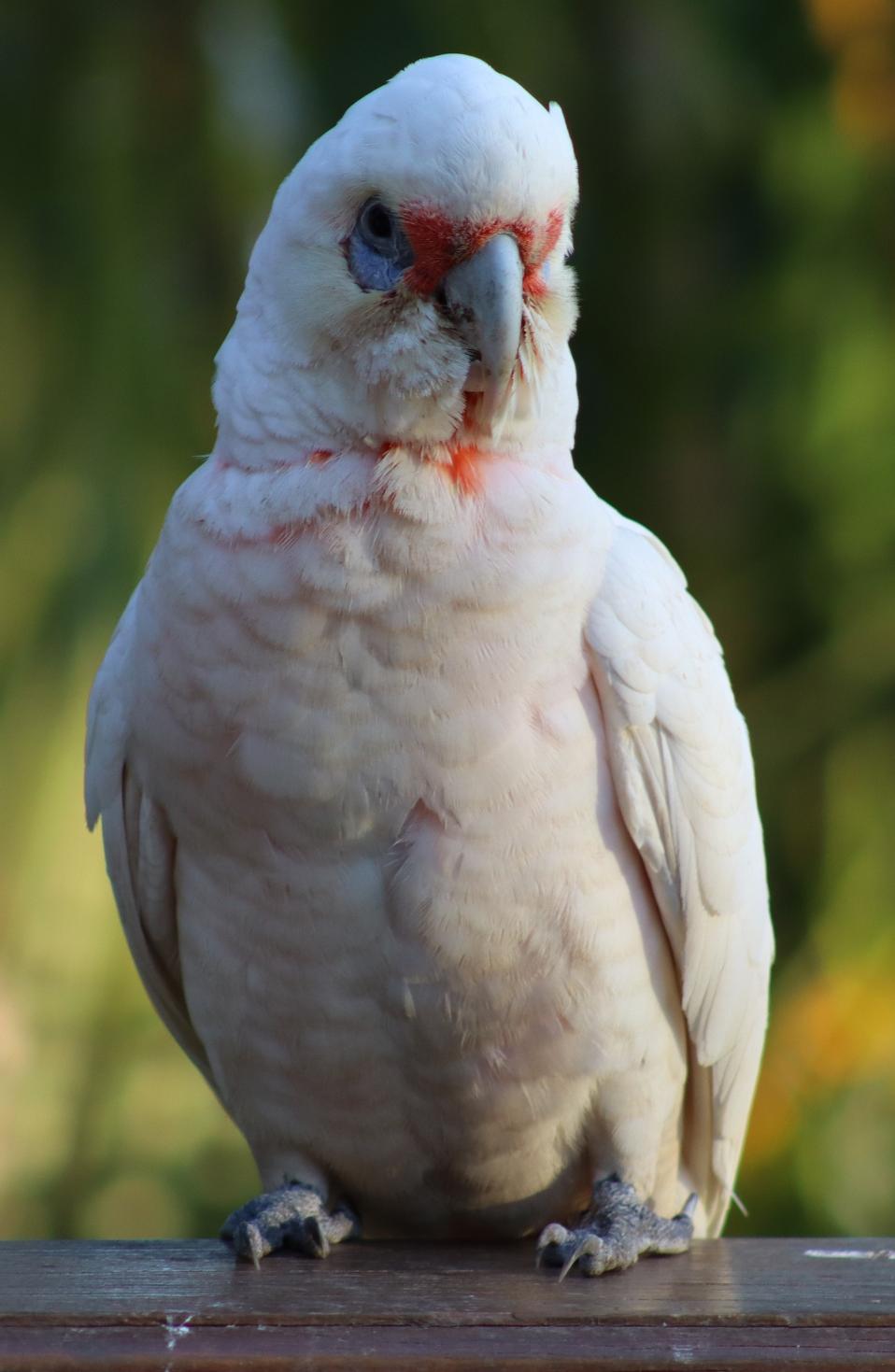
 

Call-Out for Iconic Trees

The council is inviting the community to nominate remarkable public trees for inclusion on the new Iconic Tree Register, with nominations opening 25 September 2026.

The register will recognise significant public trees that contribute to the area’s natural beauty, biodiversity, history and sense of place.

Nominated trees must meet one or more criteria, including visual, ecological, historical,  botanic or social significance.

Most public native and exotic trees are eligible, including those exempt for removal under council or State Government controls if they demonstrate they meet the criteria.

The council stated it will launch the official Iconic Tree Register platform in January 2027, after the first nominations have been assessed. The interactive platform will contain images, locations and informative details of each tree.

A council chosen 'panel with expertise in biodiversity, arboriculture, heritage and landscape architecture will assess nominations against the Iconic Tree Register criteria' the statement out of the council says.

The first intake will allow approximately 30 eligible trees to be recommended for inclusion, with future assessment rounds happening on a regular basis.

Listed trees will be managed under the council’s ''Tree Management Policy'' and monitored for health and condition.

For more information and to nominate, visit the council webpage.

A magnificent Grey Gum (E. punctata) example on the hill heading down Riviera Avenue with a Spotted Gum (Eucalyptus maculata) growing alongside it. Pic: AJG/PON

Pittwater Natural Heritage Association AGM 2026

All members welcome - bring a friend!

About PNHA

With urbanisation, there are continuing pressures that threaten the beautiful natural environment of Pittwater. Some impacts are immediate and apparent, others are more gradual and less obvious.

The Pittwater Natural Heritage Association has been formed to act to protect and preserve the Pittwater areas major and most valuable asset - its natural heritage.

PNHA is an incorporated association seeking broad based community membership and support to enable it to have an effective and authoritative voice speaking out for the preservation of Pittwater's natural heritage.

Our Aims

  • To raise public awareness of the conservation value of the natural heritage of the Pittwater area: its landforms, watercourses, soils and local native vegetation and fauna.
  • To raise public awareness of the threats to the long-term sustainability of Pittwater's natural heritage.
  • To foster individual and community responsibility for caring for this natural heritage.
  • To encourage the Council and the NSW Government to adopt and implement policies and works which will conserve, sustain and enhance the natural heritage of Pittwater.

Some of our interests and concerns include:

  • Native Tree Canopy
  • "Wildlife Friendly" Gardens
  • Weed Infestation
  • Keeping our Waterways Healthy
  • Beaches and Dunes

Find out more about PNHA and join in at: pnha.org.au

Antarctica’s ice loss is locked in, and extra snowfall won’t save it – that’s bad news for low‑lying coastal areas elsewhere

A glacier front meets the water.
A glacier front meets the sea in Antarctica. The ice sheet holds enough water to raise global sea level by about 190 feet (58 meters). Qiyue Sun
Yucheng Lin, City University of Hong Kong and Robert Kopp, Rutgers University

Sea-level rise is one of the most visible signs of climate change, one that is threatening low-lying coastal communities around the world. Today, about 1 billion people live in coastal areas; about 100 million live within 1 meter (3.3 feet) of sea level, highly exposed to coastal flooding.

Over the long term, when it comes to future sea-level rise, one place matters more than any other: Antarctica.

The frozen continent holds enough ice to raise global sea level by about 190 feet (58 meters). Yet scientists have disagreed on a fundamental question: Will Antarctica gain more ice than it loses this century or lose more ice than it gains?

In a new study published in the scientific journal Nature Geoscience, we looked at hundreds of thousands of potential futures and the impact of each on the ice sheet.

We found that Antarctica’s ice loss this century is locked in – even if the world limits global warming to 1.5 degrees Celsius (2.7 degrees Fahrenheit), the 2015 international Paris climate agreement’s most ambitious goal.

Why the Antarctic ice sheet is so hard to predict

The Antarctic ice sheet’s future depends on a chain of events.

Greenhouse gas emissions from vehicles, coal- and natural gas-fueled power plants and other sources around the world determine how much the ocean and air around Antarctica warms. That warming shapes how ice shelves around the continent’s margins melt, and how quickly the glaciers behind them slide over the bedrock. When those ice shelves thin or collapse, studies show the glacier flow speeds up.

A European research team explains ways Antarctica is vulnerable to ice loss from the ocean and how models work. TiPACCS.

Each step relies on assumptions that scientists have yet to agree on, such as how ice shelves collapse. Different assumptions give different answers, and because each step feeds the next, the differences grow – what scientists call cascading uncertainty. As a result, research teams around the world can’t agree on whether Antarctica will gain or lose ice this century.

Snow is part of the puzzle. Warmer air holds more moisture, so as temperatures rise, more snow will likely fall on Antarctica. In some projections, that extra snow outweighs the ice lost to the warming ocean, and the ice sheet actually grows.

Auditioning possible futures

A big reason for this persistent disagreement involves the cost of computing.

Each ice-sheet simulation runs with just one set of assumptions for every step in the chain, from how much greenhouse gas we emit to how the ice behaves. One run can keep a supercomputer busy for days, so no team can test every plausible combination.

Our team of data scientists, glaciologists and oceanographers took a shortcut. An international project called the Ice Sheet Model Intercomparison Project, or ISMIP6, has built a large archive of Antarctic simulations showing how the ice responds under different circumstances. We trained a physics-informed machine learning model on that archive to learn how each simulation’s outcome depends on its physical assumptions, such as how easily ice slides over bedrock. The machine learning model does in a fraction of a second what took the original models days, predicting sea-level change with similar accuracy.

NASA’s Grace satellite has tracked ice mass loss over the years. NASA

That speed let us run millions of combinations and check hundreds of thousands of possible futures against data from satellites that weigh the ice sheet from space by sensing tiny changes in Earth’s gravity. Only scenarios that were able to match what the satellites have seen since 2002 made the cut.

The scenarios that did make the cut point one direction: Antarctica will lose more ice than it gains this century, even if humanity is able to limit global warming to 1.5 C.

That means Antarctica will contribute more to sea-level rise that’s already being driven by melting of the Greenland ice sheet and mountain glaciers and from warming ocean temperatures that cause water to expand.

What a clearer forecast can do

The biggest lessons from our study are that greenhouse gas emissions matter and extra snowfall won’t save Antarctica. Every ton of greenhouse gas that humans can avoid releasing today reduces how much ice Antarctica loses this century, and the benefit – slower and less sea-level rise – lasts for hundreds of years.

In a scenario with very high emissions, our results show a potential faster domino effect. A fast-warming ocean thins the ice shelves, weakened shelves break apart, and glacier ice flows into the ocean faster. Each step makes the next one easier. Together, these steps could add up to 10 inches (25 centimeters) of sea-level rise from Antarctica alone by 2100 – enough to permanently flood the homes of more than 10 million people.

An illustration showing different steps in the ice melt
What different types of models help scientists understand about ice melt, and how they are connected to help predict the Antarctic ice sheet’s future. On the left, how greenhouse gas emissions change the climate, including sea ice, ocean and atmospheric dynamics, which influence one another and levels of global warming. On the right, what goes into an ice sheet model, including ice shelf melt and collapse and how the ice slides. Every stage adds uncertainty. Yucheng Lin

Of more than 20 physical assumptions about Antarctica, three matter most for understanding future sea-level rise: how ice shelves respond to a warming ocean, how ice slides over bedrock, and how fast the ocean and air around Antarctica warm. Gaining a better understanding of these processes would do the most to sharpen sea-level projections.

What’s still missing

Our study is far from the final word.

Some processes are missing from today’s simulations, so our machine learning model can’t learn about them – for example, how ice cracks and breaks, and how rivers and lakes beneath the ice sheet change over time. Any of these could change our understanding of how quickly Antarctica’s ice reaches the sea and whether coastal communities have enough time to adapt.

What our study does offer is a much faster way to test combinations of assumptions that are too costly to simulate one by one. That provides a clearer basis for the decisions coastal communities around the world are already having to make.The Conversation

Yucheng Lin, Assistant Professor of Energy and Environment, City University of Hong Kong and Robert Kopp, Professor of Earth Sciences, Rutgers University

This article is republished from The Conversation under a Creative Commons license. Read the original article.

NSW Threatened Species Scientific Committee provisional listing on an emergency basis: Hibbertia sulcinervis Toelken in Sydney Basin area

Announced; Friday October 9 2026

The shrub Hibbertia sulcinervis Toelken has been provisionally listed as a critically endangered species on an emergency basis.

Hibbertia sulcinervis Toelken is endemic to the Sydney Basin Bioregion of NSW. 

The determination states:

Hibbertia sulcinervis Toelken (family Dilleniaceae, CHAH 2026; PlantNET 2026) belongs to the Hibbertia stricta species-group (Toelken and Miller 2012) and is described as: “Shrubs to 1.3 m high, moderately branched; stems with prominent flanged leaf bases, puberulous when young, becoming glabrous, with short intrapetiolar hair tufts. Leaves shortly petiolate; lamina linear, (7.4–)10–30(–34.5) × 0.8–1.3 mm, flat and glabrous adaxially, with a broad central vein deeply recessed between strongly revolute margins abaxially, the leaf undersurface partly concealed; apex acute to pointed. Flowers terminal on main and axillary branches, shortly pedicellate; primary bract linear-triangular to linear-elliptic, caducous.

Sepals glabrous, outer lanceolate with a faint central ridge, inner elliptic with scarious margins. Petals yellow, cuneate-obovate, 4.2–7.4 mm long, emarginate. Stamens 6 or 7, in a single cluster, the central stamen longer. Carpels 2; ovaries broadly obovoid, shortly hirsute, with 4 ovules.” (PlantNET 2026).

Hibbertia sulcinervis is endemic to the Sydney Basin Bioregion of NSW (Commonwealth DCCEEW 2024a, 2024b). Currently known and extant records of this species are clustered in Yellomundee Regional Park, at the southern end of the Hawkesbury local government area (LGA), near the Nepean River (ALA 2026). The holotype of this species was collected at Nortons Basin (along the Nepean River, ~22 km south of the currently extant records, Penrith LGA) in 1965 (Toelken and Miller 2012). A specimen labelled “aff. Hibbertia acicularis” was collected from the Nortons Basin area (Crown or freehold land) in 1989 and may be attributed to Hibbertia sulcinervis (P. Rossington in litt. July 2026; RBGDT 2026). However, no individuals have been detected in subsequent surveys of this locality (albeit not comprehensive), and it is possible they are locally extinct at this site (P. Rossington in litt. July 2026).

If Hibbertia sulcinervis is locally extinct at the Nortons Basin site, the distribution of this species would meet the IUCN (2024) definition of severely fragmented because it occurs in a single subpopulation that may go extinct with no known source from which that site could be recolonised.

The extant population of Hibbertia sulcinervis is estimated to include 50–250 mature individuals in Yellomundee Regional Park, with zero individuals at Nortons Basin (P. Rossington in litt. July 2026). Seedlings were also common at the Yellomundee site at the time of writing (P. Rossington in litt. July 2026).

There is an inferred continuing decline in habitat quality for Hibbertia sulcinervis due to incidental damage to vegetation and soils by mountain bike activities, invasion by Lantana camara (a shrub) and Eragrostis curvula (a grass), and an increased likelihood of high frequency fire, which may disrupt the species’ life cycle.

More information on the species can be found on the Threatened Species Scientific Committee's (the Committee's) Determinations for provisional listing on an emergency basis webpage.

In the near future, the Committee will make a preliminary determination regarding this proposal, which will be placed on public exhibition. Public submissions will be invited at that time.

Hibbertia sulcinervis. Yarramundi, NSW.  Credit: Paul Rossington/Wikimedia Commons

Land purchase brings pink lakes into the NSW national parks estate

Announced: Thursday October 8 2026

'For the first time, pink lakes will be protected within the NSW national parks estate, following the joint purchase of Pulgamurtie Station by the Minns and Albanese Labor Governments', the NSW government has stated.

'Located 235 kilometres north-east of Broken Hill, Pulgamurtie Station will protect more than 74,000 hectares of outback landscape and provide a home to more than 70 threatened species including the iconic brolga, pink cockatoo and slender darling pea.

Its most extraordinary features are two striking pink lakes, which are among NSW’s most spectacular natural wonders. Pink lakes are rare in NSW, with many appearing only seasonally. Their distinctive hues are created by naturally occurring microorganisms, including algae and bacteria, that thrive in highly salty water and produce pink pigments.

The landscape also features sweeping outback plains, rolling sand dunes and thriving wetlands. Its larger lakes and wetlands provide critical feeding and breeding grounds for thousands of waterbirds, including migratory species that travel between Australia, Russia, China and Japan.

Rich in Aboriginal cultural heritage, the property forms part of the significant Dreaming songlines and contains historic stone artefacts, hearths and grinding stones.

Located along the Silver City Highway, Pulgamurtie will become a new destination for visitors to Far West NSW. NSW National Parks and Wildlife Service (NPWS) will explore a range of potential visitor experiences, including campsites near the larger lakes, day-use areas, walking trails and scenic drives, with opportunities for birdwatching and taking in views towards the Koonenberry Range.

Acquisitions such as Pulgamurtie help protect landscapes and ecosystems that are under-represented in the reserve system, while creating new tourism opportunities and supporting investment in regional communities.

National parks play a vital role in supporting Western NSW communities and economies, contributing $433 million to the region annually and supporting nearly 9,000 jobs.

The Albanese and Minns Governments are jointly investing to purchase high-priority conservation properties like Pulgamurtie, for protection through the Australian Bushland Program.

Strategic land purchases of this kind have assisted the Albanese Government to protect more than 25 per cent of Australia’s land mass, which is crucial to restore the nation’s biodiversity.

NPWS will now undertake ecological and cultural heritage surveys to guide the property’s future management. This will include feral animal and weed control, as well as protection of threatened species and cultural heritage.

NPWS will continue to work closely with members of the Malyangapa Aboriginal Community, neighbouring landholders and other stakeholders as this planning progresses.

Pulgamurtie Station was on the market for around two years and was acquired after it failed to meet its reserve at public auction. NPWS has purchased five of the 60 properties sold in Far Western NSW in 2024 and 2025.' the NSW Government's statement says

Federal Minister for the Environment, Murray Watt, said:  

“Australians love spending time in the bush and this purchase will protect more of it for future generations.

“With our natural environment under significant pressure, the Albanese Government is committed to protecting and restoring more land across Australia.

“Through our partnership with the NSW Government, we’re helping secure important habitat and expand the network of protected areas in places that deliver the greatest conservation benefits.

“By protecting and conserving diverse areas of NSW, we’re supporting many threatened species and the habitats they call home.”

NSW Minister for the Environment, Penny Sharpe, said:

“These will be the first pink lakes protected by the NSW national park estate. This is a once-in-a-generation conservation and tourism opportunity that will protect these spectacular landscapes and allow more people to experience them.

“Few places capture the scale and diversity of the NSW outback quite like Pulgamurtie, where a mosaic of wetlands, lakes and rolling arid plains exist side by side.

“This is a critical investment in conservation that will help safeguard this unique landscape, its wildlife and its rich cultural heritage for generations to come.”

Representative member of the Malyangapa Native Title Board, Mark Sutton, said: 

“The Malyangapa people are supportive of the continued expansion of protected areas in Far West NSW.

“The acquisition of Pulgamurtie ensures that representative landscape types and Aboriginal cultural heritage will be protected.

“We look forward to engaging with National Parks and Wildlife Services to create another recreational destination for locals and visitors alike.”

View of Pulgamurtie's pink lake. Photo: NPWS/NSW Government

From rescue to recovery: 250 turtle eggs offer hope for Gwydir wetlands

Announced: Friday October 9 2026

The NSW Government has announced more than 250 turtle eggs are now incubating after being laid by native turtles rescued from drying mud in the Gwydir wetlands earlier this year.

On March 18 2026 the Nature Conservation Council of NSW (NCC) was raising the alarm over a looming environmental crisis in the Gwydir Wetlands, where critical environmental water is being withheld in Copeton Dam. [5.]

''There appears to be a new, lower level of risk acceptance by WaterNSW to release environmental water if that water passes over private property, creating an urgent and unacceptable situation for the region's fragile ecosystems.'' NCC stated

Revelations from the NSW Parliament’s Budget Estimates hearings highlight this concerning shift in river operations. During questioning on March 4, 2026, WaterNSW Chief Executive Officer Andrew George confirmed that environmental water deliveries are being restricted. 

When asked about the decision-making process for delivering environmental water to the Gwydir Wetlands, Mr George stated:

"Quite simply, we do not have the authorising environment to flood private property.”

"... we would be breaking the law if we were passing water over private property. We are not authorised to do that without the private property owner's explicit permission.” 

This refusal to release environmental water, which has been delivered successfully for years, is already having devastating consequences on the ground. At the Gingham Waterhole in the Gwydir Wetlands, one of the last strongholds for the broad-shelled turtle is on the brink of collapse as the waterhole rapidly dries. 

NCC insists that environmental protection must be prioritised, in accordance with the principles and duties outlined in the NSW Water Management Act 2000. 

Mel Gray, Water Campaigner, NCC stated in March: 

“Environmental water orders are specifically designed to respond to ecological emergencies like the one unfolding at Gingham Waterhole.

"This is an urgent, unacceptable situation.

"The NSW Water Minister, Rose Jackson, must act swiftly to ensure environmental water can be released as it has been for years.

“We cannot allow bureaucratic or legal stand-offs to result in the extinction of local populations of native species while the water they desperately need sits idle in a dam."

The NCC called on Minister Jackson and WaterNSW to immediately resolve any perceived legal impediments, allowing the release of environmental flows to the Gwydir Wetlands before the broad-shelled turtle population is lost forever.

One Month On: Everything Dying

However, a month later the water has not been reinstated and now researchers from the University of New England are working to dig the turtles out of the drying sludge before all of them are lost.

The Gwydir Wetlands are within the northern part of the Murray-Darling Basin, the country's largest river system. The wetlands are one of Australia's designated Ramsar sites, listed as a wetland of international importance protected under the Ramsar international convention.

Under the convention, the Gingham and Lower Gwydir parts of the wetlands are protected due to their support for nationally listed threatened species.

The NSW Department of Climate Change, Energy, the Environment and Water (DCCEEW) records state the wetlands are crucial for the biological and ecological functioning of the Murray-Darling Basin bioregion.

The eastern longneck, broadshell and Murray River turtles are three species of turtles that call the Gingham Waterhole home.

Populations of all three species have been affected; however, it is the collapse of the Murray River turtle population that is of most concern, with conservationists fearing they could soon disappear from the area completely.

"We have managed to dig up 40 turtles," Dr Bower from UNE stated

"I know from previous trapping sessions there are upwards of 300 turtles in the catchment.

"We have already lost a proportion of the population due to the dry conditions … the longer the waterhole is allowed to be dry, the more turtles we will lose."

Field surveys conducted last month by freshwater turtle researchers revealed a worsening ecological crisis at the site.

Deborah Bower said if the waterhole dries completely, the broad-shelled turtle population there will almost certainly be lost.

“We are watching the collapse of a turtle population in real time,” Professor Deborah Bower said.

“The Gingham Waterhole has supported multiple turtle species for decades.

“Importantly, Copeton Dam currently holds over 800 GL, including approximately 217 GL of environmental water available for delivery before July, 2026, presenting a clear and immediate opportunity to intervene.”

The Gingham watercourse supports four internationally important Ramsar-listed sites in the Gwydir wetlands region near Moree. Wildlife in the area relies on rain and floods, as well as environmental flows managed by state and federal governments in support of the Murray-Darling basin plan.

Dr Bower said researchers have found approximately 15 dead turtles.

She said there was no way to know how many turtles were buried beneath the surface, and she had to physically feel for them in the mud to find them.

"They use digging into the mud as [an] adaptation. They can survive for a period of time in the mud," she said.

"I don't know how many we will lose in this event."

Turtles that have been rescued were transported to Taronga Western Plains Zoo.

Dr Bower said a large fishkill has also resulted from the low water levels, and nearby animals like kangaroos were being forced to move to nearby private land in search of food and water.

The Gwydir wetlands in north-west NSW provide critical habitat for native wildlife, with the Gingham watercourse supporting four internationally important Ramsar-listed wetland sites.

After the University of New England raised the alarm that the turtles were becoming trapped in a rapidly drying waterhole, a rescue mission was initiated by the NSW Government to retrieve as many turtles as possible.

What started as an operation to collect turtles quickly evolved into a unique project, when many of the 39 rescued turtles arrived carrying eggs. The turtles were taken to Taronga Western Plains Zoo’s specialised rehabilitation facility, where they received veterinary care and subsequently laid more than 250 eggs.

The eggs are now being incubated in a temperature-controlled facility at Taronga’s Platypus Rescue HQ. The hatchlings are expected to emerge over the coming year and will be progressively released into the wild, boosting local turtle populations and helping secure the future of turtles in the Gwydir wetlands.

Reintroduction of the rescued adults to the healthy Gwydir wetlands has already begun. Ten Broad-shelled Turtles and three Murray River Turtles were recently released following comprehensive health assessments.

The remaining turtles are expected to follow later this year as conditions allow, helping to re-establish a healthy ecosystem.

Broad-shelled Turtle. Photo: NPWS/NSW Dept. of Environment

Minister for the Environment Penny Sharpe said:

“Conservation isn't always about following a set playbook. Sometimes a crisis creates an opportunity to do something truly ground-breaking.

“By rescuing these turtles and safeguarding more than 250 eggs, we've turned a potential loss into a remarkable opportunity for species recovery.”

Minister for Water Rose Jackson said:

“This is a powerful reminder that when governments listen to the science and move quickly, we can make a real difference for the environment.

“What could have been a story of loss has become a story of recovery, innovation and hope for the future of the Gwydir wetlands.”

Taronga Zoo Wildlife Conservation Officer Dr Phoebe Meagher said:

“Since arriving in Taronga’s care, it’s been a real team effort with the turtles undergoing health assessments, veterinary monitoring and supportive husbandry to aid their recovery and prepare them for their return to the wild.

“To rehabilitate these rescued turtles to a point where they can begin to be returned to the wild is a milestone in itself, but to know that there are more than 250 eggs incubating that could further supplement wild populations is incredibly encouraging for the future of this species.”

References:

1 NSW Legislative Council, Portfolio Committee No. 2 - Health, Uncorrected Transcript - Budget Estimates (Jackson), 4 March 2026, p. 13. 

2 Moree Online News, Researchers: Freshwater turtles are dying while environmental water sits in dam. 18 March 2026

3 Moree Online News, Gwydir wetlands freshwater turtles dying while environmental water sits in Copeton. 18 April 2026

4 ABC News Online. Turtles 'awaiting their fate' buried under mud at NSW wetlands after inflows halted By James Paras and Genevieve Blandin De Chalain. 21 April 2026

5 Pittwater Online News, March-April 2026 Environment News, Issue 653

Legislation introduced to create Great Koala National Park

Announced: Tuesday October 13, 2026

Legislation to create the Great Koala National Park has been introduced to NSW Parliament by the Minns Labor Government, revealing new details about how the park will protect koalas while keeping forests open for people to explore and enjoy, the NSW Government has announced.

'The National Park Estate (Great Koala National Park Reservations) Bill 2026 will add more than 178,000 hectares of state forest and other Crown land to the national park estate on the NSW Mid North Coast, protecting important habitat for an estimated 12,000 koalas, 36,000 gliders and more than 100 threatened species.' the government said in a released statement

'Combined with existing national parks and reserves, it will be one of the largest parks in NSW, creating a protected area spanning more than 475,000 hectares.

The Bill includes different reserve categories across the park, allowing a wide range of recreational activities to continue alongside conservation.

Most of the newly added state forest and Crown land will be reserved as national park, ensuring long-term protection of important environmental and cultural values. Thirteen per cent of the added land will be designated regional park, supporting more intensive recreation and community activities.

Visitors will be able to enjoy a range of activities including bushwalking, trail running, camping, kayaking, canoeing, horse riding, trail-bike riding, four-wheel driving, fishing and mountain-bike riding, as well as dog walking in select reserves.

The reserve categories have been informed by feedback from the community and recreational groups about how they currently use these forests and what they want to see in the future. This highlighted strong support for protecting wildlife and maintaining recreational access.

The Bill allows the Minister for the Environment to approve motor racing events on existing roads in regional parks within the Great Koala National Park in appropriate circumstances, recognising the long history of car rally events in the region.

The Minns Labor Government continues to support affected workers and communities every step of the way. A comprehensive support package is in place for those workers and businesses, including redundancy support, retraining and upskilling assistance, relocation support, and access to financial and legal guidance and mental health services.

The Bill includes a provision enabling Forestry Corporation staff to be appointed to suitable roles within NSW National Parks and Wildlife Service, helping retain valuable local skills, experience and knowledge within the region.

The final creation of the Great Koala National Park is conditional on the Clean Energy Regulator's registration of the carbon project.' the government said

Minister for the Environment Penny Sharpe said:

“The Great Koala National Park is one of the most important things we can do to save koalas in NSW. It is also about creating an area that people can explore and enjoy for generations.

“From bushwalking and canoeing to mountain-bike riding and camping, we’ve listened to how people want to enjoy the park and we’re making sure that while we save koalas, the Great Koala National Park can also be a world-class area for recreation.”

Minister for Agriculture and Regional NSW Tara Moriarty said:

“We made a promise to create a Great Koala National Park and to support workers, and we’re delivering on that commitment. Alongside this park, we’re rolling out a comprehensive package to help support impacted forestry workers.

“We’re also legislating a pathway for eligible Forestry Corporation workers in the area to keep using their skills and strong connection to the land in the NSW National Parks and Wildlife Service.”

Minister for the North Coast Janelle Saffin said:

“We’ve listened closely to local families, outdoor enthusiasts and North Coast communities to get this balance right.

“The Great Koala National Park delivers crucial protection for our koalas and native wildlife while creating world-class recreation opportunities that will boost local tourism and support North Coast businesses.”

The Nature Conservation Council NSW (NCC) has welcomed the legislation, which will protect some of the state's most important koala habitat and wildlife corridors. 

NCC Senior Forest Campaigner Clancy Barnard said: 

“After more than ten years of campaigning, it's fantastic to see the Great Koala National Park legislation finally reach Parliament. 

“What started as an idea more than a decade ago, inspired by China's panda reserves, has grown into one of the largest new national parks in NSW. 

“The original 175,000-hectare proposal has now grown to more than 178,000 hectares, with the recent addition of 386 hectares of Crown land securing even more vital habitat for koalas and more than 100 threatened species. 

“This is a tremendous achievement for the thousands of people who have campaigned, advocated and worked tirelessly to make this park a reality. 

“Polling has consistently shown that more than 85% of people in NSW support the Great Koala National Park. This is something people across the political spectrum can celebrate, and we encourage all members of Parliament to support the legislation. 

“We applaud the NSW Government for delivering on its commitment to establish this park and for its work to ensure the park delivers for local communities as well as wildlife. 

“It's particularly encouraging to see plans for improved recreational opportunities, including free campsites and continued access for dog walkers, mountain bikers and horse riders. This will see more people have access to these magnificent forests. 

“For those of us living on the Mid North Coast, it’s particularly exciting to see more than $140 million in new funding flowing into our region, supporting conservation, restoration, park management and local jobs. 

“The creation of new Aboriginal ranger positions, employed through Aboriginal Community Controlled Organisations, is another exciting step towards placing First Nations knowledge and leadership at the heart of caring for Country. 

“The Great Koala National Park is a huge achievement built on more than a decade of community campaigning, and that work continues. 

“It was devastating to see almost 10,000 hectares of the proposed park logged before the Government finally declared a moratorium, on top of decades of intensive logging under previous governments. 

“These forests need significant investment in restoration, weed management and ongoing fire management, so it’s extremely pleasing to see the Government commit to funding this work. 

“Logged forests are more vulnerable to severe bushfires, and the challenge now is getting enough boots on the ground to repair the damage. We welcome the Government’s investment and expect that commitment to continue for decades to come. 

“We’ll continue working to protect important koala habitat across NSW and secure an end to native forest logging for good. That’s what the community wants, and that’s what we’ll keep fighting for.” 

West Gables biodiversity certification application: Have Your Say

An application has been made by Stockland Development Pty Ltd and Allam Land No. 11 Pty Ltd for biodiversity certification of land at Old Pitt Town Road and Boundary Road, Gables.

The application is open for public comment until 26 October 2026.

Biodiversity certification is a government created and sanctioned mechanism that enables developers to destroy habitat and wildlife. The certification process identifies areas that can be developed/destroyed after they are certified and measures to ''offset the impacts of development'' have been approved (money handed over). The NSW Government's Biodiversity Credits Market Sales Dashboard lists what can be bought or paid for - residents may be surprised by how cheap it is to accelerate extinctions.

This one is for around 76.42 hectares of land at West Gables.

The supporting documentation for this one points out, in just one instance, that:

'Three threatened microchiropteran bats were recorded as definitely present across the BCAA during surveys including.

• Micronomus norfolkensis (eastern coastal free-tailed bat) – ecosystem credit  species

• Miniopterus orianae oceanensis (large bent-winged bat) – dual credit species

• Myotis macropus (southern myotis) – species credit species

An additional four threatened microbat species were also potentially present, including.

• Falsistrellus tasmaniensis (eastern false pipistrelle) – ecosystem credit species

• Saccolaimus flaviventris (yellow-bellied sheathtail-bat) – ecosystem credit species

• Scoteanax rueppellii (greater broad-nosed bat) – ecosystem credit species

• Vespadelus troughtoni (eastern cave bat) – species credit species

Of these fauna species, only one requires offset to be calculated for impacts to habitat, being southern myotis. A species polygon has been provided for southern myotis and offsets calculated. Ecosystem credit species do not require the preparation of a species polygon. Dual credit species and species credit species require the preparation of a species polygon, unless there is no breeding habitat within the BCAA or within 2 km of the BCAA. No breeding habitat such as caves, cliffs, disused mines or tunnels were present within the BCAA or within 2 km of the BCAA. Therefore, no species polygon for eastern cave bat, or large bent-winged bat was required.'

The proposed BCAA is bordered by Old Pitt Town Road to the south and Boundary Road to the west, with future residential communities to the north, east and south. Remnant vegetation and regrowth vegetation is present belonging to three native plant community types (PCTs):

  1. Cumberland Shale Plains Woodland - listed as critically endangered (to extinction)
  2. Cumberland Shale-Sandstone Ironbark Forest, - listed as critically endangered (to extinction)
  3. Southern Lower Floodplain Freshwater Wetland - listed as endangered (to extinction)

Gables is 52 kilometres west of the Sydney central business district in the local government area of The Hills Shire. The Gables is a residential development within the suburb that is currently being developed by Stockland. It is the biggest master planned community in The Hills District and covers 330 hectares (820 acres). When The Gables was first planned in 2015, it was planned to comprise over 4,000 dwellings, a primary school, two sports fields, a 5.5-hectare (14-acre) town centre and a 4-hectare (9.9-acre) lake central to the development.

Celestino was the original developer of The Gables until March 2020, when Celestino sold the remaining 293 hectares (720 acres) of undeveloped land to Stockland for A$415 million. At the time of the sale, Celestino had already developed 994 dwellings.

As part of the biodiversity certification process, the applicant must make the application available on their website and invite the public to make submissions on the application. 

To view the application including the Biodiversity Certification Assessment Report and application form, and to make a submission, please visit West Gables Biodiversity Certification Application

After submissions close, the applicant must provide a report to the Department of Climate Change, Energy and the Environment that includes the applicant’s response to any submissions from the public.

Have your say 

You can submit your feedback on the proposed biodiversity certification until Monday 26 October 2026. 

You can provide your submission online at: www.stockland.com.au/west-gables 

NSW Snapper Harvest Strategy: Have Your Say

The government is seeking feedback on a draft harvest strategy for NSW Snapper. Share your views on the draft harvest strategy and management framework, which will contribute to the sustainable management of Snapper in NSW.

Public consultation commenced on 1 September 2026 and was initially set to close on 18 October 2026. The consultation period has been extended until 15 February 2027 to ensure opportunity for all stakeholders to provide feedback.

A draft harvest strategy for NSW Snapper has been developed, along with a new stock assessment identifying the stock is at sustainable but low levels.

Documents

The government states on the consultation webpage:

'Harvest strategies are a best-practice way to manage fisheries. They provide a clear plan for balancing environmental, economic, social and Aboriginal cultural interests while helping to keep fish stocks healthy for future generations.

A new integrated stock assessment has estimated the NSW component of the Snapper stock to be approximately 23% of unfished biomass. The assessment indicates the NSW stock has been building from lower levels since the 1990s, so there is some confidence stock biomass will continue increasing under similar catch levels.

The harvest strategy sets clear goals to build the NSW stock to target levels. The first goal is to build the stock to 30% of its unfished biomass. Over time, the aim is to build the stock further to 50% of unfished biomass.

To help achieve this building goal, the harvest strategy sets initial total annual catch (fishing mortality) to 300 tonnes per year, and a defined share to the commercial and recreational sectors. Assessment modelling estimates building to 30% of unfished biomass in 2035 under this level of total catch.

Based on current data, the following management changes would be needed to keep Snapper catches at or below the target level, and within sector shares. These arrangements will be reviewed and updated before commencement and as new information becomes available:'

*Recreational and charter boat limits are not proposed for Snapper.

**Current data indicates a monthly limit of around 950 kg per endorsement holder. Limits will be recalculated before commencement and for each fishing period.

Have your say by filling in a submission form HERE

Consultation will be open from Tuesday 1 September until Monday 15 February 2027.

Your feedback will help to finalise the harvest strategy and management actions to improve the long-term health of the NSW Snapper stock. Please review the harvest strategy and FAQs for further information.

NSW Yellowtail Kingfish Harvest Strategy: Have Your Say

The Government is seeking feedback on a draft harvest strategy for Yellowtail Kingfish in NSW. Share your views on the draft harvest strategy and management framework, which will contribute to the sustainable management of Yellowtail Kingfish in NSW.

Public consultation commenced on 1 September 2026 and was initially set to close on 18 October 2026. The consultation period has been extended until 15 February 2027 to ensure opportunity for all stakeholders to provide feedback.

The government states on the consultation webpage:

'A draft harvest strategy for NSW Yellowtail Kingfish has been developed, along with a new stock assessment identifying the stock as depleted.

Harvest strategies are a best-practice way to manage fisheries. They provide a clear plan for balancing environmental, economic, social and Aboriginal cultural interests while helping to keep fish stocks healthy for future generations.

A new integrated stock assessment has estimated the NSW component of the Yellowtail Kingfish stock to be approximately 5.5% of unfished biomass. The assessment indicates the NSW stock has remained at a relatively consistent but unresponsive level over the past 2 decades.

The harvest strategy sets clear goals to rebuild the NSW stock to healthy levels. The first goal is to rebuild the stock to 30% of its unfished biomass. Over time, the aim is to rebuild the stock further to 50% of unfished biomass.

To help achieve this rebuilding goal, the harvest strategy sets initial total annual catch (fishing mortality) to 120 tonnes per year, which will be shared equally between the recreational and commercial sectors (60 tonnes each). Assessment modelling estimates rebuilding to 20% of unfished biomass in around 9 years, and 30% in around 12 years under this level of total catch.

Recent average total catches are around 250 tonnes per year. Based on current data, the following management changes would be needed to keep Yellowtail Kingfish catches at or below the target level, and within sector shares. These arrangements will be reviewed and updated before commencement and as new information becomes available.

*A recreational catch and release only season may be needed if the bag, possession and boat limits are not sufficient to reduce recreational catch to 60 tonnes for each fishing period. The duration would be assessed based on updated recreational data.

**Current data indicates a monthly limit of around 650 kg per endorsement holder to maintain catch to 60 tonnes for each fishing period. Limits will be recalculated before commencement and for each fishing period.

Lord Howe Island waters are currently excluded from the proposed management changes, recognising Yellowtail Kingfish are likely to comprise a distinct, self-recruiting component of the eastern stock.

Have your say by filling in a submission form HERE.

Consultation will be open from Tuesday 1 September until Monday 15 February 2027.

Your feedback will help to finalise the harvest strategy and management actions to improve the long-term health of the NSW Yellowtail Kingfish stock. Please review the harvest strategy and FAQs for further information.

NSW consulting on Australia's first mandatory solar panel recycling scheme: Have your say

Opened: Monday September 21 2026
Closes: Monday 16 November 2026

The Minns Government is consulting on Australia's first mandatory solar panel recycling scheme to ensure valuable solar panel materials are recovered, reused and recycled rather than sent to landfill.

The proposed regulation will help drive investment and jobs in the solar recycling industry and support the potential development of a solar panel remanufacturing industry in NSW.

NSW leads the nation in solar uptake, with more than 1.18 million rooftop solar systems across homes, businesses, schools and community facilities. As these systems age, increasing numbers of solar panels are ending up in landfill.

Around 14,000 tonnes of solar panel waste is generated in NSW each year. This is predicted to increase to 89,000 tonnes by 2045.

The proposed mandatory product stewardship scheme would require solar panel brand owners to take responsibility for the end-of-life management of their products, helping fund collection, recycling and resource recovery across NSW.

Recycling solar panels is not simply about reducing waste. It is also about capturing valuable resources and creating new economic opportunities.

Valuable materials such as aluminium, glass, silicon, copper and silver can be recovered and reused in new products and manufacturing industries. As larger volumes of materials are recovered, NSW will be better placed to build local supply chains, strengthen manufacturing capability, encourage innovation and create skilled jobs across the state.

To help shape this opportunity, the NSW Government has released an issues paper alongside the draft regulation, seeking feedback on how the state can support the growth of solar panel recycling, remanufacturing and manufacturing industries.

Consultation will seek views from unions, industry, recyclers, manufacturers, researchers, local government, workers and the community on the opportunities, challenges and investment needed to build a circular economy for solar panels in NSW.

Feedback will inform the design of the mandatory product stewardship scheme with the aim of establishing a system that reduces waste, recovers valuable resources and positions NSW as a leader in solar panel recycling and circular manufacturing.

Submissions on the draft regulation and issues paper are now open. For more information and to have your say, visit /yoursay.epa.nsw.gov.au/solar.

Minister for the Environment Penny Sharpe said:

“NSW has embraced rooftop solar, and now we’re making sure those panels don’t become tomorrow’s landfill problem. Solar panels contain valuable materials that can be recovered and put back to work.

“A mandatory product stewardship scheme can help build a circular economy for solar panels, while supporting new recycling and manufacturing opportunities here in NSW.” 

Garigal + Ku-ring Gai National Park: 1080 Operation

NSW National Parks and Wildlife Service will be conducting a baiting program using manufactured baits, fresh baits and Canid Pest Ejectors (CPEs) containing 1080 poison (sodium fluroacetate) for the control of foxes. 

The program is continuous and ongoing between 1 August 2026 and 31 January 2027 in Garigal National Park. Don’t touch baits or ejector devices. Penalties apply for non-compliance. 

Ku-ring Gai Chase Applies from Fri 31 Jul 2026, 10.25pm to Mon 01 Feb 2027, 2.26am. 

NSW National Parks and Wildlife Service will be conducting a baiting program using manufactured baits, fresh baits and Canid Pest Ejectors (CPEs) containing 1080 poison (sodium fluroacetate) for the control of foxes. The program is continuous and ongoing between 1 August 2026 and 31 January 2027 in Ku-ring-gai Chase National Park.

All baiting locations are identifiable by signs.

Domestic pets are not permitted in NSW national parks and reserves. Pets and working dogs may be affected (1080 is lethal to cats and dogs). Pets and working dogs must be restrained or muzzled in the vicinity and must not enter the baiting location. In the event of accidental poisoning seek immediate veterinary assistance.

Fox baiting in these reserves is aimed at reducing their impact on threatened species.

For more information, contact the local park office on:

  • Forestville 9451 3479 (business hours)
  • NPWS after-hours call centre: 1300 056 294 (after hours)

Public comment opens on industrial port and dredging proposal threatening Exmouth Gulf-Ningaloo

  • WA EPA has released Gascoyne Gateway’s environmental review documents for its proposed industrial port in Exmouth Gulf for public scrutiny. 
  • AMCS-Protect Ningaloo is campaigning to stop the port that would attract shipping through a critical humpback whale resting and nursing ground, require extensive dredging and cause other wide-ranging impacts.
  • Exmouth Gulf, Ningaloo will become WA’s newest marine park and is under formal assessment for National Heritage listing – AMCS-Protect Ningaloo maintains that an industrial port would be entirely incompatible with these vital conservation measures.

Australians have 12 weeks to voice their concerns about the industrialisation of Exmouth Gulf after Western Australia’s Environmental Protection Authority (EPA) today released the Environmental Review Document for Gascoyne Gateway’s port proposal for public comment. Submissions close 16 November 2026.

The Australian Marine Conservation Society states the proposal poses such widespread potential impacts to matters of national environmental significance that it has also triggered a federal assessment that will be part of this public comment period.

Gascoyne Gateway wants to build an industrial port 10km south of Exmouth town next to Qualing Pool – a rare freshwater oasis that the WA Government has earmarked as a class A nature reserve. The port would attract large vessels including fuel tankers, cargo ships, cruise liners and other heavy shipping into Exmouth Gulf, which the WA Government has earmarked for a marine park and which is under formal assessment by the Australian Government as a National Heritage treasure. 

This ecologically rich marine and coastal area is closely linked to the World Heritage-listed Ningaloo Coast and holds high conservation value. The area is home to many threatened and listed species, including dugongs, turtles, manta rays, sea snakes and dolphins, as well as corals, seagrass meadows, and sponge gardens. The proposed port would attract massive ships that would pass through a critical resting and nursing ground for one of the world’s largest humpback whale populations, posing serious threats of vessel strike and disturbance. 

Tens of thousands of people have joined AMCS-Protect Ningaloo, the Exmouth-based Cape Conservation Group and many local community members, in opposing the proposal since plans were first announced in 2020.  Over 20,000 emails have been sent to the current and past WA environment ministers calling for them to reject the proposal because it would fundamentally diminish the environmental values of Exmouth Gulf.

AMCS Chief Executive and Protect Ningaloo Director Paul Gamblin said: 

“The Gascoyne Gateway industrial port and dredging proposal is completely incompatible with the environmentally fragile Exmouth Gulf – Ningaloo’s Nursery – and would change this marine wonder forever.  

“An industrial port proposal, jutting nearly a kilometre into Exmouth Gulf and dredging of more than a million cubic metres of the seafloor in one of the world’s most important whale nursing grounds beggars belief.

“Tens of thousands of people have already made clear that industrialisation is unacceptable for Exmouth Gulf. People know that Exmouth Gulf obviously is no place for a port – its future is one of conservation and sustainable, light-touch economic activity, not industrialisation.

“Both the WA and federal governments have signalled that they are committed to protecting Exmouth Gulf so it’s time they made it clear that the future of this natural wonder is economic activity that treads lightly on its fragile environment. They must reject this proposal.

Cape Conservation Group Chair Denise Fitch said: “Exmouth Gulf is where Ningaloo’s whales rest and give birth, where our dugongs and manta rays feed. Dredging a port in the middle of this precious nursery goes against the spirit of stewardship that’s made Ningaloo the conservation and tourism success it has become. 

“Ningaloo is already under pressure from climate change. We’ve recently experienced unprecedented coral bleaching and seagrass damage from marine heatwaves, and further destruction from Cyclone Narelle. Now is not the moment to be adding industrial stressors to this fragile ecosystem. And this is no place for an industrial port. 
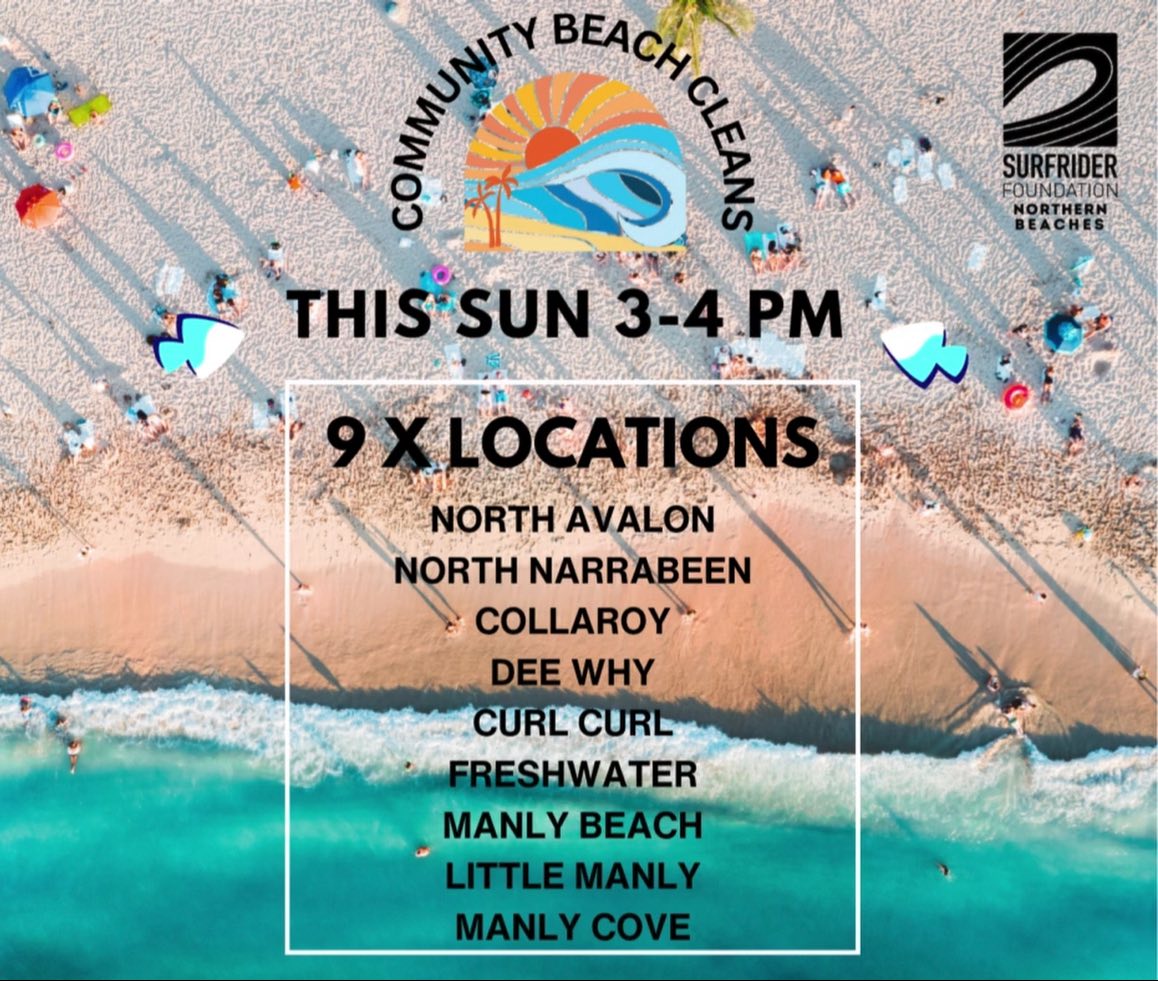
“We encourage those who know and love Ningaloo’s nursery to make a submission to the EPA and say no to this unwelcome proposal.”

Protect Ningaloo is calling on Gascoyne Gateway to do the right thing, as two other companies which pursued industrial projects in the Gulf have already done, and withdraw its proposal. 

Overview of Proposed Project

Gascoyne Gateway Ltd proposes to build, own and operate a multipurpose marine complex in Exmouth that will service a variety of vessels including but not limited to cruise liners and associated ecotourism activities, Defence and marine supply vessels. The project will not be utilised for livestock or iron ore.

The Proposal site is located 10 kilometres south of the Exmouth township and immediately south of the Ingram Street light industrial area; opposite the Exmouth landfill site and to the north of the Wilderness Estate residential area.

The proposal has a land-based component (including fuel storage and laydown, supporting marine facilities, desalination plant, renewables precinct, and access and utilities corridor), and a marine component (including marine infrastructure, vessel berths/channels, and anchorages).

An Environmental Review Document (ERD) has been prepared by Gascoyne Gateway Ltd in accordance with Environmental Protection Authority procedures and is released for public review.

The ERD describes the proposal, examines the likely environmental effects and the proposed environmental management procedures associated with the proposed development.

The Proposal includes a land based component (106.54 ha footprint within a 119.02 ha terrestrial development envelope) to support the marine infrastructure (61.63 ha marine footprint within and 79.44 ha marine development envelope) which includes a combination rock groyne and pylon steel construction to a berth-face. The berth face will require 13.5 m of cleared depth (at chart datum, equivalent to depth at LAT) to meet design vessel draughts, achieved by both natural depth and some dredging of sand and seabed limestone at the berth pocket. Marine construction includes piling and dredging, with dredge spoil used in the causeway construction. Three anchorage locations of 1nm diameter each are located in Exmouth Gulf approximately 9.5 km to the north east of the end of the causeway, within a nominal anchorage development envelope of 1153.14 ha. 
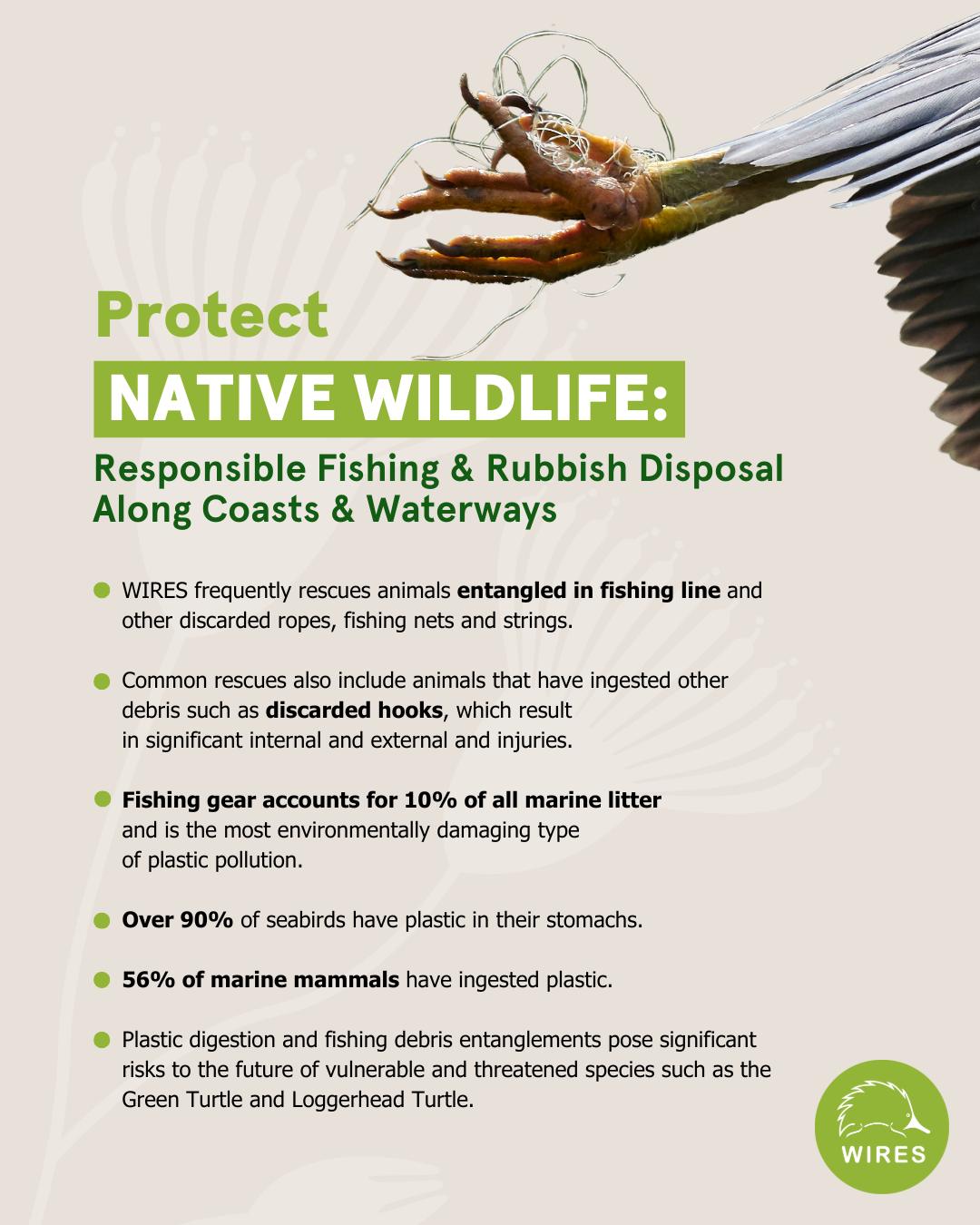
The ERD is available for download from Gascoyne Gateway Marine Complex | EPA Western Australia under 3. Assessment > Environmental Review.

The document is also available on the proponent’s website at Gascoyne Gateway Marine Complex.

Submissions should be made here: https://consultation.epa.wa.gov.au/assessment-and-compliance/gascoyne-gateway-marine-complex-per/

Submissions close November 16

Katandra Bushland Sanctuary Season 2026

Dedicated to the Study & Preservation of Native Flora & Fauna of the warriewood, Mona Vale & Ingleside Area

Website: katandrabushlandsanctuary.com/home

Email: katandrainfo@gmail.com

Katandra is open to visitors 10am to 4pm every Sunday from July to October (inclusive). Group visits can be organised at alternative times. Please visit the Katandra Bushland Sanctuary website for more information.

Katandra Bushland Sanctuary is situated in on the face of the Ingleside escarpment, overlooking the Warriewood Valley and the seaside suburb of Pittwater's Mona Vale. Enter Lane Cove road via the traffic lights to access.

PNHA Activities 2026

Our walks for 2026 are listed below. 

You are very welcome to bring friends and older children on these outings. Please book by emailing pnhainfo@gmail.com and include  your PHONE NUMBER so we can contact you in case of changes because of weather etc. 

Looking forward to getting out and about in our lovely area! 

Your PNHA Committee

Pittwater Natural Heritage Association

The Pittwater Natural Heritage Association has been formed to act to protect and preserve the Pittwater areas major and most valuable asset - its natural heritage.

PNHA is an incorporated association seeking broad based community membership and support to enable it to have an effective and authoritative voice speaking out for the preservation of Pittwater's natural heritage.

Our Aims

  • To raise public awareness of the conservation value of the natural heritage of the Pittwater area: its landforms, watercourses, soils and local native vegetation and fauna.
  • To raise public awareness of the threats to the long-term sustainability of Pittwater's natural heritage.
  • To foster individual and community responsibility for caring for this natural heritage.
  • To encourage Pittwater Council and the NSW Government to adopt and implement policies and works which will conserve, sustain and enhance the natural heritage of Pittwater.

Some of our interests and concerns include:

  • Native Tree Canopy
  • "Wildlife Friendly" Gardens
  • Weed Infestation
  • Keeping our Waterways Healthy
  • Beaches and Dunes

Act to Preserve and Protect!

If you would like to join us, please fill out the Membership Form. Visit: https://pnha.org.au

Sunday September 27. Spring in the Bush: Terrey Hills

Meet 9am at corner of Mallawa Rd and Bulara St, Terrey Hills. Walk ends about 11am. With a focus on botany, we’ll see flowering plants in the Proteaceae plant family, waratahs, endangered Grevillea caleyi , and others in the major Australian Proteaceae plant family. You can choose to lengthen this walk which connects to the Perimeter Track. Birds, too.

Sunday October 25: Katandra by Night

Meet 6.45pm at Katandra Bushland Sanctuary on Lane Cove Rd Ingleside. Walk ends about 8.45pm. Sunset is about 7.15. The bush by night is wonderful. We hope to see fireflies again as on previous walks here in October. Bring a torch, or headtorch, preferably with a red light option so as not to dazzle possums. Moderate fitness needed for the bush track and steps. Limit: 15 people, so please book early. 

Sunday November 22: Deep Creek Reserve

Meet 9am in Deep Creek reserve, off Wakehurst Parkway. Walk ends about 11am. Birds and bushland. From the bridge across the creek we may see Dollarbirds, summer breeding migrants that nest in hollows, with their youngsters. Black Bitterns have been observed along the creek margins, so bring binoculars. 

Coming up at Kimbriki

Solar for apartment residents: Co-funding

Less than 2% of apartment buildings in NSW have solar installed, but the NSW Department of Climate Chnage, Energy, the Environment and Water are on a mission to change this.

Their Solar for Apartment Residents grant is co-funding shared solar panel installations on eligible apartment buildings and multi-unit dwellings and has already helped thousands of households.

They’ve extended the program to help more homeowners and renters reduce their energy bills and have also allocated extra funds through a separate Boost grant to help priority communities too.

Application closes: 4 December 2026, 5:00 pm

Share this with your Owners Corporation or Stata Manager and check your building's eligibility at: www.nsw.gov.au/grants-and-funding/solar-for-apartment-residents-soar-grant-program

Birdwood Park Bushcare Group Narrabeen

The council has received an application from residents to volunteer to look after bushland at 199/201 Ocean street North Narrabeen.

The group will meet once a month for 2-3 hours at a time to be decided by the group. Activities will consist of weeding out invasive species and encouraging the regeneration of native plants. Support and supervision will be provided by the council.

If you have questions or are interested in joining the group please email the council on bushcare@northernbeaches.nsw.gov.au

Sydney Wildlife (Sydney Metropolitan Wildlife Services) Needs People for the Rescue Line

We are calling on you to help save the rescue line because the current lack of operators is seriously worrying. Look at these faces! They need you! 

Every week we have around 15 shifts either not filled or with just one operator and the busy season is around the corner. This situation impacts on the operators, MOPs, vets and the animals, because the phone line is constantly busy. Already the baby possum season is ramping up with calls for urgent assistance for these vulnerable little ones.

We have an amazing team, but they can’t answer every call in Spring and Summer if they work on their own.  Please jump in and join us – you would be welcomed with open arms!  We offer lots of training and support and you can work from the office in the Lane Cove National Park or on your home computer.

If you are not able to help do you know someone (a friend or family member perhaps) who might be interested?

Please send us a message and we will get in touch. Please send our wonderful office admin Carolyn an email at  sydneywildliferescueline@gmail.com

622kg of Rubbish Collected from Local Beaches: Adopt your local beach program

Sadly, our beaches are not as pristine as we'd all like to think they are. 

Surfrider Foundation Northern Beaches' Adopt A beach ocean conservation program is highlighting that we need to clean up our act.

Surfrider Foundation Northern Beaches' states:
''The collective action by our amazing local community at their monthly beach clean events across 9 beach locations is assisting Surfrider Foundation NB in the compilation of quantitative data on the volume, type and often source of the marine pollution occurring at each location.

In just 6 sessions, clear indicators are already forming on the waste items and areas to target with dedicated litter prevention strategies.

Plastic pollution is an every body problem and the solution to fixing it lies within every one of us.
Together we can choose to refuse this fate on our Northern beaches and turn the tide on pollution. 
A cleaner coast together !''

Join us - 1st Sunday of the month, Adopt your local for a power beach clean or donate to help support our program here. https://www.surfrider.org.au/donate/

Event locations 
  • Avalon – Des Creagh Reserve (North Avalon Beach Lookout)
  • North Narrabeen – Corner Ocean St & Malcolm St (grass reserve next to North Narrabeen SLSC)
  • Collaroy– 1058 Pittwater Rd (beachfront next to The Beach Club Collaroy)
  • Dee Why Beach –  Corner Howard Ave & The Strand (beachfront grass reserve, opposite Blu Restaurant)
  • Curl Curl – Beachfront at North Curl Curl Surf Club. Shuttle bus also available from Harbord Diggers to transport participants to/from North Curl Curl beach. 
  • Freshwater Beach – Moore Rd Beach Reserve (opposite Pilu Restaurant)
  • Manly Beach – 11 South Steyne (grass reserve opposite Manly Grill)
  • Manly Cove – Beach at West Esplanade (opposite Fratelli Fresh)
  • Little Manly– 55 Stuart St Little Manly (Beachfront Grass Reserve)
… and more to follow!

Surfrider Foundation Northern Beaches

This Tick Season: Freeze it - don't squeeze it

Notice of 1080 Poison Baiting

The NSW National Parks and Wildlife Service (NPWS) will be conducting a baiting program using manufactured baits, fresh baits and Canid Pest Ejectors (CPE’s/ejectors) containing 1080 poison (sodium fluoroacetate) for the control of foxes. The program is continuous and ongoing for the protection of threatened species.

This notification is for the period to 31 July 2026 at the following locations:

  • Garigal National Park
  • Lane Cove National Park (baits only, no ejectors are used in Lane Cove National Park)
  • Ku-ring-gai Chase National Park
  • Sydney Harbour National Park – North Head (including the Quarantine Station), Dobroyd Head, Chowder Head & Bradleys Head managed by the NPWS
  • The North Head Sanctuary managed by the Sydney Harbour Federation Trust
  • The Australian Institute of Police Management, North Head

DO NOT TOUCH BAITS OR EJECTORS

All baiting locations will be identifiable by signs.

Please be reminded that domestic pets are not permitted on NPWS Estate. Pets and working dogs may be affected (1080 is lethal to cats and dogs). Pets and working dogs must be restrained or muzzled in the vicinity and must not enter the baiting location. Penalties apply for non-compliance.

In the event of accidental poisoning seek immediate veterinary assistance.

For further information please call the local NPWS office on:

NPWS Sydney North (Middle Head) Area office: 9960 6266

NPWS Sydney North (Forestville) Area office: 9451 3479

NPWS North West Sydney (Lane Cove NP) Area office: 8448 0400

NPWS after-hours Duty officer service: 1300 056 294

Sydney Harbour Federation Trust: 8969 2128

Volunteers for Barrenjoey Lighthouse Tours needed

Details:

Johnson Brothers Mitre 10 Recycling Batteries: at Mona Vale + Avalon Beach

Over 18,600 tonnes of batteries are discarded to landfill in Australia each year, even though 95% of a battery can be recycled!

That’s why we are rolling out battery recycling units across our stores! Our battery recycling units accept household, button cell, laptop, and power tool batteries as well as mobile phones! 

How To Dispose Of Your Batteries Safely: 

  1. Collect Your Used Batteries: Gather all used batteries from your home. Our battery recycling units accept batteries from a wide range of products such as household, button cell, laptop, and power tool batteries.
  2. Tape Your Terminals: Tape the terminals of used batteries with clear sticky tape.
  3. Drop Them Off: Come and visit your nearest participating store to recycle your batteries for free (at Johnson Brothers Mitre 10 Mona Vale and Avalon Beach).
  4. Feel Good About Your Impact: By recycling your batteries, you're helping support a healthier planet by keeping hazardous material out of landfills and conserving resources.

Environmental Benefits

  • Reduces hazardous waste in landfill
  • Conserves natural resources by promoting the use of recycled materials
  • Keep toxic materials out of waterways 

Reporting Dogs Offleash - Dog Attacks to Council

If the attack happened outside local council hours, you may call your local police station. Police officers are also authorised officers under the Companion Animals Act 1998. Authorised officers have a wide range of powers to deal with owners of attacking dogs, including seizing dogs that have attacked.

You can report dog attacks, along with dogs offleash where they should not be, to the NBC anonymously and via your own name, to get a response, at: https://help.northernbeaches.nsw.gov.au/s/submit-request?topic=Pets_Animals

If the matter is urgent or dangerous call Council on 1300 434 434 (24 hours a day, 7 days a week).

If you find injured wildlife please contact:
  • Sydney Wildlife Rescue (24/7): 9413 4300 
  • WIRES: 1300 094 737

Plastic Bread Ties For Wheelchairs

The Berry Collective at 1691 Pittwater Rd, Mona Vale collects them for Oz Bread Tags for Wheelchairs, who recycle the plastic.

Berry Collective is the practice on the left side of the road as you head north, a few blocks before Mona Vale shops . They have parking. Enter the foyer and there's a small bin on a table where you drop your bread ties - very easy.

A full list of Aussie bread tags for wheelchairs is available at: HERE 


Stay Safe From Mosquitoes 

NSW Health is reminding people to protect themselves from mosquitoes when they are out and about.

NSW Health states Mosquitoes in NSW can carry viruses such as Japanese encephalitis (JE), Murray Valley encephalitis (MVE), Kunjin, Ross River and Barmah Forest. The viruses may cause serious diseases with symptoms ranging from tiredness, rash, headache and sore and swollen joints to rare but severe symptoms of seizures and loss of consciousness.

A free vaccine to protect against JE infection is available to those at highest risk in NSW and people can check their eligibility at NSW Health.

People are encouraged to take actions to prevent mosquito bites and reduce the risk of acquiring a mosquito-borne virus by:
  • Applying repellent to exposed skin. Use repellents that contain DEET, picaridin, or oil of lemon eucalyptus. Check the label for reapplication times.
  • Re-applying repellent regularly, particularly after swimming. Be sure to apply sunscreen first and then apply repellent.
  • Wearing light, loose-fitting long-sleeve shirts, long pants and covered footwear and socks.
  • Avoiding going outdoors during peak mosquito times, especially at dawn and dusk.
  • Using insecticide sprays, vapour dispensing units and mosquito coils to repel mosquitoes (mosquito coils should only be used outdoors in well-ventilated areas)
  • Covering windows and doors with insect screens and checking there are no gaps.
  • Removing items that may collect water such as old tyres and empty pots from around your home to reduce the places where mosquitoes can breed.
  • Using repellents that are safe for children. Most skin repellents are safe for use on children aged three months and older. Always check the label for instructions. Protecting infants aged less than three months by using an infant carrier draped with mosquito netting, secured along the edges.
  • While camping, use a tent that has fly screens to prevent mosquitoes entering or sleep under a mosquito net.
Remember, Spray Up – Cover Up – Screen Up to protect from mosquito bite. For more information go to NSW Health.

Mountain Bike Incidents On Public Land: Survey

This survey aims to document mountain bike related incidents on public land, available at: https://www.surveymonkey.com/r/K88PSNP

Sent in by Pittwater resident Academic for future report- study. 

Report fox sightings

Fox sightings, signs of fox activity, den locations and attacks on native or domestic animals can be reported into FoxScan. FoxScan is a free resource for residents, community groups, local Councils, and other land managers to record and report fox sightings and control activities. 

Our Council's Invasive species Team receives an alert when an entry is made into FoxScan.  The information in FoxScan will assist with planning fox control activities and to notify the community when and where foxes are active.


marine wildlife rescue group on the Central Coast

A new wildlife group was launched on the Central Coast on Saturday, December 10, 2022.

Marine Wildlife Rescue Central Coast (MWRCC) had its official launch at The Entrance Boat Shed at 10am.

The group comprises current and former members of ASTR, ORRCA, Sea Shepherd, Greenpeace, WIRES and Wildlife ARC, as well as vets, academics, and people from all walks of life.

Well known marine wildlife advocate and activist Cathy Gilmore is spearheading the organisation.

“We believe that it is time the Central Coast looked after its own marine wildlife, and not be under the control or directed by groups that aren’t based locally,” Gilmore said.

“We have the local knowledge and are set up to respond and help injured animals more quickly.

“This also means that donations and money fundraised will go directly into helping our local marine creatures, and not get tied up elsewhere in the state.”

The organisation plans to have rehabilitation facilities and rescue kits placed in strategic locations around the region.

MWRCC will also be in touch with Indigenous groups to learn the traditional importance of the local marine environment and its inhabitants.

“We want to work with these groups and share knowledge between us,” Gilmore said.

“This is an opportunity to help save and protect our local marine wildlife, so if you have passion and commitment, then you are more than welcome to join us.”

Marine Wildlife Rescue Central Coast has a Facebook page where you may contact members. Visit: https://www.facebook.com/profile.php?id=100076317431064


Watch out - shorebirds about

Pittwater is home to many resident and annually visiting birds. If you watch your step you won't harm any beach-nesting and estuary-nesting birds have started setting up home on our shores.

Did you know that Careel Bay and other spots throughout our area are part of the East Asian-Australasian Flyway Partnership (EAAFP)?

This flyway, and all of the stopping points along its way, are vital to ensure the survival of these Spring and Summer visitors. This is where they rest and feed on their journeys.  For example, did you know that the bar-tailed godwit flies for 239 hours for 8,108 miles from Alaska to Australia?

Not only that, Shorebirds such as endangered oystercatchers and little terns lay their eggs in shallow scraped-out nests in the sand, NSW National Parks and Wildlife Service (NPWS) Threatened Species officer Ms Katherine Howard has said.
Even our regular residents such as seagulls are currently nesting to bear young.

What can you do to help them?
Known nest sites may be indicated by fencing or signs. The whole community can help protect shorebirds by keeping out of nesting areas marked by signs or fences and only taking your dog to designated dog offleash area. 

Just remember WE are visitors to these areas. These birds LIVE there. This is their home.

Four simple steps to help keep beach-nesting birds safe:
1. Look out for bird nesting signs or fenced-off nesting areas on the beach, stay well clear of these areas and give the parent birds plenty of space.
2. Walk your dogs in designated dog-friendly areas only and always keep them on a leash over summer.
3. Stay out of nesting areas and follow all local rules.
4. Chicks are mobile and don't necessarily stay within fenced nesting areas. When you're near a nesting area, stick to the wet sand to avoid accidentally stepping on a chick.


Possums In Your Roof?: do the right thing

Possums in your roof? Please do the right thing 
On the weekend, one of our volunteers noticed a driver pull up, get out of their vehicle, open the boot, remove a trap and attempt to dump a possum on a bush track. Fortunately, our member intervened and saved the beautiful female brushtail and the baby in her pouch from certain death. 

It is illegal to relocate a trapped possum more than 150 metres from the point of capture and substantial penalties apply.  Urbanised possums are highly territorial and do not fare well in unfamiliar bushland. In fact, they may starve to death or be taken by predators.

While Sydney Wildlife Rescue does not provide a service to remove possums from your roof, we do offer this advice:

✅ Call us on (02) 9413 4300 and we will refer you to a reliable and trusted licenced contractor in the Sydney metropolitan area. For a small fee they will remove the possum, seal the entry to your roof and provide a suitable home for the possum - a box for a brushtail or drey for a ringtail.
✅ Do-it-yourself by following this advice from the Department of Planning and Environment: 

❌ Do not under any circumstances relocate a possum more than 150 metres from the capture site.
Thank you for caring and doing the right thing.


Sydney Wildlife photos

Aviaries + Possum Release Sites Needed

Pittwater Online News has interviewed Lynette Millett OAM (WIRES Northern Beaches Branch) needs more bird cages of all sizes for keeping the current huge amount of baby wildlife in care safe or 'homed' while they are healed/allowed to grow bigger to the point where they may be released back into their own home. 

If you have an aviary or large bird cage you are getting rid of or don't need anymore, please email via the link provided above. There is also a pressing need for release sites for brushtail possums - a species that is very territorial and where release into a site already lived in by one possum can result in serious problems and injury. 

If you have a decent backyard and can help out, Lyn and husband Dave can supply you with a simple drey for a nest and food for their first weeks of adjustment.

Mona Vale Dunes bushcare group: 2026 Dates

What’s Happening? Mona Vale Dunes Bushcare group catch-up. 

In 2026 our usual work mornings will be the second Saturday and third Thursday of each month. You can come to either or both. 

We are maintaining an area south of Golf Avenue. This was cleared of dense lantana, green cestrum and ground Asparagus in 2019-2020. 600 tubestock were planted in June 2021, and natural regeneration is ongoing. 

Photos: The site In November 2019, chainsaws at the ready. In July 2025, look at the difference - coastal dune vegetation instead of dense weeds. But maintenance continues and bushcarers are on the job. Can you join us?

(access to this southern of MV Dunes  - parking near Mona Vale Headland reserve, or walk from Golf Ave.) 

For comparison, see this image of MV dunes in 1969!, taken from atop the home units at the end of Golf Avenue. 

2026 Dates

Bangalley Headland WPA Bushcare 2026

Watch out for PNHA signs telling you about bush regeneration and our local environment. This is one of many coming up.

Bushcare in Pittwater: where + when

For further information or to confirm the meeting details for below groups, please contact Council's Bushcare Officer on 9970 1367 or visit Council's bushcare webpage to find out how you can get involved.

BUSHCARE SCHEDULES 
Where we work                      Which day                              What time 

Avalon     
Angophora Reserve             3rd Sunday                         8:30 - 11:30am 
Avalon Dunes                        1st Sunday                         8:30 - 11:30am 
Avalon Golf Course              2nd Wednesday                 3 - 5:30pm 
Careel Creek                         4th Saturday                      8:30 - 11:30am 
Toongari Reserve                 3rd Saturday                      9 - 12noon (8 - 11am in summer) 
Bangalley Headland            2nd Sunday                         9 to 12noon 
Catalpa Reserve              4th Sunday of the month        8.30 – 11.30
Palmgrove Park              1st Saturday of the month        9.00 – 12 

Bayview     
Winnererremy Bay                 4th Sunday                        9 to 12noon 

Bilgola     
North Bilgola Beach              3rd Monday                        9 - 12noon 
Algona Reserve                     1st Saturday                       9 - 12noon 
Plateau Park                          1st Friday                            8:30 - 11:30am 

Church Point     
Browns Bay Reserve             1st Tuesday                        9 - 12noon 
McCarrs Creek Reserve       Contact Bushcare Officer     To be confirmed 

Clareville     
Old Wharf Reserve                 3rd Saturday                      8 - 11am 

Elanora     
Kundibah Reserve                   4th Sunday                       8:30 - 11:30am 

Mona Vale     
Mona Vale Beach Basin          1st Saturday                    8 - 11am 
Mona Vale Dunes                     2nd Saturday +3rd Thursday     8:30 - 11:30am 

Newport     
Bungan Beach                          4th Sunday                      9 - 12noon 
Crescent Reserve                    3rd Sunday                      9 - 12noon 
North Newport Beach              4th Saturday                    8:30 - 11:30am 
Porter Reserve                          2nd Saturday                  8 - 11am 

North Narrabeen     
Irrawong Reserve                     2nd Saturday                   2 - 5pm 

Palm Beach     
North Palm Beach Dunes      3rd Saturday                    9 - 12noon 

Scotland Island     
Catherine Park                          2nd Sunday                     10 - 12:30pm 
Elizabeth Park                           1st Saturday                      9 - 12noon 
Pathilda Reserve                      3rd Saturday                      9 - 12noon 

Warriewood     
Warriewood Wetlands             1st Sunday                         8:30 - 11:30am 

Whale Beach     
Norma Park                               1st Friday                            9 - 12noon 

Western Foreshores     
Coopers Point, Elvina Bay      2nd Sunday                        10 - 1pm 
Rocky Point, Elvina Bay           1st Monday                          9 - 12noon

Friends Of Narrabeen Lagoon Catchment Activities

Bush Regeneration - Narrabeen Lagoon Catchment  
This is a wonderful way to become connected to nature and contribute to the health of the environment.  Over the weeks and months you can see positive changes as you give native species a better chance to thrive.  Wildlife appreciate the improvement in their habitat.

Belrose area - Thursday mornings 
Belrose area - Weekend mornings by arrangement
Contact: Phone or text Conny Harris on 0432 643 295

Wheeler Creek - Wednesday mornings 9-11am
Contact: Phone or text Judith Bennett on 0402 974 105
Or email: Friends of Narrabeen Lagoon Catchment : email@narrabeenlagoon.org.au

Gardens and Environment Groups and Organisations in Pittwater


Ringtail Posses 2023

Extreme El Niños are coming. Reaching net zero sooner means facing fewer of them

A palm tree is buffeted by strong winds, with a beach in the background.
Ashish Kumar/Getty
Aditya Sengupta, The University of Melbourne; Andrew King, The University of Melbourne; Josephine Brown, The University of Melbourne; Mandy Freund, The University of Melbourne, and Nicola Maher, Australian National University

The world is on the cusp of an historic El Niño, a climate pattern centred in the Pacific that could reshape weather across the planet.

El Niño is hardly a new phenomenon, but forecasts indicate the coming one could be the biggest ever recorded. Research suggests extreme El Niño years will become more common as the world rapidly warms, driven by humanity’s greenhouse gas emissions.

Our new research examines the reasons why El Niño is changing, and how this climate pattern may evolve if we reach our net zero goals. Our findings suggest extreme El Niños will become more common if we remain reliant on fossil fuels, but reaching net zero earlier should limit how often they occur.

Shaping global weather

El Niño has long influenced weather across the globe by driving variations in temperature and rainfall beyond the Pacific Ocean. Here are several exceptional examples.

In 1982, a strong El Niño dumped vast volumes of rain on South America, with some rivers in Peru filled with 1,000 times more water than usual. On Kiritimati island (part of Kiribati in the central Pacific), heavy rainfall flooded seabird nests and caused entire colonies to vanish. Meanwhile, southeast Australia was crippled by drought, culminating in the Ash Wednesday fires that claimed 75 lives.

The El Niño of 1998 carried enough rain to fill a new lake three metres deep in Peru’s Sechura Desert, one of the driest places on Earth. With it came record numbers of mosquitoes and widespread malaria. In Indonesia, months of severe drought allowed devastating forest fires to burn for weeks.

In 2016, a strong El Niño coupled with already warming oceans triggered the bleaching of more than two-thirds of the Great Barrier Reef.

The current El Niño forming in the tropical Pacific is expected to be among the strongest on record, with its effects lasting well into 2027. For Australia, this could heighten the risk of hot, dry conditions and a fierce bushfire season. Its presence is already being felt across the globe, slowing the shipping of goods through the Panama Canal and forcing fish to migrate to cooler waters.

El Niño in a warmer world

Scientists have always understood El Niño to be a phenomenon that temporarily alters global weather, with conditions returning to “normal” when it dissipates. However, climate change is expected to change what “normal” looks like.

As the planet warms, extreme El Niño years are likely to become more common. Our research suggests the tropical Pacific could remain in an El Niño-like state for centuries – even if the world reaches net zero carbon emissions – and extreme El Niño years would occur more often.

We used climate models to test two possible climate futures: one in which carbon emissions continue to rise, and the other in which the world meets its net zero goals. To see if timing matters, we also examined what would happen if we curb emissions at different points during this century.

Sea surface temperatures in the tropical Pacific during normal conditions and during an extreme El Niño.
Sea surface temperatures in the tropical Pacific during normal conditions and an extreme El Niño. CC BY-NC-ND

A warning from the Pacific

The Pacific Ocean covers about a third of the planet, stretching along the equator from Indonesia to South America.

Its western side is normally several degrees warmer than its eastern side. This temperature difference is linked with the trade winds that blow from east to west and pull cold water up from the deep eastern ocean. During an El Niño, this temperature gap shrinks, causing the easterly trade winds to slacken and rainfall to shift east, away from Australia.

Under continued warming, climate models show the eastern Pacific warming faster than the west, reducing this temperature difference. Scientists are yet to observe this happening, with the eastern Pacific even cooling in recent decades.

El Niño-like changes in the tropical Pacific persist long after emissions stop.
El Niño-like changes in the tropical Pacific persist long after emissions stop. The high-emissions scenario was run only to 2300. CC BY-NC-ND

However, this warming trend is expected to emerge if the world keeps burning fossil fuels. Once it does, our findings suggest this west-to-east temperature difference will be reduced for centuries after emissions reach net zero, rather than recovering.

This is because oceans are slower to respond to warming. Research suggests global temperatures would stop rising soon after the world meets its net zero target. By contrast, ocean temperatures would keep rising for centuries.

This means the world’s oceans, particularly the Southern Ocean surrounding Antarctica, will keep warming long after emissions stop. This would draw tropical rain belts closer to the equator, as their position depends on the temperature contrast between the northern and southern hemispheres. This would keep the trade winds weak and the eastern Pacific warm.

Southern Ocean and the deep ocean keep warming after emissions stop.
Southern Ocean and deep oceans keep warming after emissions stop. CC BY-NC-ND

More extreme El Niños to come

A smaller west-to-east temperature difference would mean the eastern Pacific sits closer to El Niño conditions. Heavy tropical rain needs warm water and, with the eastern Pacific projected to warm faster than the west, it would take less of a push for rainfall to shift east. This means a larger share of El Niño events would become extreme.

Our research suggests the longer we take to reach net zero, the more extreme El Niños we will likely face. Further delay could create a less hospitable climate with more risks and higher costs for generations to come.The Conversation

Aditya Sengupta, PhD Candidate, School of Geography, Earth and Atmospheric Sciences, The University of Melbourne; Andrew King, ARC Future Fellow and Associate Professor in Climate Science, ARC Centre of Excellence for 21st Century Weather, The University of Melbourne; Josephine Brown, Associate professor, The University of Melbourne; Mandy Freund, Lecturer, Climate Science Geography, The University of Melbourne, and Nicola Maher, DECRA/Research Fellow, Climate Science, Australian National University

This article is republished from The Conversation under a Creative Commons license. Read the original article.

Australia urgently needs a national bushfire database. Here’s what it could look like

A fire burns through blue eucalyptus forest in the Blue Mountains.
Andrew Merry/Getty
Nader Naderpajouh, University of Sydney; Matt Duckham, RMIT University; Raghad Emran, University of Sydney, and Soniya Rijal, University of Sydney

A rapidly warming world means more frequent and intense bushfires. And in Australia, the strengthening El Niño could create the conditions for fierce fires this summer.

To protect our communities, Australia must take a proactive approach to bushfire preparedness, response and recovery. But this doesn’t just depend on firefighters or equipment. Reliable, accessible and consistent data is vital to keeping communities safe.

Fire agencies across Australia are increasingly adopting new technologies that track where fires start and how they spread. However, much of this data is spread across different databases, organisations and jurisdictions, making it difficult to access when bushfires break out.

Our recent research interrogates why Australia needs a national bushfire database and maps out what it could look like.

Four men from a fire agency discuss plans while looking at a whiteboard.
Reliable, accessible and consistent data is vital for bushfire resilience. NSW Rural Fire Service

Bushfires do not respect borders

Bushfires burn across borders, impacting countless communities far beyond where they first ignite. Australia’s current approach to collecting bushfire data fails to reflect this.

Bushfire data is recorded and managed by different organisations – including state emergency and land management services – each with their own systems, processes, standards and technical terms. With siloed databases, agencies and communities struggle to coordinate during bushfires.

During the 2019–20 Black Summer bushfires, residents on the border of two jurisdictions witnessed a devastating bushfire sweep through their communities. However, conflicting state guidelines around labelling fires meant locals couldn’t tell whether incoming warnings were about a new blaze or the one they were already watching.

The Australian government has since acknowledged just how dangerous data fragmentation can be. The 2020 Royal Commission into National Natural Disaster Arrangements and the 2020 New South Wales Independent Bushfire Inquiry both spotlighted the lack of centralised, accessible bushfire data as a major challenge. These findings have prompted initiatives such as the CSIRO’s National Bushfire Intelligence Capability.

A man watches as a bushfire burns in a rural area.
A man watches on as a bushfire burns on South Australia’s Eyre Peninsula. Robert Lang Photography/Getty

What we studied

Our latest research makes a case for a national database, built on trustworthy, standards-based AI technologies like knowledge graphs.

To understand how such a database might work, we looked abroad. We systematically reviewed national bushfire databases, including Europe’s Forest Fire Information System. Under this system, European Union countries and neighbouring nations each collect specific types of information – including data on fire danger, burnt areas and weather forecasts – using a set of shared definitions. This allows authorities to compare fire activity and risk across national borders.

In the United States, the National Emergency Response Information System brings together data from multiple existing systems on a shared digital platform. State-based agencies – including the National Interagency Fire Center and National Weather Service – still own their information but share additional data with the national system.

These examples show national coordination doesn’t require bushfire databases to be completely centralised. Instead, it relies on interoperability – the capacity for different systems to communicate and exchange information effectively.

Technical infrastructure is key to making an Australian bushfire database work. This includes metadata that sets out rules that govern the database and a controlled vocabulary that contains a standardised list of terms and definitions. Both ensure data is collected and interpreted in a consistent way.

Barriers remain

Our research suggests data ownership, privacy, governance, funding and ongoing maintenance are among the main obstacles to establishing an Australian bushfire database.

We spoke to a range of experts from the emergency sector. They advocated for a national bushfire database, saying it would improve risk management, strengthen coordination and help agencies get resources to where they are most needed.

However, many raised data discoverability as a key concern. Vast amounts of valuable bushfire data already exist, but emergency responders may not know where to find it or who maintains it. They also expressed concerns about who would oversee the system and how responsibilities would be distributed.

Other agencies worry strict national standards could limit what practical actions they can take in local contexts. Any national system must be built on trust and collaboration between different agencies and jurisdictions. Relying on shared technology is simply not enough.

A group of people gather in a room to discuss bushfire management, surrounded by screens full of information.
Bushfire management involves a range of agencies with their own databases. NSW Rural Fire Service

From national to local

Beyond coordination, a national database could help Australia more fairly distribute bushfire management resources and facilitate the sharing of expertise, equipment and systems. Some agencies or jurisdictions may struggle to fund or develop these systems by themselves.

Local knowledge is crucial to making any national database work. Local communities can often identify at-risk landscapes and vulnerable groups that are not reflected in formal databases. First Nations peoples have used fire to care for Country over millenia. A national database informed by local and Indigenous knowledge systems would offer invaluable insights about fire behaviour, local ecosystems and cultural burning practices.

As the next bushfire season nears, the need for a national bushfire database grows ever more urgent. Collaboration and long-term federal funding are key to making it a reality.The Conversation

Nader Naderpajouh, Associate Professor, Head of School of Project Management, University of Sydney; Matt Duckham, Professor, Geospatial Sciences, RMIT University; Raghad Emran, PhD Candidate, Faculty of Engineering, University of Sydney, and Soniya Rijal, Postdoctoral Research Associate, University of Sydney

This article is republished from The Conversation under a Creative Commons license. Read the original article.

Wildlife populations have declined 73% since 1970 – but many of the world’s animals still aren’t being counted

Orangutan looking sad
fogcatcher / shutterstock
Hannah Sarah Wauchope, University of Edinburgh; Gary David Powney, UK Centre for Ecology & Hydrology, and Nick Isaac, UK Centre for Ecology & Hydrology

Wildlife populations around the world have declined by an average of 73% since 1970. That’s according to the WWF’s new 2026 Living Planet Index – a major estimate, updated every two years, of the changing state of nature. This does not mean that 73% of the world’s animals have disappeared. Rather, it is the average decline in the size of wildlife populations that is being monitored.

The index is one of the metrics used to track progress towards the UN’s biodiversity goals and shapes narratives of biodiversity loss across the world. But the data behind that 73% headline, one of the most comprehensive available, is still far from complete.

Very few, outside of those of us working at the coalface of handling biodiversity data, understand just how poorly wild animal populations are monitored. Though the world faces the joint crises of climate change and biodiversity loss, we can track climate change through thousands of weather stations or measures of atmospheric CO₂. Biodiversity is far harder to measure. Counting wildlife is highly resource intensive, generally can’t be done from space, and systematic monitoring is extremely patchy.

What this means is that, relative to the data we do possess, there are far, far more wildlife populations that no one is counting.

Though initiatives are seeking to address this, it will be years before they will produce outcomes. And we still have the issue of historic data gaps, that is, we cannot travel back in time to count populations of the past. This means the Living Planet Index and similar efforts to track how wildlife is changing must rely on whatever data is available. These come from ad hoc academic studies, patchy monitoring programmes, and management data for harvested species.

Some critiques of the index have focused on the fact that when these records are taken at face value, roughly the same number of populations are increasing as decreasing. Similar patterns are observed in one of the other biggest collections of population change data, BioTIME.

So why does the Living Planet Index show such a strong overall decline? One reason is that the populations we have data for are not necessarily representative of wildlife populations as a whole.

The wildlife we count is not a random sample

For example, the Living Planet Index is biased towards counts from protected areas, and preliminary analysis from our team indicates both it and BioTIME contain a disproportionate number of counts in areas of mostly undisturbed habitat – such as remote wilderness or national parks.

colourful bird
A stork-billed kingfisher in Tanjung Puting National Park, Indonesia. Hari Gopalakrishnen / shutterstock

In other words, most of the information we possess about wildlife change worldwide could be from areas where we would hope biodiversity is doing okay. This might explain the balance of declining and increasing populations in the raw data. If we don’t account for this, we risk making major underestimates of how much biodiversity is declining.

Though there do tend to be “winners” from habitat loss or change, such as farmland birds that thrive after a forest is converted to agriculture, many instances of habitat loss result in far more populations declining than increasing, like conversions of tropical forest to monoculture plantations, or grasslands to towns or cities.

But the bias could also work in the other direction. The Living Planet Index might be more likely to have data on threatened species, or on species harvested by humans (such as fish). These are all species we might expect to be declining. The truth is, we don’t fully understand all the ways in which the wildlife counts we have could be biased, or how this could affect what we know.

How scientists are trying to fill the gaps

The Living Planet Index takes steps to address bias by giving greater importance to counts from under-sampled regions such as Africa and South America.

There, the loss of undisturbed habitat is greater and there are far more species, so giving their population counts greater relative importance is a coarse way to balance some bias. It also includes data collected over very short periods – sometimes just two time points.

This sparseness comes with uncertainty about population trends, but excluding these populations would leave the index with even less data and make its underlying biases worse.

More sophisticated methods to understand bias in biodiversity science are in their infancy, and scientists are working hard to develop tools and make indicators more accurate. In the meantime, anyone interpreting the Living Planet Index must remember that the task presented to teams developing biodiversity indicators is twofold: not only to analyse existing data in rigorous ways but also to make adjustments so that the data itself is as representative as possible of the real world.

Getting this right is a phenomenally difficult task, especially for global indicators like the Living Planet Index, which have to produce a single narrative that summarises the great diversity of wildlife changes happening across the planet. As new methods emerge, scientists will work to ensure that the story told of global biodiversity loss is as accurate as possible.The Conversation

Hannah Sarah Wauchope, Lecturer in Ecology & Conservation, University of Edinburgh; Gary David Powney, Quantitative Ecologist, UK Centre for Ecology & Hydrology, and Nick Isaac, Macroecologist, Biodiversity Modelling & Analysis Group, UK Centre for Ecology & Hydrology

This article is republished from The Conversation under a Creative Commons license. Read the original article.

3 things we need to get right ahead of extreme bushfire risk this summer

A caravan is parked near the remains of a house destroyed by a bushfire.
Lucas Dawson/Stringer
David Sanderson, UNSW ; Darryn McEvoy, RMIT University; Dulani Halvitigala, RMIT University; Mittul Vahanvati, RMIT University, and Timothy Heffernan, Australian National University

This summer, Australia could face some of its most extreme bushfire conditions ever, due to the severity of an ever-strengthening El Niño. And for many Australians, memories of catastrophic natural disasters are still painfully fresh.

The Black Summer bushfires of 2019–20 caused destruction on a scale that had never been seen in Australia, with more than 3,000 homes destroyed. And the 2022 major floods devastated hundreds of communities across multiple states, becoming the costliest insurance event in Australian history.

While much of our disaster management approach rightly puts an emphasis on prevention, in reality that’s only part of the picture. Both these disasters left thousands displaced and in urgent need of housing as they faced the difficult task of rebuilding their homes and lives.

Our research examined their aftermath – what worked best in meeting people’s immediate housing needs and supporting longer-term housing recovery. Three key lessons emerged, calling on us to rethink our current approach now, ahead of the next disaster.

The problem with temporary villages

Our first finding is that large-scale, expensive temporary housing villages with associated infrastructure should be avoided. Despite the name, such temporary housing is rarely quick to deliver and is anything but temporary.

It can take months to procure, prepare sites for and build, and just pushes the problems to later.

Such villages were not a key feature of the Black Summer recovery. Individual housing pods were instead delivered to bushfire victims’ own properties. But temporary villages did make a costly appearance after the 2022 floods, with the construction of 11 temporary villages.

Announcing high-quality temporary housing sounds good politically after a disaster because it appears decision makers are “doing something”. But when media interest has waned, people are also left in limbo about what comes next.

What happens to people once the short time frame for their use expires? What happens to the temporary housing when councils want the land back on which it was built?

Support for alternative options

If temporary housing villages are out, what should happen immediately after people lose their homes?

The reality is that many go to live with families and friends elsewhere, while those who can afford it may move into temporary accommodation.

For those who can’t, we need to ensure safe, well-equipped temporary accommodation sites are identified in advance and ready for use immediately after a disaster.

One option is to repurpose existing caravan and holiday parks. There is also a case for relatively low-cost pods or retrofitted sheds being used, particularly where they can use existing infrastructure and allow people to remain on their own land while rebuilding.

Prioritising community needs

While these are measures for meeting immediate basic needs, what can be put in place for helping people recover in the long term?

Although recovery is a large and complex subject, the second clear lesson from our research is the importance of prioritising community-centred recovery. Providing coordinated support from assisting organisations is one part of this.

The NSW Reconstruction Authority’s Recovery Centres, for example, seek to bring services together so people do not have to navigate multiple organisations independently.

Another is recognising the central role of local community organisations and ensuring they have the support and resources to assist. Local councils are also often expected to shoulder a significant recovery workload, but with limited resources.

State and federal governments need to support this more seriously and ensure local government has the capacity, funding and authority it needs to play its role effectively.

Different communities have different needs

The third lesson from our research is that communities are also anything but homogeneous. The proportion of renters to homeowners is one such divide.

Affected homeowners with insurance policies need speedy insurance support. The cost of insurance is, however, skyrocketing – or for some, becoming unavailable – and government needs to work with insurers to address this increasing problem.

Many others rent their properties, adding landlords to the complexity of recovery. Cash assistance is one way to give renters some ability to exercise agency in recovery (as it does for homeowners also). Global evidence of providing cash grants after disaster as helpful, efficient and effective is overwhelming.

All this can sound relatively straightforward on paper. The reality, of course, is that a disaster has occurred, and recovery takes time. Add trauma, family breakdown and loss to the equation.

Housing recovery needs to recognise these realities. Support should be flexible, sustained and responsive rather than dictated through top-down solutions without proper and realistic consultation, as all too often happens.

An opportunity to prepare now

Held every year on October 13, the United Nations’ International Day for Disaster Risk Reduction aims to raise disaster risk awareness, reduction and preparedness. This year’s theme focuses on resilience in the home.

In Australia, with the frequency and scale of disaster set to increase, this calls on us to take recovery planning as seriously as we take preparing for the immediate emergency.

If we want to “build back better”, “better” means learning from the previous disaster, taking preparedness seriously and putting affected communities at the centre of all decisions.The Conversation

David Sanderson, Professor and Inaugural Judith Neilson Chair in Architecture, UNSW ; Darryn McEvoy, Research Professor in Urban Resilience and Climate Adaptation, RMIT University; Dulani Halvitigala, Associate Professor in Property, School of Property, Construction and Project Management, RMIT University; Mittul Vahanvati, Senior Lecturer, School of Global, Urban and Social Studies, RMIT University, and Timothy Heffernan, Lecturer in Anthropology, Australian National University

This article is republished from The Conversation under a Creative Commons license. Read the original article.

How electric vehicles could help pollinators find flowers again

A bee flying towards a purple-flowered Phacelia.
Richard Casebow, CC BY-NC-SA
James Ryalls, University of Reading

A hidden threat is making it harder for bees, butterflies and other pollinators to do their job: air pollution is scrambling the floral scents they use to find flowers.

Colleagues and I have just published research showing that ground-level ozone and nitrogen oxides (two pollutants strongly linked to fossil fuel use) significantly impair pollinators’ ability to locate and feed from flowers.

The good news? The global shift away from fossil fuels, including the rise of electric vehicles, could eventually ease this pressure. But timing matters. Things may get worse before they get better.

Flowers release complex cocktails of volatile organic compounds, essentially their perfume, to attract pollinators. These scents act like a GPS for bees and other insects.

But when ozone and nitrogen oxides (NOx) react with these compounds, they break down or alter the chemical signals. The result is that pollinators struggle to find the flowers they need.

This isn’t just a problem for wild plants. Almonds, apples, oilseed rape, strawberries and many other important crops depend on insect pollination. When pollinators can’t forage efficiently, yields and quality can suffer.

What the evidence shows

We analysed 22 experimental studies, mostly from Europe, that tested how elevated levels of ozone and NOx affect pollinators’ ability to find and feed from flowers, as well as their overall abundance.

On average across the studies, elevated ozone reduced pollinator performance by 42%, while NOx reduced it by 46%. When the two pollutants occurred together (as they do in the real world), the average reduction was 68%.

However, only a small number of studies tested the pollutants both separately and in combination. In those comparisons, the additional impact of combining the two pollutants was relatively modest.
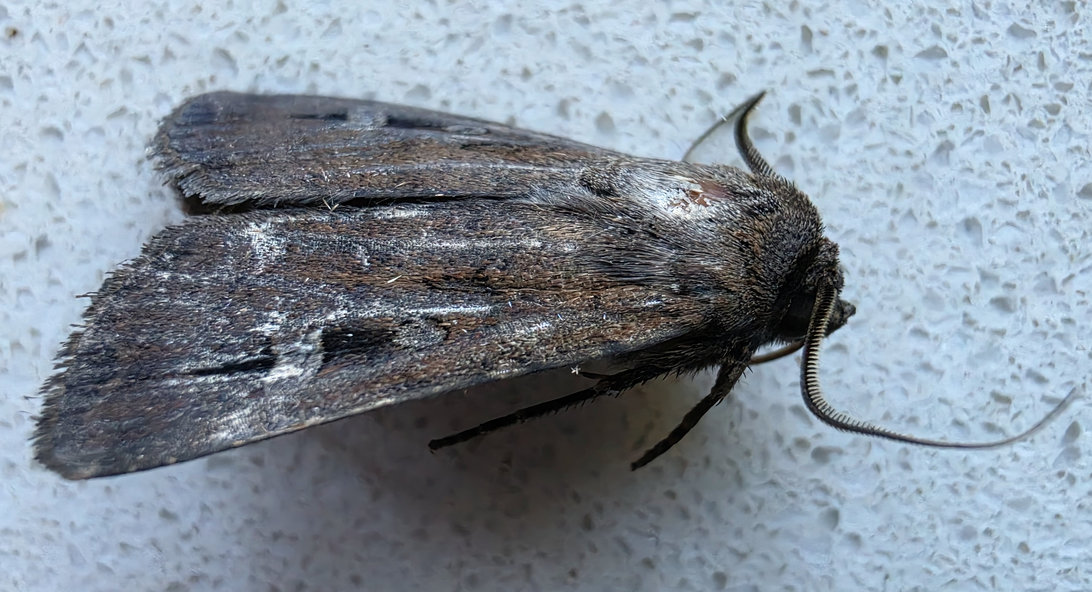
Pollinators’ searching efficiency – the ability to locate flowers – was hit hardest, dropping by 67% on average. Feeding efficiency and overall abundance were less affected.
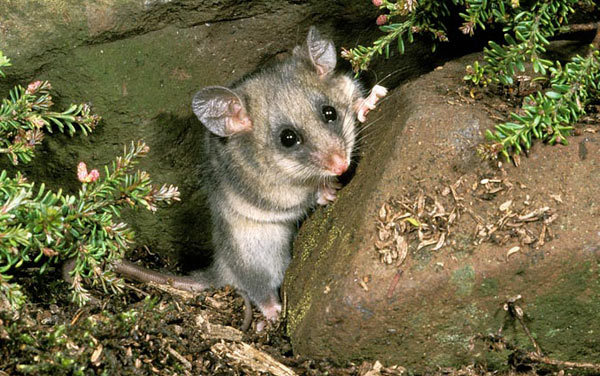
This suggests the main problem with the pollution is that it disrupts pollinators’ ability to find flowers, rather than being directly toxic to the insects themselves.

The coming ozone peak – and why it happens

There is a complication, however. NOx and ground-level ozone are linked chemically, so cutting NOx emissions will not necessarily reduce ozone immediately. In fact, under a middle-of-the-road emissions scenario, global low-level ozone levels are projected to keep rising until around 2050, even as NOx emissions begin to fall.

This is partly because ozone and NOx interact in the atmosphere. NOx can react with and destroy ozone. When NOx levels are high, as they often are near roads or in cities, this “quenching” effect helps keep ozone concentrations down.

So, as we cut NOx emissions from diesel vehicles and other sources, this quenching effect weakens. With less NOx around to break it down, ozone concentrations can actually climb. Other ozone-forming pollutants, such as methane, also remain high for longer in this scenario.

Only after this mid-century peak do sustained reductions in NOx and other precursors drive ozone levels down again. Under this middle-of-the-road scenario, ozone is projected to fall back below present-day levels after 2050. Faster decarbonisation would bring that recovery sooner.

Why diesel emissions matter

Diesel vehicles, especially heavy-duty trucks and agricultural machinery, are among the largest sources of NOx emissions.

In many regions, heavy-duty diesel vehicles alone account for more than 70% of on-road NOx. These emissions not only directly harm pollinators. Through their effects on ozone, they also alter the chemical environment around flowers.

Electric vehicles produce zero tailpipe NOx. Replacing diesel vehicles with electric alternatives, particularly in freight, construction and farming, would cut an important source of NOx and, over time, help reduce the ozone pollution that interferes with floral scents. The benefits would be even greater as electricity generation becomes cleaner.

Our analysis shows that the rate of pollinator recovery will depend heavily on how quickly we reduce these emissions. Delaying the phase-out of diesel vehicles would prolong the mid-century ozone peak and delay the ecological recovery we all need.

annotated diagram
Before 2050, nitrogen oxides and ozone concentrations degrade floral odours (volatile odours), impairing pollinator foraging success. After 2050, declining ozone due to sustainable energy transitions is expected to facilitate long-term recovery. Created in BioRender. Ryalls, J. (2026)

What needs to happen now

Protecting pollinators should be considered a co-benefit of clean air and climate policy. Accelerating the transition from diesel to zero-emission vehicles, especially in heavy-duty and agricultural sectors where diesel remains important, would reduce a major source of NOx.

We also need better monitoring and research. Our evidence mostly comes from European studies on bees and a few other pollinator groups. We urgently need more research in high-pollution, biodiversity-rich regions, and on a wider range of pollinators including moths, flies and beetles.

The timing and location of pollution reductions could also matter. Measures that reduce exposure during peak flowering, for example, could help limit the disruption to pollinators before longer-term reductions in ozone kick in.

The fossil fuel transition is not just about carbon and climate. It is also about restoring the chemical cues that pollinators depend on as they search for flowers.

If we move quickly enough, we can shorten the difficult mid-century period and give bees, butterflies and the crops they support a genuine chance to recover.

The science is clear: cleaner air means healthier pollinators and more resilient food systems. Electric vehicles are one powerful tool in that toolkit. The sooner we deploy them at scale, the better the outlook for the insects that help feed us all.The Conversation

James Ryalls, Senior Research Fellow in the School of Agriculture, Policy and Development, University of Reading

This article is republished from The Conversation under a Creative Commons license. Read the original article.

Are Australia’s native bees thriving or declining? We don’t know but can find out

Close-up of an _Amegilla dawsoni_ bee collecting pollen from a blue flower.
Kit Prendergast
Scarlett Howard, Monash University and Kit Prendergast, Curtin University

It’s a sight to behold.

Each spring, thousands of solitary bees (Amegilla dawsoni), also known as Dawson’s burrowing bees, emerge from burrows scattered across Western Australia’s arid plains.

These bees, distinguished by their fluffy appearance and either white and maroon (females) or coffee (males) colouring, are on a quest to find flowers and a mate. They are just one of more than 1,700 native bee species that call Australia home – a figure steadily rising each year.

Tragically, Australia’s native bees face a conservation crisis. Wild bees are declining worldwide, under pressure from habitat destruction, invasive species, pesticide use and climate change. Due to a lack of funding and attention, few people recognise how much native bees are struggling. Even native bee researchers don’t have all the answers.

Our new study took a closer look at the major threats to Australia’s native bees and, by drawing on research from here and abroad, created a plan to conserve them.

Amegilla dawsoni, also known as Dawson’s burrowing bee, is one of Australia’s largest bees. Kit Prendergast

Why wild bees matter

Native bees play an indispensable role in ecosystems across Australia.

They pollinate many native plants that can’t be pollinated by introduced species, including valuable crops such as macadamias and mangoes. Native bees provide vital food and habitat for an array of Australian animals, including by pollinating eucalypts that feed koalas. In doing so, they help entire ecosystems thrive.

For First Nations communities, native stingless bees also hold significant cultural value. For thousands of years, First Nations peoples have used stingless bee honey and wax in gifts, food, and the making of tools. These bees also feature in many traditional stories such as The First Bees, an oral history from the Gunwinggu people of West Arnhem Land about ancient beings turning into stingless bees.

Three bees emerge from what looks to be a tree hollow or other type of cavity.
Three Tetragonula sp. bees found in Western Australia’s Purnululu National Park. Kit Prendergast

Neglected for too long

In Australia, scientists are discovering more native bee species each year, with more than 115 new species described last year. Examples include the devilish Megachile lucifer and 71 species of resin pot bees from the genus Megachile. Australia is also home to some of the tiniest bees in the world, including the miniscule Euryglossina clypearis, which grows to just 1.8 millimetres long.

Image shows 20 pictures of bees in a 4 x 5 grid.
A grid showing 20 different bee species of all shapes and sizes. Kit Prendergast and Scarlett Howard

However, conservation research is not keeping up. An influential paper from 2009 examined both the diversity of Australia’s native bees and the challenges they face. These include land clearing, disease, and competition with introduced plants and bees. But climate change and habitat loss remain the most pressing threats.

Since that study, research and funding for native bee conservation has been scarce. This lack of resources may be because few people recognise how important native bees are for keeping humans and ecosystems healthy.

While some native bees are crop pollinators, such as the buzz-pollinating Amegilla, many are not. Bees that do not pollinate crops typically attract less attention than other well known pollinator species, such as the introduced European honeybee (Apis mellifera).

However, bees that don’t pollinate popular food crops actually need the most help.

What needs to change

To better protect our native bees, Australia must accurately identify how many species are on the brink of extinction. Only three native bee species are listed on Australia’s national threatened species list, compared to six different native species identified by the global International Union for Conservation of Nature (IUCN) Red List.

Based on how much bee habitat was destroyed during the 2019–20 Black Summer bushfires, 11 more species should sit on Australia’s threatened species list. However, listing requires us to have enough data on a species’ size and distribution, as well as a recognised scientific name. For many native bees we simply don’t have this information, so more research is urgently needed.

We must also invest in studies into native bee behaviour, such as how bees navigate, search for flowers, and identify their favourite plants. This information will help us understand how bees will cope with environmental threats such as climate change, and find ways to support them.

Close-up of a large bee collecting pollen from a bright blue flower.
More research into native bee behaviour is urgently needed. Kit Prendergast

This increased knowledge will form the basis of conservation plans. Short-term plans may focus on regulating the use of pesticides that harm bees, or protecting native bushland. Long-term plans may rely on ongoing monitoring programs that bring together researchers, farmers, and community members. As bee researchers, we are also working on an Australian Native Bee and Pollinator Conservation Strategy with evidence-based guidance for everyone from landowners to local councils.

Community members can also spread the word about native bees. You could invite scientists to speak at your school, sport club, or community group. You can learn about flowering plants that support native bees in your local area by visiting council websites or reading books dedicated to Australia’s native bees. You may also make your backyard or garden more native bee friendly by building bee hotels, leaving bare ground for burrowing bees to nest in, or filling pots with rock gravel for nesting bees.The Conversation

Scarlett Howard, Research Fellow, School of Biological Sciences, Monash University and Kit Prendergast, Adjunct Research Fellow, Curtin University

This article is republished from The Conversation under a Creative Commons license. Read the original article.

The joy of song: where songbirds came from and why we should listen to them

A male scarlet robin, with its bright red chest feathers, perched on a bare branch.
Banu R/Getty
Hollis Taylor, University of Sydney

In 2001, I had an epiphany while making my first trip to Australia.

Walking across a remote sheep station in the dusty west, my ears were suddenly filled with the rich, spirited song of three pied butcherbirds.

Together, their voices wafted through the air like a hauntingly beautiful flute. That was the first time I encountered a trio of singing birds. I was instantly captivated.

Almost three decades later, I’ve built a career as a musician, composer and zoomusicologist – someone who studies sound in animal culture.

That serendipitous experience sparked my quest to understand how songbirds shape sound and why birdsong affects us so deeply.

The origins of songbirds

There are at least 4,000 species of songbirds, also known as oscine passerine birds, which together make up nearly half of the world’s bird life. This includes familiar and much-loved species like lyrebirds, fairywrens and honeyeaters.

Birdsong research has long focused on the northern hemisphere. However, DNA evidence from a major 2002 study turned this upside down. It revealed that all songbirds originated in Australia, before spreading across the world. Tim Low’s best-selling book, Where Song Began (2017), did much to popularise this research.

Subsequent studies refined this picture, suggesting early songbirds radiated out from Gondwana – the ancient supercontinent that included Australia, Antarctica and South America. The well-known lyrebird and the rare, ground-dwelling scrub-bird are thought to be the Australian songbirds with the oldest lineage.

Today, songbird hotspots are scattered across the globe.

South and Central America – particularly Colombia, Peru and Costa Rica – are famed for their avian diversity. New Guinea is home to birds-of-paradise, whose strikingly colourful displays have fascinated scientists and artists alike.

Europe’s spring chorus – sustained by blackbirds, thrushes and nightingales – features widely in literature and film. And in North America, birders prize the flutey flourishes of the hermit thrush and the wood thrush’s bell-like notes.

Learning to sing

These melody-making birds share a rare gift: they learn their songs from parents and peers. This process is known as vocal learning.

Among birds, only parrots, hummingbirds and songbirds are vocal learners. Humans are the sole primate that falls into this category, capable of imitating, altering and learning from the sounds we hear. Elephants, whales and some bats are also vocal learners.

Birdsong is often framed as a tool males use to compete for a territory or a female’s attention. Birdsong does serve these two practical functions. However, some birds produce sounds infinitely more beautiful and complex than what’s strictly needed to retain a territory or attract a mate.

It’s worth noting songs are not the same as calls. While birds must learn to sing, they have a relatively innate ability to call. Calls are short, meaningful sounds that help birds do everything from feeding to nesting and flocking, where birds gather to collectively forage or travel.

Wood thrushes can often be heard in the forests of the southeastern United States.

How birdsong affects us

Many people turn to birdsong as a way to relax and reconnect with nature. But listening to birdsong isn’t just pleasurable.

Research suggests it can reduce stress, improve anxiety and even sharpen attention. One 2022 study suggests listening to birdsong for just six minutes improves mental wellbeing. Another 2021 review found that when people tuned into natural soundscapes – such as birdsong or the sound of fast-flowing water – their blood pressure and heart rate lowered.

Many people instinctively know this. Consider how often birdsong features in meditation apps, in films or even at shopping centres.

Hearing a wild bird’s song is both ordinary and majestic. Ordinary because songbirds aren’t usually surrounded by sweeping vistas – instead they may be perched on a power line or hidden high in a tree. It’s also majestic because people are often deeply moved by these encounters. A single song can lift the mood of a morning.

A tiny pink and grey bird perched on a branch.
The rose robin has a pretty, trill-like song. Jeremy Edwards/Getty

Where to listen

Thankfully, you don’t need to traverse the world to tune into birdsong.

Australia is rich in birdwatching opportunities, particularly in the north and east of the country. If you’re unsure where to go, you can visit Australian Geographic’s top birding locations website. You can also find songbird hotspots in Australia and abroad using Birdingplaces’ interactive global map.

You don’t even need a car. Dawn is when birds are most active, so you may encounter a songbird if you step out early. It also pays to walk near water, where vegetation is dense and insects plentiful. But many avian singers also thrive in suburbs and urban parks.

Once you start hearing and observing birds, you will inevitably want to identify them. An abundance of online tools can help. A free option is eBird, which allows birders of all stripes to identify and document species. Xeno Canto is another resource.

You don’t need to identify a bird to enjoy its contribution to the dawn chorus. Just slowing down and listening is a good start.The Conversation

A tiny blue and brown bird perched on a branch.
The mallee emu-wren is a tiny bird with a song worth saving. Jeremy Edwards/Getty

Hollis Taylor, Research Affiliate, Sydney Conservatorium of Music, University of Sydney

This article is republished from The Conversation under a Creative Commons license. Read the original article.

Colonisation, not climate change, first primed these forests to burn

Orange-tinted bushland with ominous fire clouds in the background.
Darrian Traynor, Getty
Michael-Shawn Fletcher, The University of Melbourne; Anthony John Romano, The University of Melbourne, and Russell Mullett, Indigenous Knowledge

Bushfire season is here. The Bureau of Meteorology expects the declared El Niño to be strong to very strong. Southeastern Australia is bracing for a long run of dangerous fire weather.

Weather is only part of a catastrophic fire. Another factor is fuel – combustible vegetation. Our new research, published today, shows the current fuel load in some Australian forests is not “natural”. It is a product of colonisation, which loaded Australian landscapes with fuel a century before human-made climate change began.

Consider Croajingolong National Park, in Victoria’s far east. It has every level of protection possible: national park, designated wilderness area and UNESCO Biosphere Reserve. It’s also one of the most repeatedly incinerated forests in Australia: the 2019–20 Black Summer fires alone burned through 90% of the park.

The reprieves between bushfire have collapsed, from roughly 40 years in the late 1800s to about five years in the most recent decade.

Reading a natural archive

We conducted this research in partnership with the Gunaikurnai Land and Waters Aboriginal Corporation, coauthors of the study, on GunaiKurnai Country in the Croajingolong National Park, which takes its name from the Krauatungalung people of the GunaiKurnai.

Our archive is Purghagoolah, called Lake Elusive by colonial mapmakers, a deep lake inside the park. Our data were pollen, charcoal and sediment.

An aerial photo of Purghagoolah (Lake Elusive) shows a smallish dark blue lake surrounded by green forest.
Aerial view of Purghagoolah (Lake Elusive) within the Croajingalong National Park looking northwest. Michael-Shawn Fletcher

In February 2021 we took a core sample – a cylindrical piece of layered sediment – from its depths to retrieve evidence of a 1,000-year history. The pollen and charcoal within the sediment, blown in from the surrounding 10,000 square kilometres, offer records of a vast slice of Australia’s most frequently burnt forests.

Pollen reveals what grew, charcoal tells us about fire, and the infrared spectra of this charcoal reveals how hot these fires were. This allows us to separate cooler cultural fire – where low-intensity fires were strategically applied to the landscape – from hot wildfire. In addition, magnetic minerals track erosion of soil into the lake, and radiocarbon and lead dating anchor this history in time.

A group of people in high-visibility outdoor clothing walk through a recently burned forest.
The field research team carrying equipment through the recently burnt Croajingolong forest to Purghagoolah (Lake Elusive). Michael-Shawn Fletcher

Before and after

We found that for more than 800 years, frequent, low-temperature cultural burning under GunaiKurnai care held this land as stable, open woodland. In this period, the landscape was low in charcoal, rarely scorched by hot fires, and without the erosion that follows.

There was no lack of dangerous fire weather in the past. Fire seasons as severe as Ash Wednesday, Black Saturday and Black Summer occurred over these centuries, yet cared-for Country did not experience catastrophic fire.

However, during the colonisation of Gippsland, frontier violence and massacres between the 1830s and 1860s removed GunaiKurnai people from Country and disrupted a millennia-long relationship of care.

After colonisation, everything in the sediment core changes. Hot fire becomes dominant, shrubs thicken, eucalypt cover surges to nearly four times pre-colonial levels, and open woodland becomes today’s flammable forest. Charcoal rises sharply, alongside an increase in hot fires. Soil washes into the lake, no longer bound by living plants.

All this took place before human-driven climate change properly began, echoing what we found across southeast Australia in a 2022 study: a region-wide increase of shrubs following the British invasion.

The outcome is a catastrophic wildfire loop: each hot fire drives thick, flammable regrowth that primes the next climate-driven fire. Climate change did not start this vulnerability – it amplifies one that colonisation began.

A wilderness that colonisation built

All this, in a place we protect as pristine wilderness. Official vegetation maps treat Croajingolong’s forests as the natural, pre-colonial baseline state. But our data demonstrates otherwise – the wilderness we protect is one colonisation made. Management relying on that false baseline entrenches fire danger, and ignores the ecological and cultural relationships held within the now-lost woodlands.

Aboriginal people have long said it plainly: wild Country is sick Country, Country that has lost its people and their care.

GunaiKurnai ancestors were born with towera (fire), an essential part of the old peoples’ practical daily life on Country, as GunaiKurnai Elder and study coauthor Uncle Russell Mullett says:

Not treating country with towera, Country becomes extremely dangerous for GunaiKurnai, animals, and plants. Studies such as this provide firm scientific evidence to support towera land management initiatives for Country.

A region-wide transformation

The waters of Purghagoolah sit within roughly 3 million to 4 million hectares of forest that runs unbroken from the Victorian Central Highlands to the New South Wales south coast. Around 80% of it is resprouting eucalypt forest, that could benefit from regular cooler cultural burns.

The rest of these forests, around 20%, is the fire-sensitive mountain and alpine ash forest of the valleys and high country. They have a fundamentally different fire ecology that requires hot fire to release and germinate seeds separated by long fire-free intervals. Yet these atypical, less extensive forests dominate public discourse and fire policy. This fosters an ethos of fire suppression that increases risk across vast forest areas.

Bring back the carers

None of this diminishes the threat of climate change. Rather, our research emphasises the parts of the story that have been historically overlooked: the fuel, and the care by people who once kept it in check.

Fire management must grow beyond hazard-reduction burning and climate adaptation into restoring healthy Country and cultural burning, with Traditional Owners resourced to lead the way. Cultural burning reduces catastrophic fires, is better for the soil, and protects our plants and animals.

Purghagoolah leaves us with hope. Through at least eight centuries of severe fire weather, fire stayed in human hands and catastrophic fire was contained. Country needs people. When Country is cared for, climate is not the only factor that dictates how it burns.The Conversation

Michael-Shawn Fletcher, Professor in Geography, The University of Melbourne; Anthony John Romano, PhD Student in The School of Geography, Earth and Atmospheric Sciences and the ARC Centre of Excellence for Indigenous and Environmental Histories and Futures, The University of Melbourne, and Russell Mullett, Traditional Custodian — Kurnai, Indigenous Knowledge

This article is republished from The Conversation under a Creative Commons license. Read the original article.

One giant clam contains a month‑by‑month diary of the Great Barrier Reef’s climate 200 years ago

Giant Clam (Tridacna gigas) from Jiigurru (Lizard Island Group). Andy Lewis/Coral Sea Foundation
Bohao Dong, The University of Melbourne; Amy Prendergast, The University of Melbourne, and Sean Ulm, James Cook University

When you swim through the azure waters of the Great Barrier Reef, there is one entity on the seafloor that’s almost impossible to miss: the giant clam. Its huge, fluted shell frames a soft mantle shimmering with electric blue, green and gold.

As the world’s largest living bivalve, Tridacna gigas can reach 1.2 metres, weigh more than 200 kilograms and live for over a century. Across their long lives, these clams record their daily life in their shells, creating an autobiographical shell diary.

In our new research, we read one of these shell diaries to reconstruct month-by-month climate conditions at Jiigurru (also known as the Lizard Island Group), in the northern Great Barrier Reef.

The shell’s story reveals that, before widespread industrial-era warming, Jiigurru’s summers were cooler than today, while winters were surprisingly similar.

Coral islands in the middle of a turquoise sea.
Jiigurru (Lizard Island Group) showing Blue Lagoon where our giant clam recorded its shell dairy. Sean Ulm

How can a shell keep a diary?

As a giant clam grows, the cycle of day and night produces microscopic daily lines in its shell, while the changing seasons produce broader annual bands. Like tree rings, these layers turn the shell into a diary.

The growth lines provide the dates, just as we date entries in our own diaries. The surrounding seawater writes the content by shaping the chemistry of each new layer.

Geochemistry is the language in which this climate diary is written. By reading that language, climate researchers can decode how the reef environment changed during the clam’s long lifetime.

The missing southern record

Today, instruments on land, in the oceans and in space constantly measure the changing climate around the world. But these direct observations cover only a small slice of Earth’s history. To look further back, researchers need to turn to other climate archives: records preserved in tree rings, corals, ice cores, lake and ocean sediments, and shells.

Yet many of the most detailed records before industrial-era warming come from the Northern Hemisphere and from high latitudes. Tropical oceans in the Southern Hemisphere are much less well documented.

Giant clams live across the tropical Indo-Pacific. Their shells can add local, sub-seasonal resolution records to this missing southern story.

Reading the shell

Our study was done in partnership with the Walmbaar Aboriginal Corporation and Nguurruumungu Indigenous Corporation. Published in the journal Global and Planetary Change, it focused on a 58-centimetre giant clam shell collected from the lagoon at Jiigurru.

Jiigurru is a culturally important place for Dingaal and Ngurrumungu Aboriginal communities. Archaeological excavations at shell midden sites show at least 6,500 years of Aboriginal occupation.

Radiocarbon dating showed the clam lived between about 1785 and 1827, near the end of a pre-industrial cooling period known as the Little Ice Age. Under a microscope, we counted almost 10,900 daily growth lines, showing it lived for about 30 years.

We then drilled 784 tiny holes to take powder samples from shell layers. In each sample, we measured different forms of oxygen and carbon, called isotopes.

The oxygen isotopes helped us estimate past sea temperatures. The carbon isotopes gave us clues about rainfall. Matching these chemical clues to the shell’s growth structure gave us a month-by-month picture of the reef environment prior to industrial warming.

What the shell revealed

Compared with sea surface temperatures measured in the same lagoon from 1995 to 2015, our reconstruction showed that 225 years ago temperatures were 0.6–0.9°C cooler on average across the year. Summers were 0.9–1.2°C cooler, but winter temperatures were almost the same.

The shell diary told us more than just temperature.

Its carbon isotopes traced a clear rhythm between wetter and drier seasons. The temperature record also rose and fell in repeated two- to three-year cycles, consistent with local El Niño-like and La Niña-like variability.

The clam revealed that El Niño-like episodes (warmer, drier) were more common near the end of the 1700s. In the early 1800s, La Niña-like conditions (cooler, wetter) became more frequent and included the strongest events in the record.

A single average would miss all this detail. The month-by-month record shows how temperature changed through the seasons, how wet and dry conditions alternated through the year, and how climate shifted from one year to the next.

A wider Southern Hemisphere picture

Was Jiigurru an isolated case? Other records suggest not.

Corals from elsewhere on the Great Barrier Reef and north-western Australia also point to cooler seas or changes in ocean conditions.

Antarctic ice and glacier records show cooling and shifts in circulation around the same period.

Farther afield, other records point to La Niña-like conditions. Galápagos corals show frequent La Niña events during the early 1800s. Cave records from northern Peru indicate wetter Little Ice Age conditions. Lakes in south-eastern Australia were also higher in the early 1800s.

Seen together, these archives sketch a wider Southern Hemisphere story. Many places were cooler, while rainfall and ocean circulation shifted in different ways. But this was not one uniform event. The cooling at Jiigurru was smaller than many Northern Hemisphere estimates, showing why local records matter.

Our giant clam adds a rare month-by-month marine chapter to this broader Southern Hemisphere climate story. Similar shells from other Indo-Pacific reefs could show how these wider climate changes unfolded from place to place. Many more climate diaries may still be waiting inside giant clam shells.The Conversation

Bohao Dong, Research Assistant, ARC Centre of Excellence for Indigenous and Environmental Histories and Futures, The University of Melbourne; Amy Prendergast, Associate Professor in The School of Geography, Earth and Atmospheric Sciences and Chief Investigator for the ARC Centre of Excellence for Indigenous and Environmental Histories and Futures, The University of Melbourne, and Sean Ulm, Director, ARC Centre of Excellence for Indigenous and Environmental Histories and Futures, James Cook University

This article is republished from The Conversation under a Creative Commons license. Read the original article.

Over 40 years ago, a mystery vigilante released a fungus to control blackberry in Australia. But why?

blackberry cane silhouetted against sunset.
SashaFoxWalters/Getty
Simon Farley, The University of Melbourne

Over the summer of 1983–84, a fungus called Phragmidium violaceum was introduced to Australia. It was done secretly, deliberately and illegally. And it was done for one purpose: to kill blackberry plants.

I’m a historian, not a detective. My recent research on the illicit introduction of violaceum (also known as ‘blackberry rust’) doesn’t identify a culprit. But it does shed light on one of Australia’s most significant and mysterious breaches of biosecurity over the past half-century.

Like so many other animals and plants, blackberry was deliberately introduced to Australia from Britain. The earliest records date to the 1840s. The plant was valued for its abundance of juicy fruit as well for its uses as a hedge. Few herbivores other than tough-lipped deer and goats can eat the thorny plant. But its delicious berries are prized by all sorts of animals, from foxes to fairywrens.

Every Australian knows common mynah birds are bad, rabbits are worse and feral cats kill native animals unchecked.

But how do we decide what makes an introduced species “good” or “bad” – and will we ever concede that some species are here to stay?


With the help of humans and animals, blackberry spread rapidly. By the late 1880s, it was becoming recognised as a serious agricultural weed. Unchecked, it forms dense, thorny thickets which are hard to reclaim as farmland.

When official control efforts began in the 1890s, they had little effect on the tough plant. But agricultural scientists were determined to find a solution – even if it took decades.

historic photo of women and girls picking blackberries in Australia.
Blackberry was brought to Australia for its berries and use as a hedge plant. Pictured: women and girls picking blackberries around 1896 at Mount Crawford, South Australia. State Library of South Australia

From cactus moths to blackberry rust

In the inter-war period, Australian scientists found a neat remedy to a far worse weed – prickly pear, an introduced cactus carpeting vast areas of pasture in New South Wales and Queensland.

In the mid-1920s, the Commonwealth Prickly Pear Board introduced the Cactoblastis moth from Argentina. These moths could kill the cactus while leaving native species untouched. By 1933, it was reported in the journal Nature 80% of the prickly pear “infesting” Queensland and 50-60% in NSW had been “destroyed”.

Cactoblastis is an example of biological control – when humans introduce a predator, parasite or pathogen in order to eradicate a pest. Think of it as weaponising ecology for human ends.

From the late 1960s, scientists at Victoria’s Keith Turnbull Research Institute began investigating blackberry rust as an agent of biological control. The fungus does not kill blackberry plants, but it does slow growth and reproduction.

blackberry bush leaves infected by fungus.
Blackberry rust is a fungus which makes it harder for blackberries to reproduce. CSIRO/Wikimedia, CC BY-NC-ND

In the early 1980s, the Institute sent one of their top scientists, Eligio Bruzzese, to a CSIRO laboratory in France to test the fungus. His experiments seemed to show the rust would work well and would not threaten more valued plants. He returned to Australia in early 1983.

But the Institute never got a chance to release the rust. In February 1984, the violaceum fungus was unexpectedly found on blackberry plants near Yarram in south-eastern Victoria.

Within days, more cases of rust were spotted over 100km away on blackberry plants growing in the Dandenong Ranges and in Melbourne’s eastern suburbs.

Science journalist Graeme O’Neill wrote in The Bulletin that the evidence indicated:

somebody visited Europe – probably France – and picked some leaves from rust-affected blackberries, returned with them… and dusted the fungal spores onto the leaves of blackberries […] Department of Agriculture officers actually located that first plant and noted the regular spacing between [other infected] plants

Had someone been prosecuted, they could have been punished with a A$100,000 fine or five years in prison. This was a crime with surprisingly high stakes.

There’s no suggestion Bruzzese was involved. In public statements, the frustrated scientist claimed the strains of violaceum he had hoped to introduce would have been far more effective.

photo of a report on biological control of blackberry.
Scientists investigated blackberry rust as a biological control – but then someone jumped the gun and released it. Simon Farley, CC BY-NC-ND

That same year, federal parliament passed laws making it easier for scientists to research biological control.

When the Minister for Primary Industry, John Kerin, spoke in favour of the bill, he referenced the illegal introduction of violaceum as evidence of the need for more transparent regulation.

In 1991, authorities bowed to the inevitable and began releasing further strains of blackberry rust. Despite the controversy, the fungus only had a mild effect on blackberry. Authorities still rely on poison and manual control.

Why was it done?

It may be hard to understand how the humble blackberry could inspire someone to go to such extremes.

Sure, blackberry can be obnoxious from a human perspective. Even with the fungus circulating, the plant remains a nuisance for farmers. It’s listed as a Weed of National Significance. In 2017, authorities estimated it was costing Australia over $100 million annually across production losses and the expenses of “controlling” it.

But many species, introduced and native alike, cause headaches for farmers and other land managers. Not all of them provoke such dramatic responses.

In 1984, authorities assumed a disgruntled farmer was responsible. But this isn’t certain.

Blackberry affects all sorts of people. The plant’s thorns are a persistent nuisance to bushwalkers, cyclists and horseriders. Rampant blackberry blocks off paths and watercourses. It has been deemed an environmental weed, too, although it also provides important food and habitat for native animals such as bandicoots.

In short, there were many reasons why someone might have done it.

hand picking ripe blackberry from ramble of canes.
Blackberry picking has long been a common summer pastime in the United Kingdom – and, increasingly, Australia. Deb Drury/Getty

Seeing the other side of blackberry

Unlike many weeds, blackberry also has its defenders. Through the 1980s and ‘90s, news stories about violaceum prompted some Australians to write of their fondness for blackberry. Blackberry wasn’t just a British or European plant anymore. Many Australians now had their own cherished memories of picking berries.

Blackberry has now been in Australia close to 200 years. It has become naturalised and – to a degree – normalised.

Unless scientists discover a much more effective method of biological control, it’s probably here to stay. That will mean more valuable pasture lost and more nasty scratches for bushwalkers. But it will also mean more habitat for urban bandicoots and more delicious fruit for the adventurous.

The good might not outweigh the bad, but for the time being, we may have to learn to be more accepting of blackberry where we can.

This whodunnit may never be solved. But the case of the blackberry rust reminds us that weeds – and our responses to them – can be more complicated than they first appear.The Conversation

Simon Farley, Assistant Lecturer, History, The University of Melbourne

This article is republished from The Conversation under a Creative Commons license. Read the original article.

Cities across the world are sinking because of groundwater depletion. But the process can be reversed

A city with high tides spilling over a seawall
Philippe Turpin/Getty Images
Jesse Kearse, Te Herenga Waka — Victoria University of Wellington

Many cities around the world are sinking because too much water is extracted from the groundwater reservoirs beneath them.

This sinking makes these coastal cities more exposed to rising seas as the climate warms.

But as our new research shows, this process can work in reverse; when groundwater is replenished, cities can rise.

Our findings also reveal an unexpected clue: faultlines play a key role in shaping where the fastest groundwater recovery and land uplift occur.

The global problem of sinking cities

Land subsidence, the gradual sinking of the ground surface, affects many of the world’s major cities.

Parts of Jakarta, the capital of Indonesia, are sinking more than ten centimetres each year, prompting the government to plan a relocation of the city.

The coastal city of Tianjin, China, is home to 15 million people. It, too, is a subsidence hotspot. If sinking there continues unabated, 15% of the city’s population will be underwater by 2120.

Similar stories are playing out from San Diego to Iran’s major cities, wherever groundwater has been pumped faster than it can refill.

In Aotearoa New Zealand, recent studies show around 80% of the urban coastline is sinking, and that groundwater may be a contributing factor in some areas, including Christchurch and Wellington.

How urban groundwater leads to sinking

Many cities are built above natural groundwater reservoirs (aquifers), and are literally held up, in part, by the water beneath them.

Think of a gigantic water balloon beneath a city. The balloon represents an aquifer full of water. When groundwater is pumped out, the “balloon” deflates, and the ground above sinks.

This matters most at the coast. If the land is sinking while the sea is rising, the two effects combine, meaning coastal cities experience relatively higher sea levels, and the impacts of climate change arrive sooner.

This effect of groundwater pumping on land subsidence is well understood, and improved groundwater management is often put forward as the key strategy for slowing or halting the sinking.

What is not clear is how the ground beneath a city responds when long-term water aquifer recovery happens. Does the ground simply rise back up, uniformly, like a balloon reinflating? Or is the response more complicated?

To answer this, we need two key things: long-term records of where the water is accumulating in the underground aquifers, and precise millimetre-scale measurements of elevation of the ground surface above.

Osaka, a natural laboratory

Osaka provided the perfect setting to explore this. Between the 1920s and 1960s, heavy groundwater pumping lowered water levels beneath the city by up to 30 metres, and the land sank by more than two metres in places.

This led the Japanese government to introduce strict groundwater regulations in the early 1960s. In the decades since, groundwater levels have been recovering steadily.

To track the groundwater levels, we looked at data from 44 monitoring wells, some reaching as deep as 500 metres below the surface, and stretching back in time to 1985.

To measure the tiny changes in ground elevation, we used a technique known as interferometric synthetic aperture radar (InSAR). This involves the repeat acquisition of satellite radar images of the Earth’s surface, tied to very accurate global navigation satellite system measurements of ground stations.

The results are striking. Across greater Osaka, home to about 15 million people, the ground is rising, and fast.

The speed of uplift averaged about four millimetres a year, and was as high as 12 millimetres a year in some places. Groundwater levels have also been steadily rising, at rates of up to a metre a year. Where water levels climbed fastest, so did the land.

But the map of uplift was also very patchy.

One city block could be uplifting fast, while less than 100 metres down the road it could be much slower. These abrupt changes aren’t random. They form narrow but continuous corridors that ran across the city.

We soon realised something unexpected: these corridors mapped almost perfectly onto known tectonic fault lines.

Faults act like dams

Faults are fractures in the Earth’s crust, and are usually thought of in terms of earthquakes. But we found they play another role here.

Picture a fault as a curtain hanging vertically underground, cutting through the aquifer. Instead of holding back light, it holds back water, blocking its sideways flow and acting like an underground dam.

On one side of Osaka’s Uemachi Fault, groundwater levels have been rising three times faster than on the other side.

We found the same pattern repeats at other faults across the city. Water dams on the “upstream” side of a fault, where it can’t easily flow through, driving faster groundwater recovery and faster uplift there, while the “downstream” side lags behind.

Our research highlights a potentially important opportunity for coastal cities adapting to sea-level rise.

Where groundwater depletion has contributed to land subsidence, reducing extraction and allowing aquifers to recover could reduce – and in some places potentially reverse – the downward movement of the land.

As seas continue to rise, keeping the ground beneath coastal cities from sinking could be an increasingly important part of adapting to a warming world.The Conversation

Jesse Kearse, Research Fellow in Earth Science, Te Herenga Waka — Victoria University of Wellington

This article is republished from The Conversation under a Creative Commons license. Read the original article.

‘We will not be sacrificed’: Pacific climate voices were clear and strong this week – and we’re listening

Fijian dancers perform at the Pre-Cop meeting in Nadi, Fiji.
Hilary Wardhaugh/Getty Images
Kathryn Bowen, The University of Melbourne

Preparatory meetings for the United Nations’ annual climate summit are usually quiet affairs, focused on laying the political and technical groundwork for the main COP event. But this year felt very different.

I was at this week’s pre-COP31 gathering in Fiji for talks that were both harmonious and powerful. Pacific delegates were clearly frustrated at having to repeatedly retell their stories of climate change. But they were also generous in their wish for the world to engage with the reality they face.

Following a tussle for leadership last year, it was agreed Australia would jointly host these Pacific climate meetings with Fiji. Rival bidder Turkey (also called Türkiye) will host the annual UN COP31 climate summit in the city of Antalya in November.

There has been criticism of the number of world leaders at the A$20 million Fiji meeting – with 14 national leaders making a side visit to Tuvalu on Tuesday, and just two of those hailing from outside the Pacific.

However, the purpose of meeting was not a leadership summit – although more national leaders attended than in previous years.

Rather, it was a chance for governments, community leaders and Australia’s Minister for Climate and Energy Chris Bowen – who has the role of president of negotiations at COP31 – to hear directly from Pacific leaders, ministers and climate envoys on their priorities.

And they had so much to say.

The Pacific should not be sacrificed

The most obvious shift in Fiji was the difference in tone. Pacific voices, music, art, film, tradition and storytelling took centre stage. It reminded everyone that if these parts of the world are lost to climate change, so, too, is their inextricably intertwined culture.

There was unabashed honesty about the emotional, psychological and cultural toll climate change is taking, which undeniably moved all those who attended. More than a few tears were shed.

Over the course of the four days, the clear sentiment in meetings was the frustration Pacific delegates felt at having to tell – and re-tell – their stories about the risks and damage caused by climate change.

There was a sense the Pacific has been relegated to a “sacrifice zone”, despite climate emissions from the region being dwarfed by those of G20 nations.

Despite this, the determination of Pacific leaders and communities was undeniable – they came together for meaningful and difficult conversations about priorities, and the messages they want to share with the world.

Overwhelmingly, there was a strong commitment to ensuring science was central to the global response to climate change. This led to calls for more Pacific voices at the scientific negotiations at COP31.

Students in colourful cultural dress pose outside the venue for the Pacific Pre-COP31 leaders event in Funafuti, Tuvalu.
Students pose outside the venue for the Pacific Pre-COP31 leaders event in Funafuti, Tuvalu. Saeed Khan/Getty

1.5°C is a lifeline

In UN climate diplomacy, Pacific nations are often dubbed “Small Island Developing States”. In contrast, during the talks this week,Pacific representatives deliberately referred to their nations as “Big Ocean States” or BOS, (appropriately pronounced as “boss”).

This reflects the way a healthy and thriving ocean underpins a healthy and thriving way of life in the Pacific.

Although a recent UN report found we will likely pass 1.5°C above pre-industrial temperatures in 2030, an intensified push to phase out fossil fuels and cut emissions could see this limited to 1.8°C. In theory, carbon removal methods could then be used to bring temperatures back to 1.5°C or below this century.

However, Pacific delegates emphasised remaining below 1.5°C is a lifeline for their region, and the response to overshooting this needs to be as brief and effective as possible to preserve their safety and cultural identity.

Who foots the bill?

Who will pay for the cost of climate change was a key area of discussion. Delegates called for accessible, predictable and fit-for-purpose funding, and for greater commitments of climate finance capital at COP31 in November.

There are already examples of how effective funding can be.

The Pacific Resilience Facility (PRF), is a Pacific-managed climate fund established by treaty, with Pacific members in the driver’s seat. It has already made a significant impact, only five months since it received funding from the UN.

For example, a speaker from Palau talked about the taro patch (a tropical root vegetable) as the “mother of life” in the Pacific region. Taro is under threat from salt-water intrusion and extreme weather, which imperils Pacific livelihoods.

With only US$4,000 (A$5,700) of transitional funding, the PRF was able to support a women-led project to restore taro patches (mesei), which play a vital role in food security and irrigation. The power of a women- and Indigenous-led initiative was clear.

Setting a precedent

In Fiji, I witnessed open negotiations driven by stories of real challenges and a genuine desire for the world to engage with those affected by climate change.

In the face of criticism over the efficacy of the UN’s COP process, this kind of humanity is often missing from global climate talks. Reaching beyond participation to relationships may set us up for the significant climate progress the Pacific – and every nation on earth – desperately needs.

The ultimate success of this year’s unique Fiji meetings will not be clear until November, but I hope we see future summits centred not just on participation, but human connection.The Conversation

Kathryn Bowen, Director, Melbourne Climate Futures and Professor - Environment, Climate and Global Health at Melbourne Climate Futures and Melbourne School of Population and Global Health, University of Melbourne, The University of Melbourne

This article is republished from The Conversation under a Creative Commons license. Read the original article.

‘1.5°C to stay alive’: Pacific countries demand the world makes good on climate promises

Lynda Tabuya, the Fijian Minister for Climate, addresses the opening ceremony of the pre-COP meeting in Nadi, Fiji.
Fijian Minister for Climate Lynda Tabuya. Saeed Khan/Getty
Wesley Morgan, UNSW and Liam Moore, James Cook University

Leaders and delegates from countries including Australia, Germany, Nepal and Pacific nations began climate meetings in Fiji on Monday to discuss the threat of climate change to small island nations.

These meetings are a curtain-raiser for the annual United Nations climate summit known as COP31, being held in Turkey (also called Türkiye) in early November. Australia is jointly hosting and leading these Pacific climate meetings with Fiji, as part of a compromise deal struck at last year’s COP30 with Turkey.

Australian Prime Minister Anthony Albanese arrived in Fiji on Monday afternoon, and Climate Change Minister Chris Bowen promised $7.29 million towards the region’s renewables transition. Local media reports suggest a Pacific declaration could be made calling for fair representation in climate governance for small island states and guaranteed funding.

This might officially only be a pre-COP meeting, but it feels more like an Oceania COP. As of Sunday evening, there were almost 600 people registered as official country negotiators, and another 2,560 at the event from civil society, academic, activist and community groups. As well as Albanese and Bowen, former Australian Prime Minister Julia Gillard and New Zealand’s former leader Jacinda Ardern will speak.

Australia’s engagement with the Pacific

Australia has a national interest in being the security partner of choice for Pacific countries. When the Solomon Islands signed a security deal with China in 2022 it rang alarm bells in Canberra.

Australia has since signed a web of bilateral deals to shore up Australia’s role – first with Tuvalu (2023), Naoero (formerly Nauru) (2024), Papua New Guinea (2025), Vanuatu (2026), and most recently with Fiji in July. Both the Vanuatu and Fiji agreements include a commitment that both parties will pursue a net zero economy.

On Monday, the Coalition in Australia criticised the $20 million Australia reportedly spent on this week’s Pacific meetings as a “farce” and a waste of taxpayer money. But it’s not expensive if understood as part of Australia’s broader engagement with the Pacific, both on security and climate.

Prime Minister Anthony Albanese disembarks from a plane Nadi Airport and inspects a line of red-coated Fijian guards.
Prime Minister Anthony Albanese arrives at Nadi Airport on Monday for the Pacific pre-COP31 meeting. Hilary Wardhaugh/Getty

What’s top of the agenda this week?

Well, that depends who you ask. Fijian Prime Minister Sitiveni Rabuka on Sunday said that he had three requests for visiting leaders: “We ask them to come, we ask them to see, and we ask them to listen with an open heart to those of us on the front line.”

1.5°C goal

The Pacific led the global fight to secure the 1.5°C temperature goal under Paris. For these countries it is not just an arbitrary number, it’s a threshold for survival – the catchcry is “1.5 to stay alive”.

At an afternoon press conference, Bowen acknowledged a recent UN report found the planet will likely warm past 1.5°C. However, Fiji’s Minister for Environment and Climate Change, Lynda Tabuya, reinforced on Monday morning the message to leaders this week is still to keep 1.5°C within reach.

COP31 envoy Kristina Stege added to this, saying that as the world gets closer to exceeding 1.5°C of warming this is not a reason to abandon the goal that represents the best chance for safety for people across the Pacific and the world. Rather, she said it should be a call to action, with any overshoot of 1.5°C as small and as short-lived as possible.

Electrification

Bowen announced a $7.29 million package to strengthen Pacific energy sovereignty and support the rollout of renewables across the region. Attendees noted, however, that this funding was part of the already-announced $50 million Australia-Pacific Partnership for Energy Transition, and not new funding.

There is part of a push towards the COP31 global goal on electrification, known as “35 by 35”, which aims to increase the share of electricity in the total global energy mix to 35% by the year 2035. Last month, Bowen visited India and Saudi Arabia, and it’s likely he would have discussed the COP31 agenda with both countries.

The UN summit work is decided by consensus and Saudi Arabia – the fourth-largest petrochemical producer in the world – is usually a blocker to action at the summit. So it’s important for Bowen, as the chief negotiator, to find a position that 190 countries can agree with – no easy feat. And it’s more politically palatable for Bowen to talk about electrification than cutting fossil fuels, given Australia’s role as one of the world’s biggest fossil fuel emitters.

Pay up for climate damage

No matter the topic of discussion at these climate negotiations, the question of finance is never far away. Pacific leaders are strongly pushing for a reframing of how this is discussed; climate finance is not aid or charity, but a legal obligation.

This was recently reaffirmed by International Court of Justice, an opinion Australia endorsed in a resolution at the UN General Assembly. Delegates at proceedings on Monday called for developed states like Australia to move from providing voluntary assistance on climate finance, to being reliable and accountable partners that fulfil their obligations.

In practice, what Pacific countries want to see is more rich, heavily polluting countries pledging financial support through the Pacific Resilience Facility, a regional financing institution designed to provide debt-free grants for climate adaptation and disaster preparedness.

Time for action

Across the calls for limiting emissions, making finance accessible, and keeping 1.5°C within reach, there is a strong desire for this meeting to set the stage for COP31 to be a summit of implementation and action.

As Stege said at an event on Saturday in Suva: “The Pacific has been standing awake and sounding the alarm for people and planet for decades.”

Now the world is in the Pacific, the region’s leaders hope they leave with a commitment to action and keeping 1.5 alive.The Conversation

Wesley Morgan, Research Associate, Institute for Climate Risk and Response, UNSW and Liam Moore, Lecturer in International Politics and Policy, James Cook University

This article is republished from The Conversation under a Creative Commons license. Read the original article.

In a year of record‑breaking heat, Australia and Pacific leaders meet to sharpen climate goals

Tuvaluans watch as the high tide inundates their island home on funafuti due to global warming.
Ashley Cooper/Getty
Jacqueline Peel, The University of Melbourne

Heatwaves in the United Kingdom, vast forest fires in Canada and flash flooding in Nepal – the evidence of climate change is everywhere. And no region faces a more existential threat than the Pacific, where residents of low-lying nations are witnessing the seas creep higher.

On Monday, leaders and delegates from countries including Australia, Germany, Mexico and Thailand will meet in the Pacific nations of Fiji and Tuvalu. Their discussions aim to highlight the climate threats faced by small island nations and the need to rein in carbon emissions.

These meetings are a curtain-raiser for the annual United Nations climate summit known as COP31, being held in Turkey (also called Türkiye) in early November. It’s fairly unusual for a pre-COP meeting to take place in a different part of the world to the main UN summit.

Australia will jointly host and lead these Pacific climate meetings with Fiji, as part of a compromise deal struck at last year’s COP30. This deal will also see rival bidder Turkey host the UN summit in the city of Antalya in November.

So, what will be on the agenda during the Fiji meeting and the main COP31 event in Turkey? And why does it matter?

Remind me, what is COP?

The Conference of the Parties, or COP, is the annual UN summit that brings countries together to negotiate climate goals. The figures added to the name reflect how many times the UN meeting has been held since its inception; this year is COP31.

The summit will determine the climate actions nearly 200 nations, which have all signed up to the UN Paris Climate Agreement, are expected to take in the coming years. Decisions coming out of the COP reflect political consensus on the way forward, but are generally not binding on countries or enforceable through international litigation.

This year’s co-hosting arrangement has divided the responsibilities between the two nations: Turkey’s Environment Minister Murat Kurum is COP31 President-Designate, while Australia’s Minister for Climate and Energy Chris Bowen will be President of Negotiations.

In practice, this means Turkey will ensure compliance with UN procedural rules, including setting the agenda and adopting decisions. Australia will steward the negotiations, affording it substantial political and technical leadership, but not necessarily control over the overall outcomes of the summit.

Australian Prime Minister Anthony Albanese, Minister for Climate Change and Energy Chris Bowen and Minister for Defence Pat Conroy at the Pacific Islands Forum Leaders meeting in Palau in early September.
Australian Prime Minister Anthony Albanese walks with Minister for Climate Change and Energy Chris Bowen and the Minister for Defence Pat Conroy at the Pacific Islands Forum Leaders meeting in Palau in early September. Saeed Khan/Getty

Conflict or consensus?

This unprecedented co-hosting arrangement between Australia and Turkey raises questions about how power should be shared between the two parallel roles.

Leadership through consultation forms the foundation of official UN communications from the COP31 summit. In the event of any difference of opinion, both countries will be expected to hold talks to reach a mutually satisfactory conclusion.

However, there is little detail around what this will actually look like. This risks slowing the pace of negotiations, even creating a stalemate if Australia and Turkey fail to reach an agreed decision. Controversial issues could be put off to the next session or sidelined altogether. That happened last year when Saudi Arabia declared any mention of fossil fuels in the decision outcomes an unacceptable “red line”.

What’s at stake?

A recent UN report found the world will likely overshoot the target of holding global warming to 1.5°C, with every increase bringing more extreme weather and environmental harm. But if we substantially increase global efforts to phase out fossil fuels and reduce emissions, peak warming could be limited to 1.8°C.

Carbon removal methods, such as conserving or planting forests, in theory could then bring temperatures back to 1.5°C or below this century. But to achieve this, nations must agree – and follow through – on urgent commitments to cut emissions.

At the heart of the November climate negotiations will be the question of who should pay for a “just transition” away from fossil fuels – one that ensures a fair distribution of the economic burdens and benefits.

With the UN declaring climate finance must reach US$1.3 trillion (almost A$1.9 trillion) a year by 2035, the spotlight is on heavily polluting rich countries to deliver on finance promises.

What will be top of the agenda?

Negotiations at COP31 are likely to focus on implementing countries’ existing commitments. It is the start of the next cycle of the global stocktake – the Paris Agreement process for assessing progress on climate action – which will wrap up in 2028.

The last stocktake in 2023 concluded there was a big gap between countries’ policies and the Paris Agreement’s temperature goals. Whether countries are beginning to bridge that gap depends on how seriously they aim to fulfil their emissions reduction pledges.

Climate finance, as always, is likely to be a major issue of dispute. That’s especially true given funds for loss and damage finance are running low, while countries such as Nepal suffer catastrophic damage from climate disasters.

Why is the Pacific so important?

Australia’s initial bid to host COP31 was made in partnership with the Pacific, to give voice to small countries in the region. Yet Australia continues to face Pacific criticism for failing to shift its economy away from fossil fuel production.

Many Pacific leaders were disappointed at Australia’s acquiescence to Turkey’s bid. But in the face of criticism, Bowen and Australian Prime Minister Anthony Albanese insist they have attracted more high-profile leaders to the Fiji-Tuvalu pre-COP meeting than ever before.

The power of this global climate summit

As a leading voice in the upcoming negotiations, Australia must demonstrate a real commitment to robust climate policies and good-faith relations with its Pacific neighbours.

In previous years, initiatives launched at COP for greater renewable energy deployment and energy efficiency attracted strong support and have helped drive action on the ground. The Turkey and Australian COP31 presidencies will be hoping their 35% electrification target by 2035 has similar cut-through.

If successful, the two countries’ shared leadership model could pave the way for international actions that spotlight the needs of the developing and low-emitting countries that have the most to lose from the climate crisis.The Conversation

Jacqueline Peel, Professor of Law, The University of Melbourne

This article is republished from The Conversation under a Creative Commons license. Read the original article.

Electric long‑haul trucks could become a reality sooner – if there’s no driver

Electric truck prime mover at car show in Germany.
picture alliance/Getty
Anthony Wiskich, Australian National University

It’s hard to run heavy trucks without fossil fuels – especially in Australia. They’re big, heavy and cover long distances. Powering big rigs with today’s batteries suffers from added weight and cost. Then there’s recharging time.

For smaller trucks covering shorter distances, the task is much easier. The shift is already on in nations such as China. But many experts predict long-haul battery-electric trucks won’t beat diesel on total running costs until the 2030s, when battery prices have fallen far enough.

My recent study suggests that timeline could be too pessimistic for one reason – the emergence of driverless trucks, which are being tested on public roads in the United States.

Australia already has a large fleet of driverless trucks carrying ore in the Pilbara. None are currently on public highways – but that could change. Late last year, transport ministers agreed to allow conditional deployment on selected public roads beginning in 2027.

So far, public debate has focused on driver jobs and safety. But there’s a key factor which we’re not talking about – money. Autonomous trucks change the economics of freight so much they tip the balance in favour of electric.

autonomous truck at a car show in China.
Autonomous truck technology is being developed in many countries. VCG/Getty

Drivers make trucks go faster – but at a cost

Today’s heavy trucks have drivers, which means every hour on the road is an hour of wages. To keep wage costs low, freight companies encourage drivers to drive at the speed limit (100kmh for heavy freight) and get the trip done.

Speed has a large hidden cost – especially for heavy freight. Air resistance rises sharply as a truck goes faster, meaning a fast truck uses more fuel per kilometre than a slow one. But for a driven truck, arriving sooner avoids enough expense in the form of wages that it usually outweigh extra fuel costs.

If there’s no driver, the balance flips.

For an autonomous diesel truck, it doesn’t matter as much if the trip takes a bit longer. Using less energy per kilometre means burning a little less fuel.

The difference is more pronounced for autonomous electric trucks, where slower, more energy efficient trips could make it possible to use trucks with smaller, cheaper battery packs. Smaller battery packs also means a truck can carry more freight.

Our modelling shows the optimal speed for an autonomous electric truck is around 80km/h. Because there’s no driver who needs to rest, the trip can potentially be made without stopping.

Sydney to Melbourne, slow and steady

To test whether autonomous electric trucks change the financial equation, I modelled Australia’s busiest freight corridor, Sydney to Melbourne.

The result: autonomy made electric trucks much more competitive with diesel. The effect was the equivalent of a sharp fall in battery prices of A$34 a kilowatt hour. (As of 2025, battery prices were about A$162/kWh.)

In effect, autonomy would make electric trucks significantly more financially appealing and could accelerate adoption by several years.

Freight companies would gain more if they used driverless trucks more hours of the day. At present, a typical long-distance diesel truck is driven 25% of the time.

If autonomous trucks could run 50% of the time, that would boost the financial appeal again. The effect would be the equivalent of cutting battery prices by A$75/kWh.

There’s a crucial caveat: autonomous electric trucks gain this advantage as long as they do most of their charging cheaply at the depot to avoid paying fast charger rates on the Hume Freeway.

Autonomous electric trucks are best suited to medium routes

Most driven electric trucks currently available work best on shorter routes (under 600km). That’s good news, because complex urban environments are likely to be reserved for driven trucks, for safety and regulatory reasons.

Autonomous electric trucks will likely be restricted to specific corridors outside urbanised areas for safety, regulatory and technical reasons.

Three medium-length interstate corridors are well suited for trucks combining autonomy and electrification – Sydney to Melbourne (877km), Brisbane-Sydney (915km) and Adelaide-Melbourne (~726km). These are the busiest in the country.

chart showing routes where autonomy and electrification would work best for trucks.
Most freight is transported over short or medium distances. Autonomous electric trucks would work best on medium routes (600-1,000km). Driven electric trucks are likely best suited to shorter, more urbanised trips (<600km). Author provided, CC BY-NC-ND

From impossible to possible

Heavy trucks were long thought to be too hard to electrify. But plunging battery prices have made urban delivery trucks viable, while larger electric trucks are now being released.

My research suggests it’s now possible to electrify much of our heavy freight – and that going autonomous would accelerate financial viability over busy medium-length routes.

Authorities will have to be satisfied that these trucks are safe and resolve questions over potential job losses. But over time, the favourable economics of self-driving electric trucks may well be enough to make them a reality.The Conversation

Anthony Wiskich, Visiting Fellow in Economics, Australian National University

This article is republished from The Conversation under a Creative Commons license. Read the original article.

Conservation parks don’t have to be vast – as one tiny grasshopper reminds us

Close-up of a grasshopper with variegated brown colouring.
Michael Kearney
Ary Hoffmann, The University of Melbourne and Michael Kearney, The University of Melbourne

A vast stretch of land where animals roam widely and plants grow freely. That’s what most people would picture if they thought of a conservation area.

Such places are vital for protecting large animals and entire ecosystems. They make managing environmental threats, such as fire and weed invasions, much easier.

However, some parts of Australia simply don’t have the space to support a large conservation area. This is particularly true in agricultural regions. In the cropping country of northwestern Victoria, for example, remnant reserves may only cover less than 100 hectares.

These smaller reserves are often undervalued and overlooked. However, our latest research reveals these remnant areas can be critical to the survival of smaller plants and animals.

Meet the matchstick grasshopper

Our recent study took a closer look at grasshoppers in western Victoria. We rediscovered a formerly undescribed species of the Keyacris genus of grasshoppers, which includes the threatened Key’s matchstick.

We named the new species as the Murray Mallee matchstick (Keyacris bungunnia) because it lives around the region where an old megalake, Lake Bungunnia, existed during the Pleistocene era. The Murray Mallee matchstick likely hopped about on its shores.

Matchstick grasshoppers, named for their distinctive stick-like appearance, are unique to Australia. The roughly 250 related species are found in many habitats across the country, including desert and mulga scrubland, eucalyptus woodland and grassy plains. Far from being pests, these native grasshoppers are a natural part of Australian landscapes, feeding on native plants and supporting local food webs.

Our latest study, led by student Kim Kaufmann, mapped the distribution of this grasshopper species across several sites. Our findings suggest each population was genetically distinct from the others.

Given matchstick grasshoppers don’t have wings even when fully grown, they don’t typically travel far from where they are born. But in places with continuous habitat, they can spread slowly over generations.

Research shows one species reached northern Tasmania from Victoria while another travelled 2,200 kilometres across the Nullarbor Plain on the way from Kalgoorlie to Broken Hill.

As landscapes become increasingly fragmented, environmental threats such as fire or overgrazing during drought could wipe out whole populations. This is particularly dangerous for animals like the Murray Mallee matchstick that don’t have wings or any other way of shifting to other places.

High quality habitat

There’s a flip side to our findings.

Finding a matchstick grasshopper in a small, remnant reserve could indicate you have stumbled across high quality habitat, home to other vulnerable species.

For example, one of our Murray Mallee matchstick sites was later discovered to support the largest known population of the threatened Eltham copper butterfly (Paralucia pyrodiscus lucida). Many of these insects are poorly studied, even when they play a crucial role in our local ecosystems.

However, these valuable remnant reserves are typically overlooked in conservation efforts and are often poorly managed, overrun by weeds or even covered with rubbish.

Fortunately, conserving these areas for vulnerable animals doesn’t have to be expensive or complex. Grasshoppers can survive as long as food plants are available, even in small patches of suitable habitat. For instance, translocated populations of the Larapuna grasshopper (Vandiemenella viatica) have surged at several revegetated sites near Melbourne.

Most recently, scientists have successfully introduced the threatened Key’s matchstick grasshopper into the Euroa arboretum in northeast Victoria.

The benefits of these projects go beyond grasshoppers. Matchstick grasshoppers are a crucial food source for other insects, spiders and small birds, especially in late winter and early spring when most insects are yet to hatch.

Many insect species, including the Murray Mallee matchstick, have likely persisted in remnant reserves. Conserving and managing these small, and often overlooked, areas is one way to help rare critters thrive.The Conversation

Ary Hoffmann, Professor, School of BioSciences and Bio21 Institute, The University of Melbourne and Michael Kearney, Professor in Ecophysiology and Evolutionary Biology, The University of Melbourne

This article is republished from The Conversation under a Creative Commons license. Read the original article.

Invasive species do much more damage in Australia and NZ than elsewhere. But why?

An invasive European Rabbit in the Flinders Ranges, Central Australia peeking above its burrow.
Michael Lee/SA Museum, CC BY-NC
Mike Lee, South Australian Museum; Flinders University

If you had to pick the countries where invasive species pose the biggest problems, you probably wouldn’t think of Australia.

The continent has some of the world’s strictest biosecurity, a small human population and a comparatively short period of colonial occupation. It is also girt by sea. All of this should make introduced species less of an issue.

But Australia is one of the top three nations affected by feral species, after the United States and New Zealand.

More than 4,000 species have been introduced at last count. Of these, 3,000 are sufficiently out of control to be considered invasive. The damage they do to crops, infrastructure and nature now costs around 1.25% of GDP – almost as much as Australia spends on aged care.

So why are determined efforts and natural advantages often unable to stem Australia’s feral tide?

Important answers come from island biogeography, a field of study pioneered by Alfred Russell Wallace. He is the scientist who discovered evolution through natural selection, independently from Charles Darwin but at the same time.

Islands are rather isolated environments, which means unique species are more likely to evolve. But isolation also means their inhabitants are particularly vulnerable to invasive species.

Known as the island continent, Australia demonstrates this on a huge scale. Australia has a high number of species found nowhere else, and is one of only 17 megadiverse nations. But the isolation that protected these species over millions of years has left many vulnerable to new threats brought by humans.


Every Australian knows common myna birds are bad, rabbits are worse and feral cats kill native animals unchecked.

But how do we decide what makes an introduced species “good” or “bad” – and will we ever concede that some species are here to stay?

Our new series on invasive species explores these questions.


Lopsided ecosystems, unfilled niches and unwary species

Australia’s biodiversity is largely an accident of its insular history.

Australia was near the South Pole when it broke away from the supercontinent of Gondwana, and the cold climate limited the diversity of animals present. The animals and plants that did make it here afterward found a sparsely inhabited continent.

These colonising lineages often diversified into a wide variety of species. The continent is thus short on lineages, but rich in species.

Most famously, Australia is a marsupial paradise, with a dizzying array of pouched mammals. The continent had almost no ground-dwelling placental mammals until rodents arrived from Asia about eight million years ago.

Australia also has the highest diversity of unique plants of any country on earth.

Across most of the world, largely harmless colubroid snakes account for most snake species. But to the consternation of ophidiophobes (those scared of snakes), most Australian snakes are venomous elapids who descended from relatives of deadly front-fanged cobras.

taipan, venomous snake poised to strike.
Many Australian snakes such as this inland taipan are venomous. They descended from relatives of modern front-fanged cobras. Ken Griffiths/Getty

This lopsided biodiversity makes Australia unusually vulnerable to invasion for three reasons.

First, invasive species can fill ecological niches not well used by native species.

Second, they can be unfamiliar predators or competitors against which Australian species have little defence.

Third, super-invader species are more likely to evolve on larger continents and invade Australia rather than the reverse.

Cats and rabbits, super invaders

A super invader is a fast-breeding species able to eat a broad range of foods, tolerate many different environments and spread quickly. These traits help them quickly colonise new places and outcompete native species.

Species evolving on large, well-connected landmasses are more likely to be good at invading new areas, as their evolutionary adaptations have been honed by encounters with a broader range of adversaries.

Many of Australia’s worst invasive species are super invaders, from cane toads to fire ants. But feral cats and rabbits stand out from the pack. These are Australia’s two costliest invaders.

Feral cats have broader diets and habitats than any marsupial predators. This feral cat has caught a pale-headed rosella. Brisbane City Council, CC BY

Cats and rabbits both evolved on Eurasia, the largest landmass. Domestic cats emerged in the Middle East, from a local wildcat. European rabbits are native to Europe’s southwest, where they are actually endangered.

Eurasia’s range of species is much broader than Australia’s. Many wildcats and related species would have co-evolved with marsupials, who lived in Eurasia until around 14 million years ago.

But bilbies evolved in isolation and would never have met any placental predators, let alone cats.

Feral cats are a global issue. But Australia is the epicentre for extinctions driven by cats.

Rabbits have become a problem in many countries, but their voracious appetites and ability to outcompete native species such as bilbies means they have done the most damage in Australia.

Bilbies are under pressure from introduced predators (cats) and competitors (rabbits). Michael Lee / SA Museum, CC BY-NC

Both cats and rabbits have exploited ecological niches not well used by native Australian animals.

No marsupial predators have diets as broad as feral cats, nor do they roam everywhere from the baking deserts of Central Australia to the freezing forests of Tasmania.

Australia has no mid-sized marsupials able to breed like, well, rabbits and devour all greenery in sight. Bettongs prefer roots and fungi, while bilbies are omnivores. Both reproduce much more slowly.

Every other continent has native cat (felids) and rabbit relatives (lagomorphs). But Australia did not, and so our species were uniquely unprepared.

Before human colonisation, the main mammals preying on bilbies were quolls, which are smaller and slower than feral cats.

Many native plants – especially in drier regions – also produce seedlings vulnerable to the ravenous grazing of rabbits.

Worse, rabbits often avoid invasive weeds such as lantana (native to the Americas), as these co-evolved with rabbits or their relatives and acquired defences such as an unpleasant taste.

A baby rabbit eating a weed
Cute but damaging: a young feral rabbit in Belair National Park, South Australia. Michael Lee/South Australian Museum, CC BY-NC-ND

The blessing and curse of islands

What about New Zealand, which is even more isolated than Australia and has an even more lopsided biota? It’s here that introduced animals from Australia have done the most damage.

While Australia only has a few native land-dwelling placental mammals, New Zealand had none at all.

When wallabies and possums were introduced from Australia, it was easy for them to run rampant and become pests.

But the same species aren’t such a problem elsewhere, as they face much stiffer competition when trying to get a foothold on landmasses packed with placental mammals.

Life on an island can be splendid isolation – until new challengers arrive. This is why Australia (and New Zealand) need such tough biosecurity controls – and why they still suffer the most damage from invasive species.The Conversation

Mike Lee, Senior Research Scientist, South Australian Museum; Flinders University

This article is republished from The Conversation under a Creative Commons license. Read the original article.

Hoping for a ‘new normal’ climate is pointless. We must learn to adapt

aerial view of flooded village, water filling streets. tropical trees.
Azim Khan Ronnie/500px/Getty
James Hopeward, Adelaide University ; Andrew Lowe, Adelaide University , and Melissa Nursey-Bray, Adelaide University

Climate change is worsening. There’s now no chance of holding temperature rise to 1.5°C. The future will bring worsening floods, glacial melt, megafires and lethal heat.

But can we call this the “new normal”? The phrase has become common in discussions about the upheavals and damage stemming from human-caused climate change.

It’s human nature to want the future to be predictable: we are creatures of routine. If the Earth’s climate really was going to settle into a “new normal” at 1.5°C of warming, we would find the idea comforting.

Unfortunately, it’s not true. Passing the 1.5°C threshold isn’t like stepping from one state into another. Global emissions of greenhouse gases are slowing, but have not yet peaked – let alone begun to fall. That means further heat, greater change and more climate uncertainty.

Many different futures are possible after 1.5°C. As Australia’s National Climate Risk Assessment spelled out last year, our future looks very different at 2°C. At 2.5°C, it’s something else again. At 3°C, it’s unrecognisable. Thinking of any of these futures as a new normal invites a dangerous misunderstanding of future risk.

What is a ‘normal climate’ anyway?

By “normal”, we mean usual and expected – a situation following predictable patterns.

“Climate” isn’t day to day weather: it’s the statistical fingerprint of weather patterns over 30 years, spanning typical weather through to rarer extremes.

For many weather phenomena, we lack reliable long-term data. As a result, we are often surprised by “unprecedented” events – even though some may actually sit within a pre-industrial natural range, representing rare extremes our records haven’t captured.

As a result, we’re exiting the old normal without having the data to fully understand what we’re leaving behind.

What happens to ‘normal’?

We might expect a steadily warming world will cause steady change to existing weather phenomena – hotter days, more rain, longer droughts.

Unfortunately, our desire for predictability won’t be satisfied here either. Weather will change unpredictably, meaning we can expect new extremes as well as new combinations, such as drought to flood climate whiplash and pyrocumulus clouds (thunderstorms forming from bushfires), which were virtually unknown a few decades ago.

Once-rare weather extremes will arrive more often, with more intensity and often lasting longer, like this year’s record-breaking European heatwaves.

We can no longer take a 30-year average of past extreme weather and extrapolate that into the future. We don’t know what will emerge as the atmosphere undergoes very rapid change at rates humans have never experienced.

Image showing the impact of changing mean and/or variance on the frequency of historically extreme (upper and lower) events.
As the climate changes, historically rare events become more likely. Author provided image, CC BY

Can we adapt to the unknown?

To date, much of the focus of global climate negotiations has been on mitigation – trying to stop climate change from getting worse by reducing emissions and protecting nature. Efforts to reduce emissions have helped, but at nowhere near the scale needed.

This failure to cut emissions has driven the view that climate change is inescapable. But this isn’t helpful. We will have to learn to adapt to the future climate.

If this seems scary, it might help to remember that we haven’t actually been in a stable climate state in our recent past.

Climate-related risks have been growing (even without climate change) over the past century, because of the growth of cities, infrastructure, farms and more.

Even without the influence of climate change, an intense heatwave, drought or bushfire in Australia will play out over natural habitat which is more fragmented and degraded than it used to be, making it harder for animals to escape.

A strong coastal storm surge falling in a historically known range can reach more people, houses and businesses than it would have just 50 years ago – because there are more people on the coasts.

For these threats, climate change acts as a risk-multiplier. As temperatures climb and rainfall becomes more variable, our ability to respond becomes more limited.

boat high and dry on lake bed.
It’s increasingly less useful to look to the past as a guide to the extreme weather of the future. temizyurek/Getty

What can we do?

Many people fear the uncertainty of climate change. Some are already grieving the current losses and those to come, or feel rage at our unwillingness to change course. These responses are understandable. We must act in empowering and hopeful ways – without shying away from the gravity of the task.

If we take a longer view, we can see Homo sapiens are highly adaptable. Faced with these threats, we will look for ways to adapt and cope, as we have done for millennia.

If we give up on the comforting idea of normal – old and new – we can focus on practical measures. These include bringing climate adaptation to the fore while embracing a future of clean energy, electric transport and regenerative farming to help reduce emissions.

It’s a mistake to focus either on reducing emissions or adapting to a warming world – we need both. Adaptation will be easier if we limit future warming.

The first step is to give up the idea of a “new normal”. We can no longer look to the past to predict the future climate, and we know that climate change will continue to intensify until such time as we stop it. We do not know what is to come.The Conversation

James Hopeward, Associate Professor of Environmental Engineering, Adelaide University ; Andrew Lowe, Director, Environment Institute, Adelaide University , and Melissa Nursey-Bray, Associate Professor, Geography, Environment and Population, Adelaide University

This article is republished from The Conversation under a Creative Commons license. Read the original article.

Africa’s rhinos often get the spotlight – but Indonesia’s two rhino species are far closer to extinction

Michelle Campbell-Ward, University of Sydney

Small, hairy and cheekily charismatic.

Those words sprung to mind when I first met a Sumatran rhinoceros (Dicerorhinus sumatrensis) after traversing the maze of wooden slatted paths at the conservation centre in the dense, humid forests of Malaysian Borneo.

It was 1998 and I was an eager student volunteer at the centre. At that time, 300 Sumatran rhinos were thought to exist globally.

I saw this female rhino as a symbol of conservation hope. But today, according to the International Rhino Foundation’s 2026 State of the Rhino report, less than 50 Sumatran rhinos remain. All are found in Indonesia. The Javan rhino (Rhinoceros sondaicus) is just as rare.

While these figures rely on estimates, the trajectory is alarming.

So what is driving this decline? And how can we protect the few Sumatran and Javan rhinos that are left?

Majestic mammals

In modern culture, rhinos represent strength, power and security. We use them as sports mascots and feature them in everything from car logos to safety equipment brands.

Their ubiquity in popular culture may lead us to underestimate the urgency of their plight. Species used as marketing emblems are often considered more common than they truly are.

There are five surviving species of rhinos. I have had the privilege of getting to know all but one while working as a wildlife veterinarian in zoos, sanctuaries and the wild.

Africa is home to white and black rhinos, whose populations have fluctuated greatly throughout history. The water-loving greater one-horned rhino lives in India and Nepal and has seen a steady recovery from near extinction in the early 1900s. These three species can be found in zoos and tend to get the most public attention.

Compared to their African and Indian relatives, Sumatran and Javan rhinos typically fly under the radar. However, their critically endangered status signals these animals are in urgent need of assistance.

A southern white rhino with a long, sharp horn standing in a field of grass.
A southern white rhino in Kruger National Park, located in northeastern South Africa. Utopia_88/Getty

The rarest rhinos

According to the latest State of the Rhino report, the future of the elusive Javan rhino and the small, hairy Sumatran rhino is now especially precarious. Distribution is a major reason why.

There are roughly 50 surviving Javan rhinos. All live in a single protected area, Ujung Kulon National Park on the island of Java. Due to nearby converging tectonic plates, it is vulnerable to earthquakes and tsunamis. One natural disaster could well exterminate the Javan rhino population.

In contrast, the several dozen remaining Sumatran rhinos are scattered into many subpopulations, across two islands. This means the chance of a wild individual rhino encountering another of their kind is remote or even impossible. With no prospect of finding a compatible mate, isolated survivors are destined to be the end of their genetic line.

A Javan rhino resting in a muddy body of water.
There are an estimated 50 Javan rhinos left in the Ujung Kulon National Park. Toby Nowlan/Getty

Searching for sanctuary

To protect this fragmented population, the International Rhino Foundation established the Sumatran Rhino Sanctuary in 1996. It is located in Way Kambas National Park on the island of Sumatra.

The sanctuary is currently home to ten intensively managed, semi-captive Sumatran rhinos. The resident animals live in large, natural rainforest habitats. They are provided with nutrition, security and regular veterinary care.

Increasing rhino numbers through natural or assisted breeding requires patience. Females give birth to a single calf after about 16 months of pregnancy. It may be several years before they have another. Infertility is a recognised problem in some rhinos.

The sanctuary has had some hard-won successes. Five Sumatran rhino calves were born there between 2012 and 2023, in part due to close reproductive management and monitoring. Excitingly, authorities have just announced two new pregnancies.

Camera-trap footage has also confirmed the births of up to five Javan rhino calves in Ujung Kulon in recent years. These precious births go some way towards recovery of these two species.

A river winds its way through lush, green grasslands.
The Indonesian island of Sumatra is known for its lush green grasslands, tropical forest and calm waters. Andri Munazir/Getty

The perils of poaching

Poaching is a persistent threat to all rhino species. Worryingly, global demand for rhino horn is increasing, especially in China and Vietnam. Besides its long-standing use in traditional medicine, rhino horn now plays a role in demonstrating wealth and status, particularly in business circles. Poachers killed as many as 26 Javan rhinos between 2019 and 2023 alone.

Anti-poaching strategies include behaviour change campaigns, which focus on promoting social and cultural unacceptability of horn use and purchase. Governments may also rely on intelligence-led law enforcement and disruption to large crime syndicates to stop poachers. While poaching convictions and court sentences are increasing, including in Indonesia, this is not enough to keep the world’s rhinos safe.

Proactive measures, such as protecting and restoring habitat suitable for each species, are vital to the recovery of rhino populations. This is particularly true as humans increasingly encroach on wild places.

A man holds the horn of a white rhino.
Poachers kill rhinos for their horns, which they then sell through the illegal wildlife trade. Neil Aldridge/Getty

Where to from here

Translocation – capturing and then releasing animals in a new place – is one possible way of protecting the world’s rhinos. Recent research examined whether this strategy could be used to re-establish populations of Sumatran and Javan rhinos across their former range throughout Southeast Asia. Conservation authorities can learn from past translocations of African rhinos, which show finding suitable habitat, anti-poaching protection and careful planning are crucial to the success of these efforts.

More broadly, effective rhino conservation relies on having an army of supporters. Local communities should tangibly benefit from living alongside rhinos, for example through job creation and by sharing in the proceeds of ecotourism. Even from afar, people can help by supporting conservation organisations and avoiding the purchase of products that contribute to tropical deforestation.

Sustainable funding and political commitment are crucial to protecting the few Indonesian rhinos that remain. It’s my wish that younger generations, including my future students, have the privilege of meeting a small, hairy rhinoceros for themselves.The Conversation

Michelle Campbell-Ward, Associate Professor, Wildlife and Avian Medicine, University of Sydney

This article is republished from The Conversation under a Creative Commons license. Read the original article.

Careel Head Road Shops and the Bangalley- Burrowong Creeks: Some History 
Careel Bay Marina Environs November 2024 - Spring Celebrations
Careel Bay Playing Fields History and Current
Careel Bay Steamer Wharf + Boatshed: some history 
Careel Creek 
Careel Creek - If you rebuild it they will come
Church Point Public Wharf - 1885 to 2025: Some History 
Clareville Beach
Clareville/Long Beach Reserve + some History
Clareville Public Wharf: 1885 to 1935 - Some History 
Coastal Stability Series: Cabbage Tree Bay To Barrenjoey To Observation Point by John Illingsworth, Pittwater Pathways, and Dr. Peter Mitchell OAM
Community Concerned Over the Increase of Plastic Products Being Used by the Northern Beaches Council for Installations in Pittwater's Environment
Cowan Track by Kevin Murray
Crown Reserves Improvement Fund Allocations 2021
Crown Reserves Improvement Fund 2022-23: $378,072 Allocated To Council For Weed Control - Governor Phillip Park Gets a Grant This Time: full details of all 11 sites
Crown Reserves Improvement Fund Allocations 2023-2024
Crown Reserves Grants 2025 Announced: Local focus on Weeds + Repairs to Long Reef Boardwalk + some pictures of council's recent works at Hitchcock Park - Careel Bay playing fields - CRIF 2025
Curl Curl To Freshwater Walk: October 2021 by Kevin Murray and Joe Mills
Currawong and Palm Beach Views - Winter 2018
Currawong-Mackerel-The Basin A Stroll In Early November 2021 - photos by Selena Griffith
Currawong State Park Currawong Beach +  Currawong Creek
Deep Creek To Warriewood Walk photos by Joe Mills
Microplastic assessment report 2026: Dee Why Lagoon Among Most Polluted in New South Wales - 56.55% of Manly Lagoon's plastic pollution is Artificial Turf - Pittwater Least Polluted
Milton Family Property History - Palm Beach By William (Bill) James Goddard II with photos courtesy of the Milton Family   - Snapperman to Sandy Point, Pittwater
Mona Vale Beach - A Stroll Along, Spring 2021 by Kevin Murray
Mona Vale Headland, Basin and Beach Restoration
Mona Vale Woolworths Front Entrance Gets Garden Upgrade: A Few Notes On The Site's History 
Mother Brushtail Killed On Barrenjoey Road: Baby Cried All Night - Powerful Owl Struck At Same Time At Careel Bay During Owlet Fledgling Season: calls for mitigation measures - The List of what you can do for those who ask 'What You I Do' as requested
Mount Murray Anderson Walking Track by Kevin Murray and Joe Mills
Mullet Creek
Muogamarra Nature Reserve in Cowan celebrates 90 years: a few insights into The Vision of John Duncan Tipper, Founder 
Muogamarra by Dr Peter Mitchell OAM and John Illingsworth
Off-leash Dog in Long Reef Aquatic Reserve Attacks Seal
Out and About July 2020 - Storm swell
Out & About: July 2024 - Barrenjoey To Paradise Beach To Bayview To Narrabeen + Middle Creek - by John Illingsworth, Adriaan van der Wallen, Joe Mills, Suzanne Daly, Jacqui Marlowe and AJG
Palm Beach Headland Becomes Australia’s First Urban Night Sky Place: Barrenjoey High School Alumni Marnie Ogg's Hard Work
Palm Beach Public Wharf: Some History 
Paradise Beach Baths renewal Complete - Taylor's Point Public Wharf Rebuild Underway
Realises Long-Held Dream For Everyone
Paradise Beach Wharf + Taylor's Wharf renewal projects: October 2024 pictorial update - update pics of Paradise Wharf and Pool renewal, pre-renewal Taylors Point wharf + a few others of Pittwater on a Spring Saturday afternoon
Pictures From The Past: Views Of Early Narrabeen Bridges - 1860 To 1966
Pittwater Beach Reserves Have Been Dedicated For Public Use Since 1887 - No 1.: Avalon Beach Reserve- Bequeathed By John Therry 
Pittwater Reserves: The Green Ways; Bungan Beach and Bungan Head Reserves:  A Headland Garden 
Pittwater Reserves, The Green Ways: Clareville Wharf and Taylor's Point Jetty
Pittwater Reserves: The Green Ways; Hordern, Wilshire Parks, McKay Reserve: From Beach to Estuary 
Pittwater Reserves - The Green Ways: Mona Vale's Village Greens a Map of the Historic Crown Lands Ethos Realised in The Village, Kitchener and Beeby Parks 
Pittwater Reserves: The Green Ways Bilgola Beach - The Cabbage Tree Gardens and Camping Grounds - Includes Bilgola - The Story Of A Politician, A Pilot and An Epicure by Tony Dawson and Anne Spencer  
Pittwater spring: waterbirds return to Wetlands
Pittwater's Koalas Driven to Extinction: Some History
Pittwater's Lone Rangers - 120 Years of Ku-Ring-Gai Chase and the Men of Flowers Inspired by Eccleston Du Faur 
Pittwater's Great Outdoors: Spotted To The North, South, East + West- June 2023:  Palm Beach Boat House rebuild going well - First day of Winter Rainbow over Turimetta - what's Blooming in the bush? + more by Joe Mills, Selena Griffith and Pittwater Online
Threatened Species Day 2025 + A few insights into Pittwater's Past + Present Threatened Species 
$378,072 Allocated To Council For Weed Control: Governor Phillip Park Gets a Grant This Time: full details of all 11 sites - Crown Reserves Improvement Fund (CRIF) March 2023
Topham Track Ku-Ring-Gai Chase NP,  August 2022 by Joe Mills and Kevin Murray
Towlers Bay Walking Track by Joe Mills
Trafalgar Square, Newport: A 'Commons' Park Dedicated By Private Landholders - The Green Heart Of This Community
Tranquil Turimetta Beach, April 2022 by Joe Mills
Tree Management Policy Passed
Trial to remove shark nets - NBC - Central Coast - Waverly approached to nominate a beach each
Turimetta Beach Reserve by Joe Mills, Bea Pierce and Lesley
Turimetta Beach Reserve: Old & New Images (by Kevin Murray) + Some History
Turimetta Headland
Turimetta Moods by Joe Mills: June 2023
Turimetta Moods (Week Ending June 23 2023) by Joe Mills
Turimetta Moods: June To July 2023 Pictures by Joe Mills
Turimetta Moods: July Becomes August 2023 by Joe Mills
Turimetta Moods: August Becomes September 2023 ; North Narrabeen - Turimetta - Warriewood - Mona Vale photographs by Joe Mills
Turimetta Moods August 2025 by Joe Mills
Turimetta Moods: Mid-September To Mid-October 2023 by Joe Mills
Turimetta Moods: Late Spring Becomes Summer 2023-2024 by Joe Mills
Turimetta Moods: Warriewood Wetlands Perimeter Walk October 2024 by Joe Mills
Turimetta Moods: November 2024 by Joe Mills
Turimetta Moods: March 2026 by Joe Mills - includes new Sydney Fish Markets

Pittwater's Birds

Attracting Insectivore Birds to Your Garden: DIY Natural Tick Control - small bird insectivores, species like the Silvereye, Spotted Pardalote, Gerygone, Fairywren and Thornbill, feed on ticks. Attracting these birds back into your garden will provide not only a residence for tick eaters but also the delightful moments watching these tiny birds provides.
Aussie Backyard Bird Count 2017: Take part from 23 - 29 October - how many birds live here?
Aussie Backyard Bird Count 2018 - Our Annual 'What Bird Is That?' Week Is Here! - This week the annual Aussie Backyard Bird Count runs from 22-28 October 2018. Pittwater is one of those places fortunate to have birds that thrive because of an Aquatic environment, a tall treed Bush environment and areas set aside for those that dwell closer to the ground, in a sand, scrub or earth environment. To take part all you need is 20 minutes and your favourite outdoor space. Head to the website and register as a Counter today! And if you're a teacher, check out BirdLife Australia's Bird Count curriculum-based lesson plans to get your students (or the whole school!) involved

Australian Predators of the Sky by Penny Olsen - published by National Library of Australia

Australian Raven  Australian Wood Duck Family at Newport

A Week In Pittwater Issue 128   A Week In Pittwater - June 2014 Issue 168

Baby Birds Spring 2015 - Rainbow Lorikeets in our Yard - for Children 

Baby Birds by Lynleigh Greig, Southern Cross Wildlife Care - what do if being chased by a nesting magpie or if you find a baby bird on the ground

Baby Kookaburras in our Backyard: Aussie Bird Count 2016 - October

Balloons Are The Number 1 Marine Debris Risk Of Mortality For Our Seabirds - Feb 2019 Study

Bangalley Mid-Winter   Barrenjoey Birds Bird Antics This Week: December 2016

Bird of the Month February 2019 by Michael Mannington

Birdland Above the Estuary - October 2012  Birds At Our Window   Birds at our Window - Winter 2014  Birdland June 2016

Birdsong Is a Lovesong at This time of The Year - Brown Falcon, Little Wattle Bird, Australian Pied cormorant, Mangrove or Striated Heron, Great Egret, Grey Butcherbird, White-faced Heron 

Bird Songs – poems about our birds by youngsters from yesterdays - for children Bird Week 2015: 19-25 October

Bird Songs For Spring 2016 For Children by Joanne Seve

Birds at Careel Creek this Week - November 2017: includes Bird Count 2017 for Local Birds - BirdLife Australia by postcode

Black Cockatoo photographed in the Narrabeen Catchment Reserves this week by Margaret G Woods - July 2019

Black-Necked Stork, Mycteria Australis, Now Endangered In NSW, Once Visited Pittwater: Breeding Pair shot in 1855

Black Swans on Narrabeen Lagoon - April 2013   Black Swans Pictorial

Blue-faced Honeyeaters Breeding In Pittwater

Brush Turkeys In Suburbia: There's An App For That - Citizen Scientists Called On To Spot Brush Turkeys In Their Backyards
Buff-banded Rail spotted at Careel Creek 22.12.2012: a breeding pair and a fluffy black chick

Cayley & Son - The life and Art of Neville Henry Cayley & Neville William Cayley by Penny Olsen - great new book on the art works on birds of these Australian gentlemen and a few insights from the author herself
Crimson Rosella - + Historical Articles on

Death By 775 Cuts: How Conservation Law Is Failing The Black-Throated Finch - new study 'How to Send a Finch Extinct' now published

Eastern Rosella - and a little more about our progression to protecting our birds instead of exporting them or decimating them.

Endangered Little Tern Fishing at Mona Vale Beach

‘Feather Map of Australia’: Citizen scientists can support the future of Australia's wetland birds: for Birdwatchers, school students and everyone who loves our estuarine and lagoon and wetland birds

First Week of Spring 2014

Fledging - Baby Birds coming to ground: Please try and Keep them close to Parent Birds - Please Put out shallow dishes of water in hot weather

Fledgling Common Koel Adopted by Red Wattlebird -Summer Bird fest 2013  Flegdlings of Summer - January 2012

Flocks of Colour by Penny Olsen - beautiful new Bird Book Celebrates the 'Land of the Parrots'

Friendly Goose at Palm Beach Wharf - Pittwater's Own Mother Goose

Front Page Issue 177  Front Page Issue 185 Front Page Issue 193 - Discarded Fishing Tackle killing shorebirds Front Page Issue 203 - Juvenile Brush Turkey  Front Page Issue 208 - Lyrebird by Marita Macrae Front Page Issue 219  Superb Fairy Wren Female  Front Page Issue 234: National Bird Week October 19-25  and the 2015 the Aussie Back Yard Bird Count: Australia's First Bird Counts - a 115 Year Legacy - with a small insight into our first zoos Front Page Issue 236: Bird Week 2015 Front Page Issue 244: watebirds Front Page Issue 260: White-face Heron at Careel Creek Front Page Issue 283: Pittwater + more birds for Bird Week/Aussie Bird Count  Front Page Issue 284: Pittwater + more birds for Bird Week/Aussie Bird Count Front Page Issue 285: Bird Week 2016  Front Page Issue 331: Spring Visitor Birds Return

G . E. Archer Russell (1881-1960) and His Passion For Avifauna From Narrabeen To Newport 

Glossy Black-Cockatoo Returns To Pittwater by Paul Wheeler Glossy Cockatoos - 6 spotted at Careel Bay February 2018

Grey Butcher Birds of Pittwater

Harry Wolstenholme (June 21, 1868 - October 14, 1930) Ornithologist Of Palm Beach, Bird Man Of Wahroonga 

INGLESIDE LAND RELEASE ON AGAIN BUT MANY CHALLENGES  AHEAD by David Palmer

Issue 60 May 2012 Birdland - Smiles- Beamings -Early -Winter - Blooms

Jayden Walsh’s Northern Beaches Big Year - courtesy Pittwater Natural Heritage Association

John Gould's Extinct and Endangered Mammals of Australia  by Dr. Fred Ford - Between 1850 and 1950 as many mammals disappeared from the Australian continent as had disappeared from the rest of the world between 1600 and 2000! Zoologist Fred Ford provides fascinating, and often poignant, stories of European attitudes and behaviour towards Australia's native fauna and connects these to the animal's fate today in this beautiful new book - our interview with the author

July 2012 Pittwater Environment Snippets; Birds, Sea and Flowerings

Juvenile Sea Eagle at Church Point - for children

King Parrots in Our Front Yard  

Kookaburra Turf Kookaburra Fledglings Summer 2013  Kookaburra Nesting Season by Ray Chappelow  Kookaburra Nest – Babies at 1.5 and 2.5 weeks old by Ray Chappelow  Kookaburra Nest – Babies at 3 and 4 weeks old by Ray Chappelow  Kookaburra Nest – Babies at 5 weeks old by Ray Chappelow Kookaburra and Pittwater Fledglings February 2020 to April 2020

Little Penguin Killed on Warriewood Beach: Offleash Dog the likely murderer

Lion Island's Little Penguins (Fairy Penguins) Get Fireproof Homes - thanks to NSW National Parks and Wildlife Service and the Fix it Sisters Shed

Long-Billed Corella

Lorikeet - Summer 2015 Nectar

Lyre Bird Sings in Local National Park - Flock of Black Cockatoos spotted - June 2019

Magpie's Melodic Melodies - For Children (includes 'The Magpie's Song' by F S Williamson)

Manly's Little Penguins to be vaccinated Against H5 Bird Flu + Lion Island Little Penguins Update - (Week 1 September 2026 Report: published August 30) + Little Penguins at Manly begin receiving bird flu vaccine + Update on NSW Cases - Locations (Week 5 September 2026 Update published September 27)

Masked Lapwing (Plover) - Reflected

May 2012 Birdland Smiles Beamings Early Winter Blooms 

Mistletoebird At Bayview

Musk Lorikeets In Pittwater: Pittwater Spotted Gum Flower Feast - May 2020

Nankeen Kestrel Feasting at Newport: May 2016

National Bird Week 2014 - Get Involved in the Aussie Backyard Bird Count: National Bird Week 2014 will take place between Monday 20 October and Sunday 26 October, 2014. BirdLife Australia and the Birds in Backyards team have come together to launch this year’s national Bird Week event the Aussie Backyard Bird Count! This is one the whole family can do together and become citizen scientists...

National Bird Week October 19-25  and the 2015 the Aussie Back Yard Bird Count: Australia's First Bird Counts - a 115 Year Legacy - with a small insight into our first zoos

Native Duck Hunting Season Opens in Tasmania and Victoria March 2018: hundreds of thousands of endangered birds being killed - 'legally'!

Nature 2015 Review Earth Air Water Stone

New Family of Barking Owls Seen in Bayview - Church Point by Pittwater Council

Noisy Visitors by Marita Macrae of PNHA 

Pittwater Becalmed  Pittwater Birds in Careel Creek Spring 2018   Pittwater Waterbirds Spring 2011  Pittwater Waterbirds - A Celebration for World Oceans Day 2015

Pittwater's Little Penguin Colony: The Saving of the Fairies of Lion Island Commenced 65 Years Ago this Year - 2019

Pittwater's Mother Nature for Mother's Day 2019

Pittwater's Waterhens: Some Notes - Narrabeen Creek Bird Gathering: Curious Juvenile Swamp Hen On Warriewood Boardwalk + Dusky Moorhens + Buff Banded Rails In Careel Creek

Plastic in 99 percent of seabirds by 2050 by CSIRO

Plover Appreciation Day September 16th 2015

Powerful and Precious by Lynleigh Grieg

Red Wattlebird Song - November 2012

Restoring The Diamond: every single drop. A Reason to Keep Dogs and Cats in at Night. 

Return Of Australasian Figbird Pair: A Reason To Keep The Trees - Aussie Bird Count 2023 (16–22 October) You can get involved here: aussiebirdcount.org.au

Salt Air Creatures Feb.2013

Scaly-breasted Lorikeet

Sea Birds off the Pittwater Coast: Albatross, Gannet, Skau + Australian Poets 1849, 1898 and 1930, 1932

Sea Eagle Juvenile at Church Point

Seagulls at Narrabeen Lagoon

Seen but Not Heard: Lilian Medland's Birds - Christobel Mattingley - one of Australia's premier Ornithological illustrators was a Queenscliff lady - 53 of her previously unpublished works have now been made available through the auspices of the National Library of Australia in a beautiful new book

7 Little Ducklings: Just Keep Paddling - Australian Wood Duck family take over local pool by Peta Wise 

Shag on a North Avalon Rock -  Seabirds for World Oceans Day 2012

Short-tailed Shearwaters Spring Migration 2013 

South-West North-East Issue 176 Pictorial

Spring 2012 - Birds are Splashing - Bees are Buzzing

Spring Becomes Summer 2014- Royal Spoonbill Pair at Careel Creek

Spring Notes 2018 - Royal Spoonbill in Careel Creek

Station Beach Off Leash Dog Area Proposal Ignores Current Uses Of Area, Environment, Long-Term Fauna Residents, Lack Of Safe Parking and Clearly Stated Intentions Of Proponents have your say until February 28, 2019

Summer 2013 BirdFest - Brown Thornbill  Summer 2013 BirdFest- Canoodlers and getting Wet to Cool off  Summer 2013 Bird Fest - Little Black Cormorant   Summer 2013 BirdFest - Magpie Lark

Summer BirdFest 2026: Play antics of New Locals - Blue-faced Honeyeaters Breeding In Pittwater

The Mopoke or Tawny Frogmouth – For Children - A little bit about these birds, an Australian Mopoke Fairy Story from 91 years ago, some poems and more - photo by Adrian Boddy
Winter Bird Party by Joanne Seve

New Shorebirds WingThing  For Youngsters Available To Download

A Shorebirds WingThing educational brochure for kids (A5) helps children learn about shorebirds, their life and journey. The 2021 revised brochure version was published in February 2021 and is available now. You can download a file copy here.

If you would like a free print copy of this brochure, please send a self-addressed envelope with A$1.10 postage (or larger if you would like it unfolded) affixed to: BirdLife Australia, Shorebird WingThing Request, 2-05Shorebird WingThing/60 Leicester St, Carlton VIC 3053.


Shorebird Identification Booklet

The Migratory Shorebird Program has just released the third edition of its hugely popular Shorebird Identification Booklet. The team has thoroughly revised and updated this pocket-sized companion for all shorebird counters and interested birders, with lots of useful information on our most common shorebirds, key identification features, sighting distribution maps and short articles on some of BirdLife’s shorebird activities. 

The booklet can be downloaded here in PDF file format: http://www.birdlife.org.au/documents/Shorebird_ID_Booklet_V3.pdf

Paper copies can be ordered as well, see http://www.birdlife.org.au/projects/shorebirds-2020/counter-resources for details.

Download BirdLife Australia's children’s education kit to help them learn more about our wading birdlife

Shorebirds are a group of wading birds that can be found feeding on swamps, tidal mudflats, estuaries, beaches and open country. For many people, shorebirds are just those brown birds feeding a long way out on the mud but they are actually a remarkably diverse collection of birds including stilts, sandpipers, snipe, curlews, godwits, plovers and oystercatchers. Each species is superbly adapted to suit its preferred habitat.  The Red-necked Stint is as small as a sparrow, with relatively short legs and bill that it pecks food from the surface of the mud with, whereas the Eastern Curlew is over two feet long with a exceptionally long legs and a massively curved beak that it thrusts deep down into the mud to pull out crabs, worms and other creatures hidden below the surface.

Some shorebirds are fairly drab in plumage, especially when they are visiting Australia in their non-breeding season, but when they migrate to their Arctic nesting grounds, they develop a vibrant flush of bright colours to attract a mate. We have 37 types of shorebirds that annually migrate to Australia on some of the most lengthy and arduous journeys in the animal kingdom, but there are also 18 shorebirds that call Australia home all year round.

What all our shorebirds have in common—be they large or small, seasoned traveller or homebody, brightly coloured or in muted tones—is that each species needs adequate safe areas where they can successfully feed and breed.

The National Shorebird Monitoring Program is managed and supported by BirdLife Australia. 

This project is supported by Glenelg Hopkins Catchment Management Authority and Hunter Local Land Services through funding from the Australian Government’s National Landcare Program. Funding from Helen Macpherson Smith Trust and Port Phillip Bay Fund is acknowledged. 

The National Shorebird Monitoring Program is made possible with the help of over 1,600 volunteers working in coastal and inland habitats all over Australia. 

The National Shorebird Monitoring program (started as the Shorebirds 2020 project initiated to re-invigorate monitoring around Australia) is raising awareness of how incredible shorebirds are, and actively engaging the community to participate in gathering information needed to conserve shorebirds. 

In the short term, the destruction of tidal ecosystems will need to be stopped, and our program is designed to strengthen the case for protecting these important habitats. 

In the long term, there will be a need to mitigate against the likely effects of climate change on a species that travels across the entire range of latitudes where impacts are likely. 

The identification and protection of critical areas for shorebirds will need to continue in order to guard against the potential threats associated with habitats in close proximity to nearly half the human population. 

Here in Australia, the place where these birds grow up and spend most of their lives, continued monitoring is necessary to inform the best management practice to maintain shorebird populations. 

BirdLife Australia believe that we can help secure a brighter future for these remarkable birds by educating stakeholders, gathering information on how and why shorebird populations are changing, and working to grow the community of people who care about shorebirds.

To find out more visit: http://www.birdlife.org.au/projects/shorebirds-2020/shorebirds-2020-program