The Hawkesbury–Sydney region recorded the highest levels of contamination, with the Cooks River identified as the most affected waterway. Other highly impacted sites included Dee Why Lagoon, Muddy Creek, Toongabbie Creek and Throsby Creek, all located in densely urbanised catchments.
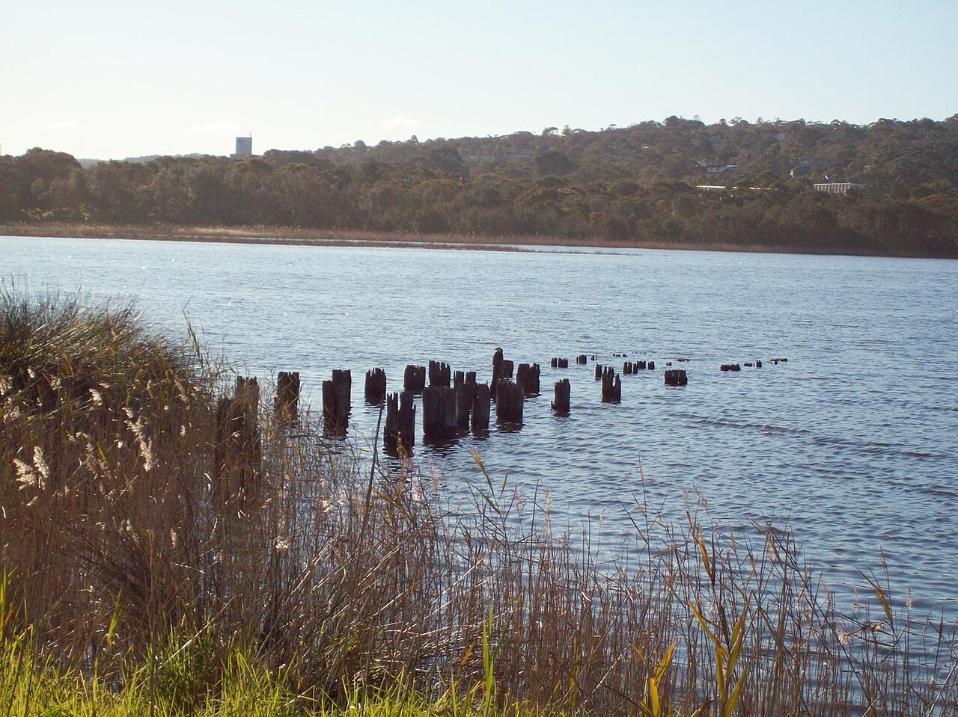
Dee Why Lagoon, listed as a Wildlife Refuge since 1974 on the council website, 'for the purposes of preserving and conserving the natural environments', is among the most polluted by microplastics in the state.
The types of plastics found in Dee Why Lagoon during the course of the study were Artificial Turf fragments (2.33%) Film (15.12%) Foam (37.6%) and Fragment (43.8%). Of these fragments 66.9% were small, 23.38% medium fragments and 9.65% were large fragments.
Overall, only 4 waterways were categorised as having very low microplastic contamination (Grade A; <0.1 MP/m³; Myall Lake, Myal Broadwater, Middle Lagoon and Nadgee Lake - in the north and south and in the least disturbed areas), while 32 waterways were classified as having low contamination (Grade B; 0.1 – <0.3 MP/m³). Most waterways (38) had moderate contamination (Grade C; 0.3 (Grade D; 0.5 – – <0.5 MP/m³); 23 waterways had high contamination <1.3 MP/m³); and 23 waterways exhibited very high microplastic contamination levels (Grade E; >1.3 MP/m³).
Dee Why was graded 'E', very high microplastic contamination levels, as was Manly Lagoon and Middle Harbour, although neither was found to be as polluted as Dee Why Lagoon. The 'Dee Why Lagoon Wildlife Refuge' covers an area of 77 hectares, of which the lagoon takes up 30 hectares. The rest of the reserve is primarily swamp-based bushland, as well as the coastal dune ecosystem between the lagoon and the sea. The reserve is a listed under the NSW Biodiversity Conservation Act 2016 and contains several listed threatened ecological communities.
Dee Why had one of the highest median microplastic concentrations were recorded in urban catchments (9.98 MP/m³).
Similarly, the highest mean concentrations were observed in these same systems; Duck River (34.80 MP/m³ ± 42.29 SD), Dee Why Lagoon (22.45 MP/m³ ± 28.49 SD but increases to 64.73%), and Cooks River (19.89 MP/m³ ± 19.69 SD) (Figure 12).
The Cooks River was ranked as having the highest microplastic contamination level in New South Wales, due to its consistently elevated concentrations recorded throughout the study period.
This system was followed closely by Dee Why Lagoon.
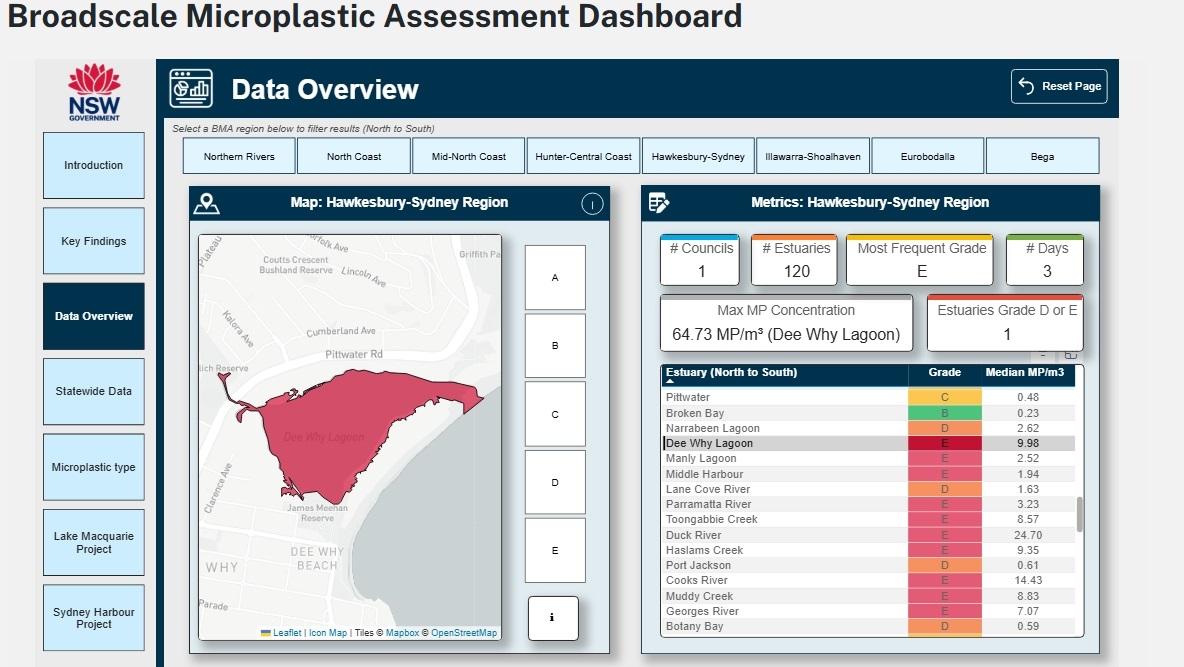
Dee Why data from SEED dataset
Total Earth Care (TEC) was commissioned by the Northern Beaches Council to conduct a year-round bird survey at the Dee Why Lagoon. The survey, which ran from September 2019 to August 2020, observed 102 different species using the lagoon and surrounding vegetation. This included Three threatened species – Pied Oystercatcher (Haematopus longirostris), White-bellied Sea-Eagle (Haliaeetus leucogaster) and Eastern Osprey (Pandion haliaetus cristatus), and four species listed as migratory under the EPBC Act – Caspian Tern (Hydroprogne caspia), Eastern Reef Egret (Egretta sacra), Sharp-tailed Sandpiper (Calidris acuminate) and White-bellied Sea-Eagle (Haliaeetus leucogaster).
The scale for Manly Lagoon records 56.55% of its plastic pollution is Artificial Turf fragments, consistent with the data released in January 2026 in a similar study conducted by Ausmaps, with 87.88% of all microplastic fragments categorised as small. Middle Harbor also had a high Artificial Turf reading of 25%.
Across the state plastic grass now accounts for 5.5% of all microplastic pollution.
Narrabeen Lagoon has been categorised as 'D', 'moderate contamination', with no detected presence of plastic grass as yet, just fragments (40%) and film (60%) of which 88.17% is classed as small.
The council has stated its intent to install plastic grass in the flood zone of Narrabeen's 'Rat Park' and has already installed, without consultation and despite objections, plastic turf in flood zones alongside Narrabeen Lagoon, in Avalon's Dunbar Park and at Bayview's Kamilaroi Park, and at Lynne Czinner Park.
Residents state this is causing harm to people and irreparable damage to the environment.
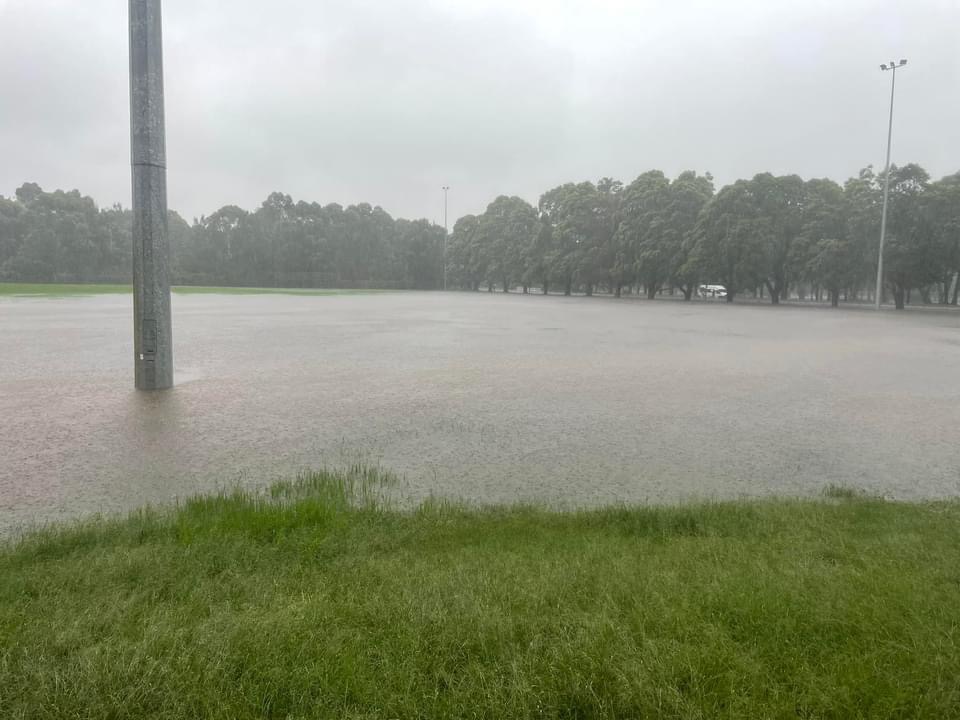
Millers Reserve, alongside Manly Creek, submerged by water after the heavy rains, March 2022. Photo: Julia Walsh
small.jpg?timestamp=1780528062832)
Plastic turf installed in Dunbar Park, over a creekbed and in a known flood zone, without consultation
The council has also been installing rubberised soft fall and artificial turf in other children's playgrounds, despite objections due to health impacts, which also quickly deteriorates and pollutes environments.
A comparative study conducted on PAHs profiling and probable cancer risk of children from PAHs present in uncovered playground surface soil and poured rubber surfaced playground dust found cancer risk is approximately 10 times higher in poured rubber surfaced playgrounds than in uncovered soil playgrounds [1.].
Another study, Toxicity and polycyclic aromatic hydrocarbons bioavailability in recycled tire rubber granulate of varying particle sizes, published online on 29 December 2025, states:
''The rubber granulate was toxic to all tested organisms. Larger granulate particles caused a reduction in toxic effects on the organisms studied. These findings suggest that using rubber granulate in the environment, especially in public areas such as playgrounds, sports fields, and running tracks, may lead to the release of toxic organic compounds into soil and surface waters. Prolonged exposure could disrupt soil ecosystem functions and pose potential health risks, particularly for children who come into direct contact with the granulate. The results highlight the need for cautious use of tire-derived granulate and the development of guidelines to ensure its safe application.''
State Government announces draft 'guidelines' - but no rules
In November 2021, the Hon. Rob Stokes MP, (then) Minister for Planning and Public Spaces, requested the NSW Chief Scientist & Engineer provide expert advice on the use of synthetic turf in public open space in NSW. That announcement followed years of studies finding problems with synthetic turf and calls by community members for that investigation.
''Once the guidelines are finalised, they will be accessible to all councils, sports clubs and local stakeholders to make informed decisions on the addition of synthetic turf in their local sporting hubs.'' the now incumbent state government announced on March 17 2024
Following 2 investigations into the use and impacts of synthetic turf by the NSW Chief Scientist and Engineer and NSW Government, the Department of Planning Housing and Infrastructure (DPHI) stated it worked with 'councils, key stakeholders and industry' to develop the draft guidelines.
The NSW Government stated it believes that the guidelines will be a valuable resource and tool to provide strategies and case studies to assist planners and sports field managers in delivering the best outcomes for their communities. A 6-week public exhibition period ran until April 29 2024.
Current NSW Minister for Planning and Public Spaces Paul Scully said:
“We’re seeing a growing demand for sports fields and ovals in our communities, and we want to provide people with access to public spaces all year round in a range of climates.
“Given the conversations around potential impacts of synthetic turf, these guidelines provide councils, sports clubs and local decision-makers with research-backed information to make the best decisions for their communities.
“We’re confident that these draft guidelines will give decision-makers the information necessary to ensure that their choices align with the values and aspirations of their local communities. This is all about embracing modern innovation methods in our public open spaces.”
The finalised state government's 'Synthetic Turf in Public Open Space – Guidelines for Decision-Makers' are just that - they are guidelines only - stating only that all new proposals must consider environmental factors in the use of synthetic turf in sports fields.
Pittwater still Cleaner: Broadscale microplastic assessment of NSW estuaries
Pittwater was classed 'C', with no presence, as yet, of plastic turf. In Pittwater's estuary film accounted for 66.67% of the plastic types, and 33.33% in fragments, with 86.21% of these plastic types listed as small, 10.34% medium and 3.45% large fragments.
Also classed as 'C' are the Hawkesbury, Cowan, Brisbane Water and Berowra, while Broken Bay is classed 'B', and low in microplastics contamination.
Over three years, the NSW Environment Protection Authority (EPA) and the Department of Climate Change, Energy, the Environment and Water (DCCEEW) surveyed 120 waterways. DCCEEW Senior Scientist Samantha Lynch says the project has delivered a consistent method for assessing microplastics across NSW.
“We developed a standardised approach to measure microplastics and compare results from the Tweed River to the Victorian border,” Ms Lynch said.
Microplastics are small pieces of plastic less than half a centimetre. They are fragments of larger items that break down over time. The study confirmed microplastics are present in all sampled waterways, from busy urban creeks to regional rivers and remote coastal systems.
Although microplastics are tiny, they can travel long distances, settle in sediments and be ingested by wildlife, and move through the food chain. Understanding where they accumulate helps guide future research.
NSW EPA Senior Project Officer, John Lavarack says the study provides a crucial benchmark.
“This research gives us a clear starting point. We can now track changes over time and understand whether our actions are making a difference,” Mr Lavarack said.
NSW Plastics Plan 2.0: the Environmental Legislation Amendment (Plastic Reduction and Container Recycling) Bill 2026
The Environmental Legislation Amendment (Plastic Reduction and Container Recycling) Bill 2026 passed the lower house of the NSW Parliament on Wednesday June 3 2026 and has been introduced to the upper house by incumbent NSW Minister for the Environment, the Hon. Penny Sharpe. The upper house has risen and next sits on August 18 2026
In speaking in support of the Bill last week the MP for Pittwater, Jacqui Scruby, stated:
If we walk along the beach at high tide at Narrabeen, Avalon, Mona Vale or Palm Beach, we can look down and see the reality that there is plastic in our sand, despite the tireless clean-up efforts of our local community groups. Reform must start somewhere. Following past Federal and State governments developing national and State strategies to reduce plastic, and the current plastics plan, this legislation is another step towards creating a framework to reduce plastic use and turn off the tap of plastic flow. As members have mentioned, we cannot simply recycle our way out of the plastic problem. The bill before us gives people the right to use their re-usable cups, and for those to be accepted. It also establishes over many years a container scheme. I note that the focus will be to roll out trials in big precincts over a number of years.
The big one for my community is that the bill bans the release of helium balloons. That is long overdue, and it continues to come up in all the beach cleans I attend. It comes up literally in the removal of balloons from the beach and also as a topic of conversation. People want that reform. I know that the people in the Pittwater community care deeply about this issue. Many passionate environmental volunteers roll up their sleeves to do beach cleans and other environmental work in the community. For years, they have been strong adopters of re‑usable cups and cup libraries within our villages. They will embrace and support the initiatives within the bill before the House. Those people contact me regularly. Janet from Whale Beach wrote to me about microplastics in urban catchments. Barbara from Mona Vale travels widely, educating the community on how to reduce plastics.
I call out a couple of groups that are active in the community, including Living Ocean and AUSMAP citizens scientists who have sifted through our sands, and the Surfrider Foundation Northern Beaches and its Adopt A Beach program, which has won council awards. Of course, favourites in our area are Emu Parade and Roly's initiative to provide free coffee to people who volunteer to collect beach rubbish, and Northern Beaches Clean Up Crew. At the first Emu Parade clean-up I went to, the topic of banning balloons was most discussed, as well as the plastic fish soy sauce bottles. Our community is doing the heavy lifting, but volunteerism has reached its physical limits. Only the statutory power of the Parliament as well as big changes by corporations can stop pollution at the source.
In 2024-25 New South Wales generated 22.4 million tonnes of waste. That is a 5 per cent increase from the previous year. On average, we generated 2.5 tonnes of waste per person in 2023-24. The NSW State of the Environment 2024 report confirms that both total and per-person waste generation is getting worse. That is despite original targets for per-person waste to decrease by 10 per cent. A third of our waste is not recycled, and we are accelerating the filling of landfills that will reach capacity by 2030. This problem needs to be addressed through significant reform. The Government's incremental policy changes and the NSW Plastics Plan 2.0 are positive steps. I acknowledge that last year the Minister mentioned that plastics make up around 74 per cent of litter in our waterways, yet less than 16 per cent of plastic is recycled in New South Wales. By 2050, it is predicted that there will be more plastic in the ocean than fish.
As we know, we cannot ban our way out of a systemic crisis while allowing a broader tide of packaging to roll over our communities and flood our supermarkets. I note the work that the member for Mackellar is doing at a Federal level, together with other Federal counterparts, to call for a national extended producer responsibility scheme to shift the burden off individuals and onto companies that design and produce this waste. But this is also a local issue. My community was shocked at the findings of the Environment Protection Authority's Broadscale microplastic assessment of NSW estuaries.... the study confirmed severe, systemic microplastic contamination. Middle Harbour Creek and Manly Lagoon ranked in the top 10 most polluted waterways in the entire State, receiving the worst possible rating of a grade E.
We have a huge task before us, but today brings good news. The bill is a step forward. It lays the foundations for a renewable, circular economy that the community can get behind. People are already involved in that. I seriously question members who have criticised the bill or make claims that the bill is a cafe killer. I have owned a small business and I support small business. I note that the Government has indicated that the provisions in the bill will be rolled out to big precincts and stadiums, in partnership with business. They will not be rolled out overnight. We are looking at a 2030 runway.
In reviewing whether there should or could be exemptions and whether I should move my own amendments, I discovered that there are already exemptions. Section 61 is called "Regulator may grant exemptions". I will not read them all out. Small businesses should know that there are exemptions for many of the issues that have been addressed today, with a long timeline and a partnership approach. That issue is not an issue at all. To say anything else is fearmongering and disingenuous. All members want a problem such as this to be addressed and the solution to be rolled out in partnership. I note that in the past the Opposition has done great work in this area. The member for Manly and former environment Minister celebrated the banning of single-use items—straws, plates, cotton buds, cookware and other items. In a 2022 media release he said:
The feedback is clear – the community is disturbed by the amount of single-use plastic … today we're asking everyone across the state to stop it and swap it.
Today I say the same thing, even if he and the Opposition do not. We must be bold and visionary to address our plastics problem. We must work with communities, governments and businesses over the coming years. Some 1.84 billion single-use plastic cups are used by Australians every year. It contributes $300 million in costs as well. If Western Australia can adopt a total ban on single‑use coffee cups, New South Wales can totally do the same and manage the transition in a positive way. We are behind Germany, France, the United Kingdom, the United States and Sweden, as well as other States. The bill will reduce Sydney's waste rather than sending it to regional areas. I note the concerns of the member for Wollondilly regarding a proposed development in her area for the recycling of plastics. Again, we cannot recycle our way out of the plastics problem.
I owe it to the volunteers cleaning our beaches, the students who come to me concerned about the state of our environment now and into the future, and everyone who cares about pollution and its impacts on health to ensure that they inherit a New South Wales that has less plastic pollution by helping to turn the taps off, which this bill does. I have lived completely plastic free for a number of years, although I am not as good as I used to be. I ran a course, 6 Weeks to Plastic Free, through council. I understand how change can make a difference to people's personal waste. I also understand how possible it is for us to live with less plastic and to put pressure on governments and corporations to make the big changes that matter most, which is what we are doing today. It is possible but it takes reform. I commend the bill to the House.
The NSW Marine Estates has said the Bill will allow implementing actions under the NSW Plastics Plan 2.0. This will support ongoing efforts to reduce plastic pollution and protect the health of NSW waterways.
The government states NSW Plastics Plan 2.0 (PDF 1.7MB) has been informed by a multi-stage consultation process and sets out the actions the NSW Government will take to:
- reduce plastic litter in our environment, in support of our target to reduce all litter items by 60% by 2030
- protect human health, the environment, and recycling streams from the impacts of microplastics and harmful chemicals in plastics
- harmonise with other states and territories where possible, while taking a leading role where further, faster action is needed.
These actions will be staged between 2026 and 2030 to ensure businesses, communities, and regulators have enough time to transition to the new requirements, the EPA states
2026
- Ban the release of lighter-than-air (helium) balloons.
- Commence trials for reusable cup systems in NSW Government premises.
2027
- Establish a reuse-only precinct in the Sydney CBD in late 2027.
2028
- Commence regulations phasing out the supply of the following items, after an 18-month transition period from the date regulations are made:
- plastics containing pro-degradant additives
- rinse-off cleaning products containing plastic microbeads
- plastic bags with handles, regardless of thickness
- plastic umbrella bags
- plastic pizza savers
- plastic tags used to seal bags containing bread, bakery, and dry pantry items (with a temporary exemption for bags containing fresh produce to September 2029)
- plastic balloon sticks and ties
- loose-fill and void-fill packaging made from expanded or foamed plastic
- food supply and service items, such as food trays, made from expanded or foamed plastic
- Commence regulations phasing out the supply of the following items, after a 24-month transition period from the date regulations are made:
- plastic confectionery sticks
- moulded or cut packaging made from expanded or foamed plastic.
You can read the full Broadscale Microplastic Assessment report on the NSW EPA website or view the interactive data dashboard on SEED to see results for your local waterway. This work forms part of the Marine Debris Research and Management Program. The microplastics monitoring project was part funded through the Marine Estate Management Strategy.
Waves Without Waste Expo 2026
Mackellar MP Dr. Sophie Scamps is hosting the Waves Without Waste Plastics Expo at Warriewood next Saturday and invites residents to hear from experts and advocates leading the call for change.
The invitation states ''By 2050, there could be more plastic in our oceans than fish. We all do our best to reduce our plastic waste, but it’s time we stopped letting big polluters off the hook.
Saturday June 13 10am | Warriewood Community Centre | RSVP at: www.sophiescamps.com.au/waves_without_waste_expo_2026