Environment News: April 2026


Week One April 2026: Issue 653 (published Sunday April 19)


Flowering Now

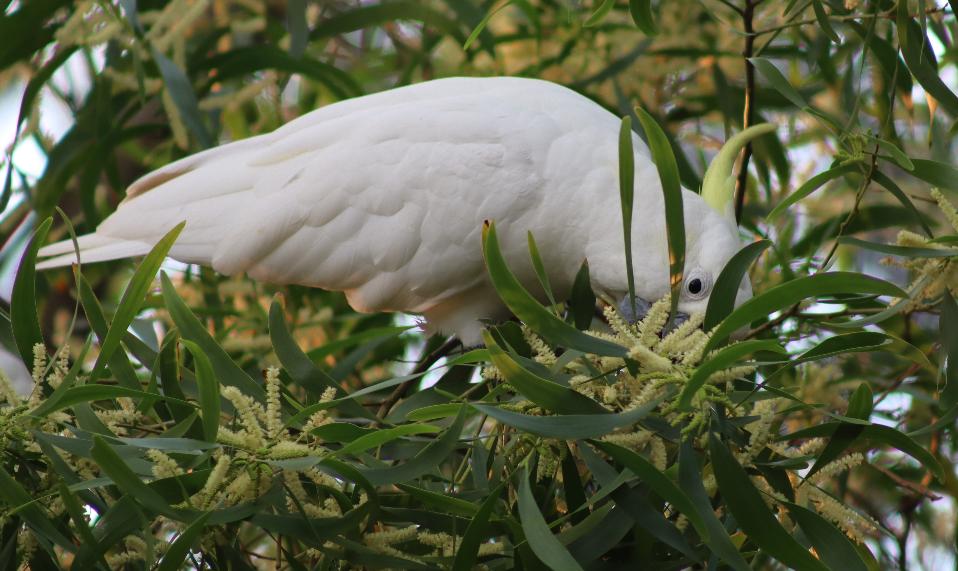
Flowering now: the first of the Winter Wattle - a feast for wildlife and insects
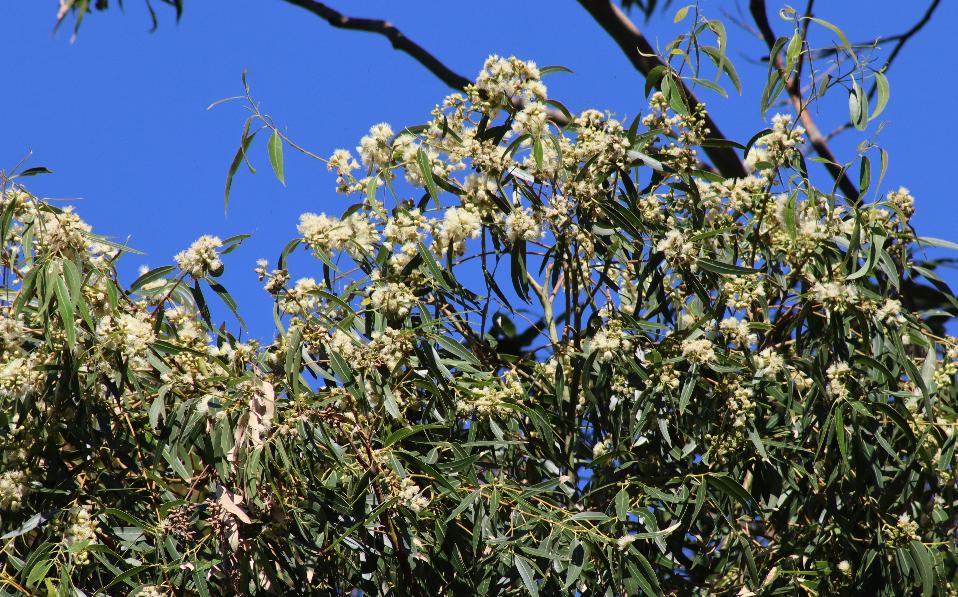
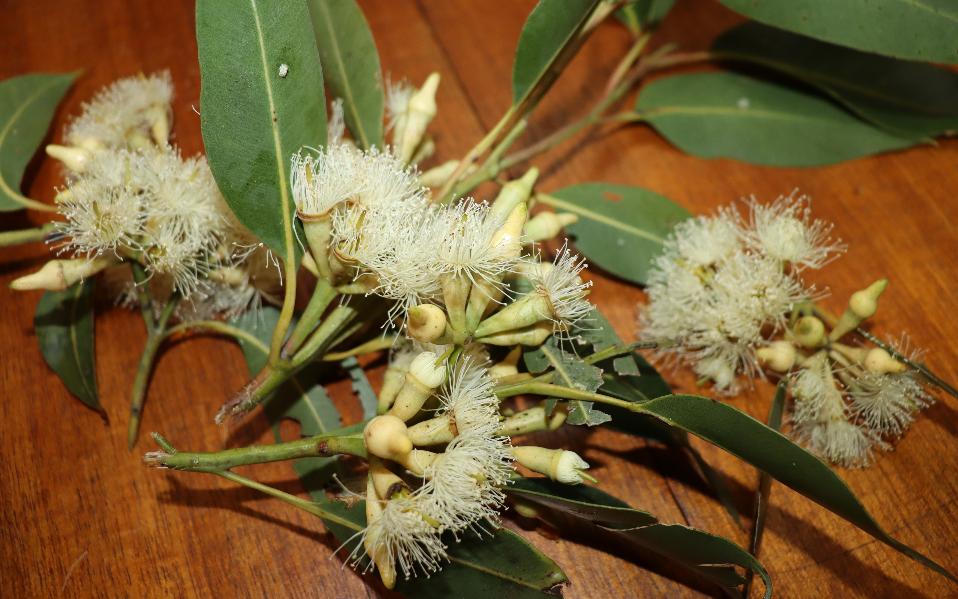
Flowering now: Pittwater Spotted gums (Above) and Swamp Mahogany and Turpentines (Below) - a feast for wildlife and insects - smells delicious 


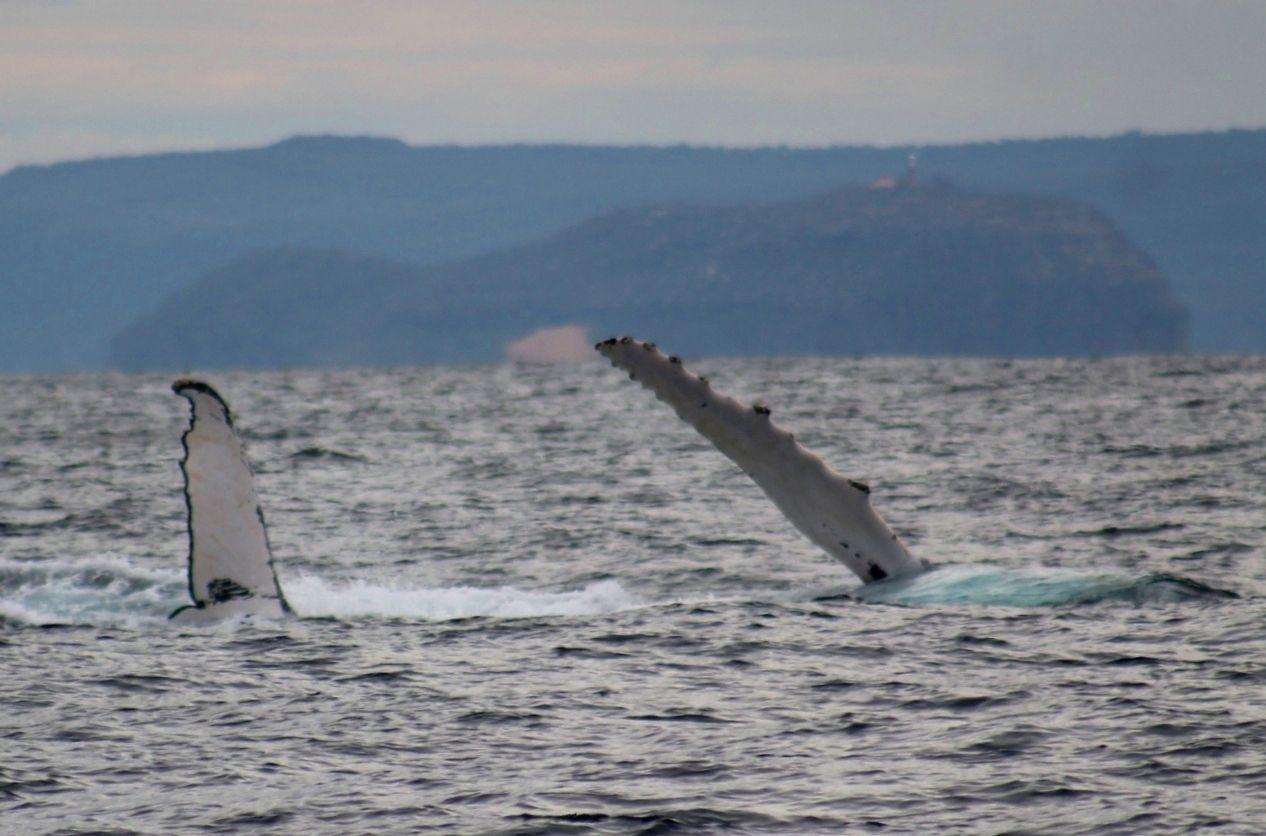
Humpback whale calf off Eastern wharf, Scotland Island- Authorities notified. 

Wednesday April 15 2026, 12pm - reported by Church Point Ferry Service

Scotland Island, Pittwater. Photo: AJG/PON

Beaked Whale Passes Away in Middle Harbour

ORRCA received reports to their ORRCA 24/7 Rescue Hotline of a solitary “large dolphin” in Middle Harbour in the last week of March that appeared compromised. Upon investigation, the ORRCA team identified the animal as a beaked whale species.

Beaked whales, while found off our coastline, are rarely encountered by humans. They are deep-water, social animals, typically living in depths of over 1,000 metres and travelling in pods. The presence of a lone individual in shallow waters is often a strong indicator of an underlying health issue.

ORRCA stated on April 2:

''Over the past week, ORRCA responders worked tirelessly alongside Taronga Zoo Sydney and NSW National Parks and Wildlife Service, with generous support from NSW Maritime and scientists, to closely monitor the whale. From early morning through to last light, our team collected detailed observations on its health and behaviour, providing critical information to support veterinary assessments.

We are incredibly proud of the professionalism, dedication and care shown by every ORRCA member involved. Their commitment ensured this animal received the highest level of attention and welfare consideration throughout.

Sadly, despite all efforts, the whale’s condition declined significantly and it has since stranded and naturally passed away today, April 2 2026. 

We would also like to extend our sincere thanks to the Middle Harbour community. Many residents generously opened their homes, offering balconies and vantage points so our teams could safely continue observations. Their support and compassion made a meaningful difference.

Data and samples will now be collected, with a necropsy to be undertaken. While this is a difficult outcome, the information gathered will help build a better understanding of this species, its health, and the broader marine environment. We hope to be able to share the results of the necropsy in the future.''

ORRCA reports they have had a series of beaked whale strandings in the past few weeks, and hope to be able to share the necropsy results and any insights once known.

A Blainville’s beaked whale stranded along the NSW coastline, this time at Toowoon Bay on the NSW Central Coast on Monday 23rd March, others include the rescue of a Blainville’s beaked whale on March 19 found stranded on Stockton Beach, while on March 21, another whale was reported stranded on the shores of Windang Beach, south of Wollongong.

On Thursday March 26 a group pushed a clearly injured Blainville’s beaked whale back into waters off Bondi. 

Unfortunately ORRCA was not contacted in this instance and states:

''As air-breathing animals, they are not in immediate danger from being on the beach,”  a spokesperson for ORRCA stated.

“In many cases, they may be unwell, injured, or disoriented, and moving them can cause further harm or reduce the likelihood of successful rehabilitation.''

ORRCA stated on March 25:

''This marks another confirmed stranding of this species in just a matter of days. While this is unusual, it is important that we do not speculate on potential causes at this stage. Findings from the necropsies may provide critical insights, and we will share updates as more information becomes available.

Strandings can be complex events, often linked to underlying health conditions or environmental factors. Each response contributes valuable data to help build a clearer understanding of these marine mammals and their environment.''

The one that has passed at Middle Harbour makes another lost.

Six Blainville's beaked whales have become stranded across the New South Wales coastline, with two found at Stockton Beach, and the most recent discovered in Middle Harbour and Bondi Beach... only two of the six were able to survive.

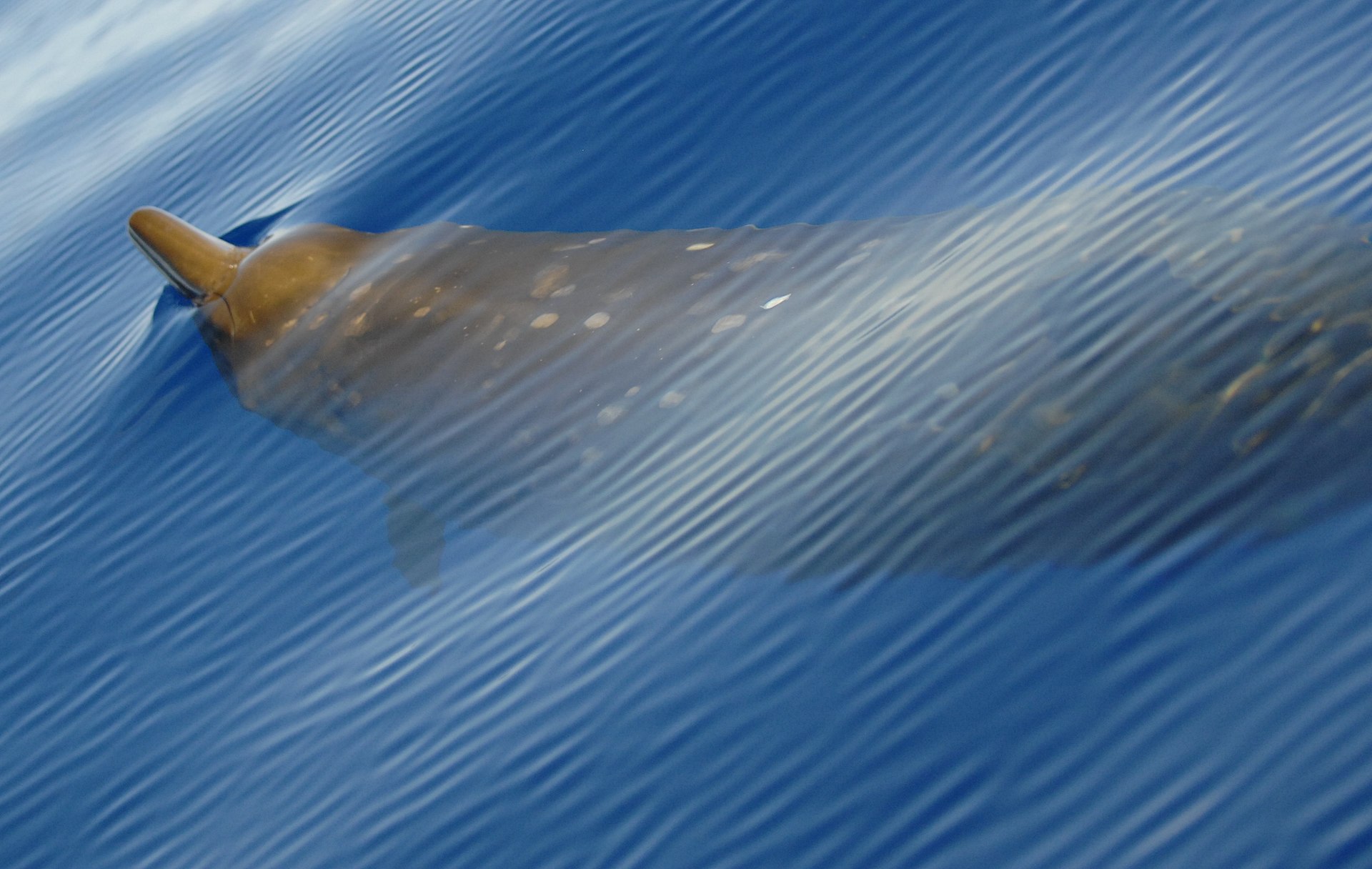
Blainville's beaked whales, Mesoplodon densirostris, are brownish or blue-grey dorsally, and paler ventrally, with dark eye patches and often have white circular scars, perhaps caused by cookie-cutter sharks.

The head can be brownish, shading to grey on the edges of the upper lip and lower jaw. Males are darker than females.

An adult beaked whale surfacing in Bahamas. Photo courtesy NOAA Photo Library.

The body is deep and laterally compressed, particularly towards the tail. The melon is small and flat. The beak is tubular, thick, and moderately long. The mouthline is distinctive in this species, rising steeply about halfway along its length. This is particularly obvious in adult males; the sharp upwards slope of the lower jaw coinciding with the position of the massive teeth. The single pair of teeth are very large (up to 20cm in height), angled forward at about 45°, and raised above the upper jaw. The teeth are mostly hidden within the deep tooth sockets, or covered by gum tissue. Only the tip of each tooth is exposed. It has a strong terminal denticle and is often covered by large, stalked barnacles. These teeth do not erupt in females. The prominent triangular or hooked dorsal fin is positioned far back on the body, between 60% and 70% of the distance from the beak to the tail.

The colouration, extensive scarring and head form of adult males can help in the identification of this species at sea. The arched curve of the lower jaw of males is much more extensive than in Andrews' Beaked Whale and the Ginkgo-toothed Beaked Whale. Males of the latter two species also have large teeth set near the middle of the lower jaw.

Beaked whales are among the longest and deepest divers of any cetaceans. Mean diving depth for Blainville's beaked whale is 922 m (3,025 ft) with maximum 1,408 m (4,619 ft). The species dives primarily to forage for food in the deep ocean, usually diving over 800 m (2,600 ft) when foraging and can stay underwater for 48–68 min. For longer dives ascent rates are slower than descent rates. After a dive they spend an extensive period of time (66–155 min) in the upper 50 m (160 ft) of the water column.

If you encounter a stranded marine mammal, please do not attempt to intervene. Contact the ORRCA 24/7 Rescue Hotline on (02) 9415 3333 immediately and our trained responders can coordinate an appropriate response.

ORRCA stands for the Organisation for the Rescue and Research of Cetaceans in Australia. Their primary focus is the rescue, research, conservation, protection and welfare of Whales, Dolphins, Seals and Dugongs in Australian waters.

ORRCA offers the community one of the most experienced and successful whale, dolphin, seal and dugong rescue teams in Australia. 

ORRCA are the only volunteer wildlife rehabilitation group in New South Wales licensed to be involved with marine mammal rescue, rehabilitation and release. Members come from all walks of life, age groups and nationalities.  

Vortex Rip filmed at Manly

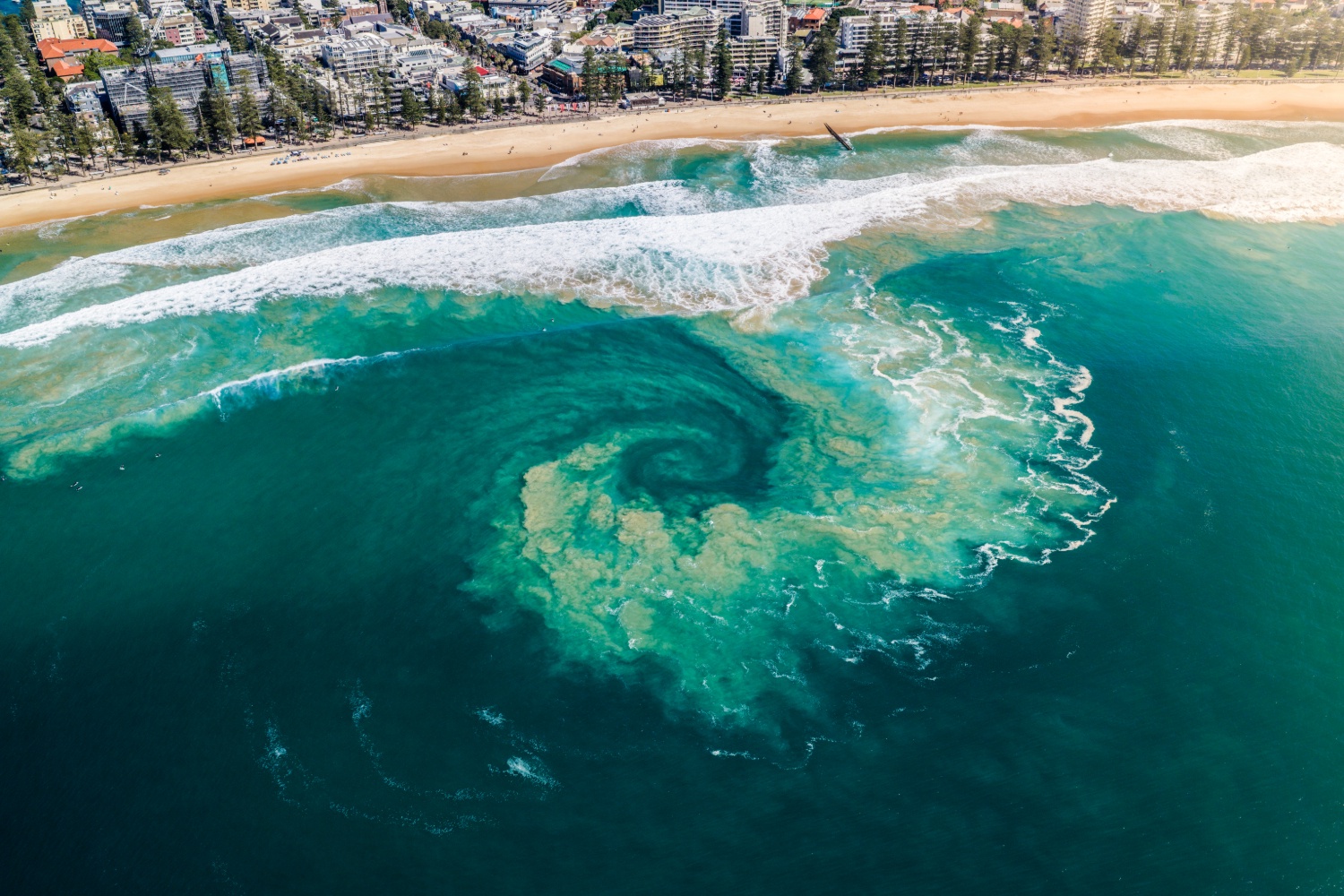
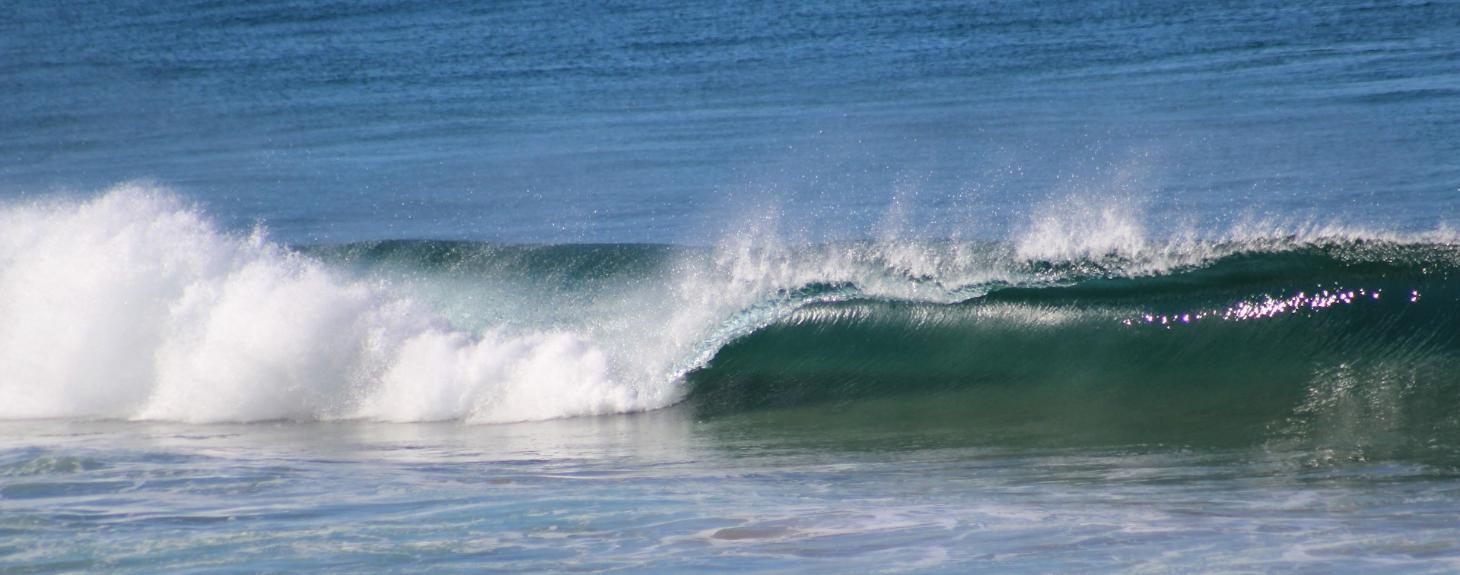
Surf photographer Jamen Percy filmed a vortex rip at Manly on Monday April 13, right as the peak in swell from ex-Tropical Cyclone Vaianu impacted the Sydney region.

Using a drone, Jamen captured spirals created by sand plumes contrasting against the blue waters. The images sparked curiosity on social media. People wondered how vortex rips are created and why they make such fascinating patterns.

A vortex rip is a form of flash rip.

There are three common forms of rips: channel rips, boundary rips and flash rips.

Vortex created by a flash rip. Photo: Jamen Percy

The most common type of rip is a channelized rip. These rips occupy deep channels between sand bars and they can stay in place for days, weeks and even months. These are the classic ‘dark gap’ rips and may also erode a tell-tale embayment along the shoreline.

Boundary and structural rips are found against headlands and other structures like jetties and piers that reach out into the ocean and lakes. These rips are generally channelized and can appear as dark gaps of deeper water.

A flash rip is a dangerous, temporary, and unpredictable rip current that appears suddenly, lasts only a few minutes, and is caused by a sudden influx of water from large wave sets. They create intense, short-lived offshore currents of cloudy, sandy water that can trigger mass rescues, even in waist-deep water.

The shallow sand banks and adjacent deeper channels become overrun by outgoing water as the water tries to find a way back out to sea. It uses whatever channel possible and surges back out, creating a fast-flowing, significant surge of water back into deep water.

The vortex arises when this fast flowing, churned up water meets the calmer sea state just offshore, with friction causing the formation of a spiral.

The combination of this friction and a reduction of water flow from inshore results in the rip slowly weakens and dissipates over a few minutes. In time it will return to a relatively calm state until the next set overpowers the inshore banks again.

On Monday, the peak wave periods hit 16 seconds in Sydney. As the arriving sets broke on the sand banks, they carried significantly more energy then normal, and as what comes in has to go out. This would have contributed to the vortex rips in the photos.

The way in which the vortex spins has nothing to do with the Coriolis Force or what hemisphere you are in, it’s down to the structure of the individual bank/beach setup and that interaction with the calmer water out to sea. One flash rip could spin clockwise and the next counter-clockwise.

For surfers, these rips are more annoying than dangerous, moving you away from where you want to be sitting on the bank, but they can also help stand up the next incoming set, creating a wedge-like, steeper peak on an otherwise straight line of swell.

Flash rips are a common cause of mass rescues because they can sweep multiple swimmers out at once.

If taken away by one and unable to paddle out, the best decision is to head further out to sea, out and around its effects, or if you can, catch some broken whitewater back into the shallower sand banks away from where the rip is surging out.

If a swimmer the best advice on How to Stay Safe includes:

  • Swim at Patrolled Beaches: Always swim between the red and yellow flags, where lifeguards are monitoring conditions.
  • Recognise the Signs: Avoid areas of water that look sandy or turbulent, even if they appear calm in between white water.
  • If Caught: Stay calm, do not try to swim against the current, and float or signal for help.
  • Escape Route: If possible, swim parallel to the shore to get out of the fast-moving rip.

A huge thank you to Jamen for sharing these brilliant images.

Vortex created by a flash rip. Photo: Jamen Percy

Antarctic Fur Seal Listed as Endangered with Extinction

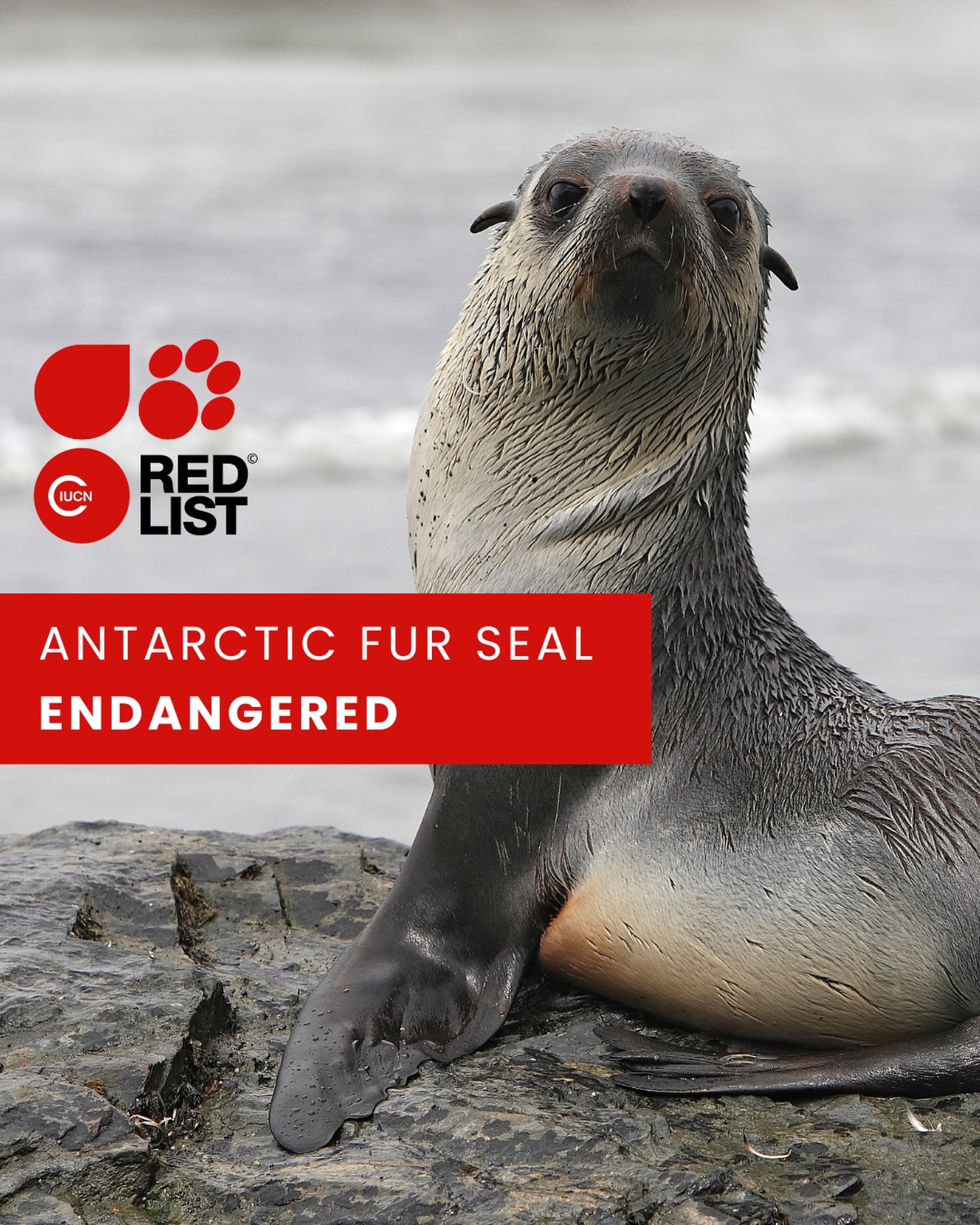
On April 10 2026, following an estimated population decline of more than 50% since 1999, the Antarctic Fur Seal (Arctocephalus gazella) has been reclassified as Endangered on the IUCN Red List of Threatened Species. The Red List, maintained by the International Union for Conservation of Nature (IUCN), is the world’s most comprehensive assessment of the global conservation status of animal, plant, and fungal species.

Antarctic Fur Seals rely on several important breeding sites, including Australia’s sub‑Antarctic territories of Heard Island and McDonald Islands, as well as Macquarie Island 1,500km southeast of Tasmania. With rising ocean temperatures and shrinking sea-ice, krill are heading into deeper colder water, which is reducing the availability of food and creating a cascading impact throughout the ecosystem. Additional pressures, including competition with recovering whale populations, expanding commercial krill fisheries, emerging pollutants, and new disease outbreaks like avian influenza may worsen the decline. 

Alongside Elephant Seals (now vulnerable) and Emperor Penguins (now endangered), the classification change of Antarctic Fur Seals signals a significant increase of extinction and the urgent need for additional resources and support to assess and quantify the risks facing these species.

The beloved emperor penguin and Antarctic fur seal are now officially endangered. Here’s what can be done

The ConversationCC BY-ND
Mary-Anne LeaUniversity of TasmaniaJane YoungerUniversity of Tasmania, and Noemie FriscourtUniversity of Tasmania

In 1902, British explorer Robert Falcon Scott spotted a large group of large black and white birds at Ross Island, Antarctica. This was among the many milestones of Scott’s famous Discovery expedition: the first breeding colony of emperor penguins.

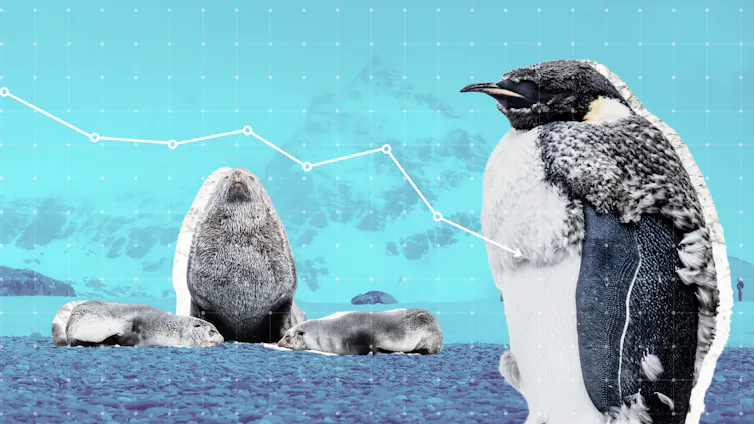
Now, only 124 years since this penguin colony was discovered, emperor penguins have officially been listed as endangered, along with the Antarctic fur seal. As the world warms, Antarctic krill are shifting southwards and sea ice is shrinking at record levels. And these unprecedented changes are having a domino effect on these species.

These are the first penguin and pinniped – marine mammals that have front and rear flippers – to be given this conservation status in the Southern Ocean. Their perilous situation is a critical turning point, and shows how rapidly the Antarctic environment is changing.

At the same time, the spread of highly contagious avian influenza, or bird flu, adds a new and immediate threat to Southern Ocean wildlife, compounding the pressures of climate change on stressed species.

Antarctic fur seal with pups at Sailsbury Plain on South Georgia, with snow-covered hills in the background.
Antarctic fur seal with pups at Sailsbury Plain on South Georgia. The number of fur seals has dropped by over 50% since 1999. Posnov/Getty

Dramatic declines linked to climate change

The first emperor penguin breeding colony was discovered at Cape Crozier, on Ross Island, during Robert Falcon Scott’s Discovery expedition in 1902. A decade later, Scott’s Terra Nova expedition returned, in part to collect emperor penguin eggs. It was an ill-fated expedition, immortalised in Apsley Cherry-Garrard’s famous book, The Worst Journey in the World.

In the 1960s, Scott’s son, Sir Peter Scott, one of the founders of modern conservation, helped establish the International Union for the Conservation of Nature’s Red List. Just 124 years after those early discoveries at Cape Crozier, that same framework has now been used to classify emperor penguins as endangered. The swift arc from discovery to extinction risk is a striking reminder of how quickly the species’ fortunes have changed.

Over nine years, between 2009 and 2018, emperor penguin numbers fell by 10%. Their numbers are expected to halve by 2073.

A group of southern elephant seals at rest.
Southern elephant seals are now officially listed as vulnerable. Mary-Anne LeaCC BY-ND

The decline is more pronounced for Antarctic fur seals. Hunted to the brink of extinction in the early 1880s, by 1999 their numbers had rebounded to an estimated 2.1 million mature seals. But since then, the global population has decreased by more than 50%, to about 944,000 mature individuals.

In just a decade, they have been reclassified on the IUCN’s Red List, going from of “least concern” – those species that are widespread and at low risk of extinction – to “endangered”. The IUCN’s red list is the comprehensive information source on the extinction risk status of species. This shows the remarkable speed at which these seals are declining.

Climate change and bird flu

Both of these dramatic declines are linked to climate change. Warming ocean temperatures and a reduction in sea ice affect the availability of the Antarctic fur seal’s key prey, Antarctic krill. Krill are shifting southwards and moving deeper, potentially making them less accessible to some predators. Competition with a growing population of whales has also increased.

Emperor penguins, by contrast, are completely dependent on sea ice. They use it as a stable platform for courtship, incubating their eggs and rearing chicks. But as sea ice declines and becomes less reliable, their breeding success is increasingly threatened. If the ice breaks up before chicks are fully developed, many are unable to survive.

At the same time, the spread of highly contagious bird flu adds a new and immediate threat to Southern Ocean wildlife. High mortality associated with avian influenza has also caused the uplisting of the southern elephant seal to “vulnerable” this week.

Some elephant seal populations have experienced more than 90% of pups dying, alongside sharp declines in breeding adults. These represent tens of thousands of animals lost, with many Antarctic fur seals also dying as a result of bird flu outbreaks.

emperor penguin chicks at Cape Crozier.
Emperor penguin chicks at Cape Crozier. Mary-Anne LeaCC BY-ND

We need to know more

Emperor penguins, Antarctic fur seals and southern elephant seals are three of the more widely researched Southern Ocean predators. But there is still a lot we don’t know, because of the remote location and the difficulty of sustaining research over time. And there are many species we know far less about. Antarctic ice seals, including Weddell seals, crabeater seals, leopard seals, and Ross seals, have “unknown” population trends on the IUCN red list, meaning there is not enough data to know if numbers are declining.

These recent listings make clear the urgent and ongoing need for improved, real-time monitoring. We need to know much more about wildlife health and population trends, the Antarctic environment and sea ice quality.

Human-driven threats facing Antarctic wildlife are many, and cumulative. To respond, we need to better protect Antarctic habitat and the species that live there. We need to reduce the interaction of marine species with industrial fishing. And we must improve how we assess current and suspected threats in Antarctica, when there is growing evidence of impacts.

Defining these animals as endangered is a stark reminder of how quickly Antarctica is changing before our eyes. Without a rapid reduction in greenhouse gas emissions and sustained conservation action, these species may be lost forever.The Conversation

Mary-Anne Lea, Professor in Marine/Polar Predator Ecology, University of TasmaniaJane Younger, Senior Lecturer in Southern Ocean Vertebrate Ecology, Institute for Marine and Antarctic Studies, University of Tasmania, and Noemie Friscourt, Research Associate, Institute for Marine and Antarctic Studies, University of Tasmania

This article is republished from The Conversation under a Creative Commons license. Read the original article.

Dolphin Census: May 30 2026

You can help protect dolphins into the future by registering to volunteer with Dolphin Research Australia for the first ever state-wide NSW Dolphin Census on 30 May 2026.

Recorded sightings will help create a statewide snapshot of dolphin hotspots and key habitats. This will help fill knowledge gaps about dolphins and support long-term research and conservation efforts as part of the NSW Marine Estate Management Strategy.

Anyone can get involved. Simply sign up to get trained and ready for the census at: www.dolphinresearchaustralia.org/dolphin-census/new-south-wales/


Weed Cassia Now Flowering: Please Pull Out And Save Our Bush

Cassia (Senna pendula). Also known as Senna and Arsenic Bush. Originating in South American, Cassia is a perennial sprawling multi-stemmed shrub or tree up to 5m tall. 

This weed replaces native vegetation and establishes in a wide range of native plant communities, including coastal heath and scrubland, hind dunes and riparian corridors. The large seed pods are eaten by birds and other animals. You may be seeing this bright burst of yellow everywhere as it is currently flowering - please pull out and get rid of if you have in your garden.


Summer in Sydney is getting longer, and it’s happening faster than we thought

April 8, 2026

New research finds summers are expanding 50 per cent faster in many areas than previously reported, with quicker transitions between seasons.

Summer weather is arriving earlier, lasting longer and packing more heat than it used to—and it’s happening faster than scientists had previously measured.

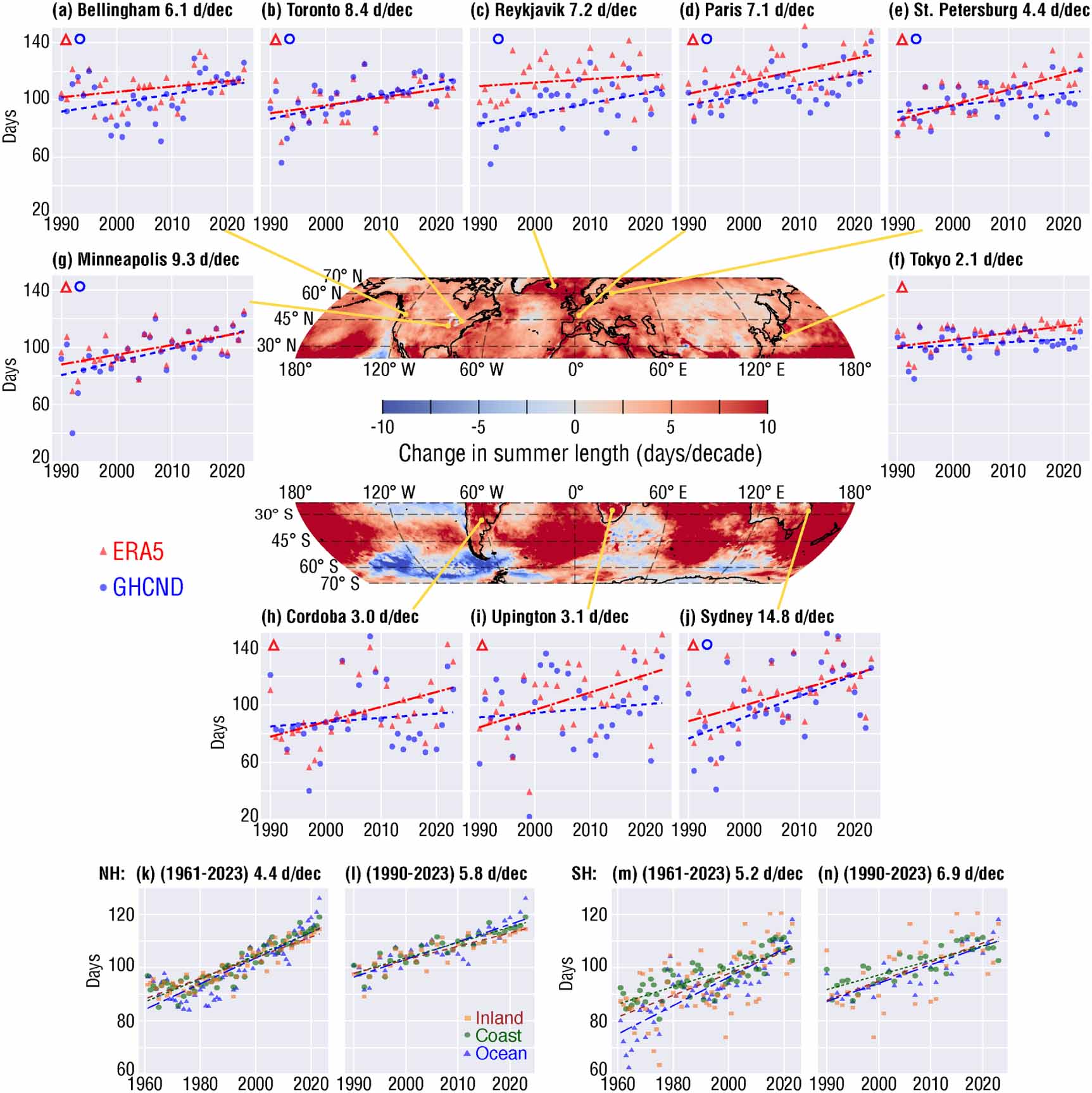
A new study by University of British Columbia researchers has found that between 1990 and 2023, the average summer between the tropics and the polar circles grew about six days longer per decade. That’s up from roughly four days per decade found in past research investigating up until the early 2010s.

For many cities, the numbers are even more striking. In Sydney, Australia, Summer temperatures now last about 130 days, up from 80 days in 1990, adding 15 days per decade. Toronto Summers are expanding by eight days per decade.

Figure 3. Summer length trends. Centre Spatial map of linear trends in summer length (days/decade) over 1990–2023 from ordinary least squares (OLS). See supplementary figure 3 for a comparison of spatial trends over 1990–2023 and 1961–2023. (a)–(j) Summer lengths over 1990–2023 for ten example cities from GHCND data (blue filled circles) and nearest neighbour land grid cell from ERA5 (red filled triangles) for the sites in table 2 in days/decade. OLS trend lines are shown, and title text gives the trend in days/decade (d dec−1) from the GHCND data. Symbols in the top left corner of each plot indicate whether the trend is significant at p < 0.05 from each data set. (k)–(n) Latitude-weighted average summer length and OLS trends over 1961–2023 (left) and 1990–2023 (right) for the NH midlatitudes (top) and SH (bottom). Colours and symbols indicate surface types: inland (yellow squares, excludes coasts), coasts (green circles), and oceans (blue triangles). Black text gives the OLS trend in days/decade (d dec−1) for all surfaces.

The researchers didn’t use the calendar definition of Summer (June through August in the Northern Hemisphere and December through February in the Southern Hemisphere). Instead, they defined Summer based on the weather: the stretch of days each year when temperatures rise above what was historically typical for a given location during the warmest part of the year—a threshold set using climate data from 1961 to 1990.

The study’s findings have implications for agriculture, water supply, public health and energy systems, many of which have been built around assumptions about when the warm season begins and ends.

“These findings challenge what we believe to be the normal cycle of the seasons,” said lead author Ted Scott, a PhD student in UBC’s department of geography. “When summer happens and how quickly it arrives impact patterns and behaviours in plant and animal life, and human society.”

Seasons are changing gears more quickly

The study also found that seasonal transitions—the shift from spring to summer and from summer to autumn—are becoming more abrupt. Instead of a gradual warm-up, summer-like temperatures arrive more suddenly. This could disrupt systems that depend on seasonal cues; for example, flowers may bloom before pollinators are active, crops may need to be planted earlier, and rapid spring warming may lead to faster snowmelt and greater Spring flood risk.

“The changes may be very disruptive to a wide range of systems,” Scott said. “An expectation in the Northern Hemisphere that June is when summer starts may be ingrained in planning and policy, meaning we could be ill-prepared for earlier heat.”

The heat is adding up—faster than before

The study, published Tuesday in the journal Environmental Research Letters, also introduces a new way of measuring cumulative heat that builds up over a summer, combining temperature and time. By this measure, accumulated summer heat over Northern Hemisphere land is rising more than three times faster since 1990 than it did from 1961 to 1990.

The study found that coastal areas in the Northern Hemisphere are seeing some of the fastest growth in summer length and accumulated heat, which could affect millions of people who have moved to these areas in part because of their perceived moderate climate.

Scott and co-authors Dr. Rachel White, professor in the department of earth, ocean, and atmospheric sciences and Dr. Simon Donner, professor in the department of geography and the Institute for Resources, Environment and Sustainability, analysed temperature data spanning 1961 to 2023 across land, ocean and coastal zones in both hemispheres, and examined trends in 10 cities around the world.

The research points to urgent questions for future study: How will longer, faster-transitioning summers affect the timing of extreme weather events? What will earlier spring heat mean for food supply, given that growing seasons are shifting but daylight—a key driver of plant growth—is not? And do today’s climate models that inform planning and policy fully capture these trends or do they need updating?

For now, the study makes tangible what many people may have sensed—that the rhythm of the year is changing, and that this change is happening faster than most of us realised.

Ted J Scott, Rachel H White and Simon D Donner. Summers over land and ocean are becoming longer, transitioning faster, and accumulating more heat. Published 7 April 2026  © 2026 The Author(s). Open Access. Published by IOP Publishing Ltd. Environmental Research Letters, Volume 21, Number 7. https://iopscience.iop.org/article/10.1088/1748-9326/ae5724

Increased chance of El Niño later in 2026: BOM

April 14, 2026

The sea surface temperature (SST) analysis for the week ending 12 April 2026 shows near-average to cooler than average waters (up to 2 °C below average) to the north and west of Australia. Waters are warmer than average (up to 2 °C above average) for most of the remaining Australian region, especially to the south-east of Australia.

SST forecasts for May to July indicate warmer-than-average SSTs are likely surrounding much of Australia and are up to 2 °C warmer than average in the Tasman Sea. Warmer waters can increase the potential moisture and energy that is available for rain systems.

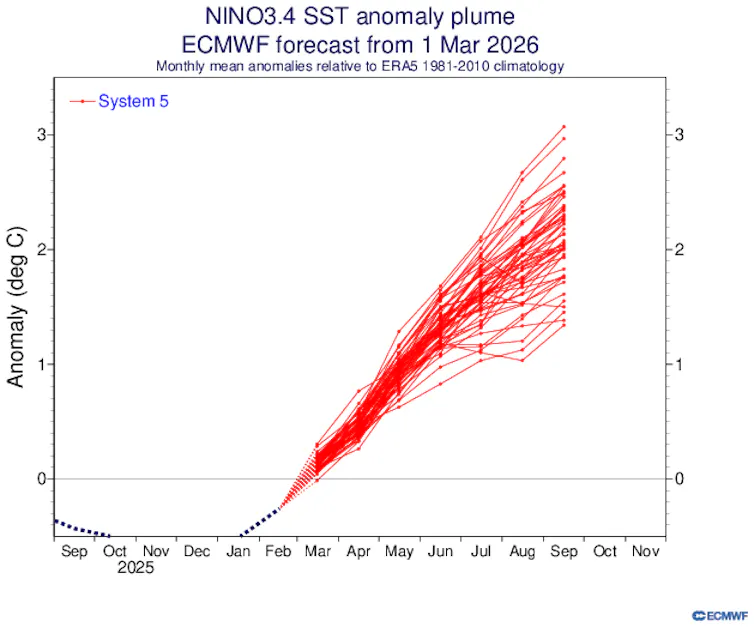
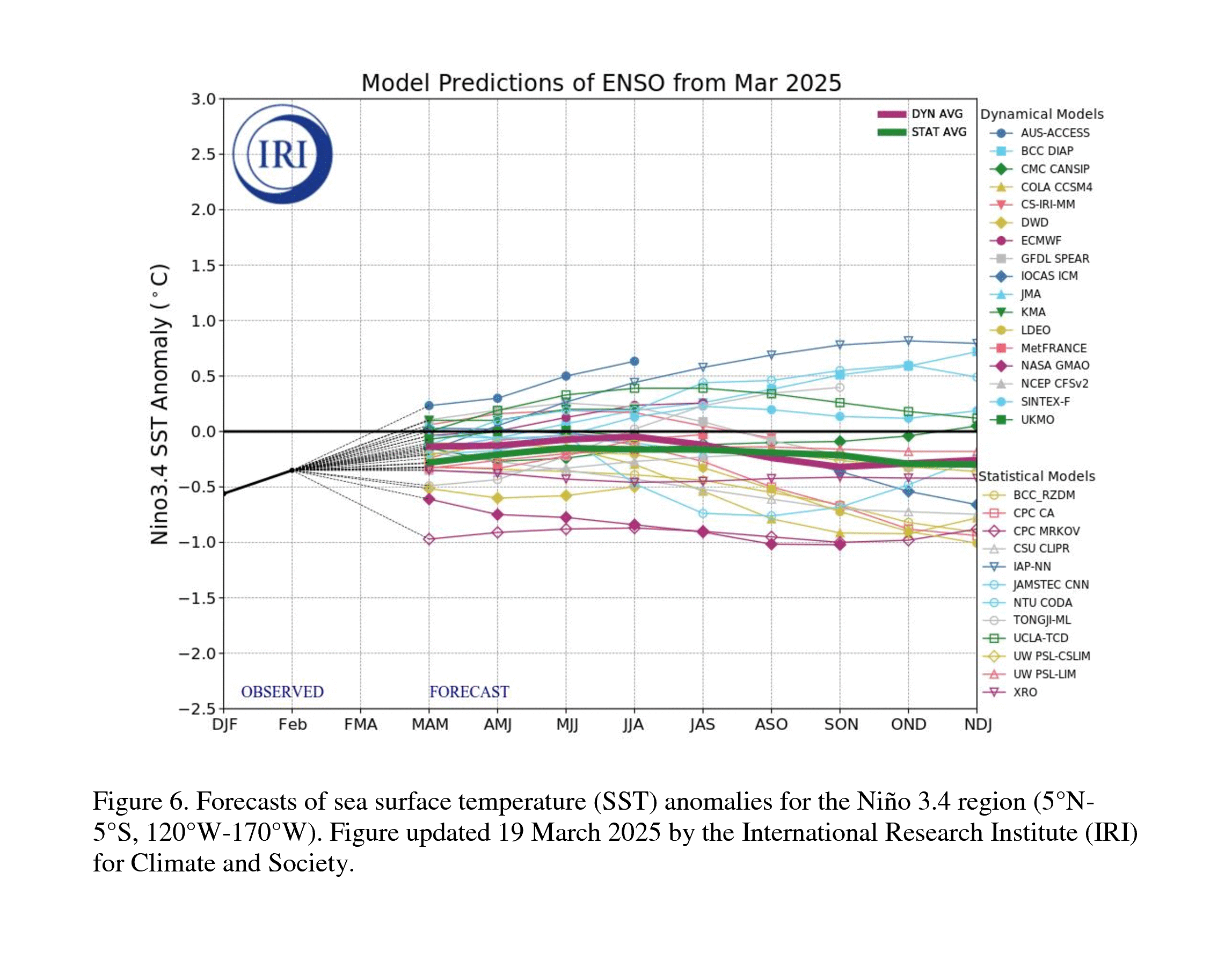
The El Niño–Southern Oscillation (ENSO) is currently neutral. The latest relative Niño3.4 index value for the week ending 12 April 2026 is −0.27 °C, firmly within the ENSO-neutral range (−0.80 to +0.80 °C). Relative Niño3.4 index values have been steadily warming since the end of the southern hemisphere summer. A recent pulse of warming in the sub-surface suggests further warming of SSTs is likely in the coming weeks.

Atmospheric indicators, such as trade winds, pressure and cloud patterns in the tropical Pacific reflect ENSO-neutral conditions. The Madden–Julian Oscillation is forecast to bring westerly wind anomalies to the western Pacific in the coming fortnight. This is likely to further enhance the warming of tropical Pacific SSTs.

As of 12 April 2026, the 30-day Southern Oscillation Index (SOI) is −7.7, which has fallen more than 10 points in the past week. The 60-day and 90-day SOI index values are +5.5 and +7.7, respectively. The steady decline of the 30-day SOI over the past week is, in large part, due to strong daily values from the early March monsoon low over the Northern Territory leaving the 30-day averaging window.

All models, including the Bureau's, forecast the tropical Pacific to continue warming in the coming months. Neutral ENSO conditions are likely to persist until at least late autumn, with all models indicating warming to levels consistent with El Niño by July. There is variation across models in the rate at which El Niño thresholds may be reached, with some suggesting development as early as May, while others show a slower warming with thresholds not being met until July. Ocean-atmosphere coupling (where the ocean and atmosphere act to reinforce each other) is required for a sustained El Niño state.

The Indian Ocean Dipole (IOD) is neutral. As of 12 April 2026, the IOD index is +0.06 °C. Models indicate the IOD is most likely to remain neutral until the end of autumn, with most models indicating the possibility of a positive IOD over winter–spring. A few models suggest IOD development could occur earlier, during late autumn. However, forecast uncertainty associated with the IOD is currently high, with models showing a large spread of possible outcomes.

The Southern Annular Mode (SAM) index is neutral as at 11 April 2026. It is forecast to remain mostly neutral over the coming fortnight.

The long-range forecast provides the best guidance on likely conditions in the coming months, using the Bureau's climate model to take into account all influences from the oceans and atmosphere.

The long-range forecast for May to July shows:

  • Rainfall is likely to be below average for much of eastern and south-west Australia.
  • Daytime temperatures are likely to be above average for much of Australia.
  • Overnight temperatures are likely to be above average for most of Australia.

Seasonal Bushfire Outlook for Autumn 2026 Shows Heightened Risk: AFAC

The Australian and New Zealand Council for fire and emergency services (AFAC) Seasonal Bushfire Outlook is released quarterly and identifies areas of increased risk of fire so communities are aware and primed to take appropriate action.

The AFAC Seasonal Bushfire Outlook is not a prediction of where and when bushfires will occur. Dangerous bushfires can happen outside of traditional fire season periods and in locations with normal risk of fire.

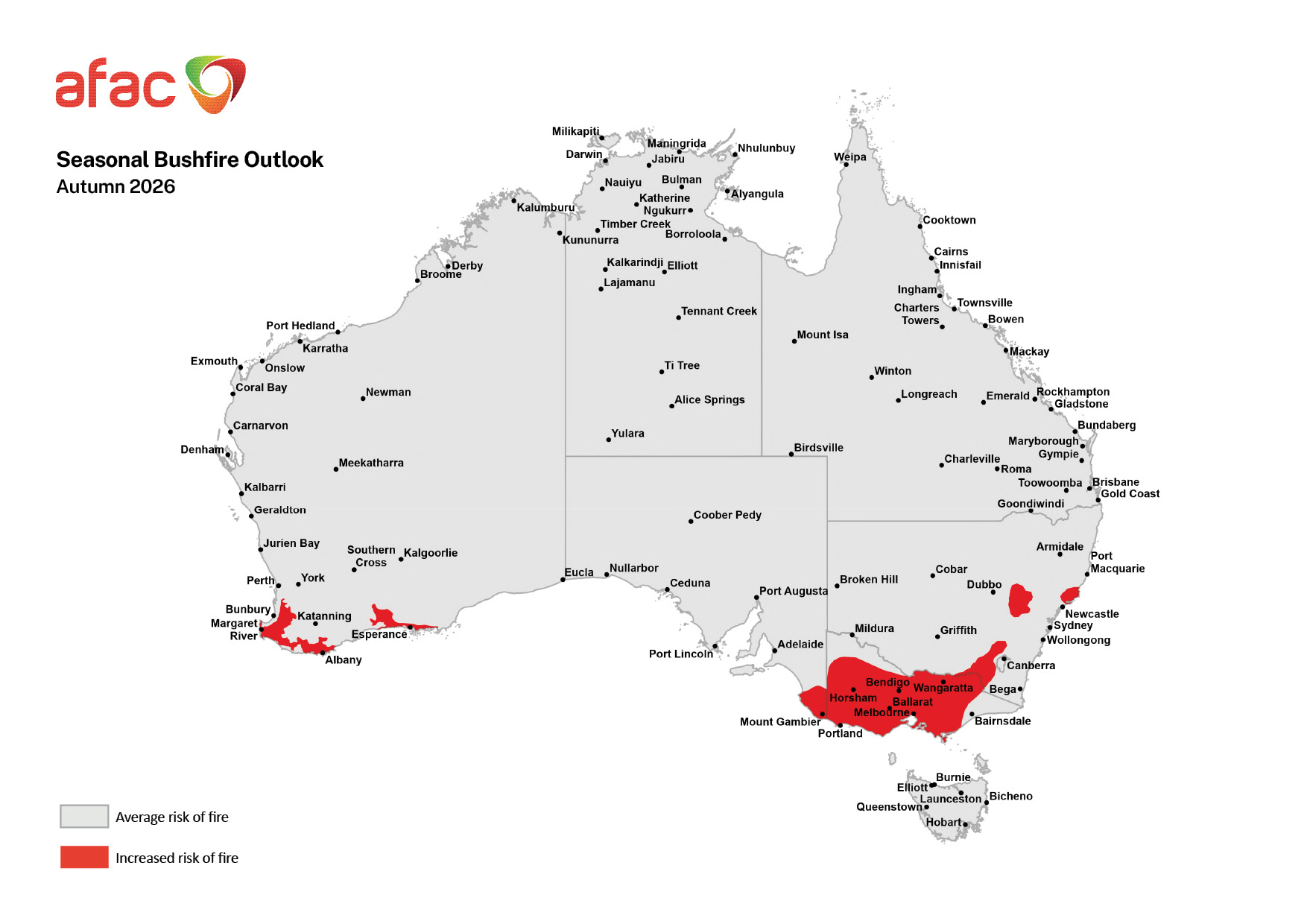
The AFAC Seasonal Bushfire Outlook for Autumn 2026 identifies a heightened risk of bushfire in New South Wales (NSW), Victoria and Western Australia (WA).

Increased risk of fire in Autumn has been identified for regions in southern, central, and eastern NSW, large parts of Victoria, extending to parts of southeast South Australia.

Also at risk are parts of southern WA.

AFAC CEO Rob Webb said: "The increased bushfire risk is driven by increased long term dryness and persistent soil moisture deficits."

"For many parts of southern Australia, autumn sees the gradual reduction in fire risk and opportunities for prescribed burning can increase. However, these programs may be delayed in some areas because of the underlying conditions."

"This is a three-month outlook. Even with the anticipated rains in the southeast in the short term, much more would be required to overcome the long-term moisture deficits."

Areas marked red on the map indicate the likelihood of an increased number of significant bushfires occurring in autumn, compared to an average risk of fire.

Fires can and will still occur in areas across Australia identified as being at average risk

The Outlook is the culmination of a complex analysis by expert fire specialists across Australia, and climate prediction and fire weather experts from the Bureau of Meteorology. 

It identifies areas of increased risk of bushfire, in comparison to areas of usual risk of bushfire. It is not intended as a prediction of where and when bushfires will occur.

This Outlook was developed by the Bureau of Meteorology, ACT Emergency Services Agency, ACT Parks and Conservation Service, Bushfires NT Country Fire Authority, Department of Energy, Environment and Climate Action Victoria, Department of Biodiversity, Conservation and Attractions WA, NSW Rural Fire Service, SA Country Fire Service, Tasmania Fire Service, Department of Fire and Emergency Services and AFAC.

Fire season ends across Most of New South Wales

The 2025–26 bush fire season ended for most of NSW at midnight March 31 2026, marking the end of the official Bush Fire Danger Period.

Four Local Government Areas (LGA), Narrabri, Gwydir, Moree Plains, and Mid-Western, will extend the period until the end of April due to local conditions.

Commissioner of the NSW Rural Fire Service (RFS), Trent Curtin, said firefighters responded to more than 10,200 bush and grass fires, which burnt approximately 126,000 hectares during the season.

“The past few months have again demonstrated the professionalism and dedication of our volunteers and staff who stand ready to protect their communities,” Commissioner Curtin said.

Among the more serious incidents this season was the bush fire at Koolewong on the Central Coast, where 16 homes were destroyed.  Firefighters also responded to several notable fires across the Mid Coast and Hunter regions, requiring large numbers of crews and aerial firefighting resources.

Minister for Emergency Services Jihad Dib thanked RFS volunteers for their dedication protecting communities across NSW and beyond this season.

“It has been a busy bush fire season for RFS volunteers who have responded to more than 6,900 fires and I thank them for their efforts across NSW,” Mr Dib said.

“RFS crews also deployed interstate to assist with emergency operations in Victoria, South Australia and the Northern Territory, while RFS members and the Large Air Tanker, Marie Bashir, supported international firefighting efforts in Canada and the USA.”

Fire agencies and land managers will now increase hazard reduction activities where conditions allow, including planned burns to reduce vegetation and lower the risk of future bush fires.

“At the end of the bush fire season our focus immediately shifts to preparing for the next; fire agencies will take every possible opportunity to carry out planned burns and hazard reduction,” Mr Dib said.

“Our volunteers give their time to keep communities safe, and while the season is ending, the risk doesn’t disappear. Everyone should remain prepared and take steps to reduce their risk.”

Despite the season drawing to a close, Commissioner Curtin urged residents not to become complacent.

“For areas where the Bush Fire Danger Period has ended, fire permits will no longer be required, but they will still apply in LGAs where the period has extended,” he said.

“Regardless of the time of year, people must still notify their neighbours and local fire authorities at least 24 hours before lighting up. This can be done quickly and easily via the RFS website.

“Now is also a good time for landholders and residents to review their bush fire survival plan and ensure their property is prepared ahead of future fire seasons.”


Chain Valley coal mine extension approval for Central Coast risks breaching NSW Climate Laws

April 9 2026

The approval of a new coal mine extension in New South Wales will test the state’s climate laws, after legal analysis from former Court of Appeal Justice John Basten KC revealed any new coal approvals risk being struck down by Courts due to their inconsistency with the state’s binding 2050 emissions reduction target, NSW Greens have pointed out.

The Independent Planning Commission has today (April 9 2026) approved the Chain Valley coal mine extension in the Central Coast Local Government Area, which is projected to produce over 20m tonnes of emissions. 

Last year, the state’s independent Net Zero Commission, in their Coal Mining Emissions Spotlight Report, found that new coal approvals would be inconsistent with both the Paris Agreement and New South Wales net zero by 2050 target. 

Greens MP, solicitor and spokesperson for Climate Change Sue Higginson said,  

“The state’s top legal minds are clear that any new coal is inconsistent with the current law, it is therefore highly likely that if tested this coal approval would be declared unlawful,” 

“When the Government introduced climate laws in 2023, the Greens ensured that they had a binding 2050 target, and the Net Zero Commission could make clear recommendations about that target. The Net Zero Commission has since been clear that any new coal would be inconsistent with the climate science and law,” 

“I have no doubt that environmental defenders will be considering heading to the Courts right now, to uphold the climate and environmental laws of the state. If they do so they will rightly be armed with the Net Zero Commission’s report and more legal and scientific ammunition than ever before.

“It’s reckoning time for the Minns Labor Government. You can’t claim to be a Government acting on climate, with strong climate laws, then approve new coal and expect to get away with it.” Ms Higginson said. 

Export Sales Ban Applied

Lock the Gate Alliance believes the ban on export coal sales from Chain Valley coal mine by the Independent Planning Commission (IPC)’s ban is an historic first for New South Wales.

The IPC applied the export sales ban as part of their two year extension to mining at Chain Valley, characterising even that as “outer limit of what can reasonably be justified in NSW’s policy context of working towards decarbonisation.”

Lock the Gate NSW Coordinator Nic Clyde said the IPC has set a significant precedent for consideration in forthcoming mine assessments.

“For the first time the NSW Independent Planning Commission has placed an explicit ban on export coal sales from a project. This is an important step and reflects the growing pressure on decision makers to take the climate impacts from coal mining seriously,” he said.

“While it’s encouraging that the Commission has acknowledged what local communities have long known - their region is particularly exposed to climate impacts due to its bushfire prone landscapes, coastal areas and pressure on water resources, they have nevertheless approved the Chain Valley mine for a further two years.”

Lock the Gate also raised concerns about the Commission’s failure to consider whether coal with a lower greenhouse gas emissions footprint could have been sourced for the nearby Vales Point Power Station, despite evidence on this issue provided by the NSW Nature Conservation Council to the Commission at the Public Hearing.

Chain Valley was identified by NSW DPHI “as one of the state’s gassiest mines”, meaning that huge quantities of fugitive methane are being emitted annually. The IPC acknowledged a high level of community concern about the climate impacts of the project, noting that climate change was identified as a high social impact in the applicant's own Social Impact Assessment.

Australia passes High Seas Biodiversity legislation

Announced: 31 March 2026 by Senator The Hon Penny Wong, Minister for Foreign Affairs and Senator The Hon Murray Watt, Minister for the Environment and Water

Federal Parliament has today passed the Albanese Government’s legislation that will see Australia officially join a landmark international treaty to protect the ocean beyond our country’s borders.

The High Seas Biodiversity Treaty (also known as Marine Biological Diversity Beyond National Jurisdiction) provides the comprehensive framework for nations, including Australia, to protect and sustainably manage the world’s ocean beyond the limits of national jurisdiction.

The high seas, which sit outside individual countries’ maritime boundaries and exclusive economic zones, cover more than 60 percent of the global ocean, yet only around 1 percent is protected.

Australia was one of the first countries to sign the treaty in 2023 and has been leading, with Belize, the international negotiations to prepare for its implementation. Australia is now ready to ratify the treaty, being one of a small handful of countries that require legislation prior to treaty ratification.

Through the treaty, Australia will work with other parties to better protect and sustainably manage the world’s ocean. This could include the establishment of marine protected areas, stronger regulation of the use of marine resources, and undertaking environmental impact assessments of proposed activities.

More information about the High Seas Biodiversity Treaty is available here: www.dcceew.gov.au/environment/marine/high-seas-biodiversity-treaty

Minister for Foreign Affairs, Penny Wong stated:

“Ratification will give Australia greater involvement in decision-making around protection and sustainable management of the high seas.

“Healthy oceans help keep our food supply chains more secure, reliable and sustainable.

“Becoming a Party to the Treaty will mean Australia joins more than 80 countries who are taking action in support to protect marine areas both here in the Pacific and further afield.

“We are stepping up to protect our region because what happens in the high seas affects our economy, our environment and our way of life.” 

Minister for the Environment and Water, Murray Watt stated:

“In Australian waters more than half of our maritime jurisdiction is now protected through our marine parks network, including 2.2 million square kilometres in highly protected areas, and that number continues to grow.

“But what happens on the high seas has a direct impact on Australia’s ocean and the industries that depend on it, such as tourism and fisheries.

“The High Seas Biodiversity Treaty is pivotal to safeguard the health of the ocean that we share with other nations and will support a thriving ocean economy for future generations. Protections implemented under the Treaty will also contribute towards the global target to protect 30 percent of the world’s ocean by 2030.

“Australia was among the first to sign up to the Treaty, and has been leading preparations for its implementation, so it’s fantastic to see this pass the Parliament to enable ratification.”

WWF Australia CEO, Dermot O’Gorman stated:

“The high seas cover half the planet and are home to countless whales, corals, turtles, rays and fish. We rely on this vast expanse for oxygen, climate regulation and food, but until now it has been heavily exploited with almost no protection.

“This treaty gives us the tools to protect biodiversity on the high seas - and Australia stepping up really matters.

“WWF especially welcomes the support across the parliament for this treaty to become Australian law.

“Australia now needs to work closely with other ocean-loving countries to identify key areas for protection.”

The Australian Marine Conservation Society, The Pew Charitable Trusts and the Save Our Marine Life alliance welcome Australia’s ratification of a landmark international agreement for the conservation and sustainable use of marine life in areas beyond national jurisdiction, also known as the high seas.

The High Seas Treaty, known officially as the Agreement on the Conservation and Sustainable Use of Marine Biological Diversity of Areas beyond National Jurisdiction (BBNJ), is a legally binding treaty designed to help manage and protect international ocean areas. The treaty provides a framework to establish marine parks and marine sanctuaries, and provides guidelines to assess the environmental impacts of harmful activities. It came into effect in January 2026.

Paul Gamblin, CEO of the Australian Marine Conservation Society, said: “This is an historic moment and a real source of hope for international cooperation for ocean protection, at scale.

“The High Seas Treaty has finally given the world a way to protect marine life beyond the borders of any one nation. Today’s ratification ensures Australia can continue to play a leading role in that conversation.

“We are pleased to see the High Seas Treaty ratification received widespread support across parliament, establishing a shared political legacy for protecting the high seas.

“The Australian Government must now work with other ratifying nations to protect marine life in the high seas, including Australian marine life that crosses back and forth across our ocean borders. The agreement has been many years in the making, but the growing threats to ocean health mean we don’t have the luxury of time to get on with the job of applying these new laws to their full extent and protecting the high seas while we still can.

“The high seas make up about two-thirds of the world’s ocean and cover nearly half of the surface of our planet.

“These vast waters serve as migratory routes for species such as whales and sharks, sustain fisheries, and support remarkable ecosystems including deep-sea reefs and seamounts. Yet only around 1% of the high seas is currently protected in marine sanctuaries.”

Christabel Mitchell, Pew Charitable Trusts Oceans Director, said: “We commend the Australian Government for playing a leading role in ensuring this crucial treaty enters into force and for making sure Australia is now at the table as we enter the next step of collectively protecting the high seas.

“Protecting important areas in the high seas is critically important for safeguarding marine life beyond any one nation’s jurisdiction and building ocean resilience in the face of climate change impacts. A network of marine protected areas in the high seas will be critical to protecting at least 30 percent of the global ocean in marine sanctuaries by 2030.”

The Australian Marine Conservation Society and Pew Charitable Trusts lead the Save Our Marine Life alliance of 27 conservation groups.

ACF backs Senate Climate disinformation report: urges crackdown on social media giants 

The Australian Conservation Foundation has welcomed a landmark Senate report into climate disinformation, warning lies are already harming communities and demanding tougher action to stop falsehoods derailing climate progress. 

ACF Director of Engagement Jane Gardner, who wrote a submission and appeared before the inquiry, said Australians are grappling with a ‘runaway train’ of AI slop and malicious lies designed to delay progress.  

“Disinformation has serious real-world impacts,” Ms Gardner said. “This inquiry made that clear. We’re seeing it turn neighbour against neighbour in renewable energy regions, create confusion during emergencies and erode trust in the information people rely on. 

“The fact is: Australia’s clean energy future depends on the truth.” 

The Senate Select Committee report recognises the growing harms of disinformation and recommends greater transparency of political and campaign activity, tighter oversight and reporting of digital platforms and improved monitoring of hidden influence networks. 

ACF said the report stopped short of recommending the stronger reforms needed to fully address the threat. 

“This is an important first step, but we need to go further,” Ms Gardner said.  

“Australia needs truth in political advertising laws and real consequences for those who deliberately spread harmful disinformation. Australians deserve accurate and truthful information to make decisions about their future, including at the ballot box. Lying in political advertising should not be legal in a modern democracy.” 

ACF’s submission to the inquiry called for: 

  • A national inquiry into the full impacts of disinformation on communities and democracy 
  • Stronger accountability for social media platforms 
  • Truth in political advertising laws 
  • Investigation into coordinated disinformation networks and their funding  

Ms Gardner said social media companies must be held accountable for their role in amplifying false information. 

Social media giants profit from outrage and amplifying falsehoods. Self-regulation is failing. These are some of the most powerful companies in the world and they need to take responsibility for their role in democratic society.” 

Ms Gardner thanked the Australian Greens and Senator Peter Whish-Wilson for initiating the inquiry and bringing national attention to the issue. 

“This inquiry has laid important groundwork; now we need tangible, enforceable action. 

“Protecting Australians’ right to clear, factual information is essential to protecting our democracy and tackling the climate crisis.” 

Recommendations: Re - spread of disinformation

  • Recommendation 9 - The committee recommends the upcoming National Media Literacy Strategy incorporate the information integrity framework with examples from the climate and energy domain.
  • Recommendation 10 - The committee recommends the Australian Government, coordinated through the Education Ministers' Meeting, establish stronger oversight and disclosure requirements for corporate engagement within school systems, with clear policies regulating philanthropic or corporate relationships that may interfere with educational integrity.
  • Recommendation 11 - The committee recommends the Australian Government consider legislative or regulatory reform which identifies psychosocial harms, places the onus of responsibility in addressing these harms onto digital platforms and monitors effectiveness of their mitigations through regulatory and civic oversight.
  • Recommendation 12 - The committee recommends the Australian Government improve the quality of data reported to the Australian Communications and Media Authority from the digital platforms to include for example, thematic breakdown of their reporting inclusive of climate and energy data, denominator data, removal actions and paid advertising related to climate and energy.
  • Recommendation 13 - The committee recommends that the Australian Government consider how researchers could be provided adequate legal protection to undertake their work in the digital platform space.
  • Recommendation 14 - The committee recommends the Australian Government consider how to improve the complaints resolution process, including about false and misleading information online.

NSW powers up Electric Vehicle access

Announced: April 14, 2026

The Minns NSW Government has stated it is making the shift to electric vehicles easier for drivers by rolling out more public chargers, backing more electric trucks and training the workforce needed to keep them on the road.

The 2026 NSW Electric Vehicle Strategy has been released to help reduce emissions and make EVs and their cost-of-living benefits accessible to more people, with a focus on closing charging gaps in regional, remote and suburban areas.

With global fuel prices under pressure and ongoing uncertainty in international markets, accelerating EV uptake has never been more important.

Switching to an EV can cut fuel costs by up to $3,000 a year, or eliminate them entirely when paired with home solar, while reducing maintenance costs by around 40 per cent.

In NSW, there is growing interest in EV uptake with sales making up 15.6 per cent of new car sales.

Backed by $100 million in funding, the 2026 NSW Electric Vehicle Strategy sharpens the focus on five priority areas:

  1. Fast chargers where they’re needed mostExpanding the fast charging network with a focus on regional, remote and suburban blackspots, so EV drivers outside city centres are not left behind.
  2. More kerbside chargers: Rolling out more kerbside charging infrastructure to help EV drivers who cannot charge at home, including apartment residents.
  3. Electric trucks on the road soonerExpanding the EV Fleets Incentive Program from small to medium-size trucks, allowing organisations to electrify their delivery and service fleets.
  4. A skilled EV workforce, especially in the regionsInvesting in training for around 2,000 mechanics in regional NSW, where access to courses is limited and travel distances longer, to safely service EVs and charging infrastructure.
  5. Clear, reliable informationStrengthening central sources of information to help drivers, businesses, councils and owners’ corporations understand their options and access support.

To date, the NSW Government has funded more than 3,300 EV chargers in more than 1,200 sites across metropolitan, regional and remote NSW.

Applications are now open for eligible councils to build capability and plan for further public charging rollout under a $3 million program, recognising their key role in supporting local access to EV infrastructure.

Fleets and truck operators can also currently apply for grants to electrify vehicles and install charging infrastructure.

The Government states it is also boosting the electrification of transport by:

  • Transitioning more than 8,000 public transport buses to zero-emission technology.
  • Powering rail, light rail and metro networks with 100 per cent renewable electricity since 2025.
  • Installing EV chargers at commuter car parks at major transport hubs.
  • Running a two-year trial to enable zero-emission heavy vehicles on state roads.
  • Delivering EV skills training across 13 TAFE NSW micro-skills courses, and training emergency service workers to respond to EV incidents.
  • Launching EV Road Trips across regional NSW.

More than 117,000 EVs are now registered in NSW, saving an estimated 141 million litres of petrol each year.

To view the updated NSW Electric Vehicle Strategy, visit: www.nsw.gov.au/driving-boating-and-transport/nsw-governments-electric-vehicle-strategy.

Premier Chris Minns said:

“Families are feeling the pressure every time they fill up. We want to give more families the option of taking up EVs.

“This is about giving people a real alternative, one that’s cheaper to run and with this rollout, easier to access.

“We’re making it simpler to go electric, with more chargers, better access and real savings over time.”

Minister for Climate Change and Energy, Penny Sharpe said:

“Owning an electric vehicle helps households and businesses save thousands of dollars on fuel and around 40 per cent on maintenance. This Strategy will get more EVs on the road and help drivers travel and charge with confidence.

“These updates will help build a world-class charging network, support electric trucks and grow the skilled workforce needed to maintain EVs.”

Minister for Roads, Jenny Aitchison said:

“We’re rolling out more charging stations to improve the network, particularly in regional and remote NSW, so going electric is a practical choice, and people can have confidence they will be able to access charging when they need it.

“For regional communities, EV chargers drive economic development, putting more towns on the map, bringing in visitors who might not have stopped before and supporting local businesses.

“Families and businesses in the regions travel further and feel fuel costs more, so making EVs a realistic option significantly cuts costs and helps people to keep moving.”

Minister for Skills, TAFE and Tertiary Education, Steve Whan said:

“Electric vehicles are transforming the automotive industry, and it’s critical our mechanics have the skills to keep up with that change.

“This training ensures workers are equipped to safely service and repair electric vehicles, while supporting the growth of a modern, future-focused automotive workforce.”

EV Council CEO Julie Delvecchio said:

“NSW is pushing on the right barriers to unlock EV uptake and help people access cost of living savings that come from making the switch. Filling regional charging gaps, expanding support for heavy vehicle fleets, and investing in workforce training are practical steps that will get more Australians into EVs sooner.

“Expanding fleet incentives to trucks is one of the smartest moves in this strategy – it’s one of the fastest ways to cut operating costs for businesses while making our streets cleaner and quieter for everyone.”

 “The NSW fuel crisis has driven unprecedented interest in electric vehicles — but interest alone doesn’t put people behind the wheel. What matters now is removing the barriers between wanting to switch and actually making the switch,” EVC CEO Julie Delvecchio said.

“Every barrier removed gives Australians an exit ramp off high fuel prices while strengthening our fuel security. And the case is clear — EVs are cheaper to run, reduce exposure to global oil shocks, and deliver cleaner, quieter communities for everyone.”

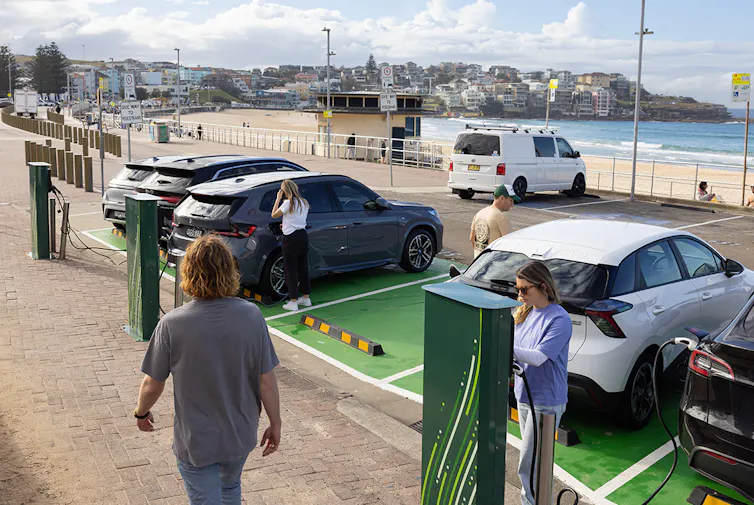
kerbside EV Charger on Kalinya Street Newport. Photo: AJG

Autumn environmental flow to support southern bell frog habitat in the Cumbung

April 9, 2026

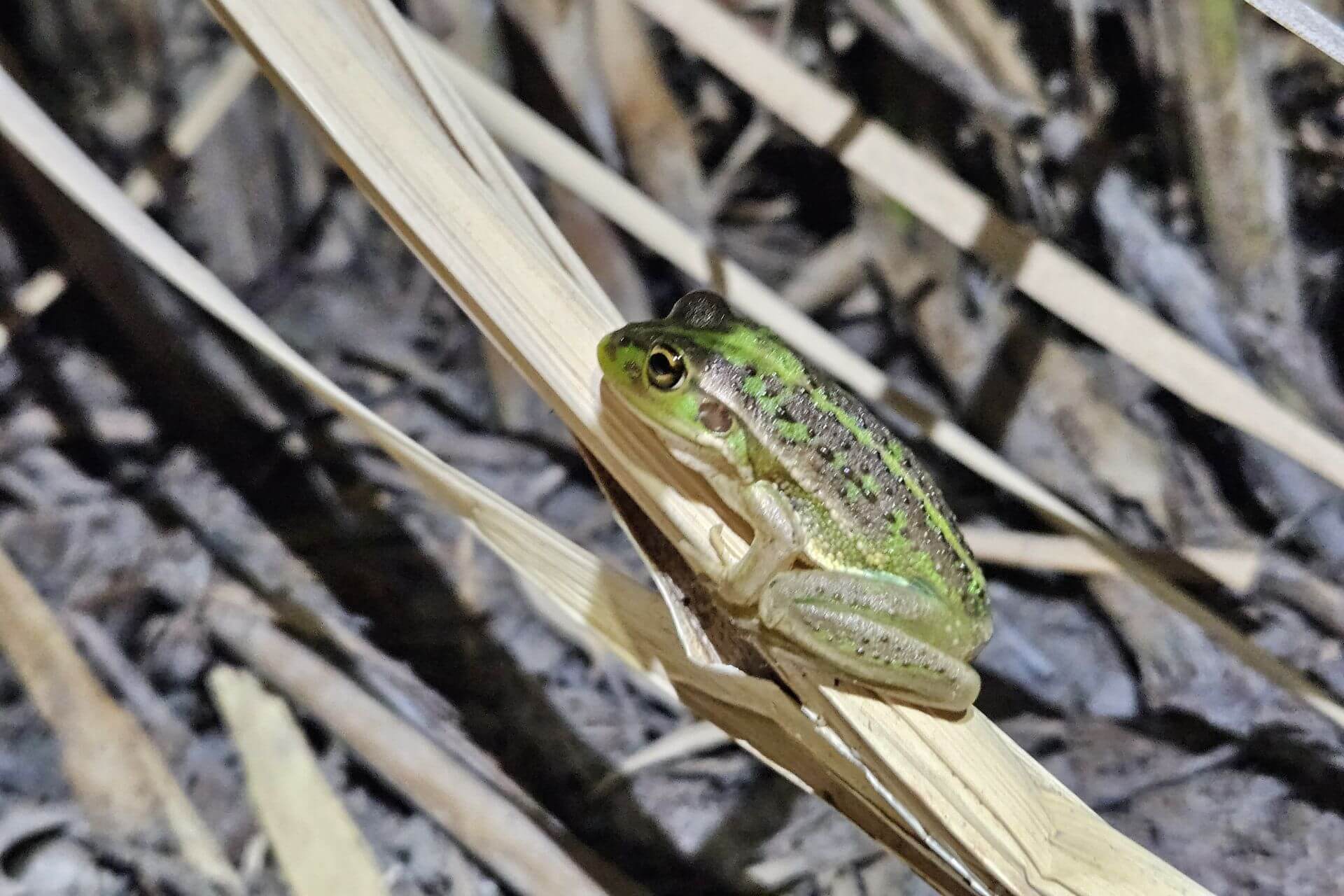
An Autumn environmental flow is being delivered through the lower Lachlan to sustain critical wetland habitat for the endangered southern bell frog.

This follows strong breeding results recorded for the species over summer in the Greater Cumbung Region.

The 30-day watering event (managed by the NSW Department of Climate Change, Energy, the Environment and Water (DCCEEW) in partnership with the Commonwealth Environmental Water Holder) began on 15 March. The event will deliver around 300 megalitres per day.

The flow builds on a successful spring–summer watering program that triggered southern bell frog breeding across Greater Cumbung Region wetlands. Follow-up monitoring surveys have since confirmed recruitment, highlighting the need to maintain wetland habitat as conditions dry.

Senior Scientist Amelia Walcott said monitoring showed clear evidence of breeding in response to wetland inundation.

‘Male southern bell frogs were heard calling at six sites across the Greater Cumbung Region during our September and November 2025 surveys,’ Amelia said.

‘In February 2026, we observed young bell frogs at two sites, confirming successful breeding and metamorphosis.’

Lachlan Environmental Water Management Officer Paul Doyle said the autumn flow aims to protect those gains by keeping habitat available long enough for juvenile frogs to survive.

‘This flow is about giving those young frogs the best chance to make it through winter and become next season’s breeders,’ Paul said.

‘After a series of heatwaves, some wetlands had dried, so maintaining key refuge habitat is critical. Building off recent good rainfall, this flow will help refill these areas and keep them wet for longer.’

The timing aligns with an existing water quality allowance flow of around 150 megalitres per day currently moving through the system, allowing ecological outcomes to be achieved with a lower total volume of environmental water.

‘Because the system is already primed, we can extend habitat without delivering a full stand-alone event,’ Paul said.

The delivery will focus on channels and adjacent wetlands, where the water will provide the greatest ecological benefit.

The flow is also expected to support wetland vegetation (particularly reeds, sedges and rushes) and will enable bathymetry mapping to improve future water delivery planning.

Monitoring will continue in collaboration with the NSW DCCEEW Saving our Species (SoS) southern bell frog program, including analysis of acoustic data collected across multiple wetlands during the core breeding season.

‘This monitoring helps us better understand how frogs respond to flows and improve future conservation outcomes,’ Amelia said.

Photo: An autumn environmental flow will be delivered to sustain critical wetland habitat for the endangered southern bell frog. Credit: Amelia Walcott/ DCCEEW

A leap for conservation: breakthrough inoculation trial gives green and golden bell frog a fighting chance

Announced: March 31, 2026

In a bold step that may rewrite the species’ trajectory, 1,000 immunised juvenile green and golden bell frogs are being released across the Sydney Olympic Park’s wetlands this week.

It’s an ambitious effort that could tip the balance against the deadly chytrid fungus and offer new hope for one of New South Wales’s most iconic amphibians.

The first of the inoculated frogs were released at dusk at Narawang Wetland, Kronos Hill and the Brickpit, three key habitat sites within Sydney Olympic Park, with the aim of boosting the resident population ahead of winter.

Through comprehensive, long‑term monitoring of survival, health, and behaviour, researchers will evaluate the potential of this immunisation strategy to be applied more broadly in the fight against chytrid fungus.

Marking an important advance in amphibian conservation, Sydney Olympic Park Authority and the NSW Government’s Saving our Species program are supporting innovative research led by Dr Anthony Waddle of Macquarie University to trial a chytrid immunisation treatment in the wild for the first time.

The project will test whether immunising juvenile frogs prior to release can help them better resist infection by the fungus and increase survivorship. This will encourage viable populations of green and golden bell frog to repopulate, and allow the species to survive in areas where the pathogen is widespread.

Building on promising laboratory results, this pioneering field trial represents one of the first robust tests of chytrid immunisation as a practical conservation strategy.

This work highlights the continued commitment to science‑based conservation and its leadership in protecting vulnerable species within the parklands.

Despite decades of dedicated conservation work, the species continues to be impacted by chytrid fungus, a deadly pathogen responsible for global amphibian declines, which compounds and interacts with other threats including habitat loss and changes in climate.

DCCEEW Executive Director Conservation Programs, Ingrid Emery, said:

“This unique partnership is delivering long-term benefits as without new interventions, this iconic frog remains at risk of ongoing population decline.

“The project brings together a powerful collaboration between Sydney Olympic Park Authority, Macquarie University, and the NSW Department of Climate Change, Energy, Environment and Water’s Saving our Species program.

“Together, we are working to secure the future of one of NSW’s most recognisable amphibians while advancing global understanding of amphibian disease management. ”

Chief Executive of Sydney Olympic Park Authority, Neisha D’Souza, stated:

“Sydney Olympic Park is marking a pivotal moment for wildlife conservation, launching a ground-breaking field trial that could transform the future of the endangered green and golden bell frog.

“For more than two decades, the authority has worked to restore and manage wetlands that supports NSW’s most significant green and golden bell frog populations.

“This trial builds on working with our government partners and positions the park as a testing ground for conservation solutions with national relevance.”

Macquarie University's Conservation biologist, Dr Anthony Waddle, said:

“This is a major step for amphibian conservation.

“By trialling immunisation in the wild, we’re exploring a new frontier in protecting frogs from one of the most devastating wildlife diseases on the planet.”

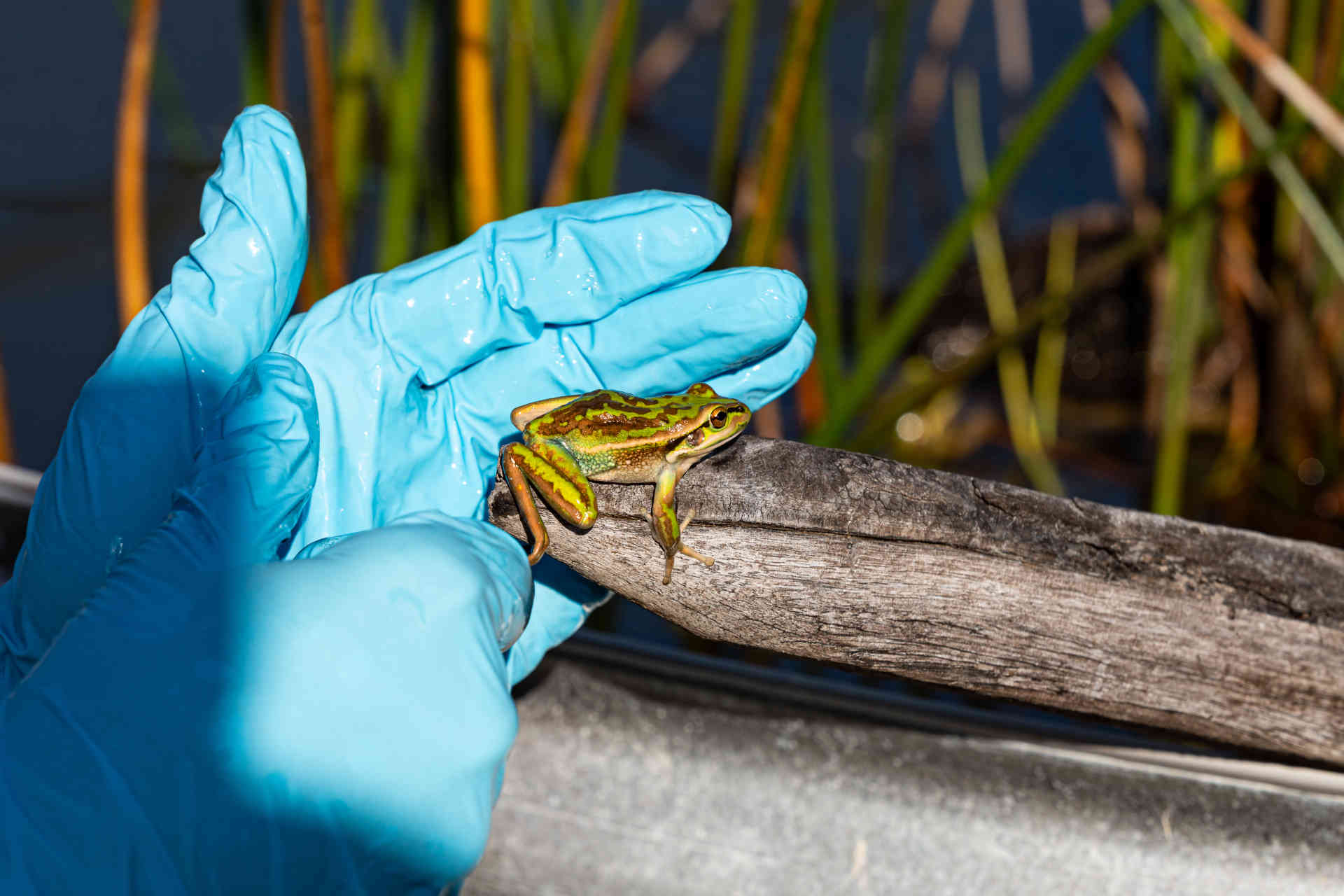
Green and golden bell frog released in Sydney Olympic Park. Credit: DCCEEW

NSW Threatened Species Scientific Committee final determinations for April 2026: 3 plants listed as threatened with extinction

Announced: April 10, 2026

The NSW Threatened Species Scientific Committee assesses which species are eligible for listing as threatened species.

Three plants have been listed as threatened species.

NSW Threatened Species Scientific Committee final determinations

1. Prasophyllum canaliculatum

The orchid Prasophyllum canaliculatum D.L.Jones has been listed as an endangered species.

Prasophyllum canaliculatum D.L.Jones occurs in disjunct habitats in the Australian Alps of the Australian Capital Territory, and the South Eastern Highlands of New South Wales.

More information on the species can be found in the Committee’s reasons for final determination and conservation assessment report using the Common Assessment Method: Prasophyllum canaliculatum.

Prasophyllum canaliculatum. Credit: Gavin Phillips/DCCEEW

2. Isopogon prostratus

The shrub Isopogon prostratus McGill., has been listed as an endangered species.

Isopogon prostratus McGill. occurs in the Sydney Basin, South Eastern Highlands, and South East Corner bioregions of NSW and the South East Corner and South East Coastal Plain bioregions of Victoria.

Isopogon prostratus McGill. was found to be Endangered in accordance with the following provisions in the Biodiversity Conservation Regulation 2017: Clause 4.3(b)(d)(e i,iii) because: 

1) it has a highly restricted geographic distribution with an area of occupancy of 384 km2

2) it is considered to be severely fragmented; and

3) continuing decline in the number of mature individuals and the area, extent and quality of habitat is estimated due to habitat clearing, fragmentation and degradation, and inferred due to adverse fire regimes (particularly high frequency fire, low frequency fire, high intensity fire, and changes in fire season) and Phytophthora cinnamomi.

Isopogon prostratus typically occurs in heath and dry sclerophyll forest in exposed situations on sandy soils (Harden 1991; Benson and McDougall 2000; VicFlora 2025). Across its range, sites vary from 50 m above sea level (a.s.l.) on the coast in the southern parts of its range to 1,100 m a.s.l. on the tablelands. Occurrences are typically localised (Benson and von Richter 2010).

More information on the species can be found in the Committee’s reasons for final determination and conservation assessment report using the Common Assessment Method: Isopogon prostratus.

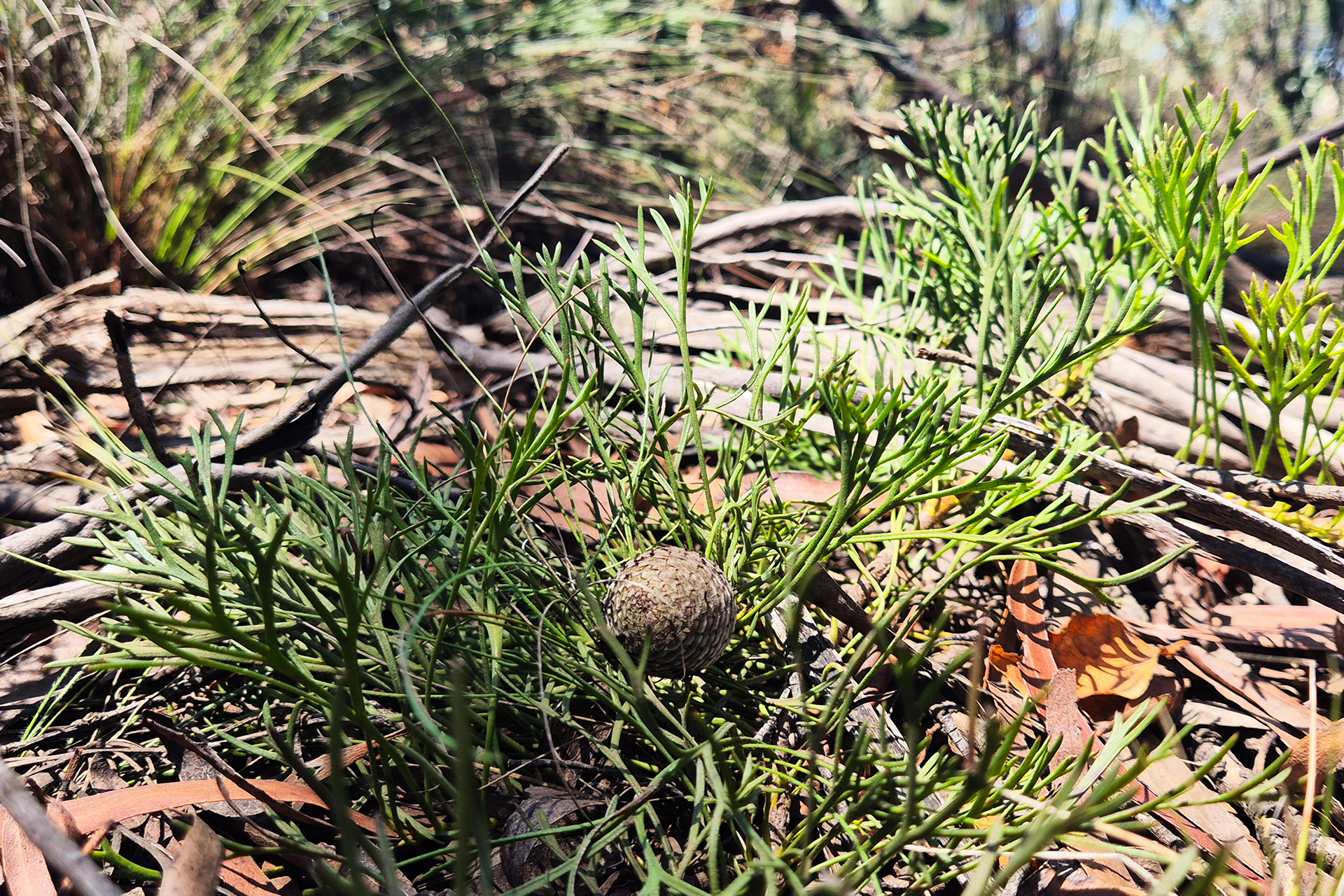
Isopogon prostratus. Credit: Matt Saunders/DCCEEW

3. Grevillea rhizomatosa

The shrub Grevillea rhizomatosa Olde & Marriott has been listed as an endangered species.

Grevillea rhizomatosa Olde & Marriott is endemic to the Gibraltar Range in northern New South Wales.

More information on the species can be found in the Committee’s reasons for final determination: Grevillea rhizomatosa.

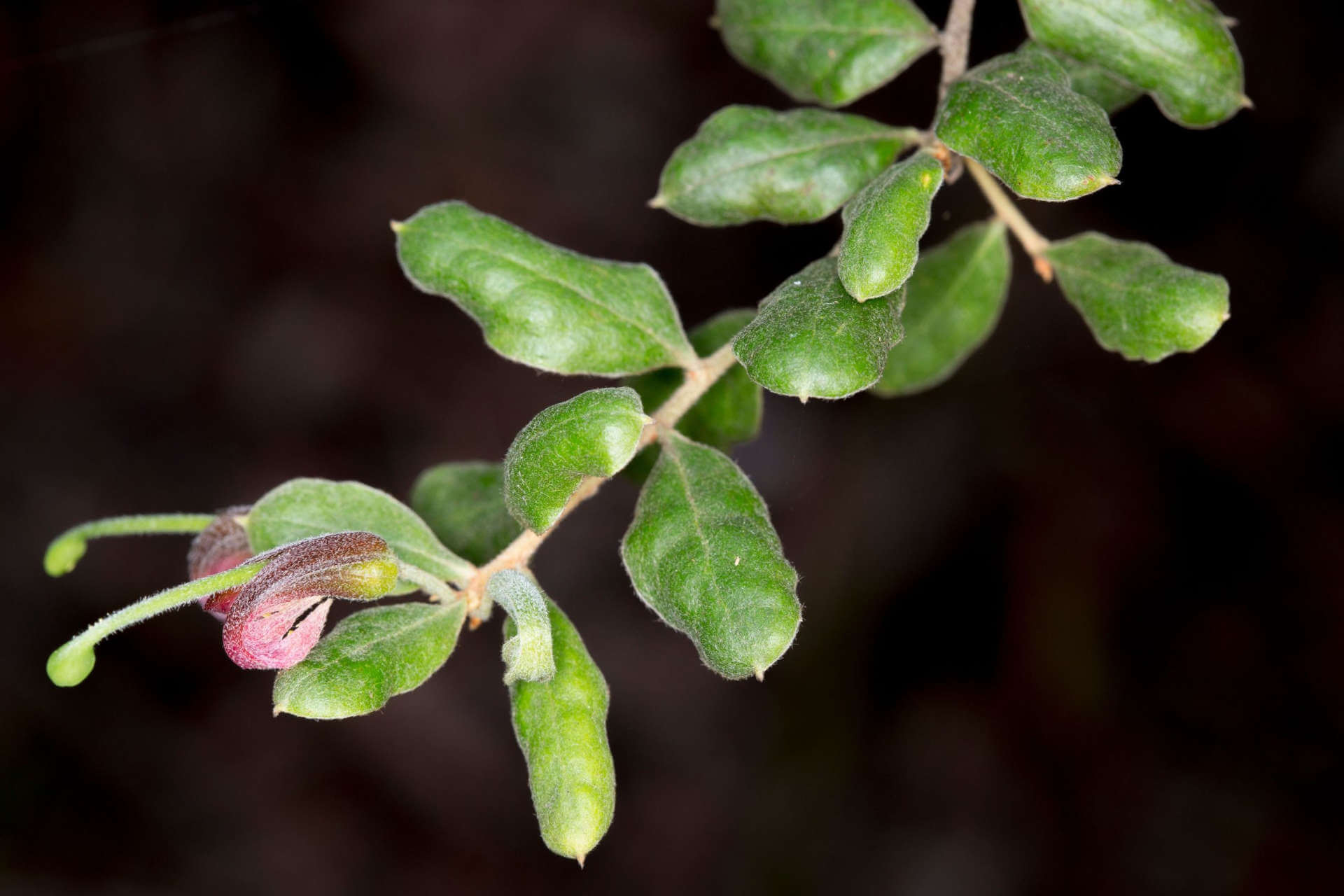
Grevillea rhizomatosa. Credit: Paul Sheringham/DCCEEW


PNHA Activities 2026

Dear Members

Our walks for 2026 are listed below. 

You are very welcome to bring friends and older children on these outings. Please book by emailing pnhainfo@gmail.com and include  your PHONE NUMBER so we can contact you in case of changes because of weather etc. 

Looking forward to getting out and about in our lovely area! 

Your PNHA Committee

Pittwater Natural Heritage Association

The Pittwater Natural Heritage Association has been formed to act to protect and preserve the Pittwater areas major and most valuable asset - its natural heritage.

PNHA is an incorporated association seeking broad based community membership and support to enable it to have an effective and authoritative voice speaking out for the preservation of Pittwater's natural heritage.

Our Aims

  • To raise public awareness of the conservation value of the natural heritage of the Pittwater area: its landforms, watercourses, soils and local native vegetation and fauna.
  • To raise public awareness of the threats to the long-term sustainability of Pittwater's natural heritage.
  • To foster individual and community responsibility for caring for this natural heritage.
  • To encourage Pittwater Council and the NSW Government to adopt and implement policies and works which will conserve, sustain and enhance the natural heritage of Pittwater.

Some of our interests and concerns include:

  • Native Tree Canopy
  • "Wildlife Friendly" Gardens
  • Weed Infestation
  • Keeping our Waterways Healthy
  • Beaches and Dunes

Act to Preserve and Protect!

If you would like to join us, please fill out the Membership Form. Visit: https://pnha.org.au

Sunday April 26 Fauna: Underpass below Mona Vale Rd East, Ingleside.

If you missed this walk last year, here’s your chance to see how fauna can move between areas of bushland, so important for finding territory, mates and food. 

Meet 9am at corner of Ingleside Rd and Laurel Rd East. Walk ends about 11am.

Saturday May 23: PNHA stall at Avalon Car Boot Sale, Dunbar Park Avalon.

From 8am to 2pm, we’ll offer Information on identifying and controlling weeds. See our posters about invertebrates in local gardens. Our famous $2 local flora, fauna and scenery cards will be for sale. Come and have a chat. 

Sunday May 24: Walk in Red Hill Bushland Reserve, Beacon Hill

Meet 9am on Lady Penrhyn Drive opposite no. 41A, close to the open gate. Flora, birds, views. Walk ends about 11.30. 

Sunday June 28: Crown to the Sea Walk, Newport

Meet 9am at Porter Reserve, Neptune Rd Newport. Walk ends about 12 noon. This walk goes through several very different bushland reserves with coastal heath and littoral rainforest.

Wildflowers, ferns and coastal views. Moderate fitness needed for some steep tracks and many steps. Limit: 15 people so please book early. We will provide the Crown to the Sea map to participants on booking.

Sunday July 26: Ingleside Chase Reserve

Meet 9am at end of Irrawong Rd North Narrabeen, walk ends about 11am. Birds and swamp forest along Mullet Creek. Swamp Mahoganies will be flowering attracting birds. Binoculars a must for this walk.

Sunday August 23: Spring in the Bush

Meet 9am at corner of Mallawa Rd and Bulara St, Terrey Hills. Walk ends about 11am. With a focus on botany, we’ll see flowering plants in the Proteaceae plant family, waratahs, endangered Grevillea caleyi , right, and others in the major Australian Proteaceae plant family. Birds, too. 

Sunday September 27: The Chiltern Track, Ku-ring-gai N.P.

Meet 9am at track entrance with barred gate on Chiltern Rd Ingleside. Walk ends about 11am. One of our favourite walks to see Sydney sandstone flora in spring. Native plant species list available. Birds too, often a Yellow-tufted Honeyeater here. 

Sunday October 25: Katandra by Night

Meet 6.45pm at Katandra Bushland Sanctuary on Lane Cove Rd Ingleside. Walk ends about 8.45pm. Sunset is about 7.15. The bush by night is wonderful. We hope to see fireflies again as on previous walks here in October. Bring a torch, or headtorch, preferably with a red light option so as not to dazzle possums. Moderate fitness needed for the bush track and steps. Limit: 15 people, so please book early. 

Sunday November 22: Deep Creek Reserve

Meet 9am in Deep Creek reserve, off Wakehurst Parkway. Walk ends about 11am. Birds and bushland. From the bridge across the creek we may see Dollarbirds, summer breeding migrants that nest in hollows, with their youngsters. Black Bitterns have been observed along the creek margins, so bring binoculars. 

Grevillea caleyi, now critically endangered. Image taken in Bush at Ingleside/Terrey Hills verges - picture by A J Guesdon, 31.10.2014. 

NSW Government's Heat Pump Feasibility Grant for businesses: closes March 31

Learn how heat pumps could lower your energy costs and emissions here.

Key information

  • Status: open now
  • Grant amount: up to $30,000 to cover up to 75% of the project costs
  • Application closing date: Tuesday, 31 March 2026 at 5 pm (AEDT) or earlier, if funding is exhausted
  • Total funding amount: $1 million

Heat pumps are an effective solution to cut costs and decarbonise heating systems. Switching to heat pumps can benefit your businesses in many ways, including:

  • lowering energy costs
  • reducing exposure to volatile global energy prices
  • reducing carbon emissions.

Discover energy savings that were identified during the NSW Government's Heat Pump Feasibility pilot program. 

The Heat Pump Feasibility Grant is a great opportunity for eligible NSW businesses to assess whether a heat pump is a feasible option for your site. You can apply for up to $30,000 to cover 75% of the project costs.

What’s included in the grant funding

The grant provides funding to help you work with a specialist consultant who will first assess your site for any major barriers to installing a heat pump. If these barriers can be overcome, you will receive funding for a detailed feasibility study. This will help you make an informed decision about whether a heat pump is the right fit for your site.  

The grant includes 3 milestones:

  • Milestone 1: Up to $5,000 to cover up to 75% of the cost to identify if a heat pump is suitable for your business site. This is an opportunity to identify potential barriers to heat pump implementation and assess possible solutions. The results of milestone 1 will determine your progression to milestone 2.
  • Milestone 2: Develop the heat pump design against the site’s current process requirements. There is no payment of Grant funding at milestone 2.
  • Milestone 3: Up to $25,000 (covering up to 75% of costs) to develop a detailed heat pump feasibility study (for milestone 2 and 3).  

For full details about what is included and what is not, please read the funding guidelines (PDF, 637KB). 

Who can apply  

To be eligible for this Grant, you must meet all the following criteria:    

  • You have an Australian Business Number (ABN) and are registered for goods and services tax (GST).    
  • You are delivering your heat pump project at a NSW business site address.  
  • You use between 5,000 and 100,000 gigajoules (GJ) of gas (liquified natural gas, liquified petroleum gas, natural gas) per year at your business site, excluding fuel for transport. You must be able to provide evidence of your annual gas use, such as energy bills. You must submit the most recent available evidence, no more than 2 years old at the time you apply.      
  • You have identified a specialist consultant(s) to complete the Grant milestones.  

You are not eligible for this Grant if you:  

  • are a Commonwealth, state or local government entity  
  • have already been approved for this Grant funding  
  • have received or are going to receive funding from the NSW Government for the same activities.  

Have your say on the Murray-Darling Basin Plan Review

The Murray-Darling Basin Authority (MDBA) has released a Discussion Paper to support public consultation on the Basin Plan Review.

As part of the 2026 Basin Plan Review, the Murray-Darling Basin Authority (MDBA) are inviting you to share your views by making a submission. Your feedback will help shape water management for future generations.

The 12-week public consultation is open until 1 May 2026. The MDBA want to hear your thoughts on: 

  • The issues and options presented in the Discussion Paper
  • Any other issues and options we should consider
  • What you see as the priorities, and why.

“The release of the Discussion Paper kicks off the Basin Plan Review” MDBA Chief Executive Andrew McConville said.

“Through the Discussion Paper the Authority has explored progress that has been made to date and considered some of the issues and challenges for the Basin as we look forward over the next decade.”

“The Basin Plan has delivered real benefits, and we are starting to see improvements in some of the Basin’s most important rivers and wetlands.

“But the evidence is also clear that climate change, ageing infrastructure, disconnected floodplains, declining native fish and poor water quality mean we need to do some things differently.

Looking ahead we need a Plan that supports greater adaptation to a changing climate.''

Mr McConville explained that the release of the Discussion Paper is the start of the consultation process on the Basin Plan Review.

“We’ve been transparent about the evidence we’ve gathered from governments, basin communities and industries, First Nations and scientists, to get to this point. We’ve used this evidence to propose ideas and actions for the future – now we want to know what the community thinks of that.

“At this point it is a discussion, not a set of decisions. Nothing in the Review is yet settled, and we want to have a genuine conversation with communities, informed by their lived experience.”

Consultation on the Discussion Paper will run for 12 weeks from 5 February 2026 until 1 May 2026, during which the Authority will be encouraging individuals, communities, peak bodies and anyone with an interest in achieving better outcomes for the Basin, to make a submission.

“Our consultation over the coming few months will be extensive. We will be out in the Basin listening to people to understand what is working, what isn’t and what might need to change. We will be explaining what is in the Discussion Paper and outlining how people might get involved by making a submission,” said Mr McConville.

At the conclusion of the public consultation period, the submissions received will help inform the Authority as it develops the Review which is to be finalised and delivered to the Commonwealth Government before the end of the year.

Minister for the Environment and Water, Senator Murray Watt said that a healthy Murray-Darling Basin means resilient ecosystems, stronger industries, thriving communities and opportunities for future generations.

“Our challenge in the Basin is to balance competing pressures: reducing stress on major ecological systems, supporting Basin economies and communities, and adapting to a drying climate with increased scarcity and competition for water,” Minister Watt said.

“For well over a decade, the Basin Plan has been the blueprint for restoring the health of the Murray−Darling Basin while supporting communities and industry.

“As we near its final stages we want to be clear on what has worked and take honest and frank feedback on what can be improved.

“The Review will inform the future of the Basin Plan, to secure long-term sustainability for the environment and for Basin communities.

I encourage everyone in the Basin to get involved in the Review to have your say on how the Basin should be managed.

More information

Birdwood Park Bushcare Group Narrabeen

The council has received an application from residents to volunteer to look after bushland at 199/201 Ocean street North Narrabeen.

The group will meet once a month for 2-3 hours at a time to be decided by the group. Activities will consist of weeding out invasive species and encouraging the regeneration of native plants. Support and supervision will be provided by the council.

If you have questions or are interested in joining the group please email the council on bushcare@northernbeaches.nsw.gov.au

Sydney Wildlife (Sydney Metropolitan Wildlife Services) Needs People for the Rescue Line

We are calling on you to help save the rescue line because the current lack of operators is seriously worrying. Look at these faces! They need you! 

Every week we have around 15 shifts either not filled or with just one operator and the busy season is around the corner. This situation impacts on the operators, MOPs, vets and the animals, because the phone line is constantly busy. Already the baby possum season is ramping up with calls for urgent assistance for these vulnerable little ones.

We have an amazing team, but they can’t answer every call in Spring and Summer if they work on their own.  Please jump in and join us – you would be welcomed with open arms!  We offer lots of training and support and you can work from the office in the Lane Cove National Park or on your home computer.

If you are not able to help do you know someone (a friend or family member perhaps) who might be interested?

Please send us a message and we will get in touch. Please send our wonderful office admin Carolyn an email at  sydneywildliferescueline@gmail.com

622kg of Rubbish Collected from Local Beaches: Adopt your local beach program

Sadly, our beaches are not as pristine as we'd all like to think they are. 

Surfrider Foundation Northern Beaches' Adopt A beach ocean conservation program is highlighting that we need to clean up our act.

Surfrider Foundation Northern Beaches' states:
''The collective action by our amazing local community at their monthly beach clean events across 9 beach locations is assisting Surfrider Foundation NB in the compilation of quantitative data on the volume, type and often source of the marine pollution occurring at each location.

In just 6 sessions, clear indicators are already forming on the waste items and areas to target with dedicated litter prevention strategies.

Plastic pollution is an every body problem and the solution to fixing it lies within every one of us.
Together we can choose to refuse this fate on our Northern beaches and turn the tide on pollution. 
A cleaner coast together !''

Join us - 1st Sunday of the month, Adopt your local for a power beach clean or donate to help support our program here. https://www.surfrider.org.au/donate/

Event locations 
  • Avalon – Des Creagh Reserve (North Avalon Beach Lookout)
  • North Narrabeen – Corner Ocean St & Malcolm St (grass reserve next to North Narrabeen SLSC)
  • Collaroy– 1058 Pittwater Rd (beachfront next to The Beach Club Collaroy)
  • Dee Why Beach –  Corner Howard Ave & The Strand (beachfront grass reserve, opposite Blu Restaurant)
  • Curl Curl – Beachfront at North Curl Curl Surf Club. Shuttle bus also available from Harbord Diggers to transport participants to/from North Curl Curl beach. 
  • Freshwater Beach – Moore Rd Beach Reserve (opposite Pilu Restaurant)
  • Manly Beach – 11 South Steyne (grass reserve opposite Manly Grill)
  • Manly Cove – Beach at West Esplanade (opposite Fratelli Fresh)
  • Little Manly– 55 Stuart St Little Manly (Beachfront Grass Reserve)
… and more to follow!

Surfrider Foundation Northern Beaches

This Tick Season: Freeze it - don't squeeze it

Notice of 1080 Poison Baiting

The NSW National Parks and Wildlife Service (NPWS) will be conducting a baiting program using manufactured baits, fresh baits and Canid Pest Ejectors (CPE’s/ejectors) containing 1080 poison (sodium fluoroacetate) for the control of foxes. The program is continuous and ongoing for the protection of threatened species.

This notification is for the period to 31 July 2026 at the following locations:

  • Garigal National Park
  • Lane Cove National Park (baits only, no ejectors are used in Lane Cove National Park)
  • Ku-ring-gai Chase National Park
  • Sydney Harbour National Park – North Head (including the Quarantine Station), Dobroyd Head, Chowder Head & Bradleys Head managed by the NPWS
  • The North Head Sanctuary managed by the Sydney Harbour Federation Trust
  • The Australian Institute of Police Management, North Head

DO NOT TOUCH BAITS OR EJECTORS

All baiting locations will be identifiable by signs.

Please be reminded that domestic pets are not permitted on NPWS Estate. Pets and working dogs may be affected (1080 is lethal to cats and dogs). Pets and working dogs must be restrained or muzzled in the vicinity and must not enter the baiting location. Penalties apply for non-compliance.

In the event of accidental poisoning seek immediate veterinary assistance.

For further information please call the local NPWS office on:

NPWS Sydney North (Middle Head) Area office: 9960 6266

NPWS Sydney North (Forestville) Area office: 9451 3479

NPWS North West Sydney (Lane Cove NP) Area office: 8448 0400

NPWS after-hours Duty officer service: 1300 056 294

Sydney Harbour Federation Trust: 8969 2128

Volunteers for Barrenjoey Lighthouse Tours needed

Details:

Johnson Brothers Mitre 10 Recycling Batteries: at Mona Vale + Avalon Beach

Over 18,600 tonnes of batteries are discarded to landfill in Australia each year, even though 95% of a battery can be recycled!

That’s why we are rolling out battery recycling units across our stores! Our battery recycling units accept household, button cell, laptop, and power tool batteries as well as mobile phones! 

How To Dispose Of Your Batteries Safely: 

  1. Collect Your Used Batteries: Gather all used batteries from your home. Our battery recycling units accept batteries from a wide range of products such as household, button cell, laptop, and power tool batteries.
  2. Tape Your Terminals: Tape the terminals of used batteries with clear sticky tape.
  3. Drop Them Off: Come and visit your nearest participating store to recycle your batteries for free (at Johnson Brothers Mitre 10 Mona Vale and Avalon Beach).
  4. Feel Good About Your Impact: By recycling your batteries, you're helping support a healthier planet by keeping hazardous material out of landfills and conserving resources.

Environmental Benefits

  • Reduces hazardous waste in landfill
  • Conserves natural resources by promoting the use of recycled materials
  • Keep toxic materials out of waterways 

Reporting Dogs Offleash - Dog Attacks to Council

If the attack happened outside local council hours, you may call your local police station. Police officers are also authorised officers under the Companion Animals Act 1998. Authorised officers have a wide range of powers to deal with owners of attacking dogs, including seizing dogs that have attacked.

You can report dog attacks, along with dogs offleash where they should not be, to the NBC anonymously and via your own name, to get a response, at: https://help.northernbeaches.nsw.gov.au/s/submit-request?topic=Pets_Animals

If the matter is urgent or dangerous call Council on 1300 434 434 (24 hours a day, 7 days a week).

If you find injured wildlife please contact:
  • Sydney Wildlife Rescue (24/7): 9413 4300 
  • WIRES: 1300 094 737

Plastic Bread Ties For Wheelchairs

The Berry Collective at 1691 Pittwater Rd, Mona Vale collects them for Oz Bread Tags for Wheelchairs, who recycle the plastic.

Berry Collective is the practice on the left side of the road as you head north, a few blocks before Mona Vale shops . They have parking. Enter the foyer and there's a small bin on a table where you drop your bread ties - very easy.

A full list of Aussie bread tags for wheelchairs is available at: HERE 


Stay Safe From Mosquitoes 

NSW Health is reminding people to protect themselves from mosquitoes when they are out and about.

NSW Health states Mosquitoes in NSW can carry viruses such as Japanese encephalitis (JE), Murray Valley encephalitis (MVE), Kunjin, Ross River and Barmah Forest. The viruses may cause serious diseases with symptoms ranging from tiredness, rash, headache and sore and swollen joints to rare but severe symptoms of seizures and loss of consciousness.

A free vaccine to protect against JE infection is available to those at highest risk in NSW and people can check their eligibility at NSW Health.

People are encouraged to take actions to prevent mosquito bites and reduce the risk of acquiring a mosquito-borne virus by:
  • Applying repellent to exposed skin. Use repellents that contain DEET, picaridin, or oil of lemon eucalyptus. Check the label for reapplication times.
  • Re-applying repellent regularly, particularly after swimming. Be sure to apply sunscreen first and then apply repellent.
  • Wearing light, loose-fitting long-sleeve shirts, long pants and covered footwear and socks.
  • Avoiding going outdoors during peak mosquito times, especially at dawn and dusk.
  • Using insecticide sprays, vapour dispensing units and mosquito coils to repel mosquitoes (mosquito coils should only be used outdoors in well-ventilated areas)
  • Covering windows and doors with insect screens and checking there are no gaps.
  • Removing items that may collect water such as old tyres and empty pots from around your home to reduce the places where mosquitoes can breed.
  • Using repellents that are safe for children. Most skin repellents are safe for use on children aged three months and older. Always check the label for instructions. Protecting infants aged less than three months by using an infant carrier draped with mosquito netting, secured along the edges.
  • While camping, use a tent that has fly screens to prevent mosquitoes entering or sleep under a mosquito net.
Remember, Spray Up – Cover Up – Screen Up to protect from mosquito bite. For more information go to NSW Health.

Mountain Bike Incidents On Public Land: Survey

This survey aims to document mountain bike related incidents on public land, available at: https://www.surveymonkey.com/r/K88PSNP

Sent in by Pittwater resident Academic for future report- study. 

Report fox sightings

Fox sightings, signs of fox activity, den locations and attacks on native or domestic animals can be reported into FoxScan. FoxScan is a free resource for residents, community groups, local Councils, and other land managers to record and report fox sightings and control activities. 

Our Council's Invasive species Team receives an alert when an entry is made into FoxScan.  The information in FoxScan will assist with planning fox control activities and to notify the community when and where foxes are active.


marine wildlife rescue group on the Central Coast

A new wildlife group was launched on the Central Coast on Saturday, December 10, 2022.

Marine Wildlife Rescue Central Coast (MWRCC) had its official launch at The Entrance Boat Shed at 10am.

The group comprises current and former members of ASTR, ORRCA, Sea Shepherd, Greenpeace, WIRES and Wildlife ARC, as well as vets, academics, and people from all walks of life.

Well known marine wildlife advocate and activist Cathy Gilmore is spearheading the organisation.

“We believe that it is time the Central Coast looked after its own marine wildlife, and not be under the control or directed by groups that aren’t based locally,” Gilmore said.

“We have the local knowledge and are set up to respond and help injured animals more quickly.

“This also means that donations and money fundraised will go directly into helping our local marine creatures, and not get tied up elsewhere in the state.”

The organisation plans to have rehabilitation facilities and rescue kits placed in strategic locations around the region.

MWRCC will also be in touch with Indigenous groups to learn the traditional importance of the local marine environment and its inhabitants.

“We want to work with these groups and share knowledge between us,” Gilmore said.

“This is an opportunity to help save and protect our local marine wildlife, so if you have passion and commitment, then you are more than welcome to join us.”

Marine Wildlife Rescue Central Coast has a Facebook page where you may contact members. Visit: https://www.facebook.com/profile.php?id=100076317431064


Watch out - shorebirds about

Pittwater is home to many resident and annually visiting birds. If you watch your step you won't harm any beach-nesting and estuary-nesting birds have started setting up home on our shores.

Did you know that Careel Bay and other spots throughout our area are part of the East Asian-Australasian Flyway Partnership (EAAFP)?

This flyway, and all of the stopping points along its way, are vital to ensure the survival of these Spring and Summer visitors. This is where they rest and feed on their journeys.  For example, did you know that the bar-tailed godwit flies for 239 hours for 8,108 miles from Alaska to Australia?

Not only that, Shorebirds such as endangered oystercatchers and little terns lay their eggs in shallow scraped-out nests in the sand, NSW National Parks and Wildlife Service (NPWS) Threatened Species officer Ms Katherine Howard has said.
Even our regular residents such as seagulls are currently nesting to bear young.

What can you do to help them?
Known nest sites may be indicated by fencing or signs. The whole community can help protect shorebirds by keeping out of nesting areas marked by signs or fences and only taking your dog to designated dog offleash area. 

Just remember WE are visitors to these areas. These birds LIVE there. This is their home.

Four simple steps to help keep beach-nesting birds safe:
1. Look out for bird nesting signs or fenced-off nesting areas on the beach, stay well clear of these areas and give the parent birds plenty of space.
2. Walk your dogs in designated dog-friendly areas only and always keep them on a leash over summer.
3. Stay out of nesting areas and follow all local rules.
4. Chicks are mobile and don't necessarily stay within fenced nesting areas. When you're near a nesting area, stick to the wet sand to avoid accidentally stepping on a chick.


Possums In Your Roof?: do the right thing

Possums in your roof? Please do the right thing 
On the weekend, one of our volunteers noticed a driver pull up, get out of their vehicle, open the boot, remove a trap and attempt to dump a possum on a bush track. Fortunately, our member intervened and saved the beautiful female brushtail and the baby in her pouch from certain death. 

It is illegal to relocate a trapped possum more than 150 metres from the point of capture and substantial penalties apply.  Urbanised possums are highly territorial and do not fare well in unfamiliar bushland. In fact, they may starve to death or be taken by predators.

While Sydney Wildlife Rescue does not provide a service to remove possums from your roof, we do offer this advice:

✅ Call us on (02) 9413 4300 and we will refer you to a reliable and trusted licenced contractor in the Sydney metropolitan area. For a small fee they will remove the possum, seal the entry to your roof and provide a suitable home for the possum - a box for a brushtail or drey for a ringtail.
✅ Do-it-yourself by following this advice from the Department of Planning and Environment: 

❌ Do not under any circumstances relocate a possum more than 150 metres from the capture site.
Thank you for caring and doing the right thing.


Sydney Wildlife photos

Aviaries + Possum Release Sites Needed

Pittwater Online News has interviewed Lynette Millett OAM (WIRES Northern Beaches Branch) needs more bird cages of all sizes for keeping the current huge amount of baby wildlife in care safe or 'homed' while they are healed/allowed to grow bigger to the point where they may be released back into their own home. 

If you have an aviary or large bird cage you are getting rid of or don't need anymore, please email via the link provided above. There is also a pressing need for release sites for brushtail possums - a species that is very territorial and where release into a site already lived in by one possum can result in serious problems and injury. 

If you have a decent backyard and can help out, Lyn and husband Dave can supply you with a simple drey for a nest and food for their first weeks of adjustment.

Mona Vale Dunes bushcare group: 2026 Dates

What’s Happening? Mona Vale Dunes Bushcare group catch-up. 

In 2026 our usual work mornings will be the second Saturday and third Thursday of each month. You can come to either or both. 

We are maintaining an area south of Golf Avenue. This was cleared of dense lantana, green cestrum and ground Asparagus in 2019-2020. 600 tubestock were planted in June 2021, and natural regeneration is ongoing. 

Photos: The site In November 2019, chainsaws at the ready. In July 2025, look at the difference - coastal dune vegetation instead of dense weeds. But maintenance continues and bushcarers are on the job. Can you join us?

(access to this southern of MV Dunes  - parking near Mona Vale Headland reserve, or walk from Golf Ave.) 

For comparison, see this image of MV dunes in 1969!, taken from atop the home units at the end of Golf Avenue. 

2026 Dates

Bangalley Headland WPA Bushcare 2026

Watch out for PNHA signs telling you about bush regeneration and our local environment. This is one of many coming up.

Bushcare in Pittwater: where + when

For further information or to confirm the meeting details for below groups, please contact Council's Bushcare Officer on 9970 1367 or visit Council's bushcare webpage to find out how you can get involved.

BUSHCARE SCHEDULES 
Where we work                      Which day                              What time 

Avalon     
Angophora Reserve             3rd Sunday                         8:30 - 11:30am 
Avalon Dunes                        1st Sunday                         8:30 - 11:30am 
Avalon Golf Course              2nd Wednesday                 3 - 5:30pm 
Careel Creek                         4th Saturday                      8:30 - 11:30am 
Toongari Reserve                 3rd Saturday                      9 - 12noon (8 - 11am in summer) 
Bangalley Headland            2nd Sunday                         9 to 12noon 
Catalpa Reserve              4th Sunday of the month        8.30 – 11.30
Palmgrove Park              1st Saturday of the month        9.00 – 12 

Bayview     
Winnererremy Bay                 4th Sunday                        9 to 12noon 

Bilgola     
North Bilgola Beach              3rd Monday                        9 - 12noon 
Algona Reserve                     1st Saturday                       9 - 12noon 
Plateau Park                          1st Friday                            8:30 - 11:30am 

Church Point     
Browns Bay Reserve             1st Tuesday                        9 - 12noon 
McCarrs Creek Reserve       Contact Bushcare Officer     To be confirmed 

Clareville     
Old Wharf Reserve                 3rd Saturday                      8 - 11am 

Elanora     
Kundibah Reserve                   4th Sunday                       8:30 - 11:30am 

Mona Vale     
Mona Vale Beach Basin          1st Saturday                    8 - 11am 
Mona Vale Dunes                     2nd Saturday +3rd Thursday     8:30 - 11:30am 

Newport     
Bungan Beach                          4th Sunday                      9 - 12noon 
Crescent Reserve                    3rd Sunday                      9 - 12noon 
North Newport Beach              4th Saturday                    8:30 - 11:30am 
Porter Reserve                          2nd Saturday                  8 - 11am 

North Narrabeen     
Irrawong Reserve                     2nd Saturday                   2 - 5pm 

Palm Beach     
North Palm Beach Dunes      3rd Saturday                    9 - 12noon 

Scotland Island     
Catherine Park                          2nd Sunday                     10 - 12:30pm 
Elizabeth Park                           1st Saturday                      9 - 12noon 
Pathilda Reserve                      3rd Saturday                      9 - 12noon 

Warriewood     
Warriewood Wetlands             1st Sunday                         8:30 - 11:30am 

Whale Beach     
Norma Park                               1st Friday                            9 - 12noon 

Western Foreshores     
Coopers Point, Elvina Bay      2nd Sunday                        10 - 1pm 
Rocky Point, Elvina Bay           1st Monday                          9 - 12noon

Friends Of Narrabeen Lagoon Catchment Activities

Bush Regeneration - Narrabeen Lagoon Catchment  
This is a wonderful way to become connected to nature and contribute to the health of the environment.  Over the weeks and months you can see positive changes as you give native species a better chance to thrive.  Wildlife appreciate the improvement in their habitat.

Belrose area - Thursday mornings 
Belrose area - Weekend mornings by arrangement
Contact: Phone or text Conny Harris on 0432 643 295

Wheeler Creek - Wednesday mornings 9-11am
Contact: Phone or text Judith Bennett on 0402 974 105
Or email: Friends of Narrabeen Lagoon Catchment : email@narrabeenlagoon.org.au

Gardens and Environment Groups and Organisations in Pittwater


Ringtail Posses 2023

We have the proof that logging makes Tasmania’s forests more flammable

Matt Palmer/UnsplashCC BY-NC-ND
David BowmanUniversity of Tasmania

In 1967, catastrophic bushfires in Tasmania killed dozens of people – and very nearly destroyed Hobart.

A year later, W.D. Jackson, Professor of Botany at the University of Tasmania, published a short but very influential article on why the fires were so bad. He suggested that after Tasmania’s wet eucalypt forests were burned by severe bushfires, there would be a high-risk period during their regrowth when they are at risk of severely burning again.

This, Jackson theorised, was because regrowing saplings form a very dense canopy, with little distance between living leaves and the leaf litter and understorey plants able to ignite canopy fires. If a second fire sweeps through, he predicted the forests could be replaced with more fire-tolerant scrub.

Was Jackson correct? Is regrowth truly more flammable? It’s very difficult to prove regrowth burns more intensely and accelerates bushfire spread, as it’s not practical to undertake neat, perfectly controlled experiments involving severe bushfires.

But sometimes, scientists get lucky. We took advantage of a natural experiment in 2019, when a severe bushfire burned through a research site spanning old growth wet Tasmanian forests and logged areas of regrowth, giving us access to data before and after the fires.

In our new research, we show Jackson was right. Regrowth does indeed burn more intensely than mature forests.

Why does this matter?

Jackson’s theory has resonated with generations of fire ecologists and fire managers in Australia and internationally, due to how it focuses on the interplay between the age of forests and the risk of bushfires.

Worldwide, vast areas of regrowth forest are recovering from clear-fell forestry and wildfires. In Tasmania alone, remote sensing data suggests a fifth of all tall wet forests are in a regrowth stage younger than 40 years old.

After an old forest is clear-felled, it is regenerated using fire to remove logging debris and then sown with seeds native to the area. This puts it in Jackson’s 30-year danger zone, which begins about 20 years after a fire, when eucalypts begin bearing gumnuts. It ends about 50 years after the fire, when trees are tall enough and moist dense understoreys have developed to lower the risk of devastating fires able to kill mature trees.

If regrowing forests make it through centuries without more fires, they could potentially become temperate rainforests, whose deeply shaded, moist understoreys put them at very low risk of fire.

If another severe fire starts before forests reach this safer period, experts have suggested the flammable regrowth could threaten entire landscapes by making fires more intense.

Some experts suggested forests regrowing from logging were a key factor in the huge area burned during the notorious 2019–20 fire season, though others have disputed this.

This is why Jackson’s theory still matters, almost 60 years after he proposed it.

Hard to test

Testing this theory has long proved difficult.

Forest ecologists have instead typically relied on indirect approaches, such as analysing how severe the fire was using satellite data, or estimating likely fire behaviour based on field measurements of the amount of fuel and how much moisture was present.

These inferential approaches can be scientifically fraught, as they are vulnerable to many assumptions that are hard to test or control for.

A previous attempt to resolve this question by experts, including the renowned Tasmanian ecologist J.B. Kirkpatrick had to be withdrawn due to technical issues. In retracting the paper, the authors noted their results had proven “highly sensitive” to variation in a small number of sites.

A natural experiment

In 2019, a lightning strike ignited a fire in Tasmania’s southwest forests. Known as the Riveaux Road fire, it burned through an area of regrowing forest used for research.

This offered a rare chance of a natural experiment. We had pre-fire data on fuel loads, canopy structure and microclimates (areas where local conditions make climate different from surrounding areas) in both mature forests and adjacent areas logged around 40 years earlier.

After the fire passed, we collected more data so we could compare the fire damage (measured by damage to tree canopy) and the effects on the microclimates in both regrowth and mature, unlogged forests.

This natural experiment was conclusive. The areas of post-logging regrowth burned more severely, due to their hotter, drier microclimates and the fact their canopies were closer to the ground.

Interestingly, we found fires in the regrowth didn’t cause the fires to spread further. This was because the damp understorey of the surrounding mature forests could contain the fires.

That’s not to say this would always be the case. The 2019 fire took place in moderate fire weather conditions, meaning it wasn’t especially hot, dry or windy. If severe fire weather was present, this dampening effect would likely have been overwhelmed.

Lots of regrowth, lots more fire

Proving Jackson’s theory isn’t good news for forests.

Climate change means fire weather will arrive more often and be more extreme. Combined with the large areas of forest regrowth, this means we will have to be ready for more fires.

In North American conifer forests, thinning out regrowth and burning off leaf litter and other fuel have proven effective in reducing the risks of fire-prone regrowth. Eucalypts have fundamentally different fire ecologies, so we can’t directly apply that research to Australia. Local research is limited, meaning we don’t know yet if this will work here.

Recent research has shown commercial thinning of regrowth in Tasmania doesn’t reduce the risk of fire, because bark, limbs and smashed trunks left after logging act as fuel.

This means we urgently need to find an effective way to reduce the risk of fires in regrowth in wet eucalypt forests in Tasmania and elsewhere in Australia.

Since the lethal fires of 1967, many Tasmanian communities – including large areas of Hobart – are now surrounded by forests still in the dangerous period of regrowth after logging or fires. The Conversation

David Bowman, Professor of Pyrogeography and Fire Science, University of Tasmania

This article is republished from The Conversation under a Creative Commons license. Read the original article.
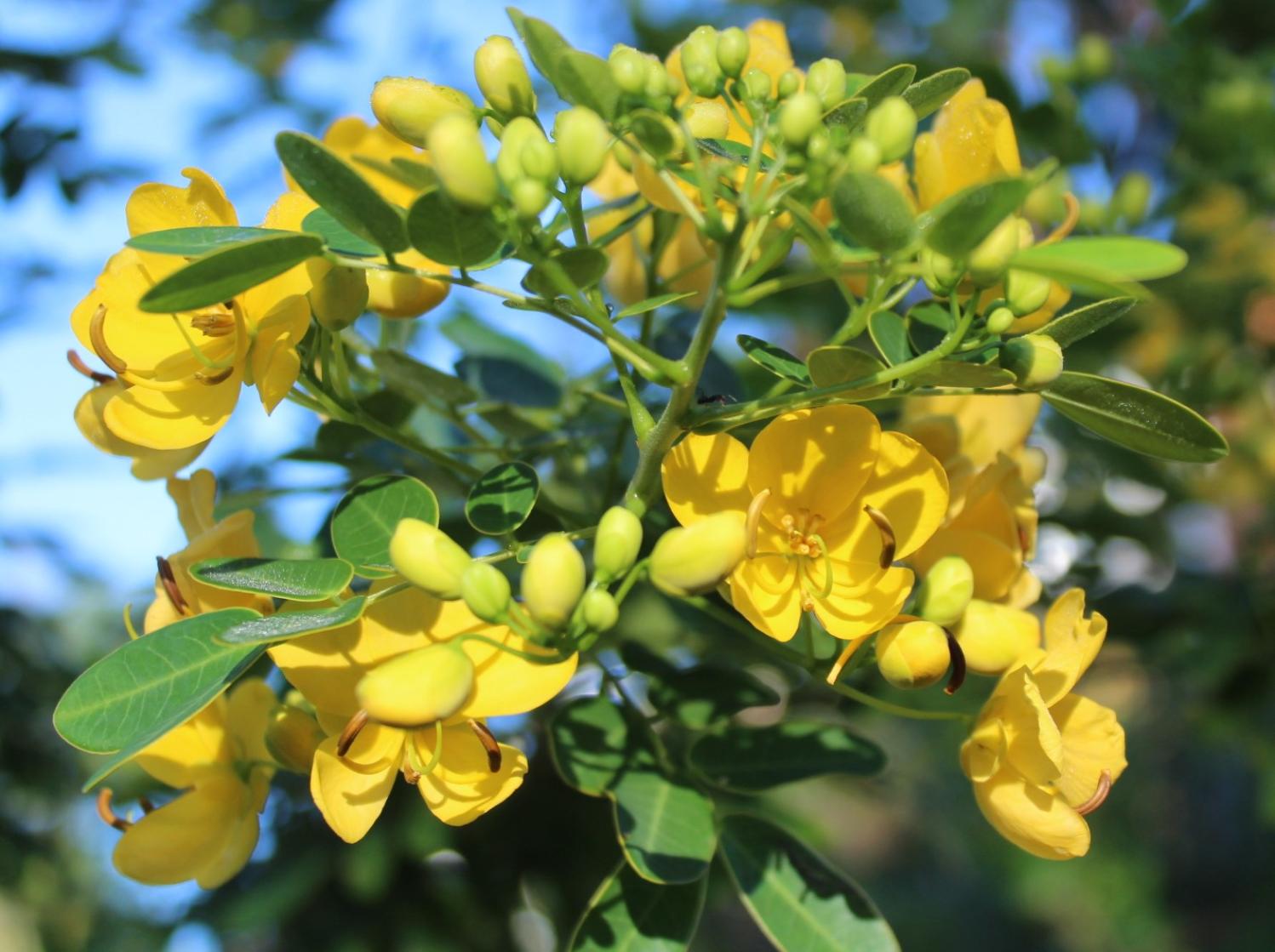
Australia’s alpine ash forests are now officially endangered. Can we save them?

Tom FairmanCC BY-ND
Tom FairmanThe University of Melbourne and Trent PenmanThe University of Melbourne

The tall alpine ash forests in Australia’s high country have lived in a delicate relationship with fire for tens of thousands of years.

Intensifying fire seasons are threatening this balance to the extent the Federal Government has just officially listed this forest type as an endangered ecosystem. This means these forests face a high risk of collapse or extinction.

It is alarming that alpine ash forests are facing an existential threat. What does this mean, and what can we do to save them?

One image shows a map of where alpine ash might grow. The other shows alpine ash trees in snow.
L: Alpine Ash covers an extensive area of Victoria, NSW and the ACT. Map shows where it occurs (red) and where it could occur (pink). R: Alpine ash in snow at Mt Donna Buang. DCCEEW, Tom FairmanCC BY-ND

What is alpine ash?

Alpine ash (Eucalyptus delegatensis) on the Australian mainland (there is a related species in Tasmania) is a tall species of eucalypt that covers over 350,000 hectares of high country across the Great Dividing Range, stretching from Canberra to east of Melbourne.

Alpine ash can grow to 90 metres tall, and when dusted with snow it forms a stunning forest that provides shelter and habitat for a range of rare mammals, such as Leadbeater’s possums and greater gliders.

It is also an important part of First Nations cultural landscapes – in north-east Victoria, the Taungurung people harvested Bogong moths (or Deberra) when the moths migrated to mountain forests where alpine ash is a key part of the landscape.

Alpine ash is a “fire sensitive” eucalypt – but its relationship with fire is paradoxical.

While mature trees die after intense fire, it also clears the way for a prolific flush of regeneration from fallen seeds. But these regenerating alpine ash trees won’t produce their own seed for 20 years.

Another severe fire during this time – the Achilles heel of the species – kills the regenerating forest, with no seed to save it. It can only be recovered by artificially sowing seeds, usually by aircraft.

Left image: a forest of burned, bare older trees. Right image: Repeatedly burned and badly damaged alpine ash.
L: Old growth alpine ash forests on Mount Disappointment that severely burned in the 2009 Black Saturday fires and regenerated from seed. If this forest was to burn again, it would look like the right image. R: Repeatedly burned alpine ash near the Dargo High Plains. Tom Oldfellow, Tom FairmanCC BY-ND

This Goldilocks-like balance of fire has served Alpine ash well until now. But the increased frequency of severe fire over the last 20 years – including the Black Summer fires – has raised such concern about its ecological health that it has now been listed as “endangered” under Australia’s nature laws.

Why is alpine ash now endangered?

There are a range of factors the federal government uses to assess the status of an ecological community, those naturally-occurring species that live together in the same habitat.

There has been a major decline in numbers of alpine ash trees because of extensive and severe bushfires over the past 20 years. During these, a third of all alpine ash forest burned more than once during their vulnerable immature regrowing phase.

The frequent fires have severely affected these forests, which have lost tree cover, the usual rich mix of species and their ability to function.

Left image: A mature forest of alpine ash. Right image: Repeatedly-burned forest has turned into a grassland.
L: Mature alpine ash forest in the Rubicon Valley in Victoria. R: Repeatedly burned alpine ash in the Alpine National Park, Victoria, where repeat fires have turned the forest into grassland. Tom FairmanCC BY-ND

In the future, we predict alpine ash forests may decline by half within the next 60 years because of more-frequent fires, which will lead to regeneration failure. To lose this much forest would be devastating for the landscape and the species that live there, and release the carbon these forests store.

Can we save alpine ash forests?

These predictions should prompt a substantial rethink of how we manage, protect and care for these forests.

Firstly, we need to change what it means to “protect forests”. Typically, mainstream forest protection focuses on stopping logging and creating national parks. In the case of alpine ash, these solutions have limited use.

Alpine ash forests are already well represented in conservation reserves, with over half in existing national parks. And climate change and more frequent fires will occur inside national parks as well as outside them. Furthermore, logging is now banned in Victoria and the ACT, and does not occur in the majority of alpine ash forests.

For alpine ash forests to flourish, we need creative and active management, such as:

But we must be realistic about how many alpine ash forests can be saved. Even with our best management, extensive areas of alpine ash will be lost.

First image: A bucket of alpine ash seeds. Second image: A plane sows alpine ash in a forest. Third image: A sign about forest management.
L: Ash seed collected and in storage. C: Resowing of alpine ash after the 2019/20 wildfires. R: Ecological thinning can help protect alpine ash forests. Tom Fairman, Owen BassettCC BY-ND

Accepting loss

We need to work out which forests can be saved and those that cannot. One approach which may help is the ‘Resist-Accept-Direct’ framework developed by the US National Parks Service.

This acknowledges our ecosystems will be severely stressed by climate change and change is unavoidable. It gives forest managers three options:

  • resist change by maintaining the current forest type. This could mean suppressing fire or resowing alpine ash after repeat fires

  • accept change and embrace new ecosystems that arise. This means not intervening after frequent disturbance, and monitoring what happens

  • direct change to a new type of ecosystem. This approach – the most controversial – means in forests likely to be frequently burned, alpine ash is replaced with more fire-tolerant eucalypts.

Working out which of these paths are suitable for alpine ash is a major task for land managers, researchers, and the community.

A clear warning

The listing of alpine ash as endangered is a clear warning to Australians. One of the most widespread types of forest in our high country is facing an existential threat.

Doing nothing is not an option.

We need bold and innovative action to steward alpine ash forests through the next century, before it is too late.The Conversation

Tom Fairman, Forest and fire scientist, The University of Melbourne and Trent Penman, Professor in Bushfire Behaviour, School of Agriculture, The University of Melbourne

This article is republished from The Conversation under a Creative Commons license. Read the original article.

How microplastics hurt the hidden helpers that keep our coasts healthy

Yuxi YouCC BY-NC-ND
Simon Francis ThrushUniversity of Auckland, Waipapa Taumata Rau and Yuxi YouUniversity of Auckland, Waipapa Taumata Rau

Walk across a mudflat at low tide and you might notice small, neat mounds of sediment scattered across the surface.

These so-called “chimneys” are the calling card of the humble bamboo worm (Macroclymenella stewartensis) which inhabits sandy sediments within New Zealand’s sheltered bays and estuaries.

Despite their hidden lives and small size – most measure just a few centimetres long – these worms have an outsized influence on the health of our marine environment.

But now there are troubling signs that microplastics – tiny but pervasive fragments of broken-down plastic – are disrupting the vital role the worms play, with potentially wider effects we are only just beginning to understand.

Hidden heroes of the seafloor

Over time, scientists have come to recognise the role bamboo worms and other tiny creatures have in bioturbation: a process essential to the functioning of coastal ecosystems.

When healthy, the worms burrow in the seafloor, enabling oxygenated water to enter deeper into the sediment. This, in turn, breathes life into the seabed.

The humble bamboo worm plays an outsized role in keeping coastal ecosystems healthy, through a process called bioturbation. Yuxi YouCC BY-NC-ND

The worms also feed on organic matter, helping regulate carbon and nitrogen in the sediment and surrounding waters. As they deposit small piles of waste, they provide nutrients for microscopic plants, supporting coastal food webs.

When these processes are disrupted, the impacts can ripple outward.

Nutrients can build up, increasing the risk of algal blooms that strip oxygen from the water. This can worsen conditions to the point where fish and other marine life can no longer survive.

This image shows surface signatures of bioturbation, in which tiny creatures such as bamboo worms burrow into muddy sediments, enabling the oxygenation and nutrient cycling that keeps coastal ecosystems healthy. Yuxi YouCC BY-NC-ND

Healthy marine sediments also act as a buffer against climate change by locking away carbon. When that balance is lost, sediments can instead release greenhouse gases such as nitrous oxide and methane.

How microplastics mess with marine life

Marine microplastics – fragments smaller than 5 millimetres from sources such as vehicle tyres, synthetic clothing fibres and degraded plastic waste – are now found from the tropics to Antarctica. Some estimates suggest there may be more than 170 trillion pieces in the world’s oceans today.

In New Zealand, scientists have been surprised to find them building up even in seemingly pristine marine environments, far from towns and major sources of pollution.

Their impacts are wide-ranging and still being uncovered.

Their small size makes them easy for marine organisms to ingest, often by mistake, where they can cause physical damage and leave animals malnourished. Microplastics can also carry toxic chemicals that interfere with reproduction and development, with these effects building up through the food chain.

When we look at how microplastics affect life on the seafloor, the picture becomes yet more complex.

In a recent study carried out at the University of Auckland’s Leigh Marine Laboratory, we found bamboo worms became less active when exposed to them.

It’s still not clear why. The worms may be ingesting plastic, absorbing chemicals from contaminated sediments, or simply finding less food if microplastics reduce algal growth.

Marine microplastics are small fragments of plastic debris that measure less than 5 millimetres long. Milos Bicanski/Getty Images

What matters is that their behaviour shifts as microplastic levels increase – with potentially important implications for bioturbation and ecosystem health.

It might also be causing knock-on impacts for wider food chains, as seabirds and eagle rays feed on worms and other tiny creatures in the seabed.

A micro pollutant, a macro problem

While plastic continues to accumulate in the marine environment, some microplastics may break down in sediments over time. Even so, this is unlikely to offset the growing volume, meaning the overall burden continues to rise.

People can help tackle the microplastic problem by reducing the amount of plastic they buy, picking up plastic rubbish on the beach, supporting harbour clean up groups and buying clothing made of natural fibres.

Presently, there are no limits set for safe levels of microplastic pollution in New Zealand – and policies will be needed to manage the problem.

Clean coasts are highly valued by New Zealand communities, but the health of these environments depends as much on what lies beneath the surface as what is visible above it.

While attention often focuses on those “charismatic” species such as dolphins and penguins, the small organisms living in the seabed play an equally important role in keeping ecosystems functioning.The Conversation

Simon Francis Thrush, Professor of Marine Science, University of Auckland, Waipapa Taumata Rau and Yuxi You, Research Fellow, Institute of Marine Science, University of Auckland, Waipapa Taumata Rau

This article is republished from The Conversation under a Creative Commons license. Read the original article.
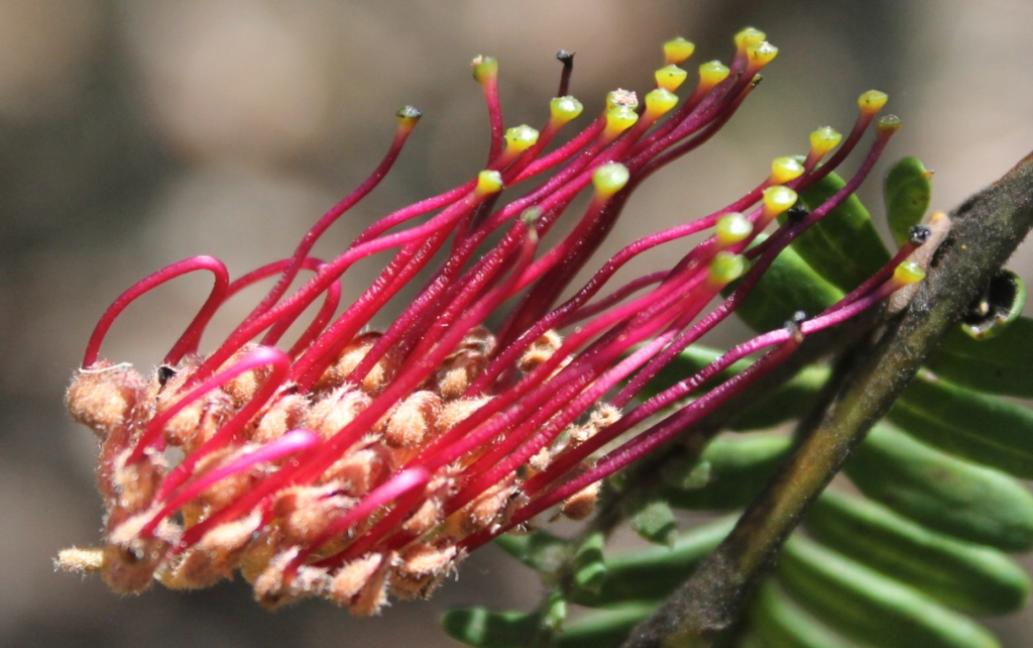
Meet kungaka – ‘the hidden one’. This ancient lizard could be the rarest reptile in Australia

Tom ParkinCC BY-ND
Warlpa ThompsonIndigenous KnowledgeJodi RowleyUNSW Sydney, and Thomas ParkinAustralian Museum

Hidden among the red sandstone escarpments of Mutawintji National Park in western New South Wales lives a rare lizard, long isolated in this arid landscape.

Known to Wiimpatja Aboriginal Owners as kungaka – “the hidden one” – we have now scientifically described it as a new species: Liopholis mutawintji.

For decades, this little lizard was thought to be an isolated population of a widespread skink. However, through a research collaboration between Wiimpatja and scientists we have confirmed it as a distinct species found nowhere else on Earth.

We have been monitoring them for 25 years. We believe there may be up to only 20 individual kungaka remaining. It may be one of Australia’s rarest reptiles.

A small lizard, the kungaka, peeks out from underneath a rock.
A kungaka peeks out from underneath a rock. Tom ParkinCC BY-ND

How we identified this new species

The kungaka was previously thought to be a highly isolated population of White’s skink (Liopholis whitii), a widespread species that lives in rocky habitats across south-eastern Australia.

But through analysing its genetics, and variations in body shape, we confirmed this skink is actually three distinct species. Two of these, the southern White’s skink (Liopholis whitii) and northern White’s skink (Liopholis compressicauda) occur across large areas of south-east Australia. The third – the kungaka – is restricted to Mutawintji National Park, about 500km from its closest relatives.

The kungaka represents an ancient lineage that likely originated during earlier, wetter periods in Australia’s history. As the continent dried, this skink persisted in humid rocky refuges. Today, it survives in a tiny, isolated pocket of sheltered gorge in Mutawintji, surrounded by a hot and dry expanse of saltbush and stony plains.

Wiimpatja have worked alongside ecologists and the NSW National Parks and Wildlife Service to monitor the kungaka population since 2000, with surveys intensifying since 2019. Over that time, the outlook has become increasingly concerning. Fewer than 20 individuals have been counted since surveys in 2024, using pattern recognition methods from photographs. And there has been a decline in its range, the number of skinks observed and the habitat where it lives.

Goats, cats and foxes

One of the most significant threats to the kungaka is feral goats. These occur in large numbers in the region and damage the environment by overgrazing vegetation and trampling fragile rocky areas.

This damages the rocks kungaka rely on for shelter, and exposes them to predators and extreme temperatures. Goats are also a significant threat to Mutawintji’s endangered Wangarru, or yellow-footed rock-wallaby, as they compete for the same food and shelter. However, conservation work for Wangarru has been a major success story, with the population growing over the past decade.

Other threats are compounding the problem for the kungaka. Introduced predators such as cats and foxes may prey on them, while climate change is intensifying heat and drought across the region. The 2017–19 drought was the hottest and driest on record for far western NSW. For a species with such a small population, these pressures may be overwhelming.

A black and white goat stands on a rocky hillside.
A feral goat in Mutawintji National Park. They overgraze vegetation and trample fragile rocky areas. Tom ParkinCC BY-ND

Kungaka as family

From Warlpa Thompson: For Wiimpatja, the kungaka is inseparable from people, country and culture. Every animal and every plant have people attached to them. There would have been people whose meat, their blood, their family is the kungaka. And these people are now gone. But the lizards aren’t.

In some places the animal is gone out of the landscape, but the people are still there. Like the bilby mob that live in Wilcannia, or the dingo mob from Mutawintji. With the kungaka, we’ve got the reverse. The people are gone but the lizards are still here.

Our old people had to fight for the right to get their country back. Now we’ve got it, we’re looking at how do we bring things back. How do we bring culture back? How do we bring our animals back?

The Wangurru, or yellow-footed rock wallaby, in Mutawintji National Park.
The Wangurru, or yellow-footed rock wallaby, in Mutawintji National Park. Conservation work for Wangarru has been a success story, with the population growing over the past decade. Tom ParkinCC BY-ND

The numbers of Wangurru have boomed in the last ten years. Hopefully we can do the same with the kungaka. A big part of that is making sure that our young people are involved so they know what it means to look after country, and the plants and animals from our country.

It’s important our kids don’t just get the cultural knowledge from us, but they get the scientific knowledge and understanding, so they know everything that it is to talk for that animal, not just balanced with one side or the other.

A group stand in rocky scrub, searing for kungaka
A group on the lookout for kungaka. Front: Keanu Garni Bates (left) and Ray Hunte-Mckeller. Back: Gerry Swan (left) and Lyndy Marshall. Tom ParkinCC BY-ND

The future of the kungaka

There is a shared responsibility to protect and conserve the kungaka. We need to control goats, cats and foxes, search for additional populations and monitor them long-term. Given the kungaka’s extremely small population size, actions such as captive breeding may be required.

Scientific description of the kungaka is just the first step. If fewer than 20 individuals remain, it stands on the brink of extinction. The survival of this unique lizard will depend on sustained, long-term collaborative partnerships.

From Warlpa Thompson: Whatever we do needs to be done on Country, and led by Wiimpatja. That knowledge has to be driven by us but we need help to look after this lizard. It’s in such a bad position that we’re going to need everyone working together, in a culturally grounded way.


Acknowledgements: scientific description and conservation of the kungaka has been a truly collaborative effort, made possible through the dedication and knowledge of many individuals. We acknowledge the important work and contributions of Gerry Swan, Lyndy Marshall, Keanu Garni Bates, Ray Hunter-McKeller, Nhalpa Thompson and Dane Trembath, whose involvement have been integral to this research and its outcomes.The Conversation

Warlpa Thompson, Wiimpatja Aboriginal Owner of Mutawintji National Park, Indigenous KnowledgeJodi Rowley, Curator, Amphibian & Reptile Conservation Biology, Australian Museum, UNSW Sydney, and Thomas Parkin, Research Officer, Herpetology, Australian Museum

This article is republished from The Conversation under a Creative Commons license. Read the original article.

How one local council helped 1,200 low‑income residents finance solar and home energy upgrades

Photo by William Mead/Pexels
Paris HadfieldMonash University

Most of Australia’s existing homes are old, uncomfortable, and expensive to run. Too many are energy inefficient, and rising electricity and gas prices are making things worse.

Mainstream programs are supporting home energy upgrades. But the transition isn’t happening quickly enough and risks leaving behind the households that could benefit most.

Innovative finance models could help. My new research shows how local initiatives can make solar and electrification more accessible.

Darebin City Council’s Solar Saver program

My research investigated a local government program in Melbourne that helped people get rooftop solar.

Running from 2014-2025, Darebin City Council’s Solar Saver program helped almost 1,200 low-income and vulnerable homeowners in the area get A$4.8 million worth of home energy upgrades.

Council paid the upfront cost of installing solar and, in later iterations of the program, reverse cycle air conditioners and hot water heat pumps.

Factoring in state government rebates, these costs were added to the homeowner’s property taxes as a “special rates charge”. The homeowner could then repay this money over ten years – interest-free.

Suppliers were selected through council tender to make the process easier for homeowners, while ensuring quality products and services including component and performance warranties. This provided certainty for residents, one of whom told me:

the council’s not going to get involved with some shonky person who’s going to come in and tell you: “Terribly sorry, we’ve got to double the price because you’ve got a nail in the wrong place on your roof” or something.

The scheme reduced financial risks and burdens for low-income homeowners.

By using council rates to repay the money, the loan is attached to the property itself rather than the homeowner.

This means any remaining debt is recouped if and when the house is sold, avoiding a situation where someone is paying a debt for solar on a house they no longer live in.

Homeowners were advised not to participate if debt repayments were more than they’d save in energy bills. Aged and disability pensioners were identified as a priority group because they were more likely to be at home during the day to reap the benefits.

Trust and relationships

Darebin Solar Saver shows how critical trust and relationships are for enabling household uptake.

Interviews with households and council officers highlighted the importance of council as an intermediary that could offer tailored and impartial advice, broker quality products and services, and channel finance without commercial terms.

Other electrification programs have shown how effective council rates notices are for household engagement.

Colleagues and I are now developing tools and resources based on these lessons to support the sector to design and deliver home energy upgrade programs.

Expanding beyond Darebin

For this model to be expanded to other local government areas, funding is needed.

Darebin City Council made a significant cash investment that other councils have struggled to replicate, even though households repay most of the costs.

Federal government could address this barrier through a national fund, while others see opportunities for commercial loans through environmental upgrade agreements (which is where councils work with banks to provide loans to households, and the loan is repaid via the resident’s rates).

Very few private renters accessed Darebin Solar Saver, highlighting a need for targeted finance, engagement, and regulation to encourage landlords to upgrade investment properties.

The Darebin Solar Saver program concluded in 2025 for a range of reasons. Council staff told me human resources and time are essential, with one noting:

We have to go through a fair amount of information to explain how solar works. We have to explain how the Solar Saver program works. Many residents struggle to actually understand or accept that you don’t have to pay anything up front, at all. That takes often several times in a conversation and written material just to prove that that’s the case.

Darebin City Council is now offering electrification rebates for a wider range of products, which are also much simpler for council to administer.

Finding alternative finance models

While over 30% of Australian households have rooftop solar, Australia needs 11 times more households to disconnect from gas each year if it’s to achieve its 2050 emissions reduction targets.

But getting off gas and getting solar panels is expensive. Studies in the USIrelandNorway, and among lower-income households in Victoria find cost concerns are the most common barrier to home energy upgrades.

For those with little to no available cash savings, partial subsidies and rebates are little help.

Discounted home energy upgrade loans still charge interest to be commercially viable. What’s more, many low-income homeowners may not have a high enough credit rating to get a loan from a bank. Buy Now Pay Later services typically pass on costs through the price of the solar system and late repayment fees. Interest-free loans for eligible households are no longer available from the Victorian government.

Inaccessibility is not just about cost. It’s also about a household’s ability and confidence to make decisions, especially as some solar and battery providers push bad deals.

All this means it is crucial we find more alternative finance models to help low-income households do energy upgrades.

As homes are increasingly exposed to worsening climate hazards like floods, bushfires, and cyclones, solving the finance problem will become more urgent.The Conversation

Paris Hadfield, Research Fellow, Monash Sustainable Development Institute, Monash University

This article is republished from The Conversation under a Creative Commons license. Read the original article.

More than 60% of home battery installations inspected in Australia are ‘substandard’

ulleo/Pixabay
Rusty LangdonUniversity of Technology Sydney

More than 60% of battery system installation work inspected under a federal government green energy program is substandard and 1.2% unsafe, according to a recent report by the Clean Energy Regulator.

The Cheaper Home Batteries Program has proved hugely popular. More than a quarter of a million small-scale battery systems have now been installed under it. This equates to 7.7 gigawatt hours of installed storage capacity.

Minister for Climate Change and Energy, Chris Bowen, says this “means less pressure at peak times, more reliability, and a cleaner, more affordable energy system”.

But the installation compliance and safety problems highlighted by the regulator’s report risk not only battery storage growth and the credibility of the scheme, but also public safety.

Substandard and unsafe installations

The Cheaper Home Batteries Program provides a discount of about 30% of the cost of an installed battery. The program is designed to accelerate the move away from fossil fuels, with energy storage critical for reducing reliance on fossil fuel generation during evening peaks.

Recent amendments to the scheme design will address issues that have blown out the cost from original estimates of A$2.3 billion to A$7.2 billion.

Between July 2025 and April 2026, the Clean Energy Regulator carried out 1,278 compliance inspections on battery systems installed under the program.

Some 60.8% of inspected system installations were found to be “substandard” and 1.2% of installs were found to be “unsafe”. The problems weren’t about the batteries themselves, but the way they had been installed.

The sample size in the regulator’s report is small – 0.5% of the total number of systems installed.

With such a small sample size, it is hard to extrapolate the level of installation non-compliance across all systems in Australia. But if similar trends continue in inspections over a larger sample size, there could be approximately 3,000 battery installs that are unsafe and a further 152,000 that are non-compliant.

From incorrect labelling to exposed wiring

Most non-compliance issues related to incorrect labelling.

Issues include missing or incorrect warning labels, unlabelled backup circuits, and missing or incorrectly positioned energy storage (ES) labels. These issues are comparatively low risk relative to issues such as loose wiring, exposed wiring, and substandard electrical work that could lead to overloading, poor battery performance or fires.

Wiring requirements for batteries are not all equal. Some battery systems come pre-assembled with all wiring and electronic equipment integrated into the battery enclosure. This reduces the electrical work required to install.

Other systems are not as integrated. They require additional wiring by the electrician to connect, and can be more challenging to install without experience. These were the systems where installations were deemed unsafe by the regulator, with reported issues such as loose connections and substandard wiring practices that pose an imminent risk.

Exposed wiring is also a common issue that needs to be addressed as a priority. If wiring is not enclosed, it can be damaged and increase the risk of a severe electric shock if touched. The independent solar energy website, SolarQuotes, highlights the exposed wiring issue well, showcasing several installations with non-compliant wiring.

For batteries, no amount of exposed cable is compliant. Cables need to be protected from mechanical damage for the full cable run, using electrical conduit or metal ducting.

Alarmingly, reports from experts in the field indicate that only 10% of installers are following these wiring practices correctly.

A quick scroll of social media groups that rate battery installation jobs visually confirms the issues. Posts of substandard installations show exposed cables, batteries placed in full sun, delicately anchored to a wall with standard masonry wall plugs or supported with loose bits of timber and pavers.

In February the Clean Energy Regulator said it was ramping up inspections of solar battery installations as part of the Cheaper Home Batteries Program.

“I’m putting installers on notice that unsafe and non-compliant work will be identified, and we won’t hesitate to use our compliance powers,” CER Executive General Manager, Carl Binning, said.

Battery installations are complex

Well-intentioned schemes have previously been compromised by bad actors – referred to as “rebate chasers”.

The regulator sets rules limiting the number of battery installations that can be completed in one day. This is aimed at reducing the likelihood of this type of accreditation misuse.

Battery installations are complex, so there are likely to be a range of reasons why non-compliance is emerging.

Conversations colleagues and I have had with electricians operating in the industry highlight just how stretched they are trying to keep up with demand. The shortage of electricians nationally is a well-known issue exacerbating the pressure placed on current trades trying to deal with the volume of work available.

The sheer scale of demand pushes skilled trades to work to their limits. This is bound to result in things falling through the cracks in some cases.

In instances of fraud, negligence or repeat non-compliance, the Clean Energy Regulator has indicated the use of strong enforcement action. This includes stripping accreditation where necessary.

In the case where repeat non-compliance highlights gaps in knowledge across the industry, the regulator has signalled an intention to fill knowledge gaps with mandatory training.

Finding accredited installers

There is a well-defined accreditation pathway for battery installers that should be reviewed by accrediting body Solar Accreditation Australia, considering the issues identified.

In the meantime, consumers can arm themselves with the knowledge to avoid being caught out. They can reduce the risk of a non-compliant or unsafe install by engaging an accredited installer that has been pre-vetted.

Ask quoting installers for images of previous installations. A neat and tidy installation, without exposed cabling, can be a good marker for compliant installation practices.

And if you have the time and technical aptitude, familiarise yourself with the Clean Energy Regulator’s Solar Battery Inspections Checklist.The Conversation

Rusty Langdon, Senior Research Consultant, Institute for Sustainable Futures, University of Technology Sydney

This article is republished from The Conversation under a Creative Commons license. Read the original article.
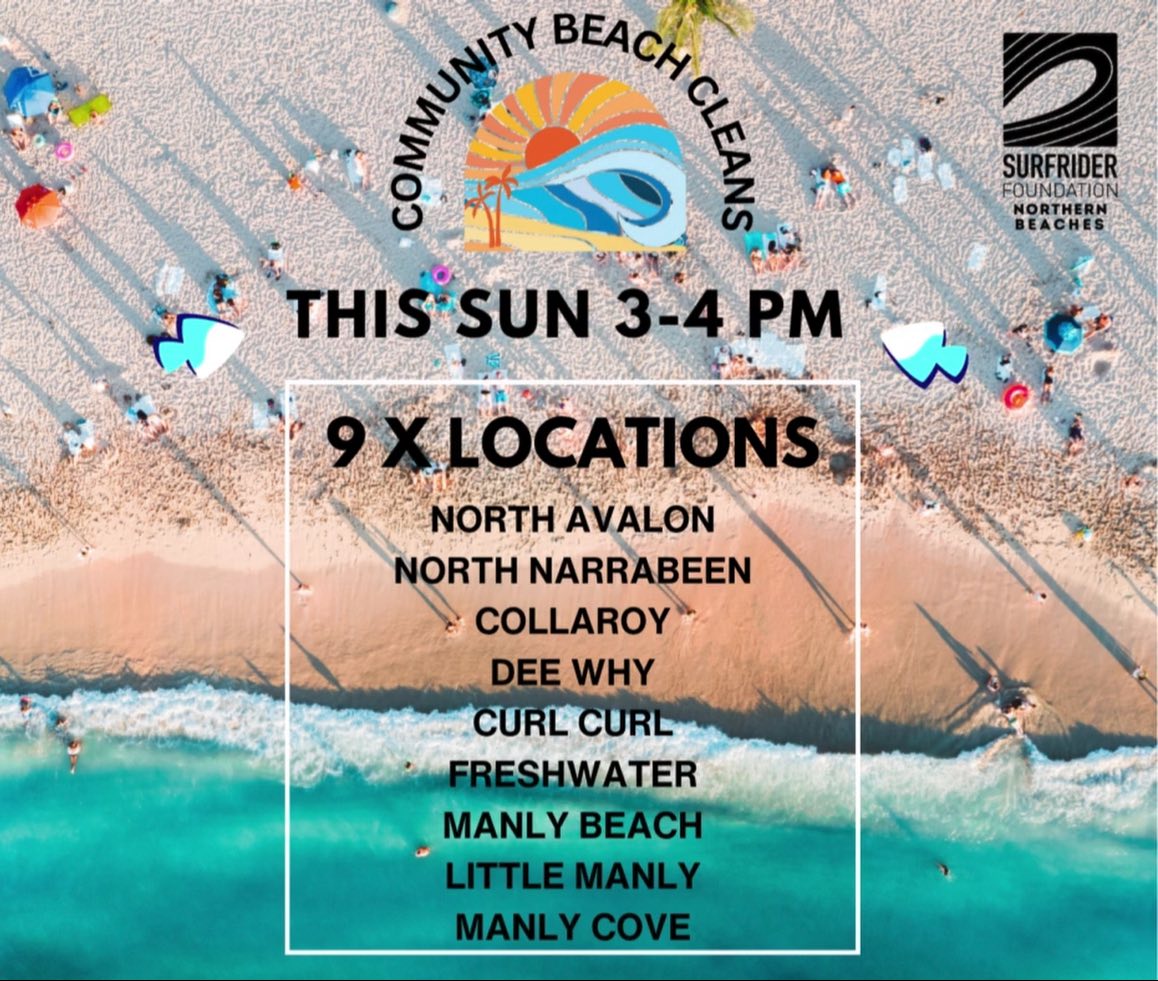
Winter crops need to be sown – but Australia’s farmers are worried about fertilisers and fuel

Marit E. KragtThe University of Western Australia

War in the Middle East has put a spotlight on the Strait of Hormuz, the narrow sea passage through which 20% of global oil supply is shipped. But far less attention has been paid to another essential product derived from oil and gas, on which the world also relies: fertiliser.

Roughly 20–30% of global fertiliser supply, such as urea, ammonia and phosphate, comes from the Middle East. The effective closure of the Strait of Hormuz has halted fertiliser exports from countries such as Saudi Arabia, the United Arab Emirates and Qatar.

For farmers in Australia, the disruption could not have come at a worse time. Most winter season grain crops are sown between April and June. While some farmers may have already secured their supply in preparation for the busy seeding season, others are still waiting for their fertiliser delivery.

How are fertilisers made?

Farmers apply fertilisers to provide their crops with essential nutrients, such as nitrogen, phosphorus and potassium. Without adequate fertiliser, crops such as wheat, barley and canola will produce lower yields with lower protein content.

Urea is one of the world’s most important nitrogen fertilisers. Urea is produced through a carbon-intensive process known as Haber-Bosch. First, ammonia is synthesised from atmospheric nitrogen and hydrogen (usually derived from fossil gas). This ammonia is converted into urea, a white and odourless pellet, which is easier to transport, store and apply on farms.

With limited domestic production capacity, Australian farmers are almost completely reliant on imported urea. Australian agriculture imported 3.85 million tonnes of urea in 2024, most of it from the Middle East. With reduced global supply, the world price of urea has risen from A$675 per tonne in February, to more than $1,000 at the end of March, significantly increasing costs.

What does this mean for farmers?

Australia has limited domestic capacity to produce urea. Incitec Pivot Limited’s Gibson Island facility was Australia’s only manufacturer of urea until its closure in 2022.

A new facility planned by Strike Energy for Western Australia never broke ground, and the controversial Perdaman plant on the Burrup Peninsula won’t start producing urea until mid-2027. To make matters worse, Australia’s largest ammonia plant has been shut for two months after suffering a power outage.

Timing is everything in farming. Many Australian farmers are only weeks away from sowing. Even if fertiliser can be sourced from elsewhere in the world, it may not arrive in time.

Farmers may respond by planting fewer crops, leaving some land fallow, or turning to crops that require less fertiliser. If the Strait of Hormuz blockade persists well into 2026, we will face competing demand for fertiliser from farmers in the northern hemisphere. And Australia’s supply of “top-up” fertiliser (applied during the growing season to ensure crops reach their yield) will be affected. This could mean lower grain yields and reduced feed supply for livestock and poultry production.

Will our food cost more?

Food prices are influenced by more than fertiliser costs. Farmers are also grappling with increasing fuel costs. Soaring fuel prices affect all parts of the food supply chain, from processing and packaging, to transport, storage and retail. It is likely these collective impacts will increase food prices for customers.

Fertiliser and fuel costs constitute 25–30% of a cropping business’ total farm costs, so a sharp increase in both will significantly affect farm profitability.

Farmers only receive a small share of the price consumers pay for produce. At lower yields, farmers will face the squeeze of less production revenue and higher costs of production. While some producers may be able to weather the storm, others are facing a difficult year ahead.The Conversation

Marit E. Kragt, Professor of Agricultural Economics, The University of Western Australia

This article is republished from The Conversation under a Creative Commons license. Read the original article.

Growing EV popularity is leading to queues at fast chargers. Could a kerbside charger network help?

Waverley Council
Bjorn SturmbergUNSW Sydney and Arastoo TeymouriUNSW Sydney

The war on Iran has made crystal clear how shaky our reliance on fossil fuels is. It’s no surprise electric vehicles and transport have become more appealing.

In Australia, sales of electric vehicles surged 40–50% in March.

That sudden surge came after ten months of relatively slow growth, during which battery electric and plug-in hybrid vehicles made up roughly 14% of new car sales. Industry groups saw the sluggishness as a sign of the difficulties in moving beyond early adopters to the much larger mainstream market.

This market includes people who live in apartments or inner city areas with no off street parking. In Sydney’s eastern suburbs, for example, 60% of residents live in apartments or townhouses, and 50% rent.

If the millions of Australians in this position are to go electric, they have to be confident in their ability to charge cheaply and conveniently. Relying on public fast chargers won’t be enough, as queues at chargers over Easter show.

These drivers will need a high quality public kerbside charging network, where drivers can park on a street, plug in a slower but much cheaper charger and head to the shops. In our new research, we lay out what a good kerbside network should look like.

Why kerbside chargers matter

Drivers usually charge their EVs using private chargers at home, public chargers at work or at dedicated fast or ultra-fast charging stations on roads.

Kerbside chargers represent another promising option. These small box-like chargers can be attached to power poles, streetlights or mounted on the footpath. Kerbside chargers usually run at power levels similar to home charging at around 7-22kW, though some run at 30-50kW.

There’s a trade-off between speed and cost. Ultra-fast chargers (150-400kW) can charge an average EV battery from 10 to 80% in around 30 minutes, but cost significantly more than slower chargers. Kerbside chargers cost significantly less, in part because they place far less stress on the power grid.

As well as letting drivers charge without off-street parking, kerbside chargers also build confidence for all EV drivers by expanding the charger network. If one charger is occupied, another will be free.

The federal government last year announced A$40 million in grant funding to accelerate the kerbside charging rollout, which is about to be delivered. Electricity distributors are lobbying to be able to provide this infrastructure.

How do we get the rollout right?

To find out how to optimise the kerbside charger rollout, we partnered with Waverley, Woollahra and Randwick Councils in Sydney, whose kerbside network amounts to 94 spaces. It’s well used, with 27,000 charging sessions over the six months to the end of February 2026.

The data from these chargers revealed key insights. Chargers were used much more when they were located near apartments and shops, and when signs restricted use to EVs actively using the chargers.

One surprise was the fact charger usage clustered around daytime and evenings, with little overnight.

Daytime use is good news for the power grid, as it makes sense to charge EVs when floods of cheap solar are being generated. This should lead to lower charging prices during these times.

But it’s less than ideal that a third of total charger use took place during evenings, when the power grid is experiencing peak demand.

As more and more EVs appear on the roads, evening demand from chargers may rise too. Meeting this demand could require expensive grid upgrades.

graph showing pattern of demand for EV kerbside chargers, with most demand between 8am and 9pm.
This graph shows the pattern of charging demand from the kerbside charging network in three Sydney council areas. Daytime charging is ideal, but evening charging adds to peak demand. Author providedCC BY-NC-ND

Optimising the kerbside network

There’s usually a lot of flexibility in when drivers charge their EVs for daily or weekly use. Many EVs can even be set to charge when power is cheapest.

The challenge is how to get people (and vehicles) to respond to this flexibility and how to coordinate their actions at scale. One method could be to set higher prices for kerbside charging during times of peak demand.

Higher prices during evening peaks for EV charging at home could also encourage drivers to avoid peak demand, though this should ideally apply only to EV charging, not cooking dinner.

People want faster kerbside chargers

Most existing or planned kerbside chargers rely on slower, low power AC chargers (7-11 kW) able to charge an average EV from 10 to 80% in around six hours.

These are the default for kerbside charging because they are cheap and provide the same charging experience as in homes and workplaces. They work well for those who live nearby and can charge over longer periods such as across a day or overnight.

But the Sydney council data showed a clear preference for higher power DC chargers (30-50 kW) able to charge an average EV battery from 10 to 80% in two hours.

These chargers are best located near services which take 1-2 hours to complete, or near apartment blocks where many local drivers can take short turns charging.

On average, the faster DC charger sites were used four times a day, compared to once a day for slower AC chargers. Because DC chargers deliver energy much faster, each one delivered five times more energy (100 kWh per day) on average.

This means these more expensive DC chargers can be the most economic option for kerbside charging. Their higher throughput also makes them space efficient, requiring fewer contentious dedicated EV parking spaces.

Our analysis shows DC sites are most effective when coupled with two hour parking restrictions rather than allowing a four hour stay, as this reduces EVs overstaying once fully charged.

graph showing DC kerbside chargers delivering much more power than AC chargers.
DC chargers deliver much more power than slower AC chargers. Author providedCC BY-NC-ND

In response, the three Sydney councils have deployed more DC chargers at new sites and upgraded some existing sites.

At present, many plans for new public kerbside chargers still focus on slower AC chargers, many without dedicated EV parking spaces.

Our analysis suggests dedicated EV parking spaces are essential, and faster DC chargers should play a more prominent role. These are popular with drivers, have better economics, and require fewer dedicated EV parking spaces.The Conversation

Bjorn Sturmberg, Senior Research Fellow, Collaboration on Energy and Environmental Markets, UNSW Sydney and Arastoo Teymouri, Researcher in Energy Systems, UNSW Sydney

This article is republished from The Conversation under a Creative Commons license. Read the original article.
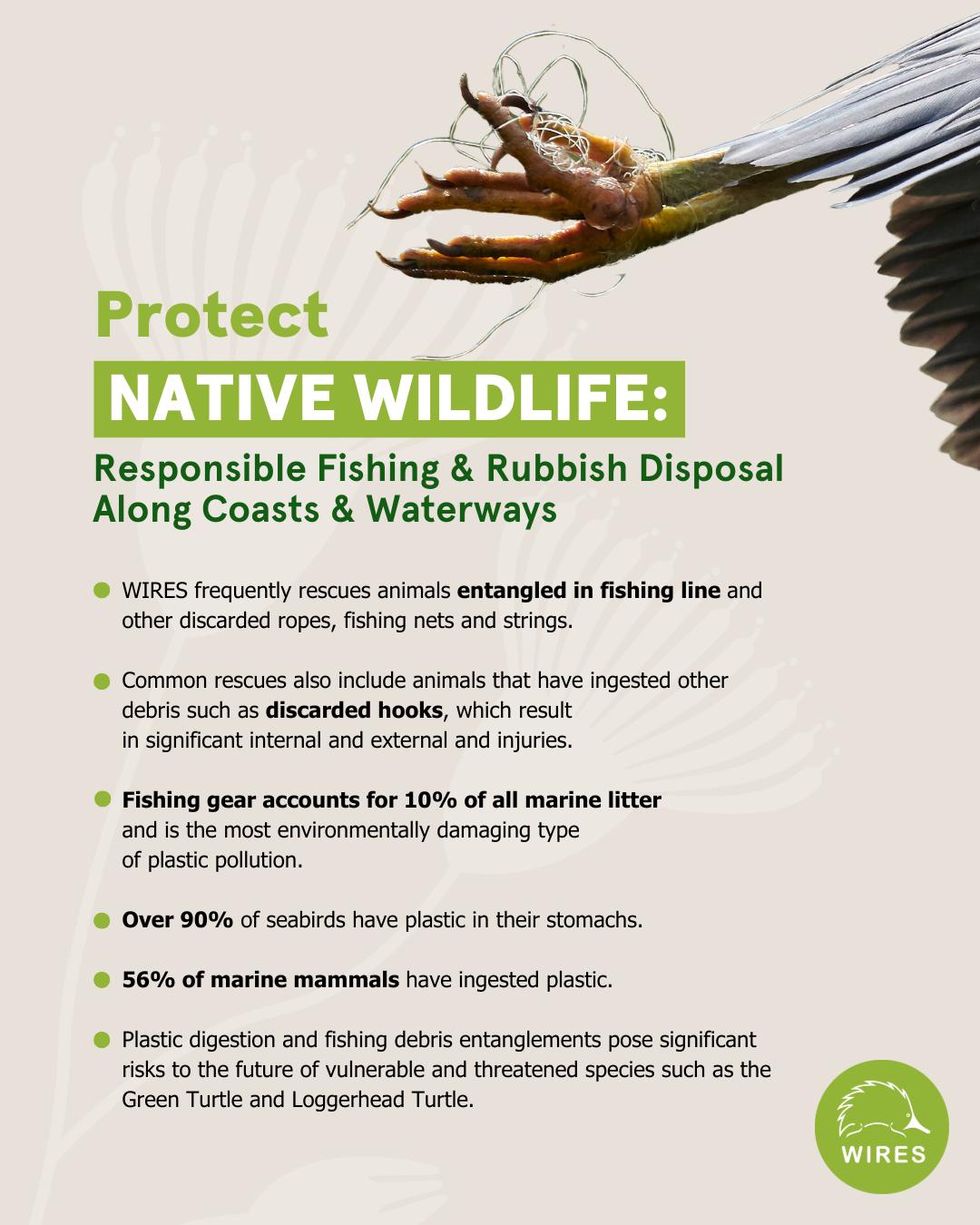
Earthrise to Earthset: how the planet’s climate has changed since the photo that inspired the environmental movement

Earthrise. The view of the rising Earth as photographed by the Apollo 8 astronauts on December 24 1968 as they came from behind the Moon after the fourth nearside orbit. Nasa/William Anders
Nick DunstoneMet Office Hadley Centre

A new Earthset image has been captured by the crew of Artemis II, 58 years since the iconic Earthrise photograph taken by the crew of Apollo 8. Over these past six decades, the climate has changed dramatically.

“Oh my God, look at that picture over there! There’s the Earth comin’ up. Wow, is that pretty.” That was Nasa astronaut Bill Anders’ reaction to seeing the Earth appearing to rise above the lunar horizon as their Apollo 8 spacecraft came around the Moon on Christmas Eve 1968.

Theirs were the first human eyes to see our planet at such a distance and from another celestial body. As fellow astronaut Jim Lovell said a few hours later: “The Earth from here is a grand oasis in the big vastness of space.”

That original Earthrise image is widely credited with helping to set the mainstream environmental movement in motion. Although I wasn’t born when the Apollo 8 photo was taken, a framed print of it hangs above my desk as a reminder of the beauty and fragility of our planet.

view of Earth from the moon
‘Earthset’ is the new photo from the far side of the Moon, captured on April 6 2026 by the crew of Artemis 2 as Earth dips behind the lunar horizon. Nasa

For me as a climate scientist, these photos, taken 58 years apart, inspire me to reflect on how the Earth’s climate has changed in the interim.

The concentration of carbon dioxide (and other greenhouse gases) in our atmosphere has rapidly increased as a result of over half a century of continued and spreading industrial development, driven primarily by burning fossil fuels.

This is clearly illustrated by the Keeling curve – a graph that plots the continuous record of atmospheric CO₂ from Mauna Loa Observatory in Hawaii (started by Charles Keeling in 1958).

This curve shows a steep and steady increase from approximately 320 parts per million (ppm) in 1968 to about 430ppm in 2026. This increase of over one-third in the total carbon dioxide in our atmosphere shows little sign of slowing down.

That additional blanket of greenhouse gases has increased the surface temperature of our planet. Data from the World Meteorological Organization shows how the global mean temperature record (the average temperature of the Earth’s surface) has risen by approximately 1.2°C since the Apollo 8 Earthrise photo was taken. This represents most of the warming that has happened since the early industrial period in the mid-19th century.

While an average global temperature increase of 1.2°C may not sound large, it means that regional hot extremes and new records are now much more likely. For example, my team’s recent research has shown that a 40°C day in the UK (first recorded on July 19 2022) is now over 20 times more likely than it was in the 1960s.

The global average temperature has surged in the past three years – most probably driven by a combination of internal climate variability and human-made emissions (including strong reductions in industrial aerosol particle emissions that largely act to cool the planet). In 2023, temperatures jumped from the previous record of 1.29°C (set in 2016) to 1.45°C above the early-industrial 1850-1900 baseline.

This record was then immediately broken in 2024 – the first year to temporarily exceed 1.5°C. Going beyond that boundary in a single year doesn’t mean we have breached the 1.5°C target set by the 2015 Paris climate agreement, which is generally accepted to refer to a 20-year average. However, it does highlight how rapidly we are now approaching that level of warming.

Temperatures in both years were partly boosted by warmer conditions in the tropical Pacific due to El Niño, a climate phenomenon that affects weather patterns globally. Last year, after El Niño had subsided, was slightly cooler at 1.43°C. However, current forecasts give a high probability for another El Niño developing during the second half of 2026. If this materialises, we could easily exceed 1.5°C again.

A key question is whether global warming is accelerating. This is difficult to detect directly from the surface temperature record. However, a recent study found a significant acceleration after accounting for the “noise” of year-to-year variability.

The view from above

Climate science isn’t just about measuring changes in temperature.

One of the legacies of the 1960s space race was the subsequent launch of many satellite observation platforms that have transformed our ability to monitor, understand and predict changes to the global climate.

We now have continuous monitoring of many key components of Earth’s climate system, including sea surface temperature, sea level, and the extent of polar sea ice, glaciers and land surface changes. Unfortunately, many of these reveal worrying trends, such as more frequent heatwaves on land and sea, loss of Arctic sea-ice, melting glaciers and sea-level rise.

One of the most concerning recent trends comes from a set of satellite instruments called the Nasa Ceres, which have measured changes in the Earth’s energy imbalance (EEI) since 2000. EEI is the difference between the amount of solar energy absorbed by the planet and the thermal energy radiated back into space.

The Ceres data shows a strong upward trend, indicating a growing rate of accumulation of energy, consistent with an acceleration in global heating.

Looking ahead, I hope that by the time astronauts take the first Earthrise photo from Mars (perhaps in the late 2030s), we are heading towards net-zero carbon emissions and more stable global temperatures.

Achieving net zero is this century’s Moonshot. The prize is minimising the severity of the worst climate consequences of global heating – leaving our children and future generations a sustainable “grand oasis” here on Earth.The Conversation

Nick Dunstone, Climate Science Fellow, Met Office Hadley Centre

This article is republished from The Conversation under a Creative Commons license. Read the original article.
Why the phrase ‘Super El Niño’ makes Australian climate scientists roll their eyes

Raymond Petrik/PexelsCC BY-NC-ND
Kimberley ReidThe University of Melbourne

Frightening headlines predicting a Super El Niño or even a Godzilla El Niño amp up anxiety levels for farmers and residents of bushfire-prone regions.

But these phrases are not particularly accurate. The phrase “Super El Niño” makes climate scientists like me roll our eyes.

Why? Let’s find out.

What is El Niño?

The El Niño–Southern Oscillation is a natural and reoccurring climate pattern in the Pacific Ocean which can influence the chance of different weather affecting Australia.

When sea surface temperatures near the Americas are warmer than usual and the trade winds blowing from east to west across the equator weaken, climatologists call this pattern an El Niño.

El Niño events typically ramp up in winter and spring, and decay towards the end of summer and start of autumn.

During El Niño, we tend to experience warmer than usual temperatures and reduced winter-spring rainfall in Australia’s east.

We pay attention to El Niño and its opposite, La Niña, because this climate pattern has the biggest influence on year-to-year rainfall and temperature differences in eastern Australia. Drought is a key concern for farmers and rural residents, and some of the largest droughts of the past 40 years took place during El Niño years.

But problems can arise if we expect El Niño to be the only factor dictating our weather.

Average spring temperature (L) and rainfall anomalies (R) during an El Niño. Ruby LieberCC BY

Why call an El Niño ‘super’?

One El Niño can be stronger or weaker than others. Scientists monitor El Niño using the Nino3.4 index, a measure of how much warmer (or cooler) than usual the ocean is in a region in the East Pacific. This region is the best at representing changes in the Pacific which can indicate El Niño.

When ocean temperatures are 0.8°C warmer than usual in that region, and the trade winds have sufficiently weakened, the Bureau of Meteorology can declare an El Niño has arrived. (The United States uses 0.5°C as the figure).

A “Super El Niño” is when the region’s ocean temperatures rise 2°C, roughly two standard deviations above normal (about a 2.5% chance of happening). While scientists first coined the term, the evocative phrase has become a favourite of media commentators.

But Australian forecasters don’t use these terms, as it doesn’t matter that much for our weather if the index goes over 2°C. What matters much more is whether an El Niño is present or not.

Why? When we measure the strength of the El Niño, we are really only referring to ocean temperatures in the eastern Pacific. But this figure is not very well correlated with less rain in eastern Australia. It also only captures ocean changes and doesn’t reflect the El Niño atmospheric changes which influence the weather systems that actually bring rain to Australia.

During the ‘strong’ 1997–98 El Niño (a), rainfall didn’t change much. But during the ‘weak’ 2002–03 El Niño (b), major rainfall deficits emerged. Bureau of Meteorology and Climate ExtremesCC BY

That’s not all. The Niño3.4 Index is just one of many indications of how Australia’s upcoming weather is likely to look. One index can’t tell the whole story. Relying on it is like looking at the BMI of a bodybuilder and declaring them obese.

Readers may wonder how scientists can define El Niño using an ocean temperature threshold when oceans are getting steadily warmer under climate change. Won’t we end up with constant El Niño?

This is a good question. It’s why the Bureau of Meteorology last year introduced a relative Niño index, to give scientists a way to account for warming due to climate change.

Should we believe winter and spring forecasts?

A Southern Hemisphere autumn in the Pacific Ocean is sort of like January in your average Australian office job. As you slowly ease into the work year, you set a bunch of optimistic goals which may or may not eventuate.

Over autumn, the Pacific Ocean is similarly noncommittal. It can indicate future outcomes that don’t always happen.

Meteorologists have a term for this. It’s called the Autumn Predictability Barrier. What it means is that El Niño forecasts are the least reliable during autumn.

So while forecasts of the Pacific Ocean might be pointing towards an El Niño, history warns us to take forecasts made in autumn for later in the year with a big lump of salt.

At present, the EuropeanUS and Australian model forecasts of Niño3.4 indicate a strong El Niño might develop. But this isn’t conclusive.

Forecast from March 2026 of the Niño3.4 Index. Red lines indicate different model forecasts. ECMWFCC BY

The forecasts made in March 2017 are worth looking at. Here, models confidently predicted a moderate and long-lasting El Niño, similar to forecasts in March 2026. What happened instead was a short-lived, weak El Niño.

How should we think of El Niño forecasts?

As a scientist who has researched seasonal forecasts of Australian rainfall, my advice is to ignore autumn headlines warning of a potentially catastrophic “Super El Niño”.

These get more clicks than more accurate headlines pointing out long-term forecasts at this time of year are uncertain. It’s worth waiting until the end of autumn or early winter before taking El Niño forecasts too seriously.

The current gold standard for Australian seasonal forecasts are the Bureau of Meteorology’s long-range forecasts. But even here, these forecasts become quite uncertain more than a month in the future. It’s important to regularly check for updated forecasts.

Will we get an El Niño this year? The only scientifically accurate answer as of April 9 2026 is “maybe”. It’s way too early to say anything other than that an El Niño is more likely to form this year than a La Niña.The Conversation

Kimberley Reid, Postdoctoral Research Fellow in Atmospheric Sciences, The University of Melbourne

This article is republished from The Conversation under a Creative Commons license. Read the original article.
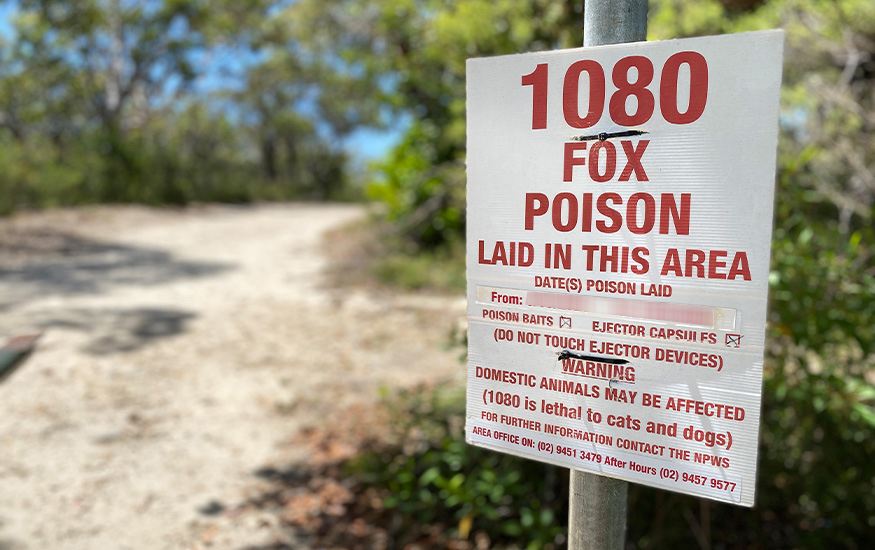
Bumblebees can perceive rhythm, despite their brains being the size of a sesame seed

ClickerHappy/Pexels
Andrew BarronMacquarie University

Humans are creatures of rhythms. As far as we know, humans have always sung and always danced. We can recognise a song by its rhythm alone, regardless of whether it is played fast or slow.

We seem to have an almost effortless capacity to pick up on rhythmic patterns, and we have presumed this ability to require the very large and powerful human brain.

But our new research, published today in the journal Science, shows humans are not alone in mastering rhythm. Even the bumblebee, which has a brain the size of a sesame seed, has an ability to quickly learn abstract rhythms.

A world full of rhythms

Rhythms are everywhere in nature.

We hear them in the songs of birds and frogs and the ultrasonic hunting chirps of bats. And we see them in the flashing displays of fireflies, the rhythmic shakes of a peacock’s tail, the waggle dances of honey bees and the courtship dances of fruit flies.

But, up to now, we have assumed these were innate rhythmic patterns: the animals are not learning a rhythm; they are simply rolling out an evolved behavioural program.

Apart from humans, only a few species of birds and mammals have been shown to be able to learn and recognise the structure of a rhythm regardless of whether it is played fast or slow.

This reinforced the perception that only smart animals with big brains can learn a rhythm. But big-brained animals are the exception in the animal kingdom. Most animals have evolved tiny brains (by our standards) and they can still solve all the problems they need to solve to survive and thrive.

But can they recognise rhythm?

Following the bumblebeat

To explore this, our team from Southern Medical University and Macquarie University worked with bumblebees – big beautiful bees that are easy to keep and train, and are hugely motivated to collect sips of nectar to take back their nest.

Working with individually labelled bumblebees, we trained them to forage from artificial flowers with embedded LED lights we could control. One flashing light pattern offered a sugary treat, while flowers with another flashing pattern did not.

The only way bees could distinguish the patterns was by their rhythmic structure. In this way we could train the bees to prefer one rhythmic pattern of flashes over another – for example, dot-dash-dot-dash (repeating) versus dot-dot-dash-dash (repeating).

In one experiment, bees learned that one flashing light pattern indicated rewarding sugar water, while another flashing pattern indicated an unpalatable solution. Source: Bee lab at Southern Medical University.

Once the bees had been trained for an afternoon, we tested them on flashing flowers that offered no sugar. We found bees preferred to visit the flower flashing the rhythm that had been rewarded with sugar in training. This shows they could learn to recognise a rhythm linked to reward.

Without any extra training of the bees, we could show they could recognise their trained rhythm regardless of whether it was played faster or slower. This shows bees had learned a rhythm regardless of tempo – the first evidence that bees had learned a flexible rhythm.

Recognising the rhythm

To test the bees further, we asked whether they could recognise a rhythm regardless of how it was presented.

Bees are deaf at the frequencies we can hear, but are very sensitive to vibration. We trained bumblebees in a maze with a vibrating floor at the junction in the maze.

We could make the floor pulse with rhythm. Using this technique, we trained bees that one rhythm (say, dot-dot-dash-dash) meant the sugar reward was located in the left arm of the maze, whereas another rhythm (say, dot-dash-dot-dash) meant the sugar reward was in the right arm.

We knew bees could learn the maze because their success in finding the sugar first time improved with training. Once the bees were trained and performed well in the maze, we changed the maze so now there was a flashing LED light at the junction and no vibrating floor.

The bees trained with vibration were able to use the rhythmic pulses of light to work out which arm of the maze to pick to find the sugar. This showed bees could recognise a rhythm regardless of how it was played out. In other words, the bees had a sense of abstract rhythm.

As far as we know, this ability has only previously been shown in humans.

In one experiment, bees could recognise rhythm regardless of whether it was delivered via pulsing lights or vibrations. Video: Bee lab at Southern Medical University.

Changing the rhythm of our understanding

That the bumblebees did so well in these tests of rhythm learning changes how we think about what is needed to perceive and learn rhythm.

In humans and mammals, rhythm learning is very complicated, involving multiple regions of our large and complex brains.

But perhaps there are simpler ways a tiny brain can achieve the same thing.

Brains themselves are full of rhythms as neurons pulse with impulses. Many neural circuits use rhythmic properties of synchronous and asynchronous nerve impulses to organise their function. Perhaps there is something in the rhythmic properties of brains themselves that attunes them to detect rhythms in nature.

If we can capture that insight, and give miniature sensors a capacity to detect rhythmic temporal structure, there could be all sorts of applications: from lightweight solutions to speech and music recognition to diagnosis of heart irregularities, or pre-epileptic brain waves.The Conversation

Andrew Barron, Professor, School of Natural Sciences, Macquarie University

This article is republished from The Conversation under a Creative Commons license. Read the original article.
From river stain to your cup of tea: the secret world of tannins

Photo by Mark Direen/Pexels
Gregory MooreThe University of Melbourne

While stopped in heavy Melbourne traffic recently, I noticed that what looked like a shadow under a row of spotted gums (Corymbia maculata) along a major road was actually a stain on the concrete kerb.

As a botanist, it caught my attention; biological stains always have an interesting story attached.

Stains like these – under many tree species, on your car after certain leaves have fallen on them, and on your timber deck after rain has washed leaves onto it – are from tannins leaching out of foliage.

Tannins are astringent and bitter-tasting chemicals found in many leaves; they’re what add flavour to red wines, chocolate and tea. Oak timber is high in tannins, and it’s the tannins in oak barrels that enrich the flavour of some wines.

So tannin stains on concrete, cars and decks may be unsightly, but that doesn’t mean tannins are unimportant.

Important to plants

When it rains, materials such as amino acids (the building blocks of proteins) and sugars can be washed or leached from leaves of trees. These contribute to the complex chemistry of soils. Many of the microflora and fauna in the ground, which contribute to healthy soils, depend on these chemicals for their growth and proliferation.

Among the many chemicals that are leached from leaves are tannins.

Tannins are important to plants as their bitter taste makes the leaves unpalatable; it’s the plant’s way of trying to dissuade animals from eating their leaves.

Some caterpillars and grasshoppers are turned off by tannins; koalas and possums cope with tannins by having specialised gut microbes that allow them to consume high-tannin diets.

If you spot a water-filled cavity or hollow in a tree trunk, or in between the trunks and a branch, it is often dark brown or even black due to the tannins that have leached into it.

These tannins can be efficient in preventing insects and other pests from growing in the water, although mosquito larvae can be quite resilient if the concentration of tannin is low.

Sometimes forests and felled timber leach so much tannin into streams and rivers they create a blackwater river, where the water may look and taste bad, but is often safe to drink.

The brown stains seen in Tidal River at Wilson’s Promontory, Victoria, and the Franklin River, Tasmania, are caused by tannins.

The dark colour of tannin streams does not mean they are unhealthy, and may indicate the tree canopy cover upstream is in good nick.

Tannins leached into soil can play an important role in the rate of litter decomposition, which is important to ecosystem function.

When tannin levels are high, they slow down litter decomposition. That means the leaf litter can be a food source for bugs for a long time. It also reduces soil drying and protects soil microbes.

A cup of tea sits on a coaster.
Tannins give tea its distinctive colour and taste. Jubair Bin Iqbal/Pexels

Useful to humans, too

A number of tree species contain tannins that contribute to the durability and the distinctive colours of their timbers.

The name tannin comes from their use, particularly in days gone by, in the tanning of leather. However, they are also used in the dyeing of fabrics and as wood preservatives.

Tannins range in colour from pale yellows through orange to dark browns that are almost black. Their chemical structure means they bind well with fibres such as cotton and linen for long-lasting and environmentally-friendly colours.

We are just learning of their many environmental roles, and their impact on human health has yet to be fully explored (we do know they can be anti-oxidants and anti-carcinogenic).

As for that tannin stain I spotted while stuck in traffic, it’s likely it’ll still be there next time I drive past. Concrete is very porous and the tannins from the leaves above will be topped up each time it rains. So stains like this may be more or less permanent.

Tannin stains can generally be washed from vehicles and other non-porous surfaces quite easily, but a high pressure spray may be required to clean up tannin-embedded concrete, slate or stone paving surfaces. Warm or hot water may help.

For such a common stain on concrete, there is much we don’t know about tannins and so much to learn.The Conversation

Gregory Moore, Senior Research Associate, School of Agriculture, Food and Ecosystem Sciences, The University of Melbourne

This article is republished from The Conversation under a Creative Commons license. Read the original article.

What can you actually put in your yellow recycling bin? An environmental scientist explains

Emily BrysonCQUniversity Australia

Most of us want to recycle, but it can sometimes be hard to know exactly how.

Do jar lids and bottle caps go in the yellow bin? What kinds of plastic can be recycled?

And given that food residue can mess up the machines used to recycle waste, how clean do things need to be before they get recycled?

Much depends on where you live

The first thing to know is what’s accepted in your yellow-lidded kerbside bin depends on where you live and what your local material recovery facility can actually recycle.

Online search tools such as Recycling Near You and the Australasian Recycling Label’s “check locally” feature let you enter your postcode and look up how to dispose of specific items.

A screenshot of the Australasian Recycling Label's check locally feature.
You can search the Australasian Recycling Label site for what can be recycled in your area. Australasian Recycling Label

When in doubt, check for Australasian Recycling Labels on packaging before you bin it. A “chasing arrows” symbol indicates the item is accepted in more than 80% of kerbside recycling bins. However, not all packaging has these labels. Some carry multiple labels.

Aluminium

Aluminium is what soft drink cans are made from, and it’s a high value metal. It’s worth recycling, but size matters.

Aluminium doesn’t contain iron, so it’s not magnetic.

In other words, the magnets used in waste recycling facilities to separate metals from other recyclables won’t pick up aluminium cans or foil.

Instead, aluminium items are sorted using a process known as eddy current separation.

When items travel along a conveyor belt at a sorting facility, they move past a fast-spinning magnetic rotor at the end. This rotor creates a repelling force that flicks the aluminium items off the conveyor belt and into collection bins.

But this force isn’t strong enough to recover small items like jar lids and wine bottle caps.

When it comes to recycling metal jar lids and metal or plastic bottle caps, every recycling facility has different rules.

Some need the lids to be left on their containers. Others require lids larger than 5cm to be removed before placing them in your mixed recycling bin or dropped off at a collection site.

If you’re not sure, ask your local council or search Recycling Near You or the Australasian Recycling Label site.

Plastic

Recycling plastic is great, but only about 46% of collected plastic is processed domestically, with a lot sent overseas for processing.

Most plastic still ends up in landfill due to contamination and low recovery rates.

Packaging made from a single type of plastic, such as translucent high-density polyethylene (HDPE) milk bottles, are easiest to recycle into new products.

But only around 40% of these get collected for recycling through kerbside bins and dedicated drop-off locations; the rest don’t get collected at all.

Plastic caps and labels on HDPE bottles are often made from a different type of plastic (polypropylene), so they should be removed before recycling.

Rigid plastics, such as drink bottles, are easier to recycle than soft plastics, but their quality degrades with each recycling cycle.

Most single-use soft plastic packaging ends up in landfill.

Chemical recycling for soft plastics is a relatively new technology in Australia. However, it’s not widely available, is expensive and comes with environmental and health concerns.

Contamination

Recycling systems can only work effectively when packaging is clean and free from contaminants.

Food and liquid remnants, labels and small pieces of packaging can get tangled in machinery. Even small amounts of food residue can introduce germs and odours into recycling loads.

This is difficult and costly to remove, and ultimately reduces the quality of recycled materials, especially those intended for food packaging.

Packaging doesn’t need to be squeaky clean, but it should be rinsed and placed in the recycling bin dry.

Labels and seals on packaging are also an issue. Paper labels and water-soluble glues generally wash off during processing. However, tamper-proof seals – such as the ring around the base of a soft drink bottle lid – and plastic-coated labels don’t. These materials are hard to remove and can contaminate the recycling process.

Plastic-coated and polyvinyl chloride (PVC) labels – which you sometimes find on, for instance, a punnet of strawberries or milk bottle – are a challenge. They’re usually made from a different plastic than the container itself, which means they can’t be recycled together.

Removing them before disposal helps ensure a cleaner, more recyclable product.

Multi-layered packaging is another problem. Cardboard-like items such as long life milk cartons and potato chip tubes are made from layers of paper, plastic and sometimes metal foil – all laminated together.

Since these layers can’t be separated easily or efficiently, the packaging can’t be recycled through most kerbside bins. It usually ends up in landfill.

The bigger picture

Consumers still bear the burden of responsibility on knowing what can and can’t be recycled. At the end of the day, recycling infrastructure is still limited and too much is being landfilled.

We must redesign packaging for reuse and to work within the system we have.The Conversation

Emily Bryson, Lecturer in Science, CQUniversity Australia

This article is republished from The Conversation under a Creative Commons license. Read the original article.

The secret sensory life of plants: researchers are discovering how they see, hear, feel – and even remember

Getty Images
Samarth KulshresthaUniversity of Canterbury

Plants are often seen as passive organisms, rooted in one place and largely unable to react to the world around them.

But a new field of research is challenging these assumptions and showing that plants are as sophisticated as animals in detecting and adjusting to environmental signals.

Plants can perceive light through specialised proteinsdetect sound vibrations and respond to touch via mechano-sensitive channels, recognise chemical signals released by neighbouring plants, and even retain memories of past experiences through changes in their DNA.

My own research focuses on how plants detect the passage of time as part of their seasonal cycle, but that is merely one aspect of a major reconsideration of their sensory capacity – and the parallels with animal senses.

Plants can see colours

Anyone who has noticed a flower turning its head to track the sun knows plants can detect light. Like animals, plants sense light signals using specialised receptors, each for a different wavelength (or colour) of light.

Phytochromes detect red and far-red light and cryptochromes and phototropins respond to blue and ultraviolet light. These sensors transform light cues into molecular signals to coordinate a plant’s daily circadian rhythms.

Emerging research suggests trees can even identify the summer solstice, the longest day of the year. This cue may act as a seasonal switch, triggering a transition in key physiological processes such as leaf ageing and bud setting.

My research identified a specific gene, known as Early-Flowering-3, in European beech trees (Fagus sylvatica) which seems to control seasonal responses such as energy storage, changes in plant hormone signals and preparing for winter.

But light detection is only one sense plants use to perceive their world.

Moth-eaten leaves a kawakawa, an important plant in itraditional Māori medicine
Plants, such as this kawakawa, can detect the vibrations caused by chewing insects. Getty Images

Tuning into their environment

Plants can also listen. Studies show they can detect vibrations caused by chewing insects or the buzz of pollinating bees, and they respond to the sound of flowing water by directing roots towards it.

Plants can also generate their own vibrations. When under stress, tobacco and tomato plants emit ultrasonic clicks that provide information about the plants’ condition, including the level of dehydration or injury. These clicks can be heard using a sound recorder.

Scientists also documented what happens when they play sounds to plants. They observed changes in the membranes of their cells and the chemical signalling along ion channels. While plants do not have nerves, these channels function in a similar way, acting as tiny gateways to transmit information in and out of cells.

The exact receptors plants use to perceive sound remain unclear, but we are now investigating whether they sense vibrations through tiny hair-like structures on leaf surfaces.

Don’t touch me

Beyond vibrations, plants also respond directly to physical touch, often in striking ways.

Familiar examples include the touch-me-not plant (Mimosa pudica) or the Venus flytrap (Dionaea muscipula), which respond to touch by rapidly closing their leaves.

A Venus flytrap plant
The Venus flytrap will shut its leaves, triggered by touch. Getty Images

These examples illustrate plants’ ability to perceive and respond to mechanical stimuli. But beyond these rapid movements, plants also detect rain and damage caused by browsing herbivores. The latter prompts plants to activate defence responses such as the production of toxins or depositing lignin to make themselves less palatable.

Just like animals, plants contain specialised proteins that detect these physical forces. These mechanical sensing proteins convert physical stimuli into biochemical signals, often through calcium signalling.

Plants remember the past to decide the future

Changes in temperature provide a good example of plants remembering that winter has passed. Remembering cold temperatures helps them flower at the right time when spring arrives.

As observed in animals, these memories are stored through epigenetic mechanisms – chemical changes to DNA that don’t affect the genetic code.

Epigenetic changes alter the way genes are packaged and read, creating a molecular record of past conditions.

In New Zealand, for example, trees remember temperatures from previous summers to synchronise their reproduction across entire forests – a phenomenon known as masting.

Masting triggers widespread seed production – and subsequent pest outbreaks that can threaten native wildlife. Researchers revealed that removable markers generate temporary chemical tags that can switch genes off. This allows masting plants to carry information from one year to the next.

Together, these findings show that plants can see, hear, feel and remember in ways parallel to our own sensory systems. Far from being passive or unresponsive, plants respond to environmental clues in sophisticated and complex ways.

Rethinking plant life in this way challenges long-held ideas about intelligence, awareness and communication in the natural world.The Conversation

Samarth Kulshrestha, Research Fellow in Molecular Biology, University of Canterbury

This article is republished from The Conversation under a Creative Commons license. Read the original article.
Careel Head Road Shops and the Bangalley- Burrowong Creeks: Some History 
Careel Bay Marina Environs November 2024 - Spring Celebrations
Careel Bay Playing Fields History and Current
Careel Bay Steamer Wharf + Boatshed: some history 
Careel Creek 
Careel Creek - If you rebuild it they will come
Church Point Public Wharf - 1885 to 2025: Some History 
Clareville Beach
Clareville/Long Beach Reserve + some History
Clareville Public Wharf: 1885 to 1935 - Some History 
Coastal Stability Series: Cabbage Tree Bay To Barrenjoey To Observation Point by John Illingsworth, Pittwater Pathways, and Dr. Peter Mitchell OAM
Community Concerned Over the Increase of Plastic Products Being Used by the Northern Beaches Council for Installations in Pittwater's Environment
Cowan Track by Kevin Murray
Crown Reserves Improvement Fund Allocations 2021
Crown Reserves Improvement Fund 2022-23: $378,072 Allocated To Council For Weed Control - Governor Phillip Park Gets a Grant This Time: full details of all 11 sites
Crown Reserves Improvement Fund Allocations 2023-2024
Crown Reserves Grants 2025 Announced: Local focus on Weeds + Repairs to Long Reef Boardwalk + some pictures of council's recent works at Hitchcock Park - Careel Bay playing fields - CRIF 2025
Curl Curl To Freshwater Walk: October 2021 by Kevin Murray and Joe Mills
Currawong and Palm Beach Views - Winter 2018
Currawong-Mackerel-The Basin A Stroll In Early November 2021 - photos by Selena Griffith
Currawong State Park Currawong Beach +  Currawong Creek
Deep Creek To Warriewood Walk photos by Joe Mills
Lovett Bay Public Wharves: Some History 
Lucinda Park, Palm Beach: Some History + 2022 Pictures
McCarrs Creek
McCarrs Creek Public Jetty, Brown's Bay Public Jetty, Rostrevor Reserve, Cargo Wharf, Church Point Public Wharf: a few pictures from the Site Investigations for Pittwater Public Wharves History series 2025
McCarr's Creek to Church Point to Bayview Waterfront Path
McKay Reserve
Milton Family Property History - Palm Beach By William (Bill) James Goddard II with photos courtesy of the Milton Family   - Snapperman to Sandy Point, Pittwater
Mona Vale Beach - A Stroll Along, Spring 2021 by Kevin Murray
Mona Vale Headland, Basin and Beach Restoration
Mona Vale Woolworths Front Entrance Gets Garden Upgrade: A Few Notes On The Site's History 
Mother Brushtail Killed On Barrenjoey Road: Baby Cried All Night - Powerful Owl Struck At Same Time At Careel Bay During Owlet Fledgling Season: calls for mitigation measures - The List of what you can do for those who ask 'What You I Do' as requested
Mount Murray Anderson Walking Track by Kevin Murray and Joe Mills
Mullet Creek
Muogamarra Nature Reserve in Cowan celebrates 90 years: a few insights into The Vision of John Duncan Tipper, Founder 
Muogamarra by Dr Peter Mitchell OAM and John Illingsworth
Narrabeen Creek
Narrabeen Lagoon Catchment: Past Notes Present Photos by Margaret Woods
Narrabeen Lagoon Entrance Clearing Works: September To October 2023  pictures by Joe Mills
Narrabeen Lagoon State Park
Narrabeen Lagoon State Park Expansion
Narrabeen Rockshelf Aquatic Reserve
Nerang Track, Terrey Hills by Bea Pierce
Newport Bushlink - the Crown of the Hill Linked Reserves
Newport Community Garden - Woolcott Reserve
Newport to Bilgola Bushlink 'From The Crown To The Sea' Paths:  Founded In 1956 - A Tip and Quarry Becomes Green Space For People and Wildlife 
North Narrabeen in 1911 - Panoramas taken for West's Lakeside Estate 
Out and About July 2020 - Storm swell
Out & About: July 2024 - Barrenjoey To Paradise Beach To Bayview To Narrabeen + Middle Creek - by John Illingsworth, Adriaan van der Wallen, Joe Mills, Suzanne Daly, Jacqui Marlowe and AJG
Palm Beach Headland Becomes Australia’s First Urban Night Sky Place: Barrenjoey High School Alumni Marnie Ogg's Hard Work
Palm Beach Public Wharf: Some History 
Paradise Beach Baths renewal Complete - Taylor's Point Public Wharf Rebuild Underway
Realises Long-Held Dream For Everyone
Paradise Beach Wharf + Taylor's Wharf renewal projects: October 2024 pictorial update - update pics of Paradise Wharf and Pool renewal, pre-renewal Taylors Point wharf + a few others of Pittwater on a Spring Saturday afternoon
Pictures From The Past: Views Of Early Narrabeen Bridges - 1860 To 1966
Pittwater Beach Reserves Have Been Dedicated For Public Use Since 1887 - No 1.: Avalon Beach Reserve- Bequeathed By John Therry 
Pittwater Reserves: The Green Ways; Bungan Beach and Bungan Head Reserves:  A Headland Garden 
Pittwater Reserves, The Green Ways: Clareville Wharf and Taylor's Point Jetty
Pittwater Reserves: The Green Ways; Hordern, Wilshire Parks, McKay Reserve: From Beach to Estuary 
Pittwater Reserves - The Green Ways: Mona Vale's Village Greens a Map of the Historic Crown Lands Ethos Realised in The Village, Kitchener and Beeby Parks 
Pittwater Reserves: The Green Ways Bilgola Beach - The Cabbage Tree Gardens and Camping Grounds - Includes Bilgola - The Story Of A Politician, A Pilot and An Epicure by Tony Dawson and Anne Spencer  
Pittwater spring: waterbirds return to Wetlands
Pittwater's Koalas Driven to Extinction: Some History
Pittwater's Lone Rangers - 120 Years of Ku-Ring-Gai Chase and the Men of Flowers Inspired by Eccleston Du Faur 
Pittwater's Great Outdoors: Spotted To The North, South, East + West- June 2023:  Palm Beach Boat House rebuild going well - First day of Winter Rainbow over Turimetta - what's Blooming in the bush? + more by Joe Mills, Selena Griffith and Pittwater Online
Pittwater's Ocean Beach Rock Pools: Southern or northern Corners Of Bliss for the first week of summer 2025-2026 
Pittwater's Parallel Estuary - The Cowan 'Creek
Pittwater Pathways To Public Lands & Reserves
Plastic grass announced For Kamilaroi Park Bayview + Lakeside Park
Project Penguin 2017 - Taronga Zoo Expo day
Project Penguin 2025 + Surfing with a Penguin in South Africa + Pittwater's Penguins
Resolute Track at West Head by Kevin Murray
Resolute Track Stroll by Joe Mills
Riddle Reserve, Bayview
Salt Pan Cove Public Wharf on Regatta Reserve + Florence Park + Salt Pan Reserve + Refuge Cove Reserve: Some History
Salt Pan Public Wharf, Regatta Reserve, Florence Park, Salt Pan Cove Reserve, Refuge Cove Reserve Pictorial and Information
Salvation Loop Trail, Ku-Ring-Gai Chase National Park- Spring 2020 - by Selena Griffith
Scotland Island Dieback Accelerating: November 2024
Scotland Island's Public Wharves: Some History 
Seagull Pair At Turimetta Beach: Spring Is In The Air!
Shark net removal trial cancelled for this year:  Shark Meshing (Bather Protection) Program 2024-25 Annual Performance Report Released
2023-2024 Shark Meshing Program statistics released: council's to decide on use or removal
Shark Meshing (Bather Protection) Program 2022/23 Annual Performance Report 
Shark Meshing (Bather Protection) Program 2021/22 Annual Performance Report - Data Shows Vulnerable, Endangered and Critically Endangered Species Being Found Dead In Nets Off Our Beaches 
Shark Meshing (Bather Protection) Program 2020/21 Annual Performance Report 
Shark Meshing 2019/20 Performance Report Released
DPI Shark Meshing 2018/19 Performance ReportLocal Nets Catch Turtles, a Few Sharks + Alternatives Being Tested + Historical Insights
Some late November Insects (2023)
Stapleton Reserve
Stapleton Park Reserve In Spring 2020: An Urban Ark Of Plants Found Nowhere Else
Stealing The Bush: Pittwater's Trees Changes - Some History 
Stokes Point To Taylor's Point: An Ideal Picnic, Camping & Bathing Place 
Stony Range Regional Botanical Garden: Some History On How A Reserve Became An Australian Plant Park
Taylor's Point Public Wharf 2013-2020 History
The Chiltern Track
The Chiltern Trail On The Verge Of Spring 2023 by Kevin Murray and Joe Mills
The 'Newport Loop': Some History 
The Resolute Beach Loop Track At West Head In Ku-Ring-Gai Chase National Park by Kevin Murray
The Top Predator by A Dad from A Pittwater Family of Dog Owners & Dog Lovers
Threatened Species Day 2025 + A few insights into Pittwater's Past + Present Threatened Species 
$378,072 Allocated To Council For Weed Control: Governor Phillip Park Gets a Grant This Time: full details of all 11 sites - Crown Reserves Improvement Fund (CRIF) March 2023
Topham Track Ku-Ring-Gai Chase NP,  August 2022 by Joe Mills and Kevin Murray
Towlers Bay Walking Track by Joe Mills
Trafalgar Square, Newport: A 'Commons' Park Dedicated By Private Landholders - The Green Heart Of This Community
Tranquil Turimetta Beach, April 2022 by Joe Mills
Tree Management Policy Passed
Trial to remove shark nets - NBC - Central Coast - Waverly approached to nominate a beach each
Turimetta Beach Reserve by Joe Mills, Bea Pierce and Lesley
Turimetta Beach Reserve: Old & New Images (by Kevin Murray) + Some History
Turimetta Headland
Turimetta Moods by Joe Mills: June 2023
Turimetta Moods (Week Ending June 23 2023) by Joe Mills
Turimetta Moods: June To July 2023 Pictures by Joe Mills
Turimetta Moods: July Becomes August 2023 by Joe Mills
Turimetta Moods: August Becomes September 2023 ; North Narrabeen - Turimetta - Warriewood - Mona Vale photographs by Joe Mills
Turimetta Moods August 2025 by Joe Mills
Turimetta Moods: Mid-September To Mid-October 2023 by Joe Mills
Turimetta Moods: Late Spring Becomes Summer 2023-2024 by Joe Mills
Turimetta Moods: Warriewood Wetlands Perimeter Walk October 2024 by Joe Mills
Turimetta Moods: November 2024 by Joe Mills

Pittwater's Birds

Attracting Insectivore Birds to Your Garden: DIY Natural Tick Control small bird insectivores, species like the Silvereye, Spotted Pardalote, Gerygone, Fairywren and Thornbill, feed on ticks. Attracting these birds back into your garden will provide not only a residence for tick eaters but also the delightful moments watching these tiny birds provides.
Aussie Backyard Bird Count 2017: Take part from 23 - 29 October - how many birds live here?
Aussie Backyard Bird Count 2018 - Our Annual 'What Bird Is That?' Week Is Here! This week the annual Aussie Backyard Bird Count runs from 22-28 October 2018. Pittwater is one of those places fortunate to have birds that thrive because of an Aquatic environment, a tall treed Bush environment and areas set aside for those that dwell closer to the ground, in a sand, scrub or earth environment. To take part all you need is 20 minutes and your favourite outdoor space. Head to the website and register as a Counter today! And if you're a teacher, check out BirdLife Australia's Bird Count curriculum-based lesson plans to get your students (or the whole school!) involved

Australian Predators of the Sky by Penny Olsen - published by National Library of Australia

Australian Raven  Australian Wood Duck Family at Newport

A Week In Pittwater Issue 128   A Week In Pittwater - June 2014 Issue 168

Baby Birds Spring 2015 - Rainbow Lorikeets in our Yard - for Children 

Baby Birds by Lynleigh Greig, Southern Cross Wildlife Care - what do if being chased by a nesting magpie or if you find a baby bird on the ground

Baby Kookaburras in our Backyard: Aussie Bird Count 2016 - October

Balloons Are The Number 1 Marine Debris Risk Of Mortality For Our Seabirds - Feb 2019 Study

Bangalley Mid-Winter   Barrenjoey Birds Bird Antics This Week: December 2016

Bird of the Month February 2019 by Michael Mannington

Birdland Above the Estuary - October 2012  Birds At Our Window   Birds at our Window - Winter 2014  Birdland June 2016

Birdsong Is a Lovesong at This time of The Year - Brown Falcon, Little Wattle Bird, Australian Pied cormorant, Mangrove or Striated Heron, Great Egret, Grey Butcherbird, White-faced Heron 

Bird Songs – poems about our birds by youngsters from yesterdays - for children Bird Week 2015: 19-25 October

Bird Songs For Spring 2016 For Children by Joanne Seve

Birds at Careel Creek this Week - November 2017: includes Bird Count 2017 for Local Birds - BirdLife Australia by postcode

Black Cockatoo photographed in the Narrabeen Catchment Reserves this week by Margaret G Woods - July 2019

Black-Necked Stork, Mycteria Australis, Now Endangered In NSW, Once Visited Pittwater: Breeding Pair shot in 1855

Black Swans on Narrabeen Lagoon - April 2013   Black Swans Pictorial

Blue-faced Honeyeaters Breeding In Pittwater

Brush Turkeys In Suburbia: There's An App For That - Citizen Scientists Called On To Spot Brush Turkeys In Their Backyards
Buff-banded Rail spotted at Careel Creek 22.12.2012: a breeding pair and a fluffy black chick

Cayley & Son - The life and Art of Neville Henry Cayley & Neville William Cayley by Penny Olsen - great new book on the art works on birds of these Australian gentlemen and a few insights from the author herself
Crimson Rosella - + Historical Articles on

Death By 775 Cuts: How Conservation Law Is Failing The Black-Throated Finch - new study 'How to Send a Finch Extinct' now published

Eastern Rosella - and a little more about our progression to protecting our birds instead of exporting them or decimating them.

Endangered Little Tern Fishing at Mona Vale Beach

‘Feather Map of Australia’: Citizen scientists can support the future of Australia's wetland birds: for Birdwatchers, school students and everyone who loves our estuarine and lagoon and wetland birds

First Week of Spring 2014

Fledging - Baby Birds coming to ground: Please try and Keep them close to Parent Birds - Please Put out shallow dishes of water in hot weather

Fledgling Common Koel Adopted by Red Wattlebird -Summer Bird fest 2013  Flegdlings of Summer - January 2012

Flocks of Colour by Penny Olsen - beautiful new Bird Book Celebrates the 'Land of the Parrots'

Friendly Goose at Palm Beach Wharf - Pittwater's Own Mother Goose

Front Page Issue 177  Front Page Issue 185 Front Page Issue 193 - Discarded Fishing Tackle killing shorebirds Front Page Issue 203 - Juvenile Brush Turkey  Front Page Issue 208 - Lyrebird by Marita Macrae Front Page Issue 219  Superb Fairy Wren Female  Front Page Issue 234National Bird Week October 19-25  and the 2015 the Aussie Back Yard Bird Count: Australia's First Bird Counts - a 115 Year Legacy - with a small insight into our first zoos Front Page Issue 236: Bird Week 2015 Front Page Issue 244: watebirds Front Page Issue 260: White-face Heron at Careel Creek Front Page Issue 283: Pittwater + more birds for Bird Week/Aussie Bird Count  Front Page Issue 284: Pittwater + more birds for Bird Week/Aussie Bird Count Front Page Issue 285: Bird Week 2016  Front Page Issue 331: Spring Visitor Birds Return

G . E. Archer Russell (1881-1960) and His Passion For Avifauna From Narrabeen To Newport 

Glossy Black-Cockatoo Returns To Pittwater by Paul Wheeler Glossy Cockatoos - 6 spotted at Careel Bay February 2018

Grey Butcher Birds of Pittwater

Harry Wolstenholme (June 21, 1868 - October 14, 1930) Ornithologist Of Palm Beach, Bird Man Of Wahroonga 

INGLESIDE LAND RELEASE ON AGAIN BUT MANY CHALLENGES  AHEAD by David Palmer

Issue 60 May 2012 Birdland - Smiles- Beamings -Early -Winter - Blooms

Jayden Walsh’s Northern Beaches Big Year - courtesy Pittwater Natural Heritage Association

John Gould's Extinct and Endangered Mammals of Australia  by Dr. Fred Ford - Between 1850 and 1950 as many mammals disappeared from the Australian continent as had disappeared from the rest of the world between 1600 and 2000! Zoologist Fred Ford provides fascinating, and often poignant, stories of European attitudes and behaviour towards Australia's native fauna and connects these to the animal's fate today in this beautiful new book - our interview with the author

July 2012 Pittwater Environment Snippets; Birds, Sea and Flowerings

Juvenile Sea Eagle at Church Point - for children

King Parrots in Our Front Yard  

Kookaburra Turf Kookaburra Fledglings Summer 2013  Kookaburra Nesting Season by Ray Chappelow  Kookaburra Nest – Babies at 1.5 and 2.5 weeks old by Ray Chappelow  Kookaburra Nest – Babies at 3 and 4 weeks old by Ray Chappelow  Kookaburra Nest – Babies at 5 weeks old by Ray Chappelow Kookaburra and Pittwater Fledglings February 2020 to April 2020

Lion Island's Little Penguins (Fairy Penguins) Get Fireproof Homes - thanks to NSW National Parks and Wildlife Service and the Fix it Sisters Shed

Long-Billed Corella

Lorikeet - Summer 2015 Nectar

Lyre Bird Sings in Local National Park - Flock of Black Cockatoos spotted - June 2019

Magpie's Melodic Melodies - For Children (includes 'The Magpie's Song' by F S Williamson)

Masked Lapwing (Plover) - Reflected

May 2012 Birdland Smiles Beamings Early Winter Blooms 

Mistletoebird At Bayview

Musk Lorikeets In Pittwater: Pittwater Spotted Gum Flower Feast - May 2020

Nankeen Kestrel Feasting at Newport: May 2016

National Bird Week 2014 - Get Involved in the Aussie Backyard Bird Count: National Bird Week 2014 will take place between Monday 20 October and Sunday 26 October, 2014. BirdLife Australia and the Birds in Backyards team have come together to launch this year’s national Bird Week event the Aussie Backyard Bird Count! This is one the whole family can do together and become citizen scientists...

National Bird Week October 19-25  and the 2015 the Aussie Back Yard Bird Count: Australia's First Bird Counts - a 115 Year Legacy - with a small insight into our first zoos

Native Duck Hunting Season Opens in Tasmania and Victoria March 2018: hundreds of thousands of endangered birds being killed - 'legally'!

Nature 2015 Review Earth Air Water Stone

New Family of Barking Owls Seen in Bayview - Church Point by Pittwater Council

Noisy Visitors by Marita Macrae of PNHA 

Pittwater Becalmed  Pittwater Birds in Careel Creek Spring 2018   Pittwater Waterbirds Spring 2011  Pittwater Waterbirds - A Celebration for World Oceans Day 2015

Pittwater's Little Penguin Colony: The Saving of the Fairies of Lion Island Commenced 65 Years Ago this Year - 2019

Pittwater's Mother Nature for Mother's Day 2019

Pittwater's Waterhens: Some Notes - Narrabeen Creek Bird Gathering: Curious Juvenile Swamp Hen On Warriewood Boardwalk + Dusky Moorhens + Buff Banded Rails In Careel Creek

Plastic in 99 percent of seabirds by 2050 by CSIRO

Plover Appreciation Day September 16th 2015

Powerful and Precious by Lynleigh Grieg

Red Wattlebird Song - November 2012

Restoring The Diamond: every single drop. A Reason to Keep Dogs and Cats in at Night. 

Return Of Australasian Figbird Pair: A Reason To Keep The Trees - Aussie Bird Count 2023 (16–22 October) You can get involved here: aussiebirdcount.org.au

Salt Air Creatures Feb.2013

Scaly-breasted Lorikeet

Sea Birds off the Pittwater Coast: Albatross, Gannet, Skau + Australian Poets 1849, 1898 and 1930, 1932

Sea Eagle Juvenile at Church Point

Seagulls at Narrabeen Lagoon

Seen but Not Heard: Lilian Medland's Birds - Christobel Mattingley - one of Australia's premier Ornithological illustrators was a Queenscliff lady - 53 of her previously unpublished works have now been made available through the auspices of the National Library of Australia in a beautiful new book

7 Little Ducklings: Just Keep Paddling - Australian Wood Duck family take over local pool by Peta Wise 

Shag on a North Avalon Rock -  Seabirds for World Oceans Day 2012

Short-tailed Shearwaters Spring Migration 2013 

South-West North-East Issue 176 Pictorial

Spring 2012 - Birds are Splashing - Bees are Buzzing

Spring Becomes Summer 2014- Royal Spoonbill Pair at Careel Creek

Spring Notes 2018 - Royal Spoonbill in Careel Creek

Station Beach Off Leash Dog Area Proposal Ignores Current Uses Of Area, Environment, Long-Term Fauna Residents, Lack Of Safe Parking and Clearly Stated Intentions Of Proponents have your say until February 28, 2019

Summer 2013 BirdFest - Brown Thornbill  Summer 2013 BirdFest- Canoodlers and getting Wet to Cool off  Summer 2013 Bird Fest - Little Black Cormorant   Summer 2013 BirdFest - Magpie Lark

Summer BirdFest 2026: Play antics of New Locals - Blue-faced Honeyeaters Breeding In Pittwater

The Mopoke or Tawny Frogmouth – For Children - A little bit about these birds, an Australian Mopoke Fairy Story from 91 years ago, some poems and more - photo by Adrian Boddy
Winter Bird Party by Joanne Seve

New Shorebirds WingThing  For Youngsters Available To Download

A Shorebirds WingThing educational brochure for kids (A5) helps children learn about shorebirds, their life and journey. The 2021 revised brochure version was published in February 2021 and is available now. You can download a file copy here.

If you would like a free print copy of this brochure, please send a self-addressed envelope with A$1.10 postage (or larger if you would like it unfolded) affixed to: BirdLife Australia, Shorebird WingThing Request, 2-05Shorebird WingThing/60 Leicester St, Carlton VIC 3053.


Shorebird Identification Booklet

The Migratory Shorebird Program has just released the third edition of its hugely popular Shorebird Identification Booklet. The team has thoroughly revised and updated this pocket-sized companion for all shorebird counters and interested birders, with lots of useful information on our most common shorebirds, key identification features, sighting distribution maps and short articles on some of BirdLife’s shorebird activities. 

The booklet can be downloaded here in PDF file format: http://www.birdlife.org.au/documents/Shorebird_ID_Booklet_V3.pdf

Paper copies can be ordered as well, see http://www.birdlife.org.au/projects/shorebirds-2020/counter-resources for details.

Download BirdLife Australia's children’s education kit to help them learn more about our wading birdlife

Shorebirds are a group of wading birds that can be found feeding on swamps, tidal mudflats, estuaries, beaches and open country. For many people, shorebirds are just those brown birds feeding a long way out on the mud but they are actually a remarkably diverse collection of birds including stilts, sandpipers, snipe, curlews, godwits, plovers and oystercatchers. Each species is superbly adapted to suit its preferred habitat.  The Red-necked Stint is as small as a sparrow, with relatively short legs and bill that it pecks food from the surface of the mud with, whereas the Eastern Curlew is over two feet long with a exceptionally long legs and a massively curved beak that it thrusts deep down into the mud to pull out crabs, worms and other creatures hidden below the surface.

Some shorebirds are fairly drab in plumage, especially when they are visiting Australia in their non-breeding season, but when they migrate to their Arctic nesting grounds, they develop a vibrant flush of bright colours to attract a mate. We have 37 types of shorebirds that annually migrate to Australia on some of the most lengthy and arduous journeys in the animal kingdom, but there are also 18 shorebirds that call Australia home all year round.

What all our shorebirds have in common—be they large or small, seasoned traveller or homebody, brightly coloured or in muted tones—is that each species needs adequate safe areas where they can successfully feed and breed.

The National Shorebird Monitoring Program is managed and supported by BirdLife Australia. 

This project is supported by Glenelg Hopkins Catchment Management Authority and Hunter Local Land Services through funding from the Australian Government’s National Landcare Program. Funding from Helen Macpherson Smith Trust and Port Phillip Bay Fund is acknowledged. 

The National Shorebird Monitoring Program is made possible with the help of over 1,600 volunteers working in coastal and inland habitats all over Australia. 

The National Shorebird Monitoring program (started as the Shorebirds 2020 project initiated to re-invigorate monitoring around Australia) is raising awareness of how incredible shorebirds are, and actively engaging the community to participate in gathering information needed to conserve shorebirds. 

In the short term, the destruction of tidal ecosystems will need to be stopped, and our program is designed to strengthen the case for protecting these important habitats. 

In the long term, there will be a need to mitigate against the likely effects of climate change on a species that travels across the entire range of latitudes where impacts are likely. 

The identification and protection of critical areas for shorebirds will need to continue in order to guard against the potential threats associated with habitats in close proximity to nearly half the human population. 

Here in Australia, the place where these birds grow up and spend most of their lives, continued monitoring is necessary to inform the best management practice to maintain shorebird populations. 

BirdLife Australia believe that we can help secure a brighter future for these remarkable birds by educating stakeholders, gathering information on how and why shorebird populations are changing, and working to grow the community of people who care about shorebirds.

To find out more visit: http://www.birdlife.org.au/projects/shorebirds-2020/shorebirds-2020-program