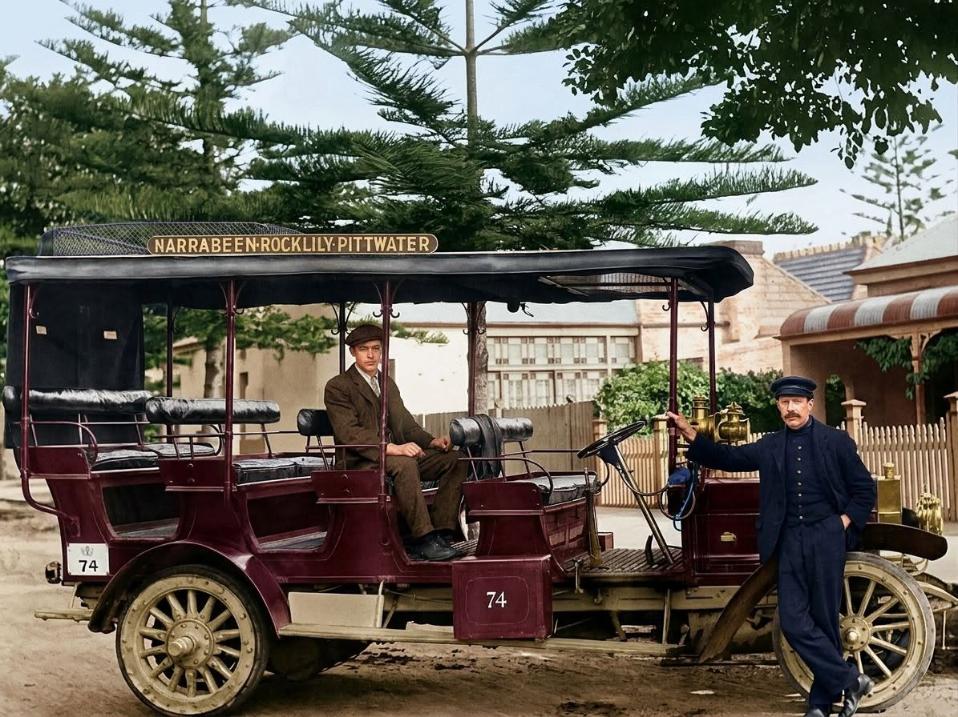
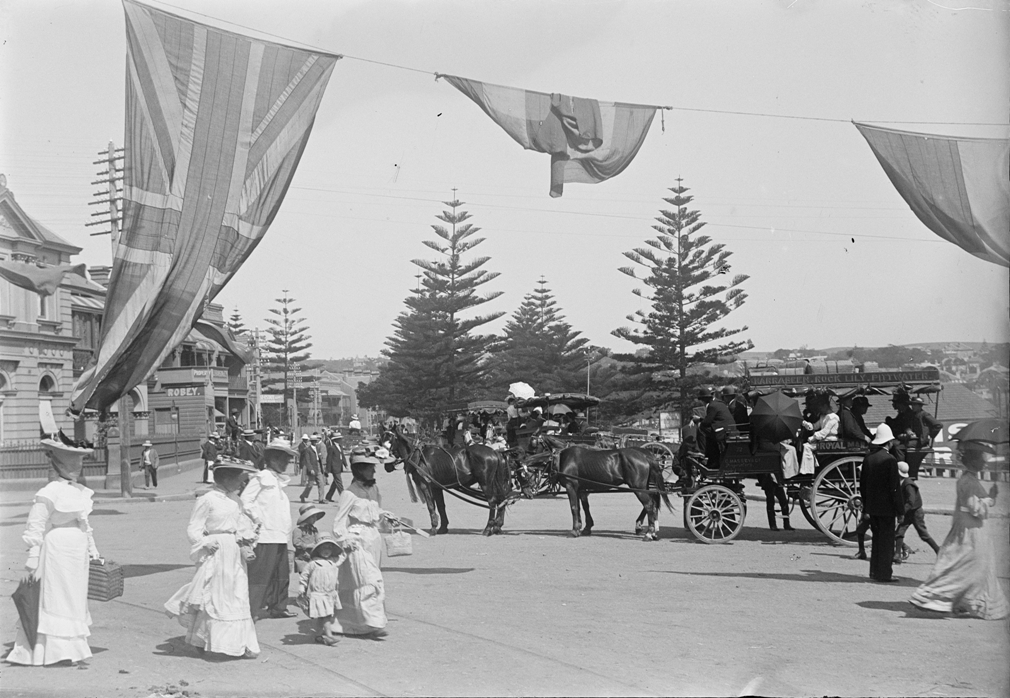
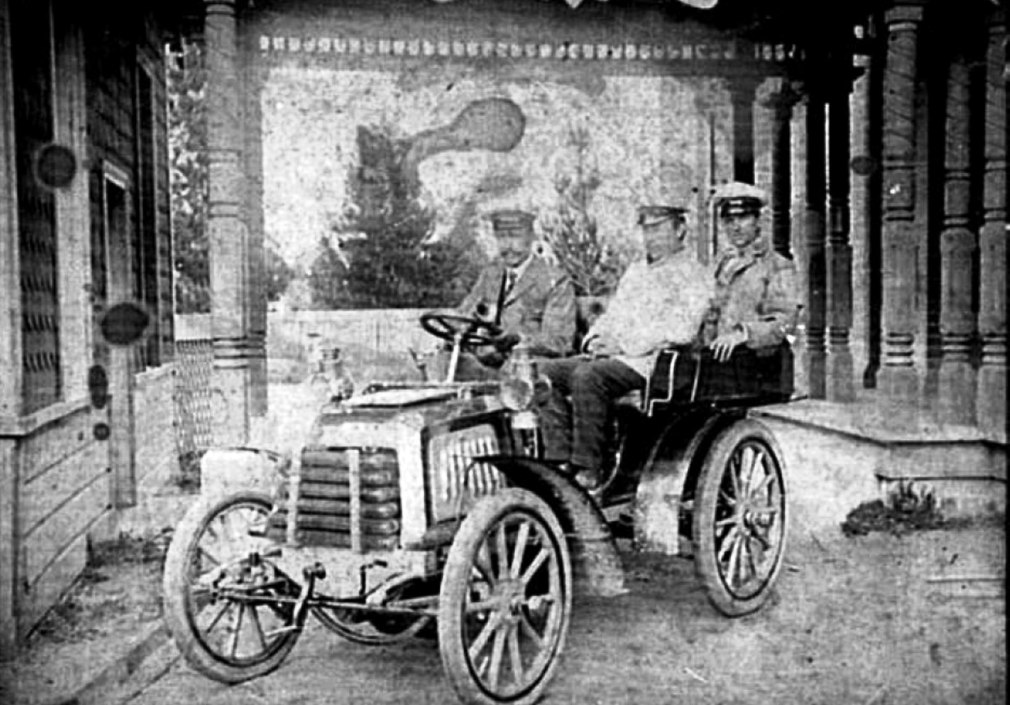
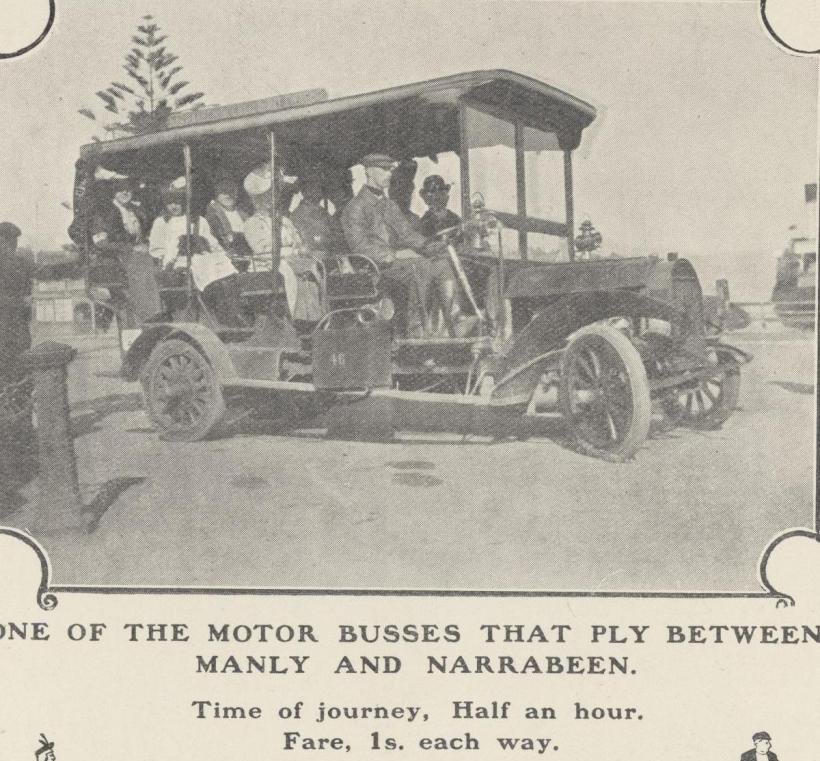
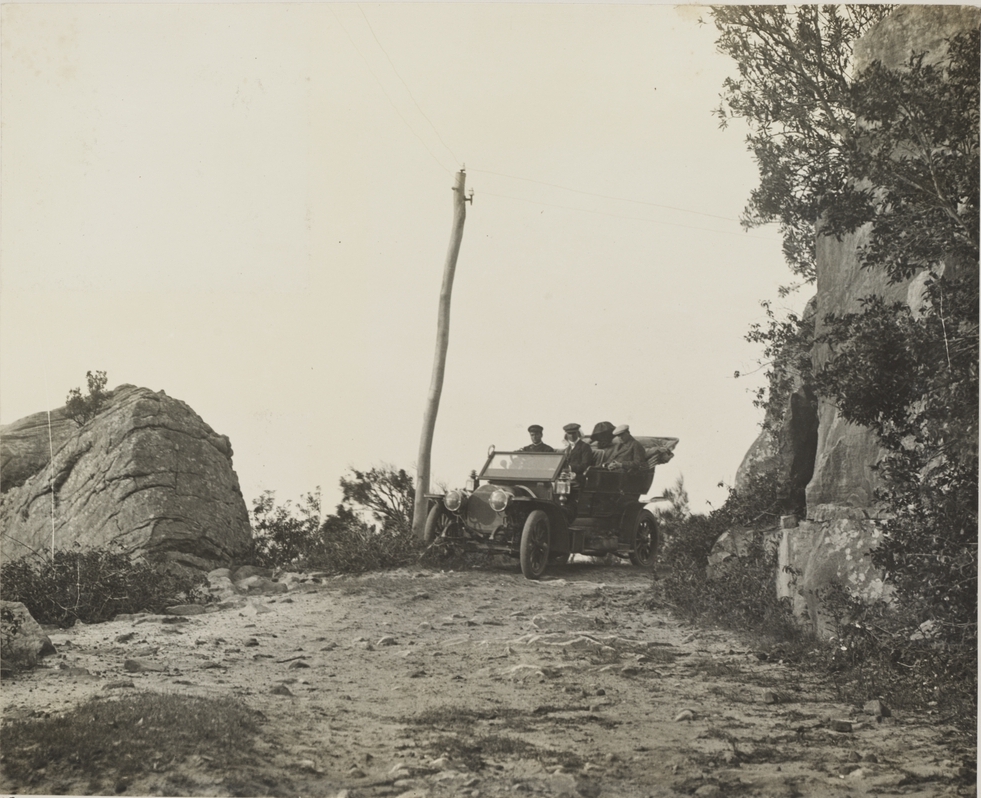
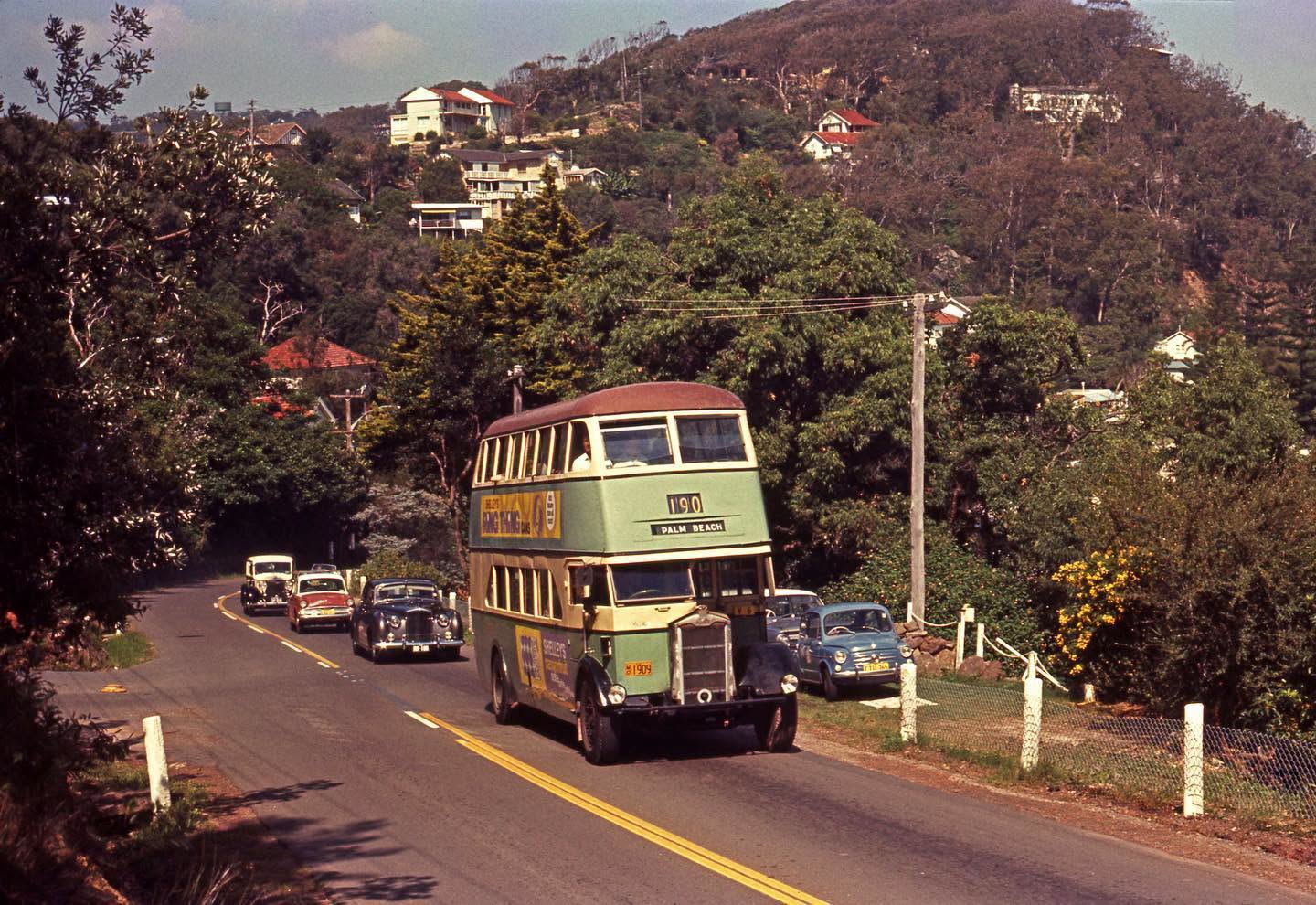
Posted on ('Australian History - Plus webpage on a social media platform) today with caption from Greg Rutherford - ''An old pic my Dad found in a roof cavity'':
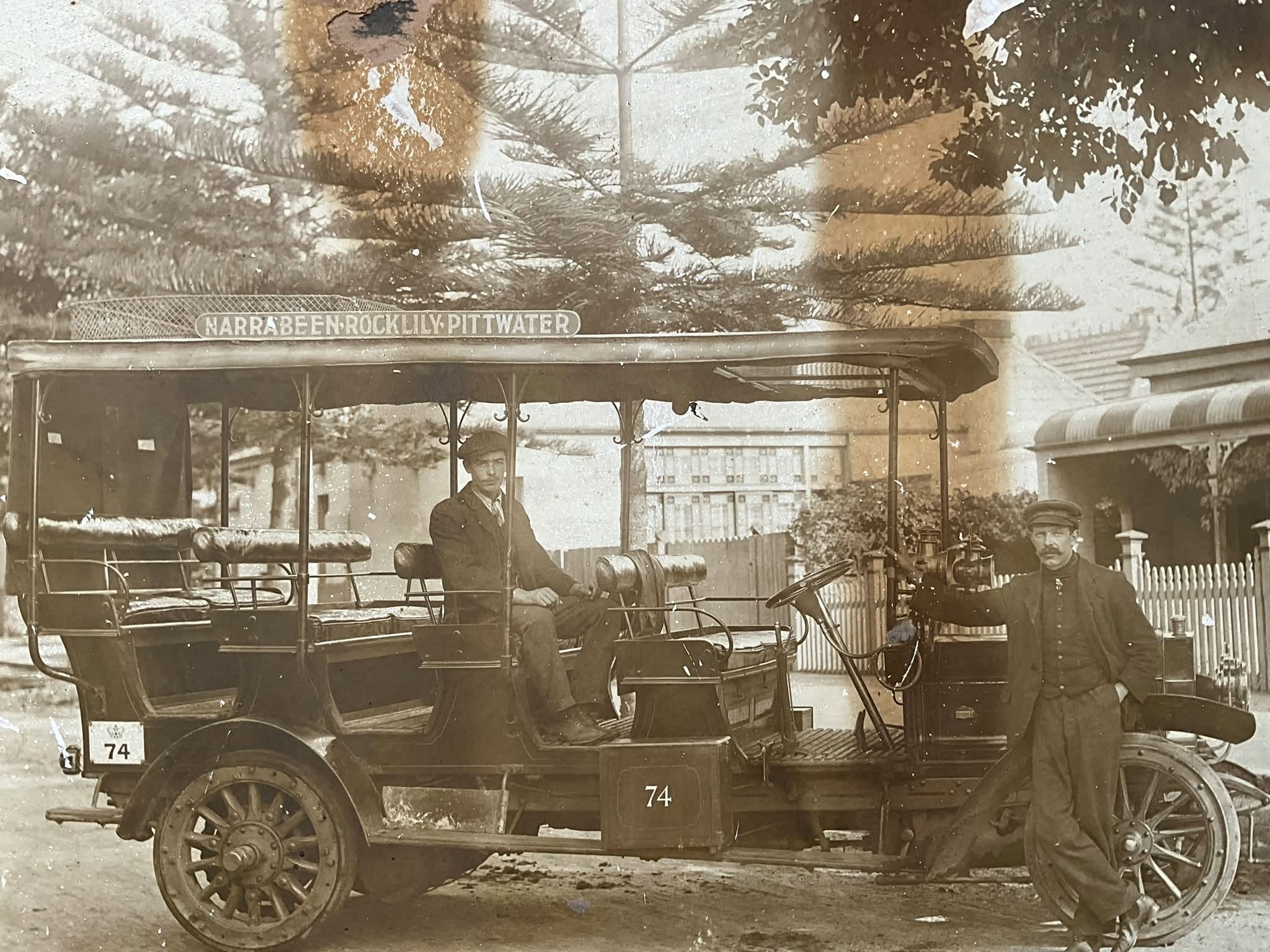
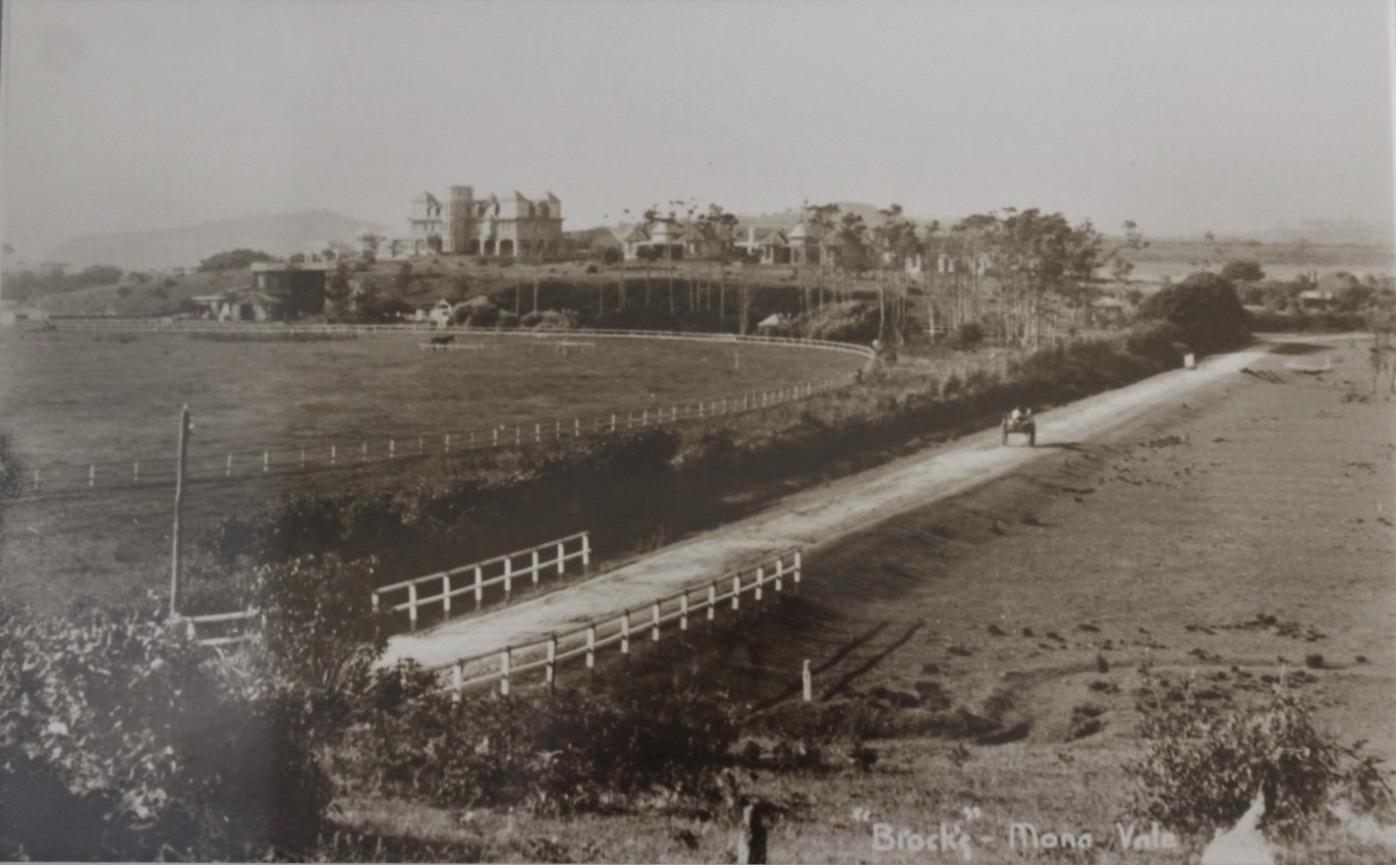
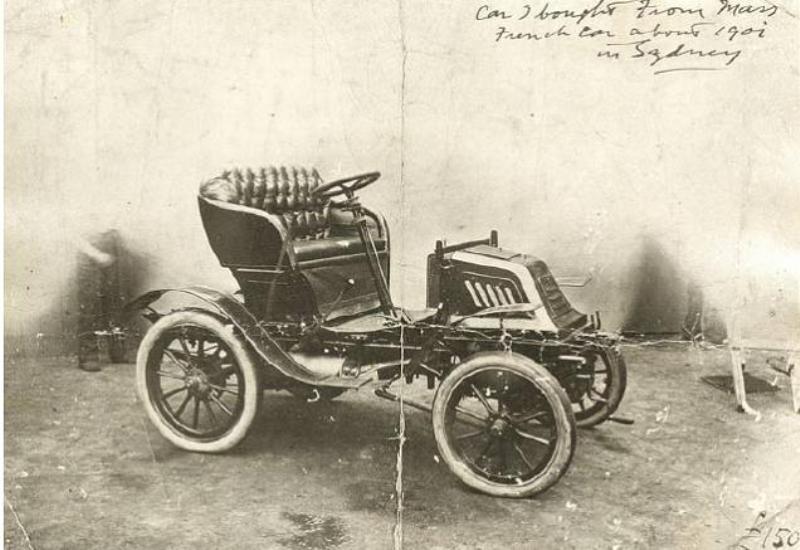
The above may go with this - which we'd been trying to find a decent image of since compiling and running the Brock's The Oaks-La Corniche page in 2011:
MOTOR OMNIBUSES. THE MANLY-PITTWATER, SERVICE. INAUGURAL RUN.
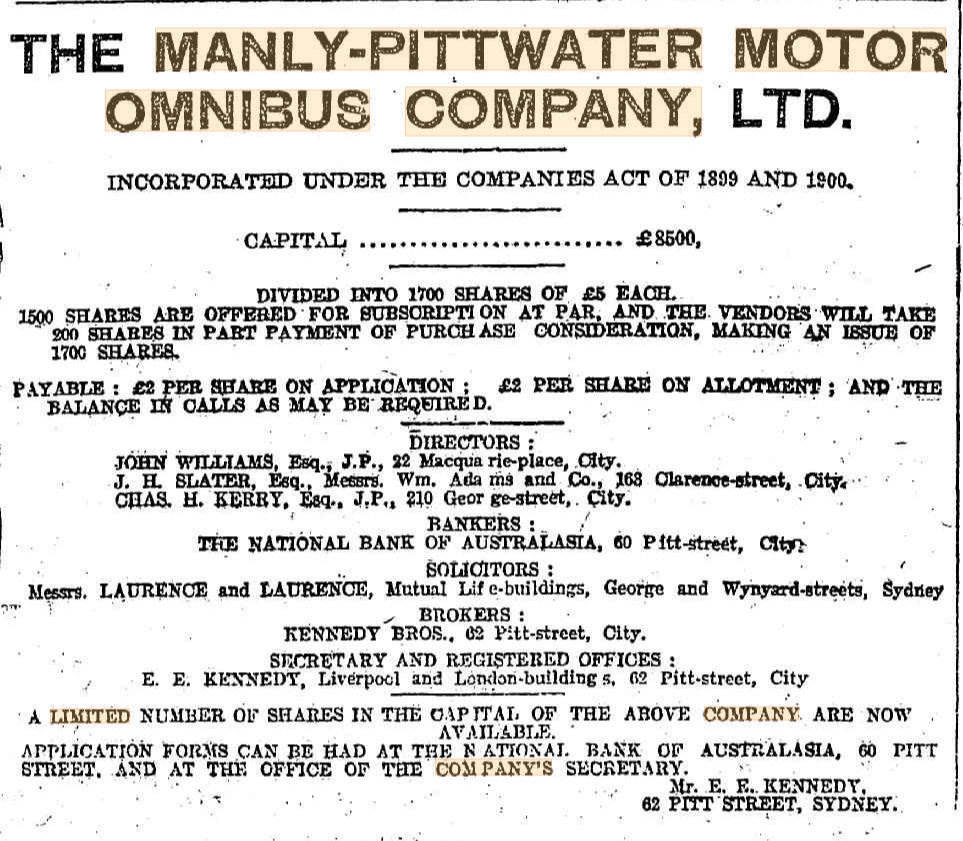
The two motor buses recently imported from England for the service between Manly, Rocklily, Bayview, Newport, and Pittwater, made their initial trial on Thursday afternoon last. The run was to the residence of Mr. Brock, of Newport, and return to Manly, a distance of 23 miles. The 'buses, which were imported to the order of Messrs. Reid Bros., of Manly, are likely to be handled by a company, known as the Manly-Pittwater Motor Omnibus Company, Limited, with a capital of £8500. It Is the intention of the company to shortly Import a number of similar vehicles, as well as some steam 'buses, to tap the various populated districts at present badly supplied with tram or horse 'bus service. Manly was en fête for the occasion on Thursday, and a big crowd assembled at the Pier Hold to witness the start, which took place at 2.20 p.m.
Amongst those who took part in the trial were Mr. Dugald Thomson, M.P., Dr. Arthur, M.L.A., Mr. F. F. H. McKenzie, M.L.A., Alderman Quirk (Mayor of Manly), Alderman Walker, Alderman T. J. West, Alderman Lear Bioiinth, Alderman Ogilby, Messrs, S. L. Ridge, Charles H. Kerry (director of the Motor Company), E. E. Kennedy (secretary to the company). E. A. Laurence (of Laurence and Laurence, solicitors to the company), John Bennett, Wm. M'Leod, Daniel Farrell, H. T. Roby George Rodda (of Adams and Co.), Alexander Edward (secretary to the. Traffic Commissioners), D. S. K. Millar (Bank of New South Wales), W. J. Bradley, and Mr. Houreaux.
As the buses left Manly for Newport with 16 passengers on board each vehicle there was much enthusiasm, and it was evident that the introduction of the latest form of propelled vehicle was highly appreciated by the residents. Flags were flying from various buildings and arches had been erected at various part's of the road. As the 'buses made their run towards Newport several other petrol vehicles escorted the now service. All were gaily decorated out of compliment to the new Motors. There is little doubt that with a good and quick service many people will soon make the trip. Considering that the buses were shod with solid tyres the run was very smooth throughout.
The first 'bus, with the "Herald" representative on board, reached Mr. Brock's residence at 3.9 p.m., having covered the 11 ¼ miles in 49 minutes. There had been no rushing in the journey, as it was the intention of the owners to allow the party to view the magnificent scenery en route. With the exception of a slight delay at Sheepstation Hill, owing to the fan belt slipping off the pulley, the run made by the first bus was a delightful one, and must be deemed very successful. Unfortunately, the second 'bus had not quite so good a journey, as the carburetor stopped up when near Sheepstation Hill, and a halt had to be made. It took the chauffeur a considerable time before the obstruction in the petrol feed tube was removed. The delay was most vexatious to Messrs. Reid, who had already accomplished several journeys without a stop. It was especially unfortunate that the stoppage should have occurred in the inaugural run, as such things often tend to dishearten enthusiasts. Considering that the buses are as yet practically new, and that they will not be In thorough working order until they have covered at least a couple of hundred miles, the speed and hill-climbing capabilities displayed during Thursday's run must be deemed excellent.
DESCRIPTION OF THE BUSES.
Each bus is fitted with a 22-h.p. Aster engine, 4-cylinder rod, and with the cylinders cast separately. The full power of the motor is got at 1000 revolutions, but the speed may, be brought down very low by the manipulation of the throttle. The engine Is supported In the chassis by two strong channelled steel stays running from one side to the other, thus keeping the motor firm and secure. Elseman high tension magneto with synchronised Ignition is fitted, the accumulator and coil supplied extra being carried as a standby. Each of the four cylinders Is run from one coil by means of a distributor, and the switch fitted on the dashboard enables the chauffeur to turn on or off either Ignition at will. The manipulator of the spark and throttle Is of the latest type, being attached to the steering wheel, so as to allow the driver easy control. The change speed gears being at the driver's right hand allow easy management. As regards the chassis, It Is made of pressed steel, of U section, and narrowed In front, so as to allow a bigger wheel look. The length of the frame is 15ft 7in, and the width 4ft 9in, while the wheel base Is approximately 11ft the latter width being practically that of an Australian waggon track. The weight of the respective models turns out to be a little more than expected for a single-decker, totalling altogether 2 tons 5cwt for chassis and body. There is little doubt that the wood work In the motors is substantial, but had a little less solidity been supplied they might have been bettor. The artillery wheels fitted to the 'buses are strong, and, having solid forged axles, there is little likelihood of any injury to them. The drive is by chain, a stout 3in block chain being fitted on each side. The chain may be tightened when required by means of a substantial radiating rod. The springs of the vehicle,, though apparently strong, proved on the running to be just a trifle weak for the Manly-Newport road, and one could often experience at certain places slight Jars. It would certainly be advisable to have an extra leaf or two of spring put on.
Each 'bus is fitted with three speeds and reverse. Between the differential and the gear box is a strong coupling shaft with two flexible joints. The Panhard system of gearing with direct drive on the top is employed, and the estimated greatest speed is about '20-25 miles an hour. ' As regards the water circulation, this is supplied by means of a powerful pump. Tubular radiators and a large fan driven by bolt off the shaft help to keep cool the engine. The brake work on each chassis is of the external band type. Although for heavy vehicles the Internal expanding system of braking Is to be preferred, those on the new 'buses seemed very effective, and were able to pull up the latter quickly when descending some stiff gradients. The tyres, which are solid, were turned out by the Dunlop Company. It is a pity the company who purpose running the buses did not see their way to fit twin tyres on the rear wheels, as the wearing qualities of the latter are superior, and there is loss likelihood on the part of the vehicles to skid.
As regards the body part of the respective Cars, the design and finish seem simple, yet neat. In each 'bus there are four cross seats, each vehicle being capable of accommodating about 16 to 18 passengers. A very desirable feature about the seats Is that each of the four rows Is placed on a different level, the back one being the highest. This arrangement enables each back row of passengers to have an equally good view with those In front. There is a canopy, with convex roof, fitted to each car, and supported by tubular Pillars. To protect the driver or passengers in dusty or rainy weather, two folding glass panels can be lowered, as can the folding side blind. The finish of the vehicles is In excellent taste, the cars being upholstered In dark green leather. The woodwork Is painted dark chocolate with yellow lines on one model and dark green with light lines on the other. A luggage carrier is fitted on the top of the
canopy.
SUCCESS OF THE SERVICE ASSURED.
When the buses reached Mr. Brock's residence refreshments were served, after which some photographs of the new vehicles with the passengers aboard were taken. Mr. Quirk, Mayor of Manly, occupied the chair, in the course of his remarks he said that every credit was due to Messrs. Reid for having had the courage to Import motor 'buses.
Mr. Dugald Thomson, M.P., proposed success to the new venture, and eulogised the Importers as men of enterprise, who had surmounted great difficulties. He hoped soon to see a regular service of 'buses running between Manly and Pittwater, and trusted the venture would meet with the success It deserved.
Dr. Arthur, M.L.A., in supporting the toast, said he was a humble admirer of anything In the shape of enterprise. He thought the Manly-Pittwater buses would be a decided acquisition to the neighbourhood. He characterised Pittwater and the surrounding neighbourhood as one of the loveliest districts in this State, and hoped the present buses would be compared favourably with those at present in Sydney, would always be kept busy.
Mr. M'Kenzie, M.L.A., also spoke, and pointed out the necessity that existed for proper communication, between Manly, Newport, and district. He had no doubt that in a short time many more similar buses would be in use.
Mr. Cried responded and spoke of the initial difficulties in inaugurating the service. He was perfectly satisfied that once the novelty had worn off the present buses they would successfully cater for the demands of the Manly and Pittwater residents.
MOTOR OMNIBUSES. (1906, February 10). The Sydney Morning Herald (NSW : 1842 - 1954), p. 17. Retrieved from http://nla.gov.au/nla.news-article14732737
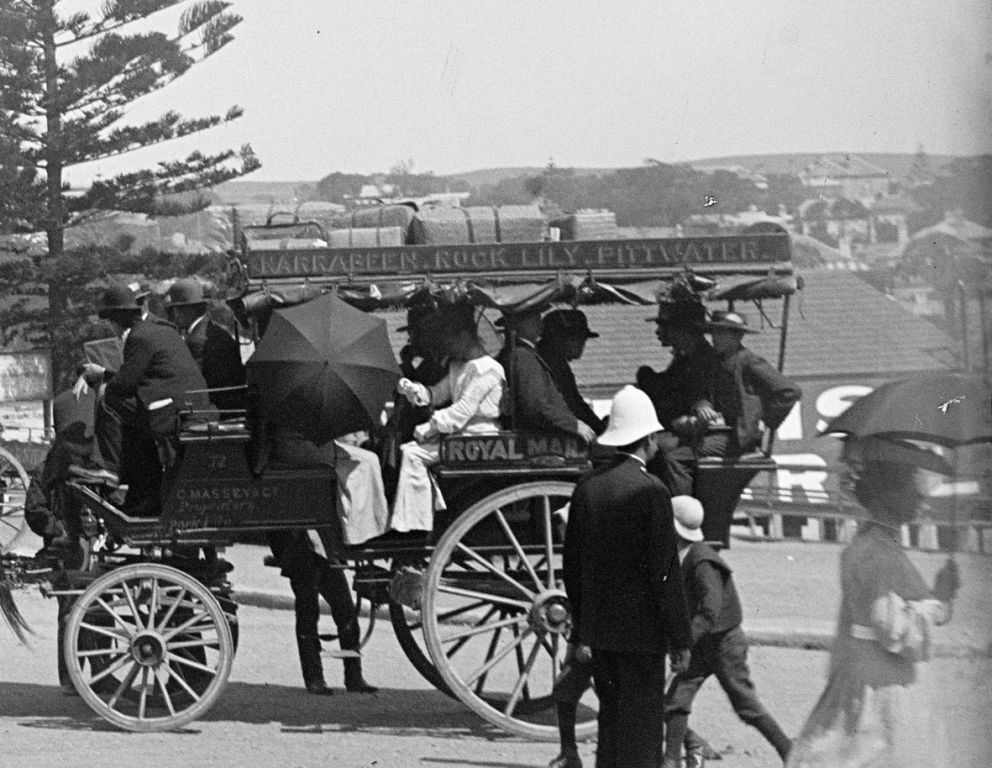
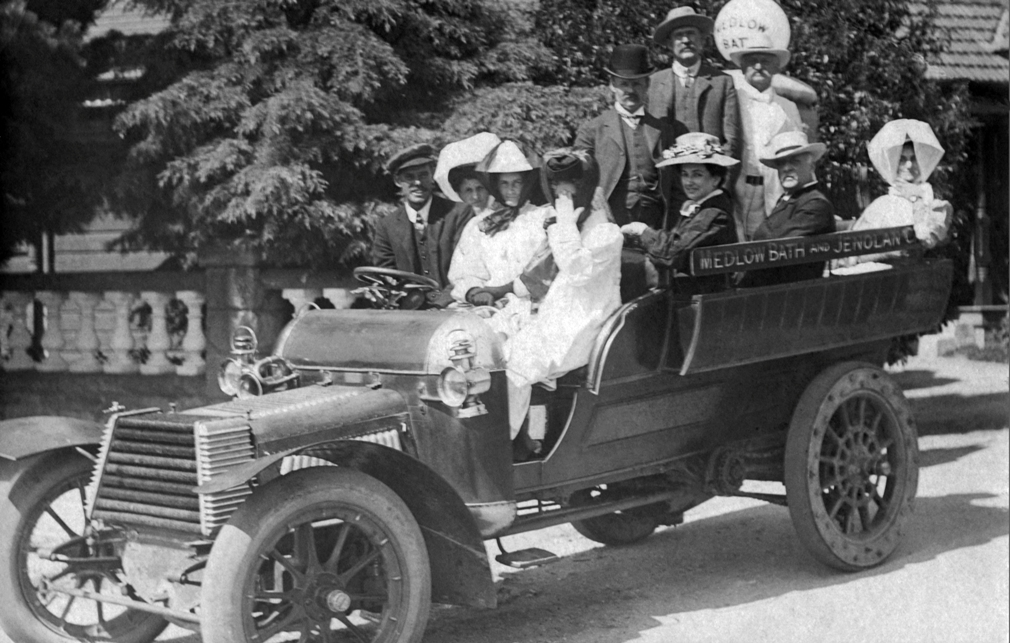
Bill Goddard, who also spotted the post, states one of the comments reads: ''A Swiftsure charabanc, vehicle imported by Phizackerley’s of Sydney as a no-name chassis, running gear and Aster engine, then branded as his own “make”, Swiftsure, with a charabanc body by Pitman, a prominent Sydney coachbuilder.
Two were imported and built for the Narrabeen to Rock Lily hotel run, and two vehicles from the same shipment were sent up country for the Glenn Innes-Inverell run; however, they proved unsuitable for that run.''
So, maybe not, when you consider the 16-18 passengers bit, although people were smaller then and this is certainly a change from the version via Charles Massey's mail run - although the signage is exactly the same, and remembering that Mona Vale was called 'Rock Lily' into the 1920's, as well as 'Turimetta' due to the eatery and Rock Lily Hotel, as well as the amount of rock lilies in the area:
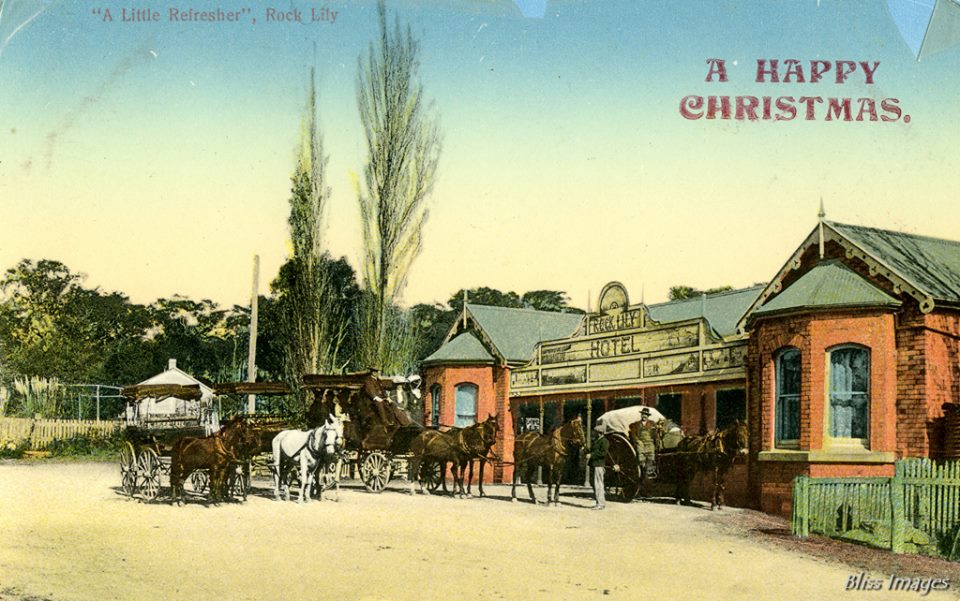
Rock Lily circa 1895 - 1905 - Christmas postcard. More in Pittwater Restaurants you could stay at The Rock Lily Hotel – Mona Vale and Bayview + Mona Vale + Brookvale Bricks: Makers Mark Every run of 10 Thousand


Visit picturesque Newport and dine at Greig's Hotel. The coach trip from Manly is one of the prettiest in N.S.W., and the hotel garden is an ideal place to lounge about in whilst your dinner is digesting and your cigar is helping or retarding the process. From Manly take the coach to Rock Lily, and thence for Greig's coach, which is free to passengers dining at Newport Hotel. If you are a cyclist, by all means ride your bike— the run from Manly pier is about 12 miles, and the cycling path makes the Journey easy, especially for ladies. HOLIDAY EXCURSIONS. (1901, November 10). Sunday Times(Sydney, NSW : 1895 - 1930), p. 2. Retrieved from http://nla.gov.au/nla.news-article125886153
FAVORITE CYCLING ROUTES.
l : FROM MANLY TO NEWPORT AND BAYVIEW.
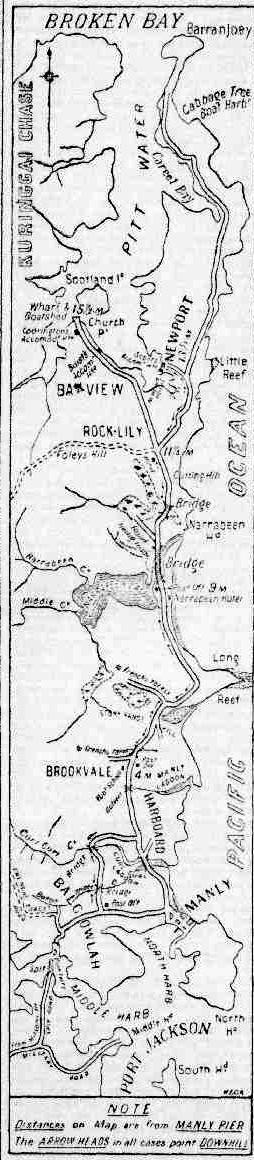 A cycling tour for an afternoon or a day, with good roads, a bracing atmosphere, and incomparable scenery is a condition which should bring Joy to the heart of any bicycle rider, beginner or old hand, novice or veteran, affecter of the drop or diamond frame. The conditions named supply the materials for the perfect short bicycle ride, and when the writer credits the coastal road between Manly and Newport, Barranjoey, or Bayview with that description, those whose good fortune it Is to know It will have no hesitation in agreeing with him. For the benefit of those who have not an Intimate acquaintance with the ins and outs of the road, Its windings, and its crossings, we to-day publish a map Illustrating the route, replete with all the information which a cyclist a’wheel can require. The road has been carefully traced out, measured, and verified by actual experience, so that It can unhesitatingly be accepted as thoroughly reliable. This map is the first of a series that we purpose publishing In our Saturday's Issues giving information about cycling routes.
The ride may be commenced at either Manly, North Sydney, or Mosman's Bay. For the reason that the road along the North Shore ridge is known to all residents of Sydney, without further explanation It has been omitted from the map, which takes up the work of illustrating at the Spit, Middle Harbor. Here the roads from either North Sydney or Mosman's converge, and run over a good surface either Into Manly or, as the map shows, across a cut through Greendale, picking up the main Newport road a few miles down the coast.
Newport is merely a resting-place, dotted among the hills that sweep down to the valley of the Hawkesbury, near Its mouth. It is situated on the east side of an arm of the estuary, known as Pittwater, and the few residences there have frontages to an almost landlocked harbor way of great beauty. The mouth of the Hawkesbury and the commanding heads of Broken Bay, with five miles of rolling ocean between them, are seven miles away, and along the arm of the estuary lies a succession of fascinating bays. Steeply falling hills, wooded to the water's edge, roll down and meet the bays, and the water on a hazy summer's day' takes on an Intense blue. The beauties of M'Grath's Creek, the Basin, Careel Bay, and Barranjoey are admired by all those who have visited this fairyland, and need to be seen to be understood. Words could not paint the scene which may be viewed from the heights of Barranjoey Heads on a blazing summer's afternoon, when the water takes on its deepest color, and the hills flash green, and a world of oceans seems unrolled to seaward. The majestic Lion Island and the rolling entrance to the Hawkesbury lies just below the spectator on the one hand. Seaward he gazes on the limitless Pacific, which at his feet surges on to a dazzling beach of snowy whiteness, and Inland is an entrancing vision of wooded hills and blue lakes seen through a light hazy mist. The rugged heights of Kuringai Chase roll away westward, and the lighthouse Is the only thing that makes civilisation real in the imagination. This scene is but one of the pleasures of Pitt-water, which is within an hour and a half's easy ride from the city. It is, therefore, not to he wondered at that Newport is a favorite ride.
The ride from Manly to Newport is the one which is perhaps the most popular, for it is the shortest, and includes from Sydney a pleasant little run on the Manly harbor steamer. Newport, as explained, is on the eastern shore of Pittwater. Across the arm, a matter of half a mile or so, is a small settlement known as Bayview, the road to which has been lately very much Improved, until the run up the west side of the water has become quite as popular as the old Newport ride. Accommodation of a first-class quality may be obtained on either side.
The run from Manly to Newport can be accomplished by cyclists of any calibre riding comfortably in an hour and a half, while tho "scorchers" can crowd It Into about 60 minutes. The journey is, of course, a longer one if North Shore or Mosman's Bay Is made the starting point. Then the high ridge running along the north shore of the harbor, and dividing the waters of Port Jackson proper from Middle Harbor Is skirted on a level road with a splendid surface, until the tract starts to fall to the level of the water at the Spit, Middle Harbor. Tills fall Is nicely graded, and can be ridden In comfort at a good speed with a brake, while the views which open up as the cyclist rushes down the incline of a sweeping valley from the ridge to the shores of what Is perhaps the most beautiful natural harbor In the world well repay him for the extra exertion of the longer ride. After the drop to the water, Middle Harbor is crossed in a Government punt at a cost of 2d. The climb up the ridge again on the east side Is not quite so well graded as that just descended, but yet is perfectly easy of negotiation when the surface is good, which is usually the case. When the ridge is climbed the rider has the option of two roads, both of which are good. He can either take the turn off to the loft through Greendale, which saves a considerable distance, and comes out between Manly and Brookvale on the Newport road, or he can go down Into Manly, and pick up the route there.
The road from Manly runs out along a lovely stretch over Curl Curl Lagoon, and passes a turn off to the right, which is marked by a fingerpost — "To Harboard Estate," before the Greendale road is fallen In with. After these two roads converge the route passes over gently undulating and pretty country through Brook vale, a tiny settlement with a public school and post-office, and over the Stoney Range. This is a fair hill, and will he found to be indicated in the map by arrows. There Is a short pinch at the top, but the hill can be easily ridden, though It Is not a rise which should be rushed on account of the pinch at the top. The descent is straight and perfectly safe, even without a brake. After a short run through what is almost a natural avenue, the road opens out on to the Deewhy Lagoon, which runs In off the ocean. The road just hero for half a mile Is always bumpy, but if the rider will ease up slightly he will experience very little inconvenience, and the bad piece does not extend far. The road then winds up a long hill In full view of the ocean, which thunders in on a fine sandy beach Just below the rider. A slight turn to the left is made on top of the kill, and the road falls away into Narrabeen; the concluding mile bolero this place is reached being ridden alongside one of the finest beaches on the coast, A short rush down bill brings the rider unexpectedly right on to this magnificent beach, and the change from winding among the trees to the continuous roar of giant rollers, which seem to dash up almost beneath the handle-bars, is an interesting incident of a pleasant ride.
A rest may be called at Narrabeen, and, if required, refreshments obtained. There is an hotel and an accommodation house right on the road.
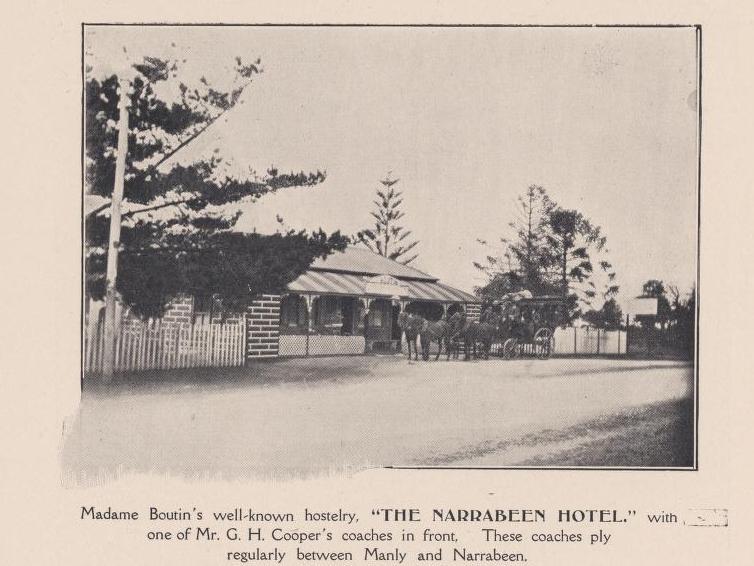
Above from: Narrabeen Lakes Estate, 1906 / Arthur Rickard & Co. Ltd Auctioneers. 1906. MAP Folder 114, LFSP 1695 (Copy 1). Part 17 and Part 2. (sales brochure) Image No.: 22704748, courtesy National Library of Australia. Visit: Charlotte Boutin and The Firecracker That Closed Narrabeen Hotel by Ken Lloyd (SavaLloyd)
The lagoon here — the upper reaches of which are famed for their scenery — is crossed immediately on leaving. The lagoon is really a big arm of the sea, which is just over a line of sandbanks about half a mile on the right. A run of a mile and a half brings the rider to the Cutting-hill, which is one of the stiffest climbs on the route. It has, however, a good surface, and over the top of this rise the road drops for halt a mile into Rocklily. There is another hotel here. A few hundred yards further on the road divides, the left-band portion leading to Bayview, on the west side of Pittwater, and that on the right hand to Newport. Following the right-hand road after a couple of not insignificant hills are climbed, the ocean is once more opened out from the top of a high cliff, and on a fine day a magnificent prospect is obtained. From this point also Pittwater on the left first becomes visible, and it appears a great lake nestling among the rolling hills. Down through a ferny glade, over a slight rise, and down another long descent, and Newport is reached. The rider has the choice of an hotel and an accommodation house for convenience. Here boats and bathing can be obtained, and the hays and coves of Pittwater afford amusement in an endless variety of ways. Good fishing is also to be obtained in the direction of Barranjoey.
The road extends, as will be seen on an investigation of the map, on to Barranjoey, where the lighthouse is situated. The hills on this route, however, are almost unrideable, and the road is scarcely ever used by cyclists.
The road on the Bayview side runs right along the shore of the harbor, to Church Point, a distance of two or three miles. There are two accommodation houses here, and good boats are to be obtained at the point, where there Is a splendid wharf. The road all the way is of sandstone formation, and is found at its best after heavy rain. Sometimes in continued dry weather it becomes loosened, but a shower or two of rain soon puts It right again. It can generally be described as a splendid road for cycling. None of the hills are very bad, and there are only two places on the whole route where it is necessary that, more than ordinary caution should he exercised. They are both on the Newport road. One is a hill recently graded, encountered soon after Newport is left on the return journey. It is indicated in the map by arrows. There is a sharp turn half-way down in a cutting and cyclists should not let their machines go until they are safely round this. A similar turn, though without the cutting, will be found in the Cutting-hill, between Narrabeen and Rocklily, when returning to the city. Care need be exercised to make the turn safely. Apart from these two points the road can be ridden In perfect safety by the crudest novice.
All the cross-roads and "turn-offs" which are marked in the map are surveyed roads, but are to all Intents and purposes impracticable for cycling, as they have not been formed. Some cyclists have ridden over them, but more from a spirit of adventure than from any hope of an enjoyable ride. The distances on the map are all measured from Manly. FAVORITE CYCLING ROUTES. (1897, July 31). The Daily Telegraph (Sydney, NSW : 1883 - 1930), p. 4. Retrieved from http://nla.gov.au/nla.news-article238392082
The new cycle track was officially opened on Saturday September 7th. The report reads, and includes, a photo of a motor car heading north:
The New Cycle Track— Manly to Pittwater.
Pleasant conditions attended the official opening on Saturday afternoon by Mr. E. W. O'Sullivan, Minister for Works, and president of the New South Wales League of Wheelmen, of the cycle path from Manly to Pittwater, recently illustrated in ' The Mail.' The weather was beautifully fine, and the Path, as dry and resilient as a cinder path 0n a summer day.
It was arranged that a procession of motor-cars, cyclists , and drags containing non-riders, and headed by a motor-car carrying the Minister for Works, would leave the square opposite Manly pier at 3. 1'5 pm. But in consequence of the 2.30 p.m. boat from Circular Quay, with a contingent of 300 cyclists, arriving a little late, the procession did not not start until 3.30pm. Half an hour prior to that the Minster arrived in the steam launch Eva, With a party of visitors, who included Messrs. Price, Wilis, Levy, T' Fitzpatrick, Donaldson, Byrne, and …
The Minister was received by Mr. Quirk, M. L-A-, member for the district, a large number of leading residents of Manly, and the members of the Public Cycle Paths Committee - Messrs J. R. Holdsworth (chairman) A. Blackett Smith and G. Corkhill of the New South Wales Touring Union, Leslie Curnow (hon. Sec) C.A. Grocott and A. H. Short, of the New South Wales Cyclists Union, and Messrs. G. Fowle, H. Floyd, E. J. Branagan, of the New South Wales League of Wheelmen. Fully 300 residents and visitors were -assembled, and accorded Mr. O'Sullivan a hearty welcome.
At least 500 cyclists were present, and as many of them carried flags, flowers, and streamers, a pretty effect was produced when the procession was under weigh. The procession, headed by four motor cars, moved off at a good pace, and about a mile out of Manly reached the commencement of the cycle path, the place being marked by archways erected over the paths on each side of the road, and bearing the sign' Pittwater Cycle Path, 1901 .'' A run of a mile brought the procession to Greendale, where the opening ceremony was to be performed. The hon. secretary of the Public Cycle Paths Committee, Mr. Leslie Curnow, who has been indefatigable in his efforts to have the path constructed, and to see that the opening ceremony was performed under the most favourable conditions, had the place decorated with flags and streamers, so that it presented a very pretty appearance. One could see by the rapid pace at which the cyclists bowled along the path that it Was in good order, and fast. When further consolidated by cycle traffic it will become still faster, and if arrangements are made to keep it in good order the cyclists of New South Wales will be under a debt of gratitude to the untiring labours of the path committee for providing a pleasant run through some of the most beautiful coast line scenery to be found in the State.
The cyclists and visitors having gathered round a temporary platform provided for the occasion, Mr. Quirk, M.L.A., called upon the Minister for Works to declare the cycle path open. The Minister for Works, who was received with cheers, said that on behalf of the people of Manly, as well as the cyclists of New South Wales, he had great pleasure in declaring the Manly to Pittwater cycle path open for all time. (Applause.) It might not be known to all present that it was one of the longest cycle paths in the world. In America the paths ranged from 4 to 17 miles long, in Dunedin they were 7 miles, and in Victoria 15 miles long, but the Manly to Pittwater cycle path, counting 10 miles out from Manly on one side of the road, and 10 miles in on the other side, was 20 miles long.
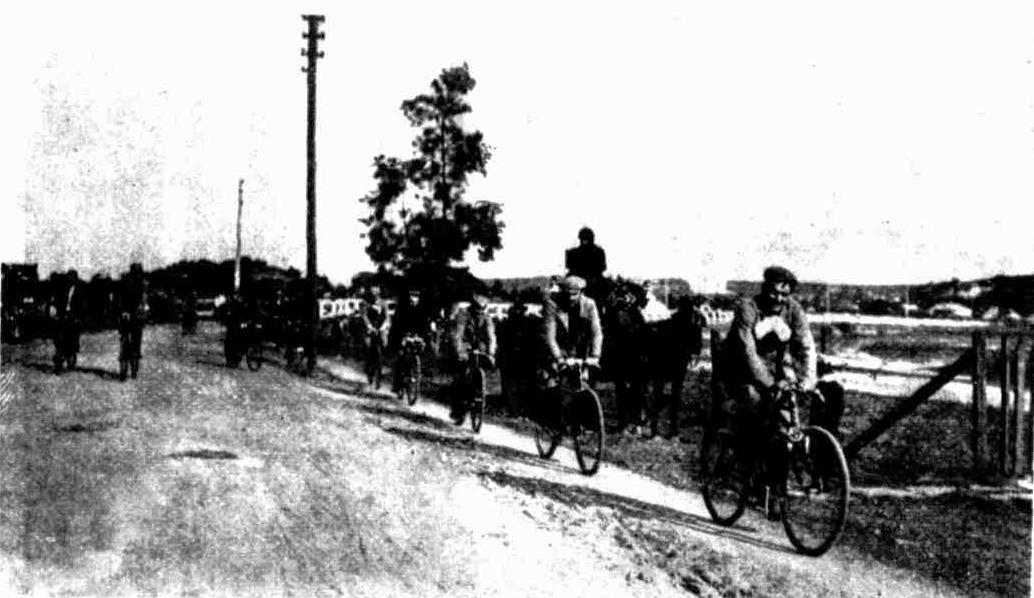
CYCLISTS ON PATH.
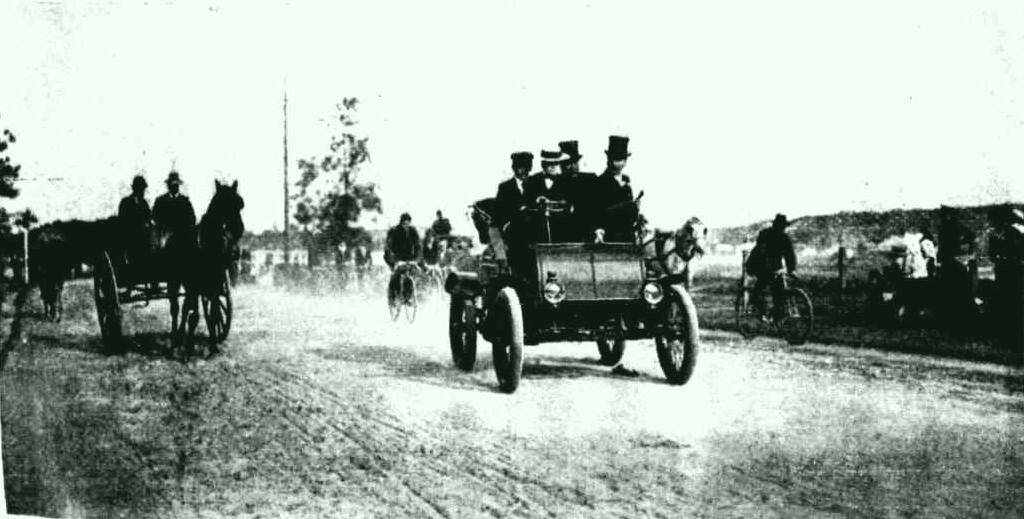
GOING OFF TO GREENDALE.
The New Cycle Track—Manly to Pittwater. (1901, September 14). The Sydney Mail and New South Wales Advertiser (NSW : 1871 - 1912), p. 674. Retrieved from http://nla.gov.au/nla.news-article165237862
Greendale was just out of Manly - on the road to today's Brookvale:
OPENING A CHURCH AT GREENDALE.
A new Wesleyan Church, was opened on Saturday at Greendale, a few miles out of Manly. The building was erected by Messrs. Mingay and Wilkinson, a Manly firm. The Rev. J. E. Moulton (Newington College), the Rev. J. H. Lewin (minister in charge of the Manly district), and the Rev- J. Woolnousjh conducted the dedication service on Saturday, when the .fine weather induced a large crowd to assemble. The tea meeting and social gathering that followed was well attended. As a fitting ending to the dedicatory service a meeting was held in the evenii g, Mr. E. J. Wild presiding. The Revs. J. E. Moalton, J. Woolnough, J. H. Lewin, Messrs. D. Ogilvy, and J. Warner delivered addresses, and Misses Bagnall, Jacobie. and Miles, Mrs. Martin, Messrs. A. Miles, F. Maine, and E. H. Stoney, and Rev. K Masterton rendered instrumental and vocal items. Serviceable help was given during the day by Mesdames Evans, Barden, M'Carthy, Martin, Newton, and Howlett, and Misses Jones, Miles, Alderton, and Bagnall. Opening services were held on Sunday, and the Rev. J. E. Moulton and J. H. Lewin were the ministers. OPENING A CHURCH AT GREENDALE. (1898, August 8). Evening News (Sydney, NSW : 1869 - 1931), p. 6. Retrieved from http://nla.gov.au/nla.news-article113250900
MANLY-GREENDALE TRAM.
TO THE EDITOR.
Sir; On behalf of residents of North Manly, Greendale, Freshwater, and neighborhood, I write to Invite attention to the fact that although the rails of the proposed tramway to Greendale, Narrabeen. etc.. have been laid as far as Curl Curl Lagoon, it would appear as though pressure is being brought to bear to delay the completion of the first section to Greendale, as the lines are being covered with rose metal, and operations have been suspended at the present terminus near the lagoon. There is considerable settlement in the vicinity of Greendale that would be greatly benefited by being connected with Manly, and the city, by means of the tram, and if it would not pay to adopt a frequent time-table, there would be good reason for a service in the morning and evening, and occasionally throughout the day.— Yours, etc., T. K. HARRIS. MANLY-GREENDALE TRAM. (1902, August 13). The Daily Telegraph (Sydney, NSW : 1883 - 1930), p. 11. Retrieved from http://nla.gov.au/nla.news-article237615011
THE OPENING CEREMONY.
A cycle path, 20 miles in length, 10 miles either way, between Manly and Pittwater, was opened on September 7, when over 1,500 wheelmen from all parts of New South Wales attended. It was opened by the Minister of Works. Mr. E W O'Sullivan.
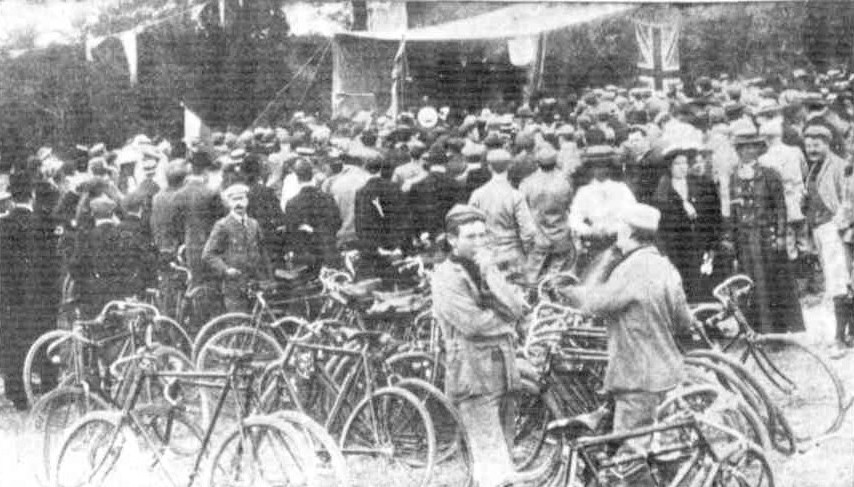
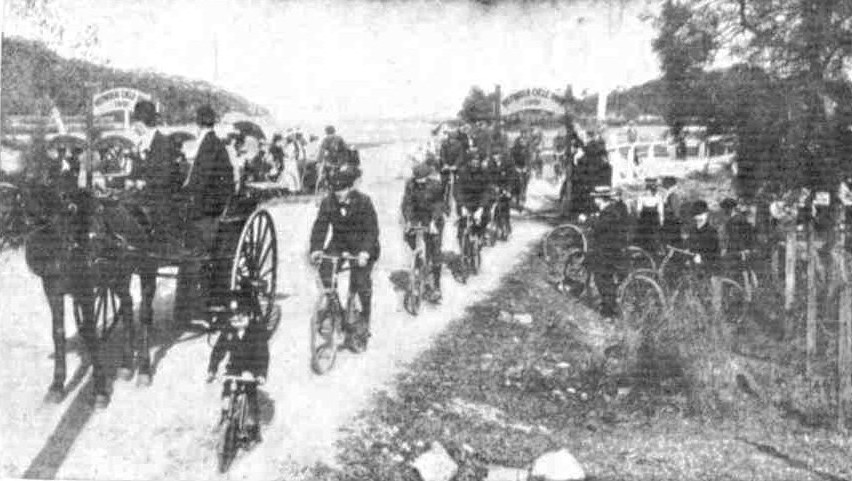
A NEW SYDNEY CYCLE PATH.
THE PITTWATER CYCLE PATH. A NEW SYDNEY CYCLE PATH. (1901, September 14). The Australasian (Melbourne, Vic. : 1864 - 1946), p. 29. Retrieved from http://nla.gov.au/nla.news-article139746417
The interest in cycling during this period cannot be underestimated - motor cars were being seen but most people could not afford such luxuries - bicycles were the way to get around. Having been touted as being used in the Boer War to great effect, and races and clubs springing up everywhere, it is no surprise the area of Pittwater was made accessible for those who wanted cycling-camping trips away within their budgets.
The rise in popularity, and its being followed by local press, affords us, 116 years on, with some lovely early photographs of Pittwater:
Manly to Pittwater Cycle Path.
The views we publish afford an idea of the beautiful district which is opening up for cyclists by the construction of the Manly to Pittwater Cycle Path. The Public Cycle Paths Committee deserve the thanks of all cyclists, for by means of their efforts sufficient funds have been collated to pay half the Cost of the path. The work was generously carried out by the Government….. The Manly to Pittwater path is the second constructed under the auspices of the Public Cycle Paths Committee, and in the future the movement is expected to greatly extend.
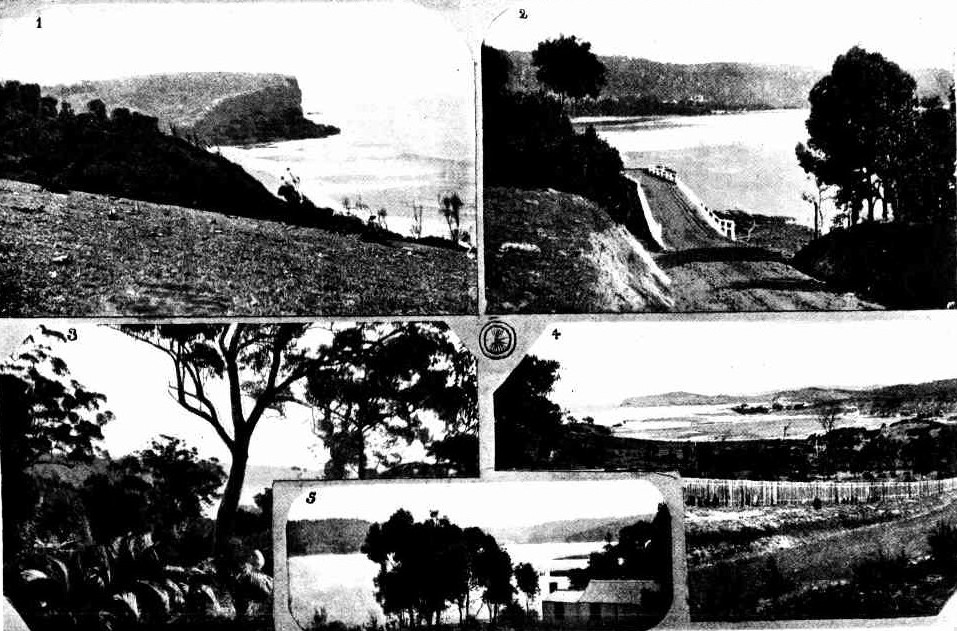
1 A glimpse of coast scenery from Newport-road. 2. Bay View from Newport Wharf. 3. Bush scene near Newport. 4. View near Terminus at Pittwater. 5. Broken Bay. VIEWS NEAR TERMINUS OF MANLY-PITTWATER CYCLE PATHS. Manly to Pittwater Cycle Path. (1901, August 24). The Sydney Mail and New South Wales Advertiser (NSW : 1871 - 1912), p. 478. Retrieved from http://nla.gov.au/nla.news-article165234800
THE MANLY-PITTWATER CYCLE PATHS.
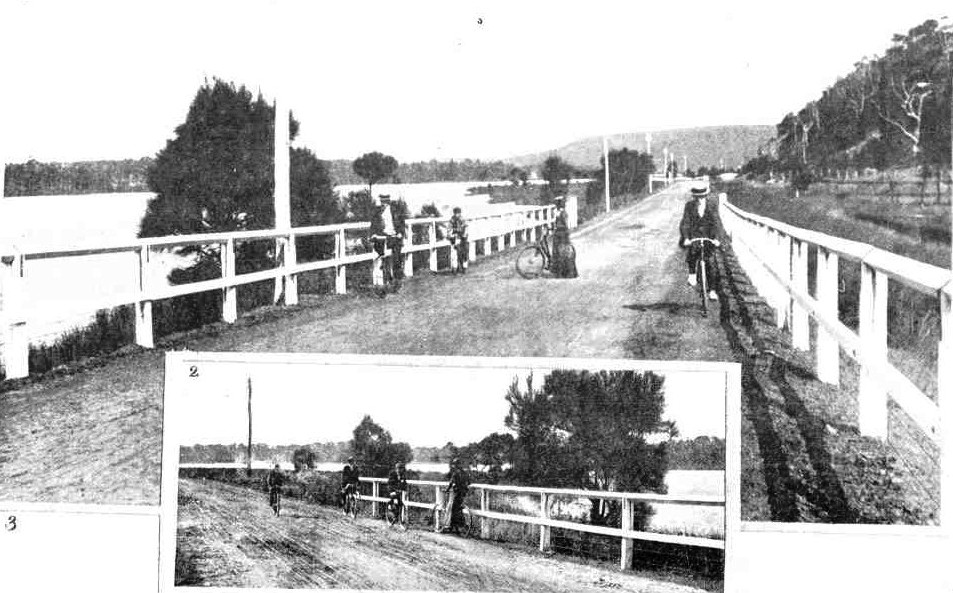
1. An ideal bicycle stretch near Pittwater. 2. The Lagoons, Narrabeen.
3. Dee Why Hill.
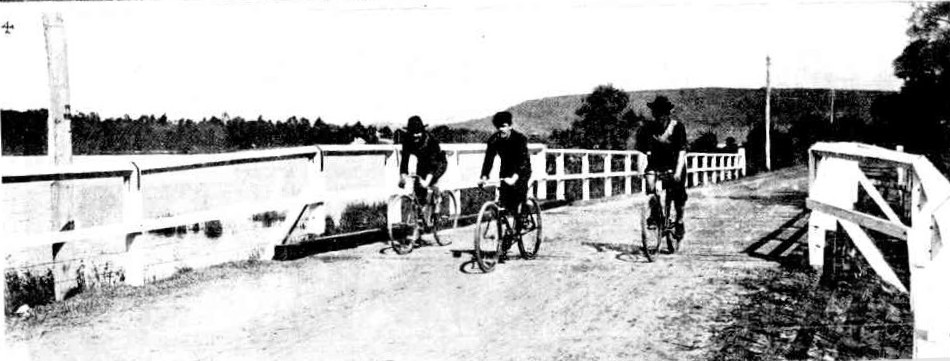
4. At Narrabeen.
THE MANLY-PITTWATER CYCLE PATHS. (1901, August 24). The Sydney Mail and New South Wales Advertiser (NSW : 1871 - 1912), p. 479. Retrieved from http://nla.gov.au/nla.news-article165234777
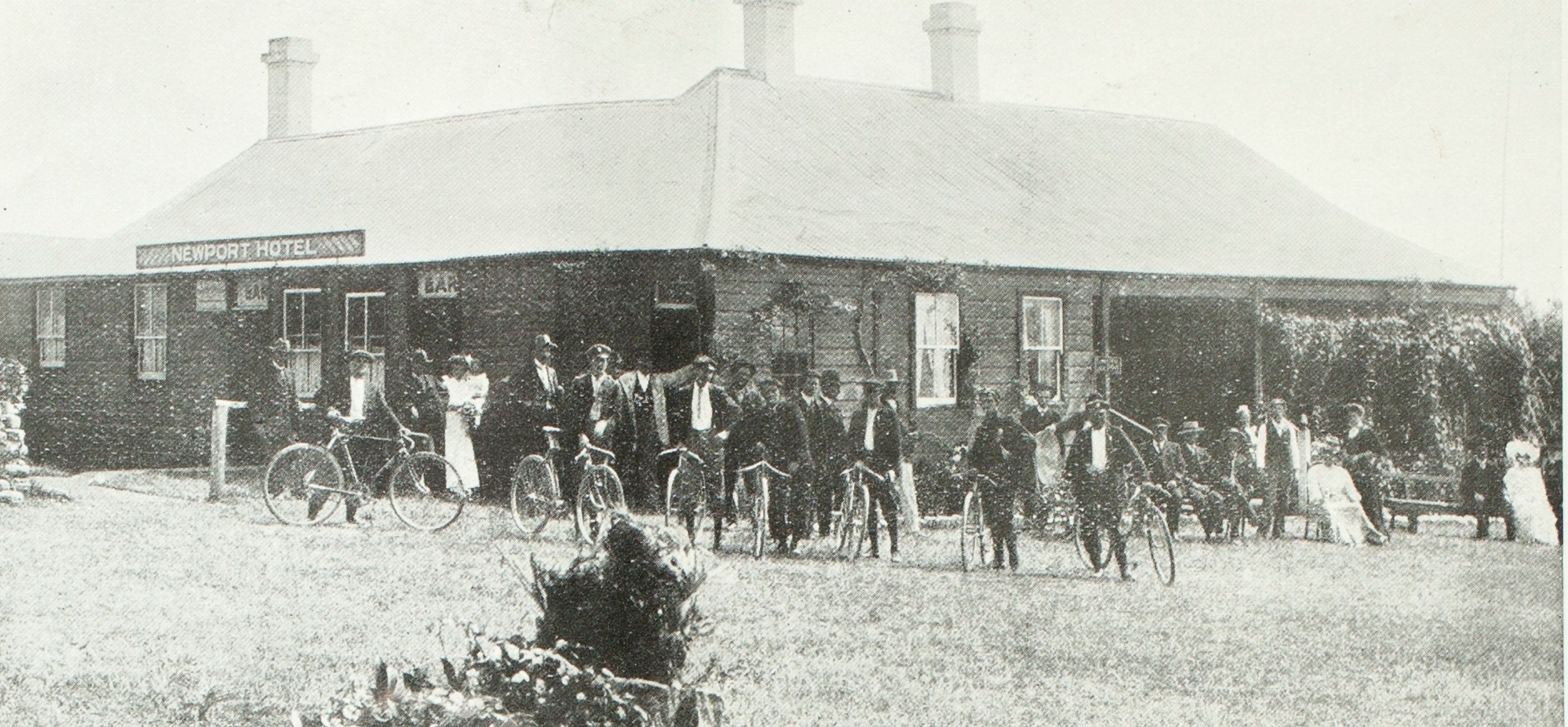
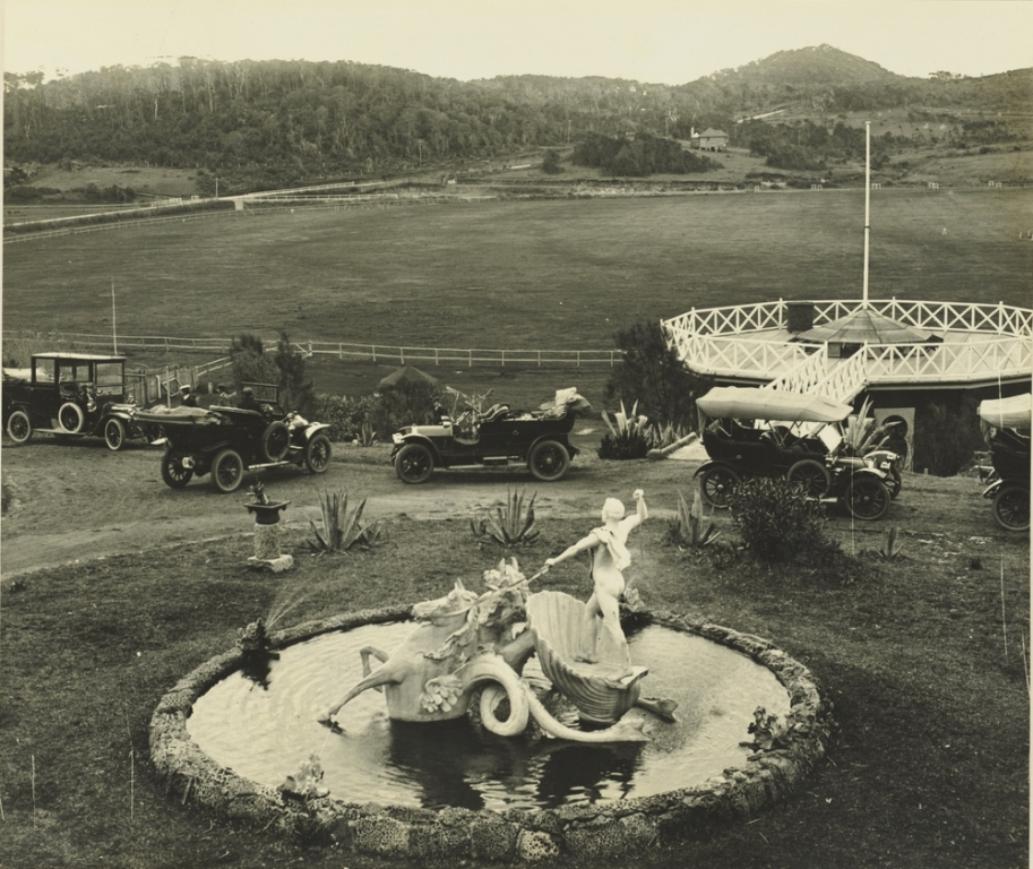
At the Newport Hotel - From The Brock Estate Brochure - to be sold October 7th Newport 1907. Item No.: c046820076 from Mona Vale Subdivisions, courtesy State Library of New South Wales - this may be at the back of the then premises as it differs from what was on the Queen Street side
THE motor car is a luxury for the comparative few. In Sydney the delights of yachting have been vouchsafed to many who could never have experienced them otherwise by co-operative ownership and by hiring. Messrs. Thomas Cook and Sons, the well known tourist agents, whose Sydney branch is in Hunter-street, guided by the success of the motor service to the Jenolan caves, have decided to make a motor drive equally accessible to all. They have arranged for motor trips around the most attractive routes about Sydney— and no other city possesses so infinite a variety —on very moderate terms, which afford to the motorless resident an opportunity of showing new hospitality, and to the visitor a delight hitherto difficult of attainment. It was for one of these trips — Sydney to Newport, via Manly — that our representative last week accepted an invitation, and took with him a ''Mail' photographic artist.
The stretch of coastal country between Manly and Rock Lily, and thence along to Newport by one road and Bayview by another, is justly esteemed to afford one of the most beautiful drives of its type in Australia —many go further, and declare it to be one of the most beautiful in the world. When to this is added the strip of country between North Sydney and Manly, with its magnificent glimpses and panoramas of the lake-like waters of Middle Harbour, and of Sydney Heads, there is comprise d within the day’s outing a series of pictures for which we can only seek rivals in the world-famous portions of the Mediterranean coasts. And here we have characteristic elements of beauty either lacking there or possessed by us in a higher degree.
The popularity of the bicycle made familiar to thousands, who would not have otherwise seen them, these beauty spots. Others have driven or used the coach services. But the ideal method of seeing this beautiful stretch of country and spending a thoroughly enjoyable 'open-air' day is by motor car. There is no questioning the fascination of automobilism. The man who has not a car may effect to disparage his more fortunate neighbour who has, and may make satiric remarks as to the latter’s misadventures in his initiatory stages. He may jibe at 'stink pots,' at dust, at the odour of petrol, and the rest — all these are for the man who stays behind, not for the man in the car. And for the man in the car there is the glorious sense of speed controlled at will, the bounding freedom of the rapid moving automobile, the easy run up the hills that have hitherto been toilsome trials to his horses, the grand rush of speed on the level stretches, the flight as through space against the keen breeze. All this produced by a turn of the wrist, and all comprising a sense of exhilaration and of power almost intoxicating in its delights where, as on the routes chosen by Messrs. Cook, the roads are good and the scenery is delightful.
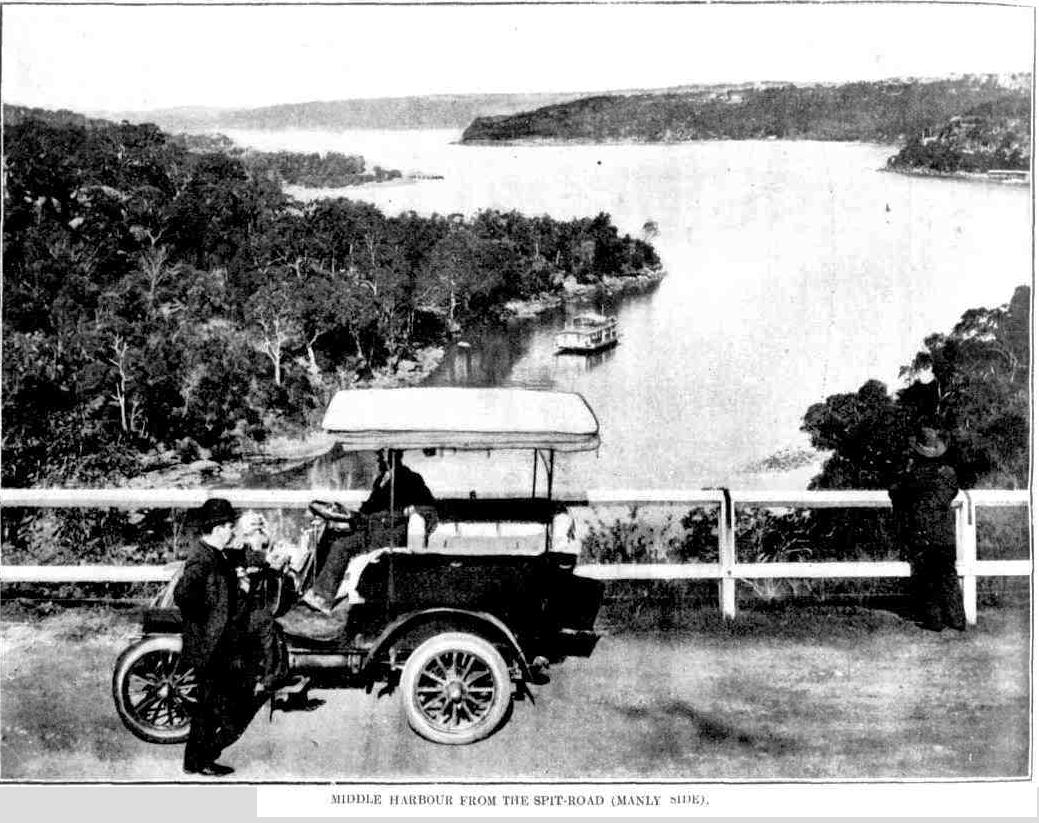
Our car, a 9-h.p. De Dion, piloted by an expert driver, set out from Messrs. Cook's office, on a delightful day of last week — bright, clear, sunny, with a light cool breeze. It was threaded skilfully through the traffic over the wood blocks to the North Shore horse ferry. Landed on the other side, we ran easily up the long hill to Ridge street, and thence fairly flew along the level roads on the heights, with their superb outlook, to the Spit ferry, experiencing a preliminary taste of what a motor can do when the road is free and good. Here and there a stop was made to take a photograph.
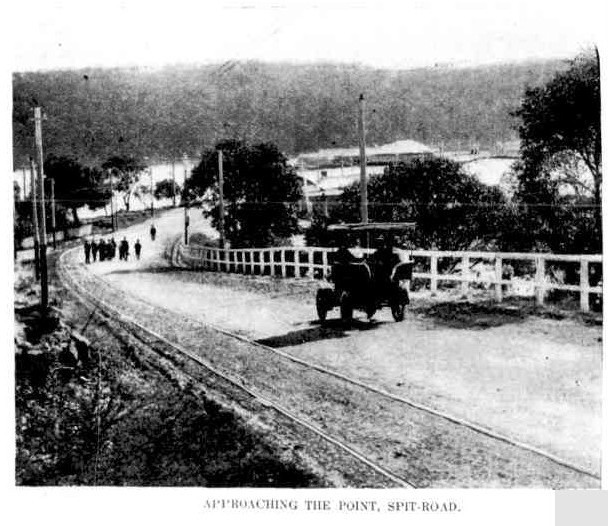
APPROACHING THE POINT, SPIT-ROAD.
Across the Spit ferry, and again we set out up the picturesque winding road on the Manly side, along the crest past many spots of interest. We passed a dwelling where the two coiners were wont to practice the revolver shooting which they ultimately used upon policemen. As we went, every turn of the wheels seemed to open out a fresh aspect, each more insistent than the last, in its claims to consideration. Down the Red Hill, past 'Dalley's Castle,' and that most picturesque of kirks, the Manly Presbyterian Church, and after a brief pause for refreshment, our driver turned him on that coastal stretch to Newport, which lives in the memory of all who have ever seen it.
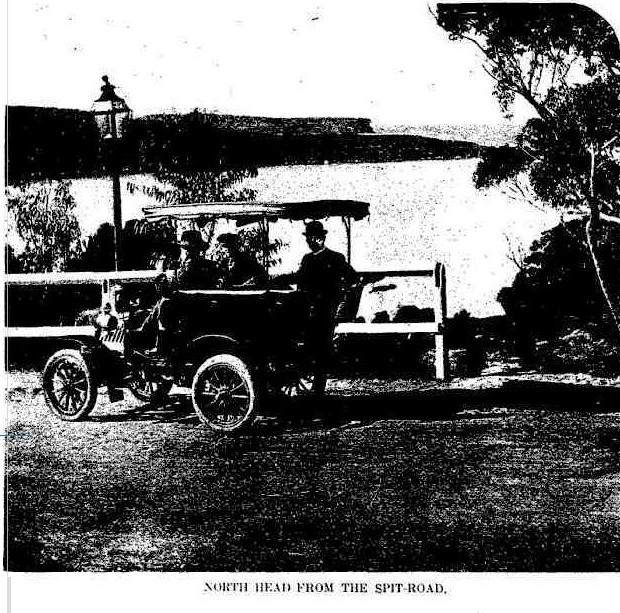
NORTH HEAD FROM THE SPIT-ROAD.
The pictures on this page will give some idea of the glories of the whole trip, but no mere black and white can suggest the wealth of colour and the atmosphere which are the most exquisite elements in the scenes themselves. There is every type of waterscape —Smooth beaches in Middle Harbour, with the gently rippling marge of lake-like waters, shimmering in the sunlight or giving back amore intense blue than even the blue of the Australian sky. Lagoons at Curl Curl and Deewhy, the waters running in among the thickets on the banks, and the trees mirrored oil their surface. The forest-bound lake at Narrabeen; great stretches of white and grey and yellow beaches along the long line of ocean front from Manly to Barranjoey.
Rushing surf breaking upon the sands, surging over the rocks at Long Reef, dashing on the cliffs of each bold headland that breaks the beach line till they are mist enshrouded with the rising spray. And for landscape, nearly every variety but the Alpine. The Middle Harbour heights give glimpses of the picturesque suburbs that are generically termed Mosmans, with their red roofs and constant effort at the picturesque in architecture from cottage to mansion — an effort often crowned with success. The sunlit bush and verdure-cinched hills set in opalesque waters as the run down the Spit-road is made. There is the charm of Sydney's only 'village' when Manly is reached: and then along the road to the far famed Hawkesbury at Pittwater — only the brush of the inspired artist and the pen of the true poet could convey adequate idea of that.
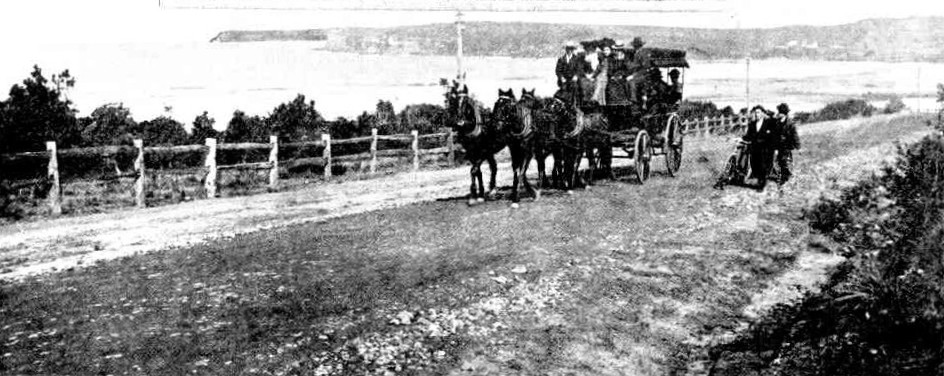
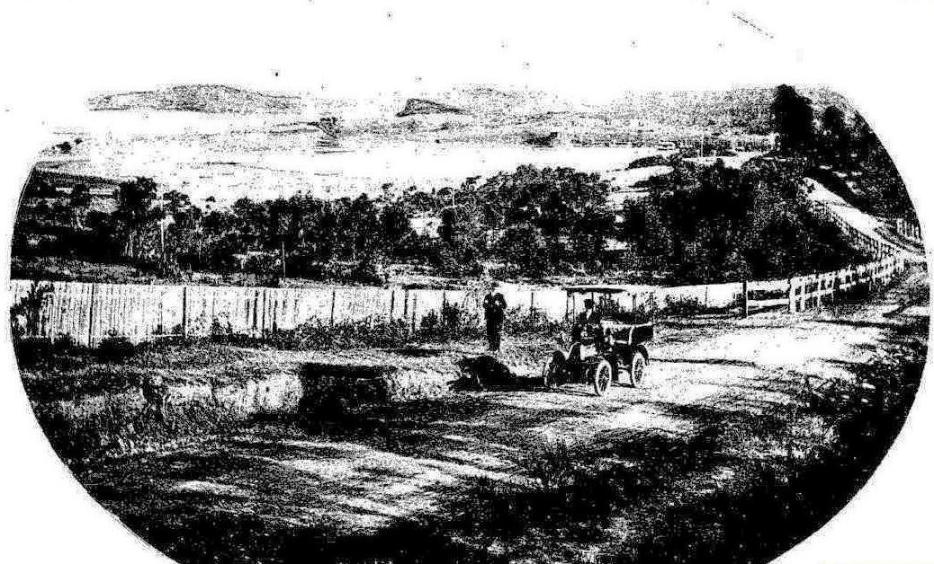
Take one scene alone. The view from the Newport hill looking south across Mr. Brock's estate, and on over Rock Lily to the bold hills and headlands about Narrabeen. Here the great master of artistic composition, Nature, has made a masterpiece. Look at the photograph as it is reproduced — and it has some of the defects inherent in even the best photograph in its accentuation of the line of fencing. But take the picture as a whole— the long stretch of road across the foreground and to the right carrying the eye away with its admirable perspective. In the reality the road banks have red and rich yellow tints: above them the blackberry bushes run riot in autumn colouring; across the fence the rich dark greens and browns of the bush throw and the bright greens and light yellows of the neat pastures beyond. Lagoons, like opals in a golden setting, more trees, green hills, dark distant bush on the n-ht and in the centre. And on the left the white beach with its whiter fringe of ever-moving surf, a sapphire sea, a towering, bold, brown cliff. Above all the vivid blue sky and the whole landscape bathed in the rich light of an Australian winter day's sun that glorifies all it touches. A mere catalogue of forms and colours, you say? Yes, but the reality is exquisite, and it is only one of a long series of beautiful scenes along a beautiful road. Near where we stopped to take the photographs one of the great army of cyclists to whom every inch of the way is familiar, lay under a tree conning a little volume. It was Omar. The cyclist had realised his tree and his flask of wine, and 'thou'? Possibly she, too, might have materialised had we waited — he was evidently waiting — or perhaps his wheel was his love. At least the Rubaiyat seemed peculiarly suited to the setting. That, the Persian poet would have revelled in — even plus a bicycle and motor car. As we bowled gaily along the smooth surface with the free swinging motion of the motor car at speed, at every turn in the road came the suggestion that the photographer should get down and ''take that.' The car must have been laden with photographic plates had a tithe of the suggestions been adopted. Yet each was fully justified by the special aspect of the moment.
Take the Narrabeen lake, for instance, with its surface still and every stem and bough reflected It is charming even from the roadside, and when that is left and by boat the visitor rows in among the bold hills with their adornment of splendid forest trees the wonder is that though thousands visit it in the year, and hundreds go upon its waters, the number is not many scores of thousands- We go far to see lake scenery any finer. Then take the stretch of forest road running down into Rock Lily with the hills beyond. That is exquisite. And on the coast from Newport to Barranjoey there are scenes rivalling the famous Illawarra coastal scenery — smooth buffalo-grassed slopes and flats, bush-crowned hills, tropic luxuriance of palm, towering cliffs, shell-strewn beaches, and always crowning beauty— sea and sky.
As for Pitt water (which term includes the lovely Bay View), that would require a chapter to itself, and then its beauties would not be adequately described. All that visitors, distinguished or undistinguished, have written as to the glories of the Hawkesbury applies in an accentuated form to its Pittwater arm. Here we have the bold and graceful hills, palm-clad slopes, fern gullies rivalling the great fern gullies in the Dandenong ranges, of which Victorians are so proud, fjord-like waters, recalling Norway or New Zealand, and the splendid stretches of that noble reserve, the Kuring-gai Chase, accessible only rowing boat or launch 'obtainable on the spot- It is not surprising that Sydney people — Professor Anderson is a notable instance — are establishing summer homes for themselves here, where all is peace, and Nature has lavished her richest gifts of soil and water, climate and scene — the gardens and such orchards as those of Mr. Roche show the fertility of the soil. And there is this added attraction about the whole district we have been endeavouring to suggest, everyone has heard of the particular portion of the anatomy upon which an army is held by high military experts to travel — sometimes (when bullets fly) in a literal- but always in a metaphorical sense. J. M. Barrie last year invented for it a new euphemism. On the road from Manly to Pittwater, and at that lovely Hawkesbury arm, 'Little Mary' is well catered tor at every stage. There need be no anxiety as to commissariat, even when the hamper has been forgotten in the eager zeal of the motorist to 'get her going.' As for our car, it did its work, guided by the driver (J Cunningham) admirably. Since then it has had a run up to Moss Vale, whence it returned comfortably in five hours.
Round Sydney. (1904, June 29). The Sydney Mail and New South Wales Advertiser (NSW : 1871 - 1912), p. 1628. Retrieved from http://nla.gov.au/nla.news-article163988582
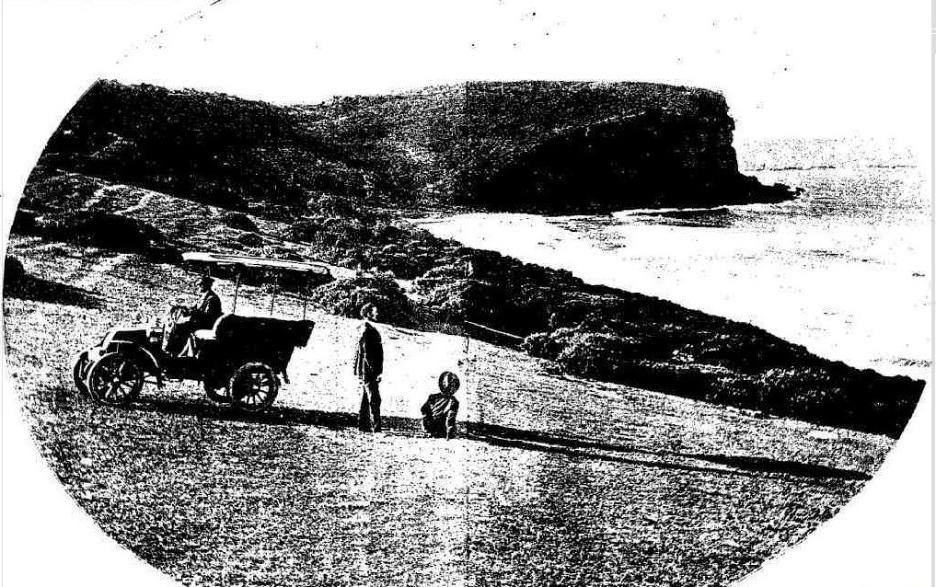
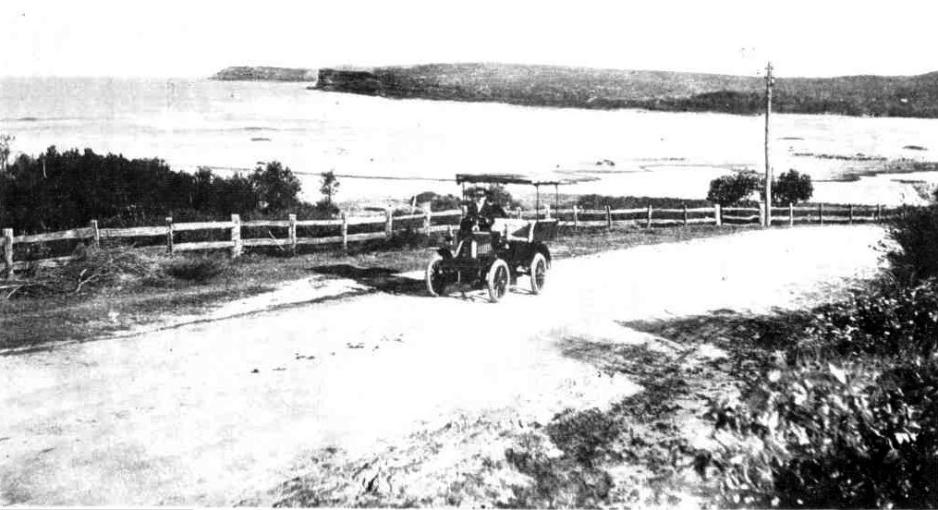
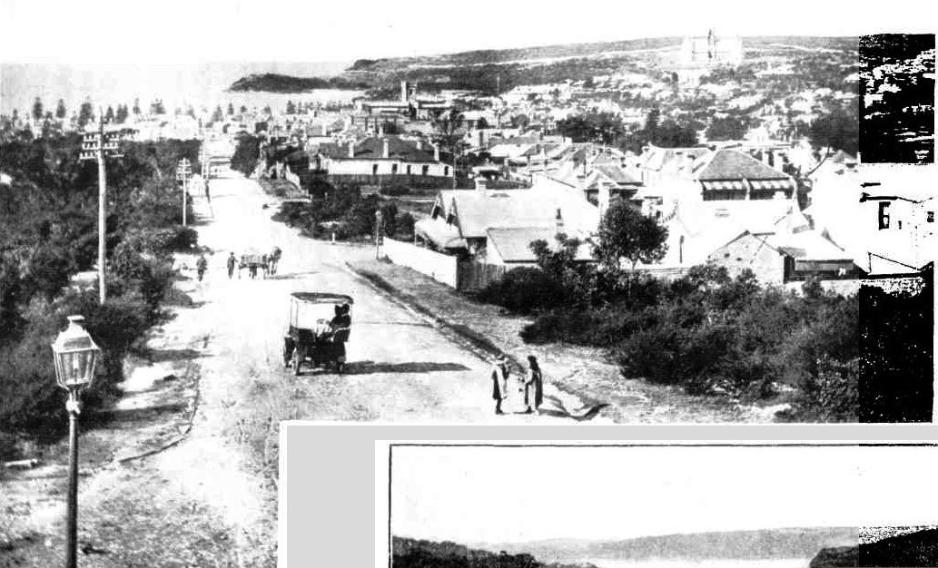
The first 'rumour' of a privately-run motor bus for Pittwater came through the Mosman Mail who stated the proprietor of the Rock Lily would be overseeing this wonderful new shift from coaches pulled by horses to machines that would make the horses run and fill the air with a scent quite unlike that of horse hair and hay. This could have been expected by any who knew Leon Houreux, especially since so many accounts of his life in Paris prior to coming to Australia and becoming one of the timber fellers around the Elanora-Ingleside Powder Works state he revelled in being a coach driver with a penchant for haste:
Newport—Manly.
MOTOR BUSES.
The people all along the route from Manly to Newport were overjoyed at the latest news with reference to the intended instalment of motor 'buses on November 1st next. The line of coaches run by Mr. L. Houreux, of Rock Lily, and his successor, Mr. Massey, of Manly, has always been run in the interests of the people and to the best of the possibilities of the circumstances, but it has been felt for years, and felt in a practical way too, that is, in the pocket, that money was being lost because it was not gained, through the fact that it did not pay the coach proprietors to run more than a certain number of coaches per diem. They did the best that could be done but it was not enough. Travellers for City houses who did not have conveyances of their own had to wait the regular coach at a loss. But things are going to be altogether different—" if nothing happens." Motor omnibuses to carry up to 32 persons are to run from Manly to Rock Lily, and on as far as “The Oaks," the sanatorium of Mr. G. S Brock, near Newport, where very active work is in progress to provide for many paying guests. Practically the Pittwater terminus of the line will be Rock Lily, where Mr. Houreux, who for many years in the past braved all weathers on the Manly coaches as their proprietor and one of their drivers, has a fine hotel and picnic grounds. Here the new style locomotives will stop as at the end of their journey and renew their load for the return journey to Manly.
This evidence of progress is thing that has been wanted for years. The ********* all along the route have been anxious for the quickest means of transit for the last 4 or 5 years at least. Great efforts have been made to have a tramway system or a line of railway. In THE MAIL, and personally through our representatives while en tour in the Pittwater district we have advocated for not less than three years the feasibility and suitability of a … motor car System. The road is splendid for this purpose. The people for the most part have agreed with us, and there have been at times rumors of companies intending to start motor 'buses. Now it would seem that at last our ideas and those of Mr. G. S. Brock, Mr. L. Houreux, Mr. S. Greig, and other prominent men in those parts are about to see materialisation. Not only will the system be hailed with joy by the private residents, but by commercial travellers, tourists, amateur fishermen, etc., etc.
The new line will run conveyances more frequently at about the same cost to the public for the trip as the coaches. A man will be able to leave the City in the morning and call at all the places en route for business or pleasure, and get hack the same night. It is at once evident that the values of properties will go up all along the route and everyone will benefit by the coming motor omnibus line. It is expected that the horse coaches will still find plenty to do, as there will be outward branching from the main road at various points towards the Hornsby railway line. A connection must in time be made in this direction, which, until covered by the motor lines, will be open to the horse coaches.
The junctioning of the Spit tram and motor car system will for a while require a fuller coach service— so that no one will lose and all will gain by this latest local application of the most recent and the most scientific style of travel. We in Mosman want motor cars to run down to Balmoral and down Bradley's Head Road. Alderman W. C. Shipway and others have done something towards the project This is work for our Citizens' League and our Borough Council. A strong and united effort should be made at once. Newport—Manly. (1905, June 3). The Mosman Mail (NSW : 1898 - 1906), p. 4. Retrieved from http://nla.gov.au/nla.news-article247010516
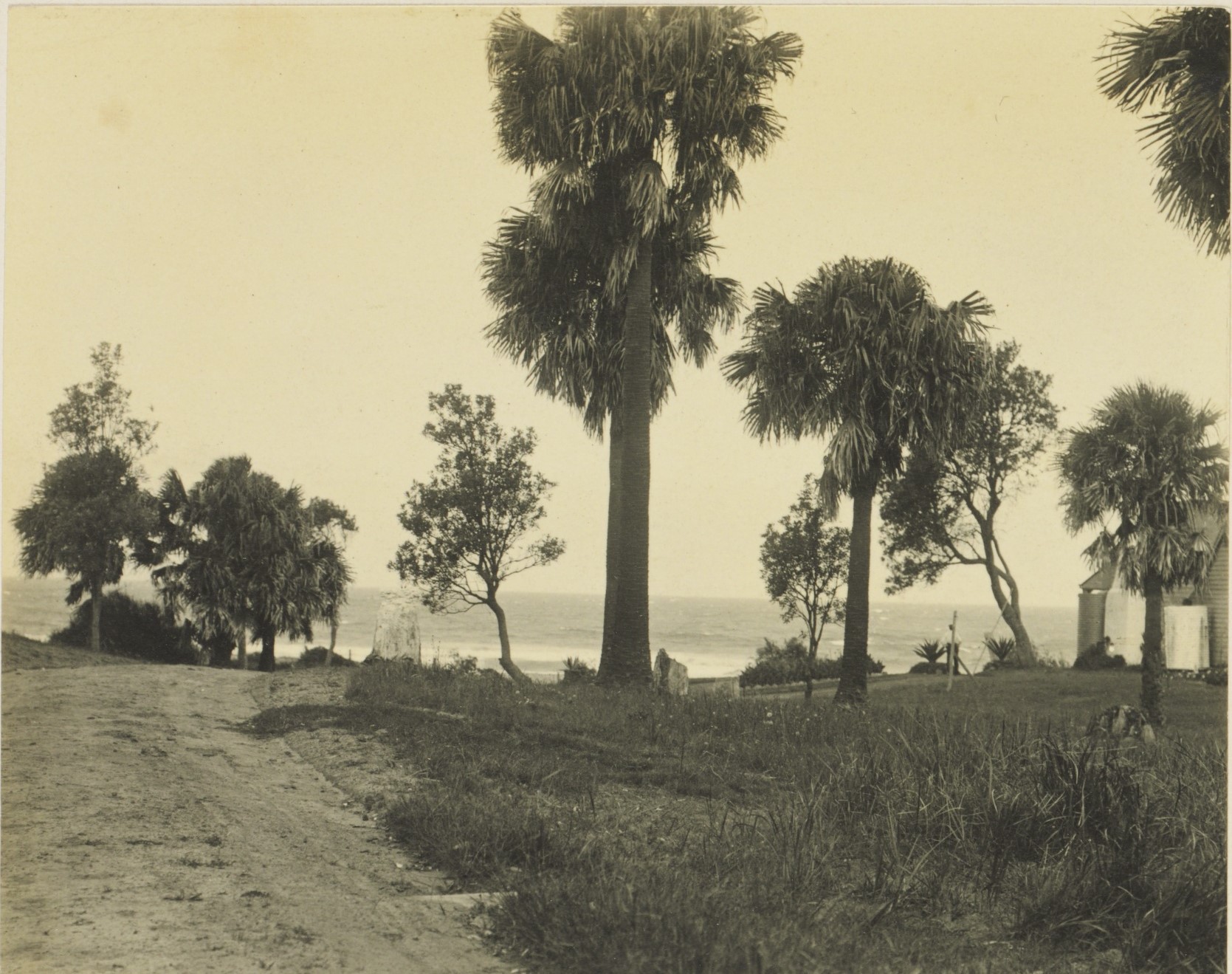
In these photos taken Sunday November 21st 1909 by car enthusiast and solicitor Arthur Wigram Allen, later involved in Bilgola Beach sales, you can see Snapperman Beach as it was when owned by Charles John Edward Forssberg and before other sections of this land had been purchased by John Ralston and become part of the Barrenjoey Land Company's subdivisions in 1912.
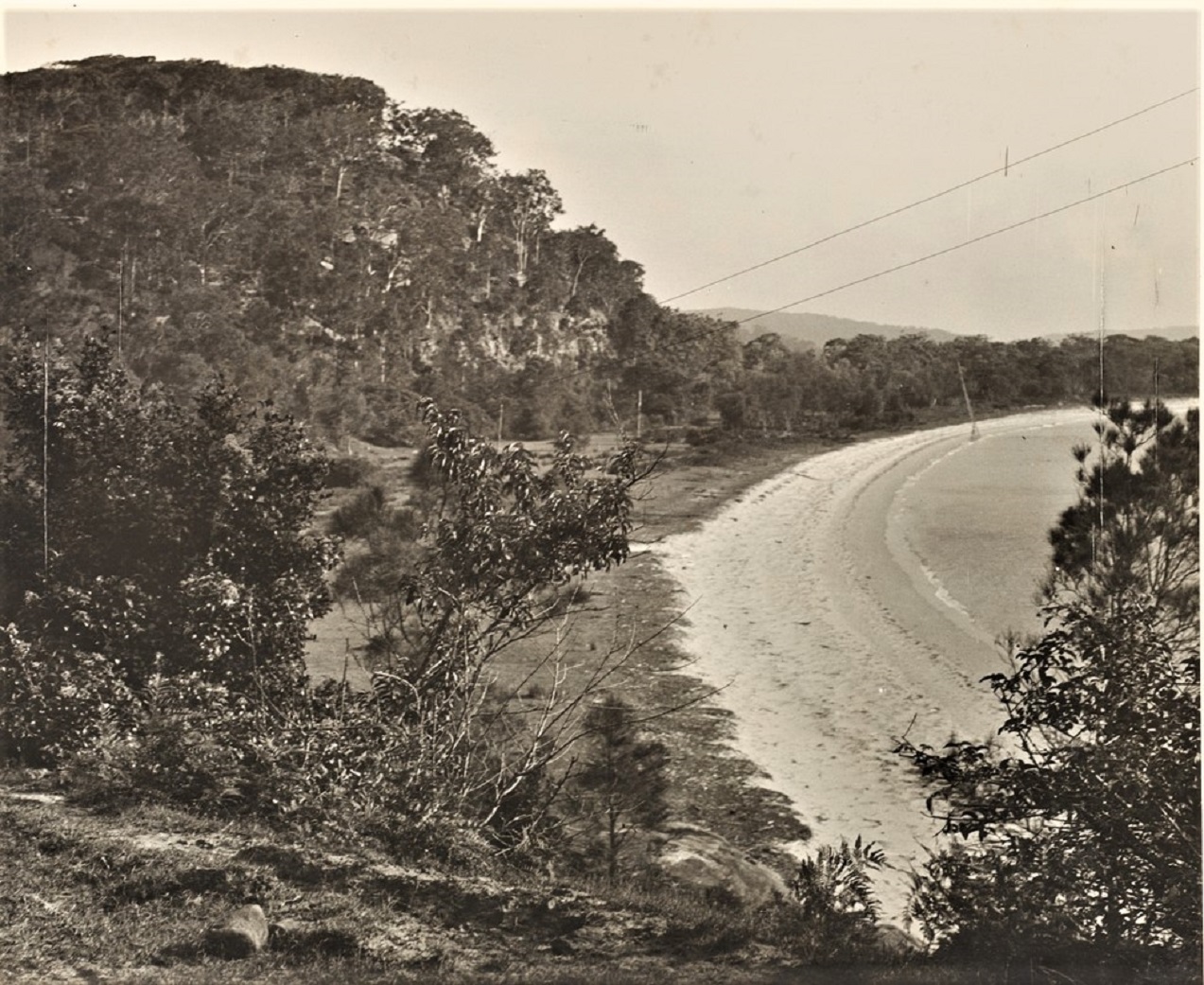 Description beneath photograph - 'A better view of the same beach'
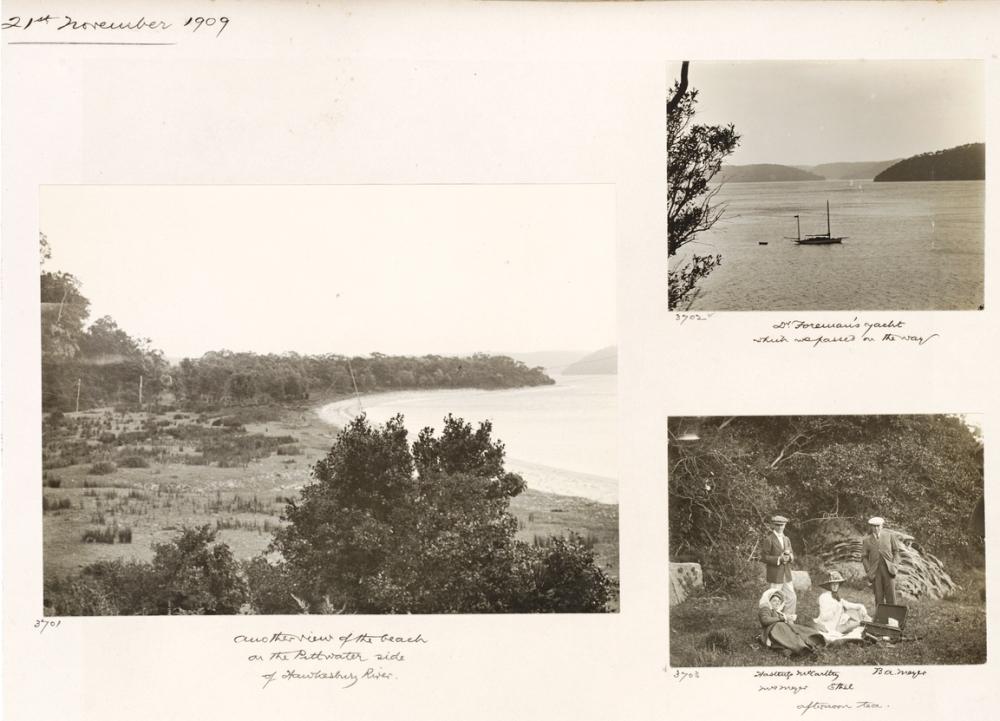
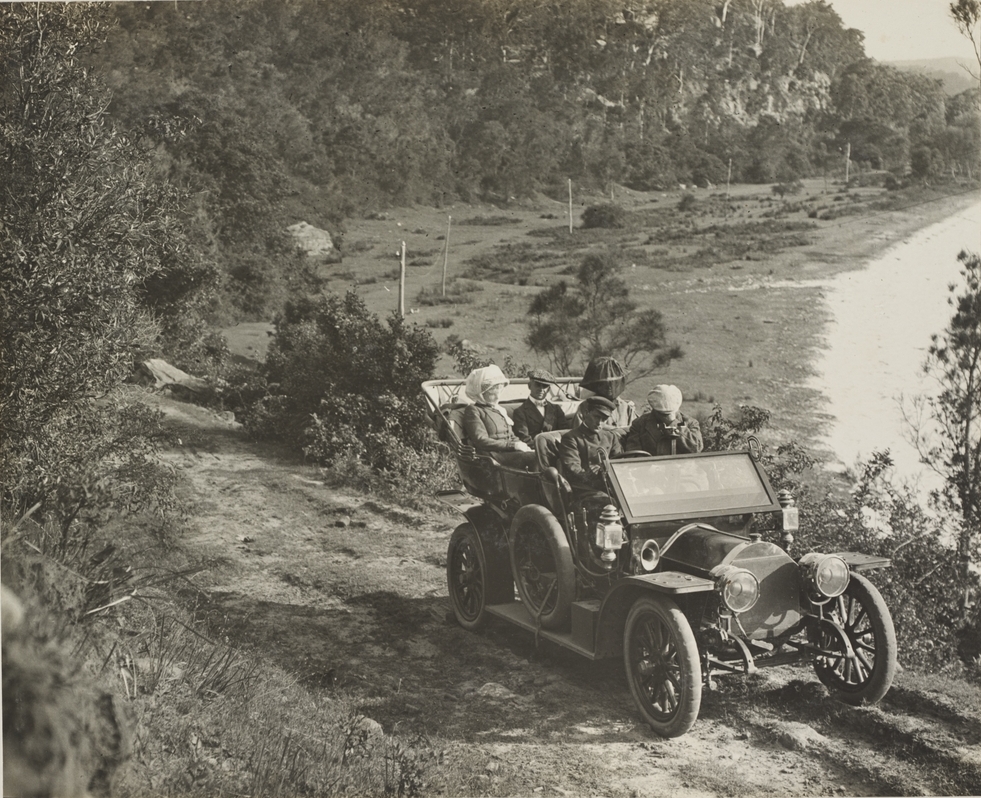
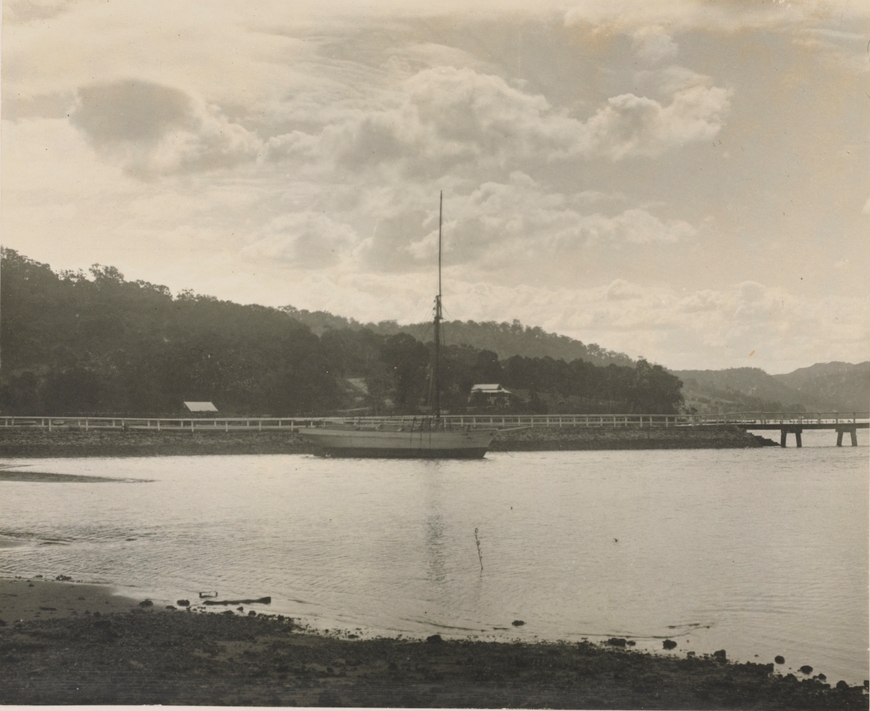
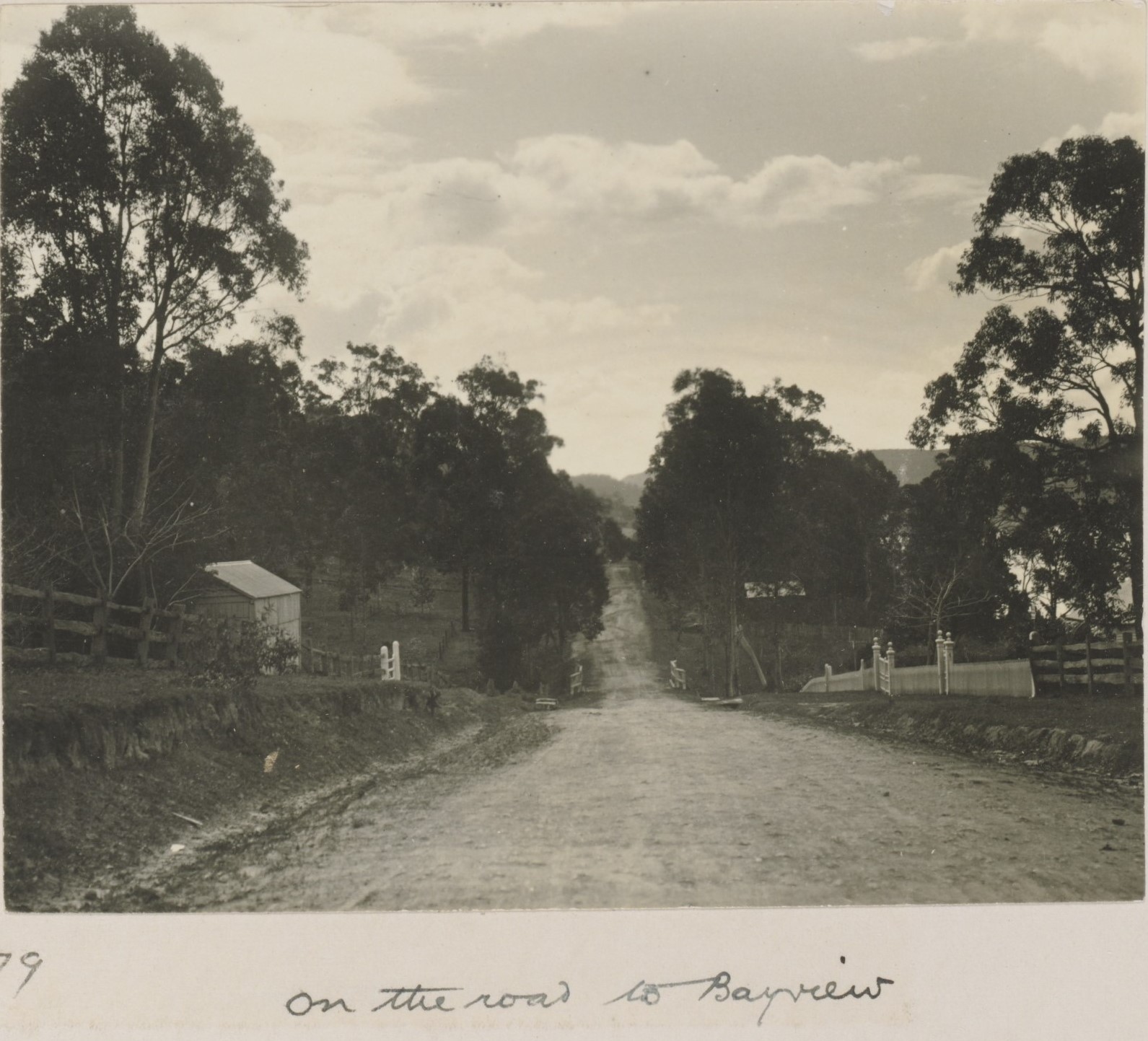
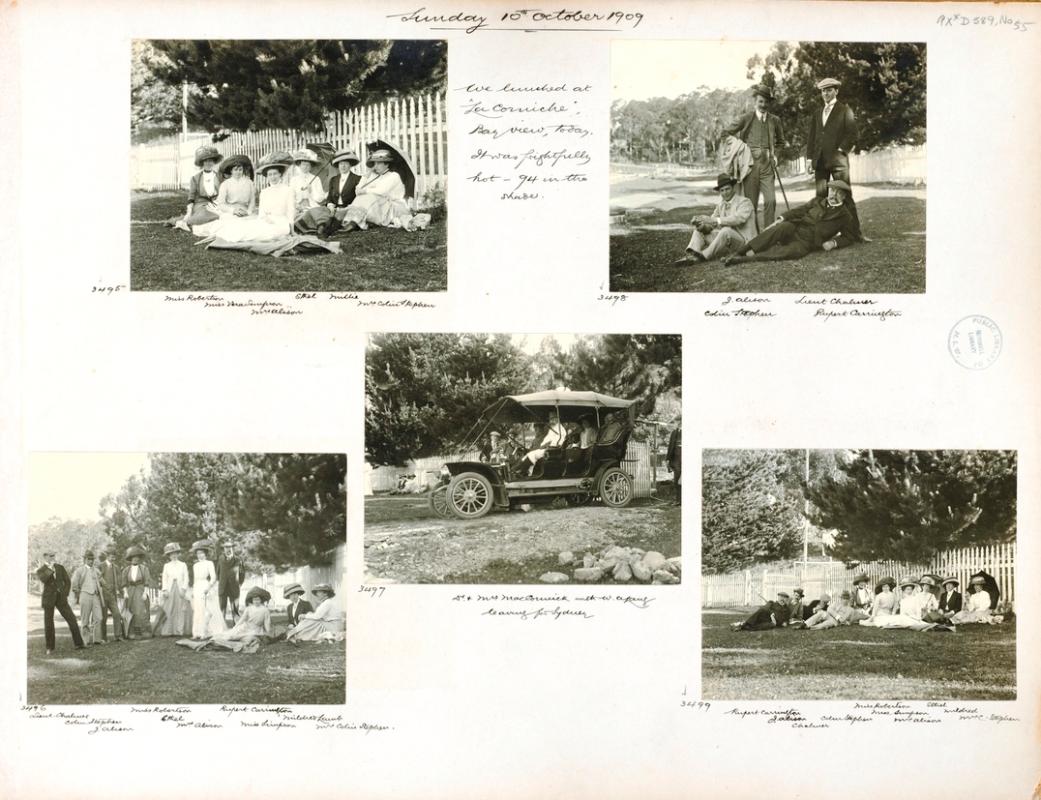
Allen Family at Bayview-Church Point on Sunday 10th of October 1909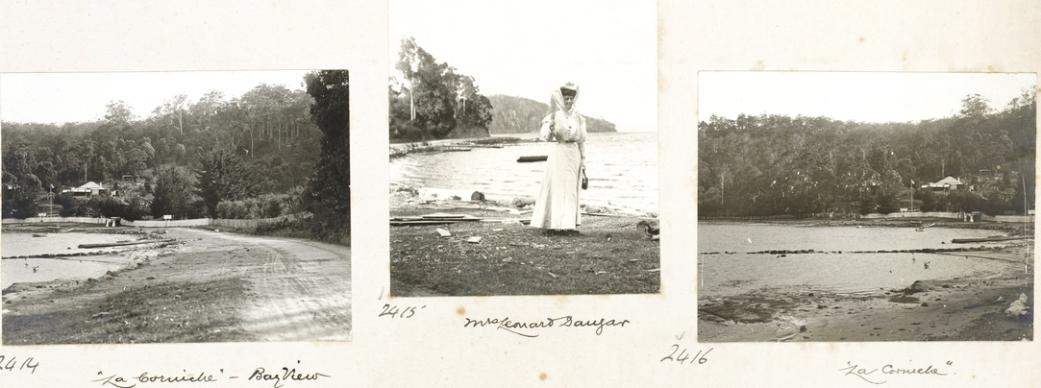
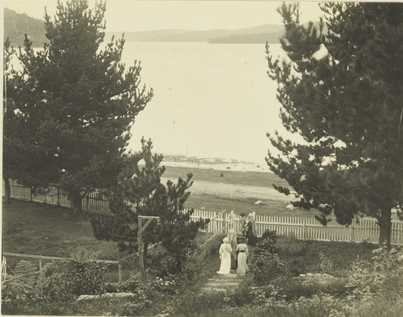
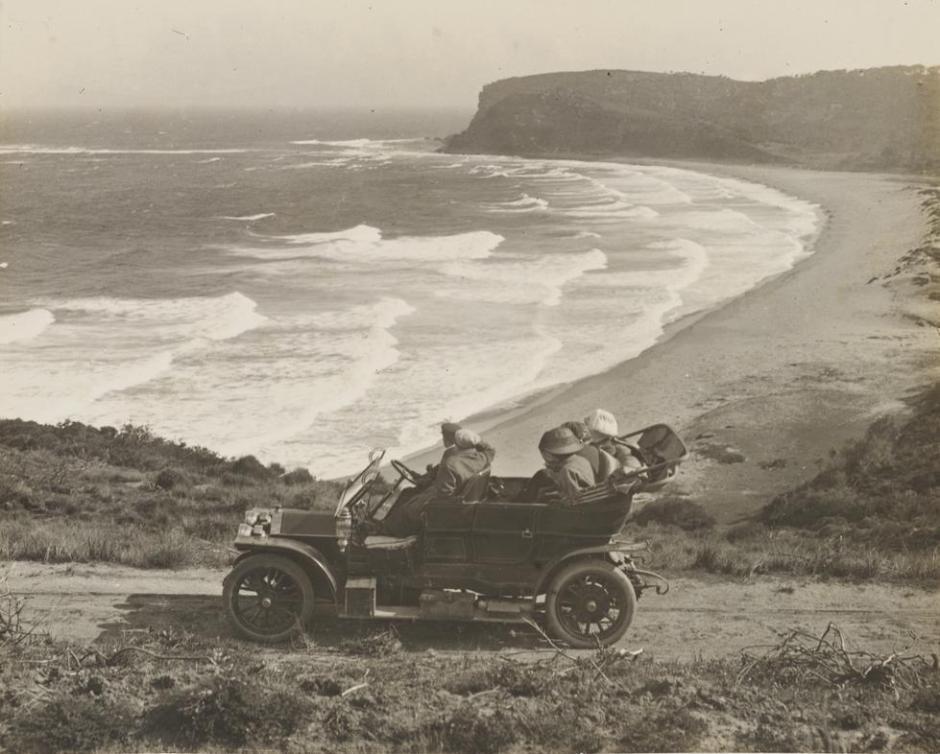
'The Beach just beyond Newport' - November 21st, 1909 - from Allen Family Albums: Album 52: Photographs of the Allen family, November - December, 1909 Image No.: a1373015h courtesy State Library of NSW - they're actually overlooking Newport beach here on their way to Bilgola
Barrenjoey road 'north of Newport' (going into today's Bilgola Bends), May 14 1914 - Pittwater History Unit, Mona Vale Library:
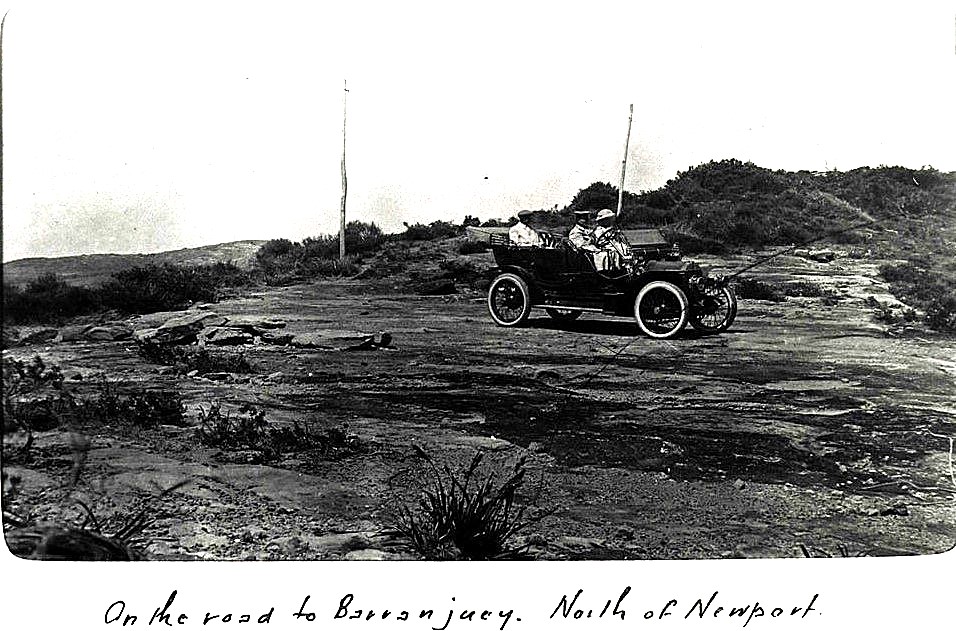
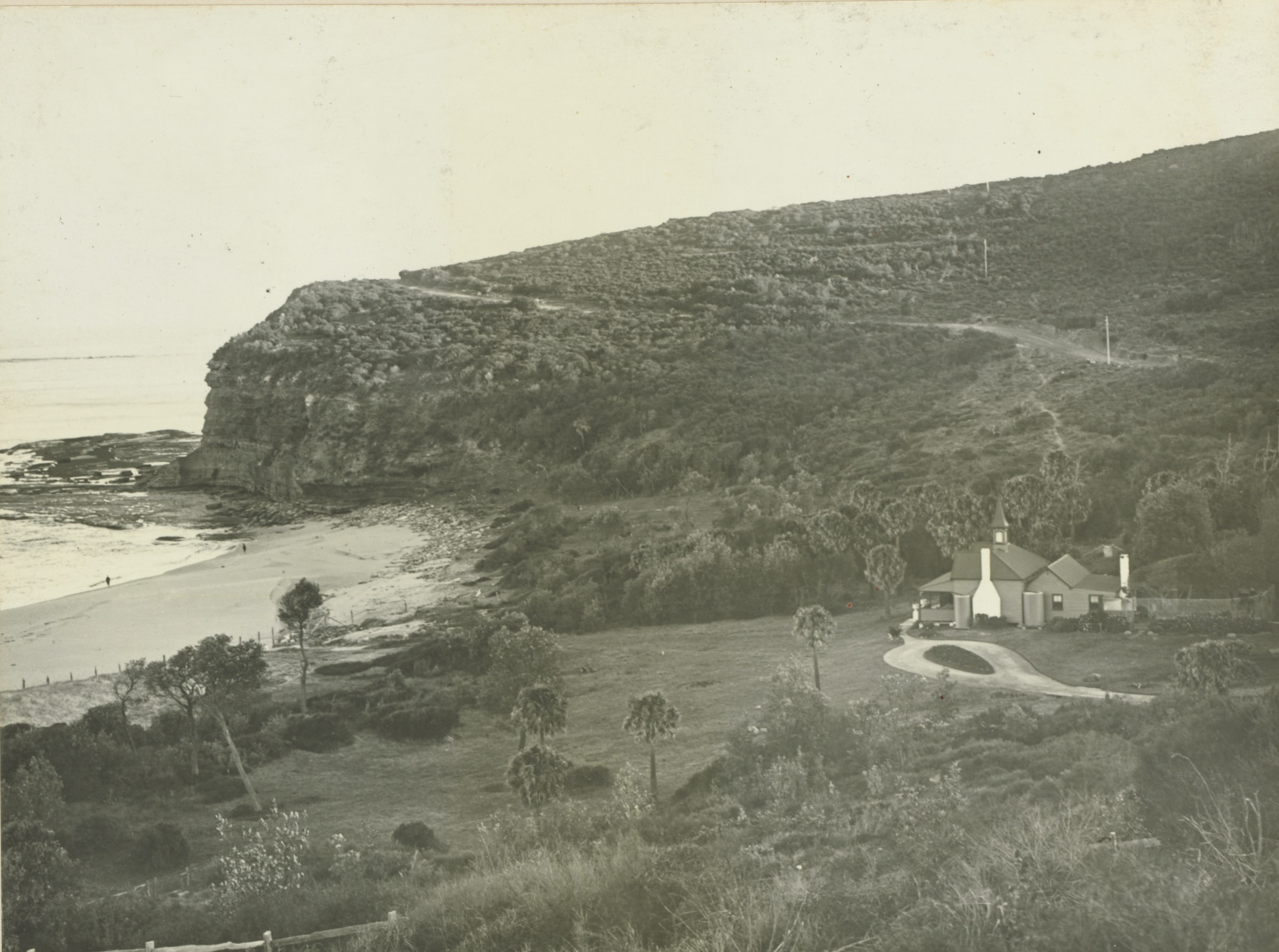
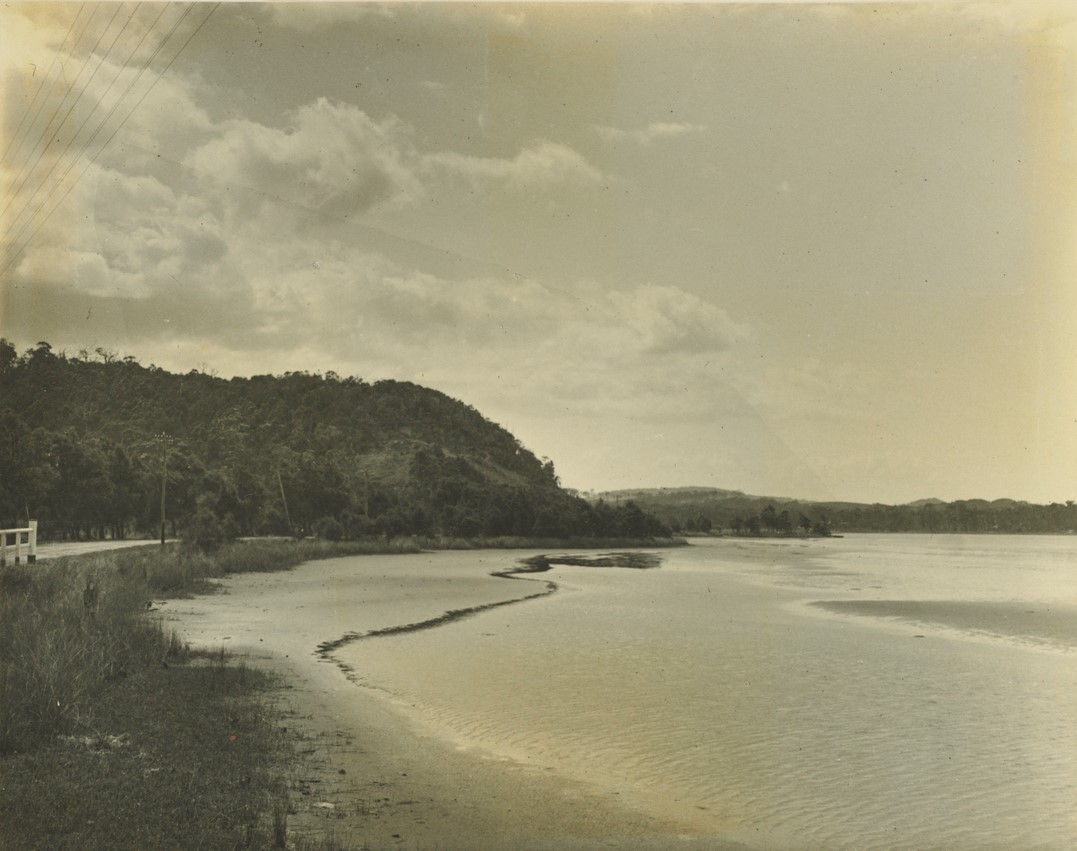
Sunday 19th of February 1911 - Allen Family Albums - Album 56; 'various pictures taken at Bilgola today'. Item: SLNSW_FL138237, courtesy the State Library of NSW:
.jpg?timestamp=1780024774211)
.jpg?timestamp=1780024813133)
.jpg?timestamp=1780024607247)
.jpg?timestamp=1780024667781)
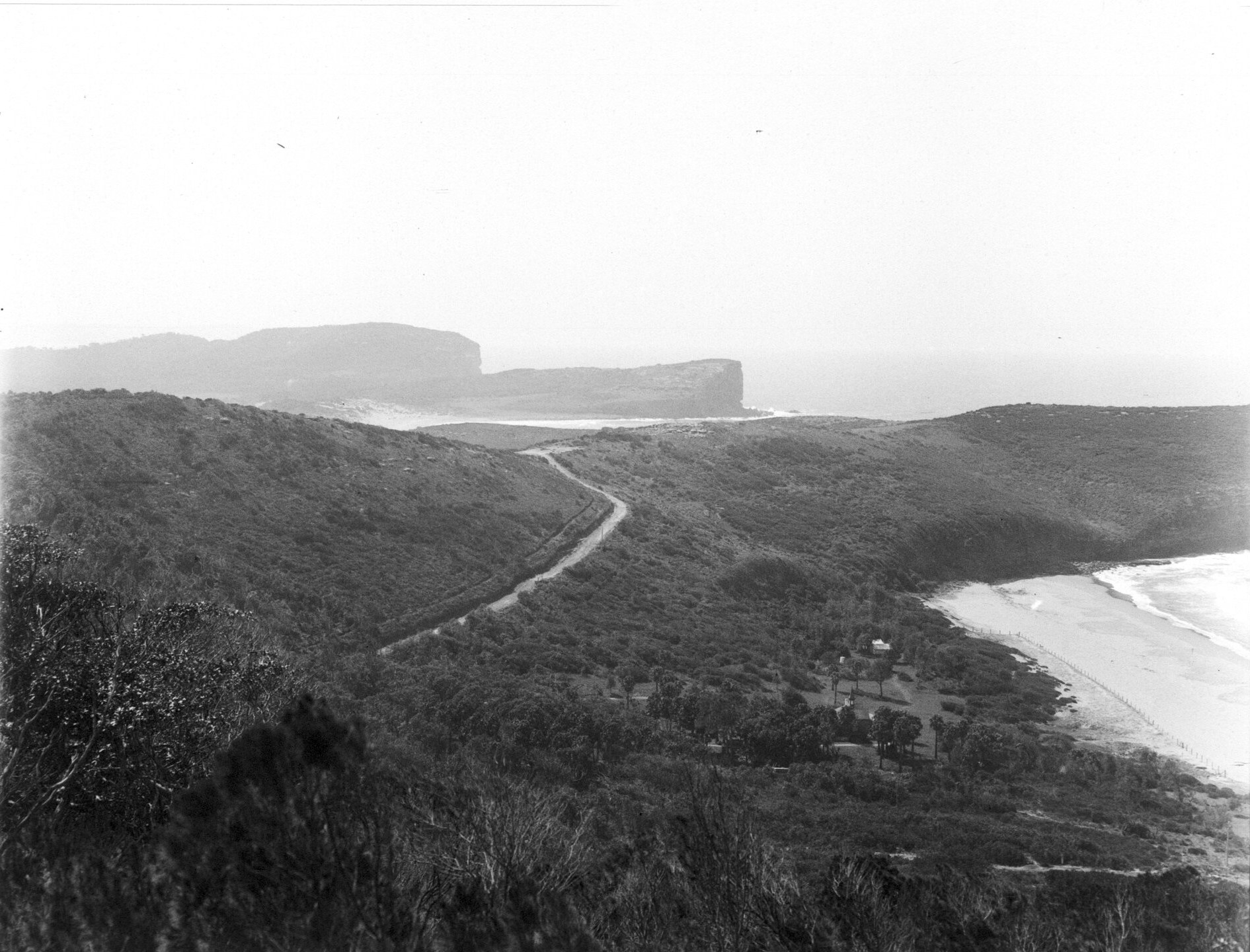
Bilgola Beach 1912 - image from NSW Records and Archives - note there was no Bilgola Bends as yet - the road went down into Bilgola Beach and up the other side
.jpg?timestamp=1780025324336)
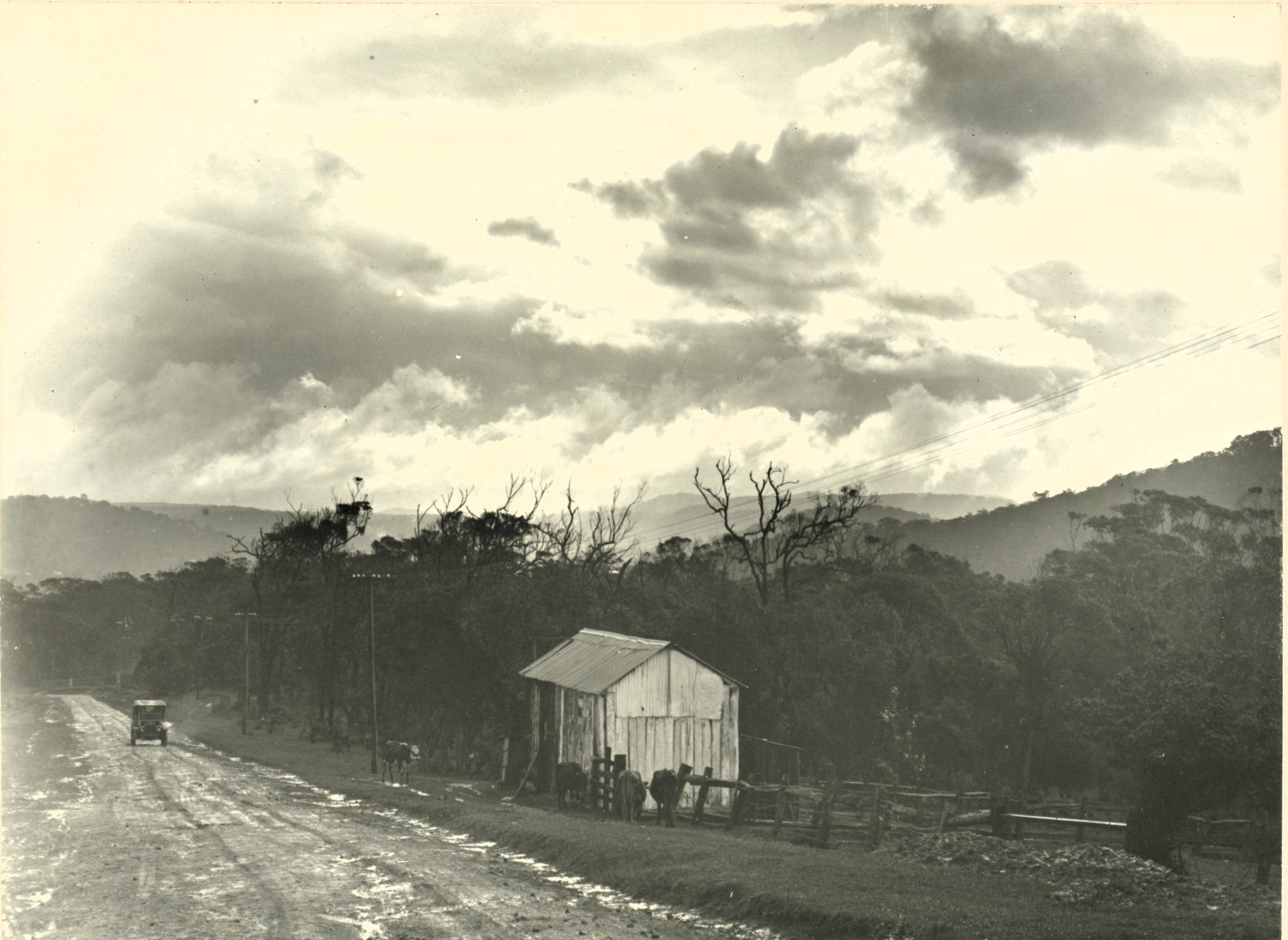
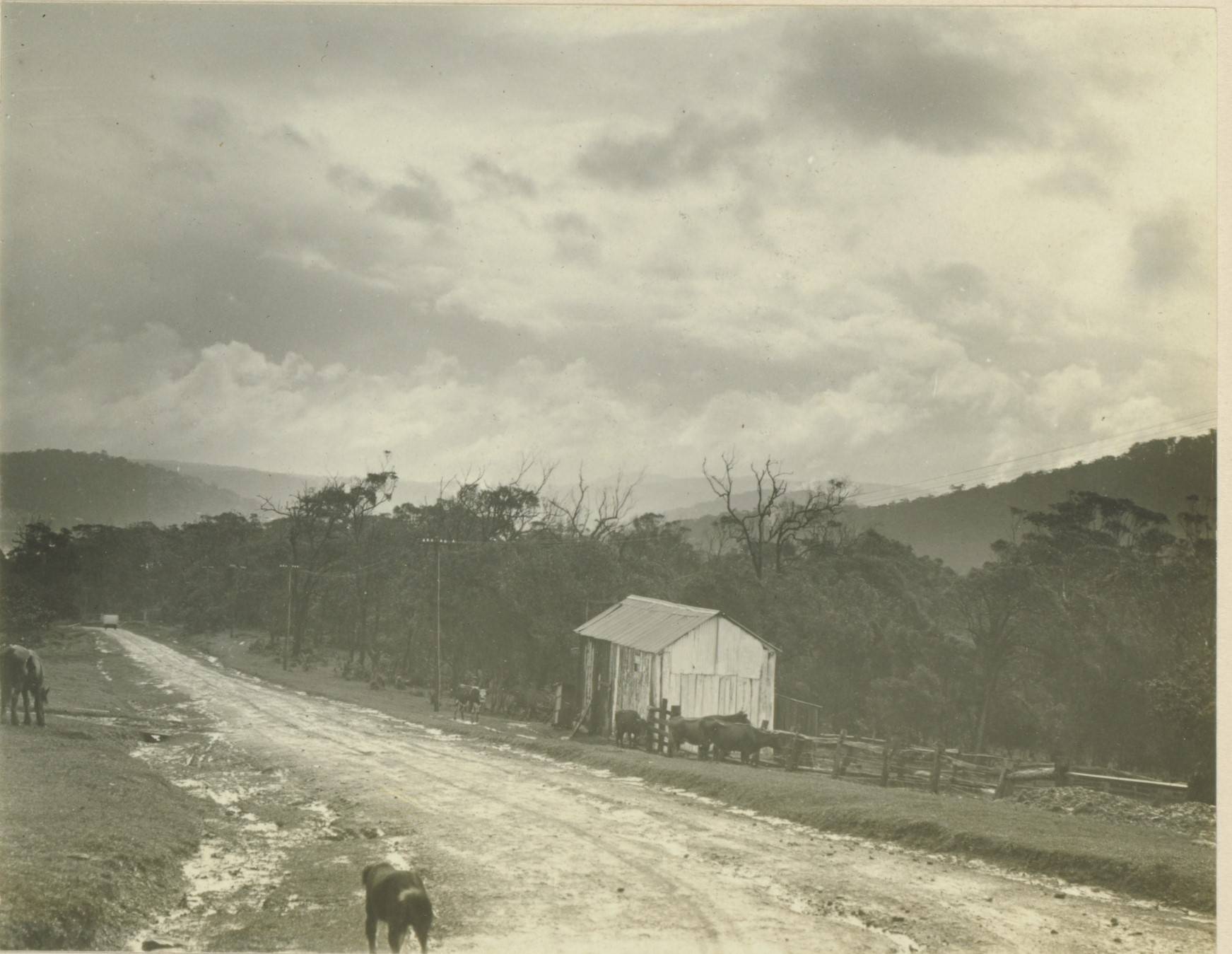
Corner of Beaconsfield street Newport and Barrenjoey Road, Sunday May 11th 1913. That is Boulton's cow shed and cows to the right of picture and looking down hill towards Newport Hotel. From 'Album 62: Photographs of the Allen family, 11 May 1913 - 15 October 1913' Item: SLNSW_FL137438 -courtesy State Library of NSW:
A foot or two further back - same angle:
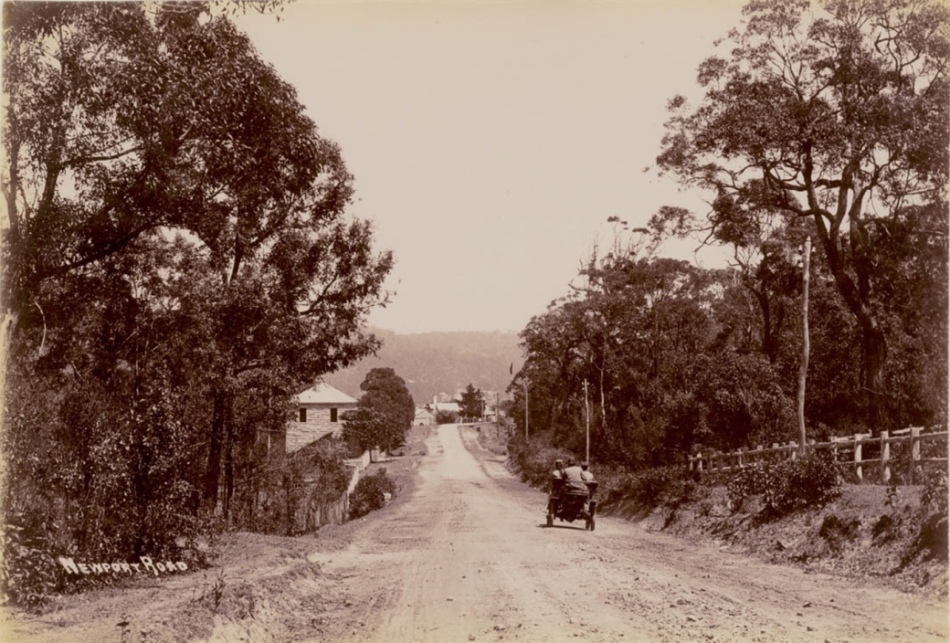
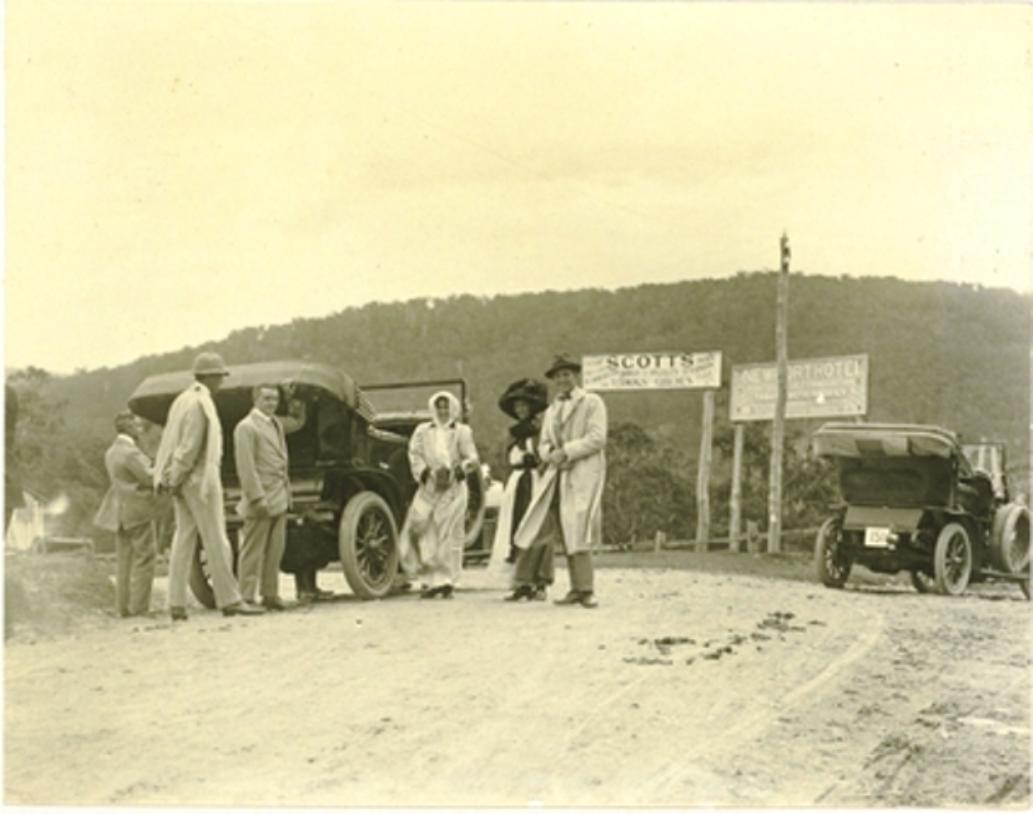
Above: Scotts Hotel Sign: Sunday 5th of February 1911, Top of Newport Hill, from Album 56: Photographs of the Allen family, 1 December - 30 April 1911. Image No: a3288031. Courtesy State Library of NSW. Visit; Collin’s Retreat, Bay View House, Scott’s Sanatorium, Guest and Boarding House: Crystal Bay, Newport

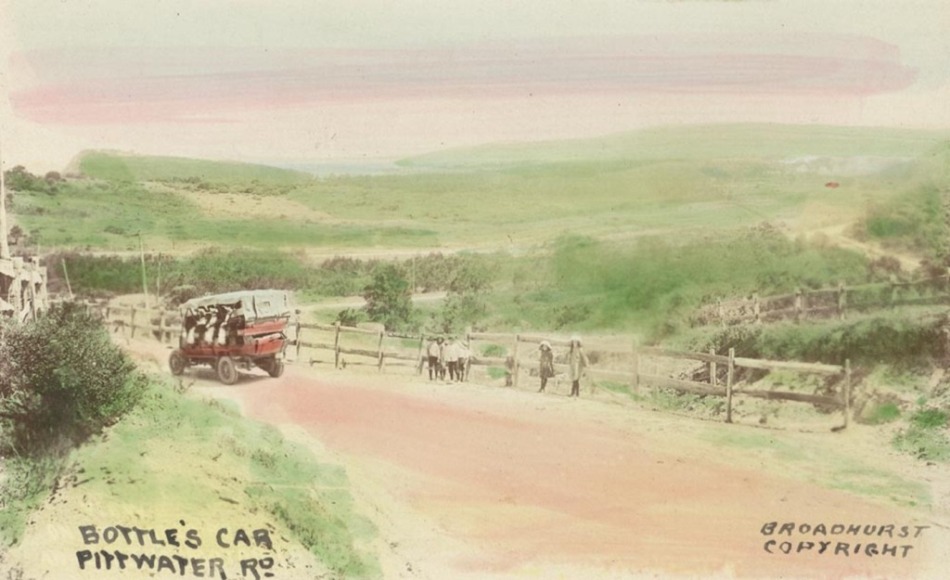
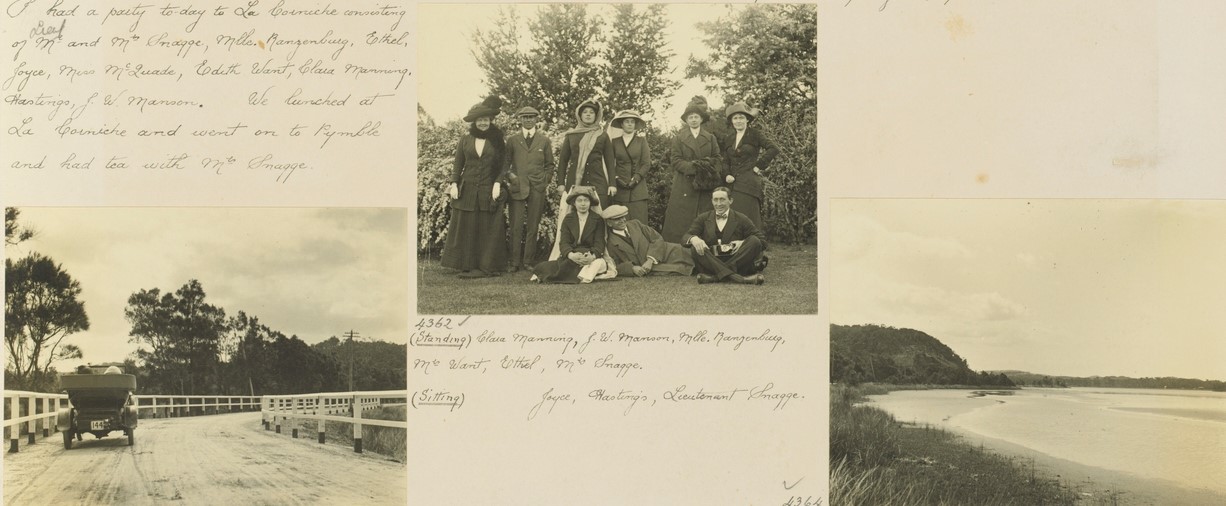
Sunday 27th August 1916. Today I took the new Electric Car 146 for a long run to Narrabeen, Margaret being with me. The Lancia car followed with Joyce,Ken, Miss Cadman and Miss Stickland. At Narrabeen, Margaret and I left the Electric car and we all went on to Bilgola in the Lancia, arriving there in time for lunch.
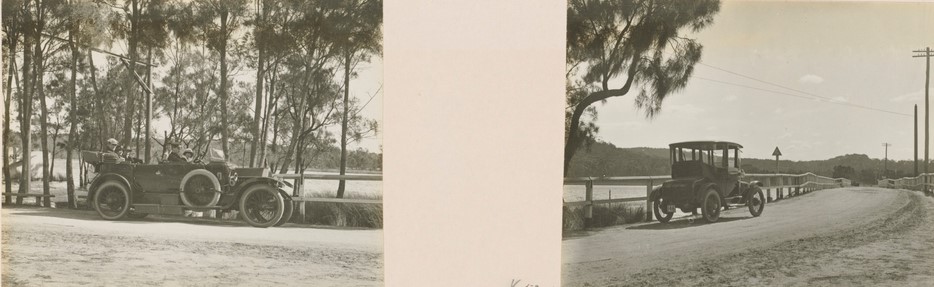
The Lancia car at Narrabeen. The Electric car at Narrabeen. Image No. a3295021h. From Album 67 Photographs of the Allen family 14 January 1916 - 5 February 1918, courtesy State Library of NSW.
Above. Newport August 1916. Pic a3295024h, Courtesy State Library of NSW.
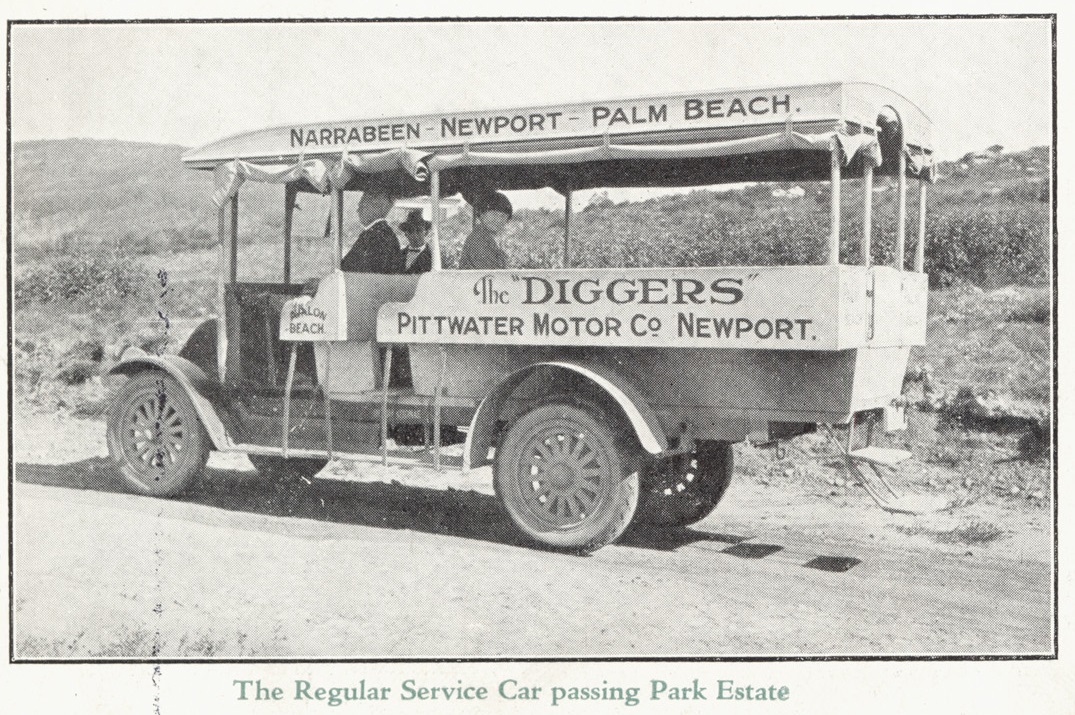
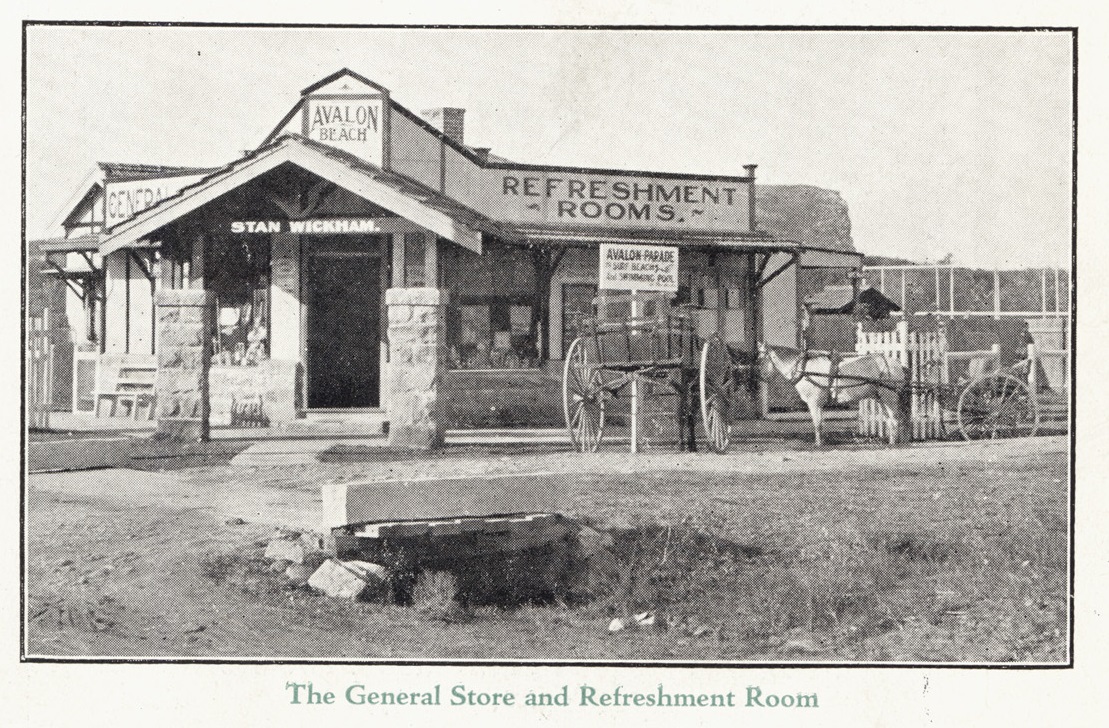
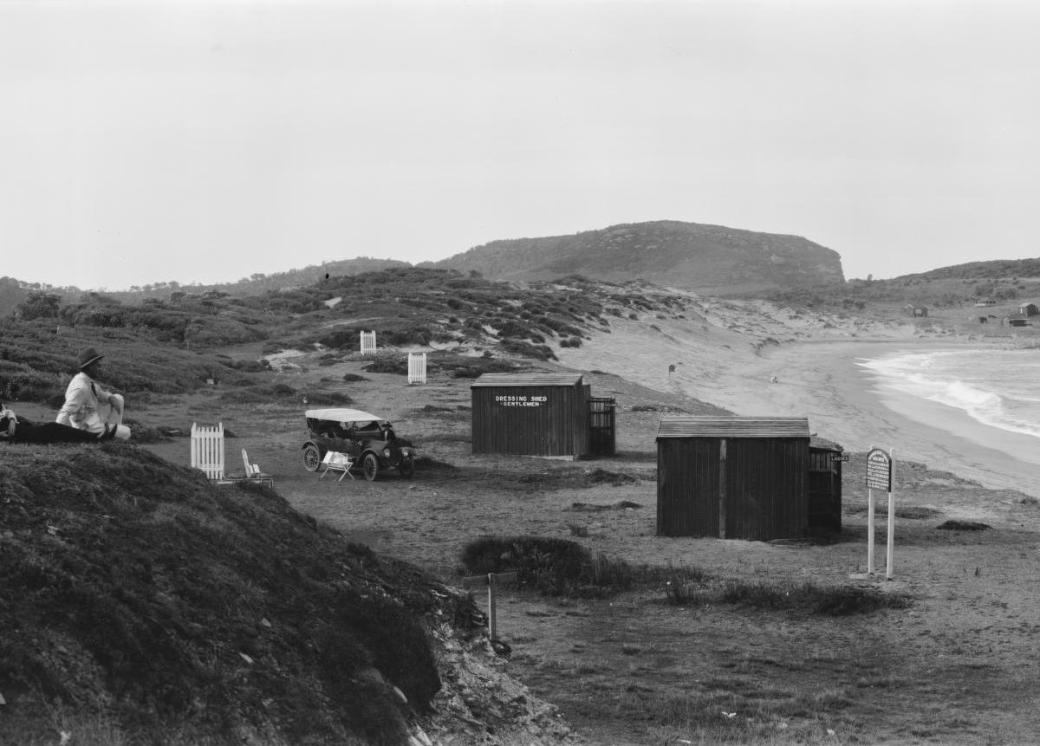
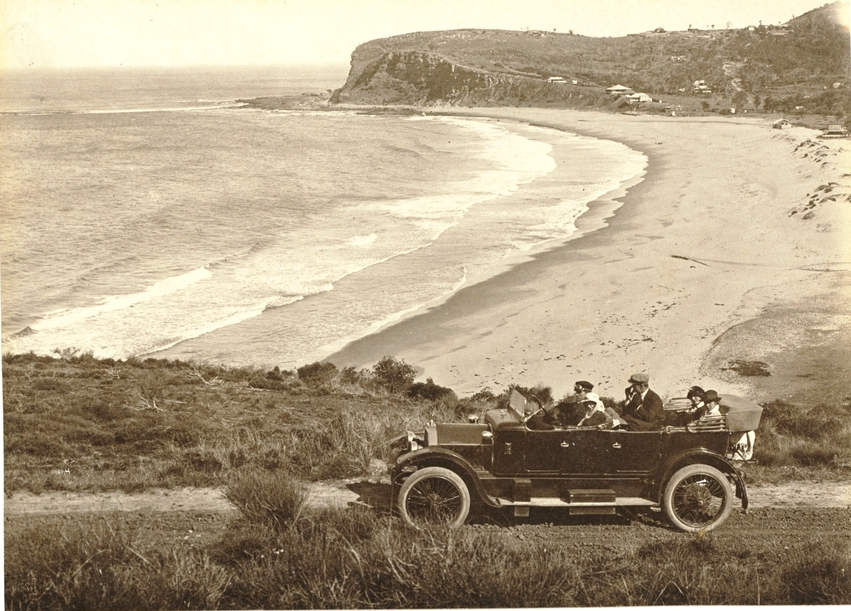
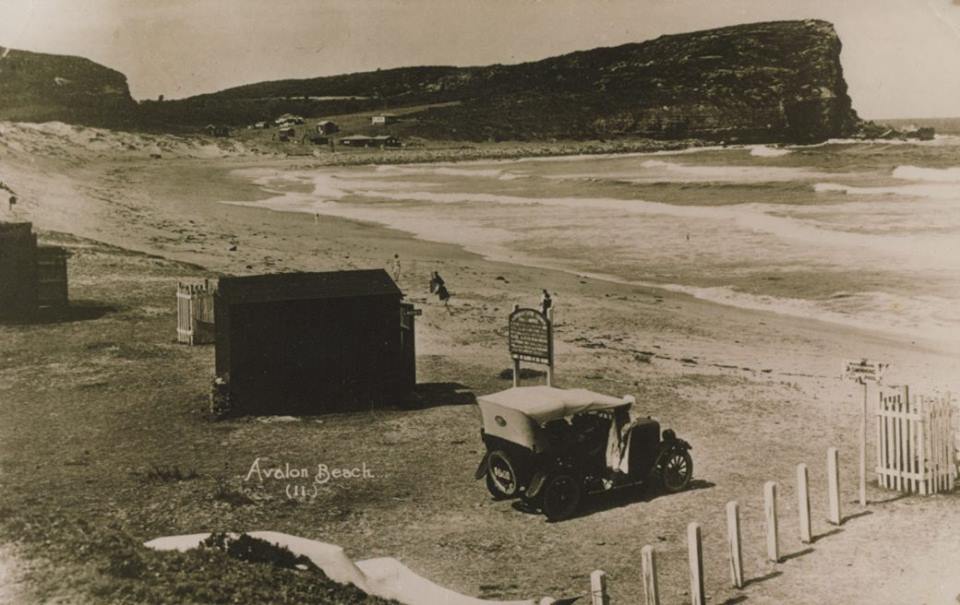
'Panorama of beachgoers at Avalon Beach', New South Wales, ca. 1925 (1920; no mid-beach dressing sheds in picture as there are in a 1930 picture) - section enlarged to show dressing sheds on Avalon Beach at this point in time and, a car! The beginnings of Norfolk Pines, planted by A J Small are in the white wicker tree guards. Image No.: nla.pic-vn6217968 by EB Studios, part of the Enemark collection of panoramic photographs, courtesy National Library of Australia.
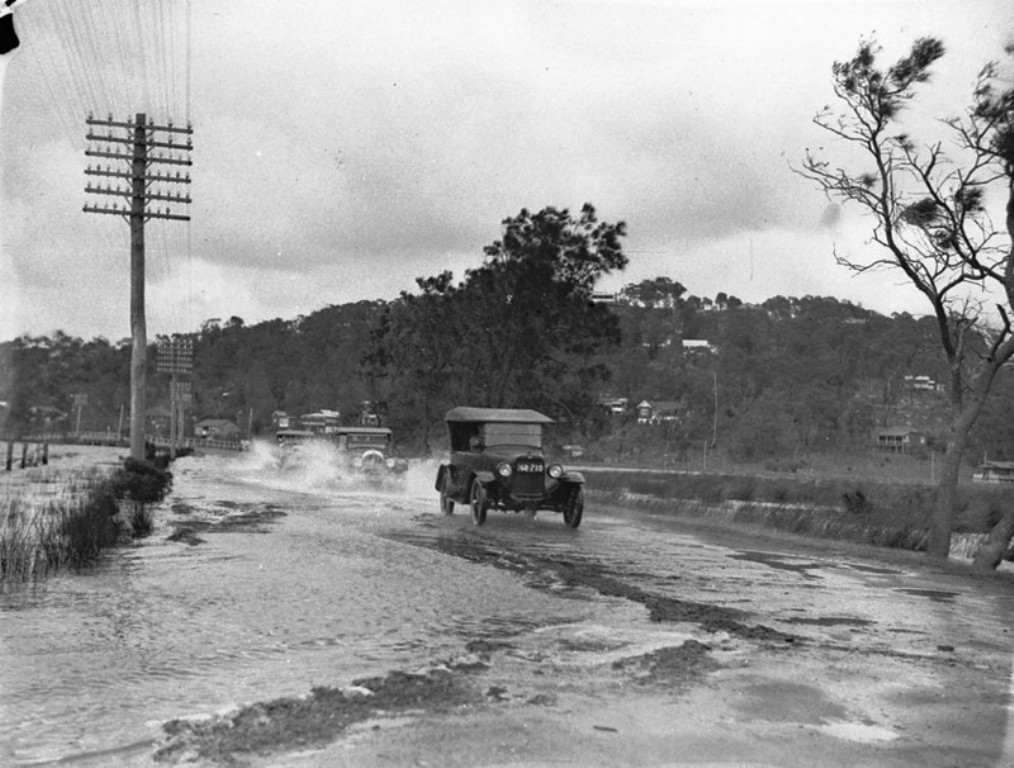
A 1926 Overland, a 1928 (?) Chrysler, and a 1928 (?) Dodge ploughing through Narrabeen floods - Image. No: hood_06391- from the collections of the State Library of NSW.
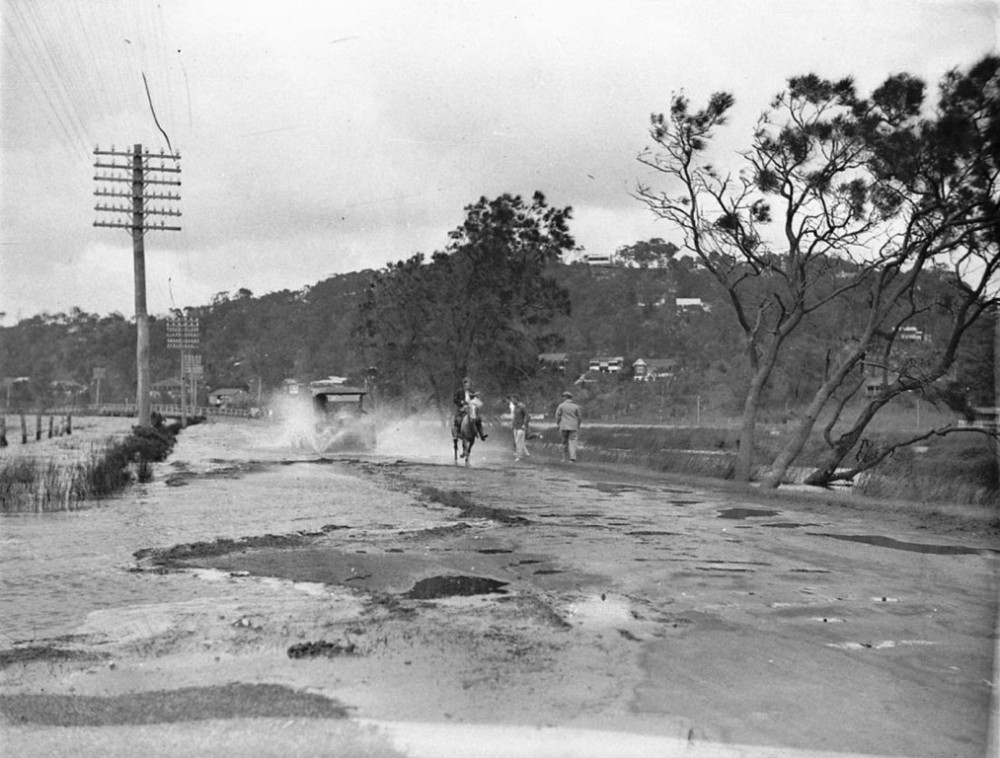
A car and a horse plough through a flooded road, Narrabeen - Image. No: hood-006394 from the collections of the State Library of NSW. Visit: Narrabeen Lagoon And Collaroy Beachfront: Storms And Flood Tides Of The Past
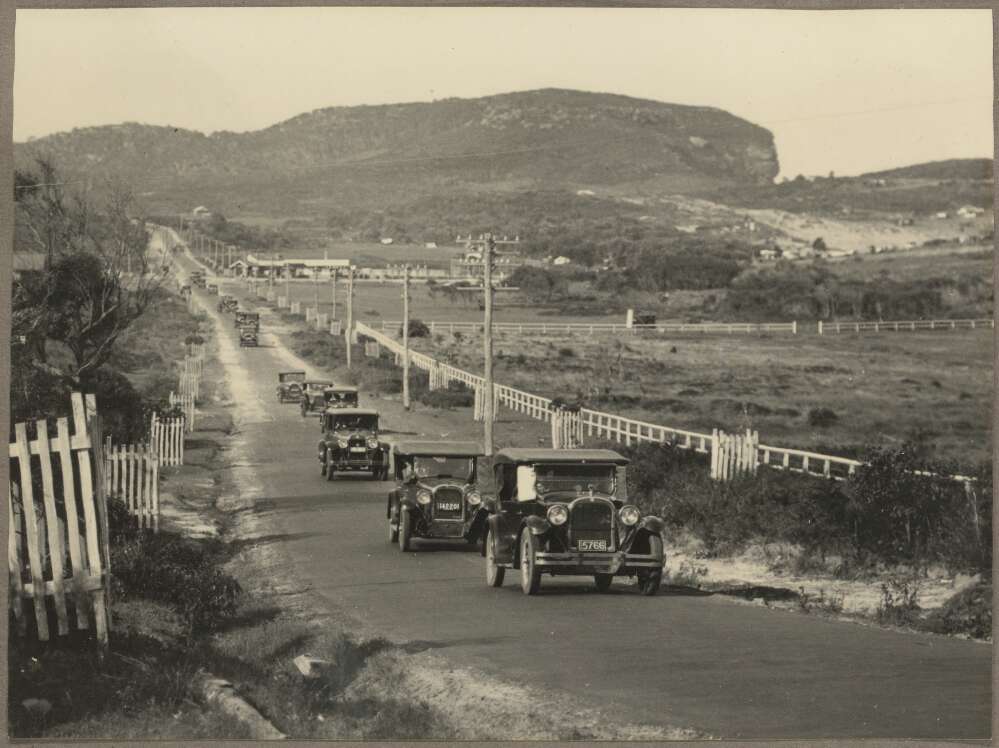
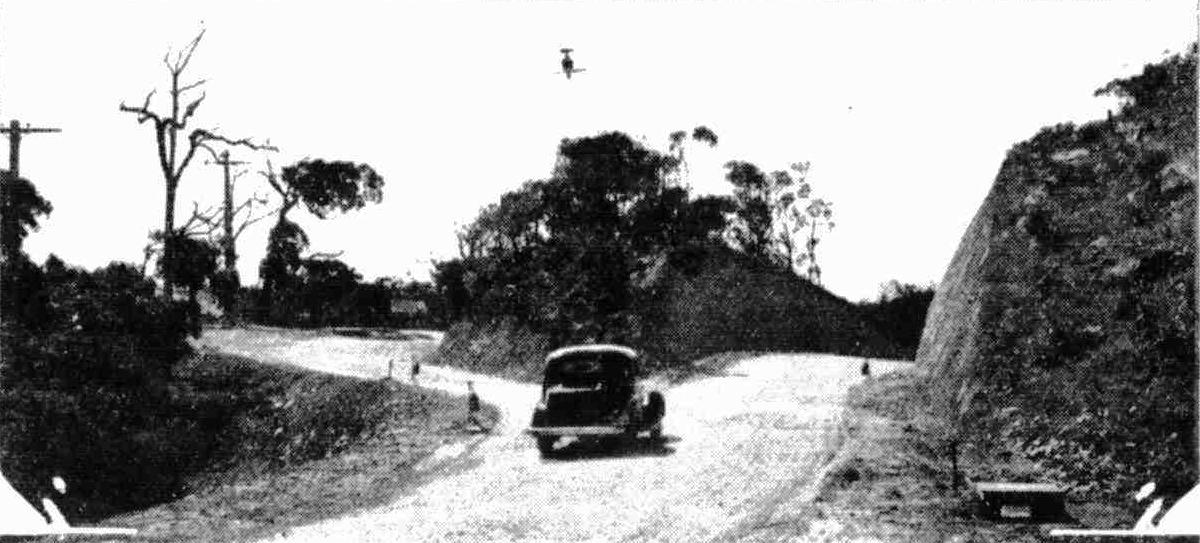
Extensive improvements are being made to the road to Palm Beach. This big cutting on the Newport-road has just been completed. The old blind turn, which was a source of danger when traffic was heavy, is on the left. Another cutting is being made at the northern end of Mona Vale. Tents and Motor-Campers (1935, November 20). Sydney Mail (NSW : 1912 - 1938), p. 50. Retrieved from http://nla.gov.au/nla.news-article160499041
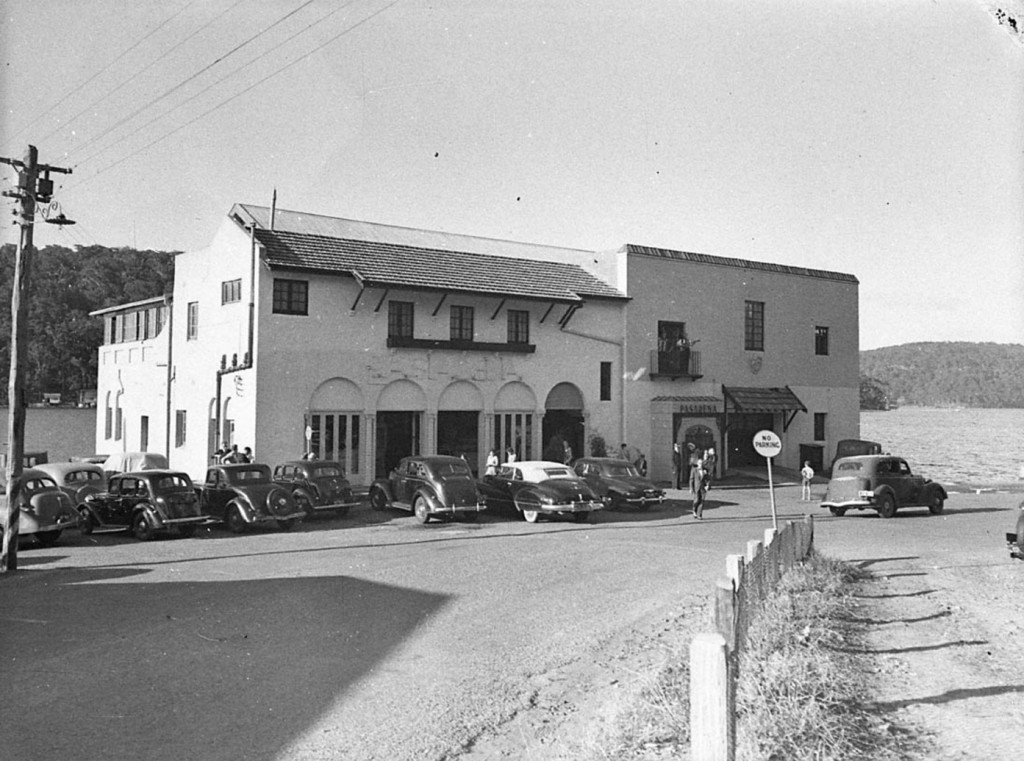
From Album: 'Pasadena waterside restaurant, Church Point (taken for Mr Teasdale-Smith), 1950' by Sam Hood. Images No: Home and Away - hood_11654h (top) hood_11650h and hood_11652h (below) - courtesy State Library of NSW. Visit: Pittwater Restaurants You Could Stay At Pasadena Road House – Church Point
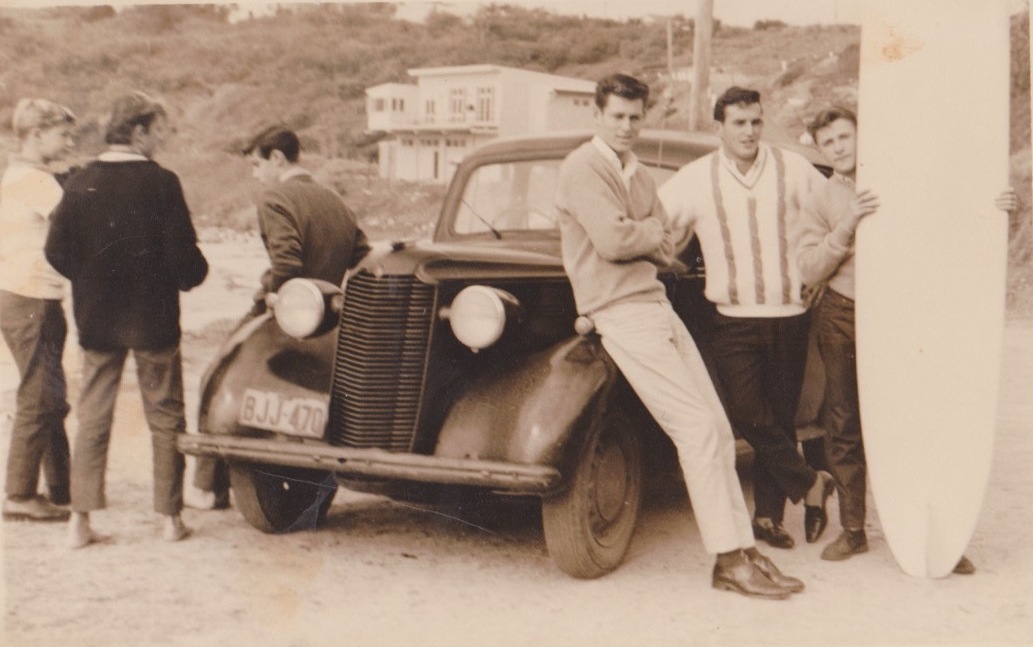
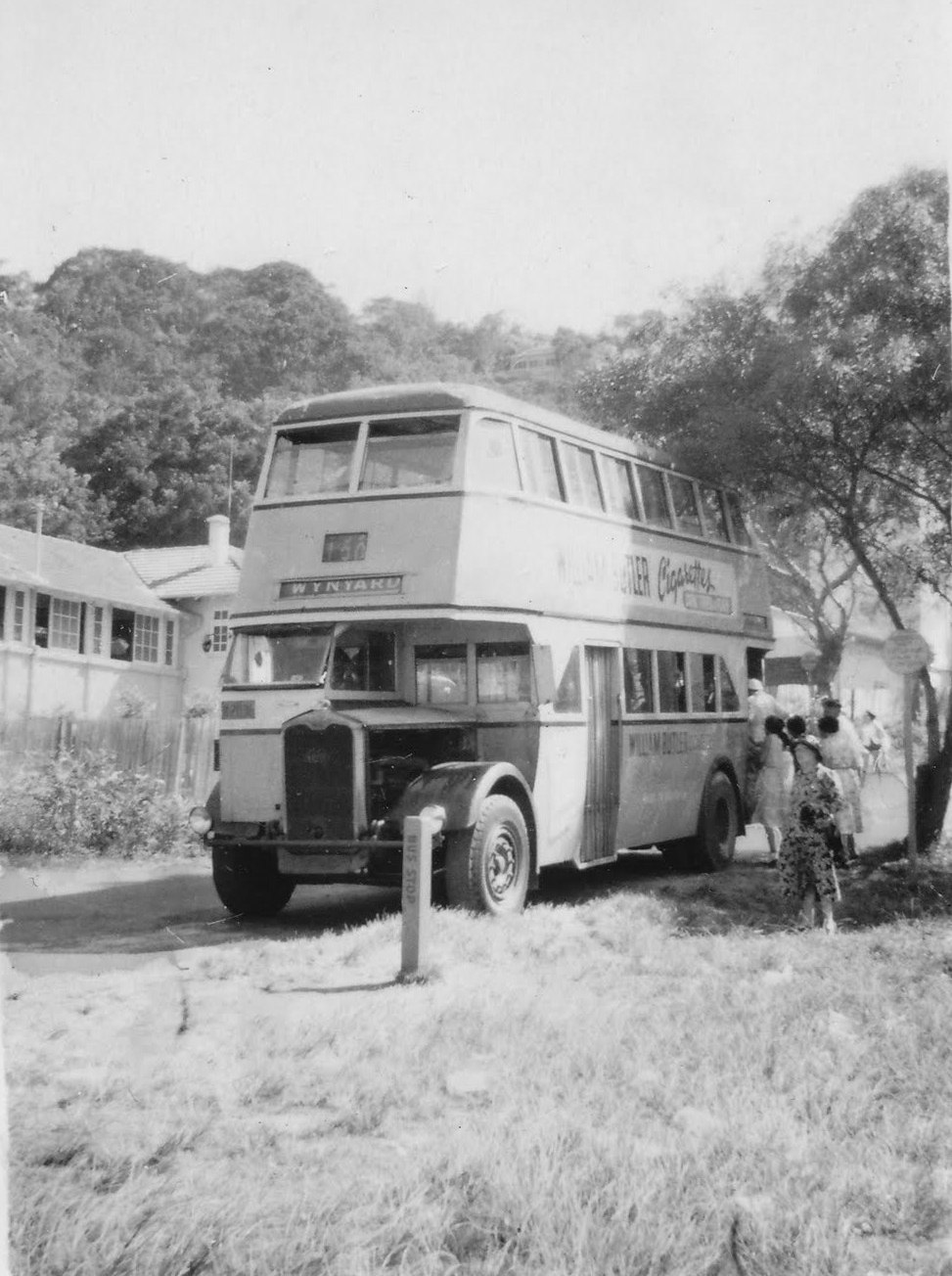
- Roads To Pittwater: The Pittwater Road
- Roads In Pittwater: The Barrenjoey Road
- The Bus To Palm Beach: Some History
Thanks Malcolm and Bill - vroom vroom!