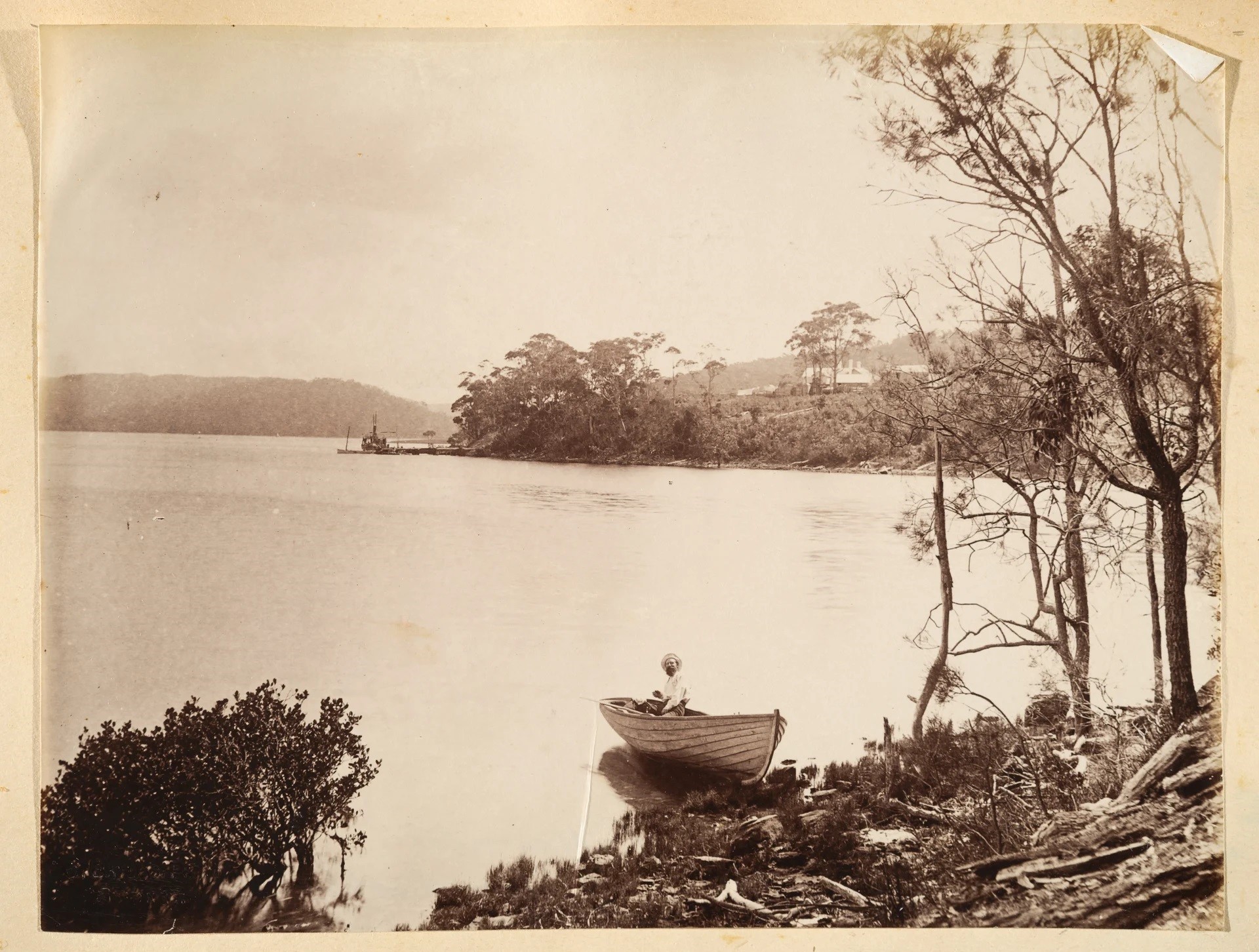
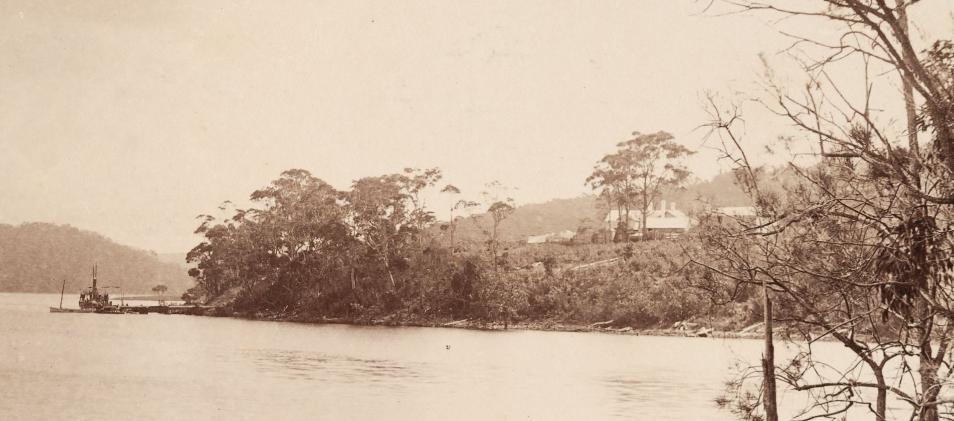
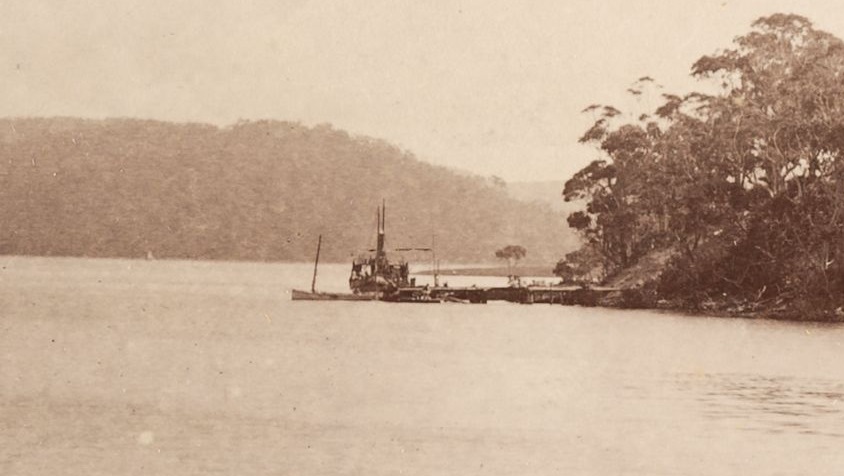
Photograph of Newport [attrib], Sydney, This photograph is one of 147 albumen prints made by some of the most significant photographers who worked in New South Wales during the 19th century. Courtesy Powerhouse Museum. Possibly a circa 1884, Robert Hunt photograph. Sections from:
Australia’s earliest surviving photograph is said to be by a Tasmanian photographer, George Baron Goodman, and of Dr William Bland, an ex-convict, prominent surgeon, humanitarian, social reformer and inventor. It was taken in 1845.
In New South Wales a gentleman engaged to work at the Sydney Mint, Robert Hunt is considered by many to be a pioneer of photography in New South Wales, so much so that 170 years since his first known photograph was taken, his works are still on display.
Robert Hunt was an amateur photographer and clerk, born in London, the son of Henry Leigh Hunt and Ellen, née Simpson. He came to New South Wales in 1854 to work as chief clerk of the bullion office at the Royal Mint and soon started to practise photography as a hobby. Hunt and John Smith 's outdoor stereoscopic views taken in 1855 are believed to be the first colonial examples of this type of photograph on card.
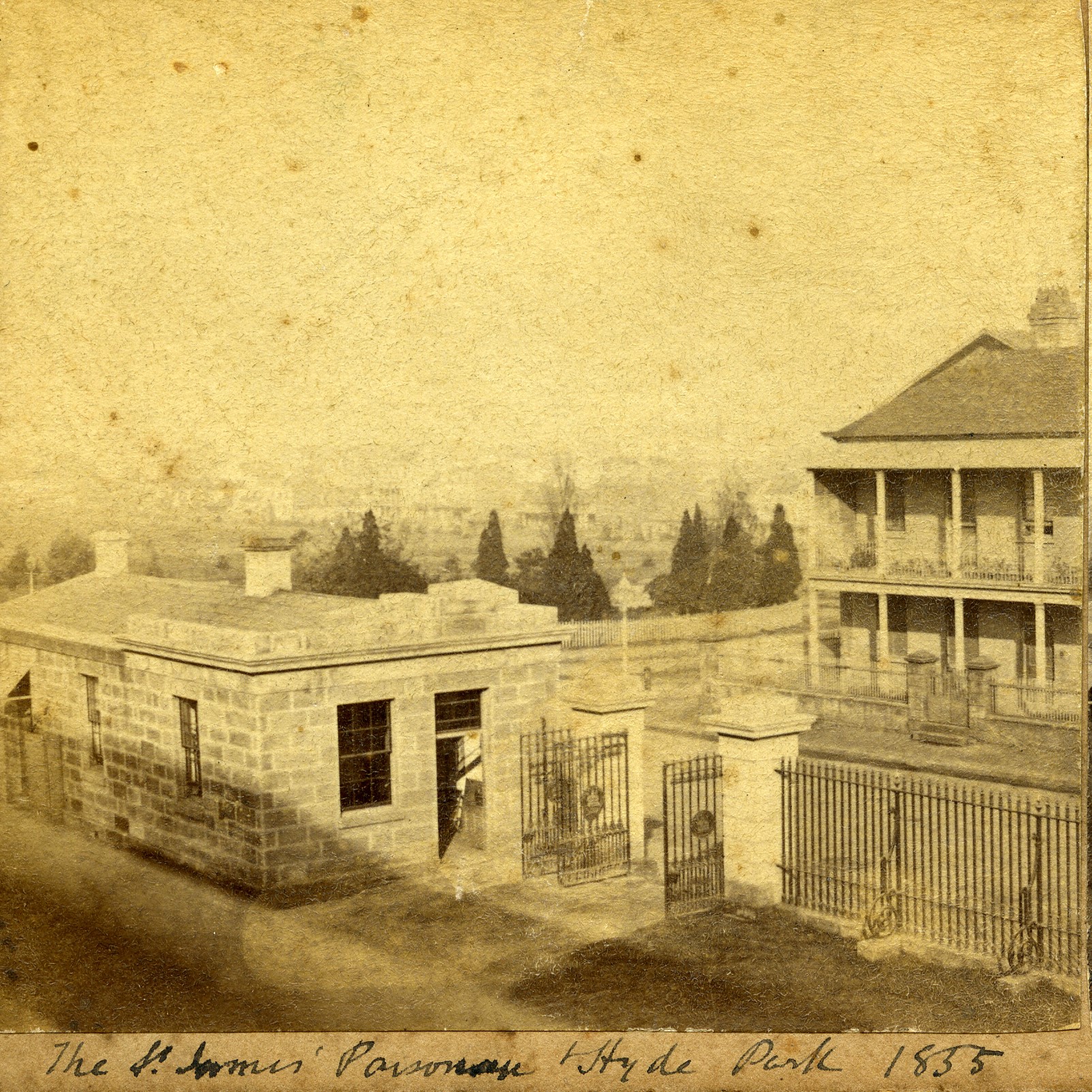
'The St Jame's Parsonage & Hyde Park 1855 ' Photo: Robert Hunt
In 1857 Hunt photographed the wrecked in Dunbar on which his two sisters, Sarah and Emily, had lost their lives. In a letter to his family in England Jevons described how Hunt had stayed away from work at the Mint for more than a week after the tragedy, 'searching all the time for some relic or trace of his sisters' [4].
On the night of Thursday 20 August 1857, after 81 days at sea, the Dunbar arrived off Sydney Heads. Captain James Green was a veteran of eight previous visits to Sydney and had been captain on the Dunbar on its 1856 voyage, but on this night there were treacherous weather conditions, with heavy rain squalls impairing vision and obscuring the cliffs at the entrance to Port Jackson, several hundred metres north of the Macquarie lighthouse.
The Dunbar went aground where it did, at The Gap, just south of the entrance to Sydney harbour. The impact shattered the ship, bringing down the topmasts, and the ship began to break up almost immediately. The lifeboats were destroyed by the pounding seas.
One crewman, James Johnson, was hurled onto the rocks where he managed to gain a finger hold, enabling him to climb to a relatively safe ledge, while the lifeless bodies of his fellow travellers were flung up against the cliffs below.
As the enormity of the tragedy was revealed the next morning, and searches were made for any other survivors, sharks attacked those trying to recover the bodies of the dead. Only on the morning of 22 August was Johnson noticed from the cliff top, and rescued. He was the sole survivor.
With the loss of 121 people out of 122 aboard, the wreck of the Dunbar had a major impact on Sydney. The wreck of the Dunbar is still one of the worst disasters to have occurred in New South Wales, and it is remembered each year by memorial services held at St Stephen's Church in Newtown, where many Dunbar victims were buried in a mass grave. [5.]
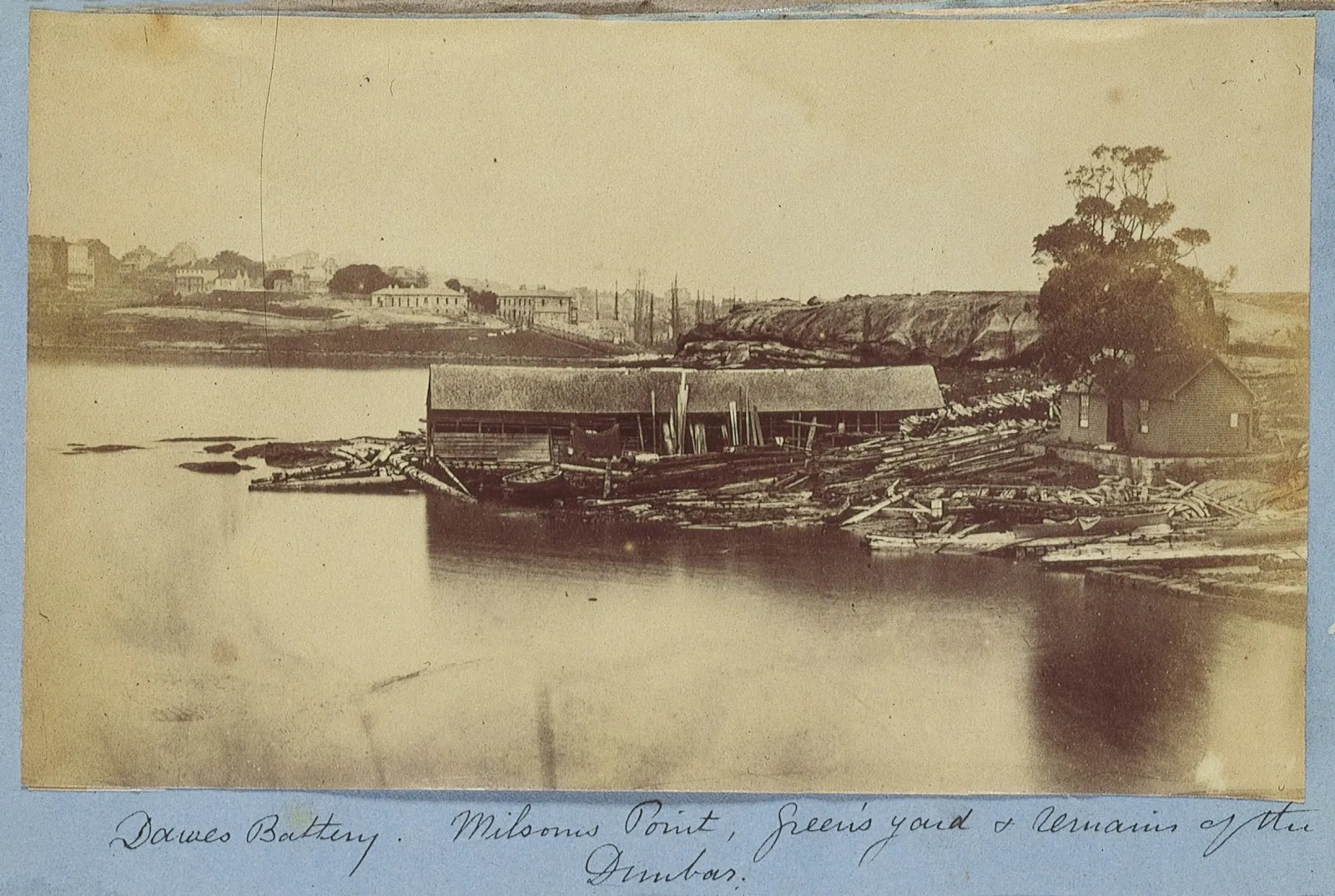
Shipyard and slipway at Green's Point, Milsons Point. Photo taken 23 December 1857 and shows timber wreckage recovered from the recently sunk ship The Dunbar. Courtesy of the University Librarian and Director, The John Rylands Library, The University of Manchester
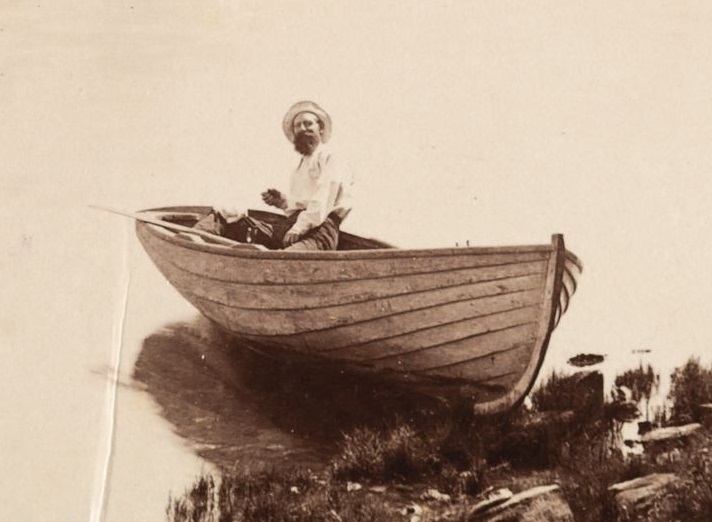
Robert Hunt went on photographic excursions, often with another Mint associate, William Stanley Jevons, often around Sydney Harbour in his boat the 'Terror'. The two men took views of landscapes in and around Sydney. Hunt’s early stereoscopic views dated 1855, are believed to be some of the earliest photographs on card. He worked with Professor John Smith, founding professor of chemistry at the University of Sydney, to pioneer dry plates for expedition photography. In December 1858, with other amateur photographers including John Smith, M. F. Moresby and Captain Edward Ward (also from the Mint), he exhibited his work at the first photographic conversazione of the Philosophical (Royal) Society of NSW, and again, at the second, in December 1859.
The 'Terror' was a beautiful light skiff or 'wager boat' according to other sources.
Megan Martin, Head of Collections & Access at Sydney Living Museums, states on Mr. Hunt:
Robert Hunt's family background was notable. His grandfather John was an influential, reformist, printer and publisher. The radical liberal stance of his newspaper The Examiner, edited by John's brother Leigh, led to a series of court appearances for the brothers and ultimately two years imprisonment on a charge of seditious libel. Leigh managed to turn his prison rooms into a kind of political and literary salon, visited by such personalities as philosopher Jeremy Bentham and poet Lord Byron.
Robert Hunt's father, Henry, was also a journalist and publisher before selling the family newspaper to philanthropist Robert Fellowes and retiring to France, where Robert received his early education.
Mr Hunt was also an early photographer of Pittwater and Manly and some points of interest in between.
This early photo of the Newport Hotel for example - taken in 1884 - along with images attributed to Charles Kerry but taken by Mr. Hunt, allow us to see how this place was:
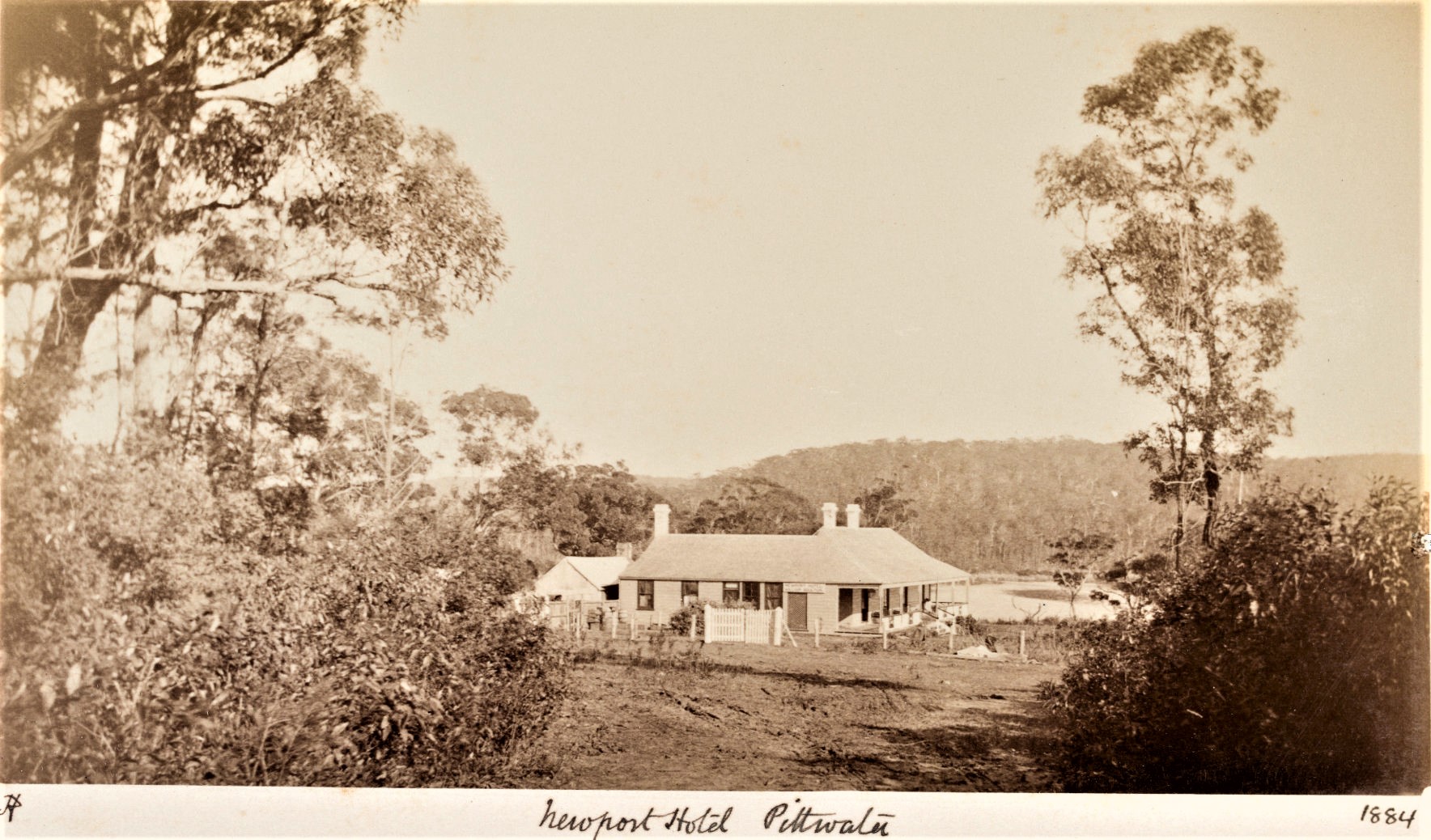
Newport Hotel, circa 1884, a Robert Hunt photograph, courtesy State Library of NSW
Another has been taken from Bayview in 1888 - showing he was a return visitor:
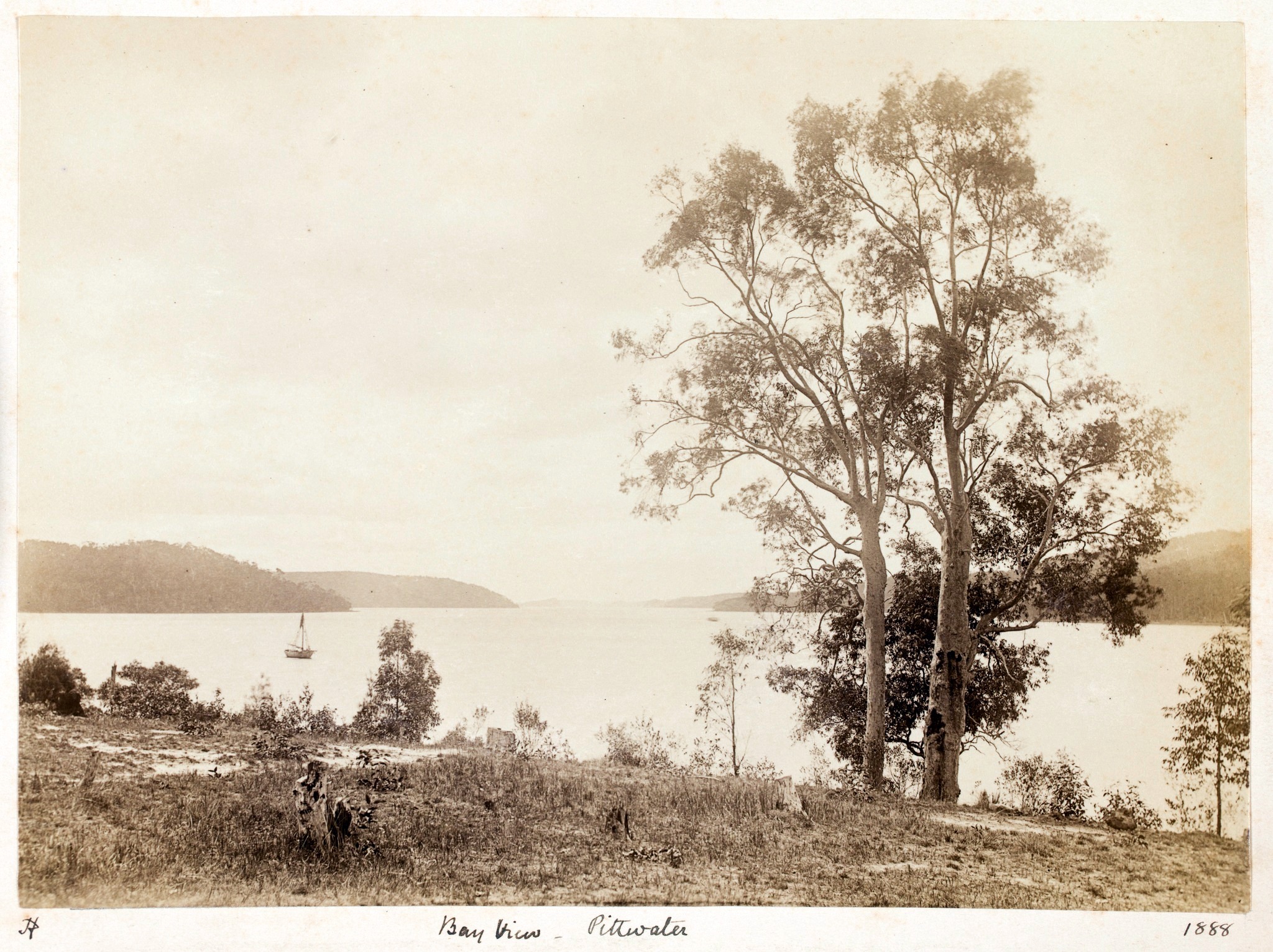
A more extensive biography on Robert Hunt C.M.G. is available at Design & Australian Art Online (DAAO).
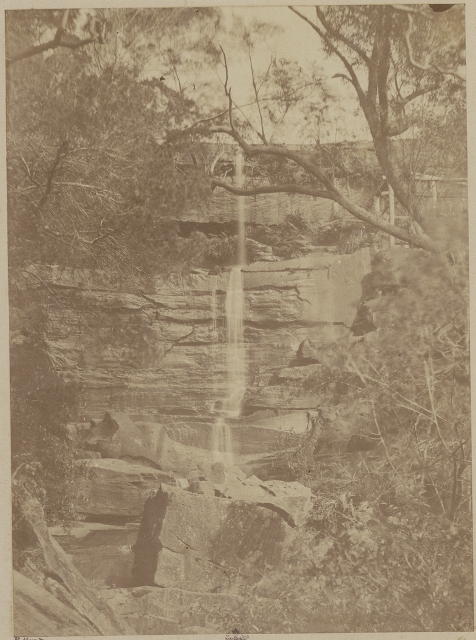 A few extracts state:
Outdoor stereoscopic views taken in 1855 by Hunt and John Smith are believed to be the first colonial examples of this type of photograph on card. Hunt went on photographic excursions around Sydney with William Stanley Jevons , an assayer at the Mint who wrote to his sister Lucy about one such occasion in November 1858:
''Mr Hunt of the Mint agreed to go photographing with me and accordingly we started out about 2 p.m. last Saturday … for Middle Harbour, intending to camp out all night and photograph in the calm clear air of early morning. Hunt’s boat is a beautiful light skiff or wager boat named the Terror … [at Middle Head] our photographic zeal was so incited by the bold water-worn cliffs that we decided on landing my lighter apparatus, and taking them off … this was not easily done, nor, after spending an hour and a half over four trials, did we get at all a perfect photograph.''
After camping overnight at Willoughby Falls, they finally managed to take photographs which satisfied them: 'Hunt has since printed and mounted one of his plates, producing a really beautiful picture, and certainly the best he has taken. My plate is smaller, and has a slight defect, but otherwise ought to turn out even better’.
Right: Willoughby Falls, North Shore by Robert Hunt, 1858, Image No.: a325029; "R. Hunt" below image at left, courtesy State Library of NSW
In December 1858, together with other amateur photographers, including Professor John Smith , M.F. Moresby and their superior at the Mint, Captain Edward Ward, they exhibited their work at the first photographic conversazione of the Philosophical (Royal) Society of New South Wales.
Then, on 22 December 1859, the Sydney Morning Herald reported that the second photographic exhibition of the Philosophical Society contained: 'Twelve views around Sydney from collodion negatives, by Mr Hunt; six large photographs (imported); [and] twenty-three stereographs, from collodion negatives by Messrs. Hunt, Jevons, Moresby and Captain Ward’.
Mr. Hunt married Mary Paul in Sydney on 25 November 1860. They lived at Greencliffe, Kirribilli - although some sources state the home was called 'Sunnyside'. They had three children that is known of born in NSW, Ellen M (born 1862), Alfred W (born 1863) and Henry L (born 1869). At least one more were born when he was moved to Melbourne for work; Mr Hunt’s son, William (Billy) Lewin (1871-1943) who was a naval draughtsman and also was a photographer.
HUNT—PAUL.—November 28th, at St. Thomas' Church, North Shore, by the Rev. W. B. Clarke, Robert Hunt, Exq., Royal Mint, to Mary, only daughter of the late John Paul, Esq., North Shore. Family Notices (1860, December 1). Sydney Mail (NSW : 1860 - 1871), p. 5. Retrieved from http://nla.gov.au/nla.news-article166692338
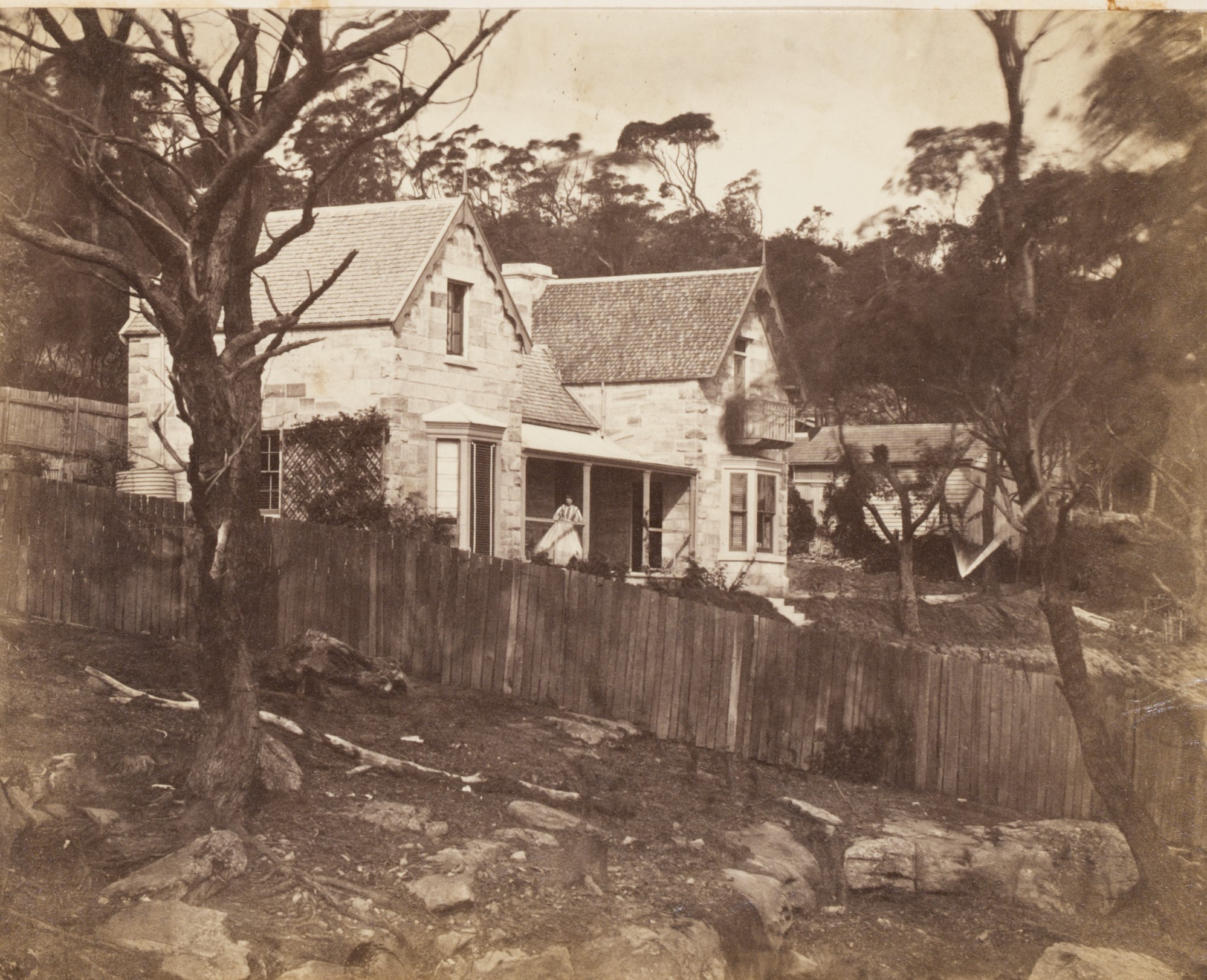
Greencliffe, Kirribilli, circa 1870. Photo: Robert Hunt
In 1870 he was transferred to the Melbourne Mint and remained there until appointed deputy-master of the Sydney Mint seven years later when the family returned to Sydney.
From Sydney he sent a collection of coins and medals struck at the Mint to the 1883 Calcutta International Exhibition. He continued to be an active photographer, producing sets of panoramic cabinet cards up to 1888, his favourite subjects being exteriors and interiors of houses and Sydney’s water supply. Appointed CMG in 1888, Robert Hunt died at Sydney on 27 September 1892.
HUNT.—September 27, at his official residence, Sydney Mint, Robert Hunt, C.M.C, F.G.S., late Deputy-Master, aged 62.
THE FRIENDS of the late Mr. ROBERT HUNT are informed that his Funeral will move from the Royal Mint TO-MORROW, Tuesday, at 2.30, for St. Thomas' Cemetery, North Shore. Mrs. P. KIRBY, Undertaker. Family Notices (1892, September 28). The Sydney Morning Herald (NSW : 1842 - 1954), p. 1. Retrieved from http://nla.gov.au/nla.news-article13880585
FUNERAL OF THE LATE MR. HUNT.
The funeral of the late Mr. Robert Hunt, C.M.G., deputy-master of the Mint, took place yesterday, and notwithstanding the heavy weather; was well attended. The cortege started from the Mint at about five minutes to 3 o'clock. The hearse, which was covered with beautiful wreaths and flowers, was followed by about 40 of the employees of the Mint on foot. The first mourning carriage contained the deceased gentleman's two sous, Mr. H. L. Hunt und Mr. W. Hunt. There were three or four private carriages, containing some of the most intimate friends of the deceased, and the carriages were followed by about a dozen cabs.
Amongst those present were noticed several members of the Royal Society, Mr. H. C. Russell, Mr. Maiden, Mr. Eraser (Under-Secretary for Justice), Professor Warren, Mr. Charles Moore, Mr. M'Farland, Sir Alfred Roberts and several others. The procession moved slowly along Macquarie-street to the North Shore ferry, and crossing the harbor proceeded to St. Thomas' Cemetery, North Sydney, where the usual service for the dead was read, and the remains were interred, FUNERAL OF THE LATE MR. HUNT. (1892, September 30). The Australian Star (Sydney, NSW : 1887 - 1909), p. 3. Retrieved from http://nla.gov.au/nla.news-article227295787
Two obituaries record a few more insights on this gentleman:
The Late Mr. Robert Hunt.
DEPUTY-MASTER OF THE SYDNEY MINT.
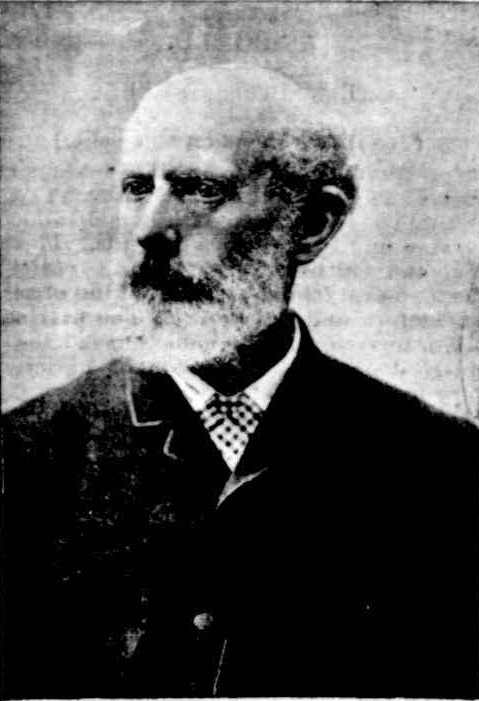
Mr. Robert Hunt, CM.G., F.G.S., Deputy Master of the Mint in Sydney, who died on September 27 from the effects of an aneurism on the main artery, and a portrait of whom is presented with this issue, was born in London 62 years ago. In July, 1853, he was appointed to the position of chief clerk in the bullion office in the Sydney Mint, and until September, 1870, he served in the melting and refining departments. Towards the close of the year 1870 he was transferred to the Mint in Melbourne; was subsequently promoted to be superintendent of the bullion office, and served under General Sir Edward Ward until 1876. On the departure of that gentleman on a prolonged leave of absence, the late Mr. Hunt was appointed acting-Deputy Master, which position he occupied until the end of 1877, when he was appointed Deputy-Master of the Mint in Sydney, an office he filled until the time of his death. In the year 1888 he was made a C.M.G.
Besides being the honorary treasurer of the Prince Alfred Hospital, the late Mr. Hunt was closely identified with the Sydney Museum and the Royal Society. The interment of the remains of the deceased took place in the North Shore Cemetery on the afternoon of September 29. In the funeral procession were a very large number of the friends of the deceased, including many prominent Sydney people. The Late Mr. Robert Hunt. (1892, October 8). Australian Town and Country Journal (Sydney, NSW : 1870 - 1919), p. 28. Retrieved from http://nla.gov.au/nla.news-article71204871
OBITUARY.
Mr. Robert Hunt, C.M.G., Deputy Master of the Sydney Mint, died at his residence last week after a somewhat lengthy illness. About three months since Mr. Hunt became seriously unwell, and had to take to his bed. He partly recovered and returned to his duties only to have a relapse and finally succumbed to aneurism after great suffering.
Mr. Hunt was born in London in 1830.He was appointed chief clerk of the bullion office in the Sydney Mint in July, 1853, served in the melting and refining departments till September,1870, and was transferred to the Melbourne Mint 1st October, 1870, and promoted to be superintendent of bullion office, and served under General Sir Edward Ward until June, 1876. On the departure of Sir Edward on leave of absence Mr. Hunt was appointed Acting Deputy Master, which post he held until the end of 1877, when he was appointed Deputy Master of the Mint at Sydney. He was made a C.M.G. in 1888.
From his position Mr. Hunt was unable to take any prominent part in public affairs, but he displayed a warm interest in philanthropic matters, and was for some years hon. treasurer of Prince Alfred Hospital. He was also a member of the Royal Society, and took a keen interest in the Museum, which had the benefit of his assistance on many occasions. OBITUARY. (1892, October 3). The Sydney Morning Herald(NSW : 1842 - 1954), p. 3. Retrieved from http://nla.gov.au/nla.news-article13881011
Our interest was sparked further when we recognised an image from an old article, where some of his earlier works had been the inspiration for lithographs in the days before a lot of local newspapers could run photographs, and held in the digitised collection of the State Library of New South Wales (Mitchell Library) Collection.
Even after he passed away his images were used in lithographic form to record these places - and this one mentions more about his wife:
Milson's Point, North Sydney, in 1854-
(From a Photo, by the late Mr. R. Hunt, C.M.G.)
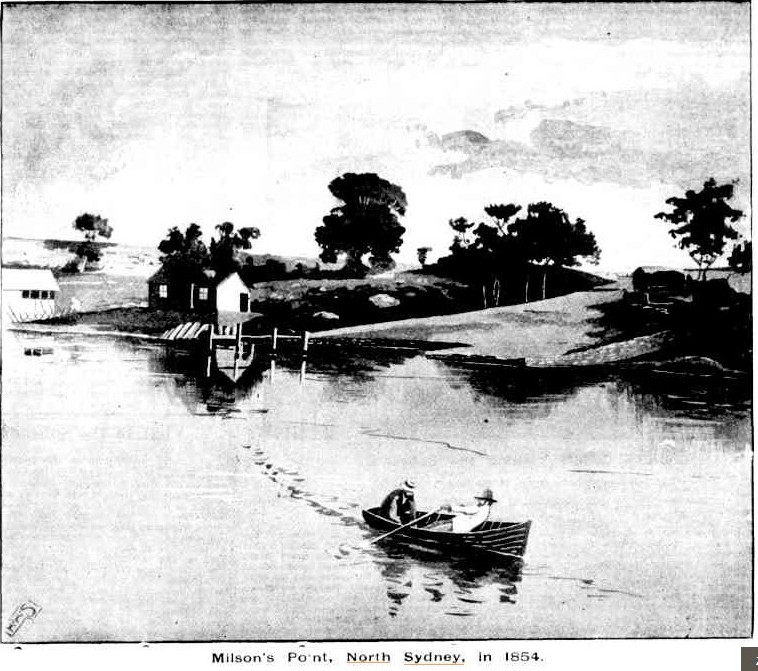
Milson's Point, North Sydney, in 1854.
Our first illustration of the Shore in early days presents a picturesque view of Milson's Point the chief approach to all northern suburbs of Sydney-as it appeared to the eye from the waterfrontage nearly half a century ago. The view is reproduced from a water-color picture which hangs in the drawing-room of Mr. H. T. Green, boat-builder, of Lavender Bay. This picture was enlarged from a small photograph taken in 1854 by the late Mr. Robert Hunt, C.M.G., Deputy master of the Sydney Mint. Mr. Hunt was an amateur photographer of considerable note in those days, and excelled in an art then in its infancy-for Daguerre had only a few years previously discovered the first crude method of fixing impressions made by light upon a sensitive surface, and photographers had not perfected the methods now in general use.
Mr. Hunt was one of the early residents of North Shore, having taken up his abode there soon after his arrival in the colony in 1853, with the appointment of chief clerk in the bullion office of the Mint. He married, in 1860, in the old St. Leonards Church, which is the nucleus of the present St. Thomas's Church, Miss Mary Paul, only daughter of one of the earliest Shore residents. Her mother, Mrs. John Paul, is still living, and is 87 years of age. Before leaving England Mr. Hunt published a "Manual of Photography," in 1852*. A copy of this work-fourth edition, 1854-was presented to the North Sydney School of Arts, and can be seen there. In 1870 Mr. Hunt was transferred to the Melbourne Mint but in 1878 he was appointed Deputy-master of the Sydney Mint, which position he held until his death on September 27, 1892. Mrs. Hunt is still an esteemed resident of Milson's Point.
If the shades of Captain Cook and Governor Phillip were to visit Sydney Harbor, what a surprise their ghost ships would receive! Towards the close of the last century the land known as Milson's and Kirribilli Points was granted to an officer named Ryan, and the locality went under the name of "Ryan's grant" by the old colonists. Eventually a portion of this land passed into the possession of three brothers, well-known early colonists. Messrs. Robert, George, and John Campbell. Upwards of fifty years ago the Campbell Brothers leased Milson's Point to Mr. W. H. Paul, who built a house on the top of the hill. Under the lease Mr. Paul had the option of purchase for a thousand pounds, and he exercised his right. Some of the remainder of the Campbells' property was purchased by Messrs. Thomas A. Dibbs and Edward Lord. Of late years the North Shore Ferry Company purchased a portion of Mr. Paul's land, and comparatively recently the remainder was resumed for tramway and railway purposes.
In 1824 or 1825 Sir Thomas Brisbane granted Mr. James Milson, sen., fifty acres of land between Careening Cove and Lavender Bay. Mr. Milson could have had a much larger area granted to him but the land not being suitable for cultivation, he selected a large area in the neighborhood of Hornsby with fertile soil, and some at Wollumbi. He was one of the first residents on North Shore, having built a house there in 1825.
The picture given of this spot in the fifties takes us back to a period separated from our own by a gulf of which the mere mention of the number of years which have elapsed gives no adequate measurement. Where the numerous dwellings of North Sydney now stand, the steep cliffs and sloping heights were then covered with virgin bush and dense forests-a great deterrent to early settlement The waters of Hulk Bay-or Lavender Bay, named after Mr. George Lavender- are on one side of Milson's Point, and Careening Cove and Neutral Bay on the other. The writer is informed by Mr. J. S. Abraham that the aboriginal name of Lavender Bay was Quilby. Mr. Lavender was boss of the hulks, having charge there, pending dispatch to Swan River, West Australia. There are 101 steps leading from Lavender Bay, and, by a strange coincidence, the scenery is in some respects not unlike that beyond the creek at Yokohama, from the 101 steps at the summit of which is the house known to all Japanese tourists as Fujiya, or the abode of the wistaria. Governor Macquarie gave the late William Blue, commonly known as "Billy Blue," a grant of about 90 acres of land, now known as Blue's Point, and extending easterly towards Milson's Point. Mr. Blue, who was a native of the West Indies, had a family. His daughter married Mr. Lavender, to whom was given that part of the grant now called Lavender Bay.
Those of our readers who know what a restless and ever-busy scene is here now, can, from a glance at our illustration, form no conception of the dreamy repose of the surroundings of Milson's Point in 1854. In the evening there used to be room for the whole population of the then North Shore to congregate at the Point, and breathe the fresh breezes off the water-that splendid sheet between Port Macquarie and Dawes Point. There lay the anchored fleet-all sailing vessels then-and small craft skimmed about the placid harbor, with its verdant dales and bush shores. The distance between Milson's Point and Dawes Point does not exceed 1300ft.Without the well-regulated steam ferry service of the North Shore Ferry Company the rapid growth and prosperity of North Sydney could not have been possible. Ferried over in an open boat, with rain and wind beating in one's face, and then to slip and slide on a rough landing stage, was a very different experience from the comfortable boat, fine waiting-rooms, covered wharves, and enclosed arcade right to the cable train and railway station.
During the first half century of the existence of the colony the North Shore woods were much subdued by gangs of convicts, who were employed felling the giants of the soil. All the early officials speak of the slopes of the Shore as covered with heavy timber, mostly gumtrees of large size. Dr. Lang mentions that in 1794 on the site of Scots' Church, Sydney, a blue gum 6ft in diameter was cut down, and in 1824 it took several days to burnout its roots. In our view of Milson's Point in 1854 there appears one of the old figtrees, supposed to be a century old. It is still standing, and has seen many Governors, since Captain Phillip, come and go. Some local traditions cluster around it. Should its vegetation cease, or a gale of wind up-root it, a statue of some public man-as Cook, Banks, Phillip, Lang-might appropriately replace it. Our country's memorials are all dispersed on the southern side of the city, and why not put up one or two on the northern? Kirribilli Point also would be a prominent situation for a statue. The historic tree is a fine specimen of the Ficus australis or Port Jackson fig. The roots and earth are confined in a substantial cement casing, the height of which apparently shows that the original level of the roadway was cut down 5ft 6in through boulders and solid rock. A portion of the earth, was, however, filled in when the cement was put there. The tree shows slight signs of decay. A large piece of branch dropped away from the top about a year ago. and the roots cling to almost bare rock. Indeed, it is wonderful how this sturdy specimen has so long withstood the south-easterly gales.
Mr. H. T. Green formerly lived in a house in an acre of ground where this tree stands. This is the house shown in our picture of Milson's Point in 1854. In 1850 his father, Mr. George Green, leased the place from Mr. Robert Campbell: and for long afterwards the street lading to the horse ferry was known as Green's-lane. A colored plan framed and glazed, showing the ferry company's land and frontages, is exhibited on the trunk and bears the name Green's-lane. This plan and its contents are a puzzle to the many passers-by, not being within reading distance. In Mr. Green's painting there are no signs of any dwelling except this house. In the foreground of the first picture, to the right, is a low stone wall, which was the original landing-place for passengers from the steamers. This was so used for some years prior to the erection of the wharf to the left, which was a simple wooden platform built out on plies, and without any office accessories.
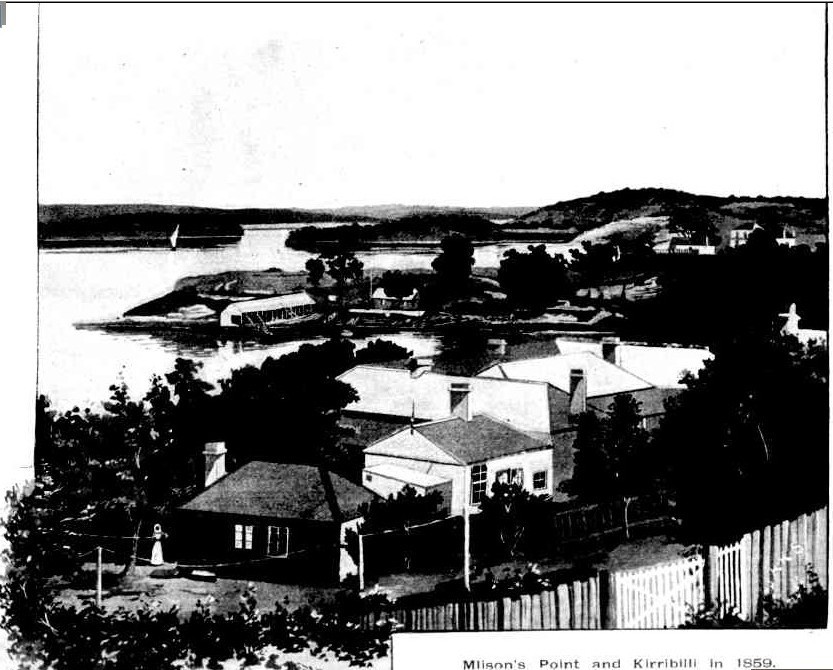
Milson's Point and Kirribilli in 1859. (From a Photo, by the late Mr. R. Hunt.
In earlier times Australian aborigines were numerous hereabouts. They called the Sydney camp Warrane. One of the North Sydney tribes was called Wallumatta. The Cammeray tribe were the most powerful on the Shore. The natives' huts, which were invariably clustered closely together, were of wattle bent into an arch, with boughs interwoven, and occasionally covered with tea-tree bark. Some dwellings were large enough to hold a dozen blacks. A favorite camping ground was near the Point.
For many years after white settlement set in on that side of the harbor there were no Europeans' buildings nearer than the Lily of St. Leonards Hotel, which still stands on the same site in Alfred street, with modern additions. The Lily of St. Leonards was the third hostelry opened on the Shore. The first hotel established was the Fig-tree, at Blue's Point-road, by Mr. Thomas Redgrave, in 1841. The second was the Union Inn, on Lane Cove-road, near the Crow's Nest, by Mr. Burns, in 1843. In 1845 Mr. J. Whitford, often called Mr. Whitfield, opened the Lily of St Leonards. After passing through the hands of two other proprietors, the hotel came into the possession of Mr. W. Dind sen., the well-known boniface, and at one time a theatrical manager and lessee in Sydney. Subsequently Mr. Dind built the hotel a little further up the road, on the right, for his son. The reason for the curious name of the hotel is a mystery to many at the present day. It seems, indeed, to embody a piece of the humor of the early days, for in Mr. Dind's time the painted sign of the hotel was an aboriginal woman. The notion of painting the Lily of St. Leonards was not a work of supererogation. The writer is indebted to the Hon. Geo. Thornton, M.L.C., for the information as to the name.
Milson's Point was named after Mr. James Milson, sen., one of its oldest settlers. The name is often, but erroneously, spelt Milsom, even in municipal and Government maps. Mr. Milson was one of the earliest settlers here, and a public spirited man His son, the present Mr. Jas. Milson, was one of the first to inaugurate a steam ferry between the Point and Sydney. In this he was assisted by Deputy Commissaries Miller and Walker, after whom two of the principal streets are named. By the way, there is quite a plethora of streets on the Shore named after early Governors or residents-Pitt, Campbell, Brisbane, Fitzroy, Berry, Lord, Paul, Lavender, Blue, Bent, Bloxsome, Broughton, Holtermann, and so on. In other cases the old names have been altered.
The first steam ferryboat from Milson's Point was called the Princess, and was built by Mr. G. Budevent, of Balmain. She was, in fact, a steam punt for the transit of horses and vehicles as well as passengers, but her running was not a financial success. Later on, Captain Joseph Gerrard and Captain Thomas Gerrard ran the steamer Fairy Queen, often called the Ferry Queen, built by Mr. Chowne, of Pyrmont. In 1854 a company was formed, and a steamer imported from England in sections was put together in Sydney. It was named the Herald, and ran between Blue's and Miller's Points. The Gerrard Brothers then transferred the running of their steamboats to Milson's Point. Messrs. James Milson, jun., F. Lord, W. Tucker, C. Frith, and others formed the first steam ferry company, having the boats Kirribilli and Alexandria for passengers, and the Transit for vehicles. By keen competition the fares were reduced from one shilling each way to sixpence each way, and ultimately to threepence. In 1878 this company sold out to the present North Shore Ferry Company, and Captain Summerbell was appointed manager. The fare was then reduced to twopence, and finally, about ten years ago, to one penny each way. Thirty years back there was a steam ferry from Circular Quay to Allison's Point every quarter of an hour from 8 a.m. to 7 p.m., and from the site of the present Pottinger-street (Macnamara's Wharf), Sydney, near Windmill-street, to Blue's Point, the same-each with threepenny fares. At that period the total daily passenger traffic did not exceed 150.
Notwithstanding the healthy air and the beautiful scenery of the district, early settlement was retarded through the irregularity of communication, also by holders locking up the land in the assured hope of its increasing in worth from year to year, on account of its contiguity to Sydney. In the early times land was leased on the Shore at £3 per annum per acre, and of late years many allotments have realised at the rate of £20 to £50 per acre per annum. Diaries of early colonists refer to the density of forests on North Shore. Colonel Collins, (Secretary of. the Colony), and many other early officials say that the land was heavily timbered down to the water's edge with trees of the banksia and eucalypti class. A striking instance of the dense setting of the forest around Milliser's Point is instanced. On November 6, 1789, Francis Hill, a midshipman of H.M.S. Sirius, and a nephew of the celebrated Mr. Dyson (Solicitor to the Admiralty), after a visit to Governor Phillip at Sydney Cove, was rowed across the harbor, and landed at what is now Milson's Point. Mr. Hill set off to walk two miles through the dense bush and forest to join his ship, which was hove down in Careening Cove, he was never again seen, and must have either lost his way and starved, or more probably was murdered by the blacks, he being unarmed. Search parties were sent out for several days, and guns were fired, but not a trace of the young middy could be found.
The north side of Sydney Harbor from Bradley's Head on the east to Bald's Head on the west was called Cammeray by the aborigines, as was also the perpetual and hereditary name of the chief of the gal-tribe or clan. The aborigines there were called Cammeray-gal. They used to celebrate their great national rite of boora at Milson's Plaint, and hundreds of blacks came from all the country side, and from distant pants, to witness the ceremonies. In April, 1790, half the blacks of Port Jackson were carried off by smallpox. The plague causing this great mortality must have been brought out in a ship by Europeans.
The summary havoc caused by the visitation has no parallel in the history of the blacks. They were found lying dead or dying on every beach about the 'Shore. Among the most noted blacks of North Shore were King Bungaree and his wife. Her Majesty was colloquially known as Queen Gooseberry. Bungaree was the chieftain of the northern(Newcastle) natives, and performed many signal services on sea and land for the early colonial Governments. He was much patronised by Governors Hunter, King, Bligh, Macquarie, and Brisbane. Under Hunter, Bungaree accompanied Captain Flinders on his survey of the north, and south coasts. Under Bligh and Macquarie, the sable monarch was useful as a tracker. He was present at the first settlement of Newcastle. In 1815 Governor Macquarie gave him land for an encampment for his tribe between Milson's Point and George's Head. Every King's Birthday Governor Macquarie assumed a new uniform, and his discarded red coat, with large epaulettes, and cocked hat were invariably presented to King Bungaree- Clothed in the cast-off dress of vice royalty (minus trousers and boots, which nothing could induce him to wear), he loved to parade North Shore and Sydney. At first he preferred the official society to that of the convicts, bait by degrees he became addicted to European vices, and his taste for select society was vitiated. He was a splendid mimic, and could with marvellous accuracy imitate the gestures of various Governors and leading officials. Bungaree died on November 24, 1830, and he was buried on Garden Island, close to the tombs of Judge-Advocate Bent and Major John Ovens, who died several years before. When the island was made an Imperial naval depot the bodies were removed to St. Thomas's Church burial ground at North Sydney. Bungaree's Queen survived her husband nearly twenty years. She was buried on North Shore, and the remains were since removed to Devonshire-street Cemetery, Redfern, where her epitaph is still decipherable, it is said of Queen Gooseberry that she was more droll than witty, and she was quick at hitting off the weak points of the residents. When King Bungaree and Queen Gooseberry died, the only prominent Australian black left in the neighborhood was Tommy Jones, a comic fellow, who cadged and did odd jobs for a living. He was probably the nearest approach to a Sam Weller which the aboriginal Australian race ever produced, and was by no means devoid of intelligence. Tommy was, however, incorrigibly lazy, and although he could pull a pair of boots on occasion, he infinitely preferred; a present of bread, fish, and tobacco, without work. He was a veritable Weary Waggles. He was buried in the grounds of the late Captain Shairp (often, but erroneously, spelt Sharp), at the junction of Alfred and M'Dougal streets, close to the site of the Gas Company, and nearly opposite the present Brisbane House.
One of our illustrations represents Milson's Point in 1859. It shows more of the Kirribilli' side of the Point, and in the distance Lavender Bay, Goat Island, and the Parramatta River. This picture is also from a photograph by Mr. Robert Hunt. The large cottage In the foreground' was the residence of Mr. Riley at the time the view was taken, but is now occupied by Mrs.. Cope. The old cottage of Mr. George Green, and the adjacent boat-building sheds, form a striking contrast to the present. Milson's Point, North Sydney, in 1854. (1898, January 15).Australian Town and Country Journal (Sydney, NSW : 1870 - 1907), p. 19. Retrieved from http://nla.gov.au/nla.news-article71282265
The Green family also had connection with early Pittwater with records from them and the archives showing they built boats at Careel Bay, Stokes Point and practised rowing at Paradise beach to Clareville.
More in: Early Pittwater Paddlers, Oarsmen, Rowers and Scullers: The Green Family
Three photograph albums and 200 stereo cards donated to the Historic Photograph Collection at the University of Sydney came from Hunt’s collection. Most are his work but almost all his Sydney Philosophic Society colleagues are included.
A few more from those he took on the Mosman to Barrenjoey and Manly peninsula are:
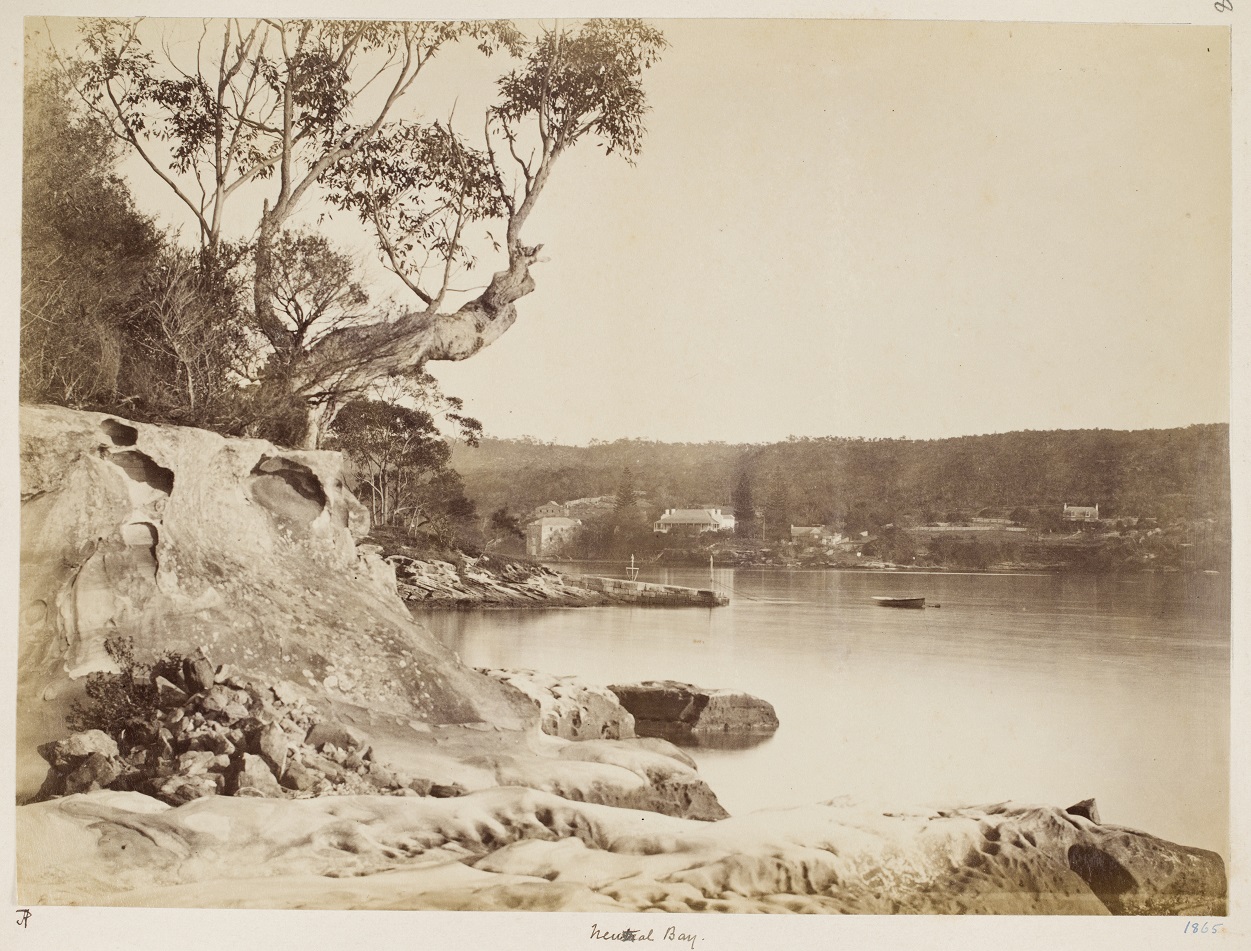
Neutral Bay 1865
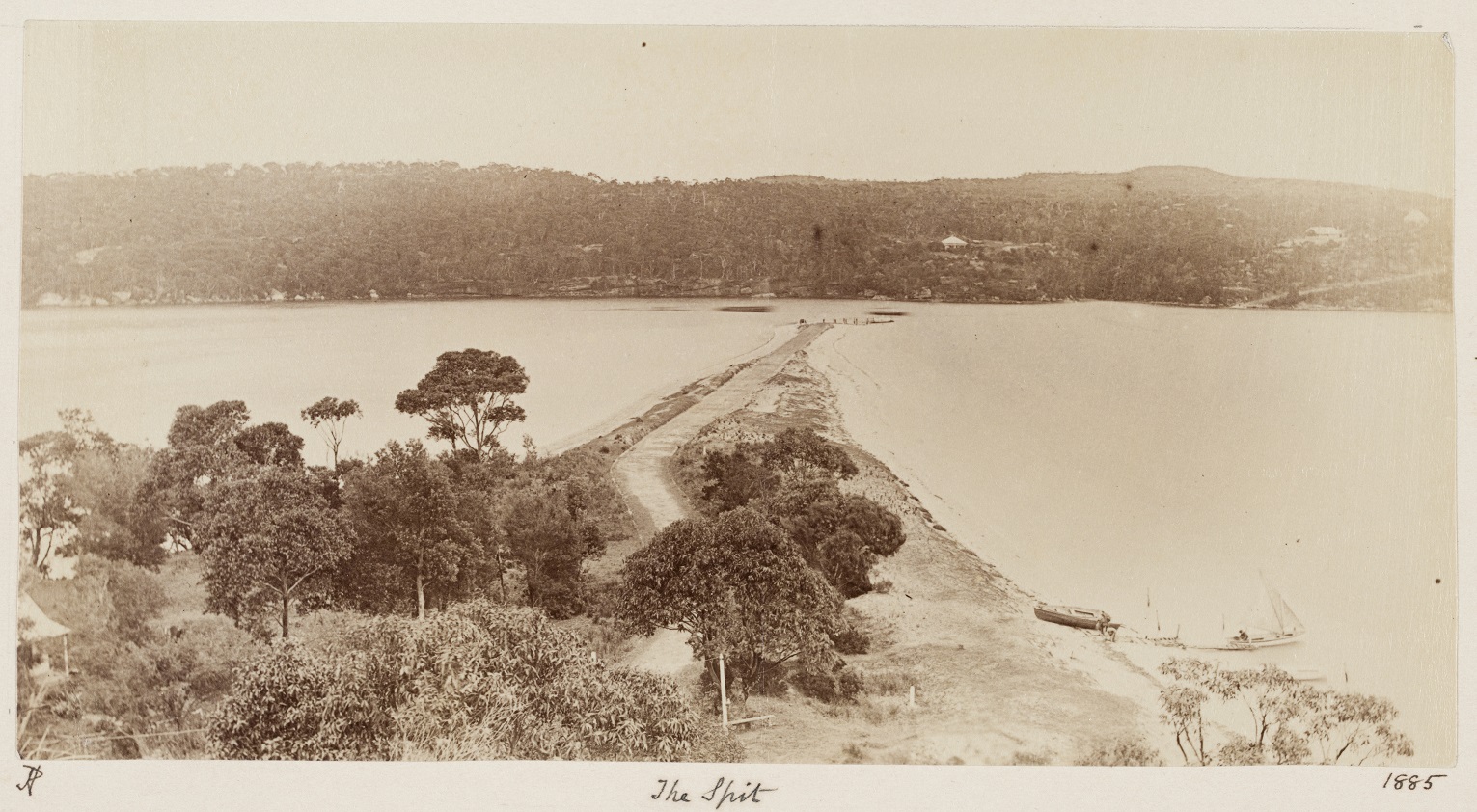
The Spit 1885
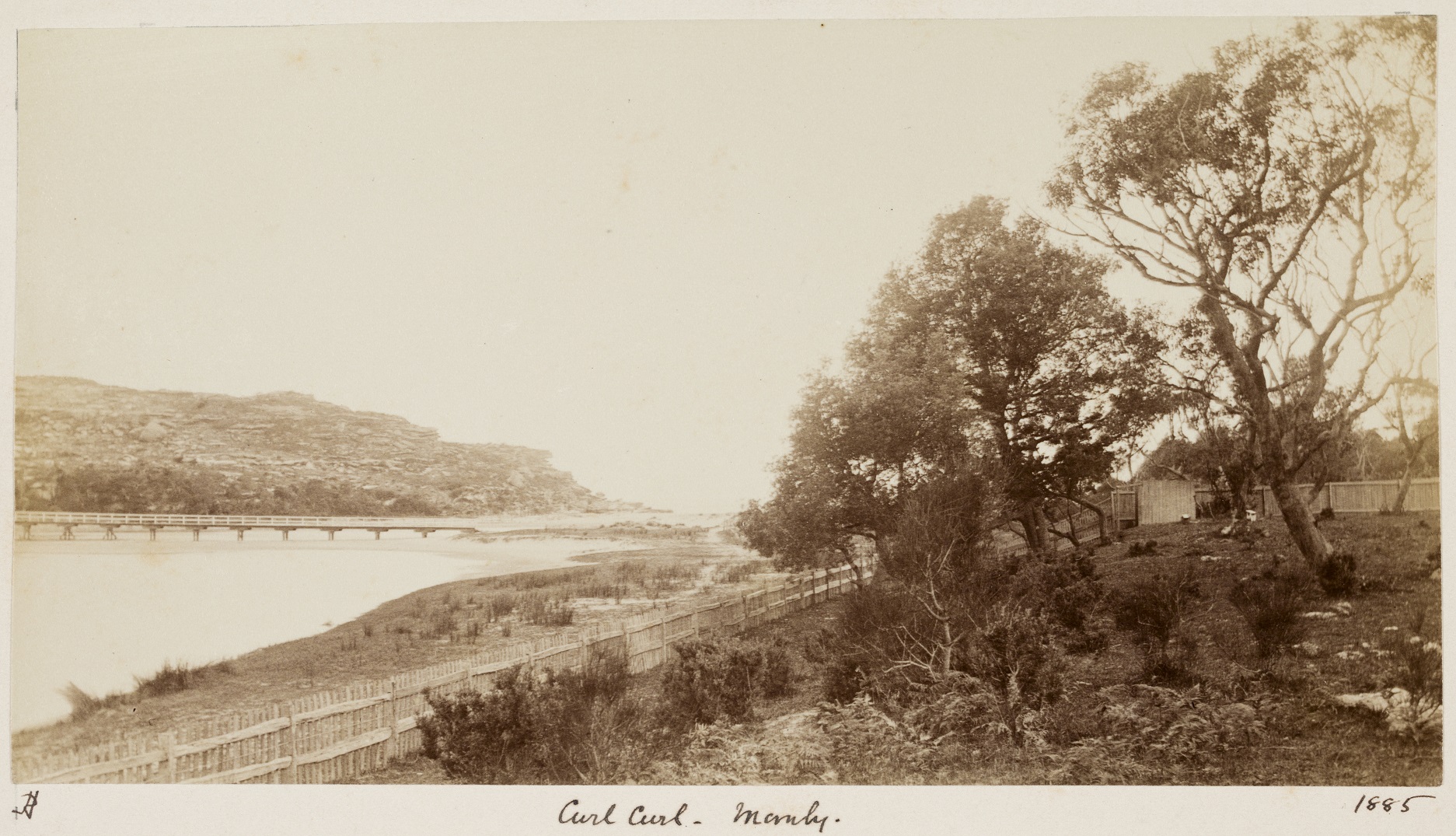
Curl Curl 1885

The Clarendon Hotel, Manly, March 1885
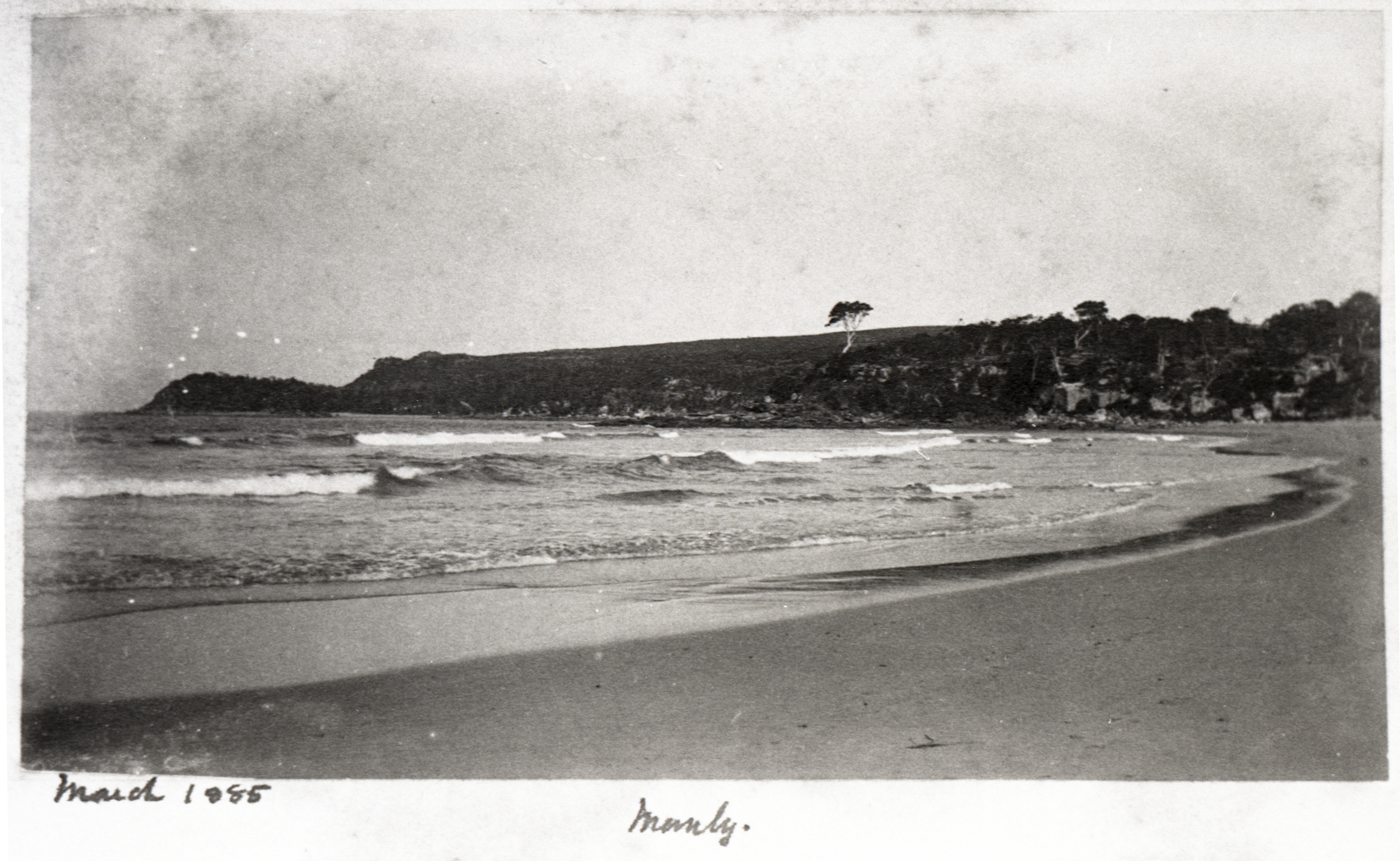
Manly beach, March 1885
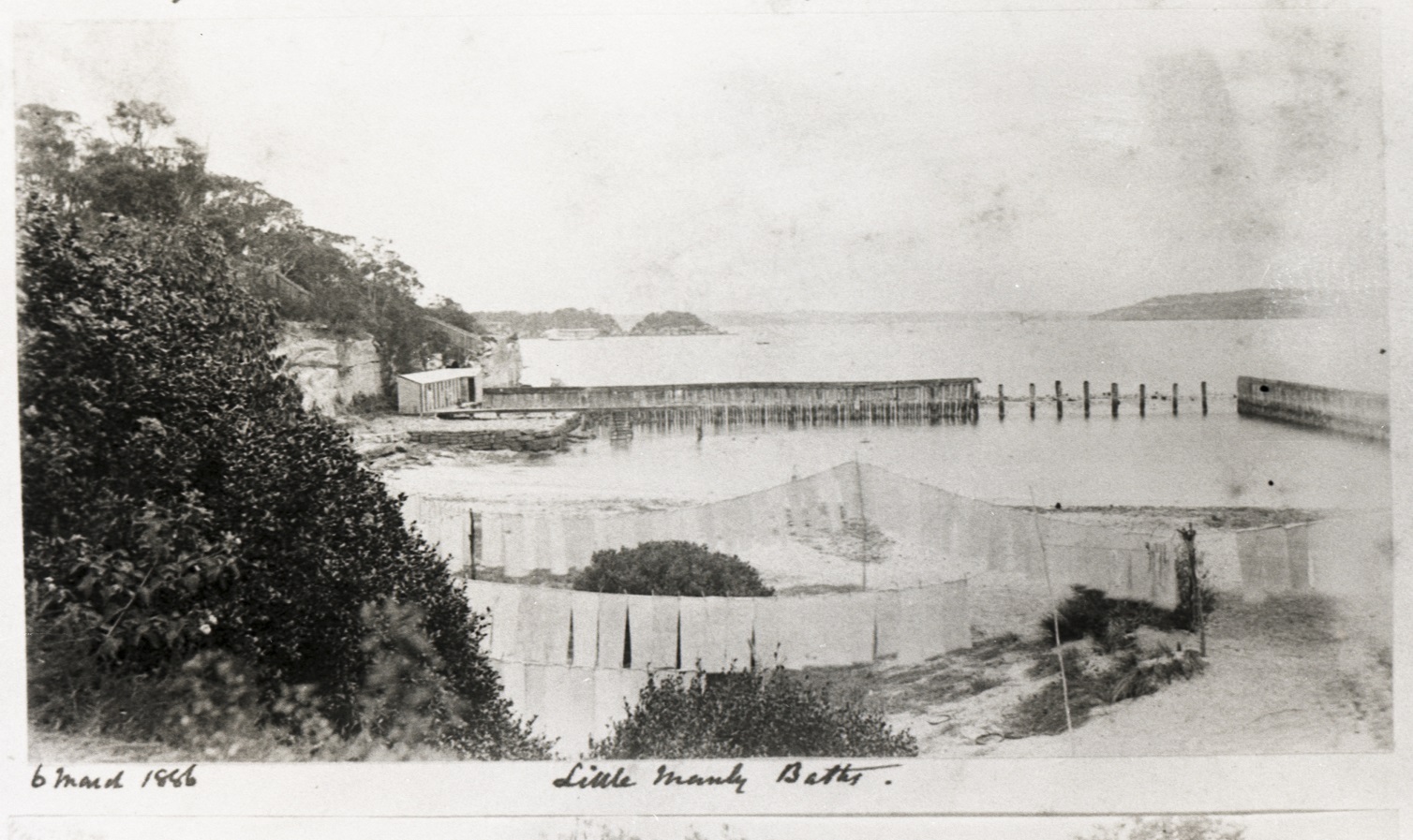
Little Manly Baths, March 1886
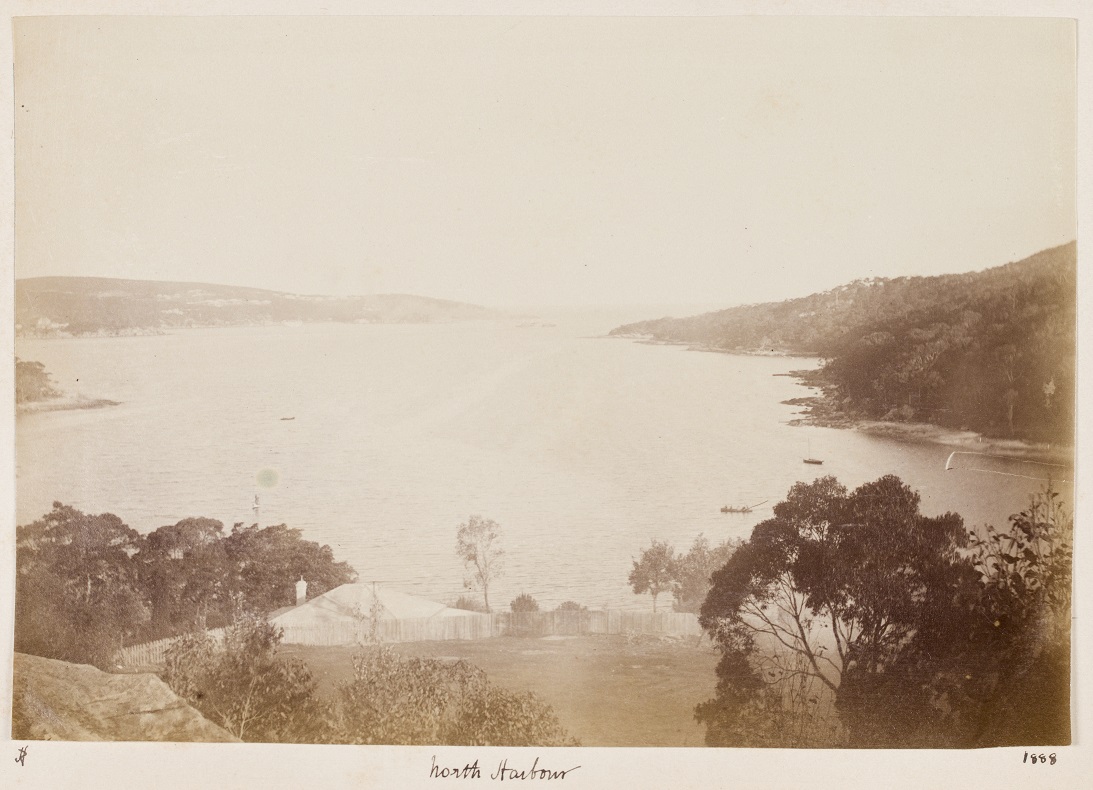
North Harbour 1888
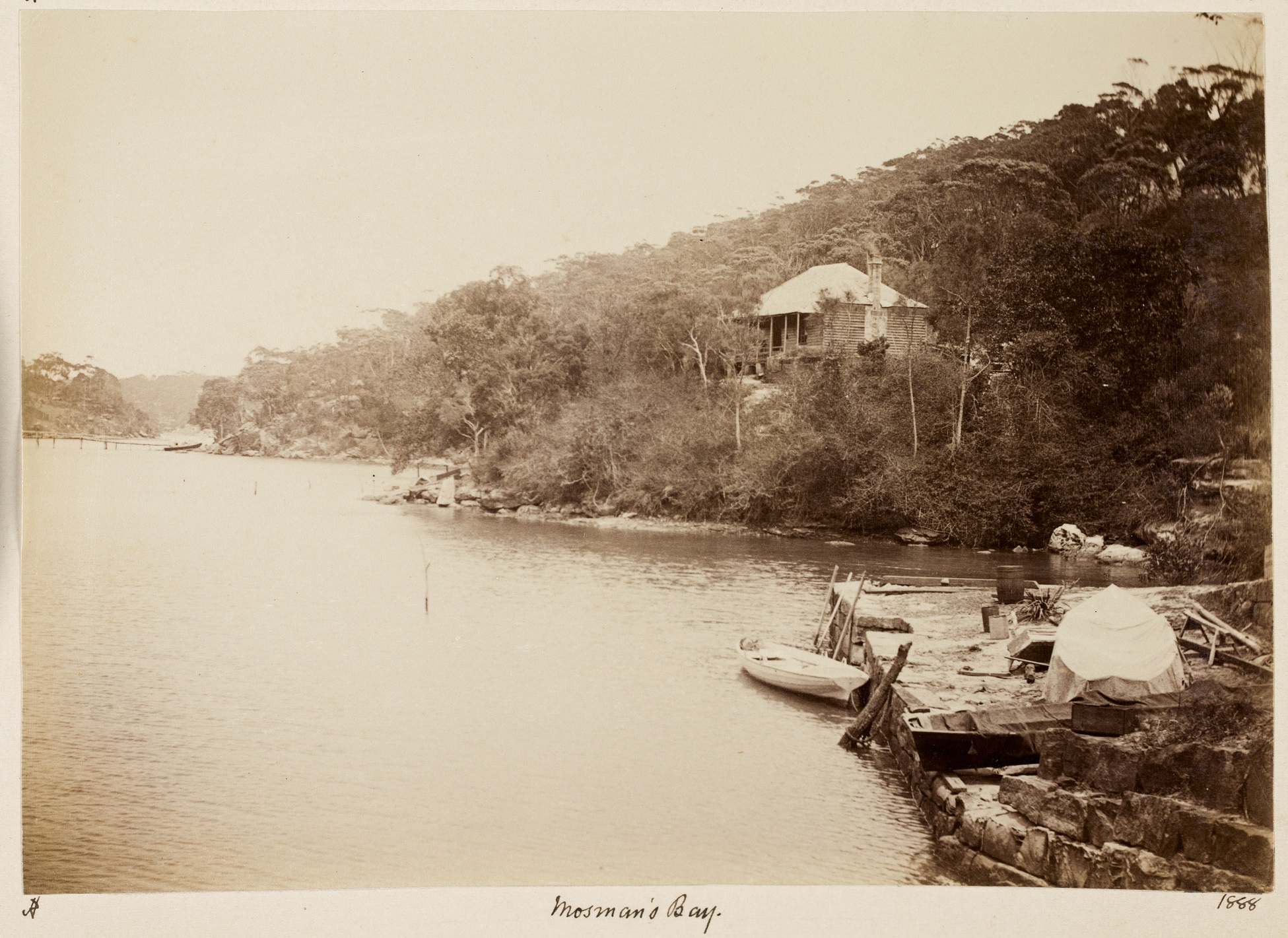
Mosman Bay 1888
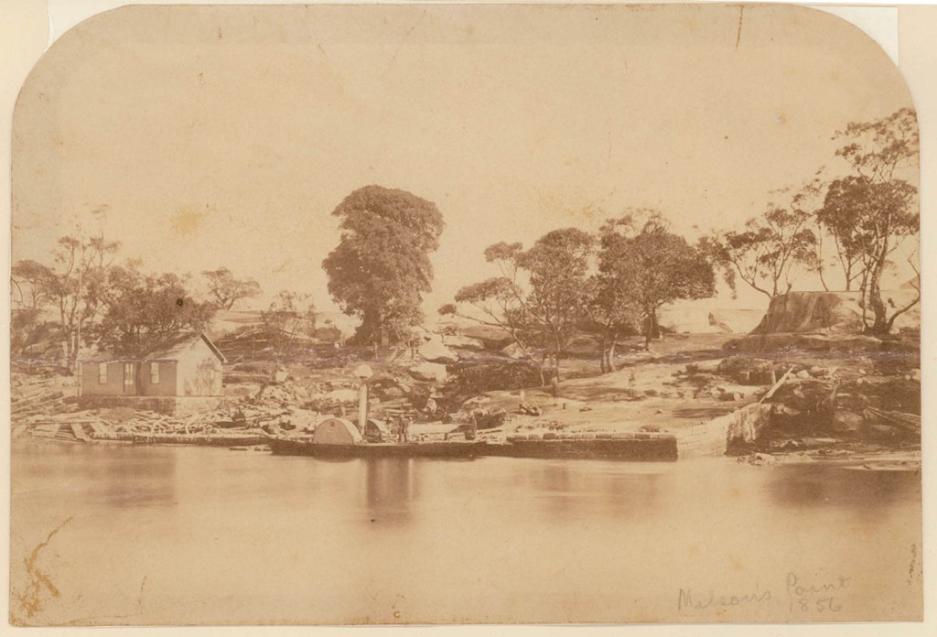
Milsons Point, Sydney Harbour, Date of Work [1856], by Robert Hunt, albumen photoprint ; image 16.4 x 20.8 cm., on mount 21.1 x 24.2 cm. Image No.: a089929, courtesy State Library of NSW
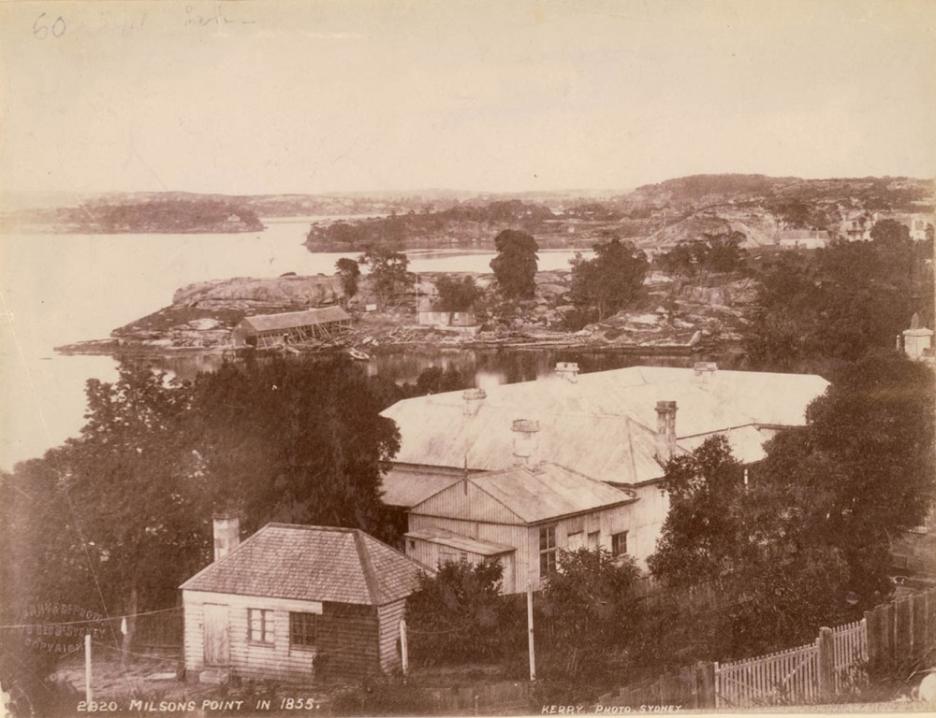
Milsons Point in 1855 [original photograph attributed to Robert Hunt], (copy of 1855 photoprint), "Kerry & Co. Photo, 308 Geo. St., Sydney, copyright" -- stamp at lower left. Titled and numbered "2920" along lower edge, Image No.: a089926, courtesy State Library of NSW