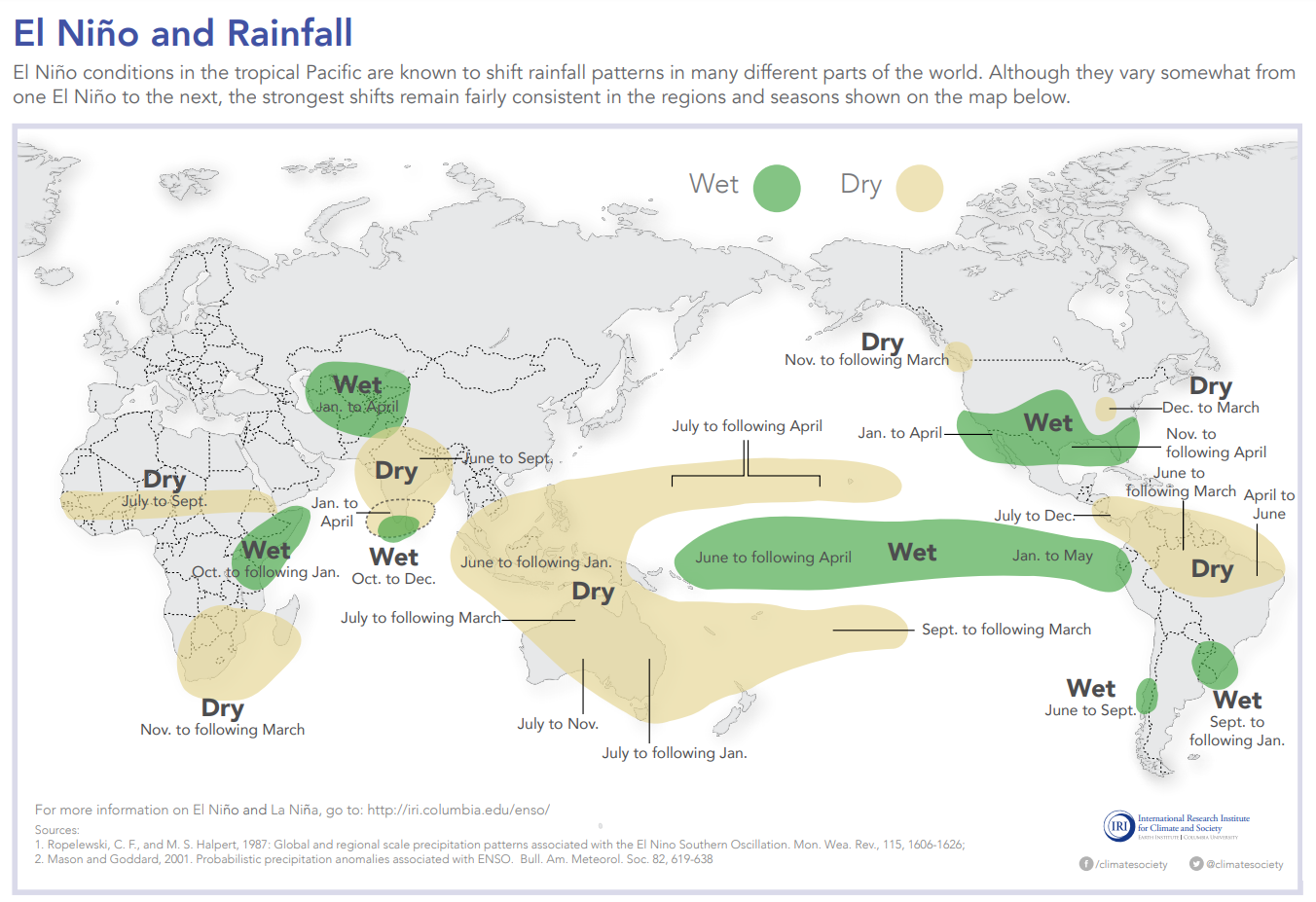
Environment News: June 2026 - Issue 655

Week One June 2026: Issue 655 (published Sunday May 31)


We are buzzing with excitement!

The Rotary E-Club of Greater Sydney has erected five Bee Poles.

By Judith Charnaud OAM, 
President and Environment Director of the Rotary E-Club of Greater Sydney 

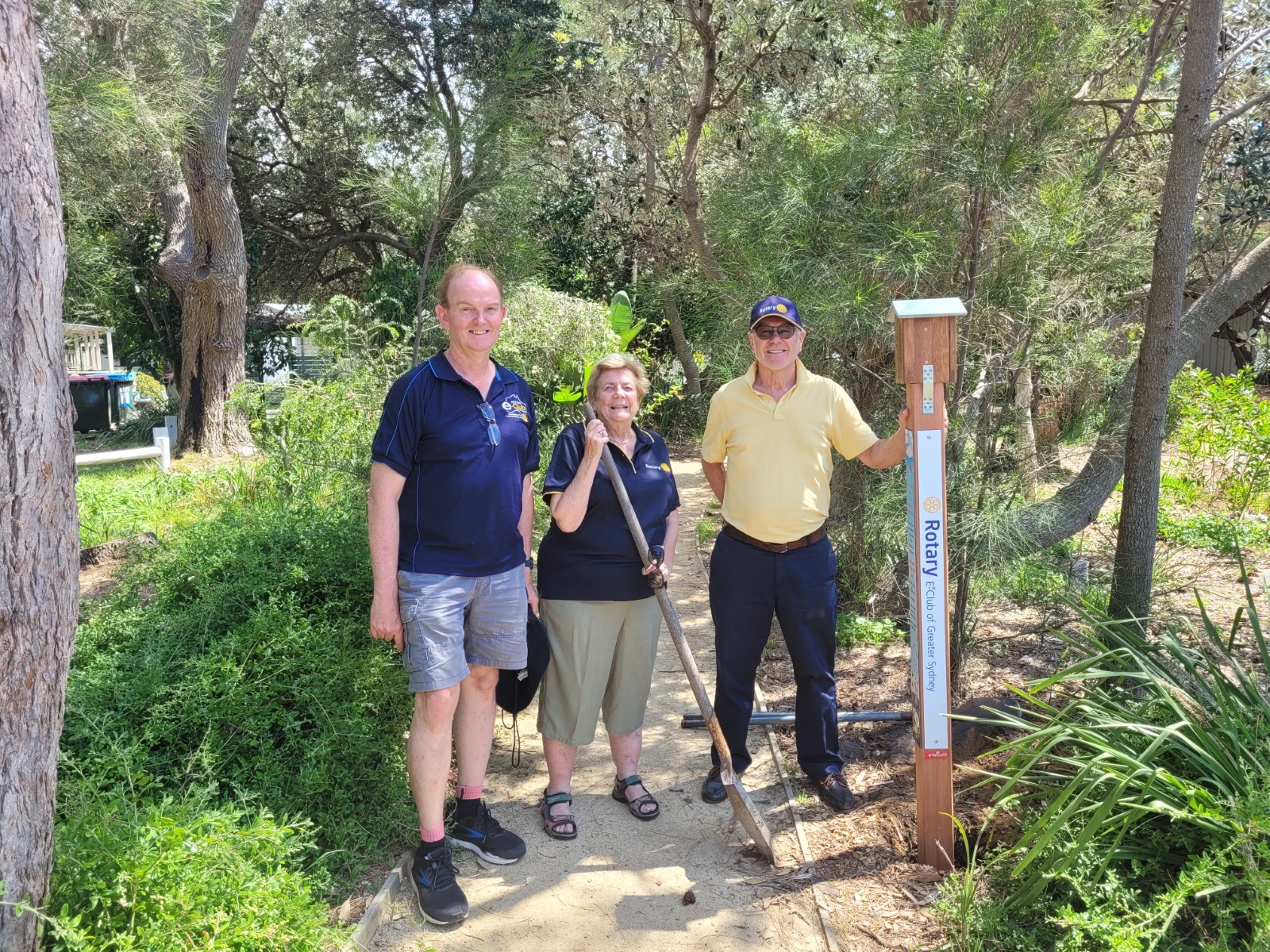
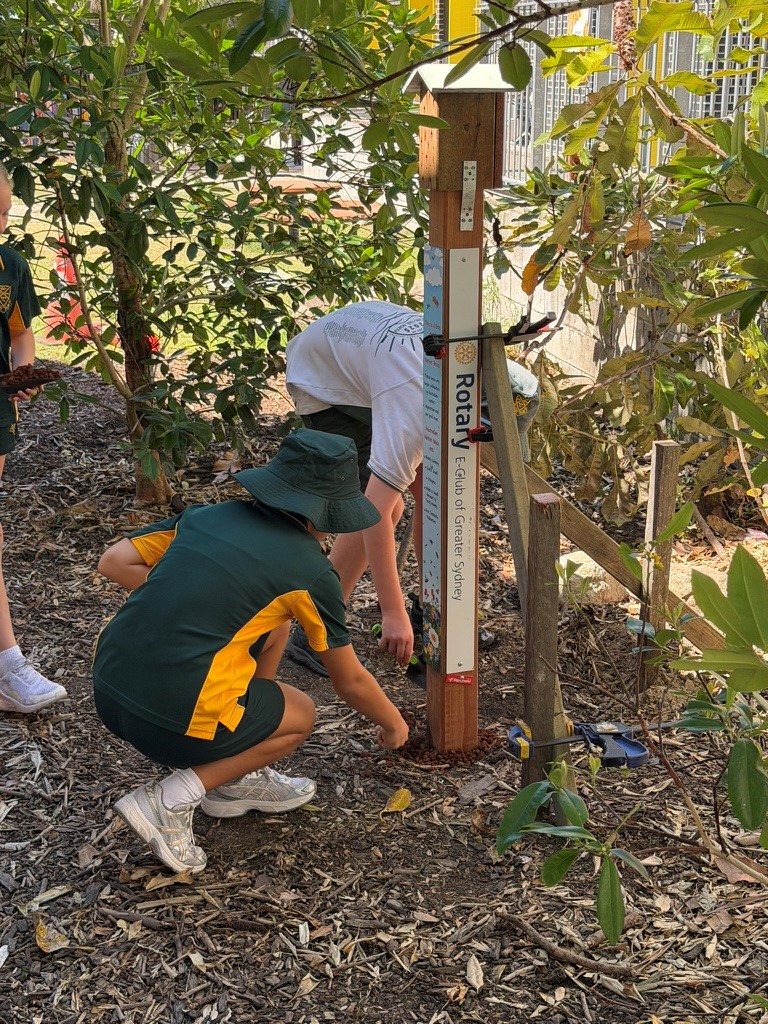
At last, after a year or two of designing, planning and construction the Bee Pole idea seems to have taken off. Over the last few months we have placed Bee Poles in Harbord, Curl Curl North, Kinma, Tea Gardens Public Schools and one in the Coastal Environment Centre, Narrabeen.

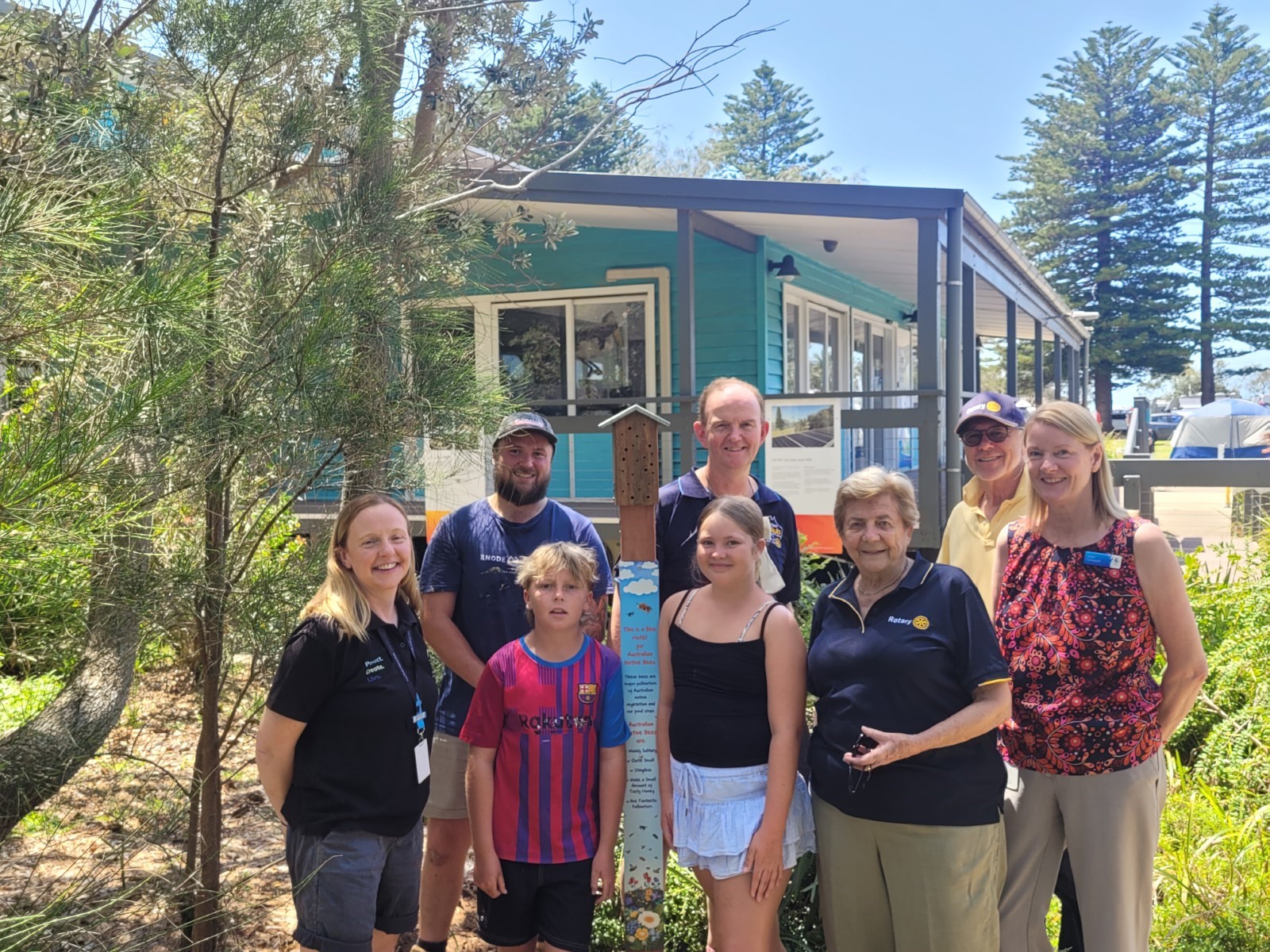
Coastal Environment Centre Narrabeen Bee Pole installation

What is a Bee Pole?

The idea for the Bee Pole came from the Peace Poles of Rotary Clubs across the world which is a special project promoting peace – our club thought a Bee Pole in schools could be used to promote environmental sustainability and the importance of ecosystems.

The Rotary E-Club of Greater Sydney is a member of Rotarians for Bees and our members are working on ways to encourage the survival of Australia’s native bees. We have carried out a lot of research in order to find out the best ideas and design for the Bee Pole. 

Each of the schools we have worked with has very enthusiastic teams of students – Garden Gurus, Eco Warriors, Bee Teams, Gardening Clubs, and of course the students are encouraged by amazing staff members. 

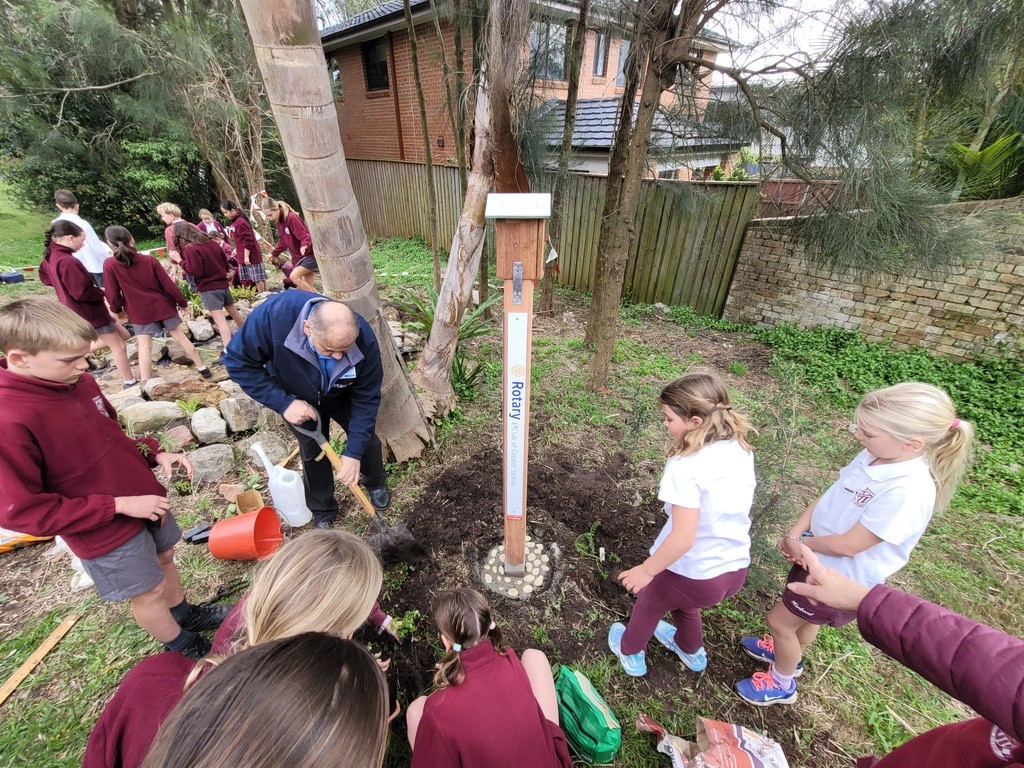
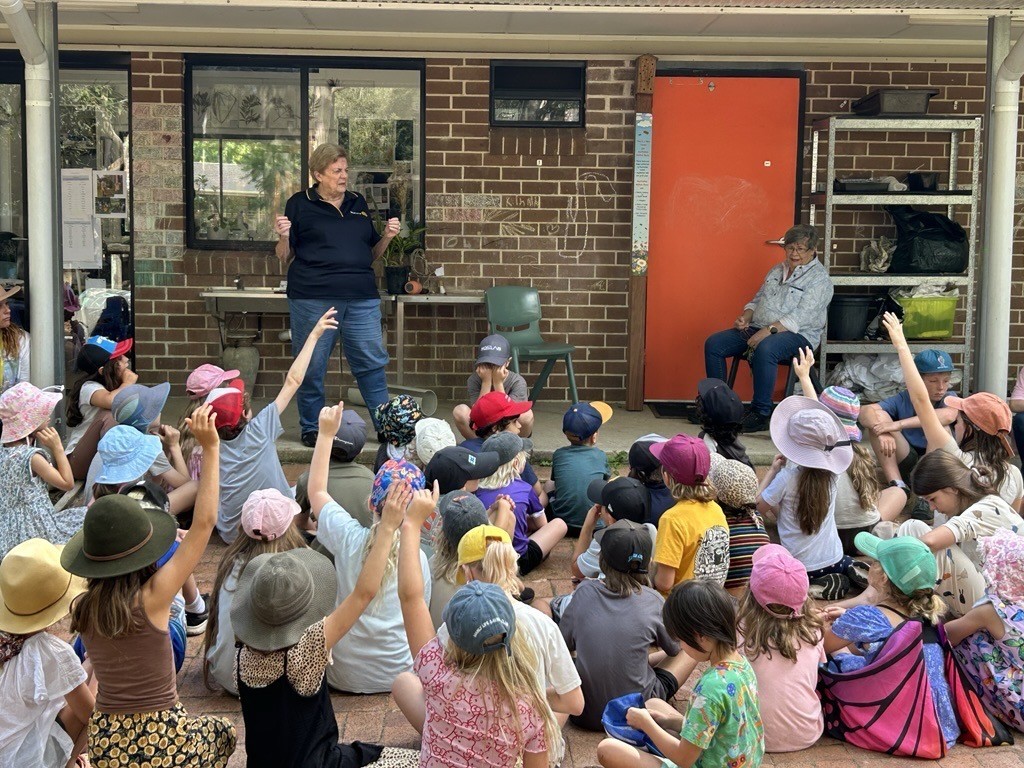
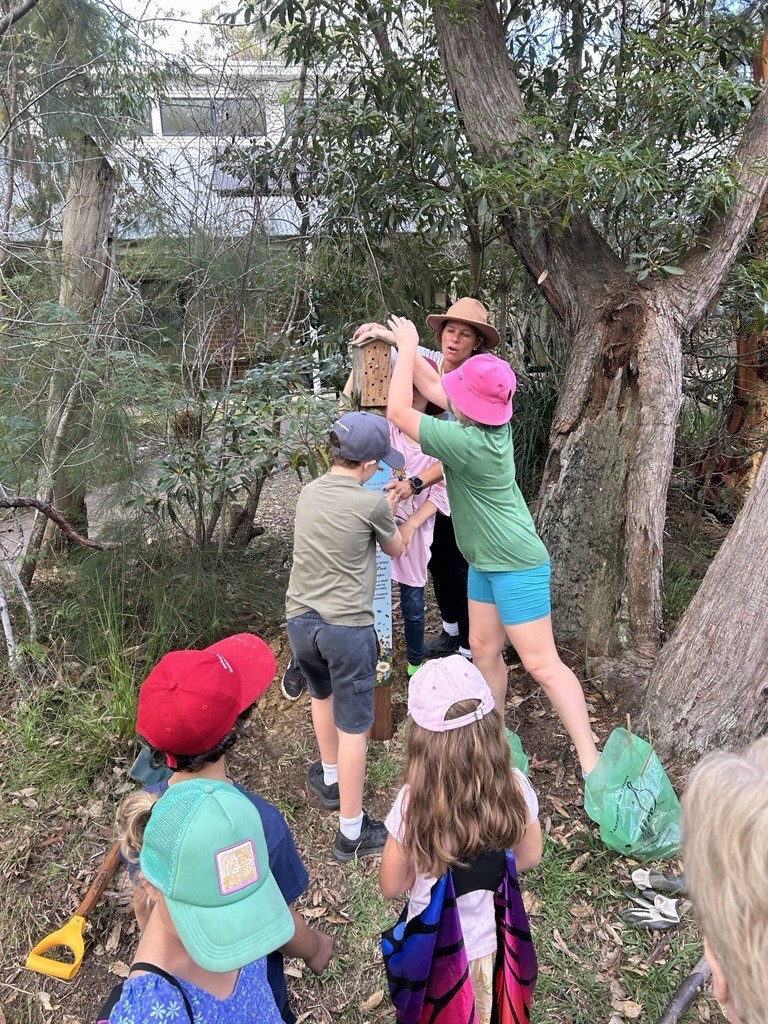
The bee pole placements have been extremely successful, each beginning with an Acknowledgement of Country read by a student, followed by me speaking about the importance of our native bees then students helping place the pole in the ground, pouring cement, rocks and water around the pole to ensure it will stand firmly. 

Harbord Public School Bee Pole installation

Curl Curl Public School Bee Pole installation

Students asked very meaningful questions about the importance of bees, why our native bees are better pollinators than the introduced species and all were interested to learn more  about our bees – which  are generally solitary, stingless, do not produce a lot of honey and some are very small about the size of a fruit fly so even if they are in and out of the trees many people do not recognise them as bees. (note Some Australian bee species do live in a hive and produce very tasty honey which, as scientists have recently discovered, has amazing medicinal properties.) The students were particularly interested in the design of the Bee Hotel which sits atop the pole, we are all so used to seeing a hive of active bees not a block of wood with straight holes of varying sizes bored into it!

Once the poles were cemented in place the students decorated around them with river pebbles or crushed rock and will plant native flowering grasses and vines to attract the bees. In each case we left the grounds feeling very happy with the morning’s work, thrilled by the enthusiasm shown by students and pleased that many more young Australians know about our important Native Bees! Now we wait for the bees to find their way to the hotel and set up their solitary residence in the holes bored into the wood. 

Coastal Environment Centre Narrabeen Bee Pole installation crew

I would like to thank members of our Rotary E-Club who have helped in placing Eco poles – Dee Stewart, Ross Johnson, Lucian Keegel, Lucy Hobgood-Brown, Marilyn Mercer and Geoff Appleton – all good drivers, lifters, carriers and enthusiastic supporters! I would also like to thank the school students and staff for their enthusiasm and eagerness to learn about and encourage our very important native bees to thrive.

Kinma School Bee Pole installation questions!

Kinma School Bee Pole installation


Australia’s old environment laws were a box‑ticking exercise. Sadly, the new ones could be too

TonyFeder/Getty
Justine Bell-James, The University of Queensland

For a quarter century, Australia’s environment laws were widely regarded as not fit for purpose. In 2020, a scathing review by Professor Graeme Samuel found the Environment Protection and Biodiversity (EPBC) Act was ineffective and unfit for future environmental challenges.

On the last Parliamentary sitting day of 2025, Labor passed its long-awaited reforms to Australia’s nature laws following a deal with the Greens. According to Environment Minister Murray Watt, these reforms would deliver tangible benefits for the environment and “protect what is precious”.

Now the dust has settled on getting the legislation passed, conservationists want to know if they will work.

The big questions is whether two proposed “environmental standards”, a centrepiece in the new laws, are up to the task.

What are environmental standards?

Previously, the EPBC Act required the decision-maker to tick procedural boxes, but this did not necessarily result in an outcome that protected the environment.

For example, while the Department of Environment could access information about the impacts of development on the black-throated finch, it merely needs to “have regard” to this. There was no obligation to reject a project, or impose conditions, even if the projected impacts on the finch would be severe.

To address this, Professor Samuel called for new national environmental standards. These universal requirements would guide the outcomes of environmental decision-making across the country.

For example, his suggested standard for threatened species included the outcome that they would be “protected, managed and recovered over time”. Decisions would have to be consistent with these standards with rare exception, only justifiable in the public interest. Rather than box-ticking, this would require decisions to promote good outcomes for nature.

Although Labor committed to environmental standards in 2022, passing the reforms proved challenging. It took three years, an election, a new Environment Minister, and a slew of compromises, to secure the deal.

A small possum held gently in a hand.
A small Leadbeater’s possum. Australia’s new environment laws are supposed to protect critically endangered species like this from extinction. Jason Edwards/Getty

What is the government proposing?

Two draft standards have released, and are open for consultation. One is for Matters of National Environmental Significance (MNES), a term in the EPBC Act that includes World Heritage areas, migratory species and the Great Barrier Reef National Park.

The other is for environmental offsets – actions taken to counterbalance the unavoidable negative impacts of a project on the environment.

At first blush, the draft standards contain the components urged by Professor Samuel, including objectives and outcomes. For example, the MNES Standard has an objective that habitat be protected, conserved, and restored.

However, clauses buried in both of the standards render these outcomes and objectives effectively useless. These clauses state that as long as the minister makes a decision consistent with another part of the standard (called the “principles”), the outcomes and objectives are deemed to be met.

These legal technicalities can be confusing. But the reality is that if the standards are signed off in their current form, we will be back to box-ticking as the key focus of environmental decision-making.

These new standards also include a narrow focus on “irreplaceable” habitat. For species that are recognised as threatened, habitat that is “irreplaceable” and necessary for them to remain “viable in the wild” should be protected.

While this framing sounds like what Professor Samuel envisaged, the narrow definition of “irreplaceable” means only the rarest and most fragile habitats will be covered.

This is at odds with the federal government’s previous commitment to “no new extinctions”. Avoiding a species becoming extinct requires habitat to be protected before things get to breaking point.

Weak constraints on state power

The weak standards are especially concerning given the federal government is steaming ahead with plans to pass approval powers to the states and territories. The Commonwealth has an important oversight role in environmental regulation and, although rare, it has stepped in on occasion to stop the most destructive projects, like the proposed Toondah Harbour development.

Under the reformed laws, the standards are supposed to act as a crucial guardrail on state power. The minister cannot devolve powers to a state unless satisfied that its environmental approval frameworks are consistent with federal standards. Unless robust environmental standards are developed, this constraint on state power will be fairly weak.

Environment Minister Murray Watt promised the EPBC reforms would deliver tangible benefits for the environment. Unfortunately, the draft standards offer little guarantee.The Conversation

Justine Bell-James, Professor, TC Beirne School of Law, The University of Queensland

This article is republished from The Conversation under a Creative Commons license. Read the original article.
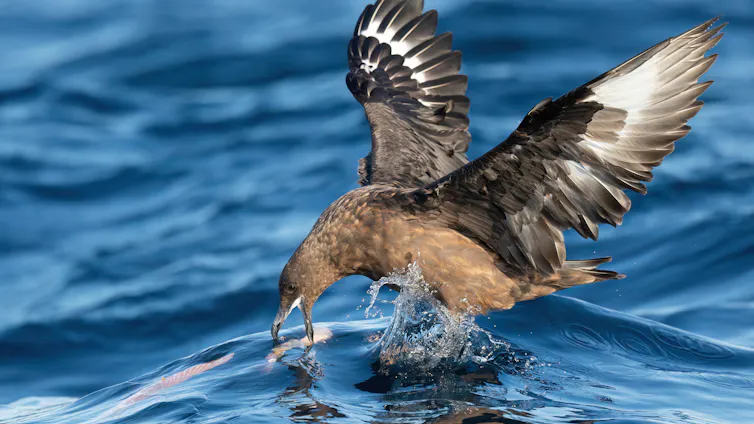
Scientists have scrapped the worst‑case climate scenario – because action is making a difference

Ali Majdfar/Getty
Andrew King, The University of Melbourne

When major new climate change scenarios are released, there’s always strong interest. These scenarios lay out what our future climate will look like, depending on how fast we act to cut emissions.

But what was surprising about the seven new scenarios announced last week was that United States President Donald Trump took an interest.

Why? Because a high-emissions scenario – known as RCP8.5 and its successor SSP5-8.5 – had been removed. Under these worst-case scenarios, nations would make no effort to cut emissions and expand fossil fuel use. By 2100, carbon dioxide levels would almost triple, to 1,135 parts per million and the world would be around 4.5°C hotter than the pre-industrial period.

The climate scientists responsible for laying out the range of possible futures removed the RCP8.5 scenarios for a very good reason. Although often slow and incomplete, our efforts to tackle climate change have made a tangible difference. We have averted the worst climate future once thought possible.

The job is far from done. Emissions are at record highs and global warming is speeding up.

But the removal of this high-emissions scenario isn’t, as Trump and other climate sceptics have claimed, a sign of failed modelling, or that climate change was a hoax. It’s a sign the expansion of solar, wind, electric vehicles and batteries have slowed emissions growth.

Global map of future climate under worst case emissions scenario. Deep red colour over land areas.
Under the previous worst-case climate scenario of SSP5-8.5, the world would have warmed about 4.5°C by 2100. IPCC, CC BY-NC-ND

How are these scenarios made?

Many climate impacts are becoming evident after about 1.4°C of warming – the level we’re roughly at now.

Because this period of extremely rapid climate change is due to human activities, it means we also have the opportunity to shape the future.

What will this look like? Will the world keep heating up, or will rapid action cut emissions and bring warming to a halt? The answer will make a big difference to the future humanity faces.

Predicting anything is difficult. But a group of scientists has created scenarios representing a range of possible climate futures.

Because the future is not set, scientists lay out a range of possible pathways for our future greenhouse gas emissions. They base them on what’s happened so far and what might happen in politics and technology over coming decades.

Then they select the emissions pathways deemed most plausible and then sample a range of different futures which are more or less optimistic about our fossil fuel use.

Scientific groups around the world then model these scenarios in depth using different climate models to ensure there’s a large amount of data available at global, regional and local levels.

These scenarios aren’t ranked by how likely they are. All are considered to be plausible futures. The huge range of temperature outcomes – approaching 2°C between the most and least optimistic scenarios by 2100 – points to how much of the future is in our hands.

Why the fuss about RCP8.5?

The two previous releases included two closely related scenarios – RCP8.5 and SSP5-8.5 respectively.

Here, “8.5” refers to radiative forcing – the level of extra heat (in watts) trapped per square metre by 2100.

In these worst-case scenarios, the world sharply boosts fossil fuel use. Unsurprisingly, this leads to very high amounts of global warming. Scientists have long argued over whether this was plausible in the first place.

None of the new scenarios are as pessimistic as RCP8.5/SSP5-8.5. The worst possible scenario now envisions high emissions leading to warming of around 3.5°C by 2100. That would still be very, very bad.

Sceptics acting in bad faith

Climate sceptics leapt on the removal of RCP8.5 as a sign the projections were wrong. These attacks were not made in good faith, but to cast doubt on climate science.

A clear eyed assessment is that RCP8.5 was removed because climate action is starting to work.

But while the worst outcome has been averted, we have also missed the window for the best future climate.

The new scenarios have no pathway as optimistic as the lowest emissions scenario from the last round of major climate projections. That scenario – SSP1-1.9 – envisaged strong climate action and rapid cuts to emissions, leading to global warming peaking at around 1.5°C.

Because global emissions haven’t yet begun to fall, the most optimistic new pathway would lead to warming peaking at about 1.9°C.

While we will definitely now pass 1.5°C, the hope is to only temporarily overshoot that level of warming while working to draw carbon dioxide back out of the atmosphere to get back to 1.5°C.

Our current emissions trajectory is somewhere in the middle – below the high emissions path but well above the most optimistic scenario. Based on current policies and countries’ actions, we’re looking at around 2.6°C warming by 2100.

You might wonder why we need to keep redoing these climate scenarios.

One reason: facts change on the ground. Solar keeps rolling out far faster than expected, but fracking has opened up large new fossil fuel deposits. Political shifts make climate action more or less likely.

Another is because our climate models are continually improving. The better the models get, the more accurate and detailed our projections of sea level rise and other climate impacts can be.

Smokestacks from a coal plant against hazy sky.
What our future climate looks like depends on how fast we act to cut emissions. Dmitrii Marchenko/Getty

Yes, this is progress

Taking RCP8.5 off the table is a sign of progress – we’ve avoided the worst-case scenario. But we have also missed the best case future.

The next five years could play out in many different ways, leading to better or worse future climates. We must understand and prepare for what we’re facing – and double down on our efforts to create the best future possible.The Conversation

Andrew King, ARC Future Fellow and Associate Professor in Climate Science, ARC Centre of Excellence for 21st Century Weather, The University of Melbourne

This article is republished from The Conversation under a Creative Commons license. Read the original article.
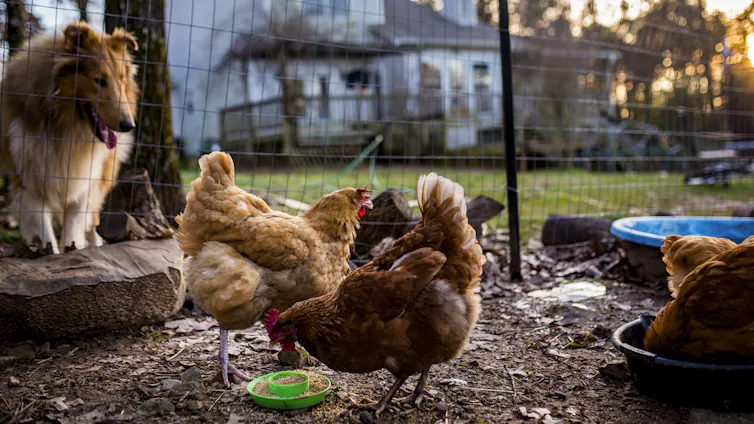
For 44 years, Australia has subsidised diesel use. Is it time to stop?

Ray Wills, The University of Western Australia and Peter Newman, Curtin University

Mining giant BHP has come under fire for spending hundreds of millions of dollars on new diesel trucks in the Pilbara, despite promising a transition to electric trucks in its climate strategy.

Like other mining companies, BHP’s diesel-driven fleet is eligible for fuel tax credits on diesel. The company’s controversial decision to shelve its plans raises the pressing issue of the diesel fuel rebate.

This rebate began as targeted support for a struggling agricultural sector in the 1980s, but has morphed into an almost $5 billion subsidy for some of the nation’s most profitable corporations.

So, what is the diesel fuel rebate? And is this fossil fuel subsidy still fit for purpose?

Why do we have a diesel rebate?

Since federation in 1901, diesel and petroleum products imported into Australia have been subject to import taxes. Since 1929, tax collected from the petrol pump has been earmarked to build and maintain the nation’s road network.

Australia’s diesel fuel rebate scheme was introduced in 1982. The Fuel Tax Credits Scheme, as it’s officially known, was designed to cushion farmers from rising fuel costs.

Farm and mine businesses buying diesel for off-road uses like tractors, harvesters and irrigation pumps could claim a rebate. At the time, Australia’s mining sector was far smaller.

Now, 44 years later, the rebate scheme still allows businesses like agriculture and mining to claim back the federal fuel tax paid on diesel used in eligible machinery, equipment and heavy vehicles.

Today, the mining industry receives about half of the diesel rebate.

Diesel up, petrol down

Since 2010, Australia’s consumption of liquid fuel has changed dramatically, with official statistics showing falling petrol demand and rising diesel use over the past decade. Petrol use has gradually declined as vehicle efficiency has improved. In contrast, diesel consumption has nearly doubled.

This surge in diesel consumption reflects Australia’s growth in freight, heavy vehicles and, particularly, mining. The diesel rebate scheme is now one of Australia’s largest fossil fuel subsidies, alongside tax concessions for aviation fuel and a range of support measures for coal and gas production, with recent analysis putting its annual cost at around $11.2 billion by 2026–27.

Mining is by far the largest beneficiary, claiming about $5 billion a year in diesel rebates according to one analysis. This includes roughly $1.5 billion for coal mining alone. Agriculture receives only a fraction of the total.

What began as support for farmers using off-road fuel has become a standing subsidy for Australia’s most profitable miners.

Meanwhile, aviation fuel pays little excise – about 3 cents per litre – to fund the Civil Aviation Safety Authority. This compares to a fuel excise rate of 52c per litre on petrol and diesel, which the Australian government halved on April 1 this year in response to fuel price spikes from the US-Israeli war in Iran.

Since 1992, the formal link between petrol and diesel excise and road funding has ended, with fuel tax now flowing into general revenue rather than a dedicated roads fund. The rebate was originally justified on fairness grounds – off‑road users were not meant to subsidise public roads – but once fuel tax stopped being a dedicated roads charge, that logic largely evaporated.

Fuel tax cuts in response to war

The May 2026 federal budget fuel package was worth more than $10 billion, centred on a permanent government-owned fuel reserve.

These are reminders Australia’s fuel security problem is immediate, not theoretical. The government’s response has been to buy and store more fuel, rather than reduce our structural dependence on imported oil and support a shift to electrification and renewable energy.

Australia’s fuel rebate entrenches higher diesel use. But the “we need more fuel” argument ignores the fact Australia’s economy is decisively decoupling from fossil energy consumption.

Uncoupling from oil is not a theoretical future possibility – it is slowly happening. Oil consumption in particular has plateaued since the early 2000s, even as GDP has roughly doubled. If Australia wants to meet its emissions-reduction commitments, it should hasten the shift away from fossil oil, not maintain a subsidy for it.

A fair share of resources

Australia has long failed to gain a fair share of revenue from our finite mineral wealth. Our petroleum resource rent tax is notoriously weak.

Mining companies argue tougher taxes will drive investment offshore. But Australia has some of the world’s highest-grade iron ore, coal and critical minerals. A tax regime would have to be extraordinarily high to make extraction unprofitable.

We are now in the fourth major oil crisis.

Unlike the others, this one arrives with cheaper renewable alternatives readily available. Wind, solar, batteries and electric vehicles are now cheaper than fossil alternatives and faster to deploy.

During a fuel crisis, we should scrutinise where our finite tax revenues are directed. The fuel rebate was designed mostly for farmers, when the mining industry was a fraction of its current size.

Does the policy need to return to its original aim? Or is a new form of road user tax required?

Whatever the mechanism, it makes sense to direct revenue towards electrification, not lock in another decade of diesel dependence.


Response from BHP:

In a statement, a spokesperson for BHP said it has net zero goal for reducing its scope 1 and 2 greenhouse gas emissions to net zero by 2050.

Despite this progress, many of the technologies the resources industry will need to achieve net zero are not yet ready to be deployed, BHP said.

“For example, no Australian mining operation is currently utilising critical 240-ton battery-electric haul trucks as the technology is not advanced enough to scale to an operational fleet,” the spokesperson said.

BHP is partnering with equipment producers to run trials of battery-electric equipment, including two 240-ton battery electric haul trucks, on a BHP site in the Pilbara, and four battery-electric locomotives which we plan to commence trialling in coming months.The Conversation

Ray Wills, Adjunct Professor, The University of Western Australia and Peter Newman, Professor of Sustainability, Curtin University

This article is republished from The Conversation under a Creative Commons license. Read the original article.


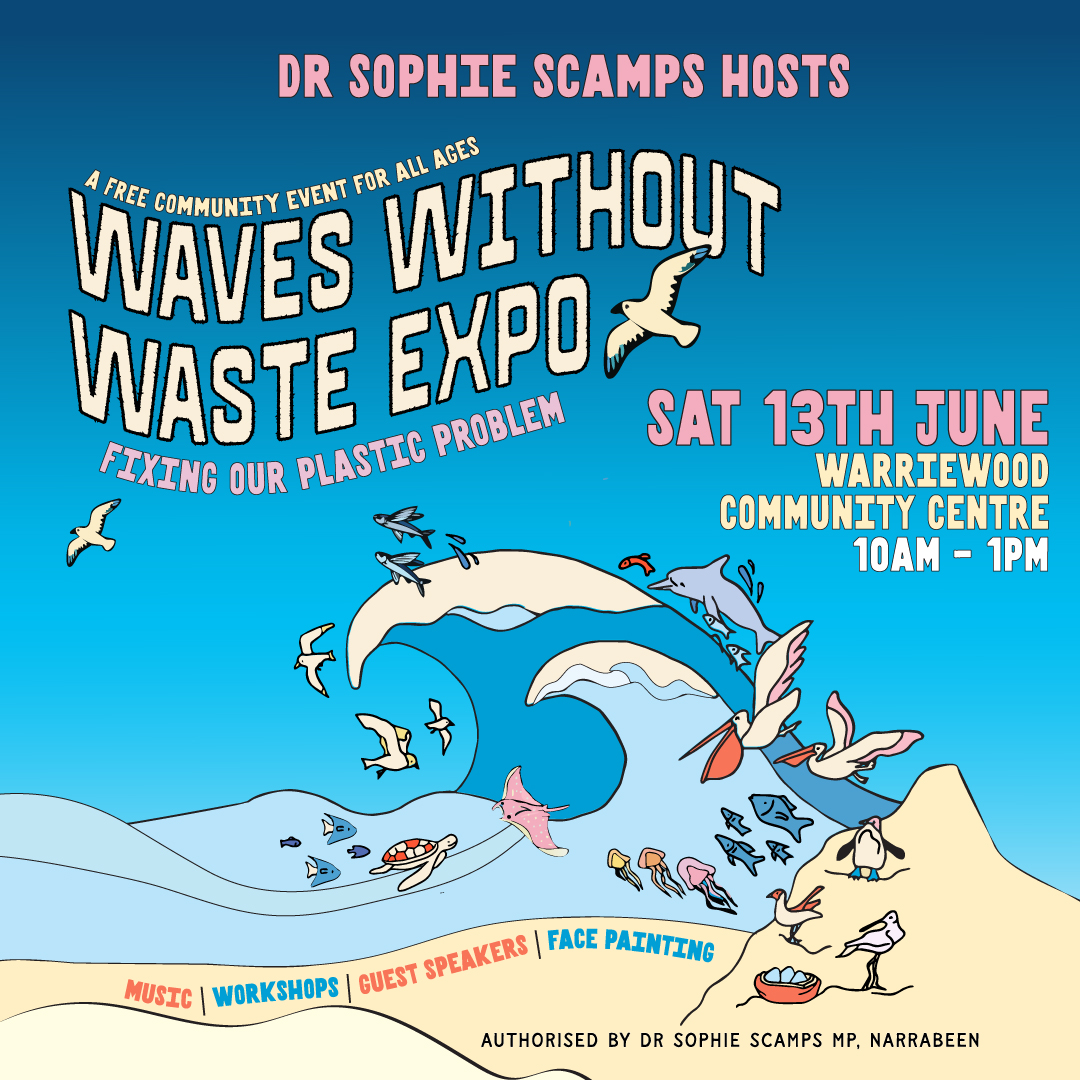
By 2050, there could be more plastic in our oceans than fish. 
We all do our best to reduce our plastic waste, but it’s time we stopped letting big polluters off the hook.
Come along to the Waves Without Waste Plastics Expo and hear from experts and advocates leading the call for change.
Saturday June 13 10am | Warriewood Community Centre | RSVP at:

Electricity prices to fall as Liddell power station demolished and clean power takes over

May 26 2026

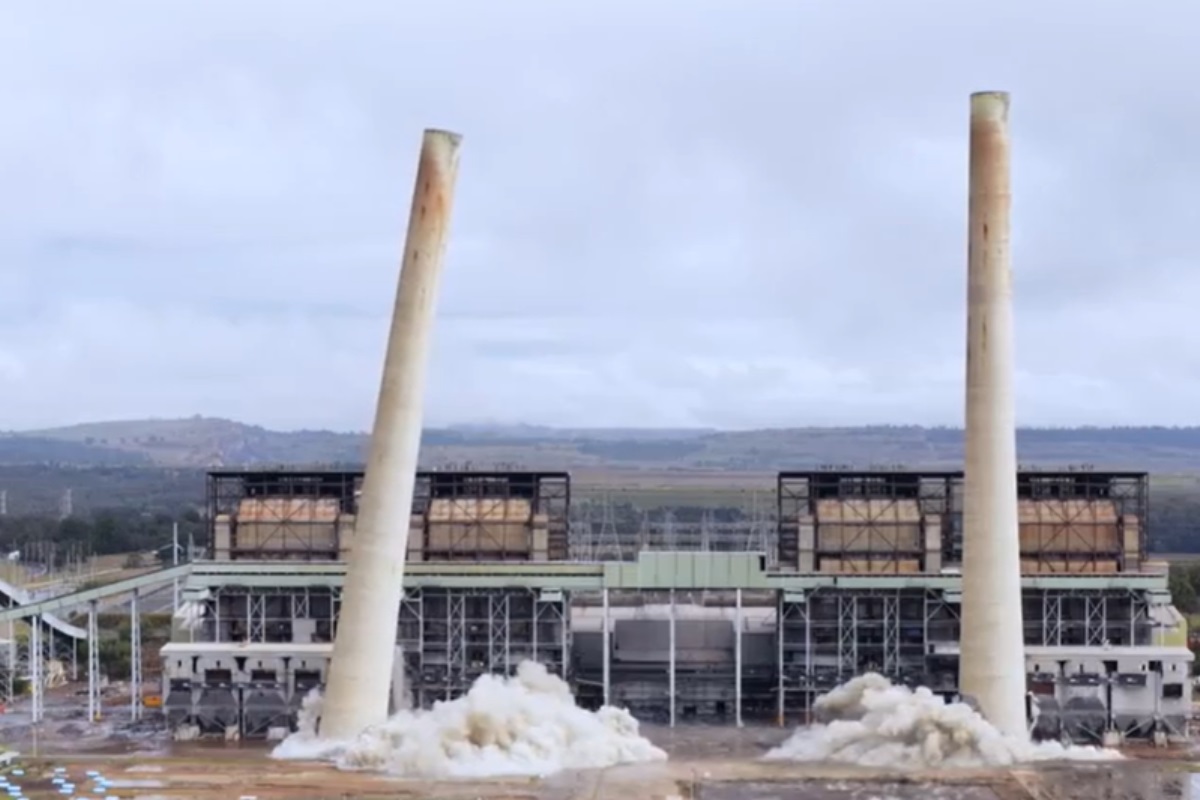
Today's demolition of the chimney stacks at the decommissioned Liddell power station, alongside the release of the final default price determination by the Australian Energy Regulator (AER), shows the shift to clean energy is working.  

According to estimates from Carbon Monitoring for Action, Liddell Power Station emitted approximately 14.70 million tonnes of greenhouse gases annually due to burning coal.

NSW’s peak environment group, the Nature Conservation Council NSW, says businesses and households are winning, and now is the time to keep pushing the government to prioritise cheaper power.  

Nature Conservation Council NSW CEO Jacqui Mumford said:  

"Regional NSW businesses are the biggest winners, with the default price set to fall up to 20% from July 1.” 

 "Households will also see price drops of 3.4% to 7.7% across NSW, thanks to clean energy and batteries pushing in cheaper power." 

"These power price falls are even more remarkable given we're in a global energy crisis." 

 "Today's demolition of the smokestacks at Liddell power station shows we can achieve a transition to reliable, cleaner, and cheaper energy, in fact it's already well underway.” 

"With three more NSW coal power stations set to retire in the next decade, there's no time to waste getting solar, wind, and batteries built to keep pushing cheaper power into our homes and businesses." 

The AER price determination released today is available here: https://www.aer.gov.au/industry/registers/resources/reviews/default-market-offer-2026-27   

Net Zero Commission says NSW coal expansion inconsistent with law and advice

The Net Zero Commission told an inquiry on May 25 2026 that the Minns Labor Government’s plans to expand existing coal mines - released 19 March 2026 is inconsistent with the Commission’s independent advice, NSW laws to reduce emissions, and the Paris Agreement to reduce global emissions.

Greens MP and spokesperson for Climate Change Sue Higginson said “The Minns Labor Government committed to legally binding emissions reductions targets when they came to power, but their continued support for more coal in NSW is against their own laws and flies in the face of expert and international advice,”

“The International Court of Justice (ICJ) has advised that States have an obligation to protect the environment from greenhouse gas emissions, and the United Nations General Assembly has passed a resolution affirming that advice. The Australian Government supported this position, but here in NSW the Minns Labor Government isn’t listening to the law or the science,”

“Concerningly, NSW Resources have apparently not even considered the advice of the ICJ, leaving Australia internationally exposed and liable for the making of reparations if we act inconsistently with the international objective of reducing emissions,”

“The Net Zero Commission was established by the Minns Labor Government as an independent advisory body, so we rightly expect the Government to act in accordance with the Commission’s advice, as well as their own laws and international obligations,”

“Glencore’s proposed Hunter Valley Operations expansion is one of the biggest and most controversial coal projects under consideration in NSW, it single-handedly threatens NSW emissions targets. Given the inconsistencies now evidenced in the planning and regulatory framework surrounding coal approvals, I believe the system would benefit from the Commission providing advice to the Independent Planning Commission, as they are able to do under the climate laws of NSW,”

“There have already been 10 coal expansions under the Minns Labor Government, with two approved just in the last six months. With another 16 projects still coming down the planning pipeline, it’s time for the Minns Labor Government to decide if they will continue to recklessly hand out coal approvals or be a responsible Government and work within the law to bring our emissions down,” Ms Higginson said.

See Week Four of May 226 report: UN General Assembly backs historic World Court climate crisis ruling: Obligations of States in respect of Climate Change + Australia violated Torres Strait Islanders’ rights to enjoy culture and family life, UN Committee finds + The Australia-Tuvalu Falepili Union

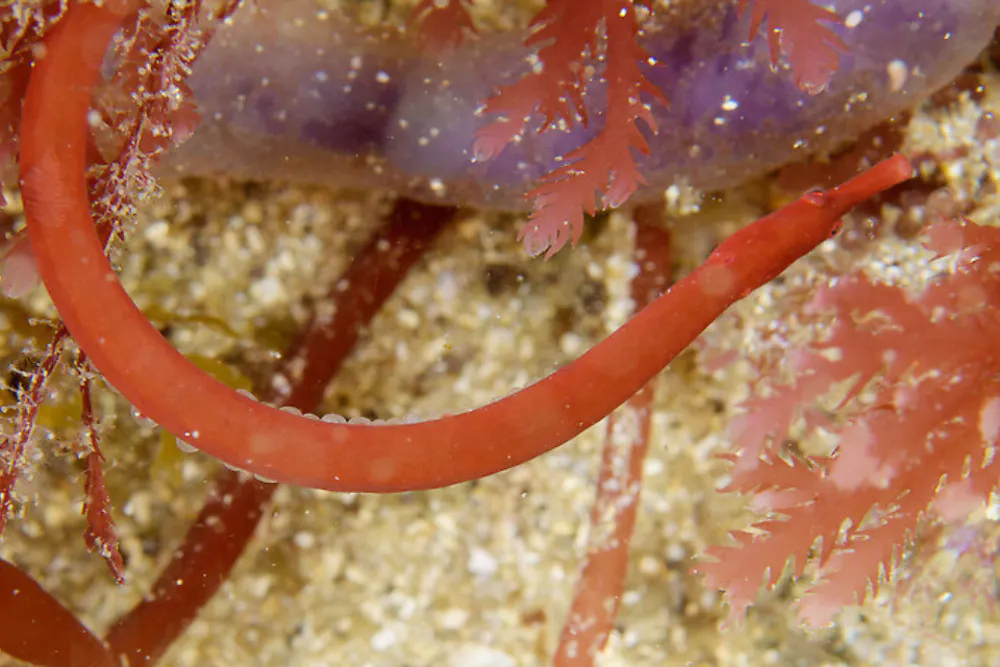
Rare male red pipefish carrying eggs on its trunk spotted in Sydney

Andrew Trevor-Jones, CC BY
Andrew Trevor-Jones, Australian Museum and Graham Short, Australian Museum

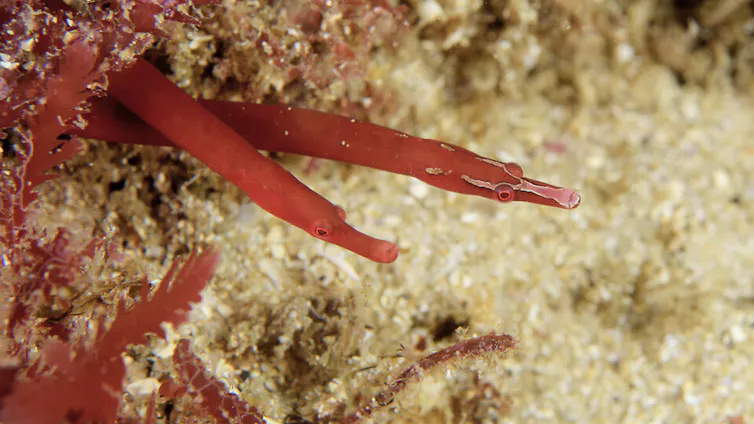
The red pipefish (Notiocampus ruber) is a rare relative of seahorses and seadragons found only in Australia.

While the species occurs across southern Australia from Western Australia to New South Wales, its incredible camouflage means until now only one person had ever photographed it in the wild.

In Gamay (Botany Bay) it has been observed hiding among feathery red algae, but elsewhere the red pipefish has been recorded on rocky reefs. Its colour and slender body allow it to disappear almost completely against its surroundings.

For decades, scientists have wondered how these elusive creatures carry their eggs. Our new photographs and research, published in the Journal of Fish Biology, finally provide an answer.

A lucky sighting

One of us (Andrew) regularly dives the popular Sydney sites The Leap and The Steps at Kurnell, Gamay (Botany Bay), where he documents seahorses, pygmy pipehorses, seadragons and other related sealife.

Andrew had briefly seen a red pipefish twice before. However, he struck gold when he spotted one at Kurnell in April 2021. He kept tabs on this individual, spotting it almost weekly until January 2022.

During that time it was joined by two more red pipefish. When all three were sighted in November 2021, one was a brooding male carrying eggs on his trunk.

Tails or trunks?

While pipefishes and seahorses are famous for male pregnancy, the family is split by how the males carry their young. Many pipefish – and all seahorses – are “tail brooders”, carrying eggs on the tail in pouches.

Another group of pipefish, the “trunk brooders”, carry eggs exposed directly on the belly. However, scientists have suspected the red pipefish was a tail brooder since 1979 based on the structure of its body. However, without a living male to study the theory remained unproven.

Skinny red fish with translucent whitish lumps.
The small translucent lumps on the pipefish’s trunk are eggs attached directly to its body. Andrew Trevor-Jones, CC BY

Andrew’s photographs from his November 2021 dives at Kurnell finally provided the proof. They clearly show a male carrying large eggs attached directly to the belly – confirming the species as a trunk-brooder and placing it in an ancient group of pipefishes that lack pouches entirely.

Interestingly, the data suggest this Australian fish may be a long-lost relative of species found as far away as the North Atlantic, despite the vast geographical separation.

Finding such a rare fish in the well-dived waters of Gamay is a reminder that major biological secrets are still hiding in plain sight.The Conversation

Andrew Trevor-Jones, Technical Officer, Australian Museum and Graham Short, Research Associate, Australian Museum

This article is republished from The Conversation under a Creative Commons license. Read the original article.

Mosquitoes learn to link the smell of DEET with a blood meal – new study

Chris F/Pexels
Leon Hugo, QIMR Berghofer Medical Research Institute

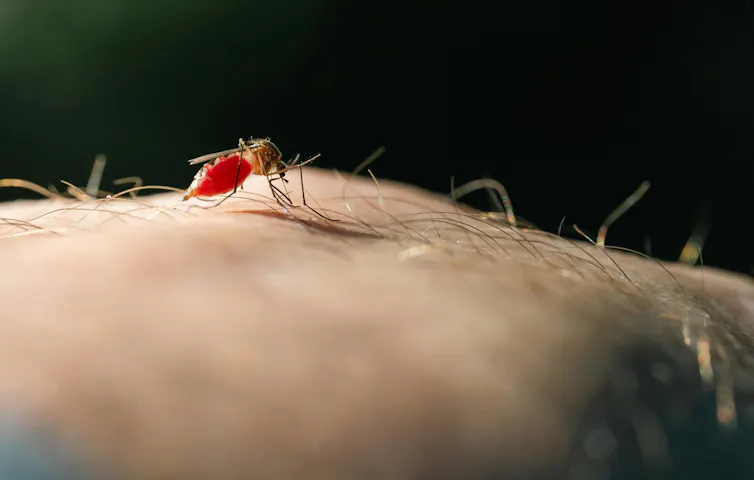
Mosquito repellents are key to protect ourselves from mosquito bites and the pathogens they might carry. The most widely used active ingredient in insect repellents is N,N-diethyl-meta-toluamide, commonly known as DEET.

Highly effective, long-lasting (approximately five hours) and cheap to make, DEET is a gold-standard insect repellent. But even though it was developed more than 80 years ago, there are important gaps in our understanding of how DEET actually works.

A new paper in the Journal of Experimental Biology led by Claudio Lazzari from the University of Tours, France, now shows mosquitoes can be conditioned to be attracted to DEET.

This provides an important piece of the puzzle in our understanding of how DEET works, and hints that this important mozzie repellent could have a vulnerability.

A vital tool that’s not fully understood

Insect repellents are a major method of protection against mosquito-borne diseases including malaria, dengue, chikungunya, Ross River virus, Japanese encephalitis virus and more. Many of these diseases are expanding on a global scale due to travel, urbanisation and climate change.

Female mosquitoes transmit parasites and viruses when they feed on vertebrate blood, which they need to provide proteins for egg development. To find their next blood meal, mosquitoes are strongly attracted to odours and physical cues emitted by warm-blooded “hosts”, including humans.

These include carbon dioxide we exhale, lactic acid in our sweat, and a complex combination of other chemicals that varies between people. Mosquitoes detect all these with sensory organs located in their antennae, proboscis (the pointy mouth part they use to suck blood) and the maxillary palps that flank it.

DEET has been in widespread commercial use since the 1950s, but there’s a lot of scientific debate over how exactly it works as a mozzie repellent. Is it blocking the odour of the host, is it toxic to the mosquito, or something else?

In 2008, groundbreaking research showed DEET blocks the response of sensory neurons to host odours in mosquitoes and vinegar flies. This means DEET is likely “confusing” the mosquito rather than repelling it. A couple of years later, scientists found a small portion of mosquitoes exposed to DEET are insensitive to it, and it’s a heritable trait.

This means mosquitoes do have a physiological response to DEET. But there are also signs some of the mozzie reactions are behavioural. In one study, mosquitoes exposed to DEET were less sensitive to it if exposed again within three hours. This hints they can temporarily get used to the chemical.

A man spraying his arm with insect repellent outdoors.
DEET may not be fully understood, but it’s a vital tool in protecting ourselves against mosquito-borne diseases. Chalabala/Getty Images

What did the new study find?

The new study shows it’s possible to condition mosquitoes to bite more if they’re repeatedly exposed to DEET during a blood meal. Not only does this tell us more about how it repels mosquitoes, but it raises the prospect mosquitoes may actually be attracted towards DEET in some cases.

First, the researchers developed a behavioural test. They kept mosquitoes in tiny cages and moved a food target (a warm bag of blood) towards them, recording proboscis movements when they sensed the target. This was the “biting attempt response”.

To test things further, the team ran a classical conditioning experiment. Mosquitoes were run through one of five “training programs” exposing them to various combinations of an unconditioned stimulus (heat), a conditioned stimulus (short exposure to DEET in a plume of air) and a reward (a short opportunity to feed on blood).

Here’s where it gets surprising. The mosquitoes whose training program included a squirt of DEET while they were already feeding on blood, afterwards had a significantly higher biting response when exposed to DEET again.

If the mosquitoes were exposed to DEET before being offered the blood bag, none of them tried to bite it.

Then, one of the researchers boldly offered her hands up for testing. One of the hands was treated with DEET. About 50% of the mosquitoes who went through the DEET-blood meal training program tried to bite the hand coated in DEET. By contrast, 100% of untrained mozzies avoided the hand covered in DEET and went for the clean one instead.

What does all this mean?

It’s well established mosquitoes can learn and retain information. What they learn about hosts and their environment can in turn have an impact on disease transmission.

This study indicates DEET doesn’t just affect mosquitoes physiologically. There’s a cognitive response as well, which could be an important part of how it works.

The authors raise the possibility – if the concentration of DEET is not high enough to repel mosquitoes but they still sense it during a blood meal, would these mosquitoes then be more likely to bite people who smell of DEET?

It’s important to note the study happened in highly controlled lab conditions, and the training program the mozzies underwent may not reflect everyday scenarios. Future studies should try and come up with test conditions that better represent real-world situations to see if these results hold up.

At a time when mosquito-borne diseases are on the rise, DEET still provides highly effective protection. What this study contributes is an improved understanding of how DEET works – and how we might improve insect repellents in the future.The Conversation

Leon Hugo, Adjunct Associate Professor, Mosquito Control Laboratory, QIMR Berghofer Medical Research Institute

This article is republished from The Conversation under a Creative Commons license. Read the original article.
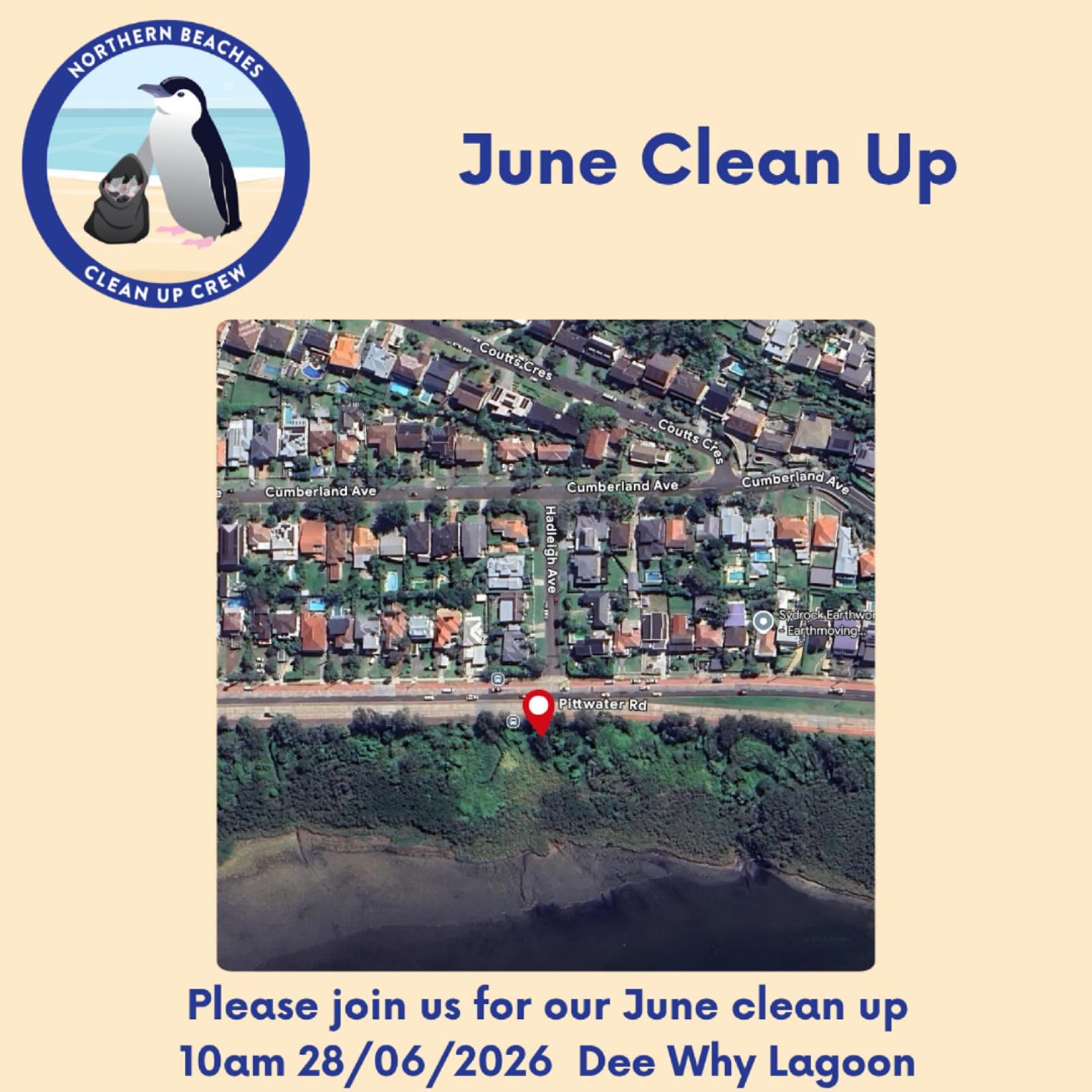
National Biodiversity Day: Private Landholders deliver conservation win

On Friday May 22 2026 the NSW Government announced private  landholders across NSW are making a powerful impact by protecting the state’s threatened species and environment.

Data from the NSW Biodiversity Conservation Trust shows how landholders are not just protecting the environment, they’re actively improving it.

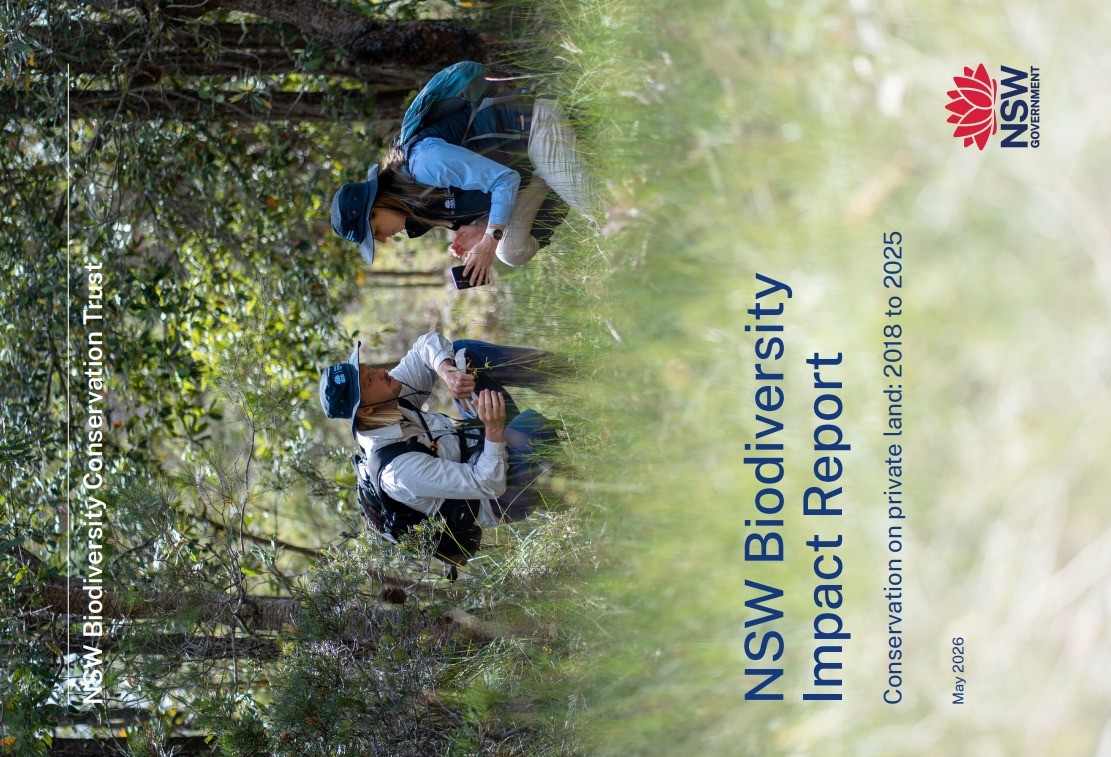
The Biodiversity Impact Report | Conservation on Private Land: 2018 to 2025 clearly shows that Private land conservation is delivering fantastic conservation outcomes across the state.

The NSW Government states the Biodiversity Conservation Trust and participating landholders have:

  • Established almost 3,000 permanent biodiversity monitoring sites
  • Prevented the loss of approximately 35,000 hectares of native vegetation
  • Protected habitat for at least 304 threatened species
  • Safeguarded 41 threatened ecological communities
  • Contributed nearly 40% of the total area added to NSW’s protected area network since 2018.

Landholders participating in the Biodiversity Conservation Trust program manage their properties for conservation and work with expert ecologists who track environmental changes over time.

cover of Biodiversity Impact Report | Conservation on Private Land: 2018 to 2025

The properties managed under conservation agreements are supporting a greater variety of species and stronger, healthier ecosystems, helping reduce risks to some of NSW’s most threatened plants and animals.

The Report is available to read at: nsw.gov.au/bct-impact-report

Minister for Environment Penny Sharpe said: 

“Biodiversity is the cornerstone to a healthy environment, from the microorganisms in our soil to the largest tree on the horizon.

“80 per cent of land in NSW is privately managed. Biodiversity protection can only be done by working closely with private landholders.

“These results show how successful this partnership between landholders and the Biodiversity Conservation Trust can be. I would encourage anyone interested to investigate this rewarding partnership for their land.”

NSW Biodiversity Conservation Trust Principal Ecologist and report author Dr James Brazill-Boast said:

“When we support landholders with the right incentives and support, conservation on private land can be planned, implemented and measured with confidence.

“Long-term monitoring is essential because it tells us not just what we’re doing, but what’s actually working.”

State-of-the-art agtech bus journeys to Western NSW 2 – 11 June 2026

May 26 2026: NSW DPI

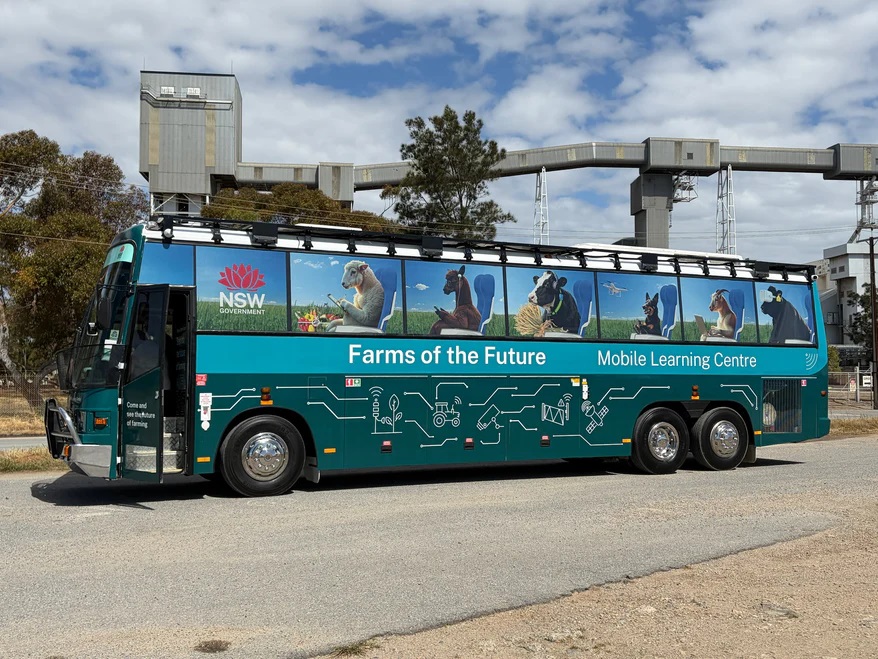
The NSW Department of Primary Industries and Regional Development (DPIRD) Farms of the Future team, in partnership with Western Landcare NSW, is delivering a series of Agtech Fundamentals workshops across Western NSW from 2 – 11 June 2026.

These workshops are designed to help primary producers understand practical digital and connectivity solutions that can support productivity, monitoring, safety and decision-making on-farm.

NSW DPIRD Farms of the Future Program Leader Ailie Webb said, this training will be delivered in the state-of-the-art Mobile Learning Centre, providing hands-on learning opportunities directly within regional communities.

“The Farms of the Future program is designed to support farmers in identifying their agtech and connectivity needs, so they can confidently plan, purchase and install solutions, and most importantly, use the data to improve decision-making or gain peace of mind about their farm operations,” Ms Webb said.

“More than 1,300 farmers across the state have already benefited from the training we’ve delivered, and the bus will build on this by taking that support even further.

“Regardless of where you’re based, your enterprise type, or your level of experience, we encourage producers to come aboard and explore interactive displays, expert advice, and practical, easy-to-follow examples of how agtech can create real on-farm benefits.”

An outdoor demonstration area will showcase a range of innovative Agtech solutions, giving visitors the opportunity to experience the equipment firsthand and see how these technologies perform in real-world farming conditions.

Ms Webb said our agtech specialists can also help producers identify their challenges, suggest relevant tech solutions, and explain how the tools would operate based on the farm’s location, infrastructure, and goals.

“Taking this high-tech bus out to agricultural communities allows us to deliver these free, face-to-face training sessions directly to farmers and regional communities, right where they live and work,” Ms Webb said.

“We know farmers are facing some difficult decisions right now, and by adopting agtech, businesses can cut fuel use and better manage water, particularly during dry conditions.

“Watch for the Farms of the Future bus as it travels across the region, we’re hard to miss!”

The Farms of the Future mobile learning centre is scheduled to deliver workshops in the following locations, you can register for these events here:

  • Agtech Fundamentals Training – Bourke – 2 June
  • Agtech Fundamentals Training – Cobar - 3 June
  • Agtech Fundamentals Training – Wilcannia – 4 June
  • Agtech Fundaemntals Training – Broken Hill - 5 June
  • Agtech Fundamentals Training – Menindee – 9 June
  • Agtech Fundamentals Training – Pooncarie – 10 June
  • Agtech Fundamentals Training – Anabranch – 11 June

Councils, grower and producer groups, schools, and community organisations can register their interest in hosting the Mobile Learning Centre through the Farms of the Future website here

For more information on upcoming Agtech Fundamentals workshops, please visit here

For more information on the Farms of the Future program, please visit the Agtech Toolbox here

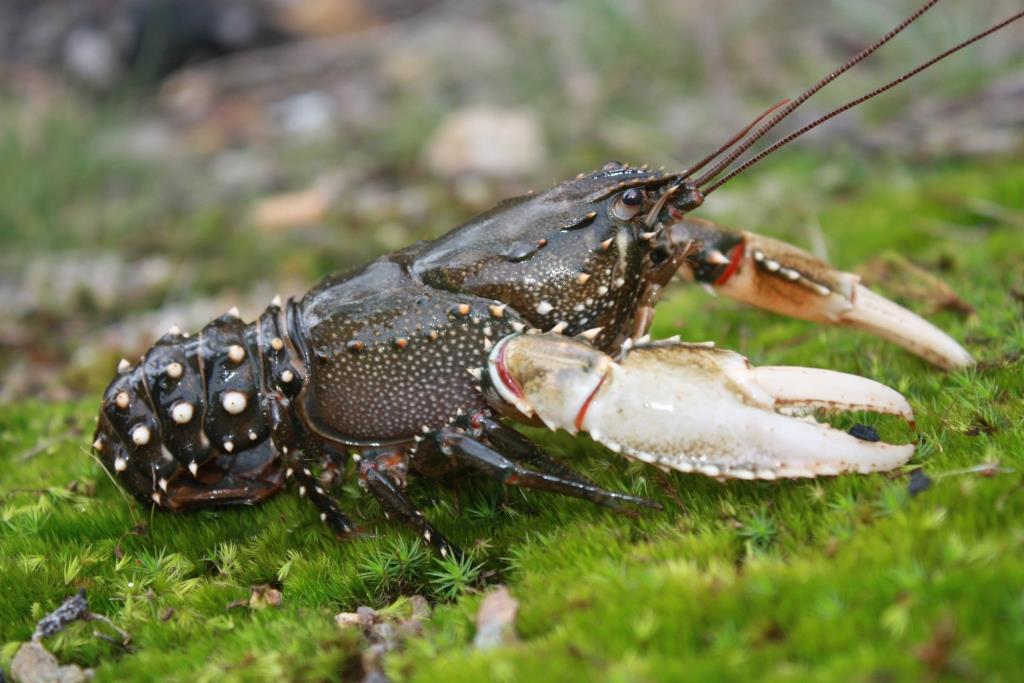
Winter signals start of Murray Crayfish season on the Murray and Murrumbidgee

Recreational fishers across south-western NSW are counting down to the opening of the 2026 Murray Crayfish season on 1 June, signalling the return of one of the State’s most unique freshwater fishing experiences.

NSW Department of Primary Industries and Regional Development (DPIRD) Director, Aquaculture and Industry Development Ian Lyall said the annual season provides fishers with a rare opportunity to target one of Australia’s largest and most recognisable native crayfish species.

“Murray Crayfish are the second‑largest freshwater crayfish in the world and are native to the Murray and Murrumbidgee river systems and their tributaries across southern NSW,” Mr Lyall said.

“Like many long‑lived native species, Murray Crayfish suffered significant declines following European settlement, which is why strict rules around when they can be taken, along with size and bag limits, remain essential to protecting this vulnerable species and supporting its recovery.

“The opening of the Murray Crayfish season is highly anticipated, and we want to ensure fishers follow the rules so this unique fishery can be sustained for future generations,” Mr Lyall said.

In NSW, Murray Crayfish may only be taken during June, July and August. During this period, fishing is permitted in the Murray River between Hume Weir and the Newell Highway Road Bridge at Tocumwal, including Lake Mulwala, and in the Murrumbidgee River between the Hume Highway Road Bridge at Gundagai and Berembed Weir, excluding Old Man Creek.

Mr Lyall said DPIRD Fisheries Officers will be patrolling waterways throughout the season to ensure recreational fishers and other water users are complying with the rules, including size, bag and possession limits.

“The daily bag limit for Murray Crayfish is two per person, with a possession limit of four,” Mr Lyall said.

“Murray Crayfish must measure between 10 and 12 centimetres, measured from the rear of the eye socket to the centre rear of the carapace (which includes the rib at the rear of the carapace but does not include the fine hairs that protrude from it).

“The department provides free Murray Crayfish measuring devices, which can be used to assist in measuring Murray Crayfish to ensure they are of legal size.

“Recreational fishers may use up to five nets per person to catch Murray Crayfish, including hoop or lift nets, open pyramid lift nets, or a combination of these.

“Each net float must be clearly marked with ‘HN’ for hoop nets or ‘PN’ for pyramid nets, along with the user’s name, year of birth and postcode.

“It is unlawful to take berried (egg‑carrying) females. It is illegal to remove or possess the heads, tails or claws of crayfish when you are in, on or adjacent to waters, unless the crayfish are being prepared for immediate consumption or bait, or are being cleaned at a designated fish cleaning facility,” Mr Lyall said.

Opera house-style yabby traps must not be used.

Further information on Murray Crayfish fishing rules is available on the DPIRD website, through the FishSmart NSW app, and in the NSW Freshwater Fishing Guide, available from DPIRD Fisheries offices and most tackle stores.

Anyone who observes suspected illegal fishing activity is encouraged to report it to Fishers Watch on 1800 043 536 or via the NSW DPIRD website.

Solar for apartment residents: Co-funding

Less than 2% of apartment buildings in NSW have solar installed, but the NSW Department of Climate Chnage, Energy, the Environment and Water are on a mission to change this.

Their Solar for Apartment Residents grant is co-funding shared solar panel installations on eligible apartment buildings and multi-unit dwellings and has already helped thousands of households.

They’ve extended the program to help more homeowners and renters reduce their energy bills and have also allocated extra funds through a separate Boost grant to help priority communities too.

Application closes: 4 December 2026, 5:00 pm

Share this with your Owners Corporation or Stata Manager and check your building's eligibility at: www.nsw.gov.au/grants-and-funding/solar-for-apartment-residents-soar-grant-program

PNHA Activities 2026

Our walks for 2026 are listed below. 

You are very welcome to bring friends and older children on these outings. Please book by emailing pnhainfo@gmail.com and include  your PHONE NUMBER so we can contact you in case of changes because of weather etc. 

Looking forward to getting out and about in our lovely area! 

Your PNHA Committee

Pittwater Natural Heritage Association

The Pittwater Natural Heritage Association has been formed to act to protect and preserve the Pittwater areas major and most valuable asset - its natural heritage.

PNHA is an incorporated association seeking broad based community membership and support to enable it to have an effective and authoritative voice speaking out for the preservation of Pittwater's natural heritage.

Our Aims

  • To raise public awareness of the conservation value of the natural heritage of the Pittwater area: its landforms, watercourses, soils and local native vegetation and fauna.
  • To raise public awareness of the threats to the long-term sustainability of Pittwater's natural heritage.
  • To foster individual and community responsibility for caring for this natural heritage.
  • To encourage Pittwater Council and the NSW Government to adopt and implement policies and works which will conserve, sustain and enhance the natural heritage of Pittwater.

Some of our interests and concerns include:

  • Native Tree Canopy
  • "Wildlife Friendly" Gardens
  • Weed Infestation
  • Keeping our Waterways Healthy
  • Beaches and Dunes

Act to Preserve and Protect!

If you would like to join us, please fill out the Membership Form. Visit: https://pnha.org.au

Sunday April 26 Fauna: Underpass below Mona Vale Rd East, Ingleside.

If you missed this walk last year, here’s your chance to see how fauna can move between areas of bushland, so important for finding territory, mates and food. 

Meet 9am at corner of Ingleside Rd and Laurel Rd East. Walk ends about 11am.

Saturday May 23: PNHA stall at Avalon Car Boot Sale, Dunbar Park Avalon.

From 8am to 2pm, we’ll offer Information on identifying and controlling weeds. See our posters about invertebrates in local gardens. Our famous $2 local flora, fauna and scenery cards will be for sale. Come and have a chat. 

Sunday May 24: Walk in Red Hill Bushland Reserve, Beacon Hill

Meet 9am on Lady Penrhyn Drive opposite no. 41A, close to the open gate. Flora, birds, views. Walk ends about 11.30. 

Sunday June 28: Crown to the Sea Walk, Newport

Meet 9am at Porter Reserve, Neptune Rd Newport. Walk ends about 12 noon. This walk goes through several very different bushland reserves with coastal heath and littoral rainforest.

Wildflowers, ferns and coastal views. Moderate fitness needed for some steep tracks and many steps. Limit: 15 people so please book early. We will provide the Crown to the Sea map to participants on booking.

Sunday July 26: Ingleside Chase Reserve

Meet 9am at end of Irrawong Rd North Narrabeen, walk ends about 11am. Birds and swamp forest along Mullet Creek. Swamp Mahoganies will be flowering attracting birds. Binoculars a must for this walk.

Sunday August 23: Spring in the Bush

Meet 9am at corner of Mallawa Rd and Bulara St, Terrey Hills. Walk ends about 11am. With a focus on botany, we’ll see flowering plants in the Proteaceae plant family, waratahs, endangered Grevillea caleyi , right, and others in the major Australian Proteaceae plant family. Birds, too. 

Sunday September 27: The Chiltern Track, Ku-ring-gai N.P.

Meet 9am at track entrance with barred gate on Chiltern Rd Ingleside. Walk ends about 11am. One of our favourite walks to see Sydney sandstone flora in spring. Native plant species list available. Birds too, often a Yellow-tufted Honeyeater here. 

Sunday October 25: Katandra by Night

Meet 6.45pm at Katandra Bushland Sanctuary on Lane Cove Rd Ingleside. Walk ends about 8.45pm. Sunset is about 7.15. The bush by night is wonderful. We hope to see fireflies again as on previous walks here in October. Bring a torch, or headtorch, preferably with a red light option so as not to dazzle possums. Moderate fitness needed for the bush track and steps. Limit: 15 people, so please book early. 

Sunday November 22: Deep Creek Reserve

Meet 9am in Deep Creek reserve, off Wakehurst Parkway. Walk ends about 11am. Birds and bushland. From the bridge across the creek we may see Dollarbirds, summer breeding migrants that nest in hollows, with their youngsters. Black Bitterns have been observed along the creek margins, so bring binoculars. 

Grevillea caleyi, now critically endangered. Image taken in Bush at Ingleside/Terrey Hills verges - picture by A J Guesdon, 31.10.2014

World-leading biosecurity research facility given $31 million boost

Announced: Tuesday May 26 2026

Construction has begun on $31 million infrastructure upgrades at the Elizabeth Macarthur Agricultural Institute (EMAI) as part of the Minns Labor Government’s commitment to protecting the state’s agriculture sector, supporting research and innovation and strengthening our biosecurity capabilities.

The world-class facility in Menangle plays a critical role with a team of renowned scientists working to find new ways to reduce threats to agriculture, the environment, and our community.

The Minns Government is helping build-up and protect the state’s primary industries with $100 million invested over the last year in agricultural research and more than $1 billion in biosecurity systems and programs.

The latest upgrades at EMAI include a $15 million high-containment insectary that will strengthen NSW’s capacity to protect agriculture and the environment from damaging insect and mite pests.

The facility will enable rapid, secure research to respond to exotic incursions, and improve biosecurity preparedness for industries such as grains, horticulture, livestock, forestry and cotton, as well as the environment, by increasing the likelihood of a successful response.

This facility was funded by the NSW Government with a $2 million contribution from the Grains Research and Development Corporation (GRDC).

  • $6.5 million to renovate the existing greenhouse complex to support plant biosecurity research and diagnostics. This includes the host diversity of new and emerging pathogens, developing new surveillance methods, and improved control options.

Plant industries depend on pathogen-tested propagation stock, so upgraded greenhouse facilities will strengthen early detection of exotic and emerging pathogens.

  • $4.8 million to extend the animal house facility to support priority biosecurity research.
  • $4.7 million to other critical laboratory and infrastructure upgrades across the EMAI campus.

The greenhouse research complex, animal house research facility extension and critical laboratory and infrastructure upgrades are funded under the Minns Government’s $60 million Critical Infrastructure Uplift Program.

Minister for Agriculture Tara Moriarty said:

“The Elizabeth Macarthur Agricultural Institute is one of the world’s leading primary industries research centres and the Minns Government is committed to making it even better.

“The work undertaken by the dedicated scientists has aided biosecurity response capacity for red imported fire ant, Xylella, khapra beetle, Japanese encephalitis virus and white spot syndrome virus, protecting the State’s multibillion dollar primary industries sector.

“The Minns Government recognises how crucial biosecurity research is with this $31 million investment in labs, greenhouses, and research facilities at the Elizabeth Macarthur Agricultural Institute.

“NSW Government scientists continue to deliver world-first breakthroughs which have long-lasting benefits to agriculture, the environment and our community. This funding recognises the critical role our scientists continue to play in preventing biosecurity incursions and improving our preparedness.

“Collaboration is a key component for EMAI scientists who have been able to deliver world-firsts, such as developing a vaccine for foot-and-mouth disease this year. Investing in these facilities gives our researchers the opportunity to continue their studies and work with international counterparts to protect our industries.”

“Our scientists and researchers are delivering world-first and Australia-first discoveries that are helping protect our industries, strengthen our biosecurity, improve productivity and support farmers right across the state.

“From cutting-edge science to practical innovations that directly benefit regional communities, EMAI is where some of the brightest minds are pushing the boundaries of research and development right here in NSW.

“This work often happens quietly behind the scenes, but it is absolutely critical to the future of our primary industries and reinforces NSW as a national leader in agricultural innovation.”

Case studies:

FMD Vaccine World First

  • Researchers at EMAI played a critical role in developing the world-first vaccine.
  • This is a once-in-a-generation development that puts Australia at the forefront of the development of these types of vaccines.
  • Protecting our livestock from devastating animal diseases, including foot-and-mouth disease (FMD) and lumpy skin disease (LSD), is a vitally important initiative for Australia.
  • An outbreak of FMD could cost the Australian economy up to $80 billion through trade disruption and response to the disease.

Japanese encephalitis virus (JEV) response

  • The Virology Laboratory at EMAI was the first lab in Australia to identify the presence of Japanese encephalitis virus (JEV) in foetal pig samples.
  • The lab’s virologists and veterinary pathologists were unable to resolve what was causing illnesses in pigs, so the team ran a broader virus diagnostic to detect the group of viruses that includes JEV.
  • The detection of JEV in Central NSW and south to the Murray River was an unexpected and significant finding.
  • After the diagnosis, health authorities were able to confirm JEV in human cases of encephalitis which up until then had an undiagnosed cause.

Varroa and suspect Polyphagous shothole borer (PSHB) samples

  • Collaboration between the molecular entomology and biotechnology teams at EMAI, using Advanced Gene Technology Centre (AGTC) facilities, led to successful barcode sequencing to confirm or deny the presence of serious exotic pests in less than 24 hours.
  • In the case of varroa in 2022, the team confirmed varroa the morning after samples were received at EMAI.
  • For two suspect Polyphagous shothole borer samples, the team followed up on suspect protein fingerprint profiles that indicated the material could be PSHB, with barcode sequencing undertaken overnight to confirm NSW was still free of PSHB.


Dedicated alpine weather page part of latest BOM website improvements

The Bureau of Meteorology has delivered its latest website update.

In this release navigation has improved, there’s a new dedicated alpine weather page in time for the ski season, and the weather map has more place names.

Bureau of Meteorology CEO Dr Stuart Minchin said the update was a direct response to community feedback.

“Since launch, we've had requests for more locations to be added to the weather map,” Dr Minchin said.

“Our website is there to serve all Australians. We've now added more than 100 place names, primarily in the Northern Territory and Queensland.

“We'll be adding hundreds more in the months ahead.”

The weather map will now remember users’ most recent pan and zoom position, keeping the settings the same for the next time the page is viewed.

For example, if your last visit was a maximum zoomed-in view of Mount Isa, Queensland, this is the view you'll see next time you visit the rain radar.

“Changes like these will make it easier for everyone to find what they need,” Dr Minchin said.

Other changes include the UV Index being restored to the hourly forecast and updating the presentation of flood warnings.

A new alpine weather page provides weather map layers for snow, wind and temperature, and forecasts for snow resorts, towns, and remote areas in Australia's alpine regions in one page.

The updated Alpine regions page provides weather maps and forecasts for snow resorts, towns, and remote areas in Australia's alpine regions.

Alpine regions offers information across 2 tabs:

  • Forecasts – alpine districts and locations
  • Map – 3 hourly snow, wind and temperature forecasts.

Navigating the website has become easier with changes to tabs and page layouts on a number of key pages such as Forecasts and observations, Coasts and Oceans and state, territory and district pages.

“People have told us that navigating to forecasts and observations for districts and states was hard,” Dr Minchin said.

“We’ve paid close attention to this feedback.

“Combined with last month's search improvements, this will make it easier for regional web users to find out if their district is expecting rain or sunshine.”

Updates will continue to be made to the website in response to the feedback received from the community.

Information about recent changes is available at bom.gov.au/website-help/website-updates

The ski season starts on the June long weekend and runs until October's long weekend in NSW. 

The Kiandra Alpine Club's Snow Carnival, 1900. Photo: Kerry

Birdwood Park Bushcare Group Narrabeen

The council has received an application from residents to volunteer to look after bushland at 199/201 Ocean street North Narrabeen.

The group will meet once a month for 2-3 hours at a time to be decided by the group. Activities will consist of weeding out invasive species and encouraging the regeneration of native plants. Support and supervision will be provided by the council.

If you have questions or are interested in joining the group please email the council on bushcare@northernbeaches.nsw.gov.au

Sydney Wildlife (Sydney Metropolitan Wildlife Services) Needs People for the Rescue Line

We are calling on you to help save the rescue line because the current lack of operators is seriously worrying. Look at these faces! They need you! 

Every week we have around 15 shifts either not filled or with just one operator and the busy season is around the corner. This situation impacts on the operators, MOPs, vets and the animals, because the phone line is constantly busy. Already the baby possum season is ramping up with calls for urgent assistance for these vulnerable little ones.

We have an amazing team, but they can’t answer every call in Spring and Summer if they work on their own.  Please jump in and join us – you would be welcomed with open arms!  We offer lots of training and support and you can work from the office in the Lane Cove National Park or on your home computer.

If you are not able to help do you know someone (a friend or family member perhaps) who might be interested?

Please send us a message and we will get in touch. Please send our wonderful office admin Carolyn an email at  sydneywildliferescueline@gmail.com

622kg of Rubbish Collected from Local Beaches: Adopt your local beach program

Sadly, our beaches are not as pristine as we'd all like to think they are. 

Surfrider Foundation Northern Beaches' Adopt A beach ocean conservation program is highlighting that we need to clean up our act.

Surfrider Foundation Northern Beaches' states:
''The collective action by our amazing local community at their monthly beach clean events across 9 beach locations is assisting Surfrider Foundation NB in the compilation of quantitative data on the volume, type and often source of the marine pollution occurring at each location.

In just 6 sessions, clear indicators are already forming on the waste items and areas to target with dedicated litter prevention strategies.

Plastic pollution is an every body problem and the solution to fixing it lies within every one of us.
Together we can choose to refuse this fate on our Northern beaches and turn the tide on pollution. 
A cleaner coast together !''

Join us - 1st Sunday of the month, Adopt your local for a power beach clean or donate to help support our program here. https://www.surfrider.org.au/donate/

Event locations 
  • Avalon – Des Creagh Reserve (North Avalon Beach Lookout)
  • North Narrabeen – Corner Ocean St & Malcolm St (grass reserve next to North Narrabeen SLSC)
  • Collaroy– 1058 Pittwater Rd (beachfront next to The Beach Club Collaroy)
  • Dee Why Beach –  Corner Howard Ave & The Strand (beachfront grass reserve, opposite Blu Restaurant)
  • Curl Curl – Beachfront at North Curl Curl Surf Club. Shuttle bus also available from Harbord Diggers to transport participants to/from North Curl Curl beach. 
  • Freshwater Beach – Moore Rd Beach Reserve (opposite Pilu Restaurant)
  • Manly Beach – 11 South Steyne (grass reserve opposite Manly Grill)
  • Manly Cove – Beach at West Esplanade (opposite Fratelli Fresh)
  • Little Manly– 55 Stuart St Little Manly (Beachfront Grass Reserve)
… and more to follow!

Surfrider Foundation Northern Beaches

This Tick Season: Freeze it - don't squeeze it

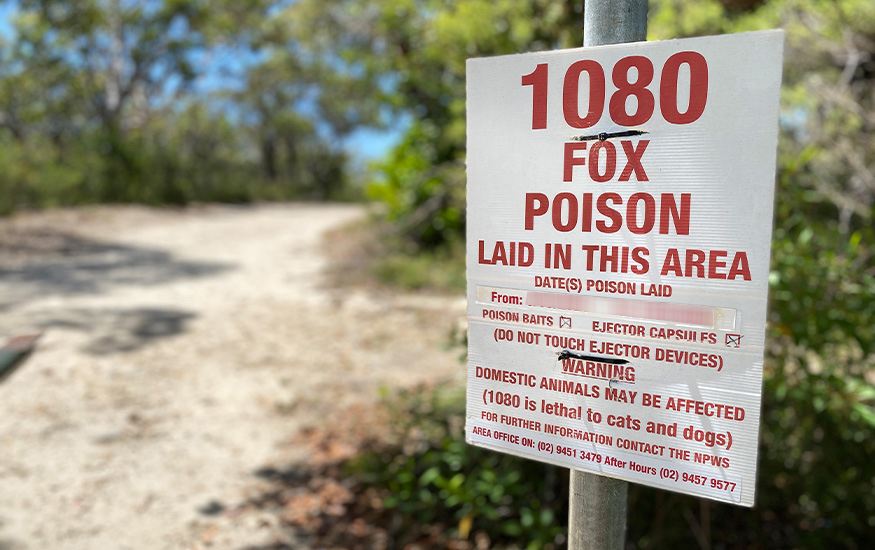
Notice of 1080 Poison Baiting

The NSW National Parks and Wildlife Service (NPWS) will be conducting a baiting program using manufactured baits, fresh baits and Canid Pest Ejectors (CPE’s/ejectors) containing 1080 poison (sodium fluoroacetate) for the control of foxes. The program is continuous and ongoing for the protection of threatened species.

This notification is for the period to 31 July 2026 at the following locations:

  • Garigal National Park
  • Lane Cove National Park (baits only, no ejectors are used in Lane Cove National Park)
  • Ku-ring-gai Chase National Park
  • Sydney Harbour National Park – North Head (including the Quarantine Station), Dobroyd Head, Chowder Head & Bradleys Head managed by the NPWS
  • The North Head Sanctuary managed by the Sydney Harbour Federation Trust
  • The Australian Institute of Police Management, North Head

DO NOT TOUCH BAITS OR EJECTORS

All baiting locations will be identifiable by signs.

Please be reminded that domestic pets are not permitted on NPWS Estate. Pets and working dogs may be affected (1080 is lethal to cats and dogs). Pets and working dogs must be restrained or muzzled in the vicinity and must not enter the baiting location. Penalties apply for non-compliance.

In the event of accidental poisoning seek immediate veterinary assistance.

For further information please call the local NPWS office on:

NPWS Sydney North (Middle Head) Area office: 9960 6266

NPWS Sydney North (Forestville) Area office: 9451 3479

NPWS North West Sydney (Lane Cove NP) Area office: 8448 0400

NPWS after-hours Duty officer service: 1300 056 294

Sydney Harbour Federation Trust: 8969 2128

Volunteers for Barrenjoey Lighthouse Tours needed

Details:

Johnson Brothers Mitre 10 Recycling Batteries: at Mona Vale + Avalon Beach

Over 18,600 tonnes of batteries are discarded to landfill in Australia each year, even though 95% of a battery can be recycled!

That’s why we are rolling out battery recycling units across our stores! Our battery recycling units accept household, button cell, laptop, and power tool batteries as well as mobile phones! 

How To Dispose Of Your Batteries Safely: 

  1. Collect Your Used Batteries: Gather all used batteries from your home. Our battery recycling units accept batteries from a wide range of products such as household, button cell, laptop, and power tool batteries.
  2. Tape Your Terminals: Tape the terminals of used batteries with clear sticky tape.
  3. Drop Them Off: Come and visit your nearest participating store to recycle your batteries for free (at Johnson Brothers Mitre 10 Mona Vale and Avalon Beach).
  4. Feel Good About Your Impact: By recycling your batteries, you're helping support a healthier planet by keeping hazardous material out of landfills and conserving resources.

Environmental Benefits

  • Reduces hazardous waste in landfill
  • Conserves natural resources by promoting the use of recycled materials
  • Keep toxic materials out of waterways 

Reporting Dogs Offleash - Dog Attacks to Council

If the attack happened outside local council hours, you may call your local police station. Police officers are also authorised officers under the Companion Animals Act 1998. Authorised officers have a wide range of powers to deal with owners of attacking dogs, including seizing dogs that have attacked.

You can report dog attacks, along with dogs offleash where they should not be, to the NBC anonymously and via your own name, to get a response, at: https://help.northernbeaches.nsw.gov.au/s/submit-request?topic=Pets_Animals

If the matter is urgent or dangerous call Council on 1300 434 434 (24 hours a day, 7 days a week).

If you find injured wildlife please contact:
  • Sydney Wildlife Rescue (24/7): 9413 4300 
  • WIRES: 1300 094 737

Plastic Bread Ties For Wheelchairs

The Berry Collective at 1691 Pittwater Rd, Mona Vale collects them for Oz Bread Tags for Wheelchairs, who recycle the plastic.

Berry Collective is the practice on the left side of the road as you head north, a few blocks before Mona Vale shops . They have parking. Enter the foyer and there's a small bin on a table where you drop your bread ties - very easy.

A full list of Aussie bread tags for wheelchairs is available at: HERE 


Stay Safe From Mosquitoes 

NSW Health is reminding people to protect themselves from mosquitoes when they are out and about.

NSW Health states Mosquitoes in NSW can carry viruses such as Japanese encephalitis (JE), Murray Valley encephalitis (MVE), Kunjin, Ross River and Barmah Forest. The viruses may cause serious diseases with symptoms ranging from tiredness, rash, headache and sore and swollen joints to rare but severe symptoms of seizures and loss of consciousness.

A free vaccine to protect against JE infection is available to those at highest risk in NSW and people can check their eligibility at NSW Health.

People are encouraged to take actions to prevent mosquito bites and reduce the risk of acquiring a mosquito-borne virus by:
  • Applying repellent to exposed skin. Use repellents that contain DEET, picaridin, or oil of lemon eucalyptus. Check the label for reapplication times.
  • Re-applying repellent regularly, particularly after swimming. Be sure to apply sunscreen first and then apply repellent.
  • Wearing light, loose-fitting long-sleeve shirts, long pants and covered footwear and socks.
  • Avoiding going outdoors during peak mosquito times, especially at dawn and dusk.
  • Using insecticide sprays, vapour dispensing units and mosquito coils to repel mosquitoes (mosquito coils should only be used outdoors in well-ventilated areas)
  • Covering windows and doors with insect screens and checking there are no gaps.
  • Removing items that may collect water such as old tyres and empty pots from around your home to reduce the places where mosquitoes can breed.
  • Using repellents that are safe for children. Most skin repellents are safe for use on children aged three months and older. Always check the label for instructions. Protecting infants aged less than three months by using an infant carrier draped with mosquito netting, secured along the edges.
  • While camping, use a tent that has fly screens to prevent mosquitoes entering or sleep under a mosquito net.
Remember, Spray Up – Cover Up – Screen Up to protect from mosquito bite. For more information go to NSW Health.

Mountain Bike Incidents On Public Land: Survey

This survey aims to document mountain bike related incidents on public land, available at: https://www.surveymonkey.com/r/K88PSNP

Sent in by Pittwater resident Academic for future report- study. 

Report fox sightings

Fox sightings, signs of fox activity, den locations and attacks on native or domestic animals can be reported into FoxScan. FoxScan is a free resource for residents, community groups, local Councils, and other land managers to record and report fox sightings and control activities. 

Our Council's Invasive species Team receives an alert when an entry is made into FoxScan.  The information in FoxScan will assist with planning fox control activities and to notify the community when and where foxes are active.


marine wildlife rescue group on the Central Coast

A new wildlife group was launched on the Central Coast on Saturday, December 10, 2022.

Marine Wildlife Rescue Central Coast (MWRCC) had its official launch at The Entrance Boat Shed at 10am.

The group comprises current and former members of ASTR, ORRCA, Sea Shepherd, Greenpeace, WIRES and Wildlife ARC, as well as vets, academics, and people from all walks of life.

Well known marine wildlife advocate and activist Cathy Gilmore is spearheading the organisation.

“We believe that it is time the Central Coast looked after its own marine wildlife, and not be under the control or directed by groups that aren’t based locally,” Gilmore said.

“We have the local knowledge and are set up to respond and help injured animals more quickly.

“This also means that donations and money fundraised will go directly into helping our local marine creatures, and not get tied up elsewhere in the state.”

The organisation plans to have rehabilitation facilities and rescue kits placed in strategic locations around the region.

MWRCC will also be in touch with Indigenous groups to learn the traditional importance of the local marine environment and its inhabitants.

“We want to work with these groups and share knowledge between us,” Gilmore said.

“This is an opportunity to help save and protect our local marine wildlife, so if you have passion and commitment, then you are more than welcome to join us.”

Marine Wildlife Rescue Central Coast has a Facebook page where you may contact members. Visit: https://www.facebook.com/profile.php?id=100076317431064


Watch out - shorebirds about

Pittwater is home to many resident and annually visiting birds. If you watch your step you won't harm any beach-nesting and estuary-nesting birds have started setting up home on our shores.

Did you know that Careel Bay and other spots throughout our area are part of the East Asian-Australasian Flyway Partnership (EAAFP)?

This flyway, and all of the stopping points along its way, are vital to ensure the survival of these Spring and Summer visitors. This is where they rest and feed on their journeys.  For example, did you know that the bar-tailed godwit flies for 239 hours for 8,108 miles from Alaska to Australia?

Not only that, Shorebirds such as endangered oystercatchers and little terns lay their eggs in shallow scraped-out nests in the sand, NSW National Parks and Wildlife Service (NPWS) Threatened Species officer Ms Katherine Howard has said.
Even our regular residents such as seagulls are currently nesting to bear young.

What can you do to help them?
Known nest sites may be indicated by fencing or signs. The whole community can help protect shorebirds by keeping out of nesting areas marked by signs or fences and only taking your dog to designated dog offleash area. 

Just remember WE are visitors to these areas. These birds LIVE there. This is their home.

Four simple steps to help keep beach-nesting birds safe:
1. Look out for bird nesting signs or fenced-off nesting areas on the beach, stay well clear of these areas and give the parent birds plenty of space.
2. Walk your dogs in designated dog-friendly areas only and always keep them on a leash over summer.
3. Stay out of nesting areas and follow all local rules.
4. Chicks are mobile and don't necessarily stay within fenced nesting areas. When you're near a nesting area, stick to the wet sand to avoid accidentally stepping on a chick.


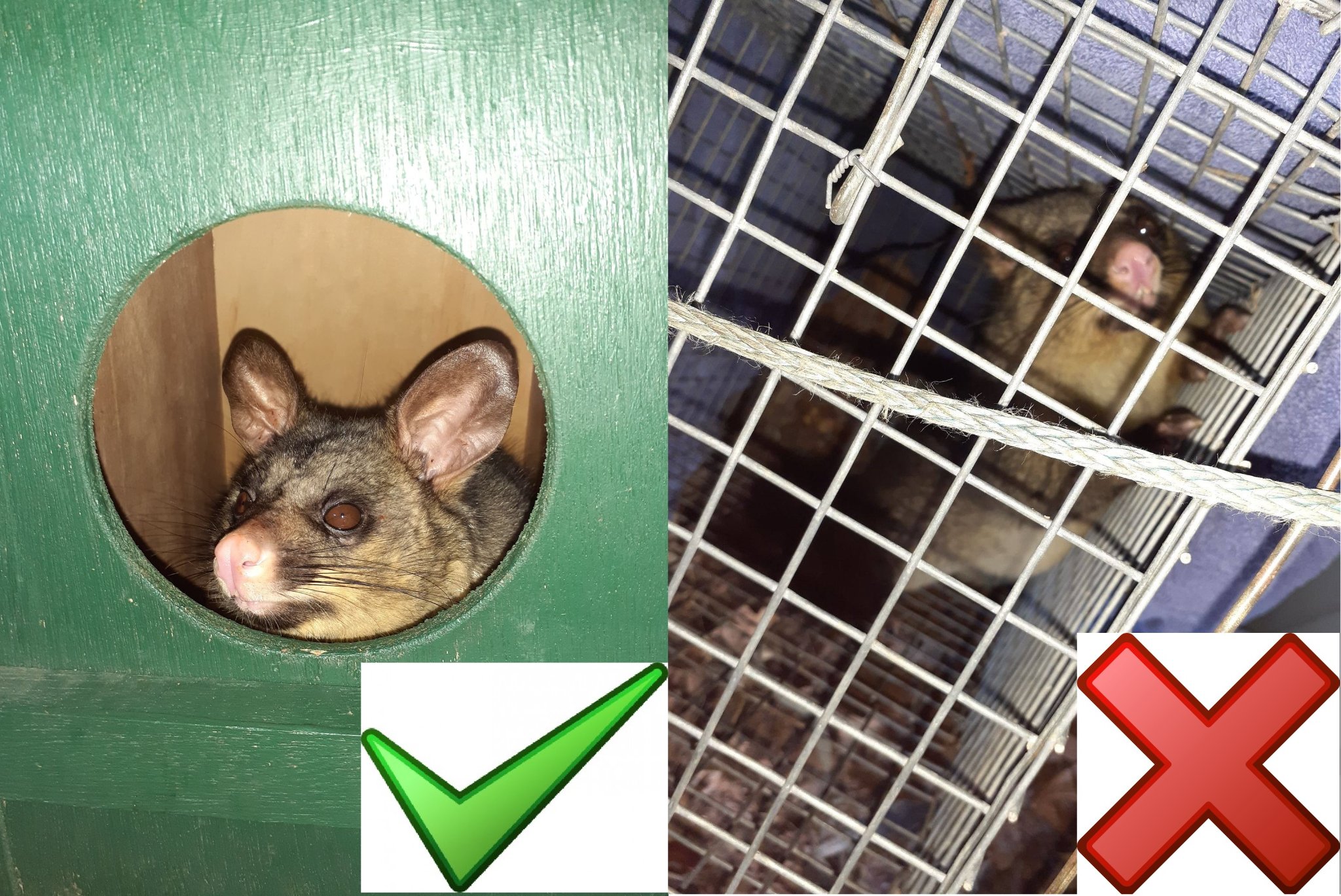
Possums In Your Roof?: do the right thing

Possums in your roof? Please do the right thing 
On the weekend, one of our volunteers noticed a driver pull up, get out of their vehicle, open the boot, remove a trap and attempt to dump a possum on a bush track. Fortunately, our member intervened and saved the beautiful female brushtail and the baby in her pouch from certain death. 

It is illegal to relocate a trapped possum more than 150 metres from the point of capture and substantial penalties apply.  Urbanised possums are highly territorial and do not fare well in unfamiliar bushland. In fact, they may starve to death or be taken by predators.

While Sydney Wildlife Rescue does not provide a service to remove possums from your roof, we do offer this advice:

✅ Call us on (02) 9413 4300 and we will refer you to a reliable and trusted licenced contractor in the Sydney metropolitan area. For a small fee they will remove the possum, seal the entry to your roof and provide a suitable home for the possum - a box for a brushtail or drey for a ringtail.
✅ Do-it-yourself by following this advice from the Department of Planning and Environment: 

❌ Do not under any circumstances relocate a possum more than 150 metres from the capture site.
Thank you for caring and doing the right thing.


Sydney Wildlife photos

Aviaries + Possum Release Sites Needed

Pittwater Online News has interviewed Lynette Millett OAM (WIRES Northern Beaches Branch) needs more bird cages of all sizes for keeping the current huge amount of baby wildlife in care safe or 'homed' while they are healed/allowed to grow bigger to the point where they may be released back into their own home. 

If you have an aviary or large bird cage you are getting rid of or don't need anymore, please email via the link provided above. There is also a pressing need for release sites for brushtail possums - a species that is very territorial and where release into a site already lived in by one possum can result in serious problems and injury. 

If you have a decent backyard and can help out, Lyn and husband Dave can supply you with a simple drey for a nest and food for their first weeks of adjustment.

Mona Vale Dunes bushcare group: 2026 Dates

What’s Happening? Mona Vale Dunes Bushcare group catch-up. 

In 2026 our usual work mornings will be the second Saturday and third Thursday of each month. You can come to either or both. 

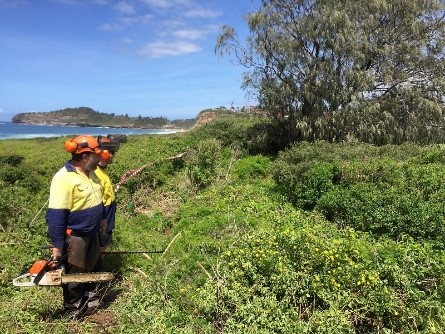
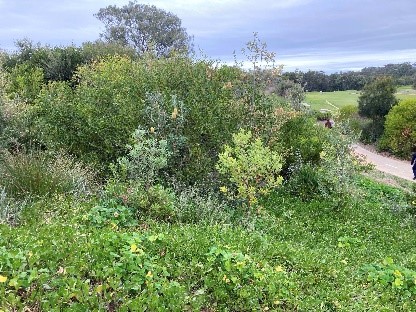
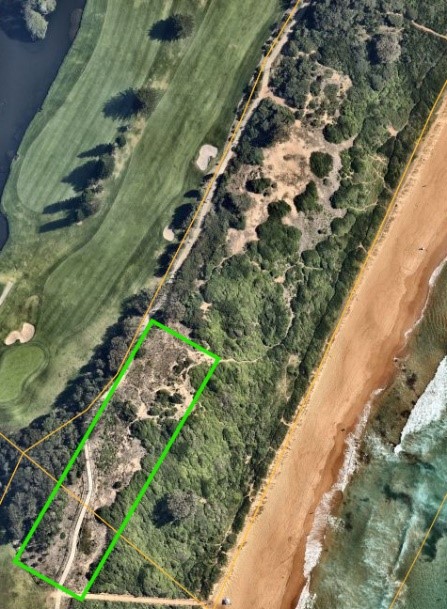
We are maintaining an area south of Golf Avenue. This was cleared of dense lantana, green cestrum and ground Asparagus in 2019-2020. 600 tubestock were planted in June 2021, and natural regeneration is ongoing. 

Photos: The site In November 2019, chainsaws at the ready. In July 2025, look at the difference - coastal dune vegetation instead of dense weeds. But maintenance continues and bushcarers are on the job. Can you join us?

(access to this southern of MV Dunes  - parking near Mona Vale Headland reserve, or walk from Golf Ave.) 

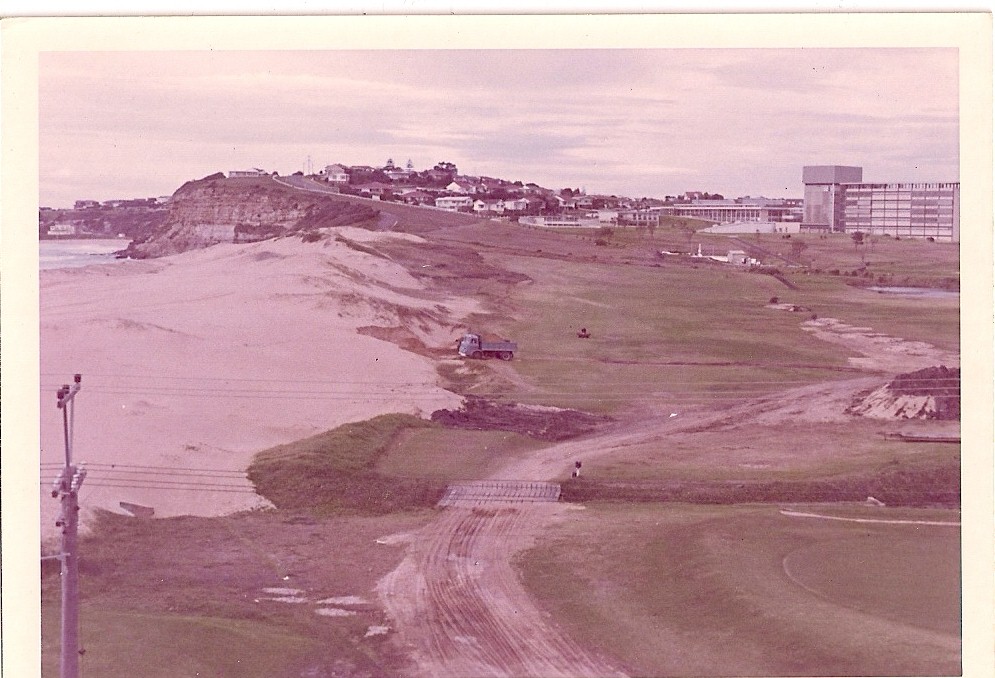
For comparison, see this image of MV dunes in 1969!, taken from atop the home units at the end of Golf Avenue. 

2026 Dates

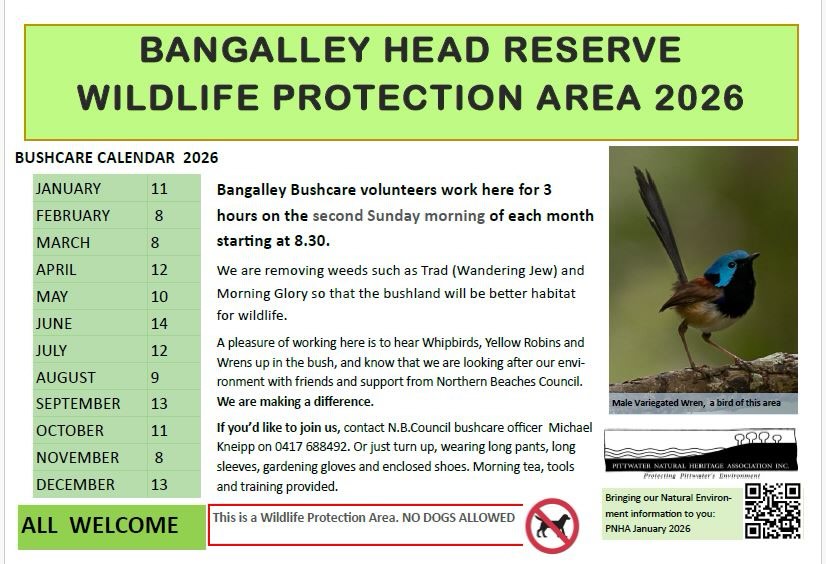
Bangalley Headland WPA Bushcare 2026

Watch out for PNHA signs telling you about bush regeneration and our local environment. This is one of many coming up.

Bushcare in Pittwater: where + when

For further information or to confirm the meeting details for below groups, please contact Council's Bushcare Officer on 9970 1367 or visit Council's bushcare webpage to find out how you can get involved.

BUSHCARE SCHEDULES 
Where we work                      Which day                              What time 

Avalon     
Angophora Reserve             3rd Sunday                         8:30 - 11:30am 
Avalon Dunes                        1st Sunday                         8:30 - 11:30am 
Avalon Golf Course              2nd Wednesday                 3 - 5:30pm 
Careel Creek                         4th Saturday                      8:30 - 11:30am 
Toongari Reserve                 3rd Saturday                      9 - 12noon (8 - 11am in summer) 
Bangalley Headland            2nd Sunday                         9 to 12noon 
Catalpa Reserve              4th Sunday of the month        8.30 – 11.30
Palmgrove Park              1st Saturday of the month        9.00 – 12 

Bayview     
Winnererremy Bay                 4th Sunday                        9 to 12noon 

Bilgola     
North Bilgola Beach              3rd Monday                        9 - 12noon 
Algona Reserve                     1st Saturday                       9 - 12noon 
Plateau Park                          1st Friday                            8:30 - 11:30am 

Church Point     
Browns Bay Reserve             1st Tuesday                        9 - 12noon 
McCarrs Creek Reserve       Contact Bushcare Officer     To be confirmed 

Clareville     
Old Wharf Reserve                 3rd Saturday                      8 - 11am 

Elanora     
Kundibah Reserve                   4th Sunday                       8:30 - 11:30am 

Mona Vale     
Mona Vale Beach Basin          1st Saturday                    8 - 11am 
Mona Vale Dunes                     2nd Saturday +3rd Thursday     8:30 - 11:30am 

Newport     
Bungan Beach                          4th Sunday                      9 - 12noon 
Crescent Reserve                    3rd Sunday                      9 - 12noon 
North Newport Beach              4th Saturday                    8:30 - 11:30am 
Porter Reserve                          2nd Saturday                  8 - 11am 

North Narrabeen     
Irrawong Reserve                     2nd Saturday                   2 - 5pm 

Palm Beach     
North Palm Beach Dunes      3rd Saturday                    9 - 12noon 

Scotland Island     
Catherine Park                          2nd Sunday                     10 - 12:30pm 
Elizabeth Park                           1st Saturday                      9 - 12noon 
Pathilda Reserve                      3rd Saturday                      9 - 12noon 

Warriewood     
Warriewood Wetlands             1st Sunday                         8:30 - 11:30am 

Whale Beach     
Norma Park                               1st Friday                            9 - 12noon 

Western Foreshores     
Coopers Point, Elvina Bay      2nd Sunday                        10 - 1pm 
Rocky Point, Elvina Bay           1st Monday                          9 - 12noon

Friends Of Narrabeen Lagoon Catchment Activities

Bush Regeneration - Narrabeen Lagoon Catchment  
This is a wonderful way to become connected to nature and contribute to the health of the environment.  Over the weeks and months you can see positive changes as you give native species a better chance to thrive.  Wildlife appreciate the improvement in their habitat.

Belrose area - Thursday mornings 
Belrose area - Weekend mornings by arrangement
Contact: Phone or text Conny Harris on 0432 643 295

Wheeler Creek - Wednesday mornings 9-11am
Contact: Phone or text Judith Bennett on 0402 974 105
Or email: Friends of Narrabeen Lagoon Catchment : email@narrabeenlagoon.org.au

Gardens and Environment Groups and Organisations in Pittwater


Ringtail Posses 2023

Why are retail power prices finally falling?

Andrew Merry/Getty
Tony Wood, Grattan Institute

Renewables and energy storage were pitched as a way to drive down power prices. But the hidden costs of the clean energy transition mean lower prices haven’t fully eventuated.

That’s why this week’s news power prices will fall by up to 10% have been gratefully received by the government – and consumers. The falls are real, though they do not apply everywhere.

There are important caveats. The cheaper power will directly apply to customers on the default market offer, the safety net power plan overseen by the Australian Energy Regulator. Fewer than 10% of consumers are on this offer.

Despite this, the decision by the Australian Energy Regulator will be influential. Just as banks tend to follow a Reserve Bank decision on interest rates, energy retailers tend to be guided by the prices set under the default market offer.

Why are prices falling? Solar, wind and batteries can provide power more cheaply than fossil fuels, and renewables have reached as high as 50% in Australia’s main grid. They could have driven retail prices down further if not offset by the rising costs of new transmission lines.

What drives power prices?

The power savings are uneven. In South East Queensland, retail power prices will fall by 10.7% and in New South Wales by up to 7.7%. In South Australia, some customers will have a small price rise of 1.4%. Small businesses will see larger falls – as much as 20.9% in NSW.

In Victoria, which has its own separate default offer, retail prices will fall 5%.

The average power bill for an Australian household is around A$2,000 a year. The actual cost of wholesale power accounts for 30–40% of the bill. Network costs – the cost of getting the power to the consumer – make up another 40%. The remaining amount is due to environmental and retailer costs.

In recent years, the cost of producing wholesale power has dropped. This is because more wind and solar farms have come online, while grid-scale batteries are pushing gas power out of the grid at times.

This means there’s less reliance on coal and gas. The role of gas is key, as this fossil fuel has become more expensive. It tends to be used only when demand is very high. At these times, gas acts as a price-setter for the energy market and the price it sets is high. So, other things being equal, less reliance on gas means lower prices.

Network costs have mostly increased, in a range of 5–10%. The key contributor has been the cost of building new transmission lines, and damage from extreme weather has also added costs in Queensland. Inflation adds extra cost to big projects.

What’s next?

This dynamic is likely to continue for some time. We can expect wholesale prices to keep falling, or at least not rise. We may also see network prices rising more sharply, given community pushback against some new transmission projects and slow progress. Without new transmission lines, many renewable projects won’t be viable.

In the next few years, more Australian households will have smart meters installed. In NSW, SA, the Australian Capital Territory and Queensland, rollout is meant to be complete by 2030. Western Australia and Tasmania have their own programs and Victoria’s rollout was completed more than a decade ago.

Smart meters make it possible for power retailers to charge customers different rates at different times. This encourages people to use more power when it’s cheap to produce, and less during peak times such as evenings.

These time-of-use tariffs will become increasingly important. For the first time, the energy regulator included both flat tariffs and time-of-use tariffs in its default market offer. Over time, and with further market reforms, we can expect to see more people take up time-of-use tariffs.

We can also expect big batteries to flex their muscle in the grid, outcompeting gas peaking plants and keeping wholesale prices lower. The influence of these batteries is beginning to show, and it is accelerating.

Household batteries, too, may play a role. The government’s hugely popular household battery incentive scheme will let people with solar store power at home, and use it during peak times instead of relying on expensive grid power.

In the messy middle

We are in the middle of reshaping the electricity grid.

The 20th-century model was built around peak demand – the handful of times a year when huge demand required standby plants to fire up and produce power at high cost. That’s now changing. Gas will go from providing perhaps 20% of Australia’s electricity to as low as 5%. It will be needed as a backup during low wind or sun days for some time.

But the big unknown is new transmission – the missing piece of the clean energy transition. Until this is done, we will keep seeing lower wholesale costs offset by higher network costs. But when it is complete, network costs, too, should fall.The Conversation

Tony Wood, Senior Fellow in Energy and Climate Change, Grattan Institute

This article is republished from The Conversation under a Creative Commons license. Read the original article.
What ‘biodegradable’ packaging really means – and 3 key questions to ask about it

John Cameron / Unsplash
Martin Zaki, Deakin University and Alessandra Sutti, Deakin University

“Biodegradable” has become one of the most reassuring words in modern packaging. It appears on coffee cups, shopping bags and food containers, implying a promise: this product is better for the environment because nature will eventually take care of it.

However, biodegradability is not a simple yes-or-no property. It exists in shades, which we can measure.

Biodegradation is a complex process. Microbes and molecules present in an environment such as soil attack a material and digest it, much like what happens to food in our gut.

A material is typically defined as biodegradable if it is digested “well” by the environment in which it is placed. The more mass the material loses during digestion, and the more carbon dioxide it produces, the more biodegradable it is.

Different environments digest materials in different ways. Temperature, sunlight, oxygen, moisture and microbial diversity all influence how quickly materials degrade.

Even the most rigorous testing cannot fully capture the complexity of the real world – but it can help guide our choices.

Biodegradability is relative

In the lab we can simulate environments such as landfill, home compost bins and industrial compost facilities. If we understand in which settings a material breaks down better, we can tell the consumer how to best dispose of it and prevent pollution and other issues.

A material that decomposes quickly in an industrial composting facility may persist for years in the ocean or landfill.

Industrial composting systems maintain elevated temperatures, controlled aeration and consistent moisture. Hot, moist and oxygen-rich conditions generally aid biodegradation but they are not easy to come by in a backyard compost bin.

Home compost systems are typically cooler and more variable. The result: a material certified for industrial composting may not break down effectively at home.

Take polylactic acid (PLA), a biodegradable material generally considered to be a greener alternative to common plastics (like PET). PLA can biodegrade effectively in an industrial composting system. With temperatures above 60°C and controlled moisture, oxygen and microbial activity, microbes can convert PLA into carbon dioxide, water and biomass in just a few days.

Outside these conditions, the story changes. If PLA ends up in landfill, decomposition can be slow because oxygen is limited. In rivers or marine environments, it may persist for years and act as a raft for “alien” species. In your compost bin or worm farm it might disappear in a few months.

Time for standards

There are many ways to measure biodegradability. One common series of tests, OECD 301 assesses “ready biodegradability” in different environments as a material’s ability to biodegrade around 60% within 28 days under controlled conditions.

Industrially compostable materials are tested under very specific conditions. Standards such as EN 13432, used in Europe, assess whether packaging can successfully break down in industrial composting facilities.

To meet the standard, at least 90% of the material must biodegrade into carbon dioxide, water and biomass within six months. These tests typically involve elevated temperatures, controlled aeration, and moisture.

Most biodegradable plastic materials do not disappear cleanly. Instead, they fragment into progressively smaller particles before fully breaking down. During this period, the fragments will continue interacting with organisms and ecosystems.

Compost bins too can get indigestion

Biodegradability standards are helpful for consumers and waste regulators. Nevertheless, they are limited. They often do not test how much of any given material a specific disposal system can sustain at any one time.

This is an important parameter to take into account. Take food waste. When large quantities of food lie in landfill without oxygen, they generate methane, a greenhouse gas far more potent than carbon dioxide over short timescales.

Other biodegradable materials are no different and can throw out the balance of an ecosystem such as your compost bin, if added in excessive quantities.

Introducing certain materials to a compost bin might also cause certain microbes to thrive and others to suffer, sometimes with unintended consequences, such as making your compost bin smell bad.

In the future, biodegradability tests will likely be paired with ecotoxicity assessments, to help us understand whether a material breaks down safely and without generating harmful byproducts or microbial imbalances.

What can we do?

Few of us have an industrial composting facility nearby to take care of biodegradable materials. Industrially compostable products such as coffee cups often end up sent to landfill alongside conventional waste.

This does not mean individuals are powerless or that biodegradable materials are inherently bad.

You can start by checking local council guidance and choosing products certified for the systems available in your area, or your compost bin.

Ask yourself:

  • is this product home compostable or only industrially compostable?

  • is there infrastructure locally that can process it?

  • has it been independently certified?

As for industrially compostable coffee cups, check that you can return cups to participating cafes. They should not be placed in standard recycling bins or food and organics bins as they are considered contaminants. If unsure, place them in a bin destined for landfill.

Ultimately, the most sustainable option remains a reusable washable cup.

These may seem like small actions but they help push packaging design and waste systems toward greater transparency and accountability.

Moving beyond simple labels

As consumers, we want to make educated choices about their purchases and how they can be disposed of.

For now, we have simple labels. In the future, we will hopefully have more complete information about how materials degrade in industrial composting facilities, home compost bins, soil, freshwater, sea water and landfill sites.

Biodegradable materials offer clear advantages over highly persistent materials, but the term “biodegradable” should not be mistaken for environmentally harmless.

Let’s just remember that a biodegradable material released in the wrong place, at the wrong scale, or under the wrong conditions may behave not very differently from a non-biodegradable material.

Understanding the shades of biodegradability moves the conversation beyond simplistic labels. Nature can break many things down, eventually. The more important question is whether it can do so without getting indigestion.The Conversation

Martin Zaki, Associate Research Fellow in Biomaterials, Deakin University and Alessandra Sutti, Associate Professor, Institute for Frontier Materials, Deakin University

This article is republished from The Conversation under a Creative Commons license. Read the original article.

Healthy soil can protect land from soaring heat. But our map shows where soil is suffering

Amin Sharififar, University of Sydney

Imagine walking into a double-brick house on a scorching 40°C summer day – it feels cool almost straight away. Now imagine stepping into a corrugated tin shed – it feels like an oven. The difference is simple: some materials slow heat down, while others let it rush through.

Soil works in a similar way. Soil in fully functioning condition can act as a thermal buffer: a giant shock absorber for temperature. It holds water and organic matter such as leaf litter, and slows sharp changes in temperature.

But when soil becomes dry, bare or damaged, that protection weakens. During heatwaves, the roots of crop plants may be sitting in rapidly heating soil.

Our new research shows Australia has “thermal gaps” in large areas. A thermal gap is the difference between a soil’s natural ability to absorb heat and keep temperatures steady, and what it is actually doing now after years of farming, land use change and a warming climate. In some areas, especially across southeastern and central Australia, soils are no longer protecting plants from heat as well as they could.

This matters because soil is not just dirt under our feet. It is a buffer against climate change. Soil controls how heat and moisture move between the land and the atmosphere. When soil loses its buffering power, ground temperatures can rise more quickly.

This can reduce plant growth, lower crop and pasture production, and even affect local weather and climate over large areas.

What we did and what we found

To understand where this is happening, we created the first continent-wide map of Australia’s soil thermal buffering capacity.

In other words, we mapped how well different soils can slow heat and keep ground temperatures stable.

We compared each soil’s natural potential with its current condition. This helps show where soil buffering is strong, where it has weakened, and where it may have changed for better or worse.

The results show a clear contrast between soil types.

Clay-rich soils can hold more water and behave more like the double-brick house. They warm and cool slowly, which helps keep roots in a steadier environment.

Iron-rich red and yellow soils in parts of northern Australia, known as Kandosols, also showed good natural capacity and good current condition in our study. These landscapes are still working well as soil heat buffers.

But this does not mean every Kandosol is the same. Soil condition, ground cover, moisture and management still matter.

Sandy soils tell a different story. They naturally hold far less water. When ground cover is low, they lose water faster. Under a hot sun, they behave more like the tin shed. They heat quickly and offer plants much less protection.

That’s why the difference between “just dry” and “hot and dry” is so important. Once dry or degraded soils lose moisture, the sun’s energy heats the ground directly. Roots can become stressed, soil life slows down and crops may decline before the problem is obvious above ground.

This is one reason flash droughts are so dangerous. A flash drought can develop in days or weeks when high temperatures, dry winds and low soil moisture arrive together.

One 2025 global study found flash droughts linked with extreme heat are more severe and take longer to recover from than flash droughts without extreme heat.

For farmers, trouble may already be building below the surface before normal weather warnings capture the full risk.

The good news

The good news is that soil can regain some of its lost heat protection. We can help “re-insulate” the ground with practical farming methods.

One is called “stubble retention”, which means leaving old crop stalks and leaves on the field after harvest rather than burning or removing them.

This layer shades the soil and slows water loss.

Another method, called “cover cropping”, involved growing plants mainly to protect and feed the soil (not necessarily to harvest them). Cover crops keep living roots in the ground, reduce bare soil and add organic matter.

Studies overseas show why this matters. In the US state of Missouri, fields kept covered with plants held more moisture than bare fields. In North Dakota, bare soil was much hotter near the surface than soil protected by barley residue or cover crops.

These methods do not make heatwaves disappear, but they can reduce the stress heat places on soils and crops. Cooler, moister soils may also help surrounding vegetation dry out more slowly, although this is only one part of reducing bushfire risk.

The next step

Our national map is a starting point. It shows where soils may be losing their ability to buffer heat. The next step is to test that risk on real farms.

That means pairing the map with local sensors, such as soil-temperature and soil-moisture probes buried near plant roots. These sensors can show when the soil is drying and how quickly it is heating, and when roots may be coming under stress.

Farm trials can then test which actions work best in different soil types, such as keeping stubble, planting cover crops, adjusting irrigation or reducing grazing pressure.

The results could be turned into simple tools for farmers, such as paddock maps, heat-risk alerts or irrigation guides.

Asking “how dry is the soil?” is no longer enough. We must go further by asking “how fast will this soil heat up once it dries?”

That question matters for irrigation, grazing, crop planning and drought warnings.

If farmers can see heat stress building below the surface, they may be able to act earlier. They can protect ground cover, adjust irrigation, reduce grazing pressure or harvest sooner before the damage becomes obvious above ground.

Soil is one of Australia’s hidden climate defences. Healthy soil stores water, slows heat and protects roots. Damaged soil loses that shield.

By understanding and closing the thermal gap, we can give farms, landscapes and rural communities a better chance in a hotter, drier future.The Conversation

Amin Sharififar, Postdoctoral researcher in soil security, University of Sydney

This article is republished from The Conversation under a Creative Commons license. Read the original article.

Deep‑sea sponges survive in complete darkness in ways we didn’t know before

The deep-sea sponge Calyx sp. in its natural habitat. PROBIO-DEEP/Fugro
Alessandro N. Garritano, University of Sydney; UNSW Sydney and Torsten Thomas, UNSW Sydney

When we think of marine life, we usually picture colourful coral reefs or dense seaweed forests filled with fish and other critters. The ocean that comes to mind is the one touched by sunlight.

However, most of the ocean is not like that. By volume, roughly 95% of the ocean consists of the permanently dark, cold deep sea. Despite such hostile conditions though, there is life in the ocean’s abyss.

Deep-sea marine sponges are among the organisms that live in these mysterious dark waters. They form “gardens” that are among the largest ecosystems on the planet, some spanning thousands of square kilometres on the ocean floor. They act as ecosystem engineers, providing habitats to many other organisms living on the seafloor.

Individual sponges can also pump and filter thousands of litres of water every day through their bodies. The nutrients they release support other organisms. Yet we know remarkably little about how sponges survive, let alone thrive, in the inhospitable environment of the deep-sea.

Symbiosis with microbes is an important part of how marine sponges live. We’ve been studying deep-sea sponges to better understand life in the ocean’s depths. So far, we’ve found some sponges are packed with microorganisms that use energy from chemical reactions.

The deep-sea sponge Aphrocallistes beatrix has the highest proportion of chemosynthetic symbionts reported to date. PROBIO-DEEP/Fugro

This is called chemosynthesis and is commonly found in other deep-sea organisms, such as mussels and tubeworms living in hydrothermal vents – deep-sea “hot springs”.

Our new study, published today in the journal Microbiome, shows sponges and their microbial partners also use a second strategy to make a living in the deep sea.

Two strategies, one sponge

All living organisms produce waste. Just like humans produce urine, many sponges produce ammonia as one of their waste products.

In this study, we analysed the Calyx species of deep-sea sponges from a depth of 830 metres.

About 16% of their microbial partners use the familiar chemosynthesis process. With ammonia as the energy source, they use carbon dioxide dissolved in the water to build biomass – it’s a bit like plants growing through photosynthesis from sunlight, but in the dark.

In well-lit shallow waters, many sponges and corals have photosynthetic microbes that help them build biomass from carbon dioxide. Our findings show that in the dark depths of the ocean, sponges have microbial partners that use ammonia instead of light for the same process.

The remaining 84% of microbial partners are where it gets really interesting. Instead of chemosynthesis these microbes use heterotrophy, which means consuming organic matter to generate energy and biomass (like the vast majority of animals, humans are also heterotrophs).

The problem here is that there’s little organic matter in the deep sea. Whatever falls down from the surface waters, such as dead plankton and algae, gets stripped by bacteria and small crustaceans of anything easily digestible as it sinks through the water column.

So, the little amount of organic matter that reaches the seafloor is generally poor food for the sponge itself. But, as we discovered, not necessarily for its microbial partners.

It turns out the heterotrophic microbes in Calyx sponges have lots of enzymes specialised in breaking down complex compounds, such as xylan and pectin, which make up the hard-to-digest cell walls of algae.

Feeding on these algal skeletons would allow the microbes to thrive and to transform organic molecules into nutrients their sponge host can use.

Deep-sea sponges and crinoids (marine invertebrates) in a deep-sea reef. PROBIO-DEEP/Fugro

Protecting what we don’t yet understand

Our study shows that sponges and their microbial partners are complex, biogeochemical reactors. They use and recycle ammonia “urine”, carbon dioxide and hard-to-digest organics to generate biomass.

The biomass can then support the growth of other organisms, such as brittle stars and fish, in turn supporting the broader community of animals living on the dark seafloor.

Unfortunately, these ecosystems are under pressure from human activities. Deep-sea trawling physically destroys sponge gardens. Deep-sea mining, now being actively pursued for rare metals used in batteries and electronics, threatens to disrupt the deep-sea habitat in ways that might take centuries to recover.

The United Nations has recognised deep-sea sponge gardens as vulnerable marine ecosystems, a formal acknowledgement of both their ecological importance and their fragility. But recognition alone is not enough.

If we destroy these habitats before we fully understand their role in carbon transformation, then we may lose a critical piece of Earth’s carbon cycle before fully realising it was there.The Conversation

Alessandro N. Garritano, Postdoctoral Research Associate, Faculty of Science, University of Sydney; UNSW Sydney and Torsten Thomas, Professor in Microbiology, UNSW Sydney

This article is republished from The Conversation under a Creative Commons license. Read the original article.

Many biofuels haven’t panned out. Could algae make the clean diesel and aviation fuel Australia needs?

Peter Ralph, University of Technology Sydney; Alexandra Thomson, University of Technology Sydney, and Martin Lloyd, University of Technology Sydney

Diesel is critical to Australia. Any supply disruption has immediate and widespread consequences, given Australia imports almost 80% of its liquid fuels. As the energy shocks of the Iran war ripple out, Australia’s leaders have scrambled to shore up supplies of fuel – especially diesel and aviation fuel.

Disruptions to fuel supplies have happened before, such as in 2008 and 2022. This disruption won’t be the last.

What should policymakers do? One option is to ramp up local production of biofuels made not from crude oil but from natural oils such as canola, animal fats – or algae.

As algae researchers, we believe these humble organisms are worth exploring. Making biodiesel and sustainable aviation fuel from these fast growing organisms can be done with much less land than other crops. Technological advances mean the fuel could scale up.

Many biofuels come with trade-offs

Biofuels have gained traction worldwide as efforts to reduce dependence on fossil fuels and meet climate targets accelerate.

The Australian biofuel sector is relatively small. Farmers exported about 6 million tonnes of canola in 2023–24 to be turned into biofuels overseas.

The Australian government last year announced A$1.1 billion in incentives to boost low-carbon fuels such as biofuels.

Biofuels from corn, soybean, canola and palm oil have boosted fuel security in some nations. Brazil produces 22% of its own transport fuel from biofuels, while biofuels account for 6% of the fuel used in the United States.

The problem is, biofuels often come at an environmental cost. A third of all US corn is used to make ethanol for fuel.

What’s so good about algae?

The type we’re interested in are microalgae, single-celled organisms, not macroalgae such as kelp and other types of seaweed.

These small organisms can grow exceptionally rapidly and hold high concentrations of oils. Many microalgae species can double their weight every day. Nannochloropsis and Chlorella are the two main types used to make oil.

Traditionally, algae was grown in large, shallow outdoor pools called “raceways”. They’re now increasingly grown in high-efficiency algae bioreactors.

Algae can be processed using proven technologies such as hydrothermal liquefaction to produce biodiesel able to be used in existing trucks and machinery. It can also produce sustainable aviation fuel.

Compared to crop-based biofuels, algae has several advantages. It doesn’t compete with food production and it can be grown on non-arable land or in industrial facilities. Some species can grow in saltwater or even treat wastewater while using it for growth. If algal facilities are located near heavy industry, carbon emissions can be captured and used for algal growth in a form of carbon storage.

Algal fuels needs much less land than conventional biofuels. A hectare of algae can yield more than 58,000 litres of oil per year. By contrast, a hectare of corn produces just 172 litres.

What are the barriers?

Interest in algal fuel dates back many decades. Oil shocks in the 1970s and 1990s drove significant research into algae-based fuels. But when oil prices fell, algal biofuels were no longer cost-competitive.

Since the 1990s, technologies have matured and policy settings become more favourable. Efforts to reduce fossil fuel use have put an implicit or explicit price on carbon. Mandates to increase output of sustainable aviation fuel are emerging in the European Union.

Fossil fuel price shocks in 2022 and 2026 have nudged authorities to seriously explore alternatives. Sovereign fuel security has become a strategic priority. Both the United Arab Emirates and the US are exploring algal fuels as a long-term strategic asset.

Algae for Australia?

Australia would be well placed to explore the potential of algal fuels. It has plenty of non-arable land, abundant sunlight and some of the world’s best algae research capabilities. Plus, it depends very heavily on imported diesel and aviation fuel.

Our research group and many others have been systematically working to overcome previous limitations of algal biofuels. We now know how to produce high-quality algal fuels and scale up production at costs low enough to challenge fuels derived from crude oil.

The first step would be to invest in pilot projects to prove the technology can work at scale under real-world conditions. Overseas, similar pilots have been set up next to industry to test the use of carbon capture, or alongside research partners.

If this is successful, the next step would be to build facilities in regional locations where fossil diesel is in demand and expensive to transport – and where algae can offer a dual benefit by treating wastewater or capturing carbon.

Over time, the versatile technology could be expanded, as algae can produce not only biodiesel but also other useful products such as edible protein for animal feed and biochar, highly porous charcoal able to soak up pollutants such as heavy metals.

dark laboratory set up with glowing yellow-green algal cylinders in the centre
Researchers have been working to boost yields and scale up oil production from algae. mayaluana, CC BY-NC-ND

Algae deserves our attention

Many previous efforts to scale up biofuels have run into problems over environmental impact or cost.

It’s important to be sceptical of claims of the next big thing. But it’s also important not to overlook the potential of humble technologies such as making fuel from algae.

As leaders look for ways to bolster fuel security, algae deserves a closer look.The Conversation

Peter Ralph, Distinguished Professor of Marine Biology and Executive Director of the Climate Change Cluster, University of Technology Sydney; Alexandra Thomson, Industry Engagement Manager, Climate Change Cluster, University of Technology Sydney, and Martin Lloyd, Strategic Lead, Research Translation, University of Technology Sydney

This article is republished from The Conversation under a Creative Commons license. Read the original article.
Rice feeds billions of people – but its role in fuelling climate change is growing

Rice paddies are essential to lives and livelihoods in many parts of Asia. Jingting Zhang
Hanqin Tian, Boston College; Jingting Zhang, Boston College; Pep Canadell, CSIRO, and Shufen (Susan) Pan, Boston College

Rice feeds more than half the world. From terraced paddies in Southeast Asia to irrigated fields in China and India, it underpins daily meals for billions of people.

But the same flooded soils that help rice thrive also create ideal conditions for microbes that release climate-warming gases.

In a new study, our team of environment and agriculture scientists found that greenhouse gas emissions from rice paddies have nearly doubled globally since the 1960s, averaging about 1.1 billion tons of carbon dioxide-equivalent emissions per year in the 2010s. That’s roughly equal to the annual emissions of 239 million cars.

This makes rice-growing the largest emissions source in agriculture outside of livestock, and rice demand is expected to keep rising.

Farmers have ways to reduce their rice crops’ emissions without lowering their yields. If every grower used the best currently available “climate-smart” options, we found that global rice emissions could be reduced by about 10% by midcentury. However, greater reductions are needed to slow climate change, which would require developing additional, more effective strategies.

Why rice emissions have increased

Rice emissions have risen for two reasons: the expansion of rice cultivation area and the intensification of management practices.

Just over half of the global increase is from the expansion of rice-growing areas. In Africa, for example, the rice-growing area has roughly doubled since the 1960s, helping drive a twofold rise in methane emissions in the region.

At the same time, rice farmers are using more fertilizers and organic amendments, such as straw and manure, planting more productive rice varieties and growing the plants closer together. The result is more rice but also more greenhouse gas emissions.

People walk through a rice field on a hill with golden crops and more hills in the distances.
After rice is harvested, one technique for improving soil fertility is to plow the dried rice stalks back into the soil. But this also increases methane emissions. Jingting Zhang

We found that one practice in particular – leaving rice stalks in the field after harvest and then plowing them into the soil to improve soil fertility – was responsible for about 18% of rice’s increase in overall net emissions since the 1960s. The reason: It increases the organic matter in the soil, which microbes then decompose, creating more methane emissions.

Rising global temperatures further accelerate microbial activity in the soils, meaning even more emissions.

Fertilizer is another major contributor to emissions. Use of synthetic nitrogen increased by about 76% after 2000, boosting nitrous oxide – another powerful greenhouse gas. It contributed about 9% of the increase in total global net emissions from human activities.

Irrigation practices also affect emissions. In the past, irrigated rice paddies were kept flooded throughout the growing season, resulting in constant greenhouse gas emissions produced by microbes that thrive in the wet environment. Over the past two decades, however, more farmers have used intermittent flooding – draining their fields periodically.

This change has lowered methane emissions compared with keeping the paddies continuously flooded. However, we found a slight increase in nitrogen oxide emissions as soils cycled between wet and dry, which induces microbes to transform nitrogen in organic matter into nitrogen oxide gases, particularly nitrous oxide.

Climate impact of rice production

Putting a full climate price tag on rice production is harder than measuring one greenhouse gas at a time.

Rice paddies emit methane and nitrous oxide from wet or flooded soils. They also remove carbon dioxide from the atmosphere as rice grows, and they lose carbon from their soils between crop seasons.

A credible global estimate requires consistently accounting for different gases and soil carbon changes, as well as the uncertainty involved in tracking data across space and time.

To do that, we combined three approaches:

  • An ecosystem computer model allowed us to simulate crop growth, water conditions and soil processes to estimate changes in methane, nitrous oxide and soil carbon together.

  • An artificial intelligence-powered machine learning model improved estimates where measurements were sparse to cover all rice regions in the world.

  • And a meta-analysis of more than 1,200 field experiment sites provided direct evidence of how practices such as irrigation, fertilizer use and management of crop residue affect emissions.

Together, they allowed us to quantify emissions from 1961 to 2020, determine what drove those emissions, and test the potential of mitigation techniques under future climate conditions.

What works and doesn’t for climate mitigation

There are ways to reduce emissions from rice production without sacrificing yield.

Our study found that reducing fertilizer use and residue applications, managing irrigation to allow dry periods in between flooded ones and reducing tillage could, together, reduce global greenhouse gas emissions from rice by about 10% by midcentury.

We were surprised to find that replacing chemical fertilizers with more organic choices is not always better from a greenhouse gas perspective, although it is valued in organic farming.

Maintaining moderate amounts of straw and other crop residue in the field can help boost soil fertility, but too much can increase methane emissions and accelerate the loss of carbon from the soil. Another option is to convert part of the residue into biochar – burning it under low-oxygen conditions before mixing it into flooded soils. Biochar can help stabilize soil carbon and reduce methane emissions.

A view across flooded rice paddies with mountains in the distance.
Rice has long been grown in flooded fields, which promotes methane production. By intermittently draining the fields, researchers found farmers could reduce their fields’ methane emissions. Jingting Zhang

Improving water management can be a powerful tool for reducing emissions. Periodically draining fields reduces methane production, though it may slightly raise nitrous oxide emissions. This strategy is particularly effective in regions with reliable irrigation infrastructure, including large parts of Asia.

Managing fertilizer use is also an effective mitigation strategy, particularly in highly fertilized systems, including parts of China and South Asia. Excess nitrogen increases nitrous oxide without a clear increase in crop yields and increases water pollution. Reducing overapplication of nitrogen reduces emissions and water pollution, and it saves farmers money in the process.

The effects of tilling, the practice of plowing the soil between crop seasons, have large regional differences. Reducing tilling is often promoted as climate-friendly, but we found that it does not always minimize net emissions in flooded systems. In rice fields in temperate zones, including much of the U.S. and China, cooler conditions can limit methane production, allowing the soil carbon benefits of reduced tilling to outweigh the methane risk. In warmer, persistently flooded systems, however, low-oxygen conditions can boost microbial activity, increasing methane production and accelerating soil carbon loss.

Overall, we found that no single practice works everywhere. Each region will need to assess the most effective practices for reducing emissions.

A climate ceiling for rice production

The bottom line is both hopeful and sobering: Targeted sets of optimized practices can deliver meaningful emission reductions without losing rice yields, but the total global possible reduction is modest.

To reduce emissions further will require better guidance to help farmers determine the best levels of organic amendments, such as straw or biochar, and new approaches that can reduce emissions without undermining rice production.The Conversation

Hanqin Tian, Director and Institute Professor, Center for Earth System Science and Global Sustainability, Boston College; Jingting Zhang, Research Scientist at the Center for Earth System Science and Global Sustainability, Boston College; Pep Canadell, Chief Research Scientist, CSIRO Environment; Executive Director, Global Carbon Project, CSIRO, and Shufen (Susan) Pan, Associate Professor of Environmental Science, Boston College

This article is republished from The Conversation under a Creative Commons license. Read the original article.
Australia needs thousands more kerbside EV chargers. Here’s how to roll them out fast and fairly

Ogulcan Aksoy/Getty
Bjorn Sturmberg, UNSW Sydney

Electric vehicles (EVs) are no longer a niche technology. Australians are buying them in growing numbers as petrol prices bite and the federal government continues its tax exemption until 2029.

The challenge now is to build the supporting charging infrastructure.

Fast and ultrafast chargers, which recharge a typical EV in 10–15 minutes, have proven to be commercially attractive, with the number of these chargers growing by 22% in 2025. This is because drivers will pay a premium to recharge quickly while travelling.

But they aren’t appropriate for everyday use. They’re too expensive, and place stress on EV batteries and the grid. They also risk aggravating metro-regional divisions, with regional communities hosting infrastructure that serves the needs of city travellers and not locals.

So, what’s the answer? Our new research crunched the data from 27,000 kerbside charging sessions and made it public in an effort to find out.

A kerbside revolution

For EVs to truly go mainstream, Australia needs more public “kerbside” chargers. These can be microwave-sized boxes mounted to power poles or slightly larger boxes fixed to the kerb. These offer affordable, reliable and convenient recharging in 2–8 hours (depending on the charger and EV).

They are needed for apartment residents and renters without access to private off-street charging, as well as EV drivers who need to charge between trips.

While the need for more kerbside chargers is widely agreed, there is fierce debate about who should deploy them. Electricity distribution companies are lobbying to do so – they would add the cost to all consumer electricity bills. Private operators oppose this because they want to protect their market share.

The federal government is proposing this way forward: $40 million in taxpayer funding, electricity distributor funding through consumer bills, and private investment.

This proposal would allow private investors to cherrypick sites that are expected to be profitable, such as where EV uptake is already high and many residents live in apartments. Other kerbside charging sites would be developed by electricity distribution companies.

In the scramble for position, one question risks being overlooked: what serves the public interest best?

What we need to do

Our new research addresses this question with three guiding principles, and open access data and analysis.

It finds kerbside charging must be delivered in a way that is fast, fair and adaptable in the future.

Rapid EV adoption brings associated advantages in terms of pollution, health, fuel security and economic benefits.

A fair uptake of kerbside charging would see all members of society share in its benefits, not just the predominantly wealthy recipients of the federal government’s current Fringe Benefits Tax subsidies.

Australia’s 20 million domestic cars – and almost all heavier vehicles – will eventually be electric, so we need to prepare for this. And we need to avoid the kind of hiccups Australia experienced when the grid wasn’t ready for millions of rooftop solar systems.

Kerbside charging is profitable

Our research team at UNSW, in partnership with Waverley, Woollahra and Randwick Councils in New South Wales, has processed and made public data from 27,000 kerbside charging sessions.

Our most significant finding is that some kerbside charging sites are quite profitable, but there are not enough of them. And they are not profitable enough to make kerbside networks commercially profitable overall.

This level of profitability is consistent with kerbside charging being public infrastructure – providing an essential service at affordable rates.

What about current proposals?

We analysed the federal proposal, which would to let private investors choose the most attractive sites while the rest were developed through electricity distribution companies. We found there was a risk this would increase long-term costs for electricity customers.

This is because profitable sites would not cross-subsidise unprofitable – but still important – sites. And this might outweigh the benefits of having private investment cover some of the costs otherwise carried by taxpayers and electricity customers.

On the other hand, a proposal that distribution companies should recover the cost of charging hardware from electricity customers and not charge EV drivers for access is, we believe, too generous. It places an unfair burden on all electricity customers.

A better way

There are other approaches that might be more fair.

For example, distributors could use a combination of taxpayer subsidies and charging EV drivers a modest fee for use. This would only be feasible if their charger networks included profitable sites.

In general, it is fairer to get funding from the broad and progressive tax system than from all customers’ electricity bills – especially because electricity distribution companies are split between city and country areas.

One way to deliver fast and fair deployments is involve local councils. Their role has been largely overlooked in federal and distributor proposals. But their insights are invaluable for selecting sites that will be well used. And their planning expertise is fundamental to creating high-quality charging sites.

How to balance the costs and benefits of the much-needed kerbside charging expansion across EV drivers, taxpayers and electricity customers is a challenge for governments and regulators. They must focus on delivering public benefit that makes the EV transition fast, fair and adaptable.The Conversation

Bjorn Sturmberg, Senior Research Fellow, Collaboration on Energy and Environmental Markets, UNSW Sydney

This article is republished from The Conversation under a Creative Commons license. Read the original article.
500‑million‑year‑old fossil helps fill a strange gap in our record of life on Earth

Artist’s reconstruction of Magnicornaspis garwoodi in life. Thomas Turner
Russell Dean Christopher Bicknell, Flinders University and Julien Kimmig

Roughly 500 million years ago, a strange event in the evolution of life on Earth seems to have taken place.

The known fossil record from this time, which falls within the Cambrian period, contains a missing chapter. Palaeontologists refer to it as the “Furongian gap”. And it’s striking because there is an explosion of biodiversity within the fossil record both immediately before and after it.

This decline has been considered evidence for a real biological crisis – one driven by environmental instability, changing ocean chemistry, cooling climates, a lack of oxygen in ancient seas, or a combination of these factors.

Our new study, published in the journal BMC Biology, provides new evidence for an alternative idea. The Furongian may not represent a true collapse in biodiversity, but rather a gap in where scientists have looked and what kinds of rocks have been studied.

It’s a reminder of how incomplete our understanding of Earth’s history remains.

A rare group of fossils

We describe a new 500-million-year-old arthropod from Québec, Canada. Arthropods are animals with exoskeletons – that is, skeletons on the exterior of their bodies.

The fossil belongs to a rare group of early arthropods related to the lineage leading to spiders and scorpions. Importantly, it comes from a geological setting that scientists have not previously recognised as being notable for preserving fossils at this time in Earth’s history.

The fossil itself is named Magnicornaspis garwoodi. The animal belongs to the corcoraniids – an enigmatic group of early arthropods that have broad head shields, segmented bodies, and defensive spines.

Corcoraniids remain exceptionally rare globally. Only a handful of species are known from the Cambrian and Ordovician periods.

Our specimen is unique for its two large forward-projecting spines extending from the head. These exaggerated spines distinguish the species from previously known relatives. They suggest defensive adaptations within the group evolved earlier than previously recognised.

An image of a fossil with a ribbed skeleton and spines protruding from its head embedded in rock.
Magnicornaspis garwoodi – the fossil and a reconstruction. Thomas Turner

Sitting in a museum drawer for decades

The specimen was originally collected in 1962 during geological mapping near Sainte-Anne-de-la-Pocatière in Québec. It came from mudstones within the Rivière-du-Loup Formation. This formation was deposited in relatively deep marine slope environments during the late Cambrian.

This represents quieter offshore conditions where fine mud settled through the water column. These rocks have received relatively little palaeontological attention, making them ideal for reassessment.

The specimen sat largely overlooked within the collections of the Smithsonian National Museum of Natural History in Washington DC for decades. This highlights one of the most important aspects of palaeontology: major discoveries do not always emerge directly from fieldwork.

Museum collections contain enormous quantities of under-studied material collected during geological surveys and expeditions over the past century. Revisiting these collections with modern techniques can fundamentally reshape understanding of ancient ecosystems.

The facade of a grand building.
The specimen sat largely overlooked within the collections of the Smithsonian National Museum of Natural History in Washington DC for decades. Ajay Suresh, CC BY

More treasures awaiting discovery

Our discovery adds to a growing body of evidence that challenges the notion of a barren late Cambrian world.

Studies from China and Sweden have documented other well-preserved fossils from about 497–485 million years ago.

Together, these discoveries suggest ecosystems may have remained diverse and ecologically complex during this time.

The new Québec fossil expands this picture geographically. Our specimen demonstrates the ancient Appalachian margin of eastern Laurentia, the ancient continent that included much of present-day North America and Greenland, was a site of excellent fossil preservation.

This broadens the known distribution of soft-bodied fossil preservation during the interval. It also hints that comparable deposits may await discovery elsewhere.

The Furongian gap therefore may not represent a biological collapse at all. Instead, it may partly reflect an “anthropogenic bias” in the fossil record – a distortion introduced by where humans have searched, collected, and studied fossils.

Each newly discovered Furongian exceptional fossil site narrows this supposed gap. They reveal increasingly sophisticated ecosystems thriving during the late Cambrian.

Entire groups of organisms – and possibly even ecosystems – may still await discovery within museum drawers or poorly studied rock formations. The late Cambrian lasted millions of years across vast ancient oceans. Yet only a tiny fraction of its environments have been systematically explored for soft-bodied preservation.

The next major fossil discovery may not come from a newly discovered outcrop in a remote desert. It may already exist, inside a museum cabinet, collected decades ago and waiting for someone to recognise its significance.The Conversation

Russell Dean Christopher Bicknell, Post-doctoral researcher in Palaeobiology, Flinders University and Julien Kimmig, Head of Palaeontology Division at the Natural History Museum Karlsruhe

This article is republished from The Conversation under a Creative Commons license. Read the original article.

California’s salmon fishery is reopening after a population crash led to a 3‑year closure, but that doesn’t mean all is well

Chinook salmon try to jump a closed gate at a fish hatchery. Supercaliphotolistic/iStock Images Plus via Getty Images
Eric Palkovacs, University of California, Santa Cruz and Steven T. Lindley, University of California, Santa Cruz

Along the California coast, from Bodega Bay to Morro Bay, commercial fishing boats have started pulling in salmon for the first time in three years, and local salmon are once again appearing on restaurant menus and in seafood markets across the state.

California’s commercial ocean salmon fishery began reopening in May 2026 for the first time since a population crash led to a three-year closure.

But while the reopening, happening in phases and with limits, is welcome news, it does not mean the underlying problems have been solved.

Fishing boats in a harbor
California’s ocean salmon fishery reopened in May 2026 after a three-year closure. River fishing for Chinook salmon is also reopening, but at different times in 2026. Eric Palkovacs

The Pacific Fisheries Management Council, established by Congress to oversee West Coast fisheries, closed the salmon fishery in 2023 after populations of fall-run Chinook salmon collapsed to critically low levels, down 85% from the average population before 2005.

The immediate cause of the latest closure was the extreme drought from 2020-2022 that devastated salmon survival as river levels fell and the water heated up. But more than drought pushed the fishery to the brink. The underlying system of water management, hatchery practices and habitat loss have also eroded the salmon population’s ability to quickly recover from difficult years.

We study changing fish ecology in California. The state has the knowledge to create a more resilient system that can help salmon better withstand California’s increasing climate whiplash. But without significant changes in three key areas, we believe today’s good news for salmon could be short-lived once again.

California’s changing salmon population

The Sacramento-San Joaquin Basin once hosted one of the most productive salmon habitats in the U.S. Salmon depend on cold water for reproduction and a productive ocean for adult growth. California provided both in abundance, with spawning streams fed by snowmelt and ocean productivity boosted by seasonal upwelling of nutrients along the coast.

California’s rich mosaic of spawning streams, floodplains and tidal wetlands supported different age classes and migrational timings, making the fish population diverse enough to survive the state’s droughts and other environmental fluctuations.

A stream meanders through a marshy area.
Wetlands along rivers provide vital refuge for migrating salmon. Jeremy Notch/UC-Santa Cruz

Much of that stabilizing diversity has been lost over the decades. Massive dams now block access to historic spawning habitat. Rivers have become disconnected from floodplains. Water diversions for farmland alter the timing and temperature of river flows.

The loss of ecological complexity, along with a salmon population that is increasingly raised in hatcheries, resulting in less diversity in both genetics and behavior, has allowed a pattern of boom-bust cycles that can leave the fishery struggling during droughts and marine heat waves.

These population fluctuations have worsened over time. Population crashes caused fishery closures in 2008-2009 and again in 2023-2025. Avoiding a repeating pattern of closures requires restoring the ability of salmon populations and their interconnected network of habitats to withstand droughts, heat waves and other environmental shocks without collapsing.

Managing water

One of the biggest opportunities for salmon recovery lies in smarter management of California’s water resources.

Salmon evolved in rivers with seasonal pulses of cold water from snowmelt and winter storms. Today, dams and reservoirs tightly control those flows to deliver water to cities and agriculture. But scientists now understand much more about how the timing and temperature of water releases affect salmon survival.

Juvenile salmon survive best when rivers receive periodic “pulse flows,” or temporary increases in water that help young fish migrate downstream. Cold-water releases can also help prevent rivers from heating up to lethal temperatures during critical spawning, rearing and migration periods.

The Bureau of Reclamation uses pulse flows at the Keswick Dam on the Shasta River to boost salmon survival.

The infrastructure to create these pulse flows already exists in many watersheds where dams control the water flow. The challenge is managing water flows to meet the needs of both salmon and people.

Researchers have developed forecasting models that combine snowpack, temperature and river-flow data to help water and fisheries managers identify when targeted water releases could provide the greatest ecological benefit.

Rethinking hatcheries

California hatcheries release millions of young salmon every year. Without them, the reopening would not be possible.

But hatcheries can also unintentionally reduce the diversity that helps make salmon populations resilient to environmental changes.

A man leans over a long pool, one of several in the image.
A worker checks the raceways at Coleman National Fish Hatchery, where approximately 200,000 winter-run Chinook salmon were housed prior to their scheduled release into Battle Creek on the upper Sacramento River in March 2018. USFWS Photo/Steve Martarano

Hatcheries have historically focused on maximizing the number of fish produced. But they tend to release fish of a similar size over a narrow time range, making the success of each group more vulnerable if they face poor river and ocean conditions.

In some cases, hatcheries have bypassed overheated rivers and trucked fish to the ocean, releasing them directly into San Francisco Bay. This approach can mean more fish survive to breeding age, but those fish are less able to find their way back to traditional spawning grounds.

Small fish jump from a net.
Winter-run juvenile Chinook salmon are prepared for release at the Coleman National Fish Hatchery near Anderson, Calif., on March 2, 2018. USFWS Photo/Steve Martarano

Hatcheries can also cause harm to natural populations through competition, disease and by reducing genetic variation in the population. However, if they employ careful genetic management, they can preserve more of the natural diversity found in wild salmon populations. This includes changing hatchery practices to avoid unintentionally favoring fish that thrive under hatchery conditions but struggle in the wild.

Restoring habitat

Loss of spawning and rearing habitat is one of the biggest long-term challenges for California salmon.

Dams have blocked access to vast areas of historical spawning habitat. The recent removal of dams on the Klamath River represents one of the largest river restoration projects for salmon habitat in U.S. history.

A dam on a river
Dams can block fish movement, but they can also be used to provide pulses of freshwater that, at the right times of year, can help salmon survive. Jeremy Notch/UC Santa Cruz

While dam removal is effective, it can also be costly, time consuming and politically contentious. Other approaches to getting salmon above dams, such as creating fish passages and trucking operations, can also help restore access to historical spawning habitat.

A map shows how many rivers are no longer easily reached by salmon, if at all.
Dams, shown as black squares, have blocked about 90% of the salmon’s traditional spawning areas. Some dams are being removed. NOAA via California Department of Fish and Wildlife

Reconnecting rivers, many of which have been restricted by levees, to seasonal floodplains can dramatically improve growth and survival for juvenile salmon and increase their resilience to climate change.

Floodplains act like productive nurseries, providing a food-rich habitat where young fish can grow rapidly before migrating to the sea. Modifying flood-control structures to allow rivers to spread out during parts of the year can help the salmon population. Winter-flooded rice fields can also serve as seasonal habitat for juvenile salmon. Young salmon raised on these flooded fields grow faster than fish confined to river channels, suggesting that agricultural landscapes could be large-scale opportunities for floodplain restoration.

Coordinating solutions

The reopening of California’s commercial salmon fishery is good news for coastal communities, but coordinated management is needed to strengthen California’s salmon system long term.

These solutions do not recreate the California of 200 years ago, but combined they can rebuild some of the ecological complexity that salmon need to survive in a rapidly changing climate. Importantly, all these solutions, from water to hatcheries to habitat, need to be applied together in order for salmon to complete their complex life cycle. Any single action in isolation, benefiting just one life stage, is unlikely to work.

The benefit is a thriving salmon fishery into the future.The Conversation

Eric Palkovacs, Professor of Ecology and Evolutionary Biology, University of California, Santa Cruz and Steven T. Lindley, Researcher in Fish Ecology, University of California, Santa Cruz

This article is republished from The Conversation under a Creative Commons license. Read the original article.
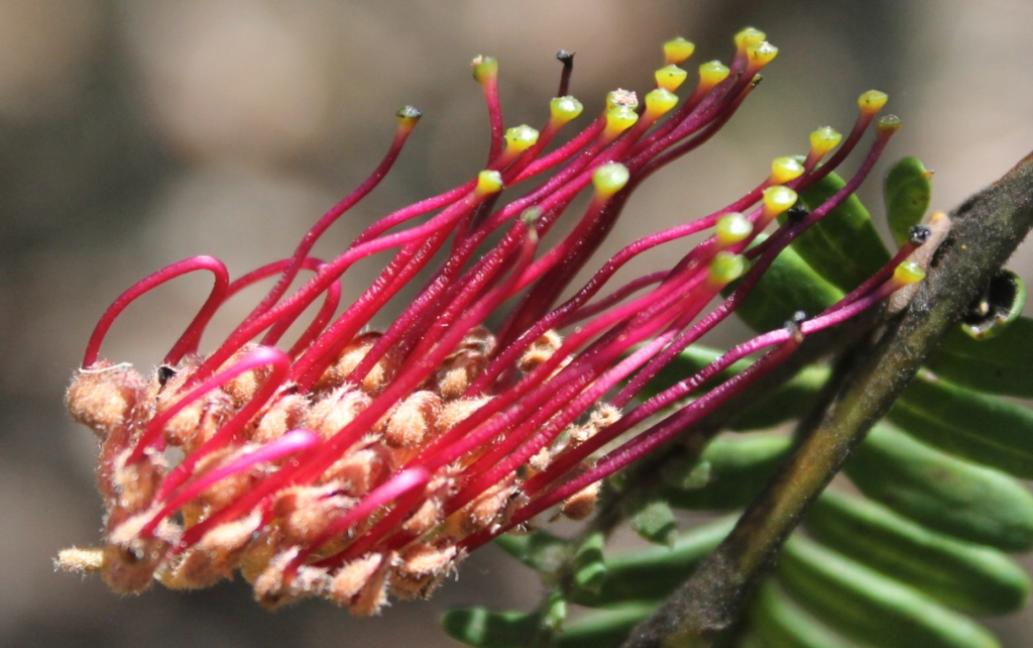
Heatwaves are destroying the sex lives of bees – new research

A red mason bee seeking pollen. Bildagentur Zoonar GmbH/Shutterstock
James Gilbert, University of Hull

There is not yet much research on the effects of heatwaves on bees. What little there is focuses on super extremes of weather that would kill an adult bee.

However, my new research with colleagues shows that UK populations of solitary bees may be much more sensitive than previously thought to the kinds of extreme weather we are now seeing regularly.

To find out what happens to bees during hot weather, my team recreated the three-day UK heatwave of July 2022. We subjected a group of developing larvae of red mason bees to three days where temperatures peaked daily at 40°C.

Red mason bees are common solitary bees found in UK gardens, and are important pollinators of apples and other fruits. At the same time, a control group experienced normal July temperatures for Hull, where the study was conducted, peaking daily at about 25°C.

After that, we treated both groups identically and allowed them to spin their cocoons and hibernate as normal. Nine months later, all the bees emerged fine, so it appeared initially that the heatwave had had no effect.

But this was before we dissected the bees to look at their reproductive health.

Staggeringly, in males from the heatwave group, sperm activity had dropped by half compared with the control group, and sperm counts by one third. In females, there was a 15% reduction in both the size and the number of developing eggs.

The heatwave had wrecked their fertility, especially in males.

Reduction of sperm motility in bees during heatwave

Graph showing a 50% reduction in sperm motility in the heatwave group compared to the control group.
The heatwave reduced sperm motility by half. Jamie Smith/Journal of Thermal Biology, CC BY

These numbers are shocking because they suggest solitary bee populations are much more sensitive to weather extremes than we thought, and that this should be factored into calculations of the broader effects of climate change. While bees did not die outright, their fertility was severely affected.

This means that a heatwave one year could lead to a drastic drop in the number of bees the following year, and therefore less efficient pollination for key crops like apples, cherries and oilseed rape.

This would leave commercial fruit growers even more reliant on temporarily renting honeybee hives, commonly called “hire-a-hive” schemes, to combat pollination deficits. This is at a time when research increasingly shows that wild bees, whose services come for free, are better pollinators than honeybees.

What else happens in heatwaves?

In honeybees and bumblebees, living together as a group is the key to withstanding weather extremes. With their social hives, honeybees can flexibly respond to periods of heavy rainfall and strong winds by rapidly reallocating the tasks that worker bees perform – switching from nest maintenance to foraging, for example.

Honeybees and bumblebees are also able to respond to temperature changes. They maintain their nests within strict temperature limits, with some workers switching to becoming living radiators when temperatures drop, buzzing their wing muscles to produce heat that keeps the brood at the ideal growing temperature.

Bumblebee nests begin with a single queen hibernating over winter and then working alone to build up her brood. New research is revealing secrets of their resilience: for example, hibernating bumblebee queens can survive underwater for up to a week when their nest is flooded.

However, honeybees and bumblebees are not most bees.

Unlike honeybees and bumblebees, most bees are solitary, which means they don’t have social nestmates to help them when times get tough – they work entirely on their own. Nests of these solitary bees are at the mercy of the elements, so solitary bees are much more vulnerable to climate change than social bees.

Female red mason bee adding pollen to her nest. The sealed cells behind her are completed with eggs, and the larvae will hatch out and eat the pollen
Female red mason bee adding pollen to her nest. The sealed cells behind her are completed with eggs, and the larvae will hatch out and eat the pollen. James Gilbert, CC BY

Of course, heatwaves are not the only threats to bees. They have an array of other nightmares to cope with, including pesticides, diseases, nutritional stress and loss of habitat.

The priority now is to investigate how bees affected by heatwaves also cope with these other problems. Our lab heads up a government-funded study looking at how climate change affects the nutritional needs of growing wild bees, and how parent bees respond to these needs.

Excitingly, we are beginning to see patterns indicating that growing bees require different balances of nutrients when they are reared at different temperatures. We are now testing whether bee mothers are sensitive to these requirements, and can adjust the pollen they gather to compensate.

Extreme hot weather is becoming more prevalent, even in cooler countries. These studies show that severe weather, while not necessarily killing bees outright, has the ability to seriously damage the bee population – with long-term consequences for pollination as well as the human food chain.The Conversation

James Gilbert, Senior Lecturer in Zoology, University of Hull

This article is republished from The Conversation under a Creative Commons license. Read the original article.
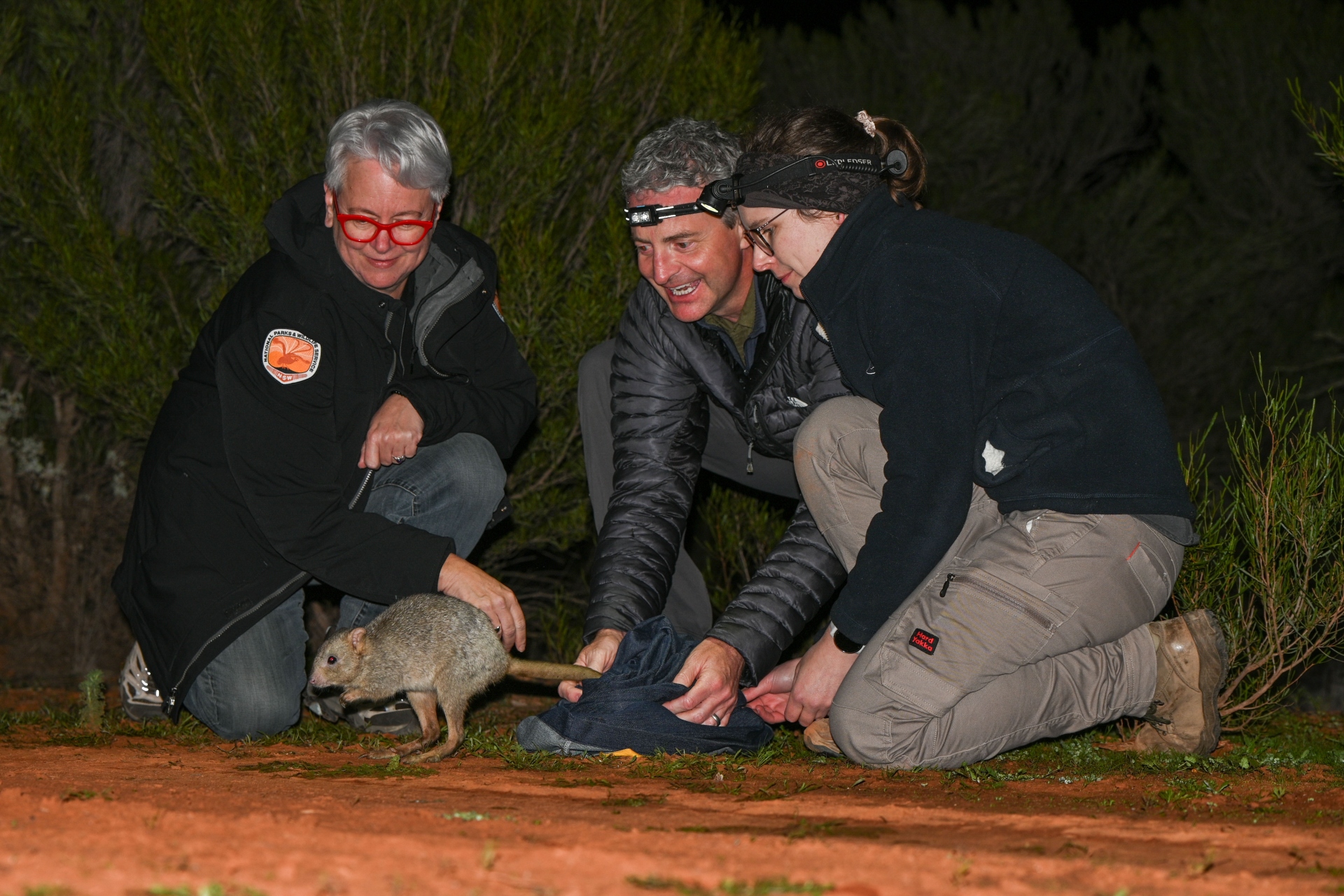
Shutting down federal bee labs threatens bees, beekeepers and the US food system

Jennie L. Durant, University of California, Davis

America’s bees and beekeepers are losing a valuable ally just when they need its help most.

The U.S. Department of Agriculture plans to soon close the Beltsville Agricultural Research Center, a 6,500-acre agricultural research station in Maryland that is home to the nation’s premier bee research and disease diagnosis hub, the Beltsville Bee Research Lab.

The closure comes at a critical moment for bees. In winter 2025, many beekeepers lost over half their operations as pesticide-resistant varroa mites spread, bringing deadly viruses. The losses have led to low honey production, and soaring fuel costs have made shipping bees cross-country for agricultural pollination increasingly expensive, further stressing the industry.

A beekeeper holds a tray of bees from a hive.
Beekeeping involves keeping colonies as healthy as possible. Often, beekeepers need help. Allagash Brewing/Flickr, CC BY

During my 14 years researching bees and beekeepers, and in writing my new book, “Bitter Honey: Big Ag’s Threat to Bees and the Fight to Save Them,” I’ve seen beekeepers frequently turn to the USDA bee labs for support during crises like this. Because honey bees contribute roughly US$15 billion to U.S. crop production – native and managed bees pollinate more than 130 crops – these labs help stabilize the nation’s food system.

Today, that scientific support system is at risk, just as beekeepers face their greatest challenges and native bee populations continue to decline.

Why the Beltsville Bee Lab matters

USDA’s bee researchers have served beekeepers for over 130 years, including nearly 90 years at the Beltsville station. One of the Beltsville Bee Lab’s standout services is its bee disease diagnostic service, where beekeepers can send samples for analysis free of charge.

Since the early 2000s, Beltsville researchers have helped beekeepers respond to varroa mites – a primary driver of high colony losses each year. Now, the lab is helping them prepare for a deadlier mite that is infesting honey bees in Asia, Tropilaelaps mercedesae, or “tropi” mites – by developing detection and response protocols that beekeepers can use to protect their colonies.

A chart shows large percentages of honey bee colonies affected by mites and other stressors.
Varroa mites are the leading source of stress on honey bees, affecting half of all colonies at times. Other major stressors affect large numbers of colonies as well. Farm Doc Daily/University of Illinois

While the Beltsville Bee Lab supports beekeepers nationwide, it’s located in a prime farming and beekeeping region. Its closure would leave a critical research gap in the Northeast, where beekeepers help pollinate cranberries, squash, blueberries and other crops.

Its location has also allowed researchers to conduct extensive studies on winter colony losses, research that would be difficult to replicate at the remaining USDA bee labs, which are primarily located in more temperate climates.

Hidden costs of bee lab closures

The USDA states that it will decommission the entire Beltsville Agricultural Research Center because building maintenance and renovations would cost an estimated $500 million. But closing the lab could cost beekeepers, farmers and consumers far more.

For example, in winter 2025, beekeepers experienced their highest losses in U.S. history. Many opened their colonies in January that year and found that more than 60% of their colonies had died – nearly 1.7 million colonies nationwide. Beekeepers contacted Beltsville, and researchers quickly flew out to test affected colonies for pesticide residues, diseases and varroa mites, data that could help guide beekeepers’ treatment response.

Entomologist Jay Evans explains what the Beltsville Bee Lab does and the diseases bees face.

A few weeks later, as the lab’s scientists were working on the crisis, the Trump administration fired probationary researchers and staff at the bee labs, along with thousands of other employees across the USDA. The Beltsville team was hobbled, and the remaining staff restricted from communicating with beekeepers.

Because of the communication lockdown, it took nearly six months for researchers to deliver their findings. By then, the season was over and beekeepers had been forced to navigate the crisis on their own.

The loss of bee colonies ultimately cost beekeepers an estimated $600 million in lost honey production, pollination income and colony replacement costs – far more than the one-time projected costs to modernize the entire Beltsville Agricultural Research Center.

These losses can hit consumer pocketbooks too.

When beekeepers lose nearly half their operations, they often need to charge farmers more for pollination services to stay afloat. Those added costs can ripple through the food system and affect what everyone pays for the fruits, vegetables and nuts that depend on pollinators.

A map shows bees moving to all across the U.S. but most to the Great Plains states
Beekeepers often transport their bees across the country to meet pollination needs and produce honey at different times of year. The map shows the movement of bees out of California to other states in summer and fall. Jennifer K. Bond, et al., USDA Economic Research Service, 2021

More cuts planned to US pollinator research

The Beltsville Bee Lab closure is not an isolated case. The administration has proposed eliminating the U.S. Geological Survey’s Ecosystems Mission Area, a move that could defund the USGS Bee Lab, an essential resource for research on native bees.

It also plans to decommission 16 USGS research centers nationwide, including the Northern Prairie Wildlife Research Center in North Dakota, the highest honey-producing state in the nation. For decades, beekeepers have brought colonies to forage on grasslands in the region. Researchers have been tracking how the shift from grasslands to crops has affected honey bee health and beekeeper revenue.

The U.S. Forest Service also faces widespread cuts, including the planned closure of 57 of its 77 research stations throughout the United States. Since the Forest Service manages over 193 million acres of federal lands that support native plants and pollinators, those closures could affect crucial pollinator habitat as well.

These closures risk a severe brain drain.

When the first Trump administration moved the USDA Economic Research Service from Washington to Kansas City, Missouri, in 2019, the agency lost over 75% of its experienced research staff. A recent survey suggests that history may repeat itself. If the reorganization goes through, farmers and beekeepers will lose experts with decades of institutional and technical knowledge.

The Beltsville Bee Lab is a key part of the often-unappreciated federal research infrastructure that supports the health of pollinators and the nation’s food supply.

If the USDA and the USGS move forward with their plans to close bee labs and research sites, the result could be slower responses to bee threats, weaker tracking of native bee populations and diminished pollinator habitat for bees – all of which raise costs and risks for beekeepers, farmers and everyone who depends on the food system.The Conversation

Jennie L. Durant, Research Affiliate in Human Ecology, University of California, Davis

This article is republished from The Conversation under a Creative Commons license. Read the original article.
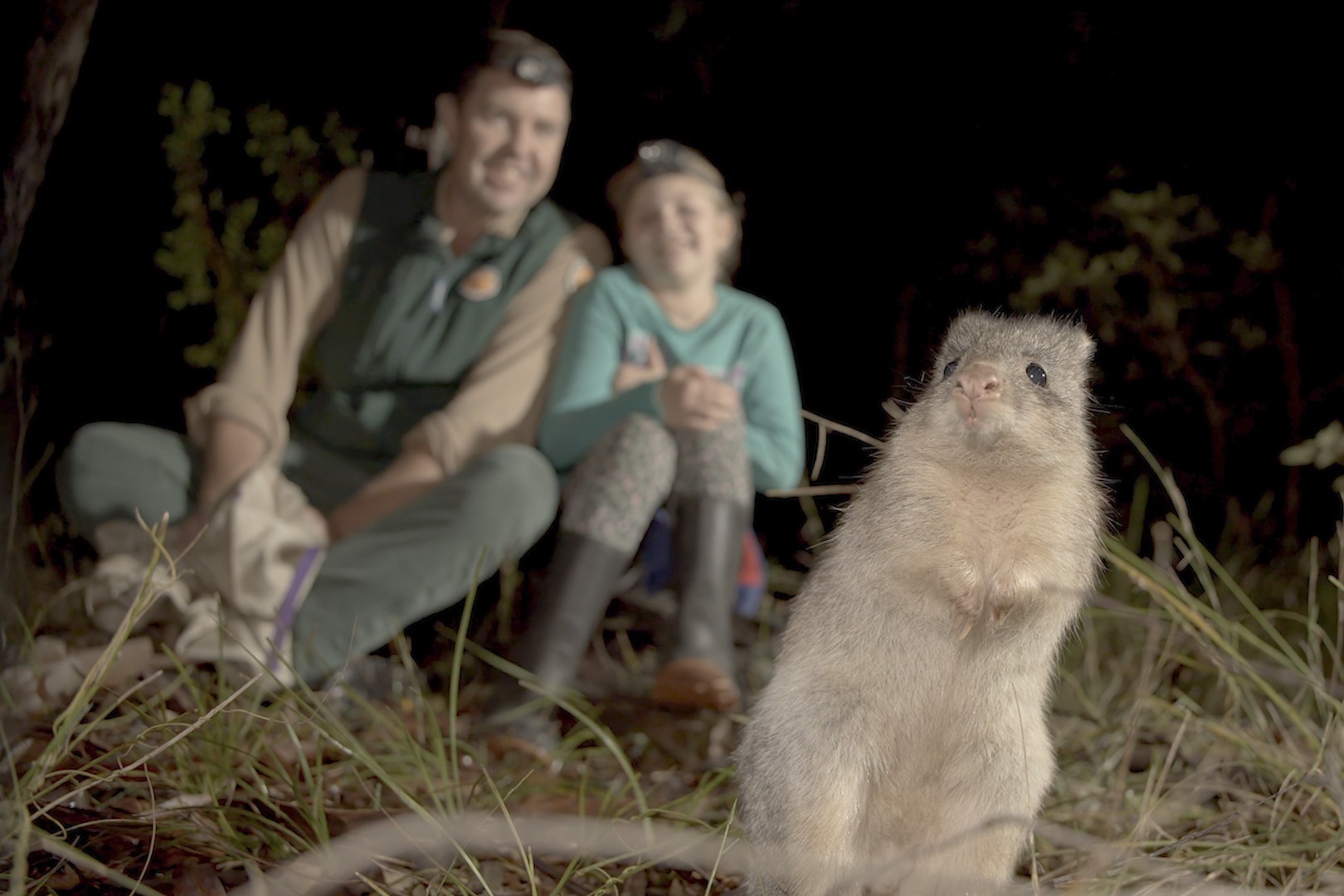
Nature is good for business – and we now have numbers to show it

Getty Images
Paul Griffin, University of California, Davis and Martien Lubberink, Te Herenga Waka — Victoria University of Wellington

When rivers degrade, pests spread or drought hits crops, nature sends a bill.

Yet it’s one rarely itemised on any balance sheet, because nature’s contribution to business remains genuinely hard to quantify.

One major obstacle is data. Businesses rarely disclose their precise operating locations, while detailed ecological information that can be linked to specific firms is scarce in most countries.

This is despite healthy ecosystems underpinning large parts of the economy, from agriculture and forestry to tourism and food production. As the US economist Herman Daly famously put it, the economy is “a wholly owned subsidiary of the environment, not the reverse”.

As part of a growing body of global research now trying to put hard numbers on what nature actually contributes to the economy, we looked at New Zealand’s case.

Our newly completed research turned up a compelling finding: firms operating in areas with richer biodiversity are measurably more productive.

Measuring nature’s value

We chose New Zealand because it publishes detailed sets of business and environmental data. That allowed us to compare company performance with local ecological conditions across different regions.

We combined measures of sales and employment with biodiversity indicators – including river health, drought risk, land use and invasive species – used as part of international reporting obligations.

We also drew on the Cobb-Douglas economic model – commonly used to estimate how labour and investment drive economic output – to help get a clearer picture of nature’s economic contribution as a factor of production.

We found businesses operating in areas with healthier ecosystems tended to generate higher sales and profits.

Across more than 117,000 observations spanning 2009 to 2022, a 1% increase in natural capital was associated with sales about 0.13% higher and profits about 0.15% higher on average. The relationship remained consistent across multiple measures of biodiversity and ecosystem health.

We also found a trade-off. Areas with more roads, buildings and commercial activity tended to have lower biodiversity scores but higher sales. In other words, businesses can still grow while degrading nature – but may lose some of the productivity benefits healthy ecosystems provide.

When green policy boosts productivity

We also tested whether major environmental policies changed this relationship.

One was New Zealand’s Predator Free 2050 programme. The other was a broader package of reforms introduced from 2017, including freshwater rules, tree-planting incentives, restrictions on offshore oil and gas exploration, limits on single-use plastics and the Zero Carbon Act.

Because these policies targeted ecosystems rather than directly subsidising firms, they helped us test whether improvements in nature were linked to changes in business performance.

We found the relationship between healthy ecosystems and business performance became even stronger following both interventions, with the productivity effect associated with 1% more natural capital increasing business performance by a further 0.05%. The effect was strongest in the year immediately afterwards.

This suggests investment in ecological restoration and protection can generate economic benefits beyond the environmental sector itself.

The strongest effects appeared in agriculture and forestry, where business outcomes are closely tied to the health of surrounding ecosystems.

Farms and forestry operations in less intensively developed areas – with lower population density and less infrastructure – showed markedly stronger productivity gains linked to natural capital.

In these primary industry regions, a 1% increase in natural capital was associated with sales that were additionally higher by 0.71% to 0.81% above the economy-wide average.

This is unsurprising. Healthy soils, clean water, fewer pests and intact native vegetation can support food and fibre production while lowering costs.

The benefits were also evident in service industries, construction and retail, although spread more evenly across a broader range of ecological factors.

An unseen benefit

These New Zealand insights are important for the growing global effort to better understand the economic value of nature. Globally, the services ecosystems provide to business are estimated to be worth trillions of dollars annually.

While new frameworks such as the international Taskforce on Nature-related Financial Disclosures are beginning to emerge, hard evidence linking ecological conditions to firm-level productivity has remained limited.

Our study suggests biodiversity is not simply an environmental concern. Differences in ecosystem health across regions and industries are associated with measurable differences in business performance.

Businesses should view the natural environment as a productive asset every bit as real as machinery or labour, not just background scenery.

And for policymakers – particularly in countries reliant on primary industries, such as New Zealand and Australia – ecological investment and economic productivity shouldn’t be taken as opposing goals.

Nature, it turns out, has been doing more economic work than some have given it credit for.The Conversation

Paul Griffin, Distinguished Emeritus Professor of Management, University of California, Davis and Martien Lubberink, Associate Professor of Accounting and Capital, Te Herenga Waka — Victoria University of Wellington

This article is republished from The Conversation under a Creative Commons license. Read the original article.

The network watching the world’s oceans is under pressure – just when it’s needed most

National Oceanic and Atmospheric Administration, CC BY-NC-ND
Kevin Trenberth, University of Auckland, Waipapa Taumata Rau

Increasingly, the world’s oceans are telling us our climate system may be changing faster and more dramatically than expected.

These new insights are made using a vast global network of instruments – from drifting floats and moored buoys to research vessels and underwater gliders – that quietly and continuously feed data to scientists.

Known as the Global Ocean Observing System (GOOS), it provides the fine-grained data that scientists need to detect changes, test climate models and refine projections of future risk.

But now there is rising concern this system itself is at risk – just when the world needs it most.

The hidden system behind modern forecasting

The GOOS is often described as a form of climate monitoring – but it is much more than that. It can best be understood as a network of complementary observing systems, each designed to capture different parts of the ocean in different ways.

Some 4000 autonomous Argo robotic floats sink every ten days down to 2000m depth, before rising to the surface to transmit temperature and salinity profiles to ground stations via satellite.

Underwater gliders target eddies, coastal currents and continental margins where floats cannot go. Elephant seals fitted with sensors collect data beneath polar sea ice in regions no other instrument can easily reach.

An elephant seal fitted with a sophisticated data collection device. The instruments drop off in moulting season. C McMahon/IMOS, CC BY-NC-ND

Each of these platforms answer questions the others cannot. And ocean observations collected by them now underpin many of the forecasting systems that modern societies rely on every day.

That includes the numerical weather models used to generate daily forecasts, which continuously ingest ocean data to predict evolving weather conditions, as well as newer artificial intelligence-based forecasting systems.

The same is true for hurricane and cyclone forecasts, as well as seasonal forecasting used to anticipate drought, harvests and energy demand. Marine heatwave warnings, sea-level projections and efforts to understand major current systems also rely on sustained long-term observations beneath the ocean surface.

These observations are key for monitoring El Niño climate patterns – including a major event already underway and likely to peak late this year – and major current systems such as the Atlantic Meridional Overturning Circulation.

While satellites can measure surface conditions, they still cannot directly observe the deeper waters where heat accumulates, currents reorganise and the precursors of future weather are already forming.

In short, the GOOS underpins everything from tomorrow’s storm warnings to next century’s climate adaptation plans.

Yet our newly published analysis suggests the system delivering those observations is far more fragile than most people realise.

We found that if observations from a single major contributor, the United States, were withdrawn from GOOS, errors in estimates of how fast the ocean is warming would jump by 163% – worse than randomly losing 80% of all global ocean data.

The reason is largely geographical: US instruments cover every ocean basin and fill critical gaps no other nation currently monitors.

And this is no theoretical concern. Proposed cuts to the National Oceanic and Atmospheric Administration (NOAA) and the National Science Foundation in the United States now threaten exactly this contribution.

Elsewhere, observing systems are also under growing strain, with European programmes facing mounting funding pressure.

In China, scientists and policymakers are trying to build a more resilient national observing effort – but without the resources currently required to fully support it.

A resource the world can’t afford to lose

The total annual cost of operating the GOOS – across all platforms and personnel worldwide – is on the order of US$1.1 billion (about NZ$1.8 billion).

If that sounds expensive, consider that a single major hurricane season can cost the United States hundreds of billions of dollars, while marine heatwaves have already collapsed fisheries and triggered mass coral bleaching around the world.

Compared with the economic damage linked to ocean-driven extreme weather and climate disruption, ocean observation is one of the highest-return public investments available.

The international scientific conference OceanObs'29, to be held in China in three years’ time, will be an opportunity to negotiate a more balanced global observing system – one better aligned with today’s economic realities and maritime interests.

It should also encourage greater scientific cooperation among countries, helping ensure complementary observing networks collectively cover as much of the global ocean as possible.

Argo floats, like this one being deployed, are autonomous, robotic instruments that drift with ocean currents, moving up and down between the surface and mid-water depths. M.Naumann/IOW, CC BY-NC-ND

Maintaining that coverage requires constant renewal.

Argo floats typically last four to five years before their batteries fail. This means they must continually be deployed to prevent gaps emerging across the oceans.

New Zealand plays a surprisingly important role here. Since 2004, the research vessel Kaharoa has helped deploy more than 1,100 Argo floats for international partners across the Pacific and Southern Ocean.

This demonstrates that even smaller countries can use their institutions, expertise and maritime interest to make important contributions.

At the same time, if any one component of the GOOS is removed because of political decisions made in the US or elsewhere, the whole system’s ability to deliver reliable information would degrade.

That would require a rebuild of the system which would prove much more difficult and expensive than the cost of sustaining it today.

More importantly, it could leave the world flying blind into the most consequential transformation of the planet’s climate in human history.


The author acknowledges the contributions of Sabrina Speich, John P. Abraham and Lijing Cheng to this article. The Conversation


Kevin Trenberth, Distinguished Scholar, NCAR; Affiliate Faculty, University of Auckland, Waipapa Taumata Rau

This article is republished from The Conversation under a Creative Commons license. Read the original article.

Some technologies use accelerated natural processes to capture carbon – but can they store it durably?

Mark Robinson/Wikimedia Commons, CC BY-NC-ND
Terry Isson, University of Waikato

Natural geological processes have been regulating Earth’s climate for millions of years.

Accelerated versions of these processes are now being promoted as technologies to draw down carbon from the atmosphere – and some are rapidly moving from concept to real-world deployments.

Two such technologies are known as enhanced weathering, which speeds up the chemical breakdown of certain rocks, and ocean alkalinity enhancement, which increases the ocean’s natural ability to remove carbon dioxide from the air.

Startups backed by tech companies including Google and Microsoft are already applying these technologies in field trials. Investment in the sector is rising rapidly, with large-scale trials underway and carbon credits beginning to appear on voluntary markets.

But as our new assessment published in Science highlights, some estimates of carbon removal through these technologies may be too optimistic.

Current models assume carbon captured on land or in coastal waters will reliably make its way into long-term storage in the ocean. However, these models don’t replicate all Earth processes.

In reality, part of the engineered capture of carbon can be reversed as water moves through soils, rivers, estuaries and coastal environments. Dissolved elements can become trapped again in new minerals such as clays, reducing how much carbon ultimately remains stored over long timescales.

The true additional carbon removed from the atmosphere may be smaller than headline estimates suggest.

How enhanced weathering is supposed to work

Enhanced weathering works by accelerating chemical reactions that already occur naturally between rocks, water and carbon dioxide.

When rainwater mixes with carbon dioxide held in the atmosphere and soil, it forms an acid that slowly dissolves rocks that contain the minerals calcium and magnesium. This includes volcanic rocks such as basalt and ultramafic rocks such as dunite.

In nature, the dissolved minerals increase the capactiy of water to store carbon dioxide and these chemical products can then be transported by rivers to the ocean, where the carbon may remain stored for thousands of years.

Enhanced weathering attempts to speed up this natural process. Finely crushed rocks and minerals are spread across landscapes such as agricultural soils, increasing the surface area available for reactions.

Ocean alkalinity enhancement uses similar principles, but aims to increase the ocean’s ability to absorb and store atmospheric carbon dioxide directly.

Carbon losses along the way

Many enhanced weathering assessments assume that once minerals dissolve, the resulting alkalinity and carbon will eventually make their way into the ocean for long-term storage.

However, different materials dissolve at different rates. Climate, rainfall, soil chemistry and biological activity also influence how quickly reactions occur. This means carbon removal can vary enormously between environments.

Earth systems also contain many opportunities for the flow of carbon to weaken before it ever reaches the open ocean.

As alkalinity moves through the environment, dissolved elements released during weathering can become trapped again in new minerals. These reactions can consume alkalinity and reduce the amount of carbon ultimately stored long term.

These challenges are not limited to enhanced weathering on land. Ocean alkalinity enhancement may also experience losses as dissolved elements interact with sediments and seawater chemistry, recycling alkalinity back into solid minerals before it contributes to long-term storage.

The challenge of durable carbon removal

In natural systems, weathering, transport and mineral formation are tightly linked parts of a much larger Earth-system cycle.

While naturally occurring warm and wet environments may accelerate weathering, using a rapid-dissolution model to replicate this does not necessarily guarantee durable carbon storage.

There is also another problem: some enhanced weathering and alkalinity approaches may interfere with natural carbon removal pathways that would have occurred anyway.

For example, increasing alkalinity in one part of the Earth system may reduce natural dissolution or weathering processes elsewhere. This means the amount of truly additional carbon removed from the atmosphere may be smaller.

Many field trials focus on changes occurring at the application site itself, but much of the long-term carbon storage depends on what happens downstream – across entire catchments, rivers and coastal oceans.

As enhanced weathering and ocean alkalinity enhancement move toward larger-scale deployment, the central question is how much carbon remains removed from the atmosphere over decades to centuries – and whether that removal is truly additional.

None of this means these technologies don’t contribute to climate mitigation.

The challenge is whether Earth systems can keep the captured carbon stored or whether we are simply moving carbon across time and space instead of durably removing it from the atmosphere.

New Zealand may offer an opportunity to better understand these questions because volcanic rocks, high rainfall and strong land-to-sea connectivity create ideal conditions for tracking how alkalinity and carbon move through the Earth system.

If these approaches are going to play a major role in future carbon removal strategies – and generate carbon credits at global scale – we need to understand not only how quickly minerals dissolve, but whether carbon is stored durably without weakening natural carbon removal pathways at the same time.The Conversation

Terry Isson, Senior Lecturer in Marine Science, University of Waikato

This article is republished from The Conversation under a Creative Commons license. Read the original article.

Careel Head Road Shops and the Bangalley- Burrowong Creeks: Some History 
Careel Bay Marina Environs November 2024 - Spring Celebrations
Careel Bay Playing Fields History and Current
Careel Bay Steamer Wharf + Boatshed: some history 
Careel Creek 
Careel Creek - If you rebuild it they will come
Church Point Public Wharf - 1885 to 2025: Some History 
Clareville Beach
Clareville/Long Beach Reserve + some History
Clareville Public Wharf: 1885 to 1935 - Some History 
Coastal Stability Series: Cabbage Tree Bay To Barrenjoey To Observation Point by John Illingsworth, Pittwater Pathways, and Dr. Peter Mitchell OAM
Community Concerned Over the Increase of Plastic Products Being Used by the Northern Beaches Council for Installations in Pittwater's Environment
Cowan Track by Kevin Murray
Crown Reserves Improvement Fund Allocations 2021
Crown Reserves Improvement Fund 2022-23: $378,072 Allocated To Council For Weed Control - Governor Phillip Park Gets a Grant This Time: full details of all 11 sites
Crown Reserves Improvement Fund Allocations 2023-2024
Crown Reserves Grants 2025 Announced: Local focus on Weeds + Repairs to Long Reef Boardwalk + some pictures of council's recent works at Hitchcock Park - Careel Bay playing fields - CRIF 2025
Curl Curl To Freshwater Walk: October 2021 by Kevin Murray and Joe Mills
Currawong and Palm Beach Views - Winter 2018
Currawong-Mackerel-The Basin A Stroll In Early November 2021 - photos by Selena Griffith
Currawong State Park Currawong Beach +  Currawong Creek
Deep Creek To Warriewood Walk photos by Joe Mills
Lovett Bay Public Wharves: Some History 
Lucinda Park, Palm Beach: Some History + 2022 Pictures
McCarrs Creek
McCarrs Creek Public Jetty, Brown's Bay Public Jetty, Rostrevor Reserve, Cargo Wharf, Church Point Public Wharf: a few pictures from the Site Investigations for Pittwater Public Wharves History series 2025
McCarr's Creek to Church Point to Bayview Waterfront Path
McKay Reserve
Milton Family Property History - Palm Beach By William (Bill) James Goddard II with photos courtesy of the Milton Family   - Snapperman to Sandy Point, Pittwater
Mona Vale Beach - A Stroll Along, Spring 2021 by Kevin Murray
Mona Vale Headland, Basin and Beach Restoration
Mona Vale Woolworths Front Entrance Gets Garden Upgrade: A Few Notes On The Site's History 
Mother Brushtail Killed On Barrenjoey Road: Baby Cried All Night - Powerful Owl Struck At Same Time At Careel Bay During Owlet Fledgling Season: calls for mitigation measures - The List of what you can do for those who ask 'What You I Do' as requested
Mount Murray Anderson Walking Track by Kevin Murray and Joe Mills
Mullet Creek
Muogamarra Nature Reserve in Cowan celebrates 90 years: a few insights into The Vision of John Duncan Tipper, Founder 
Muogamarra by Dr Peter Mitchell OAM and John Illingsworth
Narrabeen Creek
Narrabeen Lagoon Catchment: Past Notes Present Photos by Margaret Woods
Narrabeen Lagoon Entrance Clearing Works: September To October 2023  pictures by Joe Mills
Narrabeen Lagoon State Park
Narrabeen Lagoon State Park Expansion
Narrabeen Rockshelf Aquatic Reserve
Nerang Track, Terrey Hills by Bea Pierce
Newport Bushlink - the Crown of the Hill Linked Reserves
Newport Community Garden - Woolcott Reserve
Newport to Bilgola Bushlink 'From The Crown To The Sea' Paths:  Founded In 1956 - A Tip and Quarry Becomes Green Space For People and Wildlife 
North Narrabeen in 1911 - Panoramas taken for West's Lakeside Estate 
Out and About July 2020 - Storm swell
Out & About: July 2024 - Barrenjoey To Paradise Beach To Bayview To Narrabeen + Middle Creek - by John Illingsworth, Adriaan van der Wallen, Joe Mills, Suzanne Daly, Jacqui Marlowe and AJG
Palm Beach Headland Becomes Australia’s First Urban Night Sky Place: Barrenjoey High School Alumni Marnie Ogg's Hard Work
Palm Beach Public Wharf: Some History 
Paradise Beach Baths renewal Complete - Taylor's Point Public Wharf Rebuild Underway
Realises Long-Held Dream For Everyone
Paradise Beach Wharf + Taylor's Wharf renewal projects: October 2024 pictorial update - update pics of Paradise Wharf and Pool renewal, pre-renewal Taylors Point wharf + a few others of Pittwater on a Spring Saturday afternoon
Pictures From The Past: Views Of Early Narrabeen Bridges - 1860 To 1966
Pittwater Beach Reserves Have Been Dedicated For Public Use Since 1887 - No 1.: Avalon Beach Reserve- Bequeathed By John Therry 
Pittwater Reserves: The Green Ways; Bungan Beach and Bungan Head Reserves:  A Headland Garden 
Pittwater Reserves, The Green Ways: Clareville Wharf and Taylor's Point Jetty
Pittwater Reserves: The Green Ways; Hordern, Wilshire Parks, McKay Reserve: From Beach to Estuary 
Pittwater Reserves - The Green Ways: Mona Vale's Village Greens a Map of the Historic Crown Lands Ethos Realised in The Village, Kitchener and Beeby Parks 
Pittwater Reserves: The Green Ways Bilgola Beach - The Cabbage Tree Gardens and Camping Grounds - Includes Bilgola - The Story Of A Politician, A Pilot and An Epicure by Tony Dawson and Anne Spencer  
Pittwater spring: waterbirds return to Wetlands
Pittwater's Koalas Driven to Extinction: Some History
Pittwater's Lone Rangers - 120 Years of Ku-Ring-Gai Chase and the Men of Flowers Inspired by Eccleston Du Faur 
Pittwater's Great Outdoors: Spotted To The North, South, East + West- June 2023:  Palm Beach Boat House rebuild going well - First day of Winter Rainbow over Turimetta - what's Blooming in the bush? + more by Joe Mills, Selena Griffith and Pittwater Online
Pittwater's Ocean Beach Rock Pools: Southern or northern Corners Of Bliss for the first week of summer 2025-2026 
Pittwater's Parallel Estuary - The Cowan 'Creek
Pittwater Pathways To Public Lands & Reserves
Plastic grass announced For Kamilaroi Park Bayview + Lakeside Park
Project Penguin 2017 - Taronga Zoo Expo day
Project Penguin 2025 + Surfing with a Penguin in South Africa + Pittwater's Penguins
Resolute Track at West Head by Kevin Murray
Resolute Track Stroll by Joe Mills
Riddle Reserve, Bayview
Salt Pan Cove Public Wharf on Regatta Reserve + Florence Park + Salt Pan Reserve + Refuge Cove Reserve: Some History
Salt Pan Public Wharf, Regatta Reserve, Florence Park, Salt Pan Cove Reserve, Refuge Cove Reserve Pictorial and Information
Salvation Loop Trail, Ku-Ring-Gai Chase National Park- Spring 2020 - by Selena Griffith
Scotland Island Dieback Accelerating: November 2024
Scotland Island's Public Wharves: Some History 
Seagull Pair At Turimetta Beach: Spring Is In The Air!
Shark net removal trial cancelled for this year:  Shark Meshing (Bather Protection) Program 2024-25 Annual Performance Report Released
2023-2024 Shark Meshing Program statistics released: council's to decide on use or removal
Shark Meshing (Bather Protection) Program 2022/23 Annual Performance Report 
Shark Meshing (Bather Protection) Program 2021/22 Annual Performance Report - Data Shows Vulnerable, Endangered and Critically Endangered Species Being Found Dead In Nets Off Our Beaches 
Shark Meshing (Bather Protection) Program 2020/21 Annual Performance Report 
Shark Meshing 2019/20 Performance Report Released
DPI Shark Meshing 2018/19 Performance Report: Local Nets Catch Turtles, a Few Sharks + Alternatives Being Tested + Historical Insights
Some late November Insects (2023)
Stapleton Reserve
Stapleton Park Reserve In Spring 2020: An Urban Ark Of Plants Found Nowhere Else
Stealing The Bush: Pittwater's Trees Changes - Some History 
Stokes Point To Taylor's Point: An Ideal Picnic, Camping & Bathing Place 
Stony Range Regional Botanical Garden: Some History On How A Reserve Became An Australian Plant Park
Taylor's Point Public Wharf 2013-2020 History
The Chiltern Track
The Chiltern Trail On The Verge Of Spring 2023 by Kevin Murray and Joe Mills
The 'Newport Loop': Some History 
The Resolute Beach Loop Track At West Head In Ku-Ring-Gai Chase National Park by Kevin Murray
The Top Predator by A Dad from A Pittwater Family of Dog Owners & Dog Lovers
Threatened Species Day 2025 + A few insights into Pittwater's Past + Present Threatened Species 
$378,072 Allocated To Council For Weed Control: Governor Phillip Park Gets a Grant This Time: full details of all 11 sites - Crown Reserves Improvement Fund (CRIF) March 2023
Topham Track Ku-Ring-Gai Chase NP,  August 2022 by Joe Mills and Kevin Murray
Towlers Bay Walking Track by Joe Mills
Trafalgar Square, Newport: A 'Commons' Park Dedicated By Private Landholders - The Green Heart Of This Community
Tranquil Turimetta Beach, April 2022 by Joe Mills
Tree Management Policy Passed
Trial to remove shark nets - NBC - Central Coast - Waverly approached to nominate a beach each
Turimetta Beach Reserve by Joe Mills, Bea Pierce and Lesley
Turimetta Beach Reserve: Old & New Images (by Kevin Murray) + Some History
Turimetta Headland
Turimetta Moods by Joe Mills: June 2023
Turimetta Moods (Week Ending June 23 2023) by Joe Mills
Turimetta Moods: June To July 2023 Pictures by Joe Mills
Turimetta Moods: July Becomes August 2023 by Joe Mills
Turimetta Moods: August Becomes September 2023 ; North Narrabeen - Turimetta - Warriewood - Mona Vale photographs by Joe Mills
Turimetta Moods August 2025 by Joe Mills
Turimetta Moods: Mid-September To Mid-October 2023 by Joe Mills
Turimetta Moods: Late Spring Becomes Summer 2023-2024 by Joe Mills
Turimetta Moods: Warriewood Wetlands Perimeter Walk October 2024 by Joe Mills
Turimetta Moods: November 2024 by Joe Mills

Pittwater's Birds

Attracting Insectivore Birds to Your Garden: DIY Natural Tick Control - small bird insectivores, species like the Silvereye, Spotted Pardalote, Gerygone, Fairywren and Thornbill, feed on ticks. Attracting these birds back into your garden will provide not only a residence for tick eaters but also the delightful moments watching these tiny birds provides.
Aussie Backyard Bird Count 2017: Take part from 23 - 29 October - how many birds live here?
Aussie Backyard Bird Count 2018 - Our Annual 'What Bird Is That?' Week Is Here! - This week the annual Aussie Backyard Bird Count runs from 22-28 October 2018. Pittwater is one of those places fortunate to have birds that thrive because of an Aquatic environment, a tall treed Bush environment and areas set aside for those that dwell closer to the ground, in a sand, scrub or earth environment. To take part all you need is 20 minutes and your favourite outdoor space. Head to the website and register as a Counter today! And if you're a teacher, check out BirdLife Australia's Bird Count curriculum-based lesson plans to get your students (or the whole school!) involved

Australian Predators of the Sky by Penny Olsen - published by National Library of Australia

Australian Raven  Australian Wood Duck Family at Newport

A Week In Pittwater Issue 128   A Week In Pittwater - June 2014 Issue 168

Baby Birds Spring 2015 - Rainbow Lorikeets in our Yard - for Children 

Baby Birds by Lynleigh Greig, Southern Cross Wildlife Care - what do if being chased by a nesting magpie or if you find a baby bird on the ground

Baby Kookaburras in our Backyard: Aussie Bird Count 2016 - October

Balloons Are The Number 1 Marine Debris Risk Of Mortality For Our Seabirds - Feb 2019 Study

Bangalley Mid-Winter   Barrenjoey Birds Bird Antics This Week: December 2016

Bird of the Month February 2019 by Michael Mannington

Birdland Above the Estuary - October 2012  Birds At Our Window   Birds at our Window - Winter 2014  Birdland June 2016

Birdsong Is a Lovesong at This time of The Year - Brown Falcon, Little Wattle Bird, Australian Pied cormorant, Mangrove or Striated Heron, Great Egret, Grey Butcherbird, White-faced Heron 

Bird Songs – poems about our birds by youngsters from yesterdays - for children Bird Week 2015: 19-25 October

Bird Songs For Spring 2016 For Children by Joanne Seve

Birds at Careel Creek this Week - November 2017: includes Bird Count 2017 for Local Birds - BirdLife Australia by postcode

Black Cockatoo photographed in the Narrabeen Catchment Reserves this week by Margaret G Woods - July 2019

Black-Necked Stork, Mycteria Australis, Now Endangered In NSW, Once Visited Pittwater: Breeding Pair shot in 1855

Black Swans on Narrabeen Lagoon - April 2013   Black Swans Pictorial

Blue-faced Honeyeaters Breeding In Pittwater

Brush Turkeys In Suburbia: There's An App For That - Citizen Scientists Called On To Spot Brush Turkeys In Their Backyards
Buff-banded Rail spotted at Careel Creek 22.12.2012: a breeding pair and a fluffy black chick

Cayley & Son - The life and Art of Neville Henry Cayley & Neville William Cayley by Penny Olsen - great new book on the art works on birds of these Australian gentlemen and a few insights from the author herself
Crimson Rosella - + Historical Articles on

Death By 775 Cuts: How Conservation Law Is Failing The Black-Throated Finch - new study 'How to Send a Finch Extinct' now published

Eastern Rosella - and a little more about our progression to protecting our birds instead of exporting them or decimating them.

Endangered Little Tern Fishing at Mona Vale Beach

‘Feather Map of Australia’: Citizen scientists can support the future of Australia's wetland birds: for Birdwatchers, school students and everyone who loves our estuarine and lagoon and wetland birds

First Week of Spring 2014

Fledging - Baby Birds coming to ground: Please try and Keep them close to Parent Birds - Please Put out shallow dishes of water in hot weather

Fledgling Common Koel Adopted by Red Wattlebird -Summer Bird fest 2013  Flegdlings of Summer - January 2012

Flocks of Colour by Penny Olsen - beautiful new Bird Book Celebrates the 'Land of the Parrots'

Friendly Goose at Palm Beach Wharf - Pittwater's Own Mother Goose

Front Page Issue 177  Front Page Issue 185 Front Page Issue 193 - Discarded Fishing Tackle killing shorebirds Front Page Issue 203 - Juvenile Brush Turkey  Front Page Issue 208 - Lyrebird by Marita Macrae Front Page Issue 219  Superb Fairy Wren Female  Front Page Issue 234: National Bird Week October 19-25  and the 2015 the Aussie Back Yard Bird Count: Australia's First Bird Counts - a 115 Year Legacy - with a small insight into our first zoos Front Page Issue 236: Bird Week 2015 Front Page Issue 244: watebirds Front Page Issue 260: White-face Heron at Careel Creek Front Page Issue 283: Pittwater + more birds for Bird Week/Aussie Bird Count  Front Page Issue 284: Pittwater + more birds for Bird Week/Aussie Bird Count Front Page Issue 285: Bird Week 2016  Front Page Issue 331: Spring Visitor Birds Return

G . E. Archer Russell (1881-1960) and His Passion For Avifauna From Narrabeen To Newport 

Glossy Black-Cockatoo Returns To Pittwater by Paul Wheeler Glossy Cockatoos - 6 spotted at Careel Bay February 2018

Grey Butcher Birds of Pittwater

Harry Wolstenholme (June 21, 1868 - October 14, 1930) Ornithologist Of Palm Beach, Bird Man Of Wahroonga 

INGLESIDE LAND RELEASE ON AGAIN BUT MANY CHALLENGES  AHEAD by David Palmer

Issue 60 May 2012 Birdland - Smiles- Beamings -Early -Winter - Blooms

Jayden Walsh’s Northern Beaches Big Year - courtesy Pittwater Natural Heritage Association

John Gould's Extinct and Endangered Mammals of Australia  by Dr. Fred Ford - Between 1850 and 1950 as many mammals disappeared from the Australian continent as had disappeared from the rest of the world between 1600 and 2000! Zoologist Fred Ford provides fascinating, and often poignant, stories of European attitudes and behaviour towards Australia's native fauna and connects these to the animal's fate today in this beautiful new book - our interview with the author

July 2012 Pittwater Environment Snippets; Birds, Sea and Flowerings

Juvenile Sea Eagle at Church Point - for children

King Parrots in Our Front Yard  

Kookaburra Turf Kookaburra Fledglings Summer 2013  Kookaburra Nesting Season by Ray Chappelow  Kookaburra Nest – Babies at 1.5 and 2.5 weeks old by Ray Chappelow  Kookaburra Nest – Babies at 3 and 4 weeks old by Ray Chappelow  Kookaburra Nest – Babies at 5 weeks old by Ray Chappelow Kookaburra and Pittwater Fledglings February 2020 to April 2020

Lion Island's Little Penguins (Fairy Penguins) Get Fireproof Homes - thanks to NSW National Parks and Wildlife Service and the Fix it Sisters Shed

Long-Billed Corella

Lorikeet - Summer 2015 Nectar

Lyre Bird Sings in Local National Park - Flock of Black Cockatoos spotted - June 2019

Magpie's Melodic Melodies - For Children (includes 'The Magpie's Song' by F S Williamson)

Masked Lapwing (Plover) - Reflected

May 2012 Birdland Smiles Beamings Early Winter Blooms 

Mistletoebird At Bayview

Musk Lorikeets In Pittwater: Pittwater Spotted Gum Flower Feast - May 2020

Nankeen Kestrel Feasting at Newport: May 2016

National Bird Week 2014 - Get Involved in the Aussie Backyard Bird Count: National Bird Week 2014 will take place between Monday 20 October and Sunday 26 October, 2014. BirdLife Australia and the Birds in Backyards team have come together to launch this year’s national Bird Week event the Aussie Backyard Bird Count! This is one the whole family can do together and become citizen scientists...

National Bird Week October 19-25  and the 2015 the Aussie Back Yard Bird Count: Australia's First Bird Counts - a 115 Year Legacy - with a small insight into our first zoos

Native Duck Hunting Season Opens in Tasmania and Victoria March 2018: hundreds of thousands of endangered birds being killed - 'legally'!

Nature 2015 Review Earth Air Water Stone

New Family of Barking Owls Seen in Bayview - Church Point by Pittwater Council

Noisy Visitors by Marita Macrae of PNHA 

Pittwater Becalmed  Pittwater Birds in Careel Creek Spring 2018   Pittwater Waterbirds Spring 2011  Pittwater Waterbirds - A Celebration for World Oceans Day 2015

Pittwater's Little Penguin Colony: The Saving of the Fairies of Lion Island Commenced 65 Years Ago this Year - 2019

Pittwater's Mother Nature for Mother's Day 2019

Pittwater's Waterhens: Some Notes - Narrabeen Creek Bird Gathering: Curious Juvenile Swamp Hen On Warriewood Boardwalk + Dusky Moorhens + Buff Banded Rails In Careel Creek

Plastic in 99 percent of seabirds by 2050 by CSIRO

Plover Appreciation Day September 16th 2015

Powerful and Precious by Lynleigh Grieg

Red Wattlebird Song - November 2012

Restoring The Diamond: every single drop. A Reason to Keep Dogs and Cats in at Night. 

Return Of Australasian Figbird Pair: A Reason To Keep The Trees - Aussie Bird Count 2023 (16–22 October) You can get involved here: aussiebirdcount.org.au

Salt Air Creatures Feb.2013

Scaly-breasted Lorikeet

Sea Birds off the Pittwater Coast: Albatross, Gannet, Skau + Australian Poets 1849, 1898 and 1930, 1932

Sea Eagle Juvenile at Church Point

Seagulls at Narrabeen Lagoon

Seen but Not Heard: Lilian Medland's Birds - Christobel Mattingley - one of Australia's premier Ornithological illustrators was a Queenscliff lady - 53 of her previously unpublished works have now been made available through the auspices of the National Library of Australia in a beautiful new book

7 Little Ducklings: Just Keep Paddling - Australian Wood Duck family take over local pool by Peta Wise 

Shag on a North Avalon Rock -  Seabirds for World Oceans Day 2012

Short-tailed Shearwaters Spring Migration 2013 

South-West North-East Issue 176 Pictorial

Spring 2012 - Birds are Splashing - Bees are Buzzing

Spring Becomes Summer 2014- Royal Spoonbill Pair at Careel Creek

Spring Notes 2018 - Royal Spoonbill in Careel Creek

Station Beach Off Leash Dog Area Proposal Ignores Current Uses Of Area, Environment, Long-Term Fauna Residents, Lack Of Safe Parking and Clearly Stated Intentions Of Proponents have your say until February 28, 2019

Summer 2013 BirdFest - Brown Thornbill  Summer 2013 BirdFest- Canoodlers and getting Wet to Cool off  Summer 2013 Bird Fest - Little Black Cormorant   Summer 2013 BirdFest - Magpie Lark

Summer BirdFest 2026: Play antics of New Locals - Blue-faced Honeyeaters Breeding In Pittwater

The Mopoke or Tawny Frogmouth For Children - A little bit about these birds, an Australian Mopoke Fairy Story from 91 years ago, some poems and more - photo by Adrian Boddy
Winter Bird Party by Joanne Seve

New Shorebirds WingThing  For Youngsters Available To Download

A Shorebirds WingThing educational brochure for kids (A5) helps children learn about shorebirds, their life and journey. The 2021 revised brochure version was published in February 2021 and is available now. You can download a file copy here.

If you would like a free print copy of this brochure, please send a self-addressed envelope with A$1.10 postage (or larger if you would like it unfolded) affixed to: BirdLife Australia, Shorebird WingThing Request, 2-05Shorebird WingThing/60 Leicester St, Carlton VIC 3053.


Shorebird Identification Booklet

The Migratory Shorebird Program has just released the third edition of its hugely popular Shorebird Identification Booklet. The team has thoroughly revised and updated this pocket-sized companion for all shorebird counters and interested birders, with lots of useful information on our most common shorebirds, key identification features, sighting distribution maps and short articles on some of BirdLife’s shorebird activities. 

The booklet can be downloaded here in PDF file format: http://www.birdlife.org.au/documents/Shorebird_ID_Booklet_V3.pdf

Paper copies can be ordered as well, see http://www.birdlife.org.au/projects/shorebirds-2020/counter-resources for details.

Download BirdLife Australia's children’s education kit to help them learn more about our wading birdlife

Shorebirds are a group of wading birds that can be found feeding on swamps, tidal mudflats, estuaries, beaches and open country. For many people, shorebirds are just those brown birds feeding a long way out on the mud but they are actually a remarkably diverse collection of birds including stilts, sandpipers, snipe, curlews, godwits, plovers and oystercatchers. Each species is superbly adapted to suit its preferred habitat.  The Red-necked Stint is as small as a sparrow, with relatively short legs and bill that it pecks food from the surface of the mud with, whereas the Eastern Curlew is over two feet long with a exceptionally long legs and a massively curved beak that it thrusts deep down into the mud to pull out crabs, worms and other creatures hidden below the surface.

Some shorebirds are fairly drab in plumage, especially when they are visiting Australia in their non-breeding season, but when they migrate to their Arctic nesting grounds, they develop a vibrant flush of bright colours to attract a mate. We have 37 types of shorebirds that annually migrate to Australia on some of the most lengthy and arduous journeys in the animal kingdom, but there are also 18 shorebirds that call Australia home all year round.

What all our shorebirds have in common—be they large or small, seasoned traveller or homebody, brightly coloured or in muted tones—is that each species needs adequate safe areas where they can successfully feed and breed.

The National Shorebird Monitoring Program is managed and supported by BirdLife Australia. 

This project is supported by Glenelg Hopkins Catchment Management Authority and Hunter Local Land Services through funding from the Australian Government’s National Landcare Program. Funding from Helen Macpherson Smith Trust and Port Phillip Bay Fund is acknowledged. 

The National Shorebird Monitoring Program is made possible with the help of over 1,600 volunteers working in coastal and inland habitats all over Australia. 

The National Shorebird Monitoring program (started as the Shorebirds 2020 project initiated to re-invigorate monitoring around Australia) is raising awareness of how incredible shorebirds are, and actively engaging the community to participate in gathering information needed to conserve shorebirds. 

In the short term, the destruction of tidal ecosystems will need to be stopped, and our program is designed to strengthen the case for protecting these important habitats. 

In the long term, there will be a need to mitigate against the likely effects of climate change on a species that travels across the entire range of latitudes where impacts are likely. 

The identification and protection of critical areas for shorebirds will need to continue in order to guard against the potential threats associated with habitats in close proximity to nearly half the human population. 

Here in Australia, the place where these birds grow up and spend most of their lives, continued monitoring is necessary to inform the best management practice to maintain shorebird populations. 

BirdLife Australia believe that we can help secure a brighter future for these remarkable birds by educating stakeholders, gathering information on how and why shorebird populations are changing, and working to grow the community of people who care about shorebirds.

To find out more visit: http://www.birdlife.org.au/projects/shorebirds-2020/shorebirds-2020-program