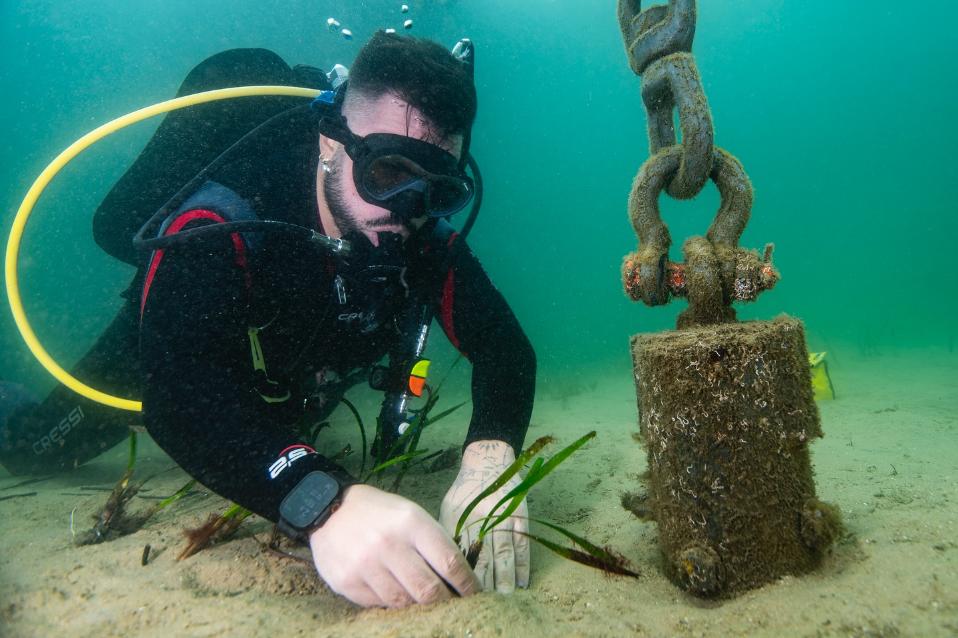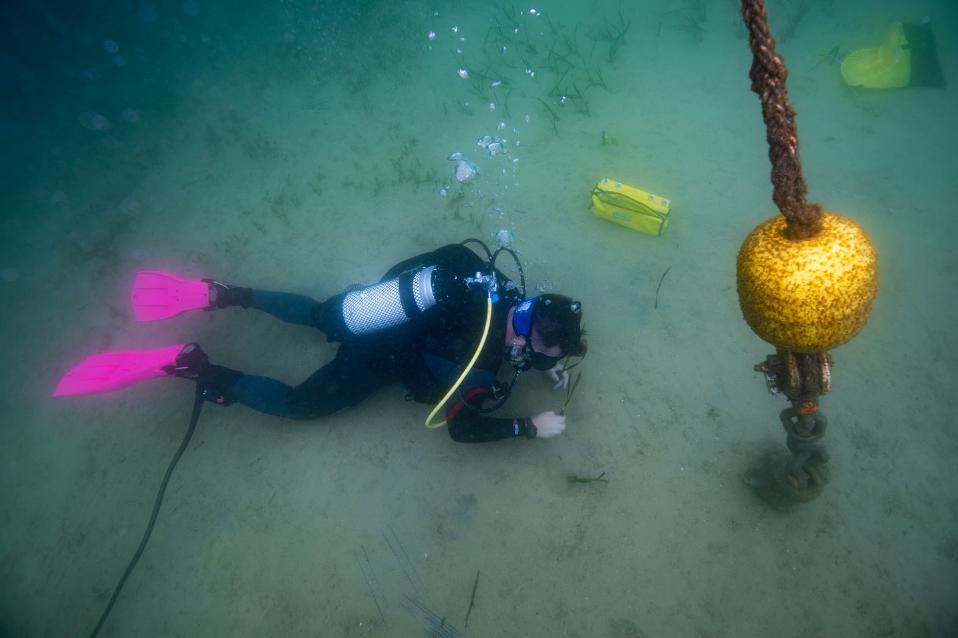
This past week Project Restore reached a huge milestone when they planted 800 endangered Posidonia shoots beneath their recently installed Environmentally Friendly Moorings (EFMs) at Balmoral Beach.
Back in November 2025, they replaced 10 traditional moorings with Environmentally Friendly Moorings (EFMs), in collaboration with the Balmoral Boatshed.
''This milestone represents the culmination of three years of collaboration with the boating community, mooring contractors, public agencies and scientists.'' the Project Restore team said
As part of Project Restore locals have been joining in on the Citizen Science project, The Storm Squad. This group is integral to helping us collect Posidonia australis fragments. They were asking the community to collect naturally washed up Posidonia fragments from their local beach and leave them at our collection points.
Station Beach, on the Pittwater estuary side of Barrenjoey Headland, is one of these collection points.
This is the second Palm Beach sea plant collected to help restore other areas. In 2014 UNSW and SIMS began collecting Crayweed from Palm Beach to help return other places to how they once were.
See February 2025 report: Project Restore: seagrass from Palm Beach Going to Sydney Harbour - Join the Storm Squad + Environmentally Friendly Moorings – Free Trial Available
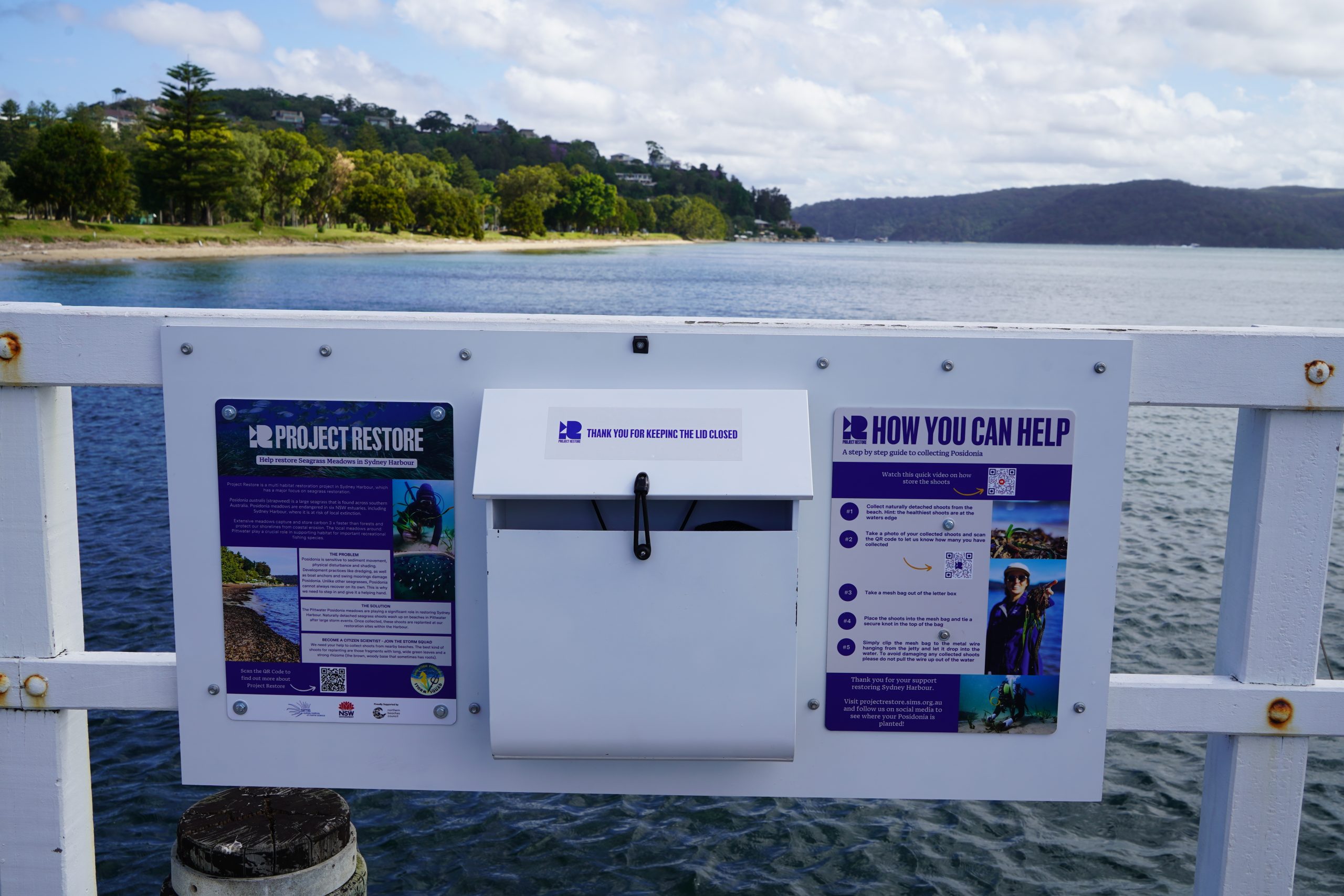
Station Beach collection point. Photo: Project Restore/Sydney Institute of Marine Science
Sydney Harbour hosts more than 5,000 boat moorings located in shallow bays around the estuary. Traditionally, these moorings consist of a heavy chain and concrete block that allow safe anchorage for vessels. However, with the movement of tides and winds, the heavy chains swing and scour the seafloor—causing long-term damage to seagrass meadows and the important ecosystems they support.
Pittwater has a capped capacity of 3,641 total moorings, covering private, commercial, and public authority, according to local planning documents. Various marinas and clubs in the area also manage, lease, and provide access to hundreds of additional private and member-only swing moorings.
Sydney Harbour is also home to Posidonia australis, an endangered population of seagrass. This slow-growing plant is the largest seagrass in Australia, where it forms highly productive meadows that provide critical habitat and refuge for many juvenile fish, improve water quality, stabilise sediments, and act as a significant carbon sink by capturing and storing carbon dioxide, helping to mitigate climate change.
“Posidonia meadows are extraordinary ecosystems; they are highly productive and remarkably resilient, yet also incredibly slow-growing,” says Professor Adriana Vergés from UNSW and the Sydney Institute of Marine Science.
“Unfortunately, decades of coastal development, pollution and boating have taken a heavy toll. That’s why restoration is so vital, especially in places like Sydney Harbour, where Posidonia is now close to functional extinction. But for restoration to truly succeed, we must tackle the root causes of seagrass loss, and replacing traditional chain moorings with environmentally friendly alternatives is a crucial step in that process.”
To help the boating community and Posidonia australis thrive side by side, researchers from Project Restore at the Sydney Institute of Marine Science (SIMS) have installed modern Environmentally Friendly Moorings (EFMs). Unlike traditional moorings that use heavy chains, EFMs are neutrally buoyant and secured with a low-impact screw piling system, leaving a much smaller footprint on the seafloor. This design prevents chain scouring and protects vital seagrass habitat without compromising reliability.
With many manufacturers now offering these systems, EFM technologies have been successfully trialled and implemented both locally and internationally in extreme weather and tidal conditions. They are used around the world for individual swing moorings, as well as large-scale infrastructure such as marinas and offshore solar farms. For this Project Restore installation, Seaflex systems were installed based on vessel size, environmental conditions, and technical recommendations from the supplier.
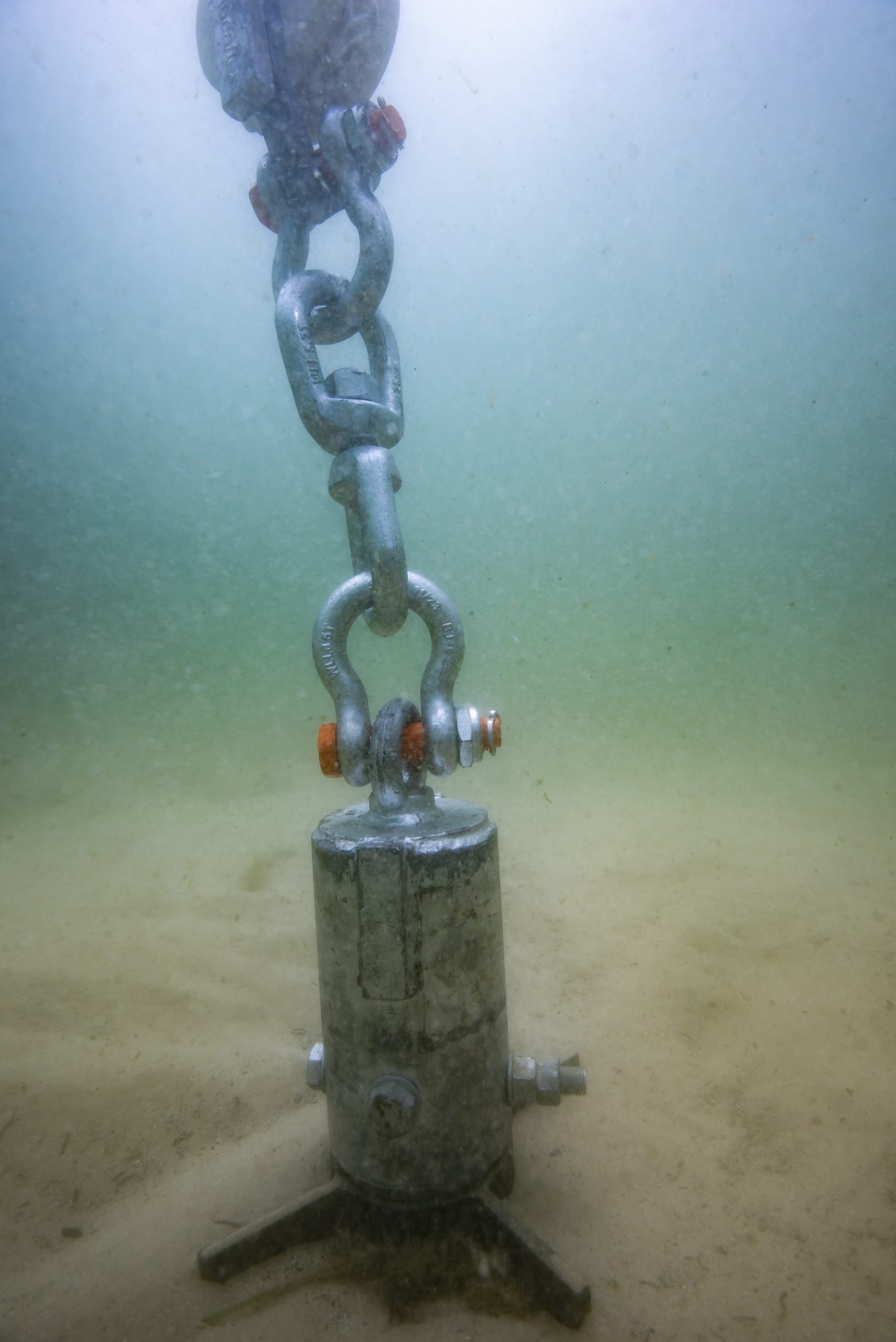
EFM installed at Balmoral. Photo: Project Restore/Sydney Institute of Marine Science
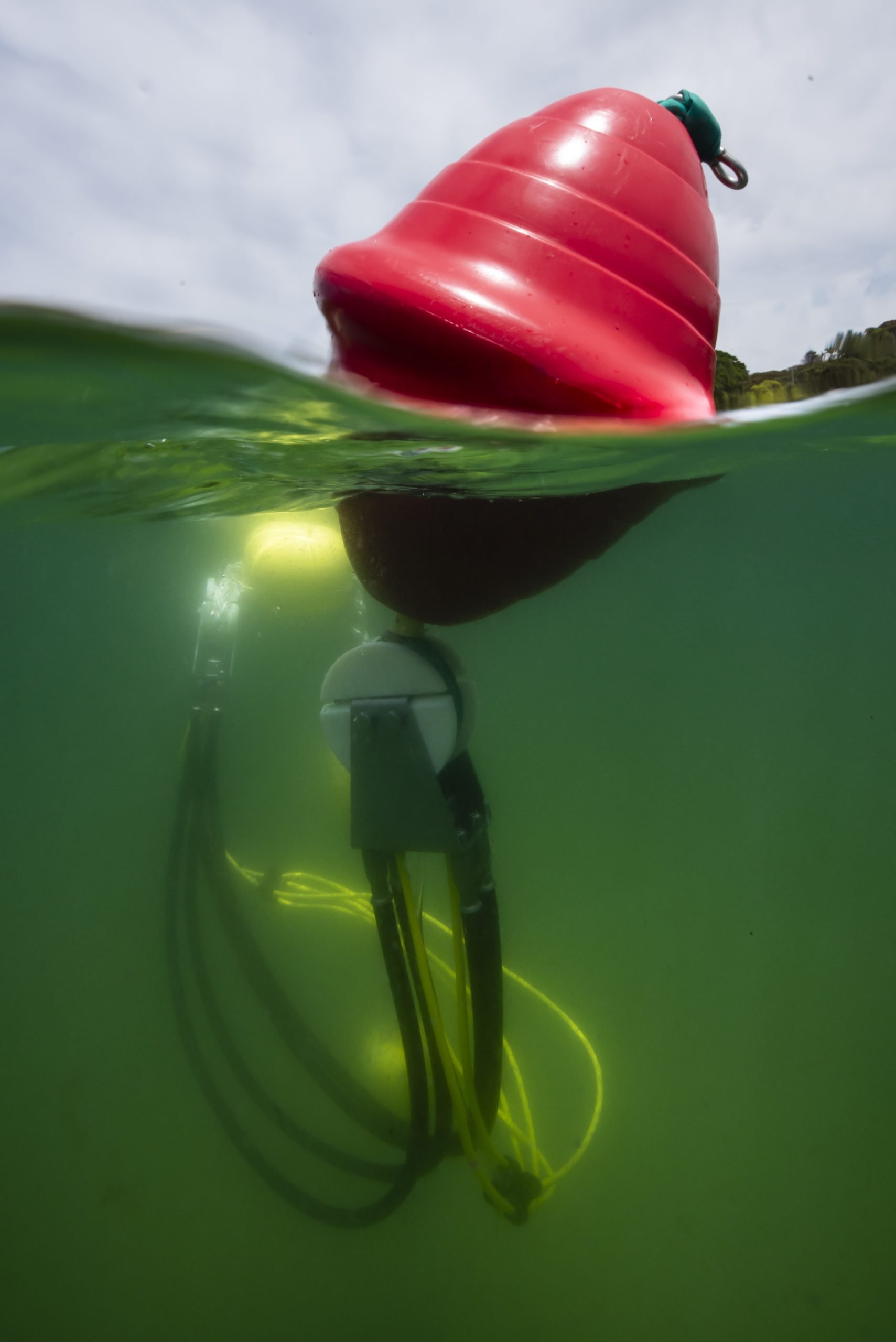
EFM installed at Balmoral. Photo: Project Restore/Sydney Institute of Marine Science
Tom Burd, Operations Coordinator at Project Restore, said:
“Coming from a background in marine science, but having worked across multiple facets of the boating and diving industry, I’m really excited to be part of a restoration project that brings both elements together.
Project Restore recognises the importance of maintaining access to Sydney Harbour for activities such as sailing, fishing, and diving—things that are integral to local life. This initiative brings together the best of both worlds, employing local knowledge and industry expertise to create mooring solutions that work for both boaters and the environment.”
Project Restore is generously funded by the NSW Environmental Trust, in partnership with the NSW Department of Climate Change, Energy, the Environment and Water, as part of the Seabirds to Seascapes Program. This support enabled the replacement of 10 traditional block-and-chain moorings with environmentally friendly moorings. The replacement work, undertaken in partnership with the Balmoral Boatshed, focuses on 10 moorings located adjacent to a remnant Posidonia meadow. The project’s final goal is to restore endangered Posidonia australis beneath these new moorings, creating a safe haven for the seagrass to recover.
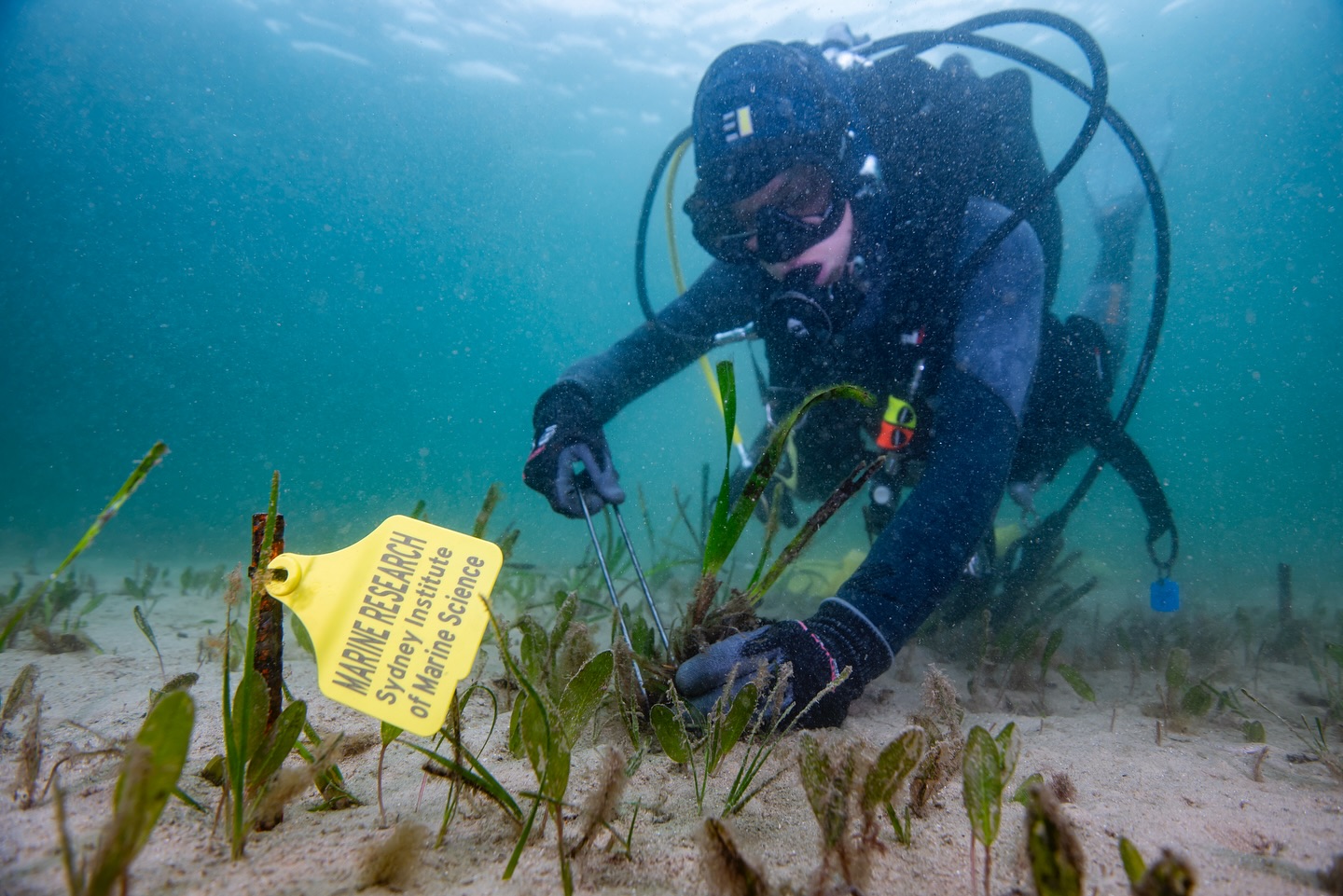
Measuring Posidonia shoots. Photo: Project Restore/Sydney Institute of Marine Science
Steven Hedge, Owner of Balmoral Boatshed, said:
“When we were approached by the scientists at SIMS we were sceptical about what role we could play in Posidonia protection and re-growth, yet excited about the idea of being able to make a significant contribution to improving the ecology of our seabed and the harbour in general.
This project enables meaningful collaboration between the boating public, scientists and commercial interests on our precious waterways. We look forward to playing an important role in the success of this project.”
The Project Restore team stated it is proud to be part of this collaborative effort involving Sydney-based mooring contractors Treharne Moorings and SMADS, Steven Hedge from the Balmoral Boatshed, and technology importers Marine Structures and Seaflex.
''Together, these partners are developing innovative solutions that allow marine life and the boating community to coexist in one of the world’s most urbanised and iconic waterways.''
A special thank you to the Balmoral Boatshed and Treharne Moorings for your expertise and ongoing support in helping us reach this point. Also to our Storm Squad citizen scientists who have been assisting to collect beach cast seagrass fragments and make this work possible.
We look forward to continuing to expand our restoration efforts in Balmoral and monitoring the recovery of Posidonia.''