Environment News: December 2025 -Issue 649

Week Two December 2025: Issue 649 (December 8 - 31, 2025)

The Good, Bad and Ugly: 2025

In Pittwater the Good in our Environment this year has been those bushcare volunteers who have persisted in restoring bush reserves and ridding them of introduced weeds.

The Bad has been the destruction of trees, including one the community had an independent report prepared for in Ruskin Rowe, along with the many Pittwater street trees that provided food, habitat and homes for Pittwater wildlife that have not been replaced - even some that were killed, deliberately, over a year or so ago. 

screenshot from CK video of the Ruskin Rowe gum tree trunk after it has been removed from its home

The Ugly has been the installation of plastic grass and plastic walkways in the community, without consultation, and the use of which, residents and one 2025 study has pointed, commences polluting the creek and floodplain areas these have been installed in, as they are being put in.

Plastic grass announced For Kamilaroi Park Bayview + Lakeside Park, Narrabeen

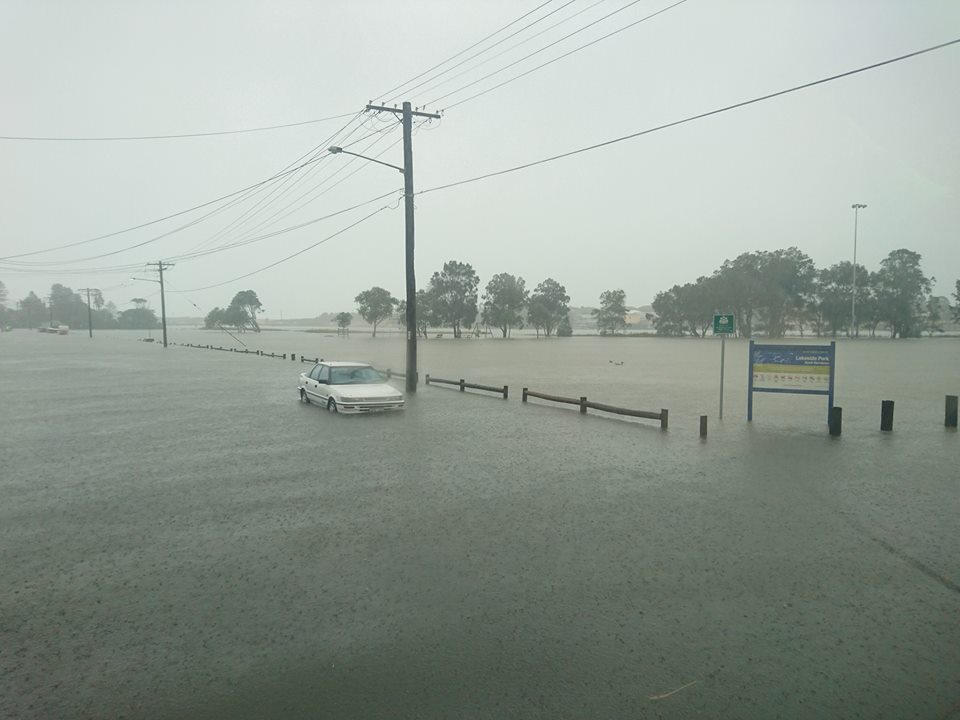
Lakeside park; the catchment claiming landfill areas back. MORE HERE

Plastic grass installed in Avalon's Dunbar park where the creek floods - this wasn't listed as a product to be used in the Avalon Place Plan - this area, where the Avalon Guide Hall once was, had been slated as a picnic table area under Pittwater Council

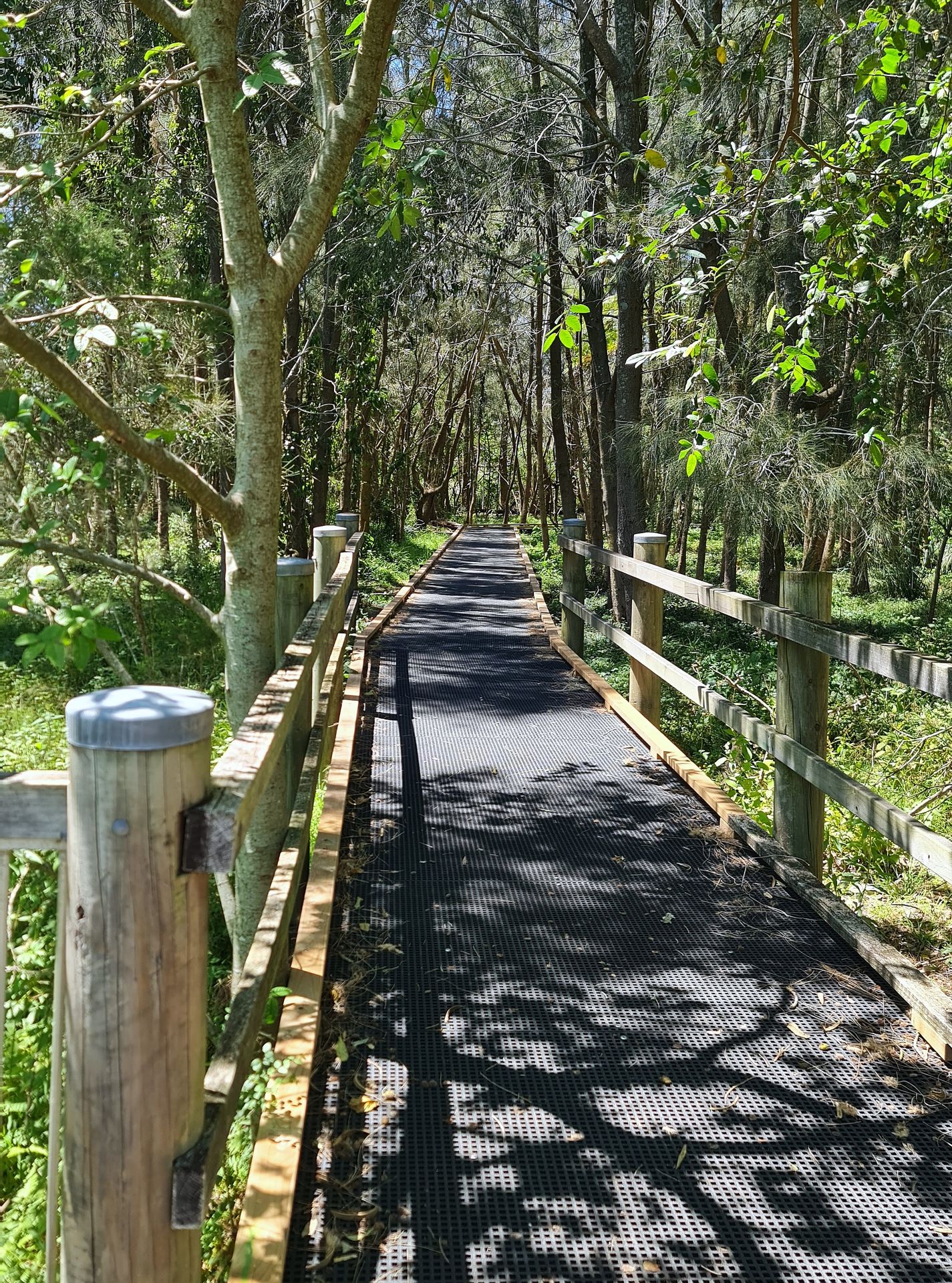
A plastic walkway has been installed in Warriewood Wetlands, again without consultation - once put into a marine/flood environment it becomes a pollutant, poisoning everything with microplastics - this product begins shedding pollutants as it is being installed.

The state and federal good (NSW Koala Park), bad and ugly (such as killing trees during nesting season, and baby birds as a result), see: Destruction of 670 trees and baby birds during nesting season for transmission infrastructure proves biodiversity offsets are nature negative - you cannot 'offset' a tree that's 200+ years old - Merotherie Road 'SODA' (Strategic Offset Delivery Agreement), State Significant Development pathway for Central Orana REZ  - can be read in this year's Environment pages reports. 

These week by week reports are available by clicking on the Environment page link in each week of each month (where each report is also listed), along with the stand alone page reports, also listed in each month. 

All available in:

January 2025  February 2025  March 2025  April 2025  May 2025  June 2025  July 2025  August 2025  September 2025  October 2025  November 2025  December 2025


Fledging - Baby Birds coming to ground: Please try and Keep them close to Parent Birds - Please Put out shallow dishes of water in hot weather

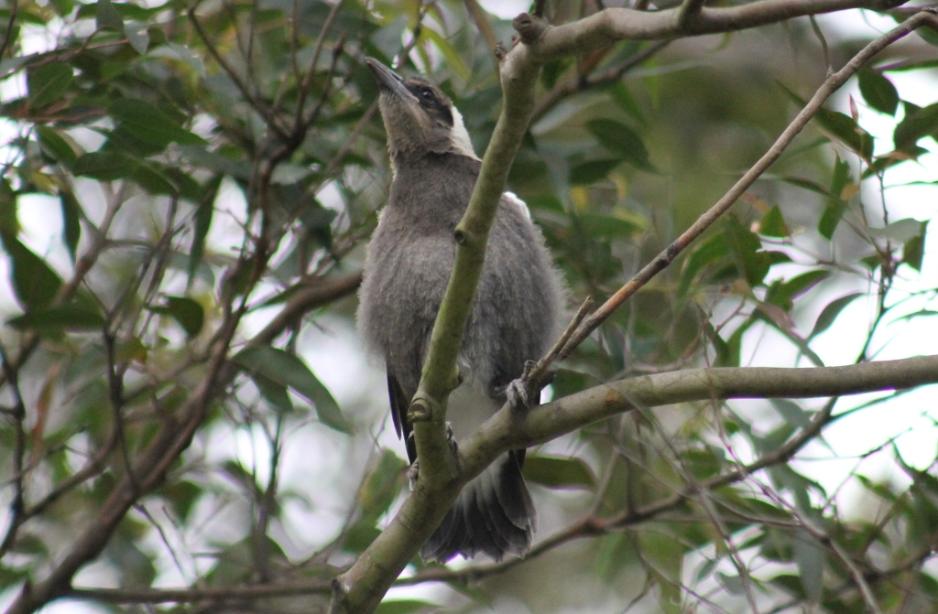
Fledgling magpie in the backyard this week in 2014 - eleven years on.... - picture by A J Guesdon, 2014. 

Recent hot weather has seen a number of almost fledged birds and babies leave the nest seeking a drink or a cooler spot. Sydney Wildlife volunteers state they have been recording a lot of calls for birds found on the ground, still unable to fly out of harm's reach.

An almost fledged Magpie was found adjacent to the PON yard this week, just about to be bitten by two dogs in the yard it had landed in. Rescued, advice was sought on what to do, with Sydney Wildlife instantly helping out.

As the magpie was saved before it was bitten and uninjured the priority becomes keeping it calm and cool and hydrated and near the parents, so it is not stressed and they know where it is and can feed it.

Put it in a cardboard box (they can hurt themselves in receptacles like cat cages) and up off the ground in either a tree o atop your garden shed where no cats or dogs can get at it and it's safe - make sure you choose a shady spot. If there's a tree above this that is ideal as the parents can perch there and keep on eye on it, carolling to it.

Put a shallow small dish of water, say a bottle top, in the cardboard box.

DO NOT put water down the birds throat with a dropper or by any other means - you can cause it to asphyxiate and drown. 

To help the parents, put water out for them nearby, so they can feed that to the bub and also soak some dog or cat kibble in water until it's mushy and put that where the parent birds can get it and feed it the junior escapee. 

Wildlife volunteer carers state at kibble with no fish in it is slightly better as there is more protein in it.

At night you will need to close the box up so the bird is kept safe, but they go to sleep at dusk and will not wake up until it's beginning to get light. We saw the parent birds staying near the box 'nest' until dark and then they were back up, like us, as it became light again.

Birds that are almost fledged will only need to be kept safe for 2-3 days as they will soon be able to fly enough to keep themselves off the ground and following mum and dad around, calling for more food. They will take off.

The next day, the magpie we rescued was soon sitting on the shed roof with a parent bird, and after a half hour of grooming it's still small but strong enough wings, the pair flew off, back to the nest and the trees surrounding this.

If you can keep the baby birds, and almost fledged birds, near the parents they will do much better and wildlife carers won't have to try and work out where the parent birds are when they're trying to reunite them.

If the parents birds aren't feeding the bub (they need to be fed every half an hour at that age) then a wildlife carer will need to collect the bird as it needs specialised food and care.

Our yard is home to fledging Butcher birds, lorikeets, the magpie family, a tawny frogmouth pair, galahs, corellas and sulphur crested cockatoos at present. The Australian figbird pair have returned again too this year. 

All of these have been living here for decades, generation after generation, and most produce 2 young each year. Their calls for food can be heard from before sunup until dusk.

a fledging Rainbow Lorikeet - one of two sets of birds that have had bubs this Spring-Summer - they too are learning to fly and although a little clumsy, can keep themselves off the ground

So, it's a busy time of year for all the permanent yardbirds that live here, and although the little bugger kept getting out of the box and back into danger, it's good to have one win until it was ready to fly up and out of where it may be attacked.

We'll still be keeping an eye on this bird to make sure it's ok, and stays safe.

If you can keep them safe and keep them near their parents until they can fly enough to keep themselves safe, the rest will come in time.

we initially put the cardboard box on the ground in the shade so the parents birds knew where it was - our dog is kept indoors on days like this where it's cooler -one of the parent birds can see their errant child in the box, the gap also allowed them to feed it that way:

We put out dog kibble, which we have here for our dog, into a bowl and covered it in water; this was soon oaked up making for a mushy mix the parents could get out and feed to their fledgings; the two parents both did this, along with feeding it small lizards and moths, as well as flying off to feed their second fledging with this - a cool shallow dish of water which was kept that way - clean and cool - is placed alongside this food dish - we repeated topping up the food first thing in the morning and later on, and had to move it to keep it out of the hot sun.

We also kept well back, so as not to stress the bub or it parents, while keeping an eye on it to make sure it was safe:

The little bugger kept getting out - after the third time, when it had got out of the box and had to be rescued from the dogs next door again, and as it was towards later afternoon, its 'nest box' was put back up on the garden shed roof and the flaps almost closed so mum and dad could still see and feed it, but it couldn't get out until the next morning.

back in the yard where it would have been killed - the parent birds were actually diving on the dogs on either ide of the rescuer, trying to keep them distracted while I got it back next door and into its box

We used hockey straps attached to each corner of the box and the nearby trees and shed roof to secure it, just in case the wind came up at night.

The parent birds had trees directly above the nest box they could sing to the fledging from, as well as others higher up to watch their other bub. They were quite relaxed about taking over the shed roof:

Time to fly: as JM from Sydney Wildlife explained, birds coming down are only 2-3 days away from being able to flap enough to get themselves off the ground and into lower branches of trees, where they will walk upwards and even move themselves, small flap by small flap, back to the nesting tree and nest. 

A lot of them will come down out of the nests when they're too hot - seeking somewhere cooler and a drink - sometimes they may only need a good rest to regain strength enough to get back up where they are safe.

Before dawn one morning, soon after we rescued the magpie bub, a parent bird sat with it for around half an hour while it was grooming itself, mostly its not fully developed wings, and then they both took off together.

Although we'll still be worried about this fledging magpie in the meantime, and keeping an eye and ear out for it, it's best to let bird parents look after bird bubs.

testing out those little wings, getting ready to fly off the shed roof

No to Mince

Please DO NOT FEED MINCE to birds. At this time of year people may feel tempted to help the local birds out by giving mince to the parents and bubs. Kookaburras, magpies and butcher birds are often who mince is put out for.

Mince lacks calcium and other important nutrients that carnivorous and omnivorous birds would usually get from their natural diet. Raw meat and mince can lead to calcium deficiencies in young birds – which in turn can cause brittle bones and beaks and even long-term metabolic bone disease. Mince can also stick to their beaks, causing bacterial infection and beak rotor a beak that is brittle. By feeding birds mince, you could be killing them with your kindness. Raw meat is also high in the wrong kinds of nutrients and minerals (like fat and phosphorous), so if you feed other meat to birds, make sure to add an insectivore supplement to it.

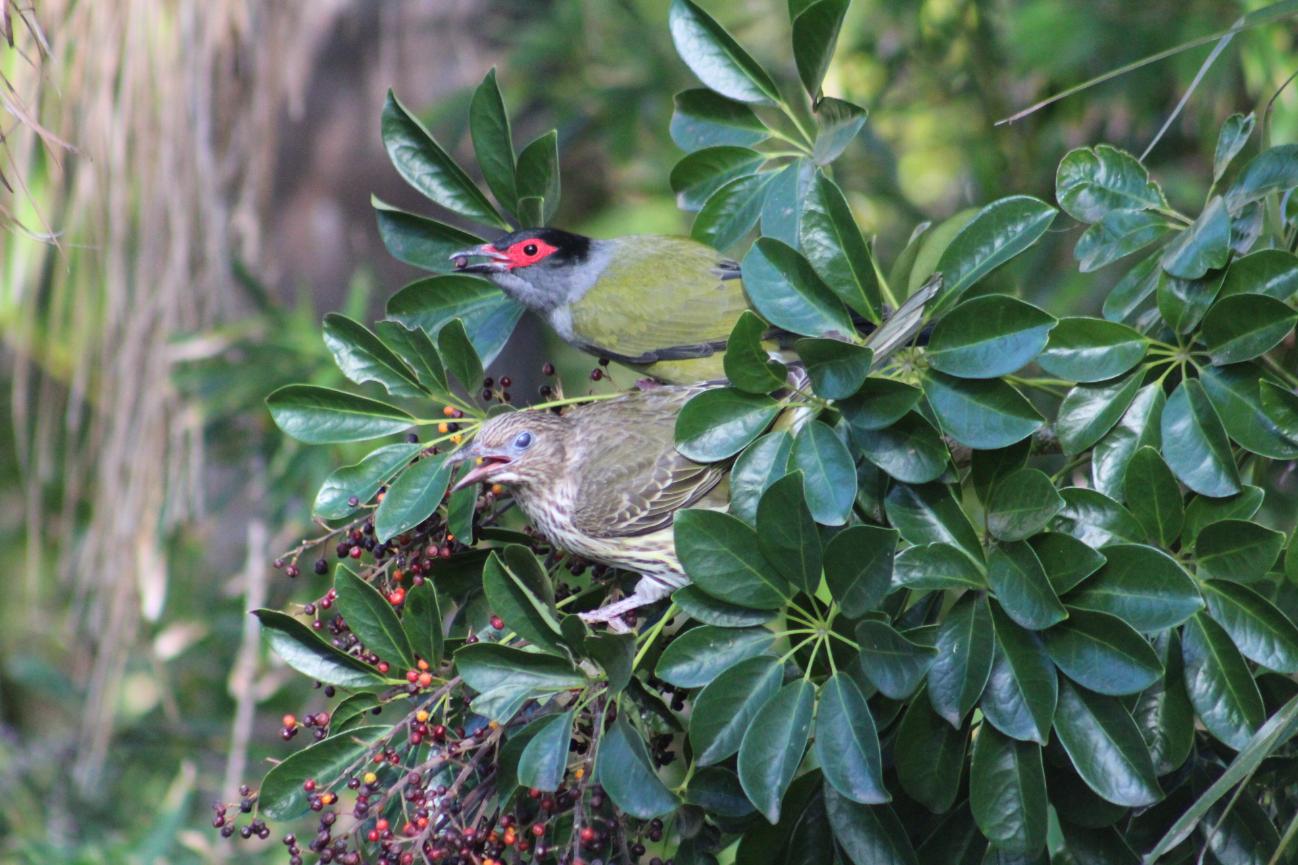
Each Spring this pair of Australasian Figbirds(Sphecotheres vieilloti) returns to build a nest and make babies in the Norfolk pine alongside us. There is food in our garden for them and no cats, at least none that can get that high up.

Refresh - Before rescuing a fledgling, ask yourself:

  1. Is the bird calling or making a noise?
  2. Is the bird bright and responsive?
  3. Can the bird perch on your finger?
  4. Can the bird spread its wings evenly and flutter to the ground when encouraged to fly?

If the answer to all of these questions is a definite “yes” then the baby bird should be able to be reunited with its parents. It is best for a baby bird to be reunited with its parents, as they’re the best teachers for their young.

To try to reunite the baby bird with its parents, place the bird on a low branch in a bush and watch to see if the parents come to feed it.

How to help baby birds this season

  1. Keep your cats and dogs secure on your property. Cats are safest indoors or in secure outdoor enclosures so they can’t stumble across baby birds.
  2. Plant Australian native trees in your yard. Bushy indigenous shrubs and ground cover provide protection and camouflage for birds. This will help increase the survival rate of young birds and will significantly reduce the injury and mortality rates of all wildlife species. 
  3. Call Sydney Wildlife on 9413 4300 if you find any sick or injured wildlife or baby birds without any parents that are too young to survive on their own. The rescue line operates 24 hours a day, every day. 

BirdLife Australia provides the following

Look for signs a bird needs help

A bird that is sick or injured will look or behave differently. It may be:

  • dirty, matted or missing feathers
  • unable or reluctant to fly
  • limping, head titling or breathing rapidly
  • fluffy and hunched when it isn’t cold
  • sitting in an unusual, open place and not moving when approached.

Most baby birds don’t need to be rescued. Some species leave the nest before they’re able to fly and spend time on the ground with their parents close by.

If attacked by a cat or dog, take the bird to a vet even if there’s no visible injury. Cat and dog saliva is toxic to birds and scratches can lead to infection.

Place the bird in a box quickly and carefully to minimise unnecessary stress

Birds are often killed by shock rather than their injuries. Swift but careful action is a necessity as any delay can increase stress.

  1. Cover the bird with a towel or blanket and pick it up gently but firmly. For medium sized birds you will need two hands – one over each wing.
  2. Place the bird into a secure and well-ventilated cardboard box. Keep the box in a warm, dark room and try not to disturb it. This reduces stress and shock for the bird and is the best treatment you can give it.
  3. Do not give the bird food or water as this could cause the bird to aspirate or delay any treatment it might need.
  4. Take the bird to a vet or contact wildlife rescue if the parents are not feeding it.
  5. If possible, take the bird to a vet straight away. A vet shouldn’t charge you for bringing in wildlife.
  6. If you can’t get to a vet or contain the bird yourself, contact wildlife rescue. They will give you advice and, depending on resources, may be able to rescue the bird.
  7. Take note of where the bird was found so it can be released in the same location.

In Australia, you must be a licensed wildlife carer to rehabilitate wildlife. Birds often need specialist care and treatment. To give them the best chance of survival, get them to licenced carers as quickly as possible.

Sydney Wildlife 24/7: 9413 4300. 

Make it safe for you and the bird

Injured wildlife can be dangerous, especially when scared or stressed. Birds can also carry diseases.

Protect yourself and the bird by:

  • removing any threats, such as cats and dogs
  • using gloves or a towel to handle the bird
  • washing your hands after handling the bird.

Do not handle large birds, such as owls and birds of prey – these birds have very sharp talons and can use them if they are scared or threatened. They must only be handled by trained wildlife rescuers..

Wildlife needs Water

During this Season, and even when it's not hot, please put some shallow dishes with water at ground level so everything else may get a drink. Putting a few twigs or sticks into  the receptacle that extend to the ground allows lizards to get a drink too.

It is best to put these in shady spots as the sun will heat the water up. 

A simple top up when you're watering the garden, or an hour or so before dusk when the strongest of the sun is off your yard, will keep them cool and the water fresh.

This will allow nocturnal wildlife, bandicoots, wallabies, nightjars, flying foxes, lizards and frogs to get a drink.

We also have two deeper oblong dishes on the front verandah, in the hade - these are frequented by the cockatoos, galahs and corellas. They can perch on the rim of the dish and dip down to extract a long drink, as is their preference.

one of the Tawny frogmouths that lives here

If you have bird baths, these will stay cooler if placed in shady positions under trees. We have one in each compass point, and two of these are under the trees so the birds feel safe flapping down for a drink or a bath and back up into the trees.

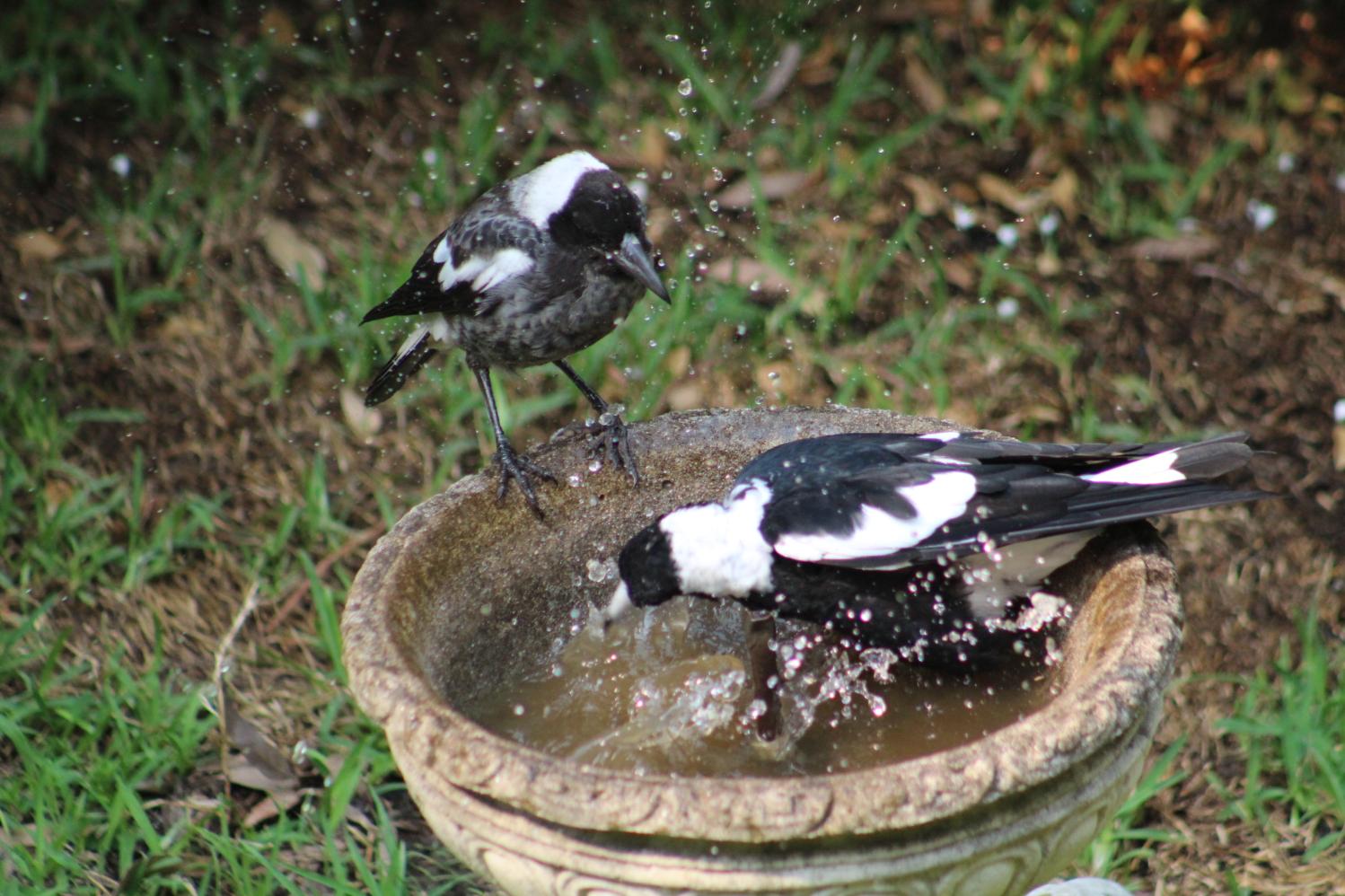
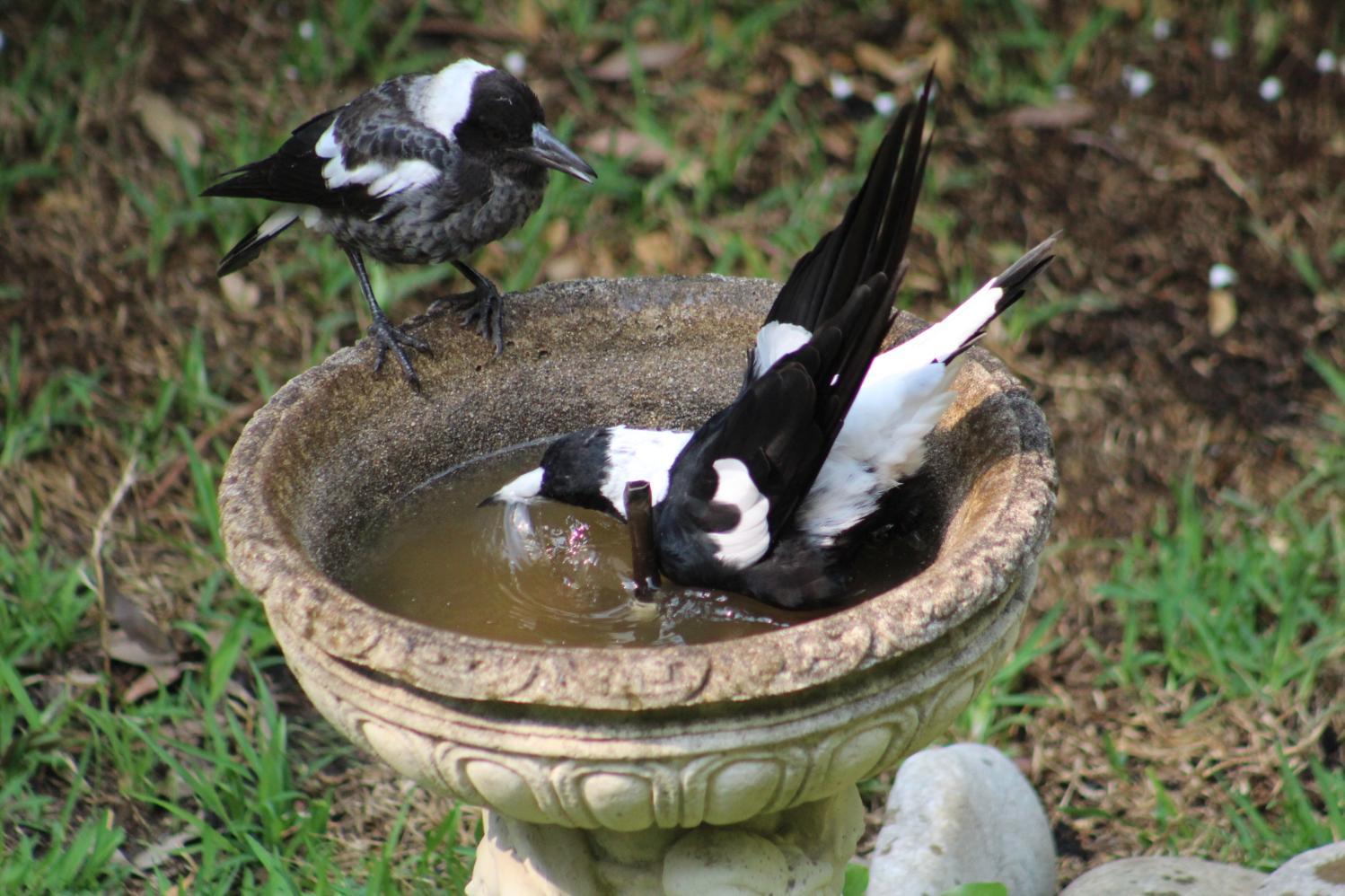
Summer in Pittwater: a Time of Fledgling Birds learning about Bird Baths - obviously this birdbath now needs a top up.
Photos; A J Guesdon.

Mona Vale Dunes bushcare group: 2026 Dates

What’s Happening? Mona Vale Dunes Bushcare group catch-up. 

In 2026 our usual work mornings will be the second Saturday and third Thursday of each month. You can come to either or both. 

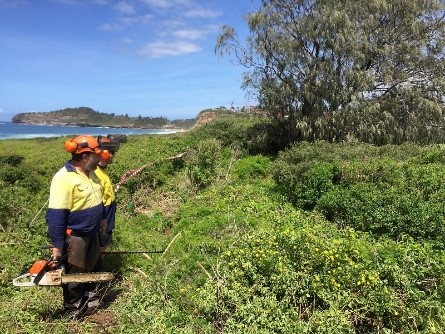
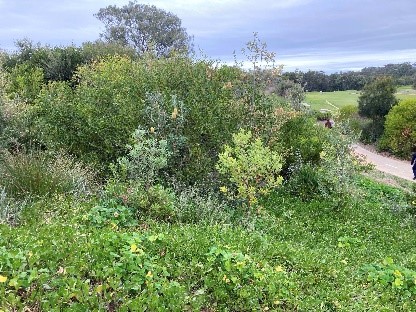
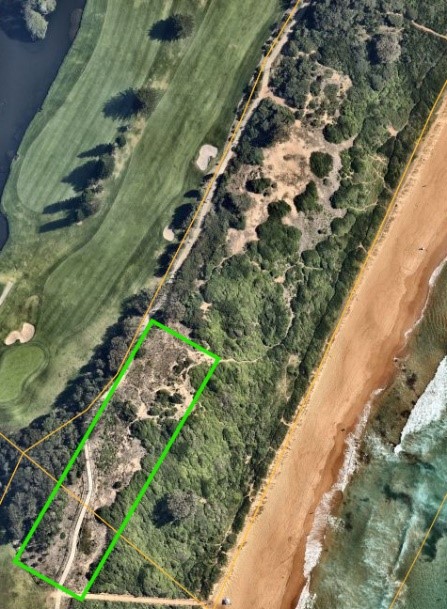
We are maintaining an area south of Golf Avenue. This was cleared of dense lantana, green cestrum and ground Asparagus in 2019-2020. 600 tubestock were planted in June 2021, and natural regeneration is ongoing. 

Photos: The site In November 2019, chainsaws at the ready. In July 2025, look at the difference - coastal dune vegetation instead of dense weeds. But maintenance continues and bushcarers are on the job. Can you join us?

(access to this southern of MV Dunes  - parking near Mona Vale Headland reserve, or walk from Golf Ave.) 

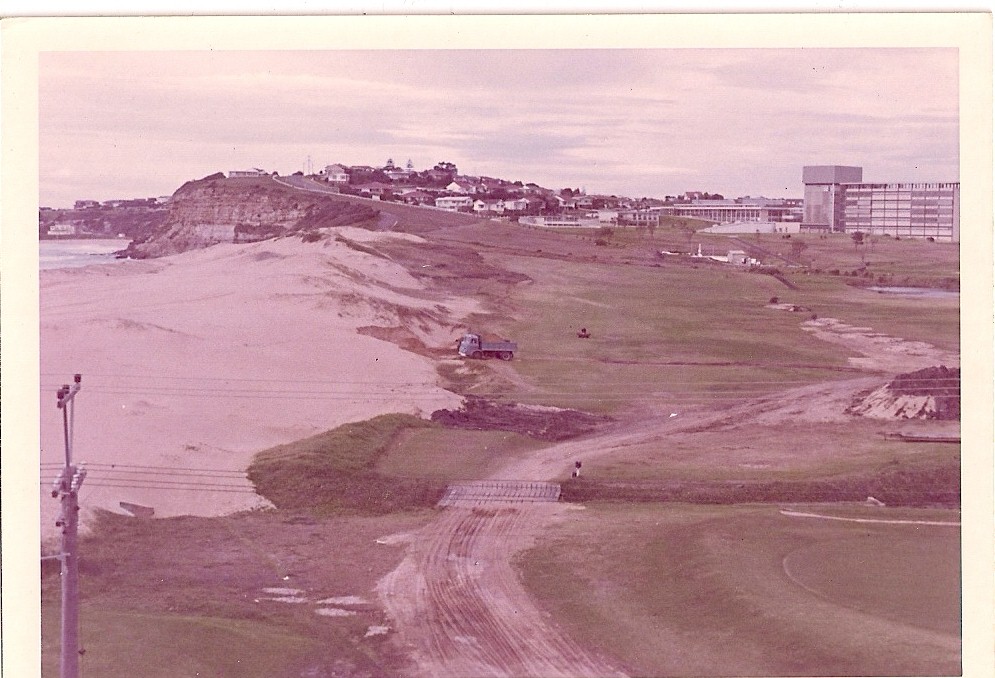
For comparison, see this image of MV dunes in 1969!, taken from atop the home units at the end of Golf Avenue. 

2026 Dates

Albanese Government Opening new areas for offshore gas exploration

On Thursday December 11 the Albanese Government announced it has opened new areas for offshore gas exploration as it ''works to put downward pressure on power prices and ensure Australian industry has access to gas at affordable prices''.

Minister for Resources and Northern Australia Madeleine King said five new areas would be opened up for bidding in the Otway Basin.

The Otway Basin is a northwest trending sedimentary basin located along the southern coast of Australia. The basin covers an area of 150,000 square kilometres.

The government stated the release follows ''a review of the way new offshore acreage is made available for exploration, and extensive consultation with industry and stakeholders''.

“Exploration and new discoveries will play an important role in underpinning our energy needs and support Australian industry and households as we meet our net zero commitments,” Minister King said.

“The release of new acreage supports our Future Gas Strategy and will help ensure Australians continue to have access to gas at affordable prices.”

''Releasing new acreage helps address the structural gas shortfalls forecast from 2029 by the Australian Energy Market Operator (AEMO) and the Australian Competition and Consumer Commission (ACCC).'' the release stated

''Addressing shortfalls is important to support our manufacturers who require gas as a feedstock or as a heat source and cannot transition to alternatives in the short to medium term.''

Minister King said the new release areas, which are in Commonwealth waters, have been shaped to protect neighbouring marine parks, with buffer zones to protect marine park boundaries. All projects will be required to meet strict environmental and emissions standards per usual processes.

Public consultation on the nominated new areas will be open for 8 weeks until February 6th 2026, with further information available here.

Applications for exploration permits will close on 30 June, 2026.

These new release areas have been agreed under the joint authority regime with the Victorian State Government.

''This offshore acreage complements the South Australian and Victorian State Government’s exploration programs''. the release states

The Government has also published revised offshore guidelines for retention leases and work-bid programs, following an open consultation process. The guidelines are available on NOPTA’s website at www.nopta.gov.au.

On Friday, December 12 the Greens slammed the Albanese government, stating intheir own release the government was ' handing out new ocean acreage to their donor mates in the fossil fuel industry to exploit in a time of climate emergency'. 

''Labor’s disgraceful decision has nothing to do with everyday Australians and everything to do with the state capture of our government by fossil fuel corporations'' the release states.

''Australia is the second biggest exporter of fossil fuels in the world, after Russia. Yet Labor has no plan to deal with our exports, and is content with 56% of all Australia’s gas being exported without paying any royalties or resource rent tax. That’s $170 billion dollars worth of free gas over the next five years for big gas companies. 

There’s no plausible excuse for Labor to risk destroying marine ecosystems with seismic blasting only to lock Australia into more fossil fuel pollution and accelerate climate-driven disasters for the sake of a few profit-driven interests – but that’s exactly what this shameful government continues to do, over and over again. ''

Greens spokesperson for healthy oceans, Senator Peter Whish-Wilson said: 

“Labor’s two-faced climate act is wearing thin. How on earth is ripping open new gas fields for fossil fuel companies to plunder, pollute and profit from in a time of climate emergency consistent with transitioning to a clean energy future?

“Australia has decades of gas left in our proven reserves system. There is no need to put marine wildlife and livelihoods that depend on healthy oceans at risk by using destructive methods to search for new gas fields. 

“Australia is the second biggest exporter of fossil fuels in the world. Clearly, we don’t have a gas supply problem, we have a political problem. 

“Oil and gas corporations come to our shores and take billions in government handouts, pay less tax than a nurse or a teacher, and then leave us to foot the bill of cleaning up their polluting rigs when they’re done. It’s a complete rort. 

“Labor is taking Australians for fools, but coastal communities aren't so easily conned. Last year one of the largest seismic blasting proposals in Australian history was withdrawn by its proponent following immense community pressure. It was a siren call to all the fossil fuel companies eyeing off our oceans that their time is up. But clearly Labor is either too arrogant or too greedy to care.”

Greens Resources Spokesperson, Senator Steph Hodgins-May stated:

“Labor’s new ocean acreage handout is an environmental betrayal and an early Christmas gift to the fossil fuel companies driving the climate crisis.

“We have an export crisis, not a supply crisis. Labor is pre-empting the Gas Market Review by opening up new supply instead of fixing the existing broken system that allows big gas companies to export $170 billion dollars of free gas over the next five years.

“By incentivising decades worth of new gas, this government is ignoring science, setting us up to miss critical climate targets, and accelerating environmental disasters here and across the globe.

“The way to fix this crisis is to implement a 25% Gas Export Tax, which will deliver real cost-of-living relief instead of more of the same climate-wrecking gas projects.”

Toxic pollution in Sydney’s drinking water catchment surges far beyond approved limits 

Thursday 11th December 2025 

The Gardens of Stone Alliance is raising the alarm after extreme pollution levels were recorded yesterday morning in waterways feeding Sydney’s drinking water supply. 

WaterNSW real-time monitoring shows that salinity levels in Wangcol Creek and the Coxs River are now up to ten times higher than the maximum levels set for treated mine water and far exceed national water quality guidelines. 

Just a month after warnings about dangerous salinity spikes in the Coxs River, new data shows pollution levels have more than doubled, with no meaningful action taken. 

Such readings indicate the presence of dissolved toxicants – including heavy metals – at concentrations that are acutely dangerous to aquatic life and pose a growing risk to downstream drinking water supplies. 

These spikes follow years of community complaints and formal reports about illegal, unlicensed and excessive discharges from EnergyAustralia’s Mount Piper Power Station and Centennial Coal’s mines near Lithgow – yet the NSW Government has failed to halt the deterioration.  

Jacqui Mills from the Nature Conservation Council of NSW, on behalf of the Gardens of Stone Alliance, said:  

“This is the latest in a long line of warnings. The system is failing to protect Sydney’s drinking water catchment, and the government cannot keep looking the other way.” 

“Every complaint, every dataset, every spike tells the same story: coal operations in Lithgow are polluting Sydney’s drinking water catchment, and government agencies are failing to stop it.” 

Background 

How the December 10 salinity readings compare to Australian and New Zealand Environment and Conservation Council (ANZECC) guidelines: 

Both readings exceed the ANZECC guideline of 350 μS/cm for slightly disturbed ecosystems: 

  • Wangcol Creek recorded 3,298 μS/cm, over nine times higher  
  • On 10 November Wangcol Creek recorded 1,378 µS/cm (as noted in the 17 November NCC media release) 
  • Coxs River recorded 1,389 μS/cm, nearly four times higher  
  • On 10 November Coxs River recorded 963 uS/cm (as noted in the 17 November NCC media release run in PON) 

What high salinity means 

Salinity is not ‘just salt’ but reflects the total dissolved load of ions and contaminants, which could include: 

  • Sulphates and chlorides 
  • Heavy metals  
  • Other mine-derived toxins harmful to wildlife and water infrastructure 

Extreme salinity causes 

  • Osmotic shock in fish and aquatic invertebrates 
  • Immediate toxicity at higher levels 
  • Long-term ecosystem collapse due to the elimination of sensitive species 

History of community concerns and complaints 

  • Local volunteers have monitored creeks for 20 years, documenting repeated extreme pollution events. 
  • Multiple complaints have been submitted to the EPA and concerns raised with WaterNSW and the Department of Planning regarding unlicensed and non-compliant discharges.  
  • Today’s high salinity levels were confirmed by readings taken by Lithgow Environment Group and reported to the EPA for action.  

Government agencies have repeatedly: 

  • Declined to impose salinity limits on key discharge points 
  • Allowed industry claims that contaminated releases count as acceptable ‘environmental flows’ 
  • Failed to act on long-known water quality exceedances 
  • Allowed strict water quality rules for Sydney’s drinking water to be sidestepped  

Image: Water from licensed discharge point LDP001, which flows into Wangcol Creek, photographed on 2 December 2025 when salinity measured 4,250 μS/cm. Photo supplied

Coal Mining Emissions Spotlight Report

Released: December 12, 2025

The Net Zero Commission’s first spotlight report delivers rigorous analysis into coal mining’s role in NSW’s economy and emissions profile. The report identifies opportunities to reduce emissions and the need to support affected regional communities as the global economy shifts away from coal.

Currently there are 37 coal mines operating in NSW. They generated export revenue of $33.1 billion and $3.1 billion in royalties in 2023–24. However, the process of coal mining generates significant greenhouse gas emissions. Coal mining was the source of 96% of the resources sector’s emissions in 2022–23. These contribute to a warming and more unstable climate.

This report examines how emissions from coal mining in NSW can be reduced, particularly fugitive emissions of methane. Much as the coal mining industry has innovated to make progress in safety, automation and efficiency, the industry can now play its part in contributing to the emissions reductions required to achieve the state’s 50% by 2030, and 70% by 2035 emissions reduction targets in the Climate Change (Net Zero Future) Act 2023 (NSW).

The NSW coal mining industry can also play a key role supporting Australia’s national commitment under the Global Methane Pledge to reduce methane emissions 30% below 2020 levels by 2030. 

Key findings:

  • In order for NSW emissions targets to remain achievable, on-site abatement at existing mines is essential, particularly to reduce fugitive emissions. Additional regulatory measures will be required to achieve measurable on-site abatement.
  • The Commonwealth and NSW Governments are working to improve the accuracy of fugitive emissions reporting at open cut coal mines. Collaboration across these efforts could accelerate and strengthen outcomes.
  • Consistent with the objectives of the Climate Change Act, NSW consent authorities need to meaningfully consider greenhouse gas emissions and their impacts in all planning decisions, including those for additional coal mining.
  • Continued extensions or expansions to coal mining in NSW are not consistent with the emissions reduction targets in the Climate Change Act or the Paris Agreement temperature goals it gives effect to.
  • NSW Government will need to prioritise its consideration of policies that systematically prepare for the decline of coal extraction and provide for a just and orderly transition for coal-producing communities and impacted regional economies.

The Nature Conservation Council of NSW stated the Spotlight report from the Net Zero Commission is a line in the sand for new coal in NSW. 

“The Net Zero Commission’s audit of coal mining clarifies with scientific precision what should already be obvious: coal mining is incompatible with a safe climate future,” said Nature Conservation Council CEO Jacqui Mumford. 

“The commission was set up to monitor progress against our state’s climate goals, and it is now ringing the alarm bell that unless reined in, the coal mining sector’s reckless pollution will put those goals out of reach” 

NSW has legislated climate targets for good reason. We are living through worsening climate impacts that can and must be abated. That can’t happen while we approve new coal.  

“The Commission’s findings are incontrovertible. But they also reveal that coal mine regulation and approvals in NSW have been irresponsible and out of step with a safe climate future. 

“The report reveals that methane leaks in coal mines have been left unchecked, pouring pollution into the atmosphere and undermining the efforts in every other sector in NSW. 

“The Net Zero Bill obligates the Premier and the Minister to achieve the targets. The report shows that to do that it's time to stop approving new coal and to plan a transition to clean energy.  

“The Net Zero Commission has shone a spotlight. Now the free ride for coal mine pollution has to end,” 

The NZC Coal Spotlight Report 2025 (PDF 7.56 MB / Pages 83)

NSW koala baseline survey to drive conservation action

December 11, 2025

The NSW Government has completed its first comprehensive statewide koala survey, providing the most accurate picture to date of where koalas live and how populations are distributed across the state.

Using new tools such as heat-detecting drones and acoustic recorders, scientists surveyed more than 1,000 locations across national parks, state forests and private land.

The updated estimate of 274,000 koalas reflects improved technology and more extensive survey work.

Koalas in NSW remain endangered and there are many places in NSW where koalas no longer exist in the wild. Populations in NSW continue to face significant risks, including habitat loss and fragmentation, climate impacts, disease and vehicle strikes.

These threats are expected to intensify over coming decades, underscoring the importance of protecting key habitat and wildlife corridors.

This new baseline data comes as the Minns Government continues to prioritise koala conservation, including progressing the Great Koala National Park, which will protect habitat for more than 12,000 koalas, along with Greater Gliders and other threatened species.

Other koala conservation achievements include establishing the Warranmadhaa National Park along the Georges River in South-west Sydney. The NSW Government has also invested $8.5 million to support koala care and wildlife rehabilitators and establish a new koala care centre in the Macarthur region.

The NSW population estimate is in line with the recently released National Koala Monitoring Program, led by the Australian Government in partnership with the Commonwealth Scientific and Industrial Research Organisation (CSIRO). The results will contribute to the Australian Government’s National Koala Monitoring Program and help strengthen long-term monitoring across the country.

The monitoring of koalas in NSW and across Australia will continue to evolve as more comprehensive surveys and analyses are conducted by state and federal agencies.

Previous estimates of NSW’s koala populations were conducted through more traditional survey methods such as visual sightings and scat analysis.

The sheer scale of this survey and use of advanced techniques helped scientists detect more koalas, faster, and with greater accuracy than ever before.

Minister for Climate Change and the Environment, Penny Sharpe, said:

“This survey gives us a clearer understanding of where koalas remain in NSW. It is an important tool to guide conservation decisions.

“The Minns Labor Government has a strong record on koala conservation, and this survey shows we have been making the right decisions to ensure their survival.

“Koalas are still endangered, and the threats they face are real. This work helps ensure we are targeting the right areas so that future generations can continue to see koalas in the wild.”

The Nature Conservation Council of New South Wales (Nature NSW), the state’s leading environmental organisation, has welcomed the results of the new survey giving us a clearer picture of koala numbers in the wild in NSW.  

“The adoption of heat-detecting drones and acoustic recorders to monitor the range and abundance of species is a game changer for conservation,” said Jacqui Mumford, Chief Executive Officer of Nature Conservation Council NSW. 

“This gives us an accurate baseline to study decline or recovery alongside the implementation of the NSW koala strategy.” 

“We are pleased to see there are more koalas in the wild than previously thought. 

“These new technologies give us a clearer view on how species are faring, which will become increasingly important as we face ongoing impacts from climate change and loss of habitat. 

“This study is the first of its kind and we commend the government for the investment in more thorough assessment of wildlife populations. 

“Koala numbers are still well below the millions we know existed before they were hunted for pelts. Their habitat was destroyed on an industrial scale, and we lost huge numbers in the bushfires of 2019/2020. 

“Unfortunately, koalas are still endangered and under pressure on all fronts. Climate change, habitat destruction, disease, road strikes, and other threats, continue to push these populations to the brink. 

“If we want to maintain this population level and stop numbers going backwards, we must protect their habitat across the state. 

“As the government considers the upcoming budget, we hope the NSW Government continues to invest in the study and recovery of iconic species like the koala.” 


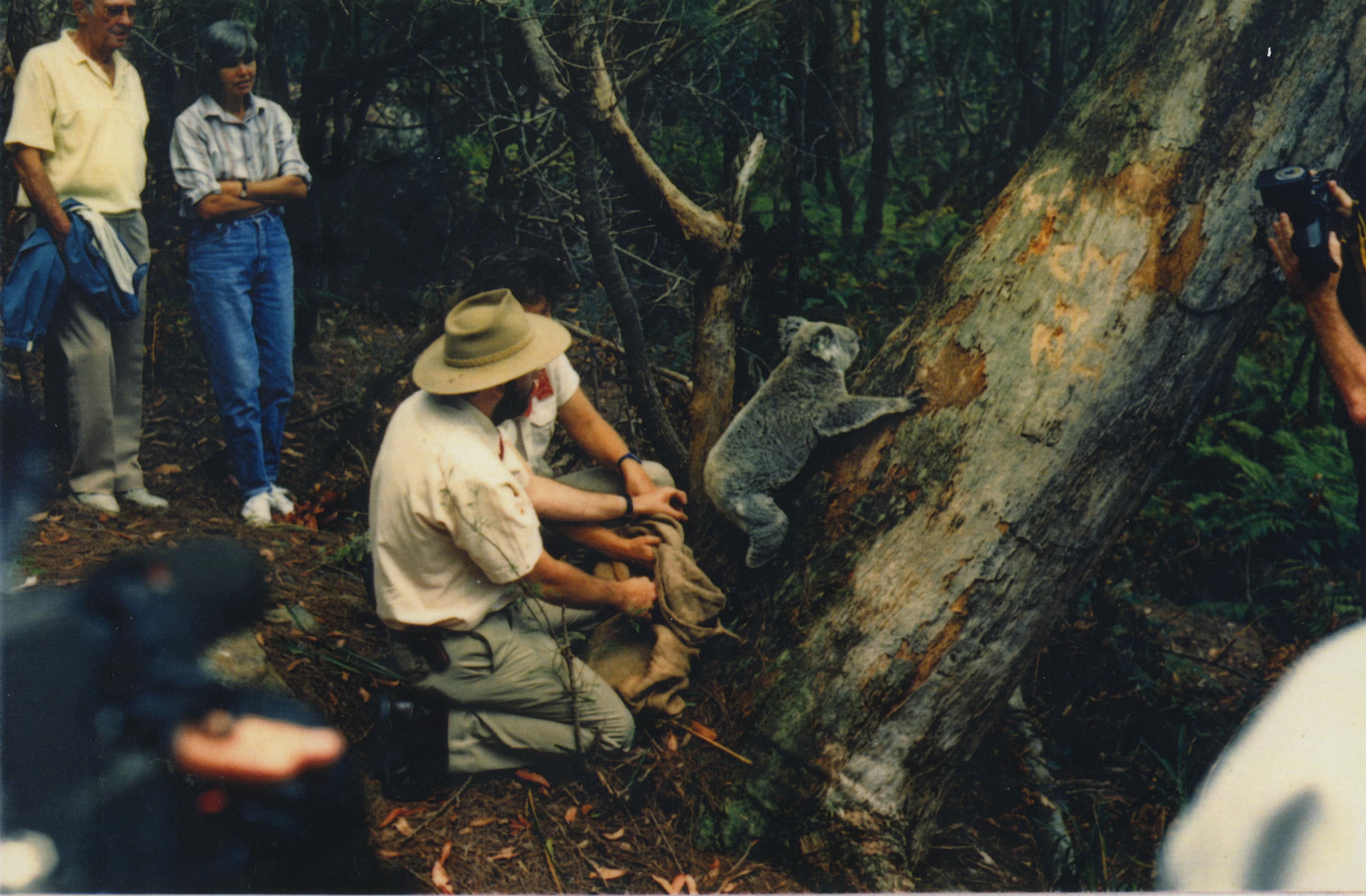
One of Pittwater's last koalas. The release of an 8 years old female back into Angophora Reserve after she had been bombarded by magpies. Taronga Zoo picked her up and nursed her back to health before the release on November 5th, 1989. Doug Bladen and Marita Macrae are in the background representing the Avalon Preservation Trust (now APA). Photo by Geoff Searl OAM

Stay safe around water in NSW national parks this summer

As temperatures continue to rise and visitors flock to the state’s stunning national parks, we are urging everyone to stay vigilant and safe around water this Summer.

NSW National Parks and Wildlife Service (NPWS) offers countless opportunities for swimming, fishing, paddling and boating, however our pristine beaches, tranquil rivers and lakes are natural environments that can be unpredictable and pose serious risks if safety precautions are ignored.

National parks are wild places and most beaches, creeks, rivers and lakes are remote and do not have lifeguards.

Mobile phone service may be limited which means you may not be able to call for help if you need it.

The safest place to swim is always at a patrolled beach between the red and yellow flags. You can find one of these locations at beachsafe.org.au.

National Parks and Wildlife Service Executive Director Naomi Stephens said, “spectacular beaches and waterways in NSW national parks may look like idyllic places for a summer swim, but dangers can lurk beneath the surface.”

“Watch out for hidden hazards including rip currents, cold water, rocks, submerged objects and sudden drop-offs.

“We want everyone to enjoy their national park visit and get home safely to loved ones,” Ms Stephens said.

Visitors are urged to plan ahead and follow these essential safety tips:

  • Stop, Look, Stay Alive – it’s important to take responsibility for your own safety.
  • Avoid unpatrolled beaches and always swim between the red and yellow flags at patrolled beaches.
  • Check for rips and hazards before entering the water. If in doubt, do not go in.
  • When rock fishing always wear a life jacket, check tides and weather, do not turn you back on the sea and never fish alone.
  • Tell someone your plans and expected return time.
  • Check conditions as water levels can rise suddenly after rain or dam releases.
  • Beware of fast currents and submerged hazards.
  • Enter slowly. Never dive headfirst or jump from heights. Riverbeds can change quickly.
  • Never swim alone: Always have someone nearby who can help in an emergency.
  • Avoid alcohol and drugs around water. These impair judgment and increase drowning risk.
  • Cold water alert: Even in summer, inland waters can cause hypothermia.
  • When boating and paddling wear an approved life jacket at all times.
  • Check weather forecasts and park alerts before heading out.

Following the success of last year’s initiative, NPWS is running another digital campaign targeting Mandarin Chinese-speaking and Indian communities across various channels to increase broader multicultural awareness of beach, water, fishing and rock platform safety in NSW national parks.

With Mandarin being the second most spoken language after English in NSW, safety tips have been translated into simplified Chinese at nswparks.info/beachsafetychinese and nswparks.info/fishingsafetychinese.

For more information on water safety in NSW national parks, please visit Water safety

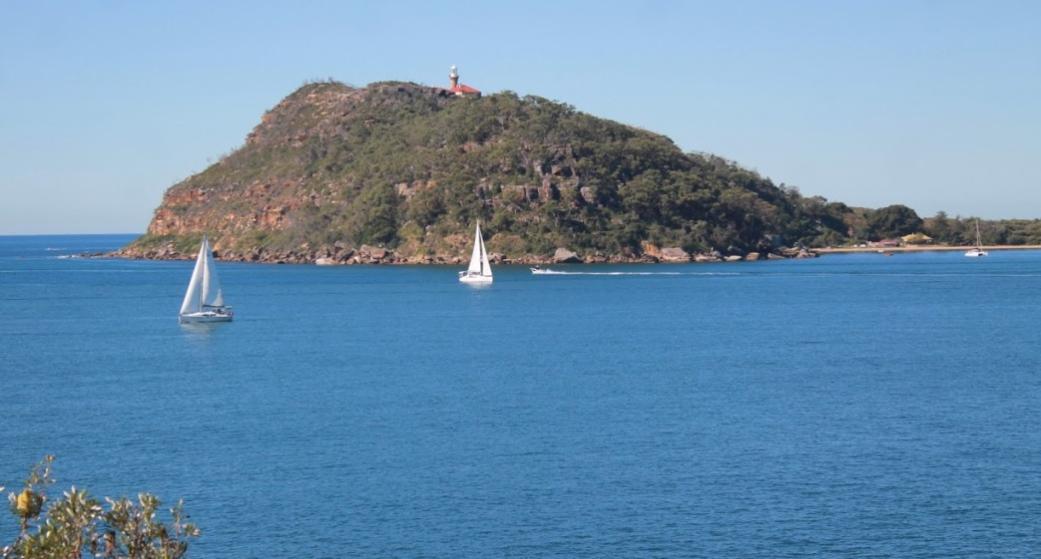
Barrenjoey headland from West Head

Tasman and Corinya properties enhance conservation and culture

December 11, 2025

The NSW Government and The Nature Conservancy (TNC) have partnered to acquire Tasman and Corinya Stations in western NSW, safeguarding vulnerable landscapes and exceptional Aboriginal cultural heritage, while creating new opportunities for tourism and local economies.

The TNC has generously contributed $4.41 million towards the purchase of the 71,000-hectare properties, located south of Cobar. This was made possible through their long-standing partnership with The Wyss Foundation.

Early planning is underway for new infrastructure, including a camp site and a day-use area, boosting tourism opportunities, local employment and economic diversification.

The acquisition safeguards two of NSW’s least reserved bioregions, the Cobar Peneplain and the Murray Darling Depression, and protects the Neckarbo Range and Barnato Lakes landscapes for the first time in NSW, along with six other underrepresented landscapes.

Tasman and Corinya provide habitat for at least 11 threatened arid and woodland bird species such as the south-east hooded robin, pink cockatoo and grey-crowned babbler, as well as one endangered plant and one endangered ecological community.

The properties also contain 33 plant community types, including many mature hollow bearing trees that support these diverse bird species.

On Ngiyampaa Country, the sites hold exceptional cultural heritage values including rock art in its cave system and parts of the Ngiyampaa songline connecting Mt Grenfell through to Mt Manara.

National Parks and Wildlife Service (NPWS) will work in close collaboration with Traditional Custodians to manage the cultural sites and protect the values and archaeological evidence of the world’s longest continuous culture in perpetuity.

In 2024–25 more than 73,000 visitors spent over 193,000 nights in Western NSW national park campgrounds and accommodation, contributing to the $433 million boost to regional economies from national park management and tourism.

NPWS will manage these properties including feral animal and weed control, all internal road and fire trail maintenance as well as cultural heritage and biodiversity surveys.

The NSW Government acquired the properties after they were listed for sale on the open market.

The NSW national parks system totals almost 7.67 million hectares, or 9.57 per cent of NSW.

NPWS Deputy Secretary Alex Graham said:

"Thanks to the extremely generous support of The Nature Conservancy and their partnership with The Wyss Foundation, National Parks and Wildlife Service can permanently protect these special parts of NSW which until now have had very little conservation.

“These lands hold stories that stretch across generations and ecosystems that are home to iconic outback birds.

“We’re prioritising areas that offer both conservation value and cultural connection, and Tasman and Corinya deliver on both fronts.

“It also presents opportunities for local communities and regional economies by encouraging nature-based tourism to this part of the state.”

Molly McUsic, President of the Wyss Foundation said:

“We are proud to support the permanent protection of this extraordinary landscape, home to numerous threatened bird and bat species.

“Philanthropy plays a critical role in accelerating the pace of conservation, and this partnership demonstrates the importance of strategic funding in meeting national and global biodiversity goals.

“The Wyss Foundation is an international entity dedicated to addressing the global conservation crisis and supporting innovative, lasting solutions that improve lives, empower communities, and strengthen connections to the land.”

Corinya Station. Photo: TNC

From trash to treasure: transforming an old tip into koala habitat

December 10, 2025

Habitat restoration is underway at the former Lake Cathie garbage tip in Lake Innes Nature Reserve, turning it into thriving koala habitat.

Hidden within Lake Innes Nature Reserve is the former Lake Cathie garbage tip. Although the tip has long been closed, the National Parks and Wildlife Service (NPWS) inherited the tip when the reserve was gazetted in 1984.

Early restoration works were limited to capping the site with fill, but over time a dense mix of weeds took over. Species such as coral trees, madeira vine, morning glory, bitou bush, lantana, African daisy and castor oil plant spread across the old tip, leaving little opportunity for native plants to regenerate.

With 4 years of habitat restoration funding from the NSW Koala Strategy, NPWS developed a long-term plan to convert the degraded site into healthy koala habitat.

In 2023, the first stage of works focused on extensive weed control, including targeted spraying and mulching. Mulching proved to be the game changer, creating a solid foundation for planting and making follow-up weed control far more effective. After decades of invasion, the soil held very few native seeds, making revegetation essential.

In 2024, NPWS planted 300 seedlings, including key koala food trees such as swamp mahogany and tallowwood, alongside a variety of native shrubs to restore habitat structure. Tree guards were installed around each plant to protect it from feral deer, which are known to damage young trees by rubbing their antlers on the bark.

The site is already showing strong signs of recovery. More than 90% of the trees have survived, with swamp mahoganies now shooting past 2 metres in height.

What was once a rubbish tip is fast becoming a flourishing pocket of koala habitat, a transformation that will benefit many native species for decades to come.

Taronga protects environmental jewel in North-West NSW

Wednesday December 10, 2025

Taronga Conservation Society Australia has established a third, ‘wild’ restoration site. A cornerstone of the Taronga Habitat Positive initiative, this ecosystem restoration project is one of the largest Box-Gum Woodland restoration efforts in Australian history and will become a safe haven for up to 36 threatened species including Koalas, Spotted-tail quoll and Regent Honeyeaters. 

Habitat Positive Site. Photo: Taronga

The Minns Labor Government is proud to provide $16 million in funding, with Taronga’s inaugural partner Sydney Airport also investing in the conservation initiative. The 3,050-hectare site on the Northwest Slopes of NSW is 100 times larger than Taronga Zoo Sydney. Up to one million seedlings will be planted on the site to restore natural wildlife corridors, re-establishing critically endangered Box-Gum Woodlands, with only seven percent of remnant habitat remaining due to extensive land clearing since colonisation. 

The site comprises two adjoining properties, with a combination of cleared land and remnant native vegetation, offering high potential for ecological restoration. The location on the Northwest Slopes was carefully selected, offering long-term climate resilience, with the region projected to experience relatively low changes in rainfall and temperature. 

First Nations partnerships are central to the project’s success and Taronga is working closely with the local community to understand cultural values and significance to inform site planning and restoration. This work is the foundation for creating pathways for future employment and partnership opportunities. Two targeted full-time positions have already been established as the restoration work gets underway. 

Sydney Airport’s 10-year partnership unites two of Australia’s most historic brands to drive meaningful conservation outcomes. It will enable Taronga to restore vital habitat at scale while pioneering a model for landscape-level restoration, creating a lasting legacy for Australia’s natural environment. At the same time, the collaboration supports Sydney Airport’s ambitious sustainability goals, including its Net Zero 2030 (Scope 1 and 2 emissions) target. 

This pilot site marks the beginning of a scalable restoration and rewilding initiative under Taronga Habitat Positive, with a vision to restore two million hectares of threatened woodlands across eastern Australia. The program will establish a network of climate-resilient sanctuaries for threatened species supported by a sustainable business model, where carbon and natural capital generate revenue to fund long-term restoration. Through Habitat Positive, Sydney Airport is committing to high integrity carbon credits and outcomes for nature. 

This world-leading project is the first of its kind for any zoo in the world and directly builds on Taronga’s century of conservation expertise and dedication to wildlife. Taronga currently operates 16 recovery programs for priority species across Australia and has bred, cared for and released 60,000 animals, from tiny eggs and tadpoles to juveniles and adults, preventing extinction of seven native species. This marks Taronga’s first major land acquisition since 1975, when 300 hectares were secured to establish Taronga Western Plains Zoo. 

“Restoring nature continues to be one of the biggest and most urgent issues facing the planet. Australia has the highest known rate of mammal extinction in the world. This project demonstrates the Minns Labor Government’s commitment to collaboratively working toward a future that protects and restores nature. It represents conservation and innovation in an initiative like no other in Australia. It’s not enough to protect animals in zoos and through conservation programs – restoration and rewilding is needed now more than ever so we can rebuild the ecosystems needed to bring back threatened species from the brink.”  - NSW Minister for Climate Change and the Environment, Penny Sharpe

Habitat Positive is more than just habitat restoration. It's a new era for Taronga and a new way of achieving landscape-scale restoration. It leverages natural capital investment through partnerships with government, industry, community, corporate Australia and philanthropists. For more than a century, animals and wildlife have been at the core of everything we do, from providing meaningful opportunities for connection and education through to world-leading conservation science. Habitat Positive is the next natural step, a commitment to not just protect species, but to reverse biodiversity loss”  

“We’re delighted to welcome Sydney Airport as our inaugural partner. Their investment in Taronga Habitat Positive reflects a commitment to protecting what makes Australia unique – our wildlife, our landscapes and our future. - Taronga Conservation Society Australia CEO, Cameron Kerr

Sydney Airport welcomes tens of millions of passengers each year, giving many visitors their first glimpse of Australia’s incredible natural environment. With our passenger numbers expected to reach 72 million annually by 2045, Taronga is a major drawcard for international visitors eager to experience Australia’s wildlife in a truly unique setting. “As Australia’s gateway airport, we’re proud to be the first in our industry to take a leading role in this initiative, partnering with a trusted and iconic brand like Taronga to achieve high-quality conservation outcomes. We recognise that aviation is a contributor to emissions, and this partnership is an important part of our broader decarbonisation journey, supporting our pathway to Net Zero (Scope 1 and 2 emissions) by 2030. 

“I’d like to thank the team at Taronga and the NSW Government for their support as Sydney Airport takes on the role of origin partner in this landmark conservation effort.” - Sydney Airport CEO, Scott Charlton

Photos: Taronga Zoo

This is Saving our Species

December 8, 2025 by NSW Dept. of Climate Change, Energy, Environment and Water

Through on-ground action, research and partnerships, the NSW #SavingOurSpecies program is giving threatened species a fighting chance to survive in the wild.

Together, we can secure threatened species in NSW. Learn more about Saving our Species


Birdwood Park Bushcare Group Narrabeen

The council has received an application from residents to volunteer to look after bushland at 199/201 Ocean street North Narrabeen.

The group will meet once a month for 2-3 hours at a time to be decided by the group. Activities will consist of weeding out invasive species and encouraging the regeneration of native plants. Support and supervision will be provided by the council.

If you have questions or are interested in joining the group please email the council on bushcare@northernbeaches.nsw.gov.au

Council's Open Coast & Lagoons Coastal Management Program (CMP's): Scoping Study Feedback invited until December 14

The council has commissioned  a Scoping Study as the first stage of its program towards the development of Coastal Management Programs (CMPs).


CMPs are used by local councils around NSW to establish coastal management goals and actions. Developed in consultation with the community and state government, a CMP creates a shared vision for management and provides the steps of how to get there through local input and costed actions.

The development of the CZMPs within NSW occurred under the former Act (Coastal Protection Act 1979). The current council has two certified CZMPs under the former Act - ‘Bilgola and Basin Beach’ and ‘Collaroy-Narrabeen-Fisherman's Beach’. 

In July 2016, weeks after the councils had been forcibly amalgamated and in response to the June 2016 storm, the NSW state government installed administrator Dick Persson outlined a Draft Coastal Erosion Policy for Collaroy that resulted in the December 2016 Coastal Zone Management Plan for Collaroy-Narrabeen Beach and Fishermans Beach being formalised under the same administration.

That Administrators Minute stated:

I am advised that the initial estimates for 1.1km of works from The Marquesas to 1096 Pittwater Road has been estimated at approximately $22 million. While Council will work with the State Government to meet the cost of directly protecting public assets in this area (approximately $5.5 million), I will also ask the State Government to join Council in providing up to 10% each towards the cost of private protection as a contribution subject to a positive cost benefit analysis for these public assets. Early estimates suggest this contribution could be approximately. This contribution has been estimated at approximately $3.3 million ($1.65 million from State and $1.65 million from Council) and is in recognition of the public asset protection that is provided by these private properties.
....
A recent report by the Sydney Coastal Council’s Group identified that to combat the impact of sea level rise in the Collaroy-Narrabeen embayment significant volumes of sand will be required as these impacts are felt. For example, it is predicted that some 1.3 million cubic metres of sand (approximately 4 times the amount removed during the June storms) will be required for the first 10 year nourishment effort, and around 420,000 cubic metres for each following 10 year campaign.

In 2009 dollars this will cost around $30 million for the first 10 year nourishment, and around $12 million for each following 10 year campaign. These costs are based on the assumption that sand nourishment will be undertaken across large areas of the NSW coast and the costs shared accordingly. 
....
Works on this scale are simply unaffordable for Northern Beaches Council on its own, and the responsibility for delivery of offshore sands must be shared with benefitting Councils and also with State and Federal Government. The State Government is obviously best placed to co-ordinate and manage such an undertaking, and I will write to the Premier to request that the State provides a long-term sand replenishment strategy for NSW that addresses the many issues I have raised, and amends the Offshore Minerals Act (1999) to enable effective medium and long term beach amenity to be preserved. 

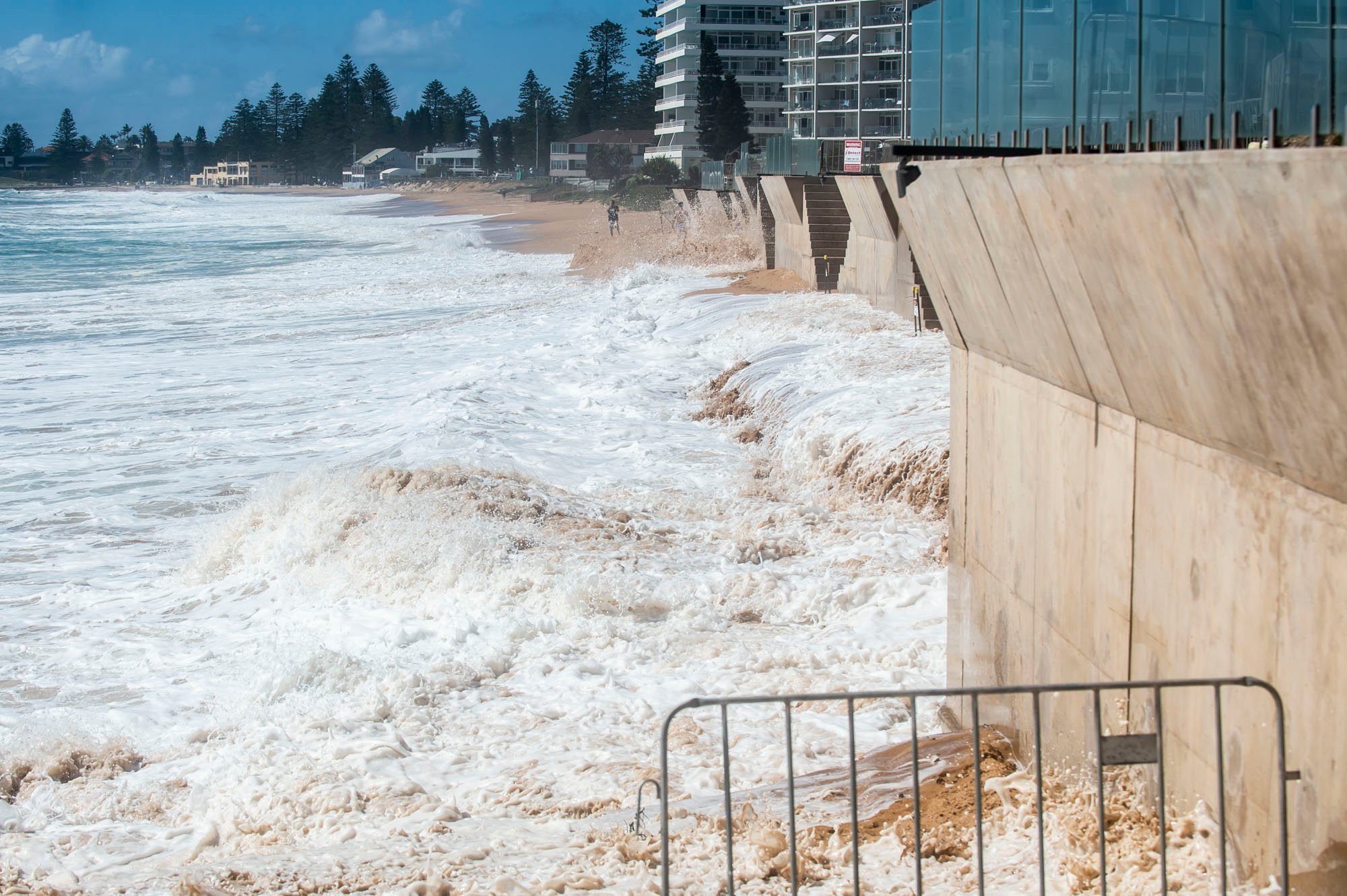
As a result of the approved CZMP a 7.5m concrete seawall was installed at Collaroy, resulting in more rapid and greater erosion, and a slower beach recovery, and a now annual cost to ratepayers to move the sand funnelled into the Narrabeen Lagoon entrance to be shifted back to that part of Collaroy beach.

In September 2022 a further application for an extension of this wall towards North Narrabeen (DA2021/1612) between Clarke Street and Mactier was approved despite 93% of respondents objecting to the proposal. The cost of this section of works was listed as $ 2,047,433.00 of which 10% will be met by council and 10% by the state government - or 20% by taxpayers and ratepayers in real terms.

The beach has also been the site of “line in the sand protests” against vertical seawalls in 2002 and more recently on November 27, 2021

Although the transition from the CZMP to CMP occurred in 2016 with the introduction of the Coastal Management Act 2016 (see above report), the December 2016 Coastal Zone Management Plan for Collaroy-Narrabeen Beach and Fishermans Beach was progressed.

The council states these two existing CZMP’s have now expired and will be updated in the ‘Open Coast and Lagoons’ and ‘Collaroy-Narrabeen’ CMPs.

Now, 9 years later, the council is taking steps to become compliant.

The CMPs will also incorporate Estuary Management Plans that are currently in place for the four lagoons; Manly, Curl Curl, Dee Why and Narrabeen.

The NSW Government CMP manual prescribes a mandatory five-stage process to developing a CMP. Typically, each stage takes a year to complete, however the time it takes varies upon the baseline information, level of complexity, size and area, and community engagement that has previously been undertaken, the council states.

Local councils and public authorities are required to manage their coastal areas and activities in accordance with relevant state legislation, policies and plans.

The framework for managing the NSW coast includes:
  • Coastal Management Act 2016 (CM Act)
  • State Environmental Planning Policy (Resilience & Hazards) 2018 (R&H SEPP)
  • Coastal management programs (CMPs), prepared in accordance with the NSW coastal management manual.
The Open Coast and Lagoons CMP covers a large area (Palm Beach to Manly) and has a wide range of issues, the council states. As with all CMPs, it will require technical studies and community and stakeholder engagement, and is likely to take around 5 years to complete, the council states.

For the Collaroy-Narrabeen CMP, extensive technical studies and community engagement will occur with the council aiming to have a certified CMP in place by 2026.

The Hawkesbury-Nepean CMP (incorporating the Pittwater waterway and being led by Hornsby Council) and Outer Sydney Harbour CMP (incorporating North and Middle Harbor and being led by the Sydney Coastal Councils Group) are at Stages 3 (November 2024 for Pittwater estuary was last update) and Stages 2-4 for North and Middle Harbor. The work is expected to take approximately three years to complete for North and Middle Harbor which was due to commence in early to mid-2025.

The council is currently inviting feedback on its commissioned Scoping Study from Monday November 3 until Sunday December 14 2025. 

Previously:


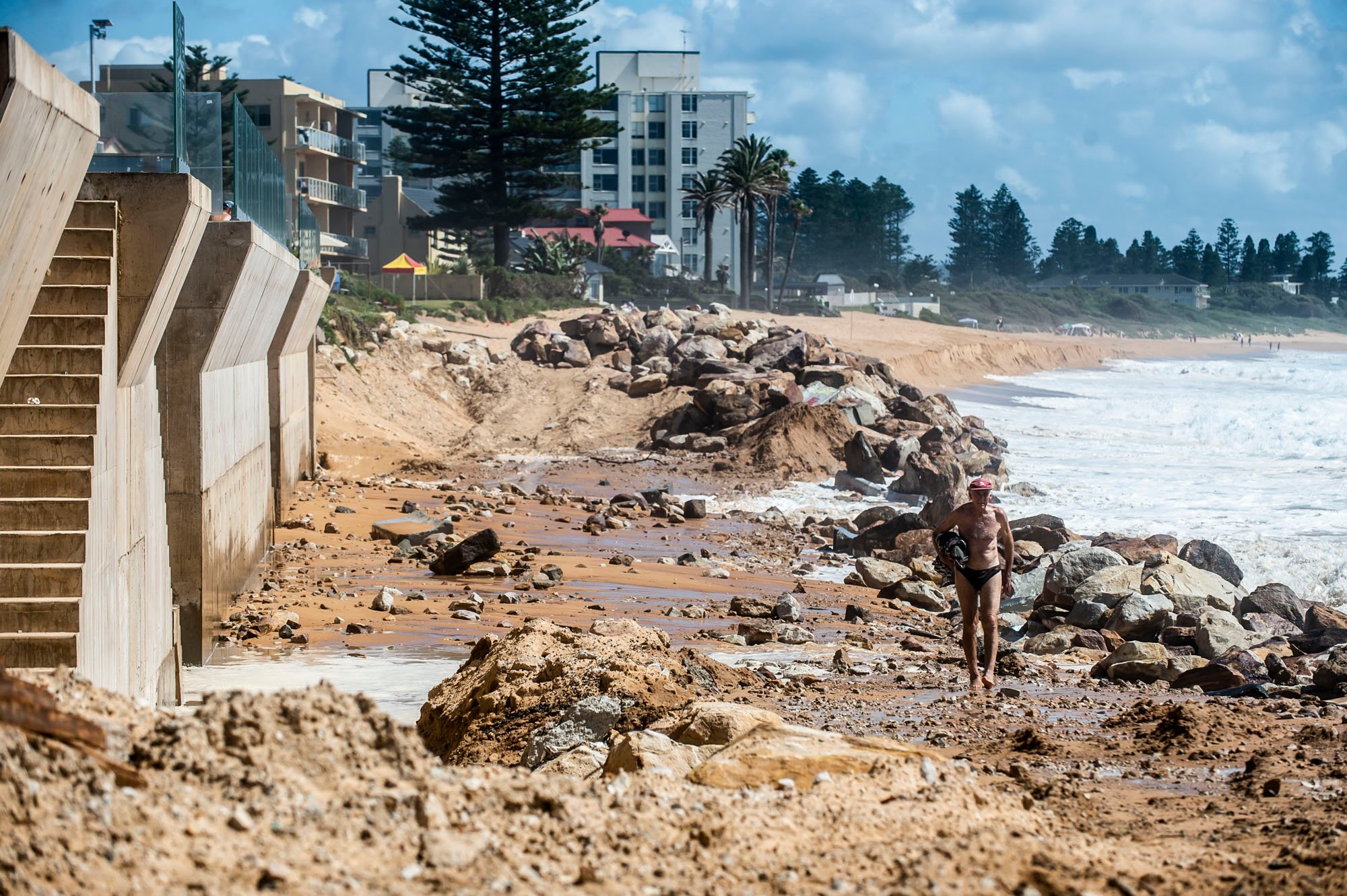
Collaroy on January 4th 2022. Image: Ian Bird Photography.


Collaroy on January 4th 2022. Image: Ian Bird Photography.

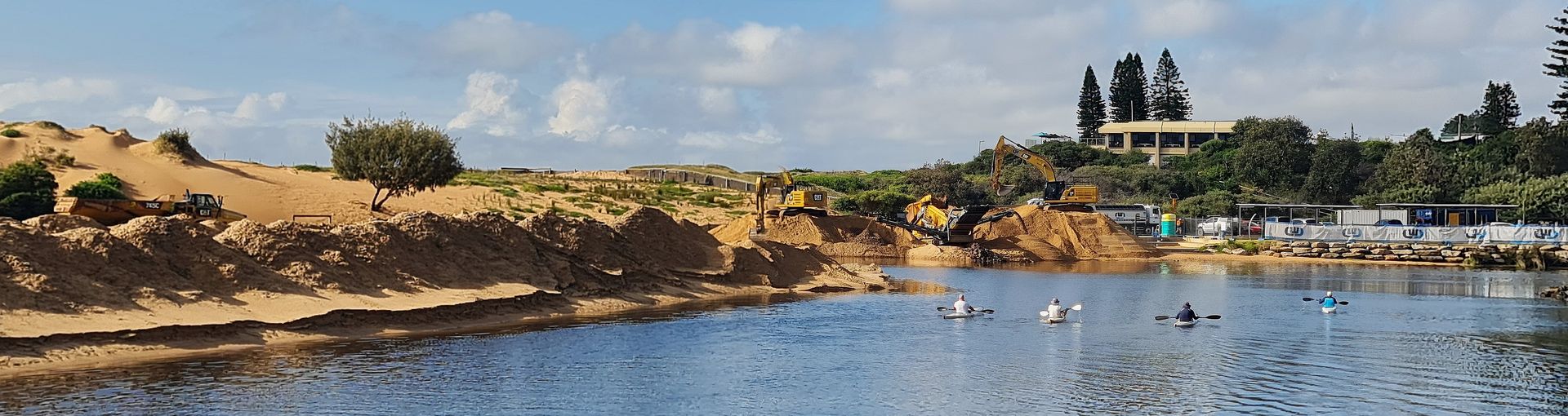
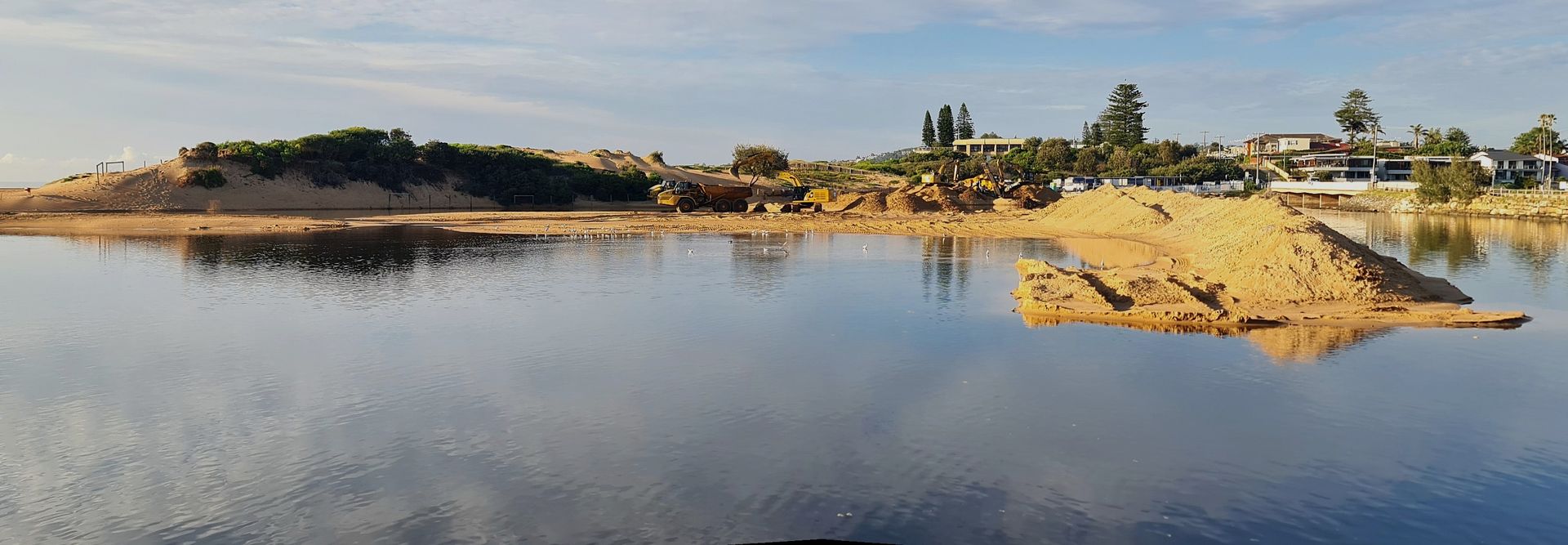
Narrabeen Lagoon entrance near bridge: dredging works and kayakers, October 2025. Photos: Joe Mills

Magpies in Spring

By WIRES

If you live in Australia, chances are you’re familiar with magpie swooping. This is a defensive behaviour, carried out almost entirely by male magpies, as they protect their eggs and chicks during the breeding season.

In reality, swooping is uncommon. Fewer than 10% of breeding males will swoop people, yet the behaviour feels widespread. Swooping usually occurs between August and October and stops once chicks have left the nest.

If you do encounter a protective parent, here are some tips to stay safe:

  • 🐦 Avoid the area where magpies are swooping and consider placing a temporary sign to warn others.
  • 🐦 Wear a hat or carry an open umbrella for protection.
  • 🐦 Cyclists should dismount and walk through.
  • 🐦 Travel in groups, as magpies usually only target individuals.
  • 🐦 Stay calm around magpies in trees – walk, don’t run.
  • 🐦 Avoid making direct eye contact with the birds.

If you are swooped, keep moving. You’re still in the bird’s territory, so it will continue until you leave the area. Remember, this behaviour is temporary and will end once the young have fledged.

If you find an injured or orphaned native animal, call WIRES on 1300 094 737 or report a rescue via our website:  https://hubs.la/Q03GCZmZ0

Sydney Wildlife (Sydney Metropolitan Wildlife Services) Needs People for the Rescue Line

We are calling on you to help save the rescue line because the current lack of operators is seriously worrying. Look at these faces! They need you! 

Every week we have around 15 shifts either not filled or with just one operator and the busy season is around the corner. This situation impacts on the operators, MOPs, vets and the animals, because the phone line is constantly busy. Already the baby possum season is ramping up with calls for urgent assistance for these vulnerable little ones.

We have an amazing team, but they can’t answer every call in Spring and Summer if they work on their own.  Please jump in and join us – you would be welcomed with open arms!  We offer lots of training and support and you can work from the office in the Lane Cove National Park or on your home computer.

If you are not able to help do you know someone (a friend or family member perhaps) who might be interested?

Please send us a message and we will get in touch. Please send our wonderful office admin Carolyn an email at sysneywildliferesxueline@gmail.com

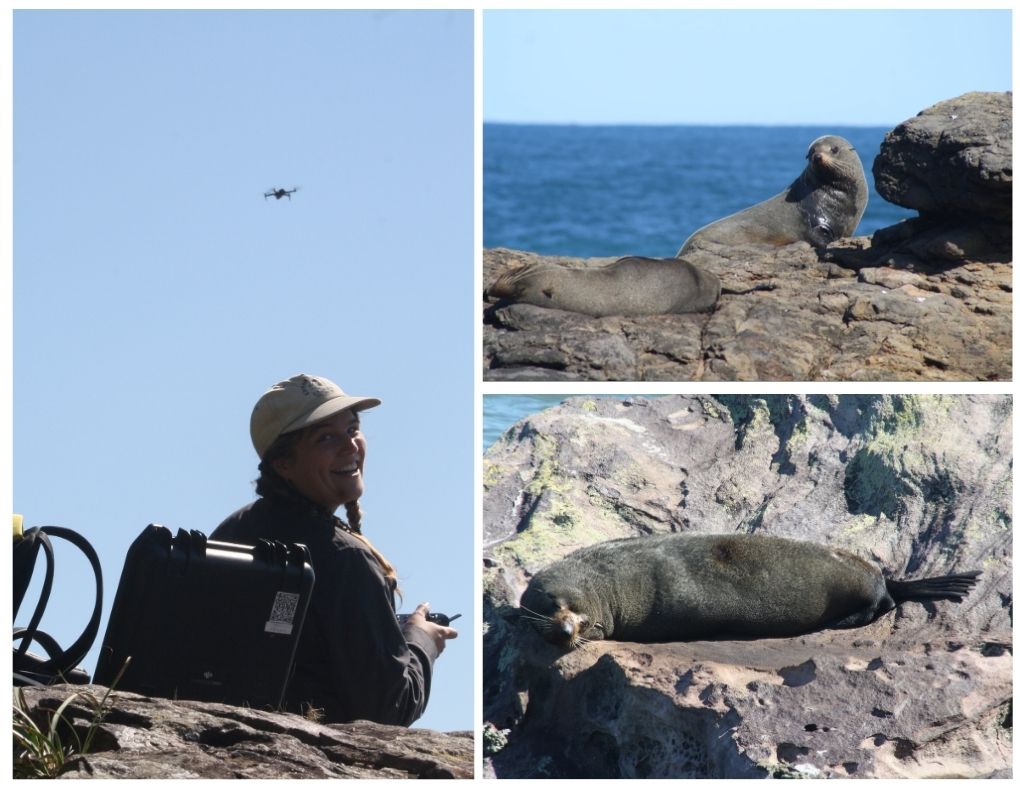
2025-26 Seal Reveal underway

Photo: Seals caught on camera at Barrenjoey Headland during the Great Seal Reveal 2025. Montage: DCCEEW

The 2025 Great Seal Reveal is underway with the first seal surveys of the season taking place at known seal breeding and haul out sites - where seals temporarily leave the water to rest or breed.

The NSW Department of Climate Change, Energy, the Environment and Water (DCCEEW) is using the Seal Reveal, now in its second year, to better understand seal populations on the NSW coast.

Drone surveys and community sightings are used to track Australian (Arctocephalus pusillus doriferus) and New Zealand (Arctocephalus forsteri) fur seals.  Both Australian and New Zealand fur seals have been listed as vulnerable under the NSW Biodiversity Conservation Act 2016.

Survey sites
Scientific surveys to count seal numbers will take place at:
  • Martin Islet
  • Drum and Drumsticks
  • Brush Island
  • Steamers Head
  • Big Seal Rock
  • Cabbage Tree Island
  • Barrenjoey Headland
  • Barunguba (Montague) Island.
Seal Reveal data on seal numbers helps to inform critical marine conservation initiatives and enable better management of human–seal interactions.

Results from the population surveys will be released in early 2026.

Citizen science initiative: Haul-out, Call-out
The Haul-out, Call-out citizen science platform invites the community to support seal conservation efforts by reporting sightings along the NSW coastline.

Reports from the public help identify important haul-out sites so we can get a better understanding of seal behaviour and protect their preferred habitat.

The Great Seal Reveal is part of the Seabirds to Seascapes (S2S) program, a four-year initiative led by NSW DCCEEW and funded by the NSW Environmental Trust to protect, rehabilitate, and sustainably manage marine ecosystems in NSW.

NSW DCCEEW is a key partner in the delivery of the Marine Estate Management Strategy (MEMS), with the S2S program contributing to MEMS Initiative 5 to reduce threats to threatened and protected species.

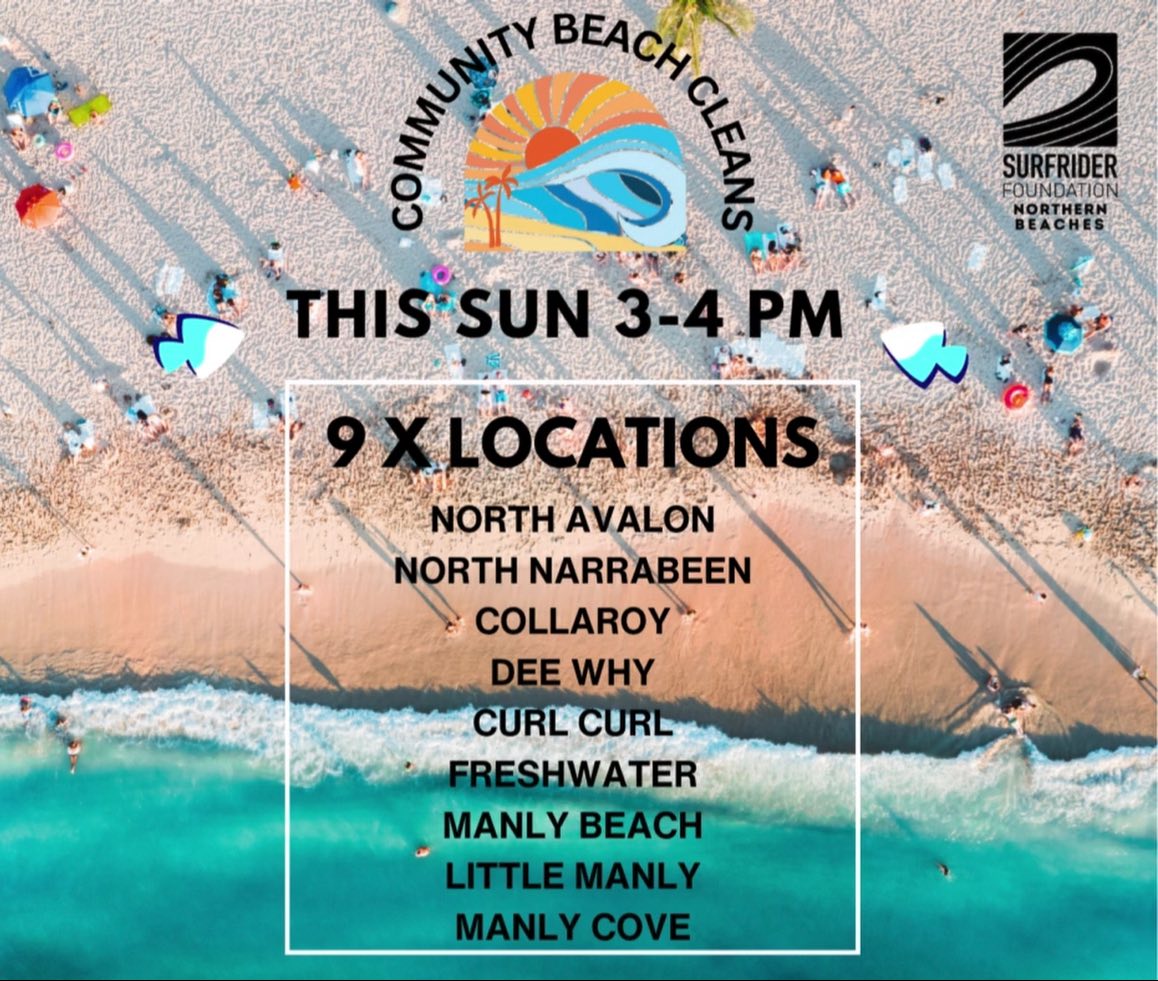
622kg of Rubbish Collected from Local Beaches: Adopt your local beach program

Sadly, our beaches are not as pristine as we'd all like to think they are. 

Surfrider Foundation Northern Beaches' Adopt A beach ocean conservation program is highlighting that we need to clean up our act.

Surfrider Foundation Northern Beaches' states:
''The collective action by our amazing local community at their monthly beach clean events across 9 beach locations is assisting Surfrider Foundation NB in the compilation of quantitative data on the volume, type and often source of the marine pollution occurring at each location.

In just 6 sessions, clear indicators are already forming on the waste items and areas to target with dedicated litter prevention strategies.

Plastic pollution is an every body problem and the solution to fixing it lies within every one of us.
Together we can choose to refuse this fate on our Northern beaches and turn the tide on pollution. 
A cleaner coast together !''

Join us - 1st Sunday of the month, Adopt your local for a power beach clean or donate to help support our program here. https://www.surfrider.org.au/donate/

Event locations 
  • Avalon – Des Creagh Reserve (North Avalon Beach Lookout)
  • North Narrabeen – Corner Ocean St & Malcolm St (grass reserve next to North Narrabeen SLSC)
  • Collaroy– 1058 Pittwater Rd (beachfront next to The Beach Club Collaroy)
  • Dee Why Beach –  Corner Howard Ave & The Strand (beachfront grass reserve, opposite Blu Restaurant)
  • Curl Curl – Beachfront at North Curl Curl Surf Club. Shuttle bus also available from Harbord Diggers to transport participants to/from North Curl Curl beach. 
  • Freshwater Beach – Moore Rd Beach Reserve (opposite Pilu Restaurant)
  • Manly Beach – 11 South Steyne (grass reserve opposite Manly Grill)
  • Manly Cove – Beach at West Esplanade (opposite Fratelli Fresh)
  • Little Manly– 55 Stuart St Little Manly (Beachfront Grass Reserve)
… and more to follow!

Surfrider Foundation Northern Beaches

This Tick Season: Freeze it - don't squeeze it

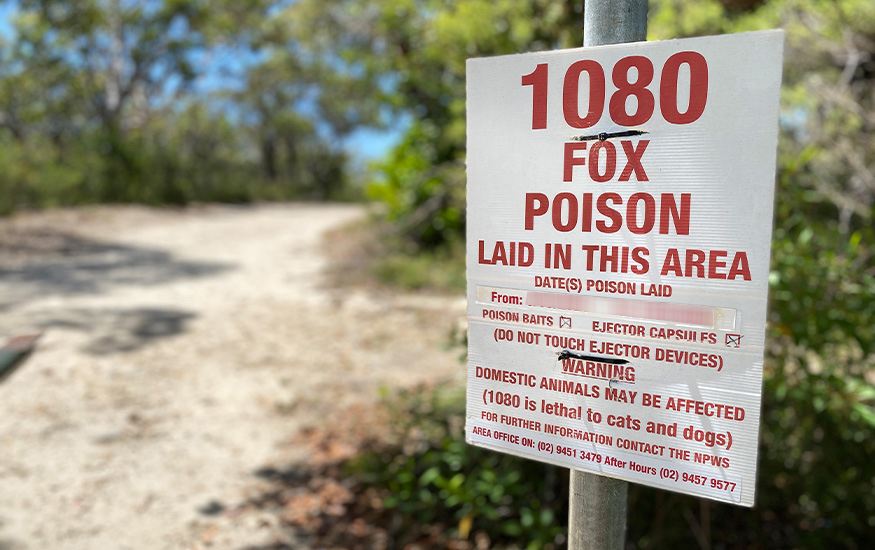
Notice of 1080 Poison Baiting

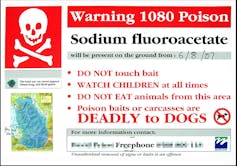
The NSW National Parks and Wildlife Service (NPWS) will be conducting a baiting program using manufactured baits, fresh baits and Canid Pest Ejectors (CPE’s/ejectors) containing 1080 poison (sodium fluoroacetate) for the control of foxes. The program is continuous and ongoing for the protection of threatened species.

This notification is for the period 1 August 2025 to 31 January 2026 at the following locations:

  • Garigal National Park
  • Lane Cove National Park (baits only, no ejectors are used in Lane Cove National Park)
  • Ku-ring-gai Chase National Park
  • Sydney Harbour National Park – North Head (including the Quarantine Station), Dobroyd Head, Chowder Head & Bradleys Head managed by the NPWS
  • The North Head Sanctuary managed by the Sydney Harbour Federation Trust
  • The Australian Institute of Police Management, North Head

DO NOT TOUCH BAITS OR EJECTORS

All baiting locations will be identifiable by signs.

Please be reminded that domestic pets are not permitted on NPWS Estate. Pets and working dogs may be affected (1080 is lethal to cats and dogs). Pets and working dogs must be restrained or muzzled in the vicinity and must not enter the baiting location. Penalties apply for non-compliance.

In the event of accidental poisoning seek immediate veterinary assistance.

For further information please call the local NPWS office on:

NPWS Sydney North (Middle Head) Area office: 9960 6266

NPWS Sydney North (Forestville) Area office: 9451 3479

NPWS North West Sydney (Lane Cove NP) Area office: 8448 0400

NPWS after-hours Duty officer service: 1300 056 294

Sydney Harbour Federation Trust: 8969 2128

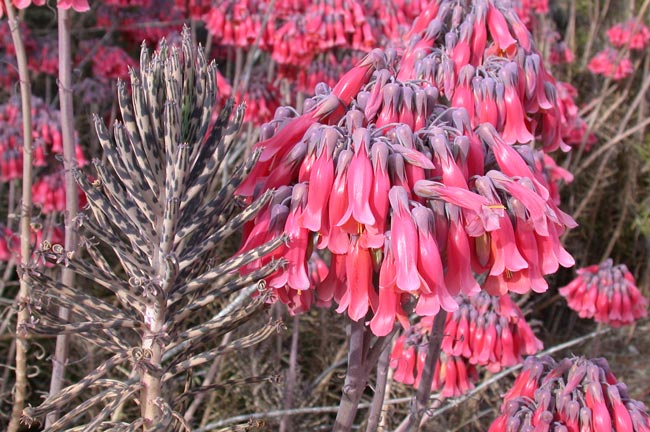
Weed of the Week: Mother of Millions - please get it out of your garden


Mother of Millions (Bryophyllum daigremontianumPhoto by John Hosking.

Solar for apartment residents: Funding

Owners corporations can apply now for funding to install shared solar systems on your apartment building. The grants will cover 50% of the cost, which will add value to homes and help residents save on their electricity bills.

You can apply for the Solar for apartment residents grant to fund 50% of the cost of a shared solar photovoltaic (PV) system on eligible apartment buildings and other multi-unit dwellings in NSW. This will help residents, including renters, to reduce their energy bills and greenhouse gas emissions.

Less than 2% of apartment buildings in NSW currently have solar systems installed. As energy costs climb and the number of people living in apartments continue to increase, innovative solutions are needed to allow apartment owners and renters to benefit from solar energy.

A total of $25 million in grant funding is available, with up to $150,000 per project.

Financial support for this grant is from the Australian Government and the NSW Government.

Applications are open now and will close 5 pm 1 December 2025 or earlier if the funds are fully allocated.

Find out more and apply now at: www.energy.nsw.gov.au/households/rebates-grants-and-schemes/solar-apartment-residents 

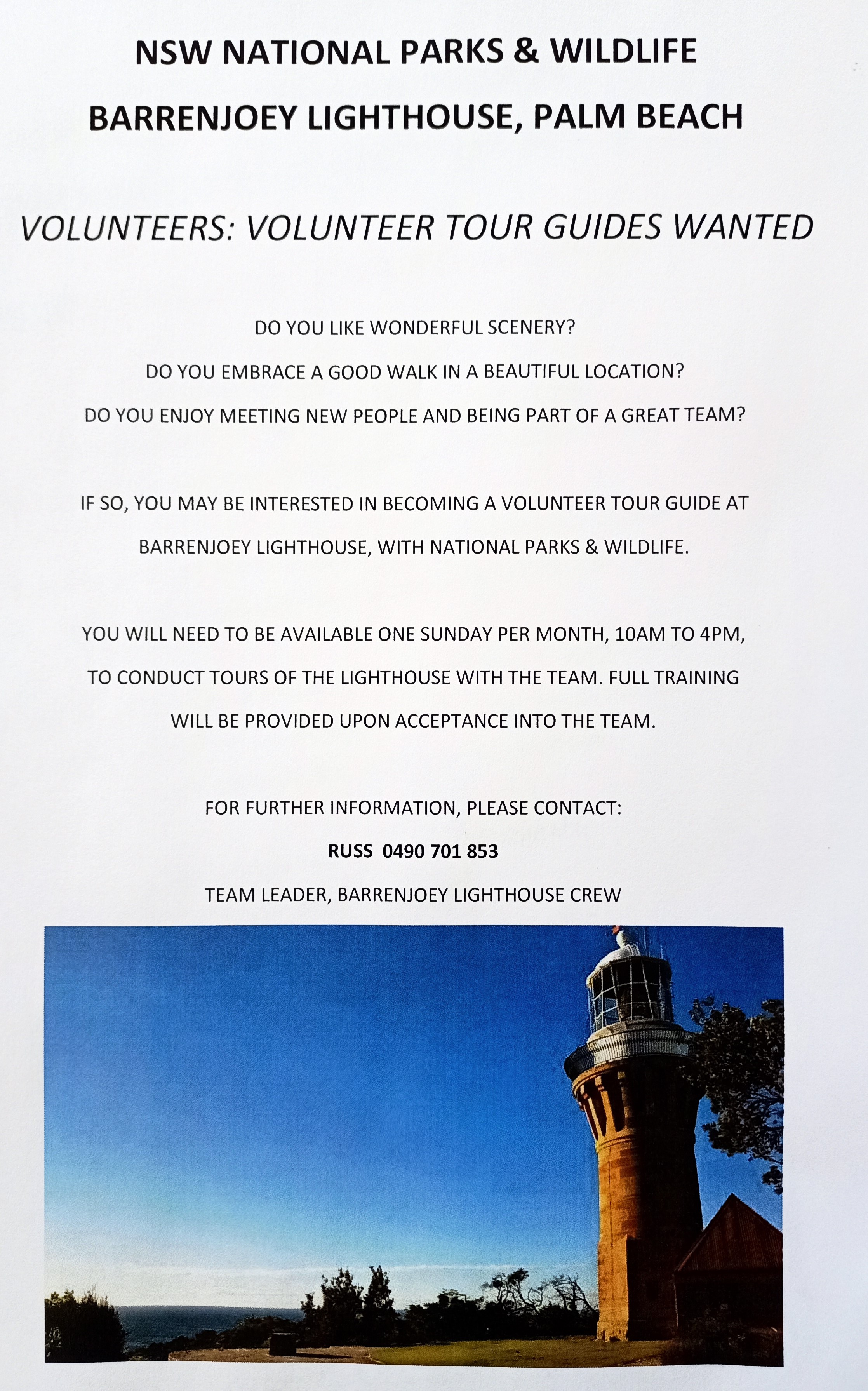
Volunteers for Barrenjoey Lighthouse Tours needed

Details:

Johnson Brothers Mitre 10 Recycling Batteries: at Mona Vale + Avalon Beach

Over 18,600 tonnes of batteries are discarded to landfill in Australia each year, even though 95% of a battery can be recycled!

That’s why we are rolling out battery recycling units across our stores! Our battery recycling units accept household, button cell, laptop, and power tool batteries as well as mobile phones! 

How To Dispose Of Your Batteries Safely: 

  1. Collect Your Used Batteries: Gather all used batteries from your home. Our battery recycling units accept batteries from a wide range of products such as household, button cell, laptop, and power tool batteries.
  2. Tape Your Terminals: Tape the terminals of used batteries with clear sticky tape.
  3. Drop Them Off: Come and visit your nearest participating store to recycle your batteries for free (at Johnson Brothers Mitre 10 Mona Vale and Avalon Beach).
  4. Feel Good About Your Impact: By recycling your batteries, you're helping support a healthier planet by keeping hazardous material out of landfills and conserving resources.

Environmental Benefits

  • Reduces hazardous waste in landfill
  • Conserves natural resources by promoting the use of recycled materials
  • Keep toxic materials out of waterways 

Reporting Dogs Offleash - Dog Attacks to Council

If the attack happened outside local council hours, you may call your local police station. Police officers are also authorised officers under the Companion Animals Act 1998. Authorised officers have a wide range of powers to deal with owners of attacking dogs, including seizing dogs that have attacked.

You can report dog attacks, along with dogs offleash where they should not be, to the NBC anonymously and via your own name, to get a response, at: https://help.northernbeaches.nsw.gov.au/s/submit-request?topic=Pets_Animals

If the matter is urgent or dangerous call Council on 1300 434 434 (24 hours a day, 7 days a week).

If you find injured wildlife please contact:
  • Sydney Wildlife Rescue (24/7): 9413 4300 
  • WIRES: 1300 094 737

Plastic Bread Ties For Wheelchairs

The Berry Collective at 1691 Pittwater Rd, Mona Vale collects them for Oz Bread Tags for Wheelchairs, who recycle the plastic.

Berry Collective is the practice on the left side of the road as you head north, a few blocks before Mona Vale shops . They have parking. Enter the foyer and there's a small bin on a table where you drop your bread ties - very easy.

A full list of Aussie bread tags for wheelchairs is available at: HERE 


Stay Safe From Mosquitoes 

NSW Health is reminding people to protect themselves from mosquitoes when they are out and about.

NSW Health states Mosquitoes in NSW can carry viruses such as Japanese encephalitis (JE), Murray Valley encephalitis (MVE), Kunjin, Ross River and Barmah Forest. The viruses may cause serious diseases with symptoms ranging from tiredness, rash, headache and sore and swollen joints to rare but severe symptoms of seizures and loss of consciousness.

A free vaccine to protect against JE infection is available to those at highest risk in NSW and people can check their eligibility at NSW Health.

People are encouraged to take actions to prevent mosquito bites and reduce the risk of acquiring a mosquito-borne virus by:
  • Applying repellent to exposed skin. Use repellents that contain DEET, picaridin, or oil of lemon eucalyptus. Check the label for reapplication times.
  • Re-applying repellent regularly, particularly after swimming. Be sure to apply sunscreen first and then apply repellent.
  • Wearing light, loose-fitting long-sleeve shirts, long pants and covered footwear and socks.
  • Avoiding going outdoors during peak mosquito times, especially at dawn and dusk.
  • Using insecticide sprays, vapour dispensing units and mosquito coils to repel mosquitoes (mosquito coils should only be used outdoors in well-ventilated areas)
  • Covering windows and doors with insect screens and checking there are no gaps.
  • Removing items that may collect water such as old tyres and empty pots from around your home to reduce the places where mosquitoes can breed.
  • Using repellents that are safe for children. Most skin repellents are safe for use on children aged three months and older. Always check the label for instructions. Protecting infants aged less than three months by using an infant carrier draped with mosquito netting, secured along the edges.
  • While camping, use a tent that has fly screens to prevent mosquitoes entering or sleep under a mosquito net.
Remember, Spray Up – Cover Up – Screen Up to protect from mosquito bite. For more information go to NSW Health.

Mountain Bike Incidents On Public Land: Survey

This survey aims to document mountain bike related incidents on public land, available at: https://www.surveymonkey.com/r/K88PSNP

Sent in by Pittwater resident Academic for future report- study. 

Report fox sightings

Fox sightings, signs of fox activity, den locations and attacks on native or domestic animals can be reported into FoxScan. FoxScan is a free resource for residents, community groups, local Councils, and other land managers to record and report fox sightings and control activities. 

Our Council's Invasive species Team receives an alert when an entry is made into FoxScan.  The information in FoxScan will assist with planning fox control activities and to notify the community when and where foxes are active.


marine wildlife rescue group on the Central Coast

A new wildlife group was launched on the Central Coast on Saturday, December 10, 2022.

Marine Wildlife Rescue Central Coast (MWRCC) had its official launch at The Entrance Boat Shed at 10am.

The group comprises current and former members of ASTR, ORRCA, Sea Shepherd, Greenpeace, WIRES and Wildlife ARC, as well as vets, academics, and people from all walks of life.

Well known marine wildlife advocate and activist Cathy Gilmore is spearheading the organisation.

“We believe that it is time the Central Coast looked after its own marine wildlife, and not be under the control or directed by groups that aren’t based locally,” Gilmore said.

“We have the local knowledge and are set up to respond and help injured animals more quickly.

“This also means that donations and money fundraised will go directly into helping our local marine creatures, and not get tied up elsewhere in the state.”

The organisation plans to have rehabilitation facilities and rescue kits placed in strategic locations around the region.

MWRCC will also be in touch with Indigenous groups to learn the traditional importance of the local marine environment and its inhabitants.

“We want to work with these groups and share knowledge between us,” Gilmore said.

“This is an opportunity to help save and protect our local marine wildlife, so if you have passion and commitment, then you are more than welcome to join us.”

Marine Wildlife Rescue Central Coast has a Facebook page where you may contact members. Visit: https://www.facebook.com/profile.php?id=100076317431064


Watch out - shorebirds about

Pittwater is home to many resident and annually visiting birds. If you watch your step you won't harm any beach-nesting and estuary-nesting birds have started setting up home on our shores.

Did you know that Careel Bay and other spots throughout our area are part of the East Asian-Australasian Flyway Partnership (EAAFP)?

This flyway, and all of the stopping points along its way, are vital to ensure the survival of these Spring and Summer visitors. This is where they rest and feed on their journeys.  For example, did you know that the bar-tailed godwit flies for 239 hours for 8,108 miles from Alaska to Australia?

Not only that, Shorebirds such as endangered oystercatchers and little terns lay their eggs in shallow scraped-out nests in the sand, NSW National Parks and Wildlife Service (NPWS) Threatened Species officer Ms Katherine Howard has said.
Even our regular residents such as seagulls are currently nesting to bear young.

What can you do to help them?
Known nest sites may be indicated by fencing or signs. The whole community can help protect shorebirds by keeping out of nesting areas marked by signs or fences and only taking your dog to designated dog offleash area. 

Just remember WE are visitors to these areas. These birds LIVE there. This is their home.

Four simple steps to help keep beach-nesting birds safe:
1. Look out for bird nesting signs or fenced-off nesting areas on the beach, stay well clear of these areas and give the parent birds plenty of space.
2. Walk your dogs in designated dog-friendly areas only and always keep them on a leash over summer.
3. Stay out of nesting areas and follow all local rules.
4. Chicks are mobile and don't necessarily stay within fenced nesting areas. When you're near a nesting area, stick to the wet sand to avoid accidentally stepping on a chick.


Possums In Your Roof?: do the right thing

Possums in your roof? Please do the right thing 
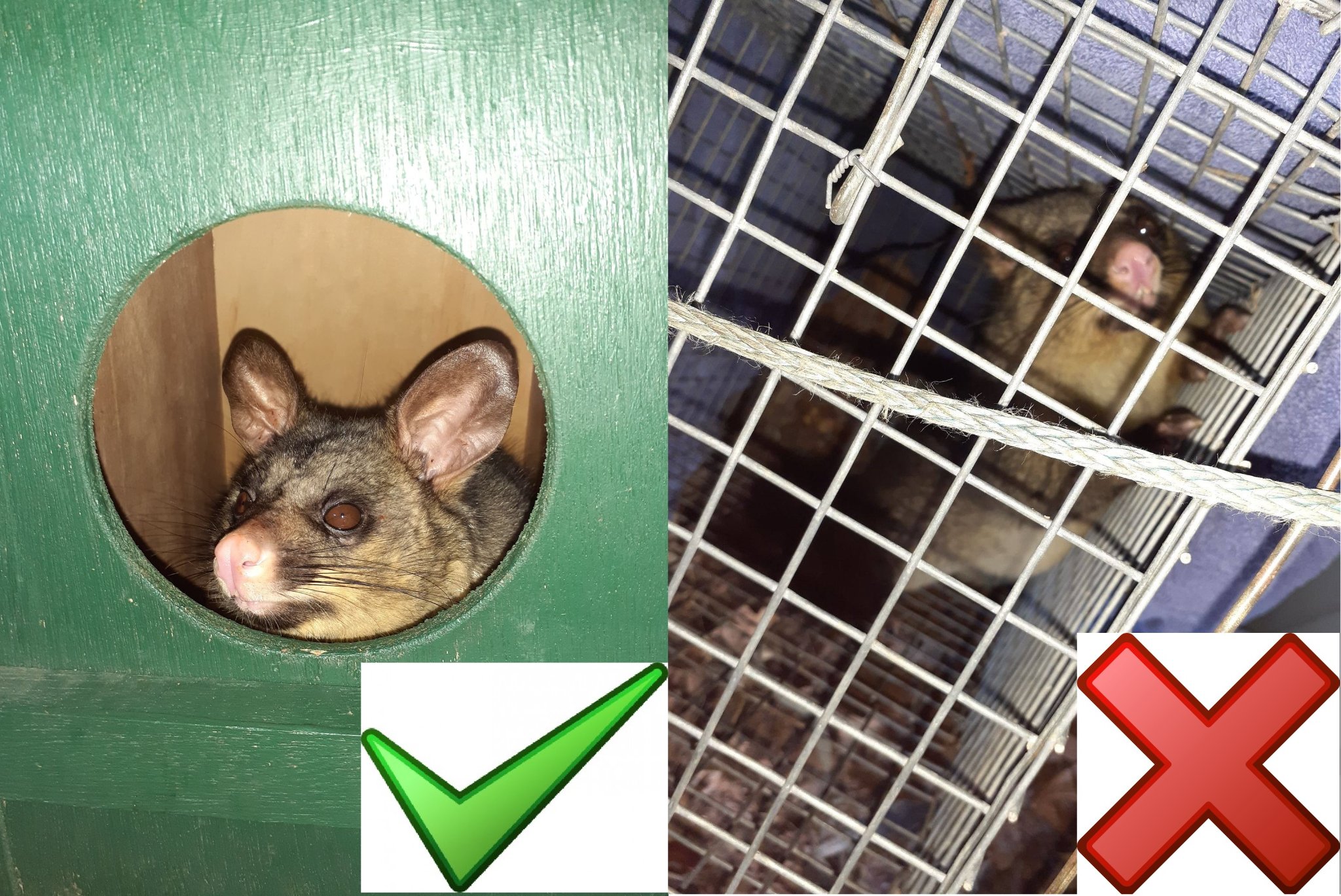
On the weekend, one of our volunteers noticed a driver pull up, get out of their vehicle, open the boot, remove a trap and attempt to dump a possum on a bush track. Fortunately, our member intervened and saved the beautiful female brushtail and the baby in her pouch from certain death. 

It is illegal to relocate a trapped possum more than 150 metres from the point of capture and substantial penalties apply.  Urbanised possums are highly territorial and do not fare well in unfamiliar bushland. In fact, they may starve to death or be taken by predators.

While Sydney Wildlife Rescue does not provide a service to remove possums from your roof, we do offer this advice:

✅ Call us on (02) 9413 4300 and we will refer you to a reliable and trusted licenced contractor in the Sydney metropolitan area. For a small fee they will remove the possum, seal the entry to your roof and provide a suitable home for the possum - a box for a brushtail or drey for a ringtail.
✅ Do-it-yourself by following this advice from the Department of Planning and Environment: 

❌ Do not under any circumstances relocate a possum more than 150 metres from the capture site.
Thank you for caring and doing the right thing.


Sydney Wildlife photos

Aviaries + Possum Release Sites Needed

Pittwater Online News has interviewed Lynette Millett OAM (WIRES Northern Beaches Branch) needs more bird cages of all sizes for keeping the current huge amount of baby wildlife in care safe or 'homed' while they are healed/allowed to grow bigger to the point where they may be released back into their own home. 

If you have an aviary or large bird cage you are getting rid of or don't need anymore, please email via the link provided above. There is also a pressing need for release sites for brushtail possums - a species that is very territorial and where release into a site already lived in by one possum can result in serious problems and injury. 

If you have a decent backyard and can help out, Lyn and husband Dave can supply you with a simple drey for a nest and food for their first weeks of adjustment.

Bushcare in Pittwater: where + when

For further information or to confirm the meeting details for below groups, please contact Council's Bushcare Officer on 9970 1367 or visit Council's bushcare webpage to find out how you can get involved.

BUSHCARE SCHEDULES 
Where we work                      Which day                              What time 

Avalon     
Angophora Reserve             3rd Sunday                         8:30 - 11:30am 
Avalon Dunes                        1st Sunday                         8:30 - 11:30am 
Avalon Golf Course              2nd Wednesday                 3 - 5:30pm 
Careel Creek                         4th Saturday                      8:30 - 11:30am 
Toongari Reserve                 3rd Saturday                      9 - 12noon (8 - 11am in summer) 
Bangalley Headland            2nd Sunday                         9 to 12noon 
Catalpa Reserve              4th Sunday of the month        8.30 – 11.30
Palmgrove Park              1st Saturday of the month        9.00 – 12 

Bayview     
Winnererremy Bay                 4th Sunday                        9 to 12noon 

Bilgola     
North Bilgola Beach              3rd Monday                        9 - 12noon 
Algona Reserve                     1st Saturday                       9 - 12noon 
Plateau Park                          1st Friday                            8:30 - 11:30am 

Church Point     
Browns Bay Reserve             1st Tuesday                        9 - 12noon 
McCarrs Creek Reserve       Contact Bushcare Officer     To be confirmed 

Clareville     
Old Wharf Reserve                 3rd Saturday                      8 - 11am 

Elanora     
Kundibah Reserve                   4th Sunday                       8:30 - 11:30am 

Mona Vale     
Mona Vale Beach Basin          1st Saturday                    8 - 11am 
Mona Vale Dunes                     2nd Saturday +3rd Thursday     8:30 - 11:30am 

Newport     
Bungan Beach                          4th Sunday                      9 - 12noon 
Crescent Reserve                    3rd Sunday                      9 - 12noon 
North Newport Beach              4th Saturday                    8:30 - 11:30am 
Porter Reserve                          2nd Saturday                  8 - 11am 

North Narrabeen     
Irrawong Reserve                     2nd Saturday                   2 - 5pm 

Palm Beach     
North Palm Beach Dunes      3rd Saturday                    9 - 12noon 

Scotland Island     
Catherine Park                          2nd Sunday                     10 - 12:30pm 
Elizabeth Park                           1st Saturday                      9 - 12noon 
Pathilda Reserve                      3rd Saturday                      9 - 12noon 

Warriewood     
Warriewood Wetlands             1st Sunday                         8:30 - 11:30am 

Whale Beach     
Norma Park                               1st Friday                            9 - 12noon 

Western Foreshores     
Coopers Point, Elvina Bay      2nd Sunday                        10 - 1pm 
Rocky Point, Elvina Bay           1st Monday                          9 - 12noon

Friends Of Narrabeen Lagoon Catchment Activities

Bush Regeneration - Narrabeen Lagoon Catchment  
This is a wonderful way to become connected to nature and contribute to the health of the environment.  Over the weeks and months you can see positive changes as you give native species a better chance to thrive.  Wildlife appreciate the improvement in their habitat.

Belrose area - Thursday mornings 
Belrose area - Weekend mornings by arrangement
Contact: Phone or text Conny Harris on 0432 643 295

Wheeler Creek - Wednesday mornings 9-11am
Contact: Phone or text Judith Bennett on 0402 974 105
Or email: Friends of Narrabeen Lagoon Catchment : email@narrabeenlagoon.org.au

Gardens and Environment Groups and Organisations in Pittwater


Ringtail Posses 2023

Australia has new laws to protect nature. Do they signal an end to native forest logging?

David LindenmayerAustralian National University

Reforms to Australia’s nature laws have passed federal parliament. A longstanding exemption that meant federal environment laws did not apply to native logging has finally been removed from the Environment Protection and Biodiversity Conservation Act.

Native forest logging will now be subject to national environmental standards – legally binding rules supposed to set clear goals for environmental protection. This should be a win for the environment, and some have celebrated it as an end to native forest logging in Australia.

But the reality is such celebrations are premature. We don’t have all the details of the new standards, or know how they will be enforced and monitored.

Business as usual?

Federal Environment Minister Murray Watt has told the forestry industry, including in Tasmania, that native forest operations will continue as usual. In an interview with ABC Radio Hobart, he said the changes keep day-to-day forestry approvals with the state government, but introduce stronger federal oversight.

If that is the case, the logging of habitat for endangered species, such as the swift parrot, will continue, pushing these species closer to extinction. The Tasmanian government has shown no signs of willingness to change its current approach.

And if “business as usual” logging persists, the environment reforms will fall far short of what Australia’s forests – and their plants and animals – need.

Uncertain standards

We don’t yet know what the national forestry standards will contain. But the draft standards for some threatened and endangered forest species aren’t enough to arrest ongoing declines, based on drafts I’ve seen that are yet to be publicly released.

Crucially, we can’t meet the habitat requirements for many forest-dependent species by simply replanting previously cleared land. This is because the trees in replanted forests won’t be mature for several hundred years. Many forest-dwelling species live in holes and hollows that occur only in mature trees.

In other words, allowing loggers to “offset” the forests they damage by replanting other areas is broadly impossible. This reinforces longstanding concerns about the limitations of biodiversity offsets as a way to conserve endangered forests and animals.

A parrots hangs upside down and eats a pink blossom.
Swift parrots are fast-flying migratory parrots. They are critically endangered, partly because the forests they nest in are being logged. Thirdsilencenature/FlickrCC BY-ND

Industry pushback

Parts of the forest industry are already seeking to rebrand damaging practices such as mechanical thinning (the removal of large numbers of trees), as forms of so-called “active management” to create healthy forests.

The Australian government’s Timber Fibre Strategy makes extensive reference to the use of “active management”. However, the scientific evidence shows the opposite: such activities can degrade forest structure (by removing key understorey vegetation), facilitate the invasion of weed species, and undermine the ecological integrity of forests.

Different forests

Australia has a vast range of different forest types, and many support a variety of animals and plants threatened by forestry operations.

Effective national standards therefore need to be detailed and sophisticated to deal with such complexity. This will take considerable time to design. And it’s possible each species and forest type will need a different set of standards.

These will need to account not only for the direct impacts of logging – such as the death of animals when their habitat trees are felled – but also indirect impacts. For example, logging can increase fire risk, promote the spread of weeds and feral animals into disturbed areas, and trigger long-term changes in vegetation structure.

Developing national standards is only part of the challenge. Implementing them will demand significant new resources, as well as robust monitoring to ensure governments and logging contractors actually stick to the rules.

Better recovery

Many of Australia’s threatened species don’t have up-to-date recovery plans that will guide the best way to prevent their extinction. And when plans do exist, there is often a lack of resourcing to put them into action.

Without substantial investment, many plants and animals will fall between the cracks, and these new environmental standards will not deliver the change so desperately needed. They must be matched with careful monitoring of species in forests and properly-funded plans for their recovery.

A simple solution

There is a straightforward way to avoid the ecological, administrative, and financial problems created by native forest logging – stop it altogether.

The evidence shows ending native forest logging would deliver significant benefits for biodiversity, forest ecosystems, and reduce fire risks.

It also would benefit government finances because taxpayers would no longer need to subsidise an economically unviable industry that currently loses large amounts of money.

The environment law reforms are to be welcomed. But the devil will be in the detail as to whether hopes for better environmental outcomes and improved forest conservation are realised.The Conversation

David Lindenmayer, Distinguished Professor of Ecology, Fenner School of Environment and Society, Australian National University

This article is republished from The Conversation under a Creative Commons license. Read the original article.

Primed to burn: what’s behind the intense, sudden fires burning across New South Wales and Tasmania

Rachael Helene NolanWestern Sydney UniversityChris GordonWestern Sydney University, and Rachael GallagherWestern Sydney University

Dozens of bushfires raged over the weekend as far afield as the mid-north coast of New South Wales and Tasmania’s east coast. A NSW firefighter tragically lost his life, 16 homes burned down in the NSW town of Koolewong and four in Bulahdelah, and another 19 burned down in Tasmania’s Dolphin Sands.

Temperatures reached 41°C in Koolewong. Strong winds fanned the fires, making them hard to suppress. The speed and intensity of these fires took many by surprise. Why did they do such damage?

Since the megafires of the 2019–20 summer, Australia has had multiple wet years. Vegetation has regrown strongly. In recent months, below-average rainfall has dried out many landscapes, resulting in dry fuels ready to burn. Prime Minister Anthony Albanese has warned these fires point to a “difficult” season ahead.

Do these fires mean Australia is facing another terrible fire season? Not necessarily. The growth of fuel is one thing. But a lot depends on the weather.

Dry fuel, steep terrain and poor access

Big, dangerous bushfires need fuel to burn. Scientists categorise these fuels as either “dead” or “live”. Dead fuels include fallen leaves and twigs on the ground, whereas live fuels include the foliage on living shrubs and trees.

When fuel is wet, it doesn’t burn easily. But when it’s very dry, it burns readily. Drying can happen very quickly on days of high temperatures and low humidity. Fuel dryness can be estimated from weather or satellite data.

Our work has shown fires can spread much more easily when moisture levels drop below 10%.

Over the weekend, we calculated the moisture content of dead fuels fell to critically dry levels, falling below 7% in both Koolewong and Bulahdelah on Saturday December 6. These estimates of dead fuel moisture are derived from our model, which calculates moisture content from gridded maps of temperature and humidity.

Low fuel moisture and strong winds mean higher fire risk. But there are other factors too.

The majority of homes lost in NSW were in Koolewong, just south of Gosford on the Central Coast. Steep terrain and poor access may have contributed to these losses.

Many homes in this region have been built close to eucalypt forests. We know houses are more likely to be destroyed by fire if situated in areas where forests make up more than 60% of the surrounding neighbourhood, compared with houses with a low percentage of surrounding forest.

Many homes here would have been built before current building codes that require bushfire-resistant construction came into effect.

Because performing hazard-reduction burns around homes in forest landscapes is challenging, there’s a greater onus on homeowners in forested areas to ensure their homes are prepared for fire as best as possible. Sometimes, even this won’t be enough.

Primed for fire once again

The fires at Koolewong and Bulahdelah burned through forests that narrowly escaped the 2019–20 Black Summer fires. These megafires burned more than 7.2 million hectares of southern Australia, an area larger than European nations such as Ireland and Denmark. NSW was hardest hit.

Since that devastating summer, NSW has had a reprieve. Years of wetter-than-average conditions followed, with the exception of 2023.

Bushfires burn through the built-up fuel on the ground, making fires in following years less likely. This protective effect is usually strongest in the first five years after fire.

This summer marks six years since the Black Summer. Wet conditions have meant fuel loads are fast recovering – especially in the tracts of land where severe fires raged, burning up into the canopy. After the fires, the blackened landscape was left with high light levels. This, coupled with several very wet years, has led to ideal conditions for vegetation growth.

Our recent research shows there are now very high levels of midstorey fuels in many areas – flammable shrubs and regenerating eucalypts. These elevated fuels can make a fire much more intense. That’s because they act as a ladder for flames burning along the forest floor to reach up into the trees and potentially start a canopy fire.

What lies ahead?

Drought conditions have now eased for much of southern Australia – with the exception of eastern NSW.

The Bureau of Meteorology has declared a weak La Niña event is in progress. These events typically bring wetter, cooler conditions to much of Australia. But this one seems weak, and climate change is making it harder to predict them based on the historic record. Long-range forecasts predict rainfall is actually likely to be lower than average over December.

These intense fires and dry conditions mean we should be careful this fire season – especially in drought-affected eastern NSW.The Conversation

Rachael Helene Nolan, Associate Professor, Hawkesbury Institute for the Environment, Western Sydney UniversityChris Gordon, Research Fellow in Landscape Ecology, Western Sydney University, and Rachael Gallagher, Professor and ARC Future Fellow, Hawkesbury Institute for the Environment, Western Sydney University

This article is republished from The Conversation under a Creative Commons license. Read the original article.

We watched these coral colonies succumb to black band disease. 6 months later, 75% were dead

Shawna FooUniversity of Sydney and Maria ByrneUniversity of Sydney

During the last global coral bleaching event in 2023 and 2024 , the Great Barrier Reef experienced the highest temperatures for centuries and widespread bleaching. With bleaching events becoming more frequent, the very existence of coral reefs is under threat.

This, in case it’s not clear, is a major problem. Coral reef ecosystems are essential for many species of plants and animals to survive. They provide humans with essential food security (many fish can’t survive without them), prosperity (via tourism and fisheries) and shoreline protection.

But heat stress can weaken corals, making them vulnerable to disease. At the same time, warm conditions can make the pathogens that cause disease stronger and more virulent.

For our research, published today in Proceedings of the Royal Society B, we tracked hundreds of coral colonies on One Tree Reef in the southern Great Barrier Reef in Australia during a 2024 heatwave. Weakened by heat stress, one particular type of boulder coral, Goniopora, developed a disease called black band disease.

These corals are old – probably at least 100 years old – and are like the old growth forest of the reef.

Six months later, 75% of these coral colonies in the reef community we monitored were dead.

This is especially worrying because these massive corals are normally quite resilient to heat stress. Even the strong are now struggling to survive.

And their huge, dead bodies can detach from the reef and hurtle around, crushing and destroying other corals in their path.

What we found on the Great Barrier Reef

We were originally tracking multiple sites on One Tree Reef in response to an extreme heatwave. We wanted to understand which coral species were more resistant and which were more sensitive to heat stress.

It was a surprise to see the bleached boulder corals quickly get infected by black band disease.

Black band disease is caused by a group of pathogenic microbes that kill coral tissue. These pathogens naturally occur in the environment but this is the first time such a disease epidemic has been observed on the Great Barrier Reef.

The disease appears as a black band, leaving behind bare skeleton as it destroys the coral tissue and spreads throughout the colony. Around the world, black band disease has been recorded on many different coral species. This disease has wiped out reefs in the Caribbean and fundamentally altered reef structure and function.

review of coral diseases on the Great Barrier Reef shows that black band disease is mostly found on branching corals. Branching corals are more delicate and tree-like in comparison to sturdy, boulder corals.

Our findings are curious because on One Tree Reef only one particular species, a normally resilient boulder-like coral, was affected.

Black band disease virtually wiped out these corals at the site we were monitoring.

In other words, ordinarily strong and resilient corals are now succumbing to this disease. This is extremely troubling.

Why is this worrying?

This boulder-like coral, specifically from the genus Goniopora, has long, flower-like tentacles that sway with the currents.

A key reef-building coral on the Great Barrier Reef, it is very slow-growing compared to branching corals. Goniopora tends to be more resistant to disturbance and is often found in areas of lower water quality.

Living for hundreds of years, it can form extensively large coral patches supporting a wide range of organisms. These long-lived corals form the backbone structure of reefs providing refuge for a range of invertebrates and fish. Because of their size, they help buffer coastlines from waves.

We found that six months after the 2024 heatwave, the colonies we were tracking had been all but wiped out. At least 75% were dead.

Of the surviving colonies, 64% had experienced partial coral tissue death due to black band disease. While other species of corals showed signs of recovery after the heatwave, we didn’t see any recovery at all for the boulder corals.

Killer bowling balls

One Tree Reef is one of the most protected coral reefs on the Great Barrier Reef.

Previously, outbreaks of black band disease have been linked to coastal stressors such as pollution and high nutrients. Given One Tree Reef is 80 km offshore in open ocean, its isolation protects it from land-based pressures.

This makes the disease prevalence and rapid spread at One Tree Reef particularly concerning.

Once the coral tissue is killed by the disease, the skeleton is quickly covered by algae (and other organisms) that eat away at the skeleton. We noticed the breakdown of the boulder coral skeleton began surprisingly fast after the colony died.

This process usually takes many months to years. By six months, though, we found these boulder corals were unstable and began to detach from the reef.

This is dangerous as they can act like bowling balls if moved by waves and tropical cyclones, destroying surrounding reef.

These large structural corals that have survived for hundreds of years are now lost from this reef, resulting in a potentially permanent change to the ecosystem.

Black band disease is one of the earliest recorded coral diseases, first identified in the Caribbean. There, it has driven high mortality in corals and reshaped entire coral communities. Our results are beginning to echo these devastating disease outbreaks seen in the Caribbean.

With coral disease expected to rise with climate change, our findings reinforce the need for urgent global action and for ambitious climate and reduced emissions targets.The Conversation

Shawna Foo, Senior Research Fellow, School of Life and Environmental Sciences, University of Sydney and Maria Byrne, Professor of Marine Biology, University of Sydney

This article is republished from The Conversation under a Creative Commons license. Read the original article.

Big batteries are now outcompeting gas in the grid – and gas-rich Western Australia is at the forefront

Peter NewmanCurtin University and Ray WillsThe University of Western Australia

Australia’s electricity grids are undergoing a profound transformation. Solar and wind have provided 99% of new generating capacity since 2015. Last month, renewables hit parity with fossil fuels for the first time.

But there’s a lesser-known part to the story. Renewable output varies, which means they need to be backed up. For years, authorities have predicted gas power stations would remain necessary to back up or “firm” renewables. But increasingly, this work is being done instead by large-scale batteries.

Grid batteries have rapidly moved from a supporting role to prime time by firming renewables, ramping up output very rapidly and boosting system security by ensuring a stable voltage. Battery capacity in the pipeline has soared from 3 gigawatts in 2022 to 26GW in 2025 in Australia’s main power grid, the National Electricity Market.

Batteries can soak up a glut of solar and release it back to the grid during evenings. It’s nowhere more visible than in isolated Western Australia, which has its own separate power grids.

In recent months, renewables (largely solar) have begun supplying more than half (55%) of the electricity to WA’s Wholesale Electricity Market. Batteries are increasingly overtaking large-scale solar and gas generation in meeting peak demand.

As grid operators grow more comfortable with the capabilities of grid batteries, it will become less necessary to burn gas for power. One of the world’s top gas exporters is now demonstrating how to avoid using this fossil fuel.

Batteries coming of age

The latest plans from the Australian Energy Market Operator show battery storage is anticipated to keep growing sharply.

The market operator anticipates Australia will need 14GW of gas power capacity by 2050. Gas will shift from firing up at times of peak demand to act largely as a backup for renewables and storage.

But even this role isn’t certain. The plunging cost of grid-scale batteries means gas and even hydropower will struggle to compete over the next ten years. Other analysts have come to similar conclusions.

Western Australia, global testbed

WA has taken up batteries at remarkable speed. Major new systems have been deployed in Kwinana, an industrial area of Perth, and the coal town of Collie. Collectively, these grid batteries have more than 5 gigawatt-hours of storage.

These batteries supplied more than 20% of evening peak demand and surpassing gas generation sources in a recent week.

Throughout November, renewables provided 55% of power to WA’s main grid, well above the National Energy Market’s 50%. What’s impressive is this was achieved without using hydropower or drawing power from other states. The system relied on rooftop solar, solar farms, wind and batteries.

large grid battery seen from air
The first two stages of the Collie battery are now up and running. The project could expand further. Neoen

Overseas, states such as California have been using batteries with significant success. And, WA is showing how it can be done without interconnections.

Records tumbled throughout November, including periods where wind and solar met 100% of demand in WA’s main grid. Batteries meant some coal and gas generators kept running to provide grid services but not power. As grid batteries expand, this won’t be necessary.

Coal is already on life support in Australia. And, in this fastest energy transformation in human history, WA is showing that gas, too, will pass and be replaced.

Batteries bypassing gas in the main grid

In November, the National Electricity Market also passed a major milestone when large batteries put more power into the grid than gas peaker plants for the first time.

Industry analysts now expect batteries to become the primary tool to firm renewables on Australia’s main grid within a few years. The Eraring, Mortlake and Melbourne Renewable Energy Hub grid batteries will soon come online. Investment in grid batteries has surged from A$100 million to billions a year.

The federal government’s new home battery subsidy scheme has been wildly popular. Around 146,000 have now been installed, though there are questions about cost blowout and the size of batteries installed.

Distributed energy storage such as home batteries and electric vehicle batteries could supply more overall storage than grid-scale batteries before 2030.

The facts on the ground are changing quicker than many policymakers anticipated.

The heartbeat of the grid

One challenge for clean grids is how to replace the spinning turbines of coal and gas plants, which have stabilised electricity voltage for decades. Solar and wind can’t easily provide the vital inertia these spinning machines provide.

It turns out big batteries can provide this service without spinning turbines. In recent months, there’s been debate over whether big batteries will be allowed to stabilise the grid – essentially, giving the grid its heartbeat.

Australia’s energy market operator anticipates an increasing role for batteries to do this work too by pairing batteries with grid-forming inverters and “virtual synchronous machines” to ensure electricity is delivered at the grid requirements for frequency and voltage.

Real-world applications in Australia and elsewhere show batteries can do the job more precisely and efficiently than fossil fuel plants.

The question now is how quickly market rules and grid standards can be updated to allow batteries and inverters to do this at scale.

Of course, batteries aren’t a silver bullet. As the market operator’s plan for the electricity system makes clear, the optimal future grid will combine grid-scale batteries, pumped hydro, management of electricity demand, and widespread rooftop solar, home batteries and EV batteries.

Finding ways to coordinate use of Australia’s rapidly growing household energy storage capacity and tapping into EV batteries through V2G technology could avoid overspending on grid-scale storage.

A farewell to gas?

As battery storage grows, the need for a gas backup for the grid will shrink.

Expensive gas peaking plants are already being outcompeted in Australia’s main grid, while WA’s enthusiastic battery takeup is showing how isolated grids can rely more and more on solar, wind and storage.The Conversation

Peter Newman, Professor of Sustainability, Curtin University and Ray Wills, Adjunct Professor, The University of Western Australia

This article is republished from The Conversation under a Creative Commons license. Read the original article.

Hundreds of iceberg earthquakes detected at the crumbling end of Antarctica’s Doomsday Glacier

Copernicus / ESACC BY
Thanh-Son PhamAustralian National University

Glacial earthquakes are a special type of earthquake generated in cold, icy regions. First discovered in the northern hemisphere more than 20 years ago, these quakes occur when huge chunks of ice fall from glaciers into the sea.

Until now, only a very few have been found in the Antarctic. In a new study soon to be published in Geophysical Research Letters, I present evidence for hundreds of these quakes in Antarctica between 2010 and 2023, mostly at the ocean end of the Thwaites Glacier – the so-called Doomsday Glacier that could send sea levels rising rapidly if it were to collapse.

A recent discovery

A glacial earthquake is created when tall, thin icebergs fall off the end of a glacier into the ocean.

When these icebergs capsize, they clash violently with the “mother” glacier. The clash generates strong mechanical ground vibrations, or seismic waves, that propagate thousands of kilometres from the origin.

What makes glacial earthquakes unique is that they do not generate any high-frequency seismic waves. These waves play a vital role in the detection and location of typical seismic sources, such as earthquakes, volcanoes and nuclear explosions.

Due to this difference, glacial earthquakes were only discovered relatively recently, despite other seismic sources having been documented routinely for several decades.

Varying with the seasons

Most glacial earthquakes detected so far have been located near the ends of glaciers in Greenland, the largest ice cap in the northern hemisphere.

The Greenland glacial earthquakes are relatively large in magnitude. The largest ones are similar in size to those caused by nuclear tests conducted by North Korea in the past two decades. As such, they have been detected by a high-quality, continuously operating seismic monitoring network worldwide.

The Greenland events vary with the seasons, occurring more often in late summer. They have also become more common in recent decades. The signs may be associated with a faster rate of global warming in the polar regions.

Elusive evidence

Although Antarctica is the largest ice sheet on Earth, direct evidence of glacial earthquakes caused by capsizing icebergs there has been elusive. Most previous attempts to detect Antarctic glacial earthquakes used the worldwide network of seismic detectors.

However, if Antarctic glacial earthquakes are of much lower magnitude than those in Greenland, the global network may not detect them.

In my new study, I used seismic stations in Antarctica itself to look for signs of these quakes. My search turned up more than 360 glacier seismic events, most of which are not yet included in any earthquake catalogue.

The events I detected were in two clusters, near Thwaites and Pine Island glaciers. These glaciers have been the largest sources of sea-level rise from Antarctica.

Earthquakes at the Doomsday Glacier

Thwaites Glacier is sometimes known as the Doomsday Glacier. If it were to collapse completely it would raise global sea levels by 3 metres, and it also has the potential to fall apart rapidly.

About two-thirds of the events I detected – 245 out of 362 – were located near the marine end of Thwaites. Most of these events are likely glacial earthquakes due to capsizing icebergs.

The strongest driver of such events does not appear to be the annual oscillation of warm air temperatures that drives the seasonal behaviour of Greenland glacier earthquakes.

Instead, the most prolific period of glacial earthquakes at Thwaites, between 2018 and 2020, coincides with a period of accelerated flow of the glacier’s ice tongue towards the sea. The ice-tongue speed-up period was independently confirmed by satellite observations.

This speed-up could have been caused by ocean conditions, the effect of which is not yet well understood.

The findings suggest the short-term scale impact of ocean states on the stability of marine-terminating glaciers. This is worth further exploration to assess the potential contribution of the glacier to future sea-level rise.

The second largest cluster of detections occurred near the Pine Island Glacier. However, these were consistently located 60–80 kilometres from the waterfront, so they are not likely to have been caused by capsizing icebergs.

These events remain puzzling and require follow-up research.

What’s next for Antarctic glacial earthquake research

The detection of glacial earthquakes associated with iceberg calving at Thwaites Glacier could help answer several important research questions. These include a fundamental question about the potential instability of the Thwaites Glacier due to the interaction of the ocean, ice and solid ground near where it meets the sea.

Better understanding may hold the key to resolving the current large uncertainty in the projected sea-level rise over the next couple of centuries.The Conversation

Thanh-Son Pham, ARC DECRA Fellow in Geophysics, Australian National University

This article is republished from The Conversation under a Creative Commons license. Read the original article.

Millions of hectares are still being cut down every year. How can we protect global forests?

David Clode/UnsplashCC BY
Kate DooleyThe University of Melbourne

Ahead of the United Nations climate summit in Belém last month, Brazil’s President Lula da Silva urged world leaders to agree to roadmaps away from fossil fuels and deforestation and pledge the resources to meet these goals.

After failing to secure consensus, COP president Andre Corrêa do Lago announced these roadmaps as a voluntary initiative. Brazil will report back on progress at next year’s UN climate summit, COP31, when it hands the presidency to Turkey and Australia chairs the negotiations.

Why now?

These goals originate in the outcomes of the first global stocktake of the world’s progress towards the Paris Agreement goals, undertaken in 2023.

At the COP28 talks in Dubai in that year, there was an agreement to transition away from fossil fuels and to halt and reverse deforestation and forest degradation by 2030.

Yet achieving these goals relies on a “just transition”, where no country is left behind in the transition to a low-carbon future, including a “core package” of public finance to address climate adaptation, and loss and damage. The Belém outcome fell short.

Forests need urgent protection

Forest loss and degradation is continuing, at an average rate of 25 million hectares a year over the last decade, according to the Global Forest Watch. This is 63% higher than the rate needed to meet existing targets to halt and reverse forest loss by 2030. Yet the climate pledges submitted for the Belém COP remain far off track from this goal.

In the 2025 Land Gap Report, my colleagues and I calculated the scale of this “forest gap” – the gap between 2030 targets and the plans countries are putting forward in their climate pledges.

We show the pledges submitted up until this year’s climate summit would cut deforestation by less than 50% by 2030, meaning forests spanning almost 4 million hectares would still be cut down. The pledges would lead to forest degradation – where the ecological integrity of a forest area is diminished – of almost 16 million hectares. This is only a 10% reduction on current rates.

Together, this equates to an anticipated “forest gap” of around 20 million hectares expected to be lost or degraded each year by 2030. That’s about twice the size of South Korea.

While this underscores the inadequacy of commitments, the analysis is based on pledges submitted up to the start of November 2025, at which point only 40% of countries had submitted an updated plan. Major pledges submitted during COP31, such as from the European Union and China, don’t change this analysis.

A graph which shows the rate of deforestation.
This graph shows that deforestation will only slightly decline to 2030. The Land Gap Report, author supplied.CC BY-ND

Forest wins in Belém

A new fund for forest conservation called the Tropical Forests Forever Facility was launched in Brazil, attracting $US6.7 billion in pledges ($A9.9 billion).

The forest fund focuses on tropical deforestation, the leading cause of emissions from forest loss. But it has a key weakness: the limited monitoring of forest degradation, which could allow countries to receive payments while still logging primary forests.

The fund will establish a science committee and plans to revise monitoring indicators over the next three years, creating an opportunity to strengthen its ability to protect tropical forests.

The COP30 leaders’ summit also saw the launch of a historic pledge of $US1.8 billion ($A2.7 billion) to support conservation and recognition of 160 million hectares of Indigenous Peoples’ and local communities’ territories in tropical forest countries.

But global action on forests needs to extend beyond the tropics. Across both deforestation and forest degradation, countries in the global north are responsible for over half of global tree cover loss over the past decade.

Beyond tropical forests

A global accountability framework on forests is needed to increase ambition on climate action, including in countries and regions with extensive forests outside of the tropics, such as Australia, Canada and Europe.

In these regions, industrial logging is a major driver of tree-cover loss but receives far less political attention than tropical deforestation. Wide gaps in reporting – between deforestation and degradation – mean logging-related degradation often goes unreported.

In a recent report, only 59 countries said they monitor forest degradation. Of these, almost three-quarters are tropical forest countries.

The IUCN World Conservation Congress which convened in Abu Dhabi this year prior to the climate talks, passed a motion on delivering equitable accountability and means of implementation for international forest protection goals. This arose from a recognised need to promote greater equity between forest protection standards across countries.

All of this points to an urgent need to tackle accountability in global forest governance. The forest roadmap to be developed for COP31 in Turkey could help drive stronger alignment and transparency across UN processes – from the UN Forum on Forests’ 2017–2030 plan to the Kunming–Montreal Global Biodiversity Framework’s 2030 target to halt and reverse biodiversity loss.

Australia could lead on forests

Australia could help shape global forest ambition in the year ahead. It is currently the only country whose emissions pledge promises to halt and reverse deforestation and degradation by 2030 – a clear signal that developed countries must lead.

As President of Negotiations at COP31, Australia can also work to bring Brazil’s fossil-fuel and forest roadmaps into formal negotiations. But this depends on two things: credible leadership from developed countries and long-overdue climate finance. As a deforestation hotspot with ongoing native forest logging, Australia has considerable work to do to meet this responsibility.The Conversation

Kate Dooley, Senior Research Fellow, School of Geography, Earth and Atmospheric Sciences, The University of Melbourne

This article is republished from The Conversation under a Creative Commons license. Read the original article.

Can smart greenhouses bring back food production in cities?

Vera XiaUniversity of Sydney

Sydney, like many other Australian cities, has a long history of urban farming. Market gardens, oyster fisheries and wineries on urban fringe once supplied fresh food to city markets.

As suburbs expanded, many farms in and around cities were converted to houses, roads and parks. The process is continuing.

But this isn’t the whole story. Urban farming is making a comeback in a different guise.

Underneath the Barangaroo towers in Sydney’s CBD, a basement carpark has been transformed into a farm. Trays of more than 40 different varieties of sprouts and microgreens grow under LED lights, often maturing within two weeks. Within hours of harvest, they’re in the kitchens of nearby restaurants.

The urban farmers use sensors, ventilation systems and smartphone apps to ensure growing conditions are ideal. From around 150 square metres, farmers produce about 5,000 punnets a week. Farms such as this one at Urban Green Sydney are part of a broader shift towards high-tech urban farming.

In my research, we asked what these new forms of urban farming mean for cities. Do they make cities and their far-flung food supply chains more resilient to climate change – or do they consume energy without enough to show for it?

urban farm in sydney.
Urban smart greenhouses work well for microgreens, herbs and several other crops. Vera XiaCC BY-NC-ND

Greenhouse – or laboratory?

Greenhouses are a way of controlling the growing conditions for plants. The technology has deep historical roots, from early greenhouse experiments during the Roman Empire to progress in 15th century Korea and advances during the Victorian era such as the Wardian Case, which allowed live plants to survive long sea voyages.

Traditional greenhouses act as climate-controlled enclosures for plants. These days, smart greenhouses use sensors and digital monitoring to optimise, and often automate, plant growth.

Large-scale rural farms such as South Australia’s Sundrop Farms already demonstrate how smart greenhouses, renewable energy and desalination can power food production in harsh climates. Overseas, countries including Spain and China have rolled out smart greenhouses at scale in rural areas.

But these technologies are being urbanised, appearing in commercial buildings, rooftops and even domestic kitchens.

One of the best places to see what smart greenhouses look like is the Agritech Precinct at Western Sydney University. Here, researchers experiment with the “unprecedented control” of temperature, humidity and light the technologies permit on crops such as eggplants and lettuce.

The greenhouses use drones to water crops, robotic arms to harvest them and smart lighting systems to manage growth. Visiting these facilities doesn’t give you the sense you’re in a farm. It feels more like a laboratory.

Technologies like these are promoted in official plans for Greater Sydney, which call for “new opportunities for growing fresh food close to a growing population and freight export infrastructure associated with the Western Sydney Airport”, particularly in Sydney’s peri-urban areas.

Australia is funding research on improving these technologies as a way to future-proof food production.

Researchers are conducting similar experiments with smart greenhouses around the world, from the United States to the Netherlands.

Which crops work best in cities?

Smart greenhouses can’t do everything.

Grain crops need much more space. Fruit trees don’t work well with space constraints. Some vegetable crops don’t lend themselves well to intense high-tech production.

The cost of running LED lights and smart systems mean farmers have to focus on what’s profitable. Many hyped urban farming ventures have failed.

These challenges don’t mean the approach is worthless. But it does mean farmers have to be selective about what they grow. To date, crops such as tomatoes, leafy greens, and herbs have proven the best performers. These crops can be grown relatively quickly in space-restricted, repurposed urban areas mostly hidden from public view and sold to restaurants or individual buyers.

Smart greenhouses producing these type of crops have emerged in MelbournePerth and Adelaide.

Urban farmers often draw on the promise of sustainability and low food miles in their branding. But the technologies raise questions around equity. Do these farms share environmental and social benefits fairly across the city or are they concentrated in a few rich areas?

red LED light on lettuces growing indoors.
Smart greenhouses can optimise plant growing conditions – but come at an energy cost. Ann H/PexelsCC BY-NC-ND

Smart greenhouse technology – at home?

The humble veggie patch is an Australian staple. But the shift to apartment living and larger building sizes risks crowding it out.

At household scale, smart greenhouses and apps are making it possible for some people to begin producing larger volumes of food in kitchens, balconies and backyards as a DIY method of boosting food security and self-sufficiency.

Compact growing appliances promise to automate production of fresh herbs and baby vegetables. Hydroponic grow tents can grow almost anything indoors (though they are commonly used for illicit crops). Maker communities are using open-source tools such as Hackster to automate watering, lighting and data collection.

Using these technologies at home seems positive, acting to boost home-grown food supplies and increase resilience in the face of food supply chain issues. In fact, it’s perhaps the most uneven frontier. Rather than working to spread smart agriculture across a cityscape, these approaches resemble prepping – efforts to boost individual household resilience.

Making best use of smart greenhouses in cities

At their best, smart greenhouses dotted around cities work to create controlled environments where food can be produced close to where it is eaten. These high-tech, climate controlled environments are often hidden from view.

They promise resilience against the disruption climate change is bringing to agriculture and shorter supply chains. But these food production technologies also risk deepening inequality if they’re mainly taken up by wealthy consumers.

Whether these technologies ultimately benefit cities will depend on how they are integrated and positioned within our urban systems.

For urban authorities, the challenge is to ensure these emerging methods of producing food in the heart of cities boosts resilience collectively rather than fragment it. It will take policy guidance to ensure the benefits of these smart farms are shared equally.The Conversation

Vera Xia, Lecturer in Design and Urban Technology, University of Sydney

This article is republished from The Conversation under a Creative Commons license. Read the original article.

Government reveals taxpayer-funded deal to keep Australia’s largest aluminium smelter open. How long will we pay?

Tony WoodGrattan Institute

It seemed inevitable – politically at least – that the federal government would step in to save Tomago Aluminium in New South Wales, Australia’s largest aluminium smelter.

Rio Tinto, the owners of Tomago, has enjoyed attractively priced electricity for a long time, most recently with AGL. But this contract ends in 2028. Unable to find a replacement at a price it could accept, Rio Tinto warned that Tomago was facing closure. Tomago produces more than one-third of Australia’s aluminium and accounts for 12% of NSW’s energy consumption.

On Friday, Prime Minister Anthony Albanese announced a Commonwealth-led deal for electricity supply beyond 2028. This deal will provide the smelter with billions of dollars in subsidised power from the Commonwealth-owned Snowy Hydro through a portfolio of renewables, backed by storage and gas. This follows months of negotiation to avoid the smelter closing and sacking its roughly 1,000 workers.

The government has provided funding to support other struggling manufacturers such as the Whyalla steelworks and the Mount Isa copper smelter, and wants to see aluminium production continue in Australia. About 30–40% of the cost of making aluminium is the energy, so it’s a huge input. Electricity from the market would have been considerably more expensive, so the government is subsidising the commercial price.

The deal may have been a necessary and immediate solution to a political problem with local economic and social impacts. However, it raises several important questions about the risks involved and the longevity of the plant.

Risks and benefits

First, to what risk is the federal government exposed? Commodity markets such as aluminium are prone to difficult cycles, and there’s a chance Tomago might not survive at all, in which case the government is off the hook.

Not only are we looking to subsidise Tomago’s electricity, but we are looking for Snowy Hydro to invest in renewable energy projects and build more renewable energy in NSW. The history of building renewable energy and its support transmission infrastructure suggests that both cost and time constraints become problematic. The NSW government may have a role in supporting this side of the deal.

The Commonwealth’s case for making this deal is presumably underpinned by its Future made in Australia policy. This says we should be supporting industries where there’s a national interest in a low-emissions world. So if, for example, we can see a future where subsidising Tomago’s electricity for five or ten years would mean it can produce low-emission aluminium the world wants to buy, that would be a success.

But what happens if, after five or ten years, the world hasn’t sufficiently changed to provide enough renewable energy to make our electricity cost less? What if the rest of the world wants green, low-emissions aluminium, but that’s not what Australia produces? If the risks the government is underwriting crystallise in a bad way, does the government have an exit strategy?

We’ve been here before

In 1984, under the leadership of John Cain, the Labor government signed a joint venture agreement with Alcoa to build an aluminium smelter at Portland, including a deal to subsidise electricity until 2016. Forty years later, we’re still pay for it.

With Tomago, we don’t want Australian taxpayers exposed to something over which we have no control – the global price of aluminium. If the price of aluminium collapses, or Snowy Hydro is permanently uncompetitive or China dominates the world market, the hypothesis that Tomago can be competitive in the long term collapses.

Interestingly, this deal is very different to the one the Commonwealth and Queensland governments have done to support Rio Tinto’ Boyne smelter in Gladstone.

In October, Rio Tinto announced plans to possibly bring forward the closure of Gladstone Power Station to 2029, six years ahead of the current schedule, and supply the smelter with predominantly renewable electricity. The move was welcomed by environmental groups, as Gladstone is Queensland’s oldest and largest coal-fired station.

But some commentators have said closing the plant in four years’ time is unrealistic, and a staged phase-out would be better.

The announcement this week, welcomed by the business and its workers, is probably unsurprising. But we haven’t seen the detail. The government may very well have a case for this deal, but the future of the plant and its power supply remain unknowable. The risks with taxpayer funds may have been worth taking, but they should be clearly explained and justified.The Conversation

Tony Wood, Program Director, Energy, Grattan Institute

This article is republished from The Conversation under a Creative Commons license. Read the original article.

Travel influencers ‘do crazy things’ to entertain us – and downplay the risks

Samuel CornellUNSW Sydney

It’s common for Australians to use social media to find their next hike or swimming spot. And there’s a huge array of travel influencers willing to supply the #inspo for their next trip.

Many of these influencers create their content in a way that respects the environment and their followers. But unfortunately, not all #travelspo is made with such consideration.

My new research reveals how Australian travel and adventure influencers think about risk, responsibility and their role in shaping how their followers behave in natural environments.

Collectively, their accounts reach tens of thousands of people and prompt them to visit these parks in real life. Yet most influencers in my study saw themselves as entertainers, not educators.

And that distinction can have consequences, such as falls and drownings. People are risking their lives at cliff edges, mountain overhangs and around water. In fact, 379 people died taking selfies between 2008 and 2021.

‘Here to inspire, not teach’

I interviewed 19 Australian influencers aged 23–41 who specialise in travel and outdoor content.

Despite their large followings (up to 80,000), many rejected the idea they have a responsibility to overtly warn people about hazards.

As one put it:

“We’re not an education page. If you want [to know?] what you should and shouldn’t be doing, follow a National Parks page.”

Another explained that influencers are :

“just there to entertain.”

Influencers consistently distanced themselves from the expectation they should communicate safety information. Many argued it was up to followers to “do their own research” or take “personal responsibility” when attempting the difficult hikes, cliff-edge photos or waterhole jumps they had seen online.

A few admitted they would “feel guilty” if someone was injured imitating their content, but quickly neutralised that responsibility by noting there was no way to know whether their post had caused the behaviour.

Why downplay hazards?

Social media platforms reward spectacular content. Posts showing people on cliff edges, waterfalls, remote rock formations or narrow ledges outperform more banal imagery.

One influencer was blunt:

“People want to watch people do crazy things… not talk about risk.”

Others acknowledged they sometimes entered closed areas or assessed hazards themselves, dismissing signage unless they believed it related to environmental or cultural protection.

A national survey we conducted found that social norms – the sense that “everyone does this” or will admire it – strongly predicted risky behaviour outdoors. People were far more likely to climb out onto ledges or jump into waterfalls if they believed others would approve. How risky they thought the activity was barely seemed to matter.

Influencers also curate a platform-specific aesthetic: Instagram is “perfect”, TikTok more “raw”, but neither encourages long, careful explanations of risk. Detailed safety advice was described as “ruining the vibe” or diminishing the illusion that inspires engagement.

This creates a perverse incentive: the more dangerous the content looks, the better it performs, meaning influencers may unintentionally promote behaviours unsafe for many followers.

Online posts are trusted

Australians treat influencer content as a trusted source of outdoor inspiration.

Followers may assume a location is safe because an influencer went there and filmed it. This impression is strengthened by the influencers’ perceived authenticity — a form of experiential credibility that substitutes for formal expertise.

Influencers in my study acknowledged their posts can send large numbers of unprepared visitors to fragile or hazardous environments. Some refused to share exact locations for this reason. Others posted the image but omitted details to avoid encouraging inexperienced users to attempt risky spots.

But most still avoided overt safety messaging because it felt mismatched to their brand — or simply because posts that highlighted difficulty or danger “don’t perform well”.

As I’ve argued elsewhere, our increasingly curated experience of the outdoors – from manicured trails to social media-driven expectations – has weakened the sense of personal responsibility that once came with venturing into nature.

Influencer content amplifies this shift by presenting the outdoors as effortless, aesthetic and risk-free, even when the reality is very different.

Why this matters

This dynamic creates challenges for Australia’s national parks and land managers. My earlier research showed rangers are dealing with increased injuriesrescues and environmental strain linked to social media-driven visitation.

In my work with the Queensland National Parks and Wildlife Service, I saw first-hand how social media funnels huge numbers of people into the same photogenic spots.

About a third of visitors said Instagram had influenced their decision to visit, and many described going “for the photo” rather than for the walk or the landscape itself. That behaviour often puts pressure on rangers and increases the likelihood of slips, falls and rescues.

Influencers hold enormous reach with audiences that official agencies often struggle to connect with. Many are open to collaborating – but only when safety messages can be delivered in ways that fit their storytelling style and personal brand.

As one influencer summed up:

“If it’s culturally sensitive or damaging to the environment, that’s where I draw the line. But safety – I’m happy to push the boundaries.”

Risk-taking gets rewarded

Influencers are not acting maliciously. They operate within a commercial and algorithmic system that rewards spectacle over nuance.

But understanding how they see their role helps explain why risky content thrives — and why followers may misjudge the real-world hazards behind the perfect shot.

If organisations want to reduce injuries and environmental pressures, engaging influencers through co-designed communication strategies may be essential. Because for many Australians, the journey outdoors now begins on a screen.The Conversation

Samuel Cornell, PhD Candidate in Public Health & Community Medicine, School of Population Health, UNSW Sydney

This article is republished from The Conversation under a Creative Commons license. Read the original article.

How European colonisation has created more animal hybrids

Pawel Papis/Shutterstock
Lachie ScarsbrookUniversity of OxfordGreger LarsonUniversity of Oxford, and Laurent FrantzLudwig Maximilian University of Munich

Humans have moved plants and animals well beyond their native ranges, across barriers that normally prevent dispersal. As a result, people have increased the rates of hybridisation between populations that were once isolated for thousands, or even millions, of years.

Animal hybrids are a controversial issue among scientists, as they often suffer from health issues.

But our new study of Australian dingoes, published in the journal PNAS, found that hybridisation with introduced European dogs might have had evolutionary benefits.

New species can evolve when a subset of the population becomes separated, often by physical barriers like mountains or oceans. Over time, these isolated populations accumulate unique genetic mutations, some of which become fixed. If these populations spend long enough apart, they become so different they can no longer interbreed.

Although they were once domestic, dingoes became isolated from other dogs around 3,500 years ago and evolved into free-living apex predators. Some scientists argue that the dingoes’ distinct appearance and behaviour warrant their recognition as a new species. Others claim that hybridisation with domestic dogs, which were brought to the continent by Europeans from the late-18th century onwards, has blurred this boundary.

Dingoes were translocated to K'gari (Fraser Island) by the Butchulla people before the arrival of Europeans. CC BY

Humans have been moving animals around for millennia. When farmers spread from the Near East into Europe around 8,500 years ago, for example, the domestic pigs that accompanied them came into contact and mated with European wild boar. In some cases where there were no closely related native populations, however, such as the import of exotic animals during the Roman period, escapees formed feral populations. Dingoes fit into this second category.

Species translocations and hybridisation accelerated during the colonial period, which reshaped local ecosystems. Hybrid offspring can lose the unique traits that allowed their parent populations to thrive in their specific habitats. Other effects are invisible, and can only be teased out of genetic studies.

For instance, across Asia, diversity in wild red jungle fowl populations is being lost through interbreeding with domestic chickens. In the Americas, almost all traces of Indigenous dog diversity was wiped out through hybridisation with introduced European dogs.

Charging Thunder (George Edward Williams), who was born into the Oglala Lakota tribe of the Sioux Nation, with a shepherd-type dog brought to the Americas by Europeans. Cultural practices involving Indigenous dogs were actively persecuted. CC BY

Hybridisation can also be beneficial. The acquisition of alleles (a different version of a gene) from another population may improve an animal’s survival in new environments, or make them resistant to new diseases.

The ancestors of modern human populations on the Tibetan Plateau, for example, inherited an allele of the EPAS1 gene from Denisovans (a closely related human species) that improved their ability to live at high altitudes.

The dingo debate

Since dingoes were only isolated from other dog populations for a few thousand years, it is not a surprise that they can readily interbreed. The “purity” of dingoes is therefore a great source of conflict between conservationists, farmers and policy makers, and is used by both sides to justify policies to either protect or persecute dingoes.

White dingo with brown markings.
An unusually coloured dingo spotted in Kosciuszko national park, New South Wales. Michelle J Photography, Cooma NSW AustraliaCC BY-NC-ND

Some genetic studies have suggested that dingo-dog hybridisation has not taken place, while others indicate most dingo populations have some level of European dog ancestry. A fundamental issue with these studies is that they require comparison against a “pure” reference population. Given centuries of overlap between dingoes and dogs, it is almost impossible to be sure that modern populations do not have mixed ancestry.

To circumvent this issue, our study sequenced genomes from ancient dingo bones recovered from caves on the Nullarbor Plain in southern Australia. Crucially, this included dingoes that lived and died prior to the arrival of the First Fleet in 1788. Establishing a precolonial baseline of ancestry for dingoes allowed us to to pinpoint the degree of European dog ancestry in dingo populations across Australia today.

Our genetic analysis showed that most dingoes living in the northwest of Australia did not have any detectable European dog ancestry. The opposite was true in the southeast, where almost a quarter of the genome of some dingoes came from European dogs.

Further investigation found that the European ancestry was in fact broken up into small chunks throughout the genome of dingoes, indicating that interbreeding took place at least ten generations (or 30 years) ago.

Aerial baiting with 1080 poison is used to kill introduced mammalian species across Australia and New Zealand. CC BY-SA

In fact, most of the hybrid mating coincided with the outset of aerial baiting programs in the mid-20th century, when poisoned meat was dropped from helicopters to kill dingoes en masse. This reinforces similar findings in Scottish wildcats, which shows local populations were resistant to interbreeding with invasive (domestic cat) populations until their own numbers declined to the point where finding a suitable mate (another wildcat) became too difficult.

Diversity is the key to success

Superficially, gene flow between dingoes and European dogs sounds like a negative outcome. Our research, however, suggests that dingoes have actually benefited. Hybridisation has led to an increase in genetic diversity in dingoes across southeast Australia, potentially offsetting the negative effects of inbreeding.

We also found evidence that a few alleles, which were transmitted from dogs to dingoes via interbreeding, may provide better protection against infectious diseases brought to the continent by European dogs.

Despite being an introduced species, dingoes are now adapted to Australia’s varied ecosystems. Based on our results, we suggest that instead of prioritising “purity”, future conservation efforts should focus on maintaining large enough populations for natural selection to operate effectively, so that dingoes can maintain their position as Australia’s apex predator.

Hybrids are becoming increasingly common as humans and their domesticates continue to encroach into wild habitats, from Scottish salmon to Andean alpacas. In order to understand the impacts, both positive and negative, of this hybridisation, our results suggest we must first look to the past.The Conversation

Lachie Scarsbrook, Postdoctoral Research Fellow, Genetics, School of Archaeology, University of OxfordGreger Larson, Professor of Palaeogenomics, University of Oxford, and Laurent Frantz, Professor of Palaeogenomics, Ludwig Maximilian University of Munich

This article is republished from The Conversation under a Creative Commons license. Read the original article.

Songbirds swap colourful plumage genes across species lines among their evolutionary neighbours

Some bird species on neighboring tips of the evolutionary tree can interbreed, with interesting genomic results. Kaleb Anderson
David ToewsPenn State

People typically think about evolution as a linear process where, within a species, the classic adage of “survival of the fittest” is constantly at play. New DNA mutations arise and get passed from parents to offspring. If any genetic changes prove to be beneficial, they might give those young a survival edge.

Over the great span of time – through the slow closing of a land bridge here or the rise of a mountain range there – species eventually split. They go on evolving slowly along their own trajectories with their own unique mutations. That’s the process that over the past 3.5 billion years has created the millions of branches on the evolutionary tree of life.

However, new genome sequencing data reveals an unexpected twist to this long evolutionary story. It turns out that the boundaries between species on their own branches of this tree are a little more permeable than previously thought. Rather than waiting around for new mutations to solve a particular problem, interbreeding between different species can introduce ready-made genetic advantages.

Unraveling the story of life, one genome at a time

man holds a small grey bird with red on its face up with one hand
The author with a red-faced warbler (Cardellina rubrifrons), one of the wood warbler species included in the study. Kevin Bennett

As an evolutionary biologist, I’ve been studying the stories written in the genomes of animals for over two decades. I focus mostly on colorful songbirds called wood warblers that hail from North, Central and South America. There are approximately 115 species in total, and they come in a dazzling array of bright colors.

Some of these birds might be familiar to you, such as the brilliant Blackburnian warbler (Setophaga fusca), which lights up the tops of the pine trees in the eastern forests of the U.S. and Canada during spring and summer. Other warbler species might be less familiar, like the pink-headed warbler (Cardellina versicolor), which lives only in the highlands of Guatemala and southern Mexico.

The story of these New World warblers was written within the past 10 million years or so – relatively recently in evolutionary terms. They’re all, in effect, “evolutionary neighbors,” sitting next to each other at the tips of the crown of the tree of life. In my team’s most recent work, led by evolutionary biologist Kevin Bennett, we gathered a massive amount of data from warbler genomes – over 2 trillion base pairs, from nearly every species of warbler – to learn more about their evolutionary history.

We found that some species have unexpectedly leaped over evolutionary hurdles by sharing solutions to evolutionary problems. We are now learning from this kind of data that species aren’t just vertical, evolutionary silos, as we once thought. Instead, there is much more horizontal “cross talk” among the branches of the evolutionary tree.

These warblers now join Amazonian butterfliescichlid fish in Africa, as well as our own hominid lineage, as exemplars of this process of evolutionary sharing.

a nest filled with baby birds, one faces up with its mouth open
Nestlings in a hybrid zone between golden-winged (Vermivora chrysoptera) and blue-winged warblers (V. cyanoptera). Hybrid chicks that grow up to ‘backcross’ with one of their parent species can introduce new genes into the mix for a population. Abigail Valine

How does evolutionary sharing actually occur?

Genetic sharing among evolutionary neighbors all happens through hybrids: the offspring produced when individuals from two species mate. Famous hybrids include offspring between polar and grizzly bears – affectionately called “pizzly” bears – as well as mules, the offspring of horses and donkeys.

But unlike mules, which are sterile and cannot reproduce, in instances of natural warbler hybrids, we think these rare offspring can sometimes “backcross”: They breed with one of the parental species, ultimately moving genes across species boundaries. These hybrids are the genetic conduit by which genes are shared across the branches in the evolutionary tree.

But aren’t we all taught in biology class that species can’t interbreed with other species? Isn’t that what helps define a species?

In reality, biology always has its exceptions and fuzzy edges. And this is one: Species result from the very gradual process of speciation, which typically takes millions of years. The taxonomic boxes we humans like to put around “species” don’t typically capture the blurry borders around lineages early in this long process, when otherwise distinct plants and animals can still interbreed.

Indeed, my lab has described many interspecies and intergenus hybrids in warblers, including at least one arising from both. We’ve also identified “hybrid zones” between very closely related species, where hybridization is rampant.

And if the genes within these hybrids are beneficial in the recipient species, they’ll spread – just like a new, beneficial mutation passed to an offspring. In this case, it’s not just a single mutation but can be a whole new complement of mutations in multiple genes.

small bright yellow bird sits on a branch
Wood warblers need particular genes to help them process and deposit certain pigment molecules in what they eat to make brightly colored feathers, like in this yellow warbler. Marc Guitard/Moment via Getty Images

Shared genes solve ‘evolutionary problems’

Our most recent work in wood warblers shows that the evolutionary solutions they’re sharing are related to their coloration.

In this family of birds, we previously identified genes related to their carotenoid-based coloration. Carotenoid pigments give birds their brilliant orange, yellow and red plumes – colors that are exemplified by the aptly named yellow warbler. But birds, like all vertebrates, can’t synthesize carotenoid pigments on their own. They need to obtain carotenoids from their diet and then chemically process them.

But processing carotenoids appears to be an evolutionary hurdle that not all birds have jumped and a rather difficult problem to solve. Our genome sequencing shows that these warblers have more shared carotenoid genes than other shared genes in their genome, and it’s likely that different versions of carotenoid-processing genes improve the recipients’ fitness.

One carotenoid-processing gene, called beta-carotene oxygenase 2, or BCO2, has been shared several times within this single family of birds. Moreover, BCO2 appears to be so popular that it shows second-order sharing: passing from one species to another, and then on to a third.

A sign of quality on the mating circuit

My colleagues and I think these genes are so popular because male warblers use these carotenoid colors to attract females that have a discerning eye. Male birds obtain carotenoids from the insects they eat. The idea is that the more colorful a male is, the higher the quality of its diet.

From across the forest, the males’ rich carotenoid colors are signaling that they’d be good dads with good genes. Biologists call this kind of display an “honest signal.” And if males obtain a new gene that allows them to process carotenoids more efficiently, it’s likely to spread faster and farther into the species, as the brighter males will potentially have greater mating success.

Our research with warblers demonstrates how evolution can shuffle genes across the thin lines between species. These close evolutionary neighbors sometimes share DNA, including potentially beneficial mutations, by mating across the species lines defined by humans’ classification systems.

We suspect that the more we look, the more we’ll find this kind of borrowing among evolutionary neighbors. As we unravel the stories told in the genomes of nature’s problem-solvers, it’s likely we’ll find that their threads are deeply intertwined.The Conversation

David Toews, Associate Professor of Biology, Penn State

This article is republished from The Conversation under a Creative Commons license. Read the original article.

Reptiles are neglected and mistreated. Here’s how we can take better care of them

A family of skinks (Egernia stokesii) at London Zoo. Alicia BartoloméCC BY-SA
Alicia BartoloméUniversitat de València

Reptiles get a bad rap. As symbols of evil or villainy in Western culture, they are often linked to sin and betrayal, an association that dates all the way back to the origins of Judeochristian theology. This is not the case in all cultures though. Many other traditions see crocodiles, snakes and turtles as gods, guardians or symbols of transformation.

Despite this rich cultural history, a lot of popular belief surrounding reptiles is still negative. It is difficult to specify how much of this stems solely from folklore, as our aversion to reptiles is rooted in a mix of social and evolutionary factors.

Studies on primates suggest that we are predisposed to fear certain characteristics of snakes because of potential danger. Their lack of facial expression and dissimilarity from humans also plays a part, contributing to the perception of reptiles as strange, unintelligent creatures.

Additionally, reptiles are a diverse group that we actually know very little about. This, alongside their bad public image, influences how we treat them.

Substandard conditions

Although they tend to go unnoticed compared to birds and mammals, reptiles live alongside us. In the latest European Union report on animals used in research, from 2022, 0.1% were reptiles. Although this may seem small, it represents more than 4,500 individuals, a number that grew by almost 200% in four years. Furthermore, the report only includes animals in authorised procedures, and does not count reptiles captured temporarily.

This means an unknown number of animals are often housed in poor conditions that do not meet their basic needs, affecting both temporarily captured reptiles and those who spend their entire lives in captivity, whether as pets or in zoos. Although studies on this subject are limited, several indicate that their needs are rarely met, leading to health or behavioural problems such as repetitive interaction with the glass of the terrarium, which can cause injuries to the snout.

Improving reptile wellbeing

Environmental enrichment emerged to alleviate these deficiencies and offer animals something to do in environments that rarely change. Today, it is a field of study and a tool for improving animal welfare. It goes beyond merely addressing an animal’s basic needs; its aim is to enable them to thrive.

In practice, this means making additions to the environment (toys, structures, sensory or social stimulation) that promote natural behaviours. The key is not only to introduce changes, but to tailor them to the specific needs of each species and make sure they actually improve their welfare.

Training is considered a form of enrichment. Here, a Nile crocodile (Crocodylus niloticus) is being trained to wait for a whistle before lunging for food. Alicia BartoloméCC BY-SA

In a study based on my own doctoral thesis, we addressed the lack of attention reptiles have received in this field. First, we contacted European zoos to assess how they apply enrichment. Although most of them had measures in place, many of the practices referred to as “enrichment” did not go beyond meeting basic needs, such as maintaining a suitable temperature.

We then designed and evaluated enrichment proposals for two species of lizards of the genus Podarcis. One consisted of introducing smells (on pieces of paper) from other individuals into the terrariums, a natural stimulus that these lizards encounter daily in the outside world. Another consisted of a tree stump with holes that the lizards had to climb into and explore to find food. We also increased the structural and thermal complexity of the terrarium by adding platforms at different heights.

To assess the effects of enrichment on the well-being of the lizards, we observed their behaviour. In an enriched terrarium, the lizards rubbed against the glass less, reducing the risk of injury. They also spent more time moving around and sticking out their tongues, behaviours that show increased exploration of new stimuli. Animals have an innate desire to investigate and obtain information, and that exploration can be rewarding in itself.

In addition, we also measured corticosterone, a stress hormone (similar to cortisol) that can be analysed non-invasively in faeces. We found that its levels increased over time in captivity, except during enrichment phases, suggesting that enrichment reduces stress levels. Although preliminary, the data suggests that enrichment had a positive physiological impact on these lizards.

A male wall lizard (Podarcis muralis) in the laboratory, climbing on the nutritional tree stump, one of the enrichments we evaluated. Alicia BartoloméCC BY-SA

The lizard trade

Our findings help to challenge common misconceptions about reptiles. They are animals with complex cognitive abilities and social lives that exhibit playful behaviour. They have more needs than we recognise.

Although much remains to be done, reptiles and other traditionally overlooked animals are attracting increasing interest. The current situation makes it imperative, as most captive reptiles come from the wildlife trade – a profitable business for some, but one that claims many lives.

Up to 36% of reptile species are traded, often illegally. We know very little about the biology and behaviour of many of these species, yet we buy and sell them as if they were collectibles. Their wellbeing is rarely a priority: before being sold they are kept in unsanitary conditions, with no consideration for space, nutritional, temperature or humidity requirements.

After being sold, the premature death rate is over 70%. In addition to welfare issues, the trade in exotic animals also causes ecological damage, including overexploitation and the introduction of invasive species.

In this context, environmental enrichment is an opportunity to educate and raise awareness, helping to better understand the behaviour, abilities and needs of animals that are often ignored. As long as we continue to keep animals in captivity, ensuring their welfare will be our moral obligation.


Alicia Bartolomé, Investigadora Doctora en Etología y Bienestar Animal, Universitat de València

This article is republished from The Conversation under a Creative Commons license. Read the original article.

Australia’s supercomputers are falling behind – and it’s hurting our ability to adapt to climate change

The Gadi supercomputer at the National Computational Infrastructure in Canberra, Australia. NCI Australia
Christian JakobMonash University

As Earth continues to warm, Australia faces some important decisions.

For example, where should we place solar and wind energy infrastructure to reliably supply Australians with electricity? How can we secure our food production and freshwater supply? Should we invest in bigger dams to increase our resilience to drought, or better flood mitigation to manage more intense rainfall?

Deciding on the best path forward depends on having reliable and detailed information about about how wind, water and sunlight will behave in our future. This information is provided by climate models, large computer simulations of Earth that are based on the fundamental laws of physics and contain everything from the Sun’s radiation, the carbon cycle and clouds to the ocean circulation in mathematical equations.

Running these models requires the most powerful computers available – also known as supercomputers – as well as large amounts of space to store the model results for use by governments, businesses and scientists alike.

But right now, Australia’s supercomputers are falling behind the rest of the world – and this constitutes a serious risk to our ability to mitigate and adapt to climate change.

What is a supercomputer?

What makes a computer a supercomputer is its computing size and as a result, its ability to perform a huge number of calculations in a very short time.

Australia has two main national supercomputers for research: Gadi and Setonix.

Gadi, located at the National Computational Infrastructure at the Australian National University in Canberra, is the main machine used in climate computing in Australia. It contains a vast number of computer chips known as central processing units (CPUs) and graphical processing units (GPUs). It has more than 250,000 CPUs and 640 GPUs. It is the CPUs that have made Gadi the Australian climate computer of choice.

Compare this with my humble Macbook Pro M3, which effectively sports 11 CPUs and 12 GPUs, and you understand why Gadi is called a supercomputer.

There has always been a strong connection between supercomputing and climate modelling, with climate models steadily improving as scientists access bigger and better supercomputers.

The secret lies in being able to divide Earth into finer and finer pieces and adding more of the important processes that affect our weather and climate. Both enhance the reliability of the model results.

While most climate models divide Earth into a grid of squares roughly 100km in size, the most advanced global climate models today simulate the behaviour of Earth’s atmosphere, ocean, land and ice using a grid of only a few kilometres. It’s like going from a grainy black and white television to an ultra high-definition one.

Doing so requires the most advanced supercomputers. These include LUMI in Europe and the Frontier machine in the United States.

These big machines aren’t just tools for climate scientists. They also underpin the operational delivery of climate information to all sectors of society safeguarding property and lives in the process.

kilometre-scale climate modelling system for societal applications has just been developed in the European Union. Known as the “Climate Change Adaptation Digital Twin”, it represents a major leap forward in our understanding of how climate change will impact Earth – and our ability to respond to it.

How does Australia stack up globally?

So how does Australia stack up in the quest to have a supercomputer that can produce the best climate information possible to future-proof our nation?

The Gadi supercomputer is currently ranked 179th in the world. It was in 24th position in 2020, when it was introduced.

For comparison, the Frontier supercomputer is ranked 2nd. The LUMI supercomputer is ranked 9th. Topping the list is El Capitan supercomputer in the US.

In May 2025 the federal government announced A$55 million to renew Gadi.

This is roughly two-thirds of the funding it received for its previous upgrade in 2019, and will only lead to a moderate increase in our climate computing abilities – well behind the rest of the world.

A major disadvantage

This puts Australia at a major disadvantage when it comes to planning for the future.

But why can’t we just use the more advanced models and supercomputers developed elsewhere?

First, apart from our own ACCESS global model, all climate models are built in the Northern Hemisphere. This means they are calibrated to do well there, with limited attention paid to our region.

Second, making good decisions about Australia’s future requires us to be self-sufficient when it comes to simulating the climate system using scenarios defined by us and relevant to our region.

This has recently been brought into sharp focus with recent cuts to climate science in the US.

In short, good decisions on our future require self-sufficiency in climate modelling. We actually have the software (the ACCESS model itself) to this, but the current and planned supercomputing and data infrastructure to run it on is simply outdated.

An ambitious solution

Learning lessons from the international community, it is time to think big and integrate the power of existing climate modelling with the emerging abilities of artificial intelligence (AI) and machine learning to build a “digital twin” of Australia.

With weather and climate at its heart, the digital twin can enable directly integrated new major features of Australia such as its ecosystems, cities and energy and transport systems.

The cost of such a facility and the research and operational need to enable it is large. But the cost of poor decisions based on outdated information could be even higher.The Conversation

Christian Jakob, Director, ARC Centre of Excellence for the Weather of the 21st Century, Monash University

This article is republished from The Conversation under a Creative Commons license. Read the original article.

What do stingrays actually eat? New study reveals some only prefer a single type of prawn

A cowtail stingray. Scott Plume/iNaturalistCC BY-NC
Jaelen Nicole MyersJames Cook University

As an ecologist who studies stingrays, people always ask me: what do these creatures eat? It may well be the reason I’ve spent the past three years tackling this very question.

We do know that, generally speaking, stingrays like eating benthic invertebrates – creepy-crawlies buried in the sediment along the sandy bottom. But there’s much we don’t understand about how the diet varies among different species depending on their size and where they live. In short, it’s more complex than you’d think.

My colleagues and I at James Cook University published a new study in Marine Ecology Progress Series that adds to this growing body of knowledge about what’s on the menu for these “flat sharks” – and what this could mean for protecting threatened species.

A smorgasbord of invertebrates

Shallow beach flats across Australia serve as nursery grounds for a variety of ray species, which is unsurprising given they also offer a smorgasbord of buried invertebrates.

However, due to high abundances of young rays, these areas may be more competitive than communal. Therefore, targeting different food items is a good strategy for reducing competition as well as starvation risk.

Figuring out how their diets gel with competitiveness isn’t just academic curiosity. Rays, including stingrays and their relatives, now rank among the most threatened vertebrate groups on Earth. However, we can’t properly identify valuable nursery habitats without a clear understanding of their underlying resources.

For juveniles in particular, information on what they eat has always been scarce, since this generally involves catching mass numbers of them and dissecting their stomachs to get their “last supper”. The good news is we now use other, non-lethal methods to fill in the gaps.

My team and I spent the better part of two years catching nearly 200 rays at Lucinda Beach in North Queensland. Lucinda was a model location for this dietary campaign and home to four ray species: the Australian whipray (Himantura australis), cowtail stingray (Pastinachus ater), brown whipray (Maculabatis toshi), and the giant shovelnose ray (Glaucostegus typus).

close-up images showing four ray species common to North Queensland intertidal flats.
Four juvenile ray species common to North Queensland intertidal flats. Clockwise from top left: cowtail stingray; brown whipray; giant shovelnose ray; Australian whipray. Jaelen Myers

Once captured, we gently flushed their stomachs with a battery-powered water pump to extract freshly consumed items. We also collected muscle tissue samples for an analysis of carbon and nitrogen, which is another method for determining how much their diets overlapped.

What emerged was a surprisingly nuanced picture of who eats what and why.

Stomach flushing being performed on an inverted Australian whipray.
Stomach flushing being performed on an Australian whipray. Note the use of a welding glove for restraining the barbed tail. Photo taken by a JCU student volunteer.

Picky eaters

Aligning with other dietary studies from Australia, rays ate a mix of benthic crabs, prawns, molluscs and worms – yet diets varied at the species level.

For example, Australian whiprays showed a clear preference for prawns, shrimp and small crabs. In contrast, the cowtail stingray had the most generalised diet, regularly eating polychaete worms, bivalves and snails alongside the occasional prawn.

Notably, giant shovelnose rays and brown whiprays were both highly picky eaters, specialising almost exclusively on one type of prawn.

Does this support the idea of a competitive nursery environment? Most likely yes. The cowtail stingray has carved out its own niche by preferring prey that other species largely ignore, while Australian whiprays maximise their chances by consuming various crustaceans.

As for the two specialists, including the critically endangered giant shovelnose ray, they’re essentially betting their survival on a single menu item.

The giant shovelnose ray forages in the sediment on the ocean floor. Ian Banks/iNaturalistCC BY-NC

What makes rays choose their foods?

While it’s difficult to pinpoint a single cause for dietary differences among species that live in the same place, the answer lies partly in body shape, unique foraging behaviours, and prey availability.

In terms of tooth and jaw shape, some species like the cowtail stingray have hexagonal plated teeth that are more adept at crushing hard-shelled items than other species.

Body size is another factor because larger species have greater mechanical power for digging than smaller ones. We suspect this is why the two smallest species in our study – brown whiprays and giant shovelnose ray – were limited to feeding on prey found in the surface layers of the sediment.

Finally, prey availability shapes what’s on offer to nursery competitors. Rather than being an all-you-can-eat buffet, invertebrates are patchily distributed. This further influences the best places for rays to forage and their access to nutritionally rich morsels.

Lots of tiny blue crabs photographed on a sandy surface.
A swarm of soldier crabs on the Lucinda sand flat. These crabs are highly abundant but deeper burrowers, making them inaccessble to many predators. Jaelen Myers

Survival in a changing world

These findings open new avenues for both ecological understanding and ray conservation. Rather than treating the dietary needs of all rays the same, this shows a need to account for species-specific requirements.

While we can count on generalists adjusting their diets to be able to live in different habitats, the dietary pickiness of specialist feeders could be their weakness in a rapidly changing world.

The upside is that identifying nursery habitats based on prey availability, such as for the giant shovelnose ray, could give us clear conservation targets.

We are yet to answer several key questions. How long do young rays stay in a nursery? How do their movements reflect feeding opportunities? What extent does resource limitation influence habitat use? For threatened species running out of time, these answers can’t come soon enough.


I would like to acknowledge Aliah Banchik from the Sydney Institute of Marine Science for her creative contributions to this piece and to all student volunteers at James Cook University who made the study possible.The Conversation

Jaelen Nicole Myers, Research Officer, TropWATER, James Cook University

This article is republished from The Conversation under a Creative Commons license. Read the original article.

A 2,000-year-old building site reveals the raw ingredients for ancient Roman self-healing concrete

A detail of the neatly aligned ceramic roof tiles and tuff blocks in a newly excavated site in Pompeii, documenting the storage of building materials during renovation. Archaeological Park of Pompeii
Ray LaurenceMacquarie University

Roman concrete is pretty amazing stuff. It’s among the main reasons we know so much about Roman architecture today. So many structures built by the Romans still survive, in some form, thanks to their ingenious concrete and construction techniques.

However, there’s a lot we still don’t understand about exactly how the Romans made such strong concrete or built all those impressive buildings, houses, public baths, bridges and roads.

Scholars have long yearned for more physical evidence from Roman worksites to provide clues.

Now, a new study – led by researchers from the Massachusetts Institute of Technology (MIT) and published in the journal Nature Communications – sheds new light on Roman concrete and construction techniques.

That’s thanks to details sifted from partially constructed rooms in Pompeii – a worksite abandoned by workers as Mount Vesuvius erupted in 79 CE.

Neatly aligned ceramic roof tiles and tuff blocks at a newly excavated site in Pompeii, documenting the organised storage of building materials ready for reuse during renovation.
Neatly aligned ceramic roof tiles and tuff blocks at a newly excavated site in Pompeii, documenting the organised storage of building materials ready for reuse during renovation. Archaeological Park of Pompeii

New clues about concrete making

The discovery of this particular building site hit the news early last year.

The builders were quite literally repairing a house in the middle of the city, when Mount Vesuvius blew up in the first century CE.

This unique find included tiles sorted for recycling and wine containers known as amphorae that had been re-used for transporting building materials.

Most importantly, though, it also included evidence of dry material being prepared ahead of mixing to produce concrete.

It is this dry material that is the focus of the new study. Having access to the actual materials ahead of mixing represents a unique opportunity to understand the process of concrete making and how these materials reacted when water was added.

This has re-written our understanding of Roman concrete manufacture.

Self-healing concrete

The researchers behind this new paper studied the chemical composition of materials found at the site and defined some key elements: incredibly tiny pieces of quicklime that change our understanding of how the concrete was made.

Quicklime is calcium oxide, which is created by heating high-purity limestone (calcium carbonate).

The process of mixing concrete, the authors of this study explain, took place in the atrium of this house. The workers mixed dry lime (ground up lime) with pozzolana (a volcanic ash).

When water was added, the chemical reaction produced heat. In other words, it was an exothermic reaction. This is known as “hot-mixing” and results in a very different type of concrete than what you get from a hardware store.

Adding water to the quicklime forms something called slaked lime, along with generating heat. Within the slaked lime, the researchers identified tiny undissolved “lime clasts” that retained the reactive properties of quicklime. If this concrete forms cracks, the lime clasts react with water to heal the crack.

In other words, this form of Roman concrete can quite literally heal itself.

Pompeii Archeological Park site map, with showing where the ancient building site is located, with colour coded piles of raw construction materials (right): purple: debris; green: piles of dry pre-mixed materials; blue: piles of tuff blocks.
Pompeii Archeological Park site map, with showing where the ancient building site is located, with colour coded piles of raw construction materials (right): purple: debris; green: piles of dry pre-mixed materials; blue: piles of tuff blocks. Masic et al, Nature Communications (2025)

Techniques old and new

However, it is hard to tell how widespread this method was in ancient Rome.

Much of our understanding of Roman concrete is based on the writings of the ancient Roman architect Vitruvius.

He had advised to use pozzolana mixed with lime, but it had been assumed that this text did not refer to hot-mixing.

Yet, if we look at another Roman author, Pliny the Elder, we find a clear account of the reaction of quicklime with water that is the basis for the exothermic reaction involved in hot-mixing concrete.

So the ancients had knowledge of hot-mixing but we know less about how widespread the technique was.

Maybe more important is the detail in the texts of experimentation with different blends of sand, pozzolana and lime, leading to the mix used by the builders in Pompeii.

The MIT research team had previously found lime clasts (those tiny little bits of quicklime) in Roman remains at Privernum, about 43 kilometres north of Pompeii.

It’s also worth noting the healing of cracks has been observed in the concrete of the tomb of noblewoman Caecilia Metella outside Rome on the Via Appia (a famous Roman road).

Now this new Pompeii study has established hot-mixing happened and how it helped improve Roman concrete, scholars can look for instances in which concrete cracks have been healed this way.

Questions remain

All in all, this new study is exciting – but we must resist the assumption all Roman construction was made to a high standard.

The ancient Romans could make exceptional concrete mortars but as Pliny the Elder notes, poor mortar was the cause of the collapse of buildings in Rome. So just because they could make good mortar, doesn’t mean they always did.

Questions, of course, remain.

Can we generalise from this new study’s single example from 79 CE Pompeii to interpret all forms of Roman concrete?

Does it show progression from Vitruvius, who wrote some time earlier?

Was the use of quicklime to make a stronger concrete in this 79 CE Pompeii house a reaction to the presence of earthquakes in the region and an expectation cracking would occur in the future?

To answer any of these questions, further research is needed to see how prevalent lime clasts are in Roman concrete more generally, and to identify where Roman concrete has healed itself.The Conversation

Ray Laurence, Professor of Ancient History, Macquarie University

This article is republished from The Conversation under a Creative Commons license. Read the original article.

Australia wants to be a critical minerals superpower – but processing is messy and dangerous

George TianUniversity of Technology Sydney and Jeanne HuangUniversity of Sydney

In October, Australia signed a A$13 billion rare earths and critical minerals agreement with the United States. This is designed to boost supply of minerals vital to everything from military technology to clean energy.

Australia has large reserves of many of these minerals, while the US is trying to find alternative supplies after China gained a stranglehold on much of the global supply.

But there’s a sting in the tail. To date, Australia hasn’t produced many of these elements domestically, preferring to mine the ores here and do the highly polluting processing overseas. Turning ores into minerals comes with a host of pollution issues, from radioactive waste to dangerous chemicals.

For Australia to become a major rare earths and critical minerals player, it will have to better manage these environmental risks.

wind turbines in the sea.
Rare earths and critical minerals are vital for clean energy technologies as well as high tech and military uses. Nicholas Doherty/UnsplashCC BY-NC-ND

Costs unequally shared

In the 1990s, major US rare earth mines such as Mountain Pass scaled down or shut their most polluting processing activities.

As the US and other rich countries retreated, the most hazardous processing shifted to countries under economic pressure or more willing to bear the environmental burden. China ultimately absorbed much of this capacity. This is why it now refines about 80% of the world’s rare earths.

What’s happened in rare earths isn’t unique. There’s a global pattern of rich countries outsourcing pollution, groundwater contamination and other social and environmental costs to poorer and less-regulated nations. Recent media investigations have found significant and ongoing damage done by rare earth mining, ranging from heavy metal pollution to radioactivity to discharges of dangerous chemicals.

Australia has benefited from outsourcing pollution. For more than a decade, Australian rare earths producer Lynas has dug up ores in Western Australia and shipped them to its Malaysian refinery, where the dirtiest processing was done. This may satisfy national environmental regulations. But it can simply relocate the harm. Lynas has vigorously defended its processing plant, saying independent experts have found operations were safe and compliant with regulations.

In 2020, the Malaysian government required Lynas to relocate the processing stage producing low-level radioactive waste.

In response, Lynas opened a new plant in Kalgoorlie to do this processing domestically with muted pushback. Another miner, Iluka, is constructing Australia’s first fully integrated rare-earth refinery north of Perth.

But while domestic processing capacity is expanding, overseas facilities are still likely to play a role in processing for years to come.

Cleaner processing technologies such as improved solvent extraction and closed-loop systems do exist, but they remain expensive and hard to scale. As a result, producers still rely on overseas facilities where hazardous steps can be performed more cheaply or under lighter regulation.

protestors against mining.
Protestors pictured in 2011 opposing a rare earths refinery set up by Australian miner Lynas in Malaysia. Greg Wood/AFP via Getty

The better path: shared and responsible governance

Solving the problem of offshore pollution has to be done by distributing responsibility fairly.

Here is what’s required to make Australia’s rare-earth supply chains sustainable:

  • robust environmental standards applying to both mining and processing
  • transparent and traceable supply chains
  • incentives rewarding cleaner production and penalising polluting practices.

Industry self-regulation — where companies label, report and monitor many of their own environmental practices — has been repeatedly shown to be vulnerable to weak oversight and regulatory gaming. Given the urgency of climate and ecological risks, relying on voluntary standards alone is no longer sufficient.

A better approach is co-regulation, where government, industry and communities collectively design rules, share data and jointly monitor compliance.

European Union frameworks such as Ecodesign for Sustainable Products Regulation and the Digital Services Act were designed in this way, demonstrating how ongoing engagement with multiple actors can work to create adaptive, participatory and enforceable regulations.

This approach could work well for critical minerals by embedding sustainability and social licence throughout supply chains before environmental damage is done.

Green tax incentives or certification schemes can help by rewarding cleaner producers. The EU’s Carbon Border Adjustment Mechanism is already pushing producers outside the EU to improve emissions reporting even before it comes into effect on January 1.

But these tools need careful design to avoid slipping into “green protectionism”, where higher environmental standards end up penalising developing nations that have fewer resources to comply.

The transparency gap

It’s hard to verify whether critical minerals were sustainably produced, as our recent United Nations white paper points out.

One solution we outline is a digital product passport – a verifiable digital identity tracking minerals through mining, extraction, processing, manufacturing, use, recycling and further use. These passports would make it possible to validate green claims, make recycling and transport across borders more secure and efficient and boost trust for consumers and investors. Responsible producers would earn a genuine premium for doing the right thing.

Digital product passports will come into use in the EU next year for products, such as textiles, car batteries and construction materials.

Without transparent traceability, Australian miners – who often meet higher environmental standards – risk losing market share to cheaper but less sustainable alternatives, as seen in the nickel sector.

While digital traceability of critical minerals has many advantages, its implementation will face legal challenges. There’s no standard list of critical minerals for instance. Minerals are often mined in one country, processed in another and sold in a third, making it hard to assess how cleanly they have been produced. Solving these issues will require collective effort between producers and buyers.

Towards a truly clean transition

Australia’s rare earths deal with the US is strategically important. But ramping up production of these metals and minerals risks reproducing environmental inequalities.

The next phase of the clean-energy transition must not simply shift pollution to poorer countries – it must eliminate the problem through cleaner technologies coupled with traceability, shared responsibility and accountability across borders.


Correction: This article originally stated Lynas still depends on overseas facilities for hazardous processing. However the company opened a plant in Kalgoorlie last year to carry out processing that results in low-level radioactive waste. The article has been amended to reflect this.The Conversation

George Tian, Senior Lecturer in Law, University of Technology Sydney and Jeanne Huang, Associate professor, University of Sydney

This article is republished from The Conversation under a Creative Commons license. Read the original article.

How eating oysters could help restore South Australia’s algal-bloom ravaged coast

Dominic McAfeeUniversity of Adelaide and Sean ConnellUniversity of Adelaide

South Australians are suddenly hearing a lot about oyster reefs — from government, on the news and in conversations, both online and in person. It’s not accidental.

Their state is grappling with an unprecedented and harmful algal bloom. The crisis has drawn attention to another, long-forgotten environmental disaster beneath the waves: the historical destruction of native shellfish reefs.

Reefs formed by native oysters, mussels and other aquatic mollusks carpeted more than 1,500 kilometres of the state’s coastline, until 200 years ago. In fact, they went well beyond the state border, existing in sheltered waters of bays and estuaries from the southern Great Barrier Reef to Tasmania and all the way around to Perth.

These vast communities of bivalves, which feed by drawing water over their gills, would have helped clean the ocean gulfs and supported a smorgasbord of marine life.

Their destruction by colonial dredge fisheries — to feed the growing colony and supply lime for construction — has left our contemporary coastlines more vulnerable to events like this algal bloom. And their recovery is now a central part of South Australia’s algal bloom response.

Dominic Mcafee snorkels over a restored oyster reef at Coffin Bay. Stefan AndrewsCC BY-ND

Rebuilding reefs

South Australia’s A$20.6 million plan aims to restore various marine ecosystems, with two approaches to restore shellfish reefs.

The first is building large reefs with limestone boulders. These have been constructed over the past decade with some positive results. Four have been built in Gulf St Vincent near Adelaide.

Boulder reefs provide hard, stable substrate for baby oysters to settle and grow on. When built at the right time in early summer, when oyster babies are abundant and searching for a home, oyster larvae can settle on them and begin growing. But these are large infrastructure projects – think cranes, barges and boulders – and therefore take years to plan and execute.

So alongside these large reef builds, the public will have the chance to help construct 25 smaller community-based reefs over the next three years. From Kangaroo Island to the Eyre Peninsula, these reefs will use recycled shells collected from aquaculture farms, restaurants and households using dedicated shell recycling bins. There will soon be a dedicated website for the project.

The donated shells will be cleaned, sterilised by months in the sun, and packaged into biodegradable mesh bags and degradable cages to provide many thousands of “reef units”. From these smaller units, big reefs can grow.

This combined approach — industrial-scale reefs and grassroots restoration — reflects both the scale of the ecological problem and the appetite for public participation.

A visual representation of three stacked bags filled with oysters.
A 3D model of a community-based reef underwater with panels to monitor oyster settlement. Manny Katz, EyreLabCC BY-ND

What about the algal bloom?

Little can be done to disperse an algal bloom of this magnitude once it has taken root. Feeling like powerless witnesses to the disaster, the ecological grief and dismay among coastal communities is palpable. Naturally, attention turns to recovery – what can be done to repair the damage?

This is where oysters come in. They cannot stop this bloom. And their restoration is not a silver bullet for addressing the many stressors facing the marine environment. But healthy ecosystems recover faster and are more resilient to future environmental shocks.

For shellfish reefs, South Australia already has some impressive runs on the board. Over nearly a decade we have undertaken some of the largest shellfish restorations in the Southern Hemisphere. Millions of oysters have found a home on our extant reefs, providing filtration benefits and supporting diverse marine life.

And although the algal bloom has decimated many bivalve communities, thankfully native oysters have been found to have a level of resilience. During a dive last week we witnessed new baby oysters that had recently settled on the reefs, seeding its recovery.

In the past decade we have built a scientific evidence base, practical knowledge, and community enthusiasm for reef restorations that benefits the broader marine ecosystem. This is why shellfish reefs feature so prominently in the algal bloom response plan.

An aerial photo of a small boat streaking across blue water.
A site of oyster reef restoration in South Australia. Stefan AndrewsCC BY-ND

Where will these new reefs go?

We need time to identify the best sites for big boulder reefs. For now, the priority is monitoring the ecological impacts and resilience to the ongoing algal bloom. But work on community-based reef projects has already begun .

These reefs will broaden our scientific understanding of how underwater animals and plants find them. Sites will be chosen based on ecological knowledge and community interest in ongoing marine stewardship.

There are many ways communities can take part. Community involvement and education is a cornerstone of the work, and individuals can recycle their oyster, scallop and mussel shells. The public can also volunteer time to join shell bagging and caging events, and even get involved building the reefs. In time, there will opportunities for the community to help with monitoring and counting the oysters and other critters settled on the recycled shell.

A native oyster reef in Coffin Bay, South Australia. Stefan AndrewsCC BY-ND

Future built from the past

The impact of this harmful algal bloom is real and ongoing. But in responding to it, South Australians are rediscovering a forgotten marine ecosystem. Rebuilding shellfish reefs won’t fix it — but alongside catchment management, seagrass restoration, fisheries management and improved monitoring and climate action, it is a powerful tool.

With the help of communities, reefs that were once broken, forgotten and functionally extinct, can be returned. It will take time for these reefs to support cleaner waters and richer marine life. But these community initiatives can show people that we all have a role to play in caring for coastlines.The Conversation

Dominic McAfee, Postdoctoral researcher, marine ecology, University of Adelaide and Sean Connell, Professor, Sustainable Marine Futures, Environment Institute, University of Adelaide

This article is republished from The Conversation under a Creative Commons license. Read the original article.

Australia’s $2.3 billion green energy program is funding oversized batteries and blowing out in cost

Kindel Media/Pexels
Rohan BestMacquarie University

A federal government green energy program is subsidising unnecessarily large home batteries and blowing out in cost.

The Labor government launched its A$2.3 billion Cheaper Home Batteries Program in July, with the aim of bringing down household power bills and reducing people’s reliance on the energy grid. The program was projected to lead to more than 1 million installed batteries by 2030.

There has been a massive uptake. The Clean Energy Regulator, which administers the program, told The Conversation that around 146,000 batteries have been installed in just five months.

But digging into the data reveals some major concerns about the program – many of which I previously anticipated. The average size of the batteries installed under the program is roughly double what a regular household requires to meet its energy needs. And that has resulted in a major cost blowout.

But there are ways to fix the program and ensure its benefits are distributed fairly among Australians.

What exactly is the Cheaper Home Batteries Program?

The program provides discounts of around 30% of the cost of an installed battery.

These batteries are valuable to store the excess energy from millions of rooftop solar systems in Australia. As such, they are an important component of the renewable energy transition.

The federal government has been celebrating the popularity of the program.

In September, when the Clean Energy Regulator revealed 50,000 batteries had been installed in just two months, Minister for Climate Change and Energy Chris Bowen said:

This program is working in the suburbs, in the regions and in our cities. Australians are proving the naysayers and climate change deniers wrong – they want to be part of the clean energy future.

Early warnings have come true

In April I warned about the potential problems with the program if it wasn’t properly targeted, including that it would give higher subsidies for larger batteries which could, in turn, lead to major cost blowouts.

These warnings have come true.

The Clean Energy Regulator told The Conversation that as of December 3, “there are currently around 146,000 batteries installed under the Cheaper Home Batteries Program”.

By the end of the year, it expects this figure to rise to around 175,000.

More than 98% of batteries have been installed for households, with businesses making up most of the rest.

The average system size of battery installation is more than 22 kilowatt-hours, which can cost around A$18,000. The most common system size installation is roughly 19kWh.

More than 80% of validated residential battery installations have been above 10kWh.

A graph showing the range of different battery sizes installed in homes.
The average system size of battery installation is more than 22kWh. Clean Energy Regulator

For perspective, a typical household battery is around 11kWh, which can cost around A$10,000. And a battery as small as 5–6kWh could be sufficient to store energy in the middle of the day that can cover much of the evening peak for most households.

As of December 3, the program had cost roughly A$749 million, according to a spokesperson for the federal Department of Climate Change, Energy, the Environment and Water.

This means around 30% of the cash pool has been spent on less than 15% of the projected 1 million batteries.

At this rate, the budget allocation of $2.3 billion might therefore run out in 2026, rather than 2030 as originally planned.

If this trend continues, and government budget allocations are extended, the total cost of the program could blow out to around $10 billion.

However, projections are vexed in general and there are reasons why the future will not be identical to the past. For example, the discounts per kWh are designed to decrease toward 2030, in line with assumptions of battery cost reductions.

So, what now?

The government says it is “working carefully […] on how to deliver on our objectives and keep the program sustainable for years to come”.

This could include adjusting the program to lower discounts for large batteries.

Currently, batteries above 100kWh are ineligible, and batteries above 50kWh only get a discount with respect to the first 50kWh. A possibility to discuss is lowering the 50kWh threshold to 15kWh.

Means testing could also be introduced, as is the case in some state schemes.

Means testing can refer to assets, such as property values used by Solar Victoria, with potential to use financial assets like for the age pension.

This could help to direct subsidies to the people who need them most.

Co-mingled schemes including multiple technologies, like in the Australian Capital Territory, could also give households more flexibility and provide a genuine opportunity for renters.

The success of this program can’t just be about how many new batteries are installed. It must also be about cost-effectiveness and fairness.

And on that front, it’s clear there’s plenty of work to be done.The Conversation

Rohan Best, Senior Lecturer, Department of Economics, Macquarie University

This article is republished from The Conversation under a Creative Commons license. Read the original article.

Week One December 2025 (December 1-7)


Fledging - Baby Birds coming to ground: Please try and Keep them close to Parent Birds - Please Put out shallow dishes of water in hot weather

Fledgling magpie in the backyard this week in 2014 - eleven years on.... - picture by A J Guesdon, 2014. 

Recent hot weather has seen a number of almost fledged birds and babies leave the nest seeking a drink or a cooler spot. Sydney Wildlife volunteers state they have been recording a lot of calls for birds found on the ground, still unable to fly out of harm's reach.

An almost fledged Magpie was found adjacent to the PON yard this week, just about to be bitten by two dogs in the yard it had landed in. Rescued, advice was sought on what to do, with Sydney Wildlife instantly helping out.

As the magpie was saved before it was bitten and uninjured the priority becomes keeping it calm and cool and hydrated and near the parents, so it is not stressed and they know where it is and can feed it.

Put it in a cardboard box (they can hurt themselves in receptacles like cat cages) and up off the ground in either a tree o atop your garden shed where no cats or dogs can get at it and it's safe - make sure you choose a shady spot. If there's a tree above this that is ideal as the parents can perch there and keep on eye on it, carolling to it.

Put a shallow small dish of water, say a bottle top, in the cardboard box.

DO NOT put water down the birds throat with a dropper or by any other means - you can cause it to asphyxiate and drown. 

To help the parents, put water out for them nearby, so they can feed that to the bub and also soak some dog or cat kibble in water until it's mushy and put that where the parent birds can get it and feed it the junior escapee. 

Wildlife volunteer carers state at kibble with no fish in it is slightly better as there is more protein in it.

At night you will need to close the box up so the bird is kept safe, but they go to sleep at dusk and will not wake up until it's beginning to get light. We saw the parent birds staying near the box 'nest' until dark and then they were back up, like us, as it became light again.

Birds that are almost fledged will only need to be kept safe for 2-3 days as they will soon be able to fly enough to keep themselves off the ground and following mum and dad around, calling for more food. They will take off.

The next day, the magpie we rescued was soon sitting on the shed roof with a parent bird, and after a half hour of grooming it's still small but strong enough wings, the pair flew off, back to the nest and the trees surrounding this.

If you can keep the baby birds, and almost fledged birds, near the parents they will do much better and wildlife carers won't have to try and work out where the parent birds are when they're trying to reunite them.

If the parents birds aren't feeding the bub (they need to be fed every half an hour at that age) then a wildlife carer will need to collect the bird as it needs specialised food and care.

Our yard is home to fledging Butcher birds, lorikeets, the magpie family, a tawny frogmouth pair, galahs, corellas and sulphur crested cockatoos at present. The Australian figbird pair have returned again too this year. 

All of these have been living here for decades, generation after generation, and most produce 2 young each year. Their calls for food can be heard from before sunup until dusk.

a fledging Rainbow Lorikeet - one of two sets of birds that have had bubs this Spring-Summer - they too are learning to fly and although a little clumsy, can keep themselves off the ground

So, it's a busy time of year for all the permanent yardbirds that live here, and although the little bugger kept getting out of the box and back into danger, it's good to have one win until it was ready to fly up and out of where it may be attacked.

We'll still be keeping an eye on this bird to make sure it's ok, and stays safe.

If you can keep them safe and keep them near their parents until they can fly enough to keep themselves safe, the rest will come in time.

we initially put the cardboard box on the ground in the shade so the parents birds knew where it was - our dog is kept indoors on days like this where it's cooler -one of the parent birds can see their errant child in the box, the gap also allowed them to feed it that way:

We put out dog kibble, which we have here for our dog, into a bowl and covered it in water; this was soon oaked up making for a mushy mix the parents could get out and feed to their fledgings; the two parents both did this, along with feeding it small lizards and moths, as well as flying off to feed their second fledging with this - a cool shallow dish of water which was kept that way - clean and cool - is placed alongside this food dish - we repeated topping up the food first thing in the morning and later on, and had to move it to keep it out of the hot sun.

We also kept well back, so as not to stress the bub or it parents, while keeping an eye on it to make sure it was safe:

The little bugger kept getting out - after the third time, when it had got out of the box and had to be rescued from the dogs next door again, and as it was towards later afternoon, its 'nest box' was put back up on the garden shed roof and the flaps almost closed so mum and dad could still see and feed it, but it couldn't get out until the next morning.

back in the yard where it would have been killed - the parent birds were actually diving on the dogs on either ide of the rescuer, trying to keep them distracted while I got it back next door and into its box

We used hockey straps attached to each corner of the box and the nearby trees and shed roof to secure it, just in case the wind came up at night.

The parent birds had trees directly above the nest box they could sing to the fledging from, as well as others higher up to watch their other bub. They were quite relaxed about taking over the shed roof:

Time to fly: as JM from Sydney Wildlife explained, birds coming down are only 2-3 days away from being able to flap enough to get themselves off the ground and into lower branches of trees, where they will walk upwards and even move themselves, small flap by small flap, back to the nesting tree and nest. 

A lot of them will come down out of the nests when they're too hot - seeking somewhere cooler and a drink - sometimes they may only need a good rest to regain strength enough to get back up where they are safe.

Before dawn one morning, soon after we rescued the magpie bub, a parent bird sat with it for around half an hour while it was grooming itself, mostly its not fully developed wings, and then they both took off together.

Although we'll still be worried about this fledging magpie in the meantime, and keeping an eye and ear out for it, it's best to let bird parents look after bird bubs.

testing out those little wings, getting ready to fly off the shed roof

No to Mince

Please DO NOT FEED MINCE to birds. At this time of year people may feel tempted to help the local birds out by giving mince to the parents and bubs. Kookaburras, magpies and butcher birds are often who mince is put out for.

Mince lacks calcium and other important nutrients that carnivorous and omnivorous birds would usually get from their natural diet. Raw meat and mince can lead to calcium deficiencies in young birds – which in turn can cause brittle bones and beaks and even long-term metabolic bone disease. Mince can also stick to their beaks, causing bacterial infection and beak rotor a beak that is brittle. By feeding birds mince, you could be killing them with your kindness. Raw meat is also high in the wrong kinds of nutrients and minerals (like fat and phosphorous), so if you feed other meat to birds, make sure to add an insectivore supplement to it.

Each Spring this pair of Australasian Figbirds(Sphecotheres vieilloti) returns to build a nest and make babies in the Norfolk pine alongside us. There is food in our garden for them and no cats, at least none that can get that high up.

Refresh - Before rescuing a fledgling, ask yourself:

  1. Is the bird calling or making a noise?
  2. Is the bird bright and responsive?
  3. Can the bird perch on your finger?
  4. Can the bird spread its wings evenly and flutter to the ground when encouraged to fly?

If the answer to all of these questions is a definite “yes” then the baby bird should be able to be reunited with its parents. It is best for a baby bird to be reunited with its parents, as they’re the best teachers for their young.

To try to reunite the baby bird with its parents, place the bird on a low branch in a bush and watch to see if the parents come to feed it.

How to help baby birds this season

  1. Keep your cats and dogs secure on your property. Cats are safest indoors or in secure outdoor enclosures so they can’t stumble across baby birds.
  2. Plant Australian native trees in your yard. Bushy indigenous shrubs and ground cover provide protection and camouflage for birds. This will help increase the survival rate of young birds and will significantly reduce the injury and mortality rates of all wildlife species. 
  3. Call Sydney Wildlife on 9413 4300 if you find any sick or injured wildlife or baby birds without any parents that are too young to survive on their own. The rescue line operates 24 hours a day, every day. 

BirdLife Australia provides the following

Look for signs a bird needs help

A bird that is sick or injured will look or behave differently. It may be:

  • dirty, matted or missing feathers
  • unable or reluctant to fly
  • limping, head titling or breathing rapidly
  • fluffy and hunched when it isn’t cold
  • sitting in an unusual, open place and not moving when approached.

Most baby birds don’t need to be rescued. Some species leave the nest before they’re able to fly and spend time on the ground with their parents close by.

If attacked by a cat or dog, take the bird to a vet even if there’s no visible injury. Cat and dog saliva is toxic to birds and scratches can lead to infection.

Place the bird in a box quickly and carefully to minimise unnecessary stress

Birds are often killed by shock rather than their injuries. Swift but careful action is a necessity as any delay can increase stress.

  1. Cover the bird with a towel or blanket and pick it up gently but firmly. For medium sized birds you will need two hands – one over each wing.
  2. Place the bird into a secure and well-ventilated cardboard box. Keep the box in a warm, dark room and try not to disturb it. This reduces stress and shock for the bird and is the best treatment you can give it.
  3. Do not give the bird food or water as this could cause the bird to aspirate or delay any treatment it might need.
  4. Take the bird to a vet or contact wildlife rescue if the parents are not feeding it.
  5. If possible, take the bird to a vet straight away. A vet shouldn’t charge you for bringing in wildlife.
  6. If you can’t get to a vet or contain the bird yourself, contact wildlife rescue. They will give you advice and, depending on resources, may be able to rescue the bird.
  7. Take note of where the bird was found so it can be released in the same location.

In Australia, you must be a licensed wildlife carer to rehabilitate wildlife. Birds often need specialist care and treatment. To give them the best chance of survival, get them to licenced carers as quickly as possible.

Sydney Wildlife 24/7: 9413 4300. 

Make it safe for you and the bird

Injured wildlife can be dangerous, especially when scared or stressed. Birds can also carry diseases.

Protect yourself and the bird by:

  • removing any threats, such as cats and dogs
  • using gloves or a towel to handle the bird
  • washing your hands after handling the bird.

Do not handle large birds, such as owls and birds of prey – these birds have very sharp talons and can use them if they are scared or threatened. They must only be handled by trained wildlife rescuers..

Wildlife needs Water

During this Season, and even when it's not hot, please put some shallow dishes with water at ground level so everything else may get a drink. Putting a few twigs or sticks into  the receptacle that extend to the ground allows lizards to get a drink too.

It is best to put these in shady spots as the sun will heat the water up. 

A simple top up when you're watering the garden, or an hour or so before dusk when the strongest of the sun is off your yard, will keep them cool and the water fresh.

This will allow nocturnal wildlife, bandicoots, wallabies, nightjars, flying foxes, lizards and frogs to get a drink.

We also have two deeper oblong dishes on the front verandah, in the hade - these are frequented by the cockatoos, galahs and corellas. They can perch on the rim of the dish and dip down to extract a long drink, as is their preference.

one of the Tawny frogmouths that lives here

If you have bird baths, these will stay cooler if placed in shady positions under trees. We have one in each compass point, and two of these are under the trees so the birds feel safe flapping down for a drink or a bath and back up into the trees.

Summer in Pittwater: a Time of Fledgling Birds learning about Bird Baths - obviously this birdbath now needs a top up.
Photos; A J Guesdon.


''Limoncello'': Yellow-tailed Black Cockatoo with rare colouring

by National Parks Association of the ACT: December 2 2025

We’ve had an overwhelming response to our post of Limoncello – the name we’ve given the Yellow-tailed Black Cockatoo with rare colouring.

Some commenters have expressed concern that Limoncello might be shunned by his flock, but these new photos taken by mobile phone — kindly shared with us by a visitor to our page — show that Limoncello is very much part of the team!

Canberra Birds president Kim Farley explains:

“The yellow plumage of the bird in your post is known as leucism. This is a natural, usually genetic condition that occurs in many species, not just birds. This particular bird looks to be in fine form — healthy and alert. Leucistic birds are not normally shunned by their species and appear to live normal lives.”

For more information, visit Canberra Ornithologists Group

Photo credit: Anonymous contributor, shared to help educate and reassure our community. It’s wonderful to see Limoncello out in the wild, behaving just like any other Yellow-tailed Black Cockatoo alongside his flock.

Note: This bird may not be the same individual, but the colouring is similar. We’re using Limoncello as a collective nickname.

Mona Vale Dunes bushcare group Update

What’s Happening? Mona Vale Dunes Bushcare group catch-up. 

Our last work morning for 2025 will be on Thursday December 13, meeting at the end of Golf Avenue at 8.30. In 2026 our usual work mornings will be the second Saturday and third Thursday of each month. You can come to either or both. 

We are maintaining an area south of Golf Avenue. This was cleared of dense lantana, green cestrum and ground Asparagus in 2019-2020. 600 tubestock were planted in June 2021, and natural regeneration is ongoing. 

The project is a partnership between Northern Beaches Council, Pittwater Natural Heritage Association Landcare with a 2019 grant for $12 215 from the Federal Government Communities Environment program and ongoing NBC bushcare support. 

Photos: The site In November 2019, chainsaws at the ready. In July 2025, look at the difference - coastal dune vegetation instead of dense weeds. But maintenance continues and bushcarers are on the job. Can you join us?

On Monday 9am December 1, Northern Beaches Council and boys from Shore School will plant 1000 tubestock shrubs and trees at the southern end of Mona Vale Dunes. All welcome to give a hand - wear enclosed footwear. This area was cleared of dense weeds in April 2023 - see our earlier post below. Weather forecast is for a cooler day. 

See you there!

(access to this southern of MV Dunes  - parking near Mona Vale Headland reserve, or walk from Golf Ave.) 

For comparison, see this image of MV dunes in 1969!, taken from atop the home units at the end of Golf Avenue. 

Seasonal Bushfire Outlook Summer 2025: Australian and New Zealand Council for fire and emergency services

Issued: November 27 2025

The Seasonal Bushfire Outlook for summer 2025-26 identifies a heightened risk of fire for regions in western and southern Western Australia and parts of central northern New South Wales. An increased risk of fire is also forecast for the south-west, western, central and north-central Victoria, as well as south-west Gippsland.

The increased bushfire risk potential is driven in part by severe rainfall deficits across parts of Victoria, along with high fuel loads in central northern NSW and the Yalgoo and the Geraldton Sandplains regions in WA. Persistent soil moisture deficits in parts of WA are driving increased bushfire risk in northern parts of the Swan Coastal Plain, Jarrah Forest, Esperance Plains, and Mallee regions.

Long-term rainfall deficiencies persist in southern South Australia, Victoria, Tasmania, and western WA.

AFAC CEO Rob Webb said: “Australia’s climate and vegetation varies greatly and it’s vital to have experts from our fire services working hand in hand with climate experts from the Bureau. They leave no stone unturned to provide the best possible information.”

“Australia is a great place to be in summer but no matter where you live or travel this season, everyone can play an important role in bushfire safety by being prepared and staying alert to warnings and advice. Your local fire agency is the perfect place to find out exactly how to stay safe this summer.”

"Local fire authorities will be monitoring bushfire risk this season so you can stay up to date and ready to act if there is an emergency.

The Bureau of Meteorology report that for much of Australia, the forecast signal for December to February rainfall is weak, meaning there is roughly an equal chance of above or below average rainfall. Below average rainfall is likely for northern parts of WA, and some inland parts of the east. Chances of above average rainfall have generally decreased over recent forecasts, with a dry signal now more pronounced for the month of December.

Above average sea surface temperatures persist around much of the Australian coastline providing increased moisture and energy that can enhance the severity of storms and weather systems. December to February is likely to experience above average daytime temperatures for most of Australia, with overnight temperatures expected to be warmer almost nationwide. Soil moisture is average to above average for most parts of the country, with very high levels in parts of Tasmania.

La Nina is active but is likely to be short-lived while the Indian Ocean Dipole is negative but expected to return to neutral in December. Fire services will be monitoring continuously throughout summer because vegetation can dry rapidly under the wrong conditions.

Communities are encouraged to be vigilant and stay alert this summer, even in areas of Australia that show a normal risk of fire this season.

The Seasonal Bushfire Outlook combines expert analysis of bushfire fuels, past rainfall, temperature, and climate outlooks prepared by the Bureau of Meteorology.

This Seasonal Outlook was developed by AFAC, the Bureau of Meteorology, Queensland Fire Department, NSW Rural Fire Service, ACT Emergency Services Agency, ACT Parks and Conservation Service, Country Fire Authority, Department of Energy, Environment and Climate Action VIC, Tasmania Fire Service, SA Country Fire Service, Department of Fire and Emergency Services, Department of Biodiversity, Conservation and Attractions WA, and Bushfires NT.

The Bureau issues long-range forecast for summer

Issued: 27 November 2025

The Bureau of Meteorology has issued the long-range forecast for the 2025 summer season, and it shows summer days and nights are likely to be warmer than average across most of Australia.

Nationally, summer rainfall is likely to be below average for parts of the west and inland parts of the east.

However, for much of the east coast and south the summer forecast does not currently show a clear rainfall signal: there are near-equal chances of above or below average rainfall.

The forecast will evolve over summer, and the seasonal forecast will be updated every week.

The community can stay up to date with the latest long-range forecast on our website and select their location for detailed information about their area.

There is an increased chance of unusually warm daytime temperatures for much of the north-west of Australia, large parts of Queensland and much of the south-east including Tasmania.

There is an increased chance of unusually warm overnight temperatures across much of the country, especially in northern Australia.

The Indian Ocean Dipole is expected to return to neutral in December. The latest conditions in the tropical Pacific indicate a relatively week La Niña event is underway. This La Niña event is expected to be short-lived. Our rainfall forecast currently suggests there will be little overall influence from this event.

Every year between October and April is Australia's peak time for severe thunderstorms, tropical cyclones, flooding, heatwaves and bushfires. 

Severe thunderstorms are more common from October to December, bringing the risk of heavy rainfall, damaging winds, large hail and the risk of flooding anywhere in Australia. 

The Northern Australian wet season is currently underway where widespread rainfall is more likely and can lead to flooding. 

Australia's fire agencies advise there is an increased risk of fire for parts of Victoria, western and southern Western Australia, and parts of central northern New South Wales.

2025-2026 summer long-range forecast for states and territories: New South Wales and the ACT

Rainfall for December is likely to be below average for much of New South Wales and the ACT.

The forecast for January and February for most areas currently shows there are near-equal chances of above or below average rainfall.

The forecast for summer as a whole currently shows below average rainfall is likely for large parts of inland New South Wales.

Summer temperatures are likely to be above average during the day and overnight for much of New South Wales and the ACT.

There is an increased chance of unusually high overnight temperatures in the ACT and some central and eastern parts of New South Wales. 

Spring 2025: preliminary summary

Spring rainfall has been average to above average for much of the country but below average for parts of the south-east mainland.

While spring has been warmer than usual for most of the country, overall temperatures have been close to average for parts of the south, but cooler than usual for south-west Tasmania.

Spring daytime temperatures have been above average for much of the mainland, and very much above average for much of Queensland and the east coast, and parts of the north.

Heatwaves occurred in northern, central and eastern parts of the country in October and November.

Daytime temperatures have been close to average across parts of the south and below average for western Tasmania.

Spring night-time temperatures have been above to very much above average across much of the northern mainland.

Night-time temperatures have been close to average in much of the south-west and south-east, with areas of below average night-time temperatures in the central south-east and far south of Western Australia.

The national summary for spring and November will be on the Bureau's website from 1 December 2025.

Detailed summaries for spring and November for each state, territory and capital city will be published on 3 December 2025.

Destruction of 670 trees and baby birds during nesting season for transmission infrastructure proves biodiversity offsets are nature negative - you cannot 'offset' a tree that's 200+ years old

December 2, 2025

Labor Premier Chris Minns and Environment Minister Penny Sharpe, who has been in Japan for the week, are facing criticism from multiple sides of local government, wildlife carers, a cycle group and politics over their handling of the Central West Orana Renewable Energy Zone (REZ) following revelations that native vegetation has been cleared to make way for a renewable energy project during nesting season. 

An estimated 670 trees have been cleared, including critically endangered hollow bearing trees hundreds of years old, which make up habitat for koalas, glossy black cockatoos, little eagles, squirrel gliders and eastern pygmy possums. This destruction of native vegetation has resulted in the displacement of at least 60 chicks and dozens of threatened baby birds. 

Mudgee Vet Hospital said about 60 hatchlings, including kookaburras, kestrels, rosellas and galahs had been brought in by workers since late October.

"We were inundated without any warning and just horrified at the numbers," veterinarian Paige Loneregan said.

"It's very distressing for all our staff, we've never had this many baby birds ever."

Some chicks had to be euthanised because of broken bones.

Mid-Western Regional Council said it was told five weeks ago that renewable energy company ACEREZ would be removing 670 established trees from a roadside north of Mudgee. The clearing sparked community outrage after images of the displaced baby birds emerged. 

The council's general manager Brad Cam said the community and council had been lobbying for more than 12 months to prevent the land clearing. 

"[It's] exactly what I thought was going to happen, so very disappointed, very frustrated that we weren't listened to, or it was certainly dismissed as not a critical event," he said to the ABC

"It could have been avoided and it hasn't because it's just poor planning."

Central West Cycle Trail, which maps out quiet country roads, had raised concerns about plans to remove the vegetation and wrote to the state government months ago suggesting the road be built on adjacent EnergyCo-owned land which would not require clearing.

The NSW government's EnergyCo referred all media queries to ACEREZ and provided a media release about a $140 million biodiversity offset program.

The release, from October 2025 when the tree-killing commenced, reads "the Minns Labor Government is showing that renewable energy and nature conservation can go hand-in hand" and states how it will invest in biodiversity offsets in the region and include creating wildlife corridors and habitat connectivity.

In a statement, an ACEREZ spokesperson said it is "liaising with WIRES and working with Taronga Wildlife Hospital at Dubbo … to care for any birds displaced by the clearing required".

"Ecologists and fauna spotters are also onsite to ensure the birds can be safely relocated or taken to vets or wildlife carers," the spokesperson said.

However, critics have pointed out that you cannot have so many baby birds coming into care if fauna spotters and ecologists have already checked the trees, and you cannot replace trees that are hundreds of years old and producing the hollows so many species need as a home. Even if they could be transplanted to the destroyed area, there aren't enough trees that are hundreds of years old left to enable this.

Central West Cycle Trail's Barbara H, whose photos run below, stated on November 29:

''It has been a very sad time receiving many baby birds from the removal of the trees, shown below !! I am a volunteer carer at Mudgee and one of the team the manages the CWC .  So when I received young birds in and ‘Merotherie” and “tree felling“ was written on the information sheets with the birds, I knew exactly where they had come from. ''

''[this is] A terrible injustice for the wildlife out there !! And many died after being taken in care as they had many injuries their little bodies didn’t show.''
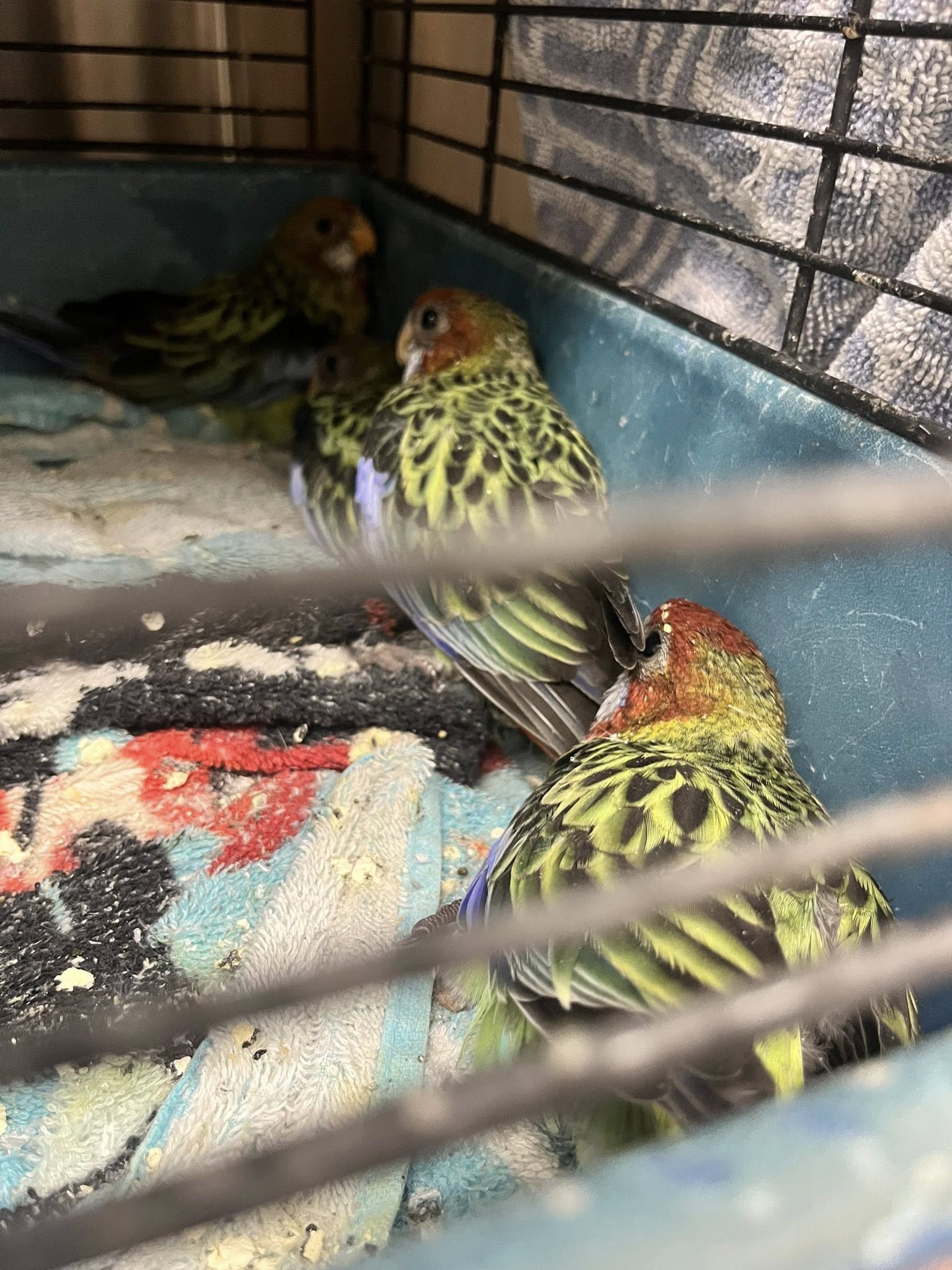
Rosellas
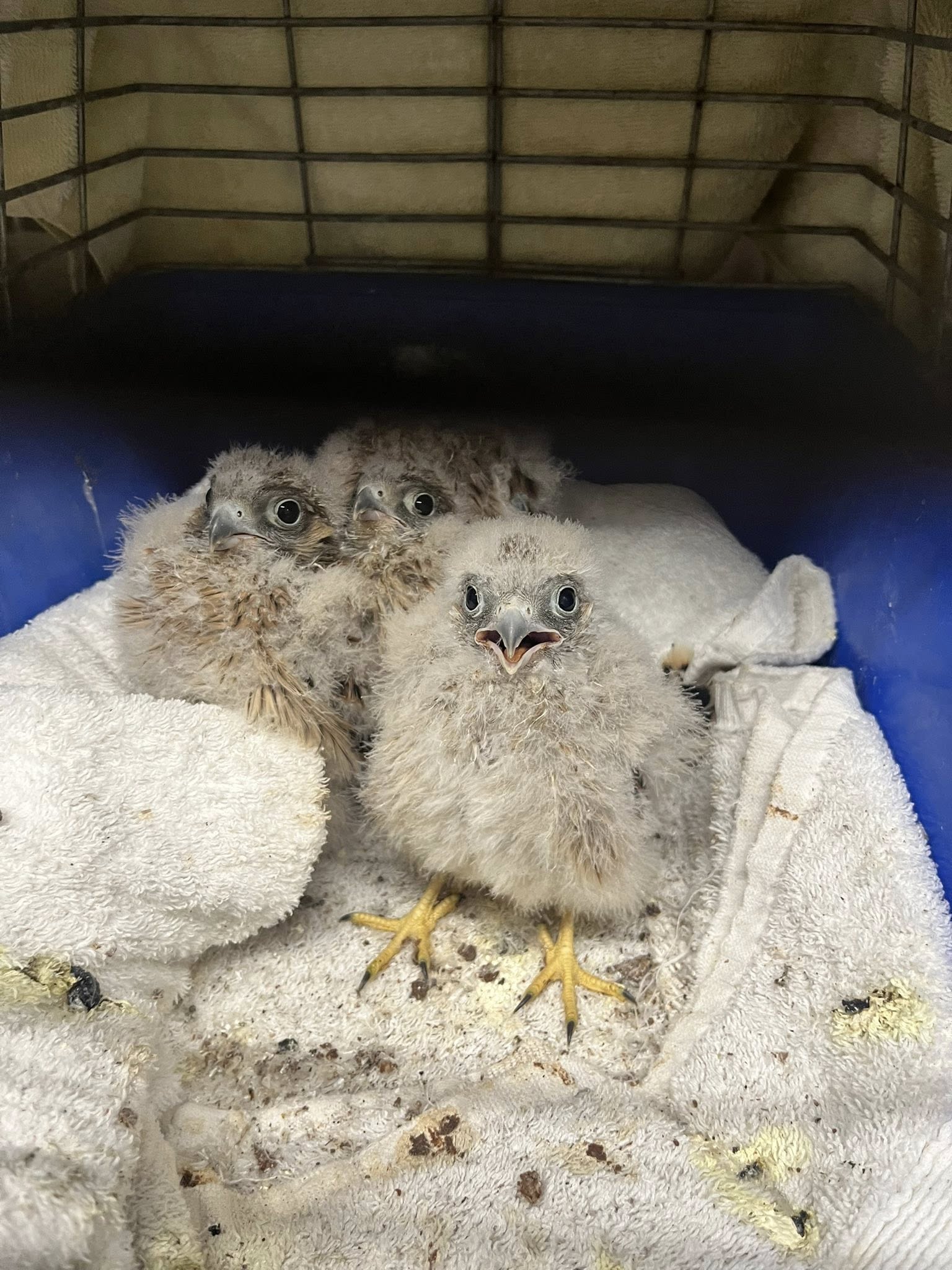
Kestrels
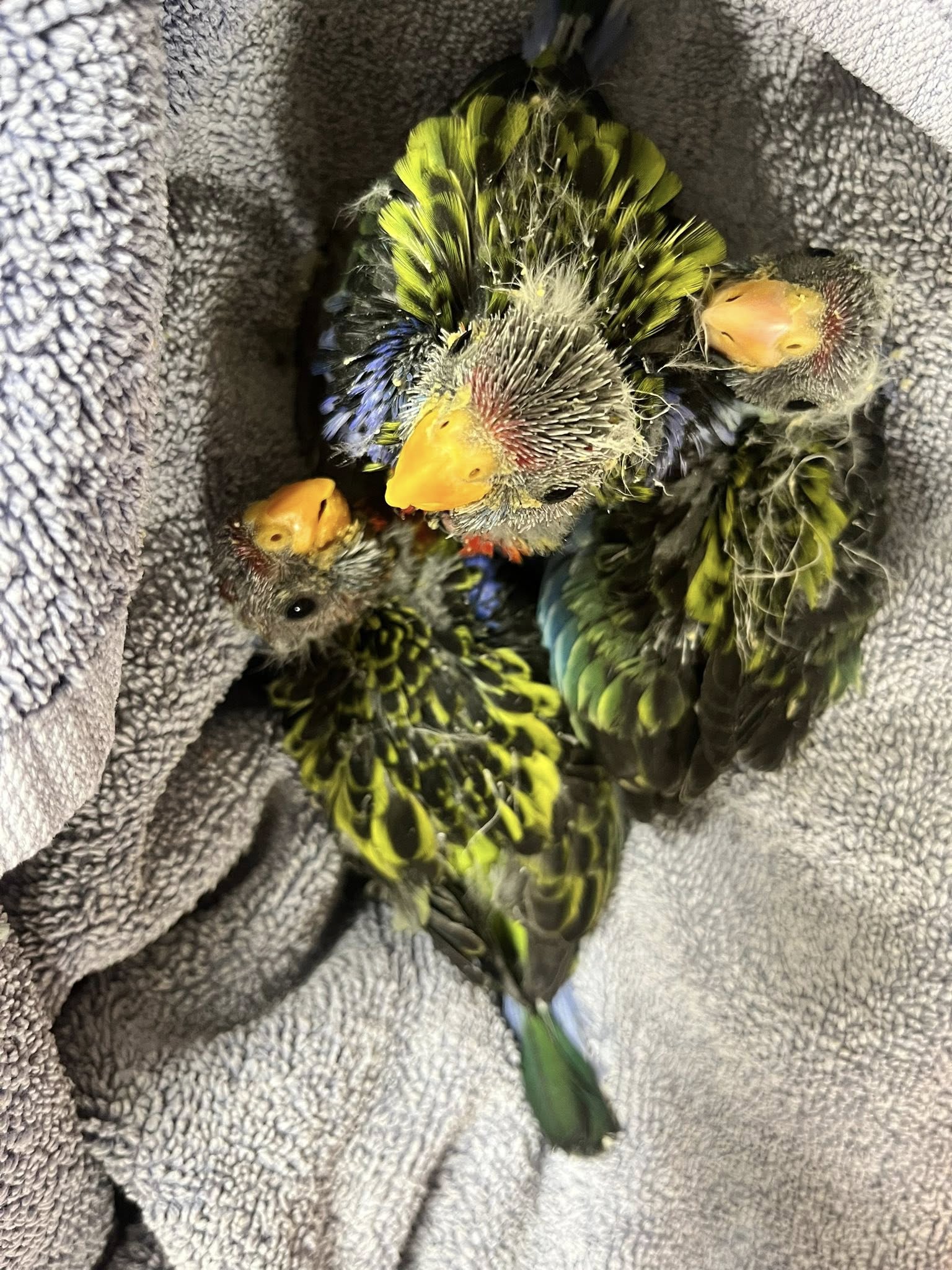
More rosellas
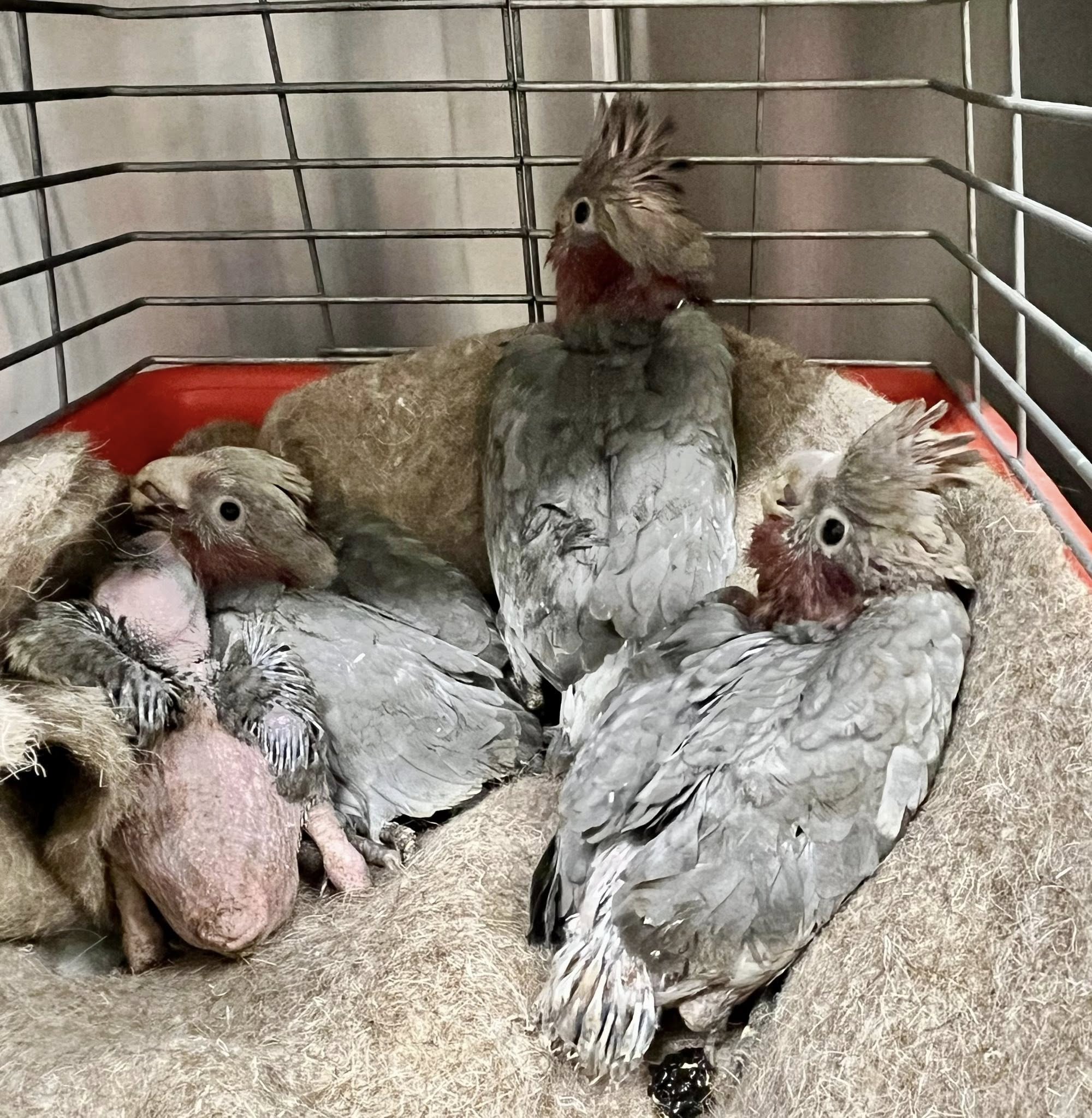
Galahs
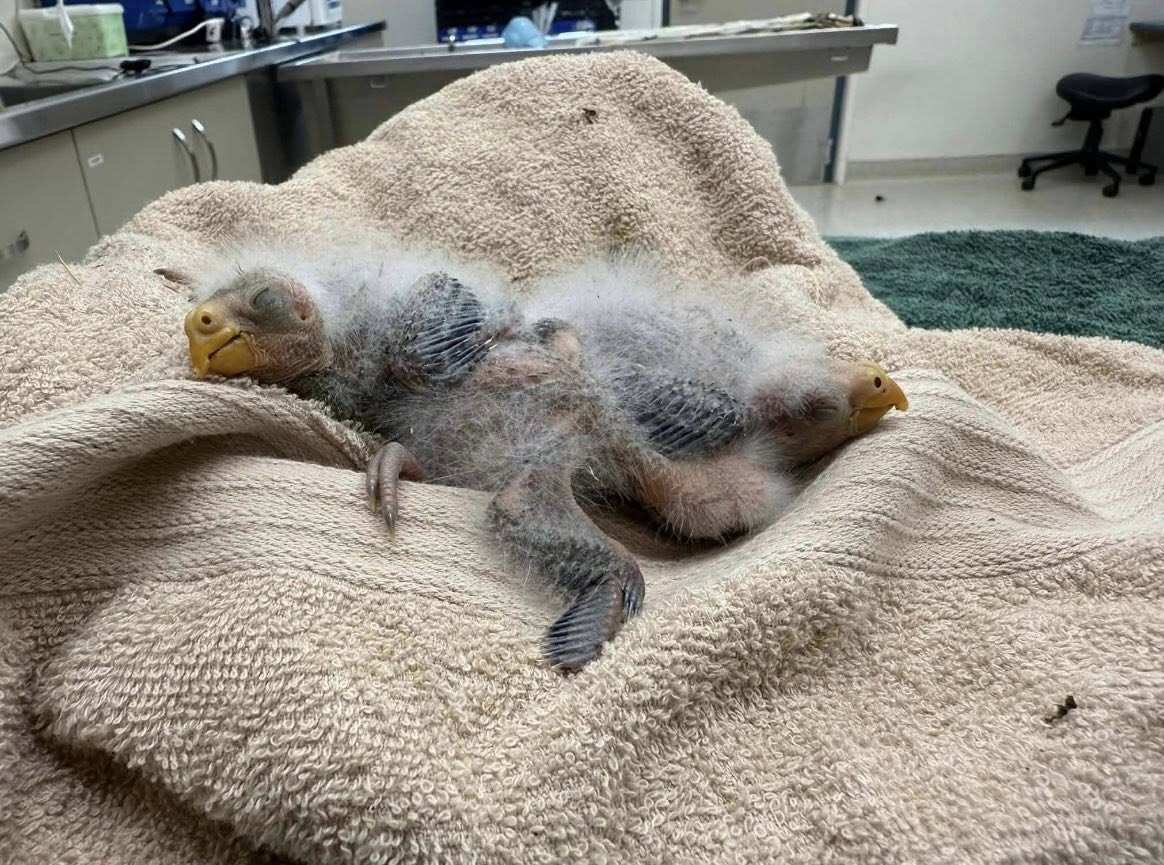
Kookaburras

ACEREZ is a partnership of ACCIONA, COBRA, and Endeavour Energy, which has been appointed by EnergyCo as the network operator to design, build, finance, operate, and maintain the Central-West Orana REZ transmission project.

The Central-West Orana Renewable Energy Zone (CWO-REZ) is Australia’s first officially declared REZ, covering approximately 20,000 square kilometres. It is expected to generate around 6 gigawatts of renewable energy, powering more than 3 million homes and attracting billions of dollars in investment. The REZ will connect large-scale solar, wind, and energy storage projects to the grid, providing long-term economic benefits for regional communities, including the Mudgee Region.

Mid-Western Regional Council (MWRC) engaged PwC to assess the impacts of additional population on services, infrastructure and housing as a result of State Significant Development (SSD) projects within and immediately surrounding the Mid-Western LGA (MWR LGA).

The report provides a point-in-time analysis based on the best data available to assess the cumulative impacts of additional population on services, infrastructure and housing as a result of major projects within and immediately surrounding the MWR LGA.

A series of issues were identified and potential recommendations have been developed to mitigate the impacts for each service sector. The actions and recommendations also identify longer-term opportunities and legacy projects with many focused on utilities infrastructure.

Managing the impact of State Significant Development(PDF, 3MB).

As of October 2023, 36 SSD projects were identified for development in and around the MWR LGA 

More information is available at the Central-West Orana Renewable Energy Zone and in the NSW Planning documents 

The ''Central-West Orana Renewable Energy Zone Transmission project Technical paper 4 – Biodiversity Development Assessment Report’’ dated September 2023 states:

Biodiversity: The overall direct impacts to PCTs and habitat for the various threatened species is estimated at approximately 1,031.63 ha.

The document lists critically endangered species that will be removed is at; ‘’576 hectares of White Box – Yellow Box – Blakely’s Red Gum Grassy Woodland and Derived Native Grassland in the NSW North Coast, New England Tableland, Nandewar, Brigalow Belt South, Sydney Basin, South Eastern Highlands, NSW South Western Slopes, South East Corner and Riverina Bioregions’’.

The key components of the project include: — a new 500 kV switching station (the New Wollar Switching Station), located at Wollar to connect the project to the existing 500 kV transmission network — around 90 kilometres of twin double circuit 500 kV transmission lines and associated infrastructure to connect two energy hubs to the existing NSW transmission network via the New Wollar Switching Station — energy hubs at Merotherie and Elong Elong (including potential battery storage at the Merotherie Energy Hub) to connect renewable energy generation projects within the Central-West Orana REZ to the 500 kV network infrastructure — around 150 kilometres of single circuit, double circuit and twin double circuit 330 kV transmission lines, supported on towers, to connect renewable energy generation projects within the Central-West Orana REZ to the two energy hubs — thirteen switching stations along the 330 kV network infrastructure at Cassilis, Coolah, Leadville, Merotherie, Tallawang, Dunedoo, Cobbora and Goolma, to transfer the energy generated from the renewable energy generation projects within the Central-West Orana REZ onto the project’s 330 kV network infrastructure — underground fibre optic communication cables along the 330 kV transmission lines between the energy hubs and switching stations — a maintenance facility within the Merotherie Energy Hub to support the operational requirements of the project.

A letter dated July 15 2025 letter and available on the NSW Planning webpage for the project refers to SODA – and that this was the first to secure a 'Strategic Offset Delivery Agreement'.

‘’the NSW Government has recently established a new conservation measure that enables eligible projects to use a SODA as a way to deliver biodiversity offsets. 

The first Strategic Offset Delivery Agreement (SODA) was secured by NSW's Environment Agency Head for the Central-West Orana Renewable Energy Zone (REZ). This agreement, valued at $27 million, was with EnergyCo to secure over 14,000 biodiversity credits, which will be delivered by local landowners to offset environmental damage from the renewable energy project. This is a key step for NSW's renewable energy projects to meet their biodiversity offset obligations while also supporting local landholders.'' the poject webpage documents state

However, as with trees that are hundreds of years old and provide homes, food and critical habitat, biodiversity credits cannot be granted when and where there is no biodiversity left. 

And baby birds that survive their wounds cannot be reunited with parent birds over such a large area - even if they could, where would they have a home with theirs now removed.

Upper Hunter Shire Council comments, in responses to proposal: November 6 2023, stated

1. Impacts on agricultural activities: Council notes that the construction area for the project is circa 3,660 hectares, which will be unavailable for agricultural use during construction, and that around 825 hectares of agricultural land will be permanently removed from service due to the establishment of permanent infrastructure. The Social Impact Assessment (SIA) appears to have given little weight or consideration to the social effects of the interruption of traditional agricultural activities. Mitigation measures need to be in place, and we request that the Department ensure that the landowners and the public in general have access to information and assistance through transparent and easily accessible channels.

2. Accommodation strategy The technical paper on social impacts provides a chapter on construction assessment which notes that the entire construction workforce (peaking at 1800) will be housed in accommodation camps in Merotherie and Cassilis. Council requests that further consultation is undertaken to develop a detailed accommodation strategy which addresses community concerns and outlines the methodology for construction and operation of the camps.

3.Traffic and Transport a) We note that Technical Paper 13 – Traffic and transport does not consider the traffic impacts of the project on transport routes outside the project area. In this regard, Section 5.1.5 states that construction of the project would require the transportation of large and/or heavy equipment via road that would constitute OSOM movements. The majority of OSOM vehicle would travel from the Port of Newcastle to the energy hubs via the Hunter Expressway and Golden Highway. As the Golden Highway passes through Merriwa, it is likely that construction traffic will adversely impact the efficiency and capacity of roads within Merriwa as well as impacting local amenity. At this stage, the extent of these impacts is unclear. In addition, given the number and scale of projects planned for the Central-West Orana REZ over the coming years, the material cumulative traffic and transport impacts on Merriwa could be significant. In our view, further investigation of the potential cumulative traffic and transport impacts is warranted including an assessment of the capacity of Merriwa’s main street and potential impacts on local roads that are currently used as a OSOM heavy vehicle bypass. b) We note that there are several local roads that form part of the construction routes that have not been quantitatively assessed, given that they would primarily function to provide access to the transmission lines’ access gates only (Appendix A of Technical Paper 13 – Traffic and transport). Construction vehicles utilising the transmission line access gates would typically be limited to 32 vehicles per hour (12 light vehicles and 20 heavy vehicles) during the peak period. Technical Paper 13 states that these low additional demands (an arrival of approximately one vehicle every two minutes) are not likely to adversely impact the performance and capacity of the road network. These roads would be subject to the routine road condition inspection discussed in Section 5.2.6. Council is concerned that the increase in vehicle movements, particularly heavy vehicles, on local roads is significant and will adversely impact the condition of the roads, increasing maintenance requirements and shortening the life of road pavements. As such, it is recommended that the developer be required to undertake detailed pavement investigations of local roads that form part of the construction routes to determine if upgrades are required to meet the proposed traffic loadings. In addition, Council requires assurance that the nominated local roads will be maintained by the developer, at the developer’s cost, during the construction phase of the project. c) Appendix A of Technical Paper 13 identifies Ancrum Street, Cassilis as a local road that will be utilised by construction vehicles. We note that Ancrum Street is a narrow residential street without footpaths that provides access to a local school. The street contains a 40km/hr school zone. Council is concerned that the increase in vehicle movements along Ancrum Street during the construction phase of the project will pose a safety hazard for local school children. Accordingly, consideration should be given to the implementation of local traffic management measures in Cassilis such as the construction of a footpath along Ancrum Street and the installation of flashing lights at each end of the school zone to ensure the safety of pedestrians including school children. d) Council wishes to see project consent conditions stating that the proponent must: i) upgrade local roads, bridges, grids, intersections and other related road infrastructure that will be impacted by the project and which require modification in the reasonable opinion of Council, in accordance with plans approved by Council, prior to any project construction work commencing; and ii) if, during the life of the project, Council provides evidence of significant increases in traffic volumes or vehicle types on other roads in the locality that can be directly attributable to the project, the proponent agrees to reach a negotiated settlement with Council to provide additional funds for road repair, maintenance or upgrade works.

4. Community Engagement The community has expressed its disappointment that there were no drop-in sessions regarding the EIS in Cassilis, despite a number of social impacts on the Cassilis community being given a high to medium rating. Overall, there has been very little consultation with the Cassilis community despite the engagement requirements specified in the SEARS.

5. Waste generation Council has very limited capacity to accept waste in the project area within Upper Hunter Shire. We request that a detailed Waste Management Plan be prepared in consultation with Council staff prior to the start of construction. We trust the above comments will be given due consideration by the Department in its assessment of the proposed development. Please do not hesitate to contact Mathew Pringle, Director Environmental & Community Services, should you have any questions regarding the content of this submission.

Greens MP and spokesperson for the environment Sue Higginson said “I am so sick of the State Significant Development pathway and the defective biodiversity offsets system being used as a battering ram to push all kinds of development through the planning system at nature’s expense, and it’s tragic that we now add renewable energy infrastructure to the list. It doesn’t have to be like this, the fact is the Minns Government has chosen it to go like this,”

“The destruction of critical habitat and tree cover we are seeing now in the Central Orana REZ is just the beginning and it’s just not necessary. Mid-West Regional Council had been working tirelessly with the developer ACEREZ to find a different pathway that would not require the removal of 670 habitat trees, but the developer and the NSW Government have essentially ignored them,” 

“The developer has quite literally bulldozed past environmental protections and massacred the habitat of threatened species, and the best they can offer in response to questioning is a media release about biodiversity offsets,” 

“The biodiversity offset system is broken and has been for a long time. It is so broken that it allows habitat destruction at such a scale that injured baby birds are filling up vet hospitals across the region. The Minns Labor Government had the chance to fix the offsets system last year and it chose not to. I moved amendments to the biodiversity offsets laws, and with the Minns Labor Government we had the numbers to get better laws for nature, but they chose not to. I am afraid things are going to get worse, not better.” 

“We know the biggest environmental threat we face is climate breakdown and this is why we are transitioning to renewables, so to destroy nature in the name of protecting nature doesn’t square. NSW Labor’s approach risks undermining public confidence in the transition and jeopardising the urgent need for climate action,” 

“Premier Chris Minns has an opportunity to demonstrate leadership here, to sit down with the community and to demonstrate how we can get renewables right. Governments need to accelerate the renewable energy transition, but that involves having strong safeguards for nature and for communities in place,” Ms Higginson said.

Planning Minister Paul Scully who was acting Minister for Climate Change, Energy, the Environment and Heritage during Ms Sharpe's absence, told the ABC:

"Building renewable energy projects and transmission infrastructure is about keeping the lights on, but it's also about driving down emissions to reduce the impacts of climate change," Mr Scully said.

"But the photos are upsetting — no one wants to see birds displaced."

Residents and people across Australia don't consider this 'birds being displaced' and have called for the baby bird-killers to be charged.

Many consider the only reason this process was decided on is due to money and maximising the destruction on the environment to minimise the cost for the developers - especially since so many stated for so long there was another route directly beside it which not have required the destruction of so many ancient trees and the baby birds within them.

Just as flat, but treeless, this could have been the chosen route.

''Who cuts down trees during nesting season?'' predominates among the backlash.

Former Nationals MP, now an Independent, Andrew Gee, has shared a letter penned to the Premier on this matter:

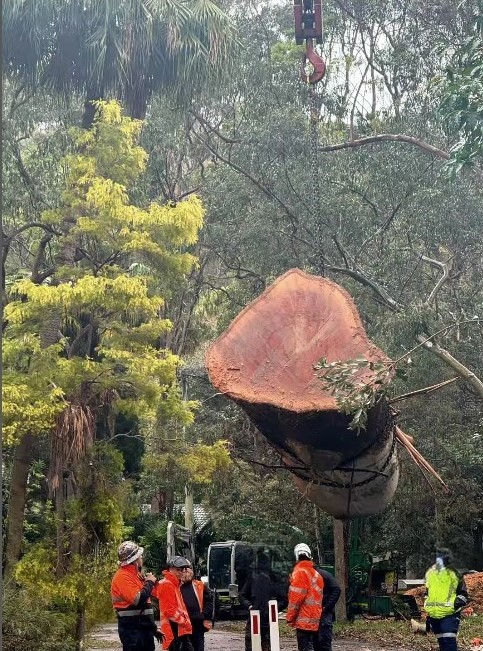
$32 million lost by the Forestry Corporation in Public Native Forest Logging 

December 2, 2025

The NSW Forestry Corporation has lost a further $32 million of public money through their logging of public native forests. The Forestry Corporation’s 2024-25 Annual Report was tabled in the NSW Parliament.  This follows losses of 29 million dollars in 2023–24, 15 million dollars in 2022–23, 9 million dollars in 2021–22 and 20 million dollars in 2020–21, and reveals that the NSW community has had to pay $76 million to the Forestry Corporation over the last three years alone to keep the failed native forest logging division of the business going.

“Today’s release exposes the growing cost to taxpayers of a financially and ecologically unsustainable industry,” Clancy Barnard, Senior Forest Campaigner with the Nature Conservation Council, said today.

“Forestry Corporation has not recorded a profit from native forest logging in more than ten years - despite receiving over 246.9 million dollars in grants since 2019.  

“Last year it cost $4,330 a hectare to log 7,390 ha of public native forests. Forestry Corp continues to spend more to log each tree than it earns from selling them. Rising harvesting costs, shrinking markets and long-term declines in timber volumes have made native forest logging financially impossible.”

“Why is Forestry Corporation allowed to sell timber for less than the cost of cutting it down and transporting it? Why don’t they have to pay a fair resource rent to taxpayers for the destruction they cause to our public native forests?”

These financial losses come less than 24 hours after the Senate passed the rewritten Environment Protection and Biodiversity Conservation Act, removing the long-standing exemption that kept native forest logging outside federal nature laws. When the new national environmental standards commence, logging operations will have to comply with federal threatened-species protections for the first time in 25 years.

Victoria Jack, NSW Campaigns Manager at The Wilderness Society, said the EPBC reforms add further pressure to an already unviable industry.

“With logging now required to meet national threatened-species protections, Forestry Corporation’s business model will face even greater scrutiny. If the new environmental standards are robust, much of the remaining native forest estate simply won’t meet the test.”

The financial losses coincide with a continued collapse in timber supply, with major shortfalls in legally binding Wood Supply Agreements exposing the Government to rapidly escalating compensation payments.

Analysis by NEFA found that since the 2019 Black summer bushfires the Forestry Corporation have been able to supply less than half the timber they claim to be available on a sustainable yield basis from north east NSW’s native forests, 

NEFA spokesperson Dailan Pugh said the figures confirm long-standing concerns about over-logging.

“Forestry Corporation keeps claiming timber that simply does not exist which Governments commit to sawmillers and then have to pay compensation for their failure to supply . The forests cannot supply the volumes currently committed to loggers, they are being grossly over-logged.”

Justin Field, former Independent MP and Forest Alliance NSW spokesperson, said the inflated figures create serious financial risk for NSW taxpayers.

“Under the Wood Supply Agreements the NSW Government is liable to compensate mills for under-supply. By failing to accurately reflect the true impact of the fires and hold forestry corporation to account for long-term unsustainable logging, the Government is exposing  taxpayers to even greater liability.”

WWF-Australia conservation scientist Dr Stuart Blanch said Forestry Corporation NSW was losing taxpayer money logging native forests while it should be making money expanding sustainable certified plantations.

“Forestry Corp demolished the homes of koalas, greater gliders and other threatened species and lost a fortune of taxpayers’ money in the process. The $32 million in losses from native forest logging should have been invested in a just transition to expanding sustainable timber plantations.” 

The Forest Alliance NSW is calling on the Minns Government to answer three simple questions:

  1. Will the Government rule out any extension of Wood Supply Agreements, given Forestry Corporation’s continued financial losses and its clear inability to supply anything close to the contracted volumes?
  2. Will the Government be transparent about the financial risks created by ongoing under-supply - including the total volume of timber committed in Wood Supply Agreements that has not been supplied since 2019, taxpayer’s compensation liability, and how much has actually been given to mills for under-delivered timber?
  3. Will the Government commit to ensuring that Forestry Corporation is both fiscally responsible and legally compliant, including addressing the chronic losses and ongoing instances of legal non-compliance in the hardwood division?

“ Given Forestry Corporation’s continued financial losses and  collapsing timber volume, it’s time to end native forest logging in NSW”, Doro Babek from the Bob Brown Foundation concluded. 

Forest Alliance NSW Member groups

  • The Nature Conservation Council of NSW 
  • WWF-Australia 
  • Wilderness Australia
  • North East Forest Alliance
  • Brooman State Forest Conservation Group
  • The Wilderness Society
  • National Parks Association of NSW
  • South East Forest Rescue
  • Bob Brown Foundation

Greens MP and spokesperson for the environment Sue Higginson said,  

“The logging of our precious native forests has not produced a single dollar of profit in NSW for almost a decade, and it likely never will. Yet somehow the destruction of these vital ecosystems has been allowed to continue. It is time to call it for what it is - an industry of the past that must be stopped now,”

“The Federal Labor Government, along with the Australian Greens, have now essentially put the final nail in the native forest logging industry - with exemptions from federal environment laws for the logging industry coming to an end in 18 months. I can not see any native forest logging operation in NSW meet even the weakest national environmental standards, because native forest logging is so destructive, it’s driving forest dependent species to extinction and it’s fuelling the climate crisis through the massive amounts of carbon released through logging,”

“For Premier Chris Minns and the NSW Labor Government, this has to be it, now is the next best time to end public native forest logging, we can’t afford environmentally, economically or socially to let it continue. It is also the case that the Forestry Corporation is facing a litany of prosecutions for breaking the environmental protection logging rules, the whole gig has become completely untenable,”

“We know that our native forests are worth so much to us all when they are standing intact providing the essential service they provide, clean water, threatened species habitat, carbon draw down and storage, landscape stability, recreation, education and culture and the ever increasing pollination required for agriculture. To have to pay to destroy our precious forests is incomprehensible and is political failure.” Ms Higginson said.

two koalas sit on pile of logs

Photo: WWF

Wildlife at risk as Redbank biomass-fired power station appeal commences

December 3, 2025

Verdant Technology has appealed the Independent Planning Commission’s (IPC) rejection of their Redbank biomass power station proposal with the first directions hearing held in the Land and Environment Court yesterday. 

The Nature Conservation Council of New South Wales (NCC) and the Biodiversity Council have called out the project as it would greatly increasing land clearing rates in NSW and have other adverse impacts on the environment. 

“The IPC’s initial decision was supported by scientific evidence and overwhelming public opposition. They made the right call to reject this destructive proposal,” NCC CEO Jacqui Mumford said. 

The project proposal will now be re-assessed in the Land and Environment Court. 

“Verdant’s proposal involves burning up to 700,000 tonnes of woody vegetation annually, drawn from clearing of native vegetation, and possibly relying on unproven fuel sources in the long term,” Ms Mumford said. 

“Not only does this plan put threatened species at risk of harm, burning vegetation releases significant greenhouse gases, incentivises land clearing and destroys biodiversity. 

“The appeal is yet another desperate attempt by Verdant Earth Technologies to weasel their destructive project into existence.  

“The company has been trying to get this project off the ground since 2021 and it has been rejected in its various forms.  

“Unless the company can commit to excluding native vegetation from their burning plans, they should accept that their proposal is defunct and out of touch with modern environmental standards and community expectations.  

“We reject any attempt to rebrand this proposal as clean or renewable. Burning native vegetation or scrublands for electricity is not a solution to the climate or biodiversity crisis,” Ms Mumford said. 

“It is destructive, counterproductive, and incompatible with genuine efforts to transition to a sustainable energy future.” 

According to Biodiversity Council’s Lead Councillor Professor Hugh Possingham the native regrowth proposed to fuel the power station provides important habitat for many native animals and plants, including threatened species. 

“A key source of biomass identified for the power station is the clearing of Invasive Native Species (INS),” said Professor Possingham. 

“INS is a term for dense shrublands that some landowners find inconvenient and call unnatural, but they have always been a part of landscapes in New South Wales, although where they occur may have changed due to land management practices.  

“They provide important habitat for many native animals and plants, including for threatened species.” 

Biodiversity Council Policy and Innovation Lead Lis Ashby said, “To meet the biomass target identified by Verdant Energy to fuel the project, legal land clearing in NSW would need to at least triple.  

“This project would be a slap in the face to the many members of the community across NSW who are working to reduce climate emissions and halt nature loss.”  

NSW Threatened Species Scientific Committee final determinations for December 2025

Published December 5 2025

The NSW Threatened Species Scientific Committee assesses which species are eligible for listing as threatened species.

Six plants and two reptiles have been listed as a threatened species.

NSW Threatened Species Scientific Committee final determinations

1. Acacia chrysotricha

Acacia chrysotricha has been listed as a critically endangered species.

Acacia chrysotricha is endemic to New South Wales and is currently only known from two subpopulations in the catchment of the Kalang River south of Bellingen on the NSW mid-north coast. 

More information on the species can be found in the Committee’s reasons for final determination and conservation assessment report using the common assessment method: Acacia chrysotricha.

Acacia chrysotricha. Credit: Gavin Phillips/DCCEEW

2. Telopea aspera

Telopea aspera has been listed as an endangered species.

Telopea aspera is endemic to northern New South Wales, where it is restricted to the Gibraltar Range on the eastern edge of the New England Tablelands east of Glen Innes.

More information on the species can be found in the Committee’s reasons for final determination: Telopea aspera.

Telopea aspera. Credit: Koen Dijkstra/DCCEEW

3. Banksia penicillata

Banksia penicillata has been listed as an endangered species.

Banksia penicillata is endemic to New South Wales and is found in the northern Blue Mountains, including Wollemi, Blue Mountains and Gardens of Stone National Parks, Mugii Murum-ban State Conservation Area and Gardens of Stone State Conservation Area.

More information on the species can be found in the Committee’s reasons for final determination: Banksia penicillata.

Banksia penicillata. Credit: Alan Fairley/DCCEEW

4. Moritz’s leaf-tailed gecko Saltuarius moritzi

Moritz’s leaf-tailed gecko Saltuarius moritzi has been listed as an endangered species.

Moritz’s leaf-tailed gecko is patchily distributed in New South Wales from the Hunter River in the south, to the Clarence River in the north.

More information on the species can be found in the Committee’s reasons for final determination: Saltuarius moritzi.

Saltuarius moritzi. Credit: Kelly Nowak/DCCEEW

5. Granite belt leaf-tailed gecko Saltuarius wyberba

The granite belt leaf-tailed gecko Saltuarius wyberba has been listed as an endangered species.

The granite belt leaf-tailed gecko is distributed between the Gibraltar Range region in northern New South Wales and Queen Mary Falls in south-eastern Queensland.

More information on the species can be found in the Committee’s reasons for final determination: Saltuarius wyberba.

Saltuarius wyberba Couper, Schneider & Covacevich, 1997. Credit: Daniel McCawley/DCCEEW

6. Pomaderris sericea

Pomaderris sericea has been listed as a critically endangered species.

The known populations of Pomaderris sericea are widely distributed from East Gippsland in Victoria north to Wollemi National Park in New South Wales.

More information on the species can be found in the Committee’s reasons for final determination: Pomaderris sericea.

Pomaderris sericea N.A.Wakef. Credit: Stephen Bell/DCCEEW

7. Melichrus gibberagee

Melichrus gibberagee has been listed as a critically endangered species.

Melichrus gibberagee is known from a single locality approximately 50 km south of Casino in the Northern Rivers region of northeast New South Wales.

More information on the species can be found in the Committee’s reasons for final determination: Melichrus gibberagee.

Melichrus gibberagee. Credit: Gavin Phillips/DCCEEW

8. Persoonia acerosa

Persoonia acerosa has been listed as an endangered species.

Persoonia acerosa is predominantly found within the Blue Mountains, especially on the central plateau with the majority of records occurring in or near the towns and villages along the Great Western Highway and Bells Line of Road.

More information on the species can be found in the Committee’s reasons for final determination: Persoonia acerosa.

Persoonia acerosa. Credit: Barry Collier/DCCEEW

Greens slam public purchase of gas as Labor risks locking in decades of new climate bombs

December 5, 2025

Amid reports that Labor is considering using public money to keep Australian businesses dependent on gas, the Greens have warned they will not support any Labor response to the broken gas market that incentivises new gas mines.

The Greens warn that the government’s current approach risks massive new gas subsidies, failing to tackle the problem of excessive, untaxed exports.

The Greens are reiterating calls for an immediate 25 per cent tax on all LNG exports, a measure proposed by the ACTU and backed by experts.

This tax would replace the Petroleum Resource Rent Tax (PRRT), which has failed to collect any substantial revenue from LNG exporters due to massive loopholes. The tax would also prioritise domestic gas supply without incentivising new fossil fuel projects.

Labor’s approach risks locking in decades of catastrophic emissions from climate bombs like Beetaloo and Narrabri, undermining our international climate commitments.

Australian Greens spokesperson for resources Senator Steph Hodgins-May said on Friday: 

“These reports are genuinely alarming. Labor must not use public money that should be going towards schools and hospitals to buy discounted gas for polluters. 

“If they move to cement the power of gas corporations, the ones pillaging our resources and tripling household prices, we will face this problem over and over again.

“Labor is actively pushing the industry’s faulty premise that new supply is needed when the reality is that we’ve already got enough gas to get us through the transition.

“Gas corporations are gouging Australian households and tripling bills, while escaping without paying their fair share. An export levy will help right this wrong and deliver cost-of-living relief that families desperately need.

“When Labor pursues new gas incentives, they are walking hand-in-hand with the Coalition and industry lobbyists.

“Labor needs to scrap the broken PRRT and properly tax exports, not continue padding the balance sheets of gas giants who have had a free ride for too long.

“The 25% on gas exports is the best solution to redirect existing supply to Australians, raise revenue to compensate households, and get us off of gas quickly and fairly.''

Birdwood Park Bushcare Group Narrabeen

The council has received an application from residents to volunteer to look after bushland at 199/201 Ocean street North Narrabeen.

The group will meet once a month for 2-3 hours at a time to be decided by the group. Activities will consist of weeding out invasive species and encouraging the regeneration of native plants. Support and supervision will be provided by the council.

If you have questions or are interested in joining the group please email the council on bushcare@northernbeaches.nsw.gov.au

Council's Open Coast & Lagoons Coastal Management Program (CMP's): Scoping Study Feedback invited until December 14

The council has commissioned  a Scoping Study as the first stage of its program towards the development of Coastal Management Programs (CMPs).


CMPs are used by local councils around NSW to establish coastal management goals and actions. Developed in consultation with the community and state government, a CMP creates a shared vision for management and provides the steps of how to get there through local input and costed actions.

The development of the CZMPs within NSW occurred under the former Act (Coastal Protection Act 1979). The current council has two certified CZMPs under the former Act - ‘Bilgola and Basin Beach’ and ‘Collaroy-Narrabeen-Fisherman's Beach’. 

In July 2016, weeks after the councils had been forcibly amalgamated and in response to the June 2016 storm, the NSW state government installed administrator Dick Persson outlined a Draft Coastal Erosion Policy for Collaroy that resulted in the December 2016 Coastal Zone Management Plan for Collaroy-Narrabeen Beach and Fishermans Beach being formalised under the same administration.

That Administrators Minute stated:

I am advised that the initial estimates for 1.1km of works from The Marquesas to 1096 Pittwater Road has been estimated at approximately $22 million. While Council will work with the State Government to meet the cost of directly protecting public assets in this area (approximately $5.5 million), I will also ask the State Government to join Council in providing up to 10% each towards the cost of private protection as a contribution subject to a positive cost benefit analysis for these public assets. Early estimates suggest this contribution could be approximately. This contribution has been estimated at approximately $3.3 million ($1.65 million from State and $1.65 million from Council) and is in recognition of the public asset protection that is provided by these private properties.
....
A recent report by the Sydney Coastal Council’s Group identified that to combat the impact of sea level rise in the Collaroy-Narrabeen embayment significant volumes of sand will be required as these impacts are felt. For example, it is predicted that some 1.3 million cubic metres of sand (approximately 4 times the amount removed during the June storms) will be required for the first 10 year nourishment effort, and around 420,000 cubic metres for each following 10 year campaign.

In 2009 dollars this will cost around $30 million for the first 10 year nourishment, and around $12 million for each following 10 year campaign. These costs are based on the assumption that sand nourishment will be undertaken across large areas of the NSW coast and the costs shared accordingly. 
....
Works on this scale are simply unaffordable for Northern Beaches Council on its own, and the responsibility for delivery of offshore sands must be shared with benefitting Councils and also with State and Federal Government. The State Government is obviously best placed to co-ordinate and manage such an undertaking, and I will write to the Premier to request that the State provides a long-term sand replenishment strategy for NSW that addresses the many issues I have raised, and amends the Offshore Minerals Act (1999) to enable effective medium and long term beach amenity to be preserved. 
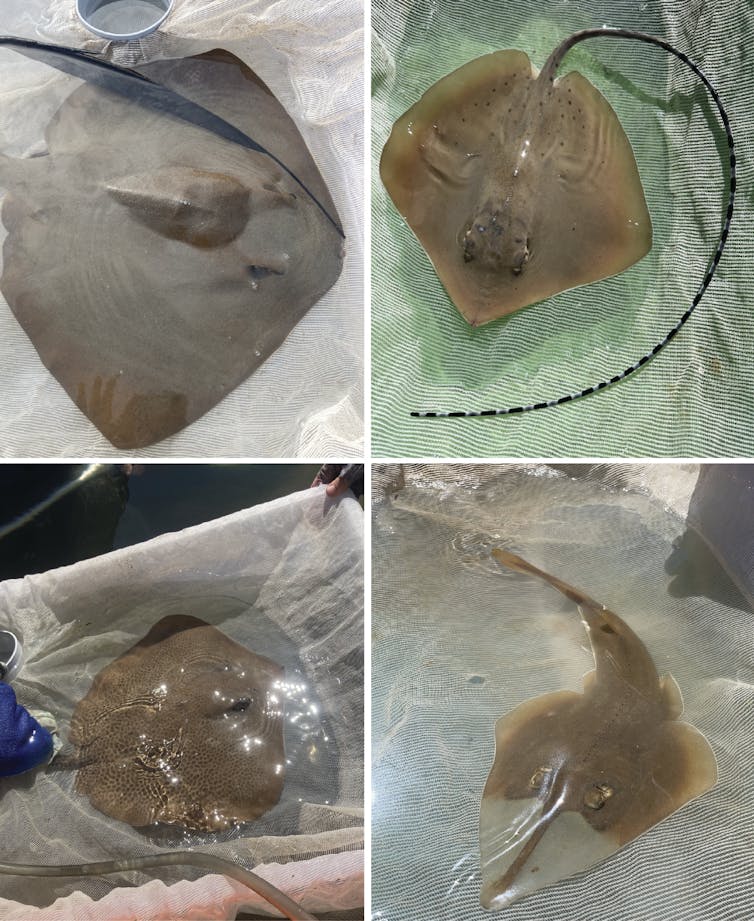
As a result of the approved CZMP a 7.5m concrete seawall was installed at Collaroy, resulting in more rapid and greater erosion, and a slower beach recovery, and a now annual cost to ratepayers to move the sand funnelled into the Narrabeen Lagoon entrance to be shifted back to that part of Collaroy beach.

In September 2022 a further application for an extension of this wall towards North Narrabeen (DA2021/1612) between Clarke Street and Mactier was approved despite 93% of respondents objecting to the proposal. The cost of this section of works was listed as $ 2,047,433.00 of which 10% will be met by council and 10% by the state government - or 20% by taxpayers and ratepayers in real terms.

The beach has also been the site of “line in the sand protests” against vertical seawalls in 2002 and more recently on November 27, 2021

Although the transition from the CZMP to CMP occurred in 2016 with the introduction of the Coastal Management Act 2016 (see above report), the December 2016 Coastal Zone Management Plan for Collaroy-Narrabeen Beach and Fishermans Beach was progressed.

The council states these two existing CZMP’s have now expired and will be updated in the ‘Open Coast and Lagoons’ and ‘Collaroy-Narrabeen’ CMPs.

Now, 9 years later, the council is taking steps to become compliant.

The CMPs will also incorporate Estuary Management Plans that are currently in place for the four lagoons; Manly, Curl Curl, Dee Why and Narrabeen.

The NSW Government CMP manual prescribes a mandatory five-stage process to developing a CMP. Typically, each stage takes a year to complete, however the time it takes varies upon the baseline information, level of complexity, size and area, and community engagement that has previously been undertaken, the council states.

Local councils and public authorities are required to manage their coastal areas and activities in accordance with relevant state legislation, policies and plans.

The framework for managing the NSW coast includes:
  • Coastal Management Act 2016 (CM Act)

  • State Environmental Planning Policy (Resilience & Hazards) 2018 (R&H SEPP)
  • Coastal management programs (CMPs), prepared in accordance with the NSW coastal management manual.
The Open Coast and Lagoons CMP covers a large area (Palm Beach to Manly) and has a wide range of issues, the council states. As with all CMPs, it will require technical studies and community and stakeholder engagement, and is likely to take around 5 years to complete, the council states.

For the Collaroy-Narrabeen CMP, extensive technical studies and community engagement will occur with the council aiming to have a certified CMP in place by 2026.

The Hawkesbury-Nepean CMP (incorporating the Pittwater waterway and being led by Hornsby Council) and Outer Sydney Harbour CMP (incorporating North and Middle Harbor and being led by the Sydney Coastal Councils Group) are at Stages 3 (November 2024 for Pittwater estuary was last update) and Stages 2-4 for North and Middle Harbor. The work is expected to take approximately three years to complete for North and Middle Harbor which was due to commence in early to mid-2025.

The council is currently inviting feedback on its commissioned Scoping Study from Monday November 3 until Sunday December 14 2025. 

Previously:


Collaroy on January 4th 2022. Image: Ian Bird Photography.


Collaroy on January 4th 2022. Image: Ian Bird Photography.

Narrabeen Lagoon entrance near bridge: dredging works and kayakers, October 2025. Photos: Joe Mills

NSW Government invests $20 million to grow state’s aquaculture industry: submit ideas now

On Monday November 24, 2025 the Minns Government launched the $20 million Aquaculture Industry Development Program which aims to strengthen and expand the NSW seafood industry’s economic contribution to NSW.

The program is designed to boost productivity and increase sustainability across farming operations for oysters, mussels, kelp, and algae, plus freshwater and marine fish hatcheries and bioproducts.

By investing in sustainability and productivity, the Minns Government is helping future-proof the industry, attract investment, and ensure regional communities continue to benefit from a strong, resilient seafood sector.

This grant program enables further action for implementing the Minns Government’s Aquaculture Vision Statement released last year.

The vision was developed by the NSW Government with close input from industry and experts to deliver a strategic pathway to achieve the goal of doubling the state’s aquacultural farmgate production to $300 million by 2030.

Under the program, the aquaculture and commercial fishing industries will have access to two targeted funding streams, offering grants from $500,000 to $2 million, for the following:

  • Stream One - Projects focused on infrastructure upgrades to support growth and productivity, such as equipment upgrades, supply chain improvements and new product development.
  • Stream Two - Projects that reduce carbon emissions and promote reuse and regeneration of materials, such as converting equipment to lower emissions or creating bioproducts and utilising waste streams such as processing of oyster shells.

The Aquaculture Industry Development Program is part of the NSW Government’s broader commitment to support local manufacturing, food security, net zero goals, and economic development in regional communities.

This $20 million investment will help the sector address opportunities and challenges facing the industry such as:

  • incoming mandatory Country-of-Origin Labelling requirements for seafood served in hospitality venues from 2026
  • managing environmental and biosecurity risks in fisheries and hatcheries
  • supply chain challenges of getting produce to state, national and international markets.

Aboriginal businesses and organisations, including Aboriginal Community-Controlled Organisations, are strongly encouraged to apply.

The NSW Government’s Aquaculture Vision Statement supports industry growth through enhancing productivity, streamlining legislation, and supporting innovative research.

The Aquaculture Industry Development Program is part of the NSW Government’s Regional Development Trust that is delivering strategic investments to drive economic development and better outcomes for our regional communities.

Business and organisations are encouraged to apply and submit projects by the end of Sunday 18 January 2026. Program details can be found at:  nsw.gov.au/aidp

Minister for Agriculture and Regional NSW, Tara Moriarty said:

“This program will deliver real economic benefits and jobs to regional and coastal communities by helping seafood businesses grow and become more efficient.

“This is a great opportunity for regional aquaculture and commercial fishing businesses to tap into the growing national and global appetite for high-quality protein.

“It means the industry can innovate and look at growing the exciting new developments in seaweed, algae and freshwater and marine bioproducts.

“Ultimately it’s about boosting jobs, strengthening our seafood and emerging bioproducts sectors, and making sure we can keep enjoying the great seafood New South Wales is known for.”

President NSW Farmers, Xavier Martin said:

“The NSW aquaculture industry has set a target to double its farmgate production value to $300 million by 2030, and this initiative will help achieve this through industry innovation, climate change adaptation and the diversification of products.

“As the sector recovers, this program will help ensure industry can manage the risks and take advantage of opportunities in the coming years and decades, through the sustainable development of our natural resources and support for innovation.”

OceanWatch CEO, Lowri Pryce said:

“The Aquaculture Industry Development Program will benefit development and innovation across the seafood sector, including supply chain innovation, carbon net zero and seafood traceability initiatives.

“We know these grants will be well-received by commercial fishers in NSW who are looking for new opportunities to develop and innovate, to ensure a sustainable future for their industry.”

Magpies in Spring

By WIRES

If you live in Australia, chances are you’re familiar with magpie swooping. This is a defensive behaviour, carried out almost entirely by male magpies, as they protect their eggs and chicks during the breeding season.

In reality, swooping is uncommon. Fewer than 10% of breeding males will swoop people, yet the behaviour feels widespread. Swooping usually occurs between August and October and stops once chicks have left the nest.

If you do encounter a protective parent, here are some tips to stay safe:

  • 🐦 Avoid the area where magpies are swooping and consider placing a temporary sign to warn others.
  • 🐦 Wear a hat or carry an open umbrella for protection.
  • 🐦 Cyclists should dismount and walk through.
  • 🐦 Travel in groups, as magpies usually only target individuals.
  • 🐦 Stay calm around magpies in trees – walk, don’t run.
  • 🐦 Avoid making direct eye contact with the birds.

If you are swooped, keep moving. You’re still in the bird’s territory, so it will continue until you leave the area. Remember, this behaviour is temporary and will end once the young have fledged.

If you find an injured or orphaned native animal, call WIRES on 1300 094 737 or report a rescue via our website:  https://hubs.la/Q03GCZmZ0

Sydney Wildlife (Sydney Metropolitan Wildlife Services) Needs People for the Rescue Line

We are calling on you to help save the rescue line because the current lack of operators is seriously worrying. Look at these faces! They need you! 

Every week we have around 15 shifts either not filled or with just one operator and the busy season is around the corner. This situation impacts on the operators, MOPs, vets and the animals, because the phone line is constantly busy. Already the baby possum season is ramping up with calls for urgent assistance for these vulnerable little ones.

We have an amazing team, but they can’t answer every call in Spring and Summer if they work on their own.  Please jump in and join us – you would be welcomed with open arms!  We offer lots of training and support and you can work from the office in the Lane Cove National Park or on your home computer.

If you are not able to help do you know someone (a friend or family member perhaps) who might be interested?

Please send us a message and we will get in touch. Please send our wonderful office admin Carolyn an email at sysneywildliferesxueline@gmail.com

2025-26 Seal Reveal underway

Photo: Seals caught on camera at Barrenjoey Headland during the Great Seal Reveal 2025. Montage: DCCEEW

The 2025 Great Seal Reveal is underway with the first seal surveys of the season taking place at known seal breeding and haul out sites - where seals temporarily leave the water to rest or breed.

The NSW Department of Climate Change, Energy, the Environment and Water (DCCEEW) is using the Seal Reveal, now in its second year, to better understand seal populations on the NSW coast.

Drone surveys and community sightings are used to track Australian (Arctocephalus pusillus doriferus) and New Zealand (Arctocephalus forsteri) fur seals.  Both Australian and New Zealand fur seals have been listed as vulnerable under the NSW Biodiversity Conservation Act 2016.

Survey sites
Scientific surveys to count seal numbers will take place at:
  • Martin Islet
  • Drum and Drumsticks
  • Brush Island
  • Steamers Head
  • Big Seal Rock
  • Cabbage Tree Island
  • Barrenjoey Headland
  • Barunguba (Montague) Island.
Seal Reveal data on seal numbers helps to inform critical marine conservation initiatives and enable better management of human–seal interactions.

Results from the population surveys will be released in early 2026.

Citizen science initiative: Haul-out, Call-out
The Haul-out, Call-out citizen science platform invites the community to support seal conservation efforts by reporting sightings along the NSW coastline.

Reports from the public help identify important haul-out sites so we can get a better understanding of seal behaviour and protect their preferred habitat.

The Great Seal Reveal is part of the Seabirds to Seascapes (S2S) program, a four-year initiative led by NSW DCCEEW and funded by the NSW Environmental Trust to protect, rehabilitate, and sustainably manage marine ecosystems in NSW.

NSW DCCEEW is a key partner in the delivery of the Marine Estate Management Strategy (MEMS), with the S2S program contributing to MEMS Initiative 5 to reduce threats to threatened and protected species.

622kg of Rubbish Collected from Local Beaches: Adopt your local beach program

Sadly, our beaches are not as pristine as we'd all like to think they are. 

Surfrider Foundation Northern Beaches' Adopt A beach ocean conservation program is highlighting that we need to clean up our act.

Surfrider Foundation Northern Beaches' states:
''The collective action by our amazing local community at their monthly beach clean events across 9 beach locations is assisting Surfrider Foundation NB in the compilation of quantitative data on the volume, type and often source of the marine pollution occurring at each location.

In just 6 sessions, clear indicators are already forming on the waste items and areas to target with dedicated litter prevention strategies.

Plastic pollution is an every body problem and the solution to fixing it lies within every one of us.
Together we can choose to refuse this fate on our Northern beaches and turn the tide on pollution. 
A cleaner coast together !''

Join us - 1st Sunday of the month, Adopt your local for a power beach clean or donate to help support our program here. https://www.surfrider.org.au/donate/

Event locations 
  • Avalon – Des Creagh Reserve (North Avalon Beach Lookout)
  • North Narrabeen – Corner Ocean St & Malcolm St (grass reserve next to North Narrabeen SLSC)
  • Collaroy– 1058 Pittwater Rd (beachfront next to The Beach Club Collaroy)
  • Dee Why Beach –  Corner Howard Ave & The Strand (beachfront grass reserve, opposite Blu Restaurant)
  • Curl Curl – Beachfront at North Curl Curl Surf Club. Shuttle bus also available from Harbord Diggers to transport participants to/from North Curl Curl beach. 
  • Freshwater Beach – Moore Rd Beach Reserve (opposite Pilu Restaurant)
  • Manly Beach – 11 South Steyne (grass reserve opposite Manly Grill)
  • Manly Cove – Beach at West Esplanade (opposite Fratelli Fresh)
  • Little Manly– 55 Stuart St Little Manly (Beachfront Grass Reserve)
… and more to follow!

Surfrider Foundation Northern Beaches

This Tick Season: Freeze it - don't squeeze it

Notice of 1080 Poison Baiting

The NSW National Parks and Wildlife Service (NPWS) will be conducting a baiting program using manufactured baits, fresh baits and Canid Pest Ejectors (CPE’s/ejectors) containing 1080 poison (sodium fluoroacetate) for the control of foxes. The program is continuous and ongoing for the protection of threatened species.

This notification is for the period 1 August 2025 to 31 January 2026 at the following locations:

  • Garigal National Park
  • Lane Cove National Park (baits only, no ejectors are used in Lane Cove National Park)
  • Ku-ring-gai Chase National Park
  • Sydney Harbour National Park – North Head (including the Quarantine Station), Dobroyd Head, Chowder Head & Bradleys Head managed by the NPWS
  • The North Head Sanctuary managed by the Sydney Harbour Federation Trust
  • The Australian Institute of Police Management, North Head

DO NOT TOUCH BAITS OR EJECTORS

All baiting locations will be identifiable by signs.

Please be reminded that domestic pets are not permitted on NPWS Estate. Pets and working dogs may be affected (1080 is lethal to cats and dogs). Pets and working dogs must be restrained or muzzled in the vicinity and must not enter the baiting location. Penalties apply for non-compliance.

In the event of accidental poisoning seek immediate veterinary assistance.

For further information please call the local NPWS office on:

NPWS Sydney North (Middle Head) Area office: 9960 6266

NPWS Sydney North (Forestville) Area office: 9451 3479

NPWS North West Sydney (Lane Cove NP) Area office: 8448 0400

NPWS after-hours Duty officer service: 1300 056 294

Sydney Harbour Federation Trust: 8969 2128

Weed of the Week: Mother of Millions - please get it out of your garden


Mother of Millions (Bryophyllum daigremontianumPhoto by John Hosking.

Solar for apartment residents: Funding

Owners corporations can apply now for funding to install shared solar systems on your apartment building. The grants will cover 50% of the cost, which will add value to homes and help residents save on their electricity bills.

You can apply for the Solar for apartment residents grant to fund 50% of the cost of a shared solar photovoltaic (PV) system on eligible apartment buildings and other multi-unit dwellings in NSW. This will help residents, including renters, to reduce their energy bills and greenhouse gas emissions.

Less than 2% of apartment buildings in NSW currently have solar systems installed. As energy costs climb and the number of people living in apartments continue to increase, innovative solutions are needed to allow apartment owners and renters to benefit from solar energy.

A total of $25 million in grant funding is available, with up to $150,000 per project.

Financial support for this grant is from the Australian Government and the NSW Government.

Applications are open now and will close 5 pm 1 December 2025 or earlier if the funds are fully allocated.

Find out more and apply now at: www.energy.nsw.gov.au/households/rebates-grants-and-schemes/solar-apartment-residents 

Volunteers for Barrenjoey Lighthouse Tours needed

Details:

Johnson Brothers Mitre 10 Recycling Batteries: at Mona Vale + Avalon Beach

Over 18,600 tonnes of batteries are discarded to landfill in Australia each year, even though 95% of a battery can be recycled!

That’s why we are rolling out battery recycling units across our stores! Our battery recycling units accept household, button cell, laptop, and power tool batteries as well as mobile phones! 

How To Dispose Of Your Batteries Safely: 

  1. Collect Your Used Batteries: Gather all used batteries from your home. Our battery recycling units accept batteries from a wide range of products such as household, button cell, laptop, and power tool batteries.
  2. Tape Your Terminals: Tape the terminals of used batteries with clear sticky tape.
  3. Drop Them Off: Come and visit your nearest participating store to recycle your batteries for free (at Johnson Brothers Mitre 10 Mona Vale and Avalon Beach).
  4. Feel Good About Your Impact: By recycling your batteries, you're helping support a healthier planet by keeping hazardous material out of landfills and conserving resources.

Environmental Benefits

  • Reduces hazardous waste in landfill
  • Conserves natural resources by promoting the use of recycled materials
  • Keep toxic materials out of waterways 

Reporting Dogs Offleash - Dog Attacks to Council

If the attack happened outside local council hours, you may call your local police station. Police officers are also authorised officers under the Companion Animals Act 1998. Authorised officers have a wide range of powers to deal with owners of attacking dogs, including seizing dogs that have attacked.

You can report dog attacks, along with dogs offleash where they should not be, to the NBC anonymously and via your own name, to get a response, at: https://help.northernbeaches.nsw.gov.au/s/submit-request?topic=Pets_Animals

If the matter is urgent or dangerous call Council on 1300 434 434 (24 hours a day, 7 days a week).

If you find injured wildlife please contact:
  • Sydney Wildlife Rescue (24/7): 9413 4300 
  • WIRES: 1300 094 737

Plastic Bread Ties For Wheelchairs

The Berry Collective at 1691 Pittwater Rd, Mona Vale collects them for Oz Bread Tags for Wheelchairs, who recycle the plastic.

Berry Collective is the practice on the left side of the road as you head north, a few blocks before Mona Vale shops . They have parking. Enter the foyer and there's a small bin on a table where you drop your bread ties - very easy.

A full list of Aussie bread tags for wheelchairs is available at: HERE 


Stay Safe From Mosquitoes 

NSW Health is reminding people to protect themselves from mosquitoes when they are out and about.

NSW Health states Mosquitoes in NSW can carry viruses such as Japanese encephalitis (JE), Murray Valley encephalitis (MVE), Kunjin, Ross River and Barmah Forest. The viruses may cause serious diseases with symptoms ranging from tiredness, rash, headache and sore and swollen joints to rare but severe symptoms of seizures and loss of consciousness.

A free vaccine to protect against JE infection is available to those at highest risk in NSW and people can check their eligibility at NSW Health.

People are encouraged to take actions to prevent mosquito bites and reduce the risk of acquiring a mosquito-borne virus by:
  • Applying repellent to exposed skin. Use repellents that contain DEET, picaridin, or oil of lemon eucalyptus. Check the label for reapplication times.
  • Re-applying repellent regularly, particularly after swimming. Be sure to apply sunscreen first and then apply repellent.
  • Wearing light, loose-fitting long-sleeve shirts, long pants and covered footwear and socks.
  • Avoiding going outdoors during peak mosquito times, especially at dawn and dusk.
  • Using insecticide sprays, vapour dispensing units and mosquito coils to repel mosquitoes (mosquito coils should only be used outdoors in well-ventilated areas)
  • Covering windows and doors with insect screens and checking there are no gaps.
  • Removing items that may collect water such as old tyres and empty pots from around your home to reduce the places where mosquitoes can breed.
  • Using repellents that are safe for children. Most skin repellents are safe for use on children aged three months and older. Always check the label for instructions. Protecting infants aged less than three months by using an infant carrier draped with mosquito netting, secured along the edges.
  • While camping, use a tent that has fly screens to prevent mosquitoes entering or sleep under a mosquito net.
Remember, Spray Up – Cover Up – Screen Up to protect from mosquito bite. For more information go to NSW Health.

Mountain Bike Incidents On Public Land: Survey

This survey aims to document mountain bike related incidents on public land, available at: https://www.surveymonkey.com/r/K88PSNP

Sent in by Pittwater resident Academic for future report- study. 

Report fox sightings

Fox sightings, signs of fox activity, den locations and attacks on native or domestic animals can be reported into FoxScan. FoxScan is a free resource for residents, community groups, local Councils, and other land managers to record and report fox sightings and control activities. 

Our Council's Invasive species Team receives an alert when an entry is made into FoxScan.  The information in FoxScan will assist with planning fox control activities and to notify the community when and where foxes are active.


marine wildlife rescue group on the Central Coast

A new wildlife group was launched on the Central Coast on Saturday, December 10, 2022.

Marine Wildlife Rescue Central Coast (MWRCC) had its official launch at The Entrance Boat Shed at 10am.

The group comprises current and former members of ASTR, ORRCA, Sea Shepherd, Greenpeace, WIRES and Wildlife ARC, as well as vets, academics, and people from all walks of life.

Well known marine wildlife advocate and activist Cathy Gilmore is spearheading the organisation.

“We believe that it is time the Central Coast looked after its own marine wildlife, and not be under the control or directed by groups that aren’t based locally,” Gilmore said.

“We have the local knowledge and are set up to respond and help injured animals more quickly.

“This also means that donations and money fundraised will go directly into helping our local marine creatures, and not get tied up elsewhere in the state.”

The organisation plans to have rehabilitation facilities and rescue kits placed in strategic locations around the region.

MWRCC will also be in touch with Indigenous groups to learn the traditional importance of the local marine environment and its inhabitants.

“We want to work with these groups and share knowledge between us,” Gilmore said.

“This is an opportunity to help save and protect our local marine wildlife, so if you have passion and commitment, then you are more than welcome to join us.”

Marine Wildlife Rescue Central Coast has a Facebook page where you may contact members. Visit: https://www.facebook.com/profile.php?id=100076317431064


Watch out - shorebirds about

Pittwater is home to many resident and annually visiting birds. If you watch your step you won't harm any beach-nesting and estuary-nesting birds have started setting up home on our shores.

Did you know that Careel Bay and other spots throughout our area are part of the East Asian-Australasian Flyway Partnership (EAAFP)?

This flyway, and all of the stopping points along its way, are vital to ensure the survival of these Spring and Summer visitors. This is where they rest and feed on their journeys.  For example, did you know that the bar-tailed godwit flies for 239 hours for 8,108 miles from Alaska to Australia?

Not only that, Shorebirds such as endangered oystercatchers and little terns lay their eggs in shallow scraped-out nests in the sand, NSW National Parks and Wildlife Service (NPWS) Threatened Species officer Ms Katherine Howard has said.
Even our regular residents such as seagulls are currently nesting to bear young.

What can you do to help them?
Known nest sites may be indicated by fencing or signs. The whole community can help protect shorebirds by keeping out of nesting areas marked by signs or fences and only taking your dog to designated dog offleash area. 

Just remember WE are visitors to these areas. These birds LIVE there. This is their home.

Four simple steps to help keep beach-nesting birds safe:
1. Look out for bird nesting signs or fenced-off nesting areas on the beach, stay well clear of these areas and give the parent birds plenty of space.
2. Walk your dogs in designated dog-friendly areas only and always keep them on a leash over summer.
3. Stay out of nesting areas and follow all local rules.
4. Chicks are mobile and don't necessarily stay within fenced nesting areas. When you're near a nesting area, stick to the wet sand to avoid accidentally stepping on a chick.


Possums In Your Roof?: do the right thing

Possums in your roof? Please do the right thing 
On the weekend, one of our volunteers noticed a driver pull up, get out of their vehicle, open the boot, remove a trap and attempt to dump a possum on a bush track. Fortunately, our member intervened and saved the beautiful female brushtail and the baby in her pouch from certain death. 

It is illegal to relocate a trapped possum more than 150 metres from the point of capture and substantial penalties apply.  Urbanised possums are highly territorial and do not fare well in unfamiliar bushland. In fact, they may starve to death or be taken by predators.

While Sydney Wildlife Rescue does not provide a service to remove possums from your roof, we do offer this advice:

✅ Call us on (02) 9413 4300 and we will refer you to a reliable and trusted licenced contractor in the Sydney metropolitan area. For a small fee they will remove the possum, seal the entry to your roof and provide a suitable home for the possum - a box for a brushtail or drey for a ringtail.
✅ Do-it-yourself by following this advice from the Department of Planning and Environment: 

❌ Do not under any circumstances relocate a possum more than 150 metres from the capture site.
Thank you for caring and doing the right thing.


Sydney Wildlife photos

Aviaries + Possum Release Sites Needed

Pittwater Online News has interviewed Lynette Millett OAM (WIRES Northern Beaches Branch) needs more bird cages of all sizes for keeping the current huge amount of baby wildlife in care safe or 'homed' while they are healed/allowed to grow bigger to the point where they may be released back into their own home. 

If you have an aviary or large bird cage you are getting rid of or don't need anymore, please email via the link provided above. There is also a pressing need for release sites for brushtail possums - a species that is very territorial and where release into a site already lived in by one possum can result in serious problems and injury. 

If you have a decent backyard and can help out, Lyn and husband Dave can supply you with a simple drey for a nest and food for their first weeks of adjustment.

Bushcare in Pittwater: where + when

For further information or to confirm the meeting details for below groups, please contact Council's Bushcare Officer on 9970 1367 or visit Council's bushcare webpage to find out how you can get involved.

BUSHCARE SCHEDULES 
Where we work                      Which day                              What time 

Avalon     
Angophora Reserve             3rd Sunday                         8:30 - 11:30am 
Avalon Dunes                        1st Sunday                         8:30 - 11:30am 
Avalon Golf Course              2nd Wednesday                 3 - 5:30pm 
Careel Creek                         4th Saturday                      8:30 - 11:30am 
Toongari Reserve                 3rd Saturday                      9 - 12noon (8 - 11am in summer) 
Bangalley Headland            2nd Sunday                         9 to 12noon 
Catalpa Reserve              4th Sunday of the month        8.30 – 11.30
Palmgrove Park              1st Saturday of the month        9.00 – 12 

Bayview     
Winnererremy Bay                 4th Sunday                        9 to 12noon 

Bilgola     
North Bilgola Beach              3rd Monday                        9 - 12noon 
Algona Reserve                     1st Saturday                       9 - 12noon 
Plateau Park                          1st Friday                            8:30 - 11:30am 

Church Point     
Browns Bay Reserve             1st Tuesday                        9 - 12noon 
McCarrs Creek Reserve       Contact Bushcare Officer     To be confirmed 

Clareville     
Old Wharf Reserve                 3rd Saturday                      8 - 11am 

Elanora     
Kundibah Reserve                   4th Sunday                       8:30 - 11:30am 

Mona Vale     
Mona Vale Beach Basin          1st Saturday                    8 - 11am 
Mona Vale Dunes                     2nd Saturday +3rd Thursday     8:30 - 11:30am 

Newport     
Bungan Beach                          4th Sunday                      9 - 12noon 
Crescent Reserve                    3rd Sunday                      9 - 12noon 
North Newport Beach              4th Saturday                    8:30 - 11:30am 
Porter Reserve                          2nd Saturday                  8 - 11am 

North Narrabeen     
Irrawong Reserve                     2nd Saturday                   2 - 5pm 

Palm Beach     
North Palm Beach Dunes      3rd Saturday                    9 - 12noon 

Scotland Island     
Catherine Park                          2nd Sunday                     10 - 12:30pm 
Elizabeth Park                           1st Saturday                      9 - 12noon 
Pathilda Reserve                      3rd Saturday                      9 - 12noon 

Warriewood     
Warriewood Wetlands             1st Sunday                         8:30 - 11:30am 

Whale Beach     
Norma Park                               1st Friday                            9 - 12noon 

Western Foreshores     
Coopers Point, Elvina Bay      2nd Sunday                        10 - 1pm 
Rocky Point, Elvina Bay           1st Monday                          9 - 12noon

Friends Of Narrabeen Lagoon Catchment Activities

Bush Regeneration - Narrabeen Lagoon Catchment  
This is a wonderful way to become connected to nature and contribute to the health of the environment.  Over the weeks and months you can see positive changes as you give native species a better chance to thrive.  Wildlife appreciate the improvement in their habitat.

Belrose area - Thursday mornings 
Belrose area - Weekend mornings by arrangement
Contact: Phone or text Conny Harris on 0432 643 295

Wheeler Creek - Wednesday mornings 9-11am
Contact: Phone or text Judith Bennett on 0402 974 105
Or email: Friends of Narrabeen Lagoon Catchment : email@narrabeenlagoon.org.au

Gardens and Environment Groups and Organisations in Pittwater


Ringtail Posses 2023

New Australian DNA library ready to revolutionise environmental monitoring

December 2, 2025: CSIRO

A world-first DNA library unlocking faster, smarter biodiversity monitoring to protect Australia’s land and ocean ecosystems.

A new DNA library launched today will make it quicker and easier to monitor and manage Australia’s biodiversity, introducing a new tool to better protect our ocean and land ecosystems from mounting environmental pressures.  

The National Biodiversity DNA Library (NBDL), launched by CSIRO, Australia’s national science agency, is a world-first resource to provide scientists with extensive and trusted DNA reference sequences so they can match and identify animal and plant species from DNA shed into the environment (eDNA). 

CSIRO Director of the NBDL, Dr Jenny Giles, said the resource and its initial data release would help researchers, governments and industry to describe and track Australia’s biodiversity and ecosystem health, and detect changes and threats. 

“The NBDL will enable monitoring of ecosystems quickly and at scale using eDNA,” Dr Giles said. 

“While we can now generate huge numbers of DNA reads from water, soil and air samples, the lack of an extensive and reliable library like the NBDL to accurately identify them to species has really held back these powerful new techniques.  

“The first data release alone greatly increases our ability to monitor fish species just by reading eDNA in seawater samples. Already we’ve seen 10-40% increases in the number of fish species detected in eDNA datasets across Australia. The NBDL will be game changing.”  

The NBDL’s initial data release, funded by the Minderoo Foundation, provides reference sequences for almost 2,500 marine fish species – about half of all fish that call Australia home – from specimens held in research collections at the Australian Museum, Queensland Museum and CSIRO’s Australian National Fish Collection.

Data is also being released from a partnership with Parks Australia on marine invertebrates, macroalgae and seagrasses, including sea stars and sea cucumbers from Museums Victoria. 

In time, the NBDL will include all scientifically named Australian species of animals, plants, and key fungi, algae, and pest species. 

“The NBDL is far more than a set of DNA reference sequences. It’s critical national infrastructure to enable a new generation of monitoring technologies through trusted DNA reference data that keeps pace with our understanding of Australia’s biodiversity. As we add to the library, its impact will grow over time to help Australia tackle urgent environmental and biosecurity challenges,” Dr Giles explained.

“It delivers high accuracy and ongoing reliability, with each DNA reference sequence linked to an expertly identified specimen in an Australian biodiversity collection.

“The NBDL data is backed by experts in our national museums and herbaria and made possible by cost-effective technology developed at CSIRO to sequence DNA from large numbers of sometimes very old collection specimens. This authoritative data will raise the bar for identifying Australian species by their DNA.”

Dr Shannon Corrigan, Manager for Research, Marine Genomics as part of Minderoo Foundation’s OceanOmics program, said comprehensive and authoritative DNA reference databases such as the NBDL would transform biodiversity science and conservation management.  

“By applying a DNA lens, powered by the NBDL, we can fill critical gaps in our understanding of Australia’s flora and fauna, revolutionising our ability to deploy cutting-edge DNA-based wildlife technologies – including eDNA monitoring – to characterise and manage the biodiversity of our own backyard,” Dr Corrigan said.  

“For example, a single water sample from a coral reef can contain traces from over a hundred species of fish and we are now better able to name those DNA fragments. The NBDL also makes it possible to distinguish closely-related species, accurately identify threatened Australian species, and even identify ocean wanderers like Manta Rays and Makos when they return from the deep blue.” 

Bioplatforms Australia spokesperson Sarah Richmond said reference genomic data is essential infrastructure for modern environmental science. 

“The NBDL provides verified reference sequences that make environmental DNA monitoring more accurate and scalable. It adds an important capability for environmental and species managers, supporting a more complete understanding of the state and change of Australia’s biodiversity and ecosystems,” Ms Richmond said.  

The NBDL’s partners include CSIRO, Bioplatforms Australia (enabled by the Australian Government’s National Collaborative Research Infrastructure Strategy), Minderoo Foundation, the Department of Agriculture, Fisheries and Forestry, Parks Australia through the Ocean Discovery and Restoration Program, the Department of Climate Change, Energy, the Environment and Water, Australian Antarctic Division, Illumina, Taxonomy Australia and Australia’s network of museums and herbaria. 

The NBDL’s partners include CSIRO, Bioplatforms Australia (enabled by the Australian Government’s National Collaborative Research Infrastructure Strategy), Minderoo Foundation, the Department of Agriculture, Fisheries and Forestry, Parks Australia through the Ocean Discovery and Restoration Program, the Department of Climate Change, Energy, the Environment and Water, Australian Antarctic Division, Illumina, Taxonomy Australia and Australia’s network of museums and herbaria. 

The new NBDL Portal and guide are publicly available and free to use. 

Bonnie Koopmans and Dr Daniel Dashevsky curating insects in Australian National Insect Collection. Photo: CSIRO

Will the government’s new gas reservation plan bring down prices? Yes, if it works properly

Samantha HepburnDeakin University

The Australian government is poised to introduce a new domestic gas reservation policy on the east coast. The plan is meant to tackle growing concerns around spiking gas prices and domestic supply. Large gas producers in Queensland export the vast majority of their gas to overseas buyers and long-reliable wells in Bass Strait are running empty.

While details are still forthcoming, the broad brushstrokes are clear. Gas reservation policies work because, in this instance, they require east coast liquefied natural gas (LNG) producers to reserve specific volumes for domestic use rather than exporting them.

It’s not unexpected. The government flagged the need for major reform following a sector-wide review of the gas market. Domestic gas prices have tripled in a decade as producers focus on export markets. Price rises have hit big users hard and driven up power prices, as gas is now the most expensive way to produce electricity.

High gas prices have pushed the government to bail out gas-reliant smelters and steelworks. Price shocks have forced industries and households to look for cheaper electric options.

The move comes after Australia’s energy market operator warned the east coast will soon face a gas shortfall.

If designed appropriately, the policy has a real chance of forcing exporters to boost domestic supply. This could cut the link between domestic gas prices and much higher global LNG prices. Something has to be done – gas supply stress is real and worsening. It won’t address all market and infrastructure issues facing the east coast gas market, such as a shortage of pipeline capacity linking Queensland and the southern states.

What would a gas reservation policy look like?

After an energy crisis in the 1980s, Western Australia introduced its own gas reservation policy which required producers to reserve 15% of gas for domestic use.

But no such scheme has applied on the east coast. Instead, there’s been a mix of regulatory reforms, voluntary industry deals and state-level proposals. Former Liberal leader Peter Dutton took a plan to reserve gas to this year’s election, though it lacked detail on the mechanics, infrastructure constraints and who would bear the costs.

What the Albanese government is proposing would apply only to the east coast, which has a separate gas network, and only to gas that hasn’t already been committed under long-term export contracts.

The proposed scheme would likely build on existing regulatory frameworks such as the Australian Domestic Gas Security Mechanism and Mandatory Gas Code, but would apply more directly to east-coast exporters which are largely located in Queensland.

The plan is to link the new scheme to a broader regulatory overhaul as part of the government’s Future Gas Strategy launched last year. The strategy is meant to ensure gas remains affordable and to manage supply and demand as Australia shifts to clean energy.

Three pillars

While full details are yet to be announced, we know there will be three main elements: a mandatory reservation volume, a gas security incentive, and competitive domestic pricing.

The mandatory reservation will require gas producers to reserve a portion of their supply for the domestic market, likely to be around 50–100 petajoules in its first year of operation. That would represent roughly 10–20% of the 520PJ burned in gas power stations as of 2021–22.

Efforts by previous governments have been voluntary. This will be mandatory, forcing producers to reserve a specific percentage for the domestic market. Once introduced, the scheme will significantly increase dwindling east coast supplies.

The gas security incentive is a strategic move to encourage producers to offer more gas on the domestic market. It will likely work by levying a charge to gas exports, excluding those under long-term contract. The charge is, however, a temporary measure and when a producer fulfils its annual obligation to supply gas to the domestic market, the levy will be returned to them.

The scheme is likely to include competitive domestic pricing to ensure domestic purchasers can buy gas at prices that reflect the cost of production rather than the substantially higher international export prices. This is likely to stabilise gas prices and significantly reduce our dependence on volatile international markets.

Who bears the cost?

Gas producers are not likely to be happy, given they will have to sell gas more cheaply. The peak oil, gas and coal body, Australian Energy Producers, has previously warned against interventionist policies such as mandatory reservation schemes. It says there is a risk of undermining investor confidence and discouraging exploration and production.

The government doesn’t seem concerned about these claims. Rising energy prices have a political cost. Well-designed mandatory reservation scheme will go some way to tackling cost-of-living issues by improving domestic supply security and alleviating some price pressures.

It makes sense to take advantage of Australia’s enormous gas reserves and tackle the looming shortfall and pricing concerns. Disconnecting the domestic east coast market from global LNG price volatility is rational.

Ideally, the forthcoming scheme will form just part of a broader structural overhaul of the gas market including infrastructure, contracting, investment incentives and demand-management reforms.The Conversation

Samantha Hepburn, Professor of Law, Deakin University

This article is republished from The Conversation under a Creative Commons license. Read the original article.

Meet the weird, wonderful creatures that live in Australia’s desert water holes. They might not be there much longer

The Conversation CC BY-ND
Brock A. HedgesUniversity of AdelaideJames B. DoreyUniversity of Wollongong, and Perry G. Beasley-HallUniversity of Adelaide

You might think of Australia’s arid centre as a dry desert landscape devoid of aquatic life. But it’s actually dotted with thousands of rock holes – natural rainwater reservoirs that act as little oases for tiny freshwater animals and plants when they hold water.

They aren’t teeming with fish, but are home to all sorts of weird and wonderful invertebrates, important to both First Nations peoples and desert animals. Predatory damselflies patrol the water in search of prey, while alien-like water fleas and seed shrimp float about feeding on algae.

Often overlooked in favour of more photogenic creatures, invertebrates make up more than 97% of all animal species, and are immensely important to the environment.

Our new research reveals 60 unique species live in Australia’s arid rock holes. We will need more knowledge to protect them in a warming climate.

A rock hole in the foreground, with tree scrub in the background.
Arid land rock holes play host to a surprisingly diverse range of invertebrates. Author providedCC BY-ND

Overlooked, but extraordinary

Invertebrates are animals without backbones. They include many different and beautiful organisms, such as butterflies, beetles, worms and spiders (though perhaps beauty is in the eye of the beholder!).

These creatures provide many benefits to Australian ecosystems (and people): pollinating plants, recycling nutrients in the soil, and acting as a food source for other animals. Yet despite their significance, invertebrates are usually forgotten in public discussions about climate change.

Freshwater invertebrates in arid Australia are rarely the focus of research, let alone media coverage. This is due to a combination of taxonomic bias, where better-known “charismatic” species are over-represented in scientific studies, and the commonly held misconception that dry deserts are less affected by climate change.

Seven invertebrates can be seen pictured. These include three seed shrimp, one pea shrimp, a water flea, a water boatman and a non-biting midge larvae.
Invertebrates in desert oases include insects and crustaceans, often smaller than 5 cm in length. Invertebrates in this picture include three seed shrimp, one pea shrimp, a water flea, a water boatman and a non-biting midge larvae. Author providedCC BY-ND

Oases of life

Arid rock-holes are small depressions that have been eroded into rock over time. They completely dry out during certain times of year, making them difficult environments to live in. But when rain fills them up, many animals rely on them for water.

When it is hot, water presence is brief, sometimes for only a few days. But during cooler months, they can remain wet for a few months. Eggs that have been lying dormant in the sediments hatch. Other invertebrates (particularly those with wings) seek them out, sometimes across very long distances. In the past, this variability has made ecological research extremely difficult.

Our new research explored the biodiversity in seven freshwater rock holes in South Australia’s Gawler Ranges. For the first time, we used environmental DNA techniques on water samples from these pools.

Similar to forensic DNA, environmental DNA refers to the traces of DNA left behind by animals in the environment. By sweeping an area for eDNA, we minimise disturbance to species, avoid having to collect the animals themselves, and get a clear snapshot of what is – or was – in an ecosystem. We assume that the capture window for eDNA goes back roughly two weeks.

These samples showed that not only were these isolated rock holes full of invertebrate life, but each individual rock hole had a unique combination of animals in it. These include tiny animals such as seed shrimp, water fleas, water boatman and midge larvae. Due to how dry the surrounding landscape is, these oases are often the only habitats where creatures like these can be seen.

Culturally significant

These arid rock holes are of great cultural significance to several Australian First Nations groups, including the Barngarla, Kokatha and Wirangu peoples. These are the three people and language groups in the Gawler Ranges Aboriginal Corporation, who hold native title in the region and actively manage the rock holes using traditional practices.

As reliable sources of freshwater in otherwise very dry landscapes, these locations provided valuable drinking water and resting places to many cultural groups. Some of the managed rock holes hold up to 500 litres of water, but elsewhere they are even deeper.

Diverse practices were traditionally developed to actively manage rock holes and reliably locate them. Some of these practices — such as regular cleaning and limiting access by animals — are still maintained today.

A granite rock-hole has been managed using traditional practices. Small stones are placed around the perimeter and logs have been laid across the top.
Freshwater granite rock-holes are still managed using traditional practices in the Gawler Ranges region. Author providedCC BY-ND

Threatened by climate change

Last year, Earth reached 1.5°C of warming above pre-industrial levels for the first time. Australia has seen the dramatic consequences of global climate change firsthand: increasingly deadly, costly and devastating bushfiresheatwavesdroughts and floods.

Climate change means less frequent and more unpredictable rainfall for Australia. There has been considerable discussion of what this means for Australia’s riverslakes and people. But smaller water sources, including rock holes in Australia’s deserts, don’t get much attention.

Australia is already seeing a shift: winter rainfall is becoming less reliable, and summer storms are more unpredictable. Water dries out quickly in the summer heat, so wildlife adapted to using rock holes will increasingly have to go without.

Desert landscape with exposed granite outcrops, low shrubbery and rolling hills in the background. Heavy grey storm clouds can be seen on the horizon.
Storm clouds roll in over the South Australian desert. Author providedCC BY-ND

Drying out?

Climate change threatens the precious diversity supported by rock holes. Less rainfall and higher temperatures in southern and central Australia mean we expect they will fill less, dry more quickly, and might be empty during months when they were historically full.

This compounds the ongoing environmental change throughout arid Australia. Compared with iconic invasive species such as feral horses in Kosciuszko National Park, invasive species in arid Australia are overlooked. These include feral goats, camels and agricultural animal species that affect water quality. Foreign plants can invade freshwater systems.

Deeper understanding

Many gaps in our knowledge remain, despite the clear need to protect these unique invertebrates as their homes get drier. Without a deeper understanding of rock-hole biodiversity, governments and land managers are left without the right information to prevent further species loss.

Studies like this one are an important first step because they establish a baseline on freshwater biodiversity in desert rock holes. With a greater understanding of the unique animals that live in these remote habitats, we will be better equipped to conserve them.The Conversation

A blue damselfly perches on a twig sticking out from water.
The freshwater damselfly visit granite rock-holes after rain and lay their eggs directly into the water. Author providedCC BY-ND

Brock A. Hedges, Research Affiliate, University of AdelaideJames B. Dorey, Lecturer in Biological Sciences, University of Wollongong, and Perry G. Beasley-Hall, Postdoctoral fellow, University of Adelaide

This article is republished from The Conversation under a Creative Commons license. Read the original article.

What our missing ocean float revealed about Antartica’s melting glaciers

Pete HarmsenCC BY-ND
Steve RintoulCSIROEsmee van WijkCSIROLaura Herraiz BorregueroCSIRO, and Madelaine Gamble RosevearUniversity of Tasmania

Sometimes, we get lucky in science. In this case, an oceanographic float we deployed to do one job ended up drifting away and doing something else entirely.

Equipped with temperature and salinity sensors, our Argo ocean float was supposed to be surveying the ocean around the Totten Glacier, in eastern Antarctica. To our initial disappointment, it rapidly drifted away from this region. But it soon reappeared further west, near ice shelves where no ocean measurements had ever been made.

Drifting in remote and wild seas for two-and-a-half years, the float spent about nine months beneath the massive Denman and Shackleton ice shelves. It survived to send back new data from parts of the ocean that are usually difficult to sample.

Measurements of the ocean beneath ice shelves are crucial to determine how much, and how quickly, Antarctica will contribute to sea-level rise.

Argo floats are autonomous floats used in an international program to measure ocean conditions like temperature and salinity. Peter HarmsenCC BY-ND

What are Argo ocean floats?

Argo floats are free-floating robotic oceanographic instruments. As they drift, they rise and fall through the ocean to depths of up to 2 kilometres, collecting profiles of temperature and salinity. Every ten days or so they rise to the surface to transmit data to satellites.

These floats have become a mainstay of our global ocean observing system. Given that 90% of the extra heat stored by the planet over the past 50 years is found in the ocean, these measurements provide the best thermometer we have to track Earth’s warming.

Little buoy lost

We deployed the float to measure how much ocean heat was reaching the rapidly changing Totten Glacier, which holds a volume of ice equivalent to 3.5 metres of global sea-level rise. Our previous work had shown enough warm water was reaching the base of the ice shelf to drive the rapid melting.

To our disappointment, the float soon drifted away from Totten. But it reappeared near another ice shelf also currently losing ice mass and potentially at risk of melting further: the Denman Glacier. This holds ice equivalent to 1.5m of global sea-level rise.

The configuration of the Denman Glacier means it could be potentially unstable. But its vulnerability was difficult to assess because few ocean measurements had been made. The data from the float showed that, like Totten Glacier, warm water could reach the cavity beneath the Denman ice shelf.

Our float then disappeared under ice and we feared the worst. But nine months later it surfaced again, having spent that time drifting in the freezing ocean beneath the Denman and Shackleton ice shelves. And it had collected data from places never measured before.

The Denman Glacier in east Antarctica. Pete HarmsenCC BY-ND

Why measure under ice?

As glaciers flow from the Antarctic continent to the sea, they start to float and form ice shelves. These shelves act like buttresses, resisting the flow of ice from Antarctica to the ocean. But if the giant ice shelves weaken or collapse, more grounded ice flows into the ocean. This causes sea level to rise.

What controls the fate of the Antarctic ice sheet – and therefore the rate of sea-level rise – is how much ocean heat reaches the base of the floating ice shelves. But the processes that cause melting in ice-shelf cavities are very challenging to observe.

Ice shelves can be hundreds or thousands of metres thick. We can drill a hole through the ice and lower oceanographic sensors. But this is expensive and rarely done, so few measurements have been made in ice-shelf cavities.

The Denman and Shackleton glaciers. NASACC BY-ND

What the float found

During its nine-month drift beneath the ice shelves, the float collected profiles of temperature and salinity from the seafloor to the base of the shelf every five days. This is the first line of oceanographic measurements beneath an ice shelf in East Antarctica.

There was only one problem: because the float was unable to surface and communicate with the satellite for a GPS fix, we didn’t know where the measurements were made. However, it returned data that provided an important clue. Each time it bumped its head on the ice, we got a measurement of the depth of the ice shelf base. We could compare the float data to satellite measurements to work out the likely path of the float beneath the ice.

These measurements showed the Shackleton ice shelf (the most northerly in East Antarctica) is, for now, not exposed to warm water capable of melting it from below, and therefore less vulnerable.

However, the Denman Glacier is exposed to warm water flowing in beneath the ice shelf and causing the ice to melt. The float showed the Denman is delicately poised: a small increase in the thickness of the layer of warm water would cause even greater melting.

What does this mean?

These new observations confirm the two most significant glaciers (Denman and Totten) draining ice from this part of East Antarctica are both vulnerable to melt caused by warm water reaching the base of the ice shelves.

Between them, these two glaciers hold a huge volume of ice, equivalent to five metres of global sea level rise. The West Antarctic ice sheet is at greater risk of imminent melting, but East Antarctica holds a much larger volume of ice. This means the loss of ice from East Antarctica is crucial to estimating sea level rise.

Both the Denman and Totten glaciers are stabilised in their present position by the slope of the bedrock on which they sit. But if the ice retreated further, they would be in an unstable configuration where further melt was irreversible. Once this process of unstable retreat begins, we are committed. It may take centuries for the full sea-level rise to be realised, but there’s no going back.

In the future, we need an array of floats spanning the entire Antarctic continental shelf to transform our understanding of how ice shelves react to changes in the ocean. This would give us greater certainty in estimating future sea-level rise.The Conversation

Steve Rintoul, CSIRO Fellow, CSIROEsmee van Wijk, Vanwijk, CSIROLaura Herraiz Borreguero, Physical oceanographer, CSIRO, and Madelaine Gamble Rosevear, Postdoctoral Fellow in Physical Oceanography, University of Tasmania

This article is republished from The Conversation under a Creative Commons license. Read the original article.

Protecting fish on the Great Barrier Reef helps prevent crown-of-thorns starfish outbreaks

December 1 2025: CSIRO

A new study of one of the largest-ever marine conservation initiatives shows its potential in mitigating one of the biggest threats to coral.

New research reveals that one of the largest-ever marine conservation initiatives has helped to prevent more frequent crown-of-thorns starfish (CoTS) outbreaks on the Great Barrier Reef.

Crown-of-thorns starfish are a threat to coral on the Great Barrier Reef. ©  CSIRO

The study was conducted by Australia’s national science agency, CSIRO, and the Australian Institute of Marine Science (AIMS), and provides new modelling-based evidence that zoning and fisheries management strategies adopted in 2004 are likely to have played an important role in recovering fish populations, reducing CoTS outbreaks and mitigating coral loss.

Dr Scott Condie, CSIRO researcher and lead author, said CoTS are one of the biggest causes of coral death on the Great Barrier Reef, with multiple outbreaks of CoTS occurring over the past four decades.

“Particular fish, like emperors, eat crown-of-thorns starfish. Protective measures, such as increasing no-take zones to 33 per cent, and tighter fishing regulations, were put in place in 2004 to protect these predatory fish,” Dr Condie said.

“Our model shows that these initiatives likely averted a catastrophic tipping point that would have left the Great Barrier Reef with fewer large fish, resulting in continuous outbreaks of CoTS and substantially less coral.

“Long term monitoring shows that the frequency of outbreaks across the Great Barrier Reef is consistently lower in protected zones.”

Predatory fish of crown-of-thorns starfish include the redthroat emperor. ©  Australian Institute of Marine Science

Dr Daniela Ceccarelli from AIMS said these findings provide further evidence that protective measures have been working, highlighting the need for ongoing management and the critical role played by long-term monitoring.

“Model projections to 2050 show that without these fish protection strategies, there could be a four-fold increase in the percentage of reefs with CoTs outbreaks,” Dr Ceccarelli said.

“Without intervention over the last two decades, the model shows that grouper and emperor populations on the Great Barrier Reef would also have consistently declined under increasing fishing pressure.

“This modelling is an important step towards understanding the potential for crown-of-thorns starfish management to protect the Great Barrier Reef under the increasing threat of climate change.”

The research also considered the benefits of direct CoTS management on the Great Barrier Reef, which has evolved from manual removal of starfish at individual reef sites in the 1980s, to intensive culling at tourism sites, to the current CoTS Control Program delivered by the Great Barrier Reef Marine Park Authority. Multiple vessels are deployed to more than 200 prioritised reefs across the Reef every year, with mounting evidence of the program’s effectiveness.

Published in Nature Ecology and Evolution, this research received funding support from the CoTS Control Innovation Program, which is funded by the partnership between the Australian Government’s Reef Trust and the Great Barrier Reef Foundation.

Coral reefs have orchestrated Earth’s climate for 250 million years

Tristan SallesUniversity of Sydney and Laurent HussonCentre national de la recherche scientifique (CNRS)

When we think of coral reefs, we picture bright fish, clear water and colourful corals. But reefs have also shaped the planet in deeper ways.

Our new study, published in Proceedings of the National Academy of Sciences, shows reefs have helped regulate Earth’s climate and life for more than 250 million years.

They link geology, chemistry and biology into one grand planetary feedback loop. And their rise and fall over hundreds of millions of years set the pace of recovery from past carbon dioxide shocks, holding vital lessons for today.

From hot to cold

Earth’s climate has swung between hot and cold periods over its long history.

These shifts reflect how carbon dioxide enters and leaves the atmosphere – since more carbon in the air means higher temperatures. Much of this happens through chemical reactions on land and the burial of carbonate minerals in the ocean.

A key part of this balance is ocean alkalinity. This describes the ocean’s ability to neutralise acids and absorb carbon dioxide.

To investigate how reefs have influenced this process, we used reconstructions of ancient geography, river systems and climate, and then ran computer models back to the Triassic Period – about 250-200 million years ago. This was when the first dinosaurs appeared.

These tools revealed that reefs influenced how fast Earth recovered from large releases of carbon dioxide.

A patch of reef with a range of flat and colourful corals.
Coral reefs, such as those found at Heron Island in the Great Barrier Reef, link geology, chemistry and biology into one grand planetary feedback loop. Jody WebsterCC BY

Two major modes

We found Earth switches between two major modes depending on the state of corals reefs.

The first mode occurs when tropical shelves (shallow, submerged continental areas in tropical latitudes) are broad and reefs thrive. This causes calcium carbonate – the chemical compound that builds corals – to accumulate in shallow seas. Calcium makes water more alkaline, so when it’s locked up in coral the ocean becomes less alkaline.

With less alkalinity, the ocean loses some of its ability to soak up carbon dioxide. As a result, when carbon levels increase due to things like volcanic eruptions, the atmosphere can take hundreds of thousands of years to recover.

The second state happens when climate shifts, sea level falls, or tectonics restrict shallow habitats, and reefs shrink or disappear. Calcium then builds up in the deep ocean, making it more alkaline.

This means the ocean can absorb carbon dioxide more quickly.

A shift in recovery time

Depending on which mode it’s in, Earth will respond very differently to the same increase in atmospheric carbon levels.

In phases when reefs dominate, recovery slows because shallow seas trap the dissolved minerals, known as ions, that would help the ocean absorb carbon.

In phases when reefs collapse, recovery speeds up because the ocean’s buffering system is stronger and it is better able to absorb carbon dioxide.

These alternating periods have operated for more than 250 million years. They shaped climate rhythms and influenced how marine life evolved.

Mapping coral reefs habitat suitability over the past 250 million years.

The plankton connection

That’s not all that happens when reefs collapse.

When calcium and carbonate ions shift from coastal seas to the open ocean, nutrients follow. This fuels plankton growth.

These tiny algae absorb carbon from near the surface and take it to the bottom the ocean when they die, where it is trapped in deep-sea sediment.

The fossil record shows more new kinds of plankton evolved in periods when reefs collapsed. In contrast, in phases when reefs dominated, evolutionary change was slower because there were less nutrients for plankton in the open ocean.

In essence, the rise and fall of reefs helped set the tempo of ocean biological evolution. And this biological impact made the reefs’ impact on the carbon cycle and global climate even more pronounced.

A message from the deep past

Today, humanity is adding carbon dioxide to the atmosphere at a rate comparable to some of the greatest carbon disruptions in Earth’s history. At the same time, coral reefs are declining due to warming, acidification and pollution.

If the current reef loss mirrors ancient reef-collapse events, calcium and carbonates may again shift to the deep ocean. In theory, it could strengthen the absorption of carbon dioxide over the long term. But this would come only after catastrophic ecological loss.

The key lesson is that Earth will recover – but not on human timescales. Geological recovery takes thousands to hundreds of thousands of years.The Conversation

Tristan Salles, Associate Professor, School of Geosciences, University of Sydney and Laurent Husson, Earth sciences researcher, Centre national de la recherche scientifique (CNRS)

This article is republished from The Conversation under a Creative Commons license. Read the original article.

The way Australia produces food is unique. Our updated dietary guidelines have to recognise this

Mandy McKeesick/Getty
David MastersThe University of Western AustraliaDavid LemonCSIRODianne MayberryCSIRO, and Sonja DominikCSIRO

You might know Australia’s dietary guidelines from the famous infographics showing the types and quantities of foods we should eat to have a healthy diet.

Last updated 12 years ago, the National Health and Medical Research Council is now revising them to consider not only how food affects our health but also how sustainable our foods are. At least 37 other countries have already added sustainability to their dietary guidelines.

Many countries use global load indicators to assess the environmental impact of specific foods, based on the planetary boundaries within which humanity can safely operate. While useful to compare between countries, these indicators don’t match Australia’s environmental risks and priorities.

Unlike many other countries, locally produced food represents around 90% of what Australians eat. The environmental footprint of these foods is shaped almost entirely by the country’s unique landscapes, climates and farming systems.

Our recent research suggests forthcoming guidelines need to take local conditions into account. If global load indicators are the sole way to measure impact, the guidelines won’t capture Australia’s specific environmental challenges in producing food.

Local indicators matter

Global load indicators include greenhouse gas emissions, how much land is used per kilo of food, water use, land and water pollution and biodiversity loss.

This is how we get common figures such as the statistic that it takes 1,670 litres of water to produce 1 kilogram of rice.

While global measures are useful in comparing between countries and products, they don’t always match local environmental risks and priorities.

For example, using 1,670L of water to produce a kilo of rice in the contested and controlled Murray Darling Basin will have a different impact compared to using the same volume in Western Australia’s Kununurra irrigation system, where water is more abundant and has fewer alternative uses. Growing a kilo of rice in Italy will differ again.

If we want dietary guidelines to encourage real improvements on farm and in rural landscapes, environmental indicators must reflect the challenges rural stakeholders actually face.

Consumer preferences have already shifted several food production systems. Rising demand for free-range eggs and grass-fed beef has changed how farmers operate. It’s important to get this right.

One size does not fit all

Australia’s agricultural lands are diverse.

By area, more than 80% of our farmland falls in the rangelands. Here, cattle and sheep graze with minimal human intervention on vast tropical savannas, woodlands, shrublands and grasslands. Low rainfall and poor soils mean livestock are kept at low densities. Other food production options haven’t proved viable.

If we used global load indicators, food from rangelands would be assessed as having a high environmental impact due to large land use, lots of potentially polluting nutrients (dung and urine) and use of rainfall to grow forage vegetation.

But the main environmental issues for Australia’s rangelands are different, including methane emissions from livestock, land degradation, invasive weeds such as buffel grass and biodiversity loss.

map showing different types of farming in Australia.
Australian food production systems are diverse. Rangelands and natural pasture account for the largest area, followed by mixed crop-livestock zones (in light blue and yellow). Author providedCC BY-NC-ND

Australia’s next largest area of agriculture is mixed crop and livestock, found in regions such as the Mallee in Victoria and Western Australia’s Wheatbelt. Most crops and 40% of livestock are produced in these areas, characterised by reliable rainfall patterns and low to medium rainfall of around 250–450 millimetres a year.

Farming here can make soils more acid due to high levels of nitrogen from fertilisers, alongside issues such as dryland salinity, erosion, biodiversity loss and greenhouse gas emissions. These issues have degraded some land so much it can’t sustain farming.

For these two types of agriculture, local indicators work better.

By contrast, the intensive and productive irrigated farms of the Murray–Darling Basin have environmental impacts more aligned to global indicators. Environmental issues here include greenhouse gases, competition for land and water use, nutrient pollution (primarily fertilisers) and biodiversity loss.

Good for your health – and the environment?

While previous Australian studies have assessed the environmental footprint of different foods or focused on a narrow description of environmental impact derived from overseas studies, these haven’t accounted for local environmental priorities or trade-offs.

Trade-offs are common. For instance, plant-based diets may result in lower greenhouse gas emissions but can increase pressure on soil health and biodiversity, as crops are commonly grown as monocultures with high fertiliser and pesticide use.

Common Australian diets mixing plant and animal foods can have a lower impact on biodiversity and soil health but higher greenhouse gas emissions, as mixed diets entail a more diverse range of cultivated plants and animals but rely more on methane-producing livestock.

Recognising and balancing these trade-offs will be essential if Australia’s updated dietary guidelines are to support healthy people and a healthy environment.

What’s next?

Ideally, Australia’s updated dietary guidelines will capture the unique pressures and challenges of producing food locally. This won’t be easy, given impacts will vary across different foods, regions and production systems. But the tools are already available.

Farm software can track every aspect of the production in a local environmental context, making it possible to predict impacts on the natural capital of individual farms – if agreements to share and aggregate data can be negotiated.

Gathering these data will allow local environmental indicators to be embedded in dietary guidelines. If this is done, it will become possible to link recommended diets to sustainability reporting. Farms, retailers and banks are increasingly required to report sustainability metrics, which can be linked to foods.

That means Australians could see the environmental credentials of their food on the labels, based not on global averages – but on how the specific farm is doing.The Conversation

David Masters, Adjunct Professor in Agriculture and Environment, The University of Western AustraliaDavid Lemon, Research Group Leader: Environmental Informatics, CSIRODianne Mayberry, Principal Research Scientist, Agriculture, CSIRO, and Sonja Dominik, Research Scientist, Animal Breeding and Genetics, CSIRO

This article is republished from The Conversation under a Creative Commons license. Read the original article.

In 1939, a Royal Commission found burning forests leads to more bushfires. But this cycle of destruction can be stopped

A planned burn near Perth, Western Australia. Posnov/Getty
Philip ZylstraCurtin University and David LindenmayerAustralian National University

Every year, government workers around Australia start fires in the bush. The idea behind these prescribed burning programs is that removing dry leaves and branches reduces the chance of bigger, more dangerous fires. Over many decades, prescribed burning has settled into a dogma – an unquestionable good.

This line of thinking dates back to the 1939 Stretton Royal Commission, which followed the catastrophic Black Friday fires. To avoid future devastation, Judge Leonard Stretton called for large-scale prescribed burning to reduce fire fuel.

burned out cars on road after 1939 fires.
Victoria’s devastating 1939 Black Friday fires killed dozens – and shaped decades of official responses to bushfire. Bruce Howard/NLA

But Stretton’s crucial main judgement is often omitted from the story. In his judgement, Stretton singled out burning forests to promote pasture as a root cause of Black Friday:

the fire stimulated grass growth; but it encouraged scrub growth far more. Thus was begun the cycle of destruction which cannot be arrested in our day.

If shrubby regrowth is the real problem, why did Stretton call for more prescribed burning? His reasoning: it was too late to change course. Any forest “in a dangerous condition” of dense regrowth had to be cleared or burned.

As our new research on southwestern Australia’s karri and jarrah forests shows, Stretton’s lesser-known comments might hold a solution: burn far less to stop fire-prone regrowth making the next fires worse.

extract of royal commission findings on Black Friday.
In this extract from Judge Stretton’s 1939 judgement on the Black Friday fires, he describes what he saw as the problem with the condition of the forests. National Library of Australia

Of bushfire and scrub

For millennia, Australia’s First Nations burned small areas with extraordinary control and precision, sometimes leaving vast landscapes deliberately unburnt. This regime produced a low fire risk landscape of old, open forest, interspersed with a mosaic of areas burnt very frequently.

In comparison, British colonisers used large-scale fires to clear leaf litter and promote pasture for cattle and sheep.

For instance, after years of setting fires along the lower Snowy River, the seasoned bushman K.C Rogers described how the original forests had been converted into “almost impenetrable peppermint scrubs”.

As an unnamed Gundungurra elder once told journalist Dame Mary Gilmore:

[settlers] lit them and let them run like a child that loved destruction.

In his testimony to the 1939 Royal Commission, the Commonwealth Inspector-General of Forests, Charles Lane Poole, said:

the thickening up of our forests is entirely due to fire and the exclusion of fire will render them less susceptible to fire

What Rogers describes as “scrubs” and Lane Poole as “thickening” are the same thing: dense regrowth of fire-prone shrubs after fire.

Plants can calm a fire or feed it. Vegetation near the ground can easily ignite and even carry fire into the canopy, but vegetation high above the ground works to slow the winds fanning the flames. Burning or logging mature forests can lead to decades of higher fire risk.

Long unburnt jarrah forest with a midstorey of Bull Banksia (Banksia grandis) that suppresses lower growth and reduces windspeed on the ground. Philip ZylstraCC BY

Short term gain, long-term pain?

Prescribed burning resets the clock, giving a few short years with an open understorey. But the void is soon filled by flammable fast-growing shrubs.

A dry, dense understorey makes bushfires more severe. The single strongest predictor of forest flammability is the height and density of the shrubby understorey.

The alternative is to stop burning and wait for long-term openness to return naturally, as Lane-Poole suggested. As forests age, taller plants able to calm a fire take light, water and nutrients, outcompeting shorter plants which feed fire. But Stretton judged this too risky, as forests left to recover naturally would “always remain dangerously inflammable”.

Official fire records show recovery time can vary from 21 years in ash forests in the Australian Alps, to 56 years in southwest karri and jarrah forests, to nearly a century in the fire-sensitive Great Western Woodlands running from the Nullarbor to the WA Wheatbelt.

Burning the southwest

Since the 1960s, the WA Department of Biodiversity, Conservation and Attractions (DBCA) has used prescribed burns to reduce fuel load in southwestern forests.

“Fuel load” is a concept invented in the United States to describe layers of pine needles on pine forest floors. Our work shows it’s a poor fit for the Australian bush.

Burning off leaf litter in jarrah and karri forests clears the understorey for perhaps a year. Regrowing shrubs then create a dense understorey for about 50 years before opening up again.

In the southwest, large bushfires almost exclusively occur in forests thick with flammable regrowth. Around Sydney and the Blue Mountains, extreme fires are most common in recently burnt areas.

two photos of jarrah forest, one after a burn with shrubby regrowth and the other long unburned.
Shrubby regrowth is abundant after a prescribed burn in jarrah forest (left), while jarrah forest left unburnt for 60 years is open and less fire-prone. Philip ZylstraCC BY-NC-ND

Challenging the norm

In 2022, the key research underpinning the WA conservation department’s burning regime was debunked.

The same year we published findings showing bushfires were occurring in dense shrubby regrowth. Scientists from the state conservation department responded, saying the department’s records contained flawed data and suggested ignoring all the records for old forests, which showed a decline in flammability over time.

But 98.4% of those old forest records were sound, according to their criteria. When we removed only the flawed ones, our findings became stronger.

We also used advanced modelling to understand how fire risk falls in mature forests: over time, low, dry shrubs are replaced by with taller, less-fire prone plants and trees.

Less fire – in a hotter world?

Would it be worth removing the short-term defence of prescribed burning to bring forests back to a less flammable state?

In our new study, we examined whether phasing out prescribed burning could help Australian forests endure climate change. The answer was clear: it’s entirely possible to stop the cycle of fire feeding more fire, and help forests endure new climatic conditions.

Official records show 77% of all areas burned in over 500,000 hectares of forested southwest national parks this century were due to prescribed burns. Of the remaining burned area, 20% burned from escaped prescribed burns and 23% from backburning done under a key efficiency indicator creating incentives for low cost backburns over direct firefighting. American studies show shifting from direct firefighting to backburning can triple the area burnt annually.

If large-scale prescribed burning and incentives to backburn ended, the area burned annually would immediately fall 87%, leaving only fires started by lightning, accident or arson.

But would fuel accumulate and drive uncontrollable fires? In our new research, we tested this common assumption using previously measured historic trends for the area as a whole and found southwest forests easily passed through the most flammable stages and matured into low-fire environments.

Our modelling suggests less area would be burned in the hotter, drier climate of 2100 than it is today if both widespread burning policies were ended.

What should authorities do?

When Stretton called for more prescribed burns, it was to reduce the risk of new conflagrations. But the megafires have continued. The Black Summer fires of 2019–20 were Australia’s worst to date. They happened despite record prescribed burning in national parks in New South Wales.

Humans have a deep-seated desire to intervene in nature. But our research shows long-unburnt forests act to limit fire without human intervention – even as the climate changes.

Moving away from routine burns doesn’t mean being idle. Authorities need to heavily invest in rapid fire detection and attack, better resourcing firefighters, training and employing many more specialist remote area firefighters and exploring fire-fighting drones.

It’s important to note our research focuses on southwestern forests. Many other Australian forests types also become more flammable through burning. But we haven’t yet crunched the numbers to see if it’s possible to age these forests through the shrubby, fire-prone intermediate phase.

Even so, what we’ve found so far is good news. Terrifying bushfires could become smaller and more manageable – if we overcome the drive to burn the bush.


In a response, a WA DBCA spokesperson said:

Prescribed burning is the State’s main risk mitigation strategy for protecting the community and environment from the devastating impacts of large bushfires. Lower fuel loads result in lower intensity and slower spreading bushfires in summer conditions.

[DBCA] research confirms that prescribed burning is effective in reducing the frequency, severity and size of bushfires in south west forests when at least 45 per cent of the landscape has a fuel age of less than six years since last burnt.

Removing fire from fire-prone ecosystems often leads to high severity fires, as seen in a range of significant bushfires that have occurred in Australia and overseas. Claims that forest flammability declines with age rest on data that remain inadequate. Following these recommendations would be unwise as it would likely lead to substantially increased bushfire risk and impact for many decades.The Conversation

Philip Zylstra, Research Associate, University of New South Wales, and Adjunct Associate Professor, Curtin University and David Lindenmayer, Distinguished Professor of Ecology, Fenner School of Environment and Society, Australian National University

This article is republished from The Conversation under a Creative Commons license. Read the original article.

Death and devastation: why a rare equatorial cyclone and other storms have hit southern Asia so hard

Rezan Soleh/AFP via Getty Images
Steve TurtonCQUniversity Australia

More than 900 people are dead, thousands more missing and millions affected by a band of cyclones and extreme monsoonal weather across southern Asia. Torrential rain has triggered the worst flooding in decades, accompanied by landslides. Indonesia, Sri Lanka, Thailand, Vietnam and Malaysia have been hit hardest. The death toll is likely to rise significantly.

Normally, cyclones don’t form close to the equator. But Cyclone Senyar formed just north of the equator in the Malacca Strait. It triggered lethal flooding in Sumatra and peninsular Malaysia last week.

It wasn’t alone. Other tropical cyclones formed along a zone of converging trade winds north of the equator. Typhoon Koto caused severe flash floods and landslides in the Philippines before weakening as it neared Vietnam. Tropical Cyclone Ditwah devastated Sri Lanka. One reason Sumatra was hit by such severe flooding was due to the unusual interaction between Typhoon Koto and Cyclone Senyar, which has now weakened.

The near-simultaneous emergence of these intense storms isn’t unheard of, and equatorial cyclones are rare but known. But the devastation is extraordinary. Sri Lankan President Anura Kumara Dissanayake described the floods as the “most challenging natural disaster” in the country’s history. Is there a climate link? We don’t know yet, but we do know climate change is projected to trigger fewer cyclones overall, but with higher intensity.

Why are cyclones rare near the equator?

Cyclones, typhoons and hurricanes are different names for the same strong, spinning tropical storms. These storms form over large expanses of warm water – but not usually on the equatorial seas.

This is because there’s not enough Coriolis force from Earth’s rotation at the equator to spin storms into their classic cyclonic structure.

The closest cyclone to the equator was the 2001 Tropical Storm Vamei which formed at just 1.4°N. Cyclone Senyar formed at 3.8°N.

While tropical cyclones can form in any month, they’re more common between July and October in the northwest Pacific and North Indian oceans. Cyclone Senyar and Typhoon Koto formed in the Northwest Pacific Basin, which has the largest, most frequent and most intense tropical cyclones in the world. Several devastating typhoons have hit the Philippines and parts of southern China this year.

One reason these cyclones have caused widespread damage is because they have hit countries where cyclones are rare, such as Indonesia and Malaysia.

Tropical cyclones are often smaller and much less common in the North Indian Ocean, including the Bay of Bengal and Arabian Sea. But Cyclone Ditwar tracked directly down Sri Lanka’s east coast, magnifying the damage.

Is there a climate link?

As the world’s oceans and atmosphere warm at an accelerating rate due to the rise in greenhouse gases from burning fossil fuels, tropical cyclones are expected to become more intense.

This is because cyclones get their energy from warm oceans. The warmer the ocean, the more fuel for the storm.

The warming atmosphere is supercharging the global water cycle, and peak rainfall rates are increasing. When more rain falls in a short time, flash flooding becomes more likely.

We can’t immediately say climate change made these storms worse, as it takes time to pinpoint any link.

What does this mean for Australia’s cyclone season?

Many Australians will wonder whether these devastating cyclones across Asia are a warning for northern Australia’s monsoon season.

The wet season has started with a bang in northern Australia, after Severe Tropical Cyclone Fina caused damage and disruption across the Top End and Kimberley last week. It was very early for a cyclone in the south Pacific and Indian oceans, as the season runs November to May.

Last week also saw the most damaging spring storms in more than a decade in southeast Queensland and northern New South Wales. Giant hail and destructive winds did major damage, costing one insurer an estimated A$350 million.

This doesn’t mean a bad cyclone season is guaranteed. It’s not possible to predict individual tropical cyclone events far in advance.

All indicators point to a mixed wet season across the north this year, with below-average rainfall across much of the northwest and average to above-average rainfall across the northeast.

Australia’s Bureau of Meteorology has just declared a La Niña in the Pacific. La Niña typically bring cooler, wetter weather to northern Australia and a stronger monsoon and higher risk of cyclones. This La Niña is likely to be relatively weak and short-lived, which is why rainfall predictions are largely average.

Across most of the Coral Sea, sea surface temperatures are up to 2°C above normal. This unusual warmth increases the risk of cyclone formation as well as more intense monsoonal rains and flooding in coming months.

In the south, there’s increased risk of heatwaves and bushfires, with a very hot summer forecast across most of Australia.

The Bureau of Meteorology recently ended seasonal cyclone forecasts as it’s no longer possible to do so reliably. Until now, meteorologists have used historic data to reasonably accurately model the total number of cyclones in a season. But the climate is now changing so fast it’s no longer possible to do this. As rescue attempts continue in many countries in the region, it’s clear we are now entering uncharted territory.The Conversation

Steve Turton, Adjunct Professor of Environmental Geography, CQUniversity Australia

This article is republished from The Conversation under a Creative Commons license. Read the original article.

Temperatures in a patch of Antarctic moss can vary as much as an entire mountain range

Krystal Randall
Krystal RandallUniversity of Wollongong

If you were to wander along the parts of Antarctica that are ice-free, you might be surprised to see something soft and luxurious growing right at your feet: deep green carpets of moss that look like draped green velvet nestled between rocks.

These moss beds, often called the “Daintree of Antarctica”, are like miniature forests.

From above, these velvet-like carpets rise and fall in gentle curves, forming a brain-like structure of miniature ridges and valleys. Up close, countless tiny shoots packed tightly together make the moss appear plush, with tiny green leaves catching the light.

What you can’t see – but might be able to feel – are the huge variations in temperature in these moss beds. In fact, as new research I led, published in Global Ecology and Biogeography, shows, one small patch of moss in Antarctica can create as much temperature variation as an entire mountain range elsewhere on the planet.

This discovery reveals how small-scale terrain shapes life in extreme environments – and why Antarctic heatwaves could threaten these fragile ecosystems.

Long-term declines

Field observations have shown that moss beds in East Antarctica are changing.

Long-term declines in moss health closely follow the spatial structure of the miniature ridges and valleys within the moss beds – or, in technical terms, the “micro-topography”.

Mosses living in the valleys have remained consistently healthy. This is shown by their vibrant green colour. However, mosses growing on ridges are more likely to become stressed and eventually die.

Our new research offers an explanation for why this is happening.

Measuring and modelling mosses

Over three research expeditions, colleagues and I spent time camping on a remote island in the Maritime Antarctic region below South America, and stayed at Australia’s Casey Station in East Antarctica, approximately 3,800 kilometres south of Perth.

Both regions, on opposite sides of Antarctica, have experienced different climatic changes in recent decades. The former has warmed, while the latter has become windier and drier.

However, both regions host expansive and ecologically significant moss beds.

To understand what’s driving biological patterns at the moss micro-scale, we placed a series of tiny sensors at different positions throughout the moss beds. We also collected imagery to generate high resolution digital models of the moss surface.

Specific features of the moss surface were derived from the models, such as vertical elevation, slope angles and direction angles. These features were used in mathematical models of solar radiation, telling us how much light the moss surface receives each day and how this differs based on a moss’s position within the moss bed.

From a moss bed to a mountain range

We found that Antarctic mosses create their own miniature climates, and these can vary dramatically in a single square metre.

Mosses living just centimetres apart can differ by 15°C in their daily maximum temperatures and by more than 2°C in their average temperatures over the growing season.

Some micro-scale positions in the moss bed heat rapidly in sunlight, reaching nearly 30°C despite freezing air temperatures, while neighbouring patches may never rise above 10°C.

To illustrate how extreme this is, we compared these moss-scale differences to land surface temperatures from mountainous regions worldwide. The temperature range within a single square-metre moss patch was equivalent to the change you’d experience by climbing one to two kilometres up a mountain.

In other words: a moss bed the size of a coffee table can contain as much thermal variation as an entire mountain range.

These differences are caused by a range of factors, including complex interactions between moss micro-topography and seasonal shifts in the sun’s elevation angle. In some locations in the moss beds, heat released from surrounding mosses can be trapped, which adds to the warming.

Tiny ridges were the warmest places for mosses to live in January. But these became the coldest in February as lower solar angles favoured steep slopes between ridges and valleys.

Ridges also experienced the most dramatic daily swings, with heating well above air temperature followed by rapid freezing – conditions that are stressful for plants. In contrast, mosses in small, sheltered valleys remained shaded. But these consistently had the warmest and most stable temperatures, showing that trapped heat released by surrounding mosses can outweigh direct sunlight.

Mosses are reaching their limit

Understanding this fine-scale complexity is crucial for predicting how Antarctic mosses will respond to climate change and the growing risk of heatwaves.

This matters most for mosses living at the cold limits of life, as temperature controls when they can photosynthesise and grow. Mosses must warm up to stay active in freezing conditions, but they also begin to experience physiological stress above about 30°C.

We found that mosses in the warmest micro-habitats are already approaching this threshold. The same warming ability that helps them survive the cold may soon become a liability under increased warming and heatwave events, where air temperatures up to 18°C in Maritime Antarctica and 9°C in East Antarctica have already occurred.

In a landscape dominated by ice, Antarctica’s moss beds remind us that life persists through subtle strategies. But our work shows that plants living in coldest places on Earth could be approaching their heat limits.

As Antarctic heatwaves become more common, the strategies that once benefited them could instead push them beyond their limits, and a mosses position within the moss bed will likely influence how these events impact them.The Conversation

Krystal Randall, Postdoctoral Research Fellow, School of Earth, Atmospheric and Life Sciences, University of Wollongong

This article is republished from The Conversation under a Creative Commons license. Read the original article.

Britain’s ponds are disappearing – here’s why restoring them is vital for wildlife and climate resilience

Sergey Denisenko/Shutterstock
Lucy ClarkeNottingham Trent University

Across Britain, ponds are quietly vanishing. Pouring over historic maps from the 1900s to trace old pond sites, I was struck by how many once dotted the landscape. Today, more than half have disappeared, a loss that threatens wildlife and our ability to cope with a changing climate.

That may be surprising as ponds seem small and insignificant. We talk about rivers, reservoirs and wetlands but ponds get very little mention, yet they punch far above their weight in ecological value. They store water, support biodiversity and help buffer floods and droughts. Losing them undermines both nature and our ability to adapt to climate extremes.

Restoring ponds – old and new, rural and urban – is one of the simplest, most effective steps we can take. Every pond counts, from a farm hollow to a garden bowl. Together, they form networks that wildlife needs to survive and make our landscapes more resilient to climate change.

The takeaway? Ponds do far more than look good. They link habitats, boost biodiversity and strengthen climate resilience. Restoring them is a practical, low-cost solution that begins with something as basic as adding water.

For wildlife, ponds are vital ecosystems and support far more than aquatic species. They provide water, food and habitat for pollinating insects, birds, bats and other mammals. Crucially, amphibians such as frogs and newts rely on networks of ponds close enough for them to move between. Lose that network or “pondscape”, and species vanish.

The consequences extend beyond biodiversity. Ponds act as natural buffers against climate extremes. Ponds act like natural sponges. During heavy rain, they slow water running across the ground and store this to reduce flood peaks. In periods of drought, they store water for plants and animals when streams run dry. They can also lock away carbon and filter pollutants, improving water quality.

Urban ponds in parks, school grounds and people’s gardens can provide vital biodiversity hotspots and local cooling during heatwaves. They help manage stormwater when we have heavy rains, reducing pressure on drains. And they can help connect people with nature, something proven to boost wellbeing.

Historic maps reveal a dense network of ponds that once dotted the landscape, but more than half of Britain’s ponds have disappeared since 1900. Research that I was involved in found that 58% of ponds present in 1900 were lost by 2019 in the Severn Vale region of the UK, and this went hand in hand with a decline in pond density with a 25m increase in the average distance between contemporary ponds.

The decline in ponds can be seen worldwide, driven by changes in agriculture and the growth in urban areas. As agriculture has intensified, these small waterbodies were seen as obstacles to efficiency. Farmers filled them in to create larger, machine-friendly fields, while improved drainage systems and water abstraction dried out many more. Expanding urban areas also replaced ponds with roads, housing and hard surfaces.

Bringing ponds back to life

Restoring ponds is one of the simplest, most effective ways to boost biodiversity and climate resilience. Whether it’s reviving forgotten waterbodies or creating new ones, these small habitats deliver big benefits for wildlife and communities.

The first step is knowing where ponds are and where they’re missing. Mapping today’s ponds shows the gaps, helping us plan new ones to link habitats and build a healthy pond network. Historic maps reveal lost ponds that can potentially be restored. Many ponds survive as “ghosts”.

Digging them out and restoring these is surprisingly effective. Seeds buried for decades can germinate once water returns, reviving plants thought extinct locally. In Norfolk, farmers and conservationists have restored dozens of ghost ponds, and within months they teem with life .

However, you don’t need a big conservation project to make a difference. Start small. A garden pond, even the size of a washing-up bowl, can attract frogs, insects and birds. Community groups can work with councils to revive neglected ponds in parks, public gardens or village greens. If you’ve got a garden, or even a wheelbarrow or large pot, you can help rebuild the pond network.

The Royal Horticultural Society, the UK gardening charity, has great guidance on how to create a successful wildlife pond. Every pond counts and together they create the networks wildlife needs to survive and provide vital water storage.

Britain’s ponds are disappearing fast, but every new or restored pond helps reverse that trend. Restoring old ponds and creating new ones, even in gardens and parks, is one of the simplest, most effective steps we can take to protect wildlife and adapt to climate extremes.


Don’t have time to read about climate change as much as you’d like?
Get a weekly roundup in your inbox instead. Every Wednesday, The Conversation’s environment editor writes Imagine, a short email that goes a little deeper into just one climate issue. Join the 47,000+ readers who’ve subscribed so far.The Conversation


Lucy Clarke, Senior Lecturer, Department of Animal, Rural and Environmental Sciences, Nottingham Trent University

This article is republished from The Conversation under a Creative Commons license. Read the original article.

Seen but not forgotten: How citizen science helps document biodiversity in remote Borneo villages

Erik MeijaardUniversity of Kent and Emily Meijaard

When I, Erik Meijaard, worked as a wildlife consultant for a timber concession in Borneo, I often chatted with the logging truck drivers — and quickly realised that some of them knew far more about local wildlife populations than the company’s own biodiversity teams.

“If you want to see clouded leopards, ride with me in my truck — I can almost guarantee we’ll spot one or two near kilometre 38 around two in the morning,” one of the drivers told me at the time.

I didn’t spot the elusive cats that night, but two years later, early one morning, I finally found one sitting calmly beside a logging road. The driver had been right all along: these leopards really do like the roads.

Logging truck drivers spend countless hours on the road, travelling deep into remote forests. They often see wildlife, yet no one asks them about it — because spotting animals isn’t part of their job. Our programmes change that, allowing anyone with an interest in tropical wildlife to contribute their observations.

Since then, I have relied heavily on community-sourced information to monitor wildlife populations within company concessions and ensure that emerging threats are quickly detected and addressed.

I began by creating the first orangutan distribution maps in the 1990s through village interviews, later expanding the approach to 700 villages in 2008 to better understand local perceptions of forests and wildlife.

From 2019 to 2025, I ran an oil-palm-plantation–based citizen-science pilot that generated nearly 190,000 wildlife records from 4,000 workers.

These experiences show that some of the most valuable ecological knowledge rests with the people who live closest to the forest — not the scientists who visit only once a year.

How does citizen science work?

Building on that insight, Emily (who co-wrote this article with me) and I introduced a new version of the model for broader study in four villages in the Kapuas Hulu district of West Kalimantan. There, the local community manages the forest under a social forestry scheme.

We worked directly with them. Anyone with a smartphone can record wildlife sightings using our simple mobile app named Kehatiku (which in Indonesian means both “to my heart” and “my biodiversity”). Observations — from orangutan photos to gibbon audio clips — are then uploaded with GPS coordinates.

Each record then goes through a multi-stage verification process: an AI-assisted screen check for duplicate images and location mismatches, followed by review from our team of verifiers and species experts, who cross-reference field guides.

Once a record is verified, we issue a payment to the observer — ranging from around US$0.60 for a bird-call recording to about US$6 for a clear photo or video of a wild orangutan.

Since the citizen science program launched in 2023, 567 participants have recorded more than 58,000 wildlife observations from community forests — at roughly one-twentieth the cost of conventional surveys. The program creates both income and incentives to protect wildlife and their habitats.

What the data reveal?

So far, the data show unexpectedly high numbers of orangutans, gibbons, and many other species in these community forests, including several of global conservation concern.

The most frequently reported wildlife in the four Kapuas Hulu villages includes orangutans (with 9,766 nest records), white-rumped shamas, sun bear signs, long-tailed macaques, and stingless bees.

Direct sightings of Bornean orangutans and regular recordings of gibbon calls confirm that these species persist outside protected areas — even within agricultural landscapes bordering the villages.

This information is invaluable to understand how threatened mammals survive in mixed-use forests, where formal surveys are rare or expensive. We are currently doing critical testing as to whether the data are strong enough to generate statistically robust occupancy estimates — showing how wildlife species use village forest areas.

For plantations, we can already translate these findings into a living index, an important tool for developing data-driven conservation policies and interventions.

Shifting behaviour and social impact

In early 2025, we also collaborated with a local partner to conduct social baseline surveys to assess the program’s socioeconomic impact.

Initial survey results suggest a shift in perception is already underway. More than 70% of residents across the four pilot villages had heard of the initiative, and nearly two-thirds said they are interested in joining.

About a third already earn income from verified wildlife observations — typically US$30 to US$180 every three months, a meaningful supplement in communities where most households live on less than US$120 per month.

More importantly, attitudes toward wildlife are shifting. Where songbirds were once trapped and sold to traders, many villagers now choose to leave them in the forest — realising it’s more profitable to record the birds’ presence and get paid for it.

A model for inclusive, low-cost monitoring

Financial incentives have clearly boosted engagement. Observation rates rose from about 17 per village per month during the voluntary phase to more than 6,000 per month once payments were introduced.

At an average cost of just US$0.85 per observation, this approach is far cheaper than traditional transect or camera-trap surveys, which can cost US$300 per camera or more.

Not only does it reduce logistical costs, but relying on local observers also makes it possible to cover vast, remote areas.

And unlike short-term research projects, this one runs year-round — because the motivation, and the data, come from the community itself.

The programme also strengthens local governance. Regular meetings and WhatsApp groups allow residents to discuss verification results, propose rule changes, and collectively decide how to manage conflicts over shared rewards. We also close the information loop by translating wildlife observations into insights communities can use to guide their decisions.

These interactions, along with transparent payment records, are boosting accountability and participation in broader village decision-making. This transparency has helped build strong trust within the community.

On one occasion, when a participant submitted an internet-sourced photo as fake evidence, the peers insisted on removing them from the project — a proof that data integrity now matters at the community level.

Our local facilitator paying an observer. The program has also seen a recent increase in women’s participation. Andi Erman

Beyond data: Building ownership and pride

Beyond science, the project is fostering local ownership and pride in nature. For participants, the forest has become a living asset — one that generates income through conservation. That shift in perception may be the most important outcome of all.

With mobile networks and digital payment systems now widespread across Indonesia, this low-cost, scalable model could be expanded to thousands of villages. Citizen science can become a cornerstone of future wildlife conservation — and Indonesia could lead the way in making it happen.

From the truck drivers who spotted clouded leopards in the 1990s to today’s smartphone-armed villagers, the message is clear: science and stewardship thrive when everyone can take part — and be fairly rewarded for it.The Conversation

Erik Meijaard, Honorary Professor of Conservation, University of Kent and Emily Meijaard, Head of Communications at Borneo Futures

This article is republished from The Conversation under a Creative Commons license. Read the original article.

Rhino: documentary unravels the challenges rangers face, but that’s not the whole story

Susanne ShultzUniversity of Manchester

On the western flanks of Mount Kenya lies the Laikipia plateau, an achingly beautiful landscape that is both a refuge for wildlife and a home to traditional Masai communities. Black rhinos, which were once nearly extinct, are now thriving on some of these conservation properties, thanks to the intense efforts to keep them safe.

The new documentary Rhino tells the story of the people and the challenges faced to protect wildlife in this volatile landscape. The cinematography and score beautifully captures the landscape, people, animals and pace of life, which is at times languorous and at times frantic.

The story unfolds from the perspective of two rangers. Ramson Kiluko is an experienced ranger who works with his team to watch, protect and understand the rhinos. The film gives us a glimpse into his family life, the camaraderie of the ranger team and the rich knowledge he has about the lives of individual rhinos and their landscape. Rita Kulamu is a young ranger learning about rhinos as her property prepares to welcome them. Their work takes place against a background of danger, posed by both people and animals.

Rhino focuses on the critical role rangers play in the conservation story of black rhinos, which is an inspiring change from the traditional wildlife documentary that suggests a wildness that exists without the need for human intervention or involvement. Once on the brink of extinction, it is precisely the intensive efforts made to protect rhinos by people like Kiluko and Kulamu that has seen numbers slowly rebound.

A vehicle in the foreground, and further away a rhino.
The film focuses on the role of rangers in conserving rhinos. Tom Martienssen/Dustoff Films

The film loosely follows a narrative around the planned move of 21 rhinos from the Lewa and Borana reserves in central Kenya, where they are too numerous, to Loisaba – a 58,000 acre wildlife conservation area which has long been without rhinos.

On Lewa and Borana, the rhinos fight for space and territory, on Loisaba they have the opportunity to create a new breeding population. Moving rhinos between reserves is a core part of their conservation. Poaching pressures require rhinos to be fiercely guarded. In Kenya, where my team has carried out research to understand the factors that lead to successfully breeding rhino populations, rangers are tasked with finding each rhino every day. Fences that keep rhinos in and people out mean that rhinos cannot move to avoid threats, avoid inbreeding, or to reestablish populations where they no longer are found.

Moving rhinos is far from easy. They can be aggressive and need to be handled with care. Rhinos are also not very resilient to being moved between properties. These moves often lead to rhinos dying from fighting, stress and disease.

The film shows how extreme drought led to a delay of several years to try to maximise the success of the move . This widespread and prolonged drought caused intense suffering of humans, livestock and wildlife. Conflicts over animals and land boiled over, leading to violence between communities but also towards rangers. These day-to-day challenges faced by conservationists are rarely touched on. Hopefully this film will help audiences understand that there are legions of passionate conservation professionals behind every success story.

The new documentary covers how the black rhino were facing extinction.

However, there is much that the story doesn’t tell. My experience researching wildlife health and disease in this landscape has highlighted how critical it is to create solutions that benefit both nature and people. Laikipia is a complicated landscape, where land rights, land ownership and power inequalities create tensions, and even violence, between communities.

This is a landscape where settlers, European farmers that immigrated, appropriated the best, most productive beautiful lands from traditional communities. High-end conservation reserves manage landscapes that teem with wildlife but are often off limits to the people that once moved widely with their animals. Our conversations with local people suggest that they view rhino conservation as a Trojan horse, moved around to justify high fences, armed security and to restrict people’s movement.

Rhino portrays the situation in somewhat simplistic terms: the good rangers and the bad “bandits”. In reality, conservation sits at a much less clear cut interface between the haves and the have nots, between those with international and national support for protecting animals, and pastoralists, a traditional way of life where people move with their herds of animals across the land, who feel their rights and traditional lands have been taken from them and that the wild animals have more rights that they do.

Violence comes not just from evil, avaricious thieves, but sometimes from frustrated, desperate people who have to deal with too many animals on too little land. Rhino tells an interesting and valuable story, but true conservation success must also address inequality, disenfranchisement and the tensions that “parachute” and colonial conservation can create in local communities.


Don’t have time to read about climate change as much as you’d like?
Get a weekly roundup in your inbox instead. Every Wednesday, The Conversation’s environment editor writes Imagine, a short email that goes a little deeper into just one climate issue. Join the 47,000+ readers who’ve subscribed so far.The Conversation


Susanne Shultz, University Research Fellow, University of Manchester

This article is republished from The Conversation under a Creative Commons license. Read the original article.

Iran’s president calls for moving its drought-stricken capital amid a worsening water crisis – how Tehran got into water bankruptcy

Iranians pray for rain in Tehran on Nov. 14, 2025. The city is experiencing its worst drought in decades. Fatemeh Bahrami/Anadolu via Getty Images
Ali MirchiOklahoma State UniversityAmir AghaKouchakUniversity of California, IrvineKaveh MadaniUnited Nations University, and Mojtaba SadeghBoise State UniversityUnited Nations University

Fall marks the start of Iran’s rainy season, but large parts of the country have barely seen a drop as the nation faces one of its worst droughts in decades. Several key reservoirs are nearly dry, and Tehran, the nation’s capital, is facing an impending “Day Zero” – when the city runs out of water.

The situation is so dire, Iranian President Masoud Pezeshkian has revived a long-debated plan to move the capital from this metro area of 15 million people.

Previous administrations have floated the idea of moving the capital but never implemented it. Tehran’s unbridled expansion has created a host of problems, ranging from chronic water stress and land subsidence to gridlocked traffic and severe air pollution, while also heightening concerns about the city’s vulnerability to major seismic hazards.

A man gestures while surrounded by other people and speaks into a microphone.
Iranian President Masoud Pezeshkian, shown in January 2025, says moving the capital is now a necessity. Iranian Presidency/AFP via Getty Images

This time, Pezeshkian has framed relocation as a mandate, not a choice. He warned in November 2025 that if nothing changes, the city could become uninhabitable.

How Iran got to the point of water bankruptcy

Drought has been a concern in this part of the world for millennia. A prayer by the Persian King Darius the Great that was carved in stone more than 2,000 years ago asked his god to protect the land from invaders, famine and lies.

However, today, Iran’s escalating water and environmental problems are the predictable outcome of decades of treating the region’s finite water resources as if they were limitless.

Iran has relied heavily on water-intensive irrigation to grow food in dry landscapes and subsidized water and energy use, resulting in overpumping from aquifers and falling groundwater supplies. The concentration of economic activity and employment in major urban centers, particularly Tehran, has also catalyzed massive migration, further straining already overstretched water resources.

Those and other forces have driven Iran toward “water bankruptcy” – the point where water demand permanently exceeds the supply and nature can’t keep up.

Four people walk next to a bridge across dry ground where a river normally runs.
People walk across the dried-up Zayandeh Rud riverbed in the historic city of Isfahan, Iran, in February 2025. Morteza Nikoubazl/NurPhoto via Getty Images

Iran’s centralized, top-down approach to water governance has proven ineffective in ensuring the sustainability of its water resources and in maintaining a balance between renewable water supply and demand, a gap that has continued to widen.

Since the 1979 revolution, Iran has pursued an aggressive hydraulic mission, building dams and diverting rivers to support sprawling cities and expanding irrigated agriculture. Driven by ideological ambitions, the country’s focus on food self-sufficiency together with international sanctions and economic isolation, have taken a heavy toll on the nation’s environment, particularly its water resources. Drying lakesgroundwater depletion and rising salinity are now prevalent across Iran, reflecting dire water security risks throughout the country.

As water resource and environmental engineers and scientists, including a former deputy head of Iran’s Department of Environment, we have followed the county’s water challenges for years. We see viable solutions to its chronic water problems, though none is simple.

Falling water reserves leave Iran vulnerable

Experts have been warning for years that the lack of foresight to tackle Iran’s water bankruptcy problem leaves the country increasingly vulnerable to extreme climate conditions.

Iranians are again seeing those risks in this latest drought.

Precipitation has been well below normal in four of the water years since 2020. That has contributed to a sharp decline in reservoir levels. Fall 2025 has been the hottest and driest fall on record for Tehran since 1979, testing the resilience of its water system.

The city faces mounting stress on already diminished groundwater reserves, with little relief in sight without significant rainfall.

Shrinking snowpack and shifting rainfall patterns make it harder to predict how much water will flow in rivers and when. Rising temperatures make the problem worse by boosting demand and leaving less water in the rivers.

There is no quick fix to resolve Tehran’s water emergency. In the near term, only significantly more rainfall and a reduction in consumption can offer respite.

Panicky moves to increase interbasin water transfers, such as the Taleqan‑to‑Tehran water transfer to pump water from the Taleqan Dam, over 100 miles (166 km) away, are not only inadequate, they risk worsening the water supply and demand imbalance in the long run. Iran has already experimented with piping water between basins, and those transfers have in many cases fueled unsustainable growth rather than real conservation, worsening water problems both in the donor and recipient basins.

The equivalent of bathtub rings show how low the water has dropped in this reservoir.
The exposed shoreline at Latyan Dam shows significantly low water levels near Tehran on Nov. 10, 2025. The reservoir, which supplies part of the capital’s drinking water, has seen a sharp decline due to prolonged drought and rising demand in the region. Bahram/Middle East Images/AFP via Getty Images

At its core, Tehran’s predicament stems from a chronic mismatch between supply and demand, driven by rapid population growth.

Whether relocating the political capital, as suggested by Pezeshkian, could meaningfully reduce the city’s population, and hence the water demand, is highly doubtful.

The sparsely populated Makran region in the country’s southeast, along the Gulf of Oman, has been mentioned as a potential option, touted as a “lost paradise,” though details on how much of the city or population would move remain unclear.

Meanwhile, other major Iranian cities are facing similar water stresses, highlighting the fact that this is a nationwide threat.

Water solutions for a dry country

The country needs to start to decouple its economy from water consumption by investing in sectors that generate value and employment opportunities with minimal water use.

A farmer stands on a narrow strip of earth with flooded rice fields on either side. Mountains are in the distance.
The Kamfiruz area grows rice by flooding fields. It’s also facing water shortages. Hiroon/Middle East Images/AFP via Getty Images

Agricultural water consumption can be reduced by producing higher-value, less water-intensive crops, taking into account food security, labor market and cultural considerations. Any water savings could be used to replenish groundwater.

Becoming more open to global trade and importing water-intensive crops, rather than growing them, would also allow Iran to use its limited agricultural land and water to grow a smaller set of strategic staple crops that are critical for national food security.

That’s a transition that will be possible only if the country moves toward a more diversified economy that allows for reduced pressure on the country’s finite resources, an option that seems unrealistic under economic and international isolation.

Kaveh Madani discusses the drought stress Iran is facing.

Urban water demand could be reduced by strengthening public education on conservation, restricting high-consuming uses such as filling private swimming pools, and upgrading distribution infrastructure to minimize leaks.

Treated wastewater could be further recycled for both drinking and nonpotable purposes, including maintaining river flows, which are currently not prioritized.

Where feasible, other solutions such as flood management for aquifer recharge, and inland groundwater desalination, can be explored to supplement supplies while minimizing environmental harm.

Taken together, these measures require bold, coordinated action rather than piecemeal responses.

Renewed talk of relocating the capital signals how environmental stresses are adding to the complex puzzle of Iran’s national security concerns. However, without addressing the root causes of the nation’s water bankruptcy, we believe moving the capital to ease water problems will be futile.The Conversation

Ali Mirchi, Associate Professor of Water Resources Engineering, Oklahoma State UniversityAmir AghaKouchak, Professor of Civil & Environmental Engineering and Earth System Science, University of California, IrvineKaveh Madani, Director of the United Nations University Institute for Water, Environment and Health, United Nations University, and Mojtaba Sadegh, Associate Professor of Civil Engineering, Boise State UniversityUnited Nations University

This article is republished from The Conversation under a Creative Commons license. Read the original article.

COP30: petrostates block climate deal once again, but some countries are taking their own decisive steps to phase out fossil fuels

Protesters in the COP30 venue. UN Climate Change - Kiara Worth/ FlickrCC BY-NC-SA
Jordi Roca JusmetUniversitat de Barcelona

The latest United Nations climate summit (COP30) was held between 10 and 21 November in Belém, Brazil. Although the event did not end with any significant progress towards the goals of mitigating global warming or advancing climate finance, it did leave us with one positive outcome: a group of countries has launched an initiative to phase out fossil fuels.

This summit was groundbreaking for two interrelated reasons. The first is that, in contrast to the three previous conferences, which were heavily policed, the streets of Belém were filled with protests. Thousands of demonstrators, including a large number of indigenous people, gathered to demand environmental justice, a term that refers not only to the consequences of climate change, but also to the need to protect territories and lives from the local impacts of oil extraction activities.

The second reason is that, for the first time, the need for a roadmap to abandon fossil fuels played a prominent role. Despite their key role in climate change, fossil fuels have been absent from COP decisions. Only the final agreement of COP28 in 2023 mentioned a vague intention to “transition away from fossil fuels”. This disappeared the following year at COP29, mainly due to pressure from Saudi Arabia.

But at COP30, more than 80 countries – led mainly by Colombia (itself an exporter of coal and oil) and Spain, and including most European Union countries – have called for a roadmap to phase out fossil fuels.

People holding protest signs demanding climate action in front of the COP30 sign
Many protesters were around the COP30 venue throughout the summit. UN Climate Change - Diego Herculano/FlickrCC BY-NC-SA

Oil producers resist climate action

The 2015 Paris Agreement led countries to adopt greenhouse gas emission reductions targets, or “nationally determined contributions” (NDCs). These measures are clearly insufficient to achieve their goal of mitigating climate change by limiting global warming to 1.5C.

States were also required to subsequently update their NDCs, but any revisions have either been very tentative or non-existent.

In 2024, the average temperature increase compared to pre-industrial times already exceeded 1.5C, and the latest United Nations report on the emissions gap indicates that, even if current national commitments were strictly met, the future increase would still be well over 2C.

Oil-producing countries, led by Saudi Arabia and Russia, fiercely opposed even mentioning the term “fossil fuels” in the COP30 final statement. In doing so they are not showing opposition to a particular type of climate policy, but rather blocking the one essential condition for the Paris Agreement’s goal to be met: a rapid and radical decrease in fossil fuel extraction.

Phasing out fossil fuels

Reducing fossil fuel supply will not be easy, and must be approached equitably. This means the areas at greatest environmental and social risk must be made a priority, local communities need to have a say, and financial compensation must be established where necessary.

One cannot simply expect national policies that affect demand for fossil fuels – such as the promotion of renewable energy or carbon pricing – to cause a corresponding reduction in the extraction and sale of fossil fuels. This outcome is by no means guaranteed, and such measures may even cause some governments and companies to accelerate the extraction of fossil resources in anticipation of worse times for business – the so-called “green paradox”.

Supply and demand are both key, and must be managed in the most multilateral way possible.

A COP of contrasts and contradictions

COP30 saw massive demonstrations by indigenous people, but there were also, as in previous COPs, huge numbers of lobbyists present. They not only represented the fossil fuel industry, but also the agricultural and livestock businesses that are destroying the Amazon.

The host country itself is a testament to these contradictions. Its president, Lula da Silva, made it a priority to create a fund against deforestation for tropical forests, but he has also approved new oil exploration by Brazil’s state-owned company Petrobras in the Amazon, ignoring cries from the country’s indigenous populations of “Our land is not for sale.”

This all occurred while Brazil’s Minister of the Environment, Marina Silva, urged all countries to have the courage to address the need to phase out fossil fuels.

No new climate finance

Climate financing involves payments from wealthy countries, who are historically responsible for global warming, to the poorest countries most affected by it. When talking about this, the official language of COPs has always avoided the term “climate justice”, and “reparations” even more so. However, there is talk of “differentiated responsibilities” and “equity”.

The Paris Agreement proposed mobilising around $100 billion annually for climate mitigation and adaptation. At COP29, a new collective financing target of $300 billion annually by 2035 was set. For comparison, this is less than 0.3% of global GDP and around 12% of global defence spending, which is growing year on year.

In this regard, nothing new has been proposed at COP30 beyond a reference to increasing dedicated adaptation funds. These amount to small promises and major failures to deliver, with no stipulations for how funds will be distributed. The funds themselves are a mixture of subsidies, loans and profitable private capital investments based on voluntary contributions. Additionally, it has not been made clear where the concept of a “developing country” ends.

Proposals to create specific sources of funding, such as a global wealth tax or levies on aviation or maritime transport emissions, were not considered.

A new conference on fossil fuels

Amidst tension between two fiercely divided sides, COP30 closed with a final declaration that makes no reference to fossil fuels and barely mentions deforestation. But what can be expected when decisions require absolute consensus, meaning that any individual country can veto their approval?

However, COP30’s most significant outcome was not this text, nor even the maintenance of the current COP framework. Outside the consensus – indeed, outside the UN itself – Colombia and the Netherlands have announced, with the support of many other countries, that they will draw up a roadmap for abandoning fossil fuels. They will begin by holding a conference of their own in April 2026.

Let us hope that this initiative opens up new perspectives, and that social movements continue to fight under the slogan they introduced many decades ago: “Keep fossil fuels in the ground”.


A weekly e-mail in English featuring expertise from scholars and researchers. It provides an introduction to the diversity of research coming out of the continent and considers some of the key issues facing European countries. Get the newsletter!The Conversation


Jordi Roca Jusmet, Catedrático de Economía, Universitat de Barcelona

This article is republished from The Conversation under a Creative Commons license. Read the original article

__________________________________________________________________________________________________________

Storms in the Southern Ocean are producing more rain – and the consequences could be global

Steven SiemsMonash University and Zhaoyang KongMonash University

If you ever find yourself on Macquarie Island – a narrow, wind-lashed ridge halfway between Tasmania and Antarctica – the first thing you’ll notice is the wildlife. Elephant seals sprawl across dark beaches. King penguins march up mossy slopes. Albatrosses circle over vast, treeless uplands.

But look more closely and the island is changing. Slopes are becoming boggier. Iconic megaherbs such as Pleurophyllum and Stilbocarpa are retreating.

For years, scientists suspected the culprit was increasing rainfallOur new research, published in Weather and Climate Dynamics, confirms this – and shows the story goes far beyond one remote UNESCO World Heritage site.

A major – but little observed – climate player

The Southern Ocean plays an enormous role in the global climate system.

It absorbs much of the excess heat trapped by greenhouse gases and a large share of the carbon dioxide emitted by human activity.

Storms in the Southern Ocean also influence weather patterns across Australia, New Zealand and the globe.

Yet it is also one of the least observed places on Earth.

With almost no land masses, only a handful of weather stations, and ubiquitous cloud cover, satellites and simulations struggle to capture what is actually happening there.

That makes Macquarie Island’s climate record from the Bureau of Meteorology and the Australian Antarctic Division exceptionally valuable, providing one of the very few long-term “ground truth” records anywhere in the Southern Ocean.

These high-quality records of the observed daily rainfall and meteorology date back more than 75 years and are commonly used to validate satellite products and numerical simulations.

Rising rainfall

Earlier work has found rainfall at Macquarie Island had risen sharply over recent decades, and ecologists documented waterlogging that harms native vegetation.

But no one has explained how the island’s weather patterns are changing, or directly compared the field observations to our best reconstructions of past weather to assess Southern Ocean climate trends.

To fill this gap, we analysed 45 years (1979–2023) of daily rainfall observations and compared them to a widely used reconstruction of earlier weather, known as the ERA5 reanalysis.

We wanted to understand the meteorology behind the increase in rainfall – that is, whether it was caused by more storms or more intense rainfall during storms. To do this we placed each day in the dataset into one of five synoptic regimes based on pressure, humidity, winds and temperature.

These regimes included low pressure systems, cold-air outbreaks and warm-air advection (the warm air that moves poleward ahead of a cold front).

Storms are producing more rain

Our analysis showed that annual rainfall on Macquarie Island has increased 28% since 1979 – around 260 millimetres per year.

The ERA5 reanalysis, in contrast, shows only an 8% increase — missing most of this change.

The storm track’s gradual move toward Antarctica is well established, and our results show how this larger change is shaping Macquarie Island’s weather today.

Crucially, we found that these changes are not causing the increase in rainfall, as one wet regime (warm air advection) was largely replacing another (low pressure).

Instead, storms now produce more rain when they occur.

A bunch of seals lying in green grass.
Elephant seals on Macquarie Island. Kita Williams

Why does this matter beyond one island?

If the rainfall intensification we see at Macquarie Island reflects conditions across the Southern Ocean storm belt – as multiple lines of evidence indicate — the consequences are profound.

A wetter storm track means more fresh water entering the upper ocean. This strengthens the different layers in the oceans and reduces the amount of mixing that occurs. In turn, this alters the strength of ocean currents.

Our estimate suggests that in 2023 this additional precipitation equates to roughly 2,300 gigatonnes of additional freshwater per year across the high-latitude Southern Ocean – an order of magnitude greater than recent Antarctic meltwater contributions. And this difference continues to grow.

More rainfall will also affect the salinity of water on the ocean’s surface, which influences the movement of nutrients and carbon. As a result, this could change the productivity and chemistry of the Southern Ocean – one of the world’s most important carbon sinks – in still-uncertain ways.

This increase in rainfall requires a matching increase in evaporation, which cools the ocean, just like our bodies cool when our sweat evaporates. Over the cloudy Southern Ocean, this evaporation is the primary means of cooling the ocean.

Our analysis indicates the Southern Ocean may be cooling itself by 10–15% more than it did in 1979 – simply through the energy cost of evaporation that fuels the extra rainfall. This evaporation is spread over the broader Southern Ocean.

In effect, the Southern Ocean may be “sweating” more in response to climate change.

The next challenge

Macquarie Island is just one tiny speck of land in Earth’s stormiest ocean.

But its long-term rainfall record suggests the Southern Ocean – the engine room of global heat and carbon uptake – is changing faster and more dramatically than we thought.

The next challenge is to determine how far this signal extends across the storm track, and what it means for the climate system we all depend on.


The authors would like the acknowledge Andrew Prata, Yi Huang, Ariaan Purish and Peter May for their contribution to the research and this article.The Conversation

Steven Siems, Professor in Cloud Microphysics, Monash University and Zhaoyang Kong, PhD Candidate, School of Earth, Atmosphere and Environment, Monash University

This article is republished from The Conversation under a Creative Commons license. Read the original article.

When the world’s largest battery power plant caught fire, toxic metals rained down – wetlands captured the fallout

A battery energy storage facility that was built inside an old power plant burned from Jan. 16-18, 2025. Mike Takaki
Ivano W. AielloSan José State University

When fire broke out at the world’s largest battery energy storage facility in January 2025, its thick smoke blanketed surrounding wetlands, farms and nearby communities on the central California coast.

Highways closed, residents evacuated and firefighters could do little but watch as debris and ash rained down. People living in the area reported headaches and respiratory problems, and some pets and livestock fell ill.

Two days later, officials announced that the air quality met federal safety standards. But the initial all-clear decision missed something important – heavy metal fallout on the ground.

A large charred piece of material with a putty knife to show the size.
A chunk of charred battery debris found near bird tracks in the mud, with a putty knife to show the size. The surrounding marshes are popular stopovers for migrating seabirds. Scientists found a thin layer of much smaller debris across the wetlands. Ivano Aiello, et al, 2025

When battery energy storage facilities burn, the makeup of the chemical fallout can be a mystery for surrounding communities. Yet, these batteries often contain metals that are toxic to humans and wildlife.

The smoke plume from the fire in Vistra’s battery energy storage facility at Moss Landing released not just hazardous gases such as hydrogen fluoride but also soot and charred fragments of burned batteries that landed for miles around.

I am a marine geologist who has been tracking soil changes in marshes adjacent to the Vistra facility for over a decade as part of a wetland-restoration project. In a new study published in the journal Scientific Reports, my colleagues and I were able to show through detailed before-and-after samples from the marshes what was in the battery fire’s debris and what happened to the heavy metals.

The batteries’ metal fragments, often too tiny to see with the naked eye, didn’t disappear. They continue to be remobilized in the environment today.

A satellite image of the area where the fire was, surrounded by farm fields and marshes.
The Vistra battery energy storage facility – the large gray building in the lower left, near Monterey Bay – is surrounded by farmland and marshes. The smoke plume from the fire rained ash on the area and reached four counties. Google Earth, with data from Google, Airbus, MBARI, CSUMBCC BY

What’s inside the batteries

Moss Landing, at the edge of Monterey Bay, has long been shaped by industry – a mix of power generation and intensive agriculture on the edge of a delicate coastal ecosystem.

The Vistra battery storage facility rose on the site of an old Duke Energy and PG&E gas power plant, which was once filled with turbines and oil tanks. When Vistra announced it was converting the site into the world’s largest lithium-ion battery facility, the plan was hailed as a clean energy milestone. Phase 1 alone housed batteries with 300 megawatts of capacity, enough to power about 225,000 homes for four hours.

The energy in rechargeable batteries comes from the flow of electrons released by lithium atoms in the anode moving toward the cathode.

In the type of batteries at the Moss Landing facility, the cathode was rich in three metals: nickel, manganese and cobalt. These batteries are prized for their high energy density and relatively low cost, but they are also prone to thermal runaway.

Lab experiments have shown that burning batteries can eject metal particles like confetti.

Metals found in wetlands matched batteries

When my team and I returned to the marsh three days after the fire, ash and burned debris covered the ground. Weeks afterward, charred fragments still clung to the vegetation.

Our measurements with portable X-ray fluorescence showed sharp increases in nickel, manganese and cobalt compared with data from before the fire. As soon as we saw the numbers, we alerted officials in four counties about the risk.

We estimate that about 25 metric tons (55,000 pounds) of heavy metals were deposited across roughly half a square mile (1.2 square kilometers) of wetland around Elkorn Slough, and that was only part of the area that saw fallout.

To put this in perspective, the part of the Vistra battery facility that burned was hosting 300 megawatts of batteries, which equates to roughly 1,900 metric tons of cathode material. Estimates of the amount of batteries that burned range from 55% to 80%. Based on those estimates, roughly 1,000 to 1,400 metric tons of cathode material could have been carried into the smoke plume. What we found in the marsh represents about 2% of what may have been released.

Three series of maps of the area showing change in quantities of the three metals.
These contour maps show how metals from the Moss Landing battery fire settled across nearby wetlands. Each color represents how much of a metal – nickel, manganese or cobalt – was found in surface soils. Darker colors mean higher concentrations. The highest levels were measured about two weeks after the fire, then declined as rain and tides dispersed the deposits. Charlie Endris

We took samples at hundreds of locations and examined millimeter-thin soil slices with a scanning electron microscope. Those slices revealed metallic particles smaller than one-tenth the width of a human hair – small enough to travel long distances and lodge deep in the lungs.

The ratio of nickel to cobalt in these particles matched that of nickel, manganese and cobalt battery cathodes, clearly linking the contamination to the fire.

Over the following months, we found that surface concentrations of the metals dropped sharply after major rain and tidal events, but the metals did not disappear. They were remobilized. Some migrated to the main channel of the estuary and may have been flushed out into the ocean. Some of the metals that settled in the estuary could enter the food chain in this wildlife hot spot, often populated with sea otters, harbor seals, pelicans and herons.

A zoomed in look at a small lump on a leaf
A high-magnification image of a leaf of bristly oxtongue, seen under a scanning electron microscope, shows a tiny metal particle typically used in cathode material in lithium-ion batteries, a stark reminder that much of the fallout from the fire landed on vegetation and croplands. The image’s scale is in microns: 1 micron is 0.001 millimeters. Ivano Aiello

Making battery storage safer as it expands

The fire at Moss Landing and its fallout hold lessons for other communities, first responders and the design of future lithium-ion battery systems, which are proliferating as utilities seek to balance renewable power and demand peaks.

When fires break out, emergency responders need to know what they’re dealing with. A California law passed after the fire helps address this by requiring strengthening containment and monitoring at large battery installations and meetings with local fire officials before new facilities open.

How lithium-ion batteries work, and why they can be prone to thermal runaway.

Newer lithium-ion batteries that use iron phosphate cathodes are also considered safer from fire risk. These are becoming more common for utility-scale energy storage than batteries with nickel, manganese and cobalt, though they store less energy.

How soil is tested is also important. At Moss Landing, some of the government’s sampling turned up low concentrations of the metals, likely because the samples came from broad, mixed layers that diluted the concentration of metals rather than the thin surface deposits where contaminants settled.

Continuing risks to marine life

Metals from the Moss Landing battery fire still linger in the region’s sediments and food webs.

These metals bioaccumulate, building up through the food chain: The metals in marsh soils can be taken up by worms and small invertebrates, which are eaten by fish, crabs or shorebirds, and eventually by top predators such as sea otters or harbor seals.

Our research group is now tracking the bioaccumulation in Elkhorn Slough’s shellfish, crabs and fish. Because uptake varies among species and seasons, the effect of the metals on ecosystems will take months or years to emerge.The Conversation

Ivano W. Aiello, Professor of Marine Geology, San José State University

This article is republished from The Conversation under a Creative Commons license. Read the original article.

56 million years ago, the Earth suddenly heated up – and many plants stopped working properly

Vera KorasidisThe University of Melbourne and Julian RoggerUniversity of Bristol

Around 56 million years ago, Earth suddenly got much hotter. Over about 5,000 years, the amount of carbon in the atmosphere drastically increased and global temperatures shot up by some 6°C.

As we show in new research published in Nature Communications, one consequence was that many of the world’s plants could no longer thrive. As a result, they soaked up less carbon from the atmosphere, which may have contributed to another interesting thing about this prehistoric planetary heatwave: it lasted more than 100,000 years.

Today Earth is warming around ten times faster than it did 56 million years ago, which may make it even harder for modern plants to adapt.

Rewinding 56 million years

Plants can help regulate the climate through a process known as carbon sequestration. This involves capturing carbon dioxide from the atmosphere via photosynthesis and storing it in their leaves, wood and roots.

However, abrupt global warming may temporarily impact this regulating function.

Investigating how Earth’s vegetation responded to the rapid global warming event around 56 million years ago – known formally as the Paleocene-Eocene Thermal Maximum (or PETM) – isn’t easy.

To do so, we developed a computer model simulating plant evolution, dispersal, and carbon cycling. We compared model outputs to fossil pollen and plant trait data from three sites to reconstruct vegetation changes such as height, leaf mass, and deciduousness across the warming event.

The three sites include: the Bighorn Basin in the United States, the North Sea and the Arctic Circle.

We focused our research on fossil pollen due to many unique properties.

First, pollen is produced in copious amounts. Second, it travels extensively via air and water currents. Third, it possesses a resilient structure that withstands decay, allowing for its excellent preservation in ancient geological formations.

A shift in vegetation

In the mid-latitude sites, including the Bighorn Basin – a deep and wide valley amidst the northern Rocky Mountains – evidence indicates vegetation had a reduced ability to regulate the climate.

Pollen data shows a shift to smaller plants such as palms and ferns. Leaf mass per area (a measure of leaf density and thickness) also increased as deciduous trees declined. Fossil soils indicate reduced soil organic carbon levels.

The data suggest smaller, drought-resistant plants including palms thrived in the landscape because they could keep pace with warming. They were, however, associated with a reduced capacity to store carbon in biomass and soils.

In contrast, the high-latitude Arctic site showed increased vegetation height and biomass following warming. The pollen data show replacement of conifer forests by broad-leaved swamp taxa and the persistence of some subtropical plants such as palms.

The model and data indicate high-latitude regions could adapt and even increase productivity (that is, capture and store carbon dioxide) under the warmer climate.

A glimpse into the future

The vegetation disruption during the PETM may have reduced terrestrial carbon sequestration for 70,000-100,000 years due to the reduced ability of vegetation and soils to capture and store carbon.

Our research suggests vegetation that is more able to regulate the climate took a long time to regrow, and this contributed to the length of the warming event.

Global warming of more than 4°C exceeded mid-latitude vegetation’s ability to adapt during the PETM. Human-made warming is occurring ten times faster, further limiting the time for adaptation.

What happened on Earth 56 million years ago highlights the need to understand biological systems’ capacity to keep pace with rapid climate changes and maintain efficient carbon sequestration.The Conversation

Vera Korasidis, Lecturer in Environmental Geoscience, The University of Melbourne and Julian Rogger, Senior Research Associate, School of Geographical Sciences, University of Bristol

This article is republished from The Conversation under a Creative Commons license. Read the original article.

Nature’s greatest method actors: the insects that cosplay bumblebees

Left: Bee-mimicking hoverfly (Eristalis intricarius) on a purple flower. Right: bumblebee, also on purple flower. L: Peter O'Connor/Wikipedia. R: Pixabay (CC0)CC BY-NC-SA
James GilbertUniversity of Hull and Lesley J. MorrellUniversity of Hull

Deception is everywhere in nature. Animals and plants routinely cheat, lie and manipulate for their own benefit. One example is mimicry, where one species (the mimic) has evolved to resemble another (the model).

No group of animals takes this to greater lengths than hoverflies – bean-sized bullets that zip around your garden, cosplaying bees and wasps.

As some new research by ourselves and others show, hoverflies surprise not just their predators, but evolutionary biologists too.

Mimicry is most often for protection. Harmless mimics evade predators by evolving to resemble dangerous species. Some can even mimic several species. But mimicry can also be aggressive, where dangerous species dress up as innocuous ones to ambush unsuspecting prey, like the spider-tailed viper – or to steal food, like the rove beetle with a fake termite on its back.

It can be sexual. Flowers such as bee orchids resemble female insects to trick males into trying to copulate with them, unwittingly pollinating them in the process. Weedy male bluegill sunfish adopt the dark colouration of females to sneak into the brightly coloured alpha male’s harem and mate with the females. Some female damselflies even mimic males just to cut themselves a break from constant harassment by males for mating.

But sometimes it’s not enough just to look like your model; you have to behave like them too.

Hoverfly on leaf with yellow and black striped body.
Temnostoma, the wasp hoverfly. Note its black forelegs. Bff/Wikimedia CommonsCC BY-SA

Take hoverflies, for example. Some hoverflies are highly accurate mimics, like Temnostoma. These amazingly wasp-like hoverflies have one notable flaw in their mimicry: typical short stubby fly antennae. Wasp antennae are long. But a recent study shows that Temnostoma species have evolved to mimic the long, ever-moving antennae of wasps by waving their forelegs in front of their head. Their legs have also changed from orange to black for that purpose. Stilt-legged flies do the same thing.

Other hoverflies adopt the characteristic flight patterns of their models. Butterflies mimicking other, poisonous butterflies do this too, as do spiders that walk like ants, and even a lizard that walks like a beetle.

In a new paper out this week, we and colleagues from the Universities of Hull and Nottingham showed how bumblebee-mimicking hoverflies take behavioural mimicry to the next level.

Bumblebees love blue and purple flowers, unlike wasps and many solitary bees and most flies which usually visit yellow and white flowers. A keen-eyed predator could theoretically spot a tasty fly – even one that looks like a bee – just by the colour of the flower it is visiting.

We predicted that those hoverflies that mimic bumblebees would have switched their preference to visit blue flowers. To test this we looked at nearly a thousand pictures of insects visiting flowers posted on the web by amateur enthusiasts. We looked at the colours of the flowers in the photos, comparing their “blueness” and “yellowness”.

When in Rome

Bumblebees tended to be snapped on flowers with more of a “blue” component than other insects (and less of a “yellow” component). What surprised us was how closely the mimics followed the bumblebees in the blueness of the flowers they visited.

Most likely these flies have evolved to hang out in the right places to enhance their cover story as a bumblebee. It could also be that they may have been visiting blue flowers since before they ever evolved to be mimics. This would have brought them close to bumblebees, which may have been how mimicry began evolving in the first place.

Why would this happen just in bumblebee mimics? We think we have an idea.

In nature, while some mimics are downright astonishing, like Temnostoma, or like these moths, others are really pretty ropey to the point where it’s difficult to see what they are even trying to mimic.

For protective mimicry to work, predators have to have at least one experience where they try attacking something brightly coloured to see if it is tasty, with unpleasant consequences. This teaches them to avoid these bright colours in future. In wasps, the bright colours are all broadly the same – yellow and black. This helps each individual wasp, because one clear warning signal is better than many different ones.

Do the best mimics resemble the nastiest species? Actually in many cases it’s the other way round. A recent study using 3D-printed models showed that, if your model is super-nasty, even a passing resemblance to the model will be enough for predators to avoid you.

The stronger and clearer the warning signal, the easier it is for harmless charlatans to take advantage. So you can get away with looking only a bit like a wasp.

But if you mimic a species that is only mildly noxious, you need to be super-accurate, because the predator doesn’t care as much if it makes a mistake. Bumblebees are not as nasty as wasps or honeybees. They are more palatable to predators and don’t sting as readily. So if a fly is going to mimic a bumblebee, it had better be pretty good.

And bumblebee-mimicking hoverflies are some of the best mimics in nature – right down to the kinds of flowers they visit.The Conversation

James Gilbert, Senior Lecturer in Zoology, University of Hull and Lesley J. Morrell, Professor of Bioscience Education, University of Hull

This article is republished from The Conversation under a Creative Commons license. Read the original article.

Pittwater Reserves: histories + Notes + Pictorial Walks

A History Of The Campaign For Preservation Of The Warriewood Escarpment by David Palmer OAM and Angus Gordon OAM
A Saturday Morning Stroll around Bongin Bongin - Mona Vale's Basin, Mona Vale Beach October 2024 by Kevin Murray
A Stroll Along The Centre Track At Ku-Ring-Gai Chase National Park: June 2024 - by Kevin Murray
A Stroll Around Manly Dam: Spring 2023 by Kevin Murray and Joe Mills
A Stroll Through Warriewood Wetlands by Joe Mills February 2023
A Walk Around The Cromer Side Of Narrabeen Lake by Joe Mills
A Walk on the Duffy's Wharf Track October 2024 by Kevin Murray and Joe Mills
America Bay Track Walk - photos by Joe Mills
An Aquatic June: North Narrabeen - Turimetta - Collaroy photos by Joe Mills 
Angophora Reserve  Angophora Reserve Flowers Grand Old Tree Of Angophora Reserve Falls Back To The Earth - History page
Annie Wyatt Reserve - A  Pictorial
Annie Wyatt Reserve, Palm Beach: Pittwater Fields of Dreams II - The Tree Lovers League 
Aquatic Reflections seen this week (May 2023): Narrabeen + Turimetta by Joe Mills 
Avalon Beach Reserve- Bequeathed By John Therry  
Avalon Beach This Week: A Place Of A Bursting Main, Flooding Drains + Falling Boulders Council Announces Intention To Progress One LEP For Whole LGA + Transport Oriented Development Begins
Avalon's Village Green: Avalon Park Becomes Dunbar Park - Some History + Toongari Reserve and Catalpa Reserve
Bairne Walking Track Ku-Ring-Gai Chase NP by Kevin Murray
Bangalley Headland  Bangalley Mid Winter
Bangalley Headland Walk: Spring 2023 by Kevin Murray and Joe Mills
Banksias of Pittwater
Barrenjoey Boathouse In Governor Phillip Park  Part Of Our Community For 75 Years: Photos From The Collection Of Russell Walton, Son Of Victor Walton
Barrenjoey Headland: Spring flowers 
Barrenjoey Headland after fire
Bayview Baths
Bayview Pollution runoff persists: Resident states raw sewerage is being washed into the estuary
Bayview Public Wharf and Baths: Some History
Bayview Public Wharf Gone; Bayview Public Baths still not netted - Salt Pan Public Wharf Going
Bayview's new walkway, current state of the Bayview public Wharf & Baths + Maybanke Cove
Bayview Sea Scouts Hall: Some History
Bayview Wetlands
Beeby Park
Bilgola Beach
Bilgola Plateau Parks For The People: Gifted By A. J. Small, N. A. K. Wallis + The Green Pathways To Keep People Connected To The Trees, Birds, Bees - For Children To Play 
Botham Beach by Barbara Davies
Brown's Bay Public Wharf, on McCarrs Creek, Church Point: Some History
Bungan Beach Bush Care
Careel Bay Saltmarsh plants 
Careel Bay Birds  
Careel Bay Clean Up day
Careel Bay Marina Environs November 2024 - Spring Celebrations
Careel Bay Playing Fields History and Current
Careel Bay Steamer Wharf + Boatshed: some history 
Careel Creek 
Careel Creek - If you rebuild it they will come
Central Trail: Ku-ring-Gai Chase National Park, Spring 2025 by Kevin Murray
Centre trail in Ku-ring-gai Chase National Park
Chiltern Track- Ingleside by Marita Macrae
Clareville Beach
Clareville/Long Beach Reserve + some History
Clareville Public Wharf: 1885 to 1935 - Some History 
Coastal Stability Series: Cabbage Tree Bay To Barrenjoey To Observation Point by John Illingsworth, Pittwater Pathways, and Dr. Peter Mitchell OAM
Community Concerned Over the Increase of Plastic Products Being Used by the Northern Beaches Council for Installations in Pittwater's Environment
Cowan Track by Kevin Murray
Crown Reserves Improvement Fund Allocations 2021
Crown Reserves Improvement Fund 2022-23: $378,072 Allocated To Council For Weed Control - Governor Phillip Park Gets a Grant This Time: full details of all 11 sites
Crown Reserves Improvement Fund Allocations 2023-2024
Crown Reserves Grants 2025 Announced: Local focus on Weeds + Repairs to Long Reef Boardwalk + some pictures of council's recent works at Hitchcock Park - Careel Bay playing fields - CRIF 2025
Curl Curl To Freshwater Walk: October 2021 by Kevin Murray and Joe Mills
Currawong and Palm Beach Views - Winter 2018
Currawong-Mackerel-The Basin A Stroll In Early November 2021 - photos by Selena Griffith
Currawong State Park Currawong Beach +  Currawong Creek
Deep Creek To Warriewood Walk photos by Joe Mills
Drone Gives A New View On Coastal Stability; Bungan: Bungan Headland To Newport Beach + Bilgola: North Newport Beach To Avalon + Bangalley: Avalon Headland To Palm Beach
Duck Holes: McCarrs Creek by Joe Mills
Dunbar Park - Some History + Toongari Reserve and Catalpa Reserve
Dundundra Falls Reserve: August 2020 photos by Selena Griffith - Listed in 1935
Elsie Track, Scotland Island
Elvina Track in Late Winter 2019 by Penny Gleen
Elvina Bay Walking Track: Spring 2020 photos by Joe Mills 
Elvina Bay-Lovett Bay Loop Spring 2020 by Kevin Murray and Joe Mills
Fern Creek - Ingleside Escarpment To Warriewood Walk + Some History photos by Joe Mills
Great Koala National Park Announced: Historic Win for Wildlife, Biodiversity, Community
Hordern Park, Palm Beach: Some History + 2024 Photos of park from top to beach
Iluka Park, Woorak Park, Pittwater Park, Sand Point Reserve, Snapperman Beach Reserve - Palm Beach: Some History
Ingleside
Ingleside Wildflowers August 2013
Irrawong Falls Walk May 2025 by Joe Mills
Irrawong - Ingleside Escarpment Trail Walk Spring 2020 photos by Joe Mills
Irrawong - Mullet Creek Restoration
Katandra Bushland Sanctuary - Ingleside
Killing of Ruskin Rowe Heritage Listed Tree 'authoritarian'
Long Reef Sunrise Headland Walk by Joe Mills
Lucinda Park, Palm Beach: Some History + 2022 Pictures
McCarrs Creek
McCarrs Creek Public Jetty, Brown's Bay Public Jetty, Rostrevor Reserve, Cargo Wharf, Church Point Public Wharf: a few pictures from the Site Investigations for Pittwater Public Wharves History series 2025
McCarr's Creek to Church Point to Bayview Waterfront Path
McKay Reserve
Milton Family Property History - Palm Beach By William (Bill) James Goddard II with photos courtesy of the Milton Family   - Snapperman to Sandy Point, Pittwater
Mona Vale Beach - A Stroll Along, Spring 2021 by Kevin Murray
Mona Vale Headland, Basin and Beach Restoration
Mona Vale Woolworths Front Entrance Gets Garden Upgrade: A Few Notes On The Site's History 
Mother Brushtail Killed On Barrenjoey Road: Baby Cried All Night - Powerful Owl Struck At Same Time At Careel Bay During Owlet Fledgling Season: calls for mitigation measures - The List of what you can do for those who ask 'What You I Do' as requested
Mount Murray Anderson Walking Track by Kevin Murray and Joe Mills
Mullet Creek
Muogamarra Nature Reserve in Cowan celebrates 90 years: a few insights into The Vision of John Duncan Tipper, Founder 
Muogamarra by Dr Peter Mitchell OAM and John Illingsworth
Narrabeen Creek
Narrabeen Lagoon Catchment: Past Notes Present Photos by Margaret Woods
Narrabeen Lagoon Entrance Clearing Works: September To October 2023  pictures by Joe Mills
Narrabeen Lagoon State Park
Narrabeen Lagoon State Park Expansion
Narrabeen Rockshelf Aquatic Reserve
Nerang Track, Terrey Hills by Bea Pierce
Newport Bushlink - the Crown of the Hill Linked Reserves
Newport Community Garden - Woolcott Reserve
Newport to Bilgola Bushlink 'From The Crown To The Sea' Paths:  Founded In 1956 - A Tip and Quarry Becomes Green Space For People and Wildlife 
Northern Beaches Council recommends allowing dogs offleash on Mona Vale Beach
Out and About July 2020 - Storm swell
Out & About: July 2024 - Barrenjoey To Paradise Beach To Bayview To Narrabeen + Middle Creek - by John Illingsworth, Adriaan van der Wallen, Joe Mills, Suzanne Daly, Jacqui Marlowe and AJG
Palm Beach Headland Becomes Australia’s First Urban Night Sky Place: Barrenjoey High School Alumni Marnie Ogg's Hard Work
Palm Beach Public Wharf: Some History 
Paradise Beach Baths renewal Complete - Taylor's Point Public Wharf Rebuild Underway
Realises Long-Held Dream For Everyone
Paradise Beach Wharf + Taylor's Wharf renewal projects: October 2024 pictorial update - update pics of Paradise Wharf and Pool renewal, pre-renewal Taylors Point wharf + a few others of Pittwater on a Spring Saturday afternoon
Pictures From The Past: Views Of Early Narrabeen Bridges - 1860 To 1966
Pittwater Beach Reserves Have Been Dedicated For Public Use Since 1887 - No 1.: Avalon Beach Reserve- Bequeathed By John Therry 
Pittwater Reserves: The Green Ways; Bungan Beach and Bungan Head Reserves:  A Headland Garden 
Pittwater Reserves, The Green Ways: Clareville Wharf and Taylor's Point Jetty
Pittwater Reserves: The Green Ways; Hordern, Wilshire Parks, McKay Reserve: From Beach to Estuary 
Pittwater Reserves - The Green Ways: Mona Vale's Village Greens a Map of the Historic Crown Lands Ethos Realised in The Village, Kitchener and Beeby Parks 
Pittwater Reserves: The Green Ways Bilgola Beach - The Cabbage Tree Gardens and Camping Grounds - Includes Bilgola - The Story Of A Politician, A Pilot and An Epicure by Tony Dawson and Anne Spencer  
Pittwater spring: waterbirds return to Wetlands
Pittwater's Lone Rangers - 120 Years of Ku-Ring-Gai Chase and the Men of Flowers Inspired by Eccleston Du Faur 
Pittwater's Great Outdoors: Spotted To The North, South, East + West- June 2023:  Palm Beach Boat House rebuild going well - First day of Winter Rainbow over Turimetta - what's Blooming in the bush? + more by Joe Mills, Selena Griffith and Pittwater Online
Pittwater's Parallel Estuary - The Cowan 'Creek
Pittwater Pathways To Public Lands & Reserves
Plastic grass announced For Kamilaroi Park Bayview + Lakeside Park
Project Penguin 2017 - Taronga Zoo Expo day
Project Penguin 2025 + Surfing with a Penguin in South Africa + Pittwater's Penguins
Resolute Track at West Head by Kevin Murray
Resolute Track Stroll by Joe Mills
Riddle Reserve, Bayview
Salt Pan Cove Public Wharf on Regatta Reserve + Florence Park + Salt Pan Reserve + Refuge Cove Reserve: Some History
Salt Pan Public Wharf, Regatta Reserve, Florence Park, Salt Pan Cove Reserve, Refuge Cove Reserve Pictorial and Information
Salvation Loop Trail, Ku-Ring-Gai Chase National Park- Spring 2020 - by Selena Griffith
Scotland Island Dieback Accelerating: November 2024
Seagull Pair At Turimetta Beach: Spring Is In The Air!
Shark net removal trial cancelled for this year:  Shark Meshing (Bather Protection) Program 2024-25 Annual Performance Report Released
2023-2024 Shark Meshing Program statistics released: council's to decide on use or removal
Shark Meshing (Bather Protection) Program 2022/23 Annual Performance Report 
Shark Meshing (Bather Protection) Program 2021/22 Annual Performance Report - Data Shows Vulnerable, Endangered and Critically Endangered Species Being Found Dead In Nets Off Our Beaches 
Shark Meshing (Bather Protection) Program 2020/21 Annual Performance Report 
Shark Meshing 2019/20 Performance Report Released
DPI Shark Meshing 2018/19 Performance ReportLocal Nets Catch Turtles, a Few Sharks + Alternatives Being Tested + Historical Insights
Some late November Insects (2023)
Stapleton Reserve
Stapleton Park Reserve In Spring 2020: An Urban Ark Of Plants Found Nowhere Else
Stealing The Bush: Pittwater's Trees Changes - Some History 
Stokes Point To Taylor's Point: An Ideal Picnic, Camping & Bathing Place 
Stony Range Regional Botanical Garden: Some History On How A Reserve Became An Australian Plant Park
Taylor's Point Public Wharf 2013-2020 History
The Chiltern Track
The Chiltern Trail On The Verge Of Spring 2023 by Kevin Murray and Joe Mills
The 'Newport Loop': Some History 
The Resolute Beach Loop Track At West Head In Ku-Ring-Gai Chase National Park by Kevin Murray
The Top Predator by A Dad from A Pittwater Family of Dog Owners & Dog Lovers
$378,072 Allocated To Council For Weed Control: Governor Phillip Park Gets a Grant This Time: full details of all 11 sites - CRIF March 2023
Topham Track Ku-Ring-Gai Chase NP,  August 2022 by Joe Mills and Kevin Murray
Towlers Bay Walking Track by Joe Mills
Trafalgar Square, Newport: A 'Commons' Park Dedicated By Private Landholders - The Green Heart Of This Community
Tranquil Turimetta Beach, April 2022 by Joe Mills
Tree Management Policy Passed
Trial to remove shark nets - NBC - Central Coast - Waverly approached to nominate a beach each
Turimetta Beach Reserve by Joe Mills, Bea Pierce and Lesley
Turimetta Beach Reserve: Old & New Images (by Kevin Murray) + Some History
Turimetta Headland
Turimetta Moods by Joe Mills: June 2023
Turimetta Moods (Week Ending June 23 2023) by Joe Mills
Turimetta Moods: June To July 2023 Pictures by Joe Mills
Turimetta Moods: July Becomes August 2023 by Joe Mills
Turimetta Moods: August Becomes September 2023 ; North Narrabeen - Turimetta - Warriewood - Mona Vale photographs by Joe Mills
Turimetta Moods August 2025 by Joe Mills
Turimetta Moods: Mid-September To Mid-October 2023 by Joe Mills
Turimetta Moods: Late Spring Becomes Summer 2023-2024 by Joe Mills
Turimetta Moods: Warriewood Wetlands Perimeter Walk October 2024 by Joe Mills
Turimetta Moods: November 2024 by Joe Mills

Pittwater's Birds

Attracting Insectivore Birds to Your Garden: DIY Natural Tick Control small bird insectivores, species like the Silvereye, Spotted Pardalote, Gerygone, Fairywren and Thornbill, feed on ticks. Attracting these birds back into your garden will provide not only a residence for tick eaters but also the delightful moments watching these tiny birds provides.
Aussie Backyard Bird Count 2017: Take part from 23 - 29 October - how many birds live here?
Aussie Backyard Bird Count 2018 - Our Annual 'What Bird Is That?' Week Is Here! This week the annual Aussie Backyard Bird Count runs from 22-28 October 2018. Pittwater is one of those places fortunate to have birds that thrive because of an Aquatic environment, a tall treed Bush environment and areas set aside for those that dwell closer to the ground, in a sand, scrub or earth environment. To take part all you need is 20 minutes and your favourite outdoor space. Head to the website and register as a Counter today! And if you're a teacher, check out BirdLife Australia's Bird Count curriculum-based lesson plans to get your students (or the whole school!) involved

Australian Predators of the Sky by Penny Olsen - published by National Library of Australia

Australian Raven  Australian Wood Duck Family at Newport

A Week In Pittwater Issue 128   A Week In Pittwater - June 2014 Issue 168

Baby Birds Spring 2015 - Rainbow Lorikeets in our Yard - for Children Baby Birds by Lynleigh Greig, Southern Cross Wildlife Care - what do if being chased by a nesting magpie or if you find a baby bird on the ground

Baby Kookaburras in our Backyard: Aussie Bird Count 2016 - October

Balloons Are The Number 1 Marine Debris Risk Of Mortality For Our Seabirds - Feb 2019 Study

Bangalley Mid-Winter   Barrenjoey Birds Bird Antics This Week: December 2016

Bird of the Month February 2019 by Michael Mannington

Birdland Above the Estuary - October 2012  Birds At Our Window   Birds at our Window - Winter 2014  Birdland June 2016

Birdsong Is a Lovesong at This time of The Year - Brown Falcon, Little Wattle Bird, Australian Pied cormorant, Mangrove or Striated Heron, Great Egret, Grey Butcherbird, White-faced Heron 

Bird Songs – poems about our birds by youngsters from yesterdays - for children Bird Week 2015: 19-25 October

Bird Songs For Spring 2016 For Children by Joanne Seve

Birds at Careel Creek this Week - November 2017: includes Bird Count 2017 for Local Birds - BirdLife Australia by postcode

Black Cockatoo photographed in the Narrabeen Catchment Reserves this week by Margaret G Woods - July 2019

Black-Necked Stork, Mycteria Australis, Now Endangered In NSW, Once Visited Pittwater: Breeding Pair shot in 1855

Black Swans on Narrabeen Lagoon - April 2013   Black Swans Pictorial

Brush Turkeys In Suburbia: There's An App For That - Citizen Scientists Called On To Spot Brush Turkeys In Their Backyards
Buff-banded Rail spotted at Careel Creek 22.12.2012: a breeding pair and a fluffy black chick

Cayley & Son - The life and Art of Neville Henry Cayley & Neville William Cayley by Penny Olsen - great new book on the art works on birds of these Australian gentlemen and a few insights from the author herself
Crimson Rosella - + Historical Articles on

Death By 775 Cuts: How Conservation Law Is Failing The Black-Throated Finch - new study 'How to Send a Finch Extinct' now published

Eastern Rosella - and a little more about our progression to protecting our birds instead of exporting them or decimating them.

Endangered Little Tern Fishing at Mona Vale Beach

‘Feather Map of Australia’: Citizen scientists can support the future of Australia's wetland birds: for Birdwatchers, school students and everyone who loves our estuarine and lagoon and wetland birds

First Week of Spring 2014

Fledgling Common Koel Adopted by Red Wattlebird -Summer Bird fest 2013  Flegdlings of Summer - January 2012

Flocks of Colour by Penny Olsen - beautiful new Bird Book Celebrates the 'Land of the Parrots'

Friendly Goose at Palm Beach Wharf - Pittwater's Own Mother Goose

Front Page Issue 177  Front Page Issue 185 Front Page Issue 193 - Discarded Fishing Tackle killing shorebirds Front Page Issue 203 - Juvenile Brush Turkey  Front Page Issue 208 - Lyrebird by Marita Macrae Front Page Issue 219  Superb Fairy Wren Female  Front Page Issue 234National Bird Week October 19-25  and the 2015 the Aussie Back Yard Bird Count: Australia's First Bird Counts - a 115 Year Legacy - with a small insight into our first zoos Front Page Issue 236: Bird Week 2015 Front Page Issue 244: watebirds Front Page Issue 260: White-face Heron at Careel Creek Front Page Issue 283: Pittwater + more birds for Bird Week/Aussie Bird Count  Front Page Issue 284: Pittwater + more birds for Bird Week/Aussie Bird Count Front Page Issue 285: Bird Week 2016  Front Page Issue 331: Spring Visitor Birds Return

G . E. Archer Russell (1881-1960) and His Passion For Avifauna From Narrabeen To Newport 

Glossy Black-Cockatoo Returns To Pittwater by Paul Wheeler Glossy Cockatoos - 6 spotted at Careel Bay February 2018

Grey Butcher Birds of Pittwater

Harry Wolstenholme (June 21, 1868 - October 14, 1930) Ornithologist Of Palm Beach, Bird Man Of Wahroonga 

INGLESIDE LAND RELEASE ON AGAIN BUT MANY CHALLENGES  AHEAD by David Palmer

Issue 60 May 2012 Birdland - Smiles- Beamings -Early -Winter - Blooms

Jayden Walsh’s Northern Beaches Big Year - courtesy Pittwater Natural Heritage Association

John Gould's Extinct and Endangered Mammals of Australia  by Dr. Fred Ford - Between 1850 and 1950 as many mammals disappeared from the Australian continent as had disappeared from the rest of the world between 1600 and 2000! Zoologist Fred Ford provides fascinating, and often poignant, stories of European attitudes and behaviour towards Australia's native fauna and connects these to the animal's fate today in this beautiful new book - our interview with the author

July 2012 Pittwater Environment Snippets; Birds, Sea and Flowerings

Juvenile Sea Eagle at Church Point - for children

King Parrots in Our Front Yard  

Kookaburra Turf Kookaburra Fledglings Summer 2013  Kookaburra Nesting Season by Ray Chappelow  Kookaburra Nest – Babies at 1.5 and 2.5 weeks old by Ray Chappelow  Kookaburra Nest – Babies at 3 and 4 weeks old by Ray Chappelow  Kookaburra Nest – Babies at 5 weeks old by Ray Chappelow Kookaburra and Pittwater Fledglings February 2020 to April 2020

Lion Island's Little Penguins (Fairy Penguins) Get Fireproof Homes - thanks to NSW National Parks and Wildlife Service and the Fix it Sisters Shed

Lorikeet - Summer 2015 Nectar

Lyre Bird Sings in Local National Park - Flock of Black Cockatoos spotted - June 2019

Magpie's Melodic Melodies - For Children (includes 'The Magpie's Song' by F S Williamson)

Masked Lapwing (Plover) - Reflected

May 2012 Birdland Smiles Beamings Early Winter Blooms 

Mistletoebird At Bayview

Musk Lorikeets In Pittwater: Pittwater Spotted Gum Flower Feast - May 2020

Nankeen Kestrel Feasting at Newport: May 2016

National Bird Week 2014 - Get Involved in the Aussie Backyard Bird Count: National Bird Week 2014 will take place between Monday 20 October and Sunday 26 October, 2014. BirdLife Australia and the Birds in Backyards team have come together to launch this year’s national Bird Week event the Aussie Backyard Bird Count! This is one the whole family can do together and become citizen scientists...

National Bird Week October 19-25  and the 2015 the Aussie Back Yard Bird Count: Australia's First Bird Counts - a 115 Year Legacy - with a small insight into our first zoos

Native Duck Hunting Season Opens in Tasmania and Victoria March 2018: hundreds of thousands of endangered birds being killed - 'legally'!

Nature 2015 Review Earth Air Water Stone

New Family of Barking Owls Seen in Bayview - Church Point by Pittwater Council

Noisy Visitors by Marita Macrae of PNHA 

Odes to Australia's Fairy-wrens by Douglas Brooke Wheelton Sladen and Constance Le Plastrier 1884 and 1926

Oystercatcher and Dollarbird Families - Summer visitors

Pacific Black Duck Bath

Painted Button-Quail Rescued By Locals - Elanora-Ingleside escarpment-Warriewood wetlands birds

Palm Beach Protection Group Launch, Supporters InvitedSaturday Feb.16th - Residents Are Saying 'NO' To Off-Leash Dogs In Station Beach Eco-System - reports over 50 dogs a day on Station Beach throughout December-January (a No Dogs Beach) small children being jumped on, Native birds chased, dog faeces being left, families with toddlers leaving beach to get away from uncontrolled dogs and 'Failure of Process' in council 'consultation' open to February 28th 

Pardalote, Scrub Wren and a Thornbill of Pittwater

Pecking Order by Robyn McWilliam

Pelican Lamps at Narrabeen  Pelican Dreamsong - A Legend of the Great Flood - dreamtime legend for children

Pittwater Becalmed  Pittwater Birds in Careel Creek Spring 2018   Pittwater Waterbirds Spring 2011  Pittwater Waterbirds - A Celebration for World Oceans Day 2015

Pittwater's Little Penguin Colony: The Saving of the Fairies of Lion Island Commenced 65 Years Ago this Year - 2019

Pittwater's Mother Nature for Mother's Day 2019

Pittwater's Waterhens: Some Notes - Narrabeen Creek Bird Gathering: Curious Juvenile Swamp Hen On Warriewood Boardwalk + Dusky Moorhens + Buff Banded Rails In Careel Creek

Plastic in 99 percent of seabirds by 2050 by CSIRO

Plover Appreciation Day September 16th 2015

Powerful and Precious by Lynleigh Grieg

Red Wattlebird Song - November 2012

Restoring The Diamond: every single drop. A Reason to Keep Dogs and Cats in at Night. 

Return Of Australasian Figbird Pair: A Reason To Keep The Trees - Aussie Bird Count 2023 (16–22 October) You can get involved here: aussiebirdcount.org.au

Salt Air Creatures Feb.2013

Scaly-breasted Lorikeet

Sea Birds off the Pittwater Coast: Albatross, Gannet, Skau + Australian Poets 1849, 1898 and 1930, 1932

Sea Eagle Juvenile at Church Point

Seagulls at Narrabeen Lagoon

Seen but Not Heard: Lilian Medland's Birds - Christobel Mattingley - one of Australia's premier Ornithological illustrators was a Queenscliff lady - 53 of her previously unpublished works have now been made available through the auspices of the National Library of Australia in a beautiful new book

7 Little Ducklings: Just Keep Paddling - Australian Wood Duck family take over local pool by Peta Wise 

Shag on a North Avalon Rock -  Seabirds for World Oceans Day 2012

Short-tailed Shearwaters Spring Migration 2013 

South-West North-East Issue 176 Pictorial

Spring 2012 - Birds are Splashing - Bees are Buzzing

Spring Becomes Summer 2014- Royal Spoonbill Pair at Careel Creek

Spring Notes 2018 - Royal Spoonbill in Careel Creek

Station Beach Off Leash Dog Area Proposal Ignores Current Uses Of Area, Environment, Long-Term Fauna Residents, Lack Of Safe Parking and Clearly Stated Intentions Of Proponents have your say until February 28, 2019

Summer 2013 BirdFest - Brown Thornbill  Summer 2013 BirdFest- Canoodlers and getting Wet to Cool off  Summer 2013 Bird Fest - Little Black Cormorant   Summer 2013 BirdFest - Magpie Lark

The Mopoke or Tawny Frogmouth – For Children - A little bit about these birds, an Australian Mopoke Fairy Story from 91 years ago, some poems and more - photo by Adrian Boddy
Winter Bird Party by Joanne Seve