Wattle Day, Australia's Celebration of the first day of Spring September 1st each year, honours the golden wattle (Acacia pycnantha), Australia's national floral emblem, as a symbol of unity, resilience, and the unique Australian spirit.
First held on September 1, 1910, in Sydney, Melbourne, and Adelaide, Wattle Day was created to build a purely Australian national identity without ties to Britain. Wattle Day was officially proclaimed as a national day across Australia in 1992.
Although the council has only one scheduled event this year, at Cromer, and trees removed from council street reserves in Pittwater by the council continue to diminish the tree canopy and ecological communities in Pittwater, with trees disappearing without the same amount of replacements in the same place, food trees for permanent and visiting species, home trees and understorey habitat for wildlife, trees the hills have been named for in First Nations Languages, there are still a lot of positives in the rising number of tree guardians and habitat restorers in Pittwater. These people persevere in pushing back against the destruction of the green wing we all live under through being volunteer members of local bushcare groups engaged in restoration and rehabilitation or are those planting endemic plant species in their own gardens.
There have always been a LOT of Tree Guardians and Habitat Restorers in Pittwater - something in the essence of the place must inspire such attitudes and actions.
That old adage about planting trees to bless shade on future generations you may ever know, never speak to or see, whether human or other species, rings truer every National Tree Day, especially when you can revisit these places volunteers have worked in, these mangroves, wetlands, creeklines, headlands, bush reserves, local parks and sand dunes, and see the healing this inspires in the land. Songbirds have returned, the water flows easier and more naturally over and through the land, insects buzz and trill, that hot corner during summer has become cooler, drawn in the water dragons, quail, wallaby and turtles - and perfectly frames the water views with a cathedral of tree trunk beams.
To celebrate the 30th National Tree Day, this week a delve into some of Pittwater's Tree Champions and the types of Habitats and Trees restored in this place through the work of their hands..
Hawkesbury Floods
As Pittwater is more connected to the north end of this landscape, and the Hawkesbury River, the story of restoration begins when colonists first came to this place and were required, under the terms of Land Grants, to clear a certain amount of vegetation in order to retain those lands granted under the terms of those grants.
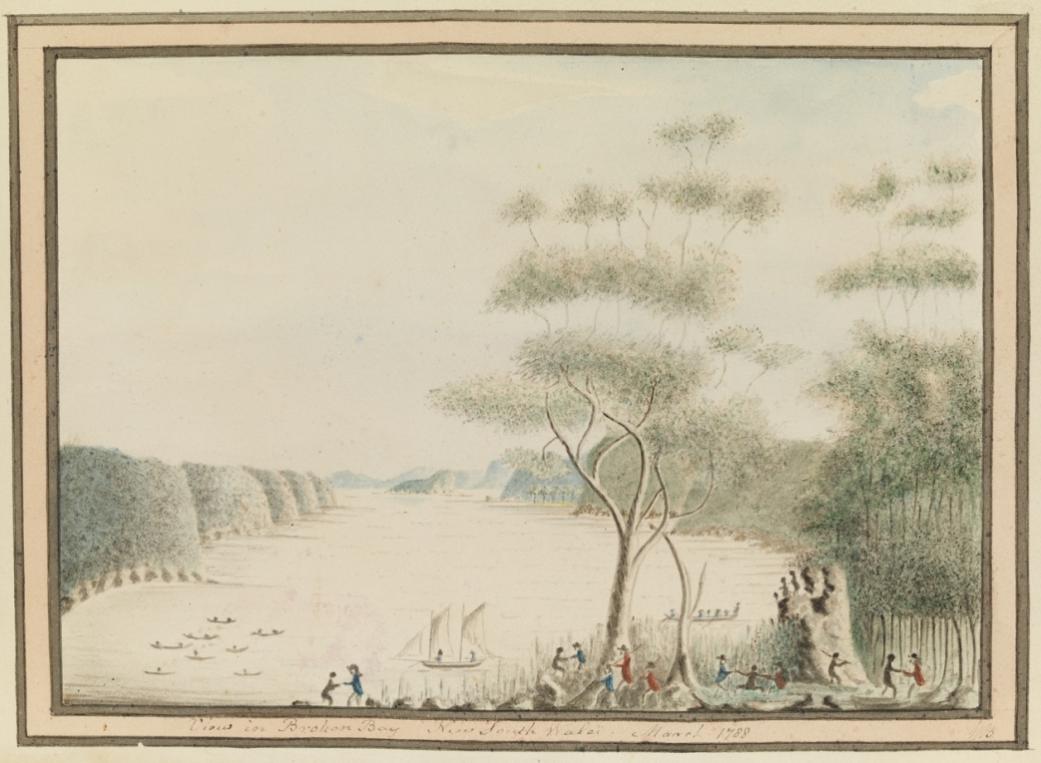
In April 1788 Australia's first Governor, Captain Arthur Phillip, led a reconnaissance party from Manly Cove upstream through the Stoney Creek (St Ives) area, seeking fertile land for growing crops. On this journey, he noted the tall trees which were to provide timber for the growing colony.
By December 8 1795 there was a prohibition on timber cutting on the banks of the Hawkesbury River, an Order that was issued by Captain John Hunter, RN, who took office as the second Governor of New South Wales on September 11, 1795.
By October 1803, just 15 years after Europeans began living here, so many trees along the Hawkesbury river had been removed that the floods along the Nepean-Hawkesbury floodplain Sydney is still dealing with today, and which caused Andrew Thompson of Scotland Island to die years before his time - in rescuing others from these floods and becoming ill as a result - the third Governor, Captain Philip Gidley King, RN, ordered settlers to desist and commence re-planting.
The Sydney Gazette and New South Wales Advertiser published the orders, along with some others that relate to what trees were being cut down for - to send them to England to build wharves and ships - and some outline of the volume of the losses.
The wages of cutting down all the trees, and those General Orders:
General Orders.
FROM the improvident method taken by the First Settlers on the Sides of the Hawkesbury and Creeks, in Cutting Down Timber and Cultivating the Banks, many Acres of Ground have been removed, Lands inundated, Houses, Stacks of Wheat, and Stock, washed away by former Floods which might have been prevented in some measure, if the Trees and other Native Plants had been suffered to remain ; and instead of cutting any down to have planted others to bind the Soil of the Banks closer; and rendered them less liable to be carried away by every inconsiderable Flood ; nor is this the only evil :‐‐‐ The Public convenience having suffered by the numerous large Trees lying in the Stream, and fallen across, rendering water-carriage on the Creeks almost impracticable, and in some Part of the Hawkesbury very dangerous.
As several Settlers have been, and are now fixing on the Lower Part of the Hawkesbury, along the Nepean, South Creek, and George’s River, in Situations where the above Evils may be prevented, It is hereby directed that no Settler or other Person, to whom Ground is Granted or Leased on the Sides of any River or Creek where Timber is now growing, Do on any account Cut Down, or Destroy by barking or otherwise, any Tree or Shrub growing within Two Rods of the Edge of the Bank, except for an Opening, One Rod wide, to have Access to the Water.
Mr. Eᴠᴀɴꜱ, Acting Surveyor of Lands, is directed to communicate this Ordinance to those lately settled; and to give the Gᴏᴠᴇʀɴᴏʀ a List of those who have not yet cut any Timber down in the above Situations, that it may be made a Condition in their Grant ; And should they not be sufficiently sensible of the general and individual Benefit arising from this necessary Regulation, the Magistrates are hereby required to Levy a Fine of Fifty Shillings for each Tree cut down; the Penalty to go to the Informer prosecuting to Conviction before two Magistrates.
Within the two Rods of Timber left on the Banks, another Rod is to be left for a Public Road along the Sides of the River or Creek ; which three Roads are not in future to be measured in the respective Allotments.
It is earnestly recommended to those who already hold Farms by Grant, situated on the Side of any River or Creek liable to Floods, and which have been cleared of Timber, to Replant the Banks with such binding Plants and Trees as they can procure.
By Command of His Exᴄᴇʟʟᴇɴᴄʏ, W. N. Cʜᴀᴘᴍᴀɴ, Sec. Government House, Sydney, Oct. 4, 1803. General Orders. (1803, October 9). The Sydney Gazette and New South Wales Advertiser (NSW : 1803 - 1842), p. 1. Retrieved from http://nla.gov.au/nla.news-article625810
The cutting down and clearing continued:
ᴘᴏꜱᴛꜱᴄʀɪᴘᴛ.
On Monday Hɪꜱ ExᴄᴇʟʟEɴᴄʏ made a visit to Parramatta, and the day following returned to town.
The whole of the ship timber procured by the convicts at public labour, under the inspection of Mr. Moore, consisting of 160 pieces, estimated to contain above 4000 solid feet consigned to the Navy Board, has been shipped on board the Sydney. This is the best and most valuable collection of timber ever sent from the Colony, being for the major part well calculated for the most important uses in ship building.
The Sydney has also received a quantity of iron stone in order that a fair experiment may be made in England of the quality of that native production. POSTSCRIPT. (1805, September 22). The Sydney Gazette and New South Wales Advertiser (NSW : 1803 - 1842), p. 4. Retrieved from http://nla.gov.au/nla.news-article626915
ᴀᴄᴄɪᴅᴇɴᴛ.
On Friday last a lascar belonging to the Sydney unfortunately had his leg broken in stowing the Government timber on board that vessel. He was immediately ordered to be received into the General Hospital, where every possible attention is paid to his recovery. ACCIDENT. (1805, September 22). The Sydney Gazette and New South Wales Advertiser (NSW : 1803 - 1842), p. 4. Retrieved from http://nla.gov.au/nla.news-article626922
𝑆𝑌𝐷𝑁𝐸𝑌.
Yesterday His Exᴄᴇʟʟᴇɴᴄʏ issued directions for a gang of men to be employed at the North Shore in procuring ship timber from among the range of woods there. In consequence of which a timber carriage with 8 draught bullocks were under the directions of John Hᴀʀʀɪꜱ Esq. yesterday conveyed across in the Government punt, attended by a competent number of hands. SYDNEY. (1805, November 17). The Sydney Gazette and New South Wales Advertiser (NSW : 1803 - 1842), p. 1. Retrieved from http://nla.gov.au/nla.news-article626963
Once There Were Gigantic Trees
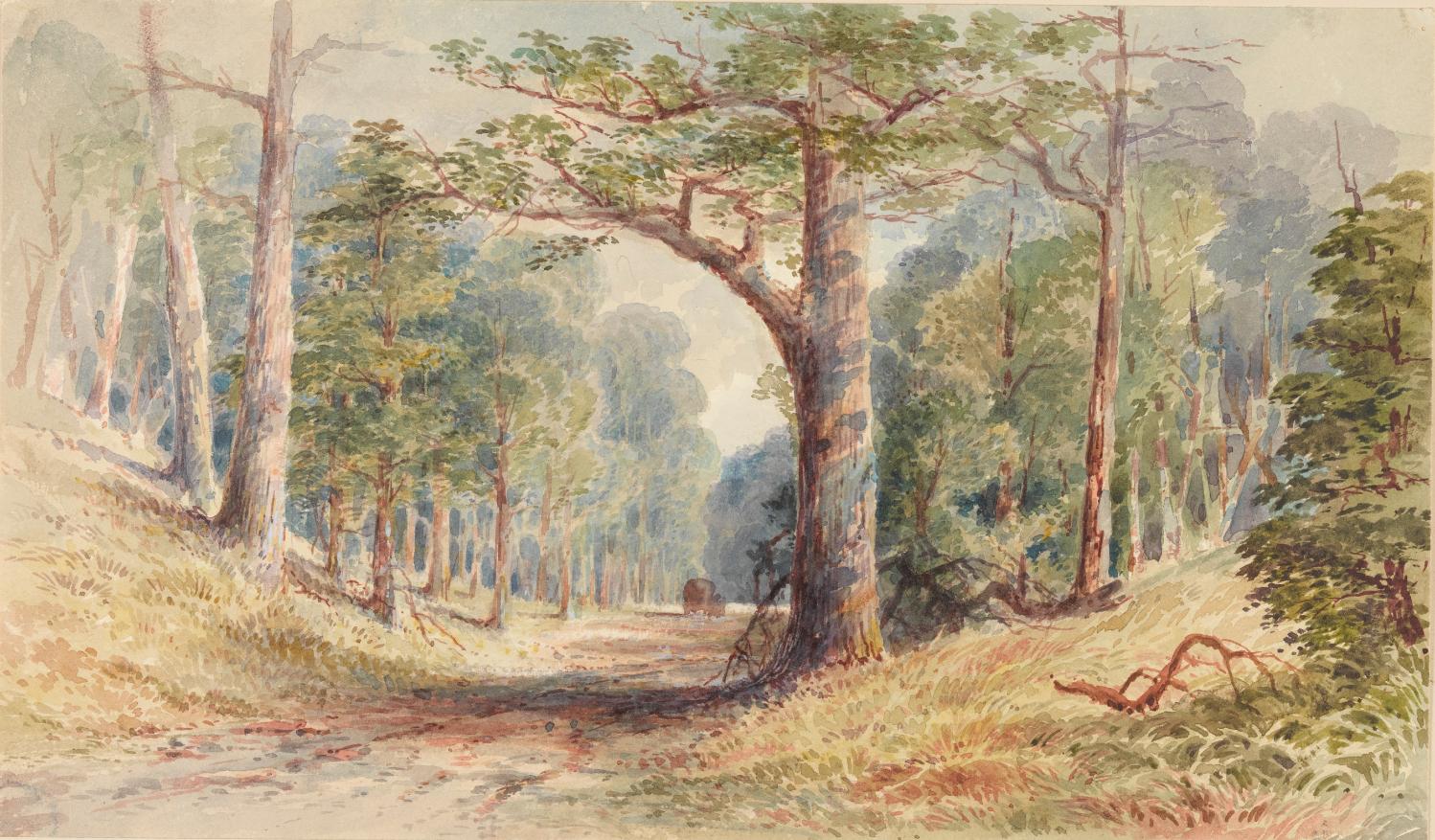
Charles De Boos, in his 1860 published 'My Holiday' describes hunting wallaby in a walk from Manly to Barrenjoey, descrinbing the huge trees around Careel Bay as:
Cows + Crops + Orchards
Pittwater was a rural area
The Rise of Flora- Fauna Champions: to the North, South, East, West
Pittwater has been fortunate in having a number of tree champions through the generations, some of whom only visited here to stay in weekenders due to a love of sailing or the great outdoors, and wished to retain, and protect this places' environmental beauty, held together through big trees, really big trees despite the broadscale land clearing that commenced in 1788.
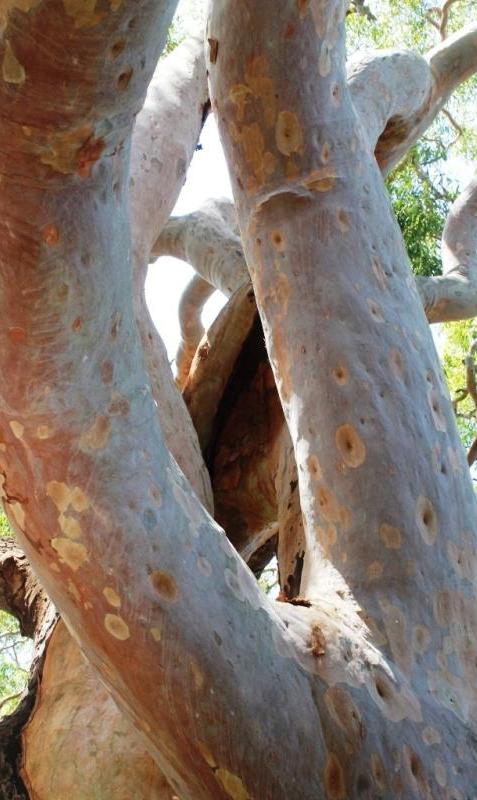
They stood up and made the effort to save these places from the early 1900's on - from the mangrove gardens outwards and upwards to the forest of spotted gums, angophora costatas, Bangalleys and Bilgola's remnant 300-400 year old cabbage tree palms - and all the habitat under these - the swamp oaks,.
FISHERIES MATTERS.
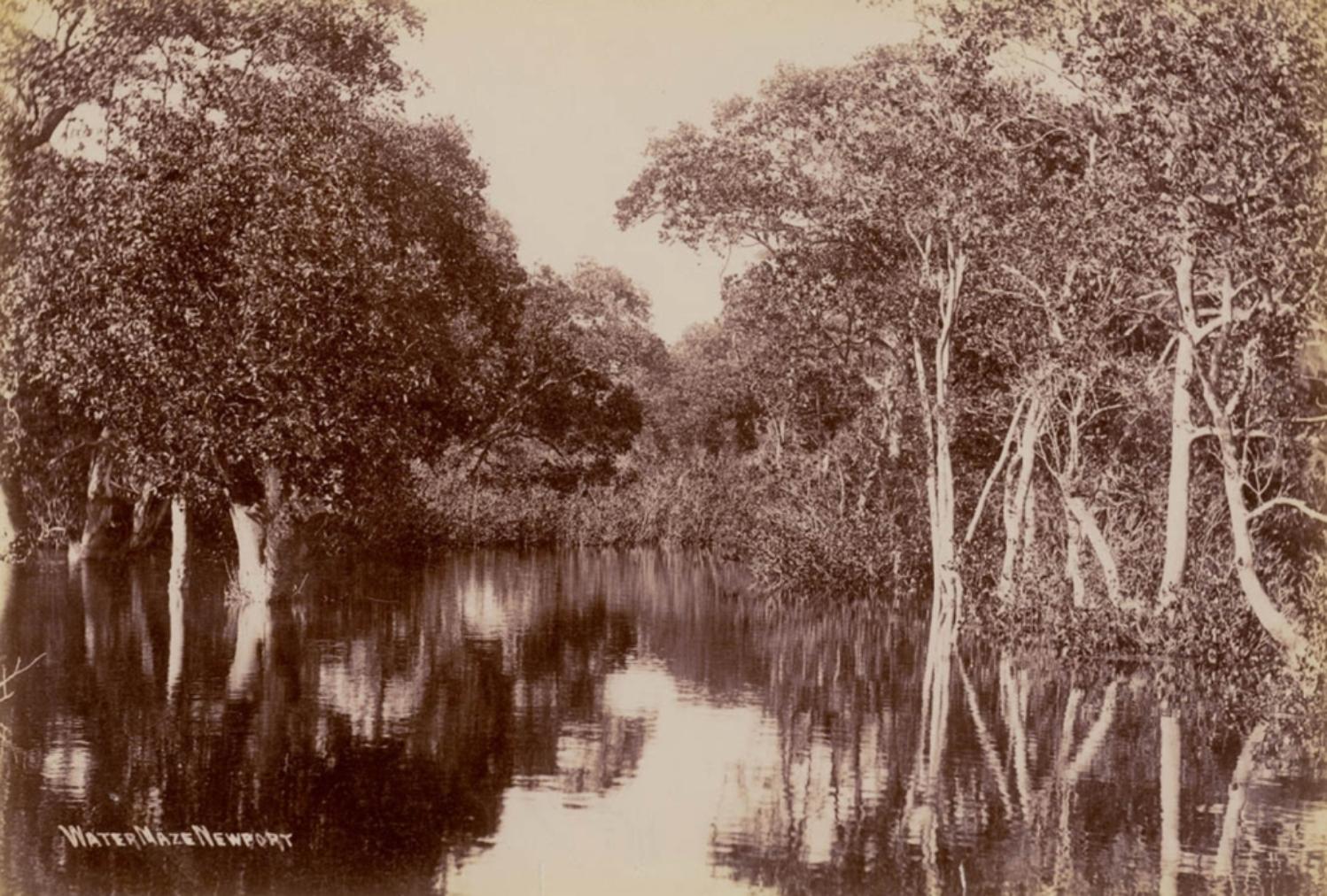
Mr. F. Farnell presided at the Fisheries board meeting on Wednesday. As a result of the protests of residents of Pittwater the board decided not to grant oyster leases of 1700 yards at the Basin or Coaster's Retreat, and of 200 yards at the Maze, Pittwater but to reserve these for the public use. FISHERIES MATTERS. (1906, August 31). The Sydney Morning Herald (NSW : 1842 - 1954), p. 3. Retrieved from http://nla.gov.au/nla.news-article28153824
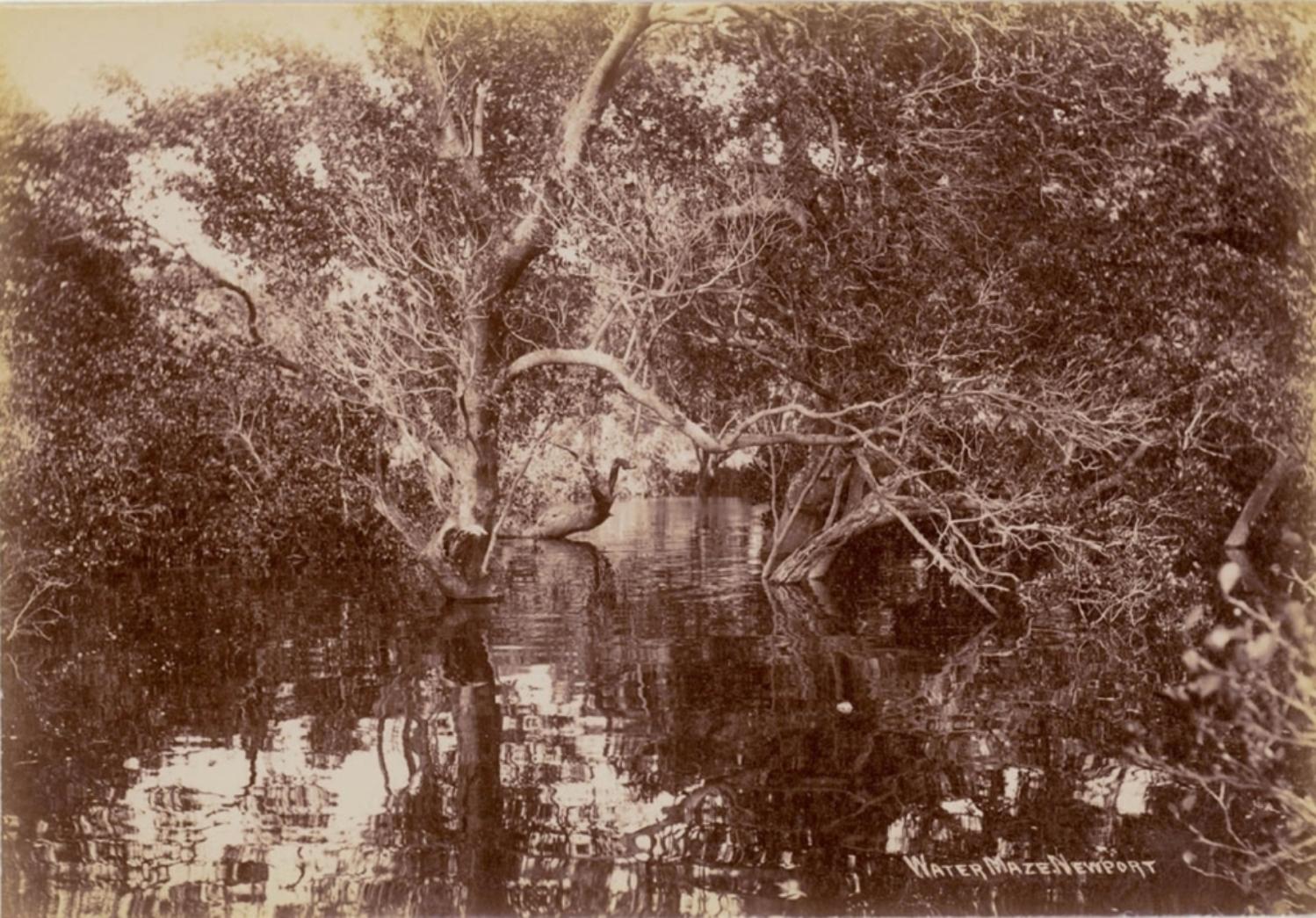
Water maze, Newport, ca. 1900-1910, courtesy State Library of NSW.
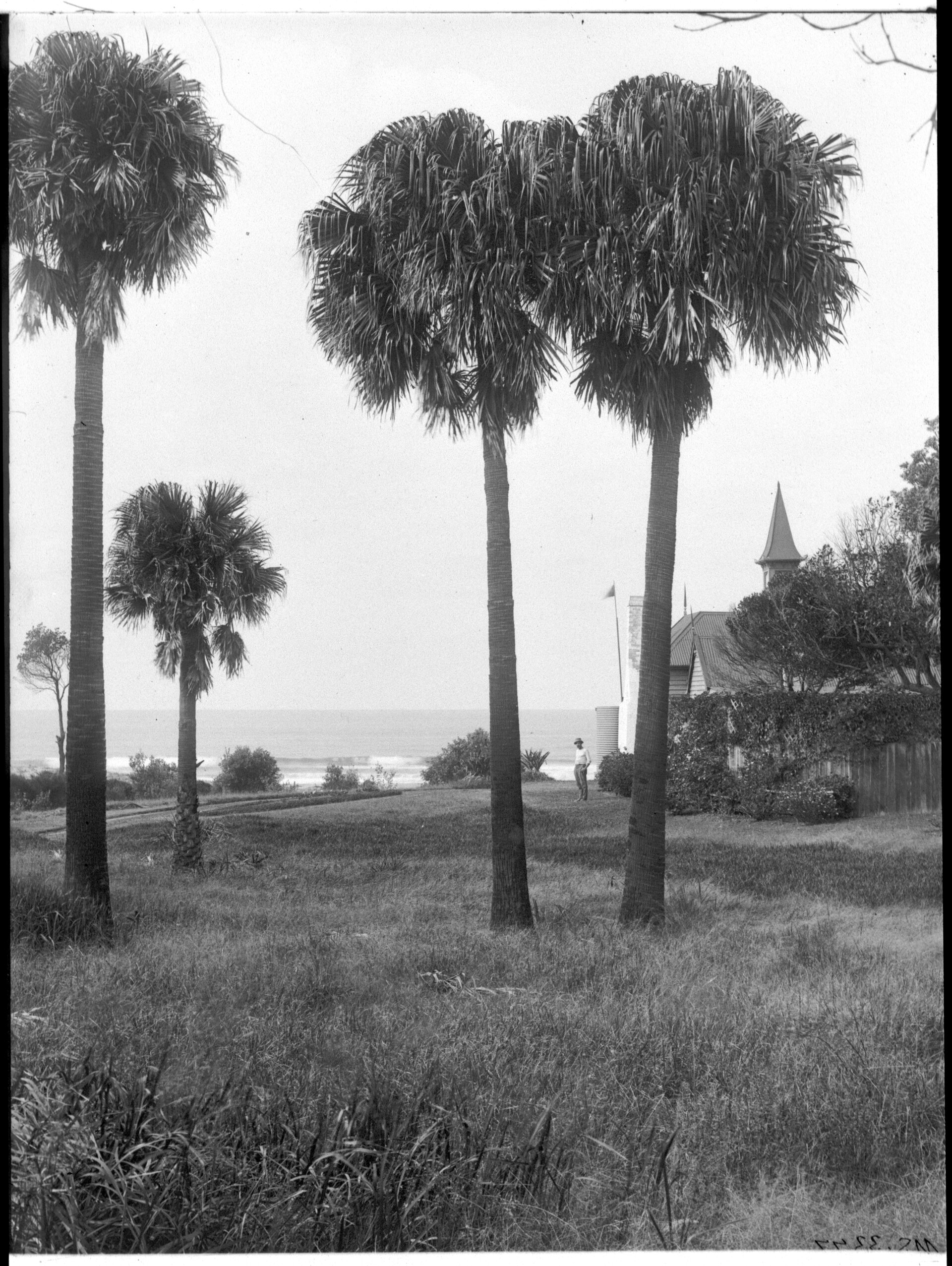
'On Balgowlah Beach or Dalleys', in 1915. Image No.: d1_33119h, courtesy State Library of NSW and NSW Records and Archives
Warringah Shire Council, at its outset, was focussed on ensuring every subdivision by developers dedicated land to the council and public 'for recreation' and 'access' as a condition of plans being passed. This went on into the 1960's under the Cumberland County Scheme of resumptions to the point when that council shifted through some of its councillors into liaisons with developers that ended up in its dismissal and some serving time in gaol.
There were also context impacts caused by the times and era that council oversaw. The Chisholm Ross Estate Lithograph, courtesy State Library of NSW, contains photographs taken by EB Studios which show us the landscape on the hillsides overlooking Clareville in circa 1921-1922 - although there is some indication that these land sales may have taken longer and commenced later than the timeframe listed.
Warringah Shire Council records:
''Tree Lovers' Civic League. Kuring-gai, 14/2/33, inviting attention to a fine tree on the top of the ridge between Pittwater and Avalon on the boundary of Lots 32 and 47, Ross Estate, and inquiring whether' it would be possible for the Council to resume sufficient land to preserve the tree. Council resolved that ''To be informed there is no money available for resumptions.''
To the north is Annie Wyatt Reserve in Palm Beach, a girl who grew up in Manly during the days of the Manly Flower Shows which destroyed environments at the southern end of the Manly to Barrenjoey peninsula, and later was a founding member of the Tree Lovers League.
The 1920's Tree Lovers League and a Forest League for Wildlife, would later be involved, along with residents, in engaging the 1950's generations of primary school students in tree plantings.
At Mona Vale:
Mona Vale Public School Plants 140 Trees In Three Streets
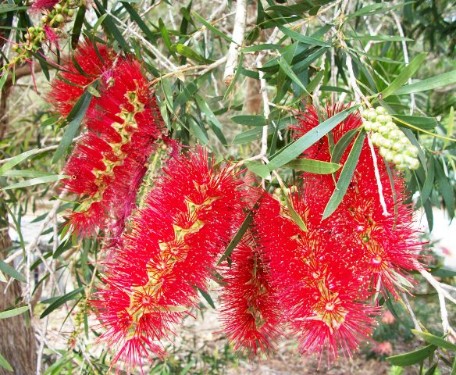 ONE hundred and forty Bottle Brush trees were planted at Mona Vale on August 11, when Arbor Day was celebrated at Mona Vale School.
The trees were planted in Narrabeen, Waratah and Park streets, which surround the school, at which 148 students have become tree wardens.
The tree planting was arranged by the schoolmaster, Mr. Daly with the co-operation of the Parents and Citizens' Association. ;
- The P. &. C. and school children bought most of the treelings from the Forestry Department, the Department giving the remainder.
Mr. Daly addressed the gathering of children, parents and visitors, after which Mr., Austin, inspector of schools, Mr. Asian; M.L.A., and Mr. Watson, of the Naturalist: Society, addressed the large gathering.
All spoke of the great value of trees to the individual, the community, and the nation, and urged the growing, care, and protection of trees.
Trees were living things of beauty and great usefulness, and every effort should be made to save them from damage and destruction, the speakers said.
The young trees were distributed among the visitors, children and members of the Parents and Citizens' Association who moved to positions in the three streets where the treelings were planted.
Other visitors included members of the N.S.W. Town Planning Association (Mr. and Mrs. B. W. Ford), the president of Warringah Shire Council(Mr. R. Kent),- a member of the Forestry Advisory Committee (Mr.Turner), the secretary of Pittwater R.S.L. (Mr. Bimsan), Mrs. Ingleton, representing the Mona Vale Community League, and Mr. and Mrs. E. H. Collins.
The president of the P. and C. Association (Mrs. K. Batten) assisted by the secretary (Mrs. O. Anderson)entertained the visitors at lunch, while the school children provided a bright concert programme, which included Master Ted Budge's vocal solo, "Trees."
Visitors paid tributes to the school staff, P. and C. members, and all who assisted in the tree planting and entertainment. MONA VALVE SCHOOL PLANTS 140 TREES IN 3 STREETS. (1950, August 25). The Land (Sydney, NSW : 1911 - 1954), p. 14. Retrieved from http://nla.gov.au/nla.news-article105713567
At Avalon the WSC August 1950 Minutes of Meetings record:
Schools Celebrate Arbor Day In The Rain: Children’s Enthusiasm
By Our Special Representative.
'THE growing interest among school children in the planting and protection of trees was demonstrated last Friday at Arbor Day ceremonies at public schools in seaside resorts north of Sydney.
To celebrate Jubilee year and in support of the Festival of Trees special ceremonies had been arranged at Avalon, Newport and Mona Vale. These districts are well known surf and holiday resorts, but with increased building development they axe rapidly becoming suburban residential areas.
This part of our northern coastline is well endowed with trees and the undulating country sweeping down to the sea provides many picturesque vistas. With the change to suburbia., however, many of the tree clad hills are showing the effects of the axe and the five stick. As land is subdivided and building blocks cleared trees have to come down to make way for progress.
People Tree Conscious
A tour of the district last Friday during the school Arbor Day ceremonies revealed that many of the local public bodies and residents are tree conscious and are anxious to preserve as much as possible of the district's natural beauty.
The schools at Avalon, Newport and Mona Vale, therefore, received generous support in their tree planting programmes from their own parents and citizens' associations and other local organisations.
Be cause of continuous heavy rain Arbor Day was celebrated at the three schools with only token plantings of trees.
The extremely wet conditions, however, appeared to act as a spur to the enthusiasm of the youngsters and their parents and friends. Programmes of songs, physical culture exercises, verse speaking and tableaus were performed indoors or in the open in those few brief moments when the rain eased.
R.S.L. Support
The first ceremony was at Avalon, where the local sub-branch of the R.S.L. had provided the trees for a planting programme in the school grounds.
This is a comparatively new school. Only temporary buildings have been erected so far I and there is plenty of scope for tree planting in the four acres of grounds.
The headmaster, Mr. T. E. L. McGuire, explained that a master plan had been prepared on the advice of a nurseryman for laying out and planting the school grounds with trees and shrubs. The plan provides for windbreak and shade trees, an agricultural section and a properly equipped playground.
After the children had given several items short addresses on the value of trees and the need for their protection were delivered by Mrs. A. Wyatt, a vice-president of the Forestry Advisory Council and a member of the Kuring-gai' Tree Lovers' Civic League, and Mr. E. Breakwell, former organiser of Junior Farmers' Clubs, and representing the Australian Forest League.
Mr. Breakwell, who is well known throughout New South Wales for his work in the interests of school agriculture and tree planting, is now residing at Newport. He continues to take a moist active interest in the local schools and is particularly keen on the development of a tree consciousness among school children and the public generally.
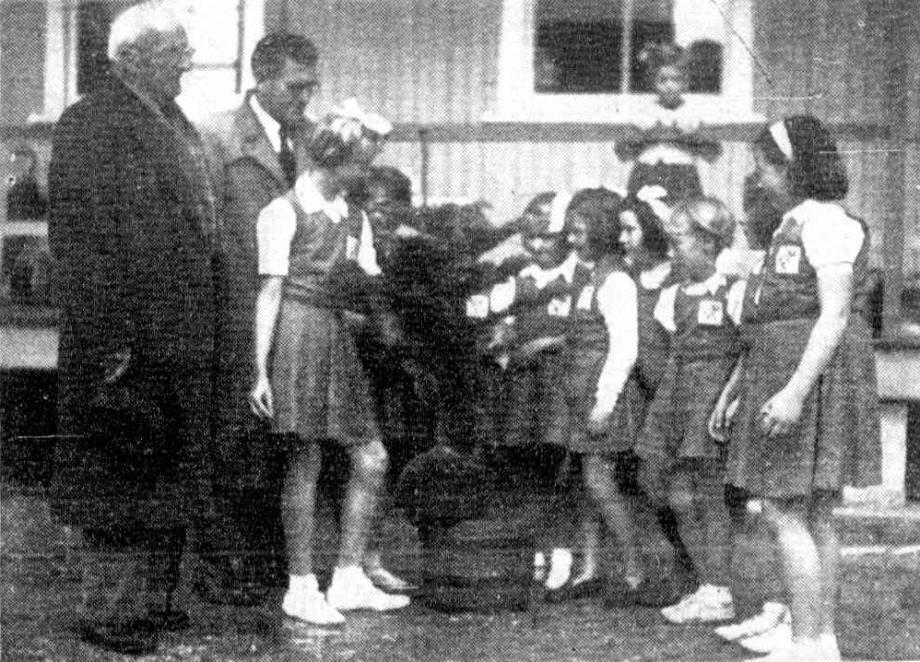
LEFT (above): MR. BREAKWELL, former organiser of Junior Farmer Clubs throughout N.S.W. and representing the Australian Forest League, took a prominent part in the tree-planting ceremony at Avalon Public School, The headmaster, MR. T. E. L. McGUIRE, is also in the picture.
With due ceremony a Norfolk Island Pine, one of many to be planted on the southern boundary, was "planted" in a large pot indoors, while the children recited the tree warden's pledge.
At Newport the headmaster, Mr. N. R. Sanderson, had organised a splendid programme which was performed despite the rain. Here again, however, it was impossible to carry out the tree planting' portion of the programme.
But: the singing of "Trees" by the school choir, the clear young voices ringing out in the rain-washed air amid a lovely setting of trees, was ample compensation for those who braved the wintry weather to attend.
Cavalcade of History
The highlight of the day's events, however, was at Mona Vale, where a most elaborate and well organised programme had been arranged to celebrate Jubilee Year and Arbor Day.
The school children, in full costume and with scenery and effects, took part in what was really a cavalcade of Australian history.
The headmaster, Mr. G. B. A. Daly, was responsible for the arrangement of- the performance and': had valuable assistance and co-operation from his teaching staff and members of the Parents and, Citizens' Association.
Providence was kind at this stage. The rain ceased and fitful sunlight shone out as Capt. , Cook landed from the Endeavor and was greeted by a large band of aborigines, to be followed by colorful scenes from Australia's past, with Redcoats marching to the beat of a vigorous drummer, pioneers pushing out to conquer the outback, statesmen telling of the development of a hation and the three arms of the present-day services marching proudly across the parade ground.
The programme ended with a salute to "Australia" and "Britannia."
Performance Praised
The performance was excellent and won high praise from, Mr. J. N. Harrison, the district inspector of schools, who described it as one of the most outstanding Jubilee Year events he had witnessed.
Three of the "actors" then planted a tree in the school ground to mark the Jubilee Year Arbor Day. It had been intended that 80 advanced trees would be planted but, owing to the rain, this major planting had to be postponed.
(Continued on page 10)
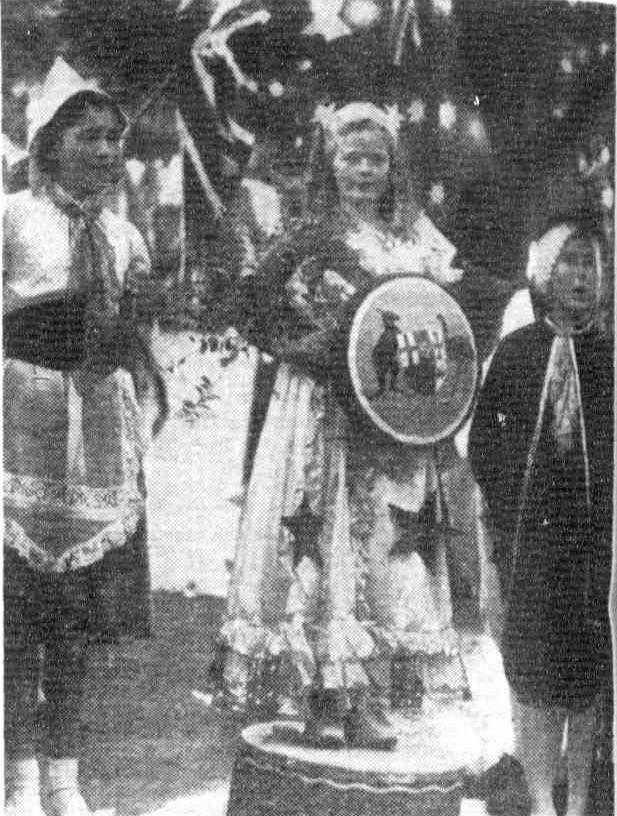
SALUTE TO "AUSTRALIA" "Australia" and her attendants made a colorful picture In the final tableau of the Jubilee Year performance given by Mona Vale schoolchildren last Friday. The performance was given as part of the Arbor Day ceremony at the school.
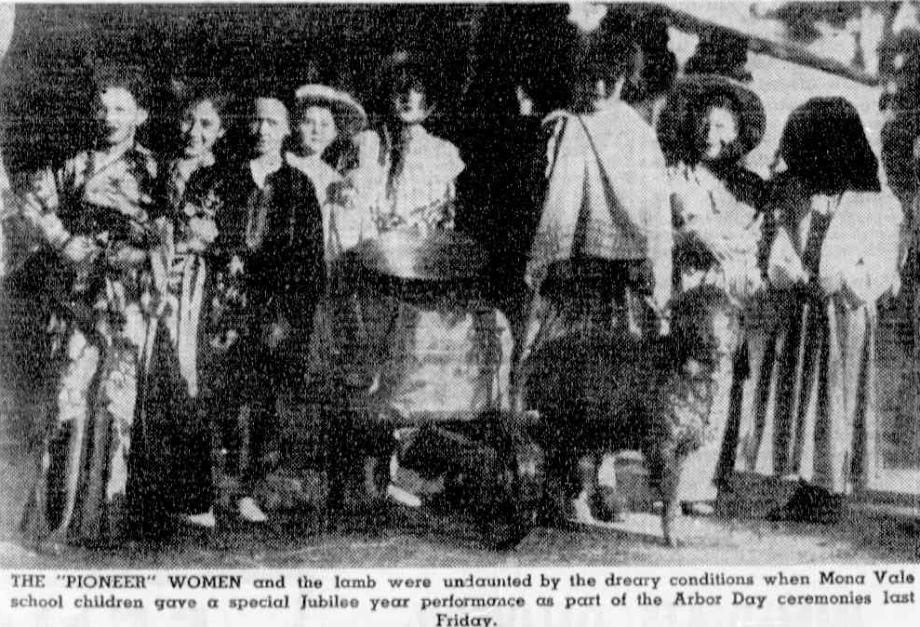
THE "PIONEER" WOMEN and the lamb were undaunted by the dreary conditions when Mona Vale school children gave a special Jubilee year performance as part of the Arbor Day ceremonies last Friday.
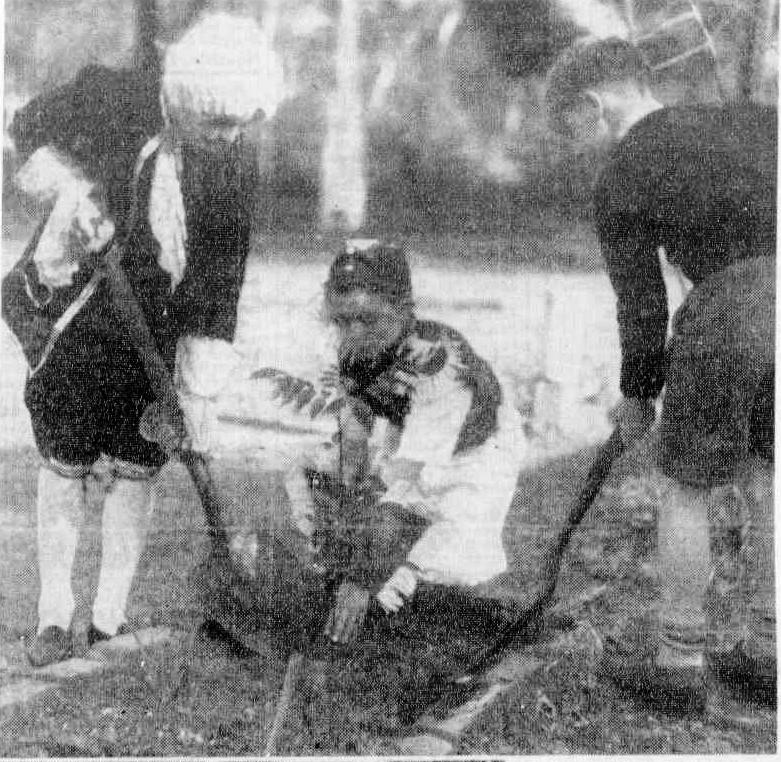
JUBILEE TREE PLANTING at Mona Vale Public School. MASTERS HOGAN (centre). WILLIAMS and TORA plant a tree in the school ground after pupils had given a Jubilee year performance in costume. Schools Celebrate Arbor Day (Continued from page 8) Schools Celebrate Arbor Day In The Rain; Children's Enthusiasm (1951, July 6).The Land (Sydney, NSW : 1911 - 1954), , p. 8. Retrieved from http://nla.gov.au/nla.news-article112489300
The above ceremony was followed by this letter to Warringah Shire Council:
There are all the eastern and hill outlooks throughout Bilgola Plateau, Bilgola Beach, Clareville, Careel Bay and Avalon Beach which today's residents benefit from in the parks entrusted to the future by A J Small through the Playgrounds and Parks Movement. Due west was Edward Hallstrom's Koala Sanctuary, Mark Foy of Bayview and Dorothea Mackellar of Lovett Bay.
Further west Eccelston Du Faur and then J D Tipper joined the chorus calling to better look after the places forming the great green wing, and they were joined by residents who became volunteers in the Tipper founded Rangers League and Walter James Dearin after whom Newport's Dearin Reserve has been named.
And when they all roared together, with even the bird man of Avalon, Neville Cayley involved, it sounded like:
Along the beachfronts and waterfronts a number of then residents sought and gained permission to plant Norfolk Island Pines, Araucaria heterophylla, strangers to the endemic species of this place, with also, at Mona Vale, Cook Island Pines, Araucaria columnaris.
At Palm Beach these were attributed to A J Hordern, at Mona Vale, the WSC Minutes of their Meeting held on 13th May, 1929 records:
34. Mona Vale Progress Association. 6/5/29. Requesting (1) that an avenue of Norfolk Island Pines be planted along Noble Street, and that the proposed 'parking area at the beach be planted with shrubs, (2) that the blackberry bushes near the drain in front of the Church of England be removed, (3) that a small electric light be placed inside the Mona Vale war memorial, and that the light be laid on to the rock baths and surf Sheds, and (4) that the Education Department be asked to subsidise the bus service' plying to Newport and Church Point to enable a reduction to be made in school children's fare Resolved (i) The Association to be asked whether in the event of the Council planting the trees, the Association will look after them (2) to be attended to by the maintenance men; Extensions will be considered when the installation of the service is nearing completion, (4) agreed to.
Although, as Apex Park was once the site of a Warringah Shire Council tip in the 1960's, the leachates from this may have led to the deaths of those pines. the WSC Meeting of September 9 1968 records:
TREES & GARDENS. The following trees and shrubs were planted or replanted during this period:_Kalaui Street. 32 Tristania conferta. Cnk Street, 12 tristania conferta and 12 liquidamber. Woodbine Street. 75 tristania conferta. Bangaroo Street. 72 tristania conferta. Water Reserve Road. 18 tristania conferta. Gloucester Street. 22 tristania conferta. Warekila Street. 20 melaleuca hypericofolia. Greystones Street. 18 liquidamber and 13 tristania conferta. Various streets and reserves. 32 mixed trees and shrubs. The following trees either lopped and/or removed - Mona Vale Beach (12 dead pine trees); No. 325 Whale Beach Road; 86 Anzac Avenue; 30 Suffolk Avenue; 3 Austral Avenue; 44 Lagoon Street; Clarke Street; Tottenham Street; Worcester Street; Eric Street; Surfers Parade; Marmara Street; Keirle Street; Innes Road; Lovett Street. General tree maintenance carried out in ‘B’ and ‘C’ Ridings.
sm.jpg?timestamp=1784239662490)
Mona Vale Beachfront in June 2026 showing both species of pines
sm.jpg?timestamp=1784239692158)
sm.jpg?timestamp=1784239747852)
The WSC records from 1930's on also record a number of plants being put in across the Local Government Area - either by the council or local residents seeking permission to do the same.
During World War Two, the installation of Tank Traps along the coast saw the destruction of the giants of then. Betty Morrison of Bungan Beach remembers World War II:
… "Yes, well, of course, we were going to be invaded you see…we knew about the war, of course, but we didn’t know about the coast defence. Mrs Porter sat out on the back, which looked away, their gully went right down to Pittwater, great big trees, beautiful trees. They were sitting at breakfast, all the trees started rocking, all the trees began to shake. Nobody told anybody. This was the secrets of war. Did you ever hear such nonsense! I mean she could have had a fit… Anyway, Mrs Porter rushed down and they said, oh, it was the army and they were going to make a tank trap. So they cut all the trees down, they dug along here, you see, this way going to Pittwater. The backside of it they made a big wall which the Japs were not going to be able to get up. Having come thousands of miles from Japan.
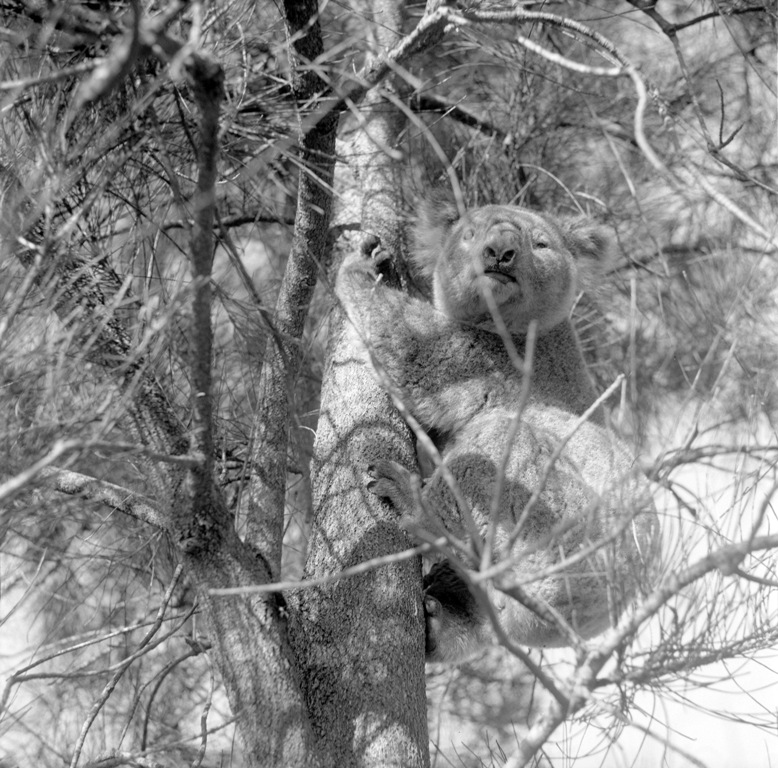
Pittwater was also a place where people commenced trying to save the local koala population in the 1940's and 1950's. This persisted until people like Connie Adams and Ron Searl took up the responsibility of pushing back against later very poor council choices in being good keepers of the environment, in using wetlands and beachside reserves (Careel Bay Playing Fields, Newport's Porter Reserve, Apex Park at Mona Vale, Warriewood-North Narrabeen Reserve) as grounds for tips, and as caretakers of the wildlife that lives here the council was rebuffed through the work of the Avalon Preservation Trust (current APA) and even the planting of spotted gums by 'Nugget' and Jill Meares at Pacific Road Palm Beach and Barrenjoey Road Careel Bay 50 years ago this year.
This continues today through simple messages such as 'no tree, no me' for a species listed in 2022 as 'endangered by extinction'.
Pittwater's koalas became locally extinct in the mid-1980's.
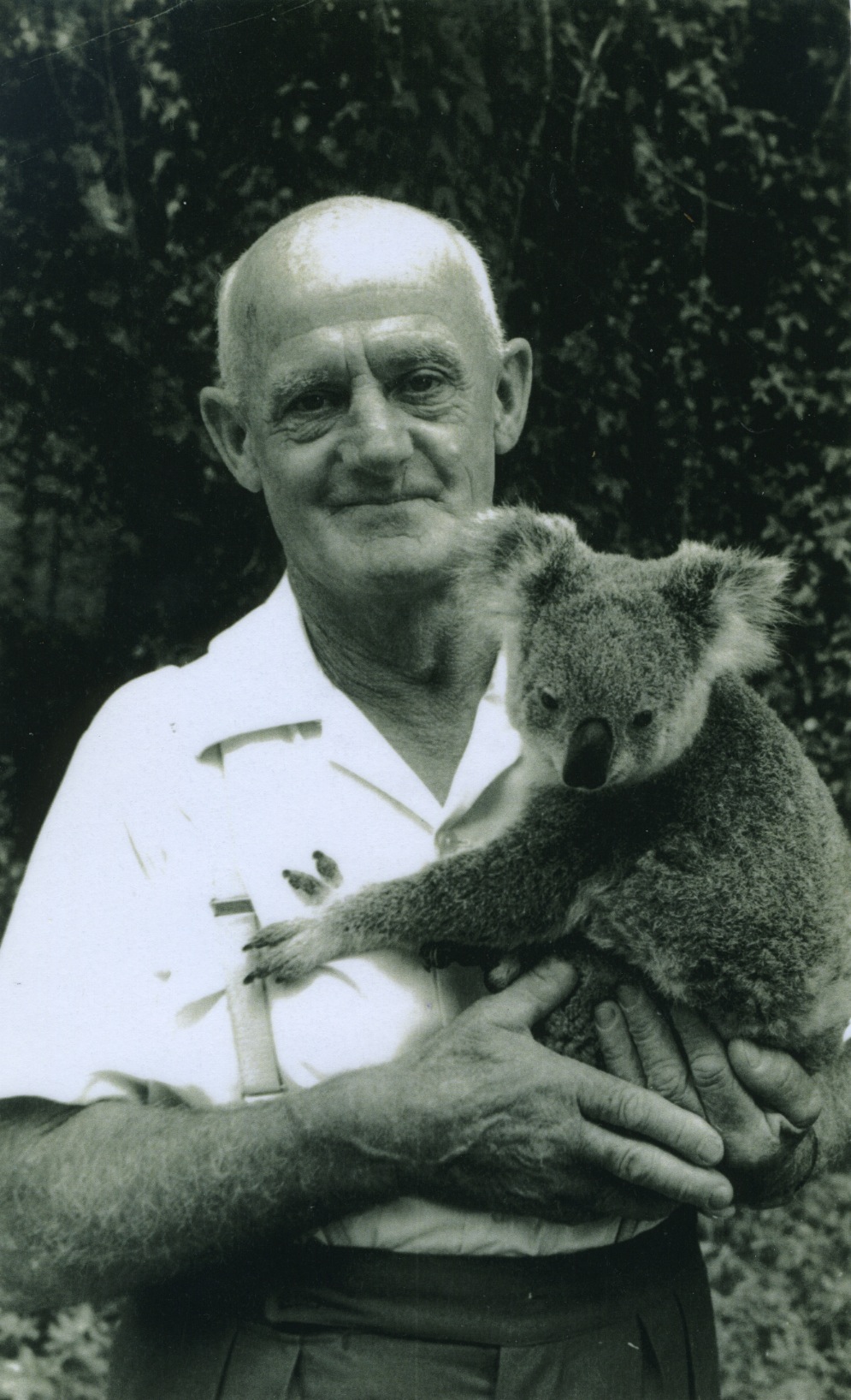
Below is a photo Avalon Beach Historical Society's president Geoff Searl OAM's maternal grandfather, William George Pryor. They lived in a home built at 64 Avalon Parade - he bought two blocks in 1944, Lots 59 and 60. George worked originally as a coach builder, later branching out into carpentry by the time he ‘fitted out’ the retail shops on the ground floor of the heritage-listed 2-storey building on the corner of Avalon Parade and Old Barrenjoey Road for A. J. Small.
This lovely photo of George from Geoff's family albums, known as a very gentle man, indicates why this Avalon Beach koala may look so content and secure in his arms.
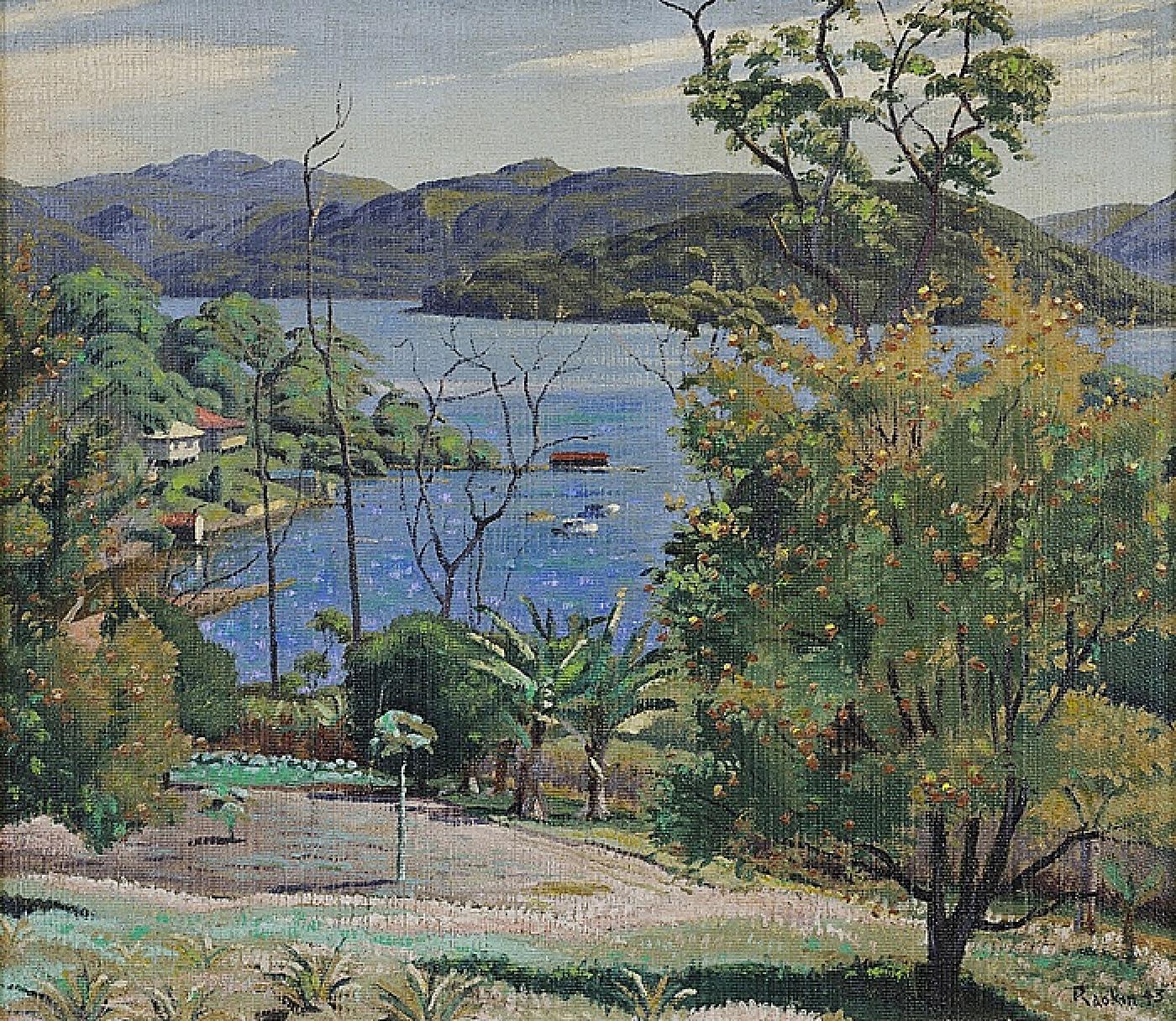
Another aspect of the then locals was every street and suburb had Tree and Wildlife Champions. Weaver Hawkins, 1950 Wynne Finalist for - In Mona Vale - was also among local residents of succeeding generations determined to stop the wildflower and wildlife killers . A few insights form the newspaper pages of the past:
THE RANGERS' LEAGUE
protecting native flowers.
PUBLIC CAN HELP
The glorious expanse of virgin bushland throughout the Blue Mountains is the home of some of Australia's most beautiful native flowers. These are a heritage of joy to dwellers among the mists, and
visitors from the ends of the earth. Every true Australian loves his bushland and Its delicate and beautiful flora, and he is ready to protect it, and prevent vandalistic hands attacking It. We have in this State a "Rangers' League," of which Mr. John D. Tipper is founder and president. He and his Rangers are sworn to protect our native plants, flowers, and trees. He writes an appeal to Australians to help preserve our native were and plants.
THE RANGERS' LEAGUE
He says: — "In view of the existence of the Native Plants Protection Act, no doubt many people have been puzzled as to the reason for the very large number of protected native plants and flowers that are from time to time displayed for sale. Even to the casual observer it must be apparent that these flowers cannot always be legitimately obtained from private property, as is invariably represented. As a matter of fact, it is within the knowledge of the Rangers' League that nearly all of these flowers are picked in violation of the law. The apprehension of offenders, however, is attended with difficulty. One of the greatest problems with which the League has to cope is the robbing of our national parks. Crown lands, and private property by well-equipped flower thieves, who operate on an exceedingly large scale,- in conjunction with their commercial associates.
"DON'T "DON'T BUY!"
If the public would refrain from purchasing these flowers of doubtful origin they would help to defeat the unscrupulous dealers, by making them realise that, although they may flout the law, they must respect public sentiment. It should be understood that purchasers of protected flowers become liable, and may be required to establish their bona-fides for having flowers in their possession, and that their In-nonce may not be established by the production of a receipt Issued by the vendor," as numerous fictitious receipts have been, issued, and are being used to deceive purchasers. At the present rate of depletion of our forests, Including national parks, Crown lands, etc., through evasion of the law by commercial interests, the time will not be far distant when the more beautiful of our native plants and flowers will be things of the past.
BUSH FIRE MENACE
The Indiscriminate stripping of all flowers and repeated bush fires are depriving our native plants of all power of seeding and reproduction, and, consequently, are entirely depleting large areas which originally grew plants in profusion. The policy of the League is to encourage the general cultivation of Australian flora, and the practice of dealing with nurserymen recognised by the League as specialists in the cultivation of native plants, the origin and quality of which can be assured, is strongly recommended. It should be realised that financial support would prove much ineffective than pious hopes in the preservation of our fauna and flora, and liberal contributions would enable the League to more effectively continue and develop work already well commenced. THE RANGERS' LEAGUE (1930, November 22). The Blue Mountain Star (Katoomba, NSW : 1929 - 1931), p. 8. Retrieved from http://nla.gov.au/nla.news-article190104990
TIMBER THIEVES AT work
Ruining Beauty Of Pittwater, Says Report
SERIOUS VIEW
A SERIOUS view is taken in the annual report of the Barrenjoey Peninsula Advancement League of the depredations of timber thieves who are destroying large numbers of trees In the district. The report states that a great deal of the natural beauty of the Pittwater district Is vanishing through the activities of these men, who, it is stated, are difficult to check. It was explained that a common method was to pay a nominal sum for the right to cut down timber from a single allotment, and then to cut down and steal timber in the neighborhood.
Office-bearers
The report, which revealed a year of progress, was adopted, and the following office-bearers were elected for the year: Patron, Mr. A. Parkhill, M.H.R.; president, Mr. A. J. Small; honorary treasurer, Mr. J. G. O'Brien; honorary secretary, Miss M. Swain; councillors, Messrs. B. W. and W. Ford, Jeffrey, Kenny, Stapleton, Uttley, Todd and Glencoe Williams. TIMBER THIEVES AT WORK (1935, December 31). The Labor Daily (Sydney, NSW : 1924 - 1938), p. 7. Retrieved from http://nla.gov.au/nla.news-article237886699
Dorothea, on Trees:
TREES.
AN OPPRESSED PEOPLE.
(BY DOROTHEA MACKELLAR.)
They are not oppressed in all countries. In some they are loved, valued, and honoured, but few Australians care about them, although their lovers care very much indeed. Most Australians know nothing about their own trees. Others, of whom I am one, know far too little, but-we feel, with Stevenson's visitor from a neighbouring planet, that "these people seem to have very good manners," and although we are told that they are only vegetables without the gift of speech we seem to hear them sing.
Is there another country in the world where trees are so despised, neglected, misunderstood, slaughtered as they are here? Of the slaughter I hope to speak later: It may be an unconscious memory of pioneering days which makes us fell trees so recklessly on any pretext or none. There is no such explanation tor the way we despise them. Many of us sweep away trees Indiscriminately in order to see a view which owed more than half Its beauty to being seen through their screen. And our neglect. How few of us think of watering a tree In dry summer weather, or of cleaning away Its dead wood? Even gardeners will sometimes speak as if trees should be superior to all vegetable needs; as if the magnolia's jaggedly broken branch ought to tidy itself without help, or the pittosporum were to blame for requiring to be sprayed when there is scale about. They do not talk like that about their roses and dahlias.
LACK OF KNOWLEDGE.
The way we misunderstand trees wants a paragraph of Its own. We usually know neither their names, their natures, or their birthplaces. I have been assured by Australians, at different times, that the eucalyptus, wattle, pittosporum, flame-tree, kurrajong, blue-berry ash (deutzla), and white cedar are not indigenous to Australia, the reasons given being that the eucalyptus, wattle, and kurrajong had been seen by the speakers in other countries, that the pittosporum "looked as It it grew where oranges did," and that the flame-tree and white cedar shed their leaves. The first reason Is perhaps the oddest; no one has yet attempted to prove that the English oak Is not a European tree because there are specimens of It growing In Sydney. I rather like the second reason; it at least shows that they had some feeling for the nature of pittosporums. The third reason is plain Ignorance.
To come back to the first. Since Australian trees are given pride of place in so many lands, it is strange they should be so little admired by their own people, as a whole, even when they get a sort of contemptuous affection. "Of course, I like the old gumtrees, ugly as they are," some one said to me the other day.' ' Ugly! There are pinched and stunted trees, ungraciously shaped, just as there are ugly horses, but that does not prevent the horse from being a beautiful animal.
Some years ago in Paris, Knoblock's play "Kismet" (produced here by Oscar Asche) was beautifully though elaborately staged. When the curtain rose on the Sultan's garden-a most lovely scene I observed beyond the marble swimming pool, exquisitely silver against a sky of moonlight-blue, one slender sapling bluegum. But when I chuckled to a friend about the anachronism of that particular bit of beauty in Harun Al-Rashids garden, a thousand years or so before Australia was discovered (for whether Malay pearl fishers came here In old days or not, no one claims that they Introduced the eucalyptus Into Asia), she only said, "But I've seen bluegums in Ceylon, as well as the South of France." However, she admitted that that bluegum added the last touch of ethereal grace to the Khalife's garden. Had it grown in hers she would quite likely have told a pleased gardener to take the scraggy thing away. I fear that she was of those who admire the beauty of silver-grey olive trees with their writhen trunks, having read of this in many books, but have no eyes tor the kindred beauty of a tea tree.
ASKING THE IMPOSSIBLE.
People are so unjust to Australian trees. Even the I-haven't-seen-any-other-country-and-don't-want-to, Australia's-good-enough-for-me type (which, though dull, is less irritating than the snob), is apt to say that Australian foliage is monotonous. So are clouds, If you do not observe their shapes and colours. We can find what we want of either, If only we know where and how to look, but It is no use to ask the scented showers of this peppermint gum for dense shade, or the Moreton Bay fig for feathery plumes. Yet that, in effect, is happening constantly. Generally it is monotony of colour of which people complain, the "uniform bronze-green" (or "blue-green" or "grey" the colour sense of the complainants is apparently weak). They never notice the enchanting bright green of the apple trees (angophora), or the green beryl colour of the flame-tree leaves, and there are plenty of the latter about, even if apple trees are scarce in town. But most likely they are among those who think that some trees are foreign because they lose their leaves. A natural mistake, but why some should suppose the blue-berry ash is an exotic I cannot imagine, unless it is that some of Its leaves turn a splendid orange-crimson, just when the berries, like polished lapis lazuli, are clustered thickest. But the leptospermum has been called a stranger, too, and it has no autumn colouring, only its strong leaves, lettuce-green when they break from the bud, and like Indian jade in their maturity, and its profusion of lacy white stars. It is true that the stars fall as they fade, and make a soft brown praying-carpet under the boughs; trees have been murdered for less.
But of tree-killing; lawful execution or plain murder, I hope to speak later.
TREES. (1925, August 15). The Sydney Morning Herald (NSW : 1842 - 1954), p. 11. Retrieved from http://nla.gov.au/nla.news-article16235725
Dorothea was joined by Mark Foy, with this report also letting us know the size of these spotted gums - any of this size still here today?:
SPOTTED GUMS AT BAYVIEW.
Bayview, one of the most delightful of the many beauty spots round the waterfront at Pittwater, is more beautiful than usual today because of the presence of numbers of the young and middle-aged spotted gums on the roadside. Anyone, who has an eye for a tree trunk and a shapely headpiece, should see these hardwoods at work on their home holdings, over which Mr. Mark Foy and his neighbours hold sway. The grown trees are 30 and 40 feet in the barrel, and are quite perpendicular. All the young stock are lighter in body and shorter as well, but even the babies among these yellow-stemmed trees are as straight as a plumb line. Young trunks and old trunks, too, are coloured with unbroken bark of yellow-green pastel shade, blotched with spots of dull mauve, which clearly indicate the family to which they all belong. Only lately they were engaged in dropping their old bark in readiness for the work which has to be done during the year.
Thanks to Mr. Foy, Mr. Graham, Mr. Sinclair, and to the other tree lovers of Bayview, who are bent on preserving these native timber trees, visitors are able to enjoy from the roadside pictures which are too seldom seen on or near an outer suburban highway. In too many places all the native trees are cut down to make room for favourites from other continents. None of the Imported trees compare with those of our own wild land. Bayview's spotted gums stand head and shoulders above anything near them. While their present owners have power to protect them they are safe from the axemen. Recently, some splendid trees were taken off the roadside to make room for the electric light wires. Other trees were lopped or shortened for the same purpose. Many a bayside resident was sorry to see that work done. However, the chopping could not well have been avoided. The men who handled those spotted gums did their work feelingly, and saved every tree they could. SPOTTED GUMS AT BAYVIEW. (1930, January 3). The Sydney Morning Herald (NSW : 1842 - 1954), p. 10. Retrieved from http://nla.gov.au/nla.news-article16615090
In 2018 - more available in - A Run From McCarr's Creek To Bayview June 2018 - Park Bench Reflections, Issue 365:
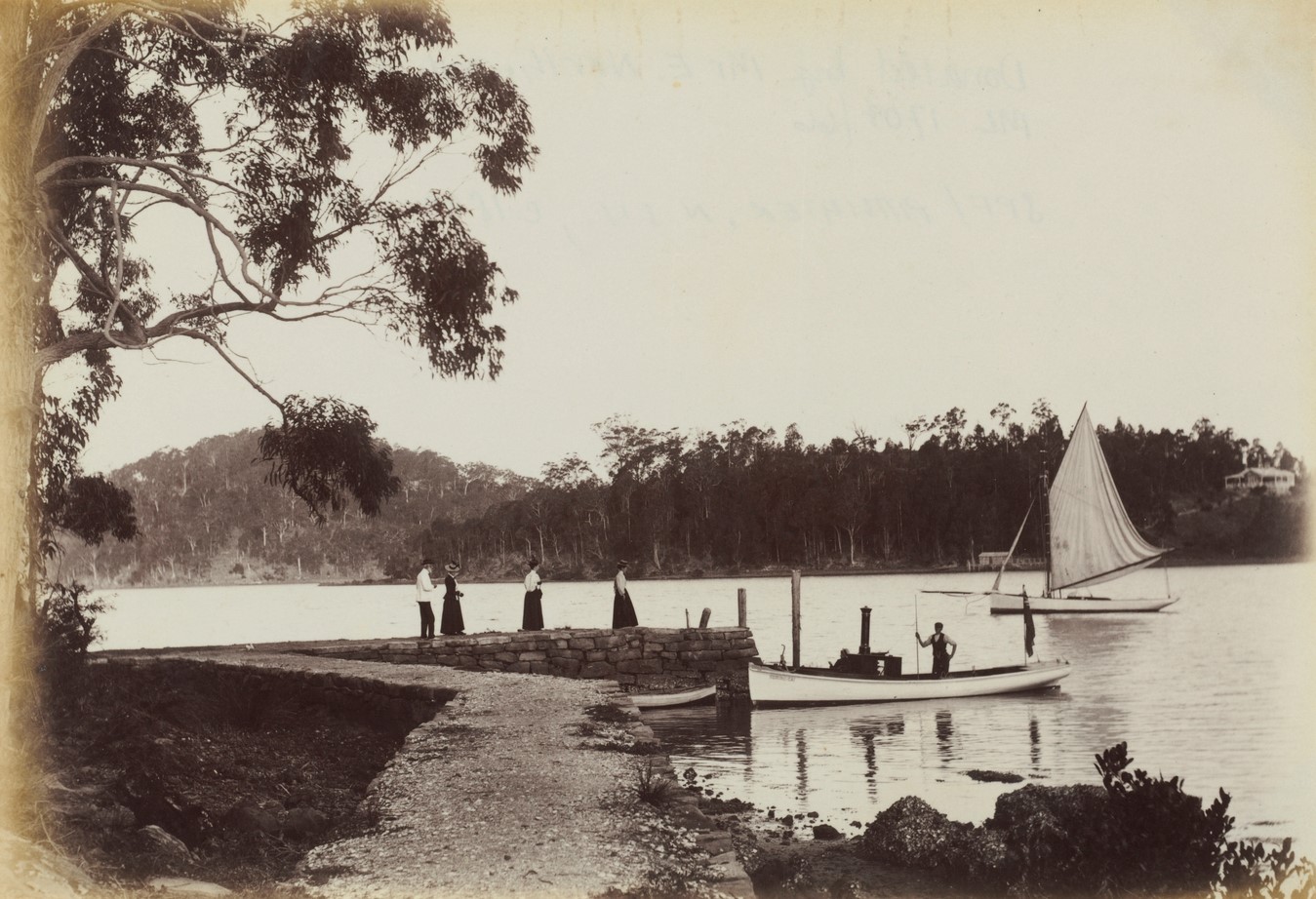
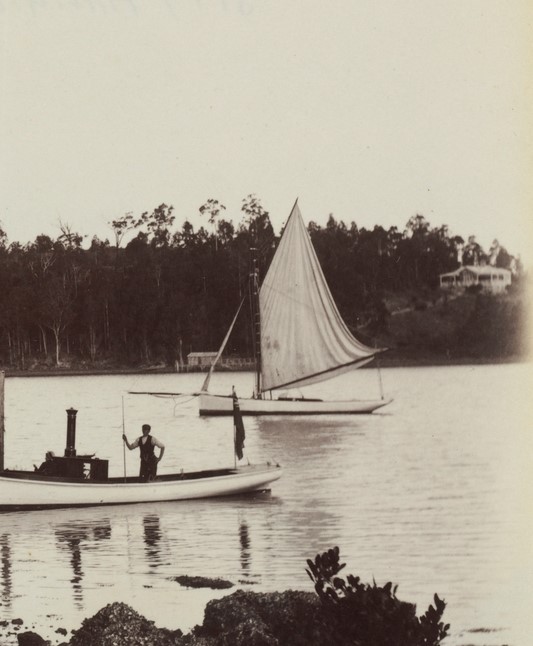
Lovett Bay, Ku-Ring-Gai Chase causeway, circa 1900 and section from to show dwelling. Image No.: a4367001h, courtesy State Library of NSW
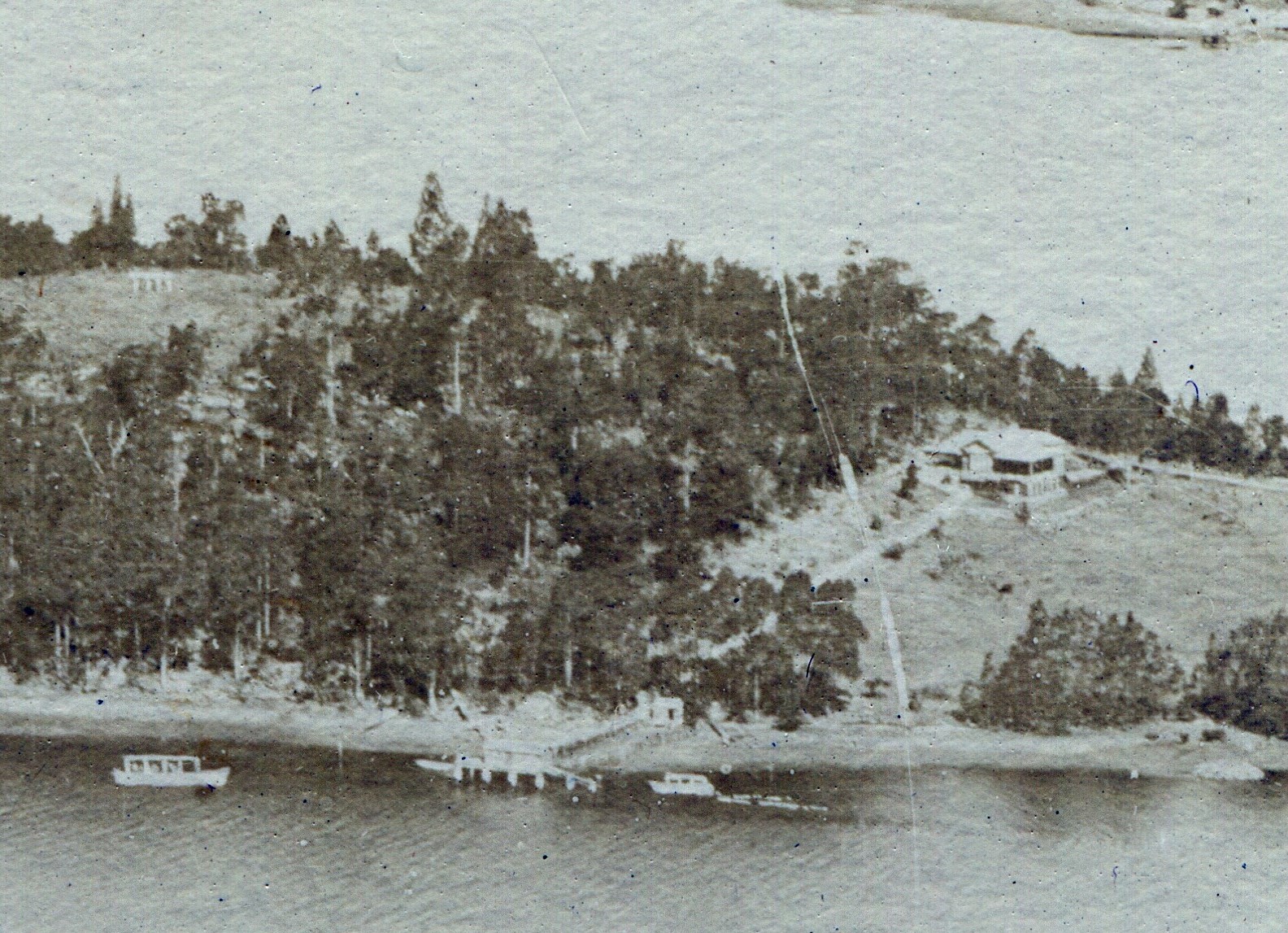
The section enlarged from 'Ten Mile View, Pittwater' postcard - the structure is 'Fairhaven' - the Flood-Hickson summer place at Pittwater - more in: Pittwater Summer Houses: Rocky Point and Elvina Bay Peninsula - A Place Of Holiday Songs and Operas In Ventnor, Fairhaven, Trincomalee and Maritana
.jpg?timestamp=1547583139562)
Section from Section from 'Ten Mile View Pittwater' circa 1900- 1915, Postcard courtesy State Library of NSW
.jpg?timestamp=1760032273760)
Above: from Album 50 Allen album 1909 - Caption reads; 'Sunday, 15th of August 1909' After Lunch (at La Corniche Bayview) Monty Walker took Mr & Mrs De LaSalle, Jarvis Alison and myself to Church Point & from there to Ventnor where Mr & Mrs Harley Hickson used to live.' Image No.: a3286021h, courtesy State Library
In Thomas Willans original advertisement of September, 1888, just days before securing a mortgage with Mr. Flood and Oatley, he advertises the Ventnor-old Oliver cottage as well as a residence described as:
THE RESIDENCE Is built in a position from which magnificent views are obtained on all sides, and contains 12 rooms, and out-buildings, also RUSTIC COTTAGE, containing 4 rooms.
THE ORCHARD consists of 2000 TREES, viz.. ORANGES, LEMONS, ALL SUMMER FRUITS, OLIVES, FIGS, and FIJI BANANAS, and will shortly be yielding an annual income of £1000.
DUFF and COLLINS have been favoured with instructions from T. W. WILLANS, Esq., on account of his intended departure for Europe, to sell the above by public auction, at their Rooms, 109, Pitt-street, on MONDAY, SEPTEMBER 10. at 11.30 sharp.
BLACK and CO.'S Coach will meet 9 o'clock boat to convey intending purchasers to the property.
TITLE, TORRENS. NO RESERVE.
N.B.-Printed particulars, plans, and photographs, can be obtained from the Auctioneers. DUFF and COLLINS, Auctioneers, 109, Pitt-street. Advertising (1888, September 7). The Sydney Morning Herald (NSW : 1842 - 1954), p. 11. Retrieved from http://nla.gov.au/nla.news-article13696011
.jpg?timestamp=1547340669554)
.jpg?timestamp=1784228187653)
.jpg?timestamp=1784228250098)
.jpg?timestamp=1784228509508)
.jpg?timestamp=1784228557399)
Above: from Album 50 Allen album 1909 - Caption reads; 'Sunday, 15th of August 1909' After Lunch (at La Corniche Bayview) Monty Walker took Mr & Mrs De LaSalle, Jarvis Alison and myself to Church Point & from there to Ventnor where Mr & Mrs Harley Hickson used to live.' Also: 'There are some very pretty walks' and 'N.S.W. figtrees in front of the old house' (Ventnor-Oliver family cottage - see: Elvina Bay's Public Wharves: Some History) Image No.: a3286021h, courtesy State Library of NSW
Lagoons – Mangrove Wetlands - Creeks
Pittwater's ecological communities include spaces and places where the next generation of fish
Trees as Memorials for Those Who Served
In Pittwater there are trees that have been planted to memorialise those who have served in our Defence Forces
Pittwater Council - NSW - Australian Listing for the Pittwater Spotted Gum Forest ecological community
On November 6, 1991 the Pittwater Provisional Council was set up by an official proclamation. A few months later Pittwater Council was officially formed on May 1, 1992, after Pittwater residents successfully campaigned to secede from the Warringah Shire Council.
The work of Pittwater people looking after Pittwater commenced and included.
Pittwater Spotted Gum Forest - endangered ecological community listing - final determination
Date: 18 December 1998
The Scientific Committee, established by the Threatened Species Conservation Act, has made a Final Determination to list the Pittwater Spotted Gum Forest in the Sydney Basin Bioregion as an ENDANGERED ECOLOGICAL COMMUNITY on Part 3 of Schedule 1 of the Act. Listing of Endangered Ecological Communities is provided for by Part 2 of the Act.
This Determination has been superseded by the 2013 Determination relating to the Pittwater and Wagstaffe Spotted Gum Forest.
NSW Scientific Committee – final determination
The Scientific Committee has found that:
1. The Pittwater Spotted Gum Forest is the name given to the plant community that is characterised by the following assemblage of species:
- Acacia floribunda
- Acrotriche divaricata
- Adiantum aethiopicum
- Allocasuarina litoralis
- Allocasuarina torulosa
- Angophora costata
- Angophora floribunda
- Billardiera scandens
- Breynia oblongifolia
- Cassytha paniculata
- Cayratia clematidea
- Cissus hypoglauca
- Corymbia gummifera
- Corymbia maculata
- Dianella caerulea
- Dodonaea triquetra
- Doodia caudata
- Eleocarpus reticulatus
- Entolasia stricta
- Eucalyptus botryoides
- Eucalyptus paniculata
- Eucalytpus punctata
- Eucalyptus umbra
- Eustrephus latifolius
- Geitonoplesium cymosum
- Glochidion ferdinandi
- Gymnostachys anceps
- Hakea sericea
- Hydrocotyle peduncularis
- Livistona australis
- Lomandra longifolia
- Macrozamia communis
- Notelaea longifolia
- Oxylobium ilicifolium
- Pandorea pandorana
- Pittosporum undulatum
- Platylobium formosum
- Pseuderanthemum variabile
- Pteridium esculentum
- Pultenaea flexilis
- Syncarpia glomulifera
- Synoum glandulosum
- Themeda australis
- Xanthorrhoea macronema
2. The total species list of the community is larger than that given above, with many species present only in one or two sites or in very small quantity. In any particular site not all of the assemblage listed may be present at any one time (at least above ground), seeds of more species may be present in the soil seed bank. The species composition of a site will be influenced by the size of the site and by its recent disturbance history. For a number of years after a major disturbance, dominance by a few species may occur, with gradual restoration of a more complex composition and vegetation structure over time. The balance between species will change over the fire cycle, and may also change in response to changes in fire frequency.
3. The Pittwater Spotted Gum Forest occurs on shale-derived soils with high rainfall on lower hillslopes on the Narrabeen group - Newport Formation, on the Barrenjoey Peninsula and western Pittwater foreshores.
4. The structure of the community was originally open-forest but may now exist as woodland or as remnant trees.
5. Characteristic tree species are Corymbia maculata and Eucalyptus paniculata, associated trees include Angophora costata, Corymbia gummifera, Eucalyptus umbra, Eucalyptus punctata, Syncarpia glomulifera, Eucalyptus botryoides, Angophora floribunda.
6. Pittwater Spotted Gum Forest has been reported from the Local Government Area of Pittwater. The area is within the County of Cumberland entirely within the Sydney Basin Bioregion.
7. Pittwater Spotted Gum Forest is referred to in Benson & Howell 1990, and described in Map Unit 9g (ii) in Benson & Howell 1994.
8. Adjacent communities on sandstone soils are generally part of the Sydney Sandstone Complex (see Benson & Howell 1990).
9. Pittwater Spotted Gum Forest has been extensively cleared from the Barrenjoey Peninsula and the western and southern shores of Pittwater, and is threatened by further clearing for housing and related infrastructure, and for fire mitigation. Remnants are also threatened by weed invasion especially Lantana camara and Acacia saligna and by inappropriate fire regimes.
10. Only tiny remnants on western Pittwater are included within Ku-Ring-Gai Chase National Park The major remnants on the Peninsula are within Pittwater Council reserves, McKay Reserve, Angophora Reserve and Stapleton Park.
11. In view of the small size of existing remnants, the threat of further clearing and other known threats (listed in 9), the Scientific Committee is of the opinion that the Pittwater Spotted Gum Forest in the Sydney Basin Bioregion is likely to become extinct in nature in New South Wales unless the circumstances and factors threatening its survival or evolutionary development cease to operate and that the community is eligible for listing as an endangered ecological community.
References
Benson, D. and Howell, J., 1990, Taken for Granted: The bushland of Sydney and its suburbs, Kangaroo Press, Kenthurst.
Benson, D. and Howell, J. (1994) The natural vegetation of the Sydney 1:100 000 Map Sheet. Cunninghamia 3(4):677-787.
Proposed Gazettal date: 18/12/98
Exhibition period: 18/12/98 – 29/1/99
Pittwater and Wagstaffe Spotted Gum Forest in the Sydney Basin Bioregion – endangered ecological community listing
22 February 2013
The Scientific Committee, established by the Threatened Species Conservation Act, has made a Final Determination to list the Pittwater and Wagstaffe Spotted Gum Forest in the Sydney Basin Bioregion, as an ENDANGERED ECOLOGICAL COMMUNITY in Part 3 of Schedule 1 of the Act and as a consequence to omit reference to Pittwater Spotted Gum Forest from Part 3 of Schedule 1 (Endangered Ecological Communities) of the Act. Listing of Endangered Ecological Communities is provided for by Part 2 of the Act.
NSW Scientific Committee - final determination
Gazetted: Friday 22 February 2013
Pittwater's Tree Canopy Diminished
The instigation of the 10/50 Vegetation Clearing Scheme, which commenced on August 1 2014 after devastating fires in 2013, allows residents living close to the bush to remove trees within 10 metres of a home, and clear smaller plants (like shrubs) within 50 metres of the same. This has been utilised by those living far from bushfire danger zones to remove trees, claiming the safety precaution when really they're after 'the view' and the perceived increase in property values that may gain owners. Then Mayor of Pittwater, Jacqui Townsend, who had been part of a bushcare group in Warriewood, often remarked that Pittwater was losing its canopy due to this scheme.
Ms Townsend was not alone in pointing out how the new rules were being abused.
This caused the then incumbent Coalition NSW Government to review the scheme and announce changes, which commenced September 4 2015.
As a result of the review of the 10/50 scheme, the entitlement area has been amended. The reduced entitlement area of 100m from higher risk vegetation has been maintained, covering 85 per cent of properties historically destroyed in a bush fire.
The easiest way to work out if you're covered by the eligible area is checking the NSW RFS's online tool.
Likewise, the current council has a 'safety first' policy in removing trees, some of which are dangerous due to the propensity of some species to brittleness as they age; banksias, wattles, eucalypts, which causes trunks to split and trees to fall, or to drop huge branches.
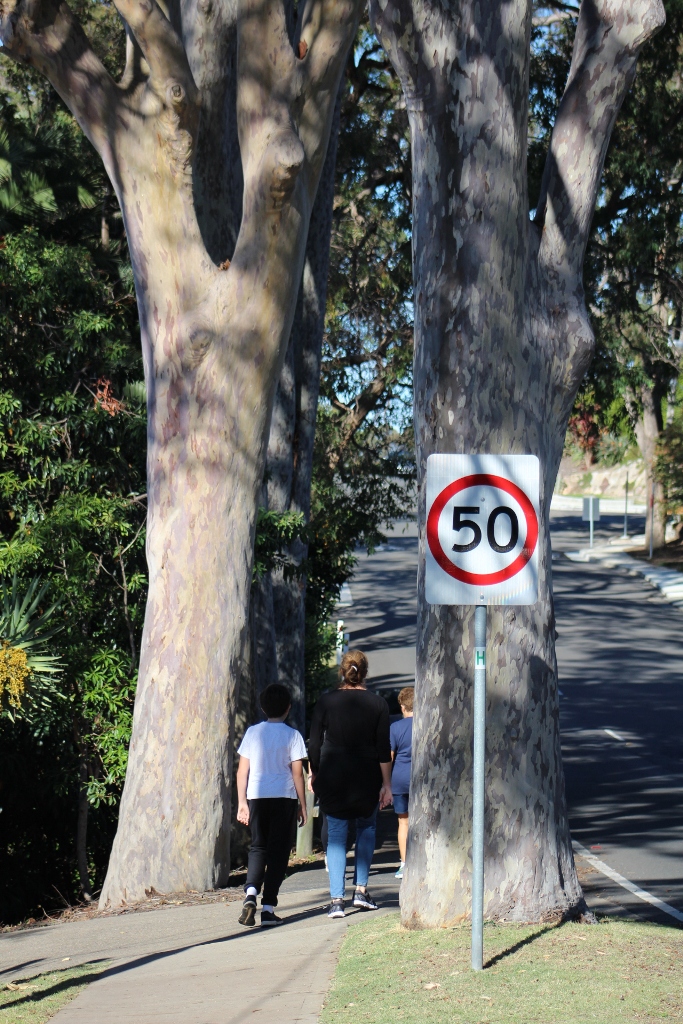
However, in the street where we live one red bottlebrush which fed birds, two banksias which were more year round food and shelter for wildlife, and three Bangalley ironbarks have been removed in the years since the Northern Beaches Council was installed over Pittwater, their stumps ground out to remove the evidence, and only one small sapling of a grevillea species has been planted, and only just last week, as a replacement.
Another aspect of what residents and the council must deal with is the cutting away of tree branches from wires and poles by electricity providers. This too has contributed to the destruction of trees, especially when under them, as they remove so many limbs that the trunk will then have a distinct lean or centre section cut out, undermining the integrity of the tree and the root cause of so many failing and falling.
A "widow-maker" refers to giant eucalyptus trees and their dangerous habit of dropping massive, heavy limbs without warning. This phenomenon is driven by "self-pruning," where these trees shed large branches to conserve moisture during droughts or because that tree branch is dead. The term originated during early European settlement in Australia, when those 'harvesting' the trees didn't pay attention to dead limbs higher in the canopy which would drop as they cut under them, frequently killed loggers, and leaving their spouses widowed.
Most of these species will retain these though, and their hollows become new homes for the other locals who live here. Around 300 animal species rely on tree hollows in Australia, including birds, possums, gliders, microbats, frogs, lizards, snakes, insects and spiders.
The council passed its own Tree Management Policy in July 2025, which residents hope may bring an improvement to the killing of trees by the council, and live up to its promise to replace those it removes.
Despite feedback pointing out in regards to ''A spread of tree age classes will be maintained to minimise the impact of tree removals in a given area'' that smaller native trees should be protected, the council response was 'No change proposed to the draft Policy'.
At present trees under 5m in height can be removed. These are the canopy trees of the future. At present many mature canopy trees are nearing the end of their lives. Because of roads, buildings and gardens, they cannot reproduce by seedlings. So, to achieve a spread of age classes more small trees must be protected.
However, the council policy, as adopted unchanged, allows for the continued killing of these trees, and as a result, all that also lives because of them.
.jpg?timestamp=1679635455680)
.JPG?timestamp=1784164633398)
National Tree Day 2026: 30 Years and 28 Million Trees Later
Olivia Newton-John co-founded Australia's National Tree Day in 1996 alongside Planet Ark. The legendary Australian singer and environmentalist spent decades championing ecological causes. Her involvement in National Tree Day evolved, and she subsequently co-founded the One Tree Per Child program alongside Jon Dee to ensure every primary student gets the opportunity to plant a tree before leaving school.
Just one tree - one each at least. And under it.... some shrubs with seasonal flowerings for the tiny tiny birds, and grasses for the tiny tiny slinks and ants, so they too can have a home.
Planet Ark states:
''Since its inception in 1996, Planet Ark’s National Tree Day has grown into Australia’s largest community tree planting and nature care event. More than just a day, it’s a nationwide movement that inspires Australians to get their hands dirty, connect with nature, and make a positive difference in their local communities.
Over the past three decades, volunteers have contributed more than 10 million hours to planting trees, restoring habitat, and taking part in environmental activities that foster a deeper understanding of the natural world.
Every year, hundreds of schools across Australia take part in Schools Tree Day, inspiring students to connect with nature through hands-on environmental activities. From planting native gardens and creating wildlife habitat to nature play, outdoor learning, and sustainability projects, there are countless ways to get involved.
Since 1996, more than 720,000 Schools Tree Day events have helped students learn about and care for the natural world around them. While Schools Tree Day is celebrated on the last Friday of July, activities can take place whenever best suits your climate, curriculum, and school calendar.
While National Tree Day is celebrated on the last Sunday of July each year, events can be held whenever best suits your local climate and schedule. After all, every day is Tree Day.''
OR:
"The one who plants trees, knowing that he will never sit in their shade, has at least started to understand the meaning of life." - Rabindranath Tagore
A closer match to the adage appeared in “The Pall Mall Gazette” of London on May 16 1868 within an article titled “Australian Trees and Algerian Deserts”. The article presented a compact saying described as an Indian proverb; hence, the attribution was anonymous. Interestingly, the source text was a French article published in 1868 by M. Trotter:
The Eucalyptus globulus at fifteen years of age is as valuable as an oak tree of one hundred years. One seed planted near Algiers four years ago is now a tree three feet in circumference at the base. The man who plants the hills of Africa with these trees, though he is no less blessed, does not require the faith spoken of in the Indian proverb, “Blessed is he who plants trees under whose shade he will never sit.”
In 1732 Thomas Fuller’s collection “Gnomologia: Adagies and Proverbs” also contained an instance of this idea, but this early statement did not mention shade:
He that plants Trees, loves others besides himself.
Fuller’s 1732 collection also included a statement about walnut trees that was parallel to the adage under examination. The delayed benefit provided by the tree was fruit instead of shade:
He who plants a Walnut-Tree, expects not to eat of the Fruit.
''A society grows great when old men plant trees in whose shade they shall never sit.”
Bushcare in Pittwater: where + when
Where we work Which day What time
Avalon
Angophora Reserve 3rd Sunday 8:30 - 11:30am
Avalon Dunes 1st Sunday 8:30 - 11:30am
Avalon Golf Course 2nd Wednesday 3 - 5:30pm
Careel Creek 4th Saturday 8:30 - 11:30am
Toongari Reserve 3rd Saturday 9 - 12noon (8 - 11am in summer)
Bangalley Headland 2nd Sunday 9 to 12noon
Bayview
Winnererremy Bay 4th Sunday 9 to 12noon
Bilgola
North Bilgola Beach 3rd Monday 9 - 12noon
Algona Reserve 1st Saturday 9 - 12noon
Plateau Park 1st Friday 8:30 - 11:30am
Church Point
Browns Bay Reserve 1st Tuesday 9 - 12noon
McCarrs Creek Reserve Contact Bushcare Officer To be confirmed
Clareville
Old Wharf Reserve 3rd Saturday 8 - 11am
Elanora
Kundibah Reserve 4th Sunday 8:30 - 11:30am
Mona Vale
Mona Vale Beach Basin 1st Saturday 8 - 11am
Mona Vale Dunes 2nd Saturday +3rd Thursday 8:30 - 11:30am
Newport
Bungan Beach 4th Sunday 9 - 12noon
Crescent Reserve 3rd Sunday 9 - 12noon
North Newport Beach 4th Saturday 8:30 - 11:30am
Porter Reserve 2nd Saturday 8 - 11am
North Narrabeen
Irrawong Reserve 2nd Saturday 2 - 5pm
Palm Beach
North Palm Beach Dunes 3rd Saturday 9 - 12noon
Scotland Island
Catherine Park 2nd Sunday 10 - 12:30pm
Elizabeth Park 1st Saturday 9 - 12noon
Pathilda Reserve 3rd Saturday 9 - 12noon
Warriewood
Warriewood Wetlands 1st Sunday 8:30 - 11:30am
Whale Beach
Norma Park 1st Friday 9 - 12noon
Western Foreshores
Coopers Point, Elvina Bay 2nd Sunday 10 - 1pm
Rocky Point, Elvina Bay 1st Monday 9 - 12noon
Friends Of Narrabeen Lagoon Catchment Activities

Gardens and Environment Groups and Organisations in Pittwater
- Ringtail Posse: 1 – February 2023; Anna Maria Monticelli: King Parrots/Water Dragons - Jacqui Scruby: Loggerhead Turtle - Lyn Millett OAM: Flying-Foxes - Kevin Murray: Our Backyard Frogs - Miranda Korzy: Brushtail Possums
- Ringtail Posse: 2 - March 2023; Kevin Murray: Tawny Frogmouth - Kayleigh Greig: Red-Bellied Black Snake - Bec Woods: Australian Water Dragon - Margaret Woods: Owlet-Nightjar - Hilary Green: Butcher Bird - Susan Sorensen: Wallaby
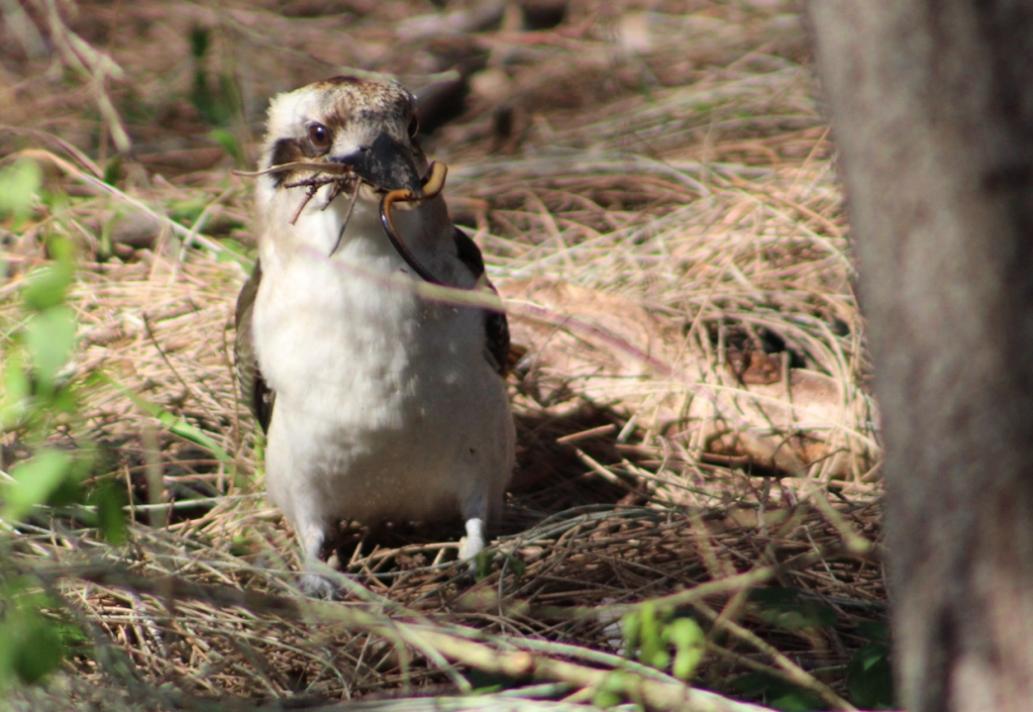
- Ringtail Posse 3 - April 2023: Jeffrey Quinn: Kookaburra, Tom Borg McGee: Kookaburra, Stephanie Galloway-Brown: Bandicoot, Joe Mills: Noisy Miner
- Ringtail Posse 4 May 2023 - Andrew Gregory: Powerful Owl, Marita Macrae: Pale-Lipped Or Gully Shadeskink, Jools Farrell: Whales & Seals, Nicole Romain: Yellow-Tailed Black Cockatoo
- Ringtail Posse 5: June 2023 - Lynleigh Greig OAM: Snakes, Dick Clarke: Diamond Python, Selena Griffith: Glossy Black-Cockatoo, Eric Gumley: Bandicoot
- Ringtail Posse 6: July 2023 - Sonja Elwood: Long-Nosed Bandicoot, Dr. Conny Harris: Swamp Wallaby, Neil Evers: Bandicoot, Bill Goddard: Bandicoot
- Ringtail Posse 7: August 2023 - Geoff Searl OAM: Tawny Frogmouth, Peter Macinnis: Echidna, Peter Carter: Ringtail Possum, Nathan Wellings; Kookaburra
- Ringtail Posse 8: September 2023 - Saving Sydney's Last Koalas; Logging Now Stopped In Future Koala Park By Minns Government - ''Is There Time To Save Sydney's Last Koalas Too?'' Asks: John Illingsworth, WIRES, Sydney Wildlife Rescue, Save Sydney Koalas, The Sydney Basin Koala Network, The Help Save The Wildlife & Bushlands In Campbelltown Group, Appin Koalas Animal Rescue Service, Patricia and Barry Durham, Sue Gay, Save Mt. Gilead, Paola Torti Of The International Koala Intervention Group
- Ringtail Posse 9: October 2023 - David Palmer OAM: Bandicoots, Helen Pearce: Brushtail Possum, Amina Kitching: Goanna, David Goudie: Ringtails Possums + Bandicoots + Owls
- Mother Brushtail Killed On Barrenjoey Road: Baby Cried All Night - Powerful Owl Struck At Same Time At Careel Bay During Owlet Fledgling Season: calls for mitigation measures - The List of what you can do for those who ask 'What You I Do' as requested
- Ringtail Posse 10: November 2023 - Stop Wildlife Roadkill Group: You Can Help By Using The Wildlife Incident Mapping Website
References
- Stealing The Bush: Pittwater's Trees Changes - Some History
- A Bunch Of Wildflowers: Historical Spring September Songs
- Thylacine tales captured for Threatened Species Day 2025 + A few insights into Pittwater's Past + Present Threatened Species
- Pittwater's Koalas Driven to Extinction: Some History
- Black-necked stork, Mycteria Australis, now Endangered in NSW, Once Visited Pittwater
- Pittwater's Lone Rangers - 120 Years of Ku-Ring-Gai Chase and the Men of Flowers Inspired by Eccleston Du Faur
- Annie Wyatt Reserve: Palm Beach - Pittwater Fields of Dreams II
- Manly's Wildflower Shows: Some History
- Muogamarra Nature Reserve in Cowan celebrates 90 years: a few insights into The Vision of John Duncan Tipper, Founder
- Bilgola Plateau Parks for the People: Gifted by A. J. Small, N. A. K. Wallis + the Green Pittwater Pathways to Keep People Connected To the Trees, Birds, Bees - for Children to Play
- Dorothea Mackellar Of Lovett Bay - The Poet From Whom The Electorate Received Its Name
- Dorothea Mackellar: On Trees
- Pittwater Summer Houses: Rocky Point and Elvina Bay Peninsula - A Place Of Holiday Songs And Operas In Ventnor, Fairhaven, Trincomalee and Maritana
- Elvina Bay's Public Wharves: Some History
- Lovett Bay Public Wharves: Some History
- The Clareville/Long Beach Reserve: Some History Notes + Current Day Photos
- McCarr’s Creek : Some History
- Bayview Koala Sanctuary
- Mark Foy of Bayview
- Roads In Pittwater: The Bay View road
- A Run From McCarr's Creek To Bayview June 2018 - Park Bench Reflections - Issue 365
- Walter James Dearin - Newport's Dearin Reserve has Had Residential Environmental Defenders Since 1906: Third Time inspired Iconic Logo Epitomising the Mangroves of the estuary Became Symbol of Pittwater Council
- The Mona Vale-Bungan Beach-Bayview Tank Traps: Coastal Defences Of Pittwater During World War Two - Some History
- Mona Vale Public School: 1906 to 2012
- Avalon Beach Public School - A History
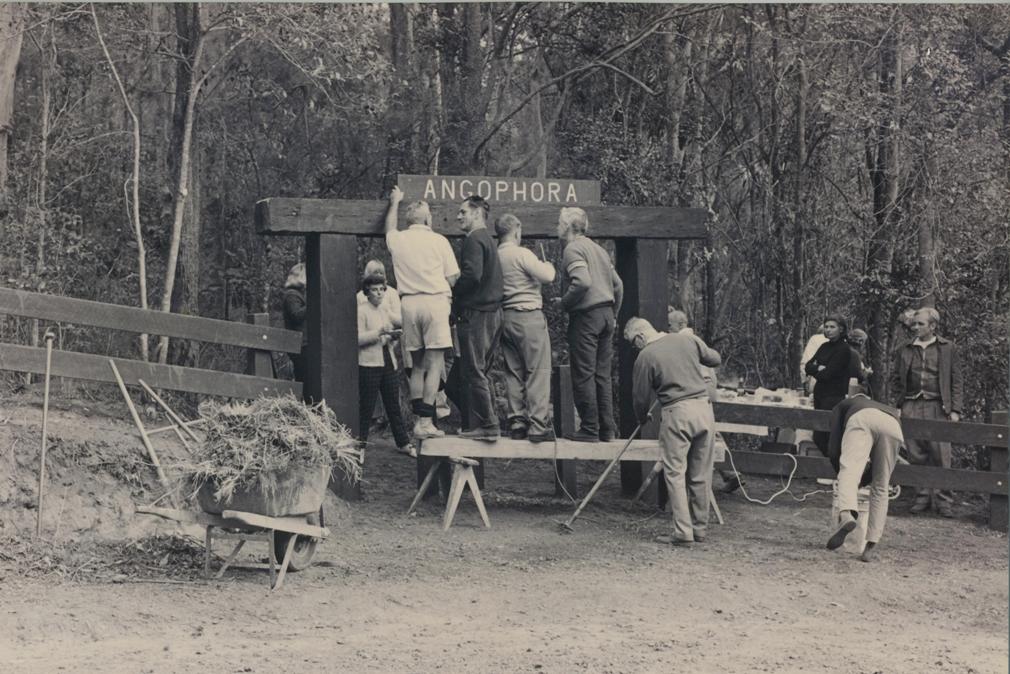
- Angophora Costata Named Eucalypt Of The Year - 2023: The Tree One Of Our Local Reserves Is Named For - A Celebration
- Grand Old Tree Of Angophora Reserve Falls Back To The Earth
- BUSHCARE IN THE ANGOPHORA RESERVE By Geoff Searl OAM
- Careel Creek Bushcare Group - 1990 To 2019
- Mona Vale Dunes and Avalon Beach Dunes Bushcare Groups
- Avalon Beach Sand Dunes: Some History
- Newport Oval, Pittwater: Some History
- The Black Swamp Camping Reserve Becomes Kitchener Park, Beeby park & Mona Vale Golf Course
- Irrawong Reserve – Big Bushcare Day Out and Grant Announcement Sunday 9th of September, 2012
- North Narrabeen in 1911 - Panoramas taken for West's Lakeside Estate
- Waratah Farm: Ingleside - The Narrabeen Plum
- The Fern Creek - Ingleside Escarpment To Warriewood Walk + Some History + The Local Government Act Sections And POM That Protect This Place photos by Joe Mills, Winter 2021
- Pittwater Roads II: Where The Streets Have Your Name - 'Green Hills', Elanora Heights, And Ingleside
- A History Of The Campaign For Preservation Of The Warriewood Escarpment - by Angus Gordon and David Palmer
- St Cloud Jersey Stud: Elanora Heights
- Mona Vale War Memorials: A School Honour Board, A Victory Tree, A Cenotaph
- Historic 100-Year-Old Mona Vale WWI 'Victory' Tree To Be Replaced
- Avalon Beach Norfolk Pines: to Honour those who served – Anzac Day 2023 history precursors
- Dragonfly Environmental - Pittwater Council's Fern Creek Restoration
- Pittwater’s Sustainable Living 2011 Winners
- Narrabeen Lagoon State Park - NSW's Newest Investment In The Future - 2014
- Narrabeen Lagoon State Park Expansion - 2017
- Avalon Preservation Association
- Pittwater Natural Heritage Association (PNHA) Celebrates 30 years in 2024
- Friends Of Narrabeen Lagoon Catchment (FoNLC)
- South West Lovett Bay Coastcare Group
- Floating Landcare (Pittwater) wins National Partnerships for Landcare Award
- Spotted Gums of Pittwater at Palm Beach - Meares Family
- Ruskin Row Blockade Provides Reprieve To Flooded Gums: Residents Fed-Up With Council Destruction Of Pittwater's Trees - 30 Thousand Trees Lost Since Forced Union Of Pittwater With Warringah
- Killing of Ruskin Rowe Heritage Listed Tree 'authoritarian'
- Tree Management Policy Adopted - NBC July 2025
- Summer BirdFest 2026: Play antics of New Locals - Blue-faced honeyeaters Breeding In Pittwater
- Bilgola Beach Environs 1860 to 2026: A Centenary Celebration of the Bilgola Beach Reserves
The Minutes of the Ordinary Meeting 24.5.65 record some of factors the council had to deal with in protecting local reserves:
By Cr. Beckman: Will the Engineer investigate the damage at Avalon Reserve allegedly caused by circus elephants and report to the Parks and Reserves Committee on cost of restoration? I will refer it to the Shire Engineer for report.
Had been going on for decades:
RAMBLER NOTEBOOK -
HAPPY HOLIDAY
The other day the family and I came back from a very enjoyable holiday at Avalon Beach. Fishing and surfing took up most of the time but one red-letter night, a circus pitched its tent not very far from where we were staying. Trained elephants, horses, dogs, lions, and monkeys were all included in the entertainment, as well as clowns, acrobats, trapeze artists and tightrope walkers. One horse played football and kicked a ball with his hind legs into the audience. Another day a couple of friends and I went fishing at Pittwater for the day. Some bream and a couple of leather-jackets were all we caught. (Blue Certificate to Bruce Salmon (12), 66 Findlay-avenue, Roseville.) RAMBLER'S NOTEBOOK & HOBBIES (1942, March 1). The Sun (Sydney, NSW : 1910 - 1954), p. 7 (SUPPLEMENT TO THE SUNDAY SUN COMICS). Retrieved from http://nla.gov.au/nla.news-article231759658
6 mature trees:1 sapling ratio
6 trees lost just in near vicinity were:
1 x Red Bottlebrush – witnessed providing food for birds, wildlife
2 x Coastal Banksia – ditto
3 x trees the hill behind them is named for - Bangalley, one of these a giant – removed because cars parking under it
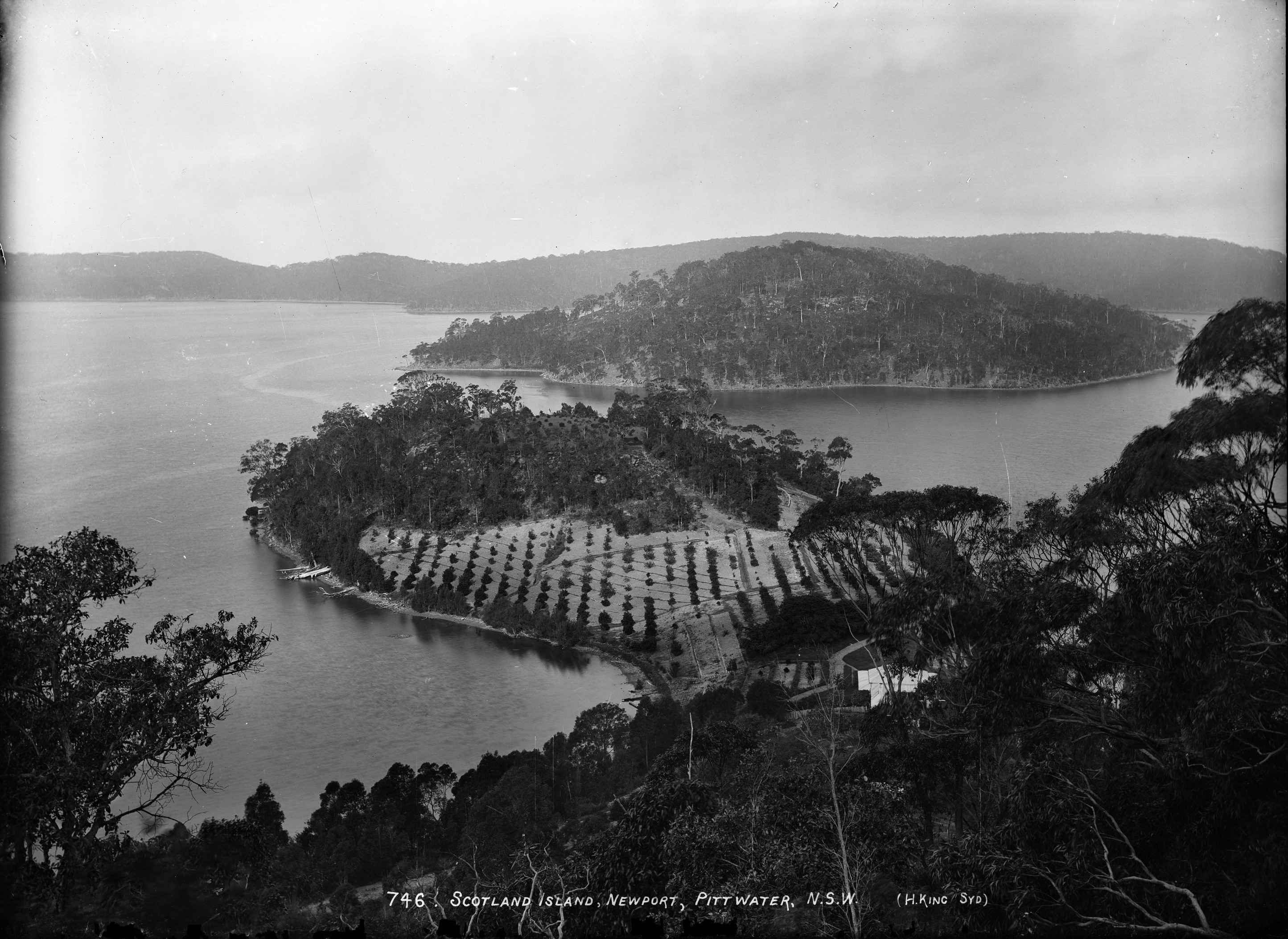
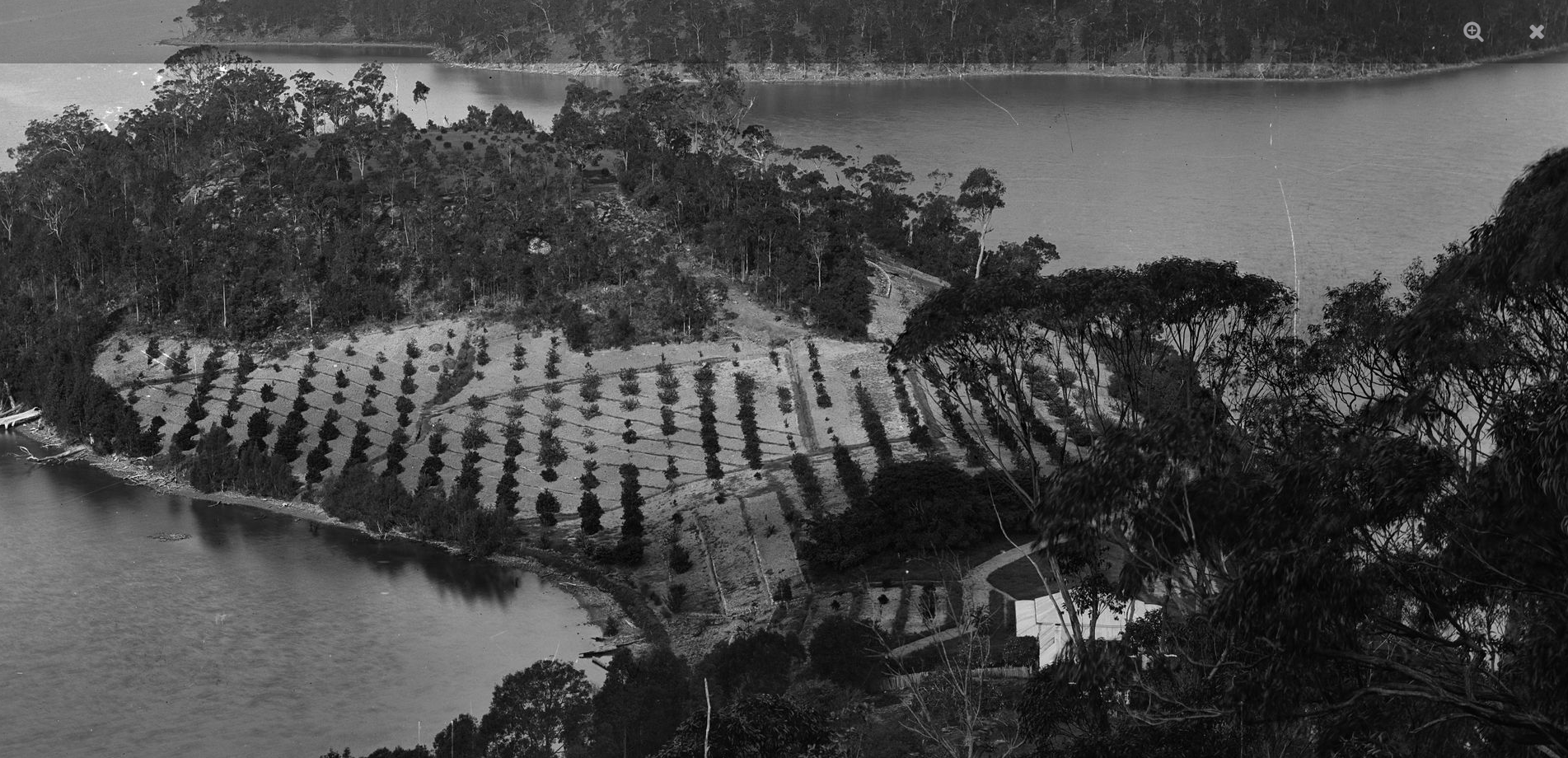
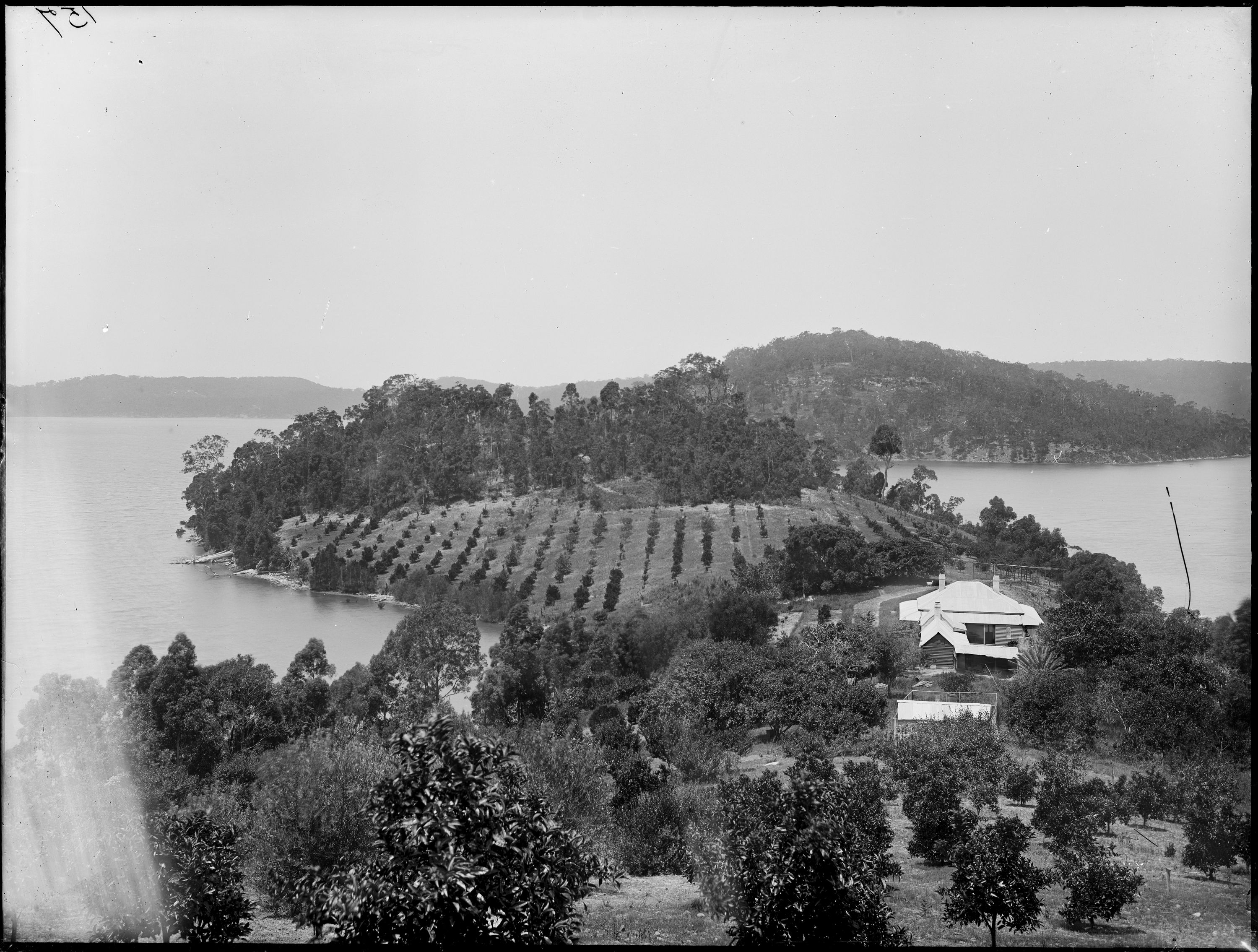
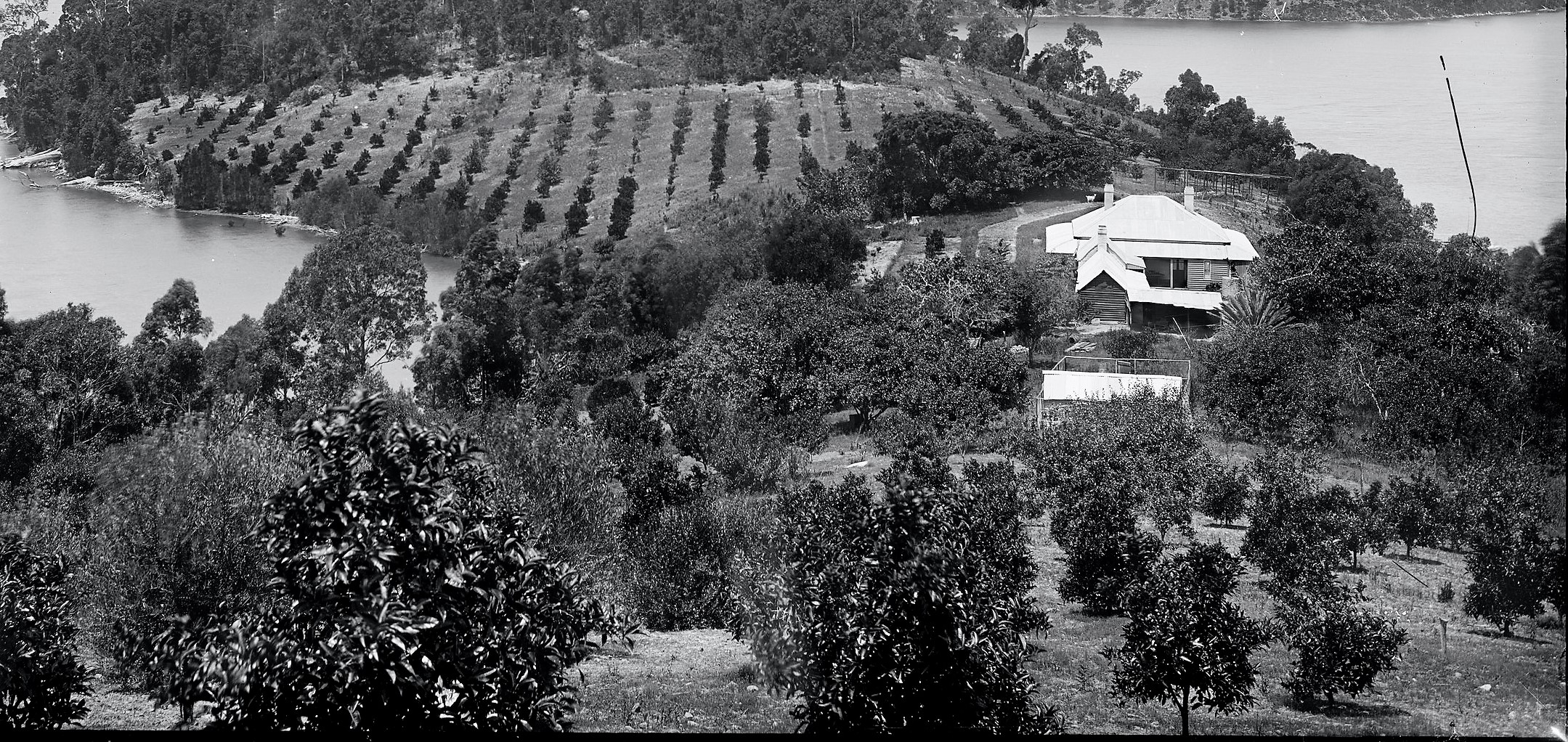
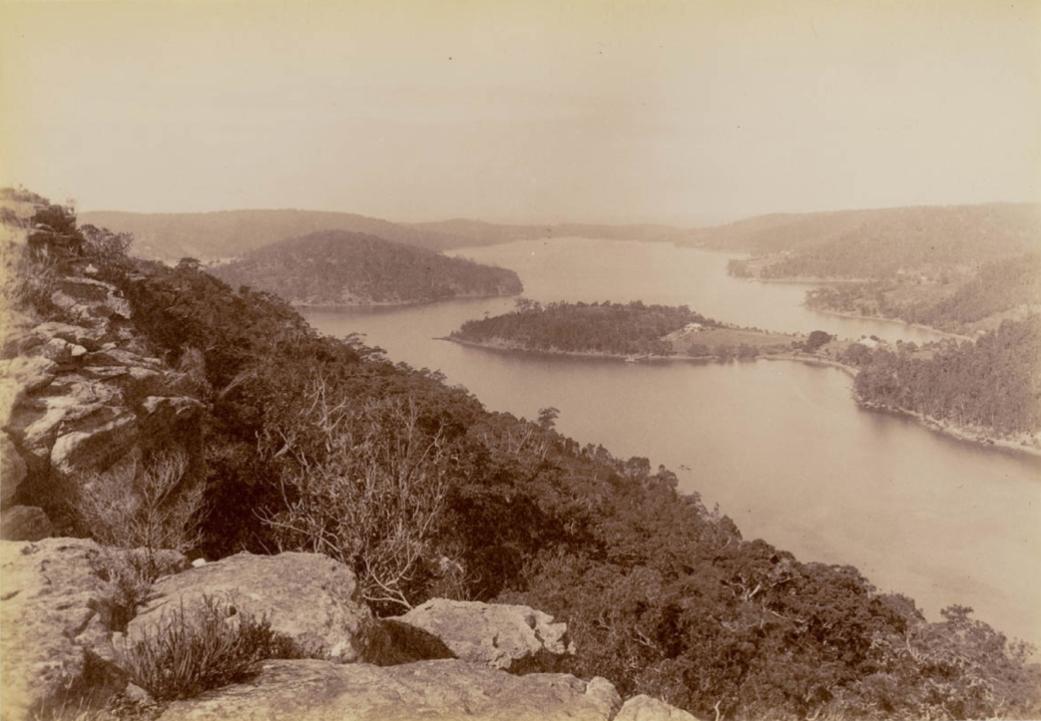
'Orange Orchard' by Charles Kerry, circa 1887-1888. From Tyrell Collection, courtesy Powerhouse Museum
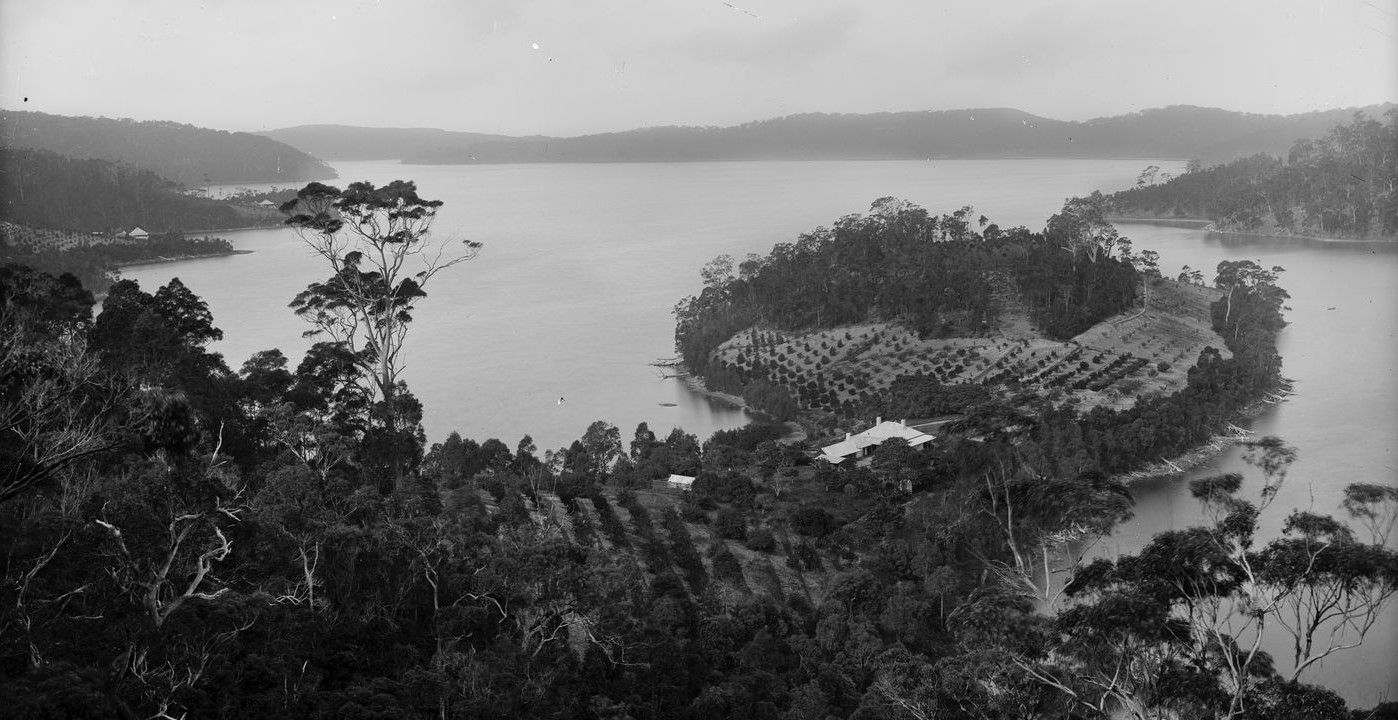
'At Pittwater' by Charles Kerry, circa 1887-1888. From Tyrell Collection, courtesy Powerhouse Museum
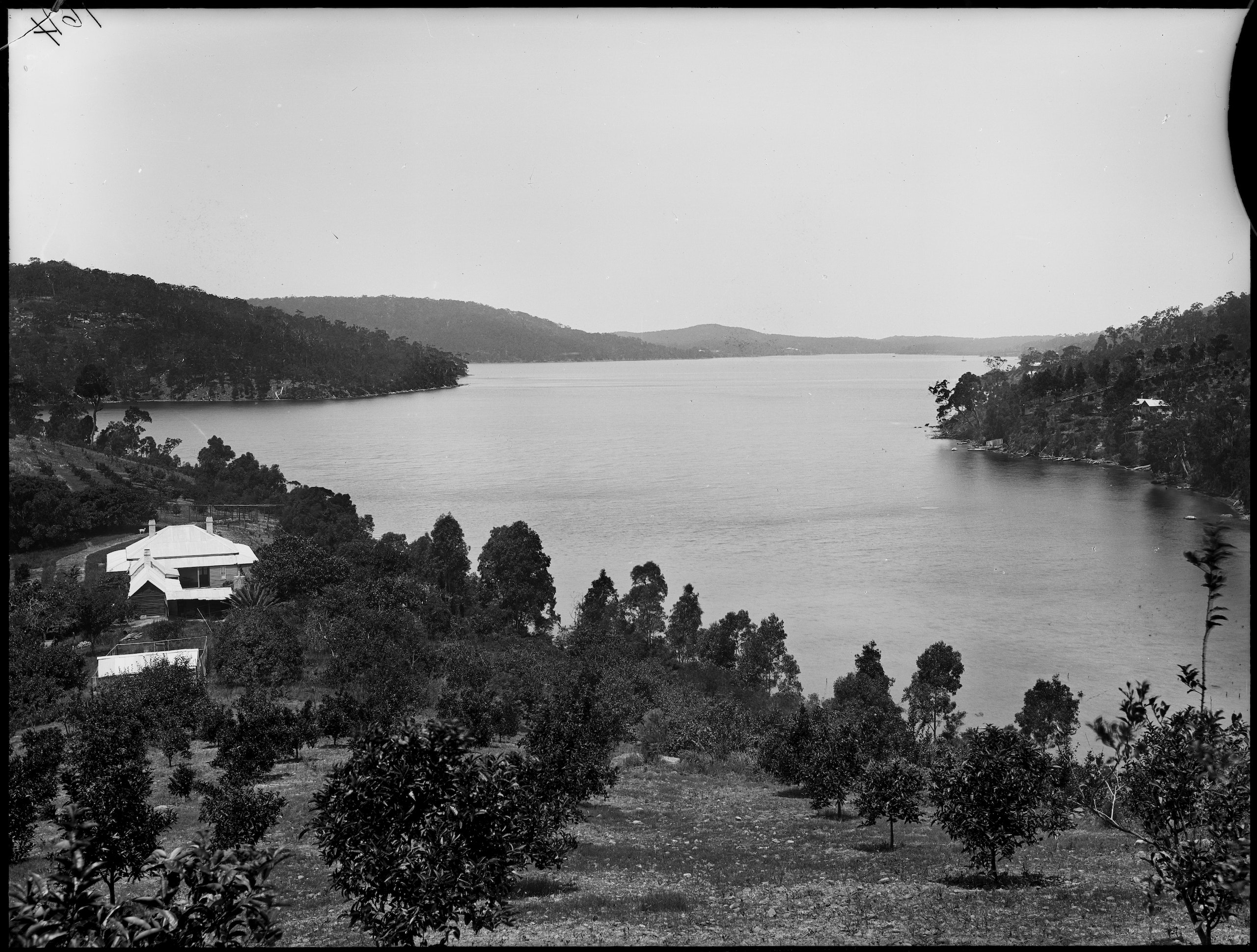
'Pittwater, Broken Bay' by Charles Kerry, circa 1887-1888. From Tyrell Collection, courtesy Powerhouse Museum
.JPG?timestamp=1600807320704) A magnificent Grey Gum (E. punctata) example on the hill heading down Riviera Avenue with a Spotted Gum (Eucalyptus maculata) growing alongside it, overlooking Careel Bay.
A magnificent Grey Gum (E. punctata) example on the hill heading down Riviera Avenue with a Spotted Gum (Eucalyptus maculata) growing alongside it, overlooking Careel Bay.Bottlebrush trunk - Avalon Parade, Avalon Beach:
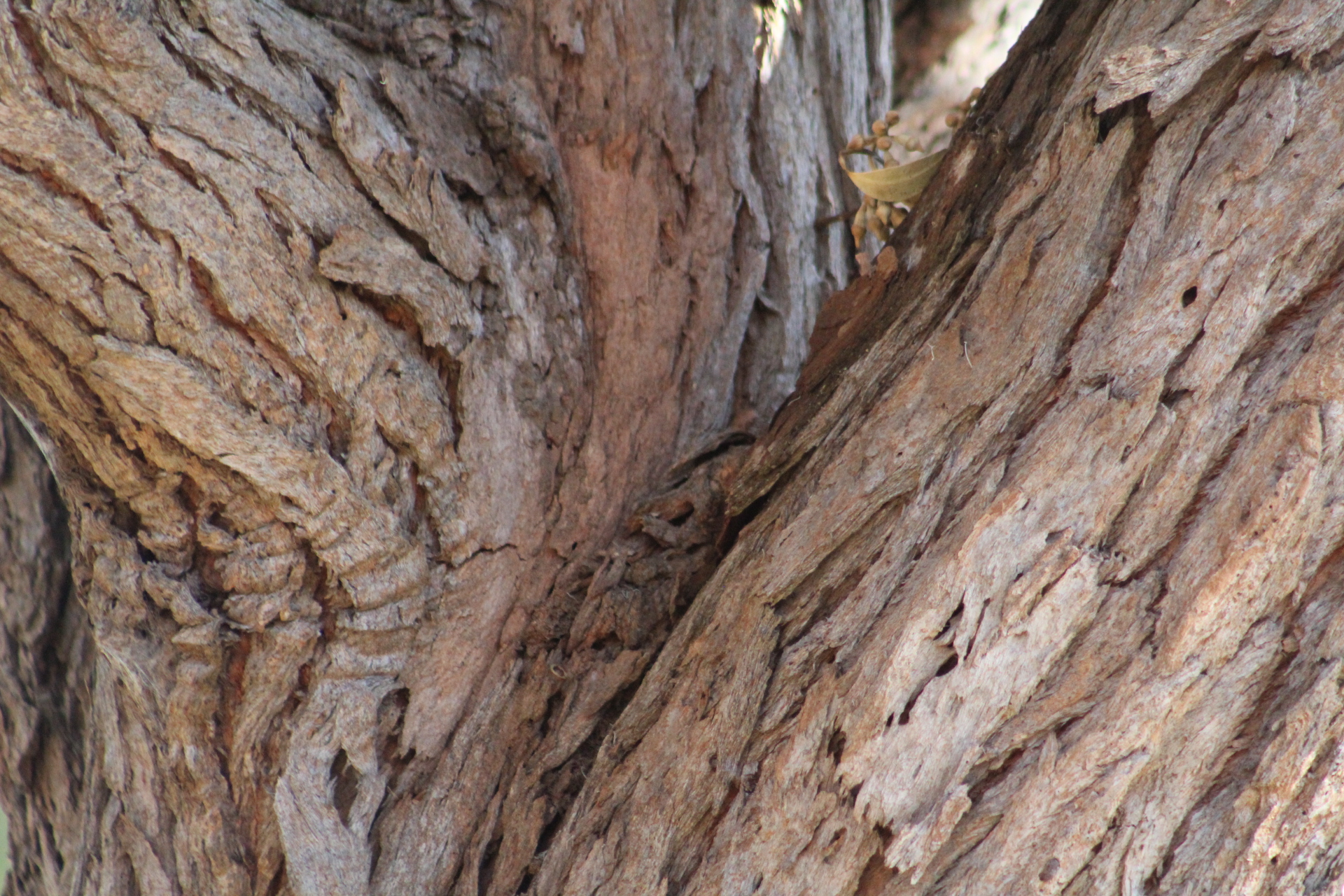
.JPG?timestamp=1620454041685)
.JPG?timestamp=1620454014256)
One of the Meares family Pacific road Palm Beach spotted gum trees:
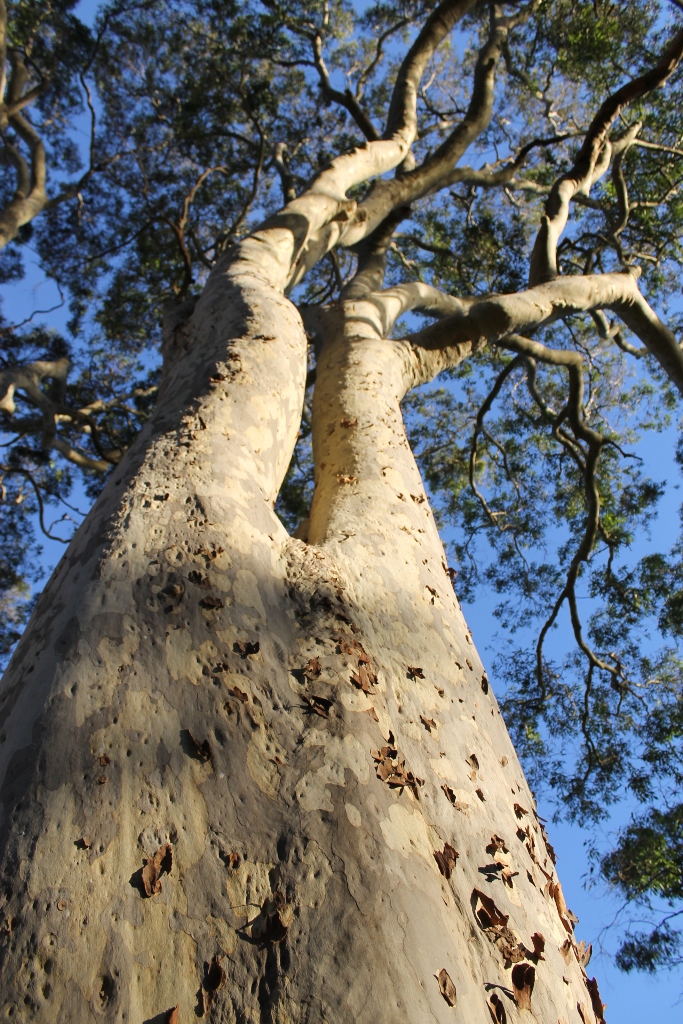
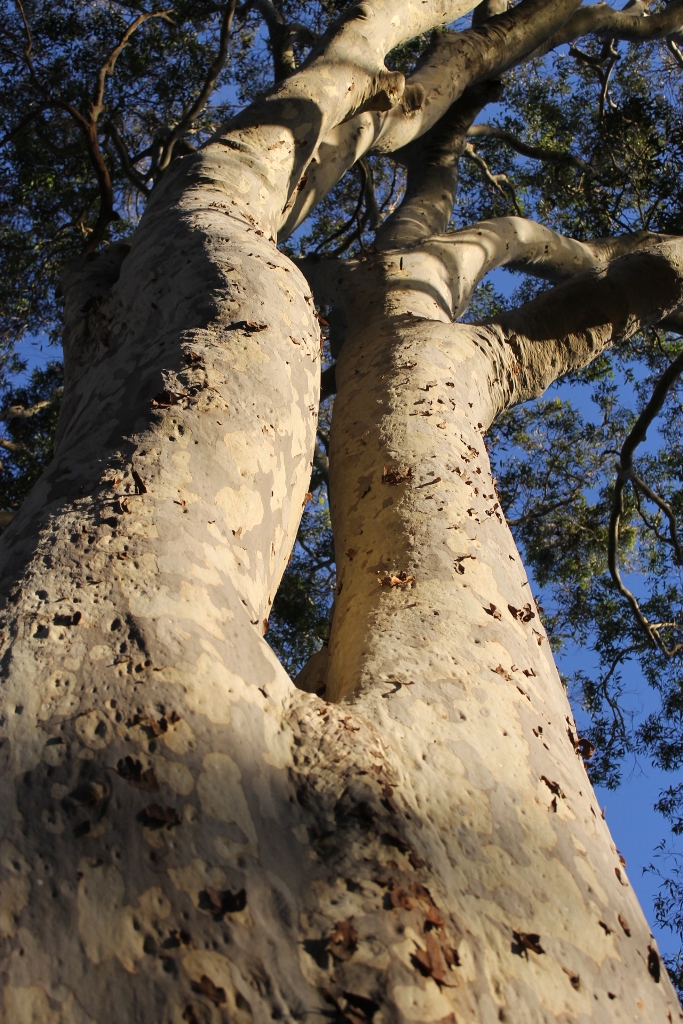
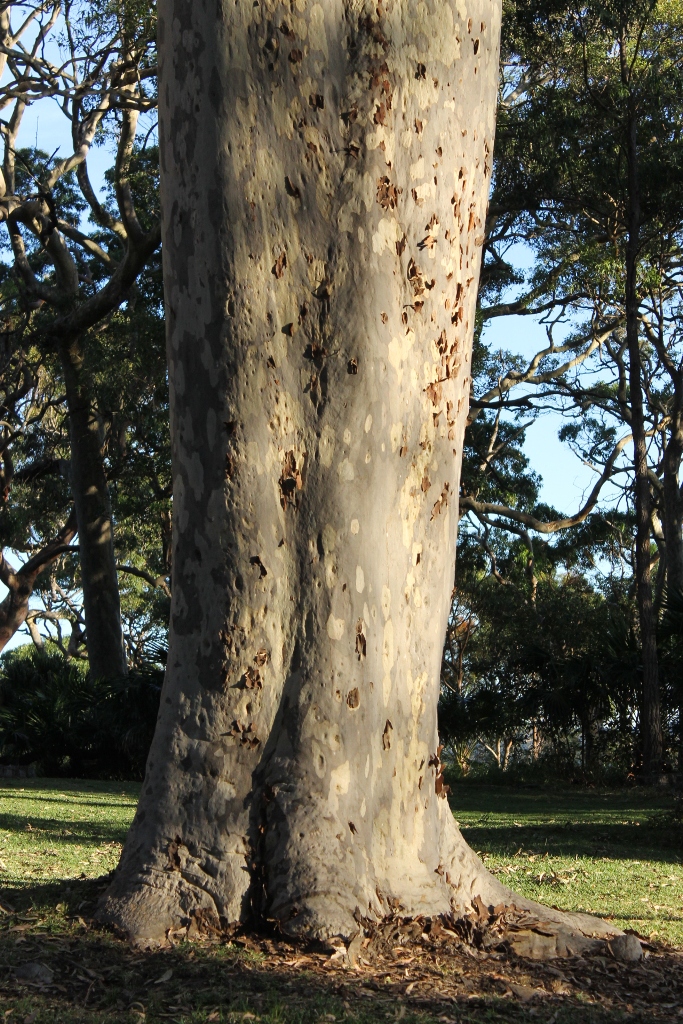
photos by A J Guesdon
ONLY A GUM TREE.
(BY MERNDA.)
Just recently Mrs A. Thomas, of Mayfield, has had cut down probably the most noted tree in our district, the memories of which surrounding it are many and of a period dating far back in the history of the district. The tree was an ordinary red gum tree, well-shaped and symmetrical until of late years, when it began to gradually die away, hence the reason for it being cut down. My first memory of the tree was when only a boy. I sat under its shade when the late Patrick Nelson, father of the late Mrs Ryan,(mother of our Shire Secretary), the late ex-Cr. Nelson and Mr Patrick Nelson, the well-known farmer, of Doreen, lived in the Marsh farm, then the property of Mr Winter. My father having purchased the Marsh farm was on his way to inform Mr Nelson of his having done so, and he left me sitting under the tree, a little way off from the house.
Only a gum tree, gaunt and bare,
But what memories centre there,
Of days long left behind;
Associations rush to the mind,
When that tree was the winning post
Of many a race won and lost ;
Where the Squire of Wilton Vale
Was the judge who told the tale
Of who lost, and who was winner,
To many a weary, and who was winner,
Whilst the sturdy Laird of Mayfield
Was wont the starter's flag to wield.
And he aye kept strict order,
And ne'er allowed the nags o'er the border.
There some great horses started,
Chief of which, Walkover, long departed;
And Smith's Bonny Black Bess,
Who found Noble's Tommy only a little less ;
Of dead heats they ran two,
Each trying their best to do,
And hen a third was run,
Which, by a nose, Black Bess won.
Now, old tree, thy doom, sad and cruel,
To be burnt and used for fuel ;
But in thy death still glorious,
As, useful, you are still victorious.
Living, thou were bonny and rare ;
Dead, no fuel with you can compare.
Childhood's years hover round you,
Youthful pleasures like early dew ;
The pride of manhood's maturer years,
With all its hopes and fears.
Ageing as stern time passes bye,
I can still see you in mind's eye,
Ever loved and ever dear landmark,
In daylight or when dark.
Where oft the peacock's shrill cry,
Rung out beneath the starry sky.
Now, alas ! thou are for ever gone,
And left us sad and alone.
But how like life you seem —
First a signal, then a dream.
Fare thee well, my old friend,
May we all be as useful to the end ;Fix this text
Living, thou wert ever good,
Dead, useful still as wood.
— MERNDA.
ONLY A GUM TREE. (1916, December 1). Evelyn Observer and Bourke East Record (Vic. : 1902 - 1917), p. 2 Edition: MORNING.. Retrieved from http://nla.gov.au/nla.news-article60665899