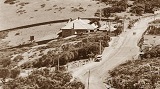
December 1 - 31, 2025: Issue 649


History Insights for the Year: 2025

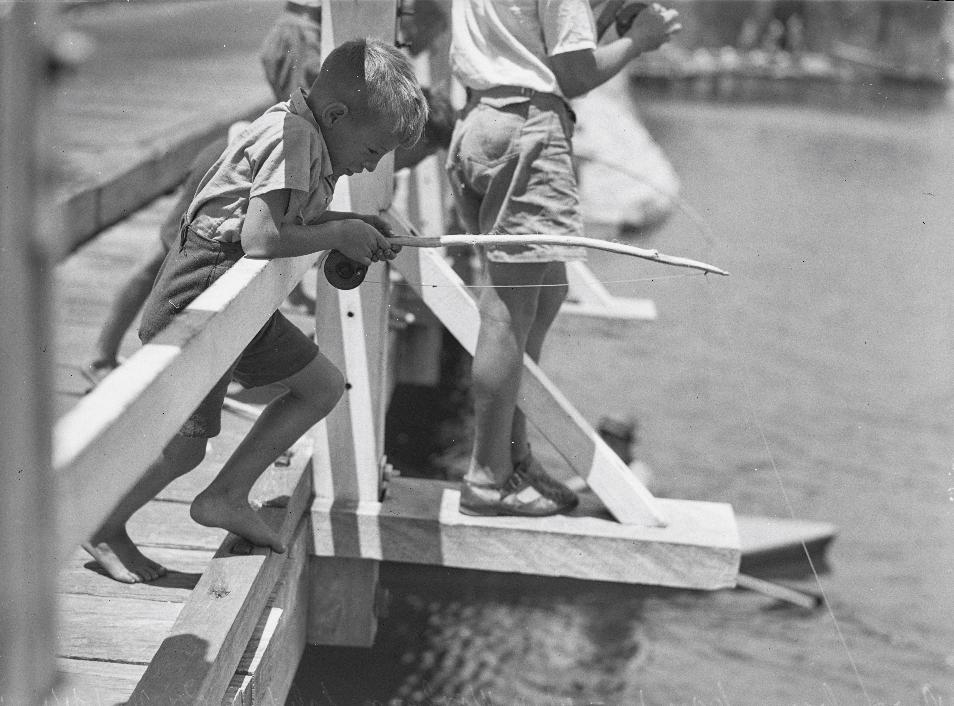
Little boy fishing on Narrabeen Bridge (beach end one) from Album 'Narrabeen camp war workers holiday', picture taken 26 January 1944 / photographed by Alec Iverson, Item: SLNSW_FL9550120 courtesy Mitchell Library, State Library of New South Wales and Courtesy ACP Magazines Ltd. Taken for, but not used in, Article:  WAR WORKERS ON HOLIDAY, Pix Volume 13, No.6, February 5 1944  Retrieved from http://nla.gov.au/nla.obj-479760111

January

From earliest settler times fishing as a means for people to eat, to save them from starvation, was something learnt from, in terms of where to fish and even getting fish from, the original custodians of this land. The earliest colonists certainly knew how to fish, they came from a land of great fishing people, and applying that here must have seemed a natural step.

Since those earliest times, and in early newspapers the coasters that traded from Pittwater to town carrying shells, timber …and fish. 

One of these original fishing families were the Sly brothers from Fairy Bower, who, in 1903, received funding from Manly Council to build a modified whaleboat to patrol Manly and nearby beaches. This shallower version was replaced by a brand new open whaler, the second boat that was launched in 1907.

This Issue, as we all enjoy Summer in Pittwater and all the local surf lifesaving carnivals happening, a delve into some of the first local fishermen and first surf boat.
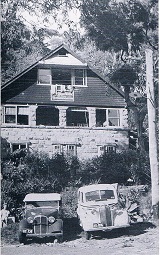
Once a three storey sandstone home, now a four-storey beachside mansion, the block of land for this building was purchased by Laurence Gallagher when Palm Beach was being sold as the ‘Palm Beach’ of Australia. 

To attract buyers, the Barrenjoey Land Company likened this Pittwater beach to the Palm Beach in Florida, USA. Naming the house, 'Florida House’, on Florida road, was in keeping with the intentions of those selling land at 'Palm Beach' and made it easy to locate for those not familiar with the area. 

Stated by some sources to have been built early in 1916, when Lawrence was actually serving with the AIF overseas, Mr. Gallagher may have already been working for one of the main builders of premises in this hilly area after the initial 1912 land sales, Albert Verrills.

Laurie, sometimes spelt ‘Lawrie’, was employed building roads and structures around Palm Beach and would later win the contract to build a section of Ocean road Palm Beach. 

Family records of the Verrills state it was Albert Verrills who helped in the construction of Florida House, one of the first of many homes he built in the area, and Laurie Gallagher, who completed the stone works.

Later on he bought the Lot beside Florida House where 'Kookaburra' stands today. 

The Certificate of Titles recorded show the Florida House Lot was transferred to him in December 1915, just months after he had enlisted to serve in WWI. He is listed on the Certificate of Title as being 'of Barrenjoey' as this end of the peninsula was then known, so must have been living and working in the area already.

As the Barrenjoey Land Company was offering generous terms for these first 1912 land sales, with a small deposit and no requirement to settle your mortgage with someone or other for a few years, Laurie must have been among the initial buyers of lots in 1912 when the first and second subdivisions took place and possibly working at Barrenjoey Lighthouse under David Gow, then head light keeper, and older brother of Carl Gow.

A mortgage taken out in August 1922 with a relative 'John Gallagher' lists John as being a 'Carter of Barrenjoey'.

Laurie Gallagher was born in Linlithgow Scotland, 1891. He enlisted in the AIF in August 1915, aged 24 years and two months and left Australia on board HMAT A32 Themistocles on 5 October 1915. His occupation is listed as 'stonemason'.

The Summer cottage or holiday house was one of main reasons the paddocks and pristine bush covered hills running down to the estuary and beaches began to have the small lighter dots of constructions appearing on them – and this happened way before many of the local subdivisions took place. Some were little more than sheds, others could even have this and camped on their block of land, but they were all about getting away from the humid built-up areas further inland around Sydney for a breath of fresh cool salty air and having some relaxation.

These weekend year round visitors and their guests introduced the commerce of construction for local residents and supplemented what was then a fishing and farming existence, generating the need for new skills and knowledge, and bringing, during Summer, thousands more people to Pittwater with the subsequent need for feeding them providing income for local Butchers, Bakers and Water Carriers and entertaining them growing other industries – Caretakers, Gardeners.

One such Summer House was ''Cooinoo'' on Bungan Beach-Mona Vale verge.

The news service always gets requests for some of these past insights into our earliest schools at this time of year to be the History Feature for the first full week of school - as you head back to school a few insights (longer version) into the school that started in a little chapel at Church Point is run for you once more - we hope you enjoy it.

February

When Patrick Thomson Taylor sold Scotland Island to Helen White (of Darling Point), widow, on May 25th, 1906 this lady brought about the subsequent 1906 first subdivision and land sales (with balance in 5 years to settle).

Among the first to buy is renowned Surgeon Bernard James Newmarch, C.B.E., CM.G. (1856-1929) who purchases lots 48 to 50.

By 1917 George Henry Hebden, grazier is the owner of this land. It is likely that the more extensive home known as ‘Bangalla’ was built during this period - one source states the sandstone part of the weekender was master built in 1921.
The King and I on the Hawkesbury (a Chris Hendrikson photo and memory confirms decades of rumours)


Prince Charles on the Hawkesbury with Timbertop Housemaster Roderick West (1933–2016) in May 1966. Chris is in the dark top with white stripe down the side at the back. Photo: Chris Hendrikson
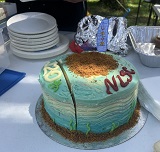
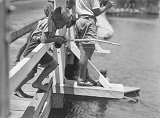
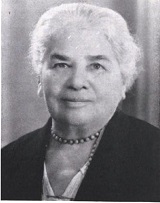
On February 2nd 2025 the Narrabeen Lakes sailing Club celebrated its 120th anniversary through a regatta held on the waters off Jamieson Park and with a barbecue and a cake – of course!

Dr. Sophie Scamps, MP for Mackellar attended the celebrations, along with Deputy Mayor Cr. Ruth Robins, an Elanora Heights resident.

The club says ''If you missed out on the celebration, come on down to Jamieson Park to see how NLSC members spend Sundays sailing on Sydney's safest waterway. Learn to Sail classes are held on Sunday mornings, followed by coaching for more experienced young sailors who can then go on and join in the afternoon races sailing in the two handed Heron boats. There's something for everyone at Narrabeen Lakes Sailing Club.''

This coming March Narrabeen Lakes Sailing Club will host the 2025 Sabot Southern Zone NSW Championship. 

The NLSC says; ''Bring all your Sabot sailors to the beautiful Narrabeen Lakes on 16th March for a fun and all inclusive regatta. We can’t wait to have the Sabot fleet back at Narrabeen for the Sabot Southern Zone NSW Championship.''

You can find out more about the classes of boats at Narrabeen Lakes Sailing Club on their website: narrabeenlakessailingclub.com

In 2022 NLSC members asked the news service to put out a call for history recollections, photos and anecdotes to share and renew all the records lost in the fire, and wanted Pittwater Online News to run a history page of its own research for the 120th Anniversary. 

Although this, alike all lost history subject threads, will remain an ongoing project, there has been 'some stuff collected' since that first request that allows a small celebratory insight on the great Narrabeen Lakes Sailing Club. Happy 120th NLSC!


With the last weekend of Summer 2024/2025 upon us, the bumper-to-bumper stream of traffic to and from Palm Beach which fills the Barrenjoey road from Governor Phillip Park south to Mona Vale ended, and the first scents and cools of Autumn in the dawn over the past few weeks, one last celebratory dive into the history of what a Summer in Pittwater was once all about.

Although Pittwater was stated from the late 1860's on as the bound to be successful location of a 'future resort', and thousands of excursionists visited year round on paddle steamers and later, ferries, it was those making A Run to Pittwater aboard their own vessels or as a fleet from a yacht club, who then stayed aboard their yachts, that began the exodus to Pittwater from Sydney during Summer. 

Once places people could stay in were built that the shift from being a food bowl for Sydney, and farmland, towards what would become a holiday area that offered the quieter waters of an estuary and lagoon, beaches and bushland, and abutting a National Park,  a Summer in Pittwater became the break to have.

From Boxing Day on Pittwater Regattas brought crowds to the estuary. The first Pittwater Regatta was run in 1888, and aimed at bringing people into the area. The Basin Regattas of the 1890’s, led by the Royal Sydney Yacht Squadron with events for local fishermen when Pittwater was still mainly a farming and fishing food bowl for the colony of Sydney Town, continued this aquatics fun focus, including the RSYS looking at local sites for their 'Pittwater chapter'.

In 1906 two boys from Bayview, John Roche and P T Taylor's eldest son, William Donald Mawney Taylor, 'Don' Taylor, had a little race up the estuary and around Lion Island against a pair of Queenslanders, the Crouch brothers, and the love of sailing or rowing, and doing so competitively, shifted further down the estuary and attracted thousands by the time the post-WWI 1920's and Pittwater Regattas of the 1930's were taking place - the contrast between those struggling during this decade financially and those able on host visitors on yachts and motor launches featured in all Sydney newspapers - also came with pictures that show the still open fields in the background and the holiday homes now dotting the hills among the farm sheds. 

Visitors went from camping at The Basin to ‘taking a cottage’ for a week, even during cooler months, or taking up the option of a boarding house, such as The Rock LilyCollin’s Retreat, later Scotts’ ‘Bay View House’, on Crystal Bay and within a few years, the Newport Hotel, and then the Narrabeen Hotel, or the Mona Vale beachfront resort community envisioned in George Brock's 'The Oaks', although he did not benefit from all his hard work.

March

Lucy Edith Gullett (Dr.) IWD2025 Celebrations Lucy Edith Gullett (Dr.) 28 September 1876 - 12 November 1949

Pittwater MP Jacqui Scruby will announce the Pittwater Woman of the Year at the Zonta International Women's Day Breakfast to be held at the Royal Prince Alfred Yacht Club this coming Thursday, March 6.

International Women's Day (March 8) is a global day celebrating the social, economic, cultural, and political achievements of women. The day also marks a call to action for accelerating women's equality. The 2025 theme is 'Accelerate Action'. 

At the current rate of progress, it will take until 2158, which is roughly five generations from now, to reach full gender parity, according to data from the World Economic Forum. Focusing on the need to Accelerate Action emphasises the importance of taking swift and decisive steps to achieve gender equality. It calls for increased momentum and urgency in addressing the systemic barriers and biases that women face, both in personal and professional spheres.

IWD has occurred for well over a century, with the first IWD gathering in 1911 supported by over a million people. Today, IWD belongs to all groups collectively everywhere. IWD is not country, group or organisation specific.

In the lead into the announcement of the 2025 Pittwater Woman of the Year, and next Saturday's IWD celebrations, one of our former Pittwater inspirational ladies who would certainly have warranted being a Pittwater woman of the Year, Dr.  Lucy Gullett, who spent most of her life calling for gender equality.

While investigating Lucy a picture emerged of a Socialite who was also a socially conscious woman. Dr Gullett gave numerous Talks on various subjects, was a keen golfer and loved the outdoors, a bridge player, a frequenter of Race Days (horses), was very literate, a doctor of Medicine with a Major in Chemistry, an advocate for indigenous peoples health rights, but mostly a champion of women’s and children’s issues.

Lucy was a member of Sydney’s Feminist Club when ‘feminism’ was defined as ‘the Women’s Movement is no sex-limited thing, but a great human movement in which women are free to serve their day and generation in what ever direction their talents give them the opportunity, not apart from their men folk, but in conjunction with them'. 


Maxwell Spencer Dupain took thousands of photographs during his life, ranging from landscapes, to portraits, natural and informal scenes of people, and still life to nudes and architecture, along with a vast body of works taken for commercial use – the State Library of NSW holds almost 54 thousand of his images; a testament not only to his appetite for work but also the longevity of his career. 

However, the subject he took many photos of was Newport Beach where the Dupain family had a holiday home, and here all of the genres that featured in his work can be seen, along with Newport ‘happenings’ – such as the launch Aklavic that was driven ashore in October 1954 by 20 year old Robert Michael Brown, ‘fugitive’ – who was eventually caught on Bushrangers Hill - or the storm of May 1974 that demolished the 'ablutions' block on Newport beach.

Happy 100th Birthday Avalon Beach SLSC! 


Avalon - first Meeting of Avalon Beach SLSC founders at A J Small's weekender of same name in Bellevue Avenue, Avalon Beach. photo taken by David 'Rex' Hazlewood (who had to walk around the corner, a whole 100 yards, to take this photo),  Item: SLNSW_FL3809946 courtesy State Library of NSW. 

The Zonta Club of the Northern Beaches: Celebrating 50 years of Action in 2025 - The Zonta Northern Beaches Annual Women's Day Breakfast photos by Michael Mannington OAM, Zonta Club of Northern Beaches and others!


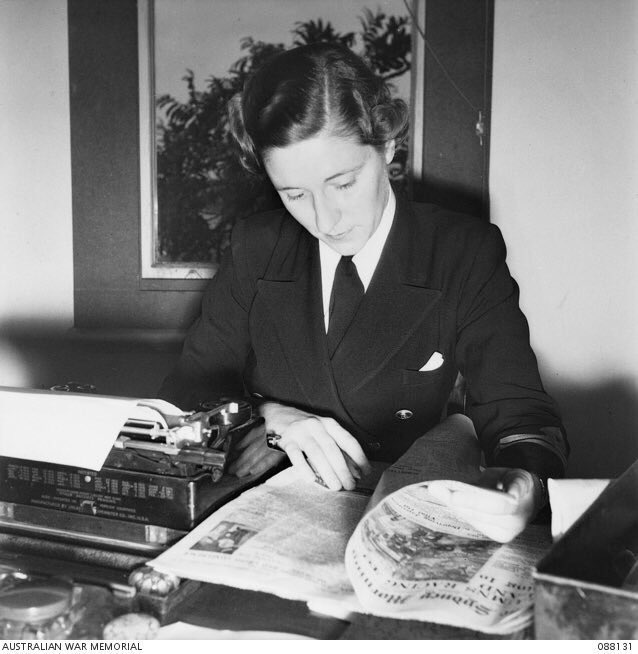
Informal portrait of Second Officer Margaret Collett Vaile of the Women’s Royal Australian Naval Service (WRANS), Press Censorship Liaison Officer, checking naval publicity at Naval Base Headquarters. This former Whale Beach jounralist was the founder of the Zonta Club for our area. Photo courtesy Australian War Museum.
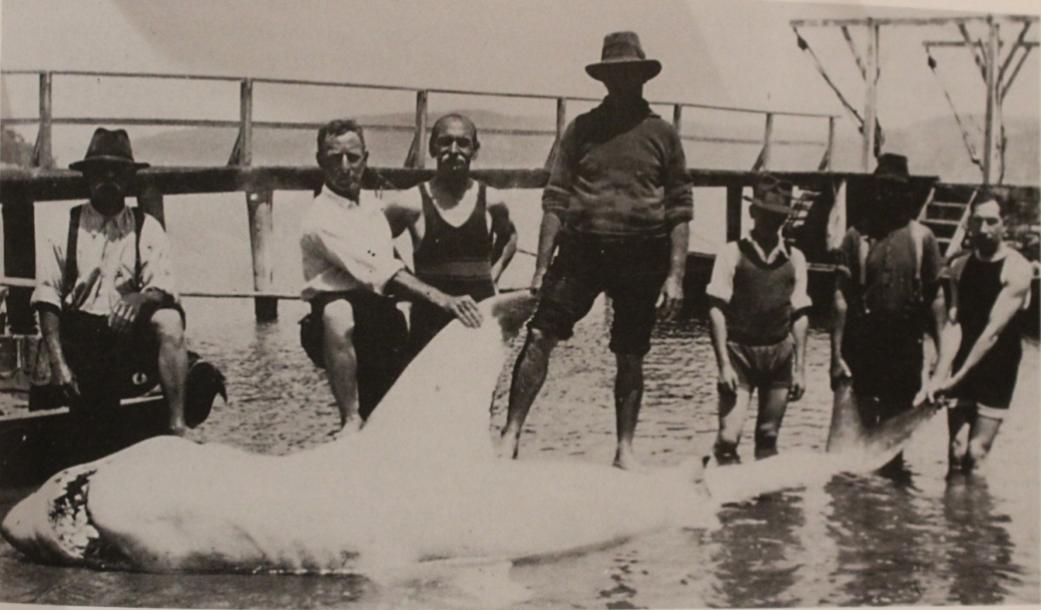
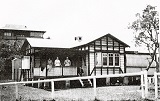
It's a 'Bit Sharky' out there: 5 Tagged Bull Sharks Pinged at North Narrabeen on Same Day - Bull Shark spotted at Bayview - Historical Insights


Above: Woodley brothers, Carl Gow (2nd from left- his older brother and father were stationed at Barrenjoey Lighthouse during WWI) Gonsalves family members and Laurie Gallagher - PBSLSC and Florida House - the wharf in the background is that was at Broken Bay Customs Station (Barrenjoey).

With the council inviting feedback on its new draft Tree Management Policy until Sunday March 30, a policy which aims 'to strengthen tree assessment and protection requirements and expand the local green links between natural areas’, two insights into the history of Pittwater's trees are coming your way.

This week an oldie in a few insights into Annie Forsyth Wyatt OBE, conservationist with more than a few local links. Celebrated as the driving force behind the establishment of the National Trust movement in Australia, establishing the organisation in 1945 to protect Sydney's historic natural and built sites - some know her more for the work that led to this as part of the Tree Lovers League.

Next week a delve into what we were doing to trees even further back - for instance, did you know that by 1803 colonisers along the Hawkesbury had cut down so many trees that they had created the flooding Sydney is still trying to deal with along the Haweksbury-Nepean and Pittwater channels. 

Despite then Governor of New South Wales Captain Philip Gidley King ordering settlers to stop and start replanting, the wholesale tree massacre continued. 

They had landed on these shores just a scant 15 year prior to this. They would steal millions of tonnes of the virgin bush by the 1850's. Some would argue this is still going on today.

But first, a few songs about our girl Annie.
Light at the end of Sydney’s secret train tunnels: St James Historical Walking Tour to commence later this year


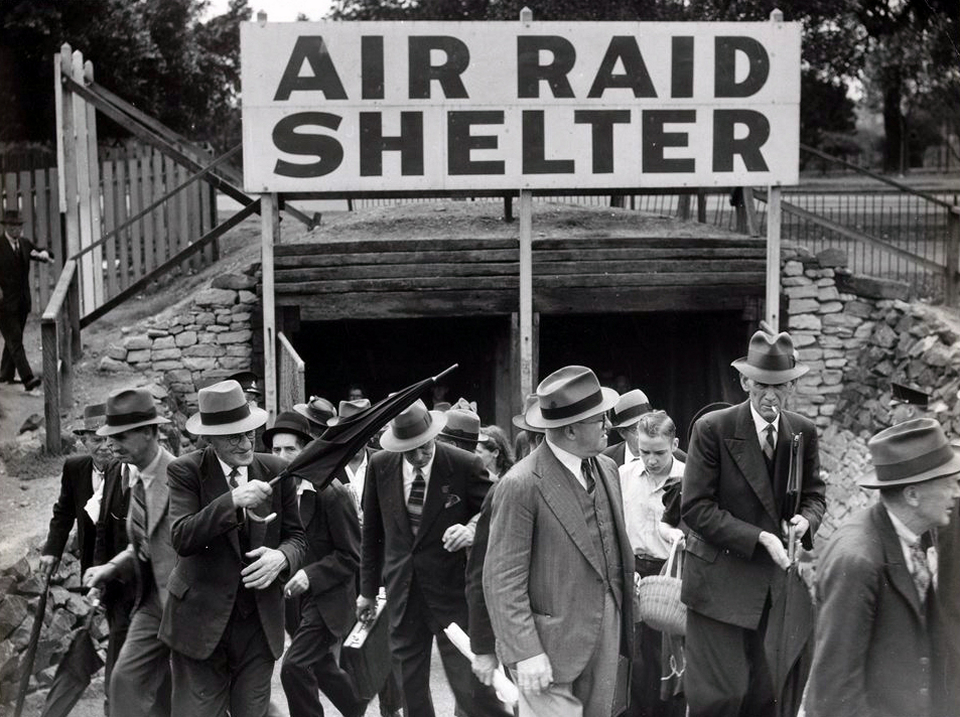
Crowds leaving a shelter in Hyde Park after the 'all clear' has been given c1942. Image courtesy of the State Library of Victoria [H99.201/3739](Argus Newspaper Collection of Photographs)

With the council inviting feedback on its Draft Tree Management Policy until the end of today, March 30, a delve into the past  changes to our landscape's trees may provide inspiration on a better way forward.

In April 1788 Australia's first Governor, Captain Arthur Phillip, led a reconnaissance party from Manly Cove seeking fertile land for growing crops. On this journey, he noted the tall trees which were to provide timber for the growing colony.

By December 8 1795 there was a prohibition on timber cutting on the banks of the Hawkesbury River, an Order that was issued by Captain John Hunter, RN, who took office as the second Governor of New South Wales on September 11, 1795.

By October 1803 the third Governor, Captain Philip Gidley King, RN, ordered settlers to desist and commence re-planting.
April


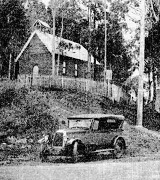
Placed where Pittwater road merges with Mc Carr’s Creek road at 1 McCarrs Creek Road, on the high side, and overlooking Pittwater, was one of our earliest landmarks was a wooden chapel constructed to serve the people of Bayview and Church Point. Measuring 25 feet by 18 feet and built in 1872 a congregation moved from services under loquat trees to hymns within this structure. 

The structure is reported to have given its name to the land as ‘Chapel Point’. However, soon the site was known as Church Point. The Aboriginal name is recorded as ‘Whurra Whurra’ although this is listed elsewhere as meaning ‘go away’ and ‘go home’ and may have been misinterpreted. 

The land, as 'God's acre' was gifted to the community from a land grant to William Oliver. 

The original joint tenants, as per the Certificate of Title, dated November 8, 1871, were George McIntosh, William Oliver, James Jones, Thomas Oliver, John Alderton, William Baker, all following the occupation of farmers, and residing at Pittwater, and William Henry McKeown, of Lane Cove, also a farmer.

This Issue a look into how this little chapel became the first 'Pittwater school' on the estuary and how the community saved its cemetery from being sold during the 1970's to 1981.

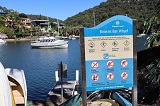
Despite being one of the earliest and smallest jetties on McCarrs creek, and later becoming the same site for the Brown's Bay Public Wharf, the official gazetting of the access way to the waterfront of this tucked away corner of Pittwater came much later than the jetty itself. 

While the terms "wharf" and "jetty" are sometimes used interchangeably, a wharf is typically a long, flat, elevated structure parallel to the shoreline used for commercial docking and loading, while a jetty is a structure extending into the water, often serving as a breakwater or for a walkway, or both. Givcen the size of Brown's Bay Public Wharf most would term it a jetty.

George Brown was granted 41 acres on McCarrs creek with the Certificate of Title registered on 14th of November 1879 and on what is the current site of Browns Bay. 

The George Brown property here was called ‘Waterside’.  

George Brown's 30 acres can be seen in the Certificate of Title Vol- Fol 499-41 - and was then on 'McGaa's Creek.
This Issue a few insights into a little beauty of a public wharf.

This year's ANZAC Day Commemoration Services marked the 110th year of Australians landing at Gallipoli and provided residents with an opportunity to reflect on the legacy of courage and sacrifice that shaped our nation.

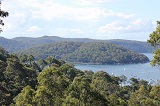
One resident who returned here to serve others in any capacity he could for all of his days and even after he passed away on October 29th, 1970, was Carl Gow of the Gow-Gonsalves boatshed at Palm Beach.

Carl was a founding member of the Palm Beach RSL Club, which held services at Whale Beach (dawn) and at the Palm Beach RSL cenotaph (11am) again this year.

Carl served at Gallipoli and in France during WWI, returning an honorary Captain to Palm Beach to set up a store with fellow veteran Reginald Augustus Howlett, as well as work as a fisherman, boat hire shed and would set out to rescue others from the Gow's - Gonsalves boatshed, still in existence just north of the Palm Beach ferry wharf. In fact, the first 'Palm Beach RSL' commenced in the Gow-Gonsalves shed itself.

Born Carl W J Beeston Gow at Newcastle in March 1889, the youngest son of Robert and Mary, his father was of the Pilot station at Newcastle. Carl was from a family whose contributions to saving lives in Australia, either as engineers on vessels, as Pilot Station attendees, as Lightkeepers at NSW Lighthouses, and as men who went out in their vessels to save others, could fill volumes.

Palm Beach is still littered with traces of Carl; the first Palm Beach Lands Company jetty became Gow’s wharf and the boatshed, now of the Gonsalves family, remains a thriving business, Gow’s, his elder brother David Robert William and his father Robert, worked as a relieving and second  lighthouse keeper at Barrenjoey Lighthouse from 1912 to 1919. While the ship’s wheel from the Helen B Stirling, once in the foyer of Club Palm Beach (Palm Beach RSL), was a gift from Carl Gow.

Mr. Gow was also among the Palm Beach residents who worked to establish the Palm Beach War Memorial Kindergarten.

This Issue a few insights into a true Palm Beach gentleman.
May


Pittwater's Scotland Island has significant Aboriginal remains, particularly middens containing shells and fish remains. These middens, found on the northern and western parts of the island, offer evidence of the Guringai people's occupation and dietary habits for thousands of years on this second island of the estuary. 

These middens would become the subject of a money-making venture for early settlers and those transported as convicts to Australia, and would form a vital part of making the cement to construct some of Sydney's earliest buildings.

However, this was not the only early venture as here a salt-making venture was carried out, directly opposite Salt Pan Cove at Newport, and here too, ship building took place, again on the north facing end of the island, the last known one to be built and launched from here being the Geordy and from the current site of the Tennis Wharf.

Pittwater Council heritage records state some remnants of an early stone wharf at this location form part of the current Tennis Court Wharf.

These industries can be directly attributed to the man who was granted the island by the colonising UK Government, and who had been transported here as a convict himself - Andrew Thompson.

With today's Scotland Islanders continuing the modern tradition of a creative industry based in the people and the place itself, which stretches back decades in all forms of the Arts; Literature, Painting, Music, Theatre, and the newest offering, 'Wedding Island', debuting next weekend May 9-10, and two last shows of May 16 and 17, a resharing of an old history insight from the first round of Pittwater Patriarchs, led out by Bungaree and followed by Andrew Thompson, of Scotland Island. 

Baptised on 7 February 1773 at Kirk Yetholm, a village in the Scottish Borders region of Scotland, 13 km south east of Kelso and less than 1 mile (1.6 km) west of the border, and 4 kilometres from Thompsons Walls, Andrew Thompson was the youngest and sixth child of John Thompson, a weaver, manufacturer and dyer, and his wife Agnes, née Hilson. 


Independent MP's Jacqui Scruby (Pittwater), Michael Regan (Wakehurst) and Alex Greenwich (Sydney) visited the proposed site of the Great Koala National Park in the last week of April. Jacqui Scruby stated this past week:

''Pittwater once had koalas in our trees and we are heartbroken to see koala signs on our roads, knowing the local population is now extinct.''

''I’m calling on the NSW Government to urgently follow through on their election commitment to establish this park to protect not only our endangered koalas, but to also allow other threatened species like greater gliders and spotted-tailed quolls to thrive. The time is now, let's make it happen!''

Koalas lived throughout Pittwater for thousands of years until the early 1980's, from Palm Beach to Narrabeen and across the estuary, on the western shores.

In fact, over the last 100 years, habitat removal, dog attacks, roads and fences cutting through their ancient and traditional migratory paths, whether moving from one species of trees to another during the season to eat or to find a mate during breeding season, along with cars running them over, has killed every single former koala of Pittwater.

We have borne witness to this occurring, just as we have borne witness to the extinction of others.

This Issue run some of the records that have been made by John Illingsworth, or collected over the years, so that those who were not born when we were losing Pittwater's koalas, among other local extinctions, can see in the timeline what is lost when you do not stop - and then stop taking the wrong route to seek another way.

We hope a perusal of what went wrong may help us all get it right.


Bernard "Midget" Farrelly AM (13 September 1944 – 6 August 2016) was the first world surfing champion. Mr. Farrelly, was the first Australian to win a major surfing title, the 1963 Makaha International Surfing Championships, the unofficial world surfing championship of the day. In 1964 he won the inaugural World Surfing Championship at Manly Beach in Sydney.

He was also the first president, in 1961, of one of Australia's oldest continuous surfboard riders club, the Dee Why Surfing Fraternity. He presented a ten-part television series about surfing in Australia, The Midget Farrelly Surf Show, for the ABC. Midget was posthumously inducted as a Member of the Order of Australia in the 2017 Queen's Birthday Honours.

Palm Beach Whale Beach Association Secretary Robert Mackinnon's interview with Beverlie at the 2024-2025 AGM of the Association.

Seen through the eyes of Beverlie Farrelly, discover how different the Avalon Beach of the 1950s and 60s was from the one of today: life was simpler and moved at a slower pace as a community was formed in the wake of WWII.

As wife of the late Midget Farrelly, Beverlie shared insights into the remarkable life of this multi-faceted man who became Australia’s first international surfing champion. 
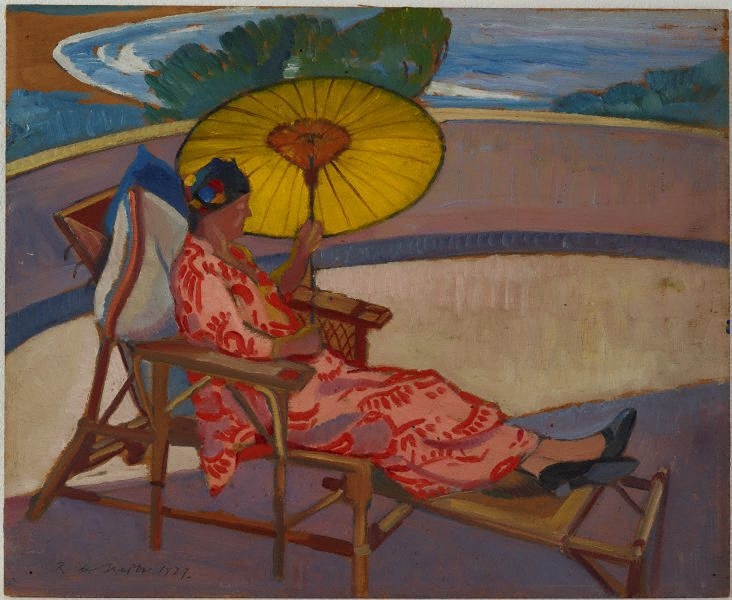
 Prosper de Mestre's Pittwater Connection: Future of Sydney’s transport unearths a window to its past: colonial-era merchant  


Roy de Maistre, Woman with parasol at Palm Beach, 1927 held by and courtesy of the Art Gallery of NSW

As any researcher of history will tell you, it’s always a ‘work in progress’, as there can be more to find and find out. And so states William Goddard (Bill) too, although he is happy for people to now know about the website wherein he is sharing history insights into different aspects of Pittwater, many of which have a connection to his own family.

The website is available at: goddardfamilytree.au

Bill has already shared some of his research, often working alongside Geoff Searl OAM, President of the Avalon Beach Historical Society, which will hold its next meeting on Tuesday June 10.

Bill's works and collaborative-works which have run in Pittwater Online News are:

Along with family history, his insights in the Careel Bay Dairy farms, James Booth or the Palm Beach Garage are always meticulously researched and updated when he finds some new detail. And there is a growing library of works to delve into.

The Goddards, alongside the Verrills, Gonsalves and Miltons, have been a part of the Barrenjoey peninsula for around 110 years - so it's wonderful they share family records, photos and recollections for all who want to know more about this place in its earlier days. This Issue some of his 2022 insights and family photos to whet your appetite.
June


A few weeks ago the news service was fortunate to run a few insights from Beverlie Farrelly on her husband Bernard, known as 'Midget', the first World Surfing Champion.

Beverlie shared that her first home in Pittwater was when her family lived in Avalon Camping Ground after Wold War Two.  

This prompted a few inquiries from younger readers and new arrivals to Pittwater who were not be aware that the green area behind Avalon Beach dunes was once a vey popular camping ground from the late 1920's to 1930's on, until Warringah Shire Council closed it in 1953.

Although the closure in 1953 could be attributed to flooding that occurred in May that year, with two severe rain events within two days washing campers and their possessions along the Careel Creek into Careel Bay - and may wonder about the wisdom of allowing a camping area in what was known to be a flood zone to begin with - during the few decades it existed it provided not only a place to live for those impacted by the 1930's economic depression - when many took to canvas and caves to provide a roof for loved ones, and headed beachwards where they could fish for food - and persisted in post World War Two shortages - it also brought people to our area who stayed and not only went on to build community and serve in its volunteer organisations - such as the surf club - they helped establish the 'there's no them and us, it's just us and us looking after us' mien of the Barrenjoey community that persists today.

In the lead into VP Day 2025 we share a few local connections to the World War Two conflict in the Pacific that may not be well-known, commencing with the Workers' Educational Association 'Summer School' facility, which once stood on the corner of Wallamatta and Nullaburra roads at Newport, and was the venue for Women's Australian National Service (WANS), in particular the Sydney University Wans (known as "Swans") training, and by 1945 was the place for US and UK War Brides (BPF: British Pacific Fleet servicemen) who learnt skills which may make their new lives in their husband's countries easier.

Victory in the Pacific (VP) Day in 2025 will be commemorated on Friday, August 15th in 2025, and will be mark the 80th anniversary of Japan's surrender to the Allied forces in 1945. This day signifies the end of World War II in the Pacific and is a time for Australians to remember and honour the service and sacrifice of all those who served in this conflict, and particularly in the Pacific.

A combined Sub-Branches VP Day Commemoration Service will be held at the Avalon Beach RSL Cenotaph, commencing at 11.30am, led by Vice President Tamara Sloper-Harding, OAM, with the 2025 Guest Speaker being Commanding Officer HMAS Waterhen; Commander Lucy Frauenfelder, RAN.

In the Pacific theatre of World War II, Australia experienced significant casualties. The Australian War Memorial records at least 27,073 Australian soldiers were killed and 23,477 wounded from enemy action. Additionally, over 30,000 Australians were captured by the Japanese during the war, with a significant number dying in captivity.

On September 3rd, 1939, the day Great Britain declared war on Germany, Australia also declared war, announced by then Prime Minister Robert Menzies on national radio. 

The conflict, which would continue for 6 years, saw Australia attacked for the first time, at Darwin, and through the mini-submarine attacks within Sydney Harbour and along the eastern seaboard, with one of these being found off Bungan Beach, now an official war grave.

When the Empire of Japan captured the British stronghold of Singapore between February 8 to 15 1942, imprisoning young men like Warriewood's Walter Williams and Palm Beach SLSC's Adrian Curlewis, by then Prime Minister John Curtin recalled many of the Australians serving in North Africa and the Europeans theatres of conflict.

Pittwater's Anthony Ruskin Rowe, a spitfire pilot and one of those recalled, lost his life on June 20th 1943 defending Darwin, while Narrabeen resident Lindsay Dufty served on the ground in the top end.

In Pittwater a submarine boom would be placed between Barrenjoey and the West Head headlands, anti-tank traps would rip up the countryside between Mona Vale, Bungan and Bayview, barbed wire would be placed along the beaches to thwart invasion and troops would be stationed at gun emplacements along the peninsula, while Coast Watchers, along with women who stayed would be part of the 'spotter' squads - stationing themselves along each headland - with the women taking on a roster of each staying atop the headlands twice each each week to look out for and report enemy ships, submarines and planes. Only one known fatality is recorded, at this stage, of those all-women 'spotter' squads, Palm Beach resident Ailsa Craig, by then the wife of Captain George Urquhart (Scotty) Allan. 


The first wharf built at Church Point was the result of those living here in the 1880's calling for this facility to provide safe access for children to the school held during weekdays at the Chapel which gave Church Point its current name. 

On June 1st 1883, the Mayor of St Leonards, the District where so many births in Pittwater are recorded during the 1800’s, prevailed on the then Colonial Secretary of the colony for a wharf. The response is recorded:

DEPUTATIONS. THE NARRABEEN-ROAD.
A deputation, consisting of the Mayor of St Leonards, Dr Tibbit's, and several other gentlemen, waited upon the Hon. Alexander Stuart, Colonial Secretary, yesterday, to request that the Narrabeen-road from Manly to Pittwater be put in a proper state of repair, and that a jetty be constructed on Church Point at Bayview, Newport. The road, it was represented, is now in a very bad condition, and if it were put into proper order it would open up one of the most beautiful districts in the colony. The jetty was required for the benefit of children going to school and persons attending church. The deputation also asked for a bathing place...
 DEPUTATIONS. THE NARRABEEN-ROAD. (1883, June 2). The Sydney Morning Herald (NSW : 1842 - 1954), p. 9. Retrieved from http://nla.gov.au/nla.news-article13536041

Dr. Tibbits of Petersham, a medical practitioner, is the landholder of 40 acres, part of Portion 25 and formerly a section of the William Oliver and grant, on the west side of the ‘church acre’ on which the chapel has been built.

Over a year later a Tender was advertised and it was subsequently announced a person being accepted for the work, Newport's William Boulton. This Issue a few insights into the 140+ years of one of Pittwater's oldest wharves.

On 28 June, 1965, 2 teachers and 25 students walked up the hill from Avalon PS and into a new school, which today is the Heart of the Hill.

On Saturday 28 June, 2025 - 60 years to the day - around 200 Students, all the Teachers and Staff members, parents and families past, present and future, retraced their steps in an Anniversary Walk.

Four original students were present from the first intake; Ross Montague, John Gray, David Watson and Di Page.

No 60 Year BPPS Celebration would be complete without a delve into the history of the Bilgola Plateau Public Schools' beginnings. 

This has been researched and written by Susan Peacock, who has an Archivist and working in Museums background and has been reading those 60 years of records, many of them still on paper - thank you Susan.
July


From the earliest records of European settlement in Pittwater reports and anecdotes of the great array of fruits once grown here have formed part of what was told. Newport peaches, bananas and paw-paws, Church Point grapes, oranges and lemons, Narrabeen Plums and Warriewood tomatoes have all been produced abundantly and their quality was second to none, winning prizes at the annual Royal Easter Show for some producers and renown for record prices fetched for those tomatoes that came out of the Warriewood valley.

The State Library of New South Wales, in its ongoing digitisation of materials and making these available for the populace, has added photographs of a 'tropical fruit orchard at Pittwater' which, according to the sources, were taken on July 11th, 1938, possibly taken for Woman magazine or Woman: Incorporating the Woman's Budget - a woman's magazine published in Sydney, by Sungravure [Sun newspapers] from 1934 to 1954 with Issues originally cost three pence each.

Among these images of paw paws, bananas, strawberries, pineapples and more appear some 'models' and one of the farmer or caretaker with a tomato vine. The location of this 'farm' was on the Crescent at the Newport-Mona Vale verges, a nice suntrap at this time of the year and naturally given to promoting the growth of such fruits


On July 5th 2025 a Celebration of the life of Jack McCoy was held at Palm Beach. The Duke's board was brought north from Freshwater SLSC for the paddle out and Jack Ralston's board part of what was going on as it was styled after the 1914 Duke board. 

A photo of local hero and legendary surfer Tom Carroll with Jack's daughter Indiana, and one of Occy with Jack R's version would have been what Jack McC wanted, as well as a little telling of the story behind Jack R's board, including this being the beginnings of Palm Beach SLSC's moves to get surfboards made part of lifesaving equipment.

August


John Illingsworth's brilliant Pittwater Pathways films are a boon to local residents, sharing insights and news as well as great Historical features he has clearly spent a lot of time and effort making.

Victory in the Pacific (VP) Day in 2025 will be commemorated on Friday, August 15th in 2025, and will be mark the 80th anniversary of Japan's surrender to the Allied forces in 1945. This day signifies the end of World War II in the Pacific and is a time for Australians to remember and honour the service and sacrifice of all those who served in this conflict, and particularly in the Pacific.

In the lead-up to VP Day in Pittwater 2025, one of Mr. Illingworth's great insights into Pittwater's World War Two defences runs as the second insight.

Pittwater RSL: new  Developments

Before there was a clubhouse, there was a borrowed pavilion and a few crates of beer from the local pub.

In 1958, Pittwater RSL began as a small group of locals gathering in Mona Vale to stay connected, share stories, and honour service. 

Our first official clubhouse? 
A surplus army hut, lowered onto brick piers built by volunteers. Army boots filled with geraniums on the porch, a single poker machine, and a dance floor that saw more than a few big nights.


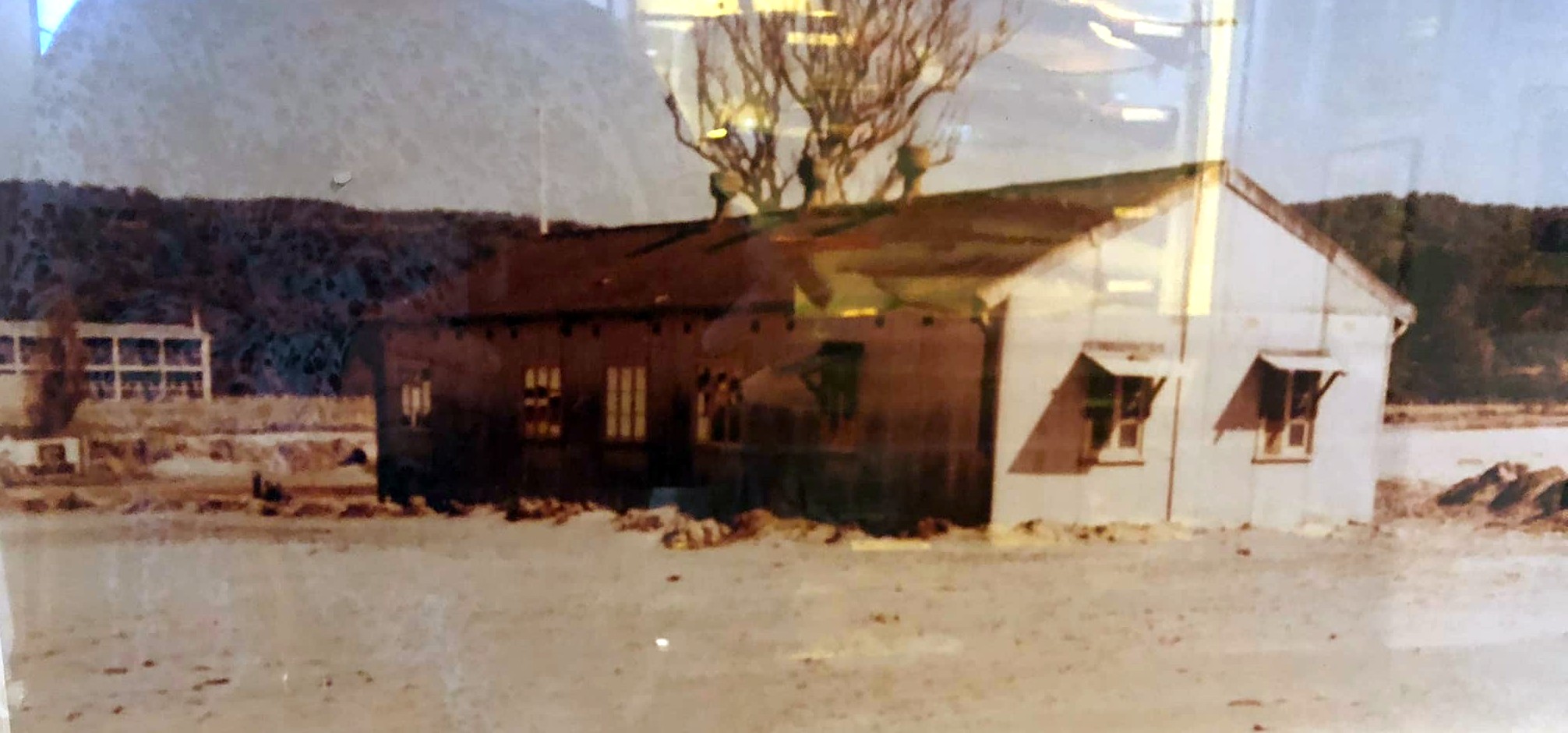
Photo: Original Pittwater RSL Sub-branch building, erected 1958 in Huxley St Mona Vale. Purchased from Dame Edith Walker Estate for £600. From 1961 until its demolition in 1966 it was used by 1st Mona Vale Scouts.

It took some guts (and a bold land deal) to move us out to Mona Vale Road, but with a little help and a lot of community spirit, the club found its home.

From those humble beginnings, we've grown into something much bigger, but we’ve never forgotten where it all started.

Now, we’re planning for the future. A new redevelopment will deliver modern club facilities, five brand-new Pickleball courts, dedicated admin offices for the Sub Branch, and a state-of-the-art entry, foyer, and Reward Members parking area, all designed to honour our legacy while securing the club’s future for generations to come. 

Once construction is complete and the courts are functioning, opening hours will be seven days a week, from 10:00 AM to 8:00 PM.

The refurbishment of the Bocado space within Pittwater RSL is aimed at transforming a currently underutilised 280 sqm area into a versatile, multi-purpose function venue. Over time, the space had undergone several piecemeal alterations, leading to a fragmented aesthetic and limited usability. The proposed redesign, is focused on creating a cohesive, flexible environment that caters to:
  • Social gatherings
  • Private events
  • Corporate functions
The plan includes targeted demolition, installation of new flooring and cladding, a mobile furniture system to support different layouts (theatre, cocktail, dining), and feature lighting to enhance ambiance and functionality.

A $9 million refurbishment will introduce:
  • A new lower-level 5-star entry
  • A portico for a grand arrival experience
  • Accessible parking
  • Deck and Club connectivity via the terrace
  • New escalators and lifts
  • Pittwater Rewards (Platinum members) parking with direct club access

The Club will continue operating, though some areas may be temporarily affected. Members and guests will be kept informed about any changes.

Keep up with the progress here: www.pulseofpittwater.com.au

Victory in the Pacific (VP) Day in 2025 will be commemorated on Friday, August 15th in 2025, and will be mark the 80th anniversary of Japan's surrender to the Allied forces in 1945. This day signifies the end of World War II in the Pacific and is a time for Australians to remember and honour the service and sacrifice of all those who served in this conflict, and particularly in the Pacific.

In our third pre-service insight, a few insights into the north Dee Why to north Warriewood coastal defences against invasion during the war in the Pacific.

Victory in the Pacific (VP) Day in 2025 was commemorated on Friday, August 15th in 2025, and marked the 80th anniversary of Japan's surrender to the Allied forces in 1945. This day signifies the end of World War II in the Pacific and is a time for Australians to remember and honour the service and sacrifice of all those who served in this conflict, and particularly in the Pacific.

A combined Sub-Branches VP Day Commemoration Service was held at the Avalon Beach RSL Cenotaph, led by Vice President Tamara Sloper-Harding, OAM.

This RSL did not exist during this conflict, however, over on Avalon Beach itself, teenagers who had been a part of the Woolloomooloo Police Boys Club were looking after the masses of people who returned to the water once it became apparent it was safe to do so. 

As the fourth and final VP Day 80th Commemorative Service tribute, a few insights from two of those boys and how the Woolloomooloo Police Boys Clubs' members became involved in serving on the beaches.
Forced Plane Landing on Mona Vale Golf Club Course Not the First Time Local Golf Courses, Beaches used for Emergency landings


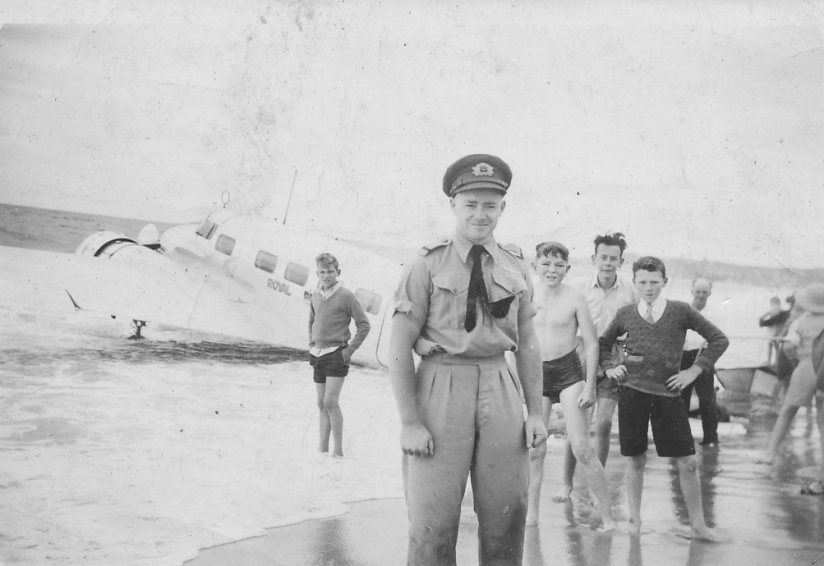
On November 21st 1944 Captain "Jimmy" Broadbent, of Point Piper, a famous Australian airman was piloting the plane which made a forced landing on Narrabeen Beach.

More details in: Landing in Pittwater: That Beach-Estuary-Lagoon looks like a great place to touchdown!
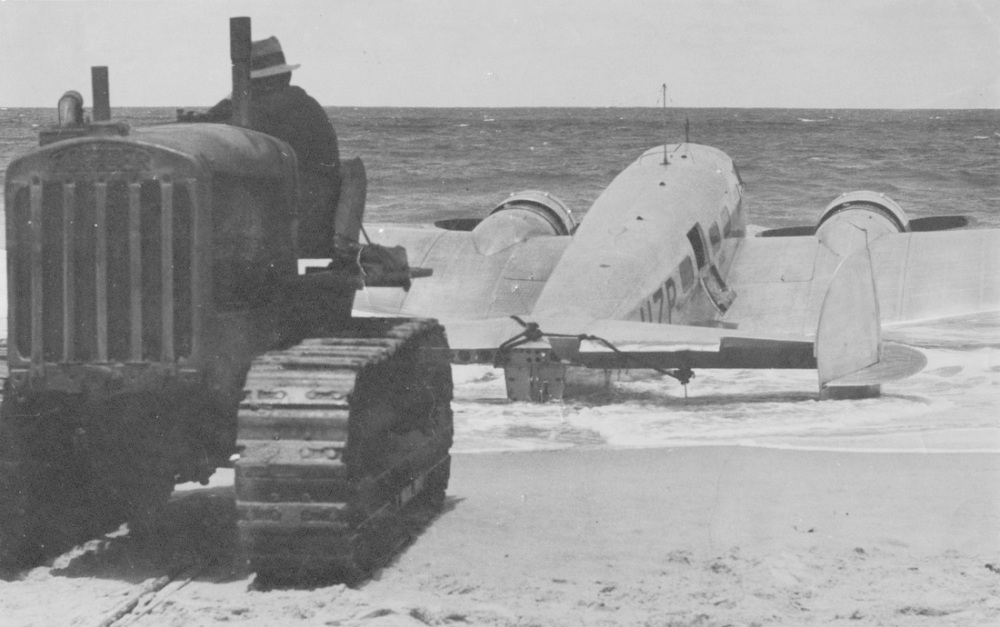

The bulldozer trying to assist downed aircraft.


November 21, 1944 Famous Aviator Capt. Jimmy Broadbent's sabotaged Lockheed Electra 10B VH-UZP on Narrabeen Beach, Sydney. A wet happy Ansett co-pilot Charles 'Chic' Eather stands at the surf line. (Photo: Nancy Ellis)


There are two wharves in Elvina Bay - one to the North and the other to the South. The park on the South side of the Bay also is home to the West Pittwater Rural Fire Brigade. Being a water access only part of Pittwater, being able to come ashore via a beach at low tide, or a jetty, was essential, especially during the years when fruit was grown here and needed to be shipped to market. A few insights into one of the best places in Pittwater and her public wharves runs this week.

On Sunday September 7 there will be a big planting morning of beach plants to help stabilise the sand on the blowout on the northern end of Avalon Dunes. Starting about 8.30am the Avalon Preservation Association will put in about 1000 plants.  All help very welcome.

A great photo from the Avalon Beach Historical Society of elephants grazing at the Avalon dunes, from a visiting circus, using this place as a camping ground led to removal of vegetation, it was the council allowing the dunes to be carted off for profit that led to the removal of ALL the vegetation that held them together and the subsequent need for a protest straight to the state government and then a project for these to be replanted in order to look after the beach, waves and community living behind those dunes in all points west, that saw them restored. 

September


The NSW Department of Environment has released a short film recording the memories of one of the last people to see the Tasmanian Tiger (Thylacine), shining a spotlight on the critical need to protect threatened species from a similar fate.

The last Tasmanian Tiger died in captivity on 7 September 1936 and for the past 30 years this date is marked as Threatened Species Day across Australia.

National Threatened Species Day on 7 September raises awareness of plants and animals at risk of extinction - i.e.: 'threatened by extinction'.

The NSW Government’s Saving our Species team connected with 94-year-old Peggie Bassett and recorded her memories of seeing the last of this iconic species at Hobart Zoo in the early 1930s.
Peggie’s reflects on seeing and hearing the cries of the lonely Tasmanian Tiger remain in the forefront of her mind as a tragedy that should never be repeated.

Likewise, the Manly to Barrenjoey peninsula has borne witness to ignorance compounded by arrogance and greed that has led to localised extinctions along with species listed this year that are now threatened with extinction by our actions.

This week - the Dept.s' 2025 Threatened Species Day film + a few other insights into our area that may inspire more to become part of the solution.
Lovett Bay Public Wharves: Some History - one to the west, one to the east, one from when the area was opening up for tourists, one from when we were finding the ide
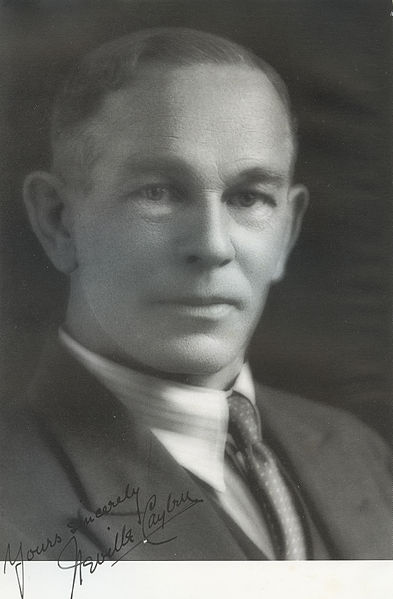
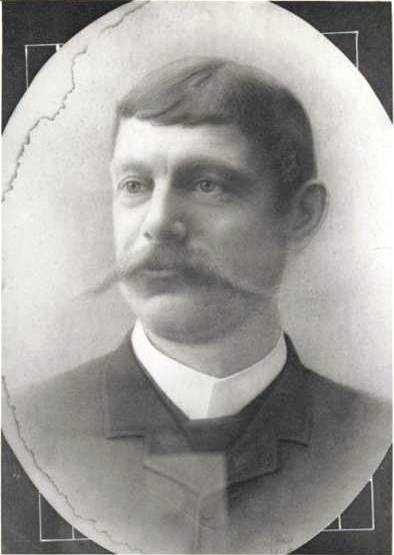
Aussie Bird Count 2025 Runs October 20-26: Our area's Australian Ornithologists 

                                             Neville William Cayley                                                      Neville Henry Peniston Cayley


Geoff is President of the Avalon Beach Historical Society; Roger is a member of the Avalon Beach Historical Society. 

They are both Life Members at Avalon Beach SLSC and have both worked on different aspects of the Club's History, which will feature in an Historical Exhibition open to the community this October Long Weekend.

They are both brilliant historians as well - this Issue, one of their investigations and Site Explorations, and Report from a few years back - one that's great for Spring Holidays Inspirations.

October

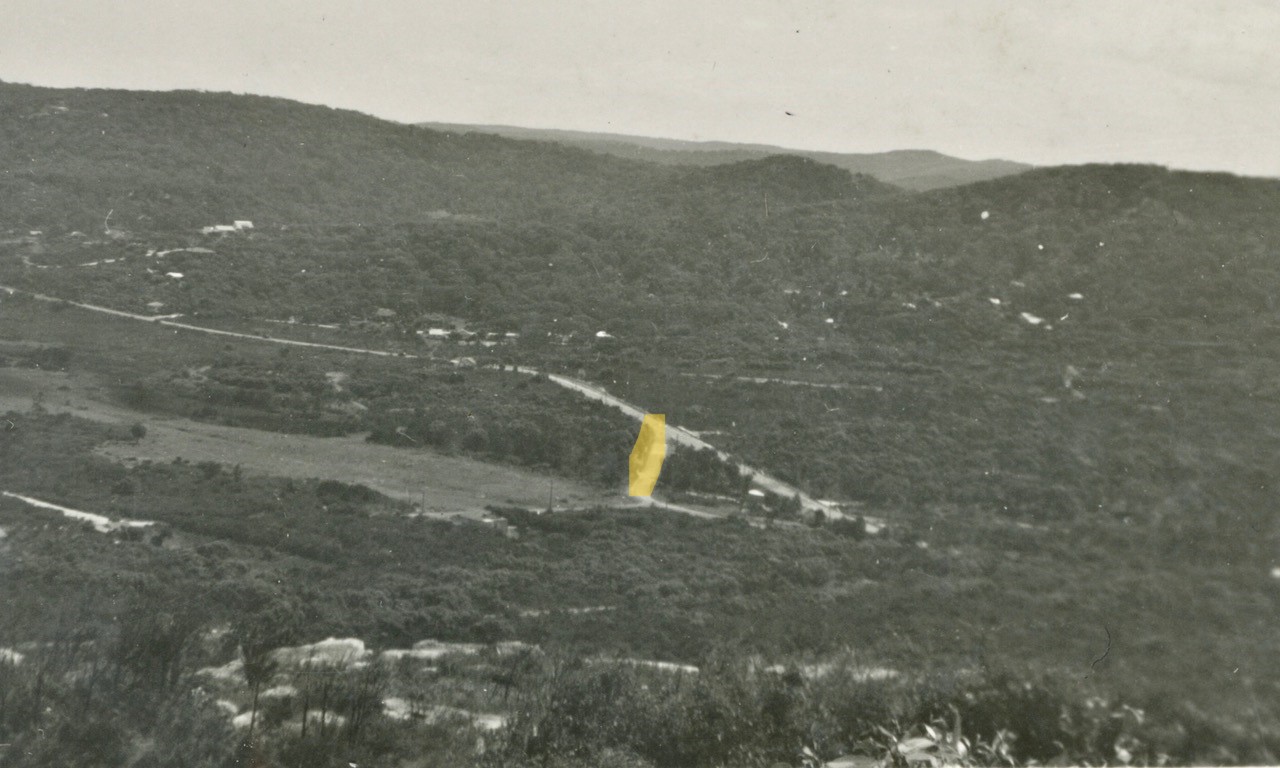
  Avalon's 'Telford' Road to have signage about its Heritage  
Location of Telford road on the former Barrenjoey road - photo: ABHS

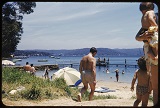
From old slides, found while doing research for upcoming history pages. Images are from and courtesy Mitchell Library, State Library of New South Wales, and NSW Digitisation Program for same.

These slides, some of which date later than this and include Narrabeen, have been recently digitised. They were part of then then 'Walkabout' magazine created to promote NSW as a tourist destination by the state government and a precursor of today's 'Destination NSW' . 

From 70 years ago this coming January, some of these are clearly from private family collections. They show us what was in the landscape then, the summer lifestyle for those who lived here or those who visited for the season, and you can spot structures or elements of then now gone, especially if you look at the background. 

Many of these feature views and infrastructure the news service has already run a few insights on in past Issues, so they have been linked to for those interested in exploring more. You can also use the 'search' function in the Contents page to bring up more than those pages linked to here.

NSW Police Force, Sergeant 1st class Norm White of Mona Vale Police Station retires back in July 1981.

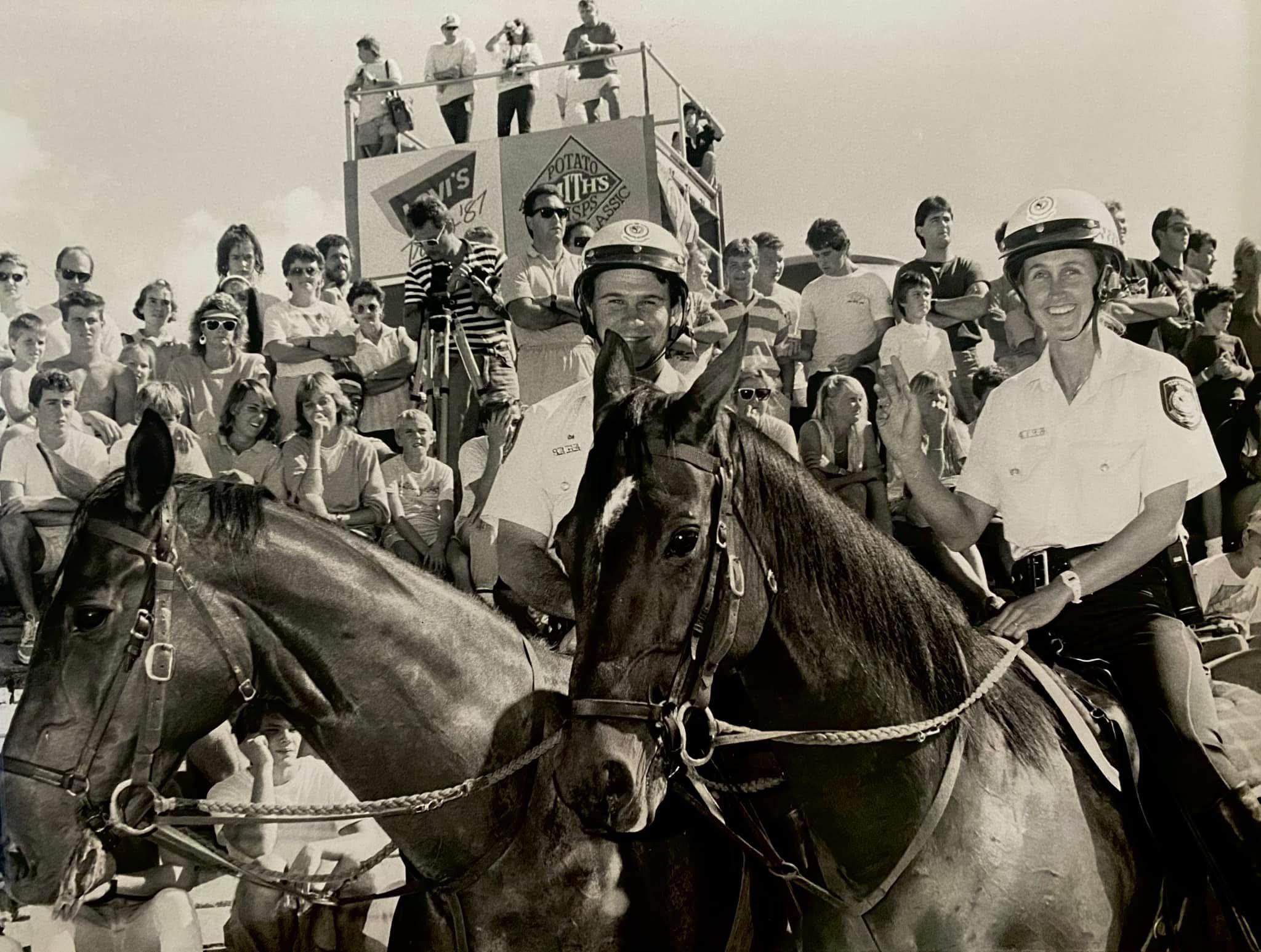
NSW Police Force, Mounted Police Constable P Jones left and Constable K Sweetman right at Manly Coke Surf Classic, 1990s.

Photos: New South Wales Historic Police Museum, and Mounted Unit - NSW Police Force

Narrabeen Lakes Amateur Swimming Club is ready and raring to go for another terrific season down at our beloved rockpool. The water is simply glorious at the moment.  

Can't wait to see you all at 1pm on Saturday 1 November.  All newcomers welcome and please try us out for free.  Register at www.nlasc.com.au

November


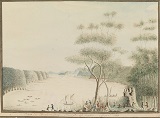
A newly digitised by the State Library of NSW album of old photos contains images of Barrenjoey Lighthouse and the Broken Bay Customs station that may be familiar to others, and one photo is of the First Royal Visitors to Pittwater aboard the steamer that took them up the estuary to Barrenjoey before heading up the Hawkesbury.


With Pittwater residents rushing to support their 'south of the bridge' Narrabeen cousins on Saturday November 8 at a peaceful protest against what is proposed for the recently sold original and oldest Wesley Taylor Narrabeen site, see; Over the Top Narrabeen DA Draws Large Crowd to Peaceful Protest: 'This is about Community Standing up For Community', the history insight first run when the home was to be closed, bolstered by extra items found and added in since, may be of interest.

Wesley Taylor Narrabeen was Wesley Mission’s longest running aged care facility, opening its doors in 1929 as ‘The Outlook’, a home for aged men of 'reduced means', and expanding to become the WG Taylor Memorial Home in 1935.

It was named to honour the Rev. William George Taylor who became the first Superintendent of Wesley Mission in 1884, and who was stated to be an evangelist.

''Revival followed him wherever he went and ailing Methodist causes were renewed in spiritual power, as well as in numbers and financial security. Taylor was a man of vision with the executive and administrative ability to implement his ideals. Able to inspire extraordinary loyalty in others who willingly co-operated in his plans, he combined the traditional spiritual life of the Church with Christian humanitarianism.'' Don Wright states in his biography on the man.

Wesley homes for elderly people were primarily funded through donations from the congregations and the broader public. This enabled the Methodist Church to provide care for the elderly, especially those who were poor or disadvantaged.

The Wesley Methodists' came into possession of the site at Narrabeen after the premature death of then owner Lebbeus Hordern (31 May, 1891 to 10 September, 1928) after he took too much of a sleeping powder he had used to deal with ongoing insomnia.

Lebbeus was related to Alfred James Hordern (1859 -1932) of Kalua, Palm Beach. 


When you live on an island maintaining 'access to' its land is vital - you need a bit of low tide beach, a slipway, a boat ramp, a landing place, a jetty or wharf.

There are around 220 years between when Andrew Thompson used the north end of the island and current day site of Tennis Court Wharf as a place for salt pans and where the schooner Geordy was launched while another, in 1810, was 'in stocks', the 1884 application by former Mariners Joseph Benns and Charles Jenkins to 'Maintain a Jetty' facing west near today's Cargo Wharf site -  which means there was already something there to land items on the island or take produce of some sort off the island, 'shipping' it - the 1924 subdivision of large blocks into suburban-sized blocks which saw Bells and Eastern wharves being built 'to provide access', and when Carols' Wharf was finished in 1978, to provide that same equitable 'access to' for residents.

In between circa 1804/05, when a Land Grant to Thompson and the Autumn of 1978, legislation defined Permissive Occupancies and then a Special Lease. A permissive occupancy is a type of tenure that was issued under former legislation; this type of tenure was subsequently replaced by licences. Under the Crown Land Management Act 2016, existing permissive occupancies are referred to as licences.

It's also a place where for thousands of years no wharf was required. The shells shipped to Sydney Town by the boatload to make mortar were from middens on the west and north side of the island, with a remnant still adjacent to today's Catherine Park, mark feast places of shellfish and caught fish by the original custodians of this place. 


Compiled by Terry Cook, current President, with extracts from "A History 1975 - 2010" written by Greg Ennis and back-up research/+ 2011-2015 photos by A J Guesdon

Photos of 50th Celebration, AGM, and Christmas Toy Drop off Day November 15 2025 by Michael Mannington OAM of Community Photography, and Donna Cliff, Kimbriki Resources


The Rock pools that form a feature at the southern ends of Pittwater beaches remain one of the most popular places to meet up with friends and enjoy a dip or do laps. These are places our children learn to swim, places we can sit and relax, and places where those young and not so young anymore maintain fitness and good health all year round.

This week a dive into some of the best places to cool off as the Season heats up and their many changes.

December 


Dearin Reserve, on Heron Cove at Newport, with Haystack Point to the north, Newport Public wharf, Newport Hotel and Old Mangrove Bay to the south, is another area on the Pittwater estuary that was resumed to provide ‘access’ to that waterbody for residents and visitors and that residents have stood up for over the years.

Dearin Park has been stated to be named after Mr. and Mrs. Dearin who lived at the bottom of Gladstone street and gave the land to the council for the residents use as a reserve. Although this has become a popular local anecdote, the land was actually resumed from Mr. Dearin and two others in the 1920's. The name was given to honour his looking after the reserve, even after that resumption in what reads as a touch of lording over a resident and bullying by the then council. 

Records indicate his home was at end of Gladstone and on Princes street – at the waterfront end of Lot 7, Section A Town of Newport. 

This is also where, at least three times, residents have stood up to defend the Pittwater foreshores and this reserve in particular from developmental impacts that would destroy its environment and all that lives there because that had been retained. 
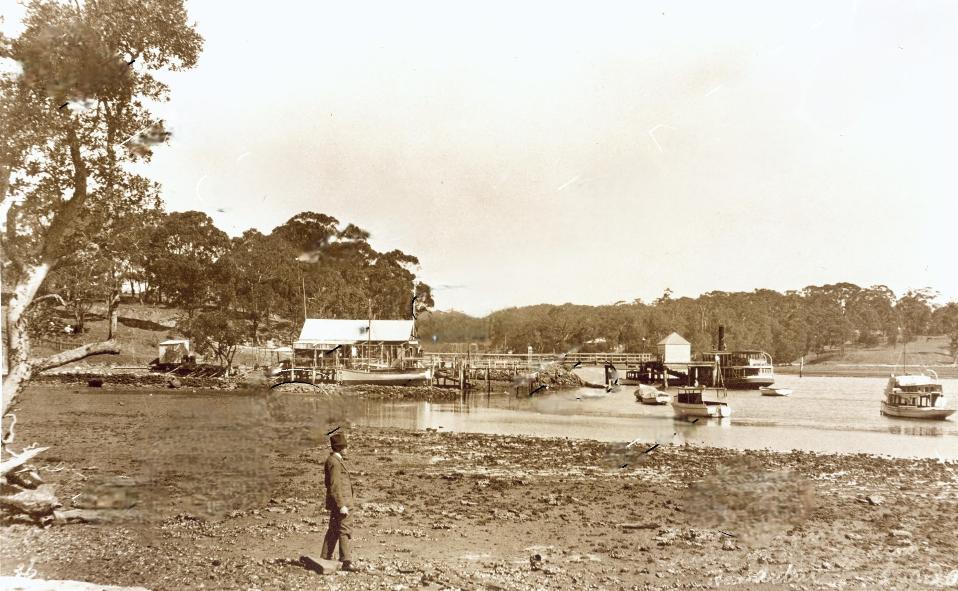
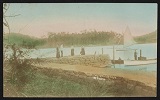
Postcard: 'Terminus of ferry from Hawkesbury at Newport', circa 1919. Taken from current day Heron Cove looking south towards then Newport Public wharf and boatshed alongside this. Barrett's launch can be seen at right edge of image.