October 1 - 31, 2026: Issue 659


Great Koala National Park Legislation Finally passes NSW Parliament

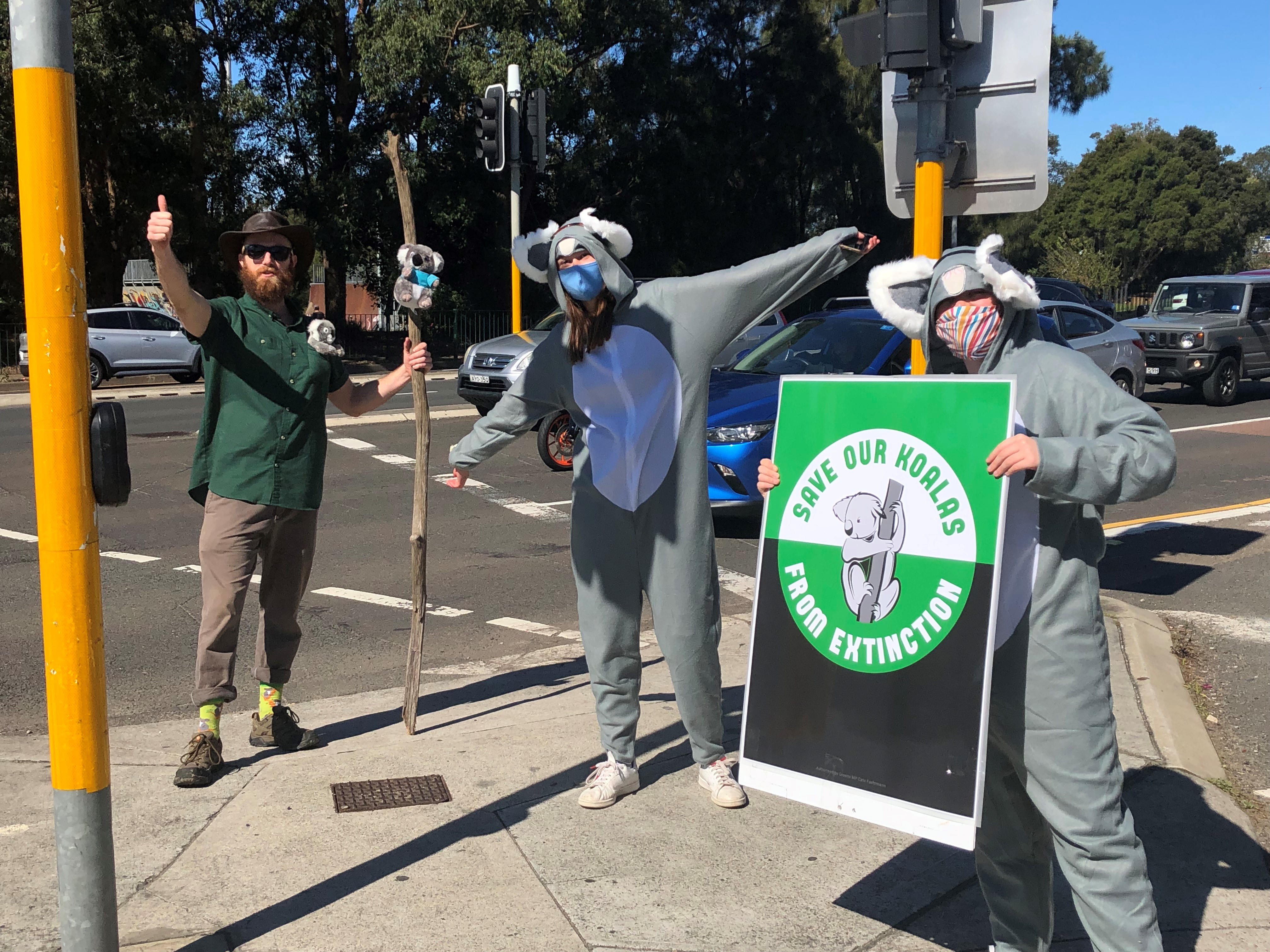
Pittwater MP Jacqui Scruby, Sydney MP, Alex Greenwich, Wakehurst MP Michael Regan travelled to the site of the Great Koala Park earlier in 2025 to discuss with the human locals what they actually wanted.

Announced: Friday October 23 2026

Landmark legislation to create the Great Koala National Park has passed NSW Parliament, delivering on a key election commitment of the Minns Government and securing lasting protection for one of the state’s most significant koala populations, the government announced on Friday.

The National Park Estate (Great Koala National Park Reservations) Bill 2026, An Act to transfer certain land, including State forest and Crown land, to the national park estate for the purpose of creating the Great Koala National Park; to make provision for continuing access to transferred land and other land in the same areas as the transferred land; and for related purposes, passed the lower house on October 21st and the upper house the following day.

''The passage of the legislation, combined with the Clean Energy Regulator’s approval of the park’s carbon project, clears the final hurdles to establishing the Great Koala National Park, which is on track to open before the end of the year.'' the government stated

'The National Park Estate (Great Koala National Park Reservations) Bill 2026 adds 178,000 hectares of state forest and other Crown land, home to around 12,000 koalas and more than 100 other threatened species, to the national parks estate.

This precious forest will be added to existing national park reserves on the NSW Mid North Coast, creating one of the largest protected areas in NSW, spanning more than 475,000 hectares.'

'The creation of the Great Koala National Park continues the proud Labor conservation legacy of the Wran and Carr governments, which protected vast areas of NSW’s native forests and secured their conservation for future generations.'

'The park will protect important environmental and cultural values while allowing visitors to continue enjoying activities including camping, canoeing and mountain-bike riding. It will also create opportunities for nature-based tourism and local businesses.'

'The NSW Government is supporting workers, businesses and communities affected by the transition of this land, with a comprehensive assistance package including redundancy payments, support, retraining, upskilling and other financial assistance.'

'Around 100 new NSW National Parks and Wildlife Service (NPWS) roles are being created to strengthen park operations, fire management and conservation. The Bill provides for affected Forestry Corporation of NSW employees to transition into suitable NPWS roles if they choose.

The creation of the park follows extensive consultation with industry, community and Aboriginal groups. The Minns Labor Government is incredibly grateful for their time and expertise.

The Gumbaynggirr and Dunghutti people have helped shape the Great Koala National Park and will continue to guide its management. Eight Aboriginal rangers will be employed through community-controlled organisations and some park roles will be identified for Aboriginal people.' the government stated

The Great Koala National Park is also the culmination of decades of campaigning by environmental groups up and down the coast, including supporters here in Pittwater.

''The Clean Energy Regulator’s registration of the carbon project associated with the Great Koala National Park under the Improved Native Forest Management method provides a pathway for carbon revenue to support the long-term conservation and management of these forests. Carbon credits generated through the project will not be available to coal and gas projects.' the Minns Government said

Minister for the Environment, the Hon. Penny Sharpe, said:

“This is a defining moment for conservation in NSW. After more than a decade of campaigning and years of detailed assessments, consultation and planning, we have cleared the final hurdles to delivering our biggest environmental commitment.

“We are protecting extraordinary forests that are home to thousands of koalas and more than 100 threatened species, while ensuring future generations can enjoy these incredible places.

“I want to acknowledge the Traditional Owners, conservation groups, local communities and everyone who has worked so hard for so many years to see these forests protected.”

Minister for Agriculture and Regional NSW Tara Moriarty said:

“We know creating the Great Koala National Park means significant change for forestry workers. We have been clear from the start that affected workers and businesses will receive practical support through this transition, and that will continue.

“We have a comprehensive assistance package in place, including financial support and retraining opportunities. This legislation also gives eligible Forestry Corporation workers a pathway to move into a role with national parks if they want to take their valuable skills and local knowledge.”

Minister for Small Business and the North Coast Janelle Saffin said:

“Like so many in our region, I just love our native wildlife and iconic koalas. This is a historic day for our North Coast community, who helped shape a national park that protects our environment while keeping the outdoor activities we love accessible.

“This milestone isn’t just a win for conservation – it’s also an economic driver. Opening the Great Koala National Park will attract visitors from around the world, creating fresh opportunities, vibrant town centres and lasting growth for our hard-working local small businesses.”

Independent MP for Pittwater Jacqui Scruby said:

“Pittwater inundated the Pittwater office in support of the Great Koala National Park and it’s no wonder, given our love of our own bushland and tree canopy and because it wasn’t long ago that koalas were regular visitors to our homes in Avalon. Street signs with koalas still haunt our leafy streets and serve as a reminder we can’t take our bushland and native species for granted.  

“Pittwater residents don’t want taxpayer money propping up the logging industry. And having visited the Coffs region to speak with businesses and conservationists, its clear there are strong economic reasons as well as environmental ones to create this iconic park for current and future generations of locals and visitors.”

Friends of Pine Creek in relation to Jacqui Scruby's MP amendment to support connectivity (details below) stated:

“The GKNP bill has passed in the Lower House 🎉

Unfortunately, amendments put forward by Independent MP Jacqui Scruby to include all of the Forest Bridge in the GKNP did not pass 💔Image

The GKNP bill now goes to the Upper House, and Greens MP Sue Higginson will put forward amendments there tomorrow. 

Thankyou to Jacqui Scruby, Greens MP's Kobi Shetty MP, Jenny Leong and Tamara Smith, MP, and Independent MP's Alex Greenwich and Michael Regan, Independent Member for Wakehurst for your support for this critical koala habitat. 

Thankyou also to the many people who have been involved in the campaign for Pine Creek, at any time, over the last few decades. “

Greens MP and environment spokesperson Sue Higginson said:

"This is an extraordinary achievement and a historic victory for our precious native forests, our threatened species and the communities that have fought for more than a decade to see this park become a reality,”

"The Great Koala National Park is now bigger and better protected because of the work of the Greens, the conservation movement and the communities who kept advocating for stronger protection right up until the passage of this legislation,”

"While today is a day for celebration, the passage of this legislation has taken far too long. The Government allowed logging to continue inside the proposed park for more than three years after it was elected, while the very forests that were meant to be protected were being destroyed. We cannot undo that damage, and there is no justification for it having been allowed to happen,”

"There is also unfinished business with the Forest Bridge proposal that would protect critical habitat in Pine Creek and Tuckers Nob State Forests, strengthening the connection between Bongil Bongil National Park and the forests of the escarpment. We fought to have these forests included and will continue to work with the community to secure their protection,”

"The creation of the Great Koala National Park must now be followed by a commitment to protect the Richmond River koala stronghold through the Richmond River Koala Parks and North East Forest proposals, as well as the Great Southern Forest proposal,”

"Today we celebrate the Great Koala National Park and the people who made it possible. Tomorrow we continue the work of protecting the rest of our public native forests," Ms Higginson said.

Alex Greenwich, MP for Sydney, stated during the Second Reading Debate:

''I strongly welcome the National Park Estate (Great Koala National Park Reservations) Bill 2026. The Great Koala National Park will be a legacy that will not only save koalas and other threatened species on the Mid North Coast from extinction but also become a global nature attraction that we can all be proud of. ''

''Sixty-six threatened fauna species, including the yellow-bellied glider, greater glider, powerful owl, sooty owl and glossy black cockatoo, and 37 threatened flora species also live within the new park boundary and rely on the natural habitat for survival. New South Wales has one of the worst records of biodiversity loss in the world because of our appalling clearing rates. Climate change is adding further pressure on native species and ecological communities, and we need to preserve what is left before the natural environment is so eroded that it can no longer sustain life. Deforestation will cease within the boundaries of the Great Koala National Park. The region will no longer be cleared for wood harvesting, with the priority now to protect and enhance the land.

There are concerns that some areas of high conservation land will be designated vested land instead of formal national park reservation, but leases in place prevent reservation at this stage. I understand that the government will work to acquire the land to preserve as national park or nature reserve, and in the meantime mining, logging or other clearing will not occur within those boundaries. There are also concerns about regional parks, which will continue to permit high-intensity recreational activities. I will monitor the impacts on koalas, but I acknowledge that those activities are important to the local community and progress requires us to bring the community along with us on the conservation journey.

Forestry workers will not be left behind. A comprehensive support package including payouts, retraining and access to financial and legal services is available. The National Parks and Wildlife Service will be able to recruit forestry workers without a competitive process, acknowledging the advantages they will bring to the park from their local knowledge and experience. I understand that the National Parks and Wildlife Service will have 100 additional positions. Grants will support tourism and local business growth, building on the increase in visitors expected from a new national park.

Last year I visited the region with my Independent colleagues the member for Pittwater and the member for Wakehurst. We heard from local businesses excited about the opportunities the park will bring. My electorate has many nature lovers who plan to visit the park and support its local economy. The Great Koala National Park is taking advantage of the substantial local First Nations knowledge and connection to country, and the rich cultural and traditional history that goes back to time immemorial. Aboriginal advisory panels have been part of the establishment of boundaries and reservations, and First Nations communities will continue to play a crucial role in the management of the park through two new Aboriginal areas and the Aboriginal ranger positions. Visitors will be able to learn about and celebrate places of significance.

I support the use of the carbon credit program to realise the Great Koala National Park. It has provided a pathway for conservation that protects communities and supports jobs, and I hope that can be a model for further protection in other areas, like the South Coast. The planet is becoming increasingly unliveable. Native land clearing rates are escalating, land and water is being poisoned, and global warming is having frightening impacts on the weather system. Mass extinction of flora and fauna and the natural systems that protect life remains a threat. We need to protect 30 per cent of the planet by 2030 to safeguard our future wellbeing. The Great Koala National Park will take us a step closer to 30 by 30, which is a global target that Australia has committed to.''

MP for Pittwater Jacqui Scruby stated:

''In my inaugural speech in this place I said, in relation to the people of Pittwater:

As fierce protectors of our own tree canopy, so too are we calling for the establishment of the long overdue Great Koala National Park and an end to native forest logging. It does not make financial sense, subsidised by the taxpayer, and it does not make environmental sense either.

This park makes environmental sense. It makes economic sense as well. And economic sense is important. The Blueprint Institute, whose strategic council included the late Bruce Baird, has undertaken extensive research into the economic benefits of environmental protection, including multiple reports on native forest logging. I have stood alongside former MPs, including the Hon. Rob Stokes, at the launch of these reports. One of the institute's papers states:

Australian state governments have long subsidised the native logging industry, despite persistent mounting financial losses and clear warning signs of the industry's deteriorating business model. State governments across the political spectrum hold a long and unenviable record of channelling taxpayer funds to subsidise and prop up failing and unprofitable state-owned forestry firms.

In my electorate, and in communities across New South Wales, people do not want taxpayer money funding the destruction of our native habitat. In Pittwater we know what it means to lose our koalas from urban encroachment. In 1993 our koala population was estimated at just six koalas. We now have no koalas. Our community still lives with reminders of their existence, such as road signs urging motorists to slow down for the koalas that are no longer there. The signs remind us of what is at stake when habitat is lost and fragmented, and development, land clearing and logging push wildlife out. Although we may not be able to bring back Pittwater's koalas, the bill before the House today provides an opportunity to prevent that same loss elsewhere in New South Wales.

In 2019 a parliamentary inquiry made findings—including some contentious findings—that koalas would become extinct before 2050 without government intervention, that logging in public native forests had cumulative impacts on koalas over many years, and that the NSW Koala Strategy at that time fell short of the Chief Scientist's recommendation for a whole-of-government strategy to stabilise and then increase koala numbers. Koalas face habitat loss, modification and fragmentation; vehicle strikes; feral animals; intense fires; disease; and heat stress. Isolated populations and gaps in our understanding of their movements and habitat needs compound those threats. But this park will provide them with protection. It is not just about our national icon, the koala, but also about the entire ecosystem.

Over 50 per cent of our threatened mammal species live within the proposed boundaries of the park, and they all rely on mature, unfragmented canopy to survive. The park will protect habitat for an estimated 12,000 koalas, 36,000 gliders and more than 100 threatened species of plants and animals. Of course, it is right to support forestry workers who are impacted throughout the transition. In the transition package, we must take seriously and protect the livelihoods of the workers and their families in those regional communities. Over 300 workers will be impacted across six regional timber mills. Enabling Forestry Corporation workers to move to suitable roles with the National Parks and Wildlife Service will help to retain local skills and knowledge. Alongside First Nations leadership and knowledge, those skills will help us care for country and manage the forests into the future.

There is always a balance to strike between conservation and other land uses. The importance of outdoor recreation has been acknowledged as the bill has progressed, including four-wheel driving and motor racing events on existing roads in regional parks, in appropriate circumstances. Although carbon credits remain contentious, the improved forest management method has helped to make this outcome possible. It offers an economic return for protecting those forests. However, as other members have noted, there are valid criticisms of those methods. In this debate we must also acknowledge the tourism benefits and iconic nature of the Great Koala National Park. The project should indeed be celebrated. The Government is now delivering on its 2015 announcement and its 2023 election commitment, although it is fairly late.

The park comes in response to scientists who identified that area of critical habitat. The economic value of that nature and its conservation will benefit regional communities, including the businesses I have met with. Destination NSW research highlights that Australia's demand for nature-based tourism grew by 47 per cent between 2014 and 2023. It is recognised as a driver of our visitor economy. Earlier in this term of government, I travelled to the Mid North Coast alongside my crossbench colleagues the member for Wakehurst and the member for Sydney to meet local environmental advocates, scientists, traditional custodians and regional business owners. They made clear that conservation and regional prosperity can go hand in hand.

More than 100 North Coast businesses have called for the creation of the Great Koala National Park because they know it represents a future of sustainable jobs, visitors and economic resilience through nature‑based tourism. During our trip, we met with some of those businesses. Subsequently, and together with some of those businesses, we presented the Premier with their letter of support here in Parliament House. The Great Koala National Park will be an incredible legacy of this Parliament for our State, for future generations and, of course, for wildlife. Above all, this is a community win that builds on decades of advocacy. I thank and acknowledge those who have supported and informed my own advocacy, including some of my constituents.

I thank Jenny Cullen of Scotland Island; Reverend Jason John, forest chaplain for the Uniting Church Koala Chaplaincy Project; Natalie Cuthbertson of Avalon Beach; Ashley Love of the Bellingen Environment Centre; Deanna Markovina of the Forest Ecology Alliance; Saul Deane of the Georges River koala network; Gill and Chris Yates of the Australian Conservation Foundation's northern beaches branch; Dr Grahame Douglas, AM, and all members of the National Parks and Wildlife Advisory Council; and Danielle Ryan and the National Parks Association of NSW, which has campaigned to protect 30 per cent of New South Wales' land and sea. I acknowledge also the National Parks Association Coffs Harbour branch, including its staff, members and campaign alliance; the Bellingen Environment Centre; the Nambucca Valley Conservation Association; the Clarence Environment Centre; and the North Coast Environment Council.

I thank local campaigners around Coffs Harbour and Bellingen, including those involved in the Pine Creek campaign, whose persistence helped to bring us to this moment. I acknowledge the Gumbaynggirr and Dunghutti peoples and the Aboriginal advisory panel, whose knowledge and enduring connection to country are central to the park's future. I thank the scientists and ecologists, particularly David Scotts, who established the evidence for protection as well as the local businesses and recreation groups that supported the campaign. I also acknowledge environment Minister Penny Sharpe and the New South Wales Government for delivering the Great Koala National Park. I thank the hundreds of others who contacted me about the project, including nearly 300 constituents. I foreshadow that I will move amendments to the bill to address the Forest Bridge proposal. To all those who have worked so hard, and for the generations who will inherit these forests, I commend the bill to the House.''

Pittwater MP's amendments

The MP for Pittwater also moved three amendments, stating in regards to these:

''In her second reading speech, the Parliamentary Secretary said that koala conservation is at the heart of this park's creation. In the 2019 koala population parliamentary inquiry, finding number 4 was that the fragmentation and loss of habitat pose the most serious threat to koala populations in New South Wales, and recommendations in that report focused on the need to protect nature corridors. These amendments go to the heart of those statements, findings and recommendations and are key to ensuring the integrity of the park and the population and diversity of the koalas and other fauna there.

The forest bridge, as I will refer to it, will preserve a key east-west linkage from the coast to the escarpment. Koalas require large areas for their survival and breeding. Male koalas in search of females roam the landscape, and logging key corridors disrupts the capacity of koalas to ensure that their local range is maintained. Even in Pittwater, we know the importance of wildlife corridors. They are part of the projects of Transport for NSW, including the long-awaited Mona Vale Road upgrades, which have now been funded and will be delivered soon. We know the importance of nature corridors, and this is a live issue in my electorate. It is even more important to have the corridors in the Great Koala National Park preserved for not only koalas but also all native species that inhabit the forests.

I have included a map. Compartments 15, 16 and 17 are identified as plantations. However, those areas also demonstrate mixed forests and function as such, and therefore warrant protection. I have visited those forests, and one does not need to be an expert to note the diversity of a mixed forest over that plantation. This is what I refer to as the forest bridge proposal. It extends opportunities for koalas to move from east to west and is core to these amendments. The compartments include riparian areas, which should be protected, and an extension to compartment 18, which the Government has included in the Great Koala National Park.

The community fought for decades to protect the bridge proposal. Compartments 22 and 23 have been lost due to logging. They would have been a north-south extension. When we lose connections, it takes a long time to get healthy country back, sometimes only for it to be logged again. Critically important is that adding compartments 15, 16 and 17 to the park will ensure its integrity. The area is known as a koala hub and was recognised as such by the former Government. The State forest estate is approximately 200,000 hectares in this region, and 178,000 hectares, including plantations, are going to the Great Koala National Park, leaving only about 22,000 hectares. Adding this small section I referred to previously will not have a major impact on the industry but will be critical for conservation. It is time for this bridge to come into the Bongil Bongil National Park.

I acknowledge the advocacy of the member for Balmain and support her amendments also. The proposed amendments I have moved include the Forest Bridge proposal. I wish to be clear that compartments 15, 16 and 17 are the key additions required now. This is a very modest amendment to the bill. The additional benefit in supporting this amendment is that converting this into national park means the National Parks and Wildlife Service will use its extensive knowledge and experience to manage the land. This is a unique opportunity. I acknowledge the Friends of Pine Creek for their strong advocacy in linking these two national parks with the Forest Bridge proposal.

I understand the Government will not support these amendments, but I would like a response as to why. The amendments will support connectivity and are focused only on a small amount of land. I seek these amendments on behalf of many advocacy groups, including people in my electorate who have contacted me to ensure that there is no fragmentation in this area. They want a connection to make sure the Great Koala National Park delivers on its objectives.''

Labor Parliamentary Secretary for Climate Change, Trish Doyle, MP for the Blue Mountains, stated in response:

''The Government does not support these amendments. The Government has been clear since 2023 that plantations will be excluded. Native forest areas of the Forest Bridge have been included in the park whilst plantation areas have largely been excluded, which is in line with the Government's commitment.''

Liberal MP for the North Shore, Felicity Wilson, responding on behalf of the Opposition, stated:

''I thank the member for Pittwater for her contribution this evening. I recognise her incredibly well-intentioned commitment to biodiversity, wildlife and the preservation of nature. The incorporation of this additional parcel into the Great Koala National Park is not something that the Opposition can support, which the member understands. As we have outlined throughout this debate, we believe the best way to preserve additional national park is not at the loss of more forestry areas and industry jobs. We do not support the removal of additional plantation lands, though we welcome the opportunity to discuss in the future other areas of biodiversity and conservation across New South Wales.''

Local Independent MP's have been active in supporting the establishment of this park, especially given the loss of Pittwater's koalas.

A few example reports:

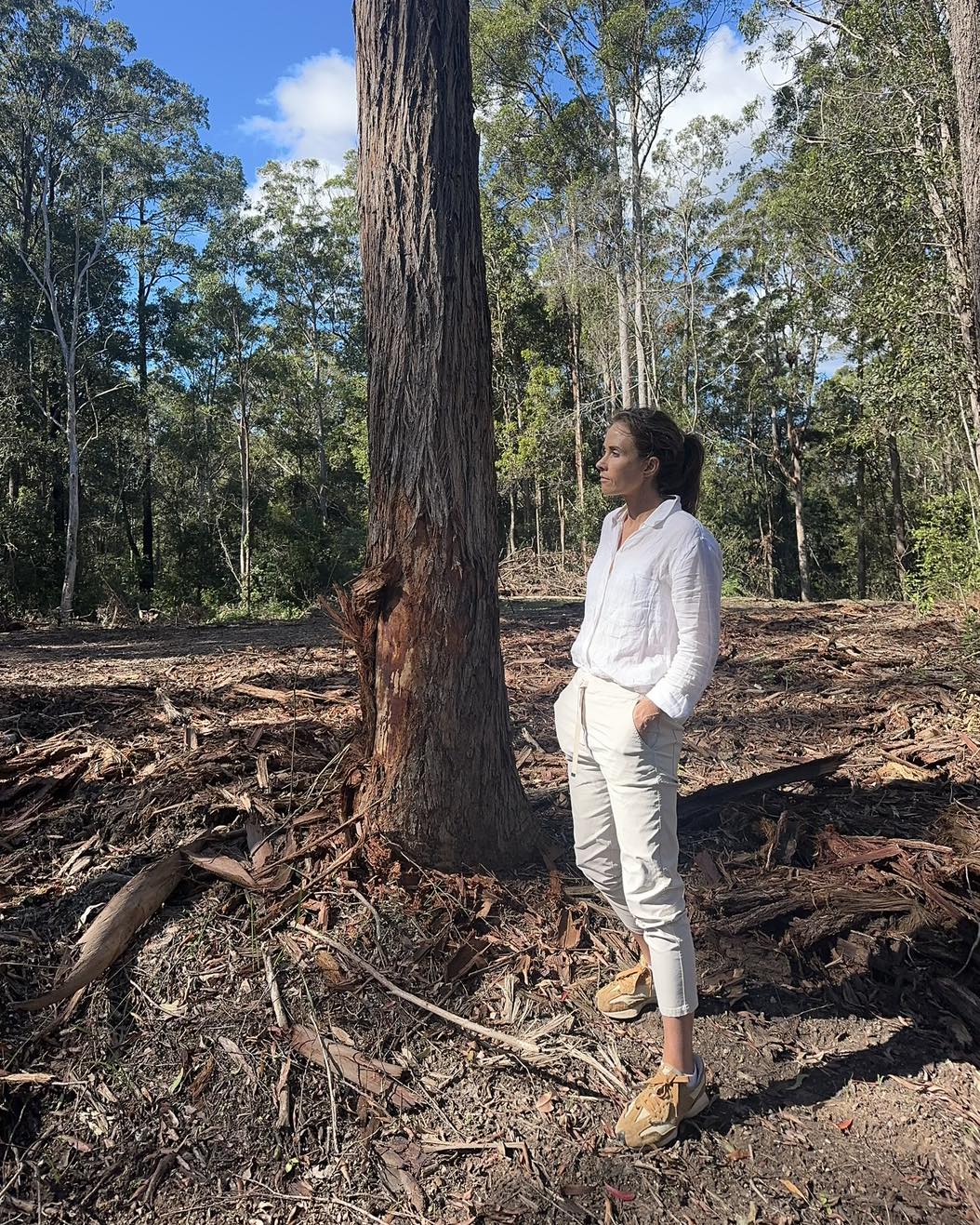
Pittwater MP Jacqui Scruby at the GKNP site, April 2025 - the destruction was continuing until the Minns Government put a moratorium on the destruction. 
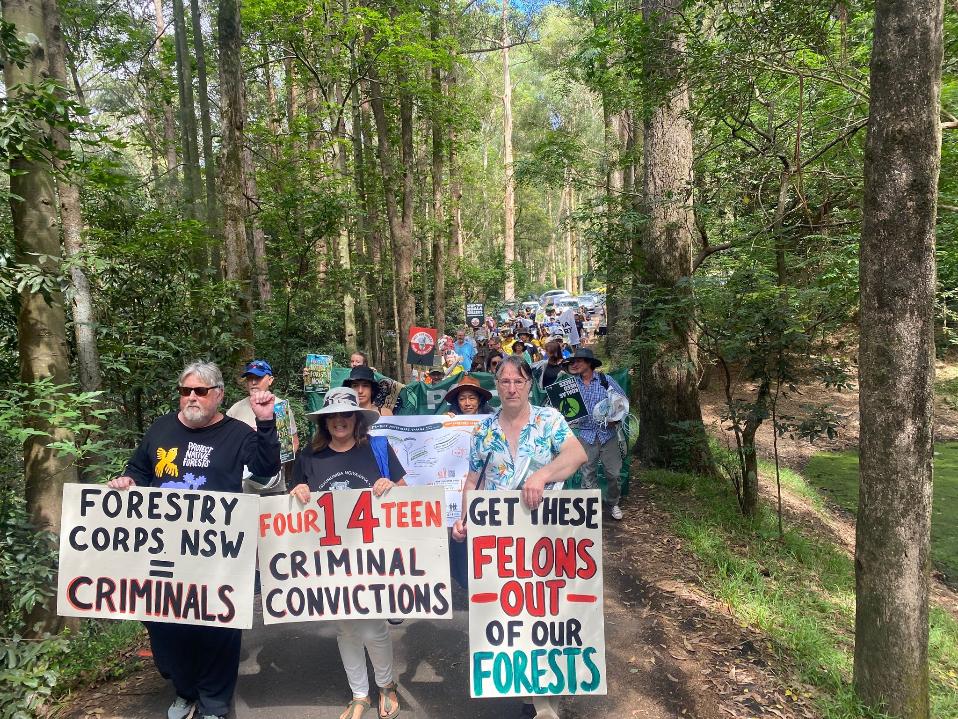
Coffs Harbour rally for the Great Koala National Park. Photo: Bob Brown Foundation, January 2025

NSW Greens, who chaired the Parliamentary Inquiry which confirmed koalas across New South Wales need habitat and connected  wildlife corridors to survive beyond 2050, along with seeing the National Party’s contentious Local Land Services Amendment (Miscellaneous) Bill 2020 fail to pass the NSW Upper House on Thursday, November 19th 2020, after Liberal MP Catherine Cusack crossed the floor to refer it to Inquiry, placed the establishment of the Great Koala Park firmly due to the work of thousands over decades.

Cate Faehrmann MP, who chaired the Koala populations and habitat in New South Wales Inquiry, along with Greens MP Sue Higginson, stated:

''I’m genuinely elated! After years of campaigning, the Great Koala National Park bill has just passed the Upper House and become law!! Protecting a massive 178,000 hectares of forests, home to our precious koalas and many other threatened species, from logging forever. This is such a massive win for our forests, our koalas, our community, our climate and planet. And it would never have happened without our wonderful movement of dedicated conservationists and forest campaigners who never gave up.

Thank you from the bottom of our hearts. You're SIMPLY THE BEST!!''
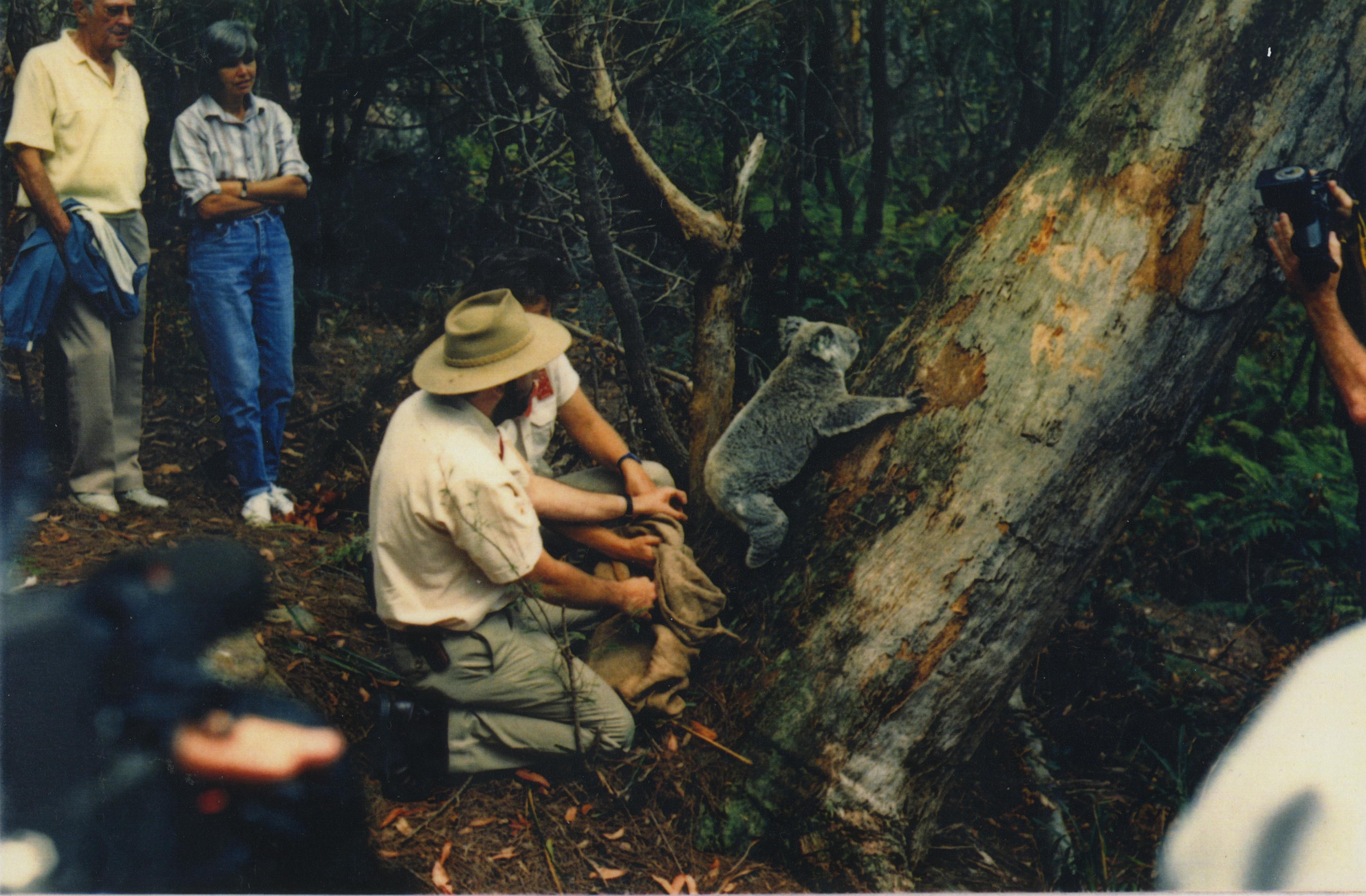

One of Pittwater's last koalas. The release of an 8 years old female back into Angophora Reserve after she had been bombarded by magpies. Taronga Zoo picked her up and nursed her back to health before the release on November 5th, 1989. Doug Bladen and Marita Macrae are in the background representing the Avalon Preservation Trust (now APA). Photo by Geoff Searl OAM
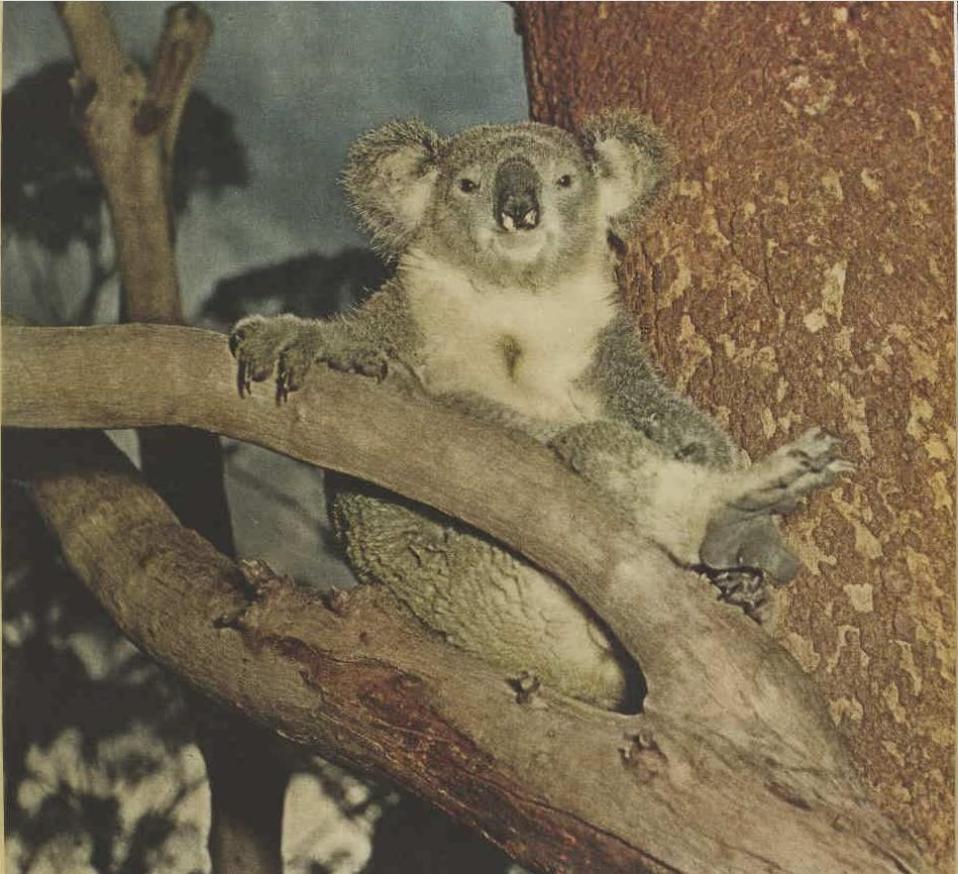
Photo: Koala in Mona Vale in 1958 from Australian Women's Weekly Article. Locals state Koalas were fairly common in the Manly Dam environs too, although the last verified sighting was circa 1996-98.
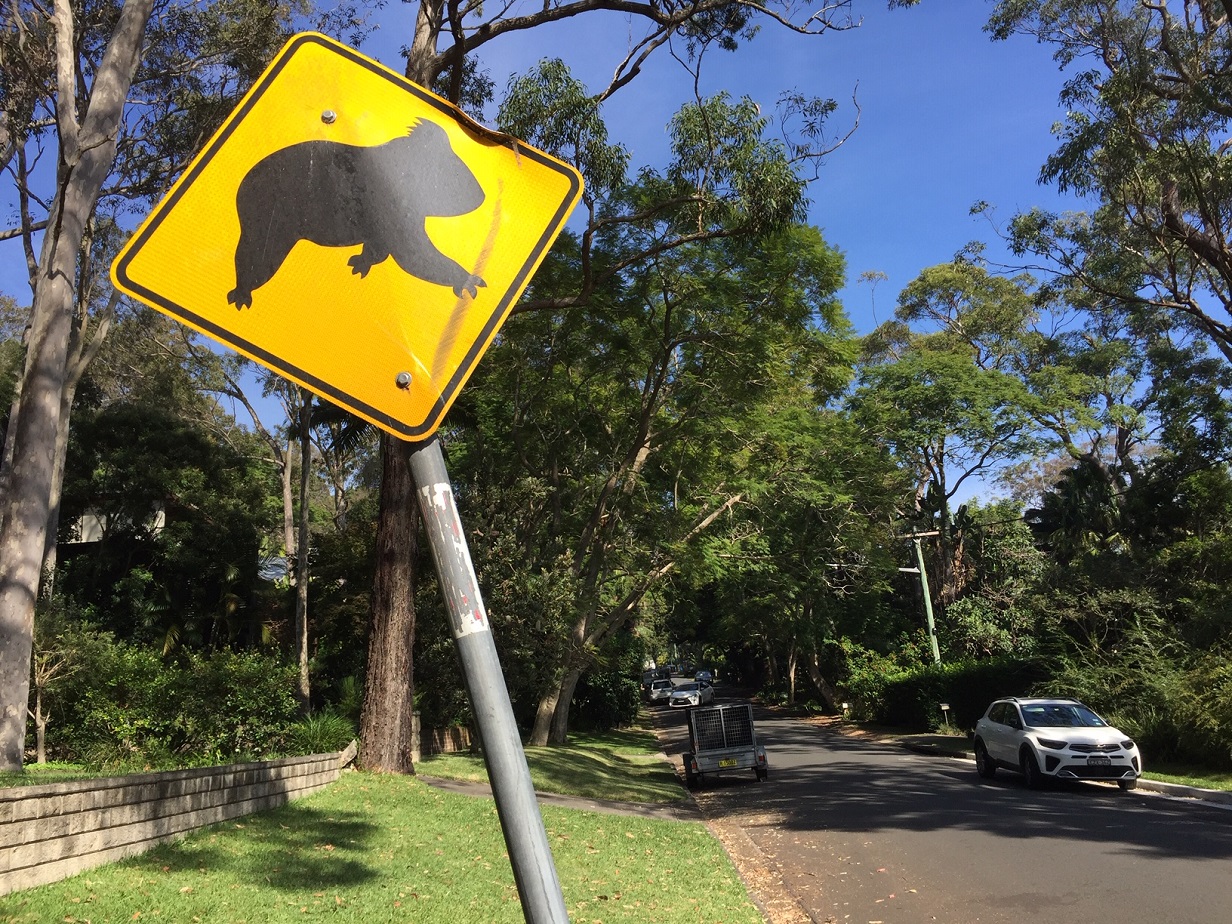
Koala signs along the routes they once travelled are still in Pittwater. Looking north towards Angophora Reserve, 2026

Previous PON reports:

Pittwater Koala Protest, 2020