Week One February 2026: Issue 651 (published Sunday February 1 2026)
Summer BirdFest 2026: Play antics of New Locals
The fledglings from this years 'newbies' have begun turning up in local yards and trees as they learn to fly and feed, as taught by their parents - and even which branches in trees to land on so they don't slide down onto the trunk!
This family of galahs, where mum and dad have had two girls and one boy this Season, showed up in mid-January with the little boy grabbing a Norfolk Pine frond in his beak and waving at one of his sisters - who didn't seem that interested in either waving it around too, or playing tug-of-war - so he dropped it. He was also then seen peering down the umbrella hole in the outdoor table - clearly something of interest down there.
Check out this Norfolk Pine frond - Do you want to play?:
I spy, with my galah eye, something beginning with....:
Mumma galah patiently watching her youngsters - note the colour of her eyes:
Witnessing young local wildlife playing is a great reminder of the other residents of Pittwater and that these other family units, and their individual members, all have personalities and a propensity for play, for living each other - as seen in the numerous sulphur-crested cockatoo 'tribes' that get around together and groom each other or even call warnings to each other when a sea eagle flies overhead.
It's a great time for birdwatching with all these kinds of bird families and family groups out and about - teaching young ones which are the food trees and where drinking water may be found, and seeing their children playing with each other.
BirdLife Australia states:
'Galahs form permanent pair bonds, although a bird will take a new partner if the other one dies. The nest is a tree hollow or similar location, lined with leaves. Both sexes incubate the eggs and care for the young.
There is high chick mortality in Galahs, with up to 50% of chicks dying in the first six months. Galahs have been recorded breeding with other members of the cockatoo family, both in the wild and captivity. These include the Sulphur-crested Cockatoo, C. galerita.
Breeding season is from February – July, in the north and from July – December, in the south.'
Female Galahs are easily distinguished from males by their distinct reddish-pink or light pink irises. In contrast, mature male Galahs have dark brown or blackish eyes. This colour difference is a reliable way to sex adult birds, though both sexes have dark brown eyes as juveniles. Females' eyes begin to lighten from brown to pink/red as they mature, typically around 6 months to 3 years old.
The term galah is derived from gilaa, a word found in Yuwaalaraay and neighbouring Aboriginal languages of southeast Australia. First Known Use: 1862.
Galahs are about 35 cm (14 in) long and weigh 270–350 g. They have a pale grey to mid-grey back, a pale grey rump, a pink face and chest, and a light pink mobile crest. Juveniles have greyish chests, crowns, and crests.
Juvenile plumage changes as they mature
Little Corella juvenile pair:
Both Galahs (Eolophus roseicapilla) and Sulphur-crested Cockatoos (Cacatua galerita)are known for their highly social, intelligent, and, above all, playful nature, which is central to their behaviour in the wild. Often seen in large, noisy flocks, these birds engage in frequent, acrobatic antics that have earned them a reputation as "clowns" of the Australian bush.
Key aspects of their playful and natural behaviour include:
Acrobatic Play: Galahs and Cockatoos are known to hang upside down from branches, slide down wires, and perform complex aerial manoeuvres.
"Playing the Fool": They often exhibit behaviours described as chaotic or mischievous, such as tumbling and wrestling with each other on the ground or, during windy conditions, playing in the branches.
Social Interaction: As deeply social birds, they use these games to strengthen bonds within their flock, which can consist of hundreds or even thousands of individuals.
Foraging and Foraging-related Play: They spend much of their time on the ground foraging for food, but also use their beaks to strip bark and leaves, which is believed to be a form of entertainment in addition to foraging.
Lifelong Bonds: Both Cockattos andGalahs form lifelong, monogamous pairs and often perform synchronised movements and affectionate behaviours together. Additionally, flocks form a family and have been witnessed mourning a bird that has been killed. A flock usually stays in the same area year round.
Intelligence: Their playful, curious, and often noisy nature is a sign of their high intelligence.
The 'galah' name has even entered the Australian vernacular as a term for a "silly person" or a "clown," directly referencing these clownish and chaotic antics.
Other unusual sightings of bird bubs and others movements across Pittwater and the peninsula and surrounds, per Eremaea Birdlines (Interesting and unusual bird observations) BirdLife Australia - include:
Streaked Shearwater at Long Reef Aquatic Reserve: Highlight of a three and a half hour seawatch from Long Reef this morning was a Streaked Shearwater heading south with the large numbers of Wedge-tailed and Short-tailed Shearwaters,also a few Flesh-footed Shearwaters headlng south as well. - Michael Ronan 26/1/2026
Glossy Black Cockatoo at Ku-ring-gai Chase National Park-Apple Tree Bay: Amazing count of 11 flew out of casuarinas ahead of us as we kayaked down the "north" side of Cowan Creek. They flew across the creek then headed downstream at height, all in quite close formation. Seen and heard well, their call being quite unmistakable. No camera with me in the kayak unfortunately. eBird checklist - Cameron Ward 15/1/2026
Buff-banded Rail at Scotland Island: Adult and chick in yard of house not far from Tennis Court Wharf. - Ted Nxon 19/1/2026
Glossy Black Cockatoos at Manly Warringah War Memorial Park--Incl Manly Dam: Three cockatoos. Looks like one is a juvenile. This is the second time we have seen this group in the last couple of weeks. - Ben Wicks 5/1/2026
Red Knot, Tawny Grassbird at Long Reef Aquatic Reserve: Red Knot feeding on the edge of the sandspit with the smaller waders a bit after low tide (approx 2:30pm) but was flushed to the far end by some non-birders and did not come back to the sandspit. Tawny Grassbird was first heard singing and then seen skulking in scruffy shrubs just up the hill from the access track before it starts climbing. - Tom Wilson 1/1/2026
We were also very fortunate to play host to a family of Blue-faced honeyeaters in the PON yard this Summer - details below.
Buff-banded Rail (Gallirallus philippensis), the mum, in Careel Creek
The dad.
Cockatoo social contact takes the form of grooming: gently touching and cleaning the feathers of other cockatoos of the group:
Cockie yelling!:
Rainbow lorikeets have had around 1-3 bubs this year in the PON yard tree hollows - there have been around 9-11 juveniles seen in recent weeks:
Blue-faced honeyeaters Breeding In Pittwater
On the morning of Friday January 30 2026 these two fledglings and their parents were spotted bathing and drinking then drying off in the PON yard at Careel Bay.
Marita Macrae of the Pittwater Natural Heritage Association (PNHA) who has hosted many Bird Walks in Pittwater for decades, stated that it’s very unusual to see those birds here, and breeding too!, but not the first time though.
Blue-faced honeyeater (Entomyzon cyanotis), juvenile/fledgling pair in PON yard, Jan. 30 2026 - they're wet as they just had a bath/drink in one of the 4 birdbaths in the PON yard - each at a compass point and at least 1 under shade as sun shifts during the day. They are calling for food from parents birds it would seem.
The Blue-faced honeyeater (Entomyzon cyanotis), also colloquially known as the banana-bird, is a passerine bird of the honeyeater family, Meliphagidae. It is the only member of its genus, and it is most closely related to honeyeaters of the genus Melithreptus.
The Blue-faced Honeyeater is a large black, white and golden olive-green honeyeater with striking blue skin around the yellow to white eye. The crown, face and neck are black, with a narrow white band across the back of the neck. The upperparts and wings are a golden olive green, and the underparts are white, with a grey-black throat and upper breast. The blue facial skin is two-toned, with the lower half a brilliant cobalt blue. Juvenile birds are similar to the adults but the facial skin is yellow-green and the bib is a lighter grey. This honeyeater is noisy and gregarious, and is usually seen in pairs or small flocks. It is known as the Banana-bird in tropical areas, for its habit of feeding on banana fruit and flowers.
Three subspecies are recognised.:
E. c. albipennis was described by John Gould in 1841 and is found in north Queensland, west through the Gulf of Carpentaria, in the Top End of the Northern Territory, and across into the Kimberley region of Western Australia. It has white on the wings and a discontinuous stripe on the nape. The wing-patch is pure white in the western part of its range, and is more cream towards the east. It has a longer bill and shorter tail than the nominate race. The blue-faced honeyeater also decreases in size with decreasing latitude, consistent with Bergmann's rule. Molecular work supports the current classification of this subspecies as distinct from the nominate subspecies cyanotis.
E. c. cyanotis, the nominate form, is found from Cape York Peninsula south through Queensland and New South Wales, into the Riverina region, Victoria, and southeastern South Australia.
E. c. griseigularis is found in southwestern New Guinea and Cape York, and was described in 1909 by Dutch naturalist Eduard van Oort. It is much smaller than the other subspecies. The original name for this subspecies was harteri, but the type specimen, collected in Cooktown, was found to be an intergrade form. The new type was collected from Merauke. This subspecies intergrades with cyanotis at the base of the Cape York Peninsula, and the zone of intermediate forms is narrow. The white wing-patch is larger than that of cyanotis and smaller than that of albipennis. Only one bird (from Cape York) of this subspecies was sampled in a molecular study, and it was shown to be genetically close to cyanotis.
The Blue-faced Honeyeater is found in tropical, sub-tropical and wetter temperate or semi-arid zones. It is mostly found in open forests and woodlands close to water, as well as monsoon forests, mangroves and coastal heathlands. It is often seen in banana plantations, orchards, farm lands and in urban parks, gardens and golf courses.
The Blue-faced Honeyeater is found in northern and eastern mainland Australia, from the Kimberley region, Western Australia to near Adelaide, South Australia, being more common in the north of its range. They are considered sedentary in the north of its range, and locally nomadic in the south. It is not found in central southern New South Wales or eastern Victoria now. This species is also found in Papua New Guinea.
Around Wellington in central New South Wales, birds were once recorded over Winter months, and were more common in autumn around the Talbragar River. Birds were present all year round near Inverell in northern New South Wales, but noted to be flying eastwards from January to May, and westwards in June and July.
The Blue-faced Honeyeater feeds mostly on insects and other invertebrates, but also eats nectar and fruit from native and exotic plants. It forages in pairs or noisy flocks of up to seven birds (occasionally many more) on the bark and limbs of trees, as well as on flowers and foliage. These flocks tend to exclude other birds from the feeding area, but they do feed in association with other species such as Yellow-throated Miners and Little Friarbirds.
In late November- early December 2025 we began hearing an unusual call from the Norfolk Pine next door. Having heard a pair of Australasian Figbirds (Sphecotheres vieilloti) that return each Spring to nest ion that same tree, at first it was thought these had returned as we heard them calling each other in early November from the tree and across the perimeter of the Careel Bay Playing fields. However, soon after they arrived again, the male was found killed near the road alongside the Careel Bay dog park. The pair did not breed here this year - we're not sure what happened to his female mate.
Each Spring this pair of Australasian Figbirds(Sphecotheres vieilloti) returned to build a nest and make babies in the Norfolk pine alongside us. There is food in our garden for them and no cats, at least none that can get that high up.
Females have grey skin around the eye and lack distinctive head markings. They are brown-green above and dull-white below, streaked with brown. Both sexes have a blackish bill.
Then we began hearing another pair of parents call across the yard and park trees, a bird call we hadn't heard before, and realise now it must have been the blue-faced honeyeater pair.
The Blue-faced honeyeater's call is a repeated, penetrating 'woik'; 'weet weet weet' at daybreak; also squeaks uttered during flight and softer 'hwit hwit' calls. Others who have heard them liken their calls to Miner birds songs.
The Blue-faced Honeyeater is one of the first birds heard calling in the morning, often calling 30 minutes before sunrise, although here it is joined by the magpie family that nests in the same tree.
Their nest was dislodged from that tree over the weekend of January 17-19, when hard winds accompanied the rain storms, and blew into the yard.
Fortunately, the fledglings were strong enough to fly.
Most nests are made on the abandoned nests of Grey-crowned Babblers, Noisy, Silver-crowned and Little Friarbirds, Noisy Miner, Red Wattlebird, Australian Magpie, Magpie-Lark and, rarely, butcherbirds or the Chestnut-crowned Babbler. Sometimes the nests are not modified, but often they are added to and relined. If a new nest is built, it is a neat round cup of rough bark, linked with finer bark and grass.
Birding forums from the past 3 years state Blue-faced Honeyeaters (Entomyzon cyanotis) are increasingly sighted in the Sydney region, particularly in Western Sydney, the Barrenjoey peninsula, and near Hawkesbury, often in residential areas with flowering trees. While traditionally found further north, they are now resident in suburban Sydney, favouring areas like Ermington, Richmond, and Nurragingy Reserve - and clearly Palm Beach and Careel Bay this year - and a first for us!
Sierra Kerr - The First Female Backflip: Surfing Australia
Published January 30 2026
Go behind the scenes as Sierra Kerr stomps the world’s first female backflip, joined by an all-star lineup featuring World Champion Molly Picklum and fellow Aussies Morgan Cibilic, Dane Henry, Oscar Berry, Liam O’Brien, George Pittar and Leihani Zoric.
Alongside the Surfing Australia High Performance Program coaches, the crew lock into a run of ground-breaking aerial sessions at URBNSURF Sydney. NB: Language Warning
Scheriya seals her future in the waterproofing industry
“There’s so much opportunity in the waterproofing industry and TAFE NSW really opened my eyes to it.” - Scheriya Cuello, TAFE NSW student
A former childcare worker has made an unlikely career shift to waterproofing, part of an army of TAFE NSW-trained waterproof technicians. They are helping to address the leading cause of building defects across the state.
Glenfield’s Scheriya Cuello, 26, completed an Early Childhood Education and Care traineeship through TAFE NSW after leaving school. However, she had always harboured ambitions to do a blue-collar trade.
“My dad and grandad were both in construction and I’ve always enjoyed home DIY projects,” Ms Cuello said.
“There was always a sense that females don’t belong in the trades but that’s been changing in recent years so I decided to make a change.”
Ms Cuello enrolled in a Certificate III in Construction Waterproofing at TAFE NSW Macquarie Fields, attending one day a week while working as a sheet membrane waterproofer.
Now a sales rep for waterproofing, flooring and concreting repair company Bayset, Ms Cuello hopes to use the skills learned at TAFE NSW and on the job to eventually open her own waterproofing business.
“There’s so much opportunity in the waterproofing industry and TAFE NSW really opened my eyes to it,” she said. “As building compliance codes get stricter, the industry will continue to grow and that’s great for anyone wanting to enter the industry.”
Anyone performing residential waterproofing work valued over $5000 in labour and materials must hold a relevant trade licence, making it a regulated trade occupation in the state.
A report by the Strata Community Association of NSW revealed more than a quarter (27 per cent) of all strata buildings had defects relating to waterproofing, making it the most prevalent cause of building defects. Meanwhile, across all defect cases in NSW Fair Trading, waterproofing appeared in 34.4 per cent of disputes, making it nearly three times more frequent than electrical defects.
TAFE NSW Macquarie Fields waterproofing teacher Rob Rose said waterproofing was playing an increasingly critical role in the construction industry.
“It’s arguably the most important of the construction trades because of the amount of defects out there and the cost to rectify them,” Mr Rose said.
“Building classification laws are tightening and every building requires some form of waterproofing. It’s created huge demand for waterproofing professionals.
“Scheriya was a great student, very attentive and meticulous, and I have no doubt she’ll have a successful career in the industry.”
TAFE NSW Macquarie Fields is the only TAFE NSW campus in the state to offer the qualification.
Opportunities:
Battle of the Bands – Youth Edition: at Palm Beach
Registration form available on the What’s On page.
📞 02 9974 5566
Club Palm Beach (Palm Beach RSL)
Fix our Feeds
The social media feeds that once connected us are now driving us apart. Social media algorithms are flooding young men’s feeds with radical misogynistic content, inciting real-world harm.
We’re calling on the Australian Government to act, and introduce an opt-in feature for social media algorithms so we can bring affirmative consent to our screens, and turn our feeds on and off at will.
This has already been signed by Mackellar MP, Dr. Sophie Scamps, Warringah MP Zali Steggall and Wentworth MP Allegra Spender.
Independent MP Allegra Spender states:
''Great to see Chanel Contos in Sydney, and talk about the “Fix Our Feeds” campaign by @teachusconsent.
It’s simple but brilliant idea - social media algorithms should be opt-in, not forced upon us - so we have a real choice over what we’re shown.
Giving people the ability to switch off the algorithm would help reduce the spread of misinformation, misogyny, extremism and harmful body image content.
If this is something you would like to support, sign the open letter to Anthony Albanese at teachusconsent.com and share their campaign with your friends.''
The Teach Us Consent site states:
Systematic radicalisation
It takes just 23 minutes for a social media mimicking a 16-18 year old boy to be fed misogynistic content, regardless of the account’s viewing preferences.
Misogynistic content is rife
73% of Gen Z social-media users have misogynistic content online, with 70% saying they believe misogynistic language and content are increasing. This rises to 80% for women.
Sexual violence is increasing
Instances of reported sexual assault have by 10% in the last year in Australia. This accompanies a in the overall reporting rate.
Chanel explains:
Play Women's Social or Competitive Cricket with Cromer!
Cromer Cricket Club is now seeking women, aged 16+, who want to play cricket in the February 2026 commencing CNSW Women's Metro Competition. This is the only peninsula cricket club that offers an opportunity for girls who can no longer play in the junior clubs due to being almost all grown up.
CCC states their Women's Cricket division is fun for all ages, and a great way to make new friendships or rekindle your old ones, no skills or experience required, just fun!
''Cromer Cricket Club currently fields teams in the Twilight Women's Cricket League. It's a fun social competition with soft balls and no pads required, perfect for beginners!
We are also fielding a team in the new CNSW Women's Metro Competition, a senior traditional cricket competition for female players, the first of its kind. Register now to be part of history!''
To inspire you to get involved, a few notes form the past on women's cricket in Australia, with local connections, including the first Australia-England matches.
Pittwater Peninsula Netball Club
2026 season - let's go! Registrations are open until early February.
Netball NSW Online Privacy Policy: Don't Post Pictures of Others without asking
Avalon Bulldogs Announcement: Female Tackle Teams Kicking Off in 2026!
After huge growth in our Girls Tag program, the Doggies are looking at launching our first-ever female tackle teams and we’re calling for Expressions of Interest now!
Players: U13s, U14s, U15s, U17s & Opens (Possible U11s if we get the numbers)
Staff Needed: Coaches, Managers, League Safe / First Aid
This is your chance to be part of a massive moment for the Bulldogs and help build the future of women’s footy on the Beaches.
Concessions and financial support for young people.
Includes:
You could receive payments and services from Centrelink: Use the payment and services finder to check what support you could receive.
Apply for a concession Opal card for students: Receive a reduced fare when travelling on public transport.
Financial support for students: Get financial help whilst studying or training.
Youth Development Scholarships: Successful applicants will receive $1000 to help with school expenses and support services.
Tertiary Access Payment for students: The Tertiary Access Payment can help you with the costs of moving to undertake tertiary study.
Relocation scholarship: A once a year payment if you get ABSTUDY or Youth Allowance if you move to or from a regional or remote area for higher education study.
Get help finding a place to live and paying your rent: Rent Choice Youth helps young people aged 16 to 24 years to rent a home.
Explore the School Leavers Information Kit (SLIK) as your guide to education, training and work options in 2022;
As you prepare to finish your final year of school, the next phase of your journey will be full of interesting and exciting opportunities. You will discover new passions and develop new skills and knowledge.
We know that this transition can sometimes be challenging. With changes to the education and workforce landscape, you might be wondering if your planned decisions are still a good option or what new alternatives are available and how to pursue them.
There are lots of options for education, training and work in 2022 to help you further your career. This information kit has been designed to help you understand what those options might be and assist you to choose the right one for you. Including:
Download or explore the SLIK here to help guide Your Career.
School Leavers Information Kit (PDF 5.2MB).
School Leavers Information Kit (DOCX 0.9MB).
The SLIK has also been translated into additional languages.
Download our information booklets if you are rural, regional and remote, Aboriginal or Torres Strait Islander, or living with disability.
Support for Regional, Rural and Remote School Leavers (PDF 2MB).
Support for Regional, Rural and Remote School Leavers (DOCX 0.9MB).
Support for Aboriginal and/or Torres Strait Islander School Leavers (PDF 2MB).
Support for Aboriginal and/or Torres Strait Islander School Leavers (DOCX 1.1MB).
Support for School Leavers with Disability (PDF 2MB).
Support for School Leavers with Disability (DOCX 0.9MB).
Download the Parents and Guardian’s Guide for School Leavers, which summarises the resources and information available to help you explore all the education, training, and work options available to your young person.
School Leavers Information Service
Are you aged between 15 and 24 and looking for career guidance?
Call 1800 CAREER (1800 227 337).
SMS 'SLIS2022' to 0429 009 435.
Our information officers will help you:
navigate the School Leavers Information Kit (SLIK),
access and use the Your Career website and tools; and
find relevant support services if needed.
You may also be referred to a qualified career practitioner for a 45-minute personalised career guidance session. Our career practitioners will provide information, advice and assistance relating to a wide range of matters, such as career planning and management, training and studying, and looking for work.
You can call to book your session on 1800 CAREER (1800 227 337) Monday to Friday, from 9am to 7pm (AEST). Sessions with a career practitioner can be booked from Monday to Friday, 9am to 7pm.
This is a free service, however minimal call/text costs may apply.
Call 1800 CAREER (1800 227 337) or SMS SLIS2022 to 0429 009 435 to start a conversation about how the tools in Your Career can help you or to book a free session with a career practitioner.
Word of the Week remains a keynote in 2025, simply to throw some disruption in amongst the 'yeah-nah' mix.
Noun
1. a group of (typically three or more) notes sounded together, as a basis of harmony. 2. a straight line joining the ends of an arc. 3. Engineering; each of the two principal members of a truss. 4. Anatomy; variant spelling of cord. 5. Literary; a string on a harp or other instrument.
Verb
1. play, sing, or arrange notes in chords.
From 1590's Middle English cord, fromaccord. The spelling change in the 18th century was due to confusion with chord [2.]. The original sense was ‘agreement, reconciliation’, later ‘a musical concord or harmonious sound’; the current sense dates from the mid 18th century.
English cord as a shortening of accord is attested from mid-14c.; cord meaning "music" is attested in English from late 14c. The spelling with an -h- is first recorded c. 1600, from further confusion with chord (n.2) and perhaps also classical correction. Originally two notes sounded simultaneously; of three or more from 18c.
chord(n.2): "structure in animals resembling a string," 1540s, alteration of cord (n.), by influence of Greek khorde "gut-string, string of a lyre, tripe," from PIE root *ghere- "gut, entrail." Meaning "string of a musical instrument" is from 1660s (earlier this was cord). The geometry sense "straight line intersecting a curve" is from 1550s; figurative meaning "feeling, emotion" first attested 1784, from the notion of the heart or mind as a stringed instrument.
Compare Accord:
Noun: 1. agreement or harmony. 2. an official agreement or treaty.
Verb: 1. give or grant someone (power, status, or recognition). 2. (of a concept or fact) be harmonious or consistent with.
Noun from Old English acordian, from Old French acorder ‘reconcile, be of one mind’, from Latin ad- ‘to’ + cor, cord- ‘heart’; influenced by concord. From late 13c., "agreement, harmony of opinions," accourd, acord, from Old French acorde, acort "agreement, alliance," a back-formation from acorder "reconcile, agree, be in harmony" (see accord (v.) below). Meaning "will, voluntary impulse or act" (as in of one's own accord) is from mid-15c.
Verb version from Old English, early 12c., accorden, "come into agreement," also "agree, be in harmony," from Old French acorder "agree, be in harmony" (12c.), from Vulgar Latin accordare "make agree," literally "be of one heart, bring heart to heart," from Latin ad "to" cor (genitive cordis) "heart" (used figuratively for "soul, mind"), from word root.
In Western music theory, a chord is a group of notes played together for their harmonic consonance or dissonance. The most basic type of chord is a triad, so called because it consists of three distinct notes: the root note along with intervals of a third and a fifth above the root note. Chords with more than three notes include added tone chords, extended chords and tone clusters, which are used in contemporary classical music, jazz, and other genres.
Chords are the building blocks of harmony and form the harmonic foundation of a piece of music. They provide the harmonic support and coloration that accompany melodies and contribute to the overall sound and mood of a musical composition. The factors, or component notes, of a chord are often sounded simultaneously but can instead be sounded consecutively, as in an arpeggio.
Chord (geometry): A chord (from the Latin chorda, meaning "catgut or string") of a circle is a straight line segment whose endpoints both lie on a circular arc. If a chord were to be extended infinitely on both directions into a line, the object is a secant line. The perpendicular line passing through the chord's midpoint is called sagitta (Latin for "arrow"). More generally, a chord is a line segment joining two points on any curve, for instance, on an ellipse. A chord that passes through a circle's center point is the circle's diameter.
Animation on never giving up on your dreams: The Necktie - by Jean-François Lévesque
A mixture of puppet and hand-drawn animation, The Necktie is the story of Valentin and his quest to find meaning in his life. Stuck in a dead-end job, he has forgotten all about the things that used to bring him joy. Years pass, and boredom replaces all his aspirations and hope for the future. It is only on his 40th birthday, when he rediscovers an old accordion hidden in the depths of his closet, that he regains his lust for life.
This animated short film won the following awards:
-Jutra Award for Best Animated Short Film - Prix Iris, Canada, 2009
-Fabrizio Bellochio Prize for Social Content - I Castrlli Animati Festival, Italy, 2009
-Youth Jury Prize for Best Animated Short - Festival de Cinéma des 3 Amériques, France, 2009
-Best Short Film Award / Audience Prize - Montreal World Film Festival, Canada, 2009
Can shoes alter your mind? What neuroscience says about foot sensation and focus
Athletic footwear has entered a new era of ambition. No longer content to promise just comfort or performance, Nike claims its shoes can activate the brain, heighten sensory awareness and even improve concentration by stimulating the bottom of your feet.
“By studying perception, attention and sensory feedback, we’re tapping into the brain-body connection in new ways,” said Nike’s chief science officer, Matthew Nurse, in the company’s press release for the shoes. “It’s not just about running faster — it’s about feeling more present, focused and resilient.”
Other brands like Naboso sell “neuro-insoles,” socks and other sensory-based footwear to stimulate the nervous system.
As a neurosurgeon who studies the brain, I’ve found that neuroscience suggests the reality is more complicated – and far less dramatic – than the marketing implies.
Signals from these receptors travel through peripheral nerves to the spinal cord and up to an area of the brain called the somatosensory cortex, which maintains a map of the body. The feet occupy a meaningful portion of this map, reflecting their importance in balance, posture and movement.
Footwear also affects proprioception – the brain’s sense of where the body is in space – which relies on input from muscles, joints and tendons. Because posture and movement are tightly linked to attention and arousal, changes in sensory feedback from the feet can influence how stable, alert or grounded a person feels.
This is why neurologists and physical therapists pay close attention to footwear in patients with balance disorders, neuropathy or gait problems. Changing sensory input can alter how people move.
But influencing movement is not the same thing as enhancing cognition.
Proprioception is the sense of where your body is in space.
Minimalist shoes and sensory awareness
Minimalist shoes, with thinner soles and greater flexibility, allow more information about touch and body position to reach the brain compared with heavily cushioned footwear. In laboratory studies, reduced cushioning can increase a wearer’s awareness of where their foot is placed and when it’s touching the ground, sometimes improving their balance or the steadiness of their gait.
However, more sensation is not automatically better. The brain constantly filters sensory input, prioritizing what is useful and suppressing what is distracting. For people unaccustomed to minimalist shoes, the sudden increase in sensory feedback may increase cognitive load – drawing attention toward the feet rather than freeing mental resources for focus or performance.
Sensory stimulation can heighten awareness, but there is a threshold beyond which it becomes noise.
Can shoes improve concentration?
Whether sensory footwear can improve concentration is where neuroscience becomes especially skeptical.
Sensory input from the feet activates somatosensory regions of the brain. But brain activation alone does not equal cognitive enhancement. Focus, attention and executive function depend on distributed networks involving various other areas of the brain, such as the prefrontal cortex, the parietal lobe and the thalamus. They also rely on hormones that modulate the nervous system, such as dopamine and norepinephrine.
There is little evidence that passive underfoot stimulation – textured soles, novel foam geometries or subtle mechanical features – meaningfully improves concentration in healthy adults. Some studies suggest that mild sensory input may increase alertness in specific populations – such as older adults training to improve their balance or people in rehabilitation for sensory loss – but these effects are modest and highly dependent on context.
Put simply, feeling more sensory input does not mean the brain’s attention systems are working better.
While shoes may not directly affect your cognition, that does not mean the mental effects people report are imaginary.
Belief and expectation still play a powerful role in medicine. Placebo effects and their influence on perception, motivation and performance are well documented in neuroscience. If someone believes a shoe improves focus or performance, that belief alone can change perception and behavior – sometimes enough to produce measurable effects.
There is also growing interest in embodied cognition, the idea that bodily states influence mental processes. Posture, movement and physical stability can shape mood, confidence and perceived mental clarity. Footwear that alters how someone stands or moves may indirectly influence how focused they feel, even if it does not directly enhance cognition.
In the end, believing a product gives you an advantage may be the most powerful effect it has.
Where science and marketing diverge
The problem is not whether footwear influences the nervous system – it does – but imprecision. When companies claim their shoes are “mind-altering,” they often blur the distinction between sensory modulation and cognitive enhancement.
Neuroscience supports the idea that shoes can change sensory input, posture and movement. It does not support claims that footwear can reliably improve concentration or attention for the general population. If shoes truly produced strong cognitive changes, those effects would be robust, measurable and reproducible. So far, they are not.
Shoes can change how we feel in our bodies, how you move through space and how aware you are of your physical environment. Those changes may influence confidence, comfort and perception – all of which matter to experience.
But the most meaningful “mind-altering” effects a person can experience through physical fitness still come from sustained movement, training, sleep and attention – not from sensation alone. Footwear may shape how the journey feels, but it is unlikely to rewire the destination.
A variety show that’s still revered for its absurdist, slapstick humor debuted 50 years ago. It starred an irreverent band of characters made of foam and fleece.
Long after “The Muppet Show”‘s original 120-episode run ended in 1981, the legend and legacy of Miss Piggy, Fozzie Bear, Gonzo and other creations concocted by puppeteer and TV producer Jim Henson have kept on growing. Thanks to the Muppets’ film franchise and the wonders of YouTube, the wacky gang is still delighting, and expanding, its fan base.
As a scholar of popular culture, I believe that the Muppets’ reign, which began in the 1950s, has helped shape global culture, including educational television. Along the way, the puppets and the people who bring them to life have earned billions in revenue.
Johnny Carson interviews Muppet creator Jim Henson, Kermit and other Muppets on the ‘Tonight Show’ in 1975, ahead of one of an early ‘The Muppet Show’ pilot.
Kermit’s origin story
Muppets, a portmanteau of marionette and puppet, first appeared on TV in the Washington, D.C., region in 1955, when Henson created a short sketch show called “Sam and Friends” with his future wife, Jane Nebel.
Henson’s creations were soon popping up in segments on other TV shows, including “Today” and late-night programs. Rowlf the Dog appeared in Canadian dog food commercials before joining “The Jimmy Dean Show” as the host’s sidekick.
Rowlf the Dog and Jimmy Dean reprise their schtick on the ‘Ed Sullivan Show’ in 1967.
From ‘Sesame Street’ to ‘SNL’
As Rowlf and Kermit made the rounds on variety shows, journalist Joan Ganz Cooney and psychologist Lloyd Morrisett were creating a new educational program. They invited Henson to provide a Muppet ensemble for the show.
Henson waived his performance fee to maintain rights over the characters who became the most famous residents of “Sesame Street.” The likes of Oscar the Grouch, Cookie Monster and Big Bird were joined by Kermit who, by the time the show premiered in 1969, was identified as a frog.
When “Sesame Street” became a hit, Henson worried that his Muppets would be typecast as children’s entertainment. Another groundbreaking show, aimed at young adults, offered him a chance to avoid that.
“Saturday Night Live’s” debut on NBC in 1975 – when the show was called “Saturday Night” – included a segment called “The Land of Gorch,” in which Henson’s grotesque creatures drank, smoked and cracked crass jokes.
“The Land of Gorch” segments ended after “Saturday Night Live’s” first season.
‘Saturday Night Live’s’ first season included ‘Land of Gorch’ sketches that starred creatures Jim Henson made to entertain grown-ups.
Miss Piggy gets her closeup
“The Muppet Show” was years in the making. ABC eventually aired two TV specials in 1974 and 1975 that were meant to be pilots for a U.S.-produced “Muppet Show.”
After no American network picked up his quirky series, Henson partnered with British entertainment entrepreneur Lew Grade to produce a series for ATV, a British network, that featured Kermit and other Muppets. The new ensemble included Fozzie Bear, Animal and Miss Piggy – Muppets originally performed by frequent Henson collaborator Frank Oz.
“The Muppet Show” parodied variety shows on which Henson had appeared. Connections he’d made along the way paid off: Many celebrities he met on those shows’ sets would guest star on “The Muppet Show,” including everyone from Rita Moreno and Lena Horne to Joan Baez and Johnny Cash.
As the show’s opening and closing theme songs changed over time, they retained a Vaudeville vibe despite the house band’s preference for rock and jazz.
While his TV show was on the air, Henson worked on the franchise’s first film, “The Muppet Movie.” The road film, released in 1979, was another hit: It earned more than US$76 million at the box office.
“The Muppet Movie” garnered two Academy Award nominations for its music, including best song for “Rainbow Connection.” It won a Grammy for best album for children.
As ‘The Muppet Movie’ opens, Statler and Waldorf tell a security guard of their heckling plans.
‘Fraggle Rock’ and the Disney deal
The cast of “The Muppet Show” and the three films took a break from Hollywood while Henson focused on “Fraggle Rock,” a TV show for kids that aired from 1983-1987 on HBO.
Like Henson’s other productions, “Fraggle Rock” featured absurdist humor – but its puppets aren’t considered part of the standard Muppets gang. This co-production between Henson, Canadian Broadcast Corporation and British producers was aimed at international markets.
The quickly conglomerating media industry led Henson to consider corporate partnerships to assist with his goal of further expanding the Muppet media universe.
In August 1989, he negotiated a deal with Michael Eisner of Disney who announced at Disney-MGM Studios an agreement in principle to acquire The Muppets, with Henson maintaining ownership of the “Sesame Street” characters.
The announcement also included plans to open Muppet-themed attractions at Disney parks.
In 2000, the Henson family sold the Muppet properties to German media company EM.TV & Merchandising AG for $680 million. That company ran into financial trouble soon after, then sold the Sesame Street characters to Sesame Workshop for $180 million in late 2000. The Jim Henson Company bought back the remaining Muppet properties for $84 million in 2003.
Disney continued to produce Muppet content, including “The Muppet’s Wizard of Oz” in 2005. Its biggest success came with the 2011 film “The Muppets,” which earned over $165 million at the box office and won the Oscar for best original song “Man or Muppet.”
“Muppets Most Wanted,” released in 2014, earned another $80 million worldwide, bringing total global box office receipts to over $458 million across eight theatrical Muppets movies.
That cast of characters made of felt and foam continue to entertain fans of all ages. Although many people remain nostalgic over “The Muppet Show,” two prior efforts to reboot the show provedshort-lived.
But when Disney airs its “The Muppet Show” anniversary special on Feb. 4, 2026, maybe more people will get hooked as Disney looks to reboot the series
‘The Muppet Show’ will be back – for at least one episode – on Feb. 4, 2026.
When most of us look out at the ocean, we see a mostly flat blue surface stretching to the horizon. It’s easy to imagine the sea beneath as calm and largely static – a massive, still abyss far removed from everyday experience.
But the ocean is layered, dynamic and constantly moving, from the surface down to the deepest seafloor. While waves, tides and currents near the coast are familiar and accessible, far less is known about what happens several kilometres below, where the ocean meets the seafloor.
Our new research, published in the journal Ocean Science, shows water near the the seafloor is in constant motion, even in the abyssal plains of the Pacific Ocean. This has important consequences for climate, ecosystems and how we understand the ocean as an interconnected system.
Enter the abyss
The central and eastern Pacific Ocean include some of Earth’s largest abyssal regions (places where the sea is more than 3,000 metres deep). Here, most of the seafloor lies four to six kilometres below the surface. It is shaped by vast abyssal plains, fracture zones and seamounts.
It is cold and dark, and the water and ecosystems here are under immense pressure from the ocean above.
Just above the seafloor, no matter the depth, sits a region known as the bottom mixed layer. This part of the ocean is relatively uniform in temperature, salinity and density because it is stirred through contact with the seafloor.
Rather than a thin boundary, this layer can extend from tens to hundreds of metres above the seabed. It plays a crucial role in the movement of heat, nutrients and sediments between the pelagic ocean and the seabed, including the beginning of the slow return of water from the bottom of the ocean toward the surface as part of global ocean circulation.
Observations focused on the bottom mixed layer are rare, but this is beginning to change. Most ocean measurements focus on the upper few kilometres, and deep observations are scarce, expensive and often decades apart.
But the finer details of how these waters interact with seafloor features in ways that intermittently stir and reshape the bottom layer of the ocean has remained largely unknown.
Deep sea ecosystems are under immense pressure from the ocean above.NOAA Photo Library
Investigating the abyss
To investigate the Pacific abyssal ocean, my colleagues and I combined new surface-to-seafloor measurements collected during a trans-Pacific expedition with high-quality repeat data about the physical features of the ocean gathered over the past two decades.
These observations allowed us to examine temperature and pressure all the way down to the seafloor over a wide range of latitudes and longitudes.
We then compared multiple scientific methods for identifying the bottom mixed layer and used machine learning techniques to understand what factors best explain the variations in its thickness.
Rather than being a uniform layer, we found the bottom mixed layer in the abyssal Pacific varies dramatically. In some regions it was less than 100m thick; in others it exceeded 700m.
This variability is not random; it’s controlled by the seafloor depth and the interactions between waves generated by surface tides and rough landscapes on the seabed.
In other words, the deepest ocean is not quietly stagnant as is often imagined. It is continually stirred by remote forces, shaped by seafloor features, and dynamically connected to the rest of the ocean above.
Just as coastal waters are shaped by waves, currents and sediment movement, the abyssal ocean is shaped by its own set of drivers. However, it is operating over larger distances and longer timescales.
Topographic features of the seafloor intermittently stir and reshape the bottom layer of the ocean.NOAA Photo Library
Connected to the rest of the world
This matters for several reasons.
First, the bottom mixed layer influences how heat is stored and redistributed in the ocean, affecting long-term climate change. Some ocean and climate models still simplify seabed mixing, which can lead to errors in how future climate is projected.
Second, it plays a role in transporting sediment and seabed ecosystems. As interest grows in deep-sea mining and other activities on the high seas, understanding how the seafloor environment changes, and importantly how seafloor disturbances might spread, becomes increasingly important.
Our results highlight how little of the deep ocean we actually observe.
The deep ocean is not a silent, static place. It is active, connected to the oceans above and changing. If we want to make informed decisions about the future of the high seas, we need to understand what’s happening at the very bottom in space and time.
Is governing harder in the 2020s than in earlier decades? The instinctive, and popular, answer would be “of course it is”. While that’s also a correct answer, we should insert some qualifications.
Making the right or best decisions, especially in times of actual or looming crisis, has always been difficult. Consider the choices facing decision-makers, in Australia and abroad, during the Great Depression, when there was less understanding of how financial and economic systems worked than contemporary policymakers possess.
Consider also the choices that confronted leaders in past wars. Wartime prime minister John Curtin, grappling with decisions on which hung the lives of thousands of Australian troops, paced The Lodge grounds at night. And what of the challenges facing public health authorities trying to cope with the influenza epidemic that followed the first world war, compared with responding to the COVID pandemic in a time when vaccines could be developed quickly?
While keeping history in mind, however, it is undoubtedly true that contemporary governments face extraordinary changes and complexities. These come from many sources.
More demands for the provision of services. An interconnected world but fragmented public squares. Populations in democratic countries that have lost trust in government and in many other institutions. The rise of populism and the desire for instant answers to political and economic problems that do not lend themselves to easy, if any, solutions.
Modern travel, communications and technology have facilitated governing, as well as bringing their own challenges. Easier, faster and more comfortable travel means greater opportunities for face-to-face interaction, while imposing its own burdens. Email and “virtual” meetings have transformed interactions.
The internet is a massive information hub, the scale of which was beyond imagination only decades ago. It is also a monster that disseminates misinformation and disinformation on an industrial scale, and facilitates political intimidation.
Past reforms ‘not easy at the time’
Comparing the Bob Hawke and Anthony Albanese eras, “It’s become a truism of Australian politics that important economic reform peaked in the 1980s and 1990s. Sometimes the first two terms of John Howard’s government […] are given credit as well”, John Daley, of the Grattan Institute, wrote in Gridlock: Removing barriers to policy reform, in 2021. That report looked at the fate of a plethora of reforms the institute proposed between 2009 and 2019, finding more than two thirds of them had not been adopted.
In Australia, the Hawke–Keating government is often looked upon as a sort of “gold standard” for a reforming Labor government. It is unfair to measure a first-term administration against one that lasted several terms, and especially one that has been so mythologised. All the same, some critics have argued the Albanese government in its initial term was not pitching its aspiration high enough – let alone anything like as high as that earlier government.
Leaving aspiration aside, there is the other question. Was it easier in the Hawke–Keating days for a government to get things done – in particular, really difficult things? The answer is, almost certainly. But let us not romanticise the view through the rear vision mirror. Ken Henry, a public servant and Keating staffer during those days, told the National Press Club in 2025, “these reforms of the 80s and 90s mostly enjoy broad business and political support today, but they were not easy at the time”.
Moreover, some observers see downsides. “In recent months, there’s been a lot of breathless praise for the reforms of the 1980s and 1990s. But where did some of those reforms lead?” ABC economics writer Gareth Hutchens wrote in 2025. “Some eventually led to appalling scandals that ended in royal commissions (banking, aged care, Robodebt). Changes to Australia’s labour market in that period contributed to the rise of underemployment and precarious work.”
Much momentum for Australia’s economic reforms in the 1980s, stretching into the 1990s, was imposed from outside. Australia was under pressure from external forces to open its economy to the world. This produced winners and losers, but in many cases the losers (whether from tax changes, or slashing tariffs) could, where considered necessary, be compensated. This didn’t prevent pain, but it could ameliorate some of it.
‘More pessimistic, fractious and negative’
By the time of the Albanese government, much of the big reform had been done, or tried. The public had become pain-averse; the drag of “reform fatigue” had been canvassed for years. Trust in government, declining for decades, was down again after a brief revival during the pandemic.
The more difficult territory – such as improving productivity, which had languished for years – proved to be harder to navigate than some of the landmark changes under Hawke, Keating and the early days of John Howard. With a tight budgetary situation, there wasn’t money to compensate losers – and there was less tolerance for policies where some people would lose.
By the 2020s the community had grown more pessimistic, fractious and negative, uncertain where the country was headed. The 2025 Edelman Trust Barometer’s Australian report highlighted the extent of “grievance”.
It found 62% of Australians had a moderate or high sense of grievance. (This was defined as a belief by the person that government and business make their lives harder and serve narrow interests, and that wealthy people benefit under the system while ordinary people struggle.)
Fewer than one in five people believed things would be better for the next generation. Nearly two thirds (64%) worried that government leaders purposely mislead by saying things they know are false or are gross exaggerations. The barometer found a “zero sum” mindset increasingly permeating Australian society:
Those Australians with high grievances are twice as likely to feel that ‘what helps people who don’t share my politics will come at a cost to me’ compared with those with low grievances.
An environment marked by distrust and grievance makes governing difficult, let alone the pursuit of reform. Moreover, the modern plethora of well-resourced interest groups will be positioned to exploit grievance – indeed that is often central to their business models. Social media is god’s gift to those fanning grievances.
On the whole, people are more trustful if they feel they have agency – the opportunity for a voice, however small. The increasing professionalisation of politics, and the thinning out of the memberships and power within the major parties have further weakened the connection between citizens and the political process.
In today’s world, for multiple reasons, fewer people are “joiners” of parties, or other organisations. At the same time, the major parties give less encouragement to the political amateurs who want to be involved.
‘Cartel parties’
As late as the 1980s and early 1990s, ALP rank-and-file members had some clout, with the party’s national conference fights over policy (for example, uranium mining and export, reform of the banking system, privatisation) carrying weight. Progressively, however, the extra-parliamentary Labor Party membership declined in importance (with the exception that it gained a 50% say in choosing the parliamentary leader).
This is in line with an international trend. John Daley and Rachel Krust write in their Institutional Reform Stocktake (2025) that “major parties around the world have increasingly become ‘cartel parties’ in which members promise each other the benefits of government patronage, part of the machinery of government operated by a professional political class”. As modern ALP national conferences became much bigger in size, they took on the nature of stage-managed rallies, losing policy teeth.
At the 2025 election, for the second time running, only about two thirds of electors voted number one for Labor or the Coalition. The loss of faith in the major parties has been accompanied by people seeking agency in part through the “community candidate” movement.
Independent candidates (“teals” but others, too) have attracted large numbers of enthusiastic followers. The number of House of Representatives crossbenchers swelled in the 2020s, compared with the preceding decades.
This fragmentation, however, does not necessarily promote reform. Crossbenchers can sometimes achieve change by advocacy on particular issues, or by using positions of power to extract concessions (for example, in the Senate). To achieve transformational change, however, may require a government with a substantial, or at least a comfortable, majority. We saw this with Howard’s GST reform, when a big majority went to near defeat.
The “localism” reflected in the community candidate movement has been matched to a degree in the big parties, which often feel the need to preselect a “local champion”, such as someone who has served as mayor, from the particular electorate, making it hard to get policy-oriented “high flyers” into seats, especially when these days fewer seats are “safe” for the party.
The electoral cycle as ‘permanent campaign’
Short federal parliamentary terms – a flexible three years – are not conducive to bringing in potentially unpopular policies. Addressing the British Labour conference in 2025, Albanese noted that in the United Kingdom, which has five-year terms, they had “the most valuable resource for any Labor Government” – time.
Both sides of politics acknowledge the handicap of short terms, but by now have accepted that terms cannot in practice be lengthened, because (on recent history) it would seem impossible to pass the required referendum.
Terms could be made fixed by legislation, however there has not been the bipartisan will for that. (After the 2025 election, the Special Minister of State, Don Farrell, did ask the parliamentary Joint Standing Committee on Electoral Matters to examine fixed four-year terms and increasing the size of the parliament.)
But the problem is not just the short length of terms. The electoral cycle has progressively become the “permanent campaign” with the government, especially the prime minister, seemingly never off the election trail, physically or mentally. This may have become so entrenched that longer terms might not significantly change things.
The contemporary phenomenon of the “continuous campaign” is reinforced by the frequency of opinion polling, and the attention given to it. It shapes much of the media discourse, and the use of it by the parties themselves means their eyes are, much of the time, on what the “focus groups” are saying. These trends were present in the 1980s but had reached new heights by the 2020s.
Leaders ‘crucial’ in driving reform
Much of the Hawke–Keating Government’s success in achieving economic reform was that it could harness the power and co-operation of the trade unions. The formal “Accord” between the government and unions meant the government could achieve trade-offs with the union movement – wage restraint in return for “social wage” benefits (Medicare, for example, and later a national superannuation contribution scheme).
The union movement of the day covered a much larger proportion of the workforce and had some impressive leaders who were willing to sign up to the government’s often controversial reform projects.
The Albanese government delivered significantly to the unions in its first term, including support for wage rises and a raft of changes to industrial laws, but it did not get offsets. The coverage of the union movement had shrunk drastically, and its leadership was not of the 1980s–90s calibre.
It is hard to recall how different the media landscape was in the Hawke–Keating years. This was the time before social media, and when the mainstream media were more influential for a government that wanted to drive change and achieve ambitious policy outcomes.
As a reforming treasurer, Keating was able to skilfully win influential parts of the media to his causes. Keating used to say, with his typical exaggeration, “if I’ve got the top five journalists in the press gallery supporting a policy, I’ve got the country”.
In the 2020s, not only are the media splintered every which way by the growth of social media, but traditional media are also increasingly polarised and less influential, especially with younger voters who obtain their information elsewhere.
The new round-the-clock, digital media environment has brought extra pressures on governing. How to sell measures has become almost as important in formulating policy as the substance. More generally, the government feels it imperative to fill the media space, which requires deploying ministers to the extensive round of morning TV and radio programs, interviews on the news channels through the day, evening current affairs, Sunday shows, and the like.
Arguably, the extent of the media burden on ministers takes away from the time and attention they can focus on detailed policy work.
Reform in any age requires leaders who can identify what needs to be done; grasp the policy challenges; are able and willing to be bold; and can persuade the public. The centrality of leadership in driving reform is crucial. In Hawke, Labor had a leader who could draw on strong personal popularity and was willing to spend political capital (although not be profligate with it – he acted as a restraining hand on his treasurer).
Albanese in his first term was a much more cautious brand of leader, mostly unwilling to exceed what he saw as his mandate. He also had a thin majority. Effective leadership must extend beyond the leader. Keating as treasurer was willing to stretch the boundaries. Albanese’s treasurer, Jim Chalmers, began his career by studying Keating attentively, but is still to be seriously tested himself.
Importantly, the Cabinet of the Hawke–Keating era was deep in its talent and its ambition. Its expenditure review committee was exceptionally hard-working. While the dynamics of the Albanese Cabinet are more opaque, there is not the breadth of talent or common reform purpose of its predecessor.
With Labor’s massive 2025 victory, calls immediately redoubled for the government to set its sights high. Slow economic growth, flatlined productivity and an uncertain external environment added to the push.
Stakeholders dusted off their reform proposals. A roundtable on “productivity”, which the treasurer immediately branded an “Economic Reform” Roundtable, was summoned by the government. That was the easy part.
Whether Albanese’s second-term government would have the will to significantly break the reform “gridlock” will be quite another matter. The prime minister might be a restraining hand on those inclined to hasten too fast.
This is an edited extract from The First Albanese Government, edited by John Hawkins, Michelle Grattan and John Halligan (New South), published on February 1.
A few thousand years ago, sugar was unknown in the western world. Sugarcane, a tall grass first domesticated in New Guinea around 6000BC, was initially chewed for its sweet juice rather than crystallised. By around 500BC, methods to boil sugarcane juice into crystals was first developed in India.
One of the earliest references to sugar we have dates to 510BC, when Emperor Darius I of what was then Persia invaded India. There he found “the reed which gives honey without bees”.
Knowledge of sugar-making spread west to Persia, then across the Islamic world after the 7th century AD. Sugar reached medieval Europe only via trade routes. It was extremely expensive and used more like a spice. Indeed, in the 11th century Crusaders returning home talked of how pleasant this “new spice” was.
It was the supply potential of this “new spice” in the early 16th century that encouraged Portuguese entrepreneurs to export enslaved people to newly discovered Brazil. There, they rapidly started growing highly profitable sugar cane crops. By the 1680s, the Dutch, English and French all had their own sugar plantations with enslaved colonies in the Caribbean.
In the 18th century, the increasing popularity of tea and coffee led to the widespread adoption of sugar as a sweetener. In 1874, prime-minister William Gladstone abolished a 34% tax on sugar to ease the costs of basic food for workers. Cheap jam (one-third fruit pulp to two-thirds sugar) began to appear on the table of every working-class household. The growing demand for sugar in Britain and Europe encouraged further growth and profit, earning the name “white gold”.
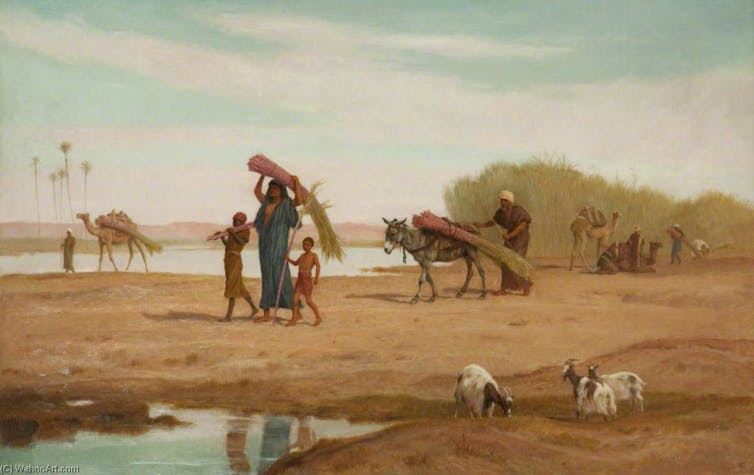
Getting in the Sugar Cane, River Nile by Frederick Trevelyan Goodall (1875).Grundy Art Gallery, CC BY
Britain’s per capita sugar consumption skyrocketed from four pounds in 1704 to 90 pounds by 1901. While slavery was eventually abolished, the supply of cheap labour was sustained by new flows of indentured workers from India, Africa and China.
Britain’s naval blockade of Napoleonic France at the start of the 19th century prodded the French to seek an alternative to Caribbean sugar supplies. It gave birth to the European sugar beet industry.
Sugar beet is a biennial root crop grown for its high sucrose content, which is extracted to produce table sugar. The 20th century has seen this traditionally heavily subsidised and tariff-protected industry grow to produce approximately 50% of Europe’s sugar. This includes the UK’s consumption, which is now around 2 million tons of beet (60%) and cane sugar (40%) annually.
Delights and dangers
In 1886, Atlanta’s prohibition laws forced the businessman and chemist John Pemberton to reformulate his popular drink, Pemberton’s Tonic French Wine Coca. He replaced the alcohol with a 15% sugar syrup and added citric acid. His bookkeeper, Frank Robinson, chose a new name for the drink after its main ingredients – cocaine leaves and kola nuts – and created the Coca-Cola trademark in the flowing script we know today.
In 1879, Swiss chocolatier Daniel Peter invented the world’s first commercial milk chocolate using sweetened condensed milk developed by his neighbour, Henri Nestlé. Milk chocolate, which contains about 50-52 grams of sugar per 100 grams, has now become a global favourite for its sweet taste and creamy texture.
Chocolate and cola have since solidified their status as global staples in the realm of fizzy drinks and sweet treats and have become essential indulgences for people worldwide.
In 1961, an American epidemiologist Ancel Keys appeared on the cover of Time magazine for his “diet-heart hypothesis”. Through his “seven countries” study, he found an association between saturated fat intake, blood cholesterol and heart disease. Keys remarked: “People should know the facts. Then, if they want to eat themselves to death, let them.”
An advert for Cocoa-Cola from 1961.
With competing scientific advice John Yudkin, founder of the nutrition department at Queen’s College, published an article in the Lancet. He argued that international comparisons do not support the claim that total or animal fat is the main cause of coronary thrombosis, highlighting that sugar intake has a stronger correlation with heart disease.
He published his book, Pure, White and Deadly, in 1972. It highlighted the evidence linking sugar consumption to increased coronary thrombosis and its involvement in dental caries, obesity, diabetes and liver disease. He ominously noted: “If only a small fraction of what is already known about the effects of sugar were to be revealed about any other material used as a food additive, that material would promptly be banned.”
The British Sugar Bureau dismissed Yudkin’s claims about sugar as “emotional assertions”, and the World Sugar Research Organisation called his book “science fiction”. In the 1960s and 1970s, the sugar industry promoted sugar as an appetite suppressant and funded research that downplayed the risks of sucrose, while emphasising dietary fat as the primary driver of coronary heart disease.
Scientific debate over the relative health effects of sugar and fat continued for decades. In the meantime, governments began publishing dietary guidelines advising people to eat less saturated fats and high-cholesterol foods. An unavoidable consequence of this was that people began eating more carbohydrates and sugar instead.
Official dietary guidelines did not begin to clearly acknowledge the health risks of excessive sugar consumption until much later, as evidence accumulated toward the end of the 20th century.
In my new book, Food and Us: the Incredible Story of How Food Shapes Humanity I explore the fact that sugar is a relatively new addition to our diet. In just a short period of 300 years, or 0.0001% of our food evolution, sugar has become ubiquitous in our food supply. It has even evolved its own terms of endearment and affection for people, such as sugar, honey and sweetheart.
However, the global addiction to sugar poses significant and interconnected challenges for public health, the economy, society and the environment. The pervasive nature of sugar in processed foods, combined with its effects on the brain’s reward system, creates a cycle of dependency that is driving a worldwide crisis of diet-related diseases and straining health systems.
Looking for something good? Cut through the noise with a carefully curated selection of the latest releases, live events and exhibitions, straight to your inbox every fortnight, on Fridays. Sign up here.
This article features references to books that have been included for editorial reasons, and may contain links to bookshop.org. If you click on one of the links and go on to buy something from bookshop.org The Conversation UK may earn a commission.
People living on the low-lying shores of the Bristol Channel and Severn estuary began their day like any other on January 30 1607. The weather was calm. The sky was bright.
Then, suddenly, the sea rose without warning. Water came racing inland, tearing across fields and villages, sweeping away the homes, livestock and people in its path.
By the end of the day, thousands of acres were underwater. As many as 2,000 people may have died. It was, quite possibly, the deadliest sudden natural disaster to hit Britain in 500 years.
More than four centuries later, the flood of 1607 still raises a troubling question. What, exactly, caused it?
Most early explanations blamed an exceptional storm. But when my colleague and I began examining the historical evidence more closely in 2002, we became less certain that this was the full picture. For one, eyewitness accounts tell a more unsettling story.
The flood struck on January 30 1607 – or January 20 1606, according to the old Julian calendar, which was still in use at that time. The flood affected coastal communities across south Wales, Somerset, Gloucestershire and Devon, inundating some areas several miles inland. People at the time were no strangers to storms or high tides – but this was different.
Churches were inundated. Entire villages vanished. Vast stretches of farmland were ruined by saltwater, leaving communities facing hunger as well as grief. Memorial plaques in local churches and parish documents still mark the scale of the catastrophe.
Much of what we know about how the event unfolded comes from chapbooks, which were cheaply printed pamphlets sold in the early 17th century. These accounts describe not just the damage, but the terrifying speed and character of the water itself.
One such pamphlet, God’s Warning to His People of England, describes a calm morning suddenly interrupted by what witnesses saw approaching from the sea:
Upon Tuesday 20 January 1606 there happened such an overflowing of waters … the like never in the memory of man hath been seen or heard of. For about nine of the morning, many of the inhabitants of these countreys … perceive afar off huge and mighty hilles of water tombling over one another, in such sort as if the greatest mountains in the world had overwhelmed the lowe villages or marshy grounds.
Our interest in the event arose from reading that account. It gives a specific time for the inundation – around nine in the morning – and emphasises the fair weather and sudden arrival of the floodwaters.
From a geographer’s perspective, this description is striking. Sudden onset, wave-like forms and an absence of storm conditions are not typical of storm surges. To us, the language was reminiscent of eyewitness accounts of tsunamis elsewhere in the world. This suggested a tsunami origin for the flood should be evaluated.
Until the early 2000s, few researchers seriously questioned the storm-surge explanation. But as we revisited the historical sources, we began to ask whether the physical landscape might also preserve clues to what happened in 1607. If an extreme marine inundation had struck the coast at that time, it may have left geological evidence behind.
In several locations around the estuary, we identified a suite of features with a chronological link to the early 17th century: the erosion of two spurs of land that previously jutted out into the estuary, the removal of almost all fringing salt marsh deposits, and the occurrence of sand layers in otherwise muddy deposits
These features point to a high-energy event. The question was what kind?
Testing the theory
To explore this further, we undertook a programme of fieldwork in 2004. We examined sand layers and noted signatures of tsunami impact such as coastal erosion, and analysed the movement of large boulders along the shoreline. Boulder transport is particularly useful, as it allows estimates of the wave heights needed to move them.
Some fieldwork was filmed for a BBC documentary broadcast in April 2005, which featured other colleagues too. It included an argument for a storm, but also another suggesting it isn’t fanciful to consider that an offshore earthquake provided the trigger.
Our results were published in 2007, coincidentally the 400th anniversary of the flood. In parallel, colleagues published a compelling model supporting a storm surge. The scientific debate, rather than being resolved, intensified.
An updating of wave heights based on boulder data using refined formula was published in 2021, suggesting a minimum tsunami wave height of 4.2 metres is required to explain the coastal features – whereas, according to the calculations, storm waves of over 16 metres would be required. This is perhaps unlikely within the relatively sheltered Severn estuary.
The low-lying coasts around the Bristol Channel remain vulnerable to flooding. Storm surges occur regularly, though usually with more limited effects. Climate change is now increasing the risk through rising sea levels and more intense weather systems.
Tsunamis, by contrast, are rare. A report by the UK government’s Department for Environment, Food & Rural Affairs found it unlikely that the 1607 flood may have been caused by one. However, it also noted that offshore southwest Britain is among the more credible locations for a future tsunami, triggered by seismic activity or submarine landslides.
This distinction matters. Storm surges can usually be forecast. Tsunamis may arrive with little or no warning.
Scholarly and public interest in the flood has not waned. In November 2024, a Channel 5 documentary brought together several strands of recent research, concluding that the jury is still out on the flood’s cause.
That uncertainty should not be seen as a failure. Evaluating competing explanations is essential when trying to understand extreme events in the past – especially when those events have implications for present-day risk.
Whether the flood of 1607 was driven by storm winds, unusual tides or waves generated far offshore, its lesson is clear. Coastal societies ignore rare disasters at their peril.
The sea has come in before. And it will do so again.
Section from a woodcut from the title page of ‘Lamentable newes out of Monmouthshire’ in Wales, an English-language news book of 1607. The Granger Collection/Alamy
Rethinking Troy: how years of careful peace, not epic war, shaped this bronze age city
Imagine a city that thrived for thousands of years, its streets alive with workshops, markets and the laughter of children, yet that is remembered for a single night of fire. That city is Troy.
Long before Homer’s epics immortalised its fall, Troy was a place of everyday life. Potters shaped jars and bowls destined to travel far beyond the settlement itself, moving through wide horizons of exchange and connection.
Bronze tools rang in busy workshops. Traders called across the marketplace and children chased one another along sun‑warmed footpaths. This was the real heartbeat of Troy – the story history has forgotten.
Homer’s late eighth‑century BC epic poems, the Iliad and the Odyssey, fixed powerful images in western cultural memory: heroes clashing, a wooden horse dragged through city gates, flames licking the night sky. Yet this dramatic ending hides a far longer, far more remarkable story: centuries of cooperation embedded in everyday social organisation. A story we might call the Trojan peace.
This selective memory is not unique to Troy. Across history, spectacular collapses dominate how we imagine the past: Rome burning in AD64, Carthage razed in 146BC and the Aztec capital Tenochtitlán falling in AD1521. Sudden catastrophe is vivid and memorable. The slow, fragile work of maintaining stability is easier to overlook.
The Trojan peace was not the absence of tension or inequality. It was the everyday ability to manage them without society breaking apart, the capacity to absorb pressure through routine cooperation rather than dramatic intervention.
When catastrophe outshines stability
Archaeology often speaks loudest when something goes catastrophically wrong. Fires preserve. Ruins cling to the soil like charcoal fingerprints. Peace, by contrast, leaves no single dramatic moment to anchor it.
Its traces survive in the ordinary: footpaths worn smooth by generations of feet; jars repaired, reused and handled for decades, some still bearing the drilled holes of ancient mending. These humble remnants form the true architecture of long‑term stability.
Troy is a textbook example. Archaeologists have identified nine major layers at the site, some of which are associated with substantial architectural reorganisation. But that isn’t evidence of destruction. Rather it simply reflects the everyday reality of a settlement’s history: building, use, maintenance or levelling, rebuilding and repetition.
Instead, I argue that Troy’s archaeological record reveals centuries of architectural continuity, stable coastal occupation and trade networks stretching from Mesopotamia to the Aegean and the Balkans – a geography of connection rather than conflict.
The only evidence for truly massive destruction that can be identified dates to around 2350BC. Against the broader archaeological backdrop, this stands out as a rare, fiery rupture – one dramatic episode within a much longer pattern of recovery and continuity.
Whether sparked by conflict, social unrest or an accident, it interrupted only briefly the long continuity of daily life – more than a thousand years before the events portrayed by the poet Homer in his tale of the Trojan war were supposed to have taken place.
But what actually held Troy together for so long? During the third and second millennia BC, Troy was a modest but highly connected coastal hub, thriving through exchange, craft specialisation, shared material traditions and the steady movement of ideas and goods.
The real drivers of Troy’s development were households, traders and craftspeople. Their lives depended on coordination and reciprocity: managing water and farmland, organising production, securing vital resources such as bronze and negotiating movement along the coast. In modern terms, peace was work, negotiated daily, maintained collectively and never guaranteed.
When crises arose, the community adapted. Labour was reorganised, resources redistributed, routines adjusted. Stability was restored not through force, but through collective problem solving embedded in everyday practice.
This was not a utopia. Troy’s stability was constrained by environmental limits, population pressure and finite resources. A successful trading season could bring prosperity; a failed harvest could strain systems quickly. Peace was never about eliminating conflict, but about absorbing pressure without collapse.
Satellite image of the bronze age citadel of Troy. Over more than two millennia, successive phases of construction accumulated at the same location, forming a settlement mound rising over 15 metres above the surrounding landscape.University of Çanakkale/Rüstem Aslan, CC BY
Archaeologically, this long-term balance appears as persistence: settlement layouts maintained across generations, skills refined and passed down, and gradual expansion from the citadel into what would later become the lower town. These developments depended on negotiation and cooperation, not conquest, revealing practical mechanisms of peace in the bronze age.
Why we remember the war
Stories favour rupture over routine. Homer’s Iliad was never a historical account of the bronze age, but a poetic reflection of heroism, morality, power and loss. The long, quiet centuries of cooperation before and after were too distant – and too subtle – to dramatise.
Modern archaeology has often followed the same gravitational pull. Excavations at Troy began with the explicit aim of locating the battlefield of the Trojan war. Even as scholarship moved on, the story of war continued to dominate the public imagination. War offers a clear narrative. Peace leaves behind complexity.
Reexamining Troy through the lens of peace shifts attention away from moments of destruction and towards centuries of continuity. Archaeology shows how communities without states, armies, or written law sustained stability through everyday practices of cooperation. What kept Troy going was not grand strategy, but the quiet work of living together, generation after generation.
The real miracle of Troy was not how it fell – but for how long it endured. Rethinking the cherished narrative of the Trojan war reminds us that lasting peace is built not in dramatic moments, but through the persistent, creative efforts of ordinary people.
Looking for something good? Cut through the noise with a carefully curated selection of the latest releases, live events and exhibitions, straight to your inbox every fortnight, on Fridays. Sign up here.
This article features references to books that have been included for editorial reasons, and may contain links to bookshop.org. If you click on one of the links and go on to buy something from bookshop.org The Conversation UK may earn a commission.
A ziggurat (also spelled ziqqurat) was a raised platform with four sloping sides that looked like a tiered pyramid.
Ziggurats were common in ancient Mesopotamia (roughly modern Iraq) from around 4,000 to 500 BCE.
Unlike the Egyptian pyramids, they were not places of royal burials, but temples dedicated to the patron deity of a city.
How were they made?
Stone was relatively rare in Mesopotamia, so ziggurats were mainly made of sun-dried mudbricks coated with limestone and bitumen (a sticky, tar-like substance).
Their sides were decorated with grooved stripes and were often plastered with lime mortar or gypsum and glazed in various colours.
Unlike the pyramids, they had no internal chambers. The actual shrine was at the top of the structure where the god resided. It was accessible by steps and was believed to be a meeting point between heaven and earth.
Ziggurats towered over the centre of ancient Mesopotamian cities; as archaeological evidence indicates, they were typically built next to the palace or the temple of a city’s patron god to stress the role of the god in supporting the king.
How the Anu ziggurat became the White Temple
The Anu ziggurat, the oldest known, was built at Uruk (modern-day Warka, about 250 kilometres south of Baghdad) by the Sumerians around 4,000 BCE. (The Sumerians were an ancient people, among the first known to have established cities, who lived roughly in the area of modern Iraq, between the Tigris and Euphrates rivers.)
This ziggurat was dedicated to Anu, their sky god. Sometime between 3,500 and 3,000 BCE, the so-called White Temple was built on top of it.
The White Temple, approximately 12 metres high, was so named because it was entirely whitewashed inside and out. It must have shone dazzlingly in the sun. The Sumerian culture was eventually taken over by the Akkadian Empire, followed by the Babylonian and Assyrian Empires. Throughout the rise and fall of empires, ziggurats continued to be built in the Ancient Near East.
In fact, the word ziggurat comes from the Akkadian verb zaqâru, meaning “to build high”.
Other famous ziggurats
Assyrian kings built an impressive ziggurat in their capital, Nimrud (about 30 kilometres south of Mosul). This ziggurat was dedicated to Ninurta, a Sumerian and Akkadian god of war and victory.
Ninurta’s father, the god Enlil, was worshipped at the ziggurat of the sacred city Nippur, in modern-day Iraq.
The Babylonian king Nebuchadnezzar II dedicated the ziggurat Etemenanki to the Babylonian king of gods, Marduk. The name Etemenanki means the Temple of the Foundation of Heaven and Earth.
Etemenanki was located north of a different temple called the Esagil, which was Marduk’s main temple in Babylon.
Etemenanki likely inspired the story of the Tower of Babel in the Old Testament. Genesis 11 refers to a “tower” built of mud bricks instead of stone, which was intended to reach the heavens.
The building, perceived as an act of human pride, angered God, who caused the people to speak different languages and scattered them across the Earth.
According to the Greek historian Herodotus, Marduk often chose a woman to spend the night with him in the top-most shrine of his ziggurat.
The text has been often understood to refer to a “sacred marriage” rite involving the sexual union of a woman with the god.
However, it seems more likely to have been an incubation rite, when the god’s will is revealed to someone sleeping in a sacred place.
Constant preservation
Because of the relative lack of durability of mud bricks, ziggurats required constant preservation.
Etemenanki in Babylon had to be rebuilt several times until Alexander the Great ordered his soldiers to destroy it in 323 BCE so as to rebuild it from scratch.
However, Alexander’s premature death (historians continue to debate what he died of) meant the task had to be completedby his successors. But whether the rebuilding task was ever completed is uncertain.
Better preserved ziggurats include the Ziggurat of Ur (in the region of modern-day Tell el-Muqayyar in Iraq). The powerful king, Ur-Nammu, dedicated this ziggurat to the moon god, Nanna or Sîn, around 2100 BCE.
Another example is the ziggurat of Chogha Zanbil in modern Iran, which was built around 1250 BCE. It now stands only 24.5 metres tall, instead of the original estimated 53 metres.
What will we see in the southern sky in 2026? A total eclipse of the Moon (at a convenient time), a blue Moon and a supermoon, the two brightest planets close together, and Jupiter disappearing behind the Moon in the daytime.
All except one of these events can be seen with the unaided eye, even in light-polluted cities.
In addition to these special events, we will see the annual procession of meteor showers and the nightly parade of constellations. Though best seen from a dark country location, the most interesting of these can still be seen from cities.
Here are some of the year’s highlights.
March, May and December: the Moon
An eclipse of the Moon (or lunar eclipse) will take place on the evening of Tuesday March 3. During the eclipse, the full Moon moves into the shadow of Earth and is likely to turn a red or coppery colour.
This is because sunlight is bent or refracted by Earth’s atmosphere onto the Moon. The bent light is red – it is the glow of sunrises and sunsets from around the globe.
Lunar eclipses are safe to watch with the unaided eye and offer a good opportunity for nighttime photography. For successful images, the camera or phone needs to be able to take timed exposures and should be firmly supported on a tripod or similar.
Seen from Australia’s south-east, totality (when the Moon is completely obscured) will occur between 10:04pm and 11:03pm local time. From Brisbane the times are an hour earlier, while from Perth the times are three hours earlier. From Aotearoa New Zealand totality will begin just after midnight.
Another lunar event is a “blue Moon” on Sunday May 31. This is a name sometimes given to the second full Moon in a single calendar month. This happens, on average, once every two or three years.
The final Moon event is a “supermoon” on Christmas eve, Thursday December 24. This occurs when a full Moon falls when the Moon is at the closest point to Earth in its monthly orbit.
This means the full Moon appears a little larger than usual. The supermoon looks most spectacular at moonrise, as an illusion in our brains magnifies the effect when the Moon is close to the horizon.
April, June and November: planets
Before dawn on the mornings of April 19–22, the planets Mercury, Mars and Saturn will form a tight bunch in the sky. Look towards the east.
Mercury, Mars and Saturn form a tight bunch in the sky at 5am on April 20 – look to the east.Stellarium
On the evenings of Tuesday June 9 and Wednesday June 10, the two brightest planets, Venus and Jupiter, pass within three moon-widths of each other from our point of view.
On Tuesday November 3, the crescent Moon will pass in front of Jupiter. Although this happens during the day, it will be visible with a pair of binoculars. (Note: do not point binoculars at the Sun! Children must be fully supervised.)
Times vary across Australia and New Zealand. From Sydney, the bright edge of the Moon covers Jupiter at 10:40am and Jupiter reappears at the dark edge at 11:39am.
The disappearance of Jupiter behind the Moon and its reappearance in the daytime sky of November 3 2026.Stellarium/Nick Lomb, CC BY
December: meteor shower
Before dawn on mornings in mid-December, there is a favourable opportunity to view the Geminid meteor shower, one of the best such showers during the year. The shower occurs when the Earth runs into a stream of dust left behind by a rocky asteroid called Phaethon.
As the dust particles burn up in the atmosphere 100km or so above our heads, brief streaks of light called meteors can be seen. This year there is a good chance to see them, as the Moon will not brighten the sky.
This year, the peak of the shower is predicted for the early morning of Tuesday December 15. To see the meteors, try to find the darkest spot you can, and look towards the north as shown below. The meteors will appear to radiate from a point near Castor, in the Gemini constellation.
The night sky as seen from Toowoomba at 4am on 15 December 2026. The stars Castor and Pollux in the constellation Gemini are seen high to the north.Stellarium
January and December: Taurus
Many of the constellations in the European tradition, visible from the northern hemisphere, were named in ancient times. Explorers and astronomers venturing south of the equator in the 18th century named most of the rest.
The best way to find Taurus is to extend a line downwards from the three stars of Orion’s belt until you reach a bright reddish star called Aldebaran.
Aldebaran sits in an inverted V-shaped group of stars. This is the Bull’s head, upside down for us as it was named in the northern hemisphere. The other stars in the group are part of a cluster called the Hyades.
The main stars of the constellation of Taurus, the Bull.Nick Lomb, CC BY
Another cluster in Taurus is the Pleiades. This is named the Seven Sisters, not just in the European tradition, but by cultures around the world, including First Nations people of Australia.
With the unaided eye, most people can only see six stars in this compact cluster, but hundreds can been seen through a telescope. In 2025 astronomers found the Pleiades likely contains 20 times as many stars as previously thought.
The information in this article comes from the 2026 Australasian Sky Guide. The guide has monthly star maps and more information to help with viewing and enjoying the night sky from Australia and Aotearoa New Zealand.
While the beach and swimming culture might feel like an intrinsic part of “Australianness”, this hasn’t always been the case. For many of us, swimming lessons, school swimming carnivals and weekends at the beach are defining childhood memories.
That deep connection to beach swimming helps explain why our responses to the Sydney region’s recent shark attacks and health concerns over South Australia’s algal bloom crisis feel like a form of collective grieving.
Swimming at the beach is seen as healing. It brings us together and connects people to the natural world. Yet our apparently intrinsic swimming identity is something that’s emerged over time. Our attitudes to swimming and beach-going have shifted according to social values and politics.
The “beach bodies” we celebrate as healthy and desirable would have been unthinkable in the 19th century, when sea bathing was a furtive, private affair for colonial Australians. Daytime public bathing was widelybanned until around the early 1900s, when restrictions began to lift. And even when we did eventually hold swimming races, our first swimmers were hardly Olympic standard.
Meanwhile, a recent study by Royal Surf Lifesaving Australia warns that swimming culture might be on the retreat: fewer children are competing in swimming carnivals, or even have competence in the water. Drowning deaths increased last summer and swimming ability is falling “below minimum standards”, the report argues: 48% of Year 6 students and 84% of year 10 students are not meeting expected benchmarks for their age.
My research shows that Australia’s swimming culture didn’t evolve by accident: it was actively nurtured by swimming advocates and public education programs. A concerted public effort will be required to boost swimming skills and water safety once more.
While most settler-colonial Australian coast dwellers in the 19th century viewed ocean bathing as essential for hygiene, being in the water also channelled all sorts of panics.
The ocean was a place where you drowned when ships went down, got taken by sharks, or simply succumbed to its depths. The beach was perilous. It took people.
Fear of the water also had a moral element. Bathing was necessary, but done in private and with modesty.
The swimming and diving feats of First Nations men and women were frequently commented on by colonists and observers. Aboriginal people “are bold and surprisingly expert, both in swimming and diving”, wrote William Govett in the Saturday Magazine in 1836.
In 1843, the missionary James Backhouse described Aboriginal women in Lutruwita (Tasmania) diving for crayfish “often using the long stems of the kelp to enable them to reach the bottom; these they handle as dextrously as a sailor would a rope in descending”.
And in Lieutenant William Dawes’ famous Dharug wordlist from 1790-91, we get the term “bóg’i” – to bathe or swim. (It’s a word still used today: “bogey holes” are features at Bronte Beach and Newcastle, where people can safely enjoy an ocean dip.)
But in 1810, Governor Lachlan Macquarie banned public bathing in and around Sydney Cove. The colonial bathing prohibition was extended in 1838 to all towns in New South Wales, “for the maintenance of the public peace and good order”. It was incorporated into the Colony’s Police Act:
it shall not be lawful for any person to bathe near to or within view of any public wharf quay bridge street road or other place of public resort within the limits of any of the towns aforesaid between the hours of six o'clock in the morning and eight in the evening.
To avoid prosecution, women and men discretely bathed behind privacy screens and segregated areas, away from public gaze, or at dawn and dusk, until the daytime bathing bans were lifted in the early decades of the 1900s.
Some people in the colonies could and did swim. Swimming races and demonstrations were held in places designated for segregated swimming, like Robinson’s Baths in Sydney’s Woolloomooloo Bay, or St Kilda Baths in Melbourne, during the middle decades of the 1800s.
Swimming races and demonstrations were held at places like the St Kilda Baths (pictured in 1910).State Library Victoria
Yet these carnivals were largely for entertainment and betting, rather than universal rites of passage. And mixed bathing continued to be scorned and policed until the turn of the 20th century.
During one Sydney competition in 1852, only two men entered the 100-yard race, and neither contestant swam overarm until the final few metres of the race, briefly accelerating their more sedate sidestroke.
Over the course of the 1800s, values about morality and modesty gradually shifted as views around gender, health and fitness changed – along with ideas about leisure and pleasure.
An 1860 news story about swimming matches in Port Phillip Bay touted the potential of swimming to strengthen both communities and physical bodies. “It is gratifying to see so many youngsters good swimmers,” the Melbourne Argus reported.
There was a significant racial element in all this, too, as the work of historians Marilyn Lake, Henry Reynolds and others explores. The colonies were anxious about their geographical isolation from Britain and obsessed with how their citizens might “measure up”.
At a time when ideas about bodily vigour and good health were growing, swimming was also viewed as a form of exercise acceptable for women. But swimming didn’t just promote physical fitness. Knowing how to swim was essential for public safety, especially for the Empire’s youngest subjects.
“The accidents that so often occur during the summer season would be reduced to a minimum, if women would but learn to swim,” one 1876 article from the Illustrated Sydney News insisted.
Swim safety and beach bodies
By the late 1890s, school swimming lessons had begun in Victoria and New South Wales. Amateur swimming associations were established around the country during this period. They advocated for the construction of public baths and the provision of lessons, along with that now famous rite of passage, the swimming carnival.
Bathing – once furtive and modest – was increasingly replaced with public swimming, for women and men. The more popular swimming became, the more people visited the beach.
In turn, people who visited the beach to swim, rather than stroll or splash up to their knees, further nibbled at 19th-century Victorian strictures of decorum. By the end of the 19th century, beach bodies were becoming markers of good health and virtue, rather than something to hide.
By the end of the 19th century, ‘beach bodies’ had become something to celebrate (like here, at this 1940s Bondi Beach carnival) rather than hide.State Library New South Wales
Surf life saving clubs
As the popularity of beach swimming grew, however, its physical dangers were thrown into ever sharper relief. Reports of tragic deaths were regular news right around the country.
Children were especially vulnerable. Newspapers reported stories like the drowning death of young Leslie Mitchell in December 1900. Seen wading knee-deep at St Kilda beach, he was found face down in the water only minutes later.
As accidents mounted, notes historian Caroline Ford, civic responses also grew. Many beachside communities established lifesaving clubs, like Bondi (formed in 1907), Cottesloe (in 1909) and Tweed Heads and Coolangatta (in 1911), and provided life-saving equipment like life-rings and surf-lines. There were also government inquiries into beach safety, which recommended funding for public education and surf lifesavers.
Many beachside communities, like Manly (pictured in 1900-1910) formed lifesaving clubs in the early 1900s.National Museum of Australia
The shift from furtive bather to confident beach swimmer reflected changing social attitudes. It also occurred during a critical time of emerging national identity – and federation.
Beach bodies became idealised figures of strength: admirable and desirable, rather than something to be ashamed of. Australian swimmers like Mina Wylie, Andrew “Boy” Charlton, Fanny Durack, and Annette Kellerman, were national heroes and celebrities. They won international races, appeared in variety shows and drew enormous crowds.
Australian swimmers Fanny Durack (gold) and Mina Wylie (silver) and the UK’s Jennie Fletcher (bronze) after the 100 metres freestyle at the 1912 Olympic Games.Wikimedia Commons

While that freedom-loving, strong and capable beach figure celebrated in popular culture at the time might have been bronzed by the sun, it was invariably white. The Immigration Restriction Act was one of the first pieces of federal legislation passed by the new nation in 1901 and it enshrined the White Australia policy.
The beach was a national leveller, of sorts, but only if you were actually welcome to sit on the sand in the first place.
Throughout the 20th century, as swimming became a sign of Australian egalitarianism and physical health, it was also a site of exclusion, as the 1965 Freedom Ride and 2005 Cronulla race riots demonstrate.
Australia’s celebration of beach and swimming culture – in all its complexity – went on to become a defining feature of national identity. And significant efforts supported by governments, surf lifesaving and community groups have attempted to make the beach an inclusive, safe place for everyone.
Ensuring beach safety is an ongoing part of those efforts.
Avalon Computer Pals (AVPALS) helps seniors build and improve their computer and technology skills. AvPals is a not-for-profit organisation run by volunteers. Since 2000, we have helped thousands of seniors from complete beginners to people who just want to improve or update their skills. We offer one to one personal tuition or small group short courses.
Short courses are run at Newport Community Centre every Tuesday afternoon in school terms. Full details of this term’s courses are available at Newport Short Courses and bookings can be made on our Course Bookings webpage.
Our business relies on the kindness of strangers...
Looking for a way to give back without giving up your lifestyle?
Become part of our Volunteer IMPACT Club and gain access to exercise classes, social events, Silver Surfers, tables at trivia as well as training and development workshops! Plus – have your petrol re-imbursed!!
Volunteering with MWP fits around your life and your schedule, letting you make a real impact in your local community. Enjoy meeting like-minded people, learning new skills, and knowing that your time is changing lives every day.
Congratulations to 2026 Senior Australian of the Year: National Seniors
COTA Australia and National Seniors Australia (NSA) have congratulated 2026 Senior Australian of the Year, Professor Henry Brodaty AO, for his work transforming the diagnosis, care, and prevention of dementia.
Motivated by his father’s diagnosis with Alzheimer’s disease in 1972, Professor Brodaty embarked on a career that transformed psychiatry and the lives of people living with dementia and their families.
In 2012, Professor Brodaty co-founded the Centre for Healthy Brain Ageing and led research that enhanced the world’s understanding of risk and prevention. His Maintain Your Brain trial showed that cost-effective and targeted interventions can significantly delay onset and even prevent the now leading cause of death for Australians.
NSA Chief Executive Officer, Chris Grice, said he was delighted 78-year-old Professor Brodaty’s lifetime work transforming the lives of people living with dementia – through advancing scientific knowledge to providing invaluable support and resources – has been recognised.
“Professor Brodaty’s well-deserved recognition demonstrates the importance of his experience and work, as evidenced through his international research that has enhanced the world’s understanding of the risk and prevention of dementia,” Mr Grice said.
“Too often, older Australians, despite their experience, are portrayed as problems instead of solutions. The ageing population is seen as an impending cost as opposed to a potential opportunity. The number of people aged 65+ is expected to grow by 2.35 million by 2041, and those aged 85+ expected to grow by almost 750,000 over the same time.
“Professor Brodaty, and the Senior Australian of the Year award, reinforce that older people contribute in ways that can’t be measured. Without these builders and their experience, Australia wouldn’t be what it is today.”
It is a philosophy at the heart of NSA’s Experience Matters campaign designed to change the perception and portrayal of older Australians; to promote the importance and impart the benefits of knowledge, wisdom, and insight gained during a lifetime of experience.
“A true pioneer and leader, Professor Brodaty embodies and exemplifies the very essence of experience and with it, the potential of an undervalued cohort,” Mr Grice said.
“We congratulate Professor Brodaty for the difference he is making to people diagnosed with dementia in Australia and around the world, and the example he has set to all Australians that Experience Matters.”
COTA Australia – the leading advocacy organisation for older people – Chief Executive Officer Patricia Sparrow said Professor Brodaty’s life-long commitment to improving outcomes for people living with dementia and their families has changed countless lives.
“Professor Brodaty’s work has fundamentally reshaped how we understand, treat and prevent dementia,” Ms Sparrow said.
“His leadership has helped move dementia from something that was once poorly understood and often ignored, to an area of care grounded in evidence, dignity and hope.
“With dementia now the leading cause of death in Australia, continuing the work Professor Brodaty has championed is critical to saving lives and improving quality of life for future generations.
“His work reminds us that investing in brain health today is an investment in all our futures.”
Ms Sparrow also congratulated all Senior Australian of the Year finalists, acknowledging their remarkable contributions to communities across the country.
“Every finalist has made a profound difference in the lives of others,” she said.
“The Senior Australian of the Year awards highlight something COTA Australia knows well: there is no age limit on impact, leadership or the ability to create positive change.”
This year’s Senior Australian of the Year finalists included:
Senior Australian of the Year for the NT, Jenny Duggan OAM
Senior Australians of the Year for the ACT – Heather Reid AM
Senior Australian of the Year for Western Australia – Professor Kingsley Dixon AO
Senior Australian of the Year for Victoria – Bryan Lipmann AM
Senior Australian of the Year for South Australia – James Currie
Senior Australian of the Year for South Australia – Malcolm Benoy
Senior Australian of the Year for Tasmania – Julie Dunbabin
Senior Australian of the Year for Queensland – Cheryl Harris OAM
Our area also had a wonderful nomination for Senior Australian of the Year in the Founder of the Men's Kitchens.
Forestville Community Hall: 28 Melwood Avenue, Forestville.
2nd Wednesday, 3rd Thursda, 3rd Friday and Last Friday each month apart from December 2025. Next sessions are 12th and 20th, 21st and 28th of November 2025
Warriewood Kitchen
Located at the Ted Blackwood Centre: Cnr. Jacksons and Boondah Roads.
1st Wednesday, 2nd Wednesday and 3rd Wednesday each month apart from December 2025. Next sessions are 12th and 19th of November 2025
Seaforth Kitchen
Our Seaforth Kitchen is located in the Seaforth Oval Pavilion and Community Centre, Wakehurst Parkway.
3rd Tuesday, 1st Thursday, 4th Friday each month apart from December 2025. Next sessions are 18th and 28th of November.
Men’s Kitchen at Warriewood - looks like a great bread and butter pudding.
2026 Resident Experience Survey has started
The 2026 Residents’ Experience Survey has started. The survey gives aged care residents an opportunity to share feedback on the care and services they receive.
The survey is conducted by Access Care Network Australia (ACNA). As an independent third party, ACNA ensures residents can speak freely and honestly.
To allow a fair representation at each home, at least 20% of residents will be randomly selected and invited to participate.
Survey results help aged care homes understand what is working well and where they might need to improve. The results also make up 33% of an aged care home’s overall Star Rating. Star Ratings help older people, their families and carers make informed choices about care.
We may not need to completely overhaul our lives to live healthier for longer, according to a large UK-based study. This is welcome news, particularly as many people will already have abandoned their New Year’s resolutions.
The recent study followed around 590,000 people in the UK, with an average age of 64, over an eight-year period. The researchers confirmed earlier findings that healthier lifestyles are associated with lower risk of disease, including dementia, and with living longer in good health and independence.
The authors reported that even very small changes were associated with such benefits. These included around five additional minutes of sleep per night, two extra minutes per day of moderate to vigorous physical activity, and modest improvements in diet. Together, these changes were associated with roughly one additional year of healthy life. “Healthy life” here refers to years lived without major illness or disability that limits daily functioning.
More substantial changes were linked to larger gains. Almost half an hour of extra sleep per night, combined with four additional minutes of exercise per day, which adds up to nearly half an hour of extra activity per week, along with further dietary improvements, was associated with up to four additional healthy years of life.
This matters because, although women live longer on average than men, those extra years are often spent in poorer health, with significant personal and economic costs. Women face a higher risk of dementia, stroke and heart disease at older ages, as well as conditions that lead to vision loss and bone fractures. These illnesses can reduce quality of life and threaten independence.
Lifestyle change may also reduce the risk of early death. The same lifestyle factors examined in this cohort were analysed last year in a separate study, which focused on mortality (the risk of dying).
In that analysis, people who followed healthier lifestyle patterns over an eight-year period had a 10% lower risk of death in that period. The combination of 15 extra minutes of sleep per night, two additional minutes of moderate to vigorous physical activity per day and a healthy diet was linked to a modest reduction in the risk of dying. A much larger reduction of 64% was seen among people who slept between seven and eight hours per night, ate a healthy diet and engaged in between 42 and 103 additional minutes of moderate to vigorous physical activity per week. Importantly, this benefit was only seen when these behaviours occurred together. Diet alone had no measurable effect, for instance.
Strengths and limitations
One of the key strengths of these studies is that they show health benefits at very low thresholds of behaviour change. This reduces the likelihood that the results are driven only by people who are already healthier or more motivated, and makes the findings more applicable to older adults and those with limited capacity to change their routines.
Another strength is the use of objective measurements rather than self-reported data. Physical activity and sleep were measured using wearable devices, rather than relying on participants to estimate their own behaviour. Self-reporting can be unreliable, particularly for people with memory problems, such as those in the early stages of dementia.
However, there are important limitations. The objective measurements were only collected for three to seven days, which may not reflect people’s long-term habits. From personal experience, wearing activity trackers can lead people to exercise more while they are being monitored, but these changes are often short-lived.
In addition, wrist-worn accelerometers estimate sleep and activity based on movement. During deep sleep, people move very little, but lack of movement does not always mean someone is asleep. These devices may therefore not fully capture true sleep patterns or physical activity levels. Other methods, such as thigh-mounted sensors or mattress-based sensors that detect movement during sleep, may provide more accurate assessments.
Despite these issues, objective measurements are generally more reliable than self-report. Still, because behaviour was only measured once, it is unclear whether actual changes in behaviour over time influenced health outcomes. It is also not clear whether the recorded activity reflected leisure-time exercise or physical activity at work, which can have different effects on health.
Dietary information presents another challenge. Diet was self-reported and collected three to nine years before collection of sleep and activity data. Diets often change over time, particularly after diagnoses such as cardiovascular disease, where people may be advised to reduce their cholesterol intake, or in conditions such as dementia, where people may forget to eat. As a result, it is difficult to know whether diet influenced disease risk, or whether emerging disease altered diet, eventually contributing to poor health and earlier death.
There are also broader social factors to consider. Healthy behaviours tend to cluster together and are strongly linked to education and financial security. For example, smoking and having overweight and obesity are closely associated with deprivation and poverty.
Participants in the UK Biobank, a large long-term health research project that collects genetic, lifestyle and health data from hundreds of thousands of UK adults, are generally healthier than the average UK population.
Health research often attracts people who are healthier, better educated and more financially secure. This may reflect both interest in research and having the time and resources to take part in such studies.
Wealth also shapes exposure to risk. People with higher incomes are less likely to live in areas with high levels of pollution and are more likely to have control over their working conditions and finances. Financial stress can affect sleep quality, leading to fatigue and reducing the likelihood of exercising, shopping for fresh food, or preparing healthy meals. Over a lifetime, these factors contribute to poorer health and earlier death.
Although researchers attempted to account for these influences using statistical methods, these are deeply interconnected and difficult to separate. The widening health-wealth gap, with many people now living in severe poverty, highlights the limits of personal responsibility. These structural issues require action from policymakers, rather than placing the burden solely on people who may have very little control over the conditions that shape their health.
Cancer and Alzheimer’s disease are two of the most feared diagnoses in medicine, but they rarely strike the same person. For years, epidemiologists have noticed that people with cancer seem less likely to develop Alzheimer’s, and those with Alzheimer’s are less likely to get cancer, but nobody could explain why.
Alzheimer’s is characterised by sticky deposits of a protein called amyloid beta that build up between nerve cells in the brain. These clumps, or plaques, interfere with communication between nerve cells and trigger inflammation and damage that slowly erodes memory and thinking.
In the new study, scientists implanted human lung, prostate and colon tumours under the skin of mice bred to develop Alzheimer‑like amyloid plaques. Left alone, these animals reliably develop dense clumps of amyloid beta in their brains as they age, mirroring a key feature of the human disease.
But when the mice carried tumours, their brains stopped accumulating the usual plaques. In some experiments, the animals’ memory also improved compared with Alzheimer‑model mice without tumours, suggesting that the change was not just visible under the microscope.
The team traced this effect to a protein called cystatin‑C that was being pumped out by the tumours into the bloodstream. The new study suggests that, at least in mice, cystatin‑C released by tumours can cross the blood–brain barrier – the usually tight border that shields the brain from many substances in the circulation.
Once inside the brain, cystatin‑C appears to latch on to small clusters of amyloid beta and mark them for destruction by the brain’s resident immune cells, called microglia. These cells act as the brain’s clean‑up crew, constantly patrolling for debris and misfolded proteins.
In Alzheimer’s, microglia seem to fall behind, allowing amyloid beta to accumulate and harden into plaques. In the tumour‑bearing mice, cystatin‑C activated a sensor on microglia known as Trem2, effectively switching them into a more aggressive, plaque‑clearing state.
Surprising trade-offs
At first glance, the idea that a cancer could “help” protect the brain from dementia sounds almost perverse. Yet biology often works through trade-offs, where a process that is harmful in one context can be beneficial in another.
In this case, the tumour’s secretion of cystatin‑C may be a side‑effect of its own biology that happens to have a useful consequence for the brain’s ability to handle misfolded proteins. It does not mean that having cancer is good, but it does reveal a pathway that scientists might be able to harness more safely.
The study slots into a growing body of research suggesting that the relationship between cancer and neurodegenerative diseases is more than a statistical quirk. Large population studies have reported that people with Alzheimer’s are significantly less likely to be diagnosed with cancer, and vice versa, even after accounting for age and other health factors.
People with Alzheimer’s are significantly less likely to get cancer, and vice versa.Halfpoint/Shutterstock.com
This has led to the idea of a biological seesaw, where mechanisms that drive cells towards survival and growth, as in cancer, may push them away from the pathways that lead to brain degeneration. The cystatin‑C story adds a physical mechanism to that picture.
However, the research is in mice, not humans, and that distinction matters. Mouse models of Alzheimer’s capture some features of the disease, particularly amyloid plaques, but they do not fully reproduce the complexity of human dementia.
We also do not yet know whether human cancers in real patients produce enough cystatin‑C, or send it to the brain in the same way, to have meaningful effects on Alzheimer’s disease risk. Still, the discovery opens intriguing possibilities for future treatment strategies.
One idea is to develop drugs or therapies that mimic the beneficial actions of cystatin‑C without involving a tumour at all. That could mean engineered versions of the protein designed to bind amyloid beta more effectively, or molecules that activate the same pathway in microglia to boost their clean‑up capacity.
The research also highlights how interconnected diseases can be, even when they affect very different organs. A tumour growing in the lung or colon might seem far removed from the slow build up of protein deposits in the brain, yet molecules released by that tumour can travel through the bloodstream, cross protective barriers and change the behaviour of brain cells.
For people living with cancer or caring for someone with Alzheimer’s today, this work will not change treatment immediately. But the study does offer a more hopeful message: by studying even grim diseases like cancer in depth, scientists can stumble on unexpected insights that point towards new ways to keep the brain healthy in later life.
Perhaps the most striking lesson is that the body’s defences and failures are rarely simple. A protein that contributes to disease in one organ may be used as a clean‑up tool in another, and by understanding these tricks, researchers may be able to use them safely to help protect the ageing human brain.
NSW Seniors Festival Comedy Show serving up laughs in Sydney
A line-up of six comedians will deliver a barrel of laughs as the New South Wales Seniors Festival Comedy Show returns to Sydney in 2026.
The free show, which is an annual feature of the NSW Seniors Festival, will commence at 11am on Tuesday 3 March, at Sydney Town Hall, in partnership with City of Sydney.
Master of Ceremonies Cam Knight will join Jake Howie, Anisa Nandaula, Fiona Cox, Mick Meredith, Chris Wainhouse, and Peter Berner to headline entertainment for hundreds of New South Wales seniors.
For the first time, Shoalhaven City Council will also be hosting a Seniors Festival Comedy Show at Ulladulla Civic Centre at 11am and 1.30pm on Thursday 5 March. The line-up for the Ulladulla comedy show will feature Mat Wakefield alongside Jake Howie, Anisa Nandaula, Fiona Cox, Chris Wainhouse and Peter Berner.
Tickets will be available from 10am, Tuesday 3 February 2026 via the NSW Seniors Festival website: NSW Seniors Festival Comedy Show | NSW Government
Seniors are encouraged to get in early to secure a ticket before they run out.
Seniors Festival Comedy Show
Sydney Town Hall, in partnership with City of Sydney at 11am, Tuesday 3 March
Ulladulla Civic Centre, in partnership with Shoalhaven City Council at 11am and 1.30pm, on Thursday 5 March.
The NSW Seniors Festival runs from 2-15 March and showcases a variety of events, from entertainment to educational activities.
Highlights of the festival include the popular Premier’s Gala Concerts and NSW Seniors Festival Expo, held at Darling Harbour on Wednesday 11 March and Thursday 12 March.
Minister for Seniors Jodie Harrison said:
“The NSW Seniors Festival Comedy Show has a proud history of bringing together some of the nation’s best comedians to spread laughter and joy.
“The NSW Government is building more inclusive communities for older people through recreational, cultural and social participation, a key priority of the government’s Ageing Well in NSW Strategy.
“That’s why we are proud to support this popular event each year and urge our seniors to get together with friends and families to ‘live life in colour’.”
Member for Sydney Alex Greenwich said:
“The NSW Seniors Festival Comedy Show is an annual highlight for so many in our community as it’s a great way for people to come together, share a laugh and meet some friendly new faces.
“Not only is this a wonderful event for seniors, but it is another opportunity for them to stay socially connected. Sharing a laugh is a great way for everyone to boost their wellbeing and to bring people together.
“Laughter really is the best medicine, and a great way to brighten someone’s day. Not only are events like this fun, they help to keep people feeling connected to their community.”
Comedy show Master of Ceremonies Cam Knight said:
"I’m absolutely excited to be hosting this event for the NSW Seniors Festival.
“There’s something special about making people happy, and I can’t wait to share some laughs with our seniors.
“It’s going to be a fantastic time and I’m sure everyone will leave with a big smile on their faces."
Comedian Jake Howie said:
"I am thrilled to part of this year’s Comedy Show, sharing the stage with some of the country’s funniest people.
“We’ve got some hilarious material lined up which is sure to have the audience in stitches."
Establishing the Neale Daniher National MND Clinical Network
January 29, 2026
The Australian Government has announced it is investing $40.1 million to create the Neale Daniher National MND Clinical Network and give more people with motor neurone disease (MND) access to treatment.
FightMND will be funded to establish the network, which will accelerate research, expand clinical trials and improve outcomes for people with motor neurone disease.
Neale Daniher AO is the 2025 Australian of the Year in recognition of his leadership and advocacy for MND research. He was diagnosed with the condition in 2013.
Supported by Government investment, FightMND has already funded 17 clinical trials involving more than 700 people with motor neurone disease at sites across Australia.
This new investment is expected to encourage pharmaceutical companies to bring more cutting-edge drug trials to Australians living with MND.
It will also increase the number of sites for clinical trials and make it easier for people with motor neurone disease in regional, rural and remote areas to participate.
This investment will also fund research to drive improvements in care for people living with MND.
Motor neurone disease is a progressive and fatal neurological condition affecting approximately 2,700 Australians. Every day in Australia 2 people are diagnosed with the condition and a further 2 people die of it.
Motor neurone disease has no cure and limited treatments, so clinical trials are critical to increase knowledge, give access to new treatments and provide hope for Australians living with this disease.
The Hon Mark Butler MP, Minister for Health and Ageing and Minister for Disability and the National Disability Insurance Scheme, stated:
“Neale Daniher has led a tireless fight for the MND community, accelerating research and giving hope to thousands of Australians.
“Motor neurone disease is one of the most harrowing conditions we face. It is progressive, fatal, and there is no known cure.
“We want to accelerate the development and delivery of effective treatments – and ultimately a cure – for MND.
“With the establishment of the Neale Daniher National MND Clinical Network we hope to improve outcomes for those living with this devastating condition.”
Neale Daniher AO said:
“When I was named Australian of the Year in 2025, I asked the community to imagine. Imagine unlocking the mysteries of the neurological frontier right here in Australia.
“This funding commitment from the Albanese Government is a powerful step forward in this fight against the Beast.
“The science is advancing; the momentum is building and the establishment of the Neale Daniher National MND Clinical Network strengthens the foundations needed to drive real progress.
“This investment isn’t for my benefit. It’s about laying the foundations, so others don’t have to go through what I have.
“I’m deeply grateful for this support. It is going to help turn hope into action for future generations.”
Your experiences matter – please share them with us
National Seniors have stated, January 23, 2026:
''If you live in Australia and you’re aged 50 years and over, we are inviting you to participate in the new National Seniors Social Survey (NSSS).''
Every year the NSSS asks thousands of older people for their thoughts, feelings, and experiences on a range of important topics.
A report summarising the survey outcomes goes straight to our primary funder, the Commonwealth Department of Health, Disability and Ageing, to inform government policy.
The outcomes also inform NSA’s own advocacy and policy work and come back to you in the form of research reports, articles, infographics, and media coverage.
This year’s NSSS includes modules on:
Contributing to society
Experiences as a carer
Hospital experiences.
The survey has been reviewed and approved by the Bellberry Human Research Ethics Committee. Your responses will be completely confidential.
As well as making a valuable contribution to knowledge and social change by sharing your views, you will have a chance to win one of 10 Woolworths or Coles eGift Cards worth $50 each.
Find the survey here. It is open until 6 February 2026.
Star power lineup confirmed for 2026 Premier's Gala Concerts: to be Live Streamed
Updated: January 27, 2026
A glittering lineup of performers are set to grace the stage for the NSW Seniors Festival Premier’s Gala Concerts at Darling Harbour.
Free tickets to the concerts, billed as a highlight of the Seniors Festival, were available to all New South Wales Seniors from Tuesday 27 January. The theme for the 2026 NSW Seniors Festival is ‘Live life in colour’.
Tickets for the Premier's Gala Concerts 2026 are now sold out. If you were unable to secure tickets or simply can't make it in person, the concerts will also be live-streamed, so you can enjoy the performances from wherever you are.
The Concert will be live-streamed on Thursday, 12 March, 2:45pm - 4:30pm AEDT
Dami Im – internationally acclaimed singer-songwriter
Nathan Foley – celebrated vocalist and performer
Jay Laga’aia – beloved entertainer and actor
Olivia Fox – rising star on the Australian music scene
Tarryn Stokes – powerhouse vocalist and winner of The Voice Australia
Last year and again this year, the Premier’s Gala Concerts sold out with close to 32,000 tickets issued.
The NSW Seniors Festival Expo will also be returning in 2026 with exhibitors offering services and support to seniors, including interactive workshops, food and fitness tips.
Minister for Seniors Jodie Harrison said:
“The Premier’s Gala Concerts always generate significant excitement from seniors across New South Wales and this year’s event is shaping up to be unforgettable.
“Older people in New South Wales make an outstanding contribution to our communities and these concerts are about giving back and valuing them.
“The Seniors Festival expo is only a stone’s throw away from the concerts, with exhibitors offering everything from health and travel information to hands-on activities, technology support, and creative workshops.”
Dami Im, performer said:
“I’m absolutely thrilled to be part of this year’s Premier’s Gala Concerts. The NSW Seniors Festival is such a special occasion, and I’m excited to perform for this beautiful audience. It’s going to be a wonderful couple of days filled with music, fun, and celebration!”
Jay Laga’aia, performer said:
"What an exciting time of the year! Seniors are such a valuable part of our community and it's an honour to bring joy to so many at the Premier’s Gala Concerts. We’ve got amazing performers, a brilliant band, beautiful dancers, and more. I can’t wait to bring a little old school vibe to a beautiful gathering.”
‘Bold’. ‘Elegant’. ‘Introverted’? How words describing wine get lost in translation
I recently watched a participant at a wine tasting freeze when asked for their opinion. “It’s … nice?” they ventured, clearly wanting to say more but lacking the specific vocabulary to do so.
The sommelier quickly intervened, noting the wine was “quite elegant, with beautiful structure.” The participant simply nodded, and the conversation ended.
Wine is a multi-billion-dollar export commodity, yet industry “winespeak” can actually stop people feeling they can join in conversations about wine. And often words can get lost in translation – or mean something very different – in fast-growing wine markets such as China, Vietnam and Thailand.
My new research systematically reviewed 77 studies on wine language and metaphor. Building on my earlier research tracking how wine metaphors evolve, it reveals a surprising disconnect: the language used to taste and talk about wine does not travel across cultures as smoothly as the industry assumes.
This matters for the wine industry, because wine descriptions directly influence purchasing decisions and overall enjoyment.
Images in English that don’t travel
The problem is not the use of metaphor itself. In their 1980 book, Metaphors We Live By, George Lakoff and Mark Johnson argue metaphors are essential cognitive tools we use every day, often without even noticing.
When we say a wine has “body” or “backbone,” we draw on our intimate knowledge of physical experience to make sense of taste and texture. This is how human language works.
The problem is when metaphors fail to travel. Consider “body,” a fundamental concept in English-speaking wine cultures when talking about weight and mouthfeel.
Research shows even native English speakers interpret “body” differently. Some believe it refers to flavour, others to texture, still others to alcohol content.
When translated where the word lacks the same associations, confusion multiplies. In Dutch, German, and Hungarian, literal translations (“lichaam”, “Körper”, “test”) trigger awkward anatomical associations. What sounds natural in English reads as bizarre in translation.
The enigma of ‘elegance’
“Elegance” presents a similar challenge. Wine experts across cultures share a core understanding – that a wine is smooth, balanced, refined, or complex. Yet cultural associations can vary.
In Chinese wine reviews, elegance is expressed through mírén (迷人), meaning “charming”, and nèiliǎn (內斂), meaning “introverted”. These are social-aesthetic metaphors that activate entirely different cultural scripts.
This is significant, because wine is what’s called an “experience good”. You cannot judge taste or quality until after you purchase. Consumers rely on descriptions to signal what they are buying.
When metaphors don’t align culturally, the industry is not just failing to communicate but actively eroding people’s trust.
Why some words affect wine ratings
The wine world’s most widespread linguistic habit is anthropomorphism – the attribution of human characteristics.
Industry reviews routinely characterise wines as “shy,” “honest,” or “aggressive”. This is not decorative language; it is cognitive scaffolding.
Describing wine as a person helps us communicate complex sensory perceptions by drawing on our personal experience of human behaviour and emotion.
However, these particular metaphors can carry cultural baggage. Research suggests that wines labelled with feminine terms (such as “delicate” or “elegant”) are perceived as hedonistic products meant for quick consumption, leading consumers to believe they decline at a younger age.
Although these gendered metaphors might not always hit the price tag directly, they can fundamentally alter if and when a consumer decides to drink the bottle.
Creating better metaphors
As global wine trade increases, industry is eager to connect with new consumers in emerging markets. Yet they often do so using vocabulary rooted in European traditions and Western thinking that do not communicate clearly to international audiences.
Wine marketers find themselves caught between traditional wine language maintaining prestige and authority, and pressure to create new metaphors resonating globally.
The solution is not to stop using metaphors to describe wine – that would be impossible. The question is how metaphors can work inclusively across cultures, rather than carrying cultural baggage that can lead to bias and market undervaluation.
My research suggests a need to rethink how we communicate about wine. This could include writing tasting notes that incorporate more universally understood sensory cues and culturally consistent evaluative language, in addition to traditional expert vocabulary.
Without deliberate attention to how metaphors travel, or fail to travel, across cultures, the gap between expert “winespeak” and consumer understanding will only widen. The industry is not building a Tower of Babel through metaphor itself, but through the assumption that everyone speaks the same metaphorical language.
Noise was first considered a public health issue in interwar Britain – called the “age of noise” by the author and essayist Aldous Huxley. In this era, the proliferation of mechanical sounds, particularly the rumble of road and air traffic, the blare of loudspeakers and the rising decibels of industry, caused anxiety about the health of the nation’s minds and bodies.
Interwar writers, such as Virginia Woolf, George Orwell and Jean Rhys, tuned in to the din. Their fiction is not just an archive of past sound-worlds but also the place where sound became noise and vice versa. As sound historian James Mansell has argued: “Noise was not just representative of the modern; it was modernity manifested in audible form.”
We now have more data and scientific evidence on the effects of environmental noise. The World Health Organization recognises noise, particularly from road, rail and air traffic, as one of the top environmental health hazards, second only to air pollution.
In the interwar period, without comprehensive data on noise and health, early campaigners relied on narrative. They created a particular story about noise and nerves to galvanise the public into keeping it down.
A comic strip mocking the Anti-Noise League by Ernie Bushmiller (1941).Swann
In 1933, the first significant UK noise abatement organisation, the Anti-Noise League, was founded by physician Thomas Horder. The league consisted of doctors, psychologists, physicists, engineers and acousticians (physicists concerned with the properties of sound) who lobbied government for a legislative framework around noise.
They sought to educate the public on the dangers of needless noise through exhibitions, publications and their magazine, Quiet.
Their campaigns drew attention to the very real health effects of environmental noise. But they also saw noise as waste: something to be eliminated in the pursuit of a maximally productive and efficient citizenry.
They drew on ideas of Britishness associated with what they called “acoustic civilisation” (or teaching the nation to be quieter) and “intelligent” behaviour to enact a programme of noise reduction as sonic nationalism.
Noise in modernist fiction
This interwar preoccupation with unwanted sound is also a sonic legacy of the first world war. Exposure to the deafening din of artillery, exploding shells and grenades caused catastrophic auditory injury. So much so, that the din was associated with loss of life and the devastating effects of shell shock.
The extreme noise of warfare also pushed doctors and psychologists to study how sound affects health. This work continued into the 1930s through government-backed bodies such as the Industrial Health Research Board. As a result, people in the interwar years became much more aware that the everyday sounds of machines and traffic could also be harmful.
But it wasn’t only doctors and acousticians who wrote about noise. Authors such as Rebecca West and H.G. Wells worked with the Anti-Noise League, while others, like Winifred Holtby, publicly refuted their findings. But more broadly, in the pages of interwar fiction, modernist writers engaged deeply with the shifting noisescapes around them.
The unprecedented noise levels of the wars, together with the proliferation of sounds in urban and domestic spaces and the auditory training required by new forms of sound technology, caused an attentiveness to sound and hearing. This was harnessed both metaphorically and structurally in the period’s literature.
Modernist writers such as Woolf, Orwell and Rhys listened intently to machines and the sound worlds they created. Once we start to listen for it, noise is everywhere in fiction of the period.
Proletarian factory novels of the 1930s such as Walter Greenwood’s Love on the Dole (1933) or John Sommerfield’s May Day (1936) draw new attention to toxic and harmful high decibel industrial environments.
Interwar novels such as Virginia Woolf’s Mrs Dalloway (1925) or George Orwell’s Coming Up for Air (1939), each with first world war veteran protagonists, register urban noise via the auditory effects of the conflict zone, or a kind of communal noise sensitivity, as well as through the healing or connective properties of sound. In Dorothy Sayers’ Nine Tailors (1934) a character is (spoiler alert) killed by the sound of a church bell.
Rhys’ short story Let Them Call It Jazz (1962) is set in London in the years following the second world war. It depicts the hostile environment faced by immigrants, such as those arriving from the Caribbean on HMT Empire Windrush, as protagonist Selina Davis is imprisoned for noise disturbance. She has been singing Caribbean folk songs in a “genteel” suburban neighbourhood.
The tale is one of cultural identity, the resistant power of sound, and the politicisation of noise. Black music is a form of sonic resistance; noise is both a silencing strategy for bodies and practices deemed “aberrant” and a resistant practice that exceeds and disrupts exclusionary codes of value and hierarchy.
These works, and many more, demonstrate that modernist writers, if we listen carefully, are theorists of sound who responded in complex ways to their shifting soundscapes. They counter the association of noise with negative affect or “unwanted” excess, by finding aesthetic and political possibility in noise.
Looking for something good? Cut through the noise with a carefully curated selection of the latest releases, live events and exhibitions, straight to your inbox every fortnight, on Fridays. Sign up here.
The rise of the ‘Super-K’ flu: what you need to know
January 22, 2026: by CSIRO and Eliza Keck, Senior Communication Advisor, Health and Biosecurity and ACDP
A new H3N2 subclade is driving an unusually early flu season in Australia. Here is what makes it different, and what it means for you. A fast-moving influenza strain nicknamed the ‘Super-K’ flu is catching the attention of scientists and health authorities.
Subclade K, a branch of the H3N2 influenza family, has appeared much earlier than expected and is spreading quickly across Australia. Researchers are now working to understand how these mutations affect immunity, how well the current vaccine performs against it and what this might mean for the flu season ahead.
CSIRO disease prevention and detection expert Dr Daniel Layton breaks down what we know so far, and answers some of the most common questions about the ‘Super-K’ flu.
What makes subclade K of H3N2 — the so-called ‘Super-K’ flu — distinct from typical seasonal flu?
Subclade K (previously known as J.2.4.1) is gaining attention because it appears to be spreading much earlier in the flu season than usual — and it’s spreading quickly. Neither of these are good signs for an influenza strain.
It’s important to note that subclade K isn’t a brand-new kind of flu, it’s still a seasonal strain of influenza, however it has undergone a substantial number of mutations in one of its key proteins called Hemaglutinin. These changes can affect how the virus behaves and spreads.
How effective is this season’s flu vaccine against subclade K?
A big part of how our immune system prevents infection from influenza is by producing antibodies that bind to and block the Hemaglutinin protein. This protein helps the virus latch onto our cells, so when antibodies block it, infection is prevented.
A person wearing a blue lab coat and gloves uses a pipette while seated at a biosafety cabinet in a modern laboratory, with equipment, containers and safety signage visible around the workspace.
Early data suggests that because subclade K has many mutations in this protein, there is a mismatch between the antibodies we develop from the flu vaccine and this strain of virus, leading to that reduced ability to prevent infection. The same is likely true of antibodies we have developed from previous infections.
However, the vaccine can still reduce how severe the illness is. In fact, data from England has shown that the current flu vaccine was 72-75 per cent effective at preventing emergency department visits in adolescents (under 18) and 32-29 per cent effective in adults.
Those percentages are somewhat typical of vaccine effectiveness in preventing emergency department presentations and hospitalisations. So, it looks like in real world numbers, the vaccine effectiveness is about on par with previous years, despite the mismatch.
What happens in the vaccine lab when a new strain is found?
It’s not uncommon for new influenza strains to be identified each year. When a particular strain shows either a high level of circulation or an increase in disease severity, that’s when alarm bells start to ring.
In the case of subclade K, the virus would go through a panel of tests to first determine its genetic sequence and subtype, to understand how similar or different it is from other strains. A next crucial step is ‘antigenic characterisation’. This means comparing the virus to antibodies created by previous vaccines to see if the new strain can slip past them and cause an infection. If it can, this is called a ‘mismatch’.
Researchers also look at the new strain’s growth rate, how well it binds to human cells and whether it shows resistance to antiviral treatments.
Why are we seeing an unusually early and large flu season, especially linked to ‘Super-K’?
When a new viral variant emerges, it is likely that we see an unusually early and large influenza season because our preexisting immunity is challenged. The number and location of the new mutations on the subclade K Hemaglutinin protein mean our antibodies struggle to attach. In turn, that means the virus can grow and spread more rapidly, leading to more influenza cases.
Will subclade K make me more sick than other seasonal influenza strains?
Even though it has been shown to be spreading very quickly and there are a lot of cases, the current best evidence suggests subclade K does not cause more severe disease per infection. That being said, historically, flu seasons dominated by H3N2 strains of influenza (subclade K is a H3N2 strain) have been linked to more severe outcomes at the population level.
I got my flu shot in winter 2025. Should I go and get the flu vaccine again now? What about if I missed last year’s vaccine?
If you have any questions about vaccines, it’s always best to talk with your GP to ensure you get the best advice for your circumstance.
If you had a flu shot in 2025, a routine extra dose now is not typically recommended, and protection is generally highest in the first 3-4 months after vaccination. The new seasonal vaccine will become available in Australia in coming months.
However, if you are in a high-risk category and didn’t get vaccinated last year, it’s worth considering. Even though the last year's flu vaccine doesn’t include subclade K, research shows it can reduce severity of symptoms. Talk with your GP about whether getting the shot now is right for you.
What could the emergence of subclade K indicate about future flu seasons?
If we see continued circulation of subclade K and in increasing high numbers, it may prompt a change in the influenza vaccine composition to include a subclade K H3N2 component. This would then allow people to develop antibodies that bind strongly to the new strain and reduce infection. These decisions are complex and will require a thorough analysis of all of the available data.
What is the process to decide what flu strains are covered each year?
Scientists around the world continually test flu samples to see which strains are spreading and how fast they’re changing.
Twice a year (once for northern hemisphere and one for southern), the World Health Organisation reviews this global data and recommends the strains most likely to be present in the upcoming flu season, so manufacturers have time to make the vaccine months in advance.
I feel pretty sick. How do I know if it’s the flu?
The flu usually comes on suddenly, with fever or chills, body aches, headache, extreme tiredness, and a cough or sore throat.
At-home COVID/flu combo rapid tests can be helpful, especially in the first few days, but a negative result doesn’t always rule out flu — so if you’re high risk or your symptoms are getting worse, seek advice and a confirmatory PCR test from your GP.
Dr Daniel Layton is an expert immunologist working at CSIRO's Australian Centre for Disease Preparedness. Photo: CSIRO
Government announces public hospital funding deal with states
On Friday January 30, 2026 Prime Minister Albanese announced that National Cabinet had met in Sydney that day and reached a landmark agreement to deliver record funding to state and territory hospitals and secure the future of the NDIS.
''As part of this deal, the Commonwealth will provide $25 billion in additional funding for public hospitals. This is three times more additional funding for public hospitals than under the last 5 year agreement. Commonwealth funding for state-run public hospitals will reach a record $219.6 billion from 2026-27 to 2030-31.'' Mr. Albanese said in a release
''The funding includes the Commonwealth share of estimated hospital activity from 2026-27 to 2030-31 of $24.4 billion through the National Health Reform Agreement hospital base funding and over $600 million in further Commonwealth investment in the public hospital system.''
Disability reforms
National Cabinet has acknowledged the need for continuing reforms to secure the future of the NDIS, ensuring it is sustainable and can continue to provide life changing support to future generations of Australians with disability.
Building on this momentum, National Cabinet has agreed to additional reforms including:
Adjusting state and territory NDIS contribution escalation rates to be in line with actual scheme growth, capped at 8 per cent, from 1 July 2028 with a review point in 2030-31.
Working together to target annual cost increases to 5 to 6 per cent.
$2 billion, matched by states, to deliver Thriving Kids, the first phase of Foundational Supports, with the Commonwealth providing $1.4 billion of its contribution to support states to help their kids thrive.
''The national model of Thriving Kids has been informed by the Thriving Kids Advisory Group led by Minister Butler and Professor Oberklaid OAM, and the Parliamentary Inquiry led by Dr Mike Freelander and Dr Monique Ryan.'' the Prime Minister stated
''The Commonwealth has listened to stakeholders including parents, health professionals, disability advocates, educators and states. To ensure states and territories have enough time to implement Thriving Kids the roll out will now commence on 1 October 2026, with full implementation by 1 January 2028.
Children with permanent and significant disability, including those with developmental delay and/or autism with high support needs, will continue to be eligible for the NDIS.
From 1 October 2026, children with developmental delay and/or autism with low to moderate support needs will start to access support through Thriving Kids. Thriving Kids will be fully rolled out by 1 January 2028.
Children aged 8 and under enrolled in the NDIS prior to 1 January 2028 with developmental delay and/or autism with low to moderate support needs will be subject to the usual reassessment criteria in place prior to 1 January 2028.
The Commonwealth, states and territories will continue to finalise the national and local services to be delivered to support children and their families in each jurisdiction.''
Asked if this agreement may solve New South Wales' terrible bed block situation and the shortage of aged care and disability spots in hospitals, NSW Premier Chris Minns stated:
''Look it'll go a long way to solving those problems. But those challenges have been in the system for a while, and it won't simply be a question of funding from the state or the Commonwealth. I mean, we have to run a system in New South Wales where we're paying people to stay in the system. We're using experienced nurses and paramedics and doctors and dealing with growth.
One of the challenges that the Prime Minister is facing, as well as all the Premiers, is we've got an ageing cohort, so as much as the system is stretched today, we can expect even further problems in the future, but we're very grateful that we've got this agreement today. There's a recognition that it does look for potential growth in the health system, but also a combined effort from the states and the Commonwealth to deal with rising costs in the NDIS, which is important.''
Free 2026 street events make blockbuster events accessible to all
January 28, 2026
The state’s most popular events like the Deni Ute Muster and Bluesfest will now become even more accessible and affordable for everyone, with the State Government supporting councils to add free vibrant street parties to foundation events in NSW.
This weekend the Tamworth Country Music Festival embraced the Open Streets program by expanding their offering with four days of free Fringe Zone programming, including line-dancing lessons, whip-cracking demonstrations and live entertainment – all free to attend.
The NRL Grand Finals, Sydney Gay and Lesbian Mardi Gras, the Sydney Marathon and the Bathurst 1000 will also benefit through this round of funding.
The latest $4 million grant from the Open Streets Program help major festivals and sporting events expand beyond ticketed models, recognising the cultural and economic impact these drawcard events, known as Foundation Events, have on NSW.
The Open Streets program is designed to open public spaces for events that bring communities together without having to break the bank. Previous Council-run Open Streets events recorded local business revenue increasing by 60 percent, and almost all visitors said they would revisit the area as a direct result of the grants.
In combination with supporting the free street events, the NSW Government’s Permit/Plug/Play program is supporting over 35 local councils to reduce the costs of activating their streets for community events. Local councils were reporting costs of around $100,000 per day for hosting street events.
The results from the 2024 program showed councils were reducing those costs by 40% on average by installing permanent event
infrastructure including retractable bollards, and power and water facilities, as well as streamlining development applications and transport management plans.
Upcoming Open Streets (Foundation Events)
March 2026
28th - 29th Streets Alive Brunswick presented by Byron Bay Bluesfest
June 2026
12th Closing Night at the 25th Biennale of Sydney
August 2026
15th - 17th Mundi Mundi Lightfest by the Broken Hill Mundi Mundi Bash
27th - 30th Garra (working title) by TCS Sydney Marathon
29th - Official Opening Party at the Sydney Fringe Festival
September 2026
29th - 30th Spirit of the Muster Street Festival by Deni Ute Muster
October 2026
1st - 2nd NRL Fan Fest for the NRL Men’s & Women’s Grand Final
6th - 11th Brock Heritage Festival by Bathurst 1000
January 2027
6th - 10th Parkes Elvis Festival expansion
20th - 23rd Fringe Zone Year 2 at Tamworth Country Music Festival
February 2027
20th The Rainbow Mile Block Party at the Sydney Gay and Lesbian Mardi Gras
“By supporting free street parties at these iconic events, we're making sure everyone can join in the fun, no matter their budget.
“We’ve scrapped the lockout laws, cut red tape and boosted local street events to bring back fun to NSW in a way that supports local businesses and helps families face the cost-of-living challenge.
“These street parties where everyone feels welcome, have proven that they increase revenue for local business, they also harness one of our most important public spaces – our streets.
“If you were on the fence about coming to one of these events, cost will no longer be an excuse! Come on down!”
NSW to name and shame property rule breakers
On January 25 2026 the Minns Labor Government launched a new tool allowing homeowners, purchasers and renters to check thetrack record of property agents before they sign on the dotted line.
The new ‘Name and Shame’ List run by NSW Fair Trading publishes enforcement actions such as fines, licence suspensions and cancellations against real estate agents, property managers and strata managing agents in one easy-to-search place.
It is the latest in a range of tools and reforms the Government is pursuing to give consumers clarity and confidence when choosing a real estate agent, and to hold licence holders accountable for serious or repeated breaches of the law.
To ensure NSW consumers have access to up-to-date information in one place, the List also includes public warnings issued to protect consumers from high-risk traders, enforceable undertakings and prosecution outcomes.
Key information such as a trader’s name, ABN or ACN, licence number and suburb are listed, as well as a clear description of the type of action taken by NSW Fair Trading and the reason for doing so.
Last financial year, NSW Fair Trading undertook nearly 500 investigations and more than 300 inspections in the property and rental sector. It issued over 300 penalty notices worth more than $430,000, and carried out significant licensing actions including cancellations, suspensions and disqualifications.
Backed by an $8.4 million investment, the newly established Strata and Property Services Taskforce has also placed additional inspectors in the field. Together, they have completed more than 186 Anytime, Anywhere inspections with a focus on maintaining compliance standards across the property sector.
Public warnings, licence cancellations, disqualifications, or suspensions appear on the List from the date they take effect, enforceable undertakings from their commencement date and fines and prosecution outcomes after relevant appeal periods have ended.
This tool follows the Government’s proposed slate of reforms to the state’s underquoting laws. Subject to consultation, the legislative changes will significantly increase penalties for misleading price estimates to $110,000 or three times the agent’s commission (whichever is greater), mandate a price or price guide on all advertising, and require agents to publish a Statement of Information to help prospective buyers understand how the selling price was calculated.
Together, these steps play an important role in the Government’s moves to lift professional standards across the real estate sector, improve transparency in property and boost buyer confidence.
Minister for Better Regulation and Fair Trading Anoulack Chanthivong said:
“Consumers deserve transparency and choice, and the Name and Shame List gives them the information they need to make confident decisions before engaging or dealing with an agent.
“Misleading or deceptive conduct not only causes consumer detriment, but it also frustrates and harms other real estate agents who do the right thing when advising homeowners about their sales campaigns.
“Publishing serious breaches and repeated non-compliance sends a clear message that accountability matters. This will help lift standards across the property sector and protect consumers from harm.
“Consumers deserve to know who they’re dealing with and the Name and Shame List makes it simple to check a managing agent’s track record before they engage with the trader.”
Strata and Property Services Commissioner Angus Abadee said:
“While Fair Trading’s Strata and Property Services and Rental Taskforces are out there enforcing NSW’s strata, property and rental laws, the Name and Shame List ensures transparency of action taken against non-compliant traders.”
“The list has been built with clear publication guidelines and timeframes and processes to correct errors and manage privacy where appropriate. It’s about transparency that’s fair to consumers and businesses.”
CEO of the Consumer Policy Research Centre Erin Turner said:
“This is a practical and helpful step for renters, buyers and homeowners. For renters in particular, choosing an agent isn’t a level playing field, and this kind of transparency helps people spot red flags early, instead of discovering problems once they’re locked into a lease.
“CPRC's national research into consumer regulation has shown that NSW Fair Trading is already ahead in publishing enforcement and complaints data. Bringing this information into an easy-to-search list makes it an even more powerful regulatory tool.”
$2.5m Lung Bus tour of NSW begins in Newcastle to protect workers against dust diseases
January 27, 2026
The Minns Labor Government has stated it maintains its commitment to protect workers from dust diseases with its $2.5 million state-of-the-art Lung Health Mobile Clinic which is providing lung health checks to thousands of people across New South Wales.
This year, the lung bus begins its journey in Newcastle to provide free lung screening checks. These lung health checks can be lifesaving by ensuring early detection and treatment of dust diseases like asbestosis, silicosis and mesothelioma.
The lung bus program provides free lung screening checks to more than 5,000 workers annually in regional NSW.
In collaboration with SafeWork, icare also supports the NSW Silica Worker Register (SWR), which helps identify and monitor workers who have been exposed to respirable crystalline silica across their working lives.
By linking registry data with services such as the mobile clinic, icare is helping ensure workers most at risk are prioritised for screening, follow-up care and specialist referral where needed.
Data from SafeWork NSW shows there have been 12,214 workers registered on the SWR from 597 businesses as at 31 December 2025, most of which are in the construction and manufacturing industries. Close to 3,850 workers are listed as working in tunnelling-related roles.
Launched on 1 October 2025, the SWR is used to help monitor and track the health of at-risk workers undertaking high-risk processing of crystalline silica substances (CSS).
In Newcastle, 44 workers are currently on the Register, and are being prioritised for screening due to potential occupational silica exposure.
icare’s Mobile Clinic is equipped with advanced technology and features including:
Digital chest X-ray technology, providing precise and reliable first instance imaging.
Enhanced spirometry (lung function) testing equipment to evaluate breathing capacity and respiratory performance.
Digital monitoring systems to streamline diagnostics and care.
A backup power supply to ensure uninterrupted operation in remote locations.
Greater accessibility and comfort, with larger clinical space designed to support both staff and clients.
Lung health checks are painless and only take around 30 minutes. The process includes chest X-rays to detect abnormalities or damage, lung function testing to assess respiratory performance, consultation with a specialist doctor, who interprets results and provides tailored advice and referral for a CT scan, if required, to get a better image of the chest and lungs.
The Lung Health Mobile Clinic will be located at The Station, Corner of Watt st and Scott st, Newcastle on Tuesday 27 January.
The Lung Bus will return to the Hunter when it visits Singleton on 20 April and then Newcastle on 29 June and 26 October.
Eliminating the risks associated with silica is a high priority for the Minns Government and the Lung Bus is one of several measures which have been introduced to reduce the risks of working with CSS in NSW.
These include:
Strengthening workplace safety through a Silica Worker Register (SWR) which monitors and tracks the health of at-risk workers undertaking high-risk processing of crystalline silica substances (CSS).
Leading the ban on engineered stone benchtops, panels and slabs containing one per cent or greater crystalline silica. This included a national ban on its importation from January 1, 2025.
Establishing the Tunnelling Dust Safety Taskforce to help address silica related health risks for workers in tunnelling projects. The Taskforce is made up of Government, medical, industry and union representatives and provides expert guidance to prevent and manage silica and other dust related disease associated with tunnelling projects in NSW.
Establishing a dedicated silica unit within SafeWork NSW which includes a Silica Compliance Team to enforce strengthened regulations, including proactive visits to sites conducting high-risk CSS processing.
Allocating $5 million in critical funding for silicosis research and a patient support program for individuals and their families navigating the health risks associated with exposure to silica dust. The grant funding, administered collaboratively by icare and the Dust Diseases Board, will be provided over three years to the Asbestos and Dust Diseases Research Institute (ADDRI).
Workers can also arrange a free lung screening at icare’s Sydney Kent st clinic, or with local providers regionally when the lung bus is not in that part of the state. To book a free lung health check, contact icare on 1800 550 027.
Minister for Work Health and Safety Sophie Cotsis said:
“The icare Mobile Clinic underscores the Minns Labor Government’s commitment to removing barriers like cost and location, ensuring workers across NSW have access to the critical support and care they need to safeguard their health.
“The Lung Bus is another important step towards protecting workers from dust diseases and builds on the Government’s recent actions including the Silica Worker Register, the ban on engineered stone, the establishment of the Tunnelling Dust Safety Taskforce and a dedicated Silica unit within SafeWork NSW.
“Every worker has the right to go to work and return home safely.”
Minister for Regional NSW Tara Moriarty said:
“The $2.5 million icare Lung Bus plays an important role providing thousands of health checks for people living in regional NSW.
“Our regional communities remain front and centre when it comes to ensuring early detection and treatment of dust diseases like asbestosis, silicosis, and mesothelioma.”
Icare Group Executive of General Insurance and Care Sarah Johnson said:
“A lung health check could save your life.
“Early detection is critical to effective treatment, and we’re here to make sure every worker, no matter where they live, has access to world-class care.”
Member for Newcastle Tim Crakanthorp said:
“I welcome the launch of the 2026 icare Lung Bus tour of NSW in Newcastle. This is a terrific initiative that plays a vital role in keeping workers safe and healthy.
“These health checks can be lifesaving by enabling the early detection and treatment of dust-related diseases.
“By bringing these essential services directly to the communities that need them most, the icare Lung Bus is helping to protect the health and futures of our workers.”
Parliamentary Secretary for Work Health and Safety Mark Buttigieg said:
“The Minns Labor Government is committed to protecting workers from deadly dust diseases, and the $2.5 million state-of-the-art Lung Health Mobile Clinic is a powerful example of that commitment in action.
“By bringing free, lifesaving lung health checks directly to communities across New South Wales, starting in Newcastle, we are making early detection and treatment more accessible than ever.
“These screenings save lives, particularly for regional workers who may otherwise miss out, and ensure thousands of people each year get the care they need before it’s too late.”
Scientists once thought the brain couldn’t be changed. Now we know different
For much of the 20th century, scientists believed that the adult human brain was largely fixed. According to this view, the brain developed during childhood, settled into a stable form in early adulthood, and then resisted meaningful change for the rest of life.
Today, the concept of neuroplasticity, the brain’s ability to change its structure and function in response to experience, is a central principle of brain science. The brain can change throughout life, but not without limits, not instantly and not effortlessly.
Neuroplasticity therefore reframes the brain as neither rigid nor infinitely malleable, but as a living system shaped by experience, effort and time.
The roots of neuroplasticity can be traced to the mid-20th century. In 1949, psychologist Donald Hebb proposed that connections between neurons, the brain’s nerve cells, become stronger when they are repeatedly activated together.
This principle later became known as “Hebbian learning”. At the time, Hebb’s idea was considered relevant mainly to childhood development. Adult brains were still thought to be relatively unchangeable.
That assumption has since been overturned. From the late 20th century onward, studies showed that adult brains can reorganise in response to learning, changes in sensory input, or physical injury. Sensory changes include alterations in vision, hearing or touch due to training, loss of input or environmental change.
Neuroplasticity is now understood not as a rare exception, but as a basic property of the nervous system. It operates continuously, within biological limits shaped by age, genetics, prior experience and overall brain health.
How the brain changes
Neuroplasticity involves changes in how existing brain cells communicate with one another.
When you learn a new skill, specific synapses, the tiny junctions where neurons pass signals to each other, become stronger and more efficient. Neural networks, which are groups of neurons that work together, become better organised. Communication between brain regions involved in that skill improves.
At the cellular level, plasticity involves changes in synaptic structure, the release of chemical messengers called neurotransmitters, and the sensitivity of receptors that receive those signals. So, it changes how neurons communicate with each other.
In a few areas of the adult brain, particularly the hippocampus, which plays a key role in memory, limited adult neurogenesis, the creation of new neurons, also occurs. Although influenced by factors such as stress, sleep and physical activity, its significance in humans is still debated.
Crucially, neuroplasticity is experience-dependent. The brain changes most reliably in response to repeated, focused and meaningful engagement that requires attention, effort and feedback. Passive exposure to information has far less impact.
What strengthens and weakens plasticity
Over the past decade, research has identified several factors that strongly influence how plastic the brain can be.
1. Practice and challenge are essential.
Repeatedly engaging in tasks that stretch your abilities leads to changes in both brain activity and brain structure, even in older adults.
2. Physical exercise is one of the most powerful enhancers of plasticity.
Aerobic activity increases levels of brain-derived neurotrophic factor, or BDNF, which supports neuron survival and strengthens synaptic connections. Regular exercise is consistently linked to better learning, memory and overall brain health.
3. Sleep plays a critical role in consolidating brain changes.
During deep sleep, important neural connections are strengthened while less useful ones are weakened, supporting learning and emotional regulation, as shown in neuroscience research.
4. Chronic stress can seriously impair plasticity.
Long-term exposure to stress hormones is associated with reduced complexity of neural connections in memory-related brain regions and heightened sensitivity in threat-processing systems, undermining learning and flexibility.
When plasticity works against us
One of the most important and often misunderstood aspects of neuroplasticity is that it is value-neutral. The brain adapts to repeated experiences whether those experiences are helpful or harmful.
This helps explain why conditions such as chronic pain, anxiety disorders and addiction can become self-reinforcing. Through repeated patterns of thought, feeling or behaviour, the brain learns responses that are unhelpful but deeply ingrained, a process known as maladaptive plasticity.
The hopeful side of this insight is that plasticity can also be deliberately directed toward recovery. Psychological therapies such as cognitive behavioural therapy are associated with measurable changes in brain activity and connectivity, particularly in networks involved in emotional regulation. Rehabilitation after stroke or brain injury relies on the same principles, using repeated, task-specific practice to compensate for damaged areas.
Clearing up common myths
Perhaps the most persistent myth is that neuroplasticity means the brain can change rapidly or without limits. In reality, meaningful neural change takes time, repetition and sustained effort, within biological constraints.
Claims that brief brain-training programmes dramatically increase intelligence or prevent dementia are not supported by solid scientific evidence. The issue is that meaningful brain change happens most when learning is challenging, varied, and connected to real life.
Activities such as learning a language, exercising regularly, playing a musical instrument, or engaging in complex social interaction are far more effective at strengthening the brain than tapping through app-based puzzles.
In short, brain-training games can be fun and mildly useful, but they train you to play games well, not to think better overall.
Our understanding of neuroplasticity has come a long way since Hebb’s early ideas. What was once thought impossible is now accepted scientific fact. Embracing neuroplasticity means recognising that brains can change, while remaining realistic about how slowly and selectively that change occurs.
More than a century ago, Spanish neuroscientist Santiago Ramón y Cajal wrote that every person can become the sculptor of their own brain. Modern science shows that this sculpting never truly ends. It simply requires effort, patience and persistence.
Australia has a problem. Across the economy, business investment has been sluggish for the past decade, leaving policymakers reaching for solutions.
Weak business investment can leave the economy stuck in low gear, operating without enough equipment or technology and failing to meet its potential. It’s tempting to think that if investment could be revived, higher living standards would follow. But it is not that simple.
In a recent report on creating a more dynamic and resilient economy, Australia’s Productivity Commission proposed some big changes to the way businesses are taxed in Australia, including lowering the corporate tax rate for most businesses and introducing a unique new cash flow tax.
So, what exactly is the Productivity Commission proposing – and would it help boost business investment? And crucially, would it improve living standards for Australian people?
Lower tax rates – with a catch
Right now, there are two rates of company tax. Businesses with turnover of less than A$50 million a year are taxed at 25%. Larger businesses, with turnover of more than $50 million, face a 30% tax rate.
The proposed reform of the corporate tax system has two key elements. First, almost all businesses would be taxed at 20%. Very large corporations, with turnover above $1 billion, would face a rate of 28%.
Second, all businesses would pay a new 5% tax on their “net cash flow”. The government would collect less revenue through company tax, but it would get some of it back through the net cash flow tax. More on this later.
The profitability problem
The Productivity Commission is concerned about potentially profitable business ideas that become unprofitable when company taxes are taken into account.
For example, $1 million invested in building a restaurant might generate profits of $1.3 million over its lifetime, making it a profitable activity. But after paying 25% in corporate tax, or $325,000, the restaurant only generates $975,000 for the investor.
Knowing she will make a loss, the investor will decide not to make the investment.
Tax obligations may erode the profitability of certain investments.Louis Hansel/Unsplash
Now, suppose the corporate tax rate was cut to 20%. Corporate tax paid by the restaurant would be $260,000, leaving $1.04 million for the investor. The investor sees she will make a positive return and decides to finance the restaurant. This argument is at the heart of the Productivity Commission’s recommendation to cut the rate of company tax.
In reality, the picture isn’t quite this simple. The investor must also account for the time value of money, various risks and opportunity cost, and the returns she could be making if she invested the money in other ways.
When calculating profits, the tax office includes depreciation as a cost. This deduction reduces the corporate tax bill significantly compared to our hypothetical example. Depreciation deductions are spread over many years so they are worth less than if the deduction on the whole investment was allowed up front. This is important when we talk about a cash flow tax later.
Foreign and domestic investors
Another complication is Australia’s unique dividend imputation system. If the investor lives in Australia, the tax the company has already paid on its profits is treated as if she paid it herself.
When she does her tax return, that company tax counts as a franking credit towards the income tax she owes on all her income. This means the investor is indifferent to the company tax rate because it works like an advance payment towards the personal tax she has to pay anyway.
If dividend imputation was available to everybody, the corporate tax system would be a very leaky bucket indeed – all the revenue it collected would be lost again when credited to the personal income tax paid by investors.
But a lot of the money invested in Australia comes from foreign investors. They don’t pay personal income taxes to the Australian government, so the company tax we collect from them stays in the bucket.
This is the key to making corporate income tax cuts have an impact. But it is also the reason we need to be careful about how we assess the success of the proposed policy.
With lower corporate taxes, foreign investors will likely invest more in Australia, leading to a larger economy. Our economic modelling at the Centre of Policy Studies, published in the Productivity Commission’s interim report, finds the economy (or GDP) will be larger by 0.2% in the long run. This sounds good – but there’s a catch.
When the Australian government collects less tax from foreign investors, Australia’s income falls. Our modelling finds gross national income will be smaller by 0.3% in the long run. The economy will be larger, but less of it will belong to us.
A new tax on cash flow
Alongside recommendations to cut the corporate tax rate, the Productivity Commission has proposed introducing a cash flow tax.
This is a relatively rare form of taxation used in only a few countries. Like corporate tax, a cash flow tax is levied on profits.
But the big difference is that a cash flow tax treats investment costs as an immediate tax deduction, rather than gradually depreciating the investment.
This is attractive because it does not change the incentive to invest. By treating the investment as one big tax deduction at the beginning of its life, an investment that is profitable in a tax-free world will also be profitable under a cash flow tax.
This means the government can collect tax revenue from companies without having a negative impact on investment.
Under a cash flow tax, highly profitable businesses will pay a relatively large amount of tax, while businesses that are just breaking even will pay very little. Unsurprisingly, lobbyists for big business have urged Treasurer Jim Chalmers to ignore the recommendation.
A company tax cut results in lower income for Australians, but adding a cash flow tax reverses these losses by collecting more revenue from foreign investors and multinational corporations. Our modelling finds this package would lead to gains in Australia’s gross national income of 0.4% in the long run. The Productivity Commission’s report now rests with the treasurer for consideration.
Few people globally have influenced business, sport, the environment and philanthropy like Patagonia founder Yvon Chouinard.
Chouinard’s inventive approach across these spheres makes the recent biography Dirtbag Billionaire by The New York Times journalist David Gelles an intriguing read.
Review: Dirtbag Billionaire: How Yvon Chouinard Built Patagonia, Made a Fortune, and Gave It All Away – David Gelles (Text Publishing)
The anti-authoritarian entrepreneur started out making basic rock-climbing equipment. He then built a business reputation based on ethical commerce, and eventually gave away his company, promising all profits to fighting the climate crisis.
From an Australian perspective, there are lessons to learn given growing environmental and climate concerns, while both corporate giving and corporate distrust have surged in the past decade.
The wild early years
Chouinard prefers the “dirtbag” label to that of businessman or billionaire. It’s a reference from his 1960s lifestyle, a term for someone who sleeps rough, roams widely and disdains material possessions.
As a young climber chasing adventures with friends on rock faces, rivers and waves, Chouinard lived frugally. He ate cat food, squirrels and porcupines.
In these years, inventive Chouinard revolutionised climbing. Using a junkyard forge, he hand-crafted innovative, reusable, softer metal spikes to drive into rock faces. At first selling from his car boot, he built up a US and international customer base.
But, faithful to his environmental values, Chouinard then risked the company by ditching his original top-selling metal spike that damaged rock faces for one that did less harm to the cliff face.
Yvon Chouinard at an event in 2023. Patagonia built customer trust with the company’s environmental values.Ilya S. Savenok/Getty Images
Along the way he employed many fellow climbing, surfing and kayaking enthusiasts, prioritising employee wellbeing and engagement in the business. This was decades before employees were seen as a stakeholder, or internal culture was considered important in a business.
A clash of values
However, with the success of his Patagonia clothing business formed in 1973, Chouinard the conservationist had entered a highly capitalistic sector. The retail market was based on trend-driven overconsumption and exploitative labour and environmental practices.
His quest to do capitalism differently is instructive.
Despite higher costs, Chouinard moved the company into organic cotton use and encouraged regenerative topsoil practices. The principled actions built customer trust and loyalty.
His approach also inspired others who saw decisions that put environmental considerations above profit were good business all round.
As Patagonia grew into a billion-dollar company, he maintained a policy of donating 1% of sales (not just profit) to the environment, no matter how tight the times.
Chouinard co-established 1% for the Planet in 2001 as an accrediting body to encourage companies worldwide to donate 1% of their sales to environmental organisations. Since founding, over 11,000 companies in 110 countries have donated a total of US$823 million (A$1.2 billion).
Chouinard also actively called out corporate greenwashing, and Patagonia was a corporate activist on multiple issues. This included suing US President Donald Trump in 2017 to keep wilderness reserves safe from oil and gas exploration and land development.
In another leadership move, Patagonia in 2012 became the first California company to become a certified Benefit Corporation, better known as a B Corp.
This is a legally binding, transparently measured commitment to act sustainably, live up to independent performance standards and consider worker, society and environmental interests.
Then, aged 83 in 2022, Chouinard established a pioneering succession trust structure and nonprofit collective for the business. This would see Patagonia continue as an independent, environment-led activist company rather than be floated or sold and have its values and foundations diluted.
This organisational restructure supercharged Chouinard’s philanthropy.
The family retains a voice, while giving away 100% of their estimated US$3 billion and all of Patagonia’s future profits that are not reinvested in the business. (US$100 million in 2022).
Even the legendary industrialist and philanthropist Andrew Carnegie only gave away 90% of his fortune.
Lessons for future philanthropists
My previous research records the top five motivations for Australian philanthropists as:
making a difference
giving back to the community
personal satisfaction
aligning with moral or philosophical beliefs, and
setting an example.
Chouinard’s philanthropy touches on all of these.
US philanthropy researcher Paul Schervish uses the phrase “hyperagency” to capture the character and capacity that some individuals have to achieve the outcomes they deem important for society.
Schervish suggests such changemakers build their own world rather than staying within the constraints of traditional approaches.
Chouinard built his own version of capitalism. He continues to argue the Earth is the only resource base for business, and is therefore the prime business stakeholder. Without it, there are no customers, shareholders, employees or business.
Patagonia’s core mission became: “We’re in business to save our home planet”. The company established Earth as its major shareholder.
A message in Dirtbag Billionaire for givers small and large, individual and corporate, is that authentic giving is about values.
Such authentic giving across a lifetime using money, time, voice, networks, workplaces and ethical principles is rarely so well on display as in the life of Yvon Chouinard.
As parents prepare for another school year, there’s one subject that often gets overlooked: money.
Financial literacy isn’t just about numbers. It’s about building skills that will shape your child’s future decisions, from buying their first car to planning for retirement.
The good news? You don’t need to be a finance expert to teach these lessons. Start with age-appropriate concepts and build from there. Here’s what to focus on at each stage.
Primary school (ages 6–12): Making money real
Young children understand money better when they can see it and touch it. This is the perfect time to introduce pocket money – a regular allowance that teaches them money doesn’t appear magically. And once it’s gone, it’s gone.
Start small. Five dollars a week gives a seven-year-old enough to make choices without overwhelming them. Should they buy that chocolate bar now, or save for three weeks to get the Lego set they really want?
This waiting game is crucial. It teaches delayed gratification, which research shows is linked to better financial outcomes later in life. When your child saves for weeks to buy something they’ve been eyeing, they’re learning that big goals require patience and planning.
Use clear jars or piggy banks so kids can literally watch their money grow. It makes saving visible and satisfying. Some families use a three-jar system: spending, saving, and sharing (for charity or gifts). This introduces the idea that money serves multiple purposes.
Let them make small mistakes too. If your eight-year-old blows their entire allowance on stickers and regrets it by Wednesday, that’s a five-dollar lesson that could save them thousands later.
Secondary school (ages 12–18): Real-world money management
Teenagers are ready for more complex financial concepts. This is when you shift from teaching about money to teaching with money.
Open a bank account together. Walk them through how banks work. Tell them that banks are not just storing money, they’re businesses that pay you interest to keep your money there and charge interest when you borrow. Explain that the interest you earn on savings is usually tiny, while the interest you pay on debts is much higher.
Introduce the concept of debit cards, but explain how they differ from credit. A debit card only spends money you already have. This is a good time to show them how to check their account balance and track spending through banking apps.
Talk about wants versus needs. Your teenager needs school shoes. They want the $200 branded pair. This isn’t about saying no. It’s about showing them trade-offs. “If you want those shoes, you’ll need to contribute $100 from your savings. Are they worth it?”
If your teenager gets a part-time job, teach them to check they’re being paid correctly. The Fair Work Ombudsman website has easy tools to calculate award rates, the minimum pay rates set for different industries and age groups. A 16-year-old working in retail should know what they’re entitled to earn.
This is also the time to introduce the concept of paying yourself first. When money comes in, savings come out first. Even putting aside 10% teaches the habit of treating savings as non-negotiable – it’s not whatever is left over.
Young adults entering work face a new financial landscape. They’re earning more, but expenses grow too, such as transport, social life, and maybe rent.
Start with superannuation. This is money an employer must put aside for an employee’s retirement. It may seem irrelevant when your child is 18, but a young person who understands super early has a massive advantage.
Here’s why: compound growth. Money invested at 18 has 40+ years to grow. Even small amounts become significant. If you put an extra $20 a week into super from age 18, you could have at least an extra $300,000 by retirement, thanks to compound returns. That’s the snowball effect, when the investment gains on your contributions start earning returns as well.
Introduce investing apps, but with caution. Digital investing apps such as CommSec Pocket and Stake make investing accessible with small amounts. They let young people buy into diversified funds, which are collections of many different investments, rather than trying to pick individual shares.
Explain the fundamental trade-off: higher potential returns come with higher risk. Shares can grow more than savings accounts, but they can also fall in value quickly.
Teach them about the share market without jargon. When you buy shares, you own a tiny piece of a company. If the company does well, your share becomes more valuable. If it doesn’t, your share can lose value.
Diversification – spreading money across many companies – reduces the risk of losing everything if one company fails.
The lessons that matter most
Financial education isn’t really just about money. It’s about decision-making, delayed gratification, and understanding that every choice has trade-offs. It’s a life skill you build over time, one conversation and one decision at a time.
The most valuable lesson you can teach at any age? Money is a tool, not a goal. It gives you choices and security. Teaching your children to use that tool wisely is one of the greatest gifts you can give them.
Start these conversations early. Make them normal. And remember, you’re teaching as much by how you handle money as by what you say about it. Children notice when you compare prices, when you talk about saving for holidays, when you decide something isn’t worth the price.
If you pack school lunchboxes for your children, you’ll know it can sometimes feel like a real slog.
It needs to be easy to prepare, nutritious and something children will actually eat. On top of this, there is increasing awareness it should be friendly for the environment and not generate food and plastic waste.
As a 2021 OzHarvest report noted, Australian students throw away an estimated 5 million uneaten sandwiches, 3 million pieces of whole fruit and 3 million items of packaged foods each year.
As students return to school, here’s what schools and families can do to pack lower-waste lunches.
Our research
My colleagues and I have been researching what South Australian families put in lunchboxes and why.
In our 2025 study of 673 preschool and primary school lunchboxes, we found 53% of all packaged items in lunchboxes were single-use plastics, mostly from snacks. The most common packaged snack types were chips and muesli bars.
We found families tend to let children’s preferences drive what they pack – because if food comes home untouched, kids can go hungry or food may end up in the bin.
Parents also told us they tend to rely on packaged foods because they are busy and have little time to prepare school lunches.
It’s not that they don’t care about sustainability, but choosing familiar packaged items they know their children will definitely eat take priority.
How schools can make eating easier
Our research also found primary school eating times can be short – only around ten minutes at lunch – as children are keen to get out and play.
So schools should consider extending eating time to allow children to be more settled and eat more of what’s packed. This can mean less waste and fewer hungry moments later in the day. Other research shows longer seated time for eating means children are more likely to eat fruits and vegetables.
Schools could also consider scheduling eating times after play. While teachers and parents may worry children will get too hungry, research suggests scheduling play before lunch can help children eat more of their meal, and more nutritious items too. This is because they arrive at lunch with a healthy appetite and less urgency to rush through eating.
Schools can also incorporate food and sustainability literacy into the curriculum, to help kids embrace healthier and less-packaged foods. Schools can also encourage more “nude food” (packaging-free) days, provide families with healthy, low-waste lunchbox suggestions and have recycling and compost bins handy in the playground.
How can you pack a low-waste lunchbox?
1. Talk to your child about what they like to eat at school and how much
This allows them to tell you what works for them at school – which may be different from at home. Invite them to pack the lunchboxes with you the night before school when there is more time.
This can build independence and encourages children to take more responsibility for what they eat at school. Perhaps if they have packed it and understand the work involved, they are more likely to eat it.
2. Substitute packaged snacks for alternatives
Try packing fruits that need no preparation. Also consider vegetable sticks and boiled eggs (you can prep them in a batch and store in the fridge).
You can make a batch of savoury muffins, home-made popcorn (chuck kernels in a brown paper bag and microwave) or your own portions of low-sugar yoghurt in reusable containers.
3. Stock up on reusable containers
There are lots of options to consider, including:
bento-style, compartmentalised lunchboxes are great for packing a variety of items and they can keep foods separate, preventing soggy snacks
small stackable tubs can be used for yoghurt, fruit chunks, boiled eggs and veggie sticks. Look for clear containers (so kids know what’s inside) with leak-resistant lids
reusable and washable fabric or silicone snack bags for sandwiches, crackers and other dry snacks like popcorn and mini muffins.
We know preparing school lunchboxes can be demanding for families. So if you are going to make some changes, it’s OK to start small. You don’t need to prepare everything from scratch everyday. A starting point could be using more reusable containers and portioning bulk-bought foods.
For many families, the holidays mean sleep routines go out the window. Bedtimes drift later, screens stay on into the late evening, sleep-ins become the norm.
But as term time rolls around, parents start to dread what’s coming – getting overtired, half-asleep kids up, dressed and out the door on time.
We are experts in sleep health. With a little planning and patience, you can bring sleep back into your routine without turning bedtime into a nightmare.
The science behind holiday sleep drift
During the school term, children’s sleep–wake cycles are usually regulated by fixed daily schedules and predictable bedtimes. These play an important role in stabilising circadian rhythms (the internal body clock). On school days, children are typically exposed to morning daylight and structured indoor lighting, both of which help set the body clock.
During holidays, children are more likely to have increased evening exposure to screens and artificial lighting, which can delay melatonin release – the hormone that promotes sleep.
Understandably, sleep also becomes less regular. This in turn can weaken daily signals which help regulate sleep timing, making it harder to maintain a stable sleep–wake pattern.
What are the signs my child’s sleep is ‘out of whack’?
A child’s sleep schedule may be considered “out of whack” when their sleep timing becomes inconsistent and starts to affect how they function during the day.
Common signs include frequent late bedtimes, difficulty falling asleep, difficulty waking in the morning, and feeling groggy or tired during the day.
You may also notice changes in mood and behaviour, such as irritability, emotional outbursts, reduced concentration or increased restlessness and hyperactivity.
Large day-to-day shifts in sleep and wake times (especially during school holidays) can also be a sign their body clock is out of sync and their sleep schedule needs attention.
Why is it important to have a healthy sleep routine?
If you think about how you feel after a bad or broken night’s sleep, it’s probably not hard to understand why we need a healthy sleep routine.
For children, the stakes are even higher. Sleep supports brain development, consolidates learning, processes emotions and allows the body to recover.
When sleep routines are disrupted children may struggle with concentration and memory, have mood swings and behavioural difficulties, and find it harder to regulate emotions. All these factors can affect school performance and social relationships.
Here’s how to get back into a sleep routine.
1. Have regular bed and wake times
Start by setting a regular bedtime and wake time every day, including weekends, to ensure children get the right amount of sleep for their age. For primary school children, this means around nine to eleven hours a night.
If your child has been staying up later over the holidays, gradually bring bedtime earlier by 15-30 minutes every few nights until it’s back in line with their regular schedule. Do the same for wake time if your child has been sleeping in. Earlier wakings can be encouraged with exposure to daylight in the bedroom and a healthy breakfast to help realign their bodily rhythms.
Napping during the day should be avoided, as naps can interfere with nighttime sleep.
2. Have a wind-down routine
Going to bed earlier may be challenging for some children. A calming bedtime routine of relaxing activities may help some children sleep more easily. A warm bath or shower, soft music, reading a book or cuddling with a caregiver may provide comfort.
If they find it difficult to fall asleep, suggest they come out of their bedroom for a short time (such as 15 to 20 minutes) to do a quiet activity (such as reading or drawing – no screens!). This may help them feel sleepy before returning to bed.
3. Make bedrooms quiet and dark
The sleep environment matters too. A quiet, dark, comfortable space where children feel safe helps tell the brain it’s time to sleep.
Simple reward systems, such as sticker charts, can reinforce routines for younger children. This can show kids sleep is a positive and predictable part of their day.
Do the same things yourself
And don’t forget the role of parents. Good sleep habits also need to be modelled by parents. When older children see their parents maintaining consistent bedtimes and calm wind-down routines, they’re more likely to follow suit.
It won’t be perfect overnight.
Re-establishing healthy sleep patterns may take a week or two.
So start, and stay consistent, and you’ll make back-to-school mornings calmer and easier for everyone.
Fish oil, also known as omega-3, is one of the most popular dietary supplements. It’s often promoted to protect the heart, boost mood, reduce inflammation and support overall health.
But how much of this is backed by science, and when might fish oil supplements actually be worth taking?
A long history
People have been taking oils from fish for centuries.
Modern interest surged in the 1970s when scientists studying Inuit diets discovered omega-3 fatty acids and their heart-protective effects.
By the 1980s, fish oil capsules were being marketed as an easy way to get these healthy fats.
What’s in fish oil?
Fish oil comes from oily fish such as salmon, sardines, tuna, herring and mackerel. It’s rich in a special type of fat called omega-3 polyunsaturated fatty acids (PUFAs), mainly EPA (eicosapentaenoic acid) and DHA (docosahexaenoic acid).
These omega-3s play an important role in how our cells function. Every cell in the body is surrounded by a thin, flexible layer called a cell membrane. This membrane works like a protective skin: it keeps the cell’s contents safe, controls what moves in and out, and helps cells communicate with one another.
Omega-3s don’t build the membrane itself, but they slot into it, becoming part of its structure. This helps the membrane stay fluid and flexible, allowing it to work more efficiently, especially in tissue that relies on fast, precise signalling, such as in the brain and eyes.
After fish are caught, their tissues are cooked and pressed to release oil. This crude oil is purified and refined to remove impurities including heavy metals such as copper, iron and mercury.
During processing, the oil may be concentrated to boost its EPA and DHA content.
The purified oil is then encapsulated in soft gels or bottled as liquid oil.
Some supplements are further treated to reduce odour or the familiar “fishy” aftertaste.
Fish oil and heart health
Omega-3 fatty acids are best known for their role in heart health, particularly for lowering triglycerides, a type of fat in the blood that, when elevated, can increase the risk of heart disease.
A 2023 paper pooled 90 clinical trials with more than 72,000 participants and found a near linear relationship between dose and effect. That doesn’t mean “more is always better”, but higher doses tended to produce bigger improvements in heart-related risk factors.
It found you need more than 2 grams per day of EPA and DHA combined to meaningfully lower triglycerides (by 15 to 30%). This is most relevant for people with existing heart disease, high triglycerides, or obesity.
But it’s important to read the label. A “1,000 mg” fish oil capsule usually refers to the total oil weight of the oil, not the active omega-3 content. Most standard capsules contain only about 300 mg of combined EPA and DHA the rest is other fats.
At lower doses, changes in blood fats were modest. The same analysis suggested low-dose fish oil may even nudge LDL or “bad” cholesterol up slightly, while having only a small effect on triglycerides.
At lower doses, any changes to heart health are modest.Pixabay/Pixels
A 2018 trial tested a high-strength purified EPA product (4 grams per day) in people already taking statins to lower their cholesterol. Over five years, it prevented one major heart event (heart attack, stroke or urgent procedure) for every 21 people treated. However this was a prescription-only pharmaceutical-grade EPA, not a standard fish-oil capsule.
In Australia, fish oils are sold in pharmacies, health food stores and supermarkets. Some concentrated products are available as “practitioner-only” supplements via health professionals.
The same purified EPA used in the 2018 trial is now available in Australia as Vazkepa, a prescription-only medicine. It was added to the Pharmaceutical Benefits Scheme (PBS) in October 2024, making it more accessible for high-risk patients.
For otherwise healthy people, the evidence that standard fish oil supplements prevent heart attacks or strokes is much less convincing.
In people with inflammatory arthritis (such as rheumatoid arthritis), omega-3s can reduce joint tenderness and morning stiffness.
These benefits, however, require higher consistent doses, usually around 2.7g of EPA and DHA per day. This is the equivalent of around nine standard 1,000mg fish oil capsules (containing 300 mg of EPA and DHA) daily for at least eight to 12 weeks.
Can fish oil improve mood?
Some studies suggest omega-3s, particularly those higher in EPA, can modestly reduce symptoms of clinical depression when taken alongside antidepressants.
A 2019 review of 26 trials (involving more than 2,000 people) found a small overall benefit, mainly for EPA-rich formulations at doses up to about 1 gram per day. DHA-only products didn’t show clear effects.
That doesn’t mean fish oil is a mood booster for everyone. For people without diagnosed depression, omega-3 supplements haven’t been shown to reliably lift mood or prevent depression.
Common side effects include a fishy aftertaste, mild nausea and diarrhoea. Taking capsules with food or choosing odourless or “de-fishified” products can help.
Prescription strength products such as Vazkepa (high-dose EPA) are also well tolerated, but they can slightly increase the risk of irregular heartbeat (atrial fibrillation) and bleeding.
Up to 3 grams per day of combined EPA and DHA from supplements is generally considered safe for most adults.
Higher doses for specific medical conditions should be taken under medical supervision.
So, should you take it?
The Heart Foundation recommends Australians eat two to three serves of oily fish a week. This would provide 250–500 mg of EPA and DHA per day.
If you don’t eat fish, a fish oil supplement (or algal oil if you’re vegetarian or vegan) can help you meet your omega-3 needs.
If you have heart disease (with high triglycerides) or inflammatory arthritis, fish oil may offer extra benefits. But dose and product type matter, so speak with a health professional.
For most people, though, two or three serves of oily fish each week remain the simplest, safest and most nutritious way to get omega-3s.
Many of us already use generative artificial intelligence (AI) tools such as ChatGPT for health advice. They give quick, confident and personalised answers, and the experience can feel more private than speaking to a human.
ChatGPT Health promises to generate more personalised answers, by allowing users to link medical records and wellness apps, upload diagnostic imaging and interpret test results.
But how does it really work? And is it safe?
Most of what we know about this new tool comes from the company that launched it, and questions remain about how ChatGPT Health would work in Australia. Currently, users in Australia can sign up for a waitlist to request access.
Let’s take a look.
AI health advice is booming
Data from 2024 shows 46% of Australians had recently used an AI tool.
Health queries are popular. According to OpenAI, one in four regular ChatGPT users worldwide submit a health-related prompt each week.
Our 2024 study estimated almost one in ten Australians had asked ChatGPT a health query in the previous six months.
This was more common for groups that face challenges finding accessible health information, including:
people born in a non-English speaking country
those who spoke another language at home
people with limited health literacy.
Among those who hadn’t recently used ChatGPT for health, 39% were considering using it soon.
How accurate is the advice?
Independent research consistently shows generative AI tools do sometimes give unsafe health advice, even when they have access to a medical record.
There are several high-profile examples of AI tools giving unsafe health advice, including when ChatGPT allegedly encouraged suicidal thoughts.
Recently, Google removed several AI Overviews on health topics – summaries which appear at the top of search results – after a Guardian investigation found the advice about blood tests results was dangerous and misleading.
This was just one health prompt they studied. There could be much more advice the AI is getting wrong we don’t know about yet.
According to OpenAI, users will be able to connect their ChatGPT Health account with medical records and smartphone apps such as MyFitnessPal. This would allow the tool to use personal data about diagnoses, blood tests, and monitoring, as well as relevant context from the user’s general ChatGPT conversations.
OpenAI emphasises information doesn’t flow the other way: conversations in ChatGPT Health are kept separate from general ChatGPT, with stronger security and privacy. The company also says ChatGPT Health data won’t be used to train foundation models.
OpenAI says it has worked with more than 260 clinicians in 60 countries (including Australia), to give feedback on and improve the quality of ChatGPT Health outputs.
In theory, all of this means ChatGPT Health could give more personalised answers compared to general ChatGPT, with greater privacy.
But are there still risks?
Yes. OpenAI openly states ChatGPT Health is not designed to replace medical care and is not intended for diagnosis or treatment.
It can still make mistakes. Even if ChatGPT Health has access to your health data, there is very little information about how accurate and safe the tool is, and how well it has summarised the sources it has used.
The tool has not been independently tested. It’s also unclear whether ChatGPT Health would be considered a medical device and regulated as one in Australia.
The tool’s responses may not reflect Australian clinical guidelines, our health systems and services, and may not meet the needs of our priority populations. These include First Nations people, those from culturally and linguistically diverse backgrounds, people with disability and chronic conditions, and older adults.
We don’t know yet if ChatGPT Health will meet data privacy and security standards we typically expect for medical records in Australia.
Currently, many Australians’ medical records are incomplete due to patchy uptake of MyHealthRecord, meaning even if you upload your medical record, the AI may not have the full picture of your medical history.
For now, OpenAI says medical record and some app integrations are only available in the United States.
So, what’s the best way to use ChatGPT for health questions?
In our research, we have worked with community members to create short educational materials that help people think about the risks that come with relying on AI for health advice, and to consider other options.
Higher risk
Health questions that would usually require clinical expertise to answer carry more risk of serious consequences. This could include:
finding out what symptoms mean
asking for advice about treatment
interpreting test results.
AI responses can often seem sensible – and increasingly personalised – but that doesn’t necessarily mean they are correct or safe. So, for these higher-risk questions, the best option is always to speak with a health professional.
Lower risk
Other health questions are less risky. These tend to be more general, such as:
learning about a health condition or treatment option
understanding medical terms
brainstorming what questions to ask during a medical appointment.
Ideally, AI is just one of the information sources you use.
Where else can I get free advice?
In Australia we have a free 24/7 national phone service, where anyone can speak with a registered nurse about their symptoms: 1800 MEDICARE (1800 633 422).
Symptom Checker, operated by HealthDirect, is another publicly funded, evidence-based tool that will help you understand your next steps and connect you with local services.
AI tools are here to stay
For now, we need clear, reliable, independent, and publicly available information about how well the current tools work and the limits of what they can do. This information must be kept up-to-date as the tools evolve.
Purpose-built AI health tools could transform how people gain knowledge, skills and confidence to manage their health. But these need to be designed with communities and clinicians, and prioritise accuracy, equity and transparency.
It is also essential to equip our diverse communities with the knowledge and skills to navigate this new technology safely.
For teens, a holiday or weekend job is a good way to earn pocket money and learn a new range of skills.
But given the historical and ongoing exploitation of child labour across the globe, strict laws are set out to protect children.
Australia follows the 1973 International Labour Organisation (ILO) convention on a minimum working age. Under this convention, the standard age for employing young people is 15 years old.
But people can start work before that, subject to additional legal protections. Even if young people are volunteers and undertaking unpaid work, there are similar restrictions on their activities to the limits in paid employment.
So if you have a young person in your life who’s thinking about getting a job, it’s worth knowing what the laws and rules are.
What are the rules for kids under 15?
Every state in Australia has specific requirements for employing workers who are under 15 years old. These specifications differ from state to state, but most principles are broadly similar.
For employers, they need to hold a child employment licence to employ children under 15.
There are set limits on how many hours young people can work, depending on their age. Generally, they can do up to ten hours each week.
There are also restrictions on doing heavy work. Young workers under 15 years can only undertake light duties. In Victoria, for example, a child cannot work on a building site or on a fishing boat.
There are also rules for when children can work. Working during school hours is generally not allowed because state laws require children to attend school. Legislation about children in the workplace is built around ensuring they access education.
The law limits where children and teenagers can work.Nick David/Getty
Some jurisdictions have special provisions around times of day children under 15 can work.
In Western Australia, young workers aged 10–12 cannot start work earlier than 6.00am or finish their work after 7.00pm. Children aged 13–14 cannot start before 6.00am but can finish work at 10.00pm.
In Tasmania, children between the ages of 11 and 14 aren’t allowed to work between 9.00pm and 5.00am of the following day, unless it’s for charity or school.
While laws are in place to protect children from exploitation, there are many opportunities for children to be part of the workforce, starting as young as ten or 11 years in the delivery services industry or as child models in the advertising industry.
Children from ages 10–12 can work in a limited capacity delivering newspapers, pamphlets or advertising material.
Children aged 13–14 can extend this work to a variety of roles in the retail and hospitality sectors, including in cafes and restaurants, the fast food industry and shops.
While they can be employed in the hospitality sector, young workers under 18 generally can’t serve alcohol or sell cigarettes.
In some sectors, there are fewer requirements for employing children of any age.
Working in a family business, for a charity or not-for-profit organisation or in the entertainment industry is not subject to many restrictions, apart from the need to attend school.
Parental supervision is needed under some circumstances. For example, photographic work with children up to three years old needs a parent involved, as does letterbox delivery, door-to-door sales and charity work by kids under 12.
In some instances the requirement to undertake work outside school hours can be waived, such as when a child is home schooled.
What if a child is 15 or older?
Children older than 15 years are still subject to different conditions than 18-year-old or adult workers. Child workers up to the age of 18 years still require their parent’s consent or hold a right to work “special circumstances certificate” to be employed.
Workers under 18 years are exempt from holding a Working with Children Check, required when working in close contact with children such as in child care centres and schools, or involved in sports coaching.
The adult hourly wage rate starts at 21 years. Younger workers are paid a percentage of the adult rate, so the wages of young people are differentiated by age.
The exceptions to the rules
The entertainment and advertising industries are high profile and highly sought after sectors employing children. But they’re not subject to many of the rules above.
Laws allow children in the entertainment industry to “take the stage” at any age, provided their schooling is not interrupted. Children can work as an actor, musician, entertainer or a model in advertising under these conditions, but all need parental consent.
The entertainment industry has requirements for employers to be licensed to employ children and adult employees may need to undergo a Working with Children Check if they are working alongside those under 18 years in a role such as a coach or an actor.
Parents of child workers have the right to be informed about all aspects of their child’s job, including extensive briefings about the things their child will see, hear and do in their role.
The child cannot be exposed to anything that is inappropriate for their age, maturity and level of development, or be put in situations to cause them distress or embarrassment.
But even when entirely lawful, things can get messy. Signing kids up to record deals or modelling contracts can be hard for parents to navigate and many may not understand the potential long-term ramifications. It may be helpful to consult a lawyer when looking at legal paperwork like this.
Overall, labour laws emphasise the importance of education, adequate rest and access to leisure time. Any job a child can get must adhere to these standards.
A week out from the resumption of parliament, the federal opposition is in a state of paralysis.
The Liberals have a full-blown leadership crisis. A majority of the party believe Sussan Ley can’t survive for long.
But leadership contenders Angus Taylor and Andrew Hastie, both from the right of the party, don’t want to run against each other, dividing their factional support. They’re in a wrestle, each wanting the other to pull back.
Taylor trails his coat while keeping formally within the rules. He won’t confirm he is after Ley’s job, pleading shadow cabinet discipline when pressed. But he won’t rule anything out either.
The Hastie camp had a story in The Australian saying he had discussed with his wife the implications of becoming leader, and she was “fully supportive”. This was to clear away Hastie’s position of some time ago that he was not pitching for leadership for a while because of having a young family.
Hastie seems raring to go, Taylor is preferring to delay. Moderates argue the Nationals should not be rewarded for last week’s behaviour by the Liberals rushing into a change.
The stand-off lessens the chance of a vote next week, though the situation is febrile and so it is not impossible it comes to a head then. The Liberal Party will have its regular meeting on Tuesday morning.
Many in the Liberals and some in the Nationals think the most urgent issue is to have the split in the former Coalition repaired.
But Nationals leader David Littleproud says this won’t happen unless the three Nationals frontbenchers whom Ley forced to resign last week (after they broke shadow cabinet solidity over the government’s anti-hate legislation) are reinstated. Ley has refused to contemplate meeting that condition.
Liberals continue to lash out at Littleproud’s behaviour last week, leading to the fracture. Victorian Liberal Tim Wilson told Sky on Tuesday the Nationals leader “basically replicated the political consequences of Barnaby Joyce on a Braddon pavement [when an intoxicated Joyce was pictured lying flat out talking on the phone]. They’ve hit a flat. It hasn’t worked. What we need is leadership. We need responsible people standing up for the national interest and doing what’s right by Australia and Australians.”
Meanwhile Ley needs to reshuffle her frontbench by the time parliament resumes next week, to fill the positions vacated by the Nationals. She has stayed her hand to give some time for a possible rethink by the Nationals about re-forming the Coalition. But it would be odd to go into the sitting with multiple vacancies, and especially difficult when Senate estimates hearings loom the following week.
Littleproud has yet to nominate spokespeople for a “shadow” shadow ministry. Once he does that, it becomes harder to get the Coalition back together, even under a new Liberal leader.
On Thursday many Liberals will gather in Melbourne for a memorial service for Katie Allen, who was Liberal MP for Higgins in 2019–22. It’s a sad reality that during leadership crises, such gatherings can provide the opportunity for very political conversations. This occasion is likely to be no exception.
Disclaimer: These articles are not intended to provide medical advice, diagnosis or treatment. Views expressed here do not necessarily reflect those of Pittwater Online News or its staff.