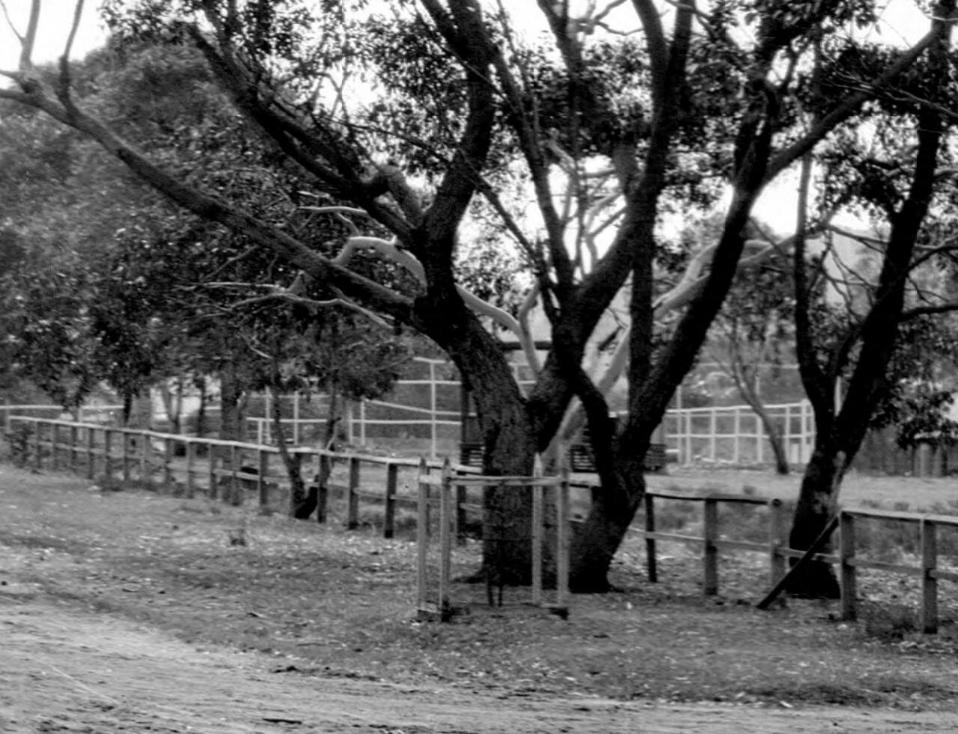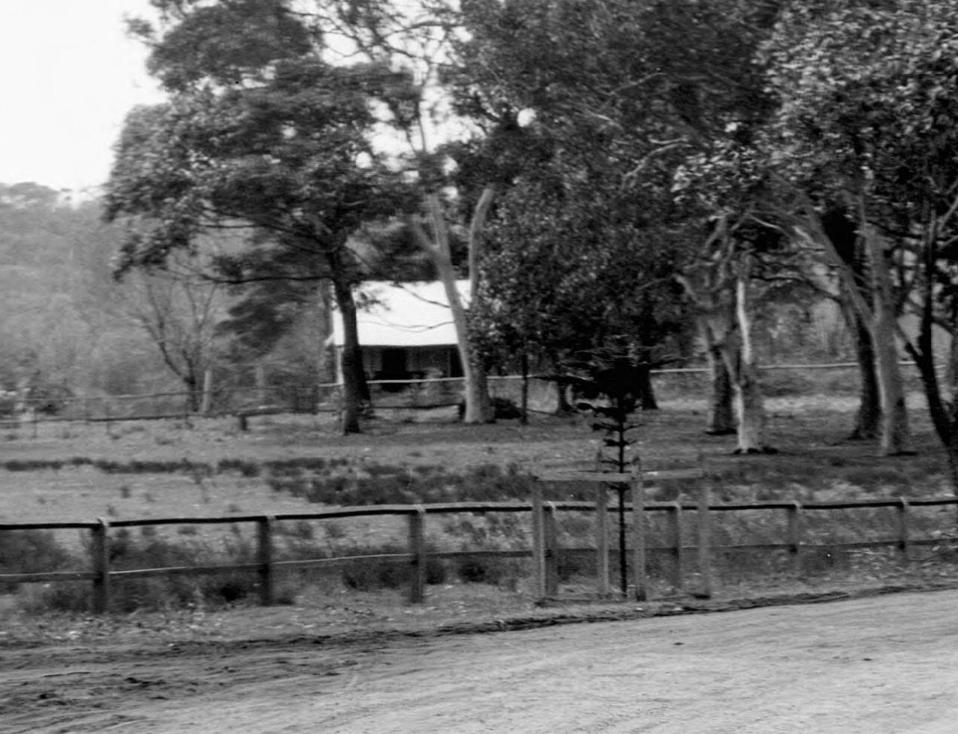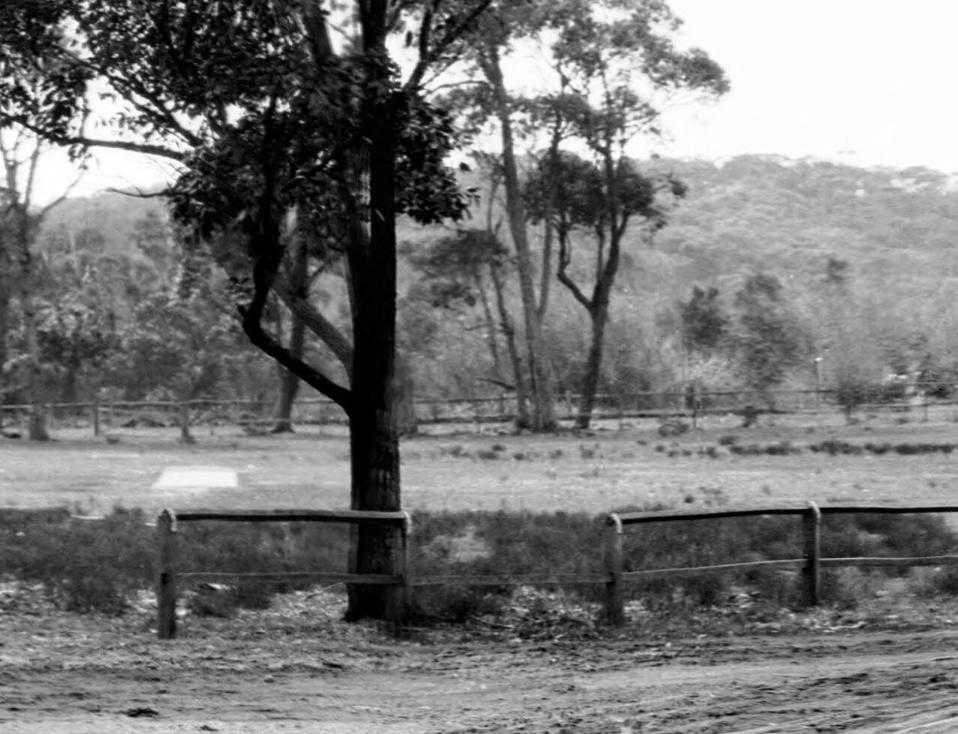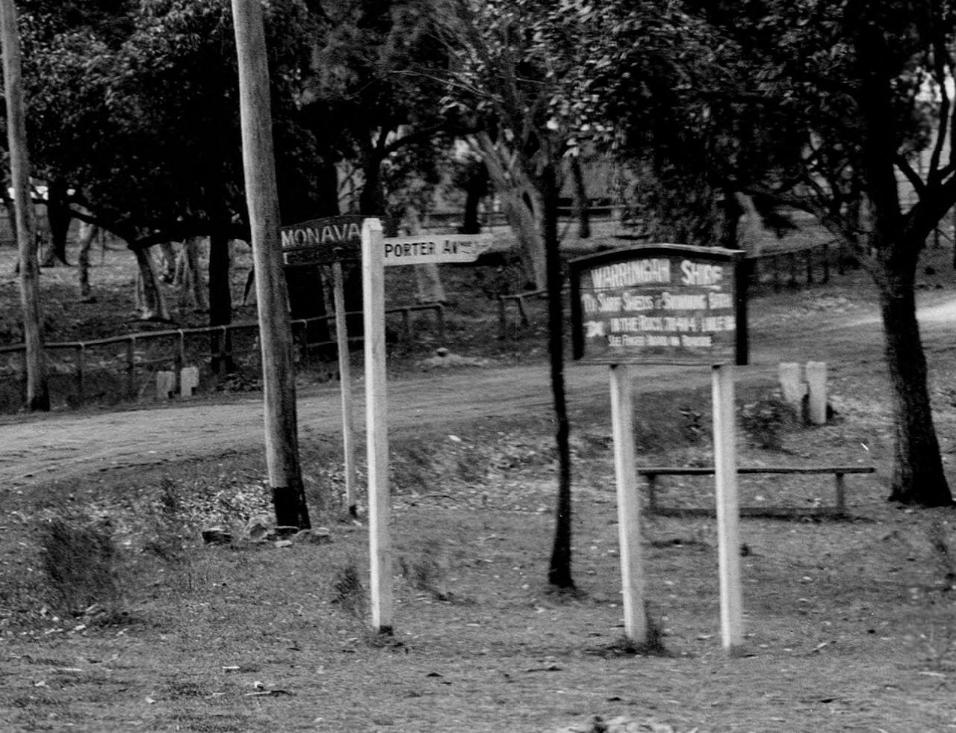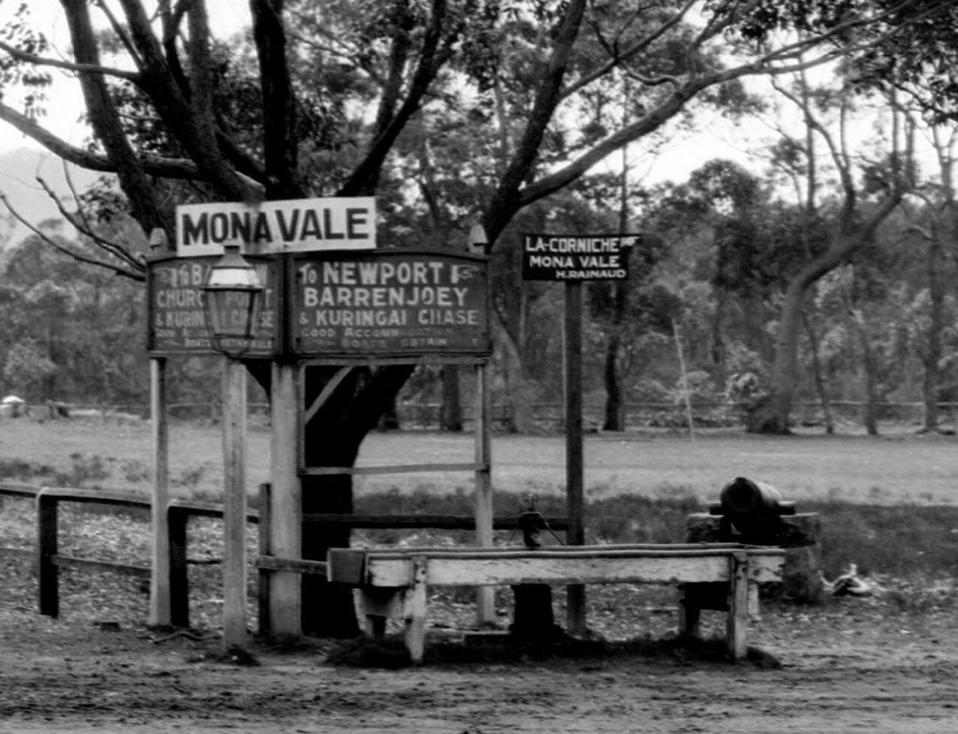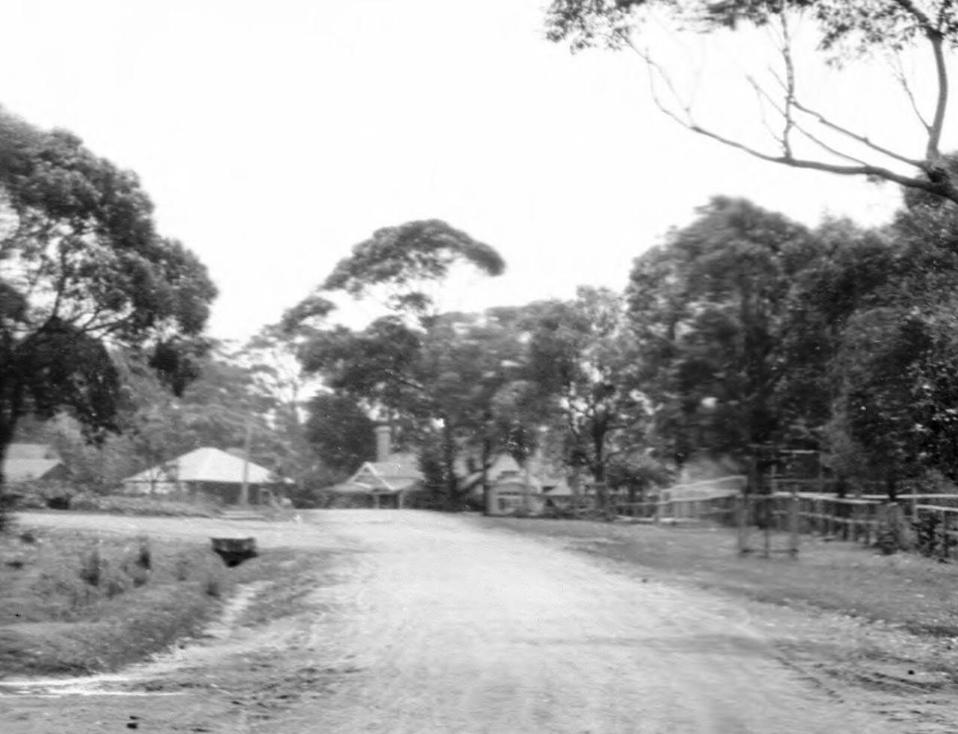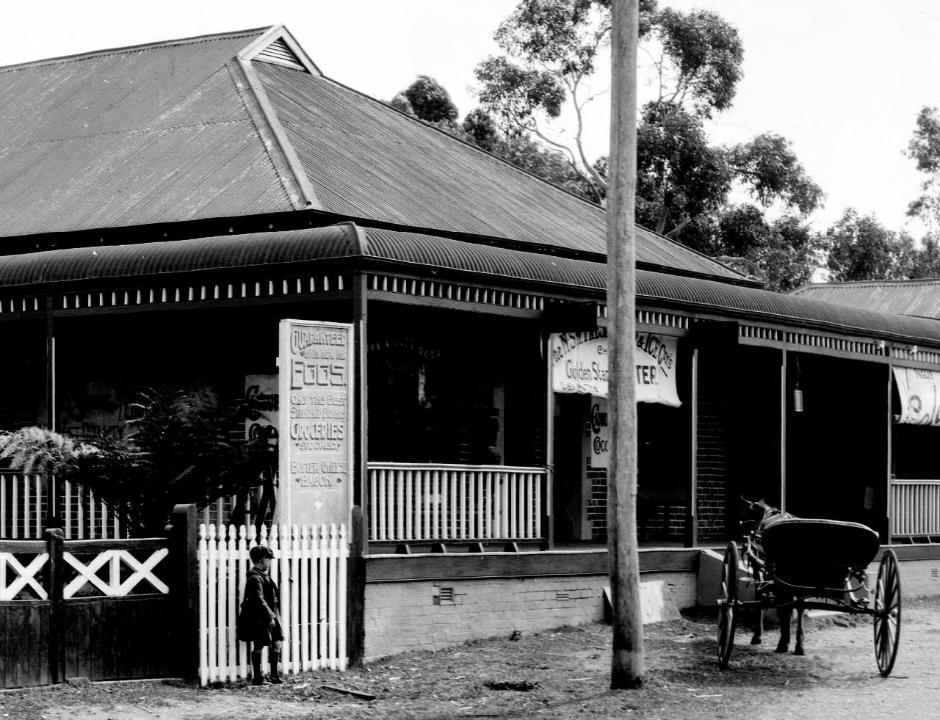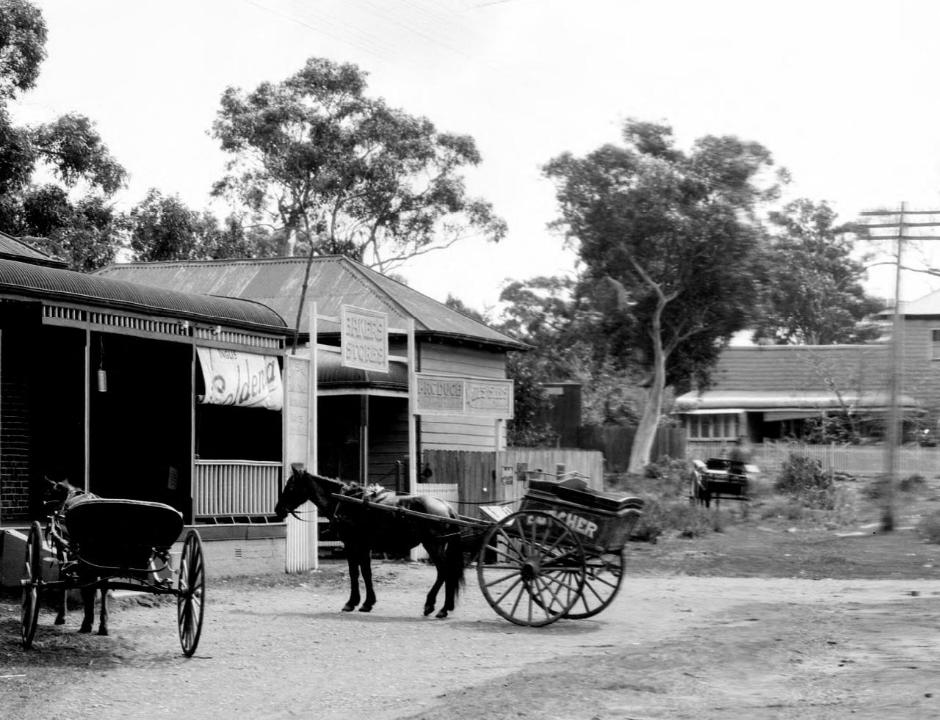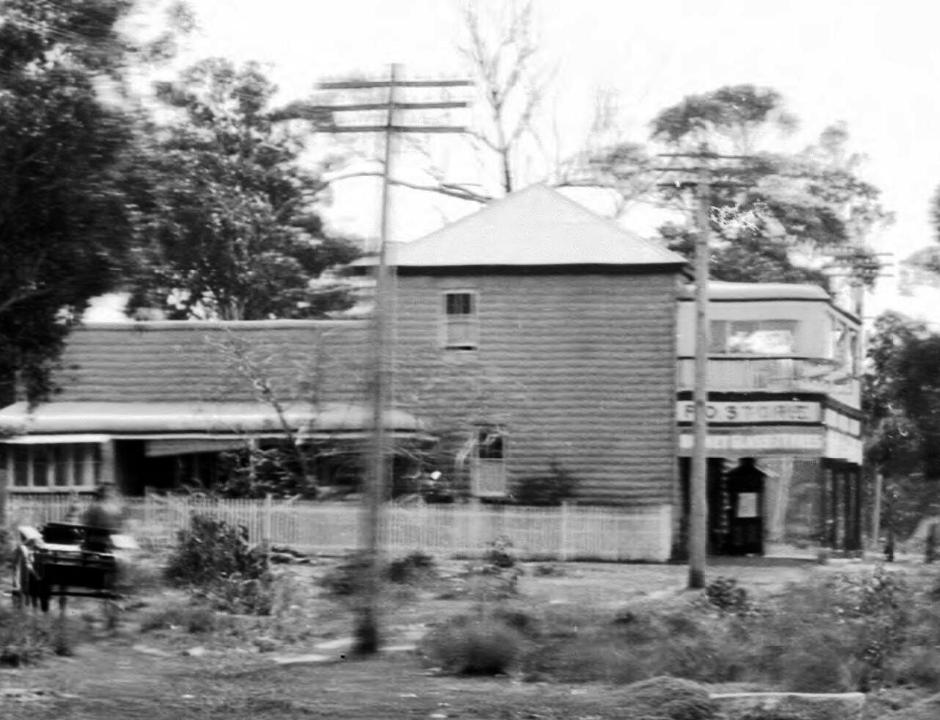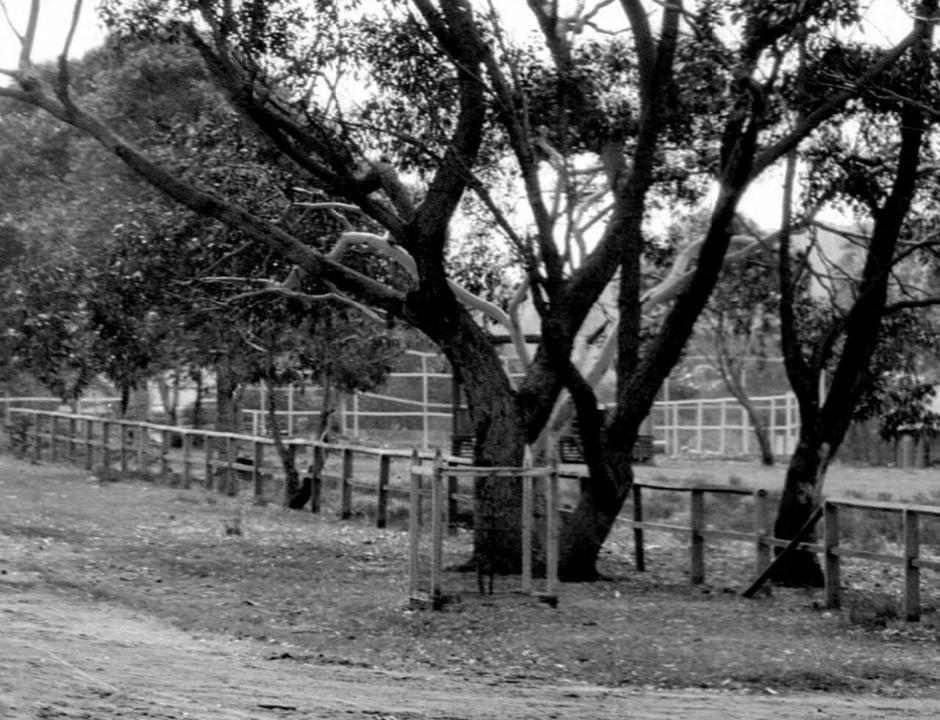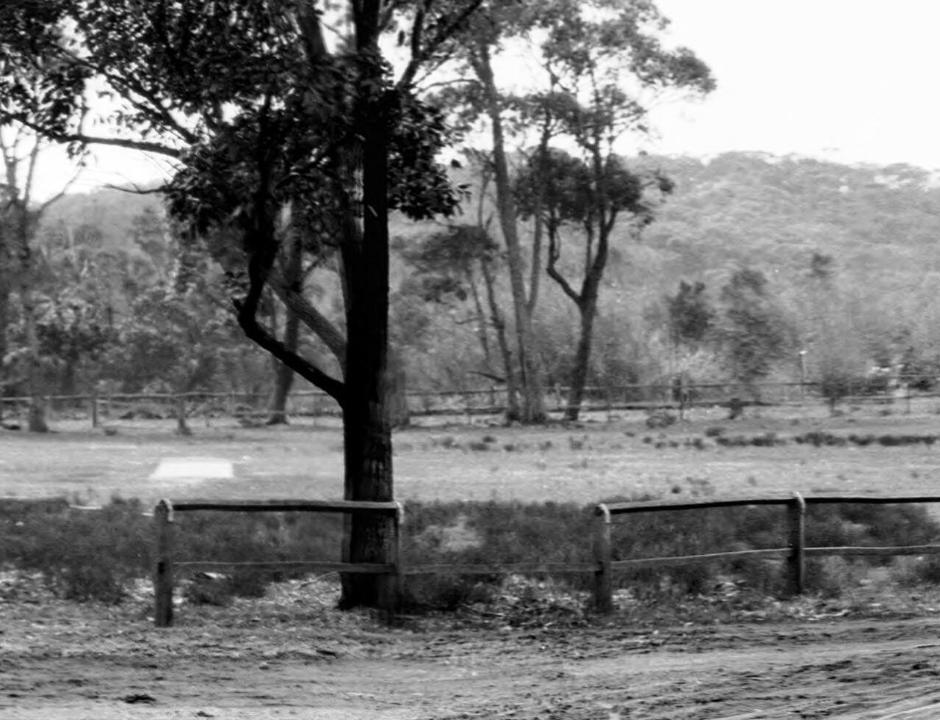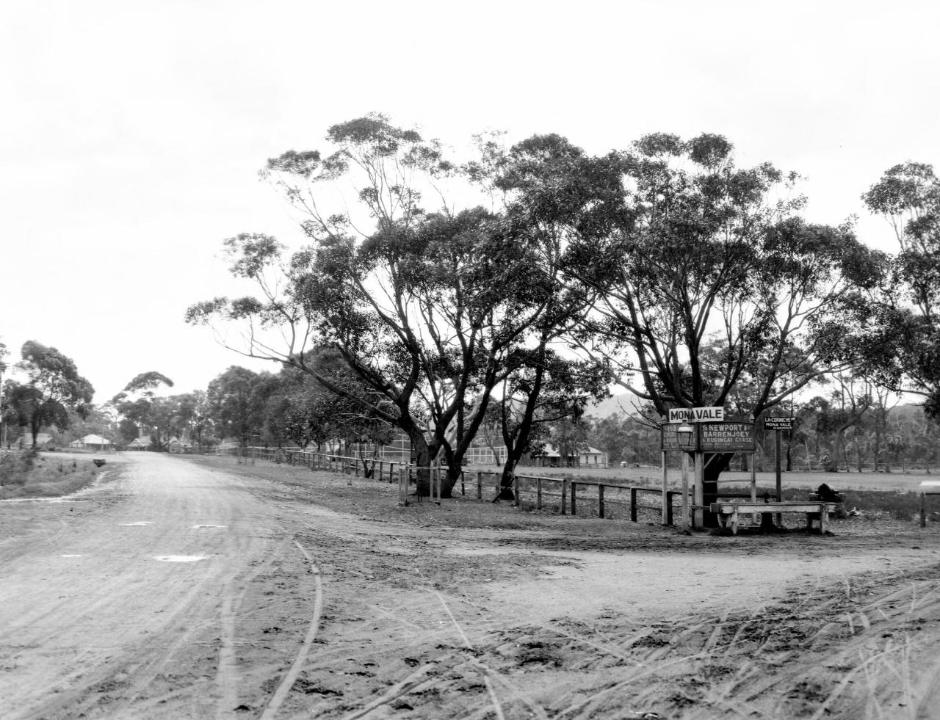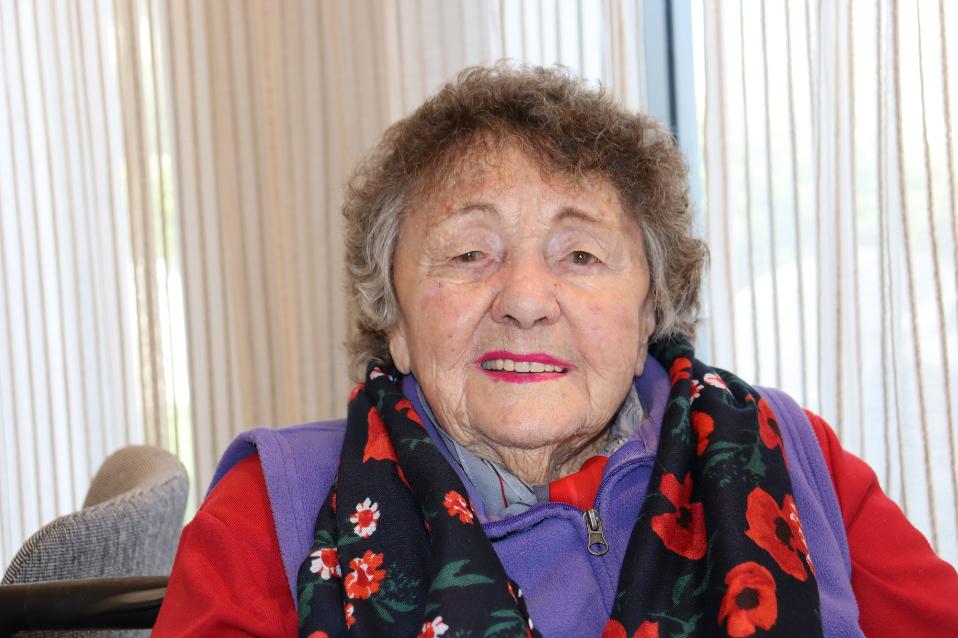
Victory in the Pacific Day (VP Day) falls on Saturday, August 15 this year, marking the 81st anniversary of the end of World War II. In Sydney, RSL NSW will host a public commemorative service at The Cenotaph in Martin Place starting at 11:00 am.
VP Day Commemorative Services Honour the service and sacrifice of all Allied military personnel and home-front contributors.
Beryl Clarke, née Byron, is a member of a family which has over 100 years of serving the Mona Vale community. Beryl's father served in the Light Horse Regiment in WW1 and her four brothers served overseas in WW2 while her eldest sister served in the Australian Womens Army Service (AWAS). These names are listed on the Honour Board at Mona Vale Public School.With this family history of service, Beryl Clarke joined the Pittwater RSL Club Sub-Branch Women's Auxiliary to further serve her community. The Women's Auxiliary was paramount in fundraising for the betterment of the club. When Beryl joined the Clubhouse was an old army hut in Huxley Street Mona Vale. The efforts of the Auxiliary was a fundamental factor that supported the building of the Club on its present site at Foley Street Mona Vale.
Beryl has been a member of the Women's Auxiliary since the early 1960's. As her husband was a member of the the Sub-Branch, she automatically became a member too, but as of January 1 1975, Beryl was given her own membership. As her husband Harold was the Coach with the then named Pittwater Rugby League Club - later the Mona Vale Raiders JRLFC - Beryl would assist be washing all the children's uniforms.
Other Women's Auxiliary activities included:
- Preparation of the ANZAC Day breakfast and lunch
- Performing revues for the Club, Legacy House and the War Veterans Club in Narrabeen
- Selling of raffle tickets for fundraising for equipment for the Club such as the beautiful water fountain at the front of the club - this was removed by Bruce smith when extensions were built,
- They also provided meals on Melbourne cup Day for Sweeps and raffle tickets for Day Club fundraising along with making lunch for all participants. The Pittwater RSL Seniors Day Club operates every Thursday from 10:30 am to 2:00 pm. Run by volunteers, it provides companionship, gentle seated exercises, morning tea, guest speakers, mentally stimulating activities, and lunch for older or socially isolated community members.
Beryl is also an Affiliate Member of the Sub-Branch, supports the Club, attends all meetings and Sub-Branch Commemorative Services. In 2013 she received a Certificate of Appreciation in recognition of 30 years of continued support of the Day Club.
The significant contribution of the Women's Auxiliary to the Pittwater RSL Club has been recognised with a plaque on the upper Cenotaph.
However, it is her four brothers and sister Beryl chooses to honour by sharing memories not only of growing up in Mona Vale but of their service during World War Two. Three brothers served in the Pacific, with two captured at the Fall of Singapore and becoming Prisoners of War (POW) in the notorious Changi prison.
Richard (Paul) Byron was born ‘near a fallen tree’ at Bungendore. Paul, as he was known, was in the Light Horse Regiment in World War One and met his wife at Dead Horse Hill, a picnic spot west of Mona Vale Cemetery. He was riding in full uniform when he met Ida Louisa Johnson, who worked as a midwife in the area, and they married soon afterwards, Ida purchasing her wedding dress materials from Porters 11 Mile Store at Bungan-Newport.
The NSW BDM’s record: 8667/1916 BYRON, PAUL to JOHNSON, IDA I registered at MANLY
They had 9 children between 1919 and 1931: Francis - Frank (Johnny), Neil (Ned – spelt ‘Neal’ in NSW BDM’s), Roy, Burnice, Henry, Dulcie, Marjorie, Aileen and Beryl.
The family home was at 73 Park Street and not much more than a mud and hessian hut to begin with. The family were by no means well-off but never went hungry; they grew their own vegetables, gathered mushrooms from Bayview golf course, picked blackberries and caught rabbits and fish.
Paul worked for Warringah Shire Council, one week on and one week off, and won £60 in a lottery at some stage. They bought a Hudson Ready Cut Home and Tommy Johnson erected it. George Hudson & Son Limited of Sydney manufactured ready to erect timber and corrugated iron 'kit homes' from about 1905 until the mid 1960s.
Neil remained in Mona Vale all his life. He was one of a few former Mona Vale Public Schools students who served at Tobruk – although he was fortunate to survive. He went on to serve in New Guinea.
Francis and Ray, who both signed up at Manly on July 2nd 1940, were members of 2/18 Australian Infantry Battalion sent into Malaya and then Singapore, and became prisoners of war after the Fall of Singapore.
Henry served with the 32nd Heavy Anti-Aircraft Regiment and wasn't discharged, from New Guinea, until 1946. The 32nd Australian Heavy Anti-Aircraft Battery (AIF) formed part of the Port Moresby air defences in New Guinea starting in 1942, protecting strategic Allied bases against Japanese air raids before later serving in locations like Emirau Island.
A huge thank you to Deborah Carter, President of the Pittwater RSL Sub-Branch, for her help with this Profile. Deborah presented Beryl with a 75th Anniversary World War II Commemorative Medallion and Certificate to Recognise War Veterans.
A special commemorative medallion marking the 75th anniversary of the end of the Second World War was made available to every living Second World War veteran to say 'thank you for your service'. The medals could also be given to descendants.
Minister for Veterans' Affairs the Honourable Darren Chester MP launched the medallion and certificate in the lead up to the end of the Second World War commemoration on 15 August, awarding the first medallion to veteran Rose Jackson.
"As we approach this special anniversary, we recognise that it will be one of the last opportunities we have as a nation to publicly acknowledge the remaining veterans of the Second World War, of which there are around 12,000 still with us today," Mr Chester said.
The obverse features the Commonwealth Coat of Arms, wording of appreciation and identify by name theatres of war that saw the significant involvement of Australian Armed Forces. The medallion reverse design utilises the poppy as the central symbol surrounded by the wording of 'Australia Remembers' and the beginning and end years of the Second World War.
The medallion is presented in a display case and will include a card that explains the design and contains a brief expression of thanks. The theatres of war detailed on the medallion are based on locations identified within the Commemorative Courtyard of the Australian War Memorial (AWM). The design of the commemorative certificate complements the medallion. The design includes the Commonwealth Coat of Arms, 'Australia Remembers' wording and the beginning and end year of 75 years of the anniversary: 1945-2020.
smaller.jpg?timestamp=1785987356364)
Both ladies, understandably, started weeping as Deborah handed the medal to Beryl - not only are they close friends, both have served our community and its Veterans for decades.
This Issue, for a very special VP Day Profile, Beryl shares some of her memories of almost 100 years in Mona Vale and her family's Service during World War Two.
Your dad was in The Light Horse and that's how he met your mum?
Yes. Coming down, Tumble Down Dick Hill.
On the Mona Vale beach area just out the front here there once was Brock’s ‘The Oak’s grounds – the villa along the end of the road here where the petrol station site is, was the original building, also called ‘The Oaks’. The Light Horse used to camp and do exercises from 1906. Some came here in January 1915, which was when your mum and dad possibly met, because in one article it says they stopped over there and had some lunch. Does that date sound right to you?
Yes, that’s right. It used to be called the ‘Gordon Road’ years ago, and went up and round, up the back and round, which is still there. There was a big flat rock, they called it ‘Dead Horse Hill’, because a horse died down there. My mother and the family were having a picnic on the rock.
My father and the horses, they came through the bush, and they stopped and they started talking. And mum, and my grandma gave them oranges or something mum said, she was a little shy. And then he said, could he come round and visit on this Sunday? And that's how they met, because they were down here doing exercises and stuff over the weekend.
Some of them used to come through the bush that way and come down the hill, which was just a track. It was all just bush there. Even when I was younger, it was still not ‘Mona Vale Road’.
You were born on June 21, 1931?
Yes, it was my 95th birthday on Sunday. I was born at a private hospital in Collaroy.
Happy birthday.
Thank you.
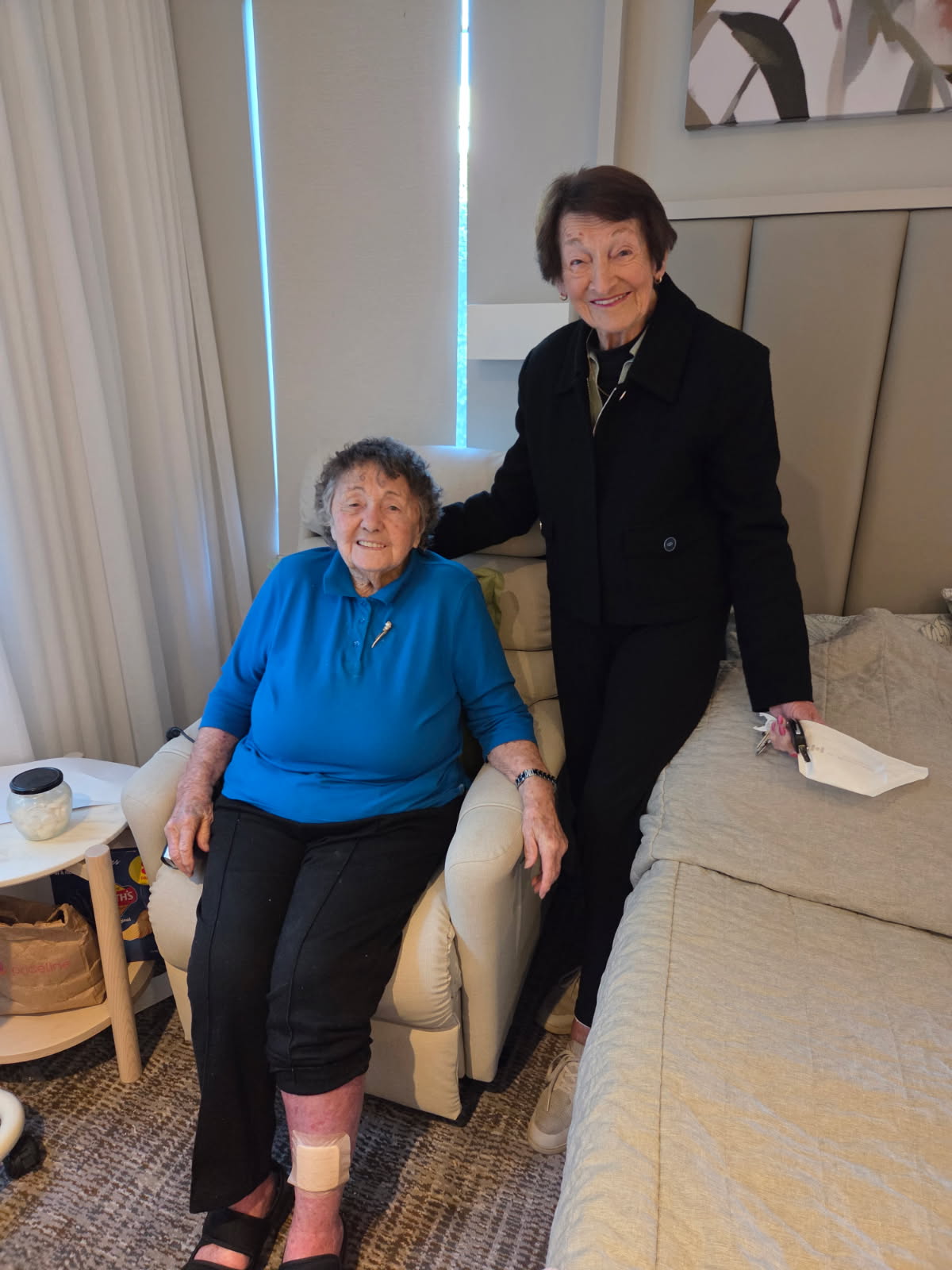
Beryl with Dorothy Clark on her birthday. Dorothy is a Sub-Branch member and Pittwater Life Member - they are very close friends
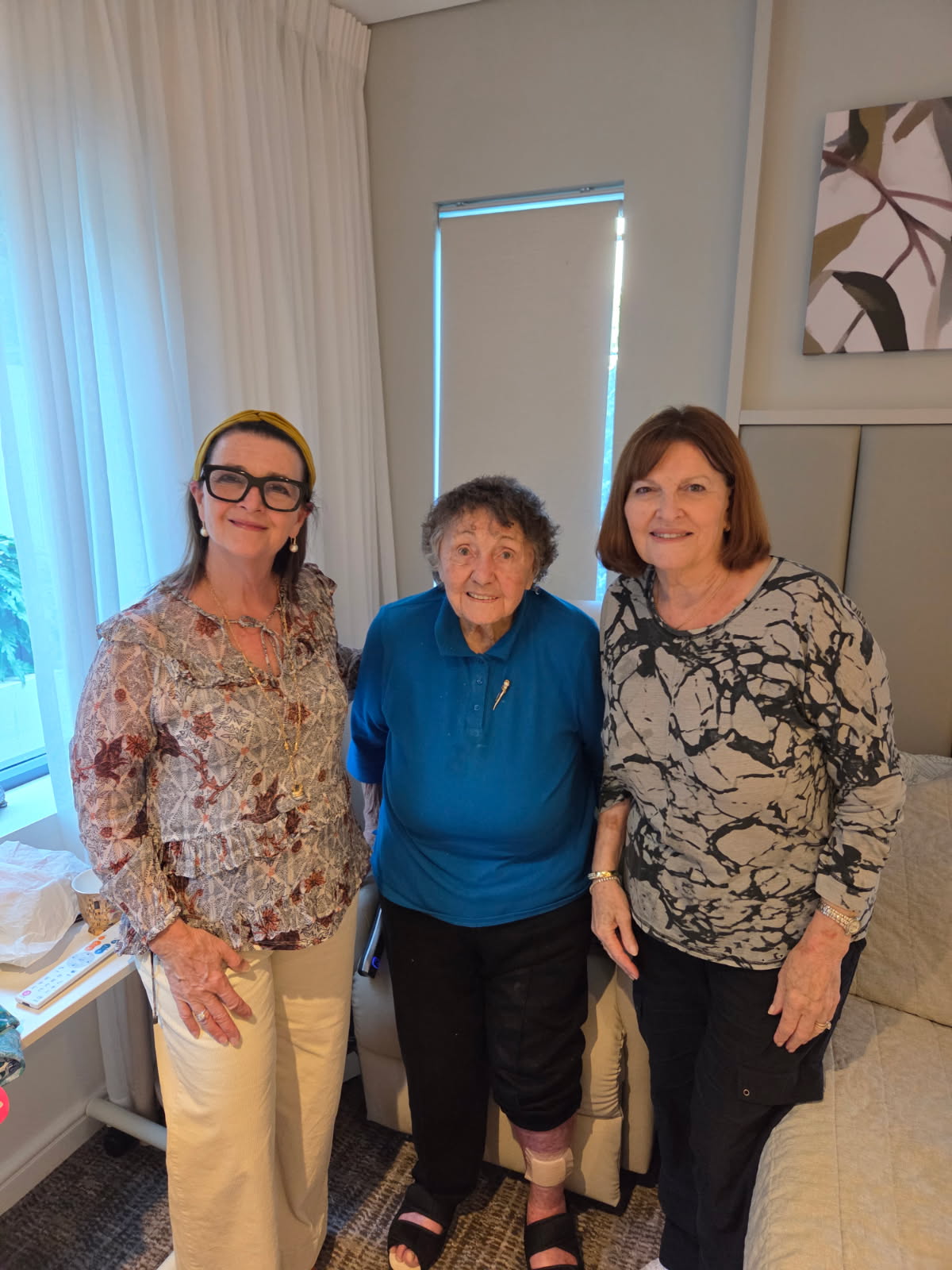
Deborah Carter, President of Pittwater RSL Sub-Branch and Sandra May, Secretary of Pittwater RSL Sub-Branch on Beryl's 95th
And you're the youngest of nine children? What was Mona Vale like when you were growing up?
Our house was only three houses in Park Street – we were at what became 73 Park Street. Mum bought the land for £15 an acre in 1920 off an agent called 'Large'. He used to live along Bayview Road. Mum paid off the land at 2/- a week. Mum used to cart water from Bayview up to there, to the house. And then she paid to get it put up to the house. Grandmother was here too, she was a midwife. And her mum's mother, she's got a big plaque in the Church for her. It was still all bush and farms.
What was your mum's mum's name?
Doris Johnson, she was a Johnson. There was a lot of Johnsons here. Grandfather Johnson lived up on the hill, which was all bush, between Park Street and where the school is. That's where Mum was born. Grandfather had 2 horses – and 5 acres at 11 Waratah Street, Mona Vale. To the day he died never got electricity, never got running water on. When I started school (4½ years – 1935/36) I’d walk up through the bush and it was a great thing to call into grandad’s on the way. He had a big stove going with a big black kettle and he’d give you a cup of tea with powdered milk and a big piece of homemade bread he used to make himself with a big piece of cheese with jam on top. He had an old chimney – used to smoke his fish.
Mum's mother's mum, she was a midwife. She used to walk to Church Point and Bayview and cook meals for families who were struggling - she did that for years. That's why when she died, the women around the area got this beautiful plaque that was on the Bible stand at Church Point, but now it's on the brick wall inside the hall; Louisa Johnson.
The church itself used to be opposite where it stands now – there’s an old photo showing where it was – and then they moved it across the road. This is the one that came from Mona Vale headland, the Bungan end. It came from there down to the end of the Golf links and then to Mona Vale.
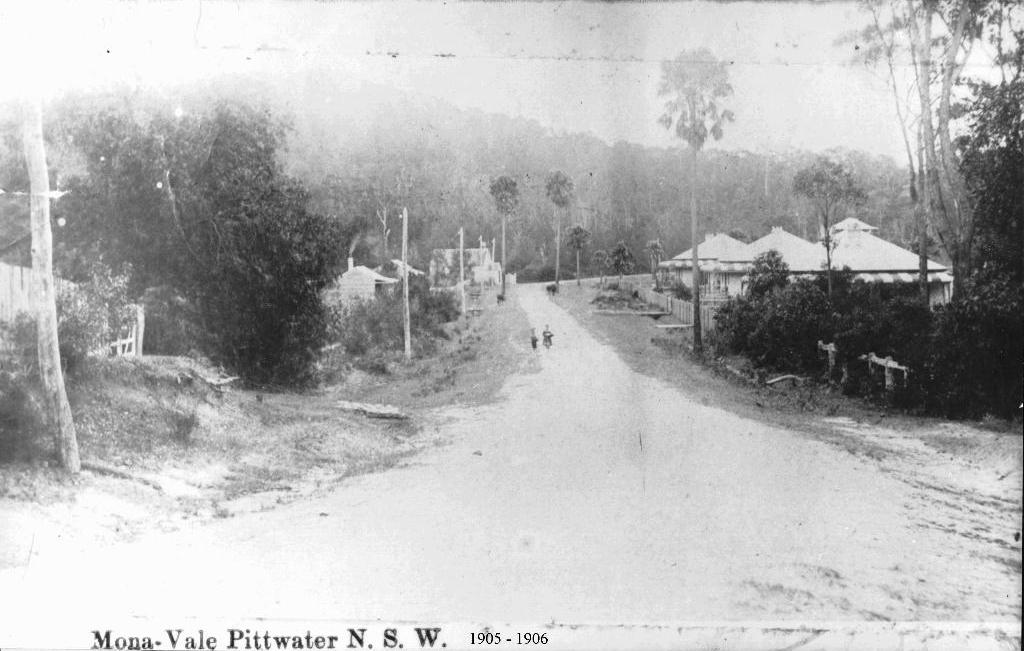
Mona Vale circa 1905 - looking towards Bayview. To the left is St John's Church of England. It is on this site that it was proposed to build Mona Vale Public school.
Louisa Johnson lived down there too. My mum's brother, who worked on the Golf links, he had that in the house, just up from Cabbage Tree Road. Then, on the corner of Cabbage Tree Road is old Jim Shaw the Blacksmith. Jim Shaw said he could remember Aborigines here. Behind Jim’s place were caves full of cockle shells (middens). Jim had a big bellow and about 4 or 5 children would get on it and make lots of smoke. Jim used to stutter ‘bbbboys dddon’t ppump it too hard’, we smoked him out. He worked alone, made shoes, cart-wheels.
Mum used to work as a midwife too. And she worked at La Corniche at Mona Vale, on the beach, when she was 18, as a waitress. Mum would pick blackberries and sell them on the side of the road. Mum took in washing, took shirts for Mark Foys, and was starching men’s shirts for 3p. Mum would sit up all night making children’s clothes.
Mark Foy lived at Church Point, near Bayview. The Green Frog was on the left hand side up on the hill. We never went in – only for the very rich. Later the Pasadena was there too.
What I remember growing up is we'd go to school all through the bush. There was bush right through Grandad's place, on Waratah street, and then down to the school. I used to go early because all the koalas used to walk across with their babies on their backs. It was just bush, there was nothing else.
I was just telling someone the other day, they showed me my mother's house - a photo, although not here, but the boys have got it. They said that in 1935-'36, they bought a Hudson ready-cut home for built, £326 pounds. They paid for it in one shilling sixpence a month instalments. That was a fair amount then though.
When I was born in ‘31, my father's work was being cut back, this was just after the Depression started, and he’d earned an extra five shillings, I suppose you'd call it then. He said to Mum, well, we'll get a lottery ticket. She said, no, the kids need sandshoes, the lotteries sold for threepence then I think they were.
He said, 'we’ll, toss a coin'. And they did. So they got the ticket and they won £60 pounds. That was a big amount then. He must have had a feeling that he was going to win. Oh, he was funny like that. But that helped pay for the house.
We had nothing, but we had a yard and mum used to dig it all up and plant vegetables, so we always had fresh vegetables, we always had animals – cows and chickens, so we had eggs and milk, and my brothers used to fish down the bay and catch fish. Mum used to get up in the Winter's morning, go and pick buckets of mushrooms off Bayview Golf Links. Years ago, that would just be all sheep running on there. They filled it in. There was a chap there that started filling in down towards the Bayview end. There was a man who made 3 elephants all together and put them on Bayview Golf Course. A great artist, Mr Squire, who lived in Park Street, made these. The elephants were huge – with water coming out their trunks into the pond. He owned the house in Park Street and I remember as a child there were spears, turtles – characters in Mona Vale.
.jpg?timestamp=1698691797631)
The elephants - original placement on perimeter of the Orrs home (who commissioned them), and below; showing Bayview Golf Course in the background
.jpg?timestamp=1698691834242)
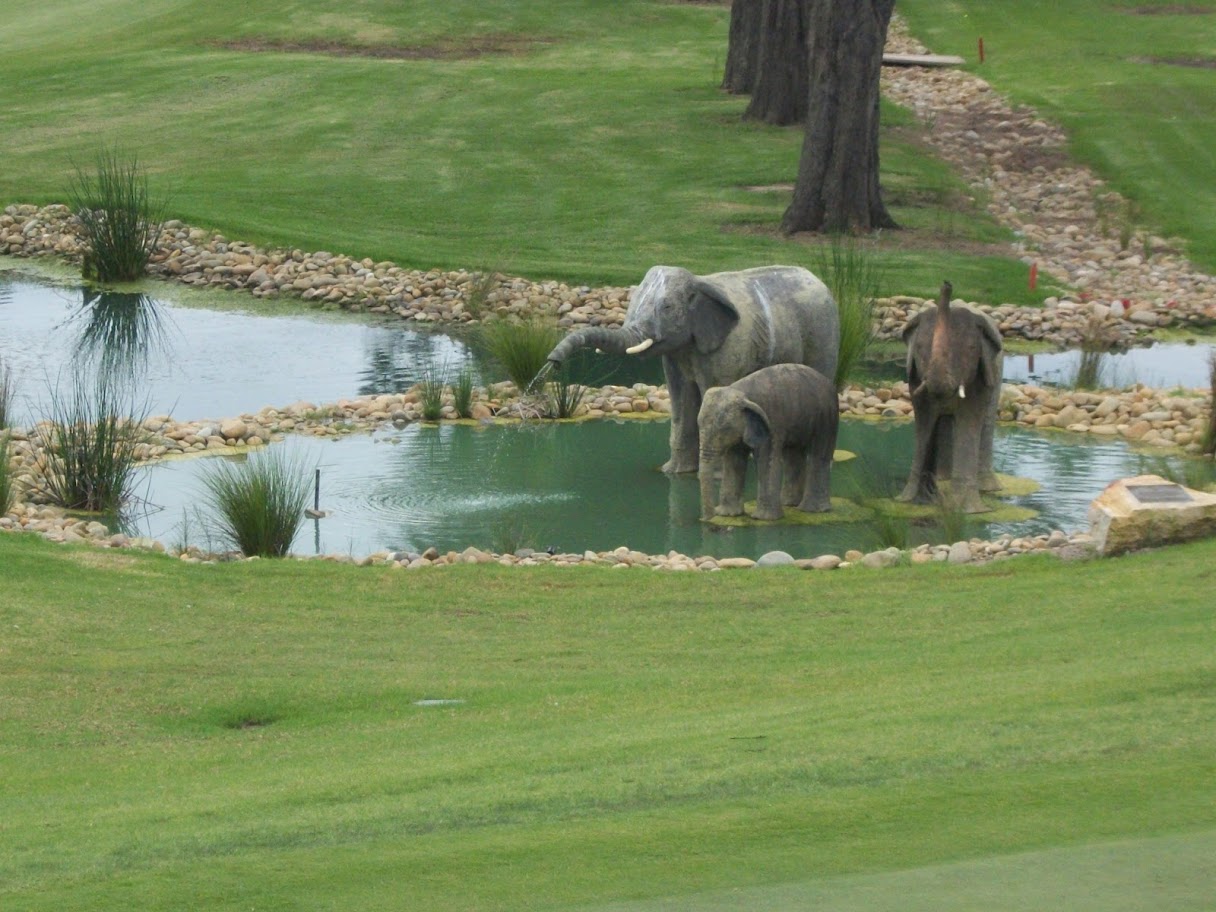
And Uncle Joe, John Johnson, that's Mum's brother, he worked on there, the golf links, for years and years and years. The fairways were divided by sheoaks, taken out of the swamps and planted as dividers. It used to be a 9 hole golf course. Two cousins helped with the Unemployed Relief to clear top half of Bayview Golf Links – 7/- a day.
Grandfather worked on the council too and every Saturday he’d take Roy and my older brother in horse and sulky to tidy the dressing sheds and clean them. He had 3 windmills to prime, Palm Beach, Whale Beach and Bilgola. He always had a big beard, would poke his head round the door and startle us girls, make us scream.
You were one of a five girls; you had Burnice the eldest, then Dulcie, then Marjorie, Eileen, and then you. Did you girls all have a room together at home or?
There was three of us in one room or two. Mum started off in a little mud bricks with hessian hut. Then they got that hut and ready to go home. But every time we'd come home, mum was always changing things. She'd close the back door and rearrange how the rooms were. I can remember going to Whittaker's store at Dee Why, we were ordering timber and she’d change it all around.
Mum had the front room and she’d get out of bed and the bed would be made 5 seconds later – it was the only room in the house we knew we were not to go into. It was like a film stars room with pink and beautiful lamps. When she made her bed she put a board in the bottom under the quilt so it sat absolutely dead square. We were never allowed to sit on it. I suppose it was the only room the poor lady had that was (hers). Then there was a bedroom that had three brothers, then the next bedroom had the three of us in there, Roy had one off the kitchen out the back, and there was a verandah – they built it all up. Everyone except me, when they got married at some time or another would live at home with mum in the old garage before they got settled.
You went to Mona Vale Public School?
Yes, and my mother did too. I've got photos of her at Mona Vale.
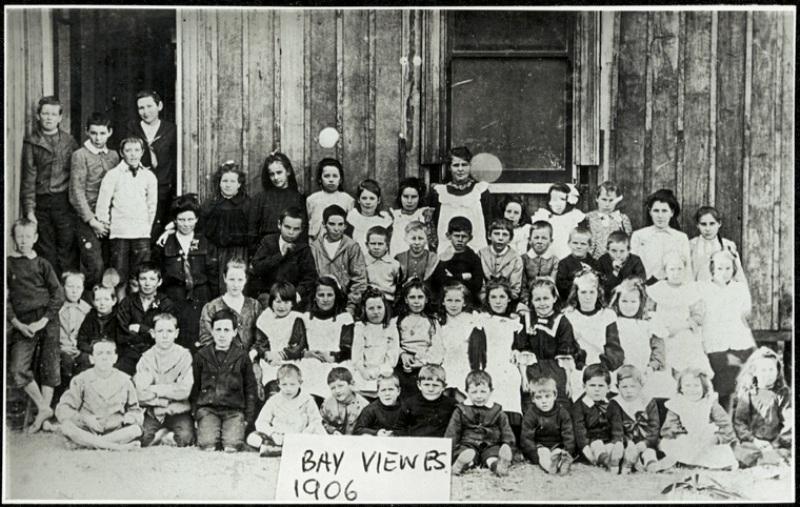
Bay View PS students 1906, Image No.: 15051_a047_000882, courtesy State Records NSW - moved to Mona Vale in 1906 Ida Iris Johnson is in second row from front in black dress with white braiding, (3rd from right) - Spring 1906 move to Mona Vale (some sources record they were in new school by July 1906): Transfers and Appointments - Teachers: Mr. S. Morrison, from Newport to Mona Vale; SCHOOLS AND SCHOOL TEACHERS. (1906, September 5). The Sydney Mail and New South Wales Advertiser (NSW : 1871 - 1912), , p. 626. Retrieved from http://nla.gov.au/nla.news-article163682045
You were at school when World War Two broke out. This time they didn't wait for people to sign up, they seconded them in?
They didn't tell my brothers, they just went. They signed up voluntarily, they wanted to help. I had 4 brothers and one sister who served in WW Two; Francis or Frank, Henry, Neil (Ned), Roy and Burnice.


.jpg?timestamp=1785980420519)
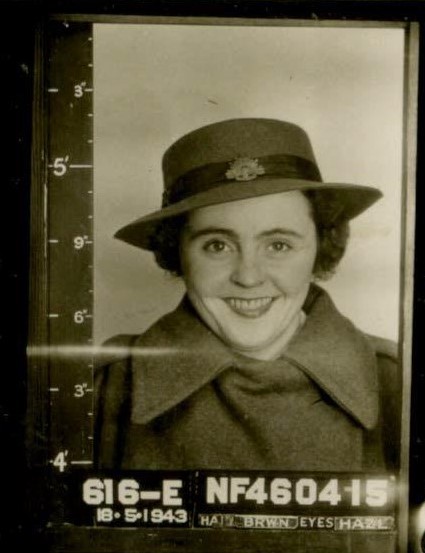
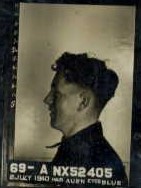
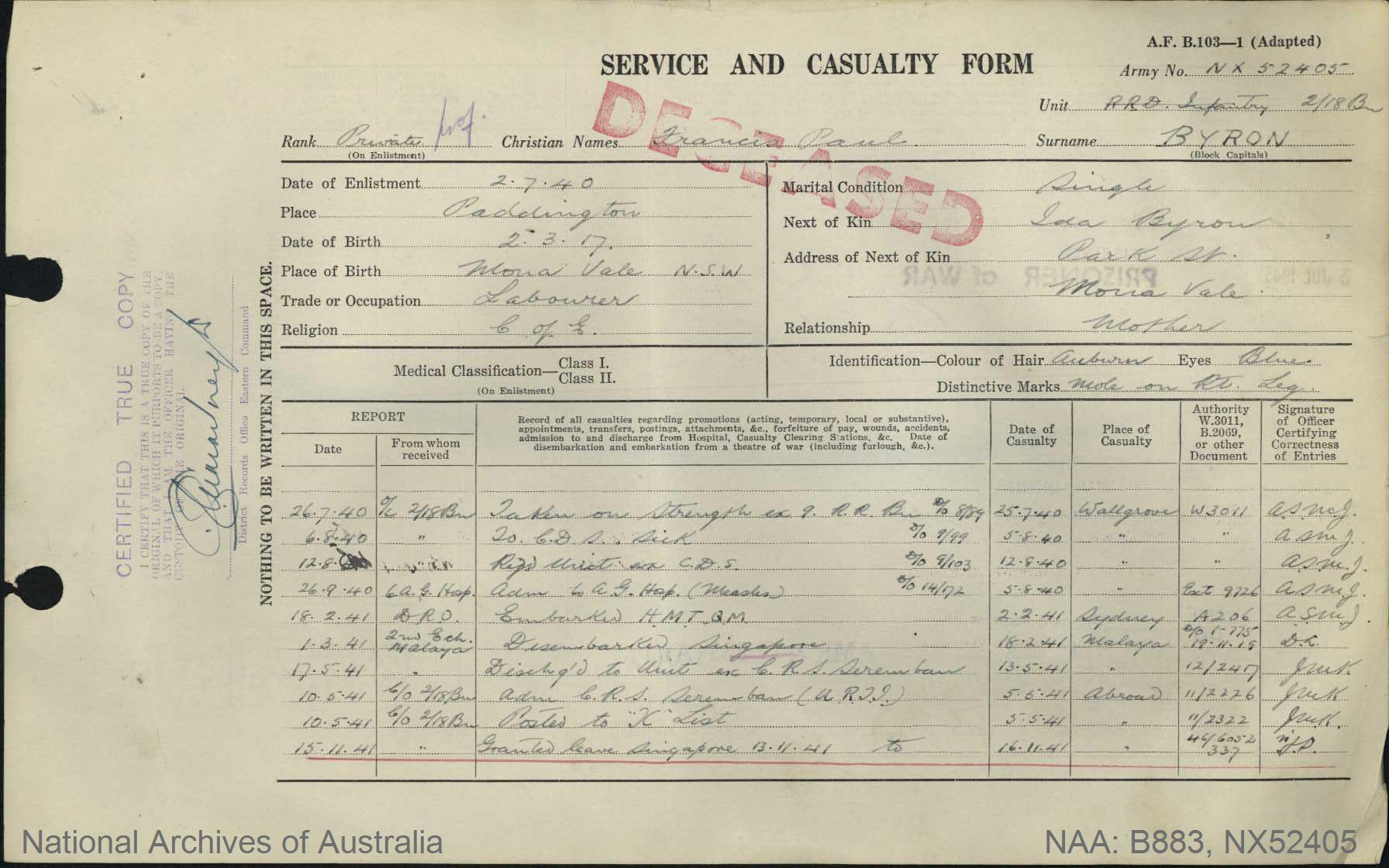
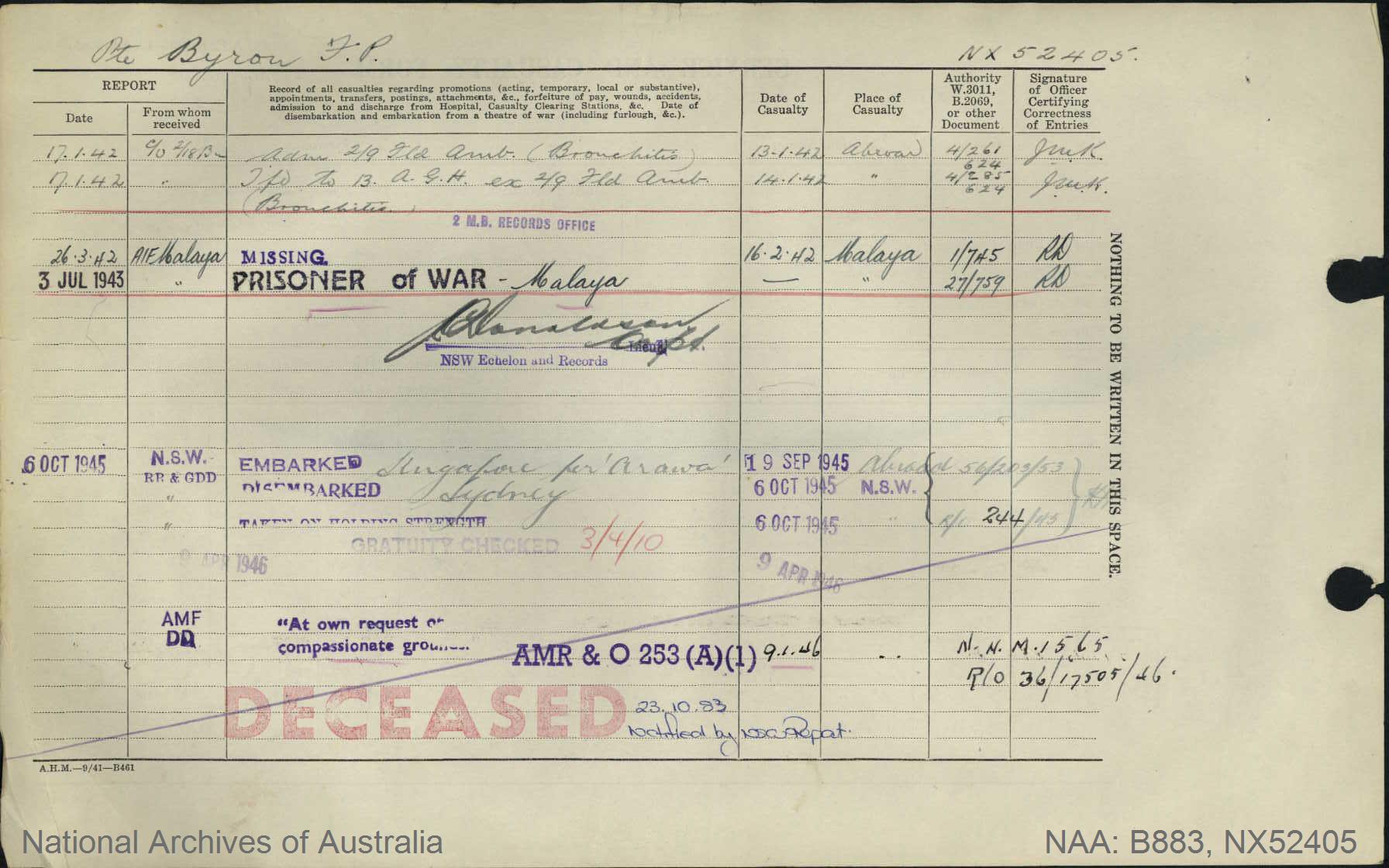
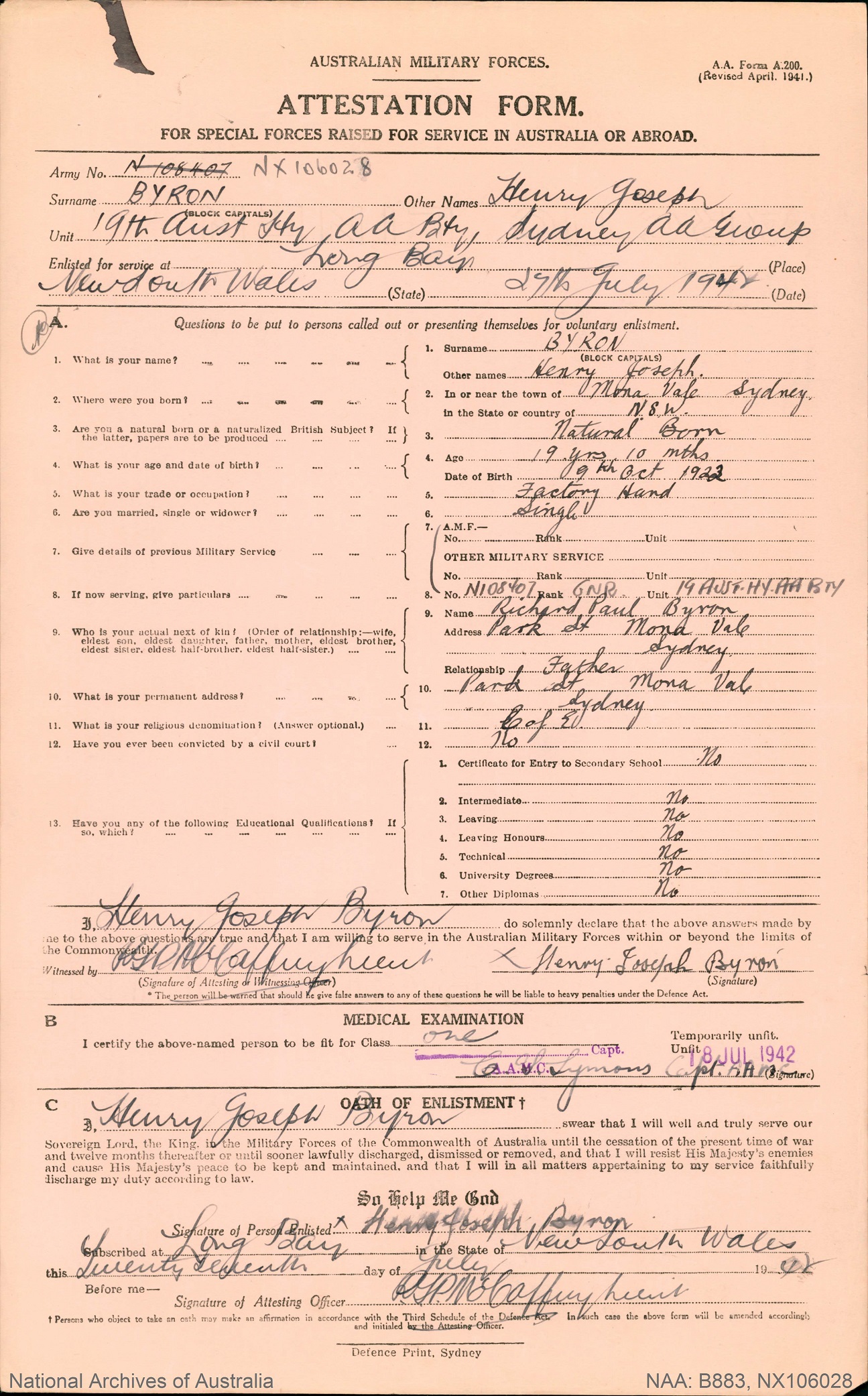
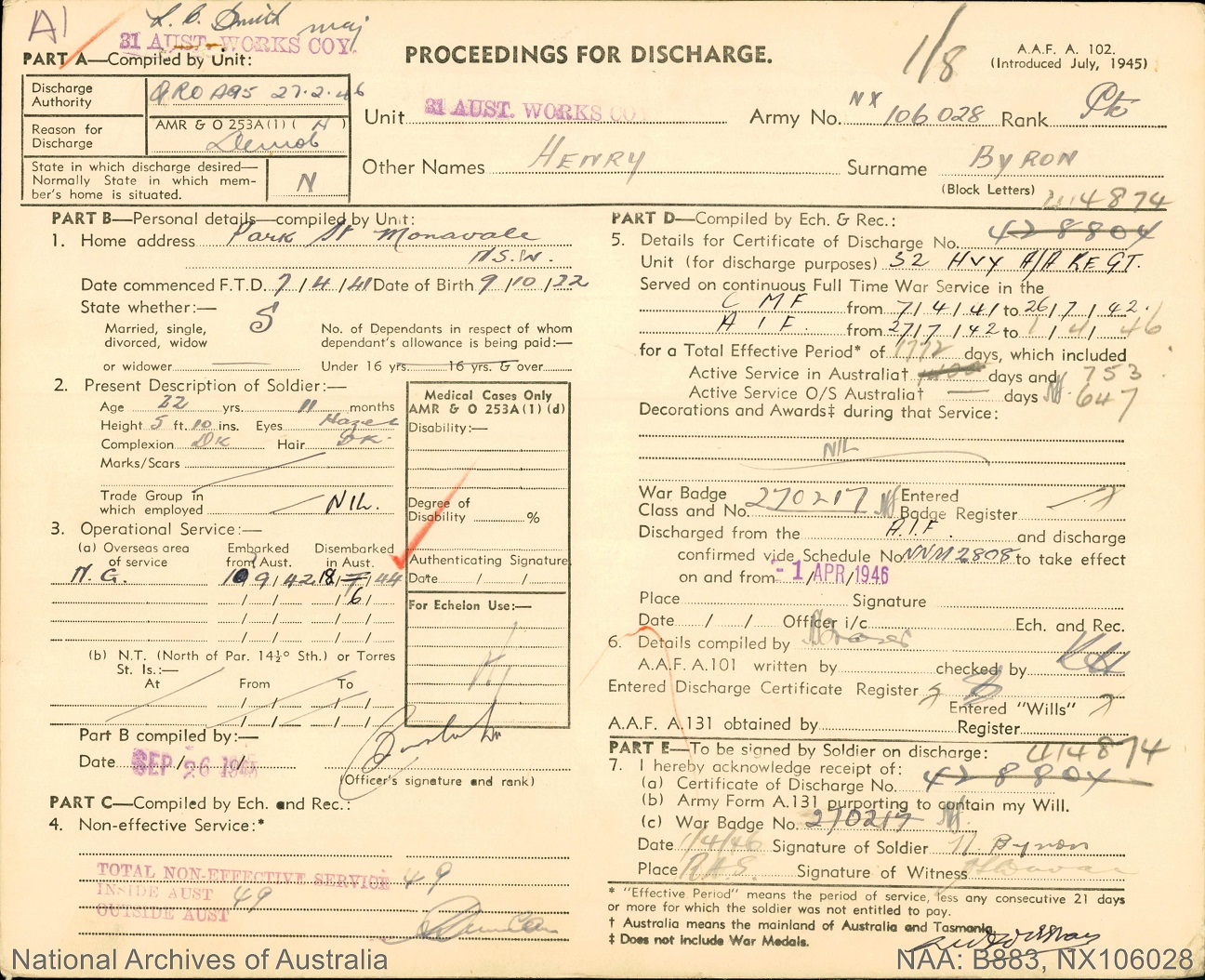
Photos from National Archives of Australia War Records - Henry's file is missing a photo of him
And your dad would have served in World War One?
Yes; he was a Light Horse man. He told us a story about the horses, how they, when the war finished, they took them for the last walk, he said, because they weren’t allowed to take them home again, and were going to use them as meat or whatever, and they shot them.
It's the same as my brother Neil, Ned as we called him. He had this lovely cat, and it got shell shocked. But it stayed with them all the time, and they looked after it. When they'd come home, I remember going, the train pulled into Central, and the first thing that came off was a cat in a cage. And this was not the cat chasing the rats, the rats were chasing the cat.
They looked after it, it lived for a fair while after, you know. So it came home to Park Street, for a while, then other people took it. That was just one of the things that happened, with the animals and the soldiers.
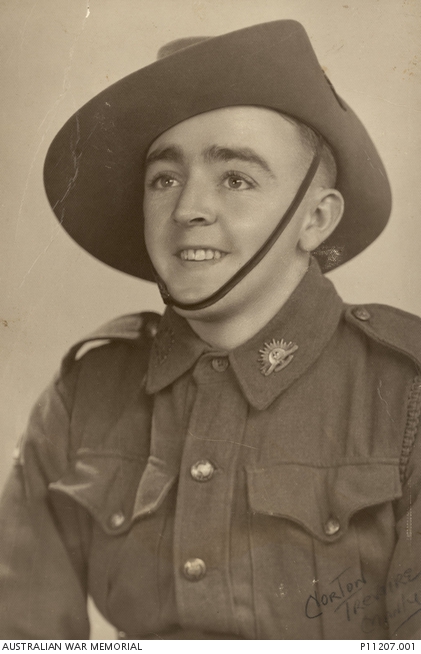
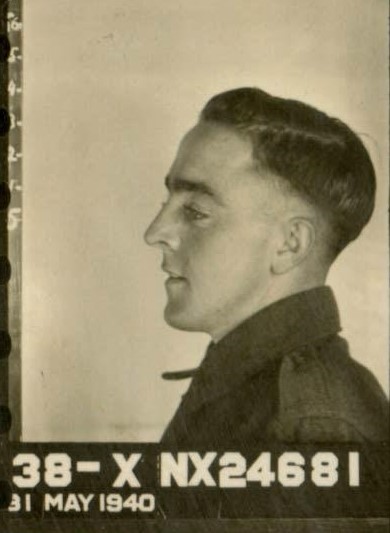
Studio portrait of NX24681 Private (Pte) Neil Alfred Byron, 2/1 Pioneer Battalion. Pte Neil enlisted on 31 May 1940 in Paddington, NSW, and embarked for overseas service in September 1940. The 2/1st Australian Pioneer Battalion served as part of the allied garrison during the 1941 Siege of Tobruk in Libya, earning the legendary moniker "Rats of Tobruk" after enduring months of intense enemy bombing and ground attacks. They handled specialised tasks like constructing defences, laying and clearing landmines, and repairing barbed-wire perimeters under fire. - AWM
The Rats of Tobruk were soldiers of the Australian-led Allied garrison, as well as the Polish Independent Carpathian Rifle Brigade that held the Libyan port of Tobruk against the Afrika Corps, during the Siege of Tobruk in World War II. The siege started on 11 April 1941 and was relieved on 10 December. The port continued to be held by the Allies until its surrender on 21 June 1942. Between April and August 1941, some 35,000 allies, including around 14,000 Australian soldiers, were besieged in Tobruk by a German–Italian army commanded by General Erwin Rommel.
Did your dad ever speak about his war service?
He did, but not a lot. He just said it was terrible. None of my family did. My brothers too. I had two brothers who were prisoners of war in Changi. But they didn’t talk about it either, not a lot.
When they'd come home, they'd put on a big reception down in the old hall. They came in and as they walked in, they'd start playing ‘Roll out the Barrel’ and they'd both start screaming and yelling; ‘Rennet’. It afterwards came out that when they were prisoners of war, if any of them did anything wrong, they'd make all the other prisoners stand on this hill and they'd put the offender in a barrel and roll him down the hill. And they'd have to sing ‘Roll out the Barrel’, and as it went past, they'd chop his head off.
So you can imagine what memories they had and that they didn't want to hear that song ever again. And of course, the people holding the reception didn’t know that either, no one knew. So, no, they didn’t want to talk about it.
Where was the reception held?
Oh, well. That’s going back. Gordon Road was the main one, and then right as you get to the junction there was Cock's shop, and there was a building. You went up the stairs then behind that was a big hall. They had a reception in there. And I think later on there was old Joe and the fruit market in there.
You were at school when they were serving and your sister Burnice, married towards the end of the war?
Yes – she married Ray Sawyer. He was in the army, and he was born at Albury in 1921 and was a farm hand when he enlisted. He was a gunner and discharged in 1946 after serving across Australia. He met my sister at Luna Park.
Him and his mate Bill was there with him and she was on a merry-go-round. He turned to his mate and said ‘See that girl, I’m going to marry her’. And he did. He was a lovely man. He just knew straight away.
You used to make camouflage nets at the school?
Yes. They had the big bobbins and netting. After lunch I'd spend half an hour. We made them on the old fence. You'd put that nail, and you'd hook it up. And you'd make camouflage netting for the gunners.
So were they using them locally?
They were, wherever the tanks were. I remember taking a big little piece home off one and mum had two she used on the windows, with glass on it.
Can you remember the guns being over here, near the beachfront, and the army people being on the golf course?
And in the street. There was a big one there, a big dugout (points to north end of Mona Vale beach). They had holes and they'd push the guns through there. And there was one over behind the shops over here, opposite where the hotel is now. All along the beaches was barbed wire. Then they had tank traps going up from right at that end towards Turimetta and Warriewood and then right along and then up over Bungan Hill and then down the hill through to Bayview.
I remember the night the submarines came into Sydney Harbour. They had a surf club siren, they rang when there was something going on. I remember that. When we were at Bibby's, we'd all come together, and because the Bibby girls, twins, their father was on the HMS Sydney. Mum come up to school one day and said, 'we've got to get Pam and Jill Bibby, the twins and their sister, and you'd better get Beryl Byron too'. He’d taught us to swim in Mona Vale pool – Fred Lane was there too - and it took some time, but then we found out he was missing and then of course, it was confirmed he’d died.
 Ivo Ignatius Bibby - Service Numbers: 69001, 12522
Enlisted: 9 July 1920
Last Rank: Chief Petty Officer
Last Unit: HMAS Sydney (II) - D48 WW2
Born: BALLARAT, VIC, 17 July 1899
Died: Killed in Action, Indian Ocean, 20 November 1941, aged 42 years
Photo: Studio portrait of Engine Room Artificer 1st Class (ERA1) Ivo Ignatius Bibby, RAN, of Bondi, NSW. ERA1 Bibby enlisted in the Australian Imperial Force on 29 July 1918, and embarked from Sydney with the 16th (Victorian) Reinforcements on the SS Carpentatia on 7 November 1918. With the end of the war, the troopship was recalled and he was demobilised. He joined the Royal Australian Navy on 9 July 1920 and served on various ships and shore establishments through the 1920s and 1930s, including serving in England during the commissioning of the submarines HMAS Otway, HMAS Ovens and HMAS Oberon. On 2 June 1938 he joined the crew of HMAS Sydney [II]. He was killed in action on 20 November 1941, when the Sydney was sunk with the loss of all hands by the German raider Kormoran. AWM P07517.001
You know, very sad things, I remember…
I remember Kenny Collins, he went with my brothers as he used to drive trucks, and he fell on a mine. His father was very ill when my brothers came home, they didn't think he'd live, and the boys went straight down when they came in. They walked in, and he said, ‘I knew you'd come, I knew you'd come, did you bring Ken with you?’
They didn't know what to do or say, and then they said, ‘oh they got him’, and cuddled him and that, and then, he closed his eyes and died. The doctor said he'd be waiting for him to come home. It's just so sad.
It's the same as when I found out my brothers were alive, we didn't have any idea for so long what had become of them – whether they were alive or…. Two of them were over at the Fall of Singapore, and then put into the Changi prison camp.
We didn't have any phones, nothing. I used to get up in the morning, and run down to get the paper, and lay in the middle of the Park Street, and one day I found their names – they were alive. I went screaming home. ‘Mum, mum!’, she said she thought I was going to tell her they were dead, and she fainted.
PRISONERS OF WAR
Additional 36 in N.S.W. List
An additional list of 36 men previously reported, missing and now reported prisoners of war appears in yesterday's .casualty list for New South Wales.-
ABROAD
PREVIOUSLY REPORTED MISSING. NOW REPORTED PRISONER OF WAR.
...
BYRON, Pte. F. P., Inf., Mona Vale.
BYRON, Pte. R. J., Inf.. Mona Vale. ....PRISONERS OF WAR (1943, May 21). The Sydney Morning Herald (NSW : 1842 - 1954), p. 7. Retrieved from http://nla.gov.au/nla.news-article17849366
Neil, or Ned, was a Rat of Tobruk - did he talk about that at all?
That's where he got the cat from. But no, he never talked much about then. A lot of them came home like that – they couldn’t talk about it. And then my youngest brother Henry, he was just 16, and he begged mum to be allowed to sign up, but of course after my brother Roy, mum didn’t want him to go, and my father signed the paper for him to go. He was up in the New Guinea on the guns. And then my sister joined, and poor mum.
But during those war years, my mother used to go up to school and they'd do packages to send, they used to sew them up in Calico. Then my father used to go up and, you know, he’d be on war duty with some guy, but they didn’t have any guns and any time something happened they'd call the old surf club, that's all they had.
There are so many memories, you know. I still see him, and think of all those fathers walking up to school, and there's nothing but bush. It was just beautiful.
What did they all do when they were discharged from Service?
Before the war my father worked at the council, they all did, they were working on the roads, building roads, and then they went back to doing that sort of work for a few days every week – there was a roster; so many days on, so many days off – the council didn’t have a lot of money and couldn’t afford to employ a lot of people full time, so when there was something they could pay to get done, they did so and they had work. They also did other work around the district on the off days. My mum used to be up at night following them.
My poor eldest brother Frank never really recovered from the war and he got really sick and died, it was awful.
I said to Roy, we called him Johnny, was there any good Japanese? He said, there was one called Pineapple, and I remember reading about him. Because they were growing up around here they knew how to find food, and Johnny threw a rock and stunned a fish and they got it. They thought he was going to take it off them, but he said, you can take it back to the camp. And he said, we put grass and everything in with it and fed about a hundred men.
Food was scarce in those camps – many of them came back like skeletons. Roy had come back four stone. He'd come back on the ship, Oranje, I think, with malaria.
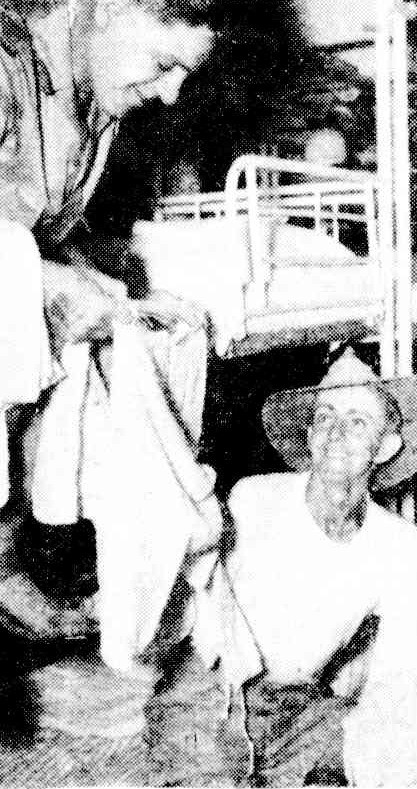
WHITE SHORTS, shirts, and pyjamas issued on Oranje for the voyage home were a delight to Pte M. J. Kelly, St Kilda, and Pte R. J. Byron, Mona Vale (NSW). 8th Div. Men Leave Changi Prison Camp for Darwin (1945, September 21). The Argus (Melbourne, Vic. : 1848 - 1957), p. 9. Retrieved from http://nla.gov.au/nla.news-article967807
And Johnny flew back and then after he got home, he wanted to go to Manly one night, and there he was walking up the middle of the street, they couldn't believe, you know.
At one stage, Roy did tell me that, the Japanese wanted volunteers to go on this truck to go and do something. So his mates were going and he couldn't find my brother, so Johnny blew his seat.
And he said, he looked everywhere and he said, I suppose I may as well go on there. He got on to the truck and a guy came up and said ‘Tich Tich I found Bluey’ – they called him ‘Teacher’ in the camp. Roy said, ‘oh’, and the guy said, ‘I'll go in your place, you go back and see Bluey’. He didn't recognise him (Frank), he was that swollen up with Beriberi - he'd been walking past him all the time he was so sick.
And that truck got out there and they shot them all.
He felt guilty. I said, ‘well, you're not guilty because you didn't know’.
They all thought they were going to something different. It's the same as they used to put them in big barrels, concrete barrels and they'd scrape at his eyes. He came out of the war and couldn't see, and they wouldn't believe that was causing his eye problem.
I tell you what, I wasn't real happy with the war vets in those days, because my older brother, the one that got muscular dystrophy, I went over and got down on my hands and knees and said, ‘please, can you just go out to his place and put some rails in his bathroom or something like that so he can use it? Unbelievable. Unbelievable.
So Neil was in heavy artillery. So, Henry Joseph, your youngest brother was in the heavy artillery. He wasn’t discharged until 1 April 1946 – why was that?
He was up in New Guinea, so it just took so long to get back, I guess, to get them all onto ships and get them back home. Neil was the only one that went outside of the Pacific area to serve, and they were on their way back to Singapore and were being sent in there to help, but then when they got taken, they couldn't do it, Singapore had fallen.
Roy is described in his war records as being 5 foot 4 inches with blue eyes and fair hair, but you're quite dark.
Yes, he had fair hair. My eldest brother, Frank, had red hair.
Red hair? So, who were they taking after, mum or dad?
I think one of my father's mother was red-haired or something. They're all in the council.
You went to Mona Vale Public school - where did you go to high school?
Manly Girls High. That's where I was when we heard the war had ended.
How did you get there?
By bus.
Then what did you do? You went into nursing?
No, because by then I had to go and work where they told you. My sister worked in this place, they were still there at DY as you go in. They used to sell carpets. It used to be Barnes Leather Factory. I used to make those watch bands, with the covers on, you know, for the soldiers.
I hated it. I really hated it. But with my poor sister, Barnes, they put her in laundry, she used to cry every day. You had no choice; you couldn't pick your job where they wanted people, they'd put them. Compulsory work, because they needed everyone to get back on their feet, I guess.
Then when I left there, the Bibbys had left school and we went and worked for Bryson's in Narrabeen. They had a fish shop, they had a cake shop. Different things. So, we’d walk to Brysons’ from Mona Vale to work.
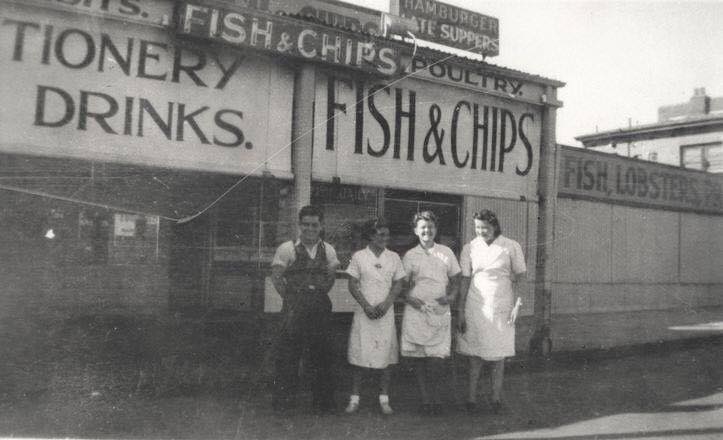
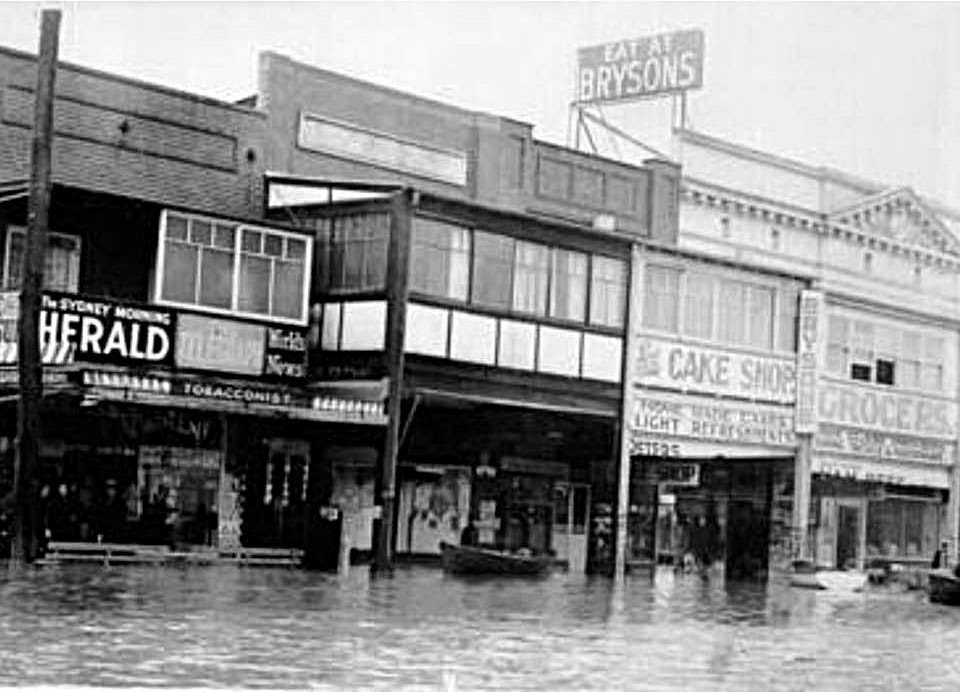
Were the Bibbys your best friends?
Yes, Pam and Jill and the son, Kenny. I had my photo taken with them, there's a photo of the Sydney. He'd be in there somewhere.
Before that, when we were still at school, one of the Bibby twins and myself, used to go work for this lady. Her name was Mrs Barnes. She had horses down where the McDonald's were down at Bayview. She had a house and used to give us shilling. We'd go and clean her house. Her husband was a lovely man.
They had a big mandarin tree. She said we could have the mandarins or the shilling. We said, no, we want our shilling. So he used to say, ‘I've hidden them down the front. Don't tell her’. With that shilling Pam and I, used to go to the pictures. It was sixpence to go to the pictures, and a penny each way on the bus to Narrabeen to the picture theatre. And her other sister used to work too, we had to give her tuppence. Half the time, we'd spend the penny, and walk home, that's the way it was.
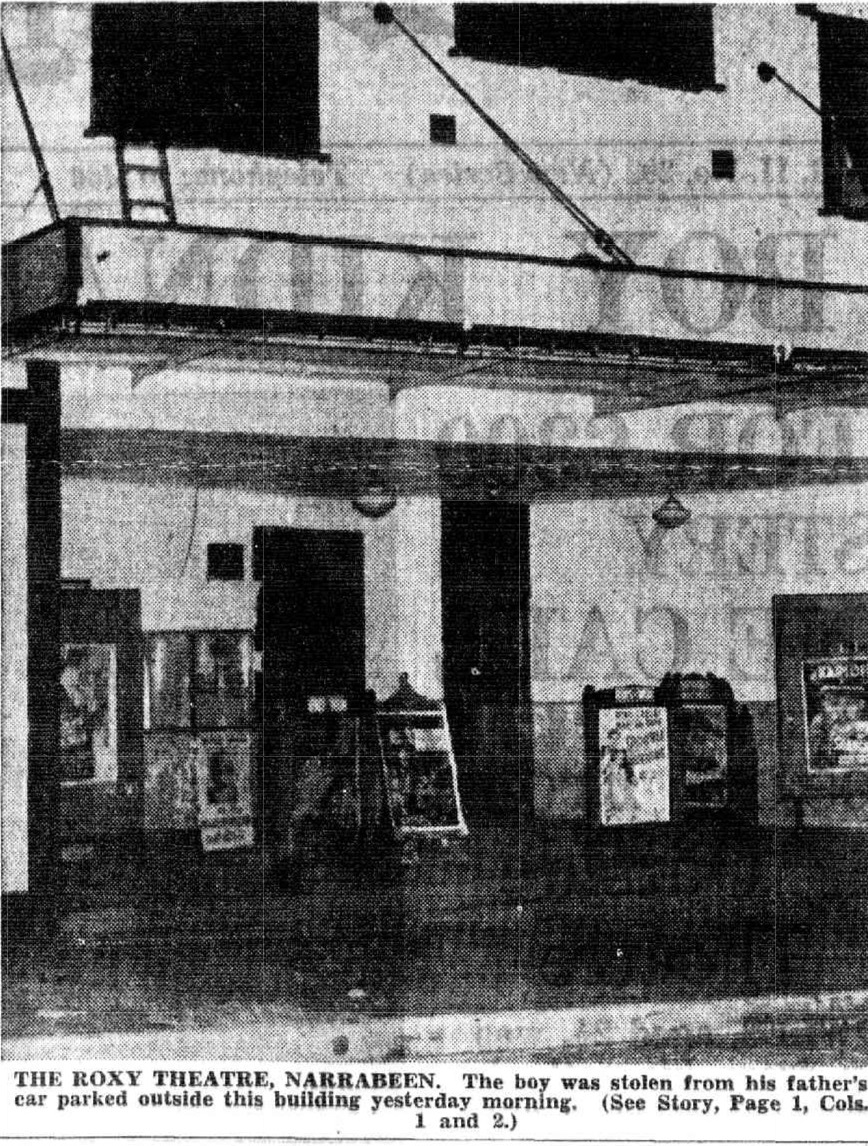
The Roxy Theatre, Narrabeen. BABY BOY KIDNAPPED, HELD FOR RANSOM (1938, February 25). The Daily Telegraph (Sydney, NSW : 1931 - 1954), p. 2. Retrieved from http://nla.gov.au/nla.news-article247392383
So, how long were you at Bryson's?
I was in the milk bar and the cake shop for about two years.
So when did you first marry?
1951. I was married in Church of England in Mona Vale. The one just out along the road. The stone church.
Beryl, you've married twice?
Yes, the first time to Alan – we didn’t get on. But I have Paul and Glenn through him. I have three children together.
Where did you meet him?
In Leeton Hospital. I worked at the hospital for a while.
Then you met Harold Clarke?
That's right, and I got a son to him, Harold Clarke. We married after a few years in a registry office. We had one son, Robert. Harold was a member of the Pittwater RSL Club, and was often called ‘H’. He coached the RSL junior boys in Cricket and Rugby League.
What are the biggest changes you've seen at Mona Vale - you've been here for almost a century?
There was just one shop – the Savages had the paper shop, fruit shop, grocery shop, Post Office. That corner where the liquor shop is, before that it used to be Bakers store – before that I used to go down there and they used to make tea, biscuits – I used to work there when I was 11 and was saving up to get a bike.
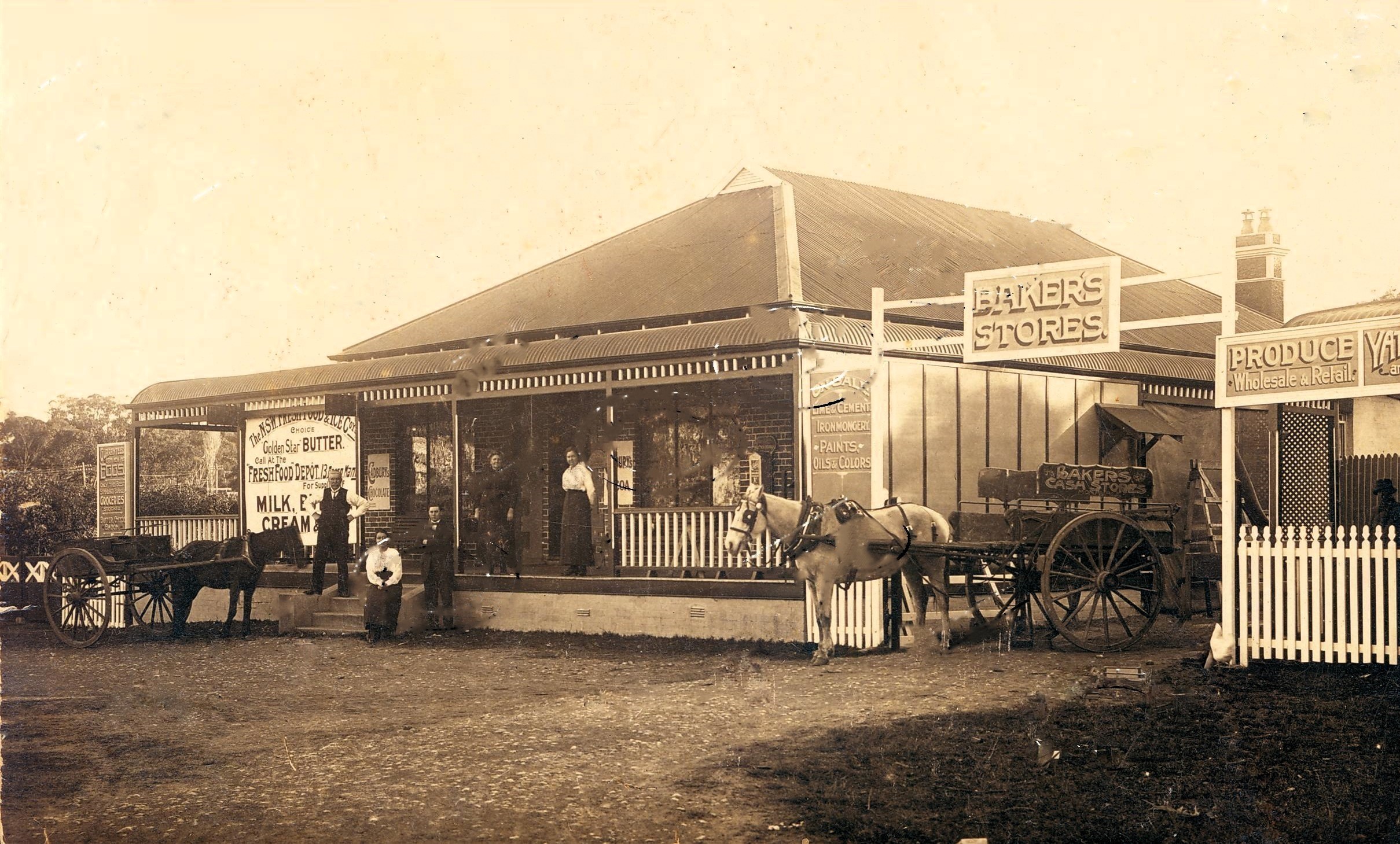
James Baker's Mona Vale Food Store circa 1910-1912 - on he corner of today's Pittwater road heading out to Bayview, was made from local bricks - they placed it on the market in 1919:
MONA VALE-PITTWATER Old established General Store and Freehold, JUNCTION STORE, Pittwater and Newport roads Modern brick building, large shop, 5 rooms, stabling, etc TORRENS. Raine and Horne auctioneers. Advertising (1919, March 6). The Sydney Morning Herald (NSW : 1842 - 1954), p. 10. Retrieved from http://nla.gov.au/nla.news-article15828225
What are your favourite places in Pittwater and why?
Well, living at Mona Vale it was always the beach – and fishing down at Bayview because mum was always a great cook.
What is your ‘motto for life’ or a favourite phrase you try to live by?
Try and always be happy – and happy with other people. When you wake up in the morning decide it’s going to be a positive day.
I say to my family; ‘Listen, stop and think, about six months ago you were really worried about something and now you can’t remember what it was about’.
Because I’ve been through a lot, a long life and illness and all that, I know if you just get on with it the road will rise to meet you. What’s the use of being miserable - ? Choose to be happy, if you have an opportunity to do something, whether it’s even as simple as playing bowls, take that chance and have some fun, get involved.
References - Notes
- Mona Vale Training Grounds: From Lancers on Horses to Lasses on Transport Courses
- Coastal Defences In World War Two: The Dee Why to Warriewood Sections - VP Day 2025
- The Oaks - La Corniche
- Mona Vale Public School 1906 to 2012 - also available: MONA VALE PUBLIC SCHOOL CENTENARY FESTIVAL DAY:SEPTEMBER 15, 2012
- Remembrance Day 2016: War Memorials - Mona Vale, November 14, 1926
- Mona Vale War Memorials: A School Honour Board, A Victory Tree, A Cenotaph - 2022 update
- Brock's The Oaks - La Corniche from 1911 to 1965: Rickards, A Coffee King, A Progressive School, a WWII Training Ground
- Pittwater Summer Houses: The Oaks Villa, Mona Vale - 1898 to 1965
- Mona Vale Primary School's World War Two Honour roll Board: The Stories behind the Names - ongoing project
- Narrabeen Cenotaph + RSL History: 100 and 65 years markers of service in 2021 - light up the AWM dawns with their names - 2021
- St. John's Anglican Church Mona Vale- Celebrating Its 150th Year In 2021
- The Mona Vale-Bungan Beach-Bayview tank traps: Coastal Defences of Pittwater during World War Two - Some History
- Mark Foy of Bayview
- Bellemere-Melrose + The Green Frog at Church Point: Pittwater Summer Houses
- Pittwater Roads II: Where the Streets have Your Name - Bayview
- Harold Tristram Squire Sculptures-statues at Dungarvon, Mona Vale
- Mona Vale Cemetery: Some History
- Methodist Church at Church Point: The Chapel the Point is Named after - Some History
- Early Mona Vale Constable Owned Mona Vale Hotel Site: Some History
- The Black Swamp Camping Reserve Becomes Kitchener Park, Beeby Park & Mona Vale Golf Course - Pittwater Creeks series opener
- A Community Memorial Hall For Mona Vale - A 22 Year Odyssey That Culminated In Victory: November 1944 To November 1966
Pittwater RSL Club Formation
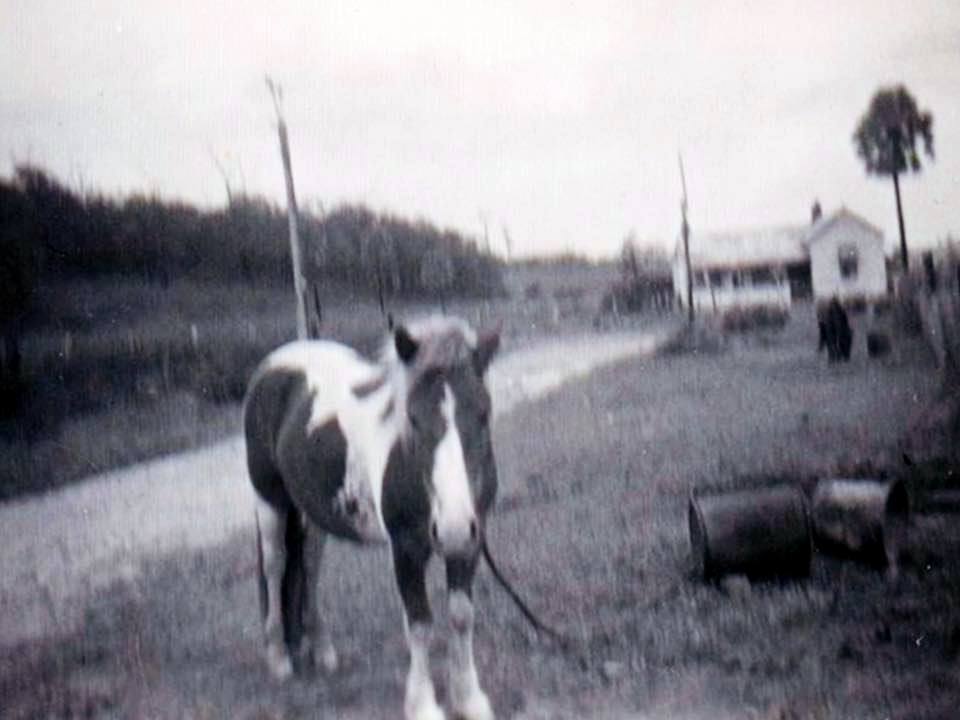
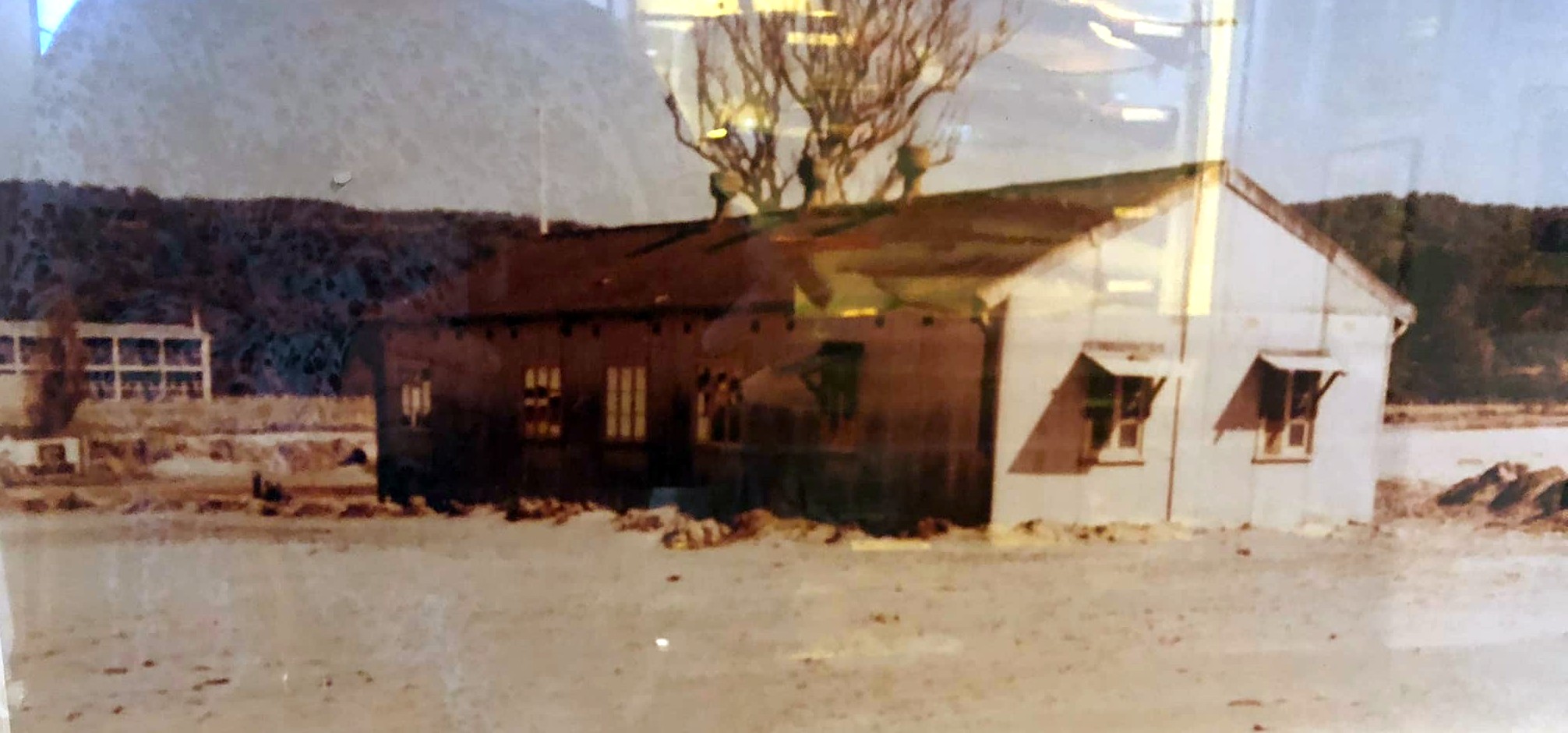
BYRON, B
Burnice May Byron (later Sawyer when married to VX109654 CFN R J Sawyer) – of 73 Park Street Mona Vale (amily home was up the hill opposite current Woolworths site) she was born 4th of September 1921, to Paul (father) and aged 21 her occupation was Waitress prior to enlistment on May 18 1943; with a scar on the middle finger of her right hand from a burn when young.
Bernice had hazel eyes and dark brown hair. She was assigned to the NSW L of C area - which was located at Boronia Park in New South Wales. NSW Line of Communication Area General Staff Branch (NSW L of C Area GS Branch).
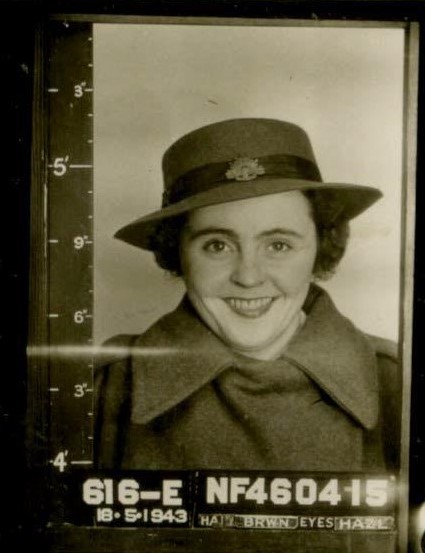
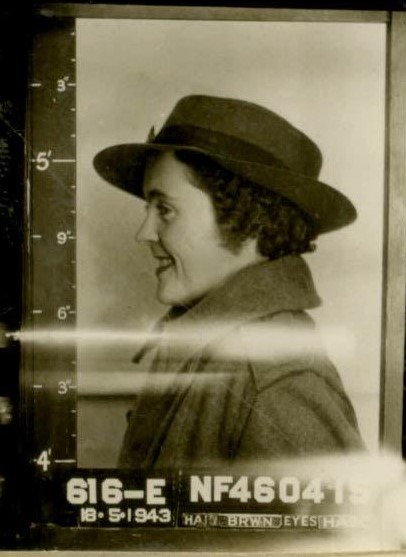
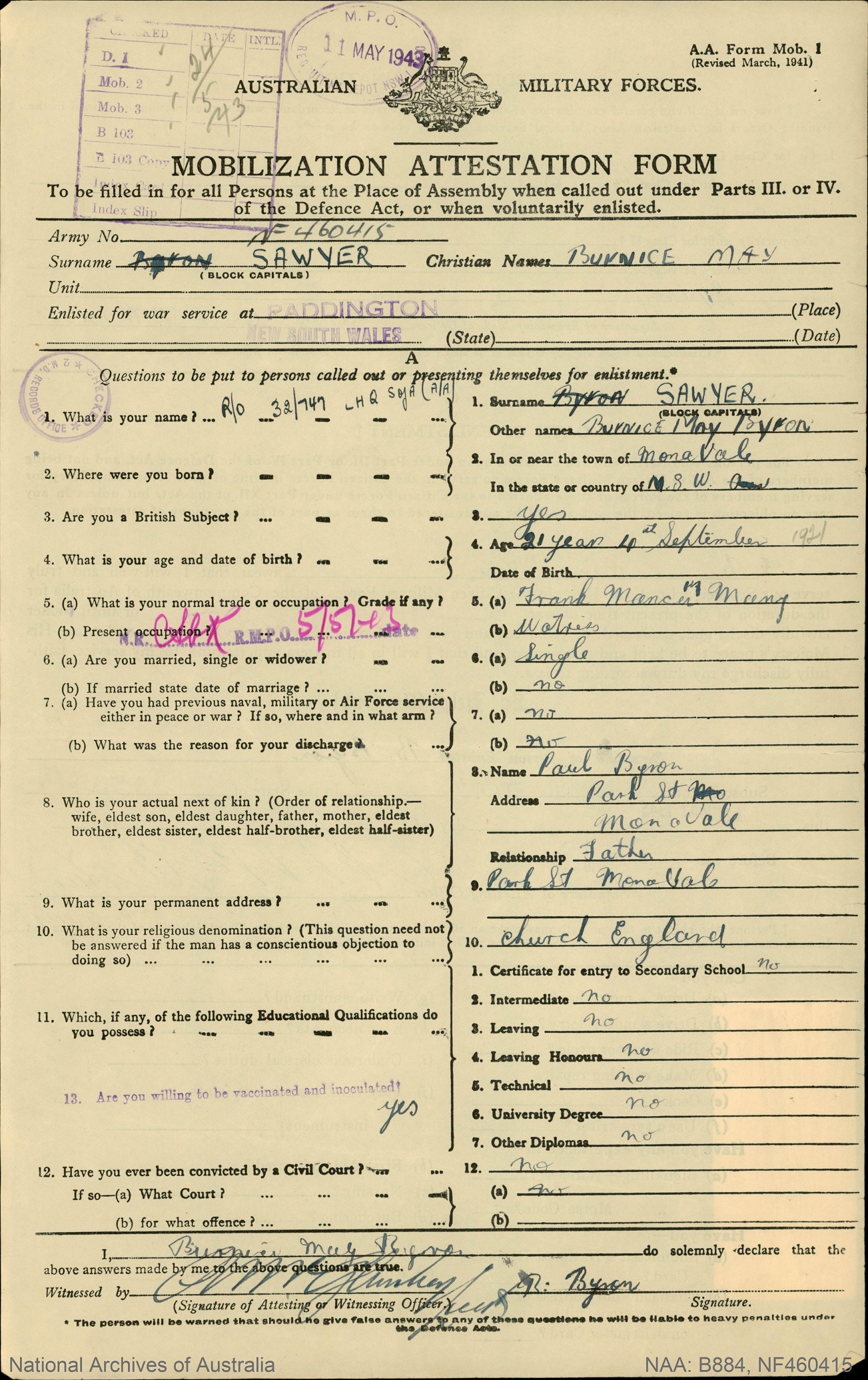
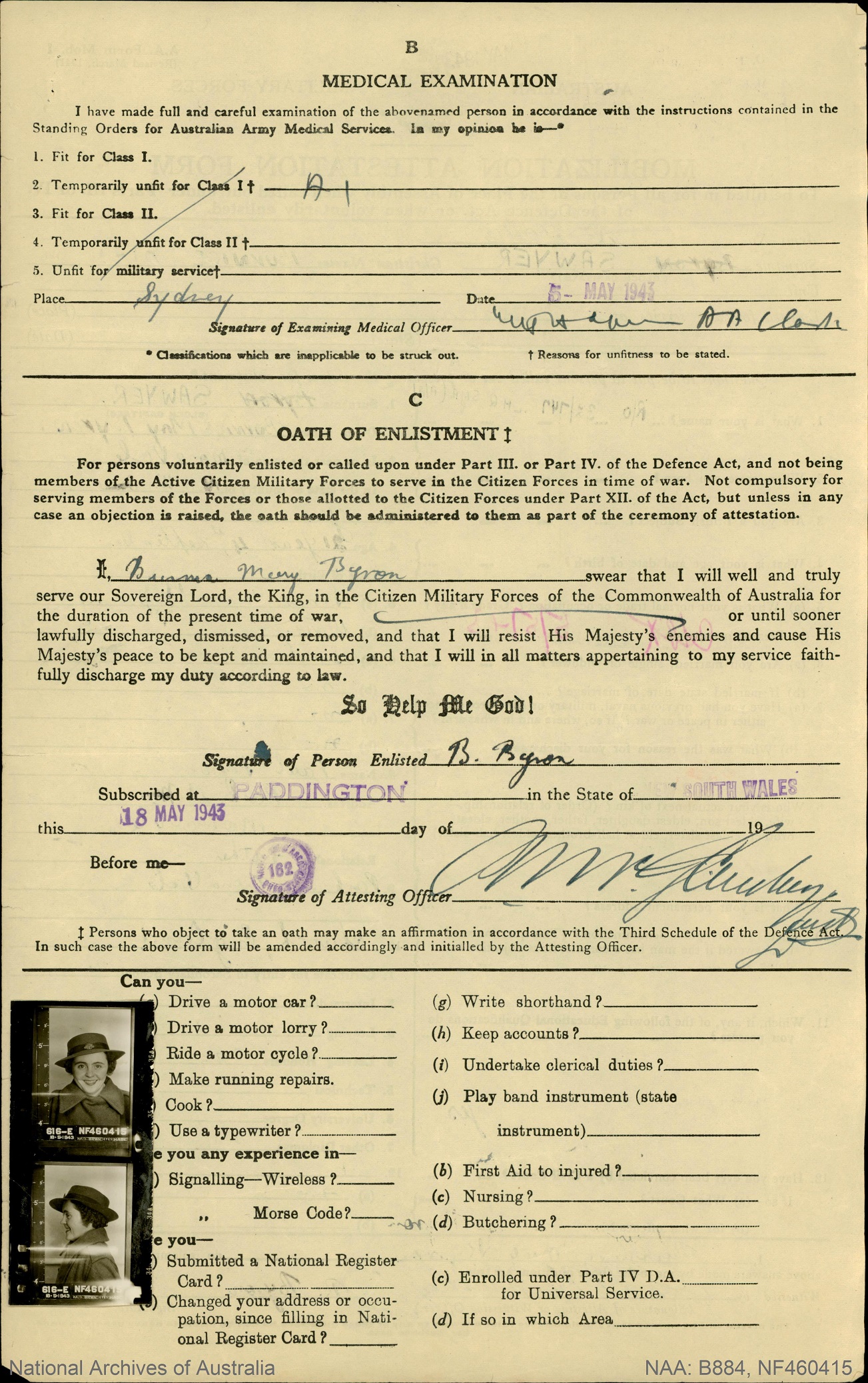
Burnice was X list of AWAS (2 AWAS depot) and sent to Miss Stewands School at Killara before being transferred to 2HQ school of Arty. On May 20th 1944 she was admitted to the 3 Australian Womens Hospital and on June 8th 1944 was evacuated and admitted to the Eva Hordern Convalescent Home. By June 24th she rejoined the LHQ S of A (A/A).
On the 19th of August 1944 her records show she now has a married name and her husband is VX109654 CFN R J Sawyer of South Sydney of FTRs Workshops AEME. On October 10th 1944 she is discharged at her own request on compassionate grounds, then part of the HQ NSW L of C Area.
NSW BDM’s: 17125/1944 SAWYER RAYMOND JOSEPH to BYRON BURNICE MAY registered at MANLY
Raymond’s records state they married August 5th 1944
Raymond J. Sawyer was born at Albury on 16 Sep 1921 and enlisted on 29/4/1941 at Albury and again on October 2nd 1942 at Camp Pell, Parkerville, Victoria on aged 20 – he was a Farmer/Farm Hand prior to enlistment and a Gunner afterwards – father is a C R Sawyer still on ‘Jindera’ near Albury. He is discharged January 22nd 1946 after serving across Australia – never left mainland but worked as a Fitter on machine transport after initial deployment.
BYRON, F
Francis Paul Byron, born March 2nd, 1917 at Mona Vale, enlisted 2 July 1940, discharged on 9 Jan 1946. NOK: Ida. NX52405. Rank: Private, Posting at Discharge: 2/18 Australian Infantry Battalion, Prisoner of War: Yes - was known as 'Bluey' in Changi
He worked as a Factory Hand prior to enlistment. He was in the CMF from 7.4.41 to 26.7.1942 and was transferred into the AIF from 27.7.1942 until January 1st 1946.
The 2/18th Battalion was an Australian Army infantry unit that served during World War II. Formed in June 1940, the battalion was assigned to the 22nd Brigade, which formed part of the Australian 8th Division. After completing basic training, the 2/18th was sent to Singapore and Malaya to strengthen the defences of the British colonies in February 1941 against a possible Japanese attack. The 2/18th Battalion subsequently undertook garrison duties throughout the year at various locations in Malaya, where it conducted jungle training and constructed defences along the eastern coast. Following the outbreak of war in the Pacific in December 1941, the 2/18th saw action against Japanese forces in the Malayan campaign, during which they took part in a large-scale ambush of a Japanese force on the Malay Peninsula before joining the withdrawal to Singapore in early 1942. Assigned to defend part of the north-west coast of the island, the battalion participated in the unsuccessful defence of Singapore in early February 1942. Following the fall of Singapore the majority of the battalion's personnel were taken as prisoners of war. Many of these men died in captivity; the survivors were liberated in 1945 and returned to Australia where the battalion was disbanded.
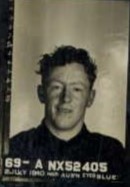
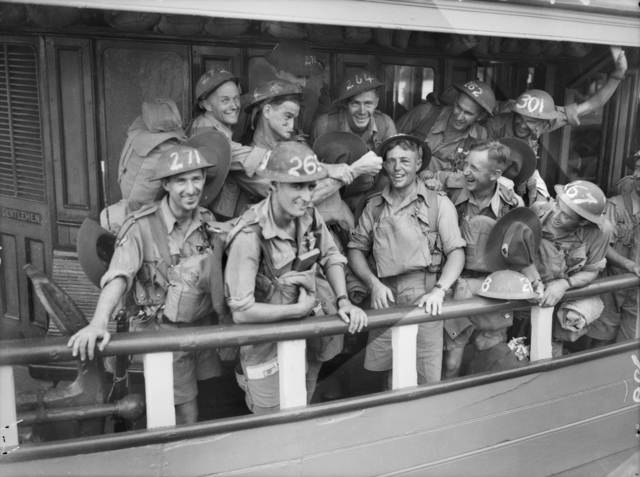
Members of the 2/18th Battalion on board a ferry at Sydney, New South Wales, bound for the ship assigned to transport them to Malaya
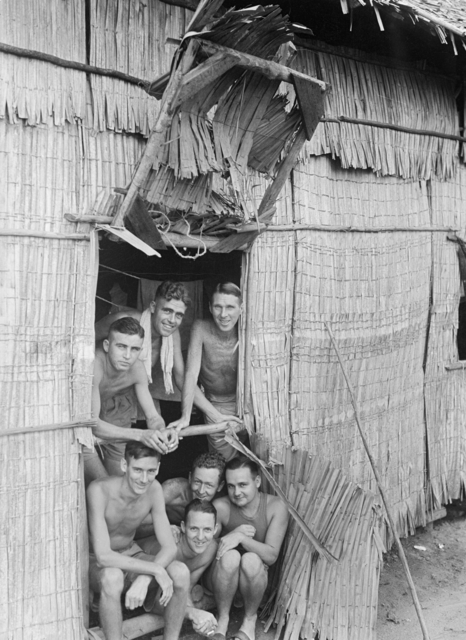
Members of the 2/18th in a hut at Changi at the end of the war
BYRON, H
Henry Joseph Byron, born October 9th 1923 at Mona Vale NOK Richard, enlisted 27 July 1942, discharged 01 April 1946. Rank: Private, Posting at Discharge: 32 HVY A/A REGT. NX106028 (N108407).
He worked as a Factory Hand prior to enlistment. He was in the CMF from 7.4.41 to 26.7.1942 and the AIF from 27.7.1942 until January 1st 1946.
BYRON, N
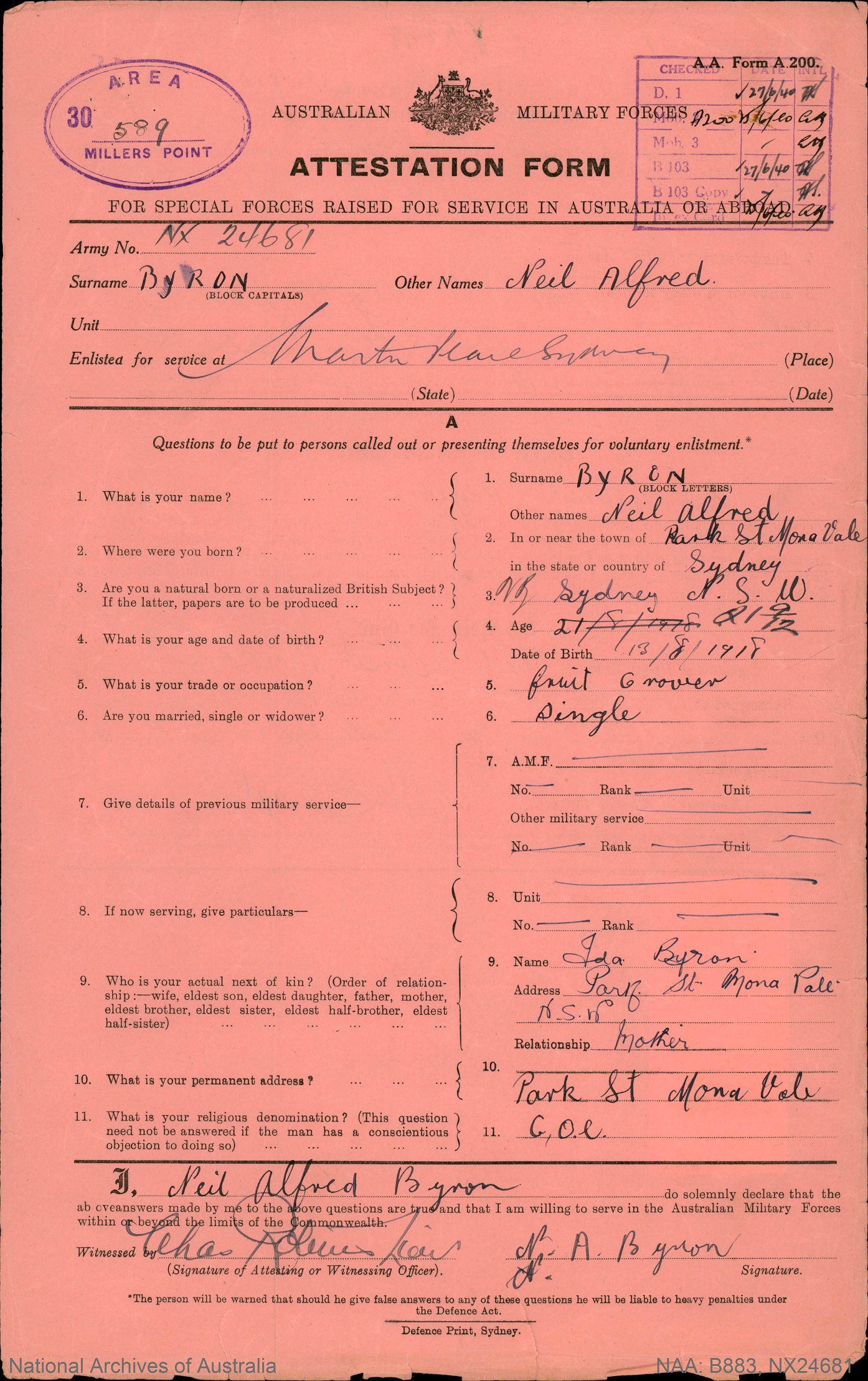
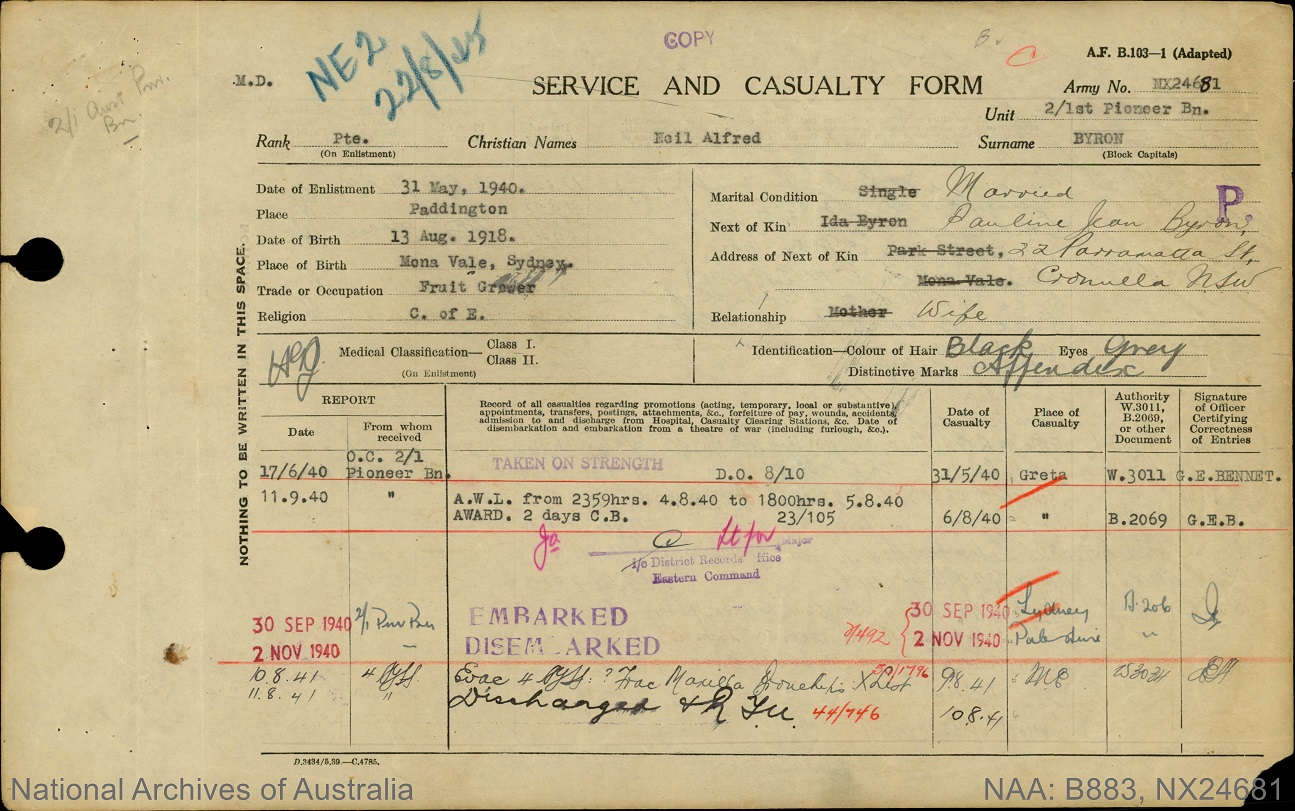
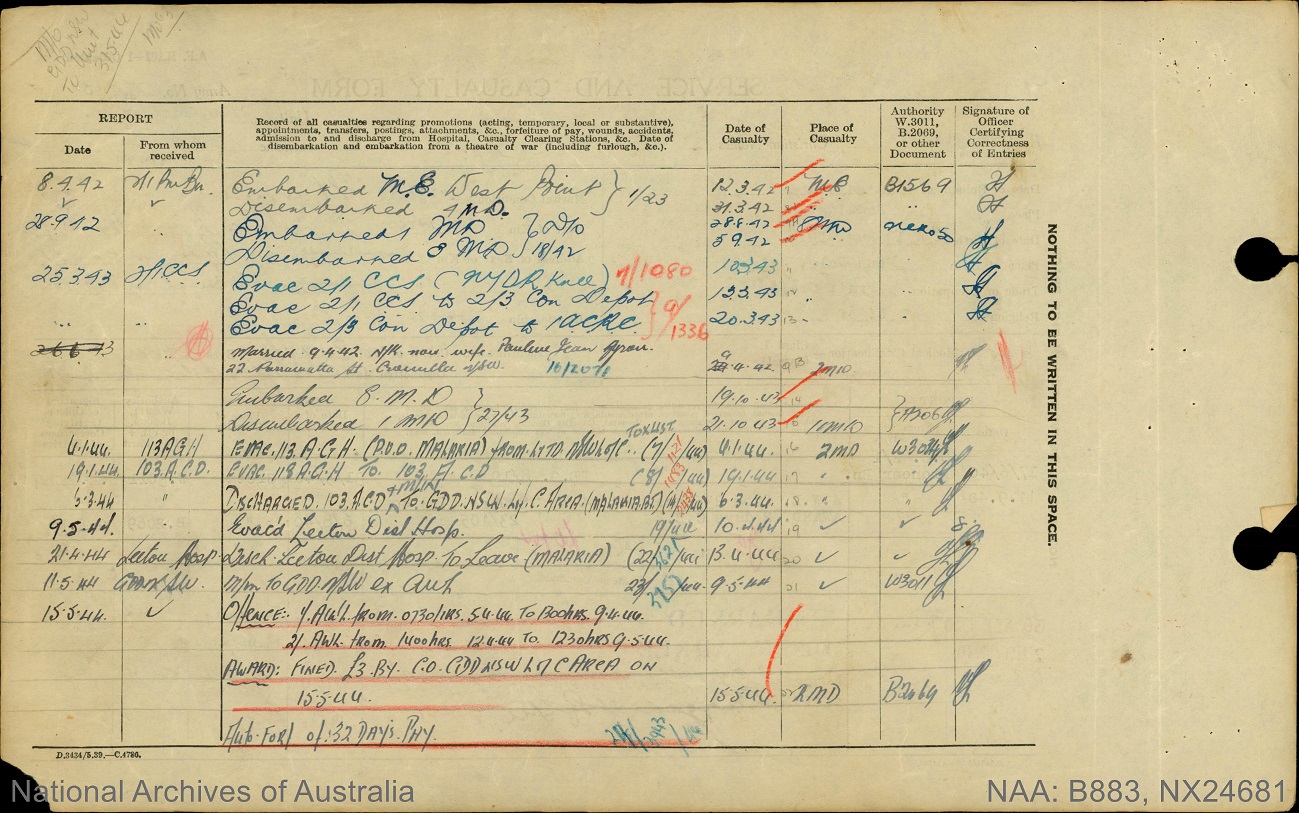
Neil Alfred Byron, born August 13 1918 at Mona Vale, enlisted 31 May 1940, Discharged: 23 Aug 1945 NOK: Ida, NX24681. Rank: Private, Posting at Discharge: 2/1 Pioneer Battalion
Beryl Clarke states he first met his wife Pauline when he was 15 and she 13. Her family use to come to Mona Vale for holidays – Pauline riding her bike down while the family came in a car.
NSW BDM’s: 14512/1942 BYRON, NEIL ALFRED to PITT, PAULINE JEAN registered at MANLY

BYRON, R
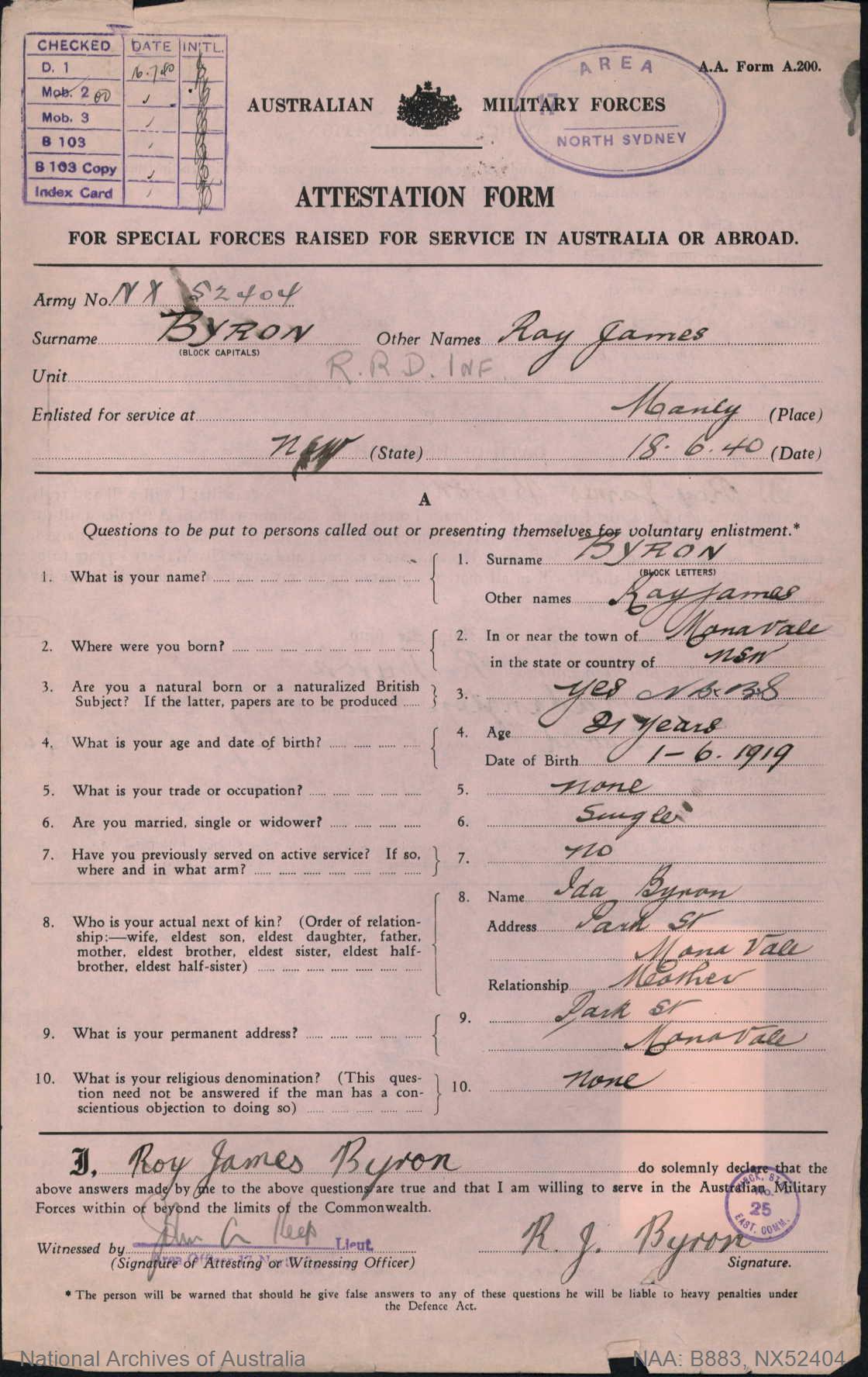
Roy James Byron, born June 1st 1919 at Mona Vale, enlisted 2 July 1940, discharged 13 November 1945. NOK; Ida. Rank: Private, Posting at Discharge: 2/18 AUSTRALIAN INFANTRY BATTALION. NX52404. Prisoner of War: yes. Was known as 'Teacher' in Changi.
Roy is described as being 5 feet, 4 inches tall with blue eyes, fair hair. He is 21 years of age when he enlists and aged 25 years and 10 months old by the time he is released. After being made a prisoner of war at the Fall of Singapore he is made to work on the Burma Railway.
.jpg?timestamp=1785982043320)
.jpg?timestamp=1785982080966)
.jpg?timestamp=1785982160378)
.jpg?timestamp=1785982189787)
.jpg?timestamp=1785982230171)
.jpg?timestamp=1785982263483)
Roy James Byron
Eulogy held in Pittwater RSL Sub-Branch archives; does not record who wrote and spoke the following
Roy James Byron born on the 24th December 1919 at Park St Mona Vale, the 3rd eldest in a family of nine, was fondly known to us as 'Tich'. He was the oldest living male resident born in Mona Vale, a foundation member of the Pittwater RSL Club and long standing member of the Sub-Branch.
Roy spent all his life in Mona Vale apart from his absence during his military service in WWII.
He was educated at Mona vale primary School which consisted of a single weatherboard building divided into classrooms.
Like the youth of the day during the depression years of the 1930's education was limited, the sooner a young lad gained employment it became beneficial for his family.
Roy spent his working years before WWII on the various farms throughout the valley and in the Mona Vale area as a market gardener. In fact whilst employed by a Mr Jim Joyce of Mona Vale, Roy was instrumental in growing the largest and award winning celery produced here in Australia. South Australia was the State recognised for its celery. On hearing of the award the growers from South Australia came to Mona vale to see for themselves and the farm that produced it.
When WWII broke out Roy enlisted at Manly this being the closest recruitment depot becoming a day boy. When the 2/18BN. A.I.F. was formed in June 1940 at Wallgrove he joined that battalion in July of that year being posted to 10 Platoon 'B' Company under the leadership of Colonel Arther Varley C.O.
After extensive training at Wallgrove, Ingleburn and Bathurst the Battalion left for overseas service leaving Sydney 4th February 1941. They arrived in Singapore February 18th
The Battalion trained in Malaya at Port Dickson Serembar and finally at Mersing.
When war broke out on December 8th 1941, Roy's unit fought a decisive ambush set by them at the Nith Dale Estate where they took heavy casualties; 80 of the Battalion were killed during that engagement but inflected severe casualties among the Japanese estimated at some 2000. Then the subsequent withdrawal to Singapore Island, where the Battalion took up a position northwest on the Island at Krangi. His unit was overrun by the enemy as were other Australian Battalions in the area. Undermanned and a far to greater territory to defend, the rest was history the eventual capulation on Singapore Island.
The following 3 1⁄2 years Roy spent as a P.O.W. working on the Thai-Burma Railway with H Force a force of some 3000 men of which a quarter lost their lives working under the most atrocious conditions. On its completion Roy returned to Changi to again work on the construction of the aerodrome there and Japanese defensive tunnels.
He returned home at the finish of the war a complete wreck spending the best part of a year at Concord Hospital. Roy never complained or really recovered from his treatment by the Japanese leaving him somewhat scarred for the remainder of his life.
Roy has a vast knowledge of this area gained through working for the Warringah Shire Council especially Pittwater the old "A" riding. He retired in 1985 after serving 35 years with Council. His memory was spot on right up to his death, in fact I defy anyone that had a more astute memory than Roy of this area; names of local families, their history, the lives of past residents was truly amazing. He could entertain all with his stories.
Roy will be remembered as a quiet unobtrusive gentleman with a quick wit and a great sense of humor. One of his famous sayings being 'He wouldn't give you a spot if he had the measles'. I personally will never forget my pal and former P.O.W mate, many a laugh and cheer he gave those of us who can remember Tich with his harmonica playing in the back of the bus coming home from an Anzac Day March with the passengers singing the old war time songs and his specialty 'Moon over Malaya'
Well done Roy you will be sadly missed by all of us.
This RSL service is in memory of our departed comrade Roy (Tich) Byron. It is pleasing to see some of his mates from the 2/18BN here today.
Lest we Forget.
___________________
The James Joyce farm appears to have been in Darley Street West, near where the Taronga Zoo feed farm was - further west behind the pub end of today's Park Street - and a site, all the way to Bayview, that was subject to flooding due to being, in part, a wetland. Further Research will be required to share more in depth records of Mr. Joyce and his family, but they do turn up in these as being in Darley Street, so just down the road from the Byron family and on the way to Bayview fishing grounds.
There are some records of adjacent farmers and their acreage holdings in this vicinity in: Pittwater's Tropical Fruits: The Estuarine Farmlets At Mona Vale-Newport That Kept Sydney Stocked With Hot Area Fruit In The Middle Of Winter
A few excerpts from the newspapers of then on Mr Joyce's Mona Vale celery share:
OUSTING CELERY MONOPOLY
THE days of the South Australian monopoly of the Sydney celery market are numbered. It may be a year or two, but a new school of local growers is determined to oust the imported product. The local market for local growers is the new slogan and the aim to displace the 1200 cases or so a week of the out-size white sticks from Adelaide, which has found favor with consumers, in city and country alike. The said local growers have been asleep; now they are beginning to wake up and produce the real thing. It is only a beginning, but as Mr. J. Douglass, the Department of Agriculture specialist, says, celery of the finest quality and size is now being grown commonly in such centres as Anna Bay (Port Stephens), Mona Vale, Bathurst and Cooma. '
The expert, enthuses over "the most beautiful celery I have, ever seen," grown at Bathurst in ten weeks after planting out. And he knows his celery, for he has Investigated the growing of this and other "struck" crops, as the Americans -say, in U.S:A., England, France and Belgium.
Mr. Douglass is tutoring; would-be growers in the correct cultural technique culled from . the countries visited. Several of them have produced the goods, and one has decided upon planting a commercial area of 10 acres. The right class of soil and conditions, he states, are available In dozens of places In N.S.W., especially the rich black and brown alluvial soils of the tablelands and the peaty sites of the Central Coast and South Coast. OUSTING CELERY MONOPOLY (1937, March 21). The Sun (Sydney, NSW : 1910 - 1954), p. 16 (News section). Retrieved from http://nla.gov.au/nla.news-article230342228
N.S.W. Celery for Singapore
AN experimental shipment of Mona Vale-grown celery is being sent to Singapore, where it is hoped successfully to compete with the American product. In accord with the suggestions of Mr. John Douglass, special agricultural instructor, the celery has been harvested and trimmed in accordance with the latest American practice. N.S.W. Celery for Singapore (1938, June 2). The Farmer and Settler (Sydney, NSW : 1906 - 1955), p. 6. Retrieved from http://nla.gov.au/nla.news-article117168083
State's Largest and Most Successful Celery Farm
Sound Methods— Quality Product
by our Special Representative
CELERY of extra choice quality and faultless flavor and texture is produced on the Mona Vale farmlet of Mr. James Joyce, claimed to be the largest and most successful celery farm in the State.
Wise land use, intensive culture and sound! farm practice are features of Mr. Joyce's operations, resulting top quality- vegetables being harvested month after month with unfailing regularity from this ideally managed enterprise.
The celery has an entire absence of pithiness in the stalks and none of the coarse "strings" so common in much of the celery imported into this State.
Mr. Joyce gives special attention to the celery beds, both before and after planting. The soil is reinforced with animal manure and commercial fertilisers and the young plants are treated to a Bordeaux dusting "every morning- while the dew is on them and as often as the climatic conditions call for that treatment," to quote Mr. Joyce. Possibly as a result of this practice the celery is almost entirely free from leaf spot' —: that bane of celery growers every where.
At the moment a small infestation is in evidence on a few plants growing in a a light depression from which rain water has failed to get away as quickly as it should. But the strange feature is that even there the trouble is under control, as it has not spread throughout the patch as would happen under similar circumstances elsewhere.
Six Months' Attention
Celery is a G-G month crop from sowing to harvesting. During that period Mr. Joyce has to exercise tho closest supervision in order to-.ward off blight and fungus troubles in beds that are no more than 4 Inches above sea level.
The celery plots are regularly Watered, irrigation facilities being supplied from a nearby well on the property.
As the plants make growth each bed is surrounded by a roll of sisalkraft to effect blanching of stalks.
.jpg?timestamp=1786139691562)
Rolls of Sisalkraft are used to surround the celery plants of Mr. James Joyce's farm at Mona Vale to effect blanching of the stalks.
.jpg?timestamp=1786139724377)
Mr. James Joyce with some excellent heads of celery grown on his well maintained Mona Vale farm.
When ready for harvesting cutters sever the plants at ground level and trim off the small secondary growths. The heads then go to the packing shed where they are washed and packed, 24 heads to a box. Great care Is exercised in packing so that only extra choice heads are marketed with the well-known Joyce label.
The celery is transported to the city markets by motor lorry, and during the peak period upwards of 500 cases are marketed weekly.
Some idea of the size of those trimmed heads may be gauged by two of them exhibited at the recent Camden show weighed two ounces less than 10 lb.
American Practice
An American food technician who recently visited the farm expressed surprise not only at the quality of the celery produced, but also at the fact that no use was made of, the trimmings.
He pointed out that In the United States the waste loaves were compressed and the resultant juice sprayed on to salt for the production of' celery salt. The small discarded1 stalks were also processed into soups, etc., so that nothing at all went to waste.
Mr. Joyce has no difficulty In holding his own In the market with the much publicised South Australian product, but he rather envies the assistance Riven the growers of celery in that State. When he visited Adelaide some time ago he found that celery growers there were getting cow manure, for which he has to pay £10 a load, at .10/- a load from the abattoirs. They also secured substantial concessions in water users. Cost of transport to Sydney and deterioration In flavor due to the long -journey, however, more than evened up the South Australians' initial advantage.
Other Vegetables
Five sons assist Mr. Joyce to cultivate 22 acres all told. A. very large acreage is devoted to cabbages, some good specimens now being harvested, while a big area is also under cauliflowers. Rhubarb, tomatoes and peas are also grown, but the germination of the latter crop has been very disappointing.
Potenate and Leslie's Choice tomato beds make a particularly attractive sight at present. These plants are carrying magnificent clusters of fruit just approaching the pulling stage, Leslie's Choice is a new tomato, but seems admirably suited to Mona Vale soil.
The emphasis on this property Is quality, not quantity, with the result that Joyce products sell themselves — no agents being necessary.
Mr. Joyce pays a generous tribute to his farm manager, Mr. C. Bishop, who has been with him since the early 1930's and who has taken a keen interest in the celery project since the first crop back In 1938. State's Largest And Most Successful Celery Farm (1946, April 19). The Land (Sydney, NSW : 1911 - 1954), p. 13. Retrieved from http://nla.gov.au/nla.news-article105693010
Heavy Storm Damage on Mona Vale Farm
CROPS on Mr. James Joyce's vegetable farm at Mona Vale were devastated by the recent cyclonic storm when 24 inches of rain, accompanied by high winds and hail, was registered in the district in a few days.
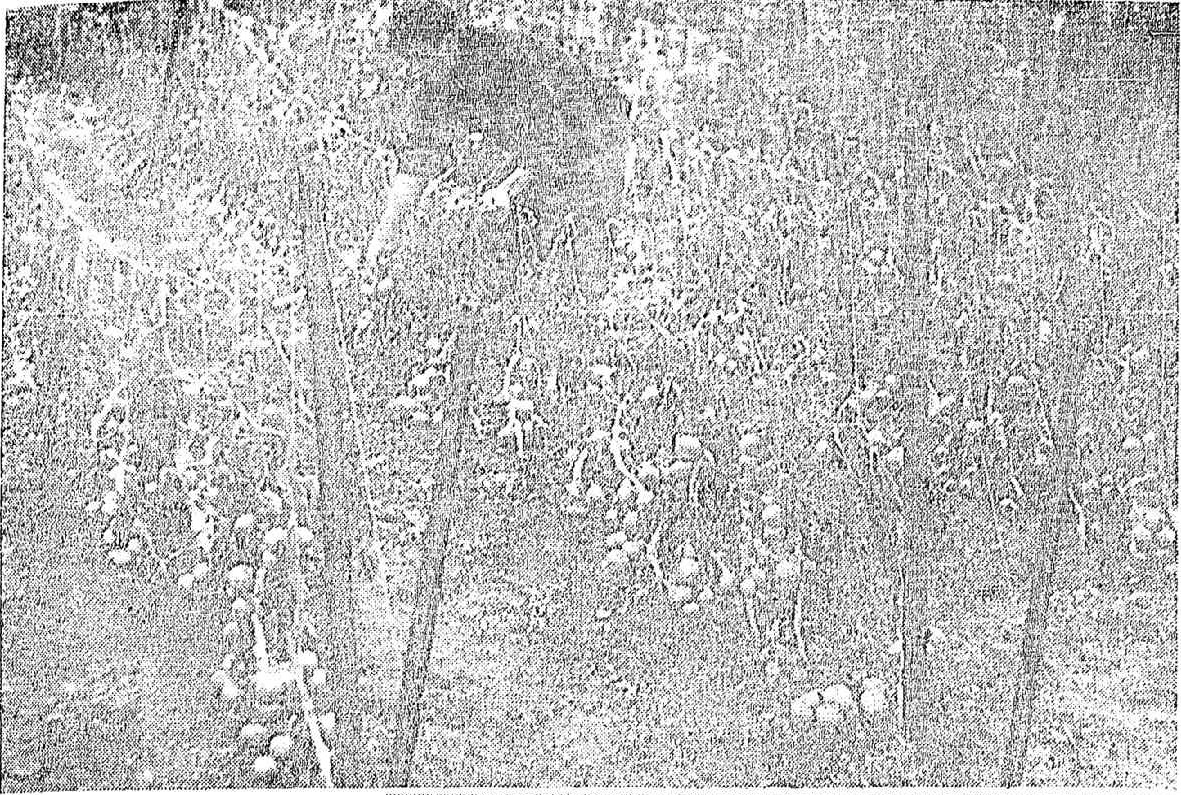
Only a fortnight previously thin property had been visited by "The Land." At that time, as reported in "The Land," the famous celery beds were a picture, the tomato vines were carrying great clusters of extra prime fruit ready for the pickers, and thousands of cabbages and cauliflowers were in extra prime condition.
A return visit last week, however, disclosed a scene of utter desolation so far as the lower and more heavily yielding section of the farm was concerned. In this area two feet of water had covered the flat which is only four inches above sea level. The flood killed out the entire cabbage and cauliflower crops, after the fierce cyclonic blow had actually torn numbers of the plants out of the soil. Fortunately a proportion of the cabbage' crop had been, harvested, but some 6,000 head were destroyed together with 10,000 cauliflowers, many of them due for cutting next month.
%20black%20swamp%20page.jpg?timestamp=1668546042910)
The ducklings on the right revelled in the flood conditions and swam around complacently while all around valuable crops were awash.
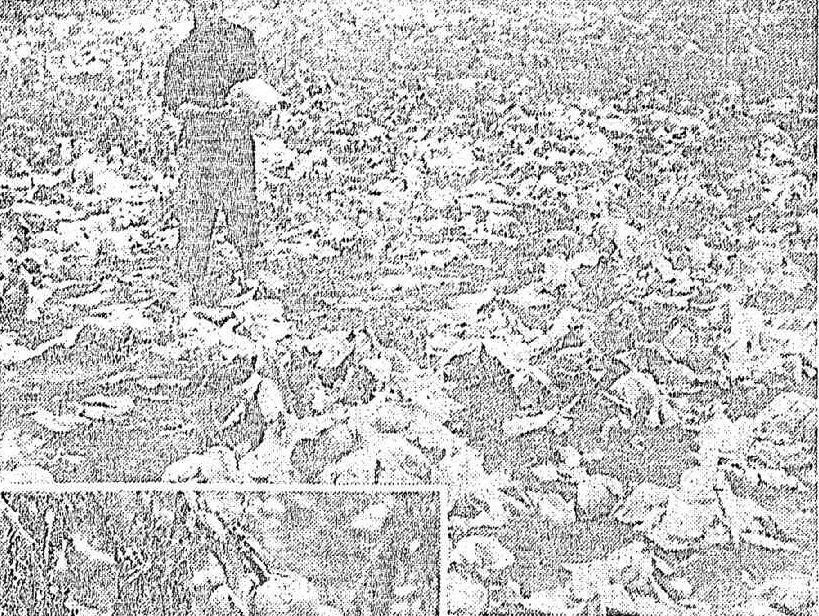
The picture above shows Frank Joyce, a son of the owner of the property, among the devastated cabbage crop. After the cyclonic wind had lashed the cabbages and torn many of them from the ground.
The bulk of the uncut celery came through fairly well, but the dreaded chocolate leaf spot, hitherto kept under control, is spreading rapidly throughout the plants and many heads will be ruined in addition' to those damaged by flood waters.
.jpg?timestamp=1616560511073)
Big Tomato Loss
Possibly the heaviest loss occurred in the tomato section where a crop estimated at 1,000 cases has been completely ruined. Only a few cases had been lifted when the storm struck and completely devastated one of the finest crops to be seen in the district. Grown on a piece of new land, top-pruned and trellised the individual clusters' were of remarkable weight and quality.
An attempt was made to pick some of the biggest specimens while the crop was still under water, but these tomatoes, as they ripen, are now showing the effects of the flooding and most will be unmarketable.
With quality tomatoes realising round £1 a case the loss on this crop alone is a severe one.
Other losses included a crop of peas and seed beds of parsnips, cauliflowers and cabbage. The only crop which seems to have escaped the storm damage is a field of long white squash, sown on a piece of high land and now ready to harvest.
In addition to the loss of valuable crops there is the further serious loss Involved in manures, fertilisers, seed, dusting materials and manpower involved In producing the crops.
"It's all in the game," philosophically remarked Mr. .Joyce to "The Land." "As soon as we can clean up the mess we'll have another try." Heavy Storm Damage on Mona Vale Farm (1946, May 3). The Land (Sydney, NSW : 1911 - 1954), p. 9. Retrieved from http://nla.gov.au/nla.news-article105693193
Front page
Anzac Day was at once one of the most memorable and also one of the most deplorable days in Sydney 'e chequered history. Exhibitionists, male and female hoodlums, parasites, and bawdy bravos made it a day for themselves, while a general participation in a boozy orgie marked the balance of the day after the dawn service, the procession and the Domain service.
If Anzac Day is to be perpetuated and made the Day it was originally meant to be, then either the pubs must be closed, or at best opened for only an hour or so. Never has the city witnessed such disgusting scenes of swinishiles, or so many drunken brawls, or so many two-up schools in the streets and parks — though the latter was easily the lesser of the day's evils. Visitors to Sydney were amazed at the hoggishines so blatantly paraded by those who represent the foulest and most irresponsible of our breed. The pity is that there were so many of the offenders, and that visitors would carry away quite a wrong idea of the character of Australians generally. the vast majority of whom have an abiding respect for the common decencies of life. Certainly no one more deeply resents the loutishness so much in evidence on Anzac Day than they do. I am glad to see that the most bitter antics of the debauchery and larrikinism were the RSL leaders and officials. They realise the behaviour of 'the mob' was about the worst possible advertisement the Day and the Digger have ever had.
Had a look round the State's largest celery farms the other day-— Mr. Jim Joyce's out at picturesque Mona Vale. And it is 'some' celery they produce there, believe me. Moreover, they do grow it — the celery, as with so many of us, just does not grow of its own | accord. The technique involved has been perfected by Mr. Joyce as the result of personal experience, experiment,' and initiative over the years. And the result is heads of celery weighing up to 5 lb, perfect, blanched, of unusual crispness, and exquisite flavor. I should say this is Australia's finest celery, and a DSA army food technician confirms that opinion. The only fault that the Yank expert could find with the Joyce enterprise was that it did not make use of the trimmed-off leaves and small side stalks. ! Over in USA, he explained, these waste leaves were compressed and the resultant juice sprayed on the salt for . the production of celery salt, while 1 the discarded side stalks were processed into soup, etc., so that nothing at all went to waste. Here, however we have none of the requisite processing plants for such an enterprise; and anyhow, the breezy James Joyce makes quite enough out of the marketable product itself, thank you, without bothering about trifling extras. His celery sells in the markets at 2s a head; and for weeks 011 end he disposes of 500 cases a week. As each case contains 24 head of choicest grade, you can figure out the turnover for yourself. ... (1946, May 7). The Wingham Chronicle and Manning River Observer (NSW : 1898 - 1954), p. 1. Retrieved from http://nla.gov.au/nla.news-article168524059
__________________________________________________________________________________
Richard (Paul) Byron was born ‘near a fallen tree’ at Bungendore, according to his Birth Certificate. Paul, as he was known, was in the Light Horse Regiment in World War One and met his wife at Dead Horse Hill, a picnic spot west of Mona Vale Cemetery. He was riding in full uniform when he met Ida Louisa Johnson, who worked as a midwife in the area, and they married soon afterwards, Ida purchasing her wedding dress materials from Porters 11 Mile Store at Bungan-Newport.
Marriage per NSW BDM’s: 8667/1916 BYRON, PAUL to JOHNSON, IDA I registered at MANLY
Passed away:
BYRON, RICHARD PAUL 20451/1956 parents: THOMAS and MARY ANN - registered at MANLY
BYRON, IDA IRIS 30992/1966parents: ALFRED and LOUISE - registered at MANLY
A brother of their father also lived in the area:
MR. PATRICK JOSEPH BYRON
The death occurred on 27th October at Prince Alfred Hospital, Camper down, of Mr. Pat. Byron at the age of 71 years. He had been in ill-health for years, and on 12th June was taken by ambulance to Prince Alfred Hospital, where he remained till his death.
Though his death was peaceful, he had suffered considerably during his long illness. During the months he was in hospital he was constantly visited by his wife and family, and they speak very highly of the kindness and attention of the Matron and staff oi the institution. The deceased was born at 'Mill-post,' Bungendore. His early life was spent at that town, where he married Miss Goldspink, of Braidwood. About 28 years ago the family moved to Braidwood, where they have remained ever since. Surviving are his wife and five sons Sydney (Braidwood), Cecil (Braid wood), Patrick (Crookwell), Paul (Western Australia), Thomas (Braid wood), and two daughters, Pearl (Mrs. Sonter, Burwood) and Vera (Mrs. W. Coleman, Braidwood). One son and two daughters predeceased him. Also surviving are one sister, Elizabeth (Mrs. Lewis, Bungendore), and three brothers, John (Mittagong), Michael (Narrabeen - was actually Warriewood valley) and Paul (Mona Vale). The funeral took place in the Catholic portion of Rookwood Cemetery on 30th October. The 'Dispatch' extends sympathy to the bereaved relatives. MR. PATRICK JOSEPH BYRON (1950, November 3). The Braidwood Dispatch and Mining Journal (NSW : 1888 - 1889; 1895; 1897 - 1954), p. 2. Retrieved from http://nla.gov.au/nla.news-article119282204
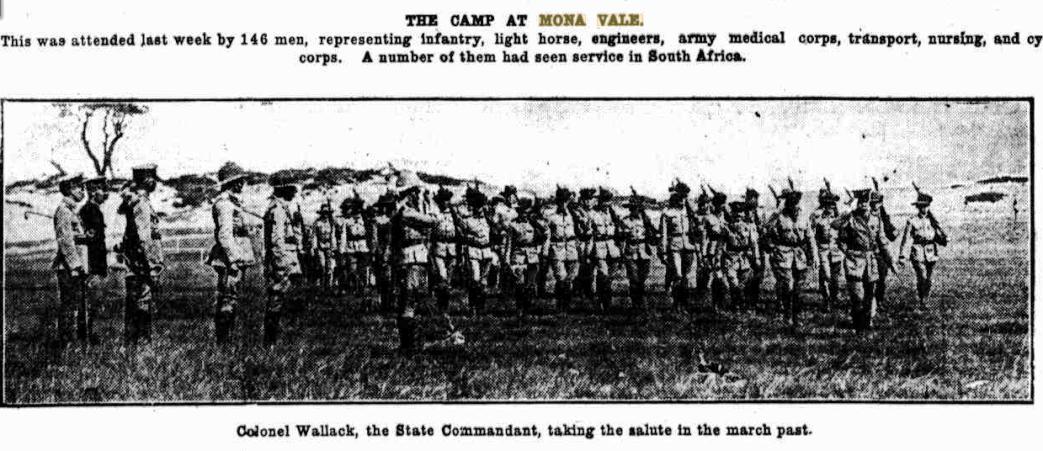
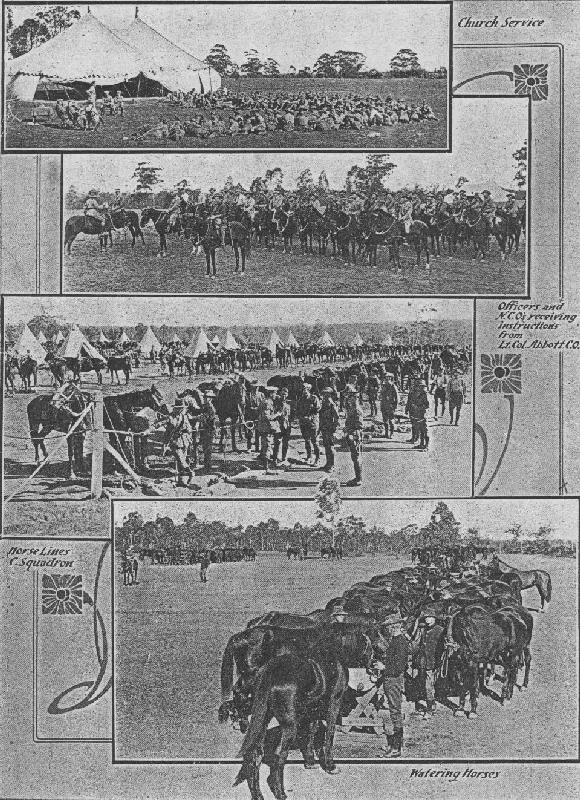
That Summer of 1915 Light Horse exercise at Mona Vale:
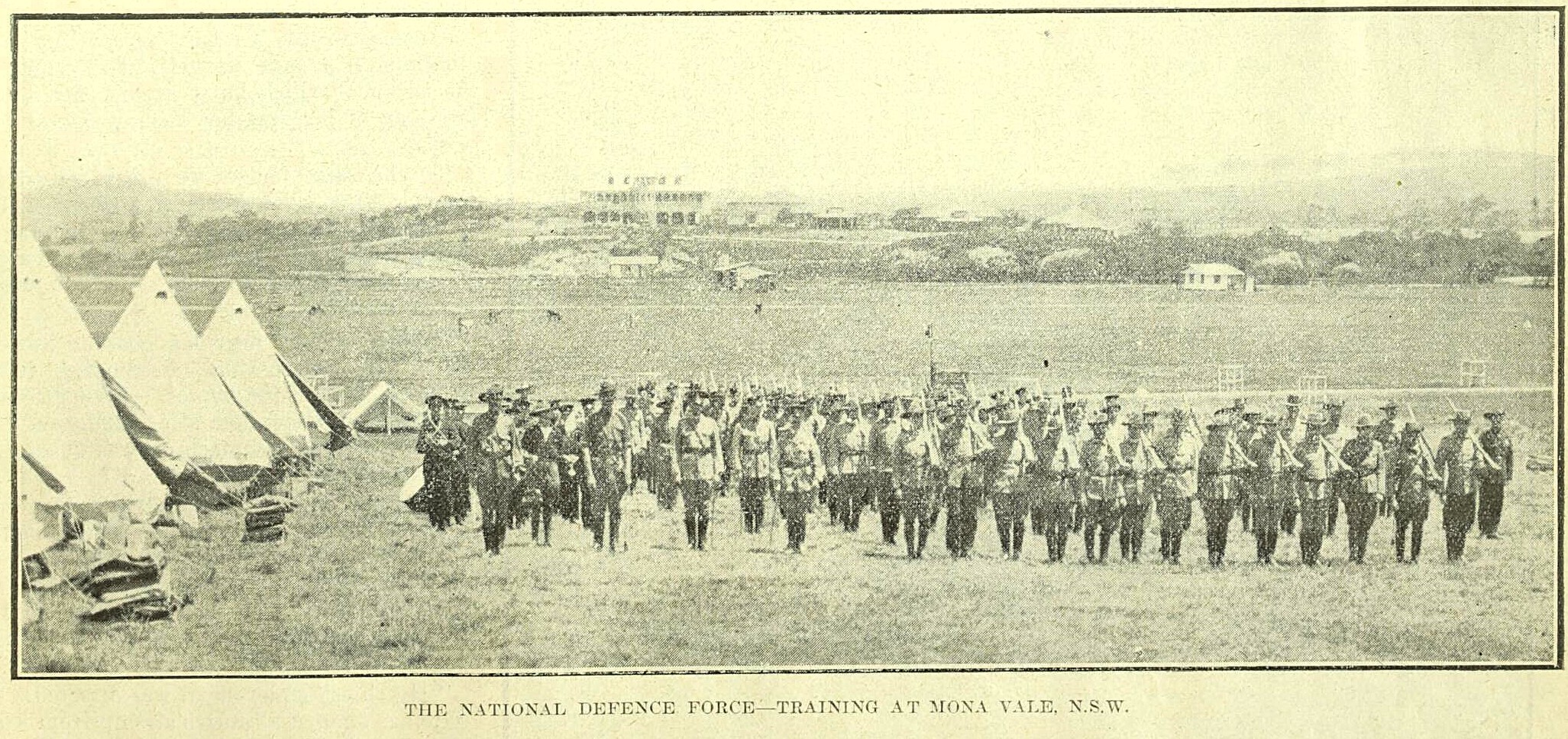
THE NATIONAL DEFENCE FORCE—TRAINING AT MONA VALE, N.S.W. (New Series Vol. 3 No. 6 (1 May 1915 - page 385). The Lone hand Retrieved from http://nla.gov.au/nla.obj-392506948
NATIONAL RESERVE.
 Lord Roberts shortly after the South African war founded, for purposes of home defence, a corps of ex-service men, under the name of the "National Reserve." Some ten years later-I.e., when reviewed two years ago by his Majesty the King, this force numbered 30,000 men In London alone. Some of their number, we hear, have recently been doing active home defence work.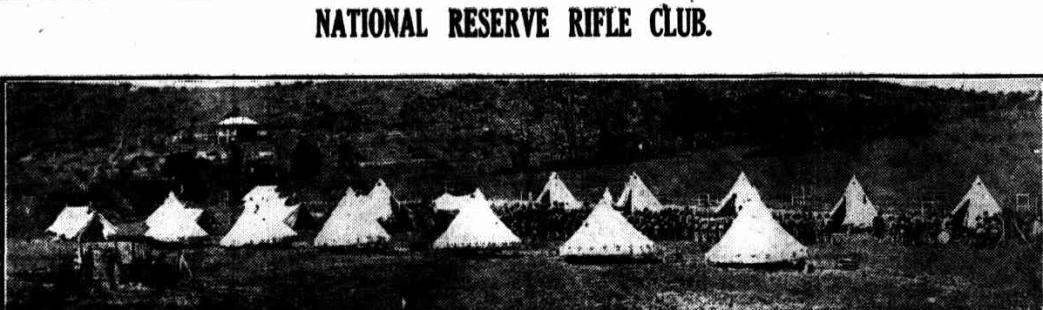
MILITARY INTELLIGENCE. MANOUVERS BY THE LANCERS IN THE VICINITY OF NEWPORT.
The Sydney and Parramatta squadrons of the New South Wales Lancers were engaged on Saturday and part of yesterday in some interesting fluid operations in the neighbourhood of Rock Lily and Newport. The parade was also the last of the year.
 The Sydney squadron, numbering 69, under Captain King, was as supposed to represent the advance party of an enemy which had landed at Bongan Bongan Beach, near the entrance to Broken Bay. The squadron left the city at 8.30 a.m., and bivouacked at 1 p.m. at Narrabeen.
The landing party, by arrangement, commenced to make its dispositions at 2 p.m. from the Rock Lily Hotel, and the idea, was that the telegraph lines should be tapped in order to prevent reinforcements of the defending force coming from Hornsby.
The Parramatta, squadron of Lancers was ordered to find out the strength of the enemy that had landed at Bongan Bongan Beach. According to the plan of operations the road via the Spit was held to be untenable, so that the detachment had to proceed via Pymble. The Parramatta men mustered 72, and were under the command of Captain Mackenzie. They left Parramatta at 8a.m. and reached Tumble-down Dick, near Pymble, in time for lunch.
Lieutenant-Colonel James Burns, officer-commanding, accompanied them, and at Pymble Brigadier-General Finn, Major A. P. Luscombe, D.A. Q.M.G., and Lieutenant Macartney, A.D.C., joined the party with a view to witnessing the manouvres.
A start was made at 2 p.m. from Tumbledown Dick to ascertain the whereabouts of the enemy, and very rough country was encountered, but trooper's and horses got over the ground capitally. The enemy's landing party not having time apparently to achieve its object, its officer-commanding threw out a line of outposts extending from the Rock Lily Hotel to a little point near Newport. Shortly alter 3 p.m. the Parramatta squadron got into touch with the outposts about two miles from the hotel, and after some good work on both sides the evening's advance guard, according to the prearranged plan, was driven back to the reserve near the beach.
Owing to this reverse and the weather becoming thick and stormy the landing party was supposed to be unable to re-embark by boats on board of the cruisers, consequently a position was taken up on Bongan Head. In this phase of the operations, however, the Sydney squadron no longer represented the enemy, but joined the Parramatta men. The enemy's position on Bongan Head was represented by eight canvas targets, which had been erected under the supervision of Major M. Hilliard, D.S.O., and Captain P. C. Timothy. Four of these were located about 500 yards from the main road and the other four about 900 yards distant, but the ranges were unknown to those who subsequently took part in the firing. It was decided that the attack on this position should be made shortly after daybreak on the following day by the entire body of Lancers representing the home force.
The two squadrons a little after 5 p.m. reached Mr. George Brock's Mona Vale estate, where Captain Timothy had arranged with the owner for the whole force to bivouac for the night. The troops were here joined by Colonel H. D. Mackenzie, A.A.G., Captain J. Purves, and Captain J. S. Brunton, the two latter travelling by motor car. The Lancers band also came down by a coach provided by the officers, who also contributed the commissariat supplies.
The State Commandant addressed the officers and N.C.O's. during the evening, and said that he was well pleased generally with the tactics, intelligence, and conduct of the troops. The men had shown their efficiency as skilled horsemen in very rough country, and he complimented them on their mobility. The outpost work was creditably performed, but at times rather humid. After tea a camp-fire concert was held, in which the band figured conspicuously, and Mr. Brock' rendered valuable assistance. A boxing bout between two amateur champions, Troopers Parbury and R. Baker, proved exciting, as were also some smart singlestick tourneys.
At daybreak yesterday the reveille sounded, and the Lancers at 5.45 a.m. were on the way to attack the enemy's position, indicated by the canvas targets on Bongan Head, forty rounds of ball cartridge were fired per man in the attack, which was at unknown distances. The shooting was good. One target had about 200 hits on it. The weakness of the attack, according to Brigadier-General Finn, lay in the fact that the men were too prone to expose themselves and rush forward in large numbers instead of in twos and threes. These were defects apparent in all sham fights, however, and only corrected by a taste of the " Real thing."
The troops returned to camp at 8.16. After morning "stables " a bathing parade was held, in which nearly every Lancer participated on his horse. Mr. Brock was thanked for his kindness in quartering the forces, and route march was then taken via the Spit for the Sydney Squadron and via Pymble for the Parramatta men. The Sydney detachment reached the city in the afternoon. MILITARY INTELLIGENCE. (1902, December 15). The Sydney Morning Herald (NSW : 1842 - 1954), p. 9. Retrieved from http://nla.gov.au/nla.news-article14521240
The oldest surviving headstone in the Mona Vale cemetery is for Percy Johnson who died in 1914 aged just two years and 9 months.
NSW BDM's: JOHNSON PERCIVAL W 4549/1914 parents: WILLIAM S and LUCY registered at: MANLY
Percival was the great-grandson of William Oliver, who donated part of his land at what was then Chapel Point (now Church Point) for a cemetery and place of worship for the local community. His great grandfather and grandmother rest in this cemetery at Church Point.
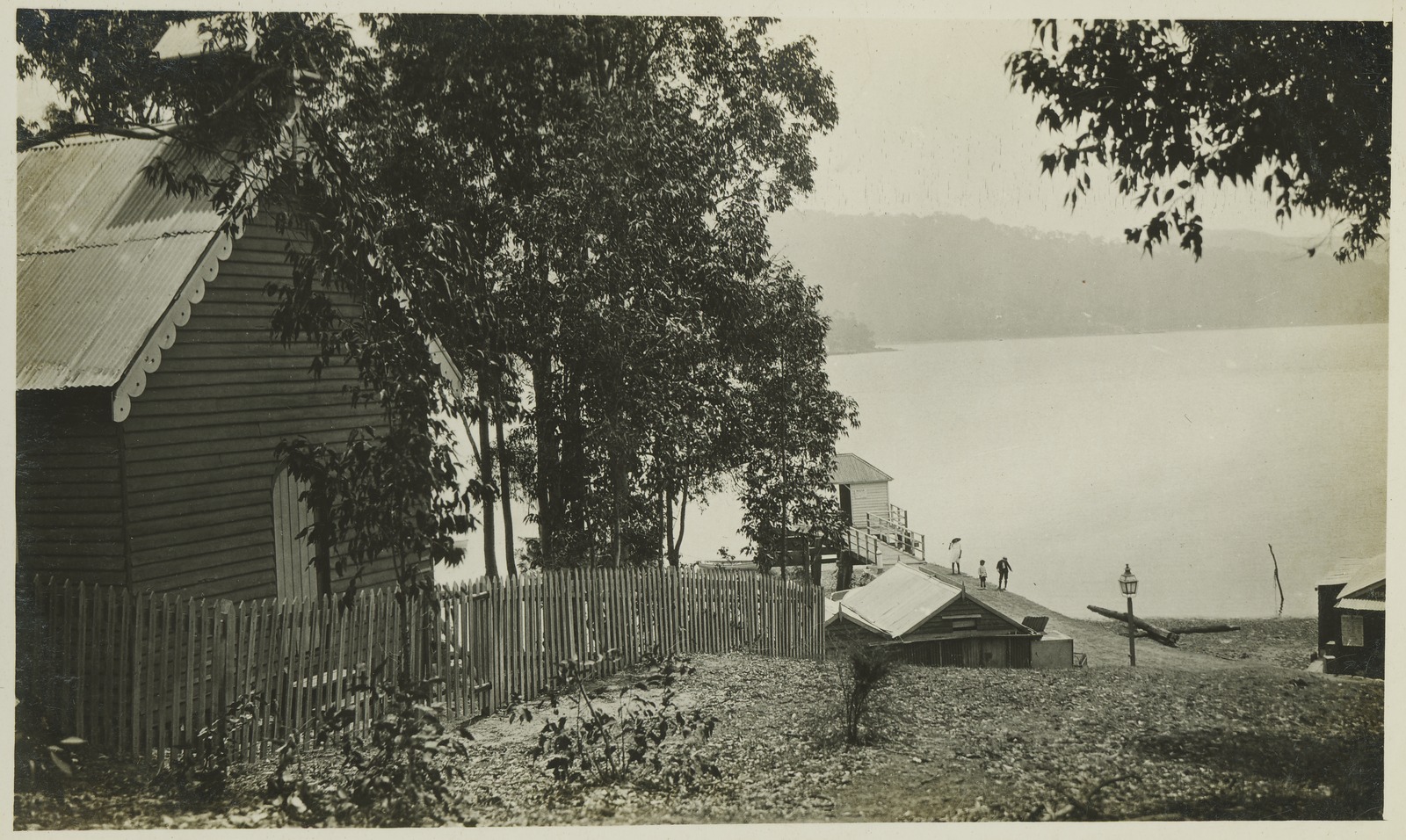
Percy’s memorial is the oldest marked monument in the cemetery and is an example of Victorian grave architecture, with iron railings decorated with fleurs-de-lis uprights and round florette spears on the corners. The headstone is of marble with lead inscription work in good condition. This monument was restored by the Rookwood Cemetery Heritage Mason, Sach Killam, funded by Percy’s niece in 2013. Percy is buried with his maternal grandmother, Mary Bill, while his paternal grandmother, Louisa Johnson, (daughter of William Oliver) is buried beside him.
.JPG?timestamp=1626912839313)
.JPG?timestamp=1626912875610)
The Department of Lands was originally responsible for the cemetery but by 1926 the cemetery was neglected and local people, particularly the Mona Vale and District Progress Association, were urging Warringah Shire Council to take over its management which occurred from May 31st 1929
smaller.jpg?timestamp=1785990646690)
smaller.jpg?timestamp=1785990689609)
smaller.jpg?timestamp=1785990842299)
smaller.jpg?timestamp=1785990908963)
.jpg?timestamp=1591238420489)
.jpg?timestamp=1591238446567)
.jpg?timestamp=1591238470418)
.jpg?timestamp=1591238497419)