Mustaca theatres placed on the market
“Our forte at United Cinemas is to serve with respect and kindness. We love what we do. Avalon was my second cinema, but it is closest to my heart.”
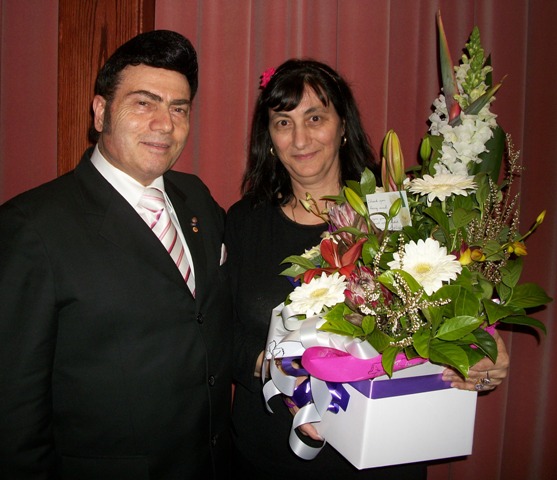
Roy is one of us - everything he and Josephine do and have done stems form love. You can dress it up in a fancy suit if you like - act all professional - but it's love that anything good comes from; a love of all and all humankind.
Collaroy's Picture Theatre
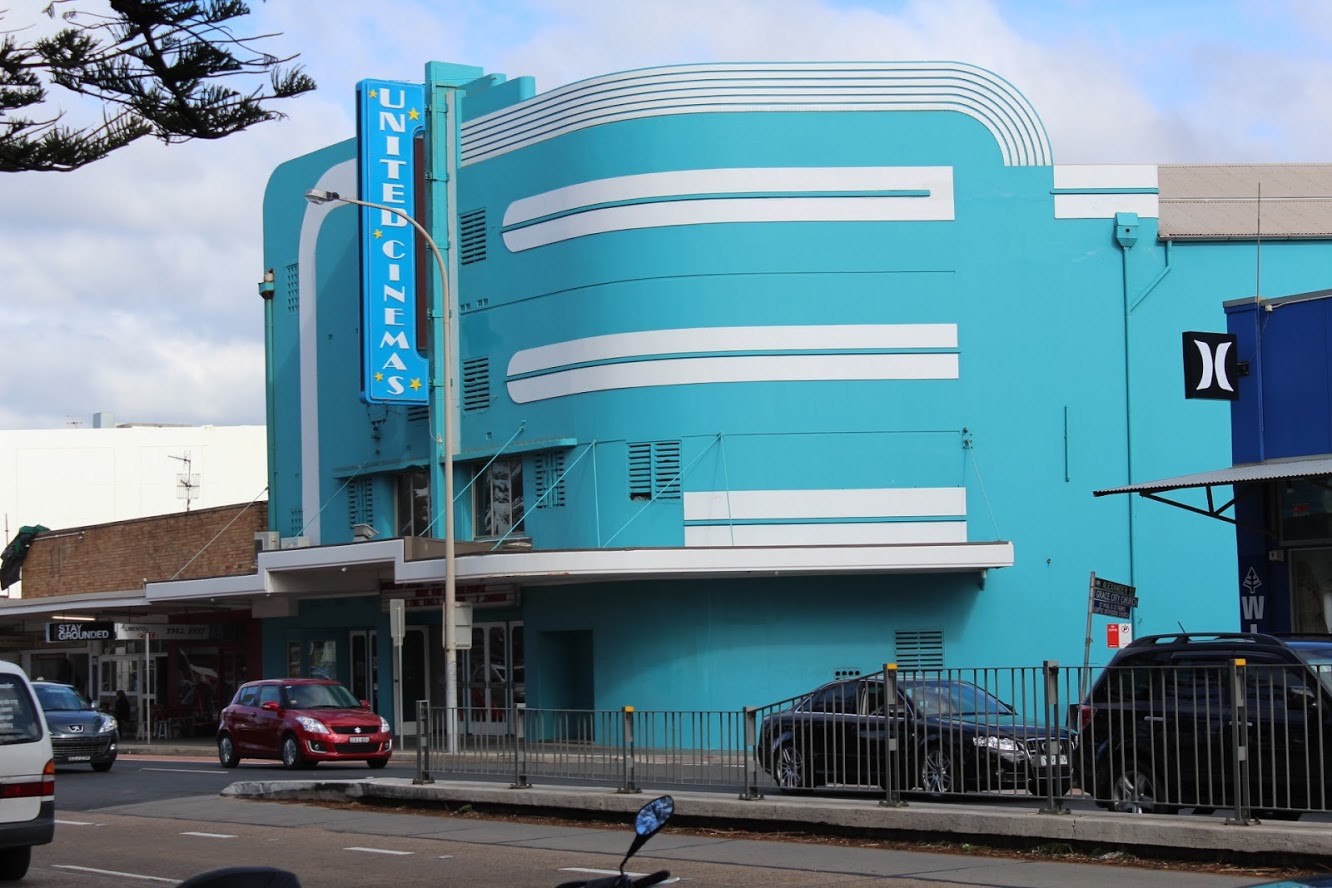
Originally called the "De Luxe Theatre", the Collaroy Cinema was built for Casmi Theatres Pty Ltd who wanted "a modern theatre with all the features...considered essential..."
Architect: John Carrick Rennie-Bartle
Architect J. C. Rennie Bartle, of Collaroy is preparing plans and will shortly be calling tenders for a new picture theatre at the corner of Pittwater Road, and Alexander Street, Collaroy. Opportunities for Business (1937, June 30). Construction and Real Estate Journal (Sydney, NSW : 1930 - 1938), p. 17. Retrieved from http://nla.gov.au/nla.news-article222922685
PICTURE THEATRE. COLLAROY.
Work is proceeding on a new picture theatre at the corner of Pittwater Road and Alexander Street, Collaroy, which has been designed to seat 1000. There is a spacious entrance vestibule giving easy access to the stalls and dress circle. There is comfortable lounge space in the foyer, which is 50 feet by 35 feet. Large windows overlooking the ocean open off the foyer.
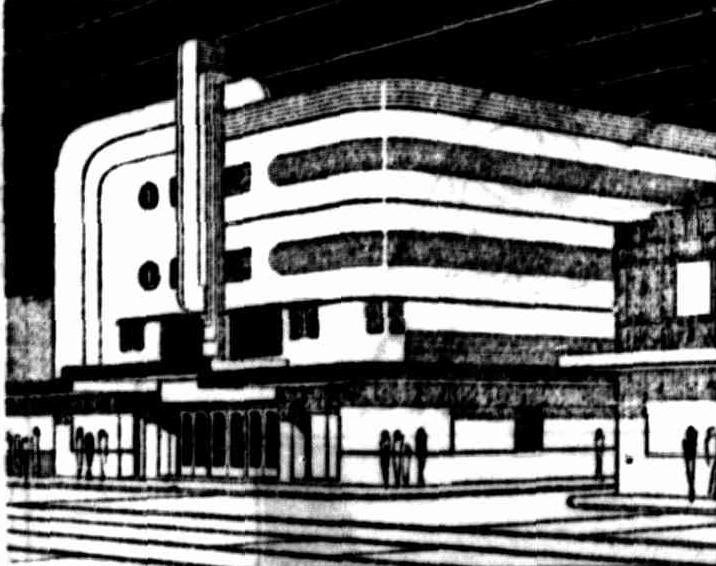
New Theatre at Collaroy.
Subdued but colourful lighting will be given indirectly. The decorative treatment in the auditorium is a study in simplicity contrasted with richness concentrated on the most important positions. Mechanical ventilation and heating plants will be installed. The sound equipment will be of the most modern and effective kind.
Roomy and comfortable chairs will be provided for patrons in all sections of the theatre. The floors will be carpeted throughout. The decision of the proprietors was to provide a theatre up to city standards, with all necessary comforts and facilities for patrons. The building is being erected by Charles A. Bullivant to plans, and under the supervision, of J. C. Rennie Bartle, architect. PICTURE THEATRE. COLLAROY. (1937, September 21). The Sydney Morning Herald (NSW : 1842 - 1954), , p. 8. Retrieved from http://nla.gov.au/nla.news-article17408008
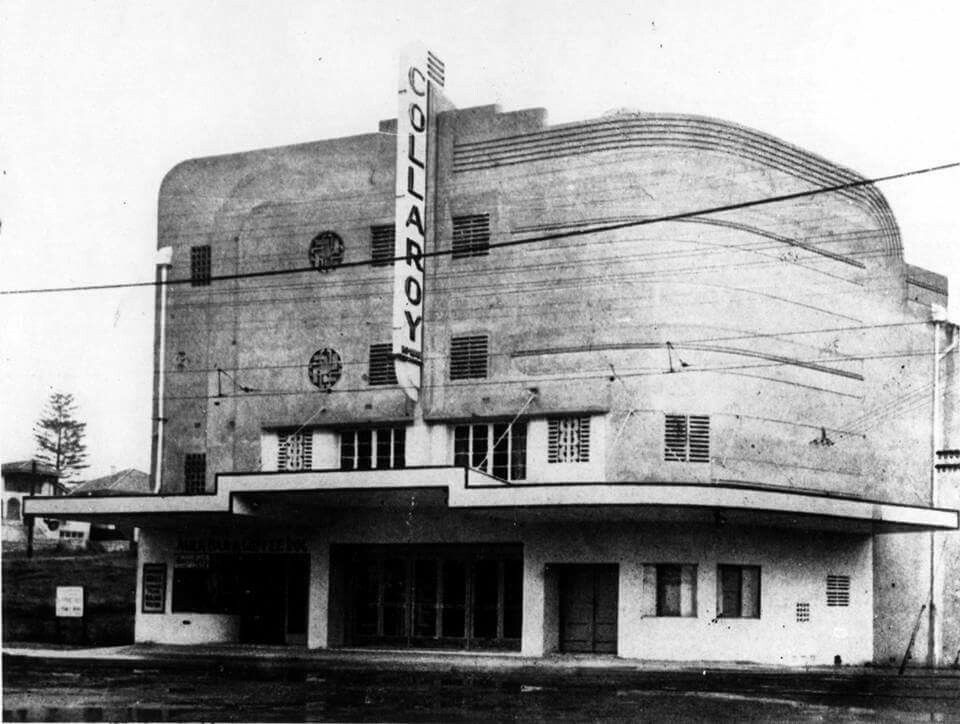
As with the Palladium at Palm Beach, this structure also became utilised by the local community for great causes:
FOR VETERANS' HOME
The War Veterans' Home, Narrabeen, will benefit from a gala evening to be held at the De Luxe Theatre, Collaroy, on Thursday. Mrs. J. Seymour-Allan is the organiser, and artists will include Peter Dawson, Daphne Lowe, and Charles Lawrence. Sweets and souvenir programmes will be sold. A special bus service to Palm Beach and Manly will be provided at the conclusion of the performance. FOR VETERANS' HOME (1941, August 23). The Sydney Morning Herald (NSW : 1842 - 1954), p. 9. Retrieved from http://nla.gov.au/nla.news-article17753288
As well as a target for the dishonest:
THIEVES ENTER PICTURE THEATRE
SYDNEY, This Afternoon. — Thieves ransacked the office of the De Luxe Theatre, Pittwater-road, Collaroy, early this morning.
They entered the theatre by the front door and prised open an iron grill around the cashier's office. When they failed to find anything they ransacked the theatre office in their search for money. Police have not yet ascertained if anything was stolen. THIEVES ENTER PICTURE THEATRE (1951, March 21). Lithgow Mercury (NSW : 1898 - 1954), p. 2 (CITY EDITION). Retrieved from http://nla.gov.au/nla.news-article220736747
Re-named 'Odeon' around 1952-3, the building was leased out to Odeon-Acme-Kings-Theatres, who were part of the Greater Union Theatres chain.
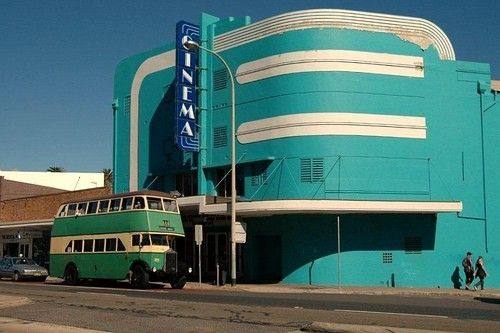
The cinema reverted back to independent ownership in 1967 and was re-named Classic Cinema.
In 1987, it was sold to Hayden Theatres, (Mile Walsh). Hayden Theatres only operated the classic cinema for two years, and it was was purchased by the current owner United Cinemas, and the Mustaca family in 1989. The building was subsequently twinned, but retains most of its decorative features, including original seating, drapes and chandelier. A true classic!
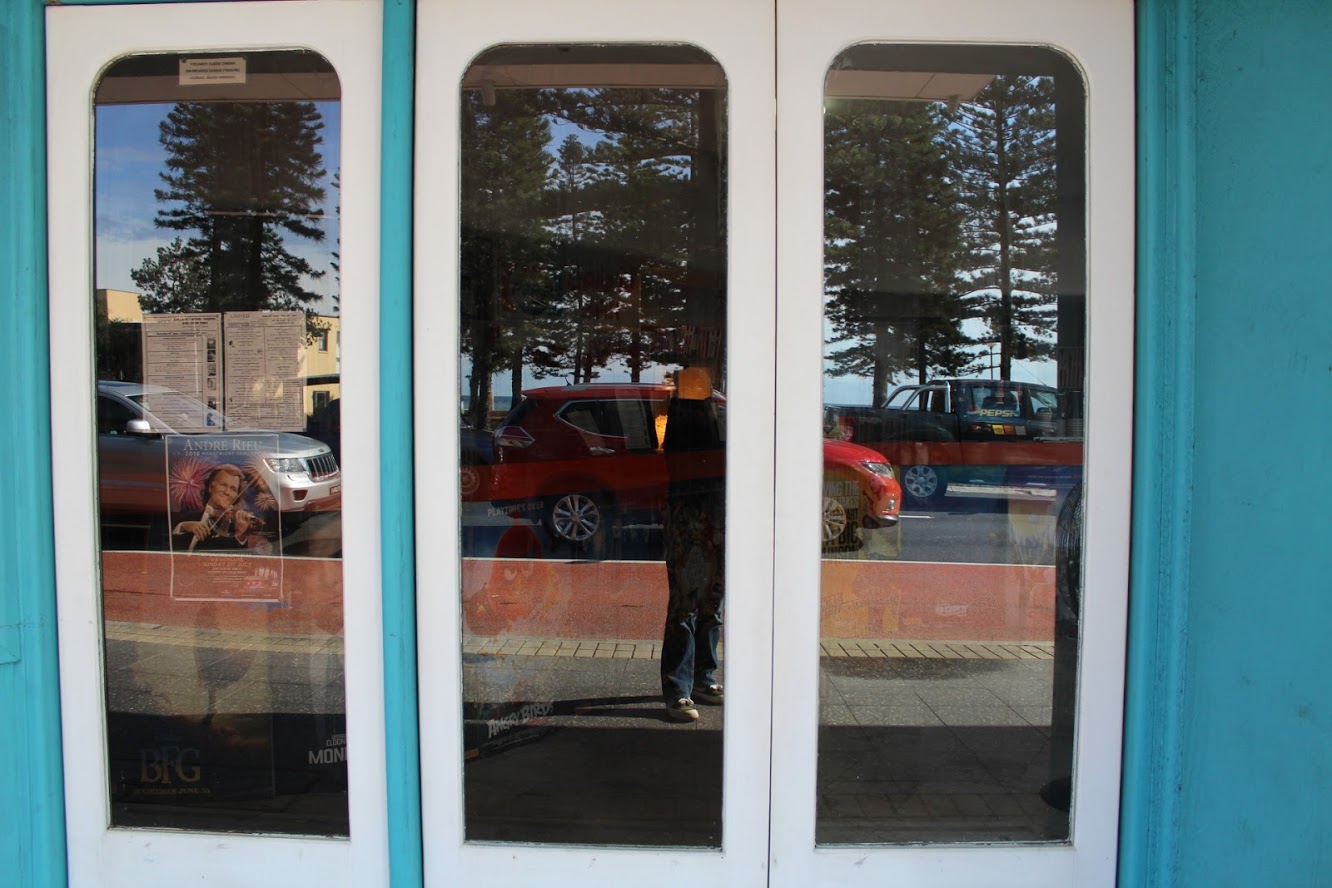
Some photos from 2016:
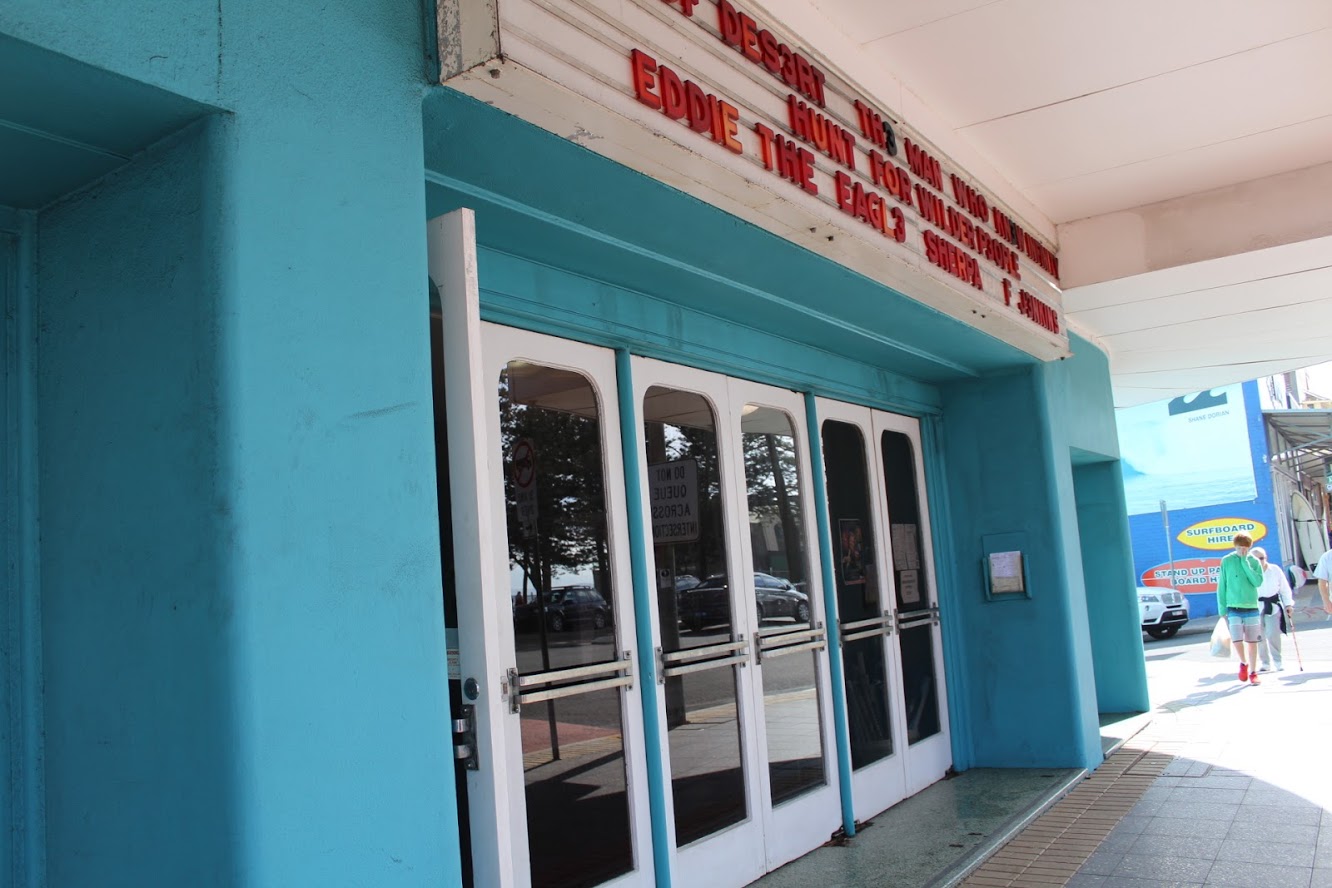
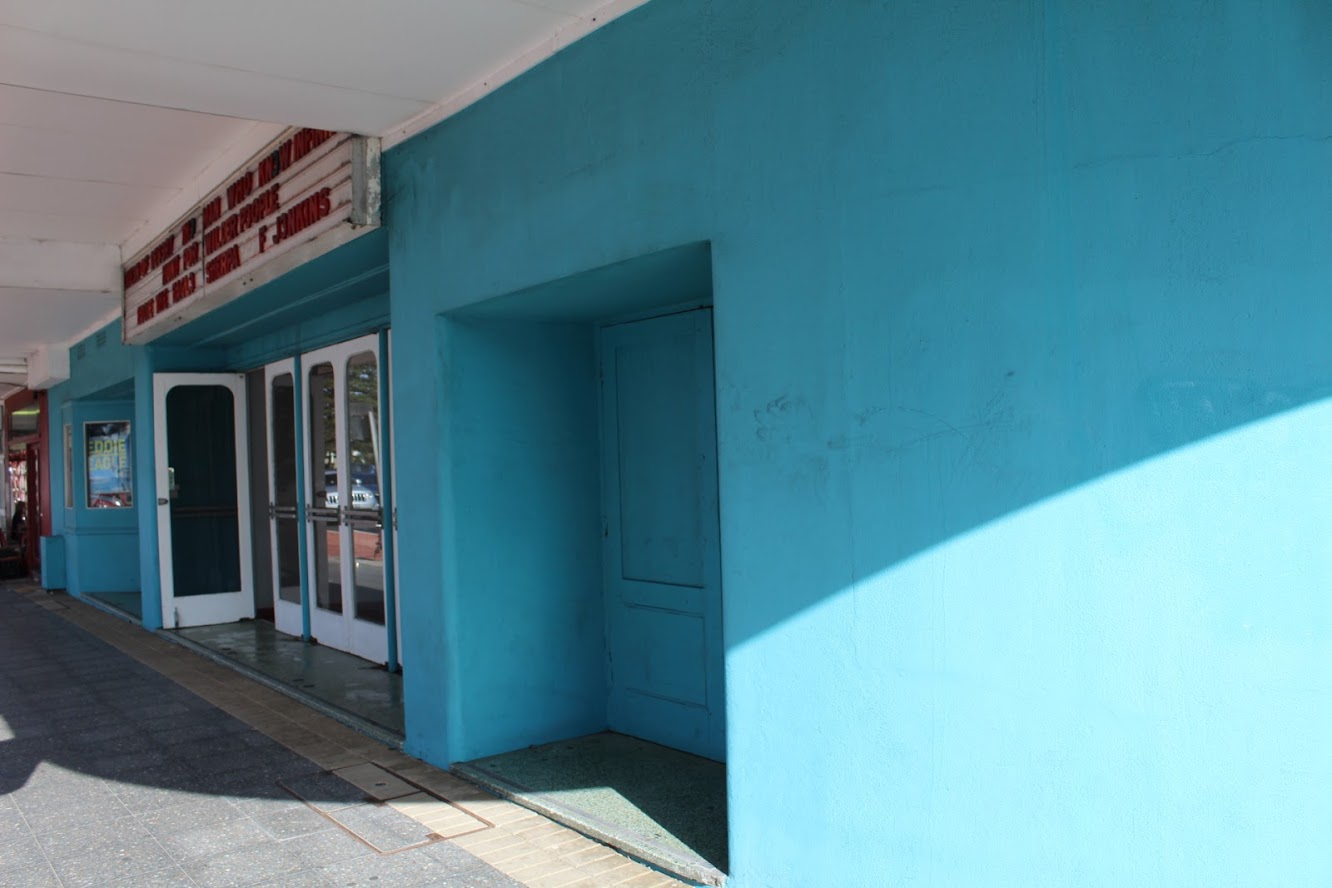
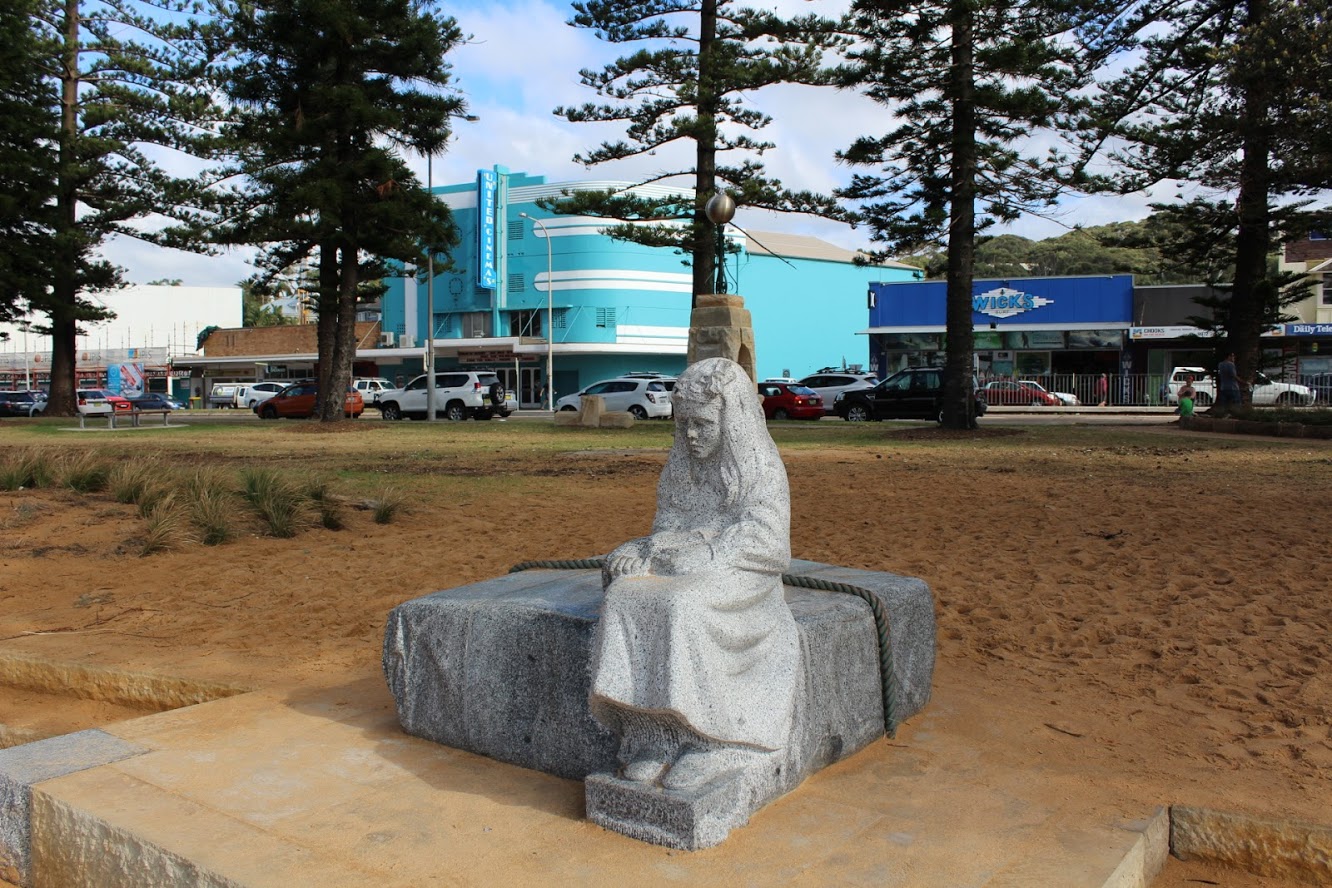
Some more about the architect:
J C Rennie Bartle, Collaroy, plans, tenders shortly for dance hall at Mechanics Institute Mudgee and for alterations to existing structure, plans for alterations and additions to duco works of T Low Church Street Mudgee. CONTRACTS LET. (1937, September 21). The Sydney Morning Herald (NSW : 1842 - 1954), p. 8. Retrieved from http://nla.gov.au/nla.news-article17408001
Architect J. C. Rennie Bartle is preparing plans for the erection of a two-storey residence in Weemala Road, Northbridge; a two-storey residence in Pacific Highway, Pymble; a new theatre; extensions to Duco-works in Church Street, Mudgee, and the erection of a new dance hall for the Mechanics' Institute, Mudgee, N.S.W., and alterations to the existing premises. Opportunities for Business (1938, July 20). Construction (Sydney, NSW : 1938 - 1954), p. 20. Retrieved from http://nla.gov.au/nla.news-article222852280
The engagement is announced of Miss Diana Chapman, only daughter of the late Mr. Henry B. Chapman, and Mrs. Chapman, of 'Hillsborough,' Collaroy, to Mr. John Rennie Bartle, second son of Mr. and Mrs. W. Godfrey Bartle, of Balhour, London. Engagements. (1926, April 25). Sunday Times (Sydney, NSW : 1895 - 1930), p. 17. Retrieved from http://nla.gov.au/nla.news-article128132279
BARTLE— CHAPMAN
THE wedding of Miss Diana Templeton Chapman, only daughter or Mrs. L. M. Tcmpleton Chapman, of Collaroy, and Mr. John Rennie Bartle, second son of Mr. and Mrs. W. Godfrey Rennie Bartle, of London, was quietly celebrated at St. James's Church last night. The Rev. J. F. S. Russell performed the ceremony. The bride wore a short sleeveless frock of white romaine heavily headed in crystal and diamante, and a tulle veil caught with a coronet, of orange blossom. She carried a sheaf of white hyacinths and pink roses. The bridesmaid, Miss Ludo Thompson, wore a flared frock of rose and daffodil floral chiffon, with a hem of ruffled rose ribbon, and a black picture hat. She carried a shower bouquet of daffodils and rose stock. Mr. Eric Strelitz was best man. The reception was held at Petty's Hotel, where Mrs. Chapman, in a gown of black romaine with jade trimmings, and a black bat, received the guests. On leaving for the honeymoon, which will he spent at Bowral, the bride wore a fuchsia jumper suit and a fuchsia hat.
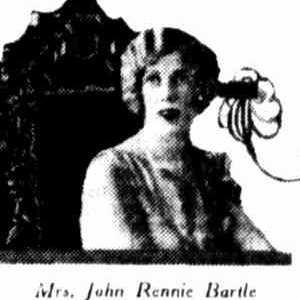
Mrs. John Rennie Bartle
LAST NIGHT'S BRIDES (1926, September 3). The Sun (Sydney, NSW : 1910 - 1954), p. 13 (FINAL EXTRA). Retrieved from http://nla.gov.au/nla.news-article222709867
Bartle, John Carrick Rennie, "Doone,'' Jamieson-parade, Collaroy ARCHITECTS' ROLL OF NEW SOUTH WALES FOR YEAR 1938. (1938, January 28). Government Gazette of the State of New South Wales (Sydney, NSW : 1901 - 2001), p. 339. Retrieved from http://nla.gov.au/nla.news-article228137221
Bartle, John Carrick Rennie, 62 Margaret-street, Sydney ARCHITECTS' ROLL OF NEW SOUTH WALES FOR YEAR 1939. (1939, January 27). Government Gazette of the State of New South Wales (Sydney, NSW : 1901 - 2001), p. 471. Retrieved from http://nla.gov.au/nla.news-article222079118
BARTLE.-February 27 1946, Diana Templeton dearly beloved wife of John Carrick Rennie Bartle of 39a Addison Road Manly, loved mother of Barry, Hugh and Christopher. Privately Interred Northern Suburbs Cemetery. Family Notices (1946, March 1). The Sydney Morning Herald (NSW : 1842 - 1954), p. 14. Retrieved from http://nla.gov.au/nla.news-article17971441
NSW register of Births, deaths and Marriages;
BARTLE DIANA TEMPLETON 1775/1946 Parents: HENRY BRADSHAW LILLIAN CHATSWOOD
BARTLE JOHN HERBERT C 11718/1958 Parents: WILLIAM LOUISA PETERSHAM
THE Governor-in-Council has approved of the appointment of the undermentioned persons to the Commission of the Peace for the State of New South Wales, viz.:—
...Bartle, Reginald Charles, "Redruth", Blaxland-road, Wentworth Falls; APPOINTMENTS. (1957, September 27). Government Gazette of the State of New South Wales (Sydney, NSW : 1901 - 2001), p. 3056. Retrieved from http://nla.gov.au/nla.news-article220378852
Art Deco
Art Deco, sometimes referred to as Deco, is a style of visual arts, architecture and design that first appeared in France just before World War I. Art Deco influenced the design of buildings, furniture, jewelry, fashion, cars, movie theatres, trains, ocean liners, and everyday objects such as radios and vacuum cleaners. It took its name, short for Arts Décoratifs, from the Exposition internationale des arts décoratifs et industriels modernes (International Exhibition of Modern Decorative and Industrial Arts) held in Paris in 1925.
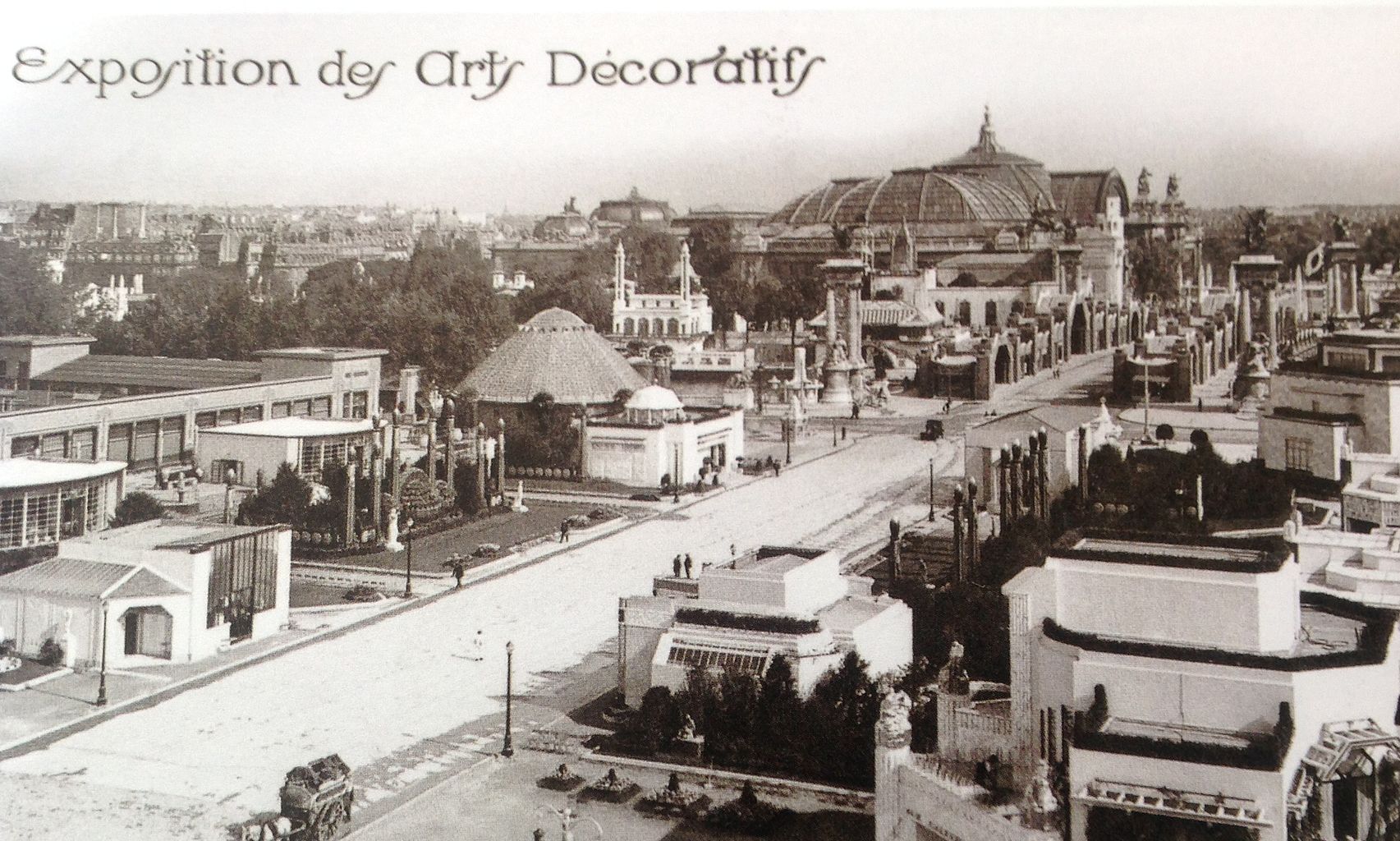
Postcard of the International Exhibition of Modern Decorative and Industrial Arts in Paris (1925)
It combined modern styles with fine craftsmanship and rich materials. During its heyday, Art Deco represented luxury, glamour, exuberance, and faith in social and technological progress.
Art Deco was a pastiche of many different styles, sometimes contradictory, united by a desire to be modern. From its outset, Art Deco was influenced by the bold geometric forms of Cubism; the bright colors of Fauvism and of the Ballets Russes; the updated craftsmanship of the furniture of the eras of Louis Philippe I and Louis XVI; and the exotic styles of China and Japan, India, Persia, ancient Egypt and Maya art. It featured rare and expensive materials, such as ebony and ivory, and exquisite craftsmanship. The Chrysler Building and other skyscrapers of New York built during the 1920s and 1930s are monuments of the Art Deco style.
Streamline Moderne
In the 1930s, during the Great Depression, the Art Deco style became more subdued. New materials arrived, including chrome plating, stainless steel, and plastic. A sleeker form of the style, called Streamline Moderne, appeared in the 1930s; it featured curving forms and smooth, polished surfaces.
In the late 1930s, a new variety of Art Deco architecture became common; it was called Streamline Moderne or simply Streamline, or, in France, the Style Paqueboat, or Ocean Liner style. Buildings in the style were had rounded corners, long horizontal lines; they were built of reinforced concrete, and were almost always white; and sometimes had nautical features, such as railings that resembled those on a ship. The rounded corner was not entirely new; it had appeared in Berlin in 1923 in the Mossehaus by Erich Mendelsohn, and later in the Hoover Building, an industrial complex in the London suburb of Perivale. In the United States, it became most closely associated with transport; Streamline moderne was rare in office buildings, but was often used for bus stations and airport terminals, such as terminal at La Guardia airport in New York City that handled the first transatlantic flights, via the PanAm clipper flying boats; and in roadside architecture, such as gas stations and diners. In the late 1930s a series of diners, modeled after streamlined railroad cars, were produced and installed in towns in New England; at least two examples still remain and are now registered historic buildings. - 3. From Wikipedia
Art Deco, ‘in Sydney as in New York’
Butler-Bowden, C. Art Deco, insites, Newsletter of the Historic Houses Trust of NSW. Winter 1999
During the 1920s and 1930s Sydney astonished visitors and residents alike. Sydney threw off its imperial clothes and donned cosmopolitan fashions. In Sydney as in New York, Art Deco was the unifying language of 1920s and 1930s design, a fusion of technology and populism, decoration and function. The exhibition Art Deco at the Museum of Sydney will take a new look at the Australian interpretation of this fusion of technology and craft, decoration and function. As Sydney and suburbs experience another transforming building boom, the current urban debate would do well to recall Sydney's Art Deco offerings, notably the street level appeal and appropriateness of so many large of its structures. In contrast to later versions of architectural modernism, this design movement was popular and adaptable.
Art Deco was an international style that encompassed diverse elements and regional definitions. Coined in the late 1960s, the term ‘Art Deco’ remains appropriate to the decorative style that evolved prior to the First World War in France. It was given prominence by the 1925 Paris L’ Exposition Internationale des Art Decoratives Industriels et Modernes. But in the 1930s Art Deco was popularly associated with the booming cities, soaring skyscrapers and new transport technologies of the United States.
Art Deco's optimistic declaration of progress and modernity cemented its popularity as Australia rebounded from the Great Depression. It was expressed through all types of buildings, commercial, residential and monumental, ushering in a moment of consistency and accessibility to Australia's built environment.
Art Deco worked on human, street scale and provided definition to the city skyline. The embellishments and architectural detail of Art Deco created theatrical incidents which enlivened the conservative atmosphere of the streets. Its hallmarks: the distinctive stepped summit, ornamental detail including popular motifs such as the rising sun, lightning zig zags and bold geometric patterns with the use of rich and colourful materials still assert their presence on the streets of Sydney today. Its appeal is of recognisability and visual accessibility
The Art Deco office towers of the 1920s and 1930s were among the first of this building type in Sydney. They created a new sense of the city and established an atmosphere of progress and modernity with their rich decoration and new use of materials. As well as a particularly fine pair of bronze and glass lift doors from Delfin House, Art Deco will feature vintage models of Transport House and the CML Building, the exquisitely detailed mini-skyscraper which still embellishes the corner of Bligh and Hunter Streets.
Art Deco will feature spectacular plaster reliefs rescued from the Embassy Cinema, and a door inlaid in a futuristic geometrical pattern of contrasting light and dark wood veneer, as well as a sinuously styled cinema ticket box from the State Theatre which is in the collection of the National Film and Sound Archive.
Art Deco will highlight the textures and materials that were so important a part of the Art Deco language – glazed terracotta, vitrolite, pressed metal, piano finished timber, polished granite and marble. Wunderlich Limited was Sydney's leading manufacturer of building materials and the exhibition will feature fluted bronze capitals and terracotta columns from the company's showroom, created in 1929 to advertise the new aesthetic and new materials.
The machine age look was applied to greater or lesser degrees to all types of buildings — commercial, residential and monumental ushering in a brief moment of consistency and cohesiveness to Australia's built environment. It was not restricted to the city and harbour-side suburbs. Art Deco apartments sprouted across the suburbs, while homes, pubs, service stations and shops also took on the new look. As well as architecture, Art Deco dramatically reshaped interior design — the exhibition will include some elements of interior design with a suite of Art Deco furniture and popular advertisements from the time documenting this new look in design and its appeal in Australia.
...The jazz of moving shapes makes patterns in the streets whilst up against the sunset sky is the jazz-like serrated edge of the up and down masses of concrete and steel. What we cannot get in romantic old subjects in the modern youthful city ..must be turned to account in exploiting its modern possibilities...
From Transport House to the Archibald Fountain, a surprising number of landmark structures emanate from the Art Deco era. Many of them, like the Grace Hotel, have taken on new roles since the 1930s, but have not lost their presence or allure. The exhibition will inspire a new view of Sydney’s streetscapes, and a new appreciation of our 20th century heritage. After a visit to this exhibition, you'll want to take a long walk around Sydney to enjoy our Art Deco treasures.
Avalon's Picture Theatre
Movies were shown in a tent or at the Henman's garage at Palm Beach prior to the Avalon Theatre being built. Ray explained during his Profile interview:
You ran a small theatre at the Garage?
''I wanted to get into films, so yes, that's how I started. Dad said to me one day: ‘time to put Henman & Son over the portal, which means you’ll have to do a Tech. course.’
I said I was sick of grease, 'I love old cars but I want to get into films’.
Subsequently he bought a 16mm Bell & Howell projector modified the lubritorium and took out the hyboys (oil pumps) and replaced them with director’s chairs and a screen.
I was then at Manly Boys’ High on Harbord Road. On Friday afternoons after school I’d catch the Wynyard bus to the city and pick up the movies including the Cinesound Review and serials etc from the various film distributors. I’d get back to Palm Beach at about 7pm on the 150 Albion at which time the local village were all in the cinema having a Friday evening drink. Half of them were a bit sloshed so whatever I showed they loved.
Those attending included Jack Ellis who had the milk bar adjoining the Garage, Geoff had the coal fired bakery, Gonsalves had the butchery, next was Toranto’s fruit shop, Alf Curtis the Pharmacist and finally Langford’s Real Estate Agency. The RSL was still located at Sandy Point in a garage. Our Theatrette ran Friday, Saturday and Sunday nights with a Saturday matinee – it was a real hub.''
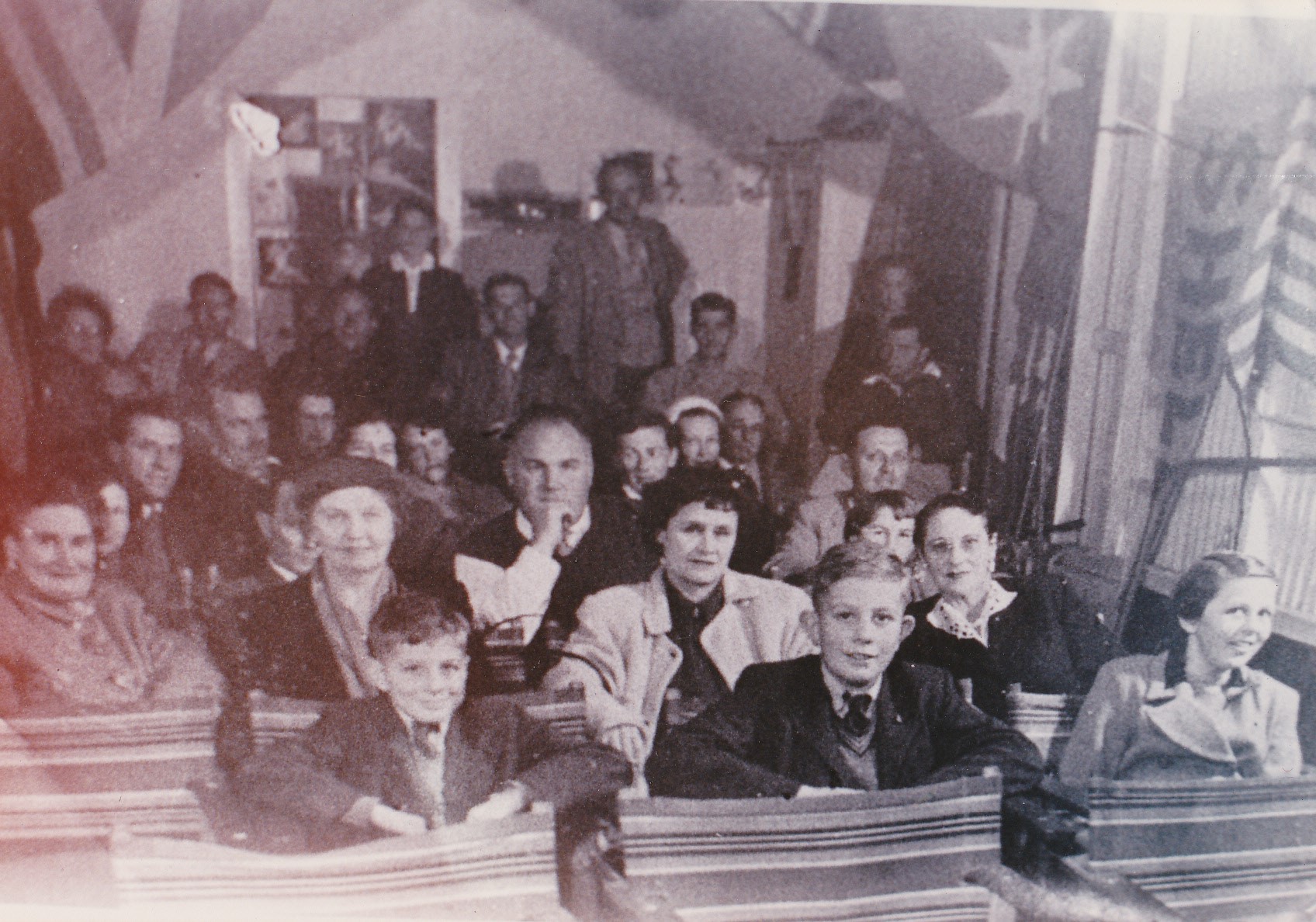
The Palm Beach Cinema - 1953

1952 painting by Jean Isherwood. This shows the Garage, Ellis Milk Bar, Butchery, Toranto's Fruit Shop, Alf Curtis's Pharmacy and Palm Beach Estate Agency. Ray's picture.
So you ended up working down at Avalon Cinema as the projectionist?
Yes.

Ray - Projectionist
How did you change that from showing films to making films – what was the process?
''When Avalon Theatre was built in 1955 by 1957, we had closed our little cinema and I joined Avalon Theatre which built specially for CINEMASCOPE. – I got to know all the movie titles and stars of the day including the directors. Jack Gallbraith would deliver the big Maspro canisters twice a week at program change and I’d make up the program in the morning by splicing in the news and trailers. The Queen’s National Anthem was placed at the head or tail of the program. I’ve still got a 35mm copy.
I worked 6 nights a week and loved it. When the program was running late for whatever reason, I’d have to look out the window to see if the 150 bus was coming around the top of the golf course. I’d dash over and ask the bus driver to wait until we got out – ‘can you give me 5 minutes?’ – they always did.
One of our customers was Paul Jacklin who owned a Mercedes 190SL which I looked after. He was the boss at the J Walter Thompson advertising agency and told dad he thought I should get into Television he offered me the choice of Ch 9, 7 or the ABC. Three days later I was working at TCN Channel 9 and that was very exciting.''
Arnold and Jean Spry
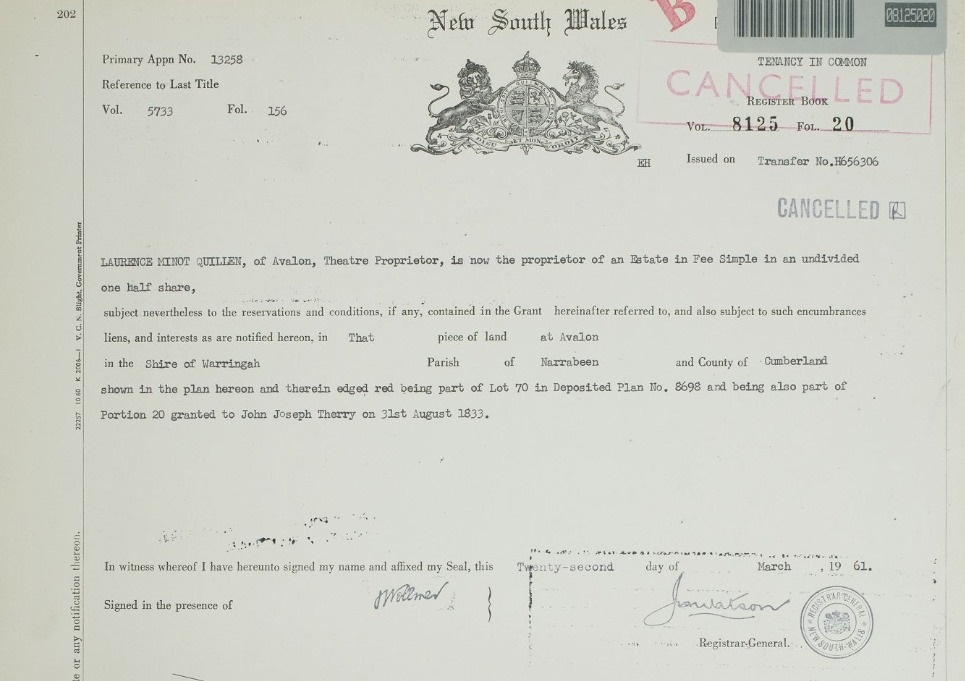
Avalon Cinema was the dream of Arnold and Jean Spry in partnership with Larry Quillan. Laurence Minot Quillan bought land in the Ruskin Rowe subdivision that took place after WWII from the old Gunjulla holding of the Grace family, towards Clareville.
Larry Quillan is likely to have known members of the Spry family, who went in for being 'entertainers' over a few generations. Larry had an interest in 'fun on the pier' at Manly, and had also been involved in 'shows' and amusement rides prior to that:
CAUSES IN No. 4 COURT.
(Before Mr. Justice Street and jury.)
AN AMUSEMENT RIDE.
Laurence Quillan sued Richard Hoghton Nuttall to recover damages in respect of alleged breaches of an agreement relating to a new form of amusement ride. Plaintiff's case was that, in consideration of the defendant manufacturing and selling the machine, plans and instructions of which were supplied to the defendant, the plaintiff was to receive £100 commission on each sale. It was also provided by the agreement, plaintiff alleged, that he was to be supplied with one of the machines for £ 842, and that any other machine sold should be under an agreement by the purchaser not to operate it at either Manly or at the Royal Agricultural Society's Show in Sydney for three years.
Plaintiff admitted receiving an allowance of £100 on the machine purchased by him, but alleged that the defendant had com-mitted breaches of the agreement between them and that other similar machines had been sold without the stipulated undertaking by the purchaser., and that he had not received commission on their sale.
The defendant denied promising as alleged. Evidence was not concluded when the Court adjourned. CAUSES IN No. 4 COURT. (1939, November 1). The Sydney Morning Herald (NSW : 1842 - 1954), p. 8. Retrieved from http://nla.gov.au/nla.news-article17625266
Mr. L. J. Herron, and Mr. Roy V. Edwards (Instructed by Messrs. R. Thornton and Son) appeared for the plaintiff, and Mr. C. McLelland (instructed by Messrs. C. R. Penny and Neil McTague) for the defendant.
Located on Manly Wharf, the amusement pier ran from 1930 until 1989. The site began in the 1850s as a cargo wharf at Manly Cove before closing in 1927 with the amusement pier opening in 1930.
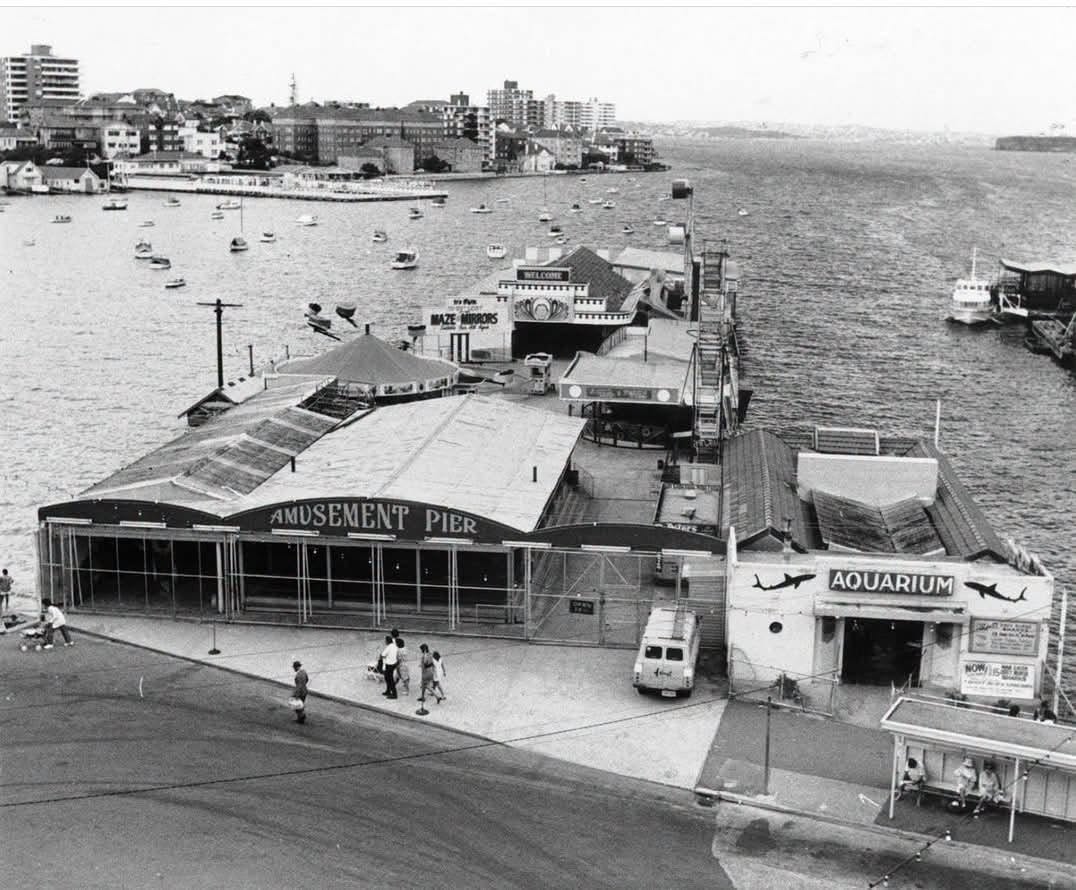
Manly Amusement Pier, circa 1950s. Photo: NSW Records and Archives.
Arnold Gladstone Spry was born in 1911, the son of Harold Gladstone Spry, who was born November 12 1888 in Norwood South Australia, and married Euphemia Veraguth. Arnold was one of 4 children.
His father clearly had a taste for showbusiness too - before going into jam-making:
SNAKE CHARMER'S ADVENTURE.
While Joseph Murray and his assistant, Harold Spry, were giving an exhibition of snake charming on the Semaphore Beach, Adelaide, on Monday, Murray placed the head of reptile in 'his mouth. The snake bit him on the tongue. He quickly dropped the snake, left the tent, made his way to a surgery, where he collapsed. Two doctors were promptly in attendance and successfully counteracting the effects of the poison. Murry subsequently returned to the beach. SNAKE CHARMER'S ADVENTURE. (1917, February 2). Young Witness (NSW : 1915 - 1923), p. 1. Retrieved from http://nla.gov.au/nla.news-article113635989
Later that year the family has moved to Sydney:
Secondhand dealer - Spry, Harold Gladstone – 109 Victoria Street, Sydney. Government Gazette Notices (1917, August 17). Government Gazette of the State of New South Wales (Sydney, NSW : 1901 - 2001), p. 4655. Retrieved from http://nla.gov.au/nla.news-article226218777
ADULTERATED JAM PULP
At the Glebe Police Court, before Mr. Gates, S.M., Harold Gladstone Spry, trading as Spry's Preserves Company, was fined £20, with 8s costs, in default three months' hard labor, for selling adulterated jam pulp. William Henry Eilboele. Inspector of the Health Department, related how, on June 6, at the defendant's factory at Hay-street, Leichardt, he and Inspector Kcnch, on inspecting tins of jam pulp used for making jam, found some blown, others leaking, dirty, and others, which they opened, fermented and unfit for use. Between 150 and 200 tins of pulp were destroyed by having a hole knocked in them and phenyle poured in and subsequently the remainder' of the stock was also destroyed with the owner's consent. There were 262 tins of pulp' in the factory, and as the' tins held 41b. each, there were about 10,000 lb. 'of pulp destroyed. ' Witness said that he had seen tins of the pulp exhibited for sale in the open market. ADULTERATED JAM PULP (1922, July 29). The Bathurst Times (NSW : 1909 - 1925), p. 6. Retrieved from http://nla.gov.au/nla.news-article117596255
And also kept appearing in the papers with stories of past entertainments:
'CAN'T BE HANGED'
Man's Remarkable Neck Muscles Development ENTERS SUNDAY TIMES' CONTEST
'The man they couldn't hang' is world-famous; but Sydney has a man who thinks he can lay claim to the unique distinction. This is Harold Gladstone Spry, a native of Norwood, South Australia. He has entered for the Sunday Times Perfect Man competition. Mr. Spry is the possessor of an extraordinary neck-muscle development. Hundreds of strong men have attempted to 'choke' him, but have found it im-possible to make him cry enough. Mr. Spry owes his neck muscles to the first law of Nature. Some years ago he was a member of Bostock's circus party, and his contribution to the entertainment was the handling of pythons. One of these was nearly 35ft long, and several times succeeded in twisting itself twice around his neck, and constricting until its intended victim was black in the face. Mostly he was rendered assistance in loosening the python, but two or three times he was half-choked when no help was at hand, so he decided to develop his neck muscles in order to resist the embraces of his dangerous pet. He did so, and to-day Spry's neck is a miniature silo of steel-hard muscles.
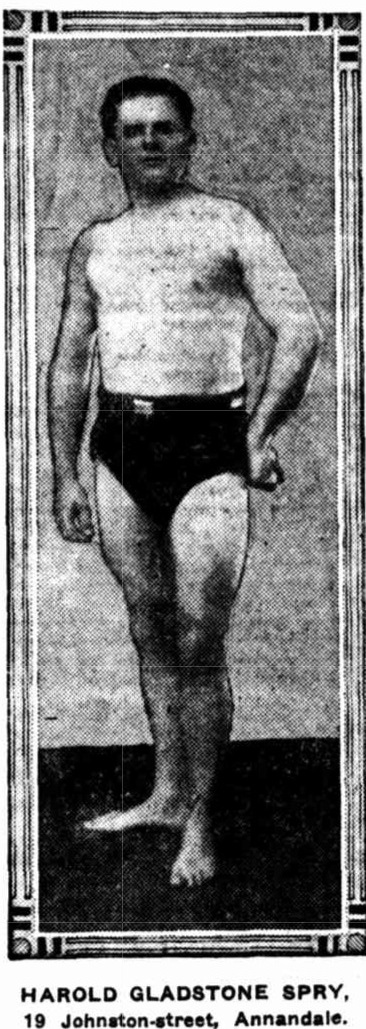
HAROLD GLADSTONE SPRY, 19 Johnston-street, Annandale. 'The Man Who Cannot be Hanged.' Born in Norwood, S.A., Nov. 12, 1888. Height, 5ft 10in. Weight, 12st stripped.
Some time ago a ju jitsu expert of the police force was told that Spry defied anyone to make him cry out with pain by 'choking.' The policeman took on the job, but in his first grip he broke his right thumb and said: 'I'll give it up.'
Snake Bite on Tongue.
Spry is also an expert Swiss wrestler, and has done a deal of boxing and general athletics. Unlike most snake handlers, though, he got wise in time. He was bitten 100 times by various types of venomous snakes, and invariably found that the plain permanganate of potash crystals were certain in their cure — so long as they were applied to the punctures immediately after the bite. For exhibition purposes he used to pick up the snakes with his mouth. Then, at Semaphore one day, a tiger snake proved too quick for him, and bit him on the tongue. For three days he fought with death, and finally conquered. Not once since has he deigned to even look at a snake of any kind. He apparently is unafraid of death from the gallows, all the same. A few weeks ago Mr. Spry was with an inspection party at the Long Bay gaol, and when shown the drop from the little used trap door he formed the opinion that his neck muscles could withstand the grip of the hangman's rope if he were dropped from the big beam. Assuming that the gaol authorities would permit the experiment, and that Spry was successful, what possibilities would be open to intending murderers? A man could plan a murder, develop his muscles, be sentenced to death, 'escape' three times, and be free! "CAN'T BE HANGED" (1923, March 4). Sunday Times (Sydney, NSW : 1895 - 1930), p. 3. Retrieved from http://nla.gov.au/nla.news-article120549793
DEAL IN JAM TINS.
Thomas Banks, of Zetland Tram Terminus. Elizabeth Street, Waterloo, cannister manufacturer, sued Harold Gladstone Spry and Septimus Charles Lindley, trading as Spry's Preserves, formerly of Mary Street, Paddington. but now of Hay Street, Leichhardt, to recover £191, alleged to be due in respect or the supply by the plaintiff of certain quantities of jam tins to the defendants on various dates in 1921 and 1922. Defendant Spry, for a. defence of cross-action. by way of set-off, stated that the plaintiff's claim arose out of an agreement between him and the plaintiff for the supply of certain this, to be used for the purpose of containing jam made by 'the defendant. It was a term of the agreement that the tins should be in good order and condition, and fit for the purpose for which they were required. Defendant alleged that tiny this supplied by the plaintiff were not as warranted, whereby they were of no use to him, and he had incurred expense m consequence, and had lost profits he otherwise would have made from the sale of the jam. He submitted that his loss exceeded the claim made by the plaintiff, and sought to recover In respect of so much of the damages as might be found to exceed the plaintiffs’ Defendant Lindley denied the alleged indebtedness on his- part, and pleaded that at the time of the giving of the order for the supply by the plaintiff of the jam tins In question he was not, to the knowledge of the plaintiff, trading with the other defendant as Spry's Preserves, and that he ceased to be a partner of the firm prior to the giving of the order. His Honor held that a partnership existed between the defendants at the time the order for the tins was given, and gave a verdict for the plaintiff for the amount claimed. His Honor also found in favor of the plaintiff, on defendant Spry's cross-action. Mr. Collins (instructed by Messrs. Sullivan Bros., appeared for the plaintiff; Mr. II. G. Edwards (Instructed by Messrs. Jennings and Jennings) appeared for the defendant Spry, and Mr. E. E. Jennings, of Messrs. Jennings and Jennings for defendant Lindley. DISTRICT (1923, April 6). The Daily Telegraph (Sydney, NSW : 1883 - 1930), p. 6. Retrieved from http://nla.gov.au/nla.news-article245817521
The death of their Harold and Euphemia's son Maxwell is registered at Annandale in 1924.
The family had settled in Manly soon after this where, by 1929, Harold Spry of "Yandilla" Wentworth St, Manly, home, has his occupation listed as 'Grocer' while a relative, Ronald Edward Lennon Spry of "Carisbroke" Wentworth St, Manly, is a 'showman'. He turns up as a snake handler too - as recorded in this 1940 'Truth' report:
ALL THE FUN OF THE FAIR
IT is a far cry from the days when ancient picnic races fell and ploughing; matches attracted the inevitable caravans of gipsy fortune tellers and illusionists. Sideshows were ever a lure to carnival merrymakers, and to-day, from humble gipsy times, the sideshow business has grown into a mighty industry, largely controlled by reputable business men known throughout the length and breadth of the land.
BEAT of drums, clang of bells, and blare of megaphones outside marquees in Fun Street at the Showgrounds, where sideshows attract vast crowds, are the noisy manifestations of this big industry. It employs hundreds of workers as well as providing de- : cent incomes to strange people on exhibit, who otherwise might find it hard ; to earn a crust. ; Showmen search the world for their : exhibits. The tail-less boy from Borneo. ? the giant and giantess, the girl in an ice tomb, queer adventures in Snake I Gully, and many other quaint attractions all combine to illustrate the enterprise and ingenuity of showmen in ! entertaining the people. ! To protect their own interests, and also to ensure as far as possible that bona-fide showmen are recognised as reputable business men. the knights of the road formed the Showmen's Guild !of Australasia, with head offices in. ! Sydney. ;
Famous Names
The doyen of the show business, Mr. Maurice Darling, is president of this organisation, and the patron is poet Jack Moses, whose story about the dog on the tuckerbox is known to every child.
Les Short, son of the grand old lady of the show business, whose death occurred at Bundaberg two years ago, is secretary: Arthur Greenhalgh is treasurer: and the trustees are Jimmy Sharman and Cecil Halgraves. Guild badges are issued to every bona-fide member. Badges are numbered and are issued each year, so that if any member is found guilty of disreputable business conduct, the badge may be withheld from him when next, issued. Reputable showmen are so jealous of their good name in the community that transfer of the badge is strictly prohibited. Its instant cancellation is the penalty of a breach of this law.
Globe Trotters
Men who travel the world, in Sydney; one month and New York the next.: in the ordinary course of their business, are numbered among the showmen. Arthur Greenhalgh is always on the trot to distant parts. He arrived in Sydney from New Zealand only on Friday, and his partner. E. H. Jackson, ; who came to this country from America with the 'Reckless Jacksons' twelve years ago, also has been round the world several times. \ Dave Mcekin, one of the most celebrated of .showmen, has been in the business 33 years. Known as 'Afri-kander Dave' in the old days, when he had an animal act on the Fuller circuit. Mr, Meekin has conducted his own shows in 62 countries, from ? Europe to Asia, America to Africa. India to Australia.
Ronald Spry, one of the younger gentry in the business, who has the elaborate Snake Gully attraction, began his showman's career in Adelaide. He was only a lad then, and he ran a movie lantern in his father's garage, snooping a bed sheet for a curtain and the drawing-room sofa for the front stalls. Kids of the neighborhood kicked up such a din at the cowboy and Indian flicker that Dad Spry, who hail two hens silting on eggs nearby, closed down on the show until the eggs were hatched. From that boyhood start in the: business. Ronald Spry has built up an expensive show. Colorful personalities, the showmen as a body are keen and dependable business men. drawn together in a; bond of good fellowship that their! roving life engenders. - at the Royal Sydney Show this week. ALL THE FUN OF THE FAIR (1940, March 17). Truth (Sydney, NSW : 1894 - 1954), p. 36. Retrieved from http://nla.gov.au/nla.news-article169111421
The Harold G Spry family is already embedded in the Manly community by the late 1920's:
DANCE FOR MANLY QUEEN COMPETITION
IN support of Miss Marjorie Spry's candidature in the Manly Hospital queen competition, a dance was held at Dodge's Skating Rink, Manly. last night. The hall was gay with balloons and streamers, and the informal event was most successful. The official party included the Mayoress of Manly (Mrs. V. J. Brady), Alderman and Mrs. Gourlay, Alderman Crenerry, Miss Madge Crenerry. Mrs. J. T. Easterbrook. Mrs. Bath, senior, Matron Robinson, and Sister Ainsley from the hospital, Mrs. R. Spry, Mrs. H. Spry, and Mrs, E-I. Edmonds DANCE FOR MANLY QUEEN COMPETITION (1929, August 6). The Daily Telegraph (Sydney, NSW : 1883 - 1930), p. 20. Retrieved from http://nla.gov.au/nla.news-article246840343
MANLY'S COMMERCE LEADERS
New officers for the Manly and District Chamber of Commerce have been elected as follow: Patron. Mayor V. J. Brady; president, Ald. A. Harcourt; vice-presidents. Ald. J. R. Trenerry, Messrs. A. Little, H. G. Spry, and E. Bennetts; hon. treasurer, F. M. Dobbs; hon. secretary. R. C. Hancock; hon. auditors, Messrs. A. H. Smedley and F. J. L. King. MANLY'S COMMERCE LEADERS (1929, August 21). The Daily Telegraph (Sydney, NSW : 1883 - 1930), p. 13. Retrieved from http://nla.gov.au/nla.news-article246842099
By 1936 Arnold Gladstone Spry, of 42 Woods St, Manly, is an 'asst. operator', while a Vera Gertrude Spry, of "Pier Court" Gilbert St, Manly, given as the Spry home. The year before he had become engaged to Florence 'Jean' Stephens. They married the following year:
Jean, elder daughter of Mr. and Mrs. F. C. Stephens, of Manly, to Arnold Gladstone, only son of Mr. and Mrs. H. G. Spry, of Manly. ENGAGEMENTS (1935, May 12). The Sun (Sydney, NSW : 1910 - 1954), p. 31. Retrieved from http://nla.gov.au/nla.news-article230248603
SPRY-STEPHENS.-November 20, 1937, at St. Matthew's Church, Manly, Arnold Gladstone, only son of Mr. and Mrs. H. G. Spry, of Manly, to Jean, elder daughter of Mrs. F. C. Stephens, of Manly. Family Notices (1938, January 5). The Sydney Morning Herald (NSW : 1842 - 1954), p. 14. Retrieved from http://nla.gov.au/nla.news-article17422687
While Harold was in with Mr. Quillan at Manly's amusements arcades:
Manly's Fun parlor, then on the Manly Pier. Examples, along with photographs, read:
Films of nudes through spyhole at 6d a peep at Manly parlor
By a Staff Reporter
Miniature movies showing girls playing strip poker, and others swimming and gambolling in the nude, are being shown daily at a Manly fun parlor.
Six films of American and Australian origin are shown, depicting nude or semi-nude women. Each film lasts about a minute, and costs 6d to see. These movies are being shown at the Manly Luna Park fun parlor (on the Ocean Beach).
Two electrically driven 16mm. projectors installed in 5ft.-high compartments with a spy-hole in the top, operate at the insertion of 6d. Titles of the films are: "Her Private Life," "The Water Nymph," "Boudoir Bandit," "Tropicana," "African Frenzy," Strip Poker." "Her Private Life" (Australian) shows a girl undressing and getting into bed. "The Water Nymph" (filmed in French's Forest) shows an attractive Sydney brunette playing and swimming in a pond in the nude.
'Vice Squad's visit
The parlor also exhibits electrically operated penny machines showing "still" shots of nude girls. Some of these photographs were taken locally. Proprietor of the park, Mr. Harold Spry, said representatives of the Chief Secretary's Department and the Vice Squad recently inspected the penny machines, but not the films. His son,. Arnold, had invented the movie machine and he himself had shot films for it, he said. He was careful about what he was showing, he said, and would willingly make cuts if requested. Last month, in the Legislative Assembly, Mr. Arthur (Lab., Hamilton) asked the Chief Secretary (Mr. Baddeley) to confiscate "salacious penny slot machines" which, he said, were on Manly pier. Police later made a report on these machines. Films of nudes through spyhole at 6d a peep at Manly parlor (1947, December 29). The Sun (Sydney, NSW : 1910 - 1954), p. 5 (LATE FINAL EXTRA). Retrieved from http://nla.gov.au/nla.news-article230561578 POLICE SEIZE "FUN" FILMS
Pictures Of Nude Girls Confiscated
Customs and police officials yesterday seized six 16mm movie films of nude and semi-nude women which were being screened at a Manly fun parlor. The Commonwealth Film Censor (Mr. Alexander) said last night that he had confiscated four of the films which had been imported from America.
He said he would not pass the four films even for adult exhibition. Officers of the Chief Secretary's Department are holding the other two films, which were made in Australia. Mr. Alexander has no power to censor films made in New South Wales. A State Government official last night described all the films as being more suggestive than obscene or indecent. The films showed girls playing strip poker, swimming, and sunbaking in the nude and performing hula-hula dances. A member of the Customs Department Investigation Branch (Mr. Brosois), accompanied by police, confiscated the six films at Mr. C. A Spry's fun parlor on Manly pier yesterday morning.
Yesterday afternoon, Mr. Alexander, Mr. F. R. Lake, who is an official of the Chief Secretary's Department and a member of the State Films Commission, and another member of the Chief Secretary's staff viewed the films.
Not Registered
Mr. Alexander said the four films imported from America had not been registered with the Customs Department, and had not been submitted to him for censorship. He added: "I am refusing to register them because they contain matter which I con-sider should not be exhibited in the public interest.
"Mr. Spry, who owns the films, has the right of appeal against my decision. "Mr. Spry will confer with me tomorrow.
"I will not order the destruction of the films until he decides if he will appeal.''
A Customs Department official said the department was satisfied that Mr. Spry had not imported the four American films, but had bought them from a man in Sydney. The official said this man might be prosecuted for having failed to register and submit to censorship films imported from America. Mr. Alexander said he had no power to confiscate or censor still photographs of nude and semi-nude women being shown in city fun parlors.
Model's View
Miss Moira Claux, beautiful brunette, 16-year-old daughter in a family of nudists living in West Botany Street, Banksia, said last night she was the Australian model in films now showing at Sydney fun parlors. Miss Claux is a well-known Sydney studio model. She has modelled regularly for the East Sydney Technical College, the Bond Street Sketch Club, and the Sora studio of Realist Art. "The films in which I posed are the moving picture 'Water Nymph' and ' the still pictures 'River Nymph' and '.Salome,' " she said. “I have seen the fun parlor pictures, and I think many of them are sexually suggestive. "The ones in which I posed, I think, are carefree and natural, and would not induce sexual emotion. "Like the rest of my family, I am a confirmed nudist." MISS CLAUX. POLICE SEIZE "FUN" FILMS (1947, December 31). The Daily Telegraph (Sydney, NSW : 1931 - 1954), p. 9. Retrieved from http://nla.gov.au/nla.news-article248108226
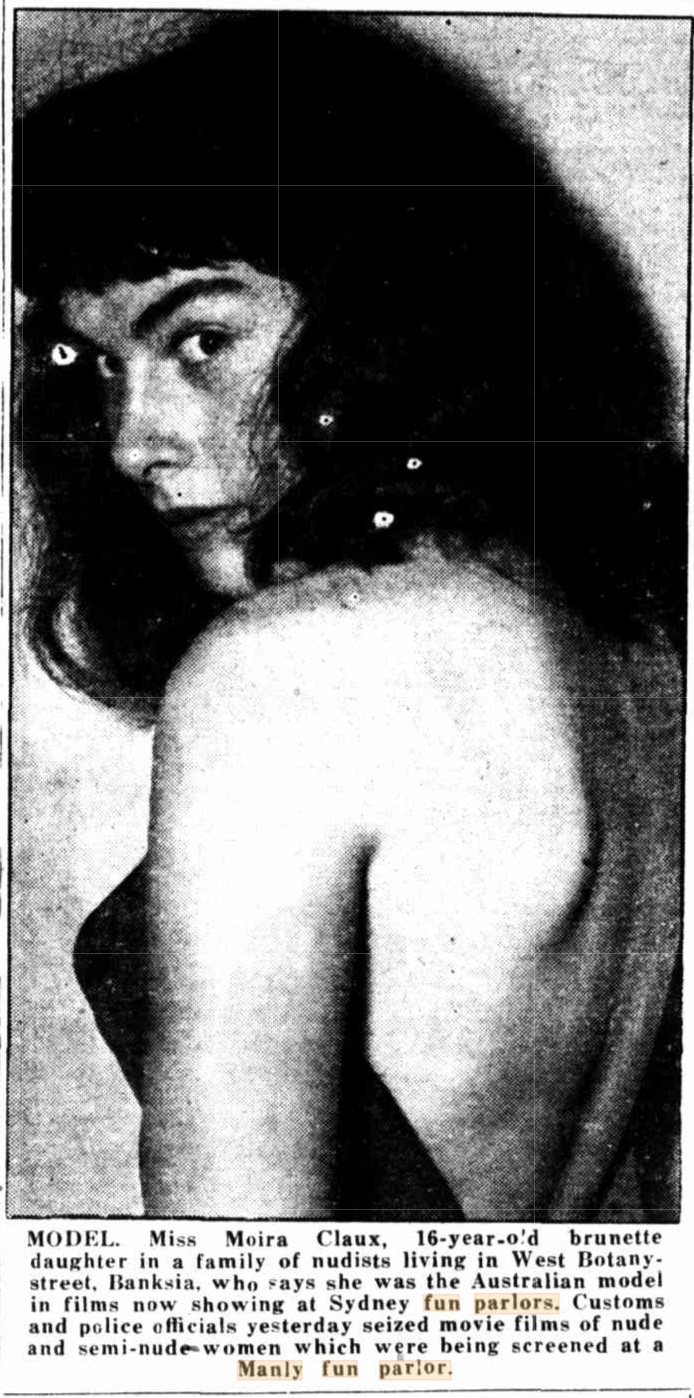
No title (1947, December 31). The Sun (Sydney, NSW : 1910 - 1954), p. 3 (LATE FINAL EXTRA). Retrieved from http://nla.gov.au/nla.news-article230551603
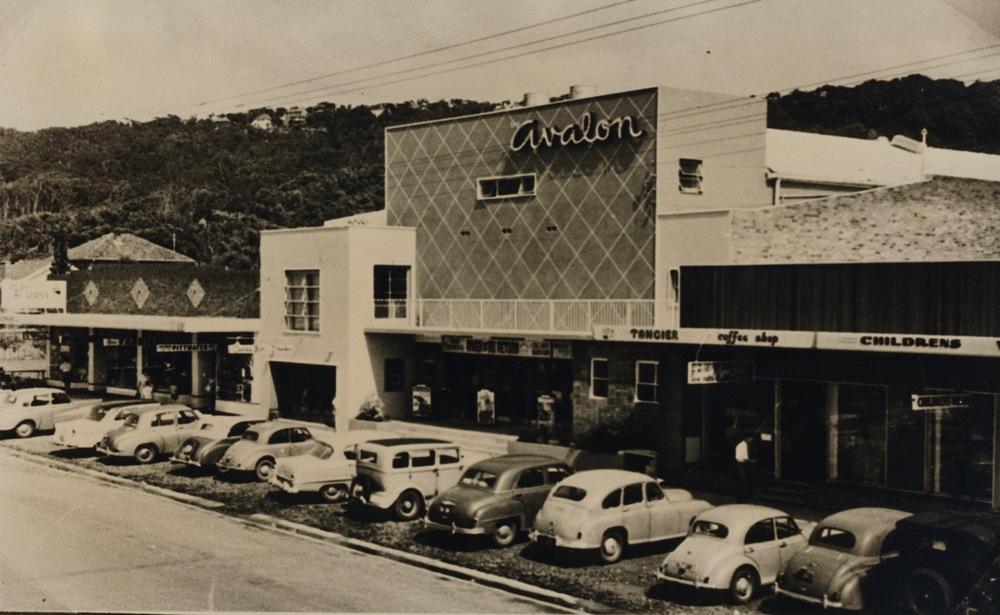
Arnold Spry and Larry Quillan hired Bruce Furse to design a contemporary theatre. He designed for a 777 seats and circles theatre decorated in bold colours, with a rippled ceiling, and curtains with Aboriginal-styled motifs.
Bruce Furse (1906-1967) was born in Strathfield, studied part-time at Sydney Technical College while working as a draughtsman and architectural assistant (including at Charles Bohringer's office). He became a registered architect in NSW in 1933. In 1934 he went into partnership with Guy Crick. Working as Guy Crick and Bruce W. Furse, the firm became a dominant force in Australian theatre architecture during the second half of the 1930s. They designed around 30 new cinemas—notably for the Kings Theatres circuit—and remodelled roughly 50 existing venues in Inter-war Functionalist, Moderne, and Art Deco styles. He was a legend in the world of Australian Architecture and the Avalon Cinema, although designed towards the end of his career, is an iconic building that marks this period in our cultural development.
The home, 'Longa Linga' at Church Point, is another local example of this Functionalist, Moderne, form of architecture, although that was designed just prior to WWII.
In those days there was a procedure for having a theatre - you had to apply to ensure your design wasn't, for example, a fire hazard.
The Theatres and Public Halls Act 1908 (Act No. 13 of 1908) was a New South Wales statute that commenced on 1 January 1909 to regulate and license theatres, public halls, temporary structures, and venues used for public entertainments or public meetings, repealing the Public Entertainments Act 1897. This Regulated public entertainments and meetings to maintain order, decorum, and safety—including fire-resistant stage materials, seating and lighting rules, and film exhibition/censorship oversight. It provided for venue licensing, a register of licences, inspections, and regulations published via the Government Gazette and tabled in Parliament - which list modifications to the design for seating taking place:
(3) Mr. Arnold Gladstone Spry, 184 Wyndora-avenue, Harbord, in respect of a proposed picture theatre to be situated in Old Barrenjoey road, Avalon Beach. Proposed seating accommodation, 750. THEATRES AND PUBLIC HALLS ACT, 1908-1946. (1953, May 1). Government Gazette of the State of New South Wales (Sydney, NSW : 1901 - 2001), p. 1436. Retrieved from http://nla.gov.au/nla.news-article220014243
Name and Address of Applicant. (1) Mr. Arnold Gladstone Spry, 184 Wyndora Avenue, Harbord. Proposed picture theatre, Old Barrenjoey road, Avalon Beach. Granted. THEATRES AND PUBLIC HALLS ACT, 1908-1946. (1953, August 14). Government Gazette of the State of New South Wales (Sydney, NSW : 1901 - 2001), p. 2601. Retrieved from http://nla.gov.au/nla.news-article220067726
(2) Application under paragraph (c) for the approval of alterations designed to provide additional seating accommodation made by Mr. Arnold Gladstone Spry, 184 Wyndora-avenue,Harbord, in respect of a proposed picture theatre to be situated in Old Barrenjoey road, Avalon Beach. Approved seating accommodation, 740. Additional seating applied for, 84. THEATRES AND PUBLIC HALLS ACT, 1908-1946. (1954, January 29). Government Gazette of the State of New South Wales (Sydney, NSW : 1901 - 2001), p. 287. Retrieved from http://nla.gov.au/nla.news-article220289167
2) Mr. Arnold Gladstone Spry, 184 Wyndora avenue, Harbord. Proposed picture theatre, Old Barrenjoey-road, Avalon Beach. The approval of alterations designed to provide additional seating accommodation. Granted. THEATRES AND PUBLIC HALLS ACT, 1908-1946. (1954, March 26). Government Gazette of the State of New South Wales (Sydney, NSW : 1901 - 2001), p. 975. Retrieved from http://nla.gov.au/nla.news-article220290887
Soon after the contract to build was awarded, with a price tag of:
Avalon. £32,000 will be the cost of a brick cinema theatre to be built in Old Barrenjoey Road for Avalon Theatres P/L.. 184 Wvndora Avenue. Harbord. by Comber Bros. OPPORTUNITIES FOR BUSINESS (1954, December 29). Construction (Sydney, NSW : 1938 - 1954), p. 6. Retrieved from http://nla.gov.au/nla.news-article224518703
MISCELLANEOUS. Avalon: Old Barrenjoey Rd.: B. cinema theatre—Avalon Theatre Pty. Ltd, O.—Messrs. Comber Bros., B, £32,000. SMALL CONTRACTS (1954, December 29). Construction (Sydney, NSW : 1938 - 1954), p. 19. Retrieved from http://nla.gov.au/nla.news-article224518741
£32,000 in 1954 is approximately £1,137,292 today or about A$2,237,994, an incredible amount for then. The builders employed locals to build the theatre. Sandy Ryman shares:
''My Dad (Bert Kerr) was one of the bricklayers who built this theatre.''
The theatre was ready to open by late July 1955. Ron Turton, one of the youngsters about town in those days, recalled in his Profile:
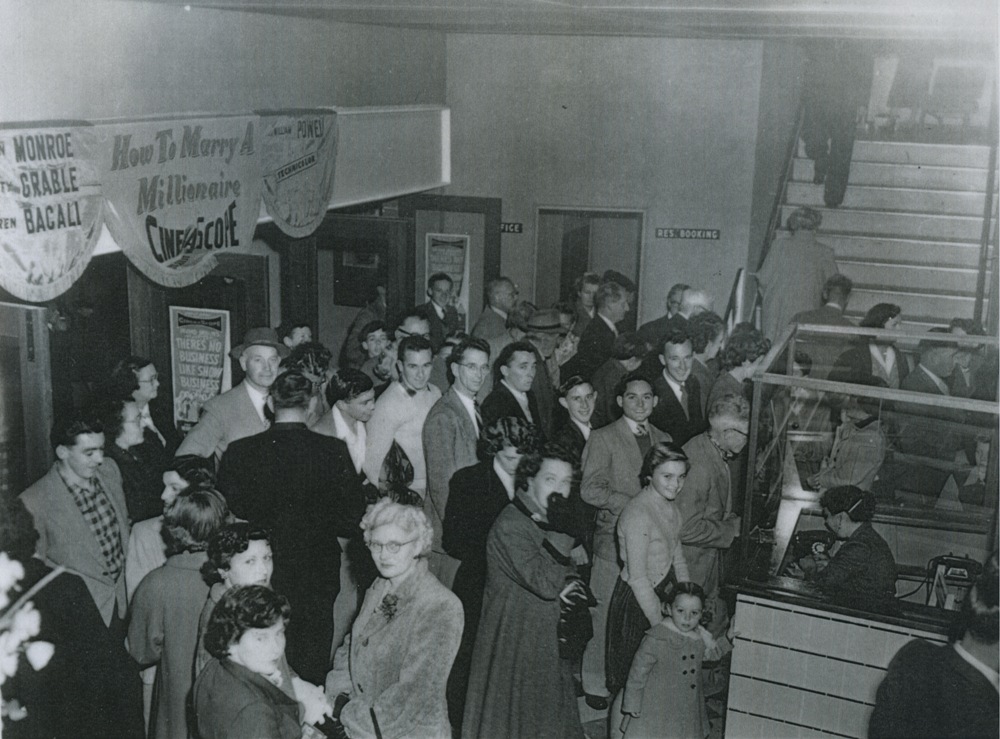
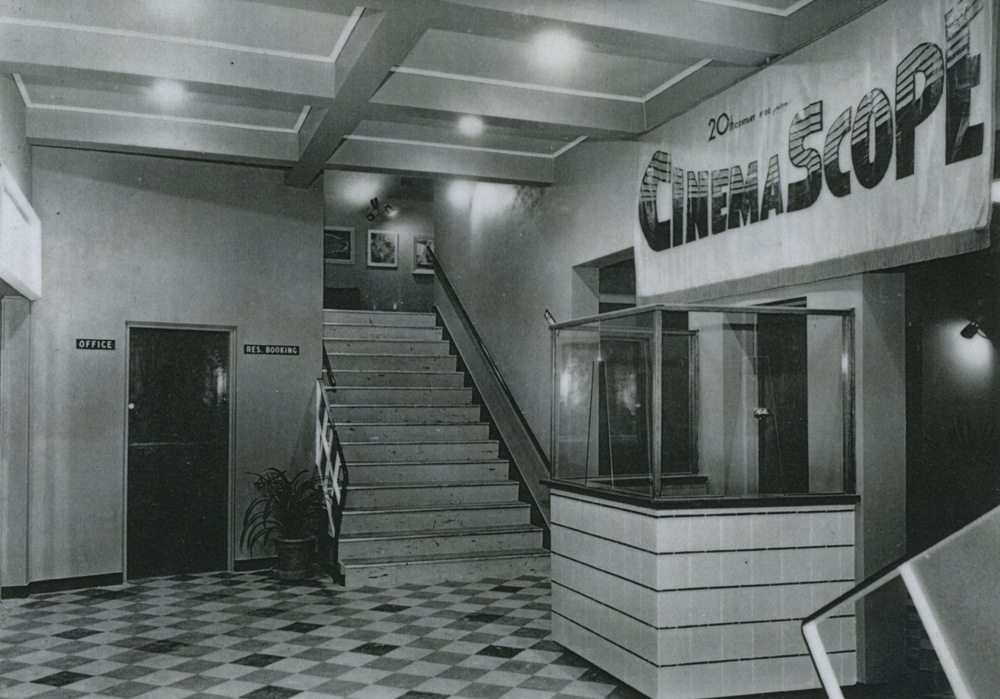
According to research done by Geoff Searl OAM, President of the Avalon Beach Historical Society, to promote the screening of Metro-Goldwyn-Mayer’s blockbuster movie Grand Prix in 1966, Spry displayed an open-wheeler racing car similar to the one in which Australian driver Alec Mildren won several big races.
Maureen Player recalls, in confirmation:
''Mum arranged for my Dad to loan this racing car from the Mildren Racing Team to be displayed during the screening of the movie Grand Prix in the mid ‘60s. Dad built Formula 500 cars for many years.
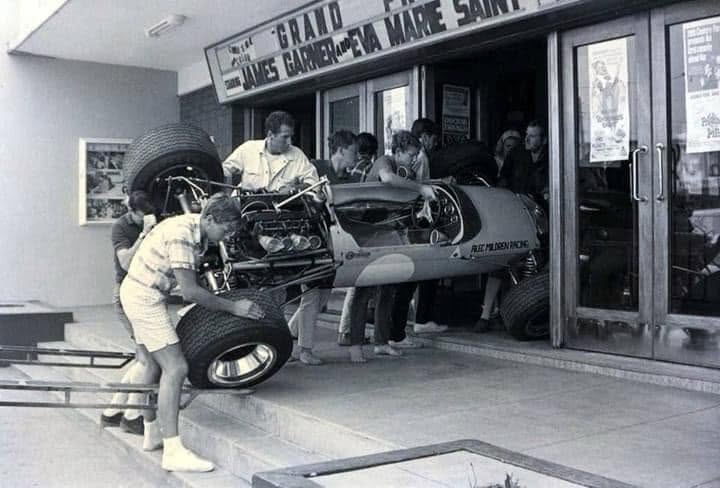
Arnold Spry is on the far right, Mum is next to him wearing the bandana headband. Dad is wearing the white sandshoes.''
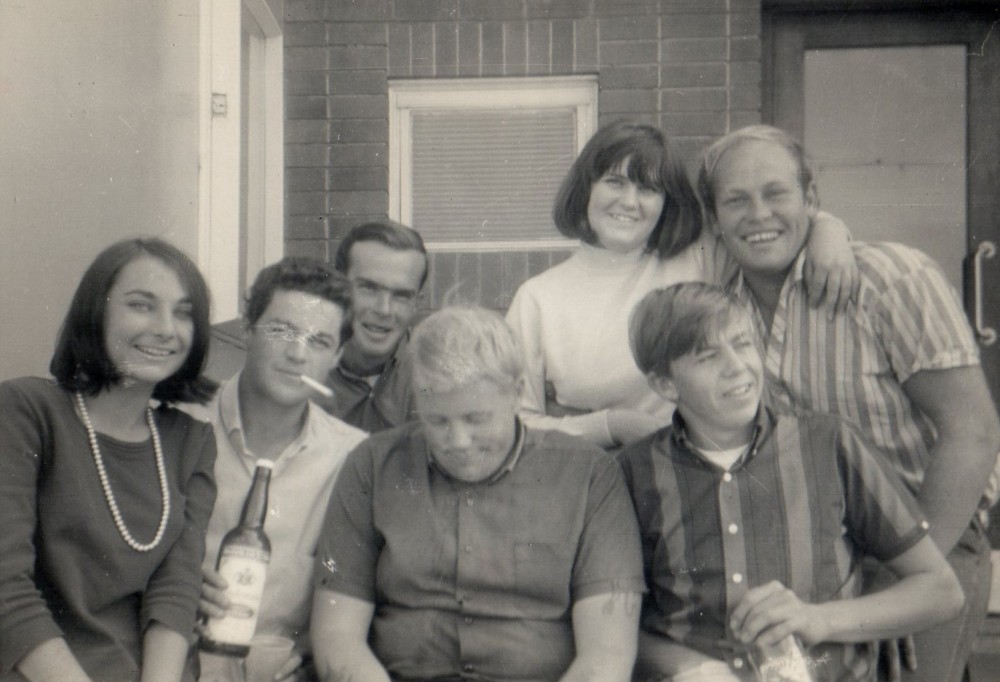
Harold Gladstone Spry passed away in 1966 due to Parkinsons Disease. His wife and Arnold's mum, passed away in Avalon Beach from old age.
The Sprys went on to host the world's best films and even premiered those made by locals.
Roger Sayers OAM shared some insights into the surf movies that ran here and at the Avalon Beach Surf clubhouse in the earlier years.
''On February 1st 2025 the 50 year anniversary of when 25yr old surfer and film maker Steven Otton embarked upon making his film 'Highway One', that film was shown again at the place it previewed – Avalon Cinema – in 1977.''
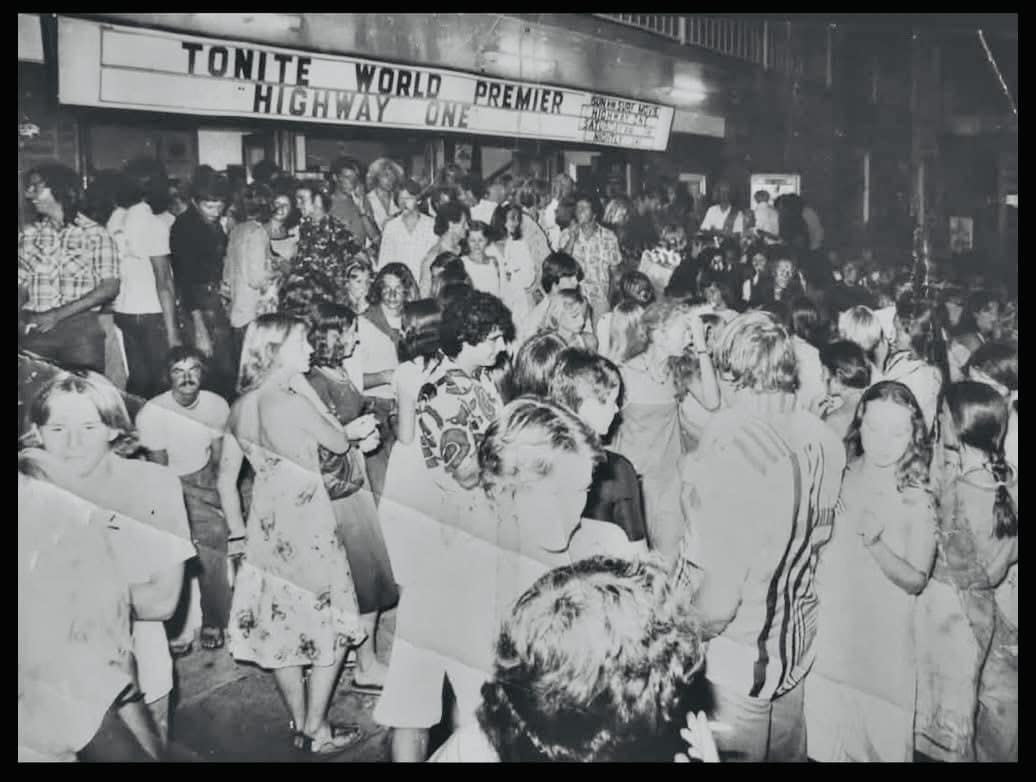
outside Avalon cinema for Sunday January 9 1977 screening of Highway One
''Produced by Palm Beach filmmaker David Elfick, the story is centred around a group of surfers and their girlfriends who travel 'up the coast' via the Pacific Highway (Highway One) showing the seminal surf film 'Morning of the Earth' in regional and town theatres.
This is a visual feast and a true capture of places and times gone by showing our beloved Avalon along with Manly and areas of the northern Rivers up to Byron Bay.
The soundtrack of surfing and the lifestyle includes 'Capricorn Dancer' by Richard Clapton as well as songs from Skyhooks and local 70's band The Bilgola Bop Band.'' Roger explained
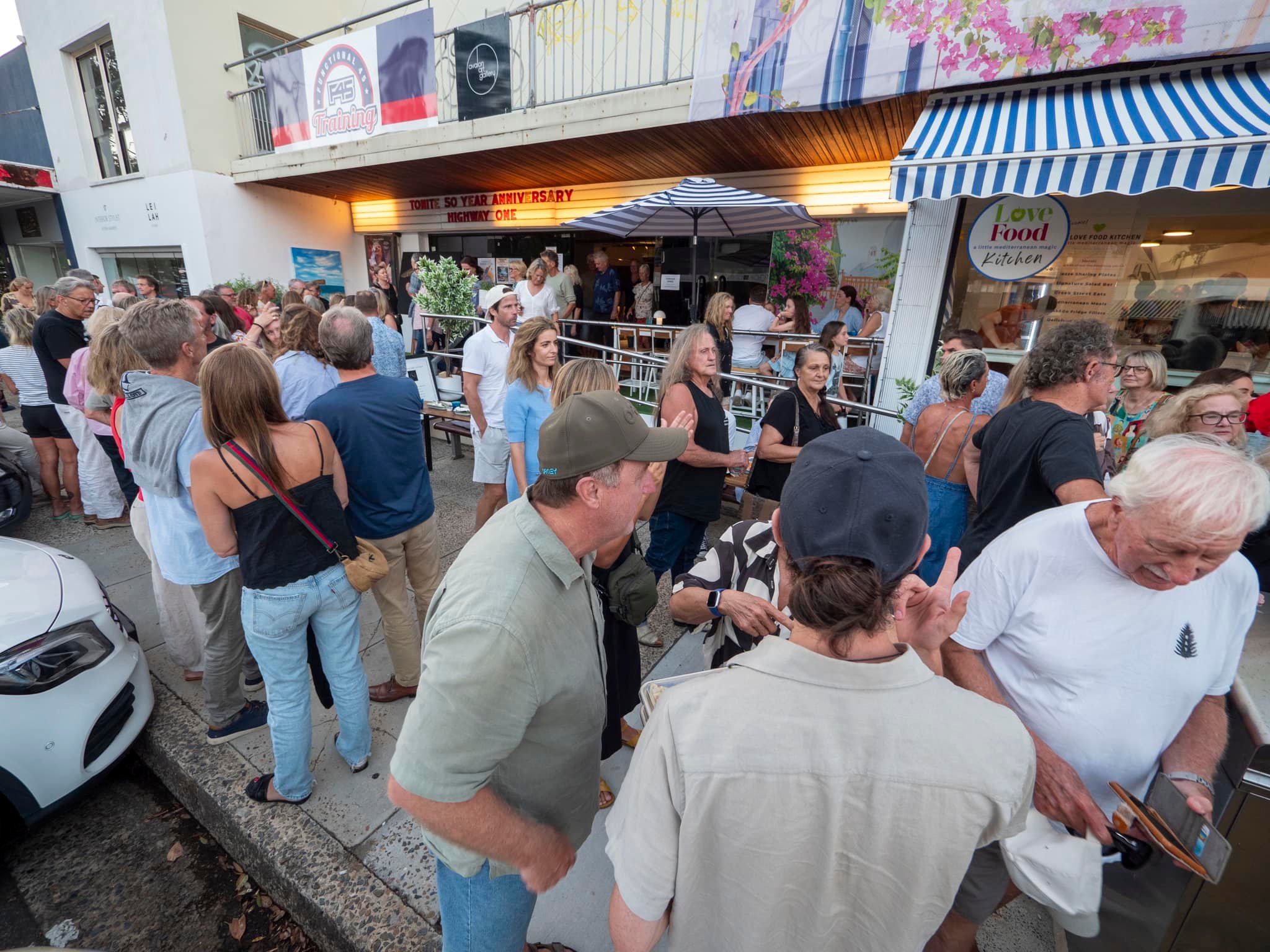
2025 rerun a sell-out
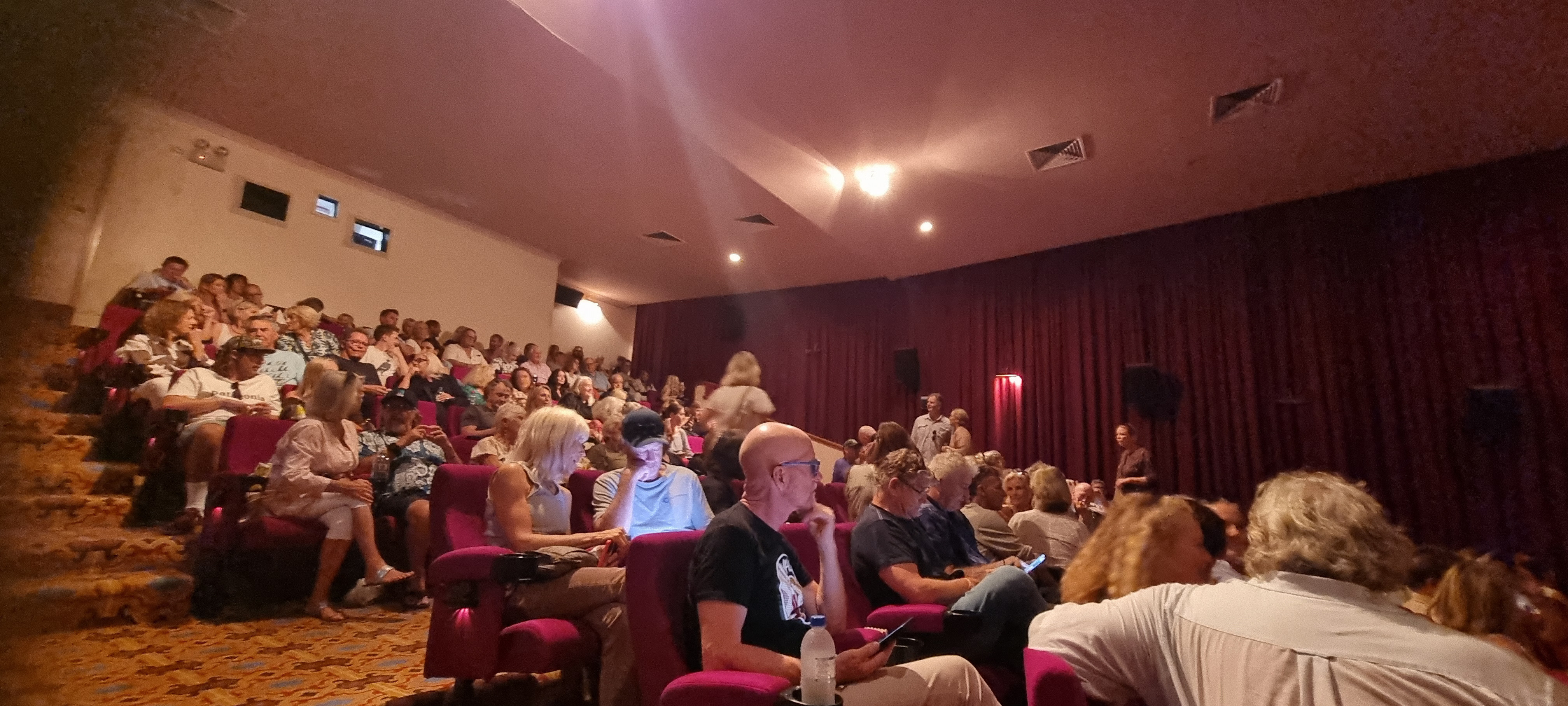


References - Notes
- TROVE - National Library of Australia
- Geoff Searl OAM, President of Avalon Beach Historical Society
- From Italy to Avalon Beach, with love, Pittwater Online News, June 2022
- Pittwater Summer Houses: Gunjulla, Avalon Beach-Clareville, Pittwater Online News, November 2021
- Barrenjoey Artists' Commune in the Lighthouse Cottages: Post WWII Social Infrastructure investment enriched Australia's Cultural Evolution, Pittwater Online News, 2022
- Ray Henman - Profile
- Ron Turton - Profile
- Rotary Club of Pittwater Spring Concert 2011, Pittwater Online News
- Rotary Club of Pittwater Spring Concert 2012, Pittwater Online News
- Mona Vale Palliative Care Service Upgrades and Extensions Official Opening of New Facilities -Pittwater Online News, 2103
- Cinema Great Roy Mustaca OAM supports up and coming Aboriginal Actor Brodi Cubillo, Pittwater Online News, 2019
- Highway One Screening for Avalon Beach SLSC 100th Year Celebrations, Pittwater Online News, 2025

SPRY.—(By cable.)—At Newtown House, Box, Wiltshire, England, Alfred Spry, late of Sydney. Family Notices (1895, November 2). The Sydney Mail and New South Wales Advertiser (NSW : 1871 - 1912), p. 933. Retrieved from http://nla.gov.au/nla.news-article162671020
SPRY.— October 25. 1912, at Manly, Lieutenant John Henry Spry, aged 28 years, son of Mr. J. Spry, Bower Park, London. Family Notices (1912, October 26). The Daily Telegraph (Sydney, NSW : 1883 - 1930), p. 12. Retrieved from http://nla.gov.au/nla.news-article239170668
SPRY.— The Funeral of the late Lieutenant JOHN H. S. SPRY will move from "St. Matthew's," Corso, Manly, THIS AFTERNOON (SATURDAY), at 3 o'clock, for the Manly Church of England Cemetery. T. WAUGH and CO., Funeral Directors, Tel 42. 92 Corso, Manly. Family Notices (1912, October 26). The Daily Telegraph (Sydney, NSW : 1883 - 1930), p. 7. Retrieved from http://nla.gov.au/nla.news-article239170584
SPRY, Harold Gladstone. Birth1888, SA95554.
Father SPRY, William Charles (1863/64-). Mother PROMMELUS (nee TRELOAR), Hermena Elizabeth Jane
William Charles Spry, 1864 - 1944: William Charles Spry was born in 1864, to William Pugsley Richard Spry and Harriet Elizabeth Spry (nee Wilson). William was born on May 7 1841, in Thrushelton, Devon, England, UK. Harriet was born on February 22 1841, in Kent, England.
William had 9 siblings: John Thomas Spry, Richard Lewis (Louis) Spry and 7 others.
William married Lillian Hermenia Spry (born Treloar) in 1885, at age 20. Lillian was born on May 25 1865, in South Australia, Australia. They had 10 children: Harold Gladstone Spry, Olive Gertrude Stella Tootell (born Spry) and 8 others.
Arnold Spry passed away in1991, 'late of Clareville', Pittwater, a beloved dad and 'Pop' and 'Grandpa' to his descendants, and a treasured member of the Avalon Beach cimmunity.
NOTIFICATION OF RESUMPTION OF LAND UNDER THE PUBLIC WORKS ACT, 1912, AS AMENDED.
IT is hereby notified and declared by His Excellency the Governor, acting with the advice of the Executive Council, that
so much of the land described in the Schedule hereto as is Crown land is hereby appropriated, and so much of the said land as is private property is hereby resumed, under the Public Works Act, 1912, as amended, for the following public purpose, namely, a Public School at MANLY, and that the said land is vested in the Minister of Public Instruction as Constructing Authority on- behalf of His Majesty the King.
Dated this tenth day of August, one thousand nine hundred and forty-nine.
J. NORTHCOTT, Governor. By His Excellency's Command,
R. J. HEFFRON, Minister of Public Instruction.
The Schedule.
All that piece or parcel of land situate in the Municipality of Manly, parish of Manly Cove, county' of Cumberland, and State of New South Wales, being part of lots 8 and 9 of section 5 of Bassett-Darley Estate, and also being part of the .land comprised in Certificate of Title, volume 4,726, folio 4: Commencing at a point being the intersection of the southeastern side of Wentworth-street with the south-western side of a street known as South Steyne; and bounded thence by that aide of the latter street bearing 141 degrees 10 minutes 40 seconds 104 feet; thence by part of the south-eastern boundary of the land comprised in the Certificate of Title aforesaid bearing 225 degrees 49 minutes 62 feet 3 1/2 inches; thence by a line bearing 315 degrees 49 minutes 103 feet 6£ inches ; thence by the south-eastern side of Wentworth-street aforesaid bearing 45 degrees 49 minutes 72 feet to the point of commencement,—containing an area of 25i perches or thereabouts, and said to be in the possession of Manly Realties Ltd. (Harold Gladstone Spry, registered lessee). (3660) NOTIFICATION OF RESUMPTION OF LAND UNDER THE PUBLIC WORKS ACT, 1912, AS AMENDED. (1950, March 31). Government Gazette of the State of New South Wales (Sydney, NSW : 1901 - 2001), p. 920. Retrieved from http://nla.gov.au/nla.news-article220099373
Quillan - Spry holdings in Avalon Beach:
Lillie Marion Searle (1883 - 1979) - residue of holding and Gunjulla home and tenants Laurence Minot Quillan and Margaret Louise Smith:
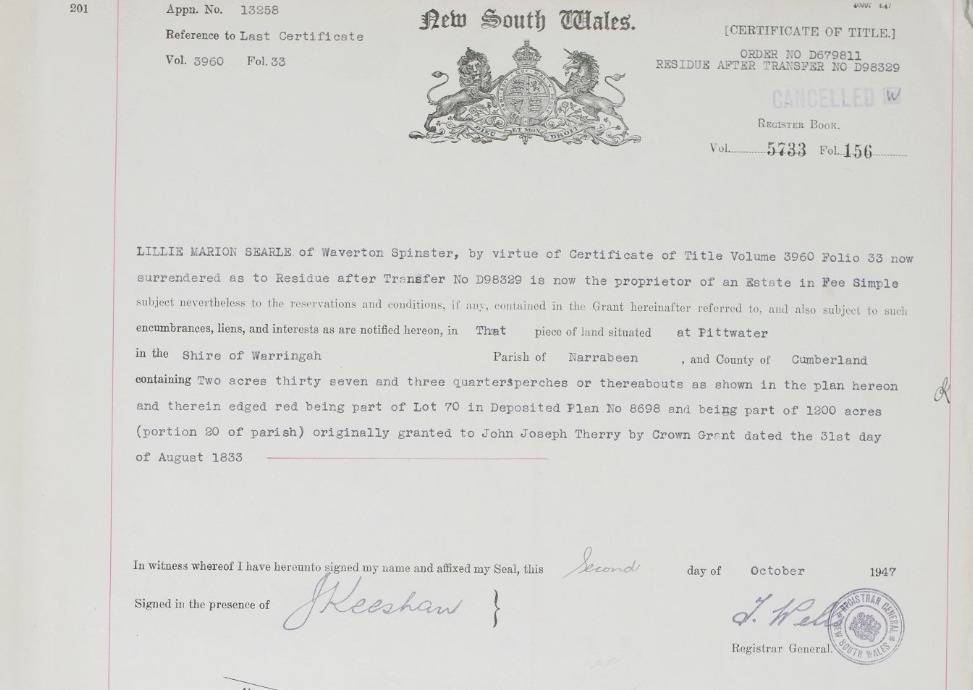

In 1962 the estate changed hands again, Laurence Minot Quillan becoming owner: