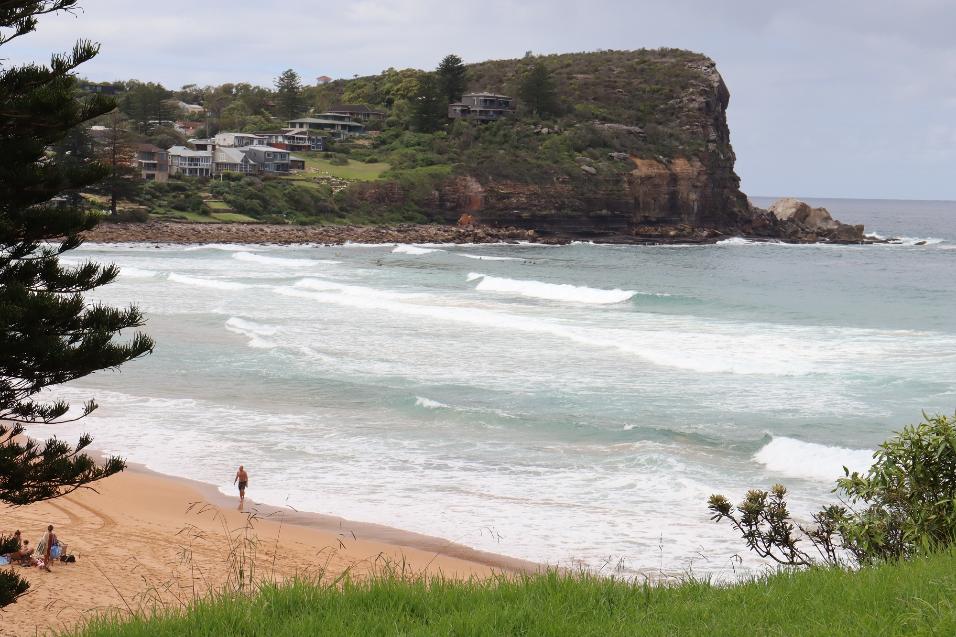
Shark encounters and four attacks in 2 days in January have seen most beaches in Pittwater, and along the peninsula to Manly, being almost empty this Summer, with frequent closures due to shark sightings.
Two of the five ocean swims in the Pittwater Series were cancelled due to low interest and safety concerns, while local businesses have not had the level of visitors they rely on to carry them through the quieter months.
Call for Better Sewage Maintenance
In an opinion piece for The Sydney Morning Herald on 20 January, academic and author Chris Pepin-Neff lamented that evidence-based warnings were not issued weeks ago. The warnings he referenced were, “Stay out of Sydney Harbour and the beach after a rainstorm. Wait 72 hours after a storm to swim in the harbour and be mindful of swimming or surfing at ocean beaches for 24 hours after a large downpour.”
He proposed that measures be taken to mitigate factors that draw bull sharks to popular public beaches, including the repair and maintenance of sewage pipes that overflow into Sydney Harbour, Bondi, and the Parramatta River [and North Head at Manly and Turimetta/ Warriewood from Warriewood Treatment plant]. Treating sewage and water, he suggested would be optimal prevention policies to prevent shark attacks.
Others have pointed to the $94 million upgrade to Sydney Water’s North Head Water Resource Recovery Facility (WRRF) announced as having reached an important milestone in August 2023 with the installation of two digesters which will help increase fertiliser production for the Central Tablelands of NSW, stating it's time this form of a circular economy was applied to all sewage outlets likely to increase shark activity and encounters.
Residents, along with shark monitoring stations, have been reporting an increase in shark encounters since the Autumn of 2025. Some attribute sharks staying in the estuary and along the Barrenjoey to Manly beaches instead of migrating north to an increase in sea temperatures, driven by climate change.
The Bull Shark is the only widely distributed shark that stays in fresh water for long periods of time to feed and breed. Females sometimes give birth in river mouths where the young will live for up to 5 years.
However, they are one of the species that usually return north to Queensland for the Winter and Spring months.
July 2025 research out of James Cook University found they are now on average staying 15 days longer off Sydney's coast during the summer than they did 15 years ago.
''This is due to rising water temperatures, extending the potential for human-shark encounters while possibly also increasing predation pressure on local prey populations.'' the JCU team said
JCU Postdoctoral Research Fellow Dr Nicolas Lubitz said continued climate change could transform seasonal shark patterns, potentially leading to a year-round bull shark presence in southern parts of New South Wales in the future.
See March 2025 report: It's a 'Bit Sharky' out there: 5 Tagged Bull Sharks Pinged at North Narrabeen on Same Day - Bull Shark spotted at Bayview
See August 2023 report: Sydney Water's North Head facility to increase fertiliser production for farmers
However, surfers have been reporting almost daily incidents of sharks 'rushing at them' in the water since January, with many stating there is now a pronounced increase in bull sharks year round.
The MP for Pittwater, Jacqui Scruby, stated on January 20:
''The shark attacks over the last few days have shaken our community.
My thoughts are with the young men and their families impacted. I want to thank the first responders, life guards, paramedics and members of the public who heroically came to their aid.
With all northern beaches now closed until further notice as a precaution, I urge all surfers and swimmers to follow the safety advice provided.
I am aware there is growing concern in the community about an increase in shark encounters locally, so I have requested a meeting with the Department of Primary Industries to understand the changing behaviour and numbers of sharks in Sydney.
We have recently had $2.5m further investment in drone surveillance at NSW beaches and I am pushing for more. I also encourage beach goers to download the Shark Smart App which provides real-time shark alerts and information for NSW ocean beaches.''
See November 2025 report: Jacqui Scruby - Council - Long Reef Boardriders - Maria Psillakis Call for Expanded Drone Surveillance to Improve Safety at Beaches
Ms Scruby welcomed the additional funding announcement on January 25, stating:
''An increase in $4.2m NSW State Government funding to improve shark protection and safety measures including a significantly expanded drone program across the northern beaches, is what I have been advocating for.
It also includes More research on bull sharks, installing shark listening stations in Sydney Harbour and strengthening community education and awareness.
This is in addition to the extra $2.5m allocated in December. Thank you to everyone who has been working together to push for more modern shark awareness and protection measures, including the Psilakas family,'' Ms Scruby said
The Pittwater MP is also keen to hear from surfers, fishermen and the community generally about their views, experience and local knowledge about Sharks in and around Pittwater and has launched a survey for responses.
The Shark Survey is available at: www.jacquiscruby.com.au/pittwater_shark_survey
See February 1 2026 report: Pittwater MP Launches Survey Asking For Local Knowledge on Sharks: State Government Announces Further $4.2 million to Improve Shark Safety this Summer + How to reduce the risk of an encounter with a shark
On Thursday March 19 the MP for Pittwater spoke through a Private Members Statement stating she is informing the House 'a critical and escalating crisis that is deeply impacting the Pittwater electorate, our local economy, and our coastal community.'
''This summer has been exceptionally difficult for Sydneysiders, and the northern beaches, in particular, in relation to sharks and shark attacks. I firstly thank the Government for the significant investment—$4.2 million most recently—for modern drone technology and for the announcement that all beaches on the northern beaches, or at least most of them, will be covered during patrol hours. We have more eyes in the sky than ever. There are concerns that people have not seen drones at some beaches—an issue that needs better management—but we are very appreciative of the modern technologies.'' Ms Scruby said
''However, surfers and I are deeply concerned that more and more shark encounters are occurring. Recently I put out a survey specifically aimed at surfers and fishers, and I have received a lot of correspondence in the last couple of days in addition that survey.
''I am conscious that when surfers are surfing, they do not necessarily get the benefit of the drones before and after patrol hours. Before I go on to address the correspondence, the feedback from the survey was stark. Out of 700 respondents, 67 per cent were very concerned about the shark incidents and the number of sharks, and 56 per cent are avoiding the water more, which is huge in a community that literally uses the water every day. A lot of parents have contacted me about the mental health impacts on their kids when they cannot surf or get into the water. Shark encounters in my community are so frequent at the moment that local surfers have even created their own spreadsheet, which they have provided to me, to document their encounters. Unfortunately, it is being added to every day. Some incidents are reported on the SharkSmart app and others are just seen by surfers, as there is no mechanism for them to report the shark other than through the spreadsheet.''
The MP for Pittwater read from a couple of emails from people who have written on this matter, stating:
''The first is from a mother who witnessed a shark while surfing at Warriewood Beach only two days ago and noted that no drones or jet skis were in operation at the time. She believes that jet skis and drones are essential tools to keep water users safe and wonders what will happen to our beaches in winter, when there are no lifeguards on patrol. In her email, she describes how she is completely torn, because she encourages her children to surf for the fun of it and for the competition—it is part of their life—but she is now getting to the point where she questions whether she is an irresponsible parent for letting her son go in the water.''
''She does not pretend to be a scientist or an expert—and one thing I often hear from surfers is that they want citizen science to be listened to—but she specifically writes;
"We are asking for transparent research from experts about shark numbers and movements; funding for jet skis and drones equipped with shark-spotting technology, even through the winter; the removal of fishing limits for bull sharks; a targeted cull of bull sharks around Sydney beaches and estuaries; and research into complementary strategies to reduce the number of sharks close to shore."
''I have also heard from other parents, particularly in the boardriders community. I will quote again from a local resident, who wrote'':
We have a bull shark crisis … Real action needs to be taken before more people are attacked. Human life should be prioritised over bull sharks.
Another wrote:
For me, and the vast majority of others within our community, it's another clear reminder that the current approach simply isn't keeping risk at an acceptable level.
The email continues:
Australia already accepts that wildlife management sometimes requires population control to protect human life and maintain ecological stability. We do this with crocodiles in the north, brumbies in the Alpine regions, and kangaroos in several states when numbers become unsafe or unsustainable. It's reasonable that similar, evidence-based conversations should be at least on the table for shark populations—especially for the species most often linked to serious incidents.
The writer of the email goes on to mention some of the strategies at Réunion Island, off southern Africa, where there was a period when people were told not to go in the water. However, residents created a shark mitigation program, and since 2019 they have not had an attack. The email continues:
I'm asking that you advocate for a transparent, science‑driven, community‑informed discussion about all available shark management options—including population control for high-risk species. What we don't need are forums where professionals talk at us … We need a balanced strategy that protects the marine environment while also restoring safety, confidence, and peace of mind …
''I am raising these concerns for my community not only on the floor of Parliament but also in ministerial offices and with the Premier. I am also talking to colleagues from different parties with differing opinions, because this is a good and healthy debate. This is just the beginning of this matter, and I will take it up again next week.'' Ms Scruby said
As part of the $4.2 million package announced in January, the NSW Government stated it will:
- Expand drone patrols at more beaches - increasing Surf Life Saving NSW drone operations to an additional 30 locations from 24 January, including 19 new Sydney beaches and 11 regional sites - with flights operating seven days a week through to the end of the April school holidays, alongside the existing fleet covering up to 50 beaches during school holiday periods.
- Carry out focused research on bull sharks in Sydney Harbour and other estuaries, including tagging and monitoring led by the Department of Primary Industries and Regional Development’s (DPIRD) shark scientists to build clearer insights into the number of bull sharks in the harbour, their movements, residency patterns and higher-risk periods.
- Install shark listening stations in Sydney Harbour, allowing faster detection of tagged sharks so harbour users can be alerted when sharks are nearby.
- Strengthen community education and awareness, with an expanded SharkSmart education campaign, an additional mobile education van, new and updated signage, and increased social media alerts and community warnings during periods of elevated risk.
These measures sit alongside the 2025/26 Shark Management Program already operating across NSW including:
- 305 SMART (Shark Management Alert in Real Time) drumlines in 19 local government areas for year-round coverage
- Shark nets at 51 beaches across eight LGAs between Newcastle and Wollongong, deployed 1 September to 31 March
- Tracking the movements of tagged sharks via 37 tagged shark listening stations, with at least one station in every coastal local government area for year-round coverage.
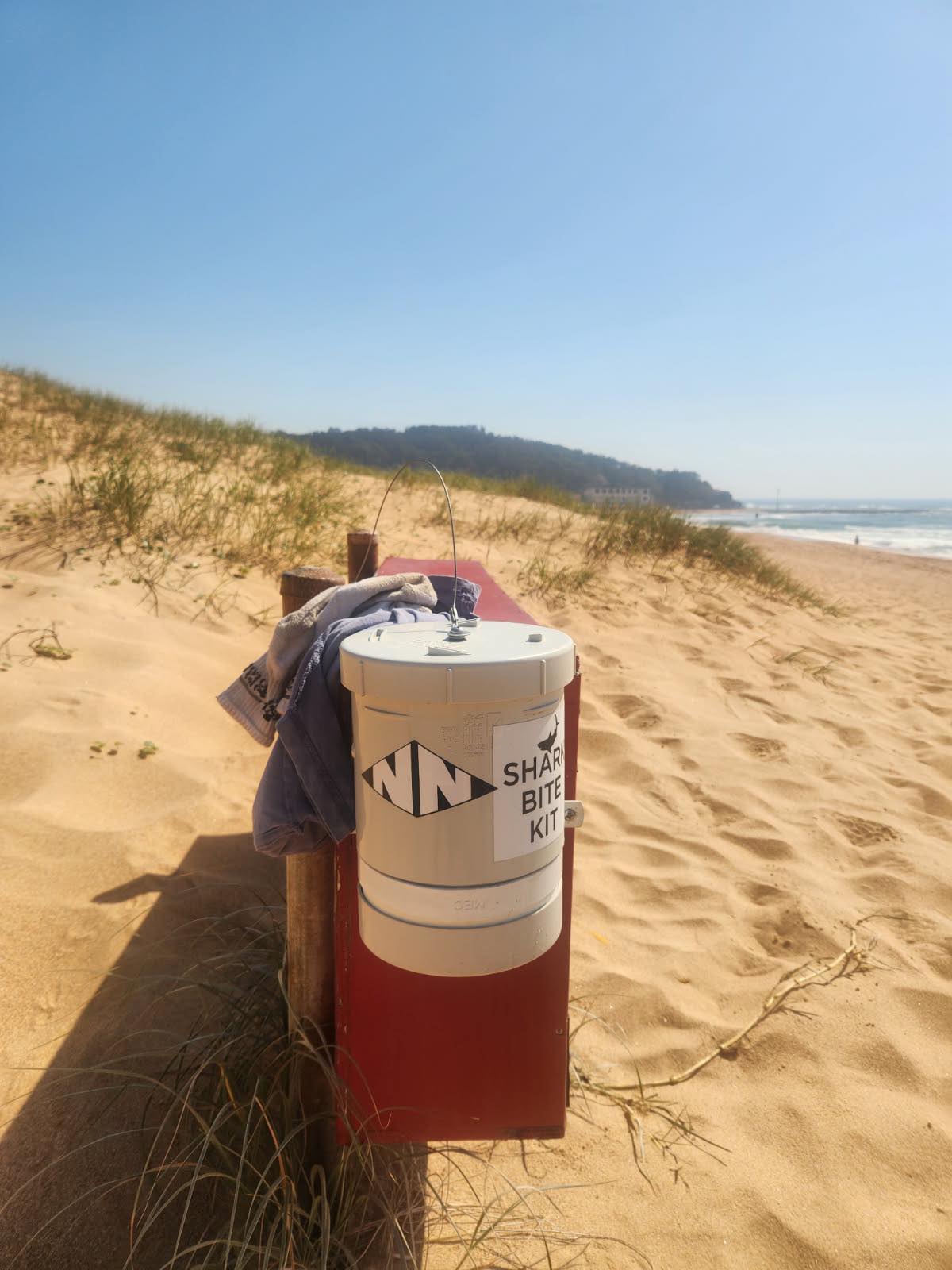
In December, the Government announced an additional $2.5 million enhancement to its 2025/26 program, with drones staring a week earlier than normal in summer, weekend flights from February to April, an expedited rollout of additional drones and training for Surfing NSW, as well as tripling funding for an additional 150 community shark bite kits in regional coastal areas. These kits will be rolled out progressively.
See: Sunday December 7 announcement: Minns Government announces $2.5 million boost to summer beach safety with immediate extra shark surveillance drones
Minister for Agriculture, Regional and Western NSW, Tara Moriarty said in January:
“Keeping people safe is our priority, which is why we’ve committed an additional $4.2 million in to strengthen shark safety measures.”
“Recent shark incidents following storms and heavy rainfall have highlighted the importance of clear, practical information for people using the water.
“This funding will help expand drone surveillance, improve education and ensure timely warnings, so swimmers and surfers can make informed decisions about when to enter the water.
“There’s no single solution, and no government can ever promise to make the water completely safe, which is why we’re using a range of tools to keep people informed and as safe as possible.”
Shark safety: How to reduce the risk of an encounter with a shark
- Swimming after storms in a murky fresh water mix a definite no as the wash out attracts sharks.
One of the simplest safety routines to follow is to only swim at patrolled beaches and to stay between the flags. This is the safest place to swim because lifesavers and lifeguards are there to monitor beach and water conditions and maximise the safety of all beach goers. Pay attention to the advice of the lifesavers and safety signs. Patrolled beaches may also sound shark alarms. You should leave the water as soon as an alarm is sounded or a shark is spotted.
The following SharkSmart points provide tips on how to reduce your risk of an encounter with a shark.
SharkSmart - swimmers and surfers:
- Tell an on-duty lifesaver or lifeguard if you see a shark.
- Stay close to shore when swimming.
- Stay out of the water with bleeding cuts or wounds.
- It's best to swim, dive or surf with other people.
- Avoid swimming and surfing at dawn, dusk and night – sharks can see you but you can’t see them.
- Keep away from murky, dirty water, and waters with known effluents or sewage.
- Avoid areas used by recreational or commercial fishers.
- Avoid areas with signs of bait fish or fish feeding activity; diving seabirds are a good indicator of fish activity.
- Dolphins do not indicate the absence of sharks; both often feed together on the same food, and sharks are known to eat dolphins.
- Be aware that sharks may be present between sandbars or near steep drop offs.
- Steer clear of swimming in canals and swimming or surfing in river/harbour mouths.
- Avoid having pets in the water with you.
- Keep away from shark nets and other shark mitigation measures.
- Consider using a personal deterrent:
- There are several commercially available shark deterrent products but the NSW Government recommends investing in a device that has been independently tested and verified. As a part of the NSW Shark Management Strategy, funding was provided to independently test a number of shark deterrent products. Read the Flinders University report (PDF, 1624.03 KB).
SharkSmart - divers, snorkellers and spearfishers:
- Understand and respect the environment. Find out which species of shark you are most likely to encounter and what behaviour to expect from them.
- Realise that diver safety becomes increasingly difficult with decreasing visibility, such as at night or in turbid water and with increasing depth and current.
- Discuss dive logistics and contingency plans such as hand signals, entry and exit considerations and separation procedures with your dive partner before you enter the water.
- Be aware that using bait to lure fish may attract sharks.
- Don't chase, grab, corner, spear or touch a shark.
- Don't use bait or otherwise attempt to feed a shark while underwater. Feeding may radically change the shark's behaviour and may lure other sharks.
- Observe and respond to a shark's behaviour. If it appears excited or agitated, exhibiting quick, jerky movements or other erratic behaviour, leave the water as quickly and calmly as possible. Try to minimise splashing and noise.
- Be aware of the behaviour of fish. If they suddenly dive for cover or appear agitated, leave the water as quickly and calmly as possible. A shark may be nearby.
- Do not attach speared fish to your body or keep them near you; use a float and line to keep your catch well away.
North Narrabeen SLSC shark bite kit