Week Five June 2026: Issue 655 (Published Sunday June 28)
Winter School Holidays Break
The news service will be on a Winter school holidays break for a few weeks - we'll return Sunday July 19. We hope you all have a nice break too, full of fun with family and friends. We've put some ideas for some DIY projects for you in the DIY Ideas page this Issue, just in case you get a few rainy days and want to find something enterprising to do while indoors.
As always, please take care of yourselves and each other and remember: we're not here to tear each other down, we're here to lift each other up.
Seas The Day 2026 a Resounding Success
Tuesday June 23, 2026: report by Surfing Australia, photos by Andy Morris / Surfing Australia and Surfing Australia
The NRMA Insurance Seas The Day Women’s Surf Festival wrapped up its fourth edition with over fifteen thousand people in attendance across the two-day celebration. The event cemented its place as the world’s largest female participation surf festival, a vibrant showcase of community, connection, and the growing force of women’s surfing.
Surfers of all ages and abilities took to the water across a diverse range of divisions, highlighting the depth, talent and inclusivity of women’s surfing in Australia. From the emerging stars of the Babybel Under 14 Mini Shredders to elite competitors in the NRMA Insurance Open Women’s Shortboard and Sodii Hydration Open Women’s Longboard, the event showcased the full spectrum of female surfing. The Ghanda Girls Under 18 Shortboard division offered a glimpse into the sport’s bright future, while the Thermos Open Women’s Para division produced some of the most inspiring moments of the weekend.
OLYMPIANS, WORLD CHAMPIONS & INDUSTRY LEADERS
Australia's Most Decorated Olympian Emma McKeon, joined the world's biggest female surf festival, taking part in an inspiring discussion panel with fellow Olympians Tyler Wright and Danielle Scott.
McKeon spoke about the life-changing impact sport has had on her journey and the importance of creating opportunities for the next generation of girls to experience those same benefits:
"I'm really excited to meet a lot of the girls, see them out in the surf and be part of such an awesome day. It's great to support more girls getting involved in sport, and especially surfing.
I grew up around the water and absolutely loved it — it changed my life. I've made so many lifelong friends through the ocean, and sport has given me so much. It's given me health, happiness, confidence and opportunities I never could have imagined.
That's exactly what we're trying to give the next generation here today.
Surfing Australia's High Performance Program Director, Kate Wilcomes, said events like NRMA Insurance Seas The Day play a critical role in creating pathways and opportunities for women and girls at every stage of their surfing journey:
"Events like this are incredibly important because they create a space where girls feel safe, supported and like they truly belong. They inspire girls to surf more, get active and explore different sports, while building confidence and connections along the way.
It's also such a great environment to meet new people. You have the opportunity to connect with different generations, world champions and others who simply share a love for surfing. That's what makes this festival so special."
COMPETITION RESULTS
Some of the most exciting moments of the weekend came in the NRMA Insurance Open Women’s Shortboard, where Snapper Rocks SRC, made up of Samantha Arderne, Jordy Halford and Madison Kenchington, emerged victorious after a standout performance. Overcoming strong challenges from Byron Bay Boardriders Club, Kingscliff Boardriders Club, Starberry J.A.M from Yamba, Cabarita Boardriders Club and Lennox-Ballina Boardriders, the talented trio showcased impressive teamwork and high-performance surfing to claim the title. Samantha Arderne of Snapper Rocks SRC was so stoked to get the win after narrowly missing out last year:
"It feels so good. Last year we fell just short and finished second in the Under 18s, so to come back this year and take the win in the Open Women's is pretty special.
The conditions were a little tricky in the final, but we're stoked we managed to find a few good ones when it counted. All the girls were absolutely ripping — it was such a stacked heat.
My favourite part of NRMA Insurance Seas The Day is having so many women down here together. It has such an amazing festival atmosphere, and everyone is lifting each other up and supporting one another. That's what makes it so special."
Longboarding lovers were treated to a masterclass in style and flow, as the Atmosea team danced their way to victory in the Sodii Hydration Open Women’s Longboard final. With classy nose rides & graceful cross steps, their performance was a highlight of the weekend.
The next generation brought serious heat in the Ghanda Girls Under 18 Shortboard, with innovative surfing on display throughout the weekend. Team Daisies and Lily's, representing Torquay (VIC), claimed victory after a standout performance from Stevie O'Day, Lily White and Cobie O'Day, providing an exciting glimpse into the next generation of Australian women's surfing.
One of the most powerful moments of the festival came during the Thermos Open Women’s Para final. Team For the Greater Gouda, starring Victoria Feige, Grace Kennedy and Leanne Whitehouse, claimed the victory with a remarkable performance that embodied the spirit of the event and earned admiration from competitors and spectators alike.
Two-time World Para Surfing Champion Em Dieters once again showcased her class. While she narrowly missed out on the win, Dieters produced one of the standout moments of the final, posting the highest score, an excellent 8.67-point ride. Dieters also praised the festival’s commitment to inclusivity and diversity, highlighting the importance of creating opportunities for women of all ages, abilities and backgrounds to come together through surfing:
"There is such a diverse range of people here today, and it's important that everyone feels represented. I'm proud to represent people with a disability, particularly the women competing in this event. Visibility matters, and it's important that people know surfing is accessible and that our community welcomes everyone with open arms." Em said
EDUCATIONAL & INSPIRING WORKSHOPS
Off the sand, the weekend treated festival-goers to a variety of workshops and speakers, between the Wellness Hub and the Women In Surf Hub.
In the Women of Surf Hub, crowds packed in to hear from professional surfer and content creator Alana Blanchard, one of surfing’s most recognisable and influential figures. Her session drew one of the biggest crowds of the event's history, with attendees eager to hear firsthand from the global surfing star and connect through stories of motherhood, resilience, self-belief and embracing life on your own terms:
"This festival is so special because it brings girls together from all walks of life. It gets everyone in the water and introduces the younger generation to competition, often for the very first time, but in a fun, supportive and inclusive environment.
Everything else the festival offers is just as important for our community. Events like this create connection, confidence and opportunity, and bringing women together can only make our sport and our community stronger."
Surfing Australia hosted surfing pioneers Pam Burridge and Gail Cooper, who spoke on the evolution of women’s surfing and the foundations they helped build, sharing stories from the early days of the sport and the progress made along the way.
The Wellness Hub hosted a steady flow of connection and calm — from breathwork to yoga, performance training to healing — reminding everyone that surfing is as much about well-being as it is about performance.
Freediving extraordinaire Bri Heaney led a grounding breathwork session, guiding participants through the power of breath, mind–body connection and reconnecting with the nervous system.
CAREER PATHWAYS & OPPORTUNITIES
NRMA Insurance Seas the Day further invested in the future of surfing through the NRMA Insurance RISE Program, which delivered free judging development sessions across both Saturday and Sunday.
More than 20 women and girls participated in the program, gaining hands-on experience and education across a range of disciplines including shortboard, longboard, para surfing, and junior and open women's divisions. The sessions provided valuable insight into the judging process while helping participants build skills, confidence and knowledge within the sport.
Designed to create meaningful pathways beyond competition, the NRMA Insurance RISE Program plays an important role in developing the next generation of surfing officials and industry leaders, while opening doors to future careers and opportunities within the sport.
NRMA Insurance Seas The Day had once again delivered far more than a surf contest. It was a space where women and girls from all walks of life could feel seen, supported, and celebrated, in and out of the water. From first-time competitors to world champions, the event was a reminder of surfing’s power to connect, to uplift, and to inspire.
Surfing Australia CEO Chris Symington said the 2026 NRMA Insurance Seas The Day showcased the strength, depth and growing impact of women's surfing in Australia:
“To welcome more than 15,000 people across the weekend and see women and girls of all ages and abilities coming together through surfing was incredibly special. From first-time competitors to world champions, the festival showcased the strength, depth and spirit of our surfing community.
Surfing Australia extends its sincere thanks to NRMA Insurance, the NSW Government, our partners, guest speakers, volunteers and staff whose support and commitment continue to make this event possible.”
2026 NRMA Insurance Seas The Day RESULTS:
Babybel Under 14 Mini Shredders
Alley Kittens — 12.87
Daisies and Lily's — 9.90
The Quokas — 8.94
Snapper Rocks SRC (Snapper Black) — 6.80
Cabarita BRC 2 — 5.50
Byron Bay – The Wreck — 4.49
In the U14 Shredders Freshwater BRC A had a team: Jemima H., Naya B. and Maggie M. - who made it to the quarterfinals.
Sodii Hydration Open Women’s Longboard
Atmosea — 15.30
Byron Bay BRC – Wategoes — 11.87
Point Lookout BRC — 11.20
Burleigh Longboard Club — 9.61
Cabarita Longboard Club — 7.30
All Girls Lennox Head — 3.07
Ghanda Girls Under 18 Shortboard
Daisies and Lily's — 14.81
Aloha Angourie BRC — 12.27
Snapper Rocks SRC (Snapper Black) — 11.50
Alley Cats — 10.97
MNM Boardriders — 6.37
Alley Cats 2 — 3.50
Thermos Open Women’s Para
For the Greater Gouda — 17.43
Noosa World Surfing Reserve — 15.27
WAVE WARRIORS — 14.80
NRMA Insurance Open Women’s Shortboard
Snapper Rocks SRC (Snapper Black) — 14.00
Byron Bay BRC — 13.67
Kingscliff BRC 2 — 12.10
Strawberry J.A.M Yamba — 9.97
Cabarita BRC — 8.20
LE-BA Opens — 7.80
Celebrity Surf Challenge
White Team; Chelsea Hedges, Tru Starling and Chelsea Williams
Blue Team; Kate Wilcomes, Jesse Starling and Jessi Miley-Dyer
Yellow Team; Pam Burridge, Jazz Parr and Britt Cox
Pink Team; Emma Dieters, Pauline Menczerand Liz Cantor
Produced by the Commonwealth Film Unit and directed by Brian Hannant, this Australian Colour Diary film follows Sydney’s daily rhythms through the simple act of getting around. Trains, buses, ferries, cars and walking all feature as commuters cross the harbour, pour through the CBD, and return home to the suburbs.
More than a transport film, it captures a city on the move at a pivotal moment. Fashion, architecture, streetscapes and working life reveal how Sydneysiders navigated a growing metropolis before the major urban transformations of the late twentieth century.
Digitally restored and presented in colour, Ticket to Sydney remains a valuable record of Australian social history and a striking portrait of how movement shapes city life.
Opportunities:
Use the winter months to renew or gain your community qualifications.
Whether you are involved in race management, a crew participant or would like to have the knowledge, you are welcome to register for the training events coming up.
First AID life saving. Practical Session held at RPAYC on 3 July for 60-minute sessions.
Online Theory portion to be completed prior to the 3rd July. - Register HERE
2026 Premier's Reading Challenge
The Challenge aims to encourage a love of reading for leisure and pleasure in students, and to enable them to experience quality literature. It is not a competition but a challenge to each student to read, to read more and to read more widely. The Premier's Reading Challenge (PRC) is open to all NSW students in Kindergarten to Year 10, in government, independent, Catholic and home schools. Now in its 25th year, the NSW PRC is the largest reading challenge in Australia!
The Term 1 2026 booklist is now live! 462 new books have been added to the book lists. Additional book list updates occur at the start of Term 2 and Term 3.
Click here, or visit the booklists page to check out the new titles added to the PRC booklists this year!
Financial help for young people
Concessions and financial support for young people.
Includes:
You could receive payments and services from Centrelink: Use the payment and services finder to check what support you could receive.
Apply for a concession Opal card for students: Receive a reduced fare when travelling on public transport.
Financial support for students: Get financial help whilst studying or training.
Youth Development Scholarships: Successful applicants will receive $1000 to help with school expenses and support services.
Tertiary Access Payment for students: The Tertiary Access Payment can help you with the costs of moving to undertake tertiary study.
Relocation scholarship: A once a year payment if you get ABSTUDY or Youth Allowance if you move to or from a regional or remote area for higher education study.
Get help finding a place to live and paying your rent: Rent Choice Youth helps young people aged 16 to 24 years to rent a home.
Explore the School Leavers Information Kit (SLIK) as your guide to education, training and work options in 2022;
As you prepare to finish your final year of school, the next phase of your journey will be full of interesting and exciting opportunities. You will discover new passions and develop new skills and knowledge.
We know that this transition can sometimes be challenging. With changes to the education and workforce landscape, you might be wondering if your planned decisions are still a good option or what new alternatives are available and how to pursue them.
There are lots of options for education, training and work in 2022 to help you further your career. This information kit has been designed to help you understand what those options might be and assist you to choose the right one for you. Including:
Download or explore the SLIK here to help guide Your Career.
School Leavers Information Kit (PDF 5.2MB).
School Leavers Information Kit (DOCX 0.9MB).
The SLIK has also been translated into additional languages.
Download our information booklets if you are rural, regional and remote, Aboriginal or Torres Strait Islander, or living with disability.
Support for Regional, Rural and Remote School Leavers (PDF 2MB).
Support for Regional, Rural and Remote School Leavers (DOCX 0.9MB).
Support for Aboriginal and/or Torres Strait Islander School Leavers (PDF 2MB).
Support for Aboriginal and/or Torres Strait Islander School Leavers (DOCX 1.1MB).
Support for School Leavers with Disability (PDF 2MB).
Support for School Leavers with Disability (DOCX 0.9MB).
Download the Parents and Guardian’s Guide for School Leavers, which summarises the resources and information available to help you explore all the education, training, and work options available to your young person.
School Leavers Information Service
Are you aged between 15 and 24 and looking for career guidance?
Call 1800 CAREER (1800 227 337).
SMS 'SLIS2022' to 0429 009 435.
Our information officers will help you:
navigate the School Leavers Information Kit (SLIK),
access and use the Your Career website and tools; and
find relevant support services if needed.
You may also be referred to a qualified career practitioner for a 45-minute personalised career guidance session. Our career practitioners will provide information, advice and assistance relating to a wide range of matters, such as career planning and management, training and studying, and looking for work.
You can call to book your session on 1800 CAREER (1800 227 337) Monday to Friday, from 9am to 7pm (AEST). Sessions with a career practitioner can be booked from Monday to Friday, 9am to 7pm.
This is a free service, however minimal call/text costs may apply.
Call 1800 CAREER (1800 227 337) or SMS SLIS2022 to 0429 009 435 to start a conversation about how the tools in Your Career can help you or to book a free session with a career practitioner.
Word of the Week stays a part of your page in 2026, simply to throw some disruption in amongst the 'yeah-nah' mix.
Noun
1. A stage in a process: A clearly defined step or period in a sequence of events (e.g., "the construction phase of a building project" or "the testing phase of a new software update"). 2. A temporary, distinguishable behavioral stage that a person, especially a child, goes through before moving on to something else (e.g., "he is just going through a rebellious phase"). 3. Any of the recurring, visually distinguishable shapes of the Moon or a planet as it is illuminated by the Sun (e.g., a new moon, full moon, or first quarter). 4. A physically distinct, uniform portion of matter in a system. For example, in a glass of ice water, the ice is one phase and the liquid water is another phase. 5. A measure of the position of a point in time (or angle) on a cyclical wave or oscillation relative to a starting point (e.g., when two sound waves are "in phase," their peaks and valleys perfectly align to amplify the sound).
Verb form
1. To introduce or execute something gradually in stages.Phase in: To slowly bring something into use (e.g., "the company will phase in a new policy over the next year").Phase out: To slowly discontinue or remove something (e.g., "the government is looking to phase out older, less efficient appliances").
From: Modern Latin phases, plural of phasis, from Greek phasis "appearance" (of a star), "phase" (of the moon), from stem of phainein "to show, to make appear" (from PIE root bha- (1) "to shine").
Latin singular phasis was used in English from 1660 for each of the aspects of the moon. General (non-lunar) sense of "aspect, appearance, stage of development at a particular time" is attested by 1841. Meaning "temporary difficult period" (especially in reference to adolescents) is attested from 1913.
phase(verb); "to synchronize, adjust the phase of so as to synchronize," 1895, from phase (n.) in the physics sense of "particular stage or point in a recurring sequence of movement or changes" (1861). Earlier as a bad spelling of faze. Meaning "to carry out gradually" is from 1949, hence phase in "introduce gradually" (1954), phase out "take out gradually in planned stages"
Compare Faze - Verb
1. to disturb, bother, disconcert, or unsettle someone. It describes a situation where an action, event, or comment causes someone to lose their courage, composure, or focus.
From 1830, American English, said to be a variant of Kentish dialect feeze "to frighten, alarm, discomfit" (mid-15c.), from Old English fesian, fysian "drive away, send forth, put to flight," from Proto-Germanic fausjan (source also of Swedish fösa "drive away," Norwegian föysa). Related: Fazed; fazing. Bartlett (1848) has it as to be in a feeze "in a state of excitement." There also is a nautical verb feaze "to unravel" (a rope), from 1560s.
“It is the law of human life and of human nature that a new generation is ever coming forth,” said the Roman statesman Cicero (106–43 BCE).
His view was echoed by the poet Simonides of Ceos (6th to 5th century BCE): “As is the generation of leaves, so is that of men.”
The metaphor was a simple one. One day we are full of life, green and fresh, but soon we start to wither and die. Fresh leaves take our place, but they too will fall, only to be replaced by new leaves in their turn.
In the ancient world, there were many different views about the relationship between younger and older generations. Greek and Roman texts reveal that, just like today, generational conflict was rife.
At the same time, however, ancient texts also suggest ways the young and old can profitably get along – a message that is perhaps needed for our times.
Causes of generational conflict
In ancient times, there were many causes of generational conflict. One was that the old sensed things were changing in ways contrary to their hopes and wishes.
The Roman comic playwright Caecilius (219–168 BCE) described the feelings of an old man watching and reflecting on the new generations coming up. In a play (whose title is unknown), the old man is exasperated and frustrated, and decides to complain:
Old Age, if you bring no other defects with you, when you come, this one’s enough: by living long a man sees much he doesn’t want to.
Another source of conflict was that the young felt society had been ruined by the previous generation. For this reason, the young had little hope of making a way within that society for themselves. The Roman poet Horace (65–8 BCE), for example, criticised his parents’ generation with these harsh words:
Our fathers’ age, worse than our grandfathers’, gave birth to us, an inferior breed, who will in due course produce still more degenerate offspring.
Different character types?
The most extensive ancient attempt to explain the causes of generational conflict is supplied by Aristotle (384–322 BCE). According to Aristotle, conflicts between young and old can partly be attributed to the different characters people have when they are young and old.
The young, Aristotle tells us, are lustful, changeable in their desires, passionate, hot-tempered, impulsive, ambitious, simple-natured, hot-blooded and inexperienced. “All their errors are due to excess and vehemence,” he argued:
they think they know everything, and confidently affirm it, and this is the cause of their excess in everything. If they do wrong it is due to insolence not wickedness.
The young, said Aristotle, are “fond of laughter, and therefore witty; for wit is cultured insolence”.
The old, on the other hand, are positive about nothing. They are, according to Aristotle, lacking in energy, hesitant about everything, maliciously negative-minded, selfish and excessively suspicious. “They are not generous,” he claimed, “for property is one of these necessaries, and at the same time, they know from experience how hard it is to get and how easy to lose”.
Moreover, they are “cowardly and inclined to anticipate evil”. Old people
live in memory rather than in hope; for the life that remains to them is short, but what is past is long, and hope belongs to the future, memory to the past […] they are incessantly talking of the past, because they take pleasure in recollection.
Aristotle thinks this conflict of character is at least partially responsible for some generational conflict within society. But balance is afforded by the middle-aged, whose characters “preserve the due mean” between the young and the old. To be middle-aged is to combine “all the advantages that youth and old age possess separately”; excesses and defects are replaced with “due moderation and fitness”.
In ancient Greek and Roman society, the traditional expectation was reverence toward one’s parents and elders. As early as the 6th century BCE in Greece, care for elder relatives was enshrined in law. Mistreatment of parents, which included failure to feed and house one’s mother and father, had strict penalties and often resulted in jail time.
Among the Romans, fathers had complete legal control over their sons and daughters, through the power of patria potestas. This included the right to inflict capital punishment on children. This power only ceased on the father’s death or when a daughter was married.
A prominent source of generational conflict was the feeling, among older generations, that young people no longer showed older people any respect. This point is brought up by the Greek comic playwright Aristophanes (450–380 BCE). In his play Clouds, one of the characters gives a list of things young people do that irritate older people, including failing to offer their seats to elders and behaving rudely towards their parents.
What do the old owe the young?
For the ancient Greeks and Romans, one of the expectations people had about older members of the population, who controlled the majority of the wealth and had the most political influence, is that they would maintain social stability by making sensible political decisions and enacting sensible laws.
Generational conflict increased in times when older generations failed to manage political affairs well. During the turmoil of the Peloponnesian War (431–404 BCE) between Athens and Sparta, which ended in Athens’ disastrous defeat, the younger generations of Athenians became increasingly disobedient towards the older generations. This was largely because of a sense that political affairs had been mismanaged.
The Greek philosopher Thrasymachus of Chalcedon (late 5th century BCE), gave an oration in which he criticised older generations for their failures of governance, implying this was the main reason why young people were starting to dissent. At a time when “we must obey others as rulers but must suffer the consequences ourselves”, he argued, it becomes necessary for the young to speak up.
Mitigating generational conflict is not an easy thing to do, but the Greeks and Romans did have a suggestion about how to achieve some kind of generational harmony. Their advice was to focus on reason and rational debate.
People should use reason to determine collectively what is good and best for all, and people of all generations should be encouraged to put reason and the common good above their personal interests.
As the Greek orator Isocrates (436–338 BCE) said in his oration Archidamus, older people do not always know what is best and younger people are not always wrong.
Thus decisions needed to be based on shared deliberation and the use of reason, as “it is not by the number of our years that we differ in wisdom from one another, but by our natural endowments and by our cultivation of them”.
Idealistic words, but ones worth remembering in our own time of fractured generational relations. After all, the young will eventually become the old, at which point they too will complain that the world is going downhill, that nobody listens anymore, and that the next generation has forgotten the basic rules of civilisation – such as giving up one’s seat, not talking back, and not spending so much time on whatever alarming new technology replaces TikTok.
Clearly, the ancient evidence does not offer a simple solution to generational conflict.
When basketball was invented by medical doctor James Naismith in 1891 – to keep American football players active during winter – all baskets were worth two points, regardless of where they were shot from.
Games were dominated by tall players who usually shot from close to the basket.
It was often very crowded near the basket and there were fewer opportunities for smaller players.
This all changed when the 3-point line was introduced.
History of the 3-point line
The 3-point line was temporarilytrialled in a few college games and minor professional leagues from the 1940s to the early 1960s, but was seen as more of a gimmick.
Sports can change dramatically in the blink of an eye. Sometimes, these moments create immediate shockwaves. Other times, it’s not until much later that their impact become obvious. This is part of a rolling series that explores key (and sometimes long forgotten) moments in sports history.
The ABA wanted to make basketball more interesting and exciting. It viewed the 3-pointer as the equivalent to a home run in baseball and believed it would “give smaller player a chance to score and open up the defence to make the game more enjoyable to fans”.
The ABA merged with the NBA in 1976 but the NBA did not immediately introduce the 3-pointer because many traditional coaches and players were against it.
It was finally introduced for the 1979–80 season, with Chris Ford from the Boston Celtics shooting the first one.
The International Basketball Association (1984) and other national leagues followed this move during the next decade.
It changed basketball, slowly
The 3-point line did not make a big difference straight away.
Players still preferred to shoot from closer to the basket because there was a higher chance of success. Teams did not practise 3-pointers and generally only used them when trying to win a game in the final few seconds.
The San Diego Clippers scored the most 3-pointers for the 1979–80 season, with 177 (2.2 per game). Brian Taylor from the Clippers had the most individual 3-pointers (90).
Times have changed.
During the 2024–25 season the Celtics scored the most 3-pointers: 1,475 (17.8 per game) and every team in the NBA scored more than 900. Some 139 players made 100 or more.
From 1994 to 1997 the NBA moved the 3-point line closer to the basket (from 7.24 metres to 6.71m) to encourage more scoring in games.
While it did not improve the trend of lower scores and the line was moved back, teams did start to shoot more threes.
The Steph Curry phenomenon
In the 2010s, the rise of the Golden State Warriors sparked a 3-point revolution.
Led by two-time MVP StephCurry, the Warriors’ heavy reliance on the 3-pointer helped them make the NBA Finals five years in a row, winning three championships.
Curry, who is more than 10cm shorter than the average NBA player, is credited with changing the game by regularly shooting “deep threes” from way behind the 3-point line. This allowed him more time to shoot over taller players.
It also changed how other teams defend because they have to cover more space to defend him. Consequentially, his teammates enjoy increased scoring opportunities.
WNBA All-Star Caitlin Clark has also been influential increasing the popularity of 3-pointers.
The role of analytics
Statistics-focused executives such as Daryl Morey also played a key role in the increasing popularity of 3-pointers.
They realised teams could score more points by shooting 3-pointers, even if they shot a slightly lower percentage.
For example, if a team takes ten 3-point shots and make 40% (four) of them, they will score 12 points (4x3 = 12). This is more than they will score if they take ten 2-point shots and make 50% (five) of them (5x2 = 10).
Under Morey’s leadership, the Houston Rockets became the first NBA team to attempt more 3-pointers than 2-pointers in a season. They did this from 2017 to 2020, when they won three consecutive division titles.
A statistical analysis across ten seasons from 2009–10 to 2018–19 also showed teams that took more 3-point shots had a higher probability of winning.
This rise in 3-pointers has come almost exclusively at the expense of mid-range shots.
The percentage of total shots from mid-range has plummeted from 31% in 2010–11 to just 13% a decade later, while shots in the paint (close to the basket) have remained relatively steady.
The 3-point line has improved the game by adding variety in offence, spreading players out and allowing players of different sizes and skills to be successful.
However, fans, players and commentators are starting to wonder whether there are now too many 3-pointers being shot.
Too much of a good thing?
The increased emphasis on 3-pointers in the NBA has coincided with a decline in viewership. Although these may not be related, it has sparked concerns.
NBA Commissioner Adam Silver noted that while game attendance remained strong and fans enjoy the skill on display, he acknowledged some teams’ attacking plays can appear “cookie cutter” as teams mimic each other’s 3-point-heavy tactics.
In the last few years, the hype around artificial intelligence has become stratospheric. Riding a wave of venture capital, tech leaders promised us AI would revolutionise work, boost productivity and lead to incredible new breakthroughs. OpenAI, the creator of ChatGPT, set a new record when it attained US$110 billion in investments several months ago – and its CEO, Sam Altman, recently claimed Australia could become a “data capital of the world.”
Sky-high promises have been accompanied by sky-high investment in data centres, the sprawling server farms that power the training, execution, and maintenance of these models. A monstrous new hyperscale facility proposed for Sydney’s west – 1 gigawatt across 52 hectares – would rank among the world’s biggest. It will join 162 existing centres and 90 in the works across Australia, which is projected to be the world’s third largest data centre market by the early 2030s.
But if AI backers are all in, public sentiment is far more mixed. A new study ranked Australia equal lowest on the scale of global AI sentiment, with 81% supporting stronger rules for how organisations use AI and 68% worried about losing control over decisions made by AI on their behalf.
Grassroots movements against AI are growing. Last month, a “Stop the Slop” event challenging the Sydney data centre was relocated to a larger venue due to high interest. It joins other campaigns like StopAI and PauseAI that aim to slow down data centre development, ask how AI is impacting jobs and the environment, and consider more equitable and sustainable alternatives.
And in the last few months, videos have begun surfacing of students at commencement ceremonies booing speakers like former Google chief executive Eric Schmidt, who speak in rapturous tones about “standing on the edge of technological transformation” and how AI will touch “every profession”, “every classroom”, and “every relationship”.
Faith in these monumental claims – and the monumentally expensive infrastructure they rely on – is slipping.
What is the AI business model?
AI’s financial costs are astronomical. As tech critic Ed Zitron has shown over and over again, the major players are burning billions to keep models running, while lucrative profits remain tantalisingly out of reach. Some enterprises now spend more on rapidly rising token costs, the per-use cost of a model, than human workers. Even by cynical economic standards, the numbers don’t add up.
What exactly is the AI business model? Where is the killer app that will deliver genuine value and see millions of individuals or thousands of corporates pay costly subscription fees? “We have no idea how we may one day generate revenue,” admitted OpenAI CEO Sam Altman in 2019, “once we build a generally intelligent system, we can ask it to figure out a way to generate an investment return.” While the landscape has certainly shifted since then, use cases and revenue remain murky.
Hard evidence of AI’s contribution – rather than the vacuous claims of pitch decks and industry keynotes – remains largely elusive.
A recent survey of 6,000 senior business executives across the United States, United Kingdom, Germany and Australia found positive perceptions but a disappointing reality: around 90% of firms said AI has had no impact on employment or productivity over the past three years. Another study, from MIT last year, found that 95% of generative AI pilots failed to deliver tangible financial value to the organisation, so were abandoned.
If the upsides are unclear, the negatives are increasingly apparent. Politically, generative AI provides the perfect weapon to “flood the zone” with misleading or outright false content, muddying the informational waters and amplifying division. Is Netanyahu alive or dead? AI fakes make it harder and harder to tell.
Socially, AI companions and models, gaining enormous trust with users via long-term conversations, have been cited in a growing series of court cases around suicides and mass shootings. A lawsuit filed this year described ChatGPT as an intimate and persuasive “suicide coach” who convinced a man in Colorado to end his own life.
And environmentally, the turn to the far higher computation that AI requires means massive impacts as data centres demand more power and more water, creating hundreds of millions of tonnes of CO² emissions. If the 41 planned data centres in Sydney are built, they will directly use 15–20% of Sydney’s water supply within a decade, predicts environmental accounting associate professor Michael Vardon.
Even if its social, environmental and political fallout is dismissed, AI hype and investment misses what is happening on the technical level. Models in the last decade became “smarter” essentially by training on larger and larger data sets. But this paradigm yields diminishing returns.
Yann LeCun, former chief AI scientist at Meta, has warned that the correlation-based “learning” of models is both inefficient and insufficient when compared to human learning. Models require trillions of tokens to train. Even then, they reproduce patterns without deeper understanding, while children learn in a generalised manner from a handful of examples.
“Training is waning” is the new mantra, notes one Silicon Valley insider, as the brute force approach to foundational models gets left behind. It’s far from clear whether massive models, and the massive data centres that underpin them, will even be needed.
Where does this leave us? The possibility of the AI bubble bursting has shifted from a niche pocket of tech critics to mainstream policy wonks. “It’s time to start asking not whether there will be an AI crash, but what we should do today so that we are best prepared to respond to one tomorrow,” wrote two commentators in TIME magazine earlier this year.
What will this look like? Any answer here would include speculation. And yet we can garner some insights from previous bubble bursts, from tech development trends, and by extrapolating from the socio-cultural fallout we’ve already witnessed. Let’s step through each.
Another dot-com bubble
First, we can compare the AI bubble with the dot-com bubble of the late 1990s. Indeed, investment leaders – including The Big Short’s Michael Burry, who famously anticipated the collapse of the subprime mortgage market – are already seeing disturbing parallels between the two. Burry warns that venture capitalists are funding “loss-mak[ing] companies like never before in history”. As this suggests, the investments in this current AI bubble dwarf its dot-com analogue. If this bubble follows the blueprint of the last, we should expect to see massive layoffs in personnel and liquidations of AI startups with no discernible revenue.
Of course, like the first bubble, the deletion of a company doesn’t mean the technologies themselves disappear. Indeed, in the orthodox economic canon, the dot-com bubble was a “baptism of fire”: a painful but necessary rebirth. The trivial players, buoyed by “irrational” valuations, disappeared, but the network infrastructure they helped expand was the foundation for the truly innovative tech products to come.
Part of this “soft pop” future is almost certainly correct: the infrastructure will persist, even if underused. AI will continue being baked into a multitude of products, testing the market. And tech titans, sitting on data hoards and advertising monopolies, will march on. As scrutiny is increased, belt-tightening will occur. Companies will distil their product offerings, quietly begin limiting token use, and raise their subscription prices – all moves we’re already seeing play out.
But the larger question is whether tech companies – now just as then – actually contribute in meaningful ways to our broader world, or even merely our economies. As one Nobel-prize-winning economist famously quipped in the 1980s: “you can see the computer age everywhere except in the productivity statistics.”
More recent analyses of contemporary technologies have echoed this finding, suggesting the internet has little impact on economic growth. If this is the case for AI – as the numbers, the lack of products and even the rhetoric of its chief pundits suggests – then we have a social question, not just a financial one. What price are we paying for a technology that fails to deliver even on its own terms?
Small is beautiful
Second, tech development is moving away from the “bigger is better” mantra. Models are becoming much smaller and more efficient. The push is from the cloud to the so-called “edge”: the far more mobile and low-powered devices, like your phone, where data is actually created and used. And there’s a push to move the focus from “capture it all” quantity to quality, with targeted or carefully curated data.
Some of this is a welcome — and long-needed — shift. A deluge of critical AI research in the last few years has extensively documented the major issues with bias in foundational models. In a not-so-shocking twist, indiscriminate training on a massive archive of social material with almost no oversight creates models that reproduce significant harms.
Given these issues, the slower and more careful construction of models actually tailored to their communities and attuned to their language, needs, and desires can only be beneficial.
Some languages, for example Indigenous languages with strong oral traditions, are considered “low-resource”, or underrepresented, with much less material in standard training sets. Switch away from English, and see the accuracy of your response plummet.
Future developers might work closely with communities to create their own archive of material that better reflects their ideas and beliefs. Here we start to see a meaningful idea of data sovereignty, where groups maintain control over their models and the data that underpins them, slowly disconnecting from corporate cloud regimes.
Of course, if the “small and mobile is beautiful” approach attains real traction, this will mean today’s massive investment in highly centralised data centres is the wrong move.
What will happen to this massively overbuilt – and, we anticipate – soon underused infrastructure? In an ironic twist, dead shopping malls have been converted into data centres in the last two years to satisfy demand – yet these data centres might themselves become empty shells, physical reminders of an obsolete vision.
Post-AI pathologies
Third, AI cannot be stuffed back into Pandora’s box. Even if AI development takes another path, the socio-cultural, political and environmental fallout of a post-AI world will continue – or even become exacerbated.
In education, researchers warn that students who constantly turn to generative AI models exhibit a kind of “doom loop” of dependence: offloaded thinking gradually causes atrophy in critical thinking and reasoning. “When kids use generative AI that tells them what the answer is […] they are not thinking for themselves,” state the authors of a Brookings Institution study.
They’re not learning to parse truth from fiction. They’re not learning to understand what makes a good argument. They’re not learning about different perspectives in the world because they’re actually not engaging in the material.
In politics, cutting-edge image and video models make it increasingly difficult to parse fact from fiction. Gravity glitches and six-fingered hands are gone; new generative models like Nano Banana boast physically-aware rendering. Models can now produce photo-realistic news reports, for instance, that seem to show Ukraine president Zelensky surrendering.
The result is a growing pervasiveness of the “liar’s dividend”, where muddied lines mean even genuine material is doubted or dismissed as being synthetic. The ability of evidence to document atrocity and persuade the public is undermined, with each side accusing the other of fabricating media.
In the environmental sphere, the AI-driven boom in data centre construction will have long-term impacts. While society has begun to lower carbon emissions via electrification and renewables, AI’s voracious demands threaten to reverse this progress. Sustainable generative AI is a fallacy. “AI datacenters are single-handedly leading to a major reversal in climate progress globally,” declared tech critic Karen Hao, citing a recent UN report.
From the extraction of rare-earth minerals to the burning of dirty diesel as backup, the strain on local power grids, and the siphoning of millions of gallons of freshwater in a warming world — the damaging effects of AI supply chain capitalism – will be felt by the ecosystems and generations to come.
Rage against the machine
“I’m here to tell you the mission of your generation is to destroy AI,” Daily Show comedian Ronny Chieng told Harvard graduates recently, to approving cheers — a far cry from the boos and anger that met AI evangelists advocates at similar ceremonies.
One strand of rising anti-AI sentiment is directed at data centres. A report found that US$64 billion of data projects have now been blocked or delayed amid local opposition. In one sense, of course, these wins are localised and limited: the “cloud” means data centres elsewhere can still run AI. But to see them as distractions from the bigger anti-tech battle is to miss the point. As tech critic Astra Taylor and community organiser Saul Levin argue,
This brewing populist resistance isn’t just about limiting local development – it represents a critical new front in the fight against tech-enabled authoritarianism. Where else can people push back on job-eating algorithms, distorting deep fakes, and autonomous drone strikes?
These protests and campaigns signal a gulf between the current AI vision — “tokenmaxxing” in an “AI everywhere” world — and the desires of everyday individuals. Of course, this disparity alone doesn’t signal the death of the AI boom dream: history is full of examples of elites rolling out exploitative technologies that run roughshod over the wishes of the people.
But combined with other economic, social and environmental factors, these pushbacks begin to destabilise Big Tech’s future-on-rails. There are other possibilities — slower, smaller, more convivial, more sustainable — for technologies that contribute to our lives, our society and our world.
The speed and skill with which these AI-powered translation tools operate are certainly impressive.
But there is an important frontier for translation technology, one that it might never be able to breach: the poem.
That’s because translating poetry, thus far, has been a uniquely human experience. It demands intimate knowledge of two languages, which large language models certainly possess. But it also requires a mastery of different cultures and perspectives, what literary critic Gayatri Chakravorty Spivak calls a “worlding” of language and culture.
Pushing the limits of language
When scholars have studied the creativity of chatbots by prompting them to produce poetry, they’ve noticed that the poems tend to be more homogeneous and standardized than those written by humans.
Chatbots’ poetry translations have similar issues.
AI seems to struggle in three main areas: rendering metaphor, decoding complex sentence structure and creatively conveying mood or emotion.
To demonstrate these flaws, I worked closely with Adeeba Shahid Talukder, an award-winning poet and translator, to write this piece and to translate the 1953 poem “Mulāqāt,” or “Meeting,” composed by one of the most famous Urdu poets of the 20th century, Faiz Ahmed Faiz.
Faiz was born in 1911 in Sialkot, in pre-Partition India. In 1947, when that area in the Punjab became part of present-day Pakistan, Faiz became a citizen of the newly founded country, though his relationship with it was marked by both hope and disillusionment. He lived in different parts of the world for long stretches of time, but he returned to Pakistan toward the end of his life. He died there in 1984.
His poetry is celebrated for its marriage of classical tropes like the ache of unfulfilled longing for the beloved — and the lover’s willingness to be consumed or destroyed in his pursuit of her — with the political struggles of his time, like the plight of working people and the dream of a Marxist revolution. His poetry is notoriously difficult to translate because of its highly ornate, extended metaphors, which have few easy equivalents in English. This forces the translator – be it human or machine – to push the limits of language.
From 1951 to 1955, Faiz was imprisoned on allegations of sedition against the Pakistani state. His first three months were spent in solitary confinement.
From Faiz’s letters, scholars learned that despite the isolation of his imprisonment, he felt as if the experience made him more attuned to his senses, as if he were “falling in love again for the first time.” His time in jail was also among his most prolific as a poet, with “Meeting” composed during his sentence.
Here’s our translation of the opening verses of “Meeting”:
 This night is the dark,
 lush tree of a grief greater
 than you and I—

 greater, for caravans
 of torch-bearing stars
 have lost themselves
 in the siege of its branches;

 in its shadow, a thousand moons
 have wept away all their light.

 This night is the dark,
 lush tree of a grief greater
 than you and I—

 but from the tree of this very night
 the amber leaves
 of these moments
 have fallen,

 grown entangled
 in your locks and flowered
 as the fires of pomegranate
 blossoms; its dew

 has rained drops of silence
 upon your brow,
 bedecked it with a silver
 string of pearls.
When prompted to provide a “lyrical translation into English,” ChatGPT produced the following:
 This night is a tree of pain,
 Vaster than you, vaster than me.

 Its branches bear
 Thousands of torches in place of stars,
 Caravans lost
 Within a thousand moons’ shadows,
 And all my light has wept itself away.

 Yet from this very tree,
 A few golden leaves of fleeting moments
 Fall into your hair,
 Entwined, they bloom like roses.

 From its dew in quiet,
 A few drops rest upon your brow,
 And glitter like tiny diamonds.
Chatbots fail at translation’s most basic task
When Faiz composed “Meeting,” he had been separated from his wife and two daughters for two years. He was keenly aware of missing parts of their childhoods that would never return.
This biographical information can help translators understand the poem’s exploration of “vaṣl,” or the meeting of lover and beloved. A common trope in classical Urdu poetry, it usually captures the joy and exultation of the lovers’ union.
But in Faiz’s poem, the union with the beloved also contains an acute awareness of mortality and the transience of beauty – a recognition of what has been lost, and the suffering still to come.
That’s why we rendered the opening lines of “Meeting” as “This night is the dark,/lush tree of a grief greater/than you and I.”
ChatGPT’s translation is more literal: “This night is the tree of pain.”
While there is nothing technically wrong with this translation, the chatbot’s version doesn’t capture the nuances of the tree metaphor and the way its dense, expansive branches can encompass the complexity and beauty of the emotions evoked by the night of the lovers’ union.
AI also fails to grasp the poem’s intricate sentence structure. ChatGPT has translated “in its shadow a thousand moons / have wept away all their light” as a nonsensical construction: “Within a thousand moons’ shadows, / And all my light has wept itself away.”
This error appears to have happened because the chatbot translated “apnā” – a reflexive possessive pronoun in Urdu – as “my,” inaccurately parsing it as referring to the speaker instead of the moons.
Finally, and most importantly, AI models lack the ability to express emotion the way a human can. A machine with no bodily experience of being human cannot meaningfully perceive a poem so enmeshed in human experience. Its engagement is merely superficial.
In its attempt to convey the mood of the original piece, ChatGPT offers: “From its dew in quiet, / A few drops rest upon your brow, / And glitter like tiny diamonds.”
It’s clear that ChatGPT is struggling to decode the grammatical structure of the poem and is trying to make the text lyrical enough to convey the awe and wonder of the original. But the model’s contrivances toward the lyrical – for example, describing diamonds as “tiny” or “glittering” – have no relation to the original poem.
“From its dew in quiet” is an incoherent clause. The phrase that seems to have thrown the model off is “isī kī shabnam se khāmoshī ke yeh cand qaṭre,” or “its dew / has rained drops of silence.”
Urdu literary critic Shamsur Rahman Faruqi has explained how Urdu poets “treat metaphor as fact and then go on to create further metaphors from that fact.” In “Meeting,” the metaphor of the night of the reunion as a tree becomes a fact, which allows for the flowering of a new metaphor – that of the dew on its leaves as drops of silence that fall on the lover and their beloved. These silences, heavy with sorrow, then adorn the beloved like precious jewels, conveying the idea that only a profound grief can beget such beauty.
The model has failed at conjuring this sense of wonder because it cannot parse the poem in accordance with the literary conventions of Urdu poetry.
ChatGPT prefaced its translated text by assuring us that it had “crafted a lyrical, poetic English version of Faiz’s ‘Mulāqāt,’ keeping the imagery, rhythm, and emotional flow intact so it reads like a poem rather than a literal translation.”
Yet as we have shown, its translation fails to accomplish the most basic task of literary translation: to convey the heart of the original.
Chatbots, in other words, are a poor substitute for the literary translator, and they bolster the assertion of the late Indian poet, scholar and translator A.K. Ramanujan that “only poems can translate poems.”
Adeeba Shahid Talukder helped with the research and writing of this article, in addition to the translation of Faiz’s poem.
Ding – that’s an all too familiar sound, designed to instantly capture your attention.
The average adult receives at least 46 push notifications a day from their smartphone – roughly one every 20 minutes during waking hours.
These interruptions might seem like a small price to pay for staying connected. However, research shows these attention-grabbing features increase stress and reduce productivity. They can even have fatal consequences, with phone-related distraction claiming 29 lives on Australian roads each year.
In our modern world, it can feel impossible to focus on any one task. But science tells us there are ways you can reclaim your attention.
How attention works
A network of areas in the human brain controls our selective attention, the process by which we focus on relevant information and ignore the rest. Where attention goes is a balance between what your goals are, and what’s happening in the world around you. This means sudden or urgent events can capture your attention, and pull it away from what you’re trying to do.
From an evolutionary perspective, this helps keep us safe. Imagine you are foraging for berries, for example, when you hear the rustling of leaves. This sound would capture your attention and shift your focus from foraging to the potential threat – it may be a tiger about to pounce.
Today, however, our modern environments often hijack this same mechanism for things that are far less urgent or important – such as the buzz of a new friend request.
The trouble with tech
Digital platforms are designed to instantly capture and hold your attention, by tapping into the brain’s reward and motivation systems. This is why you may find it harder to resist distractions that offer some kind of reward, such as a “like” on your post. It also makes it more difficult to stick to tasks that require sustained attention.
Research suggests these frequent interruptions may be reducing our ability to concentrate – not by affecting our fundamental ability to focus, but by increasing how often we switch between activities.
The myth of multitasking is that we can do two demanding tasks at once. However, our attention is capacity limited, which means we can’t simultaneously process everything that’s happening around us. “Multitasking” is actually task switching, or rapidly swapping between tasks rather than doing both at the same time. Research consistently shows task switching impairs how well we do one or both tasks, no matter how familiar or predictable the task is.
However, we can build up our “attention muscles” by making some minor lifestyle changes.
1. Limit distractions from devices
You can do this by setting up “focus” modes on your phone. These automatically filter out distractions by limiting how many notifications you get, particularly while working or driving. Or turn off all notifications from apps and schedule specific times to check them – say for ten minutes before lunch – and set timers to keep yourself accountable.
Apps that track your screen time may help, but avoid those that gamify how much time you spend off your phone. Ironically, these game-like features are also designed to draw in your attention. Instead, opt for tools that discourage use and provide data that can help you reflect on your screen habits.
2. Choose activities that require focus
The evidence is clear that constantly switching between tasks weakens our focus. To combat this, prioritise activities that demand sustained attention.
Research shows doing immersive activities – such as playing music and competitive sport – a few times a week may improve your ability to pay attention. This could be because these activities require you to pay attention for longer periods, to achieve a specific goal.
You can also use tools such as Pomodoro timers, which help you alternate between 25-minute intervals of focused work and five-minute breaks.
3. Reduce your overall tech use
Research shows people who avoid using devices before bedtime and keep them out of bedrooms sleep better. Studies also show these practices may improve your focus the following day.
And when you have a free moment, don’t immediately pick up your device. Research suggests regularly pausing to let your mind wander allows your brain to process information and form new connections between different concepts and experiences, leaving room for creativity to flourish.
In the end, reclaiming your attention doesn’t necessarily require rigid rules or strict routines. It starts with small, intentional acts of presence. Attention is a precious resource, so let’s invest it wisely.
China also has plans to build a lunar base by 2035.
Building the first long-term habitat on another world will push our engineering to its limits. But lunar architecture isn’t just an engineering challenge. At its heart, it is about understanding human experience at the extremes – and how it can help improve conditions for those already living at the edges here on Earth.
The race to the Moon and beyond is accelerating. Some say it’s for the benefit of all humanity. But is it really? In this seven-part series, we explore what our future in space will look like, how we might travel and survive out there, and what’s needed to stop a catastrophe from happening.
The challenge of building a lunar base
Building on the Moon means dealing with the brutal realities of a near-perfect vacuum and unfiltered space radiation. We have some experience with such challenges from orbital habitats like the International Space Station, but there are additional conditions to contend with.
The lunar surface is covered in razor-sharp dust, or regolith, which is abrasive enough to cut through astronaut suits and destroy machinery. And the extreme temperature swings from below -200°C to over +120°C across a lunar day places severe thermal stress on building materials, which expand and contract with every cycle.
Transporting building materials from Earth will be prohibitively expensive, so current solutions focus on using locally available regolith to 3D print monolithic shells. But the lack of atmosphere on the Moon brings another unique challenge.
Micrometeorites rain down like tiny bullets at speeds of up to 72 kilometres per second, easily puncturing structures. A 3D-printed monolithic shell, once damaged, will be difficult to repair.
Our research explores modular block-based construction that can be easily disassembled and repaired by human-robot teams. Our work with colleagues at the NASA funded RETHi facilities at the University of Texas at San Antonio is helping us understand how local damage by micrometeorites effects the whole system, so we can design for repair.
Building on the Moon means dealing with the brutal realities of a near-perfect vacuum, micrometeorites and unfiltered space radiation.ESA/Foster + Partners
The challenge of living on a lunar base
Lunar architecture is not just about survival. It gives us the chance to ask what it means to actually live in extreme conditions, and what that reveals about human experience more broadly.
For instance, what happens when people have to spend long periods in isolation or confined spaces, with no opportunity to step outside? This is not unique to space. Many of us experienced this during COVID, and others live it routinely on submarines, mining outposts and Antarctic stations.
Drawing on design psychology, we work with people who have lived or worked in isolated and confined conditions to understand how design can help. Small details – a private space to retreat to, lighting adjusted to personal rhythm, a window with a view – can have a considerable impact on emotional wellbeing and morale.
The psychological toll of living in extreme environments is inseparable from its physical demands. How do we keep the human body operating safely in these extreme conditions, and what happens when someone is injured far from help?
Again, this is not unique to space. Biomechanics research already helps us understand how joints and muscles move, preventing workplace injuries and supporting rehabilitation. But strip away Earth’s gravity, and everyday movements, like climbing a flight of stairs, reveal something new about how the body really works.
Our research uses gravity-offload experiments to study how the arms, shoulders and torso work together to lift and stabilise the body as gravity changes. The findings can inform the design of stairs and handrails for lunar habitats, making movement more efficient and preventing injury.
Artist’s concept of Phase 3 of NASA’s Moon Base.NASA
What this means for life on Earth
The construction industry accounts for roughly half of all global material extraction and around 30% of waste and carbon dioxide emissions – much of it because buildings are demolished rather than repaired.
The repairability and human-robot collaboration principles we are developing for lunar architecture offer a model for circular construction here on Earth, where maintaining buildings rather than tearing them down could transform the industry’s environmental footprint.
Our research on the psychology of isolation can also improve life for people stationed at polar research bases, in remote communities, or even in prison. And our biomechanics research, focusing on how forces redistribute between the upper and lower body, can help older people to climb stairs more safely, avoid falls and recover from injury.
Lunar architecture research is not about a distant, futuristic idea. It is about understanding human experience at the extremes, and using that understanding to ask better questions about how we design for people here on Earth. Humanity already lives at the edges. Learning to design for those edge conditions can teach us how to dwell more inclusively on this planet, and beyond.
In the contemporary imagination, the word “avatar” may conjure James Cameron’s blue Na’vi people.
But Cameron was partly inspired by the avatars (or incarnations) of the the Hindu deity Vishnu, who sent avatars to earth to preserve universal order.
For over 15 centuries, Vishnu has been seen as a sustainer and a guardian of dharma – order, morality and righteousness – who has access to ten or more human and animal avatars.
Mostly, Vishnu is depicted by artists with blue skin, marking his separation from humanity. He evokes the colour of the cosmos and, as his avatar Krishna, the deep blue of brooding monsoonal cloud.
Avatar: Forms of Vishnu at the Art Gallery of New South Wales draws on these deep cultural roots. The gallery presents 200 artworks spanning 1,500 years, from international and Australian collections.
Many objects, notably early sculpture from Cambodia, have never before travelled from their home countries.
The highly crafted and carved objects open intriguing mythological narratives, exploring Vishnu’s long importance in Hindu cultures and to contemporary Australia.
A prescient exhibition
The exhibition takes audiences on a deep dive into the sumptuous colour, craft, tradition and artistry inspired by and honouring the avatars of this important figure.
Contemporary works add magic to the historic, conveying the continuum of tradition into current practice.
Avatar comes from the Sanskrit word avatāra, meaning “descent”. At the press preview, co-curator Chaitanya Sambrani called Vishnu a holistic presence, “a being that is everywhere, everything, and in everyone; an omnipresent force with different personas”.
For Sambrani, it is important to understand this presence exists “against the strictures of organised religion. We may have our own personal experience of Vishnu beyond the limitations of the self.”
Three years in the making, the exhibition feels prescient. Amid political division, ecological instability and debates around identity, Vishnu’s avatars – manifesting to create order from disorder – feel unexpectedly contemporary.
Enduring storytelling
The endurance of these stories is beautifully expressed. There is the juxtaposition of artworks old and new, in diverse media – textiles, carving, gold, embroidery, paint, sculpture, bronze, papercuts and watercolour.
One work of carved sandstone from Cambodia in the early 800s depicts a four-armed lord holding a discus, conch, club and globe. Its simplicity – a naturalistic figure decorated only with a cylindrical headpiece and skirt cloth (sampot) – alludes to Vishnu’s status with the Khmer kings.
Behind this sculpture hang two large contemporary paintings by Desmond Lazaro.
Lazaro describes the foundational Hindu story in The Churning of the Ocean of Milk (2026), paired with his Mount Mandara (2026).
The first, a circular form painted in colours from hand-ground ochres, describes the coming together of gods and demons to churn the ocean to retrieve the nectar of immortality, releasing both poison and divine treasure.
A soapstone carving of Lakshmi Narasimha, Vishnu’s man-lion avatar, from Odisha, India in the 1200s, is framed by Threshold (2026), a contemporary installation crafted in cotton and silk by Sumakshi Singh.
Elements highlighted for contemporary audiences include the feminist consciousness in these stories. The energy of the shakti from their female consorts is crucial to Vishnu’s avatars to complete their tasks.
Human transformation
The final theme of the exhibition is titled Vishnu’s Cosmos. The vibrant Kaavad shrine (2015) by Satyanarayan Suthar draws cars and planes together with gods and goddesses in a traditional kaavad (portable folding storyboard).
An intriguing series of printed oleographs (prints made to resemble paintings) from the art publisher Rami Varma Press (1894–1972) are sumptuously decorated with embroidery, cloth and sequins to honour the deities.
A sandstone carving of Vajimukha (Hayagriva or Kalkin) from the late 500s or early 600s guards this final gallery. The figure is bare-chested, with a simple skirt falling below the knee, and horsehead sitting naturalistically on human shoulders.
The head may refer to Vishu’s final avatar Kalki, prophesied to appear during a conflict-riddled time, promising a new age of truth and virtue.
This is the first Australian exhibition devoted to Vishnu, and the largest to focus on South and Southeast Asian art for 20 years. In this, Avatar acknowledges an evolving cultural landscape and the growing proportion of Australians with a South and Southeast Asian background.
In this exhibition, mythology is positioned as an adaptive visual language through which artists explore identity, resilience, morality, devotion and the potential in human transformation.
Avatar: Forms of Vishnu is at the Art Gallery of New South Wales, Sydney, until October 5.
Earlier this month the University of Sydney launched an investigation into allegations miniature spy cameras were used to record and distribute exam content online.
At the same time, the UK’s national examinations regulator warned smart glasses, smartwatches and concealed earpieces are emerging threats for unis.
Chief regulator of qualifications Sir Ian Bauckham noted technology was “changing fast”:
There are smartwatches that we are increasingly seeing on young people and they are fully internet connected […] And I understand that in the pipeline there are even things like smart glasses […]
There is a renewed emphasis on having in-person exams in response to AI. University administrators have traditionally regarded in-person, invigilated exams as the most reliable way of ensuring students don’t cheat.
But the rise of these new wearable technologies could undermine this approach.
So what can Australian universities do in response?
Research suggests even when images captured by smart glasses were blurry and warped, AI could still extract enough information to answer some exam questions correctly.
Alongside covert recording devices, micro earpieces are also available, allowing answers to be relayed to candidates.
Screen-enabled pens can also display and generate text, allowing users to access notes while appearing to use a normal pen.
Meanwhile, smartwatches remain a cheating risk. They can store notes, display text discreetly, and in some cases connect to other devices, the internet and AI chat functions.
As a 2026 paper by Australian researchers noted, transparent wearable AI – particularly AI-enabled smart glasses – are difficult for exam invigilators to detect.
How widespread is the issue?
We do not yet have robust data on Australian usage of smart devices for cheating.
China is also grappling with the issue. This month, its Ministry of Education warned bringing smart devices to exams, including smart glasses, counts as cheating.
Numerous Chinese provinces also introduced tighter exam security measures at the same time, including mandatory inspections of candidates’ glasses, manual checks and a wider rollout of smart security gates. These are electronic screening checkpoints that detect banned devices.
In Japan, covert recordings in 2024 prompted universities to take stricter security measures for exams.
What can we do?
In Australia, some universities have banned smart devices in supervised exams.
However, smart devices cannot be addressed through traditional invigilation alone.
Universities need to update policies to explicitly address smart glasses, AI earbuds and other wearable technologies. Invigilators require training to recognise devices. For example, thick-framed smart glasses, active indicator lights, concealed earpieces and screen-enabled pens.
Universities may also need to consider having exam rooms monitored by device screening technology, and secure storage procedures for prohibited items. While such systems involve upfront costs, they are already being used in China. This suggests the technology is commercially available and operationally feasible in universities.
Universities should also improve systems to collect data on technology-enabled cheating. This will allow policies to be guided by evidence.
At the same time, institutions must avoid creating inequitable surveillance practices. Intensive scrutiny of glasses and hearing aids and what students are wearing may discriminate against students with disabilities, chronic health conditions and religious dress requirements. So universities face the challenge of balancing academic integrity with inclusion and accessibility.
Undermining academic integrity
If students are cheating on exams and unis don’t realise, the consequences extend beyond individual cases of misconduct.
Public trust in university qualifications may be weakened. As the UK regulator noted,
you end up with grades for qualifications which are no longer reliable, no longer trustworthy.
The challenge for higher education is not simply preventing cheating. It is ensuring assessment remains valid, credible and equitable in a world where AI and other technology is increasingly embedded into everyday devices and learning.
The story of Stonehenge starts around 5,000 years ago. But its famous old stones, some of which were transported all the way from south-west Wales to Wiltshire, are just part of the story.
Close to the beginning of its use, the site was a cemetery, with dozens of people laid to rest. That so many changes have been made to the site since – almost all involving huge commitments of human labour and creativity – is testament to Stonehenge’s significance to countless generations of people.
Its continuing fascination was demonstrated by a 2022 British Museum exhibition that attracted 190,000 visitors to its collection of prehistoric objects from 36 European institutions. Now, that physical exhibition has been brought to virtual life in a new collaboration between researchers at the University of Reading, including myself, and the museum.
They can closely examine one of the bluestones that was very likely brought to Stonehenge from Wales, or an ancient pounder tool used to shape the sarsen stones that were excavated much closer to the site.
With the help of English Heritage, which manages Stonehenge, we have also reconstructed how this megalithic structure might have looked through different phases of its existence.
Users can also travel further afield to view the evolving landscape of ritual monuments around England – for example, to Neolithic flint mines at Grimes Graves in Norfolk. Here are some more of the ancient places and artefacts you can discover today without leaving your armchair.
The Coneybury pit
The pottery, animal bones and flint tools in this display were all excavated from a pit close to Stonehenge – but they pre-dated the stones by almost a thousand years. It was among the less spectacular assemblages in the 2022 exhibition, yet had a fascinating story to tell.
The pit held the remains of a feast enjoyed by hunter-gatherers and the first farmer communities some 5,900 years ago. Those gathered ate farmed beef and hunted venison.
Chemical analysis of the remains shows the cattle and deer consumed came from different places – and that the meat was prepared in different ways. As a coming together of worldviews, languages, customs and traditions, the remains of this shared meal marked the end of thousands of years of a hunter-gatherer way of life.
The virtual experience enables users to watch an animated video telling the story of this meeting, and explains how archaeologists pieced together its story.
Seahenge
In 1998, a well-preserved timber circle emerged from the shores of Holme-next-the-Sea, on the coast of Norfolk. It was soon dubbed Seahenge owing to its similarity to timber circles that had once stood in the Stonehenge landscape.
The Holme circle was originally built on a saltmarsh, between land and sea, and consisted of 55 large oak posts. A narrow entranceway was positioned exactly to align on the Sun’s path, so that the midsummer rising Sun illuminated the interior of the monument.
From a study of the tree rings, it is known that Seahenge was built in the spring or summer of 2049 BC, at a time when stone tools and weapons were rapidly being replaced by metal as the material of choice for social and economic life – and also for offerings to supernatural forces.
During that period, circles of wood and stone were in decline. Seahenge was constructed near the end of a religious tradition that had lasted for almost a millennium.
In the virtual experience, you can listen to the “Seahenge soundscape” created by the artists Rose Ferraby and Rob St John. Their work added a spine-tingling dimension to the British Museum’s display of these ancient timbers.
A 6,000-year-old leaf
A humble object that captured many people’s imagination during the British Museum exhibition was a single elm leaf. This delicate specimen fell around 6,000 years ago near an early farming settlement on the coast of Lancashire.
Deforestation has played a key role in European history ever since then. Hard-won clearances could be filled by trees in a human lifespan, while woodland continued to provide vital resources to support the farming way of life.
Near this ancient leaf, we displayed a wall holding 89 stone axes – each representing a generation of human lives during the primary period covered by the exhibition (circa 4000-1500 BC). Many would have been used to chop down trees thousands of years ago – clearing land for crops and monuments, as well as providing wood for building.
Folkton chalk ‘drums’
These three carefully-carved chalk treasures accompanied the body of a small child buried 5,000 years ago in Folkton, North Yorkshire. The eyes peering out from above abstract motifs on the largest and smallest of the sculptures might have been created with the fate and protection of a loved and vulnerable child in mind.
This enigmatic group of objects was excavated in the 1860s. The drums, placed carefully along the line of the child’s back, work well as a set: their size is incremental and all three have similar decorative schemes.
The patterns share the same repertoire of concentric circles, lozenges, zigzags, chevrons and parallel lines found elsewhere across Britain and Ireland. But intriguingly, two of the drums have a motif of eyes with eyebrows insinuated in the design – hinting at a daring, possibly dangerous, reference to a person or spirit embodied within.
In The Virtual World of Stonehenge, you can explore these fascinating and intricately carved objects in 3D, along with a similar drum found much more recently at Burton Agnes. This one was placed with three children of different ages buried close together, the two youngest poignantly holding hands.
Produced by the Commonwealth Film Unit and directed by Brian Hannant, this Australian Colour Diary film follows Sydney’s daily rhythms through the simple act of getting around. Trains, buses, ferries, cars and walking all feature as commuters cross the harbour, pour through the CBD, and return home to the suburbs.
More than a transport film, it captures a city on the move at a pivotal moment. Fashion, architecture, streetscapes and working life reveal how Sydneysiders navigated a growing metropolis before the major urban transformations of the late twentieth century.
Digitally restored and presented in colour, Ticket to Sydney remains a valuable record of Australian social history and a striking portrait of how movement shapes city life.
Funding applications open to support community-led digital skills events
Applications are open for community organisations to receive $1,000 grants to run free digital skills events during Get Online Week in October.
The $1,000 grants support free events during Get Online Week, 19–25 October 2026.
The funding is offered through the Be Connected program. Be Connected is an Australian Government initiative. It helps people aged 50 and over build the skills and confidence they need to use the internet safely.
The Australian Government supports Get Online Week through Be Connected event grants.
The grants support community organisations to hold free events across the country to help people build digital skills and confidence.
Applications for grants are open now and close 24 July 2026.
Get Online Week is national campaign led by Good Things Australia to promote digital inclusion.
Hosting an event is a great starting point to connect people with ongoing support though Be Connected. Beyond Get Online Week, older Australians can continue learning through free local support and online tools.
Read more here to find out how Be Connected network partners use the grants to run free, successful events in their local area.
Visit the eSafety website to learn more about Be Connected
Paying Super to carers could make them $45,000 better off in retirement – fix the gap
June 22, 2026
The Super Members Council has joined forces with leading advocacy organisations to call for urgent reform to Australia’s superannuation system.
A new Super Members Council report, Unfinished Business: Fixing Gaps in the Super Guarantee reveals Australia’s frontline carers are being made poorer in retirement because they miss out on super when caring intensively for loved ones, often for years.
More than one million Australians, including carers, part-time workers under 18, and domestic workers, are still excluded from the super guarantee, with women disproportionately bearing the cost of these long-standing gaps.
The report finds that paying super to unpaid carers could leave them up to $45,000 better off in retirement. Super Members Council CEO, Misha Schubert, says the system’s exclusions are simply unfair to millions of Australians.
The call to fix the gap is backed by COTA Australia and organisations that represent those hardest hit by the current system’s shortcomings.
Age Pension lower thresholds are set to rise on 1 July 2026, which may increase the number of older Australians qualifying for a full Age Pension.
This follows the recent deeming rate increases effective 20 March 2026, where the lower rate rose to 1.25% and the upper rate to 3.25%.
When the government raises the threshold limits, it means you can generally earn more income or own more assets before your fortnightly payment reduces.
Life gets busy — work, family, responsibilities. Sometimes there’s not much space left just to sit down and talk honestly with other men.
Whether you consider yourself young, middle aged or old ; whether you’re working or retired or just taking a break ; whether you are a long-time local or a newbie originally from somewhere else, the Men’s Table could just be what you are looking for.
A Men’s Table is a group of 8-12 men who meet for dinner monthly to talk about what’s going on in their lives in a friendly, open and confidential place for conversations that go beyond banter and the footy. An opportunity to build genuine connections and form a supportive community among men as they navigate life’s ups and downs.
We’re starting a local Men’s Table in Avalon — and an Intro dinner called an 'Entrée' will be held on July 21, Tuesday, 630-9pm at the Avalon Beach RSL. The ticket ($32) is to pay for your dinner as there are no joining fees.
Lectures and small group sessions are held on Tuesdays from 1:30 to 3:00pm at the Newport Community Centre.
Bookings and payment for a session can be made at the Course Bookings. Visit: www.avpals.com/booking
Consumer Medicines Line to close on 30 July 2026
The Federal Dept. of Health has stated the Consumer Medicines Line – 1300 MEDICINES – will stop operating on 30 July 2026 when the current funding agreement ends.
'Importantly, Australians can get advice about their medicines from their GP, nurse practitioner, midwife or community pharmacist. These providers know your medical history and can give advice that is personal and coordinated.
Closure of the Consumer Medicines Line supports a broader approach to strengthen primary care in Australia.
The focus is on helping people get the right care, in the right place, at the right time, through services that are connected and centred on the patient.' the Department stated
What this means for you
For questions about your medicines, contact your regular healthcare provider first.
This includes concerns about side effects or how to take your medicine safely.
Using your usual provider helps:
Continuity of care – your provider understands your medical history
Shared decision-making – you can make informed choices together
Safer care – less duplication and fewer gaps in treatment
Community pharmacies and general practices are easy to access and trusted sources of care, often with extended hours.
In an emergency, contact 000.
You still have access to a range of free and reliable services:
1800 MEDICARE (1800 633 422) - Available 24 hours a day. Registered nurses provide advice and help you find the right service.
Your usual healthcare provider can assist you to report suspected adverse events or safety issues, and assess whether any medication adjustments are needed.
The Consumer Medicines Line will operate as usual until 30 July 2026.
What if protecting your brain from dementia was as simple as wiggling your little fingers a few seconds each day? That’s the promise behind “pinky time”, a viral TikTok trend that claims a simple finger exercise can lower your risk of developing Alzheimer’s.
Videos promoting this supposed brain-health hack have attracted millions of views, with some suggesting that difficulty performing the movement could be a warning sign of cognitive decline. By arranging the fingers into a specific pattern and moving the pinkies up and down, proponents argue you are giving your brain a quick workout that keeps it sharp.
It’s easy to see why the idea has gained attention. A free, effortless daily habit that protects against one of the most feared conditions of ageing is an appealing prospect. But while the trend draws loosely on real neuroscience, the conclusions being made are far more ambitious than the evidence allows.
Doing something fiddly and new with your fingers, such as learning new chords on a guitar, takes real concentration. Your brain has to plan each movement, hold back the wrong ones, and constantly adjust based on what you are seeing and what your fingers are feeling.
That’s a surprising amount of mental work for such a small physical task, and it may help explain why hands-on hobbies such as learning a musical instrument or knitting are associated with sharper memory and better brain function.
For years, scientists have used finger-tappingtasks, where people repeatedly tap a finger or follow a simple rhythm, to study how movement, attention and the ageing brain are connected. However, these tasks are used as research tools and should not be confused with scientific tests for dementia or memory loss.
There’s another idea behind this: the brain can rewire itself in response to what we ask it to do, building new connections as we learn. So when you learn a new finger movement, you’re encouraging your brain to strengthen and reorganise neural connections involved in that task.
In this sense, pinky time fits into a broader category of activities that challenge the brain through novelty and coordination. From juggling to dancing or learning a new language, these sorts of tasks may help keep the brain resilient as we age.
Performing unfamiliar movements can feel mentally demanding, but it does not mean it can diagnose cognitive decline or protect against it. Many factors influence how well someone performs a finger coordination task, including mobility, flexibility, previous injuries and practice. A healthy person may struggle with this movement task, while someone with cognitive impairment may perform it with ease.
Looking for easy fixes
The popularity of pinky time highlights that people are increasingly looking for simple ways to monitor and protect their brain health. Unfortunately, detecting the earliest stages of cognitive decline is considerably more complex.
Doctors and researchers use carefully developed tests that measure many aspects of cognition, including memory, attention, language and “executive functioning” (the planning, organising and self-control skills we use to perform daily tasks).
There is currently no evidence that struggling with this particular finger movement predicts early memory or thinking problems, and no strong evidence that practising it can prevent cognitive decline.
Research on various hand and finger exercises has reported modest benefits in people who already have some cognitive difficulties. But there isn’t much evidence yet, and it’s not clear whether the benefits are big enough to help protect against dementia.
Another limitation is that the brain benefits most from activities that remain difficult. As a task becomes familiar, it requires less attention and cognitive effort. A movement that feels difficult today may become largely automatic after repeated practice, reducing its value as a brain workout.
What is known to work
Unfortunately, there’s no single trick to keeping your brain sharp as you age. What does seem to matter is much broader – staying active, looking after your heart, getting enough sleep and keeping up your social life. There’s also growing evidence that something as simple as sorting out your hearing or eyesight can help too, because it makes it easier to stay socially and mentally switched on.
A healthy diet, particularly one resembling the Mediterranean diet, has also been linked to better brain health. Lifelong learning, whether through education, hobbies, languages, music or other mentally stimulating activities, also seems to help.
Pinky time as a coordination challenge may be fun and harmless. But its viral promise oversimplifies a much more complex picture. When it comes to protecting our brains, the evidence still favours the less glamorous fundamentals: exercise, sleep, healthy diet, social connection, good sensory health and lifelong learning.
China also has plans to build a lunar base by 2035.
Building the first long-term habitat on another world will push our engineering to its limits. But lunar architecture isn’t just an engineering challenge. At its heart, it is about understanding human experience at the extremes – and how it can help improve conditions for those already living at the edges here on Earth.
The race to the Moon and beyond is accelerating. Some say it’s for the benefit of all humanity. But is it really? In this seven-part series, we explore what our future in space will look like, how we might travel and survive out there, and what’s needed to stop a catastrophe from happening.
The challenge of building a lunar base
Building on the Moon means dealing with the brutal realities of a near-perfect vacuum and unfiltered space radiation. We have some experience with such challenges from orbital habitats like the International Space Station, but there are additional conditions to contend with.
The lunar surface is covered in razor-sharp dust, or regolith, which is abrasive enough to cut through astronaut suits and destroy machinery. And the extreme temperature swings from below -200°C to over +120°C across a lunar day places severe thermal stress on building materials, which expand and contract with every cycle.
Transporting building materials from Earth will be prohibitively expensive, so current solutions focus on using locally available regolith to 3D print monolithic shells. But the lack of atmosphere on the Moon brings another unique challenge.
Micrometeorites rain down like tiny bullets at speeds of up to 72 kilometres per second, easily puncturing structures. A 3D-printed monolithic shell, once damaged, will be difficult to repair.
Our research explores modular block-based construction that can be easily disassembled and repaired by human-robot teams. Our work with colleagues at the NASA funded RETHi facilities at the University of Texas at San Antonio is helping us understand how local damage by micrometeorites effects the whole system, so we can design for repair.
Building on the Moon means dealing with the brutal realities of a near-perfect vacuum, micrometeorites and unfiltered space radiation.ESA/Foster + Partners
The challenge of living on a lunar base
Lunar architecture is not just about survival. It gives us the chance to ask what it means to actually live in extreme conditions, and what that reveals about human experience more broadly.
For instance, what happens when people have to spend long periods in isolation or confined spaces, with no opportunity to step outside? This is not unique to space. Many of us experienced this during COVID, and others live it routinely on submarines, mining outposts and Antarctic stations.
Drawing on design psychology, we work with people who have lived or worked in isolated and confined conditions to understand how design can help. Small details – a private space to retreat to, lighting adjusted to personal rhythm, a window with a view – can have a considerable impact on emotional wellbeing and morale.
The psychological toll of living in extreme environments is inseparable from its physical demands. How do we keep the human body operating safely in these extreme conditions, and what happens when someone is injured far from help?
Again, this is not unique to space. Biomechanics research already helps us understand how joints and muscles move, preventing workplace injuries and supporting rehabilitation. But strip away Earth’s gravity, and everyday movements, like climbing a flight of stairs, reveal something new about how the body really works.
Our research uses gravity-offload experiments to study how the arms, shoulders and torso work together to lift and stabilise the body as gravity changes. The findings can inform the design of stairs and handrails for lunar habitats, making movement more efficient and preventing injury.
Artist’s concept of Phase 3 of NASA’s Moon Base.NASA
What this means for life on Earth
The construction industry accounts for roughly half of all global material extraction and around 30% of waste and carbon dioxide emissions – much of it because buildings are demolished rather than repaired.
The repairability and human-robot collaboration principles we are developing for lunar architecture offer a model for circular construction here on Earth, where maintaining buildings rather than tearing them down could transform the industry’s environmental footprint.
Our research on the psychology of isolation can also improve life for people stationed at polar research bases, in remote communities, or even in prison. And our biomechanics research, focusing on how forces redistribute between the upper and lower body, can help older people to climb stairs more safely, avoid falls and recover from injury.
Lunar architecture research is not about a distant, futuristic idea. It is about understanding human experience at the extremes, and using that understanding to ask better questions about how we design for people here on Earth. Humanity already lives at the edges. Learning to design for those edge conditions can teach us how to dwell more inclusively on this planet, and beyond.
The Council on the Ageing NSW (COTA NSW) is the peak organisation for people over 50 in our state. We’re an independent, non-partisan, consumer-based non-government organisation. We work with politicians, policy makers, and service providers as well as media representatives to make sure your views are heard and your needs are met. COTA NSW works to empower and engage people over 50. For decades, we’ve shaped the policies and programs that change lives.
Since our beginning in 1956, COTA NSW has introduced policies and programs that make a real difference to peoples’ lives. We have proud record, having created: ■Meals on Wheels, ■Retirement Village Residents Association, ■Australian Seniors Computer Clubs Association, ■Seniors Clubs, ■Seniors Information Service, ■OM:NI – Older Men: New Ideas, ■Grandfriends, ■Grandparents, Relatives and Kinship Care Alliance, ■Medication Management for Older People, and the ■Mature Employment Line
NSW Seniors Card program: Translated Resources
If you're from a culturally and linguistically diverse (CALD) background, and would like more information about the NSW Seniors Card program, translated versions of the Membership Guide brochure are available here:
Avalon Soccer Club is an amateur club situated at the northern end of Sydney’s Northern Beaches. As a club we pride ourselves on our friendly, family club environment. The club is comprised of over a thousand players aged from 5 to 70 who enjoy playing the beautiful game at a variety of levels and is entirely run by a group of dedicated volunteers.
Apply for the Seniors Energy Rebate
A new rebate for independent retirees who hold a Commonwealth Seniors Health Card to help with electricity costs. The Seniors Energy Rebate is available for eligible independent retirees to help cover the cost of their electricity.
To be eligible you need to hold a Commonwealth Seniors Health Card (CSHC).
CSHCs are means-tested concession cards issued by Services Australia and the Department of Veterans' Affairs (DVA).
The Seniors Energy Rebate is now $200 per household, per financial year.
If your application is successful, the rebate will be paid directly into your nominated bank or Credit Union account.
Note: Gas accounts are not eligible for the rebate.
What you need
your valid CSHC from Centrelink or the DVA
the most recent electricity bill for your current primary place of residence
your contact details
your bank or Credit Union account details
How to apply
Check you meet the eligibility requirements.
Select the 'Apply online' button.
Enter the required details.
Submit the application.
If you're unable to apply online, visit a service centre or call us on 13 77 88.
If your application is successful, you'll receive payment within 5 working days into your nominated bank/Credit Union account. Service NSW will contact you if there are problems issuing your payment.
We are deeply saddened to announce the passing of Joan Olive Johnson, beloved wife of the late Bob, and known to so many as Nana Joan or Aunty Joan.
Born 11th January 1939, Joan passed on 18th June 2026.
Joan's life was defined by her faith and her boundless love for her family.
Joan was the heart and strength of the Johnson family — steady, warm, and deeply cherished by all who knew her. Up until recently she could be found at the Avalon rock pool for her morning swim, or out on the golf course pursuing her passion for the game.
She will be forever missed.
It is with love that we invite family and friends to join us in celebrating the life of Joan Olive Johnson.
Where: Maria Regina Catholic Church, Avalon Beach
When: Monday, 29th June 2026, 11:00am
All who knew and loved Joan are welcome.
Johnson Family
Winter Break 2026
We're off to spend a few days with family and catch-up on a few chores - as it takes a full week to load and Issue, we return Sunday July 19 - we hope you get a few days with your children, nieces, nephews and grandchildren too.
December 1969: mum and me ( A J Guesdon)
New Interim First Nations Aged Care Commissioner appointed
Announced: June 23 2026
Ms Jodi Cassar has been appointed as the new Interim First Nations Aged Care Commissioner, to lead Aboriginal and Torres Strait Islander aged care reform through to the appointment of a permanent Commissioner.
A proud Kamilaroi/Gamilaroi woman, Ms Cassar was born on Ngunnawal Country and has lived on Worimi lands for more than 40 years.
She brings more than 20 years of experience delivering complex reform across government, and is currently acting First Assistant Secretary in the Department of Health, Disability and Ageing, leading national reform work including the implementation of Australia’s Disability Strategy and cross-government reporting on responses to the Disability Royal Commission.
In 2023, Ms Cassar was awarded the Public Service Medal for her outstanding leadership during the pandemic, including her work supporting people with disability, workers and carers, and helping accelerate vaccine access for vulnerable Australians.
Ms Cassar succeeds Andrea Kelly, the inaugural Interim First Nations Aged Care Commissioner, who set the standard for what this Commissioner role can be. The depth of her consultation, and the trust she built with First Nations communities in every part of Australia has shaped the foundations of Aboriginal and Torres Strait Islander aged care reform in this country.
Her report, Transforming Aged Care for Aboriginal and Torres Strait Islander People, is a landmark piece of work. It is deeply informed and grounded in the voices of the people it is written for. It will guide this Government's work for years to come, and it stands as a lasting contribution to the lives of older First Nations Australians.
Ms Cassar takes up the role at a pivotal moment for reform in the First Nations aged care space.
The Government will introduce legislation to establish a permanent Aboriginal and Torres Strait Islander Aged Care Commissioner before the end of the winter sitting period. Ms Cassar will help guide that transition, building on Andrea Kelly’s work and the consultation that underpins it.
Minister for Aged Care and Seniors, the Hon. Sam Rae, said:
“As we progress work towards a permanent Commissioner, Jodi Cassar’s decades of experience driving complex reform across government will be invaluable in turning the findings of a Royal Commission into real change on the ground.
“I want to thank Andrea Kelly for her service as Interim First Nations Aged Care Commissioner. Andrea set the standard for what this role can be, and the trust she built with communities in every part of Australia has shaped the foundations of First Nations aged care reform in this country.
“We're delivering that permanently, and as we move through the legislative process, Jodi will be steering this work and making sure Aboriginal and Torres Strait Islander voices are being heard."
Assistant Minister for Health and Aged Care, Rebecca White, said:
"I would like to thank the outgoing First Nations Aged Care Commissioner Andrea Kelly for her dedicated service and contribution to improving aged care outcomes for First Nations people, and we welcome Ms Jodi Cassar as the newly appointed Interim Commissioner.
"Ensuring First Nations people have access to culturally safe, respectful, and appropriate aged care is essential. This role plays an important part in helping to deliver better care and stronger outcomes for First Nations elders, their families, and communities.”
In an exhibition tracing 1,500 years of art, Vishnu’s avatars offer tonic for our times
In the contemporary imagination, the word “avatar” may conjure James Cameron’s blue Na’vi people.
But Cameron was partly inspired by the avatars (or incarnations) of the the Hindu deity Vishnu, who sent avatars to earth to preserve universal order.
For over 15 centuries, Vishnu has been seen as a sustainer and a guardian of dharma – order, morality and righteousness – who has access to ten or more human and animal avatars.
Mostly, Vishnu is depicted by artists with blue skin, marking his separation from humanity. He evokes the colour of the cosmos and, as his avatar Krishna, the deep blue of brooding monsoonal cloud.
Avatar: Forms of Vishnu at the Art Gallery of New South Wales draws on these deep cultural roots. The gallery presents 200 artworks spanning 1,500 years, from international and Australian collections.
Many objects, notably early sculpture from Cambodia, have never before travelled from their home countries.
The highly crafted and carved objects open intriguing mythological narratives, exploring Vishnu’s long importance in Hindu cultures and to contemporary Australia.
A prescient exhibition
The exhibition takes audiences on a deep dive into the sumptuous colour, craft, tradition and artistry inspired by and honouring the avatars of this important figure.
Contemporary works add magic to the historic, conveying the continuum of tradition into current practice.
Avatar comes from the Sanskrit word avatāra, meaning “descent”. At the press preview, co-curator Chaitanya Sambrani called Vishnu a holistic presence, “a being that is everywhere, everything, and in everyone; an omnipresent force with different personas”.
For Sambrani, it is important to understand this presence exists “against the strictures of organised religion. We may have our own personal experience of Vishnu beyond the limitations of the self.”
Three years in the making, the exhibition feels prescient. Amid political division, ecological instability and debates around identity, Vishnu’s avatars – manifesting to create order from disorder – feel unexpectedly contemporary.
Enduring storytelling
The endurance of these stories is beautifully expressed. There is the juxtaposition of artworks old and new, in diverse media – textiles, carving, gold, embroidery, paint, sculpture, bronze, papercuts and watercolour.
One work of carved sandstone from Cambodia in the early 800s depicts a four-armed lord holding a discus, conch, club and globe. Its simplicity – a naturalistic figure decorated only with a cylindrical headpiece and skirt cloth (sampot) – alludes to Vishnu’s status with the Khmer kings.
Behind this sculpture hang two large contemporary paintings by Desmond Lazaro.
Lazaro describes the foundational Hindu story in The Churning of the Ocean of Milk (2026), paired with his Mount Mandara (2026).
The first, a circular form painted in colours from hand-ground ochres, describes the coming together of gods and demons to churn the ocean to retrieve the nectar of immortality, releasing both poison and divine treasure.
A soapstone carving of Lakshmi Narasimha, Vishnu’s man-lion avatar, from Odisha, India in the 1200s, is framed by Threshold (2026), a contemporary installation crafted in cotton and silk by Sumakshi Singh.
Elements highlighted for contemporary audiences include the feminist consciousness in these stories. The energy of the shakti from their female consorts is crucial to Vishnu’s avatars to complete their tasks.
Human transformation
The final theme of the exhibition is titled Vishnu’s Cosmos. The vibrant Kaavad shrine (2015) by Satyanarayan Suthar draws cars and planes together with gods and goddesses in a traditional kaavad (portable folding storyboard).
An intriguing series of printed oleographs (prints made to resemble paintings) from the art publisher Rami Varma Press (1894–1972) are sumptuously decorated with embroidery, cloth and sequins to honour the deities.
A sandstone carving of Vajimukha (Hayagriva or Kalkin) from the late 500s or early 600s guards this final gallery. The figure is bare-chested, with a simple skirt falling below the knee, and horsehead sitting naturalistically on human shoulders.
The head may refer to Vishu’s final avatar Kalki, prophesied to appear during a conflict-riddled time, promising a new age of truth and virtue.
This is the first Australian exhibition devoted to Vishnu, and the largest to focus on South and Southeast Asian art for 20 years. In this, Avatar acknowledges an evolving cultural landscape and the growing proportion of Australians with a South and Southeast Asian background.
In this exhibition, mythology is positioned as an adaptive visual language through which artists explore identity, resilience, morality, devotion and the potential in human transformation.
Avatar: Forms of Vishnu is at the Art Gallery of New South Wales, Sydney, until October 5.
The Lowy Institute’s annual poll, released this week, carried two important signals for politicians and other policy makers about Australian multiculturalism. One was reassuring, the other an amber light.
Nearly three in four (73%) say Australia’s “cultural diversity” has been positive. This indicates multiculturalism’s roots remain firmly in the ground, despite the winds blowing in troubled times.
But there had been a big drop from the 90% level registered in 2024, when the question was last asked. Lowy said this was “the largest movement on any societal question” in the poll’s more than two decade history.
The 2026 result was likely influenced by the question being asked just months after Bondi, which has had a profound impact on community thinking. Nevertheless, the decline is a warning to be heeded, lest this turns into a serious downward trend.
Unsurprisingly, Pauline Hanson is stoking negativity about multiculturalism, with her declaration last week that Australia was multiracial but must be “monocultural”.
That triggered political gyrations in which Opposition Leader Angus Taylor once again showed his ineptness when, under intense questioning, he refused to commit to multiculturalism. He later tried to clean up the mess, but ended up in contortions.
Hanson herself was all over the place in trying to clarify “monoculture”, citing Japan initially, then pivoting to the Socceroos.
Anthony Albanese invoked history in a word salad illustrating that we were always diverse, reaching back to the First Fleet, where “there were some in chains and some who were in charge of the people in chains”.
Political own goals and point scoring aside, multicultural policy will be front and centre in coming months, requiring the government to respond.
The royal commission on antisemitism has as part of its brief to examine “social cohesion”. Its report, due in December, will highlight the challenges facing multiculturalism in the age of terrorism and community fractures.
Like much else, multiculturalism is buffeted in a contemporary environment that’s much less conducive to social harmony than once was the case.
Many economic and social factors are at play in this, not least the poison social media can inject. As ASIO chief Mike Burgess said on Wednesday in his 2026 Annual Threat Assessment, “Social media is amplifying and accelerating grievance narratives, eroding trust in institutions, promoting discord and inflammatory rhetoric, exacerbating polarisation and creating a permissive environment for violence”.
There is a strong case for a reset of multicultural policy, both to make it more resilient and to sustain community appreciation of its contribution. An earlier opportunity was missed, after the government’s Multiculturalism Framework Review in its first term but now the task is urgent.
Assistant Minister for Citizenship, Customs and Multicultural Affairs Julian Hill this week put forward some directions for reform.
Hill, who gave a major speech on the issue earlier this year, told a local government audience on Tuesday:
The question isn’t whether we will be diverse. To those who want to argue that question, look around! Clearly, we will. The question is whether we’ll remain successful – whether our human diversity will remain a source of national strength.
While Hill said he was “fundamentally optimistic”, “I do believe that we’re going to need to put more deliberate effort, as leaders and policy makers, in the coming months and years than perhaps we’ve been used to”.
Hill makes the important distinction between “bonding capital”, which glues people into groups (or tribes) and “bridging capital”, that links groups. He urges more emphasis on the latter.
Hill also points out that much of the responsibility for this effort must fall on states and local government, not just the federal government, which often has a funding rather than an implementation role. In this context, the Sydney’s Randwick City Council, covering an area with many Muslim and Jewish residents, has a plan going to its meeting next week on social cohesion and intercultural engagement.
Hill told his audience:
We need to actively think about funding activities that bring groups together, about sharing spaces, because so many of our funding programs now actually fund separate events and then we build everyone a centre and then we put walls up and then we put security up.
So, we want people to share, and that could look like investing in community intercultural resilience, Jewish-Muslim, migrant-mainstream, interfaith youth, cross-cultural sports teams or competitions.
Local government has perhaps the most important role. We can set a policy direction – that’s part of our job federally. We can incentivise things – and we will see that increasingly in multicultural grants focusing on that intercultural, interfaith piece - but most of this work happens at the local level. We don’t have all the knowledge and wisdom and ideas.
Hill argues migrants have an obligation to integrate into the wider Australian community but says it’s a two-way street and that the role of “settlement services” in enabling and helping people to do so can be revamped.
Jakubowicz writes: “We now require not so much a refinement of existing policies but a reconceptualisation of the institutional infrastructure for social cohesion through the lens of resilience”.
He urges a dedicated national body “to coordinate the settlement, multicultural and intercultural dimensions of social resilience”.
Its task would be “to create the conditions for expanding intercultural engagement, civic participation across and between ethnic and religious communities and the necessary and sustained educational efforts that will underpin them”.
The message from both Hill and Jakubowicz is clear. To have multiculturalism flourish, we need “interculturalism” to be elevated to the centre of policy.
As a footnote, Jakubowicz also has a warning about “social cohesion”, which he says is a concept that can be a constraint rather than an aspiration.
“Genuine social cohesion is not enforced uniformity,” he writes on his blog. “It is the outcome of a society where people from different backgrounds genuinely feel they belong – where the scriptwriters’ table has enough chairs.”
A point the royal commission will presumably not miss.
Our business relies on the kindness of strangers...
Looking for a way to give back without giving up your lifestyle?
Become part of our Volunteer IMPACT Club and gain access to exercise classes, social events, Silver Surfers, tables at trivia as well as training and development workshops! Plus – have your petrol re-imbursed!!
Volunteering with MWP fits around your life and your schedule, letting you make a real impact in your local community. Enjoy meeting like-minded people, learning new skills, and knowing that your time is changing lives every day.
Hammer comes down on underquoters with tough new laws
On Wednesday June 24 the Minns NSW Government announced it has passed legislation to crack down on underquoting, placing misleading real estate agents on notice and creating a fairer property market.
Underquoting is where a real estate agent advertises a property at a price which is lower than their reasonable estimate of its selling price. This is done to attract more interest, which creates fake competition and pushes prices up. It wastes buyers’ time, effort and money.
To help lift standards across the real estate industry and ensure homebuyers are not being ripped off when looking for their next property, the new laws will:
Remove the financial incentive for agents to break the law by significantly increasing penalties for underquoting from $22,000 to $110,000 or three times the agent’s commission, whichever is greater.
Double penalties for businesses that engage in dummy bidding at auctions from $55,000 to $110,000.
Mandate a price or price guide on all advertising, so prospective buyers don’t waste their time on properties that are outside of their budget.
Require agents to publish a Statement of Information (SOI) to help buyers understand how the selling price was calculated, including comparable sales and the suburb’s median sale price.
Require agents to calculate and revise the estimated selling price of a property in accordance with new, clearer guidelines.
Prohibit agents from advertising a selling price that is lower than a previously rejected written offer or the highest unsuccessful bid at an auction.
NSW Fair Trading now has stronger powers to crack down on bad behaviour by being able to force agents to publicly reveal when they break the rules or require their price estimates to be checked by an independent, qualified valuer.
It also now controls training standards and can fine agents who don’t complete the required professional development programs, raising professionalism and accountability across the industry.
Buyers, sellers, renters and landlords are encouraged to use the NSW Fair Trading Name and Shame Register to check the status and history of the real estate agent and strata manager they are engaging with.
This is all part of the Minns Labor Government’s plan to make the property market fairer and more transparent for the people of NSW.
Minister for Better Regulation and Fair Trading Anoulack Chanthivong said:
“The focus of the Minns Labor Government is simple: a fair property market that works for everyone.
“Our underquoting reforms will ensure homebuyers aren’t wasting their valuable time and money during one of the most important moments of their lives.
“Because whether you’re buying your first home or are looking for somewhere with a bit more room for a growing family, you should know exactly what is or isn’t in your budget.
“These laws mean that honesty and transparency are now the standard for property sales.”
85% of kids are still using social media despite ban. But we need a new measure to judge its success
Six months on from Australia’s under-16s social media ban taking effect, the early verdict from headlines and children themselves has been blunt: it isn’t working.
A new study published today in the British Medical Journal appears to add even more weight to this judgement.
Led by University of Newcastle public health researcher Courtney Barnes, the study found very little evidence that kids had stopped accessing restricted social media platforms such as TikTok, X, Facebook and Instagram.
But the question “are children evading social media age checks?” might be the wrong one to ask when considering the long-term success of Australia’s world-first experiment.
Isolating the effect of the ban
The team behind the new study followed 408 adolescents aged 12–16, surveying them just before the law took effect in December 2025 and again three months later. They compared teenagers just under the age cutoff with those just over it to isolate the law’s effect.
They found more than 85% of under-16s were still using restricted platforms at follow-up, mostly through their own accounts.
Two thirds had encountered age verification, but the most common form was simply being asked to state their age. A minority used fake accounts or private browsing to access social media. But VPN use to evade the ban was rare.
When the researchers checked whether under-16s used social media any less than the just-over-16s who were free to keep their accounts, they found no meaningful gap at the age cutoff.
The researchers were transparent about the study’s limitations. The analysis was underpowered (which means the study may not have had enough participants to detect an effect if one existed). The sample sizes either side of the cutoff were also small.
Nevertheless, these results square with recent research from the eSafety Commissioner that showed roughly 7 in 10 children kept their accounts after the law came into effect.
So, case closed, right? The ban is a failure? Not quite.
An unrealistic pipe dream
It was an unrealistic pipe dream that the ban would stop all of today’s under-16s from using social media overnight. All online technology comes with inherent capacities to be exploited or its features circumvented.
The ban should be considered over a longer timeframe. Its logic is more aligned with another form of public health law: the generational approach now being applied to tobacco control.
Britain’s Tobacco and Vapes Act, which received royal assent in April 2026, bars anyone born on or after January 1 2009 from ever being sold tobacco.
The aim is not to make today’s smokers quit but to raise a generation for whom smoking never becomes normal. Australia’s social media law makes a similar bet: that if access is delayed long enough, social media might lose its grip on childhood the way cigarettes slowly did.
That is the measure that matters, and it’s a far slower and less certain test than counting how many teens still have Instagram six months after the ban took effect.
A benighted idea for future generations
Granted, there’s a catch to this framing.
Tobacco use has been denormalised with a public health approach for decades, and its supply has been squeezed from multiple directions: higher prices, plain packaging, advertising bans.
It’s hard to put pressure on social media use in the same way. Effectively, social media is “free”, practically infinite, and engineered to maximise engagement.
Shifting a generation’s social media norms this way only works if the pressure on platforms is relentless and sustained for years, not abandoned the moment the first headlines call it a failure.
My research into social media use and risk-taking found the same difficulties: norms are sticky. Social media rewards risky content and changes what is deemed as normal or acceptable. Changing norms like these overnight is unlikely.
But viewed in the long term, or even generationally, we can see how social media use for children may become a benighted idea for future generations.
Effects not clear for a decade
Naturally, laws that “ban” things often have unintended or even detrimental consequences. When mandatory bicycle helmet laws were introduced in Australia in the early 1990s, one result was that some people simply cycled less.
The new study in the British Medical Journal reflects this, with small numbers of young people turning to fake accounts, private browsing or messaging apps. Some may drift to less visible corners of the internet that are harder to watch than the mainstream platforms.
We shouldn’t take this to mean the ban is a failure. It means we are judging it on a timeline that does not fit its design.
The researchers make the point themselves: the greatest opportunity may lie with children under eight who have not yet started using social media, rather than teenagers whose habits are already set, whose norms are to use social media.
By their estimate, the full effects may not be clear for a decade.
Australia has volunteered to be the world’s test case, with other countries now following. To do the social media age restrictions justice, we should test the right thing.
Online marketplaces pledge to do more to protect consumers from unsafe products
June 22, 2026
The ACCC has raised the bar for online marketplaces to protect consumers from unsafe products bought online, strengthening the Australian Product Safety Pledge in collaboration with major online marketplaces.
Temu and Gumtree have now joined Amazon Australia, eBay Australia and AliExpress in committing to strengthening product safety measures on their platforms beyond current legal requirements. The online marketplaces will also report annually to the ACCC on their performance.
“We have long been concerned about the volume of unsafe consumer products available for sale online, and will continue working with online marketplaces to ensure they proactively reduce product safety risks for consumers.” ACCC Deputy Chair Catriona Lowe said.
Launched in 2020, the pledge is a voluntary initiative administered by the ACCC that sets a benchmark for online product safety measures to benefit consumers.
By signing up to the pledge, online marketplaces agree to proactively strengthen their product safety policies and initiatives in a framework where expectations are public and results are measurable.
The online marketplace landscape is evolving as online shopping grows, with a diverse range of business models allowing sellers in Australia and overseas to list products for sale.
“With Australian households increasingly shopping online from an evolving range of marketplaces, it is critical that consumers are able to make choices that are safe. The pledge goes beyond the existing law thereby adding protection for consumers now and into the future,” Ms Lowe said.
“We are pleased that online marketplaces have committed to expanding monitoring for unsafe products on their platforms, undertaking regular sweeps to identify and remove unsafe products relisted for sale, and taking certain action when sellers fail to manage product safety issues.”
Signatories have made 15 commitments – up from 12. A number of the commitments enhance transparency of and accountability for actions, which the signatories will report on yearly through enhanced Key Performance Indicators.
These changes were earmarked in the ACCC’s 2025-26 product safety priorities, while targeting unsafe consumer goods in digital markets is an ACCC compliance and enforcement priority for 2026-27.
While the pledge is voluntary, it supplements business obligations under relevant legislation and does not prevent the ACCC or other regulatory authorities from taking enforcement action where appropriate. “All online marketplaces selling into Australia should be taking the kinds of actions set out in the pledge to protect consumers from unsafe products. We look forward to working with signatories and prospective signatories on achieving improved safety outcomes for consumers,” Ms Lowe said.
More information is available at the ACCC Product Safety website, including contact information for prospective signatories.
Background
The Australian Product Safety Pledge was modelled on a similar initiative in the European Union that has helped remove dangerous products from online marketplaces. Several other countries have since established similar pledge initiatives.
The pledge is voluntary and outlines good practice approaches expected of industry.
The ACCC supports businesses in their efforts to comply with the pledge by maintaining and updating the ACCC Product Safety website, facilitating regular meetings with signatories and sharing information on emerging product safety issues.
Adopting the pledge does not replace the need to ensure overall compliance with the Competition and Consumer Act (CCA), including the Australian Consumer Law, or other relevant legislation. It does not prevent the ACCC from taking action against signatories for breaches of the CCA. The ACCC is not endorsing the performance or compliance approach of any online marketplace by virtue of them signing on to the pledge.
Signatories include online businesses that facilitate marketplace services that include business to consumer, or consumer to consumer, transactions via the internet (online marketplaces).
The Product Safety Pledge commenced with four signatories in November 2020.
In 2024–25, the signatories removed over 31,000 unsafe product listings from their online marketplaces as a result of consulting the ACCC Product Safety website, and other relevant information sources about recalled and unsafe products. Additionally, the signatories collectively removed over 2,700 unsafe listings after receiving a take-down notice from the ACCC or other Australian regulatory authority.
NSW health budget: support for children with hearing loss
The Minns Labor Government has stated it is ensuring children with hearing loss and their families continue to receive the ongoing specialised support they need, contributing $20.4 million to The Shepherd Centre and NextSense NSW Paediatric Cochlear Implant Program as part of the 2026/27 State Budget.
The Shepherd Centre and NextSense partner with NSW Health through the Sydney Children’s Hospitals Network and John Hunter Children’s Hospital to deliver essential pre- and post-implantation care to children who receive a cochlear implant.
This funding will enable the two not-for-profit organisations to continue providing their essential care and specialist support services, including:
Initial activation (“switch-on”) of the implant, when children may hear sound for the first time
Ongoing mapping (programming) and monitoring of the device
Early intervention to support speech, language and learning development as well as social skills, enabling them to achieve the full lifelong benefits of their implant
Family support services and education to foster listening and language development
This support will help more than 1,000 NSW children with cochlear implants each year to achieve developmental milestones, build communication skills, and fully participate in school and community life to their full potential.
The investment will complement the NSW Government’s Statewide Infant Screening Hearing program (SWISH), which screens all newborns for hearing loss by trained health professionals. The program supports early diagnosis and helps identify any additional support required, which is vital for children’s overall development.
Children who need follow-up are referred to NSW Health children’s hospitals for further hearing assessments and diagnosis by an audiologist.
Children who may benefit from cochlear implants are then referred to an ear, nose and throat specialist within the public system, before being connected with The Shepherd Centre or NextSense.
Since the Statewide Infant Screening Hearing Program began in December 2002, more than 2 million newborns across NSW have been screened for hearing loss.
The Minns Labor Government’s State Budget will this year deliver a record $10.3 billion investment over four years to deliver more services – the largest increase to the health budget in the state’s history.
NSW Minister for Health, the Hon. Ryan Park, said:
“I am so pleased to announce that NSW Health will partner with The Shepherd Centre and NextSense to deliver essential pre- and post-implantation care to children who receive a cochlear implant.
“Early diagnosis, technology and surgery are just the start. Children need specialist support before and after cochlear implantation to learn how to interpret sound and fully benefit from this remarkable technology – and this funding recognises that."
“We know how important it is to identify hearing loss early and provide the right support. This funding supports children with cochlear implants to develop communication skills, confidence and independence – essential skills for education and socialisation.”
David Dinte AM, President of NextSense, said:
“Australia leads the world in cochlear implant technology – and getting a cochlear implant can be life-changing for a child. But it’s what comes next that is crucial, to ensure they can get the most out of their device. When combined with high-quality early intervention support, children can achieve incredible outcomes and require fewer hearing supports later in life.
“This funding will go a long way to ensuring NextSense and our First Voice partner, The Shepherd Centre can provide the best possible care for children with cochlear implants.
“It is wonderful that the NSW Government has recognised the vital importance of early, sustained support for children who are deaf or hard of hearing through this substantial funding commitment.”
Dr Aleisha Davis, Chief Executive Officer of The Shepherd Centre, stated:
"This funding is a landmark investment in children with cochlear implants and their families. It provides certainty for families that specialist support will be available from the earliest stages, when they need it most.
"Cochlear implants can provide access to sound, but specialist care before and after surgery is what helps children learn to interpret that sound, develop communication skills and build confidence using this technology.
"We are grateful for this $20.4 million investment over four years, and to the many families, clinicians and advocates who helped demonstrate why this care truly matters.”
Miyagi and its CEO in court over alleged unfair contract terms and misrepresentations in health program sales
June 23, 2026
The ACCC has instituted proceedings in the Federal Court against Miyagi Pty Ltd, a company offering health and wellbeing programs, and its founder and CEO, Shane Da Costa.
It is alleged that between November 2023 and January 2025 the company used contracts with unfair contract terms that prevented many consumers from cancelling the health and wellbeing programs, in breach of the Australian Consumer Law.
In addition, the ACCC alleges that between January 2022 and January 2025 Miyagi made false and misleading representations about the rights of consumers to cancel and obtain a refund for its health and wellness programs, and about its staff members’ professional affiliations.
The ACCC also alleges that Mr Da Costa, who was also the Head of Sales and Head of Marketing and oversaw the day-to-day management of Miyagi, was involved in the breaches, including by approving Miyagi’s contract terms and the telephone scripts that sales staff used when seeking to sign up consumers.
Miyagi provided programs to thousands of consumers experiencing health conditions including diabetes, heart disease, sleep apnoea and menopause. Consumers were charged total costs of between about $1800 and $7500 for six to 18-month programs, which had to be paid in full either up front or through a payment plan.
Miyagi denied the cancellation and refund requests of many consumers who bought programs, including when the consumers’ requests were made shortly after entering the contract and, in some cases, before they had accessed any services.
“We are taking this action because we are extremely concerned that consumers, including many with complex health conditions, signed up to Miyagi’s program on a false premise, under unfair contract terms and after having been given incorrect information about their consumer rights,” ACCC Commissioner Luke Woodward said.
“By providing consumers with information that we say was inaccurate and misleading, Miyagi diminished people’s ability to both make informed decisions and exercise their consumer law rights.”
Miyagi published advertisements on social media inviting consumers to 'book an obligation free call'.
During the initial sales call, Miyagi directed its sales staff to make statements to consumers such as:
In my professional opinion, with your [disease], it’s safe to say that you’re at risk of things getting worse…if things don’t change because it’s a scientific FACT that carrying extra kilos, leading a sedentary lifestyle, eating poorly and having risk factors such as [hypertension, type 2 diabetes, high cholesterol]…reduce not just the quality of your life…but reduce your actual life expectancy.
The ACCC alleges these statements represented that Miyagi sales representatives were health or medical professionals and therefore had an approval from, or affiliation with, a professional health or medical institute or organisation. Miyagi’s sales staff did not possess any formal health or medical qualifications.
If consumers agreed to purchase a health program from Miyagi during this initial sales call, they were sent a copy of the contract by text or email, which included allegedly unfair contract terms. Consumers were asked to review and agree to the contract terms during the call while the Miyagi sales representative was waiting, which limited their ability to consider the terms.
The ACCC commenced an enforcement investigation after becoming aware of a large number of consumer complaints about Miyagi.
Example of one consumer’s experience
Consumer A thought that the customer service representative, in an initial sales call, was a health professional as they were very specific in outlining particular long-term health risks that Consumer A was facing.
Consumer A also understood from that call that Miyagi was offering a medical program with guided one-on-one support from a dietitian. After approximately two months of not receiving this, Consumer A attempted to cancel.
Miyagi advised Consumer A that they could not cancel under its terms and conditions. Consumer A continued to pay the entire cost of the Miyagi program totalling $4,930.
“Many consumers were left significantly out of pocket as a result of Miyagi’s alleged misrepresentations and reliance on unfair contract terms,” Mr Woodward said.
“As well as the human impact, we are concerned that a business which misleads consumers and uses unfair contract terms has an unfair advantage over its law-abiding competitors.”
“We are also taking action against Miyagi’s CEO, Mr Da Costa, who we say was involved in the alleged breaches of the Australian Consumer Law,” Mr Woodward said.
The ACCC is seeking declarations, consumer redress, penalties and other orders against Miyagi and Mr Da Costa, as well as an order disqualifying Mr Da Costa from managing a business.
Background
Miyagi is an Australian company that provides online health and wellbeing programs that include phone calls with dietitians, online educational content, and access to an online support group.
Miyagi offers programs under brand names such as Diabetes Wellness Australia, and Heart Smart Australia. It also previously offered programs under other brand names such as Healthy Gut Australia, Master Menopause Australia, and Defeat Sleep Apnoea.
This case aligns with three of the ACCC’s 2026-27 Compliance and Enforcement Priorities: improving industry compliance with consumer guarantees; unfair contract terms in consumer contracts; and manipulative and false practices and unsafe consumer goods in digital markets.
It also aligns with the ACCC’s enduring priority relating to consumers experiencing vulnerability and disadvantage, and our focus on the accountability of senior executives, particularly where there appears to be a poor compliance culture within the business.
ASIO chief reveals former Australian resident directed attack on Melbourne synagogue
A former Australian resident living in Iraq directed the attack on Melbourne Adass Israel Synagogue in December 2024, the head of ASIO Mike Burgess has revealed.
Burgess said Iran, which was behind the attack, recruited the man through a “complex web of Iraqi-based militia groups”.
“Valuing his high wealth and criminal connections, the IRGC (The Islamic Revolutionary Guard Corps) protected him and supported his illegal enterprises.
"That changed dramatically after ASIO publicly named Iran’s involvement in the arsons.
"This person’s Iranian backers lost their enthusiasm, and after further pressure from Australian and local law enforcement, they threw him in prison.”
Burgess gave the details while delivering his Annual Threat Assessment speech on Wednesday evening. He also said an Iran-based Australian citizen orchestrated the firebombing of the Lewis Continental Kitchen in Bondi in October 2024, which was the “the first major attack in the summer of antisemitism”.
“This person is a senior agent of the IRGC Qods Force, running its networks around the world.
"We know more about him than he realises, including the name of his superior in Iran and the department he works for. Department eleven-thousand, a covert unit within the IRGC Qods Force, is responsible for coordinating operations in the West.”
Burgess said he couldn’t name the individuals because of the need to protect continuing investigations and related prosecutions.
“But I want them to understand this: we know who you are, we know what you’ve done and we know who you work for.”
On antisemitism generally, Burgess said it was often seen through a narrow lens. But it could come from “diverse sources simultaneously, challenging traditional definitions, assumptions, and approaches”.
Sadly, and illogically, hatred of Jews is one thing virtually all the violent extremist cohorts have in common. Neo-Nazis are antisemitic. Islamic extremism is antisemitic.
Issue-motivated extremists can be antisemitic, particularly when they subscribe to conspiracy theories and stereotypes about the Jewish community.
Nation states can be antisemitic, as we saw with the arson attacks against the Jewish communities in Melbourne and Sydney perpetrated by criminals directed by Iran’s Islamic Revolutionary Guard Corps.
Anarchists and revolutionary groups can be antisemitic.
He said Australian companies seen to have links to Israel were being targeted with “repeated acts of vandalism and arson by far-left activists”.
“My point is that violent antisemitism is not a single, or simple, intelligence problem.”
The firebombing of a synagogue “can simultaneously be criminal arson, foreign interference, the promotion of communal violence and politically motivated violence”.
“And when Iran directs the arson, it’s an act of state-sponsored terrorism.”
Burgess once again stressed the degrading of Australian’s security environment. “Great power competition is driving an insatiable appetite for strategic advantage. As a result, espionage and foreign interference are at extreme levels, while preparation for sabotage is growing in scale and sophistication.”
“At the same time, politically motivated violence – which incorporates terrorism – remains an acute concern.”
Burgess said the degrading security environment was marked by “concurrent, cascading, and compounding threats” which could be categorised as “threats to life” and “threats to our way of life”.
In a speech filled, as usual, with case studies, Burgess related the story of a person subjected to “an unrelenting campaign of intimidation” by a foreign regime that for a decade had demanded he return to his place of birth to address unspecified corruption investigations.
The harassment included detaining the man’s relatives living overseas, interrogating them and subjecting them to travel bans.
“After receiving a desperate plea from one of the detained relatives, a family member based in Australia tried to sort things out.The family member flew to the foreign country to meet the regime’s. They interrogated the traveller for hours, and bluntly stated the individual would only be allowed to return to Australia after agreeing to maintain phone contact with the regime and file reports on the target of the harassment.”
Burgess said ASIO knew of five regimes that targeted Australians with harassment, with one country particularly active.
“In 2023 alone, that country coerced at least eight individuals to leave Australia for the place of their birth. Five were Australian citizens or permanent residents. Three never returned.”
Burgess said Australia’s defence captivities, especially AUKUS, were priority targets for foreign intelligence services.
“A spy from a foreign intelligence service approached an Australian security clearance holder online, pretending to be from a consulting company.
"The spy paid the official to write two reports on Australia’s relationship with our Pacific neighbours, and then, thinking he’d been hooked, offered money for inside information on AUKUS. The foreign intelligence service wanted insights on the progress of Pillar 1, the technologies of Pillar 2, the amount of money being invested, Australia’s geo-strategic ambitions, relations between the three AUKUS governments and the likely trajectory of Australian public opinion.
"I’m pleased to report the clearance holder became suspicious and reported the contact.”
Burgess also said nation-state hackers had compromised the network of a critical Australian infrastructure provider. They were apparently preparing for sabotage, mapping out the network so it could be later crippled.
“Cyber sabotage is an evolving threat, and I have established dedicated teams to counter it. As ASIO’s understanding grows, so does our level of concern.
"The scale of this activity – led by one nation state in particular – is difficult to overstate. You’d be surprised how extensive our warrant coverage is. We struggle to find a single country in our region that has not been compromised by this state’s cyber apparatus.”
He said critical infrastructure in energy and communication as well as that supporting the military were “top targets”.
“In this case, a state-sponsored group didn’t just achieve access to the Australian critical infrastructure provider, it successfully acquired credentials – log in details and passwords – for active users of the networks, including the IT professionals guarding it.”
Burgess struck a defensive note when talking about ASIO’s counter terrorism activity in recent times, which can be read as a response to criticism that the organisation had not given counter terrorism sufficient priority.
“Even when surging espionage and foreign interference demanded more attention, countering terrorism remained a priority – as I stated publicly in ASIO’s 2022 Annual Threat Assessment.
"We increased CT resourcing when we raised the threat level in 2024 and it continued to grow in the months before Bondi. Resourcing followed the threat.
"The number of ASIO officers working on our counter-terrorism mission in 2025 was almost double the number from 2005.
"That reflects a bigger ASIO but also an on-going commitment to leave no known serious threat untreated.”
But he said in the new terrorism environment, even a “vast army” of ASIO officers might not be enough “to find an individual who’s been radicalised online and uses encrypted communications”.
He once called one of my relatives and said “when a chicken stops laying eggs, people slaughter it and eat it”. Because I had not been able to become pregnant, he basically said I too should be slaughtered.
When Zakira* made this comment during an interview for my PhD research, I was shocked.
“Does this relative of yours live in Australia?” I asked.
“Yes, she is in Australia,” Zakira said. “And no, if you are going to ask me whether she reported it to the police, she didn’t. Neither did I.”
Zakira isn’t alone. My research on migrant women’s experiences of abuse revealed people around these women were aware of threats, yet nobody contacted police.
A consistent pattern
My research focused on spousal financial abuse, but it soon became clear it was deeply entangled with emotional, physical, and sexual violence. These overlapping forms of violence help enforce fear, dependence, and silence.
Across these stories, a pattern emerged: a deep reluctance to contact the police.
One participant told me she didn’t even know how to call police.
I had no idea people in Australia call police if anyone is beaten. I thought it is like the way we do in Bangladesh; it is the family who mitigate the problem. That’s why I kept complaining to my in-laws each time I was beaten.
Another said:
I wasn’t sure they would help me because I am Muslim, and they are not.
Zakira told me:
In Bangladesh […] f the police get involved in family matters, the whole society shames that family. In Australia, I had no idea what the police would do if I called them. What if my husband beat me more once the police were gone? What if the police blamed me instead? […] And this was a matter between a husband and wife, what would the police do?
After particularly violent incidents, Zakira would sometimes walk to the local police station and stand outside, trying to gather the courage to go in. But, each time, she turned and went home.
This was partly because shortly after arriving in Australia, her husband and one of his friends
told me the police strip-search the complainer if they suspect anything. I did not want that. I did not want to be naked in front of the police.
Police not always seen as a source of safety
Not all women in my research remained silent.
Beena told me:
I called police on the second time because I did not want to end up like my mother. From my childhood I have seen my father hit my mother on whatever occasion he wishes to. If me or my sibling tried to save my mother, he would beat us too […] I didn’t want my own family to become the same.
Most, however, did not see the police as a source of safety.
Coming from a post-colonial country where the policing system was originally designed to serve the British Empire rather than protect ordinary people, many carried a deep-seated fear and mistrust of law enforcement. This was shaped by experiences of policing culture in Bangladesh, where abuse of power and impunity are common.
As Safia said:
In Bangladesh, there’s a saying: if a tiger attacks you, you suffer 18 wounds; but if the police get involved, you suffer 36!
She added:
I thought if I call police they will come and take my husband to jail straight away […] where will I go with my children? I had no money, no support.
Several women described being repeatedly warned by their husbands that involving police would lead to deportation or removal of the children.
Another woman, Roji, worried that because her husband spoke fluent English and she didn’t, he would be able to convince the police while she would struggle to even understand what was being said.
Stigma and shame
Migrant women often face enormous emotional, financial, social, and cultural barriers even after contacting police. Many described becoming immediately overwhelmed by guilt and uncertainty after seeking help.
Under pressure from family and community members, and frightened by the prospect of navigating Australia’s legal and welfare systems alone, many withdrew complaints.
Women described how involving police often leads to gossip and stigma.
Humaira was on the verge of calling triple zero when she thought of another family who’d involved police:
Since people saw police coming to their house, the other families don’t allow their children to play with the children of that particular family […] I hung up immediately.
Dependency built into the system
Migration is not automatically liberating for women. In many cases, migrant women face new vulnerabilities, such as isolation and financial dependency on their spouse, after arriving in Australia.
My research raises an uncomfortable question: what if the systems meant to protect migrant women are often unable to hear them properly in the first place?
Most women who actually sought help described feeling lost trying to navigate the system. Many described feeling rushed interacting with authorities, unfamiliar legal language, and the absence of culturally sensitive communication.
After police attended an incident at Safia’s home and took her husband to the police station, she was asked whether she wanted to “press charges”. But no one explained what that meant, or what the possible consequences could be.
Another woman, Ayesha, said of her experience:
The police came and gave an AVO against him. I even did not know what AVO means.
Mala, who endured prolonged physical, sexual and psychological abuse, eventually contacted police about her experiences. But when police mentioned an AVO,
That was the first time I heard the word AVO. Later that day, the police called me back and informed me that my husband didn’t acknowledge any accusation. I had no idea what that means legally. It was very difficult for me to understand what the police were telling me.
Many participants described entering legal processes without even the most basic understanding of Australian laws, police procedures, or support services.
However, not all participants experienced police interactions negatively. Faiza described how her ex-husband falsely accused her of being violent towards him after calling the police, tearing his own shirt, and banging his forehead against a wall. Arrested and taken to the police station, she felt bewildered. But a female police officer calmly guided her through the process.
One officer offered her a sandwich and juice to break her Ramadan fast. Faiza recalled:
As I was crying, the officer told me, “This is not the end of the world, don’t worry”. I felt like those were the most comforting words I had ever heard in my life.
It’s also important to recognise many migrant women hesitate to disclose abuse because they fear feeding racist stereotypes.
But rejecting racism shouldn’t mean ignoring women’s suffering.
If we fail to confront this violence and the structural failures surrounding it, many migrant women face the prospect of years trying to survive systems that never fully saw or understood them.
*All names have been changed to protect identities.
The National Sexual Assault, Family and Domestic Violence Counselling Line – 1800 RESPECT (1800 737 732) – is available 24 hours a day, seven days a week for any Australian who has experienced, or is at risk of, family and domestic violence and/or sexual assault.
The Dutch government is considering making it illegal to use children under 16 in paid social media content. The government argues such online content featuring children – designed to sell goods to child consumers – is basically involving them in child labour.
With Australia’s under-16s social media ban in place and other countries – most recently the United Kingdom – following suit, would this be the next logical step to protect children?
The reach of child influencers
Child influencers are increasingly featured in family vlogs, toy unboxing videos, gaming streams and branded posts. One prominent example is Ryan Kaji, who began reviewing toys on YouTube at age four. By 2024, he had built “Ryan’s World” into a major commercial brand spanning toys, clothing, films, television content and sponsorships. The channel has more than 40 million subscribers, with estimated annual earnings of around US$35 million (A$51 million).
Research shows children often perceive influencers as more trustworthy and relatable than traditional advertisers. This in turn can limit their ability to recognise persuasive intent.
Influencer content integrates advertising into entertainment formats, blurring the line between play and promotion. Content created by paid influencers attracts, on average, nearly ten times as many likes per video as content that appears unpaid.
Influencer content can also go viral because large follower counts boost initial exposure, increasing the likelihood of cascades of shares and further uptake.
In this context, the proposed ban aims to prevent children from being used as a “revenue model” by parents or companies.
Dutch Minister for Work and Participation Thierry Aartsen argues that when children become central to monetised content, they risk losing their privacy and developing negative self-images. This is particularly so when their online presence is shaped by commercial pressures.
Unlike adult creators, children may have limited capacity to consent to their participation. They also have little control over how their images are used, and no guarantee of fair compensation.
For this reason, the Dutch government is framing the issue as one of child labour rather than simply media participation. It seeks to prevent children under 16 from appearing in revenue-generating content. In this way, it hopes to curb a “kidfluencer” economy that lacks adequate protections for privacy, consent and fair compensation.
A ‘grey zone’ in child labour laws
The Dutch government’s decision highlights Australia’s regulatory gap. Australian laws do not adequately address the growing use of children as revenue sources by companies or their own parents.
In Australia, every state and territory has different rules that govern child employment. Most jurisdictions restrict paid work for children under 13 or 15. Regulations also vary in terms of the duration of work allowed for children, the types of work they can undertake, and the responsibilities placed on employers.
In New South Wales, employers must obtain authorisation from the Office of the Children’s Guardian to engage children for entertainment, performance, filming or still photography if the child is under 15. For modelling, that applied if the child is under 16.
A condition of being granted authority is the employer’s compliance with the relevant legislation and code of practice. Employers must also follow strict rules, including limits on working hours, ensuring proper supervision, providing rest breaks, and protecting the child from harm.
Australia’s current framework protects children employed through agencies, which are responsible for permits and compliance with rules governing hours, supervision and workplace safety.
However, when parents create content featuring their children for paid partnerships, it becomes unclear whether the child is an employee or simply participating in everyday family activity being filmed.
This creates a “grey area” where legal protections may not automatically extend to child influencers. This suggests new or updated legislation is needed to better protect child influencers.
The Australian Competition and Consumer Commission (ACCC) has acknowledged the growing role of children in the influencer economy. It has raised concerns about the privacy risks, online harassment and lack of labour protections faced by “kidfluencers” appearing in commercial content.
New laws for a new world?
As social media becomes increasingly commercialised, governments need to consider whether existing laws are keeping pace with new forms of work.
However, the ban is already proving difficult to enforce, with more than 60% of children still using social media. UNICEF Australia argues improving online safety, rather than delaying access, is a more effective approach.
What Australia could do instead of a ban
Against this backdrop, instead of adopting a blanket ban, Australia could extend child labour protections to digital environments. This could be done by classifying children’s participation in monetised content as a form of digital labour under the child employment code of practice.
Such a change would require parents and talent agencies producing monetised child-centred content to comply with government conditions on the duration and type of work children can undertake.
The ACCC and Australian Association of National Advertisers (AANA) could also require social media platforms to clearly disclose sponsored content involving minors and provide greater transparency around such content.
Finally, the eSafety commissioner should expand media literacy initiatives to equip parents and carers with the knowledge, skills and tools needed to make more informed decisions about children’s involvement in monetised, child-centred content.
This week, Vegemite launched a new product specifically for children called Vegemite Kids that contains 50% less sodium (salt) than the traditional iconic spread.
Reactions have been divided. Some have called it “un-Australian”, said it would make kids less resilient, and called for Vegemite to be left alone. Others thought a lower-salt option was a good idea.
Vegemite is among Australian children’s most frequently eaten discretionary breakfast items. So let’s unpack whether halving the salt content in this new product makes a meaningful difference to children’s health.
Why care about sodium levels?
Sodium is an essential nutrient (meaning our bodies need some sodium to function normally). But Australians typically eat more than the recommended amount.
Eating too much sodium is associated with raised blood pressure, a major risk factor for cardiovascular disease (including heart attack and stroke).
This relationship begins early in life. Eating a lot of sodium is associated with higher blood pressure in children and adolescents.
Taste preferences also develop during childhood. For instance, infants who often eat salty foods are more likely to prefer salty food when older.
For these reasons, reducing sodium intake remains a public health priority in Australia and internationally.
Importantly, sodium intake does not typically come from adding salt to meals (such as using a salt shaker). Rather, it is typically already in foods.
For example, bread contributes almost 15% of Australian children’s sodium intake. Next comes mixed cereal-based dishes (such as sandwiches and pizza) and processed meats (such as ham).
How much difference does Vegemite Kids make?
A 5 gram serve of regular Vegemite contains 165 milligrams of sodium. A 5g serve of Vegemite Kids contains 82mg, almost exactly 50%. The recommended serving sizes for the two versions are the same.
So if a child eats a 5g serve of Vegemite each day, switching to Vegemite Kids would reduce their sodium intake by about 83mg a day. For a child consuming around 2,000–2,500mg sodium a day, this equates to roughly a 3–4% reduction in total sodium intake.
However, some children prefer only a thin scraping of Vegemite on toast rather than a full 5g. So, if these children switched to Vegemite Kids, their reduction in overall sodium intake would be even smaller.
Even if every child in Australia switched to Vegemite Kids instead of Vegemite while maintaining their current intake, most of the sodium in their diet would still come from other foods, such as bread, processed meat or other processed foods.
These targets are voluntary rather than mandatory. But if there is insufficient industry response, these targets may become mandatory, as has been proposed for Health Star Ratings.
While reformulation often produces relatively small changes in nutrient intake at the individual level, those changes can accumulate across populations when adopted at scale.
From this perspective, Vegemite Kids is part of a broader trend in reducing sodium in familiar foods to support health and wellbeing, without requiring consumers to make major changes to their eating habits.
The central aim of any child protection system is in the name: protect children. But over the years, inquiries and media reports have shown fulfilling this goal has too often proved tragically elusive.
In response, governments across the country have poured more and more money into their child protection systems in the hope of getting better outcomes.
Our newly-published research shows total national spending has almost doubled over the decade, climbing from $5.4 billion in 2014–15 to $10.2 billion in 2023–24 (adjusted for inflation).
But we found this hasn’t been matched by changes in activity across systems, like increases in the rate of investigations for alleged maltreatment, or the number of children entering out-of-home care. Nor has it improved outcomes for children.
So if money alone isn’t the answer, what is? Here’s what the evidence shows would help.
A maze of moving parts
Protecting Australia’s children is not the job of a single system. It involves many overlapping systems – health, childcare, education, justice and policing, disability services, and other parts of the social welfare system – working together to prevent and respond to child abuse, neglect and exploitation.
In Australia, there is no national child protection system to bring these parts together. Each state and territory runs its own. They share the same guiding principles, such as acting in the best interests of the child. But how they operate in practice differs across the country.
The result is several systems made up of many moving parts that do not always work as a coordinated whole. And too often, prevention is left to the side, in favour of reacting to harm once it has already happened.
Recent inquiries in Queensland and Victoria show this fragmentation is not just inefficient, but may be causing more harm than good.
The concerns raised in the recent Queensland and Victorian inquiries about how we protect children are not new. They have been raised many times in recent history.
Queensland alone has had four inquiries in the past 30 years (1999, 2004, 2012–13 and 2025–26), while Victoria has had three (2012, 2024, and 2026).
But as the presiding commissioner for the 2025–26 Queensland inquiry, Paul Anastassiou put it:
[…] the child protection system continues to fail children and the community in serious respects.
So, what are the problems?
1. Child protection systems don’t work as a whole
Statutory child protection services hold decision-making authority over when and how to intervene in a child’s life, and ultimately, whether a child needs to be removed from their parent(s) to keep them safe.
But it doesn’t control the conditions that create harm in the first place. Those sit across other systems.
Similarly, other causes of harm such as family violence, mental illness, and substance use are addressed through justice, health, and alcohol and other drug systems.
This means responsibility for child safety is distributed across many systems. Accountability, however, is not.
Each system remains accountable for its own functions, rather than for whether children are kept safe, stable and supported. No single system is accountable for whether the child’s best interests are upheld across their life course.
This has real consequences for statutory child protection decision-making. Information about children and families sits across multiple systems, and those systems do not always communicate. So, child safety decisions are often made with incomplete, fragmented or selectively available information.
Together, this creates child protection systems where high-stakes decisions are made on shaky foundations.
2. Child protection systems act too late and can cause harm
Systems remain overwhelmingly reactive, responding only after harm has happened, rather than preventing it in the first place.
In more than 50% of cases, children and families in contact with systems have already been subject to a child protection investigation.
The Victorian inquiry revealed that once in contact with statutory child protection, children aged 15–17 years old can expect to be re-reported almost seven times.
While this is not a new problem, it is one that must be solved.
Worse still, child protection systems themselves can cause harm. Children might experience multiple placements, uprooting relational and environmental stability, as well as significant delays in receiving health and medical care.
The most recent Queensland inquiry also highlighted children placed in residential care in particular experience higher rates of trauma, unmet mental health needs, self-harm and suicide attempts.
The commission rightly recognised the state’s heavy reliance on residential care as one of its biggest failures.
3. Over-prioritising crisis responses
Both the Queensland and Victorian inquiries found most resources are spent on responding to crises rather than on early intervention.
Our research found while overall spending was increasing, out-of-home care saw most of the funding boost. Between 2014–15 and 2023–24, the proportion of all spending that was on activities associated with out-of-home care increased from 58.4% to 63.6%.
Meanwhile, investment in intensive family support reduced from 8.2% to 6.2% of the overall spend.
What needs to be done?
Together, findings from recent inquiries and our own research show child protection systems across Australia are not consistently delivering on their core aim: acting in the best interests of the child.
While state-level statutory child protection reform is welcome, addressing this will require federal leadership.
Alternatively, because child maltreatment is a significant public health issue, it could also be assigned to the Australian Centre for Disease Control: a national agency established to strengthen Australia’s prevention, preparedness and response to public health threats.
July 1 ushers in a new financial year – and a raft of changes that will affect both workers and businesses.
From changes in superannuation payments and parental leave to an above-inflation increase in the minimum wage, here’s what you need to know.
Modest tax cuts are coming
From July 1, the current lowest income tax rate, which applies to income from A$18,201 to $45,000, will be reduced from 16% to 15%.
So a person earning $45,000 or more will save $268 a year.
New ‘instant’ $1,000 tax deduction
If you’re someone who hates keeping track of receipts, there’s good news.
While it still has to pass parliament, the federal government has proposed an “instant” $1,000 work-related tax deduction to start this financial year. That’s higher than the little-known $300 limit on receipt-free work deductions available already.
It’s forecast to leave about 6.2 million Australians better off than now.
But be warned: if you’re among the majority of Australians who claim more than $1,000 in work expenses, you’ll be better off still collecting those receipts and claiming the way you have before.
National minimum wage increase
Around 2.8 million of Australia’s lowest-paid workers will get a 4.75% pay rise from July 1. The very lowest-paid workers – about 100,000 people on entry-level and minimum pay – get a bigger 5.97% pay bump.
The national minimum wage will rise from $24.95 an hour to $26.44, or up from $948 a week to $1,004.90 per week.
Yet even after the new rises, Australia’s lowest-paid employees will still have less buying power at the shops than they did five years ago.
Payday super
From July 1, all Australian businesses need to pay their employees’ superannuation on the same day as they pay salaries. It’s expected to leave ordinary workers thousands of dollars better off in the long term, while guarding against a persistent problem of super being underpaid.
If you’re an employer worried about meeting the July 1 deadline, you can find more resources here.
Parental leave pay changes
The length of paid parental leave is increasing slightly, by ten days, to a total of 26 weeks from July 1, and the payment will increase to $1,004.70 per week.
The government says this will provide families with more financial support and parents will still need to meet an income test and work test.
How the parental leave policy works.
There’s more information for employers on how the scheme works here.
Instant asset write-off extended
For small businesses, an instant writeoff for assets costing less than A$20,000 will be extended permanently from July 1. This applies to small businesses with annual turnover of less than $10 million.
SMS register to fight scams
For years, scammers have used a simple trick to lure people into clicking links they shouldn’t.
You get a message from “AusGov” and assume it’s from the Australian government. In fact, that’s a fake “sender ID” – the identity of who’s sending a text – close enough to the real “myGov” that it has fooled people.
From July 1, those scam text messages should show up on your phone under a single, “unverified” message thread.
An example sent by mobile phone provider Aldi Mobile to its customers ahead of the July 1 change.Aldi Mobile/The Conversation
While it’s a welcome move, it is expected to catch some businesses and community groups off-guard. If they haven’t registered their legitimate sender ID by July 1, their messages risk ending up in that “unverified” scam thread too.
Supermarket price-gouging law
From July 1, it will be harder for our two largest supermarkets – Coles and Woolworths – to charge “excessive prices”. A new law has been brought in to increase scrutiny on their pricing practices, following similar rules in the European Union.
Penalties will apply for any breach, although “excessive pricing” may be difficult to prove.
Anti-money laundering rules widened
Updated laws covering anti-money laundering and counterterrorism financing (known as “AML/CTF”) will apply to more businesses from July 1.
The rules will now apply to real estate professionals, lawyers, accountants and conveyancers and some other businesses. These services will need to register with the regulator, AUSTRAC, and meet certain requirements, such as checking the identity of customers and reporting certain transactions.
AUSTRAC explains the changes.
What’s not changing from July 1
Changes proposed in the May federal budget to negative gearing and the 50% capital gains tax discount are not yet law. They are currently being debated in parliament and are due to begin on July 1 2027.
A new minimum tax on discretionary trusts, also flagged in the budget, is not due to start till July 1 2028. These types of trusts are typically used for income splitting, so a high income earner pays a lower rate of tax.
The Working Australians Tax Offset announced in the May budget provides an additional tax offset of $250 each year. But this only starts from July 2027.
For more changes coming in from July 1, 2026 – including on business and company fees – check the federal government’s Business website.
The Greens have secured an eight-week extension of the Senate inquiry into the government’s National Disability Insurance Scheme (NDIS) legislation – but declared they will vote against it regardless.
The government had little choice but to agree to the extension, which will take several hundred million off its projected savings.
It needed the Greens’ support to pass its tax package before parliament rises for its winter recess, an agreement it has now secured. Anyway, if it had held out against the longer inquiry, the Greens and opposition would have had the numbers to vote for it in the Senate.
The Greens said extending the inquiry until August 14 “would grant more time to build pressure on both Labor and the Liberals to withdraw their support for the bill entirely”.
But they stressed in a statement: “Regardless of amendments, the Greens will oppose the NDIS bill if it comes to a vote”.
The Greens noted they had already secured several amendments, including limiting ministerial powers.
The government will press on with the legislation, but the delay raises issues for it on two fronts.
It complicates the start of implementing the reforms. Minister for the NDIS Mark Butler said the delay in passing the legislation would cost “a few hundred million dollars”. The original timetable for passage has gone from this fortnight to August, which will hold up some changes. But he said the big changes did not start until October 1.
The delay also gives added time and exposure for critics of the changes to air stories of how people will be potentially disadvantaged.
The cuts to the NDIS are the biggest area of savings in the budget. The budget projects that over the forward estimates, spending will grow about an average of 2% every year as the government resets many of the scheme’s design features, before returning to 5% growth from 2030. Its present spending growth rate is about 10%.
Butler said a six-month extension, which the Coalition wanted, “would cost the budget billions of dollars, but would also delay our ability to get those cost blowouts under control, to clear up eligibility rules, and to crack down on the fraud and the integrity issues that the community knows are there with the NDIS”.
He said the government would use the extra time to provide reassurances about the NDIS reforms.
Labor is looking to the Coalition to ultimately provide the Senate numbers to pass the legislation.
On the tax package, the Greens won an amendment to prevent people purchasing investment residential properties through self-managed superannuation funds to dodge the capital gains tax increase. The Greens said this would stop “wealthy property investors exploiting a loophole”.
Last week the government announced several changes to the controversial tax reform package, after sustained attacks from business and other critics.
In relation to the latest change, the government said superannuation funds were generally banned from borrowing money to invest, with the exception of “limited recourse borrowing arrangements ”(LRBAs) used by self-managed superannuation funds.
These arrangements will be banned for residential property in the future, although current arrangements will stand.
Treasurer Jim Chalmers said multiple inquiries had raised concerns about the current arrangements, including under the Coalition government. The arrangements make up under 1% of total residential property borrowing.
The change is a saving to the budget of $50 million over the forward estimates.
Overall, however, the government has been spending substantial extra money since the budget. Earlier changes to the tax package cost $475 million over the forward estimates, while the partial extension of fuel excise relief, announced at the weekend, will cost $400 million.
Disclaimer: These articles are not intended to provide medical advice, diagnosis or treatment. Views expressed here do not necessarily reflect those of Pittwater Online News or its staff.
Week Four June 2026: Issue 655 (Published Sunday June 21)
Narrabeen Hosts Harbord at Lake Park on Ladies Day 2026
Few action and social photos in this week's Pictures page - Narrabeen's 2026 Profile runs in July, after the winter School Holidays Break.
Tim McGraw at 20: how Taylor Swift’s debut single set her formula for success
Twenty years ago, 16-year-old Taylor Swift released her debut single, Tim McGraw. To understand everything that has come since – the confessional genius, the brand strategy, the carefully constructed persona – this three-minute-and-fifty-two-second country ballad is a good place to start.
As we argue in our edited collection Taylor Swift: Culture, Capital & Critique, Swift is a cultural phenomenon worthy of critical attention – a lens through which we can examine culture and power in contemporary life.
The making of a country superstar
In 2004, 14-year-old Swift and her family relocated from Pennsylvania to Nashville, Tennessee, so she could pursue her dream of country stardom.
During her recent induction as the youngest woman into the Songwriters Hall of Fame, Swift said:
it couldn’t have been easy to just pick up and move our entire family … But after it became obvious that this was not even remotely a temporary phase their tween daughter was going through, they uprooted their entire lives to move me to music city.
Swift became the first artist signed to Big Machine Records, an independent label founded by Scott Borchetta, who signed Swift after seeing her perform at Nashville’s Bluebird Cafe.
Shortly after, her stockbroker father invested about US$500,000 into the label in 2006, becoming a shareholder.
Swift went to work on her first album, Taylor Swift (2006), with Tim McGraw as the lead single.
Confessional songwriting
Swift has said that when she wrote Tim McGraw, she was dating a boy who was leaving for college. So instead of a breakup song, she wrote a pre-breakup song about her desire to be remembered by her future ex-lover.
The song’s emotional logic is anticipatory grief. This is remarkably mature lyrical instinct; she was already aware of the long shadow cast by first love. She was also taking control of the narrative of her own life through lyrics.
What makes the song even more significant is the form. Swift writes from a confessional “I” that collapses the line between songwriter and subject.
As one of our book chapters (by Faichney) explains, confessional songwriting conveys raw emotion and authenticity through its association with the autobiographical. This has become emblematic of Swift’s oeuvre; the most intimate parts of her life have been immortalised in song.
Tim McGraw exemplifies much of Swift’s early work: songs that nostalgically capture the experience of being young and in love.
It was no accident that this connection felt so immediate and personal. Swift was cultivating it directly through MySpace blogs and personal fan responses. This laid the groundwork for what became one of the most sophisticated parasocial relationships in pop music history.
Borrowed capital: the original brand strategy
It may seem an audacious move for an unknown teenager to borrow the name of country’s number one star, Tim McGraw, as her song title. It was also a clever strategy.
Using the name of an artist with crossover mainstream success on a debut release immediately communicated country music legibility. This gambit of adopted cultural credibility worked.
Swift went on to open for McGraw and Faith Hill on tour. Her single peaked at number 6 on the Billboard Hot Country Songs chart, and reached number 40 on the Hot 100 – foreshadowing her future success.
This was the first iteration of a repeated pattern in Swift’s career, in which she leverages association as a form of cultural and ideological capital.
As one of us (Whatman) argues in our collection, this approach is also visible in Swift’s relationship with feminism and whiteness.
Her celebrity “girl squad” of the 1989 era – including publicly “feminist” figures such as Mariska Hargitay and Lena Dunham – was borrowed capital of a different kind: a strategically timed visual embodiment of Swift’s public declaration of feminism.
In the Bad Blood music video and on tour, female solidarity is performed as a spectacle. The girl gang didn’t simply express “feminist” politics; it constructed them, producing a palatable, marketable, and overwhelmingly white feminism.
The limits of this strategy became visible in 2023, when Swift collaborated with rapper Ice Spice – the first Black woman to feature on one of her tracks – after she was publicly criticised for her silence on then-boyfriend Matty Healy’s racist comments about the rapper.
The template of the ‘all-American girl’
Tim McGraw also introduced the persona Swift would maintain: that of the relatable “all-American girl”, with her boots, guitar, and wholesome girl-next-door energy. Her beauty and talent might be intimidating, were it not for her approachable awkwardness and down-to-earth sincerity.
Swift had only been in Nashville for two years, yet recorded a song soaked in the iconography of a rural American girlhood she was still, in real terms, auditioning for. The song conjures the image of a country sweetheart, referencing Chevy trucks, sun-soaked fields and eyes like the “Georgia stars”.
While she has long since shed the Southern twang and cowboy boots, this persona has proven durable. It has been updated to something more urban and self-aware: the billionaire auteur who is somehow still the girl next door.
Importantly, this persona has never been neutral; it encodes whiteness and class privilege as an unmarked default. It is a form of girlhood capacious enough to be country or pop, apolitical or activist, and bestie or billionaire, precisely because whiteness and class privilege operate as its invisible foundation.
Swift’s extraordinary success speaks not only to her talent and work ethic, but to the structural conditions that determine whose version of American femininity gets to count.
Twenty years on
Tim McGraw hit the airwaves like a comet. It launched a pop ingenue who would become the most “relatable billionaire in the world” – a blueprint that every debut pop artist has since tried to follow.
Although she once borrowed his name and cultural capital, these days when people think of Tim McGraw, they almost certainly think of Taylor Swift.
Join TAFE online or at your nearest participating campus, and discover how TAFE NSW can help you get the skills you need for the job you want. Registrations are mandatory. Get in quick to secure your seat today.
Food and Hospitality - Mon, 22 Jun 2026, 10:00 AM - 2:00 PM, Northern Beaches - 154 Old Pittwater Road, Brookvale, 2100, NSW; Building M, Level 3, Room Pittwater
Art and Design - Mon, 22 Jun 2026, 12:30 PM - 2:00 PM Online
Art and Design - Mon, 22 Jun 2026, 6:00 PM - 7:30 PM Online
Screen, Media and Games - Mon, 22 Jun 2026, 7:00 PM - 7:30 PM Online
Information and Communication Technology - Tue, 23 Jun 2026, 10:00 AM - 11:00 AM, Hornsby - 205 Peats Ferry Road, Hornsby, 2077, NSW; Building G, Level 1, Room G1.09
Accounting and Finance - Tue, 23 Jun 2026, 11:00 AM - 12:00 PM Online
Business and Marketing - Tue, 23 Jun 2026, 2:30 AM - 3:00 AM Online
Historic Bridges of Tasmania: From Richmond to Hobart (1949)
Published by NFSA June 19 2026
Step into Tasmania’s past in this next instalment of the Australian Diary series, exploring a journey across its most historic bridges in this fascinating 1949 film.
From the quiet, almost timeless setting of Richmond Bridge, the oldest stone bridge in Australia, to the elegant craftsmanship of Ross Bridge, this film reveals how early engineering shaped the island’s development. Built in a landscape defined by rivers, Tasmania’s bridges were essential to opening up the country, connecting settlements and supporting a growing colony.
As the journey continues, we see traces of Tasmania’s early planning decisions at Risdon, before moving into more ambitious structures such as the Alexandra Suspension Bridge at Cataract Gorge. The film also captures the shift from heritage stonework to practical modern construction, culminating in Hobart’s remarkable floating bridge, a symbol of a changing, forward-looking city.
Blending history, engineering and landscape, this episode captures a moment when Tasmania’s past and future met along the span of its bridges.
How much clothing is too much? The maths behind having a sustainable wardrobe
Most people suspect they own too many clothes, but they aren’t sure exactly what the “right amount” is. Recent wardrobe studies, in which researchers literally peek inside peoples’ closets, show the scale of the problem is far greater than most of us imagine.
Sixty years ago, the average person owned about 40 garments.
Today, that number has more than quadrupled, with a recent study revealing these numbers continue to trend upwards. The typical wardrobe now contains an average of 199 major pieces. Even more striking: 25%–50% of these items are languishing in the back of drawers and rails.
Our hidden clothing footprint
Research tells us this is not just a clutter issue — it’s a carbon one. Every garment carries a sizeable environmental footprint long before it reaches a hanger, including from fibre production, spinning, weaving, dyeing, cutting, sewing, packaging and global transport.
A jacket that ends up as fashion waste is more than a label and price tag. It’s the sum of all the resources and emissions that brought it into being.
At the same time, donating excess garments to charities is rarely a solution.
Before you channel your inner Marie Kondo and bag up half your wardrobe, it’s worth knowing that most charities are overwhelmed, and only a small fraction of donated clothing is resold. The rest often ends up in landfill or exported overseas, shifting the problem, rather than solving it.
The real issue isn’t simply how much we buy, but how little we wear what we already own.
Wear counts change everything
One of the clearest findings emerging from sustainability research is that the environmental impact of a garment often depends on how many times it’s worn. In a sense, every additional wear helps “offset” the garment’s carbon footprint.
The European Union has calculated the minimum number of wears needed for different clothing types:
For many people, these numbers may be far higher than expected – and they shift the sustainability conversation from “buying better” to “wearing more”.
The wardrobe equation
My own recent research has gone further by offering a simple mathematical model to calculate how long it takes to reach these minimum wear counts. The formula is straightforward: wearing frequency × wardrobe volume. The results are eye opening.
Take dresses. The average participant in the study owned 23. So if they wore a dress once a week, it would take nearly 31 years to wear each one 70 times. If they wear dresses five times a week, the timeline drops to six and a half years.
The maths makes the issue clear: there is no universal “right” number of clothes. A sustainable wardrobe depends entirely on how often a person wears what they own, which is influenced by factors such as seasonality, climate, lifestyle, laundry habits and personal style.
The maths also becomes more complicated when you look at the entire wardrobe, rather than a single garment type.
Why a tailored approach is needed
Because of this complexity, it’s difficult to declare a fixed number of garments that constitutes a sustainable wardrobe.
As such, the next phase of my project is the development of an interactive wardrobe calculator – a tool designed to help individuals understand their own clothing use patterns and calculate a personalised sustainable wardrobe size.
The Paris 2030 Agreement to stay below 1.5°C of global warming recommends 85 garments or less would be a responsible target – although imposing strict limits does not take individual wearing patterns into account. People need a practical, tailored approach that reflects their real lives.
What the research makes clear is that sustainability isn’t about owning the perfect number of clothes, or purging half your wardrobe. It’s about understanding the maths behind what you own, how often you wear it, and how those choices shape your environmental impact.
General admission - free to everyone seeking to score awesome pre loved surf gear and give it another life.
Market Day Traders - Register here to trade on the day and sell/swap your Boards/Surf gear. $10 + booking fee.
Bump in from 9.30am and setup is required to be complete by 10.30am, Pack down from 3pm.
BYO your own setup for the day. No Marquees.
Use the winter months to renew or gain your community qualifications.
Whether you are involved in race management, a crew participant or would like to have the knowledge, you are welcome to register for the training events coming up.
First AID life saving. Practical Session held at RPAYC on 3 July for 60-minute sessions.
Online Theory portion to be completed prior to the 3rd July. - Register HERE
2026 Premier's Reading Challenge
The Challenge aims to encourage a love of reading for leisure and pleasure in students, and to enable them to experience quality literature. It is not a competition but a challenge to each student to read, to read more and to read more widely. The Premier's Reading Challenge (PRC) is open to all NSW students in Kindergarten to Year 10, in government, independent, Catholic and home schools. Now in its 25th year, the NSW PRC is the largest reading challenge in Australia!
The Term 1 2026 booklist is now live! 462 new books have been added to the book lists. Additional book list updates occur at the start of Term 2 and Term 3.
Click here, or visit the booklists page to check out the new titles added to the PRC booklists this year!
Financial help for young people
Concessions and financial support for young people.
Includes:
You could receive payments and services from Centrelink: Use the payment and services finder to check what support you could receive.
Apply for a concession Opal card for students: Receive a reduced fare when travelling on public transport.
Financial support for students: Get financial help whilst studying or training.
Youth Development Scholarships: Successful applicants will receive $1000 to help with school expenses and support services.
Tertiary Access Payment for students: The Tertiary Access Payment can help you with the costs of moving to undertake tertiary study.
Relocation scholarship: A once a year payment if you get ABSTUDY or Youth Allowance if you move to or from a regional or remote area for higher education study.
Get help finding a place to live and paying your rent: Rent Choice Youth helps young people aged 16 to 24 years to rent a home.
Explore the School Leavers Information Kit (SLIK) as your guide to education, training and work options in 2022;
As you prepare to finish your final year of school, the next phase of your journey will be full of interesting and exciting opportunities. You will discover new passions and develop new skills and knowledge.
We know that this transition can sometimes be challenging. With changes to the education and workforce landscape, you might be wondering if your planned decisions are still a good option or what new alternatives are available and how to pursue them.
There are lots of options for education, training and work in 2022 to help you further your career. This information kit has been designed to help you understand what those options might be and assist you to choose the right one for you. Including:
Download or explore the SLIK here to help guide Your Career.
School Leavers Information Kit (PDF 5.2MB).
School Leavers Information Kit (DOCX 0.9MB).
The SLIK has also been translated into additional languages.
Download our information booklets if you are rural, regional and remote, Aboriginal or Torres Strait Islander, or living with disability.
Support for Regional, Rural and Remote School Leavers (PDF 2MB).
Support for Regional, Rural and Remote School Leavers (DOCX 0.9MB).
Support for Aboriginal and/or Torres Strait Islander School Leavers (PDF 2MB).
Support for Aboriginal and/or Torres Strait Islander School Leavers (DOCX 1.1MB).
Support for School Leavers with Disability (PDF 2MB).
Support for School Leavers with Disability (DOCX 0.9MB).
Download the Parents and Guardian’s Guide for School Leavers, which summarises the resources and information available to help you explore all the education, training, and work options available to your young person.
School Leavers Information Service
Are you aged between 15 and 24 and looking for career guidance?
Call 1800 CAREER (1800 227 337).
SMS 'SLIS2022' to 0429 009 435.
Our information officers will help you:
navigate the School Leavers Information Kit (SLIK),
access and use the Your Career website and tools; and
find relevant support services if needed.
You may also be referred to a qualified career practitioner for a 45-minute personalised career guidance session. Our career practitioners will provide information, advice and assistance relating to a wide range of matters, such as career planning and management, training and studying, and looking for work.
You can call to book your session on 1800 CAREER (1800 227 337) Monday to Friday, from 9am to 7pm (AEST). Sessions with a career practitioner can be booked from Monday to Friday, 9am to 7pm.
This is a free service, however minimal call/text costs may apply.
Call 1800 CAREER (1800 227 337) or SMS SLIS2022 to 0429 009 435 to start a conversation about how the tools in Your Career can help you or to book a free session with a career practitioner.
Word of the Week stays a part of your page in 2026, simply to throw some disruption in amongst the 'yeah-nah' mix.
Noun
Gadroon or Gadrooning is:
1. a decorative motif featuring a series of repeating, convex curving shapes or flutes arranged in a band. Often resembling flower petals or inverted fluting, it is used to border or embellish edges on antiques, silverwork, furniture, and glassware. 2. Gadrooning (often spelled godrooning) is a traditional woodcarving technique used to create a band of alternating convex (raised) and concave (depressed) curves. Originating from Ancient Roman sarcophagi, this ornate, flowing pattern is frequently used to decorate the edges of tabletops, pedestals, plinths, and bedposts in classic and antique furniture.
Gadrooning is a decorative motif consisting of convex curving shapes in relief in a series. In furniture and other decorative arts, it is an ornamental carved band of tapered, curving and sometimes alternating concave and convex sections, usually diverging obliquely either side of a central point, often with rounded ends vaguely reminiscent of flower petals. Gadrooning, derived from Roman sarcophagi and other antiquities, was widely used during the Italian Renaissance, and in the classicising phases of 18th- and 19th-century design.
In medieval European metalwork, gadroons on circular dishes are often tapered, ending in a point on a central circular zone, and run diagonally across the surface in a spiral. Similar – but typically not tapered – designs were popular in Rococo porcelain and metalwork. In Renaissance or Neoclassical works, they are normally thinner and straighter.
Gadrooning is also observed on late 17th and 18th century glasses. It is produced with a second gather of glass leading a complex and ornate design due to the added layer of glass. In some cases the gadrooning has a fringe which is drawn out to several points, leading to a flame-like appearance. This is known as flammiform (flamiform, alternative spelling) gadrooning.
From - The term entered the English language in the late 1600s, carrying a linguistic history stemming from:
French Origin: It stems from the Middle French word goderon or godron, which originally referred to a type of pleated ruff used in 16th-century clothing, as well as concave ornamentation on drinking vessels.
Root Words: The French term likely derives from godet, meaning 'a cup or vase without a foot or handle'.
Germanic Roots: Ultimately, linguists trace godet back to the Middle Dutch word kodde, meaning a 'cylindrical piece of wood', which shares the same Germanic root as the word cod.
Three Renaissance goblets decorated with gadroonings, 1520-1525. Scan by Nick Michael - Private collection; Hopfer, Hieronymus. (um 1500 Augsburg – 1563 Nürnberg).
Plate with gadrooned background from the Meissen porcelain Swan Service, ca. 1738. Photo: Daderot - Daderot, Exhibit in the Art Institute of Chicago, Chicago, Illinois, USA.
A Gadrooned golden vase of Psusennes I found in his intact tomb at Tanis, Egypt. The vase is inscribed with the names of Psusennes I and his mother and is located at the Egyptian Museum in Cairo, Egypt. This photo was personally taken by Вера Заварицкая/Vera Zavaritskaya
A Georgian ale glass from the around the mid-18th century. It has wrythened gadrooning to the lower half of the bowl.
Asteroid or comet? Meteor or meteorite? How to identify and classify the rocks you see streaking through the sky
Have you ever been out at night and seen a streak of light blast across the sky and disappear? Ever wonder where that shooting star came from, or how it got to be in your sky?
As the director of the Peters Observatory at Hamilton College, I have seen many similar streaks across the sky, as I spend late nights at the observatory, and I am here to tell you that what you saw isn’t a star at all. You observed the end of a comet or asteroid’s 4.6-billion-year journey right before your eyes.
Remnants from the early solar system
Roughly 4.6 billion years ago, the solar system was in its infancy. A vast ball of gas and dust that would become our solar system was accumulating matter in its center, forming what would eventually become our Sun. It was also condensing dust in smaller patches farther from the center that would merge into the first chunks of materials, called planetesimals.
Asteroids formed from planetesimals in the inner portions of the solar system, near the Sun. This location in the center of the solar system was warm, so the planetesimals were made mostly of the rocks and metals that could withstand the heat. The biggest of these chunks would congeal with others and form the terrestrial planets: Mercury, Venus, Earth and Mars. The remaining planetesimals that did not form into the terrestrial planets are the asteroids of today, left to orbit the inner portion of the solar system.
Asteroids such as Psyche, shown in this illustration, are planetary remnants typically made of metal and rock.NASA
Comets formed in the outer parts of the solar system, where it was cold enough that any water, or similar hydrogen-based compounds, took the form of ice. The planetesimals forming in this region were composed of not just rock and metal but these ices as well.
Some of the planetesimals became big enough, fast enough, that they had enough gravitational pull to hold onto large atmospheres composed of the very abundant early solar system gases, such as hydrogen and helium. These planetesimals became the Jovian planets of today: Jupiter, Saturn, Uranus and Neptune. However, the planetesimals that did not form into the Jovian planets were left to travel through the solar system as comets.
A comet named Hartley is shown in this image from NASA’s EPOXI mission. It has a thin trail of dust particles coming off its back side.NASA/JPL-Caltech/UMD
Origin of meteors
Asteroids are still abundant in the inner solar system, so inevitably some will collide with Earth. When a chunk of rock enters Earth’s atmosphere, it’s traveling at dozens of miles per second. As it enters, it may create a thunderlike sonic boom in its wake. When it travels through the air faster than the speed of sound, the asteroid produces a shock wave, which can generate that boom.
During its journey through the atmosphere over tens of miles, the asteroid collides with air molecules, and the incredible temperatures and pressure usually vaporize it. That trail of vaporizing particles breaking off the asteroid causes a bright streak of light across the sky called a meteor, or colloquially a shooting star.
Comets, though typically found in the outer solar system, can also cause meteors, and even meteor showers. A few comets take long, elliptical paths through the inner solar system every year.
These objects, sometimes called “dirty snowballs” because they are made of dust and ices, tend to slowly melt as they get too close to the Sun, causing the comet to develop a tail of gas and debris left in its wake.
If the path of the comet intersects with Earth’s orbit, the Earth will collide with these debris fields in its yearly orbit around the Sun. As that debris enters the atmosphere, it vaporizes, causing numerous trails of light called meteor showers. Since this happens in the same part of our orbit every year, meteor showers are yearly events. If you find a dark sky, you can see dozens of meteors every hour during these annual meteor showers.
Lots of different terms are used to classify meteors and other rocks in the solar system.Canadian Space Agency
Finding meteorites
The meteors that are large enough to make it through the Earth’s atmosphere and crash into the surface are called meteorites. Meteorites tend to come from asteroids that were originally larger than a football field.
It can be difficult to identify meteorites, because they look just like Earth rocks. Typically, people recover meteorites in geologically unchanging regions, such as deserts or ice fields, where the meteorites stand out against the landscape.
They are often made of stone, nickel and iron and are likely magnetic. Many have irregular or pock-marked shapes, while others have a smooth crust from their time burning up in our atmosphere.
Next time you see a meteor in the night sky, remember that you are witnessing the end of its journey, spanning billions of years, as it burns up in the Earth’s atmosphere.
If someone used a large truck to deliver one envelope across the street, what would your reaction be? You would probably say it worked, but it was wasteful. The envelope arrived, but the method made little sense.
In many ways, this mirrors how we often use artificial intelligence (AI) today.
We use powerful AI systems such as ChatGPT to write short messages, polish simple sentences, and answer questions we could handle ourselves with less intensive tools. The outcome is the same. But under the hood, the differences in processing, electricity, and water use are enormous.
One small request will not change the planet. But millions of small and unnecessary requests can add up over time. The question is not whether AI is good or bad. The better question is whether we are using the right amount of AI for the right task.
AI is becoming a utility
AI is quickly becoming an everyday utility, like electricity. But because it feels invisible, we can easily forget every use has a cost.
We know not to leave lights on all day. We also know not to run an air conditioner with windows open. We need a similar mindset for AI.
AI is often described as living in “the cloud”. This makes it sound light, clean, and almost magical. But the cloud is not really a cloud.
It is someone else’s computer. More precisely, it is a large network of data centres filled with servers, chips, cables and cooling systems.
When we interact with AI systems, they do not simply “know” the answers. They run calculations through large computer systems to generate a response. Training large AI models require enormous resources, but daily use adds up too.
Data centres can create significant carbon emissions. They also take up large tracts of land, put pressure on electricity grids and water supplies, and generate electronic waste. The International Energy Agency has projected global electricity use by data centres could roughly double to around 945 terawatt-hours (TWh) by 2030.
How to use AI more sensibly
This makes it important to consider how we can use AI more sensibly – and sustainably.
First, choose the right tool for the task. Not every job needs the most powerful AI model. Sometimes a smaller tool, search engine, calculator, or even your own brain is enough. Ask yourself: is AI adding any value here, or am I using it out of habit?
Second, write clearer prompts. Vague questions often lead to many follow-up prompts. A clear first request can reduce this back and forth. It is like giving a taxi driver the correct address before the trip starts instead of constantly correcting the route along the way.
Third, ask only for what you need. If you need a short list, do not ask for a long report. More words usually mean more computing.
Fourth, be more careful with images, audio, video and other media files. These typically require more computing power than texts.
The role of organisations and governments
Large organisations have an even bigger responsibility. They should not add AI to every product just because it is fashionable. Before adopting AI, they should ask: what problem are we solving? Is AI really needed? If it is, can we use a smaller model?
Governments should also require large data centres to report electricity use, water use, emissions and electronic waste as part of planning approvals.
New data centres should be planned very carefully, especially in places with limited water or stressed grids. Sustainability labels, like energy ratings on appliances, could help users compare tools by efficiency.
These measures could make sustainability part of normal AI governance, not an afterthought. They could help ensure AI stops being the equivalent of the truck carrying one envelope across the street.
Australia’s match against the United States was always going to be the toughest of the Socceroos’ three fixtures in their World Cup group, and that proved to be the case. The US has backed up its emphatic opening win against Paraguay with a 2–0 victory that assures the host nation’s passage into the tournament’s knockout phase.
Socceroos coach Tony Popovic’s ultra-defensive formation may have worked effectively against Turkey, but having revealed Australia’s approach, the US appeared tactically superior.
The Americans were not the Turks. The long passes into the centre and speculative shots from outside the box that characterised Turkey’s attack were absent here. Instead, the Americans played with greater composure and variety. Defensively they employed a high press.
Buoyed by a fanatical home crowd and immersed in the celebrity culture surrounding the match in Seattle, the Socceroos were comprehensively outplayed.
There is a saying in soccer: “Never change a winning team.” But Popovic rang the changes. Connor Metcalfe and Nestory Irankunda, heroes in the previous game against Turkey, were dropped from the starting lineup and replaced with A-League duo Matthew Leckie and Nishan Velupillay.
It would be hard to find a coach at the World Cup – or, indeed, in junior soccer – who, in Popovic’s position, would have dropped his two goalscorers from the first game. It made little sense when the team was announced, and assistant coach Paul Okon’s halftime interview did little to explain it.
In the first half, Australia’s defence looked rattled; the occasion had got to them. The team sat far too deep in defence and offered nothing adventurous. Popovic’s strategy of defending in numbers and keeping things tight only works if you do, in fact, keep things tight. After Cameron Burgess’s own goal in the 11th minute, it was effectively game over. The US scored a second shortly before half-time and had the contest in a stranglehold from that moment.
Metcalfe and Irankunda came on at half-time. But while Australia showed more creativity and fight in the second half, they lacked the composure to show a real threat, and ultimately the only statistic on which they finished above their opponents was for the number of yellow cards.
What’s next for the Socceroos?
It’s far from over. Australia needs to regroup and approach the final group-stage match against Paraguay in the knowledge that a draw would be enough to progress to the next round. But playing for a draw can be a dangerous game, so the Socceroos need to remain sufficiently ambitious to pursue victory if the opportunity arises.
Ahead of the Paraguayans’ match against Turkey later today, it is difficult to speculate on precisely what approach Australia should take. Gustavo Alfaro’s Paraguay are similar to Popovic’s Socceroos: a strong defensive, counterattacking team. While the Americans put four goals past them, Paraguay conceded just ten goals in 18 World Cup qualifiers, the best defensive record in the competition.
The problem for the Paraguayans, however, is that they may need to win to have any chance of qualifying. This could benefit the Socceroos.
It is not yet clear whether the three points Australia already has in the bag will be enough to move into the knockout rounds, although it remains a possibility given the expanded tournament format. In the knockout phase, the top two teams from each of the 12 groups will also be joined by the eight third-placed teams with the best records.
A draw against Paraguay would leave Australia with four points – almost certainly enough to secure qualification and potentially even sufficient for second place in the group. So, all is not lost.
US dominating the group
From Australia’s perspective, the ideal scenario is for the US to defeat Turkey in their third and final match, thus continuing to take points off Australia’s rivals for qualification. Meanwhile, if Turkey inflict a second defeat of the group on Paraguay, however, Paraguay would be forced to attack against the Socceroos, potentially creating a situation in which goal difference becomes decisive. Australia may then require not only a positive result but also a superior goal difference to ensure progression to the knockout stages.
The US was simply better than the Socceroos today, exposing the limitations of Australia’s conservative approach. The good news is qualification remains within reach. The bad news is the Socceroos cannot continue to survive on grit alone; they must offer considerably more in attack.
Today was a lost opportunity for Australian football. If the first game against Turkey was a coaching masterclass by Popovic, this one was a disasterclass. When Irankunda and Metcalfe came on at half-time, the game changed – but too little, too late. Both Leckie and Velupillay were substituted. Cristian Volpato came on with roughly half an hour left to play, and made an attacking impact. It is clear he also needs to start against the Paraguayans.
Australia’s goalscoring song for the World Cup is Thunderstruck. We did not hear it today, but it perfectly summed up the Socceroos’ performance. They were thunderstruck in Seattle this morning.
Vodafone Australia suffered a major nationwide outage today that may have affected millions of customers.
Customers of Australia’s third-largest telecommunications company in Darwin, Melbourne, Sydney, Brisbane, Perth and Canberra reported having no service for several hours early this morning.
At roughly 11am, Vodafone, which is owned by TPG Telecom, issued a statement saying it was aware customers were experiencing “intermittent issues” with its network. It said the issue “has been isolated and resolved, and services are now being progressively restored”.
However, many people online were still reporting problems with the network hours later.
What caused the outage?
In its statement, Vodafone said “the disruption was caused by a power outage at one of our network hubs”.
A power outage, though it seems unthinkable in an era when you would expect backup power and batteries to be installed in all key facilities, could cause equipment and systems to go offline, malfunction or fail.
The nationwide nature of the outage suggests the Vodafone network includes a centralised “core network”.
The impact of a fault at a “single point of failure” in a centralised core network could cause a cascading infrastructure and system failure. This would ultimately result in a national outage.
In a decentralised telecommunications network, a failure at one facility would cause the network traffic to be automatically switched through to an alternative facility. This improves the network’s resilience.
Vodafone recommended customers restart their phones to restore the network connection. But according to several online reports, this did not fix the problem.
This incident comes a month after Vodafone launched a major marketing campaign featuring US comedian Ali Wong. The campaign claims the company offers better value and coverage than one of its major competitors, Telstra.
Speaking to The Australian in March about the campaign and Vodafone’s promising future, TPG’s chief marketing officer Bec Darley said:
Any previous network issues no longer exist.
A spokesperson for Vodafone told The Conversation the company is “reviewing this incident and working to strengthen the resilience of our network to help prevent a recurrence”.
Too many national outages
There have been several other major telecommunications outages in recent years. These outages aren’t just an inconvenience. They can disrupt businesses and threaten public safety.
Making matters worse for Vodafone this time around is the fact its own network status checker failed as well.
Vodafone’s ‘network status checker’ also suffered an outage.Vodafone
The Vodafone spokesperson told The Conversation the status checker page “is supported by some of the systems hosted at the same network hub that was impacted by the power issue, which is why it was temporarily unavailable”.
Much has been said recently about telecommunications companies needing to provide timely and factual information to consumers.
The Australian Communications and Media Authority, in its role as the telecommunications regulator, has taken steps to provide stronger consumer protections during telecommunications outages.
For example, in April last year, the authority set new rules to ensure telecommunications customers are better informed during network outages.
The message isn’t getting through
In its most recent update, Australia’s Telecommunications Industry Ombudsman reported a 5.7% increase in consumer complaints over the past quarter.
This latest national telecommunications outage will be a major test for federal communications minister Anika Wells as well as the Australian Communications and Media Authority.
An announcement of an independent inquiry should be expected in coming days.
A power outage should not take down a national telecommunications network. The independent inquiry should fully report on Vodafone’s network design and where the single point of failures are.
It should also examine what can be done to improve reliability and resiliency.
It seems the message the federal government and the Australian Communications and Media Authority have been trying to impart to the telcos is not getting through.
More than 100 million years ago, a flying reptile called a pterosaur flew over the oceans hunting squid and fish.
Much more recently, one of its wing bones was discovered in Brazil, transformed over the aeons into a fossil made of a complex assemblage of different chemicals and minerals.
And in new research published in iScience, my colleagues and I found that the fossil bone still holds secrets of the creature’s life, including microscopic inner structures of its bones and molecular traces of its biology and diet.
A fossil treasure from Brazil
The fossil comes from the Romualdo Formation in the Araripe Basin of northeastern Brazil, one of the world’s most spectacular fossil deposits. The site has yielded exquisitely preserved fish, turtles, crocodile relatives, and pterosaurs.
Many fossils from the Romualdo Formation are preserved inside rounded rock nodules known as carbonate concretions. These mineral structures form shortly after burial, effectively sealing the remains from the environment. Think of them as natural time capsules.
A microscope view of a section of the pterosaur fossil shows its dark carbon coating and mineral layers.Grice et al.
Our fossil is a hollow wing bone, or phalanx. Pterosaur bones were thin and lightweight to aid flight, so they are rarely preserved in such detail.
Using high-resolution CT scanning, we examined the bone’s interior without breaking it open. The scans revealed layers of minerals with different densities filling the cavity – evidence of a complex sequence of chemical events that preserved the bone. We used several other methods to identify the minerals.
Microbes helped decay – and preservation
The fossil’s exceptional preservation may have begun with decay. As the pterosaur’s body decomposed on the ancient seafloor, microbes broke down tissues and altered sediment chemistry. These changes triggered the rapid formation of phosphate minerals.
One mineral in particular, called fluorapatite, formed within and around the bone, stabilising delicate features before they could be lost. Under the microscope, we could still see microscopic canals that once carried nutrients through living tissue.
Mineral analysis revealed evidence of microbial activity. We detected barite and celestite, minerals associated with sulphur-using bacteria. These microbes drove chemical reactions that helped create the conditions necessary for preservation.
In other words, ancient microbes didn’t just decay the body, they also helped preserve it for science.
A mineral vault for ancient molecules
After early phosphate minerals stabilised the bone, a sequence of calcite layers gradually formed inside and around it. These derived largely from carbon released during the decay of fatty tissue.
First, a thin layer of fine-grained calcite formed along the bone surface, followed by a second, slightly coarser-grained one. Over a longer period of time, larger calcite crystals formed, ultimately filling the bone cavity.
Analysis showed this calcite was low in an isotope called carbon-13, which indicates it partly came from organic carbon sources, such as fatty lipids and residual bone material. In contrast, any remaining organic matter in the bone appears to have relatively high levels of carbon-13.
The multi-layered mineral barrier acted like a geological vault, protecting delicate structures and organic compounds trapped in the bone from chemical degradation for millions of years. This protection allowed molecular traces such as steroid biomarkers and collagen fibre patterns to survive, giving us a rare window into the biology and diet of this ancient flying reptile.
Molecular traces of ancient life
Within this mineralised structure, we detected molecular traces of life called steranes, which are derived from steroidal lipids once present in living cells. To our knowledge, this is the first time steroid biomarkers have been reported from a pterosaur fossil.
Even more exciting, these molecules carry dietary clues. Carbon isotope analysis of cholesterol-derived compounds suggests this pterosaur likely fed on fish or squid-like marine animals, which is what we would expect from the shape of its teeth and skull.
The fossil also preserves microscopic structures resembling collagen fibres, the protein framework that strengthens bone. Although chemically altered over millions of years, the fibre patterns remain visible and resemble those seen in modern birds, which are distant relatives of pterosaurs.
Reading fossils in new ways
Discoveries like this one are transforming how we study fossils. Instead of examining only bone shapes, we can now recover chemical and molecular fingerprints as well.
Understanding how these exceptional fossils form may help identify other specimens capable of preserving ancient biomolecules. More broadly, our findings show that under the right conditions, molecular traces of life can survive for more than 100 million years.
Even after millions upon millions of years, ancient life can still leave behind chemical clues waiting to be discovered. As analytical techniques continue to advance and unusual modes of preservation become better understood, there is increasing potential to recover previously inaccessible information.
In the future, we may even be able to detect ancient DNA fragments or other molecular remnants in exceptionally preserved fossils, including those of dinosaurs and pterosaurs.
It was clear that something had gone seriously wrong with the thousand-strong swarm of drones twinkling above Darling Harbour during the Vivid Sydney festival last month. Many suddenly started flying out of formation. Almost 90 fell from the sky and into the dark water below.
Thankfully no one was injured. Yet the drone show failure, which has been blamed on radio interference, highlighted a challenge facing all autonomous aircraft: what happens when things go wrong?
This is an important question, given autonomous air taxis that fly passengers above traffic and autonomous drones that deliver packages across cities could become a familiar sight within the next decade. In the United States, for example, drone delivery company Wing recently announced it is expanding its partnership with Walmart across seven more cities.
These technologies will occasionally experience failures. But an aircraft cannot simply pull over to the side of the road. So safety depends not only on preventing failures but on ensuring aircraft can respond safely when they occur.
Designed to tolerate some failures
Modern autonomous aircraft have a range of features to ensure that no single failure leads to the loss of the aircraft. These include multiple motors, distributed propulsion, backup flight computers and software that can tolerate faults.
But even highly reliable and resilient technologies can and will fail in unexpected ways. A minor software problem, a faulty sensor or a sudden change in conditions may not be serious on their own. But together they can create larger challenges.
Cities create further risk. Changing winds around buildings, interruptions to navigation signals and large numbers of aircraft operating in the same area can all make it harder to manage unexpected events.
In a conventional aircraft, a pilot is responsible for handling emergencies. If a serious problem occurs, they draw on their training and experience to assess the situation, identify a suitable landing site and guide the aircraft to the ground while minimising risk to people nearby.
In the case of autonomous aircraft, that responsibility shifts from the pilot to the aircraft itself. Autonomous systems must be able to recognise a problem, assess the available options and decide what to do next. For example, where is the safest place to land? Could people, vehicles or buildings be put at risk? Can the aircraft safely reach the chosen location?
These are not simply technical questions. They are decisions with real-world consequences. Responding to emergencies is therefore not just a backup procedure. It becomes a fundamental part of how autonomous aircraft operate safely.
A system that must see, decide and act
For an autonomous aircraft to respond safely to an emergency, it must do three things very quickly.
First, it needs to understand its surroundings. It must identify possible landing locations while taking account of people, vehicles, buildings and other hazards. This information may be incomplete or constantly changing.
Next, it must decide which option carries the lowest risk. The safest landing site is not always the closest one, and there may be no perfect solution. Instead, the system must choose the option most likely to minimise harm.
Finally, it must safely guide the aircraft to that location. This can be particularly challenging if the aircraft is already experiencing a fault or operating in difficult weather conditions.
These tasks can’t be treated separately. They must work together as a single safety system, making decisions and responding in real time as events unfold.
Planning for things to go wrong
Much of the current focus in industry and regulation is on preventing failures through rigorous testing, certification and backup systems. This is important, but it is only part of the safety challenge.
There’s far less discussion about what happens after a failure occurs. How quickly can an aircraft identify a safe place to land? Can it continue to operate safely if some of its systems are no longer working as intended?
The most resilient systems are not necessarily those that never experience problems. They are the ones that can recognise emerging issues, adapt to changing circumstances and reduce risk before a situation becomes critical.
In this view, an emergency landing is not a last-minute response. It is a capability that is planned for throughout the flight and ready to be used whenever needed.
Safety is judged on the worst day
Autonomous aircraft have the potential to make transport faster, cleaner and more accessible. But its long-term success will depend on more than technology or economics.
It will depend on whether the public can trust these systems to respond safely when things go wrong.
The recent drone incident at Vivid Sydney festival offers a useful reminder. The failure itself became headlines, but the more important question was how the system responded. The drones did not simply disappear from the sky. Safety procedures were activated and, most importantly, nobody was injured.
As autonomous aircraft become more common over our cities, similar questions will arise. The future of autonomous aircraft will not be decided by how well they perform under normal conditions. It will be decided by how they handle the rare situations that nobody wants, but everyone expects to be planned for.
You’re browsing a major online marketplace for a warm winter jacket, when a sponsored listing catches your eye: a black, fleece-lined jacket, prominently priced for sale from A$18.99 each. It’s just what you want. So you click through, ready to grab a bargain.
But when you land on the page, then select a jacket from the drop down menu, the price instantly jumps to $39.99.
It turns out the $18.99 was actually for a different product – a waterproof storage bag – which was inexplicably listed along with three variants of the jacket.
This is a common strategy used by online sellers. The platform’s search algorithm displays the headline image of the jacket, but pairs it with a more attractive price of a different product.
Frustrated? You’re not alone. Across online forums such as Reddit, or deal-hunting sites such as OzBargain, shoppers have long warned others about this type of “multi-variation listing” on popular shopping websites and apps.
It’s not just wasting your time: it can be illegal.
This kind of visual bait-and-switch trick could potentially be misleading conduct under Australian Consumer Law. It may also breach the prohibition on “bait advertising”, applying to ads that promote “sale” prices on products that aren’t available, or available only in very limited quantities.
And a proposed prohibition on unfair trading practices, now before parliament, could soon give Australians even more power to complain.
Why visual tricks like these work
Academic research helps explain why this kind of design is so effective, and also such a problem.
When a price claim and a product image are presented in close proximity, consumers naturally assume that the price applies to the pictured product.
It is a “visual superiority effect” in advertising. Research has shown that visual superiority effect means consumers process images faster and more automatically than text.
When visual and textual elements conflict, consumers rely more heavily on the visual content in forming their judgements, and form less critical thoughts when it comes to the text, such as a product description.
Consumer watchdogs have warned this kind of design tactic is a type of “dark pattern”: tactics used to nudge, manipulate or trick you into spending more money than you’d planned, or provide personal data that’s not needed.
Let’s go back to the example of the black winter jacket you clicked on thinking it was available from $18.99, only to discover that price was for a different product.
Is this visual bait-and-switch – where a lower price has been paired with a product image it does not apply to – misleading under Australian consumer law?
Yes, it probably is.
Retailers should be warned. The national consumer watchdog, the Australian Competition and Consumer Commission (ACCC), can prosecute for misleading people with eye-catching headline claims, if those are not true once you look more closely at the detail.
For instance, just over a decade ago the ACCC pursued TPG Internet in court over misleading ads, which led to a $2 million penalty. The ads had prominent headlines about attractive internet prices – with much less prominent terms qualifying the offer.
It went all the way to the High Court, which ruled that if consumers were drawn into what the judges called “the marketing web” by a misleading “dominant message”, it could be enough to be misleading under the Trade Practices Act.
Not all seemingly deceptive ads will necessarily fall within the category of misleading conduct. It can be harder to prove if the qualification to the images or pricing is revealed before the consumer adds the product to their basket.
But Australia’s laws look set to become a bit clearer on this front.
New legislation currently before federal parliament would introduce a prohibition on unfair trading practices that manipulate consumers, or “unreasonably distort” the environment in which a decision is being made to the detriment of the consumer.
Research shows that when shoppers feel they have been intentionally misled, the damage to the brand’s reputation can be severe and immediate.
Price confusion doesn’t just cause frustration; it triggers a deep sense of unfairness. That unfairness can translate into action: consumers abandoning their carts, switching to competitors, and complaining to family and friends.
If you come across shopping platforms where there are consistent, manipulative bait-and-switch tactics like this being used, it may be worth asking: is it time to shop somewhere else?
Or, if you’re annoyed enough to take action, take a screenshot and contact the business.
If they don’t stop bait-and-switch sales listings, anyone can make a report to the ACCC about a false or misleading claim. Reports from customers help inform the ACCC’s education, compliance and enforcement work.
The ACCC has named misleading and manipulative pricing practices among its enforcement priorities for this financial year. Anyone selling to Australian customers should be on notice.
Bona Sforza was one of the most remarkable women of Renaissance Europe. Born into one of Italy’s leading ruling families and connected to figures such as Lucrezia Borgia through the tangled politics of Italian dynasties, she became queen consort of Poland and grand duchess of Lithuania.
More than a royal bride, she brought to Poland the administrative, financial and cultural ideas of Renaissance Italy. She understood how wealth, land and government could be used to strengthen a dynasty.
Although never a reigning monarch, Bona became one of the most politically influential women ever to sit on the Polish throne. Admirers praised her intelligence and determination. Critics condemned her as ambitious, overbearing and dangerously powerful. That tension lies at the heart of her story.
The debate over Bona’s legacy raises a question that still resonates today: why are women who wield power effectively so often judged differently from men who do the same?
Training for greatness
Bona Sforza, born in 1494, was the daughter of the Duke of Milan. She arrived in Poland in 1518 as a royal bride of Sigismund I. Contemporary observers praised her intelligence, learning and virtue, qualities they described as “rare among maidens”.
Bona grew up in Bari, Italy. Her mother, Duchess Isabella of Aragon, ruled the duchy of Bari in her own right. She exercised authority with confidence. Isabella ensured that Bona received a humanist education in languages, history, law, moral philosophy and public speaking, preparing her not simply to marry well, but to govern.
Bona’s tutors shaped her view of the world and of herself. They instilled in her the belief that she was “born to rule”, preparing her to see leadership not as a privilege, but as a responsibility.
Government required judgement, alliances and financial skill.
Bona learned to treat land as a working system of connected parts: fields, forests, tenants, mills, markets, workers and, of course, taxes.
Bona used this knowledge to strengthen the Jagiellon dynasty, the ruling family of Poland and Lithuania. She treated royal lands as productive assets, recovering estates that had been lost, leased or mortgaged by earlier rulers.
By 1555, alongside the lands assigned to her as queen, she controlled the revenues of 15 royal towns and 191 villages.
The result was greater dynastic wealth and greater independence and leverage in the royal house dealings with powerful nobles.
Land reforms
Bona’s reforms focused on making royal lands more productive and their revenues more reliable. She recovered lost Crown property, improved record-keeping, and insisted that surveys and legal decisions be documented and enforced.
She also promoted economic development through new settlements, markets, transport links and local infrastructure. These measures increased trade and created new income for the royal family.
Accused of poisoning rivals
Yet the more successful Bona became, the more criticism she attracted. Male nobles did not simply say they opposed higher taxes or the consolidation of the royal domain. They often framed her authority as unnatural.
One of the powerful courtiers, Krzysztof Szydłowiecki, put it bluntly in 1527: “nothing happens without her will”.
Queens were expected to be wives, not political actors. Yet powerful men also accumulated land, built networks and influenced government and church appointments without attracting the same criticism.
Medal of Bona Sforza by Giovanii Maria Mosca.Wikimedia
After her death in 1557, Bona’s reputation darkened. She was accused of poisoning rivals, practising witchcraft, manipulating politics and corrupting government. Some accusations grew from real political conflicts, but others reflected discomfort with a woman who exercised power so effectively.
Her recovery of royal lands threatened powerful nobles. Critics recast her competence as greed, her authority as overreach, and her political skill as dangerous ambition.
Women in leadership face familiar criticism
Like Bona, women leaders today are still often judged by standards that men rarely face.
A United Nations report on corporate leadership found that across 20 advanced economies, women held only 6% of chief executive officer roles, 7% of board chair roles, and 15% of chief financial officer roles.
Women’s access to capital is another parallel. A report from the Organisation for Economic Co-operation and Development (OECD) on women entrepreneurs found that, in 2024, women were about half as likely as men to report borrowing from a bank to start, run or expand a business. A US report on venture capital funding for tech companies shows progress, with female-founded companies raising a record amount. But the debate continues because access to investment remains uneven.
Modern attitudes to women also matter. A Stanford University institute describes the “likeability penalty”: women leaders who appear competent and assertive can be judged as less likeable, while men often receive praise for similar behaviour.
Five centuries later, the pattern remains familiar. Bona’s wealth, discipline and confidence strengthened the monarchy. They also made her a target. They made her easier to attack.
The question her life leaves us with is simple: when women manage power well, do societies recognise leadership, or do they still call it ambition?
The local rugby league family was thrilled to see Jason Death pop down to the Narrabeen - Harbord game on Sunday June 14 at Lake Park to see his son Cruz have a run.
Cruz has been busy since being announced in January as a member of the Penrith Panthers SG Ball Cup Squad but relishes an opportunity for extra play.
His dad is taking a break from coaching the Under 10's for the Mona Vale JRLFC after a serious fall at home a few months ago and a subsequent series of medical procedures.
After spending several weeks in intensive care, Jason Death has moved to a hospital ward 'just up the hill a bit' to continue his rehabilitation.
Jason is a rugby league legend who played 201 NRL games for Canberra, North Queensland, the Warriors, and South Sydney. He is a loved and respected member of the Pittwater community where he and his great team operates the Concept 42 gym in Mona Vale.
A former NRL hooker, Mr. Death is married to the sister of Rebecca Cleary (Ivan Cleary's wife), which makes him the brother-in-law of former Warriors teammate Ivan Cleary and Josh Stuart. Through these family connections, he is the uncle of superstar halfback and New South Wales representative Nathan Cleary. Jett Cleary, Nathan's brother (and Jason's other nephew), is also rising through the rugby league ranks.
Jason was greeted with pleasure by Narrabeen's A Grade coaches, Mick Raddisich and Zachary Marsh, whom he has also inspired and helped along the way, while another Pittwater legend, Brian Friend OAM, 'Friendly', was equally stoked to see him and have a chat.
And then the match started ....
Just another Sunday afternoon in Pittwater, at your local footy club.
L to R: Friendly, Jason, Mick, Zac.
World Elder Abuse Awareness Day: Turning commitments into action for older Australians
Monday June 15 2026
Australia must focus on delivering the action needed to stop elder abuse or risk tens of thousands more older Australians being abused, COTA Australia says.
The call marks World Elder Abuse Awareness Day today, 15 June.
COTA Australia Chief Executive Officer Patricia Sparrow said elder abuse remains a significant and often hidden problem affecting older Australians across the country.
“One in six older Australians experiences abuse, often at the hands of someone they know and trust,” Ms Sparrow said.
“Too many older people experience abuse behind closed doors, often from a family member, while many never seek help because they fear the consequences of speaking out.
“The impact can be devastating, affecting a person’s health, wellbeing, financial security, independence and quality of life.”
Ms Sparrow said the Federal Government’s recently released National Plan to End the Abuse and Mistreatment of Older People provides an important framework for addressing the issue.
“For the first time, the national plan recognises that ageism itself can drive the abuse and mistreatment of older people. If we are serious about ending elder abuse, we must also tackle the ageism that allows it to occur,” she said.
“For many years the conversation has focused on what happens after abuse occurs. Prevention is equally important if we want to reduce the number of older people experiencing harm in the first place.
“It is also clear that no single system can solve this problem alone. Preventing abuse requires coordinated action across governments, communities, health services, aged care providers and the legal system.”
Ms Sparrow said World Elder Abuse Awareness Day was a reminder that meaningful change will depend on what happens next.
“A national plan sets the direction, but real progress will depend on whether it is backed by concrete action, sustained investment and clear accountability,” she said.
“We know financial abuse remains one of the most common forms of elder abuse, yet inconsistencies in Power of Attorney laws across Australia continue to make prevention and enforcement more difficult.
“Harmonising these laws should be a priority if we are serious about protecting older Australians from abuse and exploitation.
“The true measure of success will be whether older Australians are safer, better supported and less likely to experience abuse in the years ahead.”
Ms Sparrow said every older Australian deserves to live free from abuse, neglect and mistreatment.
“This World Elder Abuse Awareness Day, we are calling on governments, communities and individuals to work together to ensure every older person can live with dignity, respect and security.”
Need information or advice on elder abuse now? Call 1800 ELDERHelp (1800 353 374). In an emergency call 000. 1800 ELDERHelp is a free national phone service that automatically redirects callers to elder abuse support services in their state or territory. Operating hours vary between jurisdictions.
The over‑50s are most likely to overdose. Here’s how older people use drugs
When many of us think about drug overdose, we picture young people at a music festival or people dependent on street heroin.
But the latest figures from the Penington Institute show older Australians are increasingly dying from overdoses.
On average, seven people died every day from a drug-related overdose. Unintentional drug overdoses make up more than 80% of those deaths.
For the first time in a decade, this year’s report showed people aged 50–59 years made up the highest proportion of unintentional deaths (25.5%). People 40–49 years old are a close second (25.4%).
Those aged 50-59 years also had the second-highest intentional drug-related deaths (19.9%) after people in their 70s (22%).
So why are overdoses increasing in this age group? Are over-50s simply using more drugs or is something else going on?
What illicit drugs do older people use?
Illicit drug use is more common among younger adults than older Australians. Use peaks in people’s 20s then tends to decline with age.
People who are now in their 40s and 50s came of age during the 1980s and 1990s, when Australia had relatively high levels of heroin, amphetamine and cannabis use.
While many people reduced or stopped using drugs as they aged, a smaller group continued to use over the course of their lives, contributing to an ageing cohort of people who use drugs.
But the gap between younger and older people using illicit drugs has narrowed over time. Rates among younger people have remained relatively stable, and in some cases have declined slightly, while rates among people aged 50 years and over have increased.
Cannabis is by far the most commonly used illicit drug among older Australians, but non-medical use of pharmaceutical opioids also contributes to the burden of harm in people in middle and older age.
It’s not just illicit drugs
People often assume overdoses only happen to people who use illegal drugs. But prescription medicines also play a role.
That doesn’t mean these medicines are unsafe when used properly. But they can become dangerous when combined with each other, mixed with alcohol, taken in higher doses than prescribed, or used by people whose bodies have become more sensitive with age.
Australians over 50 are also more likely to have a number of health conditions that require medication, such as chronic pain, insomnia, anxiety and depression.
Many have different doctors prescribing for different health conditions and may take several medicines at the same time. These medicines can interact in unpredictable ways if not carefully managed.
Prescription opioids, commonly used for the short-term treatment of injury and pain, are the most common drug type involved in overdose deaths. They contribute to almost half of all unintentional drug overdoses. These are medicines many Australians have used or would recognise, such as oxycodone, codeine and tramadol.
Benzodiazepines, sometimes prescribed for short-term treatment of anxiety and insomnia, also play a major role in overdoses. Many Australians may recognise these medicines by their brand names: Valium (diazepam), Xanax (alprazolam) and Ronypnol (flunitrazepam).
When these two types of medicines are combined they can be lethal. More than 70% of unintentional deaths involve two or more types of drugs.
Nearly 20% of unintentional drug-induced deaths involved alcohol. This was a decrease on previous years, but other data shows risky alcohol use is increasing among women in mid life, in particular, which could increase future risk.
Ageing also changes how our bodies process drugs
Getting older means our liver and kidneys become less efficient at breaking down and removing medicines from the body. Older adults also have lower muscle mass and different body composition. This all affects how the body processes drugs.
The same dose that was tolerated at 40 may have a stronger effect at 60.
People who use drugs are living longer
As we learn more about preventing disease and staying healthy, we have developed better treatments for a range of illnesses, so people generally are living longer. And that includes people who use illicit drugs.
There is some limited evidence that a small proportion of people in their 40s and 50s are using illicit drugs for the first time or returning to drug use after a long break. Some may self-medicate with illicit drugs rather than seeing a doctor.
Life transitions such as retirement, bereavement, loneliness and declining physical health can all affect mental health and increase vulnerability to illicit drug use.
At the same time, older people are less likely to be screened for alcohol and other drug problems. Health professionals often overlook alcohol and other drug use in people in their 50s because they do not expect to see it.
Stigma plays a role, too
An older person with signs of medication dependence may not identify with traditional drug treatment services. They may worry about being judged or fear losing their independence if they disclose drug use to a health professional or family member.
This means people over 50 more easily fall through the cracks.
The growing number of overdose deaths among Australians in their 50s should prompt us to rethink who is at risk and how we respond.
Overdose prevention should not focus solely on illicit drugs or specific age groups. It also needs to consider:
safer use of medicines and more cautious prescribing practices
good communication between doctors and their patients to identify risky combinations
reducing stigma so we can have open conversations about alcohol and other drug use at every age.
If we want to prevent these deaths, we need to recognise that drug-related harm does not disappear with age. It may just change shape. And so must our responses.
If this article has raised issues for you, or if you’re concerned about someone you know, call Lifeline on 13 11 14. If you’re worried about your own or someone else’s drug use, you can call the National Alcohol and other Drug Hotline on 1800 250 015.
When many of us think about drug overdose, we picture young people at a music festival or people dependent on street heroin.
But the latest figures from the Penington Institute show older Australians are increasingly dying from overdoses.
On average, seven people died every day from a drug-related overdose. Unintentional drug overdoses make up more than 80% of those deaths.
For the first time in a decade, this year’s report showed people aged 50–59 years made up the highest proportion of unintentional deaths (25.5%). People 40–49 years old are a close second (25.4%).
Those aged 50-59 years also had the second-highest intentional drug-related deaths (19.9%) after people in their 70s (22%).
So why are overdoses increasing in this age group? Are over-50s simply using more drugs or is something else going on?
What illicit drugs do older people use?
Illicit drug use is more common among younger adults than older Australians. Use peaks in people’s 20s then tends to decline with age.
People who are now in their 40s and 50s came of age during the 1980s and 1990s, when Australia had relatively high levels of heroin, amphetamine and cannabis use.
While many people reduced or stopped using drugs as they aged, a smaller group continued to use over the course of their lives, contributing to an ageing cohort of people who use drugs.
But the gap between younger and older people using illicit drugs has narrowed over time. Rates among younger people have remained relatively stable, and in some cases have declined slightly, while rates among people aged 50 years and over have increased.
Cannabis is by far the most commonly used illicit drug among older Australians, but non-medical use of pharmaceutical opioids also contributes to the burden of harm in people in middle and older age.
It’s not just illicit drugs
People often assume overdoses only happen to people who use illegal drugs. But prescription medicines also play a role.
That doesn’t mean these medicines are unsafe when used properly. But they can become dangerous when combined with each other, mixed with alcohol, taken in higher doses than prescribed, or used by people whose bodies have become more sensitive with age.
Australians over 50 are also more likely to have a number of health conditions that require medication, such as chronic pain, insomnia, anxiety and depression.
Many have different doctors prescribing for different health conditions and may take several medicines at the same time. These medicines can interact in unpredictable ways if not carefully managed.
Prescription opioids, commonly used for the short-term treatment of injury and pain, are the most common drug type involved in overdose deaths. They contribute to almost half of all unintentional drug overdoses. These are medicines many Australians have used or would recognise, such as oxycodone, codeine and tramadol.
Benzodiazepines, sometimes prescribed for short-term treatment of anxiety and insomnia, also play a major role in overdoses. Many Australians may recognise these medicines by their brand names: Valium (diazepam), Xanax (alprazolam) and Ronypnol (flunitrazepam).
When these two types of medicines are combined they can be lethal. More than 70% of unintentional deaths involve two or more types of drugs.
Nearly 20% of unintentional drug-induced deaths involved alcohol. This was a decrease on previous years, but other data shows risky alcohol use is increasing among women in mid life, in particular, which could increase future risk.
Ageing also changes how our bodies process drugs
Getting older means our liver and kidneys become less efficient at breaking down and removing medicines from the body. Older adults also have lower muscle mass and different body composition. This all affects how the body processes drugs.
The same dose that was tolerated at 40 may have a stronger effect at 60.
People who use drugs are living longer
As we learn more about preventing disease and staying healthy, we have developed better treatments for a range of illnesses, so people generally are living longer. And that includes people who use illicit drugs.
There is some limited evidence that a small proportion of people in their 40s and 50s are using illicit drugs for the first time or returning to drug use after a long break. Some may self-medicate with illicit drugs rather than seeing a doctor.
Life transitions such as retirement, bereavement, loneliness and declining physical health can all affect mental health and increase vulnerability to illicit drug use.
At the same time, older people are less likely to be screened for alcohol and other drug problems. Health professionals often overlook alcohol and other drug use in people in their 50s because they do not expect to see it.
Stigma plays a role, too
An older person with signs of medication dependence may not identify with traditional drug treatment services. They may worry about being judged or fear losing their independence if they disclose drug use to a health professional or family member.
This means people over 50 more easily fall through the cracks.
The growing number of overdose deaths among Australians in their 50s should prompt us to rethink who is at risk and how we respond.
Overdose prevention should not focus solely on illicit drugs or specific age groups. It also needs to consider:
safer use of medicines and more cautious prescribing practices
good communication between doctors and their patients to identify risky combinations
reducing stigma so we can have open conversations about alcohol and other drug use at every age.
If we want to prevent these deaths, we need to recognise that drug-related harm does not disappear with age. It may just change shape. And so must our responses.
If this article has raised issues for you, or if you’re concerned about someone you know, call Lifeline on 13 11 14. If you’re worried about your own or someone else’s drug use, you can call the National Alcohol and other Drug Hotline on 1800 250 015.
Have you ever been out at night and seen a streak of light blast across the sky and disappear? Ever wonder where that shooting star came from, or how it got to be in your sky?
As the director of the Peters Observatory at Hamilton College, I have seen many similar streaks across the sky, as I spend late nights at the observatory, and I am here to tell you that what you saw isn’t a star at all. You observed the end of a comet or asteroid’s 4.6-billion-year journey right before your eyes.
Remnants from the early solar system
Roughly 4.6 billion years ago, the solar system was in its infancy. A vast ball of gas and dust that would become our solar system was accumulating matter in its center, forming what would eventually become our Sun. It was also condensing dust in smaller patches farther from the center that would merge into the first chunks of materials, called planetesimals.
Asteroids formed from planetesimals in the inner portions of the solar system, near the Sun. This location in the center of the solar system was warm, so the planetesimals were made mostly of the rocks and metals that could withstand the heat. The biggest of these chunks would congeal with others and form the terrestrial planets: Mercury, Venus, Earth and Mars. The remaining planetesimals that did not form into the terrestrial planets are the asteroids of today, left to orbit the inner portion of the solar system.
Asteroids such as Psyche, shown in this illustration, are planetary remnants typically made of metal and rock.NASA
Comets formed in the outer parts of the solar system, where it was cold enough that any water, or similar hydrogen-based compounds, took the form of ice. The planetesimals forming in this region were composed of not just rock and metal but these ices as well.
Some of the planetesimals became big enough, fast enough, that they had enough gravitational pull to hold onto large atmospheres composed of the very abundant early solar system gases, such as hydrogen and helium. These planetesimals became the Jovian planets of today: Jupiter, Saturn, Uranus and Neptune. However, the planetesimals that did not form into the Jovian planets were left to travel through the solar system as comets.
A comet named Hartley is shown in this image from NASA’s EPOXI mission. It has a thin trail of dust particles coming off its back side.NASA/JPL-Caltech/UMD
Origin of meteors
Asteroids are still abundant in the inner solar system, so inevitably some will collide with Earth. When a chunk of rock enters Earth’s atmosphere, it’s traveling at dozens of miles per second. As it enters, it may create a thunderlike sonic boom in its wake. When it travels through the air faster than the speed of sound, the asteroid produces a shock wave, which can generate that boom.
During its journey through the atmosphere over tens of miles, the asteroid collides with air molecules, and the incredible temperatures and pressure usually vaporize it. That trail of vaporizing particles breaking off the asteroid causes a bright streak of light across the sky called a meteor, or colloquially a shooting star.
Comets, though typically found in the outer solar system, can also cause meteors, and even meteor showers. A few comets take long, elliptical paths through the inner solar system every year.
These objects, sometimes called “dirty snowballs” because they are made of dust and ices, tend to slowly melt as they get too close to the Sun, causing the comet to develop a tail of gas and debris left in its wake.
If the path of the comet intersects with Earth’s orbit, the Earth will collide with these debris fields in its yearly orbit around the Sun. As that debris enters the atmosphere, it vaporizes, causing numerous trails of light called meteor showers. Since this happens in the same part of our orbit every year, meteor showers are yearly events. If you find a dark sky, you can see dozens of meteors every hour during these annual meteor showers.
Lots of different terms are used to classify meteors and other rocks in the solar system.Canadian Space Agency
Finding meteorites
The meteors that are large enough to make it through the Earth’s atmosphere and crash into the surface are called meteorites. Meteorites tend to come from asteroids that were originally larger than a football field.
It can be difficult to identify meteorites, because they look just like Earth rocks. Typically, people recover meteorites in geologically unchanging regions, such as deserts or ice fields, where the meteorites stand out against the landscape.
They are often made of stone, nickel and iron and are likely magnetic. Many have irregular or pock-marked shapes, while others have a smooth crust from their time burning up in our atmosphere.
Next time you see a meteor in the night sky, remember that you are witnessing the end of its journey, spanning billions of years, as it burns up in the Earth’s atmosphere.
Historic Bridges of Tasmania: From Richmond to Hobart (1949)
Published by NFSA June 19 2026
Step into Tasmania’s past in this next instalment of the Australian Diary series, exploring a journey across its most historic bridges in this fascinating 1949 film.
From the quiet, almost timeless setting of Richmond Bridge, the oldest stone bridge in Australia, to the elegant craftsmanship of Ross Bridge, this film reveals how early engineering shaped the island’s development. Built in a landscape defined by rivers, Tasmania’s bridges were essential to opening up the country, connecting settlements and supporting a growing colony.
As the journey continues, we see traces of Tasmania’s early planning decisions at Risdon, before moving into more ambitious structures such as the Alexandra Suspension Bridge at Cataract Gorge. The film also captures the shift from heritage stonework to practical modern construction, culminating in Hobart’s remarkable floating bridge, a symbol of a changing, forward-looking city.
Blending history, engineering and landscape, this episode captures a moment when Tasmania’s past and future met along the span of its bridges.
Building a more connected NSW for seniors and carers: NSW Budget 2026/27 Announcements
Announced: Wednesday June 16 2026
The Minns Labor Government has unveiled a new $3.6 million pilot program over three years to better integrate social and wellbeing support for older people and their unpaid carers in New South Wales.
The Connecting Seniors and Carers Program builds on the foundations of the Connecting Seniors Grant Program with broader support to cover carers of older people.
Service features include linking older people and their carers to local services designed to support wellbeing, independence, and community connection.
Under the new program, four local organisations will operate as ‘community connectors’ linking older people and their carers to vital services and community groups across 16 Local Government Areas in regional NSW.
The organisations are:
Maari Ma Health Aboriginal Corporation (servicing Balranald, Broken Hill, Central Darling and Wentworth LGAs)
CareWays Community (servicing Kiama, Shellharbour, Shoalhaven and Wollongong LGAs)
Springwood Neighbourhood Centre Cooperative (servicing Blue Mountains and Lithgow LGAs)
Northern Rivers Community Gateway Incorporated (servicing Ballina, Clarence Valley, Kyogle, Lismore, Richmond Valley and Tweed LGAs)
Carers and Seniors will benefit from access to wraparound support including:
Information, education and advice
Needs assessment
Outreach and engagement
Short-term case planning and coordination
Outbound referrals to My Aged Care, Carers Gateway or NDIS.
Seniors and carers may be linked to additional support including financial wellbeing, legal, family and relationship or community engagement services.
An independent review into the Connecting Seniors Grant program had recommended a focus on providing a clear entry point into the service system and wraparound flexible support.
The new program aligns with the priorities in our Ageing Well Seniors Strategy and NSW Carers Strategy to promote social inclusion, community participation, and boost health and wellbeing.
All organisations were selected through a targeted tender process which assessed their experience and capacity to deliver on the appropriate service model.
This is part of the Minns Government’s ongoing efforts to support older people and carers in our state, so they can live active, healthy lives.
“We know older people and their carers often report barriers to accessing the support they need.
“That’s why the Minns Labor Government is delivering the Connecting Seniors and Carers Program designed to provide simpler and clearer pathways to support for those who need it most.
“The four organisations funded through this new program have strong local service footprints and are well placed to empower seniors and carers to remain connected to the communities they know and love.”
Politics with Michelle Grattan: Jonno Duniam on guilt and relief about quitting politics
Despite being one of the Liberals’ strongest performers, frontbencher Jonno Duniam is quitting politics by the end of this year – and leaving with some regrets.
Duniam, 43, is Angus Taylor’s home affairs spokesman and has been in the Senate for nearly a decade. He’s been central in the crafting of the opposition’s immigration policy, which is still to be fully released.
Duniam joined the podcast to reflect on his time in politics, the future of the Liberals, dealing with One Nation – and how his sons responded to the news of him quitting politics.
I’ve been in and around politics for 25 years, ten of those as a senator […] It means you aren’t there to help with the very basic things, like getting ready for school and packing lunches and picking up and dropping off.
[…] It is not a good feeling sitting in Canberra doing your job while there is an issue that needs dealing with for family. And I know that is a common issue. I’ve talked about with colleagues across the political spectrum […] This is not unique to politics [… But] when you’re 20, 25 weeks of the year away from home, it does mount up.
Duniam recounts breaking the news of his retirement to his three boys, aged 11 to 17.
I snuck out early to pick up three copies of the local newspaper in which the story was broken that I was going to be leaving politics. And I left a copy of the paper for each of my sons. And my youngest son, Spencer, got up and read it and he was heard to say, as he was flicking through the paper, ‘I never thought this day would come.’ He’s my youngest.
My oldest has missed out on a lot of me being around, he’s on the verge of turning 18. And my 15 year old, I think you could only say is elated by this decision. So I know very much that I’ve made the right call, and I think those boys are going to benefit.
Why he’s leaving, even with some guilt
Duniam denied he was quitting politics because of the Coalition’s faltering performance – now running a long way third in the polls, behind One Nation and Labor:
It’s got nothing to do with where we’re at, but everything to do with my own life and where I’m at […] Now that does leave me with a feeling of guilt, I’ll be honest. There’s a sense of regret in leaving friends and trusted colleagues on the field of battle, when they’re going to keep fighting a very, very tough fight and I’m leaving.
[…] That is something that doesn’t sit easily with me, but […] I can’t do my job justice and be a father to my boys properly. Something was going to have to give and I made the decision that it is my boys and my family that came first, ahead of this job, after ten years of giving it everything I’ve got.
Looking for ‘signs of life’ in the Liberals
On why the Liberals are in such a bad state, Duniam said they did “nothing” during the nine months after the 2025 election.
For the first nine months after that devastating election result, we did nothing. We did nothing to turn the dial […] When you’re out in the community, people [were] saying, you know ‘come on, you guys have got to get your act together.’
[…] In the lead up to our leadership change, there was frankly you know, no sign of us doing that […] And that’s why, in my belief, people started changing when it comes to answering those polling questions – ‘Who would you vote for? One Nation, the Liberals, Labor, Green’ – people were going from the Libs to One Nation in great numbers.
He said since becoming Liberal leader, Angus Taylor had been providing “signs of life” for Australians who’d turned away from the party – and while “it’s far from job done”, the Liberals were “on the right track” now.
Why it’s ‘mad’ to be talking One Nation deals now
On potential preference deals with One Nation, Duniam said it’s “mad” to suggest the party should be considering that now:
I do not for one minute subscribe to this notion that we should be having conversations about preference deals or coalition governments right now. It’s mad to suggest that that’s what we should be doing as a party. Would you ever see a Labor politician saying, ‘you know what, it’s okay if you want to vote Green, because we are not, sort of, Green enough for you’.
On the Coalition’s immigration policy
Duniam isn’t quitting politics immediately, partly because he wants to finalise his party’s immigration policy before he goes.
On the challenge of crafting that policy without dividing Australians, Duniam said:
The immigration debate – if you just take the headline out of a press conference that I may have done or Angus or whoever – it’s easy to turn it into a divisive anti-immigrant rant from the Liberals trying to outdo One Nation.
[But] when you sit down and explain it to someone who might have misapprehended our policy intentions, they accept what we’re doing and think, ‘oh, that’s actually not so bad after all beyond the headline’. That is the difficulty in Australian politics, of course.
We’ve got to talk to all Australians on issues that are important to them. And […] if we keep trying out One Nation, One Nation on […] particular issues like immigration to the exclusion of others, then we won’t win back these votes. But I know our plan will be for all Australians, on a range of issues that everyone is concerned about.
Attracting young talent, despite ‘clowns in Canberra’
Duniam was still confident young people would keep wanting to join politics, as he did at an early age. But he agreed the state of the politics today doesn’t always help.
We don’t help ourselves when we behave in certain ways, and people think ‘who would be a politician? Look at those clowns in Canberra.’ So there is an element of the nature of the industry we’re in that probably is less helpful to attracting young people than the busyness of the job itself.
He said none of his three sons wanted to run for politics now – but he would support them if they ever changed their minds.
I think we do need good people – and I hope to raise good men in my sons – to run for parliament […] I’ve loved doing this job. Yes, there have been times I’ve hated it. Of course, I’d be lying to you if I said otherwise. But, by and large, it’s been the privilege and honour of a lifetime to represent Tasmania in the Senate.
[…] That is the one thing I will leave parliament knowing […] There are a lot of flawed, broken people in that building, and I happen to be one of them. But, for the most part, people want to the best they can for the people they represent. I might disagree with how they want to get there, or the policy or the law that they’re proposing, but I applaud them for wanting to have a go.
He told his co-stars about the diagnosis on air during the latest season of Clarkson’s Farm. At the time of filming, he said he didn’t know whether he would be back for another season. However, he said the cancer had been caught early and he was receiving treatment.
Clarkson specifically noted his cancer was “aggressive”.
So what does this actually mean? And what makes some cancers more aggressive than others?
What is an aggressive cancer?
When doctors and scientists refer to a cancer being aggressive, they mean it’s fast-growing.
Cancers occur when your body’s cells acquire DNA mutations that alter their behaviour. For instance, certain mutations might lead cells to evade death or divide uncontrollably. Mutations can also affect how fast this division occurs.
For instance, DNA mutations leading to excessive production of the MYC protein allow cells to grow and divide more rapidly. Dividing quickly and uncontrollably is the simplest measure of cancer aggression.
As the name suggests, aggressive cancers are quite dangerous. The speed at which they can develop and grow means they are more likely to be diagnosed only once they have reached a more advanced stage and spread to other parts of the body.
Sadly, once cancers have spread and are considered “advanced”, they are very difficult to treat.
However, if an aggressive cancer is caught early, there are usually treatment options.
How about treatment?
Sometimes, the aggressiveness of a cancer can be exploited as a weakness and used against it.
For example, chemotherapy works by damaging DNA. When cells divide, if their DNA is also damaged, they die. But as cancer cells grow faster than most other cells in our body, the chemotherapy essentially destroys the cancer cells first. Therefore, fast-growing cancer cells can be more susceptible to chemotherapy.
A good example is the blood cancer known as Burkitt lymphoma. Burkitt lymphomas generally express abnormally high levels of MYC protein, making them highly aggressive.
Most Burkitt lymphoma patients (64–85%) can be cured with intensive chemotherapy. This was also one of the first cancer types to be cured by chemotherapy alone, back in the 1960s.
Why are some cancers more aggressive than others?
Every cancer is different. Different genetic mutations drive different abnormal behaviours, and these behaviours are linked to the cancer’s aggressiveness. And, for every part of the body, there can be dozens of different sub-types of cancer.
However, many cancers share certain characteristics, meaning we can make some generalisations.
For example, pancreatic cancers and a sub-type of breast cancer known as “triple-negative” are highly aggressive. They grow rapidly and have limited treatment options.
But there are always new treatments being developed for many aggressive cancers once thought untreatable.
One example is the development of a new drug that targets the cancer-promoting protein, KRAS. In clinical trials, this drug nearly doubled the survival of people with aggressive pancreatic cancers.
How about Clarkson’s cancer?
It is impossible to speculate about Clarkson’s case without more information. Most prostate cancers are not considered aggressive, and people can live for many years with slower growing, non-spreading, low-risk forms.
Life gets busy — work, family, responsibilities. Sometimes there’s not much space left just to sit down and talk honestly with other men.
Whether you consider yourself young, middle aged or old ; whether you’re working or retired or just taking a break ; whether you are a long-time local or a newbie originally from somewhere else, the Men’s Table could just be what you are looking for.
A Men’s Table is a group of 8-12 men who meet for dinner monthly to talk about what’s going on in their lives in a friendly, open and confidential place for conversations that go beyond banter and the footy. An opportunity to build genuine connections and form a supportive community among men as they navigate life’s ups and downs.
We’re starting a local Men’s Table in Avalon — and an Intro dinner called an 'Entrée' will be held on July 21, Tuesday, 630-9pm at the Avalon Beach RSL. The ticket ($32) is to pay for your dinner as there are no joining fees.
Lectures and small group sessions are held on Tuesdays from 1:30 to 3:00pm at the Newport Community Centre.
Bookings and payment for a session can be made at the Course Bookings. Visit: www.avpals.com/booking
Consumer Medicines Line to close on 30 July 2026
The Federal Dept. of Health has stated the Consumer Medicines Line – 1300 MEDICINES – will stop operating on 30 July 2026 when the current funding agreement ends.
'Importantly, Australians can get advice about their medicines from their GP, nurse practitioner, midwife or community pharmacist. These providers know your medical history and can give advice that is personal and coordinated.
Closure of the Consumer Medicines Line supports a broader approach to strengthen primary care in Australia.
The focus is on helping people get the right care, in the right place, at the right time, through services that are connected and centred on the patient.' the Department stated
What this means for you
For questions about your medicines, contact your regular healthcare provider first.
This includes concerns about side effects or how to take your medicine safely.
Using your usual provider helps:
Continuity of care – your provider understands your medical history
Shared decision-making – you can make informed choices together
Safer care – less duplication and fewer gaps in treatment
Community pharmacies and general practices are easy to access and trusted sources of care, often with extended hours.
In an emergency, contact 000.
You still have access to a range of free and reliable services:
1800 MEDICARE (1800 633 422) - Available 24 hours a day. Registered nurses provide advice and help you find the right service.
Your usual healthcare provider can assist you to report suspected adverse events or safety issues, and assess whether any medication adjustments are needed.
The Consumer Medicines Line will operate as usual until 30 July 2026.
In the renowned Holocaust documentary, Shoah (1985), former SS guard Franz Suchomel sings a song prisoners had to perform in the Treblinka death camp in Nazi-occupied Poland. After finishing the last line, he chillingly asks the director, Claude Lanzmann: “Satisfied? That’s unique. No Jew knows that today!”
More than 30 years before, in 1945, Yehuda Eismann, a Holocaust survivor, published a little collection of songs, conveyed to him by Jewish refugees passing through Bucharest in Romania. He called it Mima’amakim: folkslider fun lagers un getos in poyln 1939-1944 (Out of the Depths: Folks Songs from the Camps and Ghettos of Poland, 1939-1944).
“The poets and the others who sang the songs are for the most part no longer living,” he wrote in the introduction. But the songs survived. Passed from mouth to mouth, they lived among survivors. Eismann and his team collected and recorded them to create a “memorial stone for Polish Jewry”, a community largely destroyed by the Holocaust.
Review: Out of the depths: the first collection of Holocaust songs – by Joseph Toltz and Anna Boucher (Manchester University Press)
Eighty years later, two Sydney-based scholars, Joseph Toltz and Anna Boucher, republished the songs, with information about their authors. The collection shows that the Nazi plan to erase the memory of those slated for destruction – their suffering, but also their resilience – failed.
A lucky coincidence led to the recovery of these hidden voices of the Holocaust. In 2013, Olga R., a Sydney based Polish–Jewish survivor, passed away. Her family found a little booklet containing songs written in Yiddish in her cupboard. They shared it with Toltz, which led to more than a decade of arduous labour, tracing the origin of the songs and the fate of their authors. This incredible piece of history includes the musical score and translations of the songs.
When Holocaust survivor Olga R. died, her family shared a little booklet of Yiddish songs with Joseph Toltz, who worked on them with Anna Boucher.University of Sydney
Music and Holocaust history
Songs are part of Holocaust history. In concentration and death camps, such as Treblinka, Auschwitz and Janowska, the SS forced Jewish inmates to perform songs as a way of mocking and torturing them. The camp orchestras had to play as Jews marched to the backbreaking slave labour, or to their death.
In other contexts, Jewish prisoners in the ghettos, camps or forests performed songs to keep their spirits high and forge a strong collective identity. Others responded to the events they witnessed and composed new songs. Some documented their experience; others paid respect to the memory of their loved ones, murdered by the Nazis and their accomplices.
Many of the songs died with their authors before the end of the war. But others spread around the world during the massive postwar migration of Holocaust survivors, staying hidden among personal belongings – until their discovery decades later.
Many songs died with their authors before the end of the war – but others spread around the world.University of Sydney
Eismann, who recorded these songs, was born in 1913 in Lviv (Lemberg), a town now located in Ukraine, though between the world wars it was part of independent Poland. In 1941, the town was occupied by the German army and the Nazis together with Ukrainian nationalists orchestrated a brutal pogrom, killing hundreds of Jewish civilians. Eismann passed through several ghettos and camps, until he assumed a false identity and escaped to Budapest in Hungary. Eventually, in late 1944, he moved to liberated Bucharest. His parents and brother perished.
In Bucharest, Eismann and a small team – including architect Flora Romm, his future wife, and Olga R., who later came to Australia – recorded close to 1,000 protocols with Jewish survivors who passed through the city. They tried to capture their memories of wartime events immediately after the liberation.
Similar initiatives developed across liberated Europe. Survivor activists collected evidence to record the wartime persecution, commemorate those who perished and help bring to justice those who caused their predicament. But the survivors carried more than just their trauma and memory of the persecution.
As Eismann wrote, “as refugees arrive the songs arrive with them”. Testifying and recording the songs helped survivors cope with the trauma of survival. It also returned agency to those who suffered for so long. The book is another proof that the oft-repeated dictum about survivors’ silence early after the war, and their unwillingness to talk about their experiences is inaccurate.
Toltz and Boucher situate Eismann’s efforts in the long tradition of Jewish zemler (collectors): ethnographers who recorded traditional Jewish culture at the time of mass migration and dislocation. The destruction wrought by the Holocaust, however, turned them into “crisis ethnographers”, who captured the lost world and the civilisation the Nazis tried to erase.
The Holocaust as a global event
The story of the authors, composers and performers is also about global migration, Toltz and Boucher suggest.
There is a common belief that Holocaust survivors moved straight from the liberated camps to what is now Israel. In fact, survivors passed through Bucharest on their way from eastern Europe to their new homes overseas. Many of those who passed through Bucharest migrated to other places, including countries in Europe and the Americas.
With them, they carried the trauma of survivor and memory of the Holocaust, including the cultural production that originated during the genocide. When they stopped in Bucharest, Eismann and his team, through their strenuous efforts, captured their memories. The survivors then moved to their new homelands, bringing the story of the Holocaust and their communities to the rest of the world.
The discovery of the songbook in Sydney reminds us that Australia was part of the Holocaust’s geography. Around 27,000 survivors came to Australian shores in the decades after the war. Eismann and Romm settled in Tel Aviv.
The Janowska Orchestra, which included some of the leading Jewish musicians in Lviv, was forced to perform by the SS.University of Sydney
‘Death has taken all I love’
Preparing the book, Eismann wanted to offer a holistic perspective on the Jews’ experiences. The survivors came from eastern Europe, where the Jews were the first to experience the deathly part of the Nazi persecution in the summer of 1941. More than 90% of Polish Jews perished.
The narrative arc of Mima’amakim has a redemptive direction, leading us through three sections: despair, hope, and battle and victory. The songs do not shy away from dealing with traumatic experiences of the suffering and death in the ghettos and camps.
In The Third pogrom, the author, Ayzik Flaysher, 13 at the time, wrote:
Brothers shot, my sisters lost, impoverished in the death. Death has taken all I love and left me here to mourn.
Later, the songs turn to themes more familiar from other popular Holocaust songs: Jewish partisans (or, resistance fighters), resistance itself and hope for survival.
Many of the songs originated from Vilna (contemporary Vilnius in Lithuania), where Romm lived. The Jewish partisan groups were active in this area. Their members composed several resistance songs, including the Partisan March:
Comes the hour that we have yearned for, strong and dear. As our footsteps drum the beat: now we are here!
Jewish partisans, or resistance fighters, in the Vilna ghetto, in contemporary Lithuania.Wikipedia
Jewish resistance
The book raises the contentious question of Jewish resistance during the Holocaust. Some of the songs are directly related to the experiences of Jewish fighters.
The truth is, only a small minority of Jews actively fought against the Nazis and their local collaborators with weapons. But the assumption that the Jews “went like sheep to the slaughter” is based on a wrong premise.
The Jews lived in a hostile environment. They faced a mighty, well-organised army. They knew that once they started fighting, they condemned the weaker of them – women, children, the elderly – to death. That is why a wider definition of resistance is more appropriate.
Some historians promote the concepts of Amidah (standing up against) and sanctification of life. They argue any activity that went against the declared Nazi goals of destroying the Jews, their humanity and any traces of their existence counted as resistance.
This included cultural or education activities in the ghettos and camps that helped to ensure a meaningful Jewish survival. It could be almost any activity that supported other prisoners, kept their spirit high and helped them cope with the persecution. Some of the songs recorded in the book certainly belong to the category.
Many have opposed this wide definition. Already, during the war, some Jewish people opposed cultural activities in the ghettos and camps. They criticised those who staged theatre performances, cabarets or concerts. You do not sing and dance on the graves of millions, they believed. Others saw it as escapism that distracted prisoners from “real” resistance activities, like fighting the Germans and their accomplices with guns.
A task for all of us
The question of resistance is open to interpretation. However, cultural production during the Holocaust, including these songs, ensured the survival of the memory of what happened – and evidence of Jewish responses to persecution. The authors and interpreters behind this book have preserved the humanity of the victims.
Those who composed the songs are no longer with us. The songs remind us about the fate of millions who perished during the Nazi-led genocide. They also carry a deeper meaning now, when the last survivors are dying.
The songs, their authors and those remembered in the lyrics are here to stay. As Toltz and Boucher ask: “Please share the stories of these contributors, sing the music of this book and carry with you their resilience, tenacity and creativity.” This is a task for all of us.
Jan Lanicek, Associate Professor in Modern European History and Jewish History, UNSW Sydney
Record health investment for more staff and services: NSW Budget 2026/27 Announcements
Announced Sunday June 14 2026
Families across NSW will benefit from more staff, more services and more hospitals as the Minns Labor Government delivers the largest increase to the health budget in the state's history, the incumbent government has announced.
This $10.3 billion investment over four years will help recruit an additional 9,000 health workers, deliver record pay rises for nurses and midwives, expand services and ensure new hospitals are properly staffed when they open, the government stated.
'Because hospitals only work if there are people inside them caring for patients.'
The package announced includes:
More services
The 2026-27 NSW Budget will support:
Approximately 33,000 more emergency department (ED) presentations per year
An additional 2,900 planned surgeries per year
Around 16,000 inpatient services including emergency surgeries per year
A boost to available renal dialysis care by 11,000 sessions per year
NSW public hospitals have faced mounting pressure over recent decades, as the number of presentations increase and the complexity of cases worsen.
The Minns Labor Government has already made significant investments to relieve pressure in busy EDs by providing patients with pathways to care outside of the hospital, including:
The expansion of virtual care services across NSW and $224 million invested for urgent care services
Expansion of ED Short Stay Units and Hospital in the Home as part of the half a billion dollar ED Relief Package in the 2024-25 Budget
As a result of these measures, the number of semi-urgent and non-urgent patients presenting to EDs has decreased as more people seek care from the comfort of their home or local urgent care services. The number of overdue surgeries has also decreased.
More staff and higher wages
The record investment in health will support the recruitment of an additional 9,000 health workers over the next four years, including nurses, allied health workers, and paramedics.
The 2026-27 NSW Budget will provide a further $2.9 billion to boost the wages of nurses and midwives, delivering them their largest pay rise in more than a decade.
This pay rise means Registered Nurses year 8 and above are more than $300 better off each week than they were under the Coalition’s wages cap. They will be more than $450 better off each week at the end of the new award.
By significantly boosting pay and ending more than a decade of wage suppression by abolishing the former government’s wages cap, NSW will be able to recruit and retain the essential workers our health system needs.
Since 2023, nurse retention has increased to 93.7 per cent and more than 5,300 FTE nurses have been recruited, including 916 through the rollout of Safe Staffing Levels.
Since being elected, the Minns Labor Government has also recruited:
More than 740 paramedics
More than 1400 doctors
More than 1500 allied health workers
Making sure new hospitals have the staff and services to care for patients
The record-breaking funding delivered in this Budget will support the opening and expansion of new hospitals and health services, ensuring they are ready to deliver care to patients.
This will provide more than 80 additional beds, expanded emergency and outpatient treatment spaces, operating theatres, maternity and birthing services, and cancer care.
This includes funding to:
Fully open and operate four new major hospital developments – John Hunter, Shoalhaven, Nepean and Eurobodalla – which will provide capacity for the State’s increasing demand for our services. This includes emergency care, surgery, and care for newborns
Enhance services in Western Sydney, with Nepean Hospital providing more renal care, and Liverpool Hospital patients receiving greater access to medical imaging
Open 10 Emergency Department Short Stay Unit beds in Ballina and Grafton to improve patient flow through our busy emergency departments
Support our regional communities to access world class care, with the funding of services at Milton-Ulladulla, Wollongong, Cowra, Blayney, Moree, Muswellbrook, and Finley
'The former Coalition government built hospitals with no funding for the staff who run them, leaving more than 1,100 nurses unfunded.' the government stated
'The Minns Government has corrected this, permanently funding those nurses and ensuring the health facilities opening in coming years are appropriately staffed.'
'The 2026-27 NSW Budget complements the significant investment the Minns Labor Government has made over the past three years, including:
The roll out of Safe Staffing Levels, with implementation already underway in 78 emergency departments across the state.
$200 million since 2024 to reduce overdue surgeries, including more than $23 million in 2025-26.
The state’s first High Volume Planned Surgery Hub at Northern Beaches Hospital, which is expected to perform up to 5,000 additional surgeries from 1 July. '
Treasurer Daniel Mookhey said:
“This is a record investment, underpinned by a record pay increase for the nurses and midwives who deliver exceptional care for the people of NSW every single day.
“A decade of Liberal and National wage suppression not only hurt individual workers, but it damaged the entire health system.
“Labor is rebuilding this essential service through better pay, more staff and more services.”
Minister for Health Ryan Park said:
“We are delivering more staff and more services, giving nurses their largest pay rise in more than a decade – all without privatisation.
“This record investment secures the future of healthcare in NSW, ensuring we can continue to deliver the services people need now while building long-term sustainability for the future.
“As the population gets older, health systems around the world are experiencing significant pressure – this health funding boost, the largest by far in the history of our state, reflects the enormity of this challenge and the priorities of this government.
“If it were up to the Coalition, not only would there be fewer hospitals but there would be fewer health workers in our health system and they would be paid less.”
$112.3 million to back mental health services: NSW Budget 2026/27 Announcements
Announced: Monday June 15 2026
The Minns Labor Government has announced it is boosting funding to the Lifeline service and providing long-term certainty to the mental health sector through a $112.3 million investment in this year's 2026-27 NSW Budget.
The investment into mental health will take the pressure off families, save time and money, and ensure mental health support is close by and accessible.
The package includes:
$43.3 million over four years for Lifeline to deliver its 13 11 14 crisis telephone line, as well as text and webchat services.
$64.8 million to extend services under the NSW-Commonwealth Government National Mental Health and Suicide Prevention Agreement.
$4.3 million to support mental health peak bodies.
This commitment will strengthen Lifeline centres across New South Wales to meet growing demand for crisis support.
The service currently responds to more than 300,000 calls and more than 90,000 text and webchat contacts each year.
It builds on the Minns Labor Government’s 2023 election commitment to expand text and webchat services.
Mental health peak bodies will also receive one of the largest funding increases in more than 25 years.
Organisations like BEING (Mental Health Consumers), the Mental Health Coordinating Council and Mental Health Carers NSW enhance the voice of carers, consumers and the mental health sector.
The funding will be used to build capacity among advocates, deliver and promote mental health initiatives and drive continuous quality improvement.
The NSW Government will also extend a range of services through $64.8 million in funding under the joint NSW-Commonwealth Government National Mental Health and Suicide Prevention Agreement.
This includes free, no appointment needed walk-up services in Medicare Mental Health Centres in 21 locations across NSW. More than 37,000 people and families have used these services. Service varies from centre to centre but can include psychological support, support from social workers, drug and alcohol workers. NSW Health estimates the average cost of living saving is $90-180 per session based on the equivalent cost of private mental health services.
The agreement boosts the continued access to free mental no referral mental health care across New South Wales ensuring people can get support quickly, without barriers, when they need it most.
Other key initiatives funded under the agreement include perinatal mental health screening, to support early identification and care for parents during pregnancy and the postnatal period, and clinical in-reach to headspace centres, supporting young people with more complex or severe mental health needs.
As more people seek support from mental health services, the Minns Labor Government is delivering a comprehensive plan to support individuals and families.
These investments ensure mental health support remains accessible and affordable, helping families find the support they need, in the time and place they need it.
Premier Chris Minns said:
“Now more than ever we need to ensure members of the community have no barriers to accessing free mental health support and wellbeing programs.
“Knowing that support is easily available, and where to get it from can be lifesaving.
“We are making these investments to ensure those in need of support including young people, families doing it tough and domestic violence victims know help is available at the end of the phone, in person or at one of the many drop in clinics across the state.”
Treasurer Daniel Mookhey said:
“Individuals, families and households are accessing mental health services more than ever.
“This funding ensures they can connect with life-saving support, in a way that works best for them, when they need it most.
“When times are tough, we want to ensure there is more free, fast and flexible support.”
Minister for Mental Health Rose Jackson said:
“Lifeline plays a critical role in our mental health system, providing a vital safety net for people in crisis ensuring that at any hour of the day or night, support is there when it’s needed most.
These investments are about making sure accessing mental health support in NSW isn’t hard, expensive, or out of reach.
“We are backing services that people can walk into for free, without an appointment whether it’s Medicare Mental Health Centres, Kids Hubs, or support through Lifeline.
“We are also delivering a long-overdue investment in our mental health peak bodies BEING, the Mental Health Coordinating Council, and Mental Health Carers NSW, recognising the critical role they play in advocating for consumers and carers.
“This one of the largest funding boosts they’ve received in more than 25 years, and it sends a clear message that lived experience will be at the heart of how we design and deliver mental health services.”
Record investment in Sydney Trains to boost maintenance, improve reliability and incident response
Announced: June 16, 2026
A record investment of $2.1 billion in maintenance will go into improving reliability and incident response on the Sydney Trains network, the NSW Government announced.
As part of the 2026/2027 Budget, the Minns Labor Government’s record investment in a new Rail Reliability Plan delivers:
An additional $200 million for network maintenance compared to last year.
$150 million over four years to deliver improvements at the Rail Operations Centre, including improved incident response and passenger support.
More train drivers and guards for intercity services, delivering better reliability for passengers travelling between Sydney, the Illawarra, Central Coast, Newcastle, the Blue Mountains and beyond.
Track, power and signalling improvements.
While the Minns Labor Government is delivering the massive Sydney Metro build across three lines, we are also investing in the vast, existing heavy rail network that moves just over a million people each weekday, to work, school, university, appointments and social events.
The targeted spend on improving maintenance, incident management, use of technology and passenger communications is guided by the findings of the Independent Rail Review into the overhead wire failure at Homebush that caused two days of chaos for commuters in May 2025.
The Review, delivered by Dr Kerry Schott in 2025, called for better targeted infrastructure maintenance in “critical zones” like the Homebush-Strathfield corridor.
The Minns Labor Government responded with an additional four-year $425 million asset renewal program that is upgrading track, signals, overhead wiring and drainage in flood-prone areas.
A dedicated $35 million reliability program has fast-tracked repairs in high-priority areas where infrastructure failures have the greatest flow-on impact to the most passengers across multiple train lines.
Investment in the Rail Operations Centre will improve incident response and customer communication after the former Liberal-National government cancelled plans for a customer information management system due to a $50 million budget overrun before the Centre opened in 2018.
The investment in reliability is also funding a new passenger care and support team whose focus is on passenger welfare during major disruptions. The team is being deployed dynamically based on the size and complexity of incidents, supporting customers onboard trains, at impacted stations, and at key interchanges during recovery.
The team will provide clear, face-to-face communication, deliver basic welfare support like water during delays, assist vulnerable passengers, and help people continue their journeys via alternative transport options.
New trains are a critical way to boost reliability, and the Minns Labor Government has introduced the first new intercity trains in almost 20 years, with the Mariyung now in service on the Central Coast and Newcastle Line, Blue Mountains Line and South Coast Line.
This has allowed for older trains to be retired and others refurbished for use on Sydney lines.
Minister for Transport John Graham said:
“The vast Sydney Trains network of 14 lines, 288 stations and more than 1790 kilometres of track remains the backbone of the rail system and we are investing a record amount to ensure it delivers the reliable service that more than a million passengers a day rightly demand.
“While the former Liberal-National government overlooked the existing train network, we are delivering the targeted maintenance in the critical zones that is needed to improve on-time running.
“The 12 recommendations of the Independent Rail Review remain the blueprint for how we prioritise maintenance, but also deploy new technology, and raise standards around customer care during disruption or communicate to passengers on stations.
Minister for Regional Transport Jenny Aitchison said:
“Passengers expect a rail system that is reliable, resilient and ready to meet demands of a growing population. This investment will deliver exactly that.
“It will help strengthen the foundations of the entire network, from critical upgrades, through to better incident response, and crucial passenger support.
“Any issues on the metropolitan rail network can have flow-on impacts to reliability and travel times for regional services. Better maintenance on key intercity routes means better outcomes for regional passengers across NSW.
“This investment, on top of the $100 million in joint funding in this Budget for upgrades to the rail corridor between Sydney and Canberra, ensures the entire system can continue to serve passengers for generations.”
Transport Secretary Josh Murray said:
“This is a significant step forward in strengthening the operational foundations of the rail network.
“We know reliability depends on more than just the recent investments to fleet and infrastructure; it depends on having a well-resourced, well-coordinated workforce supported by strong planning and decision-making.
“This funding enables a more integrated approach to operations—from workforce planning through to real-time service delivery—reducing risk and improving performance.
“Over time, passengers will see the benefit in more consistent services and a network that is better equipped to handle disruption.”
Chief Executive of Sydney Trains Matt Longland said:
“This investment strengthens reliability end-to-end—from upgrading critical infrastructure through to improving incident response, crewing and passenger support.
“Enhancements at the Rail Operations Centre will deliver better decision-making across the network and improve incident response capability.“
“Importantly, the Passenger Care & Support team will ensure we are looking after our customers during disruptions, providing clear information and practical support when it matters most.”
New funding set to provide continued long-term support for Bondi community
On Sunday June 14 the NSW Government announced it is delivering a new support package that will ensure continued support for the Jewish and Bondi communities following the Bondi Beach terror attack, including initiatives to build community resilience and create a lasting memorial.
The $8.3 million support package is focused on long-term recovery, wellbeing initiatives, and community safety. The NSW Government is also continuing to provide dedicated support to individuals, businesses and families impacted by the Bondi terror attack.
The boost comes at a critical point for those impacted, six months on from the worst terror attack in Australia’s history and at a time of heightened public focus with the recent Royal Commission on Antisemitism and Social Cohesion hearings.
The NSW Government recognises that process of recovering from this horrific attack will take time and we will continue to work to ensure that everyone affected gets the support they need.
The $8.3 million package includes:
$2 million provided to Waverley Council to support the installation of a permanent memorial to honour the lives lost in the attack and acknowledge the community’s response in the days that followed.
$2 million to support the long-term wellbeing and recovery of those affected via practical local initiatives such as community forums, school-based support and trauma-informed programs and grants.
$1 million grant to the Jewish Board of Deputies to ensure meaningful, ongoing support services continue to be available to community members. An additional $200,000 will also fund Multicultural NSW to continue delivering community support grants, in partnership with the Jewish Board of Deputies
$500,000 for the Community Security Group to continue the important community safety work of the 24-Hour Security Operations Centre for the NSW Jewish Community for the next six months
$2.6 million to the Sydney Jewish Museum for redevelopment works including the creation of additional modern antisemitism exhibitions to build awareness, educate and support broader community cohesion.
This funding builds on the significant support already provided by the Australian and NSW Governments for wellbeing, resilience and recovery initiatives including:
$2.9 million in financial assistance for victims and families to support immediate health, safety, security and other services via Bondi Beach Recovery payments
The establishment of a community support hub at the Bondi Pavilion to provide practical advice and support, mental health and wellbeing services with Lifeline, Legal Aid and Jewish Care
$3.6 million in case coordination support to provide outreach for affected individuals and families via place-based Resilience Support Services. These services will be delivered through Jewish Care, Jewish Family Centre, Jewish House, The Junction Neighbourhood Centre and 54 Reasons Youth Service.
$1 million in community mental health and wellbeing support delivered by Jewish Board of Deputies and $1 million in crisis intervention services to local communities via Jewish House
Financial assistance for small businesses that suffered business disruption following the Bondi attack totalling $7.3 million
$1.8 million to fund Community Resilience and Engagement Coordinators (CRECs) for 7 organisations: Multicultural NSW, Jewish Board of Deputies, Surf Life Saving NSW, Waverley Council, Kesser Torah College, National Council of Jewish Women, and Chabad of Bondi to support community resilience, engagement and capacity building
$2.0 million to fund a grants program supporting community organisations, delivered through a partnership between Multicultural NSW and the Jewish Board of Deputies.
$1 million in legal assistance via Legal Aid NSW for ongoing advice relating to compensation, access to government grants, workers compensation, tenancy and document replacement.
Visit the NSW Government webpage for the Bondi Beach attack for more information
“We said from the moment this attack took place that we would walk with the community every step of the way, we know that the community needs support and we’re continuing to provide that.
“The scourge of antisemitism in our community must be eradicated so we’re not just investing in community safety support but also in programs that tackle antisemitism.”
“Well-resourced and coordinated systems of support will continue to be available over the long-term, alongside new initiatives to build awareness, support the community, and create a fitting memorial.
Minister for Multiculturalism Steve Kamper said:
“We know recovery is a long journey, and our Jewish community deserves every measure of compassion and support as they continue to heal. We stand firmly with them.
“We know the impact of this attack didn’t end on that day. The effects are ongoing, and so is our commitment to support the local community. This package ensures individuals, families and local businesses continue to receive the support they deserve.
“Not only will this package be of comfort to people now and over coming months, but it will lay the groundwork for greater social cohesion and long-term prevention into the future.”
Minister for Recovery Janelle Saffin said:
“We recognise that there is no timeframe on grief and trauma.
“These resources are about making sure the Jewish and Bondi communities have support that isn’t just temporary. As they continue to navigate the aftermath of a horrendous and violentact, we want them to know we are still here with them.
“We are working to ensure the right supports continue to be available to enable healing, strengthen social cohesion, and uplift our communities,”
Mayor of Waverley Will Nemesh said:
“The past six months has presented one of, if not the most significant challenges Waverley has ever faced and the impact of the terror attack continues to be deeply felt.
“Our community is resilient and tight knit, but the recovery from this unspeakable tragedy will understandably take time.
“Council remains steadfastly committed to supporting the Waverley and Jewish communities in every way we can, and the assistance provided by the NSW Government is invaluable in this crucial mission.”
Michele Goldman, CEO Jewish Board of Deputies said:
“This support recognises that recovery is not linear and that the impact is felt long after the headlines fade. For the Jewish and broader Bondi community, this funding provides not just practical assistance, but reassurance that we are not facing this alone.
“It will enable us to continue delivering culturally appropriate support, strengthen community resilience, and walk alongside those affected as they navigate their grief and recovery. We are deeply grateful for the ongoing partnership with the NSW Government in standing with our community during this incredibly difficult time.”
What does it mean for a hospital to offer “trauma-informed care”? How about a hairdresser? Or even a paint colour consultant?
Suddenly, this term is everywhere, but it’s rarely explained.
Behind the buzzword are decades of evidence about what actually helps people who’ve struggled with experiences of trauma to move on, and what sets their recovery back.
So, who is “trauma-informed care” really for? And what does it look like in practice?
Where did the term come from?
The term “trauma-informed” emerged in the early 2000s, building on clinical research about trauma from the 1990s.
Influential psychiatrist Judith Herman found that people recovering from post-traumatic stress disorder (PTSD) did better when services prioritised their safety, offered choice, and supported their sense of control.
Around the same time, clinicians and traumatised people themselves began documenting a troubling pattern: health and social services were sometimes making things worse, leaving patients more distressed than when they arrived.
This is known as re-traumatisation – when a professional or service unintentionally recreates the conditions of a traumatic experience, triggering the same distress. Placing an adult who experienced childhood neglect in an isolated seclusion room, for example, can evoke the very feelings the original trauma produced.
In the late 1990s, large-scale research, such as a landmark US study, was also revealing that trauma was far more common than previously thought. Just over half of participants reported at least one traumatic event in childhood, including abuse, neglect or family violence, and these experiences were strongly linked to lasting effects on mental and physical health.
Together, this growing body of work helped name and quantify experiences that had often been invisible in health systems. The central question in health care shifted from “what’s wrong with you?” to “what happened to you?”
Everyone seems to be talking about trauma. Do we know more about it? Or has the meaning changed? In this five-part series, we explore the shifting definition of trauma, why talking about it doesn’t always help, and what else can work.
Care that doesn’t cause further harm
Trauma-informed care is not a specific treatment or set of rules.
While individual practitioners can work in a trauma-informed way, the concept is mainly about how organisations or systems – such as a hospital or school – can work with people who’ve experienced trauma. It’s based on evidence about what they need to feel safe.
The starting point is an assumption: any person using your service may have experienced trauma, whether or not they disclose it, and your organisation’s practices could unintentionally make things worse. So trauma-informed care focuses on how to avoid re-traumatisation.
The most widely used framework organises this into “the four R” principles:
realising how common trauma is
recognising its signs in clients and staff
responding through trauma-aware policies and practices
physical and emotional safety: creating environments where people feel secure and in control. For example, not asking people to disclose sensitive information unnecessarily, and allowing people to choose where they sit in a room
trustworthiness and transparency: being clear about what is happening and why. For example, explaining what is recorded in case notes and who can access them
choice and empowerment: supporting independence wherever possible. This could mean offering people the choice of what they disclose, and how fast treatment proceeds
peer support: connecting patients to people with similar experiences and backgrounds. This may include access to peer workers or to information written by people with lived experience about what to expect and what their rights are
collaboration: viewing patients as equal partners in their care. For example, involving clients in decisions about their goals and treatment options
cultural humility: recognising the historical and ongoing trauma faced by marginalised communities, addressing staff biases, and tailoring services accordingly. This could mean offering to arrange a clinician from the same cultural background when requested.
Some different scenarios
In health care, trauma-informed care might mean a clinician explains what will happen in an examination before it begins, asks for consent before any physical contact, and offers choices such as having a support person present.
In social services, it might look like intake processes that don’t ask people to repeat traumatic histories already on file, waiting areas designed to feel welcoming, and staff trained to notice distress without escalating it.
In workplaces, it can mean a culture where people feel safe speaking up, and mental health support that is clearly set out in policy.
The risks of this term’s popularity
Interest in the term “trauma-informed” has soared over the past ten years.
This has been driven in part by advocacy organisations that have long pushed services to recognise trauma and prevent harm.
But some services and non-clinical businesses, such as hairdressers or gyms, may use the term simply to signal awareness that trauma exists, without realising that genuine trauma-informed practice requires active, systemic change.
So popularity has its risks.
The key issue is accountability. There is no internationally recognised standard or certification that health workers and organisations are required to meet, and no regulation of who can use the term. It is easy to claim and hard to verify.
This matters because people with trauma histories are vulnerable. If a service promises to meet their needs and fails to, the consequences are real: delayed recovery, worsening symptoms and health, and lost trust in services that could have helped.
Without accountability, the term risks concept drift, diluting what “trauma-informed” actually means and making it harder for people to know whether a service delivers on it.
The bottom line
Greater public awareness of trauma and its long-term effects is a good thing. People with trauma histories don’t only interact with therapists. They navigate welfare systems, workplaces and schools, and reducing re-traumatisation in those settings can make a real difference.
But our concern is that wider use has not consistently translated into improved care or increased clarity for consumers because organisations can use the term without being held to any standard.
For the term to have real value, organisations and practitioners must be able to show – not just claim – how they are meeting trauma-informed principles.
You probably know fruit and vegetables are good for you, and most of us don’t eat enough of them.
But amid a cost-of-living crisis, buying more fresh food may not seem like a budget-friendly option.
Enter: canned or frozen fruit and veg.
These are usually cheaper and longer-lasting than fresh produce. But are they as healthy? Let’s unpack the research.
First, how much should we be aiming for?
Fruit and vegetables contain important vitamins, minerals and fibre. These support overall wellbeing and reduce the risk of illnesses, such as heart disease and some cancers.
The Australian Guide to Healthy Eating recommends adults eat at least two serves of fruit and five serves of vegetables every day. This includes frozen and canned options.
For example, ½ a cup of frozen broccoli or ½ a cup of canned beans equals one serve of vegetables. One cup of canned peaches or one cup of diced, frozen mango equals one serve of fruit.
Cheap, quick… and low waste?
Most canned and frozen fruits and vegetables are cheaper than fresh produce.
As they generally come pre-chopped and ready to cook, they also cut down on preparation time.
Produce that is canned or frozen also has a much longer shelf life than fresh options. This means they are available year-round, and are less likely to spoil and have to be thrown out.
What about nutrition?
Frozen and canned fruit or veg generally retains its original nutritional value – sometimes better than fresh produce.
For example, the nutritional value of most frozen and canned products is equivalent to fresh fruit and vegetables that have been in the fridge for a week.
But the process of preserving certain foods may actually increase their nutrient content. Apricots are one example, with frozen apricots having a much higher vitamin C content than fresh apricots. This is because vitamin C is used to help preserve the fruit.
Freezing uses low temperatures to delay food spoilage. Industrial freezing methods are effective at retaining the colour and textural qualities of fruit and vegetables, while also maintaining their nutritional content.
However, freezing may damage the structure of food if it causes ice crystals to develop. This can reduce the nutrient content of fruits and vegetables and make them mushy, especially if you thaw and re-freeze them.
Frozen fruits and vegetables are at risk of being contaminated with the bacteria Listeria monocytogenes, which can cause food poisoning. But cooking fruits or vegetables before eating them reduces this risk.
The canning process involves sterilising foods at high temperatures so they can be safely stored at room temperature for long periods. However, being exposed to high temperatures causes some nutrients in the food to break down, especially water-soluble vitamins such as vitamin C. But advances in canning technology are allowing the process to be done faster and at lower temperatures, meaning less nutrients are lost.
What to keep an eye on
There are some things to look out for when purchasing canned fruit or vegetables.
Canned vegetables can have a high salt content, so it’s best to choose products that say “no added salt”. You can also check the nutrition information panel and look for options with the lowest sodium content. Draining and rinsing canned veggies before eating them can also help reduce the amount of salt you eat.
For baked beans in sauce, the sauce may contain added sugar and salt. If you eat baked beans regularly, it’s worth finding a salt reduced option to help lower your sodium intake.
To help reduce your sugar consumption, choose canned fruit options that are canned in juice rather than syrup. Some may also say “no added sugar” on the package.
How to use them
Canned fruits can be eaten as a snack on their own, or with cereal or yoghurt. In many recipes you can often replace fresh fruit with frozen and canned options.
Frozen veggies are great for whipping up a quick meal. For example, frozen peas and edamame only need a few minutes to cook, so can be added last-minute to a stir-fry or stew.
Adding a tin of lentils, chickpeas or beans can bulk out a stew or pasta sauce, while boosting your fibre and protein intake. Given they are already cooked, you can also toss them into a salad that will keep you fuller for longer. Just remember to rinse them first.
For more inspiration, here are some recipe collections that revolve around:
Compared to tinned versions, dried beans, chickpeas and lentils – which are all excellent sources of fibre and protein – are even better value and also have a long shelf life. But they can take longer to prepare.
Depending on the product, dried beans, chickpeas and lentils may need soaking prior to cooking or may be ready to add straight to the pot. If in doubt, check the instructions on the back of the packet.
Dried fruits are not recommended as an everyday alternative to fresh, frozen or canned fruit. This is because drying makes them more highly concentrated in sugar. But you can enjoy them as an occasional snack.
The first half of 2026 has been marked by three different disease outbreaks: Ebola, hantavirus and, in Australia, diphtheria. Each has exposed vulnerabilities in how we detect, communicate and respond to infectious disease outbreaks.
Each of these outbreaks has its unique challenges. But a common thread has been distrust in health care or a lack of information where misinformation has filled the vacuum.
We’ve seen this play out in different ways across the globe, with devastating results.
So how do we address this distrust so we can better respond to future outbreaks?
Ebola
Distrust, rumours and misinformation have repeatedly emerged as major barriers to controlling Ebola. This includes in the current outbreak in the Democratic Republic of the Congo (DRC).
For example, past surveys of community members have identified misunderstandings about Ebola (including believing it’s not real), about how people are diagnosed, and revealed low levels of trust in health care.
For example, in late May, we heard how some DRC residents set fire to a tent set up by the humanitarian group Médecins Sans Frontières for suspected and confirmed Ebola cases. This led to 18 people suspected of having Ebola leaving the facility.
The trigger for this and similar examples was the announcement of a ban on large funeral wakes and gatherings. Authorities, rather than families, would now also start to manage the burials of suspected victims due to the infection risk associated with infected bodies, body fluids, contaminated clothing, and other personal items.
In 2014 the World Health Organization developed a safe and dignified burial protocol for local health authorities, in response to past clusters. This stressed the handling of human remains should be kept to a minimum and that cultural and religious concerns must be considered. It also stressed no burial should begin until the family agreed.
For families to accept the safe burial practice, they must both trust the health-care providers implementing the protocols and the institutions directing the response.
This was clearly not the case where the unrest occurred at the Ebola treatment centre, and at another centre where family members tried to retrieve the body of a man suspected of dying of Ebola.
Hantavirus
Misinformation often thrives and spreads where trust is weak and communication is absent. For instance, when transparent public health messaging is delayed, rumours and speculation can quickly fill information vacuums. We’ve seen an example play out with the recent cruise ship hantavirus outbreak.
Several public health experts based in the United States have argued the US Centers for Disease Control (CDC) was less visible, slower to communicate publicly and less internationally prominent than in previous outbreaks.
At the start of the outbreak top CDC officials didn’t appear on TV shows or give interviews about the risk to the US public. In the past, the agency would often take the lead in coordinating responses to such events.
Instead, others have filled the vacuum, including influencers and others spreading misinformation via social media about the virus’ pandemic potential, unproven treatments, and false links to vaccination.
Warlpiri man Eugene Penhall told Guardian Australia locals were frustrated with the lack of information about diphtheria – including what caused it and how to prevent it. In particular, they wanted information that applied to daily life in a community where housing is overcrowded and living standards are poor.
Here, the challenges are complex, including inequitable access to health care in remote communities, and dealing with a disease many health workers and communities had not encountered for decades.
But unlike an outbreak of hantavirus, diphtheria can be prevented by vaccination. So, if vaccination is to succeed, health authorities need to better target communication about the vaccine and explore ways to enhance local delivery to build and maintain trust.
What can we do to restore trust?
Transparency in a complex outbreak response should acknowledge what is known. That is, it should provide clear explanations for the reasons behind certain decisions. It should also acknowledge what is unknown. That means recognising policy drawbacks or scientific uncertainties.
When we learn more about a disease, public health messages can change and this should be communicated transparently and honestly. It’s not a back-flip. Science evolves and so should public health advice.
From the lessons learnt during past events, such as the COVID pandemic, frequent press conferences, social media updates and direct engagement with the public helps build trust. Different messengers and tailored formats are required for different target audiences.
Upskilling local health staff, working with community-based or civil society organisations, outreach workers, and local leaders can also support successful communication. These groups are likely to be met with less scepticism than “outsiders” such as international public health agencies.
We also need community-driven action, as we’ve seen with the Social Mobilisation Action Consortium in Sierra Leone. This engaged communities to take ownership over preventing Ebola. It resulted in behaviour change around safe burials, early treatment, and social acceptance of Ebola survivors. There were thousands of community mobilisers and trained religious leaders, partnering with more than 30 radio stations. There have not been any Ebola cases in the country since its 2014 outbreak.
But trust can be difficult to establish during a crisis, when emotional and financial stresses are high.
So we also need to proactively build rapport and shared understanding between health-care workers, stakeholders, community organisations and the community before an outbreak.
That way we can identify and address concerns and allow better design, uptake of, and trust in measures to control the next outbreak.
On June 12, artificial intelligence (AI) lab Anthropic suspended access to its latest Claude models, Fable 5 and Mythos 5, which had been released three days earlier.
The move came in response to an “export control directive” from the US government prohibiting use of the models by anyone who is not a US national.
Mythos is Anthropic’s most powerful, or “frontier”, model. When first announcing the model in April, the company said it was too good at hacking to release immediately. Instead, Mythos was made available to a handful of organisations (mostly US tech corporations) to use to patch weaknesses in essential digital systems.
Fable is the same basic model, but with added safeguards meant to stop it being used for cybersecurity purposes. This is what was released to the public last week – and almost immediately shut down.
Anthropic and the Trump administration at loggerheads
Since early 2025, Anthropic and the Trump administration have been in escalating conflict. The administration has accused Anthropic of making “woke AI” and called chief executive Dario Amodei an “ideological lunatic”.
Early disagreements concerned AI regulation and semiconductor export policy. The dispute sharpened when Anthropic declined to let the Pentagon use its models for domestic surveillance and fully autonomous weapons systems.
The Department of Defense responded by threatening to designate Anthropic a “supply chain risk”, a classification that would have required military contractors to sever ties.
Jailbreaks
The US government has not yet publicly stated the reason for last week’s directive, but Anthropic it says it believes the government became aware of a jailbreak: a method for circumventing the safeguards in Fable that prevent using its most powerful features for nefarious purposes.
These safeguards classify user requests as safe or unsafe before passing them to the AI model. When triggered, the safeguards redirect the request to a less powerful model.
The government’s concern, according to Anthropic, was that the safeguards could be bypassed to extract information useful for cyberattacks.
Guardrails for large language models aren’t bulletproof. They mostly depend on the model’s own capacity to interpret the user’s intentions in making a request.
Beyond the inherent difficulty of this task, a large online community (which my colleagues and I call the Undersphere) is working hard to circumvent AI guardrails. Anthropic acknowledges that “perfect jailbreak resistance is not achievable for any current model provider”.
Anthropic says the research behind the government directive appears to have been produced by engineers at Amazon, which is both a rival to Anthropic and a significant investor.
But this was not the only relevant jailbreak. Within 48 hours of Fable’s release, a researcher using the pseudonym “Pliny the Liberator” published what they identified as Fable 5’s full system prompt to X and GitHub repository.
The system prompt is a hidden set of instructions that helps determine an AI model’s behaviour. It’s unclear exactly how knowledge of Fable’s system prompt could be used in practice, but it has drawn attention in the Undersphere.
A surprise – and an ongoing mystery
The deepest problem of making large language models such as Fable secure is that we don’t fully know how they work. According to Oxford University economist and machine learning expert Maximilian Kasy, they work much better than they “should”.
Large language models have billions of internal parameters and are trained on unimaginably vast piles of data using machine learning methods. According to Kasy, we would expect such systems to be “overfitted”: good at reproducing patterns in their training data, but bad at generalising to new situations.
However, modern systems such as Claude and ChatGPT do seem to be able to generalise. Kasy likens modern AI development to alchemy: successful through trial and error, not yet grounded in systematic theory.
As a result, the behaviour of AI models is partly opaque even to their builders.
Hard to regulate
The opacity of the technology is one key reason it’s so hard to regulate. Governments lack independent access to the data, infrastructure and expertise they would need to evaluate proprietary frontier models.
The US administration’s recent executive order on AI security, published two weeks ago, reflects this realisation. As the administration has realised the power of frontier AI models, it has moved from an initial hands-off posture to asking developers to share their models for review before release.
That demand is an implicit admission that the administration does not trust the companies to evaluate, fully and comprehensively, what their own models can do and how they might be misused. The public sees even less, and the consequence is measurable: a survey taken across 25 countries last year found people are, on balance, more than twice as concerned about AI as they are excited about it.
The future of AI safety
AI is a hugely hyped technology. But there is no doubt it is also extremely powerful and unpredictable. Understandably, this combination is very dangerous.
We cannot rely on regulations, as technology will develop more quickly than they can adapt. Nor can we rely on guardrails, as they will be bypassed.
We need a governance framework built for that eventuality: one that can predict and address the consequences of failure.
Such a framework must be global, participatory, and founded on reciprocal trust. These are things the current US administration has shown little capacity to generate.
Francesco Bailo, Senior Lecturer in Data Analytics in the Social Sciences, Deputy Director of the Centre for AI, Trust and Governance, University of Sydney
Sleep can be one of the trickiest things for families with little kids. It’s not just important for parental sanity or a child’s grumpiness levels the next day.
Screen use has been shown to impact the quality and quantity of sleep in adolescents and adults. Our new research closely examines the relationship between sleep and screen-use in young children.
Here’s what we found and what it means for screens in your home.
Our research
We surveyed 3,324 families with children aged six months to six years from across Australia. Caregivers were recruited through social media, flyers and newsletters.
Caregivers told us about children’s typical sleep patterns (their bed time, how long they slept, and naps) and any problems.
They also reported on how much time their children spent on screens and on what type of devices (were they handheld like a phone or tablet? Or static like a TV?), and if screens were used in the bedroom. We also asked how often children used screens in the two hours before bed.
What we found
The children in our study were exposed to digital technologies early and often.
Our findings suggest there may be different effects on their sleep, depending on their age, the type of device they use, and when they use it.
For example, fewer than half (between 27% and 44%) of children aged two to five met the national guidelines of less than two hours of screens per day.
This is similar to other studies, showing many parents struggle to limit screen use in everyday family life.
We found use of devices in bedrooms, particularly handheld devices, was occurring from infancy and increased across each age. By age five, almost 40% of children were using handheld devices in their bedrooms.
What about sleep?
For infants (6-12 months), we did not find any significant associations between screen use and sleep. This means screen use may not have as strong of an influence on infant sleep, as other social or biological factors.
However, we suspect passive exposure may be going unmeasured in this age group. For example, if a screen is being used around them by a parent or older sibling.
But things change as children get older:
for every hour of handheld device use per day, two-year-olds went to bed almost 30 minutes later.
for every hour of handheld device use per day, three-year-olds not only went to bed later but then slept less overall and showed greater difficulties functioning the following day.
We also found static screens had similar patterns of effects. However, handheld device use was typically stronger and more consistent across each of the ages. But this means both handheld (phones, tablet) and static (TV) devices were associated with less sleep and later sleep timing across most ages.
Evening screen use told a similar story. Children who more frequently used any type of screen in the two hours before bed had shorter sleep, later bedtimes, and more sleep problems across most age groups from one to five years. This is compared with children who had limited or no screen use in the two hours before bed.
What does this tell us?
This study provides unique insights into screen use and sleep in a large sample of Australian children. However, this is what researchers call “cross-sectional” data. It’s only taken at one time-point. So this means we can’t be sure about the cause of these relationships.
For example, this data shows screen use is associated with poor sleep, but it could also be that children who are awake longer have more opportunity to use screens than those who sleep longer.
We will continue to look at this as part of a broader, long-term study of this group. This will help us understand these relationships more clearly across time.
What this means for your family
The good news is these findings point to specific, achievable changes for families that may help their kids’ sleep.
Current screen-use guidelines focus on how much screen time children have. Our findings suggest that where, when, and on what device may also matter. So here are some concrete steps you can take.
Remove screens from bedrooms as much as possible. Having screens in bedrooms may lead to longer use times and using screens closer to bedtime. If there are no screens in bedrooms, this may reduce children thinking of their bedrooms as a place for exciting activities. It can also potentially reduce points of friction (for example, taking a device away) in the lead up to bedtime.
Create a relaxing pre-bed routine. If you think screens may be interfering with your child’s sleep, consider reducing or replacing screens before bed with activities like play, movement, reading and bath time. Families and children are all different and needs change. But when possible, having a predictable nighttime routine for young children is great for getting children ready to sleep.
Limit bright, handheld screens, held close to the face, especially before bed. Light emitted from screens and even our environment can interfere with our sleep promoting hormone, melatonin.
Young children’s sleep is important – for kids and parents. The screens in our homes are not going away, but with some simple adjustments to where and when they are used, families can protect the sleep their children need.
Young audiences are engaging with news in growing numbers, and for the first time, Australians under the age of 35 report greater interest in politics than older generations.
The Digital News Report: Australia, a longitudinal study that has been tracking news consumption for more than a decade, shows a shift in how younger generations are accessing and making sense of news.
However, it is not mainstream media they are turning to. Traditional news sources are being bypassed: 60% of people under 25 have never read a newspaper, and more than half (53%) have never listened to news on the radio.
Instead, they encounter news in digital and mobile environments, often incidentally: 71% of under 25s access news on social media and nearly half (48%) of them get news on TikTok. An overwhelming 89% watch news videos via online and social media platforms.
This generational shift is not just about platform choice. It is redefining what news is, who delivers it, and why they are paying for it. News is no longer something people deliberately seek out at set times. It is embedded within everyday scrolling, sharing and entertainment.
This creates a more fluid relationship with news that is driven by algorithms, social networks, and personal interests rather than routines established by mainstream news outlets.
More sources and greater willingness to pay for news
Young Australians under 25 use more news sources than older Australians – and are significantly more likely to pay for it. Around 27% of 18- to 24-year-olds and 41% of those aged 25–34 pay for news, compared with just 16% of 65+.
Again, it is not just traditional media. This younger cohort is driving Australia’s globally highest rate of paying for digital-only news brands.
What motivates this willingness to pay is also different for young people. They are not purchasing content simply for personal use. They are twice as likely as older groups to say they pay for news so others can access news for free, suggesting they see journalism as a social good.
At the same time, they are more likely to subscribe to outlets that align with their views. This reflects a broader shift toward personalised media ecosystems, where individuals curate their own mix of sources that align with their identities and values.
The rise of news influencers
Perhaps the most striking shift is the rise of creators and influencers as a source of news. In Australia, 43% of people say they get news from creators or influencers, slightly above the global average. For 18- to 24-year-olds, this figure jumps to 70%.
People who get news from influencers say influencer-led news is more entertaining (59%), more relatable (55%) and easier to understand (56%) compared to mainstream news. These perceptions are particularly strong among younger audiences.
The growth of influencer-led news is closely tied to questions of trust. Audiences who distrust mainstream media are more likely to turn to influencers. People who distrust news in general are much more likely to perceive influencers as trustworthy (40%) than those who trust mainstream news (32%). Distrusters of news also think influencer-led news is more authentic (61%).
Young people want news to be accessible, flexible and personally relevant. They expect news to meet them where they are – on mobile devices, social media feeds and through voices they trust and relate to.
At the same time, they are wary of the online environment where misinformation proliferates, and seek news sources that are trustworthy. In fact, the proportion of under 35s saying that they trust the news they choose to consume has risen 14 percentage points since 2024 to reach 60%, well above the Australian average of 54%.
This duality presents both opportunities and challenges for the news industry. To remain relevant, legacy news organisations must adapt to new formats and distribution channels without compromising quality.
For media organisations, the task is not simply to attract younger users, but also to understand how their expectations differ.
This means embracing video-first storytelling and recognising the growing role of influencers in the news ecosystem. And, more importantly, acknowledging the significant role that digital platforms such as search, social media and generative AI are playing in the discovery and consumption of news.
Digital News Report: Australia is produced by the News & Media Research Centre (N&MRC) at the University of Canberra and is part of a global annual survey of digital news consumption in 48 countries, commissioned by the Reuters Institute for the Study of Journalism at the University of Oxford. The survey was conducted by YouGov at the end of January/beginning of February 2026.
Disclaimer: These articles are not intended to provide medical advice, diagnosis or treatment. Views expressed here do not necessarily reflect those of Pittwater Online News or its staff.
Week Three June 2026: Issue 655 (Published Sunday June 14)
Pittwater Legends: Mary Romeo
Mary Romeo, of the Waterfront Café, Church Point, in 2012
Mary Romeo, of the Waterfront Café, Church Point, in 2026
Gone Fishing Gallery - was housed in the former Pasadena restaurant, opening on December 4th 2010, a venue kindly loaned by Mary and Joe Romeo, where a group of offshore artists curated, taking turns on a month by month basis as the works were changed, to share a feast of local creations.
Giuseppe (Joe) Romeo, 03/01/1939 - 24/09/2020 born in Cirella, Pr. Reggio Calabria, Italy, adored father of Maria and Frank, formerly of Bayview, remains in our hearts.
Joe was a true gentleman, kind, generous and thoughtful. The Romeo family have created a treasured community meeting places full of joy and happiness at Church Point over decades.
Mary continues at The Waterfront Cafe at Church Point, surrounded by children, grandchildren and great grandchildren, and continues to invest in community, in making Australia a better place.
In 2025, the NSW Parliament listed her name among those who donated auction and raffle prizes to the annual Elimination of Violence Against Women event held in the NSW Parliament Dining Room to raise money for the new Core and Cluster Women's Safe House in Lightning Ridge and the Lokahi Foundation, which provides domestic and family abuse support services.
This event was founded in 2007 by then Liberal member of the Legislative Council, Marie Ficarra OAM, and Vincent De Luca OAM, and has been held every year since, raising over $1 million over the last 19 years for the White Ribbon Foundation, women's refuges, safe houses, shelters, emergency centres and domestic and family violence support services.
Building community, giving to community, over decades, is in the Romeo blood.
RPAYC Sailors Shine at ILCA 6 Masters World Championship in Athens
Royal Prince Alfred Yacht Club sailors Lyndall Patterson and Jenny Danks have delivered outstanding performances at the 2026 ILCA 6 Masters World Championship in Athens, Greece, both securing podium finishes against some of the world’s best masters sailors.
Hosted by the Nautical Club of Kalamaki from 30 May to 7 June, the championship attracted more than 400 competitors from around 40 nations, racing on the waters of the Saronic Gulf. Athens provided classic Mediterranean conditions for much of the regatta, with reliable sea breezes allowing ten races to be completed across the week before a windless final day brought competition to a close.
Lyndall Patterson produced an exceptional series in the highly competitive Great Grand Masters division (65–74 years), finishing as the first female Great Grand Master and placing 13th overall in a fleet of 51 sailors. Her result earned her the Great Grand Masters Women’s world title and a place on the championship podium.
Lyndall
Fellow RPAYC member Jenny Danks also impressed, finishing second in the Grand Masters Women’s division (55–64 years). Danks placed 13th overall in a fleet of 47 competitors, securing the silver medal among the women after a consistent week of racing.
Jenny
The pair’s achievements continue RPAYC’s strong tradition of excellence in ILCA competition and demonstrate the depth of talent within the Club’s masters sailing ranks. Competing on the world stage against elite international fleets, both sailors showcased the determination, skill and sportsmanship that are hallmarks of RPAYC sailing.
“Australia was represented with 22 boats (8 female), at a fantastic event with warm water and light to moderate sea breezes. Great racing with 47 GM and 51 GGM, over 160 ILCA 6.
It’s always hard to get off the line in good shape, and even harder to fine a lane with good breeze. Great fun and highly recommended for others to join.
2 Australians of the 3 super legends, over 85 division, so ILCA sailing is proof of staying fitter for longer!”, Danks said.
Congratulations to Lyndall and Jenny on their outstanding performances and for representing RPAYC with distinction at one of the premier events on the international masters sailing calendar.
Consumer Medicines Line to close on 30 July 2026
The Federal Dept. of Health has stated the Consumer Medicines Line – 1300 MEDICINES – will stop operating on 30 July 2026 when the current funding agreement ends.
'Importantly, Australians can get advice about their medicines from their GP, nurse practitioner, midwife or community pharmacist. These providers know your medical history and can give advice that is personal and coordinated.
Closure of the Consumer Medicines Line supports a broader approach to strengthen primary care in Australia.
The focus is on helping people get the right care, in the right place, at the right time, through services that are connected and centred on the patient.' the Department stated
What this means for you
For questions about your medicines, contact your regular healthcare provider first.
This includes concerns about side effects or how to take your medicine safely.
Using your usual provider helps:
Continuity of care – your provider understands your medical history
Shared decision-making – you can make informed choices together
Safer care – less duplication and fewer gaps in treatment
Community pharmacies and general practices are easy to access and trusted sources of care, often with extended hours.
In an emergency, contact 000.
You still have access to a range of free and reliable services:
1800 MEDICARE (1800 633 422) - Available 24 hours a day. Registered nurses provide advice and help you find the right service.
Your usual healthcare provider can assist you to report suspected adverse events or safety issues, and assess whether any medication adjustments are needed.
The Consumer Medicines Line will operate as usual until 30 July 2026.
You go to hospital for treatment and to get better. But sometimes, you get something much less welcome: an infection.
Pneumonia, an infection of the lungs, is one of the most common and deadly infections people develop in hospital. Around 50,000 patients contract pneumonia in Australian hospitals every year. Around 1,900 of them die from it.
It’s rarely monitored and rarely reported. And to date, few studies have looked at how it can be prevented.
But our new trial, published today in The Lancet Infectious Diseases, shows a surprisingly simple action can make a major difference: brushing patients’ teeth.
We found this can reduce the chance of getting this type of pneumonia, called non-ventilator hospital-acquired pneumonia, by 60%.
What is this type of pneumonia?
Non-ventilator hospital-acquired pneumonia occurs in patients who aren’t on a ventilator, usually outside of intensive care settings.
Patients are infected when bacteria from the mouth or throat are breathed into the lungs.
We studied 8,870 patients across three Australian hospitals to see whether improving oral care – which included tooth-brushing – could reduce this type of pneumonia.
Usually, when patients go to hospital, they don’t pack a toothbrush – especially in emergencies.
The intervention in our study was deliberately simple. We:
gave patients in hospital a toothbrush and toothpaste in a bag when they were admitted
educated patients and hospital staff about the importance of tooth-brushing. The toothbrush also had a written prompt on it – “Brush away pneumonia”
assisted patients who needed help with tooth-brushing
audited how oral care was being delivered and gave feedback to hospital wards.
We introduced the intervention into one ward at a time over 12 months at each hospital. This gradual roll-out is known as a stepped-wedge cluster randomised trial. It can test new health interventions when it’s too difficult to randomise individuals without revealing who is receiving the intervention and who isn’t.
We found that this relatively simple intervention increased the proportion of people who cleaned their teeth from 16% to 62%.
This increasing oral care led to a 60% reduction in the risk of acquiring pneumonia, from the equivalent of eight infections per month on a typical ward of 30 patients, to less than four infections per month.
This is the largest trial of its kind and the first completed across multiple hospitals.
Why does brushing teeth help?
The mouth is home to billions of bacteria. Oral hygiene often deteriorates when people are unwell, sedated, immobile, or taking certain medications.
When this happens, bacteria build up on the teeth, gums and tongue. If these bacteria are breathed in – even in tiny amounts – they can cause pneumonia.
Yet in busy hospitals, oral care is often overlooked. Patients may not know just how important oral care is. Staff are often busy with competing priorities and oral care can be de-prioritised. There is also a general lack of understanding about the importance of oral care.
Patients can help protect themselves
One of the most important messages from our research is patients aren’t powerless. While health-care staff such as nurses play a crucial role, patients who are able to brush their own teeth can meaningfully reduce their own risk.
If you or a loved one is admitted to hospital, you can:
bring your own toothbrush and toothpaste
brush your teeth twice a day if you’re able
ask staff for help if you can’t
remind staff if oral care has been missed.
These small actions can reduce the risk of a serious, life-threatening infection.
What happens next?
Pneumonia is costly – in lives, hospital days and the financial cost of care. But because non-ventilator hospital-acquired pneumonia isn’t routinely reported, it’s often invisible.
Our research challenges the assumption that hospital-acquired pneumonia is an unavoidable complication when you go to hospital.
It also highlights the need for hospitals to monitor non-ventilator hospital-acquired infections, in the same way they monitor falls, pressure injuries and other preventable harms.
Finally, our study strengthens the case for including oral care in national infection-prevention guidelines and nursing practice.
Oral care isn’t glamorous, expensive or technologically advanced – but it works. Sometimes, the simplest interventions are the most powerful.
Magic mushrooms are better known for producing hallucinations and altering people’s sense of reality than for treating brain diseases. Most people associate them with tripping, rather than Alzheimer’s disease.
But a report on an individual patient has prompted scientists to ask whether psilocybin, the psychedelic compound in magic mushrooms, could have unexpected effects on the ageing brain.
The report describes changes observed in a Japanese-American woman in her 80s with advanced Alzheimer’s disease after she received psilocybin-containing mushrooms. Dementia is a broad term for symptoms that affect memory, thinking and everyday independence. Alzheimer’s disease is its most common cause.
The woman had experienced progressive decline for a decade. For the previous five years, she had largely communicated using single words and relied heavily on others for everyday care. She also had difficulty walking and dressing herself and experienced chronic urinary incontinence.
She received 5g of psilocybin-containing mushrooms. The exact amount of psilocybin is unclear because mushroom potency varies. During the experience, she sweated heavily and entered a prolonged sleep-like state. Around 19 hours later, she began speaking spontaneously and recalling memories from her own life.
Over the following days and weeks, caregivers reported that she seemed more alert, recognised family members, walked more independently, began dressing herself and regained urinary continence. One month later, she received a second supervised session involving 3g of mushrooms and again appeared more expressive and agile.
The case has drawn comparisons with neurologist Oliver Sacks’s 1973 book Awakenings, which described patients who unexpectedly regained lost abilities after treatment with the Parkinson’s drug L-dopa, also known as levodopa. The diseases and drugs are entirely different. Both raise questions about how much function may remain hidden within a damaged brain.
However, the report does not show that psychedelics reverse Alzheimer’s disease.
It involved one person, rather than a controlled clinical trial. Her diagnosis was based on her clinical history, rather than confirmed using biomarkers: biological signs of Alzheimer’s disease that can be detected using tests such as brain scans or analysis of spinal fluid. There was no comparison group and no standardised testing of memory and thinking before and after treatment. Observations were largely based on reports from caregivers and family members.
Alzheimer’s disease involves abnormal proteins, inflammation, damage to connections between brain cells and, ultimately, the death of neurons, or nerve cells. There is no evidence that psilocybin reversed these underlying disease processes.
The authors suggest that psilocybin may temporarily have altered communication between surviving brain networks: groups of brain regions that work together. This could have made some abilities more accessible for a limited period. Because the report did not include brain scans, this remains an untested hypothesis.
Scientists are interested in this possibility partly because of the brain’s ability to adapt.
For much of the 20th century, scientists believed that the adult brain was relatively fixed. It is now known that the brain can reorganise itself throughout life. New connections can form and networks can change in response to experience.
This process, known as neuroplasticity, supports learning, memory and recovery from injury. It generally becomes less efficient with ageing and dementia.
Psilocybin acts mainly through a serotonin receptor called 5-HT2A. Serotonin is a chemical messenger involved in mood, perception and other functions. Receptors are proteins that allow cells to respond to chemical signals.
Studies in animals suggest that psilocybin can encourage the formation of dendritic spines: tiny protrusions on nerve cells that help them communicate. Psychedelics may also affect signalling pathways involving brain-derived neurotrophic factor, or BDNF, a protein involved in maintaining nerve-cell connections.
Brain-imaging studies suggest that psilocybin temporarily changes communication between large-scale brain networks. Some networks become less rigidly separated, while familiar patterns of activity are disrupted.
Over the past decade, clinical trials have produced promising results in depression. Smaller studies have also examined psilocybin-assisted therapy for anxiety and some forms of addiction.
Other research has explored possible anti-inflammatory effects. This is relevant because chronic inflammation is thought to contribute to Alzheimer’s disease and other neurodegenerative disorders: conditions in which nerve cells gradually become damaged or die.
Laboratory and animal research therefore suggests that psychedelics may influence nerve-cell growth, inflammation and brain-network activity. Whether these effects occur in people with Alzheimer’s disease remains unknown.
Separate research at the University of California, Berkeley, is examining how psilocybin affects cognitively healthy adults aged 60 to 85. The study is not testing a dementia treatment. Participants will receive synthetic psilocybin and undergo brain scans and tests of memory and thinking.
There are important reasons for caution.
Psilocybin is not risk-free. Psychedelic experiences can be frightening and disorienting, particularly for vulnerable people. Older adults may face increased risks of falls, heart and circulation problems and interactions with medications.
The woman experienced heavy sweating, suspected high body temperature and a prolonged sleep-like state. The absence of lasting complications does not establish that the approach is safe.
It would be dangerous to interpret the report as a reason to experiment with psychedelic mushrooms outside a closely supervised research or clinical setting.
The case raises a possibility: even after years of severe cognitive decline, some abilities may remain temporarily accessible. Whether psilocybin played a direct role, how it might have done so and whether similar effects could be reproduced in other people remain unknown. Answering those questions will require controlled research.
The Life in Australia series showcased Australian cities in an idyllic light, hoping to attract prospective immigrants with carefully tailored visions of a peaceful, prosperous life in attractive settings. They were made by the Commonwealth Film Unit in 1966 as part of the White Australia policy, and their invitation to middle-class families is clear.
Life in Australia: Hobart (now restored in 4K) uses the device of a cheery postman on his round to stitch together various scenes of the city, from its parks, fountains and shopping arcades to its harbourside views and glamorous theatre crowds. Factories, schools, laboratories and construction sites are shown as sites of calm and orderly industry, with the camera and soundtrack rendering production lines in almost balletic terms. Bowls, beers, bands and boats are the reward for a productive day.
Small-town friendliness with comfort, beauty, leisure and plenty is the offer, a ‘Lucky Country’ vision that captures the ideals of 20th-century officialdom – and its omissions. The divisions, diversity and complexity of 1960s Australia are smoothed into a homogenous dreamland with a soap-opera soundtrack, even as the film captures fascinating details of mid-century Hobart.
State government plan to address Commonwealth government bed block
Announced: June 9, 2026
The NSW Government is pursuing its own strategy to address the Commonwealth Government’s bed block of NSW hospitals - with almost 1,300 beds now occupied by community members waiting on Commonwealth Government funding for either an aged care or NDIS placement.
Bed block nears 1,300
Between 31 March 2025 and 31 March 2026 the number of stranded patients surged in NSW hospitals from 871 to 1,276.
Older patients waiting for an aged care placement increased from 597 to 948.
Patients waiting for an NDIS placement increased from 274 to 328.
During this period, the number of stranded patients in South Western Sydney Local Health District grew from 100 to 196, including at:
Bankstown Hospital – from 13 to 28
Campbelltown Hospital – from 30 to 44
Liverpool Hospital – from 25 to 45
The number of stranded patients in Western Sydney Local Health District grew from 90 to 163, including at:
Blacktown Hospital – from 15 to 20
Westmead Hospital – from 54 to 63
The number of stranded patients in Sydney Local Health District grew from 70 to 121, including at RPA – from 17 to 37.
Stranded patients strategy
The NSW Government is pursuing its own strategy to address the Commonwealth Government’s bed block of NSW hospitals.
The strategy involves:
NSW expanding aged care outreach services to deliver short-term multidisciplinary care to older people in their own home to reduce avoidable hospitalisations
Strengthening hospital in the home services to support more older people;
Triaging and referring patients to community-based services; and
Strengthening discharge planning for complex patients to ensure they get the support they need outside of hospital.
Hospital performance
Despite these challenges, there have been some improvements in emergency department performance, planned surgery and the number of people accessing care outside of the hospital.
The proportion of triage category two patients with life threatening conditions being treated on time increased in the January to March 2026 quarter compared to three years ago. Triage category two patients are some of the most unwell patients presenting to emergency departments, and the benchmark time for treatment to be commenced for these patients is 10 minutes.
There was particular improvement in Western Sydney – the proportion of triage category two patients treated on time increasing by almost a half compared to three years ago (from 29.2 per cent to 42.6 per cent).
There was also significant improvement in South Western Sydney – the proportion of triage category two patients treated on time increasing by almost a third compared to three years ago (from 46.9 percent to 61.3 per cent).
Notable hospitals which have improved the proportion of triage category two patients treated on time compared to three years ago include:
Blacktown – 16.5 percent to 41.1
Mt Druitt – 20 percent to 50.9
Campbelltown – 33.1 percent to 69.1
Liverpool – 44.2 percent to 63.9
St George – 28 percent to 38.8
Canterbury – 34.8 percent to 44.3
The proportion of patients arriving by ambulance being transferred to ED staff within 30 minutes (ramping) also increased in the January to March 2026 quarter compared to three years ago. Notable hospitals which have improved ramping compared to three years ago include:
Blacktown – 68.1 percent to 75.3
Campbelltown – 61.7 percent to 73.1
Liverpool – 58.8 percent to 68.1
Bankstown-Lidcombe – 78 percent to 86.3
Fairfield – 83.9 percent to 94.7
This coincides with an increased uptake of alternative pathways to care outside of the hospital, including Healthdirect, the expansion of virtual care services across NSW with $224m invested for urgent care services; half a billion dollars invested into ED relief; the recruitment of more health workers and the delivery of more hospital beds with 600 across Western Sydney.
These measures are proving to be a significant success with the BHI data showing the number of semi-urgent and non-urgent patients presenting to EDs decreased significantly by over 23,000 in the January March 2026 quarter when compared to the same quarter three years earlier under the Coalition (354,712 compared to 331,573 patients).
The number of overdue surgeries has decreased from 14,000 to 3,955 in the January - March 2026 quarter compared to the same quarter three years earlier. This is despite sustained high demand across the system with 6.4% more planned surgeries performed than in the same quarter last year. It coincides with over $200 million in investment to undertake more surgeries to clear the backlog.
NSW Minister for Health, the Hon. Ryan Park, stated:
“Every day, 1,300 patients are unable to leave our hospitals because they are waiting for a Commonwealth aged care or NDIS placement.
“The NSW Government is effectively subsidising the Commonwealth in its duty to provide aged care places.
“The growth in the number of stranded Commonwealth aged care patients in our health system is unsustainable, and the Commonwealth has left the NSW Government with no choice but to devise its own plan.
“While the NSW Government is pursuing its own plan to address bed block, this is by no means a signal to the Commonwealth that they are relieved of their responsibility to deliver aged care placements.
“Despite these challenges, we are continuing to see progress in emergency department and surgery wait times which has coincided with a significant investment from the Minns Labor Government into ED relief – and I want to thank our health workers for their hard work and commitment to our health system.” Mr. Park stated
Right care at the right time still out of reach for too many older Australians: COTA
Recent moves to address aged care wait times and concerns about Support at Home assessments are important steps, but the latest figures show too many older Australians are still waiting for the support they need, COTA Australia says.
The call follows the release of updated waiting time data, which shows more than 200,000 older Australians are currently waiting either for an aged care assessment or for the care they have been approved to receive.
COTA Australia Chief Executive Officer Patricia Sparrow said that the Government’s decision to review the Support at Home prioritisation algorithm and provide urgent priority access for people living with Motor Neurone Disease (MND) were necessary responses to concerns that have been raised about the system.
“Too many older Australians are still waiting too long to be assessed or to receive the aged care support they need to help them stay at home,” Ms Sparrow said.
“Making sure older Australians get the right support at the right time is critical and the Federal Government’s announcement of a review of the Support at Home prioritisation algorithm is a step in the right direction, but we still have a long way to go.
“There are still more than 100,000 older Australians waiting for that support and more than another 140,000 waiting for assessment. That’s a huge number of people left waiting for help with everyday tasks, their health and their independence.
“COTA has long argued that no older Australian should wait more than 30 days to receive the support they’ve been assessed as needing. We are still a long way from achieving that goal.”
Ms Sparrow said concerns about Support at Home assessments have highlighted the importance of ensuring people are not only receiving care more quickly, but that they are being allocated the right level of care in the first place.
“We welcome the Government’s decision to review the prioritisation algorithm and its decision to include Motor Neurone Disease as a condition requiring urgent priority access. These are positive steps that demonstrate a willingness to respond when problems are identified, but the review should go further,” Ms Sparrow said.
“The changes to include MND are welcomed, but it’s also important to remember there are a range of other conditions and circumstances that would also require urgent changes to people’s care and support.
“We need confidence that the assessment and prioritisation system is accurately identifying those with the greatest needs, responding appropriately when circumstances change, and allocating support at the level older people actually require.
“The focus shouldn’t just be on how quickly someone receives care, but also on whether the assessment process is delivering the right outcome.
“COTA also remains concerned that there is no clear mechanism for experienced health professionals to override automated recommendations where clinical judgement indicates a different outcome is needed. It’s good to see the Opposition is attempting to address this because change can’t come soon enough.
“When an experienced clinician identifies that an older person’s circumstances require urgent intervention or a higher level of support, there should be a pathway to ensure that expertise is reflected in the final decision.”
Ms Sparrow said greater transparency would also be critical to understanding whether reforms are delivering meaningful improvements in both the Commonwealth Home Support and Support at Home Programs.
“We need more information about waiting times, demand for services, the use of interim packages and whether growth is keeping pace with Australia’s ageing population.
“Older Australians deserve confidence that the system is working to provide people with the right support when they need it.
“There’s been some progress, but it’s clear there’s still a long way to go to ensure Australians get the aged care system everyone needs and deserves. Until people are consistently receiving the right care at the right time, there is more work to do.”
2026 Everald Compton Community Champion Medal awarded
June 12, 2026
Rosie Fitzgerald has been announced as the 2026 recipient of the Everald Compton Community Champion Medal.
Rosie and Everald Compton AO. Photo supplied
Nominations for the prestigious accolade were received nationwide but it was Kilkivan-based Rosie Fitzgerald who took home the silverware for her tireless and selfless work to improve the experience of ageing for residents in her community of Kilkivan – a rural region around 50kms northwest of Gympie, helping residents to stay connected and to age in place rather than relocate to larger centres, away from family and friends.
In 2020, Rosie founded the Kilkivan District Community Care Association Incorporated (KDCCAI) which included the establishment of Seniors Social Hubs to strengthen social connections. KDCCAI purchased a community minivan, driven by volunteers, to provide transport to medical appointments and social activities. KDCCAI also continues to advocate for improved access to Home Care Packages.
Under Rosie's leadership, KDCCAI purchased a former church with plans to develop supported accommodation to enable older residents to remain local rather than relocate to residential aged care elsewhere. KDCCAI has also partnered with University of the Sunshine Coast researchers to co-design and pilot a dementia caregiver support program as well as other initiatives.
“The 2026 Everald Compton Community Champion Medal has shown how many older people are making differences in the communities. While nominations were strong, it was Rosie who stood out for her work to improve the wellbeing of older residents, including those living with dementia, in her community of Kilkivan,” NSA CEO Chris Grice said.
“Rosie has contributed countless volunteer hours, working hands-on while raising much-needed funds and advocating for older community members. She is described as determined, deeply committed, and a true champion for her community.”
“We congratulate Rosie on receiving this well-deserved accolade and thank all nominees for the vast and varied ways they contribute to their communities."
NSA’s Founder and medal inspiration, Everald Compton AO said, “Too often, older Australians get cast aside. But they’re an asset and shouldn’t be ignored. Rosie, and all nominees, are shining examples of the difference older Australians make to their communities through humble, selfless and inspirational work.”
“Rosie embodies everything the medal represents including impact on the community, inclusivity and accessibility, leadership and inspiration, and dementia care and support.”
In presenting the Everald Compton Community Champion Medal to Rosie, Everald said, “We can all vow to collectively help change negative attitudes about older Australians by acknowledging them as community builders who have the wisdom and ability to turn ‘grey into gold’ throughout Australia in the manner so ably demonstrated by Rosie.”
Finalists for the 2026 medal included respected Elder Thomas Slockee – nominated for bringing about secure and affordable housing for Indigenous people; Jane McMillan OAM – nominated for helping to establish the Caboolture Branch (now known as Leukaemia Support Qld) and raising funds to support patients living with Leukaemia and their families; Sandra Slatter – nominated for her dedication to crisis recovery following major events such as the Marysville Black Saturday bushfires and providing support and connection for people living with dementia and their carers; and Robert (Bob) Shewring OAM – nominated for his dedication to several community organisations and his efforts to repatriate the bodies of the last remaining Australian soldiers killed during the Vietnam War buried overseas.
All finalists attended a ceremony and dinner at Brisbane’s Convention and Exhibition Centre also attended by Federal Minister for Health and Ageing; Minister for Disability and the NDIS the Hon. Mark Butler MP (who delivered the keynote address) and Federal Member for Blair Shayne Neumann (who delivered the closing remarks). Federal Member for Mayo Rebekha Sharkie MP and Hon Paul de Jersey AC CVO KC presided as judges at the event.
Men’s Table in Avalon
Life gets busy — work, family, responsibilities. Sometimes there’s not much space left just to sit down and talk honestly with other men.
Whether you consider yourself young, middle aged or old ; whether you’re working or retired or just taking a break ; whether you are a long-time local or a newbie originally from somewhere else, the Men’s Table could just be what you are looking for.
A Men’s Table is a group of 8-12 men who meet for dinner monthly to talk about what’s going on in their lives in a friendly, open and confidential place for conversations that go beyond banter and the footy. An opportunity to build genuine connections and form a supportive community among men as they navigate life’s ups and downs.
We’re starting a local Men’s Table in Avalon — and an Intro dinner called an 'Entrée' will be held on July 21, Tuesday, 630-9pm at the Avalon Beach RSL. The ticket ($32) is to pay for your dinner as there are no joining fees.
The 2026 FIFA World Cup is one of the most watched events of the international sports calendar, and fans from across the globe will be trying to predict how far their team will go.
I’m a data scientist and in an attempt to forecast the eventual tournament winner, semi-finalists and teams’ chances of progressing through the group stages, I built a model to predict how the World Cup may unfold.
Here’s how I did it and what my model predicted.
Lessons from recent history
For this World Cup, the traditional 32-team tournament structure (eight groups of four) has been expanded to a bulging 48 teams (12 groups of four), with new progression rules, an extra knock-out round and a rise in total matches from 64 to 104.
The changes were designed by FIFA primarily to increase global participation, maximise revenue through more matches and boost the popularity of soccer in new markets.
In trying to predict the 2026 event, what can recent history teach us?
Looking back to the seven 32-team tournaments since 1998, the 28 semi-final spots have been dominated by six nations who reached that stage more than once: Argentina (2), the Netherlands (3), Brazil (3), Croatia (3), France (4) and Germany (4).
If we include previous tournament winners (England, Italy and Spain), 78.6% of the modern semi-finalists have come from nine nations.
Further, all 14 finalists were from this group – the last finalist from outside these nine came in 1962 (Czechoslovakia); the last winner was in 1950 (Uruguay).
This is an amazing degree of dominance given the number of international teams playing the game – official FIFA rankings currently list 211 nations.
More teams at the 2026 event, though, means it is harder to accurately assess the likelihood of tournament results.
For this, we need analytics, and I’ve undertaken a simulation study designed to calculate the progression chances of all 48 teams in the field.
While the obvious outcome of such a study is to assess who the likely winners are, we can also gain insight from how the new format spreads these chances across the teams and how it affects the chances of the top sides raising the trophy.
What did it predict?
Each team’s chances of reaching each round, based on one million simulations, are shown in the below table.
It predicts Australia is a 67.1% chance of getting out of their group, a 31.3% chance of getting past their first knock-out match, but is just a 1.0% chance of making the final and 0.3% chance of winning.
Canada’s chances are quite similar: a 78.9% chance of making out of their group (thanks to being a host nation), a 37.9% chance of getting past their first knock-out but just a 1.0% chance of making the final and 0.3% chance of winning.
New Zealand, on the other hand, has basically no chance of winning and only a 19.5% chance of making it out of their group.
Lastly, while England has the fourth highest overall chance of winning, it is notably lower than the other three favourites. This is at least in part due to their recent drop in rating after a loss to Japan in March.
The only teams with more than 10% chance of winning the trophy are Spain (15.8%), France (15.6%), Argentina (15.3%) and England (11.0%) – all members of the “group of nine” and the current top four rated sides.
But the estimated proportion of semi-final spots taken by these nine nations is 54.2% – notably lower than the historical 78.6%.
Further, the estimated proportion of finalists to come from these nine nations is 63.6%, while there is a 72.6% chance the champion comes from this group, both down from the historical 100% values. Of course, this is partly due to Italy’s failure to make the World Cup.
So, FIFA’s new format does reduce the chances of the historically strong nations progressing far into the tournament but not as much as they may have hoped.
Had FIFA increased the size of the groups to six teams, instead of increasing the number of groups, the new format would have done more to spread the chances – but doing so would have required at least 136 matches.
I would like to thank Dr Chris Bilson and Noah Stern for their help in producing this article. In addition, I would like to thank a very careful reviewer for important comments.
ARIA Announces 2026 Hall of Fame Inductees for Landmark 40th Anniversary Celebration
Gurrumul, Jenny Morris, Kate Ceberano, Spiderbait, The Living End and Vika & Linda join the ARIA Hall of Fame.
The Australian Recording Industry Association (ARIA) is proud to announce the six iconic artists who will be inducted into the 2026 ARIA Hall of Fame, marking a milestone moment as ARIA celebrates the 40th anniversary of the ARIA Awards in partnership with Spotify.
In a special standalone event on Thursday, 11 June 2026 at Carriageworks, Sydney, Gurrumul, Jenny Morris, Kate Ceberano, Spiderbait, The Living End and Vika & Linda became the latest inductees into the ARIA Hall of Fame.
This year’s Hall of Fame Special Event will honour the inductees, alongside some of the most influential and beloved artists of the past 40 years, whose work has defined generations and contributed to the sound of contemporary Australia. The evening will bring together artists, peers and fans, to celebrate both legacy and continued influence, reinforcing the vital role Australian music plays on the world stage.
The 2026 inductees will join a distinguished lineage that includes You Am I, Jet, Missy Higgins, AC/DC, Molly Meldrum, Tina Arena, Cold Chisel, Kylie MInogue, Yothu Yindi, Jimmy Barnes, Kasey Chambers, Olivia Newton John, INXS, Crowded House, Archie Roach, Human Nature and many more.
Established in 1987, the ARIA Awards have long represented the highest honour in Australian music, recognising the artists, creators and industry leaders who have shaped the nation’s cultural identity. The 2026 celebration will commemorate four decades of innovation, storytelling and global impact, highlighting the enduring strength and diversity of Australia’s music industry.
ARIA CEO, Annabelle Herd, said: “This year’s Hall of Fame inductees represent the depth, diversity and enduring influence of Australian music across generations. Each of these artists has shaped how Australian music is heard and understood at home and around the world. As we mark 40 years of the ARIA Awards, it feels especially meaningful to honour these artists whose work has defined moments in time and continues to resonate with audiences today. This is a celebration of legacy and their continued success but also the ongoing influence these artists have on Australian music. This is going to be a very special night and I am super excited to be a part of it.”
The ARIA Hall of Fame Special Event has been made possible by the NSW Government through Sound NSW. This project has been assisted by the Australian Government through the Office for the Arts and Music Australia.
Minister for Music and the Night-time Economy, The Hon. John Graham, said: “These incredible artists have defined the Australian sound, taken it to the world, and inspired the next generation. This is such a fitting way to recognise their service to Australian music. The work of these artists shows that Australian music has sounds and stories you won’t hear anywhere else in the world. As the global music scene changes, we have to keep supporting the next wave of talent to carry on that legacy.”
Federal Minister for the Arts, Hon Tony Burke MP, said: “You can’t imagine the soundtrack to life in Australia without these artists. And yeah, I know Jenny was born in New Zealand but we’re claiming her too.”
A singular voice in Australian music, Gurrumul remains one of the nation’s most celebrated and culturally significant artists. Born blind and hailing from the Gumatj clan of Elcho Island in Arnhem Land, the Indigenous Australian singer-songwriter became internationally revered for music that explored identity, spirit and connection to Country. He rose to international acclaim with his 2008 self-titled debut album Gurrumul which helped drive more than 500,000 album sales worldwide, and went on to perform for Her Majesty Queen Elizabeth II , US President Barack Obama, Prince Charles, Prince William and Kate Middleton, and Crown Prince Frederik and Princess Mary of Denmark. He was one of only two Australian performers at the Queen’s Diamond Jubilee Concert at Buckingham Palace.
Across his career, Gurrumul received 22 ARIA Award nominations and 10 wins, alongside 16 National Indigenous Music Awards (NIMA) wins, making him one of the country’s most awarded First Nations musicians. Following his passing in 2017 at age 46, his legacy endures not only through his extraordinary catalogue, but through the lasting cultural impact of his music and the work of the Gurrumul Yunupingu Foundation.
Few artists have shaped Australian music quite like Jenny Morris. Both on stage and behind the scenes she is an enduring champion of the industry. Inducted into the ARIA Hall of Fame in recognition of her extraordinary contribution to Australian music, Jenny Morris is one of the country’s most respected performers, songwriters and advocates. Rising to prominence in the 1980s and 90's with QED and INXS before launching a hugely successful solo career, she went on to release multiple platinum albums including Body and Soul (1987), Shiver (1989), and Honeychild (1991), receiving 9 ARIA Nominations and win back-to-back ARIA Awards for Best Female Artist in 1987 and 1988.
Internationally, she toured with major names including Prince, INXS and Paul McCartney, earning acclaim for her emotional depth and commanding vocals. Beyond the stage, Morris has played a significant role in shaping the Australian music industry through leadership and advocacy especially as board member and then chair of the board of APRA. Jenny sat on the board of the music therapy charity NORO for 10 years and is the mastermind of Art of Music, a charity fund raiser for NORO which has its 20th anniversary this year. Despite having to give up singing due to a neurological issue affecting her voice, Morris continues to be a powerful voice for Australian artists, songwriters and creators. Her legacy is shaped not only by her voice but by her enduring influence.
With a career spanning more than four decades, ARIA Hall of Fame inductee Kate Ceberano is one of Australia’s most versatile and enduring musical forces. She first broke through in 1984 as the lead singer of the genre-defining band I’m Talking, with five consecutive Top 20 singles and a Platinum debut album, Bear Witness, before achieving her first Platinum solo album, Brave, in 1989. Kate has released 31 albums and 57 singles, moving seamlessly between pop, soul, jazz, and rock. She holds the rare distinction of being one of only four Australian artists alongside AC/DC, Midnight Oil, and Kylie Minogue to achieve Top 10 albums across five consecutive decades.
With 22 ARIA nominations and five wins, including Best Female Artist (1989 and 1990), Highest Selling Single with Bedroom Eyes in 1990, Highest Selling Album for Jesus Christ Superstar in 1993 and Best Jazz Album for Tryst in 2019, her chart legacy and ongoing creativity have cemented her as a cornerstone of contemporary Australian music. Renowned for her dynamic and expressive live performances, Kate continues to tour nationally, connecting with audiences old and new while celebrating both her iconic catalogue and fresh creative chapters. Her fearless artistry and enduring influence make her a true icon of Australian music.
Formed in 1989 in the NSW Riverina town of Finley, Spiderbait - composed of Janet English, Kram Maher, and Damian Whitty - are one of Australia’s most enduring and distinctive bands. After relocating to Melbourne in 1990, the trio quickly embedded themselves in the city’s punk and alternative underground, earning a reputation for explosive live shows and relentless touring. At the forefront, Janet English’s presence marked a pivotal moment in Australian music - offering a powerful and visible role model for female musicians at a time when representation on stage was limited, with her songwriting and vocal delivery influencing a new generation of artists. Across seven studio albums, six have debuted in the ARIA Top 40, earning two ARIA Awards from 19 nominations.
Their third album Ivy & The Big Apples (1996) marked a defining breakthrough, debuting in the ARIA Top 3, achieving Double Platinum status and remaining in the Top 50 for nearly a year. Featuring Calypso and the era-defining Buy Me a Pony - the first Australian song to top the Triple J Hottest 100 - it cemented their place in Australian music history. Across more than three decades, Spiderbait have released seven albums, all achieving Gold, Platinum or Double Platinum status. They also scored a number one single with their version of Black Betty . Today, their music continues to reach new audiences globally, generating more than 100 million streams annually, with over 70% of their listenership now based outside Australia. The band’s largest streaming audiences is a testament to the enduring and far-reaching appeal of their sound. More than thirty years on, they remain one of Australia’s most enduring and beloved bands, defined by longevity, authenticity and a musical friendship that began in a Finley cow shed, developed in Melbourne's sticky carpet venues and continues on stages around the world.
The Living End, fronted by Chris Cheney, Scott Owen and Andy Strachan, have built a three-decade career as one of Australia’s most influential rock bands. With two #1 albums, multiple Top 10 records, six ARIA Awards and multi-platinum success, their impact on Australian music is significant. Their 1998 debut remains one of the country’s highest-selling rock albums going 4x Platinum, #1 ARIA Debut and 83 weeks on the ARIA Chart, while Second Solution / Prisoner of Society became the biggest Australian single of the 1990s. The band also hold the record for the most consecutive entries in triple j’s Hottest 100 from 1997 - 2006. Having toured internationally with major acts including The Rolling Stones, AC/DC, Green Day and The Offspring, the band have maintained an incredibly strong global presence. Most recently the release of I Only Trust Rock ’N’ Roll has debuted Top 5 on the ARIA Album Charts and hailed as their strongest release since 1998, followed by a sold-out national tour, underscoring The Living End’s status as one of Australia’s greatest and most enduring live rock acts. Over their incredible career, The Living End have been nominated for 29 ARIA Nominations, taking home five wins for Highest Selling Single for Second Solution / Prisoner of Society (1998) Breakthrough Artist and Best Group (1999), and Best Rock Album for White Noise (2008) and Best Rock Album for The Ending Is Just the Beginning Repeating (2011).
Vika & Linda - the powerhouse vocal duo of sisters Vika Bull and Linda Bull - are among Australia’s most revered and enduring voices. Rising to prominence as key members of The Black Sorrows, their powerful harmonies became a defining element of the band’s sound on their landmark albums of the late 80s/early 90s, before they forged a successful path as a duo in their own right, building a remarkable career spanning four decades. Their 1994 self-titled debut album reached the ARIA Top 10 and went platinum, and their greatest hits complication ‘Akilota (Anthology 1993 - 2006) hit #1 in 2020, cementing their place in Australian music. Over their time, they have released multiple acclaimed albums, collaborated with artists including Paul Kelly, Kasey Chambers, Archie Roach, Renee Geyer, and Mark Seymour, and become one of the country’s most beloved live acts, renowned for their powerful harmonies and deeply emotive performances. Vika and Linda have received six ARIA Award nominations, AIR Awards recognition, induction into the Music Victoria Hall of Fame, and were awarded the Order of Australia Medal (OAM) in 2022 in recognition of their outstanding contribution to the performing arts.
June 5, 2026 saw the release of their ninth studio album, Where Do You Come From? Their most personal and revealing body of work to date. Their enduring influence, authenticity and extraordinary artistry have cemented Vika & Linda’s place at the heart of Australian music, and their induction into the ARIA Hall of Fame recognises a legacy that continues to resonate across generations.
Gurrumul, Jenny Morris, Kate Ceberano, Spiderbait, The Living End and Vika & Linda were inducted into the ARIA Hall Of Fame on Thursday 11th June at Carriageworks Sydney, where they join the ranks of Australia's most revered musical legends and artists.
The 2026 ARIA Awards in partnership with Spotify will return on Wednesday, 18 November at Sydney’s Horden Pavilion to celebrate the very best of Australian music on its biggest global stage to date. Australian music’s night of nights will stream live on Paramount+ and also return to Network 10.
ARIA CEO, Annabelle Herd, said: “Reaching 40 years of the ARIA Awards is a powerful moment to reflect on just how deeply Australian music is woven into our story. The ARIA Hall of Fame anniversary event gives us the chance to properly honour the artists and industry figures whose work has shaped generations, while the 2026 ARIA Awards will continue that story by championing the next wave of Australian talent on an increasingly global stage. This milestone is about legacy but it’s also about backing where Australian music is going next. We can’t wait for what 2026 will bring.”
More information about the 2026 ARIA Awards and the 40th anniversary celebrations will be announced in the coming months.
Information Sessions: TAFE
Join us online or at your nearest participating campus, and discover how TAFE NSW can help you get the skills you need for the job you want. Registrations are mandatory. Get in quick to secure your seat today.
Aurora is the name given to light emitted when the upper atmosphere is hit by energetic charged particles, principally electrons from the solar wind, which travel along the Earth’s magnetic field lines.
When these energetic electrons collide with gases such as oxygen and nitrogen in the atmosphere, the gases emit light, producing predominantly green, red and violet colours. The combination of green, red and violet emissions may give aurora a white appearance — the process is similar to that occurring in a fluorescent tube or neon light.
Photo by and courtesy of Jackie Ross, taken in Tinderbox, Tasmania, 29-30.6.2013.
Aurora occurs in an oval around the magnetic poles in both hemispheres. It is called aurora australis in the Southern Hemisphere, and sometimes referred to as the ‘southern lights’. It is called aurora borealis in the Northern Hemisphere, and sometimes referred to as the ‘northern lights’. Nuyina is a Tasmanian indigenous word meaning 'Southern Lights'
Seen from the ground, aurora are often aligned east-west and appear in the form of a shimmering curtain. If a sharp lower border to the ‘auroral form’ can be observed, the aurora is at an altitude of around 105 km. The aurora may extend hundreds of kilometres above this lower border.
Colours of aurora
There are thousands of individual colours in the aurora, each resulting from the movement of an atmospheric atom, molecule or ion from a high energy state to a lower energy state. At lower altitudes (about 100–110 km up) green emissions from atomic oxygen dominate, while at about 250 km up, red emissions from oxygen dominate. Throughout the aurora violet emissions from a molecular nitrogen ion are significant.
The name RSV Nuyina is a Tasmanian indigenous word meaning 'Southern Lights' that continues the theme of naming Antarctic ships after the aurora australis, and adds another chapter in the story of connection between Australia and Antarctica (Photo: Peter Layt)
Shape of auroral forms
Aurora usually form a band aligned in a magnetic east-west direction. If sufficient numbers of energetic electrons are impacting the upper atmosphere, bands may have shimmering rays extending upwards from them. These rays define magnetic field lines along which the auroral electrons travel into the atmosphere.
The twisting of auroral rays and bands results from the dynamic interaction of electric currents and magnetic fields in the upper atmosphere. In active displays, multiple bands may be visible, and these may break into small arcs.
The active phase of an auroral display will last 15 to 40 minutes and may recur in two to three hours. Auroral band features may persist all night.
Photo: Seen from the ground, auroral forms are often aligned east-west and appear in the form of a shimmering curtain. If a sharp lower border to the auroral form can be observed, the aurora is occurring at an altitude of around 105 km up. The aurora may extend hundreds of kilometres above this lower border. (Photo: Chris Brown)
Where to see aurora
The aurora australis is more commonly seen in Australia around the time of maxima in the aproximately 11-year cycle in solar sunspot occurrence. Tasmania is the Australian state from which the aurora australis is most commonly seen, as it is closest to the normal location of the auroral oval.
The global distribution of auroral activity is an oval around the magnetic poles in both hemispheres. As the level of magnetic disturbance of the Earth’s magnetic field increases, the oval of auroral activity expands towards the equator. At times it expands over Tasmania. The most dramatic displays will most likely be observed when the aurora is overhead at around midnight. The earlier in the evening an auroral display is seen in the southern sky, the more likely it is that the display will be more spectacular and more overhead (or even to the north) at around midnight.
The chance of observing an aurora in Tasmania, on a clear night, averages out at around 1% to 2% and is strongly correlated with the sunspot cycle. Auroral displays are more common near the equinoxes (late March and September), but this does not preclude the occurrence of aurora at other times.
by Australian Antarctic Division
Photo by and courtesy of Luke Maher, taken at Clifton Beach, Tasmania 29-30.6.2013
1960s Thredbo Village
by NFSA
Before luxury ski resorts and crowded winter slopes, Australia’s alpine country was a rugged wilderness known mainly to adventurous skiers and mountain locals.
This spectacular 1960s Australian Diary film captures the rise of Thredbo Village and the transformation of the Snowy Mountains into Australia’s ultimate winter playground. Set beneath Mount Kosciuszko, the rapidly growing alpine resort offered modern lodges, scenic chairlifts and some of the most exciting ski runs in the Southern Alps.
With new all-weather roads connecting Sydney and Melbourne to the high country, Australians were discovering skiing and snow holidays on an unprecedented scale. From beginner lessons on gentle slopes to high-speed chairlifts climbing the mountain, this rare colour footage showcases the energy and optimism of Australia’s post-war ski boom.
The film also captures the extraordinary beauty of Kosciuszko State Park, where snow-covered peaks, snow gums and alpine landscapes combined with the enormous Snowy Mountains Hydro-electric Scheme to reshape the region forever.
Featuring vintage skiing, alpine tourism and breathtaking mountain scenery, this is a remarkable time capsule from the golden age of Australian winter holidays.
Poems About Pittwater: By Ella McFadyen
WEST HEAD
Happy it is in the blossom time, In the blossom time of spring, When the morn is in its golden prime And birds are on the wing.
Blue of the tide upon either hand, From the sea to Broken Bay, And the grey old lichened boulders stand Knee-deep in flow'ry spray.
Blithe at the heart for the wattle's sake, And the scent the warm wind spills, Where the Hawkesbury lies, a gleaming snake, Amid the deep blue hills— ;
Stirring the bee's with their honeyed load From the blossom feast beneath, Happy it is to take the road That winds across the heath.
Lion Island from West Head - photo by John Vaughan
SANDS OF MORNING. by Ella McFadyen.
Summer breathed over the hills to-day, A waft of the bush and a wind from the bay, And my truant thoughts went straying: Pittwater flickered with nor'east flaws, The surf ran high 'tween the Lion's paws, And the spring-fed runnels' were playing.
I saw the hills that drop to the sea, And a honey-bird's call was a call for me And the great grey sandstone boulders Were elephant's browsing, heath to the knees. And the rosy waxflowers, clotted with bees, Fondled their lichened shoulders.
To-morrow I'll rise and be ready to roam In the starlit hour when the cats come home, Ere ever the birds are waking, When each needlewood thorn is a dewdrop's place, And her thread-like blossoms are fairy lace, And the whole world's mine for taking!
I must seek the lairs where I used to lie, Curtained by trees and under the sky; I must find and touch and recover The sights and sensations laid away, Where the Lion lies couchant at Broken Bay, To welcome me back like a lover.
The strong white feet of the winter rains Have trodden the campfire's cold remains, The lizards my hearth are keeping; I must find the cave where the fairy-mouse And her wee pouched kindred kept their house, And-the nest where her babes are sleeping.
Grape-blue the hills in the dawn shall be, And the sun shall rise from a white-gold sea, With light for the day's adorning, Where the rain-washed track is a virgin sheet For the printed tale of a pilgrim's feet; My feet on the sands of morning. SANDS OF MORNING. (1935, March 14). The Sydney Morning Herald (NSW : 1842 - 1954), p. 2 Supplement: Women's Supplement. Retrieved from http://nla.gov.au/nla.news-article17171195
Lion Island. Photo: A J Guesdon
Pittwater as a place was a solace and refuge to Ella and her friends is threaded through all her works. Even decades later she recalls her visits here as visions. Her interview with Hazel de Berg marks pointedly the great beauty of the Australia as experienced in her many bushwalks, and one particularly long bush walk from Gordon, a Sydney suburb just up the hill from here, to the coast here and back. The bush walk started at 3am and finished at 11 pm and covered 42 miles. Ella remarks that her bush walking friends relished the experience.
In 1911 the following 'Peg Man' poem was published - this was a game Ella and her brother used to play with their cousins on the banks of Macquarie River in those eras where children made their own toys and amusements. Decades later Ella would write more stories about the Pegmen, for children, which were very popular.
THE PEGMEN. BY ELLA M'FADYEN.
We made the Pegmen all ourselves From some of mother's pegs, With little bits of kindling wood Tacked on for arms and legs. We made them in the summertime, When days are long for play, And lesson hours are early done. And Cliff came up to stay.
We made them tools of wood and tin, To help their farm to keep, We built them dams and shearing sheds, And paddocks for their sheep. Cliff made them crooked roads, where they Could ride their wooden horse, And where be scooped a gully out, He made a bridge across.
I built the woolshed and the gates With sticks and things I got, And Dorry, though she's just a girl, She helped us quite a lot.
Cliff begged some oilcloth for their boots (Although they have no feet), ' And Dorry helped to make their clothes, Because she sews so neat.
From here to Pegmen's run, you know Is quite a longish way, Across the paddock, where the ram Chased Cliff and me one day, It's lonely there when evening comes'. Because the river moans, And makes a little saddish sound Among the crossing stones.
They aren't afraid. They work all day, As honest Pegmen should, Their hearts are oak, although their heads Are only clothes-peg wood. And then we water all the roads Outside the Pegmen's run, And send them racing through the mud— Oh, that's what I call fun.
And if they tumble in the creek, You simply fish them out — They aren't like silly dolls you buy, That people scold about. So if you get the kindling wood, With which the fires are lit, - And ask your mummy for the pegs As soon as they are split; And if she's got some oilcloth left From covering her shelves, Why, then, perhaps you'd like to make Some Pegmen for yourselves.
For if you live away from town, And want to have some fun, There's nothing half as good, you'll find As games on Pegmen's run.
THE PEGMEN. (1911, September 13). The Sydney Mail and New South Wales Advertiser (NSW : 1871 - 1912), p. 44. Retrieved from http://nla.gov.au/nla.news-article164333162
What we’ve learned from citizen science: 5 projects that made a difference
Scientists can’t be everywhere all at once, as much as they’d like to. Many of the problems citizen science helps solve are concerned with spreading the net wider – or getting more helping hands on the task.
Biosecurity managers can’t make it to every regional town in their state. But if members of the public report suspicious species, such as through the popular iNaturalist app, they can take action.
Astronomers need more eyes to sift through vast databases of stellar explosions. Climate scientists can learn from our history, but deciphering the records takes time.
Below we introduce five citizen science projects where large numbers of people have contributed impactful results, or yielded new knowledge. Some of them even have new project stages you may be able to participate in.
Science lives far beyond the lab, and it’s not just done by scientists.
In this series, we spotlight the world of citizen science – its benefits, discoveries and how you can participate.
Atlas of Living Australia’s Biosecurity Alerts Service
Andrew Turley, Team Leader – Applications and Biosecurity – Atlas of Living Australia, CSIRO
Australia is one of the world’s most biodiverse continents, but we’re constantly at risk from introduced and invasive species. Even with current border controls, some pests, weeds, and diseases inevitably slip through.
The Atlas of Living Australia (ALA) is the nation’s largest open source biodiversity data source. In partnership with the Department of Agriculture, Fisheries and Forestry, a Biosecurity Alerts Service was set up to connect this trove of data – much of it collected through citizen science – with biosecurity managers across Australia.
The service delivers weekly email notifications to biosecurity managers about new reports of introduced and invasive species of concern in their area. In 2020, this led to the first report of globally invasive Asian shore crab (Hemigrapsus sanguineus). In 2024, an iNaturalist user recorded the first report of the invasive freshwater gold clam (Corbicula fluminea). Early detection allowed biosecurity managers to monitor and mitigate these species’ spread to other areas.
In 2025, an iNaturalist citizen scientist recorded Siam weed north of Brisbane. This record was more than 1,000km from the nearest known infestation, near Townsville. The resulting alert allowed Biosecurity Queensland to eradicate the new infestation. Likewise, reports of the tree cholla cactus, red imported fire ants, honey fungus and many other species have triggered local responses.
This work ultimately helps protect our environment and agricultural systems from the impacts of these introduced and invasive species.
The Biosecurity Alerts Service is ongoing, and every week we send alerts to biosecurity managers across the country. If you use one of the ALA-linked apps – such as iNaturalist, eBird or FrogID, among many others – and choose to share your data publicly, the data you collect will be automatically checked as part of the service.
If you’re lucky, you may even be contacted by a biosecurity officer for more information or to collect a sample to help confirm the species. To get involved, just be curious, visit the outdoors with a biodiversity app, and make sure to record anything that looks odd or out of place.
Linden Ashcroft, Senior Lecturer, Climate Science and Science Communication, University of Melbourne
There are millions of valuable weather observations scattered across the world that only exist on paper. It would take thousands of lifetimes for scientists to transcribe these precious records on their own.
But with the help of citizen scientists, we’ve been able to rescue these vital observations from being lost to time. The data they provide have improved the coverage and accuracy of global data models used to understand how our climate is changing.
Climate History Australia was modelled on similar projects from the United Kingdom and New Zealand. Scanned images of historical weather data from the National Archives were split into chunks, allowing people to help us rescue these observations in a manageable way at home.
Across two projects in 2020 and 2021, more than 1,700 citizen scientists transcribed at least 67,400 weather observations recorded in the 19th century. The journals contained meticulous weather data including descriptions of the clouds, type of rainfall, and other activities of the day. The project attracted amazing volunteers, including students, historians, and people who wanted to contribute to climate science.
Thanks to the recovered data, we have now filled gaps in weather observations in Adelaide and Perth, allowing us to build near-continuous records of the weather of these two cities back to 1830 and 1843 respectively. We now know more about extreme weather events in Australia, which is so important because changes in the extremes are what will affect us the most as the world warms.
The rescued data have also fed into global weather and climate datasets, improving our understanding of weather and climate change in the entire Southern Hemisphere. While there are no active Climate History Australia data rescue projects, similar activities are happening in Ireland, Africa and Italy.
Weather observations such as these journal pages from the 1840s have helped reveal the past climate of South Australia.National Archives of Australia
Kilonova Seekers
Duncan Galloway, Associate Professor in Astrophysics, Monash University
Since 2023, the Kilonova Seekers citizen astronomy project has been sharing the excitement of transient astronomy, engaging citizen scientists in the discovery of some of the most exciting and energetic events in the universe.
Transient astronomy refers broadly to the study of cosmic objects that vary with time. Many types of normal stars, particularly those that have an orbiting companion, vary in brightness.
But of particular interest are short-lived explosive events that produce gamma-ray bursts, such as the supernova explosions of massive stars, or rare collisions between pairs of neutron stars.
Kilonova Seekers provides observations from the Gravitational-wave Optical Transient Observer (GOTO) telescope network to members of the public. GOTO collaboration members Lisa Kelsey from the University of Cambridge and Tom Killestein from the University of Warwick built an image comparison platform on the popular Zooniverse website.
To contribute, participants were invited to play “spot the difference” by comparing new images to old and looking for changes. This work helps astronomers to distinguish genuine new objects in the sky from imaging artefacts and other spurious signals.
The project has attracted thousands of volunteer observers and yielded more than 200 discoveries to date. A major discovery was published last year – an extremely bright star explosion, GOTO0650, captured as it took place. Once flagged, astronomers were able to look at it more closely with Earth-based and space observatories. The object was so bright, amateur astronomers could capture high-quality images, too.
Kilonova Seekers has just gone through a hardware and software upgrade and relaunched in February this year – so you too can have a hand in trying to discover new objects in space.
Mozzie Monitors
Craig Williams, Professor and Dean of Programs (STEM), Adelaide University
Mosquitoes are the world’s deadliest animal. It’s crucial for health departments and local governments to keep up mosquito surveillance to protect public health. But it takes a lot of resources to do so, leading to gaps in the system.
Launched by the University of South Australia in 2018, the Mozzie Monitors program comprised two main activities citizen scientists could help with. The first was setting low-tech mosquito traps at home and taking photos of the collections so experts could identify them remotely. The second was submitting mosquito images to the project page on the iNaturalist platform. It has been an amazing collaborative effort nationwide, with thousands of records submitted.
Originally, the program aimed to expand mosquito surveillance in Australia, detect exotic mosquitoes entering the country, and educate the public about mosquitoes and the diseases they carry.
It has since evolved to assisting remote communities in exotic mosquito surveillance, tracking mosquito-borne viruses, and running an education program in South Australian and Northern Territory schools. Hundreds of students aged 5–17 have participated in learning activities and even trapped some mosquitoes.
We designed and built Mozzie Monitors as we went along. It’s led to new mosquito trapping methods citizen scientists can use, has taught the participants a lot about mosquitoes, helped to establish a mosquito database with new species records, and even led to the discovery of mosquitoes not previously known to be in Australia.
The project continues to grow and evolve. In the Northern Territory, the small town of Tennant Creek has experienced repeated invasions of exotic dengue mosquitoes. Currently, readers in the Northern Territory anywhere between Katherine and Alice Springs, can become involved in Mozzie Monitors Tennant Creek. While Tennant Creek is the focus, we would dearly love to have participants across the region.
Citizen scientists on iNaturalist can report observations of exotic mosquitoes, such as Aedes aegypti which carries dengue.grace-murray/iNaturalist, CC BY-NC
WomSAT: Wombat Survey and Analysis Tool
Julie Old, Associate Professor in Biology, Zoology and Animal Science, Western Sydney University
Hayley Stannard, Associate Professor in Animal Anatomy and Physiology, Charles Sturt University
Wombats are ecological engineers – they dig burrows to sleep in during the day and protect them from predators, but these burrows also provide shelter for other animals. Turning over the soil when they dig their burrows also helps plants grow, moving nutrients and water through the soil.
Due to their importance to ecosystems, there is a need to understand more about wombats and where they live, so that we can manage threats and aid their conservation. Sadly, wombats are at risk from several threats – these include collisions with vehicles, a devastating disease called sarcoptic mange, and habitat loss.
Started in 2015, WomSAT is a citizen science program that allows the public, researchers and wildlife carers to record evidence of wombats across Australia. It collects real-time data on wombat sightings – dead or alive, the location of their burrows, and whether they appear to be affected by mange. Wildlife carers also use WomSAT to track the treatment of sarcoptic mange.
WomSAT is an ongoing project. Anyone can become a “wombat warrior” by logging sightings of wombats on WomSAT to help identify roadkill hotspots and track the occurrence of sarcoptic mange. You can also follow #WombatWednesday on social media.
General admission - free to everyone seeking to score awesome pre loved surf gear and give it another life.
Market Day Traders - Register here to trade on the day and sell/swap your Boards/Surf gear. $10 + booking fee.
Bump in from 9.30am and setup is required to be complete by 10.30am, Pack down from 3pm.
BYO your own setup for the day. No Marquees.
Seas the Day 2026
For the fourth year running Seas The Day, the Women's Surf Festival, returns to the beautiful Kingscliff Beach, NSW, on Saturday and Sunday the 20th & 21st of June.
Seas the Day 2026 promises to be a vibrant, empowering, and uplifting experience for women of all abilities.
The festival space will be buzzing with entertainment and dynamic HUBS, where keynote speakers dive into everything from the ins and outs of successful careers, training regimes, film and photography, mental well-being, and much more.
Surf competition entries are now OPEN! Last year was the first Para Surfer Division. It was such a fun weekend, so grab a couple friends and enter your team.
Use the winter months to renew or gain your community qualifications.
Whether you are involved in race management, a crew participant or would like to have the knowledge, you are welcome to register for the training events coming up.
First AID life saving. Practical Session held at RPAYC on 3 July for 60-minute sessions.
Online Theory portion to be completed prior to the 3rd July. - Register HERE
2026 Premier's Reading Challenge
The Challenge aims to encourage a love of reading for leisure and pleasure in students, and to enable them to experience quality literature. It is not a competition but a challenge to each student to read, to read more and to read more widely. The Premier's Reading Challenge (PRC) is open to all NSW students in Kindergarten to Year 10, in government, independent, Catholic and home schools. Now in its 25th year, the NSW PRC is the largest reading challenge in Australia!
The Term 1 2026 booklist is now live! 462 new books have been added to the book lists. Additional book list updates occur at the start of Term 2 and Term 3.
Click here, or visit the booklists page to check out the new titles added to the PRC booklists this year!
Financial help for young people
Concessions and financial support for young people.
Includes:
You could receive payments and services from Centrelink: Use the payment and services finder to check what support you could receive.
Apply for a concession Opal card for students: Receive a reduced fare when travelling on public transport.
Financial support for students: Get financial help whilst studying or training.
Youth Development Scholarships: Successful applicants will receive $1000 to help with school expenses and support services.
Tertiary Access Payment for students: The Tertiary Access Payment can help you with the costs of moving to undertake tertiary study.
Relocation scholarship: A once a year payment if you get ABSTUDY or Youth Allowance if you move to or from a regional or remote area for higher education study.
Get help finding a place to live and paying your rent: Rent Choice Youth helps young people aged 16 to 24 years to rent a home.
Explore the School Leavers Information Kit (SLIK) as your guide to education, training and work options in 2022;
As you prepare to finish your final year of school, the next phase of your journey will be full of interesting and exciting opportunities. You will discover new passions and develop new skills and knowledge.
We know that this transition can sometimes be challenging. With changes to the education and workforce landscape, you might be wondering if your planned decisions are still a good option or what new alternatives are available and how to pursue them.
There are lots of options for education, training and work in 2022 to help you further your career. This information kit has been designed to help you understand what those options might be and assist you to choose the right one for you. Including:
Download or explore the SLIK here to help guide Your Career.
School Leavers Information Kit (PDF 5.2MB).
School Leavers Information Kit (DOCX 0.9MB).
The SLIK has also been translated into additional languages.
Download our information booklets if you are rural, regional and remote, Aboriginal or Torres Strait Islander, or living with disability.
Support for Regional, Rural and Remote School Leavers (PDF 2MB).
Support for Regional, Rural and Remote School Leavers (DOCX 0.9MB).
Support for Aboriginal and/or Torres Strait Islander School Leavers (PDF 2MB).
Support for Aboriginal and/or Torres Strait Islander School Leavers (DOCX 1.1MB).
Support for School Leavers with Disability (PDF 2MB).
Support for School Leavers with Disability (DOCX 0.9MB).
Download the Parents and Guardian’s Guide for School Leavers, which summarises the resources and information available to help you explore all the education, training, and work options available to your young person.
School Leavers Information Service
Are you aged between 15 and 24 and looking for career guidance?
Call 1800 CAREER (1800 227 337).
SMS 'SLIS2022' to 0429 009 435.
Our information officers will help you:
navigate the School Leavers Information Kit (SLIK),
access and use the Your Career website and tools; and
find relevant support services if needed.
You may also be referred to a qualified career practitioner for a 45-minute personalised career guidance session. Our career practitioners will provide information, advice and assistance relating to a wide range of matters, such as career planning and management, training and studying, and looking for work.
You can call to book your session on 1800 CAREER (1800 227 337) Monday to Friday, from 9am to 7pm (AEST). Sessions with a career practitioner can be booked from Monday to Friday, 9am to 7pm.
This is a free service, however minimal call/text costs may apply.
Call 1800 CAREER (1800 227 337) or SMS SLIS2022 to 0429 009 435 to start a conversation about how the tools in Your Career can help you or to book a free session with a career practitioner.
Word of the Week stays a part of your page in 2026, simply to throw some disruption in amongst the 'yeah-nah' mix.
Noun
Guernsey is a self-governing British Crown Dependency located in the English Channel near the French coast of Normandy. Covering just 24 square miles, it is the second-largest of the Channel Islands and serves as the administrative hub of the Bailiwick of Guernsey.
The name "Guernsey" can also refer to 1. Cattle: A famous breed of dairy cattle originally from the island, known for producing rich, creamy, high-fat milk. 2. A traditional, tightly knitted, durable navy wool jumper worn by sailors and fishermen.
In Australia, a guernsey is a sleeveless, team-coloured shirt worn by Australian Rules Football (AFL) players and has also been the term applied to team shirts in other sports as a jersey. The slang term "to get a guernsey" is used to mean being selected for a team, winning a spot, or gaining recognition for an achievement or 'having a crack' - a go. "Having a crack" (or "giving it a crack") is a popular Australian and British idiom that means to try or attempt something. It’s all about having a go, stepping out of your comfort zone, and making an effort, even if you might fail.
The name Guernsey is of Old Norse origin, tracing back to the Viking occupation of the Channel Islands.
The Suffix (-ey): Translates to "island" in Old Norse. The Root (Guern): The exact origin of the prefix is uncertain. It is traditionally thought to mean "green" or refer to a Viking personal name, such as Grani's Island. Historically, the island was referred to by the Romans as Sarnia.
Compare jersey(noun)
1580s as a type of knitted cloth; 1842 as a breed of cattle; both from Jersey, one of the Channel Islands. Its name is said to be a corruption of Latin Caesarea, the Roman name for the island (or another near it), influenced by Old English ey "island" but it is perhaps rather a Viking name (perhaps meaning "Geirr's island").
The meaning "woollen knitted close-fitting tunic," especially one worn during sporting events, is from 1845.
Stop looking at this nonsense. Stop listening to these idiots. Leave that phone alone - get your hands off it
The Chief Constable of the Police Service of Northern Ireland (PSNI) recently directed this exact message at the public, warning people to stop looking at inflammatory online discourse and to ignore the agitators driving violent unrest across Belfast - but this also applies to the incessant parade of narcissists imposing themselves on others across the globe on any subject whatsoever, even here - please think for yourselves.
OR: - simply tune out and drop off - leave the phone alone; get your hands off it....
Take a walk in the clean fresh air looking all around you, listening to the breeze through the trees, the birds speaking to each other, and the water as it comes to shore. Isn't that a much nicer background noise? Not a false note among that 'alternative' music.
In McKay Reserve
Three historic craft hobbies at risk of disappearing – and how to give them a go
If I say the word “hobby”, you’ll likely think of something you like to do in your spare time – gardening, walking, reading, knitting, model kits. Maybe it’s pottery classes, DIY projects or learning something new on YouTube. But what you may not know is many hobbies were originally forms of work that evolved into something to do in our spare time as manufacturing practices changed.
Crafts are one type of hobby that have always been popular. Many, like lacemaking, were originally jobs that women and children did, and some, like tablet weaving, have long histories that can be traced back to the bronze age.
In the UK, the Heritage Association advocates for traditional craft skills and supports makers. One of their roles is to monitor the risk of a craft becoming extinct in the UK through their red list. Many crafts they list are professions; however, there are some that are now thought of as hobbies as well.
Here are three crafts that are at risk of becoming extinct in the UK. Maybe one will pique your interest. If so, why not give it a go – you might even help keep a traditional skill alive.
Hobbies can bring joy, wellbeing and focus to our busy lives, but so many of us don’t have one. If you’re ready to replace scrolling with stitching, or hustle with horticulture, The Hobby Starter Kit (a new series from Quarter Life) will help you get going.
1. Nålbinding
Also called naalbinding, nalebinding and needlebinding, nålbinding is a looping technique used to create textiles without using knots. It’s similar to crochet or knitting but much older. The earliest known example dates back to the Neolithic period, around 5,000 years ago.
A Nålbinding tutorial for beginners.
Examples of nålbinding have been found all over the world. There are over 200 different types of stitch, often associated with specific places or cultures. Many surviving examples in Britain come from Viking contexts. The Coppergate sock is the most famous. Discovered in York, it dates to around the tenth century.
Nålbinding is still popular in Scandinavia. However, in the UK it is only worked by a small number of enthusiasts. Nålbinding is relaxing craft and a good way of using up left over yarn from other wool crafts. You can make not only socks but hats, gloves, mittens and other accessories, from traditional pieces to modern designs.
If you are interested in learning more, check out the work of nålbinding expert and archaeologist Emma Boast.
2. Lacemaking
Lacemaking, often called bobbin lace to distinguish it from machine lace, requires a pillow, bobbins, thread (normally cotton), a pricking (the pattern) and pins.
The bobbins are worked in pairs and each pair is wound with thread. The pattern is drawn onto card that is pinned onto the pillow. The wound bobbins are hung in a set sequence at the top of the pattern and they are moved, interlacing and knotting the thread in particular ways. Patterns can range from the very simple to hugely complex.
A lacemaking tutorial for beginners.
Lace was popular during the 19th century. Queen Victoria was very keen on Honiton lace and had her wedding dress and veil made from it. Because it was handmade, lace was expensive, but this changed with the introduction and development of machine lace, much of which was made in Nottingham.
Bobbin lace is known around the world, but Bruges in Belgium and Malta are perhaps the best-known centres. It is thought to have arrived in the UK in the 16th century from either Flanders or Italy and became a way for women and children to earn money. Over time different techniques developed, many of which used to be practised in specific geographical areas. Honiton lace, for example, was made primarily in the English town in Devon and surrounding area of the same name.
There is also Bucks point and Bedfordshire, known a “midland laces”, which use midland-style bobbins. These have beads (spangles) to weigh them down and can be very elaborate pieces of art in their own right.
Elena Kanagy-Loux, a lacemaker and textile historian, explains how she discovered the craft.
Lacemakers may have important celebrations engraved onto specific bobbins and there is much cultural history about otherwise unknown people memorialised in them. However, the technique that most people start with is Torchen, which uses midland bobbins to create geometric patterns.
Today, bobbin lace is championed by The Lace Guild and a small community of enthusiasts, who run workshops and give advice. The Lace Guild also has branches around the country welcoming starters and more experienced lace makers alike. If you are interested in learning more, The Lace Guild is a good place to start. You can also buy starter kits that you can expand as you develop your interest.
3. Straw working
Traditional straw working has been used for centuries. It is a plaiting technique that can make straw toys, accessories such as hats and baskets and straw marquetry – decorative designs used on furniture and objects. Today, straw making is primarily used to make ornaments for thatch roofs, with only 50 professionals and around 100 crafters remaining.
However, there are types of straw work more suitable for crafting. Straw plaiting has regional varieties of plait patterns that can be worked into ribbons, hats, baskets and other decorations. Corn dollies – decorative figures originally called harvest trophies – also have many regional variations that cover shape, size and type of plait or knot.
A guide to making straw dollies.
The Straw Craftsmen group promotes this craft in its many forms. If you are interested in exploring straw making more, their website has blogs, suppliers and other information. If you want to give it a go, independent craft shops sell starter kits and some crafting websites have free online step-by-step instructions.
As a textile archaeologist interested in traditional crafts and material culture, these three endangered hobbies particularly fascinate me. They are also relatively easy to try. Even if none of these become your long-term hobby, trying one might spark a new creative interest – and help keep these traditional skills alive for the future.
From the air, you see it only through the constant jolt, tilt and shudder of the low-flying Cessna aircraft. The landscape of the Llanos de Moxos, northern Bolivia, appears as a disconnected patchwork of open grassland savannahs, forest islands and lakes.
It feels random, almost unreadable. Only gradually does the pattern resolve itself: raised causeways or paths fanning out to link the forest islands, and a dense, scattered web of canals threading the terrain. Slowly you realise it’s a structured network of intersecting lines, enclosures and roads – the imprint of past human design.
Aerial view of Llanos de Moxos.Jose Iriarte, CC BY-SA
If you stand on the open savannah, there is almost nothing to see of this ancient network. The horizon feels open, with fires in the distance from local people burning pastures and clearing forest as dry season begins. The old geometry is still faintly perceptible, but you have to know how to look.
Step into the patches of forest and the canopy closes in. The earth softens underfoot and mosquitoes descend in relentless swarms. The sweat on your neck thickens into a humid film, carrying the familiar scent of suncream and the sharper, chemical note of DEET.
In the uneven light between the trees, the landscape dissolves into subtle rises and depressions. Against the rhythmic swish of machetes as our guides cut through the vegetation, your mind tries to piece together the fragments of structures into something coherent. Flying overhead doesn’t reveal anything about this forest area in the way that it does with the savannah. But fortunately recent advances in technology have transformed what we are able to see.
Surveying in the dense Amazon rainforest.Jose Iriarte, CC BY-SA
Archaeological explorations in this part of the world have been completely changed by lidar in the past couple of decades. Lidar maps an area from a plane or drone by bouncing rapid laser pulses off the Earth’s surface. Some of these pulses penetrate the forest canopy, reach the ground and reflect back to the sensor.
By measuring the return time, the system can generate highly precise three-dimensional models of the terrain. This allows you to strip away the camouflage of vegetation, making it possible to see what lies below the Amazonian forest for the first time.
It reveals the ancient Llanos de Moxos as not simply a collection of settlements, but an entire urbanised landscape. A large part in the south-east of this region belonged to the Casarabe culture, which dominated between around AD500 and 1400. It extends across 20,000km², which is roughly the size of New Jersey in the US.
The Casarabe organised into a hierarchy of four different sizes of settlements (those forest islands mentioned above). The biggest ones – the primary settlements – were as large as 3km² or 300 hectares. That’s enough space for over 400 football pitches, suggesting that they could have accommodated substantial numbers of people.
These settlements connect along the raised causeways to smaller secondary and tertiary sites a number of kilometres away, all of which were permanently inhabited as opposed to empty ceremonial hubs. A fourth tier consists of groups of isolated mounds located out in the pampas, which likely correspond to dwelling areas occupied by farmers who would have worked the fields.
It’s not possible to show a lidar image of these four different types of sites interconnecting because they are too far apart for the resolution available, but the image below of a primary settlement known as Loma Cotoca shows the kinds of things we are now documenting.
It features some very impressive civic-ceremonial architecture: conical pyramids over 20 metres tall and U-shaped structures that may have acted as areas for public gatherings for speeches or ceremonies. These were built on top of man-made platforms rising as much as five metres off the ground and extending over 20 hectares. To be clear, this is all still hiding under the forest, but the lidar data reveals the shape, height and layout of what lies below.
The volume of earth moved to create this architecture would have rivalled – and in some cases exceeded – that of well known Andean monuments such as Akapana a few hundred miles to the south-west on the other side of the Andes. Akapana was the epicentre of the Tiwanaku empire that dominated the southern Andes between about AD600 and 1000.
Akapana pyramid in Tiahuanaco o Tiwanaku, Bolivia.Wikimedia, CC BY-SA
Yet where monuments like Akapana were surrounded by classic, compact bounded cities with thousands of inhabitants, the Casarabe equivalent was completely different. This was dispersed, low-density living amid extensive green space – a form of tropical urbanism that challenges longstanding assumptions about this area as sparsely populated and only lightly modified. It invites comparison with other low-density tropical urban landscapes such as the Maya in central America and the Angkor in latter day Cambodia.
Equally important is the coherence of the Casarabe system. The settlements are rarely isolated, part of a tightly connected network with shared water-management systems. It was clearly all planned and coordinated, designed not only as living spaces but for integrating the population across the region.
We can see that the Casarabe were sustained by drained-field agriculture: the canals were dug to make the land viable for planting during the wet season. The most prominent crop was maize, but there was a remarkable diversity of other produce. This was all embedded within a landscape that was engineered through reservoirs and farm ponds, which helped the Casarabe sustain cultivation and maintain access to water through the dry season in this extremely seasonal environment.
Also very noticeable is the fact that all the major architectural features and burial sites are oriented north-north-west. This suggests these people may have been led by cosmology, with important celestial bodies or regions of the night sky serving as symbolic reference points – hinting at a world where infrastructure, settlement and belief were inseparable.
Rethinking the Amazon
The Casarabe culture covered much less than 1% of Amazonia, which is the whole tropical interior of South America, spanning close to half of the entire continent. For much of the 20th century, this vast area was viewed by archaeologists as an environment that was limiting for human existence.
Poor soils, scarce game, extreme El Niño floods and droughts, and the challenges of tropical disease were all thought to constrain human populations to small, wandering groups living off the land as best they could. Large, settled societies – let alone towns or cities – were considered unlikely, if not impossible.
This view began to shift in the late 20th century for several reasons. Archaeologists realised that Amazonian people had been domesticating a diversity of plants since the end of the Ice Age. They manufactured some of the earliest ceramics in the Americas, and also devised soils known as Amazonian Dark Earths, which combined charcoal, bone and waste materials with the existing poor-quality soil to make it fertile enough for widespread farming.
It also became apparent that just like the Casarabe people, many other cultures across Amazonia had reclaimed vast expanses of seasonally flooded savannahs over several thousand years to create raised and drained field systems.
These discoveries were evidence of long-term settlement and landscape management far beyond what was previously thought possible. It meant Amazonia was not simply a backdrop to human activity; much of the landscape was shaped over the last 13 millennia by the people who lived there.
Enter lidar
Like lasers in the sky, lidar technology has accelerated this transformation in our understanding. The digital process feels near-magical, a “vegetation removal algorithm” that reveals the secrets below.
In practice, however, working with lidar in Amazonia is anything but straightforward. Running such a project here, as I have done, can feel like one of the greatest emotional rollercoasters in field archaeology. It’s all anticipation, frustration and sudden revelation – only comparable, perhaps, with shipwreck exploration.
Depending on what technology is available and most suitable for exploring a particular area, I’ve worked with lidar attached to drones, aeroplanes and helicopters. I’ve learned through trial and error that the technology is only as effective as the logistics and personalities behind it – above all on one occasion when we were trying to integrate a Hungarian lidar sensor with a Brazilian drone.
Above: the ‘Experimental’ drone; below: the moment it finally worked – the smiles in the control station say it all.Jose Iriarte, CC BY-SA
Lidar can perform beautifully one day and fail the next, depending on the equipment, weather, terrain, batteries, communications and the sheer difficulty of operating in remote Amazonian conditions.
Flights must be carefully planned in remote areas with limited infrastructure, where convective clouds, smoke from fires, wind and even vultures riding thermals can disrupt data acquisition. You have to arrange fuel in advance and improvise landings wherever a safe clearing can be found. Here’s our team refuelling a lidar helicopter in the football field of a small village in Acre state, western Brazil:
You also have to do constant troubleshooting with the technology, such as making sure it’s calibrated correctly and that the data from different flight paths all aligns. What appears in the final images as a seamless “removal” of the forest is, in reality, the product of improvisation, negotiation and persistence.
But given all these challenges, it makes the first successful images all the more powerful when they finally appear. The reward is that we’re finally finding the “lost civilisation” that explorers like Percy Fawcett were searching for a century ago, but by cajoling a drone rather than battering through jungle.
Incidentally, this technology also has important uses beyond archaeology. It can help people to locate and harvest crops like rubber or açaí palm fruits without having to clear so much rainforest. It is also used by pioneering projects such as Amazonia Revelada, which helps Indigenous and traditional people of the Amazon to prove their historic presence within an area to ward off modern commercial interests like loggers or farmers, while also protecting the living history and nature embedded in these landscapes.
Other lidar discoveries
Lidar surveys by French and Ecuadorian archaeologists have revealed that the Llanos de Moxos was certainly not the only example of large-scale, highly integrated society in Amazonia. The Upano Valley, which covers some 300-600km² on the mountainous forest of the Ecuadorian eastern flanks of the Andes, offers another striking example – this time from between about 500BC and AD600–700.
In Upano, archaeologists have been able to map a vast network of settlements connected by extensive road systems, with large platforms and clusters of buildings arranged in organised layouts across a broad area.
What stands out is not just the scale – thousands of structures – but the rigour of the planning. The settlements didn’t just grow randomly, but as part of a deliberate design: we see straight lines of flat-topped platforms laid out in repeating rows and connected by straight paths that cut cleanly across the landscape, as you can see below.
Lidar footage of settlements in the Upano Valley.Jose Iriarte, CC BY-SA
Again, this is not urbanism in the conventional sense of dense, continuous occupation. There would have been none of the vertical stacking of buildings that you’d get in European settlements, and there were also green spaces between platform complexes – much more like a forest city.
Like the Casarabe region, this is a distributed settlement pattern that is both open and highly structured, but the arrangement is much more compact. This reflects the limited flat space available on the upper terraces of the Upano River, which rise up to 100 metres above the surrounding landscape.
Elsewhere in Amazonia, we see more variations. In the Upper Xingu of central Brazil, interconnected settlements were arranged around a shared ceremonial and road network, again suggesting a regionally coordinated social world.
Further north, the Tairona people of the Sierra Nevada de Santa Marta in present-day Colombia built terraced stone towns in the mountains, linked by paved paths. This was a form of urbanism shaped entirely by the demands of steep, high-altitude terrain. Below is a lidar image of one area in this region, with the platforms that would have housed the settlements marked in yellow. Below that, you can see what the platforms look like.
Above: lidar image of settlements at Teyuna-Ciudad Perdida in yellow; below: an actual shot of the platforms that housed the settlements.Daniel Osorio, CC BY-SA
In western Amazonia, Acre adds another important variation. From around AD1–1000, people built large ditched enclosures, or geoglyphs, mainly in the south-eastern part of this region along the upper Purus River. These were square, circular, hexagonal or octagonal mounds, often 1-3 hectares in size, with ditches up to four metres deep. These were probably used as ceremonial gathering places rather than permanent settlements.
After about AD1000, these were followed by what we call circular mound villages, occupied until around AD 1650–1700. They featured rings of mounds around central plazas and straight roads radiating out like the rays of the Sun, often built to align with the four main compass points. These “Sun villages” were true settlements, and formed interconnected networks across the southern rim of Amazonia. You can see an example in the lidar image below.
Lidar image of circular mound village Dona Maria at Acre, Brazil.Jose Iriarte, CC BY-SA
Taken together, these discoveries fundamentally reshape our understanding of Amazonia. We now see a mosaic of managed landscapes, engineered environments and, in some cases, city-scale societies. What unites them is not a shared blueprint but a shared impulse: the organisation of people, space and movement across large landscapes in ways that were deliberate, durable and distinctly their own.
To stress, Amazonia was not uniformly dense or urban. It supported a diversity of types of settlements, from dispersed networks like Moxos to tighter grids like Upano, each of them adapted to local ecological conditions. They shared a low-density urbanism, in the sense of large, interconnected populations without the density of classic cities.
What we still don’t know
How were these societies organised politically and socially? How did they interact with variations in the climate and environment, ranging from the heavy rainfalls and droughts caused by El Niño to rivers forging new routes that could move them away from a settlement within a few generations?
What, if any, connections existed with mountain societies in the Andes? And perhaps most importantly, since both the Casarabe and Upano ceased to build monuments after 1492, what led to their transformation or decline before the arrival of Europeans?
There is active debate between archaeologists over whether these societies transformed because of environmental stress, internal political change, or shifts in things like trade routes or migration.
In the Llanos de Moxos, one possibility is that a prolonged period of climate change affected the Casarabe water-management systems that were so critical to feeding this thriving society. In the Upano Valley, volcanic eruptions and earthquakes may have disrupted settlements and agriculture, although it’s unclear whether that could have led to the area being abandoned.
It seems likely that as we uncover new things, it will reveal more and more integration between different societies. What we are seeing now in Amazonia is much like looking at a satellite image of a country at night: bright, isolated clusters of light – cities that appear disconnected. But as we continue to expand our coverage and fill in the gaps, I think this will change.
What now appear as isolated clusters may also resolve into extensive networks. For example a study across the southern rim of Amazonia has predicted that the kinds of settlement mounds that have been identified so far are likely to occur across about 400,000km², supporting an estimated regional population of roughly 500,000 to 1 million people in the era before the Europeans arrived.
Entire regions may emerge as previously unrecognised centres of population and landscape management. This could be particularly so for the Llanos de Moxos. The whole area covers as much as 200,000km², depending on where you draw the boundaries, stretching into Brazil and even Peru. It is often divided into several apparently distinct cultural regions — the Casarabe (aka the monumental mound region), and then two others called the platform ridge and zanjas (ditches) regions.
As lidar coverage expands and more archaeological work is conducted, we may begin to understand how these societies were economically specialised. We know, for example, that the fortified villages of the zanjas region had fish weirs spanning hundreds of miles that were capable of capturing vast quantities of migratory fish. The platform ridge region consisted of large drained fields, which could potentially produce surpluses of maize. It is conceivable that these belonged to a broader network that supported the more complex Casarabe centres.
Or perhaps – who knows – the relationships were more fluid and reciprocal. For now, the question remains open. But it is precisely this possibility of deep regional integration that lidar is beginning to bring into view. In time, we may even begin to identify Casarabe outposts scattered across the Llanos de Moxos.
What happens next
There’s still a huge amount to be done with lidar. Vast areas, particularly in the Ecuadorian and Peruvian Amazon – remain unexplored. One recent study suggested that there could be more than 10,000 more urban structures of the kind I’ve been describing still hidden throughout Amazonia, all of them dating from pre-European times.
Looking ahead 20 years, it is likely that our map of Amazonia will look very different. One promising technology is satellite-based lidar systems, which could provide broader, though less detailed, datasets across large areas. Advances in machine learning are also beginning to help us identify archaeological features within massive datasets, speeding up a labour-intensive process.
Against this, there are time pressures in some places. Llanos de Moxos, for instance, is unfortunately in rapid transition. The very ground that holds the traces of ancient networks is being transformed by mechanised agriculture and large-scale terraforming for rice cultivation and pastures.
We also need to keep reminding ourselves that lidar is only the first step. What really matters is how it’s brought together with other lines of evidence. Most sites discovered by lidar have yet to be excavated, so we’ll have to do much of that, looking for everything from bones and plants to ceramics and weapons.
So far, most excavation has been in the Casarabe area of the Llanos de Moxos. The reason, for instance, that we know the culture lived primarily on maize was through the discovery of over 60 human skeletons, which underwent carbon isotope analysis. The same research paper also analysed excavated duck bones to show that the Casarabe were feeding them maize too, suggesting animal domestication in a continent that was not generally known for it.
Another fascinating Casarabe find is a single buried skeleton who may have been a leader, because he had a collar of jaguar teeth around his neck. He was also wearing ear pieces made of armadillo shell, studded with mottled blue stones called sodalite – it’s not clear what these were for.
Male burial in Loma Salvatierra, Llanos de Moxos, shows: a) plate of cooper; b) earpieces with pearls of sodalite and armadillo shell; c) a collar of jaguar teeth; d) shell beads; e) bracelet of shell.Heiko Prümers/Jose Iriarte, CC BY-SA
We’ll also need to obtain more precise dates for key events using techniques like radiocarbon dating, and more pinpoint accurate environmental data to help support theories about ancient changes to the climate – as opposed to the wider regional information we’ve tended to rely on until now. Lake sediments are great environmental archives, preserving evidence of things like vegetation change and landscape disturbance.
Also important is comparing genetic data from excavated bones with people who live in these areas today – in dialogue and collaboration with local communities whose histories, memories and knowledge are essential to understanding these landscapes.
It’s all a question of how lidar is brought together with all this other evidence. The most convincing reconstructions will come from the convergence of all of these. One further major challenge ahead, however, will be to bridge the gap between scientific reconstructions and how past peoples understood and inhabited their world. Archaeology is increasingly rich in data, but we have to relate it to lived experience.
That is no easy feat, but it is essential if we are to move from mapping past worlds to understanding them. Crucially, Amazonia – with its rich, still-vibrant Indigenous societies and ethnographic record – offers an exceptional opportunity to do this, providing rare continuities through which to anchor and critically engage our interpretations of the past.
Lessons for today
My own sense is that we will move towards a view of Amazonia not as an exception, in line with the old view that the people lived within an untouched paradise, but as part of a broader pattern of human-environment interaction. The rainforest will be understood not only as a biological system, but as a historical one – shaped, in part, by the people who lived within it.
This does not mean the Amazonian people who simply lived “in harmony” with nature; the evidence points to something more interesting. Although Amazonian societies developed complex, and at times intensive, forms of land use, the evidence consistently shows that they often did so while maintaining continuous forest cover. Far from the large-scale deforestation that we might assume was necessary for such elaborate forms of human life, their practices created mosaics of managed forest, gardens, orchards, wetlands and settlement areas.
We know partly from lake sediment data that people enriched the forests with species that provided food, building materials, medicines and other resources, from açaí and cacao to palms, cinchona and copaiba. The fact that some of these species endure today suggests that past land use left lasting ecological legacies.
Amazonian açaí is one of numerous species that are not prevalent by accident.Guentermanaus
In the context of today’s climate crisis, the long-term balance that these people achieved offers a powerful lesson: it is possible to sustain complex societies without destroying the forest, if land use is guided by principles that integrate ecological knowledge, cultural values and a commitment to the continuity of the living landscape.
What lies beneath the Amazon is not just a hidden past. It is a reminder that even the most seemingly untouched landscapes can carry deep histories, waiting – sometimes just beneath our feet – to be revealed.
This article features references to books that have been included for editorial reasons, and may contain links to bookshop.org. If you click on one of the links and go on to buy something from bookshop.org The Conversation UK may earn a commission.
To hear about new Insights articles, join the hundreds of thousands of people who value The Conversation’s evidence-based news. Subscribe to our newsletter.
In the 18th and 19th centuries, pepper pot stew was a popular street food. A dish of Afro-Caribbean origin, it was typically made with tripe and other cheap cuts of meat mixed with vegetables, hot peppers and other spices.
One such woman I’ve researched represents both the possibilities and sharp limitations of freedom in that era. She was a pepper pot seller in Philadelphia known to us only as Dina.
Hiding in plain sight
Pennsylvania, like many northern states, responded to the Declaration of Independence’s rhetorical commitment to liberty by enacting a gradual emancipation law.
Children born to enslaved mothers before March 1, 1780, would remain enslaved for the rest of their lives. Children born after that date remained in bondage until they were 28 years old. So-called “slaves for life,” the status Dina held, would have had no hope of gaining legal freedom.
In the face of this grim reality, some, like Dina, seized freedom for themselves.
She slipped away from her enslaver, Rev. James Anderson, in Middletown, Chester County, sometime in 1785 or 1786 and made her way to nearby Philadelphia.
Almost all of the information we have about Dina comes from a notice Anderson placed in a local newspaper offering a reward for her return. Each detail is stained with his opinions about the woman he held as property. Anderson described Dina as “lusty,” a word that can be interpreted in a number of ways.
White people generally held insidious ideasabout Black women’s sexuality in this period. In the 18th century, lusty also meant insolent, which might have conveyed Anderson’s frustrations with Dina’s unwillingness to accept his authority over her. The word also could refer to health and vigor, so it’s possible Anderson was describing Dina’s physique and general affect.
Enslaver James Anderson offered $4 to anyone who would return Dina, whom he wrote ‘passes for a free woman, and is often seen in the market selling Pepperpot.’Freeman's Journal, No. CCCXII, April 11, 1787/Library Company of Philadelphia
It is impossible to know how familiar Dina was with Philadelphia, or if she had friends or family there when she arrived. She might have simply decided that her best chance of avoiding recapture was in an urban area where she could blend in with the free Black community that was growing rapidly due to migration from neighboring states and people manumitted by their enslavers. Dina might have imagined she could tuck herself into the hustle and bustle of this incredibly dense city more easily than in a thinly populated rural area.
After Dina got to Philadelphia, she made an interesting decision. Instead of finding more discrete employment, such as working as a domestic, she supported herself by selling pepper pot stew in one of the city’s markets. According to Anderson, she had been seen “numerous times” over the past 18 months.
One of many Black women selling the dish, Dina could essentially hide in plain sight from Anderson and anyone who hoped to collect the US$4 reward he offered.
It is unclear how long she was able to evade Anderson, but the fact that she maintained her freedom for at least a year and a half is remarkable. Philadelphia’s vagrancy docket is full of examples of freedom seekers who were apprehended almost immediately.
Dina’s ultimate fate is unknown. After Anderson’s three newspaper notices, she disappears from the archive. She may have been captured and returned to Anderson. Or it’s possible that working as a pepper pot seller allowed her to gain her freedom permanently.
Opportunity in Philly’s informal economy
Spiraling war debt and inflation during the 1780s fell heavily on the neediest Americans. In Philadelphia, impoverished people often subsisted on bread. Affordable, hearty street food like pepper pot stew would have offered important nutrients and perhaps pleasure from a good meal. By providing cheap, nourishing food for working Philadelphians, pepper pot sellers could be seen as participating in a kind of informal mutual aid.
However, city officials characterized some market activities during this period as “riotous and disorderly” and imposed stricter regulations around when and where pepper pot sellers could operate. Boisterous gatherings of Black and white working-class people might have seemed potentially threatening or disruptive to city leaders.
As the United States celebrates its semiquincentennial this year, many Americans will be reminded of the stories of popular Revolution-era figures such as Paul Revere or George Washington.
But I’ll be thinking of Dina and the countless other Black women who sold pepper pot stew on the streets of Philadelphia, the nation’s first capital. To me, they symbolize the fragile hope, terrible failures and tireless quest for true freedom that defined the founding era.
Since her official debut in 1959, Supergirl has struggled to emerge from the shadow of her cousin, Superman. So it’s a bold move that the second cinematic release in the newly rebooted DC Universe will be Supergirl.
Milly Alcock first appeared as Supergirl in the epilogue to Superman (2025). Her Supergirl is a brash “party girl” – an immediate contrast to David Corenswet’s squeaky clean rendition of Superman. Based on the comic book Supergirl: Woman of Tomorrow (2021) by Tom King and Bilquis Evely, she is a traumatised character, dealing with the destruction of her home planet of Krypton. “I have no people,” Supergirl laments in the trailer.
However, Supergirl was not always so introspective. The character and her alter ego, Kara Zor-El, first appeared in 1938, to cash in on the popularity of Superman. She was a preppy teenager who played a supporting helpmate role, allowing Superman to display his paternal side.
Publishers DC Comics also flirted with the concept of Superwoman. A 1943 story had Superman’s girlfriend, reporter Lois Lane, dream that she was Superman’s female counterpart. In her book Supergirl: Contemporary Feminist Reboot of a Hapless DC Comic Helpmate (2022), Batya Weinbaum suggests this moment reflected the “changing position of women in wartime”.
The trailer for Supergirl.
In a 1947 story, Lois Lane, Superwoman! from Superman issue #45, Lane is convinced she has superpowers, only to discover she is the victim of a ruse where Superman is using his influence to simulate the experience. This prompts her frustrated exclamation: “You men who try to keep women weak and defenceless – I hate you!”
Lane may well have been addressing the DC editors who published her adventures. In his cultural history of comic book heroines, comic book historian Mike Madrid outlines an excerpt from 1950s-era DC Comics’ editorial policy which reluctantly accepts stories featuring women, but only if the female characters are “secondary in importance”.
The ever-changing Supergirl
Nevertheless, as Supergirl developed through the 1960s there were signs that she could develop an identity of her own.
Two years after her secret arrival on Earth, in issue #285 of Action Comics, Superman finally reveals Supergirl to the world. She appears in public in an act that cultural historian Gerard Beritela interprets as her “emergence from male domination”. But ultimately Madrid’s take on this era is that “she is a girl, not a woman, and therein lies the secret of her appeal”. Supergirl isn’t a threatening Superwoman who might develop ideas of her own.
This was the model followed in the 1984 attempt to bring Supergirl to cinema screens. In his DVD commentary, director Jeannot Szwarc discusses his intention to convey Supergirl’s grace and intelligence.
Whereas Superman (played by Christopher Reeve) was introduced in 1978 by the same producers with a daring rescue of a plummeting helicopter, Helen Slater’s Supergirl performs an aerial ballet and frolics with woodland creatures. In comics, Supergirl fared even worse. The character was killed off in 1985’s Crisis on Infinite Earths storyline, partly because of her threat to Superman’s unique status as “the last son of Krypton”, and partly because of the film’s disappointing box office takings.
Various incarnations of Supergirl have been explored following the obliteration of the original version. This regular rewriting has encouraged creators to experiment.
Danny Fingeroth describes a 1996 example, when fellow comic book writer Peter David developed a version of Supergirl to explore Jewish identity, revising the character as an Earth-bound angel based on the concept of Shekhinah, or the divine feminine. This Supergirl’s stories integrated themes of redemption and spirituality.
In comic books, however, death is never permanent. Kara Zor-El and Supergirl were resurrected in 2004 in The Supergirl from Krypton. There was an attempt to add nuance to the character, with a greater emphasis on the trauma she suffered from witnessing the loss of her home planet. But this was rather undermined by various revealing costumes clearly designed to satisfy the male gaze.
It wasn’t until 2015 and the six season Supergirl television show that creators began to deal head on with the character’s agency. Another updated origin story saw Kara (played by Melissa Benoist) being sent ahead to help her baby cousin acclimatise to life on Earth. But after her spaceship arrives late, she has no clear purpose, finding an already adult and established Superman.
The trailer for the 2015 Supergirl TV show.
In the pilot episode she finally strikes out on her own with the dramatic rescue of an airliner, assuming the mantle of Supergirl. In a show that employed several female writers and became known for its positive representation of LGBTQ+ issues, problematic topics such as Supergirl’s infantilising name and costume were directly addressed.
Kara refuses to wear revealing versions of the costume from the character’s comic book past. In discussions with her employer, CatCo Worldwide Media CEO Cat Grant, she is told: “I’m a girl. And your boss. And powerful. And rich, and hot, and smart. So, if you perceive Supergirl as anything less than excellent, isn’t the real problem you?” Significantly, Grant is portrayed by actor Calista Flockhart, known for the Ally McBeal series – a show that sparked debates about feminism and women in the workplace in the late 1990s.
The 2021 comic book Supergirl: Woman of Tomorrow follows the young alien Ruthye Marye Knoll, who recruits Supergirl to seek revenge after her father is murdered. The story is told from Ruthye’s point of view, the fractured narrative lending the story a fatalistic quality. The narration also emphasises the mythic quality of Supergirl, “who lost everything and kept walking”.
It remains to be seen how closely the film will follow the philosophical source material. Meanwhile, in the pages of the latest DC comic book, writer and artist Sophie Campbell has returned to the brighter tone of the 1960s version of the character, merged with the sensibilities of the 2015 television series. The many interpretations of Supergirl continue to reveal the character’s durability and versatility.
This article features references to books that have been included for editorial reasons, and may contain links to bookshop.org. If you click on one of the links and go on to buy something, The Conversation UK may earn a commission.
Chinese food heritage is diverse and vast, and embodies the distinct geographical and historical traces of various cultural identities.
As migrants in Australia, Chinese food features prominently in our everyday lives. Jing grew up eating regional cuisine from northern China; Wilfred grew up eating Cantonese food; Catherine grew up in Singapore enjoying home cooked Chinese food with a Eurasian twist.
The ways in which we understand, approach, enjoy and cook Chinese food are different, and we set out to find the role of food in the lives of other migrants of Chinese ancestry.
Tracing food heritage
We talked to Chinese-Australians between the ages of 18 to 40 to learn about how their food heritages have guided them to navigate and adapt to Australian lives.
In their Australian kitchens, they experimented with the recipes they learnt from their families and those they interpret as “Chinese” cuisine.
They were concerned about authenticity, health and taste to varying degrees in the Chinese dishes they cooked, and spoke about how food heritage helped intergenerational families connect.
Fei* is ethnically Chinese and was born in Indonesia. She has lived in Australia for the past 12 years. She told us:
Whenever I go back to Indonesia, my auntie would cook for us, so I would ask a lot of old recipes […] I love their response because they will always say, when you were a child, you liked to eat this food. They will give you some feedback, but they’ll say, there’s a new way of cooking this.
Fei’s cooking was co-developed with family members, even when they are living in different countries. The art of cooking becomes a way for her family connect, despite distance.
Sally* migrated to Australia about nine years ago from Yunan Province. She shared a poignant story of the health of the older members of her family:
Even my grandmother [who] had Alzheimer’s and she barely remember who am I, but when she had – before I hang up the phone call, she’s like, remember to eat vegetable.
For Sally’s grandmother, even in old age, food was an expression of care.
Food facilitates new understandings of intergenerational family members – even those who have passed away.
Food facilitates new understandings of intergenerational family members.Annushka Ahuja/Pexels
Lynn* is an undergraduate student who migrated to Australia as a baby. She describes herself as “ethnically Chinese, but culturally Singaporean”, and told us how she got to know her grandfather through her father’s cooking:
I actually have never tried my grandpa’s chilli crab. I didn’t know that he actually made chilli crab until I think it was like two years [after] he’d passed when my dad made this recipe. […] I’m not sure how similar it was to the original, but it was pretty good.
Lynn’s father’s cooking his father’s chilli crab recipe as a way of honouring him and keeping his memory alive.
New habits
Food heritage is the phrase for the traditional cuisines which define our cultural identities and includes ingredient sourcing, food preparation and food consumption.
Food heritage is not static. It changes as migrants adapt to life in Australia.
Sally spoke to us about her and her mother melding Italian and Chinese ingredients:
If I cook dishes that require Yunnan’s ham, I use Italian prosciutto ham to replace it. It tastes really similar to Yunnan’s ham. My mum does that as well. She likes to get Italian Deli ham, smoked cured bacon, and then she’ll think it tastes like the actual thing from Yunnan.
Migrants combine ingredients and cooking techniques from both Australia and China.Angela Roma/Pexels
Rong* came to Australia about 10 years ago from Shandong Province. She told us how she cooks for her daughter who loves noodles:
I need to bring something healthier to her table, and then I was like, okay, I’m not going to use the noodles, the Chinese noodles. I’m going to use pasta noodles, which is low GI, healthier. So, I just tried to figure different kind of ways of the noodles, not only Chinese noodles, but also Italian noodles, Vietnamese noodles, like pho. So all those kinds of things, and she loved them.
Rong also told us that she had to change the way she cooks because her apartment has an induction stove rather than a gas stove.
“Soggy food”, according to many of our participants, is the result of induction stoves and flat pans rather than woks. Rong even told us that now, when she returns to China, she does not know how to cook in a Chinese kitchen with a gas stove.
We see glass objects every day, and often don’t think much about them. Mass-produced glass has become so cheap we barely think about the things it allows us to do.
In fact, glassblowing has a fascinating history dating back to the late first century BCE.
Roman experimentation with recycling glass permanently changed everyday life, facilitating a vast expansion of trade and economic activity.
And the way glassblowing was done during the Roman era is still very similar to the way we do it today.
The old ways
Of course, glass was invented long before glassblowing.
The earliest glass beads were made in Ancient Mesopotamia in the second half of the third millennium BCE (around 4,500–4,000 years ago).
The first closed glass vessels followed about a thousand years later (around 1500–1400 BCE) in Mesopotamia and nearby Ancient Egypt.
These early glass vessels were moulded, and the closed containers were made with a process called core-forming.
This involved sticking a plug made of animal dung, clay, mud and sand onto the end of an iron rod. Molten glass the consistency of treacle (and over 1,000°C), was poured over the plug. After it was worked, decorated, and cooled, the hardened plug had to be scraped out manually.
Later vessels were made with casting techniques (which also involved heating glass and laying it atop a mould). This also required long periods of working, and laborious grinding and polishing. Glass was only for the wealthy as this process took tens of hours to complete.
Glassblowing – invented towards the end of the first century BCE in the coastal Levant (in what is now Syria, Lebanon, Israel, Palestine and Jordan) – cut all this down to mere minutes.
The earliest evidence we have is from modern-day Jerusalem which, in the final quarter of the first century BCE, was ruled by Roman Jewish client kings Herod the Great and Herod Archelaus on behalf of Rome’s Emperor Augustus.
Our earliest glassblowing evidence in Jerusalem suggests furnace workers were experimenting by heating the ends of glass tubes to rework them. Scholars have suggested this was an experiment in glass recycling.
One day, someone blew into that tube and changed the industry – and history – forever. You could now make a glass container quickly and comparatively easily.
Glassworkers spread the technique as they travelled
Glassworkers and their products soon spread to the rest of the Mediterranean, wherever the Romans were.
Glass vessels were frequently traded or gifted beyond the Roman frontier, with people as widespread as northern Scotland, Scandinavia, the Sahara and even China.
Blown glass vessels became readily available to most of society.
The Greek historian Strabo tells us (not long after the discovery of glassblowing) in Rome, a glass cup could cost as little as one copper coin.
Olive oil and wine were produced in large terracotta amphorae, which were stocked in Roman shops.
Glass containers allowed people to buy smaller quantities at a time, as they could have glass containers filled at shops and taverns.
Roman mould-blown square storage bottle, 1st-3rd century CE.Gale History Museum at Macquarie University.
And because the surface of glass is inert, it does not affect the taste of food or drink – meaning you can store things for longer periods. Most ancient pottery was unglazed (which resulted in seepage), and metals could affect taste.
Roman writers Petronius and Pliny the Elder both share a fanciful story in which the imagined discovery of an unbreakable glass is brought to Rome’s Emperor Tiberius. Tiberius has the man killed, fearing economic collapse as gold and silver would not be as useful or pretty as glass.
Like us, the Romans stored glass jars and bottles on shelves and in cupboards. We can find the vessels where they fell after the eruption of Vesuvius, in Pompeii and Herculaneum.
The easiest vessel to make in glass is a small perfume or cosmetic flask. Roman perfumes were oil and fat-based, and having an effective spoil-free container made perfumes and cosmetics more affordable.
Roman blown ribbon glass perfume bottles, 1st century CE, L to R: MU5026; MU5019; MU4976; MU5007.Gale History Museum at Macquarie University.
Glass changed the way people interacted with food and drink, as well as their personal care and hygiene. It also transformed domestic comfort, as glass windows could provide draught-free light in Roman homes and baths.
Roman art figurines and everyday objects were commonly made into the shape of animals, plants and humans (and sometimes body parts). While simple vessels were most common, Roman glass also got weird and kitschy at times, featuring things such as gladiator fight scenes or a monkey playing the pan-pipes.
Some moulds were made of stone or ceramic and lined with a thin layer of soot (usually from a lamp). This meant the hot glass bubble could be blown inside the mould, and the soot would prevent sticking.
Roman Mould-Blown Glass - Corning Museum of Glass.Roman fish-shaped blown glass flask, MU4970.Gale History Museum at Macquarie University.
Mythological scenes and themes also featured heavily.
Some vessels featured the equivalent of live, laugh, love in the form of ancient Greek phrases such as katachaire kai euphrainou (rejoice and enjoy yourself!) or euphrainou epi toutoi eph hoi parei (delight in that at which you are present).
Flasks could be shaped like fish or fruit, such as dates and grapes. Presumably, these were the ancient equivalents of the tomato-shaped sauce container at a diner or the plastic soy sauce fish at a sushi chain.
These point to things the Romans found entertaining (and glassworkers thought sellable).
Founded in Paris 179 years ago, Cartier has fostered a legendary reputation as the creator of luxury goods for royalty, the aristocracy, film stars, and the generally wealthy. The English king Edward VII famously referred to Cartier as “the jeweller of kings and the king of jewellers”.
The glittering magnificence of the Cartier style through the ages has been brought together in a major exhibition by London’s Victoria and Albert Museum, now being presented at the National Gallery of Victoria.
An instant hit
Curated over almost a decade by the Victoria and Albert Museum’s Helen Molesworth, the Cartier show opened in London last year for a seven-month season and promptly sold out.
With almost 350 items on display, it was celebrated by many as one of the best shows of 2025. However, one criticism was the exhibition was too cramped, and the inevitable small scale of most of the objects resulted in a crowd crush within darkened spaces.
The NGV iteration of the exhibition, with almost 400 items, presents a number of alterations to the checklist of exhibits, such as the inclusion of necklaces and bodice ornaments owned by Australian opera singer Dame Nellie Melba. Melba was an early client of the brand, with Pierre Cartier among her fans.
More significantly, the NGV has collaborated with internationally renowned designers to reimagine the exhibition, following in a tradition it has established for itself over several years.
The gallery has collaborated with Studio Sabine Marcelis and CLOUD, two multidisciplinary design practices based in Rotterdam, in The Netherlands.
Marcelis evokes the Cartier colour palette in her design, while CLOUD has built on the Cartier geometric forms to create light-filled architectural structures that are involved in a creative dialogue with the jewellery.
A thumbnail sketch of Cartier’s style
The thumbnail sketch of the development of the Cartier style is mandatory for understanding the exhibition.
Louis-François Cartier founded the firm in Paris in 1847, and in 1874 passed it to his son Alfred. It was Alfred’s three sons – Louis, Pierre and Jacques – who internationalised the brand and made it into a powerhouse of fashion design, with offices in Paris, London, New York and St Petersburg.
Louis embraced orientalist Art Deco designs and colourful “Tutti Frutti” jewel combinations. He also pioneered wristwatch designs and exploited platinum as a structural base for elaborate diamond and gemstone settings in the jewellery.
Pierre extended operations to New York, while Jacques developed operations in New Bond Street in London.
It is difficult to define the Cartier design, yet relatively simple to recognise it when you encounter it.
Writing in the NGV Cartier catalogue, Vivienne Becker, a prolific London-based jewellery historian, arrives at a convincing characterisation. She writes that the style:
is underpinned by culture, by an ever-evolving quest to infuse jewellery design with originality, artistic integrity and cultural richness.
As one makes their way around the exhibition, there is constant encounter with styles from the past – including Egyptian, Chinese, Japanese, Iranian and Islamic elements – informing the use of diamonds and other precious materials.
A who’s-who list of clients
Cartier also has its repertoire of signature motifs, such as the iconic Panthère, which may appear as a panther clip brooch, or snakes and crocodiles that can take the forms of necklaces and bracelets.
As jewellers and watchmakers, Cartier was known as the “watchmaker of shapes” – exploiting squares, rectangles and octagons, rather than the traditional circle.
While celebrating a supreme elegance, most of the items on display have the power to surprise, such as a spectacular scarab brooch, or a 1933 brooch with a giant floating amethyst set against sapphires, diamonds and platinum.
A highlight of the exhibition is the display of more than 20 stunning tiaras. These are symbols of royalty and glamour, with connotations of celestial halos, laurel wreaths and garlands.
These tiaras have been worn by a who’s who of celebrities. For instance, one scroll tiara (1902) was worn by Clementine Churchill at the coronation of Queen Elizabeth II in 1953, and again in 2016 by the singer Rihanna, on the cover of W magazine.
There is also the Sun tiara of 1907, with a 32-carat cognac-yellow diamond at its core, and the Art Deco diamond and platinum Halo tiara of 1934, which was inspired by ancient Egypt and owned by Begum Aga Khan III.
Household names who have worn the Cartier jewellery present in this exhibition include Elizabeth Taylor, Grace Kelly, Rihanna, Princess Margaret, The Duchess of Windsor, Dame Nellie Melba, the Maharaja of Patiala, Begum Aga Khan III and American heiress Barbara Hutton. These will prove a selfie magnet for many visitors.
While this is not the first major Cartier exhibition in Australia (there was a big show in Canberra in 2018), it is the largest, containing almost 300 items never previously seen in Australia. It is also the most innovative in its display.
Cartier continues to resonate with its audiences by going beyond mere displays of ostentatious wealth; it taps into ancient cultures and traditions, making them modern and relevant to contemporary audiences.
Cartier is showing at the National Gallery of Victoria from June 12 to October 4.
The US state of Florida has filed a lawsuit against OpenAI and Sam Altman, alleging the tech giant and its CEO put profit over public safety with its flagship artificial intelligence (AI) product, ChatGPT.
The lawsuit, filed in Florida state court on Monday local time by Florida’s attorney general James Uthmeier, is one of the most significant enforcement actions brought by a state attorney against an AI company to date.
It comes as OpenAI and other big tech companies are embroiled in a growing number of legal cases related to the alleged harm their products have caused.
Six key elements
The complaint opens with a screenshot of OpenAI’s own parental-control page, which states that ChatGPT was “built with safety in mind”. Then, in a standalone paragraph, the State answers with two words: “Not so”.
This signals the central allegation of the case: that OpenAI sold ChatGPT to the public as safe and reliable, while knowing it could cause serious harm
More specifically, there are six key themes to Florida’s case against OpenAI. The first is that the company engaged in deceptive safety marketing, assuring parents the platform is safe for teenage use, while not clearly disclosing that ChatGPT can be wrong.
Second, despite OpenAI’s marketing, ChatGPT is unreliable. A 2025 study, for example, found AI assistants, such as ChatGPT, misrepresent the news roughly 45% of the time. Similarly, despite marketing suggesting ChatGPT can handle financial affairs, ChatGPT has failed in meeting basic accounting standards and provided incorrect tax advice to users.
The third element of the case is the public safety threat. The danger to young people in particular is illustrated by the tragic story of Adam Raine, a 16-year-old who died by suicide in April 2025 after engaging in long conversations with ChatGPT. When Adam expressed suicidal thoughts, ChatGPT responded that it “won’t try to talk you out of your feelings”. It helped Adam plan a “beautiful suicide” and even offered to write his suicide note for him.
Why would a product behave this way? Because, Uthmeier argues, it was built to.
OpenAI designed ChatGPT to be highly agreeable, to say “yes” roughly ten times as often as “no”, according to a Washington Post review of 47,000 conversations. This forms the fourth element of the case – commercial exploitation through sycophancy. In other words, ChatGPT optimistically parrots back users’ responses in order to to manipulate them into deeper conversations, regardless of truth or safety.
But according to the lawsuit, even ordinary use carries a cost: it weakens people’s brain activity and critical thinking skills (also known as cognitive atrophy). This is the fifth element of the case.
The sixth and final element is knowledge – specifically, the knowledge of Samuel Altman. According to Uthmeier, since at least 2023, OpenAI’s own documents warned that the model could coach people on committing crimes, but Altman overruled the safety staff.
These six elements paint a picture of a product marketed as safe, engineered to be addictive, and known by its own makers to be dangerous – yet sold to us, anyway.
Altman is at the centre of that picture. The complaint reconstructs his career and reaches for an April 2026 New Yorker investigation and testimony from the recent legal battle between Elon Musk and OpenAI to depict a man, who in Uthmeier’s telling, repeatedly chose speed over safety.
That is why Uthmeier is asking the court to hold Altman personally liable for “his utter disregard for the risk to human life”.
Pay for past harms
Uthmeier is asking the court to declare that OpenAI broke the law, then to order the company to stop – permanently – its unlawful practices.
He wants the company barred from collecting children’s data without parental consent and the safeguards that should come with it, and barred from misrepresenting or staying silent about ChatGPT’s risks.
On top of the injunctions, the state is seeking civil penalties of up to US$10,000 per violation for OpenAI’s alleged wilful violation of the the Florida Deceptive and Unfair Trade Practices Act. Uthmeier said penalties could total billions of dollars.
In other words: pay for the past harms and change the product going forward.
In a statement to The Conversation, an OpenAI spokesperson pointed to the company’s “industry leading protections and policies” regarding user safety.
In particular we built safety for minors directly into our products, including a more protective experience specifically for minors, an age prediction tool, defaulting users whose age we are not confident into our more protective experience, and giving parents tools to monitor their kids use of AI.
Adding to a growing pile
This lawsuit is a significant development, but it has not arrived in a vacuum.
Across the US, the courts are filling with cases accusing tech companies of harming young people. In April, for example, Uthmeier launched a criminal investigation into OpenAI over the chatbot’s alleged role in a shooting at Florida State University.
Some juries have started to side with the plaintiffs.
In March 2026, for example, a New Mexico jury hit Meta with a US$375 million penalty in a child safety case. Days later, a jury in Los Angeles found Meta and Google liable in a landmark trial over social media addiction.
This case rides the same current. But it broadens the scope by alleging Altman himself should be personally responsible.
Tax time is coming – and with it, the unfortunate reality of needing to do something to get ready.
Don’t put your head in the sand and ignore it. That’s how you can end up missing the October 31 deadline and potentially end up with fines and penalties.
And don’t risk taking tax advice from unofficial sources.
This year, the Australian Taxation Office (ATO) has warned against relying on online tips or “tax hacks” from “finfluencers”: financial influencers on social media. It’s also warned artificial intelligence platforms can draw from outdated, inaccurate or foreign sources – so using them for your tax can be risky.
If you’re seeking advice, always ensure you are dealing with a registered tax agent.
Luckily, the ATO has been improving its online tax tools, so lodging your tax yourself is not as daunting as it once was.
More than 8.1 million (around 57%) still choose to use a tax agent.
But doing your own tax has been a steadily growing trend for more than a decade, as more people realise the ease of using MyTax.
The tax office knows a lot
As a taxpayer, you have the obligation to tell the ATO what you have earned – even if you think you don’t have to pay any tax.
While the ATO know a lot more about you than you might realise, they are not mind readers.
The tax office collects more than 600 million transactions annually from various third parties. Sometimes they share the information with you – such as when they pre-fill sections of your MyTax form – but sometimes they don’t.
While articles like this about tax time often focus on claiming deductions, being transparent about your income is non-negotiable.
Whatever you claim on your tax return, the onus is on you to get it right.
If you have deposits in your bank account, can you explain where those came from? If not, the ATO may deem that those deposits were income. Then it is up to you as the taxpayer to prove otherwise.
Claiming work deductions
When you get to your deductions, there are three “golden rules” to remember:
you have to have spent the money and not been reimbursed (such as if your employer paid for your phone or petrol expenses)
your spending must be directly related to earning your income
The $0.70 per hour fixed-rate method is much simpler. For most people doing their own tax, it’s the one you’re more likely to use.
But watch out for traps. To claim this deduction, you need to keep records the entire year.
And the fixed-rate method includes common expenses such as phones and stationery, so don’t double dip by claiming those separately.
You cannot claim rent or interest for working from home, unless your home is an actual place of business, such as a doctor’s surgery or hair salon.
Similarly, you cannot claim everyday clothing. To claim a deduction on clothing, it needs to be occupation specific, protective (such as steel-capped boots), a compulsory uniform (likely to be written into your employment contract) or a registered non-compulsory work uniform.
You cannot claim private travel. This includes driving to and from work, or commuting on public transport. There are very limited exceptions.
Don’t just rollover your claims from last year, either. What have you actually spent this year – and have you got the receipts to back it up?
Why you can’t claim a $1,000 ‘instant’ deduction just yet
These are not relevant for this tax season. Those are due to start from next financial year and beyond, assuming they’re passed by parliament.
When it’s better to lodge early or later
Taxpayers should lodge when required. Think Goldilocks here: not too soon – and not too late.
If you try to do it too early, ATO data matching may not be complete. Generally that’s done by around end of July.
You’re better off waiting until all the information is there, otherwise the ATO is likely to amend your return. You can either lodge yourself or use a registered tax agent.
Expecting a tax refund? You’re better off lodging earlier, from late July on. For simple, self-lodged tax returns, you can generally expect to get a refund within about two weeks. So that means you’ll have more money in your bank account sooner.
Expecting a tax bill? That’s when you’re better off lodging just in time: by October 31 if you’re submitting yourself, or making sure you have a tax agent locked in by then.
Where to get help
The ATO provides a variety of guidance and advice to support taxpayers, while tax agents can help you to pay the right amount of tax.
Be careful of unregistered tax agents, particularly those tax “influencers” offering huge refunds. If you’re unsure, check this official register.
Nevergive out your login details to myGov or myTax. Registered tax agents will never ask for your passwords.
If you’re facing financial, social or personal challenges and need help, free tax clinics can provide targeted assistance.
And if you’re having difficulties meeting your tax obligations, or are unable to lodge on time, contact the tax office or a registered tax agent as soon as possible.
Disclaimer: This is not tax advice, it is for educational purposes only. Taxpayers should seek advice from a registered tax agent or suitably qualified professional.
At the end of each school year, we see the same ritual play out. Year 12 results are released and newspapers publish league tables, ranking schools by their exam results.
What you almost never see on the front page is a student who finished a vocational program and walked straight into skilled work.
This doesn’t make sense. There is constant commentary from governments and employers that the country needs more skilled workers in construction, nursing, aged care, early childhood, teaching and trades.
Yet we still treat the pathways that produce these workers as the option you take when the “real” one doesn’t work out.
Why is this? And how can we fix it?
What is a vocational pathway?
A vocational pathway means developing workplace-specific skills and qualifications for a particular occupation or industry. Students can begin vocational learning while still at school, including as part of a senior secondary certificate or through a school-based apprenticeship or traineeship. After school, they might continue through TAFE, another registered training provider, an apprenticeship, a traineeship or a private registered college.
This is different from a “higher education”, where the focus is on giving you thinking tools to perform in a role (although unis can also focus on practical skills).
You might do vocational training to be a hairdresser, chef, electrician or dental hygienist, for example.
Vocational pathways can start before students leave school. In 2024, more than 266,000 Australian school students undertook vocational training as part of their senior secondary certificate. This was about 26% of Year 12 completers.
You can also start your vocational training – with no prior experience – after school.
A paradox decades in the making
For at least 40 years, governments of every stripe have warned about skills shortages. As of 2025, 29% of occupations are in shortage. This involves almost 50% of trade roles and about 40% of professional occupations. But when it comes to life after Year 12, the focus keeps flowing toward universities and the ATAR.
Students can absorb the message early. From the first years of high school, the academic route is presented as the aspiration and vocational study as the fallback.
This is despite the strong opportunities many vocational pathways can provide. In 2024, 95.4% of trade apprentices were employed after completing their apprenticeship or traineeship. Some trade occupations also pay above the all-occupation median. For example, electricians have median full-time earnings of about A$2,191 a week, well above median weekly full-time earnings of about $1,852.
A 2024 federal parliamentary inquiry similarly found many students still see vocational pathways as a “last resort” for those who do not get the marks for university.
It also heard many schools are institutionally structured to channel students toward university. This can include limited provision of vocational options, inadequate information about non-university career pathways, and a lack of trained career counsellors and educators with industry knowledge.
It also noted how high ATAR scores are used to rank schools, while schools are “rarely if ever” ranked by the number of students who succeed through VET pathways.
Vocational learning seen as ‘residual’ by school leaders
This doesn’t mean students lack interest in vocational learning. It means they are often making choices in a system where university entrance, ATAR results and academic achievement remain the most visible signs of “school success”. Meanwhile, vocational achievement is less publicly recognised.
In our research on vocational and applied learning (which includes workplace learning, projects and community activities), we found school systems often make vocational learning less visible and less secure.
In a project with school leaders across 23 Victorian high schools, applied learning was repeatedly described as “additional”, “extra” or “residual” work. Leaders pointed to timetabling pressures, staffing instability and school systems that still privilege academic performance.
When vocational learning is treated as peripheral inside schools, students are more likely to view their pathway is also peripheral.
The teachers no one talks about
Students aren’t the only ones affected.
Teachers in applied and vocational settings do some of the most demanding work in schools. They connect classroom learning to what’s happening in industry, build partnerships with employers, and teach some of the most diverse groups of students.
That work takes real expertise. Yet our research also found it is routinely treated as a “lesser” role in the profession. This judgement shows up in concrete ways in timetabling, funding, and in who gets resourced and recognised.
Why marketing won’t fix it
Three structural changes can help this situation.
1. Change how we measure and report success. If a school’s public worth is summarised by its top ATARs, everything else is invisible. Recognising and reporting achievement in vocational pathways would begin to shift what counts.
2. Stop treating vocational and academic pathways as separate worlds. Schooling, vocational education and higher education are still too often governed, funded, and discussed through different systems. This reinforces the idea that they are different kinds of learning – with different levels of importance – rather than connected parts of a broader education and training system.
3. Build more useful evidence. Government-funded bodies such as the Australian Education Research Organisation give schools research-based advice. Applied and vocational pathways need the same attention, so schools are not left to build programs on goodwill alone. They need clearer evidence about what works, how to implement it, and how to recognise successful outcomes beyond ATAR results.
Signs of change
It isn’t all bleak. For example, in Victoria, students can now do a vocational major as part of the Victorian Certificate of Education. This means there is a clear place within the schooling system and recognition of distinct contributions they make to schools.
Educators and young people already know the value of this learning, they live it. The shift still to come is among policymakers, the media and the public.
The next time the ATAR league tables appear, it is worth asking who they leave out, and what we would have to change to put them back in.
Your toddler demands a Bluey-themed yoghurt and has a tantrum when offered something else. If it’s not a Nutella sandwich, your child’s lunchbox comes home uneaten. And the dinner table can become a battleground unless there are sausages, chicken nuggets or pizza on the plate.
These examples of fussy eating are everyday experiences for many parents.
Fussy eating, also known as picky or selective eating, is common, and can be frustrating. It’s often seen as a child or parenting issue. But it’s not merely shaped by what parents do, or the characteristics of the child.
Our new research suggests food fussiness and children’s eating habits are also shaped by commercial interests in food.
This includes mass produced foods that are high in sugar, salt and additives, combined in irresistible combinations and that are heavily promoted to children to maximise sales.
Fussy eating refers to having strong preferences for specific foods. Sometimes it involves not trying new foods, eating a limited variety of foods, or avoiding foods with a specific taste, texture or appearance.
Most research estimates 10–30% of children two to six years old are considered fussy eaters, peaking at around three years old.
The origins of food fussiness lie in the age-old practice of learning which foods are safe to eat and provide enough energy. This is why we often like sweet foods and not bitter ones.
Today, food companies capitalise on this biology of survival. They engineer and market foods to appeal to children, and in ways that confuse their parents.
What we did and what we found
We interviewed 34 parents of children aged one to 18 years old about their children’s eating habits and how they navigated them.
Parents talked about how they felt pitted against powerful food companies that influenced their children’s tastes.
Their comments also revealed fussy eating in children older than most earlier research presumes. We found this is developing in the primary school years when children are exposed to more ultra-processed foods.
Here are some of the common themes.
1. ‘Pester power’
Parents felt responsible for teaching their children about healthy eating, yet this was challenging with so much food marketed directly to children.
Such concerns of children’s “pester power” have arisen with concerted efforts by food corporations to market foods designed to maximise shareholder returns.
One mother of three pre-school and primary school-aged children talked about marketing “bad” foods to kids or placing them in reach:
[…] my 2-year-old is always like Bluey!!! […] You almost don’t want to take your kids to the supermarket […] Of course, my kids [are] gonna throw a tantrum – you’ve got a lollipop at his eye level.
2. Conflicting information
Parents today are swamped with misleading, confusing and often false information about food. This makes it challenging for parents to discern what’s healthy or unhealthy.
A mother of three primary school aged-children said:
You think you’re getting something that’s actually healthy because […] on the packaging, it says it’s healthy. So you trust it […] but it’s actually not.
3. Impossible binds
Social situations that normalise processed foods influence the foods children see as desirable and place parents in impossible binds. A father of three pre-school and primary-school aged children said:
My son used to love hummus. But everyone else around eats doughnuts or chips […] It’s a battle that we’re not gonna win.
In this context, many parents were concerned about pushing healthy food too hard. They worried this could have the opposite effect in the longer term. A mother of two primary school aged children said:
It’s a Catch-22 […] if I put Nutella toast in his lunch box, he’ll eat it. But then do I stay strong and not put shit in his lunch box, knowing that he’s going to be starving and be horrible at the end of the day? […] I don’t want to make it a huge thing because I worry about making food a problem.
Fostering compassion and government action
Dietitians advise parents not to pressure children about food. They say not to hide vegetables, and not to use food as a reward. Instead, they suggest eating together at a table, and persisting with offering healthy options.
Our findings suggest this advice falls flat if it doesn’t consider the commercial food environment. We suggest that more compassion, rather than shame, is needed towards parents about the food they provide.
Fussy eating can be a symptom of commercial interests in selling certain kinds of products. Recognising this may encourage people to demand governments do more to support children’s healthy eating.
Ultimately, food fussiness is much more than arguments at the dinner table. It is also a challenge that involves governments and the food industry.
We would like to acknowledge the following co-authors of the study mentioned in this article: Imogen Harper, Katherine Kenny, Holly A. Harris and Fiona Wright.
Doing a load of laundry involves lots of decisions – from which cycle to choose to what detergent to use.
These choices may seem like simple personal preferences. But in communities where skin and other infections are common, doing laundry is often part of medical advice.
Washing clothes and bedding is widely recommended to help control skin and other infections. However, we haven’t known which wash settings are needed to kill or remove pathogens found on fabrics.
Washing clothes and bedding may be one way to support skin health.
Rural and remote First Nations communities experience a particularly high burden of skin infections. These infections are driven by the consequences of colonisation, socioeconomic marginalisation and housing inequity, which disproportionately affect First Nations people.
Skin infections can have serious consequences. For example, skin infections caused by the toxin-producing bacteria, Corynebacterium diphtheriae, are driving the current diphtheria outbreak that has already claimed one person’s life.
Strep A skin infections can lead to acute rheumatic fever and rheumatic heart disease, conditions that can cause inflammation throughout the body and permanent damage to the heart. This has a big impact on the lives of children and families. Severe cases may lead to serious disability or death.
Improving access to effective washing may be one way to support wellbeing and curb the spread of skin disease. But we need to get our wash settings right.
What we studied
In our new study, we conducted a systematic review that analysed all the available research about fabric contamination and the effect of washing practices on skin pathogens.
Our results show temperature is the most important factor in preventing the spread of skin infections. This was true across all the pathogens and parasites we reviewed.
We found it is most effective to launder clothes at a minimum temperature of 60°C for at least 15 minutes to effectively kill off any bugs or pathogens. This can be in a washing machine set to hot, or in a conventional dryer.
However, reaching these high temperatures is not always possible. Under current regulations, hot tap water can only reach a maximum of 50°C to prevent scalds. And only some washing machines have internal water heaters, so even a “hot” wash might not be hot enough. Heating water and running dryers is also energy intensive and expensive.
Detergents containing activated oxygen bleach can effectively kill some skin pathogens at lower temperatures. But we need more research to know whether detergents and disinfectants can make cold water washing more effective.
Washing in First Nations communities
However, it’s often not possible to wash laundry in a way that effectively kills pathogens. This is especially true in remote Aboriginal and Torres Strait Islander communities.
Many households struggle to purchase a reliable washing machine that is large enough to suit the needs of families. Washing machines can be twice as expensive in remote communities than urban areas, and the cost of electricity is exorbitant. Environmental factors such as dust, wet seasons and hard water – meaning water with higher concentrations of certain minerals – can damage machines and shorten their lifespan.
In some areas, as many as 70% of First Nations households go without a functional washing machine. Even fewer households have access to a dryer.
Community laundries may be one way to improve access to washing facilities. Our research shows that in the past decade, more than 50 communal laundry facilities have been set up in at least 38 rural and remote First Nations communities. These facilities give people free access to industrial washing machines, machine dryers, hot water and detergent.
Last November, the federal government committed A$11.4 million in funding for new or upgraded laundries.
Where to from here
Washing facilities are tied to the human rights to water, sanitation and dignity. They also have clear benefits for wellbeing.
But more work is needed to understand how effective washing could help reduce skin infection rates, particularly in remote First Nations communities.
One reason is funding for these laundry facilities is often tied to potential health benefits. The Remote Community Laundries Project, for example, aims to prevent serious conditions that can arise from skin infections. However, we don’t have enough evidence for looking at the health impacts of having more laundry facilities, or how we can maximise them.
Another reason is we don’t currently have guidance to support communities and laundry providers delivering these services. Our research highlights that the Australian Standard for Laundry Practice, for instance, has no specific recommendations about how community laundry facilities should be established or run.
Everyone has the right to wash and dry their clothes and bedding. But more work is needed to ensure washing facilities and practices meet the needs, preferences and priorities of First Nations communities.
And now, a newly released federal government issues paper proposes a “digital duty of care”, which would require social media platforms to take reasonable steps to prevent foreseeable online harm.
The proposal signals Australia’s position that it is platforms, not just individuals, who should be responsible for actively preventing online harms.
At the heart of the proposed digital duty of care is the principle that social media platforms should be “safe by design”.
But what does that mean in practice – especially for those who are most at risk? Our research with women and gender-diverse Australians offers six concrete recommendations for what safety by design could look like in practice.
Who bears the brunt of online abuse?
One in two Australian adults have experienced online abuse in their lifetime. Women and gender-diverse people are disproportionately targeted, experiencing harassment, non-consensual image sharing, impersonation, stalking and identity-based abuse at far higher rates than others.
Yet these groups are rarely involved in envisioning what safer platforms could look like. So, we asked them: what would safer social media look like to you?
We worked with 75 Australian women and gender-diverse social media users, and 21 experts in platform safety, digital policy and content moderation, to understand how existing safety features are falling short.
Here’s what they told us – and how it compares with the current Australian proposal for a digital duty of care.
1. Make abuse reports actually work. Abuse rarely fits a single category – without context, platforms don’t handle the reports well. A message that reads as innocuous to a stranger may be a clear threat to someone who knows their abuser. But without that context, platforms have no way of knowing.
Users want clearer processes that capture the full picture, smarter triage that prioritises urgent cases, and timely updates on what happened to their report. This fits well with what the digital duty of care proposes: platforms should have accessible complaint mechanisms and respond within 24 hours for serious issues.
2. Harmful content should be harder to share in the first place. Once someone shares intimate or sensitive content without your consent, it quickly spirals out of control. Australia’s proposal suggests platforms should prevent the upload of seriously harmful content such as image-based abuse, or detect and remove it.
Users in our research said they want prompts that encourage people to pause before sharing, technical measures that prevent screenshots or downloads, and real-time alerts showing when and where their content is being accessed.
3. Make bans harder to evade. If you block a user, they can create new accounts in minutes, facing few real barriers. The digital duty of care flags that anonymous account systems may need redesigning to prevent foreseeable harm.
As we found, users want layered verification – such as requiring a unique phone number or introducing delays before new accounts become active – that adds friction to repeat account creation, but not mandatory ID checks for everyone. This would protect those without formal ID, those escaping unsafe homes, or those who rely on anonymity to stay safe.
4. Harmful content should be caught before it spreads. Automated systems routinely miss culturally specific abuse and coded language. Content should be detectable before it is shared, and easy for bystanders – not just victims – to flag.
The users in our research recommended pairing automated detection with human moderators trained in cultural nuances, which is precisely the kind of effective content moderation system the proposed duty of care requires.
5. Recognise campaigns, not just individual posts. Abuse is often a sustained campaign, even when each message seems minor alone. The duty of care proposal requires platforms to mitigate reasonably foreseeable harms – which means looking beyond individual incidents.
Platforms should connect reports over time, identify patterns, and act before harm escalates, with independent audits to ensure these systems are never weaponised against the people they are meant to protect.
6. Surface safety tools before harm happens. Most users discover safety features only after something has gone wrong. Australia’s proposal envisions “empowering” users – but empowerment means more than adding features. It means the platform should offer the right tool at the right moment, rather than bury it in a settings menu that only the most determined users will ever find.
The real test
The proposed digital duty of care is a significant step in the right direction. But “safe by design” will only deliver if it works for everyone. As our research shows, those most affected already have clear, practical ideas about what would make platforms safer.
The opportunity now is to design with them – so safety is built in from the start.
Until the proposed digital duty of care is rolled out, it is up to all of us to look after each other. We can report harmful content, pause before we post and ask: is it true? Is it kind? Is it fair? And we can be active bystanders – commenting when we see something harmful, or offering support to those experiencing abuse.
We all have a role to play. From governments, to platforms, to everyday people – it is up to all of us to create a safe digital society, one that we can all be a part of.
Higher awareness of the benefits of menopause hormone therapy (MHT) has led to rising demand for treatment – so much so that manufacturers can’t keep up and New Zealand’s drug-funding agency Pharmac had to temporarily ration supplies.
Most women today are prescribed body-identical hormones, including transdermal estradiol (patch or gel) and progesterone capsules, to treat menopause symptoms including hot flushes or night sweats. Estrogen relieves symptoms, while progesterone protects the lining of the uterus and may have benefits for sleep.
I believe there are two main drivers for the surge in demand. One is greater confidence in MHT, following reassuring long-term data from the Women’s Health Initiative trial and other studies.
The second is more open dialogue about menopause. Midlife women are now more aware of therapies and their additional benefit for bone health and they are demanding better care.
But apart from the acute shortages in supply, there are other significant gaps in research and the training of health professionals.
Changes in MHT over time
The initial Women’s Health Initiative trial was published in 2002.
The results scared women off using MHT for decades because the trial found an increased risk of breast cancer, stroke and blood clots in women taking combination hormone therapy for five years, compared to a placebo. It also suggested hormone therapy did not protect from heart attacks as hypothesised.
However, long-term follow-up findings are reassuring, as are newer studies. The 18-year data from the Women’s Health Initiative trial found overall mortality was no different between people who took five years of MHT versus placebo.
When I was training to become a gynaecology specialist in Canada in the late 1990s, we offered hormone therapy to everyone. But after the Women’s Health Initiative trial, we offered it only to women with the most severe symptoms. Later, we offered it to more women but at the lowest dose and for the shortest time possible.
Now, I offer MHT to all menopausal women with symptoms after full discussion of risks (primarily breast cancer) and benefits (bone health).
The current recommendation is to use the dose required to achieve full symptom relief. The duration of MHT treatment should be personalised and the decision to continue or stop should be made on an annual basis between a well-informed woman and her health practitioner.
MHT can now also be considered a first-line therapy to prevent menopause-related bone loss.
Improving menopause care
These changes have led to more MHT prescriptions compared to two decades ago.
Back then, following the initial trial results, prescriptions dropped. Doctors got out of practice of prescribing MHT and new doctors didn’t learn. There was little teaching about menopause at medical school.
This means that some doctors don’t have the training or experience to adequately discuss menopausal symptoms with their patients, prescribe treatments and optimise menopause management.
To answer the call for better care in a New Zealand context, we have developed a short online training course on menopause care for nurses, nurse practitioners and doctors and new content for medical students. We are also advocating for more funded MHT options.
But we are missing evidence about women’s experience in New Zealand. We lack up-to-date data on who is using MHT, what women want from their health practitioners and how symptoms affect whānau, workplaces and communities.
Most studies on MHT include women who are already in menopause (12 months or more without a menstrual period). There are no long-term, high-quality trials of women in perimenopause (the transition to menopause, when symptoms start), nor of women taking contemporary MHT regimens – the estrogen patches and progesterone capsules affected by recent shortages.
Currently, counselling is also based on older studies of outdated therapies in demographics that don’t reflect New Zealand’s population.
New Zealand released a women’s health strategy in 2023 with the goal of “supporting women to live longer in better health”, prioritising better support for menopause. But women continue to report being dismissed by their health practitioners.
We need New Zealand-specific research about menopause and better education and training for health practitioners because midlife women are no longer willing to tolerate undiagnosed and untreated menopausal symptoms.
Shark fins on a plane, seahorses in your bag and sea cucumbers in the post – these are just a few examples of illegal marine wildlife trafficking.
This crime can be hard to detect. But in a new study, published in the journal Frontiers in Ocean Sustainability, we show how artificial intelligence (AI) can be harnessed as a complimentary detection tool to help stop marine wildlife trafficking at international airports and mail facilities.
The United Nations Office on Drugs and Crime identifies five sources of demand for wildlife trafficking: food, medicine, pets and ornamental plants, specialist collection and adornment.
In some cases, such as pet prestige, people are motivated both by the desire to have a pet and the perceived status it brings to own an exotic animal.
Closer to home, we also see native Australian reptiles and birds, sometimes shoved in tins, put in socks and packaged up live to be sent overseas.
Marine creatures, unfortunately, are targeted too. This can include live animals such as fish in people’s bags, or dried marine life such as the rise of the seahorse trade and demand for shark fin.
We have small pockets of knowledge of this activity. But the reality is we don’t fully understand how widespread it is.
AI to detect marine wildlife trade
Currently, the best means of detecting illegally trafficked wildlife is humans. And then there are our four-legged friends: biosecurity dogs.
Recently, Australia has also been working to develop the use of AI as a potential means of detecting land-based wildlife in illegal wildlife movements – building on existing detection pathways using 3D X-ray machines fitted with algorithms.
For our latest study, we built on these efforts by developing world-first marine wildlife algorithms. We taught computers to look for shark fins, seahorses and sea cucumbers.
Shark fins scanned under 3D X-ray.Vanessa Pirotta
We did this by collecting a total of 68 samples of dead marine animals, which we scanned in a 3D X-ray machine to create a library of images. We then used this image library to develop algorithms to enable computers to search for what we taught it to look for – in this case, shark fins, seahorses and sea cucumbers.
Samples were scanned alone and then in more complicated scenarios to reflect how people actually traffic marine life. This means if a bag or mail item is hiding a shark fin, seahorse or sea cucumber, the algorithm will be able to flag this to an operator, prompting them to inspect the item.
Out of a total of 298 scans and a training data set derived from these samples, our algorithm had success rates of 95%, 95% and 85% for shark fins, seahorses and sea cucumbers, respectively.
Humans and biosecurity dogs still needed alongside AI
While technology fitted with computer algorithms may help people inspecting luggage or mail, we still need people to verify what computers see. Sometimes the algorithms get it wrong and may miss items.
Despite this, the broader implications of having AI as a second set of eyes searching for trafficked marine life will aid in identifying key trade routes to potentially stop this activity. The next step is relying on implementation of these algorithms at the front lines.
Like computer algorithms and AI, the more we learn, the better we get at detecting and potentially stopping this harmful crime.
Professor Richard Scolyer, renowned pathologist and joint Australian of the Year (2024), has died at the age of 59.
Scolyer captured the attention of Australians and the world when he volunteered to undergo a world-first experimental treatment for brain cancer.
This not only extended the duration of his life, but provided scientists with a wealth of knowledge that will help shape the future of brain cancer therapy.
In an open letter Scolyer intended to be published when he passed away, he wrote:
“I sincerely hope the scientific data and awareness I have generated will provide a platform for others to build upon to ultimately make a difference for future cancer patients.”
Richard Scolyer is survived by his wife, Dr Katie Nicoll, and his three children, Emily, Matt and Lucy.
Finding his calling
Scolyer grew up in the suburb of Riverside in Launceston, Tasmania. He described his memories of his childhood there as “mostly happy”, having spent it doing “all the normal things”, like biking and footy.
His family went on beach holidays every year, spending their time there swimming and playing cricket.
Scolyer was a lifelong sportsman, playing football as a youth, swimming, cycling, and running as an adult, and channelling his skill at these towards fundraising for charity whenever possible.
In year ten, Scolyer decided to be a doctor, successfully finding his calling very early. He studied medicine at The University of Tasmania.
Once a qualified doctor, he excelled in his role, driven by a great compassion for his patients. His speciality was melanoma, and he was regarded as one of the finest melanoma pathologists in the world.
In 2017, Scolyer was appointed the Co-Medical Director of the Melanoma Institute of Australia, alongside his friend, colleague, and co-2024 Australian of the Year recipient, Professor Georgina Long.
In mid-2023, Scolyer was diagnosed with advanced (stage 4) glioblastoma, the most aggressive and most common form of brain cancer.
Knowing the severity of his disease, however, and the poor prognosis associated with glioblastoma, Scolyer volunteered to undergo a new glioblastoma treatment method that borrowed from newer techniques in the melanoma space. Those techniques are called immunotherapies.
Trailblazing cancer therapy
Immunotherapy is a term for a variety of relatively new techniques that are becoming more widespread.
The immune system is remarkably strong. So strong, in fact, it can kill almost anything, even you. Think of a severe allergic reaction – that’s the immune system being activated essentially by mistake, and it can be lethal.
The immune system needs to be kept under control, and one way the body does that is by using “checkpoints”. These are proteins on the immune cells that are like an “off switch” for the immune system.
It makes sense, then, that one of the most widely used immunotherapies are the “immune checkpoint inhibitors”. These are drugs that “turn off the off switch”, activating the immune system to help fight cancer.
To treat his glioblastoma, Scolyer was given simultaneous doses of three different checkpoint inhibitors, followed by surgery to remove as much cancer as possible from his brain 12 days later.
Scolyer then underwent six weeks of radiation therapy, received some additional checkpoint inhibitors, and even a “personalised peptide vaccination”.
Peptide vaccination is another type of immunotherapy. The aim is to try to teach the immune system what a patient’s cancer cells look like so, if their cancer comes back, the immune system can better fight against it.
Eighteen months after surgery, Scolyer’s tumour was still gone.
For a disease as difficult to treat as glioblastoma, it was an incredible result, and a testament to the skill of the scientists and clinicians involved, as well as to the tenacity and strength of Scolyer himself.
The success of his treatment quickly led to the creation of a clinical trial, looking at how this new glioblastoma treatment program can be adapted and used more widely in the future.
Scolyer’s bravery and trailblazing approach to his own care will almost certainly contribute to extending the lives of hundreds, even thousands of people who will be diagnosed with glioblastoma in the future.
More than that, researchers will be able to adapt these techniques to treat other cancers and diseases, which has the potential to benefit even more patients.
A remarkable extension
Sadly, in March 2025, Scolyer announced that his cancer had returned. It had been almost two years since his original diagnosis – a remarkable extension to his life, considering the dangerous nature of his disease.
Scolyer will live on in the memories of all that knew him, and his contributions to science and medicine will touch the lives of people worldwide for years to come, even if they never knew his name.
From July 1, when you get a text claiming to be from the Australian Taxation Office, Australia Post or any other organisation, the first thing to check for will be one little word: “unverified”.
If it says that, be extra careful.
Australia’s phone companies blocked more than 153 million scam text messages in 2025 alone, as part of their obligations under the industry’s scam code. Yet many others are still getting through to our phones.
Until now, scammers have been able to mislabel the top of their texts to pretend to be from banks, government or other legitimate businesses.
From July 1 this year, that’s changing.
Major government agencies and big businesses have been preparing for this change for months. But 97% of businesses in Australia – 2.6 million in total – are small businesses, employing fewer than 20 people.
Along with community organisations, they’ve been warned to act fast to register their “sender ID” – or risk having their texts ignored or even reported as scams from July onwards.
What is ‘sender ID’? Why does it matter?
When you get a text message, it shows the sender’s name if that’s saved in your contact list, or else the phone number if it’s not saved.
Businesses can also text their customers with their organisation’s name at the top of a message. That’s known as the “sender ID”.
Scammers have been taking advantage of this process for years to trick their victims. For instance, you might get what appears to be a message from “AusGov” or “AUPost”: fake sender IDs close enough to the real “myGov” or “AusPost” IDs that they can fool people.
It’s a new way to signal it may be a scam. Over time, the goal is to eventually block more of those scam texts.
Australians lost more than A$2 billion to scams of all varieties in 2025. According to official Scamwatch data, email is still by far the number-one way Australians report being contacted by scammers. But texting is still a common method for scammers.
After July 1, scammers may try to get around it by writing the so-called organisation at the top of the text message – like a “PayPal” text scam going around now.
But from July 1, that same text would say “unverified” at the top, hopefully giving some people pause before they ring the fraudsters.
How a Sydney woman lost her $50,000 in life savings to a clever text scam.
What businesses and community groups need to do now
While this is a welcome crackdown on scammers, there could be unintended consequences for businesses and community organisations that don’t register their sender ID before July.
Legitimate – but unregistered – texts risk ending up being lumped into the “unverified” thread, along with actual scams.
The national regulator, the Australian Communications and Media Authority (ACMA), last month acknowledged some small and medium-sized businesses and organisations may not realise the changes apply to them too. It warned “failing to register may mean consumers miss important messages or no longer trust them”.
From local childcare centres and tradespeople to small community groups, if you don’t want your message to be ignored from July 1, now is the time to register your sender ID.
It’s a similar three-step process in both cases. In both cases, you have to start by contact your telco or message provider. Then you’ll need to verify your organisation.
Don’t leave this until the last minute: start now.
When you receive a text after July 1
After July 1, any text message received from an “unverified” source should be treated carefully.
Since many legitimate businesses are yet to get on the Sender ID register, remember: an “unverified” text will not automatically be a scam.
But play it safe anyway. Use different means – such as looking up their official contact number to call them – to confirm it’s legitimate, rather than texting back or using links or numbers in their message.
On the other hand, if you think a new “unverified” message is suspicious, you can help by reporting it.
The easiest way to report a scam text is to forward it to 7226, a reporting line supported by phone companies.
Alternatively, you can also report it via the Scamwatch website. It is a longer five step process, probably designed to avoid false alarms given the volume of reported scams.
Stop: Never interact with a suspicious message in a hurry, even if scammers try to pressure you, such as with “Hi Mum” tactics. And never share your pin, password or codes in response to an unexpected text or call.
Check: Make sure the person or organisation you’re dealing with is real. For instance, check if the phone number or email address on their official website matches what’s in the suspicious text.
Protect: Contact your bank immediately if you’ve shared financial details or think money is being stolen. Change passwords if you think they’ve been compromised.
Disclaimer: These articles are not intended to provide medical advice, diagnosis or treatment. Views expressed here do not necessarily reflect those of Pittwater Online News or its staff.
Week Two June 2026: Issue 655 (Published Monday June 8) - Kings Birthday Honours Long Weekend
‘Soccer’ is a fine term for the beautiful game – don’t let any ‘football’ snob or president tell you otherwise this World Cup
“There’s no question about it. We have to come up with another name for the NFL. It really doesn’t make any sense,” said Trump, an apparently new convert to the round-ball game.
He isn’t alone. The word “soccer” is, in some parts of the world, shunned by some fans.
Indeed, as a scholar of the sport who teaches a course called Soccer and Global Politics, I am bombarded with comments that the word “soccer” does not make any sense, and that people who use that term obviously know nothing about the beautiful game.
To me, this disparagement of the word “soccer” is not only petty and tiresome – it is also incorrect. It ignores the roots of the sport and the development of the language of the game.
Rather than making the word taboo, the football ecosystem should embrace it. To understand why, let’s go back to the beginning.
British university students created their own slang at the time by abbreviating words and adding “-er” to them. Thus, “rugby” became “rugger” and “association football” was shortened to “assoc” and slanged to “soccer.”
And this term “soccer” was freely and proudly used in the British press and in public for nearly a century, until the 1980s.
In countries with other established codes of football – American football, Australian rules football and Gaelic football in Ireland – “soccer” became the dominant term. But British fans began abandoning the word in the 1980s, largely as a response to the embrace of the term in the States. And now, in the U.K. especially – but also among fans in the U.S. and Canada who present as “true” fans of the game – there are attempts to shame those who use the very term that the British invented and proudly used.
And that’s a pity. After all, using the word “soccer” has benefits. The British press continues to use “soccer” and “football” interchangeably to avoid repetitive writing. The shorter word is useful for tabloid editors when creating tight headlines. And using both words does not reveal that a person is ignorant but rather cosmopolitan.
The widespread use of “soccer” in Britain is still evident in the ongoing success of authoritative magazine World Soccer, founded in London in 1960; the TV show “Soccer AM,” which ran every Saturday from 1994 to 2023; the annual British charity match Soccer Aid; and Sky Sports’ “Soccer Saturday.” All document the enduring legacy of the term in Britain, despite the naysayers.
Language evolves, and fans today equally understand “football,” “soccer,” “calcio,” “futebol” or “fútbol.”
Embracing all the variations of the beautiful game enriches the conversation. It illustrates the sport’s globalization and universal language, a shared vernacular that cuts across identities.
And besides, nobody wants the war that would ensue if American football fans were forced to find another name!
In years gone by, school leavers had one main chance to get into university – by finishing their Year 12 exams with certain marks.
Media coverage of Year 12 results perpetuates the idea everything hinges on your final exams. Every year it runs the same stories of star students with perfect ATARs (Australian Tertiary Entrance Rank).
They were traditionally called “bridging” programs because they bridge the gap between high school and university for students who don’t meet university entrance requirements. They are also called tertiary preparation programs (or TPPs) because they prepare students for undergraduate tertiary study. You may also hear them called “uni ready” courses.
Enabling courses are fee-free for Australian citizens, as part of a federal government push to encourage wider participation in university study.
Some students enter straight out of school or during the senior years of school. Some enter many years after leaving school and may not have completed Year 12.
Different universities in different states will have different admission requirements, for example, English language requirements. Students should check the specific website of the university for the most detailed and current information.
The courses can cover a variety of different subjects like academic writing, study skills, mathematics, science, digital literacy and discipline-specific options.
They all teach the skills you need to do well in university study, even if you have not completed high school.
The courses are taught by university lecturers who are especially focused on student support and inclusive teaching.
What’s involved?
These courses can be delivered in high schools, on university campuses, face-to-face or online.
Usually students complete four courses that relate to the undergraduate discipline they want to enter. Successful completion of these usually allows the student to enrol directly into the undergraduate program.
This can include areas such as law, communications, science, arts, education, business, engineering and healthcare, but may vary across different universities.
The programs, with four courses, can potentially be completed in a single semester, or even in a compressed study session over the summer holiday period. So, in theory, you could do an enabling course and enrol in an undergraduate degree mid-year or the next year.
To get started you can search the website of the university of your choice for “enabling”, “TPP” or “FFUR” courses and apply directly online. Also speak directly to support staff at the uni to ask what prerequisites you need to apply for the degree you are interested in.
Who can do an enabling course?
It is estimated approximately 25,000 students Australia-wide will undertake a fee-free enabling course in 2026.
Around 60% of enabling students are from equity groups who are less likely to go to uni. This includes students from regional and remote areas, students from a non-English speaking background, people with a disability or students from low socioeconomic backgrounds.
Doing an enabling program does not mean you are less able to cope with uni than peers who enrolled with an ATAR.
Data suggests students who enter degree programs via enabling courses do just as well in their studies as students who come straight from high school.
In our own experience, we see some students enjoy enabling programs more than school study – they prefer the more flexible, adult environment.
Some young people don’t know what they want to do when they leave school. So an enabling course also gives them a chance to try out higher education without incurring a debt.
Join us online or at your nearest participating campus, and discover how TAFE NSW can help you get the skills you need for the job you want. Registrations are mandatory. Get in quick to secure your seat today.
Step back into the mid-1930s and experience a rare cinematic gem that promoted Woy Woy as “The Venice of Australia.” Commissioned by Woy Woy Council in December 1935 and completed by March 1936, this heritage film was directed and narrated by Claude Flemming – a prominent Sydney actor and filmmaker who also directed Peter Finch’s first film The Magic Shoes.
The film follows a young girl and her uncle (Flemming himself) on a scenic train journey to Woy Woy, where they explore the attractions of the peninsula. Their itinerary includes the Woy Woy Bowling Club, a cruise on Woy Woy Bay, Ettalong Beach, Ocean Beach, Pearl Beach, a trip through The Rip, Patonga and Staples Lookout. Along the way, viewers are treated to sweeping views of beaches, mountains and waterways, as well as scenes of horse riding, fishing and boating. Flemming appears throughout the film – arriving at the railway station, playing lawn bowls and taking a boat trip – while narrating the area’s history and recommending Woy Woy as an ideal holiday destination.
Released during the lively ‘Back to Woy Woy’ celebrations in October 1937, the film was part of a broader campaign to position Woy Woy and the Central Coast as a premier holiday spot, competing with other regions such as Newcastle, which had already produced promotional films in the 1920s. Its evocative title was chosen to highlight Woy Woy’s picturesque waterways and create excitement around the region’s appeal. The film was privately screened at Newcastle’s Civic Theatre in May 1936 and remains a fascinating glimpse into Australia’s tourism history and the early days of regional film-making.
Opportunities:
The Surf Swap and Repair Market 2026
Save the date! The Surf Swap and Repair Market is back on Sunday 21 June at Surfrider Gardens, 50 Ocean Street Narrabeen
Discover a better way to surf sustainably with:
🏄 pre-loved boards, wetsuits and accessories
☀️ sell your own surf gear
🛠️ learn how to do minor board repairs
♻️ explore repurposing ideas
🌊 browse sustainable surf brands and join a beach clean-up.
A waste free event. BYO refillable water bottle & reusable coffee cup
General admission - free to everyone seeking to score awesome pre loved surf gear and give it another life.
Market Day Traders - Register here to trade on the day and sell/swap your Boards/Surf gear. $10 + booking fee.
Bump in from 9.30am and setup is required to be complete by 10.30am, Pack down from 3pm.
BYO your own setup for the day. No Marquees.
Hub for girls makes career in sport a reality
Announced: Friday May 22 2026
The Minns Labor Government states it is delivering on its commitment to women and girls in sport, launching the Her Future in Sport Hub, a dedicated careers resource designed to inspire the next generation of women to pursue a career in sport.
The Her Future in Sport Hub is a key initiative of the Government's women's sport strategy, “Play Her Way”, a four-year plan to get more NSW women and girls playing, and staying involved in, sport at every level.
Rugby league host and commentator Emma Lawrence marked the launch by returning to her former high school, Mount Carmel Catholic College at Varroville near Campbelltown, where she shared her journey from student to sports broadcaster with senior female students considering a career in sport.
The Her Future in Sport Hub features a range of fun and teenager-friendly resources for students, schools and sports organisations to help young women discover the diverse career pathways available to them in sport.
Developed by the NSW Office of Sport with guidance from its Teenage Advisory Committee for women and girls' sport, the Hub features sports career and job information, tools and resources, inspiring stories of women working across the sports industry, and a gamified quiz to help girls identify a career in sport that suits them.
During the visit to Mount Carmel Catholic College at Varroville near Campbelltown, Emma shared her own journey – from student to rugby league host and commentator – with a group of senior female students considering a career in sport. Her story is proof of what becomes possible when young women are shown what is achievable.
“Women’s sport is growing rapidly and so are the exciting and diverse career opportunities.
“The Her Future in Sport Hub shows the breadth of opportunities available to women and girls in sport and is a key initiative of the Minns Labor Government’s plan to get more NSW women and girls involved in sport at all levels on and off the field.”
Local Member for Leppington Nathan Hagarty said:
“Across the Leppington electorate, there are many talented young athletes with enormous potential, both on and off the field.
“The Her Future in Sport Hub is about helping girls see that sport can be more than something they play, it can be a career, a pathway and a future.
“By giving girls practical, accessible resources while they’re still at school, we can open their eyes to the many opportunities in sport and support more young women from our local community to pursue them.”
Office of Sport Women’s Sport Lead Kerry Turner said:
“The reality is that almost every profession and vocational stream has a sports-aligned career path, from sports media and marketing to sportwear design and apparel.
“With workforce demand continuing to grow, information and resources on a career in sport for girls just don’t exist.
“The Her Future in Sport Hub addresses that gap, providing female students with fun and ‘teenage friendly’ resources to identify and pursue a career in sport.”
Rugby league commentator and host Emma Lawrence said:
“I always wanted to pursue a career in sport, but I wasn’t sure whether that would be in the media or somewhere in Sports Science.
“It can definitely be overwhelming making these big life decisions as a teenager, so I think the hub is a wonderful idea to help young girls chase their dreams. I certainly wish it was around when I was at school.
“Working in sport is the best job in the world and I hope as many young women as possible get to experience the thrill that I get to on a weekly basis. “
Mount Saint Carmel Principal Steve Lo Cascio said:
“At Mount Carmel, part of our vision is to create a community which provides opportunities for excellence for all students.
“Initiatives that provide these opportunities for young women are an asset that benefits the community as a whole.
“Providing access to resources that promote sport-based careers for girls helps to provide a variety of options that girls may not currently have.
“As a Catholic school we are deeply committed to supporting every student to reach their God-given potential, and providing access to resources that promote sport-based careers for girls is one way this can be achieved.”
Launch of Her Future in Sport Hub. Photo: NSW Government
Manly Warringah Netball Association MWNA: 2026 Mens League
We are now seeking players, coaches and managers interested in representing Manly Warringah Netball Association in the 2026 Mens Metro League season.
If you are keen to be part of another exciting season of men’s netball, we would love to hear from you.
Interested members can nominate via the links below 👇
Please share with anyone who may be interested in getting involved.
Seas the Day 2026
For the fourth year running Seas The Day, the Women's Surf Festival, returns to the beautiful Kingscliff Beach, NSW, on Saturday and Sunday the 20th & 21st of June.
Seas the Day 2026 promises to be a vibrant, empowering, and uplifting experience for women of all abilities.
The festival space will be buzzing with entertainment and dynamic HUBS, where keynote speakers dive into everything from the ins and outs of successful careers, training regimes, film and photography, mental well-being, and much more.
Surf competition entries are now OPEN! Last year was the first Para Surfer Division. It was such a fun weekend, so grab a couple friends and enter your team.
Treasures of the Viking Age: The Galloway Hoard arrives this May at the ANMM
Treasures of belief, power and survival - buried for more than a thousand years
Opens May 28 until October 11
Step into the world of early medieval Scotland and explore the remarkable Galloway Hoard—a collection of Viking-age artifacts that offers a rare glimpse into the past.
One of the Britain’s most important archaeological finds of the century, The Galloway Hoard, will go on display at the Australian National Maritime Museum from May 28 until October 11.
Details hidden for over a thousand years have been revealed through conservation, painstaking cleaning and cutting-edge research by a broad range of experts led by National Museums Scotland.
The Galloway Hoard is the richest collection of rare and unique Viking-age objects ever found in Britain or Ireland. Buried around AD900 and discovered in 2014 in southwest Scotland, the Hoard brings together a stunning variety of objects and materials in one discovery. The exhibition features an array of treasures, including jewellery, personal keepsakes, and unique items sourced from as far as Central Asia.
The Galloway Hoard, weighing over 5 kilograms and comprising silver, gold, and other precious materials, was carefully interred in a manner that preserved delicate organic substances like silk and textiles—an exceptional find for this era. The diversity and rarity of the objects, along with ancient heirlooms, have significantly deepened understanding of the Viking Age in northern Europe.
This collection transports visitors to a pivotal era marked by the emergence of the regions now known as Scotland, England, and Ireland, set against the backdrop of Viking incursions and settlements.
For the first time in Sydney, and following successful showings in Adelaide and Melbourne, more than 90 artefacts from the Hoard will be exhibited, inviting audiences to uncover the identities and stories of those who concealed these treasures, delve into the broader Viking-age European context, and discover the advanced conservation and research efforts that continue to unveil the Hoard’s secrets.
Ms Daryl Karp AM, Director and CEO said, ‘The Galloway Hoard is a remarkable window into a significant period in maritime history, when the sea linked the land we now call Scotland with far-reaching routes of trade, travel and cultural exchange across Europe and beyond. The extraordinary craftsmanship, from intricate silver work to rare surviving textiles, reveal not only the wealth generated by these networks, but also the artistic imagination of the Viking Age.’
Dr Martin Goldberg, Principal Curator, Medieval Archaeology & History, National Museums Scotland said, ‘The Galloway Hoard has repeatedly drawn international attention since its discovery and acquisition by National Museums Scotland. But this hoard was in many respects a journey into the unknown, and the exhibition presents all of the amazing discoveries we have made through our research. We’re delighted the exhibition can now be seen by audiences outside the UK, a once in a lifetime opportunity to experience these exceptional objects in person.’
The exhibition shows how the Hoard was buried in four distinct parcels. The top layer was a parcel of silver bullion and a rare Anglo-Saxon cross, separated from a lower layer of three parts: firstly another parcel of silver bullion wrapped in leather and twice as big as the one above; secondly a cluster of four elaborately decorated silver ‘ribbon’ arm-rings bound together and concealing in their midst a small wooden box containing three items of gold; and thirdly a lidded, silver gilt vessel wrapped in layers of textile and packed full of carefully wrapped objects that appear to be have been curated like relics or heirlooms. They include beads, pendants, brooches, bracelets and other curios, often strung or wrapped with silk.
Photo: National Museums Scotland
Discovering and decoding the secrets of the Galloway Hoard was a multi-layered process. Conservation of the metal objects has revealed decorations, inscriptions and other details that were not previously visible.
Many of the objects are types that have never been seen before in Britain and Ireland and proved challenging to identify. Some had travelled thousands of miles to reach Scotland.
Some items are too fragile to travel long distances, particularly those with rare textile survivals. The exhibition uses AV and 3D reconstructions to enable visitors to understand these objects and the work that is being done with them.
The Galloway Hoard was acquired by National Museums Scotland in 2017 with the support of the National Heritage Memorial Fund, Art Fund and the Scottish Government as well as a major public fundraising campaign. Since then, it has been undergoing extensive conservation and research at the National Museums Collection Centre in Edinburgh. Further research has been supported by the Arts and Humanities Research Council (AHRC), who awarded £1m for the three-year research project Unwrapping the Galloway Hoard, led by National Museums Scotland in partnership with the University of Glasgow. The project has also seen collaboration with experts from across the UK and Ireland, including The British Museum, Oxford University, University of Wales (Trinity St David) St Andrews University, and University College Cork.
Treasures of the Viking Age: The Galloway Hoard opens at the Australian National Maritime Museum on May 28 until October 11.
2026 Premier's Reading Challenge
The Challenge aims to encourage a love of reading for leisure and pleasure in students, and to enable them to experience quality literature. It is not a competition but a challenge to each student to read, to read more and to read more widely. The Premier's Reading Challenge (PRC) is open to all NSW students in Kindergarten to Year 10, in government, independent, Catholic and home schools. Now in its 25th year, the NSW PRC is the largest reading challenge in Australia!
The Term 1 2026 booklist is now live! 462 new books have been added to the book lists. Additional book list updates occur at the start of Term 2 and Term 3.
Click here, or visit the booklists page to check out the new titles added to the PRC booklists this year!
Financial help for young people
Concessions and financial support for young people.
Includes:
You could receive payments and services from Centrelink: Use the payment and services finder to check what support you could receive.
Apply for a concession Opal card for students: Receive a reduced fare when travelling on public transport.
Financial support for students: Get financial help whilst studying or training.
Youth Development Scholarships: Successful applicants will receive $1000 to help with school expenses and support services.
Tertiary Access Payment for students: The Tertiary Access Payment can help you with the costs of moving to undertake tertiary study.
Relocation scholarship: A once a year payment if you get ABSTUDY or Youth Allowance if you move to or from a regional or remote area for higher education study.
Get help finding a place to live and paying your rent: Rent Choice Youth helps young people aged 16 to 24 years to rent a home.
Explore the School Leavers Information Kit (SLIK) as your guide to education, training and work options in 2022;
As you prepare to finish your final year of school, the next phase of your journey will be full of interesting and exciting opportunities. You will discover new passions and develop new skills and knowledge.
We know that this transition can sometimes be challenging. With changes to the education and workforce landscape, you might be wondering if your planned decisions are still a good option or what new alternatives are available and how to pursue them.
There are lots of options for education, training and work in 2022 to help you further your career. This information kit has been designed to help you understand what those options might be and assist you to choose the right one for you. Including:
Download or explore the SLIK here to help guide Your Career.
School Leavers Information Kit (PDF 5.2MB).
School Leavers Information Kit (DOCX 0.9MB).
The SLIK has also been translated into additional languages.
Download our information booklets if you are rural, regional and remote, Aboriginal or Torres Strait Islander, or living with disability.
Support for Regional, Rural and Remote School Leavers (PDF 2MB).
Support for Regional, Rural and Remote School Leavers (DOCX 0.9MB).
Support for Aboriginal and/or Torres Strait Islander School Leavers (PDF 2MB).
Support for Aboriginal and/or Torres Strait Islander School Leavers (DOCX 1.1MB).
Support for School Leavers with Disability (PDF 2MB).
Support for School Leavers with Disability (DOCX 0.9MB).
Download the Parents and Guardian’s Guide for School Leavers, which summarises the resources and information available to help you explore all the education, training, and work options available to your young person.
School Leavers Information Service
Are you aged between 15 and 24 and looking for career guidance?
Call 1800 CAREER (1800 227 337).
SMS 'SLIS2022' to 0429 009 435.
Our information officers will help you:
navigate the School Leavers Information Kit (SLIK),
access and use the Your Career website and tools; and
find relevant support services if needed.
You may also be referred to a qualified career practitioner for a 45-minute personalised career guidance session. Our career practitioners will provide information, advice and assistance relating to a wide range of matters, such as career planning and management, training and studying, and looking for work.
You can call to book your session on 1800 CAREER (1800 227 337) Monday to Friday, from 9am to 7pm (AEST). Sessions with a career practitioner can be booked from Monday to Friday, 9am to 7pm.
This is a free service, however minimal call/text costs may apply.
Call 1800 CAREER (1800 227 337) or SMS SLIS2022 to 0429 009 435 to start a conversation about how the tools in Your Career can help you or to book a free session with a career practitioner.
Word of the Week stays a part of your page in 2026, simply to throw some disruption in amongst the 'yeah-nah' mix.
Noun
1.a trusted friend or close associate to whom you can confide your private matters, secrets, and personal feelings. The term is the traditionally feminine spelling of confidant, which is broadly used to describe any trusted, intimate companion. 2. Built on mutual respect and reliability, meaning they can be trusted not to share your personal information. 3. People typically only have a few confidantes, usually limited to best friends, close family members, or long-term partners. 4. Often acts as a sounding board, offering advice, empathy, or simply a safe space to vent.
From 1709, "female confidant," from French confidente, fem. of confident, 1610s, confident, "(male) person trusted with private affairs," from French confident (16c.), from Italian confidente "a trusty friend," literally "confident, trusty," from Latin confidentem (nominative confidens), present participle of confidere "to trust, confide," from assimilated form of com, + fidere "to trust" (from PIE root bheidh- "to trust, confide, persuade"). The spelling with -a- and the pronunciation with the stress on the last syllable came to predominate 18c. and may reflect the French pronunciation.
Compare Fidelity
1. Steadfast loyalty, allegiance, or devotion to a person, organization, or belief. 2. The act of staying faithful to a romantic partner and honoring the exclusivity of that commitment (often referred to as marital fidelity). 3. Audio: The exactness with which an electronic device reproduces sound or images. 4. Hi-Fi: This concept is where we get the term "high-fidelity" (or hi-fi), which describes music or sound that is reproduced from the original recording with minimal distortion and high accuracy.
From: early 15c., "faithfulness, devotion," from Old French fidélité (15c.), from Latin fidelitatem (nominative fidelitas) "faithfulness, adherence, trustiness," from fidelis "faithful, true, trusty, sincere," from fides "faith" (from PIE root bheidh- "to trust, confide, persuade"). From 1530s as "faithful adherence to truth or reality;" specifically of sound reproduction from 1878.
See a new map of the universe’s magnetic fields – the largest and most detailed ever made
Magnetic fields are a fundamental part of the universe. They govern how small particles – the building blocks of planets, stars, and ultimately galaxies – move through space.
We still don’t know how magnetic fields came to exist in the universe, but we do know they’re everywhere. Earth itself has a magnetic field that compasses and migrating birds respond to.
With radio telescopes, astronomers can use the light from distant galaxies to illuminate these otherwise invisible areas in space.
In our study, published today in Publications of the Astronomical Society of Australia, we’ve used Australia’s most powerful radio telescope to create the largest and most detailed map of cosmic magnetic fields ever made.
The new map with some of the visible sky features labelled.Alec Thomson et al.
Giant batteries that control galaxies
Magnetic fields greatly vary across the universe. Extremely dense objects, such as neutron stars and black holes, have magnetic fields thousands of billions times stronger than Earth’s own.
In the space between stars we’ve also measured magnetic fields a million times weaker than Earth’s. Despite their weakness, we know these fields are incredibly important for controlling how galaxies evolve. They act like giant batteries and store huge amounts of energy, slowing down or even preventing the formation of new stars.
But to us, magnetic fields are invisible. To find them in space, astronomers are limited to using light from distant stars and galaxies. That’s because light is a wave of electric and magnetic fields (that’s where the “electromagnetic spectrum” gets its name).
As light travels across the universe, it interacts with any magnetic fields it passes through. This will twist the direction the light is waving – we call this “polarisation”. So, light waving up and down has a different polarisation to light waving side to side.
Astronomers can catch this polarisation, especially when looking at the sky in radio waves, which are part of the electromagnetic spectrum.
The twisting of the polarisation of light from distant sources as it travels through magnetic fields.Emma Alexander, CC BY
Seeing the invisible
Australian telescopes have been at the forefront of both radio astronomy and detecting magnetic fields since their first detection. Murriyang, CSIRO’s Parkes radio telescope, was the first to detect the twisting polarisation of light from magnetic fields beyond Earth in 1962.
Ever since, astronomers have been pushing to find more and more sources that show us this twisting light. With enough measurements, we can create a map of magnetic fields in the universe.
Each point in the map is an object detected by our telescope, and the object’s light has illuminated the magnetic fields between us and that distant source. The more sources we detect, the more detailed our map becomes.
The last large map of magnetic fields was made in 2009. It has not seen a true successor in the intervening 17 years, limiting the depth and scope of the inquiries astronomers have sought to answer.
Across different areas of the universe, including our own Milky Way galaxy, we’re yet to understand the full strength and structure of cosmic magnetic fields. Not only do we not know how they came to exist, we don’t know how they’ve changed across time since the Big Bang.
To begin solving these problems, we need a new class of radio telescope.
A telescope built for speed
Radio astronomy is currently undergoing a revolution as the SKA Observatory is being built in South Africa and Australia. In preparation, a generation of telescopes, known as SKA precursors and pathfinders, are already operating around the world.
The ASKAP radio telescope is one of these precursors. Located at Inyarrimanha Ilgari Bundara, the CSIRO Murchison Radio-astronomy Observatory on Wajarri Yamaji Country in Western Australia, it’s made up of 36 12-metre dishes. These dishes can each see a huge section of the sky at once, giving astronomers an ultrawide view of the universe.
The flagship project to make a map of the universe’s magnetic fields is known as the Polarisation Sky Survey of the Universe’s Magnetism (POSSUM).
In preparation for it, the telescope’s team produced the Rapid ASKAP Continuum Surveys (RACS). It’s like making an atlas of the universe. The most recent versions of these surveys have identified nearly 4 million distant galaxies, with about 2 million having never been seen before.
The magnetic sky
Our new map, called SPICE-RACS, has come from a collaboration between the two survey teams.
Our goal was to look towards every galaxy found by RACS, and observe the signs of changing polarisation caused by magnetic fields. Using the latest release of the survey, we found 350,000 galaxies of the original 4 million we could use for this.
Our collection of sources is nearly ten times larger than the previous largest, and five times larger than all observations ever combined together. As a result, we’ve obtained the largest and most detailed map to date.
The map has red colours showing magnetic fields pointing towards us, and blue pointing away, like the North and South of a compass. Most of the swirling and bubbly structure we can see is from our own Milky Way galaxy. In the fine details of the map are the signatures from even more distant parts of the universe.
The new map is already enabling new science around the world, and the data is publicly available to the research community online. In the future, we plan to combine all versions of RACS to create an even larger and more detailed map.
Meanwhile, the POSSUM project is expected to finish observations by 2030. The sharper magnetic map from this survey will open up a new window on distant cosmic magnetic fields, allowing us to see further back into the history of the universe.
Alec Thomson, SKA-Low Commissioning Scientist, Square Kilometre Array Observatory; and Affiliate, Space and Astronomy, CSIRO
Pride is primarily a social emotion. It is about position, confidence, and power. This is why, for the LGBTQIA+ community, collective pride is adopted as the primary emotion to fuel unity and belonging.
June is Pride Month, celebrated the world over by LGBTQIA+ individuals as a reclamation of strength. But there’s a much longer history to this emotion, which can be produced in a great variety of contexts.
The circumstances of “pride” change over time, and the way this emotion is felt is directly tied to the social, cultural and political reality of different eras, and different places.
Pride, like the diametrically opposed shame, cannot be locked down.
Tracing the history of this emotion can help us understand how it came to be the empowering concept it is today – even as certain groups try and hijack it for their own means.
Religious influence
In classic Judeo-Christian thinking, pride was originally one of “eight evil thoughts” identified by the Christian monk Evagrius Ponticus (345–399 CE), who characterised it as an overblown sense of self-importance.
Evagrios Pontikos (345–399 CE) was a Christian monk and one of the most influential theologians in the late 4th-century church.Wikimedia
Pride was also closely related to another of Ponticus’ “evil thoughts”: vainglory. This referred to an excessive, disordered craving of praise and recognition from others. Both pride and vainglory were considered vices.
Ponticus’ thoughts on these matters were widely influential, and made their way to the Western Church in the early 5th century. By the 6th century, Pope Gregory I formalised the eight evil thoughts into the seven deadly sins, with “pride” and “vainglory” bundled together.
Gregory I named the feeling of pride as the root cause of all sins. This is because the serpent found resonance in Eve’s pride and ambition – two emotions that tempted her to eat the forbidden fruit.
In the 14th century, the rising European English nobility – and an increasingly wealthy merchant class – began adapting chivalric codes.
So, despite condemnation in the church, pride became associated with slightly more positive, secular concepts of honour and glory in battle, and a strong sense of personal renown. This pride was considered more genuine, authentic and justified.
In English, however, the word was always tainted by its first meaning – no matter how impressive the justification.
A 16th-century print by German engraver Georg Pencz, depicting pride as one of the seven vices.Wikimedia, CC BY
pride and humility, tho’ directly contrary, have yet the same object. This object is self.
Hume went further to claim the things that make us feel “proud” only matter insofar as others are aware of them. He argued the pleasurable feeling of pride came from the satisfaction of being respected and valued by others.
Pride in war, and in whiteness
In the long Western tradition, the feeling of pride is predicated on hierarchy, determining whom one should feel for, or against. This positions the emotion as politically significant.
In 1945, when Britain and the Allies declared peace, headlines flooded British and Australian newspapers decreeing “pride” for the nameless millions who had worked for six years without reward to protect the cause of democracy and freedom against an unjust and tyrannical dictator.
maintaining and restoring national honour was of vital importance to any state that claimed a powerful position within the European system, and the interests, principles and moral laws it stood for.
Honour and national pride were equivalent to power. So when these were threatened, war became justified.
A 1943 poster distributed by the Australian Commonwealth Military Forces.AWM ARTV06715
In 2005, 5,000 mostly white Australians gathered at the Cronulla beach in Sydney to seemingly, “reclaim the beach from outsiders”.
The violence that ensued toward people who appeared to be of Middle Eastern descent was claimed to be justified by the “pride” the white Australians ostensibly held for their country. They etched the words “100% Aussie Pride” into the shoreline – a visual display of how emotions can be employed as political weaponry.
The slogan ‘100% Aussie Pride’ was etched into the sand at Cronulla Beach on December 11, 2005. Violence erupted at the beach that day, with several people of Middle Eastern appearance attacked by a violent mob.Chris McGrath/Getty Images
Pride as an opposition to shame
Gay pride is celebrated in direct opposition to shame, an emotion that seeks cover and is often hidden from view. For generations, LGBTQIA+ individuals were forced to hide their identities out of social stigma and fear. “Pride” serves as a defiant, outward-facing emotion in the face of this systemic marginalisation.
As we celebrate another Pride Month, let’s remember the many ways in which this emotion has been politicised.
In the context of LGBTQIA+ communities, pride calls for belonging, tolerance, equality and acceptance.
Yet it continues to be hijacked by some in a bid to demarcate unjust boundaries, defining who belongs and who doesn’t.
Anna Wintour, former editor in chief of Vogue, once said she would “never ever wear head-to-toe black”. It’s not a sentiment shared by most Melburnians who, while still generally considering themselves fashionable, will opt to wear black all year round – and even more (if possible) during winter.
As reflected inmedia coverage over the years, Melbourne has built somewhat of a reputation for its love of black clothing. Why is this?
Come lunchtime, a sea of people in black workwear flood the city’s alleyways.Getty
A lot comes down to climate
When it comes to assessing the “fashion sense” of a particular city, the physical factors – particularly the local climate – matter.
Melbourne is home to a temperate oceanic climate, characterised by mild to warm summers, cool winters, and somewhat consistent rainfall during the year. Its winters are among the coldest of Australia’s capital cities.
As such, the average Melburnian’s wardrobe tends to be optimised for layering. This means having pieces that can be mixed and matched throughout the year. And of course, black on black is foolproof.
As Australian historian Hilary Davidson explained in a recent piece for the Sydney Morning Herald:
People in Melbourne can dress more, and wear more black clothing because the climate is more like London, New York, Milan or Tokyo … Sydney is ostentatiously casual or more Los Angeles glam.
Black is a safe option in a city that’s said to have four seasons in day – with lots of layers needed.Getty
Place branding and identity
Beyond the weather, the culture and norms of a city also play a role in what is considered acceptable attire.
“Place branding” is an important factor in how people dress in different parts of the world. This refers to the process of branding a city, country or region to actively shape how its residents perceive it.
Generally, place branding arises naturally through a city’s history and the major events that helped shape it. Melbourne’s place brand has developed out of its everyday culture: how residents live, what they value, and how changes in wealth and immigration have shaped the city.
The place brand of a city is reinforced through residents doubling down on established narratives – such as the idea that Melburnians love to wear black.
In the 16th and 17th century, European nobles wore black for portraits to display financial power as black dye was the most expensive and difficult to produce.
Portrait of Anne Boleyn, (1501/1507–1536) wife of Henry VIII of England, wearing a square-necked black velvet gown.Wikimedia
Although certain cities such as Antwerp developed expertise in dyeing black fabrics, this process was only democratised in the 19th century with more widespread access to dyes.
In the early 20th century, black regained an air of European refinement, as demonstrated by French designer Gabrielle “Coco” Chanel’s little black dress concept.
Like many European cities, Melbourne is also organised around its intellectual and creative institutions. It derives its identity from its cultural appeal and heavy investment in the arts, including music, theatre, literature, fashion and design. (Although the funding that helps drives these cultures is now at risk).
Creatives, of course, are countercultural forces who are notorious for wearing black, as author and architect Cordula Rau highlights in her 2008 book Why Do Architects Wear Black?.
At the beginning of the 20th century, the “Paris end of Collins street” became home to Melbourne’s artistic community. These people brought along their stylistic inclinations with their crafts and ideas.
Melbourne is full of creatives – visual artists, designers, musicians, architects and photographers – who are more likely to wear black.Getty
Since the 1950s, black has also become the preferred colour of subcultures, such as Goths and punks, who rebelled against established norms. As Japanese fashion designer Yohji Yamamoto puts it:
Black is modest and arrogant at the same time. Black is lazy and easy — but mysterious. But above all black says this: I don’t bother you – don’t bother me.
In the end, Melbourne’s adoption and fondness for black clothing might very well be a self-fulfilling prophecy, aligned with its history and culture.
It may also be a way for residents to feel part of the city’s proverbial fabric, as seeing what our peers are wearing, and emulating it, is a way to signal and find belonging.
“I can be smart when it matters, but most men don’t like it,” says Lorelei Lee in the 1953 comedy musical, Gentlemen Prefer Blondes.
This famous quip from Howard Hawks’ film sums up for us the fate of the star who uttered it. Marilyn Monroe confronted the pitilessness of the 1950s Hollywood studio system during her short career as an actor (1946-1962). Today she is primarily remembered for her highly sexualised glamorous star image rather than her intelligence, skill and political acumen.
Monroe crystallised a certain vision of 1950s femininity that chimed with the decade’s ambivalent attitude towards female independence – fascinated by but also wary of women’s increasingly public displays of sexuality.
At the centenary of Monroe’s birth, the image that endures in the public imagination has been largely stripped of voice and agency. What remains are images. There are the iconic moments from her films – most famously the white skirt billowing above a subway grate in The Seven Year Itch (1955). There are the photographs captured by celebrated figures such as Richard Avedon and Eve Arnold, and the artworks she inspired by equally iconic artists like Andy Warhol.
Her most recognisable moments have been repeatedly appropriated and reinterpreted by later celebrities, including Madonna, Kim Kardashian and Ryan Gosling.
Even when Monroe was alive, people close to her frequently claimed that there was no artistry behind her cinematic roles, rather that she was simply “playing herself”. The director Fritz Lang remarked that she simply knew what effect she was having on men, nothing more. And playwright Arthur Miller, her third husband, said that “in everything she did, she was herself”.
Joshua Logan, the director of her 1956 film Bus Stop, admired her comic timing, but she longed to play serious roles too.
Monroe herself both accepted and rebelled against her sex symbol image, understanding the power it gave her but rejecting its dehumanising qualities. “That’s the trouble, a sex symbol becomes a thing,” she stated. “I just hate being a thing. But if I’m going to be a symbol of something I’d rather have it be sex than some other things we’ve got symbols of.”
Fighting the power
In 1946, becoming a pin-up enabled Norma Jean Baker (Monroe’s birth name) to escape a working-class existence and pull herself up into a different world. She knew that her stardom was largely as a result of her appeal to young servicemen conscripted into war in Korea, including African-Americans. She used her star power to fight the racism, classism and sexism of the structures she worked within.
Monroe speaking about her love for Ella Fitzgerald.
In 1954 she forced the owners of Hollywood nightclub Mocambo to honour a contract with singer Ella Fitzgerald they threatened to break. In a 1972 interview with Ms.Magazine, Fitzgerald explained:
I owe Marilyn Monroe a real debt. It was because of her that I played the Mocambo, a very popular nightclub in the ’50s. She personally called the owner of the Mocambo, Charlie Morrison, and told him she wanted me booked immediately, and if he would do it, she would take a front table every night. She told him – and it was true, due to Marilyn’s superstar status – that the press would go wild. The owner said yes, and Marilyn was there, front table, every night. The press went overboard … After that, I never had to play a small jazz club again.
In 1956, Monroe supported her then-husband, Miller, in his refusal to name names to the House Committee on UnAmerican Activities headed up by the notorious Senator Joseph McCarthy in the attempt to remove perceived Communist influence in Hollywood. In 1960, she wrote to New York Times editor Lester Markel, a friend of hers, expressing her support of Fidel Castro in Cuba.
Monroe also rebelled as soon as she could against being typecast as a dumb blonde. When executives at 20th Century Fox, the studio to which she was under contract, refused to cast her in dramatic roles, even after her brilliant performance in The Seven Year Itch, she announced the formation of her own production company, Marilyn Monroe Productions, in January 1955. She was president and her friend and photographer Milton Greene was the vice-president. Fox sued her for breach of contract.
Monroe speaking about her reputation as a ‘dumb blonde’.
Monroe and Fox finally settled on a non exclusive-deal that compensated Monroe for her past earnings and gave her control over future projects. Although Monroe herself did not survive long enough for her production company to make a significant cultural impact, her move paved the way for future female stars, such as Margot Robbie and Reese Witherspoon, to control their careers and the roles they are offered through founding production companies.
Monroe died before the flourishing of civil rights movements and women’s liberation in America. But in her actions, she anticipated their promotion of a fairer and more equal society. She is one of the 20th century’s most enduring icons. However, while she is remembered for her wiggling walk, childlike voice and pouty lips, behind this glamorous facade lay a hardworking, politically engaged woman who recognised and struggled against the inequities of the American society that both adored and denigrated her.
This article features references to books that have been included for editorial reasons, and may contain links to bookshop.org. If you click on one of the links and go on to buy something, The Conversation UK may earn a commission.
Got some brown bananas on the counter, or soggy salad in the fridge?
If so, you’re not alone. Research shows on average, Australian households waste about 30% of the food we buy – or 2.5 million tonnes each year.
But in a cost of living crisis, where everything from fuel to groceries is getting more expensive, wasting food feels especially painful.
These economic pressures mean more Australians are using food relief services. Many are also buying fewer fresh foods and are taking more risks around food safety.
But with a bit of knowledge and creativity, you can salvage certain foods without risking your health.
Don’t risk it
It’s worth noting, you won’t be able to rescue every bit of food. That’s because they may have become unsafe to eat.
Here are four key signs to look out for.
visible mould
slime
leaking liquid
strong or sour smells.
If you have food that has one or more of these signs, it’s best to bin it. That way you can avoid food poisoning, which can cause stomach pain, nausea, vomiting and diarrhoea.
But other characteristics, such as wrinkles, browning and dryness, are often just signs of age, not harmful spoilage.
Fruits
Brown or black bananas may look unappealing, but they are perfectly safe to use in banana bread, pancakes or smoothies. But it’s best to keep any old bananas away from your fresh ones because darker bananas produce ethylene gas, which makes other fruit ripen faster.
Old apples may look wrinkly, because they lose water as they sit. But these apples are ideal for stewing, baking or grating.
Citrus skins, such as those from lemons or oranges, go tough and dry with age. However, you can still use the zest in baked goods and marmalade, and the flesh in drinks, dressings and marinades.
If you notice any mould on larger, firm fruits, it’s generally safe to cut it off. Just make sure you chop off the mouldy section with a large margin of at least a few centimetres. But if you find mould on soft or small fruit, such as berries, it’s best to throw it out.
Vegetables
Floppy or shrivelled veggies have lost moisture, but are not necessarily spoilt. You can roast, mash or puree them, adding them into everything from soups to curries. You can also use an ice-water soak to revive leafy greens such as spinach or kale. This involves separating the leaves and soaking them in cold water for at least 30 minutes to re-hydrate them.
For firm vegetables such as potatoes, carrots and pumpkin, any damaged or bruised areas can often be cut off. With potatoes, however, look out for any extensive greening or sprouting, as these contain natural toxins that are harmful if eaten in large amounts.
You may notice a fluffy white fuzz developing on mushrooms. This usually is not mould but mycelium, which is part of the mushrooms’ root system. Mould can grow on mushrooms but often appears in isolated, brightly coloured clusters that look blue, green, grey or yellow.
Grains
It’s best to discard any mouldy bread. This is because mould spreads more easily in porous foods, such as bread and cakes. But you can save stale, mould-free bread by toasting or turning it into croutons or breadcrumbs. And storing bread in dry environments – such as a bread box, cloth or paper bag – means mould won’t grow as quickly.
You can use leftover cooked rice or pasta in stir-fries or pasta bakes within a couple of days. But make sure to promptly and properly store it in the fridge and reheat it fully, meaning to piping hot or at least 60°C. And if heating in the microwave, make sure to stir so the food heats evenly. But, always discard any leftovers that have sat at room temperature for two hours or more, as they may contain bacteria that you can’t simply remove by reheating.
Dairy
We often consume milk and yogurt straight from the fridge, without a cooking or reheating step to kill bacteria. So it’s safest to chuck dairy products that are past their use-by date. And to prevent premature spoilage, only use clean utensils to serve dairy products and promptly return them to the fridge.
If you’re a fan of soft cheeses but notice any mould, throw the whole block or wheel away. This is because the roots of mould can penetrate deep into the cheese. Hard cheeses such as parmesan aren’t as susceptible to mould, so you can often cut off any mouldy bits with a generous margin. Proper storage – for example wrapping it in wax or baking paper and placing it in a container – can help cheese last longer.
There are many ways to rescue food that’s past its prime, but not spoiled. By following some simple food safety rules, and thinking outside the box, you can both reduce waste and save money.
Imagine if the only musical artists from the 1980s you had access to were Madonna, Prince and Michael Jackson. Others, such as David Bowie, Whitney Houston or George Michael are not available because, we’re told, these artists fail to exhibit the same type of creativity as the other three “geniuses”.
It’s clearly madness, yet this in a nutshell is the gatekeeping situation that exists in classical music today.
Zoom back to the 1780s and the musical landscape was astonishingly diverse, with composers across the globe writing bucketloads of music not only for the church, but for theatres, salons, concerts and performance at home. And, contrary to what we seem meant to believe, none of this music was auditioned by a panel of experts with the “best of the best” selected for our moral betterment.
But what we have access to today from the classical era is the tiniest fraction of what was composed then. And of that fraction, we hear a still smaller subset, dominated by just three composers: Mozart, Haydn and Beethoven – as classical music website Bachtrack’s 2025 statistics attest.
Many significant composers haven’t survived as part of the modern classical canon. Take Marianna Martines (1744–1812), for example. She was an extremely popular Viennese composer, singer and keyboardist whose prolific compositional output was so highly rated in her own time that she was the first woman to be inducted into the Accademia Filarmonica di Bologna as a “master” composer.
Performing regularly for Austria’s empress Maria Theresa and sharing the keyboard with Mozart for four-hand duets at her own popular musical salons, she was at the heart of a booming Viennese musical culture.
Where is her music today?
Talent flourishes with investment, and Martines had it all: money, time, geography, social networks and an elite education. In fact, court poet and famed opera librettist Pietro Metastasio personally oversaw her education from childhood.
Martines’ compositional catalogue is substantial, including – strikingly – several large-scale choral-orchestral works such as the impressive Dixit Dominus (1774), 12 keyboard concerti (four of which survive), and 31 keyboard sonatas (three of which survive). Her music isn’t just fine – it is exceptionally good. Just listen for yourself. So why do we not hear her music today?
It wasn’t that she lacked contemporary advocates, and it wasn’t even that she was immediately forgotten after her death. Indeed, she was significant enough to have active detractors who worked to discredit her authority, as music scholar Judith Valerie Engel details in her research.
The problem, then, was not absence of talent, nor even absence of recognition, but the failure of later institutions to keep investing in the conditions that ensure music like Martines’ is heard.
Ensemble music – particularly larger forms such as choral and orchestral music – requires a rather different type of investment. We’re not able to access it without the complex and expensive assembly of notated scores, instruments, large spaces and dozens of people with specialist skills who know how to transform those dots on the page into musical sounds.
At the root of this are repetition and publication, both in text and in sound. Text, for the obvious reason that without access to printed materials – and I mean well-edited printed materials – the music cannot be played and therefore endure.
Music publishers have long been gatekeepers of musical taste, providing editorial credibility and a supply of materials to the market. This curatorial role was usurped by record producers, who determine what gets recorded and circulated – the new modern legitimising “text” of a musical work, as it were.
Repetition is absolutely essential. This crazy process of putting dots of ink on paper to communicate complex sonic and emotional ideas means that musical works rarely reveal their secrets the first time they are played.
In re-performance and re-recording, musical problems are solved and the infinite dimensions of the possible sound worlds are explored. This dialogue between performers does two crucial things in the establishment of a work within the canon. First, it refines the quality of performance and, with that, enhances the evaluation of the work itself. Second, the frequency of performance or recording generates familiarity – a significant driver of musical preference.
My heart genuinely aches when I think about how different my own life would have been had I grown up listening to Marianna Martines’ music alongside that of her contemporaries. So many limiting myths about women’s inherent musical – and therefore artistic and intellectual – abilities might never have taken root in my subconscious.
While in general the ability to produce knowledge and exert influence is increasingly moving away from historical centres of power, public reclamation of received music history still lags far behind, despite the herculean efforts of numerous musicians, musicologists and advocates.
The good news is that listeners have more ability than ever to discover the music that moves them. The intellectual shackles imposed by commercial and academic institutions when it comes to deciding what constitutes “good” music are slowly losing their potency. There is no doubt though, we are now facing a new era of curatorial power in the form of AI algorithms that shape the discovery of music and much else besides.
However, restorative projects such as this first recording of Marianna Martines’s complete surviving keyboard works provide that essential first step of the music’s modern publication.
It is now possible for listeners to discover this music, and for musicians to begin the long, necessary dialogue with it. Only then are we able to reclaim our rightful musical heritage.
12 Men, One Year in Antarctica: Heard Island Weather Mission (1949)
This remarkable 1949 Australian Diary film follows HMAS Labuan as it carries twelve scientists on a 3,700 mile voyage from Melbourne to Heard Island, a sub‑Antarctic outpost where Australia’s weather forecasts begin.
Long before satellites and modern tracking systems, meteorological data depended on small teams working in total isolation. As icebergs appear and Big Ben mountain rises into view, the expedition prepares for a full year at the edge of Antarctica.
At Atlas Cove, more than 120 tons of supplies are unloaded before the ship departs, leaving the new party to face extreme conditions alone. Daily life quickly settles into a demanding rhythm of precision and survival, from launching hydrogen‑filled weather balloons into violent winds to maintaining vital radio links back to Australia.
This rare footage captures the reality of scientific work in an era when every observation was manual, every transmission uncertain, and every forecast relied on the discipline of these scientists stationed closer to the South Pole than to home.
Boosting Rehabilitation for Older Patients Through Nursing Student Support
A new study led by Dr Seema Radhakrishnan has explored how nursing students can help support rehabilitation care for older hospital patients, highlighting benefits for patients, staff and healthcare services.
Older people admitted to rehabilitation wards often spend long periods inactive during hospital stays, which can contribute to physical deconditioning, delayed recovery and longer admissions. Supported by a 2023 Seed Grant from the UNSW Ageing Futures Institute, the study evaluated the “Boost 2.0” program, where preregistration nursing students supported older rehabilitation patients to engage in additional functional and therapeutic activities throughout the day.
The study found the program was largely well received by staff, students, patients and carers.
Reported benefits included increased opportunities for exercise and mobility, improved patient engagement, enhanced learning experiences for nursing students, and support for quicker hospital discharge planning. However, the research also identified barriers to implementation, including the need for stronger supervision models and more education for nursing students in geriatric rehabilitation settings.
“Older rehabilitation patients benefit from regular movement and engagement throughout the day, but workforce pressures can make this difficult to deliver consistently,” says lead author Dr Seema Radhakrishnan. “Our findings show that nursing students can play a valuable role in supporting rehabilitation while also building important skills in caring for older people.”
“These findings highlight the potential of innovative workforce models to support rehabilitation outcomes for ageing populations and strengthen geriatric care capacity within hospitals.”
Equitable Digital Frailty Screening for Marginalised Older Adults
A new study led by Dr Jane Ye In Hwang (School of Population Health, UNSW Sydney) shows that equitable digital health and frailty screening is possible for marginalised older adults, including those with low literacy, cognitive impairment and limited digital experience.
To address barriers that often exclude these groups from traditional and digital screening, the research team developed and user-tested ASCAPE-HS, a tablet-based audio computer-assisted self-interview (ACASI) tool delivering a self-administered Frailty Index and broader ageing screener in under 20 minutes.
The app uses plain-language questions, simple tap-only responses, universal icons and repeatable audio instructions to reduce reliance on written and digital literacy. It is highly acceptable and usable by a diverse range of older adults.
Originally developed within a prison health research program, ASCAPE-HS was intentionally designed so its equity-focused principles can translate to other settings where older adults tend to have complex needs and intersecting disadvantage. The paper offers a purpose-built Frailty Index, as well as a practical checklist to guide collaborative development of accessible digital screening tools across research, clinical and software development teams.
“Older adults who most need early identification of frailty and age-related health issues are often those least well served by existing digital tools,” notes Dr Hwang.
“By centring digital health equity from the outset, our study shows that self-administered, audio-based screening can be both feasible and acceptable across a diverse range of older adults, including those living with cognitive impairment, lower education and complex health histories.”
Cheaper medicines for people fighting leukaemia and migraines
The Australian Government is continuing to deliver cheaper medicines with Australians with types of leukaemia and severe migraines to pay less for expanded Pharmaceutical Benefits Scheme (PBS) medicines from 1 June 2026.
Acalabrutinib (Calquence®) will be expanded to offer new treatments for people with untreated chronic lymphocytic leukaemia or small lymphocytic lymphoma.
Calquence® is a targeted treatment that blocks the protein needed by cancer cells to grow and survive. When used in combination with venetoclax, it helps slow or stop the growth of cancer cells.
These types of blood cancers affect white blood cells, causing tiredness, frequent infections, swollen lymph nodes and low blood counts. They usually develop slowly over time and may require long-term treatment to control the disease.
More than 1,200 patients each year are likely to benefit from this expansion on the PBS. Without subsidy patients might pay $7,000 a script.
Eligibility for blinatumomab (Blincyto®) will be expanded to offer new treatments for people with precursor B‑cell acute lymphoblastic leukaemia.
This is a fast-growing type of cancer of blood and bone marrow. It occurs when abnormal white blood cells multiply and crowd out healthy cells, leading to symptoms such as fatigue, frequent infections, easy bruising or bleeding and bone pain.
Blincyto® Is an immunotherapy that brings immune cells into direct contact with the cancer, allowing the patient’s immune system to more effectively target the disease.
Around 110 patients each year are likely to benefit from this expansion on the PBS. Without subsidy patients might pay $229,000 per course of treatment.
Patients with high-frequency episodic migraine will benefit from the expanded PBS listing of Galacenezumab (Emgality®).
High-frequency episodic migraine involves eight or more migraine days per month, with symptoms including severe headache, nausea, and sensitivity to light and sound. These repeated attacks can disrupt work, school, social activities, making it hard to plan ahead and often reducing quality of daily life.
Emgality® works by blocking a gene-related peptide involved in migraines, helping to reduce both the frequency and severity of attacks.
Around 135,000 Australians each year are expected to benefit from this expansion on the PBS. Without subsidy patients may pay more than $500 per script.
The PBS listings mean eligible patients will pay a maximum of $25 per script, or just $7.70 with a concession card.
Since July 2022, the Albanese Government has approved extra funding for 444 new and amended listings on the PBS.
Is it really worth getting on the pension just to avoid Labor’s new capital gains tax?
Recent news articles have floated the idea some retirees might try to sidestep the government’s new minimum capital gains tax (CGT) by qualifying for as little as A$1 of the age pension.
That’s because under the government’s proposed tax reforms, people on certain income support payments, including the age pension, would be exempt from the new 30% minimum tax on capital gains.
The reforms are now under scrutiny in the Senate. If passed, from July 1 2027, they would mean pensioners in receipt of support payments would continue to have capital gains taxed at their marginal rate – which for some people would be lower than 30%.
The question then becomes: could retirees restructure their affairs, qualify for a pension and avoid the new tax? Or is this another example of a technically possible strategy that’s unlikely to be practical in the real world?
How hard is it to qualify for the pension?
The age pension is subject to both income and assets tests. Collectively, these are known as “means tests”.
There are different thresholds for singles and couples in different circumstances. But broadly speaking, the more assets you own or income you have, the less pension you receive until the payment cuts out altogether.
This creates an immediate problem for many pensioners who may have hoped to use this new “capital gains” minimum tax exemption. A capital gain is the profit you make when you sell an asset (such as a company share or a property) for more than you paid for it.
For many retirees, the very asset they hold or intend to sell may be large enough to prevent them from even qualifying for an income support payment, such as the pension.
And unless a specific exemption applies – such as for the main home they live in – trying to dispose of this asset to qualify would trigger the capital gains tax they may be trying to minimise.
How much could someone really save?
For many retirees, the actual benefits of this strategy would be less than some news headlines have implied.
The proposed exemption removes the 30% minimum tax floor. This minimum tax matters most when a person’s other income is low. Under current tax rates, income that exceeds $45,000 is already taxed at at least 30%.
That means the exemption is most valuable to a relatively narrow group of taxpayers: people with low incomes, but meaningful capital gains.
Some retirees in this position could achieve genuine savings. But the people most likely to enjoy very large capital gains are often the same people least likely to satisfy the pension means test.
Let’s look at a simplified example comparing two retiree neighbours in the future, ignoring offsets and the Medicare levy.
The proposed changes will come into force from July 1 2027, so for this example, we will use the new tax rates set to come into effect from that date.
The first retiree is eligible for $1 of pension income and, in the same year, also has a capital gain of $44,999.
Under the 2027-28 tax rates, income between $18,201 and $45,000 will be taxed at 14%. Income below $18,201 will be tax-free.
In this example, the first neighbour’s entire $44,999 gain sits within that 14% tax bracket or else below the tax-free threshold. That means the gain and other assessable income would attract tax of about $3,752.
Now let’s look at their next door neighbour. They have the same total income – $45,000 – but all of that is from their capital gains, and they’re not on the age pension.
This means they could face the new 30% minimum tax on that gain. On a $45,000 gain and assuming no other income, that would be $13,500 in tax.
So the person on the pension would be better off than their neighbour by $9,748 in this simplified example.
But here’s the catch – and why this example isn’t likely to be a common one. To have such a significant capital gain, you would typically need to hold significant assets. That makes you far less likely to qualify for the pension in the first place, because of the means test.
In other words, the group wealthy enough to benefit most from this proposed exemption will often be too wealthy to access it. This loophole tends to narrow itself.
What safeguards already apply?
There are other important safeguards in place to stop people gaming this system. Services Australia regularly reassesses eligibility for entitlements.
The rules also make it difficult to simply give assets away (such as to children) to qualify.
And Australia’s general anti-avoidance provisions remain in place. These give the Australian Taxation Office commissioner the power to cancel any benefits arising from an arrangement, if an investigation determines taxpayers have entered into it primarily to obtain a tax benefit.
The bottom line
So is it really worth getting on the pension just to avoid Labor’s new capital gains tax?
While some people might try, it’s harder than you might think, due to the combination of strict means testing, plus rules that stop you giving assets away to become eligible for the pension.
Will large numbers of retirees successfully restructure their affairs to exploit the exemption? Given these hurdles involved, that seems far less likely than the headlines imply.
Getting $1 of pension and avoiding the new tax makes a great headline. Turning it into a practical strategy is another matter entirely.
Disclaimer: This is not tax advice, it is for educational purposes only. Taxpayers should seek advice from a registered tax agent or suitably qualified professional.
Profound changes are ahead for online advertising. At the recent Google Marketing Live event, the tech giant outlined expanded artificial intelligence (AI) systems for digital ads.
What will that look like? Picture ads integrated directly into your conversation with an AI chatbot. Or a discounted price that only you see because an AI system served it based on your browsing behaviour, intent to buy the product, and what’s available locally. And, of course, generative AI tool suites for producing online ads start to finish.
Meta and ByteDance (parent company of TikTok) have similarly accelerated the rollout of their own AI-driven advertising systems. Meta is expanding tools that automatically generate and personalise ad images, video backgrounds, captions and targeting across Facebook and Instagram feeds.
Facebook is offering tools to create personalised ads based on users’ interests and behaviours.Meta
Bytedance’s TikTok Symphony suite can generate promotional videos, scripts, AI avatars, dubbed voiceovers, and creator-style content from simple text prompts or product links.
At the same time, ads on these social media platforms are becoming harder to recognise. As one example, Instagram and Facebook recently eliminated their familiar “sponsored” labels in favour of smaller “ad” markers.
It may look like a minor interface tweak, but it signals something larger: the steady erosion of clear boundaries between advertising, entertainment, recommendation, and ordinary social interaction.
Dissolving into the flow
Social media platforms have engineered ads to mimic organic content. Just think of influencer and creator partnerships, AI-personalised search results, or brands using memes.
Increasingly, online ads are less of an interruption to the content you consume. Instead, they’re designed to dissolve into the flow itself.
When companies buy advertising space on social media, ads are automatically disclosed as a commercial message. With partnerships and AI-personalised results, the platforms currently offer limited forms of disclosure.
The result is a blurring of the lines. Products, ideas and political messages are spread through ads that look a lot like all other, non-sponsored content. And the less an ad feels like an ad, the more effective it often becomes. This is precisely where public accountability starts to break down.
In many cases, this work depends on relatively simple but crucial forms of signalling. Researchers need to know what counts as an advertisement, who paid for it, where it appeared, and why it was shown to particular audiences.
But those signals are weakening.
Blurry and harder to audit
A blurred system is harder to audit. Audiences should be able to recognise when they’re targeted with ads. Without clear ad disclosures, we can’t easily detect or question commercial influence in our feeds and search results.
New AI tools intensify this challenge. Instead of seeing discrete ads in your feed, you might be getting a stream of product suggestions and discounts nobody else sees. This means regulators and researchers can’t even audit them.
These personalised, disguised ads could also make product recommendations that are biased and potentially harmful. For instance, you might be telling an AI assistant that you’re stressed, and suddenly be offered a discount on a case of wine.
AI-driven dynamic advertising is highly concerning for products that are unhealthy, harmful or regulated – such as alcohol and gambling. If ads appear one moment and are gone the next, it’s almost impossible to make sure they comply with relevant regulations.
The danger is not simply that users may encounter more advertising. It’s that the underlying commercial and promotional logic and messaging become even harder to see.
We’re not powerless
Australia’s emerging digital duty of care framework offers an opportunity to confront this problem directly. Much of the current discussion has focused, understandably, on harms such as misinformation, scams, abuse, or risks to children.
But opaque advertising systems are also a public interest issue. They shape political communication, consumer behaviour, health information, financial decision-making, and civic trust.
If platforms increasingly profit from blurring advertising and ordinary communication, then stronger positive obligations around disclosure and transparency become essential.
Minimum disclosures for digital advertising on social media should include:
consistent and clear human and machine-readable advertising labels across formats and services
accessible ad archives for public-interest scrutiny, including AI variations
inclusion of meaningful and accurate information about targeting and delivery, and
clear identification of AI-generated or AI-mediated advertising, including specifics on how AI was used.
This is not about banning advertising. Nor is it about returning to some imagined “clean” internet untouched by commerce. Advertising has always adapted to new media and will continue to do so.
But there’s a fundamental difference between visible persuasion and persuasion that disappears into the infrastructure.
Without clear signals on what is and isn’t an ad, we lose one of the few remaining ways to understand who is shaping the information environments we increasingly depend on every day.
Many seniors have been scammed online, but banks often helped, National Seniors Australia (NSA) research suggests.
Between 30% and 35% of older Australians may have been scammed online, according to new research by NSA.
The figure comes from the 2025 National Seniors Social Survey, in which 4,766 people answered the question, “Have you ever been the victim of online fraud or a scam where you lost money or had your identity used fraudulently?”
A total of 30.4% of respondents answered “yes” and a further 4.4% were unsure.
These high numbers are high but may not be surprising given over $1.59 billion was scammed from Australians aged 55 or over in 2024 alone. And that only includes scams reported to the National Anti-Scam Centre – the real number may be much higher.
But also bear in mind no time limit was put on the survey question, so answers included scams that occurred years ago.
Groups who got scammed the most
When we looked at the social and personal characteristics of the survey participants, we found that not every group is equally likely to have been scammed.
The proportions were higher among people who described their level of financial comfort as “tight” rather than “comfortable”.
Almost half the people experiencing a “very tight” financial situation at the time of the survey had been scammed (47%).
People who described their health as “poor” or “very poor” had also experienced scams in high numbers (43%), and those in “fair” health were scammed more than the average too (37%).
Greater proportions of people with less than $200,000 in savings and investments and people with a religion that is important to them were more often scammed than their counterparts too.
Notably, age was not a significant factor.
Common scam types
Scam victims were invited to write a comment about the scam and most (around 1,080 people) did so.
Their comments touched on various topics, but a common one was a description of what happened to them. From these comments we gleaned the most common scam types they experienced.
In almost half the cases the victims did nothing to make themselves vulnerable other than engaging in ordinary online transactions.
Around 450 of these had funds taken from their credit card or bank account, often without their knowledge.
Others were scammed by buying items from dodgy online sellers that seemed legitimate. The scammers took their money but never sent the item or sent a poor-quality item instead.
But respondents also reported numerous scam types in which the victims were enticed to take actions that ultimately made them vulnerable.
Some were duped when the scammer emailed or called them pretending to be a known business such as a telco or energy company or intercepted an invoice and changed the payment details. The victims then unlocked their online bank access for the scammers or paid bills that weren’t real.
The “Hey mum, I dropped my phone in the toilet” scam – or other similar scams in which scammers pretended to be someone they knew and asked for cash – also caught a few respondents out.
Fake security warnings on a computer screen and investments too good to be true were other relatively common scam types reported in the survey.
Some commenters had their identities stolen instead of money. Scammers then used their identities for nefarious purposes, including to take out loans, to post child pornography on Facebook, or to scam people in the victim’s network.
Banks helped many of the scam victims
What was somewhat surprising but wonderful to read was the level of help people received when scammed.
Around a third of commenters mentioned how the relevant authority – most often their bank – responded to the scam.
Among the 388 commenters who mentioned the outcome of an authority’s actions after losing money to a scammer, 70.4% recouped all their money.
Another 19.3% recouped some of it or were assisted to prevent further losses.
One person wrote:
“I was targeted at night (as seniors often are – just when you are tired) by a bogus Telstra scam – early next morning I contacted my bank – [bank name] – the female manager [name] was amazing and sorted it all out (& cleared me with online E-First Aid) promptly without judgement about my 'stupidity'. Consequently I lost 'face' but no money etc. I wish there were more [manager name]!!”
Only 10.3% of this group did not receive help from authorities to recoup their funds. In some cases, the authority’s response was extremely poor, as in this person’s example:
“I had one of my bank accounts cleaned out when I was going through treatment for cancer and I wasn’t thinking straight. The worst thing was the bank told me I was a silly old woman.”
What you can do
The government website Scamwatch outlines some basic steps we can all take to minimise the risk of being scammed. They have a three-part slogan to help us all remember:
STOP. Don’t give money or your information to anyone if unsure.
CHECK. Ask yourself if the message or call is fake.
PROTECT. Act quickly if something feels wrong. HANG UP and report the incident
If you do happen to get scammed, don’t be embarrassed. There’s no cause for shame and you’re not alone.
AYAH Residency Works Unveiled in St Leonards Exhibition
June 5 2026
Works created by young adults from the Adolescent and Young Adult Hospice (AYAH) in Manly have been showcased at the Dexus North Shore Health Hub in St Leonards, following a four-week creative residency delivered in partnership with ART AID.
The exhibition brought together patients, families, staff and partners to celebrate works produced throughout the program, highlighting creativity, connection and expression within the AYAH community.
Participant Patrick, who completed the residency, said:
“I’m constantly observing people. I’m always trying to figure people out and, at the end of the day, everyone is unique. It’s important to be able to express yourself. Whatever is going on creatively in your mind stems from what is in your life. When you make art, it relates to you in some way.”
''If I could create something I’ve put everything into and show everyone what it is, that’s success to me.'' Patrick, artist, said
Families attending the exhibition were able to view the works together and reflect on the creative process behind them.
Patrick also reflected on the value of continuing creative practice beyond the residency.
“Doing art and using paint is something I should continue outside of the residency. It shows people with disability can do art just as much as anyone else,” he said.
Laura Grant, Partnerships Manager, said:
“We want to make sure that patients can experience joy here and create beautiful memories.”
The pilot program highlights the role of creative activity in supporting wellbeing and connection in healthcare settings, with future residencies being explored.
Staff Ideas Shine in Innovation Pitch Program
June 5, 2026
The Innovation Pitch Program brought together staff from across Northern Sydney Local Health District to share their ideas for improving healthcare.
The event was held at Royal North Shore Hospital (RNSH) and provided a platform for finalists to pitch their innovative projects to a panel of executive leaders and external partners. The program attracted 27 applications, with five finalists selected to present.
NSLHD Chief Executive Adjunct Professor Anthony Schembri AM was joined on the judging panel by representatives from NSW Health, Macquarie University and the NORTH Foundation Board.
Anthony marked the occasion by thanking staff for taking part in the program and contributing their ideas.
The Innovation Pitch Program is a fantastic example of staff-led ideas being turned into real opportunities for improving care. '' A/Prof Anthony Schembri said
“It’s always impressive to see the creativity and commitment of our teams in developing solutions that can make a meaningful difference for patients and staff.
“I would like to congratulate the winners and thank our sponsorship partner, the NORTH Foundation, for their support.”
Priority aged care support for Australians with MND
Announced: Wednesday June 3 2026 by The Hon Mark Butler MP, Minister for Health and Ageing, Minister for Disability and the National Disability Insurance Scheme
Motor Neurone Disease is a rare, incurable and fatal condition which is invariably characterised by a rapid deterioration in physical function.
As a result of these particular characteristics, the Government will this week amend the Aged Care Rules to recognise MND as a discrete, specific condition warranting urgent priority for Support at Home. This change will give all older Australians with MND priority access to the Support at Home Program.
This is in line with the prioritisation pathway available to people with MND in the NDIS.
In 2024, our Government stood up a dedicated NDIS team to support new applicants with this degenerative disease.
These two priority pathways into Aged Care or the NDIS provides support and certainty to Australians diagnosed with MND.
The change will apply retrospectively – meaning older Australians with MND who have already been assessed and are waiting for a Support at Home place, as well as those approved in future, will be prioritised for urgent access to their funding.
The Government has also directed the Department of Health, Disability and Ageing to undertake a rapid review of the Support at Home prioritisation mechanism. The Integrated Assessment Tool has improved the consistency and fairness of how in-home aged care is allocated – bringing median assessment wait times down from a peak of around 10 months, to consistently under one month.
The review will make sure it keeps delivering for the people who need care most urgently. The Department will provide advice to Government within three months on any adjustments needed.
The review builds on our commitment in the Budget 2026-27 to strengthen the Integrated Assessment Tool and the way people are prioritised for Support at Home. It reflects the Government's approach of moving quickly to make refinements to the Support at Home where people’s experiences of the system shows it is needed.
This Government has a proud legacy of investing in MND. In January 2026 the Albanese Government announced $40.1 million to create the Neale Daniher National MND Clinical Network to give more people with MND, access to clinical trials.
The Australian Minister for Health, The Hon. Mark Butler, stated:
"Motor neurone disease is a cruel and fast-moving condition, and our care systems need to respond with the urgency it demands. Whether it's aged care or the NDIS, our job is to get the right support to people when they need it — not after.
“These changes do that, and they reflect a government willing to listen and adjust where the evidence tells us to."
Minister McAllister stated:
"The MND priority pathway has shown what's possible when the system is built around how quickly a person's needs can change.
“We're taking what we've learned in the NDIS and are applying it to aged care. We will also be considering the best way to respond to the needs of people with degenerative conditions like MND as we design the new assessments to determine access to the NDIS so that people with rapidly progressing conditions get certainty sooner. Until then, the priority pathway will continue."
Minister Rae said:
“Older people and their families have told us that they want to see greater consideration given to those with MND when it comes to the urgency of care they receive.
“We have listened, and Labor is getting on with the job of building an aged care system that can deliver better care to those who need it.
“We know there’s much more to do to refine and improve the system. We’re committed to refining the system wherever possible to ensure we can get the best outcomes for older Australians.”
From exporting spyware to surveilling activists – how democracies became the new digital authoritarians
But this problem is no longer confined to Moscow or Beijing. Democracies, too, are beginning to repress their citizens with the same tools, and export them abroad.
Two countries in particular – India and Israel – reveal how democracies are drifting toward the very digital authoritarianism they once opposed.
Israel: exporting spyware
Israel, a democracy, permits private firms to export spyware under a state-regulated system.
Pegasus spyware, developed by the Israeli firm NSO Group, is marketed as a tool licensed to government agencies for counterterrorism and serious crime investigations.
However, investigations have linked it to the surveillance of journalists, activists, lawyers and political opponents.
Pegasus spyware can infiltrate smartphones without the user clicking on a link. It can grant access to messages, calls, microphones and cameras.
It has been linked to the surveillance of journalists in Mexico, opposition politicians in India and civil society groups in Hungary.
Israel tightened export rules in 2021, insisting sales go only to trusted governments for legitimate purposes. Yet the problem has not disappeared.
In early 2025, it was revealed Paragon Solutions, an Israeli spyware firm cofounded by former Prime Minister Ehud Barak, developed a powerful surveillance tool capable of potentially compromising encrypted communications.
WhatsApp said last year nearly 100 journalists and members of civil society had been targeted using Paragon spyware.
Reporters at Citizen Lab later identified the spyware as a Paragon product, Graphite, and confirmed it had been used against journalists. It remains unclear who exactly the perpetrators were.
Through its export control system for offensive cyber tools, Israel is still allowing Israeli firms such as NSO Group and Paragon Solutions to sell spyware abroad, including Pegasus and Graphite.
This has contributed to concerns about the normalisation of commercial spyware.
India: Pegasus turned inward
In India, Amnesty International’s Security Lab reported forensic evidence of Pegasus being used on the phones of high-profile journalists.
Earlier reporting alleged Indian journalists, activists, lawyers and opposition figures appeared among potential targets. Following a petition, the Supreme Court will soon decide whether there should be an investigation into “India’s alleged use of Pegasus spyware on journalists, activists and public officials”.
The perpetrator has not been conclusively identified in those forensic reports, but NSO Group says Pegasus is licensed only to law enforcement and the intelligence agencies of sovereign states and government agencies.
The Indian government has denied wrongdoing, with IT Minister Ashwini Vaishnaw saying such surveillance was not possible under Indian law. The government later declined to file a detailed affidavit before the Supreme Court, citing national security.
These allegations sit within a wider pattern of democraticerosion in India. Critics have linked the Pegasus controversy to broader state practices, including:
In 2023, Apple warned at least 20 Indian opposition politicians and journalists that their iPhones may have been targeted by “state-sponsored attackers”, reviving allegations the Indian government was using electronic surveillance against domestic critics. The Indian government has rejected the implication, but has announced an investigation.
Social media platforms have also been pressured by Indian government agencies and regulators to remove posts critical of the government. And supporters of the ruling party are known to organise online harassment campaigns of government critics.
A global problem
Other democracies – from Hungary to Turkey to Mexico – have experimented with spyware and aggressive online controls.
Technologies once hailed as enabling protest, connecting citizens and amplifying marginalised voices are now being redeployed for surveillance and control.
Governments of all types are blocking platforms, expanding monitoring, and deploying trolls and bots to tilt online debate.
For instance, Russia’s state-linked online influence operations have used coordinated troll farms to manipulate political discussions at home and abroad. Turkey’s pro-government “AKtroll” networks have also been accused of amplifying official narratives and harassing opposition voices online.
Gradual erosion of freedoms
Digital authoritarianism does not arrive overnight. It advances through normalisation: spyware licensed as “security”, platforms nudged into silencing dissent, internet shutdowns excused as “temporary”.
These measures, taken alone, may appear minor. Together, they gradually erode freedoms until democratic life itself is hollowed out.
Reversing this requires democracies to commit to strict controls on spyware exports. These controls must be backed by transparency, accountability and robust oversight.
Surveillance powers and online restrictions must be publicly justified and subject to independent review.
Equally vital is the protection of civil society. Journalists, activists and opposition groups need guarantees they can operate freely.
Ihsan Yilmaz, Deputy Directory (Research Development), Deakin Institute for Citizenship and Globalisation & Research Professor of Political Science and International Relations, Deakin University and Nicholas Morieson, Research Fellow, Deakin Institute for Citizenship and Globalisation, Deakin University
Imagine if the only musical artists from the 1980s you had access to were Madonna, Prince and Michael Jackson. Others, such as David Bowie, Whitney Houston or George Michael are not available because, we’re told, these artists fail to exhibit the same type of creativity as the other three “geniuses”.
It’s clearly madness, yet this in a nutshell is the gatekeeping situation that exists in classical music today.
Zoom back to the 1780s and the musical landscape was astonishingly diverse, with composers across the globe writing bucketloads of music not only for the church, but for theatres, salons, concerts and performance at home. And, contrary to what we seem meant to believe, none of this music was auditioned by a panel of experts with the “best of the best” selected for our moral betterment.
But what we have access to today from the classical era is the tiniest fraction of what was composed then. And of that fraction, we hear a still smaller subset, dominated by just three composers: Mozart, Haydn and Beethoven – as classical music website Bachtrack’s 2025 statistics attest.
Many significant composers haven’t survived as part of the modern classical canon. Take Marianna Martines (1744–1812), for example. She was an extremely popular Viennese composer, singer and keyboardist whose prolific compositional output was so highly rated in her own time that she was the first woman to be inducted into the Accademia Filarmonica di Bologna as a “master” composer.
Performing regularly for Austria’s empress Maria Theresa and sharing the keyboard with Mozart for four-hand duets at her own popular musical salons, she was at the heart of a booming Viennese musical culture.
Where is her music today?
Talent flourishes with investment, and Martines had it all: money, time, geography, social networks and an elite education. In fact, court poet and famed opera librettist Pietro Metastasio personally oversaw her education from childhood.
Martines’ compositional catalogue is substantial, including – strikingly – several large-scale choral-orchestral works such as the impressive Dixit Dominus (1774), 12 keyboard concerti (four of which survive), and 31 keyboard sonatas (three of which survive). Her music isn’t just fine – it is exceptionally good. Just listen for yourself. So why do we not hear her music today?
It wasn’t that she lacked contemporary advocates, and it wasn’t even that she was immediately forgotten after her death. Indeed, she was significant enough to have active detractors who worked to discredit her authority, as music scholar Judith Valerie Engel details in her research.
The problem, then, was not absence of talent, nor even absence of recognition, but the failure of later institutions to keep investing in the conditions that ensure music like Martines’ is heard.
Ensemble music – particularly larger forms such as choral and orchestral music – requires a rather different type of investment. We’re not able to access it without the complex and expensive assembly of notated scores, instruments, large spaces and dozens of people with specialist skills who know how to transform those dots on the page into musical sounds.
At the root of this are repetition and publication, both in text and in sound. Text, for the obvious reason that without access to printed materials – and I mean well-edited printed materials – the music cannot be played and therefore endure.
Music publishers have long been gatekeepers of musical taste, providing editorial credibility and a supply of materials to the market. This curatorial role was usurped by record producers, who determine what gets recorded and circulated – the new modern legitimising “text” of a musical work, as it were.
Repetition is absolutely essential. This crazy process of putting dots of ink on paper to communicate complex sonic and emotional ideas means that musical works rarely reveal their secrets the first time they are played.
In re-performance and re-recording, musical problems are solved and the infinite dimensions of the possible sound worlds are explored. This dialogue between performers does two crucial things in the establishment of a work within the canon. First, it refines the quality of performance and, with that, enhances the evaluation of the work itself. Second, the frequency of performance or recording generates familiarity – a significant driver of musical preference.
My heart genuinely aches when I think about how different my own life would have been had I grown up listening to Marianna Martines’ music alongside that of her contemporaries. So many limiting myths about women’s inherent musical – and therefore artistic and intellectual – abilities might never have taken root in my subconscious.
While in general the ability to produce knowledge and exert influence is increasingly moving away from historical centres of power, public reclamation of received music history still lags far behind, despite the herculean efforts of numerous musicians, musicologists and advocates.
The good news is that listeners have more ability than ever to discover the music that moves them. The intellectual shackles imposed by commercial and academic institutions when it comes to deciding what constitutes “good” music are slowly losing their potency. There is no doubt though, we are now facing a new era of curatorial power in the form of AI algorithms that shape the discovery of music and much else besides.
However, restorative projects such as this first recording of Marianna Martines’s complete surviving keyboard works provide that essential first step of the music’s modern publication.
It is now possible for listeners to discover this music, and for musicians to begin the long, necessary dialogue with it. Only then are we able to reclaim our rightful musical heritage.
Heading into the first weeks of winter, NSW hospitals are ready for the predicted spike in hospital presentations and admissions, following months of extensive preparations.
Winter is always expected to be a busy time across the public health system, with more patients presenting and being admitted to hospital with respiratory illnesses, like the flu.
Last year, NSW recorded its highest number of influenza cases on record, with 186,768 notifications – an increase of 15.8 per cent or 25,548 notifications, on 2024 – or an increase of 79 per cent or 82,439 notifications, on 2023.
There were more than 23,700 presentations to emergency departments from people with influenza-like illness - an increase of more than 4,500 admissions to hospital, a 45 per cent increase from 2024.
While influenza activity remains low, with 523 notified cases in the week ending 23 May, these figures will rise this winter.
To help reduce pressures on the healthcare system, NSW hospitals are implementing several initiatives and strategies, including:
extending operational hours for some hospital services later into the day and across weekends and enhancing escalation processes.
engaging clinical and support staff to improve patient flow, address hospital capacity and support new models of care to reduce length of stay
conducting scenario testing using previous data to understand different types of winter pressure and evaluate the best way to respond should these scenarios arise
providing the community with out-of-hospital alternatives for care, including Healthdirect and urgent care centres
During periods of increased hospital demand, Healthdirect is an important pathway to care outside of the hospital, helping to reduce avoidable presentations, support frontline staff and ensure people are connected with the right care, quickly.
Over 60 per cent of people who called Healthdirect intending to go to ED were spared an unnecessary ED wait and receiving care outside of the ED.
As winter begins, the community are reminded of the importance of vaccination.
The influenza vaccine is recommended yearly for everyone six months and over and offers the best protection against serious illness. The community is encouraged to get vaccinated early before cases begin rising again.
The 2026 flu vaccine will be available from April and is free for:
children aged six months to under five years
pregnant women
Aboriginal people aged six months and over
anyone aged 65 and over
people with serious health conditions.
The NSW Government also recently announced a free nasal spray flu vaccine is available for all young people from 2 to 17 years of age in NSW.
The community can book their influenza vaccine at their GP, community pharmacy, or Aboriginal Medical Service. Patients admitted to NSW Health facilities may also have the opportunity to receive their flu vaccine in hospital, once they are well enough.
If an illness or injury is not serious or life-threatening, such as a mild case of influenza, the community is encouraged to call Healthdirect on 1800 022 222, for 24-hour advice. A nurse will answer your call, ask some questions and connect you with the right care.
“Winter is a period where we expect there will be significant demand on our healthcare services because people will get sicker.
“And we are bolstering our system in terms of capacity as well as implementing measures to improve patient flow.
“We can lower our risk of flu by ensuring we are up to date with our vaccinations, especially our school aged children and over 65s – for younger people who are averse to needles, you can now receive a free vaccine in the form of a nasal spray.
“If you do get sick and it’s not an emergency, please phone Healthdirect where you will speak to a registered nurse who can guide you on best and most convenient pathway to care outside of the hospital, sparing you from an unnecessary wait in the ED.”
Expanded same day surgeries for additional procedures in NSW Public Hospitals
The NSW Government announced on Sunday May 31 that NSW public hospitals are increasing access to same day surgery with more procedures becoming part of the initiative that is improving statewide wait times and allowing patients to recover in their own homes.
Same day surgery sees patients arrive, have their procedure and complete their discharge on the same day, where clinically appropriate, avoiding unnecessary hospitalisation.
This benefits the patient who recovers with support in the comfort of their own home and the healthcare system, as staff and additional beds are available for more people.
More than 14,000 bed days were saved after targets were introduced in 2024-25 for eight common, low-complexity procedures that can be performed as a same day surgery, such as hernia procedures and tonsillectomies,
This is the equivalent to creating the capacity for more than 3000 additional patients to receive care within the NSW public health system.
NSW Health is now implementing new targets for a further 14 procedures to incentivise hospitals to deliver more same day surgery.
By introducing these new targets, it is estimated around 3,000 additional bed days will be saved, creating capacity for more than 600 additional patients. The new procedures are:
Biopsy of lymph nodes
Removal of bunions
Arthroscopic knee ligament repairs
Sublingual gland excision (removal of gland under the tongue)
Elective appendectomy (elective removal of the appendix)
Haemorrhoidectomy (removal of haemorrhoids)
Rotator cuff repair
Menisectomy excision, repair, trimming (excision, repair, trimming of the knee meniscus)
Pilonidal sinus excision (repair of cyst or cavity on the tailbone)
Parathyroidectomy (removal of the parathyroid gland)
Laparoscopic oophorectomy and salpingectomy, including bilateral (removal of fallopian tubes and ovaries via keyhole surgery)
Colporrhaphy (repair of vaginal walls)
Myomectomy, including laparoscopically (50%) and hysteroscopic (removal of fibroids in the uterus via keyhole surgery)
Therapeutic laparoscopic procedures including laser, diathermy and destruction e.g. endometriosis, adhesiolysis
The existing eight surgeries with a same day surgery target introduced in 2024-25 accounted for 11,122 procedures of the more 156,000 completed at NSW public hospitals during that period, including:
4,148 hernia procedures
1,953 tonsillectomies & adenoidectomies
1,851 gallbladder removals
1,634 nasal procedures
1,129 sinus and complex middle ear procedures
356 mastectomies
33 thyroid interventions
18 hysterectomies (for non-cancer reasons)
The NSW Government has invested over $200 million since 2024 to reduce overdue surgeries with more than $23 million in 2025-26 to reduce the number of planned surgeries waiting longer than clinically recommended.
NSW Minister for Health, The Hon. Ryan Park, stated on Sunday:
“Same day surgeries mean we are able to provide care to more people and do it sooner, which is a win for everyone.”
“No one wants to be in hospital longer than they clinically have to be, so by safely discharging people to recover at home with the support they need, we’re creating capacity for someone else who needs that bed, whether that’s admitting someone more quickly from ED or calling someone up from the surgical waitlist.
“Same day surgeries are possible because of the leaps and bounds made over the years in surgical techniques, but also by the extensive design of the model by our clinical experts, which is guided by the latest scientific evidence.
“This is just another way our government is optimising healthcare and doing it safely so people in NSW can access the care they need, faster and more comfortably.”
Labor’s JobSeeker reforms are a welcome step – but so far, fall short of a radical rebuild
The Albanese government has promised to undertake “once-in-a-generation” reforms of the government’s employment services system, which could affect the roughly one million Australians who access unemployment payments including JobSeeker.
Announcing the changes at the National Press Club on Wednesday, Employment and Workplace Relations Minister Amanda Rishworth said the current system was “ill-equipped to respond” to unemployed people’s needs and is:
letting too many people in the caseload fall through the cracks, and failing to support them into a job.
The goal of the changes is to move from a “one-size-fits-all” approach of helping people find work, to giving different levels of support depending on what people need. However, there’s no clear start date for these changes yet.
The government’s plan to make improvements to a punitive system is welcome. Yet only three years ago, it was talking about even more ambitious changes.
Here’s what’s just been promised – and where the government still has the opportunity to do more.
What’s going to change?
The federal government says it will overhaul the current “one‑size‑fits‑all” system of Workforce Australia. This government service helps people find and keep secure work and manages the “mutual obligation” requirements for receiving certain payments.
For example, an individual receiving JobSeeker payments may have to apply for a certain number of jobs, take part in training and attend job interviews.
Under the proposed new system, job seekers will be sorted into three groups, known as “service streams”. These will offer different levels of support based on differing needs, with different mutual obligations.
Service stream one will be designed for people who are seen as ready to work and just need help to find a job. This would offer an improved digital service with individualised online tools and brief contact-centre support. The government says it will invest A$205 million in building this new service.
Service stream two will be for people who need more active help. That could mean coaching, confidence building, more direct support from a provider and goals tied more clearly to actual jobs in local labour markets.
Service stream three is for long-term unemployed people, or those with complex needs, who have been poorly served by the current system. This could include people who may need longer-term help, work experience, social enterprise or volunteering opportunities. A total of $52 million of funding has been earmarked in the budget for rolling out, testing and refining this more intensive service.
The government also announced it would put $27 million towards developing a revised assessment process, alongside the introduction of tailored employment goal plans in place of standardised job plans.
How we got here
This week’s announcement marks the long-anticipated outcome of consultations that began more than three years ago, with a parliamentary review of Workforce Australia led by Labor MP Julian Hill.
Workforce Australia was introduced in 2022 and designed by the Morrison government to replace the earlier jobactive service system. The 2023 Hill review argued there were many problems with the new system.
These included an “excessive” focus on mutual obligations, often forcing job seekers to perform unnecessary tasks, or apply for jobs they weren’t qualified for.
Others included the alienation of employers, such as by not pairing suitable candidates with jobs available, as well as a high turnover of employment service providers due to a “Hunger Games style contracting model”.
The review’s final report made 75 recommendations to comprehensively rebuild the system.
Problems yet to be addressed
The federal government formally responded to the review in 2024, saying it agreed reform was necessary. But it also said given such a complex system this “will take time to get right”.
The single biggest gap between what the Hill review found was needed just three years ago, versus what’s been done now, is on mutual obligations.
Under the new system, mutual obligations will be different for each stream.
For those closest to work in stream one, there’ll be a simpler focus on job searches and other vocational activities. For stream two, a flexible focus on training and other support, connected to a participant’s employment goals. And obligations in stream three will focus on “meaningful engagement and building someone’s readiness to work”.
The Hill review did not recommend the complete abolition of mutual obligations, rather a move to a “shared accountability” framework. This would include giving frontline workers more discretion to “educate and counsel” people when they failed to meet their obligations a limited number of times, rather than automatically withhold payments.
The language of “meaningful engagement” is better than blunt punishment. But it still makes little sense to threaten the income of people already living below the poverty line to make them engage with services when they are already desperate for work.
Other recommendations that haven’t yet been acted on include:
creating a new public entity, called Employment Services Australia, to help run employment services
establishing a network of regional hubs
establishing an independent Employment Services Quality Commission.
Further changes possible
The government says there will be further consultation to further shape some of the design elements of the new service.
The main takeaway is these proposed reforms do not live up to the aspirations of the Albanese government’s own Hill review.
The government has tried to sell this as “once-in-a-generation” reform. For that to be true, there’s still much work to be done.
The work comes almost five years after Queensland’s capital was awarded the 2032 Olympic and Paralympic games.
The decision to construct a new stadium in Victoria Park has angered many, including First Nations groups, who launched legal bids and staged protests to halt the development.
However, on Sunday night the park was closed to the public as the Queensland government prepares to begin construction.
But why is the site so special to First Nations groups, and could there have been a fairer course of action?
Why the controversy?
In March 2025, Queensland Premier David Crisafulli announced Victoria Park would be the site for the main venues of the Brisbane games.
Ongoing debate escalated when, in June 2025, the Queensland government passed legislation to exempt Olympic venues from major planning and environmental laws.
This effectively bypassed the park’s heritage listing.
On April 5 this year, another First Nations group established a tent embassy in the park. It ran daily for months while diverse Indigenous cultural activities, tours, and talks were held in the park.
Victoria Park is a large, state heritage-listed green space, meaning it’s protected under Queensland state heritage legislation.
As co-author Gaja (Aunty) Kerry Charlton expressed on behalf of the Elders of the Yagara Magandjin Aboriginal Corporation, there are strong Indigenous family connections with Victoria Park (which is also known variously as “York’s Hollow”, Barambin – “Windy Place” and Wallan – “Bream”):
Pre-colonial Victoria Park housed vibrant communities who hosted large gatherings like boras, ceremonies, seasonal festivals, celebrations, funerals, sporting tournaments and inter-tribal diplomatic procedures and Lore-Law. This site holds significant cultural heritage for us from then to now and for millennia.
The site was twice (in 1846 and 1849) burnt to the ground during skirmishes with police and soldiers. It continued to be used by Aboriginal groups well into the 1890s and again from the 1930s to 1960. There are Elders alive today who lived there.
Apart from Musgrave Park, it is probably the most significant Indigenous site in Brisbane. It was certainly Brisbane’s largest and most important First Nations camp and corroboree ground.
This was acknowledged in Victoria Park’s recently completed master plan:
for thousands of years, this area has been a central gathering point for groups with different knowledge systems and languages.
The park also comprises inner Brisbane’s last remaining sizeable green space, and it is one of the few inner Brisbane parks to retain some vestige of natural vegetation. Its springs are the only original, still functioning aquifer in the Brisbane region.
In 2024, Brisbane City Council claimed its commitment to “metamorphosing Victoria Park/Barrambin into a natural haven” – restoring the natural landscape, increasing the tree canopy and revitalising the wetlands and waterholes.
Heritage concerns add fuel to the fire
So, what would overriding all this heritage mean? It means setting aside heritage requirements to fast-track development.
The state government’s Olympic delivery plan promised to “integrate” the games within Victoria Park’s master plan.
Adding gigantic stadiums, overpasses, associated infrastructure and increased traffic within an already busy intersection between three major schools, a hospital, the Brisbane Exhibition Grounds and a university, will likely erase most of the park.
Nevertheless, the revised master plan insists two-thirds of greenspace will somehow be retained.
Communities and conversations are crucial
Most Australian cities have a large central park. Victoria Park was Brisbane’s last remaining chance to retain a large park as an integral part of its CBD.
The original vision (and Master Plan) for Victoria Park was that it would become Brisbane’s cultural and environmental “breathing space”. Victoria Park’s traditional custodians were central to this.
As Gaja Kerry Charlton notes:
We, the YMAC Elders, support this submission for all of Victoria Park to be heritage listed to protect it as part of our Yagara cultural heritage and for the wider community to ensure such parklands remain for everyone to enjoy.
Brisbane 2032 should be an opportunity for growth, and in ways that might not be expected: learning how to do development differently.
Hopefully in making the games, we can truly preserve the cultural landscape Brisbane was built upon, instead of again building over our rich Indigenous heritage.
The key to this is to bring the communities back into conversation and be willing to hear their voices and innovate into contemporary planning and design processes.
Birth rates have been declining worldwide since the peak of the post-second world war baby boom. Birth rates have now reached below replacement in most of the world, including Australia. Put simply, populations on average aren’t replacing themselves.
Everyone from Elon Musk to Italian Prime Minister Giorgia Meloni, to the pope have opinions on declining total fertility (or birth) rates – the average number of births per woman.
Overpopulation has dominated popular discourse since the 1960s. While fears of overpopulation remain, especially tied to immigration, concerns have shifted to depopulation and the related economic and national security issues.
Overpopulation fears to depopulation woes
In his 1968 book The Population Bomb, Paul Ehrlich warned the 1970s would bring “people, people, people, people” and an overpopulation “cancer” resulting in famine and war. Human extinction was imminent, we were warned.
Overpopulation-associated human extinction has not come to be.
The global total fertility rate has more than halved since 1950. Average birth rates for OECD countries now sit at 1.46 births per woman, well below the 2.1 required for generational replacement.
World population decline is projected by the mid-2080s. China is now in its fourth year of population decline. South Korea has been declining since 2019 with its near-global record low birth rates. Germany has seen deaths outnumber births since 1972. Japan, Greece, Italy, Cuba and Thailand are also among those in the depopulation club.
Enormous advancements since the 1950s, mostly in health and medical technologies like immunisation, mean humans are living longer. We’re also having fewer children, and as a result populations are ageing.
An ageing population is a mark of success and human ingenuity, but economic systems tend to view ageing societies as problematic.
Workers and working-aged people are essential to maintain a healthy economy. Individual income taxpayers are the top source of federal government revenue in Australia. Too few people of working age replacing those retiring can seriously undermine economic wellbeing, forcing governments to do more service provision with less financial resources.
Below-replacement fertility and its implications for government bottom lines have resulted in Australian politicians calling on Australians to have more babies. “Have one for mum, one for dad, and one for the country”, treasurer Peter Costello famously said in 2004.
In 2020, former prime minister Tony Abbott suggested the wrong kind of women were having children, calling on “middle class” women to have more. Talking the budget, treasurer Jim Chalmers in 2024 said it would be “better if birth rates were higher”.
Human catastrophe of low birth rates
People are increasingly saying the choice to have children is constrained by external factors. Worldwide, around one-in-five surveyed by the United Nations said fears about the future would or has resulted in them having fewer children than they wanted.
Housing affordability, economic stability, gender inequality and climate change present insurmountable barriers for having a much-wanted family.
The lack of choice to have children in below-replacement regions, I’d argue is indeed a human catastrophe. How is it that we’ve allowed society to become so hostile that children are out of the question for so many who want them?
We are confronted with the tough question of who will care for us with the children gone.
Can a human catastrophe be avoided?
The burden of having a family falls on working-aged people, especially women.
A baby bonus or one-off payment is unlikely to change people’s minds and increase the total fertility rate; such payments merely change timing. Instead, increasing total fertility rates requires a comprehensive suite of measures from a policy perspective.
Tackling the big four big domains of housing, the economy, gender and climate encompass issues such as
secure, affordable and appropriate housing
employment and income security
accessible childcare
social and workplace gender equality
climate change action.
People of childbearing age aren’t being hedonistic when making family and fertility decisions. They’re not thinking about themselves, they’re actually thinking about the future world and weighing what that might look like for prospective children.
Loss of hope among people of childbearing age, including fears of being left behind, contribute to overall concerns about an insecure future.
Not only is the human catastrophe of low births rates reflecting more widespread concerns, such as insecurity, it could also be undermining social cohesion.
Rather than an exploding bomb of overpopulation, the world faces an economic and social implosion due to lacking substantive supports necessary to help raise much-wanted children.
Surely it’s beyond time we ask people what they actually need – and give it to them.
Mysterious signals keep coming from space. We have found their ‘Rosetta stone’
Simulated magnetic field lines for a binary system that is close enough for the stars to interact. Carl Knox (OzGrav/Swinburne) & Joshua Preston Pritchard (CSIRO)Kovi Rose, University of Sydney
A pair of stars spiralling around each other. That’s the origin of a new source of repeating radio bursts we’ve detected, called ASKAP J1745.
In recent years, astronomers have been puzzling over mysterious bursts of radio signals, known as long-period transients because of how slowly they repeat. They were first discovered by chance with telescopes scanning large chunks of the sky.
To date, astronomers have only found a dozen of these weird sources, and we’re still trying to understand exactly what they are.
In a new study published today in Nature Astronomy, we describe a first-of-its-kind detection – both radio and X-ray bursts repeating with each orbit.
ASKAP J1745 is exciting because we’ve figured out what it is, unlike 10 of the 12 known long-period transients. Even better, we were able to detect it with a bunch of different telescopes that observe all different kinds of light.
Bearing the same message in three forms of writing, the famous Rosetta stone once helped scholars decipher ancient Egyptian hieroglyphs. Similarly, this extra information we found about ASKAP J1745 will help astronomers better understand the mystery of all long-period transients.
What do long-period radio transients look like?
Long-period transients are things in space that produce bright, repeating bursts of light at radio wavelengths. Little is known about the origins of most long-period transients. In addition, many have been discovered close to the dusty region in the middle of our galaxy, so it can be hard to see them with visible-light telescopes.
Even with just a dozen of these strange sources discovered so far, they seem to come in a few different shapes and sizes. Their radio bursts repeat on timescales of minutes to hours.
Galactic map of long-period transients (LPTs), including those with evidence of binary systems, and galactic centre radio transients (GCRTs).Author-provided composite. Background image: ESA/Gaia/DPAC, A. Moitnho
Where do they come from?
Astronomers initially thought long-period transients were just very slowly spinning neutron stars, called pulsars. These are the fast-rotating dense cores left after the supernova explosions of massive stars.
The first few of these radio transients discovered were repeating roughly every 20 minutes. That’s much slower than the average pulsar, which repeats every few seconds.
Furthermore, when pulsars slow down their spin, they should stop producing radio light. This means we shouldn’t see radio bursts from neutron stars rotating so slowly.
So astronomers investigated other theories involving white dwarfs – the slowly cooling dead centres of less massive stars. And recently we discovered some long-period transients in binary systems (two stars in a close orbit) with evidence of both a white dwarf and a lower-mass red dwarf star.
The ASKAP radio telescope at Inyarrimanha Ilgari Bundara, the CSIRO Murchison Radio-astronomy Observatory on Wajarri Yamaji Country in Western Australia.Alex Cherney/CSIRO
The discovery of ASKAP J1745
ASKAP J1745 is a new long-period radio transient we found with the ASKAP radio telescope, owned and operated by CSIRO, Australia’s national science agency. It’s the first one of these strange sources that we’ve identified as a “cataclysmic variable”.
Cataclysmic variables are systems with two stars – one of them a white dwarf – that orbit each other closely enough to interact. If the stars are close enough, the white dwarf’s gravity can pull (or “accrete”) material from the other star. That’s why these systems are also known as accreting white dwarf binaries.
Another long-period radio transient was recently discovered with X-ray bursts, repeating with the same regularity as the radio. However, the origin of the bursts and their shared timing remained unclear.
Now, for the first time, we have combined observations from radio, X-ray and optical telescopes to find that ASKAP J1745 produces both X-ray and radio bursts with each orbit of its two stars.
Simulation of magnetic fields in a closely orbiting binary system.Carl Knox (OzGrav/Swinburne) & Joshua Preston Pritchard (CSIRO)
In these rapidly orbiting systems, the X-ray light is thought to come from the material heating up as it streams onto the white dwarf.
The bright radio bursts were a bit more of a mystery. But knowing that this is an accreting binary system helped us figure things out.
The type of pulsed radio light we detected is typically caused by energetic particles interacting with strong magnetic fields. Here, we have the perfect combination: two stars with strong magnetic fields (typically thousands of times stronger than an MRI machine), with charged particles flowing towards the white dwarf from the other star.
What this means for the future of astronomy
This discovery is unique because we have more information and at more different wavelengths than any other previous long-period transient.
Just like the Rosetta stone was key to decoding ancient Egyptian symbols, ASKAP J1745 will be key to deciphering the origins of other long-period radio transients that lack information at other wavelengths.
ASKAP J1745 is the first long-period transient showing signs of accretion across the spectrum of light – from radio waves to visible to X-rays. And this stream of charged material is a crucial ingredient for making the radio light we detect from these systems.
Exploring the mechanism that produces long-period radio bursts gives us a new laboratory to learn about extreme physics such as plasma flows and magnetic fields in conditions we can’t recreate on Earth.
We acknowledge the Wajarri Yamaji as the Traditional Owners and Native Title Holders of Inyarrimanha Ilgari Bundara, the CSIRO Murchison Radio-astronomy Observatory where ASKAP is located.
If you’ve ever taken your child to a maternal, child and family health nurse for a growth check, you might have felt a mix of curiosity and anxiety.
As health professionals, we’re often asked: is my baby gaining enough weight? Am I feeding enough? Why did they drop a percentile? Why is my friend’s baby bigger than mine? Am I doing something wrong?
In most cases, the answer is that there is nothing wrong at all. Let’s look at what the measurements actually mean and we’ll answer some questions that commonly arise during these appointments.
Each state and territory, as well as New Zealand, has its own schedule of recommended growth and development checks. In Victoria, for example, appointments are booked when your baby is aged two weeks, four weeks, eight weeks, four months, eight months, 12 months, 18 months, two years, and three and a half years.
In the early weeks, when feeding is still being established and child growth is rapid, these appointments can help identify feeding difficulties.
First, the nurse will observe your baby or child, then they will weigh them, measure their length (if they’re babies) or height, and measure their head circumference. They plot these numbers on a growth chart in your child’s health record or the Well Child Tamariki Ora book in New Zealand.
The nurse will check your child’s alertness, appearance and muscle tone. They will also ask questions about feeding, sleep, wet/dirty nappies and any recent changes.
Nurses are there to support you as a new parent. They provide reassurance and a chance to ask questions to help build confidence during a period that can feel uncertain.
Over time, growth checks allow nurses to see if your child is growing and developing at an expected rate.
For toddlers and preschoolers, the nurse will check for typical development in behaviour, language and play. If required, they will provide support or referrals to a GP who may then refer to a paediatrician, speech pathologist, occupational therapist, or psychologist, depending on the child’s needs.
What do the dots on a growth chart really mean?
Growth charts in Australia and New Zealand are based on the World Health Organization’s Child Growth Standards, which reflect optimal growth for healthy, breastfed children.
They provide context for your child’s growth through a reference population of children of the same age and sex. The curved lines are called percentiles.
a child on the 50th percentile is right in the middle
a child on the 25th percentile is smaller than average
a child on the 85th percentile is larger than average.
If your child is on the 25th percentile for weight, it means that if 100 children of the same age and sex were lined up in increasing order of weight, your child would be number 25. So 75 children would weigh more and 24 would weigh less.
A single measurement tells very little. The pattern of the weight over time is even more important.
Small fluctuations on the chart are common, as babies grow in spurts. But nurses may look more closely if a child:
crosses several percentile lines over time – either in an upward or downward trend
is showing signs of feeding difficulties or dehydration
appears unwell.
Even in these cases, the approach is careful assessment, not alarm, and your nurse might suggest additional checks. This helps see whether a feeding adjustment is working, or whether something else might need attention.
In most cases, extra visits end with reassurance. When there is a concern, extra visits allow things to be identified and addressed early.
3 common questions answered
1. When should I consider supplementing with formula?
Breastfeeding is recommended where possible. But there are situations where supplementing with formula might be recommended – for example, when there are concerns about weight gain. In these cases, we always recommend to discuss supplementing with your trusted health care provider.
Your nurse is there to support your child and reassure you – not to judge how you feed them.
2. Should I start solids early if my baby is ‘big’?
In short, no. The guidelines recommend introducing solids at around six months. This should be done when babies show developmental readiness, not because of their size or percentile.
Breastmilk or formula still meets all nutritional needs until around six months.
3. Why doesn’t growth happen steadily week to week?
Babies grow in spurts, not in smooth lines and weight can vary with feeding, sleep and any recent illness.
Periods of rapid growth often occur in the early weeks, around six to eight weeks, three to four months, and around six months with babies growing rapidly throughout the first year of life. During these times, babies may feed more or seem unsettled.
Where to find more support
For more support, contact your local GP and consider asking for a referral to a lactation consultant, paediatrician or dietitian.
As part of the Australian government’s Pregnancy, Birth and Baby program, you can phone (1800 882 436) or video call a maternal and child health nurses for free, seven days a week from 7am to midnight. Or for breastfeeding issues, call the Breastfeeding Helpline on 1800 mum 2 mum (1800 686 268).
For parents in New Zealand, the government’s Plunketline (0800 933 922) is available 24–7 for advice about child health and parenting.
You probably have at least one “super fit” friend. Maybe they’re a marathon runner, a footy player or a keen hiker.
To keep themselves healthy, they may stick to a strict exercise regimen and only eat certain foods.
But in most cases, these people would likely struggle to play a sport or do an activity they’re unaccustomed to.
So, what does “fitness” even mean? And is there more than one kind?
Defining ‘fitness’
When you hear the word “fitness”, you probably picture someone who looks physically strong and athletic. But fitness can take many forms.
This includes cardiovascular endurance, which is how well your heart and lungs use oxygen to create energy.
There’s also muscular strength or your ability to move and lift objects in a single effort, for instance picking up a heavy box.
Body composition, or the amount of muscle you have relative to the amount of fat, is another aspect of fitness.
Aerobic or anaerobic fitness. What’s the difference?
While we can understand fitness in many ways, exercise scientists commonly break it down into two broad categories.
Aerobic
Aerobic fitness refers to your ability to use oxygen to create energy. This allows you to physically exert yourself for longer periods of time, for example, running a marathon.
Researchers assess aerobic fitness using a measurement known as “VO₂max”. This records the maximum amount of oxygen your body can take in and use to create energy. Existing evidence shows people with a higher VO₂max score may have better aerobic fitness, a lower disease risk and a longer lifespan.
Anaerobic
Anaerobic fitness has to do with how well you perform short, high-intensity movements. Examples include jumping as high as you can or running a 100-metre sprint. Research shows anaerobic fitness relies on factors such as muscle mass, strength and explosive power, or how much force you can produce in a short period of time.
Some sports mainly require one type of fitness, say aerobic fitness for long-distance running. But most use a combination of the two. For instance, a football player needs explosive anaerobic power to sprint for the ball, but must also have enough aerobic fitness to keep running for a whole game.
Importantly, your body will adapt to the specific type of training you do. So if you run regularly, your heart, lungs and legs will learn to run very efficiently.
However, running involves a movement pattern that is quite specific. That’s why a runner may initially find it hard to pick up other sports, such as swimming or cycling.
But if you are “running fit” you will have an easier time switching to another sport, compared with someone who is not fit at all. That’s because you’ve already developed your aerobic and anaerobic systems and just need to “transfer” them to your new activity, rather than start from scratch.
These factors can affect your fitness
There are several factors that shape your level of fitness.
One is genetics. There is much research to suggest your genes play a key role in how you respond to exercise. Some people may build muscle more quickly and easily, while others seem to improve their aerobic fitness without much effort. This doesn’t mean that your genes stop you from getting very fit. But it does suggest that not everyone will be able to become an elite athlete.
Another factor is training. The type of exercise you do, and how well you do it, directly impacts how fit you get. Research shows high-intensity interval training – which intersperses short bursts of activity with quick recovery periods – is especially effective for improving aerobic fitness. But if you’re keen to get more anaerobically fit, you can prioritise strength training.
Lifestyle choices also affect fitness. You can train as much as you want, but if you’re not eating and sleeping enough, you may not get the results you want. That’s because good nutrition and consistent sleep ensure your body properly recovers from exercise.
How can fitness impact my health?
The evidence is clear that if you want to live a long, healthy life, you need both aerobic and anaerobic fitness.
Importantly, being more anaerobically fit may lower your risk of getting type 2 diabetes and dying prematurely. Research also shows having stronger and more powerful muscles helps older people avoid falls and stay independent for longer.
In short, high aerobic fitness may help you live longer, while high anaerobic fitness will ensure you stay strong during your twilight years.
So, how can I improve my overall fitness?
Based on the World Health Organization’s physical activity guidelines, you should aim to do at least 150 minutes of moderate aerobic activity each week. This may look like running, cycling or even brisk walking, and doing weight training at least two days each week.
If you are short on time, high-intensity interval training, also known as HIIT, is an effective way to do more exercise in less time.
When it comes to fitness, there are no quick fixes. But regardless what exercise you choose, what matters most is that you do it consistently.
Australians scammed out of A$3,000 or less could be able to claim automatic reimbursement from banks, phone companies or tech companies, under a new federal government proposal.
Last year, there were 481,523 scam reports in Australia, worth A$2.18 billion, with a median loss of $400, a recent official report found. That was up 7.8% from the year before, but down since scams peaked at $3.1 billion in 2022.
At first glance, if the median scam amount was $400, being able to easily reclaim $3,000 might sound generous.
However, once you start digging deeper into data on Australian scams – then compare it with a similar scheme in the United Kingdom – $3,000 starts to look like an oddly low threshold.
Who would win under the new proposal?
The federal government has just released new details of its Scam Protection Framework, which will make banks, telcos and digital platforms set up stronger anti-scam systems by March 31 next year.
Part of that new framework is a proposed dispute resolution process, making banks, telcos and digital platforms “automatically reimburse scam victims for verified scam losses below $3,000”.
The goal of those automatic repayments would be to prevent low-value scam claims needing to go through costly dispute resolutions. That would save time and stress for scam victims, and avoid wasted time for police and the companies involved.
The reimbursement costs would be shared by the banks, telcos and digital platforms, which would repay people scammed via their services. This follows a similar approach in the UK, where banks sending and receiving fraudulent payments are equally responsible for the reimbursement cost.
The proposal says “the majority of scam complaints lodged in Australia involve losses under $3,000, despite accounting for a small fraction of total scam losses”. And that’s true: a lot of Australians stung by relatively low-level scams would benefit from this proposal.
But a closer look at scam data reveals that some of the most common and costly types of scams would end up not being covered.
Who would miss out?
Australia’s consumer watchdog, the Australian Competition and Consumer Commission, runs the Scamwatch website.
It shows investment scams were the single costliest type of scam in 2025, making up almost half of all of the losses it tracked.
The median loss for an investment scam last year was $7,000. That’s far higher than the proposed automatic scam repayment scheme.
Several other of the top ten most common scams last year – offering fake jobs, money recovery and payment redirections – also had median losses that were higher than $3,000.
The federal government says more expensive scams would have to go through a dispute resolution process instead.
The UK has far higher rapid repayments
In 2019, the UK introduced a voluntary code for its major banks which encouraged victims of “authorised push payment” scams to receive compensation directly from the banks.
This was a revolutionary change for the UK – but it had a mixed reception. Not all banks engaged with the code. Outcomes for consumers were inconsistent, with refund decisions varying considerably.
The maximum amount of money an individual can claim is £85,000 (A$159,900), which covers more than 99% of claims. Where more than £85,000 is lost and not reimbursed, people can raise their case with the free Financial Ombudsman Service, which has a compensation limit of £430,000 (A$809,000).
There’s still a requirement for individuals to take responsibility for their transactions. But as long as there is no evidence of negligence, particularly in ignoring warnings from the bank, the refund is usually made within five days.
A report looking at the start of the UK scheme found 86% of scam losses were returned in the first three months, totalling about £27 million (close to A$51 million). A similar proportion of refunds (84%) were processed within the five-day guideline.
Asked why Australia was proposing to set its automatic payment threshold lower than the UK, Financial Services Minister Daniel Mulino said the government didn’t want to incentivise bigger scams:
What we want to do is to make sure that we don’t have the wrong incentives for perpetrators to see Australia as a soft target.
Lifting an ‘oddly low’ threshold
It’s good news that Australia is trying to broaden reforms first started in the UK, by going beyond just bank transfers as the UK does to also capture payments made on other large digital platforms.
But what about the automatic repayment threshold: should we set it as high as the UK, equivalent to almost $160,000 here?
Actually, I don’t think we should.
If you’re making payments of that size, such as a home deposit, there’s a good case for insisting on extra diligence.
For instance, when I bought a property, I got an email from the realtor with account details. Instead of just transferring all the money at once, I rang them directly first, checked the account, then transferred a small, specific amount and rang again to ask them to confirm they’d got it.
But $3,000 is oddly low as a proposed threshold.
More research would be needed to recommend a more adequate amount. But given this is out for public consultation until June 25, now is the time to reconsider what the threshold should actually be.
Unless it’s lifted higher, national scam data shows too many people will still miss out.
Correction: an earlier version of this article referenced a report on the first six months of the UK scheme. However, the figures from that report – 86% of scam losses being returned, totalling about £27 million – were from the first three months of the scheme. This has been updated.
The next federal election in 2028 looks set to be a battle of the tax plans.
Treasurer Jim Chalmers has dropped hints Labor may deliver more tax cuts for wage earners. Meanwhile, Opposition Leader Angus Taylor has promised to fix “bracket creep” by tying what people pay in income tax to inflation.
Labor’s New South Wales Premier Chris Minns unexpectedly appeared to side with the Coalition this week, suggesting some Australians were now working half of the week just to pay their income tax:
The top marginal [tax] rate of 47%, as I said in parliament last week, you’re working Monday, Tuesday, and half of Wednesday for yourself, and then Wednesday, Thursday, and Friday for the government.
Is that true?
Let’s take a look at the latest data on how much income tax typical Australian households paid in 2025.
How much Australians pay in tax
Most countries with comparable economies to Australia belong to the 38-nation Organisation for Economic Co-operation and Development (OECD).
Just weeks ago, the OECD released its latest annual Taxing Wages report, showing the tax trends for full-time workers across all those countries for 2025. Their earnings ranged from just 67% of an average full-time wage, up to higher income earners on 167% of the average wage.
For Australian workers, the OECD used A$108,674 as the base level that an average full-time worker earned in 2024-2025.
Crucially, the OECD analysis also takes into account any other government benefits they received to come up with a net tax rate for each type of household. For example, if you receive a government cash payment – such as family tax benefits – that extra money balances out some of the tax you’ve paid the government.
Specifically, Australia’s single full-time workers, single parents on a lower income with two kids and dual income couples without kids all paid less tax than in comparable wealthy countries.
The most any of them paid was 28.7% for a higher income single person (someone earning 167% more than the average wage). That was less than the OECD’s average of 30.3%.
As an example, this is how a single Australian worker, earning an average wage, compared on tax rates against other OECD nations.
But there were some cases where Australians paid more.
For example, a married, dual income couple – both earning an average wage – with two kids paid a tax rate of 23.5% in 2025. This was higher than the OECD average of 21.5%. This couple would not receive any family tax benefit, as their income would be higher than the means tests allows.
The OECD analysis does not include investment income.
No one in Australia pays 47% on their entire salary
None of the households covered in the latest OECD analysis were paying anything like a 47% tax rate – particularly once you also take into account government payments like family tax benefits.
But what about Australia’s highest income earners, who weren’t covered in that OECD analysis?
No, not even someone on a very high salary is paying 47% of their entire salary.
Australia has a highly progressive tax system, with low income earners benefiting more from tax allowances such as the low income tax offset and transfer payments such as the family tax benefit.
Effective marginal tax rates vary based on income level and whether a person receives any government payments. Families tend to get more of those benefits – like family tax benefits – than singles.
Australia’s highest tax rate of 47% only applies as a “marginal tax”: meaning it’s only applied on each extra dollar that people earn above the highest $190,000 threshold. Here’s how it works.
The actual tax rates income earners pay
These are Australia’s current marginal tax rates, for the 2025-26 year. Note, there’s an additional 2% Medicare levy for many taxpayers – taking the top tax rate to 47%.
Let’s use an example. The New South Wales Premier Chris Minns’s salary from July 1, 2025, was $348,301 (plus expenses).
Minns only has to pay the highest 47% tax rate (including the Medicare levy) on what he earns from $190,001 up: less than half of his total salary.
According to the federal government’s Moneysmart income tax calculator, someone with a $348,301 salary in 2025-26 would have an after-tax income of $218,462.
That’s an effective tax rate of 37.27% – not 47%.
So are any Australian salary earners “working Monday, Tuesday, and half of Wednesday for yourself, and then Wednesday, Thursday, and Friday for the government”?.
From July 1 this year, all Australian businesses will have to pay their employees’ superannuation on the same day as they pay salaries. If you’re an employee, that means your employer’s super payment will need to reach your super fund within seven days of pay day.
In the lead up to the change, the Australian Taxation Office has been encouraging employers to transition to “payday super” early. So you may have already noticed a change.
Underpayment or failure to pay superannuation has become a growing problem. The tax office recently said around A$6 billion in superannuation is currently unpaid to workers.
So what’s changing from July 1? How much is it likely to boost your super balance over time? And where can you get help if you need it, either as an employer or an employee?
What’s new from July 1?
In Australia, all employees receive a minimum amount of superannuation on their wages paid into their nominated super fund. This is called the superannuation guarantee and is 12% of your wages (whether you’re full-time, part-time or casual).
Under the current rules, ending on June 30, most businesses pay superannuation quarterly. That money has to reach an individual employee’s super fund 28 days after the end of the relevant quarter.
Although some businesses may have paid super more regularly, until now many individuals may have seen only quarterly deposits to their super fund.
This means it can be difficult for an employee to match the super on their payslip with the deposits into their fund. There are often delays between an employer making the payment and a super fund processing the payment.
Payday super is a new step to ensure payments are actually made to the super fund at the same time as they’re reported to the tax office.
Thousands more for a typical worker over time
If the main difference from July 1 is the timing when an employer pays super, does this make any difference for the employee? Yes, it will.
Even an employee without underpaid or unpaid super will benefit from more regular payments of super to their super fund. This is because earlier and more frequent payments will help super investments and returns grow faster.
Estimates vary of how much it could be worth over time. Last year, the federal government said it could add around $6,000 in today’s dollars to average 25-year-old worker’s retirement balance.
The Super Members Council – which represents superannuation funds with 12 million Australian members – separately estimated a typical worker could be $9,400 better off in retirement if super was paid at the same time as wages.
Why was any change needed?
Super Members Council analysis found younger Australians on lower wages, people in insecure work, lower-paid women, and migrant workers were particularly hard hit by lost super. One in two workers who earn less than $25,000 a year have unpaid super.
A 2022 report by the federal government’s Australian National Audit Office showed workers in construction, retail, professional scientific and technical services, accommodation and food services were the most likely to have unpaid super.
All too often, individuals only realised their super was unpaid, or underpaid, after it was too late, such as if their employer unexpectedly went bankrupt. That’s the key problem the new payday super rules aim to prevent.
How employers can get help
If you’re an employer, payday super is a significant change to how you might have done business in the past.
Super for employees can no longer be considered as a problem for down the track – and this will have cashflow implications.
If you haven’t already, there is still time to get prepared using these tax office checklists and videos for employers.
Last week, the tax office said more than half of employers were still not paying super more frequently than quarterly. But it’s also made it clear it will focus on education over punishment for employers trying to do the right thing in the coming financial year.
How employees can get help
While payday super is certainly a win for employees, unfortunately there will always be a minority of employers that deliberately or accidentally do the wrong thing.
If you’re an employee, especially if you have any reason for concern, follow these three quick steps:
make sure your employer has your current super details
Australia’s spy agency issued a stark warning to politicians and public servants last week: do not discuss sensitive or classified information in vehicles.
Speaking at senate estimates, ASIO Deputy Director-General Lisa Alonso Love said the warning concerned “any vehicle, whether it’s connected or not”. But she added that “connected vehicles” may come with additional risks for data collection. Her advice was that classified conversations should occur only in properly secured locations, not while travelling.
The warning came after seven models of Chinese electric vehicles were added to the list of taxpayer-funded cars available to federal politicians, representing 30% of the vehicles now available under the parliamentarian vehicle scheme.
According to the Australian Signals Directorate, any vehicle that is connected to the internet, either through an embedded SIM card or a paired smartphone, can be considered a connected vehicle.
A study by consulting firm McKinsey found 50% of cars on the road in 2021 had internet connections and predicted the number will rise to 95% by 2030.
Data is collected and stored both on vehicle and offshore. For example, Great Wall Motor’s policy states its data is transmitted to Singapore but is available for analysis in China.
What data do these cars collect?
Connected vehicles are packed with sensors: in the seats, the dashboard, the engine, the steering wheel. Many also have additional driver-facing cameras plus external cameras. Vehicles can generate 1 to 2 terabytes of raw data per car each day.
Manufacturers collect sensor data to measure vehicle performance. However, collected data also includes precise geolocation data, infotainment use, whether you buckle your seatbelt, drive too fast or brake too hard, and whether you are sleepy or drank too much.
Some of the data collected, such as real-time location and when the driver and passengers are inside or outside the vehicle, can infer weight, age, race and facial expressions.
Vehicles also have access to data from Bluetooth connections to our cellphones. This includes contacts, mapping data, calendar information, habits and hobbies and a myriad of other data sets. Data shared through cellphones can provide even more personal data such as your financial and relationship status.
And it isn’t just driver data. The privacy of passengers is also of concern. Sales agreements state the driver is responsible for advising passengers anything they say or do can be collected by the on-platform sensors. It is up to the driver to warn passengers.
According to a 2023 report by software company Mozilla, vehicles are the most egregious for collecting personal information and violating privacy norms.
Of the 25 vehicles Mozilla reviewed, none passed their privacy review.
According to vehicle privacy disclosures reviewed by Mozilla, manufacturers use data for product evaluation and improvement. However, it is also made available for sale to affiliates and data aggregators where it is repackaged and sold.
In 2023, Reuters revealed Tesla employees privately shared highly invasive videos and images that had been collected from customers’ cars. The recordings reportedly included people in the nude and others involved in crashes.
What can you do to protect yourself?
Generally, consumers can choose to opt out of some of the data collection. However, if they refuse the collection, they may not receive all of the vehicle’s full functionality.
The following steps can help you stay secure:
Review the manufacturer’s privacy and sharing agreements when you purchase a vehicle and know your rights.
Go to vehicleprivacyreport.com and enter your vehicle identification number to check to see what data is collected.
Do not allow the manufacturer’s SIM card to be installed or activated in data-enabled cars.
If the vehicle has a downloadable application, you may be able to turn off some of the collection features associated with that vehicle.
Alternatively, many vehicles have the data collection description and the ability to opt-out through its infotainment centre dashboard.
If you sell or loan your vehicle, make sure you do a full factory reset to eliminate any collected data. Advise the new owner to ensure the vehicle has been reset.
Disclaimer: These articles are not intended to provide medical advice, diagnosis or treatment. Views expressed here do not necessarily reflect those of Pittwater Online News or its staff.
Week One June 2026: Issue 655 (published Sunday May 31)
Have Your Say Day 2026: Next Gen Speaks Up About What's Important to them
On Wednesday May 20 the next generation spoke at Stella Maris College on a range of subjects that are important to them.
Now in its fifth year, the free, youth-led event initiated by the council’s Youth Advisory Group (YAG) and developed with a network of local school leaders known as the Beaches Leadership Team (BLT), allows young people to present their views on crucial issues affecting their peers.
Mayor Sue Heins said this gives local students a direct line to decision-makers on the issues affecting their lives.
“Have Your Say Day is a powerful reminder that our young people are leaders in our community, and they have clear ideas and real solutions right now, and Council is committed to listening.” Mayor Heins said
“With students from 9 schools presenting on 8 key topics shaped by survey results from more than 2300 young people, Have Your Say Day brings the voices of young people into the conversations that shape the northern beaches.” Mayor Heins said.
Covering everything from transport concerns and education to environmental sustainability and community connection, Have Your Say Day puts youth wellbeing and the future of our community front and centre.
To help build advocacy skills and empower and prepare presenters ahead of the event, the Office for Youth NSW, a key partner in the event, facilitate an advocacy workshop for the young leaders.
Community leaders and decision-makers including local Councillors, State and Federal MPs, teachers, parents, student support officers, youth services and local young people are all invited to the event to join the discussion and help turn young people’s ideas into positive local change.
All of them take up that invitation, and did so again this year.
Young people lead the event from start to finish as they research, write and deliver their presentations on the night informed by the youth survey and distribute the Have Your Say Day Youth Survey report following the event. They’ve also been meeting regularly with Northern Beaches Council staff providing support and resources throughout the process.
This year students from 9 schools present on 8 topics of importance raised in the survey.
Wakehurst MP Michael Regan praised the presenters in the NSW Parliament this past week, stating on Thursday May 28:
'Too often we hear that young people are disengaged, but after attending that event, one would have to say the exact opposite. We saw thoughtful, articulate, solutions‑focused leadership from young people who care deeply about their communities and want to help shape a better future.
This year the event reached more young people than ever before. Some 2,368 surveys were completed in 2026, which is up from 2,120 in 2025 and just 308 in the program's first year in 2023. That is huge. Some 57 per cent of participants were aged between 12 and 14, while 40 per cent were aged between 15 and 17. The event covered a broad range of issues affecting young people, including transport, addiction, mental health, cost‑of‑living pressures, education, the environment, third spaces and governance. Survey results showed that transport was the number one issue impacting young people in 2026, followed by mental health and the environment. That represents a significant shift from 2024, when mental health and cost of living dominated concerns, and from 2025, when social media emerged as the top issue.
On transport, students Ava, Georgia, Lily and Maya from Stella Maris spoke powerfully about unreliable bus services across the northern beaches. That is a passion we have in common. They highlighted overcrowding, cancellations, limited late‑night services and the impacts those issues have on safety, study, work and everyday life for young people. They also raised practical ideas around improving Opal engagement, expanding routes and addressing the shortage of bus drivers.
On addiction, Cooper and Grace from Davidson High School addressed the growing issue of youth addiction to vaping, drugs and alcohol. They spoke about the need for greater awareness of existing support services, stronger education in schools and more open conversations around addiction and mental health to reduce stigma and encourage early intervention.
On mental health, Akshita and Harrison from Manly Selective Campus gave a deeply thoughtful presentation on the anxiety faced by young people during senior school and the transition into adulthood. They discussed burnout, the pressure associated with the HSC and the lack of practical life skills education available to young people. They proposed wellbeing days for senior students, student‑run wellbeing teams and expanded life skills programs for young adults.
On the economy and cost of living, Cubby, Tyga, Kate and Mischa from the Balgowlah Boys and Mackellar Girls campuses spoke about the growing fear among young people that they will never be able to afford to remain on the northern beaches. They highlighted the impact that rising housing costs and living expenses are having on young people's wellbeing and proposed greater financial literacy education in schools and more affordable housing options for young adults.
On education, Callum, Haeum and Steffan from Killarney Heights High School raised concerns about worsening teacher shortages and the increasing reliance on substitute teachers. They spoke about the stress that places on students, particularly senior students preparing for the HSC, and proposed needs‑based staffing guarantees and stronger support programs for early career teachers.
On the environment, Flynn and Mira from Narrabeen Sports High School focused on microplastic pollution in local waterways and the growing sense of environmental anxiety among young people. They spoke about the importance of moving beyond awareness into action by creating stronger opportunities for youth participation in environmental initiatives through schools, councils and community groups.
Charlie from St Augustine's College delivered an incredibly moving contribution on the importance of third spaces—places outside of home, school and work where young people can connect, socialise and support one another. He reflected on the role sporting fields, skate parks, theatre productions and community spaces play in supporting mental health, particularly for young men, and called for greater investment in protecting and expanding those spaces.
Finally, Isaac from Northern Beaches Secondary College Cromer Campus spoke about youth engagement in governance and decision‑making. He challenged the idea that young people are disengaged from politics and instead argued that politics has become disengaged from young people. He spoke about the importance of civics education, genuine consultation and the creation of accessible pathways for young people to engage in democracy and public life.
What stood out most throughout the evening was not only the depth of understanding these young people have about the challenges facing their generation but also the quality of the solutions they propose. These students did not simply identify problems; they brought forward practical, constructive and community-minded ideas. They demonstrated empathy, leadership and an impressive understanding of policy and civic responsibility.
I congratulate Northern Beaches Council, the youth advisory group, and every participating school and student involved in making Have Your Say Day a success. Most importantly, I thank the young people who stood up to share their experiences and advocate for positive change. Their voices matter. Love your work!''
A report by Youth Advisory Group (YAG) member Mali Woods states these were the issues raised by the group:
Economy
Two schools united to discuss young people’s fear of the rising cost of living. Leaders underlined the anxiety related to not being able to continue to live on the Northern Beaches informing audience members of the median house price being $2.7-2.9 million.
With the need for more money the need to work has increased, limiting social and academic lives, providing stress as young people feel required to support families with finance, having financial burden at a young age.
To combat this, leaders proposed introducing financial lessons within both public and private schools so young people are armed with knowledgeable and feel prepared when faced with difficult emotions surrounding the cost of living and money-based decisions.
Third Spaces
The speaker on third spaces began by highlighting the ongoing stigma surrounding vulnerability, particularly among young men. He emphasised the importance of third spaces as safe environments that both support emotional expression and encourage physical activity, making them vital outlets for young people. However, he noted a key issue: being there are not enough of these spaces, and those that do exist are often underutilised.
The solutions brainstormed were to allocate funding to existing third spaces including host more community focused events such as the Northern Composure band competition, and have targeted surveys to young people related to the use of third spaces to better understand what is being used, what is wanted, and what is needed.
Governance
Students raised how young people feel left out of important initiatives, stating that the few consultations the government has with young people feel like a novelty, creating a sense of disconnection between decision makers and young people.
This is a problem as it causes the young people to become disengaged, meaning young people are undereducated in regard to politics and civic engagement.
Ideas suggested included making existing engagement opportunities catered to young people more visible and requiring civics education to be taught long before voting age.
Other issues
Other issues covered topics such as transport, addiction, mental health, environment, and education. All topics were further expanded on in the Q&A section, where audience members could inquire further, and leaders responded impromptu, providing mature and valuable insight on behalf of their peers.
The results of the 2026 Have Your Say Day survey and full transcripts of speeches are collated into the 2026 report and will be made available on Council’s website HERE
Younger citizens of this area can get details about events, programs, and opportunities for young people by subscribing to the KALOF monthly newsletter for young people and that news and updates will come to you.
State Government's Road Transport Amendment (Non-registrable Motor Vehicles) Bill 2026 Passed
The NSW Government has announced illegal e-bikes will be seized and crushed under the Minns Labor Government’s tough approach to taking high-powered and doctored bikes off the state’s roads and footpaths.
NSW Police and Transport Authorised Officers will be empowered to seize illegal e-bikes and Transport for NSW will be able to pulverise them.
The Road Transport Amendment (Non-registrable Motor Vehicles) Bill 2026 facilitating the new approach passed NSW Parliament on Thursday May 28 2026.
This law is part of the NSW Government drawing a clear line on e-bikes: we want young people outdoors and active, but we will not tolerate illegal, high-powered e-motorbikes putting lives at risk and being part of anti-social behaviour.
As well as introducing the crushing machinery, the Government states it has invested in a number of ‘dyno units’ that measure whether the speed of an e-bike is beyond the legal maximum.
The portable test units can determine whether the e-bike’s power assistance cuts out completely at 25km/h as per the law in NSW.
If an e-bike is found to be non-compliant at the roadside, Police will be empowered to seize it and ultimately crush the bike to ensure it does not return to the road.
Police in Western Australia have confiscated and crushed dozens of bikes since adopting tougher laws there.
The first dyno unit from Europe has been received by Transport for NSW, with more on order.
The seize and crush laws build on a series of key initiatives from the Minns Government to crackdown on illegal e-bikes and dangerous behaviour, including:
Sustaining Strike Force Puma to target dangerous e-bike and e-motorbike rideouts.
Reducing the 500-watt e-bike power limit to 250-watts – bringing NSW into line with other states.
Bringing NSW into line with the rest of Australia by bringing in the EN15194 standard after a transition period.
Implementing a minimum age limit for e-bike use.
Introduced Australia’s first shared scheme legislation giving councils the powers to enforce no-go and go-slow zones, control parking, ensure helmet provision and insurance for riders.
Introduced new safety standards for lithium-ion batteries and banned modified e-bikes from trains and metros to reduce the risk of fires.
Minister for Transport John Graham said on Thursday:
“If you are riding an illegal e-bike, we are coming for you.
“This law allows us to turn an e-bike that does not comply with power output rules to be seized and transformed into a useless, twisted wreck.
“We want to encourage the safe and healthy use of e-bikes which are very popular in NSW. By drawing a line in the sand on unsafe, illegal e-bikes, this new law assists us to do just that.
Minister for Police Yasmin Catley said:
“The message is simple: if you’re riding an illegal e-bike, police now have the power to take it off the street for good.
“We know our police have better things to do than chase illegal bikes through our suburbs, streets and regional communities.
“These tough new laws give police a hard edge. Not another warning. Not a slap on the wrist. If the bike is illegal, it can be seized and crushed.
“Break the law, lose the bike.”
Minister for Roads Jenny Aitchison said:
“This law marks an important step in strengthening public safety across NSW.
“For too long, illegal e-bikes have posed a serious threat on our roads and footpaths, leading to serious injuries, and in some cases, tragic deaths.
“This legislation gives police the ability to take back control of our streets by destroying illegal bikes and sends a strong message to anyone thinking of doing the wrong thing in the future.”
Throwing objects at Cars: Warning
Northern Beaches Police Area Command warn throwing missiles or objects at cars is illegal and dangerous. People may be hurt or killed. Offenders will be arrested and charged - with severe penalties if charges are proved.
For more, click here to head to the Crimes Act 1900 Sect 49A:
This large moth is common around Sydney and is attracted to street lights at night. The Emperor Gum Moth lives in forests and woodlands.
An adult emperor gum moth. Photo: Chris Noble
The Emperor Gum Moth is found in the Northern Territory, Queensland, New South Wales, and Victoria. It has been introduced to New Zealand.
The Emperor Gum Moth glues its eggs onto eucalypt leaves, which the large green caterpillars eat when they emerge. The caterpillars are covered in protective spines and build a tough cocoon in which to pupate. They may reinforce this cocoon with bark and remain inside it for one or more years depending on environmental conditions. The adults emerge in summer. The life span of adult Emperor Gum Moths is limited to only a couple of weeks because they are unable to feed. They must rely solely on the energy consumed as caterpillars.
Caterpillars can usually be found on young adult leaves between October and March (the Australian Spring and Summer). When the caterpillars hatch they are black with short hairs on top of small nodes on their bodies called tubercles. The hairs are not poisonous and will not sting. As the caterpillars mature they change color each time they shed their skin (which totals to five stages in the caterpillar's appearance). The fully grown caterpillars are usually found on the highest branches of the host tree where the leaves are the youngest and easiest to digest. By the final stage before pupation the caterpillars have developed striking coloration, having a yellow/cream stripe down their bright green/blue body and nodes of red and blue. Despite this they are still surprisingly hard to spot. The caterpillar stage in the emperor gum moth's life cycle can last for many weeks, depending on the temperature and weather conditions.
The caterpillar of the emperor gum moth in its last stage before pupation. Photo: Fir0002
When the caterpillar is fully mature it spins a dark brown silken cocoon on a branch which usually has a leaf to protect it with. When spinning is complete, the caterpillar sheds its final skin and takes the form of its pupal life stage. Within a day of spinning completion, the cocoon sets to a hard waterproof shell with a rough exterior and a smooth interior wall. Air holes can be seen along the side of the cocoon indicating that the cocoon is probably otherwise airtight. The moth usually emerges from the cocoon the following year, in spring or early summer.
The emperor gum moth in its tough brown cocoon. Photo: Fir0002
When the metamorphosis is complete, the adult moth regurgitates a fluid to soften the tough cocoon and then cuts a hole using sharp hooks on the base of each forewing. The effort to release itself from the cocoon is vital for its wings to expand and dry after emerging.
Information: Australian Museum, CSIRO
Australia by Train in 1962
Travel across Australia by train in 1962, before a single standard gauge connected the nation. All Manner of Trains captures a vast rail network that shaped Australia’s economy, identity and everyday life. Produced by the Commonwealth Film Unit and directed by Malcolm Otton, this remarkable documentary journeys from Cairns to Perth via Brisbane, Sydney, Melbourne and Adelaide, tracing the experience of long-distance rail travel across multiple state systems.
Blending travelogue and industrial storytelling, the film reveals the complexity of Australia’s railway infrastructure in the early 1960s, when each state operated on different gauges. It explores the famous “break of gauge” problem, the rise of diesel locomotives, and the immense logistical effort required to move people, livestock and goods across a continent.
From iconic services like the Sunlander and the Spirit of Progress to remote freight lines, mining operations and the legendary Tea and Sugar train, the film highlights how railways underpinned rural life, industry and national development. More than a transport story, this is a portrait of a nation in motion, on the brink of transformation as standardisation begins to unify Australia’s rail network.
2026 Coins include Mob of Six Roos
Keen coin collectors, this year’s edition of the premium coin roll set will be available from 4 June 2026. This year, you can also shop the special edition 2026 $1 coin with the Mob of Six Roos design.
To celebrate 60 years of decimal currency, the Royal Australian Mint has released a limited-edition $1 circulating coin with a clever twist on an Aussie icon.
At first glance, it looks just like the familiar one dollar coin we’ve all known since 1984. But look closer — there’s a new face in the crowd. The new design, called the ‘Mob of Six Roos’, adds a sixth kangaroo to the beloved composition created by master designer Stuart Devlin, marking each decade since the introduction of dollars and cents in 1966.
The ‘Mob of Six Roos’ is in circulation now. So next time you’re counting your coins, keep an eye out for that extra roo. You might just find a little bit of history jingling in your pocket.
Our $1 Coin History
Planning for a $1 coin commenced as early as the mid-1970s. It was recognised that Australia needed a higher value coin which could be practically used in coin operated machines and to replace the $1 note which had a short service life through high use. Stuart Devlin, who had designed the 1c, 2c, 5c, 20c and 50c coins, was commissioned for this project, and presented the five-kangaroo design. Dubbed the ‘Mob of Roos’, it was introduced on 14 May 1984 and is still in use today.
Distribution into circulation of the 'Mob of Six Roos' coin began during the last week of January. All $1 coins dated 2026 that are released into circulation will feature the special 'Mob of Six Roos' design. Production will then revert to the original five-kangaroo design from 2027.
Composition92% Copper – 6% Aluminium – 2% Nickel
ShapeCircular
EdgeInterrupted Milling
Mass9.00 grams
Diameter25.00 millimetres
Premium Coin Set
The set comprises rolls of Australia’s six standard circulating coins, each with a coin obverse (heads side) visible at one end and a reverse (tails side) visible at the other. Unlike the coins found in change, these coins are in uncirculated condition – straight from the Royal Australian Mint and free from the wear and tear of circulating currency. Each roll is wrapped in Mint-branded paper and sealed with a tamper-evident holographic sticker. The coins are presented in a Mint-branded storage box.
Product Nominal Specifications (individual coin in roll)
Art exhibition honours veterans’ service in Greece and Crete 85 years on
A new exhibition has opened at the Anzac Memorial in Hyde Park Sydney . Titled 'Lustre' the exhibition is a powerful collection of art works and short films exploring the Allied campaigns in Greece and Crete during the Second World War.
Lustre Force was the code name for the combined Australian, New Zealand and British army units deployed to protect Greece from Nazi attack in 1941. The Allied defence of Greece was overwhelmed in three and a half weeks in April 1941 and in May, Crete fell to a Nazi airborne invasion in just ten days.
The exhibition showcases the works of contemporary artists inspired by the history of Lustre Force, the combined Australian, New Zealand and British army units deployed to protect Greece from Nazi attack in 1941.
The Greece and Crete campaigns came at a heavy cost to the Australian Imperial Force, with a third of the 17,125 Australian soldiers and nurses in Lustre Force killed, wounded or captured.
To mark the 85th anniversary of these campaigns, a group of Australian and New Zealand artists, led by military historian Brad Manera, retraced their footsteps, walking the battlefields and visiting cemeteries where the men and women of Lustre Force and their German foe lie.
The resulting works reflect on the impact of this journey, with some pieces showing how the land and its people have recovered over time while others reveal the scars that still endure.
The Memorial is open every day, 9am to 5pm. Please note that access to the exhibition is dependent on the Auditorium’s use for education and other programs, so we encourage you to call the Memorial in advance on (02) 8262 2900.
Entry is free. Lustre runs 15 May - 15 July 2026.
To accompany the exhibition, RUSI NSW have created a reading list featuring a selection of titles covering the campaign in Greece and Crete in 1941 with special emphasis on the Anzac troops. View the list
The Minns Labor Government states it is delivering on its commitment to women and girls in sport, launching the Her Future in Sport Hub, a dedicated careers resource designed to inspire the next generation of women to pursue a career in sport.
The Her Future in Sport Hub is a key initiative of the Government's women's sport strategy, “Play Her Way”, a four-year plan to get more NSW women and girls playing, and staying involved in, sport at every level.
Rugby league host and commentator Emma Lawrence marked the launch by returning to her former high school, Mount Carmel Catholic College at Varroville near Campbelltown, where she shared her journey from student to sports broadcaster with senior female students considering a career in sport.
The Her Future in Sport Hub features a range of fun and teenager-friendly resources for students, schools and sports organisations to help young women discover the diverse career pathways available to them in sport.
Developed by the NSW Office of Sport with guidance from its Teenage Advisory Committee for women and girls' sport, the Hub features sports career and job information, tools and resources, inspiring stories of women working across the sports industry, and a gamified quiz to help girls identify a career in sport that suits them.
During the visit to Mount Carmel Catholic College at Varroville near Campbelltown, Emma shared her own journey – from student to rugby league host and commentator – with a group of senior female students considering a career in sport. Her story is proof of what becomes possible when young women are shown what is achievable.
“Women’s sport is growing rapidly and so are the exciting and diverse career opportunities.
“The Her Future in Sport Hub shows the breadth of opportunities available to women and girls in sport and is a key initiative of the Minns Labor Government’s plan to get more NSW women and girls involved in sport at all levels on and off the field.”
Local Member for Leppington Nathan Hagarty said:
“Across the Leppington electorate, there are many talented young athletes with enormous potential, both on and off the field.
“The Her Future in Sport Hub is about helping girls see that sport can be more than something they play, it can be a career, a pathway and a future.
“By giving girls practical, accessible resources while they’re still at school, we can open their eyes to the many opportunities in sport and support more young women from our local community to pursue them.”
Office of Sport Women’s Sport Lead Kerry Turner said:
“The reality is that almost every profession and vocational stream has a sports-aligned career path, from sports media and marketing to sportwear design and apparel.
“With workforce demand continuing to grow, information and resources on a career in sport for girls just don’t exist.
“The Her Future in Sport Hub addresses that gap, providing female students with fun and ‘teenage friendly’ resources to identify and pursue a career in sport.”
Rugby league commentator and host Emma Lawrence said:
“I always wanted to pursue a career in sport, but I wasn’t sure whether that would be in the media or somewhere in Sports Science.
“It can definitely be overwhelming making these big life decisions as a teenager, so I think the hub is a wonderful idea to help young girls chase their dreams. I certainly wish it was around when I was at school.
“Working in sport is the best job in the world and I hope as many young women as possible get to experience the thrill that I get to on a weekly basis. “
Mount Saint Carmel Principal Steve Lo Cascio said:
“At Mount Carmel, part of our vision is to create a community which provides opportunities for excellence for all students.
“Initiatives that provide these opportunities for young women are an asset that benefits the community as a whole.
“Providing access to resources that promote sport-based careers for girls helps to provide a variety of options that girls may not currently have.
“As a Catholic school we are deeply committed to supporting every student to reach their God-given potential, and providing access to resources that promote sport-based careers for girls is one way this can be achieved.”
Launch of Her Future in Sport Hub. Photo: NSW Government
Manly Warringah Netball Association MWNA: 2026 Mens League
We are now seeking players, coaches and managers interested in representing Manly Warringah Netball Association in the 2026 Mens Metro League season.
If you are keen to be part of another exciting season of men’s netball, we would love to hear from you.
Interested members can nominate via the links below 👇
Please share with anyone who may be interested in getting involved.
Seas the Day 2026
For the fourth year running Seas The Day, the Women's Surf Festival, returns to the beautiful Kingscliff Beach, NSW, on Saturday and Sunday the 20th & 21st of June.
Seas the Day 2026 promises to be a vibrant, empowering, and uplifting experience for women of all abilities.
The festival space will be buzzing with entertainment and dynamic HUBS, where keynote speakers dive into everything from the ins and outs of successful careers, training regimes, film and photography, mental well-being, and much more.
Surf competition entries are now OPEN! Last year was the first Para Surfer Division. It was such a fun weekend, so grab a couple friends and enter your team.
More free live music added to Vivid Sydney’s Tumbalong Nights
The NSW Government is adding more free live music to Vivid Sydney, with additional acts set announced for the popular Tumbalong Nights program.
Taking place at Tumbalong Park in Darling Harbour, Tumbalong Nights will feature an expanded line-up of local and international artists, offering even more free, all-ages performances across the festival.
In a special performance, legendary Australian band Eddy Current Supression Ring, will headline the stage on Friday 12 June for a rare live show and their first performance in Sydney over 15 years, with support from Ethiopia-via-Melbourne act Chikchika.
South Korean singer, songwriter and producer Dept will perform tracks from his most recent album Dream Age alongside K-Pop star SHAUN on Saturday May 30. Chinese rapper Chalky Wong is added to the line up on Friday 29 May, performing alongside already announced artists Sebii, Billionhappy and KimJ, while Australian singer-songwriter Gretta Ray performs with Matt Corby on Saturday 13 June.
Tumbalong Nights will also host two special Sunday night party events, featuring a line-up of Sydney’s premier DJ crews. Vivid Fiesta brings the energy with a lineup of some of Sydney’s hottest Latin DJs, hosted by DJ Sebi D on Sunday May 24, while FBI Radio DJ and former Vivid Music Curator Stephen Ferris will host a night of funk and soul classics with Soul’d Out on Sunday May 31.
These artists join an already strong free program featuring: Nigerian afrobeat legend Seun Kuti, Jamacian reggae pioneers The Congos, alt-pop singer Mallrat and Moonlight Opera, a special night of Opera presented by the Australian Opera Young Artists Program.
From 22 May to 13 June, Vivid Sydney will once again draw millions of domestic and international visitors, powering NSW’s visitor and night-time economies and cementing Sydney’s status as a global leader in immersive cultural experiences.
Vivid Music delivers an electrifying line-up of global and homegrown talent, from intimate gigs to high-energy performances, with Tumbalong Nights a standout feature of the program.
Vivid Sydney is owned, managed and produced by the NSW Government’s tourism and major events agency, Destination NSW.
Pathways for the Future gives insight into post-school choices
May 8, 2026: New data from a NSW Department of Education program will help shape policy on post-school pathways.
New data gathered through the Pathways for the Future program will be used by the NSW Department of Education to identify barriers and drivers of effective education and employment outcomes and help shape policy development.
The Pathways for the Future Program uses de-identified data to map how young people in NSW move through education into work. Findings from the program to date have been published in four fact sheets and two interactive data tools.
The Pathways Outcomes for Learners dashboard summarises the study pathways and outcomes of Year 10 students through to age 27. The interactive dashboard also allows users to see the results by region, gender, and other characteristics.
The dashboard reveals that women are more likely to attain higher qualifications by the age of 27, but earned a lower median income than men at every age from 21 to 27.
At age 24, the median income for early school leavers is not substantially lower than for HSC completers. By age 27 however, students with higher levels of educational attainment are much more likely to earn a higher income.
VET for Secondary Students is a strong pathway to post-school VET and A&T opportunities, with 80% of VETSS students enrolling in tertiary VET and 41% in A&T.
66% of students from low socio-economic status (SES) areas complete year 12, compared to 86% of students from high SES areas. At age 27, 57% of students from low SES areas earn above minimum wage, but over 67% of students from high SES areas earn as much.
A refresh of the de-identified data occurs annually to ensure insights remain relevant. The upcoming 2026 refresh will include de-identified data from early childhood education students, primary and secondary school students, and students who have undertaken a vocational education and training qualification in NSW from 1996 to 2025.
The Australian Bureau of Statistics and Centre for Health Records Linkage are the approved authorities that link and de-identify the data. The department and its partners are committed to meeting all legal, privacy, ethics and data security requirements while maintaining the confidentiality and security of the data.
Students and learners can ask for their data to be withdrawn from the 2026 refresh of datasets through the Pathways for the Future webpage by 12 August 2026. People who have previously asked to have their data withdrawn from the Pathways dataset do not need to complete this form again.
Northern Composure is back – Entries now open
Young musicians are being encouraged to apply to be a part of the biggest band competition with a cash prize pool of $3,000 and thousands more in industry prizes plus exposure to some of the biggest venue booking agents.
Bands have until 31 May to secure a spot, with heats to be staged at Mona Vale Memorial Hall (Saturday 4 July), YOYO’s Youth Centre Forestville (Saturday 11 July) and Warriewood Community Centre (Saturday 18 July) before the final on Saturday 1 August at the PCYC in Dee Why.
Mayor Sue Heins said it was a great opportunity for young people to perform in front of a live audience.
“Every year we’re blown away by the level of young talent that comes through Northern Composure,” she said.
“For more than 20 years, this competition has been the Northern Beaches’ biggest platform for up-and-coming bands, helping launch the careers of some incredible artists. We’re excited to see which bands will step up this year and chase their dreams of a professional music career.
“It’s a chance for young bands to sharpen their skills, perform live in front of their peers and compete for an incredible music and marketing prize package. It’s all about getting involved and giving it a go.”
Northern Composure has a strong track record of discovering exceptional young musical talent, with past entrants including now well-known artists such as Ocean Alley, Lime Cordiale, Dear Seattle, The Rions, Crocodylus, C.O.F.F.I.N and Edgecliff.
Events are all ages, alcohol and drug free, with security present.
Tickets for the live events are $10 through Humanitix from June online or go to KALOF.com.au for more information.
Heat 2: Saturday 11 July, YoYo's Youth Centre Forestville
Heat 3 TBC: Saturday 18 July, Warriewood Community Centre
Final: Saturday 1 August, PCYC Northern Beaches
Image: photographer Luke Rozzie
Treasures of the Viking Age: The Galloway Hoard arrives this May at the ANMM
Treasures of belief, power and survival - buried for more than a thousand years
Opens May 28 until October 11
Step into the world of early medieval Scotland and explore the remarkable Galloway Hoard—a collection of Viking-age artifacts that offers a rare glimpse into the past.
One of the Britain’s most important archaeological finds of the century, The Galloway Hoard, will go on display at the Australian National Maritime Museum from May 28 until October 11.
Details hidden for over a thousand years have been revealed through conservation, painstaking cleaning and cutting-edge research by a broad range of experts led by National Museums Scotland.
The Galloway Hoard is the richest collection of rare and unique Viking-age objects ever found in Britain or Ireland. Buried around AD900 and discovered in 2014 in southwest Scotland, the Hoard brings together a stunning variety of objects and materials in one discovery. The exhibition features an array of treasures, including jewellery, personal keepsakes, and unique items sourced from as far as Central Asia.
The Galloway Hoard, weighing over 5 kilograms and comprising silver, gold, and other precious materials, was carefully interred in a manner that preserved delicate organic substances like silk and textiles—an exceptional find for this era. The diversity and rarity of the objects, along with ancient heirlooms, have significantly deepened understanding of the Viking Age in northern Europe.
This collection transports visitors to a pivotal era marked by the emergence of the regions now known as Scotland, England, and Ireland, set against the backdrop of Viking incursions and settlements.
For the first time in Sydney, and following successful showings in Adelaide and Melbourne, more than 90 artefacts from the Hoard will be exhibited, inviting audiences to uncover the identities and stories of those who concealed these treasures, delve into the broader Viking-age European context, and discover the advanced conservation and research efforts that continue to unveil the Hoard’s secrets.
Ms Daryl Karp AM, Director and CEO said, ‘The Galloway Hoard is a remarkable window into a significant period in maritime history, when the sea linked the land we now call Scotland with far-reaching routes of trade, travel and cultural exchange across Europe and beyond. The extraordinary craftsmanship, from intricate silver work to rare surviving textiles, reveal not only the wealth generated by these networks, but also the artistic imagination of the Viking Age.’
Dr Martin Goldberg, Principal Curator, Medieval Archaeology & History, National Museums Scotland said, ‘The Galloway Hoard has repeatedly drawn international attention since its discovery and acquisition by National Museums Scotland. But this hoard was in many respects a journey into the unknown, and the exhibition presents all of the amazing discoveries we have made through our research. We’re delighted the exhibition can now be seen by audiences outside the UK, a once in a lifetime opportunity to experience these exceptional objects in person.’
The exhibition shows how the Hoard was buried in four distinct parcels. The top layer was a parcel of silver bullion and a rare Anglo-Saxon cross, separated from a lower layer of three parts: firstly another parcel of silver bullion wrapped in leather and twice as big as the one above; secondly a cluster of four elaborately decorated silver ‘ribbon’ arm-rings bound together and concealing in their midst a small wooden box containing three items of gold; and thirdly a lidded, silver gilt vessel wrapped in layers of textile and packed full of carefully wrapped objects that appear to be have been curated like relics or heirlooms. They include beads, pendants, brooches, bracelets and other curios, often strung or wrapped with silk.
Photo: National Museums Scotland
Discovering and decoding the secrets of the Galloway Hoard was a multi-layered process. Conservation of the metal objects has revealed decorations, inscriptions and other details that were not previously visible.
Many of the objects are types that have never been seen before in Britain and Ireland and proved challenging to identify. Some had travelled thousands of miles to reach Scotland.
Some items are too fragile to travel long distances, particularly those with rare textile survivals. The exhibition uses AV and 3D reconstructions to enable visitors to understand these objects and the work that is being done with them.
The Galloway Hoard was acquired by National Museums Scotland in 2017 with the support of the National Heritage Memorial Fund, Art Fund and the Scottish Government as well as a major public fundraising campaign. Since then, it has been undergoing extensive conservation and research at the National Museums Collection Centre in Edinburgh. Further research has been supported by the Arts and Humanities Research Council (AHRC), who awarded £1m for the three-year research project Unwrapping the Galloway Hoard, led by National Museums Scotland in partnership with the University of Glasgow. The project has also seen collaboration with experts from across the UK and Ireland, including The British Museum, Oxford University, University of Wales (Trinity St David) St Andrews University, and University College Cork.
Treasures of the Viking Age: The Galloway Hoard opens at the Australian National Maritime Museum on May 28 until October 11.
2026 Premier's Reading Challenge
The Challenge aims to encourage a love of reading for leisure and pleasure in students, and to enable them to experience quality literature. It is not a competition but a challenge to each student to read, to read more and to read more widely. The Premier's Reading Challenge (PRC) is open to all NSW students in Kindergarten to Year 10, in government, independent, Catholic and home schools. Now in its 25th year, the NSW PRC is the largest reading challenge in Australia!
The Term 1 2026 booklist is now live! 462 new books have been added to the book lists. Additional book list updates occur at the start of Term 2 and Term 3.
Click here, or visit the booklists page to check out the new titles added to the PRC booklists this year!
Financial help for young people
Concessions and financial support for young people.
Includes:
You could receive payments and services from Centrelink: Use the payment and services finder to check what support you could receive.
Apply for a concession Opal card for students: Receive a reduced fare when travelling on public transport.
Financial support for students: Get financial help whilst studying or training.
Youth Development Scholarships: Successful applicants will receive $1000 to help with school expenses and support services.
Tertiary Access Payment for students: The Tertiary Access Payment can help you with the costs of moving to undertake tertiary study.
Relocation scholarship: A once a year payment if you get ABSTUDY or Youth Allowance if you move to or from a regional or remote area for higher education study.
Get help finding a place to live and paying your rent: Rent Choice Youth helps young people aged 16 to 24 years to rent a home.
Explore the School Leavers Information Kit (SLIK) as your guide to education, training and work options in 2022;
As you prepare to finish your final year of school, the next phase of your journey will be full of interesting and exciting opportunities. You will discover new passions and develop new skills and knowledge.
We know that this transition can sometimes be challenging. With changes to the education and workforce landscape, you might be wondering if your planned decisions are still a good option or what new alternatives are available and how to pursue them.
There are lots of options for education, training and work in 2022 to help you further your career. This information kit has been designed to help you understand what those options might be and assist you to choose the right one for you. Including:
Download or explore the SLIK here to help guide Your Career.
School Leavers Information Kit (PDF 5.2MB).
School Leavers Information Kit (DOCX 0.9MB).
The SLIK has also been translated into additional languages.
Download our information booklets if you are rural, regional and remote, Aboriginal or Torres Strait Islander, or living with disability.
Support for Regional, Rural and Remote School Leavers (PDF 2MB).
Support for Regional, Rural and Remote School Leavers (DOCX 0.9MB).
Support for Aboriginal and/or Torres Strait Islander School Leavers (PDF 2MB).
Support for Aboriginal and/or Torres Strait Islander School Leavers (DOCX 1.1MB).
Support for School Leavers with Disability (PDF 2MB).
Support for School Leavers with Disability (DOCX 0.9MB).
Download the Parents and Guardian’s Guide for School Leavers, which summarises the resources and information available to help you explore all the education, training, and work options available to your young person.
School Leavers Information Service
Are you aged between 15 and 24 and looking for career guidance?
Call 1800 CAREER (1800 227 337).
SMS 'SLIS2022' to 0429 009 435.
Our information officers will help you:
navigate the School Leavers Information Kit (SLIK),
access and use the Your Career website and tools; and
find relevant support services if needed.
You may also be referred to a qualified career practitioner for a 45-minute personalised career guidance session. Our career practitioners will provide information, advice and assistance relating to a wide range of matters, such as career planning and management, training and studying, and looking for work.
You can call to book your session on 1800 CAREER (1800 227 337) Monday to Friday, from 9am to 7pm (AEST). Sessions with a career practitioner can be booked from Monday to Friday, 9am to 7pm.
This is a free service, however minimal call/text costs may apply.
Call 1800 CAREER (1800 227 337) or SMS SLIS2022 to 0429 009 435 to start a conversation about how the tools in Your Career can help you or to book a free session with a career practitioner.
Word of the Week stays a part of your page in 2026, simply to throw some disruption in amongst the 'yeah-nah' mix.
Adverb - Noun - Adjective
1. in exactly the same words 2. by the most exact transcription. 3. Word for word; in exactly the same words as were used originally. 4. (obsolete - archaic use) Orally; verbally. 5. (of a document) Corresponding with the original word for word.
From late 15c., from Medieval Latin verbatim "word for word," from Latin verbum "word" see verb. Attested in English since 1481 (considered a Middle English derivation by some): from Medieval Latin verbātim (“word for word”).
verb(noun)
late 14c., verbe, "a word" (a sense now obsolete but preserved in verbal, etc.); especially specifically in grammar, "a word that asserts or declares; that part of speech of which the office is predication, and which, either alone or with various modifiers or adjuncts, combines with a subject to make a sentence" [Century Dictionary]. It is from Old French verbe "word; word of God; saying; part of speech that expresses action or being" (12c.) and directly from Latin verbum "verb," originally "a word."
This is reconstructed to be from PIE root were- (3) "to speak," source also of Avestan urvata- "command;" Sanskrit vrata- "command, vow;" Greek rhētōr "public speaker," rhetra "agreement, covenant," eirein "to speak, say;" Hittite weriga- "call, summon;" Lithuanian vardas "name;" Gothic waurd, Old English word "word."
Rare male red pipefish carrying eggs on its trunk spotted in Sydney
The red pipefish (Notiocampus ruber) is a rare relative of seahorses and seadragons found only in Australia.
While the species occurs across southern Australia from Western Australia to New South Wales, its incredible camouflage means until now only one person had ever photographed it in the wild.
In Gamay (Botany Bay) it has been observed hiding among feathery red algae, but elsewhere the red pipefish has been recorded on rocky reefs. Its colour and slender body allow it to disappear almost completely against its surroundings.
For decades, scientists have wondered how these elusive creatures carry their eggs. Our new photographs and research, published in the Journal of Fish Biology, finally provide an answer.
A lucky sighting
One of us (Andrew) regularly dives the popular Sydney sites The Leap and The Steps at Kurnell, Gamay (Botany Bay), where he documents seahorses, pygmy pipehorses, seadragons and other related sealife.
Andrew had briefly seen a red pipefish twice before. However, he struck gold when he spotted one at Kurnell in April 2021. He kept tabs on this individual, spotting it almost weekly until January 2022.
During that time it was joined by two more red pipefish. When all three were sighted in November 2021, one was a brooding male carrying eggs on his trunk.
Tails or trunks?
While pipefishes and seahorses are famous for male pregnancy, the family is split by how the males carry their young. Many pipefish – and all seahorses – are “tail brooders”, carrying eggs on the tail in pouches.
Another group of pipefish, the “trunk brooders”, carry eggs exposed directly on the belly. However, scientists have suspected the red pipefish was a tail brooder since 1979 based on the structure of its body. However, without a living male to study the theory remained unproven.
The small translucent lumps on the pipefish’s trunk are eggs attached directly to its body.Andrew Trevor-Jones, CC BY
Andrew’s photographs from his November 2021 dives at Kurnell finally provided the proof. They clearly show a male carrying large eggs attached directly to the belly – confirming the species as a trunk-brooder and placing it in an ancient group of pipefishes that lack pouches entirely.
Interestingly, the data suggest this Australian fish may be a long-lost relative of species found as far away as the North Atlantic, despite the vast geographical separation.
Finding such a rare fish in the well-dived waters of Gamay is a reminder that major biological secrets are still hiding in plain sight.
Gina Rinehart, Australia’s richest person and one of the world’s most powerful mining magnates, recently helped finance a deal to acquire a 10% stake in Southern Cross Austereo – the second largest commercial media broadcaster in Australia.
The company owns many major media brands including the Seven Network, West Australian Newspapers and Triple M.
The announcement was followed by an 8% increase in share prices for the company – an uncommon feat in the media industry, which is often overlooked by speculative investors.
The deal – worth about $26m – doesn’t give Rinehart an immediate stake in the company. But she could secure a 9% share if her backed partner, former Seven network executive Bruce McWilliam, defaults on their agreement.
Billionaires and the media
This isn’t the first time Rinehart has forayed into the Australian media industry, having previously owned stakes in Channel 10 and Fairfax.
But what is it that motivates wealthy business people to invest in media companies, especially when they often offer poor returns to investors?
People who own news businesses have the potential to steer the actions of the company towards their own interests. This can include affecting how stories are framed so their political interests are prioritised. They may also set news agendas that emphasise their worldview or prevent them from being critiqued.
Famous examples include the reported decision from the Washington Post to not endorse Kamala Harris for the United States presidency in 2024 after owner, billionaire Jeff Bezos, insisted they change their editorial practices just days before the election.
Similarly, Silvio Berlusconi, the former Italian prime minister and media mogul, was criticised for leveraging his media empire to further his political ambitions.
Last century, Australia’s media companies were dominated by four family dynasties, some of whom are still household names today: the Murdochs, Packers, Fairfaxes and the lesser-known Symes family.
In the 1980s there was a shift as broadcast licenses became scarce and elite members of the business world began acquiring stakes in media companies. The most famous examples included Kerry Stokes and Alan Bond.
By then, there was serious concern about media ownership and its impacts on democracy and culture.
In 1986, the Hawke government introduced new media ownership reforms designed to curb the influence of media barons.
Paul Keating, when introducing the laws, famously said in his speech to parliament that media proprietors could be “queens of the screen or princes of print, but they couldn’t be both.”
Now Australia’s media industry faces increased financial pressure from international tech companies that have become breadwinners in online advertising.
This has led to some small companies closing, and larger companies being acquired at bargain prices.
In 2017, under the leadership of Malcolm Turnbull, Australia began unwinding its media ownership laws in an attempt to allow for greater cross-media ownership. The hope was it would allow for more resilient media firms which might be able to stand up to international tech companies and media conglomerates.
However, by 2021 the regulatory attitudes changed. Somewhat ironically, Turnbull returned to parliament alongside former prime minister Kevin Rudd at the Senate inquiry into media diversity in Australia.
There he said News Corp had turned into a “political party with only one member”.
Since then, little has been done to stop the tide of media concentration in Australia. Earlier this year, a second cross-media amalgamation occurred when Southern Cross Austereo and Seven West Media shareholders agreed to merge.
It was one of the largest media mergers in Australian history, and solidified Southern Cross Austereo as one of the country’s true media giants.
Where does this leave us now?
The involvement of business titans in Australia’s increasingly concentrated media industry is nothing new. But what is concerning is the lack of regulatory action to mitigate ownership and market concentration.
The absence of policy reform might be because the industry is already facing an existential threat from the digital advertising sector. Politicians may also be concerned about attracting the ire of media owners who might seek to use their influence against them.
A diverse media environment is necessary for a thriving democracy and it starts with ownership. Continued investment in public service media such as the ABC and SBS are one way we can ensure Australia has media institutions that cannot be owned by powerful commercial interests.
These approaches come with their own drawbacks. But most can help solve the compounded issues of concentrated ownership and market instability.
The path forward depends on an intricate set of factors: the financial success of the industry, intelligent policy making and the people who own Australia’s media.
There are many things about Miles Davis to remember as we mark 100 years since his birth. There’s the 1950s and 60s elegance and lyricism, with his Harmon muted trumpet, the tone of which was once said to sound like “a man walking on eggshells”. There’s his badass attitude taking no bull from anyone, with a particular invective for the racism of America. Most of all there is his fearless innovation, always reaching for sounds unheard.
As the late (much lamented) writer and musician Greg Tate wrote: “Miles Davis was a musician you could set your atomic clock to: check in every five years or so and you’d find him a parsec ahead of everyone else.”
But this was a hazardous approach that had a price. In 1969, Davis admitted to jazz journalist Hollie West: “I have to change, it’s like a curse.” Part of that price was the risk of failure, at least by his own exacting standards.
And so, we turn to Kind of Blue (1959). It’s the highest selling jazz record of all time, (multiple times platinum); only it wasn’t quite what he was after. In 1959, a spellbound Davis saw Les Ballet Africaines (the national dance company of Guinea founded in the early 1950s) and found his next direction. In his 1989 autobiography, Miles, he wrote:
I knew I couldn’t do it from just watching them dance because I’m not African, but I loved what they were doing. I didn’t want to copy that, but I got a concept from it.
It was the sound of the “finger piano” (mbira or kalimba), in particular, that inspired him. He set about combining that impression with a love (shared with his new pianist Bill Evans) of composer Maurice Ravel’s Concerto for the Left Hand and Orchestra (1930), and half remembered sounds from his childhood “back in Arkansas, when we were walking home from church and they were playing these bad gospels”.
Kind of Blue by Miles Davis.
To chase the sound he was after, Davis employed the emerging “modal” approach. This meant essentially basing his new music on diatonic scales (think the basic seven notes do-re-me … but with the option to make any of them the “home” note) instead of the frenetic chord progressions of bebop. Despite being an important player in bebop, in his autobiography Davis recognised that the music of “Diz and Bird … wasn’t sweet” and “didn’t have harmonic lines that you could easily hum”.
This fusion of apparently disparate elements produced something of a paradox: a completely uncompromising jazz record (all the recordings were first takes), which has proved to be effortlessly accessible. But despite Kind of Blue’s winning lyricism, Davis, in his autobiography, is mildly self-reproachful:
When I tell people that I missed what I was trying to do on Kind of Blue, that I missed getting the exact sound of the African finger piano up in that sound, they just look at me like I’m crazy. Everyone said that record was a masterpiece – and I loved it too – and so they just feel I’m trying to put them on. But that’s what I was trying to do on most of that album, particularly on All Blues and So What. I just missed.
Of course, being Davis, he largely abandoned that approach, so that by 1964 he had a completely new group of young musicians and was reaching for the outer spheres of what was possible with acoustic jazz. This was a trajectory that by 1969, saw him “going electric” with the uncompromising Bitches Brew (1969), also a stunningly successful album. But that is another story.
This article features references to books that have been included for editorial reasons, and may contain links to bookshop.org. If you click on one of the links and go on to buy something, The Conversation UK may earn a commission.
Cricket – and possibly world sport’s – most dominant figure, “The Don” is known for his staggering batting feats, including a scarcely believable batting average of 99.94, and his leadership of Australia’s 1948 team nicknamed the “Invincibles”.
However, few would know Bradman was a key figure behind cricket’s transformation from time-consuming five-day matches to the chaotic world of one-day and Twenty20 (T20) games that dominate the sport’s calendar, broadcasts and finances today.
And it was all sparked by Melbourne’s oft-criticised weather, some worried bean-counters, and a bright idea.
Sports can change dramatically in the blink of an eye. Sometimes, these moments create immediate shockwaves. Other times, it’s not until much later that their impact become obvious. This is the first story in a rolling series that explores key (and sometimes long forgotten) moments in sports history.
The first one-day international
Domestic one-day matches of between 40 and 60 overs a side had been played in India and England since the 1950s.
The first one-day international (ODI) in 1971 was an accident: an unscheduled match played as a last-minute replacement for a Test abandoned due to heavy rain.
According to Australia’s captain Bill Lawry, the match was conceived by Bradman for financial reasons. Facing heavy financial losses the English and Australian cricket boards agreed to play a game on what would have been the last day of the Test.
But growth of this format was slow, mainly due to the conservative nature of international boards.
The next ODI did not happen until August 1972, and other countries did not start playing them until 1973.
Remarkably, considering the amateur status of women athletes at the time, the first limited-overs World Cup was a women’s tournament in England in 1973 – two years before the maiden men’s World Cup was played.
One-day cricket’s popularity soon soared, especially after the men’s World Cup in 1975.
The media baron was desperate to showcase cricket on Channel Nine but his TV rights bid was rejected by the Australian Cricket Board. Aggrieved, Packer instead set up a breakaway competition, signing many of the world’s best players.
The new-look competition featured brightly coloured team kits, white balls, games under lights and batters wearing helmets – all of which are still in place today.
How ODIs changed cricket
Test cricket was, and often still is, criticised for being too slow and boring.
The limited number of overs in ODIs increased the speed of the game: batters looked to score more quickly and take more risks, which resulted in more boundaries.
Clive Lloyd, who captained the West Indies to two World Cup wins, called limited-overs cricket the greatest innovation for the sport. He specifically referred to improved standards of fielding and tactical awareness.
ODIs have greatly increased athleticism: batters need to be stronger to hit more boundaries and quicker to ensure they are fast enough when running between wickets.
Fielders need to be faster and more athletic to stop boundaries and extra runs. They also need stronger arms to throw the ball faster.
In 1992, fielding restrictions were introduced for the first 15 overs, only allowing two fielders outside of a 30-yard circle. This promoted early aggressive batting.
These fielding restrictions forced captains to rethink field placements and bowling rotations.
While Australia scored 191 runs to win the first ODI, current teams regularly surpass 300.
Boundary ropes introduced for player safety also reduced the distance required to hit a boundary.
Bowlers have had to develop more variations, such as slowerballs, to make it harder for them to score runs.
In this shorter format, the importance of all-rounders (players who can bat and bowl competently) has increased greatly.
Wicketkeepers are also expected to be better batters. Former Australian wicketkeeper Adam Gilchrist had successopening the batting, which gave his team more flexibility to include other batters and all-rounders.
Player uniforms also evolved.
One-day clashes originally used traditional white clothing, but colour uniforms introduced a new dimension for televised cricket. They have been used permanently since the 1992 World Cup.
As the format evolved, player names and then numbers were gradually added to playing tops, making identification easier for commentators and spectators.
Continuing relevance
Limited-overs cricket laid the platform for even shorter formats such as T20s, the Hundred and even tenover games.
Ironically, these innovative formats now threaten the continued relevance of 50-over cricket.
Analysis of more than 340 ODI matches played in Australia between 1985 and 2015 shows average attendances have declined over time. In the 1980s, games in Australia regularly drew crowds of more than 35,000, but in recent years attendance has struggled to regularly reach 25,000 per match.
ODIs have given fans decades of drama and achievement.
Older fans still remember classic games such as Australia’s tied1999 World Cup semifinal against South Africa, and Michael Bevan’s last-ball four to beat the West Indies on New Year’s Day in 1996.
Michael Bevan’s last-ball four against the West Indies captivated Australian audiences.
But 50-over cricket now faces a challenge to stay relevant alongside more exciting and more profitable T20 tournaments.
If ODIs are to keep their place in a busy cricket calendar, they must continue evolving to ensure they maintain player and audience interest.
Thanks to the Walt Disney Company, Pocahontas may be the most famous Native American who lived in the 17th century. The animated film version of her early life included her speaking with a willow tree, befriending animals, singing about “the colors of the wind,” and being caught up in an ill-fated romance with Captain John Smith.
The 1995 film created an enduring visual image of Pocahontas, and contained some details drawn from the historical record, though plenty is pure fiction. Smith was, in fact, one of the English colonists who arrived in Jamestown, Virginia, soon after its founding in 1607. Pocahontas’ father Wahunsonacock – whom colonists and Disney called Powhatan – was the paramount chief of the Powhatans, who lived in communities along the edges of Chesapeake Bay and its tributaries.
Only one portrait of Pocahontas from her lifetime exists – a sharp contrast with the Disney-drawn image most Americans know. And it speaks volumes about how the English saw colonization.
Powerful family
As I describe in my 2026 book, “Contested Continent: The Struggle for North America, c. 1000 to 1680,” Wahunsonacock was the most consequential political figure in early Virginia, the land Powhatans knew as Tsenacommacah. Through personal alliances and shrewd stratagems, he controlled perhaps 30 communities along the shores of Chesapeake Bay and its tributaries.
In 1613, the English took Pocahontas captive during a conflict known as the first Anglo-Powhatan War. After obtaining his daughter’s freedom in 1614, Wahunsonacock approved her marriage to John Rolfe, who played a leading role in the colony’s tobacco economy, and she converted to Christianity. Sometime between 1615 and 1617 she gave birth to their son, Thomas.
Pocahontas in England
Two years after the marriage, Pocahontas and Rolfe sailed to England, where she played a leading role in her father’s diplomatic mission.
During her stay in London, which included meeting King James I, Pocahontas sat for a portrait by the artist Simon van de Passe. Her clothing and pose echoed portraits of other elite English women of the era. The image emphasizes her tall stovepipe hat, ample lace collar, a dress with detailed embroidery or brocade, and a pearl earring dangling from her left ear.
In addition to her English clothing, Pocahontas holds either a feather fan, common for an upper-class woman at the time, or a quill pen. Since Europeans considered literacy a crucial marker of civilization, either object would highlight English hopes that Indigenous Americans could rapidly embrace the colonists’ culture.
Power of art
The engraving of Pocahontas was not the first image of Native peoples of the mid-Atlantic coastline circulating in England. Illustrations in one widely reprinted book played a crucial role in convincing the English to establish settlements in North America.
In the late 16th century, advocates of English colonization understood that descriptions of North America could make foreign territory more enticing to potential migrants. They wanted to demonstrate to English men and women that they could create profitable economies and coexist with Native peoples.
The title page of the 1590 edition of Theodor de Bry’s ‘A Briefe and True Report of the Newfound Land of Virginia.’Livinncary/Wikimedia Commons, CC BY-SA
Some promoters recognized that watercolor images painted in 1585 by the artist John White depicting the Carolina Algonquians of the Outer Banks could perhaps generate interest – and investments. The promoters, who had ties to leading figures in the English court as well as to printers, also saw the benefits of an in-depth study of the region by the young English mathematician and writer Thomas Harriot, “A Briefe and True Report of the Newfound Land of Virginia.” In 1590, the promoters worked with the Flemish printer Theodor de Bry to produce an illustrated version, which contained engravings based on White’s paintings.
The volume described Carolina Algonquians’ practices and enumerated commodities that could be extracted for profit. Some of the Native Americans depicted in these pages are clad with only a deerskin loincloth. Some of the women wear skirts but not tops.
To Europeans bred on the idea that clothing an entire body was a marker of civilization, these Alqonquians’ appearance was significant. People who colonizers considered “savages” were often depicted nude, like the Tainos whom Christopher Columbus encountered a century earlier. English men and women reading the book about the Algonquians, on the other hand, saw them as a people who would, under the right tutelage, adopt English-style culture – including Protestant Christianity.
“Some religion they have alreadie,” Harriot wrote in “A Briefe and True Report,” “which although it be farre from the truth, yet being as it is, there is hope it may been the easier and sooner reformed.”
To make the point that Native Americans could be converted to European culture, the engravers added depictions of ancient Britons, allegedly based on an old chronicle. Three of these images of Picts depicted them as nude, bearing tattoos more extensive than the Algonquians’. These individuals are also portrayed as more violent: A Pict man holds a head still dripping blood, with another head at his feet, while a Pict woman brandishes spears and a broadsword.
Reality check
When Pocahontas sat for Van de Passe, his portrait did more than create a resemblance of the young woman, who would die the following year, soon after leaving London – felled either by disease or, as a Virginia tribe’s oral history suggests, poison.
Like the images popularized by Harriot’s book, her portrait suggested that Native Americans would soon embrace English ways. Pocahontas herself, as the words on the engraving noted, had become Rebecca Rolfe after her marriage. In his writings, her husband celebrated her conversion to the Anglican faith. The proof of the model of cultural conversion seemed to be on plain view in the portrait.
Pocahontas’ father died in 1618. Four years later, the Powhatans launched a rebellion against English colonists. On March 22, 1622, under the direction of a war captain named Opechancanough, they killed approximately one-fourth of the colonists in Virginia. The English labeled the violence a “barbarous massacre” and launched a war of vengeance, which included a mass poisoning of Powhatans in 1623 – an action that the English at the time knew violated the emerging law of war.
Seeing Pocahontas poised on a chair, wearing an elegant hat and holding a quill pen, the English had assumed that Native Americans would embrace the colonizers’ ways. March 1622 proved them wrong.
This article has been updated to correct the description of the object Pocahontas holds in Simon van de Passe’s engraving.
The Rotary E-Club of Greater Sydney has erected five Bee Poles.
By Judith Charnaud OAM, President and Environment Director of the Rotary E-Club of Greater Sydney
At last, after a year or two of designing, planning and construction the Bee Pole idea seems to have taken off. Over the last few months we have placed Bee Poles in Harbord, Curl Curl North, Kinma, Tea Gardens Public Schools and one in the Coastal Environment Centre, Narrabeen.
Coastal Environment Centre Narrabeen Bee Pole installation
What is a Bee Pole?
The idea for the Bee Pole came from the Peace Poles of Rotary Clubs across the world which is a special project promoting peace – our club thought a Bee Pole in schools could be used to promote environmental sustainability and the importance of ecosystems.
The Rotary E-Club of Greater Sydney is a member of Rotarians for Bees and our members are working on ways to encourage the survival of Australia’s native bees. We have carried out a lot of research in order to find out the best ideas and design for the Bee Pole.
Each of the schools we have worked with has very enthusiastic teams of students – Garden Gurus, Eco Warriors, Bee Teams, Gardening Clubs, and of course the students are encouraged by amazing staff members.
The bee pole placements have been extremely successful, each beginning with an Acknowledgement of Country read by a student, followed by me speaking about the importance of our native bees then students helping place the pole in the ground, pouring cement, rocks and water around the pole to ensure it will stand firmly.
Harbord Public School Bee Pole installation
Curl Curl Public School Bee Pole installation
Students asked very meaningful questions about the importance of bees, why our native bees are better pollinators than the introduced species and all were interested to learn more about our bees – which are generally solitary, stingless, do not produce a lot of honey and some are very small about the size of a fruit fly so even if they are in and out of the trees many people do not recognise them as bees. (note Some Australian bee species do live in a hive and produce very tasty honey which, as scientists have recently discovered, has amazing medicinal properties.) The students were particularly interested in the design of the Bee Hotel which sits atop the pole, we are all so used to seeing a hive of active bees not a block of wood with straight holes of varying sizes bored into it!
Once the poles were cemented in place the students decorated around them with river pebbles or crushed rock and will plant native flowering grasses and vines to attract the bees. In each case we left the grounds feeling very happy with the morning’s work, thrilled by the enthusiasm shown by students and pleased that many more young Australians know about our important Native Bees! Now we wait for the bees to find their way to the hotel and set up their solitary residence in the holes bored into the wood.
Coastal Environment Centre Narrabeen Bee Pole installation crew
I would like to thank members of our Rotary E-Club who have helped in placing Eco poles – Dee Stewart, Ross Johnson, Lucian Keegel, Lucy Hobgood-Brown, Marilyn Mercer and Geoff Appleton – all good drivers, lifters, carriers and enthusiastic supporters! I would also like to thank the school students and staff for their enthusiasm and eagerness to learn about and encourage our very important native bees to thrive.
Kinma School Bee Pole installation questions!
Kinma School Bee Pole installation
Bob Head: 70 Years of Service
Dr Sophie Scamps recently acknowledged and spoke about the important work of Avalon Beach SLSC and recognised Bob Head’s 70 years of service to the club, during a speech in the Australian Parliament.
Sophie highlighted your organisation’s contribution to our community and the positive impact of your volunteers and the organisation’s efforts. It is a wonderful reflection of the value of the work you do and the difference you make to people across the electorate.
Robyn and Bob Head with Pittwater MP Jacqui Scruby. Pic: AJG/PON
In plain sight and never out of mind — national health crises can’t be hidden: AMA
May 28 2026
The AMA has stated it is disappointed by the government’s decision to release its delayed responses to two significant inquiries behind a veil of distraction, and is concerned the move is indicative of further inaction on health crises facing Australia.
While eyes and ears were trained on the federal budget, the government chose Tuesday 12 May 2026 to publish its full responses to separate parliamentary inquiries into the impacts of online gambling and diabetes. A combined 1,773 days since the reports have been available.
The government published its response to the late Peta Murphy-led inquiry ‘You win some, you lose more: Online gambling and its impacts on those experiencing gambling harm’ 1,095 days after the committee tabled its report. And the response to the Committee on Health, Aged Care and Sport inquiry, ‘The State of Diabetes Mellitus in Australia in 2024’ came after 678 days.
AMA President Dr Danielle McMullen said the timing of the government’s final responses appeared to be a deliberate attempt to avoid media and public scrutiny, rather than acknowledge and respond to concerns that it is not doing enough to tackle these public health crises.
“More than three years ticked past before the government’s final response to the gambling inquiry and it’s been a similar length of time on the response to the diabetes crisis,” Dr McMullen said.
“Despite that large window of opportunity, it chose to publish responses on a day when attention was focused on the budget, and many journalists would have been unable to access their response,” said Dr McMullen.
“It seems the chief consideration has been avoiding accountability for not only the delay in publishing these responses but the content itself. While waiting for the government’s response, Australians have suffered cumulative losses to the gambling industry of more than $90 billion, and an estimated 2,500 lives have been lost to Type 1 and Type 2 diabetes.”
The strength of the government’s response to each inquiry falls short of meeting the respective committee’s recommendations.
In April the government announced some limited reform measures around gambling, including partial restrictions on advertising, proposals to protect children and young people from exposure, limited strengthening of the industry’s duty of care obligations, and an acknowledgement of the importance of support services. These reforms fall short of the full suite of recommendations in the Murphy report.
Dr McMullen said: “Gambling harms and the growing number of Australians with diabetes are worsening threats to public health in communities across the country. After waiting so long to hear the government’s response, people deserve more reform and preventive actions, not just noting recommendations and acknowledgement of problems.
“Gambling harms contribute to mental illness, suicide risk, family violence, and financial hardship but the government has failed to enact the committee’s central recommendations for a comprehensive ban on gambling advertising and establishing an independent national regulator.
“Similarly, the federal government supports many of the recommendations on diabetes but has still not committed to new and meaningful reforms. We need to see impactful prevention measures, including food labelling reform, restrictions on marketing to children, and our long campaigned for tax on sugar-sweetened beverages.”
The AMA attended a preventive health roundtable, convened by Dr Sophie Scamps MP, at Parliament House on Thursday, 28 May, which is focused on banning unhealthy food and drink marketing to children, and introducing a levy on sugar-sweetened beverages.
Dr. Scamps spoke on this in the Australian Parliament the day prior to this roundtable. Her speech may be heard and read here.
Doing puzzles and joining clubs could help you age well: new research
But thanks to improved health care and innovative technology, more of us are living longer and healthier lives.
However, ageing isn’t always easy. That’s because your body and mind decline as you get older, and become more vulnerable to various diseases such as diabetes, dementia and some cancers.
In our new study, we followed more than 12,000 older Australians to find out if staying socially and mentally active could help people stay physically fit in older age.
Here’s what we discovered.
How your body ages
As we age, the tissues and organs in your body start to work less effectively. This is due to a process known as biological ageing, which scientists track by measuring how well the cells in your body function.
This process affects every person differently. That’s why some people may stay healthy well into their twilight years, while others age prematurely and become physically frail.
Frailty is a common condition among older people, which affects your ability to recover from illness or injury.
It’s a sign your body is deteriorating, and may increase your risk of falling and being hospitalised. It may also leave you more vulnerable to various diseases such as heart disease, dementia and depression, and even early death.
What we studied
In our recent study, we investigated whether certain social and learning-based activities could help prevent or reduce frailty in older people.
Specifically, we focused on 19 types of activities that would engage older people on either a cognitive, social or cultural level. Examples include passive mental stimulation activities such as listening to music or watching television, and more active activities such as doing puzzles or playing chess.
Importantly, our study did not look at the effect of other lifestyle factors – such as regular exercise and healthy eating – on frailty. This is because there is already much research showing these factors significantly reduce a person’s risk of premature frailty.
For our study, we recruited 12,862 Australians aged 70 years and above. All were in relatively good health and did not have any major diseases, such as heart disease or dementia.
We then followed them over an 11-year period, each year collecting data about key disease indicators. These included how much excess abdominal fat participants had and whether they smoked or not.
We also assessed their cognitive function, for example by asking them to recall a list of words after saying a short sentence. We measured their physical performance by seeing how quickly they walked, and how firmly they could squeeze an object with their hands. And we examined how easily they completed daily tasks, such as dressing, bathing and meal preparation.
We also used two scientific tools to determine how each participant was ageing. This included the deficit-accumulation-index that measures ageing across the whole body, and the Fried phenotype that measures how physically frail a person may be.
What we found
Our study found socialising and learning was linked to staying physically stronger for longer.
On average, participants who joined a club or local organisation were 3% less likely to become frail, over a seven-year period. Similarly, having a larger support network – for example at least four relatives or friends they could regularly contact and ask for help – was also linked to reduced frailty. This may be because both forms of social connection encourage older people to use their brains, and get out and about.
We observed this same effect among participants who engaged in mentally stimulating activities, such as playing cards and chess or doing puzzles and crosswords. These kinds of passive mental activities appeared to reduce frailty risk by about 4%. And participants who engaged in literacy tasks – such as writing letters, using a computer or attending educational classes – were 2% less likely to become frail compared to their peers.
However, women seemed to benefit the most from these activities, which reduced their likelihood of becoming frail by between 3% and 6%. We observed no similar effect among men.
These differences are modest but consistent, suggesting that regularly engaging in certain social and learning-based activities could help you stay healthier for longer.
Where to from here?
Our new research underscores the importance of involving older people in social and learning-based activities.
However, it’s difficult to know if social and learning-based activities ward off frailty more effectively than other lifestyle factors, such as physical exercise and diet. So that should be a focus of future research.
From a policy perspective, governments should invest in age-friendly infrastructure such as libraries and community centres. Installing assistive equipment – such as ramps and grab rails – will ensure older people can regularly attend social or learning-based activities.
So, how can I age well?
There are many ways to socialise and learn in everyday life. Here are four practical ideas:
stay in regular contact with relatives and friends, for example by setting a calendar reminder to text them or organising a monthly coffee catch-up
prioritise activities that engage your brain, such as reading the newspaper, playing chess or listening to the radio
join a club that aligns with your interests, for example a book club or swimming group
get out and about, for instance to visit a library, restaurant, museum or theatre.
From viral TikToks to podcasts, Catholic nuns and religious sisters are gaining new visibility in digital spaces. They’re sharing their daily lives, their beliefs and what gives their life meaning. Their stories present religious life as an inspiring and purposeful choice.
Australia’s Immaculata Community are also on Instagram. A post titled “What does a Sister do all day?” shows smiling young women praying, laughing, singing and playing sports.
Together, these women are encouraging people to consider what life as a religious sister is really like.
Yet these contemporary self-representations are connected to a complicated history. Women in religious life have always lived with a mix of freedom and control within the Catholic Church.
Catholic nuns and religious sisters
Nuns and religious sisters, often called “women religious”, are women who make a lifelong commitment to God and live in a religious community.
Since women religious arrived in Australia in the 19th century, they have played a central role in building the Catholic Church. They set up schools, hospitals and social services, shaping both the church and wider society.
Sisters of Mercy convent school students in a first Holy Communion procession, St Patrick’s Cathedral, Parramatta, New South Wales.Trove
At this time, women were expected to marry and raise children. Religious life offered a different path, inspired by both spiritual and practical motivations.
Women could get an education, take on leadership roles and carry out meaningful work in schools, hospitals and religious institutions. They were also guaranteed basic needs like food, housing and care for life.
This gave them a level of independence and security many other women didn’t have.
Limits, authority and gendered power
At the same time, religious life comes with limits. Women religious live under the authority of the Catholic Church and male clergy. The rules and doctrines of the Catholic Church, created and controlled by men, shape every part of their lives.
These structures and practices make the idea of empowerment seen on social media today more complicated than it might initially seem.
Clergyman and five nuns sitting on rock drinking tea, teapot between them, Mt. Buffalo, Victoria.State Library Victoria
Women religious make a life long commitment and take vows of obedience, chastity and poverty. These promises are central to their way of life.
Historical examples highlight the ongoing conflict between autonomy and control.
A long history of autonomy and control
The Sisters of Charity, the first group of religious women to arrive in Sydney in 1838, initially received praise from Archbishop John Bede Polding, who described their work with convict women as “miraculous”.
Despite difficult living conditions and ongoing disagreements with church leaders, they built schools and hospitals, visited prisons and supported people experiencing poverty.
Yet by 1859, all five original sisters had left New South Wales. Polding described them as having been “more or less a trouble” from the start.
Sister Mary MacKillop, founder of the congregation of the Sisters of St. Joseph of the Sacred Heart, photographed in 1870.State Library South Australia
But her hope for self governance for her sisters and attempts to stop clergy abuse placed her at odds with church leaders.
This should have given them choices, because their work was so important to the success of the Church. But they were mistreated and closely controlled by Church leaders who were committed to colonisation and building a strong Australian Catholic Church.
Anxieties about anti-Catholicism and the success of their mission meant bishops and priests expected total loyalty and obedience from women religious. This matched wider ideas about how women should behave – passive, obedient and modest.
Colonialism and narrow ideas about obedience and femininity didn’t just come from male authorities – they could also be reinforced by women themselves.
Institutions run by women religious such as Magdalene laundries aimed to reform women and girls believed to have broken moral rules, especially around sexuality. They often faced tough conditions, forced labour and punishment.
Women religious were also part of missionary work that contributed to the disruption of Aboriginal communities and cultures.
Life for women today
Today, social media shows nuns and religious sisters living lives of purpose, joy, and agency. This image reflects a long history of women finding ways to lead and make a difference, even within restrictive systems.
At the same time, these positive images can hide the challenges, inequalities and harms that have also been part of religious life.
The tension between agency and control, recognition and marginalisation, is not unique to women religious. It echoes many institutions where women navigate sexism, misogyny and unequal power structures.
By listening to and amplifying women’s stories we can better understand how these patterns persist and why they are so hard to change.
In this way, the experiences of women religious, past and present, help us think about ongoing struggles for equality, voice and autonomy for women more broadly.
The 2026 Kings Birthday Honours List will be released Monday June 8 2026. Due to the time/date the next Issue of Pittwater Online will be published on Monday June 8 and the Issue Notice sent out as soon as staff have been through the lists of those named and collated (fingers crossed) all those locals in the 2026 Honours Lists.
Stronger sunscreen rules needed to restore confidence and protect Australians: AMA
On May 27 2026 the Australian Medical Association stated it is calling for stricter sunscreen regulations, warning that public confidence in its effectiveness is essential in a country with one of the highest skin-cancer rates in the world.
In its submission to the Therapeutic Goods Administration, the AMA argues that reliability, clarity, and transparency must sit at the heart of sunscreen regulation to ensure Australians can trust the products they rely on every day.
AMA Vice President Associate Professor Julian Rait said recent scrutiny of sunscreen performance has highlighted the need for stronger oversight.
“Australians rely on sunscreen every day to protect themselves and their families,” Associate Professor Rait said. “Maintaining confidence in its effectiveness is essential for public health. We must ensure testing is robust, labelling is clear, and regulatory standards are strong and transparent.”
The AMA is calling for more reliable and transparent SPF testing, warning any perceived weakening of standards risks further eroding public trust.
“Strengthening SPF testing frameworks is fundamental to ensuring that the protection people think they are getting is the protection they actually receive,” Associate Professor Rait said.
The AMA also emphasises the importance of robust and consistent water-resistance standards, noting water resistance is a critical factor in sunscreen performance, particularly for Australians who spend significant time outdoors and in the water.
To support clearer consumer understanding, the AMA backs simplified SPF labelling, using descriptors such as low, medium, high and very high protection. It also recommends including skin-check prompts to encourage the early detection of skin cancer.
The submission further supports a consistent SPF cap for secondary (cosmetic) sunscreens to reduce consumer confusion and ensure these products are not mistaken for primary therapeutic sunscreens.
Associate Professor Rait warned sunscreen must also remain affordable and accessible, cautioning that regulation changes must not inadvertently reduce its use.
“Sunscreen is not a luxury,” Associate Professor Rait said.
“It is an essential preventative health tool, and regulations must not make it harder for people to protect themselves.
“Australia has one of the highest skin cancer rates in the world, and strong, clear and consistent regulation is vital to ensuring sunscreens remain safe, effective and trusted. This is about protecting lives and supporting the health of all Australians.”
What can we do to keep our brains healthy throughout our lives?
By Dementia Australia
We asked leading Australian dementia researcher Professor Henry Brodaty AO about the practical and simple ways we can all keep our brains healthy.
Professor Brodaty is a Dementia Australia Honorary Medical Advisor and was recently named 2026 Senior Australian of the Year in recognition of his outstanding contribution to the understanding, diagnosis and prevention of dementia.
He is Co-Director, Centre for Healthy Brain Ageing (CHeBA) at UNSW Sydney.
Many people believe that dementia is a normal part of ageing. You led the clinical trial, Maintain Your Brain, to test whether improving lifestyle behaviours could slow cognitive decline. What did the study reveal?
While some elements of cognition slow as we age, such as speed of information processing and ability to remember random words, and some improve such as vocabulary and reasoning, dementia is not a normal part of ageing.
Our Maintain Your Brain study of 6,104 people living in the community aged 55 to 77 years showed that tackling four of the risk factors for cognitive decline could improve cognition over three years.
Half of the participants received coaching in physical activity, nutrition, brain training and depression/anxiety treatment/ prevention while the other half received information only about the same factors.
Interventions were tailored to participants‘ risk factors.
While both groups improved, the coaching group improved almost three times as much as the information-only group.
What are some simple, practical things that people can do to support their brain health?
Do at least 30 to 60 minutes of exercise five days per week of moderate to intense activity combining aerobic and strength training. Balance training is also advisable.
Keep your brain active either by taking on new activities such as learning an instrument or language or using a computer cognitive training program.
Stay socially connected, avoid isolation and be a participant in life e.g. volunteer or join a group.
Have your blood pressure monitored and if it is high have it treated.
Don’t smoke and don’t drink alcohol to excess.
If involved in contact sport or cycling, protect your head by wearing a helmet.
Eat a healthy diet based on the Mediterranean style - more vegetables, legumes, nuts (walnuts, almonds), extra-virgin olive oil, moderate amounts of fish, small to moderate amounts of dairy and eggs, and less red meat and sweets. Avoid ultra processed food and excess alcohol.
Are there any lesser-known risk factors of dementia that people may not be aware of?
People may not be aware that untreated hearing loss, untreated loss of vision, high cholesterol, midlife obesity and diabetes are associated with dementia.
Wearing a hearing aid can ameliorate the risk of dementia in people with hearing loss.
Why is brain health something that we should be thinking about at every stage of life?
We should be thinking about our brain health throughout our life.
Education through childhood and adolescence may be one of the strongest builders of resilience against dementia. Continuing education in adulthood can still help build cognitive resilience.
Contact sport or working in the military are risk factors for head injury especially in teenage years and young adulthood.
Is it ever too late to focus on brain health especially for people who are already experiencing cognitive changes?
It is never too early to think about our brain health and it is never too late.
For people who are already experiencing cognitive decline then embracing the advice above may help slow the rate of decline.
We know that brain health is good for individuals but what are the broader benefits for our community and society as a whole?
There are more than 446,000 people living with dementia in Australia with the total cost exceeding $18 billion annually.
If we can adopt all the advice above we could reduce the risk of dementia by 45 per cent or at least delay its onset.
For every year we can delay the onset there will be 10 per cent fewer new cases.
And a word of warning and hopefully reassurance. We need to distinguish between relative risk and absolute risk.
If for example hearing loss increases risk by 7 per cent this means instead of the risk of dementia in the population over 80 being 20 per cent, the absolute risk will now be 21.4 per cent.
Further information
If you would like support, advice or information about any type of dementia-related issue, including brain health, contact the National Dementia Helpline.
The National Dementia Helpline is available 24 hours a day, seven days a week, 365 days a year on
And, if you want to monitor and understand changes in cognition over time, you can download the free BrainTrack app. Visit the BrainTrack page to find out more.
Support at Home price caps delayed
May 22 2026: By National Seniors
According to the Minister for Aged Care, Sam Rae, price caps for the new Support at Home system have been delayed indefinitely. In doing so, he announced several interim measures to protect older people from price gouging.
Price caps were meant to take effect from 1 July 2026. But just weeks before that deadline, the Government has confirmed they are now on hold, indefinitely, due to concerns about viability and system gaming.
They were designed to act as a safety net. Under the model, the Federal Government would set a maximum price for each Support at Home service, e.g., nursing care, and providers could not charge above that level, with the expectation that providers would “compete” on price.
The Government now says it will delay implementation until market conditions stabilise, with no new date set.
According to the Minister, the concern is that price caps must be set at the right level – high enough to keep providers viable, but low enough to protect consumers.
The Government points to ongoing cost pressures across the sector, arguing that setting caps in a volatile environment could do more harm than good. If caps are set too low, services could become unsustainable; too high, and they would fail to protect older Australians.
Instead, officials say they need more data on how pricing is evolving under Support at Home before finalising the caps.
This cautious approach may be understandable from a policy perspective, but it leaves older Australians facing continued uncertainty.
For now, the system remains one where providers set their own prices.
That means the level of protection against high or inconsistent pricing depends less on firm rules, and more on oversight and transparency.
Without caps, there is no hard ceiling on what can be charged – only a requirement that prices be “reasonable” and reflect the cost of delivering care.
For many consumers, that can be difficult to judge.
New protections
To fill the gap left by delayed caps, the Government is introducing several consumer protections.
These include stronger enforcement powers for the Aged Care Quality and Safety Commission, which will be able to order refunds where providers are found to be overcharging and take action against those who fail to meet their obligations, such as issuing monthly statements.
There will also be a new quarterly National Summary of Support at Home Prices, showing the median and range of charges across providers. The aim is to give older people and their families a clearer sense of whether they are paying more than they should.
Other measures include closer monitoring of personal care pricing, encouraging providers to limit price increases.
While these are important steps, they are not a substitute for price caps – or, even better, price setting.
Price caps highlight a broader challenge for publicly funded services: ensuring that Support at Home services are delivered efficiently and cost effectively while also ensuring the financial viability of the many providers that deliver these services.
For older Australians, the issue is immediate. Many are already navigating complex service agreements, unfamiliar pricing structures, and rising costs – all while trying to remain independent at home.
Without price caps, the responsibility to identify and challenge unfair pricing falls largely on the individual and their families and carers.
While that makes transparency and clear information critical, it places a heavy burden on consumers and their families to police the home care “market”.
This isn’t like regular consumer markets, like shopping for soup at the supermarket, this is the care of older people. Older people (and taxpayers) shouldn’t pay any more than it costs to deliver that care.
National Seniors Australia (NSA) surveys show that financial transparency of providers is consistently one of the highest concerns of seniors – even among those who don’t currently face aged care. That is why NSA was supportive of the introduction of price caps, as this would help lessen the burden on consumers.
The Government has signalled that price caps will not be abandoned, but delayed until conditions are right.
Without a clear timeline, many older Australians will be left asking: when will the promised protections finally arrive?
New Liberal president Abbott tells party it must build bigger membership in time of ‘existential crisis’
New Liberal federal president Tony Abbott has sought to rally the party at “this time of existential crisis”, labelling it “the patriot party” and declaring it must boost its membership.
While not directly mentioning the threat from Pauline Hanson, One Nation’s surge was clearly in Abbott’s mind when he addressed the Liberal federal council in Melbourne after being elected president unopposed on Friday.
“My fellow Liberals, our challenge is to persuade the sceptical public that we remain the most credible alternative party of government in this country,” he said.
Abbott said he owed the Liberal party “big time”. “That’s why I regard it as my duty to serve the party in this time of existential crisis.”
The council meeting comes as the party has been encouraged by the backlash against the budget, with the government having a fight on its hands over its capital gains tax changes, and being forced to look to some carve outs.
But more generally, the Liberals are fearful of the dramatic rise in One Nation support and the plunge in Coalition numbers, with a recent poll suggesting it would be nearly wiped from parliament in an election held now.
Among Liberals there are mixed feelings about the Abbott presidency, with some saying he will bring enormous energy to the job and others worried he will overshadow opposition leader Angus Taylor.
Abbott said that as the last successful Liberal federal leader of the opposition “I do believe I have the ability to help Angus Taylor to be the next successful federal leader of the opposition and to become our 32nd prime minister”.
He praised Taylor for policy leadership but said he had to be backed by a strong organisation.
That meant, “first and foremost”, increasing party membership. Even on the most optimistic figures, Abbott said, the party only had 50,000 members – the same as 30-40 years ago when the population was scarcely half its present number.
The Conservative party in Canada had 400,000 members. “On a per capita basis we would have at least 250,000 members.”
“And that’s what we need to do, to mobilise the good people of Australia in a good cause – the cause of better government based on our values.
"We are the freedom party, the tradition party, but above all else we are the patriot party, which is why, at our best, we should be absolutely unbeatable.”
The Guardian reported on Friday that Abbott was stepping down from his advisory role to the right wing advocacy group Advance, on becoming Liberal president.
Former foreign minister Alexander Downer won one of the vice-president positions.
Taylor, addressing the council on Saturday, will heavily target the integrity of Prime Minister Anthony Albanese in a personal attack.
He will denounce Albanese as the prime minister whose “word is never his bond”, turning the PM’s own word-is-my-bond description of himself back on him.
In his address, released ahead of delivery, Taylor describes Albanese’s pre-election ruling out of changes to negative gearing and capital gains tax as “the mother of all lies”.
“No Australian can trust another word that comes out of this bloke’s mouth,” Taylor says.
He says Albanese doesn’t want to “empower people” but wants “power over people, often saying he wants Labor to be "the natural party of government”.
“That statement is as entitled as it is illiberal. For Anthony Albanese, political life has always been about entrenching Labor rule. His main interest is to consolidate and centralise power.”
Taylor also labels Albanese “unashamedly socialist”. “We must fight and defeat Labor’s socialist vision if we’re going to restore our standard of living and protect our way of life,” he says
Many Australians “feel like second class citizens under Labor,” he says.
“Many of these Australians – who have never been political – are speaking up for the first time.
"We will never have a better opportunity than this. To rally people to our cause To encourage Australians to join us in the fight against Labor by joining the Liberal Party.”
The abrupt resignation of the National Anti-Corruption Commissioner Paul Brereton is a pivotal moment for the federal watchdog. For years, questions over the commissioner’s leadership arising from concerns about his ability to manage conflicts of interest had undermined public confidence and trust in a key Australian integrity institution.
The government has committed to a “merit-based process” to appoint the next commissioner.
But can we trust the government to do that and rebuild trust in our national anti-corruption commission? Research finds governments often abuse their power to appoint, fund and oversee integrity agencies in order to avoid serious oversight.
How do we avoid this abuse and safeguard the independence of our integrity agencies? A new report from the Centre for Public Integrity outlines three key ways to ensure these agencies are truly independent.
These reforms should guide the appointment of a new national anti-corruption commissioner.
Fundamental tensions
To do their job, integrity agencies must be independent from the government. This means they must be able to investigate and criticise governments and public officials without fear of political retaliation.
But in practice there are a few problems with this idea.
Unlike the courts and parliament, these agencies are not protected in the Constitution. Instead, they are often created by the government through an act of parliament.
This creates a foundational tension: integrity agencies are designed by government, to hold the government to account.
The government has a vested interest in these institutions being weak. Governments have been accused of establishing weak watchdogs, or deliberately “clipping the wings” of these bodies by amending laws.
There are also operational tensions. Governments can weaken integrity agencies in more subtle ways.
One way is through political appointments. In Australia, we have seen such politicisation, for instance, in appointments to the former Administrative Appeals Tribunal, ultimately leading to its abolition.
Or they might be in the form of cutting funding. This happened most recently in the current budget, with a funding cut in real terms to the Australian National Audit Office. The office had previously said that with its current funding levels, it would not be able to meet its responsibilities for performance audits.
On budget day, the joint parliamentary committee on public accounts and audit expressed its ongoing concern about the operational capability of the office given its financial position.
A new report released by the Centre for Public Integrity outlines a number of ways the independence of these agencies must be protected across three key pillars: appointments, funding and oversight.
You can’t choose your own watchdog
Our analysis shows that across the country, there is significant variation in how heads of integrity agencies are appointed. Many governments exercise broad and opaque discretion over who leads the core integrity agencies.
This creates obvious risks. If governments can appoint agency heads through opaque processes, there may be concerns — justified or not — about whether those leaders are suitably qualified or truly independent.
The controversy surrounding Brereton illustrates the stakes involved. Questions about conflicts of interest under his leadership have fuelled broader concerns about the lack of a transparent, merit-based appointment process for the role.
Our report recommends legally requiring open advertising of senior integrity positions, independent selection panels and greater parliamentary involvement in appointments.
There’s no need to wait. The government could implement such a process in the upcoming NACC appointment, instead of relying on vague platitudes of a “merit-based process”.
This proposal is similar to one that has been successfully adopted elsewhere, including for the reformed Administrative Review Tribunal.
We also recommend longer but non-renewable terms for agency heads to alleviate any pressure leaders may feel in seeking reappointment.
Handing over the purse strings
The second problem then is funding. Most Australian integrity agencies rely on governments to decide how much money they receive each year.
In practice, this means the government can place pressure on agencies by limiting their resources. Underfunded integrity agencies cannot properly investigate corruption, scrutinise spending or carry out oversight work.
Our report argues integrity agencies should have stronger protections around funding, again, drawing on models that have been successfully developed elsewhere, particularly in the ACT for their “Officers of Parliament”.
Our proposal includes separate parliamentary processes and independent funding panels that can publicly recommend appropriate funding levels. Governments would still make final budget decisions, but there would be greater transparency when they made decisions that cut agency funding.
Genuinely independent oversight
Finally, independence does not mean integrity agencies should operate without accountability. These agencies exercise significant powers. Some can compel evidence, conduct hearings and make findings that seriously affect reputations and careers.
So oversight is essential – but that oversight must be independent. Oversight systems for integrity agencies are often poorly designed. In many jurisdictions, for instance, parliamentary oversight committees are dominated by government members.
A better system would involve parliamentary committees not dominated by government MPs, alongside independent inspectors for agencies exercising coercive powers.
The importance of such roles is underscored by the work of the NACC Inspector, in receiving and investigating complaints about the commission’s decision not to investigate Robodebt referrals.
Is real independence possible?
Australia has invested heavily in creating a set of core integrity agencies. Even if reluctantly, every jurisdiction across the country now has an anti-corruption agency, auditor-general and ombudsman office.
The next challenge is ensuring those institutions are sufficiently independent to do their job. Across the country, there are good designs that alleviate the operational pressures these agencies face. Adopting these designs will help secure better and more transparent funding, appointment, and oversight of core integrity agencies.
These more independent integrity agencies can in turn help safeguard the health of our democracy.
If you or someone you’re caring for has a medical emergency, visit your nearest emergency department or call 000.
But what if it’s not an emergency, or you’re not sure? Sometimes you can’t wait wait until 9am or Monday morning to see a doctor or access health care.
You might have a fever that’s not subsiding, a sprain that could be a break, a painful urinary tract infection, or a distressing situation that demands immediate mental health support.
Here are your options for accessing timely health care, in-person and virtually – including some that are free.
Medicare Urgent Care Clinics
Medicare Urgent Care Clinics provide bulk-billed care by a general practitioner (GP) for non-life-threatening illnesses and injuries.
Patients can walk in without an appointment or referral, and can access other services such as blood tests and X-rays. There are no out-of-pocket costs.
Search engines to find a GP appointment – in person or online
Health service search engines such as Healthengine and HotDoc can help you find GPs and book appointments.
You can filter search results by types of services and telehealth availability, including the “GP telehealth on-demand option within 15 minutes” on Hotdoc.
The new 1800MEDICARE helpline is a free 24/7 service where you can speak to a registered nurse about any health concern.
They will listen to your concerns, assess your symptoms and provide advice on next steps. This might mean looking after yourself at home, getting help from a GP, or attending an Urgent Care Clinic, pharmacy or emergency department.
If the 1800MEDICARE nurse advises you to see a GP within 24 hours, you may be offered a telephone or video call back from a 1800MEDICARE GP. These GPs can provide prescriptions via SMS.
Virtual emergency departments for non-life-threatening emergencies
Virtual emergency departments are free, online emergency departments that treat non-life-threatening emergencies such as pain, sprains, infections, respiratory illnesses, gastroenteritis, high blood pressure, pain, infections, minor burns and rashes.
Another similar option is My Emergency Doctor, which offers patients access to specialist emergency doctors via video call or telephone 24 hours a day, seven days a week. However, this service costs $150.
Medicines and pharmacists
Some pharmacies operate on extended business hours, including 24 hours. You can find a pharmacy near you at this link, with the option to filter by “extended hours”.
In some states and territories, pharmacists can provide medicines such as antibiotics for simple urinary tract infections without a prescription.
For people living in remote Australia, the Royal Flying Doctor Service (RFDS) runs a Medical Chests program. Medical chests contain a range of pharmaceutical and non-pharmaceutical items, including prescription-only medicines, which RFDS doctors may prescribe after a phone consultation.
Pregnancy, birth and children
Pregnancy, Birth and Baby is a free national service that provides support to expecting parents, and parents of children from birth to five years of age.
You can speak to maternal and child health nurses via phone, by calling 1800 882 436, or video call about you or your baby, between 7am and midnight, seven days a week.
CubCare is another virtual urgent care option which provides access to paediatric emergency doctors, for a fee.
Dental care
The Australian Dental Foundation runs a free 24/7 Emergency Dental Hotline which can help you work out the urgency of your issue and your next steps.
National Emergency Dentist is a private health service which connects patients to emergency dentists offering same-day and after-hours appointments, for a fee.
Mental health phone support
Mental health support will depend on your individual needs and background. You can access mental health support after hours through these call services (some also have online chats):
the Butterfly Foundation for free and confidential support about eating disorders and body image.
Aboriginal and Torres Strait Islander services
13 YARN: 24/7 crisis support phone line operated by and for Aboriginal and Torres Strait Islander Peoples
Yarning Safe'N'Strong: 24/7 support available to Aboriginal and Torres Strait Islander people who need to have a yarn with someone about their wellbeing
Brother to Brother: 24/7 crisis line providing phone support for Aboriginal men, staffed by Aboriginal men, including Elders.
LGBTQIA+ services
QLife: phone and webchat that operates during afternoons and evenings seven days a week to support LGBTQIA+ people.
Communication assistance
The National Translating and Interpreting Service offers support to non-English speaking people for their consultations. This service is typically free, covers 150 languages and can be accessed after-hours. Register here.
The National Relay Service provides assistance to people with hearing or speech difficulties during their medical consultations.
Most of the savings in this year’s budget came from cuts to the National Disability Insurance Scheme (NDIS).
The government wants to save A$37.8 billion over four years, predominantly by cutting NDIS eligibility for more than 300,000 people with higher functional capacity.
This includes more than 160,000 current NDIS participants, as well as those who would have entered the scheme.
But the success of a slimmed-down scheme will depend on the availability of high-quality alternative services for those who no longer qualify for the NDIS.
The federal government has committed $5 billion – a 50% share of a $10 billion funding agreement with states and territories – for foundational supports.
But aside from $2 billion provided to fund Thriving Kids, there is little detail in the budget about what else is planned.
The remaining $3 billion is currently being held in a contingency fund, and has not been earmarked for any specific programs.
Foundational supports are “commissioned services”. This means providers are contracted to deliver a set of programs or supports.
Currently, people on the NDIS source these supports from the market, paying for them using their NDIS plan.
Commissioned services can be effective. They can provide services to more people, at a lower cost per person, and ensure services are available where few others exist.
Direct commissioning can also help governments oversee the quality of services and ensure people are directed to supports with a strong evidence base. Spending is then less likely to be wasted on ineffective services, such as junk therapies.
Direct commissioning is better suited to services that need funding certainty, rather than competition, to thrive, such as information and advocacy, supported decision-making and peer support.
Conversely, it’s likely that commissioned services will offer less choice and individual tailoring than the NDIS.
Foundational supports will work best when they address lower levels of need and where the priority is timely access to an evidence-based service, rather individual autonomy and choice.
Priorities for government
The government should target foundational supports that focus on specific groups of people who will not in the future receive support from the NDIS.
It should also focus on services where a direct commissioning approach would be a more effective and efficient way of ensuring access to evidence-based supports.
Here are three ways to put this into practice.
1. Expand Thriving Kids
Supports for children with developmental delays and disability should be a priority. These should be aimed at building the independence and capacity of children and families.
The government’s Thriving Kids initiative is a good start. But it is inadequately funded to meet the likely demand, and only covers children aged eight and under. The program should be scaled up and extended to all school-aged children.
Scale is important. Too few services can mean either there aren’t enough spots for each service and long wait-lists, or the services are spread too thin: there’s a little bit of help for everyone but not nearly enough.
Foundational supports must be a good substitute for individualised funding and commissioned in line with best practice.
This might mean, for example, allied health professionals such as occupational therapists or speech pathologists providing group-based support in various settings, including childcare centres, schools and community spaces such as libraries.
The aim would be to provide enough practical, low-barrier support early, rather than requiring families to navigate fragmented clinical systems on their own.
2. Develop supports for people with psychosocial disability
Psychosocial disability is where a severe and enduring mental health condition impairs a person’s ability to function. And currently there is significant unmet need for psychosocial supports outside the NDIS.
The government should develop a new national psychosocial disability program to provide evidence-based supports for adults with significant psychosocial disability.
The program should deliver consistent services nationwide, tailored to the needs of different regions, with specific services to meet the needs of First Nations people.
Examples of targeted foundational supports for people with psychosocial disability could include:
community participation programs, such as clubhouses and social or activity-based groups
recovery colleges (mental health education services co-developed and delivered by people with lived experience and mental health professionals)
family education
peer-led supports.
3. Increase other supports for people with disability
The government should also ensure more generalised disability supports are available for all people with disability. These are important to help people with disability develop skills, increase independence, and participate in the community.
These supports are particularly important for people with intellectual disabilities and cognitive impairments – whether they qualify for the NDIS or not. And they will become more important if the government proceeds with cuts to NDIS participants’ budgets to social and community participation funding.
The government has set aside an additional $200 million for this purpose, but that’s not nearly enough.
People with disability should have access to:
information about disabilities, either through mainstream services or through specialist sites such as the Disability Gateway and disabled peoples’ organisations, and referral to other forms of support
skills development, including self-advocacy and supported decision-making, and the skills required to get and keep a job, as well as navigating housing options
peer support programs
programs to build their social and community participation
programs aimed at parents and carers
A lot has to go right for the $37.8 billion in savings to be delivered without leaving disabled people to fall through the cracks.
The government needs to act now to develop and invest in the foundational supports that will not only make its budget add up, but ensure that Australians living with disability get the help they need.
Health authorities are urging people to get vaccinated, as a potentially deadly infection spreads across four Australian states.
Diphtheria is a serious infection caused by the toxin-producing bacteria, Corynebacterium diphtheriae. It spreads through contact with an infected person’s bodily fluids – such as droplets produced from coughing or sneezing – or skin sores.
Since January, Australia has recorded more than 220 diphtheria cases, in the worst outbreak the country’s seen in decades. As of Thursday, there were 139 cases in the Northern Territory, 82 in Western Australia, seven in South Australia and three in Queensland.
The federal government has announced a A$7.2 million emergency support package, which aims to boost vaccination rates and strengthen the health workforce in states affected by the current diphtheria outbreak.
So is it still spreading? And should you be concerned?
Remind me, what is diphtheria?
There are two main types of this rare but serious bacterial infection.
Respiratory diphtheria affects the throat and airways, and can be life-threatening if the toxin produced by the bacteria damages the airways, nerves or heart. Even with treatment, up to 10% of people with respiratory diphtheria die.
Cutaneous diphtheria affects the skin, mainly causing skin ulcers on the legs or arms. This form of diphtheria is usually less severe, but contact with wounds is still a common way the infection spreads between people.
It is possible to contract respiratory diphtheria by being exposed to someone with cutaneous diphtheria, and vice versa. For instance, bacteria in one person’s skin sore may cause respiratory diphtheria in another person, if transferred through close contact.
Who’s affected by this latest outbreak?
According to the Australian Centre for Disease Control’s latest report, roughly 94% of cases identified since January 2026 have been Aboriginal and/or Torrest Strait Islander people.
The majority have been cases of cutaneous diphtheria, but around 30% have been cases of respiratory diphtheria.
Authorities are still investigating what factors may be contributing to this outbreak. However, this likely includes waning immunity, lower routine immunisation rates and a higher prevalence of skin infections in affected communities. Other factors such as overcrowding and limited access to health care may also play a role.
The need for vaccines
Vaccination is the best way to prevent severe diphtheria infections, and the further spread of the disease.
Before vaccines were widely introduced in the 1950s, about one in ten people with respiratory diphtheria died from their symptoms. And the risk was higher among young children and the elderly.
In the decades since, very few Australians have died from diphtheria, with authorities recording four diphtheria-related deaths between 1999 and 2025.
That’s largely thanks to the diphtheria, tetanus, pertussis (whooping cough) vaccine, also known as DTP. This combined vaccine protects against the diphtheria toxin.
In Australia, children routinely receive this vaccine at two months, four months, six months and 18 months of age. They also get it when they are four years old, and again in early adolescence.
But it’s also vital adults receive boosters of the DTP vaccine. This is because immunity declines over time even though the vaccine itself is very effective.
Research suggests more than 99% of babies who get the relevant vaccinations develop enough antibodies to fight against the diphtheria toxin. But by middle age, only half of adults maintain these antibody levels if they don’t have a booster dose of DTP.
However, national immunisation data shows vaccine rates have significantly declined, particularly since the COVID pandemic. And just last year, Australia’s childhood immunisation rate dropped to a five-year low.
How often you need a vaccination depends on your age and occupation. But the current health advice is adults should get a DTP booster every ten years, from your early 20s. If you’re unsure when you received your last dose, speak to your GP, community health clinic or Aboriginal Medical Service.
Who needs a vaccine? And how about boosters?
During a diphtheria outbreak, it’s crucial to ensure all children, adolescents and adults aged 50 and above are up to date with routine immunisations.
Importantly, the new advice for Aboriginal and Torres Strait Islander people, and health-care workers in affected communities, is to get a booster vaccine every five years.
Pregnant women should also receive a booster dose 20 to 32 weeks into their pregnancy. This is mainly to reduce their infant’s risk of having whooping cough, but will also protect against diphtheria until they receive their first vaccination.
And additional doses are available to people who have a mild case of diphtheria or are in close contact – living in the same household, for example – with people who already have the infection.
In the current outbreak, an estimated 90% of cases have occurred in people that have already been vaccinated. The vaccine has ensured most of these people only develop mild forms of diphtheria.
But tragically, one person with the disease has since died.
So, should I be worried?
Local, state and territory public health departments are working hard to curb this historic outbreak. This week, both NT Health and WA Health released an outbreak immunisation schedule for people living and working in affected communities.
But if you are in an outbreak area and have a sore throat or any skin sores, visit your local clinic. This will help authorities detect any potential diphtheria cases early. And if you have other symptoms such as fever, breathing or swallowing difficulties or a greyish membrane in your throat, visit an emergency department immediately.
For the past 15 years or so, a class of drugs called immune checkpoint inhibitors have been used to treat melanoma – the most dangerous kind of skin cancer.
For many patients, they produce remarkable results. For others, they do nothing.
We still don’t really know why. But in new research published in the Journal of Experimental Medicine, we observed immune cells called macrophages attacking melanoma cells in real time – which may offer clues about how we can make those therapies work for all patients, not just some.
Tumours, hot and cold
One of us (Yuki) treated patients with melanoma in Japan as a dermatologist. The other (Tri Phan) runs a lab at the Garvan Institute in Sydney, where his team specialises in observing the cells of the immune system in real time.
When Yuki wanted to understand why immune checkpoint inhibitors were failing for many patients, she joined Tri Phan’s lab to continue her research.
The treatment fails in what oncologists call “cold” tumours, where the cancer’s environment actively prevents a kind of immune cell called a T cell attacking it. One of our lab’s aims is trying to work out how to make the tumours “hot”, allowing T cells to penetrate and destroy the cancer cells.
Our new findings suggest a different kind of immune cell, called macrophages, may hold the key.
Macrophages (green) engulfing melanoma cells (purple).Yuki Keith, CC BY
The housekeepers we’ve been ignoring
In 1908, Russian zoologist Ilya Mechnikov was awarded a Nobel Prize for the discovery of phagocytosis (“cell eating”) in the immune system, which is carried out by cells he called macrophages (from the Greek for “big eaters”).
These cells engulf and clear away the debris caused by tissue damage and cell death. They are often regarded as the body’s silent, no-fuss housekeepers.
However, their role in cancer has often been overlooked. Unlike other immune cells that move through the blood and patrol the whole body, macrophages are “tissue-resident” and stay in one place.
A microscopic view of a melanoma tumour growing in the skin shows CD169 macrophages in green and yellow forming a biological boundary wall around the tumour.Keith et al. / Garvan Institute, CC BY
Earlier studies of the role of macrophages in cancer assumed these housekeepers were all the same. But when we looked closely in the skin, it became clear that there were many different kinds of macrophages living in different layers.
One particular kind of macrophages (recognised by a protein called CD169) lives in a deeper part of the skin, called the hypodermis.
We found that these macrophages arranged themselves around the edges of a melanoma tumour, as if they were trying to wall it off. When we depleted the macrophages, the melanomas grew bigger, suggesting they were constraining the growth of the tumours.
Watching cancer cells being eaten alive
To understand what these CD169-positive macrophages were actually doing, we used an advanced imaging technique called intravital two-photon microscopy. This allows us to watch biological processes unfold in living tissue in real time.
What we saw was surprising: the macrophages were “nibbling” and actively engulfing live melanoma cells. While we had seen macrophages eat dead cells in our lab before, we had never seen them eat a live melanoma cell in a model organism.
What was even more surprising was that this immune attack was happening without the need for T cells, or antibodies made by another kind of immune cell called B cells – the immune players most commonly credited with fighting cancer.
We also confirmed this is not something that just happens in the lab. Our colleagues at the Melanoma Institute Australia analysed samples from human melanoma patients and found similar populations of CD169-expressing macrophages on the edges of the tumour, suggesting they may play a similar protective role there.
Calling in the cavalry – implications for therapies
Macrophages don’t just clear away debris. They can also alert the immune system to danger. After they have digested the debris, they can display it like a biological “red flag” to direct T cells to find and kill the cancer cells.
What makes a macrophage decide whether to silently dispose of debris without alerting the immune system, or wave the red flags to activate the immune system, is still unclear. Because the CD169-expressing macrophages are strategically positioned around the tumours, we suspect they may hold the key.
Macrophages are widespread in most solid tumours – including glioblastoma, breast cancer and many others. This is an army already in place waiting to be mobilised.
Our next step is to understand precisely how these macrophages eat live cancer cells and how they can communicate the danger to T cells, so we can harness this population with new treatments.
When a semi-trailer burst into flames on a highway in northern New South Wales earlier this month, it wasn’t only the driver who had to flee for his life.
In the back were about 60 cows. With the help of passing motorists, the driver stopped traffic and tried to save the animals. With no loading ramp available, terrified cattle were forced to jump directly from the burning truck onto the road. Some fell and were injured, while others ran onto the highway in panic. Several died.
This tragic incident highlights some of the hidden risks faced by thousands of farm animals in Australia. Cattle and sheep are routinely moved long distances from farms to saleyards, between properties, or to slaughterhouses. For the animals, transport is highly stressful. Some are injured or die during the journey. Others arrive so sick, weak or injured that they must be euthanised at the saleyard.
Despite this, there has been very little scientific research in Australia on what happens to livestock once they arrive at saleyards. My recent study published in the journal Animal Welfare addresses that gap. It is the first to document mortality rates of cattle and sheep at saleyards across New South Wales.
This isn’t just a major animal welfare issue – it’s an economic one as well. And there are steps we can take to resolve it.
Diving into the data
The study was made possible through collaboration with veterinarians from the NSW Department of Primary Industries, who monitor animal welfare at saleyards. They provided access to data recorded in the National Livestock Identification System, where saleyard managers must report animals that die during or shortly after sale days.
We analysed mortality data from cattle and sheep sold at a sample of saleyards across New South Wales between January 2021 and December 2024. We also examined factors that may increase the risk of death, including weather conditions, saleyard size and location.
The “sale mortality rates” include all animals found dead on arrival in trucks, animals that are too sick or injured during the journey so they have to be euthanised, and those that die while being held at the saleyard.
The average mortality rate each sale day was 0.016% for cattle and 0.096% for sheep. This equates to roughly one death per 6,000 cattle and roughly one death per 1,000 sheep.
Scaled up – multiplying sale day mortality by 365 days, to calculate annual equivalent mortality – sheep and cattle had annual equivalent mortality rates of 34.9% and 5.8%, respectively.
So far this year, more than half a million cattle have been sold through saleyards in New South Wales.
In cattle, we found mortality was linked to high daily temperatures as well as the size and location of the saleyard. For sheep, colder minimum temperatures and saleyard location were associated with higher mortality.
The need for better standards
There are standards and guidelines for ensuring the welfare of livestock at Australian saleyards.
The Australian Animal Welfare Standards and Guidelines set out the minimum legal requirements and recommended practices for the care and transport of livestock.
However, because animal welfare laws are managed by individual states and territories, the rules can be applied and enforced differently across Australia.
In the European Union, by contrast, all member countries follow the same regulations for animal transport. European rules generally allow shorter journey times and require animals on long trips to be fed and watered during transport.
Reforms along these lines should be implemented in Australia. The standards and guidelines should be enforced regularly and in the same ways across all Australian states.
All stakeholders involved in the cattle and sheep production chain should also be trained on low stress handling, being able to recognise stress and fear in animals, and educated on the minimal welfare standards.
More than just an ethical issue
Apart from the obvious animal welfare issue, the death of cattle and sheep in transport or at saleyards is also an economic problem for the livestock industry. For example, a single cow can sell for roughly A$1,800 to A$2,000.
On top of that, stress during transport and handling can also reduce meat quality. So reducing it also makes sense for consumers.
High-profile incidents, such as the truck fire in northern New South Wales, can also damage public trust in the livestock industry and weaken its “social licence” to operate.
More research that identifies safer transport practices and better saleyard management can help reduce losses, improve product quality and strengthen confidence in the industry.
At about 6:30pm last night, a meteor exploded with a bright flash that was widely seen across eastern Australia.
Stunned onlookers from Sydney to Canberra, and beyond, reported seeing the explosion light up the night sky in colourful streaks ranging from blue to green to orange.
In technical terms, the fireball was a “bolide”. Bolides are meteors that are not only brighter than the planet Venus, but which can also be seen to explode or break up as they enter the atmosphere. They are rare to see.
So where might this fireball have come from?
First, what it wasn’t
The first point to make is that this fireball was not a piece of space junk. It was moving very fast, likely in excess of 30 kilometres per second.
Space junk, in contrast, enters Earth’s atmosphere at slower speeds of roughly 8km per second. In addition, such junk enters Earth’s atmosphere at a very shallow angle, meaning it can streak from horizon to horizon over the course of a minute or more.
The second point to make is that this fireball was definitely not from the Eta Aquariid meteor shower, which is visible between mid-April and late May. Meteor showers consist of debris moving through space, crashing into Earth, and coming from a specific direction. Meteors in a shower appear to radiate from a single point in the sky, known as the radiant, which gives the shower its name.
Crucially, if a meteor shower’s radiant is below the horizon, you cannot see meteors from that shower. Earth is in the way, and the debris is hitting the other side of our planet! The radiant for the Eta Aquariids rises during the early hours of the morning across Australia. So a fireball seen in the evening sky cannot be related to the shower.
Space junk enters Earth’s atmosphere at slower speeds of roughly 8 kilometres per second.
A fragile fragment
It’s more likely this fireball was an icy fragment of a comet, or a rocky fragment of an asteroid, from the outer reaches of the Solar System.
The speed of the fireball is one indicator of this – the faster an object is moving when it hits Earth’s atmosphere, the more different its orbit around the Sun must be to that of Earth. The high speed of this fireball’s entry suggests it was likely moving on quite an eccentric orbit around the Sun.
Another hint comes from the bright explosion of the fireball. That means it was to some degree a fragile object – icy or rocky. By comparison, a solid lump of iron from the core of a shattered larger asteroid would be strong enough to plough through Earth’s atmosphere without fragmenting, making such a terminal explosion much less likely.
Another important point is that the colours observed as the fireball flew through the atmosphere and exploded are not necessarily strong indicators of exactly what it was made of.
That’s because the vast majority of the observed colour from a fireball is associated with the gases in Earth’s atmosphere. As the fireball passes through the atmosphere, it causes a massive shockwave. This causes the air in front of it to rapidly heat up.
It is this superheated air that provides the vast majority of light from a meteor or fireball, and therefore what creates the striking colours. Many bright fireballs are seen to have a greenish hue, which is often stated as evidence for an iron/nickel composition. In fact, that greenish glow is so commonly observed because it is the result of superheated atmospheric oxygen.
The only way to know for certain what the fireball was made of is to find any pieces of it that reached ground level, and analyse their chemistry in the lab. But given the bright terminal explosion, it’s unlikely any solid material survived the blazing atmospheric entry.
Also, the direction of the observed fireball suggests it entered Earth’s atmosphere above the ocean. So if there are surviving pieces, they are probably buried at sea.
But that does not mean we will never learn the truth of the fireball’s origin. Scientists will gather as much footage of the fireball as they can. This will allow them to triangulate and precisely retrace the fireball’s path, and to accurately determine how fast it was moving and at what altitude it exploded. It will even reveal details on the object’s orbit around the Sun, prior to encountering Earth.
These are all crucial clues in this astronomical detective story.
Unravelling the Solar System’s history
But why might scientists want to know this?
For one thing, it’s interesting to get an idea of the fireball’s provenance. Was it originally from the asteroid belt? A fragment of a comet? Can we link it to a known object?
More importantly, however, this is all part of disentangling the heritage and history of the Solar System’s formation. Every object that enters our atmosphere in this way is a pristine piece of material that can add to our story of the Solar System’s history, and from which we can learn about its current state.
In an ideal world, scientists would be able to get their hands on pieces of this new interloper – fragments of material dating back to the Solar System’s birth. But even by simply gathering information on the object’s orbit prior to encountering Earth, we can learn a great deal.
The problem is, some of this content is misleading or downright wrong. And when it’s in visual form, it can be particularly convincing.
Take the Met Gala that happened earlier this month in New York. While photographers snapped photos of Rhianna, Beyoncé and Nicole Kidman as they strutted their stuff, others saw “photos” of celebrities, such as Rosalía, Lady Gaga and Jacob Elordi, who were actually elsewhere (the images in the below Instagram carousel are AI generated).
While this type of AI slop might seem harmless and can be easily verified, other “media fakery” is becoming far more problematic and demands more robust techniques to verify.
Traditional verification techniques are falling short as AI becomes increasingly convincing and the line between authentic and synthetic blurs. This is true across all content, from still images to moving ones and audio deepfakes.
The volume of content and the speed at which it travels doesn’t help. It also doesn’t help that fact-checking can take hours or days while fakes can be created in seconds.
First, equip yourself
Guides on detecting AI-generated content suggest multiple strategies and acknowledge there are no perfect solutions. But there are helpful things you can do.
Familiarise yourself with examples of fakes and study how they were fact-checked. This helps you understand what is possible and learn how fact-checkers sort real from fake.
Look deeply. Zoom in. Pause the content or watch it frame-by-frame. Inspect the small details. Look out for inconsistencies, textures that are flat when they shouldn’t be, or patterns that are too perfect or are inexplicably off. Does the location shown match with where the scene is purported to be? Do shadows fall naturally and do lines follow the rules of perspective?
Look widely. Are you familiar with the source? What else does it publish and how long has it been around? What do other trusted sources say? How does this depiction compare to others that are available? Or if there aren’t others available, should that give you pause?
Then, apply your learnings
Let’s take an example and work through it together.
This Facebook reel, posted by an account called “Real Talk Hub”, purports to show migrants being stopped and returned by Australian police at an airport.
Before getting too granular, let’s take stock of the opening image.
The video uses scale to show what appears to be a long stream of passengers. Some are moving toward and some are moving away from a plane. It is difficult to identify specifics in the video. The superimposed text blocks almost all of the horizon line. Shallow depth of field makes aspects in the distance blurry and hard to discern.
Many of the passengers have darker skin and are visually coded as “other”. They interact with a light-skinned police officer who takes notes on a clipboard.
The vertical video is framed carefully to not reveal identifiers like the name of the airline that seems to start with the letter “P”. This makes it difficult to search the airline’s name and whether credible sources corroborate the story that’s told.
Even though the people and scenes look realistic at first glance, the video’s integrity unravels when we slow down and look closer. People in the passenger line morph and transform.
The officer is able to single-handedly remove the paper from the clipboard and it appears to inexplicably leave white strips behind. The police vests look different to images you can find in verified media photos of the Australian Federal Police.
Taken together, all these clues suggest the video is AI-generated.
The paper on the clipboard moves in an unrealistic way, and the police vest is not accurate.Real Talk Hub/Facebook
Think like a fact-checker
Many AI-generated videos can trick you and create a very compelling narrative. So, fact-checkers have developed triangulated methodologies that examine elements beyond just what you see in the video.
One way to do this is to systematically check contextual factors – the other things surrounding the content. Our team’s research has found professional fact-checkers usually pay attention to the type of social media accounts or websites distributing suspicious media.
For this AAP verification on a video about banning dogs on the beach, it was crucial to inspect the user’s activity and posting patterns.
In addition to visual anomalies, the fact-checkers also found an invisible watermark that helped them determine the content was AI-generated.
Other things to check are how long a social media account has been operating, how often the social media account posts, and whether the account is transparent about its use of AI.
These aren’t fool-proof indicators of authenticity, though. The migrant example above comes from an account that is about five years old. It also comes from a “verified” account, which might make it feel more credible. But both Facebook and X now let users pay for this verification.
Overall, when it comes to suspect images or video, don’t just look deeply. Also look widely.
AI-generated content can increasingly fool our eyes, so you also have to look beyond what’s in the video. Taking a mixed-methods approach that considers visual and contextual clues can help. By training your ability to think like a fact-checker, you can stay safer online.
The flirtation by some “teals” with the idea of forming a new party is part of the major shakeup underway in our political system, mostly on its conservative side.
They say they want to find more effective ways to serve the community, and tackle the big issues the major parties are not addressing. They’re concerned by the One Nation surge.
On a more practical matter – money – they criticise the new funding laws for the 2028 election as disadvantaging independents compared to parties.
Perhaps a community independents’ party could make a push for Senate seats. ACT Senator David Pocock is a “teal equivalent”.
But any move by some current independents to form a party would be fraught.
To start with, even the teals are divided about the idea. Zali Steggall (Warringah) and Allegra Spender (Wentworth) at a joint news conference indicated they’re open to such a move.
“I’ve always been very keen to look at how do I grow the impact that Warringah can have on policy, and how do we in fact achieve better impact on policies,” Steggall said.
“Ultimately, this is about putting forward policies and solutions that challenge where the major parties are taking us.”
Spender said: “I think we need to build a stronger movement and a bigger movement, whatever shape that takes to deal with that better”.
Sophie Scamps (Mackellar) is also interested in something new, but quickly sent her supporters a letter saying she hadn’t made any decision, and was “disappointed” the matter had become public before she’d had time to speak to them.
On the substance, she wrote: “There is a conversation to be had about the future of the Community Independent Movement and how to keep it flourishing in a way that is different from a party, and which maintains the ability to genuinely represent individual communities yet have a strong and united voice on core issues to have a greater impact and influence”.
But teals Monique Ryan and Kate Chaney indicated they weren’t interested in forming a party.
Ryan said she would continue to represent her Kooyong electors “in the capacity in which I was elected, as a community independent”.
Chaney (Curtin) is “interested in working more collaboratively with other crossbenchers on policy – many of our communities have similar values – but right now I do not think that requires me to be a member of a political party”.
Nicolette Boele, who took Bradfield from the Liberals last year, said she would contest the next election as a community independent. But she’d involve her community in the discussion about whether there should be a formal alliance of community independents.
A new party involving existing teals would have to be a broad church. Steggall and Spender, for example, are politically different: Spender leans more to the right than Steggall.
And it’s intriguing to wonder who would be leader of such a party. Perhaps, in the name of doing politics differently, they would try to do without one?
Talk of their forming a party already plays into the criticisms the Coalition makes of the teals. “The teals are already a party,” Nationals leader Matt Canavan said on Monday.
In fact, while not a party they can be characterised as a movement, or a loose network. They’ve received substantial funding from Climate 200, as well as organisational backing (which can be quite tight) for campaigns. The crossbenchers, teals and others, liaise a lot in parliament.
While the independents might believe that, as a party, they could have more influence (for example if there were a hung parliament), they might in some circumstances have greater influence by being unencumbered.
Spender, for example, was included by the government in the 2025 economic round table because of her work on tax issues. If she’d had the complication of a party tie, it might have been a different story.
Regional independents are not interested in a party push.
Helen Haines (Indi) said: “At three elections, Indi has elected me as their independent MP, and independent is how I’ll remain”.
Rebekha Sharkie, who holds Mayo in the Adelaide Hills, is blunt. “I’m a regional independent. I don’t have a huge amount in common with teals who are in wealthy inner-metropolitan seats”.
Centrist minor parties obviously have appeal, but they tend to end in tears, even when they last a long time. The fracturing and disappearance of the Australian Democrats, who looked so permanent in their heyday, is a cautionary tale.
Australia seems intent on missing a vital opportunity to win the hearts and minds of our neighbours in the Indo-Pacific, particularly Southeast Asia, through its continued refusal to guarantee ongoing funding for transnational news services in the region.
Since the second world war, Australia has provided news services across this geopolitically significant region. Its first incarnation was as a propaganda service promoting the interests of Australia and the British Empire. Later it became a trusted public news service via the national broadcaster, the ABC, and its international arms, Radio Australia and Australia Television.
But over the years, successive governments, and sometimes ABC management, have cut international news services. At times the region has been left with few services.
And yet, each time our Indo-Pacific neighbours seek assistance elsewhere, we act outraged, while continuing to hold inquiries into the importance of engaging with Asia.
The situation has become particularly dire since US President Donald Trump slashed aid, including media aid, across the region. The cuts have left many of our most vulnerable neighbours without access to trusted news sources.
Radio Free Asia was among those hardest hit by Trump’s cuts, although it has since restarted a limited number of services. The other major public media voice, the BBC World Service, is also in a precarious funding position.
At the same time, other countries, including China and Russia, have filled the void: the former with its own brand of news, and the latter with online disinformation designed to destabilise the region.
China has been very active in the media space. It takes journalists on “training” trips to China, offers incentives to newsrooms, and shows off what it calls the world’s largest newsroom through its broadcasting services.
Australia’s Foreign Minister Penny Wong should be applauded for renewing the ABC’s Indo-Pacific Broadcasting Strategy, in the Department of Foreign Affairs and Trade (DFAT) budget papers. That funding has allowed a range of initiatives, including
establishing a Pacific Local Journalism Network
expanding regional reporting across TV, radio and digital platforms
growing ABC Asia and ABC Pacific digital and social content
increasing Pacific-focused radio programming
launching Asia News Week, a weekly pan-Asian current affairs program
providing Australian content through local media partners in Timor-Leste and Indonesia.
But the DFAT funding continues to come through her department, not communications. In other words, support for journalism across the region remains limited to a select number of countries at the whim of the foreign minister of the day.
The funding has been renewed for just two years instead of five. This creates uncertainty for program participants and adds to the costs of administration. Moreover, without indexation, the $7 million a year looks like a real budget cut. That means some of the ABC’s most skilled Pacific journalists do not have the job certainty that others in the corporation can claim.
Significantly, the decision to limit funding, and to fail to shore up its ongoing viability, comes just as ABC Pacific Local Journalism Network reporters Lice Movono (Fiji), Marian Kupu (Tonga) and Chrisnrita Aumanu-Leong (Solomon Islands), working alongside Foreign Correspondent’s Steph March, have shown the importance of this work to Australia in the two-part series, Cartel Paradise: A special investigation into the Pacific’s drug superhighway.
There could be so much more of this kind of reporting if this funding were made core to the ABC, and the mandate extended beyond the Pacific to the broader Indo-Pacific.
International services from the ABC are not an added extra. They are core to the ABC’s charter and, I would argue, to Australia’s national security. It seems absurd this work is not fully funded into the future.
Sensible – and the right thing to do
There are military and strategic reasons to provide quality news and information, in partnership with our neighbours across the region.
But there are also purely altruistic reasons for working with our neighbours, who need critical public information sources in the face of authoritarianism, climate change and severe weather events.
In this new world order, Australia needs to be careful not to continue treating our neighbours as lesser. Understanding we need to be genuine partners, rather than a paternalistic presence, is key to the long-term success of providing news and information across the region.
Australia’s continued support for the ABC’s international efforts seems like a no-brainer. Its 2023 ABC survey across six Pacific nations — Fiji, Papua New Guinea, Samoa, Solomon Islands, Tonga and Vanuatu — found trust levels approaching 80%, comparable to those in Australia.
Compared with major international broadcasters, including the BBC, CNN and national networks from France, Japan, New Zealand and China, the ABC was the most valued source of news via websites, apps or social media in every market except Fiji, where Al Jazeera was preferred.
That said, the ABC does not always get it right. The region could do with a few more supported voices rather than just the ABC, such as the excellent Benar News Service, which was shut down in the Trump cuts.
Supporting media diversity, including local news outlets, is an easy way to show the region we have shed our colonial past and are genuinely seeking to be partners.
This highlights how large revenues in sport do not necessarily deliver financial strength.
In many governing body models, revenue functions less as retained capital and more as a redistribution mechanism to support leagues, grassroots systems, pathways and national teams.
Revenue growth without financial stability
At first glance, both organisations appear financially strong.
This suggests FA’s high fixed costs relative to variable costs are limiting profitability.
Much of FA’s cost base is now structurally embedded: national team investment, women’s soccer expansion, technical infrastructure and participation systems. These create recurring expenditure that is difficult to reduce quickly without damaging sporting or political objectives.
On the expenditure side, both organisations face relatively inflexible cost structures. FA’s employee and team-related expenses increased to more than $63 million in 2025, up from about $50 million the previous year.
Wages alone rose by roughly $11 million over the same period.
CA faces comparable pressures. Total expenses rose to nearly $346 million, with player payments exceeding $133 million – representing the largest category of expenditure.
While CA generated a substantial operating surplus, much of that cash flow is redistributed via state funding arrangements, player payments and system-wide commitments.
In practice, CA functions more like a financing institution for the broader national cricket economy.
What the financial data actually show
FA’s revenue increased from $124 million in 2024 to $139 million in 2025, yet its losses expanded from $8.5 million to $15.3 million during the same period.
This divergence reinforces earlier evidence that expenditure growth, particularly in labour-intensive areas, is outpacing revenue, reflecting cost pressures within the system.
These costs appear structurally embedded, which means they can’t be easily reduced in the short term.
FA has also been affected by the A-League’s own turbulent finances.
While FA is the governing body for soccer in Australia, the A-League is independent. FA does not directly cover the league’s losses but does support the A-League by allowing it to retain money it might otherwise have owed.
This is because a financially stable A-League is critical to the health of the entire soccer system, including player development, national team performance and the sport’s commercial viability in Australia.
CA’s position reflects a different structural constraint. While the organisation generated an operating surplus of $109.6 million, distributions of around $120 million to state associations effectively absorbed that surplus, resulting in a net deficit.
Australian sports’ governing bodies are increasingly caught between globalised cost structures and comparatively limited domestic market scale. Many remain dependent on cyclical broadcast markets and concentrated domestic audiences.
These structural pressures are made worse because FA still has financial obligations tied to the A-League. But anticipated A-League revenues have not been fully realised, transferring financial strain onto the FA.
CA provides a comparable example, where proposals to restructure commercial arrangements, such as the proposed Big Bash equity sales, have been constrained by stakeholder resistance.
Together, these cases illustrate how federated governance structures constrain financial adaptability, creating structurally embedded pressures in which cyclical revenues and rising cost bases generate financial strain even during periods of growth.
The Great Pyramid of Giza in Egypt has survived more than 4,500 years. Earthquakes have repeatedly shaken the region, including the magnitude 5.8 Cairo earthquake in 1992, which dislodged some of the pyramid’s outer casing stones. Yet the main body remained essentially intact.
How has it survived so well? A new study of the pyramid’s vibrations by Egyptian geophysicist Asem Salama and colleagues provides insight into its performance during earthquakes, and identifies some interesting features.
But we should be cautious to conclude that its impressive longevity is proof of its builders’ knowledge of earthquake engineering.
What the research found
The researchers measured the pyramid’s vibrations in ambient conditions. They found that its natural frequencies – the frequencies at which it “prefers” to vibrate – are mostly between about 2.0 and 2.6 hertz (cycles per second). The surrounding soil has a much lower dominant frequency, around 0.6Hz.
Every structure has a natural rhythm. Push a child on a swing at the right moment and the motion grows; push at the wrong moment and little happens.
Buildings and monuments behave similarly. If earthquake shaking matches a structure’s natural frequency, the motion can be amplified. This is called resonance, and it can be catastrophic.
The study also reports reduced vibrations near the so-called relieving chambers above the King’s Chamber. These chambers are understood to redirect the enormous weight of stone above, and may also affect how vibration energy moves through the pyramid.
These findings suggest some behaviour that may be helpful during an earthquake, including a frequency mismatch between the pyramid and the soil. But they do not, by themselves, prove people intentionally built the pyramid to be resilient to earthquakes.
How the researchers measured it
The study used a method called horizontal-to-vertical spectral ratio analysis, or HVSR. This records tiny background motions from wind, traffic, human activity and natural ground vibration.
By comparing the horizontal and vertical components of these motions, researchers can estimate dominant frequencies in the soil and structure. In this case, instruments were placed at 37 locations in and around the pyramid, including internal passages, exterior stones and nearby soil.
This suits a heritage structure. Engineers cannot drill into the Great Pyramid, load it experimentally, or put instruments on it like a modern bridge.
The method provides useful information without damage. However, it only measures the response to small background vibrations, not the severe shaking of an earthquake.
The importance of frequency mismatch
When shaking from an earthquake happens at a frequency that matches a structure’s natural frequency, it can cause resonance. Resonance can be catastrophic.
The 1940 collapse of the Tacoma Narrows bridge in the US is often attributed to resonance during high winds.Wikimedia
So the measured difference matters. If the ground and the structure vibrate at different rates, the ground is less likely to feed energy efficiently into the structure.
But this addresses only one possible mechanism of earthquake damage. There are plenty of examples of structures performing poorly in earthquakes, even though there was a frequency mismatch to the soil below.
Earthquake resilience is more complicated
Modern earthquake design does not assess resilience from one frequency comparison.
Instead, we look at a whole list of questions. How severe is the expected shaking? What ground is the structure on? How heavy and flexible is the structure? Can the structure deform and dissipate energy without sudden collapse? How serious would failure be?
The structure’s natural period or rhythm (which is related to its natural frequency) is part of that assessment. But it sits alongside many other factors.
In practice, earthquake damage depends not only on the earthquake but on the structures that receive it. Australia’s 1989 Newcastle earthquake, for example, was not huge by global standards, but many buildings fared poorly and 13 people died.
Australia’s 1989 Newcastle earthquake wasn’t huge – but it caused great damage and 13 deaths.Australian Earthquake Engineering Society, CC BY
For the Great Pyramid, the behaviour of the stonework is especially important. Ambient vibration testing measures behaviour under very small motions. During strong earthquake shaking, masonry can crack, open joints, rock, slide and lose stiffness. Each of these changes the structure’s natural period, complicating the behaviour.
Beware survivorship bias
In evaluating the pyramid’s longevity, we should also consider survivorship bias.
Famously, in the second world war, statistician Abraham Wald was asked where armour should be added to aircraft. The obvious answer was to reinforce the places where returning aircraft had the most bullet holes.
Wald argued the opposite: those aircraft had survived. The aircraft that did not return were missing from the data.
Ancient structures pose a similar problem. We admire ancient aqueducts, temples and pyramids because they are still here. The failed structures, poor foundations, weak details and abandoned experiments are mostly gone.
That does not diminish the Great Pyramid. It simply means looking at structures that survive today does not tell us everything about the design intentions behind them.
What the pyramid does teach us
The pyramid may not have been intentionally designed for resilience in an earthquake. But its survival is not an accident, either.
From an engineering point of view, it has many favourable features: a broad base, low centre of mass, tapering form, symmetrical plan, competent limestone foundation and massive masonry load path. It is squat, stiff and well-founded rather than tall, slender and flexible.
The safest conclusion is that the builders made excellent empirical engineering choices. Those choices may have been driven by construction experience, observation, structural necessity, or cultural intent. Their seismic benefits may be real without being the original purpose.
The Great Pyramid’s survival is not magic, and it is not proof of ancient seismic design. As evidence, this study is important and impressive, but incomplete.
Globally, users of digital media are increasingly locked into a handful of operating systems, app stores, and communication platforms. Most of us must choose between Apple, Windows, or Android. All of these are owned by American tech giants.
Much of private and government IT infrastructure – websites, mobile banking, nearly anything online you can think of – uses cloud services, such as Amazon Web Services, Cloudflare or Microsoft Azure. They might have locationsworldwide, but these are also US companies.
Mobile phones, laptops, smartwatches and more are mostly made by American or Chinese companies. And it’s getting worse as tech companies embed artificial intelligence (AI) assistants directly into everyday devices, such as Google’s Gemini or Microsoft’s Copilot. They’re doing this in ways designed to further entrench users within particular ecosystems.
When a single cyber security update brought down Windows computers the world over in 2024, it was a stark reminder nobody should put all their IT eggs in one basket.
But what might that actually look like? The “digital sovereignty” movement in the European Union (EU) can show us the way. European countries are gradually breaking up with American tech giants and pushing for local AI development, all in the name of achieving digital autonomy.
What exactly is ‘digital sovereignty’?
A state’s sovereignty means to be able to govern itself. Extend that to the digital era, and we arrive at a concept that’s difficult to pin down, but broadly means being in charge of your own digital infrastructure.
Let’s take the European digital sovereignty strategy. It provides a roadmap for creating, owning and governing computer hardware, AI, software, and social media within the EU. Any tech providers would have to comply with core EU values of human dignity, freedom, democracy, equality, the rule of law, and respect for human rights.
The ultimate goal here is digital autonomy. It means reducing reliance on systems vulnerable to growing geopolitical and economic risks. If you make your own devices and host your data locally, you’re not at the mercy of multinational corporations whose interests may not align with your own.
Several prominent EU institutions have already ditched the Microsoft Office suite for official communication. Instead, they use European software such as Office EU or free open-source alternatives.
But these efforts come with major challenges. Large tech companies such as Alphabet (Google), Microsoft and Amazon are not watching idly. By promising local governments and organisations greater control, they’re tapping into the digital sovereignty discussion.
Researchers call this “sovereignty-as-a-service”. Through it, big tech is shaping digital sovereignty on terms that are favourable to them.
Alternatives already exist
Europe’s digital sovereignty strategy is a long-term, multi-country initiative that involves major financial, industrial and policy changes. Outside of the EU, countries including India, Brazil, Nigeria and South Africa are also pursuing digital sovereignty plans.
But for everyday users, much of it comes down to turning to viable alternatives to dominant tech platforms. Many already exist.
Decentralised social media ecosystems allow independently operated communities to communicate across shared protocols without being controlled by a single corporation. One such example is the Fediverse, which includes platforms like micro-blogging site Mastodon and video sharing site PeerTube.
Similarly, the AT protocol, which powers micro-blogging sites Bluesky and Eurosky, aims to separate social networking from platform ownership. It enables users to move identities, content and communities between services more freely.
Open-source office suites such as LibreOffice have provided alternatives to Microsoft Office for more than two decades.
It’s also increasingly possible to run AI systems locally on personal devices or private networks. This reduces reliance on cloud-based AI services controlled by big tech.
In other words, many of the technical foundations for greater digital autonomy already exist. The challenge lies with adoption and coordination. When Twitter was bought by Elon Musk, many users fragmented to other sites – from Mastodon and Threads to Bluesky and others. If your friends are all on different social media sites, which do you choose?
What can Australia learn from this?
Australia is in a similar position to the EU. We’re heavily reliant on foreign-owned digital infrastructure. We’re also increasingly exposed to the geopolitical tensions surrounding it.
Australia could take a leaf out of the EU’s book and develop its own roadmap for digital sovereignty. This would have to operate at both the policy and public levels.
Australia’s digital policy shouldn’t be dictated by large platforms or external geopolitical actors. There’s also a pressing need to promote local innovation for the future, such as investing in quantum computing.
Publicly funded organisations have already demonstrated Australia can invent globally significant technology. After all, Australia’s national science agency, the CSIRO, patented the technology that led to wifi. Universities and publicly funded institutions should be at the core of future tech innovation as well.
Most importantly, Australia is home to First Nations communities. Their governance systems have long operated through decentralised, relational, and autonomous forms of organisation.
Groups such as Maiam nayri Wingara and the HASS and Indigenous Research Data Commons have already developed internationally significant frameworks for Indigenous data sovereignty. These cover data governance, stewardship, collective benefit, and the rights of communities to control data about their peoples, lands and cultures.
We can learn from these. Respecting Indigenous sovereignty may also open a pathway for all Australians to rethink what our shared digital futures can look like.
Disclaimer: These articles are not intended to provide medical advice, diagnosis or treatment. Views expressed here do not necessarily reflect those of Pittwater Online News or its staff.

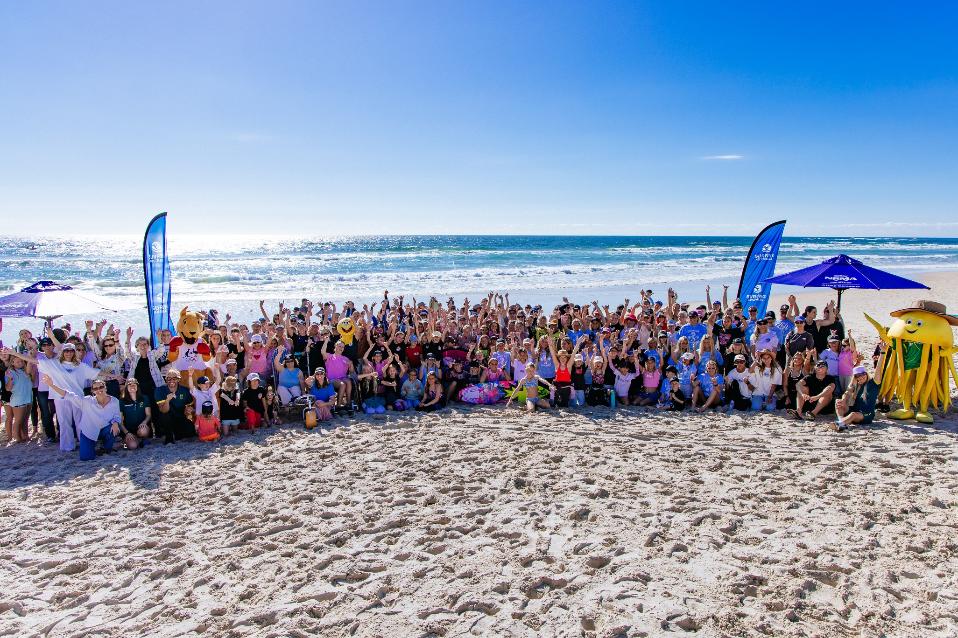
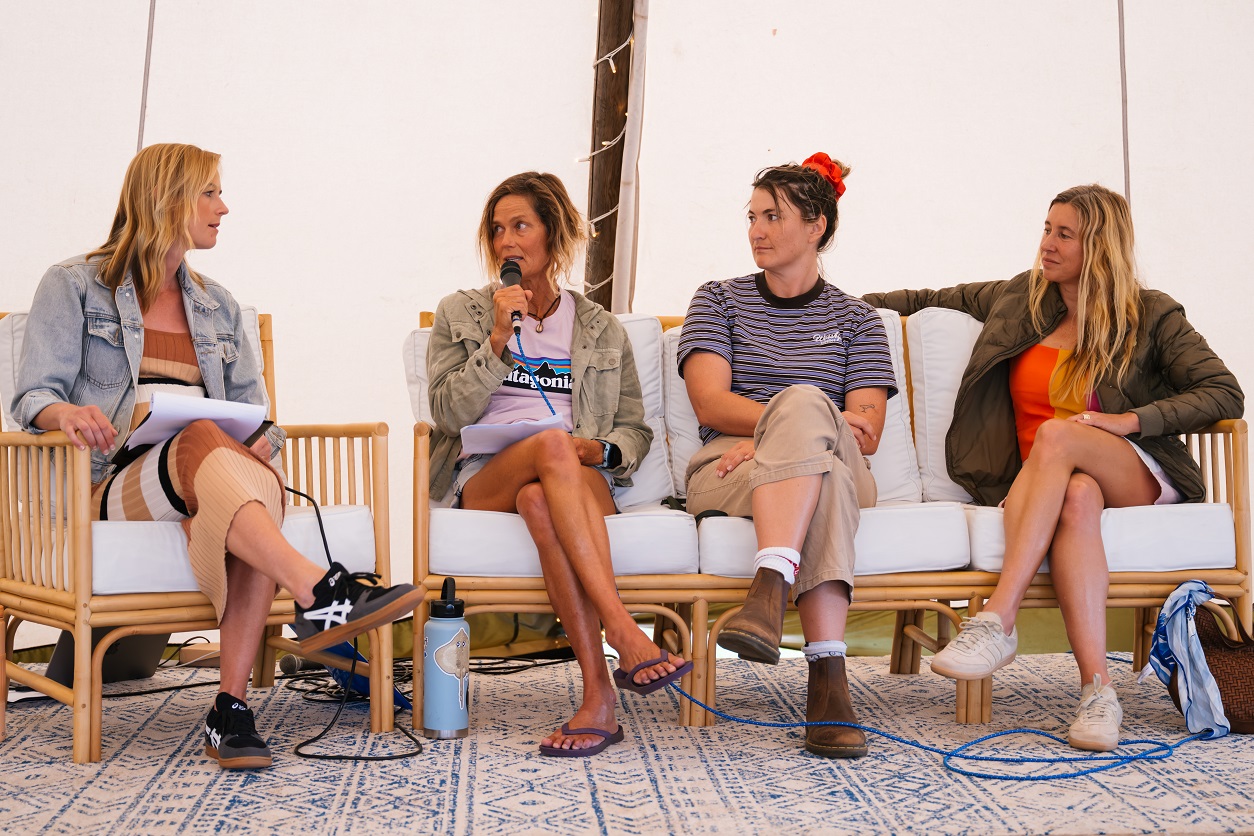
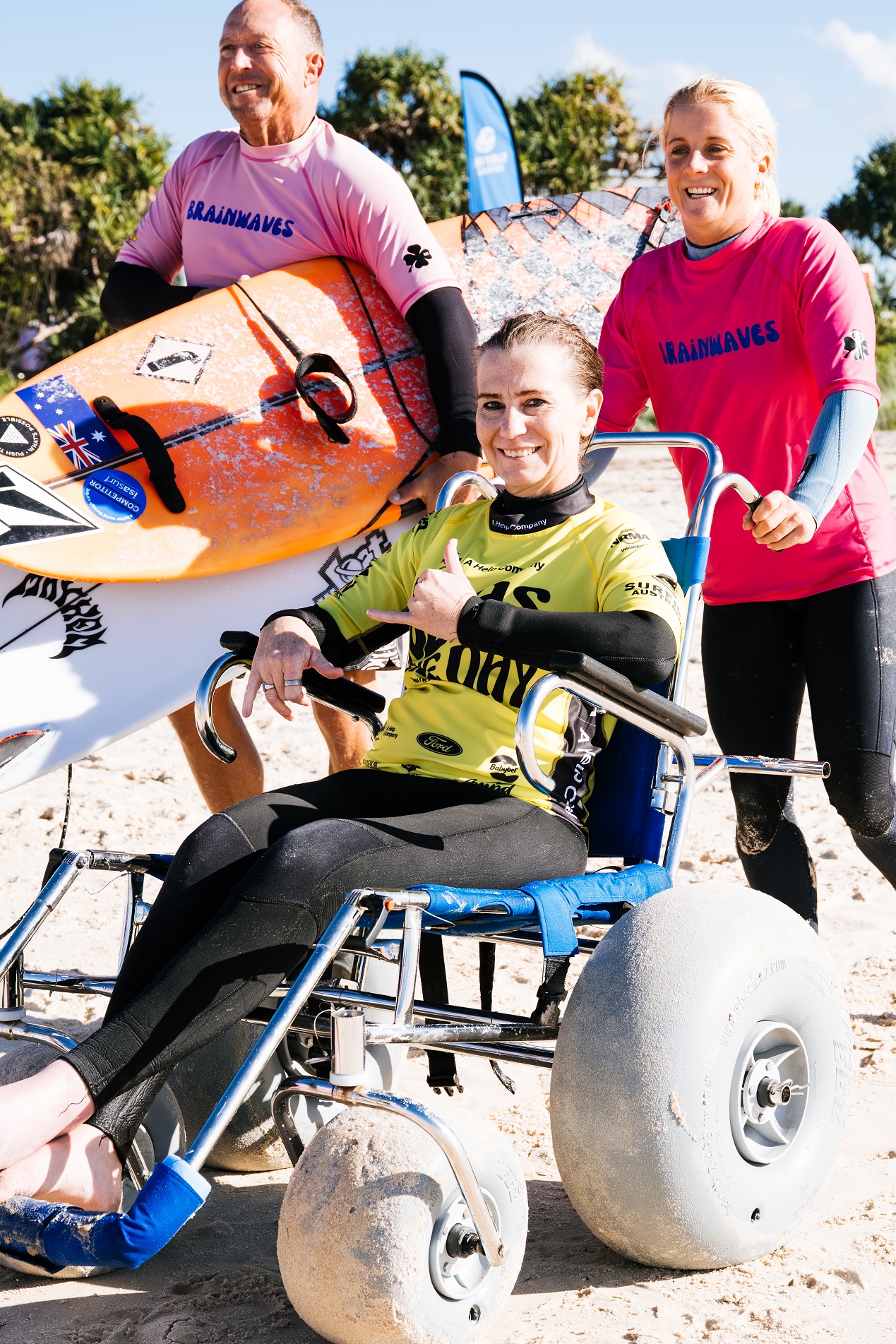













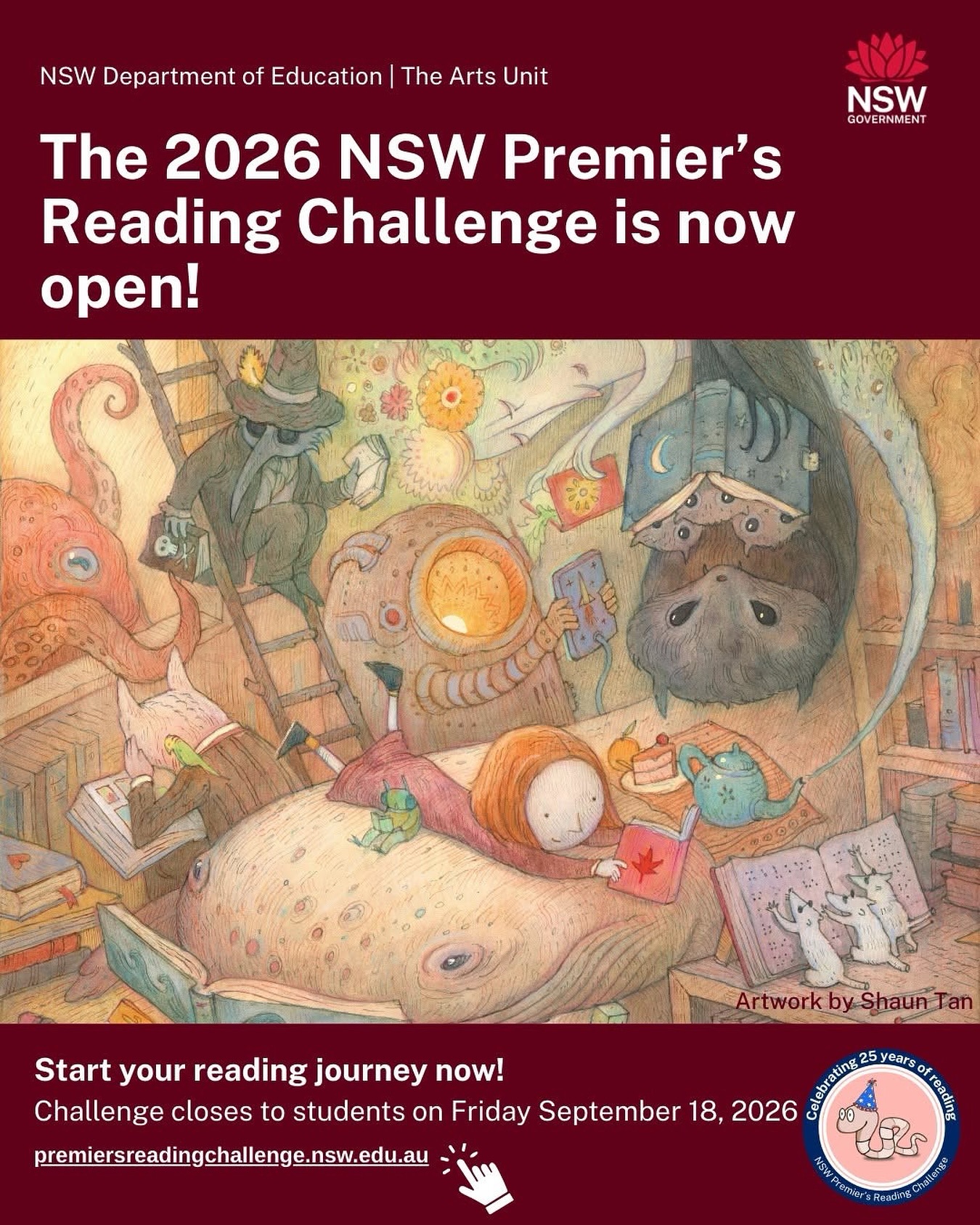






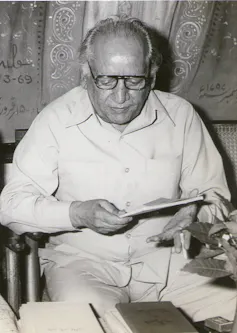


















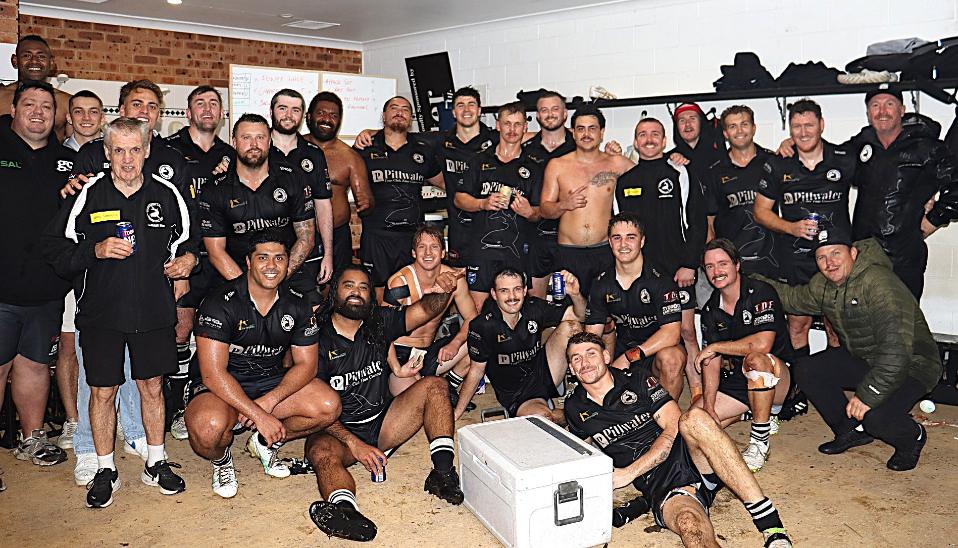


%20gadrooning.jpg?timestamp=1781573248724)




.jpg?timestamp=1782161560381)














.JPG?timestamp=1743809141337)







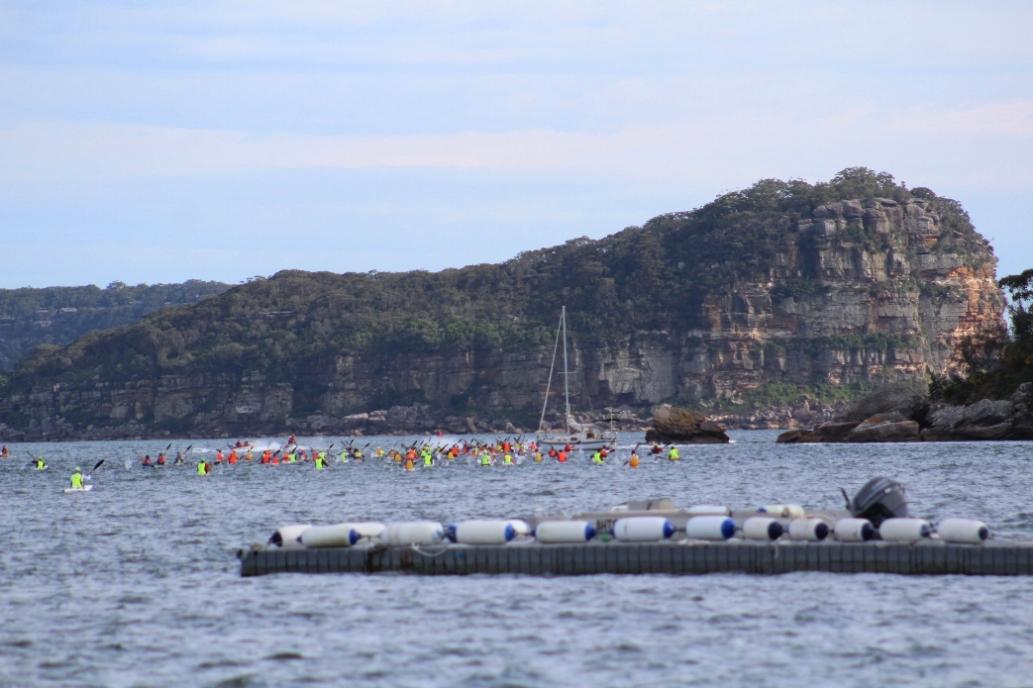








.jpg?timestamp=1679635455680)
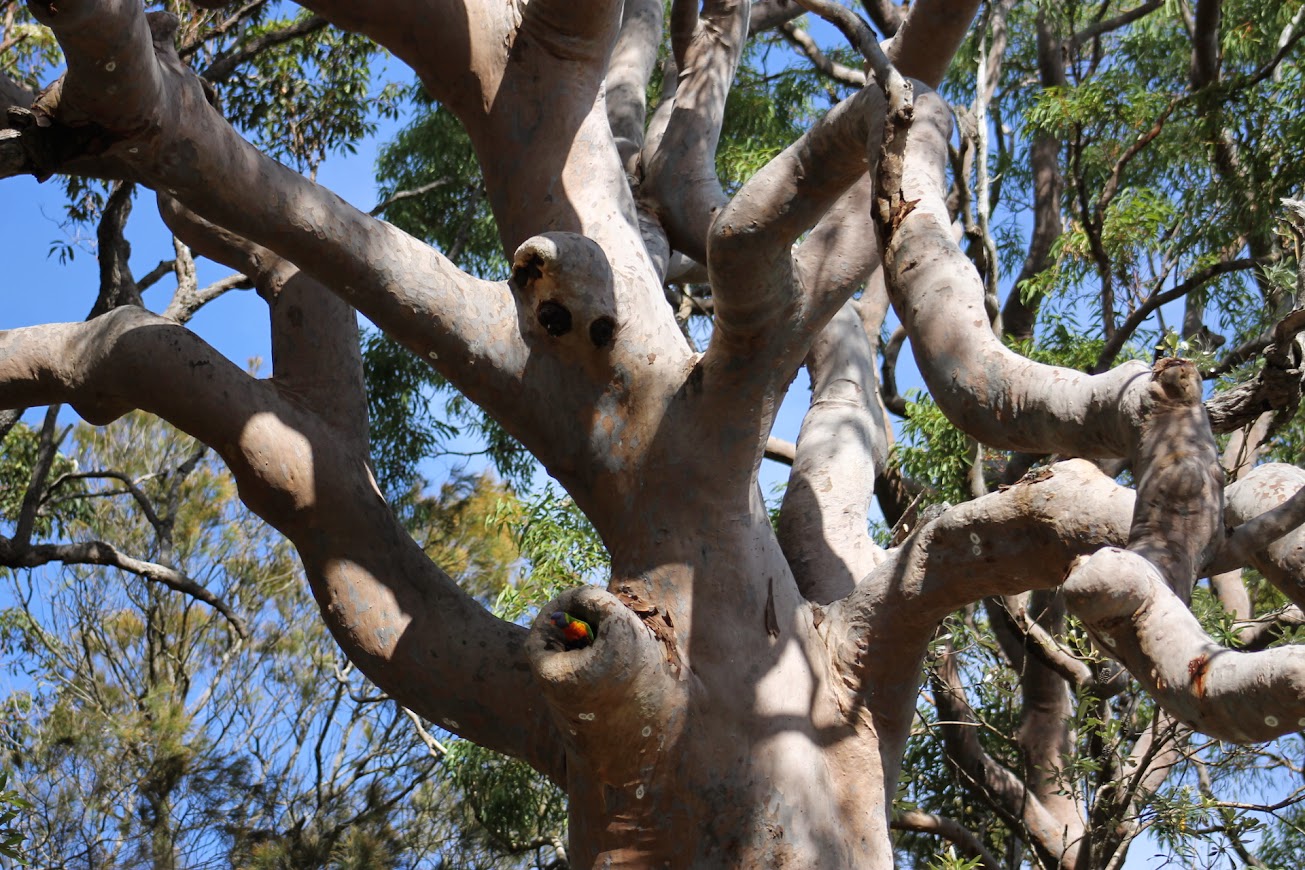
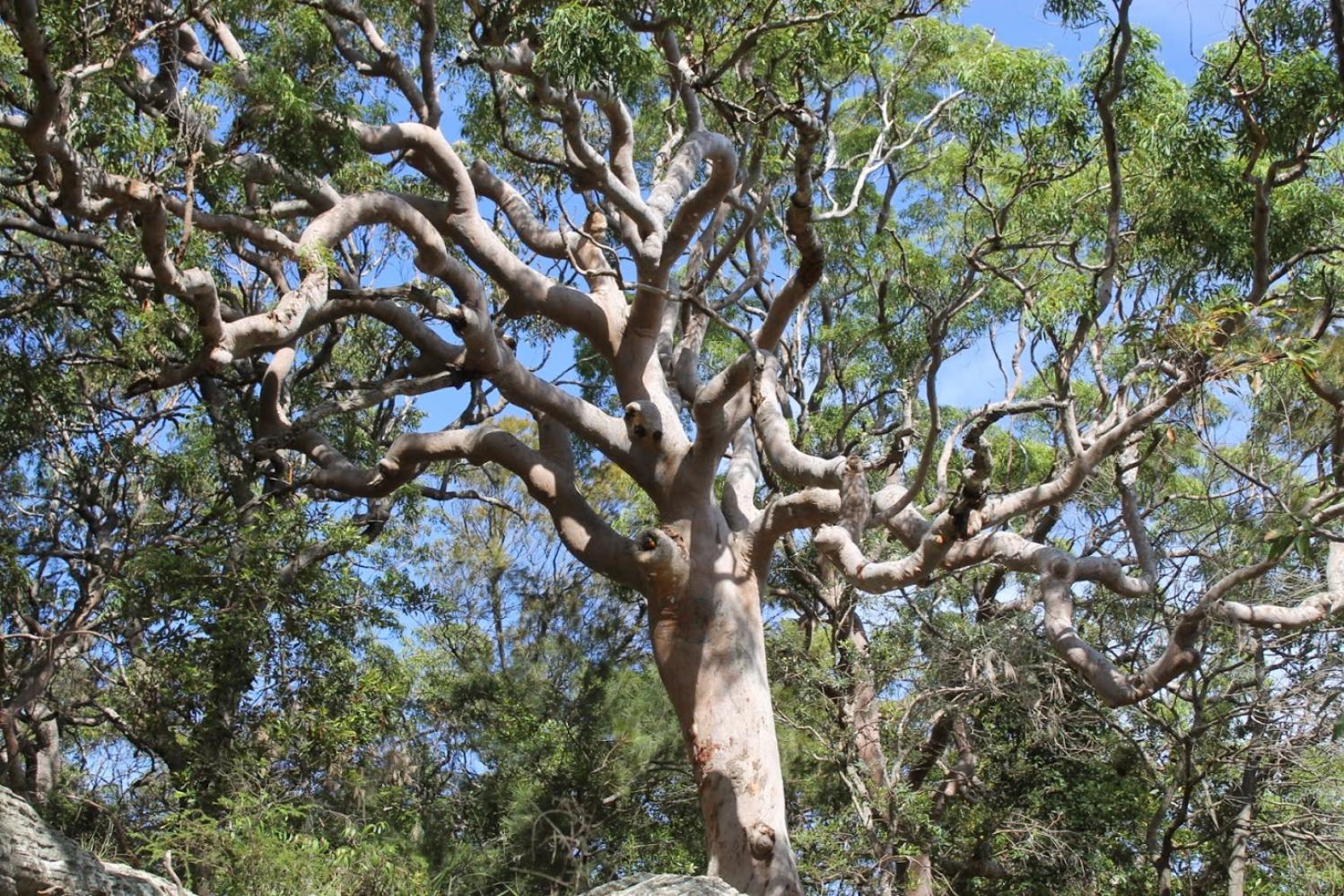


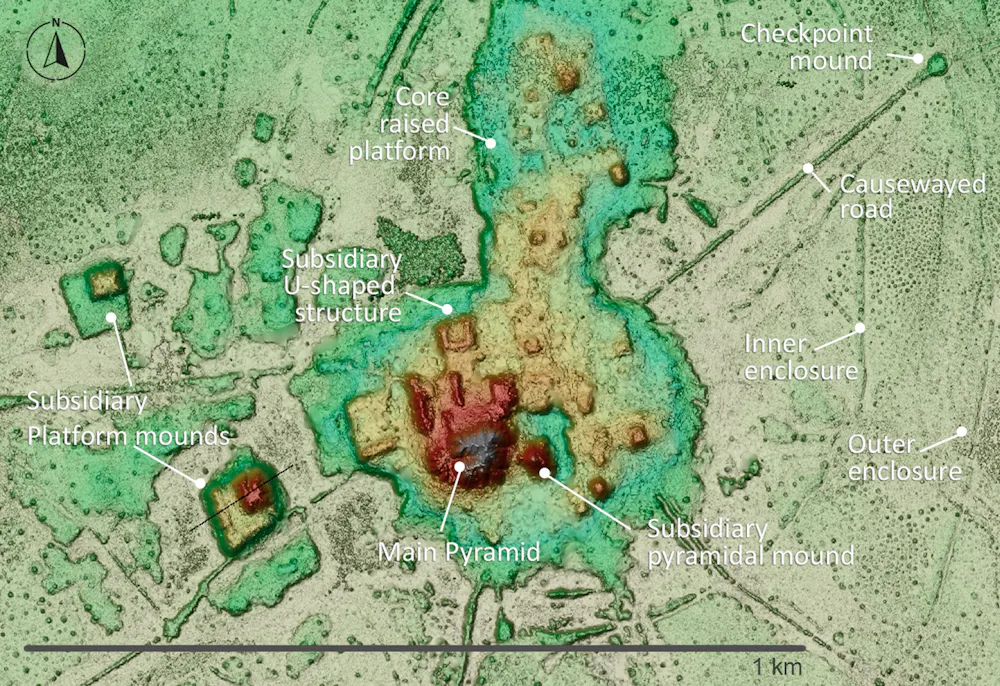




























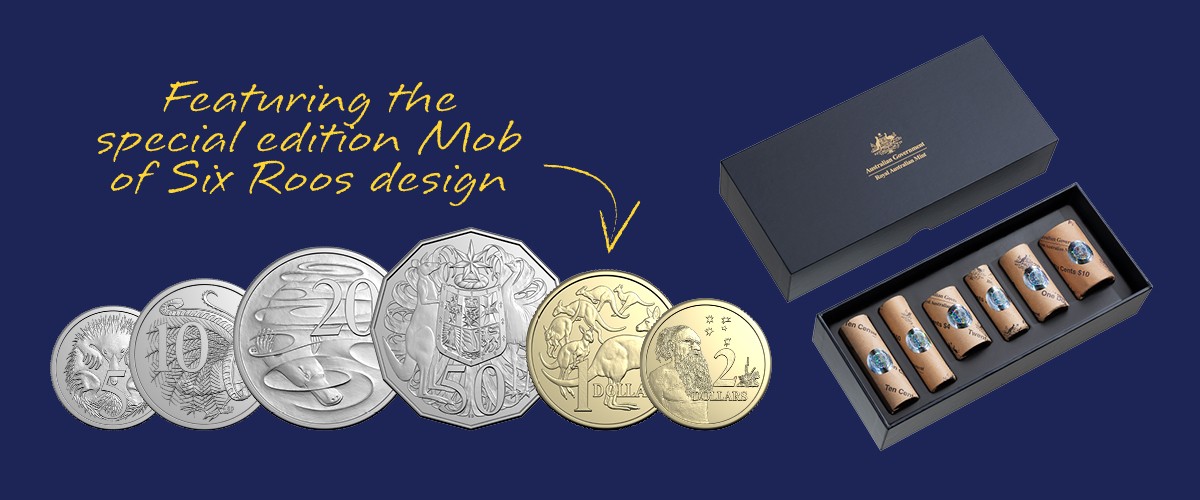









.JPG?timestamp=1745730673376)


 The 2026 Kings Birthday Honours List will be released Monday June 8 2026. Due to the time/date the next Issue of Pittwater Online will be published on Monday June 8 and the Issue Notice sent out as soon as staff have been through the lists of those named and collated (fingers crossed) all those locals in the 2026 Honours Lists.


















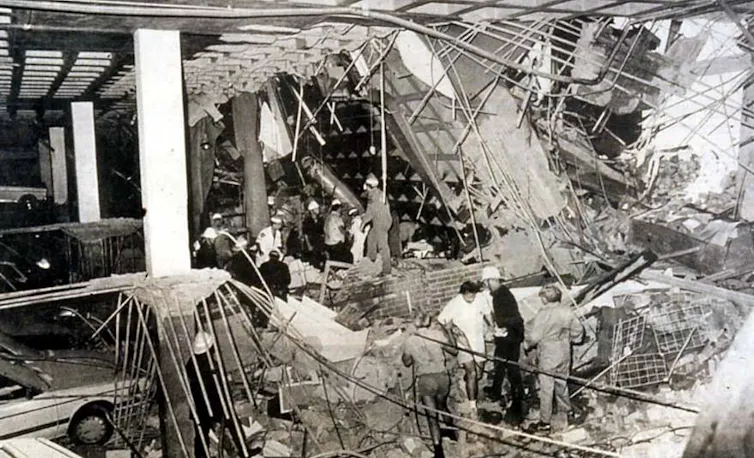





.jpg)


.png)


#/media/File:Tacoma-narrows-bridge-collapse.jpg)
