

Inbox News: September 2026 - Issue 658

Week One September 2026: Issue 658 (Published Sunday August 30)


Avalon Bulldogs Win Back-To-Back A Grade Premierships!!

Pittwater Online News album available tomorrow (Monday August 31 - link will be sent to clubs) - full report next week. Pic: AJG/PON

Newport Breakers Secure A 2026 Season Trifecta!

Newport Rugby Club have taken out 3 of the 5 Grades in Division Two of Suburban Rugby (Subbies) and won all three of the Grand Finals Games they played in on Saturday August 29.

Newport Rugby Club won the 2026 Richardson Cup on the bell in a thriller against St Patricks, 22-20 in the Grand Final at Concord Oval.

2026 Richardson Cup winners

Soon after Newport was happy again, for taking out the Blunt Cup in a 20-19 victory over Forest. 

2026 Blunt Cup winners

After an extraordinary game of footy, running in excess of 100 minutes, Newport snatched the First Grade Barraclough Cup from UNSW in the last seconds of extra time with a final score of 46-44. If we hadn’t seen it, we wouldn’t have believed it! Suggest you watch the replay on NSW Rugby TV.  Congratulations Newport. You’ll be talking about this one for a while.

2026 Barraclough Cup winners

Newport Rugby Club (The Breakers) played in Division Two in the 2026 Season with clubs competing for the Barraclough, Stockdale, Robertson (U21 Colts), Blunt and Richardson Cups.

Newport Rugby Club remains among the 'best of the best' in suburban rugby union, having won the Barraclough Cup and Blunt Cup in 2024, and were also Division 2 Club Champions for 2024. The year before, Newport were Robertson Cup winners in 2023

Suburban Rugby Cups: "What are you playing for?"

Barraclough: Presented 1969. John Barraclough (Colleagues) Union Patron, John Barraclough, AM (1926 - 2005) and his father, H.H Barraclough, presented this cup to the MSDRU in 1969 for a new one team competition that arose with the rapid increase of clubs at the time. In 1971, following a restructuring of sub-district rugby competitions, the Barraclough Cup headed the new sub-district second division, and continues to this day.

Stockdale:  Presented 1971. Ted Stockdale (Briars). Presented to the MSDRU by Ted Stockdale, a previous Secretary of the Union, in 1971, this cup was first won by AMP.

Blunt:  Presented 1971. Charles Blunt (ARU President) Donated in 1971 by ARU President Charles Blunt, who was patron of the MSDRU from 1965 to 1989. The cup was first won by Manly.

Richardson:  Presented 1971. Eric Richardson (Newington Old Boys) Also introduced in 1971 by Eric Richardson of Newington Old Boys. Eric had a long involvement with Newington Old Boys, particularly as  a coach. At the time this cup provided an extra competition for those second division clubs with extra teams, with the remainder of teams in the comp being one team clubs. By 1981, the Richardson Cup and second division was only available to four team sub-district clubs.

Robertson:  Presented 1981. Brian Robertson (Hunters Hill). Named after former Suburban Chairman (1978-80), Brian Robertson, this cup was first won by Port Hacking. After not being contested between 1988-93, the Robertson Cup was revived to become the Colts trophy for second division.

Reliance Shield: Presented 1983. Reliance Club.  "The Reliance Club Shield" was presented to the the SSDRU in 1983 for the Division Two Club Champions, by surviving members of the Reliance Club of Ashfield.

*Cup histories courtesy of "The Game for the Game Itself - The History of Sub-District Rugby in Sydney".

Photos: NSW Suburban Rugby Union (Subbies)


Milla Coco Brown Wins Noosa Pro Junior 

NOOSA, Queensland, Australia (Wednesday August 26, 2026) 

Today, Milla Coco Brown (Bungan Boardriders- Pittwater/AUS) and Willem Watson (Victoria, AUS) won the inaugural Murf Electric Bikes Noosa Pro Junior Presented by Surfboard Empire World Surf League (WSL) event. The pair overcame a massive field of Australia and Oceania’s best 20-and-under surfers in small but fun waves at Noosa’s Sunshine Beach. 

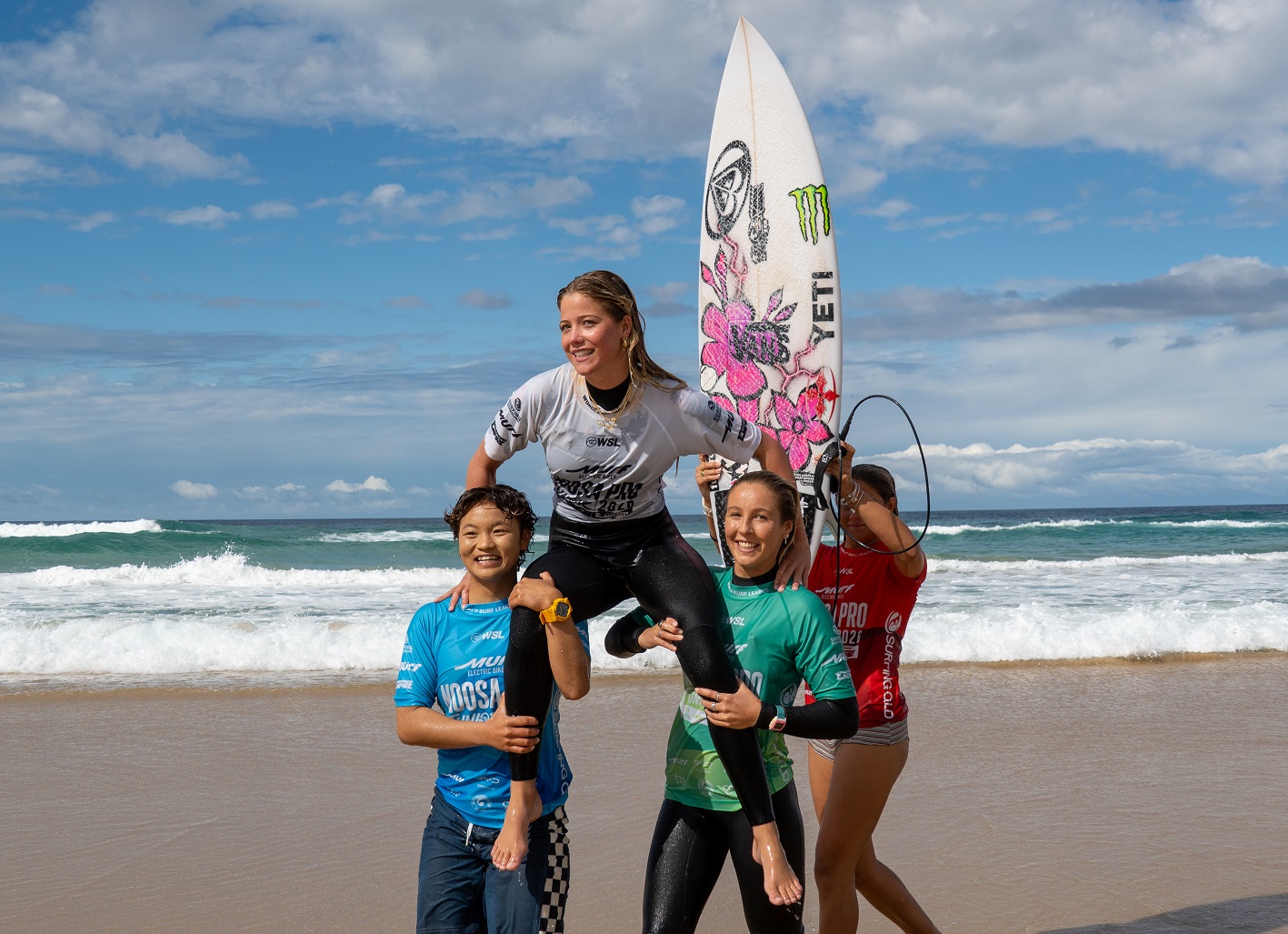
Milla Coco Brown (Bungan Boardriders - AUS) chaired to victory at the 2026 Murf Electric Bikes Noosa Pro Junior, presented by Surfboard Empire. Credit: WSL / SQ

Today’s win was Milla Coco Brown’s second event win for the season and enough to catapult her into the top spot on the WSL Australia / Oceania Rankings to not only win the regional series but also book a spot at this year's WSL World Junior Championships to be held in El Salvador this November. 

After just sneaking through the Quarterfinals, Brown’s trademark progression and speed saw her claim dominant wins in the Semifinals and eventually the Final, where she overcame Siqi Yang (CHN), Willow Hardy (AUS) and Stella Green (AUS), who finished in second, third and fourth respectively. 

“It’s been a big day for me,” Brown said. 

“I had to win the Final to win the series, and now I get the big silver trophy, so I’m frothing. Finding out that I’m off to the World Junior Championships is amazing as well; I can’t wait for that. I knew it before the Final, which took a lot of the pressure off.” 

Milla Coco Brown (AUS) in the Finals for the 2026 Murf Electric Bikes Noosa Pro Junior, presented by Surfboard Empire. Credit: WSL / SQ

Willem Watson (AUS) broke through today to claim his maiden WSL Pro Junior win with an epic performance at Sunshine Beach. Watson was a standout on Finals Day, posting an excellent 8.50 (out of a possible 10) on his way to the Final, where he eventually overcame Max McGilivray (AUS), Darcy Dwyer (AUS) and Sol Gruendling (AUS), who finished in second, third and fourth respectively. 

“It feels so good to get a win,” Watson said. “Especially with it being the last event of the year and at home, it just makes it that much more special. Having family and friends on the beach was so cool, and I think it definitely helped me today.”

Willem Watson (AUS) on his way to winning the 2026 Murf Electric Bikes Noosa Pro Junior, presented by Surfboard Empire. Credit: WSL / SQ

With her third-place finish today, Willow Hardy (AUS) dropped out of first on the rankings but was able to hang onto second place to also solidify a spot at the upcoming World Junior Championships.

On the men’s side, after a dominating season and a win earlier this week on the Tweed Coast, Ocean Lancaster (AUS) was able to hang on to the top spot in the rankings to earn his spot at the World Junior Championships. Finishing in second on the men’s rankings was reigning WSL World Junior Champion Dane Henry (AUS). 

Lancaster's performances also saw him claim the inaugural MURF Coast Cup as the top performer across the Murf Electric Bikes Tweed Coast Pro Junior and Murf Electric Bikes Noosa Pro Junior Presented by Surfboard Empire events. China’s Siqi Yang (CHN) dominated the women’s with a first- and second-place finish at each event, respectively. 

Siqi Yang and Ocean Lancaster Win 2026 MURF Electric Bikes Tweed Coast Pro Junior

On Sunday August 23 Siqi Yang (CHN) and Ocean Lancaster (AUS) claimed impressive wins over the weekend at the MURF Electric Bikes Tweed Coast Pro Junior World Surf League (WSL) event. The pair overcame a field of nearly 100 of the Australia/Oceania region's best surfers aged 20 and under in super fun waves at Duranbah Beach. The event formed half of the MURF Coast Cup, a two-event series that will determine the final qualifiers for the WSL World Junior Surfing Championships that will take place in El Salvador in November.

Siqi Yang (CHN) claimed a historic win on the Tweed Coast, becoming only the second ever Chinese surfer to win a WSL event and the first to ever win one outside of China. Yang was one of three Chinese surfers in the women's event and did her country proud, posting the highest two-wave heat total of the entire event in the Final for her super fast and powerful approach. Yang's 13.16 (out of a possible 20) combination was enough to overcome Willow Hardy (AUS), Charli Hately (AUS), and Milla Coco Brown (AUS), who finished second, third and fourth respectively.

"This is my first WSL win and definitely the biggest of my career, so I'm really happy," Yang said. "The waves have been really fun all event but a little bit tricky, so I'm happy with how I adapted in my heats. All of the girls here are amazing surfers, so it feels good to win here."

Ocean Lancaster (AUS) continued his superb run of form in 2026, claiming another event win to go with a runner-up finish to consolidate himself at the top of the Junior rankings and almost guarantee himself a spot at this year's WSL World Junior Championships. Lancaster was in solid form all event, posting consistent heat totals throughout the rounds to eventually claim victory over Jesse Fergusson (AUS), Keenan Crisp (AUS), and Harley Walters (AUS) in the Final.

"My goal at this event was to win it as I have such a strong eye on qualifying for the World Juniors," Lancaster said. "I just came from competing in the Padang Cup in Indo, so I really needed to adjust from surfing pumping waves, but fortunately we had good waves here, which was sick. I really wanted my surfing to do the talking more than just my competing, so I'm glad I got to show what I've got on the waves and put it all on the line. This win is super important in the scheme of WJC qualification, and that's my biggest goal this year, so I'm so happy to take the win."

Attention then turned to the Murf Electric Bikes Noosa Pro Junior, which kicked off Monday August 24 on the Sunshine Coast and would determine the winners of this year's WSL Australia / Oceania Pro Junior Series and who will represent the region at the WSL World Junior Championships that will take place in El Salvador in November.

Ocean Lancaster (AUS) and Siqi Yang (CHN) win inaugural Murf Coast Cup. Credit: WSL / SQ

Siqi Yang surfing her way to a win in the MURF Electric Bikes Tweed Coast Pro Junior World Surf League (WSL) event. Photo:  WSL / Trav Johnson

Women's Presentation on Wednesday August 26. Credit: WSL / SQ

The MURF Electric Bikes Tweed Coast Pro Junior ran as part of the MURF Coast Cup on the Tweed Coast, NSW, Australia from August 22 - 23, 2026.

The Murf Electric Bikes Noosa Pro Junior Presented by Surfboard Empire ran as part of the MURF Coast Cup at Sunshine Beach Noosa, Queensland, Australia, from August 25 - 26, 2026. 

About the WSL

The World Surf League (WSL) is the global home of competitive surfing, crowning World Champions since 1976 and showcasing the world’s best surfing. The WSL oversees surfing’s global competitive landscape and sets the standard for elite performance in the most dynamic playing field in all of sports. With a firm commitment to its values, the WSL prioritizes the protection of the ocean, equality, and the sport’s rich heritage, while championing progression and innovation.

For more information and results, head to WorldSurfLeague.com


Banksias of Pittwater

In Pittwater’s bush surrounds and park reserves varieties of Banksias are out at present in bright yellows and deeper oranges in spikes that are round and full heads of fine yellow strands or more compact combs. In fact, all year round you will see a coastal banksia in bloom as these trees are putting forth new flowers just as old ones are finishing. In this way there is food for the birds and possums and other wildlife throughout the year, through the nectar produced by their flowers and the old seed cones waiting to sprout a new tree, somewhere nearby.

old seed cones and one banksia bloom 

Banksia is a genus of around 170 species in the prehistoric plant  family Proteaceae. There are around 72 kinds of known banksias and new ones still being found. These Australian wildflowers are also popular garden plants and easily recognised by their characteristic flower spikes and fruiting "cones" and heads. 

They range in size from woody shrubs to trees over 30 metres tall. Each species thrives in landscapes that suit and promote their growth, along our sandstone coasts and heathlands, in sclerophyll forests, rainforests, beside sandy beaches and in stony soil, and even more arid landscapes. Their leaves vary between varieties and sizes range from the narrow, 1–1½ centimetre long leaves of B. ericifolia (Heath-leaved Banksia), to the large leaves of B. grandis (Bull Banksia); these may exceed 45 centimetres. Most species have serrated edges, but a few, such as B. integrifolia, have spikes alike pine needles. This green to grey foliage grows along the branches in irregular spirals in some species while in others they they are crowded together in whorls. Many species have differing juvenile and adult leaves (e.g. Banksia integrifolia has large serrated juvenile leaves).  A single banksia has hundreds, and in some species, thousands of flowers attached to a central stem (inflorescence) and range in colour from the yellows and light greens of the immature ones we see now, to deeper pinks, reds and even purple species have been recorded.

 Banksia integrifolia, commonly known as coast banksia

Named after Joseph Banks by Carolus Linnaeus the Younger in his April 1782 publication Supplementum Plantarum; hence the full name for the genus is "Banksia L.f.", the genus name honours the English  botanist  Sir Joseph Banks, who collected the first Banksia specimens in 1770, during James Cook's first expedition to Australia.

The illustrations that form part of this page are by Sydney Parkinson, a young man who accompanied Banks on the Endeavour voyage and sketched and illustrated close to 950 specimens of plants and coloured himself nearly 270 of these. Unfortunately Sydney Parkinson contracted malaria near Java on the way home and died soon after the Endeavour reached South Africa. Some of these may have been coloured by John Frederick Miller who was also employed in an illustrator’s capacity, along with seven others, on Bank’s return. The colourists could also refer to the specimens themselves, which were now part of Banks' herbarium at his home. A great Florilegium  (anthology of flowers) of his work appears in the work was finally published in 1988 by Alecto Historical Editions in 35 volumes and has been digitized by the Natural History Museum in London.

The varieties currently in flower, which you may see in your own neighbourhood and in the bush resreves, are Banksia integrifolia, known to Eora people as Courriddjah, Banksia ericifolia, Heath-leaved Banksia, called Wadanggari by the Cadigal peoples, Banksia paludosa , Swamp Banksia, Banksia serrata , Old-man Banksia, known as Wiriyagan to the Cadigal, Banksia robur , Swamp Banksia, Banksia spinulosa, Hairpin Banksia, Banksia spinulosa var. collina, Hairpin Banksia, Banksia spinulosa var. spinulosa, Hairpin Banksia, Banksia integrifolia, Coast banksia, Banksia integrifolia subsp. integrifolia L.f. Golden Candlestick Banksia, Hairpin Banksia; Scientific Name: Banksia spinulosa, and Banksia oblongifolia Cav

We've taken some photos of those we see around here for you:


To our indigenous peoples they were associated with spirituality, particularly the kind named Old Man Banksia, which was associated with women’s spirituality. Banksias were also used to carry fire as the smouldering cones could be carried for long distances.

In our culture some associate banksias with May Gibb's "Banksia men" from May Gibbs' Snugglepot and Cuddlepie children's book. Gibb's "Banksia men" are modelled on the appearance of aged Banksia "cones", with follicles for eyes and other facial features. There is some contention over which species actually provided the inspiration for the "Banksia men": the drawings most resemble the old cones of B. aemula, but B. attenuata (Slender Banksia) has also been cited, as this was the species that Gibbs saw as a child in Western Australia.

There is also the Banksia Environmental Foundation created in 1989 to support and recognise people and organizations that make a positive contribution to the environment. The Foundation launched its annual Banksia Environmental Awards in the same year.

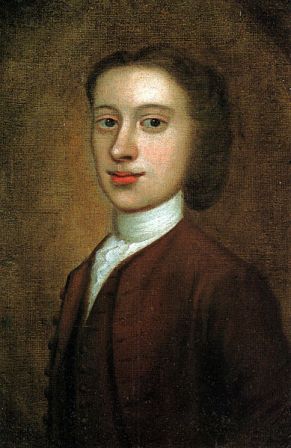
Sydney Parkinson (c. 1745 – 26 January 1771) was a Scottish Quaker,  botanical  illustrator and natural history artist. Parkinson was employed by Joseph Banks to travel with him on James Cook's first voyage to the Pacific in 1768. Parkinson made nearly a thousand drawings of plants and animals collected by Banks and Daniel Solander on the voyage. He had to work in difficult conditions, living and working in a small cabin surrounded by hundreds of specimens. InTahiti he was plagued by swarms of flies which ate the paint as he worked. He died at sea on the way to Cape Town of dysentery contracted at Princes' Island off the western end ofJava. Banks paid his outstanding salary to his brother.

Parkinson is commemorated in the common and scientific name of the Parkinson's Petrel Procellaria parkinsoni. The great Florilegium of his work was finally published in 1988 by Alecto Historical Editions in 35 volumes and has since been digitized by the Natural History Museum in London. In 1986 he was honoured on a postage stamp depicting his portrait issued by Australia Post . Sydney Parkinson. (2011, December 9). In Wikipedia, The Free Encyclopedia. Retrieved from http://en.wikipedia.org/w/index.php?title=Sydney_Parkinson&oldid=464888331

Picture: Sydney Parkinson - Self Portrait


Sir Joseph Banks, 1st Baronet, GCB, PRS (24 February [O.S. 13 February] 1743 – 19 June 1820) was an English naturalist, botanist and patron of the natural sciences. He took part in Captain James Cook's first great voyage  (1768–1771). Banks is credited with the introduction to the Western world  of eucalyptus, acacia, mimosa and the genus named after him, Banksia. Approximately 80 species of plants bear Banks's name. Banks was also the leading founder of the African Association, a British organization dedicated to the exploration of Africa, and a member of the Society of Dilettanti, which helped to establish the Royal Academy.

Endeavour voyage
Banks was appointed to a joint Royal Navy/Royal Society scientific expedition to the south Pacific Ocean on HM Bark Endeavour, 1768–1771. This was the first of James Cook's voyages of discovery in that region. The voyage then progressed to Tahiti (where the transit of Venus was observed, the overt purpose of the mission), to New Zealand and to the east coast of Australia, where Cook mapped the coastline and made landfall at Botany Bay and at Endeavour River (near modern Cooktown) inQueensland, where they spent almost seven weeks ashore while the ship was repaired after foundering on the Great Barrier Reef. While they were in Australia Banks, the Swedish botanist Daniel Solander and the Finnish botanist Dr. Herman Spöring Jr. made the first major collection of Australian flora, describing many species new to science. Almost 800 specimens were illustrated by the artist Sydney Parkinson and appear in Banks' Florilegium, finally published in 35 volumes between 1980 and 1990.

It was Banks's own time in Australia, however, that led to his interest in the British colonisation of that continent. He was to be the greatest proponent of settlement in New South Wales: in fact, the name "Banksia" was proposed for the region by Linnaeus. In the end a genus of  Proteaceae was named in his honour as Banksia. Picture: Joseph Banks, as painted by Sir Joshua Reynolds in 1773.

John Frederick Miller (1759–1796) was an English illustrator, mainly of botanical subjects. Miller was the son of the artist Johann Sebastian Müller (1715 – c. 1790). Miller, along with his brother James, produced paintings from the sketches made by Sydney Parkinson on James Cook's first voyage. He accompanied Joseph Banks on his expedition to Iceland in 1772.

Above: This is a watercolour-on-paper drawing of Banksia ericifolia. The attributed artist is John Frederick Miller, but the work would have been heavily based on a partially coloured drawing by Sydney Parkinson, Sir Joseph Banks' botanical artist who was present when the Banksia genus was first collected at Botany Bay, Australia. Date 1773. The original image is available from the website of the Natural History Museum, London.

Above:  This is a watercolour-on-paper drawing of Banksia serrata. The attributed artist is John Frederick Miller, but the work would have been heavily based on a partially coloured sketch by Sydney Parkinson, Sir Joseph Banks' botanical artist who was present when the species was first collected at Botany Bay, Australia. Date 1773. The original image is available from the website of the Natural History Museum, London, here.

Above: This is a scan of Plate 3 from Ferdinand Bauer's Illustrationes Florae Novae Hollandiae. The plant featured is Banksia coccinea (Scarlet Banksia). Date 1813, Source Courtesy online catalogue of the State Library of Victoria, here. Image Number: pb000065 Author Ferdinand Bauer (1760–1826). engraving with hand colouring ; plate mark 38.9 x 25.1 cm., on sheet 49.6 x 33.0 cm.

Notice how this illustration shows more details of the plant - its flowers, seeds, the underneath of the leaves.

The plant species Banksia coccinea, an occurrence near Frenchman Bay Road, Little Grove, Albany. Photo: Cygnis insignis 

Royal Australian Navy Jet Pilots in Action |1960s Aerobatic

Published by the Australian National Film and Sound Archive (NFSA)

Fasten your seat belts and hang on tight!

This spectacular edition of Australian Colour Diary captures the precision, danger and adrenaline of Royal Australian Navy flight training in the 1960s. Filmed over the South Coast of New South Wales, the documentary follows pilots from the Royal Australian Navy’s 724 Squadron as they train in British-built Sea Venom jet fighters ahead of carrier operations at sea.

From rocket attacks and cannon fire exercises to breath-taking formation aerobatics performed at speeds of up to 500 mph, the film showcases the extraordinary skill required to fly these aircraft to their limits. The pilots, with an average age of just 25, are shown undertaking some of the most demanding manoeuvres in military aviation, including loop-the-loops, barrel rolls and tight “box four” formations flown just feet apart.

The film also offers a rare look inside HMAS Albatross at Nowra, the Navy’s land-based aviation training centre, and documents key aspects of carrier preparation including mirror landing systems, folded carrier wings and cartridge-fired jet start-ups.

Dee Why locals digital upskilling

Monday August 24 marked the beginning of National Skills Week and Dee Why local, Joao Pedro (JP) Chaib who moved to Australia from Brazil seven years ago to pursue a digital career, shared a few insights on his journey.

With a background in mechanical engineering and experience in manufacturing and civil construction in Brazil, JP wanted to enhance his career opportunities in Australia and took on an intensive three-month training software development course with nologyv to learn how to deliver the frontend and backend of applications.

Part of nology’s mission is to develop tech talent, and JP received support to build his resume, interview preparation and ongoing support.

After undertaking the training program with nology, JP landed a contracted role as a developer at Revenue NSW.  After just 18 months in the role, he secured a position as a developer and was recently promoted to a Senior Developer in the team.

Both Revenue NSW and nology are NSW Digital Skills and Workforce Compact Partners committed to the 20% Alternative Pathways Pledge, that 20% of all digital entry-level hires to come through alternative pathways by 2030. Both organisations are showing how their collaboration can create opportunities for successful career pathways.

JP below said this week

''During the time that I was working in the manufacturing industry, I used a lot of numerical simulation software to simulate physical phenomena like fluid dynamics and structural analysis and material resistance.

We were using Python [a programming language] in those projects and I thought to myself, 'I'm going to give IT a chance' and started searching how I can increase my capability and uplift my skills. 

''I didn’t want to wait for the perfect path. I just followed my interest in tech and tried to build something as I went.

''Revenue NSW has given me many opportunities to learn and grow. I’m especially grateful to my managers, who consistently encouraged me to explore new technologies and believed in my approach to problem-solving.''

National Skills Week is dedicated to elevating the profile and status of skills and vocational learning, while celebrating and raising awareness about the benefits and career pathways associated with vocational education and training (VET).  

This year’s theme is ‘Life Changing’ and celebrates how VET changes life, opening doors to opportunities, work and training.  

Apprentices, trainees, students, teachers, trainers and employers are building the skilled workforce NSW depends on. Every skill matters – and every person has skills worth recognising, celebrating and awarding. 

JP 

Opportunities:

2027 Visual Arts Fellowship (Emerging)

Funding to assist NSW emerging visual artists to undertake a self-directed professional development program to support their personal, creative and career advancement.
  • Grant amount: The successful recipient will receive $30,000 in funding towards their fellowship.
  • Application closes: 14 September 2026, 2:00 pm
The Visual Arts Fellowship (Emerging) (VAFE) program is delivered with the curatorial and exhibition support of Artspace. The objective is to support NSW visual arts practitioners in the early stages of their career to challenge and expand their practice.

Up to 6 applicants will be shortlisted to take part in the fellowship exhibition at Artspace, Sydney in July 2027. At the exhibition opening, the fellowship of $30,000 will be awarded to 1 shortlisted artist to undertake a self-directed professional development program. This program could include research, travel, studio residencies, creation of new work, mentorships and other activities that align with the recipient’s practice and career progression.

The 6 shortlisted artists will receive to participate in the exhibition and may be asked by Artspace to participate in artist talks, other public programs, meetings with visiting curators, and media interviews to produce greater visibility for their practice. The shortlisted artists will be interviewed prior to the opening of the exhibition, as part of the assessment process to determine the fellowship recipient.

About Artspace
Artspace is one of the leading institutions for the production and presentation of contemporary art in the Asia Pacific. Their expansive, multi-platform approach to programming includes new commissions, exhibitions, performances, studio residencies, publishing, public programs, learning and outreach initiatives, and advocacy. Artspace is where artists of all generations test new ideas and shape public conversation. Embracing risk, experimentation, collaboration and advocacy, Artspace’s mission is to enhance our culture and support community vibrancy through a deeper engagement with contemporary art.

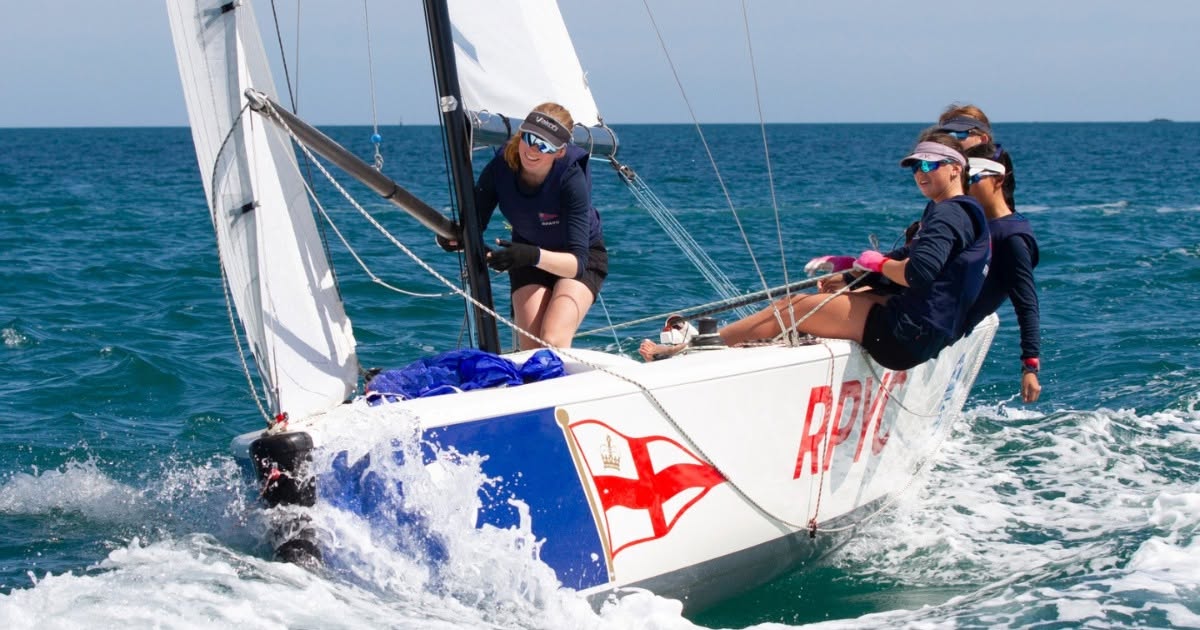
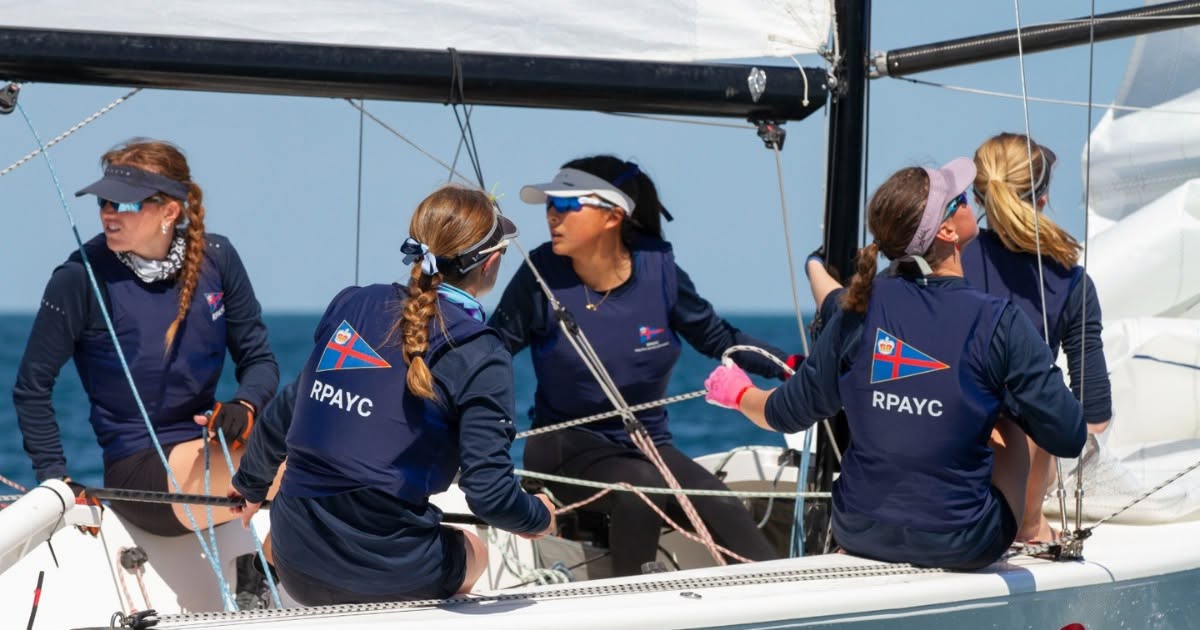
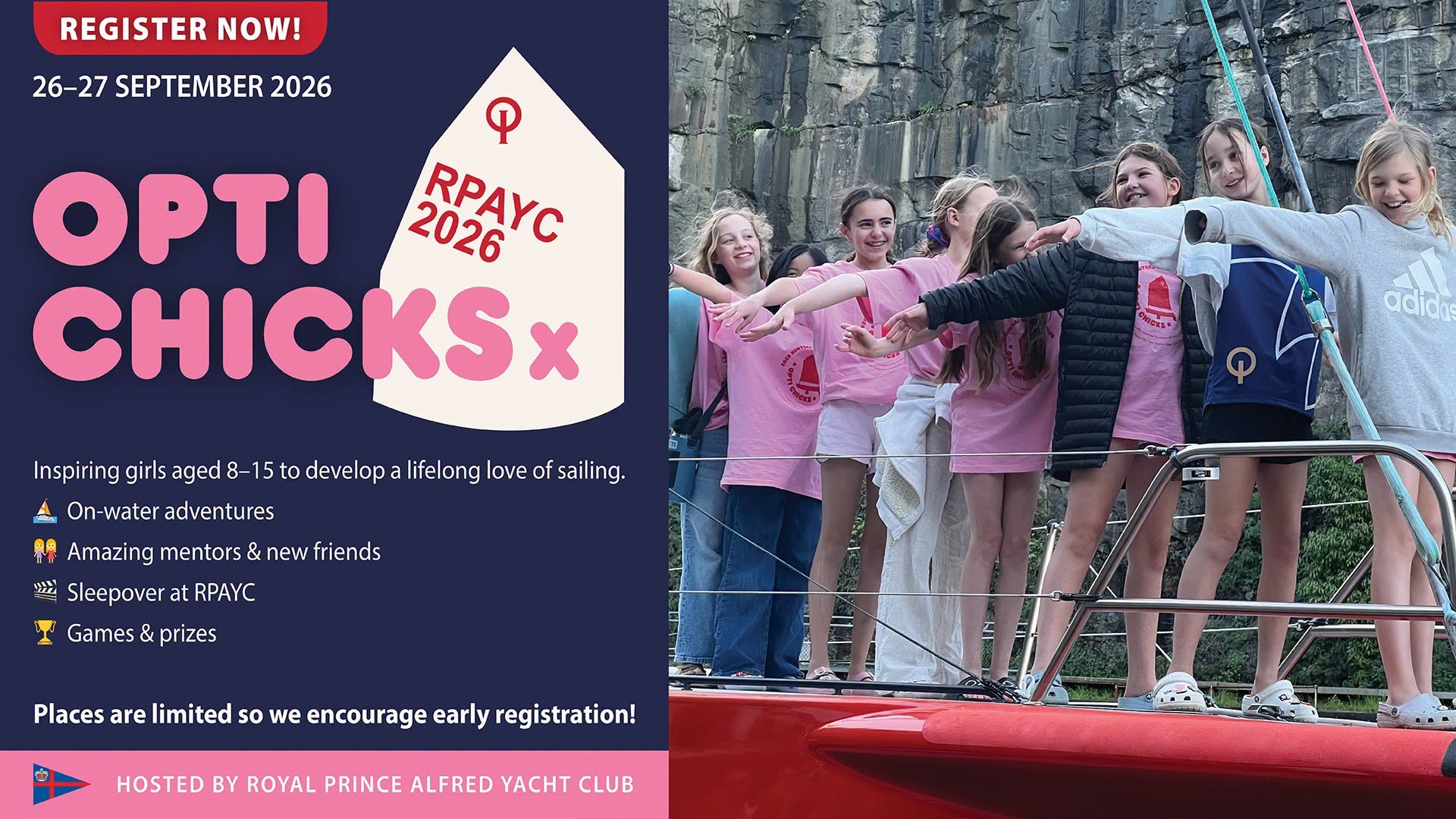
The RPAYC is pleased to welcome you to OptiChicks for September 2026.
OptiChicks is for Girls aged 8–15 who sail an Optimist.
Join girls from sailing clubs across NSW and the ACT for an unforgettable weekend designed to inspire the next generation of female sailors.

Hosted by Royal Prince Alfred Yacht Club, OptiChicks is much more than a sailing weekend. It’s an opportunity to build lasting friendships, be mentored by inspiring female sailors, experience different boats, build confidence and discover the many exciting pathways our sport has to offer.

Whether your daughter dreams of representing Australia, coaching the next generation, volunteering at her club or simply enjoying sailing with friends, OptiChicks celebrates everything that makes our sport so special.

More details at: rpayc.com.au/opti-chicks/

Nature Writing Prize 2026 Now Open to Enter

$8,000 to be awarded to the winning writer

Calling all writers! The Nature Conservancy has announced the opening of its eighth biennial Nature Writing Prize.

The author of the winning essay will receive an $8,000 prize and be published in Australian Book Review (ABR). One additional author will receive a Highly Commended Prize of $1,000.

The competition’s judges are novelists Kim Mahood and Dave Witty and Dr Georgina Arnott, editor of the Australian Book Review.

The judging process is completely anonymous, with judges awarding the prize to an Australian writer whose essay they agree to be of the highest literary merit and which best explores a relationship and interaction with some aspect of the Australian landscape. All entries are required to be between 3,000 and 5,000 words and in the genre of ‘Writing of Place’. 

The Nature Conservancy Australia’s Country Director Lara Gallagher said, “The Nature Writing Prize was created in 2011 to promote and celebrate the art of nature writing, and to encourage a greater appreciation of Australia’s magnificent natural heritage. I’d particularly like to thank Paula McLean and The McLean Foundation, without whose generous support this important prize would not be possible.”

Alongside the $8,000 Winners Prize, The Nature Conservancy welcomes the return of the Rosina Joy Buckman Award, a $1,000 prize awarded to one Highly Commended essay. The Rosina Joy Buckman Award is generously sponsored by Kinchem Hegedus and Peter Barge.

2026 heralds a new era for nature writing in Australia, with the announcement of Australian Book Review as the official Publishing Partner for the Nature Writing Prize. Gallagher said, “This collaboration with ABR offers the Prize a new level of support, expanding its reach and cementing its place as one of Australia’s leading nature writing initiatives.”

The prize is open to Australian citizens and permanent residents. Participants will need to pay an entry fee of $30, or $25 for ABR subscribers. Submissions will close at 5pm AEST Wednesday 23 September 2026. To learn more about the prize and review the terms and conditions visit: www.natureaustralia.org.au/nwp

We are celebrating 80 years of North Palmy SLSC!!

If you are a member, ex member, family or have history with our Club, come and join us at Palmy RSL to celebrate.
RSVP and all enquiries to: Admin@northpalmbeachslsc.com.au 

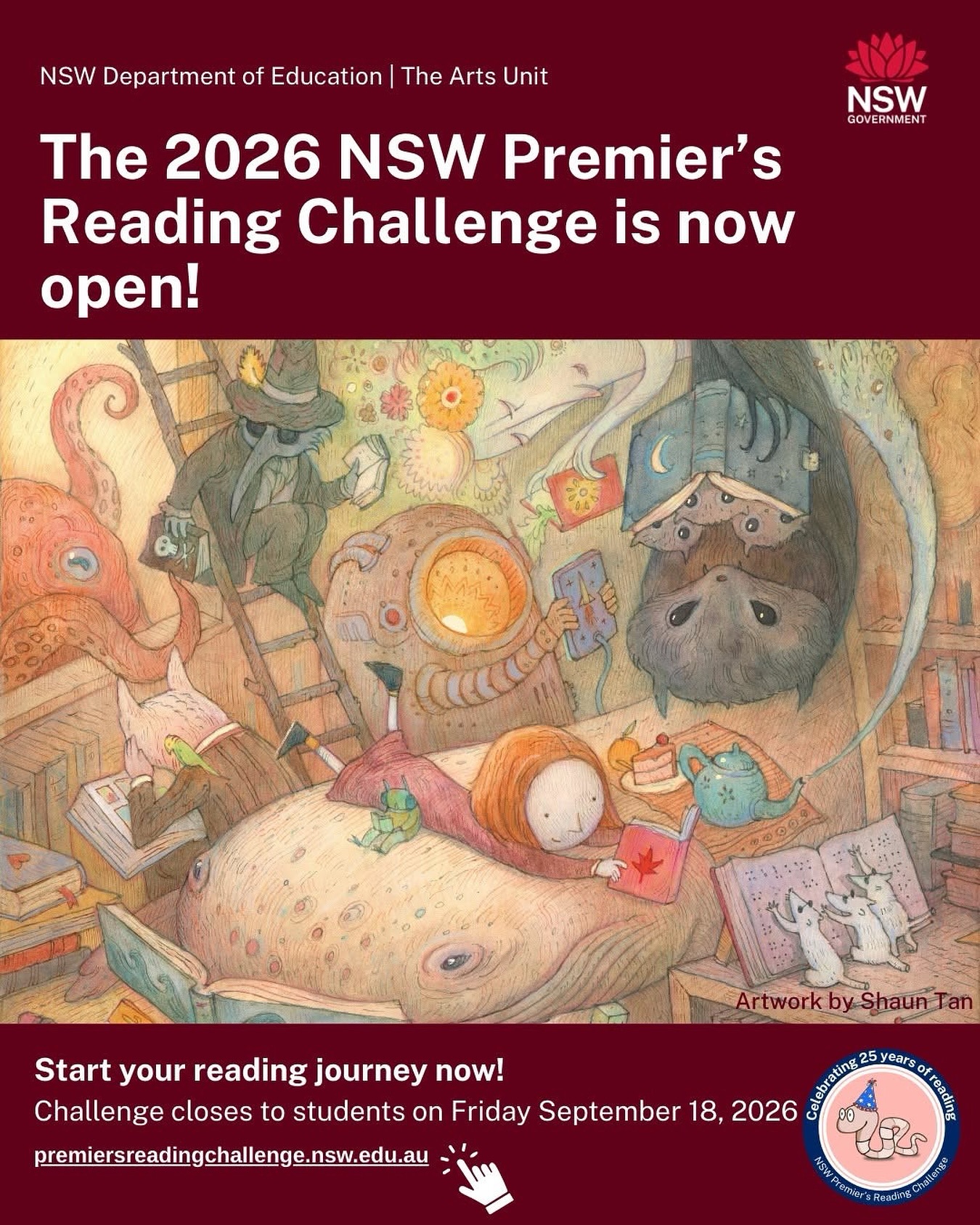
2026 Premier's Reading Challenge

The Challenge aims to encourage a love of reading for leisure and pleasure in students, and to enable them to experience quality literature. It is not a competition but a challenge to each student to read, to read more and to read more widely. The Premier's Reading Challenge (PRC) is open to all NSW students in Kindergarten to Year 10, in government, independent, Catholic and home schools. Now in its 25th year, the NSW PRC is the largest reading challenge in Australia!

The Term 1 2026 booklist is now live! 462 new books have been added to the book lists. Additional book list updates occur at the start of Term 2 and Term 3. 

Click here, or visit the booklists page to check out the new titles added to the PRC booklists this year! 

Financial help for young people

Concessions and financial support for young people.

Includes:

  • You could receive payments and services from Centrelink: Use the payment and services finder to check what support you could receive.
  • Apply for a concession Opal card for students: Receive a reduced fare when travelling on public transport.
  • Financial support for students: Get financial help whilst studying or training.
  • Youth Development Scholarships: Successful applicants will receive $1000 to help with school expenses and support services.
  • Tertiary Access Payment for students: The Tertiary Access Payment can help you with the costs of moving to undertake tertiary study.
  • Relocation scholarship: A once a year payment if you get ABSTUDY or Youth Allowance if you move to or from a regional or remote area for higher education study.
  • Get help finding a place to live and paying your rent: Rent Choice Youth helps young people aged 16 to 24 years to rent a home.

Visit: https://www.nsw.gov.au/living-nsw/young-people/young-people-financial-help

School Leavers Support

Explore the School Leavers Information Kit (SLIK) as your guide to education, training and work options in 2022;
As you prepare to finish your final year of school, the next phase of your journey will be full of interesting and exciting opportunities. You will discover new passions and develop new skills and knowledge.

We know that this transition can sometimes be challenging. With changes to the education and workforce landscape, you might be wondering if your planned decisions are still a good option or what new alternatives are available and how to pursue them.

There are lots of options for education, training and work in 2022 to help you further your career. This information kit has been designed to help you understand what those options might be and assist you to choose the right one for you. Including:
  • Download or explore the SLIK here to help guide Your Career.
  • School Leavers Information Kit (PDF 5.2MB).
  • School Leavers Information Kit (DOCX 0.9MB).
  • The SLIK has also been translated into additional languages.
  • Download our information booklets if you are rural, regional and remote, Aboriginal or Torres Strait Islander, or living with disability.
  • Support for Regional, Rural and Remote School Leavers (PDF 2MB).
  • Support for Regional, Rural and Remote School Leavers (DOCX 0.9MB).
  • Support for Aboriginal and/or Torres Strait Islander School Leavers (PDF 2MB).
  • Support for Aboriginal and/or Torres Strait Islander School Leavers (DOCX 1.1MB).
  • Support for School Leavers with Disability (PDF 2MB).
  • Support for School Leavers with Disability (DOCX 0.9MB).
  • Download the Parents and Guardian’s Guide for School Leavers, which summarises the resources and information available to help you explore all the education, training, and work options available to your young person.

School Leavers Information Service

Are you aged between 15 and 24 and looking for career guidance?

Call 1800 CAREER (1800 227 337).

SMS 'SLIS2022' to 0429 009 435.

Our information officers will help you:
  • navigate the School Leavers Information Kit (SLIK),
  • access and use the Your Career website and tools; and
  • find relevant support services if needed.
You may also be referred to a qualified career practitioner for a 45-minute personalised career guidance session. Our career practitioners will provide information, advice and assistance relating to a wide range of matters, such as career planning and management, training and studying, and looking for work.

You can call to book your session on 1800 CAREER (1800 227 337) Monday to Friday, from 9am to 7pm (AEST). Sessions with a career practitioner can be booked from Monday to Friday, 9am to 7pm.

This is a free service, however minimal call/text costs may apply.

Call 1800 CAREER (1800 227 337) or SMS SLIS2022 to 0429 009 435 to start a conversation about how the tools in Your Career can help you or to book a free session with a career practitioner.

All downloads and more available at: www.yourcareer.gov.au/school-leavers-support

Word Of The Week: Shine

Word of the Week stays a part of your page in 2026, simply to throw some disruption in amongst the 'yeah-nah' mix. 

Noun

1. Light or reflected light from a source. 2. A glossy finish or polish on objects like shoes or wood.

Verb:

1. 1. To emit or reflect light. 2. To polish. 3. To excel. 4. To show clearly: To be easy to see or notice

From Middle English shinen, from Old English scinan "shed, send forth, or give out light; be radiant, be resplendent, illuminate," of persons, "be conspicuous" (class I strong verb; past tense scan, past participle scinen). This is reconstructed to be from Proto-Germanic skeinanan (source also of Old Saxon and Old High German skinan, Old Norse and Old Frisian skina, Dutch schijnen, German scheinen, Gothic skeinan "to shine, appear"), which is from a PIE root skai- "to shine, to gleam" (source also of Old Church Slavonic sinati "to flash up, shine"). 

Of smoothed or polished surfaces, "gleam, give off reflected light," late Old English. Of a person, a face, "be fair-skinned, be beautiful," c. 1200. Also used in Middle English of night when cloudless and starlit. The transitive sense of "cause to shine" is from 1580s; the meaning "to black (boots)" is from 1610s.

1520s, "brightness, radiance," from shine (v.). Indicating "sunshine," and paired with rain (noun), from 1620s. Meaning "polish given to a pair of boots" is from 1871.

Compare Gleam:

Noun: Old English glæm "a brilliant light; brightness; splendour, radiance, beauty," from Proto-Germanic glaimiz (source also of Old Saxon glimo "brightness;" Middle High German glim "spark," gleime "glow-worm;" German glimmen "to glimmer, glow;" Old Norse glja "to shine, glitter, glisten"), from PIE root ghel- (2) "to shine." Figurative or transferred gleam in (someone's) eye (n.) "barely formed idea" is from 1959.

Verb: "to throw rays of light; appear suddenly and clearly," early 13c., from gleam (noun). Related: Gleamed; gleaming.

Glimmer(verb)

From late 14c., "to shine brightly;" early 15c., "to shine dimly," from or related to Middle Dutch glimmen, Middle Low German glimmern, from an extended (frequentative?) form of Proto-Germanic glim-, which also is the base of Old English glæm "brightness". Sense shifted 15c. to "shine faintly." Compare Dutch glimmeren, German glimmeren "to shine dimly." Related: Glimmered; glimmering.

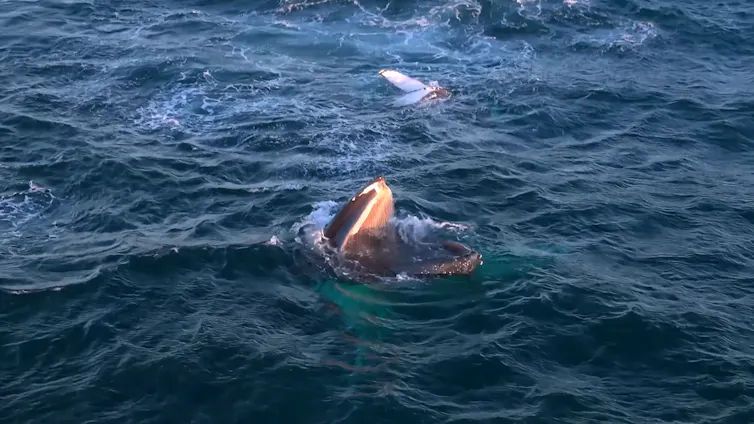
Videos capture humpback whales stopping to snack as they migrate along Australia’s coast

A whale surfacing with it's mouth wide open.
Drew Kelly/WildLive Media
Olaf Meynecke, Griffith University and Sarah Mcculloch, Griffith University

The southern humpback whale migration is in full swing. Tens of thousands of whales are now making their journey from warm Australian waters in the north to their cold feeding grounds in Antarctica.

But snacking along the way provides much welcome replenishment.

In a new study, published in Marine Mammal Science, we have investigated feeding behaviour of humpback whales on the east coast of Australia using information from citizen science and social media. We found that mid-latitude feeding is a common and widespread strategy amongst humpback whales.

This discovery challenges a long-held assumption about where and when whales feed. And it could help us better protect these magnificent animals.

Feast or famine?

For many years, humpback whales have been described as “capital breeders”.

This theory suggests that the whales spend summer feeding on krill in Antarctica to build up fat reserves, then travel thousands of kilometers to low-latitude breeding grounds to mate and give birth. Warm tropical waters are nutrient poor, offering little opportunity to feed.

Historically, whaling and stranding records also supported this “feast or famine” theory, with the vast majority of humpback whales caught during mid-latitude migration in Australian waters having empty stomachs.

It was widely assumed that they relied solely on their fat stores to sustain their migration, mating, and the intense energetic demands of nursing newborn calves.

Screening the digital world for information

Conducting long-term, large-scale systematic research surveys across thousands of kilometres of the Australian coastline isn’t feasible due to the huge cost involved.

Instead, like other researchers turning to public photos and footage, we sourced information about feeding events from social media.

We searched platforms such as Facebook and Instagram for public posts from whale-watching companies, drone pilots, and dedicated whale enthusiasts. Only posts featuring clear visual evidence of defined feeding behaviour were included.

This included whales opening their mouths, lunging through the water column with expanded ventral pleats (the accordion-like grooves that cover a whale’s underside), bubble-net feeding, or surfacing directly through dense schools of baitfish.

Our search resulted in 199 distinct feeding observations, representing an estimated 1,417 individual humpback whales documented feeding in Australian waters between 2013 and 2024.

Major feeding hotspots included the NSW south coast – in particular, near Eden, Merimbula and Bermagui – which accounted for 45% of all verified feeding events. Other hotspots included eastern and southern Tasmania, and the Victorian coast, which accounted for 28% and 12% of the records, respectively.

Importantly, our study also highlighted feeding regions that were previously underrepresented in records. These included coastal areas near Phillip Island in Victoria and across northern Tasmania. We found that observations increased between August and October each year, coinciding with the southbound migration of humpback whales.

This is a time when the whales’ energy reserves are at their lowest.

Driven by nutrient-rich coastal upwellings generated by the East Australian Current, these hotspots provide temporary krill and baitfish bonanzas. On 16 occasions, we verified massive “super-groups” of 20 to over 150 individual whales feeding in the same area.

A whale lunging out of the water, beside a pod of dolphins.
A humpback whale lunge feeding with common dolphins near Eden, NSW. Peter Harris

Why these observations matter for whale protection

Understanding whale behaviour, and how it may shift over time, is critical to protecting them. Migratory corridors aren’t just highways from one place to another; they are critical habitats.

Unfortunately, these coastal feeding hotspots overlap with intense human activities.

Commercial fishing means humpback whales feeding and staying for prolonged time face a high risk of fishing gear entanglements.

Additionally, vessel strikes from commercial shipping lanes and acoustic disturbances from expanding offshore developments pose threats along the coasts.

We need to adapt whale protection management strategies.

This could mean implementing seasonal and mobile management areas with voluntary or mandatory ship speed reduction during peak feeding months. It could also mean changes to seasonal fishing regulations to reduce gear density and gear type.

Our research shows that such areas are dynamic but localised, with feeding intensity limited to only a few weeks each year.

As the humpback whale population continues its recovery from whaling, more eyes on the water will help us track how these magnificent creatures adapt to a fast-changing environment.The Conversation

Olaf Meynecke, Research Fellow in Marine Science and Manager Whales & Climate Program, Griffith University and Sarah Mcculloch, PhD Candidate, Marine Science, Griffith University

This article is republished from The Conversation under a Creative Commons license. Read the original article.

NASA’s new telescope will transform our view of the universe. This is the story of its namesake

A woman with grey hair, wearing a blue dress and taking notes in front of a black board.
Nancy Grace Roman, NASA’s first chief of astronomy. NASA/ESA
Joss Bland-Hawthorn, University of Sydney

The Nancy Grace Roman Space Telescope is set to launch this weekend aboard a SpaceX rocket from the Kennedy Space Centre in Florida. When it becomes operational early next year, it will transform our view of the universe.

With a mirror the same size as the one in the Hubble Space Telescope but a field of view over 100 times larger, NASA’s newest tool is designed to survey vast swaths of sky quickly. It will hunt for dark energy’s fingerprints and detect perhaps 100,000 exoplanets.

In August 2018, just four months before she died on December 25, I had the great fortune to fly from Sydney to Washington DC to interview the woman this telescope is named after. She was 93-years-old and over the hours we spent talking, she shared with me her remarkable life story.

A childhood passion for the stars

Nancy Grace Roman was born on May 16 1925, in Nashville, Tennessee, and grew up captivated by the night sky. Her mother, Georgia Frances Smith Roman, encouraged this early curiosity, walking with her young daughter to point out constellations and the aurora borealis.

By age eleven, Nancy Grace – never Nancy! – had already organised an astronomy club among her classmates in Reno, Nevada, where the family briefly lived. By high school she had decided, against the advice of nearly everyone around her, that she wanted to become a professional astronomer.

That ambition ran headlong into the sexism of 20th century academia. When Nancy Grace asked her high school guidance counsellor for permission to take a second year of algebra instead of yet more Latin, the counsellor reportedly asked her, “What lady would take mathematics instead of Latin?” She took the maths anyway. She went on to Swarthmore College, where she earned a bachelor’s degree in astronomy in 1946, and then to the University of Chicago, where she completed a PhD in astronomy in 1949.

Her doctoral research focused on stellar dynamics and the motions of stars in the Milky Way, work that would foreshadow her lifelong interest in stellar populations and galactic structure.

After earning her doctorate, Nancy Grace remained at the University of Chicago and worked at the Yerkes Observatory, where she conducted research on stellar spectroscopy. This is the technique of spreading a star’s light into a rainbow and then analysing faint features in the spectrum.

She made a name for herself with a landmark 1955 paper demonstrating a correlation between a star’s motion through the Milky Way and its chemical composition. Younger, metal-rich stars tend to move in more circular orbits, while older, metal-poor stars follow more eccentric ones.

This finding provided important evidence for how galaxies like the Milky Way evolve over time. Despite this success, she recognised that as a woman in academic astronomy, she faced a ceiling on promotion and tenure that her male colleagues did not. So she began looking for opportunities elsewhere.

Taking on an extraordinary responsibility

In 1955, Nancy Grace took a position at the Naval Research Laboratory, where she worked on radio astronomy, a field still in its infancy. It was there that she gained a reputation not just as a skilled researcher but as an effective administrator and communicator of science. These skills would soon define the second, more consequential half of her career.

In 1959, Nancy Grace was recruited by the newly formed National Aeronautics and Space Administration to help build its space science program essentially from scratch. She became NASA’s first chief of astronomy, the first woman to hold an executive position at the agency.

It was an extraordinary responsibility. NASA had no established framework for space-based astronomy, and Nancy Grace was tasked with defining what such a program should even look like.

Nancy Grace’s most enduring legacy grew out of an idea she championed for decades (along with American astronomer Lyman Spitzer) before it became reality: a large space telescope that could observe the universe without the blurring and light pollution imposed by Earth’s atmosphere.

The project she nurtured through its most difficult years became the Hubble Space Telescope, launched in 1990. Because of her foundational role in conceiving, justifying, and organising the mission decades before it flew, Nancy Grace became widely known as the “Mother of Hubble”.

An extraordinary legacy

Beyond Hubble, Nancy Grace also helped establish several other NASA astronomy missions. These included the Orbiting Solar Observatory series and the Orbiting Astronomical Observatory, precursors that helped prove the value and feasibility of space-based observation.

She retired from NASA in 1979. She received numerous honours over her lifetime, including election to the National Women’s Hall of Fame and an asteroid, 2516 Roman, named in her honour.

In May 2020, NASA announced that its next-generation flagship observatory would be named the Nancy Grace Roman Space Telescope, making her one of the very few scientists honoured with a major space telescope named after them.

Nancy Grace’s career stands as a testament to persistence against institutional barriers and to the outsized impact that scientific vision can have. All astronomers continue to benefit from her extraordinary legacy.The Conversation

Joss Bland-Hawthorn, Laureate Professor, Director of Sydney Institute for Astronomy, Faculty of Science, University of Sydney

This article is republished from The Conversation under a Creative Commons license. Read the original article.
Aussie players are smashing transfer records. Does this benefit or harm Australian soccer?

Lucas Herrington celebrates Hull's upset win against Manchester United.
Lucas Herrington celebrates Hull’s upset win against Manchester United. Annabel Lee-Ellis/PA Images via Getty Images
Steve Georgakis, University of Sydney

Last weekend, Lucas Herrington made his debut for Hull City in the English Premier League (EPL) after breaking the transfer record paid for an Australian soccer player.

The 18-year-old signed a five-year deal with the transfer fee estimated to be A$33 million. It shattered the $26 million fee Leicester City paid for Harry Souttar’s move from Stoke City in 2023.

Herrington’s signing wasn’t the only recent mega-money deal for the 2026 Socceroos World Cup squad:

  • just days after Herrington’s move, Alessandro Circati signed with Portuguese powerhouse Benfica, equalling Herrington’s $33 million transfer fee
  • Nestory Irankunda agreed a deal with Portuguese giants Sporting for around $25 million
  • goalkeeper Patrick Beach signed for an undisclosed fee with French club Troyes.

But does Australian soccer, and the A-League, benefit from these massive transfer fees?

A fast rise and an eye-popping opportunity

In September 2024, Herrington signed a three-year contract with Brisbane Roar. But in August 2025, he transferred to US Major League Soccer (MLS) side Colorado Rapids on a contract running until 2029. Colorado paid Brisbane $800,000 for Herrington.

After Herrington’s breakout World Cup performance, Hull targeted him, and on August 12 he signed a deal that broke the Rapids’ transfer fee record.

These transfer fees flow from club to club, with the athlete also having to agree on a salary with their new club.

Transfer fees are regularly made public but salaries are usually not disclosed.

How the money flows

Generally speaking, clubs can generate revenue from player transfers through three main mechanisms: direct transfer fees, sell-on clauses and FIFA training awards.

A direct transfer fee is the initial payment made from the acquiring club to the selling club.

A sell-on clause allows the former club to receive a percentage of any future transfer fee if the player is subsequently transferred.

FIFA training awards provide two forms of financial recognition for clubs involved in a player’s development: training compensation and solidarity contribution.

Training compensation is intended to reimburse clubs for the costs associated with developing a player. Solidarity contributions provide eligible training clubs with a share of certain international transfer fees based on the period they contributed to the player’s development.

In Herrington’s case, while Hull City paid about $33 million to acquire him, Brisbane Roar only received the award fee set by FIFA: $500,000.

Brisbane missed out on the other fees, having sold their sell-on percentage to the Colorado Rapids ahead of the Hull offer.

It is perhaps one of the greatest blunders in Australian soccer transfer history.

But the lack of financial stability in the A-League competitions, both men’s and women’s, may have played a part in the Roar’s decision: they may have been keen for an immediate cash injection.

However, the failure of Australian clubs to capture the full financial value of their players is not inevitable.

One club showing the way

Sydney FC provides an alternative model. Over the past two years, the club has generated more than $5 million from the transfers of academy graduates Patrick Yazbek, Jake Girdwood-Reich, Hayden Matthews and Adrian Segecic, who were developed in the club’s academy from a young age. All moved to European clubs except for Girdwood-Reich, who signed with St Louis in the MLS.

Sydney FC has openly identified player development and overseas transfers as part of its broader financial strategy.

In this sense, the club appears to have recognised something with which Australian soccer has historically struggled. That is, developing talented players is only half the challenge – the other half is ensuring the clubs responsible for their development retain enough of the financial value generated when those players enter the global transfer market.

Timing is crucial – the selling club has to act before the player’s contract expires if they want to maximise value from the player. If their contract expires, they can leave without a transfer fee.

Sydney FC’s strategy is built around creating a cycle in which academy investment produces talented players who then generate transfer income that be reinvested into developing the next generation.

The pros and cons

The success of Australian players overseas may encourage greater international interest in the local game, with overseas clubs, scouts and investors increasingly looking towards Australia as a source of talented players.

That is undoubtedly a positive for the sport locally. But in most transfer cases, little money flows down to the local game.

Meanwhile, A-League clubs that develop but then sell players to generate income can be hamstrung because a player who might otherwise help them in their pursuit of a successful season is suddenly gone.

The league can also suffer if its best players head overseas.

So while there are many obvious benefits when an Australian soccer player signs a big contract to play overseas, there can be real disruption to A-League clubs, academies and institutions that develop young talent.The Conversation

Steve Georgakis, Senior Lecturer of Pedagogy and Sports Studies, University of Sydney

This article is republished from The Conversation under a Creative Commons license. Read the original article.
How weaving helped invent modern computing — and is shaping its future

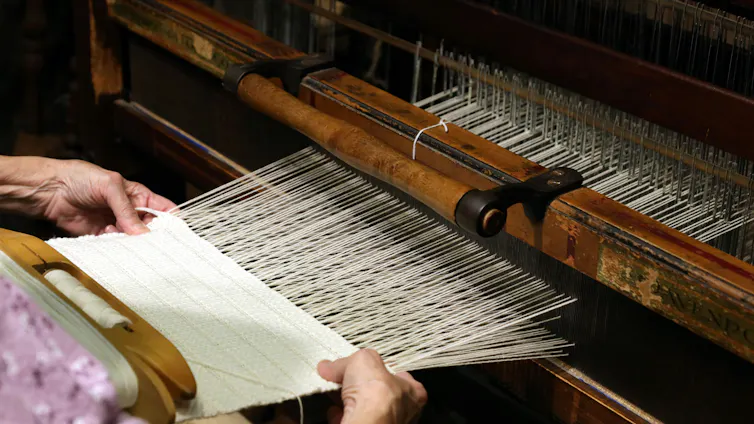
Close up of someone's hands as they weave on a loom
As Gen Z embraces textile crafts as a screen-free pastime, it is rediscovering a practice that once helped shape computer programming and is now driving innovations. (Unsplash)
Sara Nabil, Queen's University, Ontario

Weaving is an ancient craft that is still practised as a hobby by many people around the world. In recent years, it has found new life as more people have returned to hands-on making as a way to slow down, reconnect with materials and step away from screens.

During the COVID-19 pandemic, many people turned to crafts and DIY hobbies — including sewing, baking and gardening — to support their well-being. I remember trying to buy a sewing machine in 2021 and finding none available in stores.

More recently, textile crafts have become popular among Gen Z, with so-called “grandma hobbies” such as crochet, knitting and quilting seeing a resurgence. These slow, tactile, screen-free pastimes have become a form of digital detox from screen burnout.

It has also become a social media trend to share handmade projects through #WIP (“work in progress”) posts as part of the cozy “grandmacore” lifestyle aesthetic.

What most hobbyist weavers may not realize, however, is that their craft helped shape modern computing. Today, makers are once again using textiles to imagine the future of technology.


Hobbies can bring joy, wellbeing and focus to our busy lives, but so many of us don’t have one. If you’re ready to replace scrolling with stitching, or hustle with horticulture, The Hobby Starter Kit (a new series from Quarter Life) will help you get going.


The invention of the jacquard loom

In 1804, a French weaver named Joseph-Marie Jacquard patented a loom that could weave intricate patterns using punch cards — paper cards with encoded holes.

Once they pass through the loom, the presence or absence of a hole tells the loom which warp thread to raise or lower, acting as the earliest form of binary code programming. Weaving that once required a master weaver and an assistant could now be done by craft hobbyists.

This same concept later influenced early computers, inspiring us on how such a craft can be a source of a technical revolution. In the 1830s, Charles Babbage drew directly on Jacquard’s punch-card mechanism by realizing he could apply the same concept to algebric patterns, instead of textiles, to program his Analytical Engine.

Mathematician Ada Lovelace advanced his work beyond maths to envision programming any information represented by symbols, including musical notes or graphic designs. By doing this, she brilliantly split the logical instructions or software (punch-cards) from the hardware (physical machine) for the first time.

User interfaces in websites and mobile apps (also known as graphical user interfaces) evolved from command-line interfaces, which in turn, was a revolution over its predecessor: the punch cards.

My mother-in-law told me stories about how, as an undergrad in electrical engineering in the 1960s, she used to write programs’ code by punching stacks of cards. I teach undergraduates today the history of user interfaces, and how we went full circle to have digital looms now that create smart e-textiles.

Weaving is still shaping technology

Weaving and other textile crafts are still influencing how people build technology today, often through hobbyists and makers as well as trained engineers.

As a professor of physical computing and e-textiles, I lead a research group that uses a computational weaving machine to create smart fabric using both natural and conductive yarns, in what we call hybrid craft. We prototype future wearables and soft furnishing that have sensing and electronic capabilities literally woven as threads within.

Some of our designs aim to cut down on e-waste using hybrid crafts and digital fabrication. Our most recent work uses computational looms and knitting machines to build fabric-based electronic breadboards designed by and for women in e-textiles. Another recent study used hybrid crafting to make prototyping more inclusive, with a focus on women and people with physical disabilities.

When we run workshops in our community, people are excited to stitch their own e-textile circuits using needles and conductive thread. These experiences show how hands-on STEM outreach and maker culture can bring diverse individuals into technology and give them a role in shaping its future.

Why this matters for crafters

This kind of work is part of a wider shift. Open-source tools such as Arduino, Raspberry Pi and the BBC micro:bit have lowered the cost of entry to physical computing, while makerspaces and fablabs have opened technology development to people who do not see themselves as programmers or engineers.

The same spirit that draws people to textile hobbies — experimenting with materials, learning through making and adapting designs through trial and error — is also transforming how we create technology.

Craft knowledge, open-ended experimentation and lived experiences can all become sources of innovation. This approach also gives people who are often excluded from mainstream technology a greater voice in creating it.

A Newcastle University project called Empowering Hacks is one example: two co-researchers who identify as disabled worked with the university’s Open Lab to design a set of 3D-printed handles for powered wheelchairs.

Another project at Queen’s University experimented with 3D-printing on textiles and invented Fabric-Lego for assistive wearables to customize and personalize the medical aesthetics of finger braces and arm slings.

The same way weaving looms paved the way for modern computers, other hybrid crafts can inspire innovation and practical inventions. So the next time you pick up a weaving, crochet, knitting or sewing project, you are not just making something — you are experimenting, problem-solving and creating the possibilities for new ideas.The Conversation

Sara Nabil, Associate Professor of Human-Centered Computing, Queen's University, Ontario

This article is republished from The Conversation under a Creative Commons license. Read the original article.

Jolene, I Will Always Love You and 9 to 5: the genius of Dolly Parton in three songs

Parton on stage in 2025.
Jason Kempin/Getty Images
Wendy Hargreaves, University of Southern Queensland

The world has lost a music legend in Dolly Parton, who has died at 80 after a “brief battle” with cancer. She’s remembered for her twanging country vocals, decades of hit recordings, Grammys, Emmys and a liberal splash of acting.

But the biggest legacy Parton leaves is her songwriting, and three songs define her more than any others.

Jolene, I Will Always Love You and 9 to 5 are not just memorable Parton songs – they are integral to popular music history. They show a skilful musician who knew how to blend the story of lyrics with the drama of music.

Like many songwriters, Parton had things to say. What makes her contribution notable was when her lyrics told a story, and her music matched it.

Jolene

In Jolene, released in 1974, Parton’s lyrics capture the torment of watching your lover flirt with someone else.

It’s a powerful human experience – particularly for women despairing over how easily the next pretty young thing grabs male attention. Parton’s desperate begging for Jolene not to take her man “even though you can” is comfortingly raw and honest.

The song’s lyrics are a startling contrast to the common songwriting themes of the time about finding or losing love – such as The Carpenters’ Close to You (1970), Stevie Wonder’s You are the Sunshine of My Life (1972) and Carole King’s It’s Too Late (1971).

Instead, Jolene sits on the precipice of change, telling a vivid story of how seeing a stunning young woman can make another woman insecure.

Musically, the chords pound out an appropriately bleak minor key, ascending to higher chords with each dramatic call of the name “Jolene”. Accompanying the vocals sits an intriguing, rapid-fire, finger-picking guitar, performed in the recording studio by session musician Chip Young. It keeps an incessant motion that not only adds tension but draws admiration for skilful playing.

I Will Always Love You

I Will Always Love You was also released in 1974 and – remarkably – possibly was written on the same day as Jolene.

This song shows Parton’s ability to once again blend story and music in an excellent pairing. The fear pumping through Jolene is replaced by the grief of farewelling a deep love because, while love endures, it is not always enough of a reason to remain in a relationship.

Again, Parton captures a more sophisticated theme than the excitement and wonder of love. She knows that love can mean letting go.

The lyrics are sparse and the story of “bittersweet memories” is sketchy, but Parton once again nails the essence of human experience. We don’t need the details of what happened to relate with our own painful farewells.

The elongated singing of the word “I” translates almost as a cry of agony in Whitney Houston’s extraordinary cover version.

The chord progression Parton chose to underpin the chorus is one of the most familiar, hit-producing patterns in popular music history. It appears in songs ranging from Stand By Me (1961), Blue Moon (1934), Crocodile Rock (1973) and Every Breath You Take (1983).

But Parton’s usage is unique: the melody and lyrics don’t move with the progression. Instead, the melody holds one single note (with a few embellishments) and lets the chords do the work.

9 to 5

Parton wrote the song 9 to 5 for the movie of the same name in 1980, in which she starred alongside Jane Fonda and Lily Tomlin. It needed to match the vibe to describe the bustle of a working week.

To achieve this, Parton swapped her previously drawn out lyrics of love for the relentless patter describing the morning routine. Here Parton uses clever imperfect rhymes such as matching “kitchen” and “ambition” to sell the story.

The melody in the verse rises with each cluster of words, building the energy like the start of the day she describes. The chorus nails the hook by changing the rhythm, to let the phrase “9 to 5” ring out.

In 9 to 5, Parton moved away from love songs to a feminist theme that belted out the injustices of working tirelessly in a work place like any other employee yet not able to get a “fair promotion”. The description of the “rich man’s game” and how “they never give you credit” highlights workplace inequalities that are sadly still prevalent today. The Conversation

Wendy Hargreaves, Academic in the School of Education and Creative Arts, University of Southern Queensland

This article is republished from The Conversation under a Creative Commons license. Read the original article.

Australian children’s classics: Playing Beatie Bow is a time‑slip novel that makes Sydney strange

A young woman in an old-fashioned dress walking fast past old houses in a narrow-looking street. A dog in background.
Imogen Annesley as Abigail in the 1986 film of Playing Beatie Bow. ABC iView
Monique Rooney, Australian National University

My copy of Ruth Park’s Playing Beatie Bow was given to me by my mother in 1982, when I was 14 – the same age as the novel’s protagonist, Abigail Kirk. A sticker inside shows that my mother bought it at the Feminist Bookshop in Balmain, a shop I remember visiting with her more than once. The shop is long gone, and the Sydney where my mother bought the book has constantly been altered.

“In the first place, Abigail Kirk was not Abigail at all” is the novel’s striking opening sentence. Immediately, Park gives us a girl who feels out of place. It turns out she is not at home in her name or her family. Soon, her home city of Sydney will become strange to her too.

Almost half a century after its first publication in 1980, Playing Beatie Bow (also a 1986 film) has never gone away. It remains in print, with a new hardback edition appearing next month in Penguin’s Modern Australian Classics series. It is an Australian children’s classic whose great subject is time.


The books we read as children can shape us forever – as readers and people.

In this series, we ask experts to reflect on some of Australia’s most beloved children’s classics, spanning the 19th century to the new millennium.


A time-slip novel

Playing Beatie Bow is a time-slip novel: it takes a girl living in Sydney in 1980 and makes the city’s past a physical reality to her. Time operates here at several scales. Abigail is 14, poised between childhood and adulthood; the Sydney she inhabits, including The Rocks, is being remade.

Book cover: Playing Beatie Bow - aqua cover with illustrated picture of a girl in plaits with pictures on the wall

At the novel’s opening, Abigail is already caught between past and future. Her father, Weyland Kirk, has left the family for another woman. Angry at his departure, Abigail rejects Lynette, the name by which he knew her, and renames herself Abigail – a name associated with witches, fictional and historical.

She and her mother live in a high-rise designed by her father’s architectural firm, a “glistening spike of steel and glass” rising among the “tiny meek cottages and old bond stores” of The Rocks.

When Abigail learns that her parents plan to reunite, she is appalled. How could a woman as capable and independent as her mother allow herself to be treated like a “worn-out glove”? Abigail is “outraged” that she could be “so … so – female”. It is at this moment that she is transported into another moment in the life of her city.

View showing derelict houses & the Qantas Tower, on Lang Street, under construction.
Abigail and and her mother live in a ‘glistening spike of steel and glass’ among the ‘tiny meek cottages and old bond stores’ of The Rocks. City of Sydney

The way into the past has itself travelled through time. Abigail watches children playing an old game called Beatie Bow, circling a girl chosen by a counting-out rhyme:

Oh, Mudda, what’s that, what can it be?
The wind in the chimney, that’s all, that’s all.

The past also survives as an object. Abigail finds a discarded yoke from an old garment, its embroidered flowers faded almost beyond recognition, and sews it onto a bottle-green dress. Wearing it, she follows the strange child who has been watching the game – and finds herself in The Rocks in 1873.

There she meets Beatie and the Bows and Talliskers, immigrants from the Orkney Islands, who take her in. The living Rocks she encounters is recognisable, but utterly strange, a working community where sickness and death remain close at hand.

Sydney history made strange

Park had already immersed herself in Sydney’s history, most notably in her magisterial The Companion Guide to Sydney (1973). Another past comes into view in its opening chapter. Among the female convicts aboard the Lady Penrhyn was a “thirteen year old”; the women were “milliners, lace-weavers, stay-makers, glove-makers, barrow women and servants”.

From the ship’s rails, they saw Sydney’s “low hills”, “tawny blonde with summer”. Park also describes “a thirty-foot depth of bleached white shells left behind after thousands of years of Aboriginal picnics on this bountiful shore” – a shell midden, though she does not call it one. The sentence briefly opens a much deeper measure of Sydney time.

Film poster: a girl in old-fashioned dress in front of a young woman in a globe
Wikipedia

In Playing Beatie Bow, Park makes the city’s history strange again, seen through the eyes of a girl who has pursued another girl into the past.

Almost immediately, readers saw that Playing Beatie Bow looked both ways in time. The novel won the Children’s Book Council of Australia’s Book of the Year Award in 1981, followed by the US Boston Globe–Horn Book Award for Fiction in 1982.

The Australian judges praised Park’s recreation of “the sights, sounds and smells” of The Rocks in 1873, but historical reconstruction was not an end in itself. They singled out her use of the past “to foreshadow and illuminate the present and future” – a striking description of a novel in which time is never simply a matter of then and now.

‘You can’t write down to kids’

Park also trusted the imaginative capacities of young readers. She was writing at a moment when “young adult” was becoming a new publishing category, whose possibilities intrigued her. In journals, letters and interviews, she repeatedly stated that children’s writers should write for children, not to impress other children’s writers.

“You can’t write down to kids,” she said after winning the award. “Kids have an intuitive feeling about motivation. They can always detect insincerity.”

That principle is at the heart of Playing Beatie Bow. Park asks Abigail – and her readers – to imagine themselves elsewhere. In 1873, Abigail falls in love with Beatie’s older brother Judah Bow, only to discover that he is promised to Dovey Tallisker, his cousin and a member of the Bow household. Abigail, who had condemned her father for desiring another woman and her mother for taking him back, now finds herself in the place of the one who wants what she cannot have.

A beautiful young woman, Ruth Park.
Ruth Park watched the gentrification of the working-class Sydney neighbourhoods she wrote about. State Library NSW

Time travel has displaced her in more ways than one. The Sydney to which she will return is itself changing. Park had been writing about that city since The Harp in the South (1948), her famous novel of working-class Surry Hills, and had watched its inner neighbourhoods change around her.

By the late 1970s, The Rocks was undergoing redevelopment and gentrification, as buildings were demolished, preserved or restored and the colonial precinct was remade as heritage.

Park makes that transformation visible from the opening pages, with Abigail’s “glistening spike of steel and glass” among the old cottages and bond stores. In the decade leading to the bicentenary of 1988, when Australians were reflecting on how the past should be remembered, Playing Beatie Bow offered its own answer.

History of ordinary lives

As in The Companion Guide, with its oysters, mussels and Aboriginal picnics, Park looks for the past in what lies close to hand. History resides not only in restored buildings and official commemorations, but in games, stories and ordinary things.

At one point, Abigail understands why her mother’s secondhand shop contains no working-class Victorian clothes: they had been “worn out by unceasing labour a hundred years before.” The past survives unevenly. Some lives leave fewer things behind.

Such attention to what survives — and what is easily overlooked – is one reason the novel still speaks to readers. Park brings the working-class and immigrant Rocks vividly into view: the Bows and Talliskers, Chinese workers, sailors and “high-steppers” or prostitutes.

Her history is crowded with ordinary lives, vivid precisely where the record grows faint. Sometimes, as with those 30 feet of shells marking thousands of years before European settlement, what remains measures time differently.

What remains as people, families and cities change? The novel asks how objects can carry one time into another. Which brings me back to the book my mother bought at that bookshop in Balmain. In 1982, it was an almost new book about a girl my own age travelling into Sydney’s past. Forty-four years later, the book carries its own past.The Conversation

Monique Rooney, Senior lecturer in literature, Australian National University

This article is republished from The Conversation under a Creative Commons license. Read the original article.

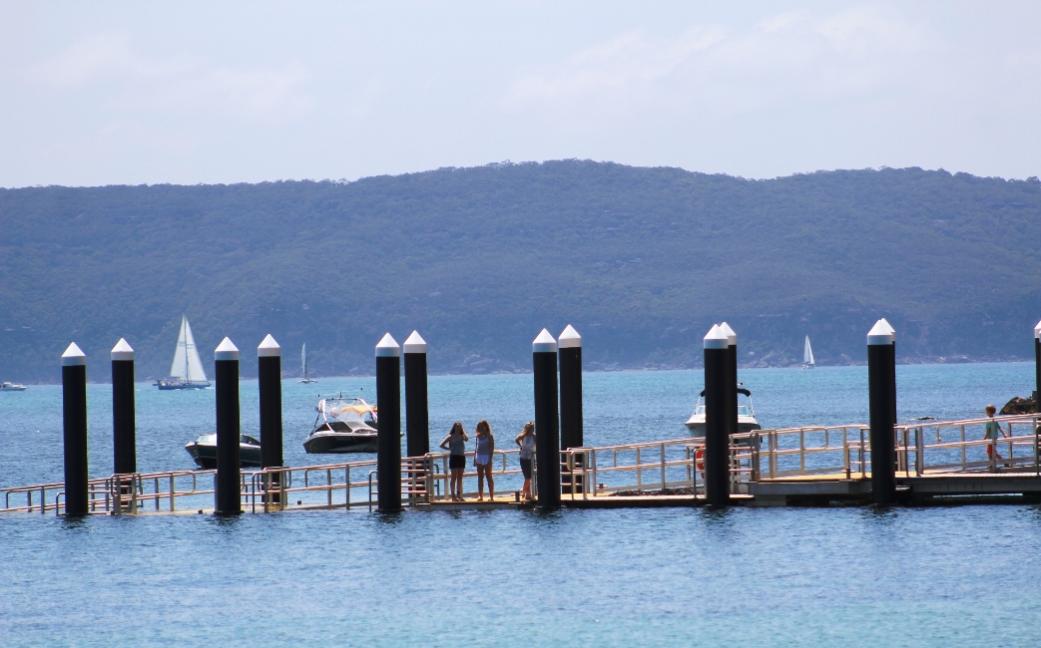
Palm Beach wharf at high tide. Photo: AJG/PON

Friends of Bongin Bongin Bay's 2026 Custodians of the Ocean program commences

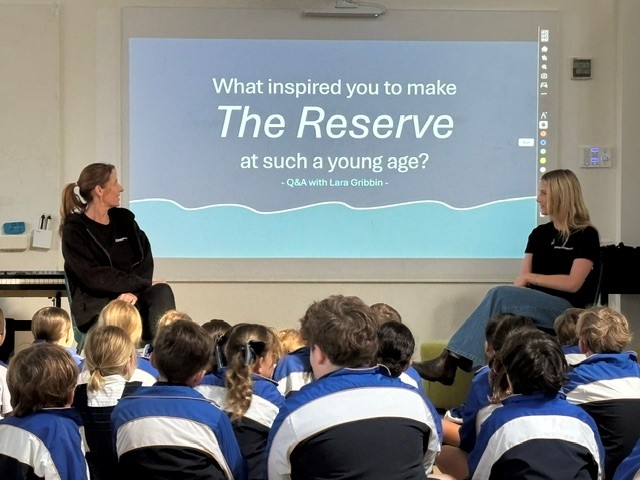
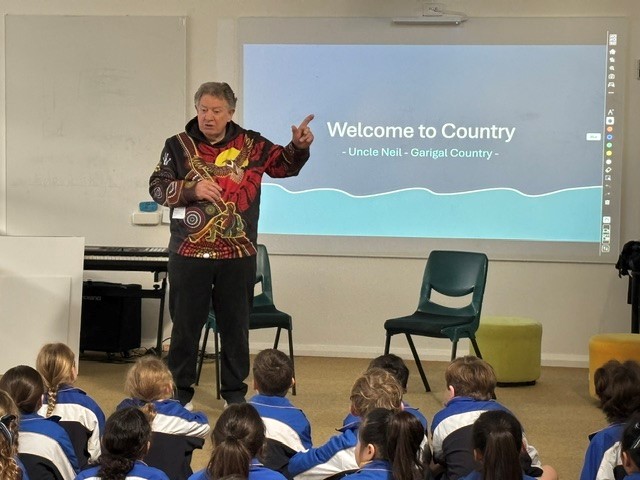
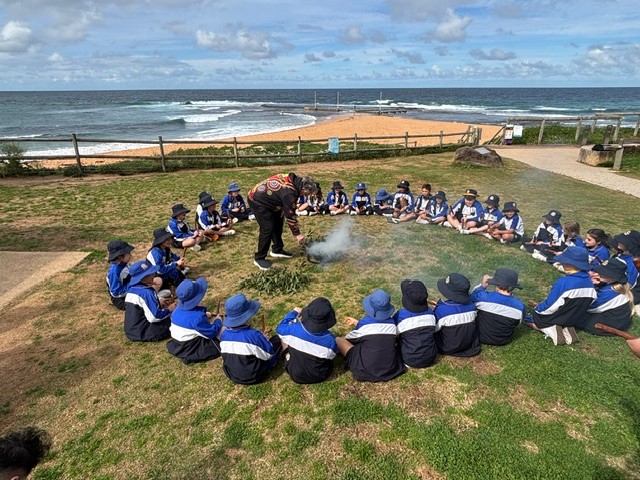
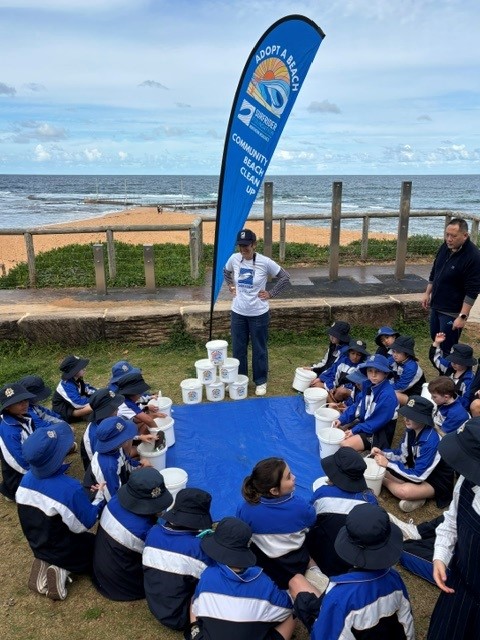
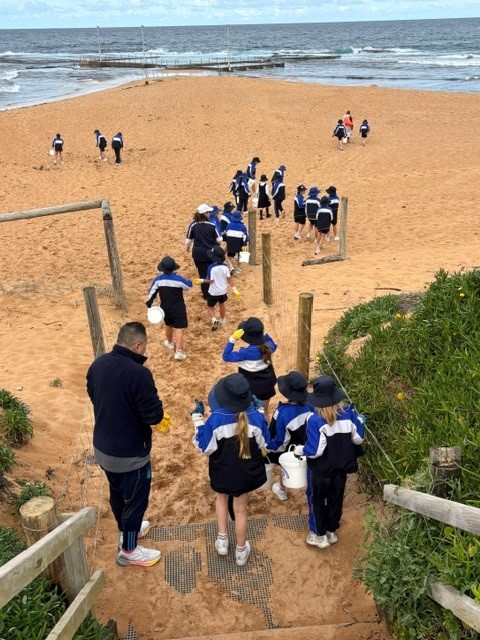
Last Tuesday, August 18, marked the expansion of the Friends of Bongin Bongin Bay's 2026 Custodians of the Ocean program. 

FoBBB stated, ''It felt very special to begin with the Year 3 students at St Luke’s Bayview, the school that helped us pilot and shape the program in 2025.''

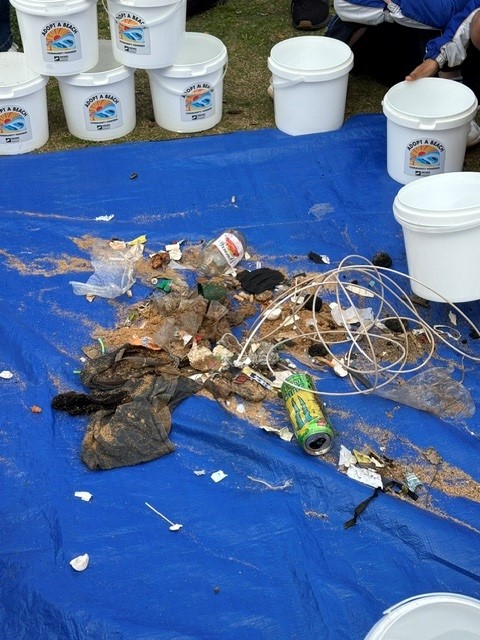
From classroom learning and special guests to hands-on activities, this day was all about sparking curiosity, building knowledge and helping our young custodians understand that their voices and actions matter.

''Their energy, questions and excitement were contagious — and a wonderful reminder of why we created this program in the first place.'' FoBBB orgainsers stated

''Co-created by Friends of Bongin Bongin Bay and Studio Oi, in partnership with the Department of Primary Industries and Regional Development, Custodians of the Ocean continues to grow and evolve — guided by science, community and, importantly, the curiosity and vision of the children themselves.

A huge thank you to everyone who has helped bring this vision to life. Here’s to inspiring the next generation to learn, care, share and take action for our oceans.''

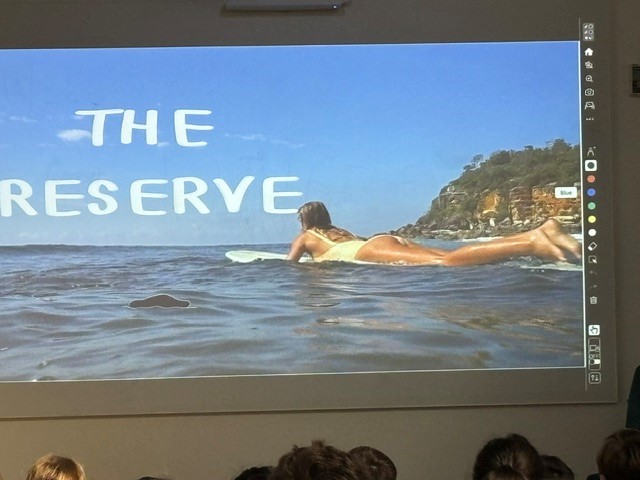
The first Custodians of the Ocean session this year included a Q and A with Lara Gribbin, a young film maker whose film ‘The Reserve’ was recognised internationally, Neil Evers, who explained the connection to Sea Country local First Nations peoples have, along with other cultural learnings and on the beach activities.

The Reserve is a short film about Cabbage Tree Bay aquatic reserve in Manly, showcasing its role for the community and marine life.

A few photos from the day run below. With more local schools signing up for the Custodians of the Ocean program, this is proving an inspiration and empowering expereince for the next generation.

The Friends of Bongin Bongin Bay are a group of volunteers working to establish a marine sanctuary at Bongin Bongin Bay, Mona Vale Beach. Bongin Bongin Bay, also known as Mona Vale Basin, is a vibrant marine sanctuary rich with ocean life and cherished by the local community.

You can find out more at: bonginbonginbay.org

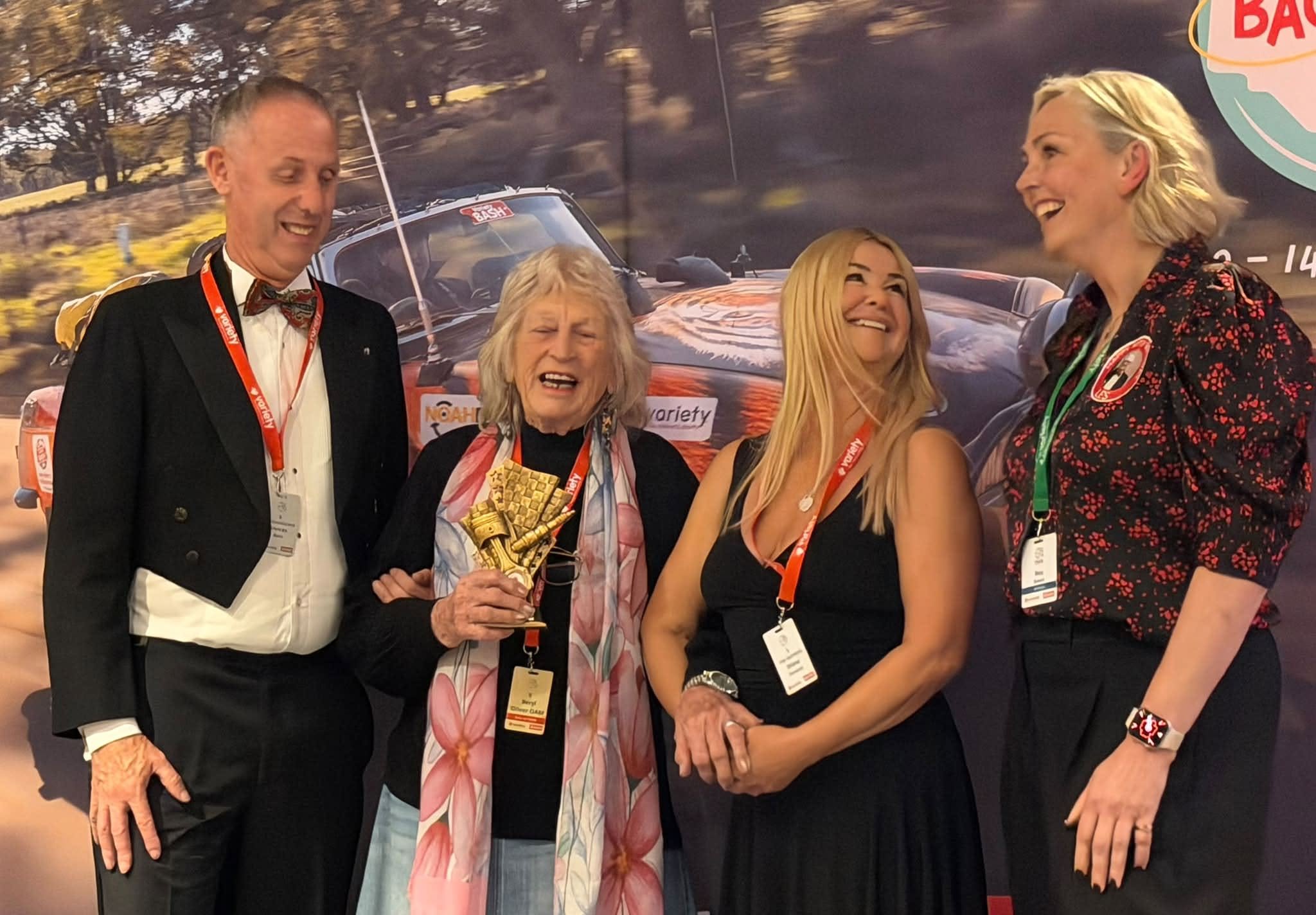
Beryl Driver OAM's 25th BIG drive Celebrated by Variety Socials

Variety NSW and ACT posted this video on Friday August 28 2026, stating:

''At 93, Beryl Driver has well and truly lived up to her name, recently completing her 25th and final Variety Bash.

Beryl was 65 when she joined her first Variety motoring event, the iconic Variety B to B Bash. She was part of the first all-female Bash team and went on to spend more than two decades travelling remote and regional Australia, raising well over $1 million for kids who are sick, experiencing disadvantage or living with a disability.

And why did she keep doing it?
“Australia’s a lucky country, but people don’t realise there are still a lot of kids who need help – and that’s why I do it.”

A fitting finish to an incredible Bash journey, Beryl and her team took home The Putters Trophy, awarded to the team having the most fun just puttering along.

Congratulations Beryl, what a legacy!''


Beryl with the 'Putters Trophy' - Photo courtesy 'Cracker Baron' - fellow B to B Backyard drivers for Variety the Children's Charity.

NB: Beryl is taking part in a 4WD mini Bash in 2027. Details in her August Profile:


Pittwater/Narrabeen Parkinson's Support Group 2026 Meetings

  • Thursday, 8 October 2026 - 12:30 pm to 02:30 pm
  • Thursday, 10 December 2026 - 12:30 pm to 02:30 pm
We meet every 2nd month, on the second Thursday, at 12:30pm at Dee Why RSL, Level 3. Meetings are informal and friendly, with guest speakers on various topics, and new members are always welcome. 

We also have a Carers Coffee, Third Thursday of every month at Dee Why RSL AQUA and we have a BYO Morning Tea, at Jamieson Park every Fourth Thursday of every month (weather permitting).

More information at:

Nature Writing Prize 2026 Now Open to Enter

$8,000 to be awarded to the winning writer

Calling all writers! The Nature Conservancy has announced the opening of its eighth biennial Nature Writing Prize.

The author of the winning essay will receive an $8,000 prize and be published in Australian Book Review (ABR). One additional author will receive a Highly Commended Prize of $1,000.

The competition’s judges are novelists Kim Mahood and Dave Witty and Dr Georgina Arnott, editor of the Australian Book Review.

The judging process is completely anonymous, with judges awarding the prize to an Australian writer whose essay they agree to be of the highest literary merit and which best explores a relationship and interaction with some aspect of the Australian landscape. All entries are required to be between 3,000 and 5,000 words and in the genre of ‘Writing of Place’. 

The Nature Conservancy Australia’s Country Director Lara Gallagher said, “The Nature Writing Prize was created in 2011 to promote and celebrate the art of nature writing, and to encourage a greater appreciation of Australia’s magnificent natural heritage. I’d particularly like to thank Paula McLean and The McLean Foundation, without whose generous support this important prize would not be possible.”

Alongside the $8,000 Winners Prize, The Nature Conservancy welcomes the return of the Rosina Joy Buckman Award, a $1,000 prize awarded to one Highly Commended essay. The Rosina Joy Buckman Award is generously sponsored by Kinchem Hegedus and Peter Barge.

2026 heralds a new era for nature writing in Australia, with the announcement of Australian Book Review as the official Publishing Partner for the Nature Writing Prize. Gallagher said, “This collaboration with ABR offers the Prize a new level of support, expanding its reach and cementing its place as one of Australia’s leading nature writing initiatives.”

The prize is open to Australian citizens and permanent residents. Participants will need to pay an entry fee of $30, or $25 for ABR subscribers. Submissions will close at 5pm AEST Wednesday 23 September 2026. To learn more about the prize and review the terms and conditions visit: www.natureaustralia.org.au/nwp

Avalon Community Library Needs Volunteers

We are seeking volunteers for our wonderful community library. Love books, reading, have good computer skills and love working in a team of like minded people? Call into the library or send us an email info@avalonlibrary.org.au

AvPals Term 3 2026 Schedule

Lectures and small group sessions are held on Tuesdays from 1:30 to 3:00pm at the Newport Community Centre. 

Bookings and payment for a session can be made at the Course Bookings. Visit: www.avpals.com/booking

Paying residential aged care providers on services delivered

From 1 July 2027, the government will start transitioning residential aged care providers to a new payment system.

Aged care providers are currently paid in advance at the start of each month based on estimates of the services they deliver. 

During the transition period we will gradually reduce advance payments and increase payments on services delivered, until all funding is paid in arrears from 30 June 2029. 

New approved residential aged care homes that become operational on or after 1 July 2027 will be paid on services delivered. 

This change will: 
  • simplify the payment process 
  • reduce administration 
  • make it easier to manage funding. 
This change applies to providers funded under the Australian National Aged Care Classification (AN-ACC) and related residential subsidies and supplements. 

Providers will not see any change to the total funding amount they receive. 

It will not apply to National Aboriginal and Torres Strait Islander Flexible Aged Care Program (NATSIFACP) and Multi-Purpose Service Programs (MPSP) providers who deliver residential aged care. 

Find out how the Australian Dept. of Health and Aged Care are transitioning to residential aged care payments for services delivered from 1 July 2027.  

Confused about the NDIS changes? Here’s what’s coming, and what’s still being worked out

A young woman uses her laptop while sitting on a walker in her bedroom.
SDI Productions/Getty Images
Georgia van Toorn, UNSW

After legislating controversial reforms to the National Disability Insurance Scheme (NDIS) last week, the government’s plan to cut 160,000 NDIS participants and save A$37.8 billion over four years is underway.

The legislation tightens access to the NDIS by:

  • altering the way a person’s needs are assessed
  • introducing stricter rules to show a disability is permanent
  • allowing automated tools to assess eligibility and plan supports.

But we still don’t know exactly what the new process will look like. Much of the detail has been left to rules, instruments, assessment tools and implementation processes that are still in development.

A new technical advisory group has been set up to advise government. It is expected to complete much of its work by late 2026 and report to government by March 2027. The eligibility changes take effect from January 2028.

People who are already accessing the NDIS will also begin to be reassessed based on the new criteria from 2028. This will happen progressively over three years.

Assessing how your disability impacts daily life

These reforms are designed to move away from assessing NDIS eligibility based on a person’s diagnosis.

Instead, the aim is to have a more consistent and robust approach that assesses a person’s “functional capacity”. This means how much their disability affects their daily life.

A person seeking access to the NDIS needs to demonstrate they have substantially reduced functional capacity and that it’s permanent.

The new assessment process will establish standardised definitions and thresholds for both functional capacity and permanence.

Part of the technical advisory group’s role will be to advise on the criteria and methods used to determine those thresholds. This could involve setting thresholds around particular activities such as dressing, washing, preparing meals or working a paid job.

While there’s a legitimate case for greater consistency in decision-making, standardisation also carries risks. People being assessed often have very different lives and experiences of disability.

The fairness of the system will ultimately depend on how the tools are implemented, and by whom.

It will be harder to show your disability is permanent

Another significant change relates to how a disability is established to be permanent.

The new legislation requires people to have tried all “appropriate treatment options” that could improve or alleviate their impairment. These need to be widely accepted and receive public funding, through Medicare, the Pharmaceutical Benefits Scheme (PBS) or public hospitals.

The technical advisory group will now consider how this requirement should operate in practice.

The difficulty is that what counts as having tried all appropriate options will depend on the availability and accessibility of treatments.

A person’s treatment may be unaffordable (even if partly covered by Medicare or the PBS) or unavailable in their local area, for example, or may be delayed for reasons outside their control. That person may not be seen to have tried “all appropriate treatment”, despite it being practically out of reach.

People may also feel compelled to pursue treatment for the purposes of NDIS eligibility rather than because it’s the most appropriate or effective option for them.

Disability organisations have already raised concerns about the impact of these rules on autistic people, people with psychosocial disability (resulting from severe mental distress), and people with fluctuating, episodic or cumulative disabilities. For those living in regional and remote areas, assessments and treatments can also be difficult to access.

If a particular treatment is not available and reasonably accessible – or it’s not available in a person’s language, or is culturally unsafe – it shouldn’t be treated as an option the person has simply failed to pursue.

Some decisions will be automated

If Labor has learned anything from the Robodebt episode, it’s that automated decision-making needs a clear legal basis.

The new legislation provides an explicit legal authorisation for the use of automated decision-making.

But it goes further than that. The legislation permits computer programs to undertake any administrative action involving “a discretion being exercised, an evaluative judgement being made, [or] a state of mind being formed”.

That is an exceptionally broad remit, especially for such high-stakes decisions.

Yet there is a striking absence of safeguards.

These are needed because automated systems can reproduce existing inequalities when they rely on biased data or historical patterns of decision-making.

A system can appear neutral while embedding the assumptions and exclusions contained in the data it was built on.

The Multicultural Women’s Alliance, for example, has pointed out that culturally and linguistically diverse women with disability tend to spend less on supports because appropriate services are inaccessible or non-existent. They’re also less likely to have formal documentation of functional capacity in the required formats.

These structural barriers shouldn’t be mistaken for evidence of lower need.

The assessment tools should be tested for cultural and linguistic bias before they are introduced, and testing needs to continue once the system is operating.

The work ahead

While the legislation has passed, the most important details are still being thrashed out. That makes the work of the technical advisory group crucial.

Previous attempts to redesign assessment systems, both here in Australia and overseas, offer important lessons for what comes next.

The government has also received extensive evidence through its parliamentary inquiry into the bill and its potential impacts.

That evidence provides a clear warning about the risks that must be addressed as the new system takes shape.

Perhaps most importantly, if these reforms are to deliver fairer and more consistent decisions, people with disability and disability representatives need to be central to that work, not simply consulted after the key decisions have been made.The Conversation

Georgia van Toorn, Senior Lecturer in Public Policy and Politics, UNSW

This article is republished from The Conversation under a Creative Commons license. Read the original article.

Why Woolworths and Coles are now selling thousands more ‘own brand’ products

The back of a man walking through supermarket aisles
Julia Gomina/Getty Images
Flavio Macau, Edith Cowan University and Reza Kiani Mavi, Edith Cowan University

When Aldi opened its first supermarket in Sydney in 2001, the stage was set for a fight with Woolworths and Coles. At the time, Australia’s two biggest supermarkets controlled about 71% of the grocery market.

Aldi was an unknown brand, stocked fewer products than its rivals, and premium real estate was already taken.

To be successful, it needed a trump card. Its strategy? To make 90% of its products “own brands”, often sold at lower prices.

By about 2015, it had captured about 9% of Australian supermarket sales.

But recent reports show Woolworths and Coles are holding their smaller competitors at bay. In part, they’ve done it by adopting some of Aldi’s own sales tactics.

Where Australians get their groceries

Last year, the national competition watchdog – the Australian Competition and Consumer Commission – estimated Woolworths had 38% of national supermarket grocery sales, followed by Coles with 29%. That’s a combined total of 67% – not far below their joint total in 2001.

Meanwhile, Aldi had about a 9% market share in 2025, the same as more than a decade ago. Metcash (as a proxy for the independent supermarkets it supplies) had 7%.

More recent figures from analysts UBS suggest Woolworths’ market share has crept higher to 40% – meaning the two biggest players have a joint share that’s barely changed since 2001.

So how have Woolworths and Coles been hanging onto customers?

‘Own brands’ with many names

One of their key strategies has been to follow Aldi’s lead: adding thousands of “own brand” products over recent years.

More commonly known in the past as “home brands”, “own brand” products offer an alternative for consumers looking for better value for money.

Once seen as low-quality, they now have a better reputation and can be found everywhere, from ice creams to laundry powder.

Some are obvious, with names such as Coles Simply or Woolworths Essentials. But there are many products that are simply “own brands” by another name, such as Woofin’ Good pet food (Coles) or Smitten (Woolworths cat food).

Strong demand from shoppers

In the past week, Coles and Woolworths released their 2026 annual reports.

On Tuesday, Coles reported a A$1.09 billion net profit to June 28 this year.

Its report highlighted Coles now has around 5,600 “exclusive to Coles products”. That’s up by 1,600 in the past year alone.

Coles’ sales revenue rose to almost A$41.5 billion, up 5.1% (excluding tobacco sales). But with cost-of-living pressures making shoppers “highly value-conscious”, Coles’ own brand products performed even better:

Our Exclusive to Coles portfolio remained an important source of value and differentiation, with sales continuing to outpace overall sales growth, increasing 6.1%, and Coles Finest growing 9.2%.

With market penetration reaching 35%, Coles’ own brands are now purchased by more than one in three customers who shop at their stores.

On Wednesday, Woolworths reported a A$1.14 billion net profit for the year.

While Woolworths’ annual report contains less detail on its own brands, it confirmed more than 445 new and 680 “refurbished” own and exclusive brands were launched in the past year alone.

Woolworths’ Australian supermarket sales rose to $53.9 billion over the year to June 28, up 5.9% excluding tobacco sales. Sales of own and exclusive brands grew almost as fast, up 5.5%, particularly in meat and fresh food.

More own brands coming

Independent surveys regularly show Aldi is a cheaper place to shop than Woolworths, Coles or IGA.

Yet Aldi is fighting to retain customers, with industry analysts recently concluding its bigger rivals are “winning share” among shoppers.

Looking ahead, Coles and Woolworths have more own brand expansions on the way. For instance, Woolworths plans to build on its current “La Mesita” Mexican, “La Gina” Italian and “Lantern Alley” Asian food ranges – none of which are obvious own brands – with new Middle Eastern and South Asian food ranges.

Why suppliers may be wary

For supermarkets and shoppers, more own brands may seem like a win-win.

Supermarkets have the potential to increase their profitability by selling their own products, as long as they keep a full range of merchandise. And consumers have more own brand options to choose from, which can be quality products at lower prices.

It’s more complicated for supermarket suppliers. These can be companies vying for space on crowded supermarket shelves, through to farmers supplying products like milk for supermarkets to sell under their own brands.

A recent Food and Grocery Code Supervisor, survey of 419 suppliers found some positive trends. More than half (56%) reported they were always treated fairly and respectfully by the big four supermarkets: Woolworths, Coles, Aldi and Metcash, while 74% reported “no issues at all” with them.

But there were still some areas of concern, including almost half of suppliers describing price negotiations as involved or challenging.

Many smaller businesses noted “they cannot absorb costs in the same way as larger competitors”. One supplier said “supermarkets’ internal structures favour corporate fruit production, not family farms”.

An international trend to watch

Looking overseas, there has been a trend for some big retailers to take over some of their suppliers’ business, in what’s known as “vertical integration”.

In the United States, Costco and Walmart aren’t just retailers anymore; they’re also food producers. For instance, Costco set up a US$450 million poultry facility to own the supply chain for its discounted rotisserie chickens: locking in control over costs from farm to the store.

But this isn’t without risks. The more things you do, the greater the risk – like having all your eggs in one very large basket.

Australia hasn’t seen that level of vertical integration yet. But it’s a trend worth watching in future.The Conversation

Flavio Macau, Associate Dean, School of Business and Law, Edith Cowan University and Reza Kiani Mavi, Senior Lecturer, School of Business and Law, Edith Cowan University

This article is republished from The Conversation under a Creative Commons license. Read the original article.

Dolly Parton’s philanthropic Imagination Library had a proven effect in Australia, and around the world

Claire Galea, Western Sydney University

Dolly Parton had first-hand experience of the effects of limited literacy. Her father could not read or write. He was, she once said,

the smartest man I have ever known but I know in my heart his inability to read probably kept him from fulfilling all of his dreams.

This sentiment fuelled her passion for encouraging childhood literacy. It drove her to establish the Imagination Library, with the goal of inspiring “a love of reading and learning from a young age”.

Launched in 1995, the Imagination Library sends children enrolled in the program a free, age-appropriate, culturally inclusive book in the mail every month from birth until their fifth birthday. The program began in Sevier County, Tennessee – Parton’s home county – before spreading across the world. It has established roots in Australia, Canada, the United Kingdom, the United States and Ireland.

To date, the Imagination Library has distributed 318 million books, with 3.4 million books sent out monthly across these regions.

The Australian program was officially launched in 2013 and now operates in more than 430 locations. Currently, nearly 50,000 Australian children are receiving a free book every month.

Building foundational skills

For the past five years, I have been working firstly on a research project in Tamworth into the effects of the Imagination Library program. As Head of Research at United Way Australia, distributors of the Imagination Library in Australia, I am not involved in the delivery of the program itself. All the data I analysed was de-identified.

The Tamworth region has produced rich data on early childhood literacy. It boasts 98% enrolment of newborns in the Imagination Library program.

The research conducted in Tamworth was then extended to a global sample. Data has been collected from over 86,000 caregivers across the five countries the Imagination Library is delivered in. This study is currently the largest dataset in the world on shared book reading in the home.

One of the key findings from Tamworth was that the program encouraged caregivers to read to their children. Compared to the average Australian child, children in the Imagination Library in Tamworth were found to be read to more often, for longer, and have more books in the home. Further, these early reading routines were maintained.

The worldwide evidence showed that children enrolled in the Imagination Library were significantly more likely to display foundational early literacy skills and to develop an interest in reading compared to those not on the program. In Australia, enrolled children were found to be nine times more likely to be interested in books, 17 times more likely to join in during shared book reading, and six times more likely to demonstrate key emerging literacy skills than those who were not enrolled.

Participants in the study also reported improvements in family interactions during shared book reading. These benefits were evident across socioeconomic differences.

The effects of the program are represented by Abby and her partner, who are raising two boys in regional NSW, aged three and 10 months. They heard about the Imagination Library through a midwife at Tamworth Hospital. Both parents work full time. Although they value reading, they struggled with consistency.

The monthly book delivery removed the guesswork: no browsing, no uncertainty about developmental fit. Says Abby: “It’s simple, it’s free, and the impact goes beyond just the books. It creates connection, routine and joy.”

Lifelong reading

These results reflect studies into similar book distribution programs. Developing early literacy skills is known to correlate with reading success in later life. The most frequently reported benefit was a strong love of books and reading. Three quarters of participating children in Tamworth asked to be read to daily.

In Australia, the NAPLAN results in 2026 show that a third of Australian children are not meeting Year 3 reading benchmarks. For a skill so fundamental to success across all areas of life, this is a disconcerting reality for a country that prides itself on its education.

A report for the Australian government in 2024 found that children with little to no reading in the home were ten times more likely to grow up with poor language and cognitive development.

The simple act of getting more books into the hands of more children has a significant effect. Over the years, Dolly Parton’s Imagination Library has spread the gift of reading to households across the world, regardless of their circumstances. Her dream was to ensure all children grow up with books, instilling a lifelong love of reading.

Every 1.3 seconds, a child somewhere in the world receives a free book from Dolly, and her legacy is rekindled.The Conversation

Claire Galea, Adjunct Fellow, Western Sydney University

This article is republished from The Conversation under a Creative Commons license. Read the original article.

Happy 90th Len Turner

Manly Warringah Kayak Club foundation president Len Turner turned 90 years young this week.

MWKC's Geoff Horsnell tells us:

''Len IS Manly Warringah Kayak Club.  Our foundation President 1983-1997 and life member, Len with his mates created and built our club. 

They fought off the naysayers and naydoers, annoyed the hell out of council to secure the land and build the clubhouse (in Berry Reserve Narrabeen), step by step with strong active committees and members. On the water a tiger competitor and coach, off the water a committed, involved committee member.  

See the pics for the minutes from the inaugural meeting held at the Narrabeen SLSC.  

When you walk into the club there is a plaque on the wall at the bottom of the stairs celebrating Len.  14 Olympians is part of our legacy.  

We say happy 90th birthday Len and thank you for everything you have done for our club.''

Hear Hear!
Happy Birthday Len!
Some celebratory pics:


In related news- Narrabeen Marathon: Sun Sept 13
Join us on Narrabeen Lake for the annual PaddleNSW Marathon hosted by Manly Warringah Kayak Club.

Distances are 20km, 15Km, 10km and 5km. 
Bring your kayak, ski, Rec, SUP or whatever craft to compete over the various divisions designed to give you close, competitive racing. 

Races start from 9:30am to 10:10am over the multi lap event with the course taking you under the bridges, around islands and buoys designed to test your marathon skills. The course is similar to the course at the Australian and World Marathon Championships so you can test yourself. 

Bowls: State Pennant Results

Notice is hereby given that the 2nd Annual General Meeting of Metro North-East Bowls Inc (ABN 95 202 026 487) will be held at the premises of the Belrose Bowling Club, 146 Forest Way, Belrose on Tuesday, 15 September 2026 at 7.00 pm.

Extracted from the 2026 Metro North-East 2nd Annual General Meeting papers: 

Congratulations to the following Region winners who also achieved success by winning the medals at the respective State Finals:
  • State Senior Triples Gold - Steve Smith, Forrest Craig, Terry Warder (Harbord)
  • Men Pennant Division 2 Gold - Belrose
  • Men Pennant Division 4 Gold - St Ives
  • Open Pennant Grade 6 Silver - Seaforth
With Bowls NSW allowing Regions to choose the timing of the Single Gender Pennant season, we returned to synchronising Single Gender Pennants with the Open Pennant season. This resulted in a significant increase in the number of sides entered in both the Men’s and Women’s competitions.

At the State Play-Offs in August, Seaforth had the distinction of being State Grade 6 Runners-Up. 

At the State Open Pennant Quarter Finals we had four Region clubs playing:
  • Grade 3 - Harbord v Lightning Ridge District Bowling Club
  • Grade 4 - Willoughby Park v Gunnedah
  • Grade 5 - Newport Beach v Merimbula Dolphins
  • Grade 6 - Seaforth v Penrith
Harbord (Grade 3), Willoughby Park (Grade 4) and Newport (Grade 5) won their sections to compete in the State Quarter-Finals but did not progress further.

Photo: Congratulations to Seaforth Bowling Club. It's been a fantastic campaign. They are State Runners up in the Grade 6 Open Pennants! The Final was a great contest against South Tamworth. Seaforth were in the lead for most of the game but were just pipped at the post. Seaforth. Congratulations also to the winners, South Tamworth.

At the State Play-Offs in August, Belrose (Men’s Division 2) and St Ives (Men’s Division 4) both achieved the ultimate result, each winning a State Pennant. 

Three clubs that had not participated in 2024-25 (Belrose, Newport and St Ives) re-entered the Women’s competition this season, resulting in a 45% increase in the number of sides.

At the State Finals in August, St Ives (Division 4) won their section to play in the Quarter-Finals but did not progress further.

OPEN PENNANT 2025-26
  • Played over 6-7 Saturdays from 14 March.
  • Grades 1 & 2 combined in a multi-grade competition over 7 rounds (with more games played against “own grade” opponents than “across grades”).
  • Grades 3-6 all fitted neatly into a home-and-away series grouped into sections of four.
  • Grade 7 involved 15 sides, which were grouped into two sections.
  • Winners of each of Grades 1, 2 & 3 progressed direct to State Finals.
  • Section winners in Grades 4 & 7 played a knock-out Region final to determine the club that would progress to State Finals in each of these grades.
  • Section winners in Grades 5 & 6 competed in round-robin Region finals, with the winner of each grade progressing to State.
It was pleasing that the number of Open Pennant sides across the North-East Bowls Region was only one fewer than in the previous season:

WINNERS  - RUNNERS-UP
Grade 1 HARBORD - DEE WHY
Grade 2 BELROSE - PITTWATER RSL
Grade 3 HARBORD - ST IVES
Grade 4 WILLOUGHBY PARK - PITTWATER RSL
Grade 5 NEWPORT -  MOSMAN
Grade 6 SEAFORTH - ST IVES
Grade 7 MONA VALE - HARBORD

2025/26 BCiB Open State Pennant Finals:

The 2025/26 BCiB Open State Pennant Finals were held 21-23 August 2026 at the below venues.

Grade 1 – Yamba

Grade 2 – Merrylands & Guildford

Grade 3 – NBC Sports (Nortmead) & Dundas Sports

Grade 4 – Bomaderry & Nowra

Grade 5 – Figtree Sports

Grade 6 – Cherry Street Sports & Club Lennox Sports

Grade 7 – South Tamworth & West Tamworth

Competition Overview

The NSW State Pennant Competition is the oldest event on the NSW Calendar. The first pennant finals were played in 1895 – 96 season and the competition is widely regarded as the ultimate club sides championship for all players in every grade.

There are 7 grades of NSW Pennant with winning and runner-up clubs receiving an illustrious State Pennant.

NSW Pennant sees 3 rinks of four players battle it out through Region competitions to become Region Champions and earn the right to play-off against their fellow Region winners from across the state in NSW Grades 1 – 7 Pennant Finals each year.

The competition plays off in a Sides event of 12 players. The Region Match Committees administer Grades 1 to 7 with the assistance of the State Match Committee.

More details at: bowlsnsw.com.au/open-state-pennant-finals 


The Metro North-East Bowls Region

A Special General Meeting was held on Tuesday, 4 June 2024 at Belrose Bowling Club to progress the transition to the new regional structure for bowls within our area. 

The amalgamation of Zone 9 and the North Shore and Manly-Warringah Districts into the new Metro North-East Bowls Region began on 1 July 2024. 

Our Clubs

  • Asquith
  • Avalon Beach
  • Balgowlah
  • Belrose
  • Chatswood
  • Dee Why
  • Harbord
  • Killara
  • Lane Cove
  • Lindfield Rollers
  • Manly
  • Manly Vale
  • Mona Vale
  • Mosman
  • Neutral Bay
  • Newport Beach
  • North Sydney
  • Pittwater RSL
  • Seaforth
  • St Ives
  • Turramurra
  • War Veterans
  • Warrawee
  • Warringah
  • West Pymble
  • Willoughby Park

Find out more at: metronortheastbowls.com.au

1.2 million pensioners affected shows private health rebate changes need urgent rethink: COTA Australia

Wednesday August 26, 2026
Revelations that 1.2 million pensioners will be directly affected by proposed changes to the private health insurance rebate are further evidence the changes need to be urgently reviewed, COTA Australia says.

COTA Australia Chief Executive Officer Patricia Sparrow said the scale of the impact reinforced concerns already being raised by older Australians about the affordability of private health insurance.

“1.2 million pensioners is an enormous number of people to be affected by a change that could make their private health insurance more expensive,” Ms Sparrow said.

“We know many older Australians are already questioning whether they can continue to afford private health insurance. Making it more expensive risks pushing more people to downgrade their cover or leave the system altogether.

“COTA Australia’s research found 82 per cent of Australians opposed removing the higher rebate for people aged over 65, while more than one in three said they would consider downgrading or cancelling their cover if the changes went ahead.

“Those findings should already have prompted serious consideration of the impact of these changes. Knowing 1.2 million pensioners will be directly affected makes the need for a rethink even stronger.

In its submission to the Government, COTA Australia warned removing the higher rebate is likely to increase out-of-pocket costs for many older Australians, undermining the affordability of private health insurance for people who often rely on it most.

“We’ve got to remember that around one in four older Australians are living in poverty. Older Australians are not a uniformly wealthy group with endless capacity to absorb higher costs,” Ms Sparrow said.

“Older Australians have spent decades paying into the private health insurance system, often making relatively few claims, and now risk being priced out just when they are more likely to need healthcare.

“Any review of private health insurance rebates should recognise that long-term contribution, while also considering the consequences for the broader health system if affordability pressures drive significant numbers of older Australians out of private health insurance.

“If these changes lead to people dropping or downgrading their cover, the consequences won’t just be felt by those individuals. There is a real risk of adding further pressure to an already stretched public hospital system.”

Ms Sparrow said debate about the rebate had also highlighted broader concerns about the affordability and value of private health insurance.

“The Government should use this debate as an opportunity to undertake a broader review of private health insurance and its role in Australia’s healthcare system.

“This is an opportunity to look at whether private health insurance is delivering value for Australians, how it complements the public health system and how we ensure it remains accessible and affordable for the people who rely on it most.

“With 1.2 million fixed income pensioners now known to be directly affected, the Government should seriously reconsider these changes.”

Here’s what to keep in mind before and after an aged care assessment

Older smiling woman at home in wheelchair.
Igor Alecsander/Getty
Dan Wadsworth, University of the Sunshine Coast

Pressure has been building on the federal government in recent weeks to scrap the algorithm currently being used in aged care assessment decisions. Criticism has been of the algorithm itself, but also the fact there is no possibility for humans to override its final decision.

Aged care assessments determine how much government funding an older person can receive, so they can live independently at home for longer.

Some older Australians may now be feeling anxious and confused about this process. It doesn’t help that the algorithm and the independent assessment tool are sometimes talked about in the same breath. But the independent assessment tool is actually a questionnaire, not an algorithm.

So, what does this questionnaire involve? And how should you prepare?

While important questions remain about the algorithm, understanding how aged care assessments work will help you prepare better and may give you more choice and control over the care you receive.

How do you get an assessment?

The best time to think about aged care support is before you need it. If you’re 65 or older (or 50 and older if you’re Indigenous or experiencing homelessness) and daily tasks are becoming more difficult, or you’re relying more on family, friends or neighbours, it might be time to start this process.

You must register with My Aged Care before you can access government-funded aged care services – this can be by phone or online.

You’ll be asked about your current living situation, health and daily activities. This is the first opportunity to discuss your support needs. Keep the ID code they give you safe, as it tracks your progress.

An assessment organisation will then call you to discuss your needs and arrange a date for the assessment.

Assessors are qualified health professionals (such as nurses, social workers, and occupational therapists) who work for independent, government-contracted organisations.

What happens in an assessment?

The assessor will usually come to your home, but you can also arrange another location or do it via telehealth or over the phone. Assessments typically take 60–90 minutes, but this can vary depending on your circumstances.

The assessor will ask about the factors that affect your ability to live safely and independently, such as your:

  • physical and mental health

  • safety (including identifying any risks within your home environment)

  • ability to complete daily tasks such as bathing, dressing and housework by yourself

  • current supports

  • goals

  • cultural needs.

Although it might be tempting to focus on your “good days” here, it’s important to describe what happens on most days, not just the best ones, to get the appropriate support plan in place.

How to get ready

You can have a support person – such as a family member, friend or carer – present during the assessment.

You may choose to register a support person in the My Aged Care system (this is free). Registered supporters can help you make and communicate decisions. They can also request, access and receive information about you.

If you need an interpreter, you can contact My Aged Care through the Translating and Interpreting Service by calling 131 450. My Aged Care also has a range of accessible contact options and resources.

You’ll need to have some documents to show the assessor, including your Medicare card, an additional ID document such as a driver’s licence, and any GP referrals or current health supports, as well as details of any specific supports (for example, cleaning or help bathing and dressing) you want to discuss.

Think about what questions you might have for the assessor.

Ask yourself: “What support do I need to stay safe, well and independent at home?”.

Then ask the assessor: “How is that support funded, and what will I personally pay?”.

The Older Persons Advocacy Network can also help you, by providing free information about your rights (both before and after an assessment) and advocating for you.

What outcomes can you expect?

Following assessment, you will be sent a notice of decision letter. This will include information about the services you have been approved to receive, the reasons behind the decision, and your rights to raise any concerns about your assessment outcome.

You may be referred to a Commonwealth Home Support Package. These provide entry-level support with specific everyday tasks so you can stay independent at home. Services could include help with housework, meal preparation, personal care such as help bathing and dressing, or nursing and allied health care.

If your needs are more complex, you may be approved for the Support at Home program instead. This provides more coordinated levels of support.

If you are approved for Support at Home, you will be allocated to one of eight classifications. The higher your classification, the higher your need and allocated budget.

In Support at Home, all services funded fall into one of three categories:

  1. clinical supports including allied health (such as physiotherapy), nursing care and nutritional products. From 1 October 2026, this will include approved personal care such as showering, dressing, and non-clinical continence management

  2. independence including support to take part in social and community activities, assistive technology and home modifications, respite care and transport

  3. everyday living meaning help with housework and home maintenance, as well as meal preparation and delivery.

The assessment could also approve you for residential aged care, should your circumstances require this.

Who will provide the services? And how much will I pay?

What you contribute will depend on the service category, provider pricing, and your financial circumstances. For clinical support services you won’t have to pay anything. But other services require a co-contribution varying from 5–80% of the total price.

You’ll need to choose a registered Support at Home provider. They are responsible for care management and can provide a care partner to work with you. Your registered support person can help you with this.

You can find a potential provider by calling My Aged Care on 1800 200 422, or by using their Find a Provider tool. Ask each potential provider about things such as:

  • availability (“can services start when I need them?”)

  • cost (“what category is this service in, and what will I pay in dollars?”)

  • flexibility (“can services change as my needs change?”).

Remember

Your care plan should support your life. Ask questions, involve support, and speak up early.


I would like to acknowledge the contribution of Cheryl Harris, president of Healthy Ageing Partnerships, Council On The Ageing Queensland, and Comlink Australia, in preparing this article.The Conversation

Dan Wadsworth, Senior Lecturer in Applied Science, School of Health, University of the Sunshine Coast

This article is republished from The Conversation under a Creative Commons license. Read the original article.

‘The only method I have found that relieved my illness is to keep creating art’: remembering Yayoi Kusama

Sasha Grishin, Australian National University

In the history of the National Gallery of Victoria, their most successful ticketed exhibition did not feature the work of Vincent van Gogh, Claude Monet or Pablo Picasso. It was of the veteran Japanese artist, Yayoi Kusama, who has died aged 97.

Held over the summer months in 2024–25, the Melbourne exhibition attracted 570,537 ticketed visitors.

Kusama’s exhibitions throughout the world have attracted huge crowds. Her infinity mirror rooms, sprawling seas of polka dots, dancing pumpkins and huge expanses of reflective surfaces have become some of the most photographed art objects in human history.

Her art has had a huge impact on many art movements of the 20th and 21st centuries, including pop art, performance art, minimalism, environmental art, video art, fashion, filmmaking and feminism.

A difficult childhood

Kusama was born on March 22 1929 in Matsumoto, Nagano Prefecture, Japan, to parents who were merchants and operated a plant nursery and seed farm.

She suffered from hallucinations from childhood and by the age of ten had created paintings in watercolours, pastels and oils using polka dot and net motifs that she encountered in her visions.

She described her childhood as traumatic, with a physically abusive mother and a womanising father, and a time when her artistic endeavours were discouraged. She found refuge in her art.

Her childhood was overshadowed by World War II. By the time she was 13, she was sewing parachutes for Japanese soldiers and was aware of American bombers flying overhead and of constant air-raid sirens. She attended Arigasaki High School and, in 1948, studied Nihonga painting at the Kyoto Municipal School of Arts and Crafts.

By 1950, Kusama was exhibiting in Japan, to some acclaim, her sprawling paintings, mainly on paper, of abstracted natural forms and would cover all surfaces – floors, walls, ceilings and naked assistants with polka dots that she would term “infinity nets”.

Concerning her painting, Flower (D.S.P.S), 1954, she wrote:

One day I was looking at the red flower patterns of the tablecloth on a table, and when I looked up I saw the same pattern covering the ceiling, the windows, and the walls, and finally all over the room, my body and the universe. I felt as if I had begun to self-obliterate, to revolve in the infinity of endless time and the absoluteness of space and be reduced to nothingness.

The heart of the art scene

In 1957, Yayoi Kusama travelled to the United States and settled in New York. She was at the heart of the American post-war art movement where she exhibited to considerable applause large paintings, soft sculptures and environmental sculptures using mirrors and electric lights.

In the 1960s, she staged many happenings, such as body painting festivals, fashion shows and anti-war demonstrations.

It has been argued that her work had a profound impact on artists, including Claes Oldenburg and Andy Warhol.

She was also involved in film productions and newspaper publication.

In 1968, the film Kusama’s Self-Obliteration, that Kusama produced and in which she played the leading role, won a prize at the Fourth International Experimental Film Competition in Belgium and the Second Maryland Film Festival and the second prize at the Ann Arbor Film Festival.

She held exhibitions and staged happenings in various countries in Europe and participated in the Venice Biennale in 1966, where she exhibited her Narcissus Garden comprising of hundreds of mirrored spheres.

(Narcissus Garden entered the collection of the National Gallery of Victoria in 2024, in its new iteration of 1,400 stainless steel balls, each 30cm in diameter.)

The artist’s physical and mental health deteriorated while she was in America and she attempted suicide.

For her, her art was the path to salvation.

A return to Japan

Kusama returned to Japan to live there permanently in 1973.

After experiencing a further suicide attempt, in 1977 she admitted herself into the Tokyo psychiatric institute, the Seiwa Hospital for the Mentally Ill, from which she was never discharged.

She lived in the hospital and made daily excursions to her studio where she maintained a frenetic pace of work.

Yayoi Kusama was one of the most acclaimed artists of her time. A major retrospective exhibition of her work held in 1998 at the Los Angeles County Museum of Art travelled to the Museum of Modern Art in New York, the Walker Art Center in Minneapolis and the Museum of Contemporary Art in Tokyo.

There were also major retrospective exhibitions at the Whitney Museum, New York, and Tate Modern, London, in 2012, and at the Hirshhorn Museum in Washington, DC in 2017. In 2017, the Yayoi Kusama Museum opened in Tokyo.

Commercially, her work achieved record prices and she has received various awards for her novels, poetry and films.

In an interview with Infinity Net in 2012, Yayoi Kusama said:

I fight pain, anxiety, and fear every day, and the only method I have found that relieved my illness is to keep creating art. I followed the thread of art and somehow discovered a path that would allow me to live.


If this article has raised issues for you, or if you’re concerned about someone you know, call Lifeline on 13 11 14.The Conversation

Sasha Grishin, Adjunct Professor of Art History, Australian National University

This article is republished from The Conversation under a Creative Commons license. Read the original article.

MWP Care Seeking Volunteers

Our business relies on the kindness of strangers...
Looking for a way to give back without giving up your lifestyle?

Become part of our Volunteer IMPACT Club and gain access to exercise classes, social events, Silver Surfers, tables at trivia as well as training and development workshops! Plus – have your petrol re-imbursed!!

Volunteering with MWP fits around your life and your schedule, letting you make a real impact in your local community. Enjoy meeting like-minded people, learning new skills, and knowing that your time is changing lives every day.
Your Time. Your Way. Your Impact. 

Find out more here: mwpcare.com.au/get-involved

Australia’s lobbying rules ignore most lobbyists. It’s time for an overhaul

Jennifer Lacy-Nichols, The University of Melbourne

The secret world of political lobbying has been thrown into the spotlight by ABC Four Corners this week. The program examined the loopholes in lobbying regulations in the context of the Albanese government’s recent gambling reforms.

Today, new research from the Australian Democracy Network uncovers core flaws in Australia’s lobbying rules.

The current system allows powerful people, organisations and corporations to attempt to influence government decision-making covertly. It makes it almost impossible for the public to know who is shaping important policy and why.

Lobbying in Australia

Lobbying is any activity carried out to influence a government or institution’s policies and decisions in favour of a specific cause or outcome.

In Australia, anyone can lobby governments and has a right to represent their views. This is crucial to a healthy democracy.

But Australians also have a right to know who is trying to influence their government.

Not everyone has the same opportunities to access and influence government. Former ministers and senior advisors that become lobbyists can offer government experience and the professional networks that accompany it.

Under the current system, commercial interests can pay for that political access and influence in ways ordinary people cannot. Because there are no records of lobbyists’ meetings with ministers and members of parliament, we have no way of knowing the purpose or outcomes of these meetings, what was discussed, or what tactics might be being used to persuade government ministers to act in line with a lobbyists’s vested interest.

Without safeguards, vested interests can influence government without the public knowing about it.

To protect against undue influence, Australia has a lobbying code of conduct to regulate lobbyists. But this is not a law: it’s not legally binding.

Yet under Australian rules, only one type of lobbyist is regulated: third-party lobbyists. This means a person or company conducting lobbying activities on behalf of a third-party client.

This only covers consultants who provide lobbying as a fee-for-service arrangement. It does not cover “in-house” lobbyists — such as “government relations” staff employed directly by major companies, industry associations and not-for-profits.

The code also prohibits certain former government representatives from lobbying for set periods after leaving office. This applies to:

  • ministers

  • assistant ministers

  • ministerial advisers

  • senior public servants

  • high-ranking members of the Australian Defence Force.

Only these categories must be identified as former government representatives on the lobbyist register.

Integrity experts estimate that because of these narrow definitions, as many as 80% of lobbyists may fall outside the current rules.

Research published last year by Transparency International Australia found the federal rules are weaker than every state jurisdiction.

This gap is set to widen as four states and territories have reviews underway to further strengthen their own lobbying rules.

What our research found

My research explores how business interests influence public health policies. I helped advise and review the new report from the Australian Democracy Network that reveals major shortcomings in the design and implementation of our federal lobbyist register.

The network’s research found more than half (58%) of ASX100 companies were not listed as clients on the federal lobbying register. This includes some of Australia’s largest companies, such as the Commonwealth Bank, Santos and Qantas. All these companies have substantial commercial interests in policy outcomes.

One explanation is that these companies may not lobby the government.

But a more likely explanation is these companies have their own in-house lobbyists (such as a “government relations” team). The lobbying code of conduct does not recognise these teams as lobbyists.

There are 714 registered lobbyists at the federal level, compared to only 226 members of parliament. Using publicly available records and a broader definition of former government representative — any prior role in state or federal government — the Australian Democracy Network’s analysis found almost two thirds of these lobbyists have prior government experience.

While 295 disclosed this, a further 164 had government experience they either did not disclose or were not required to disclose (such as previously being a member of parliament, or experience in state politics).

4 key reforms

These findings matter because they show how loopholes in our lobbying regulations can camouflage political access and influence.

Compared to international lobbying registers, of which some require companies to disclose their total lobbying spending and have broader definitions of “lobbyist”, Australia’s federal register provides limited information.

Australians deserve to know who is shaping the government decisions that ultimately influence their lives. Right now, it is exceptionally time-consuming (and sometimes impossible) to find out who is trying to influence government policy.

To fix these loopholes, Australia needs a federal lobbying act with universal rules applied to all lobbyists. The act should include:

  1. an expanded definition of lobbyist to capture in-house “government relations” staff working for companies and industry organisations

  2. a five-year ban on former ministers and advisers becoming lobbyists to protect public interest decision-making from undue influence

  3. a requirement for the meeting diaries for ministers, MPs, senior advisers and lobbyists to be published so the public can see who is meeting with decision-makers

  4. and the creation of an independent regulatory body with the power to enforce the rules and penalise non-compliance.

Earlier this year, the Speaker of the House and President of the Senate moved to tighten parliamentary access rules for lobbyists. Among other changes, lobbyists with privileged access passes (passes that allow them to wander Parliament House without an escort) will now be listed on a public register.

It’s a welcome first step, but the rest of Australia’s lobbying rules urgently need to catch up.


The author would like to acknowledge Christian Slattery from the Australian Democracy Network for his work on the report that underpins this article.The Conversation

Jennifer Lacy-Nichols, Senior Research Fellow in Commercial Determinants of Health, The University of Melbourne

This article is republished from The Conversation under a Creative Commons license. Read the original article.

Meta settles landmark US lawsuit for nearly $18bn and agrees to change Facebook and Instagram

Rob Nicholls, University of Sydney

Tech giant Meta will pay up to roughly US$18 billion, plus make major design changes to Facebook and Instagram, as part of a settlement it has agreed to in its most recent lawsuit.

Filed in 2023 by a coalition of 29 US state attorneys-general, the case alleged that Instagram and Facebook were engineered to keep teenagers hooked, that Meta misled the public about the harm, and that it collected data from children aged under 13 without parental consent.

The trial began just over a week ago. But instead of battling it out in court for four more weeks, the parties agreed to settle.

Even though Meta folded in this case, the settlement doesn’t amount to an admission of wrongdoing, liability or violation of any laws. In a statement, Meta said:

Ensuring teens have a safe and productive experience on our platforms is an absolute imperative for Meta. We want to get this right for parents and teens, and that’s why we partnered with state attorneys general to set a new industry standard.

Why settle now?

This year has been brutal for Meta in court.

In March, a Los Angeles jury found Meta and YouTube liable for harming a young woman who joined Instagram at the age of nine.

The same week, a New Mexico jury found Meta had endangered children, ordering it to pay $567 million to address the youth mental health crisis. In August, a judge lifted that bill to $942 million.

In this most recent case, Meta said the states were seeking as much as $1.4 trillion in penalties. The states denied this, saying the maximum penalties could reach roughly $200 billion.

By settling now, Meta buys certainty and a cap on its public exposure. The states get money and product changes that no legislature has managed to pass.

The money has two layers. Meta will pay roughly $11.7 billion to 47 US states, plus the District of Colombia and three US territories, in ten annual instalments, as well as $1 billion to Texas as part of a separate legal agreement. It will pay a further US$5.3 billion only if TikTok, YouTube and Snap sign up to the same rules and pay their own share.

How Instagram and Facebook will actually change

For “Teen Users” – that is, anyone Meta believes is aged 13–17 – in the participating jurisdictions, the agreement will establish a night mode which blocks access to Facebook and Instagram from midnight to 6am by default, and silences notifications from 10pm to 7am.

A two-hour daily cap applies across both apps combined, although messaging and longform videos that are at least 22 minutes long will not count. Essentially, this draws a line between something that resembles watching a TV show and something that resembles scrolling.

A teen with three Instagram accounts does not get six hours. Meta must link accounts using device IDs and phone numbers.

During school hours (8am to 3pm on weekdays), notifications are muted. Forced breaks appear at 60 and 90 minutes of daily use, with a nudge after 15 minutes of continuous scrolling. Only a parent linked through Meta’s supervision tools can loosen any of these defaults.

The agreement then turns to design. “Like” counts are hidden by default, and “cosmetic procedure filters” are switched off. Filters that reshape your face in ways only surgery could are out. Puppy ears and cat faces are fine. Teens must be offered a non-personalised feed (posts in time order rather than chosen by an algorithm) within ten days of joining and every 90 days after.

Finally, the agreement deals with who is on the platform and what happens to them there. Every user must be age-checked within a year, using tools tested against the international standard.

No more than 10% of 16- and 17-year-olds, and 3% of 13–15-year-olds, may be wrongly classified as adults. Failing to meet these service levels, as determined by an independent auditor, is a breach of the judgement and risks contempt proceedings.

Reports of harmful content must be answered within six hours in 90% of cases. Parents are notified the first time their teen messages an adult, and if the teen repeatedly searches for suicide, self-harm or eating disorder terms.

The auditor will report for five years, and Meta is barred from making misleading claims about its safety features.

Why this matters beyond the US

So far, other countries have taken a different approach to tackling big tech.

Many countries have been looking to Australia, where social media platforms such as Facebook and Instagram are required to take “reasonable steps” to stop under-16s from having accounts.

The new settlement in the US instead accepts 13-year-olds can use social media and regulates the design of the platforms.

Where these two approaches overlap is age assurance – working out how old someone is without asking for a passport. Australian law requires “reasonable steps”; the new settlement in the US sets an error threshold of 10% and 3% for the two respective age categories, tested annually by an outside expert.

The US measures may in turn feed back to Australia, where error thresholds might be incorporated into assessments of age restrictions and the promised response times to reports of harm could influence law reform.

A big question is whether the changes agreed as part of this settlement will spread to other platforms.

The settlement is designed to make this happen: Meta pays the final $5.3 billion only once “industry-wide adoption” occurs, which the agreement defines as Snap, TikTok and YouTube being bound by equivalent rules through settlement, legislation or audited voluntary compliance. That is the same domino logic as the 1998 settlement between 52 US state and territory attorneys-general and the country’s four largest tobacco companies.

If this happens, the night block will widen to 10pm to 7am and the daily cap would drop to one hour per app.

Meta has published an open letter urging TikTok and YouTube to join “right away”, with chief legal officer C.J. Mahoney arguing that “teens move fluidly across dozens of apps”.

Whether TikTok and YouTube can resist the rules that Meta has accepted is the question for the next 12 months.The Conversation

Rob Nicholls, Senior Research Associate in Media and Communications, University of Sydney

This article is republished from The Conversation under a Creative Commons license. Read the original article.

Mandatory Facial Recognition for NSW Gambling Venues

The NSW Government has committed to mandating Mandatory Facial Recognition in all hotels and clubs with gaming machines to support broader gaming reform initiatives, it announced on Tuesday August 2026.

This follows on from 18 March 2026 publication of the Liquor & Gaming NSW 'voluntary' Code of Practice: Facial Recognition Technology in Hotels & Clubs (the Code), to set out expectations and provide guidance for hotel and clubs with gaming machines on the responsible and appropriate use of FRT to identify patrons that have excluded themselves, and the March 2025 consultation on the same.

The Minns Government stated on Tuesday it is 'delivering on a key election commitment with the next and most comprehensive tranche of gaming reforms, giving people and families stronger protections against gambling harm and putting tougher rules around the way gambling is promoted and marketed'.

The 'NSW Gaming Reform package are evidence-based and include a statewide exclusion register with mandatory facial recognition technology at the entry of gaming rooms, a third‑party exclusion scheme in hotels and clubs, an increased forfeiture rate of 1 in 2, (from 1 in 3) and the end of VIP programs related to gaming' the government said.  

It will also ban gambling advertising on all NSW Government and council-owned assets, ban unsolicited direct marketing to potential customers, and establish a state-based strategy to reduce online gambling harm.

'Gambling harm doesn't stop with the person sitting at the poker machine or online. It can mean bills going unpaid, savings disappearing and enormous pressure being placed on partners, children and families.

According to the NSW Gambling Survey 2024, 3.1% of the adult population experience moderate risk gambling, while 0.9% experience high risk gambling – and for them, and their families it can ruin their lives.' the government stated

'These reforms put harm minimisation at the heart of our gaming system, making it easier for people to stop, giving families more options to intervene and putting stronger safeguards around gambling in NSW.'

Fewer poker machines in NSW

The government stated that currently NSW has around 87,000 poker machines across some 2,100 clubs and hotels. 
'While the number of gaming machine entitlements has steadily declined over the past three years, these reforms will help accelerate that reduction and ensure that when entitlements are removed from circulation, they are removed permanently.' the government stated

'The NSW Government will increase the forfeiture rate when gaming machine entitlements are traded from one in three to one in two – meaning for every two entitlements traded, one will be permanently removed. It will also introduce a new ‘sinking cap’ so the statewide cap falls as entitlements are removed from circulation and tighten existing exemptions that allowed entitlements to be transferred without forfeiture, while giving venues the option to voluntarily cancel their entitlements.' 

Introducing a statewide exclusion register and mandatory facial recognition technology

For the first time in NSW, people who choose to exclude themselves from gambling will be able to do so through a single statewide register covering every hotel and club with gaming machines.

Currently in NSW, people can enter into a voluntary self-exclusion agreement to ban themselves from the gaming areas of certain hotels and clubs or from the entire venue. However, the enforcement of this is largely left up to individual venues and staff to monitor compliance.

In a significant change, the new NSW Statewide Exclusion Register will replace this fragmented system with a single statewide framework backed by mandatory facial recognition technology at the entry of gaming rooms – meaning when someone makes the difficult decision to exclude themselves, that exclusion can follow them from venue to venue.

It will also support NSW Police efforts to prevent gaming machines being used for money laundering and other criminal activity.

Mandatory Facial Recognition will be introduced at the same time as the NSW State Exclusion Register in 2028, helping venues identify people who have excluded themselves and ensure those exclusions are enforced.  

Building the foundations for account-based play

As part of a staged approach, the Government will put in place the necessary infrastructure to facilitate future account-based play.  

Account-based play is a model that enables a person to use a registered account to play a poker machine, rather than gambling anonymously. However, a significant proportion of gaming machine infrastructure rely on legacy technology.

'The Government will upgrade the Centralised Monitoring System (CMS) over the next two years to allow for a transition to this technology, which would better allow venues to enable account-based play at their discretion.' the government said

'Rapid advancements in technology since the Cashless Gaming Trial have demonstrated there are many account-based play solutions that can be implemented to meet the anti-money laundering and harm minimisation benefits of cashless, while allowing players to continue using cash if they prefer. '

Stronger regulations and broader harm minimisation

'The  NSW Gaming Reform  package will also strengthen protections against harmful gambling advertising and marketing, including banning VIP programs linked to gaming, prohibiting gambling advertising on NSW Government and council-owned assets, and addresses unwanted direct marketing by outlawing betting service providers to market directly to people via calls, email or text messages without receiving their express consent in advance.' the government stated

'New transparency requirements will apply to gambling promotions by affiliates and social media influencers, alongside restrictions on commissions linked to higher-risk gambling products. '

The Government will commit to developing a NSW strategy to reduce online gambling harm and strengthen enforcement against betting providers and illegal gambling platforms, with new offences, tougher penalties and stronger regulatory powers.

''The suite of reforms has been developed in response to issues raised in a number of key reports, including the Roadmap for Gaming Reform prepared by the Independent Panel for Gaming Reform, the Crime Commission Inquiry into Money Laundering via Electronic Gaming Machines in hotels and clubs, and consultation with stakeholders and the broader community.

The reforms deliver on a key election commitment from the Minns Labor Government and have been developed in consultation with a range of stakeholders, including gambling counsellors, family and domestic violence experts and law enforcement.

The Minns Labor Government is investing $95.2 million over 4 years to fund this next tranche of e reforms, sourced by the money remaining in the $100 million gambling harm minimisation fund and an increase in licence fees for clubs and hotels with gaming machines.

The NSW Government will also work with industry to support hotels and clubs to diversify their hospitality, events and live entertainment offerings to reduce their reliance on gaming machine revenue.

The reforms provide a $20 million boost to the Responsible Gambling Fund over the next two years to support delivery of its array of services and programs to prevent and address harm, including the GambleAware support services.

These reforms significantly build on the array of harm minimisation measures the Minns Government has introduced since coming into office.' the government stated

For more information on the reform package download a summary here: 

Regulator targets emerging social media risks linked to alcohol-related harm

Liquor & Gaming NSW (L&GNSW) is warning licensed venues about emerging social media trends that may contribute to alcohol-related harm and undermine responsible service obligations.

The regulator is responding to reports of QR code "challenges" promoted through social media content and influencer-driven campaigns that encourage excessive alcohol consumption in licensed venues.

Recent reports have identified influencers sharing venue QR ordering codes with followers, who then purchase food and drinks for delivery directly to their table. In some cases, followers are encouraged to order large quantities of alcohol that participants are challenged to consume.

Executive Director Regulatory Operations Dimitri Argeres said social media trends could quickly create new compliance risks for industry.

"Social media can be a powerful marketing tool, but it should never be used to encourage excessive drinking or unsafe behaviour," Mr Argeres said.

"Whether alcohol is ordered at the bar or via a QR code, venues remain responsible for meeting their Responsible Service of Alcohol obligations and preventing intoxication. 

"The emergence of QR code challenges highlights the need for strong systems and vigilant staff oversight to identify and manage risky consumption before harm occurs." 

Mr Argeres said QR ordering systems did not diminish a venue's responsibility to monitor patron behaviour and intervene where necessary. 

"Technology does not remove a venue's legal obligations. Staff must actively monitor patrons and take appropriate action where alcohol consumption presents risks to safety or breaches RSA requirements." 

The regulator continues to monitor emerging online trends, including influencer marketing and usergenerated content, as part of its 2026 regulatory priorities.

"The social media landscape is evolving rapidly, and our regulatory approach is evolving with it," Mr Argeres said.

"We expect venues to understand their obligations, identify emerging risks and take proactive steps to ensure their practices are lawful, responsible and consistent with community expectations."

L&GNSW will continue monitoring online content and undertake educative and compliance action where necessary to address unlawful or harmful practices.

For more information about L&GNSW’s Strategy and Regulatory Priorities, visit the Hospitality and Racing Strategy 2026-28 webpage.

For further information and practical guidance visit the management of intoxicated patron on licensed premises webpage.

Court finds eHarmony engaged in misleading conduct in relation to automatic renewal and pricing of its subscriptions: ACCC

August 25, 2026
The Federal Court has found that dating site eHarmony made misleading representations to consumers about the pricing, renewal and duration of its online dating memberships in statements online and in its app, in proceedings brought by the ACCC.

The Court found that eHarmony breached the Australian Consumer Law by engaging in misleading or deceptive conduct in relation to:
  • offering free dating when a consumer could not engage in ongoing communication with other people for free
  • the automatic renewal of memberships
  • one-month memberships, when the minimum period consumers could sign up for was six months
  • consumers being able to cancel their subscription early when they could not
  • stating monthly subscription prices which did not mention an additional mandatory fee to pay monthly.
The Court also found that eHarmony had failed to display as a single price the minimum total amount a consumer would pay for their subscription alongside statements of how much a membership would cost per month, in breach of the Australian Consumer Law.

“Dating platforms are an important part of Australians’ social lives. Many people use them to meet others and form valuable connections,” ACCC Commissioner Luke Woodward said.

“The ACCC took this action after receiving hundreds of complaints from consumers relating to charges from eHarmony. Consumers were not adequately informed about their membership’s duration or that the membership would automatically renew, including, for many, at a much higher price.”

“The ACCC is concerned about subscription traps in digital services, and this decision highlights the need for clarity in ongoing consumer subscriptions. Obscuring the reality of purchases with confusing statements, hidden disclosures in small text and complex terms and conditions can mislead consumers.”

Automatic membership renewal found to be liable to mislead the public
eHarmony was found to have engaged in conduct liable to mislead the public when it gave consumers the false impression that the subscription period for its premium membership was only for the selected 6, 12 or 24 months.

In fact, these premium subscriptions automatically renewed for a lock-in period of 12 months, at prices which could be up to five times higher than the price of the initial subscription, or hundreds of dollars more than the consumer initially agreed to. If renewal occurred, consumers often needed to keep paying for the full 12 months, even if they complained to eHarmony immediately afterwards.

eHarmony did not prominently disclose the automatic renewal, instead displaying the terms of the automatic renewal in small font late in the purchase process and in its terms and conditions.

“The ACCC is committed to taking action against businesses that engage in misleading conduct in the digital economy, including by using subscription traps and other dark patterns that unfairly impact consumer choice,” Mr Woodward said.

eHarmony failed to specify a single price for its subscriptions and falsely advertised minimum monthly pricing
eHarmony also failed to specify the minimum cost a consumer would pay for a membership as a single figure, as is required under the Australian Consumer Law. eHarmony stated the ‘from $xx/month’ figure but this was not accompanied by the total cost consumers were signing up for in the initial subscription period, for example, for 12 months. eHarmony only stated this single price in small font late in the purchase process.

Additionally, by displaying prices as ‘from $xx/month’, eHarmony was found to have made misleading representations that the plans could be purchased by paying the stated amount on a monthly basis, when in fact a mandatory additional fee applied if consumers paid for their membership monthly. However, the Court found that from July 2024, when additional disclosures were added, the relevant pages no longer represented that subscription plans could be purchased by monthly payments of the stated amount.

“The Court’s ruling underscores that when businesses advertise a price for a subscription divided into instalments, such as a price per month, the minimum total cost must also be clearly and prominently displayed,” Mr Woodward said.

The Court will decide on penalties, consumer redress and other orders sought by the ACCC at a later date.

The below images show the process of signing up to an eHarmony premium subscription on a laptop. Though the specific applicable discount and colour scheme varies throughout, each image is broadly representative of how each step appeared from 2019 to 2024.

Subscription Page:

Payment Page – cursor placed over payment frequency:

Background
The ACCC commenced legal action against eHarmony, Inc. in September 2023 after receiving hundreds of complaints from consumers about eHarmony since November 2019.

eHarmony Inc, a US-based company, provides dating services in Australia through the eHarmony website and app.

Court appoints provisional liquidators to 12 companies associated with NSW accountant and former solicitor Christopher Edwards: ASIC

August 24, 2026
The New South Wales Supreme Court has ordered the appointment of provisional liquidators to 12 companies associated with NSW accountant and former solicitor Christopher Malcolm Edwards following an application by ASIC.

ASIC sought the appointment of provisional liquidators (26-054MR) following concerns about the management and affairs of:
  • Ironbark Holdings Australia Pty Ltd
  • Great Northern Developments Pty Ltd
  • GND Construction Management Pty Ltd
  • Great Northern Bundaberg Pty Ltd
  • Great Northern Investments Pty Ltd
  • Great Northern Morayfield Pty Ltd
  • Great Northern Phoenix Group Pty Ltd
  • Great Northern Properties Pty Ltd
  • Great Northern Victoria Pty Ltd
  • Ironbark Energy Pty Ltd
  • Knightsbridge Realty Pty Ltd, and
  • Richmond Corporation Pty Ltd.
ASIC’s interim application was heard on 19 August 2026 before Justice Nixon. On 21 August 2026, the Court appointed Kathryn Evans and Vaughan Strawbridge of FTI Consulting as provisional liquidators of the 12 companies. The provisional liquidators are required to report to the Court and to ASIC within 10 weeks on matters which include:
  • the assets and liabilities of the companies, including the value and recoverability of assets
  • an opinion as to solvency of the companies and the likely return to creditors if the companies are wound up
  • any suspected contraventions of the Corporations Act or ASIC Act and any transactions needing further investigation, and
  • whether the companies should be returned to the control of their directors, proceed to liquidation, or follow another course.
Justice Nixon found that the affairs of the companies ‘have been carried on casually and without due regard to legal requirements, and that there are significant deficiencies in the Companies’ financial records, so as to leave the Court without confidence that the Companies’ affairs will be properly conducted with due regard for the interests of creditors and, in particular, investors’.

His Honour also accepted ASIC’s submissions that the evidence ‘supports an inference that payments to investors have, for the most part, not been met by any income generated by the Companies but instead have been met from funds invested from new investors, or by borrowings on unknown terms'.

ASIC submitted that the companies which have liabilities to investors appear not to have the means to meet those liabilities and are operating an unsustainable business model.

Justice Nixon said that appointing provisional liquidators ‘will preserve the status quo, prevent the dissipation of assets prior to the final hearing of the winding up application, ensure that no further funds are raised from investors, and ensure, in the public interest, that suitably skilled and independent persons investigate the Companies’ records, transactions, assets and liabilities, and report back to the Court and ASIC on those matters’.

The proceeding is listed to return to court on 2 November 2026 for a hearing to give directions in relation to ASIC’s winding up application.

Information for creditors and investors is available on the provisional liquidators’ website Ironbark Holdings Australia Pty Ltd (Provisional Liquidators’ Appointed).

ASIC’s investigation into Mr Edwards and entities associated with him is ongoing.

Any person who wants to provide information to ASIC to assist its investigation can contact ASIC at Edwards.investigation@asic.gov.au

ACCC appeals dismissal of case against mail order company Magnamail

August 24 2026
The ACCC has filed an appeal against the Federal Court’s decision in July 2026, to dismiss the ACCC’s allegations that Magnamail Pty Ltd (Magnamail) made false or misleading representations to consumers in its mail order catalogue promotions.

Between May 2022 and July 2023, Magnamail sent promotional materials such as letters, envelopes, catalogues and scratch cards to hundreds of thousands of consumers in connection with 12 ‘pre-draw’ prize promotions. The Court last month dismissed the ACCC’s allegations that Magnamail had made false or misleading statements in connection with those promotions.

The Court also dismissed the ACCC’s case against Magnamail’s parent company, Direct Group Pty Ltd. The ACCC is not appealing this aspect of the decision.

The appeal will be heard on a date to be fixed by the Court.

Background
Magnamail is a direct mail order catalogue business that operated in Australia and New Zealand. Magnamail sold a range of merchandise through catalogues distributed to the public. Magnamail’s catalogues generally included a promotion that consumers could participate in if they made a purchase from the catalogue.

Magnamail stopped running pre-draw promotions in 2023, during the course of the ACCC’s investigation.

Magnamail is owned by Direct Group Pty Ltd.  Direct Group is a direct-to-consumer retailer through a range of brands or publications such as Reader’s Digest, Over Sixty, Infashion, House of Pets, and TVSN (Television Shopping Network), a shopping network channel that broadcasts on free-to-air TV and subscription services such as Foxtel.

In November 2024, the ACCC instituted proceedings in the Federal Court against Magnamail for allegedly making false or misleading statements in relation to pre-draw promotions, and its parent company Direct Group for allegedly being knowingly involved in this conduct.

Parents are increasingly abusive towards teachers and principals. How can schools respond?

A woman sits at a desk. There are papers and pencils on the desk and a bookshelf behind her.
RDNE Stock Project/ Pexels
Carolyn Wade, Griffith University and Paul Kidson, Australian Catholic University

Some private schools have begun asking parents to sign a code of conduct to try and stop abusive behaviour towards teachers.

In media reports, some principals have called out parents for a sense of entitlement, bullying of staff and refusing to admit when their child has misbehaved.

Public schools are also taking new steps to try and curtail abusive parents.

Victoria and South Australia have introduced laws to give principals powers to ban abusive parents from school grounds. This includes banning parents who are abusive in person, over email and phone or on social media. New South Wales is also considering similar laws.

Why have such strong measures become necessary?

How serious is the problem?

Parents need to be able to question school decisions, raise concerns and advocate for their children.

These are all important parts of meaningful parent engagement with education. But research clearly shows abusive behaviour towards teachers has been growing.

For 15 years, Australian survey research has tracked school leaders’ experiences – this includes principals, deputy principals and other senior leaders. This has found parents and caregivers are a significant and growing source of threatening and abusive behaviour.

In 2025, they were identified as a source in almost two thirds of reported threats of violence – in 2011, this figure was less than 25%. In 2025, nearly nine in ten cases of cyberbullying of school principals came from parents and caregivers.

The impact is not confined to overt threats. Research tells us school leaders also manage persistent complaints, aggressive communication, and expectations of constant availability from parents.

Teachers also report similar experiences, including excessive communication demands, verbal abuse and threatening behaviour.

Why is this happening?

Over recent decades, expectations of what schools can and should provide for students and families have expanded. Greater school choice and accountability have also changed the relationship between families and schools, with increased expectations around access, responsiveness and influence over educational decisions.

Research has identified a more consumer-oriented relationship with schools. For school leaders, this can mean expectations of immediate responses, challenges to professional decisions, demands for individualised outcomes, and complaints being escalated when families are dissatisfied with a school’s response.

Digital communication has made it easier for families and schools to communicate. It has also changed the speed, reach and consequences of these interactions.

For example, concerns can quickly move into parent WhatsApp groups, social media, or other community networks. So disagreements can be amplified well beyond the original interaction.

Laws can protect staff, but …

School staff have the same right to a safe workplace as anyone else.

But laws or codes of conduct only establish boundaries, restrict access and provide recourse when behaviour becomes unsafe. They cannot create respectful behaviour or rebuild trust once a relationship has deteriorated.

This is why legislation should be understood as protection, rather than prevention. If a principal needs to stop a parent entering school grounds or contacting staff, the relationship is already in serious difficulty.

So what can schools and governments do?

No single intervention can prevent conflict between parents and schools.

Clear expectations around communication and staff availability can establish boundaries early. This is where parent codes of conduct or behaviour agreements may be useful, by making expectations about respectful communication and the consequences of unacceptable behaviour explicit.

But there is limited evidence that contracts themselves can prevent or resolve conflict once relationships have seriously deteriorated.

School leaders and teachers also need better preparation to manage difficult conversations with parents, recognise when conflict is escalating, and know when to seek further support. They also need organisational backing, so they are not left managing a situation alone until it becomes untenable. This includes clear escalation process and senior or system-level support when interactions become persistent, unreasonable or abusive.

There will, however, be circumstances when these approaches are no longer enough. When behaviour becomes threatening, intimidating or abusive, the priority must shift from repairing the relationship to protecting the people involved.

What now?

Schools need to remain places where families can engage, question and disagree, while also being a workplace where staff are safe. Neither should come at the expense of the other.

A law can prohibit abusive behaviour, but it cannot produce respectful behaviour. It can protect staff when a relationship has broken down, but it cannot rebuild the trust that has been lost.

That work has to begin much earlier, with clear expectations about communication, complaints and acceptable behaviour established before conflict occurs. Education systems also need to be prepared to intervene when relationships begin to deteriorate.The Conversation

Carolyn Wade, Lecturer, School of Education, Griffith University and Paul Kidson, Associate Professor in Educational Leadership, Australian Catholic University

This article is republished from The Conversation under a Creative Commons license. Read the original article.

Finalists of Nursing and Midwifery Awards announced

NSW Health has announced the 29 finalists of the state’s 14th annual Excellence in Nursing and Midwifery Awards. 

This year’s finalists have been nominated across nine award categories, including Team of the Year, the Judith Meppem Lifetime Achievement Award, and the consumer-nominated Healing Heart Award which recognises a nurse or midwife whose compassion, kindness, and professionalism stood out to a patient or family. 

NSW Health Secretary Susan Pearce AM said this year’s finalists reflected the passion, dedication and expertise of the state’s nursing and midwifery workforce. 

“Nurses and midwives are an integral part of the NSW Health system, supporting not just patients and their families, but also other healthcare professionals,” Ms Pearce said. 

“Every day around our state, nurses and midwives work incredibly hard to provide safe, high-quality and patient-centred care, so being chosen as a finalist in these awards is a remarkable achievement. 

“I want to congratulate the finalists for this year’s Awards and also pay tribute to all nurses and midwives who strive to improve health outcomes for the people of NSW every day.” 

NSW Health Chief Nurse Jacqui Cross said the Awards help recognise the vital role nurses and midwives play in the NSW public health system. 

“Our nurses and midwives work at the very heart of the health system, and I have the privilege of hearing extraordinary stories of the care and compassion they provide to patients and their families each day.

“It’s one of the reasons why these Awards are so important, because they really shine a spotlight on what our nurses and midwives do, and how and why they do it.” 

Newly appointed NSW Health Chief Midwife Donna Garland is looking forward to her first year of involvement in the awards. 

“I’ve seen first-hand the excitement these awards generate when a staff member is named as a finalist, and I am looking to celebrating with the finalists later this year,” she said.

All the finalists and winners will be celebrated at the Awards ceremony, which will be held at NSW Parliament House on Monday 23 November 2026.

For more information on the NSW Health Excellence in Nursing and Midwifery Awards 2026 visit the NSW Health website: www.health.nsw.gov.au/einma

New childhood rare disease pathway delivers life-changing results for eight-month-old Bohdi

August 24 2026
A new NSW Government medical pathway for kids with rare diseases at the Sydney Children's Hospitals Network (SCHN) has seen an eight-month-old baby from the Central Coast become the first person in the world to benefit from a new treatment for a rare form of paediatric epilepsy.

Bohdi, who was born with KCNT1-related catastrophic epilepsy, is the first recipient of SCHN's new Innovative Therapies Pathway which gave him access to life-changing medication by helping fast-track the treatment's approval and deliver the medication within six weeks.

KCNT1-related catastrophic epilepsy is an often fatal genetic disorder affecting young babies that previously had no known effective treatment. The ultra-rare disorder, with only 18 Australian cases ever recorded, was causing Bohdi to experience up to 60 seizures a day and affecting his ability to smile.

Using the Innovative Therapies Pathway, Dr Kavitha Kothur, paediatric neurologist at The Children's Hospital at Westmead, collaborated with research experts to identify a new medication that could help Bohdi.

The medication, previously only trialled in healthy adults, is a precision medicine that targets the genetic cause of Bohdi's condition and works to stop overactive brain currents from triggering seizures.

The Innovative Therapies Pathway, created by Dr Michelle Lorentzos, Medical Lead for Advanced Therapeutics at Sydney Children's Hospitals Network, works to accelerate access to highly personalised therapies for children with rare, complex and life-limiting conditions, like Bohdi, where there is an urgent clinical need.

Within days of starting the new medication, Bohdi's seizures stopped and for the first time in months he no longer required around-the-clock care. Bohdi has since begun smiling again, and has been able to return home.

The Innovative Therapies Pathway is expected to accelerate access for other children with rare diseases, like Bohdi, by enabling experts to come together to rapidly evaluate novel therapies, assess safety, and efficacy evidence, as well as address ethics, governance and operational readiness in one stage, rather than sequentially. 

Minister for Medical Research David Harris said:
“With more than 500,000 Australian children living with a rare disease, the Innovative Therapies Pathway represents an extraordinary opportunity to help children and their families.

“The NSW Government is leading the way in paediatric care, with the Innovative Therapies Pathway having the potential to become a global model for paediatric rare disease care.

“We are reaching an incredible point with precision medicine, where treatments can be tailored to the individual genetic causes of disease, offering hope to families who have previously had very limited options when it comes to treatment.

“Bohdi's breakthrough treatment highlights the strength of NSW's medical research system and the impact on people's lives when discoveries are translated rapidly and responsibly into patient care. It can be truly life changing.

“This Innovative Therapies Pathway is a great example of the NSW Government's leadership in supporting collaborative health models that enable safe and equitable access to emerging treatments.

“I applaud Dr Lorentzos, Dr Kothur, and their colleagues for the work that's been done here to help Bohdi."

Medical Lead for Advanced Therapeutics at Sydney Children's Hospitals Network Dr Michelle Lorentzos said:
“We are entering a new era where highly personalised therapies for ultra-rare diseases are increasingly possible.

“This goes beyond a single medication or a single patient; it's about a new way of delivering innovative treatments to children.

“Collaboration has been critical in identifying the right therapy and enabling rapid access to treatment for Bohdi, and the outcome reflects the expertise of Bohdi's multidisciplinary care team, as well as the contributions of the Epilepsy Research Centre."

Paediatric Neurologist at Sydney Children's Hospitals Network Dr Kavitha Kothur said:
“While it is still early in the treatment journey, the clinical outcome for Bohdi has been excellent so far, with a complete cessation of seizures, and improvements in his development.

“To see such an early response in a child with such a severe disease is extraordinary. This breakthrough marks the beginning of a new era in genomic medicine for families facing rare genetic conditions, including severe epilepsy."

Bohdi's mother Stephanie Higginson said:
“I will never be able to thank Dr Kothur enough for what she has done for my family. She never gave up looking for answers, and she gave us hope when we needed it most. Her work changed our lives. Bohdi's now like a completely different baby."​

Photos: NSW Government

How well do COVID antivirals actually work? Not as well as we thought

An older woman lays in bed, sick with COVID
NicolasMcComber/Getty Images
Laura Edwards, UNSW ; Allen Cheng, Monash University; Bette Liu, UNSW , and James Wood, UNSW

If you’re aged over 70, or over 50 with underlying health conditions, and have tested positive for COVID, you might have been offered free or subsidised antivirals.

Earlier in the pandemic, these medicines were an important way to reduce the chance of people becoming severely ill with COVID, needing to be hospitalised, or dying.

But our new research suggests that with high levels of vaccination and immunity from previous infections, COVID antivirals are no longer working as well.

From no treatment to an effective one

When SARS-CoV-2, the virus that causes COVID, first emerged in late 2019, no treatment was available. Existing influenza antivirals, which had been stockpiled by governments, were ineffective and couldn’t be used.

Scientists rapidly tried to figure out which existing or new drugs could be used. In 2021, two industry-sponsored clinical trials reported promising results.

One was for nirmatrelvir-ritonavir (Paxlovid), which reported an 89% reduction in severe illness. The other was a trial of molnupiravir (Lagevrio), which reported a 30% reduction.

Paxlovid and Lagevrio work by stopping SARS-CoV-2 from replicating. So they need to be taken early in the course of illness – within five days – to be effective.

Both drugs became available in Australia and were listed on the Pharmaceutical Benefits Scheme (PBS) in early and mid-2022. This ensured people most at risk of severe illness had access to drugs at low or no cost.

Paxlovid and Lagevrio are expensive. A course of treatment cost the government around A$1,100 from 2022 to 2025, much more than the treatment for influenza, oseltamivir (Tamiflu), which is only around $40.

Between mid-2022 and mid-2025 the Australian government spent more than $2 billion on Paxlovid and Lagevrio.

What’s different now?

Most Australians have now been vaccinated against COVID and infected with SARS-CoV-2 more than once. This results in hybrid immunity and reduces the likelihood and severity of future infections.

The virus itself has also changed, with the original variants replaced by new ones that appear to be less severe than early in the pandemic.

These changes prompted us to evaluate the more recent evidence.

What did we study and find?

First, we examined randomised controlled trials – the gold standard of evidence. We found eight trials of Paxlovid and Lagevrio, but most were done before people were vaccinated.

When we looked at the two randomised control trials in vaccinated people, neither reported a reduction in severe outcomes after taking either Paxlovid or Lagevrio.

The Lagevrio trial reported no statistical difference in hospitalisation or death in people who did and didn’t receive treatment.

The other was a trial of people in hospital who were treated with Paxlovid. It found no difference in the people treated and not treated.

There were some nuances to these findings. Randomised controlled trials are expensive and resource-intensive. As COVID went from being the leading cause of death worldwide in 2021 to the 20th in 2023, it became more difficult to justify the costs and recruit enough participants, so some trials were stopped early.

However, two randomised controlled trials of Paxlovid have been published since our work, and neither reported a reduction in hospitalisation or death.

In phase two of our research, we looked at the 35 observational studies, where researchers can include many more people but can’t control who gets the treatment. We pooled the results from the studies to estimate the effectiveness for each drug against hospitalisation and death.

This meta-analysis found Paxlovid, but not Lagevrio, reduced hospitalisation and death.

Paxlovid was associated with a 40% reduction in hospitalisation and a 67% reduction in death.

Lagevrio wasn’t associated with a significant reduction in hospitalisation and the results were mixed against death.

Because the treatment wasn’t randomised, there may be differences between people who received treatment and those who didn’t. People accessing treatment, for example, may have greater health literacy or access to other health services.

While some studies use methods to adjust for differences in people who do and don’t receive treatment, it’s usually not possible to adjust for every difference.

COVID is still a concern for at-risk groups

SARS-CoV-2, like influenza and respiratory syncytial virus (RSV), remains a common cause of acute respiratory illness in Australia. In 2025, there were:

  • 186,000 cases of COVID reported
  • 178,000 cases of RSV
  • 503,000 cases of influenza.

But the number of COVID, RSV and influenza cases reported is well below the true number, as most people don’t get tested.

COVID is still claiming lives. There were 2,227 deaths involving COVID in 2025. This is more than the 1,784 deaths involving influenza. Three quarters of deaths were among people aged 80 and over.

The rates of COVID-related hospitalisations so far this year have been lower than last year, with 839 admissions at “sentinel hospitals” (those chosen to monitor disease trends) in the first half of this year. This compares to 1,740 in the same period last year.

What does this mean?

COVID can still cause severe illness, hospitalisation and death, particularly in older people.

If you test positive for COVID, talk to your GP about whether antivirals may be appropriate for you.

Our work shows there may be some benefit from Paxlovid. But as the number of cases and the risk of severe illness continues to fall, this benefit is becoming very small.

Given how little evidence there is for Lagevrio, its role in treating COVID should be carefully considered.

Harms of antivirals can include side effects – such as taste changes, nausea and vomiting – and allergic reactions.

Paxlovid can also interact with other drugs, causing serious reactions. It should be avoided, or the dose adjusted, in people with severe liver or kidney disease because it can make these conditions worse.

Australia’s independent Pharmaceutical Benefits Advisory Committee (PBAC) is set to review COVID antivirals later in 2026. It will assess the costs and benefits of Paxlovid and Lagevrio and it may change its recommendations about who can access the drugs on the PBS.

Our findings support this reassessment.The Conversation

Laura Edwards, PhD Candidate, Vaccines and Antiviral Effectiveness, UNSW ; Allen Cheng, Professor of Infectious Diseases, Monash University; Bette Liu, Associate Professor and NHMRC Career Development Fellow, School of Public Health and Community Medicine, UNSW , and James Wood, Head of School of Population Health and Professor, Infectious Diseases Dynamics and Interventions, UNSW

This article is republished from The Conversation under a Creative Commons license. Read the original article.

A new saliva test for endometriosis is in trials. What this and other new endo tests mean for you

Young woman in pain sitting on sofa, clutching pillow to tummy
Galina Zhigalova/Getty
Mathew Leonardi, McMaster University; Adelaide University and Narges Kalani, McMaster University

It can take years for someone to be diagnosed with endometriosis. This can mean ongoing pain, repeated appointments and uncertainty, and delayed treatment.

However, two new tests are being trialled in the United Kingdom. One is a saliva test; the other measures electrical activity in the gut. Over the next three years, these non-invasive tests will be used in general practice patients to see if they can help diagnose endometriosis much sooner.

The promise of these and other non-invasive tests to speed up diagnosis is compelling. But the evidence is not there yet for their widespread use.

Why is endometriosis so difficult to diagnose?

Endometriosis is a condition where tissue like the lining of the uterus is found outside the uterus. It commonly causes severe period and pelvic pain, pain during intercourse, bowel and bladder problems, and difficulty becoming pregnant.

Diagnosis involves assessing symptoms, a physical examination, imaging and sometimes surgery. Ultrasound and MRI can diagnose endometriosis when performed by a health professional with specific extra training.

But a normal scan does not rule out endometriosis. So laparoscopy, surgery using a small camera inserted into the abdomen, may still be considered.

Then there are the two non-invasive tests being trialled in the UK but are not available in Australia. What can these offer?

Endotest is a saliva test

Endotest analyses a saliva sample for specific markers called microRNAs – tiny molecules involved in controlling how genes behave. Specific patterns of these microRNAs can indicate whether endometriosis is likely present.

A French study of 971 patients across multiple centres reported the test was highly accurate.

But most participants had endometriosis. That’s unlike typical GP patients presenting with symptoms of pelvic pain, only some of whom will have endometriosis.

Pelvic pain can have bowel, bladder, muscular and other causes. So we don’t know if the test performs as well in the typical mix of patients you’d expect to see in general practice.

EndoSure looks at your gut

EndoSure detects endometriosis by measuring electrical signals in the gut via sensor pads on the abdomen. The test takes 45 minutes and can take place in a GP or specialist clinic.

A study of 154 women reported 95% sensitivity (the ability to correctly detect endometriosis) and 96% specificity (the ability to correctly rule out people who do not have endometriosis).

However, most of the evidence supporting the specificity figure came from controls who did not have surgery to confirm they really did not have endometriosis.

Preliminary findings from a later study compared just 25 women with confirmed endometriosis with 25 controls. Most of the women in the control group had abdominal symptoms but were, again, not surgically confirmed as endometriosis-free.

The study was also not able to establish whether other conditions could interfere with the test. The researchers noted adenomyosis might produce similar signals.

More recent, unpublished findings presented at a scientific meeting found EndoSure detected everyone who had endometriosis. However, its reported specificity was just 5%, compared with around 96% in the earlier study. This means 95% of people without endometriosis still tested positive.

If confirmed in larger studies, that would raise serious questions about its usefulness in general practice, where doctors need to distinguish endometriosis from the many other conditions that can cause similar symptoms.

How about other tests?

Other non-invasive tests for endometriosis are in development, including blood tests. Not all are widely available or have been independently validated.

EndomTest is a blood test available in the United States that combines its results with clinical information. But the US Food and Drug Administration has not approved it for widespread use.

Published results found high specificity for diagnosing endometriosis. But it had much lower sensitivity, meaning it could miss many people who have endometriosis.

Australia’s PromarkerEndo measures proteins in blood. Importantly, testing has involved patients with symptoms but where surgery has found no endometriosis. This is a strong comparison because, when used clinically, the test has to distinguish between patients with similar symptoms who do and don’t actually have the disease. Results have been promising across early-stage disease, although further independent validation is needed.

US-developed DotEndo examines microRNAs in blood. Earlier research found a panel of six-microRNAs could distinguish endometriosis from other gynaecological conditions. A large, multi-centre study is evaluating its use in around 750 patients.

Impressive numbers need context

When we evaluate a diagnostic test, the question is not simply “How accurate is this test?” but “How well does it work in the people who will actually use it?”.

Even so, for a test to be useful, it should change what happens next by raising suspicion, prompting investigation, guiding treatment, or providing an explanation sooner.

So such tests may help answer “Could this be endometriosis?”. But imaging will still be needed to show where and how extensive the disease is. Doctors will still need to assess adhesions – scar-like tissue that can cause pelvic organs to become stuck together.

This mapping guides treatment and, if surgery is considered, its complexity and which specialists may be involved. If such tests help patients access specialist ultrasound earlier, this could be useful.

The same care is needed with a negative result. Unless a test reliably rules out endometriosis in the population being tested, a negative result should not be used to dismiss persistent symptoms. Even without endometriosis, pelvic pain still deserves investigation and care.The Conversation

Mathew Leonardi, Associate Professor, Gynaecological Surgeon and Sonologist, McMaster University; Adelaide University and Narges Kalani, Clinical Research Assistant, Departments of Obstetrics and Gynecology, and Oncology, McMaster University

This article is republished from The Conversation under a Creative Commons license. Read the original article.

Anti‑abortion rhetoric is becoming entrenched in Australian right‑wing politics

Prudence Flowers, Flinders University; Erica Millar, La Trobe University, and Tania Penovic, Deakin University

Earlier this week, Queensland Nationals MP Llew O’Brien introduced a so-called “born alive” bill into the House of Representatives.

On the same day, August 17, the Australian Christian Lobby held an event on Parliament House lawns. Against a backdrop of 10,000 knitted baby booties arranged into a cross, Australia’s most prominent federal anti-abortion politicians spoke in support of the bill.

Born alive bills originated in the United States in the early 2000s and the issue has been raised in most Australian decriminalisation debates since Victoria in 2008. O’Brien’s resurrection of this topic reveals much about the ambitions of contemporary Australian opponents of abortion.

What does the bill do?

In Australia, abortion is regulated at the state and territory level. This bill would insert the federal government into the equation.

The Human Rights (Children Born Alive Protection) Bill would require the same medical care for a baby born with signs of life following abortion as for any other baby, a situation that is extremely rare. Any failure to provide such care would be a criminal offence.

Every state and territory in Australia has decriminalised abortion. The bill would reintroduce the threat of criminal penalties for abortion providers with respect to care provided after an abortion. It would likely have a chilling effect on doctors’ willingness to provide abortion services.

This is the third time this bill has been introduced in parliament in the past five years, identical to versions from August 2021 and November 2022.

The 2022 bill went to a Senate inquiry, whose report expressed concerns about its impact on healthcare access, constitutional validity and consistency with human rights.

A human rights bill that isn’t

The bill is framed as human rights legislation, purporting to implement Australia’s international treaty obligations under the Constitution’s external affairs power.

It claims to give effect to rights in the International Covenant on Civil and Political Rights and the Convention on the Rights of the Child.

But it is inconsistent with these treaties and the findings of the United Nations bodies that oversee their implementation.

UN bodies have found abortion restrictions breach human rights, including privacy, protection from cruel, inhuman or degrading treatment, equality and non-discrimination, and the right to life.

Enacting the bill would likely breach Australia’s international obligations. The bill would not meet the requirements of the external affairs power and would likely be constitutionally invalid.

The use of human rights language to support positions inconsistent with human rights norms is no accident.

It mirrors a pattern in anti-abortion action (sometimes called abortion lawfare) in the US and elsewhere.

Scholars argue human rights misappropriations have been “deployed by nationalist, populist, right-wing and authoritarian movements” worldwide.

False narratives

Contemporary born alive bills rest on false narratives.

Supporters vilify abortion providers and frame abortion as barbarism, not health care.

The people who need abortions, meanwhile, are maligned or rendered invisible.

The vast majority of abortions in Australia occur before 20 weeks. About 2% of Australian abortions happen after 20 weeks, typically involving a step to stop the fetal heartbeat first.

Without that step, a fetus may briefly show signs of life. But because their lungs and other organ systems are too immature to sustain life outside the uterus, survival is not possible.

In rare cases, parents skip this step so they can hold their non-viable baby while it dies – a way of grieving, with the baby kept comfortable throughout.

Calling this “born alive” wrongly implies viability.

In 2024, MP Ralph Babet moved an urgency motion to have the Senate “recognise that at least one baby is born alive every seven days following a failed abortion and left to die”.

This claim is extrapolated from a single table in Queensland and Victorian perinatal mortality reports (2010–20), which splits deaths after late abortion into “stillbirth” and “neonatal death”.

Advocates treat the latter as “live birth”, turning a routine statistical classification into evidence for something the data wasn’t designed to measure.

Born alive proponents lean on a handful of cases spanning decades (including from the 1970s and 1990s) and international contexts. Most have little relevance to Australian healthcare practices in the 2020s.

Care that already exists

Born alive bills are opposed by peak medical specialist, nursing and midwifery bodies.

Health professionals must already provide care for any baby born alive after abortion, including palliative or “comfort” care.

Proponents of these bills ignore existing clinical guidelines. Victoria’s guideline, for instance, recommends palliative care for babies born before 22 weeks, and “parental discretion” for resuscitation decisions between 22 and 24 weeks.

So why should parental wishes matter for premature birth, but not for abortion?

The born alive narrative erases the pregnant person, reducing them to a passive vessel. One supporter of the 2022 bill told the Senate the pregnant person is the site where the “child in utero” is “spatiotemporally located”.

Statistics about babies born with no chance of survival showing “signs of life” say nothing about the complex and multifaceted drivers of later abortion.

People seek abortion after 20 weeks when they receive new information, such as a fetal anomaly diagnosis, or when barriers such as reproductive coercion or health system delays make earlier care impossible.

A renewed anti-abortion push

Speakers at the Australian Christian Lobby rally included Nationals Leader Matt Canavan, Liberal Alex Antic, and One Nation’s Barnaby Joyce and Malcolm Roberts.

Roberts frames the born alive bill as a move “to take our country back”.

He recently told an audience of conservative Australian Christians he’ll push One Nation to pursue an abortion ban.

Canavan and Antic are prominent anti-abortion figures within their parties. With Babet, they co-sponsored the 2022 born alive bill.

Joyce and Antic are current collaborators with anti-abortion influencer Joanna Howe.

Howe is prominently aligned with One Nation. She’s actively attempting to reshape the Nationals and Liberals in New South Wales, where anti-abortion legislation will be voted on in September.

Anti-abortion rally in NSW.

What does all this mean?

Without the support of the government, this born alive bill is all but guaranteed to fail.

But its impact lies in giving conservative federal politicians an arena to directly intervene in abortion debates.

It mainstreams health care and legal misinformation, while amplifying stigmatising rhetoric about abortion.

The discussion entrenches the idea that abortion bills can work for partisan messaging and movement-building, advancing the Americanisation of Australian politics.

And it positions abortion as a unifying cause for key right-wing power brokers across the Liberals, Nationals and One Nation.The Conversation

Prudence Flowers, Senior Lecturer in US History, College of Human Sciences and Culture, Flinders University; Erica Millar, Senior Research Fellow, Social Inquiry, La Trobe University, and Tania Penovic, Associate Professor of Law, Deakin Law School, Deakin University

This article is republished from The Conversation under a Creative Commons license. Read the original article.

Influencers claim ‘knees over toes’ exercises can help bullet proof your knees. Two experts explain

A man does a deep lunge at a training track.
djiledesign/Getty Images
Matt Savage, La Trobe University and Adam Culvenor, La Trobe University

For decades, people exercising have been told one simple rule: never let your knees go over your toes. During lunges, squats and many other exercises, well-meaning coaches, trainers and physiotherapists repeated this advice so often it became fitness folklore.

More recently, however, social media has pushed back. Popularised by fitness influencer Ben Patrick – better known as the “Knees Over Toes Guy” – millions have embraced a training style that focuses on building lower limb strength. Among the tenets is the idea that letting your knees travel further forward is a key part of “bullet proofing” your knees.

So who’s right? Like most health and fitness debates, the answer lies somewhere in the middle. It’s not about whether your knees move forward beyond your toes, but what happens when they do.

Knees like to be used

In everyday life, your knees move well beyond your toes all the time. Think about walking downstairs, crouching down to play with kids, and kneeling in the garden.

Imagine doing a squat. As your knees bend further, your thigh muscles work harder to stop your knees from collapsing to the floor. This extra muscle tension increases the force between your kneecap and thigh bone – what we call joint loading.

Now think of exercises like the knees over toes split squat, which look a bit like this.

This movement deliberately allows the knees to travel further forward, increasing this joint loading compared to shallower squats. For some people, this can be painful. For most, however, loading your knees like this is normal and perhaps even a good thing.

Your bones, muscles and articular cartilage (the lining that covers the end of your bones that makes joint movement smooth) are living tissues that need loading to stay healthy. In this context, loading means making them bear weight.

Weight bearing exercise – such as lifting weights – is one of the best ways to keep bones strong (and prevent osteoporosis).

The opposite happens in space, where astronauts rapidly lose bone and muscle because their bodies are no longer exposed to gravity. On Earth, bedrest results in similar changes. Our bodies, including our knees, were designed to be used.

The exercises aren’t actually new

The “knees over toes” approach hasn’t yet been well scientifically tested, so we don’t know whether it performs better than other well-designed strength programs.

However, many of the exercises it promotes, such as split squats and deep squats, have been used for decades. The branding is new, the movement principles are not.

Many of these exercises deliberately bend the knee through a larger range of motion, increasing the work done by your thigh muscles. This may promote greater muscle growth and strength than shallower exercises. Strength training also improves bone health and helps maintain healthy cartilage.

Where caution is needed

The same feature that makes these exercises so useful, their ability to load the knee, is also why they should be progressed gradually.

About one in four people have kneecap pain (sometimes called patellofemoral pain). If that’s you, pain often occurs during activities that place high loads on the knee, such as squatting and walking downstairs.

But pain doesn’t automatically mean damage. In fact, progressively rebuilding your knees’ ability to tolerate heavy loads is one of the most effective treatments we have.

Exercise therapy isn’t simply considered safe – it is the cornerstone of treatment when appropriately prescribed to build back the muscle strength and regain function.

Should you try knees over toes exercises?

The unsatisfying answer is: it depends.

If you’re new to strength training, it’s normal for your muscles to feel worked and even a little sore afterwards.

If you already have knee pain, start with a smaller knee bend, less weight, or fewer repetitions.

For example, one of the signature “knees over toes” exercises is the split squat. Rather than trying to copy the deep versions shown on social media, begin with a comfortable knee bend and gradually increase how far your knee travels forward as your symptoms and strength allow.

A woman does a Bulgarian split squat in a park.
If you want to try a split squat, begin with a comfortable knee bend. martin-dm/Getty Images

Mild discomfort can be acceptable, but pain that steadily builds during exercise, or leaves your knee much worse the next day, usually means you’ve progressed too quickly. That doesn’t necessarily mean you need to stop – try doing a little less before gradually building back up. If you’re unsure, consult a physiotherapist or doctor.

If the exercises are working, you should notice them becoming easier, and everyday activities (such as walking downstairs, getting out of a chair) becoming more comfortable.

Our knees don’t need to stay behind our toes, but they don’t need to be forced past them either.

Whether you choose “knees over toes” exercises or another strengthening program matters less than progressing gradually and consistently.

One exercise from social media is unlikely to be the holy grail for every knee problem or training goal.

The goal is to build a knee that’s strong enough for the life you want to live.The Conversation

Matt Savage, PhD Candidate and Lecturer in Physiotherapy, La Trobe University and Adam Culvenor, Associate Professor, Principal Research Fellow in Sport and Exercise Medicine, La Trobe University

This article is republished from The Conversation under a Creative Commons license. Read the original article.

An AI job boom? Here’s what the tedious, temporary work in data labelling is actually like

Image of a room that's heavily pixellated but a few yellow data label boxes draw focus to pot plants and wall clock.
Elise Racine, CC BY
Fan Yang, The University of Melbourne

Amid all the talk about artificial intelligence (AI) both creating and destroying jobs, a troubling reality flies under the radar.

The tasks machines can’t perform well are often offloaded onto marginalised global workers who are struggling in precarious labour markets. They do ostensibly “automated” work under exploitative conditions.

Data work is an essential part of building and refining AI systems. Before AI models can “learn” anything, human data workers must categorise, label, test and moderate vast volumes of text, images, audio and video, to make the data usable for AI training.

This labour is performed by an expanding global digital workforce that prepares the datasets not only for big tech, but also high-stakes industries such as banking, insurance, healthcare and government agencies, including defence.

To understand the AI workforce, I have been interviewing workers in China and Australia who prepare datasets for AI models. The fieldwork is ongoing, but here’s what they’ve revealed so far.

Inequality is baked in

My interviews with ten people to date show that precarious labour markets and marginalised social status have pushed digitally literate young workers into the data labelling industry.

As one interviewee said:

We do the manual work so that they get the credit for the intelligence.

There’s a lot of inequality across the data labour market, shaped by people’s qualifications and geographic location.

Those with PhD-level or equivalent qualifications and STEM certifications can typically get more specialised tasks. If based in the Global North, such workers tend to be higher-paid, earning A$400–800 per hour depending on the task.

But such specialised and high-paid tasks are rare and difficult to get. Most workers I interviewed perform general tasks, such as repetitively drawing bounding boxes for images used in drones, self-driving cars and automated vending machines, or annotating audio.

These workers normally receive as little as A$6 per day or even less. The pay can’t cover daily expenses, and the long hours leave workers with chronic eye strain and back pain.

Part of the gig economy

Data work is not unlike other poorly regulated jobs in the gig economy.

Workers have no formal contracts and are not employees. They’re classified as “users”, and platforms simply call on them when there are tasks aligning with their expertise and track record.

User agreements exist primarily to protect the companies behind the outsourced work, such as requiring the workers don’t disclose any of the information they see.

This is despite the fact datasets are already anonymised: workers often have no way of knowing which companies they conduct data labelling for. They don’t even know if humans or AI agents assess their completed work. And they have minimal rights to appeal any assessment of their performance.

All interviewees reported getting less work over time as AI advances. What’s left are more difficult and time-consuming tasks. Interviewees expressed little concern about their jobs eventually being replaced by AI, but this apparent indifference stemmed from a pessimistic outlook:

If I don’t make this money, someone else will, and I will be replaced [by AI] eventually anyway.

As one worker noted, what AI actually affects is the working class itself. This working class is expanding as more professionals are pushed into data labelling by the precarity of the current job market.

All work, little pay

How a worker gets paid is determined by the platform. US crowdsourcing platforms generally offer higher-paid tasks and pay workers when they submit the work.

Chinese platforms or companies often pay workers only after their tasks have been assessed and confirmed to meet preset standards. As a result, workers often spend hours completing tasks without receiving any payment.

In addition, workers in China can’t access US platforms; using a VPN to circumvent this risks triggering an account ban.

Companies prefer consistency in their workforce, as turnover is costly; workers require instruction and training before they can begin a task, and further time before they can complete tasks efficiently.

As workers typically get faster the longer they stay in the role, companies want to retain the experienced ones. But many workers leave because the pay is so poor.

To offset this, companies have turned to recruiting more vulnerable groups. One example is collaborating with local government initiatives supporting disabled people. These workers are less likely to quit because the job is often their last resort.

Workers reported they were unable to find other employment or were in the process of searching for full-time positions, due to disability, pregnancy or being recent graduates.

The bigger picture is grim

The AI economy has created jobs. But many of these involve human workers correcting errors and handling tasks too difficult or ambiguous for machines to resolve. This work is often more cognitively and emotionally demanding than what it replaced.

And human workers don’t even know if they’re answering to human managers or AI agents. This weakens their right to bargain.

Data workers are effectively the disposable batteries of the AI economy: drained of every last charge, then discarded once they can no longer power the system that depended on them.

Australia is accelerating the pursuit of an AI-driven economy. The crucial question is not how many jobs are created, but what kind of jobs they are.

The employment gains AI promises may only exist in the short term, and come at the cost of data workers’ life quality and wellbeing. We must establish protections and a long-term plan for this workforce, so we can prevent the harm rather than merely respond to it after the fact.The Conversation

Fan Yang, Research Fellow at Melbourne Law School, The University of Melbourne

This article is republished from The Conversation under a Creative Commons license. Read the original article.

Disclaimer: These articles are not intended to provide medical advice, diagnosis or treatment.  Views expressed here do not necessarily reflect those of Pittwater Online News or its staff.