Week Two December 2025: Issue 649 (December 8 - 31, 2025)
Summer Break
We're taking a break until Sunday January 24 2026 - we'll still be around, and 'out and about' in the interim, and may even run into you at a Pittwater Swim or on the beach or bush tracks and reserves as we all take a few weeks to spend with family, and take a chance to exhale and catch up on some sleep.
As always, thank you all for your input, suggestions, requests and for being just wonderful and brilliant again this year. We hope you all have a great Christmas, a safe and fun New Years, and also take some time out to exhale and give yourselves a bit of kudos for doing your best all year or trying to - and even having another go when it didn't work out the first time. Been there - done that.
Please take very good care of yourselves, your mates and each other, even if you don't know each other, during the break - remember we're not here to tear each other down but to lift each other up - and please try and curl up with a book or documentary over the break, or even a classic old film - take 5 minutes each day for YOU caring about YOU.
Young Socceroos 20-Player squad named for SBS Cup in Japan Includes Avalon - Curl Curl Players from Barrenjoey-Narrabeen schools
On Monday December 8 Football Australia confirmed the 20-player squad for the CommBank Young Socceroos’ upcoming SBS Cup in Japan in December.
The squad includes a former member of the Avalon Soccer Club and a Barrenjoey High School Alumni, Mathias Macallister, now with Sydney FC, and two fellow Sydney FC players who previously played with Curl Curl FC, Marin France and Joe Lacey, both Narrabeen Sports High School alumni members.
Joe scored the match winner helping to defeat Wrexham 2-1 at Allianz Stadium in front of over 40,000 fans in July this year.
"I just put my hands into the air as soon as I heard the crowd, I'm very grateful for the opportunity... yeah, I'm just buzzing." Joe said after the match
Joe Lacey signed his first professional contract in December 2023 and secured his place at Sydney FC for the 2024/25 season for three years onwards. He is a midfielder who has been applying his trade in the NSW NPL and was named as a substitute in opening game of the 2023/24 season.
Lacey shows his delight at scoring the winner. Photo Jaime Castaneda.
Sydney FC signed then 17-year-old attacking midfielder Marin France on a three-year deal – the first professional contract of the academy prospect’s career - in June 2024.
It had always been a dream of his to play in Sky Blue ever since he was a six year old playing his football at Curl Curl FC and it turns out that a team-mate back then is his team mate now.
Joe Lacey was also a member of that U6 Curl Curl side and he has also signed a contract at Sydney FC A-League side. Now, this continues their football journey together.
“Joe and I would go to Sydney FC games together with our dads watching Del Piero and then winning titles,” Marin France said.
“We’ve been in every team and school together since we were six.
“We joined Sydney FC together in under 13’s, played in the same NSW teams and now we are both in the Sydney FC’s A-League Men’s squad, it’s an unbelievable story.”
France stepped up to the Sydney FC’s first team after winning Sydney’s Rising Star Award at the 2024 Sky Blue Ball.
Described as a winger or number 10 who likes to create and excite, reports of France’s performance during the academy’s recent trip to Germany impressed Sydney head coach Ufuk Talay, who has now presented the teenager with the chance to make his mark in the first-team squad.
“It’s hard to put into words how I felt,” said France, describing the moment he signed his first professional contract.
“There was a lot of emotion because you put so much into it and to hear you have got the opportunity to sign with the best club in Australia, it’s something you dream of as a kid.”
“I grew up idolising the likes of Del Piero, Brosque, Ninkovic, Luke Brattan, Anthony Caceres when I was younger, and now I’m playing with these sorts of players, it’s really special.
“If you’ve ever played football it’s the sort of things you dream of.”
Marin France on stage after winning his Rising Star Award 2024 at the Sky Blue Ball. Photo: Sydney FC
Mathias Macallister signed a 3-year contract with Sydney FC in July 2025.
Having been in the Sydney FC system since the age of 12, Macallister has now inked his first professional contract and will link up with Ufuk Talay’s senior squad ahead of the Isuzu UTE A-League 2025-26 season.
The 18-year-old had made headlines over the 2025 Season, first scoring five goals for the Sky Blues’ NPL side in a win over Manly United, before scoring a second-half hat-trick during Sydney FC’s recent 7-0 pre-season win over Hakoah.
“It’s amazing, I’ve worked so hard for this,” said Macallister after inking his first professional contract.
“It’s all I’ve ever wanted, to be playing for my boyhood club. Finally signing the contract feels incredible and I can’t wait to get going.
“The (Isuzu UTE A-League) standard is just on another level. Everything’s sharper, quicker, more intense. I’ve noticed now how the pros do all the small things right.
“I bring goals. That’s what I want to give the club and the fans. And when I score, I’ll celebrate with the fans too.
“I score all kinds. I’ve scored with my head, long range, penalties everything. But I really like one or two-touch finishes in the box. That’s my bread and butter. I can pop one from outside too, top corner if needed.”
As Mathias is the son of former Central Coast, Wellington Phoenix and Melbourne City footballer Dylan Macallister, the 18-year-old has seen his fair share of top players represent Sydney FC during his six-year association with the Sky Blues, some of whom have inspired him, as well as his dad.
“Rhyan Grant has been a standout his whole career for Sydney FC,” said Macallister. “Watching him put on the shirt every week and give everything has been inspiring.
“And my Dad has been there through everything. He tells me what I’m doing well, what I need to work on. I honestly wouldn’t be here without him.
“And last but not least my mum, who has supported me and done everything for me, behind the scenes from day one.”
Head Coach Ufuk Talay believes Macallister has all the attributes to succeed at the top level.
“Mathias is a very talented young striker with a great eye for goal,” said Talay.
“He’s got natural instincts in the box, good pace, and a strong work ethic, which is what we’re looking for in young players.
“We’ve seen what he can do in the NPL and now it’s about helping him take that next step into the A-League and reach his full potential.”
Macallister becomes the latest graduate from Sydney FC’s Academy to earn a professional contract, as the Sky Blues continue their commitment to developing elite young Australian talent.
Sydney FC''s commitment is already paying off as a late Mathias Macallister goal sealed another impressive pre-season performance from Sydney FC as they saw off Wellington Phoenix at Leichhardt Oval in September 2025.
Macallister after signing a three year deal for Sydney FC. Photo: Sydney FC
The CommBank Young Socceroos will kick off their tournament against Spain on December 18, before taking on Japanese domestic side Shizuoka Prefecture on December 20 and wrapping up the trip against Japan on December 21.
Richard Garcia will lead the squad in the role of Head Coach, with usual Head Coach Trevor Morgan unable to attend the tournament due to his commitments as Football Australia’s Interim Technical Director.
The squad, selected by Morgan and Garcia, comprises of only players playing in Australia and Japan, with 13 debutants making the trip with the squad.
Garcia said he was looking forward to getting the squad together again after a successful year which saw victory in the AFC U20 Asian Cup 2025 and some promising performances in the FIFA U20 World Cup 2025.
"The CommBank Young Socceroos have had a hugely successful year, having won the AFC U20 Asian Cup, and we are looking to compete and finish the year strong with the next crop of Young Socceroos in the SBS Cup in Japan.
"We will be playing some top teams from around the world and it is a completely new squad of players looking to make an impact as they continue their development.
"We will be looking to see how this new group of players can cope with a hectic international schedule and how they adjust to the demands and increased quality at U20 level against some very strong opponents."
CommBank Young Socceroos Squad for SBS Cup
First Name Last Name Position Current Club Player Junior Club / MF
Daniel Graskoski GK Melbourne Victory FC Northcote City FC / Football VIC
Jai Ajanovic GK Central Coast Mariners FC Gymea United FC/ Football NSW
Nikola DjurovicDF Melbourne City FC Springvale White Eagles FC / Football VIC
Lewis Marinucci DF Melbourne Victory FC Bulleen Lions FC / Football VIC
Tyler Williams DF Sydney FC Castle Hill United FC / Football NSW
Matias Aloisi DF Melbourne Victory FC West Adelaide SC / Football SA
Richard Nkomo DF Newcastle Jets FC South West Wanderers FC / Football NSW
Harrison Jablonski DF Central Coast Mariners FC Surf Coast FC / Football VIC
Arham Islam FW Western United FC Ballarat City FC / Football VIC
Harry Crawford FW Adelaide United FC Elizabeth Vale SC / Football SA
Anderson Back MF Western United FC Essendon Royals SC / Football VIC
Jai Rose MF Western Sydney Wanderers FC The Entrance Bateau Bay FC / Football NSW
Nickolas Alfaro MF Sydney FC Nepean FC / Football NSW
Jesse Mantell MF Central Coast Mariners FC Terrigal United FC / Football Northern NSW
Abdurahman Omer MF Western United FC Green Gully SC / Football VIC
Joseph Lacey MF Sydney FC Curl Curl FC / Football NSW
Marin France FW Sydney FC Curl Curl FC / Football NSW
Alaat Abdul-Rahman FW Western Sydney Wanderers FC Enfield Rovers FC / Football NSW
Jordan Graoroski FW Sydney FC Gwawley Bay FC / Football NSW
Mathias Macallister FW Sydney FC Avalon SC / Football NSW
CommBank Young Socceroos Match Schedule: SBS Cup
Australia v Spain Date: Thursday, December 18, 2025 Venue: Fujieda Complex, Shizuoka Kick-off: 16:00 local/18:00 AEDT
Australia v Shizuoka Prefecture Date: Saturday, December 20, 2025 Venue: Fujieda Complex, Shizuoka Kick-off: 11:00 local/13:00 AEDT
Australia v Japan Date: Sunday, December 21, 2025 Venue: Kusanagi Stadium, Shizuoka Kick-off: 11:00 local/13:00 AEDT
FA+ Launches: More than a Ballot
FA+ is the most direct pathway for fans to secure their place at football’s biggest stage. the FIFA World Cup 2026™, while rewarding them with year-round experiences across Football Australia’s events and brands. Fans can now register and purchase their FA+ membership through www.footballaustralia.com.au
2025 ISA World Junior Surfing Championship
Report runs in the Aquatics Feature this Issue - results will be added in as they come in.
Australian Team for 2025 ISA World Junior Surfing Championship
Surfing Australia is proud to announce the 2025 Australian Junior Irukandjis Team, who will represent the nation at the upcoming ISA World Junior Surfing Championship, set for December 5–14, 2025, at Punta Rocas, Peru.
Team Australia returns as the defending champions, following a historic victory at the 2024 ISA World Junior Championships in El Salvador, where Ziggy Mackenzie and Dane Henry both claimed gold in their respective divisions. The Irukandjis will look to defend their crown on the world stage, showcasing the strength, unity, and depth of talent in Australia’s junior surfing pathway.
The ISA World Surfing Games is one of the sport’s most prestigious events for emerging surf talent, and a proven pathway to the Olympic Games, with more than 80% of Olympic surfers having competed at this event.
2025 Australian Junior Irukandjis Team
UNDER 18 BOYS:
Sam Lowe (Thirroul, NSW): The 2024 Australian Champion, Lowe has been a standout in national competition and will look to bring his powerful, consistent surfing onto the world stage in Peru. Sam is co-captain with Milla Brown.
Mitchell Peterson (Noosa, QLD): Leading the 2025 Australian Junior Series, Peterson has built his season on strong results and consistency, making him one of the in-form surfers in the U18 division.
Maverick Wilson (Dunsborough, WA): The 2023 U16 Australian Junior Series winner, Wilson has quickly established himself among the older division and is currently ranked 4th in the U18 standings.
UNDER 18 GIRLS:
Milla Brown (Bungan, NSW): The 2024 Australian Champion, Brown also represented Australia at the Open ISA World Surfing Championships where the team won gold and she finished 11th in the world in September this year. Milla is co-captain again this World Junior Championships.
Sierra Kerr (Bilinga, QLD): A two-time Junior World Champion, including an ISA World Title, Kerr brings proven international experience and a reputation as one of the most talented juniors in the world.
Isla Huppatz (Burleigh, NSW): Runner-up at the 2024 Australian Junior Championships, Huppatz was part of one of the most progressive women’s finals ever seen in junior surfing, pushing innovation with every heat.
UNDER 16 BOYS:
Ocean Lancaster (Merewether, NSW): The 2024 Australian Champion, Lancaster is known for his smooth style and composure under pressure, setting him up as a key contender in the U16 division.
Caden Francis (Coolangatta, QLD): Recognised for his dynamic air game, Francis will carry international experience into Peru after earning a place at Stab High Japan in 2025.
Max McGillivray (Evans Head, NSW): Runner-Up on the 2024 Australian Junior Series rankings, McGillivray had a breakout year with back-to-back wins at Skull Candy and the Rip Curl GromSearch at Phillip Island.
UNDER 16 GIRLS:
Lucy Darragh (Gerringong,NSW): Fresh off a QS6000 win in Nias, Darragh has proven herself on the Qualifying Series and continues to rise as one of Australia’s most promising junior surfers.
Olive Hardy (Gnarabup, WA): The 2024 Australian Champion, Hardy brings consistency and competitive sharpness that will be crucial in the world-class Punta Rocas lineup.
Charli Hately (Burleigh, NSW): Currently ranked among the top surfers on the Australia/Oceania Qualifying Series, Hately’s 2025 season has included a runner-up at the QS6000 in Nias, underlining her world-class form.
Surfing Australia’s National Junior Coach, Pete Duncan, said the calibre of the 2025 Australian Junior Irukandji’s is undeniable.
“The depth of talent in Australia and our rigorous qualification system mean every athlete has truly earned their place. With four athletes returning from last year’s gold medal-winning team, we’ve got the experience and competitive edge to push for back-to-back titles,” Duncan said.
Surfing Australia’s National High Performance Director, Kate Wilcomes, believes the squad embodies the future of Australian surfing and is ready to rise to the challenge on the world stage.
“Returning as defending champions, the Irukandjis now have an opportunity to build on a golden legacy. Each member has earned their place through hard work, dedication, and consistent performances and we’re excited to see them showcase the team spirit and pride that comes with wearing the green and gold.”
Luke MacDonald, Surfing Australia Head of Pathway Program, said:
“I am thrilled with the team selected to represent Australia at the ISA World Junior Championships in Peru this December. This group of athletes brings real depth of talent and strong competitive experience, and their skill sets are well suited to the powerful waves at Punta Rocas. With the support of Head Coach Pete Duncan and Team Manager Tegan Cronau, the athletes will have every opportunity to perform at their best. After last year’s success and the Opens Team’s recent gold, we are aiming to carry that momentum and once again bring the title back to Australia.”
The Irukandjis will proudly wear the green and gold, joining 57 national teams and hundreds of athletes in what is set to be one of the most competitive ISA World Junior Surfing Championships yet.
Punta Rocas Welcomes the World as 2025 ISA World Junior Surfing Championship Opens in Peru
Punta Rocas, Peru – Friday December 5, 2025
Today, an incredible 424 of the world’s best junior surfers marched in a Parade of Nations along the boardwalk of the Punta Rocas High Performance Center to join in celebrating the Opening Ceremony of the 2025 ISA World Junior Surfing Championship (WJSC). Held at the iconic break of Punta Rocas, the event will begin competition tomorrow, December 6, and run until December 14.
Representatives from a record 57 national teams make up the massive numbers. Members from each nation joined in the traditional ISA Sands of the World ceremony, pouring sand from their home beaches into one container as a symbol of the peaceful gathering of nations of the world through surfing.
Four teams — Angola, India, Saint Lucia, and Slovenia — are present to compete in the WJSC for the first time. For Saint Lucia, one of the newest ISA member nations, it is their first-ever ISA participation.
The athletes gathered were represented on stage by Australian Team Captain Milla Coco Brown (AUS), who swore an oath of good sportsmanship alongside ISA Judge Jacqueline Silva. Also present on stage were National Director of Recreation and Promotion of Sport for the IPD, Jose Luis Casas, FENTA President, Elfri Alfonso Navarrete Narro, and ISA Vice Presidents, Karin Sierralta and Jean-Luc Arassus.
Photo: Australia Team Captains Milla Coco Brown and Sam Lowe. Photo: ISA/Jersson Barboza
Ten former medallists were amongst the large crowd, including 2024 U/16 World Champions Ziggy Aloha Mackenzie (AUS) and Dylan Donegan (ESP), who will both compete in the U/18 division for the first time. Two-time U/16 medallists Clémence Schorsch (FRA) and Lukas Skinner (ENG) were also present, more determined than ever to claim gold as they debut in the U/18 division.
The WJSC has established itself as a proven pathway to the Olympic Games — of the 72 surfers to have competed at the Olympics so far, 59 previously participated in the event, with 32 earning ISA World Junior medals. This year, the youngest Olympic surfer, Siqi Yang (CHN), will make history as the first current Olympian to return to the WJSC after competing in Paris 2024 at just 15-years-old.
The ceremony closed with a display of the traditional caballitos de totora being ridden in the waves of Punta Rocas, recognizing the long history of surfing in Peru.
ISA President, Fernando Aguerre, said:
“Punta Rocas is a very special and historical place for the ISA. It has hosted ISA World Surfing Championships since 1965, almost from the beginning of our history. I’m very, very happy to see this record amount of countries, a record amount of participants between surfers and their support teams — there’s almost 700 people in Peru. This is amazing. This is a show of the force, the incredible popularity, and the incredible moment of junior surfing around the world.
“I would like to thank our host, FENTA, the Peruvian Institute of Sports, and in general the government of Peru and the people of Peru for such an amazing hosting of this event. Enjoy the waves, reconnect with old friends, and make new ones. That is the true spirit of the ISA World Championships.”
Competition began Saturday, December 6, at 7:00 a.m. PET with U/18 Girls Main Round 1 at Punta Rocas and U/16 Boys Main Round 1 at El Bosque.
About the ISA World Surfing Games 2025
Of the 71 athletes who have competed in surfing’s Olympic debut, 59 were former ISA World Junior competitors — including Olympic medalists Caroline Marks (USA), Tatiana Weston-Webb (BRA), Gabriel Medina (BRA), and Australia’s own Owen Wright. With names like these etched into ISA history, the ISA World Junior Surfing Championships remain a critical stepping stone in the journey to Olympic and World Tour success.
The 2025 edition marks the 21st running of the championship and the second time it will be hosted in Peru. Punta Rocas has long been a historic surf destination, playing host to milestone moments including the Lima 2019 Pan American Games and multiple ISA World Championships.
About the Irukandjis
The Irukandjis name was generously gifted to Surfing Australia by the Yirrganydji people of North Queensland. The team’s tagline — ‘Deadly in the Water’ — comes from the potent Irukandji jellyfish, reflecting both the cultural heritage and fierce competitive spirit of Australian surfers.
All elite Australian surfers, across Olympic, longboard, big wave, adaptive, SUP, junior, and masters disciplines, compete internationally under the Irukandjis banner and colours.
Photo: Team, Australia at the Opening Ceremony. Photo: ISA/Sean Evans
Pittwater High School student wows BTS at School Spectacular
Report by Alyssa Terese and Duyen Nguyen, photos supplied
December 12, 2025
Over the weekend of Friday, 28 and Saturday, 29 November, a whopping 6,000 public school students dazzled tens of thousands of people at the world’s largest amateur variety show, School Spectacular at Sydney’s Qudos Bank Arena.
Showtime saw hundreds of students put on amazing dance numbers, singing performances and acrobatic feats.
Working off stage and behind the scenes were over 150 vocational education and training (VET) students who managed camera operations, audio engineering, lighting, production, styling and costumes, event and stage management and operated the Tiny Café.
Among the students was George from Pittwater High School who is studying a Certificate III in Live Production and Technical Services and worked as a comms specialist at this year's School Spectacular.
George said:
“My role in School Spectacular was to maintain the comms network, which lets everyone in the everyone in the arena communicate and keep the show running on time.
“I really enjoyed meeting people and learning, which I wouldn't get if I was just emailing people or calling them.
“I want to be in live production, work in arenas, stadiums and tours and really explore my options.
“It is an amazing place to learn so much. I'm doing comms, but I've learned about vision, lighting, audio, and all other aspects that make up School Spectacular.
“The experience can really further your education and jobs and development.”
George (right) with his classmate Matthew (left).
The console George was working on
The Years 11 and 12 VET students travelled from across NSW and were supported by VET teachers and industry mentors so they could invaluable career development and training experiences.
Public school students are gaining real-world experience at SpecFest, the outdoor entertainment festival held alongside Schools Spectacular and almost entirely run by VET learners.
More Local Talent
George wasn't the only local student involved. The group of 36 featured vocalists, six featured instrumentalists, nine backing vocalists and two SpecArena Co-Hosts who took to the stage at Sydney’s Qudos Bank Arena, included Felix from Pittwater High School as a Backing Vocalist, Galileo from Davidson High School as a Featured Instrumentalist (Bass), Remington from Northern Beaches Secondary College at the Cromer Campus as a Featured Vocalist and Teagan from the Northern Beaches Secondary College at the Mackellar Girls Campus as a Featured Vocalist.
BTS of rehearsals
Dazzling pyrotechnics, circus acts and costumes by Academy Award–winning designer Tim Chappel were some of the highlights of the 42nd Schools Spectacular.
Known to be the world’s largest amateur variety show, the Schools Spectacular arena show featured more than 5,500 Kindergarten to Year 12 students from almost 400 schools.
They travelled up to 800 kilometres to come together over four spectacular performances at Qudos Bank Arena on Wangal land.
Marking an impressive six years each with Schools Spectacular, featured vocalists Isabella Laga’ai from Newtown High School of the Performing Arts; and Jazmin Castle from Wagga Wagga High School combined with featured dancer Abigail Flaherty from Elizabeth Macarthur High School,to showcase their ongoing commitment and passion to the annual variety show.
Songs in ‘Remarkable’ included a wide range of genres from Steve’s Lava Chicken from A Minecraft Movie to We're in the Money from the Broadway Musical 42nd Street, Jai Ho from the 2008 hit movie Slumdog Millionaire, Blackbird by The Beatles and Defying Gravity from Wicked the Musical.
Just outside Qudos Bank Arena, the entertainment and activity hub, SpecFest, witnessed a flashmob of more than 500 students dance to Isabella Laga’aia’s original song ‘Remarkable', a track she wrote, composed and performed for this special occasion.
Also on offer were performances by the NSW Public Schools Millennium Marching Band, and solo and ensemble performances; Film By SpecFest viewings in the SpecFest gallery, and rural and remote band competition Surround Sound.
It was an exciting year for the Burton family with Year 5, St Ives North Public School student Xavier Burton, son of Human Nature band member Phil Burton, making his Schools Spectacular debut in the 1146-member Moving Choir.
Known originally as ‘4 Trax’, Human Nature started their careers in the Schools Spectacular in the early 90s. Years before he joined the musical foursome, Phil set the stage for the very first ‘Spec’ with his primary school choir in 1983, making this a full-circle moment.
“Being part of the show does teach you a lot about the discipline of being part of a show … backing off and being quiet and letting other people have their turn when it’s their go … (but) when it’s your moment, it is your moment to shine, so grab it,” Phil said.
Spectacularly original
Original music was another key component of the 2025 production with Triple J Unearthed Indigenous Artist of the Year and Gomeroi featured vocalist Kyla-Belle Roberts from Moree Secondary College performing her song ‘Scars’ for the first time with backing vocals and an orchestral accompaniment.
The 16-year-old expressed her pride in performing her song at Schools Spectacular sharing that it was “more than she could have ever expected and more”.
The arena show’s closing number ‘Remarkable’ was written and composed by featured vocalist and Northmead Creative and Performing Arts High School Year 12 graduate Ocean Lim.
The song was performed by all 5,500 students. Ocean is no stranger to creating music for the show, performing another original ‘Follow your Dreams’ at the 2023 show and for King Charles III and Queen Camilla during their visit to the Sydney Opera House Forecourt in October 2024.
As mentioned above, Isabella Laga’aia’s original song 'Remarkable', was a feature at SpecFest, but it also served as the soundtrack to the arena show’s opening video.
Schools Spectacular Creative Director Sonja Sjolander said this year’s show was focused on student voice more than ever before.
“The 2025 show theme ‘Remarkable’ explored what it means to stand out, speak up, and shine – a fitting motif for the trailblazing students who led the show,” she said.
“Whether it’s a heartfelt solo, a dazzling instrumental, or a choreographed group number, these students blow you away”.
Group photo of all the VET students working in production this year
The 2025 Schools Spectacular was proudly supported by sponsors: Telstra, the NSW Teachers Federation, School Bytes, Smart, Teachers Health, Supporters: Woolworths, Hertz and Steinway Australia and Event Partners: Qudos Bank Arena, Seven Network, Gravity Media and Ticketek.
SpecFest 2025 was proudly supported by the NSW Teachers Federation, ACCO Brands Australia, Teachers Health, A Start in Life, AlphaTheta / Jands, ASI Solutions, Back to the Future: The Musical, Big Red Group, Booktopia, BounceInc, Cancer Council NSW, Eclipse Lighting and Sound, GIANTS Netball, Global Dance Tours, Golf Cart World, GSP Print/JC Decaux, Hertz, Life Education NSW, Monster Skatepark, NRL, NSW Swifts, Office for Youth, Office of Sport - Duke of Edinburgh’s International Award – Australia (NSW), Pan Macmillan Australia, Seven Network, Smart, Spriggy, Spriggy Schools, TeenBreathe, Telstra, Tennis Australia, The School Magazine, Sydney Conservatorium, Taronga Zoo, Unison Designs, URBNSURF and Woolworths.
Surround Sound 2025 was proudly supported by Eclipse Lighting and Sound and Turramurra Music.
Remarkable - SpecFest 2025 Flash Mob
Hottest 100 of 2025
triple j: Posted 8 Dec 2025
Time to cast your mind back over the last 12 months and all the gorgeous music released that you couldn't stop listening to.
Time to realise you loved around 127 songs and now have to chew your nails and cut it down to a top 10.
That's right, it's time. Time for the Hottest 100 of 2025.
When is the Hottest 100 of 2025?
As always, we'll be celebrating the top 100 tracks of the year that was on the last weekend in January.
In 2026, that lands on Saturday 24 January, with the first songs played out from 12pm AEDT, and aired live around the country. That's bright and early 9am for our west coast mates. Get ready to crack open a cold one (iced latte) with the gang!
How can I listen on the day?
The Hottest 100 of 2025 will be broadcast on triple j!
There's so many options to tune in; stream online through the triple j website, drop in with your DAB/digital radio, chuck it on the telly, or go the classic route and tune in on your FM radio.
When can I vote?
You can vote right now! Voting is open 8am AEDT Monday 8 December, 2025 until 5pm AEDT on Thursday 15 January, 2026.
Great question! Once you log in (or make an account) you will be able to comb through more than 1000 tracks eligible for voting. You can organise them either by song name or artist name.
Once you pick a song you want to include it will appear in your shortlist. You have 10 spaces to fill with your votes.
Got too many songs and not enough votes? You've got some trimming back to do. Can't hit 10 tracks? No worries, you can submit anything between one and 10 tracks.
It's tough, but you have to be honest, ruthless and decisive. You got this.
Head to the triple j website or app and follow the signs to the Hottest 100 page to get voting!
Is there anything on for Sunday scaries the day after?
We're switching it up a little this year and leaving the important recovery sesh to Double J this year.
They'll be taking it back 20 years to the Hottest 100 of 2005 for you to laze on the couch and reminisce, recover, or have running commentary from your parents and older mates all day.
Hang on, what about the 200?
This time the Hottest 200 of 2025 is being celebrated for nearly a whole week! You'll be able to catch the tracks that nearly made it (but we love dearly regardless) every day from Tuesday 27 January to Friday 30 January.
At 8am and 4pm we'll be counting down 10 tracks, taking you through numbers 200 to 121.
Then on Saturday 31 January, we'll be running through the whole 200 list in its entirety, bringing you right up to the one that just got away – number 101.
Talk to me about the Hottest Ticket, what's happening this year?
Oh yes, the coveted Hottest Ticket is back for this year's countdown.
Want to get into every triple j-supported gig and festival in 2026? After you've locked in your votes and filled out your details, find the Hottest Ticket entry section on the submit page.
All you have to do is tell us in 25 words or less what was the best Aussie act you saw in 2025 and you'll be in the draw to win one of the best prizes going around.
What's the eligibility for songs to get into the Hottest 100 of 2025?
Any songs released between December 1 2024 and November 30 2025 are eligible for the Hottest 100 of 2025.
That means you can vote for:
The Wombats - 'My Head Is Not My Friend'
Wafia - 'Tranquillity'
Kim Kardashian - 'Santa Baby'
However you cannot vote for:
Poppy - 'Guardian'
REDD. - 'I'm On One'
Teenage Dads - 'Alone Again For Christmas'
There's a bunch of stunning tracks in the longlist for you to choose from.
Can't find your fave? You can vote for whichever song you like by manually adding the track to the voting site, as long as it fits in the eligibility criteria.
Is there merch again this year?
You know it! Thanks to our incredible Hottest 100 artist Conor Dewhurst, this year's juicy artwork will be on shirts for you to buy and chuck on your back.
Head on over to our merch store to order your Hottest 100 t-shirt now so it arrives in time for the big day.
Who is the charity partner this year?
triple j has partnered once again with We Are Mobilise, best known for its impactful and innovative work tackling homelessness.
Last year you helped us raise more then $400k for the charity, which directly helped branch out to cover all of Australia and provided around 7000 nights (nearly 20 years!) of housing for those in need.
triple j's Hottest 100 of 2025
Voting open: Monday 8 December 2025, 8am AEDT
Voting closes: Thursday 15 January 2026, 5pm AEDT
Hottest 100 of 2025: Saturday 24 January 2026, 12pm AEDT
Hottest 100 of 2005 on Double J: Sunday 25 January 2026
Hottest 200 of 2025: Tuesday 27 January - Friday 30 January from 8am and 4pm
Hottest 200 of 2025 in full: Saturday 31 January, 10am local time
Fab Four arrive at Taronga Zoo Sydney!
Friday December 12, 2025
Taronga Zoo Sydney is thrilled to introduce the Fab Four at its newly opened Rhino Reserve: Hari, a four-year-old Greater One-horned Rhino, joined by three Asian Water Buffalo—Kahn, Sahasi, and Babu. This dynamic group is settling into their new home, and visitors can look forward to spotting them during their adventure these summer school holidays.
All four animals recently made the journey from Taronga Western Plains Zoo in Dubbo as part of a carefully coordinated convoy and have spent the past couple of weeks getting to know their new home. The Water Buffalo travelled together in a specialised transport unit, while Hari - weighing in at an impressive 1.8 tonnes – followed a few days later in a custom-designed transport crate.
Keepers from Taronga Western Plains Zoo and Taronga Zoo Sydney spent months working together to prepare Hari for his move. They helped him become comfortable with his travel crate and even acclimatised him to the sounds of Sydney by playing recordings of ferry horns and planes. These small but progressive steps ensured Hari’s arrival and settling-in period has been smooth as possible.
Senior Ungulate Keeper, Renae Moss said the team was thrilled with how seamless the move and arrival process for both species were: “Animal moves of this scale take a lot of planning, and we’re very pleased to say all four travelled without a hitch,” Moss shared. “The best time to spot both species is first thing in the morning, as soon as the gates open. Hari already feels very confident in his barn, and he is building his confidence outdoors every day - we’re seeing great progress,” said Renae
While Hari eases into his new surroundings, Kahn, Sahasi and Babu are already becoming familiar faces at the Reserve. The trio are building rapport with their Sydney keepers and making full use of the swimming hole and cascading waterfall in the lower section of their habitat.
Hari’s arrival marks the first time a Greater One-horned Rhino has lived at Taronga Zoo Sydney in more than a decade. Born to Australia’s only breeding pair of this species, he stands as a meaningful ambassador for rhino conservation and the ongoing efforts needed to safeguard their future.
“These new arrivals are extraordinary animals, and together they help bring to life a vibrant habitat that reflects the ecosystems of India and Nepal,” said Nick Boyle, Executive Director of Taronga Zoo Sydney.
Despite a population recovery in recent decades, the Greater One-horned Rhino remains classified as Vulnerable. Hari’s story represents both the progress made and the conservation challenges that still lie ahead.
“Every visit to Taronga supports not only our exceptional wildlife care, but also vital conservation work around the world,” added Mr. Boyle.
“We’re proud to welcome these remarkable animals to Sydney and look forward to sharing their stories with our community.” Taronga Zoo Sydney’s Rhino Reserve residents have arrived, with the Fab Four beginning the next chapter of their journey just in time for the Summer holidays.
The year’s best meteor shower is about to start – here’s how to see it
Where many other meteor showers are often over-hyped, the Geminids are the real deal: far and away the best shower of the year, peaking on December 14–15 in Australia and Aotearoa New Zealand.
The Geminids – dust and debris left behind by the rock comet Phaethon – put on a fantastic display every year, but 2025 promises to be extra special because the Moon will be out of the way, giving us perfectly dark skies.
So where and when should you look?
Meteors that radiate from the constellation Gemini
The key thing for working out the visibility of a meteor shower is its “radiant”, the single point in the sky from which the meteors seemingly originate. For the Geminids, at their peak, that point lies within the constellation Gemini, near the bright star Castor (α Geminorum).
The radiant is a result of perspective – the dust that causes a given meteor shower is all travelling in the same direction towards Earth, just like the lines in the drawing below.
The higher the radiant is in the sky, the more meteors you will see. When the radiant is below the horizon, you won’t see any meteors from that shower because they are hitting the other side of the planet.
The dust that creates a meteor shower is all moving in the same direction. As meteors approach the observer, they appear to radiate from a single point on the horizon – the result of perspective.Braindrain0000/Wikipedia, CC BY-SA
What time should I look?
The absolute best time to observe is when the radiant is at its highest in the sky, called “culmination”, which happens around 2am or 3am local time on December 15. But any time between midnight through dawn will be a great time to watch the meteor shower in Australia and New Zealand.
The time at which the Geminid radiant rises varies depending on your latitude. The farther south you live, the later the radiant will rise. And the farther north you live, the higher in the sky the radiant will reach, increasing the number of meteors you will see per hour.
The more light-polluted your skies, the fewer meteors you’ll see. Fortunately, the Geminids often produce many bright meteors so it’s worth looking even from inner city locations. Just remember the rates you see will be markedly worse than if you were camping somewhere dark in the countryside.
If the forecast is cloudy for the night of the Geminid maximum, the nights of December 13 and 15 will still offer a decent display, although not as spectacular.
Where should I look?
The Geminids can appear in any part of the night sky, but the best place to look with the unaided eye is usually around 45 degrees to the left or right of the radiant (whichever direction is a darker sky for you).
The easiest way to work this out is to find the constellation Orion, and look so that Orion is about 45 degrees from the centre of your vision.
I’d recommend spending at least an hour out beneath the stars when looking for Geminids, to give your eyes enough time to adapt to the darkness. Don’t look at your phone or any other bright lights during this time. Instead, take some blankets and pillows and lie down.
Ideally, you want to be resting so that the centre of your vision is about 45 degrees above the horizon. Then lie back, and enjoy the show. Remember that meteors come in randomly – you might wait ten minutes and see nothing, then three come along all at once.
Why do meteors look different in photos?
In the days after the Geminid peak, you’ll doubtless see lots of spectacular images on social media. But photos showing dozens of meteors against the background stars are composites of many photographs taken over a period of several hours.
Keen photographers will often set up their cameras pointing at the northern sky, take a lengthy series of exposures, then pick those with meteors in them and stack them together to make a composite image.
If you want to try this yourself, here are a couple of useful tips.
First, to avoid any star trails on your individual images, follow the rule of 500. Find out the focal length of your lens (common wide-angle lenses have focal lengths of 14 to 35mm), and set your exposure time to be less than 500 divided by the focal length of your lens. For example, if you’re using a 50mm lens, you’d have to keep your exposures under 10 seconds.
Next, set the lens focal ratio, or f-number, to be as small as possible. This will ensure the lens is wide open, allowing it to gather as much light as it can during each image.
Finally, set the ISO of your camera to be relatively high, choosing a number of at least 1,600. The higher you set the ISO, the more sensitive your camera will be to light, and the fainter the objects visible in the dark sky images. However, be warned that setting the ISO too high can make your images grainy.
Once all that is done, set up your camera with the field of view you want to image, take a timelapse of the sky, and leave your camera running while you watch the skies. Hopefully over the course of an hour or two under the stars you might just capture some spectacular shots of debris bits burning up high overhead.
Mark Meth-Cohn's image High Five also won the mammals category section. (Supplied: Nikon Comedy Wildlife Awards/Mark Meth-Cohn)
The Comedy Wildlife Photography Awards are delighted to announce that the Nikon Comedy Wildlife Overall Winner of 2025 is: Mark Meth-Cohn with his fantastic image of a dancing gorilla skipping through a forest clearing.
He wins an incredible once in a lifetime safari, with the fabulous folk at Alex Walker’s Serian plus a unique handmade trophy from the Wonder Workshop in Tanzania.
CONGRATULATIONS Mark!!
And this means the STERNA People’s Choice Award is now open for your vote!! This means you can pick your absolute favourite finalist from 2025, plus if you vote, you might be picked at random to receive our cash prize of £500, WOW WOW WOW!! Courtesy of STERNA who are sponsoring this category!
You will automatically be entered into the prize draw from which a winner will be selected and announced on March 14th 2026.
To all of you who are asking, The Comedy Wildlife Photography Awards will be open for entries 14 March 2026.
Overall Winner: Mark Meth Cohn (UK) with his picture “High Five”
“We spent four unforgettable days trekking through the misty Virunga Mountains in search of the gorilla families that call them home. On this particular day, we came across a large family group known as the Amahoro family, they were gathered in a forest clearing where the adults were calmly foraging while the youngsters were enthusiastically playing. One young male was especially keen to show off his acrobatic flair: pirouetting, tumbling, and high kicking. Watching his performance was pure joy, and I’m thrilled to have captured his playful spirit in this image. Doing well in any competition shows that the images you are producing are working. The Nikon Comedy Wildlife Awards are one of the major competitions of the year, easy to enter and fun but with a seriously committed underlying ethos and, after reaching the finals last year, I'm absolutely delighted to have gone one step further and win the competition this year”
Category
ThinkTANK Birds Award: Warren Price (UK) with their picture “Headlock”
“These guillemots were nesting on a small rocky cliff ledge where space was at a premium. The nests all crammed in close together which isn’t a good recipe for being good neighbours, as guillemots are fiercely territorial. Aggression and battles are frequent over nesting space and I captured this image of this bemused looking bridled guillemot, its head firmly clamped in his/her neighbours beak. I liked the way the guillemot was looking directly into my lens, its white eye-liner eyes highlighting its predicament! Sometimes you just want to bite your neighbours head off.. literally!”
Fish and Other Aquatic Species Award: Jenny Stock (UK) with her picture “Smiley”
“Whilst on a scuba dive in the Philippines, this little fish kept popping its head out of its home, a hole in the patterned coral. I took a few photos and I loved its cheeky face smiling back at me. What an expressive looking face! This cheerful looking species, the bluestriped fangblenny is around eight centimetres and actually has a rare defence mechanism, where it can bite an attacking predator and inject venom when it is threatened. The venom causes dizziness and disorientation, weakening the predator's ability to pursue and eat the fangblenny. I took the image at 10 meters deep, in the Philippines. I used an underwater housing around my mirrorless camera, and two underwater flash guns to illuminate the subject.”
Reptiles, Amphibian and Insect Award: Grayson Bell (USA) with their picture “Baptism of the Unwilling Convert”
“This photo was taken in early spring of 2023. The male frogs all come out to start establishing territory in the pond. I took my camera and lay on my belly, watching them and taking shots. It wasn’t until I got back to the house and looked at the pictures that I saw this one and realized how much I liked it. I showed it to my parents and they loved it too and it became one of my favourites. We all thought it looked like one frog was trying to baptize the other! I started getting interested in photography about 3 years ago at the age of 10. My favourite subjects are chipmunks because they are so curious and cute. Winning these category awards has been awesome. It's great to be considered along side so many amazing entries and photographers. As a young photographer, it is affirming and inspiring to continue shooting! I really appreciated the opportunity to be a part of this!”
Nikon Junior Category (Under 16) Award: Grayson Bell (USA) with their picture “Baptism of the Unwilling Convert”
''Baptism Of The Unwilling Convert''.(Supplied: Nikon Comedy Wildlife Awards/Grayson Bell)
Nikon Young Photographer Category (Under 25): Paula Rustemeier (Germany) with their picture “Hit the dance floor - foxes in a breakdance battle”
“This shot was taken quite at the beginning of my wildlife photography "journey". I always enjoyed nature, but usually only photographed my dog, until I observed foxes for an essay I wrote for biology lessons in school and decided I want to try to photograph and learn even more about foxes. The photo was taken in a nature reserve. They don't get hunted there and therefore are seen during the day as well. Something I found true with all areas with low hunting pressure that I've been to so far.
I'm not the biggest fan of camouflaging. While I do use it occasionally, the best way I have found to photograph them, especially young ones, is just being present. If you put in the time, I found that the foxes usually get either curious or see you as something natural, not dangerous. Either way, they come close eventually. I had several foxes nipping at my shoes already like this, as well as foxes catching mice just a couple meters away from me!
This was my tactic with these foxes too. Like this, I could follow and document them for several months while they grew up. Their den lied in a sandy valley. Sometimes I found one or two sleeping in that area during the day, but when dawn set, they met up at this spot, got really active and often played a lot together, just like in the image.
The time with them taught me a lot about their social behaviour. I saw them fight, hunt, sleep, groom - and of course play, which is always my favourite to watch! You really have to giggle a lot watching foxes play with their quirky personalities.
Since then, I had been photographing and following fox cubs every spring/summer and had much more amazing encounters with foxes and also other wildlife. :)”
''Hit the dance floor!''(Supplied: Nikon Comedy Wildlife Awards/Paula Rustemeier)
Amazing Internet Portfolio Award: Maggie Hoffman (USA) with their picture “Digging for Gold”
“A young female chimpanzee picking her nose and eating it!”
''Digging for Gold'' (Supplied: Nikon Comedy Wildlife Awards/Maggie Hoffman)
Video Category Winner: Tatjana Epp (Germany) with their video “Surfing heron”
“At first we spotted the heron and didn't notice that it was actually standing on the back of the hippo. A perfect shelter for him, because there were so many crocodiles around. So actually a really smart move! When the hippo started moving , the heron looked a bit irritated. He almost lost his balance. But the way how fast he got his balance back and how he really seemed to enjoy the ride was a once in a lifetime scene to witness! The video ends with the hippo turning its head around. It wanted to get rid of the heron. But it stayed there and the hippo gave up in the end. When we left the place, the heron was still relaxing on the back. The video was filmed in the Kruger National Park in South Africa in March 2025.”
Highly Commended Winners
Alison Tuck (UK) with their picture “Now which direction is my nest”
“Taken on a Nikon School UK Photo Trip to Bempton Cliffs in Yorkshire, England in July 2023 using a Nikon Z6II with the 100-400mm f4.5-5.6 with 2x teleconverter at 460mm, 1/1000s, ISO 360 and f10.4. Bempton Cliffs are well known as a breeding site for Gannets, Razorbills and Puffins and the Nikon School visit was to photograph these birds. The cliffs are on the East coast of England and usually have an offshore wind, but unusually there was a strong onshore breeze making the gannets' take offs and landings more dynamic than usual as the wind hit the cliffs and was pushed straight up into the air. Whilst collecting nesting grass from one spot on the top of the cliffs the wind was blowing the grass across their eyes making take off and direction finding even more challenging, hence ’Now which direction is my nest?’ as the title I picked for my photograph.”
“Now which direction is my nest”(Supplied: Nikon Comedy Wildlife Awards/Alison Tuck)
Annette Kirby (Australia) with their picture “Go away”
“"In February 2025 I flew from my home in South Australia where the summer temperatures ranged from mid 20’s to mid-40 degrees Celsius to the island of Hokkadia in Japan, where temperatures were minus degrees, the coldest day being minus 18 Celsius.
I experienced a winter wonderland so vastly different from my arid hot home environment. A highlight was visiting Rausa on the Shirenhoka Peninsula and Nemuro Straits, where the Steller’s Sea Eagle gather in the winter to fish from drift ice. With fewer than 5000 left in the world they are listed as vulnerable on the International Union for Conservation of Nature’s Red List of threatened species. The female can weigh up to 9.5kg, making it the heaviest eagle in the world. Their wingspan, up to 2.5 metres is of the largest of any living eagle. In Japan they are protected and classified as a national treasure.
They indeed are a national treasure and so entertaining to watch and photograph as they fight to protect their catch. A favourite place for them to perch is on the sea wall protecting the fishing fleet at Rausa. They wait watching the boats come into the harbour hoping for a free feed of fish. I captured this photo of the Steller’s Sea Eagle as it sat in a deep hole in the snow. It had a fish and had flown on the sea wall and found a hole in the deep fresh snow. Other birds were flying above and as they came closer, I captured the look it gave them. There was no way it was parting with its catch. As it had made its intentions clear to other competitors, it stayed alert but managed to enjoy its catch.”
Christy Grinton (Canada) with their picture “Bad hair day”
“For my image "Bad Hair Day" I was in a local park in downtown Victoria when I saw a grey blur run by. When I looked closer I saw a mother grey squirrel was relocating her babies to a new nest. The grass was dewy that morning so she was getting a wet tail as she ran through the grass. As she entered her new nest her tail was sticking out so when she turned around to leave, for a short second her head was covered by her wet tail. When I saw her it made me smile thinking I know that moment where you have just washed your hair and the doorbell goes! I also loved the textures and colours of the bark of the arbutus tree surrounding her and her "bad hair"”
Erkko Badermann (Finland) with their picture “Landing gear down”
“This photograph came about as a hard-won victory of patience. I have been photographing Red-throated Loons for several years. I lie on the edge of a bond under a camouflage net and photograph their spring courtship displays from my hide. The ground is wet and cold. That morning, an unseasonable early-spring snowfall caught me by surprise, making photography almost impossible. Lying there on the cold shore of the bond, I found myself thinking there was no sense in being there. I was already about to leave. However, I decided to stay, and the snowfall faded into quiet, beautiful drifting flakes, and a thin mist rose from the surface of the lake.
Another Red-throated Loon on the lake had turned white from the snowfall. From its behaviour I noticed that its mate was arriving at the lake, and I managed to get it in my camera’s focus against the grey sky. I lost it for a moment, but caught it again just before it landed on the water.
The Red-throated Loon is quite a “poor” flier, and its landing is usually very wobbly: it seeks balance with its legs stretched backwards and then belly-lands to glide. I like to say they use the water as their runway. This time the bird came straight towards me and was so steady you might imagine it had taken flying lessons.
The photograph has travelled with me in my exhibitions, and it always elicits a chuckle from viewers. There is something funny about it. I thought it would be perfect for this competition to bring joy to its viewers.”
Kalin Botev (Bulgaria) with their picture “Monkey Circus”
“My wife, Nellie and I were on our honeymoon in the Hwange National Park in Zimbabwe, known for its vast landscapes and its huge elephant herds. We were there right in the beginning of the rainy season and witnessed how nature wakes up after the first rains in many months. Although animals had dispersed and were harder to see, we could feel the excitement brought by the rains everywhere. One evening on our way to the camp we bumped into a troop of baboons playing in a huge tree. One of the baboons was sitting on a big brunch and the others were running up and down the tree in circles. Every time they passed by the sitting baboon it was trying to catch them in a funny way. This play continued for more than 15 minutes and the baboons seemed to really enjoy it.”
Liliana Luca (Italy) with their picture “Fonzies advertising”
“This moment happened after the tourists had left Nosy Komba (Madagascar). I stopped, letting the silence fall around me, and turned my attention to a group of crowned sifakas (Propithecus deckenii). It was then that he appeared, staring at me with wide, curious eyes, as if questioning my presence... or perhaps my clothing choices.
Then, with the grace of a stage actor and the timing of a comedian, he raised his hand, licked it thoughtfully, and then paused mid-gesture, as if he knew exactly what he was doing.
The photo immediately reminded me of that old snack commercial:
"If you don't lick your fingers... you're only half enjoying it!"
Ultimately, this is why I love nature photography so much: sometimes nature's sense of humour is better than our own; you just have to be ready to catch it..”
Mark Meth Cohn (UK) with their picture “Aaaaawa - mum”
“This photograph was taken during a trip to Rwanda earlier this year, where we spent four unforgettable days trekking through the misty Virunga Mountains in search of the gorilla families that call them home. On this particular day, we came across a large family group gathered in a forest clearing, the adults were calmly foraging while the youngsters were enthusiastically playing. Doing well in any competition shows that the images you are producing are working. The Nikon Comedy Wildlife Awards are one of the major competitions of the year, easy to enter and fun but with a seriously committed underlying ethos and, after reaching the finals last year, I'm absolutely delighted to have gone one step further and win this year.”
Meline Ellwanger (USA) with their picture “The choir”
“A hilariously lucky moment I caught of these these three lions yawning at the same time.”
“The choir” (Supplied: Nikon Comedy Wildlife Awards/Meline Ellwanger)
Valtteri Mulkahainen (Finland) with their picture “Smile - you're being photographed ”
“When I was photographing bears, this one year old bear cub saw it and started smiling at me. Apparently he had already had to pose in front of photographers.”
Beate Ammer, Queensland ''The Frog Prince of the Grape Vine'' - Supplied: Nikon Comedy Wildlife Awards/Beate Ammer - a Green Tree Frog
“Meet the frog prince of my little garden – he’s been lazing around guarding my grapevine, waiting for a kiss, but I think he is just here for the grapes. This charming amphibian seems to have mistaken the vine for his royal court, lounging among the plump fruit as if he’s the monarch of the orchard.”
Andrew Mortimer, Western Australia ''The Shoulders of Giants'' - Supplied: Nikon Comedy Wildlife Awards/Andrew Mortimer
"If I have seen further, it is by standing on the shoulders of giants"
''I'm sure Issac Newton didn't mean that literally, but for some of these desert tree frogs around Leonora have taken it to heart!''
About the Comedy Wildlife Photo Awards
While living in East Africa and working as a wildlife photographer, founder Paul Joynson-Hicks MBE was looking through his photographs when he came across several that made him laugh out loud: an eagle looking at me through its back legs and a warthog’s bottom. He realised that the humour of these photographs was both entertaining and a means to engage people with the threats facing these same animals.
A funny animal photo is incredibly effective because there are no barriers to understanding, or taboos that must be negotiated. It taps into the impulse for anthropomorphism (big word!) which is well-documented as one of the most powerful triggers for human empathy. To really understand animals and the issues that affect them, you need to empathise with them as fellow inhabitants of the same planet.
And so, in 2015, The Comedy Wildlife Photography Awards was born from Paul’s small office in Usa River on the slopes of Mt Meru in northern Tanzania. Soon after, Co-Founder and photographer Tom Sullam was bought on board and then Michelle Wood, a couple of years later.
Since then, steered by its founders, the competition has grown and grown into a global competition that’s able to make a meaningful contribution to the amazing world of wildlife.
The deluge of images of animals and habitats in peril can be hard to digest. The Comedy Wildlife Photography Awards’ content accesses our empathy by showing how alike we really are. You don’t need to cover your eyes or look away. We want our viewers to share our enjoyment of nature and take the time to recognise its value.
The Comedy Wildlife Photography Awards has become a fixture on photographer’s competition calendar. Every year, we accept thousands of images from around the world for each category and receive global media coverage.
Novice and expert photographers can enter up to 10 images: 4 portfolio entries and an additional 6 entries for the different categories every year. Entry is free.
This is our mission. Yup, it is certainly ballsy, a bit grandiose, but isn’t that what a mission should be? Aspirational, otherwise what’s the point. We want to educate and enlighten, and we want to do this by earning people’s attention by showing them things they don't expect.
Once we have opened their eyes, we can expand their understanding of the natural world and encourage them to share our enjoyment of nature and its value.
Fundraising is not our primary purpose but, each year, we will choose a small grass-roots conservation organisation to support - you can read more about our conservation mission here.
Every year our reach grows bigger and our conservation message gets a little louder. We are so proud to be a part of it and happy that we can put a smile on your face!
You can find out more about our competition, our mission and our conservation efforts on our website.
Woy Woy The Venice Of Australia in the 1930's
by NFSA
Step back into the mid-1930s and experience a rare cinematic gem that promoted Woy Woy as “The Venice of Australia.” Commissioned by Woy Woy Council in December 1935 and completed by March 1936, this heritage film was directed and narrated by Claude Flemming – a prominent Sydney actor and filmmaker who also directed Peter Finch’s first film The Magic Shoes.
The film follows a young girl and her uncle (Flemming himself) on a scenic train journey to Woy Woy, where they explore the attractions of the peninsula. Their itinerary includes the Woy Woy Bowling Club, a cruise on Woy Woy Bay, Ettalong Beach, Ocean Beach, Pearl Beach, a trip through The Rip, Patonga and Staples Lookout. Along the way, viewers are treated to sweeping views of beaches, mountains and waterways, as well as scenes of horse riding, fishing and boating. Flemming appears throughout the film – arriving at the railway station, playing lawn bowls and taking a boat trip – while narrating the area’s history and recommending Woy Woy as an ideal holiday destination.
Released during the lively ‘Back to Woy Woy’ celebrations in October 1937, the film was part of a broader campaign to position Woy Woy and the Central Coast as a premier holiday spot, competing with other regions such as Newcastle, which had already produced promotional films in the 1920s. Its evocative title was chosen to highlight Woy Woy’s picturesque waterways and create excitement around the region’s appeal. The film was privately screened at Newcastle’s Civic Theatre in May 1936 and remains a fascinating glimpse into Australia’s tourism history and the early days of regional film-making.
Summer Movies 2025-2026
Secret Of The Cave (2006): Family Adventure Movie
Rated PG
The film follows a young American boy named Roy Wallace (Kevin Novotny) who spends his summer in a tiny fishing village on the coast of western Ireland. After a short while, unexplainable events and deeds begin to occur and rumors of ghosts sweep the village. All these things are pointing to something mysterious that is going on in a nearby cave. Roy sets out to disprove the rumor and decides to explore the cave with his new, teenage local friends Oscar (Gareth O'Connor) and Abbey (Niamh Finn). Roy faces his fears and discovers the secret of the cave.
Little Miss Magic 1998
Rated PG
On a late summer's evening at the Benson household, a mysterious visitor at the door changes their lives. Deirdre is a junior witch in training whose mission is to help the quarreling couple find new happiness. Through the use of magic and a bit of mischief, Deirdre and her new babysitter friend show everyone the error of their ways and the path to real happiness.
Term dates for NSW public schools: 2026
2026 school term dates
Term First day for students Last day for students Term 1 (Eastern division)Monday 2 February 2026Thursday 2 April 2026 Term 1 (Western division)Monday 9 February 2026Thursday 2 April 2026 Term 2 (Eastern and Western division)Wednesday 22 April 2026Friday 3 July 2026 Term 3 (Eastern and Western division)Tuesday 21 July 2026Friday 25 September 2026 Term 4 (Eastern and Western division)Tuesday 13 October 2026Thursday 17 December 2026
NSW school holiday dates: 2026 school year
Season Division Autumn holidaysEastern and Western divisions Tuesday 7 April to Friday 17 April 2026 Winter holidaysEastern and Western divisions Monday 6 July to Friday 17 July 2026 Spring holidaysEastern and Western divisions Monday 28 September to Friday 9 October 2026 Summer holidays Eastern division Friday 18 December to Wednesday 27 January 2027 Western division Friday 18 December to Wednesday 3 February 2027
Opportunities:
Pittwater Peninsula Netball Club
2026 season - let's go! Registrations are open until early February.
Netball NSW Online Privacy Policy: Don't Post Pictures of Others without asking
New cadet traineeship program launched to encourage young people to join the NSW Police Force
For the first time in almost 50 years, the NSW Government is establishing a new program to equip young, aspiring police officers with the skills, training and experience to join the NSW Police Force.
The 12-month Cadet Traineeship Program will give school leavers and young adults hands-on experience and early exposure to policing culture, values and expectations.
Cadets will complete 12 months of field-based learning, rotating through four placements, including six months in general duties, two months with Traffic and Highway Patrol Command, two months with the detectives unit and two months with the crime prevention unit.
At the end of the 12 months, cadets will obtain a Certificate III in business and be able to apply to undertake further study and training at the Goulburn Police Academy.
Entry requirements include:
The applicant must be 16-years-old to apply, 17-years-old to commence the program.
School leavers – must have completed year 10.
Must pass physical, medical and psychometric testing and base line vetting.
The first NSW Police Force Cadet Traineeship Program will begin on 7 April 2026 as a pilot in The Hills Police Area Command and Sutherland Shire Police Area Command.
Cadets will also obtain first aid and aquatic sequence rescue training.
They will wear a distinct uniform to differentiate them from other officers and will not have access to weapons.
If you are interested in applying for the first Cadet Traineeship Program, please submit your full application and required documents by 5:00pm Friday 16 January 2026.
This is part of the Minns Labor Government’s plan to rebuild the NSWPF and create safer communities.
While there is still more to do, that work includes:
Delivering a once-in-a-generation pay rise for police officers.
Establishing an historic scheme to pay recruits to train, resulting in a 70% increase in applications to join the NSWPF.
Establishing the Be a Cop In Your Hometown program to give regional recruits the opportunity to serve in or near their hometown after attesting.
Establishing the Professional Mobility Program to incentivise experienced officers from interstate and New Zealand to join the NSWPF.
Establishing the Health Safety and Wellbeing Command to support officers to have long, healthy and rewarding careers with the NSW Police Force.
Minister for Police and Counter-terrorism Yasmin Catley said:
“Policing is one of the toughest jobs in our community. The stakes are high but the reward – the pride of serving your community and making a real difference is unmatched.
“Just as some choose to go to university or pick up a trade, the Cadet Traineeship Program gives young people the chance to experience life in the NSW Police Force.
“These cadets are not just trainees, they are the next generation of NSW Police officers.
“While there’s more to do, we’re rebuilding the NSW Police Force into a modern organisation that reflects and protects the community it serves.
NSW Police Force Commissioner Mal Lanyon said:
“I’m very happy to be able to announce the commencement of the Cadet Traineeship Program for school leavers and young adults,” Commissioner Lanyon said.
“Cadets will be exposed to policing culture, values, and expectations, by structured mentorship and support to build confidence and resilience resulting in a smoother transition into the NSWSPF.
“We hope the program will attract diverse talent and encourage school leavers to pursue a career filled with opportunity and purpose.”
Applications Now Open for 2026 NSW Youth Parliament
Member for Manly, James Griffin MP is calling on local students in years 10 to 12 to apply for the 2026 NSW Youth Parliament, with applications now open through the Y NSW.
Now in its 25th year, Youth Parliament is a hands-on leadership and education initiative that empowers young people from across New South Wales to learn about the parliamentary process, develop policy ideas, and debate real legislation in the NSW Parliament House.
Mr Griffin said the program provides an invaluable opportunity for young people to grow as leaders and community advocates.
“Youth Parliament is an outstanding program that gives young people the chance to develop skills in leadership, communication and public policy, while experiencing first-hand how democracy works,” Mr Griffin said.
“It’s inclusive, inspiring and designed to give every participant the confidence to have their voice heard on issues that matter to them and their community.”
Participants take part in training camps, workshops and mentoring sessions that build leadership, confidence and civic engagement. The Y NSW is seeking Youth Parliamentarians from each of the 93 NSW electorates, with the 2026 program culminating in a Sitting Week from July 13–17 at NSW Parliament House
Mr Griffin said he looks forward to seeing young people from the Manly Electorate representing their community in next year’s program.
“I encourage all interested local students to apply, especially those who are passionate about creating positive change in their community,” Mr Griffin said.
Avalon Bulldogs Announcement: Female Tackle Teams Kicking Off in 2026!
After huge growth in our Girls Tag program, the Doggies are looking at launching our first-ever female tackle teams and we’re calling for Expressions of Interest now!
Players: U13s, U14s, U15s, U17s & Opens (Possible U11s if we get the numbers)
Staff Needed: Coaches, Managers, League Safe / First Aid
This is your chance to be part of a massive moment for the Bulldogs and help build the future of women’s footy on the Beaches.
Newport Pool to Peak Kicks Off Pittwater Ocean Swim Series 2026
The annual Pittwater Ocean Swim Series will kick off with the Newport Pool to Peak, ocean swims on Sunday 4 January 2026. The series provides ocean swimmers around the world the opportunity to experience the beautiful scenery and pristine environment of Pittwater.
The Newport Pool to Peak has become one of the biggest ocean swimming events on the annual calendar and has grown from the traditional 2Kms to offer 400m and 800m courses as well. This has enabled swimmers to test their swim skills and gain experience in ocean swimming which is very different to pool swimming, as ocean swimmers will attest.
John Guthrie, chairman of the Pool to Peak, ocean swim organising committee, says the club’s swims feature a strong safety culture with many safety craft in the water and drone surveillance.
“This means swimmers are being observed at all times which helps to build confidence in tackling the surf and currents. Of course, we encourage swimmers to train for their event with a combination of attaining surf skills, lap swimming in addition to general physical training such as weights.
“Ocean swimming can be arduous so swimmers are responsible for their individual fitness. We will have lifesavers in the break to assist any swimmers who are finding it too difficult. Again, entrants are encouraged to put their hand up if they find themselves unable to complete the course,” said John.
The Pool to Peak is known as the friendly affordable swim event and swimmers all go in the draw for a great range of prizes. Medals are also presented to category winners, one of the few ocean swim events to continue the tradition.
“We are proud of the fun atmosphere generated on the day. Swimmers are welcomed back on shore with succulent, fresh fruit, from Harris Farm Markets, our long-term major sponsors, to take away the salty taste in your mouth. Then there is the barbecue, featuring ingredients from Harris Farm Markets, a popular feature with hungry swimmers,” John continued.
Following the prize and medal presentations, swimmers and their families can enjoy a drink at the club’s bar or take advantage of one of the many coffee shops in the Newport shopping centre including The Peak Café a sponsor of the Pool to Peak, Newport has clubs such as the Royal Motor Yacht Club who would like to enjoy lunch with a view of Pittwater.
There is an added incentive for swimmers to enter the Pittwater Ocean Swim Series in 2026. For swimmers who swim at least three of the swims in the series, they will go in the draw for a $250 voucher a male & female swimmer for a fine dining experience at the Basin Restaurant.
The Pittwater swims start at Newport 4 January, then Bilgola on 11 January, Mona Vale on18 January and the Big Swim on 25 January. This will be the 52nd Big Swim event.
To complete the Pittwater Ocean Swim Series the Avalon swims will be on Sunday 15 March. That includes their iconic Around the Bends swim from Newport to Avalon.
Pool to Peak swimmers in 2025. Photo: AJG/PON
Street League Skateboarding Announces Return to Sydney To Kick Off 2026 World Championship Tour
On the back of two sold-out events in Sydney in 2023 and 2024, Street League Skateboarding (SLS) has now announced it’s return to the Australian market, with Ken Rosewall Arena playing host to the season opening event of the SLS World Championship Tour for a special two-day event to be held on Saturday, 14 February to Sunday, 15 February 2026.
Tickets for SLS Sydney 2026 are available for purchase at streetleague.com starting at $29.00.
This marks the first time in SLS’ history that Australia will host the opening event of the sport’s flagship series. Sydney fans will now be able to watch firsthand as the top male and female skaters in the world – including Tokyo and Paris Olympians - compete in premier SLS competition.
In addition to the Championship Tour stop, Street League Skateboarding will be taking over the city of Sydney, with a host of activations, headlined by the In Your City event, which allows local skateboarders to ride alongside their heroes in the days leading up to the competition. Look for more details on this special event to be announced soon.
For a preview of the next level action that Sydney fans can look forward to, go here
Headlining the event will be Australian star Chloe Covell (Tweed Heads, NSW), who has dominated the Women’s category at the past two editions of the Sydney event, claiming the title in both appearances. Covell has been in fine form during the 2025 season taking two contest wins in Santa Monica, USA and Cleveland, USA. The young Australian currently leads the women’s standings and is a favorite for the Super Crown World Champion title in Brazil this December.
Covell said, “SLS is the best of the best when it comes to skateboarding. I’ve loved getting to perform and win in front of my hometown crowd and I can’t wait to do it again in February.”
Chloé Covell, SLS Paris 2025. Photo: Pierre-Antoine Lalaude
Veteran Australian SLS Pro, Shane O’Neill (Melbourne, VIC), a former Super Crown World Champion (2016) and a national Skateboarder of the Year, also anticipates Street League’s Sydney return.
O’Neill said, “Australia’s skate scene has always been amazing, and it’s home to so many great skaters. So, it only feels right that Street League’s coming back to Sydney. I already know the crowd’s gonna be louder than ever.”
Street League Skateboarding in Sydney is proudly supported by the NSW Government through its tourism and major events agency Destination NSW.
NSW Minister for Jobs and Tourism and Minister for Sport, Steve Kamper, said: “Hosting the Street League Skateboarding Championship Tour puts our city back in the spotlight, as the world’s best skaters bring their talent and energy to one of Sydney’s premier sporting precincts.
“It’s another major win for Sydney, attracting visitors from across the globe and showcasing our city’s unmatched energy and lifestyle. We can’t wait to welcome competitors and fans next year to our Harbour City for an unforgettable celebration of sport, skill and vibrant culture.”
Established in 2010, SLS is the street skateboarding’s first professional organization and is recognized as the sport’s preeminent global competition. Its events take place on custom-built, one-of-a-kind, SLS-certified plazas with the best in the sport competing for the highest stakes.
The 2026 edition of the SLS Championship Tour will dial up the fan experience with an exciting, reimagined competition format featuring the very best of the best in street skateboarding, as well as a host of activations across the city and on-site at Ken Rosewall Arena in Homebush.
The sport’s elite athletes are set to appear in Sydney, with the likes of Rayssa Leal (Imperatriz, Brazil) - the fourth most-followed female athlete on the planet and three-time SLS Super Crown Champion, Nyjah Huston (Laguna Beach, USA) – the seven-time and defending Men’s SLS Super Crown World Champion, and two-time Olympic Gold Medallist, Yuto Horigome (Tokyo, Japan) who is looking to bring is unique and graceful style to Sydney in February. Other competitors will include Tokyo 2020 Gold Medallist, Momiji Nishiya (Osaka, Japan), 2024 Paris Gold Medallist, Coco Yoshizawa (Kanagawa, Japan), and current standings front runners, Cordano Russell (London, Canada) and Chris Joslin (Hawaiian Gardens, USA).
For more Street League Skateboarding news, including the Championship Tour updates, broadcast information, and more, go to www.streetleague.com.
Nyjah Huston. Photo:Matt Rodriguez
Financial help for young people
Concessions and financial support for young people.
Includes:
You could receive payments and services from Centrelink: Use the payment and services finder to check what support you could receive.
Apply for a concession Opal card for students: Receive a reduced fare when travelling on public transport.
Financial support for students: Get financial help whilst studying or training.
Youth Development Scholarships: Successful applicants will receive $1000 to help with school expenses and support services.
Tertiary Access Payment for students: The Tertiary Access Payment can help you with the costs of moving to undertake tertiary study.
Relocation scholarship: A once a year payment if you get ABSTUDY or Youth Allowance if you move to or from a regional or remote area for higher education study.
Get help finding a place to live and paying your rent: Rent Choice Youth helps young people aged 16 to 24 years to rent a home.
Explore the School Leavers Information Kit (SLIK) as your guide to education, training and work options in 2022;
As you prepare to finish your final year of school, the next phase of your journey will be full of interesting and exciting opportunities. You will discover new passions and develop new skills and knowledge.
We know that this transition can sometimes be challenging. With changes to the education and workforce landscape, you might be wondering if your planned decisions are still a good option or what new alternatives are available and how to pursue them.
There are lots of options for education, training and work in 2022 to help you further your career. This information kit has been designed to help you understand what those options might be and assist you to choose the right one for you. Including:
Download or explore the SLIK here to help guide Your Career.
School Leavers Information Kit (PDF 5.2MB).
School Leavers Information Kit (DOCX 0.9MB).
The SLIK has also been translated into additional languages.
Download our information booklets if you are rural, regional and remote, Aboriginal or Torres Strait Islander, or living with disability.
Support for Regional, Rural and Remote School Leavers (PDF 2MB).
Support for Regional, Rural and Remote School Leavers (DOCX 0.9MB).
Support for Aboriginal and/or Torres Strait Islander School Leavers (PDF 2MB).
Support for Aboriginal and/or Torres Strait Islander School Leavers (DOCX 1.1MB).
Support for School Leavers with Disability (PDF 2MB).
Support for School Leavers with Disability (DOCX 0.9MB).
Download the Parents and Guardian’s Guide for School Leavers, which summarises the resources and information available to help you explore all the education, training, and work options available to your young person.
School Leavers Information Service
Are you aged between 15 and 24 and looking for career guidance?
Call 1800 CAREER (1800 227 337).
SMS 'SLIS2022' to 0429 009 435.
Our information officers will help you:
navigate the School Leavers Information Kit (SLIK),
access and use the Your Career website and tools; and
find relevant support services if needed.
You may also be referred to a qualified career practitioner for a 45-minute personalised career guidance session. Our career practitioners will provide information, advice and assistance relating to a wide range of matters, such as career planning and management, training and studying, and looking for work.
You can call to book your session on 1800 CAREER (1800 227 337) Monday to Friday, from 9am to 7pm (AEST). Sessions with a career practitioner can be booked from Monday to Friday, 9am to 7pm.
This is a free service, however minimal call/text costs may apply.
Call 1800 CAREER (1800 227 337) or SMS SLIS2022 to 0429 009 435 to start a conversation about how the tools in Your Career can help you or to book a free session with a career practitioner.
Word of the Week remains a keynote in 2025, simply to throw some disruption in amongst the 'yeah-nah' mix.
Noun
1. a social gathering of invited guests, typically involving eating, drinking, and entertainment. 2. a formally constituted political group that contests elections and attempts to form or take part in a government. 3. a person or people forming one side in an agreement or dispute.
Verb
1. enjoy oneself at a party or other lively gathering, typically with drinking and music.
From Middle English (denoting a body of people united in opposition to others, also in party): from Old French partie, based on Latin partiri ‘divide into parts’. party (sense 1 of the noun) dates from the early 18th century.
Adjective (heraldry) 1. divided into parts of different tinctures.
From Middle English (in the sense ‘particoloured’): from Old French parti ‘parted’, based on Latin partitus ‘divided into parts’ (from the verb partiri ).
I’m heading overseas. Do I really need travel vaccines?
Australia is in its busiest month for short-term overseas travel. And there are so many things to consider when planning your trip. Unfortunately, it’s easy to overlook the importance of pre-travel vaccinations.
That’s particularly the case for those visiting friends and relatives, who are less likely to get vaccinated before leaving the country. Unfortunately, this is also the group at greater risk compared to other travellers.
That’s because they generally stay longer, are more likely to travel to rural areas, eat or drink local or untreated food and water, and have closer contact with the local population.
Why are travel vaccines important?
Although infectious diseases exist everywhere, in some destinations there is a higher risk of becoming sick.
This can be due to tropical climates, the quality of water and sanitation, and insects or animals that carry diseases. This is alongside declining vaccination rates in children and low vaccine uptake in adults (for instance, for the flu vaccine) globally.
Getting sick overseas can at best, interrupt your holiday plans, or at worst, lead to serious illness and having to navigate foreign health systems.
Which vaccines should I think about?
The first group of vaccines are routine ones, not specific to travel (for example, the measles or flu vaccine).
The next group are specific to the risk of infectious disease where you’re travelling (for example, typhoid vaccine) or related to a person’s health or planned activities.
Measles is a highly infectious virus that can cause severe illness. It can transmit easily in public spaces such as shopping centres or on aeroplanes.
There are outbreaks globally. This includes in Australia, where cases are mainly linked to people returning from overseas, including from popular holiday destinations in Southeast Asia.
So ensure you’re vaccinated with two doses of the measles vaccine. You may not know if you had two doses as a child. So you should check your vaccine records or with your GP. If you’re still unsure, it’s safe to have another dose, particularly if you’re planning to travel overseas.
Measles vaccines are given to children in Australia at one year of age, but young infants are at highest risk of severe disease and death. That is why Australia currently provides an extra, free measles vaccine for infants from six months of age if they are going overseas.
The flu
Flu remains one of the most common causes of infection in travellers. Most people know they should get a flu vaccine during autumn or winter.
However, the vaccine best protects against disease for about three to four months. So another dose is recommended for people heading into the Northern Hemisphere winter.
Hepatitis A
Hepatitis A is a viral infection of the liver. It spreads through contaminated food or water, or through contact with an infected person. It’s common in many parts of the world.
A vaccine is available that can be given from one year of age. Two doses, given at least six months apart, provides lifetime protection against disease.
Typhoid
Typhoid is a bacterial disease that can cause high fevers and abdominal pain. Complications such as brain inflammation occur in 10-15% of people.
It is most commonly acquired in people travelling to Asia and sub-Saharan Africa. Typhoid, like hepatitis A, is spread through contaminated food and water.
There are two types of typhoid vaccines: an injection (which can be given from two years of age and is safe in people who are immunocompromised) and an oral vaccine (for people over six years of age).
Rabies
Rabies is caused by a virus that spreads when an infected animal bites or scratches. Dogs are the main carrier of the virus, but any mammal can be infected, including bats, monkeys and cats. Rabies is almost always fatal.
People who are bitten or scratched by a land mammal overseas or bat anywhere need urgent treatment (called “post-exposure prophylaxis”) to prevent getting rabies.
This treatment needs to given as soon as possible after the bite or scratch. But access overseas can be difficult, particularly in remote areas.
Rabies vaccination before you travel can reduce the need for this post-exposure prophylaxis or can simplify your treatment if you’re bitten or scratched by an infected animal.
mpox, which is recommended for sexually active gay, bisexual or other men who have sex with men. It is also recommended for anyone (regardless of sexual orientation or gender identity) who is planning overseas travel with the intention of having sex with sex workers or in a country where a type of the virus known as clade I is circulating.
How do I find out more?
See your GP or a travel doctor to find out how to stay healthy on your trip, including which vaccines are recommended for you. This will be based on your travel destinations, planned activities, and baseline health. Many vaccines are also available at pharmacies.
You might have to pay for some pre-travel vaccines. But this is usually a relatively small cost on top of what you’ve already spent on flights, accommodation and activities, and will mean less chance of disrupting your trip.
For the class of 2025, the next week may be particularly nerve wracking, as ATAR or Australian Tertiary Admission Rank results are released online. Victoria is the first state to release results on Thursday.
Some students will be overjoyed with their ATARs and will be happy to share them publicly. Newspapers will inevitably feature stories of students who have achieved the best outcomes in each state.
This can be a tough time for students who are disappointed in their rank, or who simply see this as private information and don’t want to share. How can you think about and approach this time?
What an ATAR can and can’t show
The ATAR gives Year 12 students a rank between 0.00 and 99.95. In simple terms, the ATAR shows students where they sit compared to others in their cohort.
Importantly, the ATAR is not a mark or score. Think of it like a running race. Your initial subject scores are similar to the time you ran – they reflect your own performance and not anyone else’s. Your ATAR, on the other hand, is your place in the race (first, 20th, 100th). The rank is relative to others.
Universities use the ATAR to rank applicants for entry into courses. The higher the ATAR, the more doors (or courses) it can open. But ultimately, you only need to focus on the course you want.
And if you don’t quite get there, there are other options.
The end of school is way more than a number
Keep in mind finishing high school is a time of major change. This can see several transitions happening at once, including:
starting work, an apprenticeship or university
increasing personal independence, from changing friendships to travel and moving away from home
The ATAR result reflects only one of these domains, yet it can come to represent all “achievement” for students and their families. To protect young people’s wellbeing, it’s important to place the ATAR in context and see what’s happening around it.
You don’t have to talk about what you got
For students who would rather not share their ATAR with friends or family, there are plenty of ways to deflect. Consider planning a few lines in advance.
Some might find it easiest to discuss their ATAR in more general terms, without comparing ranks. This may mean sharing an overall sense of satisfaction (“I’m happy enough!”) or disappointment (“it wasn’t as high as I wanted, but I’ll spend some time weighing up different options”).
Or you could say something like – “I’m in a good mood, let’s not talk about that now!”. Give yourself permission to be assertive about what kind of conversation you’d like to have.
Broaden the scope of conversation
If you are chatting with close friends about the end of the school years, it can be helpful to reframe discussions.
Instead of the number, reflect on what you’ve learned most about or enjoyed the most. What new knowledge and skills have been gained across the year? Where can these take you?
Are you a curious relative?
For friends and family who are curious, or simply making small talk, remember there are multiple things which may be important to a young person at the moment. This could include a growing savings account and part-time job, progress in music performance, artistic creativity, or a strong and healthy friendship group.
Helpful end-of-school discussions could also include talking about what the young person is most proud of or excited about.
Disappointment is normal
If your ATAR is less than you hoped, remember disappointment is a normal part of life. Importantly, reflecting on the source of disappointment, stress, or negativity can also be a driver of growth.
For students who received a lower rank because they didn’t work as hard as they could have, what lessons can be taken to support future study or career plans? For those who had a rough year, what personal insights or stories of resilience emerge?
Even if you worked really hard, it’s important not to let a single result define you. Take some time to grieve, then reflect on your positive values (for example, “I never give up” or “I am resourceful”) and next steps.
Much of this reflection and insight is internal, but close friends and family can provide valuable social support. Consider whether there is someone suitable to talk through these reflections with.
There is more than one way forward
Remember there are multiple pathways into universities. You don’t have to rely on your ATAR.
For example, bridging courses offer the opportunity to develop aligned knowledge and skills, while degrees with lower entry requirements may offer the opportunity to study similar subjects and transfer later.
Although you might not want to talk to curious friends and family, do make time to talk to a teacher, a careers advisor, a trusted relative, or a university admissions team. There are lots of people ready to help.
“We must have a drink before the end of the year!”
December is a perfect storm for anyone trying to cut back on drinking. Between end-of-year deadlines, work parties, family gatherings and school events, alcohol is suddenly everywhere.
It can make drinking feel not just normal, but expected.
But if you want to drink less (or not at all) this silly season, you don’t have to rely on willpower alone. Having a plan can help.
Some evidence suggests when goals are focused on how you’ll approach something – such as a not-drinking strategy – rather than what you’ll avoid (alcohol), it’s easier to follow through.
So here are some simple strategies, backed by evidence.
1. Make a plan
When making decisions, our brains tend to prioritise immediate goals over long-term ones. Scientists call this “present bias”. This means it’s harder to keep your long-term goal (cutting back on alcohol) in mind when confronted by the chance for immediate gratification (having a drink).
But if you plan when you will and won’t drink in advance, you reduce the need to make this decision in real time – when alcohol is in front of you and your willpower may be lower and you’re more driven by emotion.
Look ahead at your calendar and choose your drinking and non-drinking days deliberately. Committing to the plan ahead of time reduces the chances of opportunistic drinking when social pressure is high.
2. Track your drinks
Tracking when and how much you drink is one of the most effective and well-supported strategies for reducing alcohol use and staying motivated.
You may be surprised how much tracking alone can change your drinking, simply by being more mindful and helping you understand your patterns.
It doesn’t matter how you do it – in an app, a notebook or even on your phone calendar. Writing it down is better than trying to remember. And doing it consistently works best. Aim to record drinks in real time if you can.
There are lots of free, evidence based apps, such Drink Tracker, that can help you track your drinking and drink-free days.
3. Try zero alcohol drinks
For many people, the rise of alcohol-free beer, wine and spirits has made it much easier to enjoy the ritual of drinking at social events, without the intoxication.
But they’re not for everyone – particularly those who find the look, smell and taste of alcohol triggering. Know yourself, see what works, and don’t force it if it’s not helping reach your goals.
Water is best, but zero, low or non-alcoholic drinks can still reduce how much you drink overall – and as a bonus they can also help you stay hydrated, which may reduce the chance of a hangover.
Eating something healthy and filling before and during drinking is also a good idea. It prevents rapid spikes in blood alcohol levels, as well as slowing the absorption of alcohol into your system. This means your body has a better chance of metabolising the alcohol.
Don’t fall into the “goal violation” trap (sometimes called the abstinence violation effect). That’s when slipping up makes you abandon your plan altogether.
Maybe someone talks you into “just a splash” – or one drink somehow becomes five – and you tell yourself: “Oh well, I’ve blown it now.”
But a slip is just a slip – it doesn’t mean you have to give up on your goals. You can reset straight away, at the next drink or the next day.
6. Set up accountability
Letting a friend or partner know that you are trying to drink less helps you stay accountable and provides support – even better if they join you.
7. Have responses ready
People may notice you’re not drinking or are drinking less. They may offer you a drink. Try a simple “I’m good” or “I’m pacing myself tonight”. Work out what feels OK to you – you don’t need to give long explanations.
8. Be kind to yourself
When you’re making a big change, it won’t always go smoothly. What matters is how you respond if you slip up. Shame and guilt often lead to more drinking, while self-compassion supports longer-term behaviour change.
Instead of seeing a slip as failure, treat it as information: What made it hard to stick to your goals? What could help next time?
December doesn’t have to derail your goals
Change comes from consistent small steps, even during the busiest month of the year. Focus on developing a relationship with alcohol that you are in control of, not the other way around.
At the end of the year, many families reunite to enjoy time together. These times can be happy, yet sometimes they reveal tensions, unsatisfied needs and difficult relationships. The reality is that being together does not necessarily mean you are connected. Families can be both joyful and anguished or distressed at the same time.
These contradictions are brought into focus during festive periods. They show just how strong the ties of a family are, and remind us that family life is not just a social structure but a continuous practice of connecting and caring.
We find repeated themes in our research: families thrive (or do well) when trust is fostered, when care is given and when all members feel they belong.
Family cohesion enables individuals to feel safe and connected. It is not about being perfect or agreeing always, but being able to trust and get along with each other.
These virtues are not something to be assumed. An example is trust, which is not automatic. It is constructed gradually, by respecting each other, the consistency of a present caregiver, the fairness of shared tasks, the assurance that a person’s voice is heard.
In cases where trust breaks down, families tend to say that they feel uncertain, or even unsafe, in their own homes. Yet when trust is strong, it creates the invisible thread which helps families to survive change.
Our studies show that disagreement can coexist with closeness, provided families have ways to repair relationships after tension. One parent in our research said it best:
We fight, we cry, but we still sit together for supper.
That small act of sitting together is part of the work of care that holds families intact.
South African families
South African families and households are diverse in their structures: nuclear, single-parent, multigenerational, child-headed or based on emotional connection and choice. That’s the result of cultural richness as well as the heritage of apartheid, which disturbed traditional family life through forced migration, labour relations and systemic marginalisation.
In our qualitative research in urban communities, families mixed both traditional values and contemporary realities. Grandmothers are usually key figures in caregiving and young people contribute meaningfully to family and household life. But families face significant pressures. Many struggle to meet basic needs, like shelter and food, as well as intangible needs like love, respect and understanding. Family cohesion may be eroded when these needs are not met.
Unmet needs also reflect what we call “bad care”. By that we mean not getting care, or getting inadequate care.
The impact of bad care on people is among the most interesting things that we discovered during our research. It occurs when care-giving responsibilities are not shared equally, when intangible needs are not met or when family members can’t talk to each other. The consequences of unmet intangible needs are usually quite powerful.
For example, a grandmother may make sure her grandchildren are fed, dressed and safe every day. But if her desire for love, connection, or relaxation is not met, she may feel like no one cares about her or that she is being taken for granted. As one grandmother described it, being “the glue” that kept the family together meant her personal needs for rest, emotional support, or simply being cared for were overlooked.
Some families expect their younger members (daughters in particular) to take care of other people, even if they are not prepared or haven’t consented. In our study, one interviewee said that since the death of her grandmother, she was supposed to be the one who would keep the family together though she did not consider herself ready. Her personal needs such as being heard, respected and given space to grieve were placed on hold.
A care-giver who feels as though no one is noticing or supporting them might end up feeling depressed, angry, or burned out. They might not ask for help, for fear of being judged or rejected. One woman said she never talked to her family about her concerns since they “have their own problems” and “don’t want to listen”. This silence, which can be caused by pride, fear, or a lack of trust, can hurt relationships and make people feel even more alone.
Bad care also refers to being given care that is not responsive to all the needs of a family member. Families who only consider aspects like food, shelter and money might lose sight of emotional and spiritual needs. And as those are not fulfilled, the emotional fabric of the family starts to fall apart.
During the holidays, these family behaviours tend to get worse. Being back under one roof brings out disparities in money, values, or hopes. Adult children come home with fresh experiences, parents remember the sacrifices they made, and grandparents hope their traditions will live on.
Care becomes the language that connects people of all ages in this mix. It can be said in words, like when people talk, laugh, or say they’re sorry. It often happens softly, like when people share a meal made with love, offer to help, or take a moment to listen.
Care is not seasonal. It is every day and intentional. The family is not a luxury; it is the pillar of wellbeing. Once the decorations are packed away and the noise fades, what remains are the relationships we have tended.
On the first Sunday after being named leader of the Catholic Church in May 2025, Pope Leo XIV stood on the balcony of St. Peter’s Basilica in Rome and addressed the tens of thousands of people gathered. Invoking tradition, he led the people in noontime prayer. But rather than reciting it, as his predecessors generally did, he sang.
The Vatican has been at the forefront of that push, launching an online initiative to teach Gregorian chant through short educational tutorials called “Let’s Sing with the Pope.” The stated goals of the initiative are to give Catholics worldwide an opportunity to “participate actively in the liturgy” and to “make the rich heritage of Gregorian chant accessible to all.”
These goals resonated with me. As a performing artist and scientist of human movement, I spent the past decade developing therapeutic techniques involving singing and dancing to help people with neurological disorders. Much like the pope’s initiative, these arts-based therapies require active participation, promote connection, and are accessible to anyone. Indeed, not only is singing a deeply ingrained human cultural activity, research increasingly shows how good it is for us.
The same old song and dance
For 15 years, I worked as a professional dancer and singer. In the course of that career, I became convinced that creating art through movement and song was integral to my well-being. Eventually, I decided to shift gears and study the science underpinning my longtime passion by looking at the benefits of dance for people with Parkinson’s disease.
The neurological condition, which affects over 10 million people worldwide, is caused by neuron loss in an area of the brain that is involved in movement and rhythmic processing – the basal ganglia. The disease causes a range of debilitating motor impairments, including walking instability.
Early on in my training, I suggested that people with Parkinson’s could improve the rhythm of their steps if they sang while they walked. Even as we began publishing our initial feasibility studies, people remained skeptical. Wouldn’t it be too hard for people with motor impairment to do two things at once?
But my own experience of singing and dancing simultaneously since I was a child suggested it could be innate. While Broadway performers do this at an extremely high level of artistry, singing and dancing are not limited to professionals. We teach children nursery rhymes with gestures; we spontaneously nod our heads to a favorite song; we sway to the beat while singing at a baseball game. Although people with Parkinson’s typically struggle to do two tasks at once, perhaps singing and moving were such natural activities that they could reinforce each other rather than distract.
A scientific case for song
Humans are, in effect, hardwired to sing and dance, and we likely evolved to do so. In every known culture, evidence exists of music, singing or chanting. The oldest discovered musical instruments are ivory and bone flutes dating back over 40,000 years. Before people played music, they likely sang. The discovery of a 60,000-year-old hyoid bone shaped like a modern human’s suggests our Neanderthal ancestors could sing.
In “The Descent of Man,” Charles Darwin speculated that a musical protolanguage, analogous to birdsong, was driven by sexual selection. Whatever the reason, singing and chanting have been integral parts of spiritual, cultural and healing practices around the world for thousands of years. Chanting practices, in which repetitive sounds are used to induce altered states of consciousness and connect with the spiritual realm, are ancient and diverse in their roots.
Though the evolutionary reasons remain disputed, modern science is increasingly validating what many traditions have long held: Singing and chanting can have profound benefits to physical, mental and social health, with both immediate and long-term effects.
Vocalizing can even improve your immune system, as active music participation can increase levels of immunoglobulin A, one of the body’s key antibodies to stave off illness.
Moreover, chanting may make you aware of your inner states while connecting to something larger. Repetitive chanting, as is common in rosary recitation and yogic mantras, can induce a meditative state, inducing mindfulness and altered states of consciousness. Neuroimaging studies show that chanting activates brainwaves associated with suspension of self-oriented and stress-related thoughts.
Singing as community
Singing alone is one thing, but singing with others brings about a host of other benefits, as anyone who has sung in a choir can likely attest.
Group singing provides a mood boost and improves overall well-being. Increased levels of neurotransmitters such as dopamine, serotonin and oxytocin during singing may promote feelings of social connection and bonding.
In my own research, singing has proven useful in yet another way: as a cue for movement. Matching footfalls to one’s own singing is an effective tool for improving walking that is better than passive listening. Seemingly, active vocalization requires a level of engagement, attention and effort that can translate into improved motor patterns. For people with Parkinson’s, for example, this simple activity can help them avoid a fall. We have shown that people with the disease, in spite of neural degeneration, activate similar brain regions as healthy controls. And it works even when you sing in your head.
Whether you choose to sing with the pope or not, you don’t need a mellifluous voice like his to raise your voice in song. You can sing in the shower. Join a choir. Chant that “om” at the end of yoga class. Releasing your voice might be easier than you think.
In a world that can seem increasingly digitised and isolating, board games offer a unique chance to connect with others. And over the holiday period, the right game can make all the difference while spending time with friends and family.
But board games are part of a multi-billion dollar industry, so it can be hard to decide which games to try out – or which ones to gift. Luckily I have some recommendations.
4,000 years of arguing over a die
Board games have been part of societies for at least 4,000 years. The Royal Game of Ur, which scholars discovered in the tombs of ancient Sumer (now modern-day Iraq), can be dated back to around 2500 BCE.
This not only showed board games as an integral part of ancient homelife, but something people held dear. From what archaeologists can glean from the re-discovered rules, the game involved moving pieces around a board (and probably inspired later games such as backgammon).
Meanwhile, in Mediterranean cultures such as Athens and Rome, dice games were often played at taverns, with people gambling on the results. Indeed, according to historian Karl Galinsky, the Roman Emperor Augustus “loved gaming, literally rolling the dice for hours”.
For those prone to decision paralysis, there are a number of resource devoted to covering the vast range of board games available. These include critic channels such as Shut Up and Sit Down, as well as YouTube channels such as No Rolls Barred, where you can see various board games being played.
There are even online digital libraries such as Board Game Arena, where you can try games (including some of the list below) before you buy them.
With that said, here are my seven recommendations for anyone wanting to try out a new board game these holidays.
This colourful, fast-paced game] has great art, and a “menu” that can be changed depending on the number of players (up to eight) and their familiarity with the game. Players win the game by creating the best combination of cards, depending on what’s available, by rotating the cards from player to player like a sushi train. It’s easy to learn, and relatively cheap.
In this party game, teams have to try and guess the location of a hidden target on a spectrum, using a clue from one “psychic” team member. The ends of the spectrum reflect two binaries, such as hot–cold or optional–mandatory, and the target falls somewhere in between.
The closer the team gets to where the psychic thinks the target should go, the more points they score. Wavelength is one of those games where no matter if your team gets it right or wrong, you can expect people to give their two cents.
In these team games, players play mediums seeking the counsel of another player – a ghost – who gives them clues to important information about murders in the house, including the ghost’s own murder.
The ghost offers the other players tarot cards with abstract artwork with which they must attempt to discern the murder weapon, location and culprit.
This game sees players take the role of potion makers at the local fair, who must push their luck by drawing ingredients out of a bag to make the best potions without them blowing up in their face. It’s simple to teach and hilarious when someone else blows up their cauldron (although arguably less when it’s you).
This is is one of the most celebrated games from board game designer luminary Reiner Knizia. Players are art dealers auctioning off beautiful paintings done by five professional artists. Players might even forget to play as they get caught up in simply admiring the pieces they are auctioning off.
Modern Art remains a fiendishly clever game that is easy to learn but hard to master.
This strategic racing game is based on 1960s Formula 1 racing. The base game boasts four tracks on two gorgeous boards, and lovely little cars that pass each other and risk spinning out around corners.
By far the most expensive (and complicated) game on this list, Nemesis can best be described as Alien: the board game.
Players have to move through a spaceship, discovering rooms and items as they go, taking care not to alert the horrific extraterrestrials that have managed to get onto the ship – represented by amazingly designed pieces. It’s a truly tense and fun experience for a full afternoon.
Imagine this: a band removes its entire music catalogue off Spotify in protest, only to discover an AI-generated impersonator has replaced it. The impersonator offers songs that sound much like the band’s originals.
The imposter tops Spotify search results for the band’s music – attracting significant streams – and goes undetected for months.
In July, the band publicly withdrew its music from Spotify in protest at chief executive Daniel Ek’s investments in an AI weapons company.
Within months, outraged fans drew attention to a new account called “King Lizard Wizard”.
It hosted AI-generated songs with identical titles and lyrics, and similar-sounding music, to the original band. (And it isn’t the first case of a fake Spotify account impersonating the band).
Fans have taken to social media channels to vent their frustration over the King Gizzard imposter.Reddit
The fake account was recommended by Spotify’s algorithms and was reportedly removed after exposure by the media.
This incident raises crucial questions: what happens when artists leave a platform, only to be replaced by AI knockoffs? Is this copyright infringement? And what might it mean for Spotify?
As an Australian band, King Gizzard’s music is automatically protected by Australian copyright law. However, any practical enforcement against Spotify would use US law, so that’s what we’ll focus on here.
Is this copyright infringement?
King Gizzard has a track called Rattlesnake, and there was an AI-generated track with the same title and lyrics.
This constitutes copyright infringement of both title and lyrics. And since the AI-generated music sounds similar, there is also potential infringement of Gizzard’s original sound recording.
A court would question whether the AI track is copyright infringement, or a “sound-alike”. A sound-alike work work may evoke the style, arrangement or “feel” of the original, but the recording is technically new.
Legally, sound-alikes sit in a grey area because the musical expression is new, but the aesthetic impression is copied.
To determine whether there is infringement, a court would examine the alleged copying of the protected musical elements in each recording.
It would then identify whether there is “substantial similarity” between the original and AI-generated tracks. Is the listener hearing a copy of the original Gizzard song, or a copy of the band’s musical style? Style itself can’t be infringed (although it does become relevant when paying damages).
Some might wonder whether the AI-generated tracks could fall under “fair use” as a form of parody. Genuine parody would not constitute infringement. But this seems unlikely in the King Gizzard situation.
A parody must comment on or critique an original work, must be transformative in nature, and only copy what is necessary. Based on the available facts, these criteria have not been met.
False association under trademark law?
Using a near-identical band name creates a likelihood of consumers being confused regarding the source of the AI-generated music. And this confusion would be made worse by Spotify reportedly recommending the AI tracks on its “release radar”.
The US Lanham Act has a section on unfair competition which distils two types of liability. One of these is false association. This might be applicable here; there is a plausible claim if listeners could reasonably be confused into thinking the AI-generated tracks were from King Gizzard.
To establish such a claim, the plaintiff would need to demonstrate prior protectable trademark rights, and then show the use of a similar mark is likely to cause consumer confusion.
The defendant in such a claim would likely be the creator/uploader of the AI tracks (perhaps jointly with Spotify).
What about Spotify?
Copyright actions are enforced by rights-holders, rather than regulators, so the onus would be on King Gizzard to sue. But infringement litigation is expensive and time-consuming – often for little damages.
As Spotify has now taken down the AI-generated account, copyright litigation is unlikely. The streaming platform said no royalties were paid to the fake account creator.
Even if this case was successfully litigated against the creator of the fake account, Spotify is unlikely to face penalties. That’s because it is protected by US “safe harbour” laws, which limit liability in cases where content is removed after a platform is notified.
This example demonstrates the legal and policy tensions between platforms actively promoting AI-generated content through algorithms and being “passive hosts”.
Speaking on the King Lizard incident, a Spotify representative told The Music:
Spotify strictly prohibits any form of artist impersonation. The content in question was removed for violating our policies, and no royalties were paid out for any streams generated.
In September, the platform said it had changed its policy about spam, impersonation and deception to address such issues. However, this recent incident raises questions regarding how these policy amendments have translated into changes to the platform and/or procedures.
This is a cautionary tale for artists – many of whom face the threat of their music being used in training and output of AI models without their consent.
For concerned fans, it’s a reminder to always support your favourite artists through official channels – and ideally direct channels.
Smart gadgets collect vast amounts of our personal data through their apps. It’s usually unclear why the manufacturers need this information or what they do with it. And I don’t just mean smartphones. All kinds of devices are quietly mining us, and few people have any idea it’s happening.
It’s a bit of a barcode lottery: data collection varies from brand to brand and from one operating system to another, making it even harder for consumers to get on top of this situation. For instance, Android phone users who have smart speakers like Amazon Echo or Google Nest have to share much more personal data than those with Apple iOS devices.
If you think this all sounds worrying, you’re not alone. A 2024 study by the UK Information Commissioner’s Office (ICO) found that participants were concerned about the excessive and unnecessary amount of personal information being collected by devices.
Unlike with those air fryers, much data gathering takes place without the user even having to give explicit permission. If you’re wondering how this is legal given the explicit consent requirements of general data protection regulation (GDPR), the answer lies in the lengthy technical policies buried in the fine print of privacy notices. Most consumers skim-read these or find them difficult to understand, leaving them with little sense of the choices they are making.
Privacy nutrition labels
It seems to boil down to two options. We share our personal data with the apps of smart devices and hope they will only collect routine information, or we opt out and usually have to live with limited functionality or none at all.
However, there is a middle ground that most people are unaware of: privacy nutrition labels. These allow you to take some control by understanding what personal data your gadgets are collecting, without struggling through the privacy blurb.
The trouble is they are difficult to find. They are not mentioned by consumer magazine Which? or the ICO, perhaps because they are only “recommended” by the UK government and the Federal Communications Commission in the US. Yet despite not being legally binding on manufacturers, these privacy labels have become the norm when it comes to smartphone apps, while other smart devices are gradually catching up.
Ironically, this solution came from the pioneers of smart gadgets, Apple and Google. They voluntarily adopted the idea after it was proposed by researchers in 2009 as a way of informing users that their data was being collected.
Experts at Rephrain, the UK’s National Research Centre on Privacy, Harm Reduction and Adversarial Influence Online, have developed the following step-by-step guide to help consumers find their privacy labels on iPhones and Android phones (click or zoom to make the image bigger):
Once you find the relevant privacy label for the device in question, you’ll see practical, concise information about what data the app collects and why. Two sections list the types of data collected: “Data Used to Track You” and “Data Linked to You” for iPhones, and “Data Shared” and “Data Collected” for Android.
By reading the privacy label before making a purchase, consumers can decide if they are comfortable with the data collected and the way it is handled.
For example, I checked the privacy label of the app for the smart toothbrush I planned to get my husband this Christmas. I found out it collects the device ID to track users across apps and websites owned by other companies, and data linked to identity such as location and contact information.
So before purchasing smart devices for your loved ones this Christmas, check the privacy labels of their apps on your smartphone. You may be surprised by what you find. This holiday season, don’t just give someone a lovely present – give them the gift of data control at the same time.
Winston Churchill has just arrived in New York City. It is October 6 1929. Travelling with several members of his family, the British statesman checks into the Plaza Hotel, synonymous with wealth and celebrity – and certainly not cheap. But that’s no concern for Churchill: the cost of his stay – along with his cigars and brandy – are being covered by his old friend, financier Bernard Baruch.
After eight weeks of crisscrossing North America, after being wined and dined by his affluent contacts and business acquaintances, it’s no wonder Churchill became “swept up in stock market fever”, writes journalist Andrew Ross Sorkin in his riveting new book, 1929: The Inside Story of the Greatest Crash in Wall Street History.
The anecdote is an insight into conditions in the US in the weeks leading up to the October 1929 Wall Street Crash. The first day of real panic, October 24 – known as Black Thursday – came just a few weeks after Churchill’s visit. A record 12.9 million shares were traded on the exchange that day, marking the beginning of the Wall Street Crash. Over two trading days, US$30 billion of the market’s US$80 billion value disappeared.
Review: 1929: The Inside Story of the Greatest Crash in Wall Street History – Andrew Ross Sorkin (Allen Lane)
The release of this book seems timely: many are making parallels between 1929 and now. “The 1920s economy boomed while America recovered from a deadly pandemic, the flu of 1918,” wrote William A. Birdthistle, a former director of Investment Management at the US Securities and Exchange Commission, in the New York Times last month. “Automobile and telephone stocks were the high-flying tech investments of their day; Tesla and Apple are two of ours.”
And consider the breathless hype surrounding artificial intelligence. Michael Burry, made famous by The Big Short for making money on the 2008 financial crisis, “announced he was shorting Nvidia and Palantir stock – and warned of an AI bubble – before abruptly winding down his investment company, Scion Asset Management”, the Guardian reported last week.
Jamie Dimon, chair and chief executive of giant Wall Street bank JPMorgan Chase, has recently predicted a serious market correction in the next six months to two years. In the meantime, those at the top continue to fill their coffers and carry on as if nothing is amiss.
Prosperity to poverty
Back in October 1929, “Churchill saw moneymaking opportunities in Canada and the United States seemingly everywhere he turned,” writes Sorkin. A cable Churchill sent to his wife bears this out. His message home describes “a stock exchange in every big hotel. You go and sit and watch the figures being marked up on the slates every few minutes.”
Stock market speculation had wormed its way into everyday life. Finance was no longer the fiercely guarded preserve of bankers and brokers; it had become something close to a national pastime.
Ticker tapes clattered away in hotel lobbies and kitchens. Easy, fast and seemingly endless credit was available at the stroke of the pen. Buying and selling stock had become almost routine – a cheeky flutter here, a hopeful punt there – as ordinary Americans bought into the idea that the market’s dizzying ascent would continue forever; that the good times of the Roaring Twenties would roll effortlessly over into an equally dazzling thirties. Onward and upward.
But within weeks of Churchill’s visit, the collective fantasy of what we would now characterise as irrational exuberance would collapse like a house of cards. The bright and buoyant world that so enamoured him would give way to years of mass unemployment, snaking breadlines and tinpot shantytowns known as Hoovervilles.
Winston Churchill, pictured with Charlie Chaplin in 1929, lost ‘a small fortune’ in the stock market crash that year.
Churchill, a dabbler in the market, lost a small fortune. Born into wealth and privilege, he was able to weather the subsequent storm. But countless ordinary Americans, who had basically been tricked into believing the boom could only continue, weren’t so fortunate. Swathes of the population were left totally destitute.
America went from a nation drunk on the dream of perpetual prosperity to one struggling through the nightmare of the worst economic crisis in history, its ramifications felt across the globe.
It is impossible to engage with Sorkin’s painstaking reconstruction of those final, feverish weeks without thinking of our own times.
How did the stock market crash play out?
1929 brings to life the furious disputes between brokers and policymakers, the frantic attempts to keep the economic ship on an even keel and the blunders that helped tip the entire financial system into freefall.
“Gradually and then suddenly.” That is how Ernest Hemingway famously described the process of going broke. This line can easily be repurposed to speak to the events of 1929.
Stock prices had been driven to ludicrous heights by unchecked speculation, mountains of borrowed money and underhand banking practices that actively encouraged people to overextend on credit. Once confidence faltered, margin loans (loans that allow investors to buy shares with borrowed money, using the shares themselves as collateral) were called in, precipitating even more selling and triggering a vicious downward spiral – one that could not be stopped.
What emerges is a picture that feels uncannily familiar: a financial and political elite convinced the Federal Reserve was being too cautious, too meddlesome and far too willing to spoil the party.
Crowds gathering outside New York Stock Exchange on Black Thursday.Picryl
The Federal Reserve plays a crucial role in Sorkin’s narrative, much as it does today. In 1929, its leaders were caught between competing pressures: on the one side, financiers urging them to loosen control over credit and keep speculation humming along; on the other, mounting signs the market was dangerously overheated.
Sorkin points to the warning delivered on September 2 1929 by economist Roger Babson, who argued several key indicators were suggesting the American economy was beginning to soften, even as share prices hit new heights. He noted that production and freight figures had started to dip and the numbers of declining stocks were quietly rising – a sure sign the market’s apparent strength masked growing fragility.
That tension, it seems, has never really been resolved.
Reading this, I immediately thought about the pressure being placed on the Federal Reserve by Donald Trump. He has repeatedly urged the Fed to slash interest rates, accused its leadership of deliberately stymieing growth and expressed a desire to bring the system more directly under his control.
And it was hard not to notice the symbolism when, mere hours before millions of Americans in need had their food benefits stripped away from them, Trump hosted a Great Gatsby-themed Halloween party at Mar-a-Lago. It was a lavish tribute to the very era of excess, delusion and speculative mania that contributed to the catastrophe of October 1929.
Records public for the first time
In 2009, Sorkin published Too Big to Fail, a book built on first-hand testimony from key figures inside the major banking institutions and the regulatory authorities at the heart of the 2008 financial crisis.
In Sorkin’s own words, that study was “a chronicle of failure – a failure that brought the world to its knees and raised questions about the very nature of capitalism.”
Similar questions animate 1929, though this time, the story is based on extensive archival research. During a visit to Harvard’s Baker Library, Sorkin discovered a trove of papers belonging to Thomas Lamont, a leading partner at J.P. Morgan. That afternoon in the archive, he says, convinced him he might write for 1929 what he had for 2008: “a fly-on-the-wall narrative that immerses readers in the moment”.
The project well and truly took off when Sorkin secured unprecedented access to the minutes of the Federal Reserve Bank of New York. One of 12 regional banks established under the Federal Reserve Act of 1913, the New York Fed originally served as a sort of nationwide operational hub, executing monetary policy through open market operations and acting as a key conduit between Wall Street and Washington.
In 1929, its influence was even greater than it is today. This means its minutes hold an outsized significance in helping us understand how the crisis unfolded.
Stock brokers at the stock exchange on October 25 1929, as panic selling continues from the previous day.Picryl
These records, covering the most critical months of 1929, had never before been made public. After providing a set of redacted versions, the Fed – prompted by Sorkin’s request – ultimately chose to release the full documents.
The insights they offered proved invaluable, confirming “the internal tempo of the moment” and becoming “one of the clearest anchors for telling this story”. They “added time stamps to key decisions, and provided a grounding that helped verify or challenge the public record”.
If this all sounds a bit dry and dense, rest assured: it is anything but.
This storm is ‘progress’
Much like the financiers of 1929, today’s tech barons and cheerleaders insist the AI boom represents a once-in-a-lifetime leap forward: an innovation so important and transformative it simply must be classed as (again) too big to fail.
These hucksters and hustlers, blowhards and boosters, are always on hand and quick to reassure. Don’t worry, they say. And don’t ask too many questions. This storm is what we call progress.
All this brings to mind the old Marx adage about history repeating itself: tragedy, then farce. However, when I stop to think, it doesn’t feel quite right, given how often these cycles recur. Instead, 1929’s epigraph seems much closer to the mark:
The ordinary human being does not live long enough to draw any substantial benefit from his own experience. And no one, it seems, can benefit by the experiences of others. Being both a father and teacher, I know we can teach our children nothing. We can transmit to them neither our knowledge of life nor mathematics. Each must learn its lesson anew.
Those words belong to Albert Einstein, taken from an interview he gave to The Saturday Evening Post. Einstein was talking about parenthood and mathematics, not financial markets.
Yet the interview appeared in print on October 26 1929, just two days after Black Thursday. Read today, his words carry an unmistakable air of prophecy.
He is right. As a species, we seem wholly unable to learn from our mistakes, let alone the mistakes of others. And it is hard to escape the feeling that we may be reminded of this again before long.
The 2025 Turner prize has been won by Nnena Kalu. It’s a historic win and a groundbreaking moment in the prestigious prize’s history.
Kalu is the first learning-disabled artist, the first artist with limited verbal communication, and the first artist whose practice is facilitated through a specialised studio (ActionSpace, established to support artists with learning disabilities) to win the prize. Her win is both extraordinary and overdue – a pivotal moment for inclusivity in British art and for the visibility of learning-disabled artists.
Kalu’s practice is defined by repetition, rhythm, and layering. She builds sculptural forms by tightly wrapping materials into pulsing, tactile structures, and her drawings accumulate depth through swirling, vortex-like motions.
She also presented to wide acclaim at Barcelona’s Manifesta 15 gallery in 2024 and Liverpool’s Walker Art Gallery in 2024 to 2025. These accomplishments have all contributed towards her Turner prize win.
I first met Kalu in 2018 when I curated her work in a group exhibition in North London. I worked with her longtime ActionSpace facilitator, Charlotte Hollinshead who helped Kalu to develop her individual arts practice and deliver an extensive range of commissions, projects, events and exhibitions.
Learning of Kalu’s interest in responding to existing architecture, we set aside a structural pillar in the gallery. When they arrived on site, Kalu began wrapping it with tape, film and string. I watched as the form accumulated colour, tension and movement. I was completely hooked.
Over the years, I continued to curate her work – including her first American exhibition in 2020 – and wrote about her practice in my book Nonconformers: A New History of Self-Taught Artists. As I spent more time with her, one question began to preoccupy me: how should curators address Kalu’s position as a learning-disabled artist when she cannot narrate her practice or its relationship to her identity in conventional communication terms?
This question has since become the centre of my PhD research at Kingston University. I now work closely with Kalu and ActionSpace to explore new, more expansive forms of curatorial and interpretive practice – including approaches that acknowledge facilitation, and support structures without diminishing artistic agency.
Kalu’s nomination in April unexpectedly became a critical case study for my research. Watching how the prize, its partners, and the media represented her offered a rare and highly visible window into how institutions handle practices that do not fit standard models of authorship or communication.
Some of the most promising work came from Tate’s Body in Rhythm, Line in Motion film – a short artist video that accompanies each Turner nominee. What stood out was how clearly and transparently it acknowledged the supportive ecosystem around Kalu.
Named contributors spoke from their specific positions – facilitators, curators, and long-time supporters – describing what they observe in her process rather than speculating about intention. The video foregrounded the sounds of her making, the rhythm of her gestures, and the material build-up of the work as legitimate ways of understanding her practice.
If the Tate film offered examples of progress, excerpts of wider media responses revealed how much work remains. Some commentary simply misunderstood the context. A high-profile columnist dismissed the shortlist as “the soppiest ever” and described Kalu’s work as “academic” – an odd accusation for an artist who works entirely through processes developed instinctively at ActionSpace, which were not informed by an art historical discourse.
More troubling were moments when journalists framed Kalu’s disability as a reason to lower artistic expectations. One critic, speaking on BBC Front Row, remarked: “As an art critic, I found it very disappointing; as a human being, I feel I have to support it.”
This kind of response strips learning-disabled artists of agency. It assumes they cannot be both disabled and ambitious, disabled and professional, disabled and excellent. It conflates access with charity, facilitation with compromise, and disability with lack.
Kalu’s career, and now her Turner Prize success, demonstrate precisely the opposite.
Her win is an extraordinary milestone, but it is not an endpoint. The structures surrounding learning-disabled artists remain precarious. Supported studios like ActionSpace are essential cultural infrastructures, yet they operate with limited resources. Curators and institutions are still learning how to communicate about practices that do not fit familiar narratives of artistic intention or authorship.
The Turner Prize has cracked something open. It has made visible what many of us working in this field have long argued: that excellence emerges in many forms, that facilitation can be a creative engine rather than an obstacle, and that disabled artists are central, not peripheral, to contemporary art.
What comes next, how we talk about this win, how institutions respond, and which structures are resourced, will determine whether this moment becomes symbolic or genuinely transformative.
This article features references to books that have been included for editorial reasons, and may contain links to bookshop.org. If you click on one of the links and go on to buy something from bookshop.org The Conversation UK may earn a commission.
Looking for something good? Cut through the noise with a carefully curated selection of the latest releases, live events and exhibitions, straight to your inbox every fortnight, on Fridays. Sign up here.
A 2,000-year-old building site reveals the raw ingredients for ancient Roman self-healing concrete
A detail of the neatly aligned ceramic roof tiles and tuff blocks in a newly excavated site in Pompeii, documenting the storage of building materials during renovation. Archaeological Park of PompeiiRay Laurence, Macquarie University
Roman concrete is pretty amazing stuff. It’s among the main reasons we know so much about Roman architecture today. So many structures built by the Romans still survive, in some form, thanks to their ingenious concrete and construction techniques.
However, there’s a lot we still don’t understand about exactly how the Romans made such strong concrete or built all those impressive buildings, houses, public baths, bridges and roads.
Scholars have long yearned for more physical evidence from Roman worksites to provide clues.
Now, a new study – led by researchers from the Massachusetts Institute of Technology (MIT) and published in the journal Nature Communications – sheds new light on Roman concrete and construction techniques.
That’s thanks to details sifted from partially constructed rooms in Pompeii – a worksite abandoned by workers as Mount Vesuvius erupted in 79 CE.
Neatly aligned ceramic roof tiles and tuff blocks at a newly excavated site in Pompeii, documenting the organised storage of building materials ready for reuse during renovation.Archaeological Park of Pompeii
New clues about concrete making
The discovery of this particular building site hit the news early last year.
The builders were quite literally repairing a house in the middle of the city, when Mount Vesuvius blew up in the first century CE.
This unique find included tiles sorted for recycling and wine containers known as amphorae that had been re-used for transporting building materials.
Most importantly, though, it also included evidence of dry material being prepared ahead of mixing to produce concrete.
It is this dry material that is the focus of the new study. Having access to the actual materials ahead of mixing represents a unique opportunity to understand the process of concrete making and how these materials reacted when water was added.
This has re-written our understanding of Roman concrete manufacture.
Self-healing concrete
The researchers behind this new paper studied the chemical composition of materials found at the site and defined some key elements: incredibly tiny pieces of quicklime that change our understanding of how the concrete was made.
Quicklime is calcium oxide, which is created by heating high-purity limestone (calcium carbonate).
The process of mixing concrete, the authors of this study explain, took place in the atrium of this house. The workers mixed dry lime (ground up lime) with pozzolana (a volcanic ash).
When water was added, the chemical reaction produced heat. In other words, it was an exothermic reaction. This is known as “hot-mixing” and results in a very different type of concrete than what you get from a hardware store.
Adding water to the quicklime forms something called slaked lime, along with generating heat. Within the slaked lime, the researchers identified tiny undissolved “lime clasts” that retained the reactive properties of quicklime. If this concrete forms cracks, the lime clasts react with water to heal the crack.
In other words, this form of Roman concrete can quite literally heal itself.
Pompeii Archeological Park site map, with showing where the ancient building site is located, with colour coded piles of raw construction materials (right): purple: debris; green: piles of dry pre-mixed materials; blue: piles of tuff blocks.Masic et al, Nature Communications (2025)
Techniques old and new
However, it is hard to tell how widespread this method was in ancient Rome.
Much of our understanding of Roman concrete is based on the writings of the ancient Roman architect Vitruvius.
He had advised to use pozzolana mixed with lime, but it had been assumed that this text did not refer to hot-mixing.
Yet, if we look at another Roman author, Pliny the Elder, we find a clear account of the reaction of quicklime with water that is the basis for the exothermic reaction involved in hot-mixing concrete.
So the ancients had knowledge of hot-mixing but we know less about how widespread the technique was.
Maybe more important is the detail in the texts of experimentation with different blends of sand, pozzolana and lime, leading to the mix used by the builders in Pompeii.
The MIT research team had previously found lime clasts (those tiny little bits of quicklime) in Roman remains at Privernum, about 43 kilometres north of Pompeii.
It’s also worth noting the healing of cracks has been observed in the concrete of the tomb of noblewoman Caecilia Metella outside Rome on the Via Appia (a famous Roman road).
Now this new Pompeii study has established hot-mixing happened and how it helped improve Roman concrete, scholars can look for instances in which concrete cracks have been healed this way.
Questions remain
All in all, this new study is exciting – but we must resist the assumption all Roman construction was made to a high standard.
The ancient Romans could make exceptional concrete mortars but as Pliny the Elder notes, poor mortar was the cause of the collapse of buildings in Rome. So just because they could make good mortar, doesn’t mean they always did.
Questions, of course, remain.
Can we generalise from this new study’s single example from 79 CE Pompeii to interpret all forms of Roman concrete?
Does it show progression from Vitruvius, who wrote some time earlier?
Was the use of quicklime to make a stronger concrete in this 79 CE Pompeii house a reaction to the presence of earthquakes in the region and an expectation cracking would occur in the future?
To answer any of these questions, further research is needed to see how prevalent lime clasts are in Roman concrete more generally, and to identify where Roman concrete has healed itself.
How self-taught, self-made mavericks Vivienne Westwood and Rei Kawakubo redefined punk
Installation view of Westwood | Kawakubo on display from December 7 2025 to April 19 2026, at NGV International, Melbourne. Photo: Sean FennessySasha Grishin, Australian National University
Vivienne Westwood and Rei Kawakubo are two fashion designers who redefined “the look” of fashion on the street from the 1970s onwards.
They were born a year apart in the early 1940s, one in Derbyshire in England, the other in Tokyo in Japan. They were both largely self-taught, self-made mavericks who contributed to, and redefined, the punk scene in the 60s and 70s. Their use of unconventional materials and designs shocked the fashion establishment and helped to establish alternative realities of accepted dress codes.
The great achievement of many revolutionary National Gallery of Victoria exhibitions is the strategy of juxtaposing two vibrant artistic personalities, whereby a new and unexpected reality is created that allows us to establish a fresh perspective.
Westwood and Kawakubo are household names in the fashion industry. But by bringing them together and clustering their works under five thematic categories, new insights appear.
It is a spectacular selection of over 140 key and signature pieces drawn from the growing holdings of the NGV supplemented with strategic loans from the Metropolitan Museum of Art, New York; The Victoria & Albert Museum, London; Palais Galliera, Paris; the Vivienne Westwood archive; and the National Gallery of Australia, among others.
Punk and provocation
Westwood, subsequently Dame Vivienne Isabel Westwood, initially in collaboration with Malcolm McLaren of Sex Pistols fame, helped to mould and dress the London punk scene.
For her, dress was never ideologically neutral but a lightning rod for social change.
Pornographic slogans, emblems anchored in fetish practices and sadomasochism, and dresses made of plastics and supplemented with safety pins and chains subverted the comfortable status quo and allowed her fashion sense to penetrate into the middle classes.
What was once outrageous became something daringly respectable.
Kawakubo was born into an academic family and came to fashion design when making her own clothing in the 1960s under the label Comme des Garçons (“like the boys”) in Tokyo.
Conceived as anti-fashion, sober and severe, she made largely monochrome garments – black, dark grey and white – for women, with frayed, unfinished edges, holes and asymmetric shapes.
A men’s line was added in 1978. The number of outlets in Japan grew into the hundreds. Later, her designs established a strong presence in Paris.
The themes that bring the two fashion designers together in this exhibition include the opening section, Punk and Provocation. Both designers drew on the ethos of punk with its desire for change and the rejection of old ways.
Breaking orthodoxies
A second section is termed Rupture for the conscious desire to break with convention, whether it be Westwood’s Nostalgia of Mud collection of 1983 or Kawakubo’s Not Making Clothes collection of 2014.
There is a strongly expressed desire to break with the prevailing orthodoxies.
A third section, Reinvention, hints at a postmodernist predilection of both artists to delve into traditions of art history and from unexpected sources, such as Rococo paintings, revive elements from tailoring traditions, ruffles and frills.
Although both artists are rule breakers, they do not act from a position of ignorance. It is from a detailed, and at times pedantic, knowledge of garments from the past.
In the late 1980s, Westwood revived English tweeds and Scottish tartans. Kawakubo drew on the basics of traditional tailoring in menswear and applied it to unorthodox patterns and materials in her garments for women.
The ‘ideal’ body
A fourth section, The Body: Freedom and Restraints, perhaps most problematically challenges the conventions of idealised female beauty and the objectification of the female body.
It is argued in the exhibition that Westwood’s Erotic Zones collection (1995), and Kawakubo’s The Future of Silhouette (2017–18), may be viewed as attempts to redefine the female body.
Kawakubo’s Body meets dress-Dress meets body collection, presented in 1996, systematically interrogates boundaries between bodies and garments. Westwood, at a similar time, played with padding and compression in her designs to question the ideals of a sexual, “ideal” body.
The final section of the exhibition is appropriately termed The Power of Clothes. This returns us to the recurring theme of employing fashion to make a statement concerning social change, whether this be the punk revolution or protests connected with climate change.
Installation view of Westwood | Kawakubo on display from 7 December 2025 to 19 April 2026, at NGV International, Melbourne. Vivienne Westwood Look 19, Jacket, shirt, knickers, bum pad, leggings, hat, crop, boots, 1994 and Look 34 Cape, shirt, corset, and boots and hat 1994 and Look 78, Dress, bum pad and shoes, 1994 from the On Liberty collection, 1994-1995.Courtesy of Vivienne Westwood Heritage. Photo: Sean Fennessy
Through their work, both Westwood and Kawakubo argue fashion is a political act and make broader social statements through their garments, particularly women’s wear.
Both fashion designers were prominent polemicists. As quoted in the exhibition, Westwood in 2011 declared,
I can use fashion as a medium to express my ideas to fight for a better world.
Kawakubo is quoted as saying in 2016,
Society needs something new, something with the power to provide stimulus and the drive to move us forward […] Maybe fashion alone is not enough to change our world, but I consider it my mission to keep pushing and to continue to propose new ideas.
This exhibition will be seen as historically significant and it is accompanied with a weighty catalogue. The NGV has established major collections of over 400 pieces of Westwood’s and Kawakubo’s work that lays the foundation for any further serious exploration of fashion from this period anywhere in the world.
Westwood | Kawakubo is at the National Gallery of Victoria until April 19.
A group of aged-care residents is proving that kindness has no age limit, donning aprons to cook heartfelt, home-style meals for people experiencing homelessness. In partnership with ONE MEAL Northern Beaches, the residents are helping provide vital food support to vulnerable locals and families. Their involvement not only delivers nourishment to those in need but also brings renewed purpose, connection, and joy to the seniors themselves, a powerful reminder of the impact community-driven compassion can have.
Around a dozen residents from the Scalabrini Allambie Heights Aged Care look forward to a special “in-house” get-together once a month, when they cook up a storm to support the charity, One Meal’s efforts to feed homeless and less fortunate locals.
The initiative which both the aged-care residents and locals in need have been enjoying for around three years, is a win/win for both community elders and those living rough, with the former relishing getting creative in the kitchen and the latter able to enjoy a delicious hot meal.
One Meal is a not-for-profit, community organisation that helps to feed and support the homeless, disenfranchised, vulnerable and at-risk members of our local communities offering weekly meals at seven different locations including Manly and Narraweena.
Part of the fun for Scalabrini’s residents is the menu planning as they aim to make the meal special. This week they cooked up 50 serves of pasta and meatballs and Bruschetta before busing over to One Meal at Brookvale to distribute the meals.
“The residents really love getting involved in this charity activity. It gives them a sense of purpose, and they can see the impact first-hand when we bring the food to One Meal during our afternoon trip on the bus. Even residents who don’t particularly enjoy cooking take part, because they understand the meaningful reason behind what they’re doing” explains Wellbeing Co-ordinator, Alessandra Salso.
Typically a couple of residents family come to assist and also donate sweet treats to go with the meals.
Needless to say, their monthly cook-up creates some truly fun and heart-warming opportunities.
Photo: some of the Allambie Heights Team. Image supplied
Woy Woy The Venice Of Australia
Step back into the mid-1930s and experience a rare cinematic gem that promoted Woy Woy as “The Venice of Australia.” Commissioned by Woy Woy Council in December 1935 and completed by March 1936, this heritage film was directed and narrated by Claude Flemming – a prominent Sydney actor and filmmaker who also directed Peter Finch’s first film The Magic Shoes.
The film follows a young girl and her uncle (Flemming himself) on a scenic train journey to Woy Woy, where they explore the attractions of the peninsula. Their itinerary includes the Woy Woy Bowling Club, a cruise on Woy Woy Bay, Ettalong Beach, Ocean Beach, Pearl Beach, a trip through The Rip, Patonga and Staples Lookout. Along the way, viewers are treated to sweeping views of beaches, mountains and waterways, as well as scenes of horse riding, fishing and boating. Flemming appears throughout the film – arriving at the railway station, playing lawn bowls and taking a boat trip – while narrating the area’s history and recommending Woy Woy as an ideal holiday destination.
Released during the lively ‘Back to Woy Woy’ celebrations in October 1937, the film was part of a broader campaign to position Woy Woy and the Central Coast as a premier holiday spot, competing with other regions such as Newcastle, which had already produced promotional films in the 1920s. Its evocative title was chosen to highlight Woy Woy’s picturesque waterways and create excitement around the region’s appeal. The film was privately screened at Newcastle’s Civic Theatre in May 1936 and remains a fascinating glimpse into Australia’s tourism history and the early days of regional film-making.
Greens chair Aged Care inquiries - cost of care + future of system: Submissions invited
The Senate has voted to establish two further Senate inquiries into Labor’s aged care reforms, amid concerns that the new Act will fail older Australians. (See Greens background on the new Act here)
The previous Senate inquiry into Aged Care Service Delivery , which explored the transition period leading up to the new Act on 1 November, revealed that the aged care waitlist was more than double what had previously been reported (with over 200,000 Australians waiting for care). That previous inquiry was instrumental in forcing the early release of 20,000 home care packages needlessly withheld by the government.
Now that the Act is in force, two new inquiries have been established.
The first inquiry will investigate the government’s planned transition of the Commonwealth Home Support Program (CHSP), which currently serves more than 800,000 older Australians with at-home supports through “block funding” to providers like Meals on Wheels.
The second inquiry will investigate the ability for older Australians to access care under the Support at Home program,including the impacts of new pricing mechanisms and co-payments.
The government intends to transition CHSP into Support at Home and has only funded the program up until 30 June 2027. The government has failed to answer previous questions about the impacts of closing CHSP on demand for Support at Home packages, leading to concerns that existing services will be forced to close their doors and waitlists for aged care will only blow out further.
As with the previous inquiry, both the newly established inquiries will be chaired by Greens Spokesperson for Older People, Senator Penny Allman-Payne.
Full terms of reference for the inquiries are below.
Greens Spokesperson for Older People, Senator Penny Allman-Payne stated:
“Older people across the country - hundreds of thousands of whom are on fixed incomes - are copping increased costs for their care at home so that privatised aged care providers can make bigger profits. That’s a broken system.”
“Labor’s Minister for Aged Care, Sam Rae, has tried to hide the truth of these aged care changes, but now the reality is setting in and older Australians are waking up to new care arrangements they cannot afford.”
“Older Australians are still dying waiting a year or more for care, and rather than boost needed supports like the Community Home Support Program, they’re planning to close them.”
“Our parents and grandparents need leaders who will fight for them and their right to care, but instead Labor and the Liberals are shaking pensioners down for cash while propping up the profits of privatised aged care.”
“The Greens will ensure older Australians and their advocates are heard, and fight to fix this system so that everyone can access the care they need at the time that they need it.”
Community Home Support Program Inquiry
That the following matter be referred to the Community Affairs References Committee for inquiry and report by 15 April 2026: the transition of the Community Home Support Programme to the Support at Home Program, with particular reference to:
the timeline for the transition of the Community Home Support Programme to the Support at Home Program after 1 July 2027;
the expected impact of this transition, including on:
waiting periods for assessment and receipt of care;
the lifetime cap of $15,000 on home modifications;
the End-of-Life Pathway time limits; and
thin markets with a small number of aged care service providers.
aged care provider readiness for the transition, including their workforce; and
That the following matter be referred to the Community Affairs References Committee for inquiry and report by the Tuesday of the last sitting week of November 2026: the Support at Home Program, with reference to:
the ability for older Australians to access services to live safely and with dignity at home;
the impact of the co-payment contributions for independent services and everyday living services on the financial security and wellbeing of older Australians;
trends and impact of pricing mechanisms on consumers;
the adequacy of the financial hardship assistance for older Australians facing financial difficulty;
the impact on the residential aged care system, and hospitals;
the impact on older Australians transitioning from the Home Care Packages Program;
thin markets including those affected by geographic remoteness and population size;
the impact on First Nations communities, and culturally and linguistically diverse communities; and
Energy rebates are set to go the way of the dodo. Should we keep them going?
Energy costs are a significant concern for all Australians, impacting inflation and the cost of everyday goods and services.
The announcement this week that the Federal Government will not extend energy rebates could be a bitter pill for many in the electorate.
As summer hurtles towards us, energy demand skyrockets, and the roll-out of smart meters opens the risk of household bill shock, the timing couldn’t be worse.
Anyone without solar or batteries will be terrified at the prospect of getting their summer electricity bill.
Surveys conducted by National Seniors Australia (NSA), consistently show the cost of energy as a key concern for seniors. These pressures are felt acutely by those with limited means who struggle most when energy costs and use rise.
While the Federal Government has signalled it is killing off the energy rebate due to budget pressures, could it have been more targeted in the delivery of bill relief to ensure they continue?
Targeted energy bill relief
When announced, energy rebates were touted as a cost-of-living measure and a tool to fight inflation.
According to some economists, energy rebates did have a positive impact, helping to reduce headline inflation.
But there were criticisms that the rebate was not adequately targeted and went to households who didn’t need help. It was said that it was impractical to target the payment – because it was not possible to share information about the financial circumstances of households with energy companies.
Rather than linking energy bills to government payments, it could have used a proxy to target a future energy rebate and/or use the existing Energy Supplement to deliver targeted energy bill relief.
The government could restrict the rebate via energy companies by excluding households with solar panels – information that energy companies likely already have.
While there may be low-income households with solar, those with solar benefit from lower energy bills. Some lucky individuals even have negative bills.
Australian Bureau of Statistics (ABS) data shows that solar panel installation is much more likely among households with higher net worth and solar is more likely on separate houses.
Solar installation has also been heavily subsidised, so it could be argued that restricting the energy rebate to households without solar is fair on equity grounds.
The other possible way to target energy relief is through the existing Energy Supplement.
The Energy Supplement is a payment provided to income support recipients, including pensioners, carers, job seekers etc, to help them meet energy costs. The amount of supplement varies across payment types. A single pensioner receives $14.10 and a couple $10.60 per person per fortnight.
Unfortunately, indexation of the Energy Supplement ceased in September 2014. As such, its value relative to rising energy prices has declined year-on-year.
The Energy Supplement could be a simple way to deliver targeted energy bill relief to those who need it.
How could it work?
The Federal Government could deliver another energy rebate of $150 to all Australian households directly via electricity bills, excluding households with solar to ensure it is provided to those most in need.
A one-off increase to the Energy Supplement could also be considered for income support payment recipients to bring the supplement to parity with past energy inflation (since September 2014) and indexation should be reinstated moving forward.
For an Age Pension recipient, this would be an annual increase of about $90 (single) and $135.20 (couple) based on the energy component of CPI.
The budget impact of the targeted $150 energy rebate would be $992 million. The cost of indexing the Energy Supplement would be a minimum of $141 million per year.
If you like this idea and want action on energy bills, join our Essential Services campaign todayto show your support and get regular updates.
New Resources Empower Advance Care Planning for Older Adults with Mental Illness
December 8, 2025
Researchers from the University of Sydney and UNSW have developed Australia’s first evidence-informed educational resources to support Advance Care Planning (ACP) for older people living with mental illness.
The initiative addresses a critical gap in end-of-life care, where ACP discussions are often overlooked despite their importance in promoting autonomy and dignity.
Drawing upon two foundational qualitative studies1,2 involving interviews with older adult mental health consumers, their carers, and mental health clinicians, the team identified four key themes: ACP recognised as important but often not initiated; lack of knowledge; skill gaps; and practical and process issues. To address these identified issues, they created plain-language information sheets tailored to the specific needs of consumers, carers, and clinicians, alongside two short training films demonstrating how to introduce and discuss ACP in mental health settings. The resources, available in English and three community languages (Simplified Chinese, Arabic, and Greek), aim to dispel misconceptions, educate and empower, build confidence, and provide practical strategies to navigate sensitive conversations about ACP.
Lead researcher Associate Professor Anne Wand emphasized that ACP is a human right and crucial for quality end-of-life care: “These resources are an important first step towards empowering older adults with mental illness and those who support them.”
The materials are freely accessible via Capacity Australia and will form part of a broader educational intervention to embed ACP into routine practice in public mental health services. The research was supported by the Moyira Elizabeth Vine Fund for Research into Schizophrenia Program.
On the first Sunday after being named leader of the Catholic Church in May 2025, Pope Leo XIV stood on the balcony of St. Peter’s Basilica in Rome and addressed the tens of thousands of people gathered. Invoking tradition, he led the people in noontime prayer. But rather than reciting it, as his predecessors generally did, he sang.
The Vatican has been at the forefront of that push, launching an online initiative to teach Gregorian chant through short educational tutorials called “Let’s Sing with the Pope.” The stated goals of the initiative are to give Catholics worldwide an opportunity to “participate actively in the liturgy” and to “make the rich heritage of Gregorian chant accessible to all.”
These goals resonated with me. As a performing artist and scientist of human movement, I spent the past decade developing therapeutic techniques involving singing and dancing to help people with neurological disorders. Much like the pope’s initiative, these arts-based therapies require active participation, promote connection, and are accessible to anyone. Indeed, not only is singing a deeply ingrained human cultural activity, research increasingly shows how good it is for us.
The same old song and dance
For 15 years, I worked as a professional dancer and singer. In the course of that career, I became convinced that creating art through movement and song was integral to my well-being. Eventually, I decided to shift gears and study the science underpinning my longtime passion by looking at the benefits of dance for people with Parkinson’s disease.
The neurological condition, which affects over 10 million people worldwide, is caused by neuron loss in an area of the brain that is involved in movement and rhythmic processing – the basal ganglia. The disease causes a range of debilitating motor impairments, including walking instability.
Early on in my training, I suggested that people with Parkinson’s could improve the rhythm of their steps if they sang while they walked. Even as we began publishing our initial feasibility studies, people remained skeptical. Wouldn’t it be too hard for people with motor impairment to do two things at once?
But my own experience of singing and dancing simultaneously since I was a child suggested it could be innate. While Broadway performers do this at an extremely high level of artistry, singing and dancing are not limited to professionals. We teach children nursery rhymes with gestures; we spontaneously nod our heads to a favorite song; we sway to the beat while singing at a baseball game. Although people with Parkinson’s typically struggle to do two tasks at once, perhaps singing and moving were such natural activities that they could reinforce each other rather than distract.
A scientific case for song
Humans are, in effect, hardwired to sing and dance, and we likely evolved to do so. In every known culture, evidence exists of music, singing or chanting. The oldest discovered musical instruments are ivory and bone flutes dating back over 40,000 years. Before people played music, they likely sang. The discovery of a 60,000-year-old hyoid bone shaped like a modern human’s suggests our Neanderthal ancestors could sing.
In “The Descent of Man,” Charles Darwin speculated that a musical protolanguage, analogous to birdsong, was driven by sexual selection. Whatever the reason, singing and chanting have been integral parts of spiritual, cultural and healing practices around the world for thousands of years. Chanting practices, in which repetitive sounds are used to induce altered states of consciousness and connect with the spiritual realm, are ancient and diverse in their roots.
Though the evolutionary reasons remain disputed, modern science is increasingly validating what many traditions have long held: Singing and chanting can have profound benefits to physical, mental and social health, with both immediate and long-term effects.
Vocalizing can even improve your immune system, as active music participation can increase levels of immunoglobulin A, one of the body’s key antibodies to stave off illness.
Moreover, chanting may make you aware of your inner states while connecting to something larger. Repetitive chanting, as is common in rosary recitation and yogic mantras, can induce a meditative state, inducing mindfulness and altered states of consciousness. Neuroimaging studies show that chanting activates brainwaves associated with suspension of self-oriented and stress-related thoughts.
Singing as community
Singing alone is one thing, but singing with others brings about a host of other benefits, as anyone who has sung in a choir can likely attest.
Group singing provides a mood boost and improves overall well-being. Increased levels of neurotransmitters such as dopamine, serotonin and oxytocin during singing may promote feelings of social connection and bonding.
In my own research, singing has proven useful in yet another way: as a cue for movement. Matching footfalls to one’s own singing is an effective tool for improving walking that is better than passive listening. Seemingly, active vocalization requires a level of engagement, attention and effort that can translate into improved motor patterns. For people with Parkinson’s, for example, this simple activity can help them avoid a fall. We have shown that people with the disease, in spite of neural degeneration, activate similar brain regions as healthy controls. And it works even when you sing in your head.
Whether you choose to sing with the pope or not, you don’t need a mellifluous voice like his to raise your voice in song. You can sing in the shower. Join a choir. Chant that “om” at the end of yoga class. Releasing your voice might be easier than you think.
“Rage bait” has been named the word of the year by the Oxford University Press. It means social media content that is designed to create a strong and negative reaction.
Posting content intended to antagonise people may not seem like a wise strategy for a social media influencer. But people who post content on social media can make more money if their channel has a high level of engagements – regardless of how positively people are responding.
In addition, social media platforms use algorithms that tailor the content we see to what we are likely to engage with. This doesn’t necessarily mean content that will make us happy – the algorithm will learn from any engagement that we have with the content, including angry comments we might post in response.
But there are things you can do to help control your reaction to this kind of content. First though, you need to understand why rage bait is so effective.
In evolutionary terms, it is more important for us to pay attention to a situation that has caused anger to our group than a situation that has created happiness. Anger suggests that action needs to be taken to resolve an issue, whereas happiness suggests that everything is OK.
Although social media technologies are relatively new, the ways in which we understand and navigate our world are not. We are primed to look for social information, which includes anything that indicates a difference of opinion or possible threat within our social groups.
In the past, the groups we belonged to were typically local to where we lived – our friends, neighbours and colleagues. But the growth of social media means that we can now connect with people from all around the world. That means there are far more groups we can be part of and, in turn, routes through which anger can reach us.
Research has found that people can be quick to align their views with others on anything that prompts a negative emotion, which provides another evolutionary benefit by providing safety in numbers from a potential threat. In this case the person posting the rage bait content takes on the role of the pantomime villain who the audience unites against to boo at.
The other problem is we can post content or comments and immediately get a reply, non-stop 24 hours a day. Typically, we used to have some breaks from anything, or anyone, that caused us a feeling of rage. This would give us an opportunity to calm down and reflect on what had happened, but with the ubiquity of social media it can feel like we no longer have that escape.
Coping with rage bait
An awareness of the motivations behind these posts is a good place to start. There are of course people who post negative content who genuinely believe in what they are posting. But knowing that many of these posts are posted solely to drive engagement helps us reclaim our power over those interactions.
Think of the person posting the content as being an actor who is playing a character, and whose actions are driven more by a desire for fame – whether that means being famous or infamous – rather than personal beliefs.
The more that we avoid engaging with any content that induces rage in us the less it will be presented to us. Unlike traditional broadcast media such as TV, we do not need to be a passive audience to social media. Instead we can influence and shape social media through both what we choose to engage with, or not engage with.
Hope instead of rage
Despite the speed and strength with which anger can spread through social media through rage bait, there is emerging research which suggests people can be nudged into reflecting on media content designed to provoke anger before they respond. This can dilute the influence of rage bait.
One benefit of social media as compared to offline interactions is that social media is, by its nature, publicly visible. This means that researchers can more easily understand what is happening on these platforms, including how rage bait is being used to drive engagements.
It can also help us better understand how to help people take control over social media content that we are exposed to, so that we can benefit from the positive aspects of these technologies without being drawn into negative content posted solely for profit.
In this star-studded Comic Relief parody of Downton Abbey, “Uptown Downstairs Abbey” brings together some of Britain’s best-loved actors for a hilarious take on aristocratic drama, outrageous secrets, and upstairs-downstairs chaos.
Featuring: Hugh Bonneville, Victoria Wood, Jennifer Saunders, Kim Cattrall, Harry Enfield, Olivia Colman, Joanna Lumley, Dale Winton and many more comedy legends.
Originally aired on Red Nose Day 2011.
As the population ages, the RBA’s interest rate policy is no longer fit for purpose
An extensive government review of the Reserve Bank of Australia (RBA) in 2023 made 51 specific recommendations to enable “an RBA fit for the future”. But the narrow terms of reference confined the review to an economic lens.
The failure to investigate the effectiveness of monetary policy setting through a demographic lens has resulted in an RBA which is no longer fit for purpose.
The Reserve Bank has just one policy tool – the setting of official interest rates – to manage the economy and achieve its twin goals of:
low and stable inflation
full employment.
From a demographic perspective, the reality is that a large and growing proportion of the population is retired, with tax-free income thanks to superannuation and secure home ownership. They are immune to interest rate changes and may actually be fuelling inflation because their spending is not affected by interest rate rises.
A changing nation
After the second world war, Australia transformed economically and socially, driven by industrialisation, social movements and education reform, building on the foundations for a modern welfare state.
Demographic change was also underway. These transformations led to a sustained period of economic growth and wealth accumulation for many, but not all, Australians. The Reserve Bank of Australia was established by an act of parliament in 1959.
Australia was relatively young, economically and demographically. A larger proportion of the population was either school age or working age (15 to 64 years). Rising levels of education and workforce participation meant stronger economic growth, rising incomes and wealth accumulation.
In the post-war years, home ownership became the “great Australian dream”. The post-war baby boom continued until 1971. As a result, the working age population continued to increase until it peaked in 2010.
The great Australian dream
By the 1990s, a large proportion of the population held mortgages. So changes in official interest rates flowed straight through to households. The Reserve Bank’s main policy tool was highly effective.
Over half (54.2%) of those born between 1947 and 1951 were home owners by the time they were 25 to 29 years old, increasing to 77.8% by the time they were 45 to 49 years at the 1996 census and 81.9% by 2021, aged 70 to 74 years.
Now, the post-war baby boomers are in retirement, or close to it. They have very high levels of home ownership, and so their spending patterns are mostly immune to interest rate changes.
When RBA moves had bite
High levels of home ownership and exposure to interest rates meant the RBA could meaningfully manage the economy by shaping household spending and business investment.
Baby boomers reached their peak earnings capacity as the super system matured and also benefited from strong asset price growth. Those born before 1960 could access super pensions from age 55. Now in retirement phase, they receive guaranteed, tax-free income streams.
This tax-free income has further helped to insulate their spending from interest rate moves.
An ageing population
By 2024, the number of Australians aged 65 or older had increased by 437% since 1960 and 85.2% since 1992, according to calculations based on Australian Bureau of Statistics data.
And the majority are homeowners. According to the 2021 Census, 61.9% of Australians aged 60 or older owned their homes outright, 16.7% owned had a mortgage, and 13.8% rented. Based on life expectancy data, they can look forward to more than 20 years of future spending ahead, unaffected by moves in interest rates.
For the RBA, this really matters.
High rates of outright home ownership insulate people from mortgage rate fluctuations. Superannuation pensions provide stable income, regardless of movements in official interest rates.
In fact, for retirees with savings in term deposits or similar accounts, higher interest rates can actually boost discretionary spending, and thus feed through to inflation.
Immune to the RBA’s moves
Wealth accumulated by those born in the post-war era through home ownership and superannuation stimulates the economy. Spending by retirees on recreation, leisure and health, combined with wealth transfers, such as helping children with housing deposits, mortgage repayments or school fees, continues regardless of changes in interest rates.
The demographic reality is the growing over-65 population is not working, is financially and housing secure, and is immune to interest rate levers. The smaller, younger, working age families with mortgages are bearing the brunt of the RBA’s policy decisions. This risks widening inequity in Australia further.
Other structural reforms should be considered. To achieve long-term economic prosperity and equity for all Australians, reform of tax settings around wealth, superannuation, housing and intergenerational transfers needs to be prioritised.
Without a demographic lens informing economic and social policy-making, Australia, and its governing institutions, risk failing future generations of students, workers and families.
The end of the year means holiday celebrations, summer breaks … and for us, one important thing: best books lists. We asked 35 expert readers for their favourite picks, ranging from novelists to anthropologists, scientists to criminologists – and experts in politics, publishing and philosophy. The only rule? The book had to be published this year.
And the Books & Ideas team are sharing our own best books of 2025.
Books & Ideas editor Suzy Freeman-Greene’s best book is Arundhati Roy’s memoir, Mother Mary Comes to Me (Penguin Random House). Don’t be put off by the cheesy title – Roy re-enchants the genre, eyeing her dysfunctional parents and her political struggles with wit and poetic verve. (Honourable mention: Hasib Hourani’s charged book-length poem, Rock Flight).
Senior deputy editor Jo Case’s standout was The Transformations (Picador), Andrew Pippos’ big-hearted ode to the dying days of print journalism. It follows a wary, wounded, deeply kind subeditor as newspapers shrink and his solitary world widens to let people in – inviting rich complications. (Honourable mention: Olivia De Zilva’s blazingly original, smart-funny-sad debut autofiction, Plastic Budgie.)
We’d love to hear your best books of 2025 too – please share them in the comments at the end of this article.
Fiona Wright
Josephine Rowe’s Little World (Black Inc.) is a surprising, deft and quietly moving book: a novella about outsiders and exiles, told in triptych. It opens with the startling image of the incorruptible body of a child-saint arriving – in a horse float – at a remote desert property, before stretching out across time and space. Its characters are all relics of a kind, all struggling with contrition and connection. It is a technically brilliant, elegant work – one that has stayed with me all year.
Fiona Wright was the 2024-2025 Judy Harris Writer in Residence, Charles Perkins Centre, University of Sydney.
Sandra Phillips
So much spoke to me in Angie Faye Martin’s debut crime novel, Melaleuca (Harper Collins). Martin is of Kooma, Kamilaroi, and European heritage. A writer and editor, she delivers a clever insider understanding of racialised Australia, with a speciality in small-town cop culture. Melaleuca has staunch and loving Blakfella characters – and not one, but two crimes to solve. Sad at times, funny at others, it is intricate and well-paced in plot and subplot. Right up until the very end, it’s a thrilling read.
Sandra Phillips is associate dean, Indigenous and professor of publishing and communications, University of Melbourne.
Andrew Pippos
The title of Dominic Amerena’s debut, I Want Everything (Summit Books), neatly specifies the farcical ambitions that poison its characters. The interplay between the book’s two narrative strands is an impressive achievement: the Brenda Shale chapters carry a sober emotional weight, while the contemporary framing is playful, biting and fast-paced. This is a comic novel with serious things to say about art and gender.
Andrew Pippos is a lecturer in creative writing at the University of Technology Sydney.
Vijay Mishra
Heart Lamp (Scribe) by Banu Mushtaq, translated by Deepa Bhasthi, was originally written in Kannada, a “minoritarian” language spoken by over 65 million people in India. This collection of 12 stories offers an extraordinary tapestry, principally of the quotidian lives of anxiety-driven Indian Muslim women under the unwavering sign of patriarchy. Written in near-minimalist prose, the collection offers delicate accounts of cultural practices, from the rituals of worship, marriage, childbirth and circumcision, to the desire for a funeral shroud dipped in the holy Zamzam waters of Mecca. Deepa Bhasthi’s uplifting and aesthetically accomplished translation transforms Banu Mushtaq’s stories (phenomenal as they are in their source language) into a great work of art.
Vijay Mishra is emeritus professor of English and comparative literature, Murdoch University.
Emma Shortis
Less than a year into the second Trump administration, I am haunted by a line written by Canadian songwriter Rufus Wainwright: “I’m so tired of you, America.” We are all of us, I think, tired. Writing a book on the history of the US that cuts through the tiredness is always a Herculean task; this year, of all years, it should have been impossible. Somehow, with The Shortest History of the United States of America (Black Inc.), Don Watson has done it.
Emma Shortis is adjunct senior fellow, School of Global, Urban and Social Studies, RMIT University.
Intifar Chowdhury
After watching the Netflix adaptation of The Thursday Murder Club, I was hooked by its fresh, witty take on ageing, friendship and crime. So, when Richard Osman’s latest book in the series dropped, I couldn’t resist diving back into the world of Joyce, Elizabeth, Ron and Ibrahim. The Impossible Fortune is everything from quirky clever to utterly heartwarming. A wedding guest with a dangerous secret vanishes, pulling the club back into a whirlwind of mystery and unexpected twists. Osman delivers a page-turning thriller that balances suspense with humour and tenderness. It’s a story about loyalty, resilience and the thrill of chasing answers – even when life insists on slowing you down.
Intifar Chowdhury is lecturer in government, Flinders University.
Carol Lefevre
I read Joan Didion’s posthumous Notes to John (Fourth Estate) with enormous guilt for the invasion of privacy. But guilt aside, Notes reveals a new side of Didion. It documents a woman struggling amid the complex fallout of adoption, a mother who lives in daily terror that her adopted daughter will be lost. It explains the fear of loss that haunts Didion’s fiction, and shows the raw material she worked from in the more poetic Blue Nights. Didion may not have given her blessing to this book, which is an account of her sessions with a psychiatrist, but those who ushered Notes into the world did a good thing for those of us who adore her. It may be a source of solace, too, for many engaged in ongoing struggles with adoption.
Carol Lefevre is visiting research fellow, English and creative writing, University of Adelaide.
Peter Mares
Losing Big: America’s Reckless Bet on Sports Gambling (Columbia Global Reports) is a vivid case study of the harms wrought by online sports betting in the United States after the Supreme Court greenlit the industry in 2018. A landmark parliamentary report chaired by the late Peta Murphy MP documented similar damage in Australia. Yet two years on, the government has not acted on its bipartisan recommendations. Sometimes it helps to understand your own mess by studying someone else’s, so this is the book Australian politicians should read over summer.
Peter Mares is adjunct senior research fellow, School of Media, Film and Journalism, Monash University.
Elizabeth Finkel
Ian McEwan is my go-to writer for portraiture. In What We Can Know (Jonathan Cape), his canvas widens to civilisations – our current “deranged” one, hurtling eyes wide shut to imminent ecological collapse and AI-triggered nuclear wars – and the archipelago civilisation that follows, where scholars rely on electronic texts, rife with disinformation, to know (and ache for) the prelapsarian world. The title holds the key to the book: a meditation on the inherent murkiness of human knowledge, made infinitely worse by 21st-century tech.
Elizabeth Finkel is adjunct senior research fellow, School of Humanities and Social Sciences, La Trobe University.
Jumana Bayeh
Omar El Akkad’s One Day, Everyone Will Have Always Been Against This (Text Publishing) is confronting to read for a range of reasons. Some will see themselves in the heartache and confusion Akkad outlines. Others – perhaps most – will see themselves uncomfortably reflected in the complacency that caused Akkad his heartache. Providing insights into what it means to confront the genocide as an Arab in the West, this book outlines how liberal responses to the decimation of Gaza and its inhabitants are experienced by people like Akkad as betrayal, harmful silence and pain.
Jumana Bayeh is associate professor, Faculty of Arts, Macquarie University.
John Quiggin
“Enshittification” is the process by which once-useful parts of the internet, like Google, are degraded by the corporations that control them. It was Macquarie Dictionary’s Word of the Year in 2024. Cory Doctorow, who coined the term, has now written the definitive book on this disease, Enshittification: Why Everything Suddenly Got Worse and What To Do About It (Verso), describing its pathology, epidemiology and possible cures.
John Quiggin is professor of economics at the University of Queensland.
Joëlle Gergis
Few writers are skilful enough to articulate the complexity of the turbulent times we are living through. Even fewer provide genuine hope. There’s barely a page of Rebecca Solnit’s No Straight Road Takes You There (Granta) that I haven’t flagged to revisit her wisdom and insight. Solnit’s nuanced view of social change reminds us that every chapter in human history has challenged our moral integrity. These lyrical essays are inspiration for world-weary readers who know that giving up isn’t an option.
Joëlle Gergis is honorary associate professor of climate science at the University of Melbourne.
Tony Hughes-d'Aeth
My favourite book published this year was Evelyn Araluen’s The Rot (UQP). I’m tempted to call the book a fever dream, yet there is also something icily cold in the vision of these poems. The “rot” appears in the world as cascading injustice, from the bloodied rubble of Gaza to the escalating misery of the housing crisis. But the rot is also intimate and interior. Once we would have called it our soul.
Tony Hughes-d'Aeth is a professor and chair of Australian literature at the University of Western Australia.
Alice Grundy
Salvage (Picador) by Jennifer Mills is the perfect book to read on your summer holidays. It’s pacey and keeps you turning the pages, while you reflect on how you’re cooking on a heating planet. Salvage is a new genre for Mills, but it has the visceral descriptions readers will remember from her earlier novels, Dyschronia and The Airways, and characters you would love to road-trip with.
Alice Grundy is visiting fellow, School of Literature, Language and Linguistics, Australian National University.
Nick Haslam
“We are not getting sicker,” writes Suzanne O’Sullivan, author of The Age of Diagnosis (Hodder) – “we are attributing more to sickness.” A neurologist working at the clinical coalface, the author of this powerful book argues that over-diagnosis is rampant. Ranging from autism to ADHD to cancer screening, she finds our tendency to pathologise is doing more harm than good. Bracing without being polemical, The Age of Diagnosis pushes back against our diagnostic culture, offering practical remedies for health professionals and the wider public.
Nick Haslam is professor of psychology, University of Melbourne.
John Long
Goliath’s Curse by Luke Kemp (Viking) is both a sobering and utterly engaging account of the historical rise and fall of states. “Goliath States” succeed through violence or threatening it. Inequality leads to autocracy, which fuels Goliath States. Today, 71% of the population lives under autocracy, with more countries heading towards it. The conclusion is that the world will succumb to nuclear war or environmental collapse, unless more states become democratically governed and collaborate to avoid the apocalypse.
John Long is strategic professor in palaeontology, Flinders University.
Melanie Saward
Weaving Us Together (Hachette) is the Blak, queer coming-of-age story I wish I’d had as a teenager. The story follows shy Aboriginal teen, Jean O’Reilly, as they adjust to life in a small, northern New South Wales town. Lay Maloney’s beautifully written novel (which won the 2022 blak&write! fellowship), somehow manages to be a gentle, safe place to land for young people exploring gender, sexuality and identity, while not shying away from inter-generational trauma, stolen children, police violence and racism. A must-read for schools, educators and young people.
Melanie Saward is a lecturer in creative writing at the University of Queensland.
Jindan Ni
Without any hesitation, my favourite book for 2025 is Ocean Vuong’s second novel, The Emperor of Gladness (Jonathan Cape). In the fictional US town of “East Gladness”, no one is “glad”. Along with the protagonist Hai, a college drop-out whose attempted suicide is interrupted by an elderly lady with dementia, Vuong compels readers to witness the vulnerable lives of many disadvantaged people. Yet despite their deep precarity, solace and love are generously provided beyond family ties. A heart-wrenching story with an incredible healing power.
Jindan Ni is senior lecturer, global and language studies, RMIT University.
John Woinarski
My best book this year was Nicolas Rothwell and Alison Nampitjinpa Anderson’s Yilkari: A Desert Suite (Text Publishing). There is mystery and meaning in the Australian landscape. Most of us are outsiders in this country, seeing only its superficialities, blind to its spirit, poorer for that lack of connection. At a glance, the western deserts are featureless, inhospitable, best travelled through on the unbending Gunbarrel Highway. Here, accompanied by quixotic guides and encumbered by the gift and genius of western high culture, a narrator recounts his quest to find the essence of this country, to fit into the land. The result is a haunting dream about our nature.
John Woinarski is professor of conservation biology, Charles Darwin University.
Sophie Gee
James Baldwin was a literary provocateur and also a crowd-pleaser; a Black radical and activist who loved Dickens and Dostoevsky; a gay man who lived in Paris, and a public voice for American civil rights. Nicholas Boggs’ extraordinary new biography of one of America’s greatest writers, Baldwin: A Love Story (Bloomsbury Circus), captures all these aspects of Baldwin’s life and writing, giving us a deep and moving account of a person whose life was riven by violence and filled with joy and glamour.
Sophie Gee is vice chancellor’s fellow, English literature, University of Sydney and professor of English at Princeton University.
Euan Ritchie
“Nature is not the backdrop to our lives; it is our lives.” This sentiment and insight from the preface of Nature’s Last Dance (Affirm Press) perfectly frames the strength and vital importance of Natalie Kyriacou’s book. The natural world is under siege, and Natalie describes heartbreaking examples. But ultimately, this book inspires – through thoroughly entertaining, sometimes joyous, well-researched examples of the extraordinary wonders and complexity of nature. Practical advice for readers to enact personal changes of their own fosters hope and empowerment. Bravo.
Euan Ritchie is professor in wildlife ecology and conservation at Deakin University.
Mia Martin Hobbs
Sunil Amrith’s The Burning Earth: An Environmental History of the Last 500 Years (Penguin) tells the story of how humanity has changed the planet we call home, untangling the environmental costs of empire, war, revolution and “progress” and revealing the devastating effects for the world’s poorest and most marginalised. Amrith shows how the human desire to control nature has, ironically, made our world less safe. The historical craft here is extraordinary: mind-bending and kaleidoscopic, The Burning Earth traverses the sweeping effects of colonisation, resource extraction, agriculture and development across every corner of the globe – while retaining individual stories of suffering and survival in the face of monumental environmental changes. Amrith’s work generates an urgent call to action to recognise the “crisis of life on Earth” before it is too late.
Mia Martin Hobbs is research fellow and historian of war and conflict, Deakin University.
Alexander Howard
Pierre Guyotat was one of postwar France’s most radical writers. Associated with the Tel Quel group and known for dense, hallucinatory prose that stretched language to breaking point, he made his name with Eden, Eden, Eden (1970) – a violent and apocalyptic text composed of a single, unbroken sentence running across 163 pages. At first glance, Idiocy (New York Review Books), his prize-winning coming-of-age memoir newly translated into English, seems formally restrained. However, a closer look reveals it to be just as intense and uncompromising. Spanning the years 1958 to 1962, the book traces his formative time in Paris and his experiences as a soldier in Algeria, where he was imprisoned for inciting desertion. Bearing witness to the atrocities of colonial conflict, Guyotat’s book feels disturbingly relevant right now.
Alexander Howard is senior lecturer, discipline of English and writing, University of Sydney.
Lynda Ng
Can we call it a genocide? Who was there first? Are we allowed to talk about this? In a year when Gaza dominated the headlines and yet public discussion was decidedly curtailed, Pankaj Mishra’s The World After Gaza (Fern Press) made a fearless foray into Zionism and the question of Palestine. Mishra’s decision to tell the history of Israel as a settler-colonial state has been highly contentious. By defamiliarising Middle Eastern politics, he forces us to reflect on how the legacy of European colonialism continues to play out in the world today.
Lynda Ng is lecturer in world literature (including Australian literature), University of Melbourne.
Eve Vincent
The Seal Woman (Giramondo), republished in 2025, was originally published the same year as the Mabo decision: 1992. Dagmar, a Dane, is the novel’s protagonist. Living in a Victorian coastal town, Dagmar is filled with grief, desire and an obsessive interest in Norse mythology. She also undergoes an awakening about Aboriginal relations to ancestral Country. Beverley Farmer’s prose is incredibly focused and intricate. Reading of rockpools, seaweed, caves, spiders in the house, duplicity and selkies nourished and enlarged my imagination.
Eve Vincent is associate professor, anthropology, Macquarie University.
Tom Doig
Luke Kemp (originally from Bega, now based in Cambridge) has written an epic, sobering account of how and why human societies fall apart in Goliath’s Curse: The History and Future of Societal Collapse. Drawing on an exhaustive data set of 324 collapsed states, synthesising archaeology with psychology and political economy, he concludes that inequality, caused by corrupt elites, is the uniting feature. Any lessons for the present moment? Um, yep. While I’m usually sceptical of brief-history-of-everything books, Goliath’s Curse is a genuine joy to read. Pity about the ending (for us).
Tom Doig is a creative writing lecturer at the University of Queensland.
Juliet Rogers
Plestia Alqaad’s book Eyes of Gaza is not an easy read. It’s sad, painful and sometimes excruciatingly so. It is a book as witness; documenting the moments of trauma and violence in Gaza in the 45 days after October 7 2023. It shows this world through the eyes of a 23-year-old Palestinian journalist, describing a devastated landscape with nuance, with care and with the eye of someone who can read more than pain on people’s faces. Alqaad tells us of the occupation and the genocide but also the stories of camaraderie, of care, of collaboration between those who had lost everything. How can you share when you have nothing? It seems you can. Space, warmth, love and sometimes laughter are generated in proximity, even among terrible loss.
Juliet Rogers is a professor in criminology and director of the law and justice minor at University of Melbourne.
Natalie Kon-yu
Home – its myths and impossibilities – was at the heart of Arundhati Roy’s The God of Small Things, and is also the knotted centre of Mother Mary Comes to Me. In this memoir, Roy reveals the slippages that occur between fiction and nonfiction in writing a life. Roy’s mother, her country and her self form a set of nesting dolls that cannot nest, but cannot be understood without one another. A beautiful, generous book.
Natalie Kon-yu is a teaching and research associate professor in creative writing and literary studies.
Edwina Preston
My best book of 2025 is Shokoofeh Azar’s The Gowkaran Tree in the Middle of Our Kitchen (Europa). Azar’s second novel filled me with wonder and horror, and gave me entry to a strange, beautiful and wondrous world: that of the ancient Zoroastrian culture as it butts up against the murderous modern regimes of Ayatollah Khomeini and Ali Khamenei. A profoundly beautiful and harrowing work.
Edwina Preston is a novelist and PhD candidate in the School of Culture and Communication, University of Melbourne.
Julian Novitz
I Want Everything (Summit Books), Dominic Amerena’s blackly funny and acutely well observed satire of Melbourne literary life, struck close to home for me this year. I Want Everything explores Australian literary history and contemporary writing lives with an uncompromising eye as Amerena’s unnamed narrator attempts to extract material for an “eminently fundable” book from his chance encounter with a famously reclusive and mysterious author. Brilliantly funny, it develops the pace and tension of a thriller, as gambits and deceptions start to pile up. Best debut and best novel of 2025 for me.
Julian Novitz is senior lecturer, writing, Swinburne University of Technology.
Jen Webb
My pick is Omar Sakr and Safdar Ahmed’s The Nightmare Sequence (UQP). In a year marked by global levels of violence, both discursive and physical, Sakr and Ahmed use poetry and graphic art to express anger, truth-telling and tenderness. They remind readers that we humans are all in this together – and though “History is an angel with seven faces / All of them are turned away from us”, we can turn towards each other.
Jen Webb is distinguished professor emerita of creative practice, University of Canberra.
Matthew Sharpe
Most people are happy enough to accept the latest gadgets coming to us from Silicon Valley without asking too many questions about what the people who run the companies might think. Science journalist Adam Becker is not one of those content to “wait and see what happens”. In More Everything Forever: AI Overlords, Space Empires, and Silicon Valley’s Crusade to Control the Fate of Humanity (Basic Books), he probes the ideas of the “techbros” and their cheerleaders. And the news is not comforting. Claiming the mantle of science and backed by billions of dollars, these ideas are often troubling melanges from sci-fi, futurism and racist pseudoscience, whose implications for life as we know it are far from beneficent.
Matthew Sharpe is associate professor in philosophy, Australian Catholic University.
Allanah Hunt
Moonlight and Dust (Allen & Unwin) by Jasmin McGaughey is a fantasy novel that’s enticing from its first page with its dark academia and ecological themes. Set in stunning Cairns, the author’s strong voice weaves together a mystery about a young Torres Strait Islander girl who comes to life in the words, along with her endearing family.
Allanah Hunt is lecturer, Aboriginal and Torres Strait Islander Studies Unit, University of Queensland.
Wanning Sun
In Breakneck: China’s Quest to Engineer the Future (Allen Lane), Dan Wang gives you a new lens through which to view China and US-China competition. Conceptualising China as an engineering state and America as a lawyerly society, Wang shows that China’s strengths are as impressive as its weaknesses are disturbing. But Wang does not take sides: Breakneck argues China has learned from the West, and now the West should learn from China. Whether or not you agree with him, it is likely to be a thought-provoking – even eye-opening – read.
Wanning Sun is professor of media and cultural studies, University of Technology Sydney.
Julienne van Loon
A yoga teacher, a poet and a long-time reader of French philosopher Gilles Deleuze, Antonia Pont has delivered us an idiosyncratic and delightful new non-fiction book. With A Plain Life: On Thinking, Feeling and Deciding (New South), Pont advocates for plainness. That is, for a stance in which we decide for ourselves “that one’s life is intrinsically ‘enough’”. It’s a book about expectations and about capacities, including “unlearning meanness” in the context of our neoliberalist age. I believe the best books become not just an accompaniment, but a living companion: this is one such book.
Julienne van Loon is associate professor in creative writing, University of Melbourne.
Yet barely acknowledged in this debate is what happens when a child doesn’t have an account, yet their entire childhood is still documented online. Should this be permitted?
Sharenting is widespread and persistent. A review of practices over the past ten years describes that parents commonly share details such as children’s names, dates of birth, birthday parties, milestones (birthdays, school achievements), health info and photos. This produces a “digital identity” of the child long before they can consent.
And it’s not just parents. Dance schools, soccer clubs and various other community groups, as well as family members and friends, commonly post about children online. All contribute to what’s essentially a collective digital album about the child. Even for children not yet old enough to have their own account, their lives could be heavily documented online until they do.
This challenge moves us well beyond traditional approaches to safety messages such as “don’t share your personal details online” or “don’t talk to strangers”. It requires a deeper understanding of what exactly safety and wellbeing for children on online platforms looks like.
A passive data subject
Here’s a typical sharenting scenario. A family member uploads a photo captioned “Mia’s 8th birthday at Bondi beach!” to social media, where it gets tagged and flooded with comments from relatives and friends.
Young Mia isn’t scrolling. She isn’t being bullied. She doesn’t have her own account. But in the act of having a photo and multiple comments about her uploaded, she has just become a passive data subject. Voluntarily disclosed by others, Mia’s sensitive information – data on her face and age – exposes her to risks without her consent or participation.
The algorithm doesn’t care Mia is eight years old. It cares that her photo keeps adults on the app for longer. Her digital persona is being used to sustain the platform’s real product: adult attention. Children’s images posted by family and friends function as engagement tools, with parents reporting that “likes” and comments encourage them to continue sharing more about their child.
We share such posts to connect with family and to feel part of a community. Yet a recent Italian study of 228 parents found 93% don’t fully realise the associated data harvesting practices that take place, and their risk to the child’s privacy, security and image protection.
A public narrative of one’s life
Every upload of a child’s face, especially across years and from multiple sources, help create a digital identity they don’t have control over. Legally and ethically, many frameworks attempt to restrict commercial data profiling of minors, but recent studies show profiling is still happening at scale.
By the time a child is 16 – old enough to create their own account – a platform may already have accumulated a sizeable and lucrative profile of them to sell to advertisers.
The fallout isn’t just about data; it’s personal. That cute birthday photo can resurface in a background check for future employment or become ammunition for teenage bullying.
More subtly, a young person forging their identity must now contend with a pre-written, public narrative of their life, one they didn’t choose or control.
New laws aiming to ban children from social media address real harms such as exposure to misogynistic or hateful material, dangerous online challenges, violent videos, and content promoting disordered eating and suicide – but they focus on the child as a user. In today’s data economy, you don’t need an account to be tracked and profiled. You just need to be relevant to someone else who has an account.
What can we do?
The essential next step is social media literacy for all of us. This is a new form of literacy for the digital world we live in now. It means understanding how algorithms shape our feeds, how dark design patterns keep us scrolling, and that any “like” or photo is a data point in a vast commercial machine.
Social media literacy is not just for kids in classrooms, but for parents, coaches, carers and anyone else engaging with kids in our online world. We all need to understand this.
Sharenting-awareness campaigns exist, from eSafety’s parental privacy resources, to the EU-funded children’s digital rights initiative, but they are not yet shifting the culture. That’s because we’re conditioned to think about our children’s physical safety, not so much their data safety. Because the risks of posting aren’t immediate or visible, its easy to underestimate them.
Shifting adult behaviour closes the gap between our concerns and our actions, and the reality of children’s exposure to content on social media.
Keeping children safe online means looking beyond kids as users and recognising the role adults play in creating a child’s digital footprint.
There has been massive global interest in the new social media legislation introduced in Australia aimed at protecting children from the dangers of doom‑scrolling and mental‑health risks potentially posed by these platforms during their developmental years
While families grapple with the social media ban, Australia is about to dial up the volume on increased measures to further regulate the internet through the impending industry codes. These will eventually be implemented across services including search engines, social media messaging services, online games, app distributors, equipment manufacturers and suppliers (smartphones, tablets and so on) and AI chatbots and companions.
Over the Christmas break we’ll start to see hosting services (and ISPs/search engines) that deliver sexual content including pornography, alongside material categorised as promoting eating disorders and self-harm, start to impose various restrictions, including increased age checks.
From December 27 (with some measures coming in later), sites delivering content that fall under the new industry codes will be required to implement “appropriate age assurance”. How they will do this is largely left to the providers to decide.
While much of the media coverage has focused on the social media ban, the industry codes have been much quieter, and arguably more difficult to understand. Discussion has focused on the impact and extent of the code with little focus on the very people that the changes are designed to impact: young people.
The quiet voices
Our new research explores the view of Australia’s teens on various age-verification and age-assurance measures – views that don’t appear to have been fully taken into consideration by policymakers.
Teens believe governments and industry should be “doing more” to make online spaces safer, but are sceptical about age verification measures. Unsurprisingly, consistent with other research, teens confess they will find ways around the ban, such as the use of VPNs, borrowed ID or using images of adults to overcome age verification and assurance measures. Biometric measures such as facial identification have also shown concerning racial, gender and age bias.
Miles, 16, told us:
There are nifty little ways around it. […] I think that’s one thing that all kids have, [a] knack to kind of — there’s a little thing, “oh I can get ‘round it, it’s a bit of fun”[…] There will be loopholes that people will find, there’ll be younger generations finding little knickknacks [VPNs] there’ll be ways around.
Previous research has indicated scepticism around the safety of allowing third parties to host such personal data. This raises justified security and privacy concerns for all Australian users – especially following the recent Discord data leak that disclosed photos used for age verification of Australian account holders.
In the United Kingdom (where on the day of implementation, one VPN platform saw a 1,400% surge in uptake, minors are now using unstable free VPNs to overcome Ofcom’s age-assurance measures to access blocked pornographic content. While functional for the end-user, their use leaves them susceptible to sensitive personal data leaks and phishing, further compromising their safety.
Such concerns are exacerbated by uncertainty over the kind of data being captured by third parties and government bodies, (particularly if digital ID or temporary digital tokens are to be used as a measure in future). For teens, this possibility was of particular concern when considering access to online sexual content as the new rules come into force. As Miles told us:
What you’re consuming I think is a little bit too far. I think there are certain limits and prying into people’s personal sexual lives is a little bit too far [capturing] personal sexual interests and viewings.
Teens note that by restricting access to content, the government may actually be making the desire to access content more enticing too. Some may even see it as a challenge to find ways around the restrictions. Tiffany, 16, told us:
[I] don’t know if they [restrictions] actually work that much ‘cause I feel like where people lock something or disallow something it makes [them] want to look at it more, and see it more, so I feel it’s more incentive.
More relevant measures than age
Interestingly, some teens suggest that maturity would be a better measure of emotional and cognitive readiness for content than age. Tiffany put it this way:
[because] some people, they could be 13 or 14, and they could act much older than they are, and have an intellectual level much higher than their age, and then some people could be that same age, but their intellectual level is much younger. So, there’s a big variation in people’s personalities and their lives and how they think.
However, they conceded this would be very difficult to measure.
Teens argue that independence and autonomy is key in these crucial years of development as emerging adults. Tiffany said
[Teens] can’t really be their own person if somebody doesn’t have trust in them and let them have their own independence. It’s a necessity for somebody to be able to grow into their own person.
Many participants stressed they are able to self-regulate. Arguably, teens will inevitably access content, whether it be social media or sexual content online, and benefit from chances to build these skills.
What lessons need to be learned?
Such measures often overlook young people’s fundamental rights, including their sexual rights, and policymakers need to consider the views of young people themselves. Until recently, these views have been strikingly absent from these debates but represent valuable contributions that should be appropriately considered and integrated into future plans.
Findings indicate there is a growing need to separate older teens from children in policy. Teens also overwhemingly recognised education (including digital literacy and lessons relating to sexual health and behaviours) in offline and online spaces as powerful tools – that should not be withheld or restricted unnecessarily.
Year 12 Students across Australia will receive their ATARs this week and next. It’s a significant moment, with the ATAR often dominating media coverage of schooling at this time of year.
But as the 2025 results come in, it’s worth taking a closer look at the ATAR’s evolving role and relevance.
Our new report looks closely at who uses the ATAR, who doesn’t, and what that means for students and universities.
What is the ATAR?
The ATAR or Australian Tertiary Admission Rank is a number between 0 and 99.95 showing how a student performed in their scaled Year 12 subjects compared to all students in their age group (students who get between 0 and 30 are told they received “30 or less”).
Scaling is the process that adjusts Year 12 subject results so they can be compared fairly.
So the ATAR is a ranking, not a mark. An ATAR of 70.00 means the student is ahead of 70% of their age group – not that they achieved 70% on their school assessments.
Universities use the ATAR to compare students from different schools, subjects and states, to help select applicants for certain courses.
Who is using it?
Not all Year 12 students intend to go to university. Many pursue apprenticeships, vocational education or full-time work instead.
In 2024, 64% of Australia’s Year 12 students received an ATAR. This varies significantly across states and territories, from 79% in New South Wales and 72% in Victoria to 38% in Western Australia.
To get an ATAR students must select an the ATAR pathway and complete the required combination of subjects. Students who don’t do this can still receive their senior secondary certificate, to say they have completed school.
The proportion of students receiving an ATAR has been trending down in Victoria and Western Australia since 2019, with South Australia the only state showing an increase.
The result is a national system where the ATAR is prominent but far from universal.
What about uni entry?
Even for many students who go straight from school to university, the ATAR is not always relevant. In 2023, for recent school leavers (those who have completed Year 12 in the previous three years) who used their school credentials as a basis for entry:
63% were admitted on their ATAR alone
7% used their ATAR plus additional criteria. For example, an extra test, portfolio or audition
30% were admitted solely on the basis of other (non-ATAR) criteria.
So the ATAR was not considered at all for 30% of Australians who started their undergraduate degree based on their recent secondary school certificate. And this group represents only part of the picture.
This is because for nearly half of all students commencing a bachelor’s degree, universities do not consider recent secondary school education. These students enter via bridging or enabling programs, work experience, vocational education and training, or previous tertiary study including those who change courses. For these students, the ATAR is not recorded as playing any part in the admission process.
Universities use the ATAR in very different ways
Australia’s 39 public universities also use the ATAR in very different ways. For example, at one institution, admissions out of Year 12 rely almost solely on the ATAR. At another, this drops to around 10%.
Group of Eight universities (which include some of Australia’s most prestigious universities, such as the University of Sydney and University of Melbourne), remain the most ATAR-reliant. Many regional universities draw heavily on alternative entry schemes.
It also depends what field of study we are talking about. Engineering, science and IT courses tend to use the ATAR most heavily. Creative arts, education and agriculture courses lean more on other selection criteria such as portfolios, interviews and auditions.
Students’ background and the ATAR
The use of ATAR for admission to university also varies by student background. The likelihood of using a non-ATAR pathway increases with the level of student disadvantage.
Our analysis shows 39% of low-socioeconomic status (SES) school-leaver entrants and more than half of Indigenous entrants enter via non-ATAR criteria. This is compared to 26% of high-SES entrants and 30% of non-Indigenous entrants.
Evidence shows the ATAR can reproduce and amplify inequality when it is used as the primary measure of student achievement.
Where to from here?
Our analysis shows a national admissions system that is diversifying. Schools and universities now use a wider mix of pathways to recognise student capability. The ATAR is certainly part of this system, but it’s not the single route into tertiary study.
This suggests students and their families need clear and early guidance. They should understand from early high school how different pathways connect to different futures – including where an ATAR is needed and where it is not. Then they can make more confident decisions about subjects, qualifications and careers.
This matters for education policy as well. The task is not to replace the ATAR, but to ensure the policy settings around it keep pace with reality.
The transition into parenthood is an ideal time for healthy behaviour change. Expectant parents see a range of professionals, but as we found in our new study, they don’t receive any co-ordinated support or advice on managing digital devices in babies’ presence.
One of the new mums we interviewed said:
Literally nothing has come up around […] screen time, or especially breastfeeding and things like that […] it’s interesting because it’s such a big part of our lives.
Another participant said:
I haven’t had anyone talk to me about tech use, at all.
Adult smartphone use is not mentioned in well-child checks. We argue this is a missed public health opportunity.
Secure attachment is important for a baby’s development. They need hours of gazing at their families’ faces to optimally wire their brains. This is more likely when the parent is sensitive to a baby’s cues and emotionally available.
Babies’ central nervous system and senses are immature. But they are born into a rapidly moving world, filled with voices and faces from digital sources. This places a burden on caregivers to act as a human filter between a newborn’s neurobiology and digital distractions.
Disrupting relationships
Psychologists have described the phenomenon of frequent disruptions and distractions during parenting – and the disconnection of the in-person relationship – as “technoference”.
A caregiver’s eyes are no longer on the infant but on the device. Their attention in gone, in a state described as “absent presence”, and the phone becomes a “social pollution”.
It’s unpleasant for anyone on the other side of this imbalance. But for babies, whose connection to their significant adults is the only thing that can make them feel safe enough to learn and grow optimally, it causes disproportionate harm because of their vulnerable developmental stage.
During the rapid phase of brain growth in infancy, babies are wired to seek messages of safety from their caregiver’s face. Smartphone use blanks caregivers’ facial expressions in ways that cause physiological stress to babies.
When a caregiver uses their phone while feeding an infant, babies are more likely to be overfed. The number of audible notifications on a parent’s device relates to a child’s language development, with more alerts associated with fewer words at 18 months.
If that’s not reason enough to reign in phone use, evidence also shows that smartphone use can be a source of stress and guilt for parents. This suggests parents themselves would benefit from more purposeful and reduced smartphone habits.
Some public health researchers are urging healthcare workers to consider the parent-infant relationship in addition to the respective health of the baby and caregiver themselves.
This relational space between people is suffering as a result of the social pollution of smartphone-distracted care. Babies’ brains grow so fast, we mustn’t let this process be compromised by the distraction of the attention economy.
Our research shows new parents could use information and support around the use of digital devices. We also recommend that other family members modify their smartphone habits around a new baby. Whānau can create a family media plan and make sure they have someone to talk to about this issue.
Health policies should focus on early investment in parents and children, by prioritising education and action on smartphone use around babies. This would benefit the wellbeing of new parents and the lifelong development of infants.
When pregnant women drink water that comes from wells downstream of sites contaminated with PFAS, known as “forever chemicals,” the risks to their babies’ health substantially increase, a new study found. These risks include the chance of low birth weight, preterm birth and infant mortality.
Even more troubling, our team of economicresearchers and hydrologists found that PFAS exposure increases the likelihood of extremely low-weight and extremely preterm births, which are strongly associated with lifelong health challenges.
Both approaches have important limitations. Rats and humans have different bodies, exposures and living conditions. And independent factors, such as kidney functioning, may in some cases be the true drivers of health problems.
We wanted to learn about the effects of PFAS on real-world human lives in a way that comes as close as possible to a randomized experiment. Intentionally exposing people to PFAS would be unethical, but the environment gave us a natural experiment of its own.
We looked at the locations of wells that supply New Hampshire residents with drinking water and how those locations related to birth outcomes.
We collected data on all births in the state from 2010 to 2019 and zoomed in on the 11,539 births that occurred within 3.1 miles (5 kilometers) of a site known to be contaminated with PFAS and where the mothers were served by public water systems. Some contamination came from industries, other from landfills or firefighting activities.
A conceptual illustration shows how PFAS can enter the soil and eventually reach groundwater, which flows downhill. Industries and airports are common sources of PFAS. The homes show upstream (left) and downstream (right) wells.Melina Lew
PFAS from contaminated sites slowly migrate down through soil into groundwater, where they move downstream with the groundwater’s flow. This created a simple but powerful contrast: pregnant women whose homes received water from wells that were downstream, in groundwater terms, from the PFAS source were likely to have been exposed to PFAS from the contaminated site, but those who received water from wells that were upstream of those sites should not have been exposed.
Using outside data on PFAS testing, we confirmed that PFAS levels were indeed greater in “downstream” wells than in “upstream” wells.
The locations of utilities’ drinking water wells are sensitive data that are not publicly available, so the women likely would not have known whether they were exposed. Prior to the state beginning to test for PFAS in 2016, they may not have even known the nearby site had PFAS.
PFAS connections to the riskiest births
We found what we believe is clear evidence of harm from PFAS exposure.
Women who received water from wells downstream of PFAS-contaminated sites had on average a 43% greater chance of having a low-weight baby, defined as under 5.5 pounds (2,500 grams) at birth, than those receiving water from upstream wells with no other PFAS sources nearby. Those downstream had a 20% greater chance of a preterm birth, defined as before 37 weeks, and a 191% greater chance of the infant not surviving its first year.
Per 100,000 births, this works out to 2,639 additional low-weight births, 1,475 additional preterm births and 611 additional deaths in the first year of life.
Looking at the cases with the lowest birth weights and earliest preterm births, we found that the women receiving water from wells downstream from PFAS sources had a 180% greater chance of a birth under 2.2 pounds (1,000 grams) and a 168% greater chance of a birth before 28 weeks than those with upstream wells. Per 100,000 births, that’s about 607 additional extremely low-weight births and 466 additional extremely preterm births.
PFAS contamination is costly
When considering regulations to control PFAS, it helps to express the benefits of PFAS cleanup in monetary terms to compare them to the costs of cleanup.
We used the New Hampshire data and locations of PFAS-contaminated sites in 11 other states with detailed PFAS testing to estimate costs from PFAS exposure nationwide related to low birth weight, preterm births and infant mortality.
The results are eye-opening. We estimate that the effects of PFAS on each year’s low-weight births cost society about US$7.8 billion over the lifetimes of those babies, with more babies born every year.
We found the effects of PFAS on preterm births and infant mortality cost the U.S. about $5.6 billion over the lifetimes of those babies born each year, with some of these costs overlapping with the costs associated with low-weight births.
We believe that just the reproductive health benefits of protecting water systems from PFAS contamination could justify the EPA’s rule.
Treating PFAS
There is still much to learn about the risks from PFAS and how to avoid harm.
We studied the health effects of PFOA and PFOS, two “long-chain” species of PFAS that were the most widely used types in the U.S. They are no longer produced in the U.S., but they are still present in soil and groundwater. Future work could focus on newer, “short-chain” PFAS, which may have different health impacts.
Our results indicate that pregnant women have special reason to be concerned about exposure to long-chain PFAS through drinking water. If pregnant women suspect their drinking water may contain PFAS, we believe they should strongly consider installing water filters that can remove PFAS and then replacing those filters on a regular schedule.
We often throw caution to the cold, dark wind of December when it comes to spending. The cost-of-living crisis may slip our minds amid the razzle-dazzle of Christmas. We just want a moment to enjoy ourselves, to forget about the winter gloom. It’s natural for us to behave this way. Our brains are wired for it.
People in the UK spend on average an extra £700 at Christmas. The UK Office for National Statistics show increases of between 15% and 100% in the sale of books, music, computers, phones and electrical products, clothing and shoes, cosmetics and toiletries, food and alcohol in December.
But neuromarketing, a field of neuroscience that understands the way our brains respond to products, can help us to resist the urge to overspend.
The reasons we buy so much at Christmas are largely unconscious and emotional. For example, our brains are wired to avoid being left out. Social bonds were vital to our ancestors’ survival so when everyone else seems to be buying stuff and enjoying themselves at Christmas, we are motivated by evolutionary impulses to want to join in.
Our desire for new things, even when they have no intrinsic value, has evolutionary roots too. Finding and keeping new information and objects make us feel like we’re reducing uncertainties about the future. So marketing a product as the “latest” version of its kind can make it seem irresistible.
Brain signals (neurotransmitters) alter our behaviour too. Dopamine drives our motivation and impulsivity for rewards. Oxytocin drives our sense of belonging, which can be stimulated by buying the same things as our friends. And cortisol levels may rise if we fear missing out.
These neurotransmitters direct our gaze when we look at adverts of products, holding our attention and then making us want to feel the reward of buying. In July 2025, researchers reviewed three years of eye-tracking data of study participants looking at the top 50 most attention-grabbing Christmas ads. They found heart-rending stories are great for capturing our attention, which make us more likely to buy the product. Images featuring emotional icons and cues such as popular celebrities, or lovable cartoon characters distract us. Distraction is known to stop us thinking about future goals (like saving money).
Why your willpower seems to evaporate
The 1970 Marshmallow Test on delayed gratification, developed by psychologist Walter Mischel, suggested that young children who could resist eating a marshmallow while the experimenter left the room would have more discipline in adulthood because their brains were wired for better self-control.
But a 2018 replication of the test found that family background and economic situation were the key factors in whether children and later adults could delay their gratification and be less impulsive (resist eating the marshmallow). So, if there is unrest in the family or money is tight at Christmas, this could lead to faster, impulsive decisions and paradoxically over-spending on larger quantities of items we don’t really need or want.
Psychological research suggests that our willpower is most depleted when we are tired, if we have a lot to think about, or if we are cold and in need. It is a bit like overworking a muscle that needs constant energy.
This is the perfect formula for distraction at Christmas. We think of all the family and friends to buy gifts for and seek solace in the comfort of nice goods and experiences at Christmas. All this overloads our cognitive control system in the prefrontal cortex – the front part of the brain under the forehead that helps us to control our behaviour by thinking about our long-term goals. And the prefrontal cortex connects directly to the reward centre of the brain. So if the prefrontal cortex is overloaded, the dopamine-driven, fast and impulsive reward responses are likely to take over.
Fast, impulsive thinking and slow, deliberate thinking are both part of the brain’s natural activity. Christmas shopping plays on this fast, impulsive thinking. Think of time-limited deals and the sense of crisis if a child or loved one loses out on a much-desired gift.
Nevertheless there are ways we can strengthen our willpower to enjoy the season with a sense of balance. The key is becoming conscious of our emotions and our actions. The more we consciously notice our impulsivity, the better we will be at controlling it next time.
You could start right now by noting down any impulsive purchases you have made over the last week or month. And next time you go to buy something, ask yourself whether you are using slow or fast thinking.
And since the prefrontal cortex system is like a muscle that can be trained to be stronger. Cognitive training on the run up to Christmas may help strengthen your resolve. Think of playing chess online, or sudoku, or reading one of the books you might have been given last Christmas. Puzzles, reading, meditation practices that slow the mind, can all strengthen your brain’s circuits, and maybe help to be less impulsive this year.
And what about if you’re reading this while you’re in a cafe, taking a break from Christmas shopping? You can review your shopping list (or write one before you leave home) and reaffirm your plans. Remind yourself to stick to the list and budget no matter what. Research shows that planning and setting intentions prevents impulsive responses, especially if people plan a contingency in advance about what they will do if they spot a bright, shiny bargain.
If you can rein in impulsive Christmas purchases now, your future self will thank you for it.
Thriving Kids is a planned national program for children aged eight and under with developmental delay or autism who are assessed as having low to moderate support needs.
The idea is to move these children out of the National Disability Insurance Scheme (NDIS) and into the new program, with its first services expected from July 2026.
The final design of the program, which is to receive A$2 billion in Commonwealth funding over five years, is still being settled with states and territories.
Now a new survey shows parents and carers have strong ideas about how to design Thriving Kids to make it successful.
We asked parents and carers
Many parents and carers of children with disability and the broader disability community have been critical of the Thriving Kids announcement. Some feared that by moving out of the NDIS and into the new program children might lose out on important supports at a crucial point in their development.
A week after Thriving Kids was announced in August 2025, Children and Young People with Disability Australia, the peak organisation representing the rights and interests of children and young people with disability, conducted a national online survey.
The survey asked what supports families use now, what they’d need under Thriving Kids, how often they’d use them, and how they feel about the proposal. We analysed and helped interpret the results.
There were 1,535 responses. This article focuses on the 1,235 responses from children and young people, and their parents and carers.
Of these, 91% were parents or carers, most caring for a child aged nine or under. Among those who identified their disability, 81% reported autism and 60% ADHD (attention-deficit hyperactivity disorder), often together.
Here’s what respondents told us.
1. Families want continuity and clear guarantees
Respondents asked for protection that no child would be worse off by moving to Thriving Kids. They wanted a single point of access and little red tape. They also wanted to keep trusted clinicians through the transitions between Thriving Kids and the NDIS. As one parent said:
my kids will [lose] vital people they have taken a long […] time [to] get to know. They […] trust them and actually help our children.
So Thriving Kids needs to put “no‑worse‑off” protections in writing, and keep current clinicians where relationships are working. The pathway beyond age nine needs to be explicit and seamless.
2. Design it with lived experience
Families were clear that language and process matter, and that people with disability must shape the program from the start, not be consulted after the fact. One person said:
The program is not evidence based and not co-designed with families. Shouldn’t we get a right to say what supports suit our children?
That means co‑designing Thriving Kids with people with lived experience of disability and their families and carers – in governance, safeguards and evaluation, not just in messaging.
3. Supports must be neuro‑affirming
Respondents asked for help that respects neurodivergent ways of being and avoids approaches that teach masking or “passing” as neurotypical. Many carers don’t want autistic children to attend therapies and groups based on a contested approach called “applied behaviour analysis”. One parent said:
I don’t want her disability to be ‘trained out of her’ or encourage masking.
So Thriving Kids needs to publish guardrails that exclude approaches that push for conformity to neurotypical standards.
4. A broad mix across flexible settings works best
Core allied health sits at the heart of what people asked for – occupational therapy, speech pathology, psychology and physiotherapy. They also asked for peer networks, parenting programs, skills groups, assistive technology and support for children who cannot attend school (known as school-can’t responses).
Families want these delivered where children live and learn. As one parent said:
Teachers need a better education program for handling kids with disabilities. I waste [NDIS] funding educating teachers on how to handle autistic children and how not to become part of the problem.
So Thriving Kids needs a broad, flexible menu of supports that help children participate and feel safe – at home, in early learning, at school and in the community.
That includes embedding allied health in early learning and schools to coach staff and adjust environments, while preserving one‑to‑one therapy and out‑of‑school options for home‑schoolers and students unable to attend.
5. Resource for equity
There is less access to supports and services in regional and remote areas and for First Nations, multicultural and LGBTIQA+ families. Waiting lists are long, travel is costly and choice is thin.
One parent said:
In the country, the therapists don’t exist to embed anywhere.
Families from culturally and linguistically diverse backgrounds also asked for interpreters, translated plain-language materials, and options to choose the gender of their clinician.
So Thriving Kids needs to commission services in regional areas, with outreach and telehealth. It needs to invest in culturally safe models, including interpreters and bilingual clinicians. It also needs to train and support schools without shifting costs to families.
What next?
If Thriving Kids delivers on these priorities, it could potentially improve services for children with disability and their families.
If it doesn’t, families will be left to navigate yet another complex system while needs go unmet.
Families, children and young people told us, with striking consistency, what would help. The task now is to build Thriving Kids with them and to guarantee no child is worse off.
China routinely sends astronauts to and from its space station Tiangong. A crew capsule is about to undock from the station and return to Earth, but there’s nothing routine about its journey home.
The Shenzhou-20 capsule will carry no crew, because one of its windows has been struck by space debris. Astronauts noticed an apparent crack on November 5, during pre-return checks.
Space journalist Andrew Jones explained how experts on the ground had studied images of the damage and concluded that a piece of debris smaller than 1mm (roughly 1/25th of an inch) had penetrated from the outer to inner layers of the glass.
Simulations and tests confirmed a low probability that the window could fail during the high-temperature re-entry through Earth’s atmosphere. Although a worst-case scenario, it was one that officials deemed unacceptable. A rescue mission – Shenzhou-22 – was launched to bring the astronauts back from the station.
Experts have been warning about the threat posed by space debris for years. The ever-growing number of space programmes by states and private entities is now contributing to an increasingly congested environment in orbit.
The European Space Agency estimates that there are more than 15,100 tonnes of material in space that has been launched from Earth. There are 1.2 million debris objects between 1cm and 10cm, and 140 million debris objects between 1mm and 1cm.
In low orbit they will be travelling around 7.6 km/s (roughly 17,000 miles per hour), damaging anything they hit. This is how a piece less than 1mm in size was able to penetrate the thick glass of Shenzhou-20’s capsule.
Given the mounting number of objects in orbit, this is likely to be a more regular occurrence. It’s costly in terms of damage to equipment, and increasingly a threat to life. When a piece of debris hits another object in space, it can also create more space debris, adding to the problem.
A number of countries are able to track what’s in space, but given that these may include classified satellites, there is a reluctance by states to share details. China’s space programme is overseen by its military, in line with a view that space is inherently linked to national security. This only adds to the geopolitical tensions between states around the use of space.
Treaties and responsibilities
The outer space treaty from 1967 sought to outline how space should be governed. But it is outdated and does not account for the increased presence of debris or the proliferation of private space launches. Nor does it address responsibilities when it comes to the sustainable use of space.
A total of 117 states are parties to the treaty, yet while efforts are ongoing to develop new norms around space governance, including the creation of the Inter-Agency Space Debris Coordination Committee, the organisation may offer a platform for cooperation and research but does not result in binding decisions for state action. The lack of any global agreement on space debris, and more importantly repercussions, makes tackling the problem of space debris even harder.
Technology is being developed to address space debris – but this generally appears as concept mission plans with only a few trial tests being launched anywhere globally. Examples include the idea of a harpoon to collect large pieces – although the recoil of such an instrument means the spacecraft that deploys it could become a new piece of debris.
An alternative is the highly technological approach of a big net. This will work in the sense that if you can slow the debris down, it will fall into the atmosphere and burn up.
The problem with these methods is the lack of sustainability, sending one satellite up to bring only a few pieces down uses up fuel, which is adding to climate variation. An appropriate and efficient solution would be a constellation of satellites that stay in orbit and bring debris down. The process, of course, is still something to be researched.
A ground-based solution is the laser broom, which uses laser pulses to slow down objects orbiting Earth, potentially allowing them to re-enter the atmosphere and burn up. However, it is yet to be tested and comes with its own potential problems such as atmospheric warming and missing its target.
Yet without addressing the geopolitics of space governance, the removal of space debris is moot as a focus on national interests, security concerns, and the increasing presence of the private sector means that pollution in Earth orbit is happening faster than we can clean it up.
Any collisions cause many more pieces to be produced than can be collected, some notable examples include the destruction in 2007, by China, of its own Fengyun-1C satellite as part of an anti-satellite weapon test. This added an estimated 3,500 pieces in orbit.
In 2009, a Russian satellite called Kosmos 2251 collided with an Iridium communications satellite, generating roughly 2,400 pieces of debris. In 2021, Russia carried out its own anti-satellite missile test, destroying the Kosmos 1408 satellite and generating a further 1,787 pieces. These mostly came back through the atmosphere, but 400 pieces were left in orbit.
Whether such an anti-satellite weapon could be repurposed for space debris removal is unlikely but has potential.
It will require concerted global cooperation and effort to not only indicate what spacecraft states and private companies have in space, but to commit to de-orbiting every future spacecraft at the end of its life, reducing future debris.
The current space debris mitigation standards by the European Space Agency highlight that any satellites must be de-orbited within 25 years of the end of operations. While this also is intended to apply to miniature “cubesats” – the process of bringing them back down has yet to demonstrated.
Ultimately this debris will cause problems for all space launch agencies and private companies, as there is a limit to our ground-based tracking and warning abilities. This makes addressing the global governance of space critical. However, it may take several high-cost satellites being taken out of commission, or potentially loss of life, for this issue to be taken seriously.
As OpenAI marks its tenth birthday in December 2025, it can celebrate becoming one of the world’s leading companies, worth perhaps as much as US$1 trillion (£750 billion). But it started as a non-profit with a serious moral mission – and its story demonstrates the difficulty of combining morality with capitalism.
The firm recently became a “public benefit corporation”, meaning that – in addition to performing some sort of pubic good – it now has a duty to make money for its shareholders, such as Microsoft.
That’s quite a change from the original set up.
Influenced by a movement known as “effective altruism”, a project which tries to find the most effective ways of helping others, OpenAI’s initial mission was to “ensure that artificial general intelligence […] benefits all of humanity” – including preventing rogue AI systems from enslaving or extinguishing the human race.
Being a non-profit was central to that mission. If pushing AI in dangerous directions was the best way to make money, a profit-seeking company would do it, but a non-profit wouldn’t. As CEO Sam Altman said in 2017: “We don’t ever want to be making decisions to benefit shareholders. The only people we want to be accountable to is humanity as a whole.”
So what changed?
Some argue that the company simply sold out – that Altman and his colleagues faced a choice between making a fortune or sticking to their principles, and took the money. (Many of OpenAI’s founders and early employees chose to leave the company instead.)
But there is another explanation. Perhaps OpenAI realised that to fulfil its moral mission, it needed to make money. After all, AI is a very expensive business, and OpenAI’s rivals – the likes of Google, Amazon and Meta – are vast corporations with deep pockets.
To have a chance of influencing AI development in a positive direction, OpenAI had to compete with them. To compete, it needed investment. And it’s hard to attract investment with no prospect of profit.
As Altman said of a previous adjustment towards profit-making: “We had tried and failed enough to raise the money as a non-profit. We didn’t see a path forward there. So we needed some of the benefits of capitalism.”
Capitalist competition
But along with the benefits of capitalism come constraints. What Karl Marx called the “coercive laws of competition” mean that in a competitive market, businesses have little choice but to put profit first, whatever their moral principles.
Indeed, if they choose not to do something profitable out of moral concerns, they know they’ll be replaced by a less scrupulous firm which will. This means not only that they fail as a business, but that they fail in their moral mission too.
The philosopher Iris Marion Young, illustrated this paradox with the example of a sweatshop owner who claims that they would love to treat their workers better. But the cost of improved pay and conditions would make them less competitive, meaning they lose out to rivals who treat their workers even worse. So being kinder to their workers would not do any good.
Similarly, had OpenAI held back from releasing ChatGPT due to worries about energy usage or self-harm or misinformation, it would probably have lost market share to another company. This in turn would have made it harder to raise the investment it needed to fulfil their mission of shaping AI development for good.
So in effect, even when its moral mission was supposedly paramount (before it became a public benefit corporation), OpenAI was already acting like a for-profit firm. It needed to, to stay competitive.
The recent legal transition just makes this official. The fact that a nonprofit board dedicated to the moral mission retains some control over the company in principle is unlikely to stop the drive to profit in practice. Marx’s coercive laws of competition squeeze morality out of business.
Marx and Milton
If Marx is capitalism’s most famous critic, perhaps its most famous cheerleader was the economist Milton Friedman.
But Friedman actually agreed with Marx that business and morals are difficult to mix. In 1971, he wrote that business executives have only one social responsibility: to make profit for shareholders.
Pursuing any other goal would be spending other people’s money on their own private principles. And in a competitive market, Friedman argued, businesspeople will find that customers and investors can quickly switch to other companies “less scrupulous in exercising their social responsibilities”.
All of this suggests that we cannot expect businesses to do as OpenAI originally promised, and put humanity before shareholder value. Even if it tries, the coercive laws of competition will force it to seek profit.
Friedman and Marx would have further agreed that we need other types of institutions to look after humanity. Though Friedman was mostly sceptical about the state, the AI arms race is precisely the kind of case that even he recognised required government regulation.
For Marx, the solution is more radical: replacing the coercive laws of competition with a more co-operative economic system. And my own research suggests that safeguarding the future of humanity may indeed require some restraining of capitalism , to allow tech workers time to develop safe and ethical technologies together, free from the pressures of the market.
The digital revolution has become a vast, unplanned experiment – and children are its most exposed participants. As ADHD diagnoses rise around the world, a key question has emerged: could the growing use of digital devices be playing a role?
To explore this, we studied more than 8,000 children, from when they were around ten until they were 14 years of age. We asked them about their digital habits and grouped them into three categories: gaming, TV/video (YouTube, say) and social media.
The latter included apps such as TikTok, Instagram, Snapchat, X, Messenger and Facebook. We then analysed whether usage was associated with long-term change in the two core symptoms of ADHD: inattentiveness and hyperactivity.
Our main finding was that social media use was associated with a gradual increase in inattentiveness. Gaming or watching videos was not. These patterns remained the same even after accounting for children’s genetic risk for ADHD and their families’ income.
We also tested whether inattentiveness might cause children to use more social media instead. It didn’t. The direction ran one way: social media use predicted later inattentiveness.
The mechanisms of how digital media affects attention are unknown. But the lack of negative effect of other screen activities means we can rule out any general, negative effect of screens as well as the popular notion that all digital media produces “dopamine hits”, which then mess with children’s attention.
As cognitive neuroscientists, we could make an educated guess about the mechanisms. Social media introduces constant distractions, preventing sustained attention to any task.
If it is not the messages themselves that distract, the mere thought of whether a message has arrived can act as a mental distraction. These distractions impair focus in the moment, and when they persist for months or years, they may also have long-term effects.
Gaming, on the other hand, takes place during limited sessions, not throughout the day, and involves a constant focus on one task at a time.
The effect of social media, using statistical measures, was not large. It was not enough to push a person with normal attention into ADHD territory. But if the entire population becomes more inattentive, many will cross the diagnostic border.
Theoretically, an increase of one hour of social media use in the entire population would increase the diagnoses by about 30%. This is admittedly a simplification, since diagnoses depend on many factors, but it illustrates how even an effect that is small at the individual level can have a significant effect when it affects an entire population.
A lot of data suggests that we have seen at least one hour more per day of social media during the last decade or two. Twenty years ago, social media barely existed. Now, teenagers are online for about five hours per day, mostly with social media.
The percentage of teenagers who claim to be “constantly online” has increased from 24% in 2015 to 46% 2023. Given that social media use has risen from essentially zero to around five hours per day, it may explain a substantial part of the increase in ADHD diagnoses during the past 15 years.
The attention gap
Some argue that the rise in the number of ADHD diagnoses reflects greater awareness and reduced stigma. That may be part of the story, but it doesn’t rule out a genuine increase in inattention.
Also, some studies that claim that the symptoms of inattention have not increased have often studied children who were probably too young to own a smartphone, or a period of years that mostly predates the avalanche in scrolling.
Social media probably increases inattention, and social media use has rocketed. What now? The US requires children to be at least 13 to create an account on most social platforms, but these restrictions are easy to outsmart.
Australia is currently going the furthest. From December 10 2025, media companies will be required to ensure that users are 16 years or above, with high penalties for the companies that do not adhere. Let’s see what effect that legislation will have. Perhaps the rest of the world should follow the Australians.
Most Australians have probably noticed the proliferation of tobacconists and “convenience stores” in the last few years. These stores aren’t making much from the limited offerings on public display. Rather, their profitability comes from under-the-counter sales of untaxed tobacco and illegal vapes.
The growth of illegal tobacco sales has reached the point where the national accounts produced by the Australian Bureau of Statistics (ABS) have been significantly distorted. The ABS has announced it is taking steps to
measure the consumption of illicit nicotine-related products to supplement existing measurement.
The extent of illicit consumption, and the associated loss of revenue is, by its nature, hard to measure. The Australian Taxation Office estimated a net loss of over A$3 billion in 2023-24, but this amount has almost certainly risen since then.
Where the - illegal - profits are
Before looking at how this decision will affect the national accounts, it’s worth asking how we got here. The short answer is that, over the past decade or so, the tobacco excise has been steadily increased to the point where there are big profits to be made from dodging the tax.
But that’s not the whole story. Taxes on spirits have also been raised substantially. At the current rate of $106/litre of alcohol plus GST, tax makes up around two-thirds of the price of a typical bottle of spirits, similar to the case with tobacco.
Yet we haven’t seen a return of the “sly grog” shops that were common in Australia until the 1960s, when the 6pm closing of pubs was abolished. And despite heavy taxes on gambling, illegal casinos seem to be a thing of the past.
What explains this difference? The sale of alcohol and gambling services is subject to licensing restrictions, managed by state authorities and enforced by police.
By contrast, until very recently, nicotine products have been treated as normal grocery items. Enforcement was limited until state governments started tightening up the law with changes that have just come into effect.
The Australian Taxation Office, along with the Australian Border Force, makes serious efforts to prevent illegal importation of tobacco products, as well as seizing tobacco crops grown here. But it appears unable or unwilling to do much against retailers who sell cigarettes under the counter.
Their reluctance here contrasts with the reasonably effective licensing enforcement of alcohol and with the stringent measures taken against suspected users of drugs like ecstasy.
But the imbalance between the incentive to dodge the tax and the risks of being caught remains. Until it is resolved, the federal government would do well to defer planned further increases in taxation.
A question that remains open is whether the growth of illegal tobacco has led to an increase in smoking. Evidence here is mixed. A government survey in 2022-23 showed a continued decline in smoking, alongside an increase in vaping.
However, a more recent Roy Morgan survey suggests an increase of smoking among young people as a result of the vaping ban.
How to account for the shadow economy
Now, back to the ABS. The objective in producing national accounts statistics such as gross domestic product (GDP) is to measure economic activity, giving a guide as to whether the economy is operating at full capacity. That’s important for the Reserve Bank in setting interest rates, but it isn’t a measure of wellbeing.
As critics have often pointed out, GDP pays no attention to whether the production being measured is socially desirable, neutral or harmful. Similarly, the ABS has always been aware that not all economic activity is legally recorded.
The solution, in the past, has been to add a 1.5% adjustment to GDP to take account of unrecorded (shadow economy) activity. There hasn’t been a perceived need for anything more detailed.
But with illicit tobacco estimated to be about 25% of sales in 2023-24 and higher now, this adjustment is no longer sufficient.
Both major supermarkets have said their tobacco sales have halved just in the past 12 months, the sharpest fall on record.
The ABS estimates growth in final household consumption expenditure has been underestimated by more than 0.5 percentage points over the past year, which is a big deal given the typical annual increase in consumption spending is around 5%.
Keeping pace with a changing economy
Finally, it’s worth noting this isn’t the only issue the ABS is looking at in response to an ever-changing economy.
As more and more households meet their electricity needs through rooftop solar, the ABS has faced a conceptual issue. This might be thought of as household production, like growing your own vegetables or cooking your own meals, which isn’t counted in GDP.
But the ABS has decided it’s better to regard solar rooftops as a home-based small business, whether the electricity is self-consumed or fed back into the grid.
As distinctions between home and work, and between licit and illicit production become increasingly blurred, statisticians will need to make more and more judgements like this.
The pathway to reforming the National Disability Insurance Scheme (NDIS) is littered with obstacles.
Among the biggest challenges is the federal and state governments agreeing on responsibility and funding for “foundational supports”. These are disability-specific services for people who don’t qualify for individual NDIS funding.
But there has been no progress on non-NDIS foundational supports for people with “psychosocial disability”. This is disability that can result from mental health conditions such as schizophrenia, major depression or post-traumatic stress disorder, affecting the person’s ability to function.
Our new Grattan Institute report shows how Australia can build a national system of psychosocial supports within five years without spending any more money. This will require a clear vision, smart design choices and strong commitment from all governments.
What does psychosocial support look like?
Psychosocial supports are non-clinical supports that help people with mental health challenges live meaningful, independent lives in the community.
They include programs that help people to build social connections, learn skills, or maintain stable housing.
The personal, social and economic costs of not getting this support are significant – including reduced quality of life, fewer opportunities for community participation and lost productivity.
What’s the problem?
Almost 223,000 Australians aged 25–64 had a significant psychosocial disability in 2023.
However a majority of people with significant psychosocial disability are below the NDIS eligibility threshold. And around 130,000 adults receive no support.
Almost 60% of adults with significant psychosocial disability have unmet needs.Grattan Institute
Access to non-NDIS supports is patchy
Federal, state and territory governments all fund small psychosocial support programs through their mental health systems. These are outside the NDIS.
Coverage is insufficient in all states and territories. The extent of support available depends far more on where you live than on your level of need.
Our analysis shows this variation is dramatic. There is a seven-fold difference in the proportion of people who receive psychosocial support outside the NDIS between Queensland (the highest) and Tasmania (the lowest).
There are also huge differences in the intensity of services offered. Queensland, for example, provides small amounts of support to relatively high numbers. In New South Wales, services reach very few people but provide more than ten times the number of hours per person.
A plan for more widespread support
Our new report proposes a new national program of psychosocial supports, which reflects evidence of what we know works. Examples of evidence-based services include:
support facilitation to help people with their mental health journey, understand their needs and goals, and connect them with the disability, mental health and other social services they need
community participation programs such as clubhouses and social or activity-based groups. These can offer a sense of belonging, improve confidence and support the development of social skills
Our proposal is simple: fund a tier of psychosocial supports for people outside the NDIS.
Primary Health Networks (PHNs) are 31 health organisations across Australia that plan services to meet the needs of their local communities. They should be tasked with commissioning psychosocial supports, in collaboration with local providers, non-government organisations, state local hospital networks, and consumer and carer organisations.
Rather than perpetuating a postcode lottery, where access to psychosocial supports depends on where you live, a PHN-led approach could provide a clearer pathway to national consistency and equity.
A continuum of supports
This program would not replace the NDIS, which has an important ongoing role supporting people with the most intensive support needs.
A key feature of a more flexible and integrated system should also be the ability for people to “step down” from the NDIS to lower-intensity psychosocial supports outside the scheme – and to step back up again if their needs increase again.
We propose the use of “zero-dollar plans”, where a person is still in the NDIS system but doesn’t receive any funding. This would enable NDIS supports to be paused without affecting a person’s ongoing NDIS eligibility status. They could resume supports at a later stage without the need to reapply.
Why it doesn’t have to cost more
Previously we’ve shown the problem isn’t a lack of enough money in the system, it’s how it’s distributed.
Governments can fund a new program of psychosocial supports using the existing NDIS funding pool, which both the federal government and state/territory governments contribute to, rather than needing to spend more money.
Delivering these supports through the NDIS budget would ensure stable funding, provide a more equitable distribution of resources, and give all governments a stake in building a more balanced system.
In order to do this, governments would need to carefully redirect a small proportion of funding from NDIS supports that lack an evidence base towards the new program.
Success would reduce pressure on the NDIS: if psychosocial supports outside the NDIS help people live well, they could prevent, reduce or delay the need for an individualised package in future.
Governments should pivot from the current plan. This aims for federal and state/territory governments to commit to new funding for foundational supports, including psychosocial supports. Requiring new funding has led to two years of unnecessary delay.
A more practical approach is to spend existing NDIS funding better to meet the needs of more Australians with significant psychosocial disability.
The clock is ticking for the Commonwealth government to strike a new hospital funding deal with state and territory governments before its end-of-year deadline.
While states and territories are responsible for running Australia’s public hospitals, funding is split between the Commonwealth, and state and territory governments. The proportion of funding the Commonwealth contributes is at the centre of negotiations.
Negotiations so far have been predictably ugly. The states have hit out at the Commonwealth, saying much of the extra pressure comes from patients who are “stranded” in hospitals because they can’t get an aged care bed or appropriate disability accommodation, both of which are Commonwealth responsibilities.
Prime Minister Anthony Albanese has warned the states to rein in the growth of hospital funding if they want to strike a deal, which would be due to start in mid 2026.
The states say that’s unreasonable, with Queensland Premier Tim Nicholas asking:
Does he want us to go out there and close the front door to our emergency departments or stop taking ambulances delivering sick patients to our emergency wards?
As negotiations continue this week, so too will the “blame game”, where each side blames the other for problems in public hospitals.
So how did we get here? And what might happen next?
Equal funding under Whitlam
Fifty years ago Commonwealth-state relations in health were transformed when the Whitlam government introduced Medibank. Under Medibank, the Commonwealth shared public hospital costs equally with the states. This has remained the Holy Grail, at least for the states, of how the funding split should work.
The ink was barely dry on those new funding arrangements when the Whitlam government lost office and the incoming Fraser government started to dismantle Medibank.
Fast forward to 1984. The Hawke government reinstated universal health insurance with a new name, Medicare. However, it didn’t reintroduce hospital cost-sharing. Instead, it made a new agreement to compensate the states. Commonwealth grants to the states started increasing in line with population growth and wage and general inflation.
This insulated the Commonwealth from covering all the costs of activity increases, as the population started needing more hospital care. It also insulated the Commonwealth from meeting the costs of hospital-specific inflation, which tends to be higher than general inflation.
When it comes to public hospitals, everyone seems to be waiting – waiting for emergency care, waiting for elective surgery, waiting to get onto a ward. Private hospitals are also struggling. In this five-part series, experts explain what’s going wrong, how patients are impacted, and the potential solutions.
How hospital funding reforms failed
The states thought they had won the day when a new basis for funding was foreshadowed from 2012. Under the Rudd-Gillard formula, the Commonwealth agreed to meet 45% of the growth in public hospital costs, scheduled to increase to the magic 50%.
But the Commonwealth added an efficiency measure: it would only pay for growth at an independently set “national efficient price”. So rather than funding being based on population increases, it was to be based on “activity” – the number and type of patients treated, paid at the set price for that treatment. It also got a new name: the National Health Reform Agreement.
Unfortunately, this new approach was also consigned to the dumpster before it actually started, as the incoming Abbott government reverted to funding increases based simply on population and non-health inflation.
However, in 2016 Prime Minister Malcolm Turnbull re-instituted the Commonwealth’s commitment to share the costs of the growth in public hospital services, though only at 45%. And even this was capped at maximum growth in funding of 6.5% per year.
So states were on the hook again if admissions grew faster than inflation, or health costs grew faster than general inflation, with the Commonwealth committing to only share growth up to the 6.5% cap.
Because the growth in costs has proven to be greater than the Commonwealth cap of 6.5%, the Commonwealth share has declined over time. By 2023-24, the latest year for which data are available, the Commonwealth share was only 38%, well short of the states’ aspiration of 50%.
So far from the Commonwealth share increasing over time, it has shrunk. States are picking up more and more of the growth in costs, squeezing state budgets and impacting patients’ access to care.
Didn’t Albanese ‘fix’ hospital funding?
The declining Commonwealth share led to pressure on the new Albanese government to put more money on the table for the next agreement, which it did. In December 2023, National Cabinet endorsed a Commonwealth proposal to increase its:
contributions to 45% over a maximum of a ten-year glide path from 1 July 2025, with an achievement of 42.5% before 2030.
It also:
endorsed the current 6.5% funding cap being replaced by a more generous approach that applies a cumulative cap over the period 2025-2030 […].
Importantly, under the new arrangements, the Commonwealth share would no longer be based on the share of the growth in costs. Rather, the Commonwealth’s share would be based on total costs rather than just the growth in costs – and this rate would increase over time.
But then a spanner was thrown into the works. The Commonwealth offer was based on historic growth in costs of around 6% per year. The independently determined growth in the national efficient price for 2025-26 was about twice that, blowing the Commonwealth estimates of the cost of its offer out of the water.
This, coupled with the Commonwealth linking increased health funding to increased state funding for disability services, meant negotiations ground to a halt.
The Albanese government extended the 2020-2025 plan by one year in the lead up to the May 2025 federal election.
What’s likely to happen next?
Commonwealth, state and territory government officials met yesterday for more negotiations but are yet to come to an agreement.
Eventually, there will be a compromise and a new agreement will be signed, perhaps with some commitments to improving public hospital efficiency.
The new deal will provide an overall increase in funding. But the states will continue to complain that is not enough.
The Commonwealth will quietly pat itself on the back that it has taken the hospital funding issue off the table for another few years.
Stephen Duckett, Honorary Enterprise Professor, School of Population and Global Health, and Department of General Practice and Primary Care, The University of Melbourne
About 50,000 years ago, humanity lost one of its last surviving hominin cousins, Homo floresiensis (also known as “the hobbit” thanks to its small stature). The cause of its disappearance, after more than a million years living on the isolated volcanic island of Flores, Indonesia, has been a longstanding mystery.
Now, new evidence suggests a period of extreme drought starting about 61,000 years ago may have contributed to the hobbits’ disappearance.
Our new study, published today in Communications Earth & Environment, reveals a story of ecological boom and bust. We’ve compiled the most detailed climate record to date for the site where these ancient hominins once lived.
It turns out that H. floresiensis and one of its primary prey, a pygmy elephant, were both forced away from home by a drought lasting thousands of years – and may have come face-to-face with the much larger Homo sapiens.
An island with deep caves
The discovery of H. floresiensis in 2003 changed our thinking on what makes us human. These diminutive small-brained hominins, standing only 1.1 metres tall, made stone tools. Against the odds, they reached Flores seemingly without boat technology.
Bones and stone tools from H. floresiensis were found in Liang Bua cave, hidden away in a small valley in the uplands of the island. These remains date to between 190,000 and 50,000 years ago.
View of the Wae Racang river looking upstream from Liang Bua towards Liang Luar.Garry K. Smith
Today, Flores has a monsoonal climate with heavy rainfall during wet summers (mostly from November to March) and lighter rain during drier winters (May to September).
However, during the last glacial period there would have been significant variation in both the amount of rainfall and when it arrived.
To find out what the rains were like, our team turned to a cave 700 metres upstream of Liang Bua named Liang Luar. By pure chance, deep inside the cave was a stalagmite that grew right through the H. floresiensis disappearance interval. As stalagmites grow layer by layer from dripping water, their changing chemical composition also records the history of a changing climate.
Our caving team in the deep, brooding interior of Liang Luar in 2006.Garry K. Smith.
Palaeoclimatologists have two main geochemical tools when it comes to reconstructing past rainfall from stalagmites. By looking at a specific measure of oxygen known as d18O, we can see changes in monsoon strength. Meanwhile, the ratio of magnesium to calcium shows us the total rainfall amount.
We paired these measurements for the same samples, precisely anchored them in time, and reconstructed summer, winter and annual rainfall amounts. All this provided unprecedented insight into seasonal climate variability.
We found three key climate phases. It was wetter than today year-round between 91,000 and 76,000 years ago. Between 76,000 and 61,000 years ago, the monsoon was highly seasonal, with wetter summers and drier winters.
Then, between 61,000 and 47,000 years ago, the climate turned much drier in summer, similar to that seen in Southern Queensland today.
The hobbits followed their prey
So we had a well-dated record of major climate change, but what was the ecological response, if any? We needed to build a precise timeline for the fossil evidence of H. floresiensis at Liang Bua.
The solution came unexpectedly from our analysis of d18O in the fossil tooth enamel of Stegodon florensis insularis, a distant extinct pygmy relative of modern elephants.
The jawbone and ridged molar of an adult Stegodon florensis florensis, the large-bodied ancestor of Stegodon florensis insularis. Scale bar is 10 cm.Gerrit van den Berg
Remarkably, the d18O pattern in the Liang Luar stalagmite and in teeth from increasingly deep sedimentary deposits at Liang Bua aligned perfectly. This allowed us to precisely date the Stegodon fossils and the accompanying remains of H. floresiensis.
The refined timeline showed that about 90% of pygmy elephant remains date to 76,000–61,000 years ago, during the strongly seasonal “Goldilocks” climate. This may have been the ideal environment for the pygmy elephants to graze and for H. floresiensis to hunt them. But both species almost disappeared as the climate got drier.
Cross-section of the precisely dated stalagmite used in this study, showing growth layers. The graph shows the improved timeline for Stegodon fossils in two excavation sectors at Liang Bua.Mike Gagan
The decline in rainfall, pygmy elephants and hobbits all at the same time indicates that dwindling resources played a crucial role in what appears to be a progressive abandonment of Liang Bua.
As the climate dried, the primary dry-season water source, the small Wae Racang river, may have dwindled too low, leaving the Stegodon without fresh water. The animals may have migrated out of the area, with H. floresiensis following.
Did a volcano contribute too?
The last few Stegodon fossil remains and stone tools in Liang Bua are covered in a prominent layer of volcanic ash, dated to around 50,000 years ago. We don’t yet know if a nearby volcanic eruption was a “final straw” in the decline of Liang Bua hobbits.
The first archaeological evidence attributed to Homo sapiens is above the ash. So while there is no way of knowing if H. sapiens and H. floresiensis crossed paths, new archaeological and DNA evidence both indicate that H. sapiens were island-hopping across Indonesia to the supercontinent of Sahul by at least 60,000 years ago.
If H. floresiensis were forced by ecological pressures away from their hideaway towards the coast, they may have interacted with modern humans. And if so, could competition, disease, or even predation then have been decisive factors?
Whatever the ultimate cause, our study provides the framework for future studies to examine the extinction of the iconic H. floresiensis in the context of major climate change.
The underlying role of freshwater availability in the demise of one of our human cousins reminds us that humanity’s history is a fragile experiment in survival, and how shifting rainfall patterns can have profound impacts.
As the cold season ends and we fold away our favourite wool jumpers and silk scarves, some fascinating material science is about to unfold quietly in our wardrobes.
Subtle chemical and biological processes will decide whether our clothes stay as cosy as ever or emerge next winter yellowed, brittle and ridden with holes.
Some of our favourite winter garments, made from natural fibres such as wool and silk, feel soft or luxurious – but they are far from inert. At the molecular level these fibres are protein-rich structures that interact constantly with the environment.
These complex structures are what makes the fibres comfortable to wear, and also what makes them vulnerable to storage conditions.
The reason moths want your clothes
Wool is made up of a protein called keratin and silk is composed primarily of one called fibroin. These molecules give the fibres their unique warmth and strength. But proteins, as we all know, are also very nutritious.
When wool or silk is stored with traces of sweat, body oils, skin cells or food residues, it becomes even more attractive to insects and microbes. In particular, clothes moths.
Contrary to popular belief, adult clothes moths do not eat clothes. They are simply the delivery system for larvae, which will consume and damage your favourite garments.
The adult moths are attracted to unwashed, protein-rich materials such as wool, silk, fur and cashmere, and there they quietly lay eggs. These eggs hatch into larvae with amazingly strong digestive enzymes.
In a closed wardrobe, the larvae feed undisturbed, chewing through the fibres and creating the small holes that we discover months later.
What the larvae are actually doing is breaking down long protein chains into smaller fragments, thereby weakening the structural integrity of the fibre. Once that molecular architecture is compromised, the fabric loses its strength and becomes prone to tearing.
Another enemy: moisture
Even if your wardrobe is moth-proof, moisture itself can be a slow-acting threat to natural fibres. When we wear wool or silk, small amounts of sweat become trapped within the fibre network.
Sweat contains salts, fatty acids and other types of mild acids produced by our muscles. If these residues remain in the fabric during long-term storage, they can cause two chemical processes called oxidation and hydrolysis, which weaken the bonds holding the fibres together.
This is why wool garments sometimes turn yellow in storage. The colour change is a signal that fibre proteins have chemically changed, most often due to oxidation.
The effect on silk is to reduce its lustre and make it brittle over time, which is a symptom of broken molecular bonds within the fibres. This means the fibre can no longer flex the way it once did.
If you store your garments in a damp environment, these chemical processes accelerate and so does the damage. Moisture also creates a perfect habitat for mould, bacteria and other microorganisms that produce enzymes capable of degrading protein fibres even further.
How to protect your clothes
What can you do to protect your garments? A gentle wash at the end of winter keeps clothes fresh and prevents a lot of the above undesirable effects.
A mild wash removes sweat, salts and oils that trigger oxidation, eliminates food traces that attract insects, reduces microbial and enzymatic activity and finally refreshes the fibre structure without damaging it.
For wool, this means a cool, wool-safe wash cycle or handwashing with a pH-balanced detergent. For silk, it must be a gentle, low-agitation wash.
Remember, the goal is not harshness but removing contaminants. Once these are gone, the fibre is more stable and less appealing to moth larvae.
Ideal storage conditions for wool and silk are similar to how we store food items in the pantry: cool, dry and away from direct light.
Conditions should be cool but not cold, because stable temperatures reduce condensation and microbial growth. Dry too, since moisture is the enemy of both chemical and biological stability.
Avoid airtight bags, because they trap humidity and increases fibre degradation. Breathable cotton garment bags are much safer. Direct sunlight can break down protein chains over long periods, so keep the light levels low.
Deterrents and synthetic fibres
Common natural moth deterrents like cedar and lavender don’t kill insects, but they do make the environment far less inviting to moths.
Even better, the latest research explores bio-based protective fibre coatings, which deter larvae and offer antimicrobial benefits without affecting feel or wearability.
If you are dealing with synthetic fibres (such as polyester or nylon), you have an entirely different degradation scenario.
Synthetics don’t attract moths because they don’t have animal-based proteins. However, they are still susceptible to oxidation, hydrolysis, and loss of elasticity caused by repeated stretching or exposure to heat.
Synthetics may survive moth season untouched, but they still benefit from being clean, dry and stored away from direct heat or sunlight.
Preserving clothes and reducing waste
Taking some time to care for garments at the end of winter doesn’t just help you, either. Caring for clothes has significant environmental implications.
Textile waste is a growing issue, contributing heavily to landfill burdens. Extending the life of a wool jumper or a silk shirt from seasonal damage saves new purchases and decreases textile waste.
When we understand the science at play, our simple habits of washing before storing and keeping garments dry become meaningful, responsible actions.
Construction begins on NSW’s first Hydrogen Centre of Excellence at Glenwood
Monday December 8 2025
The Minns Government today announced it is marking the official start of construction on NSW’s first Hydrogen Centre of Excellence at Glenwood, which was a key election commitment. The government states the facility will help ensure NSW has the workers it needs for its growing hydrogen industry and shift to renewable energy firmed by gas.
'Backed by a $25 million NSW Government investment, the Centre will train and upskill approximately 8,250 plumbers and gasfitters in its first five years, ensuring workers have the specialist skills required for hydrogen systems.' the government stated in a release
First announced in July 2024, the investment is expected to deliver a practical training centre capable of training and upskilling 8,250 plumbers and gas fitters in its first 5 years of operation.
'Plumbers and gasfitters are some of the key jobs that will need new skills and training to support the shift to renewable energy. Additionally, there is a shortage of plumbers in NSW and across Australia.
Construction of the Centre will support more than 500 jobs, including over 100 apprentice positions, providing an economic boost for Western Sydney. Around 50 staff will be employed once the Centre is fully operational.
The facility will include purpose-built workshops and classrooms equipped with hydrogen-specific training tools, such as electrolysers, gas fitting systems and safety simulation environments.
This will provide apprentices and existing workers with practical, hands on experience to meet future industry demand.
The Minns Labor Government is taking action to ensure NSW has reliable, renewable power entering the grid, while recognising the important role both hydrogen and gas will play as the economy moves toward net-zero.'
Gas will remain a key firming fuel as coal retires, making it essential that NSW has a workforce trained to safely manage both hydrogen and modern gas technologies to maintain reliable energy for households and industry.
NSW Premier Chris Minns said:
“NSW needs a skilled local workforce to support our future energy system. This Centre will help prepare the plumbers and gasfitters who will work with hydrogen as the technology develops.”
“It means long-term jobs, high-quality training, and a pipeline of local workers ready to support the shift to cleaner energy.”
Minister for Domestic Manufacturing and Government Procurement Courtney Houssos said:
"This Hydrogen Centre of Excellence is about making sure NSW has the skilled workforce ready for the future. As industries begin to use hydrogen, we need plumbers and gasfitters equipped with the specialist skills to install and maintain these systems safely and effectively."
"We’re delivering on our election commitment and taking action to catch up on the skills shortage we inherited from the previous Liberal-National Government. By investing in this training now, we’re ensuring that workers and businesses are ready for the opportunities that come with hydrogen technology. This is about preparing our workforce and supporting local jobs."
Minister for Skills, TAFE and Tertiary Education Steve Whan said:
“This investment ensures that apprentices and existing workers can access high-quality, industry-led training aligned to future skills needs.”
“It highlights the value of strong collaboration between government, industry and unions in building the workforce that will support NSW’s economic and sustainability goals.”
Federal Attorney-General and Member for Greenway, Michelle Rowland said:
“We’re proud to host the state’s first Hydrogen Centre of Excellence in Glenwood, ensuring our community is not just benefitting from the energy transition but is leading it.
“This investment will mean more secure jobs and training opportunities here in the heart of North West Sydney.”
Matter Consulting is providing structural and civil engineering services for the new Hydrogen Centre of Excellence at PICAC Glenwood, NSW. This facility will offer premier training for apprentices and workers, preparing them for opportunities in emerging fields such as hydrogen, which are essential for the transition to a decarbonised economy. Furthermore, the development incorporates exceptional Water Sensitive Urban Design initiatives for improved stormwater quality, as well as undergoing a full embodied carbon assessment for both mass timber and concrete framing options.
The upgraded PICAC Glenwood campus will feature spacious workshops and classrooms where apprentices will receive hands-on training with hydrogen equipment, including electrolysers, advanced gas fitting techniques, and essential safety protocols. The construction of this new centre will employ over 100 apprentices and create 500 construction jobs, significantly boosting employment in western Sydney.
This initiative results from an innovative partnership between industry and government, aimed at equipping the future workforce with vital skills in specialised fire protection, carbon reduction technologies, and advanced gas fitting.
Project Partners:
Watson Young Architects
Arcadis
Ethos Urban
Slattery
The Transport Planning Partnership
Philip Chun Building Compliance
Site Image Landscape Architects & Public Art Consultants
SKOTT Consulting
Client: Plumbing Industry Climate Action Centre
Architects-Artist drawing of new facility, 2024
NSW Government acts on Drake Inquiry report to reform governance of greyhound industry
Tuesday December 9, 2025
The Minns Government has today announced a range of measures and actions aimed at strengthening the governance, integrity and animal welfare standards of greyhound racing industry in NSW.
These measures respond to the findings of the inquiry led by the Hon. Lea Drake, appointed by Minister for Gaming and Racing David Harris, to address concerns regarding Greyhound Racing NSW (GRNSW).
Acting Commissioner Drake identified significant governance and operational failures within Greyhound Racing NSW under previous management, including deficiencies in procurement and recruitment practices, financial mismanagement, wasteful expenditure and a poor workplace culture.
In response to this report, the Government is taking action to ensure the industry lifts standards and practices by reforming the industry’s operating licence and issuing a Statement of Expectations to the regulator.
New Operating Licence for Greyhound Racing NSW
The NSW Government will issue GRNSW with a new Operating Licence that sets out conditions legally requiring the organisation to address key recommendations of the Drake Inquiry to ensure its operations meet the highest standards of governance and animal welfare, including:
increasing oversight of greyhound rehoming programs run by GRNSW and third-party groups to significantly improve rehoming pathways, including prioritising domestic rehoming programs where possible
ensuring sustainable and transparent funding for animal welfare
improving reporting on greyhound rehoming data
improving reporting to the Greyhound Welfare Integrity Commission (GWIC) on greyhound deaths from unknown causes
ensuring updates to the minimum track standards are actioned appropriately and implemented across all clubs
improving a suite of internal GRNSW’s policies, Board Charters and Code of Conduct to lift standards around organisational management, human resources, procurement process, financial and human resource management and workplace culture
setting requirements for reporting by GRNSW on progress with implementing these reforms.
As is required in Section 25 of the Greyhound Racing Act 2017, Minister Harris will consult with the industry’s regulator, GWIC, on the updated licence before issuing it to GRNSW.
Statement of Expectations for the Greyhound Welfare & Integrity Commission
While the Drake Inquiry focused on GRNSW, the Government recognises GWIC plays a critical role as the industry’s regulator.
The Minister also today issued the Commission with a Ministerial Statement of Expectations that requires it to undertake key activities to boost greyhound welfare, that must be complied with by 30 June 2026.
The expectations include:
bolstered reporting and transparency measures around track safety, greyhound rehoming and injuries to greyhounds
requirements to publish catastrophic injury reporting on a per-track basis
developing and issuing minimum standards for greyhound kennelling and rehoming facilities
undertaking analysis of greyhound breeding and whelping rates to support a sustainable industry
examining avenues to assist GWIC in determining the cause of greyhound deaths, where there are suspicious or unusual circumstances
reviewing euthanasia policies to ensure best practice.
The Drake Inquiry was extensive and received more than 1,600 public submissions and more than 80,000 documents, as well as conducting 31 days of hearings. Minister Harris also today released the full 722-page report of the inquiry.
“Greyhound racing is an important industry across our state, especially in regional and rural communities where it provides jobs for many people and makes a major economic contribution.
“The Government is committed to ensuring the NSW greyhound racing industry is competitive, responsible and sustainable with the highest standards of governance, animal welfare and integrity.
“A number of concerns and allegations relating to Greyhound Racing NSW (GRNSW) have been raised with me and the Drake Inquiry addressed those concerns.
“This response will introduce a series of reforms and actions to instil a rigorous new operating environment to enable the greyhound industry’s governing body and senior leadership to best meet the high standards we demand.
“I thank the Hon Lea Drake for the comprehensive inquiry she led which identified significant issues relating to GRNSW’s governance, management, culture and greyhound welfare.
“The Drake Report recognises that GRNSW has made progress since the Special Commission of Inquiry into it by Michael McHugh AC QC in 2016 and also since the Drake Inquiry was established, under refreshed management.
“Ms Drake’s report contains a large number of recommendations, which I have used to inform the suite of measures enacted today.”
Animal Justice Party Still opposes using animals for entertainment
The Animal Justice Party (AJP) reiterated it is opposed to greyhound racing and the use of animals for “sport” and entertainment.
''Specifically, we do not believe that the greyhound racing industry can be safely regulated for the animals’ sake, and acknowledge the repercussions of gambling on human mental health, domestic violence and financial stress. Therefore, we promote non-violent, community-friendly events that are also free from animal exploitation.'' the AJP said in a statement
AJP Key Objectives
End greyhound racing in every state and the Northern Territory.
Until the industry is phased out, fund non-profit volunteer run greyhound rescue groups who undertake rescue, rehabilitation and rehoming of greyhounds while educating the public about the horrors of racing.
Redirect government funding and subsidies into transitioning those employed by the industry into non-exploitative jobs and careers.
Legislate a ban on the commercial live export of greyhounds.
Key recommendations
Greyhound welfare reforms
The greyhound racing industry has improved its approach to welfare issues since the Special Commission of Inquiry in 2016, but a significant locus of concern is the meaningful rehoming of greyhounds after their racing life. Many greyhounds spend long periods in kennelling, and are not adopted ‘to a couch’, being a life as a companion animal in a new domestic setting. Key welfare recommendations include:
• introducing an annual cap on the number of greyhounds bred in NSW, to a sustainable level that can be supported by domestic adoptions, so that greyhounds do not live out their lives after racing in kennels
• the term ‘rehoming’ must only be used to refer to the common understanding of the concept of adoption—rehomed to a couch in a home, not to include long-term kennelling
• ending the export of retired greyhounds to the USA (or anywhere outside Australia) for rehoming, as there can be no meaningful oversight of exported greyhounds, it is distressing and sometimes fatal for the dogs, and it is financially prohibitive for GRNSW.
• per track injury reporting should be published.
Fewer tracks with higher safety standards
Minimum Track Standards must be resolved by 31 December 2025. If they are not resolved by this date greyhound racing must be suspended.
There are more tracks in NSW than can be maintained to the highest safety standards in a sustainable way. GRNSW must determine and implement a strategy by 31 December 2026 to determine the number of tracks in operation. Evidence before the Inquiry suggests that the appropriate number of tracks is no more than 14.
GWIC should be given the function of setting and enforcing minimum track standards for racecourse design and construction and racecourse facilities and amenities that concern greyhound welfare, greyhound training facilities and greyhound kennelling standards.
Address revenue constraints
Most of GRNSW’s revenue sources are subject to artificial constraints that hinder its commercial viability, despite that being one of its principal statutory objectives. Race field information use fees are capped by regulation. Removing the caps would likely increase GRNSW’s income substantially.
The Inter-Code Deed, a 99-year agreement negotiated between the three racing codes in 1997, limits GRNSW’s share of TAB wagering revenue to a level that does not reflect its contribution to that wagering revenue. It disadvantages greyhound racing relative to
the other racing codes and has been consistently identified as needing reform.
It may appear inconsistent that I recommend measures to increase GRNSW’s income, given the findings I make in chapters 10 and 14 relating GRNSW’s high and wasteful expenditure, poor management decisions and financial mismanagement. That tension goes to the heart of GRNSW’s social licence, and to the purpose of this Inquiry.
According to my terms of reference, GRNSW must be made viable and sustainable from both a welfare perspective (hence my recommendations in respect of welfare and tracks) and a financial perspective. It must be given its fair share as a simple matter of equity but put on a short leash.
Increased regulation and oversight
Accordingly, I recommend a new regulatory regime for greyhound racing that is consistent with current community expectations for transparency and accountability. It is designed to redress the fact that GRNSW is not presently subject to a range of legislation and policies that govern state-owned statutory corporations.
GWIC should be given additional enforcement functions that place it squarely in the role of regulator of GRNSW and give it full responsibility for all matters affecting greyhound welfare. GRNSW should remain the commercial operator of greyhound racing in NSW. It should no longer have responsibility for setting and enforcing minimum track standards. GWIC should set these standards and will also be required to set and enforce standards for greyhound rehoming facilities.
A new statutory office of Greyhound Racing Industry Inspector should oversee both GRNSW and GWIC. The Inspector would hold functions and powers similar to those of the Inspectors of the Independent Commission Against Corruption and the Law Enforcement Conduct Commission. This will enable swift investigation of complaints and a clear avenue for identifying and reporting issues as they arise.
A new Statutory Parliamentary Committee should be established with powers and functions consistent with existing joint statutory committees of Parliament. This will deliver the ongoing transparency and accountability required for the greyhound racing industry to maintain its social licence with all stakeholders. The Parliamentary Committee would monitor and review the exercise of functions by GRNSW, GWIC and the Inspector.
There are two glaring lessons for politicians from the Anika Wells’ entitlements affair.
First, don’t grab greedily at every generous entitlement MPs and especially ministers can get, even if “the rules” allow you to do so.
Second, if you do get into trouble, show some humility and apologise early (and often).
If Wells had acted differently at the National Press Club last week, when she was pressed on the nearly $95,000 bill for three airfares to New York (for herself and two officials), she might be looking a little better politically than she is now. No doubt the past largesse Wells has enjoyed would have been probed in the wake of the fares. But her handling made sure she would be cut absolutely no slack.
The communications minister had flown to New York to spruik at the United Nations the federal government’s ban on under-16s having social media accounts. She hadn’t been able to catch the prime minister’s plane because she was delayed by the Optus triple zero crisis.
Wells could have said, “while the fares were within the guidelines they certainly appear over the top; I am looking into them and will make public why they were so large”. Instead she doubled down. Her testy response to the journalist who pushed her – “I’ve answered your question” – produced footage that would be played repeatedly.
She (and Anthony Albanese in defending her at the weekend) have come across as arrogant. Ordinary people would expect a minister to check out an exorbitant airfare when it was brought to their attention. Does anyone think Wells would not do so, if $34,426.58 for her fare had appeared on her personal credit card?
Albanese actually knows to be careful with spending public money – his office went out of its way on the day to stress he’d paid for his wedding at The Lodge.
There is now a feeding frenzy on Wells’ spending – all, it seems, formally within “the rules”, but a poor look to those without access to workarounds enabling them to turn public money to private benefit.
She took her family skiing at Thredbo, also in June, where she had official engagements as sports minister. This is under the so-called family reunion provision, which allows families to accompany the politician (up to a cap).
In 2012 Tony Burke, then a minister in the Gillard government, combined a family excursion to Uluru with a work trip. Finally in 2020, Burke repaid more than $8,600 for the family travel. He had eventually decided the travel, while in accord with the rules, did not meet community expectations.
The argument that politics is a hard life and families suffer doesn’t really hold water in such rows. Politicians are not conscripts, and they earn a lot more than the average wage. While it is natural they want to take the kids on excursions (like everyone else), they have adequate personal resources to do so.
Wells should know entitlements are both a honeypot and a trap. As sports minister she is offered many freebies, raising potential conflicts of interest in itself. The taxpayers have financed her husband attending multiple events.
It might all be within “the rules” but collectively Wells’ behaviour has painted a picture of someone enjoying an excessive amount of perks, who is blind to appearances.
Entitlements have “trapped” many senior public figures over the years.
Sussan Ley in 2017 quit as health minister after questions about her travel entitlements. She had previously bought a Gold Coast apartment while on an official work trip. She said she hadn’t intended to make the purchase and the trip was within the rules.
A former speaker, Peter Slipper, in 2014 was found guilty of dishonestly using Commonwealth entitlements in visiting wineries several years before.
Then there was the famous instance of Liberal Bronwyn Bishop, forced to step down as speaker in 2015 after it was revealed she had spent more than $5,000 on a helicopter to fly from Melbourne to Geelong for a Liberal fundraiser. Joe Hockey, treasurer at the time, said “instinctively” this didn’t pass the sniff test.
Wells’ position is not at risk but her colleagues have had to form the veritable conga line to defend the embattled minister. Meanwhile in a counteroffensive to the Coalition attacks, the government delved into the use of entitlements by shadow communications minister Melissa McIntosh.
When Wells is supposed to be explaining and defending the social media ban, which starts Wednesday, she has drowned out much of her own message.
Treasurer Jim Chalmers was clearly frustrated as he was quizzed on Monday about the Wells affair. He resorted to the “I’ve answered your question” line.
Chalmers was speaking at a news conference to announce cabinet had agreed the energy rebate won’t be extended beyond this month.
It’s a sensible decision, and would have been one Chalmers wanted, albeit it will add to the problem of containing inflation.
But the timing could not have been worse for the government. When juxtaposed against Wells’ spendathon, householders will be cynical, furious or both.
2025 Australian Junior Surfing Titles: Local Winner Ben Zanatta Dedicates His Australian Title Triumph to Mercury Psillakis – Kincumber’s Talia Tebb wins back-to-back Australian Junior Surf Titles
Ben Zanatta WINS! Photo Credit: Surfing Australia / Andrew Shield
Report by Suzie Leys, with input from Surfing Australia's daily updates
The 2025 Australian Junior Surfing Titles has run this past week, with a number of local surfers making the NSW Team.
Featuring the nation's best junior surfers, the Australian Junior Surfing Titles encompasses individual divisions for U14-U18 junior men and women, as well as a school surfing division for U16-U19 (MR Shield) junior men and women. The seven-day competition took place between November 29th and December 5th, 2025.
U16 and U18 winners earn a spot on the Australian National Surfing Team, The Irukandjis team, for the 2026 ISA World Junior Surfing Championships.
Dee Why surfer Ben Zanatta won the 2025 Australian Title, taking out the U18 Men’s Division.
During the U18’s Final between Ben and Queensland’s Will Martin, commentators of the live broadcast shared Ben was riding a Psillakis surfboard, crafted by Mike Psillakis of Psillakis surfboards at Brookvale. Mike is the twin brother of Mercury, a Long Reef Boardriders member, who our community recently lost on his home break at Long Reef-Dee Why through a fatal shark attack.
Pittwater MP Jacqui Scruby, as well as Longy Boardriders and Maria, Merc’s wife, called for more drone surveillance to increase safety at popular metro surfing and swim spots as Summer commenced, a call backed up by the council.
Ben and his fellow team mates were jumping all over the oceans' edge when it became apparent he'd won - just before they chaired him back up the beach.
Immediately after winning Ben said: ‘’I was frothing to get chosen for the NSW team and then chosen as Team Captain. And now I’m frothing to be part of the Irukandjis Team and represent Australia at the 2026 World Junior Surfing Championships.’’
‘’I’d like to thank my mum and dad and girl and Dee Why Boardriders and especially Mike Psillakis and Merc – this is for Merc Psillakis, he has definitely helped me achieve goals. During the last few months I’ve felt like he (Merc) was by my side.’’
Competing in the Australian Junior Surfing Titles is a huge achievement, and the whole community has been behind the NSW Team and the young surfers from the peninsula who were chosen to represent the state, following the comp over its 7 days.
Team NSW. Photo Credit: Surfing Australia / Andrew Shield
Set in Wollongong, competition involves thrilling performances, fierce rivalries, and unforgettable moments. Structured to give these up and coming young Australian surfers a taste of the extended format of tour competitions, the camaraderie within teams, and on the beach across all states, sets the athletes up for all the positives surfing brings.
2025 Australian Surfing Awards Honourees: Long Reef Boardriders Win Simon Anderson Boardrider Club Award - Locana Cullen receives Mick Fanning Rising Star Award - Tom Myers Wins Heavy Water Award - More Positive News on the Way
Long Reef Boardriders take out the BIG ONE AROUND HERE Award - for Community. Pictured here with Wayne "Rabbit" Bartholomew AM. Photo: Surfing Australia / Ethan Smith
Saturday 6th December, 2025
Surfing Australia today hosted the 2025 Australian Surfing Awards incorporating the Hall of Fame at the Gold Coast Convention and Exhibition Centre (QLD)
Graham “Sid” Cassidy’s induction into the Australian Surfing Hall of Fame headlined a spectacular celebration of Australian surfing talent at the Gold Coast Convention and Exhibition Centre, QLD.
An influential journalist, promoter, and event director, Graham “Sid” Cassidy was instrumental in shaping professional surfing throughout the 1970s and 1980s — not just in Australia, but across the global sport. .
The night also celebrated Australia’s elite surfing achievements, with Olympians and World Tour surfers Dane Henry and Molly Picklum named Male and Female Surfer of the Year, respectively. Locana Cullen received the Mick Fanning Rising Star Award presented by Boost Mobile, while Leihani Kaloha Zoric was honoured with the Stephanie Gilmore Rising Star Award presented by the AIS. Annie Goldsmith and Joel Taylor were recognised as the Female and Male Para Surfers of the Year, respectively.
“It’s been a year beyond my wildest dreams. A year being a dad, a year going surfing, a year surfing big waves simply because I love it. I can’t believe everything that’s happened; I’m so stoked to be here. It’s strange that it’s all happening at home. I’m a Freshwater local, and we try to claim the Queenscliff bombie as our own. I’ve pretty much stayed in the postcode all year.”
Current President of Freshwater Boardriders, Tom took out the Men's Ride of the Year in 2024/25 Big Wave Challenge earlier this year. As an added bonus to top off that wave and this year, the Surfing Australia Surf Clip of the Year presented by Celsius Energy Drinks went to Simon 'Sky Monkey5' for his clip of Tom.
Simon and Tom - a great way to close a great year. Photo: Surfing Australia / Ethan Smith
In the Participation and Community categories, the Simon Anderson Boardrider Club Award was won by Long Reef Boardriders Club.
The Simon Anderson Club Award recognises the Australian boardrider club that excels not only in outstanding surfing performances but also for making significant community contributions, blending competitive success with positive local impact. A strong emphasis is placed on a club's positive involvement and support for its local area, beyond just surfing.
Long Reef Boardriders have been busy in recent months. Current President Natasha Gee led the organisation of a massive paddle-out at Long Reef Beach to honour Mercury Psillakis in late September 2025, with over 1,000 surfers coming together from throughout the community to follow Merc's twin brother Mike into the water.
Over the past few weeks they've been championing for surfers get a fair listen regarding Shark Mitigation, Sand Dunes and Community use of Surf Clubs. On Friday, before heading north, members and Surfing SW's Luke spoke to NSW Minister for Agriculture The Hon Tara Moriarty (protector of NSW's State Fish, the Eastern Blue Groper) and came away with the impression that the government is listening and things look positive so that no other family can go through what Mercury's family are going through and that ''Merc's legacy to bring safety to the water will live on.''
Long Reef Boardriders Association (LRSA) was established in 1973, and have been fostering surfing talent, promoting environmental stewardship, and building a strong community spirit for all of those 52 years.
Recent NSW Hall of Champions inductee Mark 'Mono' Stewart was tonight named honouree of the Greater Good Award presented by Kennards Hire. Stewart reflected on his experience captaining the Irukandji Para Team at the 2025 ISA Para Surfing Championships and expressed how humbled he is to receive such a prestigious honour:
“I was extremely proud to captain the Australian team at the ISA World Para Championships this year. We finished fourth overall, but the whole team—especially the women—truly excelled and did an incredible job.
To receive the Greater Good Award is such an honour. I’m humbled to be recognised alongside so many inspiring nominees, and proud to be part of the adaptive surf community.”
Raising the bar year on year, and consistently redefining what is possible as a junior surfer, Locana Cullen has been awarded the Mick Fanning Rising Star Award by Boost Mobile:
“I can’t believe it — it’s been a crazy year. Winning this award is probably my proudest achievement ever. I’m just so stoked. Thank you so much to everyone who made this possible.” Loci said on Saturday
Loci with his Award. Photo: Surfing Australia / Ethan Smith
Tilly Rose Cooper's Debut Children's Book is set to Inspire a New Generation of Nippers
Tilly Cooper with her debut children’s book,A Day of New Adventures. Photo: Michael Mannington OAM
Teen and youth leader Tilly Rose Cooper has announced the launch of her debut children’s book, A Day of New Adventures — an uplifting story inspired by her own journey as a young Nipper at Mona Vale Surf Life Saving Club.
The story follows Emily, a child experiencing her first day at Nippers, capturing the excitement of joining the surf club while exploring themes of trust, courage, friendship, family values, and water safety. Illustrated by Mona Vale SLSC member Richard Perry, the book aims to inspire families to discover the Nippers program together and help children build confidence in and around the ocean.
Tilly, who continues to make a positive impact through several community initiatives — including My Fijian Clothes Drive and The Electric Way to Pedal, an e-bike safety awareness project — says the book is her way of giving back.
“Surf lifesaving has given me confidence, courage, and a second family,” Tilly said. “I wanted to create something that helps other kids feel the same sense of belonging and bravery. This book is for every child stepping into the waves for the first time.”
A dedicated champion of community spirit, Tilly recently received the Global Leadership Network’s Next Gen Step-Up Challenge for her work supporting children and families in Fiji through her My Fijian Clothes Drive. The Global Leadership Network’s Next Gen Step-Up Challenge invited young people to share their leadership impact in 60-second short films, capturing what it means to step up, make tough choices, and lead for others.
Tilly also proudly serves as an Ambassador for the Kimaya Brighter Minds Program, promoting youth leadership and positive decision-making across Fiji and Australia.
Tilly began her own surf club adventure at Mona Vale SLSC as a 5 year-old Nipper and gradually built confidence through learning new skills - she also made a ton of new friends.
Since completing her first 'Iron Person' race in the U13's, Tilly has been part of the MVSLSC Nippers March Past Team that won gold medals at Branch and State Championships. In 2024 Tilly was announced as Surf Life Saving Sydney Northern Beaches Branch Female Nipper of the Year. Now, as an U15, she has qualified as a Junior Lifesaver and has commenced patrolling Mona Vale beach alongside her proud mum and dad.
Her nan’s heartfelt words capture the spirit behind Tilly’s work:
“This book is not just about Nippers — it holds so many other values: grandparents, love, forgotten memories, and family.”
The first 100 books purchased come with a “Tilly Tote Bag – A Day of New Adventures”, thanks to Ben Spackman, Raine & Horne, Mona Vale.
Tilly explains ''I thought of this idea as a little extra Christmas gift that the younger readers might enjoy using as a library or beach bag.''
Warriewood resident Natalie Scott is a writer of novels, short stories, non-fiction, and books for children, many of which have been published internationally.
Now 97 years young, the ex-journalist is turning the spotlight on her own life. Born to middle-class parents of European origins, Natalie’s memoir, A Secret Grief, centres around the formative years of her childhood which was shaped by beauty, fear and fierce emotional undercurrents in 1930s and 1940s Australia.
Affectionately nicknamed ‘Natasha’, Natalie’s childhood was over-shadowed by her complex and brilliant mother, Nina, whose first act of motherhood teeters on the edge of tragedy. Her father, Marcus, is warm and sociable but torn between loyalty to his wife and love for his daughter. In an effort to protect Natasha, he sends her to a conservative boarding school in the Blue Mountains.
There, under the rule of two stern spinsters, one English, one French, Natasha enters a world of strict routine, silence and subtle cruelties. Beyond the school gates, the Depression and World War II reshape the world; within them, Natasha faces her own struggles; loneliness, loss and the pressure to conform.
In time, she runs from the school and towards her own developing sense of self.
Unflinching and lyrical, A Secret Grief is a meditation on memory, survival and the forces that shape, and sometimes fracture, our earliest bonds. With exquisite honesty, Scott captures both the fragility and resilience of the human spirit.
A Secret Grief is an incredible insight into not just Natalie's own childhood, but also a vivid, detailed and beautifully written depiction of life in an era gone by.
A columnist for The Sydney Morning Herald, Natalie has written for television and radio and has contributed to many literary magazines, including The Griffith Review, Southerly, Westerly and Meanjin. She has also conducted courses in creative writing at both NSW and Macquarie Universities.
Her debut novel, Wherever We Step the Land is Mined (1980), published in Australia, the UK and USA, explores a woman’s struggle for independence, while her second, The Glasshouse, examines the anguish of old age and the guilt of selfish choices. The late Ruth Cracknell recorded The Glass House for the ABC, and also narrated Scott’s Eating Out and Other Stories, which won both the National Library TDK Audio Book Award for Unabridged Fiction and The Women Writers Biannual Fiction Award.
And that's just the tip of the iceberg of a literary and journalism career that spans decades and places Natalie among Australia's Women of Letters.
Pittwater Online recently spoke to Natalie to try and find to where it all comes from and more about her newest work.
Fledging - Baby Birds coming to ground: Please try and Keep them close to Parent Birds - Please Put out shallow dishes of water in hot weather
Fledgling magpie in the backyard this week in 2014 - eleven years on.... - picture by A J Guesdon, 2014.
Recent hot weather has seen a number of almost fledged birds and babies leave the nest seeking a drink or a cooler spot. Sydney Wildlife volunteers state they have been recording a lot of calls for birds found on the ground, still unable to fly out of harm's reach.
An almost fledged Magpie was found adjacent to the PON yard this week, just about to be bitten by two dogs in the yard it had landed in. Rescued, advice was sought on what to do, with Sydney Wildlife instantly helping out.
As the magpie was saved before it was bitten and uninjured the prioritybecomes keeping it calm and cool and hydrated and near the parents, so it is not stressed and they know where it is and can feed it.
Put it in a cardboard box (they can hurt themselves in receptacles like cat cages) and up off the ground in either a tree o atop your garden shed where no cats or dogs can get at it and it's safe - make sure you choose a shady spot. If there's a tree above this that is ideal as the parents can perch there and keep on eye on it, carolling to it.
Put a shallow small dish of water, say a bottle top, in the cardboard box.
DO NOT put water down the birds throat with a dropper or by any other means - you can cause it to asphyxiate and drown.
To help the parents, put water out for them nearby, so they can feed that to the bub and also soak some dog or cat kibble in water until it's mushy and put that where the parent birds can get it and feed it the junior escapee.
Wildlife volunteer carers state at kibble with no fish in it is slightly better as there is more protein in it.
At night you will need to close the box up so the bird is kept safe, but they go to sleep at dusk and will not wake up until it's beginning to get light. We saw the parent birds staying near the box 'nest' until dark and then they were back up, like us, as it became light again.
Birds that are almost fledged will only need to be kept safe for 2-3 days as they will soon be able to fly enough to keep themselves off the ground and following mum and dad around, calling for more food. They will take off.
The next day, the magpie we rescued was soon sitting on the shed roof with a parent bird, and after a half hour of grooming it's still small but strong enough wings, the pair flew off, back to the nest and the trees surrounding this.
If you can keep the baby birds, and almost fledged birds, near the parents they will do much better and wildlife carers won't have to try and work out where the parent birds are when they're trying to reunite them.
If the parents birds aren't feeding the bub (they need to be fed every half an hour at that age) then a wildlife carer will need to collect the bird as it needs specialised food and care.
Our yard is home to fledging Butcher birds, lorikeets, the magpie family, a tawny frogmouth pair, galahs, corellas and sulphur crested cockatoos at present. The Australian figbird pair have returned again too this year.
All of these have been living here for decades, generation after generation, and most produce 2 young each year. Their calls for food can be heard from before sunup until dusk.
a fledging Rainbow Lorikeet - one of two sets of birds that have had bubs this Spring-Summer - they too are learning to fly and although a little clumsy, can keep themselves off the ground
So, it's a busy time of year for all the permanent yardbirds that live here, and although the little bugger kept getting out of the box and back into danger, it's good to have one win until it was ready to fly up and out of where it may be attacked.
We'll still be keeping an eye on this bird to make sure it's ok, and stays safe.
If you can keep them safe and keep them near their parents until they can fly enough to keep themselves safe, the rest will come in time.
we initially put the cardboard box on the ground in the shade so the parents birds knew where it was - our dog is kept indoors on days like this where it's cooler -one of the parent birds can see their errant child in the box, the gap also allowed them to feed it that way:
Work Experience: Y10 - Mobile Photography lesson by Joe Mills in a stroll through Warriewood Wetlands
The news service has been fortunate to host a Year 10 work experience student from Narrabeen Sports High School this past week, with members of the 'Brains Trust' helping out with fundamentals of journalism; the first, second and last drafts of reports, the importance of looking back at history and where everything originated and developed from to provide depth, and how to take photographs to accompany reports.
Nowadays journalists posted to remote locations to cover an event or development must be able to 'do it all' - the ''who, what, where, when, why, and how'' fundamentals - but also be able to film or photograph what's going on to accompany your report before you email it in for the Editors and to go through it and it's released to the website administrators to load/set the webpage and press 'publish'.
Geoff Searl OAM, President of Avalon Beach Historical Society, helped out with what's important when you're researching History, the Editor and the 'cadet' put together this year's Australia Juniors Surfing Titles, with great help from the team at Surfing Australia, Michael Mannington OAM, had our work experience student along for a professional photo shoot for Tilly Rose Cooper's Profile, running this Issue, and Joe Mills, who has received recognitions in the past for his photographs taken on a mobile phone, volunteered a stroll through Warriewood wetlands to demonstrate how to take pictures on your phone.
This is not just choosing what subjects present themselves and how to get decent in focus, fully lit (no point photographing people or anything with the sun behind it, you will only get their outlines and all else will be dark - get some light on it, even side-on and use the flash in daylight) pictures, or how to embed a caption into the image so those at the other end know the 'who, what, where, when, why, and how' it's also ALWAYS making sure there's no 'toilet' or 'exit' sign in the background or above someone's head, and thinking about the report and what picture may best epitomise its content for the Front page, top of the page (header), and within the text to better communicate what the words speak of - and how to frame it.
If you're going out to photograph, for instance, an environmental area, do a little research on what you hope to find there (plants, wildlife, iconic landmarks) so you're prepared for what you want to get pictures of and where you're more likely to find those subjects in that place.
Although there can be some great 'flukes' - those great shots that live on forever - if you go into it visually thinking about how you want it to look, you may come out with something close to what you want.
It's also good to take shots into or of all compass points - things change and if you keep a cache of what it looked like before, you will have something to add depth to how it looks after. In building a picture library like this, the adding dates and captions will help with finding that one particular one you know you took once you have taken half a gazillion shots by 20 years later.
On the technical side of a phone, before their walk Joe advised:
''Before she sees me, tell her to do some pre-work on photo composition using RULE OF THIRDS. Type that into Google and see some examples of photos taken & cropped with Rule of Thirds.
Also she should go to Settings on her camera & open a 3 x 3 grid lines on her camera.
My experience is with Android mobile phones.''
The 'cadets' shots were great, but as she was reassigned to the 2025 Titles, and there are others requesting these insights, Joe's advice plus his photos from that stroll run as the first Pictorial for December 2025.
The way to get better at photography is to practice, to take shots - and also remember your equipment can go out of focus, so take more than one shot so you don't get back to the office thinking you got it and find you took just one or three out-of-focus shots - all useless. Keep a soft cloth with you, like those used for cleaning glasses, so when you're standing around in the rain at a carnival with saltwater being blown into your lens, you can give it a clean and get clear shots again.
Basics - but a start.
Thank you Geoff, Michael and Joe!
Joe's pics:
yes - there's still eels in Warriewood's creeks
a Warriewood Wetlands resident - known to live here
framed by trees
nice lighting of leaves
Another known Warriewood resident - this one a chick, communicating the season - an adult for comparison
the known resident's abode - a nest of reeds on water
contrasts of textures - light - and bird tracks!
nice lighting of Morning Glory - an imported into Australia weed that's strangling all the other plants in the wetlands - for weed ID purposes - and removal of
nice framing of another path - great light to show depth - this invites you to take a stroll; pity about the product being plastic and once put into a marine/flood environment it becomes a pollutant, poisoning everything with microplastics
fungi-fern-bark-light-shade: contrasts
Biodiversity creators living in Warriewood wetlands
resident
residents and reflections
remember to look up to capture height - just as you look down to get details
More Christmas Adverts 2025
It's that time of year when we have a look overseas to see what the Christmas advert stories are telling in places that snow at Christmas and have groups of people walking around singing, a tradition known as 'Christmas Carolling' - which as a noun is ''the activity of singing Christmas carols'', ''a song of joy or mirth'' and ''an old round dance with singing''
As a verb it is; 1. sing or say (something) happily. 2. sing Christmas carols. (From Middle English: from Old French carole (noun), caroler (verb), of unknown origin.)
The word 'carolling' is also applied to birds in song as a description of what we hear - we often hear magpies carolling in Pittwater - which also reminds us of the word 'warble'.
The word "colly birds," which referred to blackbirds in the original version of The Twelve Days of Christmas, is an old term meaning "black as coal," but was later changed to the more familiar "calling birds" as the word "colly" became obsolete. Some sources suggest the original line, in fact, could refer to any small songbirds and was meant to infer carolling.
Ok: a few more of this year's offerings with some nice messages, and one oldie but a goodie which epitomises an Australian Christmas surf, and that Mariah Carey song in full, and one for those a little bit older than the younger youngsters:
Avalon Bulldogs Announcement: Female Tackle Teams Kicking Off in 2026!
After huge growth in our Girls Tag program, the Doggies are looking at launching our first-ever female tackle teams and we’re calling for Expressions of Interest now!
Players: U13s, U14s, U15s, U17s & Opens (Possible U11s if we get the numbers)
Staff Needed: Coaches, Managers, League Safe / First Aid
This is your chance to be part of a massive moment for the Bulldogs and help build the future of women’s footy on the Beaches.
New cadet traineeship program launched to encourage young people to join the NSW Police Force
November 27, 2025
For the first time in almost 50 years, the NSW Government is establishing a new program to equip young, aspiring police officers with the skills, training and experience to join the NSW Police Force.
The 12-month Cadet Traineeship Program will give school leavers and young adults hands-on experience and early exposure to policing culture, values and expectations.
Cadets will complete 12 months of field-based learning, rotating through four placements, including six months in general duties, two months with Traffic and Highway Patrol Command, two months with the detectives unit and two months with the crime prevention unit.
At the end of the 12 months, cadets will obtain a Certificate III in business and be able to apply to undertake further study and training at the Goulburn Police Academy.
Entry requirements include:
The applicant must be 16-years-old to apply, 17-years-old to commence the program.
School leavers – must have completed year 10.
Must pass physical, medical and psychometric testing and base line vetting.
The first NSW Police Force Cadet Traineeship Program will begin on 7 April 2026 as a pilot in The Hills Police Area Command and Sutherland Shire Police Area Command.
Cadets will also obtain first aid and aquatic sequence rescue training.
They will wear a distinct uniform to differentiate them from other officers and will not have access to weapons.
If you are interested in applying for the first Cadet Traineeship Program, please submit your full application and required documents by 5:00pm Friday 16 January 2026.
This is part of the Minns Labor Government’s plan to rebuild the NSWPF and create safer communities.
While there is still more to do, that work includes:
Delivering a once-in-a-generation pay rise for police officers.
Establishing an historic scheme to pay recruits to train, resulting in a 70% increase in applications to join the NSWPF.
Establishing the Be a Cop In Your Hometown program to give regional recruits the opportunity to serve in or near their hometown after attesting.
Establishing the Professional Mobility Program to incentivise experienced officers from interstate and New Zealand to join the NSWPF.
Establishing the Health Safety and Wellbeing Command to support officers to have long, healthy and rewarding careers with the NSW Police Force.
Minister for Police and Counter-terrorism Yasmin Catley said:
“Policing is one of the toughest jobs in our community. The stakes are high but the reward – the pride of serving your community and making a real difference is unmatched.
“Just as some choose to go to university or pick up a trade, the Cadet Traineeship Program gives young people the chance to experience life in the NSW Police Force.
“These cadets are not just trainees, they are the next generation of NSW Police officers.
“While there’s more to do, we’re rebuilding the NSW Police Force into a modern organisation that reflects and protects the community it serves.
NSW Police Force Commissioner Mal Lanyon said:
“I’m very happy to be able to announce the commencement of the Cadet Traineeship Program for school leavers and young adults,” Commissioner Lanyon said.
“Cadets will be exposed to policing culture, values, and expectations, by structured mentorship and support to build confidence and resilience resulting in a smoother transition into the NSWSPF.
“We hope the program will attract diverse talent and encourage school leavers to pursue a career filled with opportunity and purpose.”
Backing buskers: delivering a soundtrack to Sydney’s harbour precincts
November 19, 2025
The NSW Government is increasing busking locations across The Rocks, Darling Harbour and Barangaroo by nearly two thirds.
Our harbour precincts already host 22 existing busking locations. As part of our ongoing vibrancy reforms we’re turning up the volume, working with the busking community to deliver 16 new locations.
The additional locations include:
Four spots in Barangaroo, bringing busking to Barangaroo for the first time
Seven additional spots in The Rocks
Five additional spots in Darling Harbour
The Rocks, Darling Harbour and Barangaroo attract millions of tourists and locals every month, making them the perfect place to platform talented street performers.
The additional busking locations are now available and have been selected based on existing suitability assessments and engagement with the busking community to make sure they meet their needs.
This builds on the Minns Labor Governments on-going vibrancy agenda which has recently seen event caps lifted and red tape around entertainment, outdoor dining and events slashed.
NB: these webpages will tell you need to Apply for a Permit - details:
Details and resources required on applying for a busking permit at Darling Harbour.
Current Public Liability Insurance Certificate of $10M (Property New South Wales as an interested party)
Proof of identification
Parental consent (if under 18 years of age)
A Visa or Mastercard for payment of the $20 administration fee
A recent standard size facial photo
A Special Busking Permit is required if the performance involves the use of dangerous materials and/or implements. Buskers must complete the CBRE Safety assessment to be issued a Special Permit or audition if required
FAQ's: Darling Harbour
Can we get one permit and work as a group?
Community groups such as youth associations, church groups, schools, dance or band groups where enrolment or registration is required can apply for a Group Permit. The group will be covered by the Public Liability Insurance of the community group or association. The cost of this permit will also be $20 which will cover the group. A group leader/delegate will apply and sign for this permit and will be the responsible delegate. This delegate must be present when the group is busking. The group permit may only be used for group performances and may not be used by members performing as individuals. Children under 18 years old performing as part of the group are required to have completed the parental consent form as part this application.
How do I apply for the permit?
You can apply online through this website.
Can I sell my CD?
Buskers can only sell digital recordings of their own performance and music and advertise the sale of their CDs and DVDs by way of an A4 sign. The sale of other items or other performers recordings is prohibited. When buskers accept the terms of conditions of the busking policy, they also accept these terms and conditions.
Can I book or reserve a busking pitch?
Pitches are not allowed to be booked or reserved. If buskers are prepared to do so, they are permitted to wait at an occupied pitch until the current busker’s two hours expires, at which time there should be a changeover of performer. To perform at the Aboriginal Busking Site, performers must hold a busking permit and be able to be identified as Aboriginal with accreditation from Metropolitan Local Aboriginal Land Council. Performing at special events is by invitation only.
How long can I busk for?
Darling Harbour encourages buskers to consider their operating environment and the impact each busking activity has on its immediate surrounds. In order to promote a variety of artistic expression as well as avoid repetitive activity, the Authority imposes a two hour period on all busking pitches. Special Busking Sites with Circle Acts are limited to 45 minute performances without repetition.
FAQ's: The Rocks
When can I busk?
The Rocks Buskers are permitted to operate in areas covered by the policy between of 8am and 9pm in Circular Quay, excluding CQ3 and CQ4 which operate from 10am to 9pm. The Rocks imposes a two hour period on all busking pitches. There is no busking on New Year’s Eve, Australia Day or in locations effected by special events or activities. The Rocks imposes a two hour period on all busking pitches. Restrictions may be placed on busking pitches when special events or activations are programmed in the area.
Can I busk at The Rocks Market?
Busking at The Rocks Market is by invitation only and if you think your musical act is a good fit for the market please call Alissa Bruce for a trial booking on (02) 9240 8542.
Can we get one permit and work as a group?
Community groups such as youth associations, church groups, schools, dance or band groups where enrolment or registration is required can apply for a Group Permit. The group will be covered by the Public Liability Insurance of the community group or association. The cost of this permit will also be $20 which will cover the group. A group leader/delegate will apply and sign for this permit and will be the responsible delegate. This delegate must be present when the group is busking. The group permit may only be used for group performances and may not be used by members performing as individuals. Children under 18 years old performing as part of the group are required to have completed the parental consent form as part this application.
How do I apply for the permit?
You can apply online through this website.
Can I sell my CD?
Buskers can only sell digital recordings of their own performance and music and advertise the sale of their CDs and DVDs by way of an A4 sign. The sale of other items or other performers recordings is prohibited. When buskers accept the terms of conditions of the busking policy, they also accept these terms and conditions.
Can I book or reserve a busking pitch?
Pitches are not allowed to be booked or reserved. If buskers are prepared to do so, they are permitted to wait at an occupied pitch until the current busker’s two hours expires, at which time there should be a changeover of performer. To perform at the Aboriginal Busking Site, performers must hold a busking permit and be able to be identified as Aboriginal with accreditation from Metropolitan Local Aboriginal Land Council. Performing at The Rocks Market and special events is by invitation only and will only be offered to current permit holders.
How long can I busk for?
The Rocks encourages buskers to consider their operating environment and the impact each busking activity has on its immediate surrounds. In order to promote a variety of artistic expression as well as avoid repetitive activity, the Authority imposes a two hour period on all busking pitches. Special Busking Sites with Circle Acts are limited to 45 minute performances without repetition.
Minister for the Music and Night-time Economy John Graham said:
“We want more busking on our streets, not less. That’s why we’re unlocking new places for buskers to play – and new places for people to enjoy their performances.
“Welcoming more music into the streets of Sydney’s harbour precincts makes sense. Busking brings our city streets alive, buskers surprise and entertain locals and visitors alike."
Minister for Planning and Public Spaces Paul Scully said:
“We are backing in Sydney’s busking community, boosting arts and culture and bringing back fun.
“The Rocks, Darling Harbour and Barangaroo are hubs of activity which welcome millions of locals and visitors, expanding the busking activity here will bring a soundtrack to our streets as people explore the city.
“This is another example of the Minns Labor Government unlocking opportunities which support Sydney to be a bustling and vibrant city.”
Busker Roshani Sriyani Everett said:
“I’ve spent years busking around The Rocks and Circular Quay, and some of my favourite memories were made there — playing by the water, connecting with people from all over the world, and feeling the city come alive around me.
“Busking gave me a stage when I had no stage, and I’ll always be grateful for the way those streets supported my music and helped me grow.
“I fully support the introduction of new busking spots in the Barangaroo precinct. Live music brings a place to life, creates real connection, and gives artists a chance to grow while adding colour and energy to the community.”
Applications Now Open for 2026 NSW Youth Parliament
Member for Manly, James Griffin MP is calling on local students in years 10 to 12 to apply for the 2026 NSW Youth Parliament, with applications now open through the Y NSW.
Now in its 25th year, Youth Parliament is a hands-on leadership and education initiative that empowers young people from across New South Wales to learn about the parliamentary process, develop policy ideas, and debate real legislation in the NSW Parliament House.
Mr Griffin said the program provides an invaluable opportunity for young people to grow as leaders and community advocates.
“Youth Parliament is an outstanding program that gives young people the chance to develop skills in leadership, communication and public policy, while experiencing first-hand how democracy works,” Mr Griffin said.
“It’s inclusive, inspiring and designed to give every participant the confidence to have their voice heard on issues that matter to them and their community.”
Participants take part in training camps, workshops and mentoring sessions that build leadership, confidence and civic engagement. The Y NSW is seeking Youth Parliamentarians from each of the 93 NSW electorates, with the 2026 program culminating in a Sitting Week from July 13–17 at NSW Parliament House
Mr Griffin said he looks forward to seeing young people from the Manly Electorate representing their community in next year’s program.
“I encourage all interested local students to apply, especially those who are passionate about creating positive change in their community,” Mr Griffin said.
Newport Pool to Peak Kicks Off Pittwater Ocean Swim Series 2026
The annual Pittwater Ocean Swim Series will kick off with the Newport Pool to Peak, ocean swims on Sunday 4 January 2026. The series provides ocean swimmers around the world the opportunity to experience the beautiful scenery and pristine environment of Pittwater.
The Newport Pool to Peak has become one of the biggest ocean swimming events on the annual calendar and has grown from the traditional 2Kms to offer 400m and 800m courses as well. This has enabled swimmers to test their swim skills and gain experience in ocean swimming which is very different to pool swimming, as ocean swimmers will attest.
John Guthrie, chairman of the Pool to Peak, ocean swim organising committee, says the club’s swims feature a strong safety culture with many safety craft in the water and drone surveillance.
“This means swimmers are being observed at all times which helps to build confidence in tackling the surf and currents. Of course, we encourage swimmers to train for their event with a combination of attaining surf skills, lap swimming in addition to general physical training such as weights.
“Ocean swimming can be arduous so swimmers are responsible for their individual fitness. We will have lifesavers in the break to assist any swimmers who are finding it too difficult. Again, entrants are encouraged to put their hand up if they find themselves unable to complete the course,” said John.
The Pool to Peak is known as the friendly affordable swim event and swimmers all go in the draw for a great range of prizes. Medals are also presented to category winners, one of the few ocean swim events to continue the tradition.
“We are proud of the fun atmosphere generated on the day. Swimmers are welcomed back on shore with succulent, fresh fruit, from Harris Farm Markets, our long-term major sponsors, to take away the salty taste in your mouth. Then there is the barbecue, featuring ingredients from Harris Farm Markets, a popular feature with hungry swimmers,” John continued.
Following the prize and medal presentations, swimmers and their families can enjoy a drink at the club’s bar or take advantage of one of the many coffee shops in the Newport shopping centre including The Peak Café a sponsor of the Pool to Peak, Newport has clubs such as the Royal Motor Yacht Club who would like to enjoy lunch with a view of Pittwater.
There is an added incentive for swimmers to enter the Pittwater Ocean Swim Series in 2026. For swimmers who swim at least three of the swims in the series, they will go in the draw for a $250 voucher a male & female swimmer for a fine dining experience at the Basin Restaurant.
The Pittwater swims start at Newport 4 January, then Bilgola on 11 January, Mona Vale on18 January and the Big Swim on 25 January. This will be the 52nd Big Swim event.
To complete the Pittwater Ocean Swim Series the Avalon swims will be on Sunday 15 March. That includes their iconic Around the Bends swim from Newport to Avalon.
Pool to Peak swimmers in 2025. Photo: AJG/PON
Street League Skateboarding Announces Return to Sydney To Kick Off 2026 World Championship Tour
On the back of two sold-out events in Sydney in 2023 and 2024, Street League Skateboarding (SLS) has now announced it’s return to the Australian market, with Ken Rosewall Arena playing host to the season opening event of the SLS World Championship Tour for a special two-day event to be held on Saturday, 14 February to Sunday, 15 February 2026.
Tickets for SLS Sydney 2026 are available for purchase at streetleague.com starting at $29.00.
This marks the first time in SLS’ history that Australia will host the opening event of the sport’s flagship series. Sydney fans will now be able to watch firsthand as the top male and female skaters in the world – including Tokyo and Paris Olympians - compete in premier SLS competition.
In addition to the Championship Tour stop, Street League Skateboarding will be taking over the city of Sydney, with a host of activations, headlined by the In Your City event, which allows local skateboarders to ride alongside their heroes in the days leading up to the competition. Look for more details on this special event to be announced soon.
For a preview of the next level action that Sydney fans can look forward to, go here
Headlining the event will be Australian star Chloe Covell (Tweed Heads, NSW), who has dominated the Women’s category at the past two editions of the Sydney event, claiming the title in both appearances. Covell has been in fine form during the 2025 season taking two contest wins in Santa Monica, USA and Cleveland, USA. The young Australian currently leads the women’s standings and is a favorite for the Super Crown World Champion title in Brazil this December.
Covell said, “SLS is the best of the best when it comes to skateboarding. I’ve loved getting to perform and win in front of my hometown crowd and I can’t wait to do it again in February.”
Chloé Covell, SLS Paris 2025. Photo: Pierre-Antoine Lalaude
Veteran Australian SLS Pro, Shane O’Neill (Melbourne, VIC), a former Super Crown World Champion (2016) and a national Skateboarder of the Year, also anticipates Street League’s Sydney return.
O’Neill said, “Australia’s skate scene has always been amazing, and it’s home to so many great skaters. So, it only feels right that Street League’s coming back to Sydney. I already know the crowd’s gonna be louder than ever.”
Street League Skateboarding in Sydney is proudly supported by the NSW Government through its tourism and major events agency Destination NSW.
NSW Minister for Jobs and Tourism and Minister for Sport, Steve Kamper, said: “Hosting the Street League Skateboarding Championship Tour puts our city back in the spotlight, as the world’s best skaters bring their talent and energy to one of Sydney’s premier sporting precincts.
“It’s another major win for Sydney, attracting visitors from across the globe and showcasing our city’s unmatched energy and lifestyle. We can’t wait to welcome competitors and fans next year to our Harbour City for an unforgettable celebration of sport, skill and vibrant culture.”
Established in 2010, SLS is the street skateboarding’s first professional organization and is recognized as the sport’s preeminent global competition. Its events take place on custom-built, one-of-a-kind, SLS-certified plazas with the best in the sport competing for the highest stakes.
The 2026 edition of the SLS Championship Tour will dial up the fan experience with an exciting, reimagined competition format featuring the very best of the best in street skateboarding, as well as a host of activations across the city and on-site at Ken Rosewall Arena in Homebush.
The sport’s elite athletes are set to appear in Sydney, with the likes of Rayssa Leal (Imperatriz, Brazil) - the fourth most-followed female athlete on the planet and three-time SLS Super Crown Champion, Nyjah Huston (Laguna Beach, USA) – the seven-time and defending Men’s SLS Super Crown World Champion, and two-time Olympic Gold Medallist, Yuto Horigome (Tokyo, Japan) who is looking to bring is unique and graceful style to Sydney in February. Other competitors will include Tokyo 2020 Gold Medallist, Momiji Nishiya (Osaka, Japan), 2024 Paris Gold Medallist, Coco Yoshizawa (Kanagawa, Japan), and current standings front runners, Cordano Russell (London, Canada) and Chris Joslin (Hawaiian Gardens, USA).
For more Street League Skateboarding news, including the Championship Tour updates, broadcast information, and more, go to www.streetleague.com.
Nyjah Huston. Photo:Matt Rodriguez
Financial help for young people
Concessions and financial support for young people.
Includes:
You could receive payments and services from Centrelink: Use the payment and services finder to check what support you could receive.
Apply for a concession Opal card for students: Receive a reduced fare when travelling on public transport.
Financial support for students: Get financial help whilst studying or training.
Youth Development Scholarships: Successful applicants will receive $1000 to help with school expenses and support services.
Tertiary Access Payment for students: The Tertiary Access Payment can help you with the costs of moving to undertake tertiary study.
Relocation scholarship: A once a year payment if you get ABSTUDY or Youth Allowance if you move to or from a regional or remote area for higher education study.
Get help finding a place to live and paying your rent: Rent Choice Youth helps young people aged 16 to 24 years to rent a home.
Explore the School Leavers Information Kit (SLIK) as your guide to education, training and work options in 2022;
As you prepare to finish your final year of school, the next phase of your journey will be full of interesting and exciting opportunities. You will discover new passions and develop new skills and knowledge.
We know that this transition can sometimes be challenging. With changes to the education and workforce landscape, you might be wondering if your planned decisions are still a good option or what new alternatives are available and how to pursue them.
There are lots of options for education, training and work in 2022 to help you further your career. This information kit has been designed to help you understand what those options might be and assist you to choose the right one for you. Including:
Download or explore the SLIK here to help guide Your Career.
School Leavers Information Kit (PDF 5.2MB).
School Leavers Information Kit (DOCX 0.9MB).
The SLIK has also been translated into additional languages.
Download our information booklets if you are rural, regional and remote, Aboriginal or Torres Strait Islander, or living with disability.
Support for Regional, Rural and Remote School Leavers (PDF 2MB).
Support for Regional, Rural and Remote School Leavers (DOCX 0.9MB).
Support for Aboriginal and/or Torres Strait Islander School Leavers (PDF 2MB).
Support for Aboriginal and/or Torres Strait Islander School Leavers (DOCX 1.1MB).
Support for School Leavers with Disability (PDF 2MB).
Support for School Leavers with Disability (DOCX 0.9MB).
Download the Parents and Guardian’s Guide for School Leavers, which summarises the resources and information available to help you explore all the education, training, and work options available to your young person.
School Leavers Information Service
Are you aged between 15 and 24 and looking for career guidance?
Call 1800 CAREER (1800 227 337).
SMS 'SLIS2022' to 0429 009 435.
Our information officers will help you:
navigate the School Leavers Information Kit (SLIK),
access and use the Your Career website and tools; and
find relevant support services if needed.
You may also be referred to a qualified career practitioner for a 45-minute personalised career guidance session. Our career practitioners will provide information, advice and assistance relating to a wide range of matters, such as career planning and management, training and studying, and looking for work.
You can call to book your session on 1800 CAREER (1800 227 337) Monday to Friday, from 9am to 7pm (AEST). Sessions with a career practitioner can be booked from Monday to Friday, 9am to 7pm.
This is a free service, however minimal call/text costs may apply.
Call 1800 CAREER (1800 227 337) or SMS SLIS2022 to 0429 009 435 to start a conversation about how the tools in Your Career can help you or to book a free session with a career practitioner.
Word of the Week remains a keynote in 2025, simply to throw some disruption in amongst the 'yeah-nah' mix.
Noun
1. a group of musicians, actors, or dancers who perform together - 'an ensemble cast'. 2. a group of items viewed as a whole rather than individually (eg; a clothes ensemble - items that look good together). 3. (physics) a group of similar systems, or different states of the same system, often considered statistically.
From late Middle English (as an adverb (long rare) meaning ‘at the same time’): from French, based on Latin insimul, from in- ‘in’ + simul ‘at the same time’. The noun dates from the mid 18th century.
Frank Gehry, the architect of the unconventional, the accidental, and the inspiring, has died at 96
Architect Frank Gehry poses with miniatures of his designs in Los Angeles in 1989. Bonnie Schiffman/Getty ImagesMichael J. Ostwald, UNSW Sydney
In April 2005, The Simpsons featured an episode where Marge, embarrassed by her hometown’s reputation for being uneducated and uncultured, invites a world-famous architect to design a new concert hall for the city.
The episode cuts to the architect, Frank Gehry (playing himself), outside his house in Santa Monica, receiving Marge’s letter. He is frustrated by the request and crumples the letter, throwing it to the ground. Looking down, the creased and ragged paper inspires him, and the episode cuts to a model of his concert hall for Springfield, which copies the shape of the crumpled letter.
By building Gehry’s design, the people of Springfield hoped to send a signal to the world that a new era of culture had arrived. As it often did, this episode of The Simpsons references a real-life phenomenon, which Gehry was credited with triggering, the “Bilbao effect”.
In 1991, the city of Bilbao in northern Spain sought to enhance its economic and cultural standing by establishing a major arts centre. Gehry was commissioned to design the Bilbao Guggenheim, proposing a 57-metre-high building, a spiralling vortex of titanium and glass, along the banks of the Nervión River.
Using software developed for aerospace industries, Gehry designed a striking, photogenic building, sharply contrasting with the city’s traditional stone and masonry streetscapes.
Finished in 1997, the response to Gehry’s building was overwhelming. Bilbao was transformed into an international tourist destination, revitalising the city and boosting its cultural credentials and economic prospects. As a result, many cities tried to reproduce the so-called “Bilbao effect” by combining iconic architecture and the arts to encourage a cultural renaissance.
Gehry, who has died at 96, leaves a powerful legacy, visible in many major cities, in the media, in galleries and in popular culture.
An architect’s life
Gehry was born Frank Owen Goldberg in Toronto, Canada, in 1929 and emigrated to Los Angeles in the late 1940s, where he changed his surname to Gehry. He studied architecture and urban planning and established a successful commercial practice in 1962.
It wasn’t until the late 1970s, when he began experimenting with alterations and additions to his own house, that he began to develop his signature approach to architecture. An approach that was both visionary and confronting.
Gehry and his son, Alejandro, in the yard in front of his self-designed home, Santa Monica, California, January 1980.Susan Wood/Getty Images
In 1977, Gehry purchased a colonial bungalow on a typical suburban street in Santa Monica. Soon after, he began peeling back its cladding and exposing its structural frame. He added a jumble of plywood panels, corrugated metal walls, and chain-link fencing, giving the impression of a house in a perpetual state of demolition or reconstruction.
Its fragmented, unfinished expression offended the neighbours but also led to his being exhibited in the landmark 1988 Museum of Modern Art’s Deconstructivist Architecture show.
At this event, Gehry’s house was featured alongside a range of subversive, anti-establishment works, catapulting him to international fame.
The Walt Disney Concert Hall, Los Angeles, California, United States of America.Tim Cheung/Unsplash
Unlike other architects featured in the exhibition – such as Coop Himmelblau, Rem Koolhaas and Daniel Libeskind – Gehry was not driven by a political or philosophical stance. Instead, he was interested in how people would react to the experience of architecture.
It was only after the Bilbao Guggenheim was completed that the world could see this vision.
Throughout the 2000s, Gehry completed a range of significant buildings, led by the Walt Disney Concert Hall (2003) in Los Angeles, which has a similar style to the Bilbao Guggenheim.
Gehry’s Museum of Pop Culture (2000) in Seattle is a composition of anodised purple, gold, silver and sky-blue forms, resembling the remnants of a smashed electric guitar.
Museum of Pop Culture, Seattle, Washington, United States of America.Getty Images
The Marqués de Riscal Vineyard Hotel (2006) in Elciego, Spain, features steel ribbons in Burgundy-pink and Verdelho-gold. The Louis Vuitton Foundation (2014) in Paris has 12 large glass sails, swirling around an “iceberg” of concrete panels.
Gehry only completed one building in Australia, the Dr Chau Chak Wing Building (2014) in Sydney. Its design, an undulating form clad in custom-made bricks, was inspired by a crumpled brown paper bag. Marge Simpson would have approved.
Recognition and reflection
The highest global honour an architect can receive is the Pritzker Prize, often called the “Nobel prize for architecture”. Gehry was awarded this prize in 1989, with the jury praising his “controversial, but always arresting body of work” which was “iconoclastic, rambunctious and impermanent”.
While the Pritzker Prize is often regarded as a capstone for a career, most of Gehry’s major works were completed after the award.
Tempranillo vines surround the hotel at Marqués de Riscal winery, Elciego, Spain.David Silverman/Getty Images
Gehry revelled in experimentation, taking artistic inspiration from complex natural forms and constructing them using advanced technology. Over the last three decades, his firm continued to produce architecture that was both strikingly sculptural and playfully whimsical.
He ultimately regretted appearing on The Simpsons, feeling it devalued the complex process he followed. His architecture was not random; an artist’s eye guided it, and a sculptor’s hand created it. It was not just any crumpled form, but the perfect one for each site and client.
He sometimes joked about completing his home in Santa Monica, even humorously ending his acceptance speech for the Pritzker Prize by saying he might use his prize money to do this. Today, on the corner of 22nd Street and Washington Avenue, partly shielded by trees, Gehry’s house remains forever a work in progress. Its uncompromising yet joyful presence has endured for almost 50 years.
“We must have a drink before the end of the year!”
December is a perfect storm for anyone trying to cut back on drinking. Between end-of-year deadlines, work parties, family gatherings and school events, alcohol is suddenly everywhere.
It can make drinking feel not just normal, but expected.
But if you want to drink less (or not at all) this silly season, you don’t have to rely on willpower alone. Having a plan can help.
Some evidence suggests when goals are focused on how you’ll approach something – such as a not-drinking strategy – rather than what you’ll avoid (alcohol), it’s easier to follow through.
So here are some simple strategies, backed by evidence.
1. Make a plan
When making decisions, our brains tend to prioritise immediate goals over long-term ones. Scientists call this “present bias”. This means it’s harder to keep your long-term goal (cutting back on alcohol) in mind when confronted by the chance for immediate gratification (having a drink).
But if you plan when you will and won’t drink in advance, you reduce the need to make this decision in real time – when alcohol is in front of you and your willpower may be lower and you’re more driven by emotion.
Look ahead at your calendar and choose your drinking and non-drinking days deliberately. Committing to the plan ahead of time reduces the chances of opportunistic drinking when social pressure is high.
2. Track your drinks
Tracking when and how much you drink is one of the most effective and well-supported strategies for reducing alcohol use and staying motivated.
You may be surprised how much tracking alone can change your drinking, simply by being more mindful and helping you understand your patterns.
It doesn’t matter how you do it – in an app, a notebook or even on your phone calendar. Writing it down is better than trying to remember. And doing it consistently works best. Aim to record drinks in real time if you can.
There are lots of free, evidence based apps, such Drink Tracker, that can help you track your drinking and drink-free days.
3. Try zero alcohol drinks
For many people, the rise of alcohol-free beer, wine and spirits has made it much easier to enjoy the ritual of drinking at social events, without the intoxication.
But they’re not for everyone – particularly those who find the look, smell and taste of alcohol triggering. Know yourself, see what works, and don’t force it if it’s not helping reach your goals.
Water is best, but zero, low or non-alcoholic drinks can still reduce how much you drink overall – and as a bonus they can also help you stay hydrated, which may reduce the chance of a hangover.
Eating something healthy and filling before and during drinking is also a good idea. It prevents rapid spikes in blood alcohol levels, as well as slowing the absorption of alcohol into your system. This means your body has a better chance of metabolising the alcohol.
Don’t fall into the “goal violation” trap (sometimes called the abstinence violation effect). That’s the when slipping up makes you abandon your plan altogether.
Maybe someone talks you into “just a splash” – or one drink somehow becomes five – and you tell yourself: “Oh well, I’ve blown it now.”
But a slip is just a slip – it doesn’t mean you have to give up on your goals. You can reset straight away, at the next drink or the next day.
6. Set up accountability
Letting a friend or partner know that you are trying to drink less helps you stay accountable and provides support – even better if they join you.
7. Have responses ready
People may notice you’re not drinking or are drinking less. They may offer you a drink. Try a simple “I’m good” or “I’m pacing myself tonight”. Work out what feels OK to you – you don’t need to give long explanations.
8. Be kind to yourself
When you’re making a big change, it won’t always go smoothly. What matters is how you respond if you slip up. Shame and guilt often lead to more drinking, while self-compassion supports longer-term behaviour change.
Instead of seeing a slip as failure, treat it as information: What made it hard to stick to your goals? What could help next time?
December doesn’t have to derail your goals
Change comes from consistent small steps, even during the busiest month of the year. Focus on developing a relationship with alcohol that you are in control of, not the other way around.
Jane Austen’s Paper Trail is a podcast from The Conversation celebrating 250 years since the author’s birth. In each episode, we’ll be investigating a different aspect of Austen’s personality by interrogating one of her novels with leading researchers. Along the way, we’ll visit locations important to Austen to uncover a particular aspect of her life and the times she lived in. In episode 5, we look what kind of author Austen was, and what we can learn about her view of her profession through the pages of Northanger Abbey.
From a young age Jane Austen harboured lofty writerly ambitions. Her early works, known as juvenilia, are diverse in subject matter, reflecting her wide reading taste. As well as stories that parody some of her favourite novels, such as The History of Sir Charles Grandison by Samuel Richardson (1753), there are also witty takes on the essays of British politician Joseph Addison and writer Samuel Johnson, the author of the first English dictionary.
She even tried writing her own history of England. In this short text, 15-year-old Austen proudly declares herself a “partial, prejudiced and ignorant Historian”, eschewing dates and presenting information from historical fiction, such as Shakespeare’s plays, as fact.
Though she was always a writer, she wasn’t a published one until Sense and Sensibility appeared in 1811. By her death in 1817, Austen had published four of her six novels and earned nearly £700 – a modest fortune, but enough to grant a measure of independence to an unmarried woman otherwise reliant on her brothers.
Yet Austen’s grave in Winchester Cathedral, makes no mention that she was a writer. Publishing anonymously and disliking literary celebrity, she remained largely unknown as a writer in her lifetime despite occasional, reluctant contact with London’s literary circles.
Her fifth novel, Northanger Abbey – written in 1799 but published posthumously – clearly reveals her views on writing and reading books. It follows Catherine Morland, whose love of gothic fiction warps her sense of reality. It brims with Austen’s defence of the novel, dismissed at the time as frivolous women’s entertainment. It also reflects her juvenilia in its parody of gothic fiction – a genre Austen loved deeply, which is reflected in the bookshelves at her home in Chawton.
Louise Curran at Jane Austen’s House, Hampshire.Naomi Joseph, CC BY-SA
In the fifth episode of Jane Austen’s Paper Trail, Naomi Joseph visits Jane Austen’s House in Hampshire with Louise Curran, lecturer in 18th-century and Romantic literature. Curran is an expert in letter writing, the development of the novel and literary celebrity.
In the lovely red brick cottage where Austen wrote and revised all six of her novels, Curran explains why Austen shied away from the limelight: “You can sort of see it in the kind of writer she is, I guess. I think there is that tension for her really writing the kinds of novels that she wanted to write, that took, as she famously put it, those three and four families in a country village, and are involved with those sort of little matters.”
Later on, Anna Walker sits down with two more Austen experts – Kathryn Sutherland, emeritus professor of English at the University of Oxford, and Anthony Mandal, a lecturer in English literature at Cardiff University – to discover what Northanger Abbey reveals of Austen’s professional life.
As Mandal explains: “The decade [Austen] was publishing in was a heyday for women’s fiction. It was a period when women outnumbered men as novelists … but the reputation of the novel was really low. It was seen as this kind of distracting form of writing, and particularly of reading. It was a waste of time. It stopped you from being a dutiful daughter or wife or mother.”
Austen wasn’t convinced. Sutherland explains that the writer was “hugely ambitious for her own talent and she saw the novel as a moral force as well as a form of entertainment. And that’s essentially what Northanger Abbey is about … the power of the novel both to lead you into misinterpretation, but ultimately, if you become a good reader, to lead you into a wise judgement of the world around you.”
Listen to episode five of Jane Austen’s Paper Trail wherever you get your podcasts. And if you’re craving more Austen, check out our Jane Austen 250 page for more expert articles celebrating the anniversary.
Disclosure statement Kathryn Sutherland, Louise Curran and Anthony Mandal do not work for, consult, own shares in or receive funding from any company or organisation that would benefit from this article, and has disclosed no relevant affiliations beyond their academic appointment.
Jane Austen’s Paper Trail is hosted by Anna Walker with reporting from Jane Wright and Naomi Joseph. Senior producer and sound designer is Eloise Stevens and the executive producer is Gemma Ware. Artwork by Alice Mason and Naomi Joseph.
Listen to The Conversation Weekly via any of the apps listed above, download it directly via our RSS feed or find out how else to listen here.
In ancient Athens, the agora was a public forum where citizens could gather to deliberate, disagree and decide together. It was governed by deep-rooted social principles that ensured lively, inclusive, healthy debate.
Today, our public squares have moved online to the digital feeds and forums of social media. These spaces mostly lack communal rules and codes – instead, algorithms decide which voices rise above the clamour, and which are buried beneath it.
The optimistic idea of the internet being a radically democratic space feels like a distant memory. Our conversations are now shaped by opaque systems designed to maximise engagement, not understanding. Algorithmic popularity, not accuracy or fairness, determines reach.
This has created a paradox. We enjoy unprecedented freedom to speak, yet our speech is constrained by forces beyond our control. Loud voices dominate. Nuanced voices fade. Outrage travels faster than reflection. In this landscape, equal participation is all but unattainable, and honest speech can carry a very genuine risk.
Somewhere between the stone steps of Athens and the screens of today, we have lost something essential to our democratic life and dialogue: the balance between equality of voice and the courage to speak the truth, even when it is dangerous. Two ancient Athenian ideals of free speech, isegoria and parrhesia, can help us find it again.
Ancient ideas that still guide us
In Athens, isegoria referred to the right to speak, but it did not stop at mere entitlement or access. It signalled a shared responsibility, a commitment to fairness, and the idea that public life should not be governed by the powerful alone.
The term parrhesia can be defined as boldness or freedom in speaking. Again, there is nuance; parrhesia is not reckless candour, but ethical courage. It referred to the duty to speak truthfully, even when that truth provoked discomfort or danger.
These ideals were not abstract principles. They were civic practices, learned and reinforced through participation. Athenians understood that democratic speech was both a right and a responsibility, and that the quality of public life depended on the character of its citizens.
The digital sphere has changed the context but not the importance of these virtues. Access alone is insufficient. Without norms that support equality of voice and encourage truth-telling, free speech becomes vulnerable to distortion, intimidation and manipulation.
The emergence of AI-generated content intensifies these pressures. Citizens must now navigate not only human voices, but also machine-produced ones that blur the boundaries of credibility and intent.
When being heard becomes a privilege
On contemporary platforms, visibility is distributed unequally and often unpredictably. Algorithms tend to amplify ideas that trigger strong emotions, regardless of their value. Communities that already face marginalisation can find themselves unheard, while those who thrive on provocation can dominate the conversation.
On the internet, isegoria is challenged in a new way. Few people are formally excluded from it, but many are structurally invisible. The right to speak remains, but the opportunity to be heard is uneven.
At the same time, parrhesia becomes more precarious. Speaking with honesty, especially about contested issues, may expose individuals to harassment, misrepresentation or reputational harm. The cost of courage has increased, while the incentives to remain silent, or to retreat into echo chambers, have grown.
Building citizens, not audiences
The Athenians understood that democratic virtues do not emerge on their own. Isegoria and parrhesia were sustained through habits learned over time: listening as a civic duty, speaking as a shared responsibility, and recognising that public life depended on the character of its participants. In our era, the closest equivalent is civic education, the space where citizens practise the dispositions that democratic speech requires.
By making classrooms into small-scale agoras, students can learn to inhabit the ethical tension between equality of voice and integrity in speech. Activities that invite shared dialogue, equitable turn-taking and attention to quieter voices help them experience isegoria, not as an abstract right but as a lived practice of fairness.
In practice, this means holding discussions and debates where students have to verify information, articulate and justify arguments, revise their views publicly, or engage respectfully with opposing arguments. These skills all cultivate the intellectual courage associated with parrhesia.
Importantly, these experiences do not prescribe what students should believe. Instead, they rehearse the habits that make belief accountable to others: the discipline of listening, the willingness to offer reasons, and the readiness to refine a position in light of new understanding. Such practices restore a sense that democratic participation is not merely expressive, but relational and built through shared effort.
What civic education ultimately offers is practice. It creates miniature agoras where students rehearse the skills they need as citizens: speaking clearly, listening generously, questioning assumptions and engaging with those who think differently.
These habits counter the pressures of the digital world. They slow down conversation in spaces designed for speed. They introduce reflection into environments engineered for reaction. They remind us that democratic discourse is not a performance, but a shared responsibility.
Returning to the spirit of the agora
The challenge of our era is not only technological but educational. No algorithm can teach responsibility, courage or fairness. These are qualities formed through experience, reflection and practice. Athenians understood this intuitively, because their democracy relied on ordinary citizens learning how to speak as equals and with integrity.
We face the same challenge today. If we want digital public squares that support democratic life, we must prepare citizens who know how to inhabit them wisely. Civic education is not optional enrichment – it is the training ground for the habits that sustain freedom.
The agora may have changed form, but its purpose endures. To speak and listen as equals, with honesty, courage and care, is still the heart of democracy. And this is something we can teach.
A weekly e-mail in English featuring expertise from scholars and researchers. It provides an introduction to the diversity of research coming out of the continent and considers some of the key issues facing European countries. Get the newsletter!
Sara Kells, Director of Program Management at IE Digital Learning and Adjunct Professor of Humanities, IE University
Geoffrey Chaucer’s Miller’s Tale is renowned for its salacious storyline of sexual misadventure. Set in 14th-century Oxford, it tells the tale of John the Carpenter, a husband so terrified that another “Noah’s flood” is coming to drown the world that he sleeps in a basket in the attic – freeing his wife to bed her lover downstairs.
Chaucer’s pilgrims all have a good laugh at John’s expense as they walk together from London towards Canterbury, echoing John’s neighbours who “gan laughen at his fantasye” of Noah’s flood and call John “wood” (mad). The pilgrims listen to this particular tale (one of 24 Canterbury Tales) as they walk along the south bank of the River Thames between Deptford and Greenwich.
That stretch of river was well-known to Chaucer. At the time of writing what remains one of English literature’s greatest works, he had been tasked, in March 1390, with repairing flood damage to the riverbank around Greenwich.
As a poet who swapped his pen for a spade to dig banks and defend the land around Greenwich from inundation, Chaucer knew from experience that flooding was no laughing matter. He – and later Shakespeare – lived through periods of weird weather not unlike what we are seeing today.
Their changing climate was triggered by falling rather than rising temperatures during what’s known as the little ice age. But the net effect was weather extremes like strong winds, storms and flooding – some of which were evoked in plays, prose and poems, offering valuable information on how communities were hit by, and responded to, these extreme events.
For the past two years, I have been scouring historical literature and performances for – now-often forgotten – experiences of living with water and flooding along the shorelines and estuaries of England’s coastlines. Whether in 15th-century “flood plays” in Hull or the “disaster pamphlets” (an early form of newsbook) that rose to popularity in Shakespeare’s lifetime, my research shows we do not only need to look to the future to understand the challenges posed by rising seas and more intense storms.
The River Thames and London borough of Southwark, starting point for Chaucer’s Canterbury Tales. From The Particuler Description of England by William Smith (1588).British Library via Wikimedia
Hull’s medieval flood play
Early in the new year of 1473, a crowd gathered outside Kingston-upon-Hull’s main church to watch the annual flood play performed. The play itself is now lost, but surviving records cast tantalising light on how the play was staged between 1461 and 1531. We know, for example, it was snowing in 1473 because of a payment that year for “makyng playne the way where snawe was”.
We also know from financial records that the play was performed on an actual ship, hauled through Hull’s streets on wheels and hung on ropes for the rest of the year in Holy Trinity church (now Hull Minster). We know from payments to “Noye and his wyff”, “Noyes children” and “the god in the ship” that the play must have told a very similar story to that of two medieval pageants still performed today in the neighbouring east coast city of York.
What is not immediately clear from Hull’s records is why the town’s guild of master mariners chose the snow and ice of early January as the annual date for their flood play’s performance, when biblical plays in York and other northern towns and cities were staged during the warmer months of Easter and midsummer. A payment for Noah’s “new myttens” in 1486 speaks to the challenges of performing outdoor theatre in January, typically the coldest time of year.
In fact, Hull’s flood play was always staged on Plough Monday, the first Monday after the Christian celebration of Epiphany on January 6. This date marked the traditional start of the new agricultural year, and a close reading of Hull’s records shows themes of farming woven into the flood play. The benefits of flooding for haymaking, for example, were signalled on stage through the purchase of agrarian items like a “mawnd” (grain basket) in 1487, “hay to the shype” (ship) in 1530, and plough hales (handles) “to the chylder” (children) in 1531.
Noah, A Mystery Play by Edward Henry Corbould (1858) depicts Hull’s medieval flood play performed outside Holy Trinity Church (now Hull Minster).Ferens Art Gallery via Wikimedia
The advantages of flooding meadows had long been recognised in the Humber villages surrounding Hull – and reflected in the layout of its medieval land. Grass grew well on the well-drained meadows along the River Humber’s banks, and the hay harvested from these floodplains provided winter feed for farm animals including the oxen that pulled ploughs through arable fields in January, at the start of the new agricultural year.
Writing and water management were once familiar bedfellows – and the wisdom of building raised flood banks and making hay on floodplains is reflected throughout medieval and early modern literature.
Writing of Runnymede, an ancient meadow on the banks of the River Thames, in his 1642 poem Coopers Hill, John Denham casts an approving glance on the “wealth” that the seasonal flooding of the Thames brings to the meadows on its river banks: “O’re which he kindly spreads his spacious wing / And hatches plenty for th’ensuing Spring.”
But Denham distinguishes between two types of flood: the benevolent, seasonal kind that brings wealth to the meadows, and the “unexpected Inundations” that “spoile the Mowers hopes” and “mock the Plough-mans toyle”. Floods can bring disaster if they are unexpected (for example, if they occur during the growing season in spring and summer) or out of place (flooding arable fields rather than meadow ground). But literature reminds us they can also bring benefits – if communities learn to live with water and adapt their lives to the rising tide.
Unfortunately, despite renewed interest in nature-based solutions to flood alleviation, floodplain meadows declined sharply in the 20th century and few exist today. Downstream of Runnymede, at Egham Hythe, is Thorpe Hay Meadow. Once part of a thriving medieval economy of haymaking on floodplains, its website announces it is now the “last surviving example of unimproved grassland on Thames Gravel in Surrey”.
Gone too are Hull’s meadows and its flood play, which once celebrated the benefits of flooding for farming in this stretch of north-east English coastline. Some of the meadows in the village of Drypool, directly to the east of Hull, were built on as early as the 1540s for Henry VIII’s new defensive fortifications. Much of the remainder was absorbed into this industrial city’s urban sprawl from the 17th century onwards. Today, the Humber’s banks in urban Hull are heavily defended by a £42 million concrete frontage, protecting all the homes and businesses on the floodplain beyond.
Shakespeare was born in 1564 into one of the coldest decades of the last millennium. Temperatures plunged across northern Europe in the 1560s, and the winter of 1564-5 was especially severe.
The little ice age brought shorter springs and longer winters to northern Europe. Reconstructed temperatures show the climate was on average between 1 and 1.5°C colder during Shakespeare’s lifetime than our own. But it was also an age of weather extremes, bringing heat and drought alongside snow and ice.
The weather diary of Shakespeare’s almost exact contemporary, Richard Shann (1561-1627), now housed in the British Library’s manuscripts department, is an invaluable witness to these fluctuating extremes. Writing from the village of Methley in West Yorkshire, Shann describes “a could and frostie winter” in 1607-8 “the like not seene of manie yeares before”. Indeed, the frost “was so extreame that the Rivers was in a manner dried up”.
At York, Shann writes, people “did playe at the bowles” on the river Ouse, and in London “did builde tentes upon the yse” (ice). Temperatures soared that summer, with July 1608 “so extreame hote that divers p[er]sonnes fainted in the feilde”. But the cold quickly returned. “A verie great froste” was reported as early as September 1608, with Shann reporting that the River Ouse “would have borne a swanne”.
The climate crisis has a communications problem. How do we tell stories that move people – not just to fear the future, but to imagine and build a better one? This article is part of Climate Storytelling, a series exploring how arts and science can join forces to spark understanding, hope and action.
As the weather became more variable, with hot and cold spells more extreme, so the late 16th and 17th centuries saw an increase in the frequency and intensity of storms – such that this era has been dubbed “an age of storms”.
On Christmas Eve 1601, Shann describes “such a monstrous great wynde” in Methley “that manie persons weare at theyr wittes ende for feare of blowinge downe theyre howses”. After the storm causes the River Aire at Methley to flood, he writes of his neighbours that the water “came into theyre howses so high, that it allmost did touch theyre chambers”.
In London, meanwhile, historian John Stow (1525-1605) records extremes of heat and cold leading to storms and floods throughout the 1590s. In his Annals of England to 1603, Stow reports “great lightning, thunder and haile” in March 1598, “raine and high waters the like of long time had not been seene” on Whitsunday 1599 – and in December 1599, “winde … boisterous and great” which blew down the tops of chimneys and roofs of churches. The following June, there were “frosts every morning”.
The storminess of this period also appears to seep into Shakespeare’s work. Several of his later plays use storms at sea as plot devices to shipwreck characters on islands (The Tempest) or distant shores (Twelfth Night). In Pericles, Prince of Tyre, Shakespeare (the co-author, with George Wilkins (died 1618)) tosses his hero relentlessly across the eastern Mediterranean in a play that features no fewer than three storms at sea.
While many of Shakespeare’s storms take place in distant locations and at sea, King Lear sets the storm which rages throughout its central scenes in Kent, on the English east coast. Lear describes “the roaring sea” and “curlèd waters” that threaten to inundate the land. It is a play shaped by the east coast’s long experience of living with the threat of flooding from the North Sea.
Disaster pamphlets
Surviving reports of coastal flooding caused by a series of North Sea surges in 1570-71 describe dramatic inundations in the coastal counties of Norfolk, where “people were constrained to get up to the highest partes of the house”, and Cambridgeshire, where several “townes and villages were ouerflowed”. Meanwhile, the Lincolnshire village of Bourne, on the edge of the Fens, “was ouerflowed to [the] midway of the height of the church”.
These colourful accounts of towns and churches under water were collected and printed in one of the first “disaster pamphlets” in London in 1571. It bore the lengthy title: A Declaration of Such Tempestious and Outragious Fluddes, as hath been in Diuers Places of England.
This pioneering form of news booklet rose to popularity in Shakespeare’s lifetime to cater for popular interest in the increasingly weird weather of those decades. Disaster pamphlets gathered nationwide news of floods, storms and lightning strikes into slim, pocket-sized booklets, printed in London under dramatic titles such as Feareful Newes of Thunder and Lightening (1606) and The Wonders of this Windie Winter (1613).
Of the London booksellers who sold these pamphlets and other “strange news” booklets, Shakespeare’s close contemporary, William Barley (1565-1614), was among the most prolific. Many pamphlets were accompanied by eye-catching illustrations of disaster scenes on their title pages and inside covers.
Natural disasters were by no means confined to the east coast. Two pamphlets – William Jones’s Gods Warning to his People of England, and the anonymous A True Report of Certaine Wonderfull Ouerflowings of Waters – reported on one of Britain’s worst natural disasters, the Bristol Channel flood of January 30 1607.
Their cover illustrations depicted scenes of suffering and survival, with submerged churches and steeples featuring prominently. Inside, writers knitted together statistics recording the number of miles of land flooded and cattle drowned with eyewitness accounts of local gentlemen and landowners, who described churches “hidden in the Waters”, the “tops of Churches and Steeples like to the tops of Rockes in the Sea”. Indeed, so high were the floodwaters, Jones wrote, that “some fled into the tops of Churches and Steeples to saue themselves”.
While newsbooks continued to grow in popularity, coming of age in the civil wars of the mid-1600s as a platform for reporting political news and views, disaster pamphlets focused specifically on storms and floods appear to have waned in popularity by the end of the 17th century. Their decline coincided with the rise in the later 1600s of the first local newspapers in England and Wales, which continued to feature news of floods and other weird weather events for centuries to come.
Nonetheless, references to disaster pamphlets lived on in poems such as Jean Ingelow’s High Tide on the Coast of Lincolnshire, 1571 – published in 1863 – which drew on the details of A Declaration to recreate the east coast floods of three centuries earlier from the point of view of a husband who loses his wife to the rising tide.
By focusing on the loss felt by one family, Ingelow draws attention to the human cost of these disasters which, then and now, can be buried beneath faceless figures of fatalities in news reports. The poem’s narrator notes that “manye more than mine and me” lost loved ones in that surge tide.
The concept of climate change was unknown to Shakespeare’s generation, yet the changing climate of the little ice age introduced anxieties into the reporting of weird weather in disaster pamphlets. Their authors would typically couch the causes of local floods as a national issue – as stirrings of divine anger at the sins of the English nation or of its Church.
Jones’s response to the Bristol Channel flood typified this approach. In Gods Warning, he describes the flood as a “watry punishment” – one of several “threatning Tokens of [God’s] heavy wrath extended towards us that had been experienced in recent years. How floods were represented in poems, pamphlets, newspapers and books have long reflected society’s wider anxieties over the question of what these weird, wild weather events might portend.
Lost communities
The English east coast possesses some of the fastest-eroding cliffs in Europe. In East Yorkshire, the Holderness cliffs from Bridlington to Spurn Point are eroding at an astonishing 1.8 metres per year. While erosion has been happening along this coastline since the end of the last (full) ice age approximately 11,700 years ago, it is today being accelerated by the rising seas and more frequent storms of climate change.
We can measure flooding or erosion in some very alarming numbers. According to the Flamborough Head to Gibraltar Point Shoreline Management Plan of 2010, the Holderness coast retreated by around two kilometres over the past thousand years. In the process, 26 villages named in the Domesday Book of 1086 disappeared under water.
An illustration of Old Kilnsea church in 1829, now swallowed up by the North Sea.Henry Gastineau
But literature goes further – revealing the experiences of those who lived on the edge of those crumbling clifftops, preserving fast-vanishing communities and coastlines for future generations.
In the early 20th century, histories of the Holderness coast’s lost villages were painstakingly pieced together from old photos, maps and archival records by Thomas Sheppard, whose Lost Towns of the Yorkshire Coast (1912) includes a map preserving the names and former locations of these shipwrecked villages: Cleton, Monkwell, Monkwike, Out Newton and Old Kilnsea, to name five. What must it have been like to live in these villages? How does their loss haunt today’s coastal communities, who are themselves facing a slow but sure retreat from the advancing sea?
Literature can provide what nature writer Helen MacDonald, in her collection of essays Vesper Flights (2020), calls the "qualitative texture” to enrich the statistics. It can reveal the ways of life and habits of thought of people who lived in these communities, and who adapted to the risks and benefits of living “on the edge”.
Juliet Blaxland’s The Easternmost House (2019) describes a year living in a “windblown house” in coastal Suffolk, “on the edge of an eroding clifftop at the easternmost end of a track that leads only into the sea”. The house – now demolished – was once Blaxland’s home. She wrote the book as “a memorial to this house and the lost village it represents, and to our ephemeral life here, so that something of it will remain once it has all gone”.
But Blaxland conjures more than bricks and mortar. She speaks to the mindset of coast-dwellers who pace out the distance between their houses and the advancing cliff edge, and who find solace, as well as sadness, in the inevitability of coastal loss. “Everyone has a cliff coming towards them, in the sense of our time being finite,” Blaxland writes. “The difference is that we can see ours, pegged out in front of us.”
From Noah to Now. Video by the University of Hull.
From Noah to now
Coastal communities have learnt over centuries to live with uncertainty, and to continue their ways of life despite the risks. This “living with water” mentality shapes east coast communities just as surely as banks, barriers and rock armour shape the east coast’s cliffs, river mouths and beaches. It is in literature that we see this inner life revealed, and hear the voices of the past singing out to the present.
Singing was how we engaged young people with the past on the Noah to Now project. Across six months in 2024-25, colleagues from the University of Hull’s Energy and Environment Institute worked with singers, musicians and more than 200 young people in Hull and north-east Lincolnshire to rehearse and perform Benjamin Britten’s mid-20th century children’s opera, Noye’s Fludde, at Hull and Grimsby minsters.
The opera tells the biblical story of Noah in song, using the text of one surviving medieval flood play from 15th-century Chester as its libretto. Our chorus of school children performed as the animals in the ark, and were joined by other young people who took on solo roles or played in the orchestra.
Rooted in the medieval past, the opera introduced participating schools to the lost flood play from medieval Hull, and to that play’s connections with the longstanding culture of living with water in the Humber region. One of our venues, Hull Minster, was the church in which Hull’s medieval mariners used to hang the ship (or ark) that they hauled through Hull’s streets every January, some 500 years ago.
Britten’s opera also resonates with more recent histories of east coast flooding. Noye’s Fludde was first performed in 1958 near the composer’s coastal home of Aldeburgh in Suffolk – a town devastated five years earlier by the disastrous North Sea flood of 1953.
Water swept into more than 300 houses in Aldeburgh shortly before midnight on January 31 1953 – forcing Britten to abandon 4 Crabbe Street, his seafront home. It was days before he could return to the house to write letters declaring that “we expect to feel less damp to-morrow”, and that “I think we’re going to try sleeping here to-night”. It was another week before Britten could report that “most of the mud’s gone now, thank God!”
The events of 1953 affected the whole Aldeburgh community, and the opportunity for the town to come together five years later to sing and perform an opera about flooding must have seemed especially poignant to all involved.
It was in the spirit of that first Aldeburgh performance that we involved other east coast communities in Hull and north-east Lincolnshire – each with their own long histories of flooding – in the staging of an opera that folds medieval and mid-20th century stories of flooding to address themes rooted in the past that are still relevant today.
Teachers from the participating schools spoke of their children’s enthusiasm for learning through the medium of stories and songs about a serious topic like flooding.
“[They were] so enthralled and so wanting to pass the message on of what they’d learnt,” a teacher from north-east Lincolnshire recalled about the children’s enthusiasm on returning from one of the workshops. “They came back just full of it – and full of the stories they’d been told as well.”
This article features references to books that have been included for editorial reasons, and may contain links to bookshop.org. If you click on one of the links and go on to buy something from bookshop.org The Conversation UK may earn a commission.
The Beatles’ song Yesterday was written in what psychologists refer to as the “hypnagogic state”. This is the twilight zone between sleep and wakefulness, when we drowsily linger in a semi-conscious state, experiencing vivid mental images and sounds.
Waking up one morning in early 1965, Paul McCartney became aware of a long complex melody playing inside his head. He jumped straight out of bed, sat down at his piano and picked out the melody on the keys. He quickly found the chords to go with the melody and created some holding phrases (as songwriters call them, before they write proper lyrics) to fit the melody.
Finding it difficult to believe that such a beautiful melody could emerge spontaneously, McCartney suspected that he was subconsciously plagiarising another composition. As he recalled: “For about a month I went round to people in the music business and asked them whether they had ever heard it before … I thought if no one claimed after a few weeks, then I could have it.” But it turned out to be original.
Many great discoveries and inventions have emerged from the hypnagogic state. The physicist Niels Bohr effectively won the Noble prize while semi-conscious. Drifting off to sleep, he dreamt he saw the nucleus of the atom, with the electrons spinning around it, just like the solar system with the sun and planets – and in this way he “discovered” the structure of the atom.
The sweet spot
Research has shown that the hypnagogic state is a creative “sweet spot.” For example, in a 2021 study, participants in a hypnagogic state were three times more likely to discover the “hidden rule” that could solve a mathematical problem.
Psychologists associate creativity with qualities such as openness to experience and cognitive flexibility. Others have suggested that creativity arises from co-ordination between the cognitive control network of the brain (which deals with planning and problem solving) and the default mode network (which is associated with daydreaming and mind-wandering).
However, in my view, one of the most important theories of creativity is one of the oldest, put forward by the early British psychologist Frederic Myers in 1881. According to Myers, ideas and insights come as a sudden “uprush” from a subliminal mind.
As Myers saw it, our conscious mind is just a small segment of our overall mind, including not only what Sigmund Freud called the unconscious, but also wider and higher levels of consciousness. Ideas may gestate unconsciously for a long time before they emerge into conscious awareness.
This is why it often feels as if ideas come from beyond the mind, as if they are gifted to us. They can come from beyond our conscious mind.
The importance of relaxation
The hypnagogic state is so creative because, as we hover between sleep and wakefulness, the conscious mind is barely active. For a brief period, our mental boundaries are permeable, and there is a chance creative insights and ideas will flow through from the subliminal mind.
In a more general sense, this is why creativity is often associated with relaxation and idleness. When we relax, our conscious minds are usually less active. Often, when we are busy, our minds are full of chattering thoughts, so there is no space for creative insights to flow through.
This is also why meditation is strongly associated with creativity. Research shows that meditation promotes general creative qualities such as openness to experience and cognitive flexibility.
But perhaps even more importantly, meditation quietens and softens the conscious mind, so that we’re more liable to receive inspiration from beyond it. As I point out in my book The Leap, this is why there is a strong connection between spiritual awakening and creativity.
Nurturing the hypnogogic state
Research has found that around 80% of people have experienced the hypnagogic state, and that around a quarter of the population experience it regularly. It is slightly more common in women than men.
It is most likely to occur at the onset of sleep, but can also occur on waking up, or during the day if we become drowsy and zone out of normal consciousness.
Can we use the hypnagogic state to enhance our creativity? It’s certainly possible to linger in the hypnagogic state, as you probably know from Sunday morning lie-ins.
However, one of the difficulties is capturing the ideas that arise. In our drowsiness, we may not feel the impulse to record of our ideas. It’s tempting to tell ourselves before falling back to sleep, “This is such a good idea that it will definitely stick in my mind.” But when we wake up some time later, the idea is gone forever.
However, through mental training, there is no reason why we can’t build up a habit of recording our hypnagogic ideas. The best practice is to keep a pen and paper right on a bedside table. Or for a more contemporary variant, keep your phone beside the bed, with the recording app open.
In fact, this is a practice that Paul McCartney has always followed. He even trained himself to write in the dark for this purpose.
We can also use a technique of “conscious napping” to generate ideas. Whenever the great inventor Thomas Edison was stuck for a solution or new idea, he would allow himself to drift into unconsciousness, while holding a metal ball. As he fell asleep, the ball would clatter to the ground and wake him, when he would often find that a new insight had emerged.
More generally, we should use idleness as a way of cultivating creativity. Don’t think of napping or relaxing as a waste of time. Far from being unproductive, they may lead to the most inspired ideas and insights of our lives.
This article features references to books that have been included for editorial reasons, and may contain links to bookshop.org. If you click on one of the links and go on to buy something from bookshop.org The Conversation UK may earn a commission.
When frost sparkles in the morning and our breath is visible as we venture outside, thoughts turn to winter warming treats like mulled wine – a drink full of ingredients that have become synonymous with Christmas.
Mulled wine is made by adding spices such as cinnamon, cloves, ginger, mace and nutmeg to sweetened red wine, which is then warmed gently. Across Europe and Scandinavia, it can be purchased in many pubs, bars and festive markets – while supermarket shelves groan with bottles of readymade mulled wines for you to heat at home.
There are many different English recipes out there, including some dating back to the 14th century – from a collection of manuscripts that later became known as The Forme of Cury. The beverage made by following this recipe would certainly have packed a punch, as it contains several spices from the ginger family including galangal, in addition to the more familiar ones.
And before wine was known as mulled, drinking wine flavoured with spices has a long history. There is a mention of drinking spiced wine in the biblical poem the Song of Solomon, which states: “I would give you spiced wine to drink.”
It is thought that spice-infused wine was introduced to Britain by the Romans. An older name for it was “hippocras”, although this was mainly taken as a health tonic – made from spice-infused red or white wine and taken hot or cold.
An illustration from a medieval manuscript showing ‘ypocras’ being made.Wikimedia
In The Merchant’s Tale from Geoffrey Chaucer’s Canterbury Tales (1392), the wealthy, elderly knight January takes “ypocras, clarre, and vernage / Of spices hote, to encrese his corrage” (hypocras, clary, and vernage / of spices hot to increase his courage). January sups these three types of spiced wine to boost his virility on his wedding night for his young bride, May.
Diarist and civil servant Samuel Pepys also mentions taking “half-a-pint of mulled sack” – a sweetened Spanish wine – in an almost medicinal way to comfort himself in the middle of a working morning in March 1668, when things had been going wrong for him.
The name mulled wine comes from the Old English mulse – an archaic name for any drink made of honey mixed with water or wine, derived from the Latin word for honey (mel) and still used in modern Welsh as mêl. From mulse we get “musled”, which was used to describe anything that has been “mingled with honey”.
Before the growth of the global sugar trade, honey was the main way that food and drink was sweetened. Vin chaud, the French equivalent of mulled wine, is traditionally sweetened with honey. England imported spiced wine from Montpellier in large quantities from the 13th century, but only those of social status, like Chaucer’s knight January, would have been able to indulge in those days.
Warm sweet and spiced wine continued to be drunk for health and enjoyment throughout the centuries. But in the 18th century, mulled wine evolved again, as reflected in a recipe in Elizabeth Raffald’s The Experienced English House-keeper (1769) for a warm drink thickened with egg yolks:
Grate half a nutmeg into a pint of wine and sweeten to your taste with loaf sugar. Set it over the fire. When it boils, take it off to cool.
Beat the yolks of four eggs exceeding well, add to them a little cold wine, then mix them carefully with your hot wine a little at a time. Pour this backwards and forwards several times till it looks fine and bright.
Set it on the fire and heat a little at a time till it is quite hot and pretty thick, and pour it backwards and forwards several times.
Send it in chocolate cups and serve it up with dry toast, cut in long narrow pieces.
The result of this method is a frothy, velvety smooth confection, enjoyed with dipping toast or biscuits.
After Mr Scrooge has seen the error of his miserly ways, he says to Bob Cratchit: “We will discuss your affairs this very afternoon, over a Christmas bowl of Smoking Bishop, Bob!” Smoking Bishop is a recipe for mulled wine that combines port in the wine and uses dried oranges for an added flavour note. The smoke refers to the steam rising from this hot drink.
So this year, as you cup your hands around the warm mug and inhale the fragrant steam coming off your mulled wine, think of the long history you are a part of.
Looking for something good? Cut through the noise with a carefully curated selection of the latest releases, live events and exhibitions, straight to your inbox every fortnight, on Fridays. Sign up here.
Sometimes you get a small electric shock from touching your car door handle on a dry summer’s day.
The source of these shocks is a spark discharge, occurring between your body and the body of the car. These sparks happen from accumulation of static electric charge – often arising from two different materials rubbing together. This process – named triboelectric charging – was discovered in ancient Greece, where it was observed that some materials are attracted by amber when rubbed.
Triboelectricity is commonly demonstrated in classroom experiments: by rubbing plastic sticks with cat fur, or by rubbing a balloon on your hair.
Now we know that, if you were returning to a parked car on Mars, you could experience a similar shock. A new study has, for the first time, directly demonstrated electrical discharges on the red planet.
The same triboelectric process operates in volcanic eruptions on Earth, where charge is accumulated by ash particles colliding. In volcanic plumes, the build up of charge can initiate very large lightning discharges – the big cousin of smaller spark discharges. Lightning discharges are even more common in thunderstorms, however, where interactions between soft hail (graupel) and ice crystals cause charge separation.
On Earth, dust storms and dust devils – a relatively short-lived whirlwind formed from rising columns of warm air – are known to substantially electrify, through collisions between dust particles. Typically, sufficient electrification to lead to spark or lightning discharges is not achieved, owing to the ~1 bar pressure at the surface. Conversely, on Mars, the lower pressure (about 1-10% of that on Earth) means that spark discharges are likely at lesser levels of electrification.
For several decades, it has been thought that dust devils on Mars may be able to produce spark discharges. Many lab experiments shaking sand around in a low-pressure carbon dioxide atmosphere, like that of Mars, have recorded highly charged dust and discharges.
However, until now, there have been no direct observations of Martian discharges. There have been several clues to the existence of charging in the Martian atmosphere, such as dust stuck to the wheels of a Nasa rover, for example.
The data comes from instruments on Nasa’s Perseverance rover.Nasa/JPL/Caltech
The new – and genuinely serendipitous – observations published in Nature show that electrical discharges are present in the Martian atmosphere.
These results stemmed from a small loop in the wire connecting a microphone on the Perseverance rover to the on-board electronics. This wire, and the microphone system connected to it, proved to be an unexpectedly effective accidental lightning detector. The SuperCam microphone was intended to observe the acoustic environment of Mars, however, small electrical transients were also detected.
In investigating the source of these transient events, it was found that some of them were followed by sounds. The authors convincingly showed that the transients were caused by spark discharges, with electromagnetic signals picked up by the coil being followed by acoustic signals from the microphone. These observations are similar to seeing a flash of light and later hearing the subsequent thunder.
From investigating the time difference between the acoustic and electrical signals, the authors find that the spark discharges occur in the vicinity of the Martian lander – just a few metres away. Further, it was found that these occurrences were more common during dust storms, or when dust devils sweep over the rover.
Generally, two independent sources of corroborating information are considered necessary for unambiguous evidence of a new phenomenon. For example, lightning at Saturn is supported by separate observations from both spacecraft and Earth. When the discharges are weak, however, detection at a distance is much less achievable or even impossible. For these weak events on Mars, in-atmosphere detection is needed. Although the same signal system was used to detect them, the electrical and acoustic signals were conveyed in very different ways.
An analogous situation might be a radio broadcast made from near a thunderstorm. The effect of a lightning strike might cause a crackle of interference to be picked up by an analogue (not internet) radio, shortly before you heard thunder on the broadcast. The same radio provides these two signals, however they would seem to be observed independently.
The finding that electrical discharges occur on Mars has various implications. Atmospheric electricity can cause chemical reactions, such as the formation of complex molecules, perhaps linked to the origins of life. There are also practical applications for future space missions.
Dust was a significant problem during the Apollo missions landing on the lunar surface, as it easily penetrates any mechanical systems. Dust protection is an important part of planning for human travel to Mars. All these problems are exacerbated when the dust creates sparks, as it could result in electronic circuits malfunctioning.
Fortunately, you won’t have to worry much when a dust devil approaches during your next road trip on desert tracks; you can just drive through it, although the experience might remind you that on Mars you might see some sparks in the dust.
If you are fluent in any language other than English, you have probably noticed that some things are impossible to translate exactly.
A Japanese designer marvelling at an object’s shibui (a sort of simple yet timelessly elegant beauty) may feel stymied by English’s lack of a precisely equivalent term.
Danish hygge refers to such a unique flavour of coziness that entire books seem to have been needed to explain it.
Portuguese speakers may struggle to convey their saudade, a mixture of yearning, wistfulness and melancholy. Speakers of Welsh will have an even harder time translating their hiraeth, which can carry a further sense of longing after one’s specifically Celtic culture and traditions.
Imprisoned by language
The words of different languages can divide and package their speakers’ thoughts and experiences differently, and provide support for the theory of “linguistic relativity”.
Also known as the Sapir-Whorf hypothesis, this theory derives in part from the American linguist Edward Sapir’s 1929 claim that languages function to “index” their speakers’ “network of cultural patterns”: if Danish speakers experience hygge, then they should have a word to talk about it; if English speakers don’t, then we won’t.
Welsh hiraeth can imply a longing after specifically Celtic culture and traditions.Mitchell Orr/Unsplash
Yet Sapir also went a step further, claiming language users “do not live in the objective world alone […] but are very much at the mercy” of their languages.
This stronger theory of “linguistic determinism” implies English speakers may be imprisoned by our language. In this, we actually cannot experience hygge – or at least, not in the same way that a Danish person might. The missing word implies a missing concept: an empty gap in our world of experience.
Competing theories
Few theories have proven as controversial. Sapir’s student Benjamin Lee Whorf famously claimed in 1940 that the Hopi language’s lack of verb tenses (past, present, future) indicated its speakers have a different “psychic experience” of time and the universe than Western physicists.
This was countered by a later study devoting nearly 400 pages to the language of time in Hopi, which included concepts such as “today”, “January” and – yes – discussions of actions happening in the present, past and future.
Even heard of “50 Inuit words for snow?” Whorf again.
Although the number he actually claimed was closer to seven, this was later said to be both too many and too few. (It depends on how you define a “word”.)
More recently, the anthropological linguist Dan Everett claimed the Amazonian Pirahã language lacks “recursion”, or the capacity to put one sentence inside another (“{I trust {you’ll come {to realise that {my theory is better.}}}}”).
If true, this would suggest that Pirahã differs in the exact property that Noam Chomsky has argued to be the principal defining property of any human language.
Once again, Everett’s claims have been argued both to go too far and not far enough. The cycle would appear to be endless, such that two excellent recentbooks on the topic have adopted almost diametrically opposite perspectives – even down to the opposite wording of their titles!
Language as a comfortable house
There is truth in both perspectives.
At least some aspects of human languages must be identical or nearly so, since they are all used by members of the same human species, with the same sorts of bodies, brains and patterns of communication.
Yet recent increases in understanding of the world’s Indigenous languages have taught us two important additional lessons. First, there is far more diversity among the world’s languages than previously believed. Second, differences are often related to the patterns of culture and environment in which languages are traditionally spoken.
In many Himalayan languages, expressions reflect the mountainous surroundings.Mark Post
For example, in many Himalayan languages, an expression like “that house” comes in three flavours: “that-house-upward”, “that-house-downward” and “that-house-on-the-same-level” – a reflection of the mountainous area these speakers live in.
When their speakers migrate to lower-elevation regions, the system may shift from “upward/downward” to “upriver/downriver”. If there is no large enough river present then the distinction may disappear.
In Indigenous Aslian languages of peninsular Malaysia, there are large vocabularies referring to finely-distinguished natural odours. This is an index of the richly diverse foraging environment of their speakers.
Studies of small, tightly-knit communities like the Milang of northeastern India have revealed how languages can require speakers to mark their information source: whether a statement is the general knowledge of one’s social group, or is arrived at through a different type of source – such as hearsay, or deduction from evidence.
Speakers of languages with such “evidentiality” systems can learn to speak languages – like English – without them. Yet native language habits turn out to be hard to break. One recent study showed speakers of some languages with evidentiality add words like “reportedly” or “seemingly” into their statements more often than native English speakers.
Human languages may not be a prison their speakers cannot escape from. They may be more like comfortable houses one finds it difficult to leave. Although a word from another language can always be borrowed, its unique cultural meanings may always remain just a little bit out of reach.
For a supposedly obsolete music format, audio cassette sales seem to be set on fast forward at the moment.
Cassettes are fragile, inconvenient and relatively low-quality in the sound they produce – yet we’re increasingly seeing them issued by major artists.
Is it simply a case of nostalgia?
Press play
The cassette format had its heyday during the mid-1980s, when tens of millions were sold each year.
However, the arrival of the compact disc (CDs) in the 1990s, and digital formats and streaming in the 2000s, consigned cassettes to museums, second-hand shops and landfill. The format was well and truly dead until the past decade, when it started to reenter the mainstream.
According to the British Phonographic Industry, in 2022 cassette sales in the United Kingdom reached their highest level since 2003. We’re seeing a similar trend in the United States, where cassette sales were up 204.7% in the first quarter of this year (a total of 63,288 units).
A number of major artists, including Taylor Swift, Billie Eilish, Lady Gaga, Charli XCX, the Weeknd and Royel Otis have all released material on cassette. Taylor Swift’s latest album, The Life of a Showgirl, is available in 18 versions across CDs, vinyl and cassettes.
The physical product offerings for Taylor Swift’s latest album, The Life of a Showgirl.Taylor Swift
Many news article will tell you a “cassette revival” is well underway. But is it?
I would argue what we’re seeing now is not a full-blown revival. After all, the unit sales still pale in comparison to the peak in the late 1990s, when some 83 million were reportedly sold in one year in the UK alone.
Instead, I see this as a form of rediscovery – or for young listeners, discovery.
Meanwhile, cassettes break and jam quite easily. Choosing a particular song might involve several minutes of fast forwarding, or rewinding, which clogs the playback head and weakens the tape over time. The audio quality is low, and comes with a background hiss.
Why resurrect this clunky old technology when everything you could want is a languid tap away on your phone?
Analogue formats such as cassettes and vinyl are not prized for their sound, but for the tactility and sense of connection they provide. For some listeners, cassettes and LPs allow for a tangible connection with their favourite artist.
There’s an old joke about vinyl records that people get into them for the expense and the inconvenience. The same could be said for cassette tapes: our renewed interest in them could be read as a questioning (if not rejection) of the blandly smooth, ubiquitous and inescapable digital world.
The joy of the cassette is its “thingness”, its “hereness” – as opposed to an intangible string of electrical impulses on a far-flung corporate-owned server.
The inconvenience and effort of using cassettes may even make for more focused listening – something the invisible, ethereal and “instantly there” flow of streaming doesn’t demand of us.
People may also choose to buy cassettes for the nostalgia, for their “retro” cool aesthetic, to be able to own music (instead of streaming it), and to make cheap and quick recordings.
Mix tape mania
Cassettes did (and still do) have the whiff of the rebel about them. As researcher Mike Glennon explains, they give consumers the power to customise and “reconfigure recorded sound, thus inserting themselves into the production process”.
From the 1970s, blank cassettes were a cheap way for anyone to record anything. They offered limitless combinations and juxtapositions of music and sounds.
The mix tape became an art form, with carefully selected track sequences and handmade covers. Albums could even be chopped up and rearranged according to preference.
Consumers could also happily copy commercial vinyl and cassettes, as well as music from radio, TV and live gigs. In fact, the first single ever released on cassette, Bow Wow Wow’s C30,C60,C90,Go! (1980), extolled the joys and righteousness of home taping as a way of sticking it to the man – or in this case the music industry.
Unsuprisingly, the recording industry saw cassettes and home taping as a threat to its copyright-based income and struck back.
In 1981, the British Phonographic Industry launched its infamous “home taping is killing music” campaign. But the campaign’s somewhat pompous tone led to it being mercilessly mocked and largely ignored by the public.
A chance to rewind
The idea of the blank cassette as both a symbol of self-expression and freedom from corporate control continues to persist. And today, it’s not only corporate control consumers have to dodge, but also the dominance of digital streaming platforms.
Far from being just a pleasant yearning sensation, nostalgia for older technology is layered, complex and often political.
Cassettes are cheap and easy to make, so many artists past and present have used them as merchandise to sell or give away at gigs and fan events. For hardcore fans, they are solid tokens of their dedication – and many fans will buy multiple formats as a form of collecting.
Cassettes won’t replace streaming services anytime soon, but that’s not the point. What they offer is a way of listening that goes against the grain of the digital hegemony we find ourselves in. That is, until the tape snaps.
Prada will become the new owners of the Versace brand, under a €1.25 billion (A$2.2 billion) deal.
Versace has recently struggled both financially and in keeping up with the larger luxury fashion houses. Before the sale, Versace was owned by Capri Holdings, which also holds brands including Michael Kors and Jimmy Choo.
In March, Donatella Versace stepped down as the brand’s creative director and was replaced by Dario Vitale, who previously worked for the Prada Group. This marked the first time in 47 years that Versace was not led by a family member.
The Prada Group has made a move to save the Italian brand from possibly being consolidated into the larger French groups Louis Vuitton Moët Hennessy (LVMH) and Kering, which own considerable luxury fashion brands.
Will the luxury fashion house rivals be able to survive each other’s style?
The ‘sexy’ Versace
The iconic and sexy Versace brand was founded by Gianni Versace in 1978 in Milan, when he launched his first women’s wear collection.
The establishment of the luxury fashion house was a family affair. Gianni’s brother Santo ran the commercial side of the business, and his younger sister Donatella also became a designer and creative director with the brand.
After Gianni was tragically murdered outside his Miami beach mansion by Andrew Cunanan in 1997, his sister Donatella continued the Versace legacy.
Under her creative leadership, the fashion house saw extravagant runways and advertising campaigns. But, over time, the fashion house struggled to maintain scale like its competitors.
The ‘luxury’ Prada
Mario Prada founded Prada in 1913 as a luxury leather-goods business.
The business didn’t find its luxury fashion house status until Miuccia Prada took over the business from her grandfather in 1978. Miuccia came to the brand with no prior design experience and with a PhD in political science.
Her background as an outsider to the fashion industry has been seen as her ultimate strength, affording her the ability to take risks and challenge every style under the Prada brand.
Miuccia Prada adjusts clothes on Italian-French top model Carla Bruni in 1994.Vittoriano Rastelli/Corbis via Getty Images
In 1978, Miuccia became the fashion designer for Prada and, in 1993, its sister brand Miu Miu. Both Prada and Miu Miu would come to be known for a clean and minimalist style of fashion, while also being shocking.
Miuccia invented the “ugly chic” style: taking unconventional items or materials that are considered ugly and adding high fashion value to them, such as the iconic Prada Vela bag made from nylon instead of leather. Introducing nylon fabric into luxury fashion was a shocking move in 1984.
Miuccia Prada has dressed many celebrities, including Miu Miu “it girl” Sabrina Carpenter and Nicole Kidman, who loves a Prada dress.
The Prada Group is now a public traded company valued at approximately US$15.27 billion (A$23.2 billion), with majority ownership in the hands of Miuccia and her husband Patrizio Bertelli.
The ultimate rivalry
As family-owned Italian fashion houses with markedly different styles, Prada and Versace have often been called “rivals” by Vogue journalists and business analysts. Prada is minimalist; Versace is loud and flashy. Prada is a northern Italian brand; Versace is a southern Italian brand.
While there may be a localised rivalry, the true competition is between the Italian and French luxury fashion houses.
Until the mid 20th century, Paris held a monopoly over women’s fashion. Italian fashion houses gradually grew after the second world war as the French struggled with material shortages. But the French brands continued to dominate the fashion hierarchy with the release of Dior’s “new look”.
The rise of Italian fashion provided a philosophical rivalry with French fashion houses, who focused on couture compared to Italy’s more ready-to-wear domestic luxury goods.
Prada owning Versace ends an era of rivalry between two of the most influential Italian fashion houses. But it does provide a united front of Italian fashion.
What of the future?
Prada has been known for its investment in other luxury fashion houses. It previously bought a stake in Fendi for US$245 million in 1999 before selling in 2001 for US$265 million, and bought a 9.5% stake in Gucci in 1998 before selling in 1999.
The Versace deal is just another complex acquisition within the fashion landscape.
In today’s competitive market, luxury fashion brands such as Prada are increasingly focusing on “selling to the 1%”, targeting ultra-wealthy customers. This stands in contrast to Versace’s historical focus on serving the middle market with more “accessible luxury” pricing.
The brand’s identities will remain separate, but Prada is likely to capitalise on the strengths of each brand, with Prada’s excellent craftsmanship and local manufacturing being utilised for the Versace brand. The Prada Group will have considerable work to do to relaunch the Versace brand and remain globally competitive, including deciding which market they wish to appeal to.
So, will Versace lose its sexiness? Will Prada mess with its ultra cool “ugly minimalist” style? It is unlikely fashion followers will see much change in either brand. But it remains to be seen if they can survive in partnership in the tough global fashion market.
The beach and foreshore near where Perth’s Swan River meets the sea was recently closed to swimming after a number of bull sharks were seen circling close to the surface.
A project also began in 2021 to create new Noongar songs and dances in response to boodjar (Country) and its inhabitants. This included a song and dance for the potentially dangerous bull shark, or kworlak, which swims and lives alongside us in the river.
Bull shark have been travelling largely unseen up and down the river’s murky waters for aeons. Recognition of this informs the relationship between the river and Noongar, the Indigenous people of the region.
Together, we worked on a project to develop novel Noongar dances for bull shark and other entities which otherwise would have no recently known local performance repertoire.
Within many Indigenous cultures, singing and dancing is vital to maintaining reciprocal relationships with local ecosystems. Even watching Indigenous performance can stir vibrations in the body of the viewer. By coming to feel and listen to kworlak, we can come to respect its power and its almost miraculous ability to pass through the foamy waves into and out of the river mouth.
Through Noongar dance, everyone is invited to consider trans-species empathy as a way to restore connections between those who live in Perth, and the nonhuman species that inhabit the region.
The powerful kworlak
Walyalup is the name for Fremantle, Western Australia, resting at the mouth of the Derbal Yerrigan, otherwise known as the Swan River. Trevor Ryan grew up here where freshwater and saltwater mix. He has memories of swimming, fishing and playing with family and friends.
Kworlak travel against the current, past the waves, and up the river into the fresh water to breed in late kambarang (the season of birth, wildflowers and the last cool days before summer).
Kworlak, or bull sharks, travel up Derbal Yerrigan, otherwise known as the Swan River, to breed.Daniel Kwok/flickr, CC BY-NC-ND
Bull shark adjust their osmoregulation, expelling excess water via kidneys and urinary tract. Senior Noongar collaborating on the project speak of kworlak waiting near yandjet, or bulrushes, seeking hidden prey such as crustaceans, tortoise and small fish. This sustains females during pregnancy and birth.
Creating Noongar songs
Across Australia, it is common for Indigenous songs to be attributed to non-human entities rather than being solely the creation of human composers.
Under Western Australia’s Aborigines Act (1905–63), speaking and singing in Noongar was vigorously discouraged, resulting in few old songs being remembered today. There are historically recorded Noongar songs about the sea, but none about sharks.
Given other sea creatures had songs, it is likely Noongar shark songs were once performed.
At Trevor’s suggestion, and after sharing song ideas with senior Noongar speakers, Clint Bracknell – who performs as Maatakitj – drew inspiration at the river to create a song of the kworlak in early 2021.
He began with a melody which he had dreamed before vocalising without words, attempting to figure out what Noongar terms the dreamed vocalisations evoked.
The song goes:
Wardangara kworlak waniny
Seafarer bull-shark sneaking
Ngadird ngadird ngadird wan
Again, again and again it sneaks
Wardangara kworlak waniny ngoornt
Seafarer bull-shark sneaking, lies
Bilya ngaril ngadird wan
Through the ribs of the river, again, it sneaks
Ngadird ngadird ngadird wan
Again, again and again it sneaks
Widi-widiny widi-widiny widi-widiny widi-widiny
Shaking everything up
The kworlak dance, choreographed by Trevor, began with the dancers treading on boodjar itself. It was important for the dancers to feel their vibrations connect to mother earth.
Stamping up and down to the beat of the clap sticks, dancers alluded to kworlak’s osmoregulation by moving their arms horizontally at the waist outwards, while turning to evoke the flow of salt and fresh water moving over, and through, the body.
Development video of the kworlak dance; performers left to right Tiger-Lyly Ryan, Trevor Ryan, Rubeun Yorkshire.
The shark’s distinctive dorsal fin also featured. Dancers moved their clasped hands above their heads from the middle, left, right and back. The dance concluded with the dancers pushing their arms forward, fingers spread, each hand moving up and down over the other, to represent the biting and grinding motions of bull sharks feeding.
Trevor describes dancing on Country as being like a musician who tunes their guitar to play a song. Bodies are instruments that can be tuned to the landscape, finding the right frequency that vibrates with ancestors and Country.
Most humans today only notice sharks when a tragedy occurs. Regularly singing and dancing the kworlak reminds us of their enduring place in the ecosystem. It teaches us caution and respect.
Through embodying the stories and energy of boodjar, everyone may potentially feel through voice and physical response that they, like other entities, belong on, with, and to Country.
Tom Stoppard, who has died at 88, was one of the most critically acclaimed and commercially successful playwrights of our age. He won his first Tony Award for Rosencrantz and Guildenstern Are Dead in 1968, and his last for Leopoldstadt in 2023.
His life was extraordinary. Born Tomáš Straussler in Zlín, Czechoslovakia, in 1937, his Jewish family fled Nazi occupation to India and then England. He chose to become a journalist rather than go to university, and became close friends with Nobel Prize winners, presidents – and Mick Jagger.
The wit and intellectual curiosity of Stoppard’s plays was so distinctive that “Stoppardian” entered the Oxford English Dictionary in 1978. Hermione Lee’s biography of him contains a cartoon with annoyed audience members hissing: “Look at the Jones’s pretending to get all the jokes in a Stoppard play.”
Stoppard just assumed his audience was as well read and inquisitive as he was.
Philosophy is the foundation
As Stoppard said to American theatre critic Mel Gussow in 1974,
most of the propositions I’m interested in have been kidnapped and dressed up by academic philosophy, but they are in fact the kind of proposition that would occur to any intelligent person in his bath.
Philosophy is the foundation of Stoppard’s plays. They cite Aquinas, Aristotle, Ayer, Bentham, Kant, Moore, Plato, Ramsey, Russell, Ryle and Zeno. One philosopher in Stoppard’s radio play Darkside (2013) is never sure if he is spelling Nietzsche correctly.
In 2003, the actor Simon Russell-Beale recalled to a National Theatre audience Stoppard introducing a cast to
2,000 years of philosophy in an hour – it was rather brilliant – just to explain what the debate was and why it was dramatically exciting.
Philosophy – but not before life
Stoppard’s interest in philosophy began in 1968. He wrote to a friend that he was
in a ridiculous philosophy\logic\math kick. I don’t know how I got into it, but you should see me […] following Wittgenstein through Tractatus Logico-Philosophicus.
The Austro-British philosopher Ludwig Wittgenstein (1889–1951) had a philosophy of philosophy. He argued lots of academic philosophy was literal nonsense. Some things we think are important are beyond words.
Stoppard saw theatre similarly, saying in a lecture to Canadian students in 1988 that “theatre is a curious equation in which language is merely one of the components”.
Stoppard as a young playwright in 1972.Clive Barda/Radio Times/Getty Images
Stoppard wrote philosophers who tie themselves into cerebral knots failing to prove what they want to believe about God, morals or consciousness in plays such as Jumpers (1972), Rock ‘n’ Roll (2006) and The Hard Problem (2015).
One of Stoppard’s philosophers dictates a lecture in Jumpers, saying “to begin at the beginning: is God? (To SECRETARY). Leave a space”.
Stoppard’s plays sympathise with this forlorn desire to know until it leads characters to ignore other people. Action in the world is more important than the search for knowledge if there is a marriage to be saved, a dying wife to be cared for, or an adopted child to be found. Wittgenstein’s Lecture on Ethics is complex – but Stoppard’s plays show it in effect.
What we know, and how
In his TV play Professional Foul (1977), Stoppard sent philosophers to a conference in Prague. Scholarly debate was contained by totalitarian censorship. The professor of ethics at Cambridge University makes his call for action by riffing on Wittgenstein’s Tractatus: “Whereof we cannot speak, thereof we are by no means silent.”
Stoppard also staged lines from Wittgenstein’s Philosophical Investigations in Dogg’s Hamlet, Cahoot’s Macbeth (1979). Some characters speak English, others use the same words but with different meanings. The audience observes and learns this new nonsense language, laughing at its jokes. They understand the philosophy of language as Wittgenstein did: social conventions between people, not words pinned on things.
What we can know, and how, is crucial to Stoppard’s plays even when the immediate subject matter isn’t philosophy.
It might be quantum physics in Hapgood (1988) or chaos theory in Arcadia (1993); European history in The Coast of Utopia (2002) or contemporary politics in Rock ‘n’ Roll; individual consciousness in The Hard Problem or even whatever we might mean by “love” in The Real Thing (1982). The characters really do want to know. They debate and interrogate but never find definite answers.
As Hannah suggests in Arcadia:
It’s all trivial […] Comparing what we’re looking for misses the point. It’s wanting to know that makes us matter. Otherwise we’re going out the way we came in.
But there are jokes too. Arcadia opens in 1809 with a precocious 13-year-old girl asking her dashing 22-year-old tutor: “Septimus, what is carnal embrace?” before the tutor (originally played by a smoldering Rufus Sewell) pauses, and cautiously replies “Carnal embrace is the practice of throwing one’s arms around a side of beef”.
The audience erupted in laughter. I was one of them.
And as the play draws to a close, a waltz in 1809 happens in the same room as a waltz in the present. As the two dancing couples circle each other, Stoppard’s play suggests that what one person can share with another is more meaningful than justified true belief.
It is a beautiful, theatrical moment. And it is beyond words.
When you picture medieval warfare, you might think of epic battles and famous monarchs. But what about the everyday soldiers who actually filled the ranks? Until recently, their stories were scattered across handwritten manuscripts in Latin or French and difficult to decipher. Now, our online database makes it possible for anyone to discover who they were and how they lived, fought and travelled.
To shed light on the foundations of our armed services – one of England’s oldest professions – we launched the Medieval Soldier Database in 2009. Today, it’s the largest searchable online database of medieval nominal data in the world. It contains military service records giving names of soldiers paid by the English Crown. It covers the period from 1369 to 1453 and many different war zones.
We created the database to challenge assumptions about the lack of professionalism of soldiers during the hundred years war and to show what their careers were really like.
In response to the high interest from historians and the public (the database has 75,000 visitors per month), the resource has recently been updated. It is now sustainably hosted by GeoData, a University of Southampton research institute. We have recently added new records, taking the dataset back to the late 1350s, meaning it now contains almost 290,000 entries.
This data is mainly drawn from muster rolls (lists of names of soldiers comprising the military force) of men-at-arms (soldiers with full armour and a range of weapons) and archers. We can even see the little dots used by officials taking the muster to confirm the soldiers had turned up and had the right equipment. All these soldiers were paid and the Exchequer wanted to be assured it was receiving value for money.
We have also included protections and appointments of attorneys and legal mechanisms to protect local interests while serving overseas. Together, these records provide rich accounts of military activities, allowing for significant conclusions to be drawn. Careers of 20 years and more are revealed. We also see men moving upwards socially because of their good service. For many soldiers, especially archers, this information may be the only record we have of their existence.
The expanded data enables us to explore the garrison of Calais from 1357 to 1459. We can see the high manpower commitment needed to maintain this key English base in northern France. Calais was the gateway through which many great expeditions passed, including that of 1359 when Edward III set out to besiege Reims to be crowned King of France.
The database also allows comparisons with other emerging projects. For instance, we can establish the military experience of rebels in the peasants’ revolt of 1381, a widespread English uprising driven by economic hardship, high taxes and social tensions, ultimately suppressed violently by King Richard II and his government. The data allows many deep dives into the past. It allows historians to demonstrate that, unlike today where the armed forces specialise, the medieval soldier would have served repeatedly across different theatres of war.
We can see expeditionary armies sent to invade France as well as naval campaigns in the English Channel. We also find soldiers in garrisons in Scotland, Ireland and France. Our data has allowed family historians to push their genealogies back further than has been previously possible.
Standout stories
The resource is home to many insightful records of key events and figures. One well known person is Geoffrey Chaucer, author of The Canterbury Tales, which were written between 1387 and 1400. The database holds a number of service records for him. He was a man-at-arms in the garrison of Calais in 1387.
The writer Geoffrey Chaucer is included in the database.Wiki Commons
This was probably Chaucer’s last foray into military service, but he had considerable experience as a soldier and as a diplomat. He had been in France in 1372, 1377 and 1378. He testified to the Court of Chivalry – a court which settled disputes over coats of arms – in 1386. He told the court that he was then aged “40 and upwards” and “had been armed 27 years”. He gave more details about his service on the Reims campaign of 1359 where he was captured by the French and ransomed.
Records for a man named Thomas Crowe of Snodland in Kent shed some light on his rebellious past. During the peasants’ revolt of 1381, he was accused of “taking up position and throwing great stones” to demolish someone’s house. The database suggests he may have served in France in 1369. He was certainly in the garrison of Calais in 1385 and on a naval campaign in 1387. His military knowledge about trebuchets – a powerful type of counterbalanced medieval siege engine – or giant catapults may explain how he was able to wreak so much destruction in the revolt.
The muster roll for the garrison of Calais in 1357 shows not only the names of men-at-arms and archers but also the support roles needed: mason, locksmith, fletcher (a maker of arrows), bowyer (a maker of bows), plumber, blacksmith, wheelwright, cooper (maker of barrels), ditch digger, boatman, carter and carter’s boy. One record belongs to a tiler – Walter Tyler. Was this the future rebel leader of 1381, Wat Tyler?
We hope the database will continue to grow and go on providing answers to questions about our shared military heritage. We are sure that it will unlock many previously untold stories of soldier ancestors.
Looking for something good? Cut through the noise with a carefully curated selection of the latest releases, live events and exhibitions, straight to your inbox every fortnight, on Fridays. Sign up here.
Warriewood resident Natalie Scott is a writer of novels, short stories, non-fiction, and books for children, many of which have been published internationally.
Now 97 years young, the ex-journalist is turning the spotlight on her own life. Born to middle-class parents of European origins, Natalie’s memoir, A Secret Grief, centres around the formative years of her childhood which was shaped by beauty, fear and fierce emotional undercurrents in 1930s and 1940s Australia.
Affectionately nicknamed ‘Natasha’, Natalie’s childhood was over-shadowed by her complex and brilliant mother, Nina, whose first act of motherhood teeters on the edge of tragedy. Her father, Marcus, is warm and sociable but torn between loyalty to his wife and love for his daughter. In an effort to protect Natasha, he sends her to a conservative boarding school in the Blue Mountains.
There, under the rule of two stern spinsters, one English, one French, Natasha enters a world of strict routine, silence and subtle cruelties. Beyond the school gates, the Depression and World War II reshape the world; within them, Natasha faces her own struggles; loneliness, loss and the pressure to conform.
In time, she runs from the school and towards her own developing sense of self.
Unflinching and lyrical, A Secret Grief is a meditation on memory, survival and the forces that shape, and sometimes fracture, our earliest bonds. With exquisite honesty, Scott captures both the fragility and resilience of the human spirit.
A Secret Grief is an incredible insight into not just Natalie's own childhood, but also a vivid, detailed and beautifully written depiction of life in an era gone by.
A columnist for The Sydney Morning Herald, Natalie has written for television and radio and has contributed to many literary magazines, including The Griffith Review, Southerly, Westerly and Meanjin. She has also conducted courses in creative writing at both NSW and Macquarie Universities.
Her debut novel, Wherever We Step the Land is Mined (1980), published in Australia, the UK and USA, explores a woman’s struggle for independence, while her second, The Glasshouse, examines the anguish of old age and the guilt of selfish choices. The late Ruth Cracknell recorded The Glass House for the ABC, and also narrated Scott’s Eating Out and Other Stories, which won both the National Library TDK Audio Book Award for Unabridged Fiction and The Women Writers Biannual Fiction Award.
And that's just the tip of the iceberg of a literary and journalism career that spans decades and places Natalie among Australia's Women of Letters.
Aged care reform falling short of its promise to older people: COTA
December 5, 2025
The implementation of the new aged care reforms – including Support at Home – is, so far, falling short of its promises to older Australians, COTA Australia has warned.
The warning is based on concerns reported to COTA Australia by older Australians after the first month of implementation of the new Act and revelations in Senate Estimates that 93 per cent of Support at Home packages released have been ‘interim packages’. These packages provide only 60 per cent of the funding older people have been assessed as needing.
Chief Executive Officer of COTA Australia – the leading advocacy organisation for older people – Patricia Sparrow said in addition to the issues around interim packages, there are also concerns about older Australians being hit with increased prices and decreased services by aged care providers.
“While there is no question that a right-based framework is critical and the reforms were necessary, the fact is the implementation phase of these aged care reforms is currently letting many older Australians down,” Ms Sparrow said.
“Of course, reform of such a substantial nature was always going to take time to get right, but older Australians were promised these reforms would improve their experience with aged care. One month into their implementation we’re failing to see that.”
Ms Sparrow said while it was good that the Federal Government released the promised additional home care packages in November to help meet the demand, the fact that they are merely ‘interim’ packages has come as a shock to everyone.
“It was never made clear to older Australians’ that they would not be getting the full value of the package, which is disappointing,” Ms Sparrow said.
“These are people who, in many cases, have already been forced to wait far longer than they should to be assessed, and then waited for months to have a package allocated to them. Now they’re finding out they’re only getting 60 per cent of what they thought they were getting.”
Ms Sparrow said COTA has received reports of a number of issues relating to the reforms that older Australians are experiencing, including:
Sharp price increases – some as much as doubled resulting in significantly reduced service levels;
Having to apply and join a long waitlist for reassessment to seek a higher level package just to cover the number of services per month that their former package delivered;
Pressure to sign contracts immediately, despite having 90 days from the time they receive their determination letter from Services Australia;
“While the Government’s ‘no worse off’ principle protects the total amount people pay, allowing providers to set their own fees – and the significant increases now occurring —-means many older people are actually receiving less care for the same out-of-pocket cost. Older people are telling us they are worse off as a result.
“Providers have also been slow to publish their prices. It’s welcome that Government and the Aged Care Quality and Safety Commission are now enforcing this requirement, but without published prices older people cannot compare services or make informed decisions about switching providers. And while providers have been given additional time to publish their fees, older people have not been given any extra time before they are required to sign contracts. That imbalance is simply unfair.”
Ms Sparrow said the Federal Government needs to ensure it is delivering on its promise to Australians.
“Older people expected better, and they deserve better,” Ms Sparrow said. “After years of campaigning for crucial changes to improve rights based aged care, it is disappointing that older people are feeling anxious and distressed.
“Making sure the reforms live up to the promises is mission-critical for COTA Australia. We’re very aware that it is still early days, but we need to see more action.”
Silver Surfers: at Manly + Palm Beach
Who is this lesson for?
Taking place at either Palm Beach or Manly Beach, Seniors and over 55s are invited to join a Bodyboarding and Ocean Safety Clinic, designed to help you connect with the ocean and boost your confidence in the water. This is a fantastic opportunity to learn from the best and join a welcoming community of ocean lovers.
What’s Included:
Lessons: Learn bodyboarding and essential ocean safety skills from experienced instructors.
All Equipment Provided: Wetsuits and bodyboards will be supplied for the session.
Morning Tea: Enjoy a delightful morning tea and connect with others after the session.
Important Info:
Arrive 30 minutes early to change into the provided wetsuits before the session starts.
Sponsored by Surfers for Climate, MWP Community Care, and Manly Surf School, you don’t want to miss these bi-weekly bodyboarding sessions. This is a great chance to meet others in the community, enjoy the surf, and embrace the ocean with confidence.
If you ever find yourself on Macquarie Island – a narrow, wind-lashed ridge halfway between Tasmania and Antarctica – the first thing you’ll notice is the wildlife. Elephant seals sprawl across dark beaches. King penguins march up mossy slopes. Albatrosses circle over vast, treeless uplands.
But look more closely and the island is changing. Slopes are becoming boggier. Iconic megaherbs such as Pleurophyllum and Stilbocarpa are retreating.
For years, scientists suspected the culprit was increasing rainfall. Our new research, published in Weather and Climate Dynamics, confirms this – and shows the story goes far beyond one remote UNESCO World Heritage site.
A major – but little observed – climate player
The Southern Ocean plays an enormous role in the global climate system.
It absorbs much of the excess heat trapped by greenhouse gases and a large share of the carbon dioxide emitted by human activity.
Storms in the Southern Ocean also influence weather patterns across Australia, New Zealand and the globe.
Yet it is also one of the least observed places on Earth.
With almost no land masses, only a handful of weather stations, and ubiquitous cloud cover, satellites and simulations struggle to capture what is actually happening there.
That makes Macquarie Island’s climate record from the Bureau of Meteorology and the Australian Antarctic Division exceptionally valuable, providing one of the very few long-term “ground truth” records anywhere in the Southern Ocean.
These high-quality records of the observed daily rainfall and meteorology date back more than 75 years and are commonly used to validate satellite products and numerical simulations.
Rising rainfall
Earlierwork has found rainfall at Macquarie Island had risen sharply over recent decades, and ecologists documented waterlogging that harms native vegetation.
But no one has explained how the island’s weather patterns are changing, or directly compared the field observations to our best reconstructions of past weather to assess Southern Ocean climate trends.
To fill this gap, we analysed 45 years (1979–2023) of daily rainfall observations and compared them to a widely used reconstruction of earlier weather, known as the ERA5 reanalysis.
We wanted to understand the meteorology behind the increase in rainfall – that is, whether it was caused by more storms or more intense rainfall during storms. To do this we placed each day in the dataset into one of five synoptic regimes based on pressure, humidity, winds and temperature.
These regimes included low pressure systems, cold-air outbreaks and warm-air advection (the warm air that moves poleward ahead of a cold front).
Storms are producing more rain
Our analysis showed that annual rainfall on Macquarie Island has increased 28% since 1979 – around 260 millimetres per year.
The ERA5 reanalysis, in contrast, shows only an 8% increase — missing most of this change.
The storm track’s gradual move toward Antarctica is well established, and our results show how this larger change is shaping Macquarie Island’s weather today.
Crucially, we found that these changes are not causing the increase in rainfall, as one wet regime (warm air advection) was largely replacing another (low pressure).
Instead, storms now produce more rain when they occur.
Elephant seals on Macquarie Island.Kita Williams
Why does this matter beyond one island?
If the rainfall intensification we see at Macquarie Island reflects conditions across the Southern Ocean storm belt – as multiplelines of evidence indicate — the consequences are profound.
A wetter storm track means more fresh water entering the upper ocean. This strengthens the different layers in the oceans and reduces the amount of mixing that occurs. In turn, this alters the strength of ocean currents.
Our estimate suggests that in 2023 this additional precipitation equates to roughly 2,300 gigatonnes of additional freshwater per year across the high-latitude Southern Ocean – an order of magnitude greater than recent Antarctic meltwater contributions. And this difference continues to grow.
More rainfall will also affect the salinity of water on the ocean’s surface, which influences the movement of nutrients and carbon. As a result, this could change the productivity and chemistry of the Southern Ocean – one of the world’s most important carbon sinks – in still-uncertain ways.
This increase in rainfall requires a matching increase in evaporation, which cools the ocean, just like our bodies cool when our sweat evaporates. Over the cloudy Southern Ocean, this evaporation is the primary means of cooling the ocean.
Our analysis indicates the Southern Ocean may be cooling itself by 10–15% more than it did in 1979 – simply through the energy cost of evaporation that fuels the extra rainfall. This evaporation is spread over the broader Southern Ocean.
In effect, the Southern Ocean may be “sweating” more in response to climate change.
The next challenge
Macquarie Island is just one tiny speck of land in Earth’s stormiest ocean.
But its long-term rainfall record suggests the Southern Ocean – the engine room of global heat and carbon uptake – is changing faster and more dramatically than we thought.
The next challenge is to determine how far this signal extends across the storm track, and what it means for the climate system we all depend on.
The authors would like the acknowledge Andrew Prata, Yi Huang, Ariaan Purish and Peter May for their contribution to the research and this article.
Kimchi has been enjoyed for centuries in Korea. But the spicy fermented cabbage dish has recently gained popularity in other parts of the world not only because of its delicious taste, but because of its potential to positively influence the many thousands of important microbes living in our gut as well as our overall health.
The study looked at 13 overweight adults over a 12-week period. Participants were randomly assigned to three groups. One group received a placebo, while the other two groups received two different types of kimchi powder (kimchi that had been freeze dried and put into a capsule).
The first type of kimchi powder was naturally fermented using microbes already in the environment. The second type was fermented with a chosen bacterial culture instead of relying on natural microbes. The amount of kimchi powder participants were given daily was roughly equivalent to eating 30 grams of fresh kimchi.
Blood samples were taken before and after the study and analysed using a technique that shows what each immune cell is doing instead of giving an overall average. This gives a detailed view of how the immune system responded.
The study found that kimchi affected the immune system in a targeted way. It increased the activity of antigen-presenting cells (APCs). These are immune cells that ingest pathogens, process them and show pieces of those pathogens on their surface so the body’s helper T cells (which coordinate overall immune response) know to mount a response against those specific pathogens.
Kimchi also increased the activity of certain genes that act like switches, helping these immune cells send clearer signals to T cells.
There were also genetic changes in helper T cells that made them react more quickly to anything that triggers an immune response. Since helper T cells coordinate immune responses, these changes mean they’re better equipped to help other immune cells fight infections effectively.
Most other immune cells stayed the same, meaning kimchi targeted helper T cells rather than activating the entire immune system. Maintaining this balance is important because the immune system must be able to respond to infections effectively while avoiding excessive inflammation that can damage tissues.
Overall, the results suggest that kimchi helps the immune system respond to threats more effectively without causing too much inflammation. Both types of kimchi produced these effects – though starter-culture kimchi showed a slightly stronger effect. Those taking the placebo saw no immune changes.
These findings point to potential benefits for defence against viruses, responsiveness to vaccines and regulation of inflammation – although further research is needed.
Immune cell function
It’s worth mentioning that this study was small and focused on changes in immune cells, not actual health outcomes. So we don’t yet know if eating kimchi in this way would reduce infections or inflammation in daily life.
However, the study does provide a plausible molecular explanation for how fermented foods can influence immune function. This tells us more than we can learn from studies that only observe people’s habits. It links a common fermented food to measurable effects on immune cells – supporting the idea that fermented foods may be used strategically to enhance immune regulation and overall immune balance.
Kimchi isn’t the only fermented food that may have immune benefits. Other foods such as yogurt, kefir, sauerkraut, miso and kombucha contain live microbes and metabolites that have a positive effect on the microbiome and may influence immune function.
The exact effects of fermented foods will depend on many variables, including the microbes present, the fermentation method and an individual’s unique gut microbiome.
Different fermented foods may also have different effects due to the microbes they contain. This is why including a variety of fermented foods may be more beneficial than relying on a single type.
There’s no established recommendation for how much fermented food to eat. In this study, participants consumed the equivalent of 30 grams of kimchi per day, an amount that is feasible for most people.
While research is still unfolding, including a variety of fermented foods in your diet is an easy and enjoyable way to explore the potential benefits for your gut and immune system.
Try new options to discover what you like best, keep a few favourites ready in the fridge, and find simple ways to add them to everyday meals. Over time, these small, regular habits could help support your gut and immune health.
Frank Gehry, the architect of the unconventional, the accidental, and the inspiring, has died at 96
Architect Frank Gehry poses with miniatures of his designs in Los Angeles in 1989. Bonnie Schiffman/Getty ImagesMichael J. Ostwald, UNSW Sydney
In April 2005, The Simpsons featured an episode where Marge, embarrassed by her hometown’s reputation for being uneducated and uncultured, invites a world-famous architect to design a new concert hall for the city.
The episode cuts to the architect, Frank Gehry (playing himself), outside his house in Santa Monica, receiving Marge’s letter. He is frustrated by the request and crumples the letter, throwing it to the ground. Looking down, the creased and ragged paper inspires him, and the episode cuts to a model of his concert hall for Springfield, which copies the shape of the crumpled letter.
By building Gehry’s design, the people of Springfield hoped to send a signal to the world that a new era of culture had arrived. As it often did, this episode of The Simpsons references a real-life phenomenon, which Gehry was credited with triggering, the “Bilbao effect”.
In 1991, the city of Bilbao in northern Spain sought to enhance its economic and cultural standing by establishing a major arts centre. Gehry was commissioned to design the Bilbao Guggenheim, proposing a 57-metre-high building, a spiralling vortex of titanium and glass, along the banks of the Nervión River.
Using software developed for aerospace industries, Gehry designed a striking, photogenic building, sharply contrasting with the city’s traditional stone and masonry streetscapes.
Finished in 1997, the response to Gehry’s building was overwhelming. Bilbao was transformed into an international tourist destination, revitalising the city and boosting its cultural credentials and economic prospects. As a result, many cities tried to reproduce the so-called “Bilbao effect” by combining iconic architecture and the arts to encourage a cultural renaissance.
Gehry, who has died at 96, leaves a powerful legacy, visible in many major cities, in the media, in galleries and in popular culture.
An architect’s life
Gehry was born Frank Owen Goldberg in Toronto, Canada, in 1929 and emigrated to Los Angeles in the late 1940s, where he changed his surname to Gehry. He studied architecture and urban planning and established a successful commercial practice in 1962.
It wasn’t until the late 1970s, when he began experimenting with alterations and additions to his own house, that he began to develop his signature approach to architecture. An approach that was both visionary and confronting.
Gehry and his son, Alejandro, in the yard in front of his self-designed home, Santa Monica, California, January 1980.Susan Wood/Getty Images
In 1977, Gehry purchased a colonial bungalow on a typical suburban street in Santa Monica. Soon after, he began peeling back its cladding and exposing its structural frame. He added a jumble of plywood panels, corrugated metal walls, and chain-link fencing, giving the impression of a house in a perpetual state of demolition or reconstruction.
Its fragmented, unfinished expression offended the neighbours but also led to his being exhibited in the landmark 1988 Museum of Modern Art’s Deconstructivist Architecture show.
At this event, Gehry’s house was featured alongside a range of subversive, anti-establishment works, catapulting him to international fame.
The Walt Disney Concert Hall, Los Angeles, California, United States of America.Tim Cheung/Unsplash
Unlike other architects featured in the exhibition – such as Coop Himmelblau, Rem Koolhaas and Daniel Libeskind – Gehry was not driven by a political or philosophical stance. Instead, he was interested in how people would react to the experience of architecture.
It was only after the Bilbao Guggenheim was completed that the world could see this vision.
Throughout the 2000s, Gehry completed a range of significant buildings, led by the Walt Disney Concert Hall (2003) in Los Angeles, which has a similar style to the Bilbao Guggenheim.
Gehry’s Museum of Pop Culture (2000) in Seattle is a composition of anodised purple, gold, silver and sky-blue forms, resembling the remnants of a smashed electric guitar.
Museum of Pop Culture, Seattle, Washington, United States of America.Getty Images
The Marqués de Riscal Vineyard Hotel (2006) in Elciego, Spain, features steel ribbons in Burgundy-pink and Verdelho-gold. The Louis Vuitton Foundation (2014) in Paris has 12 large glass sails, swirling around an “iceberg” of concrete panels.
Gehry only completed one building in Australia, the Dr Chau Chak Wing Building (2014) in Sydney. Its design, an undulating form clad in custom-made bricks, was inspired by a crumpled brown paper bag. Marge Simpson would have approved.
Recognition and reflection
The highest global honour an architect can receive is the Pritzker Prize, often called the “Nobel prize for architecture”. Gehry was awarded this prize in 1989, with the jury praising his “controversial, but always arresting body of work” which was “iconoclastic, rambunctious and impermanent”.
While the Pritzker Prize is often regarded as a capstone for a career, most of Gehry’s major works were completed after the award.
Tempranillo vines surround the hotel at Marqués de Riscal winery, Elciego, Spain.David Silverman/Getty Images
Gehry revelled in experimentation, taking artistic inspiration from complex natural forms and constructing them using advanced technology. Over the last three decades, his firm continued to produce architecture that was both strikingly sculptural and playfully whimsical.
He ultimately regretted appearing on The Simpsons, feeling it devalued the complex process he followed. His architecture was not random; an artist’s eye guided it, and a sculptor’s hand created it. It was not just any crumpled form, but the perfect one for each site and client.
He sometimes joked about completing his home in Santa Monica, even humorously ending his acceptance speech for the Pritzker Prize by saying he might use his prize money to do this. Today, on the corner of 22nd Street and Washington Avenue, partly shielded by trees, Gehry’s house remains forever a work in progress. Its uncompromising yet joyful presence has endured for almost 50 years.
The 12-year gap: how Australians can stay healthier for longer
December 4, 2025
Report by Craig Donaldson/UNSW
Australians face a decade of poor health unless they close the gap between living longer and staying well.
There is an average 12-year gap between Australians’ lifespan and health span that will reshape how people experience ageing, from the jobs they hold in their 60s and 70s to the products they buy, the health care they receive, and the way they plan for retirement.
UNSW Science, opens in a new window Scientia Professor, Kaarin Anstey, opens in a new window, one of the world's leading experts on cognitive ageing and dementia prevention, said this shift meant Australians needed to rethink when they started caring about brain health and what they could do to compress the years spent in poor health.
“Well, in fact, we should be caring about it throughout our lives, which is a hard answer to process when you're in your 20s. But we know that, for example, with brain ageing, the things that improve your brain as you age and protect it from cognitive decline and dementia, those exposures accumulate through the life course," said Prof. Anstey, who was recently interviewed, opens in a new window by Dr Juliet Bourke, opens in a new window, Adjunct Professor in the School of Management and Governance at UNSW Business School, for The Business Of, opens in a new window, a podcast from UNSW Business School, opens in a new window.
The implications of this were important for every Australian. By 2050, Prof. Anstey said, the nation would have only 2.7 people in the workforce for every person over 65, opens in a new window or child outside the workforce, down from five workers at present. This meant people could expect to work longer, while workplaces would need to adapt to keep workers engaged and productive across decades.
What does health span mean for your future?
Prof. Anstey, an ARC Laureate Fellow who also serves as Director of the UNSW Ageing Futures Institute, opens in a new window, said the distinction between health span and lifespan determined whether people spent their later years in independence or dependence.
“Health span is the number of years in which you have a healthy life, and lifespan is how long you live,” she explained. “For example, you might live to 100, but you become disabled in your mid-80s, in which case your health span might be 85, and you have 15 years with a disability. And so, in ageing, we're trying to compress that time spent in disability and extend that health span.”
The question of when to start protecting brain health is critical to the issue of how people age. While many assumed they could worry about health in later life, Prof. Anstey said, research showed that behaviours accumulated throughout life that affected health and broader life outcomes. Midlife, for example, was when risk factors such as high blood pressure, type 2 diabetes, and obesity emerged, making this period crucial for decisions that would influence health in decades to come.
She also noted that the definition of midlife itself had shifted upward. “In the academic world, when we do research, we classify midlife as 40 to 65, but it's actually quite interesting, because about 15 years ago, when I was writing papers on this, it was 40 to 60,” said Prof. Anstey, who has also held advisory roles with the World Health Organisation since 2016.
“So, we've already expanded that upper limit to 65, and I can see a time where we almost talk about 40 to 70 as midlife.”
[Ageism is] really the one form of discrimination which is socially acceptable, and the more you become aware of it, the more you see. - Prof. Karin Anstey, UNSW Science
Brain health and what technology can, and cannot, do
Cognitive health would determine whether people could maintain independence, solve problems, work, and preserve their sense of self as they aged, said Prof. Anstey, who described cognitive health as fundamental to functioning. “Cognitive health is your ability to process information, solve problems, your memory,” she said.
“Basically, without cognitive health, you can't function, so you can't solve everyday problems, you can't work, you can't participate in society. And it's about the self as well. It's your identity, who you are, your memory.”
Prof. Anstey also noted that technology was evolving to assist with maintaining cognitive function through stimulation and engagement, while other technology could compensate for certain health challenges.
While home monitoring systems, digital reminders, and assistant tools could help people remain in their homes as they aged, Prof. Anstey said, there were questions about whether outsourcing thinking to AI systems might affect cognition over time.
“We have examples from other areas, where, when people stop using particular cognitive skills, it's like physical muscles that atrophy,” said Prof. Anstey, who pointed to phone numbers as an example. People once memorised dozens of contacts, but smartphones eliminated that need. Whether such changes affect brain health over the course of decades remains unknown.
Importantly, she said, the solution involved ensuring that, as people delegated tasks to technology, they maintained cognitive engagement through other activities.
“What we will need to do is make sure that, if we outsource aspects of our thinking and problem solving to AI, we compensate and have other activities to engage our brain and ensure that we keep mentally active and don't lose those cognitive skills,” Prof. Anstey said.
What to expect from your workplace
Prof. Anstey also told Dr Bourke that Australians could expect to work longer than previous generations, but the form that work took would need to change. She described how ageism remained “really the one form of discrimination which is socially acceptable, and the more you become aware of it, the more you see”.
However, demographic realities meant workplaces would need to adapt and, Prof. Anstey said, research showed that workers wanted flexibility rather than simply extending careers in the same roles.
“What we're hearing is that people want flexibility,” she said. “They don't necessarily want to work in the same job. They may choose and do something that they'd always wanted to try.”
This could mean more time for hobbies, travel, and caring responsibilities alongside paid work, rather than working 9am to 5pm for another decade.
Evidence from organisations that have redesigned workplaces for workers across all ages showed what people could expect, said UNSW Business School Professor Barney Tan, opens in a new window, who also spoke on the podcast, opens in a new window. He described how BMW's German plant created a pilot assembly line staffed mainly by workers in older age groups, who were asked to help redesign the workspace.
Prof. Tan said the result involved around 70 modifications, including flooring that reduced joint strain, adjustable workstations that allowed sitting or standing, lighting improvements, screens with greater clarity, and job rotation to vary the demands on the body.
Importantly, productivity on the older workers’ assembly line matched or exceeded that of other lines, while Prof. Tan noted that error rates and absenteeism also dropped. Workers in younger age groups also benefited from the same changes.
Prof. Anstey emphasised that workplaces would need to invest in training for workers across all ages. “The other really important area, and this is important for all of us, is lifelong learning and realising that we all constantly need to train and upskill ourselves, particularly with AI and giving people the opportunity to upskill and investing in older workers as you would invest in a younger worker,” she said.
Planning for a longer life
Given these inevitable ageing shifts, Prof. Anstey said, Australians needed to rethink retirement planning, savings, and how they balanced paid work with unpaid contributions through caring, volunteering, and community participation.
People in older age groups already contributed through minding grandchildren, participating in clubs, running sports organisations, and serving on boards. “There are lots of not-for-profit boards, where you have a lot of really, really experienced older people, investing a lot of time. It has a huge economic value, which we shouldn't underestimate,” Prof. Anstey said.
Policy changes would also affect how people accessed health care and support, and Prof. Anstey predicted cognitive health would move to the centre of how Australia thinks about ageing. “I think we're going to really come to grips with the need for cognitive health,” she said.
“[We haven’t] fully recognised the importance of the brain and cognition for ageing, most people want to have their memory of who they are and have good cognition.”
This could involve integrating brain health checks into Medicare from midlife onward, alongside addressing factors that impact long-term cognitive health, including childhood nutrition and education, as well as the food industry's role in promoting ultra-processed products over fresh food.
“You may not see a short-term effect, but over 20, 30, 40, 50 years, these things are affecting our health and our cognitive health,” she said.
Greens chair Aged Care inquiries - cost of care + future of system
The Senate has voted to establish two further Senate inquiries into Labor’s aged care reforms, amid concerns that the new Act will fail older Australians. (See Greens background on the new Act here)
The previous Senate inquiry into Aged Care Service Delivery , which explored the transition period leading up to the new Act on 1 November, revealed that the aged care waitlist was more than double what had previously been reported (with over 200,000 Australians waiting for care). That previous inquiry was instrumental in forcing the early release of 20,000 home care packages needlessly withheld by the government.
Now that the Act is in force, two new inquiries have been established.
The first inquiry will investigate the government’s planned transition of the Commonwealth Home Support Program (CHSP), which currently serves more than 800,000 older Australians with at-home supports through “block funding” to providers like Meals on Wheels.
The second inquiry will investigate the ability for older Australians to access care under the Support at Home program,including the impacts of new pricing mechanisms and co-payments.
The government intends to transition CHSP into Support at Home and has only funded the program up until 30 June 2027. The government has failed to answer previous questions about the impacts of closing CHSP on demand for Support at Home packages, leading to concerns that existing services will be forced to close their doors and waitlists for aged care will only blow out further.
As with the previous inquiry, both the newly established inquiries will be chaired by Greens Spokesperson for Older People, Senator Penny Allman-Payne.
Full terms of reference for the inquiries are below.
Greens Spokesperson for Older People, Senator Penny Allman-Payne stated:
“Older people across the country - hundreds of thousands of whom are on fixed incomes - are copping increased costs for their care at home so that privatised aged care providers can make bigger profits. That’s a broken system.”
“Labor’s Minister for Aged Care, Sam Rae, has tried to hide the truth of these aged care changes, but now the reality is setting in and older Australians are waking up to new care arrangements they cannot afford.”
“Older Australians are still dying waiting a year or more for care, and rather than boost needed supports like the Community Home Support Program, they’re planning to close them.”
“Our parents and grandparents need leaders who will fight for them and their right to care, but instead Labor and the Liberals are shaking pensioners down for cash while propping up the profits of privatised aged care.”
“The Greens will ensure older Australians and their advocates are heard, and fight to fix this system so that everyone can access the care they need at the time that they need it.”
Community Home Support Program Inquiry
That the following matter be referred to the Community Affairs References Committee for inquiry and report by 15 April 2026: the transition of the Community Home Support Programme to the Support at Home Program, with particular reference to:
the timeline for the transition of the Community Home Support Programme to the Support at Home Program after 1 July 2027;
the expected impact of this transition, including on:
waiting periods for assessment and receipt of care;
the lifetime cap of $15,000 on home modifications;
the End-of-Life Pathway time limits; and
thin markets with a small number of aged care service providers.
aged care provider readiness for the transition, including their workforce; and
That the following matter be referred to the Community Affairs References Committee for inquiry and report by the Tuesday of the last sitting week of November 2026: the Support at Home Program, with reference to:
the ability for older Australians to access services to live safely and with dignity at home;
the impact of the co-payment contributions for independent services and everyday living services on the financial security and wellbeing of older Australians;
trends and impact of pricing mechanisms on consumers;
the adequacy of the financial hardship assistance for older Australians facing financial difficulty;
the impact on the residential aged care system, and hospitals;
the impact on older Australians transitioning from the Home Care Packages Program;
thin markets including those affected by geographic remoteness and population size;
the impact on First Nations communities, and culturally and linguistically diverse communities; and
Most of us know sunscreen is a key way to protect areas of our skin not easily covered by clothes from excessive ultraviolet (UV) radiation.
But it’s been a rough year for sunscreens.
In June, testing by Choice identified 16 products on Australian shelves that don’t provide the SPF protection they claimed.
In July, the Therapeutic Goods Administration (TGA) released a review recommending the amount of certain chemical ingredients allowed in sunscreens should be lowered.
Since then, several other sunscreens have been recalled or are under review, either due to manufacturing defects or concerns about poor SPF cover.
All this has left many of us feeling confused about which sunscreens are safe, effective and do what they say on the label.
Here’s what you need to know so you can stay safe this summer.
The good news first
There’s very little evidence sunscreens cause cancer and plenty of evidence they prevent skin cancer.
This is vital in Australia, where two in three people will get skin cancer at some point in their lives.
One randomised controlled trial in Queensland, run over four and a half years between 1992 and 1996, asked 1,621 people to either use sunscreen every day or continue their usual use (usually one or two days a week or not at all).
It found using sunscreen every day reduced the numbers of squamous cell carcinomas by 40%, compared to the group that didn’t change their habits. Ten years after the study, the number of invasive melanomas was reduced by 73% in the daily sunscreen group.
Significantly, this study was conducted in the 90s using SPF 16 sunscreen. Modern sunscreens are expected to routinely provide SPF 30+ or 50+ protection.
Companies should provide the SPF levels they’re advertising. But this research shows even sub-par sunscreen (by modern standards) provides significant protection with daily use.
Making sure SPF claims stack up
In Australia, the TGA regulates how SPF is assessed in sunscreens, but doesn’t do the testing itself. Instead, companies perform or outsource the testing, which must be done on human skin, and provide the TGA with their results.
But when Choice independently tested 20 Australian sunscreens, it found 16 did not meet the SPF factor on the label.
An ABC investigation pinpointed two potential sources of the problems: a poor quality base ingredient manufactured by Wild Child Laboratories, and suspicious SPF testing data from Princeton Consumer Research, which many of the brands relied on.
The TGA has since recommended that people stop using 21 products that contain the Wild Child base, listed here.
What about the chemical ingredients?
The TGA regularly reviews scientific research to make sure Australian sunscreens keep up with advances in safety and effectiveness. To be sold in Australia, sunscreens must use active ingredients from a specific list, limited at maximum concentrations.
July’s safety review found evidence that two permitted ingredients – homosalate and oxybenzone – can cause hormone disruptions in some animals exposed to high doses for a long time. These doses were far higher than someone would be exposed to from sunscreen – even at the maximum usage – thanks to the TGA’s ingredient limits.
Still, chemical risks are managed strictly. The amount absorbed during consistent, high-dose sunscreen use, year-round, must be less than 1% of the dose known to cause problems in animals.
The new results suggest that absorption could go over this “margin of safety”. So the TGA has recommended the amount allowed be reduced.
Homosalate and oxybenzone are not being banned, and you don’t need to throw out sunscreens containing these ingredients.
But if the idea of using them makes you nervous, you can check ingredient lists and buy sunscreens without them.
What should I look for in a sunscreen?
When buying a sunscreen there are four non-negotiables. It must have:
30+ or 50+ SPF
broad spectrum UV protection (filters both UVB and UVA rays)
water-resistant (for staying power in Australia’s sweaty climate)
TGA approval mark on the packaging (“AUST L” followed by a number).
Sunscreen only works if you use it, so choose a sunscreen you like enough to actually wear.
There are milks, gels and creams, unscented, matte, tinted and many other varieties. Since faces are often the most sensitive, many people use a specialty sunscreen for the face and a cheaper, general one for the rest of the body.
Spray-on sunscreen is not recommended, however, because it’s too hard to apply enough.
You need to apply more than you think
Sunscreen works best when you apply it 20 minutes before you go into the sun, and reapply every two hours and after swimming, sport or towel drying.
How you apply it affects how well it works. You need about one teaspoon each for:
your face and neck
back
chest and abdomen
each arm and leg.
It’s also common to miss your ears, hands, feet and back of the neck – don’t forget these either.
Sunscreen usually lasts two to three years stored below 30°C, so keep an eye on the use-by date and follow any instructions about shaking before use.
If the sunscreen seems to have separated into thinner and thicker layers even after shaking, the ingredients providing SPF may not be mixed evenly throughout and might not work properly.
But remember – sunscreen isn’t a suit of armour
If you’re planning to be out in the sun for more than a few minutes at a time, slip on sun-protective clothing and slap on a hat. Use sunscreen to protect the areas you can’t easily cover.
Slide on sunnies and seek shade where possible to complete your sun-protection practice for a burn-free summer.
It often seems like a great idea at the time. There’s a streaming service, paywalled news site or premium version of an app you want to try, offering a “no strings attached” free trial.
You sign up – with a few easy clicks and your credit card. The trial period passes, and for whatever reason, you decide this product isn’t for you.
But when you try to cancel, you’re forced to navigate confusing web pages, asked whether you’re “really sure about this” an unreasonable number of times, or even told to call a generic customer hotline.
Sound familiar? According to the Consumer Policy Research Centre, three in four Australians with subscriptions have had a negative experience when trying to cancel them.
Making it hard to cancel – commonly called a “subscription trap” – isn’t currently illegal. But now the federal government has announced a plan to ban subscription traps and other hidden fees.
Easy to sign up, tricky to leave
Subscription traps are sometimes referred to as the “Hotel California” problem, referencing the famous 1977 song by US rock band The Eagles.
Echoing that song’s lyrics, while it is often easy to sign up – it can be really hard to leave.
The traps can take many different forms. One example is when consumers sign up for a service quickly and easily online, but can only cancel on the phone (sometimes needing to ring another country).
Delay, delay, delay
Announcing the proposed new laws at a press conference, Assistant Minister for Competition Andrew Leigh also singled out cases where the cancellation takes 28 days to come into effect. Leigh said:
A simple rule for businesses: if you can’t cancel a subscription through the same process that you started the subscription, then perhaps there’s a subscription trap going on.
Another example, known as “confirm shaming”, involves requiring consumers to click through multiple screens before they can cancel.
Typically, each of those screens has a message asking consumers to reconsider, often reiterating the service’s purported benefits and even offering new discounts on the price not previously available.
Why it’s a problem
Individually, all these difficulties may seem trivial. But cumulatively they are problematic.
Consumers are spending time trying to cancel subscriptions for services they don’t use and businesses are making money from services consumers don’t want.
Consumers are also being locked into those services by artificially created friction and techniques that rely on triggering uncertainty or doubt – “do you really want to cancel?”
The proposed new laws will ask the process of cancelling to be straightforward.
What new laws are proposed in Australia?
The proposed ban on subscription traps is part of a broader package of federal law reforms targeting unfair trading.
Consultation on a draft of the new law is set to take place in 2026 (following an earlier consultation in 2024).
The federal government has indicated the law will include a general ban on unfair practices that manipulate consumer decision making, while also targeting specific deceptive practices, such as certain kinds of subscription traps.
It should not apply to the kinds of subscription where there are legitimate reasons for slowing down the cancellation process, for example, where pushing the wrong button might delete all your photos or digital content.
What do other countries do?
Several other jurisdictions already have responses to subscription traps.
Californian law now includes a suite of protections for consumers, including requiring notice:
of automatic renewal
at the end of a free charge period before a fee is incurred.
California’s “click to cancel” rules also mean consumers must be able to cancel using the same method of communication they used to subscribe. And businesses must offer consumers information on how to cancel.
In the European Union, rules on unfair commercial practices have led to changes in the previously complicated process required to unsubscribe from Amazon Prime – reducing cancelling a subscription to just two clicks.
In the meantime what should Australians do to manage subscriptions?
Until Australia gets its own unfair business practices law, Australians can protect themselves from being trapped by subscriptions.
But it takes some work, including recording important information at the time you subscribe:
if there is a free trial, make a note of when that expires and remember to cancel before being charged a fee
take a screen shot of what you were promised and the price – if what is delivered is different from what was promised you should be able to cancel at any time for a refund
record contact details for the service provider at the time you sign up.
Above all, persevere in cancelling subscriptions you don’t want. Remember, those pleading messages such as “why cancel?” or “don’t leave us” are designed to manipulate your emotions. So try to ignore them.
Tom Stoppard, who has died at 88, was one of the most critically acclaimed and commercially successful playwrights of our age. He won his first Tony Award for Rosencrantz and Guildenstern Are Dead in 1968, and his last for Leopoldstadt in 2023.
His life was extraordinary. Born Tomáš Straussler in Zlín, Czechoslovakia, in 1937, his Jewish family fled Nazi occupation to India and then England. He chose to become a journalist rather than go to university, and became close friends with Nobel Prize winners, presidents – and Mick Jagger.
The wit and intellectual curiosity of Stoppard’s plays was so distinctive that “Stoppardian” entered the Oxford English Dictionary in 1978. Hermione Lee’s biography of him contains a cartoon with annoyed audience members hissing: “Look at the Jones’s pretending to get all the jokes in a Stoppard play.”
Stoppard just assumed his audience was as well read and inquisitive as he was.
Philosophy is the foundation
As Stoppard said to American theatre critic Mel Gussow in 1974,
most of the propositions I’m interested in have been kidnapped and dressed up by academic philosophy, but they are in fact the kind of proposition that would occur to any intelligent person in his bath.
Philosophy is the foundation of Stoppard’s plays. They cite Aquinas, Aristotle, Ayer, Bentham, Kant, Moore, Plato, Ramsey, Russell, Ryle and Zeno. One philosopher in Stoppard’s radio play Darkside (2013) is never sure if he is spelling Nietzsche correctly.
In 2003, the actor Simon Russell-Beale recalled to a National Theatre audience Stoppard introducing a cast to
2,000 years of philosophy in an hour – it was rather brilliant – just to explain what the debate was and why it was dramatically exciting.
Philosophy – but not before life
Stoppard’s interest in philosophy began in 1968. He wrote to a friend that he was
in a ridiculous philosophy\logic\math kick. I don’t know how I got into it, but you should see me […] following Wittgenstein through Tractatus Logico-Philosophicus.
The Austro-British philosopher Ludwig Wittgenstein (1889–1951) had a philosophy of philosophy. He argued lots of academic philosophy was literal nonsense. Some things we think are important are beyond words.
Stoppard saw theatre similarly, saying in a lecture to Canadian students in 1988 that “theatre is a curious equation in which language is merely one of the components”.
Stoppard as a young playwright in 1972.Clive Barda/Radio Times/Getty Images
Stoppard wrote philosophers who tie themselves into cerebral knots failing to prove what they want to believe about God, morals or consciousness in plays such as Jumpers (1972), Rock ‘n’ Roll (2006) and The Hard Problem (2015).
One of Stoppard’s philosophers dictates a lecture in Jumpers, saying “to begin at the beginning: is God? (To SECRETARY). Leave a space”.
Stoppard’s plays sympathise with this forlorn desire to know until it leads characters to ignore other people. Action in the world is more important than the search for knowledge if there is a marriage to be saved, a dying wife to be cared for, or an adopted child to be found. Wittgenstein’s Lecture on Ethics is complex – but Stoppard’s plays show it in effect.
What we know, and how
In his TV play Professional Foul (1977), Stoppard sent philosophers to a conference in Prague. Scholarly debate was contained by totalitarian censorship. The professor of ethics at Cambridge University makes his call for action by riffing on Wittgenstein’s Tractatus: “Whereof we cannot speak, thereof we are by no means silent.”
Stoppard also staged lines from Wittgenstein’s Philosophical Investigations in Dogg’s Hamlet, Cahoot’s Macbeth (1979). Some characters speak English, others use the same words but with different meanings. The audience observes and learns this new nonsense language, laughing at its jokes. They understand the philosophy of language as Wittgenstein did: social conventions between people, not words pinned on things.
What we can know, and how, is crucial to Stoppard’s plays even when the immediate subject matter isn’t philosophy.
It might be quantum physics in Hapgood (1988) or chaos theory in Arcadia (1993); European history in The Coast of Utopia (2002) or contemporary politics in Rock ‘n’ Roll; individual consciousness in The Hard Problem or even whatever we might mean by “love” in The Real Thing (1982). The characters really do want to know. They debate and interrogate but never find definite answers.
As Hannah suggests in Arcadia:
It’s all trivial […] Comparing what we’re looking for misses the point. It’s wanting to know that makes us matter. Otherwise we’re going out the way we came in.
But there are jokes too. Arcadia opens in 1809 with a precocious 13-year-old girl asking her dashing 22-year-old tutor: “Septimus, what is carnal embrace?” before the tutor (originally played by a smoldering Rufus Sewell) pauses, and cautiously replies “Carnal embrace is the practice of throwing one’s arms around a side of beef”.
The audience erupted in laughter. I was one of them.
And as the play draws to a close, a waltz in 1809 happens in the same room as a waltz in the present. As the two dancing couples circle each other, Stoppard’s play suggests that what one person can share with another is more meaningful than justified true belief.
It is a beautiful, theatrical moment. And it is beyond words.
5 tips to reduce the risk of tech-based abuse: Australian e-safety commissioner
In a world where our lives are increasingly being lived online, the need to stay safe from tech-based abuse has never been more important.
Although there have been discussions in recent days about how technology needs to take into consideration safety as part of what is designed and made, those devices are not yet available. These tips from the e-safety commissioner may help while tech. catches up with society and expectations for safety in this regard.
Digital technology brings great benefits to our everyday lives. But the devices, apps and platforms come with risks, especially for women experiencing domestic and family violence.
Studies show that the majority of women dealing with domestic, family and sexual violence experience part of the violence online or through digital technology.
This often includes tech-based coercive control, as well as cyberstalking and image-based abuse.
The abuser is usually the person’s partner, ex-partner, a family member, or someone the woman is sharing a home with or dating.
If a woman who experiences domestic and family violence has a child or children in her care, often she is also worried about their safety. Research shows that 27% of domestic violence cases involve tech-based abuse of children.
This guide provides tips and advice about staying safe online.
5 tips to reduce the risk of tech-based abuse
You know your situation best, so be careful about how you use technology to access the advice and resources on this page and others on the eSafety website. Always seek help in a way that prioritises your safety, or that of the person you are helping.
These tips can help you to deal with tech-based abuse if you think digital devices, apps or platforms are being used against you, or someone you know.
1: Know what to look out for
Check for these common warning signsto get a better understanding of how digital technology can be used to abuse, humiliate and control you online.
2: Create an online safety plan
Creating an online safety plan helps people to stay connected while preventing abusers from locating them through social media, online accounts and devices. This resource includes a checklist, advice and a list of steps to keep you safe online.
3: Know how to collect evidence safely
eSafety offers step-by-step guidance on collecting evidence if digital technology is being used in an abusive or threatening way. Although it is important to collect evidence, it is even more important to stay safe. Make sure evidence is only collected when it is safe to do so.
4: Actively update account security
It’s simple and effective to use different, strong passwords for each account and sign out when finished. Two-step verification (also known as two-factor authentication) can be added for extra protection. Your security questions should be changed to things no one else will know the answer to. Watch our 'how to' videos to find out more about securing your online accounts.
5: Be careful about sharing your location
Check the privacy settings on all your devices and apps, including social media.If it's safe to do so, disable their location services. Bluetooth technology used for sharing files and connecting devices like headphones can also track your location, so you may need to turn that off in your device settings. When searching online, use private or ‘incognito’ browsing mode, especially if you are looking for help.
If you or someone you know is experiencing, or at risk of experiencing domestic, family or sexual violence, you can get support by calling or texting, or visiting the website for online chat and video call services.
If you, or someone you care about, is at risk of harm right now call Triple Zero (000). Reports can be made to the Police Assistance Line if there is no immediate danger.
000
131 444 (Police Assistance Line)
Warning
Remember, your safety is the most important thing. If an abusive person finds out that you are looking for resources and information, their abusive behaviour may get worse. Talk to a counselling service if you need more support.
Public health warning: Multiple high dose MDMA (ecstasy) tablets and capsules, ketamine analogues circulating in NSW
NSW Health is warning the community of the risks of illicit drug use after detecting two substances of concern recently.
Ketamine-like substances, or analogues, have also been detected in white powder and crystalline matter.
Both substances were detected by the NSW Government’s drug checking trial at the Strawberry Fields event in Tocumwal, in Southern NSW.
No festival attendees experienced an overdose requiring hospitalisation, and one public drug warning was issued to patrons on Friday night for the MDMA tablets.
NSW Health is concerned the substances are still in circulation.
NSW Health Chief Addiction Medicine Specialist, Dr Hester Wilson said it was also concerning it will be hot this weekend, with temperatures expected to be in the 30’s.
“High doses of MDMA can cause severe agitation, raised body temperature, seizures or fits, irregular heart rhythm and death,” Dr Wilson said.
“These risks are greatly increased if MDMA is used with other stimulants, such as amphetamines or cocaine, or if high amounts are consumed over a short period.
“The amount of MDMA in a tablet or capsule can vary significantly, even within the same batch.”
“Hot environments, such as at music festivals, increase the risk of harm from MDMA. Taking a break from dancing, seeking shade and drinking water are important measures to reduce the risk of overheating.”
There have also been detections of ketamine analogues in white powders and crystalline substances expected to contain ketamine or amphetamine. Ketamine analogues copy ketamine’s chemical makeup but can produce different effects, including stronger dissociation or hallucinations.
Ketamine-like substances, or analogues, can cause seizures and irregular heart rhythm. There is potential for greater harm if the ketamine analogue is taken in combination with depressant drugs, such as alcohol, GHB, benzodiazepines, or opioids, or with stimulants (such as methamphetamine, cocaine or MDMA).
“If you or a friend has taken drugs and feel unwell, you won't get into trouble for seeking medical care. Please seek help immediately by calling Triple Zero (000),” said Dr Wilson.
At music festivals, there are experienced onsite medical providers and teams of well-trained peer volunteers from programs such as DanceWize NSW who are ready to support you at many major festivals. Other event staff are also trained to help patrons.
For more information about staying safe, including the warning signs to seek help, see Stay OK at Music Festivals.
For information about the potential adverse effects of MDMA, please contact the NSW Poisons Information Centre on 13 11 26.
For support and information with alcohol, MDMA and other drugs, please contact the Alcohol and Drug Information Service on 1800 250 015. This is a 24/7 service offering confidential and anonymous telephone counselling and information.
NSW Users and AIDS Association (NUAA) also provides a range of harm minimisation resources and advice and can be reached on 1800 644 413.
AI Fake news on Australian road rules- airline consumer protections
Transcript: Wednesday 3 December 2025 - ABC Sydney Mornings with Hamish MacDonald interview with The Hon Catherine King MP, Minister for Infrastructure, Transport, Regional Development and Local Government
HAMISH MACDONALD, ABC SYDNEY: Now on more than a few occasions, we’ve been hearing from you, on the text line, on the phone line, about some rather dubious sounding new road rules, fake stories popping up on social media, for example. And then you go to Google and you search for the new road rules, and the AI function generates stories that correspond with that they're also fake. It turns out a lot of the time, some examples of this include having to keep your headlights on at all times when driving, even during the day. One of these stories suggests that over 60s wouldn't be allowed to drive after 10pm, there's even some about taking a sip of water in the car. This might also generate a fine, says some of these reports. If you've been victim, fallen victim to this, if you've spotted one of these stories, maybe you've helped clarify one of these stories for someone in your life, 1300 222 702, is the number. These are obviously fake stories, but a lot of people are falling foul of this. The government is doing plenty in the online space about social media for young people, we know that. But what about the Federal Government acting when it comes to these fake stories about road rules, we can all imagine what the consequences might be if you get it wrong. Catherine King is the Federal Minister for Infrastructure and Transport, she's here this morning. A very good morning to you, Minister.
CATHERINE KING: Good morning Hamish, it's lovely to be with you.
MACDONALD: Now, I ran into your Parliament House in Canberra last week and you mentioned this, and I told you, well, look, we've actually been covering it here on 702. How did it come to your attention that so many Australians are seeing these fake stories?
KING: Well, I know I was sitting on the couch over a weekend watching the telly, and I'm checking my emails, and suddenly I got a flurry of emails in my inbox, largely from my own constituents who were saying, and were really outraged that the Federal Government was doing a curfew for over 60s, which was a surprise to me. I'm 60 next year, that would be a bit of a problem for me going about my daily business. And it was really visceral anger at the government that we were doing this. I'm thinking, like, where on earth is this coming from? And so that's really how it started. And other MPs were also getting similar things in the inbox, and people absolutely had bought in that this, this was what was happening. And it was a, you know, 'you're doing this to us, and this is terrible.' So basically, we tried to sort of track like, where are the websites coming from? What is this? And I took pretty quickly to social media, the good benefits of social media, to basically debunk that this wasn't happening. Australian Government doesn't put curfews on licenses. We don't actually set those sort of rules anyway. So really, it was quite a surprise to me. But also the thing that I felt really awful about is just how many older people really fell for it, and then when we took them through, 'well, look, this isn't reputable,' just how upset they were that they had then actually fallen for it as well, because a lot of them had thought themselves really savvy about what they're seeing online. And I think that's the one of the problems with these, these sort of generated campaigns, is that they are believable, particularly if a friend of yours passes it on to you and tells you, you're more likely to believe someone that you know, so they're pretty tricky.
MACDONALD: And is it only the over 60s curfew that you were hearing about? Obviously, we've heard about other examples, like you're not allowed to take a sip of water in the car, or you might have to have your headlights on 24 hours a day, by the way, if you're listening, that's fake. Are you seeing other examples,
KING: This was the biggest one in terms of the emails. They pop up from time to time. But this was the biggest one that we had, a large volume of people who really, really did believe it and then emailed really angry, not saying, 'is this true,' but just basically telling us off for doing it. So this was the biggest one. But various things pop up, you're right, the sort of headlights on, you know, distractions, like various rules that are not true. But this was the biggest one we'd seen.
MACDONALD: When we started looking into this further, we noticed that when you googled new rule, road rules, and whether they're true or false, the AI generated search function on Google was producing the fake results because it was scraping those fake articles. I know you've been in touch with Google and various platforms. What conversations have you had? What have you been able to do as a federal government?
KING: Well, as I said, the first thing I did was I took to social media myself and recorded, you know, 'this is not true, this is what's happening.' I responded to every email I received directly, and then got everyone, every other MP and Senator, to do the same, and tried to make sure it wasn't being generated further. We then pointed out to some of the platforms that, look there's this, you know, this appears to be not correct information. Some of them, I understand, took it down, my office did that, but it's really hard. I think that is the nature of these things. Some of them could be generated by AI, some of them could be foreign actors, we don't know, could be bot farms. Really, the whole point of them is that they're trying to create confusion and division, and they are really hard to trace where it is. Some of the people were saying, you know, these are websites I've gone to before, but obviously the domain name had lapsed, and someone had taken them over and then was using them for a different, more nefarious purpose. So they had been trusted domain names in the past, for some people. So, really difficult to find out who is behind it and trying to counter them quickly. But that's the challenge we have in a world where you can see these things generated and spread so quickly.
MACDONALD: Catherine King is here, the Federal Minister for Infrastructure and Transport. I did want to ask you about that. Do you have any insight or clues as to who's generating this stuff, why they're generating this stuff?
KING: Look, we don't, but we do know that there is a lot of destabilisation happening. We don't know what the reasons are, a lot of speculation, both in the media and by academics, about what that is about. But certainly, we don't know, but the result is it does sew fear, anger and division, and that is what it's exactly designed to do. It's designed to get a reaction. It's designed to either get people to then click further and go further into finding out information that then could be gathering information about you, or it's designed to really get people and at its very worst, destabilise and reduce trust in government.
MACDONALD: 1300 222 702 is the number, I'd love to hear from you this morning, if you've seen any of this material, if you thought it was true on the text line, Catherine King a question for you. Someone asking, should we have a social media ban on older people as well?
KING: I've seen a bit of speculation as we head to the 10th of this December about that. I think the most important thing is just to be really critical, critical thinking skills, like be wary about it. If you're not reading it on an authorized government website, the only place you will find something about the New South Wales driving laws, for example, will be on the Transport for New South Wales website. That's the place you go to. In Victoria, it's the Vic Roads website. So if it's not on that, then it's, you know, be highly sceptical. So I think we've just got to be really sceptical about these thing, even if it's a friend who sent it to you and said, 'this must be true.' Have a think, like really put your critical thinking skills on, because Australians, we're pretty sceptical generally about things, and I think we should be about the things that come through social media. Do your research. Know that you're going to reputable sources. Primary sources are good. Secondary sources can also be good. But really, primary sources, like New South Wales websites, are the most important thing. There's a lot of information on the eSafety guide, including things like Scamwatch. So there's a lot of information that you can sort of protect yourself about some of these things, but just be sceptical about what you read online, basically.
MACDONALD: And a tip for listeners as well, one of the transport experts that we spoke to says, if there's anything that you see that indicates national road rules are changing, that's worth a second look and going to the state, because it's not the Commonwealth Government that sets the road rules. It is the state and territories, by and large, which set the conditions for road rules and road usage.
KING: Correct.
MACDONALD: I'm getting lots of messages from people saying things like, Wayne saying 'stupid people always believe stupid concepts.' Pierre saying 'anyone who believes the AI overview is a fool.' I think it is worth noting as well Catherine, a lot of the research shows that the more confident you are that you can spot the false information, the less likely it is that you are able to so. There's something for people to keep in mind. Doesn't make you dumb or stupid or foolish. It's very human to actually fall foul of this stuff.
KING: Yeah, absolutely. And I think that was the thing that upset me the most. It was mostly older people who were emailing me and quite angry, and then when you pointed out that this wasn't true, and why, they were genuinely upset. And these people, well educated people, people that have been around for a while, but just for this particular reason, particularly because it had either been sent by someone that they knew and someone that they trusted, and it was talked about on groups that they had been on for a long time, and it was so widespread, that just a lot of people seem to really think this was true, and believable. And I guess also in an era where people are a bit sceptical about government, or distrust of government, it's easy to then think, 'oh, of course the government would be doing something like that to us.' This is what they do. So really, just going to those reputable sites, thinking about it, talking to other people about it, but you know, it wasn't foolish. It's just really common that it happens and it's easy. And I think that's what was so upsetting to these older people. How upset they were that they'd fallen for it, because they thought they would had protected themselves against scams. And then thought, 'well, maybe I don't know how to do that as well as I could.' And so, it was a good conversation to have with people, but I felt really awful for people having to feel that way.
MACDONALD: Yeah, Kat, on the text line, 'thanks ABC for covering the fake law stuff. Sorry about me bothering you.' Kat, you're not alone. You weren't the only one. The Minister for Transport, Catherine King is here. A quick question for you, you were expected to introduce new rules strengthening consumer rights for aviation next year, with the aviation consumer ombudsman. Some reports this morning saying you won't introduce a European style compensation scheme where if you your planes running late the airport, the airline compensates you. Why not?
KING: Well, that's not been ever the scheme that we're introducing, we actually have had a massive consultation, about 162 submissions have gone out on the scheme that we are intending to introduce, and so that now has concluded. So we weren't ever intending to introduce a European scheme, but we are intending to introduce a scheme that gives minimum standards and provides a simple set of remedies for people when there is baggage lost, planes, delayed or they have had an experience that is very detrimental within an airport or within an airline. And those things could include, as part of the consultation, when accommodation should be provided at what standard, when meals should be provided, and what the costs of those should be. When refunds should be provided and making it easy for people to get immediate refunds. This is a really complex area, as you know, every time you buy a ticket, you're entering into a contract with an airline or a travel agent to actually purchase a good or a service, and the terms and conditions of those are really complex and varied across every single flight, every single ticket. And we're trying to really get a minimum set of standards that airlines and airports have to adhere to, and a simple remedy for people to do that. We haven't ruled out in the long term doing a compensation scheme, but we're starting pretty much from scratch here in Australia. One of the things I had to balance out is we are a smaller market. It is costly to administer compensation schemes. Those costs are generally passed on to passengers. So I didn't want a scheme that was also going to send ticket prices skyrocketing, because they've already been pretty high. They're sort of plateauing a little bit more and coming down a little bit. But post covid, the demand is really strongly there. We love to travel, so that was one of the things I had to balance. But we want to make things better and get continuous improvement for people, for the traveling public.
MACDONALD: Catherine King, really appreciate your time this morning. Thank you very much.
KING: Great to be with you, thanks Hamish.
With a sneaky tweak, the government has made welfare recipients guilty until proven innocent
In the flurry of action in Parliament House in the final moments of the sitting year, the government passed a bill that escaped the attention of most.
New changes to social security law mean a person’s income support can now be cancelled because they are subject to an outstanding arrest warrant for a serious offence.
These are people merely accused of crimes, not found guilty of them.
The change raises fundamental questions about justice, human rights and the role of social security. It transforms welfare from a crucial safety net to a tool of law enforcement, with serious implications.
Flying under the radar
The changes were quietly added to Social Security and Other Legislation Amendment Bill in late October. The government did this without consultation or announcement, and bypassing parliamentary committee scrutiny on the grounds of urgency.
Less than a month later, the amended bill was passed into law. The change was effective immediately.
The legislation grants the minister for home affairs the power to authorise “Benefit Restriction Notices”. These cancel social security, family assistance and parental leave payments for anyone with an outstanding arrest warrant for serious, violent or sexual offences (within the meaning of the criminal code).
No conviction or even court appearance is required.
the objective […] is to ensure people who are subject to an outstanding arrest warrant for a serious offence can no longer be supported through the social security and family payments systems.
But an arrest warrant is not proof of guilt. It is merely an allegation that someone may have committed an offence.
Yet curbing social security is a punishment, and not just for the suspect, but often also their family.
6 serious problems
1. Violation of the presumption of innocence
These laws would enable punishment before any judicial determination of guilt. A person could have their support payments cancelled even if they haven’t been charged, convicted or appeared before any court.
The parliament’s own human rights experts warn this may punish people who are legally innocent, directly contradicting the presumption of innocence.
It also cuts across the fundamental protection against double jeopardy: the principle that people will not be tried or punished twice for the same offence. This is because cancelling welfare is a form of punishment, after which a second punishment might also be enforced for those subsequently found guilty.
2. Ministerial power with few safeguards
The laws bypass normal checks and balances in Australia’s social security system. The minister can cancel payments based on police requests, with no independent review.
Ordinarily, decisions by Services Australia can be appealed to the Administrative Review Tribunal. But under this measure, only limited judicial review is available. Courts can check procedural issues, but not whether the decision was fair.
Payments may be cancelled without the person knowing a warrant exists and there is no obligation to reinstate benefits if the warrant is cleared or charges dropped. Back pay isn’t provided if the person is found innocent.
This concentration of power removes safeguards against error and abuse, creating a two-tier system that denies basic procedural protections.
Constitutionally, it blurs the separation of powers designed to ensure courts, not politicians, decide guilt and punishment.
3. First Nations peoples will be hardest hit
First Nations peoples make up 3.8% of the population, but 36% of all prisoners, with this overrepresentation continuing to grow. This measure will hit First Nations communities hardest.
The experience of similar powers in Aotearoa/New Zealand since 2013 has shown Māori peoples have their social security payments cancelled at twice the rate of others.
By 2019-2020, 71% of warrant to arrest sanction recipients were Māori.
And while the Australian police say its use of this power will be rare, the similar laws in NZ were used around 700 times in 2019, according to the latest available data.
If an arrest warrant is issued while they are in hiding, their support payments could be cancelled, cutting off their income at the most dangerous moment in their lives with no chance to explain or present evidence.
5. Serious doubt about proportionality and effectiveness
These laws could only comply with international law if the measure is proportionate, and actually effective in its objective of stopping payments to people with outstanding arrest warrants “which might be assisting them in evading the authorities”.
The government has provided no evidence that cutting off payments would prevent people from evading the law or encourage their surrender.
That the measure cancels, rather than suspends, payments is also arguably in contradiction with international law, given this less restrictive alternative is available.
6. Another legal problem in the making?
Australia should have learned from its Robodebt Royal Commission. Welfare cancellations without proper safeguards can be found unlawful and cause devastating harm.
Yet, the Benefit Restrictions Notice regime risks creating conditions for another scandal.
When the United States introduced similar “fugitive felon” provisions in 1996, they proved disastrous, with many elderly and vulnerable people losing benefits without knowing warrants existed.
Following legal challenges and a class action settlement, the US severely restricted these measures and compensated millions of dollars to people whose benefits were wrongly cancelled.
What needs to happen
While these laws are now active, their real-world consequences will take time to unfold.
It remains to be seen whether they will facilitate arrests. In the meantime, there must be rigorous public reporting, independent scrutiny, and formal review of how these powers are used, to ensure the serious risks outlined here do not materialise unchecked.
The question of when people first arrived in the land mass that now comprises much of Australasia has long been a source of scientific debate.
Many Aboriginal people believe they have lived on the land since time immemorial. But until the advent of radiocarbon dating techniques, many western scholars thought they had arrived not long before European contact 250 years ago.
Now a new study by an international collaboration of geneticists and archaeologists, including myself, suggests that humans first arrived in Sahul – the “super-continent” that encompassed New Guinea and Australia during the last ice age – by two different routes around 60,000 years ago.
The research, led by archaeologist Helen Farr at the University of Southampton, also points to the earliest uncontested example of travel by boat – probably simple watercraft such as paddled bamboo rafts or canoes. The first people to arrive would have migrated into the region following a rapid dispersal from Africa around 10,000 years earlier.
The key to the work of our genetics team, based at the University of Huddersfield, is mitochondrial DNA (mtDNA). People only inherit mtDNA from their mothers, so we were able to track an unbroken maternal line of descent down many generations, during which the mtDNA gradually accumulates small mutations.
We sequenced mtDNA genomes in almost 1,000 samples, mainly from New Guineans and Aboriginal people – collected by colleagues at La Trobe University in Melbourne and the University of Oxford, in close collaboration with the communities.
The samples were all collected with the help of Aboriginal elders. The principal elder, Lesley Williams from Brisbane, arranged invitations for the researchers to address Aboriginal groups to explain the purpose of the study and answer any questions before signed consent was given. The results of the analysis of each sample were returned in person whenever possible.
These genealogical trees were then combined with another 1,500 sequences that were already available. By counting the number of mutations from ancestors in these trees, we could use a “molecular clock” to date lineages that were unique to New Guineans, Aboriginal people or both.
After correcting for natural selection (which makes the mutation rate non-linear) and checking the results against well-known colonisation events in the Pacific, we concluded that the deepest lineages were 60,000 years old. Reanalysing previously published male-lineage and genome-wide data found that this also fitted with our results.
Clashing chronologies
The debate about when and how people first arrived in modern-day Australasia was transformed during the 20th century, especially by the introduction and gradual refinement of radiocarbon dating techniques.
This pushed the time of people’s first arrival back to around 45,000 years – ironically, now known as the “short chronology”. However, some archaeologists argued they may have arrived even earlier.
In 2017, newer scientific dating methods – such as optical luminescence dating, which estimates the time quartz grains in the sediments embedding human remains were last exposed to sunlight – supported the so-called “long chronology” of people first arriving in northern Australia at least 60,000 years ago. But this view remainedcontentious.
The pendulum swung again in 2024, as geneticists weighed in with a genetic clock based on the recombination that takes place between pairs of chromosomes with every generation. New results using this clock suggested that interbreeding between early modern humans and Neanderthals, shortly after modern humans left their African homeland, took place less than 50,000 years ago – more recently than had previously been proposed.
All present-day non-Africans carry around 2% Neanderthal DNA, suggesting they must all be descended from that small group. This research therefore supported the short chronology view.
The genetic and archaeological evidence could apparently only be squared if there had been a first wave of early arrivals in Sahul at least 60,000 years ago, that was entirely replaced by a second wave of modern humans around 40,000 years ago. For some experts this seemed implausible, since people were already widespread in Sahul by that time.
Our genetic dates suggest a simpler solution. There was only one wave 60,000 years ago, and these earliest arrivals were the ancestors of today’s New Guineans and Aboriginal people in Australia.
Our results suggest there were two distinct migrations into Sahul – both around the same time about 60,000 years ago. This is because the most ancient lineages fell into two groups.
The major set, with ancestry in the Philippines, was distributed throughout New Guineans and Aboriginal people in Australia. But we also identified another minor set, with ancestry in South Asia or Indochina, only in Aboriginal people. The simplest explanation for these patterns is that there were two dispersals into Sahul: a major northern pathway and a minor southern route.
Both groups of migrating people met more archaic species of human along the way. As well as the 2% Neanderthal DNA that all non-Africans carry, the genomes of modern New Guineans and Aboriginal people in Australia carry a further 5% of archaic human DNA with more local origins – the results of interbreeding in Southeast Asia and perhaps even in Sahul itself.
Even with the lower sea levels 60,000 years ago, that second group must have crossed at least 60 miles (100km) of open sea to reach Sahul – some of the earliest evidence we have for human seafaring. An increasing amount of research suggests maritime technology played a role in early humans’ rapid dispersal from Africa some 10,000 years earlier, taking a coastal route via Arabia to Southeast Asia and beyond.
But the debate about precise timings of these earliest journeys doesn’t end here. We are now analysing whole human genome sequences – each consisting of 3 billion base units, compared with 16,500 for mtDNA – to further test our results. But both kinds of genetic clock – the mutation clock we use, and the recombination clock advocated by others – are indirect evidence. If ancient DNA can eventually be recovered from key remains, we can test these models more directly.
It may happen. Recovering ancient DNA from the tropics is challenging, but in the rapidly evolving world of archaeogenetics, almost anything now seems possible.
Google ordered to pay $55m in penalties for anti-competitive conduct: pre-install search on phones
December 2, 2025
Google Asia Pacific has today been ordered by the Federal Court to pay $55 million in penalties for engaging in anti-competitive conduct when it reached understandings with Telstra and Optus about pre-installing Google Search on Android mobile phones. The Court proceedings were brought by the ACCC.
The understandings, which were in place between December 2019 and March 2021, required Telstra and Optus to only pre-install Google Search on Android phones they sold to consumers, and not other search engines.
In return, Telstra and Optus received a share of the revenue Google generated from ads displayed to consumers when they used Google Search on their Android phones.
Google cooperated with the ACCC and admitted that it had engaged in anti-competitive conduct that had the likely effect of substantially lessening competition and also made joint submissions with the ACCC in relation to penalties.
“This penalty should send a strong message to all businesses that there are serious and costly consequences for engaging in anti-competitive conduct,” ACCC Deputy Chair Mick Keogh said.
“Our market economy is predicated on businesses competing freely with each other, which is why locking out competing businesses in a way that substantially lessens competition is illegal.”
In addition to the $55m in penalties imposed by the Court, on 18 August 2025 Google and the US-based Google LLC provided the ACCC with a court-enforceable undertaking in which they committed to removing certain pre-installation and default search engine restrictions from Google's contracts with Android phone manufacturers and telcos.
Google’s undertaking is in addition to court-enforceable undertakings provided by Telstra, Optus and TPG last year. The ACCC accepted the undertakings from the three telcos to resolve concerns about their involvement in these agreements with Google.
In the court-enforceable undertakings provided by Telstra, Optus and TPG, the telcos undertook not to renew or make new arrangements with Google that require its search services to be pre-installed and set as the default search function on an exclusive basis on Android devices they supply.
The three telcos can configure search services on a device-by-device basis, and in ways that may not align with the settings set by Google. They can also enter into pre-installation agreements with other search providers.
“Today’s outcome, combined with the undertakings from Google and the telcos, creates the potential for millions of Australians to have greater search choice in the future. Other search tools, including those enhanced by artificial intelligence, can now compete with Google for pre-installation on Android phones,” Mr Keogh said.
“Search tools, including those that incorporate AI, are rapidly changing how we search for information, and it’s critical that competitors to Google can gain meaningful exposure to Australian consumers.”
Competition issues in the digital economy are a current ACCC compliance and enforcement priority.
Background
Google LLC and Google Asia Pacific
Google LLC is a wholly-owned subsidiary of Alphabet Inc.
Since at least 2017, Google LLC and/or its related bodies corporate have signed many contractual arrangements to distribute Google apps, including Google Search. These agreements include mobile application distribution agreements and revenue share agreements.
Google Asia Pacific is the contracting counterparty for mobile revenue share agreements in the Asia Pacific region, including Australia.
Telstra, Optus and TPG are not parties to the proceedings.
The Digital Platform Services Inquiry
The ACCC’s Digital Platforms Branch conducted a five-year inquiry into markets for the supply of digital platform services in Australia and their impacts on competition and consumers, which included an update on general search services, published in December 2024.
In the inquiry’s fifth report, published in November 2022, the ACCC made a range of recommendations to bolster competition in the digital economy, level the playing field between big tech companies and Australian businesses, and reduce prices for consumers.
In this report the ACCC recommended a new regulatory regime to promote competition in digital platform services. One of the ACCC’s recommendations was for the government to introduce a framework for mandatory service-specific codes for Designated Digital Platforms to address a range of competition issues, including exclusive pre-installation and default agreements that hinder competition. Treasury has consulted on a proposed approach to implement a new digital competition regime administered by the ACCC.
Longer influenza season continues to impact NSW Hospitals
December 1, 2025
The effects of a prolonged influenza season continue to be felt across the NSW hospital system, but it’s not too late to protect yourself from illness.
For the week ending 16 November, more than 370 people presented to emergency departments across the state with an influenza like illness.
In the face of this unusually prolonged flu season, ED wait times remain stable, testament to the dedication and hard work of NSW Health staff in providing exceptional care to the community.
Data from the latest NSW Health respiratory surveillance report shows influenza remains prevalent in the community, which experts say is very unusual for this time of year.
Driven predominantly by influenza A, more than 3100 cases were notified in NSW for the week ending 15 November.
This is the second week in a row that cases have climbed and were around the same number of cases notified as at the start of June this year, the first week of winter.
Most people with flu don’t have a test, so this is just a small proportion of all people who have had influenza recently.
This late increase is concerning as it means the ‘flu season’ will continue to impact hospitals in NSW, especially emergency departments, and may continue to do so into December, a time of year when many gather for Christmas and end of year parties.
If an illness or injury is not serious or life-threatening, such as a mild case of influenza, the community is encouraged to call Healthdirect on 1800 022 222, for 24-hour advice. A nurse will answer your call, ask some questions and, if virtual care is appropriate, arrange a video-call appointment with a clinician—whether that’s a doctor, nurse or allied health professional. You’ll receive expert advice on treatment options, prescriptions if needed, and referrals to follow-up care.
Healthdirect has reported an increase in calls during this prolonged influenza season, with more than 50,000 calls from people experiencing respiratory symptoms. The service has successfully provided safe alternative care pathways for more than 65% of these callers.
For more information on respiratory illness, including to book your flu vaccination, visit: https://www.health.nsw.gov.au/Infectious/respiratory/Pages/default.aspx
Quotes attributable to Minister for Health Ryan Park:
“This time of year is usually when our hospitals and our staff get respite from the burden of respiratory illness, but this is not the case. Instead we are seeing sustained pressure on our EDs and on the staff who work there and across the wards.
“My worry, and the worry of our health experts, is that we’re seeing an increase at a time of year where people are rightfully getting together to celebrate – but the last gift we want to be giving each other is a dose of influenza.
“By getting the influenza vaccination and staying home when we’re unwell, we can all do our bit to support health staff and protect loved ones from serious illness.”
NSW Government acts on late night gambling harm
On Monday December 1 the Minns Government stated it is acting to revoke outdated exemptions that are enabling pubs and clubs to vary the hours their venues can operate gaming machines.
Following months of review and consideration, Minister for Gaming and Racing David Harris has announced that a repeal of variations will take effect from 31 March 2026 to provide venues with sufficient notice to adapt their business operations.
The Government will work closely with venues to ensure an ordered transition.
Under law, NSW venues must shut down all gaming machines between 4am to 10am each day of the week.
The six-hour shutdown is a harm minimisation measure intended to provide players with an important break in play, so patrons go home, get ‘out of the zone’ and reflect upon their behaviour.
A 2023 report - The Impact of electronic gaming machine (EGM) late night play on EGM player behaviour - showed 70.5% of EGM gamblers between 4am and 10am are classified as high risk or moderate risk gamblers.
More than 670 venues have a varied shutdown period for a variety of reasons, including being in high traffic ‘tourist’ locations, history of earlier opening hours and experiencing financial hardship, with many of the variations in place for more than 20 years.
A Review of Gaming Machine Shutdown Hours conducted by Liquor & Gaming NSW in 2024 found that a minimum 6-hour shutdown period, commencing no later than 4am, is effective at minimising gambling harm.
The review found no evidence to justify changing the start time or extending the length of the shutdown hours.
L&GNSW’s findings were referred to the Independent Panel for Gaming Reform.
In its Roadmap for Gaming Reform published late last year, the Independent Panel recommended all existing variations to the minimum 6-hour shutdown period be repealed to allow for a uniform shutdown period, with a transition period for venues.
Minister Harris has acted on the review’s findings and Independent Panel’s recommendation to repeal the variations.
For venues that believe they have a strong case for an exemption under the legislation and the revised Ministerial Guidelines, they will have the opportunity to respond to Liquor and Gaming NSW to put their case forward to justify their eligibility for a continued variation.
Any application for continued exemptions will need to meet new tougher guidelines and will be subject to a decision by the Independent Liquor and Gaming Authority.
The move continues an array of gaming reforms the Government has implemented since coming into office, including:
Reducing the cash input limit from $5,000 to $500 for all new gaming machines
Reducing the state-wide cap on gaming machine entitlements, so that every year the number of gaming machines reduces based on forfeiture rates
Banning political donations from clubs with electronic gaming machines
Banning external gaming-related signage and internal gaming-related signage that can be seen from outside the venue
Introducing Responsible Gambling Officers in venues with more than 20 gaming machine entitlements
Mandating that all venues with gaming machines must keep a Gaming Plan of Management and a Gambling Incident Register
Banning gambling advertising on public transport and the ferries and terminals people catch it from
Consulting with the community on a third-party exclusion scheme and use of mandatory facial recognition technology to support a statewide exclusion register for NSW hotels and clubs with gaming machines.
Minister for Gaming and Racing David Harris said:
“The Minns Labor Government takes gambling harm minimisation seriously and these changes are a continuation of measures we are making to protecting people in NSW who are experiencing harm.
“Following months of review, it is clear the 20-year-old variations enabling more than 670 clubs and pubs with gaming machines to operate outside of the mandated hours were no longer fit for purpose.
“So I have acted to revoke these variations and update the application process, in a phased way so that venues can still make their case to vary their hours.
“The NSW Government will continue to deliver evidence-based reforms to ensure we are striking the balance of addressing gambling harm while supporting an industry that contributes billions to the NSW economy and employs more than 150,000 people.”
Kate Fitzgerald has been appointed as the new Chief Executive Officer of the NSW Reconstruction Authority, following a competitive recruitment process.
With an extensive career spanning the full emergency management spectrum, including senior
executive and CEO positions in both the Victorian and Commonwealth Governments, Ms Fitzgerald returns to her home state almost 25 years after first joining the NSW SES as a volunteer.
As CEO, Ms Fitzgerald will lead disaster recovery and preparedness efforts across New South
Wales, ensuring communities are better supported to rebuild and become more resilient to future events.
Ms Fitzgerald’s appointment follows Kate Meagher, who led the NSW Reconstruction Authority as interim CEO while recruitment was underway. The role was made vacant after Mal Lanyon became the state’s 24th Police Commissioner. Ms Fitzgerald will start in the role on 9 February 2026.
Established in December 2022, the NSW Reconstruction Authority works proactively to reduce the impact of floods, fires and other major disasters, while coordinating recovery efforts to ensure communities can rebuild stronger.
“Kate’s passion, commitment and extensive experience in disaster management and community safety equip her well to lead the NSW Reconstruction Authority.
“Just like the thousands of people around our state, who don uniforms out of a sense of duty to their community, Kate started on the frontline as a NSW SES volunteer.
“From these humble beginnings she has built a remarkable career which has taken her into some of the most senior leadership positions in the country.
“Her leadership will be invaluable as NSW continues long-term recovery efforts and strengthens preparedness for the increasing frequency and severity of disasters.
“I want to thank Mal Lanyon for his leadership in supporting communities to recover from the Northern Rivers floods and other disasters over the last two years. Kate is the perfect person to carry this legacy forward.”
“I also acknowledge and thank all NSW Reconstruction Authority staff for their dedication to supporting communities in preparedness and recovery right across our state.”
Incoming CEO, Kate Fitzgerald said:
“Starting out as an SES volunteer in this state taught me the foundations of public service – community, commitment and stepping up when it matters most.
“To return now and lead the NSW Reconstruction Authority with all that I have learned is truly an honour.
“I am looking forward to working alongside our dedicated staff, partners and the communities we serve.
“Together, we can build on our agency’s strengths and continue to grow the resilience of our state – ensuring that every community is better prepared, better supported and better connected for the challenges ahead.”
Marles confirms Australia is monitoring Chinese ships, announces defence delivery shakeup
Defence Minister Richard Marles has confirmed Australia is monitoring a flotilla of Chinese Navy ships currently in the Philippine Sea but with its destination unknown.
Marles volunteered the information while announcing a shakeup that will establish a new Defence Delivery Agency designed to improve military acquisition and sustainment operations.
The agency will be headed by a national armaments director, who will advise the government on strategies for acquisitions and the delivery of projects after they have been approved. The government says it is the biggest reform in defence organisation in half a century.
Marles, who is acting prime minister while Anthony Albanese is on his honeymoon this week, went out of his way to say the Chinese ships were being tracked, after a report about them in the Australian Financial Review last week.
He told a news conference the government did not yet have a sense of where the task group was going. “But we continue to monitor it as we monitor all movements until we know that the task groups are not coming to Australia.”
According to some sources, the Defence Department had alerted the government to that flotilla, but the government had decided not to say anything publicly, only to be thrown onto the back foot when the issue blew up. The flotilla later sailed around Australia.
Marles said on Monday:
We’re not about to give a running commentary on the movements of all Chinese Navy vessels, but in light of the report that was made on Thursday, we thought that it was important to make these statements and to make them in the proper context. So that Australians can be assured that we are monitoring our areas of interest and we are monitoring the movements of the Chinese Navy.
The change to acquisition advice and oversight is a reflection of discontent over a long period with the Defence Department. Defence projects have been notoriously behind time and over budget.
Marles said the new agency would be independent. It will report directly to the ministers of defence and defence industry.
It will begin operations on July 1 when three existing groups will be merged – the Capability Acquisition and Sustainment Group, the Guided Weapons and Explosive Ordinance Group, and the Naval Shipbuilding and Sustainment Group. The new independent entity will then become the Defence Delivery Agency on July 1 2027.
Marles said the establishment of the new agency “will see a much bigger bang for buck for the defence spend. And that is at the heart of the decision that we have made. It puts a focus on delivery and will ensure that it is much more sharp in the way in which it is undertaken.
"It will mean advice comes to government much earlier in the process about the challenges that are facing any particular program, any particular project, so that we can ensure those projects are delivered on time and on budget.”
Opposition defence spokesman Angus Taylor said the announcement was a matter of moving bureaucrats around. There was no increase in funds, he said.
Today, the Albanese Labor government released the long-awaited National AI Plan, “a whole-of-government framework that ensures technology works for people, not the other way around”.
With this plan, the government promises an inclusive artificial intelligence (AI) economy that protects workers, fills service gaps, and supports local AI development.
In a major reversal, it also confirms Australia won’t implement mandatory guardrails for high-risk AI. Instead, it argues our existing legal regime is sufficient, and any minor changes for specific AI harms or risk can be managed with help from a new A$30 million AI Safety Institute within the Department of Industry.
Avoiding big changes to Australia’s legal system makes sense in light of the plan’s primary goal – making Australia an attractive location for international data centre investment.
But as investment in AI has grown, governments around the world have now shifted from caution to an AI race: embracing the opportunities while managing risks.
In 2023, the European Union created the world’s leading AI plan promoting the uptake of human-centric and trustworthy artificial intelligence. The United States launched its own, more bullish action plan in July 2025.
The new Australian plan prioritises creating a local AI software industry, spreading the benefit of AI “productivity gains” to workers and public service users, capturing some of the relentless global investment in AI data centres, and promoting Australia’s regional leadership by becoming an infrastructure and computing hub in the Indo-Pacific.
Those goals are outlined in the plan’s three pillars: capturing the opportunities, spreading the benefits, and keeping us safe.
What opportunities are we capturing?
The jury is still out on whether AI will actually boost productivity for all organisations and businesses that adopt it.
Regardless, global investment in AI infrastructure has been immense, with some predictions on global data centre investments reaching A$8 trillion by 2030 (so long as the bubble doesn’t burst before then).
Through the new AI plan, Australia wants to get in on the boom and become a location for US and global tech industry capital investment.
In the AI plan, the selling point for increased Australian data centre investment is the boost this would provide for our renewable energy transition. States are already competing for that investment. New South Wales has streamlined data centre approval processes, and Victoria is creating incentives to “ruthlessly” chase data centre investment in greenfield sites.
Under the new federal environmental law reforms passed last week, new data centre approvals may be fast-tracked if they are co-located with new renewable power, meaning less time to consider biodiversity and other environmental impacts.
But data centres are also controversial. Concerns about the energy and water demands of large data centres in Australia are already growing.
The water use impacts of data centres are significant – and the plan is remarkably silent on this apart from promising “efficient liquid cooling”. So far, experience from Germany and the US shows data centres stretching energy grids beyond their limit.
It’s true data centre companies are likely to invest in renewable energy, but at the same time growth in data centre demands is currently justifying the continuation of fossil fuel use.
The plan promises the economic and efficiency benefits of AI will be for everyone – workers, small and medium businesses, and those receiving government services.
Recent scandals suggest Australian businesses are keen to use AI to reduce labour costs without necessarily maintaining service quality. This has created anxiety around the impact of AI on labour markets and work conditions.
Australia’s AI plan tackles this through promoting worker development, training and re-skilling, rather than protecting existing conditions.
The Australian union movement will need to be active to make the “AI-ready workers” narrative a reality, and to protect workers from AI being used to reduce labour costs, increase surveillance, and speed up work.
The plan also mentions improving public service efficiency. Whether or not those efficiency gains are possible is hard to say. However, the plan does recognise we’ll need comprehensive investment to unlock the value of private data holdings and public public data holdings useful for AI.
Will we be safe enough?
With the release of the plan, the government has officially abandoned last year’s proposals for mandatory guardrails for high-risk AI systems. It claims Australia’s existing legal frameworks are already strong, and can be updated “case by case”.
It’s also out of step with other countries. The European Union already prohibits the most risky AI systems, and has updated product safety and platform regulations. It’s also currently refining a framework for regulating high-risk AI systems. Canadian federal government systems are regulated by a tiered risk management system. South Korea, Japan, Brazil and China all have rules that govern AI-specific risks.
Australia’s claim to have a strong, adequate and stable legal framework would be much more credible if the document included a plan for, or clarity about our significant law reform backlog. This backlog includes privacy rights, consumer protection, automated decision-making in government post-Robodebt, as well as copyright and digital duty of care.
Ultimately the National AI Plan says some good things about sustainability, sharing the benefits, and keeping Australians safe even as the government makes a pitch for data centre investment and becoming an AI hub for the region.
Compared with those of some othernations, the plan is short on specificity. The test will lie in whether the government gives substance to its goals and promises, instead of just chasing the short-term AI investment dollar.
Thrush is one of the most common infections in the world. It’s caused by the fungi Candida – specifically, the yeast Candida albicans. Although yeast infections are normally treated easily with antifungal drugs, a growing number of Candida species are developing resistance to these drugs – including the species that causes thrush.
According to the US Centers for Disease Control and Prevention, about 7% of all Candida blood samples tested are resistant to the antifungal drug fluconazole, the first-line drug used to treat most Candida infections.
This means there are fewer treatment options for even routine thrush infections – making them more difficult to treat. It also means that more severe Candida infections, which can occur in people who have a weakened immune system or are taking long courses of antibiotics, will become even harder to manage.
Antifungal resistance may also be contributing to the rise in recurrent thrush (thrush infections which continue to come back). This affects around 138 million women worldwide, but is expected to rise to 158 million people by 2030.
Why resistance is growing
The antifungal resistance landscape has changed dramatically over the past few decades.
In the early–to-mid 2000s, antifungal resistance was rare. Fluconazole worked well for most Candida albicans infections, less than 5% of which were resistant to it.
But Candida albicans is a highly adaptable microorganism, which can easily develop resistance to antifungals under the right conditions.
Research shows that resistance among Candida albicans has been trending upwards over the past eight years at least. A small study of patients in Egypt found that in 2024, nearly 26% of Candida albicans isolates from blood samples were resistant to fluconazole. However, more research is needed to understand whether this picture is the same worldwide.
Candida can develop resistance to antifungal drugs through genetic mutations which make them less susceptible to antifungals, or help them reduce the drug’s effectiveness.
Candida can also protect itself from antifungal drugs by forming tough biofilms. These slimy layers of fungal cells block drugs from getting in, help the fungus pump any drugs which have penetrated the barrier back out, and allow some cells to hide in a resting state until treatment is over. Candida can also alter the structure of molecules targeted by antifungals in order to prevent the drugs from binding effectively.
The key reason Candida infections are becoming harder to treat is because the fungi are adapting to survive antifungal drugs. But this resistance isn’t happening by chance. There are several factors that are contributing to the problem, including misuse and overuse of antifungal drugs (not just by people but in agriculture too) and the limited number of effective antifungal drugs that are available (which are difficult and expensive to develop).
Increasing environmental temperatures, ecological stress and fungicide use are also creating conditions that favour heat-tolerant and drug-resistant Candida strains – such as Candida auris, which is highly resistant to multiple classes of antifungal drugs, and can cause severe infection in people who have a weakened immune system.
Preventing antifungal resistance
Candida is primarily transmitted through person-to-person contact, sexual contact and contact with contaminated objects or surfaces. In healthcare settings, Candida can also spread through contaminated medical equipment and devices.
Airborne transmission is not common with Candida. However, an alarming recent study reported that species of Candida resistant to common antifungal drugs were detected in urban air samples in Hong Kong. This included Candida albicans.
The presence of Candida in air could increase the likelihood of community spread and elevate the risk of inhalation – particularly in hospitals, crowded areas or care homes with immunocompromised people. This represents a potential route of exposure that has previously been underestimated. More studies will be needed to investigate where urban Candida originates and how infectious it may be.
Candida generally doesn’t cause harm under normal conditions and if you have a healthy immune system. Maintaining a healthy micriobiome is key to protecting yourself: the beneficial bacteria in your body help keep Candida levels under control and prevent it from overgrowing and becoming problematic.
However, when the balance of your friendly bacteria is disrupted – for example, by antibiotics, poor diet, a weakened immune system or high stress – Candida can grow out of control, leading to illnesses.
Microbiome disruption can also create conditions where antifungal-resistant Candida can overgrow, form resistant biofilms and become harder to treat.
Looking after your microbiome can make a significant difference in reducing the risk of Candida and other infections. This involves eating a diverse, fibre-rich diet – including fermented foods – and limiting highly processed foods.
Only take antibiotics when prescribed. Probiotics and prebiotics may also help maintain your microbiome balance, especially after antibiotic use or recurrent infections.
While most Candida infections are treatable, drug-resistant strains and infections in vulnerable people can be serious. However, we can all do our part to prevent resistant strains from developing – including by only taking antifungal medicines exactly as prescribed, completing the full course, and maintaining good hygiene.
Politicians, meanwhile, traded barbs about who was to blame for far-right demonstrators on city streets.
In the United States, there was a similarly muddled response to a recent scandal involving genocidal, racist text messages among young Republican leaders.
The messages included racist slurs, praise for Adolf Hitler and jokes about gas chambers. Yet, Vice President JD Vance dismissed them as “edgy, offensive jokes” and called the backlash “pearl clutching”.
The scandal did have repercussions for the Young Republicans, and some senior Republican leaders did condemn the messages. But the fact Vance and others could even think to minimise such vile language speaks to the way far-right politics and sentiments have been normalised today – especially by some in the mainstream media.
And in many ways, the media is failing in this regard.
Euphemisms and evasion
The first problem has to deal with language itself. When describing the far right, some media outlets reach for softening descriptors such as “populist”, “controversial” or “anti-establishment”, avoiding more accurate terms like “racist” or “authoritarian”.
These linguistic choices are not merely stylistic; they also determine how audiences interpret events and understand what is politically at stake.
Studies of Spanish and Portuguese media have shown, for example, how journalists labelled far-right parties such as VOX and Chega as simply “conservative”, rarely acknowledging their ideological roots in racial nationalism.
In Germany, reporting on the misogynist incel movement has frequently reduced gendered violence to a matter of individual pathology instead of linking it to broader ideological networks of the far right.
In Australia, the mainstream media often treats racialised fears about demographic “threats” as legitimate national concerns.
Yet, this framing overlooks how such claims draw on historical, settler-colonial logic that has cast both First Nations peoples and non-white migrants as populations to be controlled or contained.
When spectacle replaces substance
Sensationalist media coverage of far-right groups can also ensure their views are amplified. And far-right actors have long understood how to manipulate the media by provoking outrage, knowing such acts guarantee attention.
Under commercial pressure, news outlets often take the bait, producing stories that inflate the significance of far-right agitation while neglecting the deeper social and economic conditions that sustain discriminatory politics.
This, in turn, helps to normalise hateful rhetoric.
Research from Loughborough University illustrated this dynamic during the United Kingdom’s 2024 election campaign. Far-right Reform leader Nigel Farage was the third-most-covered political figure, despite his party’s limited electoral prospects. The volume of attention far outweighed his political relevance at the time.
Reform UK was also the only political party to feature in more “good” news than “bad”, the study found.
In this way, visibility achieved through sensationalism can function as a proxy for legitimacy.
False balance and the illusion of neutrality
This emphasis on spectacle over substance is compounded by another long-standing journalistic practice: the performance of balance.
Some media outlets feel compelled to bring balance to stories about those with far-right views by including their denials, justifications or attempts to distract.
In the US, this is the product of decades of industry restructuring. The Federal Communications Commission’s repeal of the Fairness Doctrine in 1987 was formative in this transformation. Not only did it create a path for explicitly partisan media outlets to emerge, it also encouraged mainstream organisations to perform neutrality through superficial “both-sides” reporting.
The coverage of the Young Republicans clearly illustrates this. Rather than examining how racism became embedded within party youth networks, some reporting drew parallels with violent text messages sent by a Democratic candidate for attorney-general in Virginia.
Other media outlets quoted White House officials seeking to divert attention to the Democrats in the same way – in the name of balance.
This reduced the Young Republicans scandal to just another partisan talking point, instead of a moment of reckoning.
Rethinking the media’s role
Through these ways of framing stories, media institutions have functioned as active, if often ambivalent, participants in shaping far-right visibility, rather than as passive conduits exploited by opportunistic actors.
What’s necessary – and entirely possible – is coverage that accurately describes far-right ideology for what it is, situates it within historical and social contexts, and resists the privileging of spectacle over substance.
Only by understanding these dynamics can news organisations begin to counter the forces they so often, however unintentionally, help to sustain.
From next Wednesday, thousands of young Australians under 16 will lose access to their accounts across ten social media platforms, as the teen social media ban takes effect.
What do young people think about it? Our team of 14 leading researchers from around the country interviewed 86 young people from around Australia, aged between 12 and 15, to find out.
Young people’s voices matter
The social media ban, which was legislated 12 months ago, has attracted considerable media coverage and controversy.
But largely missing from these conversations has been the voices of young people themselves.
This is a problem, because research shows that including young people’s voices is best practice for developing policy that upholds their rights, and allows them to flourish in a digital world.
There’s also evidence that when it comes to public policy concerning young people and their use of technology, discussion often slips into a familiar pattern of moral panic. This view frames young people as vulnerable and in need of protection, which can lead to sweeping “fixes” without strong evidence of effectiveness.
‘My parents don’t really understand’
Our new research, published today, centres the voices of young people.
We asked 86 12–15-year-olds from around Australia what they think about the social media ban and the kinds of discussions they’ve had about it. We also asked them how they use social media, what they like and don’t like about it, and what they think can be done to make it better for them.
Some young people we spoke to didn’t use social media, some used it every now and then, and others were highly active users. But they felt conversations about the ban treated them all the same and failed to acknowledge the diverse ways they use social media.
Many also said they felt adults misunderstand their experiences. As one 13-year-old boy told us:
I think my parents don’t really understand, like they only understand the bad part not the good side to it.
Young people acknowledge that others may have different experiences to them, but they feel adults focus too much on risks, and not enough on the ways social media can be useful.
Many told us they use social media to learn, stay informed, and develop skills. As one 15-year-old girl said, it also helps with hobbies.
Even just how to like do something or like how to make something, I’ll turn to social media for it.
Social media also helps young people find communities and make connections. It is where they find their people.
For some, it offers the representation and understanding they don’t get offline. It is a space to explore their identity, feel affirmed, and experience a sense of belonging they cannot always access in their everyday lives.
One 12-year-old girl told us:
The ability to find new interests and find community with people. This is quite important to me. I don’t have that many queer or neurodivergent friends – some of my favourite creators are queer.
Their social media lives are complex and they feel like the ban is an overly simplistic response to the issues and challenges they face when using social media. As one 12-year-old boy put it:
Banning [social media] fully just straight up makes it a lot harder than finding a solution to the problem […] it’s like taking the easy solution.
So what do they think can be done to make social media a better place for them?
Nuanced restrictions and better education
Young people are not naive about risks. But most don’t think a one-size-fits-all age restriction is the solution. A 14-year-old boy captured the views of many who would rather see platforms crack down on inappropriate and low-quality content:
I think instead of doing like a kids’ version and adult version, there should just be a crackdown on the content, like tighter restrictions and stronger enforcement towards the restrictions.
They also want to see more nuanced restrictions that respond to their different ages, and believe platforms should be doing more to make social media better for young people. As one 13-year-old boy said:
Make the platforms safer because they’re like the person who can have the biggest impact.
Young people also want to see more – and crucially, better – education about using social media that takes a more holistic approach and considers the positives that using social media can have for young people. One 15-year-old boy said:
I’d rather [the government] just like implement more media literacy programs instead of just banning [social media] altogether, because it just makes things a lot more complicated in the long run.
As the teen social media ban edges closer and platforms start to implement the legislation, there are practical things children and teens can do to prepare for these changes.
Microsoft just released its latest small language model that can operate directly on the user’s computer. If you haven’t followed the AI industry closely, you might be asking: what exactly is a small language model (SLM)?
As AI becomes increasingly central to how we work, learn and solve problems, understanding the different types of AI models has never been more important. Large language models (LLMs) such as ChatGPT, Claude, Gemini and others are in widespread use. But small ones are increasingly important, too.
Let’s explore what makes SLMs and LLMs different – and how to choose the right one for your situation.
Firstly, what is a language model?
You can think of language models as incredibly sophisticated pattern-recognition systems that have learned from vast amounts of text.
They can understand questions, generate responses, translate languages, write content, and perform countless other language-related tasks.
The key difference between small and large models lies in their scope, capability and resource requirements.
Small language models are like specialised tools in a toolbox, each designed to do specific jobs extremely well. They typically contain millions to tens of millions of parameters (these are the model’s learned knowledge points).
Large language models, on the other hand, are like having an entire workshop at your disposal – versatile and capable of handling almost any challenge you throw at them, with billions or even trillions of parameters.
When you interact with advanced AI assistants such as ChatGPT, Gemini, Copilot or Claude, you’re experiencing the power of LLMs.
The primary strength of LLMs is their versatility. They can handle open-ended conversations, switching seamlessly from discussing marketing strategies to explaining scientific concepts to creative writing. This makes them invaluable for businesses that need AI to handle diverse, unpredictable tasks.
A consulting firm, for instance, might use an LLM to analyse market trends, generate comprehensive reports, translate technical documents, and assist with strategic planning – all with the same model.
LLMs excel at tasks requiring nuanced understanding and complex reasoning. They can interpret context and subtle implications, and generate responses that consider multiple factors simultaneously.
If you need AI to review legal contracts, synthesise information from multiple sources, or engage in creative problem-solving, you need the sophisticated capabilities of an LLM.
These models are also excellent at generalising. Train them on diverse data, and they can extrapolate knowledge to handle scenarios they’ve never explicitly encountered.
However, LLMs require significant computational power and usually run in the cloud, rather than on your own device or computer. In turn, this translates to high operational costs. If you’re processing thousands of requests daily, these costs can add up quickly.
When less is more: SLMs
In contrast to LLMs, small language models excel at specific tasks. They’re fast, efficient and affordable.
Take a library’s book recommendation system. An SLM can learn the library’s catalogue. It “understands” genres, authors and reading levels so it can make great recommendations. Because it’s so small, it doesn’t need expensive computers to run.
SLMs are easy to fine-tune. A language learning app can teach an SLM about common grammar mistakes. A medical clinic can train one to understand appointment scheduling. The model becomes an expert in exactly what you need.
SLMs are faster than LLMs, too – they can deliver answers in milliseconds, rather than seconds. This difference may seem small, but it’s noticeable in applications such as grammar checkers or translation apps, which can’t keep users waiting.
Costs are much smaller, too. Small language models are like LED bulbs – efficient and affordable. Large language models are like stadium lights – powerful but expensive.
Schools, non-profits and small businesses can use SLMs for specific tasks without breaking the bank. For example, Microsoft’s Phi-3 small language models are helping power an agricultural information platform in India to provide services to farmers even in remote places with limited internet.
SLMs are also great for constrained systems such as self-driving cars or satellites that have limited processing power, minimal energy budgets, and no reliable cloud connection. LLMs simply can’t run in these environments. But an SLM, with its smaller footprint, can fit onboard.
Both types of models have their place
What’s better – a minivan or a sports car? A downtown studio apartment or a large house in the suburbs? The answer, of course, is that it depends on your needs and your resources.
The landscape of AI models is rapidly evolving, and the line between small and large models is becoming increasingly nuanced. We’re seeing hybrid approaches where businesses use SLMs for routine tasks and escalate to LLMs for complex queries. This approach optimises both cost and performance.
The choice between small and large language models isn’t about which is objectively better – it’s about which better serves your specific needs.
SLMs offer efficiency, speed and cost-effectiveness for focused applications, making them ideal for businesses with specific use cases and resource constraints.
LLMs provide unmatched versatility and sophistication for complex, varied tasks, justifying their higher resource requirements when a highly capable AI is needed.
Disclaimer: These articles are not intended to provide medical advice, diagnosis or treatment. Views expressed here do not necessarily reflect those of Pittwater Online News or its staff.



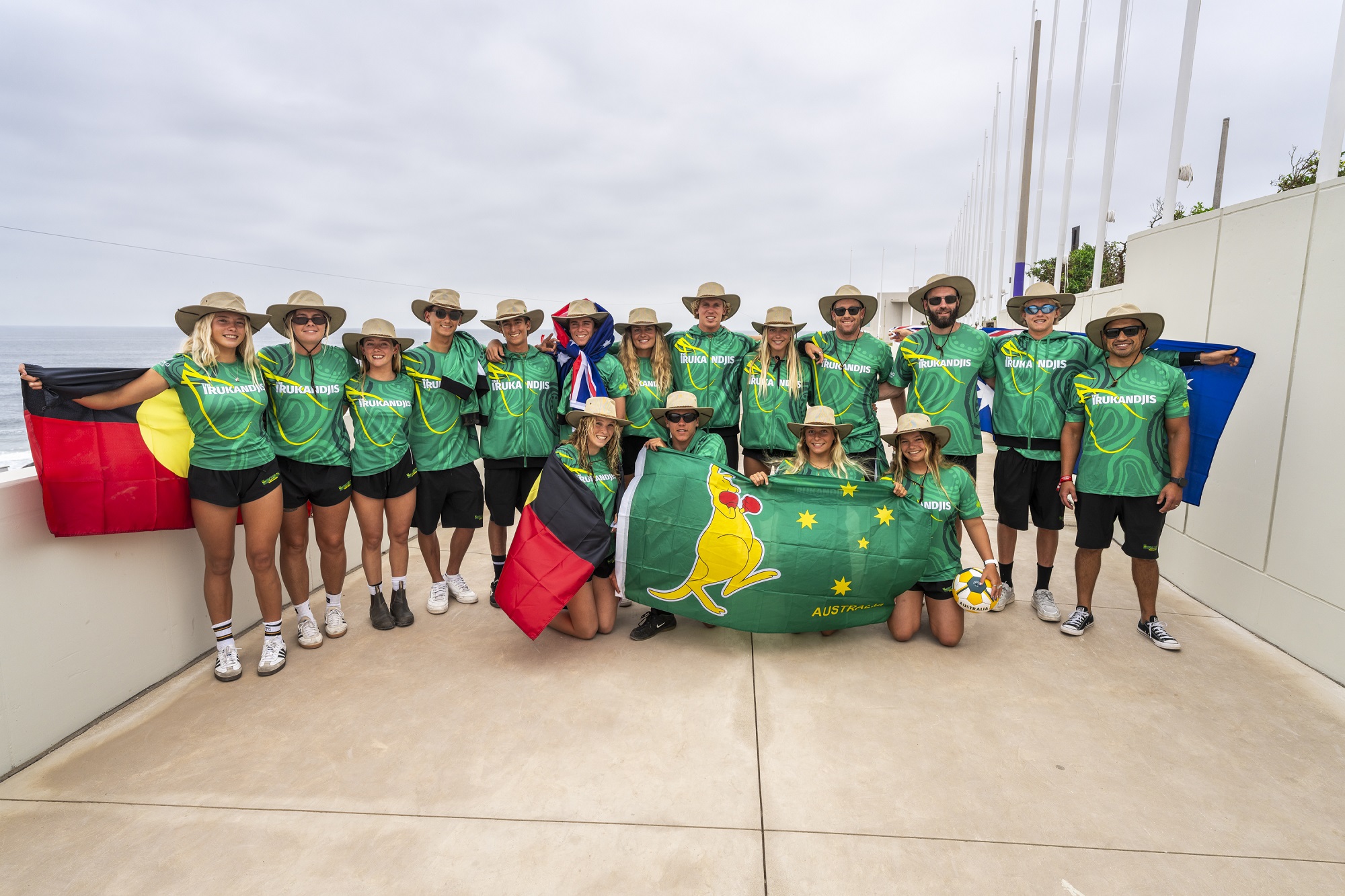


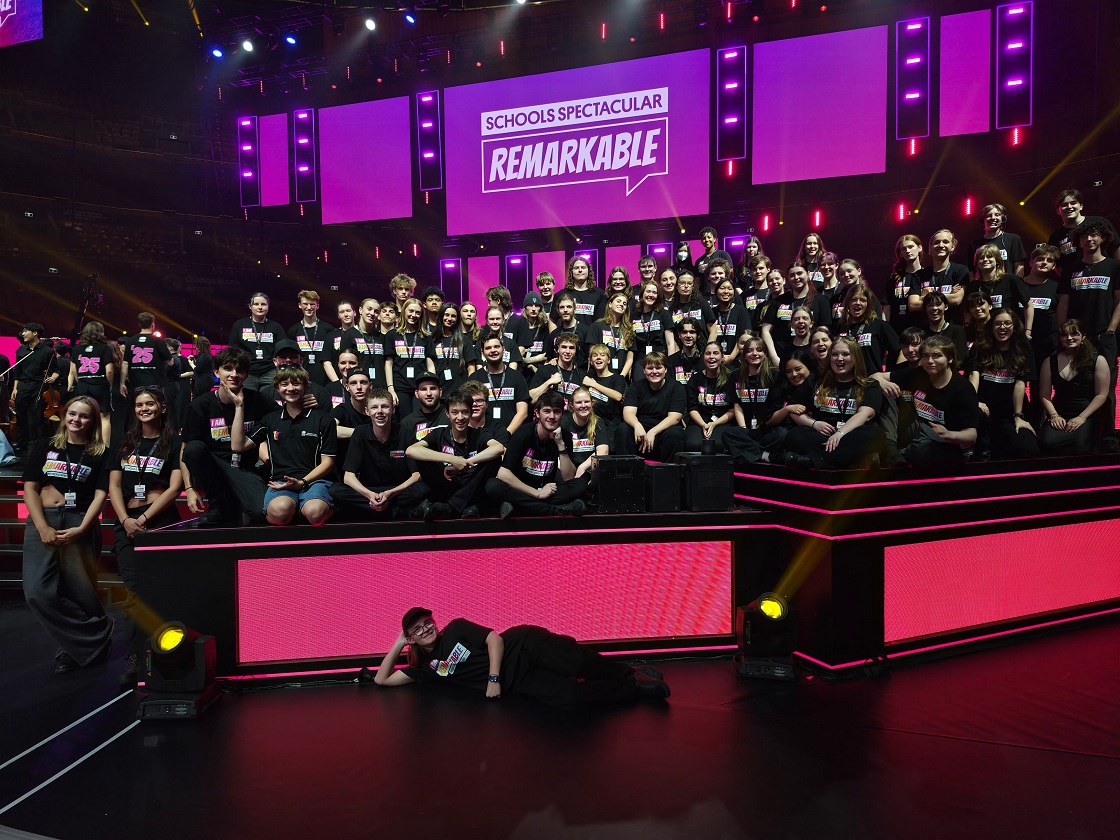



















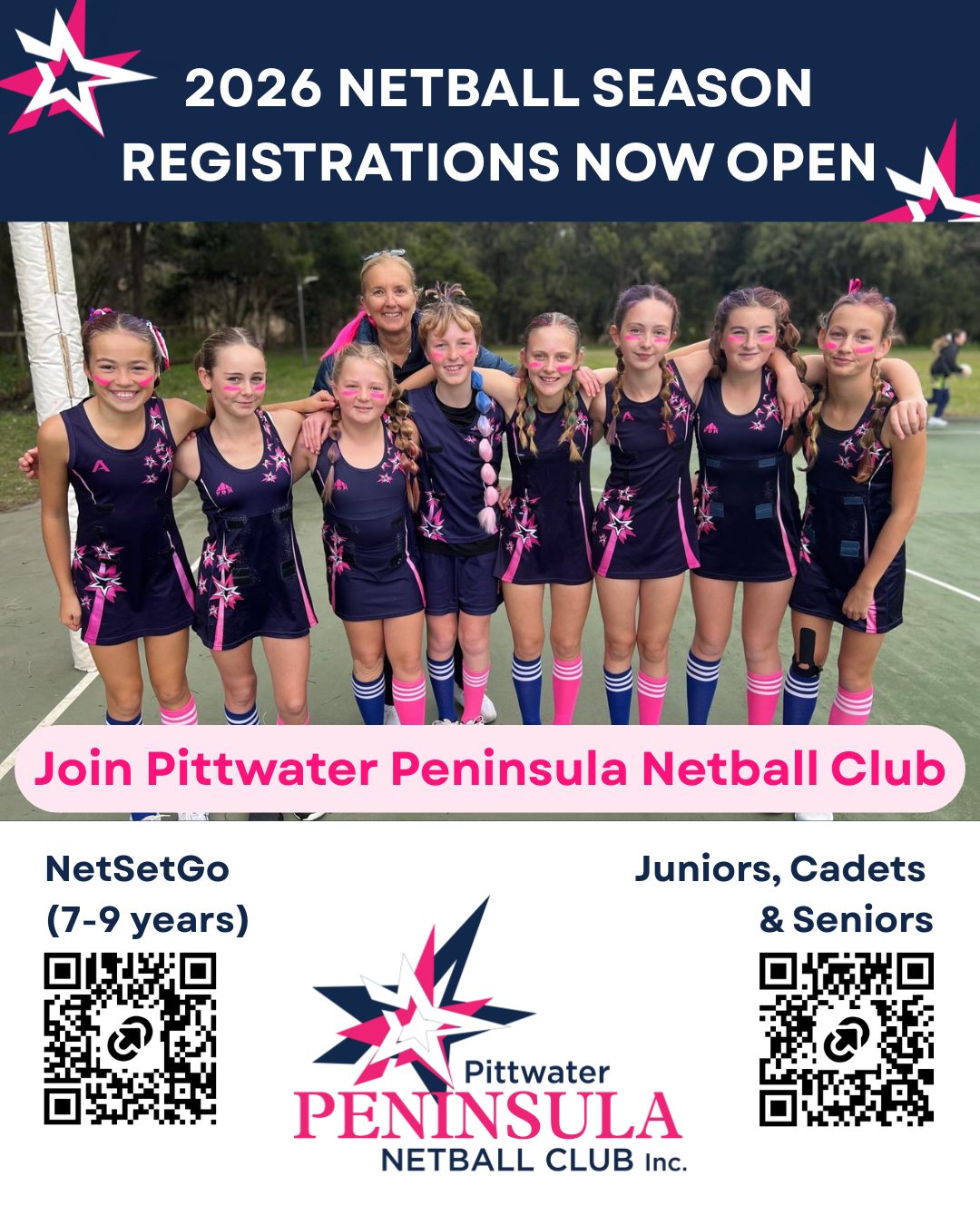



.JPG?timestamp=1736481398565)
.jpg?timestamp=1763097636341)




























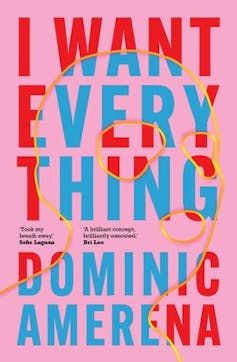
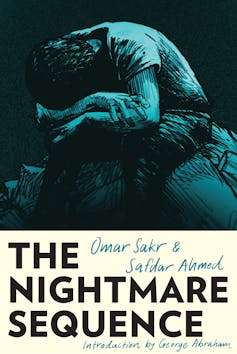


















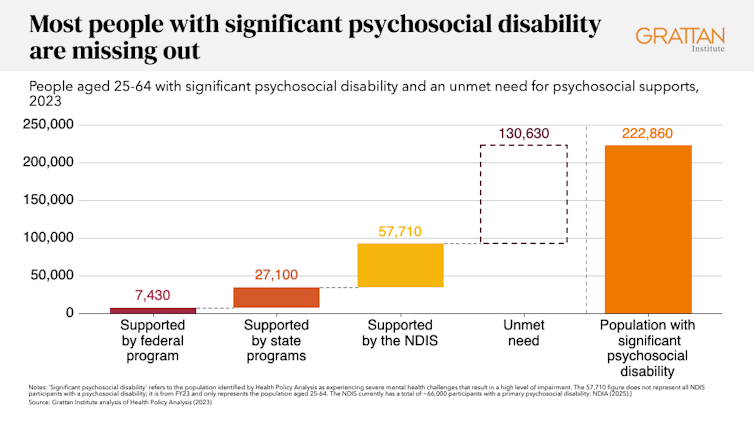





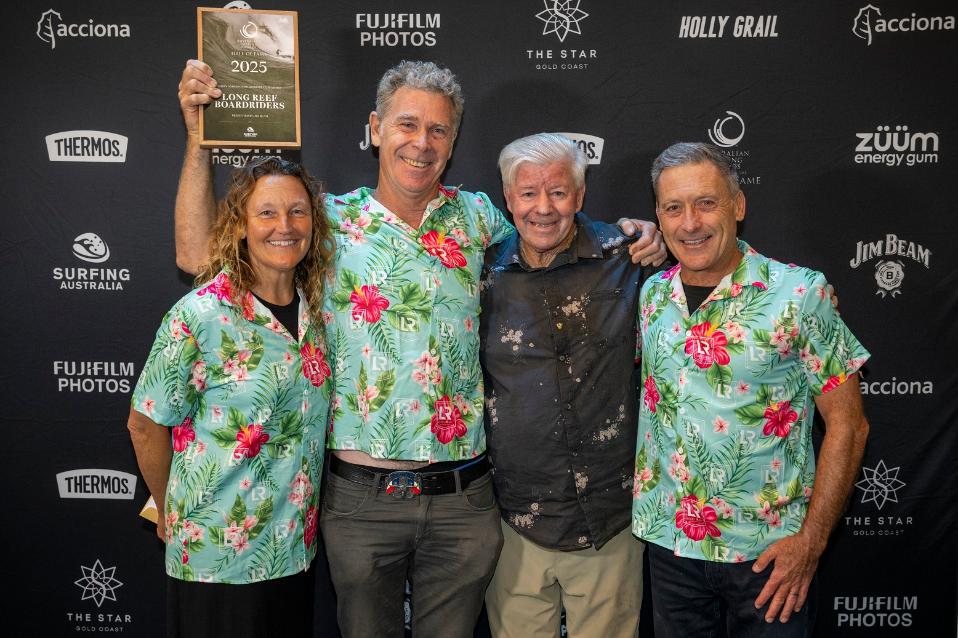
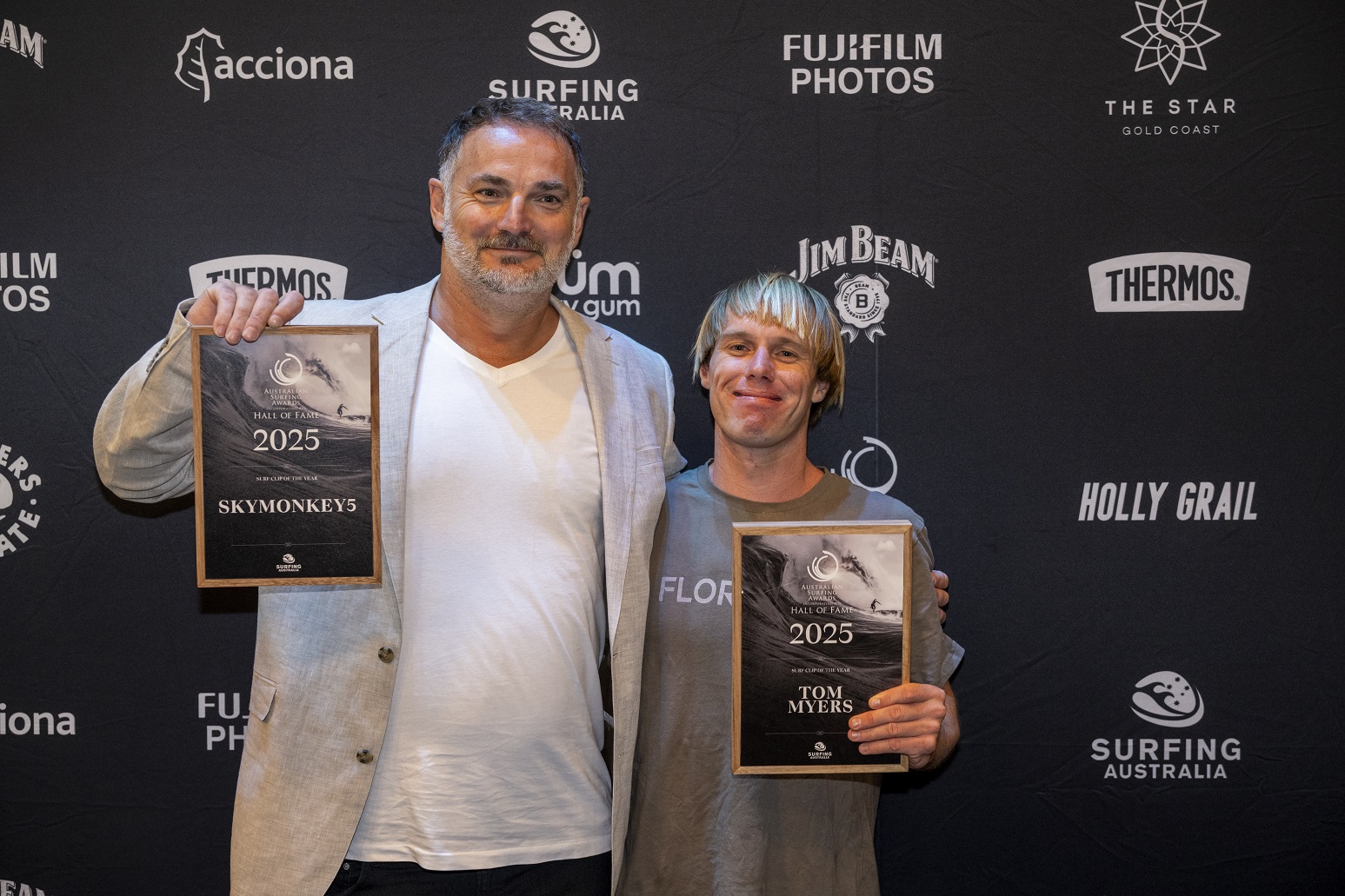
%20Loci%20Cullen%20win.jpg?timestamp=1765041319556)



.jpg?timestamp=1764993307704)
.jpg?timestamp=1764991123146)
.jpg?timestamp=1764991332007)
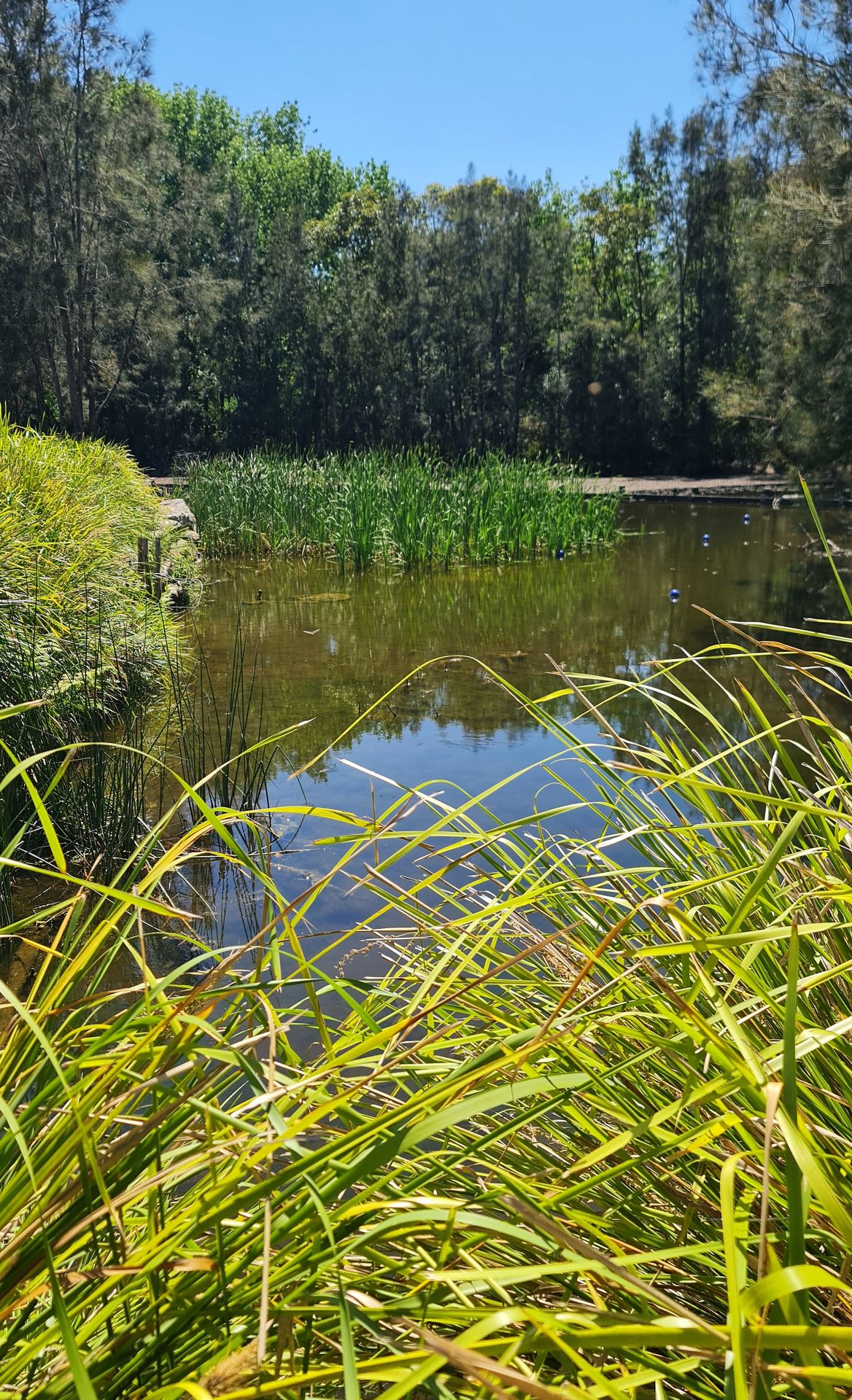
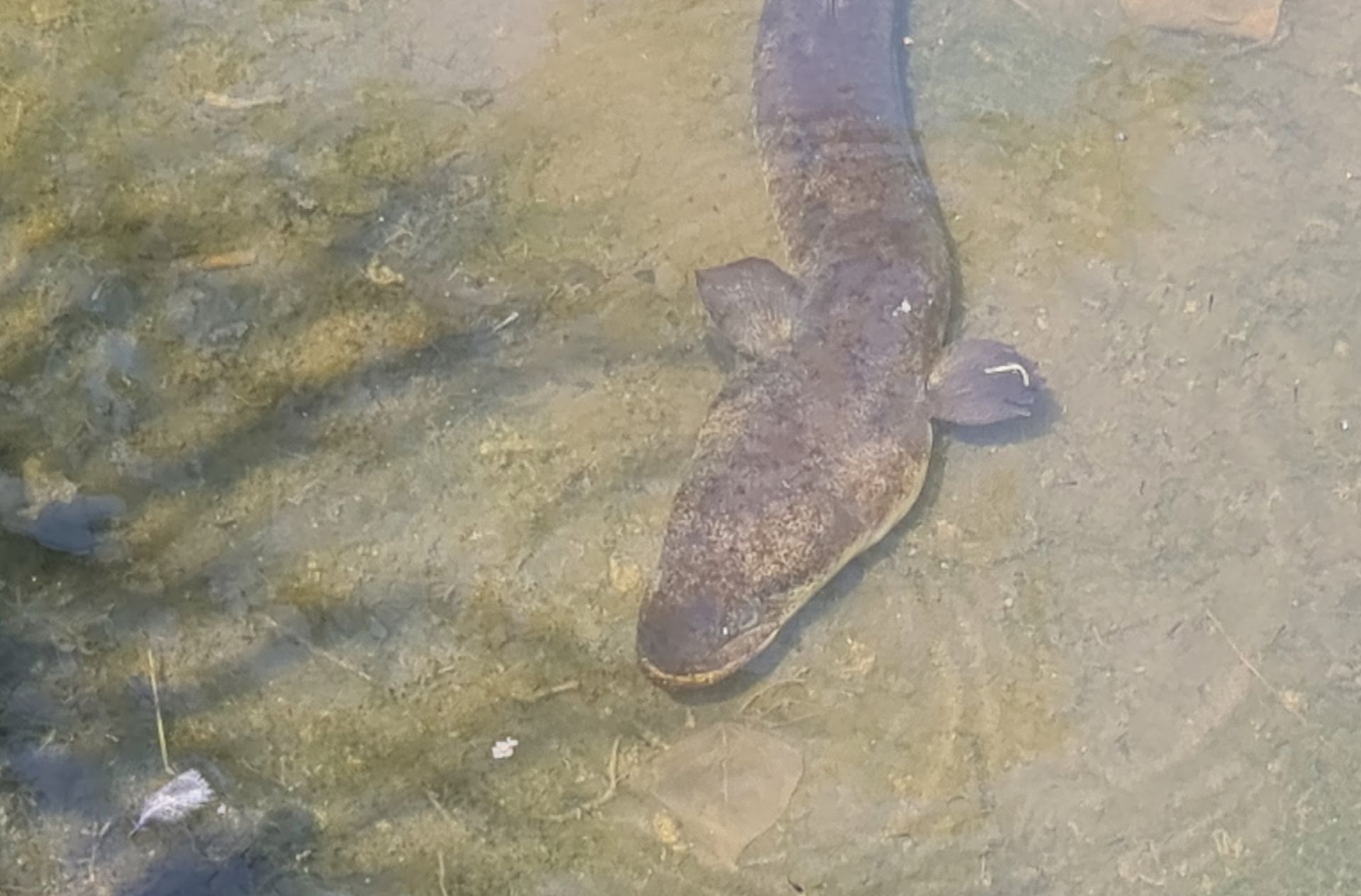





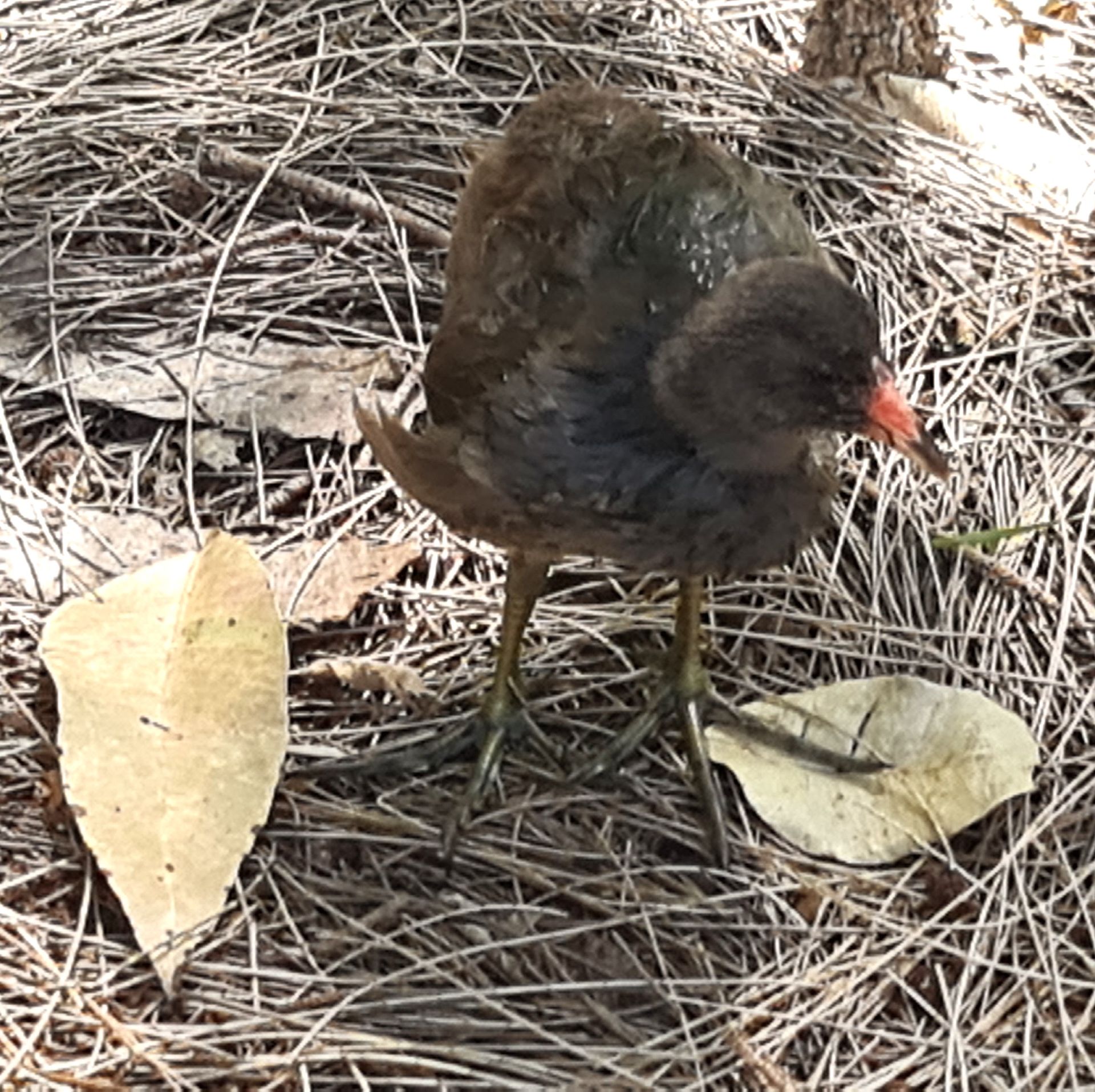
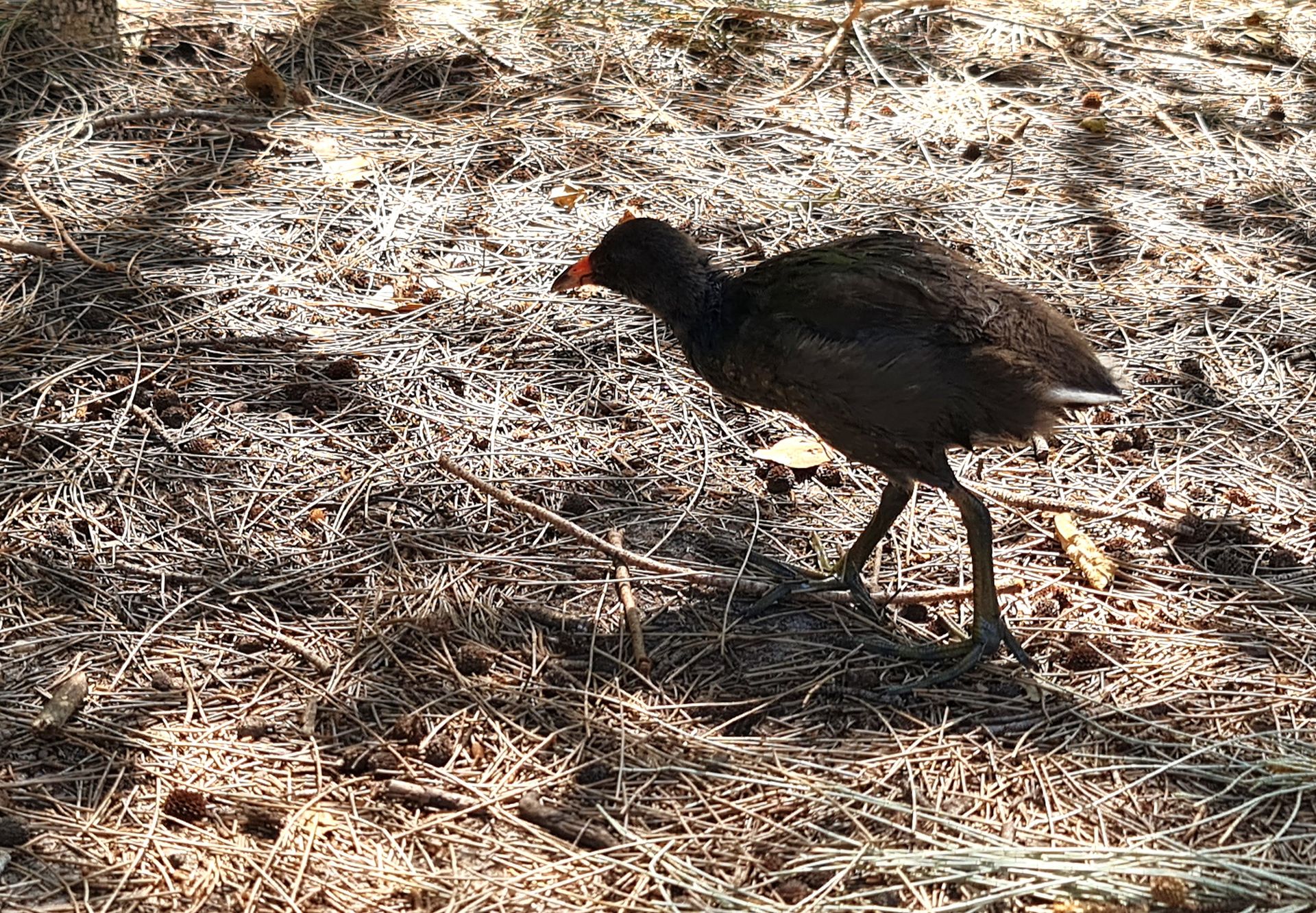




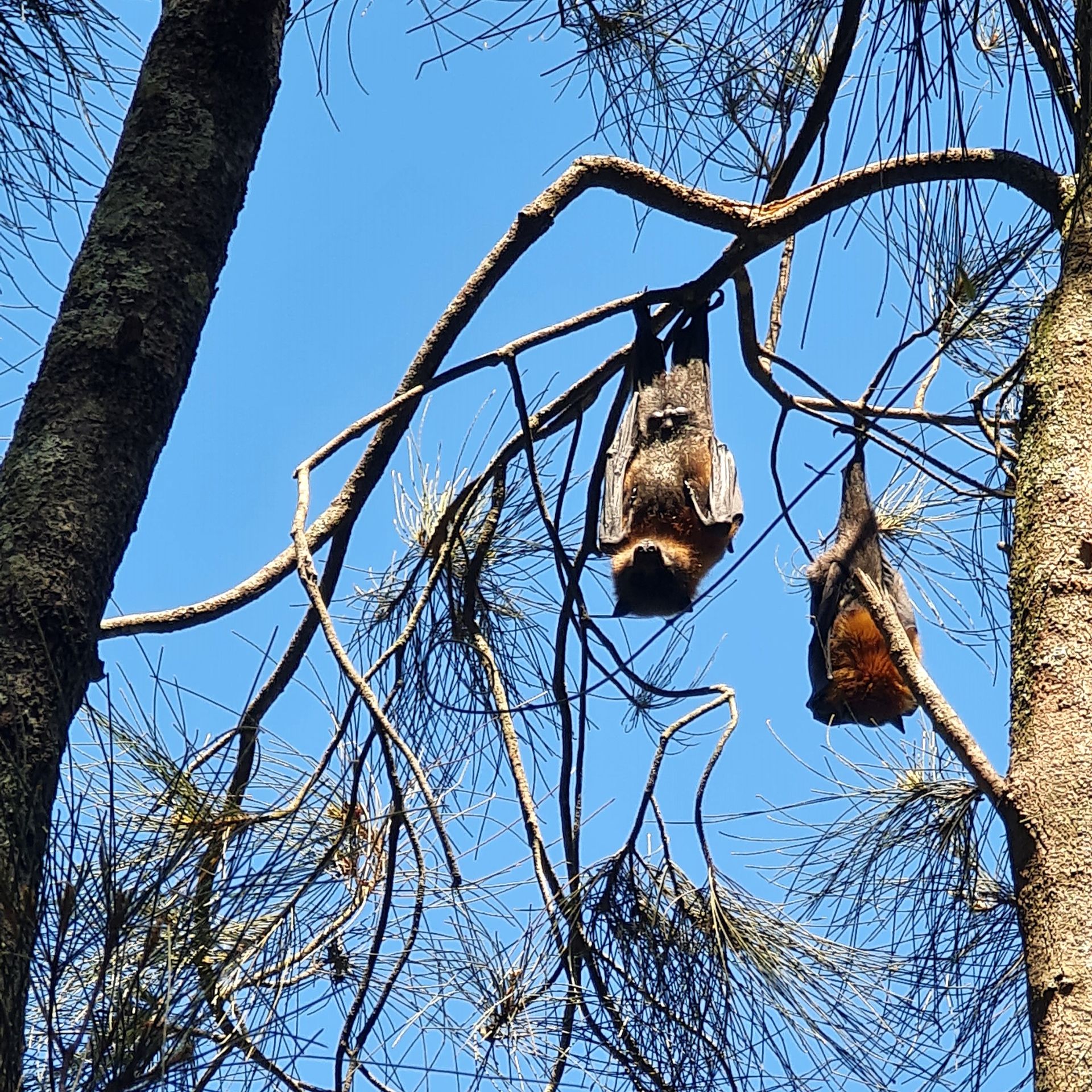


.JPG?timestamp=1669266790177)



























.jpg?timestamp=1764649735798)













_-_Noah,_a_Mystery_Play_-_KINCM-2005.4842_-_Ferens_Art_Gallery.jpg)


.jpeg)