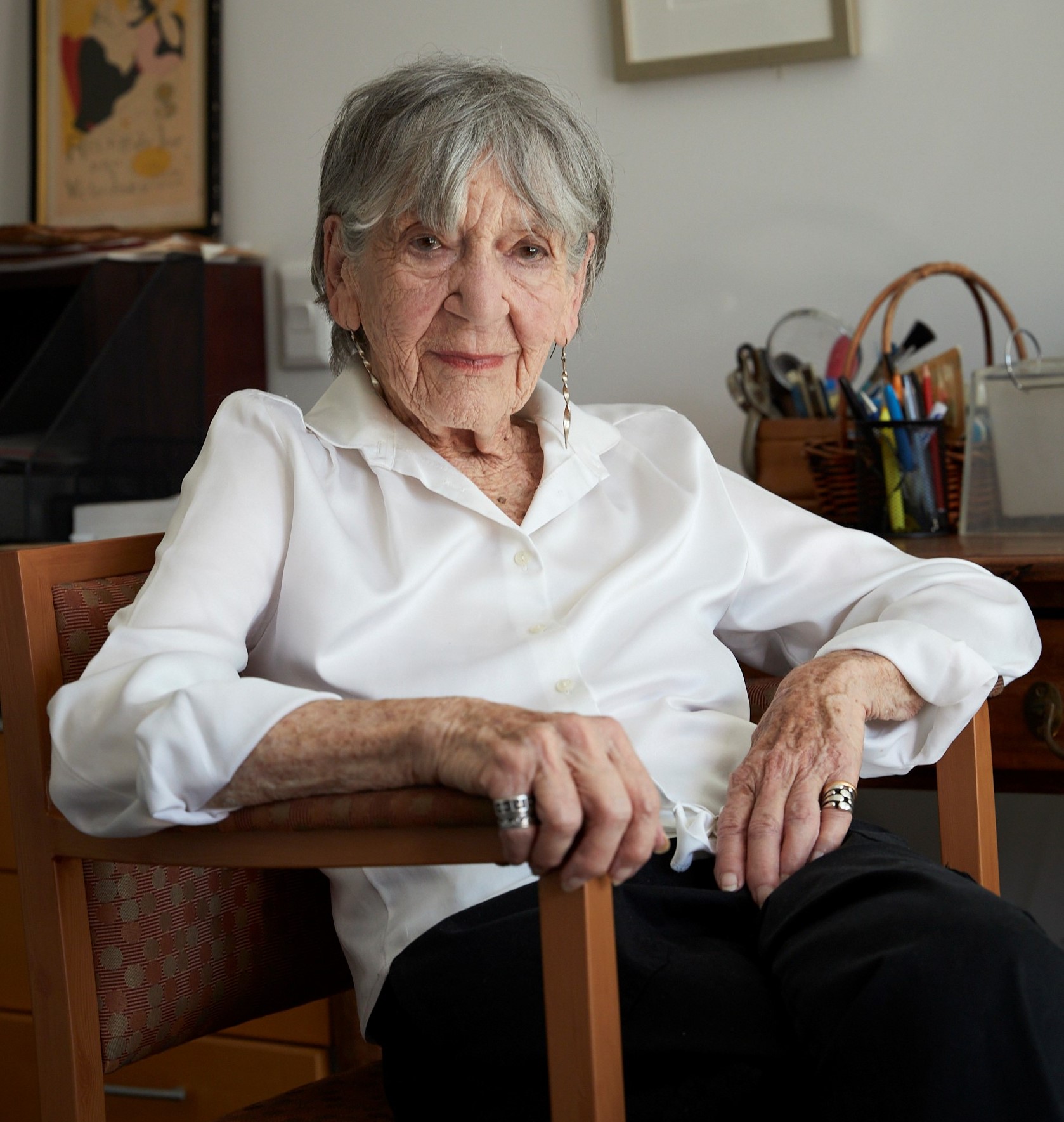
Warriewood resident Natalie Scott is a writer of novels, short stories, non-fiction, and books for children, many of which have been published internationally.
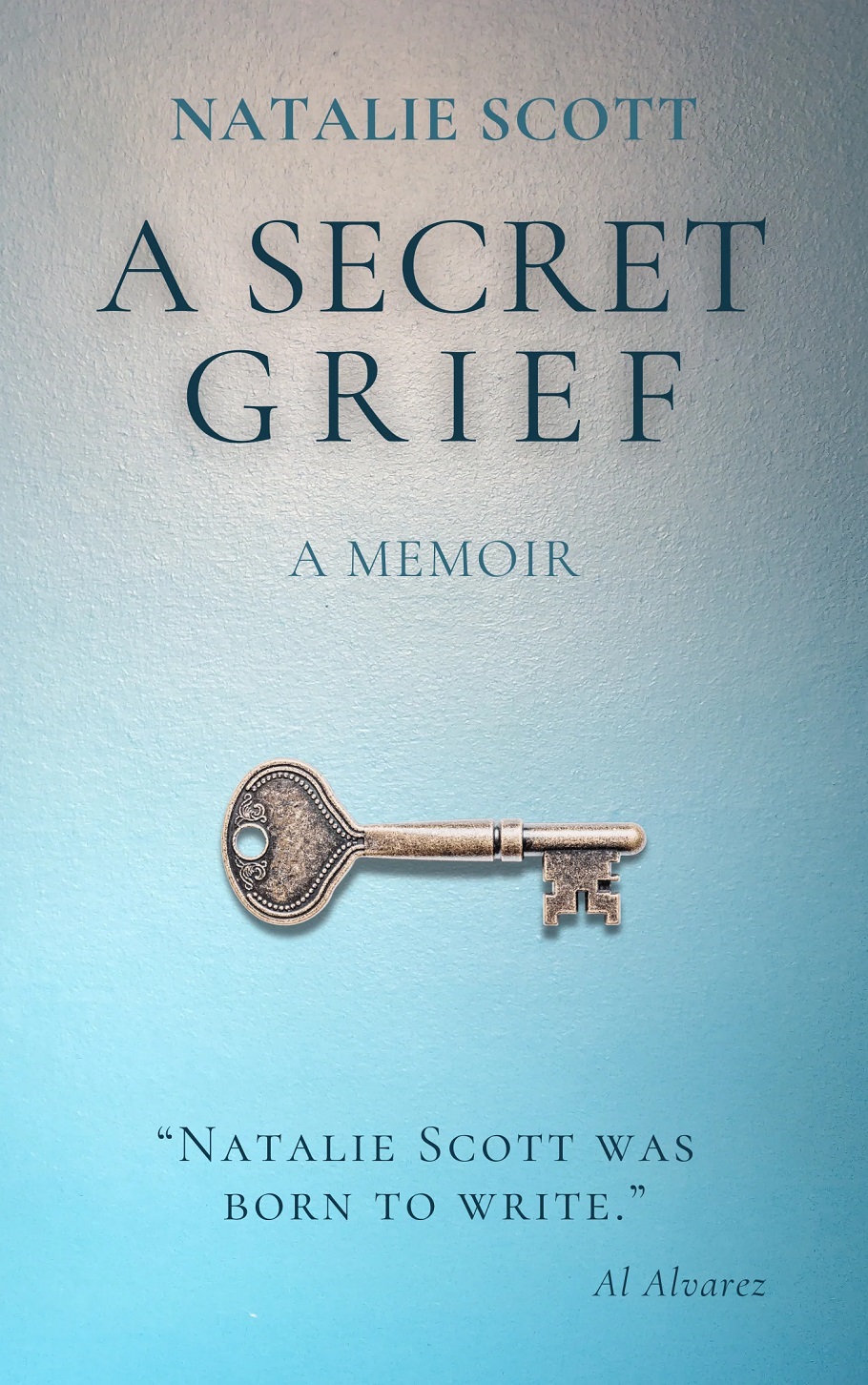
Now 97 years young, the ex-journalist is turning the spotlight on her own life. Born to middle-class parents of European origins, Natalie’s memoir, A Secret Grief, centres around the formative years of her childhood which was shaped by beauty, fear and fierce emotional undercurrents in 1930s and 1940s Australia.
Affectionately nicknamed ‘Natasha’, Natalie’s childhood was over-shadowed by her complex and brilliant mother, Nina, whose first act of motherhood teeters on the edge of tragedy. Her father, Marcus, is warm and sociable but torn between loyalty to his wife and love for his daughter. In an effort to protect Natasha, he sends her to a conservative boarding school in the Blue Mountains.
There, under the rule of two stern spinsters, one English, one French, Natasha enters a world of strict routine, silence and subtle cruelties. Beyond the school gates, the Depression and World War II reshape the world; within them, Natasha faces her own struggles; loneliness, loss and the pressure to conform.
In time, she runs from the school and towards her own developing sense of self.
Unflinching and lyrical, A Secret Grief is a meditation on memory, survival and the forces that shape, and sometimes fracture, our earliest bonds. With exquisite honesty, Scott captures both the fragility and resilience of the human spirit.
A Secret Grief is an incredible insight into not just Natalie's own childhood, but also a vivid, detailed and beautifully written depiction of life in an era gone by.
A columnist for The Sydney Morning Herald, Natalie has written for television and radio and has contributed to many literary magazines, including The Griffith Review, Southerly, Westerly and Meanjin. She has also conducted courses in creative writing at both NSW and Macquarie Universities.
Her debut novel, Wherever We Step the Land is Mined (1980), published in Australia, the UK and USA, explores a woman’s struggle for independence, while her second, The Glasshouse, examines the anguish of old age and the guilt of selfish choices. The late Ruth Cracknell recorded The Glass House for the ABC, and also narrated Scott’s Eating Out and Other Stories, which won both the National Library TDK Audio Book Award for Unabridged Fiction and The Women Writers Biannual Fiction Award.
And that's just the tip of the iceberg of a literary and journalism career that spans decades and places Natalie among Australia's Women of Letters.
Pittwater Online recently spoke to Natalie to try and find where it all comes from and more about her newest work.
When and where were you born Natalie?
I was born in Sydney, in Waverly Hospital, Waverly, in 1928, so I’m 97 now.
Where did you grow up?
I grew up in Coogee, Bondi and Strathfield.
How old were you when you went to the Boarding School in the Blue Mountains?
I was 7, which was alarming for me.
Did you see your mother and father during that time?
Oh yes, during the school holidays, three times a year, and there were the odd times when parents could come and take us out for the weekend. I was there for a long time though, over 7 years.
What did you do when you left there?
When I was 14 and came back from the Springwood Ladies College you went on to get what was then the Intermediate Certificate. So, I then attended MLC at Burwood, because we lived at Strathfield and then a year at what was then the Regatta school at Penrith.
I qualified to go to Sydney University, but my father, who was a lovely man, wanted me to be practical. He said ‘you can do Medicine, Dentistry or Pharmaceuticals’. I said I didn’t want to do that, I wanted to do Arts. My father said, and I don’t know where he heard it, but he said ‘oh Arts, students doing Arts don’t want to make they want to mate ... and not graduate’. So I ended up doing further education, but later I ended up doing a course for two years by one of the tutors at Sydney University, in Literature, Writing and general Arts.
Did you go to work after that?
No. With a girl, Joan, I travelled around Australia for 12 months, which, looking back, was probably considered alarming in those days. We managed to get a job selling magazines, periodicals such as Vogue and the like – those high-class magazines - for a company that distributed them. Some excerpts would be published in the Daily Mirror newspaper of then, possibly to increase sales.
We were hopeless at selling anything. We started off in Orange but because we were hopeless at it we got odd jobs. I remember one was in a hospital. My friend Joan was sent to the men’s ward and I was sent to the children’s ward. Her education progressed far more quickly than mine.
From there we got to Melbourne and again got odd jobs, such as selling in shops and that sort of thing. From Melbourne we went to Tasmania where we met up with two girls, one English and one Australian girl and they were going to England. So the four of us ganged up, and they were due to sail from Perth to England. We got a ride from Melbourne across the Nullarbor in the back of a lorry that used to carry cheese. You can imagine how it smelt.
We got as far as Perth but then my mother was ill and I had to go home. So that was that for while.
How did you get from Perth to Sydney?
My father kept sending me money for what I may need, and I kept sending it back, but we did indulge in a trip back by train for that. It was almost a year we were doing that. When we started in Orange we were staying in a hotel to begin with and then were offered a holiday on a family’s cattle station. We were advised by them that if we were attacked by any wild pigs to run away and climb a tree. When that actually happened I was the first up a tree (laughs).
So, you came back to Sydney to look after your mother?
Yes, but I don’t know that I was much help to her. I was a great reader and that’s when I read and read and read. I wasn’t doing much writing then – I was always ‘later’ with everything.
I married then, in 1951, to a very intelligent Law student who had a scholarship to Harvard. I said I wasn’t going to America so it was transferred to London and we went there for three years. The university had a flat and we lived there. That’s when my son was born.
I loved London, we had a wonderful time. We came back and he was practicing and by then I had another child, and women rarely had positions then. If they were married they didn’t work, some places would not accept married women for jobs, banks for instance.
Unfortunately my marriage didn’t work out and when it ended I was angry about a lot of things I’d put off doing and other things. I had a great friend and he came in one day and I was able to say ‘that’s how I feel’ – I’d written it all down. He said ‘send it somewhere’ – I said ‘what!!!’, he said again ‘send it somewhere’ – ‘where?’ he said ‘the Bulletin’.
The Bulletin accepted it and said they wanted to hear more from me. I was just getting by and trying to tie up things so I really didn’t think to keep writing things and sending them out for about a year. And then I started and was offered a column on what was then the newly opened Australian and also writing generally. I then started doing a column for the Sydney Morning Herald and I was free to write about whatever I wanted. My father had masses of scrapbooks; he kept everything.
I was mixing in what would be considered artistic circles and ended up interviewing all sorts of people who were the current stars. By then I was writing and selling articles to support myself and my children, and it was hard I can tell you, but yes, I was making ends meet.
What was it like working as a woman in what was then a male-dominated workforce in journalism?
Well, I was working freelance, so I didn’t encounter a lot of that, as I would do a lot of my work from home. I then began writing features and short stories and over the years I worked towards having my first novel published, which was run by Jonathon Cape, who were top of the pops in publishing then. It went on from there; I’ve written novels since, I’ve written three collections of short stories. One of them was read by Ruth Cracknell for the ABC. I’ve written more since then; short stories, articles for Meanjin, for Southerly, and others.
Professor Elizabeth Webby, who was a Professor of English Literature and also the Editor at Southerly, and who passed away in 2023, she put on the back of one of my books;
’To me the short story remains the fictional form and Natalie Scott’s stories are some of the most stylish being written in Australia.’
By this time Elizabeth Webby had commissioned someone to write about my work and this appeared in Southerly – it was around 30 pages. I was reviewed widely all over London and England. Jonathon Cape in London flew me to New York, I must have been 50 by then, and I had quite remarkable reviews there as well.
I was one of seven people chosen to go to a writer’s retreat in Armidale University. I was about 30 at this time. There I met Al Alvarez, the English poet, novelist and critic, and I’d like to read you a letter he wrote:
‘I first had the pleasure of meeting Miss Scott and reading some of her work at the writer’s retreat in Adelaide where I was a resident consultant tutor. When I read a number of her stories my initial reaction was one of surprise when I discovered that she did not have a considerable reputation in Australia. She has that rarest of qualities, a natural talent. Her perception is sharp and original, her prose elegant and witty – she has a great deal to say. All this is perhaps to be expected from a mature woman, what is not to be expected is a quality which appears in everything she works and in everything read of hers, the utter confidence of a born writer. I am convinced that she will produce something really important and Australian letters will benefit.’
At that time Al Alvarez was the Editor of The Observer.
I also wrote children’s books and one of these, called ‘Firebrand’ (1969), I wrote because I was always saying to my daughter ‘push your hair out of your eyes’ and she would refuse to. That book was about a little girl who refused to push the hair out of her eyes until she discovered she missed seeing many things.
My daughter was always pushing her hair out of her eyes after that. That book has gone out of circulation now and I still have a copy but wish I’d held on to more as it has recently been advertised on Amazon for $700!
That went into an American paperback with a whole lot of my children’s stories. But over the past several years it’s been adult fiction that’s interested me.
For younger people thinking about becoming a writer, what would you say to them that they need to do?
I think to not write with a view to publication. Write for yourself, say what you want to say- that is what I think is important.
My second novel, called ‘The Glass House’ (1985) which was also recorded by Ruth Cracknell, I would very much like to see re-printed. It’s set on Sydney Harbour, and physically it would be very attractive, but maybe…maybe… I haven’t mentioned this to anyone, is about the love between two unlikely people, and that was me writing about what I wanted to say and what I think is important.
One review states this is about the ‘anguish of old grief and the guilt of selfish choices’ [that comes to some as we mature]. What is the anguish and guilt that may come with old age – what are you talking about there?
Well, I’m 97 now. But what I’m talking about with age is I just think of it as a number, it really is. I don’t look or ask or see what people’s ages are and I tell you what, I’m really fed up with people telling me ‘oh, you’re marvellous for your age’.
I’m just me.
The new book, ‘A Secret Grief’, was released November 10, how long did that take to write?
So many people ask me that and I can’t really remember. Years earlier, when I was writing fiction atop the columnist work, I held down a job, I had to do all sorts of things, and I can’t estimate how long it took me to complete works. Because this is a memoir it just came so easily and once I started it just kept going. The memories were just there – I suppose as you get older earlier memories become more important than the present. Although I don’t find that to be so, I suppose that is what must happen.
At any rate, it’s finished now and I’m happy with it – there is something in it for everyone, across all ages. I’d say to you, please read the book.
When did you move to Warriewood?
I lived in Waverton, near Kirribilli, for around 60 years. So still had that connection with the water and sea. I had a little terrace house with a courtyard that opened on to the street in Tunks Street Waverton. I was sitting at the desk and saw out the window there was someone on my land with one of those official books, writing down things. I went out and said ‘can I help you?’. There had been some storms and he said ‘we understand there’s some loose electricity wires so we’re just here to look at that’. He went out and found the loose wires on the terrace next door. Within 10 minutes there two big trucks there and all these people in specialist gear. They asked me if I had been getting any shocks to which I replied ‘no’. So they found this live wire – at any rate all these men came in and did whatever they did. I went out to thank this man, a very very nice man, and I tripped and fell between these two concrete urns in the courtyard. I saw someone jump down and pull me back, it would have killed me I think if they hadn’t, but it did put me in hospital with ribs and this, that and the other.
I recovered quite well – I must have been about 93, 94 then. Because of my age they’d put me in a geriatric ward and I said I was waiting to be released. At 92 I got my license again and they said ‘come back in a year’; you have to be tested annually once you reach age 70, so I was perfectly independent still and capable of looking after myself. At any rate, this man in the hospital said ‘we can’t release you unless you agree to live under full care’. I said ‘what!!’. This went on and I can clearly see the expressions on the faces of the students who with him; they were amazed that I’d answer back.
The Specialist said to my children as well ‘she needs to go in to full care’. I eventually agreed to spend a month in a respite facility, to gain strength again. My kids looked around and said they wouldn’t put me into one of these places, they said they wouldn’t put a dog into one of these places, let alone their mother. My son did some research into these places and none were up to scratch. Then through a friend of my daughter’s we heard about Wesley Taylor at Narrabeen and I went there for a months’ respite, as was required.
I quickly found out the code to go downstairs and was permitted to go out on buses and to the library and walks. Around then that place sold, I’d say for countless millions, and I had to go somewhere else.
We looked around, my children again doing their research, and a place called ‘Narrabeen Glades’ had availability. This is very comfortable and very nice, the food is good and the people are very kind, I have my own bathroom and so forth, and look out onto a courtyard.
A few months ago I fell and broke my femur and made a remarkable recovery, but I’m now on a walker. So although it is a bit restrictive and isolating in some ways, I’m in the part which is new wing and still have a handful of friends who come visiting and I can still go out whenever I want. But still, I keep thinking ‘why the hell am I here?’.
The Blue Mountains as a 7 to 14 year old – what are your memories of there and then?
It was called ‘Springwood Ladies College’ so you can imagine what it was like. The main part of he school was a lovely big old house which had belonged to someone called ‘Sir John Moore’, and Edward the VIII had come there so the dormitories were named ‘Prince Edward’ – ‘King …’ – that sort of thing.
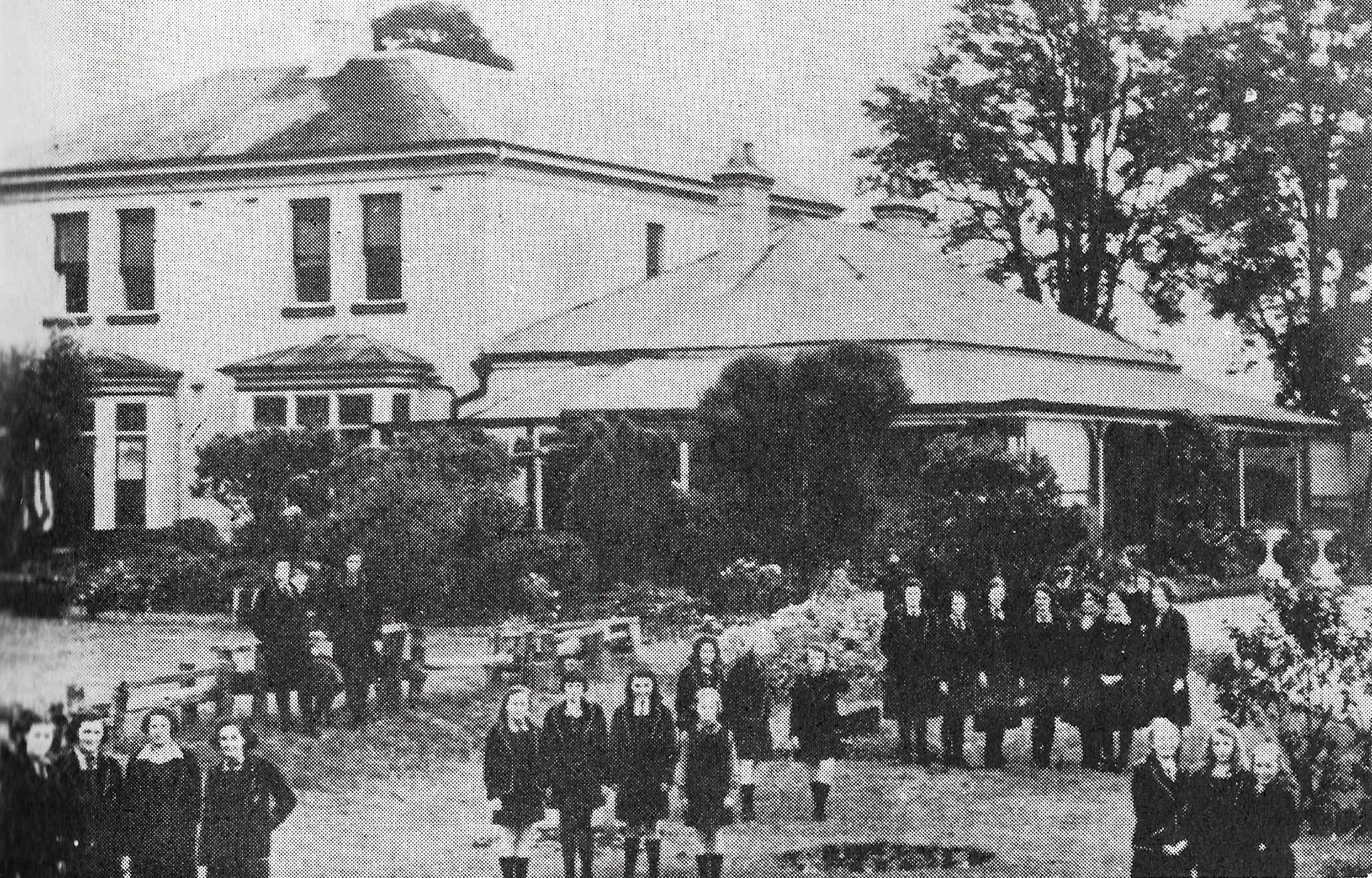
Springwood Ladies College circa1930 - this was demolished in 1958
I’ll tell you this incident because it’s in ‘A Secret Grief’ and shares something of then.
During winter we boarders would have a paper chase. The gym mistress went out and scattered a trail across the mountains. We would be put into groups of three and the one strict rule was if one fell behind the other two had to wait for them. Well, this girl kept moaning about her foot so the two of us stopped.
I must have been 11 by this time, I’d already had a lot of adventures in between. I don’t know why but I always seemed to be the person appointed to make the decisions, and we got up to go off again and came to where the track divided; one went up and the other went down. By this time it was getting cold and windy and misty.
I said ‘we’ve got to go’ and we put up a cairn to signal to people we’d been there, which took ages because we didn’t initially put the big ones at the bottom, and we had four people with us by then. At any rate, the night was beginning to come down and in the wind the papers had been blown into both paths, and everyone said to me ‘which track should we take?’ and I chose the one going up, the top one.
We stumbled along there and I said ‘we’re going to find a cave’. I can remember this quite clearly. Night came down fully and we got to a place where there was a rock overhang for some shelter. By this time they were crying and I was on the brink of doing the same. It was very dark by then and very cold.
I have little memory of what happened next but I woke up in hospital with hypothermia. I tell this story because I don’t remember that part. I don’t know how long it was before they found us, but nowadays there would be police out and SES Searchers, helicopters, a full mobilisation of everyone and anything available. In those times they didn’t seem that fussed about it – there were a couple of other episodes as well - and I think the attitude or how it was dealt with just wouldn’t happen today.
Are you a great-grandmother now?
Yes I am, I just have the one great-granddaughter who is 10 and is adorable of course. And I tell you what, I’m not going to turn my toes up before next March and I’ll tell you why; I wrote a huge historical novel, which took me a long time to research, around 5-6 years for the research alone. It’s set in Russia in Czarist times, and it’s called ‘The Rim of the Sky’ and it will be launched in March 2026.
I had two Russian grandfathers, who had died before I was born. If you read the book you will see the connections. I’ve always been interested in Russia. Years ago I read this book about Russian prisoners who were all to be hanged. One was a young woman who was pregnant – she was to be hanged after she gave birth to the child. Well, she is my main character. Even though it is a novel, with a subject like that you have to be sure of a lot of facts. I’ve no idea who she really was, and could never find out, but the odd paragraph I’d read in this book was where it started.
What are your favourite places in Pittwater and why?
I just love to go anywhere near the sea and all along here is just beautiful. Even though it’s called ‘Narrabeen Glades’ it’s in Warriewood and so it’s a lovely place to be. I don’t swim anymore but my daughter lives at Mona Vale, my grandson is at Freshwater and my son is not far way either. So when we go out, for meals or something else, I just love to go near the water – the surf and even the calm waters. When you get older, make sure you make provisions for your way of life for when you’re much older. It can be difficult, and old age just seems to have turned into an industry, but make sure you do what you can to stay connected to your family and close to the kinds of places and people you have always loved.
What is your ‘motto for life’ or a favourite phrase you try to live by?
Well, I know that one quite well and this is in the book because my father Marcus said it to me:
Optimism - always have optimism.
It gets a bit thin occasionally, I can tell you, but have some optimism, no matter what you’re up against and you will come through.
A SECRET GRIEF
By Natalie Scott
RRP: $32.95 PAPERBACK
“Natalie Scott was born to write” - Al Alvarez
In this deeply evocative and personal memoir, former journalist and author Natalie Scott revisits a formative time in her life to uncover the quiet battles and tender moments that shaped her identity.
Available in all good book stores and online now.