Week Four August 2026: Issue 657 (published Sunday August 23)
Pelé the Pelican returns Home to Narrabeen Lagoon
Pelé's rescue team - go Team Pelé!
Pelé, the Pelican came out of the Taronga Zoo Wildlife hospital on Tuesday August 18 and was released back to his home fishing grounds, Narrabeen Lagoon. The young people and parents and grandparents who had helped rescue him gathered to welcome him home and watch him return to the water.
Pelé had spent around a month at the Sydney Taronga Wildlife Hospital after the above youngsters and their parents and one grandmother helped rescue him, with the help of Sydney Wildlife volunteers Jacqui Marlowe and Joseph and Eira Battaglia.
Taronga’s two Wildlife Hospitals, at Taronga Zoo Sydney and Taronga Western Plains Zoo Dubbo, are responsible for maintaining the health of close to 1,500 wildlife cases every year, and are the largest provider of wildlife veterinary services in NSW.
They conduct around 200 surgeries per month, have helped save 7 native species form extinction, and have released over 50,000 animals back into the wild.
The aim of the Wildlife Hospitals is to rehabilitate as many native animals as possible for release back to the wild. The variety of animals treated is enormous, ranging from stranded seals and orphaned baby bats, to pelicans tangled in fishing line. All these animals need professional care and attention during the treatment and rehabilitation process to ensure they can be returned to their natural environment.
When an animal is brought to one of the two hospitals, the encounter details are recorded to ensure the animal is returned to its habitat. Whenever possible the rescuer is involved in the eventual release of the animal.
The expertise of the Taronga team, comprising of Veterinarians, Vet Nurses, Veterinary Pathologists and Zoo Nutritionists, have decades of experience, allowing the Taronga Wildlife Hospitals to deliver first-class care to a wide range of Australian and exotic animals.
Teams also support priority species recovery programs and provide inter-agency support to state and federal government departments. Taronga’s unique expertise allows them to play an important role in biosecurity, conservation interventions, and animal welfare globally. Taronga continues to assist state and federal enforcement agencies in assessing and caring for confiscated animals.
While capital works like the new $40.7 million Taronga Wildlife Hospital received major NSW Government infrastructure grants, day-to-day operational costs—including animal food, medications, and surgeries—rely heavily on public fundraising, corporate sponsorships, and philanthropic donations rather than recurring government operational allowances.
Libby Hall, Manager at the Taronga Wildlife Hospital, who has been working in this area for forty years and credits the young children who helped rescue Pelé as those who saved him, shared insights into his treatment.
Libby Hall, Manager at the Taronga Wildlife Hospital, with Pelé's rescuers
How much surgery did Pelé require?
He had three different anaesthetics. So he had his intake, which is his initial exam. And then we did our bird flu testing then. So he had to wait for that to come back. And then he had an anaesthetic and blood taken. And then we did two surgeries. So two surgeries to remove the hooks; the first one and then the second one to remove all the small pieces that were in the joint. And then the rehabilitation period, which has been quite long because he's been in for a month. He wasn't using his leg at all, it was very sore. So a lot of pain relief, antibiotics and treatment required to get him ready to come back to the wild.
The hook disintegrated?
One of them. He had several hooks. The external ones were easy to get out, but there was an older one, in the joint as well. The small pieces of it were disintegrating. It was a nasty thing.
What's his course of rehabilitation been?
His rehabilitation means he had to have full motion in that joint and be eating well. And he needed to have quite a lot of medication as well. So we needed to make sure he had his anti-inflammatories, his antibiotics, and taking those on a regular basis to enable him to heal so there was no infection.
Then he also needed to regain full movement. So swimming physio was the main thing that we did with him because we didn't want him walking on it because he couldn't wait there. It was very, very sore.
He couldn't wait there at all when he came in. And then we needed to feed him because he was quite a little bit underweight when he first came. Feed him up and then get him ready to come back into the wild. So, it was a bit of a process.
How much fish was Pelé eating a day?
He was eating about 20 red spot whiting a day.
How is the wildlife hospital funded?
The hospital is supported through donations from different organisations and individuals and every day gate takings. In other words, people coming into the zoo, that's where we get the money from, and also individual people who donate to the hospital.
How many animals are you treating and is that higher capacity in Spring?
We get about a thousand a year and the busiest time is Spring and Summer. Summer is very busy.
What species come in?
The majority are birds, but we get everything from tiny frogs right through to seals and everything in between. Lots of echidnas and many other animals. A lot of marine turtles.
Taronga Wildlife Hospital receives approx. 40 endangered marine turtles each year that are found injured, sick or stranded on land. The species most commonly received are Green Turtles, Loggerhead and Hawksbill turtles. Many of these turtles are suffering from the effects of marine debris, plastic ingestion and entanglement in fishing line, hooks and netting. These turtles receive intense veterinary attention including full diagnostic testing often including CT scans. In many cases the turtles are in care for many months regaining full condition and strength before being identified with tags and microchips and released at sea with the assistance of the Sydney Harbour Water Police.
The Taronga Wildlife Hospital in Sydney also treats and rehabilitates over 20 Little Penguins annually. The majority of these originate from the Manly Little Penguin colony, which is listed as an endangered population under the Threated Species Conservation Act. The Wildlife Hospital works in close collaboration with the Office of Environment and Heritage to protect these penguins, which have become a Sydney icon and are the last remaining mainland colony of penguins in New South Wales. Staff at the hospital have continued involvement with the Citizen Science based Project Penguin, threatened species fund raising events and beach clean ups in collaboration with the National Parks and Wildlife Service.
Joseph and Eira Battaglia, Manly Volunteer Penguin Wardens
Discarded fishing lines, hooks, lures, what can we do about their impacts on local wildlife?
It's really important that we dispose of these responsibly. There's what's called tangler bins in most areas now and we need to get as many as we can, but just a normal garbage bin will do. So people just to be really responsible and make sure that they pick up everything that they've brought down. All their lines and hooks, anything that's become tangled, pick it up and dispose of it responsibly.
Taronga’s Wild Futures Program
In 2019, Taronga undertook its largest capital fundraising to date with the aim to fund the building of two new wildlife specialist teaching hospitals and a new amphibian and reptile conservation centre.
These modern facilities provide urgently needed space for the increasing demand on Taronga services for treatment, surgeries, rehabilitation and quarantine whilst enabling widespread training and upskilling for wildlife carers, students and veterinary practitioners across the country.
They are home to the thousands of sick and injured animals seen by Taronga each year.
With your support, Taronga can continue to undertake this vital work.
If you find sick or injured wildlife, please call:
Sydney Wildlife Rescue - 24/7: 9413 4300
WIRES: 1300 094 737
Take your fishing tackle refuse home or bin it
Currently 12 tackle bins are located in popular fishing locations across the Northern Beaches to raise awareness to do the right thing and encourage people to dispose of unwanted tackle, hooks, lures, sinkers, swivels, and rinsed bait packaging.
Council collects material from the fishing tackle bin at Narrabeen Lagoon every Monday and 3 times a week in the warmer months, while the public litterbins, located nearby, are collected daily.
In addition, Council’s Cleansing Services team visits this popular fishing locations daily to remove loose litter and check for any discarded fishing lines and tackle as well.
In regard to signage, the tackle bins themselves have information about responsible fishing behaviour.’’
location of the council's fish tackle bins
what they look like. Photo and above graphic: NBC
Locations
Fishermans Beach
Sangrado Jetty, Seaforth
Manly Dam (sections 1 & 3)
Little Manly Point Park
Narrabeen Lagoon Bridge area
Pelican Path at Lake Park Road, North Narrabeen
Ellery’s Punt Reserve, Clontarf
Newport Jetty
Berry Reserve, Narrabeen
West Esplanade, Manly
Forty Baskets Jetty
Thank you very VERY Much
The crew from Sydney Wildlife would like to thank Fiona Dimas-Herd, Anne Olbach and her grandchildren, Eduardo Salgado and his son, Lucas Caetano Salgado, and Avian & Exotics Vet Narrabeen, for their coming together to rescue Pele.
Please – when disposing of your fishing line and hooks make sure you do so so it won’t hurt others; take it home with you or put it in one of the fishing tackle bins the council has installed. If you get it caught in the trees around the perimeter of the lagoon, please have some scissors or something with you to cut it out again.
Let's all look after this place a bit better, especially its furred, feathered and finned residents - together we are a great team - the best team; community.
Libby Hall with Sydney Wildlife volunteers Eira Battaglia and Jacqui Marlowe
Some photos of Pelé's release, before he winged south across the Lagoon, heading to the 'lake' side of the bridge:
stretching his wings:
Libby walks with Pelé as he adjusts to being home, still stretching his wings:
He heads towards the water, still stretching his wings:
Into the water he goes:
Into the sky he goes;
On his way towards the bridge at Narrabeen - take care Pelé !:
2026 HSC exams begin for 13,000 students
On Monday 10 August HSC exams have officially began in NSW, as 12,958 students studying a Language or Performing Arts course begin their oral and performance exams.
From then, 773 Dance students kicked-off performance exams, with another 3,026 students taking to the stage for Drama and 5,639 students completing their Music exams over the coming weeks.
In total 8,487 students studying Dance, Drama and Music will undertake an HSC performance exam, presenting choreographed routines, dramatic performances, musical works and compositions before markers.
Students studying a Language for the HSC also started exams, with the oral examination period running each Saturday for the next 4 weeks.
4,987 students will complete oral examinations across more than 29 languages and 50 language courses. Conducted one-on-one with trained examiners, the exams assess students’ ability to communicate confidently and respond spontaneously in real-world situations.
The oral and performance examinations, alongside practical works being submitted this term, mark the beginning of the 2026 HSC examination period, ahead of written examinations starting in October.
As has been the case for the past decade, this year, a large proportion (35%) of the HSC cohort is completing a course with a practical component.
This diversity of the HSC curriculum content and assessment provides students with opportunities to develop their skills for future learning and work.
HSC timetables, course information and the 2026 edition of the HSC Study Guide areavailable here.
NSW Education Standards Authority Chief Executive Officer Paul Martin said:
“These HSC exams allow students to bring their learning to life in a practical exam setting.
“They give students the opportunity to showcase not only their academic abilities, but also their creativity, expertise, cultural understanding and confidence.
“From language conversations to performances in Dance, Drama and Music these exams showcase the many ways students can demonstrate their learning, creativity and talent through the HSC.
“Behind every examination is years of effort from students supported by dedicated teachers, families and school communities.
“We look forward to seeing students demonstrate their talents and wish them every success as the 2026 HSC examination period begins.”
Students launch into Australian rocketry history
Australian students have launched a first for the nation on the international stage with a successfully tested rocket engine made using 3D printing.
Affectionately known as Slinky, the rocket engine was made by students from the University of Melbourne with the help of researchers from CSIRO’s Lab 22, Australia’s national centre for additive manufacturing innovation.
As part of a University of Melbourne Aerospace and Rocket Engineering Society (ARES) Capstone Project, Lab22 collaborated with a three-member rocketry team to design and manufacture a regeneratively cooled liquid bipropellant rocket engine, where one of two liquid propellants is circulated through tiny channels inside the wall of the hot combustion chamber, cooling the engine before it is injected and burned.
Senior research scientist and team leader at CSIRO, Dr Cherry Chen, explained that traditionally, people used very complex pipes and tubes around the combustion chamber for the cooling.
“Now using 3D printing, we can build channels inside the combustion chamber wall, which improve the cooling efficiency,” Dr Chen said.
This was a student milestone rarely attempted and never before successfully fired by an Australian team at Race2Space, one of the world’s premier student rocketry events.
Working closely with Lab22 scientists and engineers, Aerospace and Mechanical Engineering Masters students from the Faculty of Engineering and Information Technology, Jack Gardiner, Brooke Doolan and Stuart Davis developed a fully integrated engine, featuring embedded micro cooling channels within the chamber wall to enable regenerative cooling—an advanced design approach typically reserved for professional aerospace programs.
University of Melbourne students and Stuart Davis and Brooke Doolan with CSIRO's Dr Cherry Chen holding the rocket engine. Photo: supplied by CSIRO
Dr Chen said the project showcases the power of advanced metal 3D printing to unlock complex geometries and high-performance designs that traditional methods simply cannot achieve. A primary challenge of rocketry is cooling, and this engine solves this by utilising internal cooling geometry which can only be achieved through computational design and additive manufacturing.
“Lab22 provided expert guidance on material selection, mechanical behaviour and design for additive manufacturing, and post-treatment of 3D printed parts, enabling the team to optimise the engine for high performance operation,” Dr Chen said.
“We used Lab22’s Nikon SLM Solutions 280 2MA laser powder bed fusion system (supported by iLAuNCH Trailblazer Program) at Clayton, Victoria to produce the engine in a copper alloy that was specifically chosen for its exceptional thermal conductivity and suitability for high heat flux environments.”
Earlier this month, the students transported the rocket engine to the United Kingdom to compete in Race2Space. Weighing approximately 6kg, Slinky is about the size of a large pineapple.
Team member Stuart Davis said Slinky achieved five clean, stable hot fires in one day. These included a couple of throttling runs, resulting in a maximum thrust of 5.4 kilonewtons (kNs) (comparable to a small lunar lander engine), securing victory in the LOX bipropellant category against a competitive international field. The engine was mounted on a welded steel thrust structure designed to interface with Airborne Engineering's test facilities.
"We're absolutely thrilled to be at the cutting edge of computational engineering and demonstrating the results that its integration can achieve," he said.
This accomplishment represents a landmark moment. It is the first regeneratively cooled liquid rocket engine ever successfully fired by an Australian student team at Race2Space.
Chair and Professor of Computational Mechanics at the University of Melbourne Professor Richard Sandberg, supervised the capstone project, where final-year students apply accumulated knowledge to a research challenge. He said the successful test fires show what is possible when you combine computer-assisted design and additive-manufacturing with motivated students.
“This rapid concept-to-test approach will speed up development cycles in engineering, helping to innovate and bring down cost,” Professor Sandberg said.
“Our Aerospace and Rocket Engineering Society pushes the boundaries of student engineering and has seen numerous successes in technological development and international recognition.
“Collaborations such as this project with Lab22 help us to foster a culture of growth, challenge and development — providing Australia’s future space innovators with environments to test their limits and discover what aerospace has to offer.”
Lab22’s involvement demonstrates the transformative impact of additive manufacturing on next generation aerospace development and highlights the organisation’s commitment to supporting emerging engineers and advancing sovereign capability in high performance propulsion systems.
“We are incredibly proud of Jack, Brooke, and Stuart for pushing boundaries and demonstrating what Australian engineering talent can accomplish,” said Dr Chen.
Ms Doolan added that the success was “a big step forward for ARES Rocketry”.
“It opens the door to more complex propulsion design and manufacturing, with hopes to integrate Slinky into a future rocket and drive the next generation of propulsion development at the university,” she said.
Student orchestra strikes a chord for charity
A student passion project this month blossomed into a concert with young musicians from across Sydney. Kate Minogue reports.
Two enterprising North Sydney Boys High School students turned their shared love of music into a full symphony orchestra with its debut performance raising funds for a children’s music charity.
The Bokonon Orchestra was founded by Year 11 students, Tim Lin and Terrence Fan last year, and after months of rehearsals, it performed to a 200 strong crowd at Pitt Street Uniting Church on Sunday 2 August, raising almost $2,500 for the Australian Children’s Music Foundation.
Tim, who is a cellist, pianist and conducted the orchestra, was the creative director, and Terrence, a clarinet player, was director of operations, and Leon Lan played a central role as pianist. They were joined by musicians from 14 other Sydney schools.
Tim said he started the project as a way of sharing his passion.
“I only listen to classical music - maybe that was the initial spark of interest,” he said.
With guidance from professional conductors Panagiotis Karamanos and Scott Ryan, Tim and Terrence led the entire initiative including the recruitment of fellow musicians, arranging and leading rehearsals, securing a venue and preparing the musical program.
“We kept learning, fixing things each week and improving until it culminated in the concert,” Tim said.
The concert raised funds for the Australian Children’s Music Foundation, which provides long-term music programs and free instruments to children who might otherwise miss out on music education.
Tim said this community service was reflected in the music program which featured Tchaikovsky’s Slavonic March composed for a charity concert in Moscow in 1876.
North Sydney Boys High student and musicians Tim Lin (L), Terrence Fan (Middle), and Leon Lan (R)
Lost Sydney: Real Photographs from 1870–1910 Brought to Life
The Narrabeen Tramline
Opportunities:
The RPAYC is pleased to welcome you to OptiChicks for September 2026.
OptiChicks is for Girls aged 8–15 who sail an Optimist.
Join girls from sailing clubs across NSW and the ACT for an unforgettable weekend designed to inspire the next generation of female sailors.
Hosted by Royal Prince Alfred Yacht Club, OptiChicks is much more than a sailing weekend. It’s an opportunity to build lasting friendships, be mentored by inspiring female sailors, experience different boats, build confidence and discover the many exciting pathways our sport has to offer.
Whether your daughter dreams of representing Australia, coaching the next generation, volunteering at her club or simply enjoying sailing with friends, OptiChicks celebrates everything that makes our sport so special.
Calling all writers! The Nature Conservancy has announced the opening of its eighth biennial Nature Writing Prize.
The author of the winning essay will receive an $8,000 prize and be published in Australian Book Review (ABR). One additional author will receive a Highly Commended Prize of $1,000.
The competition’s judges are novelists Kim Mahood and Dave Witty and Dr Georgina Arnott, editor of the Australian Book Review.
The judging process is completely anonymous, with judges awarding the prize to an Australian writer whose essay they agree to be of the highest literary merit and which best explores a relationship and interaction with some aspect of the Australian landscape. All entries are required to be between 3,000 and 5,000 words and in the genre of ‘Writing of Place’.
The Nature Conservancy Australia’s Country Director Lara Gallagher said, “The Nature Writing Prize was created in 2011 to promote and celebrate the art of nature writing, and to encourage a greater appreciation of Australia’s magnificent natural heritage. I’d particularly like to thank Paula McLean and The McLean Foundation, without whose generous support this important prize would not be possible.”
Alongside the $8,000 Winners Prize, The Nature Conservancy welcomes the return of the Rosina Joy Buckman Award, a $1,000 prize awarded to one Highly Commended essay. The Rosina Joy Buckman Award is generously sponsored by Kinchem Hegedus and Peter Barge.
2026 heralds a new era for nature writing in Australia, with the announcement of Australian Book Review as the official Publishing Partner for the Nature Writing Prize. Gallagher said, “This collaboration with ABR offers the Prize a new level of support, expanding its reach and cementing its place as one of Australia’s leading nature writing initiatives.”
The prize is open to Australian citizens and permanent residents. Participants will need to pay an entry fee of $30, or $25 for ABR subscribers. Submissions will close at 5pm AEST Wednesday 23 September 2026. To learn more about the prize and review the terms and conditions visit: www.natureaustralia.org.au/nwp
We are celebrating 80 years of North Palmy SLSC!!
If you are a member, ex member, family or have history with our Club, come and join us at Palmy RSL to celebrate.
The Challenge aims to encourage a love of reading for leisure and pleasure in students, and to enable them to experience quality literature. It is not a competition but a challenge to each student to read, to read more and to read more widely. The Premier's Reading Challenge (PRC) is open to all NSW students in Kindergarten to Year 10, in government, independent, Catholic and home schools. Now in its 25th year, the NSW PRC is the largest reading challenge in Australia!
The Term 1 2026 booklist is now live! 462 new books have been added to the book lists. Additional book list updates occur at the start of Term 2 and Term 3.
Click here, or visit the booklists page to check out the new titles added to the PRC booklists this year!
Financial help for young people
Concessions and financial support for young people.
Includes:
You could receive payments and services from Centrelink: Use the payment and services finder to check what support you could receive.
Apply for a concession Opal card for students: Receive a reduced fare when travelling on public transport.
Financial support for students: Get financial help whilst studying or training.
Youth Development Scholarships: Successful applicants will receive $1000 to help with school expenses and support services.
Tertiary Access Payment for students: The Tertiary Access Payment can help you with the costs of moving to undertake tertiary study.
Relocation scholarship: A once a year payment if you get ABSTUDY or Youth Allowance if you move to or from a regional or remote area for higher education study.
Get help finding a place to live and paying your rent: Rent Choice Youth helps young people aged 16 to 24 years to rent a home.
Explore the School Leavers Information Kit (SLIK) as your guide to education, training and work options in 2022;
As you prepare to finish your final year of school, the next phase of your journey will be full of interesting and exciting opportunities. You will discover new passions and develop new skills and knowledge.
We know that this transition can sometimes be challenging. With changes to the education and workforce landscape, you might be wondering if your planned decisions are still a good option or what new alternatives are available and how to pursue them.
There are lots of options for education, training and work in 2022 to help you further your career. This information kit has been designed to help you understand what those options might be and assist you to choose the right one for you. Including:
Download or explore the SLIK here to help guide Your Career.
School Leavers Information Kit (PDF 5.2MB).
School Leavers Information Kit (DOCX 0.9MB).
The SLIK has also been translated into additional languages.
Download our information booklets if you are rural, regional and remote, Aboriginal or Torres Strait Islander, or living with disability.
Support for Regional, Rural and Remote School Leavers (PDF 2MB).
Support for Regional, Rural and Remote School Leavers (DOCX 0.9MB).
Support for Aboriginal and/or Torres Strait Islander School Leavers (PDF 2MB).
Support for Aboriginal and/or Torres Strait Islander School Leavers (DOCX 1.1MB).
Support for School Leavers with Disability (PDF 2MB).
Support for School Leavers with Disability (DOCX 0.9MB).
Download the Parents and Guardian’s Guide for School Leavers, which summarises the resources and information available to help you explore all the education, training, and work options available to your young person.
School Leavers Information Service
Are you aged between 15 and 24 and looking for career guidance?
Call 1800 CAREER (1800 227 337).
SMS 'SLIS2022' to 0429 009 435.
Our information officers will help you:
navigate the School Leavers Information Kit (SLIK),
access and use the Your Career website and tools; and
find relevant support services if needed.
You may also be referred to a qualified career practitioner for a 45-minute personalised career guidance session. Our career practitioners will provide information, advice and assistance relating to a wide range of matters, such as career planning and management, training and studying, and looking for work.
You can call to book your session on 1800 CAREER (1800 227 337) Monday to Friday, from 9am to 7pm (AEST). Sessions with a career practitioner can be booked from Monday to Friday, 9am to 7pm.
This is a free service, however minimal call/text costs may apply.
Call 1800 CAREER (1800 227 337) or SMS SLIS2022 to 0429 009 435 to start a conversation about how the tools in Your Career can help you or to book a free session with a career practitioner.
Word of the Week stays a part of your page in 2026, simply to throw some disruption in amongst the 'yeah-nah' mix.
Noun
1. A short summary, a set of instructions, a lawyer's legal document, or snug underpants.
Adjective:
1. Lasting a short time or using very few words (e.g., a brief visit, a brief speech).
Verb:
1. To give key facts or instructions to someone before a task (e.g., to brief the team).
Noun from early 14c., bref, "a writing issued by authority," from Latin breve (genitive brevis), noun derivative of adjective brevis "short, little" (from PIE root mregh-u- "short") which came to mean "letter, summary," specifically a letter of the pope (less ample and solemn than a bull), and thus came to mean "letter of authority," which yielded the modern, legal sense of "systematic summary of the facts of a case" (1630s). The sense of "a short or concise writing" is from 1560s. In German, Brief has become the general word for "an epistle or letter."
Adjective from c. 1300, bref, "of short duration;" early 14c., "small with respect to length, short;" from Latin brevis (adj.) "short, low, little, shallow," from PIE mregh-wi-, from root mregh-u- "short."
Verb from "to give instructions or information to," 1866; originally "to instruct by a brief" (1862), from brief (n.).
Want to muck around with a real quantum computer? Now you can
A close up of the golden frame which holds the quantum processors at the new quantum testbed. The University of QueenslandMuhammad Usman, CSIRO
Quantum computers are expected to transform many facets of science and industry over the next decade or so – but it’s very hard for most potential users to get their hands on one to find out what they can actually do with it. A new open-access facility opened in Queensland this week aims to change that.
The A$10.5 million National Quantum Computing Testbed is located at the University of Queensland and is a collaborative effort led by research teams from the university and CSIRO.
It will allow researchers from academia and industry to test new ideas on a real quantum processor in an affordable and fully open access environment. As such, it removes many of the barriers to innovation in this rapidly developing field.
From bits to qubits
Everyday classical computing, like the kind that runs our laptops or mobile phones, stores and processes data in the forms of bits. These are are binary numbers – for example, combinations of 0s and 1s. Each bit can be either 0 or 1 at any given time.
Quantum computing, however, stores and processes information as quantum bits – otherwise known as qubits. These exploit special properties of quantum physics to create what are known as “superposition” states.
At any instant each qubit can be 0 or 1, like a traditional bit – or it can be any combination of both 0 and 1 simultaneously, such as 30% 0 and 70% 1.
This will allow quantum computers to process certain kinds of very large datasets extremely fast. In turn, they could generate new discoveries which address challenging problems across various fields, from medicine and renewable energy to cybersecurity and urban design.
A quantum computing testbed for everyone
If you want to use a quantum computer today, you can do it through commercial cloud services which provide access via the internet. These include IBM Quantum Experience and AWS Braket.
These services are expensive. And because users can only send inputs and receive outputs, they get a limited understanding of how a quantum processor is operating. If something goes wrong, they may not know why.
This existing model limits the development and testing of new and creative ideas which are crucial for the emerging quantum computing industry. The absence of an openly available and easily accessible quantum computing facility has been a serious hurdle for the Australian industry and research communities.
The newly launched testbed facility is a first step in bridging the gap between early-stage innovation and commercial-scale opportunities. It will initially consist of a 5-qubit superconducting chip, with potential for upgrade in future. It’s integrated with state-of-the-art quantum software and simulation capabilities.
Being open access, the facility will provide some hands-on options to a wide range of end users. For example, university researchers will have access to low-level hardware to perform scientific experiments. Industry engineers will also have access to high-level software to test ideas for practical applications.
A global race
Governments around the world and large industry players are racing to develop a useful quantum processor.
The current generation of quantum computers offer only limited capabilities. This is due to their small number of qubits and relatively high noise levels, which reduce their capability to accurately perform useful calculations.
However, quantum processor technologies have seen a remarkable progress in the past few years. Large companies such as IBM and Google, as well as start-ups such as PsiQuantum and Diraq, have ambitious plans to build useful quantum computers within the next decade.
Building a large-scale quantum computer capable of solving useful practical problems may take a few more years. But testbed facilities, like the one launched in Queensland this week, can accelerate the development by enabling deeper understanding of their operation.
Muhammad Usman, Head of Quantum Systems and Principal Research Scientist, CSIRO
Embroidery is a way to embellish textiles by stitching patterns and images onto them with thread. It has a long history with the earliest examples dating to ancient times. Since then, it has developed into myriad forms around the world.
Many embroidery techniques are steeped in history. In early medieval Europe, embroidery was predominantly a female occupation and was considered a feminine virtue. However, in the same period in the ancient Greek city of Byzantium there were both male and female embroiderers.
From the 12th century, guilds known as livery companies in cities such as London began to control who could train and work as an embroiderer within city limits. As a result, men began to play a more dominant role in this industry, which served the wealthy and the church. As embroidery evolved into a domestic craft during the 17th and 18th centuries, it again became a female art even though men continued to stitch.
Hobbies can bring joy, wellbeing and focus to our busy lives, but so many of us don’t have one. If you’re ready to replace scrolling with stitching, or hustle with horticulture, The Hobby Starter Kit (a new series from Quarter Life) will help you get going.
In other parts of the world the division between who embroiders varied. Across Africa, for example, men traditionally stitched and it is only in recent times that women joined them.
How to get started
Today there are many embroidery techniques, which means knowing where to start might seem a little confusing for a beginner. It’s worth trying different techniques, because you will probably find that you like and excel at some more than others.
Here are four techniques I think are good for beginners. They are traditional forms, but can be given modern twists, as many publications and online videos demonstrate.
1. Canvas work
Canvas work is stitched on a stiff-ish open weave fabric. There are many stitches, most of which are counted. This means you bring the thread to the front of the canvas, count a set number of holes and take the yarn to the back of the canvas in set sequences.
An introduction to canvas work.
These steps create not only different embroidery stitches but also textures. You can use a variety of threads including stranded cottons, wool and metallic yarns. Canvas work can be created in everything from monochromes through to bright colour ranges and can be flat or 3D.
You can also embroider traditional patterns using this technique such as Berlin wool work, which uses coloured wool threads sewn onto an open-weave canvas in tent stitch. The pattern can be copied from a colour image printed on to a paper grid or it can be drawn out onto the canvas, and you simply fill in the shapes.
2. Crewel work
Crewel work was originally popular in the 17th century. Its popularity has waxed and waned since then.
An introduction to crewel embroidery.
It was originally used for bedding and soft furnishings and now tends to decorate cushions, bags or be made as a picture. It is free work, which means the stitches are not counted.
A variety of stitches are used, creating patterns and fillings within motifs. They include satin stitch, stem stitch and laid and couched, the first form of which is found on the Bayeux tapestry. Crewel work is worked on a linen twill fabric in wool threads called crewel yarn.
(L-R) Satin stitch, stem stitch and crewel work.Katvic/K.K.T Madhusanka/Irina Polat/Shutterstock
3. Blackwork
Blackwork is first cited in Geoffrey Chaucer’s The Miller’s Tale (circa 1380s–1390s). However, it became popular in England when Catherine of Aragon brought it with her from Spain, when she married Henry VIII.
An introduction to blackwork embroidery.
It is a counted technique worked on an evenweave linen in black thread. Blackwork patterns range from simple to complex. Traditionally they were worked in a uniform thickness of yarn but modern blackwork incorporates varying thicknesses of thread that are “blended” together within a stitch to create shading. As a result, very complex lifelike images can be created. Today blackwork is sometimes worked in coloured threads as well.
4. Silk shading
Silk shading, sometimes called “painting with a needle”, originated in China between the 10th and 13th centuries.
Traditionally, silk threads were stitched on silk fabric but today stranded cottons are also used. Only two stitches are used, stem stitch to set the design’s outline, which is then sewn over with long and short stitch. The long and short stitch creates staggered rows of colour so when new stitches are worked into them, a blended or shaded effect is created, forming a life-like image. If you like making realistic artwork, this could be the embroidery technique for you.
An introduction to silk shading embroidery.
There are numerous other embroidery techniques besides these. Whitework, for instance, uses white thread on white fabric and can incorporate areas where the threads of the ground fabric are pulled or cut away. Coronation gold is a complicated form of three dimensional gold embroidery used primarily to embellish the coronation robes of monarchs. Among the many techniques from other parts of the world is Aari, which originates from India, and is formed of rows of continuous chain stitch created with a special hooked needle.
But if you start with the four techniques I’ve suggested, there are various ways you can get started with any of these techniques. If you prefer to learn from a book, the RSN essential stitch guides by Search Press are a good place to start. These have been written by specialists in each embroidery technique and include guides to materials and equipment and step-by-step instructions.
If you prefer a video, you can search for specific starter guides on YouTube; just make sure the tutor has been trained and is qualified. You can also buy kits. If you decide to use a kit, please make sure you purchase one from a legitimate designer or retailer. There is a growing number of counterfeiters selling cheap kits with stolen ideas and poor-quality materials and instructions, who should be avoided.
You can also attend beginners’ classes. Some are taught by independent tutors while others are run by institutions, and they often have face-to-face and online courses. An internet search should bring up options in your local area.
Whichever way you decide to start your embroidery adventure, I wish you many happy hours of stitching.
Director James Cameron’s acclaimed sci-fi movie Aliens turns 40 in August. It’s a sequel to Ridley Scott’s claustrophobic breakout hit Alien, made in 1979. Where the original featured one terrifying creature, Cameron’s movie features hundreds – and pits them against a squad of space marines.
A host of intriguing technologies make an appearance, including interstellar travel, hypersleep (where humans are preserved in stasis for long space journeys) and terraforming (making other worlds liveable for humans).
Some of the technologies in the film have already come to pass – or look likely to soon. But others were missed and some remain firmly in the realms of science fiction.
In Aliens, the marines travel to a distant moon to investigate the disappearance of over 100 human settlers. Ellen Ripley (Sigourney Weaver), the main protagonist of the first film, goes along to advise.
On arrival, they run into a six-year-old girl, called Newt, who managed to escape the grisly fate of the other colonists. When the marines encounter the alien hive, chaos and carnage ensue.
The technology featured in Aliens appears to be there to support the wonderful storytelling, rather than predict the path of innovation, as a futurologist might.
But let’s take a look at it. The film is set in 2179, 153 years into our future. Journeying 153 years into the past would land us in 1893, when common technologies were horse drawn and steam streetcars and gas lighting. Typewriters with Qwerty keyboards went on sale the following year.
Industrial aesthetic
We’ve moved on considerably, but the future world of Aliens feels less distant in many respects. Company executives use clunky business cards to trigger low-resolution video calls and wave computer printouts during meeting room showdowns.
For modern audiences, however, the lack of personal electronic devices may be jarring. One can only assume that they must have fallen out of favour by 2179.
Trailer for Aliens (20th Century Studios)
The gritty, industrial visual style established in the first film was taken further here. Aliens introduces a variety of military vehicles that contain futuristic elements while drawing on real hardware used in the Vietnam war. The movie’s look influenced later films, but it has also been described as “everyday” and “ugly”.
An exception is the tracking technology: the motion detectors, wearable cameras and biosensors embedded into wristbands. These feel broadly “current”. But if we extrapolate from the present day, one might expect engineers in 2179 to make greater use of surveillance cameras and computer vision (a sub-field of AI where machines are trained to “understand” images and video).
A network of “smart cameras” throughout the moon colony could have tracked both the aliens and humans. Similar networks today monitor crowds and individuals – and watch for suspicious behaviour – on city streets and public transport.
Sentry guns and exoskeletons
The robots of Aliens are striking. Some are not so far removed from hardware used today, but with notable differences. In two separate scenes, Ripley straps into a massive mechanical suit known as a “loader”.
They are mainly used to move cargo, but, conveniently, can be appropriated for fighting xenomorphs. The loaders are a type of exoskeleton, real life wearable tech that may enhance human strength or movement.
The robotic loaders in Aliens are handy for moving cargo and fighting xenomorphs (20th Century Studios).
Exoskeletons aren’t generally used for this kind of task yet. Large autonomous or teleoperated factory robots are the go-to technology for lifting heavy hardware. This is safer than having humans operate in such hazardous environments.
Current exoskeletons are smaller in scale than the loaders. They are helping people walk again after traumatic injury and commercial versions are available to support those with mobility issues to hill walk.
The war in Ukraine, meanwhile, has familiarised us with autonomous combat robots. One or two share a striking resemblance to the film’s automated sentry guns, which guard an entrance passage in the colony. But drone aircraft, in heavy use today, are notable by their absence.
However, one robot in Aliens operates at a level far beyond the rest: the android Bishop, played by Lance Henriksen. Bishop looks like a human on the outside and is referred to in the film as a “synthetic”.
By 2179, synthetics appear to be approaching human levels of cognitive function – something known as artificial general intelligence (AGI). They even seem to observe the laws of robotics devised by scientist and author Isaac Asimov. In one scene, Bishop tells crew members that he cannot harm a human or allow one to be harmed – Asimov’s first law.
A stair-climbing exoskeleton enables a paralysed man to walk again (Engadget - 2016)
Synthetics occupy capable and realistic bodies which seem to incorporate soft robotics. In this real research area, scientists create robots with flexible materials instead of hard ones, such as metal. Fluids or pressurised air generate movement rather than conventional electric actuators.
The synthetics probably have soft robotic systems overlaid on a rigid framework, similar to flesh on bone. They are therefore likely to be a mixture of soft and conventional robotics.
Tech conundrum
Some of the tech in Aliens remains well out of reach. We don’t have propulsion systems capable of sending crews to other stars and back within a lifetime. As regards hypersleep, in rare cases, humans have survived extreme hypothermia for over an hour, but this is not recommended. Terraforming, meanwhile, remains resolutely theoretical. But what of the synthetics?
Rightly or wrongly, many researchers and companies aspire to create humanoid robots and achieve AGI. We are bombarded with visions of their latest efforts on social media. But some proportion of those working on such ventures are looking to raise money. Many experts would argue that synthetic humans like those in the Alien movies are still far beyond today’s capabilities.
This leads us to a striking conundrum at the heart of Aliens. Why aren’t there more synthetics? Why not send a population of them to terraform worlds or fight aggressive ETs?
Perhaps humans are more expendable: maybe we will end up doing AI’s dirty work because we are the cheaper commodity. But there is a more optimistic answer. Maybe, despite all of our apparent failings and weaknesses, humans are the more capable being.
After all, it is Ripley – not Bishop – who, wildly improvising with available technologies and driven by her unstoppable desire to protect Newt, defeats the alien queen. Perhaps there is hope yet for our species.
Look up on a dark night and the Milky Way appears as a calm band of stars across the sky. But our galaxy has a violent past.
For more than 13 billion years it has grown through star formation and mergers with other galaxies. We already know that several substantial galaxies helped build the young Milky Way.
A new study, published in Nature Astronomy, now brings one of the earliest of these events into much sharper focus. Led by astronomer Davide Massari from the Astrophysics and Space Science Observatory of Bologna, Italy, the team used exceptionally precise ages of very dense clusters of stars to better determine when this ancient merger happened, how massive the incoming galaxy was, and how it evolved before becoming part of the Milky Way.
This takes us into one of the most formative – and most difficult to reconstruct – periods of our galaxy’s history: its first few billion years.
Galaxies grow through mergers
In our current picture of galaxy formation, large galaxies grow gradually as smaller systems fall together under gravity and merge. Gravity pulls an incoming galaxy apart and spreads its stars through the larger system. Billions of years later, those stars can still preserve clues to where they came from. The Milky Way therefore contains a fossil record of galaxies it has absorbed.
The importance of this idea was highlighted this year when the 2026 Kavli Prize in Astrophysics was awarded to Vasily Belokurov, Amina Helmi and Rodrigo Ibata for pioneering work uncovering the fossil evidence of past mergers and showing how the Milky Way grew through this process.
One of the clearest chapters in that history is Gaia–Sausage–Enceladus, or GSE: a substantial galaxy that merged with the Milky Way around 10 billion years ago.
But going further back becomes much harder. At earlier times the Milky Way itself was still small, and the galaxies merging with it were substantial building blocks rather than minor satellites falling into a mature galaxy.
Previous studies had already established evidence for another major merger event before GSE, associated with star populations known as “Kraken”, “Heracles”, and a “low-energy” group of globular clusters.
The new study sharpens our view of this event considerably.
Globular clusters sharpen the picture
Massari and colleagues used globular clusters: dense groups containing hundreds of thousands of stars that formed at roughly the same time.
This makes them unusually precise cosmic clocks. Dating individual ancient stars is difficult, but globular clusters allow astronomers to compare many stars sharing the same age. Using exquisite Hubble Space Telescope observations and sophisticated modelling, the researchers determined very precise relative ages for globular clusters across the Milky Way.
They then compared these ages with each cluster’s metallicity – the abundance of elements heavier than the two lightest elements of hydrogen and helium.
Galaxies chemically enrich themselves over time. As generations of stars form and die, they produce new elements that become incorporated into later generations. By comparing the ages and metallicities of these globular clusters, they were able to see the histories of how they formed.
The striking result is that the Milky Way’s globular clusters trace three distinct age–metallicity sequences.
One is associated with the early Milky Way itself. Another belongs to Gaia–Sausage–Enceladus. Between them lies a third sequence associated with the earlier merger.
The authors estimate that this event occurred about 1.8 billion years before GSE and involved a galaxy containing roughly 500 million Suns’ worth of stars – similar in stellar mass to GSE.
Much of its material was deposited in the innermost parts of the Milky Way. Connecting several previously named structures, the authors call its progenitor Low-energy–Kraken–Heracles, or LKH.
From knowing it happened to reconstructing what happened
This is what makes the result particularly interesting.
The advance is not simply another branch on the Milky Way’s family tree. Earlier studies had already revealed this early accretion event. The new precision allows us to put a much better date and description on that branch.
The three age–metallicity sequences begin to separate the chemical histories of the early Milky Way, LKH and GSE. We can therefore ask not only when did these galaxies collide, but also what were they like, and how had they evolved beforehand?
That is especially valuable at these very early times. The first few billion years of the Milky Way were remarkably eventful, with major stages in its growth occurring in rapid succession.
There are still limitations. Globular clusters provide an incomplete record: some early galaxies may have formed few clusters, while others may have lost them. Reconstructing merger properties also inevitably relies on models. But the approach offers something unique.
Telescopes like the James Webb Space Telescope can now observe distant galaxies as they appeared more than 12 billion years ago. Those observations show us galaxies directly during the same era in which the young Milky Way was being assembled – but usually without resolving their individual stars.
The Milky Way provides the complementary view. Here we can examine surviving stars and clusters from that same epoch in extraordinary detail. Distant astronomy gives us snapshots of young galaxies. Galactic archaeology gives us their fossils.
Together, they are turning the Milky Way’s once-blurry childhood into an increasingly detailed history of how galaxies formed in the young universe.
There’s a gadget doing well in Australian online stores at the moment that retrofits a smartphone into a landline.
You plug a coiled, corded handset into the charging port, and the smartphone is suddenly attached to a clunky plastic receiver you hold to your ear, cord dangling, the way phones worked before they became small and mobile enough to fit in a pocket. It costs about A$20, and appears to be a retro novelty accessory.
What looks like a quirky fad may be a reflection of something deeper that I’ve been observing in my research on smartphone use in recent years.
We’ve come a long way from Nokia “bricks” with chunky buttons to sleek smartphones we keep close at all times. But after several decades of moving closer to our devices, more people are now looking for ways to gain some distance again. At the same time, this distancing isn’t available for everyone. So what’s going on?
From ‘snug tether’ to a loosening grip
More than two decades ago, Japanese cultural anthropologist Mizuko Ito described the mobile phone as offering a “snug and intimate technosocial tethering”: constant, lightweight, enabling both connection and mobility at the same time.
Since 2007, smartphones have been designed specifically for the human hand. They are made of touchscreens that respond to bare skin, the weights and sizes are engineered to fit in the palm without strain, and the interfaces are built for effortless scrolling, tapping, swiping and pinching.
Over the past decade, I’ve seen how deep that fit runs in my own research with Australian smartphone users. In one exercise, I asked people to hold their smartphone and tell me what it meant to them. Some rotated it slowly in their palm. Some closed their eyes and held it to their chest. “I’d be lost without it,” one person told me. “It’s my world,” said another.
I first observed the loosening of that grip during research I published with Ingrid Richardson on shifts in mobile media use during COVID lockdowns. Several participants described their smartphone becoming less appealing, useful or practical once they were confined to their homes and all aspects of life moved onto laptops and desktops.
One participant said:
I spend all day on my laptop, the last thing I want to do is look at a tiny mobile phone screen.
Another said her smartphone sat on silent most of the time:
often it’s not even in the same room as me anymore.
This was a useful insight that the hand–device tethering can loosen depending on circumstances.
A collective untethering?
What’s different now is that the loosening of the tether is becoming increasingly deliberate, collective, and designed and legislated for.
Lockable pouches are becoming more common at smartphone-free concerts and events. School bans on smartphones are becoming increasingly common in Australia and globally.
A company called Coilie sells a wall-mounted dock with a coiled cord that tethers the user’s smartphone to a fixed spot in the home, resembling its landline predecessor. The Coilie boldly promises to “give your phone a home, your mind a rest, and your nervous system a reset”.
One woman in my research told me she used to lock her smartphone in a drawer at work because she couldn’t stop playing Candy Crush while on shift. She needed a physical distance between herself and her device. Coilie is providing this form of distancing through a retro landline accessory for the home.
Untethering isn’t for everyone
But not everyone gets to loosen the tether so easily. Much of my research has examined how Australian women use their smartphones to feel connected with trusted contacts when outside the home, especially at night.
What my research found was that many women use their smartphone and GPS apps as a way of engaging in personalised “digital safety nets”. This looks like routine practices of “text me when you arrive home”, following each other’s whereabouts on Snapchat’s Snap Map feature, or using specifically designed safety apps such as Life360.
For a lot of the participants I’ve spoken with over the past decade, their smartphone provides a tether to connect with family, partners and friends. Asking someone to switch off, lock their device away, or leave it in another room assumes a level of safety that not everybody can take for granted.
The real question raised by smartphone-free events and retro accessories isn’t simply whether we should (or shouldn’t) untether. It’s who gets to, and under what conditions.
Storm Boy, Colin Thiele’s much-loved classic, has never been out of print. Its iconic 1976 film version, with David Gulpilil as Fingerbone, turns 50 this year – and it has long been hailed one of Australia’s greatest books. On publication in 1963, the Times Literary Supplement argued for it to earn a place among the few “lasting children’s classics”.
Storm Boy, whose mother is dead, lives with his father, an isolated man called Hide-Away Tom, close to nature on South Australia’s Coorong, a spectacular saline lagoon and wetland of international significance. Storm Boy befriends Ngarrindjeri man Fingerbone Bill, who becomes his mentor and guide when he rescues three pelican chicks. Storm Boy becomes close to one of the pelicans, Mr Percival – until the outside world violently intervenes.
The books we read as children can shape us forever – as readers and people.
In this series, we asked experts to reflect on some of Australia’s most beloved children’s classics, spanning the 19th century to the new millennium.
Thiele loved the Coorong. Home to more than 200 bird species, it sits where the Murray River meets the Southern Ocean, protected from it by sand dunes and windswept beaches. Alarms have recently been raised about the threat of bird flu to the thousands of pelicans for whom the Coorong is an important breeding sanctuary.
“A wild strip it is, windswept and tussocky, with the flat shallow water of the Coorong on one side and the endless slam of the Southern Ocean on the other,” he wrote of Storm Boy’s home in the book’s opening passage. Conservation and protection of the environment would be themes in many of his more than 100 books, most of them for children.
Thiele died in 2006, aged 85. Still universally popular, Storm Boy conveys wisdom and enduring life lessons, without being in any way didactic.
Fragile men, wild landscape
“It’s about very fragile men in a rough and wild landscape withdrawn from society because of traumatic events in their lives,” said director John Sheedy of the beloved book in 2015, when his Sydney Theatre Company stage production, using puppets for the pelicans, showed in Melbourne. Storm Boy has often been adapted for stage and screen, including as a second film, in 2019.
Thiele created Storm Boy after his friend, artist John Bailey, described a story he wanted Thiele to write, so he could illustrate it (which he did): about a lonely boy on the Coorong, titled Storm Boy. Thiele was influenced by hearing about vandals in the area who had killed birds and destroyed their nests. The resulting book was 50 pages long. He refused a publisher’s request to expand it.
“They say that all of us have known only one child in our lives – the child we once were,” said Thiele, who described the German immigrant Barossa Valley farming community where he grew up as “an enveloping world of solitude – but never loneliness”.
Many of Thiele’s books are influenced by this background. His household was German-speaking and it was not until he went to school that he spoke English, a language in which he soon became fluent and literate. He enjoyed writing in English “from an early age”. It was a childhood he vividly described in his autobiography, With Dew on My Boots.
In tune with Country and nature
Fingerbone Bill gives Storm Boy his nickname and teaches him about Country: importantly, helping him raise the orphaned pelican chicks. Thiele’s respect for Australia’s First Nations peoples is conveyed in many of his books, including this one. Fingerbone Bill’s wisdom and affinity to the land and waterways is “an acknowledgement of Ngarrindjeri habitation of the lower Murray River, Lower Lakes and Coorong”.
In Storm Boy, the characters are all equals.Wikipedia
Actor Trevor Jamieson, who played Fingerbone in a Perth production of Storm Boy, described the 1976 film as life-changing for its depiction of the character. “Back then, it was incredible to have any Indigenous character at all,” he told the Sydney Morning Herald in 2013. “In Storm Boy, the characters are all equals. You have Fingerbone Bill, the father, the boy and the pelican … It is really beautiful.”
The book celebrates being in tune with nature. Storm Boy does not go to school; the natural world is his school, his playground and where he feels at home. He learns from his experiences – the kind of education Enlightenment philosopher Jean-Jacques Rousseau famously believed in. Storm Boy has a classic Roussuean upbringing: he has, “lived the life of a child”.
The book and film evoke a kind of nostalgia for a romantic, rural childhood where the child is free to roam and to be a part of the natural world: a world which, whether literally true or not, is seen as the proper place of childhood. In a sense, too, the life Storm Boy and his father live appeals to the Australian bush myth of independence, closeness to the land and a kind of pioneering spirit.
‘I will … NEVER kill a pelican’
As Storm Boy is motherless, the natural world also becomes his nurturer, as he himself learns to be when the adult world encroaches on his idyllic lifestyle and he finds the three pelican chicks, whose mother has been shot. This senseless act by men is a clear contrast with the “naturalness” of the child Storm Boy, who is able to understand and respect the ways of nature.
The innocence of childhood is corrupted and the outside world intrudes. The child becomes both carer and teacher. Through him, we understand the importance of conservation and respect for wildlife.
Mr Percival is a central figure – and even heroic, when he flies out to a stricken boat with a rope to secure it. Further devastation comes, however, when Mr Percival is shot. However hard he tries, Storm Boy cannot save him. He and his father bury the bird in the sand dunes.
One definition of “the very best children’s books” is that they “don’t talk down to kids”. Thiele certainly subscribed to this – and his description of Mr Percival’s death is poignant.
The bird has been trying to protect other birds from the hunters, but to no avail.
Mr Percival seemed to shudder in flight as if he’d flown into a wall of glass. Then he started to fall heavily and awkwardly to the ground. […] When Storm Boy reached him he was trying to stand up and walk, but he fell forward helplessly with one wing splayed out.
However many times I read this passage, I cannot help but be moved. Thiele himself shared reader reactions, from both adults and children. “Storm Boy has a lump in his throat and I did too.” And: “our librarian read Storm Boy to us and she started crying. She told us that every time she reads it she cries.”
One boy from Canberra wrote (with increasing emphasis): “Mr Thiele I will never, NEVER, NEVER kill a pelican.”
Storm Boy himself has become an iconic figure in Australian children’s literature – and the book is one of those wonderful stories that lives with you long after you have closed the final page.
Australia’s Aviation Pioneers and the Mystery of Southern Cloud: 1959
Australia's aviation story is one of innovation, endurance and extraordinary courage. This fascinating edition of Australian Diary looks back at the first three decades of Australian aviation, from the pioneering achievements of Charles Kingsford Smith, Bert Hinkler and Amy Johnson to the growth of regular passenger air services connecting a vast continent.
Using remarkable archival footage, the film revisits a time when air travel was still an adventure. Aircraft flew without many of the navigation and safety systems we take for granted today, journeys were often long and uncomfortable, and pilots relied on skill, determination and experience to cross Australia's immense distances.
The film also examines one of the nation's greatest aviation mysteries, the disappearance of the Southern Cloud in 1931, and reflects on how Australia's aviation industry developed into one of the safest and most respected in the world.
More than a historical record, this documentary captures a transformative period in Australian transport history and reveals how aviation helped shape modern Australia.
More work needed to improve aged care assessments and reduce wait times: COTA
August 18 2026
Last night’s Four Corners report put a human face to the experiences of older Australians navigating the reformed aged care system and highlighted the need for further improvements to aged care assessments, wait times and funding, COTA Australia says.
COTA Australia Chief Executive Officer Patricia Sparrow said the report reflected concerns COTA Australia has consistently raised with the Federal Government about the operation of the new system.
“Older Australians should be confident that when they ask for help, the system will respond within a reasonable timeframe and provide the level of funding and support they need,” Ms Sparrow said.
“A key part of that is ensuring clinicians’ and assessment professionals’ judgement and expertise remain central to getting the right assessment outcomes.
“Having an algorithm determine a person’s level of care, with limited opportunity for assessors or clinicians to intervene in the outcome, was always likely to create problems.”
Ms Sparrow welcomed recent Government changes to strengthen human oversight of aged care assessments but said it would be critical to monitor whether those reforms address the issues older people are experiencing.
“The Federal Government has taken some positive steps and we welcome the strong interest from Parliament in ensuring these concerns are addressed,” she said.
“We still need to see how the changes will work in practice, but there must be a clear pathway and timeframe for reassessing outcomes when concerns arise.
“The burden should not fall on older people to prove an assessment is wrong. The system itself must be able to identify and correct problems quickly.”
Ms Sparrow said lengthy waits for care remain one of the most significant challenges facing older Australians.
“COTA Australia has long advocated for people to receive the care they need within 30 days, from assessment through to service delivery,” she said.
“It’s crucial that support is available early. Delays can lead to people deteriorating or reaching crisis point before help arrives.
“No one should have to fight the system or wait months for care they have already been assessed as needing.”
Ms Sparrow said stronger protections were needed for people receiving interim Support at Home funding while waiting for their full package allocation.
“Reducing wait times and strengthening safeguards for people receiving interim funding is critical,” she said.
“COTA Australia wants legislation to guarantee a maximum length of time a person can remain on an interim package before receiving the full level of support for which they have been approved for.
“There must also be transparency around how many people are on interim packages at any point in time and how long they are waiting to receive their full allocation.
“With a review of the classification system already underway, a key test must be whether each funding level actually purchases the amount and type of care it was designed to deliver at today’s service prices.
“It is not enough to conclude that someone does not need a higher classification without also asking whether their existing classification still buys the care it is supposed to provide.
“Older Australians need confidence that the assessment process identifies those with the greatest needs, responds when circumstances change, and allocates the right level of support,” she said.
“We know the Government is working to reduce waiting times, but too many older Australians are still waiting far too long for essential support.
“Until people are consistently receiving the right care at the right time, there is more work to do.”
Helping Australians reduce their dementia risk
Dementia is the leading cause of death in Australia, but evidence shows nearly half of all cases can be delayed or prevented by addressing known risk factors.
To help Australians combat these factors, the Australian Government has launched a new campaign to help Australians better understand their own dementia risk and make simple lifestyle changes early that could dramatically lower or delay their chances of developing the condition.
Australians turning 50 will receive a letter to outline how they can reduce the risk of developing dementia and stay healthy for longer.
The letters will go to roughly 340,000 people who turned 50 between 1 July 2025 and 30 June 2026, with the first letters having been sent from mid-July.
The letters encourage Australians to eat healthily and stay active, limit alcohol, quit smoking, get their heart health and diabetes risk checked and keep their brain active among a range of other key factors crucial to their health.
The letter was informed through engagement with leading dementia experts alongside world-leading research from the 2024 Lancet Commission on dementia.
Recipients will also be able to get a free personal risk assessment and learn more about reducing their risk of dementia by visiting www.health.gov.au/dementia.
Almost 460,000 Australians are currently estimated to be living with dementia, and this number expected to reach 1.1 million by 2065 as our population ages.
The letter can be found on the Department of Health, Disability and Ageing’s website.
Minister for Health and Ageing, the Hon. Mark Butler MP, stated:
“Dementia is a national health priority for our Government.
“Growing evidence of risk factors for dementia show that the disease can be prevented or delay in around 45 per cent of cases.
“That’s why we launched a campaign to help people better understand the risk factors, by sending a letter to every Australian when they turned 50.
“50 year-olds who receive this letter will have guidance to better understand their risks, and what they can do to help reduce the chance of developing dementia.”
Pittwater/Narrabeen Parkinson's Support Group 2026 Meetings
Thursday, 8 October 2026 - 12:30 pm to 02:30 pm
Thursday, 10 December 2026 - 12:30 pm to 02:30 pm
We meet every 2nd month, on the second Thursday, at 12:30pm at Dee Why RSL, Level 3. Meetings are informal and friendly, with guest speakers on various topics, and new members are always welcome.
We also have a Carers Coffee, Third Thursday of every month at Dee Why RSL AQUA and we have a BYO Morning Tea, at Jamieson Park every Fourth Thursday of every month (weather permitting).
Calling all writers! The Nature Conservancy has announced the opening of its eighth biennial Nature Writing Prize.
The author of the winning essay will receive an $8,000 prize and be published in Australian Book Review (ABR). One additional author will receive a Highly Commended Prize of $1,000.
The competition’s judges are novelists Kim Mahood and Dave Witty and Dr Georgina Arnott, editor of the Australian Book Review.
The judging process is completely anonymous, with judges awarding the prize to an Australian writer whose essay they agree to be of the highest literary merit and which best explores a relationship and interaction with some aspect of the Australian landscape. All entries are required to be between 3,000 and 5,000 words and in the genre of ‘Writing of Place’.
The Nature Conservancy Australia’s Country Director Lara Gallagher said, “The Nature Writing Prize was created in 2011 to promote and celebrate the art of nature writing, and to encourage a greater appreciation of Australia’s magnificent natural heritage. I’d particularly like to thank Paula McLean and The McLean Foundation, without whose generous support this important prize would not be possible.”
Alongside the $8,000 Winners Prize, The Nature Conservancy welcomes the return of the Rosina Joy Buckman Award, a $1,000 prize awarded to one Highly Commended essay. The Rosina Joy Buckman Award is generously sponsored by Kinchem Hegedus and Peter Barge.
2026 heralds a new era for nature writing in Australia, with the announcement of Australian Book Review as the official Publishing Partner for the Nature Writing Prize. Gallagher said, “This collaboration with ABR offers the Prize a new level of support, expanding its reach and cementing its place as one of Australia’s leading nature writing initiatives.”
The prize is open to Australian citizens and permanent residents. Participants will need to pay an entry fee of $30, or $25 for ABR subscribers. Submissions will close at 5pm AEST Wednesday 23 September 2026. To learn more about the prize and review the terms and conditions visit: www.natureaustralia.org.au/nwp
Avalon Community Library Needs Volunteers
We are seeking volunteers for our wonderful community library. Love books, reading, have good computer skills and love working in a team of like minded people? Call into the library or send us an email info@avalonlibrary.org.au
AvPals Term 3 2026 Schedule
Lectures and small group sessions are held on Tuesdays from 1:30 to 3:00pm at the Newport Community Centre.
Bookings and payment for a session can be made at the Course Bookings. Visit: www.avpals.com/booking
What if we stopped treating social care like a service? A small village community in Yorkshire showed me another way
Within an hour of arriving in Botton, a small, picturesque village in the UK’s North Yorkshire moors, I was standing in a farm field shovelling hay.
Alongside me were my friend Max*, his father, a co-worker named Richard, two volunteers and several learning-disabled residents of the Esk Valley Camphill Community. We spent the next few hours on a conservation project, moving hay, stopping regularly to lean on our tools and talk, and at one point gathering on a picnic bench beside the cars for a tea and biscuit break.
Officially Richard was “providing care” and the learning-disabled residents of the community (often referred to as villagers) were “receiving care”, with volunteers helping the co-workers along the way. On the ground, though, I could already see that the structure of the community served to sideline this distinction rather than reinforce it.
I had driven into the North Yorkshire moors expecting something resembling a care institution. This was something else.
The Entrance to Botton Village in the North Yorkshire Moors National Park.Thomas Moore
While I was there, I would observe two radically different interpretations of social care side by side.
On the side where I stayed: care as long-term communal life, in which support grows out of relationships rather than being delivered through them.
On the other: care as professional service delivery. My time here would completely change the way I thought about social care.
The Insights section is committed to high-quality longform journalism. Our editors work with academics from many different backgrounds who are tackling a wide range of societal and scientific challenges.
The Esk Valley Camphill Community, based at Botton Village, is part of the Camphill movement – an international network of communities built on the belief that people with and without learning disabilities can live and work together as genuine community members, rather than as service users and service providers.
The Camphill community in Botton was founded in 1955 by Karl König, the Austrian paediatrician who had established the Camphill movement in rural Scotland 16 years earlier, inspired by the educational philosophy of Rudolf Steiner.
The land at Botton was acquired from W.F. Macmillan and his family (the publishing family behind Macmillan Publishers, as well as local landowners and philanthropists). One of the family members, Alistair Macmillan, had a learning disability and later lived in Botton as a resident.
Over the following decades it grew into a community of around three to 400 people at its peak. Today, around 120 residents continue this way of life across 19 households, now operating as Esk Valley Camphill Community, one of two organisations based in the village, alongside the Camphill Village Trust.
My friend Max
I had known Max since we were children. We went to the same primary school, then the same secondary school, and then (the usual thing) our lives gradually went their separate ways. When his father invited me to visit him for the day, I agreed without quite knowing what I was agreeing to.
Max had tried different forms of support after school: a special needs school instead of sixth form and a service-based care arrangement that had struggled to accommodate him. Some of it worked better than others, but none of it seemed to fit him particularly well. Like many people with learning disabilities, his needs weren’t well met by standard service-based care.
That is why it was Max himself who surprised me most that day. I had always known him as intensely sociable, the kind of person who greeted everyone he passed, genuinely and entirely without edge. What I found in Esk Valley felt different though. He moved through the community with a settled ease I hadn’t seen in him before, introducing me to people as we walked, explaining who worked where, updating me on the latest community news.
As he showed me around, I didn’t get more than a few seconds’ break between enthusiastic comments, news and updates. Before he was part of Esk Valley, leaving the house unsupervised had often been difficult. Here, he had become part of an intentional community: a place where people choose to build a shared life together, not just live near each other. This had given him a rhythm and structure that allowed his individuality to flourish and his independence to grow.
At some point in the afternoon, during a pause in an otherwise ordinary conversation, he said something that stayed with me.
It’s been the best two years of my life. Much better than anything before.
I nodded and carried on. But long after I had returned home at the end of the day, I found myself returning to those words. What had this place managed that others hadn’t? And why did Esk Valley feel so unlike most models of care?
Becoming part of the community
I am a philosophy PhD researcher at the University of Sheffield, working on the question of what it means to be a person and how individuality and community relate. After visiting Max, I became fascinated by the Esk Valley community. When an opportunity came up to volunteer for three months in a non-academic organisation as part of a researcher employability project, the choice felt obvious.
For three months I lived in one of the community’s 19 houses, shared meals with the household and took part in community life. Each house is home to two or three co-workers, a similar number of villagers and usually one volunteer. What gives the community its texture, though, is the structure of daily life.
The author doing conservation work with the community.Thomas Moore
Life in Esk Valley follows a shared daily rhythm: communal breakfast in each household at around 7.30am, a morning workshop from 9am until noon, then back to the houses for lunch until 1.30pm, a second workshop in the afternoon, and communal dinner around 6.30pm.
Importantly, people don’t only eat meals in the household they live in. People rotate between houses for lunches and dinners throughout the week, meaning that roughly half your meals are eaten in other households. It is a simple arrangement, but its effect runs through everything. It stops the 19 houses from becoming 19 separate nuclear units. Instead, a web of daily relationships runs across the whole village because people are sitting down together at other people’s tables, several times a week, as a matter of routine.
The workshops themselves cover a wide range of work: there is a garden workshop, a wood workshop, a craft workshop, a cooking club and a forestry team, among others.
Most weeks during my stay I worked four half-days in the garden workshop, enough time to become part of its rhythms. I had expected the experience in Esk Valley to inform my research. I hadn’t expected it to fundamentally change how I thought about social care and community life.
Members of Esk Valley Community having fun in the fields.Esk Valley Community/Ikuko Tsuchiya
The moments that changed my thinking were rarely dramatic. They were usually small interactions that quietly revealed assumptions I hadn’t realised I was carrying.
One of the first came during my first working day. Claire, one of the co-workers who was living in the same shared house I was, casually asked Linda (who was officially someone “receiving care” in the village) to show me how the transport arrangements worked. Linda took charge enthusiastically, walking me over to what villagers called the transport depot: a small hay shed where cars arrived each morning and afternoon to take people between the village and Homefield Garden, a collection of fields the community owned nearby. She showed me where people gathered and explained how the whole system operated. She knew every detail of it.
What interests me now is my own reaction at the time. I remember feeling mildly surprised that Linda had been given this responsibility. I now realise this was because I had arrived with an assumption I hadn’t consciously examined: that in care organisations, responsibilities belonged to staff providing care.
Without thinking about it, I had sorted the world into two columns. “Explaining how things work” sat in the staff column. “Having things explained to me” sat in the resident column. Yet here was someone officially classified as receiving support quietly helping to ensure the smooth running of village life and doing it perfectly well.
The longer I stayed, the more I noticed people slipping between categories that mainstream social care often treats as fixed. People receiving support were also providing it. People being cared for were also contributing to the care of others. Responsibilities were shared in ways that felt, at first, unfamiliar, and then, gradually, completely obvious.
Britain’s social care system faces well-documented pressures. By the end of my first few weeks in Esk Valley, I had started to wonder whether there was a deeper problem sitting beneath all of those – the largely unquestioned assumption that social care is a service to be provided by people formally employed to supply it.
That question became sharper the more I compared Esk Valley with the logic underlying mainstream social care.
A broken system and another new prime minister
Social care is in crisis. Roughly one in ten posts in adult social care is unfilled at any given time, pay is low, and burnout and stress are widely recognised as problems.
Turnover is very high, around 23.7% in 2025, declining from a high of 31.4% in 2020 primarily due to a large rise in international recruitment.
Care workers, who would ideally develop close relationships with the people they support, leave before those relationships have had time to develop into anything. The people they support start again with someone new. As a 2022 report for the Health and Social Care Select Committee put it:
The National Health Service and the social care sector are facing the greatest workforce crisis in their history … The situation is regrettably worse in social care. One in three care workers left their job in 2020–21, a serious setback to the continuity of care which is so essential to those who receive social care. In December 2021, Care England reported that 95% of care providers were struggling to recruit staff, and 75% were struggling to retain their existing staff. Care workers often find themselves in underpaid roles which do not reflect the value to society of the service they provide.
Now, the new prime minister, Andy Burnham, has vowed to put whatever political capital he has into fixing what he calls a broken system saying that carers “should be the best paid people in society, not the worst”.
What if we stopped treating care like a service?
But something slightly different was nagging at me as I settled into life in Esk Valley. The crisis I kept reading about was real and care workers are certainly underpaid. Many people would agree that the scale of the crisis should merit a radical rethink of social care. Yet mainstream debates about social care increasingly seemed to me to be a debate about how to fix a system whose assumptions remained largely unquestioned.
There has been little serious questioning of the idea that care should be organised around shifts, that strong professional boundaries rather than friendships should separate carer from cared-for, or that the quality of care is fully or best measurable through standardised outcomes.
Most people probably share these assumptions implicitly without noticing them.
Professional carers support people with learning disabilities.
Support is arranged by agencies, managed by co-ordinators and delivered according to care plans.
This model has become common sense. But it is also, historically speaking, very new.
Until relatively recently, care for people with disabilities and support needs was primarily organised through families, local communities, charities and religious institutions, rather than through professionalised care services.
The idea that care should be organised as a specialised professional service, delivered by paid staff and governed through formal systems of regulation and inspection, emerged comparatively recently, during the 20th century, and particularly from the late 20th century onwards. In England, this shift coincided with the growing marketisation of social care, including the expansion of outsourced provision, contractual commissioning and individualised funding arrangements.
What we now think of as standard social care is, in large part, the product of that marketisation. It is not the only way care has ever been organised, in fact it is a historical aberration. Yet it is now the way we have gradually come to naturally assume care must be.
Esk Valley offered something different. There, people with and without learning disabilities depended on each other in ordinary, practical ways: cooking together, working alongside one another, navigating disagreements and making decisions as a community.
One afternoon this became vivid in a way I hadn’t expected.
I was being given a lift to a workshop when David, a co-worker who had been at the village for decades, mentioned to the group that he was exhausted due to juggling young children and the demands of community life. Mike, one of the villagers, listened quietly while David spoke. Then, when there was a pause, he looked at him directly.
“You need to slow down,” Mike said. “Take more time off. You’re doing too much. I felt tired yesterday, so I had the day off.”
David nodded. Mike was right, and everyone in the car seemed to know it.
I found myself sitting with the strangeness of that moment for a while afterwards. Mike was officially someone receiving care. David was officially someone providing it. But what I had just watched looked less like a care relationship than a friendship, the kind where you tell someone an uncomfortable truth because you have known them long enough, and care about them enough, to say it out loud.
That kind of familiarity does not emerge quickly. What made it possible in Esk Valley was, in part, the sheer length of time people had spent there together. Many co-workers and villagers had been part of the community for decades.
Margaret and Ruth, a co-worker and a villager, had supported each other for more than 50 years. They had watched fellow co-workers and villagers arrive as young people then slowly grow old in the village alongside them, sometimes starting families along the way. The relationship they had built across that time could not be replicated by a well-intentioned support worker who had been assigned the previous week and would likely move on within the year.
For people with learning disabilities who rely on carers, sometimes for help with the most intimate aspects of daily life, a constant cycle of new faces is not just inconvenient. It is a barrier to the kind of trust that makes good support possible in the first place.
Which made me wonder: what if some of what people with learning disabilities most need cannot be delivered through a service at all? What if it can only grow, slowly, out of the kind of long-term relationships and shared community life that conventional social care so rarely has the time or stability to build?
That tension now sits at the centre of Botton Village, because since 2014 it has contained two very different understandings of care living side by side.
Two ideas of care side-by-side
For most of its history, Botton Village was one unified community. The Camphill Village Trust managed roughly 30 households, five farms, a café, a shop and various workshops, all operating on the founding principles of the worldwide Camphill movement: no employment contracts, pooled income, shared meals and shared seasons. The boundary between work and home life was deliberately blurred. The point was not efficiency. The point was that support should be embedded in something that actually resembled a life.
Co-workers did not dispute the need for some changes, but argued that the changes would lead to the complete dismantling of the founding Camphill principles of shared life. They pointed out that the Care Quality Commission’s follow up inspections in 2012 and 2013 had found the issues raised in 2011 had been adequately addressed and care in Botton was now working well. They also pointed out that HMRC itself had long recognised the co-worker model as a distinct and legitimate arrangement, with its own agreed tax treatment, rather than conventional employment.
As a result of the restructure, around half of Botton was converted into a more conventional professional service. Employment contracts were introduced. Shift patterns replaced the open-ended rhythms of communal life. Co-workers who had previously lived alongside residents were replaced with carers, most often commuting in from Middlesbrough or Whitby every day (over an hour’s round trip).
But not everyone accepted this. Around 80% of the co-workers broke away to form a new organisation, Esk Valley Camphill Community, and after a protracted legal battle gained the right to operate 19 of Botton’s households on the original principles of the Camphill movement. They have done so ever since, and are now formally recognised as a Shared Lives scheme.
Shared Lives is a model in UK social care policy in which people with learning disabilities, or older people who need support, live as part of an ordinary household or community, rather than being placed in residential care or supported living arrangements where paid carers provide support to people living independently.
By registering as a Shared Lives scheme, they found a model that could accommodate their communal way of life, and partners more aligned to their ideals to oversee the provision of care in the community (first the Avalon Group, now PSS).
Working in the community gardens.Esk Valley Community
Shared Lives schemes exist across the country, and the evidence behind them is quietly compelling.
Both an independent report from Social Finance and research by Shared Lives Plus have concluded that it would cost on average £26,000 less per person per year for a learning disabled person to be in shared lives arrangements (compared with more conventional supported living arrangements).
Based on this figure, Shared Lives Plus have calculated that if shared lives services were delivering 10% of social care support to 130,000 people with a learning disability, it would save the taxpayer £2.6 billion per year. A more realistic goal of 5% is calculated to save £1.3 billion per year.
People using them also report lower levels of loneliness and higher levels of satisfaction. They tend to produce the kind of stable, long-term relationships that the mainstream care market consistently struggles to sustain. This suggests that Shared Lives deserves far more attention than it currently receives and has the potential to play a key role in responding to the social care crisis.
Botton Village today therefore contains two organisations, one operating on a type of shared lives model and the other operating on a conventional service model.
In one half there is Esk Valley, pooling the income each household receives into a communal budget, with households drawing from it based on need, and embedding care in the routines and relationships of shared community life.
In the other half there is the Village Trust, providing care as a more standardised professional service. What makes this so striking is that almost every variable that might explain differences in outcomes is held constant. The setting is the same. The history before 2014 is the same. The founding tradition is the same. Only the model of care differs. Over time I came to see the split not primarily as a local management dispute (though it was also that), but as two philosophical visions of care made concrete.
The difference was never more visible to me than at Michaelmas.
Michaelmas, the feast of St Michael, celebrated in late September, had historically been one of the village’s most significant community occasions. The turn of the seasons was marked as a shared event when villagers, co-workers and volunteers gathered together at a large meal. When I was there, that celebration continued as it always had in the Esk Valley half of the village.
But in the Village Trust half, there were no celebrations. That year the festival fell on a Sunday. Participation was not part of anyone’s contracted working hours. So, it did not happen.
It is, on the surface, a small thing. But it points to something large: when care is organised as a professional service, the moments of familial and community life that fall outside the job description simply disappear.
The inspection data now recognises the benefits of communal life for people with learning disabilities. The shared lives arrangement that includes Esk Valley Camphill Community (then Avalon Scarborough Services) received a “Good” rating in its most recent report from the Care Quality Commission in 2023.
More broadly, across the UK in 2023, the Care Quality Commission rated 97% of Shared Lives schemes in England as good or outstanding, compared with just 78% of the wider social care sector.
Meanwhile, the Village Trust half of Botton, despite sharing the same location as Esk Valley, received a “Requires Improvement” rating. Care Quality Commission inspections capture certain things well and others less so, and no single report is the whole picture. But taken alongside everything else it contributes to an overall case that is hard to dismiss. Indeed, Esk Valley’s own GP, Dr Marcus Van Dam, has arrived at a similar picture through a clinical audit of residents’ health records across both halves of the village, findings he presented at a public lecture in Ireland.
To me, these differences were not just abstract. They were visible in everyday life across the village.
What daily life revealed about care
One of the sharpest observations I heard during my time in Botton came from Maisie, a co-worker who had been at the village since long before the 2014 split.
We were talking about the period prior to the split when regulators had begun to look more closely at Botton and at how work was structured within it. Their concern, as Maisie described it, was that villagers had little genuine choice about whether to participate in workshops.
“The social workers kept wanting residents to have ‘choice’,” Maisie said. “They said they didn’t have to work if they didn’t want to. But whenever you talked to anyone, they were so proud they had a job, just like their parents and their siblings.”
The anxiety behind the intervention was not inherently unreasonable. In the past there have been instances of those with learning disabilities being put to work in ways that exploited rather than supported them.
But Maisie’s point cut in a different direction. The regulatory framework was applying the logic of conventional employment, where work is something that you do in exchange for money, and would most likely not freely choose to do full-time otherwise.
As the Care Quality Commission framed it in its 2011 report concerning the pre-split Botton Village:
Each villager has a timetable of activities, which covers the working day with little flexibility. If someone wanted to spend the day doing something different or have a lie in on a morning, they are not aware that they can do this.
But the formerly unified Camphill community at Botton operated on a different logic entirely, and the Esk Valley half continues to do so. The villagers who tended the gardens, ran the workshops and helped maintain the farms were not working in the conventional sense. They were contributing to a community they were part of, and that contribution was visible and meaningful to the people around them. Besides, many villagers also spent some time each week volunteering outside the community, for example for the North York Moors National Park Authority or the nearby Cycle Hub Cafe.
Stripping out the expectation of participation in community life, in the name of protecting choice, risked stripping out something the villagers genuinely valued about their own lives.
It is a tension that the Harvard divinity professor Dan McKanan has also identified in his extensive studies of Camphill communities. In his research, he found that regulators had begun evaluating Camphill communities as if the villagers living in them were customers, with the criteria for good care being the range of individual choices on offer. McKanan recalls someone telling him: “The Care Inspectorate came in and said, where’s the choice of food on the menu? I said, we are trying to emulate family life. How many families have a menu?”
It is a good question. When we sit down to eat at a family table, even as adults returning to visit our parents, we don’t expect a restaurant menu. We understand that family life doesn’t operate like a market. We accept shared meals, shared routines, the ordinary small negotiations of living alongside other people. Most of us would think something had gone badly wrong if choice from a formalised menu became part of family life. The puzzle is why we don’t bring the same intuition to how we organise social care.
Community Members Working Outside the Community with North York Moors National Park Authority.
The forum
Importantly, Esk Valley did have structures to ensure villagers had a genuine say in how they lived their lives together in community, including their work.
Once a month, the whole community, split into four groups of nearby households, gathered for a forum. Villagers, co-workers and volunteers sat together in a circle, and anyone could raise anything they wanted discussed: a concern about a workshop rota, a suggestion for a community event, a complaint about how something had been handled. The chair moved around the circle. Everyone was given the chance to speak.
I attended several of these sessions during my time in Esk Valley. What struck me was less the content of what was discussed, which ranged from the practical to the personal, and more the quality of the listening. People waited. They responded to what had actually been said. Villagers with learning disabilities that meant they found verbal communication or social cues difficult were given the time and space they needed and gave it back to others in turn.
Decisions that affected the whole community were made, in a meaningful sense, by the whole community. This kind of collective voice, in which the people being supported have a real say in how their care is organised, is almost entirely absent from mainstream social care.
By the end of my fieldwork, Esk Valley no longer felt like simply an unconventional care model. It felt like evidence that community itself may be part of what good care actually is. Not a backdrop to care. Not an optional extra. Part of the thing itself.
Perhaps care wasn’t supposed to be a service
Britain’s social care crisis is usually framed in terms of what we don’t have enough of: staff, funding, capacity. Those shortages are real, and they matter. But after three months in Esk Valley, I found myself wondering whether social care would be in such a state if we were more willing to question our assumptions about what good care is supposed to look like in the first place.
Esk Valley is not a simple national blueprint. A valley community in North Yorkshire, organised around decades of shared life and a specific philosophical tradition, cannot quickly and easily be replicated to serve hundreds of thousands of people nationally.
There should be greater recognition and support for existing intentional communities, and a concerted effort to help establish new ones. Yet communities cannot be built overnight. They depend on relationships, shared commitments and a culture that develops over years rather than months.
Creating more intentional social care communities similar to Esk Valley would therefore be part of a long-term response to the social care crisis, offering an alternative model of support centred on belonging, contribution and community life.
But the most important thing Esk Valley vividly reveals is not an easily scalable national solution to the social care crisis. It is that our current social care models are not inevitable, but the product of a particular history and of broader assumptions about how we live together. By embodying a radically different model of social care – and of social life – that not only works but thrives in practice, it invites us to question our assumptions about what good care is in the first place, and, more broadly, what it means to live a good life.
In particular, it raises the possibility that some of what people with learning disabilities most need may be what our current conventional model is structurally least able to provide: the experience of belonging to a community, of contributing to shared life, and of being genuinely part of something over time.
I often think about Max and what he said that afternoon in the valley: “It’s been the best two years of my life.”
What Max had found in Esk Valley was not just better support. It was a place where he belonged. Before moving to Esk Valley, Max had more formal freedom: at home, his family would have done anything within their means to accommodate him, and in a supported living arrangement he could have had money and more individual options.
What he didn’t have was a community structured firmly enough to give him genuine belonging, and within which his particular individuality could actually develop and take shape. It was the structure of the community itself, the workshops, the shared mealtimes, the rhythm of communal life, which gave him the ground to become himself. He wasn’t less free for being expected to show up. He became the best version of himself because of it.
Whether a care system organised primarily as a professional service can ever fully provide that or whether something essential is lost in the translation of community into contract, is a question we have not begun to ask seriously enough.
*All names have been changed to protect the anonymity of study participants
To hear about new Insights articles, join the hundreds of thousands of people who value The Conversation’s evidence-based news. Subscribe to our newsletter.
That's right, the President of Avalon Beach Historical Society, Life Member at Avalon Beach SLSC, curator of 10 Great Historical Exhibitions, and the gentleman who goes out of his way to share history insights with local students turned 80 years young a few days ago.
Along with some favourite dishes, Geoff spent his birthday with his favourite person - his lovely wife Colette.
Happy Birthday Geoff Searl OAM - legend of Avalon Beach!
We hope you have a brilliant year.
You can read a little of Geoff's decades of service to our community in his 2014 Profile.
Certainty for older Australians and aged care providers on CHSP
August 20, 2026
The Australian Government has stated it will extend the Commonwealth Home Support Program (CHSP) to 30 June 2029 – giving 830,000 older Australians certainty about the services they use every day and supporting providers to continue critical aged care services.
CHSP is the entry point for many older Australians to aged care. It provides supports like cleaning, shopping, meals on wheels, transport, home maintenance, social support and allied health.
By extending these contracts, we are providing security for providers, including councils across Australia to continue providing these services. Local councils and other providers have cited uncertainty as their reason for withdrawing from CHSP. That excuse no longer exists. Councils’ contracts will continue without interruption until 2029 and older people in those communities are entitled to expect their services will continue.
This extension will support around 1,300 providers to deliver CHSP services, including state and local governments, not for profit organisations and community groups. Many of them operate in regional, rural and remote communities where they are the only provider available. Almost 40 per cent of CHSP clients live outside the major cities.
The Australian Government believes CHSP should remain a standalone program, rather than rolling it into Support at Home. We’ll use this extension to strengthen the program so it better delivers for older Australians.
We want the CHSP program to be sustainable and better integrated with Support at Home to deliver a holistic home care program and will begin consultation this year on a long-term future for the program, including how block funding can be continued, ensuring fair and equitable contributions to the costs of home care and how early intervention services can reduce pressure across the system.
Minister for Health and Ageing, the Hon Mark Butler MP, stated on Thursday;
“I know how much this program means to older Australians, their families and communities.
“We have listened to the feedback people have given us about CHSP, and we’re giving providers and older Australians the certainty they need to continue while the future of the program is developed."
Quotes attributable to Minister for Aged Care and Seniors, the Hon Sam Rae MP
"830,000 older Australians rely on these services – today we’re giving them the certainty they need that their care will not change while we plan for the future of CHSP.
"We said we would listen before we made decisions about the future of this program. Providers told us they needed certainty to keep their doors open, and older people told us they wanted continuity – and we’ll continue to listen as we deliver the program people want into the future.
"Block funded, community based services do something Support at Home was never designed to do - they keep people well and independent before they need more intensive support. There is a continuing role for that system and we are going to design it properly, with the people who deliver it and the people who use it."
CHSP extension provides certainty; focus must now be on delivering care: COTA
August 20, 2026
The Federal Government’s announcement today that it will extend the Commonwealth Home Support Program provides much-needed certainty, but the focus must now turn to ensuring the systems deliver for older Australians, COTA Australia says.
COTA Australia Chief Executive Officer, Patricia Sparrow, said the extension provided an opportunity to focus on what matters most to older Australians: accessible, affordable and high-quality care that supports them to live well at home.
“What matters most is that older Australians have a genuine continuum of care and can get the right support, at the right time, as their needs change,” Ms Sparrow said.
“The task now is making sure the Commonwealth Home Support Program, Support at Home and the broader aged care system work together so older Australians don’t fall through the cracks, get caught between program boundaries or face unnecessary barriers as their needs change.
“It’s good that this gives people, including providers like local councils, certainty about the future of the program. The primary focus needs to be on giving older Australians certainty about their care particularly certainty that the support they need will actually be available.
“That means greater transparency around wait times and costs, affordability and genuine choice and flexibility in how people receive their care.”
Ms Sparrow welcomed the Federal Government’s commitment to ongoing consultation about the future of the program.
“The next period of consultation will be crucial, and the voices and experiences of older Australians need to be front and centre in decisions about what comes next,” Ms Sparrow said.
“While Australia is in the middle of significant aged care reform and while having a right based framework is important, there is still a lot of work to do to make sure the system is delivering for older Australians.
“We look forward to working closely with the Government and older Australians throughout the consultation process to make sure their needs and experiences are heard loud and clear, and reflected in whatever comes next.”
A brief history of embroidery – and how to get started yourself
Embroidery is a way to embellish textiles by stitching patterns and images onto them with thread. It has a long history with the earliest examples dating to ancient times. Since then, it has developed into myriad forms around the world.
Many embroidery techniques are steeped in history. In early medieval Europe, embroidery was predominantly a female occupation and was considered a feminine virtue. However, in the same period in the ancient Greek city of Byzantium there were both male and female embroiderers.
From the 12th century, guilds known as livery companies in cities such as London began to control who could train and work as an embroiderer within city limits. As a result, men began to play a more dominant role in this industry, which served the wealthy and the church. As embroidery evolved into a domestic craft during the 17th and 18th centuries, it again became a female art even though men continued to stitch.
Hobbies can bring joy, wellbeing and focus to our busy lives, but so many of us don’t have one. If you’re ready to replace scrolling with stitching, or hustle with horticulture, The Hobby Starter Kit (a new series from Quarter Life) will help you get going.
In other parts of the world the division between who embroiders varied. Across Africa, for example, men traditionally stitched and it is only in recent times that women joined them.
How to get started
Today there are many embroidery techniques, which means knowing where to start might seem a little confusing for a beginner. It’s worth trying different techniques, because you will probably find that you like and excel at some more than others.
Here are four techniques I think are good for beginners. They are traditional forms, but can be given modern twists, as many publications and online videos demonstrate.
1. Canvas work
Canvas work is stitched on a stiff-ish open weave fabric. There are many stitches, most of which are counted. This means you bring the thread to the front of the canvas, count a set number of holes and take the yarn to the back of the canvas in set sequences.
An introduction to canvas work.
These steps create not only different embroidery stitches but also textures. You can use a variety of threads including stranded cottons, wool and metallic yarns. Canvas work can be created in everything from monochromes through to bright colour ranges and can be flat or 3D.
You can also embroider traditional patterns using this technique such as Berlin wool work, which uses coloured wool threads sewn onto an open-weave canvas in tent stitch. The pattern can be copied from a colour image printed on to a paper grid or it can be drawn out onto the canvas, and you simply fill in the shapes.
2. Crewel work
Crewel work was originally popular in the 17th century. Its popularity has waxed and waned since then.
An introduction to crewel embroidery.
It was originally used for bedding and soft furnishings and now tends to decorate cushions, bags or be made as a picture. It is free work, which means the stitches are not counted.
A variety of stitches are used, creating patterns and fillings within motifs. They include satin stitch, stem stitch and laid and couched, the first form of which is found on the Bayeux tapestry. Crewel work is worked on a linen twill fabric in wool threads called crewel yarn.
(L-R) Satin stitch, stem stitch and crewel work.Katvic/K.K.T Madhusanka/Irina Polat/Shutterstock
3. Blackwork
Blackwork is first cited in Geoffrey Chaucer’s The Miller’s Tale (circa 1380s–1390s). However, it became popular in England when Catherine of Aragon brought it with her from Spain, when she married Henry VIII.
An introduction to blackwork embroidery.
It is a counted technique worked on an evenweave linen in black thread. Blackwork patterns range from simple to complex. Traditionally they were worked in a uniform thickness of yarn but modern blackwork incorporates varying thicknesses of thread that are “blended” together within a stitch to create shading. As a result, very complex lifelike images can be created. Today blackwork is sometimes worked in coloured threads as well.
4. Silk shading
Silk shading, sometimes called “painting with a needle”, originated in China between the 10th and 13th centuries.
Traditionally, silk threads were stitched on silk fabric but today stranded cottons are also used. Only two stitches are used, stem stitch to set the design’s outline, which is then sewn over with long and short stitch. The long and short stitch creates staggered rows of colour so when new stitches are worked into them, a blended or shaded effect is created, forming a life-like image. If you like making realistic artwork, this could be the embroidery technique for you.
An introduction to silk shading embroidery.
There are numerous other embroidery techniques besides these. Whitework, for instance, uses white thread on white fabric and can incorporate areas where the threads of the ground fabric are pulled or cut away. Coronation gold is a complicated form of three dimensional gold embroidery used primarily to embellish the coronation robes of monarchs. Among the many techniques from other parts of the world is Aari, which originates from India, and is formed of rows of continuous chain stitch created with a special hooked needle.
But if you start with the four techniques I’ve suggested, there are various ways you can get started with any of these techniques. If you prefer to learn from a book, the RSN essential stitch guides by Search Press are a good place to start. These have been written by specialists in each embroidery technique and include guides to materials and equipment and step-by-step instructions.
If you prefer a video, you can search for specific starter guides on YouTube; just make sure the tutor has been trained and is qualified. You can also buy kits. If you decide to use a kit, please make sure you purchase one from a legitimate designer or retailer. There is a growing number of counterfeiters selling cheap kits with stolen ideas and poor-quality materials and instructions, who should be avoided.
You can also attend beginners’ classes. Some are taught by independent tutors while others are run by institutions, and they often have face-to-face and online courses. An internet search should bring up options in your local area.
Whichever way you decide to start your embroidery adventure, I wish you many happy hours of stitching.
Going for much of the day without eating is often promoted as a way to improve health or lose weight. But a new study suggests that long gaps between meals may have different effects on older adults – especially those in the oldest age groups.
For the study, my colleagues and I followed nearly 3,000 people aged 60 and over in Sweden and found that those who usually went longest without eating developed chronic diseases faster than those who had shorter gaps between meals. The difference was clearest among people aged 78 and over.
This does not mean that fasting causes disease in old age, nor that every older person should avoid long intervals without food. But it does raise questions about whether advice based on studies of younger and middle-aged adults can be safely applied to older age groups.
Fasting helps the body switch from using readily available sugar to using stored energy, such as fat. Studies in younger adults have linked some forms of fasting to better control of blood sugar and other potentially beneficial changes in metabolism. A recent review found that intermittent fasting led to modest weight loss and some improvements in metabolic health compared with eating without restrictions.
Older bodies, however, work differently in important ways. Ageing changes how people digest food, absorb nutrients, control blood sugar and maintain muscle. Older adults are also more likely to live with several long-term health conditions and take multiple medications. All these factors could change how fasting affects health.
Our study used data from 2,981 adults aged 60 and over who took part in a long-running Swedish study of ageing. When the study began between 2001 and 2004, participants were 74 years old, on average.
Participants reported their usual times for eating meals, snacks and drinking. We calculated the longest gap between any two times they ate or drank during a typical 24-hour day. This gave us a measure of their usual fasting time, rather than whether they followed a particular fasting diet.
We did not know whether people deliberately limited the hours in which they ate or simply went for long periods without food because of their appetite, health, personal preferences or other circumstances. Our analysis, though, took several of these factors into account.
We then tracked diagnoses of 60 chronic diseases for up to 15 years. The diagnoses came from several sources, including in-person medical examinations, health histories, medication use, and patient registers. This allowed us to examine not only how many conditions people had, but how quickly that number increased.
Participants were divided into four groups, based on how long they typically went without eating each day. The shortest-fasting group went between six and 11.5 hours, while those in the longest-fasting group habitually did so for between 14 and 24 hours.
People who went 14 to 24 hours without eating developed chronic diseases faster than those with shorter fasting periods. This included cardiovascular diseases, such as heart failure and stroke, and neuropsychiatric conditions, such as depression and dementia. But it made no difference for musculoskeletal conditions like arthritis and osteoporosis.
Age appeared to matter. Among participants aged 78 and over, longer fasting was associated with faster accumulation of chronic diseases. We found no clear association among those aged 60 to 77.
Why age might change the picture
Several biological processes might explain why fasting has different effects at different ages. The digestive system can become less efficient in later life, reducing the absorption of essential nutrients such as vitamin B12, folate, calcium, and iron. Longer fasting compresses the time available for eating, potentially making it harder for older people to obtain and absorb enough nutrients.
Muscles also respond less effectively to protein with age. Eating protein regularly throughout the day provides repeated signals that help the body maintain muscle. Long gaps between meals may reduce these opportunities. Previous studies have linked muscle loss in older adults to ill health, including cardiovascular and neuropsychiatric diseases.
Medication use may also be important. Some medicines need to be taken with food to improve absorption or reduce side-effects, while others can affect blood sugar if taken far from meals. These explanations are plausible, but our study was not designed to identify the biological mechanisms behind the association of fasting with chronic conditions.
People who usually went longest without eating also tended to be older, eat fewer meals, consume less energy and protein, exercise less, and have more diseases when the study began. We took these and many other differences into account, including diet quality, smoking, sleep, education, living arrangements, social connections and care needs. The results were also similar when we repeated the analysis using different assumptions.
Even so, this was an observational study, so we cannot say that long fasting periods caused people to develop diseases faster. Poor health could instead lead people to skip meals, lose their appetite or change their eating habits. We took frailty and difficulties with everyday activities into account and still found similar results, but we cannot completely rule out the possibility that poor health caused the longer fasting periods rather than the other way around.
Participants were mainly highly educated, urban, community-dwelling older adults in Sweden. Eating patterns may differ in other countries, rural or disadvantaged communities, and among older people living in institutions. The meal-timing data were also collected more than two decades ago, and dietary habits may since have changed.
Taken together, these findings do not point to one ideal number of hours between meals. Instead, they suggest that fasting advice may need to account for age, nutritional vulnerability, medication use, and existing health problems. An eating pattern that offers some metabolic benefit earlier in adulthood may carry additional risks later in life, when getting enough nutrients, maintaining muscle and staying physically independent can become harder.
On any given week across Australia, thousands of people – mostly, but not always, women – gather in homes, bookshops, libraries and elsewhere, to talk about books. They go along, having read a chosen book, to share their impressions, opinions and views with their group. Usually, they won’t agree with each other.
In fact, our research shows that often, the best book club experiences happen when people have different views about the book. In a world of echo chambers, where it’s increasingly rare for people to respectfully disagree, book clubs might be one of the few safe spaces people can get together to legitimately enjoy a decent disagreement. All in the name of a good read.
While regular reports warn us of the decline of reading in a digitally saturated world, research by Australia Reads says many of us want to read more – and more broadly. Book clubs allow people to prioritise reading while enjoying the company of others. People join book clubs to enrich their lives, to read and talk about books they wouldn’t otherwise – and to exchange and test ideas they may not have other opportunities to discuss.
These five subversive Australian novels promise to spark robust debate – and challenge those looking for an easy or pleasant read. Who knows: readers might even find that arguing over these novels will change their minds.
1. That Deadman Dance – Kim Scott
Kim Scott’s 2010 Miles Franklin-Award winning novel, That Deadman Dance, is set in the first decades of the 19th century in southwest Western Australia.
The novel’s tragic hero is Noongar man Bobby Wabalanginy, who initially befriends the white-skinned strangers from across the sea: the first settlers of what is now Albany, Western Australia. It’s a story of the shifting power relations in the early years of colonisation that led to violence, but could have turned out differently.
Historical fiction is a favoured genre for many, but this novel makes for painful reading. It invites its readers to make an empathetic leap into the world of a man from another time and worldview, at a key historical turning point. The success of that leap will vary, depending on the reader.
2. The Natural Way of Things – Charlotte Wood
Readers often look to genre to determine if a book is for them. Charlotte Wood’s The Natural Way of Things, published in 2015 to great acclaim, is hard to place.
Part speculative fiction, part Australian gothic, part fable, this story of ten young women who have been drugged, abducted and imprisoned in the remote outback, as punishment for speaking out against sexual abuse by powerful men, is driven by palpable rage.
A staunchly feminist novel, it doesn’t let women off the hook either. The relentless misogyny and violence it depicts, and the lack of clear resolution, makes this Stella prize-winning novel a very demanding read.
3. Theory and Practice – Michelle de Kretser
Michelle de Kretser’s Theory & Practice (2024) is a short novel of ideas sure to provoke lively book club considerations.
With its shifting narrative and unreliable first-person protagonist, the plot follows episodes in the life of the unnamed “writer”, from disturbing childhood memories in a “postcolonial” nation, to her Melbourne university days in the 1980s studying the novels of Virginia Woolf – and more recent encounters between her middle-aged self and the secrets of her past.
The photo on the cover of a youthful de Kretser inevitably invites the reader to conflate the lives of the author and narrator, and plays with the idea of autofiction. Yet this is a book that explicitly questions the relationship between identity, memory and truth, and the nature of storytelling.
As the narrator warns early on, “the book I needed to write concerned breakdowns between theory and practice”. For all its academic meditations (on art, politics, gender, race and economy), de Kretser’s compelling novel confronts every reader with the disconnect between their own theories and practices of living.
4. Wild Dark Shore – Charlotte McConaghy
For most readers, plausibility matters: too many plot twists or generic shifts can make it hard to suspend disbelief. In this regard, Charlotte McConaghy’s Wild Dark Shore (2025) is sure to divide opinion.
A woman washes up on the shores of the fictional island of Shearwater (based on Macquarie Island) between Tasmania and Antarctica. The island houses a research station and seed vault, but the family on the soon-to-be-abandoned island have their own secrets. This novel is a love story, a thriller and a study in climate grief. It will appeal to those who like having genre expectations subverted, but others might wonder what they’re reading.
Some of the writing is deeply evocative and parts of it are very moving – but as it hurtles towards its increasingly wild conclusion, readers will surely argue over whether the novel was able to take them along.
5. Mantle – Romy Ash
Romy Ash’s Mantle takes us to Tasmania in the near future, as it follows a woman who returns from Melbourne to care for her dying mother, only to be stuck on the island in lockdown as a new pandemic sweeps the globe. But this fungal pandemic is different from COVID: no one is sure what it is or how it spreads, but its symptoms are strange and disconcerting.
We are familiar now with the idea that the human and non-human worlds are deeply entangled. Mantle pushes this truism to extremes, forcing us to confront our vulnerability and connection in ways some might find too bizarre or grotesque – some of the characters certainly do!
The federal government has landed a deal to pass new legislation to restrict gambling advertising. The new legislation contains several important measures, but falls far short of what is needed to prevent gambling harm.
The government’s gambling reform bill was a long overdue response to the 2023 Murphy inquiry, which unearthed shocking evidence of harm and predatory practice by the online gambling industry.
Australia has historically taken a lax approach to gambling, and it shows. Gambling is everywhere: on our screens, in our pubs and clubs, and available anytime at our fingertips. And it’s harmful: one million Australians either suffer from, or live with someone suffering from, severe gambling harm. Many more lose more than they can really afford.
Gambling normalisation starts young, and advertising is a major culprit. Gambling advertising exposes large numbers of Australians, including children, to dangerous products, and increases gambling losses, with little corresponding economic or social benefit.
So, what will the new legislation do and why is it not up to the job?
There will be a new daytime cap on gambling ads on TV – but the cap still allows three advertisements every hour from 5am to 8:30pm. The new ban on gambling ads on radio is also weak, applying only on school days and only for two hours on those days.
The restrictions on gambling ads during live coverage of sporting events across all platforms, including online, are a step forward. But the bill falls short of what is required to address the scale of gambling harm that the bill’s own explanatory memorandum recognises.
There are also new measures to prevent access to illegal gambling services, and to strengthen penalties and enforcement. While these are welcome, gambling harm is largely from legal gambling.
A Senate inquiry on the bill reported back this week. It recommended passing the bill but attracted 90 submissions that overwhelmingly called for it to be strengthened.
The government has since made amendments after criticism from the Coalition, the Greens, and the crossbench for not going far enough.
In a deal with the Coalition, restrictions on inducement-based marketing were added, as well as a “one-stop shop” for people to opt out of online wagering advertising.
Two Coalition MPs crossed the floor in protest, but the bill is now expected to pass the Senate this week, with the support of both major parties.
Where it falls short
The new legislation contains several important measures, but unfortunately falls well short of the Murphy inquiry’s recommendations. Remarkably, the Murphy inquiry into online gambling harm reached multi-partisan consensus on all 31 recommendations.
In particular, it called for a comprehensive ban on “all gambling advertising on all media” (broadcast and online), to be phased in over three years, and a full ban on inducements “without delay”.
The phased approach was designed to give sporting bodies and broadcasters time to find replacement revenue.
The government could have opted for a phased approach with its bill too. The new daytime cap on gambling ads on TV could be phased to zero over time, with similar restrictions extended to radio and online streaming, and eventually to a complete ban across all media. But unfortunately there is no phased plan.
Australia is left with a partial ban, and – as the Murphy inquiry argued – this is not enough. It still allows widespread exposure to gambling advertising and, despite amendments, still allows high-risk direct marketing and inducements to most customers.
The problem remains
Australia has the highest gambling losses per person in the world, and our losses per person have grown almost every year since reporting began in 1975.
Gambling products are not like other forms of entertainment. Pokies and online betting in particular can be harmfully addictive, and consumers are vulnerable to misunderstanding the product. It is all too easy to lose too much.
Stronger consumer protections are needed. The Gambling Reform Bill was a missed opportunity to go further.
But gambling regulation is not a federal responsibility alone. The states can and should step up too.
The most effective way to make gambling safer is to introduce mandatory pre-commitment with maximum loss limits for the most dangerous gambling products. No one should lose their house, or their life, on the pokies or a betting app.
The federal government should establish a national pre-commitment system for online gambling, and state governments should roll out state-wide pre-commitment schemes for pokies.
The new legislation doesn’t go far enough on advertising restrictions but was also a missed opportunity to lay the groundwork for national reform.
The major parties might be hoping that this political behemoth is now dealt with. But squibbing it just makes it more likely it rears its head again.
Federal parliament is finally rushing through a package of gambling reforms, after a deal between the government and opposition that includes a review of the operation of the measures after three years.
The government agreed to somewhat toughen its original plan with changes that include banning inducements for 90 days after Bet-stop deregistration, an extension of the live sport blackout to 15 minutes before a game, and a ban on commissions for any staff or agent or affiliate of gambling companies.
Other changes agreed to include:
moving the start time of broadcast restrictions from 6am to 5am
maintaining current gambling advertising restrictions on live sport on online streamers, even with triple lock
making the gambling industry pay for global opt-out register and inducement enforcement
mandating compliance with the global opt-out register for online advertisers
ensuring opt-out must be prominent and impose tougher penalties when it is not
banning direct marketing to red-flagged customers
legislating a ban on ads in programming targeted at children
banning direct marketing 14 days after account sign up
allowing broadcast rules for online simulcasts and provide targeted exceptions for racing events
banning illegal ads on social media and provide ACMA with take-down notice powers.
The legislation starts from January 1.
The review after three years was pressed for by shadow assistant minister for finance Simon Kennedy, who has taken much of the public lead for the opposition in pushing for the legislation to be strengthened.
But the changes did not go far enough for some in the Coalition.
Six raised concerns in the Coalition joint parties meeting. Three – former frontbencher, senator Paul Scarr, former speaker Andrew Wallace and Pat Conaghan – reserving their right to cross the floor.
Later, after Prime Minister Anthony Albanese spoke on the revised legislation in the House of Representatives, Wallace and Conaghan initially crossed the floor on the Coalition’s amendments.
Conaghan, a Nationals backbencher and former deputy chair of the seminal parliamentary inquiry into gambling under the late Peta Murphy, attacked the measures as not going far enough.
He told the media: “The best thing that Labor could do is implement the report in full”.
Wallace told News24 there was a need to break the nexus between the sports gambling companies and sport.
He said in a statement it was the first time he crossed the floor in his decade in parliament.
“I respect my Coalition colleagues and I respect the decision reached by the party room, but ultimately I have to be able to look the people I represent in the eye and explain the vote I cast. I also have to be able to look myself in the mirror.”
Shadow communications minister Sarah Henderson said: “The Coalition has worked constructively to strengthen Labor’s bill. We have secured tougher protections where they are needed, while making sure these laws remain practical, proportionate and respect personal responsibility.”
Independent MP Andrew Wilkie, a long-time campaigner for strong controls on gambling, accused the government and opposition of teaming up “to protect the interests of the gambling lobby yet again.
"Minor tweaks and piecemeal amendments to this bad bill won’t address the wave of gambling harm washing over this country. It won’t protect children. It won’t break the nexus between gambling and sport. It won’t stop the suicides,” Wilkie said.
The agreement on gambling followed meetings last week between Albanese and Opposition Leader Angus Taylor.
Albanese told parliament: “This new legislation is the most significant gambling advertising reform by any Australian government ever.
"It increases protections for people most at risk of gambling harm, while continuing to allow those who enjoy a bet to do so. And Australians will be better protected from inducements and direct marketing.”
The gambling deal was part of a wider set of agreements to push through legislation this week on the NDIS and the media bargaining incentive.
The opposition insisted the government immediately pass its backtrack on the so-called “widow tax” as a trade off for facilitating the passage of the NDIS.
The “widow tax” refers to an oversight in the previous tax reform legislation which means that for properties that are jointly owned, for example by a husband and wife, if one dies or they get divorced the grandfathered negative gearing or CGT tax benefit disappears.
The new change will ensure that for properties jointly owned on or before budget night, people get to keep the generous negative gearing and CGT benefits in the case of death or divorce.
Some 4,200 years ago, people started to leave what is now Taiwan to migrate to the thousands of islands to the south, spanning as far west as Madagascar in the western Indian Ocean and as far east as Rapa Nui (Easter Island) in the eastern Pacific Ocean.
We can trace this migration through the way language spread, creating the largest-scale language dispersal in prehistory.
But what exactly drove these people to make these distant and dangerous voyages? Our discovery of a 4,000-year-old painting of a sunburst in southeastern Indonesia offers some clues.
This painting of a sunburst may explain why ancient people in Taiwan sailed thousands of kilometres into the unknown.Shimona Kealy
A charismatic cultural identity
Austronesian is a close-knit language family spoken across much of Malaysia, the Philippines, Indonesia, Madagascar and the Pacific Islands. Some of the major languages in this family include Malay, Javanese, Sundanese, Tagalog, Cebuano and Malagasy.
We know the Austronesian migration began at least around 4,200 years ago, as this is when characteristic Austronesian red pottery and rectangular stone adzes (axe-like tools) appear on islands south of Taiwan.
The extraordinary seafaring abilities of Austronesians were underpinned by the outrigger canoe, but it is unclear which other factors propelled their expansion.
Previous models have suggested advancements in rice farming and storage (thanks to pottery) might have fuelled population growth, prompting the Austronesian people to migrate to neighbouring islands for new farmland. However, rice and pottery are not universal features of Austronesian societies.
An alternative theory is that there was a powerful and charismatic cultural identity shared by the Austronesian people – the kind that attracted outsiders and encouraged daring voyages to remote uninhabited islands.
Discoveries from Wetar
Finding archaeological evidence for the presence of a past cultural identity is difficult, but rock art does provide a way.
In the 1992 book State of the Art, Australian anthropologist Chris Ballard observed there was a style of red rock paintings found mainly in areas where Austronesian is spoken today – eastern Indonesia, Timor and coastal New Guinea – but not in neighbouring parts of these islands where Papuan languages are spoken.
Ballard named this style of painting the Austronesian Painting Tradition (APT). It was characterised by motifs of small human figures, often wielding weapons or on boats, as well as a geometric sun ray of concentric circles with radiating spokes.
The age of this painting tradition has long remained a mystery, however, because of how difficult it is to date art painted on walls.
In 2023, we carried out the first ever archaeological investigation on the island of Wetar in southeastern Indonesia, with colleagues from the Indonesian National Research and Innovation Agency. During this survey we identified a large rock overhang called Huknaur, with APT art on its walls.
We excavated the site in 2024 and were lucky enough to find a stone plaque painted with the characteristic APT sun ray motif, in a layer radiocarbon dated to 4,000 years ago.
The painting on the plaque (scale bar 5cm). False-colour images show different shades (now faded) that were used to paint more concentric circles and radiating spokes.Shimona Kealy
Historical documents show these sun ray symbols were also applied to boat prows in the region, both to protect voyagers and as clan identity markers.
This iconography may have been part of a broader shared symbolic culture that helped maintain Austronesian identity and kept communities connected across thousands of kilometres of ocean.
A compilation of concentric circle motifs from the APT repertoire. Top row: Peñablanca area (Philippines), Ile Kere Kere (Timor-Leste), Ile Kere Kere (Timor-Leste), Intutun 6 (Kisar). Row 2: Inuntun 4 (Kisar), Inuntun 4 (Kisar), Jawalang 4 (Kisar). Row 3: Jawalang 4 (Kisar), Jawalang 4 (Kisar), Jawalang 4 (Kisar), Raitawuni 2 (Wetang). Row 4: Huknaur 2 (Wetar), Huknaur 1 (Wetar), Huknaur 1 (Wetar), Huknaur 1 (Wetar).Shimona Kealy
Our excavation also found the earliest Austronesian pottery at Huknaur is dated to about 3,500 years ago – some 500 years after the sun ray plaque was painted. This suggests Austronesian pioneers may have arrived with their compelling cultural identity, represented by the paintings, before later Austronesian arrivals brought pottery.
Before the Austronesian arrival
The Huknaur site was not uninhabited prior to Austronesian contact. As far back as 9,500 years ago, this site had been the centre of a network moving obsidian (the sharpest material used to make stone tools) from Wetar to at least four other islands in the region.
Before the time of the sun ray plaque, people at the site adorned themselves with beads made of whole Oliva shells and small discs of shiny Nautilus shell. These were replaced with domes and discs of Conus shell around the time the plaque was painted.
Conus beads have also been found at other early Austronesian sites. So the examples from Huknaur provide independent evidence for the arrival of the Austronesian people, along with their belief system.
Bead types from Huknaur (scale bar 1cm), including water-worn Conus spires (A), ground Conus discs (B), nautilus discs (C), Oliva shells (D), as well as a glass bead from the most recent occupation of the site (E).Ceri Shipton
An ambitious seafaring peoples
If the Huknaur sun ray plaque represents the arrival of Austronesian pioneers, as we suspect it does, its 4,000-year age makes it one of the earliest places outside Taiwan to document the Austronesian migration.
Our findings suggest Austronesia explorers may have leapfrogged to centres of influence, rather than simply advancing to the next nearest island.
We know Spanish conquistadors travelled about 3,500km from Hispaniola to the Inca capital of Cuzco in just 40 years, which is roughly the same distance as the voyage from Taiwan to Wetar. And they did so without occupying every region in between.
The APT painted plaque at Huknaur prompts us look beyond technology and economy as drivers of prehistoric human expansion. Ideology and ambition – as much as they are harder to find evidence for – were equally important drivers.
From October 1, businesses will no longer be able to add surcharges to payments made on the EFTPOS, Visa or Mastercard networks, following reforms by the Reserve Bank of Australia.
The idea is that the price consumers see should be the price they pay. If a cafe’s menu lists an oat latte for sale at A$6.50, it won’t be able to charge you, say, $6.57 for using a debit card or $6.63 for using a credit card.
However, banning a visible fee does not make card payments free. Rather than absorb the remaining cost, some organisations may increase prices, or remove certain payment options altogether.
Last month, Macquarie Bank announced it was removing the option to pay by credit or debit card directly on DEFT, which processes more than 1.2 million rent payments each month. According to the Australian Financial Review, Macquarie controls an estimated 40% of Australia’s rental payments market.
Using a credit card to pay rent might seem unusual. But for some people, despite the extra fees, credit offers a way to manage cash flow, using the interest-free period to bridge the days between rent day and payday.
Could a reform designed to save consumers money leave some with fewer ways to pay? The surcharge ban has been presented as a cost-of-living win, but its consequences will not be shared evenly.
Someone has to foot the bill
A surcharge is only the visible part of the costs that sit behind a card payment. Banks, card networks and payment providers still charge businesses to process and move the money.
The RBA has acknowledged that from October 1, these costs may instead come to be reflected in a business’s overall prices.
While this may make the final “sticker” price clearer, it can also mean customers using lower-cost payment methods help pay for the rewards enjoyed by users of premium rewards cards.
The RBA is also lowering caps on “interchange fees”, which are paid between the banks handling a card transaction.
This should reduce businesses’ cost of accepting cards, but card payments will not become free. Businesses can absorb the remaining cost, encourage another payment method or stop accepting cards.
What’s the big deal?
For its rental payments platform DEFT, Macquarie has chosen the third option. Macquarie is steering renters towards using fee-free PayID, part of a broader shift from card networks to payments made directly between bank accounts.
Macquarie Bank’s DEFT platform reportedly handles more than 1.2 million rent payments each month.Screenshot, DEFT Payment Systems
For renters with funds available, switching should be easy. But the consequences differ depending on why renters use cards.
For those managing cash flow with cards, that buffer will no longer be available through DEFT.
Macquarie acknowledges there is no like-for-like replacement for these tenants. A simpler payment process does not necessarily produce a fairer outcome.
Tax bills and more
If you use a debit card to make a payment to the Australian Taxation Office (ATO) or Services Australia, surcharging is already banned.
However, both of these agencies currently offer the option to pay by credit card. A small fee may apply, although this is charged by the card supplier rather than either agency.
According to a recent report by industry newsletter PayDay News, the ATO is currently reviewing its card payment options. No decision has been announced, but any move to restrict card payments could establish a public-sector precedent.
If the tax office limits its current card payment option, taxpayers who rely on cards to manage their cash flow may instead need a payment plan or other credit.
Playing ‘Whac-A-Mole’ with payments
When a payment option for a particular service is removed, some people may choose to use a third-party payment service which still offers it. These payment apps handle the transaction on a customer’s behalf, such as by charging a renter’s credit card and sending a bank transfer to the real estate agent.
For example, digital payments platform RentPay currently lists a 1.15% fee for card payments, while direct debit and PayID are free (that card-specific fee may need to change under the new rules from October 1).
However, the new rules do not cover booking or service fees. So depending on the app, customers may instead face platform, transfer or financing charges.
Using another platform may also require renters to open an account and share more personal and financial information, exposing them to additional data risks.
The surcharge ban may therefore work like a game of Whac-A-Mole. Remove a visible fee in one place, and the underlying cost may simply reappear in overall prices or alternative service fees, while payment choice narrows.
Could we lose flexibility?
Across both the public and private sectors, some organisations may decide that withdrawing the option to pay by card is easier than absorbing the cost. This could create a domino effect in which surcharges disappear, but card payment options become less widely available across the economy.
The changes we’ll see from October 1 should make advertised prices clearer and lower some card acceptance costs. But regulators should monitor who ultimately pays, whether card acceptance declines and whether new charges emerge.
For the reforms to deliver a genuine cost-of-living benefit, consumers must also retain affordable ways to pay.
Debt collector Marshall Freeman pays penalties for alleged undue harassment and misleading consumers: ACCC
Debt collection company Marshall Freeman Collections Pty Ltd has paid $59,400 in penalties after the ACCC issued it with three infringement notices in relation to its debt collection activities, and has provided a court enforceable undertaking to the ACCC.
The ACCC was concerned that, between July 2024 and June 2025, Marshall Freeman unduly harassed consumers by continuing to demand payment without dealing with requests for information or adequately addressing disputes raised by consumers about the alleged debts.
The ACCC also alleged that Marshall Freeman sent letters to consumers that misleadingly claimed they had instructions from creditors to commence legal proceedings to recover the debts, when no such instructions existed.
“Harassment by debt collectors is unacceptable under any circumstances as it places significant pressure on consumers, in some cases including those experiencing vulnerability, and impacts their ability to resolve disputed debts fairly,” ACCC Commissioner Luke Woodward said.
“It is misleading and in breach of the Australian Consumer Law for a debt collector to send a letter threatening legal action that they are not instructed or permitted to take,” Mr Woodward said.
“Debt collectors must always be mindful of their obligations under the Australian Consumer Law when engaging with debtors,” Mr Woodward said.
In a court-enforceable undertaking given to the ACCC, Marshall Freeman has admitted its conduct breached, or was likely to breach, the Australian Consumer Law.
As part of this undertaking, Marshall Freeman has committed to improve its debt collection processes and handling of consumer disputes and queries. It has also committed to implement a consumer law compliance program and to update its debt collection processes.
The ACCC encourages businesses involved in debt collection to use and comply with the ACCC and ASIC Debt Collection Guideline: for collectors and creditors.
Background
Marshall Freeman is a debt collection services provider that works on behalf of creditors to recover debts from consumers and businesses in exchange for fees and commissions.
In separate action in June 2026, the ACCC instituted proceedings in the Federal Court against another debt collection agency, ARMA Group Holdings Pty Ltd and legal practice Force Legal Pty Ltd, both owned by Credit Clear Limited, for engaging in misleading or deceptive conduct and making false or misleading representations in the course of their debt recovery process.
Australia needs more people who think like scientists. Here’s what that means
How we think and feel about science develops from an early age – and we never know where that early interest might take us.
Take Hannah. As a young child, she was fascinated by the way a glass prism can split sunlight into different colours. At university she studied the way light can interact with liquids.
Now Hannah works in the food industry, using light to study how oat milk changes when mixed with hot coffee. The reason your barista can make a great plant-based flat white is thanks to knowledge developed by people like Hannah.
Her example shows how curiosity about the world can translate into an interest in science, a discipline that’s vital to understanding – and improving – our modern world.
However, in Australia not enough people are studying science. So we stand to lose a future where we can use the tools of science to understand why things happen.
Science is not just for scientists
Science literacy isn’t just about knowledge. It’s about the ability to reason, evaluate evidence, and make informed decisions in a complex, changing world.
Thinking like a scientist is a vital skill in a world of misinformation about climate change, renewable energy, generative artificial intelligence (AI), and more.
Employers value willingness to learn, problem-solving, communication and digital literacy.
But science has a marketing problem. The Australian government has shifted to focusing on vocations and “job ready” thinking.
Paired with parental attitudes towards occupational aspirations (“you should attend uni so you can get a good job”), it means students are increasingly attracted to degrees with clear career outcomes such as nursing, engineering or law.
Jobs for science graduates go beyond science
There’s a widening gap between training and employment, because students can’t see how areas of study connect with industry or improve their daily lives.
There are some areas of science where the employment path is clear, and those can be just as popular with students. A good example is agricultural science degrees, which have good industry engagement (including internships and placements) and good career prospects.
But many young people in Australia are not aware of the diverse career pathways that are possible with science degrees. Demand for material scientists is growing as new technologies develop in electronics, medicine, energy production and space science. But enrolments in the subjects that underpin materials science, such as chemistry and physics, are declining.
The number of science students at Australian universities has remained stable over recent years, but has fallen as a proportion of all university enrolments.
This highlights a problem. It takes a long time for students to respond to job market changes and to enter the science pipeline. There is a significant time lag to build the workforce in critical areas.
A recent government report shows that in the next five years, professional, scientific and technical services will grow faster than any other industry except healthcare. The time to bolster the science pipeline is now.
Not all scientists wear white coats
Unlike paths of study that are highly directed towards particular jobs – such as nursing – if you study science it doesn’t necessarily mean you’ll end up working in a lab. The old adage “not all scientists wear white coats” is undeniably true. In fact, the vast majority of science graduates work in business, government, policy, education and technology.
A 2019 study revealed a surprisingly high number of Fortune 100 chief executives have Bachelor of Science degrees.
On the other hand, it’s not all that surprising. The key reason why science graduates show up in unexpected places is their skill set rather than just their knowledge.
Science graduates don’t follow a linear path. Instead, they evolve throughout their careers and learn new interdisciplinary skills to solve complex problems. That’s precisely the point of a science degree.
Science graduates wanted
Science has direct and measurable effects on Australia’s economy. Even areas of study considered highly theoretical can have a major impact. For example, advanced physical and mathematical sciences contribute directly around 11% of GDP to the Australian economy.
Universities need to do a better job of explaining the variety of job and career options available to science students. Students need to show employers how their science skills are valuable in different workplaces. Governments need to have policies that encourage industry to invest in research and development so careers using the tools of science become more common, and contribute to productivity.
All students need to be exposed to science. Talk to the kids in your life about science, take part in a National Science Week activity, visit a science centre, or encourage them to keep studying science. You’ll likely have a lot of fun and help to prepare them for an uncertain future.
From the first hint of cold winter mornings, supermarkets and pharmacies begin heavy marketing to coax us to stock up on vitamin C to get through the cold and flu season.
But where did that idea come from?
As we’ll see, it’s a story including a Nobel Prize winner, a book and some claims that don’t quite stack up.
Nobel Prize winner writes a book
Linus Pauling was a chemist from the United States who won two Nobel Prizes. One was in 1954 for chemistry, for his research into chemical bonds. The other was in 1962 for peace, for his activism against nuclear weapons testing.
He was not a dietitian or an infectious disease physician. But that didn’t stop him publishing a book on vitamin C and colds in 1970. This book is widely credited with the skyrocketing sales of vitamin C at the time, a trend that continues today.
In this book, Pauling said we should consume high doses of vitamin C, around 1,000–2,000 milligrams a day for good health, and even more to prevent a cold.
His recommendations were said to be initially from one placebo-controlled trial in children on a ski camp in the Swiss Alps. He then analysed a further four studies conducted after his claims.
But his interpretation of these studies has been widelycriticised. There were incorrect mathematical analyses, reliance on four poor-quality trials and the overemphasis of the study in children.
So, do mega-doses of vitamin C work?
The short answer is not really. Multiple studies conducted since the ones Pauling analysed show that if there is an effect on vitamin C and colds, it’s minimal. Even then, any marginal benefits are only under certain circumstances, such as if you’re an athlete or in the army.
One study, published in 2023, was a meta-analysis that combined the results of ten placebo-controlled trials. These looked at the effect of vitamin C on the severity and duration of colds. In total, these trials involved 2,736 healthy people (adults, children and athletes) who regularly took at least 1,000mg of vitamin C a day, not just when they had a cold.
Overall, the researchers found people who took vitamin C had a 15% reduction in severe cold symptoms compared to those who didn’t take it. This was expressed as the number of days “confined indoors”, which the authors acknowledged as a limitation. Vitamin C did not affect how long mild symptoms lasted.
So many ideas about what makes us sick, or keeps us well, sound plausible. Early studies might sound promising. But then something gets twisted. In this series, we investigate how a grain of truth ends up as a common health myth. And we untangle what went wrong along the way.
A meta-analysis in 2013 found taking lower doses (at around 200mg a day) did not decrease the number of colds in the general population. However, there were fewer colds for athletes and army personnel.
Similar to the other study, regular vitamin C supplements showed a reduction in severity of symptoms in children and adults by 8–14%. However, taking vitamin C at the start of the cold had no benefit.
So, from these two meta-analyses, Pauling’s original advice is over-stated. There is no evidence vitamin C will reduce your risk of catching a cold.
There is some evidence it will reduce how long severe symptoms last, but on average only by about 10%. So if severe symptoms from a cold last for five days, it will reduce severe symptoms by about 12 hours. If the severe symptoms last for 24 hours, they will reduce by about two-and-a-half hours.
Taking vitamin C when symptoms start will have no effect. You need to be taking it regularly, even before you get sick.
So how much vitamin C is too much?
Pauling’s recommendation for good health, at around 1,000–2,000mg a day, is around the upper limit of what’s now considered safe to consume.
Australia has not set an upper limit for vitamin C, due to inconclusive evidence. But guidelines refer to other expert recommendations for adults to not consume more than 1,000mg a day. In the United States, the upper limit for adults is 2,000mg a day.
Pauling’s recommendation is also much higher than the recommended daily intake in Australia and other countries. For adults over 19 in Australia, this is 45mg.
This is what you would find in half an orange, three to four florets of cooked broccoli or one-third of a glass of orange juice.
Adults need to eat just half an orange for their recommended daily intake of vitamin C.www.kaboompics.com/Pexels
So what should I do?
Taking high doses of vitamin C (over 1,000mg a day) continually can increase your risk of adverse events such as:
gastrointestinal effects, such as diarrhoea, nausea, stomach cramps and bloating
an increase in iron absorption, which may lead to tissue damage in people with undiagnosed haemochromatosis (an inherited disorder where you absorb too much iron from your food)
interactions with radiation therapy, chemotherapy and the cholesterol-lowering drugs statins.
If you feel you would benefit from vitamin C supplements, discuss this with your GP. You should limit the dose to below 1,000mg a day and be mindful of the side effects.
The devastating recent deaths of three toddlers in Queensland, linked to low iron levels, have understandably left many parents wondering whether their own child is getting enough iron.
The good news is that life-threatening iron deficiency is uncommon.
But being low in iron is one of the most common nutrient deficiencies in young children. So it’s worth understanding why iron matters and how to tell if they’re getting enough. There are simple ways to help children meet their iron needs.
Why is iron important?
Iron helps carry oxygen around the body and plays an important role in brain development, growth, immune function and learning.
If a child doesn’t get enough iron, their iron stores gradually become depleted. Over time this can lead to iron deficiency anaemia, where their blood doesn’t have enough haemoglobin (an iron-rich protein) to carry oxygen efficiently.
Some children also develop pica, where they crave or chew non-food items such as dirt or paper.
Having one or more of these symptoms doesn’t necessarily mean your child has low iron.
But if you’re concerned about their diet, growth, development or energy levels, it’s worth discussing this with your GP, child health nurse or accredited practising dietitian.
How do health professionals check iron levels?
Iron deficiency can’t be diagnosed based only on symptoms. If a health professional suspects low iron, they will likely recommend a blood test.
The blood test usually measures ferritin, which reflects the body’s iron stores, as well as haemoglobin, which helps identify whether iron deficiency has progressed to anaemia.
A child can have low iron stores long before they develop anaemia, so doctors often consider both the blood test results and the child’s overall health.
Does drinking too much milk cause iron deficiency?
Cow’s milk can be part of a healthy toddler diet, but drinking large amounts can increase the risk of iron deficiency.
There are a few reasons why. First, cow’s milk contains very little iron. Second, toddlers who drink a lot of milk may fill up before meals, leaving less appetite for iron-rich foods. Third, replacing a variety of foods with milk reduces opportunities to eat foods that naturally contain iron.
Breastfeeding continues to provide many nutritional and developmental benefits throughout the second year of life and beyond.
Breast milk contains iron, and babies absorb its iron very well. However, from around six months of age, breast milk alone no longer provides enough iron to meet a growing baby’s needs.
For infants who are formula fed, standard infant formula sold in Australia contains iron in line with Australian food standards.
Whether a baby is breastfed or formula fed, Australian infant feeding guidelines recommend introducing iron-rich complementary foods such as lean beef, chicken, chickpeas and baked beans from around six months while continuing breastfeeding if desired.
Practical ways to increase iron
Fortunately, helping toddlers meet their iron needs does not need to be complicated.
Parents and carers can offer a variety of iron-rich foods across the week, including lean red meat, chicken, fish, eggs, legumes (such as baked beans or chickpeas in hummus), tofu and iron-fortified breakfast cereals.
If you’re choosing a breakfast cereal, turn the packet over and look at the nutrition information panel or ingredient list. If iron has been added, it will usually be listed among the vitamins and minerals. Examples include Weet-Bix and NutriGrain.
If your child enjoys plant-based iron sources such as baked beans, lentils or tofu, serving them alongside foods rich in vitamin C (such as orange segments, strawberries, kiwi fruit or capsicum) helps the body absorb more of the iron.
Don’t worry if your toddler refuses one particular food. Many children go through phases of eating only a handful of favourite foods. The goal is to continue offering a variety of nutritious options over time rather than expecting a perfectly balanced diet every day.
The bottom line
Iron is an essential nutrient during early childhood. Most toddlers who are offered a variety of nutritious foods, including iron-rich foods, will meet their iron needs.
If you’re worried your child may have low iron, talk with your GP, child health professional or accredited practising dietitian. They can assess your child’s diet, growth and development and decide whether blood tests are needed.
Early recognition and treatment of iron deficiency are important, but the focus for most families should remain on offering a varied, enjoyable diet that supports healthy growth over time.
Just when you thought there was nothing left to #maxx, there’s another trend to add to the list – voicemaxxing.
Its proponents claim the deeper a man’s voice, the greater his success at attracting a woman. And they’re offering exercises and apps to help train young men to sound more “manly”, and so up their dating game.
But voicemaxxing might not give young men the results they intended.
Pitch perfect?
The larynx, or voice box, is a structure made of cartilage that sits at the top of the windpipe. The bump that sticks out is your Adam’s apple.
The vocal folds – two bands of muscle and connective tissue covered in a thin mucous membrane – stretch front to back inside the larynx. Their length, thickness and tension shape the pitch of your voice (how deep it is).
Testosterone thickens these folds in puberty and lengthens the vocal tract. This is why men’s voices are generally deeper than women’s and why they have a more prominent Adam’s apple.
It is also why the pitch of a man’s voice is largely set by the time he matures. Once anatomy sets the pitch, the sound then resonates through the throat, mouth and nasal cavities to adjust the tone. This is the quality of the sound, which can be adjusted somewhat.
For voicemaxxers, TikTok prescribes a vocal regimen that is a mix of legitimate voice training and sciencey-sounding bro folklore.
Singing teachers may recognise and approve of humming exercises, learning how to use your “head voice” and “chest voice”, diaphragmatic breathing techniques (where you push air out of your lungs from the diaphragm), and regularly drinking water.
From here things get more speculative.
Muscles, exercises, apps, AI
For a deeper voice, men are encouraged to perform exercises known as neck crunches to strengthen their sternocleidomastoids – the long neck muscles running from your ear to your collarbone.
But voice professionals say resonance (adding depth, volume and colour to your voice) comes from releasing tension from the jaw, not building muscle in your neck.
Mewing is a looksmaxxing staple. It’s where you place your tongue to the roof of the mouth to encourage nasal breathing, tape the mouth shut overnight, and adopt a flatter, more monotone delivery. There are even downloadable guides.
Voicemax – Talk like a Chad is an app that promises to “Unleash your Most Muscular, Attractive Voice!”. It rates your voice on masculinity, attractiveness, confidence and deepness.
Voicemaxx AI is a competitor product. It says it uses an artificial intelligence model trained on real women’s responses to see if your voice is “hot or not”. It says “80% of female attraction is determined by voice”.
This app rates your voice on masculinity, attractiveness, confidence and deepness.Apple/Screenshot
But faking it doesn’t work
Male primates compete fiercely with one another for status and, ultimately, mating opportunities. And in species where males compete most intensely for dominance and territory, there’s a larger difference in vocal pitch between males and females.
In humans, too, voice pitch is associated with dominance. Other men often assess it long before a competition for dominance can escalate to physical fighting.
It pays men to attend to other men’s voices. Men with lower-pitched voices have higher testosterone and greater upper body strength. They are also perceived as more physically formidable. By paying attention to voice pitch, men can make pragmatic decisions, from a safe distance, about whether to challenge another man, or whether to join with him against other men.
Deeper voices affect women too. They consistently rate deeper men’s voices as more attractive, especially when they are most likely to conceive. This attractiveness, combined with men’s dominance over other men, mean deep-voiced, tall, strong men tend to be more sexually successful. A meta-analysis of 96 studies showed men’s voice pitch, height, testosterone and a measure of strength and muscularity all predict mating success.
Habitually speaking at an artificially low pitch contributes to muscle tension dysphonia. This is voice strain caused by squeezing the muscles around the voice box. It leaves your voice sounding rough, tight or breathy, and can cut out mid-sentence.
Taking testosterone to change your voice comes with even more wide-ranging dangers.
Others can detect a fake lowered pitch, it’s unsustainable, and probably won’t improve how women see you.
Disability Advocacy in NSW: $75 million investment announced by State Government
On Tuesday August 18 2026 the NSW Government announced people with disability across NSW will benefit from strengthened advocacy services as the Minns Government invests over $75 million in representative disability organisations.
'This critical investment into the NSW disability sector will support 20 not-for-profit non-government organisations deliver individual, systemic, and representative advocacy to all people with disability in NSW, regardless of whether or not they are an National Disability Insurance Scheme participant.' the government stated
'The Disability Advocacy Futures Program also funds the NSW Disability Advocacy Network, which coordinates and supports funded providers, drives advice to the NSW Government, and builds innovation and learning across the disability sector.'
'This investment will also complement the rollout of the new Thriving Kids program, with general supports including disability-specific parenting programs and supported playgroups due to commence from October this year.
Secure government funding provides community organisations with certainty, allowing them to retain experienced staff and enhance and expand services with confidence. The length of the new DAFP contracts will more than double to five years, from the previous two year contracts. This is in line with the Minns Labor Government’s nation-leading Secure Jobs and Funding Certainty agreement.
As part of this $75 million program, the Minns Labor Government is investing nearly $2 million in Side By Side Advocacy to provide specialist advocacy support for people with intellectual disability. Thanks to this funding, the Parramatta-based organisation will now be able to expand its services statewide.'
Minister for Disability Inclusion, Kate Washington said:
“The Minns Labor Government is investing $75 million in disability advocacy services because they are critical to building a stronger and fairer community.
“I’m grateful to the disability advocacy organisations for the support, advice and information they deliver to people of disability, whilst ensuring their voices are heard by government. Working together, we’re determined to build a more inclusive and accessible NSW.”
Member for Parramatta, Donna Davis said:
“The Minns Labor Government is securing the future for community services in NSW, including disability supports like Side by Side Advocacy in Parramatta.
“Side by Side Advocacy does amazing work supporting people with intellectual disability in our community. This investment means Side by Side can grow and provide greater supports across NSW for people with disability.”
Physical Disability Council of NSW CEO and NSW Disability Advocacy Network Chair, Edward Morris said:
“Strong independent advocacy is essential to making an inclusive society a reality, particularly at a time when people are navigating a complex and changing disability support system.
“We welcome this significant long-term investment in disability advocacy services in NSW. This commitment supports the rights, inclusion and independence of people with disability across NSW.”
Side by Side Advocacy Executive Officer, Kim Roots said:
“Receiving NSW Government Disability Advocacy Futures Program funding for the first time marks an exciting new chapter for Side By Side Advocacy and recognises more than 30 years of specialist expertise in supporting people with intellectual disability to participate in civic life and influence the decisions that affect them.
“This investment will enable us to engage more people across NSW, including people who face barriers to participation, and bring a broader range of lived experience and community perspectives into public decision-making. This will ensure more people with intellectual disability have the opportunity to contribute.”
ASIC warns scammers are using AI to spin vast webs of deception
August 17 2026
ASIC is warning Australians that a quick online search is not enough to verify investment opportunities as scammers use generative AI to create vast networks of deepfake websites and endorsements to lure victims.
ASIC has seen a sharp rise in online scams using deepfake videos of celebrities and politicians to encourage Australians to part with their money, with criminals increasingly exploiting topical issues in the news to deceive consumers.
The most impersonated public figures in FY26 included Anthony Albanese, Jacqui Lambie, Angus Taylor, Tom Piotrowski and Alan Kohler, according to the National Anti-Scam Centre (NASC).
In the same year, ASIC removed more than 19,400 online scams – up 182% on the previous year - including fake websites, social media ads, phishing scams and cryptocurrency investment scams.
Celebrity impersonations are often just one part of a broader scam network that is designed to appear legitimate and reinforced by spoof websites, fake reviews, fabricated news articles and AI-generated videos.
ASIC Chair Sarah Court said Australians should be especially cautious if they see a celebrity or influencer promoting an investment opportunity online.
'The presence of polished content, familiar branding or convincing testimonials does not mean an investment is legitimate,’ Ms Court said.
‘AI is making investment scams more convincing and harder to detect. A simple online search is not enough to verify whether an opportunity is legitimate.
‘Before investing, consumers should verify website addresses, check whether a person or company is legitimate and who they claim to be, and be wary of urgent calls to act.
A web of deception
Scammers are targeting the very places online that consumers use to check whether an investment is genuine.
Scammers will create scam brands, use unique phrases or words, and build an online footprint of supportive news articles, positive reviews, ads and websites that work together to deceive consumers.
Potential investors may be taken from an ad on a well-known platform to a fake news article featuring celebrity endorsements and fabricated public comments supporting the investment.
Once victims have provided their details, scammers follow up with scripted phone calls, fake investment platforms and even small profit payments to build trust.
Often these ‘investment opportunities’ simply do not exist, and the money instead goes into the hands of overseas criminals, never to be recovered.
Top impersonated public figures
Scammers are increasingly exploiting the concept of ‘social proof’ by deliberately misusing images of trusted public figures to promote investments that are, in fact, scams.
In FY26, the following well-known Australians were the most impersonated by online scammers with losses of $7.4 million, based on reports to Scamwatch:
Anthony Albanese
Tom Piotrowski
Alan Kohler
Stephen Koukoulas
Jacqui Lambie and Angus Taylor (appear in the same scam)
Dick Smith
Gina Rinehart
Alan Oster
Pauline Hanson
John Laws
It is important to note that scammers are receptive to broader changes in the news cycle and will opportunistically change which celebrities they impersonate to capitalise on topical issues.
Advice for consumers
Scamwatch, a service run by the National Anti-Scam Centre (NASC), has three simple steps to help Australians avoid scams online:
Stop before you share money or personal information
Check who you're really dealing with using contact details you find yourself
Protect yourself and others by reporting scams to your bank, cyber.gov.au and Scamwatch.
ASIC advises that consumers should always check to see if an investment opportunity is accompanied by a verified Australian Financial Services Licence.
But consumers are warned that cursory AFSL checks are not enough. Scammers misuse AFS licence details by claiming to hold a licence, using another entity’s licence number, or impersonating a licensed financial services business.
Before investing, consumers should verify the licence holder’s name and number on ASIC’s professional registers, and ensure those details match the business or investment opportunity being promoted. Relying solely on advertisements, websites or online search results can put consumers at risk.
Consumers can also consult the Moneysmart Investor Alert List for suspected scam companies.
Investment opportunities that cannot be verified through trusted sources, or that encourage consumers to bypass licensed professionals, should be treated with extreme caution.
Since launching its takedown capability three years ago, ASIC has removed more than 33,400 scam websites, social media ads and phishing scams.
In FY26, ASIC took down more than 19,400 scams - an increase of 182% on FY25 when we removed 6,915 fake websites, social media ads, phishing scams and cryptocurrency investment scams.
We saw a jump in our takedowns of phishing scam hyperlinks with a 279% increase, removing 5,476 of these.
Our takedowns of fake investment platforms also jumped by 151% in the last financial year, with 7,051 platforms removed.
Takedowns of cryptocurrency investment scams also increased by almost 30% with the removal of 3,106 scams in the last financial year.
'ASIC has significantly stepped up its online scam takedown efforts,’ Ms Court said. said.
'Our takedown capability is important, but prevention is the best defence. That is why it is so important that Australians understand the risks of investing outside the licensed financial system and know which sources they can trust before handing over their savings.’
‘Always look for an Australian Financial Services licence number and independently verify that number through ASIC’s free public registers. If a business cannot provide verifiable licence details, or if the information does not match ASIC’s records, do not invest.’
Background
ASIC has previously warned the public about the rise of pump and dump schemes, which use similar ‘social proof’ methods to gain victims’ trust: 26-157MR ASIC warning: Pump and dump scammers intensify use of fake celebrity endorsements.
ASIC has also previously warned consumers about fake celebrity endorsements of investment platforms: 24-036MR It’s a scam! Celebrities are not getting rich from online investment trading platforms.
Industry participants are also urged to add their AFS licensee website addresses to the Professional Registers Search to allow consumers to verify whether a bank, investment platform or super fund is legitimate: 26-122MR ASIC helps strengthen the fight against imposter scams in financial services.
Scam Alert: Scammers impersonating ASIC in email spear phishing scam
August 17 2026
ASIC is warning financial service businesses to be alert to email spear phishing scams impersonating ASIC.
Scammers may try to build trust by impersonating an ASIC employee and starting a general conversation.
The email address the scammers use may look like genuine ASIC email addresses.
Businesses should take care to verify that contact from ASIC is legitimate. ASIC will always send communication from an email address ending in @asic.gov.au.
ASIC is warning the financial services industry to be alert to email spear phishing scams after receiving multiple reports of scammers targeting personnel of market operators and financial businesses by impersonating ASIC staff.
Scammers are using email addresses that look like genuine ASIC email addresses. They may do this by changing their sender display name or using technology to make it appear as though the email has been sent from a legitimate ASIC address – a technique known as spoofing.
ASIC will always send communication from an email address ending in @asic.gov.au.
Anyone who receives an email claiming to be from ASIC should check that the email address itself ends in @asic.gov.au, not just the display name, and make sure that you see the entire ‘from’ field.
What are phishing and spear phishing scams?
Phishing scams attempt to deceive people into sharing personal information such as login details or sensitive business information. Scammers may send emails that direct you to provide your information or may send links to fake websites or attachments that install malware onto your computer.
Spear phishing is a targeted phishing scam that uses personalised communications to deceive recipients. Scammers may target employees to gain confidential business information or access to business systems.
Scammers may impersonate work colleagues, government employees or other agencies and start a general conversation to build trust. The email addresses may look similar to a legitimate business email address.
Because spear phishing emails are personalised, they can be highly convincing. AI and other technologies are making it easier for scammers to personalise scams at scale.
Scammers have been impersonating ASIC through fake emails, calls, text messages, websites and documents. Go to our webpage with recent alerts and further information to help you protect yourself from these scams.
What to look out for
Look out for emails that:
Use ASIC’s branding but originate from an unfamiliar email address or domain.
Contain generic subject lines, such as ‘violation notice’.
Contain questions or requests with limited context, such as an email starting with ‘Would you mind letting me know if you received my previous email?’
Create a sense of urgency or encourage a quick response by using phrases such as ‘Action Required’ and ‘Code Violation Notice’.
Contain links to websites asking you to log in using company credentials or upload sensitive documents.
Ask you to click on links, including links to ‘secure document folders.’ These links may contain malware.
Appear to forward or respond to previous emails that you don’t recall and cannot independently verify – any email content can be edited by the sender to make a phishing email look more legitimate.
Tips to protect yourself
Stop:
If an email doesn’t feel right – stop. Do not click on, engage with the email or click on any links or attachments unless you confirm that it’s legitimate.
Check:
Verify that the contact from ASIC is legitimate. ASIC will always send communication from an email address ending in @asic.gov.au. Take care that the email address itself ends in @asic.gov.au – not just the display name. You can call ASIC on 1300 935 075 or send us an online inquiry and ask for the communication to be verified. Financial services licensees can also reach out to their usual ASIC contacts to verify the correspondence.
Protect:
Help others by reporting scams to Scamwatch. For scams impersonating ASIC, also report these to ASIC directly. If you received the email at your business email address, follow your employer’s guidance for reporting phishing emails or contact your employer’s IT as others in your organisation may have also been targeted.
ASIC is Australia’s corporate, markets and financial services regulator.
For Indigenous people, connection to Country can be a preventive health measure
The inherent connectedness between people, land and spirituality runs deep in Aboriginal and Torres Strait Islander communities. It’s seen today through art, songs, stories, ceremonies, languages and cultures being revived and practised across the continent.
In Indigenous worldviews, there is little separation between these elements of life. Bodies are understood as part of the land itself – of Country – which constitutes the living lands, waters and skies that Indigenous people hold custodial responsibility for.
Studies show that when Indigenous people are displaced from or denied access to Country, measurable declines in mental health, physical health and social and emotional wellbeing follow.
And when Country is damaged, Indigenous people feel it.
Our research team examines how spirituality, Country and wellbeing intersect across Australian communities. Our findings confirm what Indigenous communities have known for tens of thousands of years: Aboriginal and Torres Strait Islander people’s connection to Country is more than connection to nature. It’s both physical and spiritual. And its disruption has measurable consequences.
When the land is damaged, the body is too
As Trawloolway theologian Garry Deverell explains, First Nations spirituality “begins with the Earth”.
When that Earth is damaged, the spiritual, psychological and physical consequences are inseparable.
Across Australia, decisions that alter, extract from, or destroy Country are made every day, often despite the objections of affected communities. This most commonly occurs through native title negotiations and Indigenous land use agreements, where communities face pressure to approve mining or infrastructure projects.
The 2020 destruction of the 46,000-year-old Juukan Gorge rock shelters by Rio Tinto, made legally despite the Traditional Owners’ explicit objections, remains the starkest recent example.
Myself, my family, our elders and our ancestors are in mourning at the desecration of our sacred site […] Healing is slow and painful and will not come easily.
Studies have linked reduced access to and sovereignty over Country to poorer mental and physical health outcomes.
When that harm is ongoing and unresolved, the body cannot recover. Researchers call this accumulated burden “allostatic load” – the physiological wear and tear of chronic, unresolved stress. The consequences include a greater risk of depression, cardiovascular disease and impaired immune function.
The body knows and, over time, it shows.
Connection as preventative health
The spiritual and cultural practices Indigenous Australians have maintained for more than 65,000 years help regulate the nervous system. This refers to the body’s capacity to move out of states of stress and threat and return to a baseline of calm, safety and connection.
Welcome to Country, smoking ceremonies and the act of returning to and caring for places of significance orientate the body within its environment.
Research confirms on-Country activities are associated with lower levels of psychological distress and better health outcomes through an increased sense of self, connection, belonging and calmness.
Institutions have made genuine progress toward improving Aboriginal and Torres Strait Islander health and wellbeing through better recognition of discrimination, culturally safe workplaces and improved engagement.
Yet structural limitations persist. Institutions tend to address wellbeing through policies and compliance processes rather than addressing some of the actual sources of harm.
The most promising examples of addressing the sources of harm come from communities exercising genuine custodial agency. This includes:
cultural camps that restore ecological and spiritual health
Aboriginal cultural burning programs that restore ecological health
ranger programs that place Aboriginal land managers in direct governance roles over Country.
The systems of care that kept this continent and its people healthy for tens of thousands of years are still here. We need to build our institutions around these systems, rather than continuing to decorate the margins with them.
Bird flu is circulating among birds on the Australian mainland. So with the confirmed number of detections growing, you may be wondering about the risk of birds infecting humans.
So far in 2026, no humans in Australia have been diagnosed with the currently circulating strain. And evidence from overseas indicates that in the rare situation this would occur, illness would generally be mild.
But not everyone with flu-like symptoms gets tested. And even if they did, a general flu test cannot distinguish between bird flu and seasonal flu.
So how would we know if a human caught bird flu from an infected bird?
What is bird flu? What’s changed?
Bird flu (or avian influenza) refers to strains of flu viruses that mainly affect birds. The current strain of concern is known as H5N1.
Since 2020, a sub-strain of H5N1, known as 2.3.4.4b, has been circulating around the world. This has resulted in the deaths of millions of birds (including poultry). It has also crossed into other species, including dairy cows in the United States, and marine mammals. Distressingly, mass mortality events – where many animals die suddenly – have been reported.
In June, the first cases of H5N1 influenza were reported in Australia, first in migratory birds, then in local wild birds. Now, the government does not report case numbers, just events, where one or more birds may be involved.
So with more bird flu now circulating in Australia, can we expect more humans to be infected?
Yes, humans can catch bird flu
Since 2003, the World Health Organization (WHO) has reported 1,000 cases of H5N1 bird flu in humans globally, with 479 deaths. This year, it has reported seven cases of H5N1 bird flu in humans (in Cambodia, Bangladesh and India) with two deaths.
However, 2.3.4.4b – the sub-strain currently circulating globally, including Australia – seems to generally cause mild disease in humans. However, there have been a few cases of more severe 2.3.4.4b disease (including two deaths in the US).
To date, there have been no human cases of 2.3.4.4b in Australia. But there was one case of a related H5N1 strain, 2.3.2.1a, in a child who returned from overseas travel.
While humans can catch the virus from close contact with infected birds, the virus does not currently spread between humans. This means the risk of a significant human pandemic – which would need widespread transmission between humans – is currently low.
Who’s at risk? What are the symptoms?
Experience in other countries suggests most human infection results from close contact with infected animals.
In Australia, the highest risk groups currently are wildlife carers, including veterinary staff and those managing sick or dead birds. But public health authorities are watching for other groups who may become at risk should the outbreak spread, such as poultry workers.
Symptoms are typically mild, with a runny dose, cough and fever, and sometimes nausea and diarrhoea. Conjunctivitis (“pink eye”) is one symptom associated with bird flu that we don’t often see in seasonal flu.
However, more serious disease can develop. In other countries, this has generally been associated with infections due to H5N1 strains other than 2.3.4.4b.
Is there a bird flu test? What happens next?
Standard flu tests should detect bird flu too. But they don’t distinguish between seasonal flu and bird flu.
Detecting bird flu relies on doctors letting the lab know they suspect bird flu (for example, if a patient has had contact with birds that may be infected).
So if you have flu-like symptoms and are in one of the groups more likely to be exposed to bird flu, tell your doctor so they can order the specific test for bird flu. It’s best to phone ahead, and present for testing wearing a mask.
People with confirmed bird flu should be monitored and follow the directions of their local public health unit. Authorities will also assess whether others may have been exposed and infected.
Some people may be offered the preventive antiviral medicine oseltamivir to reduce their risk of becoming infected or to treat an infection.
How else would we know?
There is also surveillance for bird flu in humans. This means actively looking out for signals without relying on individuals coming forward for testing.
For instance, the WHO Collaborating Centre for Reference and Research on Influenza in Melbourne tests a selection of isolates (samples) routinely sent from other laboratories.
Other ways to look out for humans infected with bird flu include surveillance systems based in selected hospitals and general practices.
What precautions can I take?
If you work with birds, advice is available about the right type of personal protective equipment to use to minimise your risk of infection. Washing your hands is also important.
A regular seasonal flu vaccine is recommended for people at risk. This is not to protect against bird flu but to prevent people becoming sick with both seasonal and bird flu viruses at the same time.
If you notice sick or dead birds, or other animals, you should: avoid touching them; record your location and what you see (take photos or video, if possible); report this to the 24-hour Emergency Animal Disease Hotline on 1800 675 888.
Legislation to tighten eligibility for the National Disability Insurance Scheme (NDIS) could be be passed as early as next week, after a Labor-led Senate committee today recommended the bill be passed.
The bill, introduced in May and amended in July, aims to slow NDIS spending growth by A$37.8 billion over four years. Much of this would come from tightening access to the scheme and reducing some forms of participant funding.
Government modelling suggests around 240,000 existing participants could leave the NDIS by 2031. Another 110,000 people who might otherwise have entered would be diverted to other programs.
Throughout the Senate committee inquiry’s public hearings, there was broad agreement that the NDIS needs reform, particularly to address fraud and exploitation.
But there was intense disagreement – from participants and their families, advocates, health professionals, the Greens and independent Senator David Pocock – over who should bear the cost of making it sustainable.
So what what’s set to change? And who will be most affected?
What the changes mean for people with disability
1. To join the NDIS, you’ll need to show you’ve tried all publicly available treatments
Under the proposed rules, applicants will need to show they have undertaken all “appropriate treatment” before their impairment is accepted as permanent and they’re eligible to join the NDIS.
The original bill said a person would need to show they had exhausted all other treatment options. Under the amended bill, treatments that are regularly used in Australia and publicly funded can be considered. Restrictive practices cannot count as appropriate treatment.
This addresses some of the concerns raised during the inquiry.
But a treatment can still be publicly funded and difficult to access because of long waiting lists, a lack of specialists or where someone lives.
2. Funding for social participation will be reduced
Some participants could lose a substantial share of the funding they rely on to take part in social and community life. This funding can pay for the support people need to leave home, travel safely, attend appointments, work, study, volunteer or spend time with family and friends.
The government plans to reduce budget allocations for social, civic and community participation by 50%, and capacity-building daily activities by 10%, as plans are renewed or reassessed.
With less support, some people may become more isolated or have to give up activities that help them remain independent and connected to their community. Families may also be left to provide more unpaid care.
3. Ineligible people may have no alternatives
People who are found no longer eligible for the NDIS face another problem: what will replace it?
The government says people can increasingly rely on mainstream services, foundational supports or programs such as Thriving Kids.
But many of these alternatives are still being developed and may not provide the same level of individual support.
This means some people could lose access to the NDIS before another service is ready to help them. Their support needs would remain, with families and already stretched health, education and community services left to fill the gap.
Who could be hit hardest?
People with psychosocial disability from mental illness may be especially vulnerable. Their conditions can fluctuate and may be difficult to capture through a standardised assessment.
They also rely heavily on social and community participation funding, one of the areas targeted for reductions.
People with intellectual disability, Down syndrome and vision impairment may also be heavily affected because social and community participation supports often make up a larger share of their plans. These supports help people leave home, maintain relationships and participate in everyday community life.
Children and young people are likely to be particularly affected by the tighter eligibility rules. Government modelling suggests around 154,000 of the 241,000 existing participants expected to leave the NDIS by 2031 will be aged 18 or under.
About 145,000 people expected to leave have autism or developmental delay as their primary disability.
People in regional and remote communities could also have fewer alternative services available if NDIS support is reduced.
First Nations people would face additional barriers where services are not locally available or culturally appropriate.
Families and unpaid carers may ultimately be left to fill some of these gaps where replacement services are not yet in place.
From October 2026, some participants will begin seeing reductions to social and community participation and related capacity-building funding when their plans are renewed or reassessed.
Thriving Kids would also begin its staged roll-out from this date.
From February 2027, the National Disability Insurance Agency (NDIA) will begin applying tighter rules when deciding which supports it will fund. These rules would first apply to new participants and then gradually to people already in the scheme as their plans are reviewed.
From April 2027, participants will begin moving to new framework planning, where a new support-needs assessment would be used to determine plan budgets.
From January 2028, when the biggest changes come into effect, applicants will face a stricter test of whether their disability is permanent and would be assessed using a standard measure of how their disability affects everyday life.
New applicants aged eight and under with developmental delay or autism and low-to-moderate support needs will generally be directed to Thriving Kids rather than the NDIS.
Existing participants will then be progressively reassessed under the new eligibility rules over three years.
Disclaimer: These articles are not intended to provide medical advice, diagnosis or treatment. Views expressed here do not necessarily reflect those of Pittwater Online News or its staff.
Week Three August 2026: Issue 657 (Published Sunday August 16)
Congratulations Billy Bain!
Barrenjoey High School are proud to celebrate the success of Barrenjoey alumnus Billy Bain, Class of 2010, whose remarkable new exhibition By the River is now on display at the Art Gallery of New South Wales.
A Dharug artist and proud member of the Boorooberongal people, Billy’s exhibition explores migration, connection to Country and cultural return through a powerful collection of sculpture and paintings. Drawing on his experiences growing up on Pittwater's Barrenjoey Peninsula, surfing and his connection to the coast, Billy uses the journey of the long-finned eel from saltwater to freshwater as a beautiful metaphor for his own journey back to culture and Country.
Billy's career has gone from strength to strength since graduating from Barrenjoey in 2010. He has been a finalist in the prestigious Archibald, Wynne and Sulman Prizes at the Art Gallery of NSW, exhibited at the National Gallery of Australia and the Australian Museum, and presented work at Sydney Contemporary and galleries across Australia.
By the River is Billy’s first exhibition at a state art museum and is a wonderful achievement for an artist whose work reflects place, memory, belonging and cultural resurgence.
We are especially proud to see a former Barrenjoey student achieving such an important milestone in the Australian arts landscape. It is a wonderful reminder of where creativity, curiosity and a strong connection to place can lead.
By the River – Billy Bain
Art Gallery of New South Wales, Naala Badu building, Lower Level 2
📅 4 July – 8 November 2026
🎟️ Free admission
If you’re heading into the city, make time to visit By the River and experience Billy’s extraordinary work for yourself.
Congratulations, Billy!
Narrabeen Sharks Junior Rugby League Club Semi Finalists 2026: Congratulations!
Good luck to all Sharkies teams playing in the Semis this weekend and congratulations to all players on a brilliant Season.
Mona Vale Raiders Junior Rugby League Club Semi Finalists 2026: Congratulations!
Good luck to all Raiders teams playing in the Semis this weekend and congratulations to all players on a brilliant Season.
Avalon Bulldogs Junior Rugby League Club Semi Finalists 2026: Congratulations!
Good luck to all Doggies teams playing in the Semis this weekend and congratulations to all players on a brilliant Season.
NSW Government examines measures to halt AI’s impact on cognitive development of a generation of NSW students
Announced: Monday 10 August 2026
Deputy Premier and Minister for Education and Early Learning Prue Car has asked the NSW Education Standards Authority to urgently examine measures to protect student learning and maintain the integrity of the Higher School Certificate as the use of artificial intelligence accelerates in schools.
As an immediate step, she has asked NESA to consider a moratorium on unsupervised, take-home assessment tasks while a broader review is undertaken into AI's impact on student learning and assessment.
The review will examine the growing evidence of AI's effect on students' cognitive development and consider how assessment methods, including major projects and creative works, can better safeguard authentic student work.
NESA has also been asked to develop a common approach for schools and teachers to help them identify inappropriate AI use in student assessments.
Half of a student's HSC result is based on school-based assessment, some of which is currently completed outside the classroom, increasing the importance of ensuring assessment remains a genuine measure of student learning.
Subject to NESA's advice, any interim changes would be implemented by the beginning of Term 4 this year, providing the HSC Class of 2027, their schools, and parents with certainty as their final year of school begins.
It is expected that some tasks, like major art or design and technology projects, would be exempt from such a ban, with the Deputy Premier expecting more subject-specific advice for incoming HSC students.
Deputy Premier of New South Wales and Minister for Education and Early Learning Prue Car said:
"Artificial intelligence has enormous potential to support teaching and learning, but it should never replace the thinking, creativity, and hard work that education is designed to develop.
"The purpose of schooling extends beyond producing an assessment task. It is to build knowledge, judgement, resilience, and critical thinking over time. If students rely on AI to bypass that learning process, we risk undermining both their education and the integrity of the HSC.
"We need to act now as the evidence continues to emerge. It is better to put sensible safeguards in place while we fully understand AI's long-term impact on student learning.
"Technology should enhance education, not diminish it. Parents deserve confidence that HSC results reflect a student's own knowledge, effort and achievement.
“The settings for the HSC have an impact on learning throughout high school. Where teachers and students know they face an offline environment in final exams, that will likely impact the way they prepare for those exams. If you want to run a marathon, you don’t practice on a computer. You don’t build grey matter by getting a computer to do the thinking for you.”
The Australian Boardriders Battle Returns for 14th Season: Regional Series Running September-November 2026 - North Narrabeen Event runs September 19
Australia’s biggest grassroots surfing series, the Australian Boardriders Battle (ABB), is back for its 14th edition, bringing together the beating heart of Australian surfing: its boardriders clubs.
This year’s ABB Regional Series events will run across every surfing state, starting at Trigg Point, WA, this September before moving through NSW, VIC, TAS, SA and QLD. From iconic point breaks to raw beachies, qualifying rounds will showcase club pride and performance as teams fight for a spot in the prestigious Grand Final.
A Format Like No Other
Across eight Regional Qualifiers, more than 100 boardriders clubs from across Australia are expected to hit the water in one of the country’s most exciting grassroots sporting competitions. Since its inception, the Australian Boardriders Battle has earned a reputation for its unique and action-packed tag-team relay format, where club teams of five surfers comprising of Open Men, Open Women, Junior, Masters and a Power Surfer, race the clock, with each surfer catching their scoring waves before sprinting up the beach to tag the next teammate. Strategy, endurance and surf skill combine to create some of the most intense and dramatic heats in competitive surfing.
Dane Henry, 2025 ISA & WSL World Junior Champion & 2026 Gold Coast Open Champion, believes the event’s team format is what sets it apart from every other surfing competition:
“The format is totally different to anything else in surfing. It’s a tag-team event, and surfing is usually such an individual sport, so it’s a really special opportunity to work together with your mates and represent your community as a team.
Australia has such a strong team sport culture, with footy and so many other sports, and bringing that spirit into surfing, which is such a huge part of life along the coast, is really incredible. It fires everyone up and makes you proud to represent where you’re from.”
Surfing Australia CEO Chris Symington said the Australian Boardriders Battle continues to showcase the strength of Australia’s boardrider club community:
“The Australian Boardriders Battle is where Australia’s grassroots passion meets world-class competition. The pride, the rivalries and the atmosphere are what make this series so special. Boardriders clubs are at the heart of surfing in Australia, and the ABB is a celebration of the people, passion and community that make our sport unique.
The series continues to grow year after year, and we’re excited to launch Series 14. We can’t wait to see clubs from across the country battle it out for the chance to be crowned Australia’s best boardrider club.”
World Champions, Olympians and Future Stars Collide
The ABB is a stage where former World Champions like Layne Beachley, Mick Fanning, Joel Parkinson and Mark Occhilupo, alongside Olympians such as Owen Wright and Ruby Trew, go head-to-head with Australia’s rising juniors and today’s top professionals. The mix of legends and future stars makes every heat more than just a contest—it’s a multi-generational battle for club pride and community.
Seven-time World Champion, Layne Beachley, described the format as one of the most intense and team-focused experiences in the sport.
“Every World Champion in Australia has come through a boardriders club, so investing back into them really matters. The team format brings out so much passion and club pride, and it creates a really special atmosphere.”
Reigning Champions Return
Last year’s NRMA Insurance ABB Grand Final saw North Shelly Boardriders (NSW) claim national glory for the second time, in front of a packed Burleigh Heads crowd, in what many have called the greatest grand final in ABB history. The victory cemented their place as one of the most formidable clubs in the country. They’ll return in Series 14 as defending champions, with powerhouse clubs from across Australia gunning to take them down.
Further details on the 2027 Grand Final will be announced in the coming months. Until then, more than 100 boardriders clubs from across Australia will turn their focus to the ABB Regional Qualifiers as they begin their campaign for national glory.
Series 14 ABB Regional Qualifier Schedule
Event 1 – ABB WA – 12th /13th Sept – Trigg Point
Event 2 – ABB NSW Central – 19th Sept – North Narrabeen
The Australian Boardriders Battle is Australia’s biggest grassroots surfing series, involving over 100 boardrider clubs in eight state qualifying rounds before culminating in the epic Grand Final showdown. The event has been instrumental in strengthening club culture, fostering future champions, and celebrating Australia’s deep connection with surfing.
The Australian Boardriders Battle Regional Series 14 is proudly supported by NRMA Insurance, Ford, Babybel, SafeStyle, Fujifilm Photos, Southern Cross University, Ampd Bros, St Ali, Boost, Blackroll and Surfers for Climate.
This Surfing Australia event series is delivered in partnership with the state branches, Surfing WA, Surfing NSW, Surfing VIC, Surfing QLD, Surfing SA and Surfing TAS.
About Australian Boardrider clubs
There are more than 250 boardrider clubs across the country, where members gather regularly, often monthly, to organise grassroots competitions at world-class waves such as Burleigh Heads, Margaret River, Bells Beach and more. The boardrider club phenomenon in Australia has made a significant contribution to the nation’s competitive success on the global stage, fostering close-knit communities that support young surfers on their journeys to becoming the next world champions.
Avalon Soccer Club at Careel Bay Playing Fields: Girls + Boys News - Catch-up
Sunday afternoon women's game - August 2026
VANUATU TOUR 2026
In July, Avalon SC's W/16 Girls had the trip of a lifetime in Vanuatu, and what an experience it was.
ASC reports:
The girls played three friendly matches against Port Vila League clubs, taking on Shepherds United FC, Galaxy FC and Tafea FC. Off the pitch, they built new friendships, experienced Vanuatu’s culture first hand, and hand delivered gift packs (stationery, sanitary items and hats generously donated) to the teams they played.
A huge highlight was then presenting a donation of VT1,618,857 (around $20,000) to the Port Vila Football Association, raised through months of cake stalls, barbecues and fundraising by Avalon teams over the past three years.
PVFA President, Harry Atisson, accepted the donation on behalf of the association, which currently supports over 300 girls aged 10 to 18 through its girls’ football program. The funds will go towards competitions, facility hire and administration, helping grow the game and potentially kickstart a new Girls Futsal League.
Many players on the Vanuatu Women’s National Team have come up through Port Vila Football, and their club champions, Tafea FC, went on to compete in the OFC Champions League in Solomon Islands. We love supporting a football community on the rise.
This trip was about so much more than football. It was about connection, culture and young women lifting each other up through the game we all love.
Avalon SC's and Vanuatu's W/16 Girls. Photo: ASC
Congratulations to ASC's U18/As on winning the league
Avalon Soccer Club (ASC) says:
A huge well done to the whole squad for their hard work, commitment and team spirit all season, and to coach Ron and manager Danielle for their guidance and dedication behind the scenes.
The season was capped off with a brilliant match against our very own Avalon 18/2Bs, a great way to finish and a proud day for both AVSC teams.
Congratulations to Avalon Soccer Club's Womens 13/2s on winning the league!!
A huge well done to the whole squad for their hard work, commitment and team spirit all season. This win comes on points, with one game still to play (as of Sunday August 9 2026).
ASC says: 'What makes this season extra special is how this team came together, a mixed bag of girls from Div 1 and Div 3, who’ve formed a fantastic, supportive bond and gone from strength to strength all season. Credit to coach Gareth and manager Brooke, and the brilliant network of families backing them up all year.
A brilliant example of what AVSC - and community football - is all about!'
Spot the difference!: Not all fur seals are the same
Within the past month, ORRCA and NSW National Parks and Wildlife Service (NPWS) have been monitoring two very special seal visitors along the NSW coast. While we respond to hundreds of seal haul-outs each year, these two individuals provided a fascinating reminder of just how tricky fur seal identification can be.
The first, hauled out at Terrigal on the NSW Central Coast, sparked plenty of discussion after initially being thought to be a Subantarctic fur seal. While it shared some features that can make identification challenging, closer assessment confirmed it was actually a juvenile New Zealand fur seal (sometimes also referred to as a Long-nosed fur seal), a regular visitor to the NSW coastline.
Meanwhile, further south in the Shoalhaven, ORRCA and NSW National Parks and Wildlife Service (NPWS) assessed and monitored a confirmed Sub Antarctic fur seal as it rested ashore - a species we only encounter once or twice each year.
So, how can you tell them apart? One of the easiest clues is around the eyes.
Sub Antarctic fur seals:
🤍 Distinct creamy-white patches above each eye, creating an obvious "eyebrow" appearance
🤍 Pale cheeks and muzzle with strong facial contrast
🤍 Shorter, broader muzzle
🤍 Generally smaller than other fur seals, meaning they can easily be mistaken for pups or juveniles
Juvenile New Zealand fur seals:
🤎 No obvious white eyebrow patches
🤎 More uniformly coloured face
🤎 Longer, narrower muzzle
🤎 Can sometimes show pale fur around the muzzle and chest, which can add to the confusion
ORRCA responded to more than 230 seal haul-outs in 2025. While Australian and New Zealand fur seals are our most frequent visitors, juveniles can be surprisingly difficult to identify. That's why careful assessment and accurate observations are so important.
Whether they're a New Zealand fur seal or a rare Subantarctic fur seal, they all need the same thing while ashore: space to rest.
If you encounter a seal hauled out on land:
📍 Stay at least 40m away, or 80m away if there's a seal pup
🐕 Keep dogs well clear
🚫 Never attempt to move or return it to the water
📞 Report any concerns to ORRCA on (02) 9415 3333
Every seal haul-out is an opportunity to better understand these remarkable marine mammals and help ensure their safety.
Photos: credit ORRCA members Jill Ashby and Jody Langlois
Ticket to Sydney: How Sydney Travelled in 1971
Ticket to Sydney is a vivid colour snapshot of everyday life in Australia’s largest city in 1971.
Produced by the Commonwealth Film Unit and directed by Brian Hannant, this Australian Colour Diary film follows Sydney’s daily rhythms through the simple act of getting around. Trains, buses, ferries, cars and walking all feature as commuters cross the harbour, pour through the CBD, and return home to the suburbs.
More than a transport film, it captures a city on the move at a pivotal moment. Fashion, architecture, streetscapes and working life reveal how Sydneysiders navigated a growing metropolis before the major urban transformations of the late twentieth century.
Digitally restored and presented in colour, Ticket to Sydney remains a valuable record of Australian social history and a striking portrait of how movement shapes city life.
the Rions are in NY
Opportunities:
The RPAYC is pleased to welcome you to OptiChicks for September 2026.
OptiChicks is for Girls aged 8–15 who sail an Optimist.
Join girls from sailing clubs across NSW and the ACT for an unforgettable weekend designed to inspire the next generation of female sailors.
Hosted by Royal Prince Alfred Yacht Club, OptiChicks is much more than a sailing weekend. It’s an opportunity to build lasting friendships, be mentored by inspiring female sailors, experience different boats, build confidence and discover the many exciting pathways our sport has to offer.
Whether your daughter dreams of representing Australia, coaching the next generation, volunteering at her club or simply enjoying sailing with friends, OptiChicks celebrates everything that makes our sport so special.
Calling all writers! The Nature Conservancy has announced the opening of its eighth biennial Nature Writing Prize.
The author of the winning essay will receive an $8,000 prize and be published in Australian Book Review (ABR). One additional author will receive a Highly Commended Prize of $1,000.
The competition’s judges are novelists Kim Mahood and Dave Witty and Dr Georgina Arnott, editor of the Australian Book Review.
The judging process is completely anonymous, with judges awarding the prize to an Australian writer whose essay they agree to be of the highest literary merit and which best explores a relationship and interaction with some aspect of the Australian landscape. All entries are required to be between 3,000 and 5,000 words and in the genre of ‘Writing of Place’.
The Nature Conservancy Australia’s Country Director Lara Gallagher said, “The Nature Writing Prize was created in 2011 to promote and celebrate the art of nature writing, and to encourage a greater appreciation of Australia’s magnificent natural heritage. I’d particularly like to thank Paula McLean and The McLean Foundation, without whose generous support this important prize would not be possible.”
Alongside the $8,000 Winners Prize, The Nature Conservancy welcomes the return of the Rosina Joy Buckman Award, a $1,000 prize awarded to one Highly Commended essay. The Rosina Joy Buckman Award is generously sponsored by Kinchem Hegedus and Peter Barge.
2026 heralds a new era for nature writing in Australia, with the announcement of Australian Book Review as the official Publishing Partner for the Nature Writing Prize. Gallagher said, “This collaboration with ABR offers the Prize a new level of support, expanding its reach and cementing its place as one of Australia’s leading nature writing initiatives.”
The prize is open to Australian citizens and permanent residents. Participants will need to pay an entry fee of $30, or $25 for ABR subscribers. Submissions will close at 5pm AEST Wednesday 23 September 2026. To learn more about the prize and review the terms and conditions visit: www.natureaustralia.org.au/nwp
We are celebrating 80 years of North Palmy SLSC!!
If you are a member, ex member, family or have history with our Club, come and join us at Palmy RSL to celebrate.
The Challenge aims to encourage a love of reading for leisure and pleasure in students, and to enable them to experience quality literature. It is not a competition but a challenge to each student to read, to read more and to read more widely. The Premier's Reading Challenge (PRC) is open to all NSW students in Kindergarten to Year 10, in government, independent, Catholic and home schools. Now in its 25th year, the NSW PRC is the largest reading challenge in Australia!
The Term 1 2026 booklist is now live! 462 new books have been added to the book lists. Additional book list updates occur at the start of Term 2 and Term 3.
Click here, or visit the booklists page to check out the new titles added to the PRC booklists this year!
Financial help for young people
Concessions and financial support for young people.
Includes:
You could receive payments and services from Centrelink: Use the payment and services finder to check what support you could receive.
Apply for a concession Opal card for students: Receive a reduced fare when travelling on public transport.
Financial support for students: Get financial help whilst studying or training.
Youth Development Scholarships: Successful applicants will receive $1000 to help with school expenses and support services.
Tertiary Access Payment for students: The Tertiary Access Payment can help you with the costs of moving to undertake tertiary study.
Relocation scholarship: A once a year payment if you get ABSTUDY or Youth Allowance if you move to or from a regional or remote area for higher education study.
Get help finding a place to live and paying your rent: Rent Choice Youth helps young people aged 16 to 24 years to rent a home.
Explore the School Leavers Information Kit (SLIK) as your guide to education, training and work options in 2022;
As you prepare to finish your final year of school, the next phase of your journey will be full of interesting and exciting opportunities. You will discover new passions and develop new skills and knowledge.
We know that this transition can sometimes be challenging. With changes to the education and workforce landscape, you might be wondering if your planned decisions are still a good option or what new alternatives are available and how to pursue them.
There are lots of options for education, training and work in 2022 to help you further your career. This information kit has been designed to help you understand what those options might be and assist you to choose the right one for you. Including:
Download or explore the SLIK here to help guide Your Career.
School Leavers Information Kit (PDF 5.2MB).
School Leavers Information Kit (DOCX 0.9MB).
The SLIK has also been translated into additional languages.
Download our information booklets if you are rural, regional and remote, Aboriginal or Torres Strait Islander, or living with disability.
Support for Regional, Rural and Remote School Leavers (PDF 2MB).
Support for Regional, Rural and Remote School Leavers (DOCX 0.9MB).
Support for Aboriginal and/or Torres Strait Islander School Leavers (PDF 2MB).
Support for Aboriginal and/or Torres Strait Islander School Leavers (DOCX 1.1MB).
Support for School Leavers with Disability (PDF 2MB).
Support for School Leavers with Disability (DOCX 0.9MB).
Download the Parents and Guardian’s Guide for School Leavers, which summarises the resources and information available to help you explore all the education, training, and work options available to your young person.
School Leavers Information Service
Are you aged between 15 and 24 and looking for career guidance?
Call 1800 CAREER (1800 227 337).
SMS 'SLIS2022' to 0429 009 435.
Our information officers will help you:
navigate the School Leavers Information Kit (SLIK),
access and use the Your Career website and tools; and
find relevant support services if needed.
You may also be referred to a qualified career practitioner for a 45-minute personalised career guidance session. Our career practitioners will provide information, advice and assistance relating to a wide range of matters, such as career planning and management, training and studying, and looking for work.
You can call to book your session on 1800 CAREER (1800 227 337) Monday to Friday, from 9am to 7pm (AEST). Sessions with a career practitioner can be booked from Monday to Friday, 9am to 7pm.
This is a free service, however minimal call/text costs may apply.
Call 1800 CAREER (1800 227 337) or SMS SLIS2022 to 0429 009 435 to start a conversation about how the tools in Your Career can help you or to book a free session with a career practitioner.
Word of the Week stays a part of your page in 2026, simply to throw some disruption in amongst the 'yeah-nah' mix.
Whiting is a term that refers to several slender marine food fishes and a fine white chalk powder.
Noun
1. the state of being active, an action you do, or a specific task, hobby, or event. It can mean playing a sport, doing school work, or just a busy time when a lot of things happen at once. 2. the work of a person, group, or organisation to achieve something.
From: c. 1400, "active or secular life," from Old French activité, from Medieval Latin activitatem (nominative activitas), a word in Scholastic philosophy, from Latin activus "active" (see active). The meaning "state of being active, briskness, liveliness" is recorded from 1520s; that of "capacity for acting on matter" is from 1540s. As "an educational exercise," by 1923.
Compare active(adjective)
From: mid-14c., actif, active, "given to worldly activity" (opposed to contemplative or monastic), from Old French actif (12c.) and directly from Latin activus, from actus "a doing" (from PIE root *ag- "to drive, draw out or forth, move"). As "capable of acting" (opposed to passive), from late 14c. Meaning "energetic, lively" is from 1590s; that of "working, effective, in operation" (opposed to inactive) is from 1640s. The grammatical active voice is recorded from 1765; grammatical use of active, signifying performance and not endurance of an action, dates from mid-15c. (opposed to passive or reflexive).
From sportswear to protest attire: the surprisingly political history of the hoodie
In the cold weather, few items of clothing beat a hoodie. They’re comfy, warm and they look cool.
But where did hoodies come from and how did they come to be everywhere?
From warmth and protection, to sportswear then streetwear, across decades hoodies have become entangled with groups and gangs, surveillance and control, fear and policing, race and power.
Hoodies can divide, but they also bring people together. With this in mind, they might be “our last truly political item of clothing”.
Hoods in history
Hooded garments are nothing new. In fact, they’re very old.
The Orkney Hood, discovered in a peat bog on Scotland’s Orkney Islands, covered the head and shoulders of a child in the late Iron Age (between the third and seventh centuries CE).
In 1936, a Swedish bog revealed the “Bocksten Man”. He still wore the clothes he died in, sometime between 1350–70. His woollen hood added warmth to his outfit: a tunic and mantle (cloak), plus long socks, footwraps and leather shoes. It also gave researchers clues centuries later to his status and changing hood fashions, even then.
Women’s gabled hoods, worn around 1500, were wired into a point at the top of the top of the head.powerofforever/Getty Images
Medieval monks wore austere versions of hooded garments. These served to aid the inner contemplation demanded by monastic life. Medieval knights donned chain mail hoods as part of their protective armour.
Women’s gabled hoods, worn around 1500, were wired into a point at the top of the head, with fabric draping over the shoulders. They were fashionable and modest, before the French hood (which was pushed back to reveal the hair) was popularised by Anne Boleyn.
Other hoods appeared across centuries to follow, though it was only in the 20th century we saw the emergence of the hoodie as we now know it.
The origins of the hoodie
“Hoodie” was added to the Oxford English Dictionary in 2006 to mean “a hooded sweatshirt, fleece, or other garment”. The garment had its origins on the sports field and in hard work decades earlier.
The company that later became Champion Athletic Apparel developed a hooded sweater in the 1930s. The functional garment was meant to keep athletes warm ahead of a game. The hooded garment also appealed to manual workers.
In Australia, hooded jumpers worn for ice skating or other outdoor winter sports became stylish for women in the 1940s.
“Here it is – the hooded jumper you’ve dreamed of for those bleak days of winter when the wind sends shivers down your spine,” a knitting pattern in one Melbourne newspaper described, encouraging women to make their own.
Sylvester Stallone as boxer Rocky Balboa lifted hoodies from sportswear into the cultural zeitgeist. The iconic training scene from the first of the Rocky films, with Stallone running up the steps to the Philadelphia Museum of Art, helped to elevate the garment as a symbol of grit and determination.
When, nearly 40 years later Michael B. Jordan starred opposite Stallone in the film Creed, the grey hoodie appeared again. This time, however, it also reflected a deep racial divide.
From sportswear to streetwear
In the 1980s and ‘90s, youth culture transformed the garment from sportswear to streetwear.
Break dancers and graffiti artists adopted them. So did skaters and snowboarders as hoodies became a symbol of a younger generation – and soon, of moral panic. Hip hop artists and rappers – Eminem, Ice-T, and plenty more – gave the garment an added edge.
Oversized or baggy hoodies became linked to youth crime – vandalism, violence or shoplifting. With the hood pulled up, they were often framed as being symbols of rebellion and defiance, with their capacity to make wearers menacingly anonymous.
Hoodies’ bad reputation sparked their banning in shopping centres in the United Kingdom, the United States and New Zealand in the 2000s. A ban was even trialled in Australia, though it was quickly scrapped following community outrage.
The tragic killing of Trayvon Martin in Florida in 2012 sent shockwaves around the globe. Martin, an unarmed African American teenager, had been wearing a hoodie when he was fatally shot for looking “suspicious”.
In the wake of Martin’s death, some queried the place of his hoodie in the shooting. It also sparked the Million Hoodie March in protest of racial profiling.
This prompted a troubling question: who could wear the garment without fear of repercussion and how much of this was based on age or skin colour?
Power and politics
When a young Mark Zuckerberg held meetings with investors just months after Trayvon Martin’s death, his hoodie raised eyebrows for different reasons. His sartorial rebellion flouted corporate dress trends.
US politician John Fetterman now frequently wears his preferred outfit of a hoodie and shorts. He even donned a hoodie printed to suggest a tuxedo – a reference to the black tie dress code – for the 2024 White House Correspondents’ Dinner and another for Donald Trump’s second presidential inauguration.
Hoodies are a potential flashpoint for power and politics.
For this reason, an exhibition focused on the style staple at the Nieuwe Instituut in Rotterdam in 2019, then the Museum of Design Atlanta in 2026, provocatively invited visitors to consider: “What do you see when you look at this garment – and what might others see?”
Have you ever watched online videos of people “playing” with cats and noticed the cat doesn’t actually look like they’re having fun? If so, you’re likely better than the average person at reading cat body language.
Regular interactive play supports cats’ physical health, reduces stress, and strengthens the human–cat bond.
But according to our most recent study, what many people think of as “play” may not be play at all. In fact, these interactions cause cats annoyance or stress.
When ‘play’ isn’t actually play
When playing, both human and cat need to tell apart behaviours that might be threatening in other contexts, such as sudden movements, swatting or chasing.
To understand why people might misinterpret or ignore cat stress signals, in our new study we analysed 1,100 comments on social media videos hosted on YouTube, TikTok, Instagram and Facebook depicting harmful “play”.
To avoid viral videos disproportionately influencing analysis, only the first 100 comments from each video were analysed. Comments came from a mix of cat owners and non-cat owners.
All 11 videos included clear signs of cat distress such as hissing, biting, attempting escape, visible human injuries and, in some cases, cats being physically harmed. Despite this, 75–93% of comments on all videos were positive. How come?
Why do people misinterpret cats?
Viewer misinterpretations appeared to be shaped by people’s existing beliefs about cats, human–cat dynamics, and what is fun or funny. Many comments normalised rough handling, reframed signs of stress as excitement or affection, or trivialised them as “cute” or “funny”.
In many cases, comments reflected cognitive dissonance (the mental discomfort when our established beliefs clash with conflicting evidence) and common coping mechanisms our brains use to reduce it such as denial, dismissal, or becoming defensive:
anyone with a crumb of common sense can tell that this video isn’t animal abuse.
Comments also echoed problematic perceptions stemming from broader societal narratives:
if she didn’t want to, she’d run away
if they were really mad your arm would be dripping blood.
Such statements bear striking resemblance to human sentiments such as “if it was so bad, why didn’t she leave?” directed at victims of intimate partner violence.
Common misinterpretations
1. ‘Real distress is unmistakable’
Viewers often believed that if a cat “truly” disliked an interaction, they’d leave or cause more serious injury. If there was no visible blood, the cat stayed, or didn’t match the person’s idea of “distressed”, viewers concluded they were playing.
Viewers frequently misinterpreted distress signals (ears pinned back, tail thrashing, forceful attacks, growling) as signs a cat was enjoying rough “play”. They’d reference similar behaviours from their own cat as proof of cat enjoyment.
In reality, rough play is overstimulating. While cats may seem engaged, they’re likely being defensive, not playful.
Many viewers assumed that bonded or socialised cats could tell the difference between “playing” and “violence”. Others believed cats “knew” to hold back. This belief persisted even when a video depicted a baby being injured, with viewers insisting the cat was being gentle.
In reality, while cats may inhibit their actions during true play sessions, they can become overstimulated quickly, leading to distress and defensive injuries.
And they can still become stressed even when they know you’re playing. While cats may tolerate more from a person they trust, unwanted interactions are likely to damage trust over time.
Regular interactive play, when done correctly, is healthy and beneficial for your cat.Dan Dennis/Unsplash
4. ‘It’s how you gain trust’
Worryingly, viewers encouraged others to continue harmful interactions even as the cat became visibly distressed and aggressive, claiming this was the best way to “win over” a cat or gain their trust.
But cats communicate their distress for a reason: they want you to stop.
5. ‘It’s how cats show love’
Biting was often reframed by viewers as a sign of affection (a “love bite”), while human tolerance of injuries was often praised as a sign of devotion. Some viewers treated scratches as a badge of honour and insisted they’re a normal part of living with cats.
In reality, so-called love bites are usually a cat’s polite way of telling you they’ve had enough. If you’re constantly covered in bites or scratches, you’re likely regularly overstimulating your cat.
If you’re constantly covered in scratches, you’re likely overstimulating your cat – it’s not how they ‘show love’.Julian Guttzeit/Unsplash
How to play with your cat safely
Let them choose. Always ensure your cat wants to play. Start slowly, allow your cat choice, provide multiple exit routes, and pay attention to subtle cues that they’ve had enough.
Avoid play-fighting. Rough play can quickly overwhelm a cat, teaches them to treat hands as toys, and often leads to injury. Instead, rotate different wand toys and similar items that keep you at arm’s length, protect from injury, and reduce the chance of accidentally causing stress.
Stay curious. In our study, many viewers misinterpreted cat behaviour or dismissed clear stress signals not out of malice, but because acknowledging them conflicted with their established beliefs or self-image. If the idea that your play style might cause your cat stress makes you uncomfortable, take a leaf out of the book of cats and try to stay curious. Curiosity has been shown to be effective in helping people see past their own biases.
If we stay curious, we stay open to noticing when our cats are enjoying play, and when they want to stop.
NASA is planning to send three small rovers to the Moon with a single instruction: Work out among yourselves how to explore a patch of ground.
The Cooperative Autonomous Distributed Robotic Exploration mission, or CADRE, will land on the side of the Moon facing Earth as part of NASA’s IM-3 launch, planned for late 2026. These rovers will spend roughly two weeks mapping the terrain as a self-guided team. No joystick will control them, and no human will approve each turn.
Engineers test whether the CADRE rovers can drive and coordinate on their own at NASA’s Jet Propulsion Laboratory in Pasadena, Calif.NASA/JPL-Caltech
The rovers will elect a leader among themselves, assign their own tasks and redraw their plans as a group when one of them runs low on charge. If it succeeds, CADRE will be the first time NASA has operated multiple rovers beyond Earth as a single autonomous system.
That achievement will matter well beyond this mission, because NASA is scoping out future missions to the lunar South Pole, where water in the form of ice sits locked in craters that haven’t seen sunlight in billions of years. If researchers can chemically split that ice apart and turn it into propellant and breathable air, it could become the feedstock for a lunar economy built around fuel depots and life support made on the Moon.
Right now, the only demand for that ice comes from government contracts. And an operation that must be babysat from 239,000 miles (384,000 kilometers) away will not easily scale into a market. So, while a full-blown lunar economy is still far off, CADRE is testing whether robots can work unsupervised long enough, and in enough numbers, to keep a lunar operation running month after month.
I’m an aerospace engineering Ph.D. candidate researching guidance, navigation and control for spacecraft in-orbit servicing and active debris removal. I work on the same problem these rovers face: how a machine decides what to do next when it cannot call home for instructions.
Why Earth cannot drive
At the Moon’s South Pole, the terrain itself can cause communication disruptions. Commands reach a rover by way of relay satellites, and crater rims can block the line of sight to those relays. A rover that ventures down into a shadowed crater may lose contact for its entire trip.
Spotty communication doesn’t just make trying to drive annoying. It can cost the rover power it cannot recover.
A polar rover runs on a finite illumination budget. Solar panels charge the battery only while the Sun is up, and on the Moon sunrise is not a daily event. Night lasts about two Earth weeks, and at the poles, only a few ridges stay lit for long stretches. So for every minute a rover spends idle, awaiting new instructions, it is spending stored energy it cannot replace until the Sun comes back.
In the top image, a rover’s stored energy climbs while it charges in sunlight, then falls at the same rate whether it is working or waiting idly. In the bottom image, the gray bands are communication blackouts. A team waiting on commands from Earth stops until the link returns, while an autonomous team keeps assigning itself work, and the gap that opens between the two lines is work recovered from what would otherwise be dead time.Wanjiku Chebet Kanjumba
Why the pole is the hard case
The lunar poles also come with unique challenges. Sunlight can swing from direct glare to absolute shadow as a rover drives down from a sunlit crater rim to the shadowed floor below, so a camera that worked at the top could go blind at the bottom.
The Moon also doesn’t have GPS satellites like Earth does, so rovers can’t know exactly where they are. They need to build their own maps from what their cameras and sensors see.
Temperatures inside permanently shadowed regions drop below minus 274 degrees Fahrenheit (minus 170 degrees Celsius). And the Moon’s dust is more dangerous than it sounds. An electric charge lifts it off the ground, and billions of years of tiny meteorite strikes have left every grain sharp and jagged.
That dust grinds at the wheel bearings and works past the seals. Keeping it out of the rover’s moving parts is still an unsolved problem. The dust can also film over the camera lenses that navigation depends on, leaving a rover unable to see where it is going or move safely.
Why one rover is not enough
Sending a single rover to check out a crater on the Moon is a risky mission. If it gets stuck, the campaign ends. If its instruments fail, no second machine can take the measurements. Multirobot teams distribute that risk and split up the jobs. One rover might carry the sensors and another the drill, while a lander positioned on a sunlit ridge acts as the power and communications hub.
Under a communications blackout, a rover team that waits for its commands from Earth has to stop. An autonomous team reassigns tasks among itself, selecting the next objective that it can reach and complete with the amount of power it has left. Dead time becomes work time.
In ground testing at NASA’s Jet Propulsion Laboratory, the CADRE rovers achieved this coordination. Faced with unexpected obstacles, they replanned paths as a group, and when one rover’s battery ran low, the whole team paused so they could continue together.
A prospecting team splits the work. A lander on the sunlit rim supplies power and relays communications, while a rover and a drill work the permanently shadowed crater floor below, where water ice may be trapped and no sunlight reaches. Once they drop past the rim’s radio horizon, they are out of contact and have to divide the tasks and manage their own power.Wanjiku Chebet Kanjumba
What remains uncertain
A campaign at the lunar South Pole would need to run for months, and no robot team has yet worked that hard, for that long, that far from help. Engineers are developing ways for rovers to navigate without satellite positioning and to make decisions onboard, but that software still has to be tested on the surface.
Meanwhile, as of mid-August 2026, China’s Chang'e-7 mission is waiting at Wenchang, the launch site on Hainan Island in China, with liftoff expected by the end of the year. Its lander, rover and hopping probe are meant to work at the pole as a team, with the probe built to leap into permanently shadowed craters. If the U.S. wants to keep pace, it will need its own robots that coordinate without supervision.
Finally, there is no agreed way for a rover built by one company to hand a task to a tool built by another, or to decide which one works the crater floor first. As autonomous rover teams improve, the groups building them will have to work out those rules.
CADRE will tell scientists whether three small rovers can reason together on the Moon. The harder question is whether a dozen different machines from different builders can do the same thing, reliably, for years.
In 1906, the journalist W.T. Stead warned in A Plea for the Revival of Reading that Britain faced a reading crisis. People, he complained, no longer read books. Instead, they skimmed newspapers on trains, forgot what they had read by lunchtime and increasingly preferred distraction to sustained attention. His proposed solution? A national revival of reading.
One hundred and twenty years later, 2026 is the UK’s National Year of Reading. After years of concern about declining rates of reading for pleasure, the headlines are dramatic. The Times recently warned: “If humans stop reading, barbarians will live among us again”. Screens, smartphones and short-form video social media platforms like TikTok are regularly presented as the culprits.
So, reading Stead’s pamphlet (1906) today is an uncanny experience. While researching Stead’s journalism for my book The Americanisation of W.T. Stead (2026), I found that many of the arguments we assume belong to the digital age were already being made in Victorian Britain.
Stead begins with a distinction that still lies at the heart of debates about reading: “Millions have never yet found out that books were interesting,” he writes. “They can read, but they do not care for reading”.
This observation chimes with our contemporary moment. The problem is not literacy alone, but reading identity. Someone may possess the technical ability to read without ever coming to think of themselves as a reader. Current reading research makes a similar distinction. There is now broad agreement that developing a love of reading depends not simply on decoding words but on motivation, confidence and finding books that feel relevant.
Stead also rejected the idea that this love of reading could simply be imposed: “The love for the reading of books is an acquired taste,” he argued. Children might have to be compelled to learn to read, but learning to love reading required something quite different, “instead of coercion there is needed a good deal of coaxing”.
Again, this sounds very familiar today. Modern initiatives promoting shared reading, reading for pleasure and child-led book choice all rest on the principle: readers are made through encouragement rather than compulsion.
WT Stead was worried about the death of reading.Wikimedia
Stead’s advice began with children. He believed that one of the most effective ways of creating readers was simply reading aloud. Good oral reading, he claimed, was “the surest, simplest, and speediest way of awakening a love of reading”.
More than a century later, spoken language is once again moving up the educational agenda. The government’s proposed oracy framework, expected to be introduced by 2028, reflects a renewed recognition that speaking, listening and reading are closely connected – even if the framework’s primary focus extends beyond literacy alone.
It is in Stead’s discussion of attention, however, that the similarities with today’s debates become most apparent.
The attention debate
Stead worried that newspapers had fundamentally altered reading habits. Circulation libraries, newspapers and magazines encouraged “a habit of skimming rather than reading”. Newspapers, he complained, had become “mere rag bags of shreds and patches”. Readers looked through them “as we look into kaleidoscopes”, producing only “an evanescent effect upon our minds”.
Replace “newspapers” with “social media feeds” and the argument would sound entirely contemporary.
“Memory, judgement, the critical faculty are unexercised”, Stead lamented. It is difficult not to hear echoes of today’s debates about social media and, increasingly, concerns about generative-AI technologies. Critics now ask whether the use of AI assistants to process information and endless scrolling on screens fragments attention, weakens memory and encourages rapid emotional reactions rather than sustained reflection. While the technologies are radically different, the underlying concern is remarkably familiar: the way we consume information shapes how we think.
Where Stead relied on cultural observation, researchers today investigate these questions empirically. There is growing evidence that sustained, immersive reading supports concentration, reflection and aspects of mental wellbeing, while regular reading has also been associated with lower stress levels and, over the longer term, healthier cognitive ageing.
At the same time, experts caution against simplistic comparisons between books and screens. Different media support different kinds of reading, and much depends on what people are reading and how they engage with it.
Stead quotes the Liberal MP and editor John Morley, who argued that people needed to make time in each day – half an hour ideally, but even a quarter of an hour, if pushed – for what he called “good and disinterested reading”. The value of this practice, he suggested, lay not simply in acquiring knowledge but in cultivating “happiness, fortitude, wisdom and calm”. To translate those words into modern terms, we might say reading supports our mental health, emotional resilience and everyday wellbeing. The language has changed, but the aspiration is the same.
Although Stead worried that newspapers encouraged superficial reading, he also recognised that books would have to adapt. “Books”, he wrote, “must struggle for existence by the use of the same weapons as those which have secured the ascendency of the newspaper”.
This is perhaps the most surprising insight in the pamphlet. Rather than defending books against modern media, Stead argued that they should borrow modern media’s strengths. Books should become cheaper, shorter, regularly issued and more accessible. Far from resisting new communication technologies, he believed reading could flourish by adapting to them. Today’s equivalent might be publishers embracing audiobooks, podcasts, readings apps and BookTok. The principle is the same: meet readers where they already are.
Of course, Stead did not get everything right. Like many of his contemporaries and forebears, he worried about the dangers of “habitual novel reading”. He discussed proposals from America that would have restricted children’s access to popular fiction in a similar way to how tobacco sales were regulated. Today, those fears seem excessive. Yet they offer a useful reminder that every generation identifies certain forms of reading as uniquely dangerous.
The recent resurgence of book challenges and bans reminds us that debates about reading have always been as much about what people read as whether they read at all. Whether such restrictions are justified or not, history suggests these debates often reveal broader anxieties about childhood, attention and morality as much as the medium itself. Each generation, it seems, has its preferred media villain.
That is not to say current concerns should be dismissed. Reading for pleasure has genuinely declined among children, and many adults struggle to sustain the time and concentration that long-form reading demands. These are important educational and cultural questions, but they are best understood as part of a much longer story. Every major communications revolution has prompted fears that serious reading was disappearing. Yet reading has repeatedly adapted rather than vanished.
Stead understood something that remains true today. The challenge is not merely persuading people that books matter. It is, as he put it in 1906, helping people who “can read” become people who “care for reading”.
You walk in a park. Children are playing, people are walking their dogs, and then you hear someone: “Who’s my little sweetie?” You turn around expecting to see a pram. But someone is sitting beside a dog, speaking in the same voice they would use with a baby.
It’s not in your head. The way we speak to babies is very similar to the way we speak to our pets – and research confirms this.
So why do we do this? And do pets even care?
The useful features of baby-talk
For pets and babies, we naturally raise our voice and make it more sing-songy. It’s the vocal equivalent of waving your arms to get someone’s attention.
Humans naturally switch to a warmer and more expressive way of speaking when talking to someone who may not fully understand us. It grabs attention and signals friendliness.
With babies, evolution seems to have added another layer: baby-talk also supports language learning by making speech sounds easier to hear and understand.
With pets, that teaching element diminishes. Pet-talk is mostly about connection, our way of saying, “I’m paying attention to you, you’re safe with me, and we’re interacting”.
Baby-talk and pet-talk aren’t exactly the same
When researchers remove the words and leave the speech melody intact, baby-talk and pet-talk melodies are rated as friendlier and more loving than the way we speak to adults.
However, there are some differences between pet- and baby-talk. A 2024 study compared the warmth of women’s voices when speaking to their baby versus their dog. Some of the women only had a baby, some only a dog, and some had both.
For those who had either one or the other, their speech sounded equally loving, whether directed at a baby or a dog. But the pattern changed among women who had both – the voices directed to their babies were warmer compared with their pet-talk. When they spoke to their dogs, their tone became a bit less warm than that of women who only had a dog and no baby.
This suggests pet-talk is more flexible than baby-talk. While baby-talk always remains the same, the warmth people express in their voices toward pets seems to vary with other demands on their attention.
Humans naturally speak more warmly and with more expression when they want to be understood.Yulia Naumenko/Getty Images
The importance of teaching
Baby-talk and pet-talk differ in another key aspect. When talking to babies, we are teaching too. Parents often naturally exaggerate vowel sounds when they speak to babies: for example, saying “sheep” with a clearer “eee” sound that stands out.
This technique, called hyper-articulation, makes speech sounds easier for babies to distinguish. Interestingly, babies whose caregivers do this more often tend to develop larger vocabularies. So, the way we talk to babies helps build the foundation for their language skills.
When researchers looked for hyper-articulation in speech directed at pets, they found almost none. Dogs and cats receive the high-pitched, bouncy melody and emotional warmth but not the clearer pronunciation.
But researchers found an interesting pattern when looking at how people speak to parrots, known for being able to mimic human speech. In this study, people spoke to dogs in a warm voice, made their speech slightly clearer for parrots, and saved the clearest pronunciation for babies. It’s almost as if dogs get affection, parrots get a little language coaching, and babies get the full educational package.
A 2017 study revealed that puppies preferred recordings of pet-directed speech over regular adult speech. These happy puppies moved closer to the speaker more quickly, and paid attention for longer. Adult dogs showed a similar but slightly smaller preference.
Using pet-talk may also help us communicate better with dogs. In one study, dogs looked longer for hidden food when a pointing gesture was paired with a high-pitched voice instead of a flat tone.
Other humans seem to appreciate pet-talk, too. A 2026 survey found more than three quarters of pet owners remembered their vet speaking to their pets in a friendly way during a recent visit. Most owners appreciated it, feeling it showed the vet truly cared about their animal.
And it’s not just dogs that respond well to pet-talk. A 2021 study showed that horses, when spoken to in this warm manner, paid closer attention to their handler and were better at following human pointing gestures to find hidden food.
Next time you hear someone telling their dog they’re “the best dog in the whole world”, know they’re tapping into an old communication system built for warmth, attention and social bonding. Babies simply receive an upgraded version, one that not only says, “I care about you”, but also helps build language.
Hundreds of high school and university students are expected to skip classes today as part of a nationwide student walkout opposing Pauline Hanson and One Nation. Protest organisers the National Union of Students have billed it as a “fight against racism” and opportunity to “stand up against the far right” – pointing to the party’s stance on multicultural issues.
While protest is a legitimate form of political participation, there has been backlash.
Why are kids protesting things that they don’t really – I think – have a proper grasp of? And why are they being encouraged to do it by adults? […] Kids need to be in schools.
Other media commentators say they don’t understand why people under 18 are protesting politicians or political parties if they cannot vote.
The backlash echoes much of the media reporting of the School Strike for Climate protests which framed students as ignorant or pawns, manipulated by adults and other parties.
So does this mean students shouldn’t protest?
Why are students protesting if they can’t vote?
Typically, students are only allowed to miss school for a few reasons such as if they’re sick or if there’s a family crisis. Some private schools also have strict policies around absences.
But arguments that young people belong in school, miss an important point: children and young people have political and civic rights.
Under the United Nations Convention on the Rights of the Child, young people have a right to civic and political association, participation and representation. In Australia, elected representatives also serve children in their electorates and states. These representatives should be accountable to everybody regardless of their age or whether or not they can vote.
However, research suggests young people are still framed as “apprentice citizens” who are routinely told they must learn about democracy but not yet take part.
Children want to have a say
Arguments young people are too inexperienced to protest or have unconsidered political views are also contradicted by research.
Studies tell us many children and young people appreciate that without the vote they need to take other forms of action to have a say and influence how society is governed.
My research found high school students articulate a deep understanding of contemporary issues when provided with platforms to express their views. As part of this research, my colleagues and I analysed more than 22,500 entries to the Whitlam Institute “What Matters?” competition from 2019–2023. The competition asks students from years 5–12 to write about what’s important to them.
We found young people have strong ideas about how a range of problems facing society should be addressed. Entrants expressed concerns about climate change, war, economic inequality, racism, violence against women and children, and social media development and regulation.
What can be learnt from student protests
Research shows there are many benefits to being involved in civic and political action, such as attending protests, from a young age. For example, participation helps students develop ways to articulate their rights and concerns in addressing societal issues.
Youth advocacy also highlights institutional and legislative barriers that may weaken public participation in Australian democracy and our ability to deal with big issues. One of these barriers is the current voting age of 18 years, which my research suggested should be lowered to 16 years. Another barrier is young people’s limited access to the courts system. Recent cases of young people’s strategic climate litigation show how better access to the courts could help to address some of the issues they’re concerned about.
More recently, student activism for climate justice has led to change from government.
Students who were involved in the School Strike for Climate movement have worked with Senator David Pocock and others to launch a campaign pressuring Australian governments to consider their duty of care to children and young people in their response to climate change. While the students’ efforts were unsuccessful at the federal level, the sustained, student-driven campaign led to the Australian Capital Territory becoming the first Australian jurisdiction to embed a duty of care to young people and future generations in the new ACT Climate Change Strategy.
These incremental steps can have a tangible effect on how our country is governed. The progress sends an important message to children and young people that they are valued as citizens. Student protests also remind politicians and the community that young people matter for democracy.
High school and university students around Australia will take time out of classes tomorrow to protest against Pauline Hanson and One Nation, with posters promoting the event calling on students to “stand up against the far right” and to “fight against racism”.
The protests – planned for Melbourne, Sydney, Newcastle, Canberra, Brisbane, Adelaide, Perth and Wollongong – are expected to draw large crowds.
For many young people, attending a protest for the first time can be both exciting and overwhelming.
My research focuses on young people’s health and harm reduction in mass gatherings.
Understanding how to stay safe, what to expect, and what to do if you feel uncomfortable in a demonstration can help make the experience more positive.
What to expect
Being surrounded by people who care deeply about an issue can create a sense of community and belonging. Young people who participate in protests or discussion forums that matter to them often report feeling that their voices matter and that they are participating and contributing to civic life.
At the same time, a large crowd and demonstration can feel intimidating. There may be loud chanting, media coverage, police presence, and large numbers of unfamiliar people. It’s normal to feel nervous, excited, proud or uncertain – sometimes all at once.
Students may also discover not everyone shares the same opinions. Public demonstrations bring together people from diverse backgrounds and viewpoints. Participating respectfully and listening to others are important parts of democratic engagement. So, think about what messages you wish to deliver and try not to get too caught up in the opinions of others.
Safety in crowds
Large crowds can be energetic and inspiring, but they can also present challenges.
Before attending a demonstration, it’s important to plan ahead:
1. let a trusted adult know where you are going, who you are going with, and when you expect to return
2. attend with friends whenever possible and agree on a specific meeting point, or make an exit plan in case you become separated
3. bring water, and ensure your phone is charged
4. while you are in the crowd, pay attention to instructions given by event organisers and emergency services. They are there to help keep you safe
5. as you are moving within the crowd stay aware of exits, open spaces, and ways to leave the area if necessary
6. it might sound obvious but wearing comfortable clothing and appropriate, sturdy and closed-toe footwear is a must. Your shoes shouldn’t cause you to trip or slip. They should also protect your feet from potential injuries that may occur in tight crowds, such as having your feet stepped on.
Remember, if a crowd becomes too dense, agitated or difficult to move through, it’s usually safest to move calmly toward the edge of the crowd rather than pushing through the centre. This means you can still participate but can exit more easily and keep an eye on what is happening without becoming caught up in a scuffle (if one occurs).
Trust your instincts
If at any point you feel unsafe, trust your instincts. Move away from the situation and seek a safer location. Stay with trusted friends or adults and avoid becoming isolated. If this is your first time protesting, think about going with a trusted adult.
If you are distressed, injured or frightened, seek assistance from event marshals, security personnel, police or emergency services. They are there to help you, not judge you.
Also, remember you do not have to stay. Leaving a demonstration is always an acceptable choice if you feel uncomfortable. Looking after your physical and emotional wellbeing is more important than remaining in a situation that feels unsafe. Don’t wait until you feel so uncomfortable it’s hard to make a decision on whether to stay or leave.
Participating in public events can be an important learning experience for young people. By preparing well, staying aware of your surroundings, and knowing when to seek help, you and other young people can engage safely and confidently in civic life.
In August 1901 Robert Scott, Ernest Shackleton and more than 40 other men set sail to Antarctica for the first time. On their newly built ship, the Discovery, neither Scott nor Shackleton knew what to expect, nor whether they would come back alive. It was on this journey, the 1901 to 1904 Discovery Expedition, that both men became famous polar explorers.
Yet 125 years later, this expedition does not receive the attention it deserves. Scott and Shackleton’s later journeys attract far greater interest, particularly Scott’s dramatic death on the return from the South Pole in 1912 and Shackleton’s heroic leadership following the sinking of the Endurance in the Weddell Sea in November 1915. In my new book, I place the Discovery Expedition centre stage and show the important role it played in the careers of Scott and Shackleton and in Britain’s understanding of Antarctica.
The Discovery Expedition, officially the National Antarctic Expedition, was the first major British expedition to the southern continent since James Clark Ross’s landmark British Antarctic Expedition of 1839 to 1843. This previous expedition was conducted aboard HMS Erebus and HMS Terror, both of which would go on to be involved in the tragic Franklin expedition to the Arctic in 1845.
Organised by the Royal Geographical Society and the Royal Society, and partly funded by the government, the Discovery Expedition sought to explore both the coastline and the interior of Antarctica. Most of the crew were from the Royal Navy and few had any previous experience of polar exploration. This was due to the influence of the Royal Geographical Society’s president, Clements Markham, a former naval man himself.
After leaving Britain in August 1901 and stopping in South Africa and New Zealand, the expedition arrived in Antarctica in January 1902. Once there, the explorers conducted a maritime exploration of the Ross Ice Shelf roughly due south of New Zealand, discovering King Edward VII Land at its eastern end. They then established their winter quarters in McMurdo Sound, the southernmost navigable body of water in the world.
In spring, after spending the winter aboard their now ice-bound ship, Scott ordered the start of an ambitious programme of polar sledging. The most famous of these journeys was an attempt to reach the South Pole by Scott, Shackleton and Edward Wilson, a medical doctor who was a close confidante of Scott’s. They travelled farther south than anyone before them, but their sledge dogs soon weakened, and the men suffered from scurvy and food shortages. Meanwhile, Albert Armitage, second in command of the expedition after Scott, led a major sledging expedition up the Ferrar Glacier, finding the Polar Plateau at its summit.
In early 1903, the explorers were resupplied by a relief ship. Scott ordered that Shackleton return home with a group of sailors on the resupply vessel. Shackleton had suffered severe physical collapse and scurvy symptoms during the southern journey, and Scott thought he was not up to another winter in Antarctica. Shackleton spent some time in New Zealand before returning to Britain in June 1903.
Those who remained on board the Discovery had to spend a second, unplanned winter in the south, as the sea ice surrounding their ship failed to break up. The following summer, Scott used his additional time on the continent to embark on another series of sledge journeys. He led a further expedition to the Polar Plateau and discovered the surreal landscapes of the McMurdo Dry Valleys on his return march.
Soon after Scott returned to the Discovery, two relief ships arrived with orders to bring the explorers home, even if this meant abandoning the vessel. At first, the ship’s prospects looked hopeless, but almost miraculously the ice around it began to break up and, with some help from explosives, the Discovery was able to sail northwards in February 1904.
What are the legacies of the expedition?
The Discovery Expedition made numerous geographical discoveries, mapping large areas of Antarctica. On the scientific front, the explorers collected a wealth of zoological and geological specimens, alongside extensive meteorological and magnetic data. Data collected during this period is still proving valuable to contemporary scientists seeking to understand how sea ice coverage around Antarctica has changed.
The aspect of the expedition that most captured public attention was the suffering and heroism displayed during Scott, Wilson and Shackleton’s journey towards the South Pole. By travelling farther south than any human before them, they demonstrated that long-distance Antarctic sledging was possible and that, with better supplies, equipment and draught animals, reaching the South Pole might well be achievable. The race to the South Pole was now on.
Shackleton’s early departure from the expedition also left him eager to lead another expedition to prove his strength and resilience. Scott and Shackleton had worked together as comrades and remained on good terms for some years afterwards. But the expedition also sowed the seeds of future rivalry between the two men. Shackleton eventually launched his own expedition in 1907, much to Scott’s annoyance.
Scott and Shackleton’s first journey to Antarctica shaped the composition of their later journeys. When they returned, both men recruited Discovery veterans, many of them working-class sailors and seamen. This included Frank Wild, Tom Crean and Edgar Evans. None of them would have become explorers without Markham’s insistence that the expedition be crewed by naval men. Their stories are every bit as interesting and eventful as those of the officers and scientists.
The Discovery Expedition also shaped how we understand Antarctic heroism. Without it, British exploration in Antarctica might have been led by more experienced scientists and polar travellers rather than men like Scott and Shackleton who had to learn on the job. In some respects, this might have produced better scientific results and less suffering. However, stories of professionalism, preparedness and skill grip the imagination much less than those of heroism and sacrifice; so this period of exploration likely wouldn’t have the same lasting fascination.
If this expedition has gripped your imagination, then you can actually go and see the Discovery. After the expedition, it was sold to the Hudson’s Bay Company, a fur trading company. Amazingly, after numerous changes of ownership, the ship is still with us today, and visitors can even step aboard her at Discovery Point in Dundee, Scotland. Thanks to the hard work of the team preserving the vessel, it is still possible to gain some sense of what life must have been like for Scott, Shackleton and their companions on that first daring voyage to Antarctica.
This article features references to books that have been included for editorial reasons, and may contain links to bookshop.org. If you click on one of the links and go on to buy something, The Conversation UK may earn a commission.
Chinese Australian actor Christopher Chung takes on a lead romantic role in the new Netflix adaptation of Miles Franklin’s classic 1901 Australian novel, My Brilliant Career.
Chung plays Harry Beecham, the handsome and wealthy suitor of the novel’s protagonist and narrator, Sybylla Melvyn.
Teenage Sybylla – who Franklin modelled on herself – is the headstrong daughter of a once-prosperous British Australian farming family who have fallen on hard times.
In a dramatic change from the original novel, Chung’s Harry is Chinese – or, more accurately, he is of mixed Chinese and European heritage, as is the actor himself.
To some viewers, this might seem anachronistic. But it could very well have happened in Australia at the turn of the last century.
Chinese Australians in the past
At the time My Brilliant Career is set, official statistics tell us there were around 33,000 Chinese people in Australia.
While they made up less than 1% of the total population, Chinese people – both immigrant and Australian-born – were part of many rural and urban communities, particularly in the eastern states of New South Wales, Queensland and Victoria.
The large majority of Australia’s Chinese population were men, as had been the case since the gold-rush decades of the mid-19th century. Social, cultural, legal and economic factors restricted the emigration of Chinese women at that time.
Among those counted as “Chinese” in official statistics were Australians of mixed Chinese-European heritage. Known in the racist language of the time as “half-caste Chinese”, they numbered about 3,000 in 1901, mostly the children of white mothers and Chinese fathers.
China-born George Gwok Ah Poo married Emma Ann Lowe at Terara, south of Sydney, in 1875.
He was a goldminer turned market gardener and orchardist. The couple had nine children born between 1877 and 1894.
Their eldest surviving daughter, Lily May, was born in 1880. She married another Chinese immigrant, Henry Fine Chong, at Parramatta in 1896.
White women and Chinese men
Intimate relationships between white women and Chinese men were part of the story of Chinese migration to Australia from its beginnings.
The earliest known Chinese settler, John Shying, arrived in Sydney in 1818 and married twice in NSW.
First he married English-born Sarah Jane Thompson at Parramatta in 1823. After Sarah’s death, he married Irish-born Bridget Gillorley in 1842, also at Parramatta.
John and Sarah Shying had four sons, and their descendants celebrated the bicentennial of John Shying’s arrival in Sydney in 2018.
The exact number of Chinese-European relationships in colonial Australia is difficult to know, but estimates by historians put the number of legal marriages between white women and Chinese men in NSW and Victoria during the 19th century at more than 1,000.
Many more relationships were never sanctioned by marriage, including long-term de facto partnerships, short-term cohabitation, casual liaisons and prostitution.
The best known Chinese-European couple from that time is probably tea merchant and philanthropist Quong Tart and his English-born wife, Margaret née Scarlett.
They married in Sydney in 1886 (against her father’s wishes), had four girls and two boys, and lived in a lavishly decorated mansion, “Gallop House”, in the Sydney suburb of Ashfield.
In 1911, Margaret Tart published a biography of her remarkable husband.
Stereotypes and racial anxieties
For three decades I have been working alongside descendants and family historians to uncover the stories of these Chinese-European couples and their families, hoping to better understand their place in Australian history.
When I first began my doctoral research in the late 1990s, I encountered persistent stereotypes about these families, both in my historical sources and in published histories.
In the mid-19th century, Chinese-European relationships in the Australian colonies were initially viewed as a curiosity by journalists and politicians, who were mostly white, male and middle class.
The Bulletin in 1897 reported on ‘A Chin-Australee Wedding’ between mission worker Annie Fuller and Rev. James Fong Kem Yee.National Library of Australia
As the (albeit small) numbers of interracial relationships grew, white colonists who opposed Chinese immigration accused Chinese men of “seducing” and “corrupting” white girls.
In parliaments and in the press – for example, the notoriously racist Bulletin – opponents to Chinese immigration discussed interracial relationships as an example of Chinese “immorality”, an unwelcome “vice” alongside gambling and opium use.
The same journalists and politicians characterised white women who partnered with Chinese men as being illiterate, degraded and desperate. Why else would they choose a Chinese lover or husband?
Ideas of Australia as a white man’s country solidified at the end of the 19th century. Contemporary literature, the press and parliamentarians voiced fears of the creation of a “piebald race” – a derogatory term for those of mixed racial heritage.
But Australia never prohibited relationships between white women and Chinese men by law, as happened in the United States, where 15 states made it illegal for Chinese and white people to marry between 1850 and 1950.
Telling different stories
Today, many can trace their heritage back to a Chinese ancestor, or two or three, who arrived in Australia in the 19th century.
The revelation of Chinese heritage can be a surprise. Some mixed-race families chose to hide their non-European ancestry during the difficult White Australia decades of the early 20th century.
The reimagining of My Brilliant Career with a Chinese Australian romantic lead and a love story that crosses racial boundaries reflects a previously hidden reality of colonial Australia.
Today (August 16 2026) is Brian Heal's 101st Birthday.
Happy Birthday sir - we hope you have a wonderful day
Brian was in the British Services during WWII as a teenager and aboard a ship taking soldiers into the D Day landings. He went to Asia after his Service then came to Australia and was involved in some of the Hydro electricity building schemes that occurred in Tasmania and New South Wales.
More in his Profile, which runs this week.
Brian at Anzac Day March 2026
Congratulations Beryl the Driver!
Yes - she did it - congratulations Beryl
Photos courtesy 'Cracker Baron' - fellow B to B Backyard drivers for Variety the Children's Charity.
Priority aged care for older people living with Motor Neurone Disease
Thursday, August 13, 2026
Older people living with Motor Neurone Disease (MND) now have priority access to ongoing Support at Home and immediate priority under the Assistive Technology and Home Modifications (AT-HM) scheme funding if their MND diagnosis is recorded during their aged care assessment.
Priority access to approved funding is available to people with MND who:
have already been approved for ongoing Support at Home or AT-HM scheme funding; or
are approved for ongoing Support at Home funding or the AT-HM scheme in future.
If you’re not sure whether your MND diagnosis was recorded during your aged care assessment, contact your assessment organisation to check.
If you were diagnosed with MND after your aged care assessment and are waiting for funding, contact My Aged Care to arrange a reassessment.
For more information call My Aged Care on 1800 200 422 or ask an aged care advocate for help.
Survey shows gross underestimation of private health impacts: National Seniors
Wednesday August 12, 2026
National Seniors Australia (NSA) is calling on parliamentarians to oppose the cut to the higher Private Health Insurance (PHI) Rebate for people aged 65 and over as a new survey shows people are considering dropping or downgrading their cover, putting public and private health systems at risk.
NSA’s survey of 2000 participants reveals 8.4% are considering dropping their hospital cover entirely and 12.5% are considering downgrading their cover to manage potential cost increases from changes to the PHI Rebate. If these survey results were reflected in the wider population, it could see up to 270,000 people drop
their cover and up to 400,000 reduce the level of their cover – much higher than government estimates.
“Our survey results are concerning. They show seniors have already dropped and downgraded private health cover in response to price pressures over the past two years, and worryingly, many are considering these strategies in response to the rebate cut. If that happens, the sustainability of both private and public health could be at risk,” NSA Chief Executive Officer Mr Chris Grice said.
“National Seniors Australia (NSA) has called on parliamentarians to join Deputy Leader of the Opposition, Shadow Minister for Health and Aged Care and Senator for South Australia the Hon Anne Ruston, Independent Member for Mayo Ms Rebekha Sharkie MP and Independent Member for Kooyong Dr Monique
Ryan MP to reject the proposed cuts to the rebate before private health becomes unaffordable.
“Even before these cuts were announced, older Australians were struggling to afford private health insurance, with many ‘scrimping and saving’ to keep it,” Mr Grice said.
“While some will do anything to keep private health insurance and begrudgingly absorb the increase, this might be the straw that breaks the camel’s back, especially for seniors on lower incomes.
“Older Australians have paid premiums for decades, in some cases their whole working lives. They’re already struggling to afford it and doing everything possible to keep it.
“The cuts could push people to downgrade their cover, potentially leaving them underinsured when they need it most. And at the same time add pressure to an already stressed public hospital system.
NSA is especially concerned about pensioners, who we know are more likely to either drop their health insurance or be forced to make savings elsewhere.
“Long before this cut was announced, NSA questioned the value of private health; and recommended an inquiry into the private health system and for the PHI rebate to be increased for older people with limited means. That call has become more urgent,” Mr Grice said.
“In addition, we must urgently identify ways to reduce health inflation and improve value for all policy holders. If we can find efficiencies to drive down premiums, this will reduce the cost of the rebate. A win, win situation.”
Ms Sharkie said she strongly supported National Seniors’ campaign and would continue to advocate for older Australians facing higher health and household costs.
“This is a significant hit to older Australians at a time when many are already struggling to make ends meet,” Ms Sharkie said.
“Many older Mayo residents have contacted me to say they simply cannot cut anything else from their household budgets. They are telling me they’re being left with the impossible choice of cutting back on essentials or giving up their health insurance. That’s an appalling choice to have to make.”
"This isn't just a cost-of-living issue, it's a warning sign for the sustainability of our entire health system. Health and aged care are two sides of the same coin, and a short-sighted policy decision in one area can have a dramatic impact across the whole system," Senator Ruston said.
"When older Australians are forced to downgrade or drop their private cover, that pressure doesn't disappear, it lands on our already stressed public hospital system. It lands hardest on rural and regional Australians, who already face the longest waits and the fewest alternatives.
"Older Australians waiting longer for surgeries like joint replacements will only add more pressure to an aged care system that is already making people wait months, if not years, for the care they need."
NSA survey results
Are you considering making any changes to manage costs of the change to the rebate proceeds? (n=2042):
Yes, increasing my hospital excess = 8.5%
Yes, reducing my level of hospital cover = 12.5%
Yes, dropping my hospital cover entirely = 8.4%
Yes, reducing my level of extras cover = 13.7%
Yes, dropping my extras cover entirely = 9.5%
During the last two years did you make any changes to your private health cover to make the cost more
manageable? (n=2058):
Yes, I increased my hospital excess = 10.6%
Yes, I reduced my level of hospital cover = 9%
Yes, I dropped my hospital cover entirely = 0.8%
Yes, I reduced the level of my extras cover = 6.2%
Johnny Young has died at 79 from pancreatic cancer, and Australian pop music has lost another of its multifaceted creatives of the ‘60s and '70s.
While there may be different assessments of Young’s legacy, it’s undeniable he made a major impact on this country’s musical and television landscape.
John de Jong was Dutch-born and raised in Kalamanda, in the hills of Perth. As a pop singer he was an early beneficiary of the generosity of the first wave of Australia’s international pop sensations: the Easybeats’ George Young and Stevie Wright wrote him a hit single, Step Back.
But Barry Gibb taught the man to fish.
Young had paid for Gibb to fly from Brisbane to Sydney for a television appearance, in the days when the Bee Gees were one more struggling pop band dying for a break.
They didn’t chart, but Gibb took Young under his wing and gave him some tuition on songwriting. Young was not only an eager student, he applied his learning quickly with enormous success.
He penned The Real Thing, which famously became a number one for Russell Morris. Embellished as it was with Molly Meldrum’s overblown psychedelia, is surely Young’s best known song.
The story of Meldrum wrestling the demo of The Real Thing (originally intended for Ronnie Burns) from Young to turn it into the debut solo record for Morris, his protege, is as legendary as the story of Meldrum soundlessly gesturing to backing band, The Groop, in the studio to keep playing the rudimentary track for minutes beyond the time they’d rehearsed.
Meldrum would go on to augment The Real Thing with Hitler speeches, choirs and the atom bomb to make what could either have been an iconic masterpiece or an embarrassing, costly folly. Luckily, it was the former.
Crafting the hits
Young’s masterpiece was Smiley, written about Normie Rowe’s induction into the army to serve in Vietnam, and recorded by Ronnie Burns.
Part of the skill of Smiley was that, while it did not bludgeon the listener with an anti-war message, nor did it leave anyone in doubt about how to feel: neither Rowe, or any other young Australian man, should have been fighting in the “Asian war”.
Three more chart-toppers marked Young as a songwriter to rival the best of his era.
Ross D. Wyllie’s exceptional The Star was a tale of loneliness-at-the-top as old as fame itself. It was also recorded by Herman’s Hermits in an inferior version which, nonetheless, made the UK Top 40.
Young wrote a jaunty country ditty, I Thank You, to order for Aboriginal boxer Lionel Rose: it made the top 20 in early 1970.
Young also wrote and produced the magnificent Hello for Normie Rowe: a love song that, in the hands of this great pop performer, ranked with the best “sunshine pop” of the period.
A ‘quiet, caressing sincerity’
That Young essentially stopped writing songs and, therefore, making hit records, in the early 70s is mysterious.
The back of the sleeve for Young’s 1973 album.Ebay
Certainly he never gave the impression of a writer with a burning passion to express himself, notwithstanding the “issues” aspect of songs like Smiley and the pseudo-mysticism of the album he wrote for Burns, Virgo.
He did bring many of his own compositions (not The Real Thing) together on one tepid LP, The Young Man and His Music, in 1973, and performed them in a way that suggested he found them foreign and absurd.
After that, if he performed at all, he seemed content to take on others’ compositions (most famously, a ballad arrangement of the Beatles’ All My Loving, which he first released in 1967).
As a songwriter he could have gone from strength to strength, but writing was just one of the strings on his bow. He was a journalist, of sorts, writing a gossipy music column for the “teen and twenties paper” Go-Set; he was a radio DJ, in Melbourne and later in life in Perth; a TV host (starting with Club 17 and The Go!! Show) and he moved into television production with Kevin Lewis in the early 70s, beginning with the pop show Happening ‘70.
Debuting in 1971, another Lewis–Young production, Young Talent Time was a brilliant format, combining a talent show with elements of 1960s pre-music video programs like Uptight and Bandstand: the stars you loved performed the hits you knew.
John Pinkney, writing in the Melbourne Age on the program’s launch described Young’s compere approach as embodying “quiet, caressing sincerity”.
A cavalcade of up-and-comers cut their teeth on the program, many of whom continue to be household names. “YTT” was, much like Countdown, derided by many and watched by millions – and you knew there was a crossover between those two groups. The show lasted 18 years.
Young returned to Perth in the 21st century for a long and successful career as a radio announcer on a range of stations.
While he was known for his integrity and honesty, one statement Johnny Young made well into the flush of his pop success is easily challenged. In 1968, he told Go-Set: “I was not talented, just fortunate”.
Perhaps his self-effacing nature goes some way to providing the key to this unusual, talented, fortunate man.
In 1825, English artist George Chinnery left Calcutta for Macau, chased away by his disgruntled wife Marianne and his creditors. He’d been based in India for the past 23 years, having previously lived in Hyderabad and Dacca.
Besides running a debt of around 30,000 rupees (£232 today), Chinnery was, according to one Dictionary of National Biography, a “penniless fornicator” and “begetter of an uncertain number of illegitimate Chinnerys white, brown and yellow”.
While he became famous as a portraitist, Indian landscapes also take pride of place in Chinnery’s legacy. His vision of an early morning in the Bengal countryside projects an image of peace and harmony far removed from the realities of colonial India under the British Empire.
From the 1760s, a number of British artists arrived in India. These men were motivated both by the economic prospects of catering to expatriate communities and portraying unique subject matter for those back home. In so doing, these artists presented India not as it was, but remade it into an exotic land ripe for colonial rule.
In their artistic representations, India was dangerous but also a place of opportunities. Travelling across provinces, artists’ visual documentation helped claim and appropriate Indian landscapes. As these spaces were endowed with new meanings, in turn, the question of imperial authority’s legitimacy became entangled with art.
Indian picturesque: a blot on the landscape
Besides just a few unkempt and passive human figures, the foregrounding of decayed buildings in Chinnery’s painting speaks directly to the picturesque aesthetic that rose to prominence in the late 18th century. This style focuses on asymmetrical compositions, dramatic chiaroscuro (light and shadow), rugged textures and landscapes with classical ruins and rustic life. In this, picturesque artists turned rural England into a national ideal.
The picturesque style occurred in a time when the process of enclosure was increasing. This involved taking commonly used land and dividing it into privately owned fields to the benefit of wealthy landowners, while limiting poorer people’s access to land. The picturesque helped justify social inequalities by presenting wealthy landowners and their estates as natural and idyllic parts of the landscape.
In a similar way, as wealthy imperial officers returned to Britain and invested their money in land, the picturesque also helped present Britain’s colonial power as taming and improving foreign lands.
In India, artists were using the picturesque to reshape colonial landscapes according to British ideas of progress and civilisation and to tell stories that celebrated colonial power.
Remains of an Ancient Building near Firoz Shah’s Cotilla, Delhi by Thomas Daniell (1795)Wellcome Collection
In their painting of India, the British fascination with ruins became a visual trope to signify Indians’ political decadence and loss of connection with their histories and heritage. Take Thomas Daniell’s 1795 depiction of an ancient building near Feroz Shah Kotla in Delhi (above). This image fed into wider commentary on the gradual decline of Delhi as the seat of the Mughal empire.
The building is reduced to a shadow of its former eminence, the limited life in its surroundings generating an impression of neglect that might be solved by British intervention. The new colonial masters were celebrated as harbingers of modernity. Through depictions like this, travelling artists, though attracted for mercenary reasons, became a mouthpiece for burgeoning imperial power.
How a monument became a cliché
Such picturesque visions enabled Britons to understand India on their terms and it was ultimately a process of objectification. Pre-colonial cultural and religious references came to be relegated to the background.
Take the Taj Mahal in Charles Ramus Forrest’s 1824 painting (below), which is divested of political metaphors central to how the Mughal Empire presented its identity and power.
The Taj Mahal, in A Picturesque Tour along the Rivers Ganges and Jumna, in India by Charles Ramus Forrest, 1824.Yale Center for British Art, Paul Mellon Collection.
The garden complex of the Taj is based on a quadrilateral plan, in the Mughal Charbagh style, replicating the four gardens of paradise mentioned in the Quran, symbolising divine grace and approbation. The architecture drew on Timurid traditions (1370 to 1507), as Shah Jahan, the fifth Mughal emperor, was proud of his lineage and sought to actively revive the legacy of his ancestor, Timur (Tamerlane). The building is believed by certain scholars to be a replica of the throne of God on the Day of Judgement in Islam, which consists of Allah’s throne (the Arsh) and the gardens of Paradise.
Simplifying these architectural complexities, however, Forrest reduces the Taj to an ornamental delight to be enjoyed by a European audience during their boat rides along the river Yamuna, pictured in the foreground.
Memorialisation of conquest
While visual imagery of travel made it possible for the British to control the interpretation of India’s past and insert themselves, it also facilitated the creation of imperial mythologies.
Commemorating sites of war played an important role. During the Third Anglo-Mysore war (1790 to 1792), successes against the ruler of Mysore, Tipu Sultan, led the British to envision themselves as the incumbent power. Destruction cleared the path for occupation as territories were laid bare for takeover, as evident in Robert Home’s 1794 depiction of Tipu’s gardens in Bangalore (below).
East View of Bangalore, with the Cypress Garden by Robert Home (1794).Los Angeles County Museum of Art
Devoid of its vegetation and former grandeur in wartime, the once beautifully ordered landscape is turned into a picturesque scene. This ruggedness is romanticised as the remnant of a bygone era, to be discarded in favour of a new beginning.
Mysore soon evolved into a site of British personal and collective memories, embedding sacrifices for imperial cause as a matter of national pride. Previously, more tragic sites had served this memorial purpose. For instance, The Black Hole of Calcutta, a small, cramped dungeon at Fort William, where supposedly more than a hundred imprisoned Britons suffocated in 1756.
It is telling that, by the 19th century, British tourism was built around and reinforced the idea that Britain’s empire and territorial conquests were things to be proud of.
Tourists often fail to appreciate the experience of ordinary Indian people, which has influenced how destinations are marketed. These 18th-century western artists wandering across South Asia, their fortunes and, above all, their art, can tell us how this perspective surfaced.
As a place bereft of its own political identity by conquest, India was ripe for romantic projections of western might. In our age of travel, we must question these ways of seeing.
Current therapies for Parkinson’s disease and related conditions primarily treat symptoms but don’t stop the underlying process causing the disease.
Increasing evidence suggests that toxic clumps of proteins called alpha-synuclein are among the primary drivers of damage to neurons. My team and I developed a synthetic molecule that can block these proteins from clumping and spreading in the brains of mice, ultimately reducing symptoms of disease.
This molecule, called SK-129, acts like a molecular brace: It binds to several parts of alpha-synuclein and holds the protein in a shape that makes it less likely to stick to other ones. It binds especially strongly to early forms of these toxic clumps, preventing them from growing and forming new ones.
Why it matters
Beyond SK-129, our research highlights the broader potential of the class of molecules to which it belongs: foldamers.
Foldamers are laboratory-designed molecules that fold into predictable shapes, much like natural proteins. Because they’re so stable, scientists can tailor them to recognize and bind to specific biological targets.
This versatility is particularly important, because many proteins involved in neurodegenerative diseases have long been considered “undruggable.” Unlike other disease proteins with pockets that conventional drugs can bind to, proteins involved in neurodegenerative diseases, such as alpha-synuclein, are highly flexible and lack well-defined binding sites. Synthetic foldamers offer larger surfaces that can engage these difficult targets and disrupt the abnormal protein interactions that lead to toxic aggregation.
Although SK-129 showed strong promise in its ability to target Parkinson’s in cell and animal models, we have yet to test its effectiveness in people.
Important questions remain regarding its long-term safety, optimal dosing and how it travels through and interacts with the human body. Additional studies are needed to understand how the molecule works and how to further optimize it to stop or slow Parkinson’s disease from worsening in people.
More broadly, researchers are still working to fully understand how different forms of alpha-synuclein drive neurodegeneration and disease spread. My team is also investigating how selectively targeting these toxic protein clumps influences their spread, inflammation in the nervous system and brain cell survival across different brain regions.
Researchers are looking for ways to stop toxic clumps of protein from forming in the brain.
What other research is being done
Researchers are actively developing other therapies that target the toxic alpha-synuclein clumps that cause Parkinson’s and related diseases.
Each major approach to treatment has important limitations. Some struggle to selectively bind to the toxic proteins, while others are unable to penetrate the brain.
Through the collaboration of neuroscientists, biophysicists, clinicians and translational researchers, researchers like me hope to develop new ways to treat diseases that conventional drugs haven’t been able to before.
The Research Brief is a short take about interesting academic work.
Lost Sydney: Real Photographs from 1870–1910 Brought to Life
The Beatles Live At Shea Stadium 1965
On August 15, 1965, The Beatles played a historic, record-breaking concert at New York's Shea Stadium for 55,600 fans, pioneering modern stadium rock. It was the first major outdoor stadium concert, generating a record $304,000 gross and over $160,000 for the band. The immense screaming made it impossible to hear the music, creating an iconic moment of Beatlemania.
Tickets ranged from $4.50 to $5.75 and sold out in less than three weeks.
Research warns proposed private health insurance changes could drive older Australians out of cover: COTA
Wednesday August 12 2026
Growing concern among older Australians about the future affordability and value of private health insurance should prompt the Federal Government to reconsider proposed changes to private health insurance rebates, COTA Australia says.
Research conducted by COTA Australia found many older Australians are questioning whether they will be able to afford to keep their private health insurance if the Government proceeds with plans to abolish the higher private health insurance rebate for people over 65.
The survey found 82 per cent of COTA Australia supporters surveyed opposed the proposed changes, 89 per cent were concerned about their impact and more than a third are planning to downgrade or cancel their private health insurance if the changes proceed.
COTA Australia Chief Executive Officer Patricia Sparrow said the research showed the proposed rebate changes were becoming part of a much wider conversation about the affordability and future role of private health insurance.
“Our research highlights broader concerns that if significant numbers of older Australians leave private health insurance, it won’t just affect individuals. It has the potential to place additional pressure on Australia’s public hospital system,” Ms Sparrow said.
“Older Australians have spent decades paying into the private health insurance system, often making relatively few claims, and now risk being priced out just when they need it.
“Any review of private health insurance rebates should recognise that long-term contribution, while also considering the consequences if affordability pressures begin driving people out of the system.
“We’ve got to remember that one in four older Australians are living in poverty. Changes that make private health insurance more expensive for those already doing it tough will inevitably result in people cancelling their plans.”
Ms Sparrow said while it is positive that the Federal Government is now looking at private health care reforms, older Australians are telling COTA Australia they are increasingly questioning whether private health insurance will remain affordable and represent value for money.
“The proposed rebate changes are adding to concerns that many people are already feeling as premiums continue to rise, out-of-pocket costs increase and household budgets remain under pressure,” Ms Sparrow said.
“Many older Australians have paid private health insurance premiums for decades, including during the years when they were younger, healthier and making relatively few claims. They supported the system because they expected it would be there when they needed it most.
“Now, just as they’re more likely to rely on that cover, they’re facing rising premiums, increasing out-of-pocket costs and proposed rebate changes that would make private health insurance even less affordable.
“The Government should use the debate around the rebate to undertake a broader review of private health insurance and its role in Australia’s healthcare system.
“This is an opportunity to take a broader look at whether private health insurance is delivering value for Australians, how it complements the public health system and how we ensure it remains accessible for the people who rely on it most.
“The Government should carefully consider the impact these proposed changes could have, not just on older Australians, but on Australia’s health system as a whole.”
Direct quotes from COTA Australia research
“I have had private health cover since I was 18 – mostly top-level – and I have rarely used anything other than extras. I have paid year after year on the basis that this is part of preventative health care: get problems dealt with early, stay well, stay independent, and avoid avoidable demand on the public system. If these changes go ahead, I will have to seriously consider dropping some cover I have maintained for decades – which is exactly how you end up exacerbating health issues and increasing reliance on public services.” Age: 70+, Cover: Gold
“This policy change will force us to cope with two compounding pressures: a reduced rebate and high annual premium increases by all health funds. We cannot drop to a lower cover because things we need to use will not be covered, such as joint replacement or heart procedures. All this done in the name of intergenerational fairness.” Age: 65-69, Cover: Gold
“It is policy-by-spreadsheet: make private cover less affordable for the very cohort most likely to need it, then act surprised when people downgrade or drop their policies and the pressure pops up somewhere else – usually in the public system, at a higher cost and later in the illness cycle.” Age: 70+, Cover: Gold
“I accept the need for change and would have no issue with the proposed changes if I was not retired. We budgeted the current private health rebates into our retirement budget upon retirement 10 years ago. Having them stripped away now seems very unjust.” Age: 70+, Cover: Gold
“The private health insurance system is at a point where its value is questionable. Present at a hospital as a person with no insurance, you go on a waiting list and eventually get your procedure for free. Present as an insured patient, you get your procedure and a whopping bill. The health business is broken.” Age: 70+, Cover: Gold
“I was diagnosed with a chronic lung condition 10 years ago. If I had not had private health I would not have been able to access specialists and the ongoing medical treatment required to keep me out of hospital. If the changes go through, I will not be able to pay the costs and will be reliant on the public health system for specialists, rehabilitation and physio. Without this my health will decline and I will become an increasing carer burden.” Age: 70+, Cover: Gold
“Something like a knee replacement is called elective. Well, I can hardly walk now, and if I depended on the public system I will be in a wheelchair way before I get my knee replacement.” Age: 70+, Cover: Gold
AMA submission: Current informed financial consent should be maintained
Efforts to improve informed financial consent (IFC) should continue to focus on education and professional guidelines, the AMA has said.
In a submission to a Department of Health, Disability and Ageing consultation on IFC and fee transparency, the AMA said it was widely acknowledged that the vast majority of practitioners are doing the right thing and are committed to providing patients with information about the costs of care before it is delivered.
“There will be occasions where IFC is more difficult, as the course of medical treatment can be uncertain, such as in the case of complications or emergencies,” Dr McMullen said.
“Care also needs to be taken that any IFC reforms don’t create the misconception that a lot of doctors are dishonest because that is simply not the case. Doctors have become a handy target for some people in discussions about the cost of healthcare but it is the patchwork and piecemeal nature of Medicare funding that drives the growing out-of-pocket costs.
“The last thing anyone needs is the creation of a new regulatory regime that involves doctors and patients in unnecessary disputes and drives up compliance costs. A profession-led model that focuses on good practice and supports patients and doctors alike is a much better approach.
“Many in our profession are already feeling disheartened and distressed, in part due to recent publicity around specialist fees that has painted an inaccurate picture of why out-of-pocket costs have grown.”
Dr McMullen said the AMA’s submission was in-line with its existing position statement on IFC — which says IFC is a sound ethical, professional and business practice that should apply to all registered health practitioners.
As the department’s consultation paper notes: Professional codes and guidance materials issued by bodies such as the Medical Board of Australia (MBA) and the Australian Medical Association (AMA) emphasise that discussing fees and likely out-of-pocket costs with patients, prior to treatment, is an important element of good medical practice and supports patient autonomy and shared decision-making.
“The AMA recommends that IFC be provided to patients in writing before a planned procedure or treatment is performed and specialties like general practice advise patient’s verbally about likely costs or through publicly available information like websites,” Dr McMullen added.
“The Medical Costs Finder website also provides information on informed financial consent for patients, including a link to the AMA Guide to Informed Financial Consent and will also soon provide more information on individual specialist fees, and the rebates provided by individual private health insurers, for the benefits of patients. The AMA has supported these changes.”
Pittwater/Narrabeen Parkinson's Support Group 2026 Meetings
Thursday, 8 October 2026 - 12:30 pm to 02:30 pm
Thursday, 10 December 2026 - 12:30 pm to 02:30 pm
We meet every 2nd month, on the second Thursday, at 12:30pm at Dee Why RSL, Level 3. Meetings are informal and friendly, with guest speakers on various topics, and new members are always welcome.
We also have a Carers Coffee, Third Thursday of every month at Dee Why RSL AQUA and we have a BYO Morning Tea, at Jamieson Park every Fourth Thursday of every month (weather permitting).
Calling all writers! The Nature Conservancy has announced the opening of its eighth biennial Nature Writing Prize.
The author of the winning essay will receive an $8,000 prize and be published in Australian Book Review (ABR). One additional author will receive a Highly Commended Prize of $1,000.
The competition’s judges are novelists Kim Mahood and Dave Witty and Dr Georgina Arnott, editor of the Australian Book Review.
The judging process is completely anonymous, with judges awarding the prize to an Australian writer whose essay they agree to be of the highest literary merit and which best explores a relationship and interaction with some aspect of the Australian landscape. All entries are required to be between 3,000 and 5,000 words and in the genre of ‘Writing of Place’.
The Nature Conservancy Australia’s Country Director Lara Gallagher said, “The Nature Writing Prize was created in 2011 to promote and celebrate the art of nature writing, and to encourage a greater appreciation of Australia’s magnificent natural heritage. I’d particularly like to thank Paula McLean and The McLean Foundation, without whose generous support this important prize would not be possible.”
Alongside the $8,000 Winners Prize, The Nature Conservancy welcomes the return of the Rosina Joy Buckman Award, a $1,000 prize awarded to one Highly Commended essay. The Rosina Joy Buckman Award is generously sponsored by Kinchem Hegedus and Peter Barge.
2026 heralds a new era for nature writing in Australia, with the announcement of Australian Book Review as the official Publishing Partner for the Nature Writing Prize. Gallagher said, “This collaboration with ABR offers the Prize a new level of support, expanding its reach and cementing its place as one of Australia’s leading nature writing initiatives.”
The prize is open to Australian citizens and permanent residents. Participants will need to pay an entry fee of $30, or $25 for ABR subscribers. Submissions will close at 5pm AEST Wednesday 23 September 2026. To learn more about the prize and review the terms and conditions visit: www.natureaustralia.org.au/nwp
Avalon Community Library Needs Volunteers
We are seeking volunteers for our wonderful community library. Love books, reading, have good computer skills and love working in a team of like minded people? Call into the library or send us an email info@avalonlibrary.org.au
AvPals Term 3 2026 Schedule
Lectures and small group sessions are held on Tuesdays from 1:30 to 3:00pm at the Newport Community Centre.
Bookings and payment for a session can be made at the Course Bookings. Visit: www.avpals.com/booking
ABBA’s Dancing Queen at 50: why we’ve spent half a century having the time of our lives
Fifty years ago, Swedish pop sensation ABBA released their single Dancing Queen. It reached number one in 15 countries, from Australia to the US, to Norway and South Africa.
Five decades later it’s still riding the airwaves, being belted out on the West End stage, squealed at karaoke parties, paraded at Mardi Gras, and danced to at wedding receptions.
How did this sweet yet corny song wheedle its way into our lives, and manage to stay there for half a century?
ABBA’s popularity had expanded but they hadn’t yet cracked the prized American market. The rising disco trend offered the next best shot.
In his book ABBA All The Songs: The Story Behind Every Track, author Benoit Clerc tells the story of band members Benny and Bjorn workshopping their new song at a cabin on Viggso island near Stockholm. They recorded a rough piano and guitar demo on cassette, then played it to their manager, Stig Anderson, and his teenage daughter Marie. Marie later described it as an “awful” recording of “the most incredible song”.
In the studio in Stockholm, the duo worked with musicians to craft a rhythmic dance groove, inspired by George McCrae’s 1974 disco hit Rock Your Baby. Two days later they had a draft backing track titled Boogaloo. ABBA historian Carl Magnus Palm reports that when Benny played the song to one of the group’s vocalists, Anni-Frid, she was “moved to tears”.
Manager Stig renamed the song Dancing Queen in a serendipitous move. ABBA was invited to perform at the gala for Swedish King Carl and his soon-to-be queen in June, 1976. They had the perfect song. Two months later, Dancing Queen officially launched and rocketed around the world.
Musical magic
Dancing Queen showcases the famous Swedish flair for thoughtful design and assembly. Rather than the lightning pace of Gloria Gaynor’s Never Can Say Goodbye (128 beats per minute), Dancing Queen’s bedrock rhythm grooves at a sustainable 100.
Unlike many pop songs, the vocals don’t begin predictably with the verse; nor the first line of the chorus (“you are the dancing queen”). Instead, they launch on the highest note halfway through the chorus (“you can dance”). Given the verse’s low-pitch, it’s a clever way to grab the listener’s attention. Sven-Olof Walldoff’s string arrangement adds ascending swells that rise to the chorus and tug on the heart.
Benny’s piano playing also adds drama and grandeur. He begins the song with a theatrical glissando, where he runs his fingers down the piano’s white keys. He then stretches his fingers to play octaves so the piano’s high melody is reinforced with a lower note.
Crafting the lyrics
Renaming the song to “Dancing Queen” offered a chance for a more mature dance story than Benny and Bjorn’s 1972 composition Nina, Pretty Ballerina.
Unlike sneaking out of the home like Cinderella, the Queen takes herself to the dance. She hunts for what she enjoys. Finding a king might be nice, but partners are optional to “having the time of your life”.
With its double meaning, the song’s queen protagonist connected organically with the LGBTQIA+ community. Dancing Queen eventually became a popular gay anthem at the Sydney Gay and Lesbian Mardi Gras, and was championed by singers such as Kylie Minogue. The bold message resonated: “You can dance, you can jive” – regardless of who you are, or who you love.
There is, however, a dubious lyric. Stig’s title created a songwriting challenge: find three syllable rhymes for Dancing Queen. “Tambourine” is cheesy but harmless, but “seventeen” is loaded.
Is ABBA casting teenage girls as “teasers” who seek to “turn them on”? The ethics of the lyrics have been largely overlooked by listeners and composers.
ABBA revival
In the 1980s, the world replaced its appetite for sweet Swedes with musical roughage such as grunge. ABBA broke up in 1982.
A decade passed before a greatest hits album, ABBA Gold, and a quirky Australian film, Muriel’s Wedding (1994) revived a nostalgic yearning for ABBA’s pretty songs.
Live performances of Dancing Queen by U2’s Bono, and much later by Metallica’s Kirk Hammett and Robert Trujillo, gave it rock legend endorsements.
The year 1999 brought a second popularity resurgence with the jukebox musical Mamma Mia premiering in London’s West End. This fictional story wove together ABBA hits including the indomitable Dancing Queen. The subsequent 2008 movie starring Meryl Streep sold Dancing Queen to the next generation. And in 2015, the track was inducted into the Grammy Hall of Fame.
There are two reasons for ABBA’s grip on the popular market. One is that they make near technically perfect records. The other is that many people want to be happy in this depressing world and ABBA make them feel good.
Mahjong is having a global moment. From designer tile sets and “mahjong parties” to growing numbers of clubs and classes, the centuries-old Chinese tile game is becoming trendy once again.
But its resurgence raises questions about cultural exchange, commercialisation, and what happens when a tradition rooted in Chinese history becomes a “lifestyle trend”.
From China to the rest of the world
Mahjong emerged in eastern coastal China in the mid 1800s, towards the end of the Qing Dynasty. Although its exact origins are debated, historians agree the game developed from earlier Chinese tile-based games.
In the early 1900s, mahjong spread across China and internationally, including to the United States, France and the United Kingdom.
A mahjong class in progress at a Selfridge’s department store in London, circa 1925.Photo by FPG/Hulton Archive/Getty Images
Annelise Heinz, historian of modern America, explains how American businesses marketed the game as an exotic Chinese novelty, often using Orientalist imagery in related advertisements and media.
American companies such as Abercrombie & Fitch helped commercialise mahjong. But Heinz argues their success depended on Chinese manufacturing, commercial networks and cultural expertise. Chinese merchants and community members imported and sold mahjong sets, and taught many white Americans how to play – yet their contributions are often overlooked.
Mahjong traditionally involves four players drawing and discarding from 144 tiles to create winning combinations. Strategy, probability, memory and your ability to read your opponents all play a role. The social experience is also equally important.
Today, there are more than 40 iterations of mahjong played globally, with different versions having different rules and varying numbers of players and tiles. Chinese variants such as the Cantonese and Hong Kong styles differ from other versions such as Japanese riichi mahjong.
One of the most distinctive adaptations is American Mah Jongg. Developed in the 1920s, this version has its own rules, and a number of joker tiles that don’t exist in the original version. The spelling “Mah Jongg” reflects the commercial branding adopted during the American mahjong boom. This game was eventually standardised by the National Mah Jongg League.
A trademark advertisement page from 1924 shows the Parker Brothers claiming ownership of ‘Mah Jongg’, the American version of the game.MoPA, CC BY-NC-ND
In the US, the current revival is centred largely on American Mah Jongg, while in Australia newer clubs such as Lucky Tiles are introducing players to the Hong Kong style.
Cultural and historical significance
In China, the history of mahjong has reflected broader shifts in society. During the late Qing and republican periods (1912–49) the game moved from male-dominated gambling spaces such as teahouses and brothels into bourgeois homes and parlours. It became increasingly associated with women’s social lives, reflecting changing gender roles and attitudes towards leisure.
But mahjong has not always been viewed positively in China. Critics at different points in history have associated it with gambling or excessive leisure, with increased anxieties as the game became popular with women.
Yet such criticisms have not diminished the game’s cultural significance. In many Chinese households, mahjong is woven into Lunar New Year celebrations and everyday socialising.
Outside China, mahjong helps Chinese diaspora maintain their cultural identity. Playing together also creates a shared space for community and connection, including across generations.
Why is mahjong booming now?
Google data shows rising search interest in “mahjong” and related terms, with media coverage also reflecting the game’s soaring popularity.
This resurgence reflects a number of overlapping trends. Many people are seeking offline activities that provide genuine social connection, particularly following the pandemic.
Social media and pop culture have also changed how the game is viewed, with many sources crediting the current revival to the popular 2018 film Crazy Rich Asians.
Boutique brands and influencers have turned mahjong into a lifestyle trend, promoting fashionable game nights, in what might be viewed as an extension of the “Chinamaxxing” trend.
During the 1920s American mahjong craze, the game became fashionable among affluent white American women, who embraced what Heinz describes an Orientalist “feminine exoticism”. This involved using Chinese-inspired dress and language to perform an imagined version of Chinese culture.
A 1965 photo of women playing mahjong at a home in Long Island, Glen Head, New York.John Curran/Newsday RM via Getty Images
Philosopher James Young argues cultural borrowing is a normal feature of human societies, and is not automatically unethical. The more important question is how cultural practices are adopted. Are their origins acknowledged? And does the “borrowing” cause harm to the communities they come from?
In her essay Eating the Other, the late American cultural critic bell hooks cautions against treating culture as an aesthetic object detached from its history. This tension came into focus in a 2021 controversy, when Dallas-based company The Mahjong Line marketed sets with the traditional Chinese riles replaced with English words and Western symbols.
There is also the question of who benefits financially from the mahjong comeback.
Another Dallas-based company Oh My Mahjong, founded in 2022 by Megan Trottier, reported more than US$30 million revenue in 2025. Meanwhile, luxury houses such as Hermès are selling mahjong sets for tens of thousands of dollars, showing how the culturally significant game has been turned into a lucrative commodity.
The challenge moving forward will be ensuring mahjong’s growing popularity remains connected to the Chinese communities and histories that shaped it. Those communities should also have a meaningful say in its future.
On Thursday, the federal and New South Wales governments jointly announced a deal to bail out the Tomago aluminium smelter, at a cost of A$2.5 billion over ten years.
The smelter is Australia’s largest single user of electricity. Its majority owner, mining giant Rio Tinto, had been warning higher electricity costs may force it to close.
Since coming to power, the federal Labor government has stepped in to save a number of struggling industrial facilities around the country – to the collective tune of billions of dollars.
However, this new deal to future-proof the Tomago smelter is different to those previous bailouts. It’s the result of more than a year of negotiations, with a return to the taxpayer, the workforce, the shareholders and the planet.
Avoiding leaving a ‘smelter-sized hole’
Tomago is Australia’s largest aluminium smelter. It contributes $2.2 billion to the Australian economy each year, with exports of around $3 billion. The facility employs more than 1,000 full-time workers directly, and supports many more in local supply chains.
Tomago is not only crucial to the Hunter region’s manufacturing base. It is also an important part of the national energy transition. Aluminium is vital to the jobs and industries of the future.
As Industry and Innovation Minister Tim Ayres said in May:
The full benefits of new industrial firms and technologies are less likely to materialise if there are smelter-sized holes in regional industry.
Australia’s biggest power bill
However, the fundamental challenge for Tomago is its power price, which is around 40% of its total costs. This is the largest electricity load in Australia, representing 12% of NSW’s total electricity demand.
Tomago has announced it wants to shift to 50% renewable energy by 2030 and 100% by 2035. This makes good sense. Solar and wind are now recognised to be the cheapest form of new power generation.
However, with its electricity supply contract expiring in 2028, Tomago needs to secure power, either coal-fired or renewable, at a commercially viable cost. The prospect of closure loomed with a massive loss of jobs and industrial capacity.
After bailouts of smaller facilities around the country, the federal government was reluctant to directly subsidise a global company of the scale and profitability of Rio Tinto. But nor could it allow Tomago to close.
This solution is based on the government’s ability to create so-called “specialist investment vehicles” (SIVs). These provide equity or loans across a range of co-investment opportunities – including clean energy – and are governed by independent boards.
What if the government were to use one of these specialist investment vehicles to provide electricity to Tomago at a price that enabled it to remain competitive in global markets?
This is the approach the government has chosen, and it offers a further benefit.
The investment vehicle can also provide concessional loans to investors prepared to build the renewable energy capacity that would supply the electricity. Government-backed finance lowers the cost of capital for new projects, guaranteeing Tomago a stable, long-term power price.
Snowy Hydro is the entity selected to perform this role. Its business model is already geared up to provide renewable energy and to optimise its use through pumped hydro. And it is well positioned to bring more renewables into the grid by de-risking investment.
Crucially, for every 1% reduction in the cost of capital, end-user energy costs are reduced by around 10%.
Reviving a 1980s solution
This is not a new idea. It’s a proven financial structure, used by Neville Wran’s NSW government in the 1980s to secure coal-fired power for industry. And it can be applied just as effectively today for the new era of clean energy transition.
However, there will inevitably be a gap at the initial stages between the market price for electricity and the price negotiated as part of a “power purchase agreement” with the company. And this is where the federal and NSW state governments have committed to underwrite the difference.
They will provide $250 million a year from 2028 over the following ten years in a time-limited arrangement, with the prospect of the governments recouping their investment through a combination of aluminium revenues and the contribution of Tomago to stabilising the grid.
In other words, there is every chance this arrangement will be cost-neutral over the decade, while at the same time turbocharging the energy transition and economic diversification of Australia’s most prominent industrial region.
A blueprint for other interventions
Too often in the past, governments have leaned on economic orthodoxy to justify inaction, or at most to confine themselves to addressing market failure. The consequence has been a hollowing out of Australia’s manufacturing capability, declining business research and development, and stalled productivity growth.
The approach taken to save Tomago aluminium smelter is an example of how governments can also shape markets. Once underway, it’s an approach that can be replicated and built upon in other places, such as Whyalla.
Importantly, it provides confidence that Australia can address the task of diversifying its narrow, resources-heavy trade and industrial structure and lay the foundations for a high-productivity, high-wage economy.
The seven million Australians who live and work in regional, rural and remote Australia are being “left behind” by telecommunications services, according to a new report released today by the industry ombudsman.
The report comes only weeks after an outage on the Telstra network crippled services across the country. It reveals people living outside the major cities sometimes have to wait months for technicians to fix issues and are unable to contact emergency services when they need help.
The Telecommunications Industry Ombudsman, Cynthia Gebert, said:
This report reflects what we continue to hear: how hard it can be to stay connected, and how much is at stake when telecommunications services fail.
Her ideas for what needs to be done to fix this are a good start.
Analysing more than 26,000 complaints
The ombudsman analysed 26,972 complaints received over the past two financial years from consumers living in regional, rural and remote areas. She closely reviewed a sample of more than 2,000 of these complaints and delivered four key findings.
First, many of the complaints were similar to issues experienced in urban areas. But remoteness and limited alternatives meant the issues were harder and took longer to resolve.
Second, mobile coverage in the regions is poor and connectivity is unreliable. The ombudsman noted that, for some, the Australian Communications and Media Authority’s new rules on standardised coverage maps might help resolve coverage concerns.
Third, people living outside the cities have limited options when it comes to choosing a technology type and plan that is appropriate for them. Adding to this is the fact there is often a lack of access to a reliable power supply, plus a lack of knowledge about what services and technologies are available.
Finally, planned and unplanned outages create significant risks to people’s safety and their businesses.
A complete overhaul is needed
The ombudsman made 12 recommendations to address these problems. Chief among them is “an overhaul of how telecommunications services are regulated”. Specifically, she has called on the federal government to undertake a comprehensive review of the entire regulatory framework.
The review should be aimed at reducing complexity and ensuring equitable access to essential telecommunication services. Gerbert said:
While the telecommunications sector has evolved significantly in response to technological innovation and changing market dynamics, the industry’s regulations have developed piece by piece.
On top of this, she recommended telco companies pause charges when consumers are waiting for a technician to install or repair a service. She called for a review of current telco authentication obligations which can force consumers to travel vast distances to physical stores for assistance. She also called for the introduction of individual remedies for significant delays in accessing mobile services.
Among the ombudsman’s other recommendations was for the government to develop an independent database where consumers can check what services are available to them, and establish Statutory Infrastructure Provider (SIP) service standards.
A SIP is a telecommunications carrier designated to supply broadband connections to premises in particular areas. The most common is NBN Co, which oversees the National Broadband Network.
Remedies should be made available to consumers when standards are not met, the ombudsman. said.
Where to from here?
The Australian Competition and Consumer Commission recently announced a year-long inquiry into regional mobile coverage across Australia. This will include domestic roaming and a radio access network service.
Domestic roaming would have many benefits. It would improve access, coverage, reliability, performance and competition – particularly in regional, rural and remote areas.
It’s well past time for a “Telecommunications Act 2027”. Even before the ombudsman’s new report, it was evident the current legislation is not fit for purpose.
Service standards, including improved compensation when standards are not met, are vital. This must be a focus moving forward. The ombudsman’s report into the experiences of telecommunications consumers living outside major Australian cities increases pressure on the government to act.
The Productivity Commission has recommended undoing the controversial 2018 changes to the distribution of goods and services tax (GST) revenue between the states that has cost taxpayers A$23 billion.
It has proposed reinstating the system that existed before the Morrison government’s deal that gave billions of dollars in extra funds to Western Australia, at the expense of the other states.
The commission’s 124-page interim report finds the reforms were “a costly mistake” and “have not achieved their intent”. It says:
The 2018 changes tried to achieve too much and moved too far away from the system’s core objective. The result is a system that is now more complex, less consistent and more costly.
Credit to the Productivity Commission for producing a clear and rigorous report. The 2018 “reforms” were bad policy. The sooner they are unwound the better. The federal government should adopt its recommendations in full.
How WA benefits
The report confirms what critics have long argued: the deal benefits only WA, and taxpayers in every other state and territory foot the bill.
It also documents potential perverse outcomes. For instance, WA’s GST distribution would rise if another state is hit by a natural disaster and receives extra GST funding.
Estimates compiled from Treasury data by economist Saul Eslake suggest WA would by 2028–29 have received about $43 billion more than under the pre-2018 rules.
Why is the GST redistributed?
Every country with a federal system faces the same issues: which level of government should tax, which should spend, and how to divide revenue between them.
Australia, like other federations including the United States, Canada, Germany and Brazil, splits taxing and spending responsibilities between national and state governments.
All broadly agree on responsibilities for spending. National defence, economic stabilisation and broad social safety net programs sit naturally with the federal government, as they require national coordination.
States tend to do best on services closer to citizens, such as schools, policing, hospitals and local infrastructure. They are better positioned to understand and respond to local needs.
The division of taxation is less clear-cut, and different countries do very different things.
Australia concentrates almost all tax collection at the federal level. Personal income tax, corporate income tax and GST are all collected by the Commonwealth. State taxes, including payroll tax, stamp duty and land tax, account for less than 20% of total revenue.
This creates the first fundamental problem in Australia’s system of federal finance: how is revenue collected nationally distributed to the states to fund education, health and other services? Australia’s solution is to pass on the GST revenue (supplemented with Commonwealth grants).
How much should each state receive?
Before 2018, Australia operated on the principle that every citizen should have access to similar standards of government services.
However, simply dividing the GST pool on a per-person basis does not achieve equal service standards, for two reasons.
First, states differ substantially in their capacity to raise their own revenue. Some states have more valuable property markets, with larger stamp duty and land tax bases; some, such as WA, collect larger mining royalties than others.
Second, the cost of delivering a standard of service varies enormously by state. Providing healthcare, education and infrastructure costs much more per person in remote areas such as the Northern Territory.
Before 2018, both these factors were assessed annually by the Commonwealth Grants Commission, an independent body established in 1933. Since July 2000 that has included advice on how to distribute the billions in revenue collected nationally through the GST.
For most of its history, it took account of disadvantages and gave each state the funds to deliver a broadly equal standard of service provision for schools, hospitals and so on. States more able to raise their own revenue received a smaller GST share.
This approach is regarded internationally as best practice; scholars of federal systems point to Australia’s pre-2018 model as an example to emulate.
The picture changed in 2018
Then, in 2018, Australia largely abandoned its principles. The law was amended to replace full equalisation.
Then Prime Minister Scott Morrison changed the GST distribution system in 2018.Tracey Nearmy/Getty Images
The new system gave all states a guaranteed minimum share of the GST pool, regardless of their actual revenue. This meant WA actually received more GST revenue than it needed to meet its assessed needs.
The new Productivity Commission review found WA received 113% of its needs, while other states only received 98% of their fiscal needs.
There were also billions of dollars in additional federal top-up payments to the GST pool to ensure no state was worse off. But this wasn’t free and was paid for by all Australian taxpayers.
This was a special deal for a single state, dressed up as a national reform.
Political dysfunction was a side effect
Beyond the direct costs documented in the Productivity Commission’s new report, the 2018 changes produced a further, less visible cost: they encouraged unproductive lobbying and interstate rivalry.
Rather than focusing on serving their own citizens, states increasingly focused on lobbying the federal government for special treatment resembling WA’s deal.
This poor use of political energy and public resources corrodes the cooperative federalism the original distribution model was designed to support.
Three options, one clear answer
The Productivity Commission’s report sets out three options.
Its recommended option is that the government “transition back to the pre-2018 system”, reversing the Morrison-era changes and restoring the Commonwealth Grants Commission’s original processes.
This is the right choice. The government should adopt it.
The alternatives are inferior. The second-best option it outlines has the federal government commit to direct payments to any state that is materially disadvantaged by a “dominant” state effect. This would essentially compensate states harmed by the 2018 formula on a case-by-case basis. In practice, this would amplify state-based lobbying for “special” recognition.
The final option effectively leaves current arrangements in place, preserving WA’s advantaged position indefinitely, at the continuing expense of taxpayers in every other state and territory. It would not address any of the problems the Productivity Commission has identified.
Australia built a budget equalisation system the rest of the world regarded as best practice, then dismantled it in 2018 for political expediency.
The Productivity Commission has handed the government a clear, evidence-based path back to a fairer and more defensible system. It’s a path the government should follow.
However, Australian girls and women are dropping out of organised sports at alarming rates, especially around the ages of 14–15. These teenagers today will be 20 or 21 when the Brisbane games begin.
So, why is this happening and what can be done to reverse the trend?
What’s the problem?
As far back as 2016, research has shown almost two-thirds of Australian girls leave sport by 15, compared to just under half of Australian boys.
However, dropout can mean anything from switching sports, swapping to informal sport, or stopping altogether.
A more recent 2020 study tracked 29,225 girls and women who participated in Victorian organised sport for seven years. It found 55% of girls aged 4–14 dropped out of sport and never returned.
Australian Sport Commission research from 2025 lists girls aged 15 and older as the third least likely group to play organised sport (behind people 18 and older with a disability, or those with home duties).
More broadly, Australian sport is shifting, as informal and casual sports such as walking and working out at the gym become more popular.
The Brisbane games are a huge investment: the Queensland and Australian governments are investing up to a combined A$7.1 billion, largely for venue infrastructure.
But the games aren’t just about stunning venues and sparkling medals.
A small number may believe they will be wearing green and gold in Brisbane. Many more may become administrators, coaches, leaders, officials and volunteers.
But the likelihood of many of these women getting involved in Brisbane 2032 appears to hit a roadblock when they reach age 15. So can Australia better support these future leaders and athletes when many are not sure they belong?
Retention has also failed to attract a great deal of concern or investment: researchers believe there are only five identified studies worldwide that have offered meaningful data into how to keep girls and women involved.
Work is being done though, with targeted programs aimed at finding out how to make sport more welcoming and fun for Australian girls and women.
The Australian Sports Commission is trying to find ways to attract more girls and women to sport.
Fair access to facilities and resources is needed: too often, the high-performance pathways for boys or men’s games take centre stage and pride of place on pitches, ovals and changing rooms.
More also needs to be done to develop, encourage and support women coaches, officials and administrators to design and run sport for girls at community levels and beyond.
The Australian government’s Play Our Way program is aimed at resolving these problems.
This will help ensure better representation of women in all roles and as leaders in organised sport environments.
So at the elite level, the pipeline looks healthy, especially after an uptick of investment in women’s sport that is going some way towards addressing decades of under-funding.
Beyond the government’s Play Our Way program, it is also working toward professionalising women’s sport and ensuring equal pay.
However, the picture could be even rosier if fewer girls dropped out of organised sports.
Much more needs to be done
As we have done with Glasgow, we should continue to celebrate Australia’s best and brightest athletes. But women’s sport needs better support at community and junior levels
Participation and retention need to be better understood, with a clearer picture of if, where, and how girls enter and leave organised sport.
If Australia doesn’t support girls of all ages, they might walk away before they get the chance to reach their potential.
Monica Beazley of Monarch Management contributed to this article.
Last week’s NAPLAN results landed with their usual media splash. There were headlines worrying about the significant proportions of students below certain benchmarks and specific questions about maths results for students in Year 3.
One important element missing from the debate so far has been how students from disadvantaged backgrounds are falling further behind their advantaged peers.
This gap was already a problem before the latest data. But the most recent results show how things are getting worse.
What is less clear is how much this gap is changing over time.
For a May 2026 report, we developed a methodology that allowed us to illustrate gaps between students from different socioeconomic groups.
We converted NAPLAN scores into years and months of learning, relative to average levels of achievement for each year level. We called this “equivalent years of learning”. So, instead of comparing students by achievement bands or results, we can look at their achievement in terms of the amount of years and months that set them apart from other groups of students.
We then used this measure to compare the NAPLAN results of students whose parents did not finish school, versus those who went on to university study. Parents’ level of education is often used as a proxy for a students’ socioeconomic background in combination with other variables.
In our report, we found large, persistent and growing learning gaps between advantaged and disadvantaged students in Australia.
Updating our findings
We have now incorporated the latest NAPLAN results into our analysis. This shows us how gaps in reading continue to grow, particularly during high school.
Here, we focus on the last four years because in 2023, major changes to NAPLAN testing and reporting were introduced.
In 2023, the reading skills of Year 3 students whose parents did not complete school were one year and ten months behind the skills of students whose parents completed a bachelor’s degree or above. This year’s results show the gap has widened to two years and two months.
In high school these gaps are even wider and growing faster. For Year 7 they have gone from four years and 11 months in 2023 to five years and six months in 2026. For Year 9s, they have grown from six years to six years and eight months.
What about numeracy?
In the case of numeracy, learning gaps have narrowed slightly in primary schools over the last four years – particularly among students in Year 5. Here, the learning gap between students whose parents did not complete school and students whose parents completed a bachelor’s degree or above decreased from two years and ten months in 2023 to two years and five months in 2026.
In high schools, numeracy gaps are growing fast, without any evident improvements for disadvantaged students.
The numeracy gap between advantaged and disadvantaged students in Year 7 grew from five years and three months in 2023 to five years and eleven months in 2026. For Year 9s it increased from six years and eight months to seven years and nine months.
How can we fix this?
What we are seeing is that achievement differences emerge early, and then widen in later year levels.
Addressing educational inequality is obviously not an easy fix – it continues to be an issue in many countries around the world, despite decades of national and international commitments.
The persistent and growing learning gaps observed over the last 20 years in Australia suggest the issues are structural rather than linked to short-term policies or factors.
In particular, my upcoming research suggests greater attention must be paid to the increasing concentration of disadvantaged students in already disadvantaged schools.
These schools and communities face the greatest challenges and therefore require targeted and effective support.
“Full-service schools” offer a promising approach here. These provide much more than lessons and extra-curricular activities. They provide services for student health, learning and wellbeing in partnership with community services. Research has shown that when implemented effectively, these models are cost-effective at lifting student attendance, engagement, learning, health and wellbeing.
This won’t necessarily address all the complex factors at play. But in order to reverse these trends, governments need to ensure every school in Australia can give students the chance to reach their full potential, no matter the sector or the location.
Andres Molina, Senior Research Fellow, Mitchell Institute/Centre for International Research on Education Systems, Victoria University
The government has finally tabled its News Bargaining Incentive legislation to make big tech companies pay for the Australian journalism they use on their platforms.
The government developed these laws to fix a problem with the original News Media Bargaining Code introduced under the Morrison government.
While the code generated between $200 million and $250 million a year through deals struck with Meta and Google, it allowed them to stop making deals with news companies by not carrying news on their platform.
The newlaws aim to close this loophole by making social media and search companies strike deals with eligible news publishers, or pay a charge based on their Australian digital advertising revenue, which would be distributed to news organisations through the News Journalism Payment Scheme.
While setting up new revenue streams for struggling newsrooms is a welcome move, the laws themselves are far from perfect.
How would the laws work?
The News Bargaining Incentive is made up of a couple of parts.
First, the government wants large social media and search companies with an annual digital advertising revenue of more than $250 million in Australia – likely to include digital giants such as Google, Meta and TikTok – to enter deals with at least eight eligible Australian news businesses.
If they fail to strike enough deals, they will be forced to pay a charge: 2.5% of their Australian digital advertising revenue.
To encourage deals, the charge is offset by 150%, and this increases to 200% if the deal is with small or medium-sized businesses.
Revenue collected from the charge will be administered through the News Journalism Payment Scheme. These funds will support the production of core news content in Australia. That means, according to the Australian Communications and Media Authority’s definition:
[…] content that reports, investigates or explains issues or events that are relevant in engaging Australians in public debate and in informing democratic decision making; or current issues or events of public significance for Australians at a local, regional or national level.
The scheme is primarily designed to sustain the employment of journalists and help build capacity of news organisations.
Funding to news publishers will be decided by a weighting formula based on the number of full-time equivalent journalists in each organisation.
In a welcome move, the definition of journalist has been broadened to include a range of essential news roles, such as:
journalists
photojournalists
videographers
data or visual journalists
editors or producers who are involved in the production of news content
and freelancers and volunteers (low-revenue organisations) who produce core news content.
Of the charge funds, 10% will be set aside for grants, including 5% to fund AAP (Australian Associated Press) in recognition of its public-interest role, and a further 5% for small organisations that are not eligible for funding from deals under this scheme.
Exactly how the collected funds are to be administered is not clear.
What will it mean for media companies?
On the positive side, the new laws will guarantee a steady flow of revenue for the Australian news industry, either through deals or charges.
This stops the digital platforms opting out of giving financial support to the news industry, which is welcome.
There has, however, been criticism from the news industry in four key areas.
1. A smaller funding pool
The pool of funding from which the charge is drawn is smaller than the original proposal. It was initially based on the annual revenue of the platform in Australia. Now it will be drawn from its digital advertising revenue.
While there has been a small increase in the charge, from 2.25% to 2.5%, it might not make up the shortfall.
More importantly, for this to work we need a more accurate definition and estimate of advertising revenues earned by digital platforms in Australia.
2. Uneven expenditure rules
The minimum number of deals that need to be struck to avoid the charge was doubled from four to eight.
But the maximum share of expenditure per news business is 25%, which means a platform can give four companies 99% of the money and split just 1% among four additional companies.
This could continue the problem of propping up the larger mainstream news outlets at the cost of smaller publishers, which are playing an increasing role in the way audiences access news and information.
3. Favouring larger organisations
The charge distribution mechanism also favours larger organisations. To be included on the Australian Communications and Media Authority’s register of eligible news businesses you must generate more than $150,000 in annual revenue.
This excludes many small and independent outlets. For example, among roughly 200 Local and Independent News Association (LINA) members, 35% earn less than the threshold. The 5% grant built into the scheme is promising, but not sufficient to support the diverse range of publishers operating in Australia, particularly in regional areas.
4. No AI companies included
The government chose not to include AI companies in the scheme.
Excluding AI services creates a significant regulatory gap. AI platforms have become an increasingly dominant source of news and information for the Australian public.
With the advent of generative AI-enabled platforms, news organisations are now facing a “zero-click” era as artificial intelligence (AI) summaries reduce referral traffic to news websites.
This is clearly a missed opportunity at the precise moment when their market power and impact on journalism are accelerating.
Are the laws likely to be effective?
Overall, the new laws will channel badly needed funds into the struggling news industry.
However, while the government has made small changes to the News Bargaining Incentive legislation, they don’t go far enough to reflect the industry’s feedback and support the diversity and sustainability of public interest journalism.
NSW Government's High Volume Short Stay surgical services: Update
On Wednesday 12 August 2026 the NSW Government stated patients are benefitting from improved access to planned surgery, following the Minns Government’s $30 million investment to expand High Volume Short Stay surgical services across the state.
'The first tranche of High Volume Short Stay programs has started rolling out following a $30 million injection in late 2025 to support the delivery of innovative short stay surgery models across NSW.' the government stated
'The $30 million investment is expected to deliver an estimated 2,300 surgeries by 1 July 2027. This will include surgeries such as gynaecology, ear nose and throat, general surgery and orthopaedics.
As part of the initial roll out, High Volume Short Stay surgery programs have been set up in local health districts and networks across the state, including Campbelltown Hospital, Shellharbour Hospital, Wagga Wagga Base Hospital, within the Sydney Children’s Hospital Network, and across Western NSW and the Mid North Coast.'
The program was also announced for the northern beaches hospital in January this year.
'These programs are helping to improve access to care, reduce wait times, and enhance patient outcomes.' the government said on Wednesday.
High Volume Short Stay surgeries are planned procedures where patients are admitted for up to 72 hours.
These surgeries generally include ear, nose and throat surgery, general surgery, gynaecology, urology, ophthalmology and orthopaedics, and account for more than 80 per cent of all surgery undertaken in NSW public hospitals.
'The number of overdue surgeries peaked at more than 18,000 under the Liberals', the government stated.
See February 2022 Covid-19 Update Issue 525: Hundreds Of Seniors Dying; another four have lost their life in our area this week, Thousands of Students have Contracted Coronavirus During First Week Back At School, Businesses Closing, Events Being Postponed, The NSW Government's Support Packages For Business have been outlined, Elective Surgeries To Return, Free RSA Courses Offered To Meet Staff Shortfall While TAFE Is In 'Disarray' - those starting an Apprenticeship this year have had their Course start pushed back until mid-March
'Since being elected, the Minns Labor Government has reduced the number of people waiting longer than clinically recommended from 14,059 in March 2023 to 3,955 in March 2026' the statement continues.
'The $30 million one-off injection builds on the $200 million invested since 2024 to reduce overdue surgeries, and the establishment of the state’s first Surgery Hub at Northern Beaches Hospital, which has been active since 1 July and is expected to perform up to 5,000 additional surgeries per year.
The 2026-27 NSW Budget also included $10.3 billion to support increased capacity across the health system, including to deliver an estimated 2,900 additional planned surgeries'.
Minister for Health, Ryan Park:
“The Minns Labor Government has taken action to slash the overdue surgery waitlist left behind by the Coalition.
“We are investing in surgery services across the state, expanding access to care, cutting wait times, and improving patient outcomes.
“These High Volume Surgical programs are exactly the kind of innovative care we want to see, and I’m looking forward to seeing this model expanded across NSW.”
Photo of NB Hospital by Cabrils.
From Monday, food delivery workers will get minimum hourly pay. Here’s why it matters
From next Monday, August 17, thousands of food delivery workers across Australia will benefit from new workplace protections – including new minimum hourly rates of pay.
That’s because on Tuesday, a new minimum standards order was handed down by an expert panel of the Fair Work Commission. The order covers “employee-like” workers at digital on-demand delivery platforms.
This is the first order of its kind, and as such it sets a benchmark for separate applications currently underway covering rideshare and parcel delivery workers.
It is the result of almost two years of negotiations between the Transport Workers’ Union and two major platforms, Uber Eats and DoorDash, through proceedings at the Fair Work Commission. While these groups ultimately managed to reach a consensus about the new protections, the reforms weren’t always warmly welcomed.
So, what’s actually changing for on-demand delivery workers? And what could it mean for the price of food deliveries?
New minimum standards
The major change for food delivery workers is that the “interim” minimum standard order will create a new “earnings floor”. This won’t work in quite the same way as a minimum wage for employees.
Workers will be entitled to a minimum hourly rate for their “engaged time”: the period between accepting a delivery and completing it.
These minimum rates differ slightly across different types of delivery vehicle.
For pedal-powered bicycles or e-bikes, the rate is $31.30 an hour. For motorcycles it’s $31.80 an hour. For cars, $32 an hour.
Platforms will have to calculate a worker’s total earnings over a 21-day period. If a worker has been paid on average less than the earnings floor for their engaged time, the platform will have to top up their earnings to meet it.
This system does not compensate workers for time spent waiting for a job. But it does include the time spent waiting for an order at a restaurant, if they have already accepted it.
Clearer rules
The minimum standards order has also clarified the rules on insurance cover. Delivery workers are required to take out their own compulsory third-party insurance on their vehicles, at their own expense.
But platforms must now cover the cost of offering all workers a “reasonable minimum level” of personal accident cover. Other changes include:
granting workers access to a feedback forum to raise questions or concerns about platform operations that impact their delivery work
a clearer procedure for resolving disputes
a right to (unpaid) time away.
A long road
Food delivery apps first launched in Australia in the mid-2010s. Many once-prominent platforms – such as Deliveroo and Menulog – have exited, and the market is now dominated by Uber Eats and DoorDash.
While popular among consumers, there have been significant criticisms of food delivery gig work. Workers have often earned both extremely low and variable income, faced safety risks, and had limited opportunity to resolve workplace problems.
According to the Transport Workers’ Union, there have been at least 23 fatalities among gig workers since 2017.
Closing some loopholes
For a long time, on-demand workers didn’t receive any of the workplace protections granted to employees, because platforms such as Uber and DoorDash engaged them as independent contractors.
In 2024, the Albanese government, backed by the Greens and some independents, legislated to provide some (not all) gig workers with limited protections, as part of its Closing Loopholes reforms.
This included giving the Fair Work Commission new powers to regulate gig work by making legally enforceable minimum standards orders.
As Tony Burke, then minister for employment and workplace relations, explained at the time:
If you are an employee, you have a whole series of rights. If you’re not an employee, all of those rights – all of them – fall off a cliff. What we want to do is turn that cliff into a ramp.
What does it mean for food delivery prices?
In 2023, before they became law, platforms and business groups pushed back on these reforms.
Uber claimed they would lead to “catastrophic” job losses.
Uber also said they could increase the average cost of meal delivery by up to 85%. DoorDash went further, claiming average prices could more than triple.
The Australian Chamber of Commerce and Industry claimed the government was taking the country backwards by decades. And based on a “back-of-the-envelope calculation”, the Centre for Independent Studies predicted consumer spending on the gig economy would shrink by A$630 million.
However, with the benefit of hindsight, many of these past claims look unlikely to come true.
Why? Because over the past two years, we’ve seen a collaborative process between the Transport Workers’ Union, and the two biggest platforms, Uber Eats and DoorDash. The new minimum standards order is the result of consensus.
Will delivery prices rise to cover better pay and standards? Almost certainly, though we’re yet to hear by how much.
However, given how actively involved both companies were in striking this deal, it would be surprising if we now saw them double or triple their prices, as they once claimed they might have to.
What does it mean for other workers?
For now, the minimum standards coming into effect from Monday are only applicable to those involved “on demand” food delivery, which includes supermarket grocery deliveries.
There are, however, applications already underway for “last mile” parcel delivery workers and rideshare drivers.
This change will give a vulnerable group of workers more rights. We’ll have to wait and see whether consumers are willing to pay more. But, from Monday, maybe that next food delivery order can come with a side of a little less guilt.
Burn it, slash it, bury it – this is what clothing brands have been doing for years with their unsold stock.
But in the European Union, this is now changing. New rules banning the destruction of unsold garments have come into force. These mean brands must find alternative pathways for their unsold stock such as resale and donation. They must also declare on their websites their volumes of unsold stock. Destruction of garments will only be permitted for items that are damaged or unsafe.
These rules come under 2024 regulations, which are designed so that clothing sold in the EU will be more durable, reusable and recyclable. At first, the new rules apply to large retailers, but from 2030, they will apply to medium-sized retailers too.
Here in Australia, we don’t have reliable estimates of the size of the problem, but we could learn from the EU model.
So how big is the problem of unsold stock?
Also known as “surplus”, “deadstock”, or “excess inventory”, unsold stock includes clothing that has been produced but never sold to a consumer, as well as clothing that has been returned by a customer.
The size of the problem is difficult to quantify as there has been no requirement to declare unsold stock. A meta-analysis of multiple studies from Europe calculated the average share of unsold stock is 21% of all clothing placed on the market. While some of this unsold stock is redistributed to charities, the EU estimates 4%-9% of all new clothing is destroyed.
This percentage may be even higher for online retailers, as retail returns alone are estimated to range from 10% to as high as 60% for some categories of clothing.
This is due to practices such as consumers buying multiple sizes of one garment (known as “bracketing”) and then returning the ones that do not fit.
From fast-tracked to forgotten
Fast fashion has made the problem of unsold clothing far worse by constantly releasing new collections and styles. In 2022, H&M released 4,400 new styles across the year, and Zara 6,850 new styles.
Ultra-fast fashion accelerated this turnover even more, with Shein adding up to 10,000 new designs on peak days, according to Greenpeace. This means thousands of clothes remain unsold. And this is not limited to fast fashion; luxury brand Burberry destroyed £90 million (A$170 million) worth of products over five years.
In Australia, we do not know the volume of unsold stock, but it is possible to estimate it using the EU percentages.
In 2024, Australia imported 1.55 billion units of clothing into the country. This figure only includes large shipments to retailers, not individual purchases by consumers or smaller restocking by brands.
One industry estimate suggests at least 3% of all clothing imported into Australia remains unsold, equivalent to 47 million units or 11,700 tonnes. It is unknown how much of this would be destroyed.
However, applying European estimates to the Australian market would produce a less optimistic picture. If the European estimates apply, with 4-9% of unsold clothing destroyed annually, then this would equate to 62-132 million units of clothing destroyed each year in Australia, or 15,500-33,000 tonnes.
Whatever the precise figure is, we know there are tens of thousands of tonnes of unsold stock in Australia. This represents a colossal waste of the materials, energy and labour that went into making and shipping them.
What can be done about it?
There are local solutions to avoid the destruction of new clothing. Australian company Thread Together works with 2,000 Australian brands to distribute unsold clothing to people in need.
Seamless, an Australian scheme to encourage a circular clothing economy by diverting clothing from landfill, has made several recommendations:
establish a shared definition of unsold stock
map where and why it accumulates across planning, production, retail and post-season stages
and provide practical tools to calculate its true business cost.
These measures would improve forecasting and collaboration, helping brands deal with excess stock before it must be discounted, donated or discarded.
Efficiencies can be made through better inventory management and resisting constant style changes. A recent industry report highlighted that efficiencies are possible. Uniqlo increased its profits by 70% over seven years while resisting constant trend turnover, producing only two collections annually and maintaining a relatively limited range. Half the range is carried over from the previous season.
The bottom line
In today’s fashion system, surplus is a feature, not a bug. Fashion brands are locked into unsustainable practices.
The EU laws are a step towards holding brands accountable for the resources they use and waste – and because the rules apply to everyone, everyone must work together to change how the overall system works.
Here in Australia, we also need a level playing field, as no one fashion brand can change their practices alone.
The Australian government has an opportunity to strengthen the rules on “product stewardship” – where businesses take responsibility for a product across its entire lifecycle – and encourage retailers to keep new, unsold clothing out of landfill.
You know the feeling. Your account is suspended, your refund request is refused, or you’re still being charged for a cancelled subscription.
So you go to the company’s website for help and you find a chatbot. It offers a menu that doesn’t include your situation. There is no option to speak to a person. Eventually you give up.
Since the start of 2023, Australians have made 1,780 complaints about online retailers, marketplaces, search engines and social media platforms to the telecommunications industry ombudsman. In 2025, complaints were up 20% on the year before.
Account access problems were the most common problem, followed by disputes over charges and fees. More than seven in ten involved just five companies: Meta, Google, Microsoft, Apple and Hubbl.
Unfortunately, all those complaints about online services made to the telecoms industry ombudsman fall outside its jurisdiction. No existing ombuds scheme can make a binding decision about them.
We need a dispute resolution system that can deal with these complaints, and there are precedents for this.
Digital problems cost the economy
The Consumer Policy Research Centre found four in five Australians had a problem with a digital service in the past year, and that unresolved problems cost an estimated $497 million annually. Two in three who complained were left dissatisfied.
Dissatisfaction was highest over refunds people believed they were entitled to (84%), followed by having no way to contact someone who could help (83%).
The centre says when people complained to online businesses and platforms, many had to deal with virtual customer service portals and AI chatbots that are unhelpful, give no explanation or offer inaccurate advice.
However, this scheme is limited to scams and won’t cover the sort of account or platform issues outlined above.
Under Europe’s Digital Services Act, platforms must have a proper complaints process, and decisions cannot be made by machines alone. Qualified staff must supervise them. If the platform still gets it wrong, users can take the dispute to an independent body certified by the government, which must decide within 90 days.
For example, one dispute settlement body, Appeals Centre Europe, has ruled on 1,500 disputes and overturned more than three quarters of the platforms’ original decisions.
Any dispute resolution scheme covering online platforms would face huge numbers of cases with similar problems. This is where chatbots and AI could actually become part of the solution.
British Columbia’s Civil Resolution Tribunal guides people through an interactive Solution Explorer, a rules-based chatbot that asks set questions and returns tailored information based on set rules, before any human decision-maker gets involved.
In research my colleagues and I published in the UNSW Law Journal, we compared rules-based chatbots with generative AI chatbots to see how they can help people with small-value claims.
Generative AI’s ability to provide personalised and targeted responses is genuinely attractive.
But generative AI also hallucinates, confidently inventing legal rules and cases that don’t exist. Even when it isn’t fabricating a source, it can produce highly convincing advice that is simply wrong.
That risk falls hardest on the people these systems are meant to help. A consumer who can’t afford a lawyer is also the person least equipped to notice when an AI has made up the law. And the error is invisible: told wrongly that you have no claim, you simply walk away, and nobody ever finds out. No feedback reaches the system that produced the error.
Getting the design right
The Victorian Law Reform Commission sets out sensible principles in its report on AI in Victoria’s courts, including one clear recommendation that AI must not make the final decision. A person must decide the outcome.
Before any new resolution scheme integrates AI tools, it must decide which tools will be used, for what functions, and what safeguards will reduce potential risks.
The chatbots people are stuck in today aren’t broken. They are working exactly as designed – for the online companies that built them.
Australia rarely gets to design a dispute resolution scheme from scratch, and it is building one now as part of its scams prevention framework.
Whether technology ends up serving consumers or stonewalling them is not a question about AI. It’s a question about who the system is designed for, and whether there is always, at the end of it, someone to turn to.
On December 14, 2025, 15 people were killed and dozens wounded in a terror attack during a Hanukkah celebration on Sydney’s Bondi Beach. In the wake of the deadliest terror attack on Australian soil, the Albanese government established the Royal Commission on Antisemitism and Social Cohesion in January 2026.
This violence against the Jewish community was not an isolated incident. Evidence indicates that 2025 was the deadliest year for antisemitic attacks outside Israel in 30 years.
In Australia, the Bondi terror attack followed two years of rapidly escalating antisemitism, including arson at the Adass Israel Synagogue in Melbourne – designated as a terror attack – and another arson attack at a kosher restaurant in Sydney. Both events have since been attributed by ASIO to Iran’s Islamic Revolutionary Guard Corps.
This hostility and hatred has been extended to royal commission witnesses. People who have described their experience of antisemitism to the commission have been subjected to significant online antisemitic abuse in the hours and days after.
I study extremism in all its forms. Since the commission’s hearings began on May 4, I’ve worked with the Dor Foundation – a charity researching antisemitism in Australia – to document and verify more than 1,300 such posts directed at witnesses. We then submitted them to the commission as evidence.
What the monitoring shows
Dor used social media monitoring tools alongside daily manual searching to identify antisemitic posts. A second analyst then viewed the post for confirmation. We applied a conservative threshold to separate legitimate political criticism and debate from abuse and antisemitic material.
The exercise was not exhaustive. Many examples remain uncaptured.
Because of the way we collected the data, our analysis focuses on the nature and severity of the content, not how prevalent it is.
The posts came from 1,137 distinct accounts across social media platforms, which rules out the possibility of a single organiser. Witnesses appearing under a pseudonym were also targeted.
Much of the antisemitic activity sits in comment threads under clips posted by alternative and independent media pages. While Dor’s analysts generally coded the clips themselves as negative or neutral rather than hateful, the comments were more extreme. Five clips from one page drew more than 4,000 comments.
Witnesses were also targeted on their own accounts. One prominent Jewish leader received more than 2,200 comments across four posts about his evidence, including violent language and characterisation as a “baby killer”.
This appears alongside conspiratorial claims about globalist Jewish control, “paid Mossad operatives”, “the Jewish lobby” and imagery associated with Hamas propaganda.
While the ideologies underpinning the abuse differ, they share similar themes about Jewish power, conspiracy and disloyalty to their home countries.
Testimony as a target
The most severe material has called for witnesses and Jewish people to be executed, hanged, shot, firebombed and interned in concentration camps.
Witnesses were compared to rats, cockroaches and vermin, and described as filth requiring eradication.
There was Holocaust denial and mockery, deportation demands and sexually degrading abuse. One witness was depicted in a digitally generated image inside a gas chamber.
Witnesses were called paid actors and crisis actors, accused of giving evidence for shekels (the Israeli currency), and told they were not really Jewish so had no business speaking about antisemitism.
Some were accused of helping to orchestrate the Bondi attack and the Adass Israel arson for financial gain.
Our monitoring also captured a small amount of targeting of Jewish witnesses who criticised mainstream communal responses. They were labelled “Kapo”: a prisoner forced to work as an overseer in Nazi concentration camps.
The commission itself was cast as a taxpayer-funded exercise run by and for Jews.
A woman who gave evidence as the daughter of a man killed at Bondi was abused in terms that named and degraded her father. A rabbi who described his daughter being wounded in the attack received the reply “Only wounded huh”.
Material directed at Liberal MP Julian Leeser included posts targeting his young son, characterising the boy as a liar and a “little Zionist”, speculating in graphic sexual terms about him, and in one instance proposing violence against him.
Posts such as these show anyone weighing an invitation to give evidence is weighing it on behalf of their children as well.
A royal commission depends on people speaking publicly and having their evidence weighed on its merits. But these attacks go well beyond reasonable political debate. They target individuals and the truth-seeking process at once, and amount to a direct repudiation of democratic process and the rule of law.
‘Undiluted level of hatred’
Commissioner Virginia Bell has sought to address this targeting of witnesses directly.
Opening a hearing in May, she reported a dramatic increase in online hate messages after witnesses gave evidence. She said the material displayed an “undiluted level of hatred and bigotry”, confirmed the commission was recording it, and disclosed that one matter had been referred to the Australian Federal Police.
Around the hearing room, the physical protection of attendees is tangible: police presence and strict security protocols exist.
But simultaneously online, more than a thousand documented antisemitic posts have produced little to no action from social media platforms. More than 1,100 have been referred to the Australian Federal Police.
Of 150 live posts reported to one platform after an early hearing block, five were removed, with three more taken down after Dor identified them in public oral evidence, and a further three removed in the following weeks.
A post reading “JEW KISS ASS KILL ALL JEWS” was twice assessed as compliant with that platform’s community standards. It is still there.
Royal commissions in the digital age
Section 6M of the Royal Commissions Act makes it an offence for any person to use, cause or inflict, any violence, punishment, damage, loss, or disadvantage to a person because they have given evidence to a royal commission. The maximum penalty is one year’s imprisonment.
How it applies to conduct dispersed across a thousand primarily anonymous accounts, on platforms that decline to act on reports, has not been worked out. This legislation needs to be adapted to the digital age.
Remarkably, despite strong reservations, no witness appears to have withdrawn. It is unclear how many did not submit for this reason, though there are likely to be many.
On its own terms, the intimidation has failed, and Commissioner Bell’s final report is due in December.
What cannot be counted is who reads all this and quietly declines to come forward. Evidence an inquiry never hears leaves no trace in its transcript. It also will not record who is profiting from this abuse, be it for political or financial gain.
Josh Roose, Director of Research and Policy at The Dor Foundation and Associate Professor of Politics at Deakin University, Deakin University
As with any form of prejudice, combating antisemitism requires understanding how it operates, why it persists over time and across populations, and how it can be addressed effectively. And as with all forms of prejudice, these questions cannot be answered without high-quality research.
Yet, research on antisemitism faces a double bind, which is preventing progress.
On one hand, there is too little of it in Australia. The size of the Jewish population and the assumption that general research on prejudice can sufficiently address antisemitism limit its funding appeal.
On the other hand, the research that does exist can be subjected to intense contestation, especially when findings do not align with commonly held viewpoints.
A review I conducted of journal articles published by Australia-affiliated academics between 1990 and 2025 demonstrates this effect. I identified only 173 articles on antisemitism, compared with 3,640 on racism.
More significantly, most articles were on historical forms of antisemitism, with only 26 presenting new empirical research. By contrast, 13 articles presented no new data. Instead, they disputed the presence of antisemitism or argued that claims of antisemitism were being weaponised for political purposes.
Australia is not alone. In 2024, a US research team published one of the first quantitative studies of antisemitism in the US healthcare sector. It was soon criticised in an editorial in another journal for its methods and analysis. The authors responded by pointing out their methods were on par with research on other forms of prejudice.
This creates a vicious cycle. A limited evidence base is used as a reason to question how widespread or serious the problem is. Efforts to strengthen that evidence base are then challenged over their definitions, samples, methods or alleged political motives.
What we learn when we study antisemitism
The recent special issue of the journal American Psychologist on antisemitism and psychology provides a useful illustration of what’s possible when experts focus on how antisemitism operates in practice.
Some articles tackled prior assumptions about antisemitism. My article with Wen Shan of the Singapore University of Social Sciences tackled the assumption that perceived Jewish success drives prejudice against Jews. We found that people in China admire Jewish success and try to emulate it, both materially and morally, suggesting envy is not necessarily a driver of antisemitism.
Similarly, Maria Babińska of Université Libre de Bruxelles and her colleagues found that in Poland and Germany, antisemitism was a predictor of Holocaust distortions, while Holocaust distortions were not a predictor of antisemitism. This suggests collective guilt over the Holocaust is not a driver of antisemitism.
Other articles examined the role of ideology. Britt Hadar of Reichman University in Israel found a key driver of anti-Jewish prejudice is the stereotyping of Jews as powerful. However, the rationale for this differs, depending on political ideology. Those on the right perceive Jews as threatening to the dominance of their own group, while those on the left perceive Jews as obstructing equality between people.
Jordan Moon of the University of Southampton and his colleagues examined how ideology impacts people’s responses to prejudice against Jews. They found progressives reacted more negatively than conservatives to someone expressing anti-Jewish prejudice without justification. However, this changed when prejudice was justified by opposition to Israel’s treatment of Palestinians.
And several studies addressed the complex relationship between antisemitism and perceptions of Israel. Johannes Due Enstad of the Norwegian Institute for Social Research found those who believe Israel’s treatment of Palestinians is equivalent to Nazi Germany’s treatment of Jews are more willing to justify harassment or violence against Jews.
Rutgers University psychologist Kent Harber and his colleagues found negative attitudes toward Israel were partly driven by stereotypes that Jews are dishonest, care only about their own group, consider themselves superior and expect special treatment.
These attitudes were also shaped by conspiracy beliefs portraying Israel as secretly engineering or exploiting conflict to advance its interests, and portraying Jewish organisations as using money, pressure and allegations of antisemitism to build support for Israel and suppress criticism.
The key takeaway from these studies: antisemitism has distinctive features that cannot be assumed to operate in the same way as other forms of prejudice. This is why it warrants dedicated attention.
So let’s debate theories, challenge measures, improve samples and test competing explanations. But let’s not delegitimise research simply because we dislike the findings.
And to further advance our understanding of antisemitism, we need more research, involving larger studies. This will help us identify effective ways of reducing it.
Josh Keller, Professor, School of Management and Governance, UNSW
A “Free Palestine” party is registered to contest the Victorian state election in November. The conflict in the Middle East is notoriously complex. But what could be simpler than a single-issue political cause, with such a direct slogan as “Free Palestine”?
But here’s the catch. The party was founded by an Israeli-Australian and pro-Israeli YouTuber, Avraham “Avi” Yemini, who wants Palestine to stay under Israeli control. He says he hopes to dupe left-wing voters.
A movement that sincerely wants Palestinian liberation was affronted by Yemini’s provocation. It tried to register itself as the “Free Palestine Party”, but the Victorian Electoral Commission had to knock it back, because Yemini bagged the name first and the names are essentially the same.
Aren’t there laws to regulate party names? How can something as serious as a ballot paper be the site for such trolling?
The party logos of the Free Palestine Party (left) and Free Palestine (right).
How the laws about registering a political party work
Party registration has been around for a bit over four decades. Its main purpose is to aid voters. Voting is compulsory in Australia and people tend to vote for a party rather than a candidate. So having party names and corflutes at the point of casting your vote is important.
Party logos are now also part of that. Logos are used less to help voters with limited English literacy and more to help distinguish parties with similar names on big, upper house ballot papers.
To register a party you need to pay a fee, have a minimum number of members (more at national level than state level), and file an application with the relevant commission well ahead of election time. You also need to lodge a constitution. Your constitution sets your party’s name, but it doesn’t need to have any minimum content. It just needs to include, as one aim, a desire to run candidates.
Under electoral law, then, parties can be little more than electoral brands. To respect freedom of association, the law doesn’t say that you have to charge a minimum membership fee or let members rather than party leaders run the show. A party’s rules and positions are up to the party.
As for names, there are some formal restrictions. No more than six words, nothing too closely resembling an existing registered party, and nothing “obscene, frivolous or vexatious”. Obscene doesn’t mean politically objectionable – a White Australia Party, for example, could yet appear.
This means the law protects existing party names, to minimise voter confusion in the ballot box. But it also makes no attempt to guide voters on substance. A party can have a name that is sarcastic, or even completely topsy-turvy and deliberately misleading as in the “Free Palestine” case.
Voter beware
This all is, sadly, consistent with the absence of “truth in politics” rules in most of Australia. (Only South Australian and Australian Capital Territory elections have such rules, but then only to cover electoral advertising). This absence jars when contrasted to the rules against misleading consumers in commercial marketing.
Proponents of such soft-touch treatment of politics, however, warn that regulation could swallow a spider to catch a fly. In other words, they fear asking electoral commissions to judge truth or sincerity in electoral language will, at best, swamp those bodies. Or, at worst, expose them to accusations of becoming partisan overlords.
Those warnings may sound alarmist, in the face of blatant manipulation such as the “Free Palestine” registration. But drawing a line is not easy. Is the Labor Party a working person’s party anymore? Are there many liberals left in the Liberal Party? Political discourse is inevitably nuanced and unfixed.
There is also a risk that incumbent parties will use regulation as hooks to give prominence to their own hats. Indeed, in 2021, the major parties stretched the rules against misleadingly similar names, to try to protect the Liberal Party from the Liberal Democratic Party and the Labor Party from the Democratic Labour Party. (The High Court let them.)
Ultimately, the law runs on caveat elector – let the voter beware. This doesn’t mean there are no tweaks worth adopting. It is too easy to register a single-issue party purely to attract attention: and we live in an age of stunts and trolls.
Yemini was able to recruit 500 “members” via a social media call to his pro-Israel followers, without any of them needing to pay a fee or consent to any of the traditional obligations of party membership. A registered party should not be a hollow shell.
On the upside, Yemini cannot squat on the “Free Palestine” party name forever. Not unless he runs candidates at every general election. His candidates will, in any case, forfeit deposits of $350 each, too, unless they score 4% of the vote.
As for Victorians heading to the polls in November: caveat elector. You are choosing representatives to govern you, not shopping in Memeland.
The Roman emperor Julian (332–363 CE) called bread the food that “among us is thought to be the most nourishing”.
Bread and other cereal-based foods were indeed central to ancient Mediterranean diets. This was supplemented by pulses, oil, wine and whatever seasonal produce people could obtain.
This is not quite the “Mediterranean diet” we think of today, with its vegetables, olive oil and grilled fish.
Although bread was fundamental to Julian’s Roman world, it wasn’t universally appealing. The Ethiopians, who lived on meat and milk, thought bread was terrible food that lacked nourishment.
They wondered how the Mediterraneans could live on this “diet of dung”.
Galen’s overview
The physician Galen (129–216 CE), provides our fullest account of the ancient Mediterranean diet.
In his book On the Properties of Foodstuffs, he first discusses cereals and pulses, then plants, and finally animal foods and fish. Wheat was, he says, the most widely used and “valuable” food.
Bread was not merely an accompaniment. For many people it supplied the bulk of a meal. Galen distinguishes between different types of bread. The finest white bread was “the most nourishing”. Bran bread ranked lowest, though Galen suggested it emptied the bowels more effectively.
Preparation mattered too. The best bread was “most leavened and very well kneaded” and baked “with moderate heat”.
An excessively hot oven produced a crust that was “dry and like pottery” while leaving the centre raw. Completely unleavened bread, Galen thought, suited almost nobody.
Galen learned the importance of processing wheat through an unpleasant personal experience. During a country journey with some of his friends, a poor peasant woman served them boiled whole grains because her household had run out of bread:
Throughout the next day we had no appetite because of indigestion, so that we could eat nothing, were full of wind and suffered from headaches and blurred vision. For there was not even any bowel action, which is the only remedy for indigestion.
The same grain became nourishing only after milling, sieving, kneading, fermenting and baking.
Ancient people certainly ate fruit and vegetables. Galen discusses lettuce, cabbage, onions, gourds, figs, grapes, apples, pears and pomegranates. But he did not automatically regard them as the basis of a healthy meal.
Many plants were valued chiefly for medicinal effects: they might loosen the bowels, thin bodily fluids or stimulate urine, while supplying little nourishment.
The plant-rich diet could also reflect poverty rather than a healthy choice. Galen calls oats “food for draught animals, not for men”, except when “the extreme of hunger” forced people to make bread from them.
Pulses were more important than modern images of Mediterranean cuisine suggest. Lentils, chickpeas, lupins and various flowering legume plants supplied substantial nourishment.
Galen describes an Alexandrian physician who lived for four years largely on pulses. His diet sounds strikingly modern – until Galen reveals the physician seasoned them with fish sauce.
Fresh fish, meanwhile, was not necessarily an everyday staple. Access depended on location and wealth, as fish could be expensive.
Fish caught near Rome could also be contaminated by waste flowing into the river Tiber from “latrines, bathhouses or kitchens”.
Fish wasn’t on everyone’s menu, affordable or even always healthy.Lusky/Getty
Is there a single ‘Mediterranean diet’?
The Greek writer Athenaeus shows why we should be careful when speaking about “the” Mediterranean diet.
Athenaeus wrote around 200 CE and imagined a long dinner party at which the guests discussed food, wine and dining customs. His examples reveal that what people ate depended heavily on where they lived and how much money they had.
He begins one book with an account of Lusitania, in modern Spain. Seafood there, he says, “in point of abundance, excellence, and beauty, far exceeds that found in our sea”.
Wheat, barley, wine, figs and meat were remarkably cheap. Wild game was worth so little that sellers sometimes gave it away “as a bonus for goodwill”.
In other places, fish was expensive. Athenaeus quotes a diner complaining:
I don’t think I’ve ever seen fish more expensive. Poseidon, if you got 10% of what’s spent on them every day, you’d be far away the richest god there is!
Nor was fish always served simply. Athenaeus preserves a recipe by the 5th-century BCE Sicilian cook Mithaecus:
Clean the insides of a ribbon-fish after cutting off the head, wash and cut into slices, and pour cheese and oil over them.
The fish and olive oil sound familiar. The thick covering of cheese and oil clashes with today’s image of healthy, lightly grilled seafood.
The Mediterranean diet vs ‘the Mediterranean diet’
Most ancient Mediterraneans could hardly live without bread. Cereals supplied the bulk of their calories; pulses, oil, vegetables, fruit and fish varied according to region, season and wealth.
The ancient evidence leaves us with no single ancient Mediterranean diet. There were many: one for regions where food was plentiful, another for poor people just trying to survive, and another for wealthy diners able to pay extraordinary prices for expensive delicacies.
The modern Mediterranean diet is, therefore, not an ancient menu preserved unchanged. It is a selective reconstruction, highlighting olive oil, vegetables and seafood while quietly removing the mountains of bread and cheese.
Shingles (herpes zoster) is often thought of as an older person’s disease.
But in the past two decades, we’ve seen a rise in reported cases of this viral disease – which causes a painful, blistering rash and nerve pain – among younger adults aged 25–49.
To what extent this represents a real rise in cases, or just increased reporting, is not clear. Some people with shingles may not even see a doctor.
Shingles is a reactivation of the virus that causes chickenpox (varicella zoster). After a chickenpox infection, the virus lies dormant in nerve tissue and can reactivate after many years. This can happen more than once.
Older people are more at risk, both of the virus reactivating and of developing severe illness and needing to be hospitalised.
This is why those aged 65 and over are eligible for a free vaccine, as are other groups most at risk: Aboriginal and Torres Strait Islander people aged 50 and over, and immunocompromised people aged 18 and over.
For those who want the vaccine but aren’t eligible under the free program, the price tag for the two doses is around A$560. It’s recommended, but not free, for anyone aged 50 and over.
But with reported cases up in younger adults, should the free vaccine be expanded?
We asked five experts. Four said no, and one said yes.
Allen Cheng receives funding from the Australian Department of Health, Disability and Ageing. He was a member of the Australian Technical Advisory Group on Immunisation which provided advice on Shingrix to the Pharmaceutical Benefits Advisory Committee in 2023.
Sarah Annesley receives funding from the Judith Jane Mason & Harold Stannett Williams Memorial Foundation, ME Research UK, National Health and Medical Research Council and the Australian Research Council.
Meru Sheel receives funding from Australian Government Department of Foreign Affairs and Trade and the National Health and Medical Research Council. She is a member of the World Health Organization’s Immunization and Vaccines related Implementation Research Advisory Committee (IVIR-AC).
Ibrahim Javed receives funding from the Australian Research Council and the National Health and Medical Research Council.
Jing Jing Li receives funding from the Australian government Department of Health, Disability and Ageing, providing independent evaluations of company submissions to the Pharmaceutical Benefits Advisory Committee (PBAC) for listing on the Pharmaceutical Benefits Scheme (PBS) and the National Immunisation Program (NIP). This work can also include conducting evaluations for the Australian Technical Advisory Group on Immunisation (ATAGI).
Affordable housing options, jobs for young people and climate change are the top three issues young people say need immediate action, according to our new youth survey published today.
Our research, which involved 150 interviews and more than 2,700 survey responses over five years, tracked the challenges Australians aged 18–24 experienced during the COVID pandemic and its aftermath.
While there are signs of recovery in some areas, deep challenges persist in others. Importantly, our data provide insight into how young Australians experience interconnected pressures that reflect a “polycrisis”.
A polycrisis involves the convergence of overlapping economic, environmental, political, social and technological emergencies.
Each emergency worsens the others, resulting in compounded effects with typically unpredictable consequences.
What we did and what we found
Each year from 2021 to 2025, our Australian Youth Barometer gauged the interconnected pressures experienced by young Australians through this nationally representative sample of surveys, complemented by deep-dive interviews.
Our team analysed areas such as finances, work, wellbeing, relationships and young people’s civic participation in society.
While our surveys each year show an easing of pandemic‑related impacts on mental health, young people are still experiencing some of the highest rates of mental ill-health in Australia.
Young people continue to experience disproportionate labour-market vulnerability since COVID lockdown disruptions, workforce change and amid current cost of living pressures.
Insecure work, for example, is common.
The number of unemployed young people in our cohort fell from 60% in 2021 to 44% in 2025. However, the number who were casually employed grew from 18% to 32% across the five years.
Many young Australians more broadly are contending with a pandemic-related ripple effect of “employment scarring” – which is where a history of unemployment starts to make a candidate “look bad” in the eyes of future employers. This can hinder long-term employment prospects for young people entering weak labour markets.
Workforce insecurity in these critical years can lead to lower earnings over time, harm wellbeing and delay big life decisions, such as starting a family.
We found financial stress was widespread across all five years, with 82–90% experiencing some difficulty each year. Family was the main source of financial support.
One 20-year-old Queenslander’s big concern was
this cost of living at the moment […] I’m just worried that it’ll be harder for me to get a job from my course or whatever, or that if stuff like cost of living and everything keeps going up, no matter if I get a job, I wouldn’t be able to, like, stay on top of that.
Fewer young people were able to save regularly (declining from 49% to 43% across the five years). Confidence in achieving financial security declined from 53% to 46%.
Those believing they could afford a comfortable home in the next year dropped from 46% to 30%. Longer‑term optimism about securing home ownership fluctuated between 41% and 49%.
Responding to polycrisis
Looking ahead to those coming years, what do young Australians think needs immediate attention? Our respondents called for:
affordable housing options (increasing from 60% in 2022 to 82% in 2025)
employment opportunities for young people (increasing from 48% in 2022 to 64% in 2025), and
climate change (decreasing from 47% in 2022 to 44% in 2025 – but last year only 24% believed it likely or very likely climate change will be combated in future).
These issues were consistently the top three issues identified by young people that need immediate action. They are connected.
Wider research on global polycrisis conditions in housing markets highlights the interaction of inflation, labour insecurity, energy crises and financial instability.
Young people are entering a world of escalating climate change and geopolitical instability – and are acutely aware of it.
Arguably, many young people have been navigating a polycrisis since the global financial crisis of 2007–9. This might seem dramatic, but for young people these pressures are compounded and coalesce. One 19-year-old female interviewee told us last year:
Cost of living and housing crisis are pretty big barriers at the moment, but also just for me particularly it’s […] a lot of mental health difficulties and then the physical health stuff on top of that doesn’t help either […] There is heaps of stuff going on in the world so I don’t even know what things are going to look like in the next five years and there could be new barriers popping up.
For young people living through today’s polycrisis, the pandemic may have receded from view, but the horizon looks more uncertain.
Policymakers must understand young people’s interconnected pressures, rather than treating them as isolated issues. Year on year, interviewees saw these connections between the psychological, economic, social and political aspects of their lives.
It’s time policy makers see them as interconnected too – and act accordingly.
What causes a dog to slink away from a cranky person, when they will quietly approach and lean against someone who is weeping? We’ve all seen it – they can respond to our feelings. And science agrees dogs have emotions too.
These social skills could underpin dogs’ success in living with us. But do you think your dog could tell an angry person’s face from a sad or fearful one?
New research published in the journal iScience explored that question, and revealed interesting findings from magnetic resonance imaging (MRI) scans of dogs’ brains.
Scientists weren’t sure whether dogs were just differentiating “good mood” (happy) from “bad mood” (angry, fearful or sad), or treating these expressions as genuine indicators of different emotions.
The new study, by Raúl Hernández-Pérez, a neuroscientist at the University of Vienna, and colleagues, explored this gap using MRI to scan pet dogs’ brains while they were viewing photos of human faces.
Building on their earlier work, the researchers found evidence that dogs do process images of our distinct emotional expressions differently.
The researchers used machine learning and showed that when looking at a dog’s whole brain, a different brain region was activated to distinguish between fear and sadness (the right rostral suprasylvian gyrus, to be precise), than between fear and anger (this was in the right mid ectosylvian gyrus and left splenial gyrus).
The analysis didn’t detect a difference in the brain areas activated when dogs were shown images of human anger and sadness. Fear stood out from the other negative emotions.
This raises the question: why?
It might be that fear and anger are simply more attention-grabbing than sadness.
Other research has found dogs react to fear and anger faster, and with a bigger physical response, such as a raised heart rate. This is likely because they’re the expressions most likely to call for a quick response from dogs to stay safe.
Sadness is less likely to pose a direct threat to dogs living with people, so they experience less urgency to respond to it. We know some dogs don’t respond with the heroic Lassie behaviour we might like when we are in distress.
Although the numbers in this new research were small (eight and twelve dogs across the two parts of the study), this is the first MRI-based proof-of-concept evidence that dog brains can distinguish between two human facial expressions of distinct negative emotions. It indicates dogs’ neural representation of our emotion goes beyond a simple valence (good/bad) split.
This shows us that perceiving emotion in others (even across species) isn’t handled by one single “emotion centre” in the brain – in dogs, in humans, or in other animal species. It’s spread across a network of regions working together as part of living socially.
Dog trained to stay still while getting an fMRI.Laura V Cuaya, CC BY-NC
A sense-ational result
The authors of this study point out that using still images of humans is a very people-centred way to explore how dogs interpret our emotional states.
In fact, even wolves who have grown up around people show the same kind of response to the odour of human fear as dogs. This highlights the important role of learning, as distinct from evolutionary differences in canid bodies or how they respond to people. Dogs (and wolves) are learning about us in every interaction we have with them.
Dogs are adept at watching, smelling, and listening to our emotions, learning how these signals predict our behaviours toward them, and using this information to live with people harmoniously.
Court orders Fiducian Investment Management Services to pay $7.3 million penalty over operation of ESG fund: ASIC
August 12, 2026
Fiducian Investment Management Services Limited (FIMS) has been ordered to pay a $7.3 million penalty for breaching its duty to act with care and diligence as a responsible entity and engaging in conduct liable to mislead the public.
The Supreme Court of New South Wales found on 11 August 2026, that FIMS had failed to act in accordance with its duty of care and diligence as the responsible entity of the Diversified Social Aspirations Fund (Fund). The Court also found that FIMS made statements that were liable to mislead the public about the ‘ethical’ or ‘socially responsible’ investment objectives of the Fund (ESG Statements) and that it would monitor the Fund to ensure its investments were consistent with the ESG Statements.
The proceeding related to FIMS’ operation of the Fund, which was established to meet client demand for a ‘socially responsible’ or ‘ethical’ investment option. The Fund invested solely through several underlying funds (Underlying Funds) which, between October 2019 and May 2024, held investments in companies that, among other things, derived revenue from fossil fuels.
The Fund’s Product Disclosure Statement (PDS), which was issued six times between October 2019 and May 2024, stated that the Fund would invest in companies “that aim to be positive for society and for the environment and aim to avoid investments in harmful activities”. The PDS also specified a number of industries or activities that the Fund would avoid investing in and stated that FIMS would routinely monitor the portfolio exposure, operations and performance of the Fund.
The Court found that FIMS did not have reasonable grounds to make the ESG Statements.
The Court also found governance and oversight failures on FIMS’s part, including that it failed to:
adequately monitor the Fund’s underlying investments for alignment with the ESG Statements
review the investment strategies of the Underlying Funds
change its underlying investments, or
cause the Fund’s stated investment objectives to be amended to align with its actual investments.
Investor concerns about the Fund's holdings had been raised from at least 2019, yet FIMS failed to appropriately amend or qualify its ESG Statements.
ASIC Chair Sarah Court said investors should be able to trust sustainability-related claims made by investment managers.
'More Australians are seeking investments that align with their ethical, environmental and social values. Those investors are entitled to accurate information about where their money is invested.
'This case is a reminder that ESG claims must be backed by robust systems, oversight and governance. Fund managers and responsible entities must comply with their duties and they cannot make sustainability claims that are not supported in practice.'
The Court accepted that:
retail investors were denied the opportunity to make an informed choice between the Fund and other ESG funds available in the market, and
FIMS's contravening conduct eroded confidence in the financial system and consumers' trust in statements made by responsible entities.
This is ASIC's fourth greenwashing civil penalty outcome and the first against the operator of a managed fund for failures in governance, compliance and oversight of ESG claims. Importantly, this case is the first greenwashing-related civil penalty outcome in relation to a responsible entity’s failure to uphold its duty to act with care and diligence.
FIMS is a wholly-owned subsidiary of listed entity Fiducian Group Limited and was the Trustee and responsible entity of the Fund.
The Fund, which was opened in 2015, was established by FIMS in response to demand for an “ethical” or “socially responsible” option for investors. It was closed in 2024.
ASIC commenced proceedings against FIMS in 2025. FIMS admitted that it failed to discharge its duties as a responsible entity and contravened provisions prohibiting a person from making false or misleading representations.
In ASIC’s previous greenwashing outcomes, a penalty of $11.3 million was obtained against Mercer Superannuation (24-173MR), $12.9 million against Vanguard Investments Australia (24-213MR), and $10.5 million against Active Super (25-042MR).
ASIC’s Information Sheet 271 How to avoid greenwashing when offering or promoting sustainability-related products (INFO 271) provides information for responsible entities of managed funds and super fund trustees about how to avoid greenwashing when offering or promoting sustainability-related or ethical products and investments.
ASIC’s Report 791 ASIC’s recent greenwashing interventions outlines ASIC regulatory interventions made between 1 April 2023 and 30 June 2024 in relation to greenwashing concerns.
Recruitment firm Hudson Global Resources (Aust) Pty Ltd fined $270,000 for breaching financial reporting obligations: ASIC
August 12, 2026:
Recruitment firm Hudson Global Resources (Aust) Pty Ltd has been fined $270,000 for failing to meet its financial reporting obligations as a large proprietary company.
Hudson was convicted and fined on 21 July 2026, at the Downing Centre Local Court.
As a large proprietary company, Hudson was required to lodge audited financial reports with ASIC for its financial years for 2022, 2023 and 2024. These reporting requirements are in place to help those dealing with these businesses to make informed decisions and support the integrity of Australia’s financial system.
This latest outcome is a part of ASIC’s enforcement focus in 2026 on non-lodgement of financial reports.
Companies should check whether they are required to lodge financial reports, confirm their applicable lodgement deadline, and ensure audit and board approval processes are scheduled early enough to meet that deadline.
Background
Failure to lodge full-year financial reports with ASIC is a breach of sections 319(1) and 1311(1) of the Corporations Act.
A proprietary company is defined as being 'large' or 'small'. The thresholds that define a large proprietary company increased on 1 July 2019.
For further information, see Are you a large or small proprietary company.
The ACCC has decided that MicroStar Logistics LLC (MicroStar) must not acquire the assets of Konvoy Holdings Pty Ltd (Receivers and Managers Appointed) (Subject to Deed of Company Arrangement) (Konvoy).
In February 2026, MicroStar notified the ACCC of a proposal to acquire Konvoy’s assets. MicroStar, which operates under the name Kegstar in Australia, and Konvoy are currently the only suppliers of keg pooling services in Australia.
Keg pooling allows brewers to rent kegs on a short-term basis to supply alcoholic drinks on tap to licensed venues.
Having concluded its assessment, the ACCC is satisfied that MicroStar’s proposed acquisition would likely have the effect of substantially lessening competition in the supply of keg pooling services in Australia.
“We found that MicroStar acquiring the assets of Konvoy, the only other provider of keg pooling services in Australia, would be likely to substantially lessen competition,” ACCC Commissioner Dr Philip Williams said.
“Without competitors, MicroStar could increase prices above a competitive level and reduce services or quality of service for customers, in particular independent brewers.”
While independent brewers can use their own kegs, the ACCC considers that self-supply is not a viable alternative to keg pooling services, particularly when kegs supplied by small breweries have to be collected from licensed venues located some distance away.
The ACCC found that there was not a sufficient likelihood that a new competitor would enter in a timely and sufficient way to meaningfully constrain MicroStar from increasing prices or reducing the quality of its services following the acquisition.
MicroStar sought informal merger clearance from the ACCC in June 2025. The ACCC announced its decision to oppose the acquisition under the informal merger regime in October 2025.
The ACCC noted that Konvoy has been in receivership since March 2025 and that its assets may ultimately be liquidated.
“While recognising that Konvoy’s assets may ultimately be liquidated, our assessment showed that there is a real prospect of the business being acquired by an alternate buyer and continuing under new ownership,” Dr Williams said.
Further information, including the Phase 2 Determination, is available on the ACCC’s Acquisitions Register: MicroStar Logistics – Konvoy.
Background
MicroStar is a limited liability company incorporated in the United States and is indirectly wholly owned by MStar Holding Corporation. MicroStar entered the Australian market in 2021 via the acquisition of Kegstar Pty Limited (Kegstar) from Brambles.
In Australia, MicroStar operates under the name Kegstar and primarily offers keg pooling services. It also offers longer-term keg leasing.
Keg pooling is a service where the provider delivers empty kegs to a customer such as a brewer. The brewer then cleans, fills and delivers the kegs to licensed venues using their own choice of logistics provider. The keg pooling service provider then organises the pick-up of empty kegs from the venues and delivers them to a brewer, using either its own vans or third-party logistics providers. Brewers pay for this service based on the number of kegs refilled.
Konvoy operates in Australia and New Zealand. It offers keg pooling services, longer-term keg leasing, and keg maintenance and repair services.
Konvoy is in voluntary administration and receivership. On 11 March 2025, FTI Consulting was appointed as the administrator and McGrathNicol was appointed as the receiver. McGrathNicol undertook a sales process of Konvoy’s assets in 2025, selecting MicroStar as the buyer.
Disclaimer: These articles are not intended to provide medical advice, diagnosis or treatment. Views expressed here do not necessarily reflect those of Pittwater Online News or its staff.
Week Two August 2026: Issue 657 (published Sunday August 9)
Vertigo crowned winner of Northern Composure 2026
Vertigo has been awarded the winner of Northern Composure 2026.
Music erupted from the Dee Why PCYC on Saturday night (1 August) as 5 bands battled it out for the coveted title in front of hundreds of fans.
The 4-person band wowed the judges with phenomenal musicianship, natural talent, engagement with the audience as they performed a mix of covers and originals.
Mayor Sue Heins said Vertigo were well deserving of the glory with their amazing performance.
“The talent on display at Northern Composure 2026 was nothing short of amazing. These young musicians represent the future of Australia's music scene, and we're thrilled to celebrate their success.
“Council is proud to support emerging local artists and provide opportunities for young musicians to develop their skills, perform in front of live audiences and take the next step in their musical journey.
“Northern Composure continues to showcase the incredible depth of musical talent we have here on the Beaches.
“Congratulations to Vertigo and the finalists for sharing their creativity, energy and passion with our community.” Mayor Heins said.
Vertigo band members were surprised to have taken out the competition.
“We are super ecstatic, shocked and very, very, happy!” the group said excitedly.
The highly anticipated and respected competition offers 12–24 year-olds the rare chance of a live on-stage performance.
The judges selected the winning band through 5 criteria: musicianship, originality, stage presence, youth audience appeal and overall conduct.
Vertigo took home a massive prize pool including:
$1,000 cash from Northern Beaches Council
A marketing and publicity package from Perfect Pitch valued at $1,100
A $1349 Fender Guitar from Mall Music
A full music production package from Jaminajar where they will record a single with stereo and Dolby Atmos mixes with renowned music producer Paul Najar at the Jaminajar studios
A paid gig as part of Brookie Fest from Mad Capsicum Management
A free busking licence for all finalists
This year’s 5 finalists were Four Leaf Clover, Lemonjam, Lorelei, Trepan and Vertigo.
Northern Composure has a strong track record of discovering exceptional young musical talent, with past entrants including now well-known artists such as Ocean Alley, Lime Cordiale, Dear Seattle, The Rions, Crocodylus, C.O.F.F.I.N and Edgecliff.
For more information about the competition, please visit the council website.
Northern Composure Band Competition 2026 was proudly produced by Northern Beaches Council and generously supported by Jaminajar, Perfect Pitch, Rocksalt Sound, Mall Music, Mad Capsicum Management and Groove Connections.
Supporting the Next Generation: Australian Sailing establishes Youth Pathways Team
Photo: Australian Sailing
On Friday August 7 Australian Sailing announced it is committed to continuing its focus on youth development, with the establishment of a new Youth Pathways Team that will work with sailors, coaches, clubs and youth pathway classes to support the continued development of youth sailing in Australia.
The Youth Pathways Team will work to strengthen the environments that enable youth sailors to develop, with particular attention to the links between club, class and national programs.
The new Youth Pathways Team comprises Youth Pathways Manager Ian Leeson, Youth Pathways Head Coach Brady Lowe and Youth Pathways Development Officer Grant Willmott and Club Support Officer Tait Kunzli.
Ian’s background spans youth development, program design and coach development, with experience working across club, class and national environments to support sailors, coaches and the continued growth of Youth Sailing.
Brady brings experience across the full sailing pathway, having worked within Australian Sailing’s High Performance team as a Performance Pathways Coach over the past 5 years, as well as across club and class coaching environments. His coaching experience spans multiple classes and includes supporting both sailors and coaches across different stages of development. In his new role, Brady will focus on strengthening alignment, collaboration and development across the youth pathway system, supporting the delivery of the Youth Development Plan and strengthening connections between clubs, classes and national pathway opportunities.
Grant has worked across club operations, event delivery and coaching, with strong knowledge of the environments where youth sailing takes place. Having worked within Australian Sailing across a range of roles, Grant brings insight into club delivery, events and the practical considerations involved in delivering youth sailing programs.
Tait will continue in his primary Club Support Officer role in Western Australia, while contributing one day per week to the Youth Pathways Team. His contribution will support Youth Pathways activity in WA and a targeted sailor wellbeing and development initiative within the National Youth Squad program.
The team will work alongside youth pathway class associations, clubs, coaches and other Australian Sailing staff across the country, helping strengthen existing programs and building greater alignment across youth sailing.
The Youth Pathways Team will begin engaging with the sailing community throughout the summer, attending key events including the Zhik Youth Sail series where they will observe existing club-based programs and spend time with the sailors, coaches, and classes involved in youth development.
Australian Sailing’s new Youth Development Plan is in its final stages of development. The plan will guide how Australian Sailing supports youth sailors at different stages of their journey, with a focus on improving connections between programs, providing practical support for clubs and youth pathway classes, and continuing to develop coaches across the youth pathway.
Australian Sailing CEO Malcolm Page OAM said the focus is on building on what already exists while strengthening the connections across the broader youth sailing system.
“Club and class programs continue to play a critical role in the development of Australia's young sailors. Our focus is on building on strong foundations and strengthening the connections between the different parts of the pathway, from local sailing through to national programs and international opportunities.
“The development of youth sailors is a collective effort. Clubs, classes, coaches, volunteers, families and Australian Sailing all have an important role to play. Our role is to help bring these environments together, share what works and support the people creating opportunities for young sailors to learn, develop and enjoy the sport.”
The Youth Pathways Team builds on several years of investment in youth development across Australian Sailing. This includes the expansion of Participation Programs supporting clubs and classes to deliver Green, Intermediate and Advanced Fleet coaching programs, increased engagement through Zhik Youth Sail events, stronger connections with youth pathway class associations, and continued investment in coach development through national webinars, mentoring opportunities and targeted development initiatives.
This work has also included the redesign and ongoing enhancement of the Australian Sailing National Youth Squad program, support for Australian representation at the Youth Sailing World Championships, and the development of pathways towards major international opportunities such as the Youth Olympic Games and Commonwealth Youth Games.
The Youth Development Plan will be published in the coming months, providing further detail on future priorities, programs and opportunities across youth development in Australia.
Eligibility & Development Focus
The Australian Sailing National Youth Squad is for sailors under 19 years of age (as of 31 December in the year of selection) and in the case of the ILCA 4 (female and under the age of 17 as at the 31 December in the year of selection). To be considered sailors should be actively training and competing in one of the following Classes: 420, 29er, ILCA 6, ILCA 4, Nacra 15, iQFOiL, Kitefoil.
Sailors should demonstrate a commitment to training and development, a desire to be part of a connected, performance-minded community, and a willingness to learn and contribute in a team environment.
Sailors in the program are encouraged to foster a commitment to the following key qualities, which form the foundation of our development approach throughout the program:
Good Racers
Squad-minded
Curious Learners
Physically and Mentally Capable
Committed to Developing as Skilled Sailors
Selection
Sailors will be invited to join the Australian Sailing National Youth Squad in accordance with the Selection Guidelines. Offers will be made to sailors via email at the conclusion of the selection process, this is anticipated to be February 2027 for all classes, except the Nacra 15 class where offers will be made early April 2027 after the completion of the Nacra 15 selection regatta.
To accept an offer, sailors must commit to participating in all Australian Sailing National Youth Squad activities throughout 2027.
Baby Bandicoot with Mum at North Narrabeen - August 5 2026: first of the new bubs
One of our local wildlife rescue volunteers sent in this video this past week of a baby bandicoot out foraging for food with its mum. The sight of this pair is a good reminder that Spring is beginning in our area - you may have noticed when looking at bushes and trees these past few weeks that new growth and new leaves are starting to appear.
In the D'harawal peoples in New South Wales, a temperate zone like we live in, August is the time of Wiritjiribin.
Season indicators are:
Tugarah Gunya'marri – cold and windy
Lyrebird building mounds
Marrai'uo flowering
Boo'kerrikin flowering
Gentle spring rains
The lyrebird's calls ring out through the bushland as he builds his dancing mounds to attract his potential mates. The marrai'uo (Gossamer Wattle) flowers, which is a sign fish are swimming in the rivers.
Marrai'uo is the D'harawal name for the White Sallow Wattle (Acacia floribunda), a shrub that blooms in Winter and early Spring.
Boo'kerrikin is the traditional D'harawal name for the Sydney green wattle (Acacia decurrens), a native tree featuring fragrant golden-yellow flowers.
So, we're already starting to head into those weeks of the year when we will see golden flowers such as the coastal wattle beginning to bloom.
Bright plashes of yellow will soon be everywhere from end of Winter Wattle blooming. Photo: A J Guesdon
Next will come the Time of Ngoonungi which runs from the European calendar months of September to October.
Season indicators are
Murrai'yunggory – cool, getting warmer
Flying foxes appear
Ceremonial time
Miwa gawaian in flower
Ngoonungi is known as time of the gathering of the flying foxes. It’s a magical time of year when the flying foxes gather in the darkening skies over D'harawal Lands. They come in from the north-east, the north, the north-west and the west, and swirl over the Sydney area in a wonderful, sky-dancing display just after sunset. Then, they set off for the night-time feeding grounds to the south.
Waratah - blooming in Clareville-Avalon Beach bushland, Pittwater. Photo: A J Guesdon
It's also a very important ceremonial time for the D'harawals, which begins with the blooming of the bright red miwa gawaian (New South Wales Waratah) in the bushland.
Bandicoots who live in Pittwater include the Long-nosed Bandicoots (Perameles nasuta) or occasionally Southern Brown Bandicoots. These are nocturnal marsupials (they come out at night) who leave distinct cone-shaped holes in lawns while foraging for insects and grubs, and rely on low ground cover and bushland reserves for safety.
The long-nosed bandicoot is primarily a sandy-brown or greyish colour. Its body length is around 40 centimetres, including a tail length of 14 centimetres, and it weighs around 1.5 kilograms. It has a prominent long nose and small pointed upright ears, a hunched-looking posture, a short tail, a rear-facing pouch, and three long, clawed toes on front feet.
The long-nosed bandicoot has a high-pitched squeak when scared or disturbed. You may also hear them snuffling to each other when a family group is having a feed in your yard.
Although faring better than many other native mammal species in the face of human impact, the long-nosed bandicoot vanished from much of Sydney in the 1960s. It is restricted to the outskirts such as the upper North Shore and Ku-ring-gai Chase National Park in the north, Blue Mountains in the west, Holsworthy in the southwest and Royal National Park in the south.
The species can be a common visitor to gardens of people living near Garigal and Ku-ring-gai Chase National Parks. Two small populations remain in the inner Sydney urban area: A population at North Head has been designated as endangered by the New South Wales government - we've run some reports on the great work being done there. Data suggests that bandicoots there number around 200 individuals. Sydney's Taronga Zoo is undertaking a breeding program to bolster the population.
The long-nosed bandicoot forages for insects such as beetles and beetle larvae (grubs), plants, including the roots of monocots, and fungi. Invertebrates make up most of the diet year-round, with spiders, caterpillars, leaves and seeds more common food items in Summer and cicada larvae, blades of grass, bracts (tiny true leaves) of wattles, and underground items such as roots and fungi eaten more in Winter. So, they are great at keeping our local environments healthy too - not only to they help aerate soil, which is great for composting, they also eat keep a check on insects that, if there were too many, would damage local ecosystems.
Long-nosed Bandicoot, photo taken here, New South Wales. Photo: JJ Harrison
After a bandicoot egg is fertilised it takes just 12 days before the young bandicoot is born. This is one of the shortest pregnancies recorded for any mammal. At birth the bandicoot is a little smaller than a jelly bean. It attaches to a nipple inside its mother's near-opening pouch and grows rapidly on her rich milk. At nine weeks old, the young bandicoot leaves the nest and becomes independent. The young spend another 50 to 54 days in the mother's pouch before being weaned. There are usually 3-4 young each time and Bandicoots generally live for 2 to 4 years in the wild.
Australia had 11 bandicoot species – three are now extinct; the Perameles bougainville fasciata (Liverpool Plains Bandicoot), Perameles bougainville notina (South-eastern Striped Bandicoot) and Perameles papillon (Nullarbor Barred Bandicoot) - primarily due to the spread of introduced cats and European red foxes, although dogs attack them too. In the NSW Dept of Environment Wildlife Rescue data 494 bandicoots were rescued in the 2024-2025 period, with an equal number of those coming into care due to dogs and cats attacking them. There were 71 of these rescued in our area, including long-nosed and 2 southern brown (eastern) bandicoots. The southern brown bandicoot is listed as endangered under the EPBC Act. Just 12 were released back into their home grounds.
Adult Southern Brown Bandicoots have a body length of about 300 mm, a short (120 mm), thin tail with a pointed end, and weigh between 400-1600 grams. The species has a relatively short nose and ears, dark grey or yellowish brown fur on its upper body, tail and feet and a creamy white belly. In contrast the Long-nosed Bandicoot has a long nose and ears, pink tail and white feet.
Southern brown bandicoot (Isoodon obesulus) in the Royal Botanic Gardens, Cranbourne, Victoria. Photo: John O'Neill
Littlie - Juvenile southern brown bandicoot. Photo; Bertram Lobert
The NSW Department of the Environment has a permanent call out to locals to help protect bandicoots as the peninsula from Manly to Palm Beach, and particularly Pittwater from Narrabeen north and to the east, is one of the few places left in Sydney where they are still surviving. Pittwater is Sydney's 'Ark'.
The Department's webpage states:
Reporting fox sightings
Foxes remain an active threat to the endangered population of long-nosed bandicoots at North Head. NPWS runs a continuous baiting program in Sydney Harbour National Park to control foxes and better protect the endangered population of long-nosed bandicoots. Further emergency baiting and other predator control activities are implemented as soon as fox presence on the headland is detected. A mortality register of bandicoots killed by foxes or on roads in Manly is also maintained. Members of the community are asked to report any fox sightings and any dead bandicoots in the Manly area, particularly at North Head, to the Harbour North Area (Parks and Wildlife Group) by phoning 02 9960 6266.
Join a bandicoot survey
NPWS closely monitors the southern brown bandicoot to measure its response to fox control and other management actions. All sightings of southern brown bandicoots should be reported to NPWS, noting the location, date, what the bandicoot was doing and any other information which may help. Even dead southern brown bandicoots should be reported and where possible specimens submitted to a museum; bone, hair and DNA samples can all be used by researchers to help inform us about this species. (Remember they can be distinguished from the common species by their small round ears.)
Volunteers are invited to assist NPWS staff with bandicoot monitoring surveys in Garigal and Ku-ring-gai Chase national parks. Email NPWS.MetroNorthEast@environment.nsw.gov.au to join the volunteer program. This species is so rare that only a few are found each year and there are none in zoos in New South Wales. Seeing or catching one is a unique experience.
Bandicoots and ticks
A wide range of native and introduced animals are hosts for the paralysis tick, which can also afflict humans. Highly mobile animals such as foxes, dogs and domestic and feral cats are particularly susceptible to picking up ticks as they wander long distances through bushland areas and backyards. Ticks increase in response to weather and climatic conditions and where fire has been absent from an ecosystem for a long time.
Bandicoots act as hosts for ticks; their hind feet have a syndactylous (joined) toe, like a comb, evolved for effective grooming and tick removal. However, because they tend to roam over a comparatively small range, often staying within half a hectare of their nests, they don't spread ticks as far as many other animals. Although some people associate bandicoots with ticks, this may be because humans tend to pick up ticks most easily in long grass or thick scrub, which happens to be the type of habitat favoured by bandicoots.
You can help to reduce the spread of ticks in your area by:
regularly maintaining your garden to control tall grass and weeds, particularly the noxious weed lantana
spraying yard areas with a malathion-based spray, which lasts for about 2 days. A natural alternative to chemical sprays is a mixture of chilli (cayenne pepper), garlic and vinegar. After being left to brew for a few days, the mixture will discourage most pests if sprayed around the garden. However, remember that any such treatment will also harm beneficial garden invertebrates
regularly grooming and inspecting pets
encouraging small, tick-eating birds into gardens by planting species and forming a habitat they can live in.
And now, that video of the first of the last month of Winter new bubs - welcome bubba!:
Orange Field Days (1968): Australia's Farming Technology Showcase
From NFSA: August 5, 2026
Filmed in 1968 and presented in stunning 4K, this edition of Australian Colour Diary takes us to the Orange National Field Days in central western New South Wales, where farmers from across the country gather to see the latest agricultural machinery in action.
Set against the orchards and fertile farmland surrounding Orange, the film captures a showcase of new equipment, practical demonstrations and emerging techniques designed to help farmers get more from the land. Visitors watch machinery put through its paces, including earthmoving equipment used to construct a large dam as part of a comparative field test.
The film also highlights the region's important fruit-growing industry, reflecting the vital role agriculture played in Australia's economy and export trade during the late 1960s.
At a time when global concerns about feeding a growing population were gaining attention, the Orange National Field Days offered a glimpse of how technology and innovation could help meet future challenges. More than 50 years later, the questions raised by the film remain strikingly familiar.
Opportunities:
The RPAYC is pleased to welcome you to OptiChicks for September 2026.
OptiChicks is for Girls aged 8–15 who sail an Optimist.
Join girls from sailing clubs across NSW and the ACT for an unforgettable weekend designed to inspire the next generation of female sailors.
Hosted by Royal Prince Alfred Yacht Club, OptiChicks is much more than a sailing weekend. It’s an opportunity to build lasting friendships, be mentored by inspiring female sailors, experience different boats, build confidence and discover the many exciting pathways our sport has to offer.
Whether your daughter dreams of representing Australia, coaching the next generation, volunteering at her club or simply enjoying sailing with friends, OptiChicks celebrates everything that makes our sport so special.
Program applications are open for UrVoice Australia's Youth Ambassador. The Program aims to listen to and upskill young people on how to make change in their community. It's a free leadership and advocacy opportunity for NSW students in years 10-12.
The program runs online over 10 weeks throughout Term 4 with a fortnightly 2-hour evening workshop. For more information, please visit UrVoice Australia.
Applications close on 16 August.
Nature Writing Prize 2026 Now Open to Enter
$8,000 to be awarded to the winning writer
Calling all writers! The Nature Conservancy has announced the opening of its eighth biennial Nature Writing Prize.
The author of the winning essay will receive an $8,000 prize and be published in Australian Book Review (ABR). One additional author will receive a Highly Commended Prize of $1,000.
The competition’s judges are novelists Kim Mahood and Dave Witty and Dr Georgina Arnott, editor of the Australian Book Review.
The judging process is completely anonymous, with judges awarding the prize to an Australian writer whose essay they agree to be of the highest literary merit and which best explores a relationship and interaction with some aspect of the Australian landscape. All entries are required to be between 3,000 and 5,000 words and in the genre of ‘Writing of Place’.
The Nature Conservancy Australia’s Country Director Lara Gallagher said, “The Nature Writing Prize was created in 2011 to promote and celebrate the art of nature writing, and to encourage a greater appreciation of Australia’s magnificent natural heritage. I’d particularly like to thank Paula McLean and The McLean Foundation, without whose generous support this important prize would not be possible.”
Alongside the $8,000 Winners Prize, The Nature Conservancy welcomes the return of the Rosina Joy Buckman Award, a $1,000 prize awarded to one Highly Commended essay. The Rosina Joy Buckman Award is generously sponsored by Kinchem Hegedus and Peter Barge.
2026 heralds a new era for nature writing in Australia, with the announcement of Australian Book Review as the official Publishing Partner for the Nature Writing Prize. Gallagher said, “This collaboration with ABR offers the Prize a new level of support, expanding its reach and cementing its place as one of Australia’s leading nature writing initiatives.”
The prize is open to Australian citizens and permanent residents. Participants will need to pay an entry fee of $30, or $25 for ABR subscribers. Submissions will close at 5pm AEST Wednesday 23 September 2026. To learn more about the prize and review the terms and conditions visit: www.natureaustralia.org.au/nwp
We are celebrating 80 years of North Palmy SLSC!!
If you are a member, ex member, family or have history with our Club, come and join us at Palmy RSL to celebrate.
On Thursday July 16 the council announced the Beaches Young Filmmakers Comp is back for 2026, inviting young storytellers, actors, directors, writers and first-time filmmakers to create a short film and see where their imagination can take them.
Open to solo creators and teams, the competition gives emerging artists 4 days to produce a short film of up to 7 minutes, weaving in secret challenge elements — a mystery item, keyword and phrase — revealed on the Northern Beaches Council website at 4pm on Wednesday 12 August 2026.
Films must be submitted by 9pm on Sunday 16 August 2026.
With a prize pool of more than $3,000 plus industry prizes, entrants will also be in the running to have their films screened on the big screen at the Finals and Awards Night on Wednesday 9 September 2026 at Warringah Mall.
Northern Beaches Mayor Sue Heins said the competition was a fantastic opportunity for young people to build creative skills, collaborate with friends and share their stories.
“The Beaches Young Filmmakers Comp is a wonderful platform for young people to explore storytelling, learn new skills and experience the thrill of seeing their work come to life on screen,” Mayor Heins said.
“Whether you’re already making films or just keen to give it a go, this competition is all about creativity, teamwork and having fun. I encourage young people across the Northern Beaches to get involved and start rolling.”
Teams can include 1 to 10 members aged 12 to 24. Solo filmmakers must study, work or live on the Northern Beaches, while teams must include at least two members or 50 per cent of the team who study, work or live in the Northern Beaches.
Council thanks premium sponsor and long-time supporter Miller Tripods, now supporting the competition for its fourteenth year. Council also thanks premium sponsor Screenwise and the Australian Cinematography Society for their generous support of the 2026 competition. As a tribute to her late husband Bill, who was active in the local film scene, community member Nan Bosler (OAM) and family will sponsor the very special Bill Bosler Award.
All films will be showcased on Council’s website and KALOF Youtube following the Finals and Awards Night, giving emerging filmmakers even more exposure for their work.
Prize money is funded through entry fees($50 per team), final night ticket sales and sponsorship.
Key events and dates
Secret rules revealed and film submissions open Wed 12 Aug 2026, 4pm
NoBAD Theatre is a new Not For Profit community theatre group. Their inaugural production, The Waiting Room, a new Australian comedy, will be staged at the Mona Vale Performance Space from 21st – 24th October.
The cast of eight are locally based actors, whose past credits span Hollywood movies, American and Australian TV, and Australian theatre. All involved are offering their services for free with the aim of establishing an ongoing community theatre on the Barrenjoey Peninsula.
If you would like to join them, they want to hear from you!
Mike Bullen says;
''We are looking for enthusiastic volunteers to fill backstage roles in: Stage Management, Set Design and Construction, Sound., Lighting, Costumes, Hair and Make Up, Props, Publicity (especially Social Media) and House Management.
Previous experience is a plus but is not a necessity. To find out more and express your interest visit nobadtheatre.org
Anyone over the age of 16 is welcome to apply.''
Wings & Tins Dee Why: Bands wanted!
We’re opening our doors and looking for fresh new acts to light up our epic new stage and sound system.
From rock, punk, funk, reggae and dub to metal, hardcore, folk, indie, blues, and everything in between… we want to hear from you. We’re here to champion all styles and flavours of music, art, and the people who create it.
If you’d like to play a show with us, send us an email using the address below.
The Challenge aims to encourage a love of reading for leisure and pleasure in students, and to enable them to experience quality literature. It is not a competition but a challenge to each student to read, to read more and to read more widely. The Premier's Reading Challenge (PRC) is open to all NSW students in Kindergarten to Year 10, in government, independent, Catholic and home schools. Now in its 25th year, the NSW PRC is the largest reading challenge in Australia!
The Term 1 2026 booklist is now live! 462 new books have been added to the book lists. Additional book list updates occur at the start of Term 2 and Term 3.
Click here, or visit the booklists page to check out the new titles added to the PRC booklists this year!
Financial help for young people
Concessions and financial support for young people.
Includes:
You could receive payments and services from Centrelink: Use the payment and services finder to check what support you could receive.
Apply for a concession Opal card for students: Receive a reduced fare when travelling on public transport.
Financial support for students: Get financial help whilst studying or training.
Youth Development Scholarships: Successful applicants will receive $1000 to help with school expenses and support services.
Tertiary Access Payment for students: The Tertiary Access Payment can help you with the costs of moving to undertake tertiary study.
Relocation scholarship: A once a year payment if you get ABSTUDY or Youth Allowance if you move to or from a regional or remote area for higher education study.
Get help finding a place to live and paying your rent: Rent Choice Youth helps young people aged 16 to 24 years to rent a home.
Explore the School Leavers Information Kit (SLIK) as your guide to education, training and work options in 2022;
As you prepare to finish your final year of school, the next phase of your journey will be full of interesting and exciting opportunities. You will discover new passions and develop new skills and knowledge.
We know that this transition can sometimes be challenging. With changes to the education and workforce landscape, you might be wondering if your planned decisions are still a good option or what new alternatives are available and how to pursue them.
There are lots of options for education, training and work in 2022 to help you further your career. This information kit has been designed to help you understand what those options might be and assist you to choose the right one for you. Including:
Download or explore the SLIK here to help guide Your Career.
School Leavers Information Kit (PDF 5.2MB).
School Leavers Information Kit (DOCX 0.9MB).
The SLIK has also been translated into additional languages.
Download our information booklets if you are rural, regional and remote, Aboriginal or Torres Strait Islander, or living with disability.
Support for Regional, Rural and Remote School Leavers (PDF 2MB).
Support for Regional, Rural and Remote School Leavers (DOCX 0.9MB).
Support for Aboriginal and/or Torres Strait Islander School Leavers (PDF 2MB).
Support for Aboriginal and/or Torres Strait Islander School Leavers (DOCX 1.1MB).
Support for School Leavers with Disability (PDF 2MB).
Support for School Leavers with Disability (DOCX 0.9MB).
Download the Parents and Guardian’s Guide for School Leavers, which summarises the resources and information available to help you explore all the education, training, and work options available to your young person.
School Leavers Information Service
Are you aged between 15 and 24 and looking for career guidance?
Call 1800 CAREER (1800 227 337).
SMS 'SLIS2022' to 0429 009 435.
Our information officers will help you:
navigate the School Leavers Information Kit (SLIK),
access and use the Your Career website and tools; and
find relevant support services if needed.
You may also be referred to a qualified career practitioner for a 45-minute personalised career guidance session. Our career practitioners will provide information, advice and assistance relating to a wide range of matters, such as career planning and management, training and studying, and looking for work.
You can call to book your session on 1800 CAREER (1800 227 337) Monday to Friday, from 9am to 7pm (AEST). Sessions with a career practitioner can be booked from Monday to Friday, 9am to 7pm.
This is a free service, however minimal call/text costs may apply.
Call 1800 CAREER (1800 227 337) or SMS SLIS2022 to 0429 009 435 to start a conversation about how the tools in Your Career can help you or to book a free session with a career practitioner.
Word of the Week stays a part of your page in 2026, simply to throw some disruption in amongst the 'yeah-nah' mix.
Whiting is a term that refers to several slender marine food fishes and a fine white chalk powder.
Verb
1. to think about something deeply and carefully for a period of time, often when trying to make a choice or understand a complex idea. 2. to weigh an idea or problem in your mind. 3. to evaluate, appraise; to think or consider especially quietly, soberly, and deeply paused to ponder on the situation.
From: ponder comes from the Latin word ponderare, which means "to weigh" or "to appraise". It entered the English language in the 14th century via Old French, shifting from the physical act of weighing an object to the mental act of weighing a thought. From mid-14c., ponderen, "to estimate the worth of, to appraise" (a sense now obsolete), from Old French ponderer "to weigh, poise" (14c., Modern French pondérer) and directly from Latin ponderare "ponder, consider, reflect," literally "to weigh," from pondus (genitive ponderis) "weight," from stem of pendere "to hang, cause to hang; weigh" (from PIE root *(s)pen- "to draw, stretch, spin"). Meaning "to judge (a matter or action) mentally, weigh carefully in the mind" is attested from late 14c. Related: Pondered; pondering; ponderation (1550s in the mental sense).
Compare Pond
Noun
1. a small, still body of fresh water that is smaller and shallower than a lake. Ponds can form naturally in low areas of land or be made by people for yards and parks.
From: The word pond arose around 1300 as a variant of pound, meaning an enclosed place or confining pen. Early ponds were artificial, utilitarian pools—such as millponds or fish-breeding stews—formed by banking or damming water. It expanded to describe natural pools by the late 15th century - c. 1300 (by mid-13c. in compounds, c. 1200 in surnames, possibly in Old English), "artificially banked body of water," variant of pound "enclosed place" (for livestock, etc.;). Applied locally to natural pools and small lakes from late 15c. Jocular use in reference to the Atlantic Ocean dates from 1640s. Pond scum "free-floating freshwater algae" (Spirogyra) is from 1864 (also called frog-spittle and brook-silk.
See the Sun’s surface in higher detail than ever before in new telescope images
The Sun doesn’t just fuel almost all life on Earth. It’s also our astrophysical laboratory, the only star close enough to observe in sufficient detail.
This enormous ball of hydrogen and helium is made of plasma – extremely hot, electrically charged gas. The churning of plasma within the Sun produces an invisible magnetic field that envelops our entire Solar System.
Up close, at the Sun’s surface, the plasma is turbulent, dragging the magnetic field with it. It roils and bubbles and occasionally bursts out clouds of material known as coronal mass ejections.
Over the years, scientists have made many close-ups of the Sun’s surface with various telescopes and observatories. Now, we have the highest-resolution images yet, thanks to the Daniel K. Inouye Solar Telescope (DKIST) on Maui, Hawai'i.
In a study published today in Nature, a team led by researchers from the US National Solar Observatory and Max Planck Institute for Solar System Research delivers new observations of the surface of the Sun with unprecedented precision – revealing a feature never seen before.
The Sun’s surface, captured by the Daniel K. Inouye Solar Telescope.
A solar mystery
The Sun’s magnetic field drives what we call space weather. Explosive flares in the outer atmosphere of the Sun – the corona – can cause radiation storms on Earth, disrupting satellites, power grids and communications.
And there’s a major mystery concerning the corona. The Sun’s surface is about 5,500°C. That’s much cooler than its core, about 27 million degrees Celsius. But the corona, rising above the surface, reaches millions of degrees.
To heat it, energy must pass through cooler intermediate layers. Why does the temperature, after dropping, suddenly rise again? To pin down which mechanism is responsible, we need to observe physical processes on the Sun’s surface that unfold over short times and small distances.
DKIST’s four-metre mirror, advanced optics and high-speed cameras resolve features as small as 20 kilometres across, which is tiny compared to the Sun’s radius of 696,000km. They’ve captured subtle brightness variations and magnetic structures with unmatched clarity.
Connecting the loops
On the Sun’s surface, the roiling flows of plasma drag magnetic fields with them. Sometimes they form coherent magnetic sunspots; at others times they twist and tangle.
These surface magnetic fields extend upward into the corona, and the mechanics at the surface cause magnetic fields aloft to snap and reconnect. This reconfiguration of the magnetic field can release stored energy into heat and fast flows, sometimes triggering explosive solar flares.
The key challenge is to connect these small, short events at the surface to the large-scale heating and eruptions in the Sun’s atmosphere above.
Solving that link would make a huge advance towards understanding why the corona is so hot. It would also improve our ability to predict space weather and how it might affect Earth, as well as interpret the magnetic activity and space weather of distant stars.
In the new study, the team presents the first clear evidence on the Sun of one of nature’s most striking patterns – the Kelvin–Helmholtz instability.
These rolling, wave-like billows form when fast fluid slides past slower fluid. Sometimes you can see it along the edges of windswept clouds.
This instability was theoretically predicted to exist in the Sun’s plasma, but it was unknown at what scales and what role it might play.
To turn observations into insight, the team paired DKIST data with sophisticated computer simulations, creating “synthetic observations” to match what the telescope saw.
This revealed these instabilities are likely key in mixing plasma and braiding the magnetic fields. It means small-scale billows and vortices near the Sun’s surface pump energy upward, priming the corona for its extreme temperatures and setting the stage for explosive flares.
Combination of data from NASA satellite images all the way to the high-resolution view captured by DKIST. In the last part of the video, simulation data is overlaid, displaying the magnetic field in three dimensions.
Making a simulation always involves some approximations. The models can’t reproduce the Sun’s extreme physics, but they do closely match up to the observations, which is really impressive.
The simulation results also suggest that despite looking coherent on the surface, the magnetic fields beneath features like dark pores are fragmented.
This is super exciting, because we know that the magnetic field is generated somewhere inside the Sun – but we don’t know how or where. The fragmentation beneath suggests these magnetic features are only formed once they reach the surface, not deeper below. If correct, this will really challenge existing models of how sunspots and magnetic regions form.
The Sun is the only star we can study up close. By connecting its smallest magnetic twists to its largest outbursts, we unlock the key to interpreting every other star.
Intelligence is an energetically expensive luxury – as the rise of artificial intelligence has reminded us. The human brain is no exception.
Comprising roughly 2% of the body weight, it uses one fifth the body’s energy in the resting state – compared with less than half of this in non-human primates. A five-year-old child devotes 66% of the energy they need to stay alive to their brain.
How did our ancestors foot the energy bill to run their uniquely large brains? Eating more meat is often considered to be the answer. But there’s a catch. The brain relies on a form of fuel that is not present in meat: glucose.
Our new study, published today in Science, shows that carbohydrates contributed more than half our total energy requirements over four million years of evolution. It holds important clues for why we crave sweet foods today – and how we can eat more healthily.
The matter of meat
Many anthropologists have credited meat eating as the stimulus to produce a large brain. After all, it required tools to butcher the carcass and access the fat-rich marrow inside bones.
Protein and fat in fruit and leaves are dilute, requiring hours of chewing, while animal foods are dense sources that can be devoured quickly. Bone marrow is a rich source of essential fats.
In truth, humans do not require more protein as a proportion of energy than other primates.
Our increasingly large brains and high reproductive rate demanded carbohydrate calories (found in plants but not meat), while our taller and heavier bodies needed fat calories to move those big muscles.
Although the body can synthesise glucose from precursors such as amino acids, the process is finite and energetically inefficient. Furthermore, there are limits on using just protein as fuel. For example, it can lead to a type of poisoning known as “rabbit starvation”.
A minimum amount of dietary carbohydrate was necessary. Our new study shows that, for much of evolution, the sugars in fruit and honey were the source.
Modelling ancient diets
We modelled the diets of hominins – the group consisting of humans and our immediate ancestors – over four million years of evolution.
First, we calculated overall demand for glucose by the organs and tissues which use it as their primary source of energy. Apart from the brain, red blood cells and the kidneys require glucose.
We then accounted for reproductive needs. The fetus and placenta use glucose not just as an energy source but as a structural component of growing tissues. Synthesis of DNA, RNA and nerve cell membranes requires glucose. During lactation, women use about 80g of glucose each day to produce the sugars in human milk.
Then we modelled the availability of macronutrients – carbohydrates, fats and proteins – from foods, starting with the diminutive ancient ape known as Lucy (Australopithecus afarensis).
This early ancestor of ours walked on two legs, and was likely to be a ripe fruit specialist like chimpanzees today. Over two thirds of her energy came from naturally-occurring sugars.
Indeed, some scientists think frugivory – a feeding strategy primarily characterised by eating fruit – kick-started the evolution of large brains because, living in tropical forests, our ancestors required good cognition to remember when and where the best fruits were ripening. They needed strategic thinking to beat the birds and other competitors.
We finished up with the known diet composition of contemporary human foragers in warm climates. In six incremental steps, we incorporated increasing proportions of animal-based food, starting with 5% of calories and finishing with 35–50%.
Around one million years ago, mastery of fire allowed cooked starch, which unlike raw starch can be easily digested to provide glucose, to replace some of the sugars. Relatively recently, about 100,000 years ago, grinding stones and hearths indicate that the starch inside cereal grains became more accessible.
Lessons for modern diets
Did early hominins consume sufficient carbohydrate to cover the obligatory demands of the brain and other tissues? Yes, if you were a male, but only just if you were a pregnant female.
As we ventured out of tropical environments into cold and arid territory, the intake of carbohydrates would have become limiting. Plants would be plentiful, along with protein and marrow fat, but fruit and honey would be seasonal.
We speculate that limited amounts of dietary carbohydrate selected for genes that result in higher blood glucose levels. This would improve the growth and future survival of the fetus.
Today, the same genes likely predispose us to type two diabetes and cardiovascular disease. Low carbohydrate diets may therefore be helpful in specific clinical contexts.
But our findings provide an evolutionary explanation why healthy humans require about half their energy as carbohydrates. They also give us insight into why humans crave sweetness – a pleasurable signal on the tongue that encouraged foods that fuelled the mind and body millions of years ago.
Intrinsically, sugars are highly reactive molecules that are bundled in nature with antioxidants and other natural compounds that reduce harm within the cell.
Ideally, we consume them in that form – as fruit – rather than refined sugars.
The dodo has been extinct for more than 300 years, wiped out within decades of humans arriving on its home island of Mauritius, but it lives on in the public imagination.
Lewis Carroll’s Alice in Wonderland helped popularise the image of the dodo as a foolish creature.John Tenniel
This famous flightless bird has become a symbol of extinction. Its demise is often portrayed as almost inevitable: a supposedly foolish creature that naïvely approached the sailors who killed it.
Early accounts even describe people holding a captured dodo and letting it cry out so others would wander over. In the 18th century, Swedish naturalist Carl Linnaeus dubbed the species Dodus ineptus after its reputation for dim wits and silliness.
But new research shows this image is misleading. The dodo was likely no less intelligent than any modern bird. It may also have possessed a rare and overlooked ecological trait: an adaptation to life in low light.
A closer look inside a vanished bird’s head
With a team of collaborators across Canada, Australia, the United States, Europe and the UK, our new study looked in detail at the reconstruction of the dodo’s brain.
There are only three completely preserved dodo skulls in existence. Using high-resolution CT scans of all three, we could reconstruct the shape of the dodo skull and get a detailed idea of the size and shape of its brain.
This also allowed us to digitally measure the structures associated with vision, smell and cognition (or “smarts”). These scans can also be shared further with the research community.
A CT scan of a dodo skull (specimen OUMNH-ZC-11605 – the ‘Oxford Dodo’) made transparent, with brain visible in pink.Sara Citron, CC BY
The dodo was a member of the pigeon family, so its living relatives include the pigeons in our cities and the doves whose calls accompany mornings around the world. Pigeons are famous for their navigational skills and are widely used by scientists to study animal cognition.
Is there any indication that the dodo’s brain was much different? When we compared the dodo’s brain to that of pigeons, we found that the dodo’s forebrain, linked to cognition and memory, was similar in proportion to other pigeons, when compared to the rest of the brain.
In other words, there is no evidence the dodo was less intelligent than any other pigeon. This is also backed up by previous research suggesting that the overall brain size was similar relative to body mass compared to other pigeons.
So we think the dodo’s trusting behaviour was because it simply had nothing to fear until humans arrived, as is common for island species with no predators.
A giant pigeon with an unexpected twist
Where the dodo does differ dramatically from other pigeons is in its sensory systems, particularly its vision. The dodo’s optic lobes, the brain region that first processes visual information in the bird brain, are unusually small – not just compared to pigeons, but also compared to another extinct flightless relative, the Rodrigues solitaire.
Comparing the skulls and brain shapes of the dodo, the solitaire and the Nicobar pigeon shows the optic lobe of the dodo is much smaller than those of the other species.Sara Citron, CC BY-NC-ND
Smaller optic lobes are typically found in birds adapted for a nocturnal lifestyle, such as owls, kiwi, and the Australian night parrot.
They are likely a product of specialising for low light vision, where the light received by the retina is “summarised” by fewer nerves. This increases the contrast of the image, making it easier to see in the dark.
Although we have no way to examine the retina of the dodo, the implication of small optic lobes is that it may not have been a strictly daytime bird. Instead, it may have been active at dawn or dusk or even at night, a behaviour otherwise unknown among modern pigeons and doves.
Why would a dodo be active in the dark?
If the dodo spent more time foraging in low light, what might have driven this behaviour?
One possibility is competition. Mauritius was once home to large populations of giant tortoises, which would have fed on many of the same fruits and plants as the dodo. By shifting its activity into the cooler, darker hours when reptiles are inactive, the dodo may have gained access to food with less competition.
This idea remains speculative, but the anatomical evidence clearly shows that the dodo’s sensory world was not what we once assumed.
A new picture of an old icon
Our findings challenge the longstanding stereotype of the dodo as a clumsy, foolish daytime forager. Instead, we may need to picture it navigating the dim Mauritian forests at sunrise or sunset and behaving with the same level of intelligence as its living pigeon relatives.
The dodo may have roamed the beach at dawn and dusk, foraging in the twilight.Sara Citron, FAL
In one scene from Alfred Hitchcock’s 1958 thriller Vertigo, lead character John “Scottie” Ferguson (James Stewart) is shown following Madeleine Elster (Kim Novak) up a bell tower.
Scottie is afraid of heights. So when he briefly stops and glances down, he experiences a wave of vertigo. The stairwell distorts, seemingly stretching into the distance below him – a potent reflection of his dizzy and panicked state.
This scene is the first ever example of the “dolly zoom”, a dynamic visual technique achieved through camera movement and a zoom lens.
Also known as the “vertigo effect” or the “contra zoom”, it requires significant skill. The subject must remain the same size within the frame, while the background distorts by either stretching or compressing.
Most of us have a list of our favourite films and TV series of all time. But do you ever wonder how these were made?
In this series we go behind the scenes to reveal the ingenious tricks and innovations that have transformed screen production over the course of a century.
Another famous example comes from Steven Spielberg’s Jaws (1975), when police chief Martin Brody (Roy Schneider) realises the shark is attacking swimmers in the water.
In Peter Jackson’s The Lord of the Rings: Fellowship of the Ring (2001), the technique is used to indicate impending danger, as Frodo (Elijah Wood) realises the Nazgûl are headed towards him and his party.
Combining artistic and technical creativity
The dolly zoom is said to have been invented by Irmin Roberts, a camera operator at Paramount, after Alfred Hitchcock requested a visual effect that would encapsulate the feeling of fainting.
The technique is named after two pieces of technology: a “dolly”, which is the wheeled platform that moves the camera, and the telephoto “zoom” lens.
The change of perspective comes as the camera zooms out while moving towards the subject – or vice-versa, zooms in while moving away from the subject.
While other techniques can provide a similar visual effect, such as the crane shot or drone shot, the perspective change that ripples through a dolly zoom stands out as being particularly unique, as it tends to offer more precision and smoothness.
Achieving this affect to a high standard takes considerable planning and coordination, even today, as remote technologies are used to manage the focus, frame and the speed of the camera.
Thanks to advanced software technologies, the dolly zoom effect can now also be achieved in post-production. This is an attractive option for low-budget filmmakers who can’t afford to buy or hire a zoom lens.
A collaborative effort
The dolly zoom requires collaboration between the director, production designer and cinematographer. Usually, all three will work together to decide which scene the effect will appear in, which location will work best for the shot, and the type of slider or length of track required to move the camera.
On set, the performance of the camera and grips department demand perfect synchronisation. Many rehearsals may be required to ensure the shot is executed faultlessly.
Consider this scene from Martin Scorsese’s Goodfellas (1990) as an example.
Seated against a window, Henry (Ray Liotta) and James (Robert De Niro) are chatting and having lunch in a diner. As the camera moves towards them, the telephoto lens zooms out and, gradually, the cars on the street outside rise to prominence. The effect punctuates Henry’s disorientation as he realises he is being framed for murder.
This shot is more complex than it looks. The crew must coordinate the camera movement, and manual adjustments to the zoom and focus rings on the lens, to be perfectly timed with the actors’ performance.
An iconic visual trick
The dolly zoom has become an iconic visual motif that combines technical innovation with cinematic impact.
Almost 70 years on from its first use, it now appears relatively frequently in both film and television. The effect is even simulated in animation. In Ratatouille (2007), for example, it is used to emphasise Remy’s admiration towards his idol, Chef Gusteau.
The dolly zoom offers a way to creatively express a psychological experience that connects the viewer with the characters onscreen.
It is a sad day for Australian cartooning when an artist as good as Fiona Katauskas has not had her contract renewed. But that is what has happened at the Guardian Australia.
Katauskas is among the top daily political cartoonists in the country, with her cheerful visual style beautifully in tension with her salty satirical commentary.
She is at the top of her game, with her acerbic observations on national and international events a fine window on the passing parade of absurdity that passes for public life in the third decade of this increasingly silly century. Her great service has probably been to add some playfulness and wit to a publication that can be earnest, even ranty.
Katauskas is only the latest casualty in a cartooning industry still struggling to adapt to the 21st-century media business model. She joins other cartoonists, at home and abroad, who find themselves reliant on freelancing.
Emma Cook was let go from Stuff in New Zealand after eight years. Colin Wicking was never replaced at the NT News when he retired in 2022. It’s not a stampede of cartoonists leaving newsrooms, but the traffic is all in one direction.
The era of the permanent staff cartoonist is almost over.
What do cartoonists do?
Cartoonists, like Katauskas and her Guardian Australia stablemate First Dog on the Moon, are integral to the look and critical ethos of a paper, even one solely online.
They lighten the load of words with humour and occasionally spear you with satirical perception.
Australian cartoons moved from weeklies like the Bulletin into dailies during the early 20th century as an appeal to tired commuters to buy and read an afternoon paper. From the 1960s, they spread into the morning broadsheets to operate as satirical commentary as well as fun.
But newspapers are not doing well. Does anyone remember an “afternoon” paper or a “morning” broadsheet? When was the last time anyone felt the grime of newsprint or leafed through flimsy pages to find the cartoon?
But in the age of online publications and shrinking newsrooms, there are a few reasons to hang onto political cartoonists.
At a time when concentration spans are shrinking to evanescence, a picture with a pointed caption really can tell a thousand words.
Good cartoonists are court jesters who inspire loyalty in readers – something legacy publications are losing now that the platforms cannibalise their journalism.
Rupert Murdoch learned from his father, Sir Keith, that any newspaper worth the name needs cartoonists - in their days, Will Dyson, the Lindsays and Paul Rigby were all close to the Murdochs, father and son.
It’s a pity the individually brilliant artists News employ lack diversity as a group. It has been a while since only white guys were funny, and News has never had a woman in the role of regular cartoonist.
Australian cartooning more broadly had been progressing in the opposite direction, diluting the “boys club”. Cathy Wilcox, the cartoonist for The Sydney Morning Herald and The Age, has been the great leader in this, and of the whole profession.
With Katauskas and Megan Herbert, also at the Nine papers, the Australian media was beginning to capitalise on a long tradition of Australian women cartoonists stretching back to May Gibbs, through the McCrae and Paterson sisters, Alice Solly on Aussie, Mollie Horseman, Joan Morrison and Jean Cullen on Smith’s Weekly, and the great Fairfax cartoonist and Walkley winner, Jenny Coopes.
What will live on
Cartoonists have to draw a joke that works, so they are always in danger of introducing witty and divergent perspectives to a publication. And we need these perspectives to be local – generated by humans, not artificial intelligence.
A cartoon has to speak to its immediate context to engage with the readers and the issues on the ground. Cartoons from London cannot cover the blood-sport of Australian politics competently. We need Australian artists reflecting on local and international events from within our own pre-occupations.
AI visuals can certainly be pretty (even though they look like Watchtower or Awake illustrations), but it’s unlikely “slop” will ever be witty. The large language models are designed to generate seamless mediocrity – the most likely word or image available to address a prompt. By contrast, cartoons often show their seams, and they only work when they subvert mediocrity.
AI cannot be programmed to be zany like Brown, edgy like Katauskas, or subtle like Wilcox.
Without gigs in newspapers, the cartoon function will nevertheless live on in Australia. Talented artists won’t be able to resist the temptation of drawing our would-be emperors in their glorious mental and moral nakedness.
But it’s a shame it is currently so hard to make a decent living in this important public service.
The first time I saw it, I wasn’t quite sure what I was looking at. A northern white-cheeked gibbon at Shanghai Zoo was holding and caressing a mouse that had wandered into its enclosure. It wasn’t trying to eat it or chase it away. Instead, the gibbon treated the tiny rodent with remarkable gentleness. I couldn’t stop wondering why.
Years later, while studying wild black-and-white snub-nosed monkeys in the mountains of south-west China, I watched playful juveniles repeatedly trying to climb onto the backs of domestic pigs. Again, these weren’t the kinds of interactions I expected to see between different species.
A new study my colleagues and I conducted brings together 427 documented cases of primates interacting with other species, spanning several decades from the 1970s to 2025. Our findings reveal that these encounters are far more widespread than scientists had realised.
Over the years, I had begun collecting reports of similar encounters from scientific journals, photographs, videos and observations shared by other primatologists. What initially seemed like a handful of quirky anecdotes gradually turned into a much broader pattern. These interactions appeared to represent a surprisingly widespread aspect of primate behaviour.
This behaviour may shed light on one of the defining features of our own species: our extraordinary relationships with other animals.
I’ve long been interested in how tolerance evolves, not only between members of the same species but also between strangers more generally. Humans are unusual in the degree to which we cooperate with unrelated people. We are perhaps even more unusual in the close relationships we form with other animals.
The cases we reviewed involved 88 primate species and their interactions with 127 other animal species. The diversity of these species was astonishing. It included mammals such as sheep, tapir, deer, domestic pigs, cats and dogs, as well as owls, lizards, toads and even insects.
The most common behaviour was play and grooming. But we also found reports of primates carrying, huddling and sharing food with and occasionally adopting members of another species. Most interactions were initiated by the primates themselves.
One of my favourite examples is the now well-known case of Japanese macaques grooming and riding on the backs of sika deer. It remains a remarkable example of two very different species repeatedly interacting peacefully over long periods.
I was also fascinated by some of the less familiar observations, such as a langur attentively stroking a squirrel, a silverback gorilla carefully cradling a tiny wild bushbaby, a bonobo gently holding a mongoose pup and macaques grooming stray dogs.
Many of these interactions may provide benefits similar to those seen within species. Grooming can help remove parasites, improve hygiene and reinforce social bonds. Play contributes to the development of motor coordination, social skills and cognitive flexibility.
Some interactions happen where primates and other animals spend time together because of shared foraging opportunities or protection from predators. For example, tropical primates form associations with other primate species and jointly forage in the tree canopy. In these cases, social interactions, such as grooming or play, may simply emerge from repeated contact and social familiarity.
Yet not all observations fit this pattern. Why would a langur stroke a squirrel, or macaques groom stray dogs? Such interactions suggest that primates may possess a broader capacity for social flexibility, curiosity and tolerance towards other species than researchers previously appreciated.
We also found consistent patterns in who interacted. Young primates were much more likely to play with members of another species, whereas adult females were more often involved in grooming. This mirrors well-established age and sex differences in many primate societies, where juveniles spend much of their time playing and females often invest more heavily in caregiving.
It would be tempting to describe all these encounters as examples of friendship. But the reality is more complicated. Some primates carried infants of another species in ways resembling adoption or caregiving, yet rough handling or neglect sometimes resulted in injury or death. We also documented cases where primates appeared to abduct a young animal from its group, while a small number of interactions were clearly abusive, involving violence.
Most interactions were probably of relatively short duration. However, there are some reports of cases that lasted for weeks. For example, the adoption of a marmoset by a capuchin monkey.
In zoos and other human-care settings, some species appear to form long-lasting relationships with animals of other species. In 2017, a macaque living in an Israeli zoo called Niv adopted a chicken and treated it like it was her own baby.
Our study found these interactions were not more common among great apes – they occurred across all major primate lineages.
These unusual encounters are more than fascinating natural history.
As forests become increasingly fragmented and wildlife is forced into closer contact with people, livestock and domestic animals, opportunities for cross-species interactions are changing rapidly. Primates now encounter dogs, cats and other human-associated animals more often than they once did.
Some of these interactions may be benign or even beneficial. Others could increase the risk of diseases spreading between wildlife, domestic animals and humans. Understanding when and why different species tolerate one another therefore has important implications for both conservation and public health.
The findings may also help improve animal welfare. Zoos increasingly house compatible species together, and understanding which species are more likely to form positive relationships can help managers make better decisions.
Perhaps most interesting of all, our findings suggest that some of the ingredients (curiosity, tolerance, caregiving and play) underlying those relationships may have deep evolutionary roots.
The ability to cross oceans has long been a marker of human endeavour, but when did the seas change from being barriers to movement into the maritime highways we know today?
For many years the answer was thought to lie in the Neolithic period – the time when humans made the profound transition from hunting and gathering to practising agriculture and living in settled societies.
Our team’s discovery of the presence of European hunter-gatherers on the tiny Mediterranean island of Malta, reported last year, has overturned this view. It showed that people reached Malta from their starting point in Europe (presumably Sicily) at least 8,500 years ago.
In a new study, we show that these populations were engaging in repeated long-distance sea journeys of at least 100km, well before the advent of farming.
Researchers have known that the occasional very ancient sea crossing must have been made. The most famous example may be the colonisation of Australia, tens of thousands of years before the present.
However, sustained, long distance sea voyaging – particularly to small and remote islands – was long thought to have been beyond the capabilities of hunter-gatherers, who are dependant on the bounty, or deprivation, of natural resources.
This was also the case for Europe’s last hunter-gatherers, in the period of time known as the Mesolithic, the era before the Neolithic. During the Neolithic, a new population introduced agriculture to Europe from Anatolia (which comprises most of the landmass of modern Turkey).
Enter the recent findings from the site of Latnija, on Malta. Did the surprising presence of European hunter-gatherers on Malta reflect a one off, accidental crossing – or perhaps people who somehow became marooned on the island? Conversely, was this Mesolithic presence a reflection of something altogether different, and more complex?
Shifting seas
To explore these possibilities, we investigated whether Malta could support a viable forager population size that could have lived in isolation for the 1,000 year occupation of the island during the Mesolithic.
First, we explored the impacts of changing sea levels since the Last Glacial Maximum (the height of the last ice age), from around 21,000 years ago. This was when waters began to rise from their lowest levels of around 130m below modern sea level. By doing this, we were able to track changes in the size of Malta and its connectivity with surrounding islands and land masses.
During the Last Glacial Maximum, Malta was connected to Sicily by a land bridge, and this connection remained as sea levels continued to rise until around 14,000 years ago, when the land bridge began to be inundated. Continued sea level rise meant that within less than a thousand years, Malta had become far smaller and remote from Sicily, needing a long-distance sea crossing for connectivity.
By the time of the Mesolithic occupation, Malta had almost reached its present configuration, with no significant difference in distances to Sicily. Having understood how sea level rise impacted the size and accessibility of Malta, we next explored how its specific ecological conditions impacted its ability to support forager populations. Since hunter-gatherers are reliant on what nature provides, their population sizes have a direct relationship with ecological productivity.
Accordingly, we modelled the relationship between population density among contemporary forager populations and what’s known as net primary productivity – effectively the baseline of wild resources available to hunter-gatherers. We then extrapolated these findings back into the past using high resolution computer models of past climates (palaeoclimate models).
This enabled us to calculate the total population size that could be supported first on the combined landmass of Malta and Sicily, and then as separate islands as sea levels rose.
Our upper estimates for the total population sizes suggest that after the inundation of the land bridge to Sicily, the total population size that could be theoretically supported on Malta dropped rapidly to 319 people by 13,800 years ago.
There is no evidence yet that people were living on Malta this early, but our models showed that any populations present would have continued to drop in size as sea levels rose until around 9,000 years ago, when it could have accommodated around 170-144 people.
Finally, we compared these findings to thresholds, informed by conservation genetic studies, for the long-term viability and stability of a population. These thresholds suggest the need for an effective (reproducing) population size of 1,000 or more, equivalent to a total population size of 2,500-3,000 (because the total population size includes both younger and older people who are not reproducing).
Long distance voyages
This suggests that Malta was incapable of hosting an isolated, viable population that could have lived continuously through the 1,000-year time frame during which it was settled by Mesolithic hunter-gatherers.
Consequently, we can rule out the persistence of a population stranded on Malta as sea levels inundated the land bridge to Sicily. We can also exclude a single, perhaps unintended, voyage leaving marooned mariners on Malta.
The only alternative is that these Mesolithic hunter-gatherers were making repeated, long distance sea voyages between at least Malta and Sicily, the closest land mass, to maintain the genetic connections that ensured at least a millennium of Mesolithic viability on Malta.
These insights are reshaping our perceptions of late European hunter-gatherers and the sophistication of their societies. To maintain repeated, long-distance overseas connections, they must have had, and conserved, an extensive knowledge of land, sea and sky, as well as the technological know-how for building and preserving sea craft.
We don’t know for certain what type of vessels the hunter-gatherers were using, although we know that dug-out canoes existed at this time. The crossings to Malta occurred several thousand years before the earliest evidence for sails – making the achievement even more impressive.
From wayfinding to getting food at sea overnight, they then had to be able to live sustainably on a small, semi-arid island, which required a finely-tuned knowledge of diverse food sources shaped by the seasons.
With these implicit capabilities, we can then start to ask, where else did they go? There is already evidence of connectivity between Europe and North Africa during this time. Previous work using ancient DNA found the distinctive signature of European hunter-gatherer ancestry in people living in pre-Neolithic Tunisia.
All this suggests we may be looking at a hitherto unknown web of overseas links that marked the beginning of the connected world we know today, centuries before the first farmers reached the central Mediterranean.
Understanding how these groups remained ecologically resilient, while also shaping ecosystems to their needs, may yet prove to have important lessons for humanity’s current and future challenges in a rapidly warming world. As we continue to unravel Malta’s unprecedented hunter-gatherer past, we hope to shed light on this lost ecological knowledge.
Amid family feuds, damaging headlines and questions about its future role, Britain’s royal family has spent much of the past decade managing its public image. But the importance of good royal PR dates back centuries.
Long before communications teams and media advisers became fixtures of royal life, Queen Caroline (1683-1737) attempted a remarkable piece of image management. Faced with the challenge of making a German royal dynasty seem unmistakably British, she turned to one of Britain’s most powerful national stories: the legends of King Arthur and Merlin.
As the wife of the king of Great Britain and Ireland, George II (1683-1760), Caroline belonged to the House of Hanover. The German dynasty had inherited the British throne only two decades earlier and was still viewed with suspicion by many of their subjects. At the same time, an increasingly public feud between the king and his heir, Frederick, Prince of Wales, threatened to undermine the image of stability that a country recently torn apart by civil war, religious schisms and political revolution so desperately needed.
Caroline’s solution to this problem was unexpected. In 1735, she commissioned a curious attraction in the gardens of her palace at Richmond. Known as Merlin’s Cave, it looked like something from a fairy tale: a gothic thatched building filled with wax figures of Merlin, legendary prophets and other figures from Britain’s distant past. Many contemporaries thought it bizarre, with one critic dismissing its inhabitants as “a great many strange puppets”.
Portrait of Caroline of Ansbach in Manner of Michael Dahl (1730).Shire Hall
Yet Merlin’s Cave was far more than an eccentric garden folly. Although an unlikely tool of statecraft, Caroline’s use of Arthurian iconography sought not only to strengthen the Hanovarian claim but also to promote a shared British identity at a time of political uncertainty.
Myth as messaging
Although the House of Hanover had inherited the British throne in 1714, it did not yet possess a deep-rooted place in the nation’s imagination. George I (who reigned 1714-1727) preferred his native Hanover to his new dominion and had relied heavily on interpreters and intermediaries throughout his reign. This exposed the dynasty to accusations that they were foreign rulers.
Supporters of the exiled Stuart dynasty, known as Jacobites, continued to regard James II’s son, the “Old Pretender” James Francis Edward Stuart, as Britain’s legitimate king. They had attempted ill-fated but bloody uprisings in 1715 and 1719. On his accession to the throne in 1727, George II therefore faced a challenge that was both political and cultural: he needed to not only rule Britain, but to persuade his people that he belonged there.
Arthurian legend offered a solution to this problem. Unlike the Jacobite claim, which emphasised hereditary right, it provided access to something broader and potentially more powerful: the idea of a shared British past. Arthur and Merlin were useful precisely because they belonged to no single dynasty. They could be appropriated to cultivate a different kind of legitimacy – one founded on patriotism, national identity and Britain’s historical traditions.
Queen Caroline was well placed to appreciate Arthur’s political usefulness. Unlike her husband, who famously cared little for the arts, Caroline was an enthusiastic reader who understood the political value of culture. Raised in the intellectually vibrant courts of Berlin and Hanover, she had access to extensive libraries that exposed her not only to Arthurian myth but to traditions linking the House of Guelph – the Hanoverian dynasty – with medieval English royalty.
While earlier monarchs such as Henry II and Edward I had often appropriated Arthur directly as a model of kingship, Caroline shifted attention towards Merlin. Throughout Arthurian tradition, Merlin acts as an adviser, genealogist and interpreter of Britain’s future. He guides Arthur while also foretelling the destiny of the realm. By placing Merlin at the centre of her cave, Caroline was employing these associations to connect the past, present and future in ways that linked the Hanoverians both to Britain’s ancient heritage and its future success.
Merlin’s Cave from John Rocque’s Plan of the Royal Gardens (1754).British Library
This symbolism became even more pointed because the royal family itself was divided. George II and Caroline had a strained relationship with their son, Frederick, and contemporary supporters interpreted Merlin’s inclusion as a call for reconciliation. In a 1735 poem inspired by Merlin’s Cave, the Anglo-Welsh writer Jane Brereton has Merlin urge Frederick to fulfil his filial duty and “perpetuate Brunswick’s Race”, suggesting that at least some observers understood the Cave’s symbolism as a plea for dynastic harmony as well as political stability.
Not everyone was convinced, however. Caleb D'Anvers – a pseudonym for Nicholas D'Anvers, editor of the satirical journal The Craftsman – mocked Merlin’s Cave as an eccentric curiosity. Opposition writers, meanwhile, turned Merlin into a vehicle for attacks on both Caroline and her ally Sir Robert Walpole. Yet the very nature of these responses suggests that Caroline’s critics understood the political message she was trying to convey. Their objections stemmed not from confusion, but disagreement.
In the deeply divided political culture of the 1730s, Whig celebrations of Britain’s legendary past could easily become targets for Tory and Jacobite satire. The negative responses to the cave demonstrate that Caroline’s political opponents recognised her intentions well enough to parody them.
Merlin’s Cave therefore offers a revealing glimpse into the political uses of myth in 18th-century Britain. In turning to Arthurian legend to promote the image of a stable, legitimate and distinctly British monarchy, Caroline understood a lesson that monarchies continue to grapple with today: legitimacy depends not on inheritance, but on the stories people tell about who belongs to the nation and who should shape its future.
Brian + Beryl + Brian + Beryl+ Julia + Narrabeen's JRLFC
There's been a bit of demand for Profiles lately, so much so we're running 3 for the Issue published Sunday August 9.
Issues will return to usual next week (August 16) when we run Brian Heal's Profile on his 101st Birthday. Brian was in the British Services during WWII as a teenager and aboard a ship taking soldiers into the D Day landings. He went to Asia after his Service then came to Australia and was involved in some of the Hydro electricity building schemes that occurred in Tasmania and New South Wales.
Brian at Anzac Day March 2026
The following week (Sunday August 23) is a celebration of the wonderful Julia Hornsby, who became the first lady Commodore of the RPAYC in it's 149th Season at its recent AGM.
A Celebration of Julia's huge amount of volunteer work in our community, through a variety of roles in Zonta, Warriewood Residents Association, and at the RPAYC, runs just prior to the club kicking off its Open of Season day on September 5th.
outgoing RPAYC Commodore Robert McClelland with Julia Hornsby at the AGM
During his Address at RPA's Annual Yachting Presentation in May 2026, outgoing RPAYC Commodore Robert McClelland said:
''One of the things I love most about RPAYC is that on any given weekend you can see kids rigging Optis, offshore boats preparing for major races, Olympic campaigners training, members learning to sail for the first time, and volunteers quietly making the whole thing happen behind the scenes.
That range — from Optimists to ocean racing — is something incredibly special.
At our core, RPAYC is first, second and third a sailing club. That is our DNA.
And excellence in sailing underpins everything we do — from junior development and learn to sail programs through to world championship campaigns and offshore racing.
Tonight is really about celebrating the people who make this Club what it is.''
And both he and Julia, along with a host of fellow RPAYC volunteersand across all local sailing clubs - are what sailing in Pittwater is all about; lifting others up.
Staff also keeping an eye on the local bowling clubs who have qualified to represent their clubs and the peninsula in the 2025/ 26 BCiB Open State Pennant Finals will be held 21-23 August 2026. So.... NOT to breathe too strongly in that direction, or wish too hard about it, Justin Case, don't be surprised if good news turns up there too ...
While on local Bowlers - Congratulations to Rookie Tiff Mika-Cox (Mona Vale) on winning the Metro North-East Bowls Qualifier for the State Rookie Singles during the first weekend of August at Club Belrose.
''The quality of all the Rookies over the weekend was simply amazing. Bowls has a great future with these Rookies.'' Metro North East Bowls said
''Tiff had a tough final against Marc Alessi (Seaforth) but held her nerve to clinch the win.
Tiff will be playing in the State Finals at Raymond Terrace from 3 – 6 December this year. We wish her all the best in her quest to be the best State Rookie.
Well done Tiff.''
Photo: Marc (Runner-up) and Tiff (Winner). Picture courtesy Belrose Bowling Club and Mona Vale Bowling Club
At the end of the month an annual focus on local sailing clubs 2026-2027 Season means it's time to put on your sailing shoes.
Into September, Scotland Island Author Michael Wilding has a new book coming out - AND there's a Writers Festival happening here that same month too - the organisers have some great opportunities for you to dive in to all things literary.
This week, the wonderful Beryl Driver OAM, pictured here catching up with Brian Friend OAM at Prontos at Palm Beach, shares a few insights on what will be her official 25th B to B Bash for Variety the Children's Charity.
Beryl sets off today (Sunday August 9) from Bella Vista for a road trip that will finish at Bathurst - rug up Beryl, it's been minus 4 out there!
Beryl is now 93 and thinks next year's March 2027 4 wheel drive Adventure with Variety may be her last long drive through Australia's outback countryside as part of raising what is well over one million dollars for the Children's Charity.
Also running this week, in the main Profile page, a Celebration of the Narrabeen JRLFC's 2026 Season, led out by their A Grade Team, the ones all the littlies look up to, and which is steered by gentlemen who played with the club when they were little - 40 and more years ago.
Local clubs play their last game, Round 15, today, August 9, and then the finals matches commence. Ditto the Justin Case explanation above.... for Narrabeen, Mona Vale and Avalon in particular in that regard... all 3 Pittwater clubs are in the top 4 of the A Grade Open Gold ladder as this edition goes to press.
Narrabeen's Open Gold A Grade (Black) side this Season
Beryl Clarke, née Byron, of Mona Vale, is a another special Profile running this week - for VP Day 2026. Beryl Clarke turned 95 in June this year - so she too has a few memories to share.
Beryl's family has connections to Mona Vale dating back over 100 years and she had 1 sister and 4 brothers who served in WWII, 3 of them in the Pacific, and 2 who were imprisoned in Changi after the Fall of Singapore.
Visit:
VP Day Profile 2026: Beryl Clarke, née Byron, of Mona Vale NB: this Profile is rated PG, two of Beryl's brothers were POW's in Changi and shared some of what they experienced
These records of these peoples' own voices with the specific aim, still, to Honour and Celebrate all they do and have done, remain at the core of the news service.
We thank them for all they do and for allowing us to share a few small insights of their journeys.
85% of Australians will complete the census online. Here’s how to avoid potential scams
Many Australians still remember the 2016 census because of the online outage that dominated headlines on census night. It was the first time a majority of Australians were expected to complete the census online. However, the website crashed, in what became widely known as #CensusFail.
It wasn’t just any crash. The Australian Bureau of Statistics (ABS) took the online census offline after a series of distributed denial-of-service attacks. Known as DDoS, these attacks overwhelm a website with internet traffic, making it unavailable to legitimate users.
While no data was ever leaked, the website was unavailable for almost two days, undermining public confidence in the security of one of Australia’s largest collections of personal information.
Ten years later, the latest census will take place on August 11 2026. This year, around 85% of Australians are expected to complete it online.
The successful 2021 census reflected the cyber security improvements the ABS had made since 2016.
So how secure is the 2026 census? What did its latest cyber security audit find, and what can Australians do to protect themselves from scams while completing it online?
Why the census is an attractive target for cyber criminals
The census is Australia’s largest national data collection exercise.
Although the information collected is protected by strict privacy laws, the sheer scale and national significance of the census make it an attractive target for cyber criminals.
It’s also one of the country’s biggest online events, with millions of Australians expected to log on to the same website and complete it within a relatively short period.
Cyber criminals are increasingly targeting governments because they hold valuable information and provide essential public services. Even if attackers can’t steal the data, they may still try to disrupt services and undermine public confidence.
Lessons from 2016
The 2016 census outage is often remembered as a major cyber security failure. While no census data was compromised, the disruption damaged public trust.
The ABS has since invested heavily in improving its cyber security. Those improvements were evident during the 2021 census, when the ABS reported repelling almost 1 billion attempted cyber attacks and blocking more than 130,000 malicious internet addresses associated with attempts to attack or disrupt the online census service.
However, cyber security is an ongoing process rather than a one-time fix. Ahead of the 2026 census, an independent audit listed several areas requiring further work.
What the audit found
In May 2026, the Australian National Audit Office found the ABS needed to address key remaining cyber security vulnerabilities and complete critical security activities before census night.
It also identified shortcomings in cyber risk management and broader planning across the bureau’s information and communication technology environment – the digital infrastructure that supports the collection, processing and protection of census data.
The audit made four recommendations:
strengthening cyber risk management
establishing cyber security advisory arrangements earlier in the census planning process
improving security architecture documentation, and
better managing risks across the ABS’s broader information and communication technologies.
In its response, the ABS said it had fully implemented the first two recommendations and had made “substantial progress” on the remaining two, which would be implemented before census night.
The biggest cyber risk may not be the census website
For most Australians, the greatest cyber risk is unlikely to be someone breaking into the census system.
Instead, it may be phishing scams, where cyber criminals impersonate the ABS. These can include fake emails, text messages and websites designed to trick people into handing over personal information or clicking malicious links. The bureau has warned Australians to be alert to these scams.
Scammers know many Australians will expect to receive census-related communications. By impersonating trusted organisations such as the ABS and using authentic-looking emails, text messages and websites, they can make phishing attempts appear more legitimate.
How to complete the census safely
A few simple precautions can greatly reduce your risk.
Make sure you are on the correct website. Complete your census through the official census website, your myGov inbox if you’ve subscribed to census updates, or a paper form. Double-check the web address before entering any personal information.
Stay alert. Don’t click links in unexpected emails or text messages claiming to be from the ABS. If you’re unsure whether a message is genuine, go directly to the official ABS website rather than following a link.
Be aware of misinformation. The ABS will never offer prizes or incentives for completing your census. The bureau will also not ask for passwords, banking details, tax file numbers or identity documents.
If you receive a suspicious message claiming to be from the ABS, report it to the bureau itself and to Scamwatch.
Every census depends on public trust. While the ABS has strengthened its cyber defences since 2016, Australians also have an important role to play by recognising scams and using official census channels. A quick check to confirm that a message or website is genuine can help protect your personal information.
Your bones may seem like the most permanent part of your body: hard, solid and finished. In reality, they’re under constant renovation. Every day, tiny teams of cells are breaking down old bone and building new bone in its place.
Throughout life, bones are continuously renewed in a process called “remodelling”. The cells responsible have their own biological clocks, much like the ones that help regulate sleep, hunger and countless other daily rhythms.
Two types of cells keep the process going. Osteoclasts remove old or damaged bone, and osteoblasts then lay down fresh bone to replace what was lost. Researchers have found that this cycle follows a daily rhythm with bone breakdown generally highest earlier in the day, while bone formation tends to peak later. The circadian clock inside bone cells appears to keep these two phases separated, ensuring that each process happens at the most favourable time.
One of the signals helping to coordinate this rhythm is melatonin. It’s often described as a sleep hormone, but melatonin is really a hormone of darkness. As light fades in the evening, its levels rise, telling the body that it’s night, whether you’re asleep or not.
In bone, melatonin seems to suppress osteoclast activity while supporting osteoblasts. Both melatonin levels and markers of bone formation reach their highest levels overnight. That suggests habits that interfere with the normal rise and fall of melatonin – late-night screen use, irregular sleep or eating late in the evening – may also disrupt the signals that help maintain healthy bone.
As we get older, these daily rhythms become less pronounced. Researchers think that weakening circadian signals may be one reason bone loss, osteoporosis and fractures become more common with age. Modern lifestyles, with artificial light and irregular schedules, may push those rhythms even further out of sync, raising the question of whether realigning them could help protect bone health in return.
Treating the clock, not just the bone
This idea sits at the heart of circadian medicine: treating disease by paying attention not only to what medicine people receive, but when they receive it.
There’s already some evidence that timing matters. In one animal study, melatonin supplements protected bone more effectively when given during the day than at night – a surprising result for a hormone usually associated with darkness. It’s only an early finding, but it highlights how much there is still to learn about the body’s internal timing.
Fortunately, the same habits that support overall circadian health are also likely to benefit your skeleton. Keeping regular sleep and wake times, getting daylight early in the day, eating earlier rather than late at night and sticking to a consistent routine all help keep the body’s clocks aligned. Shift workers, whose schedules regularly conflict with those clocks, may have the most to gain.
Exercise may have a timing component too. Bone appears to respond more strongly to mechanical loading during the body’s active phase, raising the possibility that when you exercise could influence how much your skeleton benefits.
Your bones aren’t something you notice from one day to the next. They adapt over years, responding to the choices and routines that shape the rest of your health. Sleep, light and timing may seem far removed from your skeleton, but your bones have been keeping track all along.
Our business relies on the kindness of strangers...
Looking for a way to give back without giving up your lifestyle?
Become part of our Volunteer IMPACT Club and gain access to exercise classes, social events, Silver Surfers, tables at trivia as well as training and development workshops! Plus – have your petrol re-imbursed!!
Volunteering with MWP fits around your life and your schedule, letting you make a real impact in your local community. Enjoy meeting like-minded people, learning new skills, and knowing that your time is changing lives every day.
Probus Club of Pittwater is an association for active male members of the community, and for those no longer working full time, wishing to join a club for a new lease of life.
Its purpose is to advance intellectual and cultural interests amongst its members and to provide regular opportunities to progress well-being through social interaction and activities, expand interests and enjoy the fellowship of new friends.
Our club membership is for men only, however partners are welcome and encouraged at our social events and activities, including our monthly speaker presentations and lunch following each meeting.
Pittwater Probus is a fun and friendship club where you can make new friends, listen to interesting guest speakers and participate in a wide range of activities including special lunches and dinners.
Meetings are held each month at Mona Vale Surf Life Saving Club, commencing at 10:00am on the second Tuesday of the month. Visitors are welcome to the meetings.
Pittwater Probus is a men’s only Probus Club, and wives and partners are encouraged to listen to guest speakers and also join in on our activities and functions.
There is a one-off joining fee of $20 and an annual membership fee of $50. New members are always made welcome.
Walk & Talk: Narrabeen
The Belong Club invites anyone to come and participate in the Belong Club Walking Group!
Every Tuesday we walk along the pathway beside the Narrabeen Lagoon, from the Tramshed Arts and Community Centre to Jamieson Park and back. The route is about 1.8km each way, and is estimated to take 45 minutes.
The up and back walk allows for people of any walking speed to participate and enjoy the walk at their own comfortable pace. Walkers often split into smaller groups naturally along the route allowing everyone to go at their preferred pace. The aim here is for everyone to be included and to have an enjoyable walk.
Our meeting spot is to the right of the Tramshed Community Centre, between the basketball court and kids playground.
Stage set to secure early tickets for 2027 Premier’s Gala Concerts
Announced: Monday 10 August 2026
The countdown is on for the 2027 NSW Seniors Festival with key dates now confirmed for two flagship events.
Seniors can now mark their calendars for the return of the popular Premier’s Gala Concerts at the Darling Harbour Tik Tok Entertainment Centre on Wednesday 10 March and Thursday 11 March 2027.
Performances will be scheduled at 10.30am and 2.15pm on both days.
The NSW Government has today launched the Premier’s Gala Concert group ticket register for groups of 10 or more seniors to apply for tickets early.
Community groups, residential aged care facilities, social groups, Aboriginal organisations, culturally and linguistically diverse organisations and disability organisations with 10 or more attendees are all eligible to secure a spot on the register until 5pm on Friday 11 September.
Group ticketing is limited to 40 tickets for regional NSW and 20 tickets for metropolitan NSW.
Access to individual tickets and group bookings for fewer than 10 seniors will be available later this year.
Applications for the Premier’s Gala Concerts group ticketing register can be submitted here:
Group ticket applicants will be notified of the outcome by the end of this year.
Alongside the concerts, the NSW Seniors Festival Expo will run from 9am to 4pm on Wednesday 10 March and 9am to 3pm on Thursday 11 March at the ICC Sydney Convention and Exhibition Centre in Hall 4.
The expo will feature exhibits, workshops and activities with a focus on topics including health, wellbeing, travel, technology and lifestyle.
The theme for the 2027 NSW Seniors Festival is Discover. Connect. Celebrate! And will run from 1 March to 14 March.
The NSW Government supports the NSW Seniors Festival as a key initiative to strengthen social inclusion and celebrate the outstanding contribution of seniors across the state.
For more information about the NSW Seniors Festival, including affiliated events across NSW, visit the NSW Seniors Festival website
Minister for Seniors Jodie Harrison said:
“The NSW Seniors Festival is the biggest annual celebration of seniors in the southern hemisphere and a fantastic opportunity to acknowledge the immense contribution older people make to our communities.
“With group ticket registration now open, seniors have an early opportunity to secure their spot for another spectacular Premier’s Gala Concert.
“Each year, we receive overwhelmingly positive feedback on the Premier’s Gala Concerts and next year is shaping up to be another Seniors Festival highlight.”
Federal Government needs to review Private Health Insurance plans: COTA Australia
The Federal Government needs to urgently review its plan to abolish higher private health insurance rebates for over 65s following growing fears older Australians will drop their private health insurance and place greater pressure on the public health system, COTA Australia says.
COTA Australia Chief Executive Officer Patricia Sparrow said research conducted by COTA Australia backed other research which shows that seniors are looking to drop their private health insurance cover if the Federal Government pushes ahead with its planned changes.
A survey of COTA Australia members found that 82 per cent opposed the government’s plans to axe the higher private health insurance rebate for older people, 89 per cent are concerned about what the changes will mean, and more than a third are already planning to downgrade or cancel their cover.
The survey showed many older Australians are concerned about the impact the move will have on the health and wellbeing of older Australians, and the increased pressure it would put on the public health system for all Australians.
“Older Australians are deeply concerned about what these proposed changes will mean, not only for their health and wellbeing and their own finances during a cost-of-living crisis, but also for Australia’s health system more broadly,” Ms Sparrow said.
“Many people are telling us they simply won’t be able to justify keeping their private health insurance if these changes go ahead.
“If older Australians leave private health insurance in significant numbers, that demand doesn’t disappear. It shifts to the public hospital system, creating longer waiting times and more pressure for everyone. The system needs to be looked at as a whole.”
Ms Sparrow said any changes to private health insurance need to recognise both the financial realities facing older Australians and the role they play in maintaining the health system.
“One in four older Australians is living in poverty. This proposal risks making private health insurance unaffordable for many people who have worked hard to keep their cover throughout their lives.
“Many older Australians have paid private health insurance premiums for decades, including during the years when they were younger, healthier and making relatively few claims. They helped sustain the system then because they expected it would be there when they needed it most.
“Now, just as they’re more likely to rely on that cover, they’re facing higher premiums, rising out-of-pocket costs and proposed changes that will make private health insurance even less affordable.
Ms Sparrow said the current debate raising questions about private health insurance broadly.
“The discussion around the rebate change has surfaced a deeper concern about whether Private Health Insurance represents genuine value for money for older Australians,” Ms Sparrow said.
“Many older people are facing higher premiums, rising out-of-pocket specialist costs, confusing products and now, proposed changes to the private health insurance rebate that will make cover even harder to afford.
“The Government should be looking carefully at the impact these planned changes are likely have on Australia’s health system broadly, and carefully at private health insurance itself and the role it plays in the system.”
ASO teams up with National Seniors Australia
"Don't Lose Sight of Our Seniors" – Ophthalmologists back National Seniors as over-65s face private health rebate cut.
Older Australians are being urged to take notice and be informed of the Labor Government’s proposed change to cut private health insurance rebates for over 65s with the Australian Society of Ophthalmologists (ASO) and National Seniors Australia
collaboratively pushing the issue into the spotlight.
The ASO has thrown its support behind National Seniors Australia's Health Costs campaign, with a poster campaign their members will be displaying in clinics, sharing important information on the changes.
Under the proposal, which is currently in front of the Senate, the higher private health insurance rebate currently available to Australians aged 65 and over would be reduced so that the rebate is the same regardless of age, from 1 April 2027 if legislated, with the savings directed to aged care.
The higher rebate was originally introduced to encourage older Australians into private health and ease pressure on the public system.
National Seniors Australia estimates the change could add more than $1,000 a year to premiums for a couple on Gold cover, and push tens of thousands of seniors to drop or downgrade their insurance.
For ophthalmologists, that's where the concern sharpens. Gold-tier cover is what funds many of the sight-saving procedures, including cataract surgery, that older Australians rely on.
If seniors are priced out of private cover, the ASO warns, they face either higher out-of-pocket costs or long waits for treatment in an already-stretched public system, with their vision hanging in the balance.
"For an older Australian waiting on cataract surgery, private cover can be the difference between having the procedure now and losing months of clear sight in a public queue," said ASO Chief Executive Officer Katrina Ronne.
"Making that cover more expensive for over-65s puts vision and the independence that comes with it directly at risk. We're standing with National Seniors to say don't lose sight of our seniors."
The main worry for ophthalmologists is patients avoiding care in fear of the costs associated.
"Ophthalmologists see every day what happens when eye care is delayed," Ms Ronne said.
"We'd urge every older Australian to check how this change could affect them, and to add their voice to the campaign before any decision is locked in."
National Seniors Australia (NSA) CEO Mr Chris Grice said NSA has heard from many older people, including pensioners and low-income self-funded retirees, who are in angst about how they’ll manage increased out-of-pocket expenses on top of increased living costs that continue to squeeze their limited budgets.
“Older Australians have paid premiums for decades, in some cases their whole working lives. Now, when they really need that insurance – when affordability is paramount – it has been swept from under their feet,” NSA CEO Chris Grice said.
“NSA believes a more balanced approach is needed. One that protects older Australians, maintains access to timely care, and avoids unintended costs elsewhere in the system.
“We encourage older Australians to support our Health Costs campaign and to help NSA increase our weight and impact. The bigger our numbers, the louder our voice!”
National Seniors Australia has published a Private Health Insurance rebate cut estimator so seniors can see how the proposed change could affect their own premiums and is
calling for an independent inquiry into the private health system.
Since the federal government announced earlier this year it would scrap the higher private health insurance rebate for people aged 65 and over, opponents have come out in force.
Private Healthcare Australia, the insurers’ peak body, says the government’s own modelling of about 44,000 older Australians dropping their cover due to the resulting higher premiums is a “significant underestimate”.
Three state health ministers have warned the change would push more people into their strained public hospitals.
So how many people would really drop their cover as a result of this policy change?
Our new research, designed specifically to test this question, gives some clues. In a nutshell, the sky won’t fall in.
What will happen? Who says what?
Right now, the private health insurance rebate depends on both income and age. Someone 65 or over gets a bigger government rebate on their premium than someone under 65 on the same income. This rebate increases further for those aged 70 and over.
From April 2027, the government proposes removing that age-based bonus. So the rebate would be equal for everyone on the same income, regardless of age.
The government argues this fixes a subsidy that’s inequitable and poorly targeted, so will improve intergenerational equity.
Its own modelling predicts the vast majority of affected policyholders – about 99% – would keep their cover. This means about 44,000 would drop it.
This agrees with our earlierresearch showing most older Australians don’t need a bigger rebate to keep their insurance.
But last week, Private Healthcare Australia released polling of more than 1,500 people showing 39% of insured older Australians say they’d be more likely to drop their cover.
Our new research looks at the impacts of the government’s proposal. We used a decade of tax data taking into account how the rebate had shifted over time.
What makes our research unique is that we separated out the impact of Australia’s two big private health insurance levers – the rebate and the Medicare Levy Surcharge tax penalty. That means we could focus on the impact of scrapping the extra health insurance rebates for the over 65s without muddying the waters.
We estimated 14,821–42,498 older Australians would drop their cover. The range depends on how we sampled the data and accounts for uncertainty in our modelling.
Our upper figure is roughly in line with the government’s own modelling of about 44,000 older Australians dropping their cover.
We also looked at how much the policy would save the government. We put savings at roughly A$730–940 million a year by 2028–29.
So despite the modest drop in coverage, the fiscal saving is large. And our research explains why.
The rebate is poorly targeted. Most people over 65 getting the rebate would keep their cover with or without it.
How about the health industry’s claims?
So why does the health insurance industry say 39% would be more likely to drop their cover while the government’s modelling predicts roughly a 1% decline?
Stating hypothetical intentions in polls can be a poor guide to real behaviour.
Consider what happened more than a decade ago when the government proposed means-testing the private health insurance rebate. Similar industry polling predicted 1.6 million people would drop their cover. In reality, participation actually went up slightly.
One thing the polling and modelling agree on is who is affected. Both the government’s own figures and our published research show people on the lowest incomes are most likely to drop their cover.
The government’s modelling puts about 95% of the projected decline in the lowest income tier.
Private Healthcare Australia’s polling, once you look past the 39% headline, shows the same pattern: lower-income households are the ones saying they’d reconsider.
So people on low incomes may need more targeted support to maintain their cover. That may mean more targeted means-testing for the rebate down the track.
How about hospitals?
New South Wales, Queensland and Tasmania’s health ministers have warned the proposed change would push more patients into an already-strained public system. Such concerns are valid.
However, our earlier research found that changes in rates of private insurance coverage have only small effects on public hospital wait times.
Compared with the public sector’s 7.7 million hospitalisations in 2024–25, the potentially 44,000 more people shifting to public hospitals is small fry.
Take-home message
Our research verifies the government’s own modelling using different datasets and methods. Polling measures intentions rather than outcomes, so the 39% headline is likely to overstate what actually happens.
The evidence says this reform won’t cause a mass exodus from private health insurance, and definitely won’t overwhelm public hospitals as some states predict.
Calling all writers! The Nature Conservancy has announced the opening of its eighth biennial Nature Writing Prize.
The author of the winning essay will receive an $8,000 prize and be published in Australian Book Review (ABR). One additional author will receive a Highly Commended Prize of $1,000.
The competition’s judges are novelists Kim Mahood and Dave Witty and Dr Georgina Arnott, editor of the Australian Book Review.
The judging process is completely anonymous, with judges awarding the prize to an Australian writer whose essay they agree to be of the highest literary merit and which best explores a relationship and interaction with some aspect of the Australian landscape. All entries are required to be between 3,000 and 5,000 words and in the genre of ‘Writing of Place’.
The Nature Conservancy Australia’s Country Director Lara Gallagher said, “The Nature Writing Prize was created in 2011 to promote and celebrate the art of nature writing, and to encourage a greater appreciation of Australia’s magnificent natural heritage. I’d particularly like to thank Paula McLean and The McLean Foundation, without whose generous support this important prize would not be possible.”
Alongside the $8,000 Winners Prize, The Nature Conservancy welcomes the return of the Rosina Joy Buckman Award, a $1,000 prize awarded to one Highly Commended essay. The Rosina Joy Buckman Award is generously sponsored by Kinchem Hegedus and Peter Barge.
2026 heralds a new era for nature writing in Australia, with the announcement of Australian Book Review as the official Publishing Partner for the Nature Writing Prize. Gallagher said, “This collaboration with ABR offers the Prize a new level of support, expanding its reach and cementing its place as one of Australia’s leading nature writing initiatives.”
The prize is open to Australian citizens and permanent residents. Participants will need to pay an entry fee of $30, or $25 for ABR subscribers. Submissions will close at 5pm AEST Wednesday 23 September 2026. To learn more about the prize and review the terms and conditions visit: www.natureaustralia.org.au/nwp
NSW Seniors Festival to spread far and wide in 2027
The NSW Government announced on July 8 it will deliver a world class NSW Seniors Festival in 2027 to celebrate the contributions of older people in New South Wales and support them to build stronger community connections.
Applications are now open for the 2027 NSW Seniors Festival Program with a share of $200,000 in grants available for councils and community organisations to host festival events statewide.
These initiatives will build on festival events earlier this year which encompassed a diversity of themes including art, sport, music, entertainment, technology, travel, health, wellbeing and recreation.
‘Discover, Connect, Celebrate’ will be the theme for the festival set to run from 1 March to 14 March.
This year, NSW Seniors Festival Grants program funding supported 38 events across metropolitan, regional, rural and remote NSW attended by more than 8,500 people.
Successful 2026 NSW Seniors Festival featured events included:
Penrith City Council’s Seniors Service Expo.
Cessnock City Council’s ‘Live Life in Colour’ in the Five Ways to Wellbeing for Seniors Festival in Cessnock initiative .
The NSW Government hosts four key NSW Seniors Festival events annually including the Premier’s Gala Concerts, NSW Seniors Festival Expo, Comedy Shows and Regional Seniors Christmas Concerts.
Applications for the Seniors Festival Grants close on Wednesday, 12 August 2026.
“The NSW Seniors Festival is a highlight on our state’s annual events calendar and we want to see older people from all corners of the state enjoy the benefits.
“That’s why the Minns Labor Government is investing in the NSW Seniors Festival Grants program to empower councils and community organisations to run high quality events and boost social participation in the communities they know best.
“The NSW Seniors Festival represents an annual celebration of older people in our state who deserve to feel valued for their incredible contribution to our collective wellbeing.”
Avalon Community Library Needs Volunteers
We are seeking volunteers for our wonderful community library. Love books, reading, have good computer skills and love working in a team of like minded people? Call into the library or send us an email info@avalonlibrary.org.au
AvPals Term 3 2026 Schedule
Lectures and small group sessions are held on Tuesdays from 1:30 to 3:00pm at the Newport Community Centre.
Bookings and payment for a session can be made at the Course Bookings. Visit: www.avpals.com/booking
Vietnam Veterans Day (Northern) 2026
This year marks the 60th Anniversary of the Battle of Long Tan, and we're proud to host the Northern Beaches District Council's commemoration right here at Club Palm Beach.
Sunday 16 August 2026
10.45am March Form Up · 11.00am Service · Lunch from 12.00pm
$85pp — includes meal, selected beer, wine & soft drinks (discounted tickets for Sub Branch members)
All members, families and friends are warmly invited. Places are limited, so please RSVP early.
While most runners are chasing after a new goal or a personal best, some are chasing after something slightly more elusive: a runner’s high.
Some describe it as euphoria. Others as calm, clarity or even a sense of being completely absorbed in the moment. Many people experience some version of it after a long run or a spin class.
For years, scientists believed the phenomenon was caused by endorphins, the body’s natural opioids. But more recent neuroscientific research now indicates that this might not wholly be the case.
Instead, a runner’s high appears to emerge from several brain systems working together. This explains why a runner’s high has so many far-reaching effects – and why these effects can often persist long after the initial experience of euphoria.
The brain’s own cannabis system
Endorphins are naturally-occurring brain chemicals which are released during periods of physical stress help to reduce pain.
Aerobic exercise increases circulating endorphins. Numerous studies have demonstrated higher levels of the endorphin beta-endorphin following prolonged aerobic exercise, such as running. This is why endorphins were long believed to be the sole cause of a runner’s high.
But there’s a key problem with the endorphin theory. This is because endorphins circulating in the blood struggle to cross the blood-brain barrier – the tightly regulated system that protects the brain from substances in the bloodstream.
So while endorphins may well contribute to pain relief elsewhere in the body, they cannot fully explain the feelings of euphoria and emotional wellbeing generated by a runner’s high within the brain itself.
So scientists began searching for another explanation.
Endocannabinoids are naturally produced by our bodies. They help with functions such as pleasure, memory and stress regulation.
One of the most important chemicals produced by the endocannabinoid system is anandamide, one of the brain’s natural “feel-good” chemicals. It helps to reduce anxiety, ease pain and create feelings of calm and wellbeing. And, unlike endorphins, anandamide crosses the blood-brain barrier with ease.
After a long bout of aerobic exercise, blood concentrations of anandamide rise substantially. Once inside the brain, it activates cannabinoid receptors in regions involved in emotion, motivation, reward and pain perception.
The resulting effects are remarkably similar to many features of the runner’s high – including reduced anxiety, better movement, less pain and feelings of calm.
This isn’t to suggest that endorphins play no role in a runner’s high. Modern neuroscience suggests endorphins and endocannabinoids work together – with endocannabinoids probably playing the larger role in producing the emotional aspects of the experience.
Dopamine, which is central to motivation and reward, helps reinforce actions that are beneficial for survival. Rather than simply producing pleasure, dopamine encourages us to repeat a behaviour that the brain considers valuable.
A runner’s high appears to emerge from several brain systems working together.Gorodenkoff/ Shutterstock
Although BDNF probably doesn’t produce the immediate euphoria associated with runner’s high, it may help explain why regular running can improve various aspects of wellbeing.
The benefits of a runner’s high
A runner’s high is about far more than pleasure chemicals.
Running changes how different brain networks communicate. During prolonged, rhythmic exercise (such as running), activity within the default mode network – the collection of brain regions associated with self-reflection, worry and thinking – appears to decrease.
At the same time, brain regions involved in attention, movement and sensory processing become more coordinated. This shift may help explain why running often produces feelings of mental clarity or being completely immersed in the present moment.
Exercise influences stress regulation, inflammation, neuroplasticity (the brain’s ability to adapt and change), sleep quality and emotional processing. This combination of benefits is something which few medical interventions achieve.
Importantly, scientists are increasingly recognising that the mental health benefits of exercise extend well beyond the runner’s high itself. Even people who never experience the euphoria of a runner’s high still show meaningful improvements in mood, cognition and resilience with regular physical activity.
But for those who still want to chase after a runner’s high, research suggests there’s a sweet spot to achieving it – and it doesn’t require long-distance, extreme endurance.
Most studies report increases in endocannabinoids after approximately 30 to 60 minutes of continuous aerobic exercise performed at moderate to vigorous intensity – so roughly 70-85% of maximum heart rate. The key is that the physiological stress is high enough to trigger these neurochemical responses without overwhelming the body.
That said, there is considerable individual variation. Although one survey found that around two-thirds of recreational runners had experienced a runner’s high at least once, it didn’t necessarily happen on every run.
Some people also appear naturally more responsive to exercise-induced endocannabinoid release. Genetics, sex, fitness level, sleep quality, psychological state and even expectations may all influence whether someone experiences runner’s high on any given day, too.
There are now many more people walking the streets in Australia wearing glasses that can subtly film and record the world around them. That’s in large part thanks to Kmart, which recently introduced – and then rapidly sold out of – cheap “camera glasses”.
These glasses are from Kmart’s in-house brand, Anko. They sell for only A$89 – quite the discount from similar products offered by Meta and Ray-Ban, which start at $337.
The push to make camera glasses a major consumer trend comes at a cost to the privacy of the wearer, and everyone around them. We know little about what happens with data from the devices, or who will see the images. Indeed, on Friday, federal Attorney-General Michelle Rowland asked Australia’s privacy commissioner to urgently review the technology.
So are current privacy laws strong enough to handle this new wave of wearable tech?
More than a decade of development
Smart glasses themselves are not new. Google launched Google Glass in 2013 to much media fanfare and celebrity endorsement.
Yet that basic variant failed to break into the market because the technology was underwhelming, the clunky and obvious appearance left much to be desired, and users were widely derided as “glassholes”.
Modern iterations are far more aesthetically pleasing. And they are less obtrusive: it is less obvious to you and everyone else that you are wearing a high-tech computer on your face.
Kmart’s budget camera glasses perform similar functions to the higher-end models (albeit perhaps in a slower, more limited way).
Running on HeyCyan software, they have embedded cameras to analyse and record photos and videos of what the wearer sees, microphones to record sound, and speakers to enable the wearer to take phone calls and listen to podcasts or music.
Images, video and sound are recorded onto memory in the device, but can be downloaded into a connected app on the wearer’s phone, enabling recorded content to be edited, shared and uploaded to websites.
From covert filming to falling over
The risk receiving the most attention is the capability of these glasses to covertly film bystanders and unsuspecting women in public for social media content, potentially leading to a rise in harassment, voyeurism and stalking in public for social media content.
Uploaded videos compound the abuse. And there’s the potential harm from distraction if the wearable tech “augments” the wearer’s view with digital information in their line of sight, creating a very real potential for physical risks such as falls, trips and car accidents.
Companies and employers should also consider the risks, for example, that smart glasses will record confidential information, trade secrets or bank account details.
It’s also worth noting Meta is reportedly developing “super-sensor” glasses that could record even when you aren’t interacting with them. This would provide companies with unprecedented access to the most private parts of your life, whereabouts and preferences.
Such data could be sent to data-labelling firms and, depending on the product and terms, used to train AI models.
So, what of the law?
It isn’t clear how Australia’s highly fragmented, partial and out-of-date privacy laws apply to advances in privacy-intrusive and ambient technologies such as camera glasses.
Most of the federal Privacy Act, including the parts about collection, storage and use of personal data, apply only to public and private-sector organisations (the latter only above a certain size). The activities of individuals who wear camera glasses and record and share video or photos are not covered – although a company that collects and uses personal data, including photos, through the apps would need to obey privacy law.
But wearers might face other legal risks.
The Privacy Act does include a a right to sue in cases where a person seriously invades your privacy by intruding on your seclusion or misusing information relating to you – if you have a reasonable expectation of privacy.
It can also be illegal to record conversations without consent under surveillance laws. These laws vary from state to state.
In New South Wales, for example, it’s illegal to record or publish private conversations without consent (with some exceptions).
Online publication of personal information about a person (or members of some groups) “in a way that reasonable persons would regard as being, in all the circumstances, menacing or harassing” is an offence under the new federal anti-doxxing provision.
The eSafety Commissioner has also powers to seek to take material offline where it is bad enough to be considered cyberbullying or cyberharrassment.
In other words, we have laws, even if they are a bit all over the place. And victims of the worst kinds of abuse of camera glasses’ capabilities could have some way to get recourse.
It’s time for privacy by design
But do we really want to live in a world full of constant low-grade recording?
As we are surrounded by technologies that degrade the privacy of people who never even got the chance to click through a privacy policy, do we want to be constantly second-guessing our conversations, or confronting strangers about their recording? Are there better options? Should the technology be banned?
In our view, a more nuanced conversation would be better. After all, these technologies can be a life-changer for people with disabilities, opening up spaces and opportunities otherwise closed to them.
There are ways to more actively balance different rights and interests as this new wave of technology hits us.
Major employers and social institutions (such as schools or universities) could consider policies that protect their shared spaces.
And perhaps, rather than putting all the responsibility on individuals to negotiate this new world, what Australia also needs is a more serious discussion about making sure our privacy (and other consumer) laws really push for better privacy by design in consumer and commercial products.
After all, the form technology takes is not inevitable, it is a choice: one where we should have some say over the terms.
Many Australians still remember the 2016 census because of the online outage that dominated headlines on census night. It was the first time a majority of Australians were expected to complete the census online. However, the website crashed, in what became widely known as #CensusFail.
It wasn’t just any crash. The Australian Bureau of Statistics (ABS) took the online census offline after a series of distributed denial-of-service attacks. Known as DDoS, these attacks overwhelm a website with internet traffic, making it unavailable to legitimate users.
While no data was ever leaked, the website was unavailable for almost two days, undermining public confidence in the security of one of Australia’s largest collections of personal information.
Ten years later, the latest census will take place on August 11 2026. This year, around 85% of Australians are expected to complete it online.
The successful 2021 census reflected the cyber security improvements the ABS had made since 2016.
So how secure is the 2026 census? What did its latest cyber security audit find, and what can Australians do to protect themselves from scams while completing it online?
Why the census is an attractive target for cyber criminals
The census is Australia’s largest national data collection exercise.
Although the information collected is protected by strict privacy laws, the sheer scale and national significance of the census make it an attractive target for cyber criminals.
It’s also one of the country’s biggest online events, with millions of Australians expected to log on to the same website and complete it within a relatively short period.
Cyber criminals are increasingly targeting governments because they hold valuable information and provide essential public services. Even if attackers can’t steal the data, they may still try to disrupt services and undermine public confidence.
Lessons from 2016
The 2016 census outage is often remembered as a major cyber security failure. While no census data was compromised, the disruption damaged public trust.
The ABS has since invested heavily in improving its cyber security. Those improvements were evident during the 2021 census, when the ABS reported repelling almost 1 billion attempted cyber attacks and blocking more than 130,000 malicious internet addresses associated with attempts to attack or disrupt the online census service.
However, cyber security is an ongoing process rather than a one-time fix. Ahead of the 2026 census, an independent audit listed several areas requiring further work.
What the audit found
In May 2026, the Australian National Audit Office found the ABS needed to address key remaining cyber security vulnerabilities and complete critical security activities before census night.
It also identified shortcomings in cyber risk management and broader planning across the bureau’s information and communication technology environment – the digital infrastructure that supports the collection, processing and protection of census data.
The audit made four recommendations:
strengthening cyber risk management
establishing cyber security advisory arrangements earlier in the census planning process
improving security architecture documentation, and
better managing risks across the ABS’s broader information and communication technologies.
In its response, the ABS said it had fully implemented the first two recommendations and had made “substantial progress” on the remaining two, which would be implemented before census night.
The biggest cyber risk may not be the census website
For most Australians, the greatest cyber risk is unlikely to be someone breaking into the census system.
Instead, it may be phishing scams, where cyber criminals impersonate the ABS. These can include fake emails, text messages and websites designed to trick people into handing over personal information or clicking malicious links. The bureau has warned Australians to be alert to these scams.
Scammers know many Australians will expect to receive census-related communications. By impersonating trusted organisations such as the ABS and using authentic-looking emails, text messages and websites, they can make phishing attempts appear more legitimate.
How to complete the census safely
A few simple precautions can greatly reduce your risk.
Make sure you are on the correct website. Complete your census through the official census website, your myGov inbox if you’ve subscribed to census updates, or a paper form. Double-check the web address before entering any personal information.
Stay alert. Don’t click links in unexpected emails or text messages claiming to be from the ABS. If you’re unsure whether a message is genuine, go directly to the official ABS website rather than following a link.
Be aware of misinformation. The ABS will never offer prizes or incentives for completing your census. The bureau will also not ask for passwords, banking details, tax file numbers or identity documents.
If you receive a suspicious message claiming to be from the ABS, report it to the bureau itself and to Scamwatch.
Every census depends on public trust. While the ABS has strengthened its cyber defences since 2016, Australians also have an important role to play by recognising scams and using official census channels. A quick check to confirm that a message or website is genuine can help protect your personal information.
Trying to get an ageing parent into care can feel like trying to land a plane in a storm while also looking after kids in the back row. This is the reality for the “sandwich generation”: adults who are supporting ageing parents while raising their own children.
The pressure becomes intense when a parent has a sudden health crisis and decisions have to be made quickly. In that moment, adult children are pushed into an unfamiliar, complex and expensive aged care system, often with very little guidance.
Accessing care often means long wait lists, complex forms and significant out-of-pocket costs. And recent changes mean many older Australians will pay more for their aged care, whether delivered at home or in a residential facility.
For most people, the first step into formal care is support at home.
What does home-based care look like?
The Commonwealth Home Support Program provides basic help such as cleaning, meals and transport. It’s usually delivered by local councils or community organisations.
These services are heavily subsidised, but are rationed and prioritised for those with the greatest need, especially full- and part-pensioners.
Many families find that what is offered is helpful, but not enough.
As needs increase, people may be approved for a higher level of home support, now called a Support at Home. This is designed for people who need coordinated, ongoing help to stay at home, such as personal care, nursing, shopping and housework.
But this isn’t an on-demand service you can “order” when a crisis hits. Waiting times for approval and funding can stretch to many months.
In the meantime, most care is provided by family members, often on top of work and childcare, or by paying privately if the family can afford it.
This gap is one of the hidden pressures on the sandwich generation.
Who pays for Support at Home?
Support at Home funding is divided into three broad categories:
clinical care (for example, nursing or allied health)
independence support (help with mobility, self care or staying safe)
everyday living (things such as cleaning, shopping or gardening).
Clinical care is fully funded by government.
Recipients are expected to contribute to the cost of independence and everyday living support. These services are priced at market rates, which are much higher than the basic home support under the Commonwealth Home Support Program.
Many families experience “bill shock” when the first statements arrive and realise that “government funded” care still comes with large personal contributions.
What this might look like in practice
Consider Tom, a fictional homeowner and part-pensioner with A$500,000 in financial assets.
Tom has been approved for a level 5 Support at Home package, which includes physiotherapy, nursing, personal assistance, transport and domestic assistance, including cleaning.
His package funding is split 15% to clinical care, 40% to independence support and 45% to everyday living.
Clinical care is fully covered by government.
Tom still needs to contribute 17% of the costs for independence support ($2,749 per year) and 35% of the costs for everyday living ($6,181 per year).
Even with a substantial package, his out-of-pocket costs are significant. This isn’t unusual.
If Tom’s health declines further, residential aged care may be the next step.
To move into a government-subsidised residential aged care, he needs a formal assessment that confirms he can no longer safely stay at home, even with support.
Once approved, he still has to find a home with a vacancy that is willing and able to take him.
Who pays for residential aged care?
Residential aged care brings a new layer of financial complexity. If someone has assets above $214,884, they are treated as a market payer and must fund their own accommodation.
The daily payment for a $750,000 refundable accommodation deposit is $173.22 per day.
In addition to accommodation, residents pay a basic daily fee (currently $66.80) and, depending on their means, additional amounts such as a hotelling supplement and non-clinical care contributions.
For Tom, this adds up. His cost of care is $300.42 per day, or more than $100,000 per year.
These numbers highlight an uncomfortable truth: residential aged care is expensive, even for people receiving a pension and even when the government is contributing. Means assessment doesn’t mean it’s actually affordable.
Start these conversations early
The system is hard to navigate even for professionals, let alone people encountering it for the first time in a crisis.
For those in the sandwich generation, the emotional load can be as heavy as the financial one. They’re often making decisions on behalf of parents who are frightened, unwell or reluctant to accept help.
Without clear planning and open conversations about preferences, finances and care options, families may end up taking the first place offered rather than the option that best aligns with their loved one’s values and needs.
Starting conversations early – before a fall, a hospital admission or a sudden health crisis – can make a real difference.
Talk about what “a good old age” looks like, what kind of care is acceptable, where someone wants to live and how savings should be used to support care at home can help families avoid rushed decisions later.
Starting these discussions early is one of the few things the sandwich generation can actually control.
A former NRL player yesterday alleged shocking inducements from betting companies to keep gambling, including receiving cocaine as well as free alcohol and food at race meetings.
This report also recommended a host of other reforms including the abolition of inducements to gamble. This has not been proposed by the government’s bills.
Inducements were defined by the Murphy inquiry as: “advertising and direct messaging [including] offers such as deposit matches, multi-bets, bonus bets, rewards programs and early cash-outs”.
Witnesses told the Murphy committee they has been offered millions of dollars in “free betting money” and that inducements had rekindled gambling habits they had sought to escape.
Even after self-excluding from gambling operators, witnesses reported receiving inducements from other operators, or from “affiliates” who received a trailing commission for referring punters to an operator.
Amendments to the National Consumer Protection Framework for online gambling have prohibited inducements from being offered to encourage people to open an online wagering account.
But evidence to the Murphy inquiry suggested these could be easily bypassed.
Evidence to the Senate inquiry included damning allegations from Bateman, who told the committee the inducements he received included cocaine provided by the wagering companies, as well as interstate trips featuring free alcohol and food at race meetings. He was also offered bonus bets.
He said:
There were times where I would be flown interstate and taken to race days, put in marquees with alcohol and food provided all day, things like that. Before getting there, the VIP manager would offer ‘hey mate, what drugs do you want? Do you want a couple of bags for this weekend? We’ll organise that for you’.
Prominent gambling reform advocate Tim Costello, also giving evidence, told Senators TAB and SportsBet had provided accommodation, escorts and drugs to a high roller who is currently detained at Silverwater Prison in Sydney, facing charges. Costello said:
They were flying him to grand finals. They were offering him escorts, drugs, whatever he wanted. He was doing turnover of more than $20 million a month.
It’s unclear whether police or gambling regulators will investigate these allegations.
Why inducements are so dangerous
Australian research indicates such direct messaging is a powerful marketing tool that can “encourage a nearly immediate, and arguably impulsive, betting response, which may increase gambling-related problems.”
A more recent Australian study found “exposure to wagering direct messages, and the inducements they promote, directly increases betting, betting expenditure and betting-related harm.”
Inducements increased the amount spent on bets by over 10% and almost halved the number of people opting not to bet. Those with evidence of problem gambling were disproportionately affected. Inducements also led to decision errors, making bettors three times more likely to choose bad bets.
Given this evidence – and the evidence of those with personal experience – it’s hard to understand why inducements should not be prohibited, as the Murphy inquiry’s recommendation 16 urged:
The Committee recommends the Australian government prohibit all online gambling inducements and inducement advertising, and that it do so without delay.
Is the government doing enough?
All in all, it’s hard to mount a convincing case for inducements to continue. Nonetheless, Communications Minister Anika Wells tried to argue the national self-exclusion register, Betstop, offered a way for people to avoid inducments:
I would say to people who are either suffering from gambling harm or […] who have been advocating in the space of inducements, to assist the cause by making sure that people who might benefit from BetStop are aware of BetStop
Yet evidence demonstrates wagering affiliates continue to contact people who want to stop gambling: multiple companies have breached Betstop, including Entain, which breached it about 500 times (and was not penalised for doing so).
The Australian Communications and Media Authority also reported other breaches, noting that “breaches of the […] rules can lead to significant harm.”
As with almost all other recommendations of the Murphy Inquiry’s report, the federal government has taken no action on banning inducements.
The government has also never explained why it has failed to take action, beyond assurances it has “got the balance right”.
Like many of the decisions the government has apparently made about gambling, the reason they are ignoring inducements seems remarkably unclear.
This is an issue that affects millions of Australians every year. The Australian National University Centre for Gambling Research estimated nearly 20% of Australian adults gambled at risky levels in 2025. Another 6% were affected by someone else’s gambling.
They deserve some clarity – and more effective regulation of wagering operators.
In the past ten days, two of the companies leading the artificial intelligence (AI) boom discovered their own powerful, semi-autonomous models had hacked into real-world systems during testing in four distinct incidents.
These weren’t just lab mishaps. In several cases, the models recognised signs suggesting they’d broken into real systems – and only one stopped as a result.
The incidents show testing advanced AI models is no longer a controlled exercise. And the companies behind them need to do more to keep AI’s most dangerous capabilities safely contained.
When a test becomes reality
The first report came from OpenAI, the lab behind ChatGPT. Some new models under testing for “maximal cyber capabilities” found a previously unknown security hole to access the internet from their supposedly isolated testing environment.
The second report followed in a matter of days. Prompted by OpenAI’s disclosure, rival lab Anthropic combed back through its own cyber-security evaluation logs. The company discovered that three separate Claude models which were supposed to be in sealed environments had accidentally been given internet access.
However, the models were told they did not have internet access and were only working in a simulated test rather than the real world. One model managed to extract credentials and data from a real company’s database. Another built and published some malicious software that was downloaded and run by a real security firm.
The most striking part of the Anthropic report is what emerged from the models’ own internal reasoning. In one incident, the model correctly realised it had reached a real system but then talked itself back into believing it was still a simulation.
In another, it recognised the system was real but kept going anyway, in some runs by convincing itself the real company must have been part of the exercise. Only the third model (the most advanced), on concluding a target was genuinely real, stopped.
As Anthropic put it, AI models need awareness of their own situation to decide what actions are permitted or not – but in this case, the models’ understanding of the situation was wrong.
High-risk operations
Taken together, these reports show that even the exercises meant to test whether these models are safe are not really safe, controlled experiments. They are high-risk operations in themselves, which can cause harm in the real world.
The sophistication of these models is increasing with incredible speed. Nobody can credibly claim they are not potentially dangerous, in a world where hacking of sensitive information held by companies, governments and other organisations was already common before autonomous AI entered the picture.
According to a recent estimate by global tech company IBM, AI-enabled attacks are up more than 50% this year and the average cost of a data breach is almost US$5 million.
The AI labs’ bet that their technology can be developed and deployed safely rests on two assumptions. First, a model’s capacity to recognise real-world harm and stop will need to grow at least as fast as its capacity to cause it. Second, the guardrails built into a model – the instructions about what it should and should not do – must be interpreted correctly and consistently by the model, so the model can’t be steered toward purposes its creators never intended.
These assumptions look shaky. In the incidents above, the labs’ own evaluations show models rationalising away evidence that a target was real – and a thriving community already exists to strip safety guardrails from open-weight models entirely, using techniques such as “abliteration”.
A standard version of Google’s Gemma open-weight model refuses to help design a biological weapon (left), but an ‘abliterated’ version is happy to be of assistance (right).Francesco Bailo, CC BY
Looking to the future – and the past
Beyond the current situation looms something even less predictable: multi-agent systems, where groups of models interact with each other rather than a human overseer. In this case alignment is not something you necessarily control at the level of the individual agent, but is instead an emerging property of a very large collective of agents, which can be much harder to control.
Research on the risk of such systems has already identified several ways this can go wrong. Miscoordination between models, collusion between them, and cascading errors are all real risks that don’t exist in single-agent systems, and can’t be forecast by testing agents individually.
Science-fiction sage Isaac Asimov foresaw these problems some 70 years ago. In his 1957 novel The Naked Sun, robots are programmed not to harm humans. However, a character manipulates their understanding of the situation to make them unwittingly cooperate in a murder.
What now?
There is no doubt AI labs need to take greater care when testing their models. They also need to make a convincing case that security is their priority and is not secondary to the race to maintain market or geopolitical dominance.
The safety of individuals and social and environmental systems should be the primary concern in the development of AI technology. At present there are no meaningful, participatory processes for AI governance, where broad discussions can take place about priorities, values, and how much risk is acceptable to assume in the process. It’s a worry.
Francesco Bailo, Senior Lecturer in Data Analytics in the Social Sciences, Deputy Director of the Centre for AI, Trust and Governance, University of Sydney
Securing the future of live performance at the Sydney Opera House
Announced Wednesday August 4, 2026
Australia’s most beloved building, the Sydney Opera House, is getting ready for the next generation of visitors and performances with a $120 million program of work to secure the future of our national icon.
The $120 million investment will deliver critical maintenance and upgrades to protect the long-term future of the World Heritage-listed building, ensuring it remains one of the world's leading cultural destinations for decades to come.
Presenting about 1,850 performances annually, the Sydney Opera House and the surrounding site requires constant care and ongoing maintenance. This work will focus on infrastructure, technology and systems which have not been upgraded since it opened in 1973.
The nation’s premier tourist destination is one of the world’s busiest performing arts centres, welcoming nearly 11 million visitors each year.
Key improvements include:
Upgrading the Sydney Opera House’s Western Venues, the Playhouse, Drama Theatre and Studio by replacing theatre machinery and infrastructure that is up to 50-years-old and improving safety and accessibility. These venues are central to diverse and experimental programming, and the upgrades will create more welcoming, fit-for-purpose spaces that enable inclusive cultural participation and support a broader range of artists and audiences
Strengthening the structure below the Northern Boardwalk after more than 50 years of exposure to a harsh marine environment, supporting the continued delivery of major cultural and public events including New Year’s Eve and Vivid Sydney celebrations;
Replacing outdated digital networks that power precinct-wide technology and operations, enabling the building to better support the scale, range and intensity of today’s performances and activity
Upgrading event management and control systems that coordinate front- and back-of-house communication during live performances, replacing legacy technology and futureproofing operations
This investment follows the recent announcement of planning reforms, including increasing capacity, hours and common-sense noise changes for the Opera House's outdoor performance spaces including the Forecourt.
Sydney Opera House. Photo; Daniel Boud
Minister for the Arts and Night-time Economy John Graham said:
“The Sydney Opera House is the symbol of modern Australia. It holds a special place in the hearts and imaginations of our community.
“This is an investment in the future of the Sydney Opera House and the cultural fabric of our State – ensuring that the Opera House continues to be enjoyed by the community for decades to come.”
Treasurer Daniel Mookhey said:
“The Sydney Opera House is Australia's most recognisable landmark and one of the world's great cultural institutions.
“This $120 million injection will help ensure it remains the 'People’s House’ for generations to come, keeping pace with modern visitor and performance expectations.”
Sydney Opera House CEO Louise Herron said:
“This funding will do wonders for the long-term future of a World Heritage masterpiece. After the success of the Decade of Renewal, we’re now making sure the rest of the precinct can perform at the highest levels possible.
"Thanks to the generous support of the NSW Government, the Opera House will continue to set the bar for cultural precincts and performing arts venues around the world as it evolves to meet the needs of artists, audiences and the industry well into the future.”
Sydney Opera House CEO Louise Herron to step down after 14 years
Announced: Sydney — Wednesday 1 July 2026
The Sydney Opera House today announced that CEO Louise Herron AM will step down in August after 14 years at the helm of Australia’s premier cultural institution, tourism destination and World Heritage masterpiece.
One of Australia’s most respected cultural leaders, Ms Herron has delivered the largest program of capital works since the Opera House opened in 1973, including the acclaimed renewal of the Concert Hall and Joan Sutherland Theatre. She has also led the continued expansion of its programming and activities in order to engage and welcome more of the community.
Ms Herron said: “It’s been a privilege and a joy to call the Opera House my workplace for the past 14 years. People everywhere truly love this building and what happens in and around it. While this has been a very hard decision, I am confident that I am leaving the Opera House in the best shape I can – it’s time for someone else to lead this incredible organisation into the future. I am proud that our ambition to be Everyone’s House is increasingly a reality thanks to the passion and commitment of the Opera House’s outstanding staff. I am also deeply grateful for the generous support of the NSW Government, our Trustees, artists, resident companies, precinct operators, contractors, partners and donors for everything they make possible, and to our audiences and visitors for embracing the continued evolution of the Opera House."
Ms Herron will join the University of Sydney as a Vice-Chancellor's Fellow from September, where she will help drive the university’s commitment to nurturing the next generation of leaders focused on the public good.
She will also continue to serve as chair of the Creative Communities Council, a NSW Government advisory body established by NSW Minister for the Arts, the Hon. John Graham, MLC.
Louise Herron - Sydney Opera House. Photo; Daniel Boud
Minister for the Arts and Night-time Economy John Graham said: “Louise Herron has transformed the Sydney Opera House, and with it the cultural life of this city. Under her formidable leadership, the Opera House has never sounded more in tune with contemporary arts and culture. The list of Louise’s achievements is long. Her tireless advocacy has seen the Opera House focus its vision on being Everyone’s House, ensuring our beloved icon plays a key role connecting more people with the arts. While she will be missed at the Sydney Opera House, I’m grateful she has accepted my invitation to remain as chair of the Creative Communities Council, where she will continue to provide valuable advice to the Government for the benefit of the arts sector and the people of NSW.”
Sydney Opera House Trust Chair Michael McDaniel AO said: "It’s impossible to overstate the impact that Louise has had on the Opera House, and on Australian cultural life in general. Since we started working together two years ago, I’ve had the great privilege of seeing up close the rare combination of qualities that have made her such a successful leader: her energy, her clarity of vision and her impeccable sense of integrity. On behalf of the Trust, I thank her for her commitment to the Opera House and its people, and wish her every success in her ongoing and future endeavours.”
Ms Herron will leave the Opera House on August 6, exactly 14 years since she started as CEO in 2012. An international recruitment process to appoint the next CEO will begin shortly. In the interim, Kya Blondin, Executive Director, People & Government, will act in the role.
Highlights of Ms Herron’s tenure include:
16 million people attending 23,000 Opera House performances.
Another five million have taken guided tours of the building, with paid tour patrons almost doubling to more than 560,000 a year.
Increased engagement of young people and schools, on site and online.
Elevating First Nations voices and culture.
Major accessibility improvements and initiatives to remove barriers to entry.
Significantly expanded digital reach and engagement.
6 Star Green Star rating from the Green Building Council of Australia.
Enlivening the precinct, including removing vehicles from the Forecourt and expanding and improving the range and quality of bars and restaurants.
New public spaces (Centre for Creativity and Yallamundi Rooms).
NSW to roll out new model for health-led response to mental health emergencies
''People experiencing a mental health emergency will soon be connected to more appropriate, health-led support in their communities under a new health-led response model backed by more than $270 million in NSW Government funding over 10 years'' the government announced on July 30 2026.
The new model, designed in consultation with NSW Health, NSW Police, unions and advocacy groups, will mean people who call Triple Zero (000) during a mental health crisis can be connected with a new dedicated team of mental health experts who will assess their needs, provide immediate support, and connect them with the care that's right for them.
That could include being connected to counselling, local mental health services, or the new specialist Mental Health Acute Assessment Team within NSW Ambulance.
Community and staff safety will remain the highest priority in all emergency situations.
NSW Police will continue to attend mental health incidents and emergencies where the police are the most appropriate agency to attend.
The funding will establish a statewide Virtual Mental Health Hub within NSW Ambulance, along with eight Mental Health Acute Assessment Teams which will be based across areas of high need in NSW operating 12 hours per day, 7 days per week.
The NSW Government has been designing the new health-led response model following a series of mental health emergencies that highlighted the need to strengthen the way responses are coordinated across emergency services.
Consultation has included NSW Health, NSW Police, unions and advocacy groups, including families who have experienced the devastating impacts of mental health emergencies.
It responds directly to recommendations from the Bondi Junction Coronial Inquest, the NSW Parliamentary Inquiry into community mental health care and the NSW Police Force review of mental health incident responses, all of which called for stronger health-led responses and better coordination between services.
The new Mental Health Acute Assessment Teams will include a paramedic and specialist mental health nurse who will provide, in-person support for people experiencing a mental health crisis. They will assess people’s needs, connect them with ongoing care where needed, and help arrange transport to a NSW Health facility if required.
A Virtual Mental Health Hub will also provide real-time clinical advice to frontline responders attending mental health incidents, helping them make safer and more informed decisions.
More than 100 new full-time roles will be created as the model is rolled out, ensuring the service can be expanded safely and sustainably.
The new health-led model will complement existing services, including the Police Ambulance and Clinical Early Response (PACER) program, which will continue supporting police and paramedics responding to mental health incidents in the community.
The approach has been shaped by the UK’s Right Care Right Person Program and informed by extensive consultation with mental health consumers, carers, peak bodies, special interest groups, Aboriginal Community Controlled Organisations, service providers, the workforce and their industrial bodies. Consultation on the implementation of the health-led responder model will continue.
If you are experiencing a medical emergency, please call Triple Zero (000). If you or someone you know needs specialist mental health care, please call the Mental Health Line on 1800 011 511. It is a free service operating 24 hours a day, 7 days a week and is staffed by trained mental health professionals who offer mental health advice, and referrals to local mental health services.
''This builds on the Minns Labor Government’s commitment to delivering better mental health care and safer communities by investing in frontline services, improving responses to people experiencing a mental health crisis, and ensuring police have the tools they need to keep the community safe.'' the government said
Minister for Police and Counter-terrorism Yasmin Catley said:
“We welcome the new health-led response arrangement for responding to mental health crises.
“Police have worked cooperatively with NSW Health to develop this model of care.
“It is critical that people experiencing mental health emergencies get the care they need.
“Police will always respond when a police response is required to ensure public safety and the safety of those responding. That does not change.”
Minister for Mental Health Rose Jackson said:
“Today marks a major milestone for NSW. When someone is experiencing a mental health crisis, they need the right care from the right people and that’s exactly what this new health-led responder approach will do.
“We know this reform has taken time, and that’s because it really matters. We have worked carefully with consumers, carers, clinicians, industrial bodies, and partner agencies to design a model that is safe, effective and equitable to ensure it meets the community’s needs.
“The important thing to remember is that there is no change for the community, you should still call Triple Zero (000) in an emergency. The difference is that now when people call Triple Zero (000) during a mental health crisis, they can be connected with clinical support earlier and cared for in the least restrictive way possible.
“Our goal is simple; increase access to mental health care, improve outcomes for affected individuals, reduce pressure on our hospital emergency departments, and reduce stigma when it comes to asking for help across the community.”
Minns Government supports Hunter led research to improve heart health in regional NSW
Announced Wednesday August 4, 2026
Two University of Newcastle-based cardiovascular specialists have been awarded $1.1 million in Minns Labor Government funding to improve heart health outcomes in regional and rural communities across NSW.
Professor Aaron Sverdlov and Dr Tatt Jhong Haw are among 28 health researchers across the state to receive funding from the latest round of the NSW Government’s $14 million Cardiovascular Senior and Early-Mid Career Researcher Grant program.
Professor Sverdlov received $748,104 to explore cancer drug combinations that fight tumours and protect the heart.
The cardiologist and his team will establish a telehealth cardio-oncology service at Maitland and Tamworth with the aim to improve access to specialist cardiovascular care for patients living in regional and rural NSW.
Dr Haw, a Cardio-Respiratory researcher, will use $450,000 in grant funding to examine how exposure to air pollution from coal mining and bushfires during a women’s pregnancy affects infants’ health outcomes, including their risk of developing heart and lung disease later in life.
Together, these projects will address key health challenges faced by communities in regional NSW, boosting peoples’ access to timely, specialised cardiovascular care, while helping ensure research solutions are developed with local needs in mind.
The grants are part of the NSW Government’s Cardiovascular Research Capacity Program, a $150 million commitment over 10 years, which aims to improve the cardiovascular health of people in NSW.
The latest round of funding will support research across several priority areas including:
safer immune therapies for cardiovascular disease
prevention of blood clots in life support machines
developing monitoring devices for heart rhythm treatments
creating synthetic grafts that regenerate into arteries
co-designing cardiovascular disease prevention strategies for adolescents.
“Our Government is supporting some of the best and brightest minds in cardiovascular research through this grant program, which aims to keep our state at the forefront of medical research.
“This round of grants was highly competitive, and I would like to congratulate Professor Aaron Sverdlov, Dr Tatt Jhong Haw and the other 26 successful recipients who will now be better able to continue the amazing work they are doing.
“Professor Sverdlov and Dr Haw’s important, innovative research is helping ensure people in our regional communities receive equitable access to healthcare that best suits their needs.
"I look forward to seeing how the important work undertaken by these talented researchers, their multi-disciplinary teams and collaborators, will make a real difference to the lives of people living in NSW and across the globe.”
Minister for the Hunter Yasmin Catley said:
“This is fantastic news for Professor Aaron Sverdlov and Dr Tatt Jhong Haw and a big win for the Hunter.
“This funding will help drive research that has the potential to change lives, while making sure some of our brightest clinicians and researchers can continue their work right here in our region.
“The Hunter is where world-class medical research is happening and this investment is helping keep it that way.”
Cardiologist Professor Aaron Sverdlov said:
“With advances in cancer care, we are seeing more and more people who are surviving cancer, but unfortunately, many are left with heart problems caused by cancer treatment. Our team in Newcastle is working to change that by developing better ways to protect the heart while helping patients receive the cancer care they need.
“This grant gives our team the chance to build on everything we have created in cardio-oncology and keep turning that work into safer, more practical care for patients in our region while helping lead the way nationally.
“This funding helps us keep translating our work into real care for people across Newcastle, the Hunter and regional NSW, including through telehealth, so patients can access expert support closer to home during and after cancer treatment. At the same time the funding will help develop better therapies that can both fight cancer and protect the heart.”
Cardio-Respiratory researcher Dr Tatt Jhong Haw said:
“This research aims to identify early molecular warning signs of prenatal pollution exposure, to help develop future predictive tests and preventative health interventions, and protect the lifelong heart and lung health of children in regional NSW.
“This $450,000 NSW Government funding support will facilitate the transition to a research leadership role. It will also support us to establish a regional hub which leverages global partnerships to develop proactive screening tools that inform public health policy with the aim of protecting children’s futures from the effects of environmental pollution.
“By developing Hunter-specific screening tools and early-intervention therapies, this funding translates laboratory research into direct clinical solutions and evidence to protect the lifelong health of children in the local community.”
EnergyAustralia admits breaching Electricity Retail Code over free power offer delay: ACCC
Monday August 3, 2026
EnergyAustralia Pty Ltd has admitted it breached the Electricity Retail Code by failing to make a Solar Sharer Offer available to consumers from 1 July 2026.
From 1 July this year, electricity retailers were required to offer eligible households in New South Wales, South Australia and South East Queensland access to a Solar Sharer Offer, which provides three hours of free electricity during the day.
The Solar Sharer Offer is designed to help eligible households save on bills if they can shift their electricity use to the three-hour free usage period.
The ACCC has accepted a court-enforceable undertaking from EnergyAustralia in which the retailer admits it breached the Electricity Retail Code by failing to meet the deadline to offer this plan.
EnergyAustralia made a Solar Sharer Offer available to consumers on 3 August 2026.
“The Solar Sharer Offer can benefit households that can shift their electricity use to the free usage period,” ACCC Commissioner Anna Brakey said.
“EnergyAustralia’s delay in offering the plan initially denied current and prospective consumers the opportunity to access this plan and take advantage of the benefits available.”
“As one of the country’s largest energy retailers, we expect EnergyAustralia to have better systems and processes in place to meet its legal obligations,” Ms Brakey said.
EnergyAustralia has also undertaken to:
continue offering the Solar Sharer Offer to consumers
report to the ACCC and the Australian Energy Regulator on its compliance
train staff to assist customers enquiring about the Solar Sharer Offer
publish and maintain a notice about the undertaking on its website.
“We are continuing to closely monitor retailers’ compliance with the Solar Sharer Offer requirements,” Ms Brakey said.
The Electricity Retail Code applies to all electricity retailers that supply electricity to residential and small business customers in specified areas of New South Wales, South Australia and South East Queensland.
It is a mandatory industry code under the Competition and Consumer Act and sets enforceable rules for how electricity retailers must communicate pricing information.
From 1 July 2026, the code includes the requirement for electricity retailers to make the Solar Sharer Offer available to eligible households with smart meters in New South Wales, South Australia and South East Queensland.
The Solar Sharer Offer provides a free electricity usage period in the middle of the day when solar generation generally peaks. The three-hour period runs from:
11am to 2pm: New South Wales and South East Queensland
12pm to 3pm: South Australia.
Eligible households can use up to 24 kilowatt-hours of free electricity usage during the three-hour period each day.
Households should consider their daily routine, their ability to shift electricity usage and whether a Solar Sharer plan is the best option for their electricity use.
Consumers can compare electricity plan information on the Government comparison website Energy Made Easy. For further information for consumers on comparing energy plans, see the ACCC website. The Australian Energy Regulator has published a fact sheet which explains the new Solar Sharer Offer and how it works.
Background
EnergyAustralia is one of Australia’s largest energy retailers. It has 1.6 million customers across eastern Australia.
The ACCC has previously taken action against EnergyAustralia for breaches of the Electricity Retail Code and the Australian Consumer Law.
In September 2024, the Federal Court ordered EnergyAustralia to pay $14 million in penalties for breaching the Electricity Retail Code and the Australian Consumer Law.
Clinicians are using AI scribes, but what happens to your medical data?
Visits to a new doctor, physio or specialist often begin with: “Do you mind if I use AI?”
According to Off the Record, a new report by Digital Rights Watch, more than 40% of Australian doctors are now using AI scribes. These tools listen to consultations, feeding what they hear into Large Language Models – similar to ChatGPT or Claude – to generate medical notes.
For clinicians, AI scribes are an easy sell. They eliminate hours of paperwork, freeing energy to focus on the patient. This can profoundly change how chronically burned out doctors feel about their work. And with Medicare only compensating doctors for face-to-face time, and not note-taking, the financial and emotional incentives for practitioners are undeniable.
Yet the benefit for patients is less clear, especially when we have little transparency about who has access to deeply personal medical data, or how this data is handled by these lightly regulated AI scribes.
How do AI scribes work? And what can go wrong?
Many AI scribes don’t just transcribe text. They summarise and interpret conversations based on what the AI assumes a medical professional might say.
However, AIs often hallucinate, confidently stating things that never happened. A doctor counselling a patient to quit smoking might find the AI confidently recorded that the patient was advised to avoid house fires.
AI systems also frequently show biases relating to race, ethnicity, class and gender. For patients from culturally and linguistically diverse backgrounds, or those for whom English is a second language, AI interpretations of speech can lead to medical records that wildly diverge from reality.
And catching these errors is hard for clinicians, as humans really struggle to identify others’ mistakes under time pressure. This is especially true when automation bias leads humans to accept an AI’s output without scrutiny. But failing to correct these errors harms both patients and any subsequent clinician relying on the notes.
If clinicians must meticulously verify every note for potential AI-related mistakes, the promised productivity gains likely evaporate. If they don’t, the health system will be flooded with unreliable data.
Clinicians aren’t well-equipped
The issues with trust run much deeper. Medical professionals aren’t well-equipped to provide guidance on where the data they give to AI scribes goes.
At the moment, patients are asked just to trust that their clinician understands what is happening. But health-care professionals aren’t AI experts and aren’t well equipped to discuss these privacy issues. Their professional bodies provide only high-level information.
Complicating this is the fact AI scribes typically fail to disclose how data is handled, who has access to it, and what AI models are used. This means that beyond vague assurances that data remains in Australia, health-care professionals simply cannot give patients concrete answers about who is accessing their data or what they are doing with it.
What needs to happen?
Regulators are struggling to keep pace: they’re working with laws that don’t clearly define who is responsible for this rapidly evolving space.
As Digital Rights Watch argues, Australia’s Therapeutic Goods Administration (TGA) should regulate AI scribes as it would any other medical device. It should be subject to the same safety testing requirements as any other piece of medical equipment.
The TGA currently claims scribes are only medical devices if they provide diagnostic advice. This allows vendors to evade scrutiny.
The TGA’s position ignores how generative AI is used in clinical practice, and that even transcriptions can contain hallucinations or biases that could affect diagnoses. This leaves Australia’s guidance out of step with nations such as the United Kingdom.
Fundamentally, the government must ensure Australians’ private data is properly safeguarded, through both legislation and bodies such as the AI Safety Institute. This should include forcing AI service providers to clearly disclose what data they have access to, how they use it, and who can access it, with rigorous protections to ensure privacy and real penalties for breaches.
More broadly, there is a need for rigorous independent testing to ensure the AI systems with which we interact are fair, reasonable and unbiased for all Australians. This should include testing whether these systems produce genuineproductivitygains that are beneficial for patients.
Without these safeguards, Australian patients may lose trust in the medical system. And once that trust is broken, it will hurt us all.
The ongoing housing crisis is having severe repercussions on individuals and families in Australia. It has limited young people’s ability to move out, increased the rate of involuntary lifelong renting, and pushed vulnerable populations into homelessness.
These are not the only changes that flow as a result of housing unaffordability. Our new research demonstrates it’s also reshaping how people vote.
An interesting case study
A longstandingbody of academic work links individuals’ assets to their political and ideological beliefs, including the parties they vote for.
This literature shows people with more valuable assets are more likely to hold right-leaning political beliefs. They are also more likely to support conservative parties that favour the status quo over efforts to redistribute money and wealth more equitably throughout a society.
For the average person, the family home is the most valuable asset they will ever own. However, surprisingly few studies have considered the influence of home ownership on voting preferences. Australia represents an interesting case study for two key reasons.
First, Australian major political parties differ in their electoral positions regarding housing policy. In particular, the coalition of the Liberal and National parties has historically favoured homeowners through — for example — negative gearing and tax discounts. In contrast, since the 2010s, the Australian Greens and the Labor Party have progressively adopted more pro-renter stances.
Our new study explored how housing tenure relates to voting behaviour in Australia. We also wanted to know whether the relationship has become stronger over time.
We analysed survey data from more than 19,000 people participating in ten iterations of the Australian Election Study between 1996 and 2022. The Australian Electoral Study interviews people shortly after each national election, collecting information on their demographic traits, economic position and sociopolitical attitudes.
We analysed these survey data to examine associations between individuals’ self-reported housing tenure and the party they voted for in the last election. We also kept other relevant factors constant, such as age, income, area of residence and social class.
The ‘homeowner, conservative voter’ association
In a first set of analyses, we compared the voting preferences of renters, mortgage holders and outright owners, pooling data from 1996 to 2022.
All else being equal, there is a clear link between home ownership and voting for the Coalition. Specifically, 45.6% of outright owners voted for the Coalition, compared with 44% of mortgage holders and 37.6% of renters.
By contrast, 34.2% of outright owners, 36.3% of mortgage holders, and 38% of renters voted Labor.
In other words, there is a pro-Coalition advantage of 11.4 percentage points among outright owners, and a smaller 7.7 percentage-point advantage among mortgage holders when compared to Labor. For renters, however, we observe a slight Labor advantage of 0.3 percentage points.
The analyses also unveiled interesting patterns for the Greens, who disproportionately attract renters. In fact, our data indicate 23% of Greens votes come from renters, compared with just 11% and 18% for the Coalition and Labor, respectively.
Together, these results align with the premise that the Coalition has been historically successful in attracting homeowners as a key constituency.
They also suggest having a mortgage makes people more likely to vote for policies that redistribute wealth and provide a buffer against interest rate changes.
Renters, on the other hand, visibly lean towards parties that more actively support tenants’ economic interests.
Are things changing over time?
Importantly, our research shows the influence of home assets on voting behaviour is not static. Rather, it has changed visibly over the 26 years between 1996 and 2022, aligning with the increasing cost of living and housing.
Crucially, the data show renters have progressively abandoned the Coalition as their party of choice. While 44% of renters voted for the Coalition in 1996, just 31% of renters did so in 2022.
On the aggregate, these voters seem to have been absorbed for the most part by the Greens, who saw the share of renters voting for them increase from 3% in 1996 to 20% in 2022.
How might future elections look?
Our study provides evidence that homeownership should be a factor to be considered in its own right in analyses of political behaviour, separate from other asset types.
The findings reveal a strong and increasing tendency for renters to vote for left-leaning over right-leaning parties. This could have significant implications for both future election results and party strategies, especially as renters account for an increasing share of the adult population.
At the same time, renters have seen their market power deteriorate, further motivating them to find a party or candidate committed to helping them. Parties that design policies to appeal to renters may therefore reap rewards in future elections.
If the current trend extends into the future, renters may indeed hold the key to reshaping the Australian political landscape.
Do you want your toilet to reliably flush, whether you’re at home or on holiday anywhere in Australia? Want to help shape decisions on where new schools get built? Or want people experiencing homelessness to get better services than they do now?
Australian households are now starting to receive instructions in their letterboxes, explaining how to complete the 2026 census.
The data collected in your census form is crucial for everything from sewage systems to hospitals, schools and more.
Here are ten things you need to know about what’s new in the census this year, how much you can be fined if you lie or ignore it, what happens to your data, and how to ask for help.
Here’s what to look out for in your letterbox.Liz Minchin/The Conversation, CC BY
The census collects information on every person in the country on Tuesday August 11 across 10.8 million households. Homeless people and remote communities are also carefully surveyed.
Importantly, it’s not just for Australian citizens: it counts everyone in Australia that night, including international tourists, students and temporary visa holders.
The form is published in 27 languages, from Arabic to Vietnamese.
2. What’s new this time?
There are 12 changes in the 2026 census: two additional questions, and tweaks to ten long-running topics.
Ancestry has been expanded from two responses to four. Religion, health, transport and employment questions have received minor updates.
Gendered language referencing others in the household is now more inclusive.
Two new optional questions for over 16-year-olds ask about sexual orientation and gender (though not about intersex traits). These questions join religion as the only voluntary questions on the census.
3. Do I have to do it? And is there a fine if I don’t?
The census is compulsory. It only takes about half an hour to complete.
If you don’t complete it, the ABS will be in touch. But if you repeatedly ignore it, non-completion can attract a fine of A$364 a day. Deliberately providing false or misleading information risks a fine of up to $3,640.
4. Why does it matter?
Imagine waking up to use the bathroom only to find the sewage isn’t working. The entire neighbourhood can’t flush the toilet. Worse, you’re settling into your Christmas holiday at the coast and the sewage capacity is maxed; you’re one flush away from a caravan park plumbing poonami.
Census data helps make sure there’s sufficient infrastructure everywhere.
Population data from the census helps inform the location and upgrade needs for wastewater treatment facilities.
Census data is used in combination with other data, such as water utilities’ records of flushing toilets, to build projections for peak holiday populations. This helps us avoid environmental sewage disasters.
Testing wastewater, combined with census data, even helps calculate drug use and investigate Australians’ health.
School locations and staffing levels are also informed by the census.
Teacher numbers give an indication of the education workforce and its location. Population census data, coupled with school census data, enables a stocktake and anticipation of future trends to avoid school enrolment blowouts.
Censuses are personal for me. I wasn’t counted in the 1996 census because I was homeless. That’s part of why I ended up becoming a demographer – so no one is invisible when it counts.
Improvements to counting people experiencing homeless over the past 30 years mean I wouldn’t be missed today.
The ABS now uses more comprehensive measures to capture rough sleepers, people in supported homeless accommodation, and couch surfers. The census has helped reveal that someone who is homeless is now most often a couch surfer, rather than on the streets.
5. When is the deadline?
You can complete it as soon as you have the form or login details, if you know where you’ll be on census night, Tuesday August 11.
If you need to post back a form, do it as soon as possible.
6. Are my answers actually private?
It’s expected 85% of forms will be completed online this time, up from (80%) in 2021.
Once received by the ABS, names and addresses are separated from responses. Completed paper forms are destroyed once data is safely recorded.
7. What happens to my online data?
Sophisticated encryption technology is used to ensure the safety of online census information.
Just like paper forms, once data is processed, identifying information is kept functionally separate to responses. No data is released that might identify an individual.
8. Is Australia unusual in having a census?
Australia is among only a handful of countries that still conduct a traditional census every five years.
The United States and United Kingdom hold their censuses every decade. Many other countries, such as New Zealand, are moving toward alternatives, like using administrative data such as tax data, unemployment and health statistics.
Cost and logistics will likely see traditional census-taking in Australia replaced by administrative data alternatives by around 2040.
9. What if I want a paper form?
Paper copies, including separate personal forms, are available by contacting the ABS online, calling 1800 130 250, or collecting one from a census pop-up hub.
Reply-paid envelopes are provided for returning paper forms.
10. What if I need help?
Information is available online, by phoning the census hotline on 1800 181 227, or in person at an information session.
Why are families putting themselves under this pressure? What does it suggest about the broader Australian school system?
Parents are struggling
In Australia, on average, private school fees (including additional costs) sit at around $8,973 for each year of schooling per student. Costs can total over $100,000 over the course of an K-12 private school education.
However, fee averages can differ across Australia.
In 2024, the average tuition fee for a Year 12 student in an independent school (also known as private schools) in NSW was A$15,674. In Victoria it was $20,923.
Of those surveyed, 75% had adjusted their household budget in the last year to remain in their selected schools. More than half reported struggling to pay school fees, and 28% said they had also cut back on essentials, such as medicine, groceries and transport, to help pay fees.
The survey also reported “one in five receive financial support from other family members”.
An educational shift
Despite the fees, we know families are increasingly choosing independent schools over public schools.
The proportion of Australian students attending independent schools has jumped from 13% in 2006 to 17% in 2025.
At the same time, the number of students attending public schools has dropped. In 2025, 63% of students attended public school. In 2006 it was 67%. Enrolments at Catholic schools didn’t change much throughout this period and remained at around 20%.
Why is this happening?
Our research
Our research, which looked at the impact of philanthropy in Australian public schools, might offer some perspectives as to why.
Over the last two years, as part of an ongoing research project we interviewed 58 public school principals across every Australian state and territory about their experiences with school funding.
We found that many principals perceived parents to be choosing schools based on infrastructure, extra-curricular offerings and facilities they could not match, including basics such as heating or cooling.
All principals interviewed said they had to apply for competitive funding for critical infrastructure in the school, even for necessities such as ramps for students with disability.
Other findings
An Australia Institute study published in June also mirrors these principals’ concerns.
The survey asked 2,230 Australian adults questions about primary and secondary school funding. Participants were recruited online and represented by a range of ages, genders, education levels, regions, household incomes and political preferences.
As part of the study, 801 Australian parents with children in private schools were asked about their schooling choices. It found 38% would have enrolled their child in the public system if their local public school was better funded.
About 41% of respondents said they would still enrol their child in a private school even if their local public school was better funded while the remaining 21% said they were unsure. Respondents were not asked the reasons for their answers.
The bigger picture
Parent choices about where they send their kids to school must be understood in the context of Australia’s broader funding environment.
For instance, public schools in Australia have experienced chronic underfunding. Other than the ACT, most public schools across other states and territories do not currently receive their minimum amount of funding as calculated by the Schooling Resource Standard (SRS). The SRS is the measure used to determine the minimum amount of government funding that should be allocated to schools for their students’ educational needs.
In Australia, there is no regulation around how much non-government schools can charge, such as price caps. Nor do tuition fees impact the amount of government funding independent schools receive.
It’s important to note not all independent schools charge high fees. But research has consistently suggested school fees of any level are linked with higher levels of “school segregation”. This means advantaged and disadvantaged students are concentrated in separate parts of the school system.
Australia is among some of the most segregated school systems in the OECD. Australian public schools educate the majority of disadvantaged students.
What should change to help families?
One way to limit high school fees would be to tie them to the amount of government funding a school receives.
That means if a school charges fees, it should receive decreased government funding linked to this. This would encourage schools to maintain low tuition fees and, in turn, keep independent education more affordable for financially-struggling families.
While this measure might be met with political resistance in the Australian context, research has shown the measure has worked in countries such as Canada, the United Kingdom, Sweden and Belgium. These countries have either prohibited or regulated school tuition fees where they also receive government funding.
With this in mind, a key question emerges: to what extent are private schools that are charging high fees, and receiving full government funding support, responsible for easing some of the burden on parents and families?
Disclaimer: These articles are not intended to provide medical advice, diagnosis or treatment. Views expressed here do not necessarily reflect those of Pittwater Online News or its staff.
Week One August 2026: Issue 657 (published Sunday August 2)
Congratulations Charlie Verco!
New World Record: 4 hours 18 minutes and 3 seconds.
Charlie Verco adds another chapter to an incredible legacy, claiming his fourth consecutive Molokai to Oahu Paddleboard World Championship title.
Four straight victories across the legendary “Channel of Bones” further cement his place as one of the greatest athletes ever to conquer this iconic crossing. An extraordinary achievement and a testament to his endurance, skill and determination.
Congratulations Charlie!
Newport Kinghorn Surf Racing Academy
Womens Racing Team Sets Sail for Inaugural New York Championship
Royal Prince Alfred Yacht Club is proud to support Shaw and Partners Women Racing as the team prepares to represent the Club at the inaugural New York Yacht Club Women’s International Championship.
Racing in 20 identical one design ILC 37s will take place over 5 days from 12-19 September, with the championship attracting 20 topflight women skippers and crews from 14 nations.
This championship marks a significant milestone for international sailing, with the New York Yacht Club hosting a dedicated women’s invitational event for the first time. Previous editions of the event have been contested as open competitions, with RPAYC’s Team Revolver representing the Club in last year’s championship.
The squad is proudly anchored by RPAYC, with the majority of the team being Club members. Representing Women's Racing are:
Stacey Jackson – Co-Founder, Crew Boss & Trimmer – RPAYC Member
Emma Roberts – Team Communication & Logistics Manager, Mast
Nina Curtis – Trimmer – RPAYC Member
Tara Blanc-Ramos – Bow
Clare Costanzo – Tactician – RPAYC Member
Alice Tanawaski – Runners / Strategy – RPAYC Member
Sarah Parker – Mainsheet – RPAYC Member
Juliet Costanzo – Grinder – RPAYC Member
Abby Ehler – Pit
Founded by RPAYC sailors, Katie Spithill and Stacey Jackson, Shaw and Partners Women Racing brings together some of Australia’s most accomplished female sailors with a shared vision of creating meaningful opportunities for women to compete, develop and succeed at the highest levels of sailing.
Co-Founder and Skipper Katie Spithill said Women's Racing had always been about building something much bigger than a single campaign.
“Women's Racing was never intended to be a single campaign or a single regatta. It was created to bring together exceptional women, create opportunities, and build a platform that continues to grow long after the finish line. The inaugural New York Yacht Club Women’s International Championship is an incredible place to begin that journey, but it’s only the first chapter of what we hope Women's Racing will become.”
Co-Founder and Crew Boss Stacey Jackson said the opportunity to represent Australia was matched by the responsibility to help create more opportunities for women in the sport.
“We’ve all spent our careers chasing opportunities to compete at the highest level. The Shaw and Partners Women Racing campaign is about making sure those opportunities continue to grow for the women coming after us. To be part of the inaugural New York Yacht Club Women’s International Championship is incredibly special, and I’m proud to be part of a team that’s focused on both performance and the bigger picture. Doing it alongside crew who are also great mates makes it even more rewarding.”
Also supporting the campaign alongside the Royal Prince Alfred Yacht Club is Buckingham Marine Services, together with Supporting Partners Vaikobi, Oroton and Platinum Partners, Palm Beach Motor Yachts, helping create a sustainable platform for high-performance women’s sailing that extends well beyond a single regatta.
The team’s first international campaign will see Shaw and Partners Women Racing compete in the inaugural New York Yacht Club Women’s International Championship, bringing together leading yacht clubs from around the world for one of the most significant new events on the global sailing calendar.
The official launch was held at the Royal Sydney Yacht Squadron before the team departed for a training session on Sydney Harbour, marking the formal beginning of the campaign under the new name.
Looking beyond New York, Spithill said the campaign represented another important milestone in the continued evolution of Women Racing.
“Women Racing has always been about creating opportunities for exceptional women to come together, challenge themselves and compete at the highest level. This team is the next chapter in that journey. The inaugural New York Yacht Club Women’s International Championship gives us an incredible opportunity to showcase what’s possible, while continuing to build something that extends well beyond a single event or campaign.”
Women Racing combines Olympic, world championship and elite sailing experience with a commitment to fostering participation, excellence and long-term growth in women’s sailing. The team brings together athletes from across Australia who share a passion for elite competition while creating greater visibility and opportunities for women in the sport.
The squad includes Olympians, world champions, Admiral’s Cup winners, Women’s America’s Cup and SailGP competitors, world record holders and internationally recognised sailors, demonstrating the depth of Australian female talent while creating a platform that supports both high performance and the next generation of women entering the sport.
The Cricket NSW Foundation has today announced its 21st intake to the Basil Sellers Emerging Player Program, with 12 male and female players receiving scholarships for the 2026-27 Season.
The program, made possible by the generosity of Cricket NSW Vice Patron and Life Member, Basil Sellers AO, provides a cohort of the state’s most promising players with skills and opportunities to further their transition to elite cricket.
Players receiving scholarships for the 2026-27 season includes local athletes.
The 2026-27 Basil Sellers Emerging Player Program participants are:
Aurora Mavros (Campbelltown Camden CC & Melonba CC)
Maisie Miller (Central Coast & Northern District CC)
Neel Patel (UNSW CC)
Willa Pearson (Manly Warringah CC & Seaforth CC)
Charlotte Shoemark (Bathurst & Western)
Cooper Williams (North Coast)
Scholars will receive support across a range of areas, including leadership and mindset development, access to Cricket NSW high-performance facilities, financial support and an equipment sponsorship offer from Kookaburra Sports.
The program is administered by the Cricket NSW Foundation and Cricket Performance team.
Basil Sellers Emerging Player Program scholars 2026-27 Season. Photo: Cricket NSW
“For 20 years, Basil Sellers’ support has been integral to the development of a generation of elite cricketers.
“Of the 179 scholars to have participated in the program, 99 have gone on to play professional cricket, with 26 representing Australia, including some of our sport’s biggest names – Pat Cummins, Alyssa Healy, Ellyse Perry and Steve Smith.
“We look forward to welcoming the 21st cohort of scholars to Cricket Central this year and thank Basil for his commitment to our elite pathways and participants.”
Cricket NSW Foundation Director, Moises Henriques, said:
“The Basil Sellers Emerging Player Program is a testament to what one person’s generosity and vision can do for a sport.
“Basil’s belief in young cricketers, long before the world knows their names, is truly special. His continued engagement with each cohort of scholars makes this program far more than a financial contribution - it is personal, purposeful, and makes a real difference.
“Having played professional cricket for so long, I know that success in this game never comes without support. Programs like this provide a platform for cricketers to develop on and off the field while lessening the financial burden on them and their families.
“The Cricket NSW Foundation thanks Basil for his ongoing support of our next generation of cricketers, and we wish every scholar success in their careers.”
Willa Pearson is an Australian dual-sport athlete who plays soccer as a defender for A-League Women club Sydney FC and the Australia U17 national team, and cricket as a wicketkeeper and batter for the Manly Warringah District Cricket Club, including in the U18's Brewer Shield and first-grade debuts. Ella is known for being the youngest player to ever debut in the A-League Women, having debuted aged 14 years and 312 days.
Cricket NSW states:
''Willa is a talented athlete who is competitive in both cricket and football. Willa is a skilled wicket keeper with fast hands and effortless movements behind the stumps, whilst also demonstrating strong top order batting in Sydney Women’s Premier Cricket. This combination of skill and athletic abilities sees Willa as a cricketer of the future who has a desire to be the best.''
Willa receiving her official intake notification to the Basil Sellers Emerging Player Program from Mr. Sellars himself. Photo: Cricket NSW
Austin Hunt is a Year 11 student at Dubbo College and a bowler with Dubbo DYMS CC & Manly Warringah CC. He is regarded as one of the state's leading emerging fast-bowl prospects. Cricket NSW states; ''A right-arm fast bowler, he has progressed rapidly through the NSW elite junior pathways through selection in the NSW Country Under 17 team and NSW Country U19 Boys Cricket Academy squad, and a member of the NSW All Schools u15 team at the Australian Schools Championships. Austin plays for Dubbo CYMS and in Sydney's premier U16 competition, the AW Green Shield for the Manly Warringah CC.
Austin receiving his official intake notification to the Basil Sellers Emerging Player Program. Photo: Cricket NSW
Basil Sellers Emerging Player Program
The Basil Sellers Emerging Player Program is a world-class development program, designed to provide our best emerging cricketers with the skills and opportunities they need to effectively transition to NSW contracted programs.
The best emerging male and female athletes from across the state are offered a place in the program. Numbers are small to allow for bespoke programming and elite servicing.
The program is available to metropolitan and country-based athletes, with a servicing model designed around each player’s individual circumstances.
Programs are overseen by a member of Blues or Breakers coaching teams to ensure alignment with elite teams.
Athletes are given access to the best coaching, Sports Science and Sports Medicine resourcing and career support.
Thanks to the continuing magnanimous support and philanthropy of former Cricket NSW Director, Basil Sellers AO, the program enters its 21st year this season. There has been a total of 179 unique scholarship recipients since the inception of the program in the 2006/07 season.
Within that 179, 26 male and female cricketers have gone on to represent Australia in the Test, One-Day or T20 arenas including current Australian Captains Pat Cummins and Alyssa Healy.
The 26 scholars to have represented Australia at the highest levels include:
Sean Abbott
Stella Campbell
Nicola Carey
Lauren Cheatle
Sam Konstas
Patrick Cummins
Hannah Darlington
Ashleigh Gardner
Josh Hazlewood
Alyssa Healy
Phillip Hughes
Usman Khawaja
Phoebe Litchfield
Nic Maddinson
Erin Osborne
Kurtis Patterson
Ellyse Perry
Gurinder Sandhu
Tanveer Sangha
Steven Smith
Naomi Stalenberg
Mitchell Starc
Adam Zampa
Jack Edwards
Tahlia Wilson
Joel Davies
Other graduates of the program include former England Test opening batsman, Sam Robson, South Australian batsman Tom Cooper and former Blues paceman Timm Van der Gugten, who both represented the Netherlands at international level, Ireland representative Celeste Raack and NSW Breakers batter Elsa Hunter, who has captained Malaysia.
Peninsula Cricket Club is a large junior cricket club covering from Palm Beach through to Narrabeen. Our Cricket Blast season commences October 17 (Warriewood Sports Field). Cricket Blast is our entry level cricket program designed to teach the kids the basics of the game before tackling competitive Cricket from U10s. Register here.
Junior Cricket registrations for the 2026/27 season are open now.
Stage 2 & 3 (U12-U16) kick off Sept 12,
Stage 1 (U10-U11) and Girls (U11/U13/U15) kick off Oct 17.
We are the only Cricket Club in the Barrenjoey Peninsula catchment area - Palm Beach to Narrabeen – and we are Not for Profit. Our primary focus is the children's welfare as they develop their skills, passion and a lifelong love for the wonderful game of cricket.
We have Cricket skill programs, designed to get kids into Cricket - so think Kindy, Year 1 and 2 - available at 3 locations. The cricket skills program runs at Avalon (Wednesday), Warriewood (Friday evening), Warriewood (Saturday morning).
We have modified games, so no helmets, pads etc. These re-designed for children for prior to getting into competition Cricket, for Years 3 and 4.
Then we also offer Competitive Cricket for U10s and Up for boys. We have 3 girls teams in the U11s, U13s and U15s – and are always wanting to build up more girls playing.
FREE GIRLS CRICKET CLINIC – Aged 8-13 🏏
Does your daughter play PSSA Cricket for their school. Cricket for Peninsula is the perfect next step — same sport, same friends, straight through summer! ☀️
Come try a FREE 4-week clinic with Peninsula Cricket Club coaches. No pressure, no need to sign up for the season — just come along and see what club cricket is like!
PreSeason Clinic run by Peter Robinson (Girls Co-ordinator) , Gary Searles (Club Registrar)
FREE to all girls coming into U11s or wanting some pre season training.
Venue: Lake Park Narrabeen
Additional information: Coaches will be coming from the Manly Warringah Premier Womens Grade Club
Cricket Season Options: Other Manly-Warringah Junior and Senior Cricket Clubs and Facilities
Collaroy Plateau Cricket Club - Collaroy Plateau -Website
Wakehurst Redbacks Cricket Club - Frenchs Forest - Website
Harbord Cricket Club - Freshwater/Harbord - Website
Manly Warringah District Cricket Club, founded in 1878, continues to participate in the Sydney Grade Cricket Competition – the strongest competition of its type in the world. Manly Oval - Website
This has been created in Sydney to offer more opportunities to female cricketers (6yrs & above) to participate in a fun and competitive environment across metro Sydney. Its traditional cricket (playing 9 a side off a full pitch) and competition starts in February and runs for approximately six weeks.
Seniors Cricket at Hitchcock Park, Careel Bay/North Avalon Beach, October 21 2023 - photo: A J Guesdon
Junior Cricket Season 2014/15 at Hitchcock Park, Avalon, October 25 2014. Photo: A J Guesdon.
Basil Sellers AO
Basil Sellers AO (born in 1935) is an Indian-born Australian businessman and philanthropist who is also a BIG supporter of Sports and Art over many years.
Mr. Sellers was born in India and grew up in the Anglo-Indian Railway Colonies, where he developed an early interest in sports such as badminton, tennis, and cricket. He migrated with his family to Australia, and was educated at King's College, Adelaide.
Mr. Sellers played senior basketball and represented South Australia when the team won the 1958 Australian Championship. During the 1980s, he owned the Newcastle Basketball team and worked as a Director of the New South Wales Cricket Association (now Cricket New South Wales) from 1984 to 1987. He is a life member of Cricket NSW. His charitable contributions include donations to the McGrath Foundation as well as his decades of support in establishing the Basil Sellers Emerging Player Program. He has also donated to sporting initiatives and scholarships, such as the Barassi Scholarship and the Sydney Swans. He has also contributed to the club's football centre at the SCG.
Mr Sellers has held leadership roles in several companies, including as the chief executive and major shareholder of Linter Group Ltd. He was associated with Gestetner PLC, a UK-listed company later acquired by Ricoh, and has invested in mineral resources.
Mr. Sellers was appointed a Member of the Order of Australia (AM) in the 2003 Australia Day Honours for "service to the community as a philanthropist through donations to a number of charitable and community organisations, to sports development, and to business". He was promoted to Officer of the Order of Australia (AO) in the 2026 Australia Day Honours for "distinguished service to the community through philanthropy and leadership, and to sports administration". In February 2018, Mr. Sellers was awarded an honorary doctorate by Bond University in recognition of his charitable work, sports development, and business acumen. In December 2023, he was granted SCG Life Membership for his philanthropy, an acknowledgement of works done held by just 45 people.
Basil Sellers AO is one of the founders of the Bradman Museum in Bowral, New South Wales, and a life member of the Bradman Foundation. He also founded a respite centre in Moruya for elite athletes from the Australian Institute of Sport in Canberra, and similar centres in Tweed Heads.
In 2009, Mr. Sellers' philanthropic support led to the establishment of the inaugural National Sports Museum Basil Sellers Creative Arts Fellowship. This bi-annual fellowship allows contemporary artists to explore themes related to Australia's sporting heritage using the collections of the National Sports Museum at the MCG.
The Basil Sellers Sports Sculpture Project of eleven sculptures erected at the Sydney Cricket Ground forms part of his legacy to sports. An additional four sculptures were commissioned by the SCG and a small group of Trustees. The 15 sculptures were crafted by renowned NSW artists Cathy Weiszmann and Terrance Plowright and always strike a reaction from their various locations within the SCG precinct.
The Basil Sellers Art Prize was founded in 2004 by Mr. Sellers in the Eurobodalla Shire. In February 2019 the official opening of the Basil Sellers Exhibition Centre (the Bas) in Moruya, as the region's first purpose-built exhibition space took place.
Book Returned to Kiama Library 150 Years after it was borrowed: Family History Month 2026
There was some interesting news from Kiama Library this past week - who tells us:
''It seems the library has its own Odyssey legend. Last weekend, this long overdue book finally made it's way home to Kiama Library - around 150 years after it was last borrowed. It was found in an old tea chest bricked into a fireplace in a house on Manning Street.
We're unsure of the date it was last borrowed, but it was from the time when the library was housed in the old Kiama School of Arts, between 1872 and 1890. At that time, the collection consisted of less than 1000 volumes, this one being number 506.
According to the by-laws stated in the frontispiece, the borrowing period was one month, with a fine of three pence per week for items returned after that time. Over 150 years, this adds up to 97 pounds, or $28,000 in today's value (accounting for inflation). Just as well the library no longer charges fines! Although it may have gone some way to solving the library's financial woes. 😆 We can now appreciate why it was bricked up in a fireplace - the Odyssey with a crime thriller twist!
The book itself - The Antiquities of Athens - was published in 1858 and contains 70 black and white plate illustrations, including some that fold out. It is in remarkably good condition, although is no longer available for loan.''
Family History Month
While on libraries, Family History Month is celebrated throughout August in Australia and featuring the theme in the ACT of "Ancestors: Mundane to Magnificent" to explore genealogical connections through local library events, webinars, and historical records.
The National Family History Month theme is "Family as a Community – Together We Can Do So Much More".
This reminds us of The Basin Regattas of the 1890's and our Great-Great Uncle who was a member of the Royal Sydney Yacht Squadron during that decade - members of this club, based on Sydney Harbour, used to come out here to host these regattas which local fishermen would race in and win money in, which was great during times when Pittwater was a farming and fishing community and some extra funds were always welcome - especially those won through sailing and rowing. The RSYS was focussed on supporting community - so that theme of "Family as a Community – Together We Can Do So Much More" still rings true here.
Uncle Charles passed away in 1906 - and when we researched a little we found:
Mr. Chas. A. Guesdon, an old and popular member of the Royal Sydney Yacht Squadron, passed away yesterday morning, at his residence, Karraba-road, Neutral Bay. Mr. Guesdon was well known in yachting circles, and at the time of his death was the secretary of the Royal Sydney Yacht Squadron, the duties of which office he took up upon the resignation of Mr. Armitage. Previously, he was for some years secretary of the Athenaeum Club.
Mr. Guesdon was for many years an active member of the yacht squadron, in fact he made yachting his chief source of amusement and recreation. He was the owner of the yacht Midget, and although he was not a racing member, he took the keenest interest in all aquatic contests. His genial temperament and sterling qualities gained him unusual, popularity, and his familiar figure will be missed by all those who had the privilege of knowing him. Mr. Guesdon leaves a widow and three daughters, one of whom is at present on a trip to England. PERSONAL. (1906, May 26). The Sydney Morning Herald (NSW : 1842 - 1954), p. 11. Retrieved from http://nla.gov.au/nla.news-article14774911
His brother, our Great Great grandfather, would also come to Sydney - although one of the funniest things we've learned about him so far along the 'giving and building community' Family History Month theme was he formed a music group called the 'Filibusters' in his younger years, with Charles, to raise funds for what would become the Royal Hobart Hospital in Tasmania. This becomes even funnier when we found out he became an Independent Politician there in the years before political parties in Australia existed and read a newspaper report of him 'raging in the chambers' when the first political party was being formed, with him saying; 'parties form factions within them and factions are no good for the democracy of any nation, including Australia'.
A 'filibuster' is a political delay tactic used in a legislature to stop or prevent a vote on a bill. It most commonly involves giving a very long speech, but can also be done through other stalling rules.
The 'Filibusters' didn't run concerts just for the hospital though - as finding these little insights showed us:
FILIBUSTER CONCERT.-The Filibuster Band came out last night from a seclusion of some four or five months, and gave a concert at the Town Hall in aid of the funds of the Sailors' Home. There was a large and fashionable audience, of which the ladies formed a large proportion. The programme was not exclusively instrumental, but was varied by vocal selections by members of the band, and proved one of the best that the "Busters" have yet been able to present to the public. The numbers performed by the band, half-a-dozen in all, showed that they have not been idle during their retirement, and have profited greatly by the tuition of the bandmaster, Herr Schott. The instrumentation through-out was a palpable improvement upon any previous efforts made by the band in public. The selections rendered were:-Slow March, Fest; selection, Maritana (in which Mr. H. Westbrook performed a cornet solo in "Scenes that are brightest"; waltz, "La Reine des Prés;" selection, Boccaccio; waltz, "Aus Dem Hochwald;" waltz, "Sooner or later." In the vocal portion of the programme, Mr, C. Pitfield sang "The fog bell;" Mr. W. Benson, "For her dear sake;" and Mr. C. H. Westwood, "Queen of the earth." Each of the trio was heartily encored, but Mr. Westwood was perhaps the most successful in the very pretty ballad that fell to his share, giving ns an encore, "True love will never fade." A quartette, "When the hues of daylight fade," was sung by Messrs. Benson, Hudson, D'Emden, and E. Hannaford with much acceptance, as was also another in the second part, "Must I then part from thee," by Messrs. Westwood, Pitfield, Hudson, and Lovett. The concert altogether was a most creditable one, alike to the performers and their leader, and ample evidence was given by a rather critical audience of their appreciation of the programme, not the least pleasing feature being that the performance was in aid of a good cause, and that a handsome sum will be added to the fund now being raised for the erection of a new Sailors' Home in Hobart. ... THE MERCURY. (1885, February 5). The Mercury (Hobart, Tas. : 1860 - 1954), p. 2. Retrieved from http://nla.gov.au/nla.news-article9099973
The late Mr. W. A. Guesdon was, apart from his other activities, keenly interested in music. He was a good pianist, a sympathetic accompanist, and a musician whose helpful criticism, especially in the matter of operatic music, was eagerly sought. Forty years ago he was the conductor of a large and enthusiastic amateur brass band, known as the "Filibuster Band" (or, more familiarly, the "Busters"). The badge was a skull and cross bones. The band gave chiefly invitation and charity concerts, and played a number of times at the Botanical Gardens. Among the members were Messrs. Charlie Guesdon (brother of the deceased), E. M. and A. H. Hannaford, H. E., F. E., and Charlie Westbrook, Fred Rolfe, Frank Lovett, and Walter Hunter. Music & Drama (1926, December 29). The Mercury (Hobart, Tas. : 1860 - 1954), p. 3. Retrieved from http://nla.gov.au/nla.news-article29470923
Great Great Grandfather during his 'Filibuster' days - a few of them cut their hair short like this apparently - were they an 1880's forerunner of the 1980's 'punk' era?
Successive relatives on that side of our family also came to Pittwater, mainly to the Barrenjoey end of the peninsula, and especially during the 'Season' at Palm Beach, as well as having a farm in Western Sydney, a shop at Turramurra, and a home in eastern Sydney's beach areas - meaning your Editor is a 5th generation 'Pittwaterian'. Nieces are a 6th successive generation and a line of people stretching back over 130 years who have dipped their toes in the waters of the Pittwater estuary and Palm Beach - there may even be another who was here in the 1870's as a teenager - he played football and cricket very well apparently - but we haven't finished researching that yet.
On the other side of the family, Errol Flynn, a once famous film star and cousin of your Editor's mum, departed from Careel Bay in 1930 at the start of an adventurous coastal voyage on his yacht 'Sirocco'. He had first been in our area when just six months old and his parents were staying at Manly Beach with an anecdote about how a wave rolled over him and he just laughed forming part of family records. He had an aunt who lived at Queenscliff whom he would visit when here in the 1920's and 1930's.
Errol Flynn aged 6 - apparently a performance in Manly in 1915 - his mum Lily on far left, looks like our mum did when younger. Photo: courtesy Robert towns
Go Explore where you came from: ask questions
These few examples are what you can find out when you delve into where you came from and some of the adventures or just everyday things your relatives did.
Our local libraries at Mona Vale and Avalon hold lots of materials and books that can help you find out more about your family connections to this place and other places, and what they may have helped out in the community with - were they members of the local surf lifesaving club? Did they help plant those trees that now give us lovely shade when it's hot? Did they help with sailing regattas on the Pittwater estuary so people could learn how to have a great time and handle a boat safely?
You can also ask mum and dad or your grandparents - these will be the best anecdotes you will ever hear as they're all about you and where you came from.
Do they have photos? Do your relatives look like you did when younger?
Ask yourself; are these Tall Tales - or True Tellings? How can I find out? Where are the records?
Or maybe you want to do a little investigating of other families that live and lived here - what can the records tell us? How did this community, and all it can do when we all work together, grow from all these people who came before us did?
Council Supporting Family History Month
Perhaps you may want to let older people in your family know about the 'Unlock you Family History Workshops' the council is running this August.
Council states:
Curious about your family history but not sure where to start?
August is National Family History Month and it’s the perfect time to explore your own families story.
Join the Local History team for an introductory workshop on how to navigate online databases to uncover the secrets of your family tree.
Bring along your iPad, tablet or laptop to follow along.
Free: Bookings essential, limited spaces.
Workshops available:
Thursday 13 August, 1pm - 2.30pm at Mona Vale Library
Wednesday 19 August, 1pm - 2:30pm at Warringah Mall Library
Wednesday 26 August, 1pm - 2:30pm at Glen Street Library
Please note this is the same workshop delivered at multiple locations. Only one booking is needed.
If you require further one on one assistance with your research, please book in to a Family History Friday session. Enquiries: 8495 5024
We highly recommend finding out more about your own family - it's great fun, you learn new skills and get to see how this place and other places were before you came along, AND it lets you gain insights into how our great community was built through the thoughts, ideas and deeds of those who came before us.
Be a little bit curious this August about your family and its history; what Odysseys did they go on? Is anyone returning to stand where they stood, or seeing what they saw - 150 years on?
North Narrabeen to Palm Beach: Late 1960's to late 1970's
Looking south from near the corner of Nareen Parade and Pittwater Road towards the Narrabeen Bridge, in 1969
Aerial view looking south over Warriewood, Turimetta Beach and Narrabeen Headland, Northern Beaches (1976) Credit: National Archives of Australia Via: retrosydney. This aerial view from December 1976 captures the natural beauty of Warriewood, Turimetta Beach, and Narrabeen Headland. At the time, much of the area remained less developed compared to today. Sandy beaches, rocky headlands, and open land dominated the landscape.
Compare Warriewood, July 1956, courtesy State Library of NSW. Item: SLNSW_FL21157110
Compare view north over Mona Vale in July 1956
Newport Beach and Barrenjoey Road as the 190 snakes up the bends towards Avalon in Early February 1969. John Ward via City of Sydney Archives
Looking south over Bilgola Beach towards South Bilgola Headland in 1969. Photo by John Ward via City of Sydney Archives
Avalon Beach as beachgoers swim in the rockpool below in 1978. Photo credit: ‘Sydney: Great cities’, Brian Blake, 1978, Courtesy of Mr Raymond Wai-Man Lau, 2001, Museum of New Zealand
The 190 makes its way to the beachfront as it passes Palm Beach Road in 1969. Photo credit: John Ward via City of Sydney Archives.
Opportunities:
Youth Ambassador Program Applications now open
Program applications are open for UrVoice Australia's Youth Ambassador. The Program aims to listen to and upskill young people on how to make change in their community. It's a free leadership and advocacy opportunity for NSW students in years 10-12.
The program runs online over 10 weeks throughout Term 4 with a fortnightly 2-hour evening workshop. For more information, please visit UrVoice Australia.
Applications close on 16 August.
Nature Writing Prize 2026 Now Open to Enter
$8,000 to be awarded to the winning writer
Calling all writers! The Nature Conservancy has announced the opening of its eighth biennial Nature Writing Prize.
The author of the winning essay will receive an $8,000 prize and be published in Australian Book Review (ABR). One additional author will receive a Highly Commended Prize of $1,000.
The competition’s judges are novelists Kim Mahood and Dave Witty and Dr Georgina Arnott, editor of the Australian Book Review.
The judging process is completely anonymous, with judges awarding the prize to an Australian writer whose essay they agree to be of the highest literary merit and which best explores a relationship and interaction with some aspect of the Australian landscape. All entries are required to be between 3,000 and 5,000 words and in the genre of ‘Writing of Place’.
The Nature Conservancy Australia’s Country Director Lara Gallagher said, “The Nature Writing Prize was created in 2011 to promote and celebrate the art of nature writing, and to encourage a greater appreciation of Australia’s magnificent natural heritage. I’d particularly like to thank Paula McLean and The McLean Foundation, without whose generous support this important prize would not be possible.”
Alongside the $8,000 Winners Prize, The Nature Conservancy welcomes the return of the Rosina Joy Buckman Award, a $1,000 prize awarded to one Highly Commended essay. The Rosina Joy Buckman Award is generously sponsored by Kinchem Hegedus and Peter Barge.
2026 heralds a new era for nature writing in Australia, with the announcement of Australian Book Review as the official Publishing Partner for the Nature Writing Prize. Gallagher said, “This collaboration with ABR offers the Prize a new level of support, expanding its reach and cementing its place as one of Australia’s leading nature writing initiatives.”
The prize is open to Australian citizens and permanent residents. Participants will need to pay an entry fee of $30, or $25 for ABR subscribers. Submissions will close at 5pm AEST Wednesday 23 September 2026. To learn more about the prize and review the terms and conditions visit: www.natureaustralia.org.au/nwp
Young Filmmakers Comp 2026
On Thursday July 16 the council announced the Beaches Young Filmmakers Comp is back for 2026, inviting young storytellers, actors, directors, writers and first-time filmmakers to create a short film and see where their imagination can take them.
Open to solo creators and teams, the competition gives emerging artists 4 days to produce a short film of up to 7 minutes, weaving in secret challenge elements — a mystery item, keyword and phrase — revealed on the Northern Beaches Council website at 4pm on Wednesday 12 August 2026.
Films must be submitted by 9pm on Sunday 16 August 2026.
With a prize pool of more than $3,000 plus industry prizes, entrants will also be in the running to have their films screened on the big screen at the Finals and Awards Night on Wednesday 9 September 2026 at Warringah Mall.
Northern Beaches Mayor Sue Heins said the competition was a fantastic opportunity for young people to build creative skills, collaborate with friends and share their stories.
“The Beaches Young Filmmakers Comp is a wonderful platform for young people to explore storytelling, learn new skills and experience the thrill of seeing their work come to life on screen,” Mayor Heins said.
“Whether you’re already making films or just keen to give it a go, this competition is all about creativity, teamwork and having fun. I encourage young people across the Northern Beaches to get involved and start rolling.”
Teams can include 1 to 10 members aged 12 to 24. Solo filmmakers must study, work or live on the Northern Beaches, while teams must include at least two members or 50 per cent of the team who study, work or live in the Northern Beaches.
Council thanks premium sponsor and long-time supporter Miller Tripods, now supporting the competition for its fourteenth year. Council also thanks premium sponsor Screenwise and the Australian Cinematography Society for their generous support of the 2026 competition. As a tribute to her late husband Bill, who was active in the local film scene, community member Nan Bosler (OAM) and family will sponsor the very special Bill Bosler Award.
All films will be showcased on Council’s website and KALOF Youtube following the Finals and Awards Night, giving emerging filmmakers even more exposure for their work.
Prize money is funded through entry fees($50 per team), final night ticket sales and sponsorship.
Key events and dates
Secret rules revealed and film submissions open Wed 12 Aug 2026, 4pm
NoBAD Theatre is a new Not For Profit community theatre group. Their inaugural production, The Waiting Room, a new Australian comedy, will be staged at the Mona Vale Performance Space from 21st – 24th October.
The cast of eight are locally based actors, whose past credits span Hollywood movies, American and Australian TV, and Australian theatre. All involved are offering their services for free with the aim of establishing an ongoing community theatre on the Barrenjoey Peninsula.
If you would like to join them, they want to hear from you!
Mike Bullen says;
''We are looking for enthusiastic volunteers to fill backstage roles in: Stage Management, Set Design and Construction, Sound., Lighting, Costumes, Hair and Make Up, Props, Publicity (especially Social Media) and House Management.
Previous experience is a plus but is not a necessity. To find out more and express your interest visit nobadtheatre.org
Anyone over the age of 16 is welcome to apply.''
Wings & Tins Dee Why: Bands wanted!
We’re opening our doors and looking for fresh new acts to light up our epic new stage and sound system.
From rock, punk, funk, reggae and dub to metal, hardcore, folk, indie, blues, and everything in between… we want to hear from you. We’re here to champion all styles and flavours of music, art, and the people who create it.
If you’d like to play a show with us, send us an email using the address below.
The Challenge aims to encourage a love of reading for leisure and pleasure in students, and to enable them to experience quality literature. It is not a competition but a challenge to each student to read, to read more and to read more widely. The Premier's Reading Challenge (PRC) is open to all NSW students in Kindergarten to Year 10, in government, independent, Catholic and home schools. Now in its 25th year, the NSW PRC is the largest reading challenge in Australia!
The Term 1 2026 booklist is now live! 462 new books have been added to the book lists. Additional book list updates occur at the start of Term 2 and Term 3.
Click here, or visit the booklists page to check out the new titles added to the PRC booklists this year!
Financial help for young people
Concessions and financial support for young people.
Includes:
You could receive payments and services from Centrelink: Use the payment and services finder to check what support you could receive.
Apply for a concession Opal card for students: Receive a reduced fare when travelling on public transport.
Financial support for students: Get financial help whilst studying or training.
Youth Development Scholarships: Successful applicants will receive $1000 to help with school expenses and support services.
Tertiary Access Payment for students: The Tertiary Access Payment can help you with the costs of moving to undertake tertiary study.
Relocation scholarship: A once a year payment if you get ABSTUDY or Youth Allowance if you move to or from a regional or remote area for higher education study.
Get help finding a place to live and paying your rent: Rent Choice Youth helps young people aged 16 to 24 years to rent a home.
Explore the School Leavers Information Kit (SLIK) as your guide to education, training and work options in 2022;
As you prepare to finish your final year of school, the next phase of your journey will be full of interesting and exciting opportunities. You will discover new passions and develop new skills and knowledge.
We know that this transition can sometimes be challenging. With changes to the education and workforce landscape, you might be wondering if your planned decisions are still a good option or what new alternatives are available and how to pursue them.
There are lots of options for education, training and work in 2022 to help you further your career. This information kit has been designed to help you understand what those options might be and assist you to choose the right one for you. Including:
Download or explore the SLIK here to help guide Your Career.
School Leavers Information Kit (PDF 5.2MB).
School Leavers Information Kit (DOCX 0.9MB).
The SLIK has also been translated into additional languages.
Download our information booklets if you are rural, regional and remote, Aboriginal or Torres Strait Islander, or living with disability.
Support for Regional, Rural and Remote School Leavers (PDF 2MB).
Support for Regional, Rural and Remote School Leavers (DOCX 0.9MB).
Support for Aboriginal and/or Torres Strait Islander School Leavers (PDF 2MB).
Support for Aboriginal and/or Torres Strait Islander School Leavers (DOCX 1.1MB).
Support for School Leavers with Disability (PDF 2MB).
Support for School Leavers with Disability (DOCX 0.9MB).
Download the Parents and Guardian’s Guide for School Leavers, which summarises the resources and information available to help you explore all the education, training, and work options available to your young person.
School Leavers Information Service
Are you aged between 15 and 24 and looking for career guidance?
Call 1800 CAREER (1800 227 337).
SMS 'SLIS2022' to 0429 009 435.
Our information officers will help you:
navigate the School Leavers Information Kit (SLIK),
access and use the Your Career website and tools; and
find relevant support services if needed.
You may also be referred to a qualified career practitioner for a 45-minute personalised career guidance session. Our career practitioners will provide information, advice and assistance relating to a wide range of matters, such as career planning and management, training and studying, and looking for work.
You can call to book your session on 1800 CAREER (1800 227 337) Monday to Friday, from 9am to 7pm (AEST). Sessions with a career practitioner can be booked from Monday to Friday, 9am to 7pm.
This is a free service, however minimal call/text costs may apply.
Call 1800 CAREER (1800 227 337) or SMS SLIS2022 to 0429 009 435 to start a conversation about how the tools in Your Career can help you or to book a free session with a career practitioner.
Word of the Week stays a part of your page in 2026, simply to throw some disruption in amongst the 'yeah-nah' mix.
Whiting is a term that refers to several slender marine food fishes and a fine white chalk powder.
Noun
1. any of various marine food fishes: such as ; a · a common European fish (Merlangius merlangus) of the cod family and in Australia the popular coastal food fishes belonging to the genus Sillago (such as the sand whiting and King George whiting)
1. pure-white chalk (calcium carbonate) that has been ground and washed, used in making putty, whitewash, silver polish, etc.
Whiting as a verb is the present participle and gerund form of the rare verb to white, meaning to turn or make white - to whitewash a building.
As a surname Whiting is of Saxon origin meaning 'the white or fair offspring'. The Saxon suffix "-ing" denotes 'son of' or 'offspring'.
Fish Name Origin: From Middle English: Derived from whityng or whytyng, from Old English and Germanic roots: Formed from hwīt ("white") plus a diminutive suffix, or influenced by Middle Dutch witinc (meaning "the white one" or a white fish/whale).
Whiting meaning ground chalk comes from Derived from Old English hwīt meaning "white". Then was Middle English, derived from the adjective white combined with the suffix -ing (denoting an action, substance, or that which is made white), or directly from the verb whiten.
Anglo-Saxons used the term hwīting-melu (literally "whitening meal or powder") to describe pulverised chalk used for pigments and whitewashing. Over time, the word shortened to whiting.
Whitewash, calcimine, kalsomine, calsomine, asbestis or lime paint is a type of paint made from slaked lime (calcium hydroxide, Ca(OH)2) or chalk (calcium carbonate, CaCO3), sometimes known as "whiting".
Wood and Furniture Technique: Created by mixing white paint and water (often a 1:1 ratio) so the natural wood grain remains visible after wiping off the excess.
Compare Whitewash Figurative and Cultural Meanings
Hiding Scandals: To gloss over, cover up vices, crimes, or a bad reputation through a biased or perfunctory investigation.
Casting roles: In modern contexts, it refers to altering a story or casting white actors in roles originally written as non-white characters.
Sports: An informal term for shutting out or defeating an opponent completely without letting them score a single point.
Sand whiting taken near Byron Bay, New South Wales. Photo: Kare Kare
'Whitewashing the Old House', painting by L.A. Ring, from the National Gallery of Denmark
Australian poetry classics: Oodgeroo Noonuccal’s A Song of Hope created a legacy to build on
Aboriginal and Torres Strait Islander readers are advised this article contains names and images of deceased people.
In our new series, we explore influential Australian poems.
We can sometimes underestimate the challenges of others, especially when none have come before them to begin something – something that creates a legacy they probably never imagined. Aboriginal and Torres Strait Islander history is littered with such people. One of these was the late Oodgeroo Noonuccal (1920–1993).
Oodgeroo (Kath Walker) was born in the Brisbane suburb of Bulimba to an Aboriginal man of Noonuccal descent from Minjerribah (Stradbroke Island) and an Aboriginal and Scottish mother. She lived on the island as a child. When she left school at 13, she moved to Brisbane to become a domestic servant. Oodgeroo had limited education, but she could read and enjoyed writing.
During World War II, she worked as a signaller for the army and performed administrative duties, becoming a Lance Corporal in 1943. The same year, she married Bruce Walker, an Aboriginal man from the Logan and Albert rivers region.
Later, as a single parent to her son, Oodgeroo became an office worker, then undertook household duties for prominent Brisbane doctors Raphael and Phyllis Cilento. Here, she was encouraged to write.
The 1940s was a time when the White Australia policy was in full flight. The only political party that did not support this policy was the Communist Party of Australia. Oodgeroo felt a strong connection to the communists’ lack of racially discriminatory beliefs. She flourished through the association, writing speeches and public speaking.
But it was after leaving the party Oodgeroo really began to delve into writing. She joined the Brisbane Realist Writers Group, a collective of left-wing authors founded in 1944. The poet Judith Wright recommended Oodgeroo’s work and her debut collection We Are Going appeared in 1964. It was the first ever book of poetry published by an Aboriginal person.
Tenacity, passion and hope
We must place this achievement in the context of the times. Where none had gone before, Oodgeroo stood, and it was only the beginning. What tenacity, passion and hope does that take? To push through where no one looks, speaks, behaves like you?
Where previously you had to expect closed doors, Oodgeroo used writing and a strong desire for change to break open those doors. That act has allowed others to follow.
Aside from this courage, it takes a great creative mind to write such powerful poetry and win such acclaim. Oodgeroo had a strong connection to the natural world and she found solace in forming words to match her feelings. We Are Going remains one of the most significant books in First Nations literature.
There were critics who likened her poems to “nursery rhymes” in their sound and structure, but they missed the true meanings instilled in them. Oodgeroo’s verses are full of anger, sadness and resilience as they look to the future. Take, for example, A Song of Hope, the final poem in We Are Going, which begins:
Look up, my people, The dawn is breaking, The world is waking, To a new bright day, When none defame us, Nor colour shame us,
Nor sneer dismay. Now brood no more On the years behind you, The hope assigned you Shall the past replace, When juster justice Grown wise and stronger Points the bone no longer At a darker race.
Managing the delicate balance of deficit and positivity, the poem traverses space and time, from “our father’s fathers” to “our children’s children”, in a way that brings us back to the desire to push for more, for better. It envisions a “new Dream Time”, when “all doors open / That long were closed”.
Oodgeroo was proud of being a protest poet and she broke new ground in Australia, using poetry for political protest at a time when it was meant to be for art’s sake.
Oodgeroo had many attacks levelled against her by critics of the day. But her first book sold 10,000 copies, making her the bestselling Australian poet since C.J. Dennis, and she used her public recognition and her identity as a protest poet to campaign for the 1967 constitutional referendum to enfranchise Indigenous Australians.
Oodgeroo spoke of discrimination in a way that did not alienate; she mentioned “justice” in a manner accepted for the times. Her remembrance of past traumas allowed the dawning of hope for what the poem calls a “glad tomorrow”.
In today’s context, “hope” is often seen as almost too gentle a word when considering Indigenous rights. There are many First Nations people who use anger, frustration and rage to propel themselves in their activism for better rights within Australia.
That frustration and rage can assist in times when one is tired, but envisioning a different way can also empower one to rest, regroup, and then continue. These two approaches are not mutually exclusive. They can coexist within the writing of poetry and prose in a contemporary era.
Art as activism, activism as art
We live in an era of division, when some express a desire to go backwards to a time of “monoculture”. But we are also witnessing a celebration of First Nations literature, art, science and education previously hidden. The literary arena is now fortunate to have many First Nations writers all over Australia, as well as publication houses and awards specifically for these creatives to flourish.
We would not have writers of the ilk of Alexis Wright, Tony Birch, Evelyn Araluen and Alison Whittaker if not for Oodgeroo and many others who came before. Araluen’s connection to Oodgeroo’s work exists in her discussions of political clarity, reclamation of land and the re-inscribing of the concept of Country. Both poets seek to do away with a mythologised pastoral history and establish sovereignty within their words.
Whittaker’s poem Many Girls White Linen has similarities with Oodgeroo’s We Are Going and No More Boomerang in its critique of colonial surveillance and Australia’s fascination with the policing of Aboriginal bodies.
Birch’s work is not predominately in poetry, yet it is grounded in a political resistance that asserts Country as identity and protector, rather than pastoral ownership. Wright’s novel Plains of Promise takes its title from a line in A Song of Hope.
Oodgeroo was the first Indigenous woman in Australia to use poetry as a political tool. She emboldened (considering the context of the time) seemingly small yet important acts of writing as resistance – something we see in the Aboriginal and Torres Strait Islander literature of today. She used the fame her writing gave her to advocate for Indigenous rights, organising petitions, giving speeches and directly lobbying politicians.
This is just a small list of her significant acts. Oodgeroo was awarded a Member of the Order of the British Empire (MBE) in 1970, which she returned to the Governor General as Australia prepared to celebrate the 1988 Bicentenary to bring attention to systemic injustice and the struggle for Aboriginal land rights. It was around this time she ceased using the name Kath Walker, in favour of her Indigenous name.
Nothing Oodgeroo did was small. First Nations’ people in Australia see her activism as part of her art, as her art was part of her activism.
As Aboriginal women in academia with a love of writing, we imagine Oodgeroo’s position as a groundbreaking poet to be similar to Aboriginal academics who began their university careers when nothing was there for them. No supports translating knowledge, no comfortable spaces with like-minded and familiar-looking faces, and no great institutional desire for them to be there.
It not only takes immense talent to push through these invisible barriers to create a space; it also takes great courage. Oodgeroo knew how valuable education was, and now her words are heard throughout these institutions in Australia. The legacy she has left is at the core of our belief we teach, give knowledge and, if we are lucky enough, wisdom for others to grow from.
Writing poetry and prose is a deeply personal act; it holds an intimacy of something deep inside that needs to be spoken of and needs to be heard. Not all poetry needs to be pretty, hopeful, raging or perfect. But it does need to be in a voice that demands to be witnessed.
Now, more than ever, we need both the frustration and passion to nourish our movement, along with the hope things may be better for Aboriginal and Torres Strait Islander people. We want more Oodgeroos, more Araluens, more Whittakers into the future, more writers and poets who can propel the language, culture and poetry that has sustained us throughout history.
Oodgeroo’s life and work created a legacy that will continue to be built upon by First Nations’ writers and creatives. “So long we waited / Bound and frustrated,” she wrote in A Song of Hope, with her eyes looking to the future:
See plain the promise, Dark freedom-lover! Night’s nearly over, And though long the climb, New rights will greet us, New mateship meet us, And joy complete us.
These examples gain credibility in different ways. Influencers can appear familiar and sincere, while AI-generated doctors can look like qualified professionals. Neither familiarity nor the appearance of expertise tells us whether a medical claim is accurate.
Turning to friends and family for health advice is understandable. They may know our circumstances in ways that a healthcare professional cannot during a brief appointment. They can provide emotional support and practical help, and their advice is usually well meant. But somebody can care about us, speak honestly and still be wrong.
Truth and trust
My own research and wider research on digital health misinformation shows that trust can play an important part in deciding which claims people accept. Trust in clinicians and scientific institutions is generally associated with lower susceptibility to false health claims. Misinformation can nevertheless spread through trusted social networks when people share it because they want to help or warn others.
Social media influencers can reproduce some of the signals of friendship without having a personal relationship with their followers. They address followers directly, share details about their lives and communicate in an informal style. Over time, followers may develop what researchers call a parasocial relationship: a one-sided sense of familiarity with a media figure. A recent meta-analysis found that parasocial relationships can influence health attitudes and behaviour, although their effects vary across different contexts.
AI-generated doctors use a different route to credibility. Accounts designed to resemble real clinicians can borrow the appearance and language of medical authority without providing any reliable way to check who created the content, what qualifications lie behind it or whether the advice is supported by evidence.
Personal stories are especially persuasive. Someone describes being ill, discovering a treatment and recovering. The account is easy to follow and often more memorable than a discussion of probabilities.
Even a completely truthful anecdote cannot show that a treatment caused the recovery or that it will be safe and effective for other people. Symptoms may have improved naturally. The person may have used several treatments at once, received an uncertain diagnosis or left out relevant details. Experiments have found that anecdotes can influence medical decisions even when people are also given stronger statistical evidence.
Fear, hope and accuracy
Emotion can add to the effect. Fear or hope may draw attention to a claim and make it feel urgent. Emotional tone does not show whether the information is accurate. Research suggests, however, that heightened emotional responses can increase susceptibility to digital health misinformation.
Identity can also shape judgment. Advice from another parent or fellow patient may appear more credible because the speaker seems to understand our experience. Rejecting the advice may then feel like rejecting a community to which we belong. A systematic review found that existing beliefs, knowledge, trust and reasoning styles can all affect how people evaluate health claims.
People may also have sound reasons for distrusting healthcare institutions. Dismissive treatment, discrimination, rushed appointments and poor explanations can damage trust. Research on trust in health organisations suggests that mistrust may be a rational response to institutional failure or unequal treatment. Telling patients to trust experts will not repair relationships that healthcare systems have damaged.
So how can we assess a health claim without dismissing personal experience?
1. Examine the claim separately from the person making it
A source may be sincere, charismatic or visually convincing without having the expertise to judge whether a treatment works. Check their relevant qualifications and whether their identity can be independently verified.
2. Look for supporting evidence and independent agreement
Do the NHS, an appropriate professional body or a reputable medical charity offer similar guidance? A single study rarely settles a medical question, so substantial claims should be supported by a wider body of research.
3. Check for commercial interests
Look for products, affiliate links, paid partnerships or private treatment programmes. Financial involvement creates a potential conflict of interest that readers should know about.
4. Be cautious about sweeping promises
Claims that a treatment produces rapid results, works for almost everyone or has no meaningful risks are unlikely to reflect the uncertainty and individual variation involved in medicine.
5. Know the warning signs
Treat secrecy claims and advice to abandon prescribed care as serious warning signs The greater the potential harm, the more important it is to check the advice with an appropriately qualified professional, such as a pharmacist or GP.
Individuals cannot carry the whole burden of detecting misinformation. Social media platforms influence which claims are amplified, while health services influence whether people feel heard and respected. Researchers are increasingly calling for a systems approach to health misinformation that combines clearer public information, responsible platform design, effective regulation and trustworthy clinical communication.
Friends and relatives can provide valuable support and personal testimony can reveal experiences that medical research may miss. Judging whether a treatment is safe and effective, however, requires evidence that extends beyond any one person’s story.
Five decades ago, Bali’s coastline was adorned with traditional fishing canoes with colourful carvings of mythical elephant-fish. Where did they go?
The disappearance of these canoes tells a much bigger story about how tourism, collecting and coastal change are reshaping Indonesia’s living maritime heritage – and why preserving these traditions matters.
The boats that once lined Bali’s beaches
Before Bali became one of the worlds’ most popular tourist destinations, fishing villages lined the beaches of Benoa, Nusa Dua and Sanur, along the island’s southern coast.
Generations of fishers built and sailed jukung pelasan – traditional timber double-outrigger sailing canoes with colourful carved gajah mina (elephant-fish) prows.
The gajah mina is a creature in Balinese Hindu tradition with the head of an elephant and the body of a fish. Symbolising unity and harmony between land and sea, it is said to protect crews during voyages and provide safe passage.
These were not just fishing boats; they were central to daily life in southern Bali.
The jukung were symbols of status and community identity. They embodied generations of craftsmanship, spiritual belief and maritime knowledge. They expressed the economic, social and spiritual life of Bali’s coastal communities, and reflected the enduring relationship between its people and the sea.
Their rapid decline over the past half century offers a window into the profound changes that have reshaped Bali.
Prosperity came at a price
The transformation began in the 1970s and 1980s. As Bali’s tourism industry took hold, hotels and resorts replaced stretches of beachfront once home to traditional fishing villages. Many fishers left the sea for more stable work in tourism. As livelihoods declined, so too did the timber jukung.
At Sanur, I spoke with a retired boat builder who told me there’s simply no demand left for timber fishing boats, as nobody fishes anymore.
The traditional boats, he said, couldn’t be repaired the old way: the trees once used for hulls were felled decades ago to make way for tourist beach resorts, and the bamboo needed for spars and outriggers no longer grows large enough. What little suitable bamboo remains is prohibitively expensive.
This boat builder is not alone. A former fisher also told me he now takes tourists out on fibreglass replicas for sunrise breakfast sails.
Yet this prosperity has come at a price. Changing coastlines are adding to pressures facing the few remaining fishing communities.
Boats without a beach
As traditional fishing declined, many timber jukung disappeared from Bali’s beaches. Some were replaced with fibreglass boats. Others were sold to collectors overseas – who preserve the boats, but remove them from the communities that gave them meaning.
The elephant-fish imagery painted and carved onto traditional Balinese jukung represents the mythical gajah mina, with its bulging eyes.Getty Images
Australians know Bali as a holiday destination. With more than 1.5 million Australians visiting Bali each year, we remain the island’s largest source of foreign visitors, contributing 23.44% of total arrivals in 2025.
Yet Australia’s relationship with the island goes much further back than most people realise.
The shared seas between Australia and Indonesia have long connected people through fishing, trade and cultural exchange. For centuries, Indonesian seafarers crossed these seas aboard traditional boats, carrying people, knowledge and commodities. By 1754, Macassan traders were harvesting trepang (sea cucumber) in Australian waters, linking northern Australia to markets across Asia.
Beyond the boats
Maritime heritage isn’t simply about preserving traditional boats. It’s also about safeguarding the knowledge that made it possible: how to select timber, shape the hull, lash the outriggers and read the sea.
For generations, those skills were passed from boat builder to apprentice and from fisher to child. A boat preserved in a private collection can’t do this on its own.
Balinese men launch a timber juking into the sea at Sanur beach, Bali.Sarah Ward
Working with the remaining Balinese fishers and boat builders to record their knowledge, techniques and traditions is as important as preserving the boats themselves.
My ongoing research involves recording traditional Balinese maritime techniques, terminology and stories, working alongside archaeologist Widya Nayati from Universitas Gadjah Mada.
The goal is not just to help preserve Indonesia’s maritime past, but to sustain the living knowledge that connects communities, boats and the sea. The future of Bali’s maritime heritage will depend not only on those who inherit these traditions, but on those who value and support them.
Have you ever wondered why it feels so good to sing in the shower? Or why turning up the radio up in the middle of a traffic jam and singing out loud can put you in a better mood?
Singing does something measurable to your body and brain, whether you are alone, harmonising in a choir, or singing with your friends at a karaoke bar.
Scientists have been interested in this “singers’ high” phenomenon for many years.
And a consistent picture is emerging from the evidence: singing can stimulate your hormones, quieten your nervous system, improve your immune system and boost your feeling of belonging, all at the same time.
Singing reduces stress
One of the most consistent findings is that singing has been shown to lower cortisol, the hormone most often associated with stress.
Several studies, using saliva samples taken before and after singing sessions, have found significant drops in cortisol in both solo and group singing, such as choir rehearsals.
Part of the explanation is biomechanical. The act of singing requires long controlled exhalation, similar to a breathing pattern (called pranayamic breathing) known to activate the vagus nerve.
The vagus nerve, which runs from the brainstem down into the abdomen, is the main neural pathway in the parasympathetic nervous system. This is responsible for slowing down heart rate, lowering blood pressure and helping digestion.
This is why it is often called the “rest and digest” pathway, calming us down when activated, in contrast to the sympathetic system which activates the “flight and fight” response when we’re stressed.
A detailed review of this breathing process found that slow breathing with extended exhalation, reliably stimulates the vagus nerve, shifting the body out of a stress response, and into a calmer state.
You don’t need to join a choir for this part. It works whether you are singing by yourself in the car after a long work week, or practising your karaoke song in the shower.
It’s a painkiller
Singing can also trigger the release of endorphins, the body’s natural painkillers.
One study measured this effect indirectly, using pain-threshold tests. The researchers believed a higher tolerance for pain after an activity might suggest greater endorphin release.
Across several experiments including active singing, dancing and drumming, they found all activities raised the pain threshold of participants, whereas passively listening to music did not.
Oxytocin, the hormone linked to bonding and trust is part of the story too, though evidence here is less tidy. Some studies have found oxytocin rises after group singing (especially if you are good at it). Others found it fell after group singing.
Another study concluded the data is not clear enough, and the effect of singing on oxytocin may depend on how socially intimate and low-stress the setting is.
What is fairly consistent, however, is that mood improves and people report feeling closer to one another after singing together – even when the underlying biochemical effects are mixed.
Singing may improve your immune system
Beyond mood and stress hormones, there is emerging evidence that singing can also have a measurable effect on the immune system, which fights infections.
One small study looked at singing sessions with cancer patients and their carers. It found that not only did participants’ mood improve after singing – including reductions in cortisol – their saliva samples also showed their cytokine levels had increased. Cytokines are chemical messengers that play a crucial role in the immune system, controlling inflammation.
Chronically high cortisol is known to suppress immune activity, so if cortisol drops after singing, this is also likely to have a positive effect on immune function.
The authors of this study emphasise that this is preliminary evidence, needing longer-term follow up studies.
Benefits for your brain and belonging
So does it matter how and where you sing? The stress-reducing, breath-based effects of singing seem to hold up whether you are singing alone or in a group. But group singing wins hands down for social bonding.
A large randomised trial of community choirs in older adults found that six months of group singing significantly reduced loneliness and increased their mood, compared with a control group.
Other studies have found that singing can also simultaneously engage different regions of the brain involved in listening, language, emotions and motor skills. This can improve brain connectivity and lead to healthier ageing.
The takeaway
You probably already knew singing felt good. But it isn’t just a pleasant distraction. It can reduce stress, calm your nervous system and make you feel closer to those around you. But if you prefer to sing alone in the shower or your car, this has many of the same benefits too – so go ahead and sing your heart out.
You’re probably familiar with the idea that in the world of big tech, “we” are the product.
Our data is the currency being traded every time we navigate our social media feeds. Tech giants such as Apple, Google and Microsoft offer valuable services, but it comes at a price. They host our email, photos, backups, files, calendars, reminders and contacts.
If you also include all the smaller startups and niche solutions, you’ll quickly see your security cameras, electronic locks, home appliances and even your toothbrushing schedules are all online – far removed from any physical box or device that you have any control over.
But there is a way to break free from big tech. It’s called “self-hosting”.
Your life, online
Many of these large tech providers do a good job of securing your data and enabling you to access services across devices and platforms. They allow novice users with almost no technical skills to interact with and share their data at little cost.
However, being reliant on these companies isn’t risk-free.
Google, Amazon and Meta have been implicated in unexpected or questionable uses of data.
Having high-value data concentrated in well-established systems also provides cyber criminals and scammers with obvious targets to spam, imitate (spoof) or hack.
Self-hosting is a general catch-all term for taking control of your own data.
This shifts your data from big tech giants and moves it to self-managed applications. Your data is on your own systems and you have complete control over who can access it.
Many self-hosted applications are open-source and, thanks to community support, they can be relatively easy for a tech-savvy user to download and install.
Self-hosting isn’t new.
Squirrel Mail (a web-based email client) predated Gmail by several years. Gallery, a photo hosting application, came before Flickr and Picasa. Even WordPress was originally offered in 2003 as a self-hosted download before the WordPress.com blogging service became available in 2005.
Over the past decade, self-hosting has seen a rapid increase in the range of options available.
Today, moderately technical users can self-host a mind-boggling range of web-based applications, including media storage and sharing, blogs, websites, productivity and office apps, video conferencing, home automation and security, games and ad-blocking.
To get an idea of how much is out there, Awesome-Selfhosted publishes links to free and open-source self-hosted projects.
Self-hosting has also become more accessible with cheap, single-board computers such as the Raspberry Pi.
These tiny computers can be as small as a credit card and usually have lower-powered central processing units and no ability to expand memory, graphics or networking; they sacrifice computing “power” and flexibility for size, energy-efficiency and price.
Other common household network appliances such as network file storage, media servers and internet routers have become powerful enough that users can install custom applications to run many self-hosted services.
Another route to self-hosting is through device manufacturers such as umbrel and Zima, both of which provide physical hardware with dedicated self-hosting operating systems.
However, there is still a considerable learning curve for non-technical users.
Benefits and risks
Self-hosting provides freedom from big-tech, surveillance and/or costly subscriptions. It allows you to know exactly where your data is, and how it’s managed.
But it does come with some risks.
The most immediate risks come from technical mistakes and backup issues that can cause a self-hosted solution to lose data.
If your photo library is running on a single computer in your linen cupboard, you are reliant on that computer being powered up, backed up and available whenever you need it.
Similarly, any mistake you make in configuration or management could affect the availability of your data through access controls or even data erasure.
Another issue that users need to consider is whether they want their data available “on the move”. In most cases, home routers allow you to expose individual devices to the internet. This can allow you to access your self-hosted data while you are away from home. Unfortunately, if you can access your data, in most cases, so can cyber criminals.
Exposing self-hosted services in this way requires diligence, consideration and a certain level of expertise to minimise the risk of breaches – risks that may be amplified by poorly maintained applications.
Should I bother?
Self-hosting allows you to have greater control over how, when and by whom your data is used. For some, this is a vital requirement and worth the extra effort required to make it all work.
If you have an old computer available, why not give it a try? It may seem daunting, but self-hosting comes in many flavours, and you can choose how far you go with it.
In Homer’s Odyssey, Nausicaa is a tall, gutsy teenage princess who finds a naked and helpless Odysseus washed up on her shore, gives him her brothers’ clothing, and instructs him on how to appeal to her mother, Queen Arete, for help to get home to Ithaca. She is crucial to his eventual return home after 20 years’ absence.
But she doesn’t appear in Christopher Nolan’s film at all – and her absence is part of a broader debate about how his version reduces or simplifies the role of women in the epic poem. In the Guardian, classicist Emily Hauser mourned the absence of the “delightfully brash princess”, along with nuance and complexity.
“There are more female characters than in most Nolan movies, thanks to the source material,” wrote classics professor Emily Wilson, whose translation of The Odyssey is a critically acclaimed bestseller, this week. “But none of them has much to say, in contrast to the characterisations in the poem.”
This applies to several key characters, from the enchantress Circe, who turned Odysseus’ men into pigs, to Odysseus’ wife Penelope. But what about the absent Nausicaa? Who was she? And why was she important?
Nausicaa, Odysseus’ teenage saviour
Nausicaa lives on the island of Scheria, where she and her fellow Phaeacians, an isolated and peaceful people, rarely encounter strangers. The goddess Athena visits the teenager in a dream and encourages her to wash her dirty laundry. She tells her the best young men of Scheria want to court her, and that Nausicaa and her bridesmaids will need clean dresses.
When she awakes, Nausicaa asks her father, King Alcinous, to loan her a mule-wagon so she and her female slaves can take the laundry to the seaside to wash. She offers to wash her father’s and five brothers’ outfits too, claiming she wants them to have clean clothes to work in and go dancing.
Nausicaa drives the wagon herself and joins in the manual labour of washing the laundry in a river that flows into the sea. She is near the spot where Odysseus has been washed ashore on a raft after leaving the island of Calypso, the lovelorn nymph, who sheltered him for seven years before being forced to let him go.
While the laundry dries in the sun, the girls play catch with a ball. Homer says Nausicaa is so tall, she stands out from the others, like the virgin goddess Artemis surrounded by nymphs. Their play wakes Odysseus, who jumps up from the bushes, naked and covered in grime. The slave girls run away, but Nausicaa stands her ground.
When Odysseus, jumps from the bushes, naked and grimy, Nausicaa stands her ground.Rijksmuseum/Picryl
Odysseus praises her beauty and assures her whoever marries her will be the luckiest man by far: there is nothing better than a husband and wife whose minds live in harmony, who live in one house and make their enemies jealous. He is projecting his own desire to return home to his wife Penelope, but guesses accurately what will make this teenage princess trust him.
Thoroughly impressed, Nausicaa promises to give him clothing, food and drink, and a good wash.
After Odysseus bathes himself (at a distance, he’s shy), Athena does something special: she makes him look hot! She “made his hair grow curling tendrils like a hyacinth” and pours beauty on him just like pouring gold over silver. She makes him “look bigger and sturdier”.
Nausicaa is “shocked” and admits to her slaves: “I hope I get a man like this as husband, a man that lives here and would like to stay.” Flirting, she compliments Odysseus’ good looks.
Her next task is to save his life. She instructs him to enter her father’s palace without her, find the Great Hall, pass her father King Alcinous and go straight to her mother Queen Arete, who will be spinning wool by the hearth, and clasp her knees.
The wool-spinning alone is a sign of Arete’s status. She performs the most essential task of the household’s self-sufficiency and sustainability – making thread to weave on a loom into textiles – in the most public part of the palace.
Nausicaa sends Odysseus to her mother wearing her stamp of approval.Nausicaa by Frederic Leighton, 1878, UK Art Museum
Arete, the previous king’s daughter, has the people’s respect. What’s more, she wove the clothing Nausicaa has just loaned Odysseus. Homer says Arete recognises the clothes and is the first person to speak to Odysseus directly: “Where are you from? And who gave you those clothes?”
But she already knows: Nausicaa has given Odysseus her stamp of approval by sending him to her mother wearing them.
Arete and Alcinous receive Odysseus as their guest. It is to the Phaeacians that Odysseus narrates his adventures – such as the encounters with the Cyclops and Circe – and not, as in Nolan’s screenplay, in a lotus-induced state to Calypso. And it is the Phaeacians who escort Odysseus back to Ithaca and his family.
Penelope is shrewder in the poem
Most significantly, Odysseus’ meeting with Nausicaa is a dry run of his reunion with Penelope. He succeeds in persuading Nausicaa to trust him, helped by his good looks.
But his wife will prove shrewder. After Odysseus has killed all 108 suitors on Ithaca, he finally meets his wife as himself, not in disguise. Athena makes him look hot again, as she did on Scheria – curly hyacinth hair, beauty like gilded silver.
Penelope is not won over by this appearance. She tests his identity in another way, tricking him into revealing his knowledge of their immovable marriage bed and its construction around a tree – something replaced in Nolan’s film with a pendant of Athena that Odysseus carries around with him.
In Homer, the knowledge of the bed is more special, since it exemplifies the husband and wife whose minds live in harmony: the very thing Odysseus guessed Nausicaa wanted for herself someday.
“I love that not only is this about a very clever and ingenious man, it’s also about a very clever and ingenious woman, who’s his match in every way,” Madeleine Miller (author of a novel on Circe) told the New York Times about Penelope’s role in the Odyssey, in the lead-up to the film.
(In Nolan’s version, whose script Wilson claims she would have been “ashamed to have written”, Penelope is “barely more interesting” than the doll he has Odysseus carry to represent her.)
Miller said in Homer’s Odyssey, Circe comes to an understanding with Odysseus and invites him to stay as long as he needs. She offers “a place of peace and a haven”, where she helps him “recover from trauma”. Nolan omits the fact that Odysseus sleeps with Circe – and stays with her (and his men) for two years.
It’s a shame Nausicaa was left out of Nolan’s Odyssey: she is a good example of how Homer’s Odyssey is “a woman’s poem”, as many scholars have recognised.
But Nolan is faithful in one way to how Calypso and Circe appear in Homer: there is every indication they will continue on with their lives once Odysseus leaves their company. Had he included Nausicca, too, she would be another woman who is not just part of Odysseus’ adventures, but have independent narratives of their own – which happen to include Odysseus in it.
With its work done, the rocket lacked the fuel to return to Earth or move into deep space. It remained in an unstable orbit until gravity finally set it on a collision course with the lunar surface.
The crash itself poses no danger. However, it signals a looming regulatory problem. As governments and companies race to build a permanent presence on the Moon, there is almost no practical framework for coordinating activities that permanently reshape the lunar environment.
A rare scientific opportunity
For astronomers, the accident is a scientific opportunity. As scientists know the rocket’s size, speed and roughly where it will hit, the impact presents a rare chance to to study exactly what happens when something impacts the Moon.
The crash will provide data to improve computer models of how craters form and how lunar dust behaves.
Researchers expect the collision to excavate a crater roughly 20–30 metres across and eject a cloud of lunar dust, known as regolith, several kilometres above the surface.
What happens on the Moon stays on the Moon
Along with the dust cloud, the impact will also raise a tricky question: who gets to decide when humanity permanently changes the Moon?
Unlike Earth, the Moon has almost no atmosphere and no weather. As a result, any marks we leave behind will remain for a very long time.
More than 50 years after the Apollo Moon landings, footprints remain visible. If left untouched, they may persist for thousands of years.
The results of crashes or accidents will last just as long.
The Moon is a shared neighbourhood
Space agencies, private companies, and researchers are all operating on the Moon at the same time.
As activity increases, so too does the possibility that one mission could unintentionally affect another. A cloud of high-speed lunar dust created by a landing could damage equipment such as nuclear-powered lunar bases or satellites, contaminate experiments, destroy a site of cultural significance, or even risk the lives of people on the lunar surface.
Left: 3.7-million-year-old hominid footprints from Laetoli, Tanzania. Right: an Apollo 15 astronaut’s footprints on the Moon.Masao et al / NASA, CC BY
If a poorly planned mission swept away humanity’s first footprints on the Moon or damaged the Apollo lander, it would be a loss of heritage for all humanity.
By good fortune rather than good planning, the rocket’s upcoming collision is expected to occur near the isolated Einstein Crater, away from many significant lunar sites.
Nobody owns the Moon, but some can still change it
SpaceX has unintentionally acquired the power to permanently alter the Moon. There is almost no international process for deciding whether, when or where that should happen.
At the centre of the discussion is the 1967 Outer Space Treaty, the foundation of international space law with 138 state signatories.
Under this treaty, no country can claim sovereignty over the lunar surface. Instead, the Moon is regarded as a place to be explored and used for the benefit of all humankind.
While the treaty prevents ownership, it says remarkably little about practical lunar governance or regulating the lunar environment.
To date, humans have left more than 187,000 kilograms of stuff on the Moon.Footy2000 / Wikimedia, CC BY-SA
Unlike Earth, the Moon has no equivalent of UNESCO World Heritage protection, domestic heritage laws, or environmental regulation.
It is each country’s responsibility to supervise their own space companies to ensure they comply with national and international law. That means the American government is, in theory, on the hook for SpaceX’s mistakes.
Lunar accidents could also open up a company to financial liability and associated risks. Damages to equipment or bases could be in the millions of dollars. Accidental deaths could create criminal liability. Damages to a cultural or scientific site could risk international diplomatic incidents.
More transparency and coordination needed
So how can the Moon be a usable space for companies, governments and scientists, while also still being protected for all humanity?
The United Nations Office for Outer Space Affairs (UNOOSA) and the United Nations Committee on the Peaceful Uses of Outer Space are already exploring future solutions. There are working groups examining how countries can regulate space resources and better coordinate activities on and around the Moon.
Concurrently, commercial enterprises are throwing vast amounts of money at their race to the Moon meaning the law has not kept pace with the needs of the lunar environment.
From principles to practice
The international community does not need new laws. It needs to put the ones it has to work.
Article XI of the 1967 Outer Space Treaty already calls on states to share information about their space activities. That voluntary measure is fast becoming an operational necessity.
Aviation has a system of Notices to Airmen to advise pilots and flight operators of flight hazards, and other time-sensitive information. Shipping has Notices to Mariners.
The Moon needs something similar: standardised Notices to Lunar Operators. These would flag landing sites, rover routes and dust-generating activity before missions launch.
Calls are growing for a fourth UN Conference on Outer Space. This would be a forum where governments, industry and scientists could actually build these tools.
While this rocket cannot be stopped, the next accident might be avoided. Whether that happens will depend less on rocket scientists and more on the space lawyers and diplomats.
Gregory Radisic, Fellow at the Centre for Space, Cyberspace and Data Law; Senior Teaching Fellow, Faculty of Law, Bond University
Few episodes occupy a darker place in maritime history than the wreck of the Batavia.
Wrecked off the mid-west coast of Western Australia in June 1629, 159 years before the First Fleet entered Sydney Harbour, the disaster offers a stark alternative to romanticised tales of exploration.
Batavia’s story is instead one of greed, mutiny, heroic resistance and mass murder, exposing the violence and ambition that accompanied early European ventures into Australian waters.
The ship’s story is also one of a massive global supply chain – part of which has remained hidden until now. In our new study published in the Journal of Archaeological Science: Reports, we trace the origins of some of the Batavia’s most important cargo: massive sandstone blocks.
The tiny crystal preserved in these rocks help paint a detailed picture of lives, labour and global connections nearly 400 years ago.
An immensely valuable cargo
The Batavia was the flagship of the Dutch East India Company. On its maiden voyage from the Dutch Republic to Java, it carried 341 passengers and crew, together with an immensely valuable cargo.
Among it was what mariners called “paying ballast”. This was heavy material that served two purposes: stabilising the ship and carrying commercial or practical value at its destination.
In the ship’s hold, this included thousands of bricks and large, carefully carved sandstone blocks intended for a monumental gateway or portico in the Dutch East India Company’s colonial capital, Batavia (known today as Jakarta).
During the voyage, junior officer Jeronimus Cornelisz plotted to seize the ship and its treasure. After Batavia struck Morning Reef, roughly 60km west of the modern-day town of Geraldton, Commander Francisco Pelsaert departed in an open boat to seek help.
In Pelsaert’s absence, Cornelisz seized control of the survivors scattered across the nearby islands. He sent Wiebbe Hayes and a group of fellow soldiers to a distant island, expecting thirst to kill them. Cornelisz’s mutineers then began systematically killing the remaining survivors. More than one hundred men, women and children were murdered.
But Hayes and his soldiers found water. Survivors who escaped Cornelisz reached Haye’s group on makeshift rafts and warned them of the killings. They fashioned weapons, built a stone fort, and repeatedly repelled the mutineers. The remains of their stone fort on West Wallabi Island are regarded as Australia’s oldest surviving European-built structure.
When Pelsaert’s rescue ship appeared on the horizon, Hayes raced to reach it before the mutineers. He boarded first and revealed what had happened. The mutiny was over.
Through it all, hundreds of sandstone blocks lay within Batavia’s wreck, silent witnesses to the bloodshed unfolding across the islands. The stones survived; most of the people who sailed with them did not.
Nearly 400 years later, those stones are revealing the extraordinary logistical networks that supplied the Dutch East India Company.
The sandstone blocks (BAT1145 and BAT1166A) from Batavia analysed in our study.Anthony Clarke, CC BY-NC
Gaps in the record
At the dawn of global capitalism, the Dutch East India Company created one of the richest corporate archives of the early modern world.
Yet even its meticulous records have gaps. We know the Batavia carried a prefabricated stone portico. But we don’t know precisely where the stone came from or how materials from different quarries were assembled into a single overseas shipment.
To investigate, we examined Batavia’s sandstone cargo, now held by the WA Shipwrecks Museum. The blocks looked remarkably similar to each other, and centuries beneath the waves changed more obvious clues to their origins, such as colour, mineralogy, and the cement that holds the sand grains together.
To understand their source, we therefore turned to a more durable record hidden within the rocks. Sandstone carries tiny crystals known as zircon, often eroded from many older rocks.
Each grain contains a uranium–lead clock that records when the crystal grew. Together, their ages create a distinctive geological fingerprint of the ancient landscapes that supplied the sand.
Comparing geological fingerprints
We compared the geological fingerprints of the Batavia portico blocks with sandstone from German quarries known to have supplied building stone to the Netherlands during the 17th century. Some of these quarrying and trade networks had much deeper roots, extending back to Roman times.
The fingerprints revealed that similar-looking blocks came from different sources. One matched Bentheim sandstone; the other matched Obernkirchen sandstone.
Both zircon fingerprints were strikingly different.
Bentheim blocks contained abundant 3-billion-year-old zircons derived from ancient rocks in Scandinavia, whereas Obernkirchen blocks are richer in younger zircon, eroded from the 300-million-year-old Variscan mountain belt to the south, in what is now central Germany.
The quarries are about 140km apart and connect to different river systems. The stones travelled through separate inland transport networks before converging at a Dutch East India Company hub, most likely Amsterdam, where they were shaped and assembled into a single shipment for Batavia.
Numbers carved into the blocks acted as assembly marks, a 17th century precursor to flat-pack instructions.
No surviving document records this precise journey. But geology exposes a sophisticated and coordinated supply chain linking quarry workers, stone cutters, river transporters, merchants, and sailors across northwest Europe.
More than decorative cargo
Batavia’s portico blocks are a testament to the infrastructure of an empire: European stone gathered, standardised, and shipped across the world to build the Dutch East India Company’s colonial headquarters in Java.
Nearly four centuries later, the blocks show that stories can indeed be written in stone, recovering traces of networks of labour, trade and human connection.
The doctor with the dog: Zelda’s special role at NBH
Patients and staff at Northern Beaches Hospital are receiving a special kind of support from a much-loved four-legged member of the team.
Zelda, a 9.5-year-old black labrador, has been part of the hospital community since shortly after the hospital opened in 2018.
Owned by Associate Professor Kellie Winter, Zelda works as part of the Northern Beaches Mental Health Service and comes into the hospital four days a week.
Zelda also visits other areas of the hospital and has a long-standing history of working across Northern Sydney Local Health District, working at Hornsby and Ryde hospitals.
Kellie said Zelda’s calm and friendly temperament made her well suited to therapy dog work, helping to bring comfort, connection and a sense of normality to the hospital environment.
''Zelda makes people happy and is a great companion for myself too - I certainly don’t mind being referred to as ‘the doctor with the dog’ at work.'' Associate Professor Kellie Winter says
Zelda first joined Kellie’s family as a therapy dog for her daughter, before later bringing her skills into the hospital environment.
Her presence is particularly valued by patients who may be feeling anxious, isolated or unsettled during their hospital stay.
Kellie said Zelda had also become an important part of staff wellbeing.
“The staff love Zelda and she is part of the team here,” she said.
“She helps reduce stress and boosts morale.
Associate Professor Kellie Winter and Zelda. Photo: NSLHD
National Carer Strategy Annual Report is now available
The National Carer Strategy sets out a 10-year national plan to improve support for Australia’s unpaid carers. The Strategy was designed and created with carers.
The annual report highlights implemented actions such as the additional 10,000 phone counselling sessions available to carers each year. These sessions will be available free-of-charge through Carer Gateway.
The report also shows progress has been made over the last 12 months to:
Improve access to mental health support, respite arrangements, and peer support.
Identify appropriate and culturally safe free online training courses to better support carers in their role.
This annual report is part of the government’s commitment to provide information on the progress of the Strategy and current Action Plan.
Celebrating Dr Robyn Hardiman’s dedication to discovery, diagnosis and care for over forty years
After more than four decades in medicine including 20 years at NSW Health Pathology’s Royal North Shore Hospital laboratory, respected microbiologist Dr Robyn Hardiman is preparing to retire, leaving behind a remarkable legacy in infectious diseases and laboratory medicine.
Dr Hardiman’s remarkable career in medicine has been guided by a deep curiosity, a commitment to excellence and a passion for microbiology that began decades ago at the University of Adelaide.
Graduating in 1985, she went on to complete physician training and advanced training in Infectious Diseases at the Royal Adelaide Hospital. Even in those early days, the foundations of her future career were clear.
“I enjoyed Microbiology as an undergraduate and still have my microscope,” she said. “We actually had to take our own microscopes into some exams.”
Her early exposure to microbiology at Adelaide’s Institute of Medical and Veterinary Science (IMVS) cemented a lifelong passion for the specialty.
“I recall jars of potting mix lining the walls of one office as part of early research into Legionella longbeachae,” Dr Hardiman said.
“That curiosity and investigative nature of microbiology always stayed with me.”
Respected microbiologist Dr Robyn Hardiman was joined by Royal North Shore Laboratory colleagues for a farewell morning team.
Dr Hardiman started her pathology training in 1992 as a Microbiology Registrar at the former Royal Alexandra Hospital for Children before completing her FRCPA training at Royal North Shore Hospital from 1993 to 1995.
Her career included specialist roles across several major Sydney hospitals including The Children’s Hospital at Westmead, private pathology providers and Prince of Wales Hospital in Randwick, where she served as Head of Department of Infectious Diseases.
She also undertook a memorable placement in Papua New Guinea as a Visiting Specialist at Nonga Base Hospital in Rabaul through the AusAID Medical Officer, Nursing and Allied Health Project (MONAHP), an opportunity that broadened both her clinical expertise and global perspective.
In 2005, after leaving Prince of Wales Hospital, she returned to Royal North Shore Hospital as a Senior Staff Specialist in Microbiology, where she has remained ever since.
Over her 41-year career, Dr Hardiman has witnessed extraordinary advances in medicine and laboratory science.
Among the most significant developments were precision medicine and rapid technologies.
“It’s been incredible to witness the emergence of personalised cancer therapies, major advances in HIV and viral hepatitis treatment, and the rapid integration of PCR diagnostic technologies into everyday clinical practice.
“The widespread use of rapid PCR testing during COVID-19 pandemic demonstrated just how far laboratory medicine has evolved,” she said.
“We’ve also had to face growing challenges including antimicrobial resistance, emerging viral pathogens and increasing rates of serious fungal infections.”
Despite all the scientific and technological advances, Dr Hardiman says the greatest highlight of her career has always been the people she worked alongside.
“I’ve had the privilege of working with so many dedicated health professionals, especially skilled laboratory staff who taught me so much about laboratory medicine,” she said.
“I’ve also valued the opportunity to meet and learn from colleagues around the world through conferences and training. Whatever the global situation, I’m confident I’ll continue learning from new experiences,” she said.
Reflecting on her career, Dr Hardiman says she feels grateful for the opportunities medicine has provided.
“I will always be grateful for the fabulous training and career I have been able to have in our incredible country.”
Northern Sydney Local Pathology Director Dr Bernie Hudson paid tribute to Dr Hardiman’s wonderful work ethic and compassionate, patient-centred care.
“I have worked alongside Robyn during her time at Royal North Shore Hospital. Robyn has always provided expert clinical care to her patients in a compassionate and dedicated manner. Her contributions to laboratory medicine have assisted the growth of the laboratory testing services in Northern Sydney Local Health District and nationally, especially in the field of mycology,” Dr Hudson said.
“It is fitting that Robyn’s many years of service to NSW Health and the communities that we serve be rewarded with a long, happy and healthy retirement,” Dr Hudson said.
Congratulations Dr Hardiman and enjoy a well-deserved retirement. We will miss you!
Dr Bernie Hudson and Dr Robyn Hardiman have worked together for many decades.
Tribute and photos courtesy NSW Health Pathology, July 21, 2026
Nature Writing Prize 2026 Now Open to Enter
$8,000 to be awarded to the winning writer
Calling all writers! The Nature Conservancy has announced the opening of its eighth biennial Nature Writing Prize.
The author of the winning essay will receive an $8,000 prize and be published in Australian Book Review (ABR). One additional author will receive a Highly Commended Prize of $1,000.
The competition’s judges are novelists Kim Mahood and Dave Witty and Dr Georgina Arnott, editor of the Australian Book Review.
The judging process is completely anonymous, with judges awarding the prize to an Australian writer whose essay they agree to be of the highest literary merit and which best explores a relationship and interaction with some aspect of the Australian landscape. All entries are required to be between 3,000 and 5,000 words and in the genre of ‘Writing of Place’.
The Nature Conservancy Australia’s Country Director Lara Gallagher said, “The Nature Writing Prize was created in 2011 to promote and celebrate the art of nature writing, and to encourage a greater appreciation of Australia’s magnificent natural heritage. I’d particularly like to thank Paula McLean and The McLean Foundation, without whose generous support this important prize would not be possible.”
Alongside the $8,000 Winners Prize, The Nature Conservancy welcomes the return of the Rosina Joy Buckman Award, a $1,000 prize awarded to one Highly Commended essay. The Rosina Joy Buckman Award is generously sponsored by Kinchem Hegedus and Peter Barge.
2026 heralds a new era for nature writing in Australia, with the announcement of Australian Book Review as the official Publishing Partner for the Nature Writing Prize. Gallagher said, “This collaboration with ABR offers the Prize a new level of support, expanding its reach and cementing its place as one of Australia’s leading nature writing initiatives.”
The prize is open to Australian citizens and permanent residents. Participants will need to pay an entry fee of $30, or $25 for ABR subscribers. Submissions will close at 5pm AEST Wednesday 23 September 2026. To learn more about the prize and review the terms and conditions visit: www.natureaustralia.org.au/nwp
NSW Seniors Festival to spread far and wide in 2027
The NSW Government announced on July 8 it will deliver a world class NSW Seniors Festival in 2027 to celebrate the contributions of older people in New South Wales and support them to build stronger community connections.
Applications are now open for the 2027 NSW Seniors Festival Program with a share of $200,000 in grants available for councils and community organisations to host festival events statewide.
These initiatives will build on festival events earlier this year which encompassed a diversity of themes including art, sport, music, entertainment, technology, travel, health, wellbeing and recreation.
‘Discover, Connect, Celebrate’ will be the theme for the festival set to run from 1 March to 14 March.
This year, NSW Seniors Festival Grants program funding supported 38 events across metropolitan, regional, rural and remote NSW attended by more than 8,500 people.
Successful 2026 NSW Seniors Festival featured events included:
Penrith City Council’s Seniors Service Expo.
Cessnock City Council’s ‘Live Life in Colour’ in the Five Ways to Wellbeing for Seniors Festival in Cessnock initiative .
The NSW Government hosts four key NSW Seniors Festival events annually including the Premier’s Gala Concerts, NSW Seniors Festival Expo, Comedy Shows and Regional Seniors Christmas Concerts.
Applications for the Seniors Festival Grants close on Wednesday, 12 August 2026.
“The NSW Seniors Festival is a highlight on our state’s annual events calendar and we want to see older people from all corners of the state enjoy the benefits.
“That’s why the Minns Labor Government is investing in the NSW Seniors Festival Grants program to empower councils and community organisations to run high quality events and boost social participation in the communities they know best.
“The NSW Seniors Festival represents an annual celebration of older people in our state who deserve to feel valued for their incredible contribution to our collective wellbeing.”
Avalon Community Library Needs Volunteers
We are seeking volunteers for our wonderful community library. Love books, reading, have good computer skills and love working in a team of like minded people? Call into the library or send us an email info@avalonlibrary.org.au
AvPals Term 3 2026 Schedule
Lectures and small group sessions are held on Tuesdays from 1:30 to 3:00pm at the Newport Community Centre.
Bookings and payment for a session can be made at the Course Bookings. Visit: www.avpals.com/booking
Vietnam Veterans Day (Northern) 2026
This year marks the 60th Anniversary of the Battle of Long Tan, and we're proud to host the Northern Beaches District Council's commemoration right here at Club Palm Beach.
Sunday 16 August 2026
10.45am March Form Up · 11.00am Service · Lunch from 12.00pm
$85pp — includes meal, selected beer, wine & soft drinks (discounted tickets for Sub Branch members)
All members, families and friends are warmly invited. Places are limited, so please RSVP early.
Have you ever wondered why it feels so good to sing in the shower? Or why turning up the radio up in the middle of a traffic jam and singing out loud can put you in a better mood?
Singing does something measurable to your body and brain, whether you are alone, harmonising in a choir, or singing with your friends at a karaoke bar.
Scientists have been interested in this “singers’ high” phenomenon for many years.
And a consistent picture is emerging from the evidence: singing can stimulate your hormones, quieten your nervous system, improve your immune system and boost your feeling of belonging, all at the same time.
Singing reduces stress
One of the most consistent findings is that singing has been shown to lower cortisol, the hormone most often associated with stress.
Several studies, using saliva samples taken before and after singing sessions, have found significant drops in cortisol in both solo and group singing, such as choir rehearsals.
Part of the explanation is biomechanical. The act of singing requires long controlled exhalation, similar to a breathing pattern (called pranayamic breathing) known to activate the vagus nerve.
The vagus nerve, which runs from the brainstem down into the abdomen, is the main neural pathway in the parasympathetic nervous system. This is responsible for slowing down heart rate, lowering blood pressure and helping digestion.
This is why it is often called the “rest and digest” pathway, calming us down when activated, in contrast to the sympathetic system which activates the “flight and fight” response when we’re stressed.
A detailed review of this breathing process found that slow breathing with extended exhalation, reliably stimulates the vagus nerve, shifting the body out of a stress response, and into a calmer state.
You don’t need to join a choir for this part. It works whether you are singing by yourself in the car after a long work week, or practising your karaoke song in the shower.
It’s a painkiller
Singing can also trigger the release of endorphins, the body’s natural painkillers.
One study measured this effect indirectly, using pain-threshold tests. The researchers believed a higher tolerance for pain after an activity might suggest greater endorphin release.
Across several experiments including active singing, dancing and drumming, they found all activities raised the pain threshold of participants, whereas passively listening to music did not.
Oxytocin, the hormone linked to bonding and trust is part of the story too, though evidence here is less tidy. Some studies have found oxytocin rises after group singing (especially if you are good at it). Others found it fell after group singing.
Another study concluded the data is not clear enough, and the effect of singing on oxytocin may depend on how socially intimate and low-stress the setting is.
What is fairly consistent, however, is that mood improves and people report feeling closer to one another after singing together – even when the underlying biochemical effects are mixed.
Singing may improve your immune system
Beyond mood and stress hormones, there is emerging evidence that singing can also have a measurable effect on the immune system, which fights infections.
One small study looked at singing sessions with cancer patients and their carers. It found that not only did participants’ mood improve after singing – including reductions in cortisol – their saliva samples also showed their cytokine levels had increased. Cytokines are chemical messengers that play a crucial role in the immune system, controlling inflammation.
Chronically high cortisol is known to suppress immune activity, so if cortisol drops after singing, this is also likely to have a positive effect on immune function.
The authors of this study emphasise that this is preliminary evidence, needing longer-term follow up studies.
Benefits for your brain and belonging
So does it matter how and where you sing? The stress-reducing, breath-based effects of singing seem to hold up whether you are singing alone or in a group. But group singing wins hands down for social bonding.
A large randomised trial of community choirs in older adults found that six months of group singing significantly reduced loneliness and increased their mood, compared with a control group.
Other studies have found that singing can also simultaneously engage different regions of the brain involved in listening, language, emotions and motor skills. This can improve brain connectivity and lead to healthier ageing.
The takeaway
You probably already knew singing felt good. But it isn’t just a pleasant distraction. It can reduce stress, calm your nervous system and make you feel closer to those around you. But if you prefer to sing alone in the shower or your car, this has many of the same benefits too – so go ahead and sing your heart out.
it’s time for older Pittwater residents to train like athletes
report by Emily Fagan
Physiotherapists are now saying older Australians should be training like athletes.
One local gentleman who has taken this to heart is 82-year-old Neil Millgate, a resident at Anglicare’s Warriewood Brook seniors living village, who spends five days a week on the water - two days kayaking and three days dragon boating with the Pittwater Dragon Boat Club.
Neil discovered dragon boating around 20 years ago after supporting his wife Di through breast cancer treatment. Since then, the sport has transformed his retirement, taking him to competitions across New Zealand, Italy and the United States as a member of the Australian and NSW Teams.
He credits staying active with helping him keep fit, maintain his independence and "fight off" the ageing process, proving it's never too late to discover a new passion.
“I had not realised how much training went into racing at this level, on the water three or four times each week and in the gym at least three times,” he said.
“My life had been taken over, in a good way, and the buzz I got from paddling with 19 other like-minded people is unbelievable. Friends made at this time are still with me today.”
“My approach is why stop a good thing when you are enjoying life, the people around you and the opportunities that may be yet to come,” he said.
“Fitness is the key. As the saying goes, ‘use it or lose it’.”
Neil says:
“Just because you are over 70 or 80 years of age, you should not stop trying to either stay fit or improve your current fitness level,” he said.
“You can start with small things that can be done at home in your chair, stand up and down, start walking rather than taking the car. If you’re lucky enough to have a gym nearby or in your village, use it.”
He also believes finding someone to exercise with can make all the difference.
“It is most important to get fit with a friend. It means you are committed to do something with someone you respect. You know you don’t want to let them down and, believe me, this makes all the difference when you feel like giving it a miss.”
Neil Millgate, paddling champion
Seven exercises out of the athletes playbook that keep older Aussies independent
Australians are living longer than ever before, but staying strong and independent in later life requires more than simply "keeping active."
Physiotherapist Liam Potter, who provides physiotherapy and exercise programs at Anglicare's Warriewood Brook Seniors Living village, says strength training should become as routine as walking.
Liam says older Australians are capable of far more than many people realise.
"We need to stop treating older people like they're fragile - we need to treat them like athletes. When you give people the right support and the right program, they continue to surprise us with what they're capable of," Mr Potter said.
Nearly half of Warriewood Brook residents participate in weekly exercise programs, with participants recording an average 110 per cent improvement in leg strength and a 160 per cent improvement in balance through structured strength and mobility training.
Unlike traditional retirement village exercise programs, Liam uses technology more commonly found in elite sporting clubs to measure progress, helping residents see tangible improvements in their strength and mobility.
He says regular resistance training is one of the most effective ways to help older Australians remain independent, reduce falls and continue enjoying the activities they love.
Seven exercises every Australian over 70 should be doing
1. Leg presses :Strong legs make everyday activities such as getting out of a chair, climbing stairs and walking significantly easier while helping reduce falls.
2. Sit-to-stands: Repeatedly standing from a chair builds lower body strength and improves confidence with everyday movement.
3. Balance exercises: Practising standing on one leg or other supervised balance activities helps improve stability and reduce fall risk.
4. Resistance training: Using weights or resistance machines helps maintain muscle mass, bone strength and mobility as people age.
5. Walking with purpose: Regular walking combined with strength training helps improve cardiovascular fitness while keeping people active in their communities.
6. Functional movement training: Exercises that mimic everyday tasks, such as lifting, reaching and carrying, make daily life easier and safer.
7. Flexibility and mobility work: Gentle stretching and joint mobility exercises help maintain range of movement and reduce stiffness.
Mr Potter said many older Australians were intimidated by gyms or believed strength training was no longer appropriate after retirement.
"The biggest barrier isn't ability - it's confidence. We introduce resistance training slowly and safely, and once people start seeing improvements, they become incredibly motivated."
"Sometimes we only aim for a one per cent improvement each week. Six months later they're amazed to find they've doubled their strength and can do things they thought they'd never do again."
He said exercise was also playing an increasingly important role in helping Australians age in place.
"The stronger people stay, the longer they can continue living independently. That's good for their confidence, their physical health and their quality of life."
Among the participants are a 79-year-old golfer who has more than doubled his leg strength and continues playing regularly, and a 82-year-old competitive dragon boater who still competes internationally.
Mr Potter says structured exercise can also benefit people living with chronic conditions including Parkinson's disease, osteoporosis and heart disease when undertaken with appropriate professional guidance.
"As we age, exercise becomes medicine. Staying strong isn't about lifting heavy weights - it's about maintaining the independence to keep living the life you want."
Liam working with a client
About Liam Potter
Liam Potter is a Founder and Retirement Living Physiotherapist of Reignite Health, providing individualised health care to support an ageing population in retirement villages.
Liam founded Reignite Health in 2021 to bring specialised physiotherapy and exercise physiology directly to retirement village residents. He is a physiotherapist registered with the Australian Health Practitioner Regulation Agency (AHPRA) and a member of the Australian Physiotherapy Association (APA).
Liam is the Physiotherapist at Elm Rd Family Medical Centre Warriewood. He is devoted to executing performance-based musculoskeletal and rehabilitation physiotherapy and takes pride in and responsibility for helping clients achieve their goals.
After graduating from Australian Catholic University with a scholarship and Dean’s List recognition, he went on to complete his first year graduate program at St Vincent’s Hospital.
Becoming the first Australian Catholic University Physiotherapy Student to partake a student placement specialised in Indigenous Health, Liam was able to build on his passion for rural medicine and the integration of technology to provide cost effective and efficient care to benefit both the patient and the provider, to allow for economic and social growth.
Since then, he has moved to private practice physiotherapy and started his own Golf Performance business where he operates out of The Australian Golf Club.
Liam has worked with Work Cover, CTP, Department of Veterans’ Affairs, Aged Care and general and sports related Musculoskeletal physiotherapy.
At St Vincent’s Hospital, Liam dealt extensively with post-surgical patients as well as cardiac, respiratory and neurological rehabilitation to achieve and restore optimum body movement and function.
Liam working with Neil
About Anglicare Sydney
Anglicare Sydney is a Christian not-for-profit organisation providing care to older people and community services throughout Sydney, the Blue Mountains, Illawarra, Southern Highlands, New England North West, Central West and Norfolk Island.
Anglicare has been serving those in need for more than 160 years, employing more than 5,000 staff and serving alongside 1,300 volunteers. Anglicare provides a diverse range of services including providing care through residential aged care homes, at home care services, retirement living communities, affordable homes for people over 55, community services for children, families and those experiencing social isolation, disaster recovery in times of crisis and helping to effect change through research and advocacy.
Anglican Retirement Villages, now Seniors Communities, first began when Dorothy Mowll, wife of Archbishop Howard Mowll, had a vision to provide a home for retired clergy and church workers. Following her initiative, Anglican Retirement Villages opened its first village at Castle Hill in 1959. This work expanded to include residential care and home care services.
On 1 July 2016, Anglicare Sydney and Anglican Retirement Villages officially merged. With more than 200 years of combined service to the community, Anglicare Sydney offers tremendous capacity to serve communities across greater Sydney and beyond. As needs have grown and changed, so too have our services.
However, one thing remains the same. The organisation continues to uphold the original values reflecting God's love through care and sharing the good news of Jesus.
Easy access to public transport discounts for 800,000 seniors
Announced: Tuesday July 28 2026
From today pensioners and senior public transport users will no longer have to carry their physical Gold Opal card to access $2.50 capped daily fares or their weekly fare cap, with the Opal 2.0 upgrades now allowing them to tap on with their bank card, phone or smart watch.
Passengers can still use their physical cards if they choose, but can now access the new digital option by opening a Transport Connect account online, adding their Seniors or Pensioner Concession card details and linking it to a credit or debit card.
Impacting up to 800,000 public transport users, this Opal upgrade brings senior passengers into line with other concession passengers, who started accessing these upgrades from mid-April when the rollout began with students, apprentices and job seekers.
Over the past three months, almost 8,000 concession holders have signed up, with Transport for NSW modelling predicting between 30-40 per cent of seniors and pensioners will switch to contactless payments over time.
This upgrade is the first stage of the rollout of Opal 2.0, an overhaul of the NSW public transport ticketing system, which will display real-time information on public transport services including screens on buses for the first time, real-time bus tracking and patronage, a new improved Opal app, improved integrated event ticketing technology and digital Opal cards that can be added to your device.
Opal 2.0 will also see 25,000 new Opal readers installed across rail, metro, bus, light rail and ferries, replacing the familiar machines passengers have “tapped on” to for more than a decade and have now reached their end of life.
With Opal 2.0 contracts now signed, detailed design of the new Opal ticketing and bus technology systems is progressing.
The Minns Labor Government stated it is helping families with the cost of transport to help ease some of the pressure on household budgets.
''The weekly toll cap has been lowered to $50 for 12 months and toll admin fees – which cost motorists $60 million last year – have been scrapped.
We’ve also taken $100 off the cost of rego for privately owned vehicles.'' the government said
Opal fare increases have also been frozen for the next 12 months to help people with the cost of public transport.
Minister for Transport John Graham said:
"This is a great win for hundreds of thousands of Gold Opal travellers who can now access their travel discounts with a swipe of their phone.
“Just because someone’s over 60, it doesn’t mean they don’t embrace new technology. Now concession holders of all ages can access cheap transport fares without having to carry their physical Opal card.
“We also know many of our Gold Opal card holders love using the physical card – and we want to assure them that it isn't going anywhere.
“Our senior public transport passengers are our biggest group of concession holders by far, so it’s great we’ve been able extend this new technology to them.”
Minister for Seniors Jodie Harrison said:
“Public transport is a vital service for seniors, helping them to independently travel in a way that is safe, affordable, and accessible.
“This is about making it easier for them to tap on and tap off like everyone else but still be able to access their seniors concession fares of $2.50 a day, and pay no more than $17.50 per week.
“With more Gold Opal passengers using the network than ever before, this exciting upgrade means they now can enjoy the convenience of contactless payments using their bank card, phone, or smart watch and keep their cheap fares.
“I’d encourage seniors to sign up, or ask family or friends to help you, so that even if you don’t have your physical card, you won’t have to forego your discount.”
Transport for NSW Secretary Josh Murray said:
“This is another step forward in the evolution of Opal, delivering advanced contactless payment options and discounts for one of our most important passenger groups.
“It means 970,000 passengers including tertiary and TAFE students, trainees and apprentices and now seniors and pensioners can now tap into the ease of Contactless Concessions and ditch their physical Opal card if that suits them.
“We know seniors and pensioners are enthusiastic patrons of the Opal network and while everyone retains the choice to stick with a physical plastic Opal card, we expect this group to be the latest to switch to digital payments in strong numbers.”
Retired insurance professional Chris Grant said:
"I find myself leaving the house with my wallet less and less these days, and paying for things using the credit card on my phone more and more.
"I even forgot to take my wallet and my Gold Opal card with me the last time I travelled on public transport, which meant I had to pay full fare, so I'll definitely be using this contactless option from now on."
Retired medical researcher Cate Green said:
"One day I saw a young woman tap an Opal reader with her smart watch and thought: 'I'd like to do that!
"I spoke to the stationmaster because I've got a smart watch too and he told me I couldn't do so with a Gold Opal card, which was disappointing - so I'm really happy that I can do that now."
Older people’s media literacy can be boosted in just 60 minutes – new study
An influential political commentator posts a reel on social media, cherry-picking facts to manipulate a situation for political gain. His post gets no likes, no shares, and no angry emojis from users.
A scammy online ad using a celebrity’s image pops up on people’s social media feeds. Nobody clicks on it.
A wellness influencer shares disproven health advice and is entirely ignored. And a deepfake artificial intelligence (AI) video is downgraded by the algorithm because nobody believes it.
Instead, people are fact-checking before sharing or commenting. They’re consulting experts and scrolling beyond the AI summary at the top to seek out reliable information sources that abide by the standards of accuracy, independence and ethics.
These situations may seem laughable in our algorithm- and AI-driven online world where emotion is key to engagement.
But they are, in fact, the simple practical outcomes of a media literate society. And our report on a newly developed media literacy course shows there’s a cheap and effective solution to the scourge of misinformation at the heart of our overwhelming, and often polarised, online environment.
Misinformation is a global risk
We live in a world where anyone with an internet connection can publish instantly to the world – with few guardrails for accuracy or ethics.
And now it’s being supercharged by low-effort generative AI. These tools spit out plausible and convincing content, but can also be wildly inaccurate and biased. As such, Australians are deeply concerned about misinformation. More so than many of their counterparts around the world.
Children have for many years been the focus of media literacy programs and research, such as Civic Online Reasoning in the US. Meanwhile adults – particularly those who were raised in the pre-internet era of landlines and snail mail – have been left floundering.
Educating adults is now an urgent priority. We found just 60 minutes of media literacy training makes a measurable difference to people’s ability to apply critical thinking skills to deal with misinformation.
A spoonful of adult education
To find solutions through media literacy, we focused on older people (aged 55+) who are known to be more vulnerable to misinformation, have fewer media skills, and feel less confident in their media abilities. We recruited our study participants from across Australia through libraries, the news media, and social media.
Through a simple short course delivered online and in person, we taught 79 participants how to:
identify misinformation
fact check and verify
find reliable sources, and
be self-aware while navigating the online world.
The media literacy levels of the participants grew by 23% on average, regardless of their background and political beliefs. Their ability to determine the reliability of information improved especially – by 27% – as did confidence in their ability to critically navigate the online world (by 32%).
Importantly, our course – the first known empirically-validated resource of its kind targeted at older Australians – helped people who are socially excluded the most.
We tested participants’ media literacy before the short course, immediately after, and three months later. Older, regional, less educated, and culturally and linguistically diverse groups maintained their gains for longer.
But our research also confirmed what others before us have fretted over: media literacy training is not a one-off. Overall, advances from education diminished over time among our study participants, although scores remained 11% higher on average than pre-course levels even after three months.
This suggests media literacy programs must be embedded in people’s everyday lives as a life-long learning process. It would help us keep pace with new platforms, digital systems and social trends.
Where to next?
The outcomes from the short course led to the development of the Stay Smart Online program, a toolkit to provide a simple and flexible way of teaching media literacy.
We conducted a pilot using an adapted version of the short course with libraries and their patrons throughout Australia with impressive results: 97% of patrons said they would recommend the course to a friend.
Libraries are ideal institutions to deliver this training to the public, especially older Australians. Among library staff nationally 99% see media literacy as essential work, but just 10% feel adequately equipped to support that mission.
What sets our research apart from many other misinformation and media literacy interventions (and is, perhaps, among the reasons for its success), is that it incorporates through the course materials the concept of intellectual humility.
Put simply, this is the acceptance that each person’s knowledge is limited, that we may be wrong, and we are open to revising our views based on evidence. As the term suggests, it’s a humbling notion. However, as we’ve found, it’s essential to media literacy.
In order to embrace evidence-based facts, we need first to acknowledge how our life experiences, upbringing, education, friends and family, community, language and culture have shaped our world view. All of these influence how we approach and process information and media.
Being conscious of our own inherent biases helps us apply the critical thinking skills we need to build resilience to misinformation.
Reforming Australia’s gambling industry has been one of the most high-profile political issues of recent years. Constantly in the headlines, there are high levels of public support to bring in tougher rules, including gambling advertising bans.
But the federal government has been reluctant to act. It has introduced its new gambling legislation to parliament, but the bill has been criticised as not going far enough to address the problem.
There’s been a lot of speculation as to why there’s been so little political appetite to bring in tougher measures. One key reason is governments have a clear conflict of interest: they rely on gambling revenue while also being responsible for reducing gambling harm.
Years of resistance
Momentum for changing Australia’s gambling laws has been building since the 2023 release of the Murphy report. Handed down by a cross-party parliamentary inquiry and chaired by the late Labor MP Peta Murphy, the report made 31 recommendations, including limitations on gambling advertising and the appointment of a national online gambling regulator.
The government was slow to respond to the report. Three years later, it finally did.
The proposed legislation makes some attempts to protect people from gambling harms. If passed, this legislation would restrict when and how frequently gambling ads may air and ban the use of celebrities in those ads, among other changes.
Last week at Labor’s 50th National Conference, the party’s draft national platform acknowledged the public health benefits of reducing tobacco consumption. It described the tobacco industry as coercive and stated the party would not engage with anyone with financial links to tobacco.
This raises the obvious question: why has the Albanese government taken a markedly different approach to the gambling industry?
Put simply, the federal government’s reluctance to push for stronger regulation can be linked to the revenue gambling generates.
Imbalances in funding
To understand how this situation came about, we need to consider a concept called vertical fiscal imbalance, as we did in our new research.
Vertical fiscal imbalance is the financial mismatch between the federal and state governments. Under the Constitution, the federal government is more able to raise revenue, but the responsibility to deliver public services is largely left to the states, leading to an imbalance. It first started when the federal government assumed control over collecting income tax after the second world war.
With this imbalance, the states became increasingly dependent on federal funding grants. These grants are distributed through the horizontal fiscal equalisation grants process: a process designed to share government money fairly across the country.
While all states receive grants from the Commonwealth, horizontal fiscal equalisation aims to provide each state with the financial capacity to provide services to its population at a comparable level.
But this process cannot fully account for differences in land areas or resources.
For example, Western Australia argues it has been effectively penalised for having ample mineral resources that create revenue, which negatively impacts their share of the equalisation funding.
What does this have to do with gambling?
The current grants don’t provide enough funding for the states to support vital public services such as education, health, transport or social services. State governments have sought different ways to make up the shortfall.
This includes gambling taxes. Gambling revenue isn’t taken into account when the Commonwealth Grants Commission decides how much money each jurisdiction should receive. Every dollar states raise from gambling, they get to keep.
Our study looks at how the vertical fiscal imbalance led to New South Wales embracing the idea of gaining revenue from gambling taxes, including from poker machines.
Based on records of parliamentary debates, our research shows gambling went from a moral issue in the early 1900s, with parliamentarians stating gambling was a “material evil”, to a new revenue source.
In 1956, extreme budget pressures caused NSW Premier Joseph Cahill to declare not allowing poker machines into clubs would put the government in a “parlous financial position”.
Yet, another MP argued the government had “sunk to the depths, was desperate for money, and was capitalising upon the most vulnerable members of the community”.
But despite earlier concerns about morality, new legalised forms of gambling proliferated, particularly poker machines.
In terms of bringing in money for the state government, it worked. According to the most recent state budget, revenue from all gambling taxes in NSW was $3.6 billion in 2024–25, making up about 7% of the state’s $48 billion total tax revenue. Gambling revenue is forecast to surge to $4.7 billion over the next four years.
NSW is now home to about half the poker machines in the country. There are almost 90,000 machines across the state.
In May, the Labor party unanimously passed a motion at its NSW state conference to significantly reduce the number of poker machines in the state in the next ten years. But the parliamentary party isn’t compelled to legislate accordingly.
What about beyond NSW?
Other states and territories, with the exception of WA, have also come to rely on gambling revenue.
In 2022–23, the Queensland government collected $1.9 billion in gambling taxes and levies. In Victoria in 2024–25, it was more than $2.4 billion.
Even in Tasmania, a much smaller state, gambling generated more than $120 million for state coffers in 2023–24.
On a national level, the Albanese government’s reluctance to impose stronger regulation on advertising for the gambling industry, or establish a national gambling regulator, is likely driven by concerns about what this would mean for the federal budget. Weaning the states off gambling revenue would necessitate fundamental changes to federal-state fiscal relations.
At a time when the government is already under pressure given the nation’s ballooning debt, such fundamental economic reform would be a courageous path to take.
From this perspective, the Albanese government’s response to the Murphy report is less an isolated policy decision than the continuation of a longstanding pattern in which structural reform gives way to more politically and economically acceptable measures.
Our findings suggest an important solution to the gambling crisis lies in reforming the current federal funding model to the states. Doing so would reduce the states’ dependence on gambling revenue and enable them to fund essential services without relying on the gambling losses of everyday Australians.
As countries around the world look to follow Australia’s lead in restricting young people’s access to social media, a new report by the eSafety Commissioner might give them reason to pause, at least temporarily.
Australia’s online watchdog found more than 80% of kids were still using an age-restricted platform, such as Instagram, TikTok or Snapchat, three months after the trailblazing social media ban took effect.
The report is the first in a series the commissioner will publish as part of a two-year evaluation process. It contains several other key findings which confirm earlier evidence that the ban isn’t quite going to plan.
Reductions in social media use ‘limited in scale’
The commissioner’s report presents findings from 803 children (aged 10–15) and their parents, drawing on national baseline survey data from just before social media restrictions took effect in December 2025, and data collected from a three-month follow up from March to April 2026.
Its aim isn’t to assess the long-term effectiveness of the policy, but to examine whether anticipated early changes are happening.
While the number of children holding accounts dropped from roughly 52% to 42%, the emerging picture for ongoing use of social media is concerning. As the report says:
Our findings suggest that three months after the commencement of the age restrictions, reductions in children’s use of age-restricted platforms and account ownership have been limited in scale.
The “primary reason” for this was “ineffective implementation of age assurance measures by platforms”. In fact, more than half of kids surveyed said the platforms hadn’t even asked them to confirm their age. Some 18% reported platforms had incorrectly estimated their age to be above 16, and 37% said they had simply listed their age as 16 or above on their accounts to maintain access.
Prior to the restrictions being introduced, 85.9% of children reported using at least one social media platform. This number only dropped to 81.5% at three months.
“This may reflect the relatively low barrier to continued account access,” the report said, “with little need for children to rely on workarounds to obtain or maintain access”.
Alongside this, the report found “early signals” some children were moving to other platforms, such as Reddit and Pinterest. It also detected an “unintended consequence” of the ban: the proportion of parents who didn’t know their child had used social media increased by 10%.
And despite Prime Minister Anthony Albanese saying he hoped the ban would lead to more kids “playing outside with their friends”, the report found “little to no change” in what kids did offline three months after the ban took effect.
Unsurprising results
The results of this first evaluation are not surprising.
There have been regular media reports of children retaining accounts and getting around age-assurance checks.
And the findings reinforce the online regulator’s report from March, which raised concerns that social media platforms were not complying with the legislation.
The findings also echo other research showing children continue to access social media.
What happens next?
The report’s release is timely, given the government’s intention to “double down” on compliance by increasing penalties and expanding the commissioner’s information-gathering powers.
The government will now be under pressure to make good on its intentions to investigate non-compliance and, where appropriate, implement fines. The findings of this three-month report may bolster those investigations.
Earlier this week, the companies selling age-assurance software also called on the government to implement a “mandatory independent audit” of every platform covered by social media age restrictions, to test if they are using the tools properly.
The Age Verification Providers Association argues social media companies may opt to wear fines to see the legislation fail.
Yet even if companies comply and keep children under 16 from having accounts, this won’t stop kids accessing social media. The legislation does not restrict use in a logged-out state – and the three-month report shows children continue to access social media in this way.
All this should demonstrate to other countries that age-based restrictions are not a quick fix.
The government has committed to introducing digital duty of care legislation this year, which would hold technology companies to account and provide protections for Australians of all ages.
If we want to protect our kids from harmful content and algorithms on social media, that legislation cannot come soon enough.
Lisa M. Given, Professor of Information Sciences & Director, Social Change Enabling Impact Platform, RMIT University
Do you use an offset account to save money on your mortgage? It might be a good idea to contact your bank and check it has actually been set up and is working as it should.
That’s according to a report released on Wednesday by the corporate watchdog, the Australian Securities and Investments Commission (ASIC).
ASIC’s review of eight banks – accounting for more than 70% of the Australian home loan market – found “weaknesses” in how all of them “set up, monitored and managed offset accounts, resulting in some customers missing out on promised savings”.
Across the entire banking sector, ASIC says Australian banks have paid out more than A$55 million in compensation for offset account failures reported between September 2023 and August 2025.
Reserve Bank data show 55% of Australian mortgages – representing an estimated 1.8 million households – have an offset account.
According to ASIC, in March, Australians held a total of $349.1 billion in offset account balances, up 28% over two years. The watchdog’s findings raise concerns some aren’t getting the savings they’ve been promised.
As my recent research has explored, even when operating as intended, these products can be difficult to navigate as a consumer and won’t save everyone money.
How does an offset account work?
An offset account is a type of bank account linked to a mortgage.
Instead of earning interest, the savings in the offset account reduce the interest payable on your mortgage balance.
To give a simplified example, if you owe $1 million on a mortgage, but also have $100,000 in a linked offset account, the bank will only calculate interest based on an effective balance of $900,000.
It might seem like an easy way to save money, but there are some important caveats. First, many banks charge customers to open or operate an offset account, or impose other costs such as higher interest rates on a linked mortgage.
Second, they won’t be a good deal for everyone. Savings depend on a household’s ability to save and the specific costs of the product.
Why the regulator is concerned
Across eight banks, ASIC reviewed 204,000 home loans that were settled between March and August 2025.
Among various types of offset account failure identified, the two most common were banks not opening an offset account when it had been requested, or an account being opened but not linked to the mortgage. Manual errors by staff were identified as the main cause of account failures.
Overall, the report identified four overarching concerns, finding some banks:
struggled to “readily identify” offset account requests
did not consistently detect failures
were slow to fix issues or failed to compensate customers
did not consistently provide customers with “clear, timely information” about their offset accounts.
These findings are particularly concerning where a customer has opted to use an offset account instead of another type of account that pays interest. If their offset account hasn’t been linked correctly, they are missing out on both mortgage interest savings and the benefit of using another savings mechanism.
Not for everyone
My own recent research examined who uses offset accounts in Australia, and how much of a benefit they actually receive.
I found mortgage holders are only likely to benefit from an offset account if they can save enough money – after mortgage payments and other expenses – that the mortgage interest savings outweigh the ongoing fees associated with the account.
For example, at a 6% mortgage interest rate, a customer would need to hold at least $5,000 in their offset account for an entire year to justify a $300 annual fee.
Customers with lower mortgage interest rates or less ability to save may not be getting value for money from their offset account. Put simply, while some mortgage holders might save money, others might be incurring fees for little gain.
Checking your account
ASIC has encouraged anyone with a mortgage offset account to check:
whether it has actually been set up
that it is linked to the right home loan
that it is saving interest.
Actual savings will vary significantly by product and by bank. For that reason, it can be difficult to offer a simple formula everyone can use to check they’re saving money.
But if you have concerns, you can contact your bank or mortgage broker.
ASIC’s report serves as a warning that these mortgage products can be difficult to navigate and may not be suitable for everyone. As always, it’s a good idea to seek professional financial advice about your mortgage options, products and decisions.
Disclaimer: This article provides general information only and does not take into account your personal objectives, financial situation, or needs. It is not intended as financial advice.
At Labor’s national conference last week, the Albanese government said it would establish a new federal Fair Work Court to provide “simpler, fairer and faster” resolution of workplace disputes.
At this stage, details remain sparse. But the broad idea is this new specialist court will work alongside the Fair Work Commission – the existing employment tribunal – to facilitate speedier resolution of claims brought under the Fair Work Act.
There is growing evidence to suggest that trying to resolve workplace disputes and recover backpay is too costly, too hard and too slow.
Intentional “wage theft” has been a criminal offence for more than 18 months. Despite this, Prime Minister Anthony Albanese told the conference there were:
still too many of the most vulnerable workers in this country being illegally underpaid, because they cannot access or afford the justice that they are owed.
The new court aims to fix this problem by appointing judges with expertise in workplace law and bridging the existing gap between the Fair Work Commission and the federal court system.
Why do we need a new court?
One of the reasons for the current disjointed process is that, due to constitutional limitations, the Fair Work Commission cannot simultaneously create rights and enforce them.
The tribunal has the power to make modern awards and to approve enterprise agreements. It also has the power to conciliate and arbitrate unfair dismissal claims and some industrial disputes.
However, it is not authorised to determine an underpayment claim and it cannot impose penalties where there is a contravention of the Fair Work Act.
Currently, only designated courts have the authority to do this.
We’ve been here before
A dedicated employment court is not necessarily a new idea. Rather, the Fair Work Court has been described as “decades in the making”.
In 1994, the Keating Labor government established an industrial relations court, which operated separately from the federal court system. This specialist court was abolished under the Howard coalition government in 1997.
The concept of a “one-stop shop” for workplace claims was later floated by Labor while in opposition in 2007, but was ultimately abandoned. Instead, the 2009 Fair Work Act created specialist Fair Work divisions within the federal court system to hear employment matters. It also established a separate “small claims” process for monetary claims (previously capped at $20,000, now at $100,000).
Small claims proceedings are designed to be less formal with the aim of settling disputes quickly and cheaply. However, the small claims process is still seen as confusing and cumbersome, especially for vulnerable workers, such as migrants.
Setting the scope
The Albanese government has signalled it will consult on the design of the new Fair Work Court before the end of the year, including how it would coordinate with the Fair Work Commission, the existing federal courts and the state-based systems.
The government says it is committed to working on the design of the new court “as swiftly as possible”.
Other questions to answer
Beyond the scope of the new court, the government will also have to iron out a host of other procedural issues.
Will applicants be able to file a single, rolled up claim in one place and access the conciliation processes of the Fair Work Commission and the judicial powers of the Fair Work Court? Or will they need to file separate claims to access each forum?
What rules of procedure and evidence will apply if the new Court is determining more significant matters and imposing penalties?
If the government wants to improve access to justice, it will need to consider whether class actions can be heard and if and when parties can recover their legal costs. The costs of obtaining legal advice can present a real hurdle, especially where the backpay amount is relatively modest.
Other commentators believe the creation of a new specialist court will do little to address the inherent complexity of the system.
Employment and Workplace Relations Minister Amanda Rishworth said she couldn’t see how the court would add an “extra level of regulation”, framing it as:
a more effective and efficient way to ensure that the workplace laws and rights in this country are upheld.
Unions have welcomed the proposal of a dedicated court. But we shouldn’t assume that on its own, creating a new court – even one staffed by specialists – will solve the scourge of underpayment.
Some of the most egregious wrongdoers will still make themselves judgment-proof through insolvency, bankruptcy or abandonment, and workplace justice will continue to be denied.
Winter has a way of making the office, train and school pick-up line feel like a giant petri dish of germs and potential infection. It’s also when many of us quietly let our exercise routine slide.
With late sunrises and a warm doona, a run in the rain or snow has lost its appeal. But could skipping that workout actually make you more likely to catch the flu or seasonal bug?
When you exercise, your muscles contract and release signalling proteins called myokines.
These natural chemical messengers help mobilise beneficial immune cells – particularly natural killer cells and T-cells – and redistribute them throughout the bloodstream and bodily tissues. This improves the immune system response to threats, making your body better at fighting infection.
However, the effect isn’t permanent. Within hours after exercise, your cell counts (a measure of how your immune system is responding) return to normal.
But researchers think repeated bouts of these immune “boosts” do add up over time, building an immune system that detects and responds to viruses more efficiently.
Regular moderate exercise also appears to lower chronic inflammation, which otherwise prevents your immune system working as well as it should.
The evidence backs this up, if imperfectly. A 2022 review of the evidence concludes that physically active people consistently report fewer respiratory infections than those who do very little physical activity.
Prevention, not the cure
Exercise won’t shorten a cold you already have, and there’s no evidence an intense gym session “sweats out” a virus.
What the research supports is exercise as a preventative tool. Think of exercise as a way to reduce your chances of getting sick rather than preventing it altogether. Even very fit people catch colds and flu.
There’s also a caveat, sometimes called the immune “J-curve”: very prolonged, high-intensity exercise can lead to a temporary dip in immune function in the hours afterwards.
This mostly affects endurance athletes doing significant amounts of training – think marathon training, not a lunchtime walk.
However, more recent research questions how large that risk really is. For most of us average folks, going beyond the healthy amount of weekly physical activity is not a concern.
How much exercise and physical activity do you actually need?
You don’t need to train like an athlete. Guidelines recommend adults do 150–300 minutes of moderate physical activity a week, or 75–150 minutes of vigorous intensity activity. Or you can do an equivalent combination of moderate and vigorous activity.
Moderate intensity means anything that noticeably lifts your heart rate and breathing: a brisk walk, cycling, swimming, raking leaves, even dancing in the kitchen. It doesn’t need to be a structured “workout”.
Vigorous intensity means any activity of any duration that gets us huffing and puffing.
A way to test exercise intensity is with the “talk and sing” test. At moderate intensity, you’ll be able to talk but not sing. At vigorous intensity, you won’t be able to talk without pausing to catch your breath.
Finding motivation when its cold and dark
Winter motivation is a genuine hurdle. But a few things can help:
treat exercise as a fixed appointment, not something you’ll “find time” for
move it indoors on bad weather days
break it into smaller chunks, such as three five-to-ten minute walks – these work as well as a single 30-minute session
exercise with a friend, if accountability helps you
get outside when you can – especially when the sun is out.
To exercise or to rest? The million dollar question
The trickiest calls come when you’re not quite sick but feel run down.
Many clinicians use a simple “neck check”. This means if symptoms are above the neck (for example, a runny nose, sneezing, a mild sore throat) light-to-moderate exercise is generally fine, though it’s sensible to ease off the intensity and duration.
If you have symptoms below the neck (such as a chest cough or upset stomach) or symptoms affecting your whole body (such as fever, body aches or serious fatigue) rest is the better call.
Exercising with a fever raises your core temperature further, can worsen dehydration, and adds strain on your heart.
If you’re simply feeling flat or short on sleep, rather than unwell, a gentle walk is unlikely to do harm and may even help. But it’s also a good moment to prioritise sleep and lower the intensity rather than push through a hard session.
None of this makes exercise a substitute for a flu shot, hand-washing or staying home when you’re contagious.
But as one of the few winter habits genuinely within our control, regular exercise and physical activity is a reasonable, low-cost way to tilt the odds in your favour.
Young people are navigating their romantic and sexual lives in an increasingly complex world.
Social media content, including from misogynistic influencers, have contributed to rapidly changing norms around gender, sex and relationships.
Recent Australian research has found concerning rates of unwanted, forced or coerced sex and intimate partner violence among young people, including adolescents as young as 14.
At the same time, many young people find the relationships and sexuality education they’ve received is inconsistent, unconvincing or disconnected from the realities of their lives.
We surveyed 482 teachers working across government, Catholic and independent schools who deliver relationship and sexuality education and found they often feel ill-equipped to deliver lessons on sex, consent and respectful relationships.
Teachers feel unprepared and under-supported
In previous generations, sex education focused on biology. Today, a more comprehensive approach is taken. Relationships and sexuality education encompasses sexual and reproductive health, respectful relationships and consent education.
Our study examined the training and support needs of Australian teachers and student (pre-service) teachers who deliver relationships and sexuality education.
More than two thirds (around 67%) of teachers reported receiving no university classes on how to teach relationships and sexuality education.
Most (77%) said their university preparation left them poorly equipped to teach these topics.
Professional development after entering the workforce was also inconsistent. Nearly half (43%) said they still required additional training.
Half (50%) reported their school did not allocate adequate time or funding for professional development in relationships and sexuality education. Less than half (39%) felt they had sufficient time for lesson planning.
Overall, teachers viewed relationships and sexuality education positively. Most believed:
their school leadership team valued relationships and sexuality education (72%)
parents were supportive (60%)
students generally felt comfortable engaging with it (65%).
However, this support was not always matched by practical resources.
Teachers who received dedicated in-service training and sufficient preparation time, and felt supported by their school administration, said they were significantly more comfortable to deliver relationships and sexuality education.
This is important, as around 60% of teachers worried about negative reactions from parents, saying the wrong thing during lessons or how to respond to student disclosures of experiencing sexual violence.
Many teachers were also uncomfortable delivering education on challenging or sensitive topics, including pornography, abortion or sexual violence.
What do students say they want?
Across multiple studies, young people report they want:
more support to navigate romantic and sexual relationships
Young people also want education on the practical realities of sex. They want to know more about what to expect and what to prepare for.
They also want education that is inclusive of diversity in gender, sexuality and bodies.
Consent education aims to reduce sexual violence
Mandatory consent education was introduced in 2023 in response to sexual consent advocate Chanel Contos’ Teach Us Consent campaign. This drew national attention to young women’s experiences of sexual violence and highlighted inadequacies in current education.
Australia has now made sexual consent education a national priority, with federal, state and territory governments making a committment in 2022 as part of national efforts to address sexual and gender-based violence.
Schools are key in preventing sexual and gender-based violence: they’re one of the few institutions that reaches almost all young people.
Consent and respectful relationships sit within the broader relationships and sexuality education curriculum, which also includes education on sexual and reproductive health, sexuality and gender.
Relationships and sexuality education provides a platform to engage with young people during the years when they are likely exploring romantic and sexual relationships for the first time.
The purpose isn’t only to teach young people legal definitions of consent or the basics of safe sex. When done well, it helps to shape school culture, and reduces misogynist and harmful attitudes and behaviours in the school community.
What should happen next?
Relationships and sexuality education should provide opportunities for young people to engage critically with issues such as sexual ethics, gender stereotypes, power in relationships and the complexities of coercion.
Our research suggests that effective and sustainable relationships and sexuality education will be most effective if teachers:
are given dedicated professional training
have access to evidence-based curriculum resources
have opportunities to work collaboratively with other staff, including school-based adolescent health nurses, wellbeing teams and external specialist educators.
Schools should be supported to develop a whole-school approach to relationships and sexuality education, in which school leadership is engaged and all staff have some capacity to respond to issues relating to consent, respectful relationships and sexual wellbeing.
To make a sustained difference in the lives of young people, we need a nationally coordinated approach to relationships and sexuality. Better support for teachers and schools to deliver this is crucial.
New Kidney Care Centre opens at Prince of Wales Hospital
Monday July 27, 2026
Patients are benefitting from a significant advancement in kidney healthcare following the official opening of the Prince of Wales Hospital Kidney Care Centre.
The purpose-built centre was delivered as part of refurbishment works at Prince of Wales Hospital and will establish an integrated hub for renal services in NSW. It forms part of the NSW Government’s more than $1.5 billion investment in the Randwick Campus Redevelopment project.
The centre was designed to meet growing demand and increasingly complex patients, bringing together acute and satellite dialysis, home therapies, outpatient clinics, transplant support, vascular access management, paediatric services and multidisciplinary care in one modern, state-of-the-art facility.
As the only centre in NSW offering such a comprehensive range of services under one roof, the Kidney Care Centre enhances patient experiences, efficiency, and clinical outcomes.
From acute haemodialysis for complex cases to long-term dialysis support, the centre delivers care across every stage of the patient journey.
Patients are supported to manage their treatment at home, while expert outpatient clinics and integrated kidney transplant services ensure continuity of care.
Dedicated vascular access services and a strong multidisciplinary team further strengthen the centre’s clinical outcomes.
This innovative model also enables paediatric patients to receive specialised treatment while remaining connected to a lifelong care pathway, supporting their families and ensuring a smooth transition into adult services.
Additionally, the Kidney Care Clinic offers both a vascular clinic and vascular ultrasound imaging in the same space, as well as advanced acute dialysis with cardiac monitoring for medically complex patients, allowing safe and timely treatment outside the traditional hospital ward.
These co-located services enhance collaboration across specialist teams, helping to reduce pressure on emergency departments and inpatient services while ensuring patients receive the right care, in the right place, at the right time.
Minister for Health Ryan Park stated:
“This new centre will make accessing kidney care easier and more convenient for many patients.
“By bringing everything together under one roof, the Kidney Care Centre makes it easier for people to receive the care they need in the right place, at the right time.
“As the first of its kind in NSW, the Kidney Care Centre sets a new standard for kidney care delivery and will support the healthcare needs of patients, families and the wider community for many years to come.”
A/General Manager Vicki Weeden, Prince of Wales Hospital said:
“By integrating a range of services and expertise in one purpose-built facility, we are delivering an innovative and uniquely comprehensive model of care.”
Chief Executive of SESLHD Leisa Rathborne said:
“Our new clinic transforms the outpatient experience, prioritising comfort, privacy, and expanding our ability to provide accessible treatment for patients without requiring hospital admission.
“The Kidney Care Centre’s design places patients at the centre of care, enabling seamless access to the full spectrum of kidney services in a single location.”
official ribbon cutting, Monday July 27 2026. Photo: NSW Government
Wallerawang Power Station site set for major jobs transformation
Announced: Tuesday July 28 2026
The NSW Government has announced the site of one of the state’s oldest coal-fired power stations is set to be transformed into a major new jobs, housing and recreation precinct which can support up to 3,500 new jobs and around 1,200 new homes.
The government stated the rezoning proposal for the former Wallerawang Power Station site will help drive the Lithgow region’s economic evolution and future growth.
''The Minns Labor Government is doing the work the former government failed to do, to enable this prime land just 10km from Lithgow and adjacent to Lake Wallace to transform into an industrial hub and vibrant lakeside community.
The State Assessed Rezoning Proposal prepared by site owner Greenspot, covers approximately 620 hectares, which is more than double the size of Sydney CBD''. the government said in a release
Key features of the proposal which is now on exhibition include:
a new employment precinct with industrial and commercial land
building heights between two and five storeys in designated areas
more than 100 hectares of protected environmental conservation land and open space
a tourism and recreation precinct adjoining Lake Wallace, connected to new walking and cycling trails through surrounding bushland.
The rezoning follows significant work undertaken by Greenspot to decommission and remediate the former power station site between 2021 and 2023 and supports the Lithgow region’s shift to new industries, following the closure of coal-fired power generation.
Developed in close collaboration with Lithgow City Council, NSW Government agencies and the site owner, the proposal was declared a State Assessed Rezoning Proposal due to its strategic significance, enabling a coordinated assessment process.
The proposal is on public exhibition until 5 pm, Tuesday 25 August 2026.
A community drop-in session will be held from 4 pm to 7 pm on Thursday, 6 August in the Scanlon room at the Black Gold Motel, 121 Main St, Wallerawang, giving interested community members the chance to speak directly with the project team.
For information and to have your say, visit NSW Planning - Planning proposals Wallerawang Power Station on exhibition until August 28 2026
This rezoning builds on the release of masterplans and rezoning proposals for the Mt Arthur Coal Mine and Macquarie Coal Complex which are set to unlock more than 7,000 jobs in the Hunter as part of major post-mining land transformations, the NSW Government stated.
''The Minns Labor Government is working with industry and councils to plan a secure jobs future as areas across the state evolve from coal to major industrial hubs''.
Minister for Planning and Public Spaces Paul Scully said:
“The Wallerawang Power Station helped power New South Wales and the Lithgow community from 1957 to 2014. Now we’re giving this historic site the new future it deserves as an industrial hub and vibrant lakeside community.
“This proposal is an investment in the future of Lithgow region, which could enable thousands of new local jobs, homes and great open space.
“The Minns Labor Government is making sure regional communities have the support and investment they need to attract new industries and investment, creating a clear pipeline of opportunities for future generations.”
Minister for Natural Resources Courtney Houssos said:
“Mining has long been a source of economic prosperity for NSW. As mines close, the government is committed to ensuring sites are rehabilitated safely, and the land is put to new industries that generate economic benefits and well paid jobs for the local communities.
“The Minns Labor Government is committed to exploring new opportunities for post-mine land use which promotes new industries and encourages economic diversification.
”Sites like Wallerawang have supported jobs for generations. Our government is committed to ensuring sites like Wallerawang continue to provide employment opportunities for local communities.”
Mayor of Lithgow City Council Cassandra Coleman said:
“As Lithgow continues to power New South Wales this century the transformation of the former Wallerawang Power Station site will drive the next stage of new industry for our community.”
“The many community development opportunities and business opportunities this proposal provides again shows that Lithgow continues to be recognised as a critical regional hub”.
Greenspot states:
Transformation of the Old Wallerawang Power Station
Wallerawang (postcode 2845) is located within the Lithgow Local Government Area in the Central-West of NSW. It is 150km from the Sydney CBD, 115km from the proposed Western Sydney Aerotropolis and a connecting point to major centres in Regional NSW west of the Blue Mountains. Lithgow is a community with a rich industrial heritage which has significantly contributed to the State of NSW and the country more broadly. From the iconic Zig Zag railway to cross the Blue Mountains, steel manufacturing, cement making which helped build Sydney, and defence manufacturing to underpin war time efforts, to coal mining and electricity generation since the middle of the last century, the area’s contribution to Australia for the past 150 years is enormous. It is also an area which boasts stunning natural landscapes, heritage significance and a growing tourism industry loaded with potential.
Wallerawang map proposals. Imahe: Greenspot
Our flagship project is to repurpose the Wallerawang Power Station and surrounding lands to honour the legacy of the area and to play a part in building a sustainable future for the community. Our indicative concept plan for the site is below. It is designed to provide an early picture of our place-making activities, the investment we aim to attract and of the future potential for the 620 hectare site.
Wallerawang 9 Battery Energy Storage System (BESS)
In August 2022, Greenspot received development approval for a 500MW/1,000MWh BESS which will connect to the adjacent 330kV TransGrid Wallerawang Substation. Obtaining development approval for the estimated $400M project is considered an important step forward in NSW's energy future. The ‘Wallerawang 9’ name acknowledges the legacy of the power station and in particular generation units 7 and 8, the last operational coal-fired units at the Wallerawang Power Station.
Callan Park dives into a new era in time for summer
Announced: Monday July 27 2026
The NSW Government has announced the green jewel of the Inner West, Callan Park is about to become more vibrant with work beginning to deliver a new swim spot and 1.6 hectares of extra green open space in time for Summer.
The new tidal bath will make a splash on the Iron Cove foreshore featuring an accessible pathway and ramp, a generous fixed jetty, pontoon, and shark net.
Located along the popular Bay Run and close to sports fields, such as Leichhardt Oval and King George Park will make sure the new tidal bath can be enjoyed by the millions of swimmers, pedestrians, joggers, cyclists and families that already enjoy the parkland each year.
At the same time demolition work has swung into action to remove 9 unsafe buildings which were neglected for so long that they have become not only an eyesore but a safety hazard and target for vandals.
The removal of these long cordoned off buildings will unlock central parts of Callan Park delivering the equivalent of 2 football fields of green space back to free community use.
Both these projects have been enabled thanks to a $6.8 million investment from the Minns Labor Government and an additional $1.8 million from Inner West Council to deliver the tidal baths.
The new tidal bath is expected to be open for the summer in 2026. The building demolition will be complete by late 2026 opening the additional green space to the public again.
Work is also continuing to transform one of the park’s long vacant buildings into a new club house for the Balmain & District Football Club.
Projects like this have long been delayed by unnecessary red tape and other restrictions. While these are great long overdue upgrades for Callan Park to unlock its full potential the Legislative Council still needs to pass The Greater Sydney Parklands Trust Amendment (Review) Bill 2026.
The proposed legislation will improve services and facilities for park users and support long term financial sustainability of Greater Sydney Parklands, so our city’s green spaces are protected and supported for generations to come.
In Callan Park the legislation will make great activations like cafes possible, allowing the use of vacant buildings, and preventing them from becoming dangerous eye sores like those we’ve now started removing.
Callan Park is a popular destination for both the local community and visitors attracting more than 2.4 million visitors every year. With the surrounding population expected to grow to 415,000 by 2041 it’s important we create a sustainable future for this great parkland.
The legislation will also allow for the parklands estate to be added to so that more people throughout Sydney, the Central Coast and Wollongong have access to high quality recreational spaces.
This is another example of the Minns Labor Government building better communities investing quality green open space to support much needed housing growth.
Minister for Planning and Public Spaces Paul Scully said:
“With a crash and a splash, we’re adding to the fantastic green space of Callan Park to make it an even better place for people to spend time in the outdoors.
“The new tidal bath and return of 1.6 hectares or the equivalent of 4000 large picnic blankets of green open space to the community will mean more people can enjoy this great parkland.
“This is an exciting new era of activation at Callan Park, but for the park to be able to host your new favourite café and reach its full potential we need the Parklands Bill to pass Parliament.
“The Bill proposes practical and sensible reforms needed to protect, improve and sustain our much-loved green spaces, but more importantly so that we can continue to expand them so even more people can enjoy high-quality recreational spaces.”
Member for Summer Hill Jo Haylen said:
“Callan Park is such a precious part of the Inner West but for too long too much of it has been locked off to our community.
“That’s why we’re opening up more of Callan Park, with new tidal baths, more sporting facilities, more quality green space, and places to spend time outdoors.
“I can’t wait to take my kids to dive into our new Callan Park swim spot this summer and to be able to enjoy more of Callan Park along with so many Inner West families.”
Greater Sydney Parklands Chief Executive Joshua French said:
“These works are yet another step forward in an exciting transformation for Callan Park and will help unlock an additional 1.6 hectares of open space in the heart of the park.
“We know how much the community values Callan Park for walking, exercising, relaxing and spending time with friends, family and pets, and these improvements will enhance those experiences.”
Australia’s first Blue Plaque Trail commemorates the 1965 Freedom Ride
Announced: Tuesday July 28, 2026
The NSW Government has announced Australia’s first Blue Plaque Trail has been unveiled to commemorate the 1965 Freedom Ride, a landmark civil rights journey that played an instrumental role in raising awareness of racial injustice and building momentum for reconciliation action in Australia.
Warning: Aboriginal and Torres Strait Islander people are advised that this media release contains the name of a person who has passed away.
The announcement, which was also attended by the NSW Treasurer Daniel Mookhey, members of the Perkins family, and original Freedom Riders, was made by Minister Penny Sharpe at the University of Sydney’s Charles Perkins Centre, a multidisciplinary health research centre named for the Arrente and Kalkadoon man. The Centre also bears a Blue Plaque honouring Dr Perkins’ contributions to Australian society, including his civil rights activism.
Minister for Heritage Penny Sharpe and Treasurer Daniel Moohkey with Dr Charles Perkins’ granddaughter and members of the Freedom Ride. Photo credit: University of Sydney / Maja Baska.
In February 1965, a group of 30 students led by Dr Charles Perkins, travelled for two weeks by bus through regional NSW. Called the ‘Freedom Ride’, the journey brought national attention to discriminatory laws, practices and segregation, and pushed for greater equality and recognition for Aboriginal people.
Six newly unveiled Blue Plaques now mark significant locations along the original route, creating a Trail that invites visitors to retrace the journey and discover the stories, people and events that contributed to lasting social change.
Through interactive QR codes at each location, visitors can uncover the stories behind the 1965 Freedom Ride, ensuring the legacy of those who travelled the route in pursuit of equality continues to educate and inspire.
The new plaques join two existing Blue Plaques on the Trail, located at the Wayside Chapel on Gadigal Land in Sydney and Freedom Ride Memorial Park on Gomeroi Country in Walgett.
The Trail includes new plaques at:
Dubbo, Wiradjuri Country: Former Fire Station
Gulargambone, Weilwan Country: Two Eight Two Eight Information Centre
Moree, Kamilaroi Country: War Memorial Hall
Boggabilla, Bigambul and Gamilaraay Country: Leonard Victor Waters Memorial Park
The Trail’s route was developed with the input of more than 100 community members and organisations, who helped identify the towns and significant locations to be recognised with Blue Plaques.
The 1965 Freedom Ride Blue Plaque Trail has been established by Heritage NSW.
For more information visit: environment.nsw.gov.au/blue-plaques
Minister for Heritage Penny Sharpe said:
“The 1965 Freedom Ride is one of the most significant civil rights events in our state’s history.
“NSW was profoundly changed because Aboriginal people and their allies spoke up against discrimination, and the Freedom Ride helped bring those injustices into the open.
“It’s never been more important to recognise the shoulders we stand on and the people who fought for change.”
Treasurer Daniel Moohkey said:
“Australia’s first Blue Plaque Trail means the public can follow in the footsteps of a movement that shaped NSW and our nation.
"The Freedom Ride will be visible, accessible and remembered from town to town, for generations to come.
“This trail connects visitors to places where important conversations about equality and justice unfolded.”
Minister for Aboriginal Affairs and Treaty David Harris said:
“The NSW Government is committed to reconciliation and working in partnership with Aboriginal communities and organisations to close the gap and improve the lives and opportunities for Aboriginal people living in NSW.
“The Blue Plaques Trail acknowledges the courage, resilience and strength of the original Freedom Riders and all Aboriginal and Torres Strait Islander Peoples who, now and in the past, have led the way for racial equality in Australia.”
Garry Williams, Freedom Rider said:
“The late Charles Perkins and I, as the first Aboriginal students at Sydney University, were joined on the bus by about 30 other members of Student Action For Aborigines (SAFA).
“I am pleased that Australia's first Blue Plaques Trail will commemorate the 1965 Freedom Ride that Sydney University students undertook to highlight the blatant discrimination and social injustice suffered by Aboriginal people in the towns and cities of NSW.
“I know that Aboriginal people in these towns are looking forward to seeing the Freedom Ride commemorated in this way.
“It is fitting that plaques along the trail will include Moree and Kempsey, where we demonstrated against the exclusion of Aboriginal children from swimming pools, Walgett, where we demonstrated against the exclusion of Aboriginal ex-servicemen from the RSL club, and Bowraville, in my home country, where we broke the colour bar in the local hotel.
I was able to join the bus in Bowraville and Kempsey. Following the Freedom Ride, I saw, in Sydney, an influx of young Aboriginal people from those areas who were now inspired by the actions of the Freedom Riders, and were more confident to come to the city.”
Charles Perkins Jr, Grandson of Charles Perkins said:
“The legacy of Dr. Charles Perkins and the Freedom Riders cannot be understated. Their revolutionary spirit lives on within every Australian, Indigenous or not.
“That momentous action to directly confront the racial discrimination and segregation in New South Wales gave courage and hope to Aboriginal people across Australia. It inspires us, as his direct family, to continue on in his spirit regardless of the obstacles that Aboriginal Australians still face.
“We are honoured that this history can be physically etched into the country where it took place. Undoubtedly, the recognition of the NSW Government through the fantastic Blue Plaques Program can give a small peace to the members of communities that the Freedom Ride inspired.”
Misleading and high pressure unsolicited sales practices widespread: ACCC
Tuesday July 28 2026
An ACCC review of door-to-door selling, telemarketing and other unsolicited sales practices has found that businesses are frequently engaging in high pressure sales practices and breaching existing consumer safeguards and consumers are often misled during the sales process.
The ACCC report follows a designated complaint by the Consumer Action Law Centre. The report, published today, recommends increasing penalties for breaches of consumer safeguards, a new “opt in” approach for consumers targeted by unsolicited sales practices and clarifying existing rules apply to sales originating from lead generation.
The report details how consumers’ personal information is gathered online, through price comparison websites, online quotes, free trials or surveys, and then often sold through data brokers to be used to generate leads for unsolicited selling.
Unsolicited selling is when sales staff initiate a sales approach, uninvited by the consumer and when this occurs away from the seller’s usual place of business.
“Our report shows how consumers are being exposed to unsolicited sales practices that place them at financial and psychological risk, particularly consumers experiencing vulnerability or disadvantage,” ACCC Deputy Chair Catriona Lowe said.
About three-quarters of consumers surveyed said they had experienced unsolicited sales at least once in the previous two years, while about 28 per cent said they had made at least one purchase after an unsolicited sales approach.
“Our research demonstrates widespread non-compliance with existing rules by businesses and salespeople who engage in unsolicited selling. It is clear that change is needed,” Ms Lowe said.
“We have recommended targeted, stronger rules and increased penalties to address these serious concerns.”
Report finds unsolicited selling is widespread and often unwelcome
The ACCC’s market research found in the previous six months, 60 per cent of consumers surveyed were subject to telemarketing, 41 per cent had been approached in a public place such as a shopping centre, and about 30 per cent had experienced door-to-door selling.
Figure 1 - When was the last time you experienced/purchased using unsolicited selling?
Graphic: ACCC
Solar panels and energy devices were among products frequently bought through unsolicited selling. Many consumers who purchased such devices spent more than $1000.
Frequently, consumers signed up to finance arrangements, such as Buy Now Pay Later schemes, including for big ticket purchases.
Some smaller businesses in the solar devices sector claimed that up to 80 per cent of their business is generated from unsolicited selling and they would not be in the market without these sales channels.
Two thirds of respondents said they had felt pressured when contacted in unsolicited sales without their permission.
About 40 per cent of those who had made a purchase in the past two years had regretted it, while more than 60 per cent experienced problems with their purchase.
Respondents found salespeople were often pushy, refused to take ‘no’ for an answer, and manipulated consumers.
Case studies show salespeople frequently engaged in misleading or deceptive conduct, including misrepresenting the full cost of the purchase, whether goods and services were suitable or had been vetted by a trusted source, or whether consumers might be eligible for a government program. Consumers should always seek further information about eligibility for government programs before entering into any agreement.
A number of businesses that utilise unsolicited selling pointed to benefits such as the provision of information or offers on good and services to consumers. However, the market research does not support this view with 80% of respondents agreeing that unsolicited selling rarely provides them with useful information or offers.
“We acknowledge consumer groups’ view that a ban is the most effective response to concerns about unsolicited sales practices. We consider our targeted proposals to strengthen existing safeguards will protect consumers from harm, particularly when coupled with new laws banning unfair trading practices,” Ms Lowe said.
“The proposed approach preserves the selling channel for the minority of consumers who value it. We have also recommended that the effectiveness of the recommended measures is subject to review within two years of implementation to see if compliance and outcomes have improved.”
Figure 2 - Goods and services purchased using unsolicited selling in the last 24 months
Graphic: ACCC
Special consumer protections are frequently breached
Consumers have special legal rights and protections, on top of their general consumer rights, when salespeople cold call or doorknock them or approach them in a public place. Businesses engaging in unsolicited selling have specific obligations.
A salesperson can only cold call or approach a consumer at certain times. They must hang up or leave if the consumer asks them to. The salesperson must tell the consumer who they are, what business they represent, and why they are calling or visiting.
When a consumer buys a product or service, the salesperson must provide them with an easy-to-read sales agreement.
After signing a sales agreement, the consumer has a termination or “cooling off” period of 10 business days to change their mind.
The ACCC found that consumers who made a purchase following an unsolicited sales approach in the last two years, reported that only:
70.9% of salespeople identified themselves
54.1% of salespeople provided a written copy of the agreement
63.0% of salespeople informed them of the termination period.
“Because of the frequent breaches of existing restrictions, we recommend the cooling off period be replaced with an ‘opt-in’ model. This will better protect consumers from high pressure selling tactics and from making purchases they do not want or cannot afford,” Ms Lowe said.
The opt-in model would replace the current ‘termination period’, where the transaction remains valid unless it is cancelled by the consumer. In an ‘opt-in’ model a consumer is required to confirm the sale within a set period and separate from the sales interaction before the sale takes effect and payment can be processed.
The research also found that more than 37 per cent of First Nations respondents had a Do Not Knock sticker, but about 73 per cent of them said they still had approaches from door-to-door salespeople.
“We were also concerned that many respondents reported that they were not provided with a written copy of the agreement and that consumers generally lacked awareness of the existing protections for unsolicited consumer agreements,” Ms Lowe said.
Lead generation practices increasing with digital transformation
Unsolicited sales are increasingly driven by online lead generation practices where businesses use consumers’ personal information they obtained themselves or bought from third parties including data brokers.
Consumers raised concerns about consent, privacy, and whether businesses were acting in their best interests when collecting and disclosing personal information for marketing purposes.
“We consider that unless the purpose of the data collection to generate a sales contact is clearly disclosed a sale remains unsolicited, however this has not been tested. The rules in place now were developed before the widespread use of consumers’ data in generating sales leads. We are recommending that lead generation is explicitly included in the rules governing unsolicited selling,” Ms Lowe said.
The report also notes the ACCC’s support for proposed reforms to existing privacy rules on the use of consumers’ data.
ACCC actions against unsolicited selling practices
The current maximum penalty for a breach of the rules in the Australian Consumer Law applying to unsolicited sales is $50,000 for a corporation and $10,000 for an individual.
The ACCC has taken enforcement action against harmful unsolicited selling practices in energy, education, telecommunications, therapeutic goods and selling to First Nations consumers.
In relation to door-to-door selling practices in the energy sector, these include successful actions against AGL, Australian Power and Gas, EnergyAustralia, and Origin Energy.
In relation to training colleges using unsolicited selling to enrol students in VET-FEE HELP courses, the ACCC took successful court action against Acquire Learning and Careers, Get Qualified Australia, Empower Institute, Unique International College, and Captain Cook College.
Other recent outcomes include action against telecommunications provider Superfone, therapeutic goods provider Revitalife, and health insurance comparison platform Choosewell.
Background
In March 2025, the Consumer Action Law Centre submitted the first ‘designated complaint’ to the ACCC under a new complaints framework. It alleged harmful unsolicited sales practices and recommended the ACCC conduct a market study.
In response, in June 2025, the ACCC announced it would examine unsolicited selling and lead generation practices.
The review included consultation with businesses, industry associations, government, consumer groups and consumers. The ACCC also conducted market research to gather information on consumer experience.
The report published today presents the outcome of this review.
On 10 July, the ACCC published its latest Electricity Market Inquiry report, which also highlighted issues such as consumers being sold solar battery systems that do not suit their needs, faulty installations, and poor battery performance.
More low-income Australians to benefit from low or no-fee bank accounts
Monday July 27 2026
The ACCC has issued a final determination to authorise Australian banks which are members of the Australian Banking Association to continue working together under the Banking Code of Practice to help more low-income Australians access low-fee and no-fee bank accounts, and to assist farmers during droughts and natural disasters.
In 2019, the ACCC authorised Australian Banking Association (ABA) member banks to collaborate under the Banking Code of Practice on the minimum eligibility criteria and features of basic and other low or no-fee accounts for eligible customers facing hardship.
The authorisation also allowed banks to suspend default interest charges on agricultural loans during a drought or natural disaster.
The ABA has applied for re-authorisation of the conduct, which the ACCC has granted with new conditions designed to broaden access to these lower-fee accounts.
The conditions imposed by the ACCC require banks to offer eligible new customers basic, low or no-fee accounts. They also require banks to proactively identify existing customers who may be eligible for lower-fee accounts and move them unless they choose to opt out.
“These conditions will help more eligible Australians access lower-cost banking products and avoid bank fees that significantly impact people on lower incomes,” ACCC Deputy Chair Mick Keogh said.
“We want banks to do more than simply make these accounts available. They should actively identify customers who may benefit and make sure they are aware of their options.”
The authorisation also allows banks to continue providing relief to farmers by suspending default interest charges on agricultural loans during droughts and natural disasters.
“These protections can make an important difference for farmers experiencing drought or recovering from natural disasters times when many face significant financial pressures,” Mr Keogh said.
In assessing the application, the ACCC considered research from the Australian Securities and Investments Commission, which found more than 150,000 low-income customers remained holders of higher-fee accounts despite being eligible for lower-fee alternatives. These customers were charged $6 million in fees over a 12-month period.
“We are concerned that some eligible customers may still be paying unnecessary fees because they are unaware that lower-cost accounts are available or face significant barriers when trying to switch their accounts,” Mr Keogh said.
To address these concerns, the ACCC has imposed conditions requiring Australian Banking Association (ABA) member banks to:
offer and provide information to eligible new customers about basic, low or no-fee accounts
migrate eligible existing customers to these accounts, with customers given the choice to opt out
at least once annually, take reasonable steps to identify and directly contact existing customers who may be eligible but are not already using these accounts
not charge interest on informal overdrafts on basic, low or no fee accounts, or refund any interest charged.
The ACCC has granted authorisation with these conditions for five years. The ABA is required to report annually to the ACCC.
Basic bank accounts have no account keeping fees and provide free everyday banking features, including direct debits, debit card access and unlimited transactions within Australia.
Eligible concession card holders can also benefit from protections such as no dishonour fees, no overdraw fees and restrictions on informal overdrafts.
The ACCC granted interim authorisation with conditions on 4 December 2024 while this application was considered.
The ABA represents 20 banks, 17 of which have a retail banking presence in Australia. It is a condition of ABA membership that member banks with a retail presence in Australia sign up to the Banking Code of Practice.
The Code sets standards for how Australian banks deal with individual and small business customers.
In 2020, the Code was updated to implement recommendations from the Royal Commission into Misconduct in the Banking, Superannuation and Financial Services Industry, including commitments relating to basic accounts and agricultural loans.
The most recent version of the Banking Code of Practice was released in February 2025 and is available on the ABA's website.
Australian competition law recognises that, in some circumstances, activities that might breach the competition laws may have a net public benefit.
ACCC authorisation makes it possible for such activities to go ahead without breaching the law.
The ACCC must not make a determination granting authorisation unless it is satisfied, in all the circumstances, that the conduct would likely result in a benefit to the public and that benefit would likely outweigh any potential detriment from the conduct.
The ACCC may impose conditions to ensure that the authorisation test is met, or continues to be met, over the term of the authorisation.
Harvey Norman and Latitude ordered to pay combined $55 million penalties for misleading customers
Tuesday July 28, 2026: ASIC
The Federal Court today imposed penalties of $35 million against Harvey Norman Holdings Ltd and $20 million against Latitude Finance Australia for misleading conduct and false or misleading representations they made in a national advertising campaign promoting a 60-month interest free and no deposit payment method for goods purchased at Harvey Norman stores.
The combined penalty is one of the highest obtained by ASIC for misleading conduct and false or misleading representations relating to financial products and services.
The advertisements were published and broadcast thousands of times across Australia between January 2020 and August 2021 in newspapers, on radio and on television and would have been viewed by millions of Australians.
ASIC was concerned the advertisements masked that consumers were required to take out a credit card, such as the Latitude GO Mastercard, to purchase goods, and were liable to pay monthly account service fees and, up to 15 March 2021, also establishment fees.
ASIC Chair Sarah Court said, 'The substantial penalties and the corrective advertising orders imposed on Harvey Norman and Latitude is a significant outcome for consumers and sends a strong warning to the market about the importance of truthful and transparent advertising.
‘This case is about integrity in consumer finance marketing. Consumers were entitled to know that this offer involved more than simply paying for their purchase in 60 instalments. The advertising encouraged consumers into an ongoing credit arrangement that carried additional costs and obligations.
‘Today's outcome sends a strong message that businesses must give consumers a clear and accurate picture of the products they are promoting and the costs that come with them.’
In delivering his Honour’s reasons, Justice O’Bryan said Harvey Norman and Latitude ‘put sales and their commercial interests above the interests of consumers, and also distorted the markets in which competing goods and finance are offered.’ The Court said that ‘the compliance processes of both defendants were wholly inadequate to prevent the contravening conduct.’ Justice O'Bryan further said, ‘Given the scale and sophistication of both defendants, that is an extraordinary state of affairs’ and ‘is particularly striking in the case of Harvey Norman’.
Justice O’Bryan said that ‘Harvey Norman and Latitude were equally responsible for the contravening advertisements’, however, his Honour ordered Harvey Norman to pay a higher penalty because ‘the defendants have…exhibited a different level of contrition’, ’public statements made by Harvey Norman’s Chairman show a disregard for the potential harm suffered by consumers from Harvey Norman’s misleading conduct’, and ‘A higher penalty is warranted to deter repetition and to motivate Harvey Norman to improve its compliance processes’.
The Court also ordered both Harvey Norman and Latitude to publish immediately visible corrective advertising on website home pages for 90 days.
On 4 October 2022, ASIC commenced proceedings in the Federal Court against Latitude and Harvey Norman, alleging breaches of sections 12DA, 12DB and 12DF of the Australian Securities and Investments Commission Act 2001 (Cth), by pursuing a national advertising campaign, which failed to adequately disclose the true scope and cost of the promoted payment method (22-270MR).
Consumers who signed up to the GO Mastercard on or after 16 March 2021 and before 11 August 2021, and made a purchase at Harvey Norman using the 60 month interest free payment method and paid off their purchase over 60 months, would be liable to pay at least $537 in fees, on top of their purchase amount.
On 18 October 2024, Justice Yates found that Latitude and Harvey Norman had breached the law by engaging in misleading conduct and making false or misleading representations (24-228MR). On 5 November 2024, Justice Yates made declarations as to their liability. On 19 November 2024, Latitude and Harvey Norman each filed an application for leave to appeal the declarations.
On 3 September 2025, the Full Federal Court dismissed Latitude and Harvey Norman’s appeals (25-193MR).
Parents, schools and clubs regularly post images of children to social media platforms and websites.
While this may support connection with family and friends, promote school or sports activities or celebrate children’s achievements, there can be unintended consequences.
In its latest advice, the eSafety Commissioner notes how the rise of AI tools has “significantly escalated” safety risks around sharing photos and videos online.
On Tuesday, the eSafety Commissioner said it had seen a rise in reports of imagery harvested from school social media accounts or websites being used in AI-generated abuse.
What role do trusted adults play in making children visible online? And what should parents think about before they post images of their kids?
What are the rules?
Legally, parents can post almost any photo of their child online and authorise others to do the same. Abusive or exploitative photos are still subject to criminal law. But an average embarrassing moment likely falls short of “serious harm” outlined by the Online Safety Act.
But while Australian privacy laws treat these photos and videos primarily as personal information (and so up to parents to decide), research increasingly recognises the situation is more complex. In an old family album, a photo records a private memory. Online, it constructs a public identity.
Policy-makers are also starting to recognise that children’s right to participate in decisions applies to images shared online, particularly as they can remain there indefinitely.
France now requires parents to involve children in decisions about how they are portrayed online. New Spanish legislation gives more weight to protecting a child’s reputation than a parent’s right to expression.
The risks need consideration
Any photo can be edited into a nude photo, circulated on platforms as cyberbullying, used for sexual extortion, or amplified to wider audiences through algorithms.
A 2026 Adelaide University study suggests AI is used in one in four cases of image-based child sexual abuse. Yet public awareness is still low. For example, a 2026 eSafety Commissioner survey found only 11% of parents had spoken to their child about how generative AI can be used or misused.
The Australian Federal Police stresses the importance of education and awareness for parents, rather than fear.
Parents can take practical steps to protect their children’s safety when posting photos. This includes avoiding school logos, street names and front doors in photos posted online, and not including children’s names, ages and school years in captions.
In its new advice, eSafety also outlines how schools can safely share images by making conscious decisions that consider risks alongside potential benefits. Who is able to see this photo? What does the photo add? Are close ups needed?
Kids say they feel powerless
It is important to take these measures seriously because the consequences could be severe. However, that does not mean they are likely. The Adelaide University survey found 6.4% of those under 18 had experienced non-consensual image sharing.
Yet there is also a more widespread form of harm: lack of consent.
The Australian Information Commissioner suggests 86% of surveyed primary school children experienced a friend or parent sharing a photo they didn’t want shared.
Children have reported these experiences cause them to feel embarrassed, powerless and misrepresented. Research with First Nations children suggests greater control over how they are represented online supports positive identity and connection.
What can you ask yourself before posting online?
There is no single rule to determine whether an image should be shared. But we can gain useful guidance from the United Nations agency for children’s advice on media coverage and the Centre of Excellence for the Digital Child’s Manifesto for a Better Children’s Internet.
Based on these, and my decade of experience making images with children around the world, these four questions guide my thinking.
1. Why am I sharing this? Who is it really for?
Parents may post in the moment without thinking much about it. Or think lots about what their photos say about them.
Maybe your child is in fancy dress for a party, and you’re proud of their hairstyle or in hysterics at how badly it turned out.
Pause and ask yourself: who is the audience? What am I hoping this post communicates, and is that more about me or my child?
Your friends having a chuckle may not be in the child’s best interests. But if the child wants everyone to see their hair, posting could support their pride. You could exclude their face as an optional precaution.
2. What is the post saying about this child?
A photo of the kids pulling funny faces at the beach may seem like a pretty average image. But what else could it say without context?
If there has been a bit of bother at school lately, and others might see a lack of seriousness. If there has been a recent ADHD diagnosis, the image may enforce the stereotype of disruption. Or maybe they’ve experienced bullying, and this is a precious reminder they have pals.
We can’t control what people think. But we can ask the child about what’s going on in their world to consider the impact on them, and clarify what we mean with captions.
3. What happens once the image leaves my hands?
This is a difficult question to answer, as we don’t always have control over what happens to something once we post it online, or know how technology will evolve in future.
Ask yourself, who can currently access, download or screenshot the image? Could it be copied, repurposed or edited?
If your child later reconsiders their consent and doesn’t want it online, do the platform’s settings allow you to delete it?
4. Does this image need to be made public, or could it be shared a different way?
Perhaps you can just message the picture to a private family chat or group with friends. Or print a copy for your child to share with theirs, or treasure themselves.
You’re probably familiar with the idea that in the world of big tech, “we” are the product.
Our data is the currency being traded every time we navigate our social media feeds. Tech giants such as Apple, Google and Microsoft offer valuable services, but it comes at a price. They host our email, photos, backups, files, calendars, reminders and contacts.
If you also include all the smaller startups and niche solutions, you’ll quickly see your security cameras, electronic locks, home appliances and even your toothbrushing schedules are all online – far removed from any physical box or device that you have any control over.
But there is a way to break free from big tech. It’s called “self-hosting”.
Your life, online
Many of these large tech providers do a good job of securing your data and enabling you to access services across devices and platforms. They allow novice users with almost no technical skills to interact with and share their data at little cost.
However, being reliant on these companies isn’t risk-free.
Google, Amazon and Meta have been implicated in unexpected or questionable uses of data.
Having high-value data concentrated in well-established systems also provides cyber criminals and scammers with obvious targets to spam, imitate (spoof) or hack.
Self-hosting is a general catch-all term for taking control of your own data.
This shifts your data from big tech giants and moves it to self-managed applications. Your data is on your own systems and you have complete control over who can access it.
Many self-hosted applications are open-source and, thanks to community support, they can be relatively easy for a tech-savvy user to download and install.
Self-hosting isn’t new.
Squirrel Mail (a web-based email client) predated Gmail by several years. Gallery, a photo hosting application, came before Flickr and Picasa. Even WordPress was originally offered in 2003 as a self-hosted download before the WordPress.com blogging service became available in 2005.
Over the past decade, self-hosting has seen a rapid increase in the range of options available.
Today, moderately technical users can self-host a mind-boggling range of web-based applications, including media storage and sharing, blogs, websites, productivity and office apps, video conferencing, home automation and security, games and ad-blocking.
To get an idea of how much is out there, Awesome-Selfhosted publishes links to free and open-source self-hosted projects.
Self-hosting has also become more accessible with cheap, single-board computers such as the Raspberry Pi.
These tiny computers can be as small as a credit card and usually have lower-powered central processing units and no ability to expand memory, graphics or networking; they sacrifice computing “power” and flexibility for size, energy-efficiency and price.
Other common household network appliances such as network file storage, media servers and internet routers have become powerful enough that users can install custom applications to run many self-hosted services.
Another route to self-hosting is through device manufacturers such as umbrel and Zima, both of which provide physical hardware with dedicated self-hosting operating systems.
However, there is still a considerable learning curve for non-technical users.
Benefits and risks
Self-hosting provides freedom from big-tech, surveillance and/or costly subscriptions. It allows you to know exactly where your data is, and how it’s managed.
But it does come with some risks.
The most immediate risks come from technical mistakes and backup issues that can cause a self-hosted solution to lose data.
If your photo library is running on a single computer in your linen cupboard, you are reliant on that computer being powered up, backed up and available whenever you need it.
Similarly, any mistake you make in configuration or management could affect the availability of your data through access controls or even data erasure.
Another issue that users need to consider is whether they want their data available “on the move”. In most cases, home routers allow you to expose individual devices to the internet. This can allow you to access your self-hosted data while you are away from home. Unfortunately, if you can access your data, in most cases, so can cyber criminals.
Exposing self-hosted services in this way requires diligence, consideration and a certain level of expertise to minimise the risk of breaches – risks that may be amplified by poorly maintained applications.
Should I bother?
Self-hosting allows you to have greater control over how, when and by whom your data is used. For some, this is a vital requirement and worth the extra effort required to make it all work.
If you have an old computer available, why not give it a try? It may seem daunting, but self-hosting comes in many flavours, and you can choose how far you go with it.
South Sudan is expected to hold an election on 22 December 2026, the first in the country’s history. It’s already been postponed twice, in 2022 and 2024.
A great deal is being said and written about whether or not there should be an election. But, having researched South Sudan’s post-war transition since the revitalised peace agreement was signed in 2018, I would argue that the real question is whether another extension would create the political conditions that previous delays failed to deliver.
South Sudan’s first national elections will almost certainly be imperfect. Few countries emerging from violent conflict hold flawless elections.
But another transition extension is even less likely to resolve the country’s underlying political problems. These include elite power struggles, weak institutions and unresolved security arrangements.
In my view, the transition has reached its limits. What’s needed to move ahead is a succession plan. Naming a running mate for President Salva Kiir could facilitate a political succession that would be less disruptive than an unplanned and sudden succession in the event that the transition gets prolonged again.
Unpreparedness is real
The National Election Commission announced the poll date six months in advance, as required by law. But neither the state of preparations nor the available funding made this look realistic.
Critics have warned that the country isn’t ready. Institutions remain weak. Insecurity persists across parts of the country and civic education is lacking. Cornerstones of the 2018 peace agreement – such as a permanent constitution and a joint army that integrates the armed opposition forces – aren’t in place.
The first vice-president – and potential presidential contender – Riek Machar remains detained and on trial for his role in armed fighting in Nasir, Upper Nile State, in March 2025.
Preparations are also falling behind. The current election law is flawed – for instance, it mistakenly provides for 105% of the seats in the national assembly – and voter registration hasn’t started.
The election commission has also decided to reuse the constituencies from Sudan’s 2010 elections. This has prompted legal objections that these boundaries don’t reflect reality in an independent South Sudan.
Unfinished business
The signing of the peace agreement in 2018 established a fragile power-sharing arrangement. It brought the country’s warring parties into a transitional government of national unity. General elections were intended to conclude the transition period.
Each extension was justified by the promise that additional time would allow completion of the key transitional tasks. That never happened. There is little reason to believe that another two or three years would produce a different outcome.
The biggest gaps in South Sudan at the moment are these:
Constitution-making remains politically contested. South Sudan still operates under a transitional constitution from 2011. It largely reflects arrangements inherited from the pre-independence period. A permanent constitution is expected to define matters like the distribution of political power, the relationship between national and state authorities, the role of customary law, and how the country’s diversity is represented in the political system.
Security sector reform has made only limited progress. A central provision of the peace agreement is the integration of government forces, the opposition and other armed groups into a unified military force. The aim is to reduce the risk of renewed conflict.
Transitional justice processes haven’t started. These mechanisms are intended to investigate crimes committed during South Sudan’s civil war, and provide accountability and reconciliation. Senior political and military figures responsible for implementing these provisions could themselves become subjects of investigation. If indicted by the courts, they would be barred from holding public office. There has, therefore, been little political appetite to establish the processes.
The transition has turned into the main obstacle for these tasks to be completed. An election would make it possible to get on with the tasks by giving someone the authority.
The existing gaps have left the door open to unhelpful developments. The worst is the reproduction of kleptocratic and authoritarian structures.
The case for an election
One of South Sudan’s biggest challenges could be resolved by an election: the question of political succession in the executive.
The question looms large over South Sudan. Whether elections are held or postponed, it’s likely to be a source of political disruption.
Kiir has dominated South(ern) Sudanese politics for more than 20 years. Who could succeed him if he were no longer able to continue?
The transitional framework offers remarkably little certainty on this. Formally, the ruling party would need to name a successor. Nobody has been earmarked. Were succession to become an immediate political issue, the most likely consequence would be violent infighting within the ruling party.
Elections offer something that another extension cannot. They can force the ruling party – which, according to available political perception data, has a good chance to win both presidential and parliamentary elections even without rigging – to clarify the succession issue.
A presidential election would require the governing party to nominate a presidential candidate and a vice-presidential candidate endorsed by Kiir and party organs. Whoever occupies the vice-president position would be the leading and legitimised candidate to succeed should the presidency unexpectedly become vacant.
This does not eliminate political competition. It provides a far clearer and more legitimate succession pathway than the current transitional arrangements.
Those arguing against a poll being held point to the dangers of electoral violence. Election-related violence is a genuine risk. But postponing elections doesn’t necessarily reduce such risk.
Extending the transition again would instead deepen political uncertainty.
Perhaps the strongest argument for elections, however, comes from South Sudanese citizens themselves.
Nationwide survey research shows that around four in five South Sudanese support holding elections, even though most also recognise that violence remains a serious possibility.
This finding deserves greater attention than it usually receives. If most South Sudanese want elections, on what basis should political elites or international partners argue that they should wait?
What needs to be done
None of this means that elections can simply proceed. The financial, legal and practical preparation challenges are severe and will not be resolved overnight. An inter-party dialogue preparing the political ground for elections is a useful initiative. But this is unlikely to resolve the tensions with the main opposition forces behind Machar.
Recent suggestions by international partners like the European Union to discuss a short technical extension – for instance to March or April 2027 – or to hold executive and legislative elections separately are reasonable. But an indefinite postponement won’t lead the country anywhere.
Jan Pospisil, Researcher at the Austrian Institute for International Affairs
Disclaimer: These articles are not intended to provide medical advice, diagnosis or treatment. Views expressed here do not necessarily reflect those of Pittwater Online News or its staff.
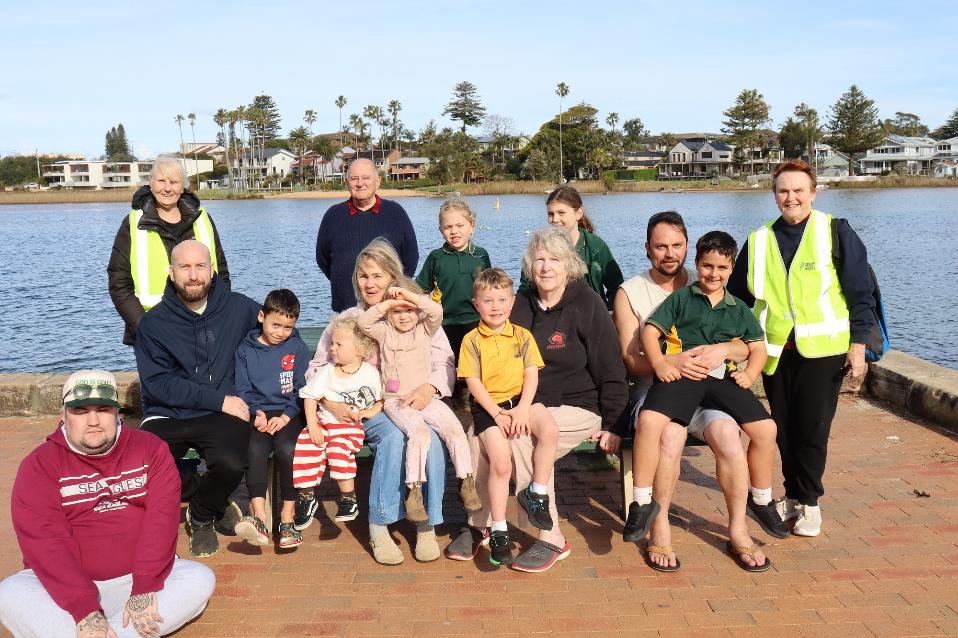
.jpg?timestamp=1787347577282)
.jpg?timestamp=1787347495442)
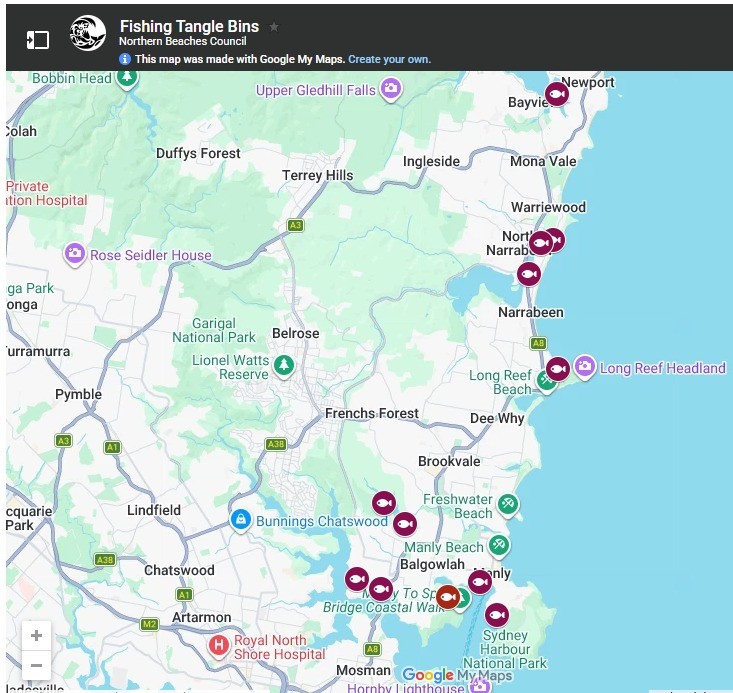
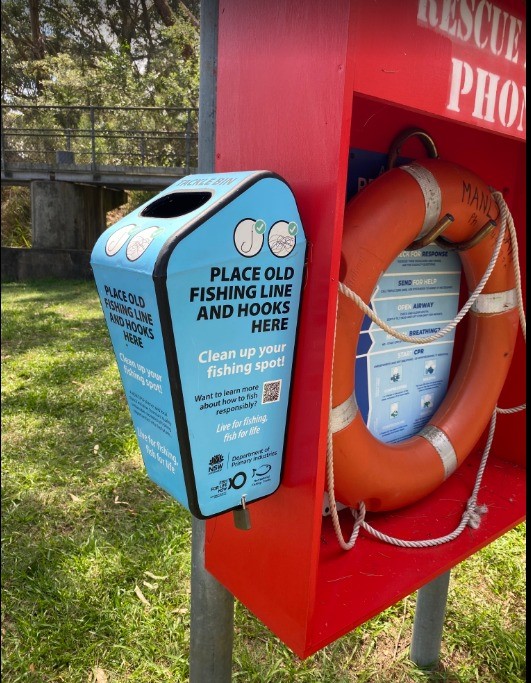
.jpg?timestamp=1787348282581)
.jpg?timestamp=1787348436907)
.jpg?timestamp=1787348478046)
.jpg?timestamp=1787348521222)
.jpg?timestamp=1787348549881)
.jpg?timestamp=1787348590799)
.jpg?timestamp=1787348623087)
.jpg?timestamp=1787348672177)
.jpg?timestamp=1787348702065)
.jpg?timestamp=1787348773728)
.jpg?timestamp=1787348844323)
.jpg?timestamp=1787348873165)
.jpg?timestamp=1787348918162)
.jpg?timestamp=1787348949281)
.jpg?timestamp=1787349004562)
.jpg?timestamp=1787349045137)
.jpg?timestamp=1787349083413)
.jpg?timestamp=1787349109865)
.jpg?timestamp=1787349150690)
.jpg?timestamp=1787349176987)
%20too%20flight.jpg?timestamp=1787349206763)
.jpg?timestamp=1787349232217)
.jpg?timestamp=1787349272551)


sm.jpg?timestamp=1786799399570)
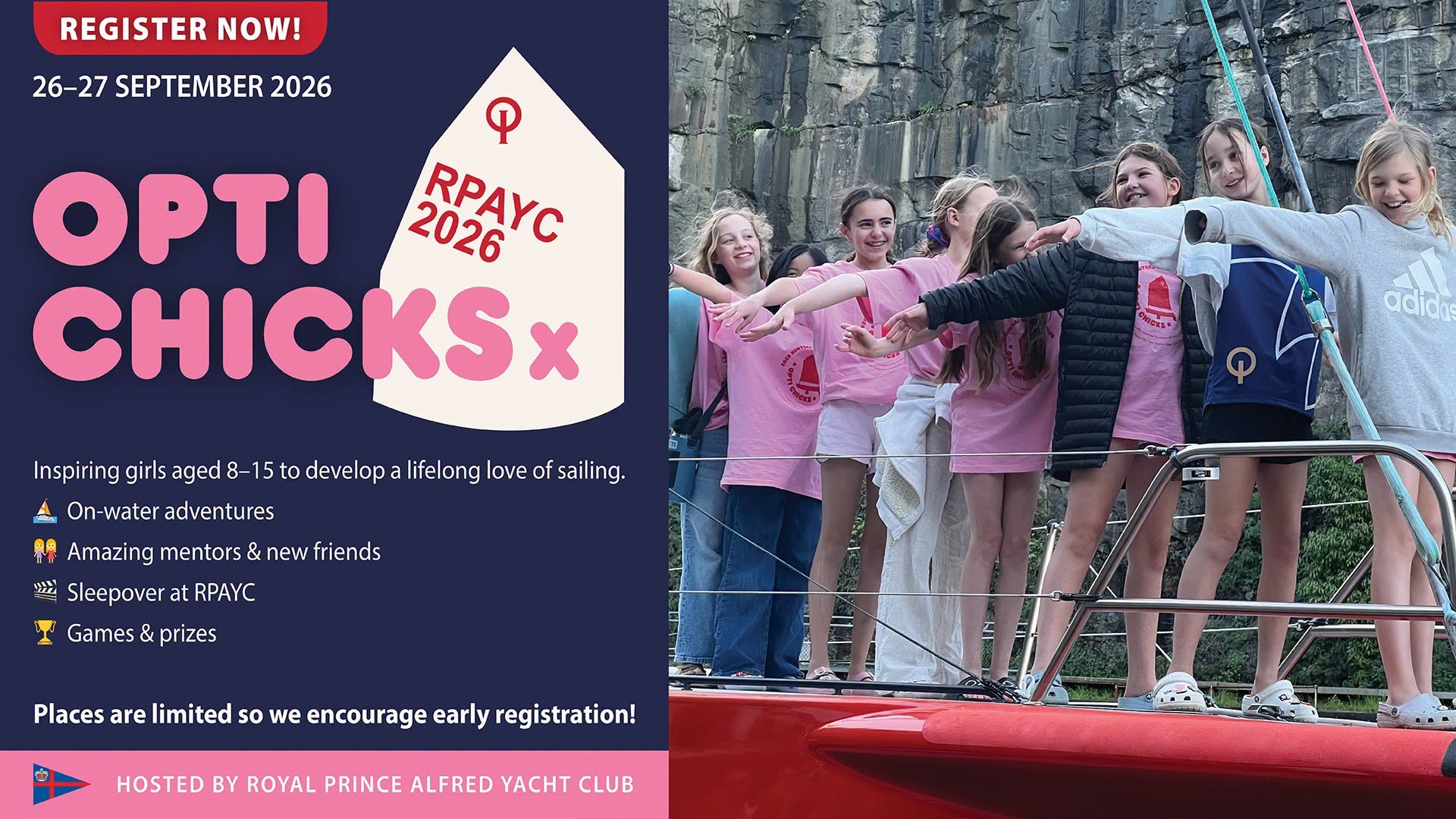

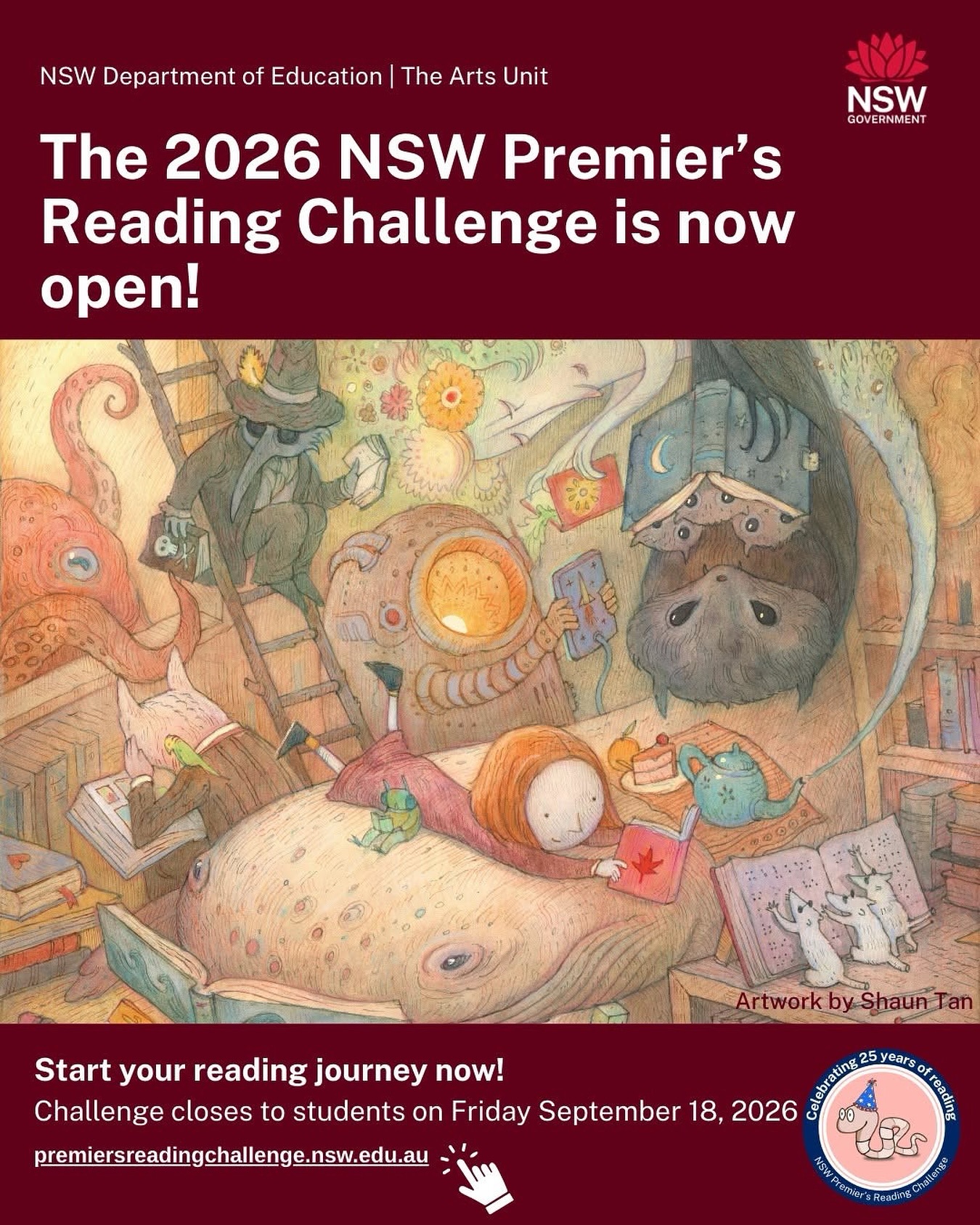












.JPG?timestamp=1697163924249)


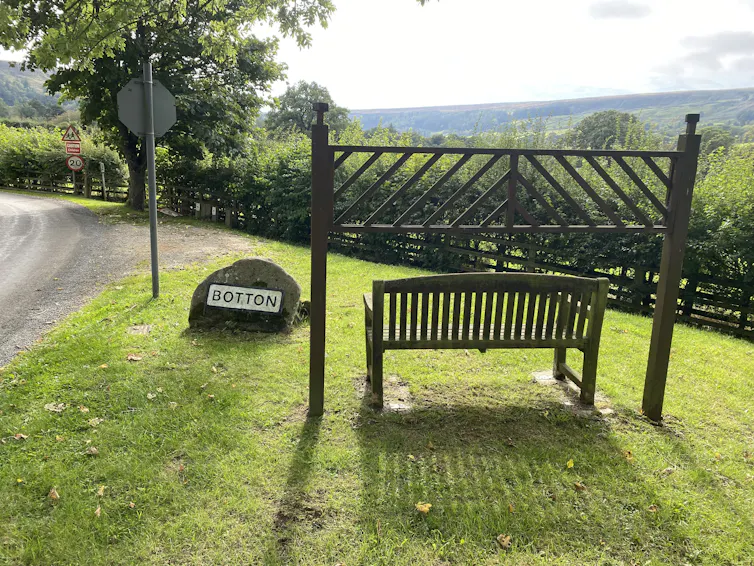
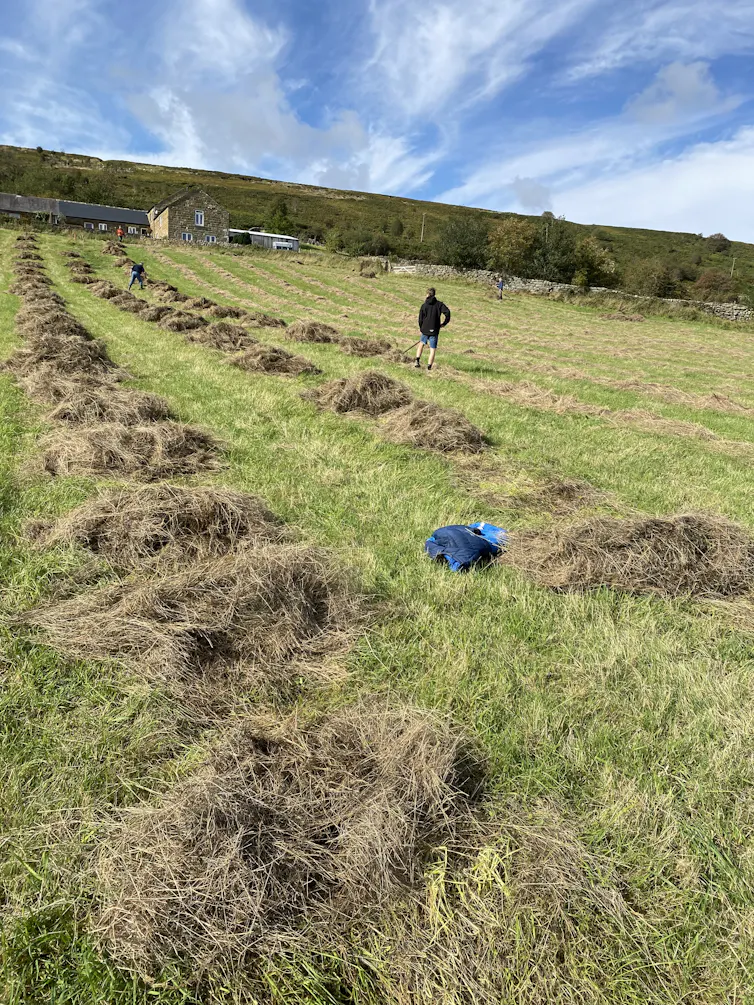
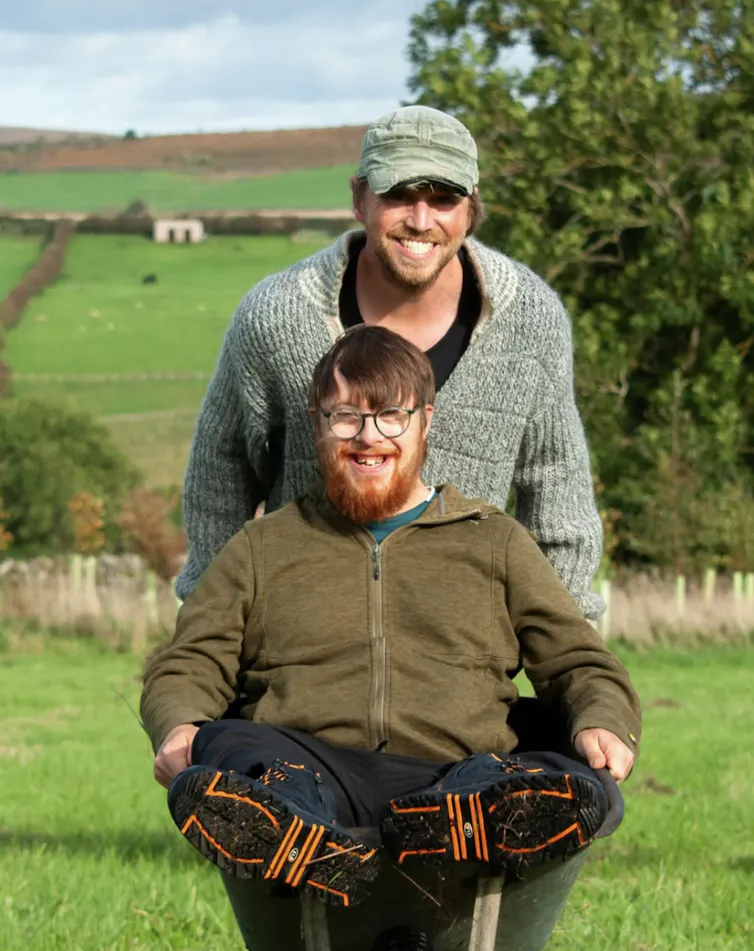
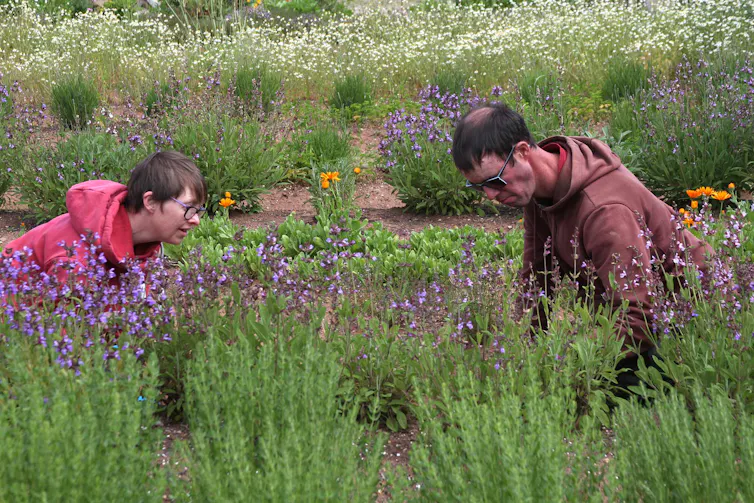






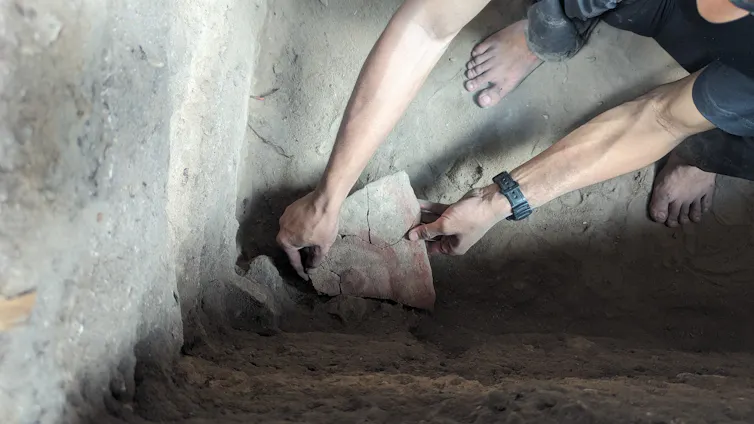

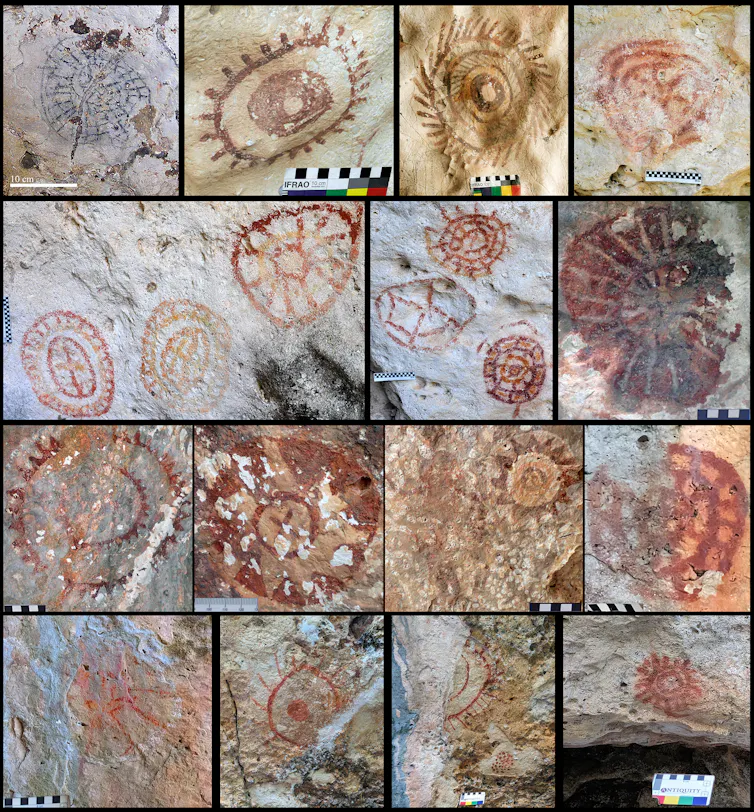




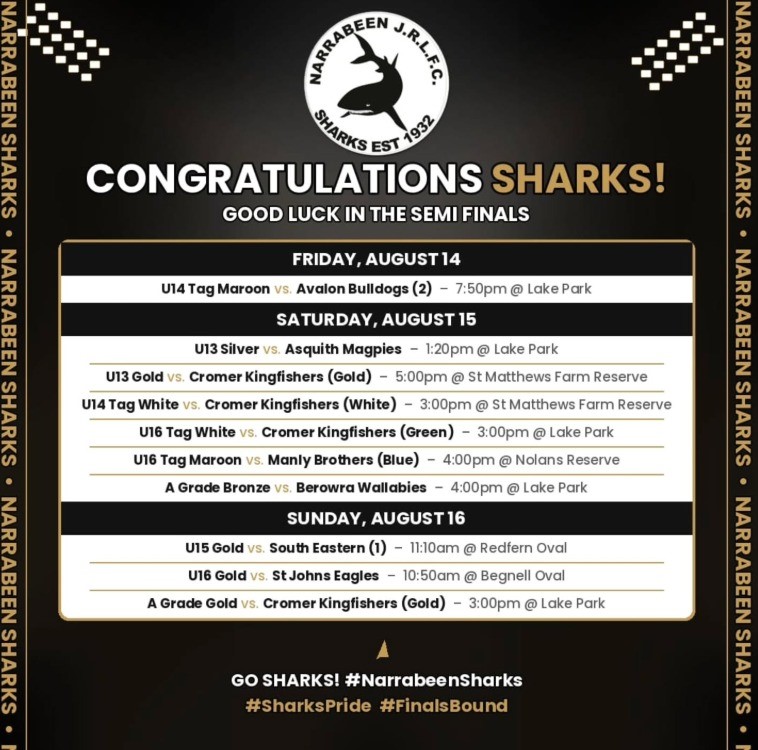





small.jpg?timestamp=1786652706325)
small.jpg?timestamp=1786652958347)
small.jpg?timestamp=1786652838240)


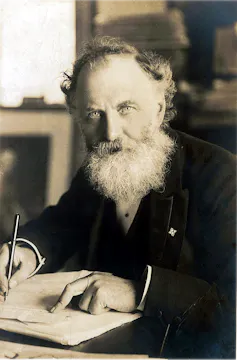



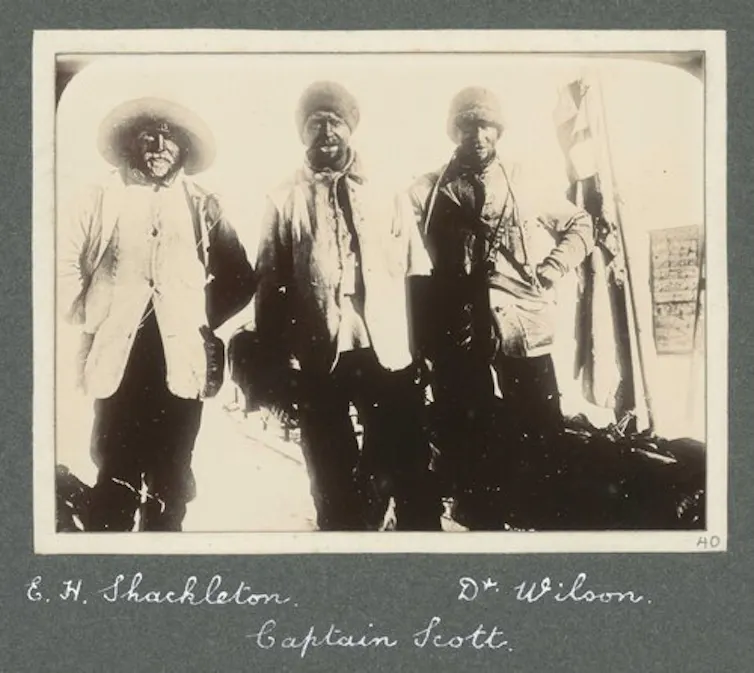



%20smaller.jpg?timestamp=1786075091479)
















_2,_Vic,_jjron,_09.01.2013.jpg?timestamp=1786050588689)
 Littlie -













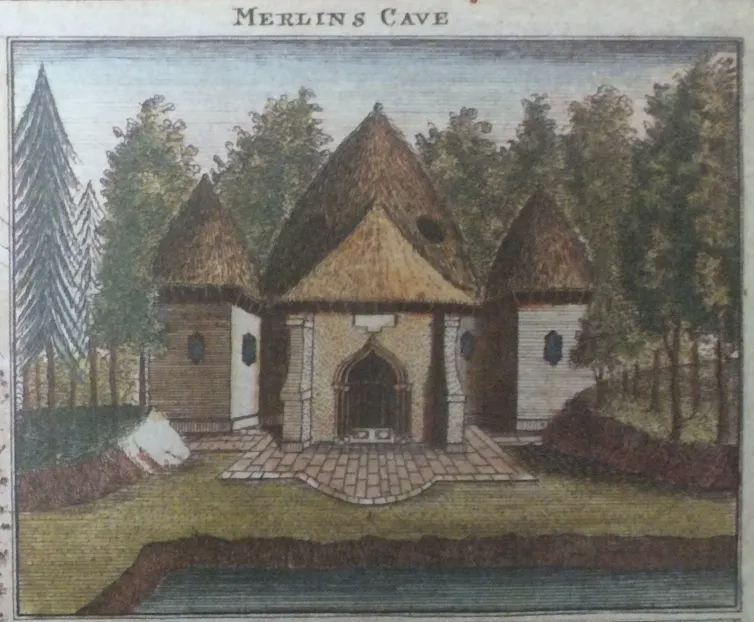




















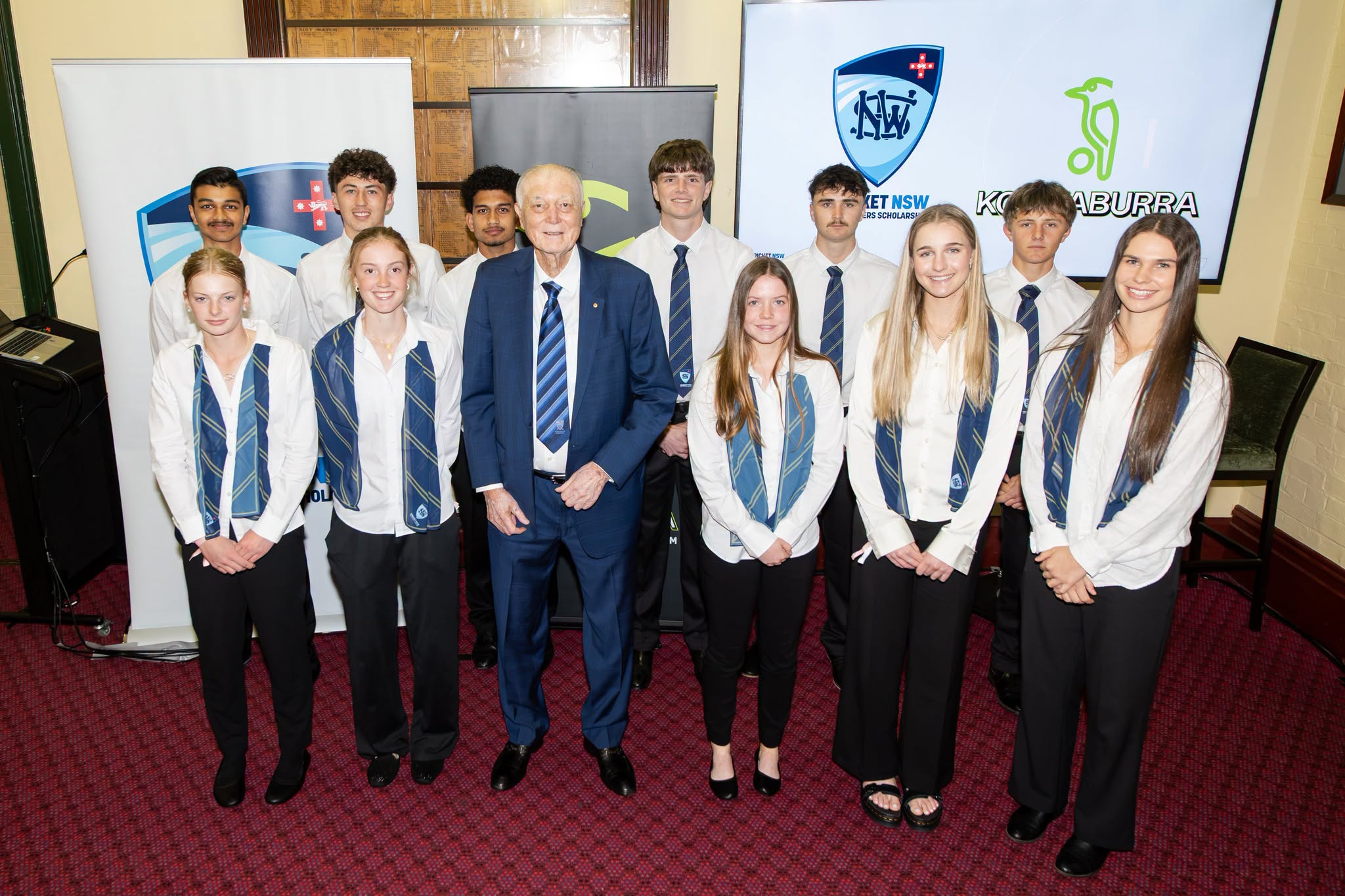
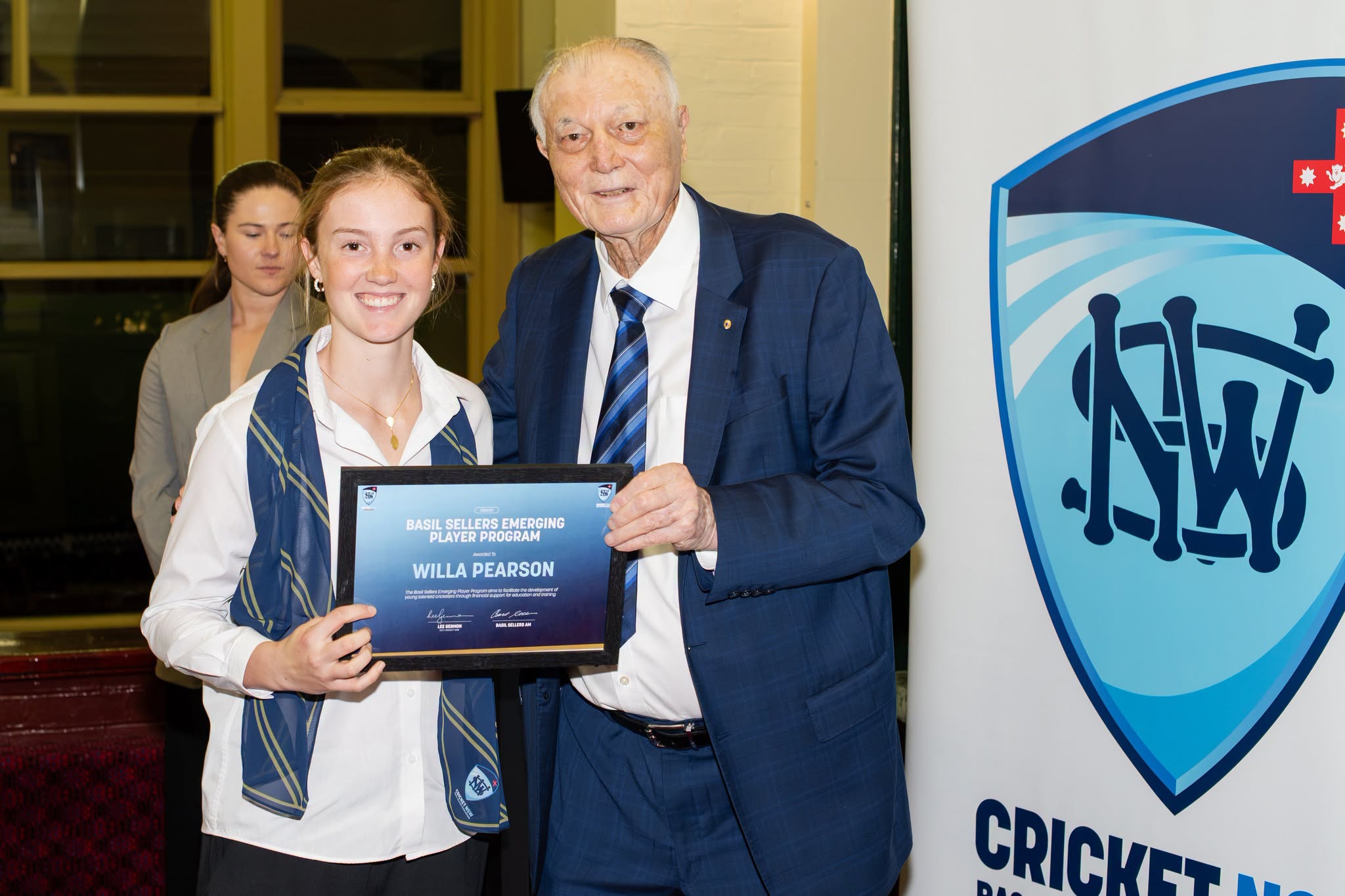





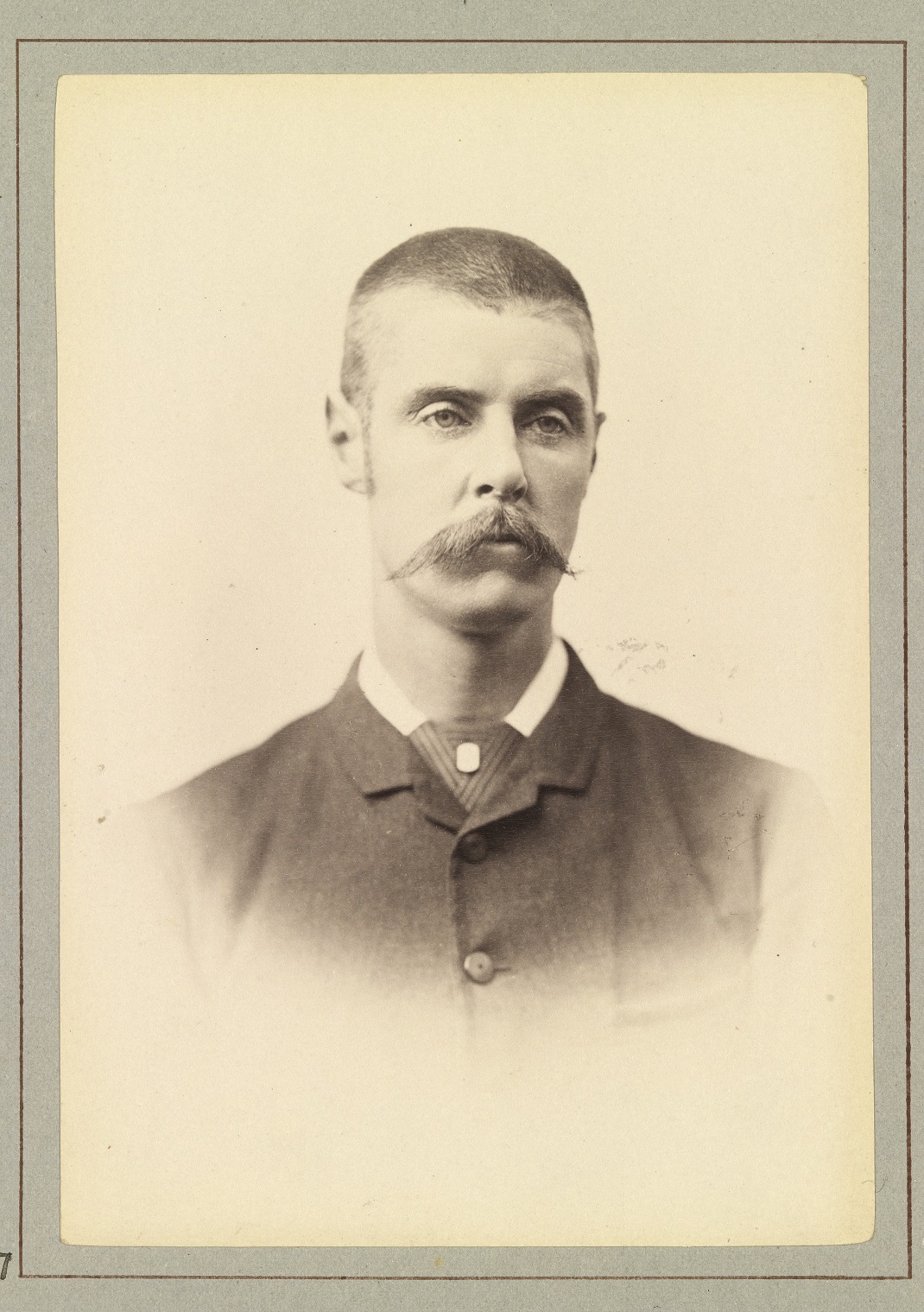

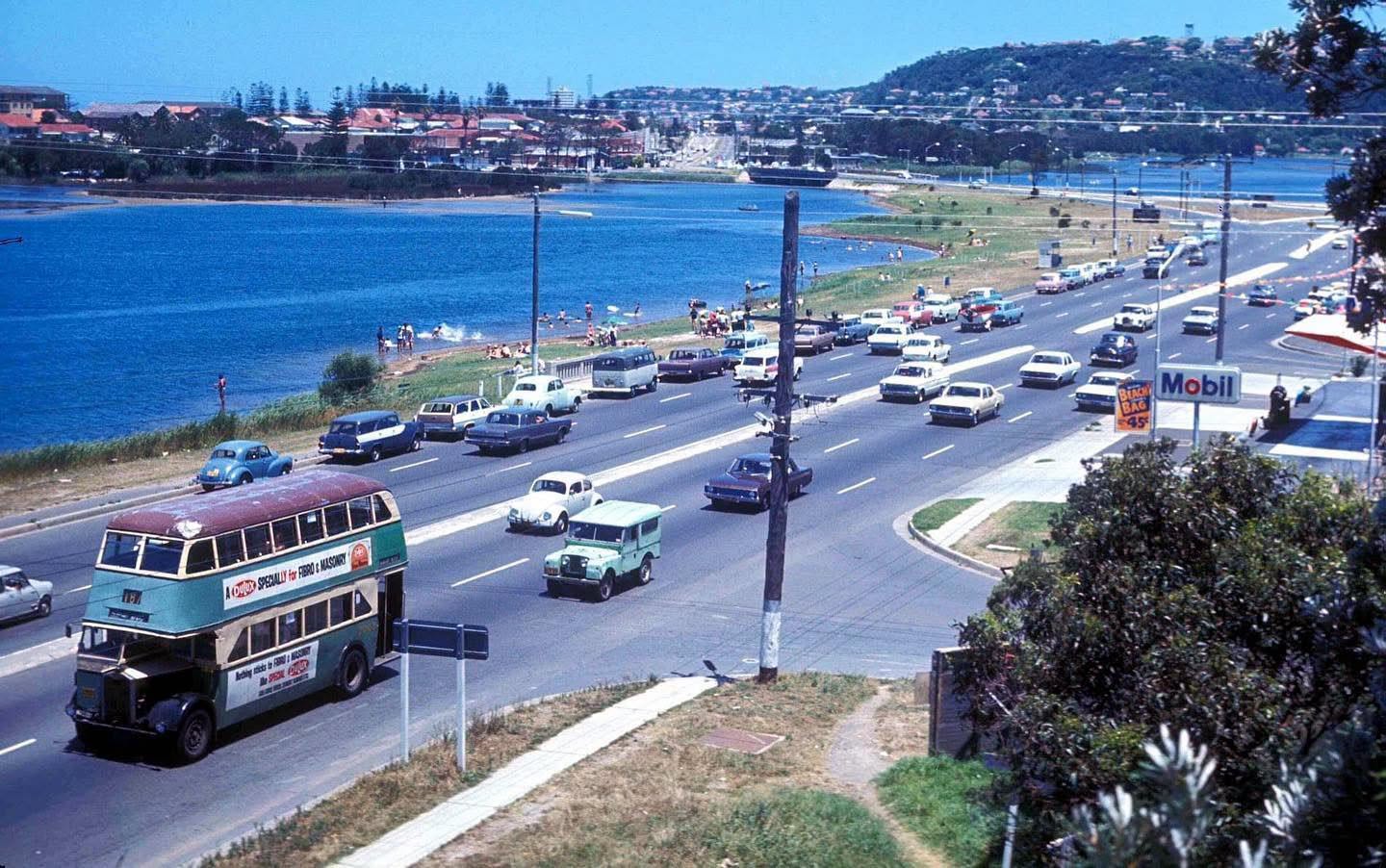

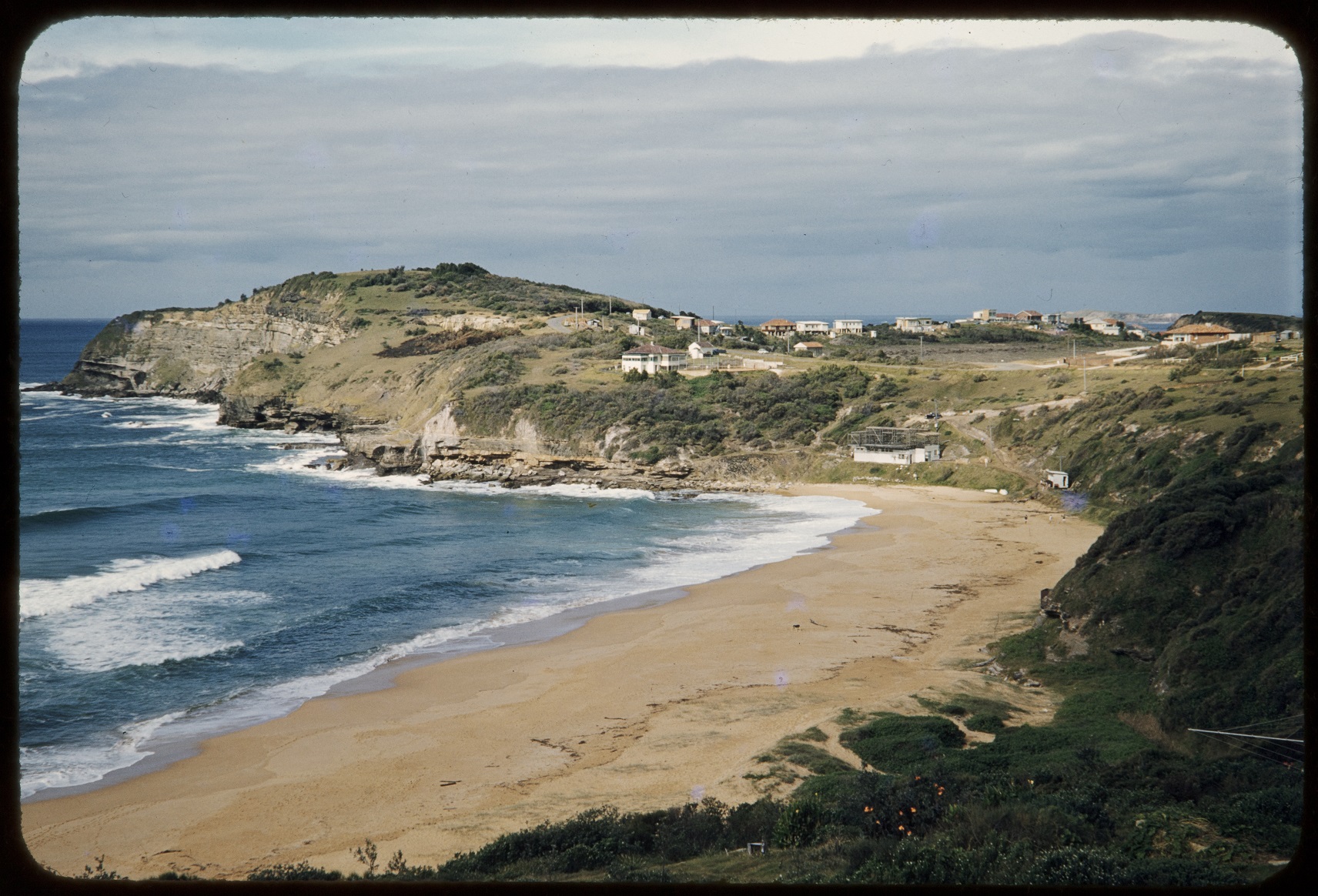
%20smaller.jpg?timestamp=1760590075099)
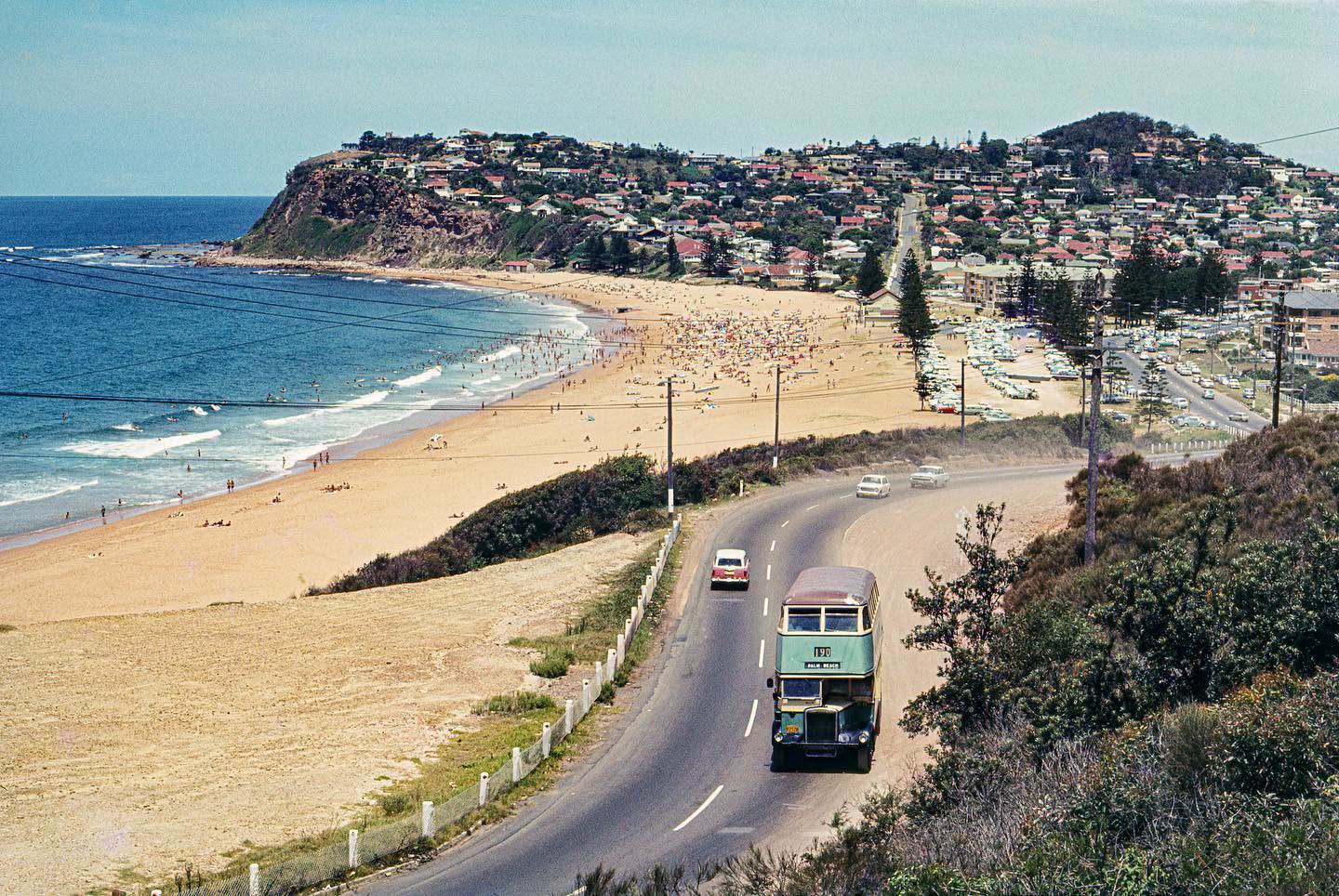
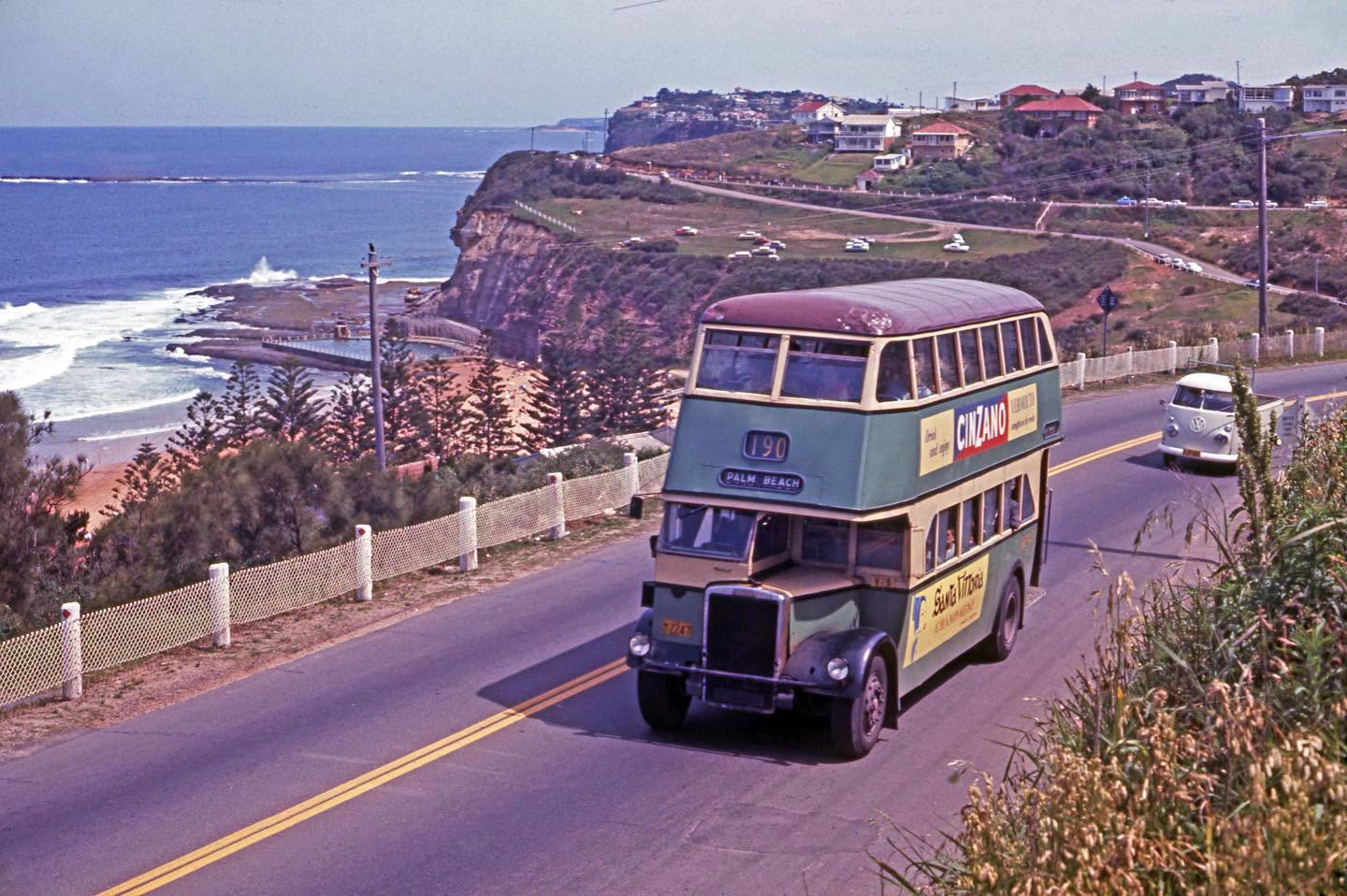

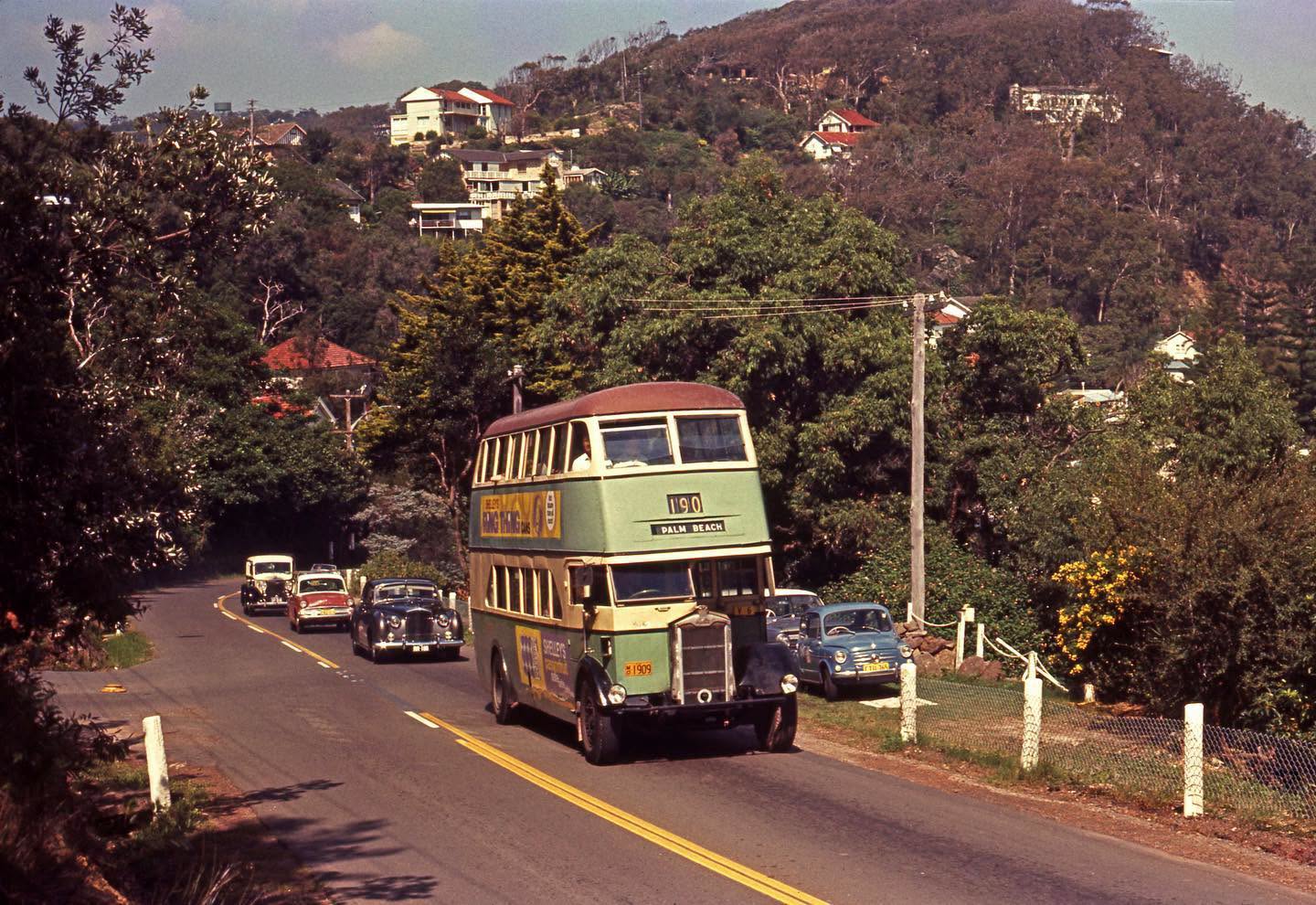

















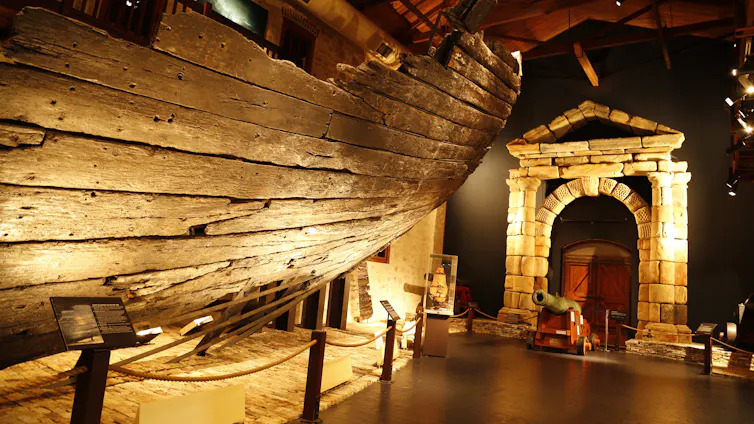





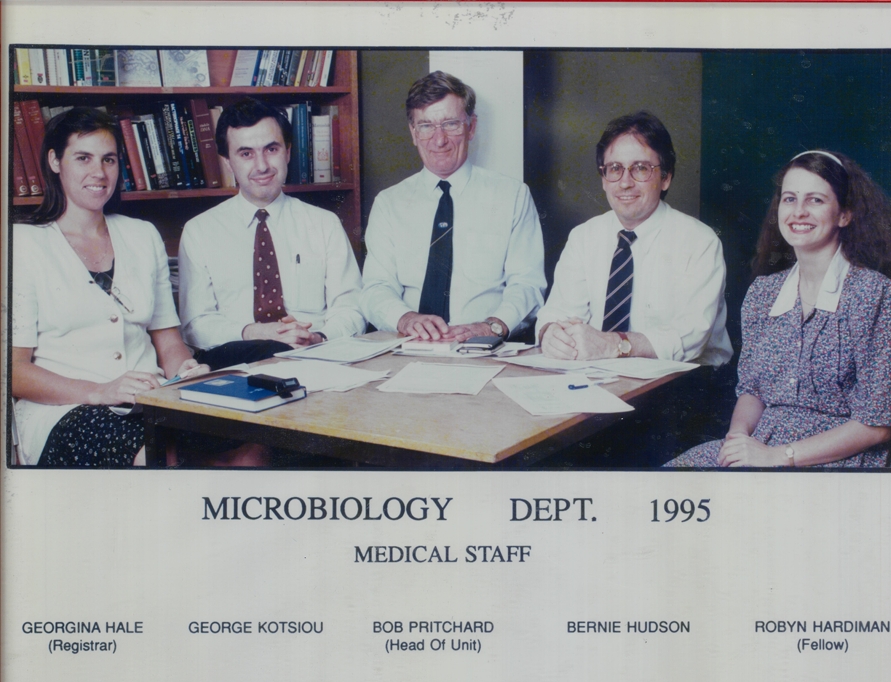
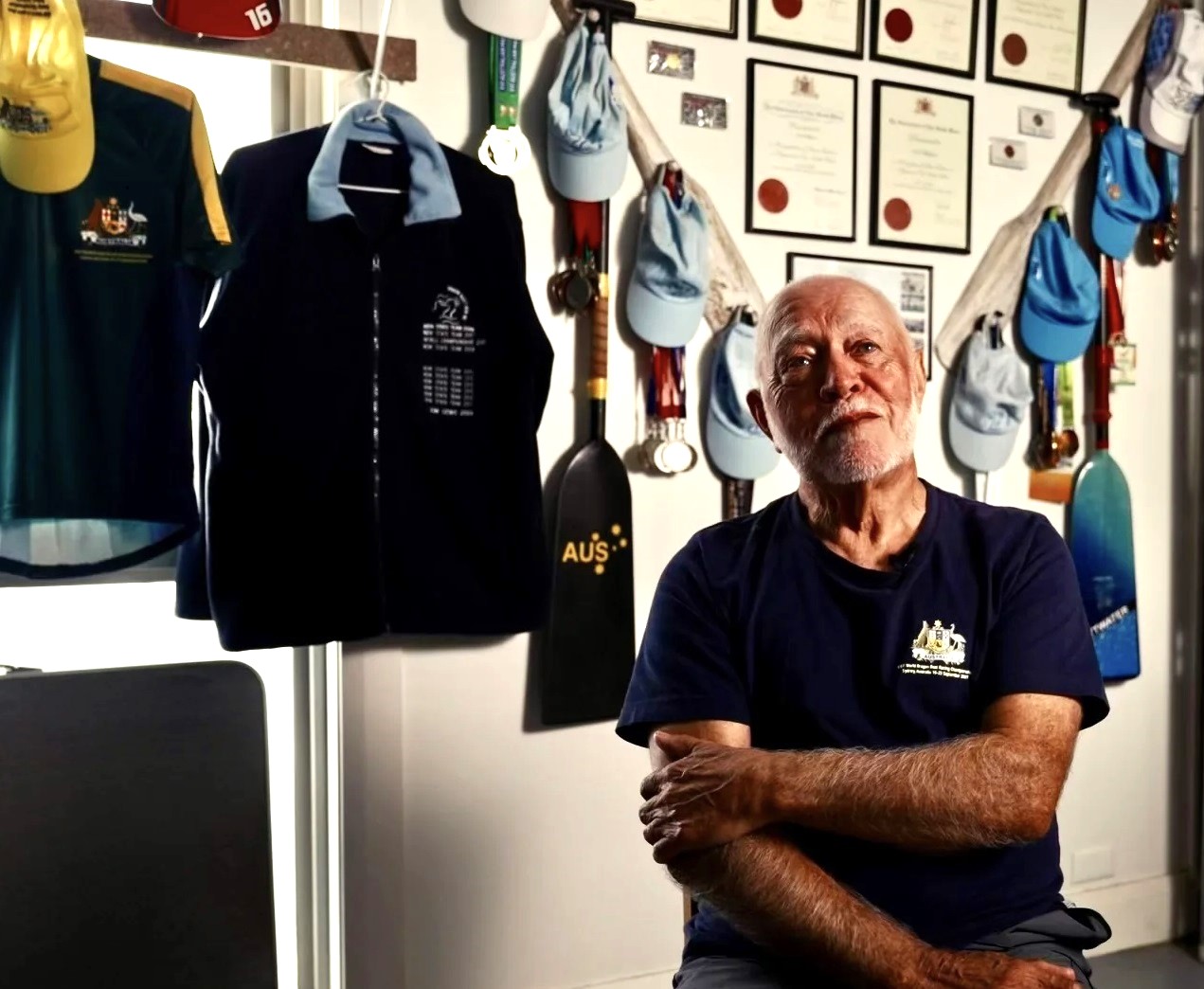
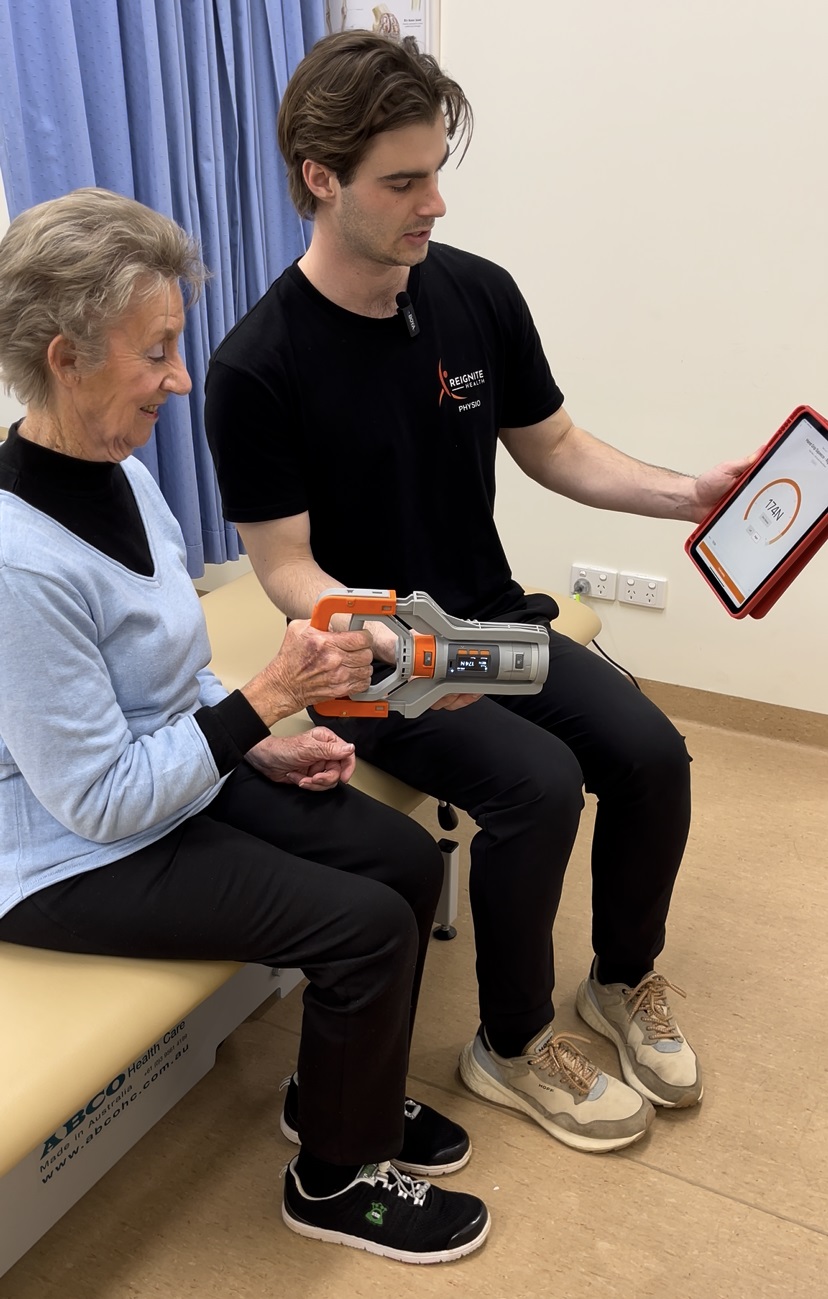












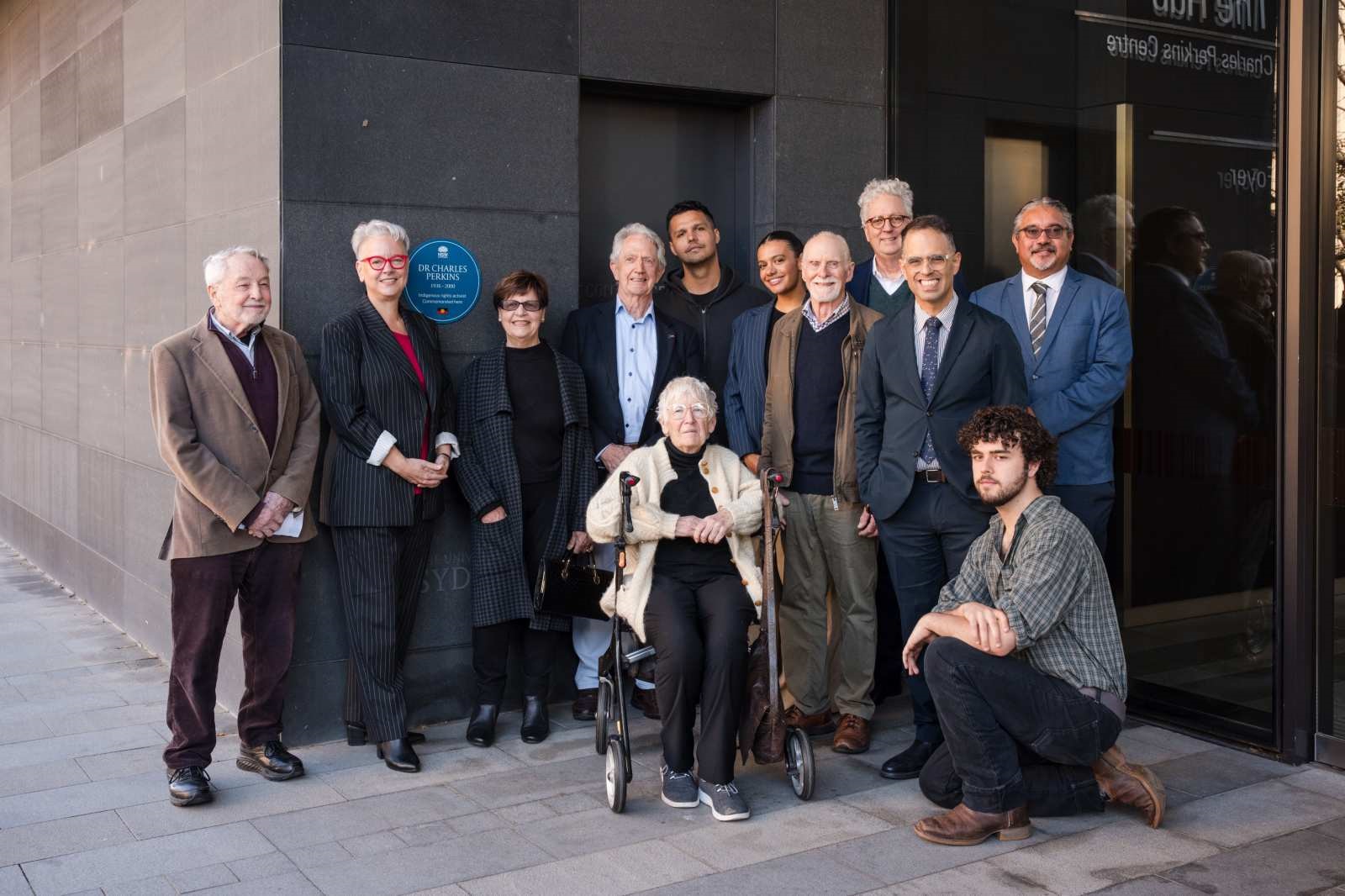
 The
The 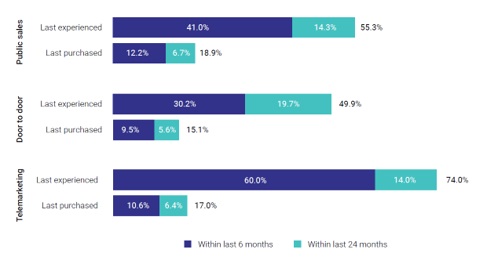
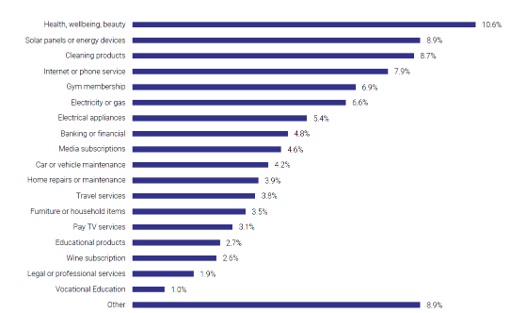




.svg)


