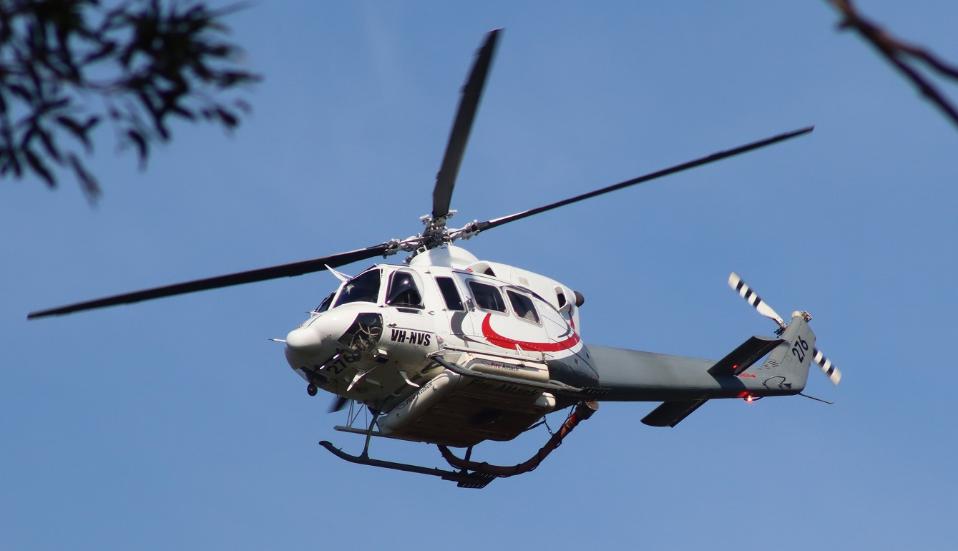
The bulk of the hill is still green as the burn was for the Crown Land portion of this headland.
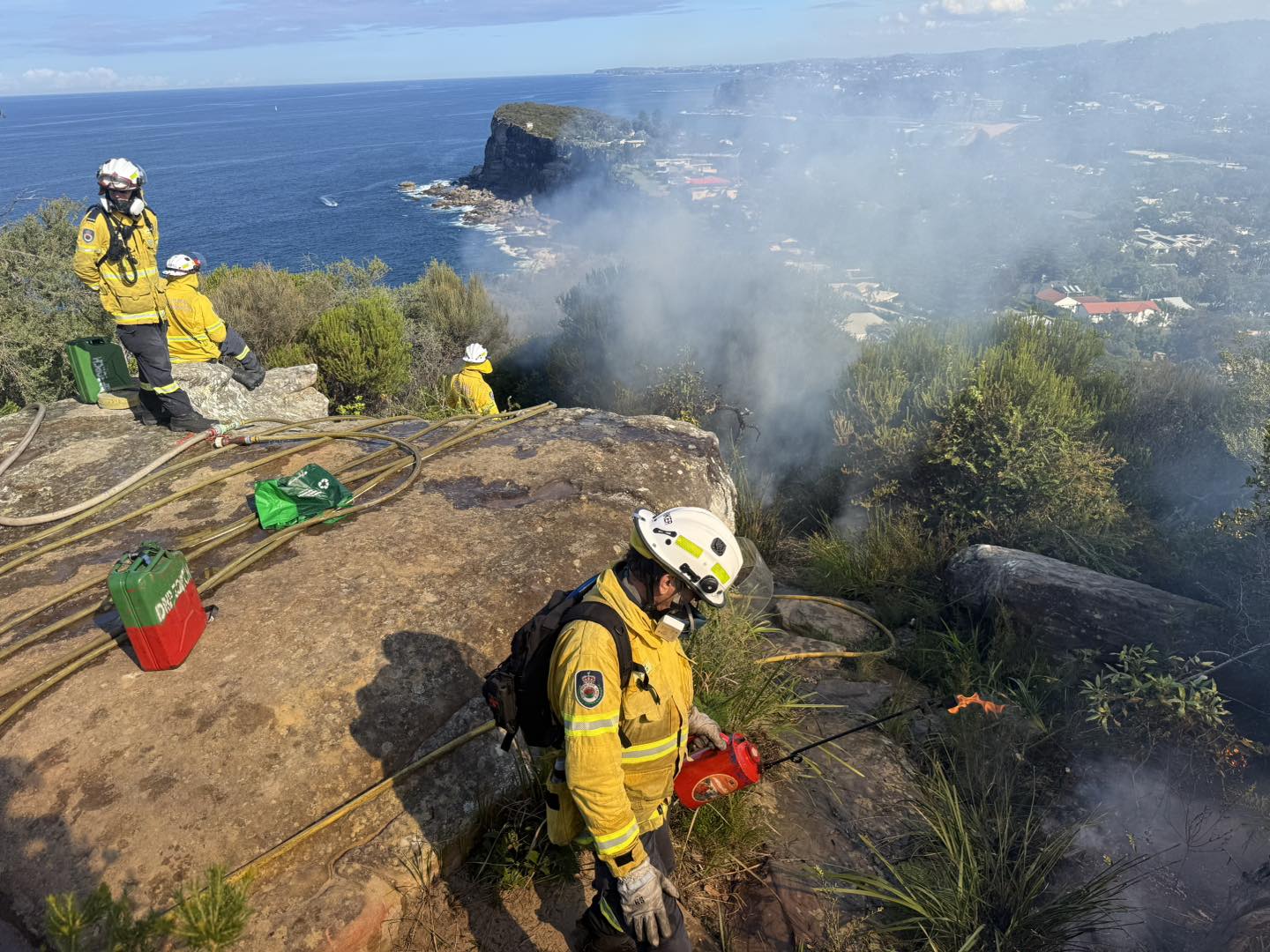
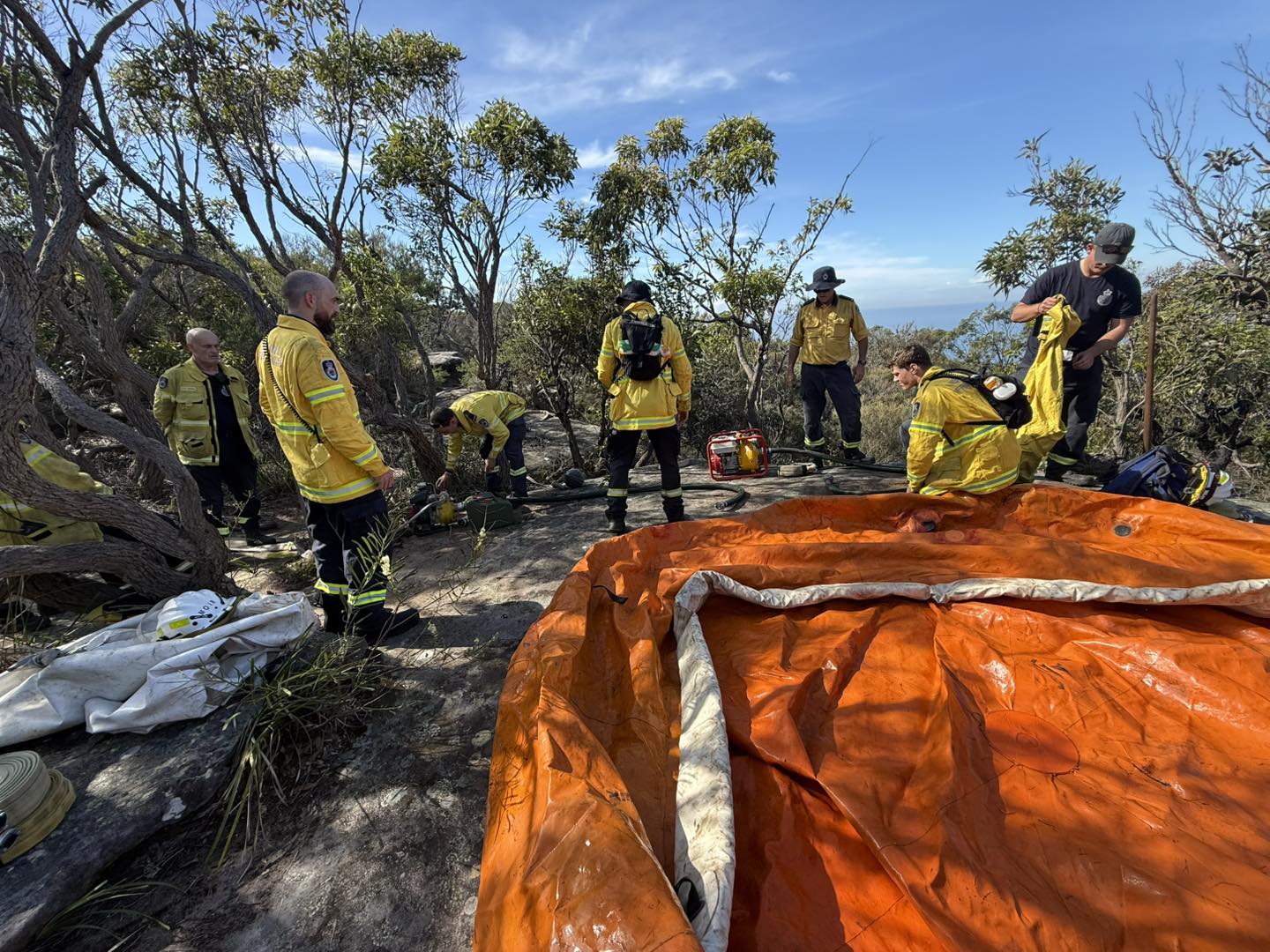
Ingleside and Davidson RFS members assisted Fire & Rescue at the successful Bangalley Head HR in Avalon.
Ingleside RFB shared this was :
'Steep terrain and occasional flare ups in the coastal heath required vigilance from the ground and air from Helitak 276 which also made several drops on hotspots during the day.'
Helitak 276 (VH-NVS) is a Type 2 Medium Bell 412 SP helicopter operated by Sydney Helicopters for aerial firefighting in New South Wales, Australia. It is a key asset in wildfire suppression, often equipped with belly-mounted tanks to drop water or retardant on bushfires alongside NSW Rural Fire Service (RFS).
In a social media post on May 1 the NSW RFS shared an insight into some of the preparation that goes into these multi-agency, including actually walking the grounds in the days prior to a scheduled to check for wildlife and identify where that is. Hoses ran up the hill through the public accessway on Watkins road, just in case they were needed.
sm.jpg?timestamp=1777686684864)
Photo: AJG/PON
Photos: Ingleside NSW RFB
The May 1 NSW RFS post shared one instance of looking out for wildlife during these operations:
'Ahead of every hazard reduction burn we undertake, an ecological assessment of the area is completed to ensure any risks to the local environment can be mitigated. Depending on where in the state we’re burning, this process can include a dedicated koala search.
Last week, RFS members in the Snowy Monaro region undertook such a search, utilising a Remotely Piloted Aircraft System (commonly known as a drone) and a koala detection dog to successfully locate one eucalypt-loving resident west of the Numeralla village.
“Once we’ve identified a burn window, we send the drone out early in the morning before daylight,” Acting Monaro District Manager Scott Southwell said. “Using the thermal imaging capability, it identifies any hot spots signifying koalas present. Then we wait for daylight and the Local Land Services sniffer dog goes in and actually locates the specific tree.”
To ensure the koala’s safety during the burn, the team created a 10-metre exclusion zone around the tree it was perched in, clearing a control line and leaving the vegetation underneath the tree untouched. Keeping flame heights low and burning away from the control line also ensured the koala could still move to other trees during the burn.
“This koala was quite happy to stay up in that tree and I even observed him chewing on some leaves, so he wasn’t bothered by our presence at all,” Scott said.
"The drone helps us really target the location of the endangered species and it gives the community, who are very protective of their koala populations, peace of mind that we're going above and beyond to look after them."
The Numeralla Hazard Reduction treated 78 hectares of bushland, providing protection to more than 20 homes.'
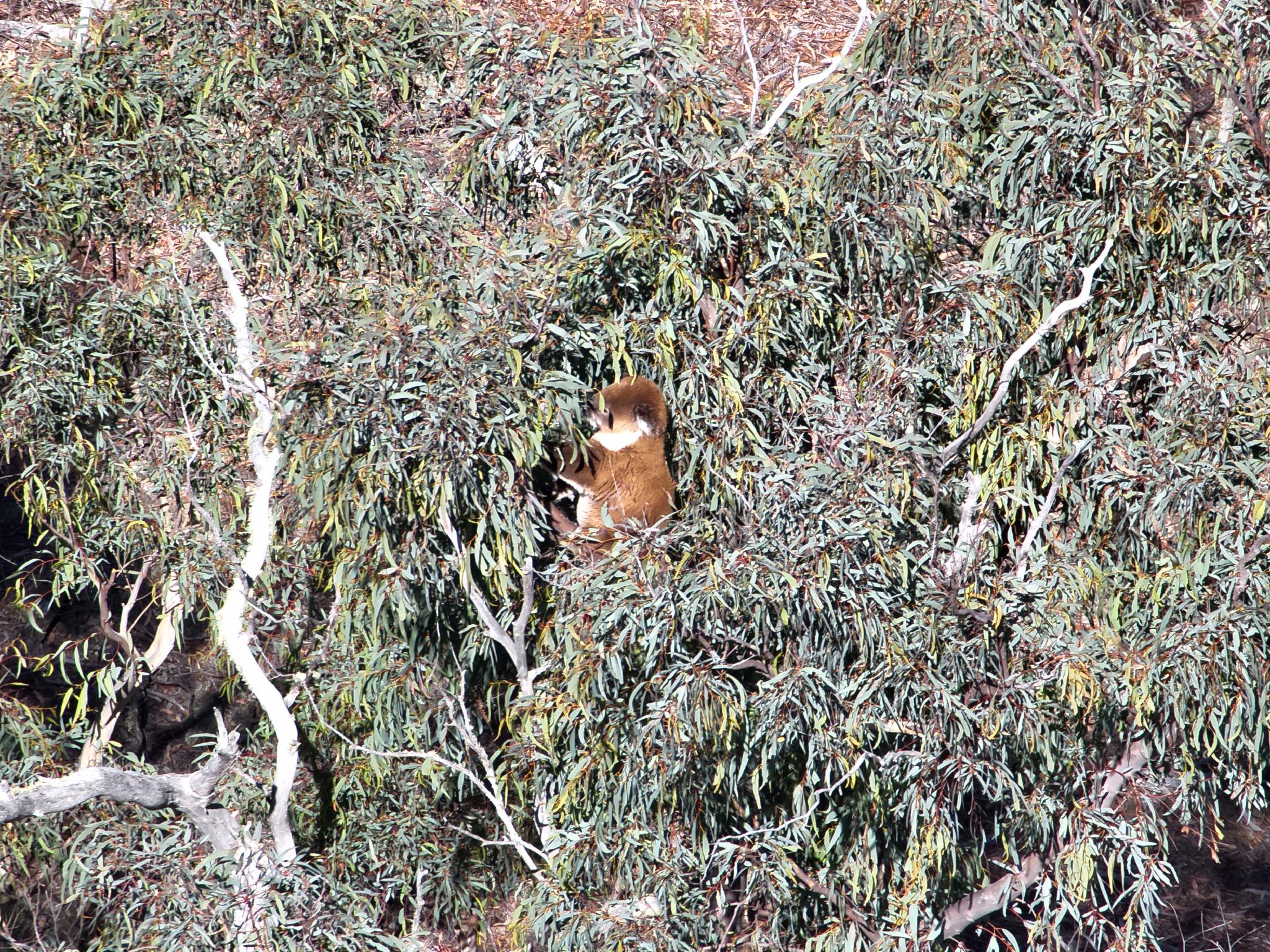
Photo: NSW RFS
For the Bangalley Headland HR residents had an opportunity to see the helicopter flying over the site all day, and again towards 4pm onwards in several loops. Helitak 276 now had a hose extension beneath it which doused what was left of the burn-off prior to the end of day. Rainfall later that evening would also have extinguished any spark missed, although the helicopter did multiple flyovers before flying west, back to home base.
Bangalley's Century in 2026
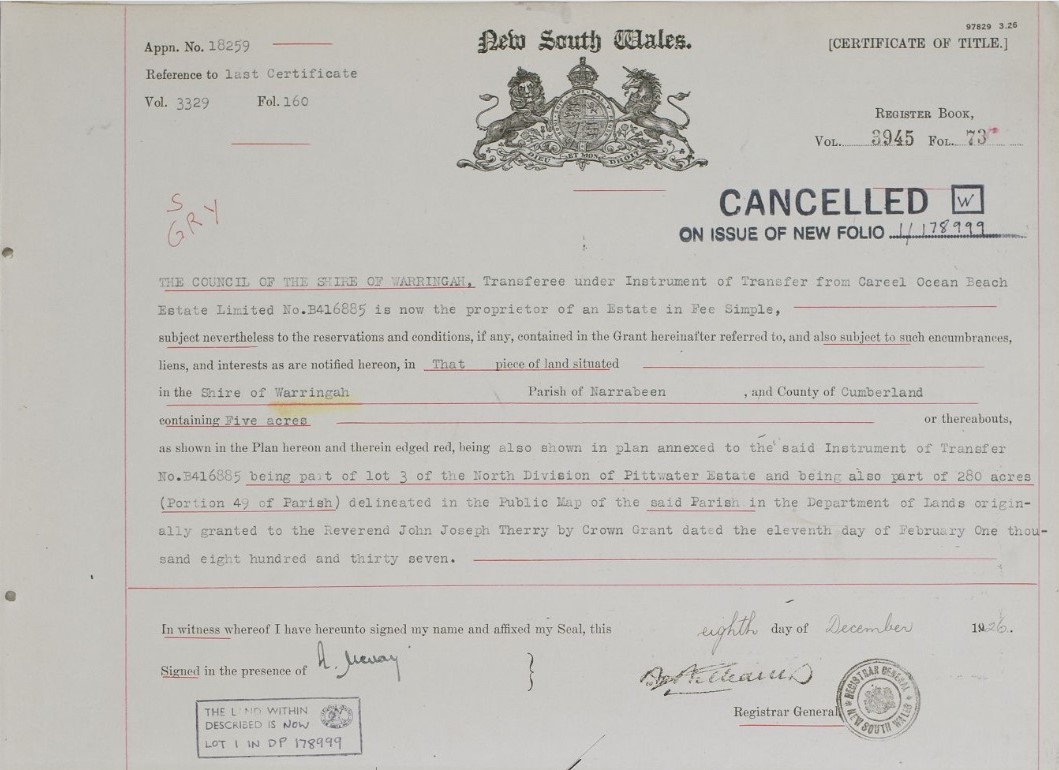
Bangalley Headland is part Crown Land (seawards) and acres dedicated to residents and the council's care during 1920's subdivisions of the land, with 5 acres gifted in 1926 - meaning this WPA reserve has been set aside for wildlife, for plants and people for a whole century later this year.
The word 'Bangalley' is said to be the Aboriginal name for the 'Bastard Mahogany Tree' (Eucalyptus botryoides) which grows in this area.
Bangalley Headland Reserve is a Wildlife Preservation Area (WPA). WPA's are designated public bushland areas tailored to safeguard native animals and their habitats. They are established under the NSW Companion Animals Act 1998, with strict prohibitions against cats and restricted access for dogs to protect vulnerable species.
There are spectacular views to the south and north from the heights of the reserve and a guided walk was installed under Pittwater Council. Some of these views can be seen in Bangalley Headland Walk: Spring 2023 - photos by Kevin Murray and Joe Mills
An unplanned burn in 2017 revealed this had been used as a Coastwatchers' Post during WWII. More in: Traces Of WWII Coast Watchers (1942) Found On Bangalley Headland After Recent Fire, Pittwater Online News, October 2017, Issue 332.
A bit more history is available in: Careel Head Road Shops and the Bangalley- Burrowong Creeks: Some History
The Certificate of Title is from the 'Careel Bay Estates' subdivisions, which had commenced a little over a decade prior to this, and ran as a second subdivision a decade later and onwards, provides the transfer date as December 8 1926, and also shows the sections that had been resumed as Crown Land by the State and Commonwealth Governments:
.jpg?timestamp=1777681838950)
The all-day activity was exciting for youngsters before and after school, and as nearby residents awoke to a smoky atmosphere towards the Careel Bay end of the Avalon Beach valley, and saw the multiple fast flyovers from Hitchcock Park, where other units and materials for the helicopter were stationed, the all day HR was seen, from a distance, by everyone else in the vicinity.
This was some indication of the work carried out by NSW RFS Volunteers and what visitors may learn should they visit a Fire and Rescue NSW local station during Open Day 2026, which occurs Saturday May 9 this year.
Details available so far for the Avalon, Mona Vale and Narrabeen fire stations are:
Open Day - Saturday, 9 May 2026, 10am - 2pm
Join us at your local Fire and Rescue NSW (FRNSW) fire station on Saturday May 9, 2026 for our annual Open Day, 10am to 2pm. Everyone is welcome. Meet our firefighters, see our specialised equipment and our fire trucks - all while learning about how a working smoke alarm can help save lives this winter. Find out more about the FRNSW Fire Station Open Day 2026 here.
Open Day at the Museum of Fire
Fire trucks, hoses, helmets, and yes, Paw Patrol are dropping in. Learn more Open Day at the Museum of Fire here.
Avalon Fire Station
We are still finalising our plans for this year's Open Day. Please check back closer to the date.
Station details: Address: 689 Barrenjoey Road, Avalon Beach NSW 2107. Zone Office: ME2 Zone Office. Staff type: Permanent
Mona Vale Fire Station - Open for Open Day
Mona Vale Fire Station (Station 006) is participating in the Fire and Rescue NSW Open Day on Saturday, 9 May 2026, from 10 am to 2 pm. Located at 6 Harkeith Street, the station will feature equipment demonstrations, fire safety information, and a BBQ, offering a behind-the-scenes look at their specialized rescue operations. Parking at surrounding streets and the shopping centre nearby
Please note: If we are called to respond to an incident during Open Day, some activities may pause. We apologise for any inconvenience this may cause.
Station details: Address: 6 Harkeith Street, Mona Vale
Narrabeen Fire Station
We are still finalising our plans for this year's Open Day. Please check back closer to the date. Learn more about the FRNSW Fire Station Open Day and find a participating fire station here.
Station details: Address: 9 Ocean Street, Narrabeen NSW 2101, Zone Office: ME2 Zone Office, Staff type: Permanent
And for littlies living south of here - Dee Why Fire Station will be open. Details are:
Dee Why Fire Station- Open for Open Day
We are participating in Open Day on Saturday 9 May 2026, 10am to 2pm. Parking is available in surrounding streets. Please note: If we are called to respond to an incident during Open Day, some activities may pause. We apologise for any inconvenience this may cause.
Station details: Address: 38 Fisher Road, Dee Why NSW 2099
Please check your Fire Alarm
The last month of Autumn is when FRNSW also asks people to check their fire alarms prior to the colder weather setting in. On May 1 Fire and Rescue NSW (FRNSW) launched a bold smoke alarm safety initiative, using blunt, attention-grabbing language to raise public awareness ahead of the busiest home fire season of all: Winter.
May 1 2026 marks 20 years since the installation of these life-saving devices became law in NSW.
Yet smoke alarms are either missing or not working in half the homes firefighters are called to prompting fresh calls for residents to “Check your BLEEPING smoke alarm”.
The initiative coincides with fresh research that suggests 31 per cent of NSW residents have either not checked their smoke alarm in the last year or never checked it at all, and one in four people report that they are not confident about how to test them.
A new FRNSW survey indicates 37 per cent of respondents weren’t aware smoke alarms needed to be replaced every 10 years, and 45 per cent had no idea that alarms require cleaning every six months.
Offering in-person service, firefighters can visit homes to conduct fire safety checks, and if required, install new smoke alarms for free.
The survey found around one in two people weren’t even aware the service existed.
FRNSW normally receives 600 bookings for home safety visits a month. This Winter, it’s hoping to increase that number. Free home visits can be booked online - https://www.fire.nsw.gov.au/visits
Acting Fire and Rescue NSW Commissioner Michael Morris said he hoped the campaign would drive awareness and action.
“We know that beep can be loud and annoying.
"But that ‘bleeping’ could be the difference between you and your family waking up to a fire or losing a loved one,” Acting Commissioner Morris said.
“More than half the house fires we’re called to have no working smoke alarm.
"So if it takes some colourful language to improve that frustrating statistic to keep people safe, then it’s worth it,” he said.
“If people hear about this campaign and then take the 30 seconds to test their ‘bleeping’ alarm, then that’s a win,” he added.
“We now know that when survey respondents were made aware of our free safety visits, more than half of them said they’d consider booking one.
"I encourage people to make that booking to help us increase the number of visits,” he said.
Firefighters launched the initiative by inspecting a home in the Canterbury Bankstown Local Government Area (LGA), which recorded the most house fires in NSW last winter.
Minister for Emergency Services Jihad Dib urged everyone to help spread the message, whether they are a community leader or a neighbour.
“Through the NSW Parliament it became a legal requirement to have smoke alarms 20 years ago today, but it’s through the actions of people now that we will make our communities safer,” Minister Dib said.
“Unfortunately, firefighters are still seeing cases where smoke alarms are missing or not working.
“Our firefighters are an integral part of their communities and the in-person safety visits they offer mean that the people who need it most can get help with their smoke alarms.
“A working smoke alarm can save a life. As winter approaches, we can all play our part to keep ourselves, our families and our neighbours safe by checking our smoke alarms.”
FRNSW data reveals of the 44% of the 188 fire fatalities that occurred between 2019 and 2025 happened in winter. Last winter there were 916 residential fires – almost 10 fires a day.
The areas (LGAs) with the greatest number of fire incidents last Winter (2025):
- Canterbury Bankstown (47)
- Newcastle (42)
- Cumberland (40)
- Sydney (40)
- Central Coast (40)
- Inner West (33)
Upcoming Hazard Reductions: where to find the list - how to keep your family safe from
The NSW RFS has a dedicated webpage listing upcoming Hazard reductions, which shows a few for the Central Coast commencing from May 3, meaning residents of Pittwater may see more smoke drifting across the water and into local air.
Firefighters across the state are once again taking advantage of favourable weather conditions to conduct important hazard reduction burns, including in the Greater Sydney, Central Coast and Illawarra areas.
Smoke from these burns may be noticeable and could settle in low-lying areas overnight. These planned burns are an important part of preparing for the bush fire season, helping to reduce fuel loads and protect communities.
Please only call Triple Zero (000) if you see an unattended fire. For more information, visit the Hazards Near Me app or the #RFS website: www.rfs.nsw.gov.au/hr
The NSW RFS states hazard reduction is just one way of preparing for bush fires – it doesn't remove the threat of fire, and it doesn't remove the need for you and your family to be prepared.
There are different types of hazard reduction including controlled burning, mechanical clearing like slashing undergrowth, or even reducing the ground fuel by hand.
You can see a list of planned hazard reduction burns via the above link. This list may change at short notice depending on the weather at the time.
If there is a hazard reduction burn planned for your area, take the following steps:
- Keep doors and windows closed to prevent smoke entering homes
- Keep outdoor furniture under cover to prevent ember burns
- Retract pool covers to prevent ember damage
- Remove washing from clotheslines
- Ensure pets have a protected area
- Vehicles must slow down, keep windows up, turn headlights on
- Sightseers must keep away from burns for their own safety
- If you have asthma or a lung condition, reduce outdoor activities if smoke levels are high and if shortness of breath or coughing develops, take your reliever medicine or seek medical advice
For health information relating to smoke from bush fires and hazard reduction burning, visit the NSW Health website or Asthma Australia.
Once again, this webpage lists hazard reduction burns planned by NSW land managers (such as National Parks and Wildlife Service, Forestry Corporation NSW, Crown Lands and Local Government Authorities) and fire agencies (NSW Rural Fire Service and Fire and Rescue NSW) over coming days, weather permitting.
Visit: www.rfs.nsw.gov.au/fire-information/hazard-reductions
A few more pictures from this HR at Bangalley Headland, including a video by Ingleside RFS which shows Helitak 276 in action.
sm.jpg?timestamp=1777689631185)
sm.jpg?timestamp=1777689665612)
sm.jpg?timestamp=1777689701111)
sm.jpg?timestamp=1777689734180)
sm.jpg?timestamp=1777689771224)
sm.jpg?timestamp=1777689803764)
sm.jpg?timestamp=1777689839049)
sm.jpg?timestamp=1777689546786)
sm.jpg?timestamp=1777689585777)