The Federal Labor government has quietly dropped its 2023 promise to set mandatory recycling rules for plastic packaging, citing concerns over increasing cost-of-living pressures.
Independent MP Kate Chaney has criticised the Albanese government for abandoning plans to introduce mandatory national packaging standards, calling the decision “deeply disappointing” and questioning the claim that the reforms would worsen cost-of-living pressures.
The federal government had committed to developing national rules aimed at reducing plastic waste, including minimum recycled-content requirements and restrictions on harmful chemicals in packaging. However, the Department of Climate Change, Energy, the Environment and Water has now told stakeholders that a new Commonwealth packaging scheme will not be introduced during this term of government.
Instead, Environment Minister Murray Watt says the government will work with states and territories to harmonise existing packaging and recycling policies. The government argues this approach can improve environmental outcomes while reducing inconsistencies for businesses and minimising costs for consumers.
The reversal has angered recycling and sustainability groups, which say they were blindsided after years of consultation. Industry representatives warn that without mandatory national requirements, Australian recycling businesses face uncertainty and may struggle to compete with cheaper imported plastics. The decision comes as Recycling Plastics Australia, which previously received $20 million in federal funding, enters voluntary administration.
Ms Chaney said the government was walking away from a rare opportunity in which industry and communities were aligned on the need for reform.
"Industry wants certainty, communities want the pollution to stop, and both point to the same reform. This is a rare moment of alignment, and the government is letting it pass."
She also challenged the government's justification that mandatory standards could increase household costs. Chaney pointed to the existing cost of waste collection and clean-ups, saying kerbside collection and council services already cost ratepayers between $70 and $95 a year.
"The government points to cost of living, but the numbers don't support that," Ms Chaney said.
Waste industry consultant Mike Ritchie similarly questioned the government's position, noting that no regulatory impact statement had been completed for the proposed Commonwealth scheme. His modelling suggested mandatory recycling standards could add only around 0.3 cents per packaged item, or roughly 20 cents to a weekly shop containing 60 packaged products.
The government has not publicly provided economic modelling showing that national packaging standards would substantially increase living costs.
Australia continues to recycle or reuse only a relatively small proportion of its plastic packaging. In 2023-24, 28 per cent of rigid plastics and just 9 per cent of soft plastics were reused, recycled or reclaimed.
Other crossbenchers and the Greens have also criticised the decision. Independent MP Sophie Scamps accused the government of breaking another promise, while Greens waste spokesperson Steph Hodgins-May said the government had failed to demonstrate that costs justified delaying reform.
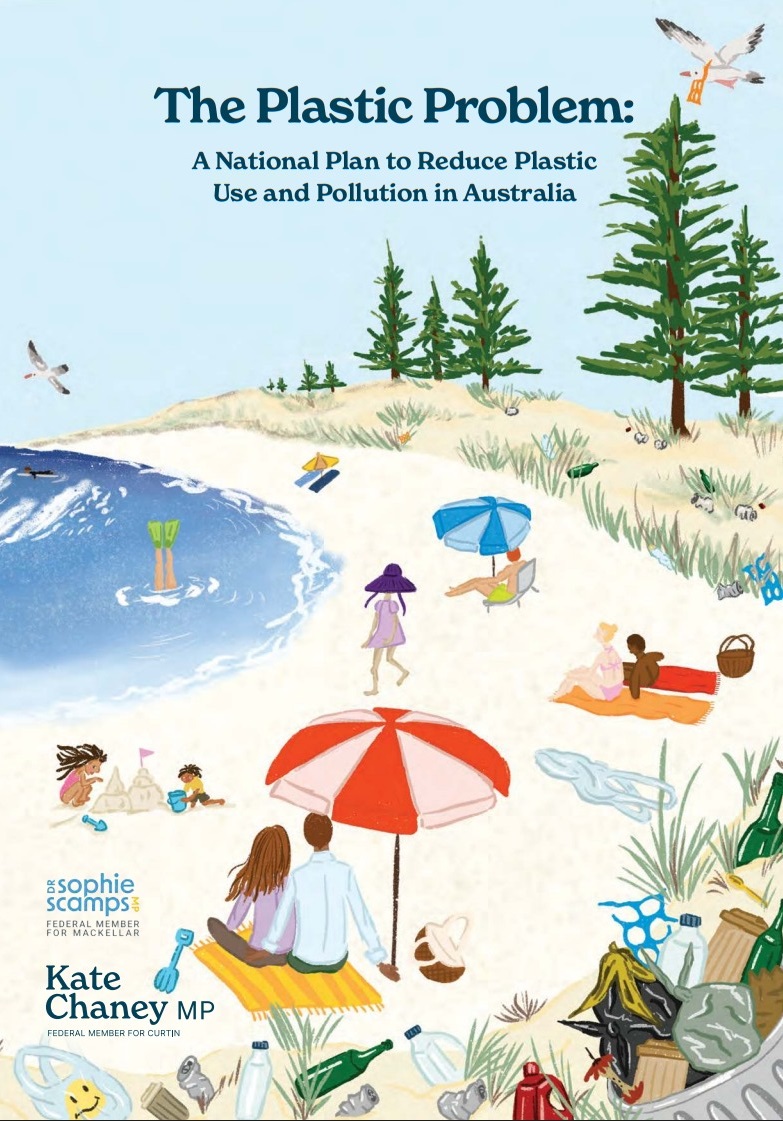
In July 2026 Independent Member for Mackellar Dr Sophie Scamps MP and Independent Member for Curtin Kate Chaney MP released a joint policy paper outlining a practical national plan to tackle Australia's growing plastic pollution crisis – and are calling on the Government to implement the reforms this year.
Australia's packaging system is failing. In 2022, State and Federal Environment Ministers committed to strengthening packaging regulation, yet almost four years later, the promised national legislation still has not been delivered. In that time, Australia has failed to meet every national packaging target set in 2018.
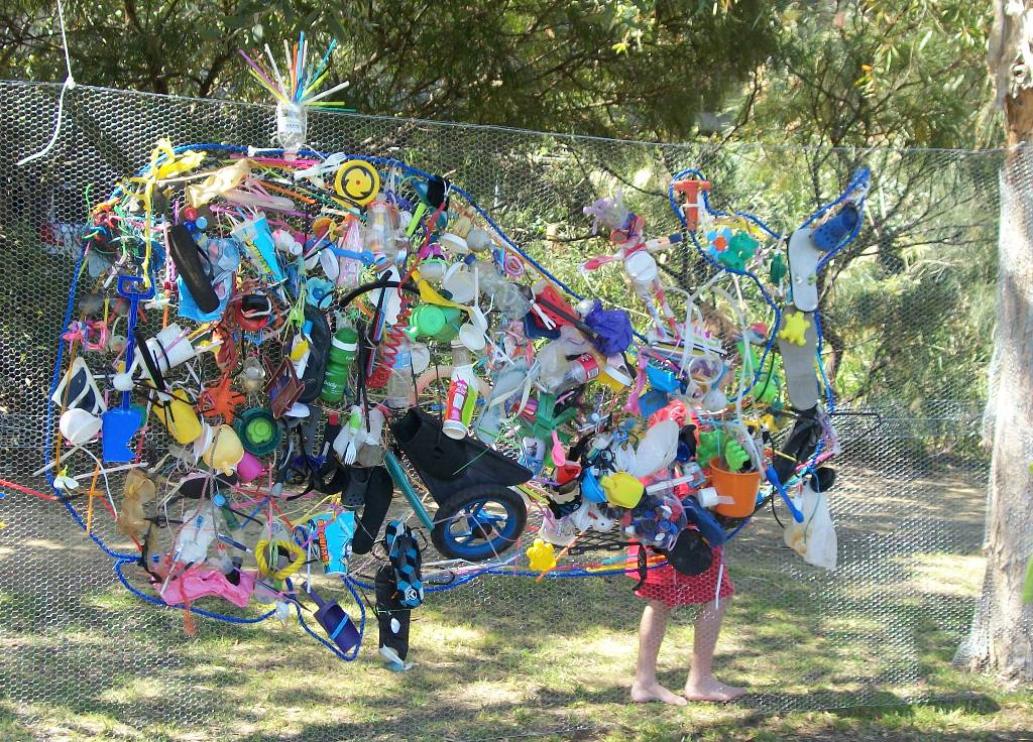
The consequences of that inaction are catastrophic, reaching across our environment, climate and health. Every day of delay, more plastic goes to landfill, pollutes our oceans and waterways and breaks down into microplastics that are now found in our food, our water and our bodies, generating greenhouse gas emissions across its entire lifecycle.
Voluntary measures have failed, and instead Australians are paying the price twice over, with their health and their wallets. Households currently pay an estimated $70–95 a year through rates and levies to manage packaging waste, while producers continue to avoid responsibility for the waste they create.
The Recycling and Waste Reduction Act already gives the Federal Government a readymade mechanism to establish a mandatory Extended Producer Responsibility Scheme that holds industry accountable for the full lifecycle of the packaging it puts on the market.
Sophie Scamps and Kate Chaney have set out a plan for urgent, achievable reforms in 2026, most of which can be delivered using powers Parliament has already granted:
1. Establish a mandatory, nationally harmonised Extended Producer Responsibility (EPR) scheme, made under the existing Recycling and Waste Reduction Act, with binding targets for waste reduction, reuse, recycling and recycled content, and a national, producer-funded soft plastics scheme designed from the end market backwards.
2. Phase out harmful industrial chemicals in plastics, through a national green/orange/red classification framework.
3. Invest in the research, innovation and education needed to make the whole system work.
The reforms rest on a simple principle: the polluter pays. Independent analysis finds an EPR scheme would add just 0.1 per cent to product costs - around 25 cents a week per household. Support is overwhelming and unusually united: the proposals have been tested with environmental groups, health groups, industry, and the Government's own consultation found 65 per cent of respondents backed a mandatory scheme.
The evidence is in, the mechanism exists. The time for action is now.
Dr Sophie Scamps - Federal Member for Mackellar, said:
"As a doctor, I'm increasingly worried about the impact of plastics on the health of Australians, particularly with the growing evidence linking microplastics to the rapid rise of cancers among young people. A precautionary approach means acting on the evidence we already have, not waiting until it’s too late.
“The health of all Australians is at risk as micro and nanoplastics pollute the air we breathe, the water we drink, the food we eat, and are now found throughout our bodies and organs.
“Relying on voluntary action by corporations has failed monumentally. Australia is one of the worst producers of plastic waste per person globally, we’ve missed all our plastics targets, and we recycle just 14% of our plastic waste. The government cannot afford to delay any longer, the risk to human health is too high.''
However, Federal Environment Minister Murray Watt has confirmed a national packaging scheme would not be introduced in this term of government, despite Federal, State and Territory governments committing to the plan three years earlier.
Chaney’s intervention centres on both environmental responsibility and economic certainty, arguing that the government has failed to take advantage of broad support from industry and the community for stronger national packaging rules.
Australian Local Government Association States Communities will carry the burden
 The Federal Government’s decision to abandon its commitment to mandatory national packaging standards will leave councils, communities and ratepayers carrying an even greater share of Australia’s growing waste and recycling burden, ALGA stated this week.
Australian Local Government Association President Mayor Matt Burnett said councils were disappointed with that the Federal Government had shelved a 2023 promise to implement national packaging standards aimed at curbing plastic waste, after sustained calls for nationally consistent, regulated packaging reform to shift responsibility for waste from communities back to the companies producing it.
In recent months ALGA has spoken in support of a mandatory national scheme that would require companies that use packaging to use more recycled content and meet the costs of managing their used packaging, rather than passing those costs to councils and ratepayers. ALGA advocates for full cost recovery for council services that industry uses to reclaim packaging, and minimum service requirements for regional, rural and remote communities.
“This decision has serious consequences,” Mayor Burnett said. “It risks leaving Australia in no-man’s-land, after years of work by governments, councils and industry towards a nationally mandated system,” Mayor Burnett said.
“Ratepayers and councils are already paying to deal with enormous volumes of packaging that producers put into the market, and without national regulated product stewardship, there is no mechanism to enable industry to help carry those costs.”
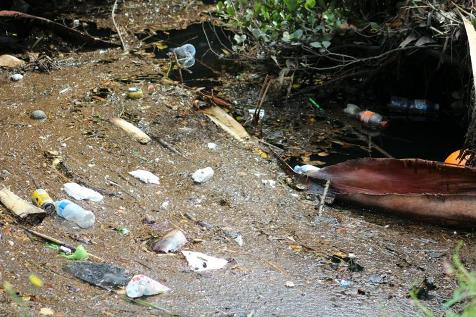
Australia uses more than 1.3 million tonnes of plastic packaging each year, with more than one million tonnes ending up in landfill or as litter.
The environmental costs of plastic packaging are projected to exceed $5 billion by 2050, with councils and communities left to shoulder much of that burden if national reform does not proceed.
Mayor Burnett said the decision also threatened the viability of Australia’s recycling sector, reducing competition and potentially increasing waste costs for councils.
“If recyclers close or divest because they cannot get the certainty they need to scale up, councils could have fewer providers to contract with, costs could rise, and even more material will end up in landfills that are already under significant pressure,” he said.
“Without packaging reform, communities will be paying for growing landfills instead of things that make our communities vibrant and liveable, like libraries and parks, safer local roads, and community programs.”
“The Commonwealth has invested more than $200 million of public money in new and upgraded recycling infrastructure through the Recycling Modernisation Fund. Walking away from the regulation needed to drive production of recycled materials puts the value of that investment at risk.”
Mayor Burnett said the Government should urgently explain how it would prevent potential flow-ons from the decision, such as stockpiling, recycling facility closures, higher council waste costs and additional pressure on landfill capacity.
“At a time when councils and households are under unprecedented financial pressure and packaging consumption is growing, walking away from the promised regulatory scheme shifts more of the cost onto ratepayers, indefinitely.
“We have put a practical solution on the table. Industry support for this national solution has never been higher. Producers should be responsible for the full cost of the packaging they put into Australian communities, and councils need a seat at the table in designing and delivering the system.
“National packaging reform was supposed to make producers responsible for the products they put into our communities. The Federal Government needs to reconsider this decision and provide a clear, binding pathway to nationally consistent and regulated product stewardship.”
The need for effective, national and mandatory product stewardship is urgent. The full cost of managing packaging at end-of-life should be borne by producers, rather than being passed to councils and ratepayers to manage.
Sentiment across Australia, from business through to individuals is the Government must keep its promise to introduce national packaging reform and deliver mandatory rules that require packaging to be designed for recovery, reuse and recycling, and oblige brand owners to use recycled content in their plastic packaging.
Previously:
%20scamps%20Chaney%20launch%20smaller.jpg?timestamp=1784782021225)
Photo: Auspics