Scamps - Chaney Launch National Plan to Tackle Plastic Pollution - Make Big Polluters Pay
This Plastic Free July, Independent Member for Mackellar Dr Sophie Scamps MP and Independent Member for Curtin Kate Chaney MP have today released a joint policy paper outlining a practical national plan to tackle Australia's growing plastic pollution crisis – and are calling on the Government to implement the reforms this year.
Australia's packaging system is failing. In 2022, State and Federal Environment Ministers committed to strengthening packaging regulation, yet almost four years later, the promised national legislation still has not been delivered. In that time, Australia has failed to meet every national packaging target set in 2018.
The consequences of that inaction are catastrophic, reaching across our environment, climate and health. Every day of delay, more plastic goes to landfill, pollutes our oceans and waterways and breaks down into microplastics that are now found in our food, our water and our bodies, generating greenhouse gas emissions across its entire lifecycle.
Voluntary measures have failed, and instead Australians are paying the price twice over, with their health and their wallets. Households currently pay an estimated $70–95 a year through rates and levies to manage packaging waste, while producers continue to avoid responsibility for the waste they create.
The Recycling and Waste Reduction Act already gives the Federal Government a readymade mechanism to establish a mandatory Extended Producer Responsibility Scheme that holds industry accountable for the full lifecycle of the packaging it puts on the market.
Sophie Scamps and Kate Chaney have set out a plan for urgent, achievable reforms in 2026, most of which can be delivered using powers Parliament has already granted:
1. Establish a mandatory, nationally harmonised Extended Producer Responsibility (EPR) scheme, made under the existing Recycling and Waste Reduction Act, with binding targets for waste reduction, reuse, recycling and recycled content, and a national, producer-funded soft plastics scheme designed from the end market backwards.
2. Phase out harmful industrial chemicals in plastics, through a national green/orange/red classification framework.
3. Invest in the research, innovation and education needed to make the whole system work.
The reforms rest on a simple principle: the polluter pays. Independent analysis finds an EPR scheme would add just 0.1 per cent to product costs - around 25 cents a week per household. Support is overwhelming and unusually united: the proposals have been tested with environmental groups, health groups, industry, and the Government's own consultation found 65 per cent of respondents backed a mandatory scheme.
The evidence is in, the mechanism exists. The time for action is now.
Dr Sophie Scamps - Federal Member for Mackellar, said:
"As a doctor, I'm increasingly worried about the impact of plastics on the health of Australians, particularly with the growing evidence linking microplastics to the rapid rise of cancers among young people. A precautionary approach means acting on the evidence we already have, not waiting until it’s too late.
“The health of all Australians is at risk as micro and nanoplastics pollute the air we breathe, the water we drink, the food we eat, and are now found throughout our bodies and organs.
“Relying on voluntary action by corporations has failed monumentally. Australia is one of the worst producers of plastic waste per person globally, we’ve missed all our plastics targets, and we recycle just 14% of our plastic waste. The government cannot afford to delay any longer, the risk to human health is too high.
Kate Chaney - Federal Member for Curtin, stated:
“We don’t need new powers to fix this problem. The Government can act this year, using legislation Parliament has already passed.
"For too long, households have been left to pay for a mess they didn't make – $70 to $95 a year in rates and levies just to manage packaging waste. A polluter-pays scheme would cost the average household 25 cents a week and finally put the responsibility where it belongs."
"The voluntary approach has been tried for more than two decades and it has comprehensively failed. What's striking now is the consensus – industry, environmental groups, health groups and the community are all asking for the same thing – a national, mandatory extended producer responsibility scheme. This alignment has taken years to build and the Government must act this year.”
Kal Glanznig – Filmmaker and Founder of Blue Minds, said:
“Australians have such a strong cultural connection to our ocean. Filming 'The Plastic Country' (premiered July 1st in Sydney followed by screenings across the country) I've seen the worst impacts of plastic in Australia. It is truly shocking.
“This policy paper is the blueprint of how change is possible, not 10 years down the track, but right now - today.
“Regardless of political views or any other ideologies, I'm sure everyone can agree that we don't want to see plastic continuing to end up on our beaches, in our animals and in our bodies. Now is the time to make Australia no longer the plastic country.”
Jeff Angel - Director of Boomerang Alliance, stated:
“The Boomerang Alliance welcomes these plans for new packaging laws which reinforce the clamour of multiple industry and NGO groups calling for the Commonwealth Government to act. It's baffling that the government keeps delaying on this important issue.
“We urgently need a national EPR scheme with legally-binding targets to reduce, reuse and recycle packaging if we are to stop damaging plastic pollution and resource waste.
“Most importantly, the plans make producers of packaging responsible, this is the only way we can stop the waste and build a genuinely sustainable packaging system and circular economy.
“Harmful chemicals must be removed from packaging, and we endorse effective proposals that will curb their use.”
Rebecca Prince-Ruiz – Founder of Plastic Free July, said:
“Australians are doing their part, but without mandatory producer responsibility we’ll keep coming home from the supermarket with a bin full of unwanted packaging - it’s time for a national, level-playing-field solution that puts the costs back on the producers who design and profit from this waste, and finally makes reduction, reuse and better design the default.”
The MP for Mackellar has launched a Petition which will ensure the issue gets tabled in Canberra.
To sign or download the Policy Paper, visit: https://www.sophiescamps.com.au/plastics
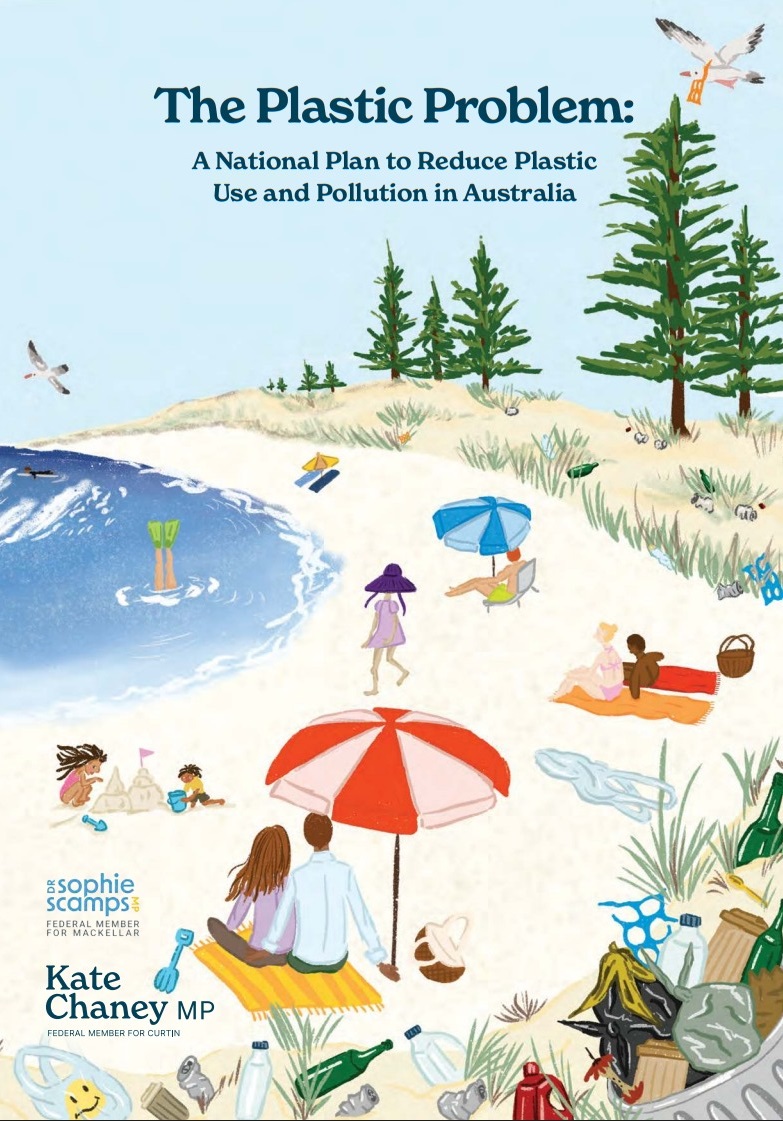
Read: "The Plastic Problem: A National Plan to Reduce Plastic Use and Pollution in Australia" (PDF: 3,2MB)
June 2026 report: Community unites to tackle plastic pollution: Scamps Hosts Successful 'Waves With Waste' Expo
 scamps Chaney launch smaller.jpg?timestamp=1784782021225)
at the launch. Photos: Auspics
Plastic Free July 2026: 3 Quick ways to Protect our Pittwater Estuary, Bays, Creeks
July is the month when we can all focus in on keeping the plastic out of the real, especially in our natural environment.
This month you too can contribute to looking after the world you live in by ensuring you're not part of the problem.
Single-use plastics easily blow off boats, causing hazards and endangering our local marine life - 3 quick ways boaters can protect Pittwater:
- Secure your deck – lock down lightweight trash so it doesn't blow overboard.
- Ditch plastic bottles – swap to reusable flasks for your day on the water.
- Pack away– leave absolutely zero waste behind at your favourite beaches.
Idea courtesy Marine Rescue Broken Bay - whose volunteer members are also saving the pristineness of your Pittwater estuary waterways.
Keep it real Pittwater!