Wakehurst MPs Bushfire Bill Lapse Date extended: Concerns persist Over DA's in High-Risk Fire Zones
On Wednesday February 11 2026 the Hon. Ron Hoenig, NSW Minister for Local Government moved in the New South Wales Parliament:
'That standing and sessional orders be suspended to extend the lapsing date for general business order of the day (for bills) No. 5 Environmental Planning and Assessment Amendment (Bushfire Protection) Bill 2025, in the carriage of the member for Wakehurst, to 29 May 2026.'
Manly MP James Griffin, NSW Liberal, stated 'I appreciate the Leader of the House sharing the suspension of standing orders. We have no issue with that.'
The Following day, Michael Regan, Independent MP for Wakehurst, in a Private Members Statement title 'Planning System and Bushfire Risk', said
''I speak on the draft Sydney region plan and the way it addresses natural hazards and bushfire risk in planning for our city's future. The draft plan is currently on exhibition until 27 February. There is much in the draft plan that I strongly support: increasing housing diversity, focusing on urban renewal and infill close to existing infrastructure, delivering more social and affordable housing, and protecting Sydney's blue-green grid and urban tree canopy. Those are all objectives that I wholeheartedly endorse. However, I hold concerns about how bushfire risk is addressed. I have made a submission outlining those concerns, and I have also raised them directly with the Minister's office.
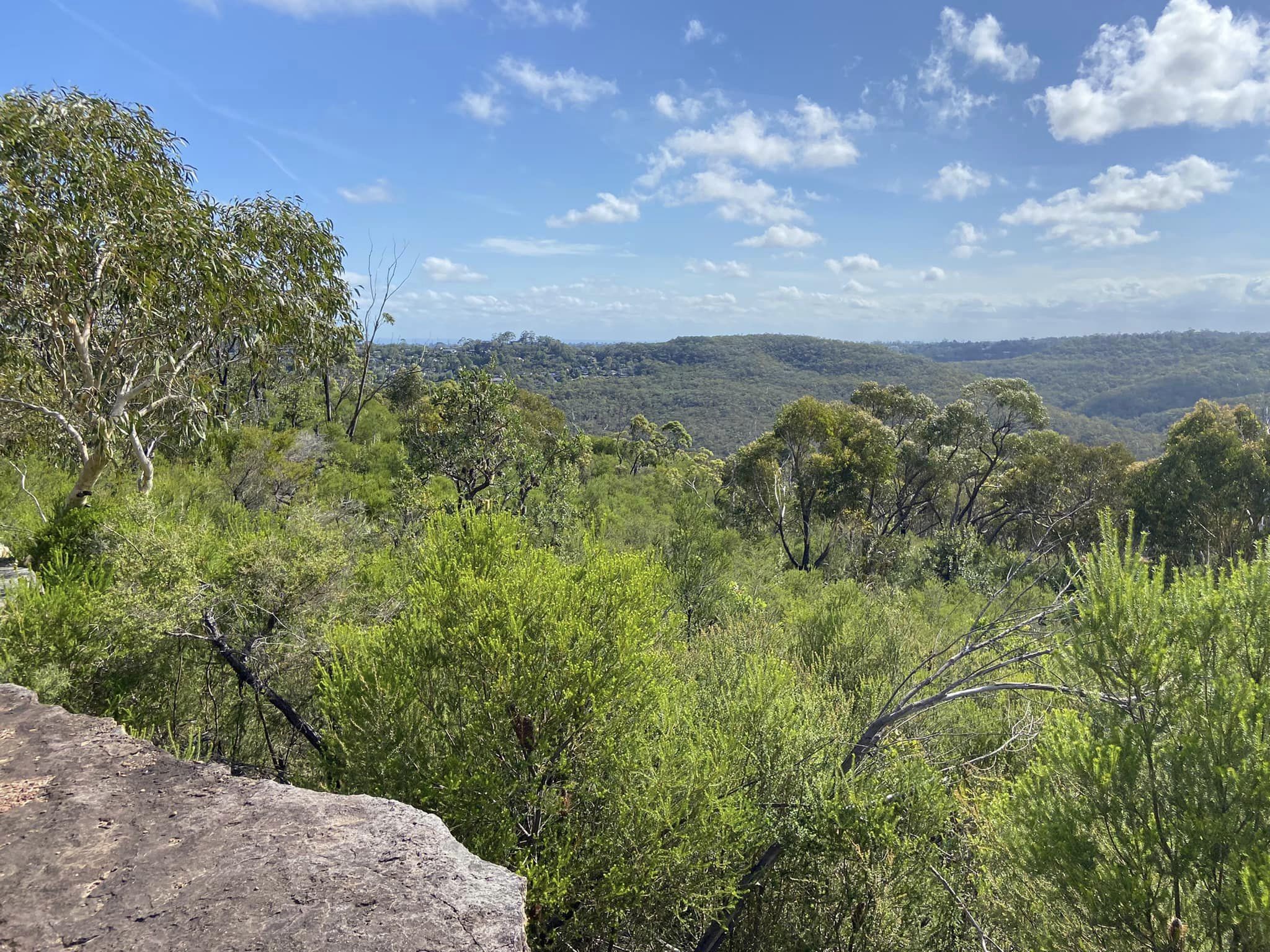
Sydney is a city both defined and blessed by bushland. It is part of Sydney's beauty, but it is also one of its greatest risks. Large parts of our city sit at the bushland‑urban interface, where thousands of homes are exposed in the event of a major fire. My electorate of Wakehurst on Sydney's northern beaches is one clear example. In December 2025, 16 homes, many more structures and one life were lost to bushfires on the New South Wales Central Coast. In January this year more than 500 structures were destroyed in Victoria. During the Black Summer fires of 2019‑20, 33 lives were lost and more than 3,000 homes were destroyed across Australia.
We also witnessed the January 2025 wildfires in Los Angeles. More than 10,000 homes were destroyed, and the losses were estimated at over US$250 billion. Experts have been clear that a fire event of that scale and ferocity in Australia is not a question of if, but when. That is the context in which the Sydney region plan must be developed. That is why I am concerned by a statement on page 60 of the draft plan under the heading "Minimise the impact of natural hazards to communities". It states:
Any application of risk-based frameworks on land owned by Aboriginal landowners should consider Aboriginal peoples' economic participation, housing, social and cultural expression needs.
In my view, that sentence is problematic and must be removed. It suggests a lower or different standard of natural hazard assessment for a development on Aboriginal‑owned land. That would be a fundamental departure from consistent, merit‑based, risk‑based planning. I understand and support in principle the desire to support Aboriginal economic development and to enable land councils to generate income from their lands. But we cannot right past wrongs by creating new ones that deny escalating bushfire risk and place lives in danger, including the lives of our volunteer bushfire‑fighters.
For my community, the issue is not theoretical; it is playing out right now in the Patyegarang planning proposal—formerly known as Lizard Rock—in Belrose. The proposal seeks to create a 370‑home subdivision in bushland along Morgan Road. The NSW Rural Fire Service has consistently opposed the rezoning due to unacceptable fire risk, and anyone who has been to that area would know and appreciate and understand that. Despite that, the Department of Planning, Housing and Infrastructure has asserted that the proposal is compliant, contradicting expert advice from the RFS. If not for the current ministerial direction requiring that the RFS must not object for a proposal to proceed, the subdivision would already be underway.
In December 2024 the Sydney North Planning Panel refused to green-light the proposal, instead directing further work with the RFS. Two highly experienced planning experts on that panel voted to reject the proposal outright on bushfire risk grounds. What is troubling is the double standard. In 2021 the New South Wales Government cancelled the Ingleside Place Strategy, which would have delivered hundreds of homes nearby. Why? Because bushfire and excavation risks were deemed unacceptable. In that case, expert advice was heeded. But with the Patyegarang proposal on Aboriginal land, the department is determined to push forward.
There is no justification for applying a lower standard of safety to development on Aboriginal‑owned land than on any other land. Fire does not discriminate. Embers do not respect tenure. Risk does not change based on ownership. The sentence on page 60 must be removed. The plan must be clear. No development anywhere in Sydney should proceed where bushfire risk is unacceptable. Anything less would be reckless, and our communities deserve much better.''
On November 20 2025 Mr. Regan tabled the 'Environmental Planning and Assessment Amendment (Bushfire Protection) Bill 2025'.
During his 2R speech Mr. Regan stated:
''The issue of bushfire risk and strategic planning has been a consistent theme of my work in council and in Parliament since being elected in 2008. This is a top priority issue for me because the northern beaches, including in my electorate of Wakehurst, has large areas of land which, due to native vegetation cover and topography, are highly bushfire prone. Many of these areas are, or could be, subject to planning proposals to rezone land for more homes. Foremost is the Patyegarang—formerly Lizard Rock—planning proposal that currently seeks to create a new 370‑home subdivision in an area of bushland on Morgan Road in Belrose. The NSW Rural Fire Service has consistently opposed the rezoning of the site due to fire risk, but it is yet to be finally decided. We have to stop building new homes in areas where there is an unacceptably high bushfire risk. It is as simple as that.
With the Government's recent amendments to the planning Act, including the creation of the Development Coordination Authority, I hold serious concerns about downgrading the role of RFS expertise in decision-making about strategic planning. The bill is about safeguarding the role of RFS advice in strategic planning decisions.
The bill does three things. Schedule 1 [3] and [4] to the bill amend section 10.3 of the Environmental Planning and Assessment [EP&A] Act, which relates to bushfire-prone land mapping, and to establish the NSW Rural Fire Service as the agency responsible for the State's bushfire-prone land mapping. That includes reviewing bushfire‑prone land mapping every five years.
Importantly, the RFS Commissioner must consult with the relevant council before designating land as bushfire prone. Currently, local councils are responsible for initiating the mapping process and putting forward a proposal to the RFS, which it then certifies. Consulting with industry experts, it appears that in some local government areas there is a lack of resources and/or capability to update maps and in others there is inertia to provide for the continuous changes necessary. That means that maps are inconsistent, and some are out of date and no longer reflect the real fire risk, which may have increased or decreased, largely depending on landscape vegetation changes.''
In full in:
See November 2025 report: Regan Tables Development on Bushfire Prone Land Protection Bill 2025