Mona Vale’s bus depot is set to be upgraded for electric buses in 2027, as part of the NSW Government’s New Electric Bus Program. The program is converting existing depots across Greater Sydney with the charging, power and operational infrastructure needed to run a growing electric fleet.
Member for Pittwater Jacqui Scruby welcomed the investment in a depot that keeps buses running across Pittwater and the northern peninsula.
“Mona Vale depot is at the heart of our local bus network, so it’s great to see it chosen for this upgrade,” Ms Scruby said.
“Electric buses mean quieter streets, cleaner air and a smoother ride for the people who use them every day. This is a good step forward for Pittwater.”
The upgrade will modernise the depot so it can support safe, efficient and reliable services, and will help Transport for NSW and the operator maintain and run electric buses. It will also cut reliance on imported diesel and gas, and the investment in construction, electrical infrastructure and skills will create opportunities for local industry.
Ms Scruby said she would keep working to make sure the benefits reach local passengers.
“A modern depot is only part of the picture. I’ll keep pushing for reliable, frequent services across Pittwater, and I’ll keep our community informed as the project progresses,” she said.
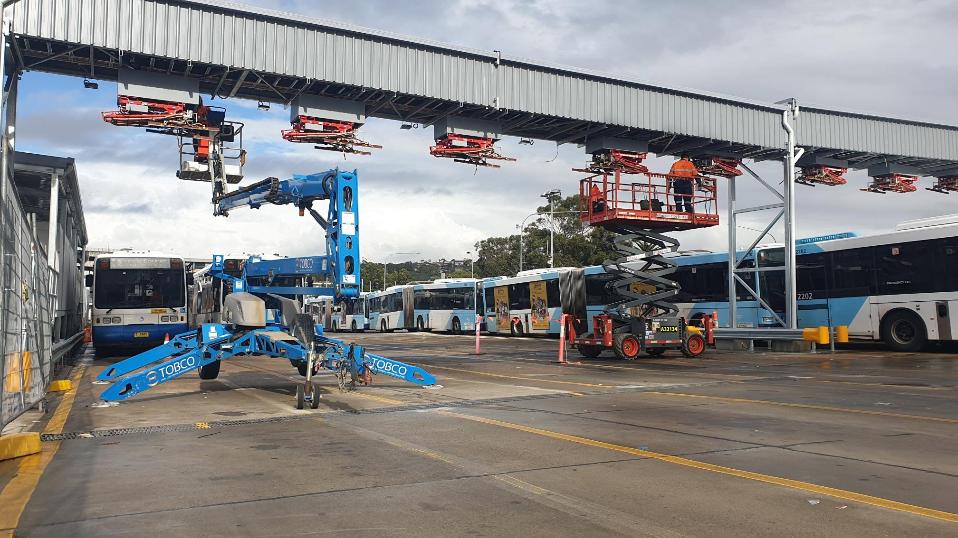
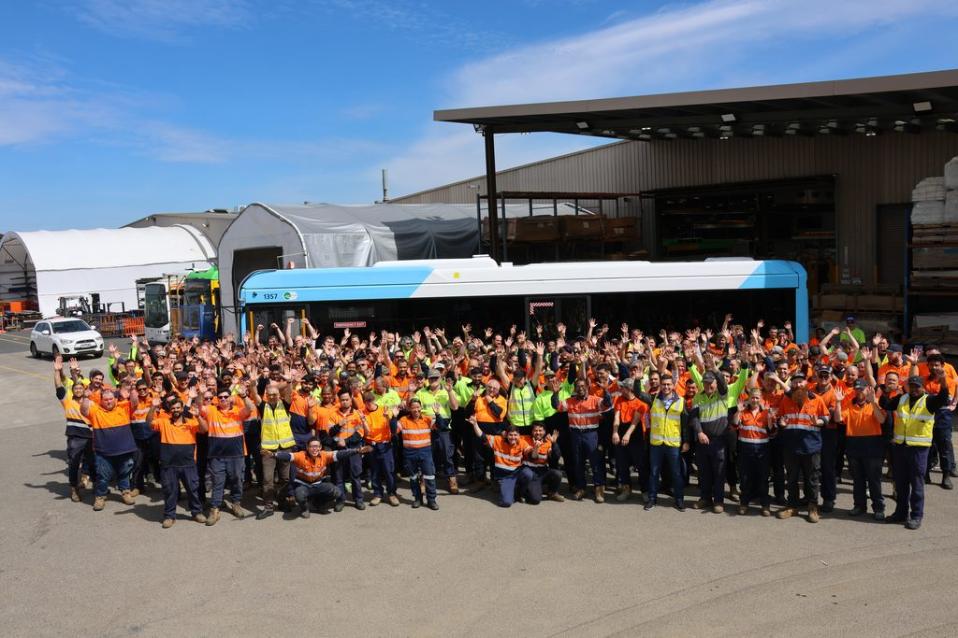
On October 1 2026 TOBCO, the outift that delivered the Brookvale Bus Depot electrification project, and was Downer’s delivery partner responsible for both the civil and electrical works, announced they have been awarded both the civil and electrical works packages for the electrification of Mona Vale Bus Depot by Downer.
''Now Australia’s largest active electric bus depot, Brookvale was a significant milestone in the transition of the Northern Beaches bus network to zero-emission transport. We’re pleased to continue that journey with Downer as the program progresses to Mona Vale.
Our team looks forward to bringing the same focus on safety, quality and collaboration to the Mona Vale project.
Thank you to Downer for its continued confidence in TOBCO.'' TOBCO stated
The expected completion date for the Mona Vale depot is currently slated to be mid- 2027.
Key features of the Mona Vale proposal according to the REF include:
- works to enable the transition of approximately 81 diesel buses (70 rigid and 11 articulated) diesel to electric buses, including:
- installation of associated bus charging infrastructure, including pantograph and plug-in chargers
- upgraded power supply infrastructure
- internal reconfiguration of bus depot, including
- installation of replacement bus wash into the under-chassis wash bay
- demolition of old bus wash structure and associated infrastructure
- line marking and speed bumps
- rectification of collapsed storm water drain
- modifications to pavement and kerb- relocation of refuelling bowser
- installation of a permanent back-up generator
- fire and life safety upgrades, including installation of fire suppression systems.
Key benefits
Converting existing bus depots and delivering new purpose-built electric bus depots will:
- Enable more electric buses by providing the charging, power and operational infrastructure needed to support a growing electric fleet.
- Modernise depot infrastructure to support safe, efficient and reliable bus operations.
- Support reliable bus services by ensuring depots have the capacity and infrastructure needed to operate and maintain electric buses.
- Support future network needs by investing in depot capacity and infrastructure that can adapt as the fleet and transport network grow.
- Reduce reliance on imported fuels by providing the infrastructure needed to transition from diesel and natural gas buses to electric technology.
- Support lower-emission public transport by enabling the continued transition to a cleaner, more sustainable bus fleet.
- Create opportunities for local industry through investment in construction, electrical infrastructure, technology, skills and supply chains.
Brookvale's Electrification
The new Brookvale depot, delivered in September 2025, is the first in Australia to feature overhead pantograph-down charging technology in a Bus depot or at this scale. Powered by renewable energy, it has the capacity to charge 229 electric buses, helping deliver quieter, cleaner journeys for the local community.
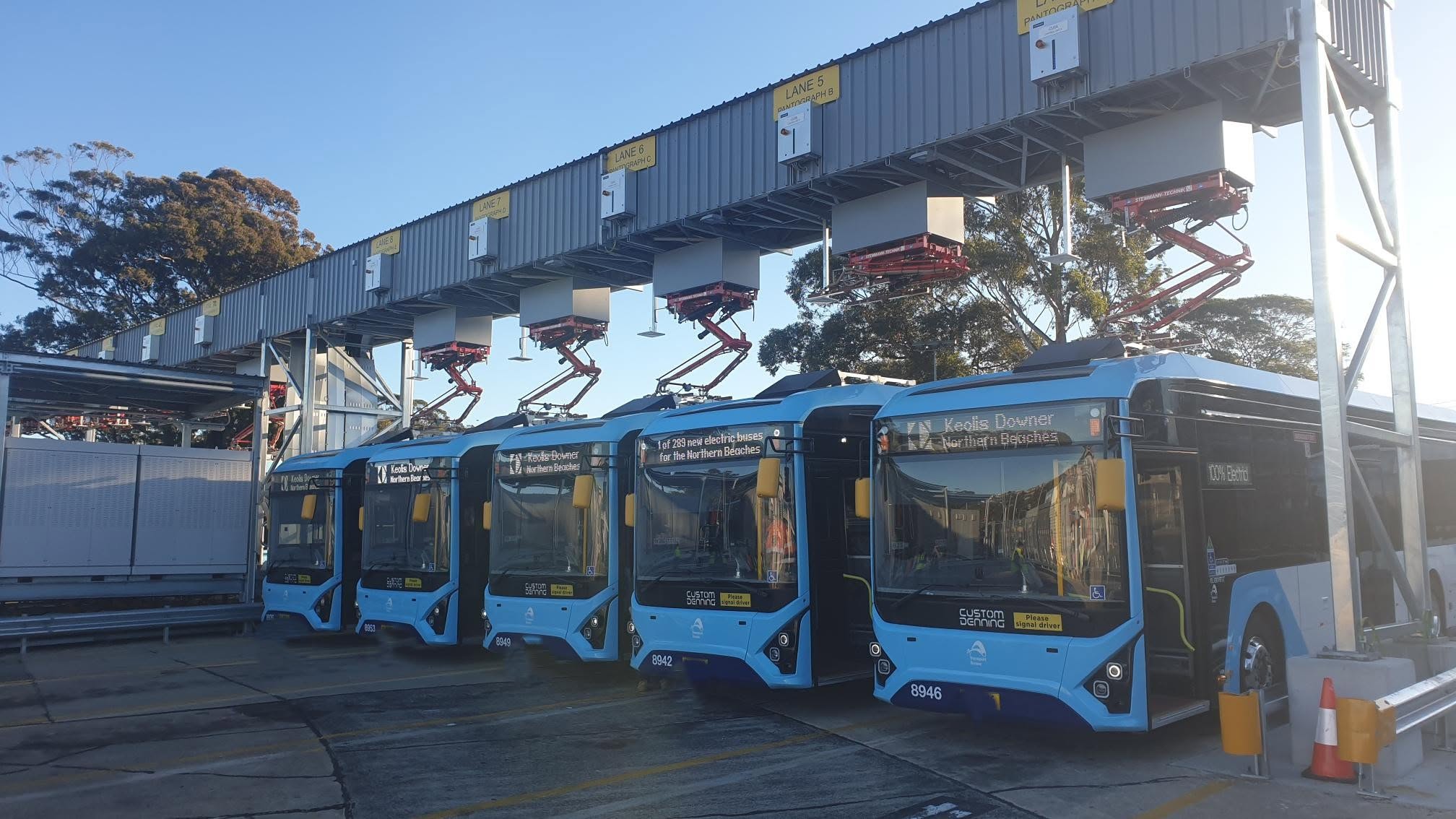
Photo: TOBCO/Downer
Downer was engaged by Keolis Downer to undertake the grid connection upgrades and depot electrification works through a framework of design, procure, install, commission and maintain the Zero Emissions Bus (ZEB) infrastructure. Despite the complexity of converting the busy diesel bus depot to electric, the project was completed without disruption to daily services.
“This project has been a full diesel-to-electric conversion, introducing pantograph-down chargers as the primary charging method,” Tim Guthrie, Downer’s National Operations Manager, New Energy, said
“Each charger delivers 450 kilowatts, allowing buses to recharge in around 20 minutes. With 16 chargers installed, this depot is a first of its kind in scale and complexity, giving operators far greater flexibility in how they charge buses.”
The project also demonstrates how new technology can deliver tangible community benefits.
“You only have to sit on an electric bus to feel the difference – it’s smoother, quieter, and cleaner,” Jaimie Stewart, Construction Manager added.
“For the people of the northern beaches, where buses are the only form of public transport, this is a change that will be felt every day.”
The Brookvale depot is a major milestone in the transition to sustainable transport across New South Wales. It also highlights the expertise of Downer’s New Energy business, accredited to deliver large-scale renewable energy and sustainability solutions for clients nationwide.
“Successful delivery at Brookvale shows how strong partnerships make complex projects possible,” said Tim. “We deeply appreciate our collaboration with Transport for NSW and Keolis Downer. With the support of our delivery partners – including TOBCO, Fredon, ABS, JET Charge, Trivantage, Hunter Power Systems, ABB and Beyond Engineering – we’ve helped create infrastructure that enables a more sustainable future for the community.”
The completion of the Brookvale depot reinforces the role of renewable energy in reshaping public transport, cutting emissions, and supporting Australia’s transition to a low-carbon economy.
Now it's Mona Vale's turn as the depot commences its 57th year of serving our area.
On January 26th 1970, Mona Vale Depot opened with an initial allocation of 60 buses, comprising a mix of AEC and Leyland Underfloors, Leyland 'Green' Leopards and Leyland OPD2/1 double deckers. The Mona Vale Depot took over most of the routes north of Narrabeen from Brookvale Bus Depot.
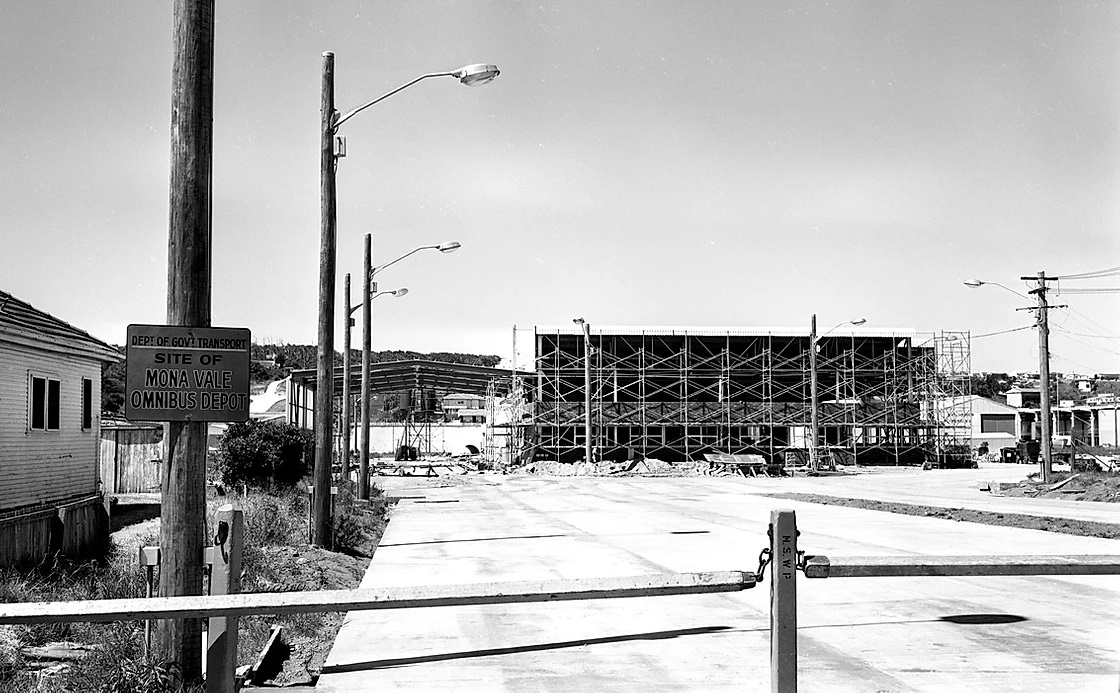
December 28th, 1969: work is well advanced on construction of the fuel bay (left) and maintenance facilities (centre-right). Taken from the Darley Rd. entrance. John Ward photo.
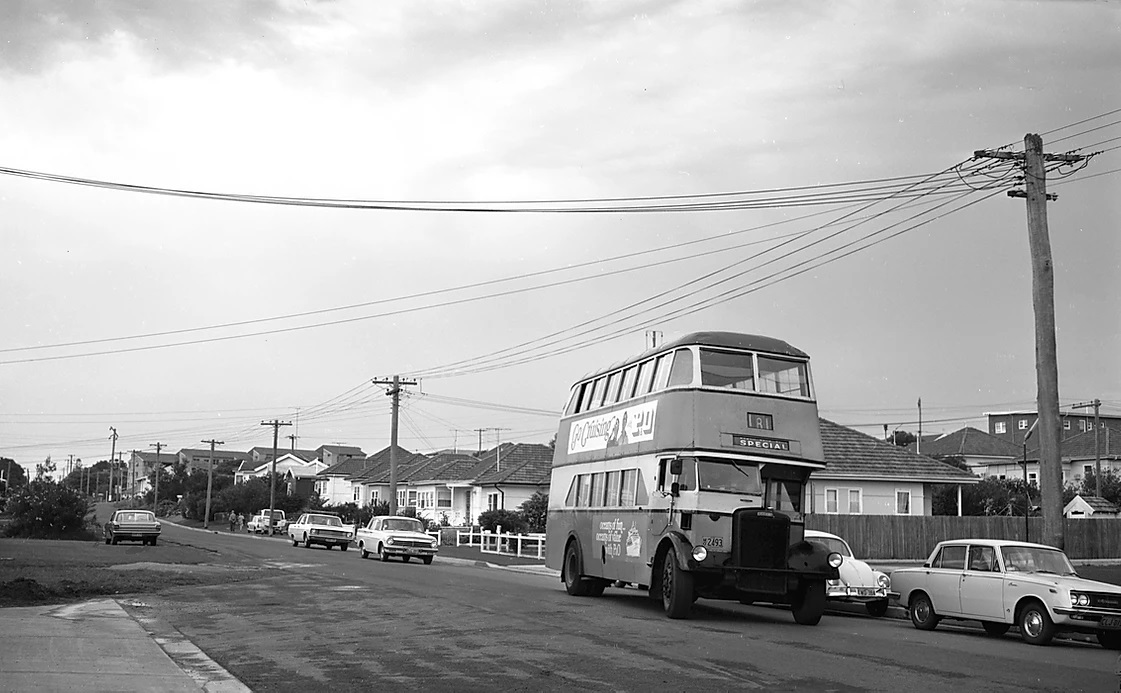
January 26th, 1970: Transferred in from the Brookvale Depot, Leyland OPD2?1 2493 turning into the depot from Darley Road, Mona Vale. John Ward photo.
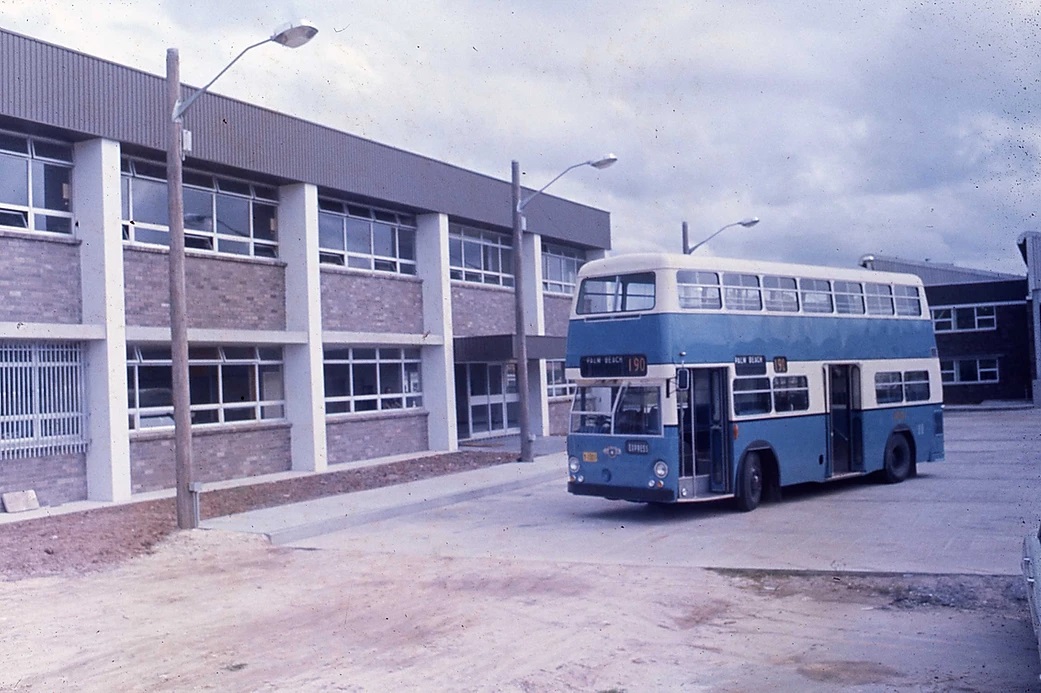
The first Leyland Atlantean 1001 outside the administration and operations building, likely during the official opening on May 8th, 1970. State Transit Archives photo.
On Monday January 27th, 2020 the Sydney Bus Museum marked the 50th anniversary of the opening of Mona Vale Bus Depot by operating bus shuttles around Mona Vale and through the depot. Included in the report the news service ran then are photographs from the day. Our thanks go to State Transit, once more, who invited them to help mark this significant anniversary of a key part of our local public transport story. Thanks once more to the Sydney Bus Museum too for sharing these photographs taken on the day with Readers.
Report: Sydney Bus Museum Volunteers Helps Mona Vale Bus Depot Celebrate 50th Anniversary of opening
More new electric Buses coming in 2027
On December 20 2024 the NSW Government announced it has made another big investment in a more sustainable transport future by ordering 319 battery electric buses as part of Transport for NSW’s Zero Emission Buses (ZEB) Program.
Marking a significant step forward in the multi-billion-dollar program to transition NSW’s 8,000-plus diesel and gas public transport bus fleet to zero emissions technology, 276 of the new buses will be operational on the Northern Beaches and North Shore by 2028.
The remaining 43 battery electric buses will service the new Western Sydney International Airport.
The buses will be supplied by four bus manufacturers Custom Denning, Foton Mobility Distribution, VDI-Yutong and Volvo.
Manufacturers will supply a mix of vehicles consisting of either buses built in Australia, or where key bus components are imported and the bus is fitted out locally. This means that all buses will have some local equipment fitout as a minimum for the ZEB program’s first bus order.
“The first zero emission bus orders for the Program mark an important milestone in what is an undeniably ambitious plan to transition all public transport diesel and gas buses to zero emission buses in Greater Sydney by 2035, in Outer Metropolitan regions by 2040, and in Regional NSW by 2047,” Transport for NSW Coordinator-General Howard Collins OBE said in 2024.
“NSW is leading the way with the largest ZEB fleet in Australia, while also supporting the Government’s aim of progressively increasing local goods, services, and workforce in bus manufacturing to 50% for future bus orders by 2027.
“That’s why we are delivering the program in stages in close consultation with industry, to give local industry, including manufacturers, the opportunity to increase capability and capacity with the knowledge that there is a sustained pipeline of bus orders.
“We want to encourage investment in the future of local manufacturing and support the growth of the industry in NSW and Australia wide in new technology and the jobs skills that will be created.”
A further order for more than 150 battery electric buses is expected to be placed early next year with around 1000 more buses to be ordered by 2027.
“Ultimately it’s the community that will benefit from this investment as the majority of Transport’s carbon emissions currently come from our diesel and gas buses – instead we will have a cleaner, quieter fleet across NSW,” Mr Collins added.
Volgren Completes 95 Battery-Electric Bus Order for Transport for NSW
On November 9, 2026 Volgren stated:
''We’re proud to mark the completion of the 95-bus battery-electric fleet order for Transport for NSW, operated by Transit Systems Australia, delivered in just seven months.
Locally manufactured by Volgren, in partnership with BYD and with the support of our valued suppliers, this order also marks another significant achievement with the production of our 500th zero-emission bus (ZEB).
With the fleet now delivered to Leichhardt Depot, this milestone also coincides with the depot’s recent Open Day, where the community had the opportunity to explore the evolution of public transport.
This achievement reflects the dedication and hard work of our teams, suppliers and partners, and our ongoing commitment to Australian manufacturing, quality and supporting our customers in the transition towards more sustainable public transport.''
Volgren's New South Wales facility is located at Ingleburn. To support the expanding fleet of vehicles nationwide, Volgren has continued to strengthen its aftersales and service network. The company recently opened its South Australian facility, complementing existing operations in Victoria, Western Australia, Queensland and New South Wales.
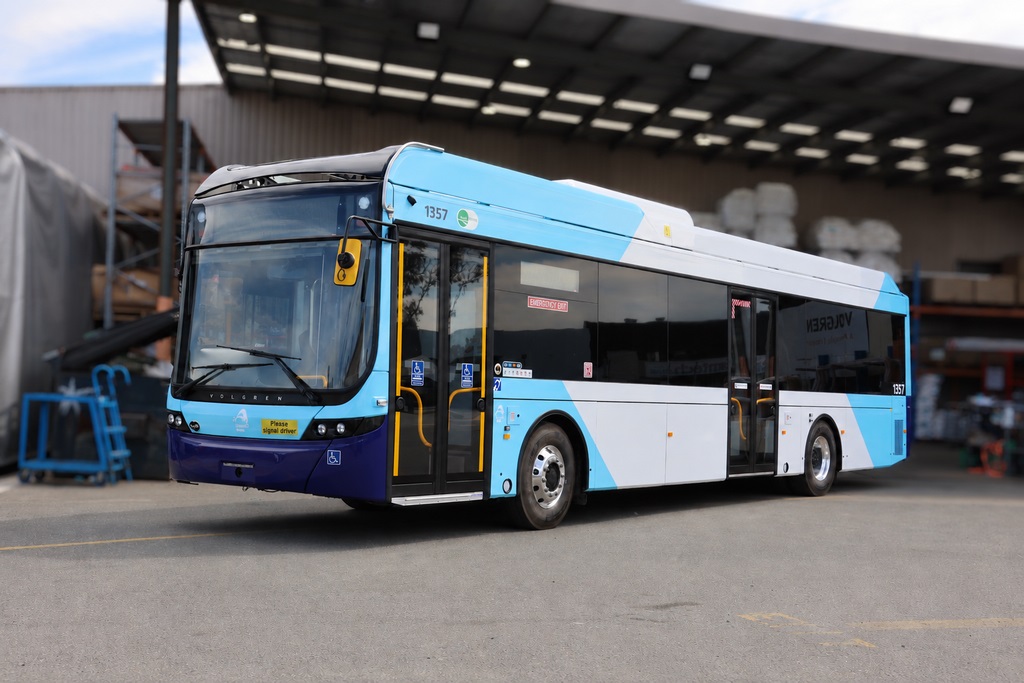
Volgren's 95th electric bus for NSW. Image: Volgren
Electric Articulated Buses commencing to roll off production line
An earlier update by Volgren and Keolis Downer welcomed the arrival of one of the country’s first locally manufactured electric articulated or 'bendy' buses.
The Electric Articulated bus was unveiled at Volgren’s Malaga facility on Tuesday 23 June 2026, with WA Deputy Premier, Treasurer and Minister for Transport, the Hon. Rita Saffioti, joining representatives from the Public Transport Authority (PTA) of Western Australia, Volvo Bus Australia and Volgren.
Volgren CEO Thiago Deiro said the project reflected the importance of local manufacturing capability in supporting the next generation of public transport.
“This project is a significant milestone for Volgren and for Australian bus manufacturing. As the body builder, our role has been to apply our local design, engineering and manufacturing expertise to deliver a vehicle that is built for Australian conditions and the needs of local operators.
“Australia’s first electric articulated bus demonstrates what can be achieved when global technology is supported by strong local capability. We are proud to have delivered this vehicle from our Malaga facility in partnership with Volvo and the PTA.”
Keolis Australia and New Zealand celebrated the major public transport milestone in Western Australia, with the bus arriving at its Bayswater depot.
Built locally at Volgren’s Malaga facility, the 18-metre electric ‘bendy’ bus is another step in the operator’s transition towards a cleaner and more sustainable public transport network.
The bus has capacity for approximately 105 passengers, compared to around 80 on a standard Transperth bus, offering greater passenger capacity while electrifying Perth’s bus fleet.
“It’s exciting to see this innovation arrive at Bayswater Depot and to be part of the ongoing transformation of public transport across Perth’s northern suburbs, in partnership with the Public Transport Authority of Western Australia (PTA),” Keolis said
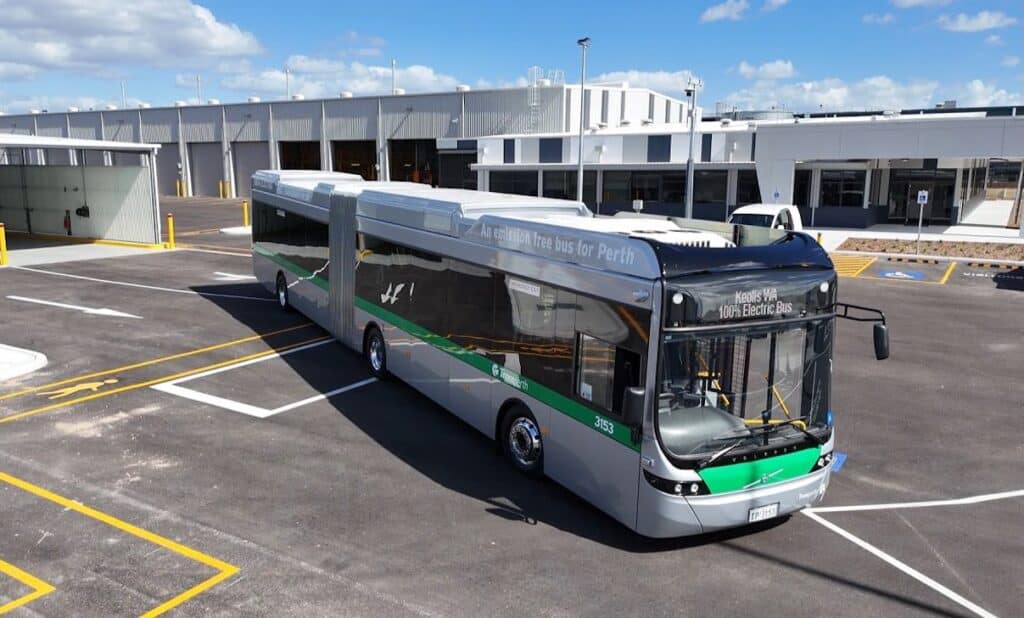
Australian bus operator Keolis has welcomed the arrival of one of the country’s first locally manufactured electric articulated buses. This one is one of the first built locally at Volgren’s Malaga facility in Perth. Image: Keolis Australia and New Zealand