Week Four May 2026: Issue 654 (published Sunday May 24)
Moree Rocket blasts onto State Heritage Register
Announced: Tuesday May 19 2026
The Moree community is over the moon with the beloved Moree Rocket jetting onto the NSW State Heritage Register.
The Moree Rocket is a distinctive playground rocket representative of the many installed in playgrounds across NSW at the height of space fever in the 1960s and 1970s. Rockets like this are an important and beloved symbol of Australian childhood.
Moree Rocket in Kirkby Park. Photo: NSW Government
The Moree Rocket was installed at Kirkby Park in 1972 and recognises how space exploration had permeated the town’s culture in the early 1970s while also acknowledging Moree’s role with the Overseas Telecommunications Commission (now Telstra).
Globally significant, Moree’s Overseas Telecommunications Commission satellite relayed the iconic July 20 1969 footage captured by the Parkes telescope to the world on the day people first walked on the moon.
CSIRO’s Parkes radio telescope shortly after its completion in 1961 Credit: CSIRO
The Moree Rocket’s metal fabricator, Dick West, built 38 playground rockets across NSW, reflecting the interest in everything to do with space of the era. Of these beloved and nostalgic creations, only two are left standing in their original locations in New South Wales, in Moree and Deniliquin, although you will find Mr. West's rockets both here in NSW and in other states.
Another iconic red, yellow and blue rocket ship lives in Long Jetty on the Central Coast and made a safe return to its launch pad in Lions Park in September 2023 after going into that Central Coast Council's TLC Department so that it could be preserved and enjoyed by the community for decades into the future.
Lions Park, Long Jetty 1975 . Source: The Entrance Lions Club. Advertising for Dick West Play Equipment
Long Jetty Rocket Ship prior to restoration. Photo: Central Coast Council and right: Refreshed Rocket Ship September 2023. Photo: Rick Gatt, Central Coast Council
In Ulverstone, Tasmania, the popular rocket ship and flying saucer slides have been in ANZAC Park since the 1970s too, earning the site the unofficial name of 'Rocket Park'. This rocket was recently restored and updated with new play equipment added on.
the flying saucer and rocket in Ulverstone's ANZAC Park in December 2024. Photo: SeaFM, Ulverstone
In March 2026, after the changes. Photo: Central Coast Council, Ulverstone
There's another one at Hawthorn in Victoria - that one has also been given a spruce up recently, in 2022.
The first Australian playground rocket was built in Blackheath, New South Wales during the early 1960s. John Yeaman, an engineer, wanted to recreate the iconic climbing equipment and slide, after seeing them in playgrounds throughout the USA. With the help of metal manufacturer, Dick West, he was able to do so. Mr. West had a welding and metal fabricating business in Blackheath in the Blue Mountains.
The government said on Tuesday that the Moree rocket’s listing on the State Heritage Register shows that history and heritage are not just convict buildings and sandstone churches.
'NSW’s heritage and stories sit in the playgrounds at the end of the street, at the pubs on the corner, in mixed business shops and refurbished milk bars. Our stories are many, and all are important.'
Minister for Heritage Penny Sharpe said:
“The Moree Rocket is a symbol of childhood in Australia – the time we spent as children running in the park and playing with our friends.
“These iconic playground structures speak immediately to us all and to our shared experiences in regional towns, city parks and on road-trip holidays.
“The rocket reminds us of a time when the world raced towards the moon and reflects the excitement many of us felt recently as a new band of astronauts journeyed to the far side of the moon.
“Rockets like these were once common across NSW – from Sydney to the Central Tablelands, the Central Coast to the Blue Mountains – so this listing sparks fond memories for many.
“Now a nod to history, it shows that our state’s heritage isn’t just held in old convict buildings – it also lives in the park on the corner.”
Of course, Pittwater has a 'Rocket Park' too - at Warriewood, although the rocket there is a more modern version of this original, it too is about having fun in the park.
Rocket Park, Warriewood
Seas The Day 2026 returns to Kingscliff Beach NSW - June 20-21
Surfing NSW CEO Lucas Townsend, Minister for Women Jodie Harrison, Surfing Australia CEO Chris Symington, 1993 World Champion Pauline Menczer, Surfing Australia Chief of Sport Luke Madden, Minister for the North Coast Janelle Saffin, President of Bondi Boardriders Victoria Austin. Credit: Glenn Duffus Photography
Surfing Australia is excited to announce the return of the NRMA Insurance Seas The Day for its fourth and biggest year running. The world’s largest female participation surf event will take place on June 20th and 21st at Kingscliff Beach in northern NSW.
In 2025, Seas The Day attracted a record crowd of more than 15,000 people, with free activities, inspirational talks, and workshops hosted by leading women in the surfing industry. Additionally, nearly 300 women and young girls took to the waves to compete in an inclusive tag-team surf contest, with divisions including para surfing, shortboarding, longboarding, and an under-14 mini-shredders division.
On Monday May 18 Surfing Australia officially launched the 2026 NRMA Insurance Seas The Day alongside newly announced Naming Rights Partner NRMA Insurance, extending their commitment to the event through to 2028.
Surfing Australia CEO Chris Symington and Chief of Sport & Partnerships Luke Madden joined NSW Minister for Women Jodie Harrison MP, NSW Minister for the North Coast Janelle Saffin MP, Surfing NSW CEO Lucas Townsend, 1993 World Champion Pauline Menczer, and President of Bondi Boardriders Victoria Austin at NSW Parliament to celebrate the official launch of the 2026 festival.
Surfing Australia Chief Executive Officer, Chris Symington, said:
“It is a privilege to see the NRMA Insurance Seas The Day return to Kingscliff Beach for its fourth consecutive year.
“The event has become a key moment on the surfing calendar, reflecting the continued growth, strength and professionalism of women’s surfing in Australia. The strong levels of participation, community engagement and performance highlight the positive trajectory the sport is on.
“We are proud to welcome NRMA Insurance as naming rights partner for 2026. Their involvement will further elevate the event experience and support the continued development of women’s surfing in Australia.
“Surfing Australia also thanks the NSW Government for its ongoing support, which has been central to the event’s growth and success."
The two-day event on the Tweed Coast will offer spectators a packed weekend of entertainment and experiences, including motivational speakers, live music, yoga, ice baths, breathwork sessions, food trucks, surfboard demo days and much more.
Beyond the action in and out of the water, NRMA Insurance Seas The Day continues to provide an inclusive and uplifting environment designed to encourage greater female participation, confidence and performance in sport. Bringing together surfers of all ages and abilities, the event celebrates community, connection and the continued growth of women’s surfing in Australia.
Eight-time World Champion Stephanie Gilmore praised the incredible community this event has created:
“What I love is seeing women from all walks of life getting into surfing, from age five to well into their sixties. It’s such a great community. Events like this are so important because they celebrate every kind of female surfer—whether they’re competing, running a small surf brand, or just out there having a go. I’m stoked it’s all happening right here in Kingscliff.”
Returning to the festival in 2026, the Celebrity Surf Challenge will bring together world champions, Olympians, media personalities, and rising junior stars for some friendly competition in support of women in sport. Featuring elite athletes and influential women from across the sporting landscape, the event is set to be one of the standout moments of the weekend, adding even more energy and excitement to the NRMA Insurance Seas The Day.
Two-time Olympic Gold Medallist Shayna Jack competed in the Celebrity Surf Challenge in 2025, and reflected on the inspiring and uplifting environment after her heat:
"Today at Seas The Day, it was an uplifting and inspiring experience. Seeing the past, present and future of women’s surfing come together and celebrate empowerment in sport. Being a part of the relay was a lot of fun, not sure how strong my run leg was for the team but it was a heap of fun with lots of laughs and memories to cherish."
Pittwater's 4 x World Para Surf Champion Sam Bloom who gave an inspiring panel discussion and surfed in the Celebrity Surf Challenge and Para Surfing division. Credit: Andy Morris / Surfing Australia
Inside Australia’s Early Road Trains: Moving Cattle Across the Northern Territory in 1959
In the vast cattle country of Australia’s Northern Territory, moving livestock across enormous distances was one of the great challenges of outback life. Before modern transport networks, drovers guided cattle across stock routes stretching hundreds of miles through remote terrain. This Australian Colour Diary explores the arrival of the road train - a revolutionary new method of transporting cattle across the outback. Featuring a massive Rolls-Royce-built road train hauling three trailers and carrying more than 80 cattle, the film captures a turning point in Australian rural industry and transport history. Filmed against the dramatic landscapes of the Northern Territory, this short documentary offers a fascinating glimpse into Australia’s cattle trade, remote station life, and the engineering innovations that reshaped the outback.
From classroom to catwalk: Manly fashion designer Tate Boswarva debuts at Australian Fashion Week
Just weeks after graduating from TAFE NSW Fashion Design Studio, Manly fashion designer Tate Boswarva has launched her label, ATTÈ, on the prestigious Australian Fashion Week runway.
The 21-year-old was one of four graduate designers from TAFE NSW Fashion Design Studio (FDS) selected to showcase their 12-look collection at The Innovators runway show on 13 May. It’s the same platform that helped launch the careers of Australian fashion heavyweights like Zimmermann, Akira, Anna Quan, Bianca Spender, Christopher Esber, Ginger and Smart, and Romance Was Born.
Tate Boswarva's designs on the AFW runway
Supported by Seamless and Redken, the showcase highlighted emerging designers redefining Australian fashion through sustainability, craftsmanship, and innovation.
Boswarva said being on the Australian Fashion Week runway was a “dream come true.”
“It’s a huge milestone and something I have been working towards throughout my studies,” she said. “Fashion has always been a part of my life. From a young age I was sewing, including working with semi-industrial machines and understanding how garments are constructed.”
Tate was the People’s Choice winner for Design at Curl Curl Creative Space in 2024 in the Northern Beaches Environmental Art & Design Prize. Her entry then was wearable art that challenges over consumption, fast-fashion and the impact of plastic waste.
Tate's earliest fashion memories were shaped by her close family friend’s designs, made with care and storytelling at their core. At TAFE NSW Ultimo, she built on that foundation, developing strong technical skills, confidence and her own design voice.
Bowarva now works from her home studio in Manly, balancing casual design assistant work at Zimmermann.
Tate Boswarva in the Muse Gallery studio
“My design work is defined by material experimentation and textile artistry.” Boswarva said. “One of my main techniques is using water-soluble bases. I sew extensively onto the base, and once it dissolves, what remains is a lacelike structure that cannot be bought off the roll. I also heavily bead fabrics and explore a range of sustainable techniques that I learned during my studies at TAFE NSW FDS.
“Fashion is also how I communicate ideas around the female body, sustainability, and lived experience. One of my designs incorporates contraceptive blister packs cut into small bead-like forms with gold foil interiors used as delicate decorative detail.”
Co-Head Teacher of TAFE NSW FDS, Laura Washington, said the Bachelor of Fashion Design focused on equipping students with the practical skills needed to work in a rapidly changing industry.
“Training in new technology, materials innovation, waste management, and sustainable production is embedded throughout the course,” she said. “We’re excited to see our graduates contribute to a fashion industry that is socially, ethically, environmentally, and economically accountable.”
Alongside participating in Australian Fashion Week, the four graduate designers will undertake a a 10-month TAFE Statement in The Next Garde Fashion Incubator, including access to dedicated studio space, tailored mentoring, and industry-supported technology through CLO — a 3D fashion design software program allowing designers to further develop their collections with digital precision while supporting sustainable practices by minimising physical sampling.
Tate Boswarva second on right with FDS graduates on AFW runway
ABOUT TAFE NSW FASHION DESIGN STUDIO
With a rich legacy as Sydney’s first dedicated fashion design studio, TAFE NSW Fashion Design Studio (FDS) is widely recognised as a leader in fashion education within Australia and abroad. TAFE NSW FDS has been the launchpad for some of the country’s most influential fashion design talent that as shaped the future of the Australian fashion industry.
This year marks 27 years of launching emerging fashion designers into the industry with with an impressive list of alumni including Zimmermann, Akira, Anna Quan, Bianca Spender, Christopher Esber, Ginger and Smart, Romance Was Born, Michael Lo Sordo, and Hansen and Gretel.
Hub for girls makes career in sport a reality
Announced: Friday May 22 2026
The Minns Labor Government states it is delivering on its commitment to women and girls in sport, launching the Her Future in Sport Hub, a dedicated careers resource designed to inspire the next generation of women to pursue a career in sport.
The Her Future in Sport Hub is a key initiative of the Government's women's sport strategy, “Play Her Way”, a four-year plan to get more NSW women and girls playing, and staying involved in, sport at every level.
Rugby league host and commentator Emma Lawrence marked the launch by returning to her former high school, Mount Carmel Catholic College at Varroville near Campbelltown, where she shared her journey from student to sports broadcaster with senior female students considering a career in sport.
The Her Future in Sport Hub features a range of fun and teenager-friendly resources for students, schools and sports organisations to help young women discover the diverse career pathways available to them in sport.
Developed by the NSW Office of Sport with guidance from its Teenage Advisory Committee for women and girls' sport, the Hub features sports career and job information, tools and resources, inspiring stories of women working across the sports industry, and a gamified quiz to help girls identify a career in sport that suits them.
During the visit to Mount Carmel Catholic College at Varroville near Campbelltown, Emma shared her own journey – from student to rugby league host and commentator – with a group of senior female students considering a career in sport. Her story is proof of what becomes possible when young women are shown what is achievable.
“Women’s sport is growing rapidly and so are the exciting and diverse career opportunities.
“The Her Future in Sport Hub shows the breadth of opportunities available to women and girls in sport and is a key initiative of the Minns Labor Government’s plan to get more NSW women and girls involved in sport at all levels on and off the field.”
Local Member for Leppington Nathan Hagarty said:
“Across the Leppington electorate, there are many talented young athletes with enormous potential, both on and off the field.
“The Her Future in Sport Hub is about helping girls see that sport can be more than something they play, it can be a career, a pathway and a future.
“By giving girls practical, accessible resources while they’re still at school, we can open their eyes to the many opportunities in sport and support more young women from our local community to pursue them.”
Office of Sport Women’s Sport Lead Kerry Turner said:
“The reality is that almost every profession and vocational stream has a sports-aligned career path, from sports media and marketing to sportwear design and apparel.
“With workforce demand continuing to grow, information and resources on a career in sport for girls just don’t exist.
“The Her Future in Sport Hub addresses that gap, providing female students with fun and ‘teenage friendly’ resources to identify and pursue a career in sport.”
Rugby league commentator and host Emma Lawrence said:
“I always wanted to pursue a career in sport, but I wasn’t sure whether that would be in the media or somewhere in Sports Science.
“It can definitely be overwhelming making these big life decisions as a teenager, so I think the hub is a wonderful idea to help young girls chase their dreams. I certainly wish it was around when I was at school.
“Working in sport is the best job in the world and I hope as many young women as possible get to experience the thrill that I get to on a weekly basis. “
Mount Saint Carmel Principal Steve Lo Cascio said:
“At Mount Carmel, part of our vision is to create a community which provides opportunities for excellence for all students.
“Initiatives that provide these opportunities for young women are an asset that benefits the community as a whole.
“Providing access to resources that promote sport-based careers for girls helps to provide a variety of options that girls may not currently have.
“As a Catholic school we are deeply committed to supporting every student to reach their God-given potential, and providing access to resources that promote sport-based careers for girls is one way this can be achieved.”
Launch of Her Future in Sport Hub. Photo: NSW Government
Powerhouse Parramatta welcomes first object
On Friday May 22 2026 Powerhouse Parramatta received the first of an expected three thousand objects which will be on display when the museum opens its doors later this year.
The historic Qantas Avro 504K aircraft, a replica of the airline’s first plane will feature in the major opening exhibition, Task Eternal. The Avro is suspended above a Cierva C.30A Autogiro — a forerunner of the helicopter — and the Skycraft Scout Mark 1, an ultralight aircraft designed and made by Australian Ron Wheeler.
Featured in the new museum’s largest exhibition space, Task Eternal will explore the intersection of design, innovation and technology and trace humanity’s quest to human ambition to defy gravity, take flight and journey into the sky.
The Qantas Avro 504K aircraft is one of two replicas of the airline’s first plane, built in Mascot by Qantas engineers and apprentices in 1988. Weighing more than 760 kilograms and at almost 9m long with a wingspan of 11m, the aircraft is one of more than 750 objects which will feature in the foundational opening exhibition.
The Avro installation marks the beginning of a 10-year partnership, bringing together two iconic Australian institutions — Qantas, the nation’s flagship airline and a global leader in aviation innovation, and Powerhouse, Australia’s leading museum of applied arts and sciences.
The collaboration will see Qantas become Presenting Partner for Task Eternal, supporting the Qantas Terrace — a prominent public space overlooking the Parramatta River — and contributing to a program of public and learning initiatives throughout the exhibition period, offering museum visitors unique insights into aviation, design and innovation.
Additionally, Qantas will loan more than 6000 pieces from the Qantas Heritage Collection, spanning more than a century of aviation history, which the Powerhouse will conserve and digitise at Powerhouse Castle Hill.
Developed over four years, Task Eternal is one of the most ambitious aerospace exhibitions ever staged in the world. More than 750 objects on display including 350 objects from its own collection, and more than 250 objects on loan from more than 120 domestic and international lenders, plus 12 new commissions will be presented in the new museum’s largest exhibition space.
The exhibition reflects the scale and ambition of Powerhouse Parramatta and the NSW Government’s investment in science, culture and innovation.
Deputy Premier and Minister for Western Sydney, Prue Car said:
“The Powerhouse Museum is bringing our nation’s history to Western Sydney.
“Powerhouse Parramatta will give our region’s young people more access to our engineering and innovation history, inspiring the next generation of scientists, designers and engineers.”
Minister for the Arts, John Graham said:
“I love that the first object going into the Powerhouse Parramatta is such an important piece of our aviation history.
“This is a moment in history as the first exhibition starts to come together ahead of the Parramatta Powerhouse opening to the public.”
Minister for Lands and Property, Steve Kamper said:
“Powerhouse Parramatta is shaping up to be one of the great cultural institutions of the world, and the arrival of this historic aircraft shows just how close we are to opening the doors following the completion of building last month.
“Seeing the first major object arrive at Powerhouse Parramatta is a powerful reminder of the opportunities this museum will bring — jobs, tourism, education and a new icon for the region.”
Danielle Keighery, Qantas Group Chief Brand and Corporate Affairs Officer said:
"We're proud to partner with Powerhouse Parramatta and to bring our aviation history to life. Qantas and Powerhouse share a commitment to preserving and celebrating Australian heritage, and we look forward to Australians connecting with the stories that have defined the Flying Kangaroo."
David Thiess A330 Captain, Qantas said:
“Seeing the Qantas Avro 504K, the first aircraft to carry the Qantas name, on display is a reminder of how far Australian aviation has come. From the early long-range flights linking remote communities such as Longreach, Winton and Cloncurry, to the lead up to the inaugural A350 Project Sunrise services, Qantas has continued to lead the way in aviation innovation.
“The Qantas Heritage Collection brings more than a century of pioneering spirit to life, and it’s something all of us at Qantas are incredibly proud to share. Partnering with the Powerhouse Museum to celebrate both the innovation and the enduring legacy of Qantas is a fitting way to honour our past while looking toward the future of flight."
Powerhouse Chief Executive Lisa Havilah said:
“Powerhouse is proud to partner with Qantas, an organisation that has shaped how Australia connects with the world for more than a century.
“The installation of the Avro 504K as the first object at Powerhouse Parramatta is a defining milestone—anchoring the museum in stories of engineering, ambition and innovation that continue to shape our future.’
Background
The Qantas Heritage collection spans more than a century of aviation history and includes archival documents, photographic negatives and films, artworks and material relating to the founding of the airline in 1920.
These items will be conserved and digitised by Powerhouse to museum standards, ensuring the legacy of Qantas is preserved for future generations.
The Task Eternal exhibition will highlight Qantas’ design legacy, from the evolution of the Flying Kangaroo and iconic uniforms, interiors, tableware and advertising—demonstrating how design innovation has shaped one of the world’s most recognisable brands over more than a century.
Powerhouse Parramatta opens across the Museum visitors will be able to explore more than 1600 collection objects including 122 new acquisitions, as well as 780 objects on loan from over 180 domestic and international lenders.
Opportunities:
Manly Warringah Netball Association MWNA: 2026 Mens League
We are now seeking players, coaches and managers interested in representing Manly Warringah Netball Association in the 2026 Mens Metro League season.
If you are keen to be part of another exciting season of men’s netball, we would love to hear from you.
Interested members can nominate via the links below 👇
Please share with anyone who may be interested in getting involved.
Seas the Day 2026
For the fourth year running Seas The Day, the Women's Surf Festival, returns to the beautiful Kingscliff Beach, NSW, on Saturday and Sunday the 20th & 21st of June.
Seas the Day 2026 promises to be a vibrant, empowering, and uplifting experience for women of all abilities.
The festival space will be buzzing with entertainment and dynamic HUBS, where keynote speakers dive into everything from the ins and outs of successful careers, training regimes, film and photography, mental well-being, and much more.
Surf competition entries are now OPEN! Last year was the first Para Surfer Division. It was such a fun weekend, so grab a couple friends and enter your team.
More free live music added to Vivid Sydney’s Tumbalong Nights
The NSW Government is adding more free live music to Vivid Sydney, with additional acts set announced for the popular Tumbalong Nights program.
Taking place at Tumbalong Park in Darling Harbour, Tumbalong Nights will feature an expanded line-up of local and international artists, offering even more free, all-ages performances across the festival.
In a special performance, legendary Australian band Eddy Current Supression Ring, will headline the stage on Friday 12 June for a rare live show and their first performance in Sydney over 15 years, with support from Ethiopia-via-Melbourne act Chikchika.
South Korean singer, songwriter and producer Dept will perform tracks from his most recent album Dream Age alongside K-Pop star SHAUN on Saturday May 30. Chinese rapper Chalky Wong is added to the line up on Friday 29 May, performing alongside already announced artists Sebii, Billionhappy and KimJ, while Australian singer-songwriter Gretta Ray performs with Matt Corby on Saturday 13 June.
Tumbalong Nights will also host two special Sunday night party events, featuring a line-up of Sydney’s premier DJ crews. Vivid Fiesta brings the energy with a lineup of some of Sydney’s hottest Latin DJs, hosted by DJ Sebi D on Sunday May 24, while FBI Radio DJ and former Vivid Music Curator Stephen Ferris will host a night of funk and soul classics with Soul’d Out on Sunday May 31.
These artists join an already strong free program featuring: Nigerian afrobeat legend Seun Kuti, Jamacian reggae pioneers The Congos, alt-pop singer Mallrat and Moonlight Opera, a special night of Opera presented by the Australian Opera Young Artists Program.
From 22 May to 13 June, Vivid Sydney will once again draw millions of domestic and international visitors, powering NSW’s visitor and night-time economies and cementing Sydney’s status as a global leader in immersive cultural experiences.
Vivid Music delivers an electrifying line-up of global and homegrown talent, from intimate gigs to high-energy performances, with Tumbalong Nights a standout feature of the program.
Vivid Sydney is owned, managed and produced by the NSW Government’s tourism and major events agency, Destination NSW.
Pathways for the Future gives insight into post-school choices
May 8, 2026: New data from a NSW Department of Education program will help shape policy on post-school pathways.
New data gathered through the Pathways for the Future program will be used by the NSW Department of Education to identify barriers and drivers of effective education and employment outcomes and help shape policy development.
The Pathways for the Future Program uses de-identified data to map how young people in NSW move through education into work. Findings from the program to date have been published in four fact sheets and two interactive data tools.
The Pathways Outcomes for Learners dashboard summarises the study pathways and outcomes of Year 10 students through to age 27. The interactive dashboard also allows users to see the results by region, gender, and other characteristics.
The dashboard reveals that women are more likely to attain higher qualifications by the age of 27, but earned a lower median income than men at every age from 21 to 27.
At age 24, the median income for early school leavers is not substantially lower than for HSC completers. By age 27 however, students with higher levels of educational attainment are much more likely to earn a higher income.
VET for Secondary Students is a strong pathway to post-school VET and A&T opportunities, with 80% of VETSS students enrolling in tertiary VET and 41% in A&T.
66% of students from low socio-economic status (SES) areas complete year 12, compared to 86% of students from high SES areas. At age 27, 57% of students from low SES areas earn above minimum wage, but over 67% of students from high SES areas earn as much.
A refresh of the de-identified data occurs annually to ensure insights remain relevant. The upcoming 2026 refresh will include de-identified data from early childhood education students, primary and secondary school students, and students who have undertaken a vocational education and training qualification in NSW from 1996 to 2025.
The Australian Bureau of Statistics and Centre for Health Records Linkage are the approved authorities that link and de-identify the data. The department and its partners are committed to meeting all legal, privacy, ethics and data security requirements while maintaining the confidentiality and security of the data.
Students and learners can ask for their data to be withdrawn from the 2026 refresh of datasets through the Pathways for the Future webpage by 12 August 2026. People who have previously asked to have their data withdrawn from the Pathways dataset do not need to complete this form again.
Northern Composure is back – Entries now open
Young musicians are being encouraged to apply to be a part of the biggest band competition with a cash prize pool of $3,000 and thousands more in industry prizes plus exposure to some of the biggest venue booking agents.
Bands have until 31 May to secure a spot, with heats to be staged at Mona Vale Memorial Hall (Saturday 4 July), YOYO’s Youth Centre Forestville (Saturday 11 July) and Warriewood Community Centre (Saturday 18 July) before the final on Saturday 1 August at the PCYC in Dee Why.
Mayor Sue Heins said it was a great opportunity for young people to perform in front of a live audience.
“Every year we’re blown away by the level of young talent that comes through Northern Composure,” she said.
“For more than 20 years, this competition has been the Northern Beaches’ biggest platform for up-and-coming bands, helping launch the careers of some incredible artists. We’re excited to see which bands will step up this year and chase their dreams of a professional music career.
“It’s a chance for young bands to sharpen their skills, perform live in front of their peers and compete for an incredible music and marketing prize package. It’s all about getting involved and giving it a go.”
Northern Composure has a strong track record of discovering exceptional young musical talent, with past entrants including now well-known artists such as Ocean Alley, Lime Cordiale, Dear Seattle, The Rions, Crocodylus, C.O.F.F.I.N and Edgecliff.
Events are all ages, alcohol and drug free, with security present.
Tickets for the live events are $10 through Humanitix from June online or go to KALOF.com.au for more information.
Heat 2: Saturday 11 July, YoYo's Youth Centre Forestville
Heat 3 TBC: Saturday 18 July, Warriewood Community Centre
Final: Saturday 1 August, PCYC Northern Beaches
Image: photographer Luke Rozzie
Treasures of the Viking Age: The Galloway Hoard arrives this May at the ANMM
Treasures of belief, power and survival - buried for more than a thousand years
Opens May 28 until October 11
Step into the world of early medieval Scotland and explore the remarkable Galloway Hoard—a collection of Viking-age artifacts that offers a rare glimpse into the past.
One of the Britain’s most important archaeological finds of the century, The Galloway Hoard, will go on display at the Australian National Maritime Museum from May 28 until October 11.
Details hidden for over a thousand years have been revealed through conservation, painstaking cleaning and cutting-edge research by a broad range of experts led by National Museums Scotland.
The Galloway Hoard is the richest collection of rare and unique Viking-age objects ever found in Britain or Ireland. Buried around AD900 and discovered in 2014 in southwest Scotland, the Hoard brings together a stunning variety of objects and materials in one discovery. The exhibition features an array of treasures, including jewellery, personal keepsakes, and unique items sourced from as far as Central Asia.
The Galloway Hoard, weighing over 5 kilograms and comprising silver, gold, and other precious materials, was carefully interred in a manner that preserved delicate organic substances like silk and textiles—an exceptional find for this era. The diversity and rarity of the objects, along with ancient heirlooms, have significantly deepened understanding of the Viking Age in northern Europe.
This collection transports visitors to a pivotal era marked by the emergence of the regions now known as Scotland, England, and Ireland, set against the backdrop of Viking incursions and settlements.
For the first time in Sydney, and following successful showings in Adelaide and Melbourne, more than 90 artefacts from the Hoard will be exhibited, inviting audiences to uncover the identities and stories of those who concealed these treasures, delve into the broader Viking-age European context, and discover the advanced conservation and research efforts that continue to unveil the Hoard’s secrets.
Ms Daryl Karp AM, Director and CEO said, ‘The Galloway Hoard is a remarkable window into a significant period in maritime history, when the sea linked the land we now call Scotland with far-reaching routes of trade, travel and cultural exchange across Europe and beyond. The extraordinary craftsmanship, from intricate silver work to rare surviving textiles, reveal not only the wealth generated by these networks, but also the artistic imagination of the Viking Age.’
Dr Martin Goldberg, Principal Curator, Medieval Archaeology & History, National Museums Scotland said, ‘The Galloway Hoard has repeatedly drawn international attention since its discovery and acquisition by National Museums Scotland. But this hoard was in many respects a journey into the unknown, and the exhibition presents all of the amazing discoveries we have made through our research. We’re delighted the exhibition can now be seen by audiences outside the UK, a once in a lifetime opportunity to experience these exceptional objects in person.’
The exhibition shows how the Hoard was buried in four distinct parcels. The top layer was a parcel of silver bullion and a rare Anglo-Saxon cross, separated from a lower layer of three parts: firstly another parcel of silver bullion wrapped in leather and twice as big as the one above; secondly a cluster of four elaborately decorated silver ‘ribbon’ arm-rings bound together and concealing in their midst a small wooden box containing three items of gold; and thirdly a lidded, silver gilt vessel wrapped in layers of textile and packed full of carefully wrapped objects that appear to be have been curated like relics or heirlooms. They include beads, pendants, brooches, bracelets and other curios, often strung or wrapped with silk.
Photo: National Museums Scotland
Discovering and decoding the secrets of the Galloway Hoard was a multi-layered process. Conservation of the metal objects has revealed decorations, inscriptions and other details that were not previously visible.
Many of the objects are types that have never been seen before in Britain and Ireland and proved challenging to identify. Some had travelled thousands of miles to reach Scotland.
Some items are too fragile to travel long distances, particularly those with rare textile survivals. The exhibition uses AV and 3D reconstructions to enable visitors to understand these objects and the work that is being done with them.
The Galloway Hoard was acquired by National Museums Scotland in 2017 with the support of the National Heritage Memorial Fund, Art Fund and the Scottish Government as well as a major public fundraising campaign. Since then, it has been undergoing extensive conservation and research at the National Museums Collection Centre in Edinburgh. Further research has been supported by the Arts and Humanities Research Council (AHRC), who awarded £1m for the three-year research project Unwrapping the Galloway Hoard, led by National Museums Scotland in partnership with the University of Glasgow. The project has also seen collaboration with experts from across the UK and Ireland, including The British Museum, Oxford University, University of Wales (Trinity St David) St Andrews University, and University College Cork.
Treasures of the Viking Age: The Galloway Hoard opens at the Australian National Maritime Museum on May 28 until October 11.
2026 Premier's Reading Challenge
The Challenge aims to encourage a love of reading for leisure and pleasure in students, and to enable them to experience quality literature. It is not a competition but a challenge to each student to read, to read more and to read more widely. The Premier's Reading Challenge (PRC) is open to all NSW students in Kindergarten to Year 10, in government, independent, Catholic and home schools. Now in its 25th year, the NSW PRC is the largest reading challenge in Australia!
The Term 1 2026 booklist is now live! 462 new books have been added to the book lists. Additional book list updates occur at the start of Term 2 and Term 3.
Click here, or visit the booklists page to check out the new titles added to the PRC booklists this year!
Financial help for young people
Concessions and financial support for young people.
Includes:
You could receive payments and services from Centrelink: Use the payment and services finder to check what support you could receive.
Apply for a concession Opal card for students: Receive a reduced fare when travelling on public transport.
Financial support for students: Get financial help whilst studying or training.
Youth Development Scholarships: Successful applicants will receive $1000 to help with school expenses and support services.
Tertiary Access Payment for students: The Tertiary Access Payment can help you with the costs of moving to undertake tertiary study.
Relocation scholarship: A once a year payment if you get ABSTUDY or Youth Allowance if you move to or from a regional or remote area for higher education study.
Get help finding a place to live and paying your rent: Rent Choice Youth helps young people aged 16 to 24 years to rent a home.
Explore the School Leavers Information Kit (SLIK) as your guide to education, training and work options in 2022;
As you prepare to finish your final year of school, the next phase of your journey will be full of interesting and exciting opportunities. You will discover new passions and develop new skills and knowledge.
We know that this transition can sometimes be challenging. With changes to the education and workforce landscape, you might be wondering if your planned decisions are still a good option or what new alternatives are available and how to pursue them.
There are lots of options for education, training and work in 2022 to help you further your career. This information kit has been designed to help you understand what those options might be and assist you to choose the right one for you. Including:
Download or explore the SLIK here to help guide Your Career.
School Leavers Information Kit (PDF 5.2MB).
School Leavers Information Kit (DOCX 0.9MB).
The SLIK has also been translated into additional languages.
Download our information booklets if you are rural, regional and remote, Aboriginal or Torres Strait Islander, or living with disability.
Support for Regional, Rural and Remote School Leavers (PDF 2MB).
Support for Regional, Rural and Remote School Leavers (DOCX 0.9MB).
Support for Aboriginal and/or Torres Strait Islander School Leavers (PDF 2MB).
Support for Aboriginal and/or Torres Strait Islander School Leavers (DOCX 1.1MB).
Support for School Leavers with Disability (PDF 2MB).
Support for School Leavers with Disability (DOCX 0.9MB).
Download the Parents and Guardian’s Guide for School Leavers, which summarises the resources and information available to help you explore all the education, training, and work options available to your young person.
School Leavers Information Service
Are you aged between 15 and 24 and looking for career guidance?
Call 1800 CAREER (1800 227 337).
SMS 'SLIS2022' to 0429 009 435.
Our information officers will help you:
navigate the School Leavers Information Kit (SLIK),
access and use the Your Career website and tools; and
find relevant support services if needed.
You may also be referred to a qualified career practitioner for a 45-minute personalised career guidance session. Our career practitioners will provide information, advice and assistance relating to a wide range of matters, such as career planning and management, training and studying, and looking for work.
You can call to book your session on 1800 CAREER (1800 227 337) Monday to Friday, from 9am to 7pm (AEST). Sessions with a career practitioner can be booked from Monday to Friday, 9am to 7pm.
This is a free service, however minimal call/text costs may apply.
Call 1800 CAREER (1800 227 337) or SMS SLIS2022 to 0429 009 435 to start a conversation about how the tools in Your Career can help you or to book a free session with a career practitioner.
Word of the Week stays a part of your page in 2026, simply to throw some disruption in amongst the 'yeah-nah' mix.
Noun
1. a unique, composite organism formed from a symbiotic partnership between a fungus (mycobiont) and photosynthetic algae or cyanobacteria (photobiont). Appearing as crusty, leafy, or shrubby growths on trees, rocks, and soil, they function as a single unit, with the fungus providing structure and the algae producing food.
From 1715, from Latin lichen, from Greek leichen "tree-moss, lichen," originally "what eats around itself," possibly from leichein "to lick" (from PIE root leigh- "to lick"). Used earlier (c. 1600) of liverwort, which was thought to be related. Also in English, as in Greek, of eczema and certain other skin diseases.
It might also be the source of: Sanskrit ledhi "he licks," Armenian lizum "I lick," Greek leikhein "to lick," Latin lingere "to lick," Old Irish ligim "I lick," Welsh llwy "spoon," Old English liccian "to lick."
A lichen is a hybrid colony of algae or cyanobacteria living symbiotically among filaments of multiple fungus species, along with bacteria embedded in the cortex or "skin", in a mutualistic relationship. Lichens are the lifeform that first brought the term symbiosis (as Symbiotismus) into biological context.
Lichens have since been recognized as important actors in nutrient cycling and producers which many higher trophic feeders feed on, such as reindeer, gastropods, nematodes, mites, and springtails. Lichens have properties different from those of their component organisms. They come in many colours, sizes, and forms and are sometimes plant-like, but are not plants. They may have tiny, leafless branches (fruticose) or flat, leaf-like structures (foliose); they may grow crust-like, adhering tightly to a surface (substrate) like a thick coat of paint (crustose), have a powder-like appearance (leprose), or feature other growth forms.
A macrolichen is a lichen that is either bush-like or leafy; all other lichens are termed microlichens. Here, "macro" and "micro" do not refer to size, but to the growth form.[4] Common names for lichens may contain the word moss (e.g., "reindeer moss", "Iceland moss"), and lichens may superficially look like and grow with mosses, but they are not closely related to mosses or any plant. Lichens do not have roots that absorb water and nutrients as plants do,but like plants, they produce their own energy by photosynthesis. When they grow on plants, they do not live as parasites, but instead use the plant's surface as a substrate.
Lichens occur from sea level to high alpine elevations, in many environmental conditions, and can grow on almost any surface. They are abundant growing on bark, leaves, mosses, or other lichens[15] and hanging from branches "living on thin air" (epiphytes) in rainforests and in temperate woodland. They grow on rock, walls, gravestones, roofs, exposed soil surfaces, rubber, bones, and in the soil as part of biological soil crusts. Various lichens have adapted to survive in some of the most extreme environments on Earth: arctic tundra, hot dry deserts, rocky coasts, and toxic slag heaps. They can even live inside solid rock, growing between the grains (endolithic).
There are around 20,000 known species.
dried lichen patterns on local rocks. Photo: Joe Mills
Why indie sleaze feels nostalgic – even for people who never lived it
Scrolling through social media, it feels as though “indie sleaze” never went away. Grainy flash photography, smudged eyeliner and a soundtrack of early 2000s indie music are once again dominating feeds.
This revival is more of a reworking than a straightforward comeback. Today’s indie sleaze – exemplified in the music video for Charli XCX’s new track, Rock Music – is an algorithmically curated version of a once messy, participatory subculture. Its renewed appeal seems to lie partly in this aesthetic of imperfection, partly in its connection to earlier digital platforms and partly in what it evokes – a specific cultural moment associated with pre-social media digital life.
The original “indie sleaze” moment emerged in the early-mid 2000s, connecting with music, fashion, nightlife and online culture. It coalesced around a wide mix of genres, including electro and “indie” rock, particularly bands from New York such as The Strokes and Yeah Yeah Yeahs, and in the UK The Libertines, Long Blondes, Arctic Monkeys and Franz Ferdinand. However, it was it more than just the music – the visuals and lifestyle played a core part.
Equally important were the digital platforms that enabled new forms of fan participation and visibility. Sites like MySpace, LiveJournal and later Tumblr, allowed fans, bloggers and photographers to document and curate the scene in real time.
These platforms operated differently from today’s social media environment. They were less centralised or driven by algorithm recommendation, allowing different music scenes to emerge more gradually and at times unevenly across networks of different users.
Rock Song by Charli XCX taps into indie sleaze nostalgia.
As media researcher Henry Jenkins has argued, spaces like these foster forms of participatory culture, in which audiences actively shape and circulate media, often connecting with their own personal pleasures. Indie sleaze deeply connects with this, being a scene produced as much through fan practices such as blogging, photographing and sharing, as through the music itself.
What’s changed
The current revival can be traced back to a viral TikTok trend forecast in 2021, which predicted that the scene would be returning and gave it its specific name and coherence. Nobody was describing the scene as “indie sleaze” during its original heyday.
Since then, TikTok “indie sleaze” content has circulated through recognisable formats such as “get ready with me” videos styled for nights out or themed parties, slideshows of grainy flash photography, makeup tutorials and nostalgic edits imagining early 2000s club culture.
This is supplemented by accounts such as the curated @indiesleaze on Instagram, which highlights the importance of earlier platforms such as Flickr in documenting the scene. It allows followers to contrast the media we had then and its dynamics, with what we have now.
What stands out about this revival is its relationship to nostalgia. Many of the TikTok users producing indie sleaze content now were too young to have experienced the original scene. Instead, they engage with it through fragments such as archived images, music playlists and viral videos that reconstruct the past as a particular aesthetic and feeling. As a result, what circulates is not the lived reality of mid 2000s nightlife, but a stylised and selective memory of it.
For some music fans, this nostalgia is about a different experience of digital culture – one that feels less dominated by platforms, filters, AI and algorithms. For those who lived through indie sleaze, this revival may also produce a different kind of nostalgia that rests on memory.
On platforms like TikTok, “indie sleaze” has become a template that others can engage in through a set of visual cues and references that can be easily reproduced and widely circulated. This suggests that it is precisely indie sleaze’s messiness that makes it appealing and draws some people in. Its grain, blur and imperfection offer such a stark contrast to the polished, filter heavy and increasingly AI-mediated environments that characterise much of our contemporary social media.
There is also a sense of irony here. While indie sleaze is often appealing because of its rawness and imperfection, some of these visuals are now recreated through the very technologies they seem to resist. Filters and editing apps can add effects to smartphone images, digitally reproducing the look of older cameras and online photography. In this sense, the messiness associated with indie sleaze is no longer entirely spontaneous, but increasingly stylised for social media platforms.
Similar dynamics were at play in the reception of Charli XCX’s Brat album in 2025, which also resonated with audiences through its deliberately bold, messy, self aware aesthetic.
Music is often used by fans to connect to another time, whether through memory, or imagined pasts, bringing a sense of these moments into the present. In this sense, the return of indie sleaze is not simply a revival of a past musical movement, but a nostalgic reworking of it in the present.
As I have explored in previous research with Rafal Zaborowski on the resurgence of Kate Bush on TikTok, such revivals are often shaped by the logics of the platforms through which they circulate, connecting with forms of affect or nostalgia. What emerges then is not a faithful reconstruction or revival, but instead a version of the past that is made visible, shareable and open to reinterpretation in new ways and to new generations.
Ultimately this revival tells us as much about the present as it does about the past, raising broader insights about how digital platforms are reshaping not just what music fans remember, but the ways in which those memories are formed and shared.
I’m a proud Yorta Yorta and Barapa Barapa man, an Indigenous astronomer and a trainee ecologist.
When I look at the night sky, I don’t just see stars. Instead, I see an ancient knowledge system that has guided people, culture and Country for tens of thousands of years.
But that knowledge is now at risk. In many of our towns and cities, the stars are increasingly hidden behind a haze of artificial light. And that light pollution is threatening a unique way of understanding the world.
A ‘living classroom’
The night sky is a living classroom, at once a calendar, map, lore book and weather forecast.
Indigenous Elders share this knowledge with younger people – often outdoors, on Country, beneath the stars.
They may start by talking about constellations, which have helped guide Indigenous Australians for millenia.
One example is the Wangel or “long-necked turtle” constellation. Various Indigenous communities looked to this constellation, based on the bright orange star Pollux, to know when it was time to travel and gather for different ceremonies. This may be because the bright orange star reflects the turtle’s orange colouring.
The Wangel (long-necked turtle) constellation.Habitat Warriors, CC BY
Another is the Djurt or “red-rumped parrot” constellation. This constellation is based on the Antares star which appears bright red with a blue halo, resembling the parrot’s red and blue feathers. This constellation guided communities to spots where food was abundant, such as grasslands that were full of seeds.
Constellations also hold lore, or rules, that guide sustainable practices. For example, when the Otchocut or “Murray cod” constellation appears in the night sky, we do not hunt Murray Cod. This is because it becomes visible when the rivers are warm and the fish are breeding, typically between October to November. Similarly, when the red-rumped parrot constellation appears, that means the parrot is breeding and therefore cannot be hunted.
The stars may also provide weather forecasts, but only if you have the knowledge and observation skills to understand them. For example, a star that twinkles and appears bright blue suggests a storm is coming. And if a cluster of stars twinkle quickly, it may mean the wind will become stronger.
The Otchocut (Murray cod) constellation.Habitat Warriors, CC BY
Stars and songlines
The routes laid out by the stars are often connected to songlines. Songlines, sometimes known as dreaming tracks, are cultural pathways that connect traditional sites. Songlines also act as “drop pins” that indicate where important resources, such as waterholes and food, may be.
A well-known example is the Seven Sisters dreamtime story, which recounts the journey of seven sisters that ultimately become part of the Taurus constellation. For some Indigenous communities in central Australia, the Seven Sisters serve as a kind of celestial map. This is because the seven stars roughly mirror the location of seven waterholes.
The threat of light
As our cities grow, light pollution from streetlights, floodlights and buildings is spreading. As a result, it’s increasingly rare to see dark nights and starry skies near urban areas.
For Indigenous communities, this has a direct cultural impact.
Light pollution makes it near impossible to connect with the stars, and therefore share Indigenous sky knowledge with younger generations.
Light pollution also affects culturally important species. In Barapa Barapa culture, the microbat is a men’s totem and the nightjar is a women’s totem. Both are nocturnal animals that rely on darkness, so artificial light makes it harder for them to survive.
The good news is, we can each help reduce light pollution by making simple lifestyle changes. Here are some ideas:
turn off outdoor lights whenever you’re not using them
use lightbulbs with a lower brightness and warmer colouring
choose light designs that direct light only where its needed
close curtains and blinds at night to stop indoor light from spilling out
during festive times such as Christmas, opt for daytime decorations instead of outdoor lights.
We can also better regulate the use of artificial light outdoors. Currently, Australia does not have any regulations around light pollution. But countries such as France have substantially reduced their light pollution levels by regulating what kind of lighting people can use and install.
Together, stronger regulation and simple lifestyle tweaks could help us tackle light pollution. And that’s key to keeping Indigenous sky knowledge alive.
Kai Lane talks about Indigenous astronomy and the harm caused by light pollution.
Australia’s community radio sector contributes an estimated A$153.1 million to the country’s struggling music industries each year.
Our new researchfindings show community radio airs an estimated 390,960 hours of Australian music each year. This is more than double commercial radio’s 160,000 hours.
And for every $1 invested in the community radio sector, up to $5.55 is returned to the music industries – a direct financial benefit to musicians, record companies, live venues, agents, songwriters and other industry stakeholders.
The community radio sector as a whole boasts 450 not-for-profit stations across the country that hold “community radio” licences, and we assessed stations that were identified as music intensive. These included well-known stations such as 3RRR in Melbourne, FBi in Sydney, and the popular youth station 6RTR-FM in Perth.
These findings come as one of the nation’s oldest community stations, Sydney’s 2SER, faces closure. One of its university partners, Macquarie University, has indicated it will withdraw funding over the next few months.
Supporting artists
Our research was based on financial and interview data from ten case study stations, coupled with a net value analysis of the 292 community radio stations identified as being “music-intensive”.
We also added some questions into the Community Broadcasting Association of Australia’s National Listener Survey, to survey about 9,900 Australians over the age of 15. This sample, which was representative of the general population, suggests every year about five million Australians tune in to community radio each week (about 25% of the population over 15).
In recent years, the music industry has experienced fundamental changes around music consumption. Consumers are moving away from purchasing music to streaming it through apps such as Spotify. These platforms return relatively little to artists and recording companies.
And while more Australians than ever are attending live music, they are increasingly spending their money on expensive international touring acts, rather than local venues and artists.
Previous research by Creative Australia has honed in on this problem and the complex dynamics that underpin it. According to the agency’s report on music discovery and engagement, two-thirds of survey participants indicated they would seek out more Australian music if they could. At the same time, North American and British artists dominated participants’ favourite artists and songs.
But our research found community radio stations offer a gateway to Australian music. Based on listener data, we found about 1.6 million Australians (or about 30% of weekly community radio listeners) said they had discovered a local or emerging artist by listening to community radio.
One million Australians (19% of weekly listeners) said they had recommended a local Australian musician to a friend or shared their music online after discovering them on community radio. And a further one million (19%) said community radio was the only broadcaster that played the Australian music they wanted to listen to.
In addition, airplay on community radio produces direct consumer action. Every year, about 1.3 million (24%) Australians either purchase a ticket to a gig or buy artist music or merchandise after hearing it on community radio.
And 1.5 (28%) million said they looked up an artist on Spotify or another digital music platform after hearing them on community radio.
‘Lifeblood of the scene’
Indigenous community radio is also punching above its weight in its contributions to local music, comprising one-third of the top 39 “most intensive” Australian music stations.
These community radio stations are licensed to predominantly serve Indigenous audiences. However they often attract a wider audience to their specialist music programming.
They are run by Indigenous organisations and/or boards, and usually play more First Nations music than other stations. Some examples include Triple A Murri Country in Brisbane, 3KND in Melbourne, Koori Radio in Sydney, CAAMA in Alice Springs and Noongar Radio in Perth.
Community radio music stations play an important role in unearthing, encouraging and promoting Australian artists. And this means it can be part of the solution in ensuring local artists are heard, valued and supported in an era of digital streaming and global live touring acts.
Hip hop artist L-Fresh the Lion (Sukhdeep Singh Bhogal) was one of eight artists we interviewed for the project. Bhogal said community radio was
the lifeblood of the scene in the sense that for many artists, it’s a stepping stone, but not just a stepping stone, it’s consistent, it’s there. And it’s always accessible and full of people so passionate about music that I’d struggle to see a music scene without a strong community radio ecosystem, because it does hold the rest of the industry up.
Investing in passion
Community radio stations do a lot more than simply play music. For listeners, they provide informed, curated music content connected to their local communities.
For artists, they create space for new talent and music, by providing airplay, on-air interviews, promotions, and helping coordinating gigs at partner venues.
Australia’s music industries have lost some ground in recent years. But our research suggests more investment in community radio, along with enhanced digital listening options, could help recover some of this.
The sight of a saltwater crocodile basking on a mudbank is one of the most iconic and intimidating images of northern Australia. Yet the crocodiles that inhabit the region today are just the survivors of a much richer and stranger lost world.
Until recently, Australasia was home not just to the familiar crocodiles found in tropical waterways, but also to a unique cast of crocs unlike any living species.
Our recent review of evidence from the past 129,000 years reveals a dramatic story of extinctions, human encounters, and survival against the odds.
Mekosuchines – the lost rulers of Australasia
Modern crocodiles are members of the genus Crocodyls, but an entirely different group of crocodylians known as mekosuchines once dominated the region.
For more than 50 million years, mekosuchines were the apex predators of Australasia. Some even survived to meet humans.
These remarkable animals came in an astonishing variety of shapes and sizes, inhabiting many different environments.
Some were giant semi-aquatic ambush predators, much like the saltwater crocodiles that still patrol northern rivers today. Others were much smaller “dwarf” species that inhabited islands such as New Caledonia. Most terrifyingly, some species possessed blade-like serrated teeth and probably hunted their prey on land.
A fragmentary puzzle
We pieced together a record of crocodylians over the past 129,000 years from scattered and highly fragmentary remains recovered from more than 20 archaeological and palaeontological sites.
Most are located in Australia, though some are found in New Guinea, and a handful more across the southwest Pacific. At archaeological sites on the Australian mainland, as well as in the Torres Strait and New Guinea, researchers have uncovered the broken bones and teeth of modern crocodile species, showing that these formidable reptiles have shared landscapes with people for thousands of years.
Ancient rock art, some dating back around 20,000 years, reveals that Indigenous Australians were closely observing and depicting these animals for millennia. The distribution of archaeological remains and rock art closely mirrors the modern ranges of crocodiles today. This points to a long and relatively stable coexistence between humans and these powerful predators.
Crocodylian remains have been found at sites across Australasia dated over the past 129,000 years.Jorgo Ristevski, CC BY
Archaeological evidence shows that humans did occasionally eat crocodiles, and sometimes even crafted pendants from their teeth. Yet such discoveries are quite rare. When ancient archaeological sites do yield crocodile bones, there are usually only a handful of them.
The evidence suggests crocodiles were hunted only rarely. This is not surprising.
Adult saltwater crocodiles are enormous, immensely powerful, and highly lethal to humans. For ancient communities, engaging with these apex predators would have been a hazardous undertaking, and something mostly avoided.
But modern crocodiles weren’t alone in these ancient landscapes. Fossils show they shared them with the mekosuchines.
On mainland Australia, mekosuchines are currently only known from fossils. Most remains date from more than 40,000 years ago. We currently have no evidence of these extinct crocs from archaeological sites or in ancient rock art.
We don’t know if humans and mekosuchines ever directly interacted in Australia. Their disappearance occurred around the same time as the extinction of other Australian megafauna, potentially after a long period of coexistence with humans. The exact cause of their demise in Australia remains a mystery.
Island extinctions
However, the story is different on the islands of New Caledonia, Vanuatu and Fiji. There, some mekosuchine species managed to survive into much more recent times. And humans almost certainly encountered them directly.
The extinct crocs of New Caledonia and Vanuatu were small, reaching less than two metres in length as adults. They also likely lived more on land than today’s semi-aquatic crocodiles. Their small statures and terrestrial lives would have made them far more accessible for human hunters.
Size comparisons between the largest (the living saltwater crocodile, Crocodylus porosus) and smallest (the extinct dwarf crocs of New Caledonia and Vanuatu, Mekosuchus) known crocodylian species from the past 129,000 years in Australasia.Jorgo Ristevski, CC BY
Tragically, the known record of these island mekosuchines ends within a few centuries of human settlement. In several cases, their remains were found in association with human artefacts and middens.
In one example from Vanuatu, a mekosuchine limb bone appears to bear the gnaw marks of a rat, an invasive species introduced to the island by humans. While definitive proof is elusive, it seems likely that direct or indirect human involvement may be the reason for the disappearance of these “dwarf” island crocodylians.
Lessons for the Anthropocene
We are now living through the Anthropocene, an age when humans are profoundly influencing the planet and extinctions are accelerating, as is particularly evident in Australia.
The prehistoric past is not just a record of vanished worlds, but a warning for the future. Understanding how apex predators like crocodiles responded to past climatic changes, environmental upheaval, and human impacts provides important clues for their conservation in the future.
To truly unravel these questions will take the combined work of palaeontologists, archaeologists, ecologists and conservationists. Just as crucial will be deep engagement with Indigenous knowledges and land managers, whose long histories of observing and living alongside these animals offer clues for protecting the world’s remaining crocodiles, and the threatened ecosystems they inhabit.
In recent months, celebrities such as Taylor Swift, Matthew McConaughey and Jeremy Clarkson have turned to trademark law to protect aspects of their identity associated with their brands.
It’s a relatively new legal tactic and not yet tested in court. But celebrities are using it in an attempt to fill a gap copyright law wasn’t designed to fill.
In late April 2026, Swift registered two sensory trademarks of her saying “Hey, it’s Taylor”, “Hey it’s Taylor Swift”, as well as a specific image from the Eras Tour.
McConaughey has been granted registration for eight trademarks depicting his face, voice and known catchphrases. These included a three-second motion mark of him sitting in front of a Christmas tree and a sound mark of his famous “All right, all right, all right” from the movie Dazed and Confused.
British TV presenter Clarkson trademarked an image of his face. This was in response to a series of fake AI social media posts in 2024 which depicted him endorsing cryptocurrency.
So why are celebrities suddenly registering trademarks in a bid to protect their identity? The answer, unsurprisingly, lies with generative artificial intelligence (AI).
For celebrities, the stakes are even higher, as AI makes it easier than ever to impersonate their image, voice or likeness. Serious reputational harm or fake commercial endorsement can happen because for many celebrities, their face and voice are their brand.
For celebrities, registering trademarks provides another avenue of legal protection. And trademarks are federal, rather than state based.
McConaughey said his trademarks would serve two purposes – protect his brand from unauthorised AI cloning, and provide him with future agency over the use of his voice or likeness.
To understand this better, let’s unpack what trademarks are and how they differ to copyright law.
The golden arches, arguably one of the most recognisable logos in the world, are trademarked by McDonald’s.Carlos Macias/Unsplash
What’s the difference between trademark and copyright?
A trademark is a distinctive logo, word, slogan, shape, letter, number or colour which distinguishes the identity of a brand. Who doesn’t recognise the golden arches that mark the “M” for McDonald’s?
There are also non-traditional trademarks – known as “sensory marks”. These can be sounds, scents, texture or taste. All marks require registration and focus on consumer recognition of a brand and the avoidance of brand confusion.
Contrast this to copyright, which applies to creative works such as books, songs, sound recordings and videos. If particular criteria are met, protection arises automatically.
Traditionally, creators have relied upon copyright to protect their music, photos and videos. But the way AI works can make that tricky.
Why copyright isn’t enough
Although AI-generated material might be trained on pre-existing recordings, images and videos, the output usually synthesises the training material. For copyright infringement of creative works to be found, it first must be proven the defendant had access to the original work.
Then, it must be determined how “substantially similar” the alleged infringement is to the original work. This involves a series of tests in court, and may involve witness testimony. There must also be a sufficient and recognisable resemblance between the work and the alleged infringement.
AI can produce a deepfake or voice clone of a celebrity that may not be found to be “substantially similar” to the original work because it was synthesised from many bits and pieces. This is where copyright law struggles – the original and the AI generated work might not be similar enough to say the AI material infringed on copyright.
And that’s why celebrities are turning to trademarks instead.
How does trademark infringement work?
Importantly, celebrities are not trademarking their voice, face or performance generally. Rather, they’re tying particular aspects of their identity to the trademark – such as key phrases, images or performance elements – because it’s integral to their brand.
Trademark infringement works on a concept known as “likelihood of confusion”. This means the court will examine whether the alleged infringement is likely to cause confusion through a multi-factor test.
Unlike copyright, the alleged infringement only needs to be close enough to the trademark that people might think it’s connected or endorsed by the celebrity’s brand.
Now that Swift has trademarked a clip of herself saying her name, she may argue an AI-generated deepfake or voice clone that looks and sounds similar to that could confuse consumers into thinking it’s associated with her brand.
As these trademarks have not yet been tested in court, it’s uncertain whether they would be upheld. We don’t yet know the extent to which phrases and performance elements can denote brand. And how much AI replication would be sufficient to infringe? Trademark owners are also required to have made use of their marks, but how do you continuously use a catchphrase?
Although this is a novel tactic, trademarks are likely not a panacea to celebrity AI deepfakes or cloning. Nor will they help most people if their face or voice is cloned – after all, most of us don’t have a brand associated with our identity.
This is yet another example where AI is challenging people to be creative in adapting existing laws.
Australians are feeling the pressure of rising grocery prices. At the same time, we throw away huge amounts of perfectly edible food every year.
Some food spoils before we can use it. But we waste plenty of food by throwing away parts of ingredients we simply don’t think to use.
Many of these leftovers are nutritious, tasty and surprisingly versatile. So using more of what you already buy can help stretch your grocery budget further while reducing waste.
Here are some everyday ingredients people often throw away, along with tips for how to use them.
Broccoli stems and leek tops
Many people trim off broccoli stems and only eat the florets, but you can eat the stems and leaves too.
To use the stems, peel away the tougher outer layer and slice the tender part inside.
The leaves can contain even higher levels of beneficial plant compounds than the florets, making them a nutritious addition to meals. You can use them in salads or sauté them like other leafy greens.
When a recipe calls for leeks, it usually directs you to use only the white and light green parts, often suggesting you discard the tough, dark green tops. But these dark green tops are nutritious, containing natural plant compounds that support health. This includes compounds linked to reducing inflammation, protecting cells and fighting bacteria.
There are many simple ways to use leek tops. You can add them to leek and potato soup, or include them in dishes such as caramelised leek pasta. Adding them to vegetable or chicken stock adds depth of flavour.
Herb stems
Herb stems are often overlooked and thrown away, yet can be just as flavourful as the leaves. You can finely chop soft stems from herbs such as coriander, parsley and dill to add to curries, soups, sauces, marinades and dressings. Choose stems that are fresh and tender for the best flavour.
Woody stems from herbs such as rosemary, thyme and basil may be too tough or bitter to eat, but you can still use them. Soak in water to soften them, then add to smoked meat or fish to infuse flavour. You can use woody stems as skewers for grilling.
Even after herb leaves have wilted, you can still often use the stems. Rinse, dry and seal them in a bag before storing them in the freezer. You can chop them straight from frozen and add them to soups, stews and curries.
Chicken carcasses and crispy skins
A roast chicken, whether store-bought or home-cooked, can stretch far beyond a single meal.
Simmer the leftover carcass with vegetables and herbs to make a rich stock for soups, risottos and casseroles. You can also use chicken bones to make broth, forming the base of dishes such as pho, ramen or a simple noodle soup.
Chicken skin is another often-discarded ingredient. Cook it until crisp to use as a savoury garnish for soups, salads or grain bowls. Because it is high in saturated fat it’s best enjoyed in moderation.
Fish skin can also be transformed into a crispy topping when baked or pan-fried, adding texture to dishes such as rice bowls or salads.
The liquid in bean cans has a name – aquafaba
The liquid inside canned chickpeas or beans is called aquafaba. It contains starches and proteins that allow it to function like egg whites in cooking.
You can also use it to help thicken soups and stews.
Stale bread and crusts still have plenty of life
Bread is one of the most commonly wasted foods in Australian households, but it doesn’t have to be.
You can use stale bread in meals such as strata (a baked egg dish) or other savoury egg bakes.
Fry or bake torn pieces of stale bread to make croutons for soups and salads. You can also use torn pieces in dishes such as panzanella – an Italian bread salad including tomatoes and fresh herbs.
Nasa is developing ways to use nuclear power to send spacecraft to their destinations. Nuclear propulsion could greatly reduce the journey time to Mars, perhaps cutting a voyage of more than six months to three or four months.
The idea of nuclear propulsion in space goes back to the cold war. But Nasa has been pursuing it more aggressively since billionaire and commercial astronaut Jared Isaacman took over as the agency’s chief in December 2025. Isaacman is a well-known advocate of the technology and says it can “truly unlock humankind’s ability to explore among the stars”.
In March 2026, the agency even announced an uncrewed, nuclear-powered mission to the red planet, targeted for late 2028.
Every spacecraft begins its journey fighting Earth’s gravity by burning chemical fuel. Rockets mix fuel with an oxidiser, ignite them, and force the expanding gas through a nozzle. According to Isaac Newton’s third law, when gas pushes downward, the rocket gets an equal push upward.
Chemical propulsion is powerful, reliable, and quite simply the only practical way to leave Earth’s gravity. But it comes with a severe limitation. Rockets must carry both their fuel and, in most cases, the oxidiser needed to burn it.
That means much of a rocket’s mass at launch is propellant, not payload. The longer and more ambitious the journey, the more propellant is needed, and the heavier the rocket becomes.
Nasa chief Jared Isaacman has repeatedly made the case for nuclear-propelled spacecraft.NASA/Aubrey Gemignani
Mars is far enough away that a long journey time, the threat to astronauts from cosmic radiation, the mass required to carry life-support systems and constraints on the return journey all pose serious problems for planning a mission.
This is why engineers keep looking for more sustainable alternatives to chemical rockets.
Nuclear thermal propulsion follows a three-step process. First, the nuclear reactor inside the engine splits uranium atoms to generate massive amounts of heat. Second, liquid hydrogen is pumped through the reactor core, where it flash boils and expands into a high-pressure gas. Third, this super-heated gas is blasted out of a nozzle at high velocities to push the spacecraft forward.
How does a nuclear thermal propulsion rocket work? (US Department of Energy)
According to the US Department of Energy, nuclear thermal propulsion can reduce travel times to Mars by up to 25% and, more importantly, limit a crew’s exposure to cosmic radiation. It would also widen the launch windows in which spacecraft can feasibly fly to Mars.
These depend on alignments of Earth and Mars that come along every couple of years. Greater flexibility with launch windows would allow astronauts to abort missions and return to Earth if necessary.
Nuclear electric propulsion, on the other hand, uses a nuclear reactor to generate electricity. This powers a type of engine called an ion thruster that accelerates charged atoms (like xenon) out of a nozzle. If nuclear thermal propulsion is the sprint approach, nuclear electric propulsion is the marathon option. Nuclear electric propulsion produces very low thrust, but it can run continuously for years.
This fuel efficient technology is perfect for sending robot explorers or heavy cargo (like habitats and food supplies) to Mars months before the humans arrive. In deep space, a small thrust applied for a long time can matter enormously.
Ion thrusters, which accelerate charged atoms out of a nozzle, are a key component of nuclear electric propulsion.Nasa / Jef Janis
A chemical rocket is like a powerful kick. Nuclear electric propulsion is more like a persistent hand on the shoulder.
It could make it easier to move heavy cargo through deep space, provide abundant onboard power, and remain effective far from the Sun, where the energy available to solar arrays is weaker.
This is the main idea behind Nasa’s Space Reactor-1 Freedom mission. SR-1 Freedom is a nuclear electric propulsion mission, which Nasa is currently targeting for launch in December 2028.
It would be the first nuclear-powered interplanetary spacecraft. It will journey to Mars to prove that nuclear energy can provide the sustained, high-efficiency power needed for deep space travel.
On arrival at Mars, roughly one year after its launch, SR-1 Freedom is expected to deploy the Skyfall payload. This is a set of small helicopter drones that will scout the Martian surface.
The SR-1 Freedom mission has been given a very ambitious launch date of 2028.Nasa
Nasa says the mission will establish nuclear hardware that can be used on other flights. It could also create a regulatory precedent and activate an industrial base for future systems based on nuclear fission.
For human exploration, the combination of both nuclear electric propulsion and nuclear thermal propulsion is very attractive. Because nuclear electric propulsion is incredibly fuel-efficient, it can move massive amounts of weight (habitats, years of food, rovers, and life-support machinery) using very little propellant.
It might not matter so much if cargo takes more than nine months to arrive on Mars. But our fragile human bodies mean that longer stays in space increase the risk of cancer from cosmic radiation and cause bone and muscle loss.
The second of these issues is because bones and muscles are not being exercised in microgravity. Nuclear thermal propulsion provides the high thrust needed to reach Mars in three to four months, drastically reducing these health risks.
Steep path
Despite the clear benefits, the path to the launch pad is steep, and the 2028 launch of SR-1 Freedom appears incredibly ambitious. A nuclear electric spacecraft needs a reactor, shielding, heat management, power conversion, radiators, electric thrusters, control systems and fault tolerance. Each of these components of the mission requires testing and careful integration for them to work together.
Reactor heat must be controlled without damaging other components. Thrusters must operate reliably for months. Other factors can interact in ways that only emerge when spacecraft subsystems are put together. If SR-1 Freedom is to make its December 2028 window, Nasa has very little time to assemble a mission that would normally require years of design, integration and review.
If humans are to settle on Mars, space agencies will need faster ways of getting there.Nasa
Nuclear propulsion has spent more than 60 years somewhere between engineering reality and technological myth – even though the physics has always been sound.
What has proved harder is making the technology safe, affordable, licensable (able to meet regulatory safety standards) and ready to fly on a real mission schedule. So far, the US has launched only one fission reactor into orbit, SNAP-10A, in 1965.
SR-1 Freedom could create the pathway for more capable systems to follow. Nuclear electric propulsion will not make Mars easy. But it might start to break down barriers to travelling to Mars, and that is a prospect we should be excited about.
New Support at Home protections welcome, but pricing pressures remain: COTA
May 19, 2026
Older people need strong pricing protections that genuinely reduce costs and stop older people being exposed to excessive or unreasonable pricing over the long term – not rushed measures that risk locking in inflated prices, COTA Australia says.
Chief Executive Officer of COTA Australia, Patricia Sparrow said new consumer protections for Support at Home announced by the Federal Government are a welcome necessary first step responding to the concerns of older Australians since the program began, while the harder work on long-term pricing continues.
“What matters is not the mechanism itself, but whether older people are genuinely protected from excessive and unreasonable pricing,” Ms Sparrow said.
“Older Australians have been dealing with sharp price increases, opaque prices and inconsistent practices since Support at Home began, and today’s measures are a step towards addressing those serious issues.
“Empowering the Aged Care Quality and Safety Commission to order refunds where providers are overcharging, publishing quarterly prices, and developing a more robust definition of reasonable pricing are sensible measures that will make a difference now.
Ms Sparrow welcomed the move to build on the removal of out-of-pocket costs for showering, dressing and continence, and to monitor pricing as those services transition to clinical care.
“That commitment will make a real difference to older people and monitoring pricing through the transition is exactly the kind the kind of oversight that’s needed.”
Ms Sparrow said it’s good to see the Minister listening to older people’s experience of pricing in the new system and taking steps to address that with stronger protections.
“COTA is looking forward to being able to do more to inform and educate older people on their rights and how to compare prices,” Ms Sparrow said.
“The working group with OPAN, Ageing Australia and the Aged Care Quality and Safety Commission will help define ‘reasonable’ pricing and improve choice and flexibility, including self-management and access to multiple providers, to reduce costs driven by the current single provider model.
“We will ensure older people’s voices are central, and back that with clear information and practical support for families navigating the system.”
Ms Sparrow said COTA understands the decision to take time to get pricing right before the introduction of formal caps in a year’s time, but older Australians need certainty that strong consumer protections – including around pricing – are in place now and will be strengthened.
“Getting pricing right matters enormously and it has to be done properly. A price cap that’s rushed out is one that risks not working, for older people or for the system that needs to support them into the future.
“The current period of higher than usual global volatility combined with the costs of transitioning to a new program means prices right now don’t necessarily reflect what steady state pricing should look like.
“Older Australians are already dealing with rising household costs and many simply do not have the capacity to absorb unpredictable increases in care costs. The system must guarantee that care remains affordable. In addition, the value of the package needs to keep pace with the costs of delivering care so that older people can continue to get the level of service they need.
“In the meantime, today’s measures will only be as strong as their enforcement.”
Ms Sparrow said pricing was not the only issue facing Support at Home.
“Wait times remain far too long. No one should be waiting more than 30 days to get the care and support they need. We’ll continue to raise this with the Government as a matter of priority.
“COTA will keep working alongside the Government, the Commission and the newly convened working group to make sure these new protections deliver, and that in the long term we build the aged care system that older people deserve.”
ABC Classic invites Australia to vote for the ‘Greatest Of All Time’
As ABC Classic marks its 50th anniversary throughout 2026, audiences across Australia are being invited to take part in the celebrated ABC Classic 100 and help answer one bold question: what is the greatest classical music of all time?
Revealed on ABC Classic Breakfast with Megan Burslem, voting for the ABC Classic 100: Greatest Of All Time is officially open. Audiences nationwide are invited to vote for the classical works they love most, with Australia’s favourite pieces to be revealed across Saturday 6 June and Sunday 7 June, from 10am-6pm, on ABC Classic.
Also announced is the fourth ABC Classic 100 in Concert, premiering on ABC TV and ABC iview on Saturday 27 June at 7:30pm. Hosted by Megan Burslem and Jeremy Fernandez, the concert will see Melbourne Symphony Orchestra perform with Principal Guest Conductor Benjamin Northey in a spectacular celebration of Australia’s favourite classical music, as voted by audiences in the ABC Classic 100: Greatest Of All Time.
The ABC Classic 100: Greatest Of All Time honours the legacy of the iconic countdown alongside five decades of extraordinary music shared with listeners around Australia. Over the years, the ABC Classic 100 has explored favourite works across an ever‑expanding range of themes, including Piano, Opera, Music for the Screen, Concerto and more, culminating in a landmark celebration of the pieces that continue to resonate most powerfully with classical music lovers nationwide.
Voting for the ABC Classic 100 is now open. Audiences can head to the ABC Classic website to lodge their votes before 8pm AEST Thursday 28 May.
Listen to ABC Classic on the radio, stream online, or via ABC listen.
Key Dates:
Thursday 28 May, 8pm AEST: Voting Closes
Saturday 6 June & Sunday 7 June, 10am AEST: ABC Classic 100: Greatest Of All Time
Saturday 27 June, 7:30pm AEST: ABC Classic 100 in Concert on ABC TV and ABC iview.
Mobility Parking Scheme: Have your say
Share your experience to help improve how people apply for and access the Mobility Parking Scheme
What's this about
The Mobility Parking Scheme provides parking concessions to support people with disability or mobility impairment to access the community and participate in everyday activities.
The NSW Government is exploring ways to improve how people apply for and use the scheme, including making it easier to access information and services.
This includes exploring potential digital options, such as online application process and a digital medical certificate, alongside existing services.
Tell them what you think
We want to hear about your experience with:
The current application and assessment process.
How easy it is to access information and understand requirements.
Your views on potential digital options.
Any challenges, barriers or suggestions for improvement.
All feedback will be considered and may inform future changes, subject to feasibility and existing policy settings. Have your say by completing the survey by 11:59pm 27 May 2026.
Narrabeen Sharks is a club that has an amazing history. The success of the club is due to many things, but the biggest thing that has gotten this club to where it is today is the people who give hours upon hours of their own time to ensure the club runs smoothly.
On May 31st we will celebrate our life members. So please come down and support Narrabeen Sharks A Grade Vs. Avalon Bulldogs, and thank our life members at the same time.
Manly Warringah Netball Association MWNA: 2026 Mens League
We are now seeking players, coaches and managers interested in representing Manly Warringah Netball Association in the 2026 Mens Metro League season.
If you are keen to be part of another exciting season of men’s netball, we would love to hear from you.
Interested members can nominate via the links below 👇
If you tried to buy any of the new A$2 Bluey collectable coins online when they went up for sale earlier this month, you probably saw the same message thousands of others did:
Our Online Shop is temporarily unavailable due to high demand.
The single most valuable product released that day — a 99.9% silver coin, featuring the Heeler family – quickly sold out. It’s since been listed for resale online for as much as six times its original $115 price.
As a researcher who’s tracked rises and falls in the price of silver, the huge price premium on those rarer silver coins got me wondering: how much extra are people paying for the Bluey brand itself, versus the coin’s silver content?
The answer? Quite a lot.
Online ballots to buy Bluey coins
The latest sales frenzy for the latest Bluey coins was entirely predictable. The Royal Australian Mint and Australia Post have run the same playbook before, with sold out coin sales in September 2024 and October last year.
The online ballot – run by the Mint through online platform EQL – allocates limited edition coins to a lucky few, then Australia Post handles the public release.
Some of the other Bluey collector coins released in May 2026.Australia Post
For most of these, their “value” is whatever buyers are willing to pay for a limited edition Bluey product, with no obvious price floor.
But for the coins made of silver, it’s a different story.
Huge prices for the rarest Bluey coins
For the coins made of 99.9% silver, based on their weight we can neatly split their price into two price factors: what you’re paying for the silver content, versus what I call the “Bluey premium”. That’s the markup you’re paying for a limited edition Bluey collectable.
The price of silver has risen almost threefold since the first Bluey silver coins went on sale, from around US$29 per ounce in September 2024, to around US$75 an ounce this month.
But that silver price rise accounts for only a fraction of the increase in Bluey silver coins over time.
You can also see how much the Bluey premium has grown for the rarest, most valuable silver coin: the first “dollarbuck” from 2024.
It’s since been resold for $1100 – more than 11 times its original $99 price.
Online prices for the silver coins vary. Current eBay listings for that same 2024 silver dollarbuck now sit above $1,500. That high price is likely to be largely down to how few of the coins were issued.
What to be wary of with ‘emotional’ assets
Bluey coins belong to what financial economists call “emotional” or “alternative” assets, alongside art, stamps, fine wine, sneakers, luxury handbags and Pokémon cards.
This is an asset class that has surged since the pandemic, driven by online marketplaces, retail trading apps and a generation comfortable mixing nostalgia with portfolio thinking.
Will those high prices last? Academic research in this area is surprisingly thin, partly because transactions on rare assets are only sporadic and prices can vary so much. This makes it hard to say whether investing in these sorts of goods will work out to be a good deal.
Past research has shown the real returns on stamps, art and wine over the period from 1900 to 2012 came in at around 2–4% a year – well below investing in shares. But some collectables have fared better, with one 2020 study concluding investing in Lego had offered better annual returns than stocks or bonds.
So the long-term payoff for buying collectables is mixed.
Protect your own dollarbucks
That doesn’t mean collectables like Bluey silver coins are a bad buy. Since launching less than two years ago, they have appreciated in value more than might have been expected.
And if you managed to snap one up at its original price, as a piece of Australian cultural history your kids might appreciate inheriting, they make a genuinely lovely keepsake.
The trouble starts when buyers pay $500 or $1000-plus on eBay, expecting prices to keep climbing. That’s where most researchers would say buyer beware.
If you are considering long-term resale value, it’s best not to let your kids play with these coins. In the collectables market, unopened packaging is a big part of the resale value.
An unexpected global phenomenon
Australia’s most famous TV export was jointly commissioned by the Australian Broadcasting Corporation (ABC) and Britain’s BBC Studios. For two years running, it’s been the most streamed TV show in the United States.
But not even Bluey’s creator Joe Brumm foresaw the show becoming a global juggernaut, saying in 2024:
We didn’t know if we’d even finish the first episode. It was quite possibly going to land me in debt or in jail. Whenever I’m getting a bit immune to Bluey’s success, I put myself back there and I’m like: ‘Man, you did it.’
Australia’s community radio sector contributes an estimated A$153.1 million to the country’s struggling music industries each year.
Our new researchfindings show community radio airs an estimated 390,960 hours of Australian music each year. This is more than double commercial radio’s 160,000 hours.
And for every $1 invested in the community radio sector, up to $5.55 is returned to the music industries – a direct financial benefit to musicians, record companies, live venues, agents, songwriters and other industry stakeholders.
The community radio sector as a whole boasts 450 not-for-profit stations across the country that hold “community radio” licences, and we assessed stations that were identified as music intensive. These included well-known stations such as 3RRR in Melbourne, FBi in Sydney, and the popular youth station 6RTR-FM in Perth.
These findings come as one of the nation’s oldest community stations, Sydney’s 2SER, faces closure. One of its university partners, Macquarie University, has indicated it will withdraw funding over the next few months.
Supporting artists
Our research was based on financial and interview data from ten case study stations, coupled with a net value analysis of the 292 community radio stations identified as being “music-intensive”.
We also added some questions into the Community Broadcasting Association of Australia’s National Listener Survey, to survey about 9,900 Australians over the age of 15. This sample, which was representative of the general population, suggests every year about five million Australians tune in to community radio each week (about 25% of the population over 15).
In recent years, the music industry has experienced fundamental changes around music consumption. Consumers are moving away from purchasing music to streaming it through apps such as Spotify. These platforms return relatively little to artists and recording companies.
And while more Australians than ever are attending live music, they are increasingly spending their money on expensive international touring acts, rather than local venues and artists.
Previous research by Creative Australia has honed in on this problem and the complex dynamics that underpin it. According to the agency’s report on music discovery and engagement, two-thirds of survey participants indicated they would seek out more Australian music if they could. At the same time, North American and British artists dominated participants’ favourite artists and songs.
But our research found community radio stations offer a gateway to Australian music. Based on listener data, we found about 1.6 million Australians (or about 30% of weekly community radio listeners) said they had discovered a local or emerging artist by listening to community radio.
One million Australians (19% of weekly listeners) said they had recommended a local Australian musician to a friend or shared their music online after discovering them on community radio. And a further one million (19%) said community radio was the only broadcaster that played the Australian music they wanted to listen to.
In addition, airplay on community radio produces direct consumer action. Every year, about 1.3 million (24%) Australians either purchase a ticket to a gig or buy artist music or merchandise after hearing it on community radio.
And 1.5 (28%) million said they looked up an artist on Spotify or another digital music platform after hearing them on community radio.
‘Lifeblood of the scene’
Indigenous community radio is also punching above its weight in its contributions to local music, comprising one-third of the top 39 “most intensive” Australian music stations.
These community radio stations are licensed to predominantly serve Indigenous audiences. However they often attract a wider audience to their specialist music programming.
They are run by Indigenous organisations and/or boards, and usually play more First Nations music than other stations. Some examples include Triple A Murri Country in Brisbane, 3KND in Melbourne, Koori Radio in Sydney, CAAMA in Alice Springs and Noongar Radio in Perth.
Community radio music stations play an important role in unearthing, encouraging and promoting Australian artists. And this means it can be part of the solution in ensuring local artists are heard, valued and supported in an era of digital streaming and global live touring acts.
Hip hop artist L-Fresh the Lion (Sukhdeep Singh Bhogal) was one of eight artists we interviewed for the project. Bhogal said community radio was
the lifeblood of the scene in the sense that for many artists, it’s a stepping stone, but not just a stepping stone, it’s consistent, it’s there. And it’s always accessible and full of people so passionate about music that I’d struggle to see a music scene without a strong community radio ecosystem, because it does hold the rest of the industry up.
Investing in passion
Community radio stations do a lot more than simply play music. For listeners, they provide informed, curated music content connected to their local communities.
For artists, they create space for new talent and music, by providing airplay, on-air interviews, promotions, and helping coordinating gigs at partner venues.
Australia’s music industries have lost some ground in recent years. But our research suggests more investment in community radio, along with enhanced digital listening options, could help recover some of this.
Budgets are more than just dollars and cents. They set out the legislative agenda and the fights that will animate the media and parliament for the coming year.
Key Budget announcements in 2026 set up several fights, with seniors caught in the middle of some of these.
The 2026 Federal Budget has been heavily framed as an opportunity to create greater intergenerational equity.
The Treasurer, Dr Jim Chalmers, has proposed changes to tax concessions and rebates, including changes to the Capital Gains Tax discount and to the private health insurance rebate for seniors through the lens of intergenerational equity.
It didn’t have to be this way. Older people, like younger people, are not a homogenous group, with many older people struggling with rising living costs, a lack of housing, and rising health costs.
Below is a wrap of the key Budget announcements with a call to action on private health insurance rebates.
Private health insurance rebate
A reduction in the higher rebate for seniors has been justified on intergenerational equity grounds, but this is misguided. In truth, the higher rebate saves the government money and supports the sustainability of both the private and public health systems, which helps all generations.
Encouraging older people, especially pensioners and low-income self-funded retirees, to retain private health insurance means they are more likely to contribute to the cost of health out of their own pocket – saving government money!
People will not support user charges for a public hospital system with huge waiting lists for elective surgery, so encouraging older people to retain private insurance makes good economic sense.
This change, from 1 April 2027, will cost a couple aged over 70 currently paying $7,000 a year about $830 a year more in premiums according to our new rebate cut estimator.
Rather than reform the rebate so it is more effective at retaining older people, the government chose to take an axe to a knife fight – effectively chopping off tens of thousands of pensioners from the private health system and burdening others with higher costs to remain in the system.
National Seniors Australia (NSA) will fight this change in the media and by lobbying parliamentarians, but we can’t do it alone.
If this change concerns you:
Check out and share our rebate cut estimator with friends and encourage them to join the campaign
The most powerful way for us to be heard is by having real people share the impact of this change through the media (TV, radio and print). It’s not for everyone but if this is something you are willing to do, please email us at policy@nationalseniors.com.au with details of how the rebate change will affect you.
Capital Gains Tax (CGT) and negative gearing
The proposed changes to the CGT discount and negative gearing are complex and will affect people differently, depending on their circumstance.
On the plus side, capital gains made before 1 July 2027 will be grandfathered and continue to attract a 50% discount. Tax on gains made after 1 July 2027 will be subject to the Keating era method using cost base indexation (adjusting the purchase price for inflation), but with a 30% minimum tax on net capital gains.
Assets purchased and fully sold before 1 July 2027 are not affected by the change.
People who buy new investment properties will be able to choose between the 50% discount and the inflation adjusted discount to encourage investment in new housing stock.
The CGT change will impact all assets, such as shares, not just housing assets. The Budget papers say it will apply to assets held by individuals, trusts, and partnerships, but according to CPA Australia, one of the peak accounting bodies, superannuation funds will maintain their current CGT treatment.
The 30% minimum tax is the most controversial change. While some capital gains might be taxed at the 0% or 16% individual tax rates currently, this would apply a minimum 30% tax rate to the net capital gain.
Importantly, Age Pension recipients are explicitly exempt from a 30% minimum tax on capital gains.
The government also intends to apply the 30% minimum tax to some trust distributions from 1 July 2028. This is a very complicated proposal with many details to be confirmed.
Investors purchasing existing housing from 7.30pm on the night of the Budget will no longer be able to claim negative gearing when they purchase an existing dwelling, but newly built dwellings will continue to be eligible. Investors in newly built residential property will also be able to choose either the 50% discount capital gains rules or the new rules.
Other assets, such as commercial property and shares, will continue to be eligible for negative gearing.
In an ominous sign for renters, when a similar policy was introduced in New Zealand in 2021, this resulted in higher rental prices, leading to the policy being abandoned only three years later.
Aged Care: Support at Home
The Government is committing $1 billion over four years to ensure the service type “personal care” is fully funded. This will remove any consumer co-contributions for personal care services, such as showering, through the Support at Home program.
For older Australians on a pension or fixed income, out-of-pocket costs for these daily supports have been a real and growing pressure. NSA has been advocating strongly for this change and welcomes its inclusion in the Budget.
The Budget will fund the release of Support at Home packages to enable more older Australians to remain at home for longer. However, it is unclear how much this will reduce wait times below the current average wait time of 12 months.
Aged Care: Residential aged care
The Budget has allocated funding to incentivise the construction of an estimated 5,000 aged care beds each year. The funds will provide a capital subsidy in the form of a daily payment to providers who build or significantly expand residential accommodation.
Aged Care: Dementia care
The Budget also commits $224.3 million over four years for dementia care, expanding specialist dementia programs and hospital-to-aged-care transition supports. This is a positive step for older Australians living with complex dementia and their families, who often struggle to access appropriate care.
It includes 20 additional Specialist Dementia Care units, more than doubling the current number nationally. The Hospital to Aged Care Dementia Support Program will be expanded from 11 to 20 locations.
Our hope is that this will help to address the needs of stranded patients stuck in the hospital system.
Aged Care: Accommodation supplement
The Budget includes a provision of $1.1 billion for future spending to increase the accommodation payment for low-means residents and an additional payment for high supported residents. This will require further legislation to take effect.
NSA will be closely monitoring the implementation.
RSV Vaccine
In good news for seniors, the government has listed the RSV vaccine on the National Immunisation Program making it free for people aged 75 and over and for Aboriginal and Torres Strait Islander people aged 60 and over. With RSV contributing to hospitalisation, this should help give older people greater protection.
Medicare Urgent Care Clinics
The Budget includes $1.8 billion over five years for Medicare Urgent Care Clinics to expand the network to 137 clinics. These free walk-in services provide an alternative to emergency departments for non-life-threatening conditions, helping older Australians avoid waiting in busy emergency departments.
Hospital funding
The Budget confirms the Commonwealth commitment of an additional $25 billion for state-run hospitals. Older Australians are the highest per-capita users of hospital services, so this sustained investment matters. With older people being increasingly stranded in hospital, we hope that some of this funding will go to support the care and support of older people in hospital and we continue to call for greater attention to this issue.
Fuel costs
The temporary reduction in fuel excise – 32 cents per litre less on petrol and diesel – will run until 30 June 2026 with excise rates returning to normal on 1 July 2026. For those who rely on a car in regional and outer suburban areas, this has provided some short-term relief. This relief has not yet been extended.
Pension Supplement
The Budget includes a change to the Pension Supplement when travelling overseas. Currently, the payment reduces to the supplement basic rate after a person is out of Australia for more than six weeks.
The Budget proposal had this doubling to 12 weeks, from 20 September 2026. However, after 12 weeks the supplement will stop instead of reducing. If someone moves overseas permanently, the supplement will cease when they depart. This is estimated to save the Budget $218 million over five years.
Veterans and allied health
NSA is concerned that overall, there is a cut to veterans’ services. Overall, the Budget lists savings of around $600m over the forward estimates. This includes $169.7m over five years to increase allied health provider fees but also the introduction of a $5,000 annual limit for allied health services, saving the government $779.5m over five years.
Moree Rocket blasts onto State Heritage Register
Announced: Tuesday May 19 2026
The Moree community is over the moon with the beloved Moree Rocket jetting onto the NSW State Heritage Register.
The Moree Rocket is a distinctive playground rocket representative of the many installed in playgrounds across NSW at the height of space fever in the 1960s and 1970s. Rockets like this are an important and beloved symbol of Australian childhood.
Moree Rocket in Kirkby Park. Photo: NSW Government
The Moree Rocket was installed at Kirkby Park in 1972 and recognises how space exploration had permeated the town’s culture in the early 1970s while also acknowledging Moree’s role with the Overseas Telecommunications Commission (now Telstra).
Globally significant, Moree’s Overseas Telecommunications Commission satellite relayed the iconic July 20 1969 footage captured by the Parkes telescope to the world on the day people first walked on the moon.
CSIRO’s Parkes radio telescope shortly after its completion in 1961 Credit: CSIRO
The Moree Rocket’s metal fabricator, Dick West, built 38 playground rockets across NSW, reflecting the interest in everything to do with space of the era. Of these beloved and nostalgic creations, only two are left standing in their original locations in New South Wales, in Moree and Deniliquin, although you will find Mr. West's rockets both here in NSW and in other states.
Another iconic red, yellow and blue rocket ship lives in Long Jetty on the Central Coast and made a safe return to its launch pad in Lions Park in September 2023 after going into that Central Coast Council's TLC Department so that it could be preserved and enjoyed by the community for decades into the future.
Lions Park, Long Jetty 1975 . Source: The Entrance Lions Club. under this: Advertising for Dick West Play Equipment
Long Jetty Rocket Ship prior to restoration. Photo: Central Coast Council and right: Refreshed Rocket Ship September 2023. Photo: Rick Gatt, Central Coast Council
In Ulverstone, Tasmania, the popular rocket ship and flying saucer slides have been in ANZAC Park since the 1970s too, earning the site the unofficial name of 'Rocket Park'. This rocket was recently restored and updated with new play equipment added on.
the flying saucer and rocket in Ulverstone's ANZAC Park in December 2024. Photo: SeaFM, Ulverstone
In March 2026, after the changes. Photo: Central Coast Council, Ulverstone
There's another one at Hawthorn in Victoria - that one has also been given a spruce up recently, in 2022.
The first Australian playground rocket was built in Blackheath, New South Wales during the early 1960s. John Yeaman, an engineer, wanted to recreate the iconic climbing equipment and slide, after seeing them in playgrounds throughout the USA. With the help of metal manufacturer, Dick West, he was able to do so. Mr. West had a welding and metal fabricating business in Blackheath in the Blue Mountains.
The government said on Tuesday that the Moree rocket’s listing on the State Heritage Register shows that history and heritage are not just convict buildings and sandstone churches.
'NSW’s heritage and stories sit in the playgrounds at the end of the street, at the pubs on the corner, in mixed business shops and refurbished milk bars. Our stories are many, and all are important.'
Minister for Heritage Penny Sharpe said:
“The Moree Rocket is a symbol of childhood in Australia – the time we spent as children running in the park and playing with our friends.
“These iconic playground structures speak immediately to us all and to our shared experiences in regional towns, city parks and on road-trip holidays.
“The rocket reminds us of a time when the world raced towards the moon and reflects the excitement many of us felt recently as a new band of astronauts journeyed to the far side of the moon.
“Rockets like these were once common across NSW – from Sydney to the Central Tablelands, the Central Coast to the Blue Mountains – so this listing sparks fond memories for many.
“Now a nod to history, it shows that our state’s heritage isn’t just held in old convict buildings – it also lives in the park on the corner.”
Of course, Pittwater has a 'Rocket Park' too - at Warriewood, although the rocket there is a more modern version of this original, it too is about having fun in the park.
Rocket Park, Warriewood
Alcohol ad rules failing Australians: AMA warning
With alcohol-induced deaths at their highest rates in more than 20 years, the Australian Medical Association has called for tougher regulation of alcohol advertising on television — saying current regulation has failed to protect the community.
In a submission to the Australian Communications and Media Authority (ACMA) review into alcohol advertising restrictions in the Free TV Code, the AMA says current regulation hasn’t worked, calling on the authority to make a binding program standard; remove alcohol advertising exemptions for sport, and further restrict advertising hours.
AMA President Dr Danielle McMullen said ACMA must step in and act to replace current weak regulations with a strong, enforceable program standard.
“Australia is experiencing the highest rates of alcohol-induced deaths in more than 20 years,” Dr McMullen said.
“Alcohol is a known carcinogen and a leading cause of injury, chronic disease, mental illness, alcohol‑related brain injury and Fetal Alcohol Spectrum Disorder. It plays a very significant role in family, domestic and sexual violence. Yet people, including children, are subjected to relentless alcohol advertising, particularly through sport and weekend programming.
“We need stronger regulation of alcohol advertising on our television screens. The evidence shows that exposure to alcohol advertising increases the likelihood of earlier initiation and harmful drinking later in life.”
Dr McMullen said the Free TV Code was failing, allowing alcohol advertising during sport from Friday evening to Sunday night — exactly when alcohol harms peak.
“Time‑based restrictions are weak and inadequate for a product known to cause significant harm and past industry‑led changes to the Code have expanded alcohol advertising, not reduced it.
“The research shows the majority of Australians support less alcohol advertising on television, with three in four Australians supporting less alcohol advertising on television.”
The AMA is also calling on ACMA to ensure the standard captures sponsorships and zero‑alcohol products and to apply rules consistently across free‑to‑air TV and broadcaster streaming services.
“The Code doesn’t regulate zero or low-alcohol products, despite their similar branding to alcohol,” Dr McMullen said. “But research shows high recall of zero-alcohol product advertising among teenagers, raising concerns about normalisation and gateway effects.
“Broadcaster‑owned streaming and catch‑up services (BVOD) are not covered at all, allowing alcohol ads during children’s programs and commercial broadcasters have refused to close these loopholes voluntarily.
“The fox may not be entirely in charge of the henhouse in terms of the regulation of alcohol advertising, but its paw prints on current regulations are very apparent. It’s time for ACMA to act.”
Contaminated illicit alcohol sold at licensed bottle shops: new study
Tuesday May 19, 2026
Australians may be drinking contaminated spirits without realising it, according to new research showing illicit alcohol being sold alongside legal products at bottle shops.
A preliminary investigation of licensed retailers in Melbourne has confirmed that illicit bottles of vodka are being sold – often at a cheaper price point than competitor products – in breach of food safety, liquor and tax regulations.
Chemical testing also showed the bottles contained methanol and plastic contaminants, said the team from the National Drug and Alcohol Research Centre (NDARC) at UNSW Sydney and the National Drug Research Institute (NDRI) at Curtin University in Perth.
“Our results are concerning because it shows these products, with the outward appearance of a legal product, are being sold to unsuspecting customers,” said lead author Dr Michala Kowalski, a Postdoctoral Research Fellow at NDARC.
“Ingestion of methanol at sufficient levels can be toxic and lead to symptoms ranging from vomiting and abdominal pain to blindness, coma and death.”
The researchers said these early findings demonstrated an urgent need to establish how prevalent illicit alcohol products are in Australia – and a need to move towards a proactive policy approach to the safety of alcohol products.
Dr Kowalski said typical indicators of illicit alcohol products, such as inexpensive labels and bottles, were not definitive in and of themselves and could be difficult to spot.
“People have very little to differentiate between cheap and potentially contaminated products when looking between bottles on a store shelf,” Dr Kowalski said.
“We have also been told by law enforcement and liquor regulators in several states that these products are increasingly being sold not just in bottle shops but at on-licensed venues like pubs, nightclubs and pubs.”
Public health repercussions
While the true size and reach of the illicit alcohol market is unclear, the Australian Taxation Office (ATO) recently estimated it to be worth at least $767 million annually.
This is the equivalent of 14 million standard bottles of vodka, or more than 10% of all spirits consumed legally in Australia.
“Illicit alcohol can be sold much cheaper than legal products by dodging the excise duty, with higher profit margins,” said senior author and NDRI Research Fellow, Dr Nic Taylor.
“More importantly, this also has repercussions for public health, particularly among vulnerable drinkers, such as people on limited income. There is reason to believe they are more likely to consume illicit alcohol and be at increased risk of harm.”
As part of the study, the team visited four licensed bottle shops in high socioeconomic areas of Melbourne to get a sense of the immediate availability of illicit alcohol.
While this is a small sample, the researchers say they’re seeing similar patterns in larger random audits of bottle shops across several states that have either been completed or are underway.
They purchased three suspected illicit vodka products and a control product from a premium brand, with all four submitted for chemical analysis.
Each illicit product was the cheapest form of vodka by alcohol content sold by each visited retailer, and all had the appearance of poor-quality labelling and packaging.
For instance, one product had cheap but compliant labelling but without a barcode or resealable cap, while another had the price written in pen on plain paper and contained visible brown flakes in the bottle.
Chemical testing revealed that two products also contained methanol and plastic contaminants – likely the result of unsafe distillation, storage or bottling processes – neither of which is intended for human consumption.
“While the methanol detected was not at the concentration required to cause immediate vision loss or death, it was still in breach of Australian food standards, which raises further questions about the conditions they were produced in,” Dr Kowalski said.
“Ingestion of plasticisers at sufficient levels may also potentially cause negative long-term effects on the liver, kidneys and reproductive system.”
Future research and policy response
Release of the findings in Drug and Alcohol Review follows the two-day Illicit Alcohol Roundtable event co-hosted by NDARC and NDRI in February to address growing concerns about the emerging illicit alcohol market.
The researchers said these early results highlighted the urgent need to address this segment of the alcohol market through a collaborative transdisciplinary program of research.
They said to justify a shift towards a proactive policy response, as well as ensure such a response is adequate and effective, the program of research should involve policymakers as well as the ATO, Australian Border Force, police, liquor regulators, emergency medicine and public health.
People can access free and confidential advice about alcohol and other drugs by calling the National Alcohol and Other Drug Hotline on 1800 250 015.
Dark patterns on the web are designed to manipulate you – why aren’t they all illegal?
You open a free app to do one simple thing. Before you even start, a full-screen message asks whether you want to try the paid version. The “Start free trial” button is large, bright and hard to miss. The option to keep using the free version is smaller, buried at the bottom. The same prompt appears again tomorrow. And the day after that.
A lot of people look at screens like that and think, “Surely this has to be illegal.” We even have a name for them, “dark patterns.” They feel pushy. They waste time. They seem designed to wear you down. But in most cases, they are perfectly lawful.
“Dark pattern” is not a legal term with a clear boundary. It is a broad label for digital designs that nudge, pressure, confuse or trap users. As a legal scholar who studies consumer protection and digital design, I think the most important thing for readers to understand is that the label “dark pattern” covers a broad spectrum.
Some of that spectrum is just annoying. Some of it is aggressive salesmanship. And some of it crosses the line into deception or coercion. Federal and state consumer protection laws are mostly aimed at that last category. They do not ban every design choice people dislike, only those that trick or coerce.
Annoying isn’t illegal
The ‘X’ in the upper right corner of this ad, for users to click to dismiss the ad, appears after the ad has been displayed for a moment. The ad also has an ‘X’ in the upper left corner, which is part of the image in the ad. Some users might click the ‘X’ on the left to dismiss the ad but instead be sent to the ad’s website. Possibly annoying but not illegal.Screen capture by Gregory Dickinson
That reality may sound unsatisfying, but it is not unusual. Offline life is full of things that are irritating but not unlawful. Think of the cashier who asks whether you want to sign up for the store credit card, then points out the discount you are turning down, then asks again. Most people know exactly what is happening. They roll their eyes, say no and try to shop somewhere else next time.
The same is true online. A repeated pop-up can be obnoxious. A guilt-inducing button can be tacky. But consumers recognize ordinary annoyance for what it is. In many cases, the market answer is simple: Close the app, ignore the pitch or take your business elsewhere.
Similarly, law does not ban persuasive sales pitches just because they are effective. A car salesperson who keeps steering you toward the upgraded model is trying to influence your choice. So is the airline clerk who offers travel insurance. So is the restaurant server who asks whether you want dessert. Salesmanship is nothing new. Digital design often borrows from familiar techniques.
That helps explain why lawmakers cannot simply outlaw “manipulation.” And so many interfaces are built to persuade, openly and lawfully.
What crosses the line
What the federal FTC Act and analogous state consumer-deception statutes usually care about is not whether a design is annoying. They focus on whether the design is likely to mislead a reasonable consumer. That is the core idea in modern consumer protection law.
So a design is likelier to be unlawful when it hides key facts, makes an optional choice look mandatory or tricks people about the effect of the button they are pressing. A fake countdown timer, a disguised ad, a misleading one-click purchase button or a cancellation path that looks finished when it is not are all different from ordinary hard selling. Those designs do not just pressure users; they can deceive them.
That is also why the app maker’s intent is not always the key question. In many consumer protection cases, a company does not get a free pass just because no one said, “Let’s trick people.” The legal question is often about effect: What would a reasonable user likely understand from this screen?
Research on dark patterns reinforces that concern. Even relatively mild designs can push people into choices they would not otherwise make. And regulators have increasingly focused on subscription flows, hidden fees and cancellation obstacles for exactly that reason.
The instructions for this web form and the pop-up box that appears when users click ‘Continue’ indicate that the form has required fields. The form uses the word ‘mandatory,’ which could lead some users to believe that the form itself is required in order to continue when it is instead optional. Possibly annoying but not illegal.Screen capture by Gregory Dickinson
Why it feels like dark patterns are everywhere
One reason people might think there are no laws against dark patterns is that they see them so often. But that frequency reflects that the term covers a wide range of conduct, from lawful nagging to outright deception.
It also reflects enforcement limits. Regulators cannot chase every irritating screen on every app and website. They have to prioritize the worst cases. That leaves a lot of borderline conduct in the wild, which makes the whole problem feel bigger and murkier to ordinary users.
So when people ask why there is not a law against dark patterns, the best answer is that there already is, but the law does not prohibit every annoying or high-pressure design. It targets lies, misleading cues and coercive obstacles.
That line can be fuzzy. But the fuzziness is not a mistake. It is what you get when the law tries to separate persuasion from deception in a world full of both.
Imagine your elderly mother needs help to get out of bed, shower and manage her medications – and then waiting more than a year for that support to arrive.
According to a federal government report released this week, that is no longer a worst-case scenario. It is now the national average.
Australia, like many developed countries, is ageing rapidly. By 2063, about one in five Australians will be older than 65. And the number of people aged over 85 is expected to more than triple in that same period.
That means many more Australians will soon need help at home or in residential aged care.
So what did this report – which some critics say the government “buried” in a busy budget week – actually say?
And will extra aged care funding announced in this week’s federal budget help shorten waiting lists?
A fraught sector
In 2025, the federal government spent roughly A$40 billion on aged care services. That makes it one of the costliest items in the federal budget. And this figure is projected to keep rising in coming decades.
Despite this investment, the aged care sector is still plagued by concerns around neglect, understaffing and poor quality of care. This led the federal government to launch the Royal Commission into Aged Care Quality and Safety which, in 2021, delivered 148 recommendations for reform.
So, what’s gone wrong?
Research consistently points to two major pressures that are stretching the aged care system.
The first is workforce shortages. Aged care has struggled to attract and retain workers, particularly in regional Australia. This is because wages have historically lagged behind comparable sectors, such as nursing and disability care.
Meanwhile, many residential aged care facilities across Australia are operating close to capacity. And demand is continuing to rise, with projections showing we’ll need 10,000 new beds each year.
The second pressure is infrastructure constraints. Research shows 80% of older people who need support would prefer to receive it at home. That’s where home care services come in. These help older people with everyday tasks such as showering, cleaning, meal preparation and medication management.
However, many Australian homes aren’t built to support older people, because they lack key features such as ramps, grab rails and walk-in showers, and equipment such as walking frames or hospital-grade beds.
These two factors are pushing more Australians into residential aged care. In 2020–21, about 11,000 people who were waiting for a home care package entered residential care, likely because their needs weren’t being met at home.
Now the government report released this week shows the average older Australian is waiting more than 12 months to get an aged care bed or at-home support.
Why wait times matter
The delays are primarily a supply problem, not an assessment problem.
On average, the home care package assessment takes around four weeks. But once people are assessed and approved, they join a queue that can stretch for many months, simply because there are not enough places to meet demand.
When older people wait this long for support, their health can rapidly deteriorate. Research suggests delayed access to home care is associated with higher rates of hospitalisation and earlier entry into residential aged care.
Longer wait times also have financial costs to government. Government data shows home care support typically costs between $10,000 and $78,000 per person per year. That’s compared with the estimated $90,000–150,000 for a residential aged care place. These high costs largely come from the need to cover accommodation, meals, staffing and facility costs.
Will the government fix this?
This week’s federal budget announced $3.7 billion in additional funding over four years to support older Australians. Part of this will go towards delivering 5,000 additional aged care beds each year.
The government also confirmed older Australians will continue receiving fully funded personal care services, such as showering and clinical care. Those services will be delivered under the new Support at Home program. However, co-payments will apply to some non-clinical services including cleaning, transport and meal preparation.
However, research suggests this co-payment model may discourage some older Australians from getting the care they need. That’s because even modest out-of-pocket costs can deter people – particularly those on lower incomes – from using health services. And any savings made through co-payments will likely reappear elsewhere in the health system, for example to pay for increased hospital admissions.
The bottom line
The budget’s investment in 5,000 new residential aged care beds annually is an important first step, but won’t solve the waiting list crisis.
The government must also release more home care packages, and speed up the process between assessment and delivery of care. Otherwise, we risk creating an aged care sector where wait lists never end and older people are denied the care they deserve.
Menstruation is once again a hot topic on social media, thanks to a new health trend known as “cycle syncing”.
It involves aligning your diet and exercise habits to each phase of your menstrual cycle. For example, you may only do gentle exercises such as yoga or eat more fermented foods during the first phase of menstruation.
Social media influencers are spruiking cycle syncing as a more natural way for women to manage negative symptoms, such as period pain, and be more in tune with their bodies.
So how does it work? And is it supported by research?
The menstrual cycle
During menstruation, the body sheds the uterus lining to prepare for pregnancy. This usually happens every 28–35 days. But bleeding is only one part of the menstrual cycle. The menstrual cycle can be divided into three main phases:
follicular phase, where the body releases a hormone called the follicle-stimulating hormone to help follicles grow in the uterus
ovulation, where the ovary releases a mature egg that may or may not be fertilised
luteal phase, where the body releases a hormone known as progesterone that thickens the lining of the uterus, in preparation for pregnancy. But if the egg is not fertilised, the uterus will shed its lining and this cycle repeats.
Throughout the menstrual cycle, fluctuating hormone levels can cause symptoms such as fatigue, cramps, bloating, mood swings and changes in appetite.
Does ‘cycle syncing’ work?
Advocates of cycle syncing say it helps women manage period symptoms and meet the the body’s changing energy needs during menstruation.
However, specific claims often conflict with each other. For example, some who promote cycle syncing suggest eating fermented foods and fresh vegetables during the follicular phase, while others recommend eating lean proteins and wholegrains. Certain cycle syncing advocates emphasise doing cardio workouts and other high-intensity exercise in the follicular phase. Meanwhile, others say swimming or cycling are better options to manage period symptoms.
However, there is little evidence to support these claims.
Various systematic reviews – which summarise all the available research on a specific question – have found no evidence that doing exercise during certain phases of the menstrual cycle improves muscle development or performance. This is the case with both resistance training which aims to build strength, and aerobic exercise, which increases your heart rate.
It also does not appear to reduce your risk of muscle injuries. Research shows immune function may fluctuate throughout the menstrual cycle, but one systematic review found this variation is unlikely to impact exercise.
However, research suggests female athletes may feel less motivated or confident playing sport in the late luteal phase. They were also more likely to think they performed worse at the start and end of their period. This may be because symptoms such as cramping, back pain and tiredness make exercise seem much harder during menstruation.
There’s even less evidence examining the link between nutrition and different phases of the menstrual cycle. One 2024 study suggested women may be hungrier or eat more during their luteal phase, compared to the follicular phase. This may be because during the luteal phase, the body consumes more energy to prepare for a potential pregnancy.
However, one systematic review found no conclusive evidence that changing your diet reduces symptoms such as cramps, bloating and fatigue.
What to do instead
Existing studies looking at the relationship between diet, exercise and different menstrual phases have produced extremely varied results. And there are still many gaps in current research, including what the mechanism behind cycle syncing actually is and what its benefits may be.
So for those who want to manage period symptoms, the best approach is to be patient with yourself and listen to bodily cues. For example, if you slept badly because of night-time cramps, you don’t need to do a high-intensity workout the next morning. Consider going for a walk instead. And if you feel extra hungry near the end of your period – in the luteal phase – it’s fine to eat a little more.
The jury’s out as to whether cycle syncing actually works. But making small lifestyle tweaks could help make your time of the month that bit more manageable.
The human brain is remarkably complex, with trillions of connections that control how you move, think and feel.
Yet it’s still vulnerable to debilitating conditions such as paralysis, stroke, epilepsy and various neurodegenerative diseases.
Scientists are investigating if a kind of technology, known as the brain-computer interface, could help patients move and communicate better.
So how does it work? And what are the potential risks?
What is a brain-computer interface?
A brain-computer interface works by reading electrical signals produced by the brain, which it translates into digital signals that an external computer can understand. The computer then sends instructions – such as the command to move a cursor, steer a wheelchair or read a sentence aloud – back to the brain. This whole process happens in real time, allowing patients to do tasks more independently.
Non-invasive brain-computer interfaces are worn externally, usually in the form of electroencephalogram headsets. An electroencephalogram, or an EEG, is a type of test that measures activity in the brain. This technology is already available on the consumer market, found in everything from meditation apps to video games.
Invasive
Invasive brain-computer interfaces are surgically implanted. This involves placing electrodes – devices that carry electrical signals from the body to medical instruments – directly onto the exposed surface of the brain. These interfaces aim to help restore key functions such as speech and mobility in people with a disability, caused by conditions such as stroke or spinal cord injury.
It is this second category that’s attracting attention from investors and scientists. Several companies – including early developer Blackrock Neurotech, Australian-owned Synchron, and Elon Musk’s Neuralink – are racing to get implantable brain-computer interfaces to patients.
Under current regulations, only a handful of clinical trial participants globally can access this technology. But this may change as interest grows. The international brain-computer interface market is expected to be worth roughly A$14 billion by 2033, up from its current value of just under $3 billion.
Their role in health care
Brain implants may sound dystopian, but they are a promising part of neuroscience research.
More than three billion people worldwide live with a neurological condition that affects their motor, communication or sensory functions. Examples include stroke, epilepsy, Parkinson’s disease, cerebral palsy and traumatic brain injury.
Brain-computer interfaces are particularly helpful for communication. In one 2023 study, paralysed patients that used a brain-computer interface were able to communicate up to 78 words per minute. That’s a five-fold improvement from the 15 words per minute achieved by patients in 2021. And recent research shows this technology is still rapidly improving.
Beyond communication, surgeons are using brain-computer interfaces to map brain activity in real time. This is particularly useful during complex or high-risk procedures, where surgeons must protect key brain regions.
Sleep researchers are also using this technology to analyse brain signals in people who may have a sleep disorder, such as insomnia or sleep apnoea. Brain-computer interfaces may be a more accurate way to diagnose and treat such disorders, compared to other methods such as sleep diaries that rely on participant reports.
Scientists are also investigating how these interfaces could be used in rehabilitation, particularly for people with conditions such as depression, epilepsy, stroke and Parkinson’s disease.
What are the risks?
Here are three worth noting.
Physical harm
Any kind of brain implant can cause physical damage that may affect how neighbouring brain regions work.
For example, if there’s bleeding in a part of the brain that controls speech or movement, even a small blot clot could impair those functions. And while infections in the brain are rare, they can cause swelling and further complications if not immediately treated.
Research suggests there are long-term effects of having foreign material inside the skull. Over time, the brain treats the implant as an intruder, forming scar tissue around it in a bid to destroy nearby brain cells and stop the implant from working. Regular movements such as breathing may also create friction between the hard implant and soft brain tissue, causing some brain regions to become inflamed.
Cybersecurity threats
One recent study found a large-scale breach of brain-computer interface systems could theoretically allow hackers to access sensitive neural data, such as patients’ thoughts and memories. Hacking may also enable them to impair a patient’s cognitive functions such as the ability to concentrate, or even manipulate motor signals to affect how well they move. That’s a scary prospect, especially if these devices become more common in health care and other sectors. In the United States, some jurisdictions are already working to protect neural data rights in law, but there are still major regulatory gaps.
Unequal access
Currently, getting a brain implant will set you back between $50,000 to $140,000. That doesn’t include the cost of ongoing maintenance and follow-up care. So ordinary patients are unlikely to access this technology anytime soon, widening the gap between who can and can’t afford to improve their health.
Where to next
Brain-computer interfaces are a promising new technology, but they come with risks.
We urgently need more high-quality research into the long-term effects – both physical and psychological – of permanent brain implants. Importantly, this research should be funded publicly and not just by a handful of large, profit-driven companies.
Many Australian children struggle with their mental health. Recent data shows around one in seven children (13.9%) aged 4–17 experiences a diagnosable mental illness.
So what can actually help?
Our research shows the most powerful influences on children’s wellbeing begin at home. We analysed data from 5,501 children tracking their mental health over a decade or more, from early childhood through to their mid-teens.
While we often talk about improving mental health services to address current needs, our findings underscore how important prevention is.
To improve children’s mental health, we need to better support their parents through measures that reduce stress and instability, such as access to stable housing, financial security, mental health care and social connection.
What we did and what found
We looked for patterns in the data from the Longitudinal Study of Australian Children. First, we identified challenging behaviours and symptoms of mental illness such as anxiety, low mood and restlessness across the whole group. Then we homed in on children who showed declining mental health over time and examined what they had in common.
Our most striking finding was that around 10–15% of Australian children developed severe and persistent symptoms of anxiety, emotional distress and behavioural difficulties. This kind of ongoing distress could begin as early as four or five years of age.
What set these children apart was their home environment. The risk of long-lasting mental health difficulties was much higher for children:
whose mothers experienced depression or anxiety
who experienced harsh or hostile parenting, or parental conflict or violence
Research shows poor mental health among primary caregivers, regardless of gender, is linked to worse mental and physical health for children.
Our study focused on mothers because they were the primary respondents in the dataset and were most often identified as the child’s primary caregiver. This reflects broader patterns in Australia, where mothers still tend to take on a larger share of caregiving responsibilities.
Risk factors rarely occur on their own
This isn’t about blaming individuals. It reflects broader systems that leave families without adequate support.
Consider a family where a parent is juggling insecure work, struggling to pay rent, battling their own anxiety, and feeling cut off from support networks. In this environment, parenting becomes harder, tensions rise, and the child absorbs that stress.
The research found children facing multiple difficulties were at far greater risk than those exposed to only one or two. Some individual factors were strongly associated with poor outcomes. For example, exposure to parental violence more than doubled the odds of persistent and severe mental illness symptoms.
Our findings suggest addressing several of these pressures together (not just treating the child’s symptoms) could make a substantial difference. Based on statistical modelling, we estimated that reducing factors such as parental psychological distress, hostile parenting and partner violence could potentially prevent up to 40% of severe and persistent mental health problems in young Australians.
But there is no simple quick fix to break such structural hardships. Governments need to provide coordinated, multifaceted support across housing, employment, mental health services and community infrastructure.
What families actually need
Accessible mental health care
This means shorter waitlists, affordable services, and options that fit around work and family responsibilities.
There have been positive steps in recent years including expanded telehealth and community mental health programs. But many families still struggle to access timely and affordable support.
Parenting support
Evidence-based parenting programs, which give parents practical strategies for managing kids’ anxiety and their own conflicts, can also help.
One example is the Australian parenting program Cool Little Kids. Its online modules focus on managing children’s fear and anxiety around things such as separation, trying new activities and sleep. Among children whose parents completed the program, a review found there was a 21% reduction in anxiety disorder diagnoses in the first year after the intervention, and 45% in the second year.
Housing stability
Secure tenancies allow children to stay in the same school and maintain friendships, reducing stress and disruption. Renters and lower-income families are more likely to experience housing insecurity and repeated moves, meaning many children face ongoing instability during critical developmental years.
Financial security
Australian research shows that policies such as paid parental leave reduces depression in new mothers, with at least 2–3 months being especially protective.
Australia has expanded both paid parental leave and childcare subsidies in recent years, but gaps remain. While these policies have improved support for many families, access is still uneven. Casual workers, lower-income households and families facing housing or financial stress are particularly vulnerable.
Combined with affordable childcare and income support, further investment in these areas could help prevent children’s mental health conditions.
Social connection
When caregivers feel supported and connected, children tend to do better. Local playgroups, community centres and parent networks can reduce parental isolation – a risk factor strongly linked to poorer child mental health in our study.
Australia already has many of these supports through organisations such as Playgroup Australia and local neighbourhood and family centres. But access remains uneven and many families still struggle to find affordable and culturally safe services in their local area.
Prevention starts earlier than we think
The message from our research is clear and compelling: supporting parents early on is the most direct path to supporting children, now and in the future.
When families have stable housing, manageable financial pressure, and access to mental health care, children are less likely to develop serious mental health problems later on.
For most of the 20th century, the model of human origins was a tree: with the trunk dividing into branches, and then twigs. Each species of human relative (hominin) was a neat, single branch.
As an undergraduate, I was taught that Homo sapiens was one of these branches that emerged in Africa, spread across the world, and displaced every archaic human it encountered.
Neanderthals, Homo erectus, and other ancient relatives were evolutionary dead ends – unfortunate cousins who left no descendants. In the 30 years since I left university, those early lessons are now radically revised.
That neat replacement story is now comprehensively wrong, largely thanks to studies like the one published in Nature this week by Qiaomei Fu from the Chinese Academy of Sciences and colleagues. The paper achieves something that would have seemed impossible a decade ago: it recovers meaningful biological information from H. erectus fossils far too old for DNA.
Instead of genetic sequences, the team extracted ancient proteins from the enamel of six teeth from three Chinese sites – Zhoukoudian (which, in the early 20th century, produced fossil remains known as “Peking Man”), Hexian and Sunjiadong – all dating to around 400,000 years ago.
Homo erectus is widely regarded as the first hominin to leave Africa; the evidence suggests this species had moved into Eurasia nearly two million years ago. It remains the most geographically widespread human ancestor that ever lived. The new study indicates that Homo erectus exchanged genes (probably through interbreeding) with Denisovans in East Asia roughly 400,000 years ago.
The study suggests that some of that genetic legacy, it now appears, was passed on to living people in the Philippines, Papua New Guinea, and across south-east Asia.
Tooth enamel is the hardest tissue in the body, and its proteins survive long after DNA has degraded beyond recovery. What the team found in those proteins is striking. All six specimens share a previously unknown amino acid variant – a tiny molecular signature, a single letter changed in the protein sequence, never seen in any other hominin alive or dead.
This variant clusters these east Asian H. erectus into a distinct group, confirming their identity and settling a long-running debate about whether the unusual Hexian fossils were H. erectus at all. A second variant they share, however, is not unique to H. erectus.
A statue at the Zhoukoudian site, where the Peking Man fossils were discovered.beibaoke / Shutterstock
It also appears in Denisovans – a mysterious archaic (non-Homo sapiens) human group known mainly from a cave in Siberia. The corresponding genetic variant turns up in living people at frequencies of 21% in the Philippines and about 1% in India, distributed in a pattern that matches what we’d expect if it entered modern humans via Denisovan ancestry.
The most reasonable interpretation is that H. erectus populations in east Asia passed this variant to Denisovans through interbreeding, and Denisovans later passed it on to the ancestors of modern south-east Asians and Oceanians. This transfer of genetic material from one species to another is known as introgression.
The lineage we once thought was a dead end has, it turns out, left a small but detectable trace in living human genomes – a molecular thread connecting a Peking Man tooth to living people in Asia.
A pattern repeated
But the significance of today’s paper extends well beyond the specific variant or the specific populations involved. What it really shows is that interbreeding between archaic human lineages was not exceptional. It was routine.
Every major hominin lineage we have been able to examine genomically shows admixture. Modern humans outside Africa carry roughly 2% Neanderthal DNA. Papuans and Aboriginal Australians carry an additional 2–5% Denisovan ancestry.
West African populations carry genetic signatures from an unidentified archaic lineage. Even Denisovans themselves, as today’s study adds further weight to, received gene flow from something older and more diverged — likely H. erectus.
The Harbin skull, discovered in north-east China, was recently identified as a probable Denisovan.Fu et al. Cell, CC BY-SA
A 2019 review in the American Journal of Physical Anthropology documents at least three distinct introgression events from Denisovan-like populations into south-east Asian and Oceanic ancestors alone, some occurring as recently as 20,000 years ago. The picture is not one of clean lineages but of a tangled web of contact and exchange extending across millions of years.
The implications are far-reaching. Our genomes are not the product of a single unbroken lineage emerging from Africa. They are mosaics, assembled from contributions by multiple archaic groups, each adapted to its own regional environment.
Some of the Denisovan-derived variants in Papuan genomes, for instance, appear to influence immune function. The H. erectus-derived variant identified today has unknown functional consequences – that remains an open question – but the precedent from other gene variants that have introgressed (genes that have passed from one species into another) suggests that adaptation to new environments may have been part of the story.
Ghost populations
Perhaps most intriguing is what the new paper implies about all the populations we cannot yet study. H. erectus survived in Indonesia until perhaps 100,000 years ago. Homo floresiensis, the diminutive “hobbit” species, was present on Flores when modern humans arrived. Another human lineage, Homo luzonensis, occupied the Philippines.
None of these populations have yielded DNA, and until today none had yielded any molecular data at all. Were they also absorbed, at least partially, into the human populations that replaced them? The genomic evidence from living people has not, so far, detected their signal clearly – but the tools available until recently were blunt instruments.
The proteomic approach demonstrated in today’s paper offers a way forward. If proteins can be recovered from H. erectus enamel at 400,000 years, the same approach applied to floresiensis or luzonensis material might finally reveal whether those lineages, too, contributed something to the humans who came after them.
The old metaphor of a tree – a single trunk branching into distinct species – has been quietly replaced in the scientific literature. It might be better to consider the process as a braided river, with many channels running partly together and partly apart, exchanging water continuously.
This new study is one more confirmation that when ancient human populations disappeared, they left traces of themselves behind.
At a recent dental appointment, I was unexpectedly seen by a new provider in my longtime dentist’s practice. Early in the visit, he realized we were both Iranian American. Like me, he had been born and raised in the United States. We were both fluent English speakers and fully accustomed to navigating American medical settings.
After we briefly discussed how the war in Iran was affecting our families there, something shifted. The exchange was short, but deeply human. I left feeling an immediate sense of connection, trust and familiarity with a provider I had only just met.
That experience helped me better understand something I had long observed among immigrant families – that immigrant patients often seek out healthcare providers from similar backgrounds. What they are often seeking goes beyond a shared language or cultural familiarity.
I am a health administration professor and lawyer who studies how people navigate health systems. In my work, and through conversations with immigrant families, including my own, I have seen how subtle interactions in clinical settings can shape whether patients feel confident or dismissed and unsure about returning for care. For some, choosing a doctor with a similar background represents their best attempt to feel more understood.
The fact that many patients actively seek out providers who share aspects of their cultural background, even when doing so may require additional effort or limit their options, illustrates that it is not a minor preference, but a meaningful part of how people experience care.
Large national studies suggest that patients often seek providers with whom they share a cultural background. That choice is especially pronounced among racial and ethnic minority patients, those who speak a language other than English at home and those with public insurance.
A shared language may seem like the most obvious explanation for why immigrants seek out doctors from similar backgrounds. And in many cases, it does matter. When patients and clinicians speak the same language, communication improves and medical errors decline, especially for patients who are not fluent in English.
But language alone does not explain experiences like my own.
Narrative research on immigrant patients describes broader issues. For example, a patient might raise a concern about a persistent symptom, only to feel too quickly dismissed, or hear an explanation delivered in a simplified way that does not match their level of knowledge or experience.
These moments can be subtle, but as they accumulate over time, they may contribute to a sense that medical care feels transactional or dismissive rather than responsive to patients’ concerns. Even patients who are fully fluent in English and comfortable navigating the health system may come to expect not to be fully heard.
That expectation can shape where people feel comfortable seeking care.
Why shared background can matter
Sharing a background, whether through race, ethnicity, language or cultural experience, can sometimes help create a sense of connection – especially at the start of a relationship.
But research suggests the relationship is more nuanced than simply matching patients and doctors by identity. The way a doctor communicates, as well as whether they listen carefully, take concerns seriously and involve patients in decisions, also plays a central role.
In one study that examined physician-patient relationships across racial and ethnic groups, patients who felt personally similar to their physician – for example, in how the physician communicated, approached decisions or seemed to understand their concerns – were more likely to trust their doctor, feel satisfied with their care and follow medical advice.
Together, these studies suggest that while shared backgrounds can sometimes help create trust, communication and interpersonal connection may matter just as much.
More research is needed to understand how much these experiences reflect differences in communication itself versus connection spurred by a common background. But for immigrant patients, it may not be the shared identity itself that matters most, but the expectation that it will help them feel more easily understood. When patients consistently struggle to find that experience, shared background can become one of its few visible signals.
Understanding why immigrant patients make these choices ultimately reveals something more universal: Trust in medicine is shaped not only by clinical expertise, but by everyday human interaction. And patients value this quality so highly that they actively seek out providers who they believe will offer that sense of understanding and connection.
While some people can spring out of bed at six in the morning and go straight into their day, others prefer to wake up later as they’re most productive in the afternoon or evening. This difference is due to your chronotype – the biological tendency to prefer certain times of day for sleep, waking and activity.
But these aren’t the only factors affected by your chronotype. A growing body of research also suggests that your chronotype can affect the benefits you see from exercise.
People who naturally rise early and feel sharpest in the morning are “early chronotypes”, whereas those who prefer to wake later and function better in the afternoon or evening are “late chronotypes”. People who fall in between are “intermediate chronotypes”.
Your chronotype is determined by your circadian rhythms – the body’s natural daily cycles that repeat around every 24 hours. Although these are strongly influenced by our environment, they function even without external cues such as daylight and food. These rhythms affect our physiology, behaviour and health.
Our circadian rhythms are controlled by the body’s circadian system, which is made up of tiny biological clocks composed of proteins, which are found in organs and tissues. These clocks rely on genes that help coordinate when different processes happen, such as when we feel alert or sleepy.
The circadian system also influences many other bodily functions, including blood pressure, heart rate, blood sugar regulation and blood vessel function. As these factors are also affected by physical activity, this may explain why aligning your workouts to your natural chronotype can be beneficial.
Some studies support this, suggesting that the time of day people exercise can influence health outcomes – including cardiovascular fitness and reducing the risk of cardiovascular disease, obesity and some cancers.
However, as these were observational studies (which only show associations rather than cause and effect), they can’t definitively prove that the findings were solely caused by the timing of the exercise.
But a recent randomised controlled trial has investigated whether aligning workouts with chronotype could enhance the benefits of exercise. The researchers specifically looked at people who were at risk of cardiovascular disease.
Participants were grouped according to their chronotype, which was measured using a specialist questionnaire. Morning types exercised between 8–11am and evening types exercised between 6-9pm. A third group exercised at the opposite time to their chronotype (morning types in the evening and evening types in the morning).
Participants whose exercise was aligned with their chronotype experienced greater improvements in blood pressure, aerobic fitness, blood glucose, cholesterol and sleep than participants whose training times were misaligned with their chronotype.
But though these improvements show that timing exercise to your chronotype can enhance its health benefits, there are a couple of important nuances.
Even the group that exercised at the supposedly wrong time still experienced health benefits, showing that exercise is beneficial even when it doesn’t align with your chronotype. The study also did not include intermediate chronotypes, who make up around 60% of the adult population. For these people, the timing of exercise may be less important.
Based on the available evidence, exercise timing appears to be a meaningful consideration, particularly for people who are strong morning or evening chronotypes.
Beyond your chronotype
So how do you know your chronotype?
Most people have an intuitive sense of this based on when they naturally prefer to sleep and wake. However, work schedules and care-giving responsibilities often force us into routines that conflict with our chronotype. Over time, this makes it harder to be sure of your chronotype.
Morning chronotypes may better benefit from exercising soon after they wake up.Gorodenkoff/ Shutterstock
For this reason, researchers developed a questionnaire to help you determine your chronotype. The 19 questions include what time you feel you’re at your peak and how easy you find it to wake up in the morning.
Once you have a clearer sense of your chronotype, you can start thinking about when to schedule your training.
However, chronotype isn’t the only factor that can affect training and how you respond to exercise. This is good news for those who may not be able to align workouts with their chronotype.
For instance, body temperature usually peaks in the afternoon regardless of chronotype, which enhances muscle function. This is why strength, speed and coordination tends to be best in the afternoon, making it a prime window for resistance training and technical practice for most people.
Habitual training time can also shift performance over time as the body adapts to the time you regularly train. So even if you’re naturally a night owl, consistent morning training may eventually make you perform better at that time.
Another critical factor to consider when deciding when to workout is sleep.
If you haven’t slept well the night before, research suggests it’s better to exercise earlier in the day, regardless of your chronotype. This is because the drive to sleep, known as “sleep pressure”, builds steadily from the moment you wake up and peaks just before you fall asleep. By evening, growing sleep pressure makes exercise feel harder and can impair your performance.
Exercising late in the evening can also reduce sleep quality, particularly when the session is intense. As a general rule, leave at least a two-hour gap between exercise and bedtime.
There’s no single best time to exercise that works for everyone. While the evidence on the long-term health benefits of matching exercise time to chronotype is growing, some principles apply broadly.
Peak performance varies by chronotype, and matching your workout time to yours may help you train harder and achieve better health benefits. However, any exercise is better than none – regardless of timing.
If you’re a night owl but can only train in the morning, a warm-up is essential. Wear extra clothing and start with 10-15 minutes of light aerobic activity to gradually increase body temperature and increase alertness.
If evenings are your only option, opt for moderate or low-intensity activities (such as yoga or a jog) to avoid disrupting sleep.
Age-related macular degeneration (AMD) is the leading cause of irreversible blindness among ageing people globally. Around one in seven Australians over the age of 50 have some signs of AMD.
The disease results in blurred and distorted vision, and often loss of function at the centre of the eye’s visual field.
In our latest research, we trialled a surprisingly effective non-invasive way to improve the vision of people with AMD: augmented reality headsets that add “visual noise” to what they see.
Noise – and how it can help
We usually think of noise as an annoyance. If you are listening to the radio, auditory noise makes it hard to hear the music.
However, it turns out that the right amount of controlled noise can actually be beneficial. This is due to an interesting phenomenon called stochastic resonance.
In the right circumstances, a little bit of noise can make a faint signal “loud enough” for us to detect.
Different forms of noise, such as tactile noise (vibrations) or auditory noise, have been used previously to improve balance, gait and hearing in patients.
Visual noise (essentially static, like on a detuned TV) has also been shown to improve performance on computer-based letter identification tasks.
However, it had not yet been tested in a device that could actually serve as a visual aid for people with AMD.
Augmenting reality with a little bit of noise
In our new study, we used the Microsoft HoloLens 2 augmented reality headset to introduce visual noise to what people with AMD saw.
Twelve patients with a particular kind of AMD (called the exudative variant) wore the headset and completed a standard letter chart vision test (this type of letter chart is often used for measuring visual driving ability). We assessed their performance with no added visual noise against several different amounts of added noise.
Image illustrating the patient’s view of the letter chart under high levels of visual noise.Raul et al. / npj Aging
The patients’ vision improved with medium levels of visual noise, as predicted by stochastic resonance.
On average, there was a small improvement, showing people could read about half a line lower on a letter chart. This moved the average from 6/13.5 to 6/12 vision in our study, which is the minimum standard for driving a private car or motorcycle. If this were to occur for an individual, that could mean the difference between being allowed to drive or not being allowed to drive.
Additionally, we also saw the effect in a control group of healthy individuals, although the amount of vision gain was smaller. This suggests that people with healthy vision can also benefit from this setup.
What does the future look like?
Our study showed that noise-adding augmented reality devices may be a promising avenue for non-invasive visual aids for AMD patients. An approach like ours could help improve the quality of life in AMD patients while supporting greater independence.
Our work is only a proof of concept at this stage. Further research is required in various contexts (such as reading and driving tasks), with more patients, before we know how it might work in practice.
In the US state park of Robbers Cave, Oklahoma, Carolyn Wood Sherif is standing squinting up at the sun. The two wooden cabins before her rattle with shrieks and cries from excited 11-year-old boys. They have been split into two groups of 11 and encouraged to bond.
Over three long, laborious weeks in the summer of 1954, Wood Sherif watches as these boys become enthusiastically dedicated to their allocated groups. When instructed to compete for resources, they grow hostile towards their opponents. The experiment descends into inter-group violence and aggression.
This research was among the first naturalistic psychological studies to show how group formation can lead to prejudice and intense conflict. It is considered a classic study upon which the subdiscipline of social psychology – how mind and behaviour are influenced by the presence of other people – was born. Wood Sherif should have made her academic career from it.
But in many ways, scientific research is a culture, a club. There are people with the power to warmly invite others to participate, and others who are intentionally kept out. Many female scientists have suffered because of this power imbalance.
Video: Cummings Center for the History of Psychology.
‘A wife helping her husband’
Wood Sherif ran the Robbers Cave study with her longstanding collaborator, colleague and husband, Muzafer Sherif. Yet while he enjoyed an illustrious career, her intellectual contributions to social psychology were literally written out of the historical record.
Wood started working as Sherif’s research assistant in 1944. At the time, his department at Princeton University did not allow women to be faculty members or graduate students, but he had the power to make an exception. They married a year later.
The pair collaborated extensively for over a decade. Wood Sherif was often the driving force behind their research, yet her scientific writing was often attributed solely to her husband. Wood Sherif’s name was removed from academic papers when they were circulated. “I was seen as a wife helping her husband,” she later recalled.
After her husband was awarded the American Psychological Association’s Distinguished Scientific Contribution Award in 1968, Wood Sherif began to realise that social psychology might never welcome her in the same way. She joined the American women’s movement, a national campaign for legal, social and political gender equality. This connected her with more women in her discipline who were having similar frustrated experiences. Finally, Wood Sherif found a welcoming academic home.
She turned her focus sharply to identifying and exposing the presence of bias in psychology. Her core thesis was that it was flawed because most research was based on men’s experiences and treated male behaviour as the “normal” standard, leading to distorted and damaging views of women.
In 1979, Wood Sherif wrote my favourite psychological paper of all time. The paper, titled Bias in Psychology, offered a demolition job of psychological science over 16 glorious pages.
She warned that psychologists had gone awry by attempting to mimic the methodologies of the “hard sciences”, such as physics and chemistry, without first considering how these standards did not naturally apply to the scientific study of human beings in context.
Wood Sherif argued that people should be studied within their social context. She criticised psychologists for reducing complex human experiences into compartmentalised units that might have been easier to study, but were disconnected from real life.
She explicitly rejected the discipline’s reliance on experimental methods. Rather, she implored her peers to embrace the messy human aspects of their work in order for it to be useful, writing:
What goes on in our laboratories, clinics and classrooms must be seen for what it is: cultural phenomena and events where we can learn about individuals, provided we understand the times and the larger societies of which they are parts.
Wood Sherif set the agenda for a new, critical subdiscipline: feminist psychology. This includes analyses of how gender shapes both our experiences as people and the work we do as psychologists. Longstanding male bias in psychology has served as its manifesto.
As she pivoted away from social psychology, Wood Sherif’s work became funny, personal and prophetic. In their 1998 reappraisal of her seminal 1979 paper, psychologists Rhoda Unger and Arnold Kahn noted how her writing “provokes and excites as well as amuses”.
Sadly, this writing was also largely ignored. Cited predominately by feminist scholars, it never gained the discipline-wide impact it deserved.
The story of Wood Sherif, and psychology’s longstanding rejection of her work, has had a powerful impact on me. She helped me understand that we cannot evaluate the state of our science without first evaluating who is welcome within it. This is the crux of my own research, which I categorise as “feminist metascience”.
The garden of forking paths
Wood Sherif died in 1982 aged 60, but her ideas are arguably more relevant now than ever. Following widespread concerns about the replicability of psychological research in the 2010s, many psychologists are realising their research may be less objective than was previously believed.
Issues such as confirmation bias and the “garden of forking paths” (the many flexible decisions researchers make during analysis that can produce misleading results) are receiving widespread attention.
But while psychology is now in an era of science reform, there are two parallel conversations going on – by those who continue to insist upon reproducibility to strengthen psychological research, and those trying to reform the science as communal, compassionate and open to issues of bias.
The latter approach has been championed by a new generation of women in the discipline. They are forced to repeat the same critiques Wood Sherif made decades ago, because her warnings about bias and objectivity were not heeded.
There are, of course, many other examples of women’s contributions being written out of the scientific record. As I document in my new book Absent Minds: The Untold Story of the Women who Changed Psychology Forever, women have time and again been relegated to supporting roles as wives, secretaries or assistants of scientists, rather than scholars in their own right.
There is one, simple, enduring lesson that stories like Wood Sherif’s tell us: listen to women.
This article features a reference to a book included for editorial reasons, and a link to bookshop.org. If you click on this link and go on to buy something from bookshop.org, The Conversation UK may earn a commission.
Scientific discoveries rarely happen alone. Modern research often involves teams spanning institutions and even countries. Yet when research is published in academic journals, credit is reduced to a list of names – a list that can shape careers.
Authorship is a key signal of expertise. It influences hiring, promotion, and funding decisions. Despite this importance, the process for determining authorship is often far from transparent.
In principle, authorship should reflect intellectual contributions. In practice, decisions about who becomes an author and whose name appears in the most prized position – often first or last – are negotiated within research teams. My research with colleagues has found that women report more negative experiences around authorship decisions.
Norms vary widely across disciplines, and unclear standards combined with power dynamics can create problems, especially for women researchers.
One of these is ghost authorship: when researchers who meaningfully contribute do not receive authorship. Another is gift authorship: when individuals who do not meaningfully contribute are included as authors.
Deciding who gets credit for a research project is complicated, even when everyone has positive intentions. These collaborations can span years, and individual roles often shift over time. Students graduate, researchers move institutions and projects evolve. As a result, authorship decisions are often shaped not just by contributions, but by a set of informal or “hidden” rules that are rarely made explicit.
These hidden rules can include power dynamics between senior and junior researchers. Junior researchers, such as PhD students and postdocs, often depend on supervisors for funding and future opportunities. This can make it difficult to raise concerns about authorship.
The standards for determining contributions may be ambiguous. While there’s recently been more discussion about the different ways someone can contribute to a project, authors may disagree about which contributions matter most. For example, how should writing the paper be weighed against collecting or analysing the data?
Fear of reputational harm could also discourage open discussion about credit. Because researchers are concerned about being labelled “difficult to work with” they may avoid raising concerns about authorship, even when the stakes are high.
Gifts and ghosts
To see how these decisions play out in practice, my collaborators and I surveyed more than 3,500 researchers across 12 countries – one of the largest studies of its kind. We asked researchers about their experiences with disagreement about authorship, comfort discussing authorship in their teams and experiences with problematic authorship practices.
We found that questionable authorship practices are remarkably common. In our study, 68% of researchers observed gift authorship, and 55% of researchers observed ghost authorship.
While experiences of authorship were similar across researchers in the natural sciences and social sciences, another pattern emerged. Women researchers reported experiencing more problematic authorship practices in collaborations. They encountered more disagreements over authorship decisions and felt less comfortable raising authorship concerns.
This is especially concerning given what researchers call the “leaky pipeline” in academia – where women are more likely to leave the field or are less likely to progress to senior positions over time. These patterns suggest that the hidden rules of authorship affect women and men differently.
Why it matters
These numbers aren’t just statistics. They represent missed opportunities, strained collaborations and careers quietly knocked off course. Authorship plays a central role in research careers, and even small differences in recognition can accumulate over time. When credit is uneven, opportunities become uneven. This shapes who stays in academia and whose ideas define a field. Over time, this may also push talented researchers away from academic careers or worsen existing inequalities like the leaky pipeline.
Universities rely on collaborative environments that are not only productive, but also fair. Addressing issues with authorship and its hidden rules is essential to continue moving toward better science.
In a separate study of US PhD-granting universities, my colleagues and I found that fewer than 25% had publicly available authorship policies. Even when policies did exist, they rarely offered guidance on how to handle concerns or resolve conflicts. Clearer institutional guidance and accessible dispute resolution procedures would provide researchers with a framework to more effectively navigate authorship.
In addition, authorship training can encourage earlier and more open conversations about authorship within research teams, particularly for junior researchers who may feel less comfortable raising these issues. Promoting more transparent documentation of individual contributions can help ensure that authorship reflects the work that was actually done, even as roles evolve over the course of a project. Training would clearly benefit early-career scholars, but would also be important for more senior academics who supervise doctoral students and help shape research norms.
When authorship is transparent and openly discussed, it can empower stronger research teams, more equitable career progression and greater trust in the scientific process. Science is a team effort, and our systems for giving credit should reflect that reality.
Disclaimer: These articles are not intended to provide medical advice, diagnosis or treatment. Views expressed here do not necessarily reflect those of Pittwater Online News or its staff.
Week Three May 2026: Issue 654 (published Sunday May 17)
Forest High School Official Opening: May 15 2026
Students and staff have welcomed the opening of the new Forest High School. The ribbon was cut on the new campus on Friday May 15 by the Premier, the Hon. Chris Minns, alongside the Member for Wakehurst Michael Regan and Principal Nathan Lawler.
Doors opened day one, term one, 2026 in February of this year, but the school was officially opened this past week - making May 15 2026 the new Forest High School's 'Birthday'.
Australian Interschools Surfing Championships 2026: Three Local Schools Take Part
Photo: Surfing Australia/Andrew Shield
Three local schools had teams in this year’s Australian Interschools Surfing Championships: – Barrenjoey High School: 6 teams, 3 in Juniors and 3 in Seniors, St Augustines College: 7 Teams – 3 Senior and 4 Junior teams, and St Lukes Grammar School Northern Beaches had 2 Senior Boys Teams.
The Australian Interschools Surfing Championships officially kicked off on Wednesday the 13th of May with an inspiring Opening Ceremony at the Broadbeach Cultural Centre Auditorium. More than 500 students from schools across the nation came together to celebrate the start of what will be an unforgettable two days of surfing and team spirit.
A highlight of the ceremony was the symbolic ‘Mixing of the Sands’, teams blended sand from their local beaches, to celebrate unity and a shared passion for surfing.
The opening ceremony also featured a high-profile guest panel including 1978 World Champion and Surfing Legend Wayne 'Rabbit' Bartholomew, ISA World Junior Surfing Champion Ziggy Mackenzie, Former Championship Tour Surfer India Robinson, and Surfing Australia High Performance Coach Pete Duncan.
Other speakers included, Kal Glanznig and Cooper Chapman from Blue Minds, who shared an inspiring message with students, encouraging them to look after their mental health and protect the ocean they love. Their words resonated deeply with the young audience.
Chris Symington, Surfing Australia Chief Executive Officer, couldn't be more excited to see teams surfing at a school level rise to such popularity.
"This event has grown incredibly quickly over the past three years, and it’s exciting to now see more than 500 students from schools right across the country coming together on the Gold Coast in 2026. While the focus is certainly on high performance surfing, what really stands out is the energy, school spirit, and positivity these students bring to the event.
The Gold Coast is such a wave-rich destination, and even this time of year we’re blessed with sunshine and a huge variety of quality surf, which creates an amazing canvas for the students to perform at their best.
At its core, surfing has always been about community, and seeing so many schools unite through a shared passion for the sport makes this event incredibly special, not just for competitive surfing, but for the broader surfing lifestyle and culture as well.”
2026 Junkyard Surf All Schools Surftag at Queenscliff
Local schools entered teams into the 2026 Junkyard Surf All School Tag competition held at Queenscliff Beach, and running from 17 March - 6 May 2026.
The surf was not huge but perfect, and all teams made the most of the clean conditions, showcasing incredible talent, teamwork and composure in challenging surf.
Narrabeen's youngest team, Junior A — Kaspian R, Easton S, Finn SS, Koda M and Benji C — surfed brilliantly throughout the day and made it all the way to the Semi-Finals, narrowly missing out on a podium finish. The team scored some amazing rides and gained valuable competition experience along the way.
Narrabeen's other junior team, team B — Taj A, Eli C, Finn O, Xavier C and Ryder N — were the stand-outs of the event. The boys surfed four strong heats to secure their place in the final against some outstanding competition.
In the final, Taj A got the team off to a flying start. Eli C followed with exceptional scores every time he paddled out, saving his best performance for last with an incredible 9.5/10 on his power wave.
The rest of the team backed each other up perfectly, posting big scores, remaining calm under pressure and working strategically to finish their heats quickly and secure valuable bonus points. Their combined team total of 67.58 earned them the overall win — an outstanding achievement!
Congratulations to all students involved on an incredible few weeks of surfing and teamwork. Everyone is so proud of the way you represented your schools in and out of the water!
Manly Warringah Netball Association Notice: Safety First
As we head into Game weekend, it has been wonderful to see such a big support crew down at the courts cheering on our teams. The atmosphere has been fantastic 💙
Just a little reminder though that we have a huge number of games running across busy venues, with limited space around the courts. Please ensure younger siblings are supervised at all times. Last weekend we had a few incidents with small children running into umpires, skating onto courts and balls travelling through active games.
John Fisher Park is an open public space, so children should also be supervised when heading to the canteen, toilets or the park.
For everyone’s safety:
❌ Please leave bikes, skateboards and scooters at home
❌ E-bikes are not permitted within John Fisher Park. If they are being used as transport to and from the courts, they are to be left at the bike racks along Abbott Road and not brought between the courts
❌ Our furry friends are best left at home too
❌ Chairs should be set up at the ends of courts and away from the umpire’s lines.
Thank you everyone for helping us create a safe and enjoyable environment for all players, officials and spectators this weekend. Let Netball be the winner.
Help! I’m almost finished school but don’t know what I want to do next
As Year 12 students pass the halfway point of their final year, the question of “what next?” can start to loom large. Some students have a clear plan: a course they want to get into, a trade they want to start, or a gap year they are saving for.
But many find the question daunting, because the answer is, “I have no idea”.
If this is you, the first thing you need to hear is – not knowing is very normal. The second thing is – you do not need to know or decide your final destination now (or even soon).
Right now, you are being asked to make huge life decisions when you are still learning what you enjoy, what you are good at, the type of people you hope to work with, and what kind of life you want to build.
It is not realistic to think you will know all the answers to these questions at 17 or 18. These answers are supposed to reveal themselves over time, and they will.
Our research points to some strategies that may prove useful in moving forward, even if you don’t know exactly where you’re going yet.
Is my passion important?
One common approach you’ve probably tried is to ask yourself: what am I passionate about?
Personal interest can be a good starting point, but research suggests it’s not the whole picture.
All jobs have good and bad parts, and all futures have ups and downs. So the aim is not to expect constant enjoyment or getting everything you want. It’s to choose a next step that gives you a good chance of building toward a life that is meaningful, energising and right for you.
autonomy – feeling like you’re in the driver’s seat of your life
competence – feeling like you can build skills and accomplish what needs to be done
relatedness – feeling connected to and valued by people you care about.
Everyone experiences the satisfaction of these needs differently, so you need to gather evidence about what satisfies yours.
What makes you feel capable and in control?
So, the task is not to find your passion. The task is to create good evidence about yourself.
Instead of asking “what job title do I want forever?”, ask:
what kinds of tasks make me feel more capable after I do them?
when do I feel curious rather than just compliant?
what environments make me shut down or tune out?
what kind of people do I want around me all day?
These questions matter because they will point you towards the kinds of experiences you want to have every day. Hopefully, this gives you a practical way to think about next year and a way to talk to people about it too.
Parents, teachers, career advisers, family friends, older students, and people working in fields you’re curious about are all a good start.
But remember, you need to feel in charge of your life. Bring them in on your evidence gathering rather than asking them to decide for you. Saying something like, “I’m open to advice. But I need support to do my own thinking,” might help.
As your time allows, try new things and be open. This might involve taking a class, getting a casual job, volunteering or joining a team. Pay attention to what leaves you feeling more skilled, connected and in control.
It’s OK not to know
My own career trajectory has been far from linear. I had many (many!) jobs across three full-time careers before I discovered my current career in academic research satisfies my needs. All the dots connected in the end, none of my previous experience was wasted.
I use myself as an example to show how the next step will not make or break your whole life.
So choose a next step that is realistic, builds skills, and is most likely to support those basic psychological needs.
The form of that choice matters less than whether it gives you room to grow, build confidence, meet people, and gather better information about yourself.
Sydney’s newest cultural venue to welcome the community for a weekend of free festivities
The NSW Government is opening the doors to The Cutaway at Barangaroo with a vibrant weekend of free music, art and culture, inviting Sydneysiders to experience the newly transformed world-class venue for the first time.
Across Saturday 30 May and Sunday 31 May, visitors can enjoy a packed program of live music, immersive performances, interactive workshops and family friendly activities in one of Sydney’s most unique cultural spaces.
On Saturday 30 May, The Cutaway will come alive with music, large-scale projections, live art making and cultural workshops, offering a sneak peek into the venue’s exciting future as a major arts and events destination.
On Sunday 31 May, festival goers can get hands-on with weaving, flower crown making and jewellery workshops, alongside a range of free activities for all ages.
A diverse line-up of Sydney-based musicians, DJs and performers will showcase the creativity and energy of the city’s contemporary art scene, with performances from Kee’ahn, Ngaiire, Alice Ivy, Sophie Penkethman-Young, Shal, DJ Toaka and DJ Charlie Villas.
The popular Barangaroo Markets will also return for the special weekend celebration, transforming the streets of Barangaroo South with food, fashion, design and artisan stalls bursting with flavour, creativity and community spirit.
Festivities across the precinct will continue with free Aboriginal Cultural Tours and Yoga on Country as part of the Damulay Nguarang program, celebrating culture, connection and community throughout the weekend.
The reopening of The Cutaway forms part of the Minns Government’s broader work to revitalise Sydney’s cultural and nightlife economy by supporting live music, lifting concert caps and investing in world-class events, public spaces and cultural experiences across NSW.
Now transformed into a dynamic underground cultural destination, The Cutaway is set to host major events including the National Indigenous Art Fair, Sydney Festival and Vivid Sydney, alongside exhibitions, performances, festivals and community events, cementing Barangaroo as one of Australia’s leading cultural precincts.
What’s on:
Live music and art Date: Sat 30 May, 1.00pm – 5.00pm Location: The Cutaway
Barangaroo Markets Date: Sat 30 & Sun 31 May, 10.00am – 4.00pm Location: Barangaroo South, Waterman’s Cove
Visitors can grab a bite to eat or pick up something unique while supporting local businesses and creatives.
Cultural workshops Date: Sat 30 May, 1.00pm – 5.00pm Location: The Cutaway, Waranara Terrace Rooms
Young creators can drop in at any time to explore art, culture, movement, and discovery through fun, guided activities designed to spark curiosity. With stations running throughout the day, kids and young teenagers can wander, experiment and learn together in this vibrant, playful celebration of creativity and community.
Aboriginal Cultural Tours Date: Sat 30 May, 10.30am – 1.00pm & Sun 31 May, 1.30pm – 4.00pm Location: Barangaroo Reserve
Experience the rich history and cultural significance of Sydney Harbour with Aboriginal Cultural Tours at Barangaroo. Led by a team of knowledgeable Aboriginal educators, these tours immerse visitors in the native history of the area and the deep cultural importance of the land to the Gadigal people.
Damulay Ngurang Date: Sun 31 May, 9.30am – 2.00pm Location: The Cutaway
On Sunday, gather in the spirit of 'Damulay Ngurang' – meaning 'friendship place' in local Sydney language. Celebrate the resilience of First Nations people across the country under this years National Reconciliation Week theme "All In" — a call for action, responsibility, and collective effort to advance reconciliation and Aboriginal and Torres Strait Islander rights.
Yoga on Country Date: Sun 31 May, 9.30am Location: The Cutaway
Welcome to Country Date: Sun 31 May, 10.10am Location: The Cutaway
Craft workshops Date: Sun 31 May, 11.00am – 1.00pm Location: The Cutaway
Minister for Planning and Public Spaces Paul Scully said:
“Sydney’s newest arts, cultural and events space, The Cutaway, is throwing open its doors to welcome everyone for a weekend of free festivities.
“As part of the Minns Government’s commitment to bringing more free entertainment and cultural experiences to our harbour precincts, Barangaroo Live on Saturday 30 and Sunday 31 May will showcase the incredible transformation of The Cutaway into a world-class arts and cultural venue.
“There are many fee activities to take part in while enjoying one of Sydney’s most iconic harbourside locations. It’s a great opportunity to check out Barangaroo and have some fun without breaking the budget.”
The Cutaway, Barangaroo. Photo: NSW Government
Six storytellers. Ten films. One winner. Race Around The World returns
ABC’s ground-breaking series Race Around The World returns on Sunday 7 June at 7.30pm on ABC TV and ABC iview, introducing a new generation of Australian filmmakers.
Hosted by Zan Rowe, with original Race Around The World breakout star John Safran returning as weekly judge, the re-imagined series will showcase the unique cinematic voice of six young Australians.
The rules are simple: six filmmakers travel solo through 10 countries, delivering a new short film every 10 days, over 100 days.
Working entirely alone, they will shoot, write, edit and produce each film from start to finish, before dialling in from wherever they are in the world to share it with a live studio audience.
Each week, a rotating panel of expert judges including Margaret Pomeranz, Claudia Karvan, Danny Philippou, Bruce Beresford, Wayne Blair, Gracie Otto and more, will join John Safran to critique each Racer’s work.
At the end of the season, the Racer with the winning score will receive their own personal project produced and funded by the ABC.
Introducing the Race Around The World Class of 2026:
Elliot, New South Wales
Video Content Producer
Elliot is a people first filmmaker drawn to complex, hard to reach stories. Curious, compassionate and fluent in Spanish and Portuguese, he works independently in volatile environments, earning trust quickly. With a background in psychology, he finds humanity, contradiction and resilience where few cameras go.
Jayden, Northern Territory
Marine Biologist
Jayden is a marine biologist turned environmental photojournalist working solo in remote, high risk environments. Shooting, writing and producing end-to-end, he’s driven by strong ethics and optimism. Comfortable with isolation and extremes, his work spans conservation, people and climate change, including extensive work in Antarctica.
Kate, Victoria
Lollipop Lady
Kate is an arts school graduate who works part time as a lollipop lady to fund her films. Her work blends sharp observation, dry humour and inventive restraint, revealing the odd logic of everyday spaces through cinematic revelatory nonfiction storytelling.
Lucinda, New South Wales
Author and Internet Personality
Lucinda is an author, comedian and internet personality best known as Froomes. She creates fast, instinctive, internet first work through her one woman studio, blending humour, sharp research and lived experience. Prioritising immediacy over polish, she uses comedy to probe beauty standards, gender, identity and culture.
Mikaela, Western Australia
Sports Marketing and Film Industry Freelancer
Mikaela is a Gen Z filmmaker with an instinctive grasp of digital culture. Her creative process is hands on and observational, building female centric stories from real moments. Blending social media vernacular with cinematic texture, creating emotive, people driven work grounded in everyday life.
William, Queensland
Data Scientist
William is an articulate, upbeat and quietly nerdy filmmaker with a background in AI and data science. An ideas first, people driven storyteller, his tongue in cheek style avoids formal interviews, favouring movement, humour and empathy. He brings warmth and intelligence to character led documentaries and music videos.
Watch all your favourite programs on ABC iview now.
Production credit: Race Around the World is produced by Endemol Shine Australia (a Banijay Entertainment company) for ABC. Endemol Shine Australia Executive Producer: Kate Paul. Endemol Shine Australia Director of Content: Amelia Fisk. ABC Executive Producer: Mark Sutton. ABC Head of Entertainment: Rachel Millar.
Cole reappointed as youth games general manager for Malta
Friday May 15, 2026
Hornsby resident and Paralympic swimming icon Ellie Cole AM PLY has been reappointed as Australian Team General Manager for the upcoming Malta 2027 Commonwealth Youth Games, continuing her leadership role within Australia’s high performance pathway.
The eighth edition of the Youth Games will take place from 27 October to 4 November 2027, bringing together athletes aged 14–18 from across the Commonwealth for an inspiring celebration of sport and culture.
One of Australia’s most decorated swimmers, Cole represented Australia at three Commonwealth Games (2010, 2018 and 2022) and four Paralympic Games (2008, 2012, 2016 and 2020).
Across her distinguished career, she claimed three Commonwealth Games bronze medals and one silver medal, alongside a record-breaking 17 Paralympic medals, including six gold.
Her reappointment follows a successful tenure as Australian Team General Manager at the Trinbago 2023 Commonwealth Youth Games, marking her continued progression in high performance leadership.
She stepped into her first team executive role ahead of Trinbago 2023, following in the footsteps of her mentor, Petria Thomas OAM OLY — Chef de Mission for Birmingham 2022 and current Chef de Mission for Glasgow 2026.
Cole said she was honoured to return to the role and continue supporting emerging athletes on the international stage.
“To be appointed again as Australian Team General Manager for the Malta Youth Games is something I’m incredibly proud of,” Cole said.
“Trinbago 2023 was one of the most rewarding experiences of my career outside the pool. It showed me just how important leadership is, not only for performance but for people too.
“Youth Games environments are so special. You see athletes at the very start of their international journey — full of ambition, nerves and potential. Being able to support them through that moment is a privilege.
“I’m looking forward to working closely with our athletes, coaches and staff, and helping create an environment where they can grow in confidence and understand what it means to represent Australia.”
Chef de Mission for Glasgow 2026, Petria Thomas OAM OLY, praised Cole’s leadership.
“Ellie brings authenticity, experience and a genuine connection to athletes,” Thomas said.
“She leads with empathy while maintaining high standards, and the team will be in excellent hands in Malta.”
Commonwealth Games Australia CEO Craig Phillips AM said Cole’s reappointment reflects her impact within the team environment.
“Ellie has already proven herself as an exceptional leader,” Phillips said.
“Her ability to connect with athletes, combined with her experience at the highest level of sport, makes her an invaluable asset to the Australian team.”
The sport program will feature eight sports, including Athletics and Para Athletics, Netball, Sailing, Squash, Swimming and Para Swimming, Triathlon, Water Polo (4×4) and Weightlifting.
Malta 2027 will host the largest Para sport program in the competition’s history, building on the landmark inclusion of Para Athletics at the most recent Commonwealth Youth Games in Trinidad and Tobago. The Games will also see the debut of Sailing and Water Polo at a Commonwealth Youth Games.
Malta will host the eighth edition of the Commonwealth Youth Games, with previous games held in Edinburgh (2002), Bendigo (2004), Pune, India (2008), Isle of Man (2011), Samoa (2015), Bahamas (2017), and Trinbago (2023).
Royal Australian Navy Jet Pilots in Action:1960s Aerobatics in HD Colour
By NFSA - Film Australia
This spectacular edition of Australian Colour Diary captures the precision, danger and adrenaline of Royal Australian Navy flight training in the 1960s. Filmed over the South Coast of New South Wales, the documentary follows pilots from the Royal Australian Navy’s 724 Squadron as they train in British-built Sea Venom jet fighters ahead of carrier operations at sea.
From rocket attacks and cannon fire exercises to breath-taking formation aerobatics performed at speeds of up to 500 mph, the film showcases the extraordinary skill required to fly these aircraft to their limits. The pilots, with an average age of just 25, are shown undertaking some of the most demanding manoeuvres in military aviation, including loop-the-loops, barrel rolls and tight “box four” formations flown just feet apart.
The film also offers a rare look inside HMAS Albatross at Nowra, the Navy’s land-based aviation training centre, and documents key aspects of carrier preparation including mirror landing systems, folded carrier wings and cartridge-fired jet start-ups.
Opportunities:
Barrenjoey Cup 2026: Bulldogs Vs. Raiders
Two proud local clubs. One massive rivalry built on years of competition, community and mutual respect.
The Barrenjoey Cup is more than just a game. it’s about two clubs pushing each other to be better every single season while continuing to grow rugby league on the Barrenjoey Peninsula. Avalon Bulldogs and Mona Vale Raiders share a genuine respect for the people, players, volunteers and families behind both clubs.
A huge thank you to Johnson Bros Mitre 10 for getting behind the day and supporting local grassroots sport. Community sponsors like this help create opportunities for players, strengthen local clubs and keep weekends like this thriving for the next generation.
Big crowd. Big energy. Local footy at its best.
The Barrenjoey Cup is here and includes Ladies Day at the Bulldogs, from 1.30 pm on.
THIS SUNDAY, MAY 17, GAME STARTS AT 3pm - HITCHY (Hitchcock Park, Avalon)
Narrabeen Sharks is a club that has an amazing history. The success of the club is due to many things, but the biggest thing that has gotten this club to where it is today is the people who give hours upon hours of their own time to ensure the club runs smoothly. On May 31st we will celebrate our life members. So please come down and support Narrabeen Sharks A Grade Vs. Avalon Bulldogs, and thank our life members at the same time.
Manly Warringah Netball Association MWNA: 2026 Mens League
We are now seeking players, coaches and managers interested in representing Manly Warringah Netball Association in the 2026 Mens Metro League season.
If you are keen to be part of another exciting season of men’s netball, we would love to hear from you.
Interested members can nominate via the links below 👇
Please share with anyone who may be interested in getting involved.
Seas the Day 2026
For the fourth year running Seas The Day, the Women's Surf Festival, returns to the beautiful Kingscliff Beach, NSW, on Saturday and Sunday the 20th & 21st of June.
Seas the Day 2026 promises to be a vibrant, empowering, and uplifting experience for women of all abilities.
The festival space will be buzzing with entertainment and dynamic HUBS, where keynote speakers dive into everything from the ins and outs of successful careers, training regimes, film and photography, mental well-being, and much more.
Surf competition entries are now OPEN! Last year was the first Para Surfer Division. It was such a fun weekend, so grab a couple friends and enter your team.
More free live music added to Vivid Sydney’s Tumbalong Nights
The NSW Government is adding more free live music to Vivid Sydney, with additional acts set announced for the popular Tumbalong Nights program.
Taking place at Tumbalong Park in Darling Harbour, Tumbalong Nights will feature an expanded line-up of local and international artists, offering even more free, all-ages performances across the festival.
In a special performance, legendary Australian band Eddy Current Supression Ring, will headline the stage on Friday 12 June for a rare live show and their first performance in Sydney over 15 years, with support from Ethiopia-via-Melbourne act Chikchika.
South Korean singer, songwriter and producer Dept will perform tracks from his most recent album Dream Age alongside K-Pop star SHAUN on Saturday May 30. Chinese rapper Chalky Wong is added to the line up on Friday 29 May, performing alongside already announced artists Sebii, Billionhappy and KimJ, while Australian singer-songwriter Gretta Ray performs with Matt Corby on Saturday 13 June.
Tumbalong Nights will also host two special Sunday night party events, featuring a line-up of Sydney’s premier DJ crews. Vivid Fiesta brings the energy with a lineup of some of Sydney’s hottest Latin DJs, hosted by DJ Sebi D on Sunday May 24, while FBI Radio DJ and former Vivid Music Curator Stephen Ferris will host a night of funk and soul classics with Soul’d Out on Sunday May 31.
These artists join an already strong free program featuring: Nigerian afrobeat legend Seun Kuti, Jamacian reggae pioneers The Congos, alt-pop singer Mallrat and Moonlight Opera, a special night of Opera presented by the Australian Opera Young Artists Program.
From 22 May to 13 June, Vivid Sydney will once again draw millions of domestic and international visitors, powering NSW’s visitor and night-time economies and cementing Sydney’s status as a global leader in immersive cultural experiences.
Vivid Music delivers an electrifying line-up of global and homegrown talent, from intimate gigs to high-energy performances, with Tumbalong Nights a standout feature of the program.
Vivid Sydney is owned, managed and produced by the NSW Government’s tourism and major events agency, Destination NSW.
Pathways for the Future gives insight into post-school choices
May 8, 2026: New data from a NSW Department of Education program will help shape policy on post-school pathways.
New data gathered through the Pathways for the Future program will be used by the NSW Department of Education to identify barriers and drivers of effective education and employment outcomes and help shape policy development.
The Pathways for the Future Program uses de-identified data to map how young people in NSW move through education into work. Findings from the program to date have been published in four fact sheets and two interactive data tools.
The Pathways Outcomes for Learners dashboard summarises the study pathways and outcomes of Year 10 students through to age 27. The interactive dashboard also allows users to see the results by region, gender, and other characteristics.
The dashboard reveals that women are more likely to attain higher qualifications by the age of 27, but earned a lower median income than men at every age from 21 to 27.
At age 24, the median income for early school leavers is not substantially lower than for HSC completers. By age 27 however, students with higher levels of educational attainment are much more likely to earn a higher income.
VET for Secondary Students is a strong pathway to post-school VET and A&T opportunities, with 80% of VETSS students enrolling in tertiary VET and 41% in A&T.
66% of students from low socio-economic status (SES) areas complete year 12, compared to 86% of students from high SES areas. At age 27, 57% of students from low SES areas earn above minimum wage, but over 67% of students from high SES areas earn as much.
A refresh of the de-identified data occurs annually to ensure insights remain relevant. The upcoming 2026 refresh will include de-identified data from early childhood education students, primary and secondary school students, and students who have undertaken a vocational education and training qualification in NSW from 1996 to 2025.
The Australian Bureau of Statistics and Centre for Health Records Linkage are the approved authorities that link and de-identify the data. The department and its partners are committed to meeting all legal, privacy, ethics and data security requirements while maintaining the confidentiality and security of the data.
Students and learners can ask for their data to be withdrawn from the 2026 refresh of datasets through the Pathways for the Future webpage by 12 August 2026. People who have previously asked to have their data withdrawn from the Pathways dataset do not need to complete this form again.
Northern Composure is back – Entries now open
Young musicians are being encouraged to apply to be a part of the biggest band competition with a cash prize pool of $3,000 and thousands more in industry prizes plus exposure to some of the biggest venue booking agents.
Bands have until 31 May to secure a spot, with heats to be staged at Mona Vale Memorial Hall (Saturday 4 July), YOYO’s Youth Centre Forestville (Saturday 11 July) and Warriewood Community Centre (Saturday 18 July) before the final on Saturday 1 August at the PCYC in Dee Why.
Mayor Sue Heins said it was a great opportunity for young people to perform in front of a live audience.
“Every year we’re blown away by the level of young talent that comes through Northern Composure,” she said.
“For more than 20 years, this competition has been the Northern Beaches’ biggest platform for up-and-coming bands, helping launch the careers of some incredible artists. We’re excited to see which bands will step up this year and chase their dreams of a professional music career.
“It’s a chance for young bands to sharpen their skills, perform live in front of their peers and compete for an incredible music and marketing prize package. It’s all about getting involved and giving it a go.”
Northern Composure has a strong track record of discovering exceptional young musical talent, with past entrants including now well-known artists such as Ocean Alley, Lime Cordiale, Dear Seattle, The Rions, Crocodylus, C.O.F.F.I.N and Edgecliff.
Events are all ages, alcohol and drug free, with security present.
Tickets for the live events are $10 through Humanitix from June online or go to KALOF.com.au for more information.
Heat 2: Saturday 11 July, YoYo's Youth Centre Forestville
Heat 3 TBC: Saturday 18 July, Warriewood Community Centre
Final: Saturday 1 August, PCYC Northern Beaches
Image: photographer Luke Rozzie
Over 3 Decades at APS: Celebration of Mrs Weber on her retirement
Lisa Weber is retiring from Avalon Public School after 32 years as classroom teacher, and Deputy Principal.
Family and friends are celebrating her long lasting impact and incredible career with a retirement party at Avalon Surf Club, and are opening the invitation up to past and present APS families to pop in and celebrate with us.
Details are:
Treasures of the Viking Age: The Galloway Hoard arrives this May at the ANMM
Treasures of belief, power and survival - buried for more than a thousand years
Opens May 28 until October 11
Step into the world of early medieval Scotland and explore the remarkable Galloway Hoard—a collection of Viking-age artifacts that offers a rare glimpse into the past.
One of the Britain’s most important archaeological finds of the century, The Galloway Hoard, will go on display at the Australian National Maritime Museum from May 28 until October 11.
Details hidden for over a thousand years have been revealed through conservation, painstaking cleaning and cutting-edge research by a broad range of experts led by National Museums Scotland.
The Galloway Hoard is the richest collection of rare and unique Viking-age objects ever found in Britain or Ireland. Buried around AD900 and discovered in 2014 in southwest Scotland, the Hoard brings together a stunning variety of objects and materials in one discovery. The exhibition features an array of treasures, including jewellery, personal keepsakes, and unique items sourced from as far as Central Asia.
The Galloway Hoard, weighing over 5 kilograms and comprising silver, gold, and other precious materials, was carefully interred in a manner that preserved delicate organic substances like silk and textiles—an exceptional find for this era. The diversity and rarity of the objects, along with ancient heirlooms, have significantly deepened understanding of the Viking Age in northern Europe.
This collection transports visitors to a pivotal era marked by the emergence of the regions now known as Scotland, England, and Ireland, set against the backdrop of Viking incursions and settlements.
For the first time in Sydney, and following successful showings in Adelaide and Melbourne, more than 90 artefacts from the Hoard will be exhibited, inviting audiences to uncover the identities and stories of those who concealed these treasures, delve into the broader Viking-age European context, and discover the advanced conservation and research efforts that continue to unveil the Hoard’s secrets.
Ms Daryl Karp AM, Director and CEO said, ‘The Galloway Hoard is a remarkable window into a significant period in maritime history, when the sea linked the land we now call Scotland with far-reaching routes of trade, travel and cultural exchange across Europe and beyond. The extraordinary craftsmanship, from intricate silver work to rare surviving textiles, reveal not only the wealth generated by these networks, but also the artistic imagination of the Viking Age.’
Dr Martin Goldberg, Principal Curator, Medieval Archaeology & History, National Museums Scotland said, ‘The Galloway Hoard has repeatedly drawn international attention since its discovery and acquisition by National Museums Scotland. But this hoard was in many respects a journey into the unknown, and the exhibition presents all of the amazing discoveries we have made through our research. We’re delighted the exhibition can now be seen by audiences outside the UK, a once in a lifetime opportunity to experience these exceptional objects in person.’
The exhibition shows how the Hoard was buried in four distinct parcels. The top layer was a parcel of silver bullion and a rare Anglo-Saxon cross, separated from a lower layer of three parts: firstly another parcel of silver bullion wrapped in leather and twice as big as the one above; secondly a cluster of four elaborately decorated silver ‘ribbon’ arm-rings bound together and concealing in their midst a small wooden box containing three items of gold; and thirdly a lidded, silver gilt vessel wrapped in layers of textile and packed full of carefully wrapped objects that appear to be have been curated like relics or heirlooms. They include beads, pendants, brooches, bracelets and other curios, often strung or wrapped with silk.
Photo: National Museums Scotland
Discovering and decoding the secrets of the Galloway Hoard was a multi-layered process. Conservation of the metal objects has revealed decorations, inscriptions and other details that were not previously visible.
Many of the objects are types that have never been seen before in Britain and Ireland and proved challenging to identify. Some had travelled thousands of miles to reach Scotland.
Some items are too fragile to travel long distances, particularly those with rare textile survivals. The exhibition uses AV and 3D reconstructions to enable visitors to understand these objects and the work that is being done with them.
The Galloway Hoard was acquired by National Museums Scotland in 2017 with the support of the National Heritage Memorial Fund, Art Fund and the Scottish Government as well as a major public fundraising campaign. Since then, it has been undergoing extensive conservation and research at the National Museums Collection Centre in Edinburgh. Further research has been supported by the Arts and Humanities Research Council (AHRC), who awarded £1m for the three-year research project Unwrapping the Galloway Hoard, led by National Museums Scotland in partnership with the University of Glasgow. The project has also seen collaboration with experts from across the UK and Ireland, including The British Museum, Oxford University, University of Wales (Trinity St David) St Andrews University, and University College Cork.
Treasures of the Viking Age: The Galloway Hoard opens at the Australian National Maritime Museum on May 28 until October 11.
The high‑tech shipbuilding methods that helped Vikings dominate the seas
Images of the sleek keels, elegant planks, and dragon-headed prows of Viking longships have been reproduced countless times on postcards, book covers, souvenirs and in television shows and movies.
These vessels are, quite literally, the poster-ships for the Viking Age, which was between around 750 and 1100 CE.
So what made these ships so special? And why were these advanced shipbuilding techniques so crucial to the Vikings’ success?
What drove this shipbuilding boom?
In Old Norse, there are two words for Viking: víkingr refers to a person, while víking is an activity. Neither word is inherently negative nor associated with violence.
A víkingr is someone (who may or may not identify as a pirate) who undertakes víking expeditions (sometimes to pillage, sometimes not), and whose life and livelihood have strong connections to the sea.
By the mid-eighth century, these people were keen to expand their horizons and branch out from local economies.
This coincided with a number of large and lucrative mercantile towns springing up around north-west Europe in this period.
Among other factors, Vikings travelled further westward and eastward as part of an ongoing and complex power grab for portable wealth, territory, and control of trade routes.
From the 750s on, the Vikings’ advanced shipbuilding technology helped give them the edge.
Gamechanging technology
The unique design of Viking ships and their trademark square sails were absolute gamechangers in this period.
There are many different types of Viking ship, but the most relevant here are the langskip (longship) and knörr (cargo ship).
Like all Viking vessels, these are clinker built. That means the hull’s long, curved sides are assembled out of slightly overlapping planks, and are held together by iron nails (the “clinkers”).
The long, curved sides of the hull on a Viking ship were assembled out of slightly overlapping planks.Pexels/Erik Mclean
Along with their strong but slender keels and stems, this innovative construction made for incredibly flexible, light, and sinuous vehicles that could be powered by oars or by sail and withstand wild ocean swells.
With their narrow silhouettes and their ability to gently twist and yield to the waves, it’s no wonder longships were called snekkja (serpents), dreki (dragons) and skeið (sliders).
Another small but significant improvement that made longer-distance travel possible was the oar-hole.
Until the early Viking Age, pegs called tholepins stuck up from the gunwales (upper rim of the boat) to hold oars in place and act as fulcrums for rowing. This meant ships’ sides could never be very high above the water. (Imagine trying to row with your oar at head height.)
But by cutting holes through the side planks, which could be plugged when the oars were shipped and the sail raised, it became possible to build taller, more seaworthy ships.
The boats had shallow drafts (meaning not much of it was under the waterline). This enabled these “sea-snakes” to slither further inland than ever before, since they could tackle riverways other boats simply couldn’t navigate. They could also be dragged across land.
Longships also had symmetrical prows (meaning the “back” of the boat was just as high as the “front”).
This design allowed Viking raiders to pull right up on the riverbank, then “hit and run” – without all the slow awkwardness of reversing and turning the whole boat around for the getaway.
Square sails also increased both the distance and speed of Viking travel. Norse explorers like Eirik rauða (“the Red”) and his son Leif (who went to North America nearly 500 years before Columbus) wouldn’t have taken a warship to Iceland or Greenland.
Instead, they probably kitted out a knörr, a heavy-bellied merchant ship much like the one described in an ancient Icelandic text called Egil’s saga
richly painted above the plumbline and fitted with a black-and-red sail […] loaded with stockfish, hides and ermine, and a great quantity of squirrel skins and other furs […] a very valuable cargo.
When powered by four oars, a modern reconstruction of just such a knörr reached a speed of 1.5 knots. With the sail raised it sped along at 13 knots (around 24 km an hour).
A much larger longship with 60 oars could row at 4.5 knots and reach a maximum sailing speed of 17 knots (31.5 km an hour)!
Crafted by hand
The most impressive stats about Viking ships aren’t about how fast or far they went, but rather how much time, effort, and natural resources went into building them. The sheer industry of it all is astonishing.
Every piece was crafted by hand. Axes shaped the floor timbers, planking, masts and beams.
Dozens of oak trees (8-10 metres long and at least a metre across) went into the hull. Dozens more pine trees were burnt to make tar for sealing the wood (600 litres for a 60-oar longship, which took more than 2,000 hours to produce).
More pine and alderwood went into the oars and mast.
Then there’s all the iron: 450kg of it to make the 8,000 nails needed for this same longship.
An average knörr’s sail was 90m² (smaller than the longship’s) and used the wool of 200 sheep, all of which had to be spun into thread and woven into continuous lengths of fabric, each 65cm wide.
This spinning and weaving work took experimental historians 7,850 hours to recreate (around 4.5 years for one person).
Another month was needed to sew the sail panels together, cut it to shape and reinforce its edges. Then there’s the ship’s cordage: so much horsehair, hemp and linden bast (a plant fibre) for 3,000 metres of rope.
This constant and large-scale manufacturing paints an evocative picture of the Vikings’ everyday, shipbuilding life.
It was all hands on deck, so to speak.
Lisa Bennett, Associate Professor in Creative Writing and English Literature, Researcher in Old Norse Literature, Flinders University
The Challenge aims to encourage a love of reading for leisure and pleasure in students, and to enable them to experience quality literature. It is not a competition but a challenge to each student to read, to read more and to read more widely. The Premier's Reading Challenge (PRC) is open to all NSW students in Kindergarten to Year 10, in government, independent, Catholic and home schools. Now in its 25th year, the NSW PRC is the largest reading challenge in Australia!
The Term 1 2026 booklist is now live! 462 new books have been added to the book lists. Additional book list updates occur at the start of Term 2 and Term 3.
Click here, or visit the booklists page to check out the new titles added to the PRC booklists this year!
Financial help for young people
Concessions and financial support for young people.
Includes:
You could receive payments and services from Centrelink: Use the payment and services finder to check what support you could receive.
Apply for a concession Opal card for students: Receive a reduced fare when travelling on public transport.
Financial support for students: Get financial help whilst studying or training.
Youth Development Scholarships: Successful applicants will receive $1000 to help with school expenses and support services.
Tertiary Access Payment for students: The Tertiary Access Payment can help you with the costs of moving to undertake tertiary study.
Relocation scholarship: A once a year payment if you get ABSTUDY or Youth Allowance if you move to or from a regional or remote area for higher education study.
Get help finding a place to live and paying your rent: Rent Choice Youth helps young people aged 16 to 24 years to rent a home.
Explore the School Leavers Information Kit (SLIK) as your guide to education, training and work options in 2022;
As you prepare to finish your final year of school, the next phase of your journey will be full of interesting and exciting opportunities. You will discover new passions and develop new skills and knowledge.
We know that this transition can sometimes be challenging. With changes to the education and workforce landscape, you might be wondering if your planned decisions are still a good option or what new alternatives are available and how to pursue them.
There are lots of options for education, training and work in 2022 to help you further your career. This information kit has been designed to help you understand what those options might be and assist you to choose the right one for you. Including:
Download or explore the SLIK here to help guide Your Career.
School Leavers Information Kit (PDF 5.2MB).
School Leavers Information Kit (DOCX 0.9MB).
The SLIK has also been translated into additional languages.
Download our information booklets if you are rural, regional and remote, Aboriginal or Torres Strait Islander, or living with disability.
Support for Regional, Rural and Remote School Leavers (PDF 2MB).
Support for Regional, Rural and Remote School Leavers (DOCX 0.9MB).
Support for Aboriginal and/or Torres Strait Islander School Leavers (PDF 2MB).
Support for Aboriginal and/or Torres Strait Islander School Leavers (DOCX 1.1MB).
Support for School Leavers with Disability (PDF 2MB).
Support for School Leavers with Disability (DOCX 0.9MB).
Download the Parents and Guardian’s Guide for School Leavers, which summarises the resources and information available to help you explore all the education, training, and work options available to your young person.
School Leavers Information Service
Are you aged between 15 and 24 and looking for career guidance?
Call 1800 CAREER (1800 227 337).
SMS 'SLIS2022' to 0429 009 435.
Our information officers will help you:
navigate the School Leavers Information Kit (SLIK),
access and use the Your Career website and tools; and
find relevant support services if needed.
You may also be referred to a qualified career practitioner for a 45-minute personalised career guidance session. Our career practitioners will provide information, advice and assistance relating to a wide range of matters, such as career planning and management, training and studying, and looking for work.
You can call to book your session on 1800 CAREER (1800 227 337) Monday to Friday, from 9am to 7pm (AEST). Sessions with a career practitioner can be booked from Monday to Friday, 9am to 7pm.
This is a free service, however minimal call/text costs may apply.
Call 1800 CAREER (1800 227 337) or SMS SLIS2022 to 0429 009 435 to start a conversation about how the tools in Your Career can help you or to book a free session with a career practitioner.
Word of the Week stays a part of your page in 2026, simply to throw some disruption in amongst the 'yeah-nah' mix.
Noun
1. an open land area free of woods and buildings. 2. an area of land marked by the presence of particular objects or features dune fields. 3.A field is an area of grass, for example in a park or on a farm. A field is also an area of land on which a crop is grown. 4. A sports field is an area of grass where sports are played. 5.A particular field is a particular subject of study or type of activity. 6. A field is an area of land or sea bed under which large amounts of a particular mineral have been found. 7. A field is an area of a computer's memory or a program where data can be entered, edited, or stored. 8. In mathematics, a field is a set on which addition, subtraction, multiplication, and division are defined and behave as the corresponding operations on rational numbers do. A field is thus a fundamental algebraic structure that is widely used in algebra, number theory, and many other areas of mathematics. 9. A field is a representation of what is going on in a region of space. It’s defined as a function that takes a point in space and returns either a scalar (a number) or a vector (a number and a direction). Fields that are functions that return scalars are called scalar fields. You can see an example of a scalar field when you open a weather app and look at a map showing the temperatures in different locations. Fields that are functions that return vectors are called vector fields. Gravitational, electric, and magnetic fields are all examples of vector fields. We often call them just fields for short, as we care about vector fields more often than scalar fields in introductory physics. 10. Your field of vision or your visual field is the area that you can see without turning your head. 11. You can refer to the area where fighting or other military action in a war takes place as the field or the field of battle. 12. The field is a way of referring to all the competitors taking part in a particular race or sports contest.
Adjective
1. field-work is used to describe work or study that is done in a real, natural environment rather than in a theoretical way or in controlled conditions.
Verb
1. In a game of cricket, etc., the team that is fielding is trying to catch the ball, while the other team is trying to hit it. 2. someone fields a question, meaning that they answer it or deal with it, usually successfully. 3. If a candidate in an election is representing a political party, you can say that the party is fielding that candidate.
From field(noun) - Old English feld "plain, pasture, open land, cultivated land" (as opposed to woodland), also "a parcel of land marked off and used for pasture or tillage," probably related to Old English folde "earth, land," from Proto-Germanic *felthan "flat land" (Cognates: Old Saxon and Old Frisian feld "field," Old Saxon folda "earth," Middle Dutch velt, Dutch veld Old High German felt, German Feld "field," but not found originally outside West Germanic; Swedish fält, Danish felt are borrowed from German; Finnish pelto "field" is believed to have been adapted from Proto-Germanic). This is from PIE pel(e)-tu-, from root pele- (2) "flat; to spread." The English spelling with -ie- probably is the work of Anglo-French scribes.
Compare Paddock
"Paddock" originates from the Middle English parrok, derived from the Old English pearruc or pearroc, meaning an enclosed, fenced-off area or park. It is a variant of the word "park" and historically denoted a small, enclosed field, often for horses or livestock, with the word evolving from, and meaning, the fence itself.
Also: "a toad, a frog," late 14c., paddok (late 12c. as a surname), probably a diminutive of pad "toad," from Old Norse padda; from Proto-Germanic pado- "toad" (source also of Swedish padda, Danish padde, Old Frisian and Middle Dutch padde "frog, toad," also Dutch schildpad "tortoise"), of unknown origin and with no certain cognates outside Germanic. Paddock-stool was an old name for a toadstool (mid-15c.). Pad in the straw was a 16c.-17c. expression meaning "something wrong, hidden danger.".
Hitchcock Park during Polo by the Sea days
What is a ‘digital detox’ and will it make me healthier?
Today, we rely on technology to do everything from sending emails to ordering food. But being constantly connected can leave us physically and mentally exhausted.
That’s why some people are doing “digital detoxes”, the practice of staying away from devices and social media for a set period of time.
The concept is gaining traction online, with supporters spruiking the health benefits of the “analogue lifestyle”. Some are even paying big bucks to go on “digital retreats”, with the aim of becoming healthier and happier.
But do digital detoxes actually work, or are they just another wellness trend?
What is a ‘digital detox’?
The term “digital detox” stems from detoxification, the process of safely getting a person off an addictive substance such as alcohol or drugs. This is usually done with support from a health-care professional.
So the idea of a digital detox is to step away from technology, to instead experience life with fewer distractions and foster relationships offline.
The trouble with tech
On average, young people in Australia look at screens for nine hours a day. Research suggests adults aren’t much better, with Australians aged between 45 and 64 spending up to six hours each day on screens.
As a result, more people are experiencing information overload, the idea of being physically and emotionally overwhelmed by an immense amount of data. A related concept is social media fatigue, a consequence of being constantly connected through online platforms.
But there are signs people are resisting the pull of technology. Some younger people are swapping screens for hands-on hobbies such as knitting, and joining chess clubs and other offline social activities.
They are also driving trends such as “raw-dogging boredom”, the practice of sitting through long haul flights without headphones. And friction-maxxing, the idea you can become a better, more resilient person by doing tasks that involve some level of difficulty, is also gaining traction online.
So in a sense, digital detoxes are just the latest online trend.
Do ‘digital detoxes’ work?
Current research suggests digital detoxes may have some benefits. But the evidence is far from conclusive.
One 2025 meta-analysis examined 20 randomised controlled trials, all looking at the effects of social media detoxes. It found taking a short break from social media had a small but positive effect on people’s feelings of life satisfaction and self-esteem. Participants also reported feeling less anxious, depressed and lonely.
In another 2025 study, researchers blocked participants’ smartphones so they could only receive calls and texts, over a two-week period. The results were striking. The researchers found this intervention had a greater positive effect on participants’ mental health than antidepressants. Importantly, this was because participants spent less time on their phones, but also spent this time doing beneficial activities such as socialising in person, exercising and being in nature.
Not for everyone
Digital detoxes may impact people differently, due to various factors.
One is cultural context. Research suggests people using social media in collectivist cultures such as Turkey may experience more social pressure to respond quickly and maintain extensive networks, compared to those in more individualistic societies. So people in collectivist cultures may benefit more from taking a break from social media.
Another is gender. Research suggests women mainly use social media to maintain relationships, and that they compare their physical appearance to others. This means they may benefit more from a digital detox, compared to men. One 2020 study found women who took a one-week break from Instagram felt significantly more satisfied with their life than women who stayed on it. However, the researchers did not see the same effect in men.
All about the approach
Current research suggests doing a digital detox may improve your mental health. But the way you approach it matters.
You shouldn’t just go cold turkey on technology. That’s because you’re less likely to sustain that change. One 2023 study found people who reduced their daily smartphone use by one hour experienced stronger and more lasting mental health benefits, compared to those who quit entirely.
Here are some tips to make your digital detox last:
identify any unhelpful habits, for example checking your phone too often or bringing it everywhere
make a plan to change those habits, for instance setting app time limits or only checking messages at certain times
set specific goals, such as taking a break from Instagram for one week
share your goals with family and friends, both so they can support you and understand why you may not reply to their messages
monitor your progress, for example by reflecting on whether you feel less anxious or are sleeping better.
It’s hard to stay present and connected in our increasingly digital world. But doing a digital detox could help. Importantly, the aim is not to eliminate technology from your life, but to use it in a more conscious, deliberate way.
All working Australians will receive a permanent $250 “tax offset” from next year in Treasurer Jim Chalmers fifth budget, which also cracks down on tax breaks for housing investors and trusts.
The tax offset in the budget will cost nearly $6.4 billion over the forward estimates.
Delivering the budget on Tuesday night Chalmers told parliament: “This [package] will help rebalance a system which is more generous to assets than it is to labour”.
As was widely predicted, the budget will limit negative gearing for housing to new builds from July next year.
But existing negatively geared properties will be “grandfathered” out of the change.
The 50% capital gains tax discount, will be replaced with an inflation-adjusted indexation.
This will apply to other assets, such as shares, as well as investment housing.
Chalmers told parliament: “our tax changes will help about 75,000 Australians achieve the dream of home ownership”.
Shadow Treasurer Tim Wilson flagged a fight over the housing tax changes. “We won’t be supporting these measures because it fundamentally undermines the pathway for young Australians […] to be able to buy their first home.”
Chalmers said the budget included “the most significant tax reform package in more than a quarter of a century”.
“This is about tax relief and tax reform to make our economy work for more Australians, businesses and future generations.”
“We’re delivering a fairer tax system for workers, first home buyers and future generations.”
The government is also introducing a minimum 30% tax rate on net capital gains from July next year, and on discretionary trusts from July 2028.
Chalmers said Treasury was now forecasting inflation to peak at about 5% because of the Middle East conflict.
“For the same reasons, it’s expecting growth to come in half a percentage point lower next financial year, to be 1.75% overall.”
He also presented “a more severe scenario” of what could happen, where the oil price peaked at US$200 before taking three years to come back down.
“We would still avoid a recession, but unemployment would spike to pre-pandemic levels and inflation would peak above 7%.”
Annual real wage growth is forecast to return from next year, while unemployment is expected to remain in the mid fours.
The budget deficit in the next financial year is projected to be $31.5 billion which is $2.8 billion better than earlier predicted.
Chalmers said the bottom line is expected to be better in every year over the forward estimates and the medium term.
“The budget position has improved by $44.9 billion and this makes it more than a quarter of a trillion dollars better than when we came to office.”
But the budget remains in deficit over the forward estimates and is not forecast to return to surplus until the mid 2030s.
Gross debt is forecast to be $982 billion at the end of this financial year. Chalmers described the budget as “ambitious in the face of adversity”.
“It’s a responsible budget, and a reforming budget, which builds resilience and bolsters our economy.
"There is more cost-of-living relief, more Medicare and more aged care, and more housing.
"It makes the tax system fairer and stronger for workers, businesses, first home buyers and future generations.”
The budget forecasts that Net Overseas Migration will be 295,000 for 2025-26 dropping to 245,000 in 2026-27.
Most of the major changes in the budget had been pre-announced, including the establishment of a new fuel security regime, an extensive haircut to the National Disability Insurance Scheme and $53 billion over the next ten years for defence.
Every four years, the men’s World Cup delivers some certainties. The pitch dimensions are tightly regulated, offside is signaled with a flag, and referees end the match with a blast of a whistle. But one key piece of equipment is changed on purpose: the ball.
Adidas, which has supplied World Cup soccer balls since 1970, introduces a new match ball for every tournament, and with that comes fresh aerodynamic calculations for players. How will it fly through the air, weave and dip?
For the past 20 years, my engineering colleagues in Japan and England and I have put the new balls through their paces, investigating soccer ball aerodynamics. Our work begins by putting balls in wind tunnels to measure drag, side and lift forces. We use the measurements from these tests in trajectory simulations that tell us how the ball will behave in a real-game setting.
Putting the 2026 World Cup ball through the wind tunnel test.
That may all sound a little academic, and we do produce an academic paper on our findings. But what our data indicates could mean the difference between a goal or a miss for strikers, a save or a blunder for goalkeepers, and jubilation or heartache for fans.
At the World Cup, the ball is the most important piece of equipment in the biggest tournament of the world’s most popular sport.
This year’s ball, the Trionda, is especially interesting. When FIFA and Adidas unveiled it in fall 2025, the first thing many people noticed was the color and the paneling.
The ball’s red, blue and green graphics correspond to the three host countries, with maple leaf, star and eagle motifs representing Canada, the United States and Mexico. And for the first time in men’s World Cup history, matches will be played with a four-panel ball.
But with so few panels, has Adidas made the ball too smooth? That is the trap engineers fell into with the Jabulani ball used at the 2010 World Cup in South Africa that became notorious for sudden dips and swerves, which made goalkeepers’ lives far trickier.
You do not want the World Cup ball to feel like the start of a science experiment once it is in the air. And if it behaves strangely, players and goalkeepers notice immediately.
The evolution of soccer balls
World Cup balls have come a long way over the decades. If you go back to 1930, the ball looked very different. The first World Cup final used two different leather balls: Argentina’s Tiento in the first half and Uruguay’s T-Model in the second. Both were hand-sewn, multipaneled balls, inflated through a bladder opening that had to be tied off and tucked back beneath the laces. In damp conditions, the leather absorbed water, making the ball heavier and less predictable in play.
Uruguayan keeper Enrique Ballestrero fails to save a shot from Argentina’s Carlos Peucelle in the final of the first World Cup.Keystone/Getty Images
By 1994 – when the United States last hosted the men’s tournament – the official ball, Adidas’ Questra, had evolved into a foam-based design. The modern World Cup ball is no longer just stitched leather. It is an engineered aerodynamic surface.
Trionda pushes that evolution further. It has only four panels, the fewest in men’s World Cup history, which have been thermally bonded – melded together using heat and adhesive.
Fewer panels might suggest less total seam length and therefore a smoother ball. And smoothness matters because the thin boundary layer of air clinging to the ball determines where the flow separates, how large a wake forms, and how much drag the ball experiences.
The Trionda has intentionally deep seams, three pronounced grooves on each panel and fine surface texturing.
But will these textures and grooves do the trick? To find that out, my colleagues and I measured the ball’s seam geometry and overall aerodynamic behavior. We compared it with Trionda’s four predecessors: 2022’s Al Rihla, 2018’s Telstar 18, the Brazuca used in 2014 and the Jabulani in 2010.
What the measurements show
In our wind tunnel tests at the University of Tsukuba, we measured something called the drag coefficient, which is a way of describing how much air resistance a ball experiences as it moves.
Using this data, we gained insights into how the airflow changes around the ball after it is kicked. The tests helped identify the drag crisis, the speed range in which changes in the boundary layer and flow separation produce a sharp change in drag, which can alter the ball’s acceleration, trajectory and range.
We found that the Trionda is effectively rougher than those predecessors.
Trionda reaches its drag crisis at a lower speed, at about 27 mph (43 kph). That is below the roughly 31-40 mph (50-65 kph) range for Al Rihla, Telstar 18 and Brazuca, and far below Jabulani’s roughly 49-60 mph (79-97 kph) range, depending on orientation.
Why does all that matter? Because a ball can feel ordinary off the boot and still behave differently in flight. When the drag crisis occurs in the middle of game-relevant speeds, small changes in launch speed, orientation or spin can shift the ball from one aerodynamic regime to another.
Trionda does not look like that kind of ball. It has a more steady and consistent drag coefficient in the range of speeds associated with corner kicks and free kicks.
But there is a trade-off. Our measurements also showed that once Trionda enters the higher-speed, turbulent-flow regime, its drag coefficients are somewhat larger than those of Brazuca, Telstar 18 and Al Rihla.
In plain language, that suggests a hard-hit long ball may lose a little range.
In our simulations, the difference is not huge. But it is large enough that players may notice long kicks coming up a few meters short.
It is also important to note that we tested a nonspinning ball. As such, our results do not provide a prediction of every pass, clearance or free kick fans will see this summer. Balls in flight often spin due to off-center kicks. That, along with altitude, humidity, temperature and air pressure all influence how a ball flies through the air once kicked.
Close-up of the Trionda ball during wind tunnel testing.Goff/Hong/Liu/Asai
The big test yet to come
Fewer panels and more texturing aren’t the only differences with the new ball.
Trionda also carries technology that has little to do with its flight and a great deal to do with officiating. Like Al Rihla, Trionda includes “connected-ball technology” that lets computers know when the ball is kicked, helping with offside decisions.
But the architecture has changed. In 2022, the measurement unit was suspended at the center of the ball. With Trionda, it sits in a specially created layer inside one panel, with counterbalancing weights in the other three panels. The chip sends data to the video assistant referee, or VAR, system and the tournament’s semi-automated offside system.
That tweak will help referees, but will the new ball in general help or hinder players?
The evidence from our tests suggests that the ball won’t be behaving in a way that leads to baffling and erratic flight.
But the more intriguing possibilities are subtler and outside the scope of our tests. Will the grooves on Trionda help players generate more backspin on the ball, generating more lift and possibly offsetting Trionda’s somewhat larger high-speed drag coefficient?
That is why I keep studying World Cup balls both in the lab and through their behavior in play. Every four years, a new design offers a fresh way to watch physics enter the game, not in theory, but in the movement of an object in which every player on the soccer field must place their trust.
When you think of outer space, you’re likely picturing stars, planets and moons. But much of space is filled with clouds of gas, plasma and stardust – known as interstellar clouds.
In the local parts of our galaxy alone there’s a complex of roughly 15 individual interstellar clouds. The Solar System is currently traversing one of them, aptly named the Local Interstellar Cloud. The origin and history of these clouds are believed to be tightly connected to the birth and death of stars. But we can see their imprints right here on Earth, in a place you might not expect – Antarctic ice.
My colleagues and I have been studying stardust trapped in old Antarctic snow and ice to trace the history of our solar neighbourhood, including the Solar System itself.
In a new study published in Physical Review Letters, we found a subtle clue that reveals our Solar System’s movement through the local interstellar environment over the past 80,000 years.
Looking down to see the sky
Astronomy usually looks outward. Telescopes collect light from distant stars and galaxies, allowing us to observe events across vast stretches of space and time. From these observations, we infer how stars live and die, how elements are formed, and how the universe evolves.
Instead of observing the light coming to us, we study the debris of exploding stars right here on Earth. As cosmic furnaces, stars forge many elements in their cores, from carbon and oxygen to calcium and iron. This includes rare isotopes (variants of chemical elements) such as iron-60.
When massive stars explode into supernovae at the end of their life, these elements are ejected into space and become interstellar dust.
Tiny grains of this dust then drift through the galaxy and occasionally find their way to Earth’s surface. Radioactive iron-60, a fingerprint of stellar explosions, is embedded within these grains. By searching for these atoms in geological archives on Earth, we can probe astrophysical events like supernovae long after their light has faded.
This is why Antarctica is so valuable. Its snow accumulates slowly and remains largely undisturbed, forming a layered record that stretches back tens of thousands of years. Each layer captures a snapshot of the material that was present in our cosmic neighbourhood at the time.
Finding stardust in Antarctic ice
When we studied 500kg of recent snow in Antarctica, we unexpectedly found this rare radioactive isotope. Where did it come from? There was no recent near-Earth supernova.
But our solar neighbourhood is filled with 15 clouds, with the Solar System currently traversing at least one of them. Is the stardust waiting in the clouds to be picked up by Earth? If yes, then the amount of stardust Earth collects should be related to their structure: the denser the clouds, the more iron-60 they contain. This was our educated guess in 2019.
To find out, we analysed a 300kg section of Antarctic ice, dating from 40,000 to 80,000 years ago. The process is painstaking. The ice needs to be melted and chemically treated to isolate tiny amounts of iron, including the iron-60 from the stardust.
Then, using the sensitive atom counting technique of accelerator mass spectrometry at the Heavy-Ion Accelerator Facility at Australian National University, we counted individual atoms of iron-60.
The expectation was straightforward: based on previous measurements from surface snow of Antarctica and several thousand-year-old ocean sediments, we anticipated a certain steady level of iron-60 deposition.
Instead, we found less. Not zero, but noticeably lower than expected.
This result suggests that less interstellar dust was reaching Earth during that period. This is a remarkable change on a comparatively short astrophysical timescale and does not fit the long timescales of the iron-60 deposits that landed here millions of years ago. Instead, we needed to look for a smaller, more local source for the isotope.
The Orion Molecular Cloud Complex is a type of interstellar cloud.NASA/JPL-Caltech
A fitting story
Naturally, astronomers are also quite interested in the clouds around the Solar System. Last year, a study reconstructing the history of the clouds arrived at the conclusion that they most likely originated in a stellar explosion. Furthermore, they found the Solar System has been traversing the Local Interstellar Cloud from sometime between 40,000 and 124,000 years ago.
If that’s correct, we would expect that the amount of iron-60 collected on Earth should have changed sometime in the same time period – between 40,000 and 124,000 years ago.
This is exactly what our results showed in Antarctica.
The story doesn’t fit perfectly, though. If these clouds did originate directly from an exploding star, we would expect way more iron-60 than we actually see in Antarctic ice.
Nevertheless, these clouds are imprinted in Earth’s geological record. If we look deeper and analyse even older ice, we might soon unravel the mystery of these local interstellar clouds, revealing their full history and uncertain origins.
You’re trying to book concert tickets before they sell out. You click the link and before you can make the payment, you’re asked to identify traffic lights, bicycles or blurry crosswalks in a grid of tiny images.
Again.
For many people, this has become a routine part of life. Logging into financial apps, shopping online or creating accounts increasingly involves “proving you are human”.
These systems are known as CAPTCHA. Why are they everywhere?
The short answer is that websites are fighting a rapidly escalating war against bots: automated software that imitate human behaviour online. And thanks to advances in artificial intelligence (AI), those bots are becoming even smarter, cheaper and harder to detect than ever before.
Why websites need proof you are human
Huge amounts of online traffic now come from automated systems. Some are helpful, such as search engine crawlers indexing pages for Google search.
Others are far less welcome, and may involve phishing, spam, fake accounts, passwords violation, misinformation, and distributed denial of service attacks overloading web servers. In some areas, AI agents now generate automated online traffic that exceeds human traffic altogether. Modern AI systems can generate convincing text, imitate browsing patterns and even solve some CAPTCHA puzzles.
At the same time, companies are increasingly worried about bots scraping online content to train AI systems.
As a result, more websites are adding verification systems simply to keep abuse under control.
CAPTCHA stands for “Completely Automated Public Turing test to tell Computers and Humans Apart”. The original idea was simple: give users a task humans find easy, but computers find difficult.
Early CAPTCHA systems often involved distorted text. Later versions switched to image-recognition tasks such as selecting all the squares containing traffic lights or bicycles. Google’s reCAPTCHA became one of the best-known examples. Earlier versions even helped digitise books and improve street-view image recognition while users solved puzzles.
But computer vision has improved rapidly in recent years. Advances in AI mean bots can now solve many traditional CAPTCHA challenges surprisingly well. Researchers have repeatedly shown that modern AI systems can bypass some CAPTCHA systems with high success rates.
That is why today’s CAPTCHA systems rely less on puzzles and more on behavioural analysis.
When users click the CAPTCHA link, the system analyses many background signals, such as mouse movements, typing speed, IP addresses, device information, and interaction timing that reflect human behaviours. Humans tend to behave in inconsistent ways. Bots are usually more predictable.
If the system is sufficiently confident you are human, you may never see an image puzzle at all. But if something appears suspicious, the system may trigger harder tests.
Today’s CAPTCHA systems rely less on puzzles and more on behavioural analysis.The Conversation
Moving beyond traditional CAPTCHA puzzles
While some bots now use AI capable of solving image-recognition tasks, others simply outsource CAPTCHA solving to cheap human labour services, where real people complete challenges for a small payment. This has turned CAPTCHA into an ongoing arms race. That may explain why CAPTCHA tests often feel harder and more frustrating than they used to.
As AI continues to improve, websites will likely move beyond traditional CAPTCHA puzzles. Future systems may increasingly rely on behavioural biometrics, such as typing rhythm or scrolling style, device verification systems, invisible background risk scoring, and AI systems designed to detect other AI systems.
In many cases, users may no longer even notice the verification process happening.
CAPTCHA tests may seem like a minor annoyance, but they reflect a much larger paradigm shift online. For decades, websites largely assumed visitors were human. Increasingly, that assumption no longer holds. As AI-generated traffic continues to grow, proving we are human online may become an even more common part of everyday life.
Few phrases in literature have travelled as widely as “all for one, and one for all”. It has come to signify loyalty, courage and a form of friendship that appears to transcend circumstance.
First published in 1844 in serial form, The Three Musketeers by Alexandre Dumas (1802–1870) quickly established itself as one of the most compelling adventure narratives of the 19th century. Dumas was among the most prolific and widely read writers of his age, working across drama, journalism, travel writing and historical fiction on an extraordinary scale.
His major novels, including The Count of Monte Cristo (1844–46) and the cycle of novels featuring the young adventurer Gascon d’Artagnan, incorporating The Three Musketeers, Twenty Years After (1845) and The Vicomte of Bragelonne (1847-50), were shaped by serial publication, which demanded pace, suspense and strong character differentiation.
At the same time, as lesser-known works such as Isaac Laquedem (1852–1553) suggest, Dumas conceived of his writing not only as popular entertainment, but as ambitious historical narrative on an epic scale.
This dual orientation, to mass readership and large-scale historical imagination, helps explain the structure of The Three Musketeers, where vivid character types, rapid plotting, and historical setting combine to produce a narrative that is at once accessible and enduring.
History and narrative
Recent developments have returned attention to the historical figure behind the story. In March 2026, archaeologists in Maastricht uncovered remains believed to belong to Charles de Batz de Castelmore (c.1611–1673), also known as d’Artagnan, reportedly killed during the siege of the city during the Franco-Dutch War.
Scientific confirmation remains pending. Yet the discovery matters less for what it proves than for what it reveals: the persistent overlap between history and narrative. Dumas’s novel has long occupied that space, drawing authority from the 17th century, while reshaping it for 19th-century readers.
Set in France during the reign of Louis XIII (r.1610–1643) and shaped by the political reach of Cardinal Richelieu (in office 1624–1642), The Three Musketeers brings together court intrigue, ambition and honour in a tightly constructed narrative world.
From the outset, Dumas signals that he is not writing history in a strict sense. Drawing on supposed memoirs and anecdotal fragments, he constructs a world defined by rivalry, violence and performance.
This is not a flaw but a method. The novel’s enduring appeal rests not on historical accuracy, but its capacity to distil and dramatise ideals: comradeship, honour and masculine identity. These are not stable conditions; they are values under pressure, shaped by the political culture of early modern France.
The narrative begins with the arrival in Paris of the young d’Artagnan, a provincial outsider seeking advancement in the royal service. His ambition reflects the social mobility of the period, even within a hierarchical society.
Through a chain of misunderstandings, he offends Athos, Porthos and Aramis, arranging to duel each in turn. Yet this ritualised violence, rooted in the honour culture of the 17th century, produces an unexpected outcome. When confronted by the guards of Richelieu, the four men fight together and emerge as allies. Conflict becomes the basis of solidarity.
From this moment, the personal and the political become inseparable. The narrative draws in the court of Anne of Austria, queen consort of France from 1615, and her connection with the English courtier George Villiers (1592–1628), whose influence in Anglo-French relations shaped the politics of the 1620s.
The result is a world structured by secrecy, surveillance and manipulation. Episodes such as the quarrel at Meung, when d'Artagnan is affronted by a man who mocks his shabby horse, or the Musketeers’ recovery of the queen’s diamonds are set against the backdrop of wider tensions, including the lead-up to the Siege of La Rochelle (1627–28).
Chance and calculation operate together, but always within a defined political order.
At the centre of the novel stand four figures whose differences are as important as their unity. Their bond, expressed in their famous motto, does not arise from likeness but from contrast. Each represents a distinct model of masculinity shaped by the social and political expectations of the early 17th century.
Athos embodies restraint and authority. Marked by a concealed past, he reflects an older aristocratic code rooted in lineage and honour. His authority derives from self-control rather than display, recalling a model of noble identity already under strain in the 1620s.
Porthos operates through display. His concern with wealth, clothing and reputation reflects a world in which status must be asserted as well as inherited. His performative masculinity reveals the instability of rank in a society where appearance and recognition are closely linked.
Aramis is divided between religious vocation and worldly ambition. His career reflects the continuing entanglement of church and state in 17th-century France. His duplicity mirrors a political culture in which allegiance is rarely singular.
D’Artagnan is the outsider navigating this system. As a provincial noble of limited means, he represents a form of social mobility tied to service and merit. His success depends on his ability to read and adapt to a changing political environment.
These four men do not form a natural unity. Their friendship is constructed through duels, shared risks and mutual dependence. It is sustained by adherence to a code of honour rooted in the practices of their time. Their bond is contingent and historically grounded.
The motto “all for one, and one for all” should be read in this light. It expresses an aspiration rather than a condition. The bond it describes must be enacted within a culture that constantly tests it.
Duelling culture provides the mechanism for this enactment. Violence is not an anomaly, but a recognised part of aristocratic life in 17th-century France. Honour is defended publicly; identity is secured through action. The transformation of rivalry into solidarity is not accidental, but structural.
This model of comradeship rests on three elements: loyalty, risk and shared violence. Each reinforces the others. Trust is established through danger, and collective identity overrides individual interest when required. Friendship becomes a practice rather than a feeling.
Alexandre Dumas (1855).Public domain
Such a model differs sharply from modern conceptions of friendship. Where contemporary ideals emphasise choice and emotional affinity, Dumas presents a form of association shaped by obligation and discipline. It reflects the conditions of its historical setting.
Politics in the novel follows the same pattern. It is performative rather than transparent. Power operates through networks, intermediaries and controlled displays of loyalty. Richelieu’s authority rests as much on information and influence as on formal position.
Within this system, allegiance is unstable. The Musketeers serve the king, yet act with a degree of autonomy that reflects the fluidity of early modern political structures. Intrigue becomes the normal mode of engagement.
Loyalty, honour and friendship
Women play a decisive role in this political world. Anne of Austria’s position is both central and precarious, shaped by dynastic politics and international alliances. D'Artagnan’s love interest Madame Bonacieux, though socially modest, becomes a conduit for political action.
Their roles show that power extends beyond formal institutions. Through these figures, Dumas demonstrates how private relationships shape public outcomes. Emotional ties become political forces. The distinction between personal and political collapses, reflecting the realities of court society.
The novel’s continued relevance lies in this clarity. Its themes remain legible because they are historically grounded, yet structurally recognisable. Loyalty is tested, honour is contested, and friendship becomes a form of identity.
The cultural afterlife of The Three Musketeers reflects this. Across numerous adaptations, the figures of d’Artagnan and the Musketeers remain recognisable because they embody enduring patterns of association rather than fixed historical realities.
Léon Bary, Eugene Pallette, Douglas Fairbanks and George Siegmann in the 1921 film adaptation of The Three Musketeers.Public domain.
The appeal lies in precision rather than simplicity. The moral framework is clear, even when outcomes are uncertain. The narrative’s pace conceals a consistent structure grounded in historical context.
“All for one, and one for all” endures because it articulates a solution to a persistent problem: how to sustain unity in a world defined by competition and mistrust.
The novel does not resolve this tension. Instead, it stages it within the political and social conditions of 17th-century France. The Musketeers’ bond is fragile, shaped by ambition, pride and circumstance. But it holds because it is continually reinforced.
In this sense, The Three Musketeers offers not a record of the past but a historically grounded model of association. It suggests solidarity is possible, but only under conditions of risk and mutual obligation.
That is why the motto persists. It names an ideal that is difficult to realise, yet difficult to abandon. Amid strained alliances and shifting loyalties of our own time, it reads less as nostalgia than as a challenge: not what such unity once meant, but whether it can still be sustained.
Four percent of Americans – roughly 12 million people – believe that “lizard people” secretly control the Earth. At least, that was the finding of an infamous 2013 public opinion survey.
Do so many people really believe such outlandish claims? Or do results like these partly reflect people giving silly answers or deliberately skewing surveys for fun?
US psychiatrist Alexander Scott believes the latter plays a significant role.
Using the survey as an example, he coined the term “the Lizardman constant” to describe the idea that a certain amount of noise and trolling will always exist in surveys about unusual beliefs.
As Scott warned: “Any possible source of noise – jokesters, cognitive biases, or deliberate misbehaviour – can easily overwhelm the signal.”
As researchers who study uncommon beliefs such as conspiracy theories, we wanted to investigate how this kind of cheeky trolling can muddy the waters.
We did this in two ways. First, we directly asked people a yes/no question at the end of the survey:
“Did you respond insincerely at any earlier point in this survey? In other words, did you give any responses that were actually just joking, trolling, or otherwise not indicating what you really think?”
Second, we included in the survey a “conspiracy theory” so ridiculous we could assume most, if not all, people who said they believed it were taking the mickey.
We asked them if they believed:
The Canadian Armed Forces have been secretly developing an elite army of genetically engineered, super intelligent, giant raccoons to invade nearby countries.
In our representative online sample of 810 New Zealanders, 8.3% of respondents confessed to being insincere in the survey.
Another 7.2% said they thought the Canadian raccoon army theory was probably or definitely true. That proportion – similar to findings from Australia – would equate to more than 300,000 adult New Zealanders.
To complicate things slightly, there was some overlap between those admitting to insincere answers and those claiming to believe the raccoon conspiracy. Combined, 13.3% of respondents fell into one or both groups – roughly one in eight people not appearing to take the survey seriously.
Importantly, these respondents were also much more likely to endorse other conspiracy theories, inflating estimates of how widespread those beliefs really are.
For instance, 6.5% of the full sample endorsed the claim that governments around the world are covering up the fact that 5G mobile networks spread coronavirus.
But once we removed the insincere responders, that figure dropped by more than half to 2.7%.
Across 13 different conspiracy theories, the estimated proportion of believers fell substantially once those respondents were excluded.
Another interesting insight from our study was that people endorsing contradictory conspiracy theories were much more likely to show signs of responding insincerely.
Previous studies have found some people appear to believe conspiracy theories that directly contradict each other. In our survey, for example, some participants agreed both that COVID-19 is a myth and that governments are covering up the fact that 5G networks spread the virus.
But nearly three-quarters of those respondents also showed signs of joking or dishonest answers.
This suggests genuinely believing contradictory conspiracy theories may be less common than previously thought.
Not every conspiracy believer is joking
Our findings add further weight to the idea that surveys may overestimate how many people truly believe some conspiracy theories – thanks, in part, to trolls.
But does that mean all conspiracy theory research is bunk?
Fortunately not. Most research in this area is not focused on counting conspiracy believers, but on understanding why people hold these beliefs and what effects they can have.
We tested several well-established findings from earlier conspiracy theory research to see whether they still held up once insincere respondents were removed from the data.
For example, previous studies have found that people who endorse conspiracy theories are more likely to see the world as a dangerous and threatening place.
We found the same pattern. In fact, removing insincere respondents made little difference to the broader relationships identified in earlier research.
Nevertheless, we recommend that future surveys include ways to gauge whether respondents are answering sincerely and account for this in the analysis. At the very least, researchers should acknowledge that trolls and joking responses can distort their results.
While our research suggests some people are taking the mickey in surveys, it also shows a significant minority genuinely appear to believe some of these claims.
In some cases – such as believing authorities are covering up the fact that the Earth is flat – this may be relatively harmless. But other conspiracy beliefs can lead to real-world harm.
Good-quality research is essential for understanding how sincere believers end up down these rabbit holes, and how those beliefs influence real-world behaviour.
Research into why people embrace conspiracy theories – and the real-world consequences of those beliefs – remains important.
But when surveys suggest millions may believe in lizard overlords or genetically engineered raccoon armies, it is also worth remembering the “Lizardman constant”: some respondents may simply be having us on.
The authors acknowledge the contributions of Rob Ross, Mathew Ling and Stephen Hill to this article.
Archaeologists have found something unexpected inside a 1,600-year-old Roman-era Egyptian mummy: a fragment of Homer’s Iliad. It wasn’t placed beside the body, but inside the mummy’s abdomen. But the real surprise isn’t just where the fragment was found. It’s how it got there. To understand, we must go back – to the Iliad itself, and to what it became in the Roman world.
In The Iliad, a poem shaped in the 8th century BC and attributed to Homer, the Trojan war does not end in triumph or renewal. It ends in devastation. The poem closes at the edge of collapse, with Troy reduced to a landscape of heroic ruin. And yet, this is not where the story ends.
According to later Roman tradition, one Trojan escaped. Aeneas – son of Anchises and the goddess Aphrodite – fled the burning city carrying his father on his shoulders and the household gods in his hands. He moved west, across the Mediterranean, towards Italy, where he became the ancestor of Rome.
This continuation did not come from the Iliad itself. It was shaped centuries later, most famously in Virgil’s Aeneid. But it changed the meaning of the Trojan war entirely. The past, in other words, was actively reorganised – through stories that could be reworked, extended and connected across time and space.
Painting by Pompeo Batoni (1753), depicting Aeneas fleeing the burning city of Troy with his father Anchises and the household gods, as the fall of Troy is recast as the beginning of a journey toward the foundation of Rome.Galleria Sabauda
Turning defeat into origin
For Roman audiences, the Trojan war was more than a distant Greek legend. It became a way of thinking about origins, identity and power.
Claiming descent from Troy was more than a matter of tracing a lineage. It required constant cultural work – through storytelling, education and shared knowledge. The Iliad provided the raw material: characters, events and genealogies that could be reshaped and redeployed across generations.
Across the Roman Empire, educated elites learned Homer as part of their schooling. They quoted him in speeches, analysed him in classrooms and used him to signal cultural authority. To know the Iliad was to speak a language that others across the empire understood.
A senator in Rome, a teacher in Asia Minor or a student in Egypt could all draw on the same stories. The poem created a shared frame of reference – one that allowed very different people to situate themselves within a common past.
Plan of the late bronze age citadel of Troy (c. 1300–1109BC) shown in red, with Roman-period structures in blue, integrated into the ancient fortification in such a way that the surviving walls functioned as a theatrical backdrop of ‘authentic antiquity’, transforming archaeological depth into a deliberately scenographic experience.University of Tübingen, CC BY-SA
In the Roman imperial period, the site of ancient Troy – located in modern-day Turkey – became a destination. Emperors invested in its development, tying it directly to Rome’s claimed Trojan origins. Under Emperor Augustus, Troy was folded into the political language of empire. And under Emperor Hadrian, it became part of a wider culture of travel, memory and heritage.
A visitor to Troy in the 2nd century AD would have arrived at a curated landscape. There were baths, places to stay and spaces for performance. A small theatre – the Odeion – was built directly into the ancient citadel, so that the remains of the bronze age city, understood as the setting of the legendary battles around Troy, formed a dramatic backdrop.
Visitors could walk through what was presented as the setting of Homeric epic, experiencing the Trojan war as something anchored in the ground beneath their feet.
From Troy to Egypt
Across the Roman Empire, the Iliad circulated as a living text: copied, taught and read. Egypt, one of Rome’s most important provinces, was no exception. Yet here, Homer circulated within a cultural landscape that differed in important ways from the Greek literary world in which the poem had first taken shape.
For Roman observers, Egypt often appeared as a place where antiquity was materially preserved as well as remembered – through temples, monuments and practices that emphasised continuity with the past. At the same time, it was a deeply hybrid society, where Egyptian, Greek and Roman traditions interacted in complex ways.
Homer was among the most widely copied authors in Roman Egypt – read and taught as a marker of education and cultural belonging and deeply embedded in everyday literary culture.
The Odeion of Troy, a small covered theatre inserted into the fabric of the ancient citadel and constructed in the early 2nd century AD, exemplifies the Roman reconfiguration of the site’s urban and cultural landscape.University of Tübingen, CC BY-SA
The Homeric version of the Trojan War was particularly prominent among the Greek-speaking elite, especially in urban centres such as Oxyrhynchus, where the mummy was found. Other versions of the story – which placed greater emphasis on Paris and Helen’s stay in Egypt, as reported by Herodotus based on accounts from Egyptian priests – were probably more widespread among the broader Egyptian population.
The initial media coverage of the discovery of the fragment inside the Egyptian mummy suggested the text was deliberately chosen to accompany the deceased. As a personally meaningful object, perhaps reflecting their education or cultural identity.
The most telling explanation, however, may be the most straightforward. Discarded or damaged papyri could be reused as inexpensive material. The fragment may therefore have functioned as stuffing – bundled together and inserted into the body cavity without particular regard for its literary content.
The very fact that a scrap of the Iliad could end up as disposable filling, however, speaks to how deeply Homer had penetrated everyday life in Roman Egypt.
A text in motion
To make sense of the past in the Roman world meant moving between story and monument, between genealogy and deep time. Each perspective made the others more intelligible.
The Iliad helped create a world in which different pasts could be connected, compared and reshaped. By linking stories, places and traditions across the Mediterranean, the Roman world turned the past into a flexible resource – one that could generate identity, authority and belonging in shifting contexts.
This is why the Iliad mattered: it circulated across many different settings. It shaped elite education, but it was also part of everyday reading culture. At Troy, it helped transform the city into a place of cultural memory. The text itself also had a long material afterlife, surviving not only as an authoritative story, but through manuscripts and writing materials that were copied, passed on – or even reused for entirely different purposes.
Its most enduring insight is therefore this: the past is not something simply preserved, but something continuously made and remade – through the stories, practices and materials that carry it across time.
This article features references to books that have been included for editorial reasons, and may contain links to bookshop.org. If you click on one of the links and go on to buy something, The Conversation UK may earn a commission.
A great Tyrannosaurus rex strides through the conifer trees of her territory, sniffing the air. She picks up the scent from the carcass of a dead horned dinosaur, Triceratops, that she was feeding on yesterday. She walks over and strips off some more shreds of meat, but the smell is foul even for her.
She goes down to the lake to drink and small crocodiles and turtles scuttle into the water. But she hardly sees them. Of more interest is an armoured dinosaur, Ankylosaurus, lurking nearby. However, she knows this dinosaur won’t be an easy kill and she isn’t desperate enough for food to risk a fight. Little does she know there are bigger dangers ahead. She looks up and sees a bright light racing downwards accompanied by faint crackling and sizzling noises.
Our T. rex has excellent hearing for low frequency sounds and she is disturbed by the vibrations she can feel. But her upset only lasts for a moment. In a flash, she has been burnt to a crisp and her world changed forever.
This all happened 66 million years ago, when a huge asteroid famously hit the Earth in the area of what is now the Caribbean. At the end of the Cretaceous period, sea levels were 100–200 metres higher than today, so the shores of the Caribbean lay far inland over eastern Mexico and the southern United States. The impact happened entirely within these waters.
The event triggered instant changes to our planet and its atmosphere and led to the extinction of the dinosaurs and about half Earth’s other species. But what would it have been like to experience such a gargantuan impact? What would you have seen, heard or smelled? And how would you have died – or survived?
The Insights section is committed to high-quality longform journalism. Our editors work with academics from many different backgrounds who are tackling a wide range of societal and scientific challenges.
As experts on meteoritics and palaeontology, respectively, we’ve created a detailed timeline, based on decades of research, to take you right there. So let’s start by travelling back in time to the very last day of the Cretaceous.
T-minus one day
All is calm and the Cretaceous day proceeds as usual. In what will soon be ground zero, it is pleasantly warm, about 26°C, and wet. It often is. For about a week, the asteroid has been visible only at night. Because the giant rock is heading straight towards Earth, it looks like a motionless star. There is no dramatic tail; this is a rocky asteroid rather than a comet.
In the last 24 hours, the light becomes visible during the daytime. But it still looks like a star or planet, getting brighter in the final few hours before impact.
T equals 0: the impact
If you were close by, you would first have experienced a brief light and sound show. Minutes to seconds before the impact, you’d have seen the bright fireball, and its accompanying crackling or fizzing noises. This sizzling sound is a result of the photo-acoustic effect: the intense light of the fireball warms the ground, which then heats the air above it, causing pressure waves, or sound.
Next, a deafening sonic boom, which occurs because the asteroid is travelling faster than the speed of sound. But the asteroid is so huge, perhaps 10km in diameter, that it almost certainly hits the ground before any living creature near the impact zone has time to run for cover.
The asteroid’s enormous energy forms a crater through a series of processes that together take only a few seconds. As the asteroid collides with the surface, its kinetic (movement) energy is instantly transferred to the surface as a combination of kinetic, thermal (heat) and seismic energy (released during earthquakes). This results in a series of shock waves that heat and compress both the asteroid and its target.
As the shock waves propagate, rocks fracture, break up and are ejected, producing a bowl-shaped depression, or transient cavity, about ten seconds after impact. The heat and compression also melt and vaporise large volumes of material, including the asteroid itself, releasing a fountain of incandescent vapour (its temperature is more than 10,000 K, or 9726.85°C).
Over the next few seconds, the cavity increases in size to many times the diameter of the original asteroid. Simulations suggest that around 20 seconds after impact, the transient cavity is at least 30km deep – deeper than the deepest depth currently known on Earth, the 11km Challenger Deep valley, part of the Pacific Ocean’s Marianas Trench. The rim of the crater is over 20km high – more than twice the height of 8,900m Mount Everest.
But this enormous feature lasts for less than a minute before it starts to collapse. Within three minutes of the impact, the centre of the crater has rebounded to form a peak several kilometres high. The peak only lasts about two minutes before collapsing back into the crater.
Whether a dinosaur or a dung beetle, if you were near the transient cavity you would have been incinerated instantly by the blast. But even if you were up to 2,000km from the epicentre, you’d likely have been killed quickly by the thermal radiation and supersonic winds now spreading out from the impact site.
T-plus 5 minutes
Five minutes after the impact, the winds have “eased” to those of a category 5 hurricane, flattening everything within about 1,500km of the impact. Destroying everything, that is, which has not already been burnt. Atmospheric temperatures in the region rise to over 500K (226.85°C). This would feel like being inside an oven – causing burns, heatstroke and death. Wood and plant matter ignite, creating fires everywhere.
Because the asteroid struck the sea, the atmosphere is also filled with super-heated steam, making the hurricane-force winds even deadlier.
Next come the tidal waves, triggered by the vast quantities of displaced rock and water. These 100-metre megatsunamis first strike the shores of what is now the Gulf of Mexico, engulfing the land before depositing huge amounts of debris as they retreat.
By now, the crater has almost reached its final dimensions – 180km across and 20km deep. But making an enormous hole in the ground isn’t the only outcome of the impact. All the rock and vapour displaced during the collision has to go somewhere. Several locations in Northern America show that metre-sized blocks of debris from the impact were thrown distances of hundreds of kilometres.
So if you were 2,000km to 3,000km from the epicentre and survived the first few seconds, you’d most likely die from overheating, earthquakes, hurricanes, fires, tsunami-driven floods or being hit by impact melt.
But what is happening much further away? In the first five minutes after impact, dinosaurs roaming the Cretaceous forests of what are now China or New Zealand are so far undisturbed.
But it won’t be long before that changes.
T-plus one hour
Shockwaves on land and sea are only minor inconveniences compared with the fire that is still radiating down from the sky. Some of the impact energy has been transferred into the atmosphere, heating the air and dust to incandescence.
An hour after impact, a belt of dust has circled the globe. Deposits of solidified molten droplets (impact spherules) and mineral grains have been found in numerous locations from New Zealand in the south to Denmark in the north. In these locations, you would not have been aware of the tsunamis around the Americas or the wildfires, but the skies would certainly have begun to darken.
T-plus one day
By now, huge tsunamis are moving east across the Atlantic and west across the Pacific, entering the Indian Ocean from both sides.
They are still around 50m high – causing death and destruction across many coasts around the world. By comparison, the 2004 Boxing Day tsunami reached heights of up to 30 metres. Tsunamis kill fishes and marine life that are washed high on the shore and then dumped, just as they kill coastal trees and drown land animals. But the tsunamis gradually fade away and probably don’t wipe out any entire species – at least on their own.
The hurricane force winds have also died down, but tropical storm strength winds are whipping up debris and causing further chaos and destruction across the tsunami-affected areas. The burning sky is also triggering wildfires across the globe – which, in turn, carry ever more soot into the atmosphere. The sooty signature of these wildfires has been found deposited as carbon particles in sediments from the K-Pg boundary – a 66-million-year-old thin clay layer.
Further away, in what is modern Europe and Asia, the skies continue to fill up with dust and soot, as they do everywhere. Temperatures start to drop as sunlight is blocked. Trees and plants in general, including phytoplankton, close down as if for winter, unable to photosynthesise. Any animals that rely on warm conditions ultimately hunker down and die.
T-plus one week
It’s getting darker and darker. Simulations of solar radiation reaching the Earth’s surface following the impact indicate that, after about a week, the solar flux (the amount of heat and light per a certain area) is just one thousandth of that prior to the impact. This is caused by particles of dust and soot in the atmosphere.
The continued decrease in light levels is accompanied by a global drop in surface temperatures of at least 5°C. This means that most of the dinosaurs and other large flying and swimming reptiles probably die from freezing within the course of this first week (smaller reptiles with slower metabolisms or more flexible diets could survive longer). Cooling temperatures and cloud cover also lead to rain. But not just any rain. Storms of acid rain fall across the Earth.
Two separate mechanisms generate acid rain. The first is down to the geology of the impact region. The asteroid happened to hit an area of sediments rich in sulphur, which vaporised and caused sulphur oxides (acidic and pungent gas compounds composed of sulphur and oxygen) to be part of the plume of plasma blasted into the atmosphere. Second, the energy of the collision was sufficient to turn nitrogen and oxygen into nitrogen oxides – highly reactive gases that can form smog.
The dropping temperature ultimately allows water vapour to condense into drops, and the sulphur and nitrogen oxides dissolve to form sulphuric and nitric acids. This is sufficient to generate a rapid drop in pH. Early models suggest that the pH of the rain might be as low as 1 – the same acidity as battery acid.
At this point, Earth is not a great place to be. Rotting vegetation, choking smoke and sulphur aerosols combine to make the planet stink. Plants and animals on land and in shallow seas that have survived the darkness and cold succumb to the corrosive acid rain and ocean acidification. Acid rain also kills trees by leaching nutrients such as calcium, magnesium and potassium from the soil. Shallow marine shellfish, crustaceans and corals also die as acid seawater destroys their skeletons.
T-plus one year
Winds die down, wildfires are extinguished and the oceans are once again calm. It might appear that the asteroid collision is just a scar on the ocean floor. But its effects are still destructive. The atmosphere is still filled with dust and the Sun hasn’t shone for a year. Temperatures have continued to drop, with the average surface temperature now 15°C lower than before the impact. Winter has come.
Any dinosaurs or marine reptiles that survived the first week of freezing conditions would have died very soon after. A year after the impact, only rotted skeletons of these behemoths remain. Here and there, smaller animals like mammals the size of rats and insects would be nestling in crevices, barely surviving on their reserves and decaying plants.
While most plant groups and many of the modern groups of insects, fishes, reptiles, birds and mammals recover reasonably rapidly, things don’t look great for other species. Dinosaurs and pterosaurs living on land are extinct, as are many marine reptiles, ammonites, belemnites and rudist bivalves in the oceans. Ammonites and belemnites are high in their food chains, and so suffer not only from the cold and acidification but also from the loss of abundant food resources, such as smaller marine organisms.
T-plus ten years
The Earth is still in the grip of a fierce winter. Although most of the sulphur has rained out of the atmosphere, dust and soot particles remain. The average surface temperature is still about 5°C lower than before the impact. The main oceans have not frozen, but inland lakes and rivers around the world are iced over.
Clearly, there were no humans about at this time – there weren’t even any larger mammals. But given the only species that survived were those that could burrow or live below water, it is unlikely that you could have survived this long.
Surviving plant and animal groups such as turtles, smaller crocodiles, lizards, snakes, some ground-dwelling birds and small mammals repopulate the Earth at this point. But they are forced back to limited areas of relative safety a long way from the impact site. These areas are now receiving sufficient sunlight for plants and phytoplankton to photosynthesise again. As leaves and seeds provide the basis for the food chains on land and in the sea, life begins to rebuild.
Eventually, life returns to the devastated landscapes, but ecosystems are very different and the dinosaurs are no more.
T-plus 66 million years
Today, 66 million years after the impact, the scars of the collision are hidden within geological strata – and scientists have started deciphering them. It was in 1980 that researchers first reported evidence of the impact. In their classic paper, Luis Alvarez, a Nobel-prize-winning physicist, and co-authors, described a sudden enrichment in the element iridium in a specific clay layer in Denmark and in Italy.
Iridium is rare in surface rocks because most of it was sequestered in Earth’s core when the planet first formed. However, iridium is found in meteorites, and Alvarez and colleagues inferred that the rate of accumulation of the metal in the sediments was so high that it could only have been produced by impact of a gigantic meteorite.
Because the scientists had only observed the iridium spike in two locations, the impact hypothesis was rejected by many scientists at the time. However, through the 1980s, iridium spikes were identified in clay layers at more and more locations – in muds laid down on land, in lakes, in the sea.
Support for an impact hypothesis strengthened when a crater of the correct age was found in 1991. The crater is buried beneath younger rocks, but clearly visible in geophysical surveys, lying half on land in the Yucatán Peninsula of Mexico, and half offshore. Since 1990, evidence for the impact has increased, not least when scientists discovered that there was indeed a sharp cooling event at the end of the Cretaceous.
Possible T rex footprint from New Mexico.Wikipedia, CC BY-SA
In total, it is estimated that half the species of plants and animals alive at the end of the Cretaceous disappeared. It was once thought that surviving groups such as many plants, insects, molluscs, lizards, birds and mammals somehow escaped unscathed. But detailed study shows that this is not the case – they were all hit hard.
But, by chance or luck, enough individuals and species were able to survive the cold and absence of food, or were in parts of the world where the effects were less extreme. As the world returned to normal, they had the opportunity to expand rapidly into their old niches, but also to occupy the space vacated by extinct groups. In fact, one important consequence of the extinction of the dinosaurs, apex predators in their heyday, was the successful spread and evolution of mammals.
When Alvarez and colleagues first described the drop in temperature following the impact, they called it a “nuclear winter”, reflecting the political climate of the early 1980s. Now we might be more inclined to describe the effects as a global climate change – similar events are currently resulting from increased carbon dioxide in the atmosphere (flooding, temperature fluctuations).
It is salutary to think that without the asteroid collision, primates might never have reached the level we are at today. But it is equally salutary to consider that modern humans are causing some of the same changes to the atmosphere that ultimately killed our reptilian forbears and may one day also lead to our own demise.
To hear about new Insights articles, join the hundreds of thousands of people who value The Conversation’s evidence-based news. Subscribe to our newsletter.
Royal Australian Navy Jet Pilots in Action:1960s Aerobatics in HD Colour
By NFSA - Film Australia
This spectacular edition of Australian Colour Diary captures the precision, danger and adrenaline of Royal Australian Navy flight training in the 1960s. Filmed over the South Coast of New South Wales, the documentary follows pilots from the Royal Australian Navy’s 724 Squadron as they train in British-built Sea Venom jet fighters ahead of carrier operations at sea.
From rocket attacks and cannon fire exercises to breath-taking formation aerobatics performed at speeds of up to 500 mph, the film showcases the extraordinary skill required to fly these aircraft to their limits. The pilots, with an average age of just 25, are shown undertaking some of the most demanding manoeuvres in military aviation, including loop-the-loops, barrel rolls and tight “box four” formations flown just feet apart.
The film also offers a rare look inside HMAS Albatross at Nowra, the Navy’s land-based aviation training centre, and documents key aspects of carrier preparation including mirror landing systems, folded carrier wings and cartridge-fired jet start-ups.
ABC Classic invites Australia to vote for the ‘Greatest Of All Time’
As ABC Classic marks its 50th anniversary throughout 2026, audiences across Australia are being invited to take part in the celebrated ABC Classic 100 and help answer one bold question: what is the greatest classical music of all time?
Revealed on ABC Classic Breakfast with Megan Burslem, voting for the ABC Classic 100: Greatest Of All Time is officially open. Audiences nationwide are invited to vote for the classical works they love most, with Australia’s favourite pieces to be revealed across Saturday 6 June and Sunday 7 June, from 10am-6pm, on ABC Classic.
Also announced is the fourth ABC Classic 100 in Concert, premiering on ABC TV and ABC iview on Saturday 27 June at 7:30pm. Hosted by Megan Burslem and Jeremy Fernandez, the concert will see Melbourne Symphony Orchestra perform with Principal Guest Conductor Benjamin Northey in a spectacular celebration of Australia’s favourite classical music, as voted by audiences in the ABC Classic 100: Greatest Of All Time.
The ABC Classic 100: Greatest Of All Time honours the legacy of the iconic countdown alongside five decades of extraordinary music shared with listeners around Australia. Over the years, the ABC Classic 100 has explored favourite works across an ever‑expanding range of themes, including Piano, Opera, Music for the Screen, Concerto and more, culminating in a landmark celebration of the pieces that continue to resonate most powerfully with classical music lovers nationwide.
Voting for the ABC Classic 100 is now open. Audiences can head to the ABC Classic website to lodge their votes before 8pm AEST Thursday 28 May.
Listen to ABC Classic on the radio, stream online, or via ABC listen.
Key Dates:
Thursday 28 May, 8pm AEST: Voting Closes
Saturday 6 June & Sunday 7 June, 10am AEST: ABC Classic 100: Greatest Of All Time
Saturday 27 June, 7:30pm AEST: ABC Classic 100 in Concert on ABC TV and ABC iview.
Mobility Parking Scheme: Have your say
Share your experience to help improve how people apply for and access the Mobility Parking Scheme
What's this about
The Mobility Parking Scheme provides parking concessions to support people with disability or mobility impairment to access the community and participate in everyday activities.
The NSW Government is exploring ways to improve how people apply for and use the scheme, including making it easier to access information and services.
This includes exploring potential digital options, such as online application process and a digital medical certificate, alongside existing services.
Tell them what you think
We want to hear about your experience with:
The current application and assessment process.
How easy it is to access information and understand requirements.
Your views on potential digital options.
Any challenges, barriers or suggestions for improvement.
All feedback will be considered and may inform future changes, subject to feasibility and existing policy settings. Have your say by completing the survey by 11:59pm 27 May 2026.
Every Friday morning in a community hall near Fremantle, something quietly extraordinary happens.
Chairs are arranged in a rough semicircle. Someone has brought a tray of biscotti from a recipe carried, unchanged, from Vasto, in the Abruzzo region of Italy. An organetto, a small button accordion common in southern Italian folk music, opens with a tarantella, a fast and joyful southern Italian dance tune. Before the first verse has ended, a dozen voices have joined. Some are strong. Some waver. All are unmistakably present.
Later, with the strumming of a guitar, the group finds its way to O Sole Mio. One man, who, according to his wife, barely talks anymore, closes his eyes and sings every word without hesitation. A woman in her 80s reaches for the hand beside her. When someone misses an entry, the laughter becomes part of the song.
As a researcher working with Italian migrant communities, I have been watching scenes like this for more than 15 years.
I have become convinced of something aged care policy has been relatively slow to recognise: the community choir is one of the most powerful cultural institutions in multicultural Australia, and we are at risk of losing it.
Italy has one of the richest choral traditions in the world. When Italian migrants arrived in Australia in the post-war decades, they planted vines, built parishes and founded social clubs. At the heart of many of those clubs was a choir.
These were not simply hobbies or nostalgic habits. They were acts of cultural survival, quiet assertions of who these men and women were in a country that often expected them to become someone else.
Reaching people through song
More than 411,000 Australians are currently living with dementia, and numbers are projected to more than double by 2058. More than one in four people living with dementia in Australia come from culturally and linguistically diverse backgrounds.
For migrants living with dementia, memory loss weakens the link between language, culture, and the ability to express and be recognised as belonging.
As the condition progresses, it strips away the most recently acquired language first. Migrants who spent decades speaking fluent English may revert to the dialect of their childhood village, leaving them unable to communicate with carers, other residents or sometimes their own families.
But, as I have witnessed again and again, song can sometimes reach people in ways conventional care struggles to.
In a project I conducted at a community-based aged care centre in Fremantle, one woman, Nina*, had largely stopped communicating. She sat quietly through most sessions. But when a Calabrian lira was played, a traditional bowed string instrument used by shepherds in Calabria, something shifted immediately. Its sound was ancient and deeply earthly, carrying something of the mountains and pastures and communal life of a world she had left 60 years earlier. Her face changed. Her hands began to move. She hummed, then sang, every word clear, every note in place.
Familiar songs are often preserved in what is known as procedural memory: the same deep-rooted system that remembers how to ride a bike or tie a shoelace. This type of memory is far more resistant to dementia than the memory that stores recent events and languages learned later in life.
The art of witnessing
There are several words and phrases sociologists use to describe what I am witnessing.
“Habitus” is a form of cultural “muscle memory” we build over a lifetime. When Italian migrants sing songs they first heard as children they are re-enacting something written into the body through years of shared practice.
“Collective effervescence” is that electric feeling when a group of people share an intense experience together and, for a moment, feel like one. The community hall near Fremantle becomes, for those two hours each Friday, something closer to sacred space: the Italian tricolour on the wall, the smell of food from the kitchen, a dozen voices locking into harmony.
“Embodied selfhood” is the idea that who we are is expressed not only through conscious thought, but through the body itself, in gesture, movement and interaction.
I see all these elements in action every Friday morning.
A new way for ageing
The choir I helped establish three years ago in Fremantle was built on the conviction that culturally specific music is not a luxury in aged care, but an ethical obligation.
Second- and third-generation Italian-Australians are now joining it.
One woman, Josephine* comes every Friday with her mother, who has dementia. Josephine told me “this is where she comes alive”.
The wife of the man who barely speaks anymore told me when he leaves the choir on Friday afternoon he walks differently. He stands taller.
Australia’s aged care system is undergoing significant reform. The question of what meaningful care looks like for a diverse ageing population is urgent, and so far, largely unanswered.
The Italian community choir in Fremantle has been answering that question every Friday morning for a few years now. It would be worth listening.
*Names have been changed.
Simone Marino, Postdoctoral Research Fellow, School of Education; Adjunct Research Fellow, Social Ageing (SAGE) Futures Lab, Edith Cowan University
Images of the sleek keels, elegant planks, and dragon-headed prows of Viking longships have been reproduced countless times on postcards, book covers, souvenirs and in television shows and movies.
These vessels are, quite literally, the poster-ships for the Viking Age, which was between around 750 and 1100 CE.
So what made these ships so special? And why were these advanced shipbuilding techniques so crucial to the Vikings’ success?
What drove this shipbuilding boom?
In Old Norse, there are two words for Viking: víkingr refers to a person, while víking is an activity. Neither word is inherently negative nor associated with violence.
A víkingr is someone (who may or may not identify as a pirate) who undertakes víking expeditions (sometimes to pillage, sometimes not), and whose life and livelihood have strong connections to the sea.
By the mid-eighth century, these people were keen to expand their horizons and branch out from local economies.
This coincided with a number of large and lucrative mercantile towns springing up around north-west Europe in this period.
Among other factors, Vikings travelled further westward and eastward as part of an ongoing and complex power grab for portable wealth, territory, and control of trade routes.
From the 750s on, the Vikings’ advanced shipbuilding technology helped give them the edge.
Gamechanging technology
The unique design of Viking ships and their trademark square sails were absolute gamechangers in this period.
There are many different types of Viking ship, but the most relevant here are the langskip (longship) and knörr (cargo ship).
Like all Viking vessels, these are clinker built. That means the hull’s long, curved sides are assembled out of slightly overlapping planks, and are held together by iron nails (the “clinkers”).
The long, curved sides of the hull on a Viking ship were assembled out of slightly overlapping planks.Pexels/Erik Mclean
Along with their strong but slender keels and stems, this innovative construction made for incredibly flexible, light, and sinuous vehicles that could be powered by oars or by sail and withstand wild ocean swells.
With their narrow silhouettes and their ability to gently twist and yield to the waves, it’s no wonder longships were called snekkja (serpents), dreki (dragons) and skeið (sliders).
Another small but significant improvement that made longer-distance travel possible was the oar-hole.
Until the early Viking Age, pegs called tholepins stuck up from the gunwales (upper rim of the boat) to hold oars in place and act as fulcrums for rowing. This meant ships’ sides could never be very high above the water. (Imagine trying to row with your oar at head height.)
But by cutting holes through the side planks, which could be plugged when the oars were shipped and the sail raised, it became possible to build taller, more seaworthy ships.
The boats had shallow drafts (meaning not much of it was under the waterline). This enabled these “sea-snakes” to slither further inland than ever before, since they could tackle riverways other boats simply couldn’t navigate. They could also be dragged across land.
Longships also had symmetrical prows (meaning the “back” of the boat was just as high as the “front”).
This design allowed Viking raiders to pull right up on the riverbank, then “hit and run” – without all the slow awkwardness of reversing and turning the whole boat around for the getaway.
Square sails also increased both the distance and speed of Viking travel. Norse explorers like Eirik rauða (“the Red”) and his son Leif (who went to North America nearly 500 years before Columbus) wouldn’t have taken a warship to Iceland or Greenland.
Instead, they probably kitted out a knörr, a heavy-bellied merchant ship much like the one described in an ancient Icelandic text called Egil’s saga
richly painted above the plumbline and fitted with a black-and-red sail […] loaded with stockfish, hides and ermine, and a great quantity of squirrel skins and other furs […] a very valuable cargo.
When powered by four oars, a modern reconstruction of just such a knörr reached a speed of 1.5 knots. With the sail raised it sped along at 13 knots (around 24 km an hour).
A much larger longship with 60 oars could row at 4.5 knots and reach a maximum sailing speed of 17 knots (31.5 km an hour)!
Crafted by hand
The most impressive stats about Viking ships aren’t about how fast or far they went, but rather how much time, effort, and natural resources went into building them. The sheer industry of it all is astonishing.
Every piece was crafted by hand. Axes shaped the floor timbers, planking, masts and beams.
Dozens of oak trees (8-10 metres long and at least a metre across) went into the hull. Dozens more pine trees were burnt to make tar for sealing the wood (600 litres for a 60-oar longship, which took more than 2,000 hours to produce).
More pine and alderwood went into the oars and mast.
Then there’s all the iron: 450kg of it to make the 8,000 nails needed for this same longship.
An average knörr’s sail was 90m² (smaller than the longship’s) and used the wool of 200 sheep, all of which had to be spun into thread and woven into continuous lengths of fabric, each 65cm wide.
This spinning and weaving work took experimental historians 7,850 hours to recreate (around 4.5 years for one person).
Another month was needed to sew the sail panels together, cut it to shape and reinforce its edges. Then there’s the ship’s cordage: so much horsehair, hemp and linden bast (a plant fibre) for 3,000 metres of rope.
This constant and large-scale manufacturing paints an evocative picture of the Vikings’ everyday, shipbuilding life.
It was all hands on deck, so to speak.
Lisa Bennett, Associate Professor in Creative Writing and English Literature, Researcher in Old Norse Literature, Flinders University
Lectures and small group sessions are held on Tuesdays from 1:30 to 3:00pm at the Newport Community Centre.
Bookings and payment for a session can be made at the Course Bookings. Visit: www.avpals.com/booking
Federal Budget delivers mixed outcomes for older Australians: COTA Australia
May 12 2026
Tonight’s Federal Budget has delivered mixed outcomes for Australians of all ages, including older Australians already facing significant financial pressure.
COTA Australia Chief Executive Officer Patricia Sparrow said it was encouraging to hear the Treasurer say the Government’s Budget strategy is to take “responsibility for the challenges facing future generations” – in contrast to pre-Budget commentary that sought to pit older and younger Australians against one another. However, many older Australians already under financial pressure will still see little relief from this Budget.
“While older workers will benefit from tonight’s $250 working age tax offset and older drivers will welcome relief at the bowser, the Federal Budget has provided little direct relief for pensioners facing some of the highest increases in essential costs, particularly energy,” Ms Sparrow said.
“COTA Australia’s State of the Older Nation 2025 report found one in four Australians over 50 is living in poverty, while only 28 per cent are financially comfortable. Older Australians are not a single, uniformly wealthy group.
The much-discussed taxation reforms to capital gains and negative gearing are estimated to generate $3.6 billion while supporting the construction of 7,500 homes each year over the next decade.
The budget includes a partial grandfathering approach on all capital gains up until 1 July 2027 at the current 50% CGT discount, all properties owned prior to tonight allowed to continue negative gearing, and continued negative gearing on future newly built houses.
“This will still be a difficult Budget for many Australians, including older people already doing it tough, but we appreciate the Government has listened to concerns about a fair transition and incorporated partial grandfathering on the new taxation arrangements for some Australians approaching or planning retirement.”
Ms Sparrow said the changes to capital gains taxation would particularly affect some lower income self-funded retirees.
“The Budget changes raises the capital gains tax for some from a system based on a person’s marginal tax rate which may only be 16% or nothing to a minimum rate of 30 per cent from 1 July 2027,” she said.
“While people receiving income support, including pensioners, will be exempt, some low-income self-funded retirees and Australians on lower taxable incomes will pay more tax on the sale of assets than they would under the current system.
“For affected older Australians not grandfathered, who have carefully planned their retirement around the existing rules, these changes will have a material impact on their financial security and retirement planning.”
Ms Sparrow said while the taxation changes are designed to support younger people get into secure housing, the Budget contained little targeted support for older women experiencing housing insecurity.
“People of every age are experiencing housing stress, and older Australians are no exception,” she said.
“It’s disappointing therefore to see no targeted supports for older women, who remain one of the fastest growing groups at risk of homelessness. Intergenerational fairness should support Australians at every stage of life.”
Aged care’s largest announcement was made ahead of the Budget, with COTA Australia welcoming the Government’s decision to treat personal care as clinical care, meaning older people will pay no co-contribution for those services.
“This change is positive for the critical services older people rely on, but it was disappointing to see no additional Support at Home packages funded tonight,” Ms Sparrow said.
“Older people are waiting 12 months or longer to be assessed and then receive the support they need. While the Government is targeting wait times of no more than 90 days by 1 November 2027, COTA Australia believes no older person should wait longer than 30 days from application to receiving support.
“The impact on older people and their carers is significant, and much more needs to be done to address unacceptable waiting times.”
Ms Sparrow said previously announced changes affecting private health insurance affordability, alongside broader reforms affecting retirement finances, would place additional pressure on many older Australians already carefully managing household budgets.
COTA Australia also noted the $3.2 million committed to consultation on further private healthcare reforms should include a focus on whether insurance products and services are genuinely delivering value for long-term policy holders.
“We are particularly concerned about the impact of changes to the private health insurance rebate,” Ms Sparrow said.
“If people drop private health cover altogether, or reduce their level of cover because it becomes unaffordable, pressure simply shifts onto already overstretched public hospital systems. Older Australians are among the biggest users of healthcare and the rebate has helped many maintain their cover.”
Ms Sparrow said the post-Budget debate must not lose sight of the fact older Australians are far from a uniformly wealthy demographic.
“The real divide in Australia is not between generations, but between those doing well and those being left behind,” she said.
“It’s important to remember that one in four older Australians lives in poverty.
“The stereotype of the ‘rich boomer’ is lazy, divisive and wrong. For every older Australian living comfortably, there is another counting every dollar, delaying healthcare or struggling to make ends meet.”
Ms Sparrow said the Budget also missed an opportunity to commit to a long-term national strategy for Australia’s ageing population.
“If the Government is serious about addressing intergenerational inequity, it needs a long-term plan for ageing in Australia, not short-term fixes,” she said.
“A 10-year, whole-of-government ageing action plan would help ensure Australians of every generation can age with security, dignity and opportunity.
“Planning for an ageing population is something Australia must prepare for now, not just for the benefit of today’s older Australians, but for people of all ages.”
Treasures of the Viking Age: The Galloway Hoard arrives this May at the ANMM
Treasures of belief, power and survival - buried for more than a thousand years
Opens May 28 until October 11
Step into the world of early medieval Scotland and explore the remarkable Galloway Hoard—a collection of Viking-age artifacts that offers a rare glimpse into the past.
One of the Britain’s most important archaeological finds of the century, The Galloway Hoard, will go on display at the Australian National Maritime Museum from May 28 until October 11.
Details hidden for over a thousand years have been revealed through conservation, painstaking cleaning and cutting-edge research by a broad range of experts led by National Museums Scotland.
The Galloway Hoard is the richest collection of rare and unique Viking-age objects ever found in Britain or Ireland. Buried around AD900 and discovered in 2014 in southwest Scotland, the Hoard brings together a stunning variety of objects and materials in one discovery. The exhibition features an array of treasures, including jewellery, personal keepsakes, and unique items sourced from as far as Central Asia.
The Galloway Hoard, weighing over 5 kilograms and comprising silver, gold, and other precious materials, was carefully interred in a manner that preserved delicate organic substances like silk and textiles—an exceptional find for this era. The diversity and rarity of the objects, along with ancient heirlooms, have significantly deepened understanding of the Viking Age in northern Europe.
This collection transports visitors to a pivotal era marked by the emergence of the regions now known as Scotland, England, and Ireland, set against the backdrop of Viking incursions and settlements.
For the first time in Sydney, and following successful showings in Adelaide and Melbourne, more than 90 artefacts from the Hoard will be exhibited, inviting audiences to uncover the identities and stories of those who concealed these treasures, delve into the broader Viking-age European context, and discover the advanced conservation and research efforts that continue to unveil the Hoard’s secrets.
Ms Daryl Karp AM, Director and CEO said, ‘The Galloway Hoard is a remarkable window into a significant period in maritime history, when the sea linked the land we now call Scotland with far-reaching routes of trade, travel and cultural exchange across Europe and beyond. The extraordinary craftsmanship, from intricate silver work to rare surviving textiles, reveal not only the wealth generated by these networks, but also the artistic imagination of the Viking Age.’
Dr Martin Goldberg, Principal Curator, Medieval Archaeology & History, National Museums Scotland said, ‘The Galloway Hoard has repeatedly drawn international attention since its discovery and acquisition by National Museums Scotland. But this hoard was in many respects a journey into the unknown, and the exhibition presents all of the amazing discoveries we have made through our research. We’re delighted the exhibition can now be seen by audiences outside the UK, a once in a lifetime opportunity to experience these exceptional objects in person.’
The exhibition shows how the Hoard was buried in four distinct parcels. The top layer was a parcel of silver bullion and a rare Anglo-Saxon cross, separated from a lower layer of three parts: firstly another parcel of silver bullion wrapped in leather and twice as big as the one above; secondly a cluster of four elaborately decorated silver ‘ribbon’ arm-rings bound together and concealing in their midst a small wooden box containing three items of gold; and thirdly a lidded, silver gilt vessel wrapped in layers of textile and packed full of carefully wrapped objects that appear to be have been curated like relics or heirlooms. They include beads, pendants, brooches, bracelets and other curios, often strung or wrapped with silk.
Photo: National Museums Scotland
Discovering and decoding the secrets of the Galloway Hoard was a multi-layered process. Conservation of the metal objects has revealed decorations, inscriptions and other details that were not previously visible.
Many of the objects are types that have never been seen before in Britain and Ireland and proved challenging to identify. Some had travelled thousands of miles to reach Scotland.
Some items are too fragile to travel long distances, particularly those with rare textile survivals. The exhibition uses AV and 3D reconstructions to enable visitors to understand these objects and the work that is being done with them.
The Galloway Hoard was acquired by National Museums Scotland in 2017 with the support of the National Heritage Memorial Fund, Art Fund and the Scottish Government as well as a major public fundraising campaign. Since then, it has been undergoing extensive conservation and research at the National Museums Collection Centre in Edinburgh. Further research has been supported by the Arts and Humanities Research Council (AHRC), who awarded £1m for the three-year research project Unwrapping the Galloway Hoard, led by National Museums Scotland in partnership with the University of Glasgow. The project has also seen collaboration with experts from across the UK and Ireland, including The British Museum, Oxford University, University of Wales (Trinity St David) St Andrews University, and University College Cork.
Treasures of the Viking Age: The Galloway Hoard opens at the Australian National Maritime Museum on May 28 until October 11.
Narrabeen JRLC Life Members Day
Narrabeen Sharks is a club that has an amazing history. The success of the club is due to many things, but the biggest thing that has gotten this club to where it is today is the people who give hours upon hours of their own time to ensure the club runs smoothly.
On May 31st we will celebrate our life members. So please come down and support Narrabeen Sharks A Grade Vs. Avalon Bulldogs, and thank our life members at the same time.
Manly Warringah Netball Association MWNA: 2026 Mens League
We are now seeking players, coaches and managers interested in representing Manly Warringah Netball Association in the 2026 Mens Metro League season.
If you are keen to be part of another exciting season of men’s netball, we would love to hear from you.
Interested members can nominate via the links below 👇
So what is vitamin D? And do you need to take it as a supplement?
It functions like a hormone
Vitamin D is a fat-soluble vitamin that plays a crucial role in maintaining overall health. Unlike most vitamins, it functions more like a hormone in the body, and nearly every cell has a receptor for it.
It exists in several forms, but vitamin D3, also known as cholecalciferol, is the most important. Once in the body, D3 undergoes changes – first in the liver and then in the kidneys – to become its fully active form called calcitriol.
Your body is capable of producing its own vitamin D by converting a cholesterol precursor into it, but that requires exposure to ultraviolet radiation (UVB) on your skin.
You can also get it through diet from a few foods including eggs, oily fish and mushrooms – but it’s unlikely to be as much as you need.
What happens when you don’t get enough vitamin D?
Vitamin D’s best-known role is helping the body use calcium. It promotes the absorption of calcium from the gut, ensuring an adequate level in the blood for building strong bones.
Without sufficient vitamin D, your body can’t absorb calcium effectively, which can lead to bone health problems.
In children, severe deficiency causes rickets, a condition where bones become soft. This leads to delayed growth, bone pain, and skeletal conditions, such as bowed legs.
In adults, deficiency can cause a condition called osteomalacia. This results in bone pain, bone tenderness and a higher risk of fractures.
In the long term, low vitamin D contributes to osteoporosis by reducing bone density and increasing the risk of fractures, especially in older people.
Deficiency is also linked to muscle weakness and cramps, and impaired immune function, which results in a higher susceptibility to respiratory infections.
What can cause a vitamin D deficiency?
Insufficient sunlight exposure typically causes vitamin D deficiency.
If you spend all your time indoors, or you work night shifts and sleep during the day, you will get less sunlight exposure and make less vitamin D.
While we get generally get lots of sunlight in mainland Australia, there are regions that for long periods have very low sunlight which can also cause vitamin D deficiency. In very northern and southern latitudes, such as Tasmania, there are only a few hours of sunlight in winter.
For people living at these latitudes, they can not only have a vitamin D deficiency, but they may also suffer from a type of depression called seasonal affective disorder which has been linked to low vitamin D.
Melanin, or skin pigmentation, affects vitamin D production. People with darker skin and people with significant skin disorders, such as psoriasis or severe burns and scarring, can also be at risk of vitamin D deficiency.
Prescription vs over-the-counter supplements
There are various vitamin D supplements in Australia. There are low-dose (20 microgram) and higher-dose (175 microgram) formulations of vitamin D3. There is also a 0.25 microgram formulation of calcitriol, the active form of vitamin D.
Both of the vitamin D3 products are used for treating vitamin D deficiency, while the calcitriol product is used for treating hypocalcaemia (low calcium level) in people with chronic kidney disease.
The low dose vitamin D3 is taken daily whereas the higher dose formulation is taken once a week.
The higher-dose formulation is sold as a pharmacist-only medicine, meaning you’ll need to speak to a pharmacist before they are able to supply it to you.
The calcitriol vitamin D product is only available as a prescription medicine.
Vitamin D3 is also available in multivitamins at lower doses and in products that are combined with calcium or vitamin K.
Are there any dangers in taking vitamin D?
Vitamin D3 is generally well-tolerated. When taken daily, the upper tolerable intake level is 100 microgram.
A regular dose higher than 100 microgram for prolonged periods can cause excessive calcium absorption. This can result in nausea, vomiting, muscle weakness, loss of appetite, dehydration, excessive thirst and kidney stones.
On the flip side, excessive sunlight exposure will not cause vitamin D toxicity, but may increase your risk of skin cancer.
There are also reports that suggest a potential interaction between vitamin D and a weight-loss medicine orlistat, interactions with steroids, and with the diuretic thiazide.
So unless there is a reason why you are not getting enough sunlight, or you have a skin condition, then you don’t need a supplement.
If you think you might need a supplement, your GP can order a blood test. There are also at-home test kits for vitamin D that have been approved by the Therapeutic Goods Administration.
If you are deficient, consult your local pharmacist who can recommend the right product and quantity for you based on your needs.
Our business relies on the kindness of strangers...
Looking for a way to give back without giving up your lifestyle?
Become part of our Volunteer IMPACT Club and gain access to exercise classes, social events, Silver Surfers, tables at trivia as well as training and development workshops! Plus – have your petrol re-imbursed!!
Volunteering with MWP fits around your life and your schedule, letting you make a real impact in your local community. Enjoy meeting like-minded people, learning new skills, and knowing that your time is changing lives every day.
Coles has been found to have misled its supermarket customers over discounts – and could now face hundreds of millions of dollars in penalties.
In a landmark case, Federal Court Justice Michael O'Bryan found 13 out of 14 sample sale tickets examined in the case had not offered genuine discounts, because Coles had not sold the products at a higher price for a reasonable period before promoting them with “Down Down” discounts.
In 2024, consumer watchdog the Australian Competition and Consumer Commission (ACCC) announced it was taking both of Australia’s biggest supermarkets, Coles and Woolworths, to court. It alleged they had each offered hundreds of discounts that an “ordinary customer” might think were genuine, but which were misleading.
Coles and the ACCC have been given until May 29 to agree on penalties and other orders, including a possible donation to Foodbank. A separate class action against Coles by customers will also be dealt with at the same time. If they can’t agree, they will head back to court.
The maximum penalty in this case could be A$50 million per breach of consumer law, or more, which is why the total could stretch into hundreds of millions.
However, an appeal from Coles is still possible. Coles has said it’s “reviewing the judgement”.
Justice O'Bryan is set to rule on the case against Woolworths at a later date. Around two thirds of all Australian supermarket sales are made at Woolworths or Coles. So most Australians are likely to have seen some of the disputed “discounts” being fought over in these two cases.
This was a genuinely difficult decision for the Federal Court. Here’s why it will have huge ripple effects right across Australian retail – and petrol retailers in particular should be paying close attention.
Why it was a lineball decision
As Coles argued in defending itself, its “Down Down” discount tickets were strictly accurate in showing a “before” and “after” price.
However, the decision came down to whether “ordinary customers” might feel aggrieved that the discount did not really deliver the bargain they thought.
The case arose from the ACCC’s allegations that, between February 2022 and May 2023, Coles temporarily increased the price of at least 245 products, from toothpaste to cereal.
It then placed those products on “Down Down” promotions at prices that were the same – or higher – than the price of the products before the temporary price rise.
In his ruling, Justice O'Bryan recognised prices had also risen due to inflation. But he concluded that where the discount “Down Down” ticket referred to a previous price that had only recently been raised, shoppers would be misled about the bargain offered by the discount.
Effectively, this court decision accepts that ordinary customers would expect the “was” price to have been stable for a reasonable period – in this case, at least 12 weeks – for the advertised discount to be genuine and not misleading.
In the judge’s view, 12 weeks was an appropriate period to establish an ordinary price, as it matched Coles’ own internal policies in 2022.
The judge rejected Coles’ argument that inflation meant customers understood prices fluctuate. However, the judge did not find Coles had been shown to have artificially inflated prices. This matters, as it could potentially reduce how much the supermarket faces in future fines.
Huge news for shoppers and retailers
This decision is really significant. It means Australian retailers – not just supermarkets – cannot play games with consumers’ expectations.
If consumers have been led to understand a marketing campaign is directing them to good deals, then that has to be a genuine deal, which takes into account the price customers have been paying over a longer period – not just a temporary discount right beforehand.
For retailers, the decision means they’ll need to take greater care in their marketing. They need to consider whether the overall impression created by a discount campaign matches the reality of what is being offered, and whether it could mislead an ordinary shopper.
Why it matters for Woolworths
The ACCC has also brought a case against Woolworths – Australia’s biggest supermarket – on very similar grounds.
It’s worth noting the Woolworths case in court is slightly different from Coles’ – so we can’t assume the same result.
But Woolworths must at this point be considering its options – including whether settling now, and agreeing on a penalty, may be a smarter choice than waiting for its day in court before the same judge, Justice O'Bryan.
Why it matters for consumer protection
This was a high-stakes case for the ACCC. And it’s a welcome confirmation of the Australian Consumer Law being “fundamental” protective legislation for all Australians.
Just this week, the watchdog was given another $67.7 million over four years in the federal budget to strengthen its competition and consumer law enforcement capabilities.
The ACCC is celebrating its win in court, with its chair Gina Cass-Gottlieb saying “this case has increased transparency and accountability in relation to Coles’ Down Down program”.
The watchdog will now be feeling more confident in its judgement about marketing practices that should not be tolerated.
Much of the new federal funding for the ACCC is to monitor petrol pricing. So petrol retailers in particular should take heed about truth in advertising tied to fuel price fluctuations.
NSW Nurses celebrated for their commitment to communities
May 12 2026
This International Nurses Day, nurses across NSW are being recognised for the kind, compassionate and high-quality care they provide to their communities every day.
Nurses make up the single largest workforce group in NSW Health, with over 74,000 working across NSW. They play a vital clinical role across the full spectrum of inpatient, outpatient and community settings and are there 7 days a week, 24 hours a day, providing care for the people of NSW.
This year's International Nurses Day theme: Empowered Nurses Save Lives, reflects the extraordinary work nurses are doing in improving health outcomes and addressing global health challenges.
The NSW Government states it has made significant investments in our nursing workforce to ensure they are empowered to continue delivering exceptional care to patients and their families when they need it most. This includes:
Rolling out Safe Staffing Levels in identified key areas across NSW public hospitals, with a commitment of 2,480 full time equivalent staff over four years;
Abolishing the wages cap;
Delivering the largest pay increase for nurses in more than two decades and the largest pay rise ever for the lowest paid nurses in NSW;
Saving the 1,112 nurses the Liberals planned to sack
Boosting the nursing workforce by more than 5,000 full time equivalent staff in our hospitals;
Supporting our future health workforce with study subsidies ;
Helping attract and retain the essential workers NSW needs.
This year, the contributions of nurses and midwives are being further recognised through the 2026 Excellence in Nursing and Midwifery Awards.
If you know a nurse or midwife who provided extraordinary and compassionate care, nominate them for the Healing Heart Award.
“International Nurses Day is an important opportunity to recognise the exceptional contribution nurses make across the state. Their professionalism, clinical expertise, and compassion support people every day, in every part of NSW.
“Their work extends far beyond our hospitals, into research and clinical laboratories, education institutions, virtual support, and throughout our communities.
“Their dedication strengthens the health and wellbeing of the NSW community, and we thank them for the compassion, skill, and commitment they bring to their work every day."
NSW Health's Chief Nurse Jacqui Cross stated:
“International Nurses Day gives us a day when we can really focus on the contribution we have all made, and acknowledge that contribution as an individual, as a team, and in the services we support. It also gives other people an opportunity to recognise and talk about the impact nurses have had in their lives and healthcare journeys.
“As the Chief Nurse for NSW Health, I am immensely proud of the outstanding work nurses do each and every day. As a nurse myself I know the depth and value of the contribution that you make, and I believe it's such a wonderful profession that genuinely makes a difference. Happy International Nurses Day."
After dumping Inland Rail, Australia has no plan to stop relying on diesel trucks for freight
Every day, hundreds of trucks barrel along highways from Melbourne to Brisbane. Some B-triple trucks stretch to 36 metres or more, more than seven times the length of an average car.
More trucks are on the way. Infrastructure Australia predicts “large increases in road freight are expected for Melbourne, Brisbane, Sydney and Perth” – especially in Melbourne, home to Australia’s busiest cargo port.
As the recent global oil shock has shown, Australia’s reliance on road freight leaves the nation vulnerable to global oil supply problems.
Inland Rail’s original 1,600km route. It will now stop at Parkes in central NSW.Inland Rail
Yet the federal government has just dumped the northern half of the Inland Rail project, connecting Parkes in central New South Wales to near Brisbane.
The axing came after the cost of the whole 1,600 kilometre project was forecast to exceed A$45 billion – more than four times the original budget.
But with Inland Rail not proceeding to Queensland, what does the future of rail freight on Australia’s east coast look like? And does this risk leaving the nation dependent on road freight for decades more?
Inland Rail’s problems and potential
Just three years ago, the Albanese government re-committed to building Inland Rail. Construction had already started in 2018 under then prime minister Scott Morrison, with the project overseen by the government’s Australian Rail Track Corporation.
Labor’s commitment followed an independent review in 2023 by Dr Kerry Schott, who found Inland Rail was “late and over budget”.
Yet the independent review still concluded Inland Rail was “an important project”, which was “needed to meet the increasing national freight task”.
The review said Inland Rail was expected to take around 200,000 trucks off the road each year, cutting greenhouse gas emissions by an estimated 750,000 tonnes a year by 2050. It was also expected to boost regional communities in NSW and Queensland.
Last week, one regional Queensland business said scrapping the northern leg of Inland Rail was “a disaster”.
Over the same period, there have been only limited improvements to rail freight. Not surprisingly, much freight that used to go by rail now goes by road.
As an example, back in 1994-95, rail carried about 28% of freight on Australia’s busiest freight corridor between Melbourne and Sydney.
Inland Rail was meant to take pressure off highways
The Newell Highway is NSW’s longest highway, reaching from the Victorian border at Tocumwal to Queensland’s border at Goondiwindi. It’s currently the main means of moving freight between Melbourne and Brisbane.
Truck movements on the Newell Highway come with many costs. As well as road maintenance costs and the significant costs of ongoing highway upgrades, there are the very real human costs of road crashes.
In the past two years alone, there have been three fatal crashes involving trucks and semi-trailers: in July 2024, September 2025 and January this year. Five people died in those crashes.
Roads and city rail get a better deal
Only days after scrapping the northern half of Inland Rail, the federal government announced it would spend another $3.8 billion on Melbourne’s controversial Suburban Rail Loop. That new funding – ahead of November’s state election – takes the federal contribution to $6 billion over four years.
Other suburban train projects have also won federal funding, such as $5.2 billion towards a Western Sydney Airport Metro and $4.87 billion for Perth’s Metronet urban rail.
Road projects consistently do even better, such as more than $10 billion in federal funds to upgrade Queensland’s Bruce Highway or $15 billion in federal and state funding for a past upgrade of the Pacific Highway.
$2.8 billion for rail freight doesn’t cut it
In place of completing the Inland Rail project, the federal government promised to reallocate $1.75 billion towards other interstate rail track, on top of another $1 billion previously announced. That’s less than $2.8 billion for upgrades on a 9,600km national rail network.
That funding will include track renewal, passing loop extensions and improved signalling to remove speed restrictions on the rail network between Melbourne, Sydney and Brisbane. There will also be some upgrades in flood-prone parts of the east-west rail corridor to Perth.
It’s far from what’s actually needed, especially for interstate rail lines waiting on much-needed track upgrades. Priority areas I’ve long argued need funding include:
a more direct route between Macarthur and Cootamundra in NSW, cutting two hours off freight train times and speeding up passenger train journeys
two key bypasses north of Sydney, around Newcastle and Karuah Valley, which would jointly cut around an hour off train trips.
Along with upgrades like those, if Australia wants to be able to reduce its reliance on road freight, a future government will have to revisit completing the northern half of Inland Rail.
Without Inland Rail reaching Queensland, we won’t get as much benefit back from upgrading inland freight tracks from Melbourne to central NSW, underway now.
Our current approach to transport funding favours roads and urban rail projects. Rail freight – which gets trucks off the road and better connects our regional communities with our cities – keeps being shortchanged.
Until we strike a better balance, we will continue to be as vulnerable to future oil shocks as we are today.
Australia’s Health Minister Mark Butler has declared reducing specialists’ fees will be his next key focus of health policy reform.
Doctors are currently free to set their own fees and many have rapidly increased them over the past 15 years. The average out-of-pocket cost for a non-bulk billed specialist consultation increased from A$46 in 2009–10 to $126 in 2024–25, or 11.9% per year. These are averages, so actual fees can be much higher and vary by specialty.
As a result, non-GP specialists have the highest incomes in the country and run the most profitable businesses.
So what has the government done so far to get specialist fees under control? And what options are left for reform?
Starting the reform process
This year the government introduced legislation to enable the publication of fees for individual specialists. The Medical Cost Finder website will show what individual specialists charge, rather than regional averages. This will better facilitate choice of doctor.
A Senate committee has also been set up to investigate access to and affordability of medical specialists which will report in late 2026.
The committee is likely to hear that high fees, and uncertainty about what fee will be charged, means people are less likely to attend appointments. This can mean a choice between poor health and potential financial hardship.
Each year, almost 1 million people report avoiding seeing specialists because of the cost.
High fees also skew incentives for doctors who may prefer to work in high-fee specialties rather than in specialties where population needs are higher, further reducing access for populations in greatest need.
Can’t we just increase competition?
Economists argue more competition in the market can help reduce market power and reduce fees.
However, our research has shown more competition (measured by more specialists of the same specialty in an area) has no impact on fees.
Increasing the supply of specialists might increase competition. But this already occurred in the 2000s when the number of medical graduates doubled and the number of specialists increased exponentially.
However, fees continued to rise higher and faster than inflation.
Competition can also be increased through more consumer information and choice, the focus of the current legislation.
However, our research and review of previous studies suggests fee transparency through the government’s existing Medical Cost Finder may not work, unless GPs have this information available during consultations when referring patients. Even then, patients have no objective information on quality.
Patients don’t have the same information or knowledge as doctors about diagnosis or which treatments provide most value. More information for patients won’t necessarily address this, as patients don’t have medical degrees to interpret it.
Patients may also be vulnerable, and motivated by fear and hope, and not in a position to make clear and rational decisions.
Four options for reining in fees
If increasing competition can’t bring fees down, the only options are direct fee regulation, additional government spending, or both. This could involve:
1. Legally enforceable price caps
Doctors have traditionally relied on a clause in the constitution to argue against direct regulation of fees. But the minister seems willing to legally test this. And doctors have lost previous legal tests of this clause.
Direct fee controls could make it illegal to charge above a certain amount, and caps could vary by individual Medicare items or by episode of care.
An independent body could be established to set these caps and Medicare rebates, based on submitted evidence on how costs vary across regions and patients’ needs. However, doctors with fees below the caps could increase them.
2. Pay Medicare rebates only if fees are below a certain cap
An alternative to testing the constitution is to make the payment of Medicare rebates conditional on doctors charging a fee below a certain cap.
If doctors charged above the cap, this would remove the Medicare rebate for patients so could potentially increase out-of-pocket costs for patients.
Since some patients regard higher fees as an indicator of high quality, this increased out-of-pocket cost might not reduce demand for everyone.
Some very high-fee doctors would not change their fees at all and the services they provide would become fully private. Skewed incentives would remain.
3. Increase Medicare rebates
Doctors groups argue that Medicare rebates should be increased, as this would lower fees charged.
However, previous experience with the Medicare Safety Net found strong evidence doctors may not reduce fees but, rather, take the extra rebate, or a proportion of it, as extra income.
This could reduce the growth of fees but discretion remains with the doctor on what to charge and the out-of-pocket cost.
This could be combined with fee caps or rules that prevent doctors from increasing fees if they accept the higher rebate. This would guarantee that the rebate increase would reduce out-of-pocket costs.
4. Standardising gap cover arrangements across health insurers
For services provided in private hospitals (and to private patients in public hospitals), health insurers use gap cover arrangements to help keep out-of-pocket costs down.
Doctors who choose to have an agreement with a health insurer can then choose whether a patient pays any out-of-pocket costs if their fee is equal to or less than the fee schedule determined by health insurers.
Patients can pay no out-of-pocket cost (“no gap” cover) or a known out-of-pocket cost (“known gap” cover) or pay the full out-of-pocket cost if the fee is above the known gap amount. Each insurer uses a different fee schedule which adds to the variation in out-of-pocket costs.
This scheme could be strengthened and fee variations reduced by requiring all insurers to use the same fee schedule.
It could also be mandated that all doctors accept the insurers’ fee as full payment.
Where to next?
These options require careful thought to determine which might be more effective in reducing fees and out-of-pocket costs. Some involve further government spending or impose costs on health insurers, while others involve changes in legislation and rules.
Some combination of both is likely to make this work. But reducing out-of-pocket costs while maintaining doctors’ earnings is likely to be expensive.
Anthony Scott, Professor of Health Economics and Director, Centre for Health Economics, Monash Business School, Monash University
All of these measures have been implemented in response to a crisis. Amid significant community concern about childcare safety, early childhood experts and peak bodies have also been calling for a commission to drive long-term strategic reform.
Ahead of the 2026 federal budget, Education Minister Jason Clare announced plans for a new national commission for early education and care. He told reporters, the idea is
to build on the safety reforms that we’ve already implemented, and help to make sure that the system works better than it does today.
If designed well, there is potential to go beyond addressing the immediate crisis. A national commission could fundamentally reshape the early childhood sector.
What has been announced?
Before anyone gets too excited, the commission is still at the “consideration” stage. The federal government says it will consult with state governments and stakeholders about how a commission would work.
This follows a 2024 Productivity Commission report, which recommended a national independent early education and care commission. The report noted while there are a number of government entities and peak bodies across the sector, “there is no dedicated body that monitors the system’s performance against its objectives”.
It said a new commission should be an independent watchdog and evidence hub, to complement current regulatory efforts at both national and state levels.
In 2023, the South Australian Royal Commission into Early Childhood Education and Care similarly noted the need for a national long-term vision for the sector.
What could a commission do?
The safety and quality problems we are seeing right now cannot be addressed through tighter regulation alone.
A national commission could focus on how all these issues connect – and impact on child safety and education quality. It could gather consistent data to inform long-term planning, monitor progress against national commitments, and provide governments with independent advice that cuts across jurisdictional boundaries.
What is needed to make this work?
To be effective, the commission would need to be legislated, independent and adequately resourced.
The Productivity Commission report noted a commission could hold governments to account for the performance of the sector. Professor Deborah Brennan, associate commissioner of the 2024 Productivity Commission inquiry, has also called for a commission to “give detailed consideration to the most effective ways to expand not-for-profit provision”. This call is grounded in evidence that large for-profit services tend to provide lower quality education and care.
The commission would also need to cover the entire sector, across all service and provider types and all jurisdictions. This includes private, public, not-for-profit and for-profit services. It requires a clear mandate, particularly in how it would interact with other government bodies and support national data collection.
Establishing a commission is not the entire answer. There is also an urgent need to improve educator-child ratios. And educators need to be paid and treated like professionals who provide quality early childhood education and keep children safe. If given the right powers and within its mandate, a commission could support these goals.
Done right, a national commission could represent a genuine shift from reactive policy and “bandaid solutions” to a long-term, whole-of-system vision for a sector more than one million families depend on every day.
Frozen shoulder can make simple tasks – such as lifting your arm, sleeping on your side, getting out of bed, putting on a bra, driving or playing with your kids – painful and challenging.
This condition usually starts with pain suddenly developing in the shoulder and stiffness. Over time, the pain and stiffness get worse. It can drag on for months or even years.
So, what causes frozen shoulder? And can it be treated?
What is frozen shoulder?
This shoulder condition, also known as “adhesive capsulitis”, affects around 8% of men and 10% of women aged 25–64. But it’s more common over 40, especially for people in their 60s.
We don’t fully understand what causes frozen shoulder.
The tissues around the joint become tight, swollen and stiff. But we don’t know exactly why these changes occur and lead to pain and limited movement.
There are usually three stages:
freezing – pain gradually gets worse and the shoulder becomes stiff, limiting the range of movement
frozen – stiffness and pain usually peak, but may begin to ease
thawing – pain and stiffness slowly improve, and movement begins to return.
While health professionals commonly accept it, this staged description suggests frozen shoulder will follow a predictable pattern and always get better on its own. But research suggests this is not always the case.
For example, the “freezing” stage is usually expected to last at least ten weeks. But some people will start to notice improved movement sooner.
Recovery stages will vary from person to person and can take months to years. Some people may not fully recover, even with treatment.
One 2020 study followed up with 215 patients with frozen shoulder. While over 70% of participants said they were happy with improvements in their symptoms, around 40% still had some movement restriction two years after their symptoms began.
Another study from 2008 found over a third of people they surveyed (41%) had ongoing symptoms two to seven years later, including pain and difficulty sleeping.
Who is most at risk?
Certain groups are more likely to develop frozen shoulder:
There is some evidence genetics also plays a role, as a family history increases your risk.
But we need more high-quality research to understand what’s behind these risk factors.
For example, people with diabetes are around five times more likely to develop frozen shoulder than those without diabetes – and also have worse pain. This may be linked to diabetes-related changes in the body, such as reduced blood flow to tissues and chemical changes from high blood sugar. But the exact mechanisms are unclear, and research is yet to determine whether controlling blood sugar better could help prevent or slow frozen shoulder.
Similarly, women are 40% more likely to develop frozen shoulder than men, with one theory suggesting hormone fluctuations during menopause are responsible. But there is no clear evidence yet to support this.
How is frozen shoulder treated?
There is mixed evidence about which treatments are effective, including whether over-the-counter pain medication such as Voltaren helps.
Oral steroids
A review of the evidence suggests oral steroids, such as prednisolone, can provide some short-term pain relief and improve shoulder movement, compared to doing nothing or a placebo. But these benefits don’t seem to last beyond six weeks, and the evidence comes from a few small studies. These require a prescription.
Injections
High-quality evidence shows corticosteroid injections can provide short-term relief, compared to doing nothing.
There is also some limited evidence that corticosteroid injections and platelet rich plasma injections can provide better short-term pain relief, compared with over-the-counter pain relief and physiotherapy. However, the studies are small or poorly designed and the effects are small, so the evidence needs to be interpreted with caution.
Physiotherapy
Moderate-quality evidence suggests physiotherapy can help improve shoulder movement. Benefits of physio are greater when combined with a steroid injection, and followed up by doing the exercises at home. More research is needed to understand how well these treatments work in the long term.
What about surgery?
There are two main procedures for frozen shoulder, both done while the patient is unconscious under anaesthetic.
1. Manipulation under anaesthetic
This is a less invasive procedure where the surgeon stretches the shoulder, without cutting into the joint, to help loosen tight tissue that may be causing stiffness.
2. Arthroscopic capsular release
In this type of keyhole surgery, the surgeon cuts tight tissues inside the shoulder joint to try to free up shoulder movement.
Improvements from these procedures are typically small, and evidence suggests the results are not better than non-surgical treatments. For example, one study showed that after one year, patients who’d had surgery had similar improvements to those who’d had physiotherapy and a steroid injection, but no surgery.
These procedures also have several downsides. It’s more expensive than other treatments, carries additional risks, and typically requires weeks (and up to three months) of rehabilitation.
The bottom line
Being physically active and doing exercises can help if you’re experiencing pain and limited movement. But you don’t have to work this out alone. It’s a good idea to get advice on managing pain and how to stay active.
If you suspect you have frozen shoulder, it’s important to see a doctor or physiotherapist so they can rule out other conditions, such as fracture and arthritis.
A health professional can also discuss management – the potential benefits, harms, costs, and how easy it is to access each treatment option.
And to get through everything from school exams to softball games, they need nutritious food.
But research suggests Australian teens aren’t getting the nutrients they need, because their diets often revolve around sugary, salty and processed foods.
So what’s behind this? And how can we help our teens eat better?
The teenage years
Adolescence is a crucial time of growth and development.
During this time, teenagers go through various physical changes. They generally double their body weight and go through a growth spurt. They also experience rapid hormonal changes, as the adolescent brain pumps out more hormones related to growth, stress and sexual development.
At the same time, they are dealing with various social and emotional pressures. This includes their growing desire to be independent which may involve distancing themselves from – or in some cases actively rebelling against – their family values. They may also develop new friendships, juggling these with other commitments such as schoolwork and sport.
Good nutrition helps teens navigate all these changes. However, research suggests teenagers aren’t eating enough healthy foods.
What teens are eating
Australian teenagers get, on average, around 35% of their daily energy from nutrient-poor, energy-dense foods. These include confectionery, processed meats and salty snacks. Young Australians also consume a lot of sweetened drinks, such as soft drinks and energy drinks. On average, teens have sugary drinks at least once a week.
Compared to other age groups, adolescents are the least likely to eat the recommended amount of fruit and vegetables – two serves of fruit and five serves of vegetables each day. Worryingly, only 4% of teenagers meet that recommendation.
Worse still, globally roughly one-third of teenagers can’t access enough food. This may be because they live in regions affected by poverty, conflict or climate change.
One 2022 study examined the eating habits of students aged between 11 and 18, across 95 countries. It found up to 30% had experienced food insecurity – meaning they couldn’t access enough safe and nutritious food – in the last month. This study also suggested a link between food insecurity and reduced school attendance and physical activity, as well as poorer mental health.
Not just ‘bad choices’
So why are teenagers choosing unhealthy foods over healthy ones?
They are not simply making bad choices. So criticising their eating habits will only harm their relationship with food, and may contribute to feelings of shame and low self-esteem.
Research suggests teenagers make food choices based on various factors.
One is relationships. As teenagers grow and mature, they spend less time with their family and more time with their peers. As a result, their food choices are increasingly shaped by what their friends eat. Research suggests teenagers’ food choices are also influenced by where they socialise, such as fast food restaurants. The price of food also matters, with teenagers more likely to eat unhealthy foods because they are cheaper.
Another factor is social trends. Research suggests targeted advertising and celebrity endorsements have a disproportionate impact on adolescent food choices. And they mainly promote convenient, nutrient-poor options such as fast food and confectionery. Food trends, many of which are driven by social media, may also influence what teenagers eat. Recent examples include microwave-friendly mug cakes and the TikTok-famous “girl dinner”, both of which generally have little nutritional value.
Teenagers also care about taste. It goes without saying, junk food is delicious. That’s because food companies design it in a way that taps into our cravings, making us eat more. Research suggests teenagers may struggle to resist or stop eating unhealthy foods because they haven’t fully learnt to control their appetites. Advertising exacerbates this by framing unhealthy food as the most delicious and convenient option.
Raising healthier teens
The good news is, we can help our teens eat more nutritious foods. But that requires action on both a policy and household level.
In policy
Unfortunately, we tend to overlook teenagers in nutrition research and policy. Our new global framework for adolescent nutrition aims to change that. With help from young people and international nutrition experts, we developed several key recommendations:
boost nutrition education in schools, by establishing a national school curriculum to safely promote healthy eating and combat nutrition misinformation from social media
increase access to healthy, affordable foods by providing or subsidising healthy school meals, expanding community food programs in places where teenagers hang out such as sporting clubs and supporting local produce markets
regulate how companies market unhealthy foods to young people, by restricting teen-directed advertising in apps and gaming platforms and banning unhealthy food marketing near schools, sporting fields and on public transport.
At home
There are also practical ways parents and families can help teenagers eat more healthily.
Here are some ideas:
make your teen the “cook of the day”, assigning them one day each week where they choose and/or cook a nutritious meal that helps build their cooking skills
involve your teen in meal planning, encouraging them to brainstorm healthy meals that are also tasty and affordable
eat shared meals, ideally as a family and without any devices.
As policymakers, we must make healthy foods more visible, convenient and affordable for teenagers. And as parents, we shouldn’t shame teens for their eating habits, but instead show them how fun and achievable healthy eating can be. Together, these actions will help our teenagers grow into healthy, active adults.
General practitioners (GPs) and hospital doctors are usually the first contact point for patients, but as our new research shows, they can take on different roles, acting either as gatekeepers or brokers.
As gatekeepers they make sure unnecessary investigations are avoided and scarce resources used efficiently. As brokers, they advocate for their patients’ access to the limited resources available.
For people living with life-limiting disease, the role a doctor adopts can mean the difference between timely care and dangerous delay.
Our research focused on people who had lived with a terminal cancer diagnosis for a long time. The impact of these different roles can be seen clearly.
When GPs were concerned a person’s symptoms could indicate cancer, most patients were referred to specialist services quickly so diagnostic work could be undertaken.
But there were also cases where patients, even with a history of cancer, were not referred quickly. There are several reasons why this might occur.
One is that the GP thinks the patient’s symptoms are due to a different condition. For example, one of the people in our study had a history of breast cancer, but also of mental health issues. When they presented with breathlessness, their GP prescribed an antidepressant.
The breathlessness persisted and the patient returned to the GP and eventually ended up in the emergency department where they were diagnosed with lung metastases.
Another patient had a lump on her breast ten years after breast cancer. Her GP said it was a cyst, and it was not until she saw a female doctor that she was sent to her specialist to find the cancer had metastasised.
Even in the hospital sector resources could be withheld from patients.
One study participant was found to have a terminal brain tumour and was sent home and told treatment would be “a waste of time”. It was only due to the tenacity of their spouse that the patient was eventually sent for possible treatment.
Doctors as advocates
In contrast, for some patients a health professional will broker access to resources others might not be given.
Again, reasons for this vary, but can often come down to some assessment about who is worthy of this extra effort.
One of the patients we spoke to had malignant melanoma that had been misdiagnosed years earlier as benign. Their specialist went in to bat for them, working to get them onto a vaccine trial, trying to make up for that system failure.
Another patient, a medical professional, was one of only 100 people in New Zealand put on an unsubsidised medication at no cost to them. Yet another, who was in their 30s, was placed on a number of trials for melanoma, even in circumstances where they did not meet the trial protocol.
We can see some clear reasons why a health professional may broker access to scarce resources for their patient. The patient may have been let down by the health system earlier, they may have strong connections with the health system because of their work, and they may be regarded as being more worthy because of their age.
There will be many other factors, but we have no systematic research on this issue. What we do have, though, is a situation where health professionals are making determinations about who is worthy of access to resources.
These decisions are not mere judgements about need or likely clinical benefits.
Reinforcing existing inequities
For Māori, gatekeeping and brokering may have very different effects.
Gatekeeping may not be malicious but can reproduce the experience of later diagnosis and poorer outcomes, which is already more common for Māori.
Māori are also less likely to start with the advantages that make a patient “broker-worthy”. If brokerage is informal and discretionary, it risks reinforcing inequities the system nominally wants to reduce.
A third role we saw was less about tests and treatments and more about what kinds of knowledge and practice are allowed into the clinic. Some practitioners acted as boundary enforcers, defending the edge of Western evidence-based medicine by excluding or ignoring other approaches to cancer and healing.
One patient in our study rejected Western medicine, concluding that doctors did not listen to them or understand their cultural and spiritual world.
GPs and hospital specialists will always have to balance finite resources, uncertain evidence and competing obligations. But whether they primarily act as gatekeepers, brokers, boundary enforcers or as bridge builders across these roles has real consequences for who is diagnosed, who is treated, and who lives well with cancer in Aotearoa.
For Māori, whose cancer journeys are already shaped by structural inequity, getting those roles right is not an abstract policy debate. It is a matter of life and death.
We need to understand medical practitioners’ decisions about which role they take on. This knowledge may help patients to advocate for themselves and researchers to analyse whether these decisions are fostering equitable outcomes.
As of May 8 end-to-end encryption is no longer available on direct messages on Instagram.
Meta, in announcing the policy reversal, said it had done so because few people used the feature. But this has raised questions about its impact on user privacy and whether it will improve child safety on the platform.
Instagram has long been a focal point for discussion about online safety – whether in relation to body image concerns, cyberbullying or sexual extortion. This policy change by Meta directly affects how safety and moderation are implemented in private messages.
This is important considering research has found that perpetrators first contacted roughly 23% of Australian sexual extortion victims on Instagram, the second most frequent method of contact, behind Snapchat (at 50%).
What is end-to-end encryption?
End-to-end encryption is a way of scrambling a message so only the sender’s and recipient’s devices can read it. The platform carrying the message, in this case Instagram, can’t access it.
This same technology is present by default on WhatsApp, Signal, iMessage, and (since late 2023) Facebook Messenger.
Meta’s CEO Mark Zuckerberg first promised to bring end-to-end encryption across Meta’s messaging products back in 2019, under the slogan “the future is private”.
Instagram tested encrypted direct messages in 2021. It rolled them out as an opt-in feature in 2023.
End-to-end encrypted direct messages never became the default, and the low adoption rate of opting in to use the feature is Meta’s justification for removing it. As a spokesperson told The Guardian:
Very few people were opting in to end-to-end encrypted messaging in DMs, so we’re removing this option from Instagram.
There is a circular logic to this: Meta has killed off a feature it buried so deep that most users never knew it existed, then cited low usage as the reason for its removal.
What does this mean for Instagram users?
In practical terms, every message you send on Instagram now travels in a form Meta can read.
Meta’s privacy policy lists the content of messages users send and receive among the data it collects. In principle, this enables the company to use this data to personalise features, train artificial intelligence (AI) models, and deliver targeted advertising.
While Meta has publicly committed not to train its AI models on private messages unless users actively share them with Meta AI, it has made no equivalent public commitment about advertising.
That leaves open the possibility that Meta could use unencrypted Instagram direct messages for ad targeting. And without encryption, Meta’s AI commitment is now backed by policy alone, not by the technology itself.
A clear reversal
This reads as a clear reversal of Meta’s privacy-first posture which Zuckerberg announced seven years ago.
Meta has been under sustained pressure from law enforcement, regulators and child protection organisations who argue end-to-end encryption creates spaces where platforms can’t detect child sexual exploitation and grooming. Australia’s eSafety Commissioner has been clear that the deployment of end-to-end encryption “does not absolve services of responsibility for hosting or facilitating online abuse or the sharing of illegal content”.
This argument deserves to be taken seriously. The harms are real and disproportionately fall on young people.
However, sexual extortion research shows perpetrators don’t tend to stay on the platform where they make first contact, with more than 50% of sexual extortion victims saying perpetrators asked them to switch platforms.
Meta still uses end-to-end encryption on its other platforms, such as WhatsApp and Facebook Messenger, and it needs to apply a consistent approach to child safety. Predators routinely ask victims to switch platforms, so the company’s safety approach needs to work for Instagram and their end-to-end encrypted services.
A false choice
Meta and privacy advocates often frame this as a choice between end-to-end encryption or child safety. But that’s a false choice. It’s not an “either-or” situation, even if they make it sound like one.
The technology already exists to detect harmful content while keeping messages encrypted in transit. It just has to run in the right place: on the user’s device, before the device encrypts and sends the message, or after it receives and decrypts it.
On-device approaches have a contested history, and any deployment must be genuinely privacy-preserving by design. But technology companies must weigh the objection against the harms that continue to occur. A safety by design approach is needed.
On-device safety measures have been demonstrated at scale with Apple’s on-device nudity detection for images sent or received via Messages, AirDrop and FaceTime. A 2025 study demonstrated high-accuracy grooming detection using Meta’s AI model designed specifically for on-device deployment on mobile phones.
Recently, both Apple and Google have started to take measures towards app store–based age verification in some jurisdictions.
The highest-profile real-world deployment of these is Apple enabling device-level privacy-preserving age verification in the UK.
Social media and private messaging companies, along with operating system vendors (Microsoft, Apple, and Google), all have a role to play in ensuring harmful content is detected, whether or not end-to-end encryption is used. Progress has been slow. But we, as a community, need to demand more from these companies.
Sydney’s best and worst suburbs for fuel price transparency revealed
May 11 2026
The NSW Government’s ongoing FuelCheck inspection blitz has revealed which Sydney suburbs have the best and worst compliance rates for price transparency.
Many Sydney suburbs have recorded a 100 per cent compliance rate, making them among the best in the state for fuel price transparency. Across Liverpool and its surrounding suburbs (including Chipping Norton, Moorebank, Prestons, Casula, Lurnea and Mount Pritchard) all 35 service stations were compliant with no fines recorded. All 15 stations across Greystanes, Girraween, Pendle Hill and Wentworthville were compliant, as were the 15 stations in the Windsor area (postcode 2756).
Two postcodes have demonstrated the worst compliance rates, with fines issued to multiple stations. One third of service stations in West Ryde have been issued fines for mismatches between the price at the pump and the price on FuelCheck. Additionally, two of the 12 stations in the 2142 postcode (covering Granville, Rosehill, Camellia, Clyde and Holroyd) were also fined.
Service stations that display ‘red flag’ behaviours, such as receiving fines or multiple consumer complaints, will continue to be the target of NSW Fair Trading’s re-inspections.
NSW Fair Trading inspectors have now conducted over 4,100 field inspections and re-inspections, with approximately half of all inspections have been conducted in the Sydney metropolitan area. Inspectors have also issued more than 245 fines, with around 80% of these penalties being for price mismatches.
Bowser Busters is delivering consistent and effective results – with everyday motorists now acting as NSW Fair Trading’s eyes and ears on every street, road and highway, almost 100 fines have been issued for price mismatches reported by the public.
FuelCheck continues to be an important part of the Government’s fuel security response, with 93 per cent of users reporting the app is easy to use, 87 per cent saying they trust the prices are accurate and up to date, and 85 per cent finding FuelCheck useful in helping them save money.
Legislation introduced by the Minns Labor Government to NSW Parliament this week will also make it illegal for service stations to fail to notify FuelCheck of a standard price of fuel or fuel unavailability at the bowser. Petrol stations that are incorporated could still face court-imposed fines of $110,000. The proposed legislation will also increase the fines for unincorporated operators from $22,000 to $55,000. On-the-spot fines for service stations will be tripled to $3,300 for the first offence and $11,000 for the second offence within 12 months.
As NSW Fair Trading closes in on the final service stations across the state over the coming weeks, motorists are encouraged to continue directly reporting fuel price mismatching and help target compliance activity in communities where it is needed most.
FuelCheck is a free online service from the NSW Government that will:
provide you with real-time information about fuel prices
help you find the cheapest fuel in your local area, suburb or town
search for the closest and cheapest offering of any fuel type.
Tell us if you see a different price from FuelCheck
You should not see a different price at a service station and from FuelCheck. Operators are required to make sure the prices match FuelCheck, and the standard price at the pump.
If you see a price difference, you should alert the service station operator. If there is no resolution or you are not satisfied with the operator’s response, you can lodge a complaint with us.
Make a price discrepancy complaint through FuelCheck
To lodge a price discrepancy complaint through FuelCheck, you need to do it while still at the service station.
Follow these steps to make a complaint on FuelCheck.
Bring up the FuelCheck complaint form.
Tap on the relevant station in map view and click on ‘Report Price Mismatch’ which will bring up the station details.
Attach evidence of the price discrepancy which can include a photo of the service station signage, bowser display screen, or a receipt of the price paid. The photo should identify the location of the service station (street name or landmark) and have the date and time stamp of when it was taken. If you have multiple photographs or evidence, you can email it to FuelCheckNews@customerservice.nsw.gov.au
Minister for Better Regulation and Fair Trading Anoulack Chanthivong said:
“These numbers show that as cost-of-living pressures ramp up, the Minns Labor Government will not back down.
“We are delivering on our promise to ensure transparent fuel prices for the people of NSW.
“And it’s working – re-inspections are deterring most service stations from taking motorists for a ride.
“We want motorists to be alert to price mismatching at their local servo and report their concerns directly to FuelCheck.”
NSW Fair Trading Commissioner Natasha Mann said:
“Our inspectors have been working around the clock and in every corner of the state checking for compliance in petrol stations to ensure motorists are getting the right price at the pump.
“FuelCheck gives motorists confidence that the prices they see in the app are the prices they’ll pay at the pump.
“NSW Fair Trading’s compliance work helps ensure fuel retailers are doing the right thing and that consumers can rely on accurate pricing information before they get to a petrol station.”
We found hundreds of huge ancient mass graves hidden in the Sahara desert
We have been on a years-long campaign of satellite remote sensing of the vast desert landscapes in Eastern Sudan.
This involved using satellite aerial imagery to systematically and painstakingly search for archaeological features in Atbai Desert of Eastern Sudan, a small part of the much larger Sahara.
Our team – which includes archaeologists from Macquarie University, France’s HiSoMA research unit, and the Polish Academy of Sciences – wanted to tell the story of this desert region between the Nile and the Red Sea, without having to excavate.
One mysterious archaeological feature stood out. We kept finding large, circular mass graves filled with the bones of people and animals, often carefully arranged around a key person at the centre.
Likely built around the fourth and third millennia BCE, all these “enclosure burial” monuments have a large round enclosure wall, some up to 80 metres in diameter, with humans and their cattle, sheep and goats buried inside.
Our new research, published in the journal African Archaeological Review, reveals how we found 260 previously unknown enclosure burials east of the Nile River, across almost 1,000km of desert.
Who built them?
Already known from a few excavated examples in the Egyptian and Sudanese deserts, these large circular burial monuments have long puzzled scholars.
What seemed once isolated examples emerge now as a consistent pattern. It is suggestive of a common nomadic culture stretching across a vast stretch of desert.
Most are within the borders of modern Sudan on the slopes of the Red Sea Hills. Unfortunately, satellite imagery alone cannot communicate the whole story of these enclosure burial builders.
The carbon dates and pottery from the few excavated monuments tell us these people lived roughly 4000–3000 BCE, just before Egyptians formed a territorial kingdom we know of as Pharaonic Egypt.
But these “enclosure burial” nomads had little to do with urbane and farming Egyptians.
Living in the desert and raising herds, these were Saharan desert nomads through and through.
A new elite?
Some enclosures show “secondary” burials arranged around a “primary” burial of a person at the centre – perhaps a chief or other important member of the community.
For archaeologists, this is important data for discerning class and hierarchy in prehistoric societies.
The question of when Saharan nomads became less egalitarian has plagued archaeologists for decades, but most agree it was around this time of the fourth millennium BCE that a distinctive “elite” class emerged.
This is still a far cry from the sort of huge divisions between ruler and ruled as seen in societies such as Egypt, with its pharaohs and farmers. However, it ushers in the first traces of inequality.
Animals held in high esteem
Cattle seem very important to these prehistoric nomads (a theory also supported by ancient local rock art in the area).
Burying themselves alongside their herd, these nomads show they held their animals in esteem.
Thousands of years later, local nomads chose to reuse these now “ancient” enclosures for their burial plots – sometimes almost 4,000 years after they were first built.
In other words, the prehistoric nomads created cemetery spaces that lasted for millennia.
What happened to these people?
No one can say for sure.
The few dates we have for these monuments cluster between 4000–3000 BCE, nearing the end of a period when the once-greener Sahara was drying, a phase scientists call the “African Humid Period”.
From north to south, the summer monsoon gradually retreated, reducing rainfall and shrinking pastures. This led nomads to abandon thirsty cattle, increase the mobility of their herds, migrate to the south or flee to the Nile.
The monuments are overwhelmingly located near what were then favourable watering spots; near rocky pools in valley floors, lakebeds and ephemeral rivers.
This tells us that when the monuments were being built, the desert was already quite challenging and dry.
At some point, as grass and bush made way for sand and rocks, keeping their prized cattle became unsustainable.
Having large herds of cattle in this desert, at this period, may have been a way of showing off an expensive and rare possession – a prehistoric nomad’s equivalent to having a Ferrari. This may help explain why cattle were frequently buried alongside their owners in enclosure burial monuments.
A bigger story
These enclosure burials are only one part of the greater story of human adaptation to climate change across North Africa.
From the Central Sahara, to Kenya and Arabia, keeping cattle, goats and sheep transformed societies. It changed the food they ate, the way they moved around, and community hierarchies.
It’s no coincidence communities changed how they buried their dead at the same time as they adopted herding lifestyles.
These burial enclosures tell us even scattered nomads were extremely well-organised people, and expert adapters.
Our discovery reshapes the story of the Sahara deserts and the prehistory of the Nile.
They provide a prologue for the monumentalism of the kingdoms of Egypt and Nubia, and an image of this region as more than pharaohs, pyramids and temples.
Sadly, many of these enclosure monuments are currently being destroyed or vandalised as a result of unregulated mining in the region. These unique burials have survived for millennia, but can disappear in less than a week.
Maria Gatto (Polish Academy of Sciences) was an author on our paper. We also want to acknowledge Alexander Carter, Tung Cheung, Kahn Emerson, Jessica Larkin, Stuart Hamilton and Ethan Simpson from Macquarie University for their contribution. We are also grateful to the National Corporation of Antiquities and Museums (Sudan).
A cluster of enclosure burials, some recently vandalised. Google Earth
Disclaimer: These articles are not intended to provide medical advice, diagnosis or treatment. Views expressed here do not necessarily reflect those of Pittwater Online News or its staff.
Week Two May 2026: Issue 654 (published Sunday May 10)
Pathways for the Future gives insight into post-school choices
May 8, 2026: New data from a NSW Department of Education program will help shape policy on post-school pathways.
New data gathered through the Pathways for the Future program will be used by the NSW Department of Education to identify barriers and drivers of effective education and employment outcomes and help shape policy development.
The Pathways for the Future Program uses de-identified data to map how young people in NSW move through education into work. Findings from the program to date have been published in four fact sheets and two interactive data tools.
The Pathways Outcomes for Learners dashboard summarises the study pathways and outcomes of Year 10 students through to age 27. The interactive dashboard also allows users to see the results by region, gender, and other characteristics.
The dashboard reveals that women are more likely to attain higher qualifications by the age of 27, but earned a lower median income than men at every age from 21 to 27.
At age 24, the median income for early school leavers is not substantially lower than for HSC completers. By age 27 however, students with higher levels of educational attainment are much more likely to earn a higher income.
VET for Secondary Students is a strong pathway to post-school VET and A&T opportunities, with 80% of VETSS students enrolling in tertiary VET and 41% in A&T.
66% of students from low socio-economic status (SES) areas complete year 12, compared to 86% of students from high SES areas. At age 27, 57% of students from low SES areas earn above minimum wage, but over 67% of students from high SES areas earn as much.
A refresh of the de-identified data occurs annually to ensure insights remain relevant. The upcoming 2026 refresh will include de-identified data from early childhood education students, primary and secondary school students, and students who have undertaken a vocational education and training qualification in NSW from 1996 to 2025.
The Australian Bureau of Statistics and Centre for Health Records Linkage are the approved authorities that link and de-identify the data. The department and its partners are committed to meeting all legal, privacy, ethics and data security requirements while maintaining the confidentiality and security of the data.
Students and learners can ask for their data to be withdrawn from the 2026 refresh of datasets through the Pathways for the Future webpage by 12 August 2026. People who have previously asked to have their data withdrawn from the Pathways dataset do not need to complete this form again.
Australian Interschools Surfing Championships 2026
Location: Kirra, QLD
Event dates: 13th-15th of May, 2026
After drawing close to 100 teams to the sand in 2025, the Australian Interschools Surfing Championships presented by Breaka continue to surge into their third year, with a record 500+ competitors from 120 high school teams from across the country set to compete, including teams from local schools. The rapid growth highlights the event’s rising profile and the strength of school surfing nationwide.
What began with 60 teams in its inaugural year in 2024, has quickly evolved into the largest school surfing competition in Australia. With 120 teams now battling it out for national bragging rights, the Championships firmly cement their place as a premier pathway event for the next generation of Australian surfers.
Peter 'PT' Townend, Australian surfing legend and 1976 World Champion, said the event is fast becoming a vital stepping stone for young surfers across the country:
"It's much like a junior version of the Australian Boardriders Battle, this is where it all starts! It’s so good to see this event really becoming a key part of the sports program in Australian schools,"
After securing back-to-back overall victories in 2024 and 2025, two-time defending School Champions Palm Beach Currumbin High School (PBC) are eager to rise to the challenge as they face an even deeper talent pool this year. PBC Surfing Excellence Program Manager, Blair Semple, said his squad will embrace the challenge of going for a third consecutive title in 2026.
"We’re looking forward to be back competing for the third year of the event. It’s going from strength to strength each year and it’s great to see so many schools from across the country turning up to battle it out on the Gold Coast beaches” said Semple.
Luke Madden, Chief of Sport & Partnerships at Surfing Australia couldn't be more excited to see Teams Surfing at a school level rise to such popularity.
"It's epic to see the Surfing Australia Australian Boardriders Battle Format really gaining traction at a school sport level. We are over the moon to be able to provide this platform for schools from around Australia to compete in the 2026 Australian Interschools Surfing Championships presented by Breaka.
It's grass-roots surfing at its best and a great way for kids to get a team experience through surfing. Good luck to everyone involved, and see you on the sand come early May,"
The Gold Coast’s beaches provide the perfect stage for the 2026 Australian Interschools Surfing Championships presented by Breaka. Competitors can expect premium conditions and a diverse range of breaks to perform at their best, with competition locations spanning from the world-famous Kirra Point to Miami Beach, along with Tugun, Tallebudgera, Currumbin and Palm Beach as backup venues.
City of Gold Coast Mayor Tom Tate said:
“There is no better place to host the Australian Interschools Surfing Championships than right here on the Gold Coast. These championships provide a unique opportunity for our future surf stars and world champions to compete in both individual and tag team formats. It’s time to showcase their skills across the open surf breaks at Miami Beach.”
The Australian Interschools Surfing Championships presented by Breaka is open to all secondary schools - government, Catholic, and independent - across the nation, with divisions for boys and girls from Year 7 to 12. As Australia’s premier school surfing event, it showcases the nation's next generation of surfing superstars.
A race against the clock at the 2025 Australian Interschools Surfing Championships presented by Breaka. Image: Andy Morris / Surfing Australia.
The 2026 Australian Interschools Surfing Championships presented by Breaka Flavoured Milk is proudly supported by Ford Australia, Babybel, Southern Cross University, FujiFilm Photos, Thermos, Blackroll, Guzman y Gomez, Surfers For Climate and Blue Minds.
The 2026 Australian Interschools Surf Championships presented by Breaka is returning to the Gold Coast with proud support from Experience Gold Coast.
New wave of talent at Australian Fashion Week
The new wave of fashion designers will springboard onto the global stage this coming May, with two new runway shows celebrating First Nations designers, alongside a group runway spotlighting fashion’s cult favourites and rising creative forces.
The NSW Government is supporting three new shows at Australian Fashion Week, specifically added to the program to showcase First Nations and the next wave of creative talent shaping the future of the industry. This will champion distinct creative voices and ensure that NSW’s talented designers have the opportunity to be seen, heard and celebrated on one of the industry’s biggest stages.
This initiative supports First Nations and rising independent designers to realise their full creative vision and offers pathways to commercial sustainability. The initiative will support designers with cultural consultation, production support, and business development, including the opportunity to develop industry mentors and professional networks, as well as meet key domestic and international buyers and media.
First Nations designers Buluuy Mirrii and Van Ermel Scherer have both been selected to present their own standalone runway shows.
Additionally, designers Haluminous, madre natura, Paris Jade Burrows, Suzaan Stander and Ouse, will present as part of a group runway, The Frontier, showcasing a cohort of designers at a pivotal stage of growth in their careers.
Designers will be supported through the process of preparing to present on the runway, and all elements of event production – including venue, staging, models and show delivery – removing financial and planning barriers.
The initiative is backed by dedicated NSW Government funding of $300,000 to support a new wave of talent ready to redefine what Australian fashion looks like, and fulfils a commitment in the country’s first of its kind NSW Fashion Sector Strategy.
Australian Fashion Week will take place in Sydney from 11-15 May 2026.
Minister for the Arts John Graham said:
“Australian Fashion Week is one of the biggest stages in the country, and this year it will showcase the full diversity, creativity and ambition of our state.
“This initiative is about more than fashion, it’s about visibility and providing a platform to support and develop local First Nations and next wave of Australian talent, and showcasing their creativity at the largest and most influential fashion event in the Southern Hemisphere.
“We’re breaking down barriers, opening doors and ensuring designers at a critical stage of their careers have the platform they deserve to showcase their collections and attract domestic and international buyers.
“By investing in this initiative to showcase NSW First Nations and emerging designers, we’re investing in the future of Australian fashion – one that is bold, inclusive and globally recognised.”
Photo Credit: Yousef Akbar, Afterpay Australian Fashion Week 2023, Carriageworks, Sydney. Photo: Mark Nolan/Getty Images for AAFW.
More free live music added to Vivid Sydney’s Tumbalong Nights
The NSW Government is adding more free live music to Vivid Sydney, with additional acts set announced for the popular Tumbalong Nights program.
Taking place at Tumbalong Park in Darling Harbour, Tumbalong Nights will feature an expanded line-up of local and international artists, offering even more free, all-ages performances across the festival.
In a special performance, legendary Australian band Eddy Current Supression Ring, will headline the stage on Friday 12 June for a rare live show and their first performance in Sydney over 15 years, with support from Ethiopia-via-Melbourne act Chikchika.
South Korean singer, songwriter and producer Dept will perform tracks from his most recent album Dream Age alongside K-Pop star SHAUN on Saturday May 30. Chinese rapper Chalky Wong is added to the line up on Friday 29 May, performing alongside already announced artists Sebii, Billionhappy and KimJ, while Australian singer-songwriter Gretta Ray performs with Matt Corby on Saturday 13 June.
Tumbalong Nights will also host two special Sunday night party events, featuring a line-up of Sydney’s premier DJ crews. Vivid Fiesta brings the energy with a lineup of some of Sydney’s hottest Latin DJs, hosted by DJ Sebi D on Sunday May 24, while FBI Radio DJ and former Vivid Music Curator Stephen Ferris will host a night of funk and soul classics with Soul’d Out on Sunday May 31.
These artists join an already strong free program featuring: Nigerian afrobeat legend Seun Kuti, Jamacian reggae pioneers The Congos, alt-pop singer Mallrat and Moonlight Opera, a special night of Opera presented by the Australian Opera Young Artists Program.
From 22 May to 13 June, Vivid Sydney will once again draw millions of domestic and international visitors, powering NSW’s visitor and night-time economies and cementing Sydney’s status as a global leader in immersive cultural experiences.
Vivid Music delivers an electrifying line-up of global and homegrown talent, from intimate gigs to high-energy performances, with Tumbalong Nights a standout feature of the program.
Vivid Sydney is owned, managed and produced by the NSW Government’s tourism and major events agency, Destination NSW.
In 1959, rice harvesting in the Murrumbidgee irrigation area of New South Wales was a carefully organised, mechanised operation, and this Australian Diary, now in glorious 4K, captures it as it happened. Filmed during harvest, the clip documents rice growing and processing at scale, from paddock to mill.
Opportunities:
East Coast Invitational hits North Narrabeen Beach Saturday, May 16th!
Join us on the sand for an epic showdown as the peninsula's top boardriding clubs will go head-to-head with the best of the East Coast to win $25K in cash and prizes. Expect big waves, big energy, and nonstop action all day long.
Then keep it going at the official Afterparty at The Mona, Mona Vale from 7:30pm with @theregoesmeofficial @social_strangersband and @coolangattaband
18+ | Free entry!
Don’t miss it!
Northern Composure is back – Entries now open
Young musicians are being encouraged to apply to be a part of the biggest band competition with a cash prize pool of $3,000 and thousands more in industry prizes plus exposure to some of the biggest venue booking agents.
Bands have until 31 May to secure a spot, with heats to be staged at Mona Vale Memorial Hall (Saturday 4 July), YOYO’s Youth Centre Forestville (Saturday 11 July) and Warriewood Community Centre (Saturday 18 July) before the final on Saturday 1 August at the PCYC in Dee Why.
Mayor Sue Heins said it was a great opportunity for young people to perform in front of a live audience.
“Every year we’re blown away by the level of young talent that comes through Northern Composure,” she said.
“For more than 20 years, this competition has been the Northern Beaches’ biggest platform for up-and-coming bands, helping launch the careers of some incredible artists. We’re excited to see which bands will step up this year and chase their dreams of a professional music career.
“It’s a chance for young bands to sharpen their skills, perform live in front of their peers and compete for an incredible music and marketing prize package. It’s all about getting involved and giving it a go.”
Northern Composure has a strong track record of discovering exceptional young musical talent, with past entrants including now well-known artists such as Ocean Alley, Lime Cordiale, Dear Seattle, The Rions, Crocodylus, C.O.F.F.I.N and Edgecliff.
Events are all ages, alcohol and drug free, with security present.
Tickets for the live events are $10 through Humanitix from June online or go to KALOF.com.au for more information.
Heat 2: Saturday 11 July, YoYo's Youth Centre Forestville
Heat 3 TBC: Saturday 18 July, Warriewood Community Centre
Final: Saturday 1 August, PCYC Northern Beaches
Image: photographer Luke Rozzie
Over 3 Decades at APS: Celebration of Mrs Weber on her retirement
Lisa Weber is retiring from Avalon Public School after 32 years as classroom teacher, and Deputy Principal.
Family and friends are celebrating her long lasting impact and incredible career with a retirement party at Avalon Surf Club, and are opening the invitation up to past and present APS families to pop in and celebrate with us.
Details are:
Blokes Night In at Warriewood SLSC: May 15
2026 Premier's Reading Challenge
The Challenge aims to encourage a love of reading for leisure and pleasure in students, and to enable them to experience quality literature. It is not a competition but a challenge to each student to read, to read more and to read more widely. The Premier's Reading Challenge (PRC) is open to all NSW students in Kindergarten to Year 10, in government, independent, Catholic and home schools. Now in its 25th year, the NSW PRC is the largest reading challenge in Australia!
The Term 1 2026 booklist is now live! 462 new books have been added to the book lists. Additional book list updates occur at the start of Term 2 and Term 3.
Click here, or visit the booklists page to check out the new titles added to the PRC booklists this year!
Financial help for young people
Concessions and financial support for young people.
Includes:
You could receive payments and services from Centrelink: Use the payment and services finder to check what support you could receive.
Apply for a concession Opal card for students: Receive a reduced fare when travelling on public transport.
Financial support for students: Get financial help whilst studying or training.
Youth Development Scholarships: Successful applicants will receive $1000 to help with school expenses and support services.
Tertiary Access Payment for students: The Tertiary Access Payment can help you with the costs of moving to undertake tertiary study.
Relocation scholarship: A once a year payment if you get ABSTUDY or Youth Allowance if you move to or from a regional or remote area for higher education study.
Get help finding a place to live and paying your rent: Rent Choice Youth helps young people aged 16 to 24 years to rent a home.
Explore the School Leavers Information Kit (SLIK) as your guide to education, training and work options in 2022;
As you prepare to finish your final year of school, the next phase of your journey will be full of interesting and exciting opportunities. You will discover new passions and develop new skills and knowledge.
We know that this transition can sometimes be challenging. With changes to the education and workforce landscape, you might be wondering if your planned decisions are still a good option or what new alternatives are available and how to pursue them.
There are lots of options for education, training and work in 2022 to help you further your career. This information kit has been designed to help you understand what those options might be and assist you to choose the right one for you. Including:
Download or explore the SLIK here to help guide Your Career.
School Leavers Information Kit (PDF 5.2MB).
School Leavers Information Kit (DOCX 0.9MB).
The SLIK has also been translated into additional languages.
Download our information booklets if you are rural, regional and remote, Aboriginal or Torres Strait Islander, or living with disability.
Support for Regional, Rural and Remote School Leavers (PDF 2MB).
Support for Regional, Rural and Remote School Leavers (DOCX 0.9MB).
Support for Aboriginal and/or Torres Strait Islander School Leavers (PDF 2MB).
Support for Aboriginal and/or Torres Strait Islander School Leavers (DOCX 1.1MB).
Support for School Leavers with Disability (PDF 2MB).
Support for School Leavers with Disability (DOCX 0.9MB).
Download the Parents and Guardian’s Guide for School Leavers, which summarises the resources and information available to help you explore all the education, training, and work options available to your young person.
School Leavers Information Service
Are you aged between 15 and 24 and looking for career guidance?
Call 1800 CAREER (1800 227 337).
SMS 'SLIS2022' to 0429 009 435.
Our information officers will help you:
navigate the School Leavers Information Kit (SLIK),
access and use the Your Career website and tools; and
find relevant support services if needed.
You may also be referred to a qualified career practitioner for a 45-minute personalised career guidance session. Our career practitioners will provide information, advice and assistance relating to a wide range of matters, such as career planning and management, training and studying, and looking for work.
You can call to book your session on 1800 CAREER (1800 227 337) Monday to Friday, from 9am to 7pm (AEST). Sessions with a career practitioner can be booked from Monday to Friday, 9am to 7pm.
This is a free service, however minimal call/text costs may apply.
Call 1800 CAREER (1800 227 337) or SMS SLIS2022 to 0429 009 435 to start a conversation about how the tools in Your Career can help you or to book a free session with a career practitioner.
Word of the Week stays a part of your page in 2026, simply to throw some disruption in amongst the 'yeah-nah' mix.
Verb
1. A dull, metallic sound, especially one made by two bodies coming into contact. 2. (dated) The sound of liquid coming out of a bottle, etc.; a glucking sound. 3. (derogatory, offensive) dull; foolish; stupid or silly person.
"Clunk" is an onomatopoeic term originating around the 18th century, describing a deep, low-pitched, dull sound of heavy objects colliding, or the act of making that sound. It is used nounatively for a thud or metaphorically for a stupid person, and as a verb meaning to strike something or move clumsily.
From: 1796, "to make the sound of a cork being pulled from a bottle;" imitative. This was the main sense through most of 19c. Meaning "to hit, strike" is attested from 1943 (perhaps a variant of clonk).
Compare
clunker(noun): "anything inferior," 1940s, agent noun from clunk (v.), probably in imitation of the sounds made by old machinery. Specific sense of "old car" was in use by 1936.
clunky(adjective): "blocky, ungraceful," by 1968 (when it was the name of a style of women's shoe), from clunk + -y
From Buddy Holly to Ariana Grande: six songs that show how technology changes the human voice
Every few years, media comes alive with discussion and debate around the use of technology in pop music, often focused on that most personal of instruments – the human voice.
Vocal manipulation is nothing new. It is ubiquitous and fundamental to pop music production – from self-harmonising on records in the 1950s, to autotune technology in the 90s and now millisecond precise editing, combining hundreds of individual vocal performances at the syllable level.
Generative AI is now prevalent in music as well. The use of platforms such as Suno are hugely popular. Suno can clone a voice within minutes. This can then be used to automatically generate a song with your voice, no matter how in tune or technically capable it originally was.
It can also take existing voices and remap them to other tunes. For example, take this mashup (below) of Cotton Eye Joe, “sung” by a digital Amy Winehouse.
But with the advent of this technology, is there a threshold of achievement before the individual voice is manipulated so much it is effectively removed altogether?
Here are six songs that exemplify how evolving technologies have changed the human voice since the 1950s.
1. Buddy Holly – Words of Love (1957)
The technique of double tracking takes two separate recordings of the voice and plays them together.
This simple technique, only achievable with the creative application of advances in recording technology in the 50s, gives the impression of a “thicker” vocal.
In Words of Love, Buddy Holly went one step further and harmonised with himself. It is a technique that is still used in modern production, by pioneering musicians like Imogen Heap.
2. The Beatles – When I’m 64 (1967)
When I’m 64 features an example of pitch manipulation. It’s done by changing the playback speed of the tape the vocal was recorded onto.
The tape is sped up slightly to give a higher pitched and “frail” sound – signifying the 64-year-old man.
Prince often used this technique. You can hear it in songs like Housequake (1987) on the Sign o’ the Times album.
3. Kraftwerk – Autobahn (1974)
The vocal statement as this track kicks in sounds robotic. That is due to the use of a Vocoder machine.
The Vocoder combines the human voice with a synthesiser, creating a strange, futuristic effect.
Milli Vanilli is perhaps one of the more controversial examples. That’s because in Girl You know It’s True, the vocals were not performed by the artists themselves. Instead, other anonymous singers were used to lay down the vocals for the albums and the two stars mimed. It caused an uproar when the truth came out.
While not strictly a technique, this is a key pivot point where music is commodified beyond the song into a wider package. The MTV era moved backing track performances to the foreground, as artists – especially pop artists – began to mime to the “perfect” recorded music.
This in turn led to protest performances on shows like the UK’s Top of the Pops, from artists like Oasis who played up to the fact they weren’t singing live.
It also caused embarrassment for singer Ashlee Simpson on Saturday Night Live in 2004 when her lip-synching was revealed as the wrong track played out.
5. Cher – Believe (1998)
Believe was one of the first mainstream examples of using autotune technology as an effect, rather than its intended use of bringing an otherwise out of tune vocal into tune.
The verses and pre-choruses of this track are where this takes place.
This was the catalyst that has led on to autotune being a valid production technique. Its use is exemplified by artists like Charli XCX.
6. Ariana Grande – 7 Rings (2019)
Extreme editing of vocals is achievable in modern music software. We are a long way away from literally taking a razor blade to tape to combine one or two vocal performances, as would have been the norm in the late 50s and 60s.
Nowadays we can edit beyond the individual syllable, and it is common practice to do so, to create the “perfect” performance.
In this example, a stylistic choice has been made to remove the biological necessity of breathing – a technical achievement in vocal layering and processing. There are many other vocal processing effects going on as well, but the minimal breathing is notable.
Grande is also know for using Imogen Heap’s MiMu Gloves to play with her vocals by controlling the sound through hand gestures.
Too much tech?
Artists like Grande use technology creatively. But the use of autotune in particular is becoming standard across recorded, and sometimes even live performance.
It has been argued by artists like Justin Hawkins that many singers sound the way they do precisely because they are not perfect and can’t sing exactly in tune. The character and the nuance of who they are lies in between the tones and microtones.
More sophisticated techniques in production, either live or recorded, will continue to develop, now aided by AI. These developments will challenge ideas of authenticity, creative ethics, artistry and ownership.
But it is my hope that artists and musicians rise to this challenge and discover new creative possibilities, sparking new and unheard sonic textures and musical genres. All the while retaining that most fundamental component of creativity – humanity.
Very few people have the good fortune to live for a century. Fewer still achieve so much and touch so many lives.
Across his seven decade career with the BBC, Attenborough ushered in the transition from black and white to colour television. He gave the now legendary comedy troupe Monty Python their lucky break, greenlighting their Flying Circus. His keen eye and care for viewers is in part why tennis balls are yellow, not white – they’re much easier to see on screen.
But Attenborough is, of course, most famous for his nature documentaries. For decades, he has fronted the camera to educate, entertain and inspire billions of people about the complexity, wonder and majesty of the natural world, and the many threats it faces. It wasn’t a given – Attenborough was told early in his career his teeth were too big for television!
For ecologists like myself, Attenborough’s work has been a source of deep inspiration. It was instrumental in my decision to pursue a life and a career dedicated to understanding, caring and fighting for the protection of nature. For this gift, I am eternally grateful.
A career driven by curiosity
Attenborough’s connection with nature came early, forged in no small part through an insatiable fascination with fossils – including his childhood joy at discovering an ammonite in the Leicestershire countryside.
He went on to study geology and zoology at Cambridge University, graduating in 1947. He served in the navy and worked in an educational publishing house. Notably, the BBC rejected his first job application as a radio producer in 1950. But he tried again, and joined the BBC as a trainee producer in 1952.
His career in nature documentaries began to bud almost immediately, with his Zoo Quest series beginning in 1954. But it burst into full bloom with the landmark Life on Earth series in 1979, which brought distant locations, extraordinary wildlife and evolution and ecology to TV. It instilled a sense of wonder and awe in audiences, while maintaining and respecting scientific accuracy.
Early in his career, Attenborough (right) interviewed Edmund Hillary.Wikimedia, CC BY-NC-ND
The master storyteller
One reason Attenborough has had such success as a communicator is his understated, calm but authoritative demeanour. When you sit down to watch an Attenborough documentary, you feel in safe hands.
His approach isn’t the norm. In other nature documentaries, wildlife can often seem secondary, as props for the presenter.
Some of Sir David’s documentaries didn’t always go to script.
In series such as The Living Planet, The Trials of Life, The Blue Planet, The Planet Earth, and scores of others, Attenborough took us across the globe, revealing nature’s beauty, oddities and extraordinary complexity, as well as its macabre and brutal aspects. The habitats home to the world’s species are brought to life in extraordinary detail. We watch with laughter, trepidation, sadness, anger, excitement and awe, ebbing and flowing as nature’s stories unfold.
Who can forget the first time they saw and heard the extraordinary vocal repertoire and mimicry of a lyrebird, or a curious mountain gorilla’s desire to connect with a fellow great ape? The epic battle for survival between a hatchling iguana and hungry hordes of racer snakes? Or the breathtaking explosion of colour and complexity of a coral reef? Each of these was captured by master cinematographers and the story told to us by Attenborough.
A truly epic chase and battle for survival between iguanas and snakes.
Over his long career, Attenborough has become an icon. He was voted the UK’s best TV presenter of all time. But his prodigious output has come at a personal cost too. One of his regrets is how much time he has spent away from his family.
He is also not off limits to criticism. For a long time, Attenborough focused on the glory of nature, largely omitting the damage humans do through overfishing, deforestation, pollution, spreading exotic species, and other threats. He has also shied away from assigning blame to those most responsible for the harms inflicted on nature.
In 2018, he said too much focus on why so much wildlife is threatened was a “turn-off” for some viewers. Ecologists and conservation scientists can sympathise. We know bombarding people with doom and gloom invites apathy and despair, not a desire to act. It’s a hard line to walk between harsh realities and hope.
To his credit, Attenborough has belatedly focused on these issues in recent years. Footage of plastic pollution in Blue Planet II and the ravages of industrial fishing in Ocean have brought a sharp focus on these issues.
In 2020, he released A Life On Our Planet, which he describes as a “witness statement” to the startling losses of biodiversity he has seen over his lifetime. Rather than just spell out the problems, Attenborough laid out how to solve them – and the role we can all play in fixing the two biggest and deeply interwoven problems nature faces: climate change and biodiversity declines and extinctions.
While Attenborough’s earlier work largely avoided these difficult conversations, they succeeded in bringing nature’s wonder to millions of people. This shouldn’t be overlooked. At a time when more and more of us are cut off from nature, Attenborough’s documentaries forged a new connection. For people to care about losing nature, they first have to know and love it.
Alongside other globally renowned voices such as the late, great Jane Goodall, Attenborough’s work telling the stories of nature has shaped public opinion. In turn, it has galvanised conservation efforts such as the push to protect 30% of the world’s oceans by 2030.
As he celebrates his centenary, it’s encouraging to see a new generation and diversity of voices in the media and science communication, advocacy, and scientific community. They speak and share their messages with great clarity, confidence, and passion.
Attenborough is just one person. He can’t replace the vital role of scientists, community leaders, conservationists and policymakers in conserving nature. But no one will ever replace David’s distinctive voice. As he has said:
it seems to me that the natural world is the greatest source of excitement; the greatest source of visual beauty; the greatest source of intellectual interest. It is the greatest source of so much in life that makes life worth living
Hear, hear. Happy birthday for May 8th, David Attenborough.
Euan Ritchie, Professor in Wildlife Ecology and Conservation, School of Life & Environmental Sciences, Deakin University
Sir David Attenborough has mastered the craft of storytelling. He has undoubtedly inspired generations of people around the globe to love and care for the natural world. And in doing so, he’s become one of the most recognisable – and most trusted – faces on our screens.
Now, he’s celebrating his 100th birthday and a lifetime of wildlife filmmaking. As part of The Conversation UK’s climate storytelling strand, four experts critique how he has influenced everything from conservation and documentary production to the communication of the biggest story of all – climate change.
Scientific insight
Ben Garrod, science broadcaster and Professor of Evolutionary Biology and Science Engagement at the University of East Anglia, has presented alongside Attenborough in several landmark documentaries. Here he reflects on Attenborough’s passion for furthering our scientific understanding of the natural world.
I once sat on a remote beach with Attenborough, near the very tip of South America. I can still clearly remember the warmth of the rounded, flat stones beneath me. We sat only a metre or so apart. We’d just spent the morning filming the excavation of the largest dinosaur ever discovered.
Over lunch, Attenborough had recalled we were close to a beach he’d filmed at years before, where grey whale mothers drew in close to shore with their calves to rub against the stone in the shallows to exfoliate their skin. As luck would have it, it was the perfect time of year and before long, there we were watching a mother and calf just a few metres offshore.
Facts and figures bubbled out of Attenborough excitedly, not at all like the calm and more measured way we’re all so used to. For those few minutes, he was childlike in his wonder and excitement at the scene in front of us and I marvelled at how he has not only maintained that love for the natural world for so long but how he has always so passionately shared it with the rest of us.
For a century now, Attenborough’s life has been intimately interwoven not only with humanity’s growing scientific understanding of the natural world but also its accelerating loss. Spanning over 70 years, Attenborough has been our most trusted and prolific mediator between scientific knowledge and the public.
His early landmark BBC series Life on Earth: A Natural History (1979) did something few academic texts ever could. It made the complexity of evolutionary biology accessible. Across his work, natural selection, adaptation, ecology and behaviour are not presented as intangible concepts but as organic processes shaping form, function and ultimately survival across the natural world.
In doing so, Attenborough helped normalise evolutionary thinking for hundreds of millions of viewers worldwide, embedding complex scientific principles into popular culture, right in our living rooms.
Sir David Attenborough and Professor Ben Garrod spending a day at Norfolk Wildlife Trust.
Central to his work has been a commitment to scientific accuracy. Attenborough’s programmes have been developed in close collaboration with academics and field researchers, ensuring narratives about animal behaviour, ecosystems and biodiversity reflect current evidence.
This relationship between science and storytelling has been crucial because rather than dumbing down complexity, Attenborough’s “everyday” approach demonstrates audiences can engage with content that could all too easily be written off as belonging to more academic and scientifically literate viewers.
The Insights section is committed to high-quality longform journalism. Our editors work with academics from many different backgrounds who are tackling a wide range of societal and scientific challenges.
Yet the tone of his work has changed. His early documentaries were characterised by a sense of abundance and discovery. Over time, as scientific evidence for biodiversity loss and climate change mounted, his work shifted accordingly. More recently, his documentaries increasingly shine a light on human impact, habitat destruction and extinction risk. This evolution of change in his own tone mirrors the science itself, highlighting Attenborough’s credibility as a communicator willing to adjust his message as the evidence demands.
Attenborough’s contribution to conservation has not come through activism alone. Research shows that an emotional connection to nature precedes any behavioural change. Attenborough has actively helped build the public conditions necessary for conservation policy and action by fostering wonder, curiosity and empathy for the natural world. His influence can be traced in the generations of scientists, conservationists and educators who cite his programmes as formative experiences.
For many, particularly those without access to wild spaces, Attenborough’s work provides an opportunity and gateway to encounter wild animals and remote ecosystems but also local habitats, helping give us all access to the wonder he perceives in the world around him.
As he turns 100, Attenborough’s legacy is surely inseparable from the global environmental challenges we now face. He has helped society understand not only how life evolved, but, more importantly, why it matters that we protect it now. In an era defined by ecological crisis, his work reminds us that scientific knowledge is most powerful when it connects people to the living world so strongly, it compels us to care enough to protect it, so that we might carry on his legacy and, just like him, act as stewards.
Natural history filmmaking
Jean-Baptiste Gouyon, Professor of Science Communication at the UCL Department of Science and Technology Studies, explains the impact Attenborough has had on natural history television.
In the early 1950s, television was taking off across Britain, but the BBC was still finding its visual voice. Its controller, Cecil McGivern, warned in June 1952 that there was “far too much emphasis…on the spoken word and far too little on the thing seen”. Most early television producers had come from BBC radio and initially made programmes that resembled radio with pictures.
Into this world stepped a young David Attenborough, unencumbered by a career in sound, ready to invent a new language for television and, in the process, reshape natural history filmmaking. At 26, he earned his first natural history credit as producer of The Coelacanth (1953), a 20-minute programme prompted by the capture of a live coelacanth “living fossil” fish off Madagascar.
Eschewing sensationalism, Attenborough tied the story to Darwin’s theory of evolution. This use of wildlife programmes to communicate scientific ideas became his trademark.
The programme blended prerecorded footage with live studio sequences featuring evolutionary biologist Julian Huxley, who used the coelacanth to illustrate life’s transition from sea to land.
With the Zoo Quest series (1954), Attenborough began reshaping wildlife television. For these programmes, he travelled to exotic places with staff from the London Zoo to capture animals for the collection. Each episode relied on prerecorded film linked by live studio sequences, allowing tighter narrative control. The hero in the films, shot by Charles Lagus, was Attenborough himself, who back in London also presented the studio sequences. By assuming all the roles of hero, producer, narrator and presenter, Attenborough became the central performer in the story.
From then on, Attenborough’s fluid on-screen performances gained him much acclaim. A very hard worker, he put much effort in producing highly detailed scripts, which left little to chance. Indeed, by the early 1960s, he had all but lost faith in live television, writing to a BBC colleague:
Zoo Quest was one of Attenborough’s early documentary series.
To begin with I got a tremendous kick out of the excitement of putting out programmes live. But it wore off after a bit and really, except for challenging interviews with lots of ‘immediacy’, I’m for film or some other sort of controlled recording process every time. It is so maddening to miss an effect because of some small mechanical hitch, as so often happens live.
Consistently high ratings encouraged others to emulate his method, and live formats became less fashionable. Film-based production also allowed programmes to be stockpiled, repeated and sold, supporting a more sustainable business model.
After Attenborough moved into BBC management in 1965, his goal was to turn natural history television into a science communication genre. He argued that it was “important” to move away from programmes that simply showcased the beauty of nature and instead engage viewers “to examine in a serious and critical way new trends and ideas in zoology”. Returning to hands-on programme-making a decade later, he embedded this vision in his magnum opus, Life on Earth (1979).
Attenborough looks back on filming Life On Earth.
In the early 1950s, when Attenborough joined the BBC, natural history television had been mostly conceived of as a specialist genre catering for amateur naturalists to share in the aesthetic and emotional enjoyment of nature. By the 1980s, he had helped transform it into one of the most popular genres of TV programming and a powerful conduit for science communication. This influence continues in his later work, including Planet Earth II, Blue Planet II and Our Planet, which combine cinematic storytelling with urgent environmental themes.
As he celebrates his 100th birthday, Attenborough’s legacy endures, defining natural history television as one of the most powerful forms of science communication and inspiring generations to look at the living world with wonder and understanding.
Communicating research
Saffron O'Neill researches climate communication and public engagement. She explains the ways Attenborough has shaped climate communication techniques across the world.
Attenborough is one of the few voices on climate change that almost everyone is willing to listen to. Over seven decades, his work has transformed how scientific knowledge is communicated, combining advances in broadcasting with powerful storytelling.
My colleague, PhD researcher Kate Holden, is exploring how young people engage with marine sustainability through online video, from traditional nature documentaries to YouTubers like MrBeast. Attenborough still stands out as an expert young people take seriously.
Part of his appeal lies in his willingness to meet audiences where they are, adapting to changing media habits. He joined Instagram in 2020 (breaking the Guinness World Record for the fastest time to reach one million followers) and has collaborated with Netflix to stream shows.
In recent years Attenborough has worked on programmes for more modern platforms, including Netflix.
Attenborough has shown the power of the media to shape how we see the natural world. Although there is little evidence for the appealing notion that watching a documentary like Blue Planet II directly drives behavioural change (such as reducing peoples’ plastic consumption), nature documentaries can certainly drive both public and policy interest via increased media attention.
Engaging the public on climate and nature requires moving beyond a simple notion of “getting the message across” and towards recognising the complexity and power of storytelling. For this, Attenborough’s success is an invaluable model.
His programmes combine top-class storytelling with pioneering technology. The visual appeal of his richly crafted documentaries is matched by compelling stories about little-known species. His work forms a substantial archive of success – many of the most popular TV programmes of all time are his nature documentaries.
In a highly cited paper from 2007, a team led by environmental social scientist Irene Lorenzoni defined engagement with climate change. They claimed that: “It is not enough for people to know about climate change in order to be engaged; they also need to care about it, be motivated and able to take action.”
Early Attenborough programming focused on increasing peoples’ knowledge about the natural world and as part of this, implicitly providing a reason to care about it. Increasingly though, he has moved to a more explicit stance about the climate emergency and our moral and ethical duty to act. An analysis of Attenborough’s use of language carried out in the late 2010s demonstrates this. It shows how he now uses emotional appeals to action. During an appearance on the Outrage + Optimism podcast he said: “we have an obligation on our shoulders and it would be to our deep eternal shame if we fail to acknowledge that.”
When a communicator like activist Greta Thunberg makes an appeal to morality, it can polarise audiences. Attenborough’s broad popularity makes his message reach wider audiences. His trustworthiness, storytelling mastery and innovative use of technology helps explain why he continues to have such a lasting impact on science and environmental communication, seven decades after his first broadcast.
Speaking up about climate change
Chloe Brimicombe, Climate Scientist at the University of Oxford, explores whether Attenborough’s on-screen attention to the climate crisis could have started earlier.
In his early documentaries, Attenborough focused on the wonder of the natural world.
However, in recent years his beliefs changed with the science and more of his films started to cover climate change directly. For example, Climate Change: The Facts in 2019 and Perfect Planet 2021.
Attenborough’s works are part of the culture of the UK and the world. In my own life Attenborough’s works have always been present. During my undergraduate degree at Aberystwyth University, I was shown Frozen Planet in a lecture about glaciers and ice sheets because my lecturer was featured in the series. That moment stuck with me as I started my career as a climate scientist.
During my PhD in environmental sciences at the University of Reading, my fellow researchers were all big fans of Attenborough and of what could be achieved through the power of documentary film-making. In 2025, I was lucky enough to attend the film premier of Ocean with David Attenborough, something I consider a once-in-a-lifetime opportunity.
As well as inspiring audiences with awe and wonder, documentaries can be an important way to communicate what is happening to our changing climate. They reach audiences that might not otherwise engage on the subject. Documentary making has drawn critique for focusing on a producer’s interest instead of capturing the scientific background behind a certain issue.
This has led to schemes such as the Wellcome Trust Public Engagement Scheme being setup to help bring scientists and documentary makers together.
In Attenborough’s A Life on Our Planet (2020), he talks about the changes he has seen in the natural environment and his concern for the future of the planet. In the film Ocean with David Attenborough, the 2025 premier took place just before the UN’s ocean summit in Nice, France. This helped lead to real policy discussions and changes. That includes supporting the global ocean’s treaty, a landmark international agreement which creates a network of protected ocean sanctuaries.
Attenborough may have been late in communicating specifically on climate change. But, in recent years he has changed to being a strong advocate. Now, it’s time to make sure that message is heard and acted upon so that the world’s wonders remain for many generations to come.
The climate crisis has a communications problem. How do we tell stories that move people – not just to fear the future, but to imagine and build a better one? This article is part of Climate Storytelling, a series exploring how arts and science can join forces to spark understanding, hope and action.
But Turner will be remembered mostly for the creation and development of the Cable News Network – CNN – which launched in 1980 and made our knowledge of distant events instantaneous and our world more comprehensible. In this sense, Turner’s legacy extends beyond television. He changed our conception not only of journalism but also of our world.
Yet as a scholar of broadcast history – and a former CNN employee – I think Turner’s ultimate legacy is a bit more atmospheric than measurable.
He changed the media ecology in profound and lasting ways. CNN’s arrival disrupted an established media environment, in which broadcast journalism routines and audience viewing habits had become standardized by the ABC, CBS and NBC TV networks.
CNN had matured to respectability, and Turner was recognized as a visionary by Time magazine, which named him 1991’s Man of the Year. His idea had blossomed into a new arena for global information sharing, and his cable network fully competed with the established broadcast channels on big stories throughout the 1990s.
Right place, right time, right team
Turner’s cable TV news revolution required significant collaboration. The fulfillment of his vision needed luck, inherited money, innovative new technologies, supportive partners and even federal regulatory intervention.
By the mid-1970s, the cost of satellite distribution to cable system operators had decreased to such an extent that Turner realized – and seized – an opportunity to nationally distribute his local station. He worked with satellite and cable system operators, building early relationships that would prove beneficial to everyone in the cable industry as it developed over the 1980s and ’90s.
In 1979 and 1980, he used these relationships to build the first 24-hour TV network, but it was his internal hires that made the original channel function. To launch CNN, Turner hired veterans of the TV news business, including Robert Wussler, who had previously been president of CBS Sports and the CBS Television Network. And he hired Reese Schonfeld, who had previously founded the Independent Television News Association, a national syndicator of pooled local TV programming.
Ted Turner in the newsroom of his Cable News Network in Atlanta in 1985.AP Photo
It was Turner’s vision, investments and established partnerships that made CNN possible. But the creation of the network proved a team effort requiring managerial competence and veteran television production experience.
CNN’s success was never assured. The channel continually lost money in its initial years. But the idea of 24-hour TV news being delivered to paying subscribers, through their cable system operators, proved so valuable that as early as 1981, two CBS executives secretly jetted to Atlanta to meet with Turner and Wussler about purchasing the network.
“I’ll sell you CNN,” he told them. But the deal floundered when the CBS executives would not accept anything less than 51% ownership – and control – of the channel. “You want control? You don’t buy control of Ted Turner’s companies,” he explained. “Forty-nine percent or less.”
Turner came very close to living long enough to see CBS and CNN under a single ownership. CBS’ parent company, Paramount Skydance, is closing in on the purchase of Warner Bros. Discovery, the corporation that owns CNN.
Yet today, these two once hugely profitable news operations have been subsumed within massive multinational corporations, with their legacy brand equity providing as much value to their ownership as their journalism. Turner had long bemoaned the managerial fate of his cable news channel, which he sold to Warner Bros. in 1996.
Success invites criticism, establishes a legacy
Turner is one of the few figures in American media history who left a clearly identifiable legacy. There was a media world that existed before CNN and the one that came after. CNN’s success gave rise to competitors such as MSNBC, Fox News and others.
These channels simultaneously differentiated themselves from CNN while constantly measuring themselves against their older rival. But Turner’s original vision was distinct from the panel programs and punditry that’s now replaced original reporting from around the world.
President Bill Clinton tours CNN’s new studios in Atlanta with Ted Turner on May 3, 1994.AP Photo/Dennis Cook
Turner wanted to own and operate a global news organization where the news would always be the star, and where, like the classic wire services, professional reporting would be instant and accurate. And he wanted to make a fortune while doing it.
When he finally succeeded, critics began to complain about what journalist and academic Tom Rosenstiel called “The Myth of CNN” in a cover story in The New Republic in 1994. Scholars bemoaned CNN for its privileging good visuals over context and depth. They argued that its foreign coverage failed to maintain sufficient independence from the U.S. government.
Dictators and terrorists around the world learned to exploit CNN to get their messages across to the American public. In this sense, CNN’s neutrality, once a source of respect and credibility, could also undermine it by making the channel easily exploitable.
Billions of people around the world now take for granted the profusion of news access to anywhere on earth, at any time of day or night. That world was unimaginable before Turner’s work to make CNN conceivable and then real.
His legacy is not simply a series of cable channels but an entirely new way of thinking about information retrieval and access. Think about that the next time you scroll past video clips from London, Tokyo, Beirut or Mexico City, or check out breaking news videos from Ukraine or Tehran. And thank Ted for making such a world possible.
Peas aren’t often seen as a particularly exciting vegetable. They tend to be treated as a basic side dish or something people eat out of habit, rather than choice. But they’re also cheap, widely available and contain a combination of nutrients that can have a positive impact on our health.
While peas will not transform health on their own, when eaten regularly they can provide a useful contribution to daily protein, fibre and micronutrients intake.
Here are a few reasons why peas are worth including in your diet more often.
Cooked green peas provide around 5g of protein per 100g, while dried peas contain closer to 8g per 100g. That is less than lentils (around 6g per 100g) or chickpeas (over 7g per 100g), but more than vegetables such as carrots (less than 0.5g of protein per 100g) or sweetcorn (less than 3g per 100g).
Pea protein has a well-balanced amino acid profile, containing all nine essential amino acids. These are the building blocks for protein, which the body uses for growth and repair, as well as to make enzymes, hormones and immune molecules.
However, like other grain legumes, peas are relatively low in sulfur‑containing amino acids – particularly methionine, which plays a key role in protein synthesis and growth.
This means that peas would not be ideal as your sole protein source. But since most people eat peas alongside other plant and animal proteins, this isn’t usually a problem – and peas can be a useful way to increase your protein intake.
Pea protein is also relatively easy to digest and absorb. Research suggests it has good bioavailability compared with many other plant protein sources, meaning the body can make good use of it.
2. Their fibre supports gut and metabolic health
Many people do not eat enough dietary fibre. Peas can help contribute to you achieving the recommended 30g of fibre per day. A 100g portion of cooked peas provides more than 6g of fibre, with dried peas providing even more (around 8g of fibre per 100g). Fibre plays an important role in digestive health, but its effects extend beyond the gut.
3. Peas contain iron and other beneficial plant compounds
Iron is essential for producing the blood protein haemoglobin, which carries oxygen around the body. But iron deficiency remains common worldwide, particularly among people who menstruate.
While vegetables are not usually major sources of iron, peas contain more iron than many commonly eaten vegetables such as carrots and peppers. However, it’s important to make sure you’re eating the right type of peas if you’re looking to get more iron in your diet.
For instance, mature peas tend to contain higher levels of phytic acid, a compound that can limit iron absorption in the gut. Green peas, which are harvested earlier, contain iron while having much lower levels of phytic acid. This gives garden peas and petit pois a more favourable iron‑to‑phytate ratio, which is associated with better iron bioavailability.
Peas also contain polyphenols, including flavonoids. These are plant compounds that have antioxidant and anti‑inflammatory effects, helping protect cells from damage and supporting overall health.
Regularly consuming flavonoids has been associated with improved cardiovascular health, better blood sugar regulation, and a lower risk of several chronic diseases including cardiovascular disease and certain types of cancer.
4. They’re one of the most affordable healthy foods
Cost plays a major role in influencing what people eat. Peas remain one of the cheapest ways to add some extra protein and fibre to meals.
Frozen peas can be bought for around £1 to £1.50 per kilogram at most major supermarkets. They’re frequently cheaper than other frozen vegetables, and much cheaper than many fresh vegetables.
Frozen peas also generate very little waste. You can cook the amount you need, which makes them good value for households trying to eat well on a limited budget.
5. Peas are easy to store, cook and eat regularly
Convenience also has a strong influence on food choices. Peas are easy to keep and use in different ways. Fresh, frozen, tinned and dried peas all have a place, but frozen peas are particularly practical.
Because peas require little preparation, they’re easy to add to meals that families already eat. They may even be more of a hit with children. Research suggests that many children are more accepting of vegetables that are soft and slightly sweet rather than bitter or tough, which may explain why peas are often better received than other vegetables.
Keeping peas on hand also makes it easy to add to your and your child’s platess regularly. Research shows that the more children are given a certain type of food, the more likely they are to eat them.
Simple ways to eat more peas
Including peas does not require major changes to eating habits. Keeping a bag of peas in the freezer makes it easy to add them to pasta, rice, risottos or curries, or to serve them as a quick side.
Peas can also be blended into soups, stirred into sauces, or added into pesto. Dried, frozen or tinned peas work well in soups and stews.
Peas may not seem exciting. But as part of a varied diet, they’re a reliable way to add protein, fibre and nutrients without adding too much cost or complexity.
A recent trip to Haworth, in West Yorkshire, got me thinking about Anne Brontë, who died 177 years ago this month. Stepping into St Michael and All Angels’ Church, a carved stone pillar prominently declares the location of the Brontë family vault. All members of the Brontë family – parents Patrick and Maria, sisters Elizabeth and Maria who died young, the rebellious brother Branwell, and Emily and Charlotte – are all listed. Yet, not mentioned is Anne Brontë, who is buried in Scarborough, almost 100 miles away.
Anne Brontë’s The Tenant of Wildfell Hall and Agnes Grey occasionally receive an honourable mention, but are often nowhere in sight. Like their author, they have been too frequently overlooked. Googling for articles on Anne Brontë brings up very few hits. I began to wonder: why is that?
Finding Anne
Agnes Grey, A Novel was the name of Anne’s first book, published in December 1847. She had been working on the text for many months before sending it off to the publisher Thomas Cautley Newby in July of that year. Emily’s Wuthering Heights was also accepted by Newby at the same time. It was a painful two months later that Charlotte finally found a publisher for her book, Jane Eyre.
Unluckily for her sisters, Charlotte’s publisher was more proactive than their own, and Jane Eyre became a sensation. Newby then decided to print Agnes Grey and Wuthering Heights, riding on the coattails of Charlotte’s success. More naturalistic than Charlotte’s Jane Eyre, but similarly focused on the life of a poor governess, Anne’s novel had been upstaged and was received, as the author Samantha Ellis notes, as a “pale imitation of Jane Eyre”.
Even worse, the gender-neutral pseudonyms the sisters had chosen to hide their identities (Currer, Ellis and Acton Bell), had ensured that the three books were thought to have been by only one author. Anne was not disheartened by Charlotte’s success or these authorship disputes however, and soon embarked on her second literary project.
Anne Brontë by her brother Patrick Branwell Brontë, from around 1834.Wikepedia, CC BY
Appallingly, many editions of Anne second and most famous work, The Tenant of Wildfell Hall, have been abridged. In 1854, overzealous publisher Thomas Hodgson slashed huge chunks of text which featured controversial subject matter detailing the protagonist’s concerns about her husband’s depraved behaviour, so that the novel would fit neatly into a single volume.
Brontë scholars declare this to be a “corrupt text”, which cuts four pages of the novel’s opening, all expletives (filler words), 25 additional paragraphs and most of chapter 28. While more recent editions of the novel have reprinted the original 1848 text, many of us, without knowing, have read the potted version.
This censorship of Anne’s text is frankly unacceptable, as poor editing aside, much contextual information which she included for a reason has been removed. Charlotte’s opinion of her sister’s book, writing in a letter in 1850 that it “hardly appears desirable to preserve”, also damaged Anne Brontë’s reputation further.
Far from Haworth
Another factor in her neglect is that Anne’s grave is miles away from the rest of her family’s. She travelled to Scarborough in 1849 in an attempt to ease the symptoms of the tuberculosis that killed her only three days after her arrival.
Only a very dedicated Brontë fan would follow in her footsteps and make the pilgrimage to Scarborough in addition to Haworth. This Yorkshire town will always be the main site of the Brontë sisters fandom as long as their home, now the Brontë Parsonage Museum, remains. Anne Brontë does not have a formal memorial in Haworth, while the rest of her family is buried there. This sets her apart even more.
Perhaps it is simply that Anne was the youngest in a remarkable family, and so in death is overlooked as she may have been in life. Or her stories are not the gothic fantasies featuring troubled and problematic literary heroes like Rochester and Heathcliff we immediately associate with the Brontë name.
The Tenant of Wildfell Hall was adapted into a BBC drama in 1996.
Instead, Anne Brontë’s works are visceral and real, commenting unflinchingly on the dark sides of human nature: cruelty and violence to children and women, adultery, alcoholism, and coercive control being just some of the topics she covers. Contemporary reviewers called the novel “brutal” and “coarse”.
Utterly shocking at the time, with its descriptions of alcohol abuse and a female protagonist leaving her unhappy marriage, The Tenant of Wildfell Hall is often hailed as a feminist masterpiece. Yet, this does not tie into the romantic ideal readers expect. Wuthering Heights grapples with many of the same themes, but while that novel is viewed as a gothic romance, Anne Brontë’s The Tenant of Wildfell Hall is considered by many as a social-realist text.
This enduring oversight could be for all of these reasons or a combination of some. Still, I resent the descriptions of Anne by journalists such as Charlotte Cory as the “runt of the literary litter”, and urge readers and Brontë fans to give her work a chance in its own right.
The 1996 mini-series of The Tenant of Wildfell Hall is available to watch online. To me it is a travesty that it is 30 years since there was an adaptation of this novel. And there has never been a big-screen treatment of Agnes Grey, while Jane Eyre and Wuthering Heights have seen myriad film versions. A fine writer and one who is equal to her sisters, Anne Brontë deserves better.
This article features references to books that have been included for editorial reasons, and may contain links to bookshop.org; if you click on one of the links and go on to buy something, The Conversation UK may earn a commission.
Music superstar Taylor Swift has applied to trademark her voice and image to head off the threat of AI-generated impersonations. But the problem extends much further than pop royalty.
Anyone can be manipulated by the powerful technology: AI-created videos of you endorsing a politician you despise, images on social media of you in a skin-tight Spiderwoman outfit you never wore, a simulation of your voice allowing users to indulge their sexual fantasies … all possible.
The rapid development of deepfakes is amplifying calls for better legal protections for individuals’ images and likenesses. The notorious rollout of new picture-editing capabilities by X’s Grok chatbot in late 2025 only added to their urgency.
And the law has begun to respond. Australia now criminalises creating and sharing sexually explicit material online, including digitally created material.
In the US, the 2025 Take it Down Act prohibits non-consensual publication of intimate depictions of individuals, including “digital forgeries”.
In New Zealand, proposed amendments to the Crimes Act and the Harmful Digital Communications Act will improve criminal law responses to sexual deepfakes.
But another legal front is opening up, too: victims are turning to tort law. Part of the civil (rather than criminal) law, tort claims do not require the state to act. People can seek damages and injunctions to shut down or block access to the harmful and humiliating material.
Misappropriation of personality
Some countries, including Canada, South Africa and India, recognise a common law tort of misappropriation of personality.
This targets unauthorised use of a person’s name, likeness and voice, usually for commercial purposes. About half of the states in the US recognise some version of this tort.
Now, the Indian courts are taking the lead in extending the tort to include deepfakes.
Bollywood stars Aishwarya Rai Bachchan and Anil Kapoor have used tort law to shut down websites and other online platforms where deepfakes have been posted – including fake pornographic videos and chatbots.
Elsewhere, including in New Zealand, the United Kingdom and Australia, the law is much more piecemeal because the common law does not recognise a specific tort of misappropriation of personality.
This means protections need to be cobbled together from more established legal claims, including defamation, breach of confidence and and “passing off”.
A court battle is currently raging in the UK over whether a digitally-assisted resurrection of Peter Cushing in the 2016 Star Wars movie Rogue One is a form of “unjust enrichment”. (Cushing starred in a previous Star Wars episode but died in 1994.)
In the Bollywood cases, the courts explained that deepfakes affect victims’ “right to live with dignity”. The judges linked these tort principles to constitutional protections for “life and liberty”.
Canadian judges have said similar things, linking protections for individuals’ personality to rights in the Canadian Charter of Rights.
Human dignity – essentially the right not to be a means to others’ ends – is at the core of these protections and it recognises the inherent worth of all people. Deepfakes cut right across these fundamental legal commitments.
In the case of Anil Kapoor, the court acknowledged additional harms beyond those he suffered. The legal protections were also for “the sake of his family and friends who would not like to see his image, name and other elements being misused, especially for such tarnishing and negative use”.
This recognises an emerging legal concern with connections between people, not only with the rights of individuals. It also aligns with the increasing role of Māori tikanga (law and custom) in New Zealand’s common law.
Another welcome development in the United States is proposed legislation that would enable non-celebrities, not just the rich and famous, to bring damages claims and seek injunctions against deepfakes.
A bill introduced to Congress in April would extend protections to US citizens’ “DNA sequences or traits” that could be used to replicate or misuse identity in commercial applications.
Protecting victims of deepfakes will require an array of legal responses: criminal, civil, technological and regulatory – including trademark law, as Taylor Swift is using.
Unfortunately, few of us have the financial means to bring a torts claim. Even so, the emphasis on human dignity in the Bollywood cases reminds us of what’s at stake: the inherent worth of all people – celebrities and non-celebrities alike.
Perspectives on a collection: why you should explore New Asian Art at the National Gallery of Australia
Installation view, New Asian Art, National Gallery of Australia, Kamberri/Canberra, 2025 featuring: Yang Fudong, Forest diary, 2000, National Gallery of Australia, Kamberri/Canberra, donated through the Australian Government’s Cultural Gifts Program by Dr Dick Quan.Alex Burchmore, Australian National University
Displays of artworks from the permanent collections of state and national galleries are often overlooked. Critics tend to flock to a crowded calendar of blockbusters and temporary shows. These may offer greater novelty and relevance for current events. But this isn’t always true.
New Asian Art at the National Gallery of Australia is a case in point. Tucked away on the second floor, it would be easy to miss this showcase for new acquisitions and collection highlights.
But the culturally, stylistically and materially diverse display is a welcome treat for those who take the time to wander this far into the building.
The weight of moving images
Two groups of related works bracket the space, distinct in aesthetic but mirrored in concept.
A suite of new acquisitions created between 2012 and 2016 by Thai-born contemporary artist Korakrit Arunanondchai takes up one end of the gallery.
Visitors are invited to lay back on denim cushions to watch his 25-minute video. Painting with history in a room filled with people with funny names 3 (2014-15) is a multilingual reflection on globalisation, myth and identity.
Arunanondchai uses sculptural elements to lend weight to moving images. I found similarities with fellow Bangkok-based film director Apichatpong Weerasethakul, whose meditative video installation A Conversation with the Sun (Afterimage) featured earlier this year at the Museum of Contemporary Art.
Installation view, New Asian Art, National Gallery of Australia, Kamberri/Canberra, 2025.
Arunanondchai’s mannequins in painted denim embody themes of self-creation and costumed performance. They are avatars for a global culture that transforms all it touches – at least at face value.
The mirrored acrylic surfaces of Untitled (2557–2558) (Mirror 3) (2012) and Untitled (Ground) (2016) invite viewers to consider their own place in this cultural tide. Reflected faces are adorned with cast-off tech, scraps of denim and scattered twigs and soil. It is a bowerbird-like collage of trophies and scraps.
Weerasethakul transformed the algorithmic flow of a social media feed into a dream-like stream of half-seen images. Arunanondchai mimics the aerial viewpoint and slick editing of tourism promos and music videos. His work is just as captivating, but much more maximalist in tone.
Exploring cultural exports
At the opposite end of the gallery, a second group of mannequins showcase Japanese fashion designer Issey Miyake’s Pleats Please Guest Artist Series (1996–98).
Designed in collaboration with contemporary artists Yasumasa Morimura, Nobuyoshi Araki, Tim Hawkinson and Cai Guo Qiang, these also exemplify the global flow of cultural forms.
Here, the Americanisation implied by acid-wash denim comes into contact with Japanese “soft power” narratives of design innovation and technological ingenuity.
Installation view, New Asian Art, National Gallery of Australia, Kamberri/Canberra, 2025.
Similar narratives can be read into Tokyo-based artist collective teamLab’s four-channel video Black waves (2016) and Yoshitomo Nara’s painting No War (2019).
Nara’s large-headed girl in acrylics on wood combines the child-like “cuteness” of kawaii culture with the graphic appeal of Takashi Murakami’s “superflat” aesthetic. Both are lucrative cultural exports.
TeamLab have found global fame as “ultra-technologists”. They are committed to a digital metamorphosis of Japanese artistic traditions. Black waves transforms the linear style of ukiyo-e, or “pictures of the floating world”, into an ocean of living pixels.
Samples of these traditions appear throughout the space. Miyake, Nara and teamLab are tied to a longer lineage of cultural exchange.
A selection of nihonga, “Japanese-style paintings”, of Mt Fuji document an earlier era of soft power. They were presented to Australia by the International Cultural Appreciation Society of Japan in 1977.
Installation view, New Asian Art, National Gallery of Australia, Kamberri/Canberra, 2025, featuring: (left to right) Okumura Togyu, Mt Fuji, 1976, National Gallery of Australia, Kamberri/Canberra, gift from the International Culture Appreciation and Interchange Society ICAIS, Japan, Fukuoji Horin, Mt Fuji in the glory of morning, 1976, National Gallery of Australia, Kamberri/Canberra, gift from the International Culture Appreciation and Interchange Society ICAIS, Japan and Kato Toichi, Mt Fuji after snow, 1976, National Gallery of Australia, Kamberri/Canberra, gift from the International Culture Appreciation and Interchange Society ICAIS, Japan.
Kato Shinmei’s Maiko, apprentice geisha (1976) is another nihonga work. It implies a connection between the Yoshiwara pleasure district at the centre of ukiyo-e and the contemporary “floating worlds” of global fashion and politics.
Kabuki actor portraits dating to the 1920s and 1930s exemplify the renewal of ukiyo-e as part of the shin-hanga or “new prints” movement.
This reinforces the exhibition’s overarching themes of performance, impersonation and surface appeal masking hidden realities.
Much more than a highlight reel
These themes are evident, too, in a stellar display of mostly Chinese photographic works lining the gallery walls.
Featuring iconic images by Hong Hao, Song Dong, Wang Qingsong and Yang Fudong newly acquired for the collection, this is a real stand-out.
Their conceptually complex, technically daring and aesthetically polished visions of consumerist excess, urban squalor and the fragile boundaries of self-identity illustrate the burst of Chinese photographic artistry during the 1990s and 2000s.
Contemporary art photography is one of several core collection strengths of the gallery celebrated in New Asian Art. They sit alongside contemporary Southeast Asian art, Japanese prints and Indonesian textiles (in a stunning display of contemporary batik shoulder slings and skirts).
The exhibition offers much more than a highlight reel. Curators Carol Cains and Shaune Lakin have carefully selected both new and more familiar works to draw out the fluidity of contemporary Asian identities, fusing past and present, myth and technology and local and global cultural currents.
New Asian Art is at the National Gallery of Australia, Canberra, until April 18 2027.
Over the past 15 years, I have witnessed university students’ shrinking patience for reading – especially for reading “long” books. Increasingly, students also opt for audiobooks. While speeding up the reading experience, these fundamentally change what is noticed.
The neuroscientist Maryanne Wolf suggests many students no longer have the “cognitive patience” to read long books due to the complexities of thought and sustained attention required.
One explanation for this shift is the dominance of digital technology in our daily lives, which has rewired our brains for surface-level scanning and multitasking, weakening our capability for prolonged attention. Another is our culture of instant gratification.
Some studies into the “screen inferiority effect” suggest when we read on paper (rather than on screens such as smartphones) the brain often processes more deeply and comprehension is better. Memory and information recall are also stronger.
So where does this leave the classics?
Millions of Australians, both children and adults, struggle with literacy.
In this series, we explore the challenges of reading in an age of smartphones and social media – and ask experts how we can become better readers.
Many books considered “classics” are long. Masterpieces such as Middlemarch or Les Misérables might seem intimidating because in physical form they resemble door stops and they often have complex, demanding language and long, convoluted sentences.
But reading the classics can deliver cognitive, social, emotional and even ethical benefits, helping us strengthen habits of thoughtful attention and develop the skills to communicate with clarity and empathy.
Goodreads
Extending our attention spans increases our ability to connect thoughts and ideas, challenges memory and recall and perhaps helps us attend more patiently to our own lives and the lives of others. In reading Robinson Crusoe, for instance, we share in the patience of the title character, stranded on a desert island. We, too, pay careful heed to details and signs in the world around him.
The complex language of classics can help us discern meaning amid a multitude of voices. When working through multiple sentence clauses and the layered sentences of a meaningful paragraph we need to suspend judgement until we have the fuller picture. Following complex and interwoven narratives also helps us to understand human complexity in real life.
Here are some tips for reading the classics – and some shorter ones to start with.
1. Follow your instincts
Goodreads
Find out which classic novels influenced the development of your favourite genre and you might find a natural fit. My brilliant English teacher at school, Mr Taylor, knew I loved detective fiction, so he kept recommending Wilkie Collins’s The Moonstone as an early example of crime mystery. Eventually taking his advice, I loved it and followed it with Collins’s other classic, The Woman in White.
2. Remove distractions
It can help to set aside dedicated reading time, such as 20–30 minutes a day in which phones, smartwatches and other devices are out of the way. There is an added benefit: research by Mindlab International has shown reading for only six minutes reduces stress levels by 68%.
3. Make a note of memorable sentences
You don’t need a teacher to notice powerful moments or startling language. For example, Charles Dickens’s opening to A Tale of Two Cities (“It was the best of times, it was the worst of times …”) famously captures the coexistence of extremes in the world – of hope and despair, of wisdom and foolishness. Dickens has crafted an enduring truth of human experience.
4. Ask yourself questions
Why is this considered a classic? Why do I dislike this particular character? Why does this scene make me feel uncomfortable? Usually, the author wants you to consider why things were written the way they were (rather than, for example, with a different vocabulary or narrative voice). Asking questions deepens comprehension.
5. Embrace the unknown
If longer sentences or old-fashioned language trip you up, go over them again and then keep going. Kindles offer instant definitions at the touch of the screen but sometimes looking up every word in the dictionary can interfere with the opportunity to deduce meaning from context.
6. Be ready to laugh
Some classic novels are downright funny. I am currently reading Anthony Trollope’s The Warden. The sentences may be long, but they are almost always punctuated with hilarious insights into the hypocrisies of human beings and the naming rights the author deploys are childishly funny.
7. Read aloud
Goodreads
Classic novels were often serialised and read aloud in instalments in families or community groups. As a teenager, some of my most memorable early forays into the classics were shared with a dear cousin while staying with our grandparents in the Blue Mountains, when we would read aloud to each other on wintry, windy nights by the fireplace. Here, I first encountered Daphne Du Maurier’s evocative West Country mystery Rebecca and Dodie Smith’s eccentric and funny I Capture the Castle. Begin your adventure into the classics by reading aloud with a friend or in a book club.
8. Don’t feel too daunted
Remember that getting started with the story, getting to know the writer’s style, gradually piecing together the world of the novel can be the hardest stage. Take your time, be patient and persist. The further you get into a novel like War and Peace, the easier it is to continue because you simply want to know what happens.
A heartwarming study of the “inward life” of Silas, the weaver, exiled from his fellowship of narrow religious sectarians. He finds purpose in life, first in money and then in the fatherly love he develops for Eppie, the child who wanders into his home. Silas Marner is an accessible taster of Eliot’s longer experiments exploring emotion and “fellow feeling”.
This book is, strictly speaking, a collection of 12 short stories. Together they form a masterpiece of brutal Anglo-Irish realism interrupted by moments of epiphany. The book contends with questions of action and inaction, betrayal, political idealism and pragmatism. The story of Eveline, who is on the cusp of eloping with the “very kind, manly, and open-hearted” Frank on a night-boat to Buenos Aires to escape the ill-treatment of her ageing, abusive father, leaves the reader astonished by the sudden departure in the final lines from her earlier rational self-analysis.
An experimental novel set on one summer’s day in London, 1923. The socialite Clarissa Dalloway prepares a party but the absence of any chapter breaks in the book creates for the reader a sense of the stifling impact of war that still lingers over British family, social and political life. In the trauma of returned soldier Septimus Smith we read an early fictional exploration of shell shock.
On Mother’s Day, Americans go all out with gift-buying and dining out to honor the women in their lives. In fact, according to some estimates, consumer spending in the United States on this day is around US$34 billion.
This consumerist emphasis has long been criticized – including by the holiday’s founder, Anna Jarvis. She started the celebration in 1908 to honor her own mother, Civil War-era activist Ann Jarvis, who founded Mothers’ Day Work Clubs in her native West Virginia.
These clubs were associations of local mothers who came together for collective workdays during which they provided education and assistance to families. When the Civil War broke out, the clubs pivoted to promoting peace and reconciliation and offered food and medical assistance to both Union and Confederate soldiers. These mothers viewed peace as the only way to preserve their communities and to ensure the health and well-being of all.
As a scholar of Greek and Roman antiquity, I’m aware that honoring motherhood goes far beyond women’s work in the domestic sphere. In fact, for millennia the role of mothers has included not only childbearing and education but also protection over the community as a whole, especially through advocacy for peace.
Texts dating as far back as the fifth century B.C.E. show mothers promoting peace. In Aristophanes’ comedy “Lysistrata,” the women of Athens unite to end the Peloponnesian War. The leader of the peace movement argues that women suffer twice as much as men in war – bearing children only to send them off to die as soldiers.
Mothers and ancient goddesses
In the ancient world, motherhood itself guaranteed a woman’s power within her family and community, especially if the baby was male. The birth provided an heir for the family and ensured that the woman was not going to be rejected by her husband for childlessness.
In ‘Lysistrata,’ the women of Athens unite to end the Peloponnesian War – depicted in the 2008 Macmillan Films staging directed by James Thomas.Wisdomforlife via Wikimedia Commons
The birth of children also gave the woman unofficial power and influence over the political decisions made by her husband and sons, as dramatized in the play “Lysistrata.”
The cult of the Greek goddess Hera, the wife of Zeus and queen of the gods, reflects this dual function of mothers as protectors of children and of communities in the ancient world.
Admittedly, the play presents female characters in ridiculous ways and, as classical scholar Mary Beard has pointed out, the ending of the play makes it clear that women’s political power is only a fantasy. Yet the play acknowledges that women suffered disproportionately from the consequences of war in ancient times, just as they do today.
The play also acknowledges, albeit in a humorous way, that women wield tremendous power for peace, which is borne out today as well. In fact, according to a study by King’s College London, “states where women hold more political power are less likely to go to war and less likely to commit human rights abuses.”
In a different context, Catholics around the world honor Mary as a mother figure associated with peace and justice. One of her manifestations, Our Lady of Guadalupe, is a popular figure of veneration in Mexico and Latin America, particularly among people of Indigenous descent.
Our Lady of Guadalupe is represented pregnant and venerated by devotees seeking protection and peace. Pope John Paul II, in a public prayer to Our Lady of Guadalupe in 1979, asked her to “grant peace, justice and prosperity to our peoples.”
The way Mother’s Day is celebrated in the U.S. today conspicuously omits the tremendous power that women wield beyond the domestic sphere. While women’s work raising children and supporting their families is important and should always be honored, Anna Jarvis envisioned this day as more expansive – a day that honors women as political and moral actors, especially as agents of peace globally.
Productivity & Equality Commission inquiry into stranded aged care patients
Announced on Wednesday May 6, the Productivity & Equality Commission will undertake a review into older patients stranded in hospital, including assessing the costs and impacts of stranded patients.
This review comes after the latest Health Ministers Meeting, where the NSW Government successfully led a push for a national Hospital Discharge Joint Taskforce to address discharge delays in Australia’s public hospital system.
The Productivity & Equality Commission review will deliver recommendations on ways to reduce discharge delays; improve access to suitable care; and relieve pressure on hospitals. The commission will conclude its review within six months.
Stranded aged care patients increasing
The number of patients ready to be discharged but unable to leave a NSW public hospital because they are unable to obtain a Commonwealth aged care placement is surging, from 300 in December 2023 to 776 in 2025. The number of days stranded in a hospital bed by these patients has also escalated from 11,943 in December 2023 to 44,487 in 2025.
Productivity & Equality Commission review
NSW Health will assist the NSW Productivity and Equality Commission to understand what can be done inside and outside of hospitals for patients to receive the most appropriate care; improve access and supply of that care; and provide NSW Health staff to the review team to help develop robust, evidence-based recommendations.
Interstate taskforce
The national Hospital Discharge Joint Taskforce, co-led by the Commonwealth and NSW Governments, will commence alongside the NSW Productivity and Equality Commission review. It will help deliver policy and improve outcomes for patients exceeding their estimated date of discharge due to delayed access to aged care and NDIS placements.
While access to aged care placements is a Commonwealth responsibility, the NSW Government has had to step in to provide a range of measures to protect patients from being stranded including aged care outreach initiatives in which doctors visit aged care patients in their home or residences potentially sparing them a visit to the ED.
NSW Treasurer Daniel Mookhey stated:
“The current situation is unfair for patients and unsustainable for the broader hospital system.
“It’s blocking the beds we badly need for more critical cases.
“We need to find a better way to help patients who are becoming stranded, while they wait to get the Commonwealth aged care support they need.
“While this is a national problem, we cannot simply wait for the Federal response.”
NSW Minister for Health, the Hon. Ryan Park, said:
“Every day in New South Wales, there is the equivalent of an entire hospital taken offline because people cannot access Commonwealth aged care placements.
“Hospitals were not designed for indefinite stays and these people deserve better.
“Today, I am announcing that the Productivity and Equality Commissioner will undertake a review into this alarming and unsustainable trend which has tripled in just the past three years.
“While we continue to advocate to the Commonwealth, we can’t afford to wait for them.
“We already have a range of initiatives in place to try to protect patients from being stranded and if there’s more we can do, this review will uncover it.”
NSW Auditor-General’s report into Visiting Medical Officers: Oversight of Visiting Medical Officers
May 7 2026: This audit assessed the efficiency and effectiveness of NSW Health’s oversight and assurance of arrangements to engage and accurately remunerate Visiting Medical Officers (VMOs).
Key findings
NSW Health does not provide coordinated statewide governance of VMO engagement and remuneration
While there are established policies for VMO engagement and remuneration, these do not operate as an integrated governance framework across each stage. System stewardship elements including statewide oversight, monitoring, reporting and assurance are not in place.
NSW Health does not assess the long-term financial or workforce impacts of VMO use
There is an absence of statewide workforce planning or value for money criteria to guide Local Health Districts (LHDs) on when and how VMOs should be used. District decisions on VMO engagement are largely driven by short-term service needs.
LHDs do not have effective internal controls over VMO payments
There are significant and persistent weaknesses in NSW Health’s payment controls. These include failures to segregate claims checking from claims payment duties, limited oversight of higher-risk arrangements and insufficient monitoring of excessive hours or potential double billing. These weaknesses increase the risk of error, inappropriate payments and fraud.
Weaknesses in IT systems and data controls undermine compliance with policy
NSW Health practices for processing VMO claims undermine the accuracy and integrity of payments, including extensive use of ‘miscellaneous’ claim categories, lack of validation against Medicare item codes and inconsistent application of aged-claim discounting.
NSW Health does not monitor or report on VMO arrangements
There is a lack of routine, system-wide monitoring of VMO arrangements, including expenditure, compliance and emerging risks. NSW Health has limited visibility over the effectiveness of controls operating within LHDs. Decision making is not informed by consistent, reliable or comprehensive information.
Assurance methods are reactive and fail to quickly identify and address system-wide risks
NSW Health relies on LHDs to undertake assurance activities at the district level and has not routinely analysed or aggregated results across the state. This limits the timely identification and resolution of system-wide risks. Governance reforms are at an early stage of implementation and have not yet delivered effective system-wide assurance.
NSW Health is strengthening its system-wide oversight of the use of VMOs
NSW Health has recently undertaken work to improve assurance, monitoring and reporting for VMO engagement and remuneration. This includes an internal audit and legal review which are in the early stages of completion.
Fast facts
$1.32b spent on VMO expenses in 2024–25
$3.5m was the highest amount invoiced by a single VMO in 2024–25
9,250 hours was the highest combined hours claimed by a single VMO in 2024–25 (roughly equal to 5 full-time roles)
Recommendations
The report makes 3 recommendations targeted at strengthening system-wide governance, assurance, value for money consideration and controls for VMO engagement and remuneration.
By April 2027, the NSW Ministry of Health should:
1. Strengthen system-wide governance and assurance of VMO engagement and remuneration by:
a) clearly defining roles and responsibilities for the Ministry and LHDs
b) setting minimum and mandatory accountability, monitoring, assurance and reporting requirements
c) providing clarity on discretionary and non-discretionary decision-making, including on the use of non-standard contractual arrangements and departures from policy
d) identifying and escalating emerging risks and persistent non-compliance with minimum or mandatory requirements
e) reporting to executive governance forums, sharing better practice across LHDs, and evaluating the effectiveness of policy implementation and remediation actions.
2. Strengthen system-wide oversight of value for money considerations in VMO engagement and remuneration by:
a) having centralised workforce planning capability that considers the role of VMOs and alternative workforce models
b) defining value for money decision criteria for LHDs when deciding on the engagement and ongoing use of VMOs
c) improving data collection, analytics and reporting to enable statewide and district monitoring of cost drivers, utilisation and longer term financial sustainability.
3. Establish and communicate minimum internal control requirements for LHDs in relation to VMO engagement and remuneration by:
a) defining minimum mandatory control standards across the VMO contract lifecycle to ensure decisions are appropriately authorised, evidenced and subject to periodic review
b) setting clear expectations for governance and oversight of higher-risk or non-standard arrangements
c) requiring the implementation of effective IT system-enabled controls to support compliance with policy requirements and transparent monitoring of claims and payments.
AMA (NSW) statement on the Auditor-General’s VMO report
Friday May 8 2026 STATEMENT FROM AMA (NSW) VICE PRESIDENT DR FRED BETROS
The NSW Auditor-General’s report into Visiting Medical Officers, released yesterday, highlights how vital VMOs are to the delivery of healthcare across NSW and raises serious concerns about the government’s long-term workforce planning and oversight of the public health system.
The report found more than 8,000 VMOs are now working across the NSW public health system, reinforcing the valuable role they play every day in ensuring patients across metropolitan, regional and rural NSW can access timely, high-level care in an under-staffed and increasingly pressured public hospital system.
VMOs are paid only when they work, so increasing VMO expenditure reflects rising patient demand and growing pressure on the public hospital system.
Importantly, the report found the Ministry “has not established a statewide workforce planning framework to guide when, where and how VMOs should be used across the public health system” and that NSW Health “has not effectively overseen or assured VMO engagement and remuneration arrangements”.
These findings reinforce concerns previously raised before the Special Commission of Inquiry into Healthcare Funding led by Justice Richard Beasley. AMA (NSW) supports Justice Beasley’s recommendation that there be a statewide approach to service planning and that NSW Health establish a central workforce planning function within the Ministry of Health.
AMA (NSW) has also consistently highlighted that VMO determinations and related awards are outdated and no longer fit-for-purpose. AMA (NSW) is currently in arbitration seeking modern and sustainable arrangements that support the future specialist workforce across NSW.
AMA (NSW) is also calling for an increase to the number of consultants working in NSW public hospitals to address workforce pressures and improve access to care for patients across the state. AMA (NSW) welcomes the report’s focus on the need for stronger statewide workforce planning.
Mobility Parking Scheme: Have your say
Share your experience to help improve how people apply for and access the Mobility Parking Scheme
What's this about
The Mobility Parking Scheme provides parking concessions to support people with disability or mobility impairment to access the community and participate in everyday activities.
The NSW Government is exploring ways to improve how people apply for and use the scheme, including making it easier to access information and services.
This includes exploring potential digital options, such as online application process and a digital medical certificate, alongside existing services.
Tell them what you think
We want to hear about your experience with:
The current application and assessment process.
How easy it is to access information and understand requirements.
Your views on potential digital options.
Any challenges, barriers or suggestions for improvement.
All feedback will be considered and may inform future changes, subject to feasibility and existing policy settings. Have your say by completing the survey by 11:59pm 27 May 2026.
The run-up to a budget always sees a degree of chaos. But this year it has looked like one of those willy willies that blow up in outback Australia when the wind stirs a storm of dust.
A Middle East war, a fuel crisis, another interest rate rise, calls for extra cost-of-living help amid warnings against high government spending, accusations of prime ministerial lying – they are collectively testing the government’s ability to control how it wants to frame its fifth budget.
But the immediate “narrative” it puts on the budget is one thing – more significant in the longer term is getting its settings right in these extraordinarily volatile times, something we’ll only be able to judge in retrospect.
As is the modern way, some major items have been announced well before Tuesday’s main event, including reform of the National Disability Insurance Scheme and a fuel security plan.
The NDIS overhaul is the big money saver in the budget, a whopping $22 billion. But that is based on heroic, and surely questionable, assumptions, most notably that the scheme’s annual spending growth, now 10%, can be slashed to an average annual 2% in each of the coming four years.
Unless the figures are to be manipulated, this surely defies all previous experience with this scheme. Applying the brakes that sharply looks impossible, especially as some of the details are still to be worked out, and consultations (which often bring concessions) are yet to be held.
If the NDIS’s early cuts can’t be achieved, the government has a hole in its savings package.
It would be interesting to know whether Reserve Bank Governor Michele Bullock is sceptical about the NDIS savings assumption. Bullock, who has previously been wary of appearing to call out excessive government spending, was explicit this week, telling her post interest rate rise news conference, “when governments are spending a lot of money and we’re running up against capacity constraints, then they do need to think about whether or not there’s ways they can help the inflation problem by looking for ways to constrain demand”.
Questioned about this statement, Treasurer Jim Chalmers, who insists he will save more than he spends in the budget, played down her words, saying she was answering a “hypothetical” question. (She had been asked whether too much reliance was placed on central banks rather than governments to keep inflation under control.) Bullock did give a nod to Chalmers’ efforts to constrain demand, but she must have been aware of how her words would be heard, given the controversy around anything she says on spending.
The government went to the 2025 election promising income tax cuts, and some changes to the tax treatment of superannuation, but not much else on the tax front. But after the post-election economic roundtable it became clear Chalmers was going to pitch to include significant tax changes in this budget. The question was: would Anthony Albanese let him do so?
From what we know so far, the answer seems to be “yes”, with anticipated reworkings of the capital gains tax (CGT) and negative gearing (and possibly tougher tax treatment of trusts).
A political cost is already being paid – by Albanese, who before the election promised (at times belligerently) not to tinker with negative gearing or CGT. Questioned this week about potentially breaking his word, the prime minister’s tone was narky.
Leaving aside the basic issue of integrity, in political terms does breaking these promises matter?
With Labor having a massive majority and the opposition shambolic, the government will reckon it can get away with it, so long as it can present a budget with more “winners” than losers and it can carry the (not uncontested) argument that it is promoting intergenerational equity. To help with this, the budget will promise a modest one-off handout for taxpayers in work.
But the deceit further undermines the trust people have in the political system and its politicians.
Saturday’s byelection in former opposition leader Sussan Ley’s seat of Farrer will be a case study in how trust has leached away from the so-called “parties of government”.
For three quarters of a century the southern New South Wales seat – centred on Albury while extending to the South Australian border – has been safely in Coalition hands. It was once held by the Nationals’ deputy prime minister Tim Fischer. But this weekend the contest is set to be between One Nation’s David Farley and high-profile community independent Michelle Milthorpe, accused by her opponents of being a “teal” (because she has received Climate 200 money), a label she disowns.
Different as they appear at first glance, the community independents (including the teals) and One Nation represent two versions of today’s “grievance” politics. It’s ironic, but symbolic, that in Farrer they are both decked out in orange.
The regional strand of the “community candidate” movement can be traced to Cathy McGowan, who wrested Indi (across the Murray River from Farrer) from the Liberals in 2013, and was succeeded in the seat by another independent, Helen Haines (who has campaigned for Milthorpe). McGowan and her followers wanted to make Indi more politically salient, rather than being regarded as a safe seat governments and oppositions could effectively ignore when it came to needs and services.
Community candidates exploit the grievance constituents have that their electorate is not being heard. Milthorpe captured their essence when she told the Guardian, “I’m here because I was feeling dissatisfied with the major parties. They don’t understand our regional context. My job is to take the voices of Farrer to parliament and make sure that people understand what we need out here.”
One Nation has a much wider view of many voters’ sense of “grievance” – reflecting and amplifying, for example, discontent over the size and composition of immigration.
Community candidates want a place at the political table for their electorates: One Nation wants to overturn the table.
In Farrer, the idiosyncratic Farley doesn’t quite fit the One Nation policy mould, but the voters are reacting to a vibe, and to Pauline Hanson, rather than worrying about the fine print.
Saturday’s result will frame, for the worse, Opposition Leader Angus Taylor’s budget week. The expected Liberal loss will be a setback for him, whoever wins. If the victor is One Nation (which is getting Liberal preferences) it will be more serious because that will pump up the already highly inflated tyres of a party that could do serious damage to the Liberals’ prospects in the coming Victorian election.
To come back to where we started, whether it’s Farley or Milthorpe, the result in Farrer seems certain to set off a willy willy.
The Swedish government recently announced it was moving from the classroom use of digital devices back to physical books. It cited concerns over declining test scores and increasing screen time.
Are these concerns well founded? And what does the science of reading say about the possible consequences of reading on digital devices versus books?
To address these questions, it’s worth remembering that, although reading might appear to be an easy task, this impression is false. Reading is arguably the most difficult task one must learn – one that requires years of formal education and practice to master. In contrast to spoken language, it is a skill we are not biologically predisposed to learn.
Millions of Australians, both children and adults, struggle with literacy.
In this series, we explore the challenges of reading in an age of smartphones and social media – and ask experts how we can become better readers.
Why is reading so difficult?
To understand why reading is difficult, one must first understand the physiology of reading.
As you are reading this sentence, your eyes are making a series of rapid movements, called saccades, from one word to the next. During these saccades, the processing of visual information is suppressed and is only available during brief intervals, called fixations, when the eyes are stationary.
Experiments that measure readers’ eye movements have shown we fixate most words because our capacity to extract visual information during each fixation is extremely limited.
In languages like English that are read from left to right, our capacity to perceive the features that distinguish letters is limited to a small region of the visual field called the perceptual span. This span extends from 2-3 letter spaces to the left of fixation to 8-12 letter spaces to the right of fixation.
The span’s asymmetry reflects the movement of attention through the text. It extends to the left in languages like Arabic, which are read from right to left. The size of the span is smaller for dense writing systems, such as Chinese.
We also know from eye-tracking and brain-imaging experiments that words require time to identify. Our best estimates suggest visual information requires 60 milliseconds to propagate from the eyes to the brain and words then require an additional 100-300 milliseconds to identify. (A millsecond is one-thousandth of a second).
These constraints limit the maximum rate of reading to 300-400 words per minute, depending on the difficulty of the text and one’s level of comprehension.
The physiology of reading is complicated, requiring a high level of mental coordination.Jess Morgan/unsplash, CC BY
Speed-reading advocates, who falsely promise faster reading speeds, teach you how to skim a text. Comprehension declines at a rate inversely proportional to the gain in speed.
Importantly, the upper limit for reading speed requires years of practice to attain, because it requires the brain systems that support vision, attention, word identification, language processing and eye movements to operate in a highly coordinated manner. Anything that prevents this coordination will therefore reduce comprehension.
Consequences of digital reading
So what are the likely consequences of digital reading?
With some devices, such as e-readers, there is little reason to suspect digital reading differs from the reading of books, because both formats support the mental processes required for skilled reading.
The more questionable devices are those introducing distractions (such as news websites interspersed with ads) or which have suboptimal formatting, such as centre-justified text with large or unequal-sized gaps between words. The latter is rarely a feature of paper-based texts.
Although the consequences of these two factors are under-researched, enough has been learned about human cognition to make informed predictions.
For example, images and audio unrelated to a text such as pop-up ads can capture attention. Although most adults have developed a level of executive control sufficient to ignore such distractions, young children have not.
The implications for a child who is struggling to understand the meaning of a text are obvious. Their comprehension will suffer to the extent that additional effort is required to ignore distractions, or if they do not yet have the mental coordination to understand the text has been disrupted.
There is also evidence from eye-tracking experiments that many digital environments, such as webpages, can induce specific reading strategies, such as skimming for gist or searching for information.
Reading on phones offers many distractions.ra dragon/unsplash, CC BY
Although such strategies might be adaptive in some contexts, they reduce overall comprehension. This possibility should be especially concerning for children, because years of practice are needed to coordinate the mental systems that support adult levels of reading skill.
Such concerns have recently drawn more attention, because the onset of the COVID-19 pandemic caused a shift to online education and a marked increase in digital reading. Although these changes were motivated by practical necessity, their long-term consequences remain unclear.
So far, eye-tracking research has been carried out on computer screens. New technology is becoming available which will allow us to directly compare eye movements and comprehension between digital devices and paper. This should give us more clarity about the benefits versus costs of digital devices.
Given reading ability is predictive of one’s education, socioeconomic status and wellbeing, the importance of assessing the long-term consequences of digital reading cannot be overstated.
But Turner will be remembered mostly for the creation and development of the Cable News Network – CNN – which launched in 1980 and made our knowledge of distant events instantaneous and our world more comprehensible. In this sense, Turner’s legacy extends beyond television. He changed our conception not only of journalism but also of our world.
Yet as a scholar of broadcast history – and a former CNN employee – I think Turner’s ultimate legacy is a bit more atmospheric than measurable.
He changed the media ecology in profound and lasting ways. CNN’s arrival disrupted an established media environment, in which broadcast journalism routines and audience viewing habits had become standardized by the ABC, CBS and NBC TV networks.
CNN had matured to respectability, and Turner was recognized as a visionary by Time magazine, which named him 1991’s Man of the Year. His idea had blossomed into a new arena for global information sharing, and his cable network fully competed with the established broadcast channels on big stories throughout the 1990s.
Right place, right time, right team
Turner’s cable TV news revolution required significant collaboration. The fulfillment of his vision needed luck, inherited money, innovative new technologies, supportive partners and even federal regulatory intervention.
By the mid-1970s, the cost of satellite distribution to cable system operators had decreased to such an extent that Turner realized – and seized – an opportunity to nationally distribute his local station. He worked with satellite and cable system operators, building early relationships that would prove beneficial to everyone in the cable industry as it developed over the 1980s and ’90s.
In 1979 and 1980, he used these relationships to build the first 24-hour TV network, but it was his internal hires that made the original channel function. To launch CNN, Turner hired veterans of the TV news business, including Robert Wussler, who had previously been president of CBS Sports and the CBS Television Network. And he hired Reese Schonfeld, who had previously founded the Independent Television News Association, a national syndicator of pooled local TV programming.
Ted Turner in the newsroom of his Cable News Network in Atlanta in 1985.AP Photo
It was Turner’s vision, investments and established partnerships that made CNN possible. But the creation of the network proved a team effort requiring managerial competence and veteran television production experience.
CNN’s success was never assured. The channel continually lost money in its initial years. But the idea of 24-hour TV news being delivered to paying subscribers, through their cable system operators, proved so valuable that as early as 1981, two CBS executives secretly jetted to Atlanta to meet with Turner and Wussler about purchasing the network.
“I’ll sell you CNN,” he told them. But the deal floundered when the CBS executives would not accept anything less than 51% ownership – and control – of the channel. “You want control? You don’t buy control of Ted Turner’s companies,” he explained. “Forty-nine percent or less.”
Turner came very close to living long enough to see CBS and CNN under a single ownership. CBS’ parent company, Paramount Skydance, is closing in on the purchase of Warner Bros. Discovery, the corporation that owns CNN.
Yet today, these two once hugely profitable news operations have been subsumed within massive multinational corporations, with their legacy brand equity providing as much value to their ownership as their journalism. Turner had long bemoaned the managerial fate of his cable news channel, which he sold to Warner Bros. in 1996.
Success invites criticism, establishes a legacy
Turner is one of the few figures in American media history who left a clearly identifiable legacy. There was a media world that existed before CNN and the one that came after. CNN’s success gave rise to competitors such as MSNBC, Fox News and others.
These channels simultaneously differentiated themselves from CNN while constantly measuring themselves against their older rival. But Turner’s original vision was distinct from the panel programs and punditry that’s now replaced original reporting from around the world.
President Bill Clinton tours CNN’s new studios in Atlanta with Ted Turner on May 3, 1994.AP Photo/Dennis Cook
Turner wanted to own and operate a global news organization where the news would always be the star, and where, like the classic wire services, professional reporting would be instant and accurate. And he wanted to make a fortune while doing it.
When he finally succeeded, critics began to complain about what journalist and academic Tom Rosenstiel called “The Myth of CNN” in a cover story in The New Republic in 1994. Scholars bemoaned CNN for its privileging good visuals over context and depth. They argued that its foreign coverage failed to maintain sufficient independence from the U.S. government.
Dictators and terrorists around the world learned to exploit CNN to get their messages across to the American public. In this sense, CNN’s neutrality, once a source of respect and credibility, could also undermine it by making the channel easily exploitable.
Billions of people around the world now take for granted the profusion of news access to anywhere on earth, at any time of day or night. That world was unimaginable before Turner’s work to make CNN conceivable and then real.
His legacy is not simply a series of cable channels but an entirely new way of thinking about information retrieval and access. Think about that the next time you scroll past video clips from London, Tokyo, Beirut or Mexico City, or check out breaking news videos from Ukraine or Tehran. And thank Ted for making such a world possible.
The NSW Department of Communities and Justice together with the Fellowship of Australian Writers Inc (FAW) is conducting an exciting FREE short story writing competition for NSW Seniors Card and Senior Savers Card holders.
THEME: Neighbours, Strangers and the People in Between.
(NB: The Theme name must NOT be the story title).
Word limit 1,000 words
The Prize is publication in Seniors Card’s next book, Seniors Stories Volume 12.
OPENING DATE FOR ENTRIES: Thursday 2nd April, 2026
CLOSING DATE FOR ENTRIES: Thursday 14th May, 2026
Complete Terms & Conditions can be viewed here. The Entry Form will be available on this websitefrom 9.00am on Thursday 2nd April 2026. Complete the online entry form, attach your entry then submit. Good Luck to all.
Reform needed to protect consumers and address issues in private health: AMA
Ahead of Tuesday’s federal budget, the Australian Medical Association is calling for reform of the private health system to ensure it provides value for consumers, and for the establishment of a new independent authority to oversee the sector.
Federal AMA President Dr Danielle McMullen said a strong private hospital sector reduces demand on the public health system and provides patients with more choice and control over their healthcare, while encouraging innovation and improvement.
“But in recent years major issues have emerged in the system with some private hospitals facing financial distress and even closure, while patients face paying ever increasing insurance premiums only to receive reduced levels of coverage in exchange,” Dr McMullen said.
“A massive 68 per cent of hospital policies now contain exclusions, which means Australians are paying more for less. And the ratio of premiums revenue being paid out by insurers to cover patients’ treatment has dropped in recent years, and in 2024–25 was only 84 per cent.”
The AMA’s 2026–27 pre-budget submission is calling for the introduction of a minimum pay-out ratio of 90 per cent to provide a fairer deal for patients and private hospitals and encourage greater uptake of private insurance.
Dr McMullen said the AMA would also like to see funding for hospital-in-the-home services, through the introduction of a minimum payable benefit for these services in the private sector. This would be underpinned by legislative arrangements that enshrine patient safety, protect patient choice, and maintain clinical autonomy.
“We want to see clear rules providing greater uniformity of access for patients to innovative models of care, such as home rehabilitation and hospital-in-the-home,” Dr McMullen said.
“We are starting to see some private health insurers introduce their own models but these funnel patients to the insurer’s own services and this vertical integration ultimately restricts patient choice and access.”
Dr McMullen said there also needed to be a rethink of how the system is managed.
“The AMA is calling for the establishment of an independent private health system authority to close gaps in the regulatory environment.
“An independent body would have the objectivity, and expertise to oversee reform while balancing the interests of patients, hospitals, insurers, and doctors,” Dr McMullen said.
“It would bring together stakeholders to enact urgently needed reforms to safeguard the viability of private healthcare and knit together regulatory functions currently delivered by disparate departments and agencies, while removing government from its conflicted role of regulator and policy maker.”
New expert group gets to work on prostate cancer
A new national push to tackle prostate cancer is underway, with the first meeting of the Prostate Cancer Expert Advisory Group bringing together leading experts from across Australia held on Monday May 4 2026.
Co-chaired by Special Envoy for Men’s Health Dan Repacholi and Associate Professor Chris Milross, Chair of Cancer Australia’s Advisory Council, the group will play a key role in improving how prostate cancer is detected, treated and managed, and making sure men get better support after diagnosis.
This work aligns with the priorities of the Australian Cancer Plan, which aims to improve cancer outcomes for all Australians through better prevention, early detection, and equitable access to care.
The group brings together clinical experts, researchers, leaders in cancer care and men with lived experience to focus on the biggest challenges facing men with prostate cancer. This includes lifting early detection, improving access to care, and making sure no man is left behind because of where he lives or his background.
Prostate cancer is the most commonly diagnosed cancer in Australian men and one of the biggest killers. Around 79 men are diagnosed every day and more than 3900 men lose their lives to the disease each year.
The advisory group will focus on improving access to care, lifting early detection especially for men at highest risk, reducing overdiagnosis and overtreatment, and making sure men and their families get the support they need.
Special Envoy for Men’s Health, Dan Repacholi, said:
“Today is an important step in tackling one of the biggest health challenges facing Australian men.”
“Prostate cancer is taking far too many lives and we need to do better.”
“Too many blokes are being diagnosed too late or missing out on care, especially in regional and rural communities.”
“As Chair of this group, I want to make sure we are finding this disease earlier, treating it properly, and supporting men and their families every step of the way.”
“This is about saving lives and making sure blokes can live well after a diagnosis.”
“I am looking forward to working with experts from across the country to get better results for men.”
Associate Professor Chris Milross, Chair of Cancer Australia’s Advisory Council, said:
“This advisory group brings together the expertise we need to drive meaningful change in prostate cancer outcomes across Australia, in line with the Australian Cancer Plan’s goals.”
“We have a real opportunity to improve early detection and ensure men receive the most appropriate care based on the latest evidence.”
“Our focus is on delivering more coordinated, equitable care so that every man, regardless of location, has access to high-quality treatment and support.”
Professor Dorothy Keefe, CEO, Cancer Australia, said:
“This initiative reflects Cancer Australia’s commitment to the Australian Cancer Plan by improving outcomes for men with prostate cancer through national collaboration and evidence-based care.”
“We know that earlier detection and better access to care can significantly reduce the impact of prostate cancer on Australian men and their families.”
“Cancer Australia is proud to support this expert group as it works to strengthen care pathways and ensure no man is left behind.”
From fossicking for fossils to a champion for life on Earth: Sir David Attenborough at 100
Very few people have the good fortune to live for a century. Fewer still achieve so much and touch so many lives.
Across his seven decade career with the BBC, Attenborough ushered in the transition from black and white to colour television. He gave the now legendary comedy troupe Monty Python their lucky break, greenlighting their Flying Circus. His keen eye and care for viewers is in part why tennis balls are yellow, not white – they’re much easier to see on screen.
But Attenborough is, of course, most famous for his nature documentaries. For decades, he has fronted the camera to educate, entertain and inspire billions of people about the complexity, wonder and majesty of the natural world, and the many threats it faces. It wasn’t a given – Attenborough was told early in his career his teeth were too big for television!
For ecologists like myself, Attenborough’s work has been a source of deep inspiration. It was instrumental in my decision to pursue a life and a career dedicated to understanding, caring and fighting for the protection of nature. For this gift, I am eternally grateful.
A career driven by curiosity
Attenborough’s connection with nature came early, forged in no small part through an insatiable fascination with fossils – including his childhood joy at discovering an ammonite in the Leicestershire countryside.
He went on to study geology and zoology at Cambridge University, graduating in 1947. He served in the navy and worked in an educational publishing house. Notably, the BBC rejected his first job application as a radio producer in 1950. But he tried again, and joined the BBC as a trainee producer in 1952.
His career in nature documentaries began to bud almost immediately, with his Zoo Quest series beginning in 1954. But it burst into full bloom with the landmark Life on Earth series in 1979, which brought distant locations, extraordinary wildlife and evolution and ecology to TV. It instilled a sense of wonder and awe in audiences, while maintaining and respecting scientific accuracy.
Early in his career, Attenborough (right) interviewed Edmund Hillary.Wikimedia, CC BY-NC-ND
The master storyteller
One reason Attenborough has had such success as a communicator is his understated, calm but authoritative demeanour. When you sit down to watch an Attenborough documentary, you feel in safe hands.
His approach isn’t the norm. In other nature documentaries, wildlife can often seem secondary, as props for the presenter.
Some of Sir David’s documentaries didn’t always go to script.
In series such as The Living Planet, The Trials of Life, The Blue Planet, The Planet Earth, and scores of others, Attenborough took us across the globe, revealing nature’s beauty, oddities and extraordinary complexity, as well as its macabre and brutal aspects. The habitats home to the world’s species are brought to life in extraordinary detail. We watch with laughter, trepidation, sadness, anger, excitement and awe, ebbing and flowing as nature’s stories unfold.
Who can forget the first time they saw and heard the extraordinary vocal repertoire and mimicry of a lyrebird, or a curious mountain gorilla’s desire to connect with a fellow great ape? The epic battle for survival between a hatchling iguana and hungry hordes of racer snakes? Or the breathtaking explosion of colour and complexity of a coral reef? Each of these was captured by master cinematographers and the story told to us by Attenborough.
A truly epic chase and battle for survival between iguanas and snakes.
Over his long career, Attenborough has become an icon. He was voted the UK’s best TV presenter of all time. But his prodigious output has come at a personal cost too. One of his regrets is how much time he has spent away from his family.
He is also not off limits to criticism. For a long time, Attenborough focused on the glory of nature, largely omitting the damage humans do through overfishing, deforestation, pollution, spreading exotic species, and other threats. He has also shied away from assigning blame to those most responsible for the harms inflicted on nature.
In 2018, he said too much focus on why so much wildlife is threatened was a “turn-off” for some viewers. Ecologists and conservation scientists can sympathise. We know bombarding people with doom and gloom invites apathy and despair, not a desire to act. It’s a hard line to walk between harsh realities and hope.
To his credit, Attenborough has belatedly focused on these issues in recent years. Footage of plastic pollution in Blue Planet II and the ravages of industrial fishing in Ocean have brought a sharp focus on these issues.
In 2020, he released A Life On Our Planet, which he describes as a “witness statement” to the startling losses of biodiversity he has seen over his lifetime. Rather than just spell out the problems, Attenborough laid out how to solve them – and the role we can all play in fixing the two biggest and deeply interwoven problems nature faces: climate change and biodiversity declines and extinctions.
While Attenborough’s earlier work largely avoided these difficult conversations, they succeeded in bringing nature’s wonder to millions of people. This shouldn’t be overlooked. At a time when more and more of us are cut off from nature, Attenborough’s documentaries forged a new connection. For people to care about losing nature, they first have to know and love it.
Alongside other globally renowned voices such as the late, great Jane Goodall, Attenborough’s work telling the stories of nature has shaped public opinion. In turn, it has galvanised conservation efforts such as the push to protect 30% of the world’s oceans by 2030.
As he celebrates his centenary, it’s encouraging to see a new generation and diversity of voices in the media and science communication, advocacy, and scientific community. They speak and share their messages with great clarity, confidence, and passion.
Attenborough is just one person. He can’t replace the vital role of scientists, community leaders, conservationists and policymakers in conserving nature. But no one will ever replace David’s distinctive voice. As he has said:
it seems to me that the natural world is the greatest source of excitement; the greatest source of visual beauty; the greatest source of intellectual interest. It is the greatest source of so much in life that makes life worth living
Hear, hear. Happy birthday for May 8th, David Attenborough.
Euan Ritchie, Professor in Wildlife Ecology and Conservation, School of Life & Environmental Sciences, Deakin University
The use of dietary supplements has increased sharply in recent years. Vitamins, minerals and other nutritional products are often marketed as simple ways to boost energy, support immunity, protect brain health or even promote longevity. For many people, taking supplements can feel like a sensible, proactive health habit.
But this perception can be misleading. For people who already have adequate nutrition, many supplements offer little or no measurable benefit. Some are simply an unnecessary expense. Others are not risk-free: high doses of certain vitamins and minerals can cause toxicity, interfere with medications or produce unintended health effects.
For older adults, however, the picture is more complicated. The most useful question is not simply whether supplements are “good” or “bad”, but whether someone is actually deficient, what might be causing that deficiency and whether a supplement is the safest way to address it.
Nutritional deficiencies become more common with age. Appetite may decrease, oral health can worsen, chronic illnesses become more common and many older people take medicines that affect how nutrients are absorbed, used or cleared from the body. Oral health problems, including tooth loss, gum disease and poorly fitting dentures, can also make chewing difficult and reduce dietary variety.
Later life is often surrounded by unhelpful food messages: eat less, lose weight, avoid “heavy” meals, stick to soft foods. But these messages can collide with the body’s continuing need for protein, vitamins and minerals. Over time, small meals, soups, toast and tea can become a diet that fills the stomach without meeting nutritional needs.
This does not mean every older person needs supplements. It means supplementation should be targeted: based on confirmed deficiencies, clear risk factors, medication use or evidence that someone is not getting enough from food.
Vitamin B12 is one of the clearest examples. B12 deficiency becomes more common with age, partly because the stomach may produce less acid, which is needed to release B12 from food. Low B12 can cause anaemia, fatigue, nerve problems, numbness or tingling, and sometimes memory problems or confusion. Certain medicines, including metformin and proton pump inhibitors, can increase the risk further. High-dose oral B12 often works well, although some people need injections.
Folate is also important, especially for red blood cell formation and DNA production. Low folate can raise homocysteine, a blood marker that has been associated with cardiovascular disease and cognitive decline, though this does not prove that folate supplements prevent either. Folate or other B vitamins may help selected groups, such as people with low folate or B12 status, raised homocysteine or mild cognitive impairment. But B12 deficiency should be considered before folate is prescribed on its own, because folate can improve some blood signs of B12 deficiency while nerve damage continues.
Vitamin D is another common concern. Deficiency is more likely in older adults with limited sun exposure, reduced mobility, darker skin, care-home residence or diets low in vitamin D-rich foods. Supplementation may be appropriate when levels are low, sun exposure is limited, or someone has osteoporosis, recurrent falls or high fracture risk. But more is not automatically better. A large trial found that vitamin D supplementation did not significantly reduce fracture risk in generally healthy midlife and older adults who were not selected for deficiency.
Calcium and magnesium matter for bone, muscle and nerve function, but where possible they should come from food. Supplements may be useful when dietary intake is insufficient or osteoporosis is present, but excessive intake should be avoided. Magnesium is often promoted for sleep, but evidence for routine use as an insomnia treatment remains limited.
Multivitamins can be useful for older adults who eat very little or have poor dietary variety, but they should not be treated as nutritional insurance for everyone. In a large study of three US cohorts, daily multivitamin use was not associated with a lower risk of death. Other research is exploring whether multivitamins may affect markers of biological ageing, but it remains unclear whether this translates into better health, independence or lifespan.
One of the most overlooked “supplements” in later life is not a vitamin at all, but protein. Many older adults eat too little protein or avoid protein-rich foods such as meat, fish, eggs, dairy, beans or lentils. Low intake can contribute to sarcopenia, the age-related loss of muscle mass and strength, increasing the risk of falls, frailty and loss of independence. Expert groups commonly recommend around 1.0 to 1.2 grams of protein per kilogram of body weight per day for healthy older adults. Higher intakes are sometimes needed during illness, frailty or recovery, unless someone has been advised to restrict protein because of kidney disease or another condition.
Unsupervised or excessive supplementation can be harmful. High doses of vitamin D or vitamin A can cause toxicity. Iron should not be taken without confirmed deficiency unless advised by a healthcare professional. Some supplements interact with medicines. And evidence reviews have found that some high-dose antioxidant supplements, particularly beta-carotene and vitamin E, may increase mortality risk in some populations.
A sensible approach begins with food, not pills. That means looking at appetite, weight change, chewing or swallowing problems, dietary variety, medical conditions, medication use and whether someone has enough support to shop, cook and eat well. Blood tests may be needed, particularly for vitamin B12, folate, iron and vitamin D.
Evidence does not support universal supplementation for all older adults. But targeted use of vitamin D, vitamin B12, folate and, in some cases, a multivitamin or protein supplement can help when deficiencies or low intake are present.
Supplements can have a role in healthy ageing, but they are not a shortcut. The foundations are still balanced nutrition, strength exercise, adequate sleep, social connection and access to good food. The best supplement is the one that answers a real need, not the one with the loudest promise on the label.
In April, the United Kingdom passed landmark laws that aim to create a “smokefree generation”. This means anyone born on or after January 1 2009 can never legally be sold tobacco products.
The law is a triumph for public health. And it puts the financial interests of the tobacco industry in the rear window.
Neither the original nor the revised speakers list mentions Philip Morris even appearing at the committee hearing.
Philip Morris was also permitted to give evidence behind closed doors to a New South Wales state parliament inquiry into the illegal tobacco trade in late February.
Having these sessions behind closed doors means Philip Morris could lobby privately for policies that would directly benefit the company, such as cutting tobacco taxes. It also allows Philip Morris to raise matters beyond what was included in its public submission.
Because Philip Morris’s testimonies were given behind closed doors, the media and the public have been unable to gauge the expertise of the witnesses who appeared. Nor can other witnesses and experts interrogate the evidence and policy advice the company presented to committee members.
Participating in regulatory review processes such as parliamentary inquiries isn’t the only way the tobacco industry tries to influence political decision-making. Tobacco companies deploy a number of strategies and interference techniques.
Here are the three most powerful tactics they use in Australia.
1. Political donations
The National Party is the last major Australian political party to accept tobacco industry political donations and membership fees. In 2024-25, the Nationals received A$137,500 from Philip Morris and $88,000 from British American Tobacco.
Labor stopped accepting donations from the tobacco industry in 2004 and the Liberal Party followed in 2013. The Greens have never accepted tobacco industry donations.
Australia has strong laws banning any sort of commercial sponsorship by tobacco and e-cigarette companies. But an exemption is granted for gifts, reimbursements and donations to politicians and political parties during election periods.
National peak health bodies have called for a universal, mandatory end to tobacco industry political donations. This is needed to protect public health from these vested interests.
2. Revolving door of lobbyists
The “revolving door” is when employees and elected representatives move back and forth and between positions in government and industry.
This lobbying tactic aims to gain and share insider knowledge of the policymaking process, develop ties and relationships with influential people, and establish quid pro quo contributions to industry. This could include pushing for policies such as reduced tobacco taxes and liberalised vaping regulations.
A research paper we co-authored found tobacco companies strategically use the revolving door to influence public health policy in Australia.
Almost half (48%) of internal tobacco company lobbyists and 55% of third-party lobbyists working on behalf of tobacco companies had held positions in the Australian government before or after working for the tobacco industry.
Many of these people moved into lobbying positions within one year of working in public office. This is despite the cooling-off periods outlined in the Lobbying Code of Conduct. These require a minimum of 12 months for senior public service and parliamentary employees, and 18 months for ministers and parliamentary secretaries, before taking up lobbying roles.
A 2024 parliamentary inquiry on lobbyist access to Australian Parliament House acknowledged the need for greater transparency. It recommended some improvements to processes and disclosures.
However, it did not endorse other significant recommendations that would have limited tobacco industry influence, such as not allowing former ministers and their staff to lobby their colleagues for the benefit of harmful industries.
This practice can be extended to engaging seemingly neutral third parties, or creating new front groups or supposed advocacy groups, to push tobacco industry arguments and agendas.
In Australia, Philip Morris was exposed for funding a front group for vape retailers. It spent millions on external lobbyists to undermine vaping policy reforms ahead of a 2020 Senate inquiry.
British American Tobacco also subsequently set up and financed Responsible Vaping Australia – an astroturf campaign. This is where an industry-funded organisation is created to appear to represent the common concerns of everyday citizens. This particular campaign included paid social media advertisements that linked to a petition to allow retailers to sell nicotine vaping products.
Australian consultants linked to the commercial nicotine industry have advised on illicit tobacco solutions and policies both here and internationally.
Protecting public health
Australia is a party to the World Health Organization Framework Convention on Tobacco Control. This includes a provision, known as Article 5.3, that requires public officials to protect public health policies “from commercial and other vested interests of the tobacco industry”.
Despite this requirement, Australia’s political processes remain acutely vulnerable to tobacco industry interference and influence.
All Australian governments need to commit to full transparency and accountability when engaging with the tobacco industry. Offering secret meetings to nameless individuals, under the guise of tobacco company employee safety and protection, is unethical.
In the lead-up to the federal budget, there’s much focus on what the government will do to address cost-of-living pressures for households amid rising inflation and interest rates.
Research shows where those cost-of-living stresses are greatest. It’s not the vast bulk of middle-income Australia, but working-age welfare recipients.
It’s against this backdrop that the Economic Inclusion Advisory Committee recently handed its 2026 report to government. It’s the fourth report in a row to recommend a substantial increase to JobSeeker: the payment that around 900,000 mostly unemployed, working-age Australians receive.
As everyday essentials get more expensive, this is the cohort that requires the most urgent attention in next week’s budget.
$272 extra per fortnight
The JobSeeker payment is the social security payment that is paid to working-age people, many of whom are unemployed. Some recipients are employed (likely on a part-time or casual basis) and some are not in the labour force.
The payment is heavily means-tested with a tight income test, an assets test and a liquid assets test, ensuring people eat away at their savings before receiving it.
While on the payment, recipients are often subject to “mutual obligations” requiring them to look for work and undertake training or other related activities.
In each of its last four reports, the Economic Inclusion Advisory Committee has given the government the same recommendation. It suggests the payment be increased from its current rate of around $808.70 per fortnight to around 90% of the age pension – around $1,080.80. This would be a lift of around $272 per fortnight.
In 2023, the government did increase the payment by $40 a fortnight, which followed a slightly more generous increase by the former Morrison government of $50 per fortnight.
The payment is adjusted for inflation every six months. With strong inflation recently, these substantial increases have been largely cancelled out by cost of living increases. They don’t raise the payment in “real” (after inflation) terms.
No ‘real’ relief
The committee’s reports have considered a range of evidence to show that the payment is too low.
The primary concern is that living standards, wages and many other welfare payments have increased since the early 1990s by substantially more, as they match up to an economy that has grown substantially in “real” terms. JobSeeker recipients have missed out on the living standards growth of the Australian economy.
JobSeeker recipients also have much higher rates of financial stress than the rest of the population – around six times that of non-welfare recipients and ten times that of age pensioners.
The committee also heard from people who survive on the payment. These people have struggled financially, physically and mentally, linking some of these issues to the low rate of payment.
A short-term payment?
As the JobSeeker payment has become relatively less generous over time, the committee’s research also found it to be less fit for purpose.
The length of time people spend on the payment is increasing. This is likely because recipients are increasingly “partial capacity to work” recipients – those deemed by the government to have a limited capacity to work due to illness or physical disability.
In theory, JobSeeker is supposed to be a short-term payment. The payment is frugal by design, with the goal of incentivising people to work. Given it’s short-term, the payment doesn’t have to be as high as ongoing support payments, such as the age pension.
However, the structure of the payment has changed. In the 2024-25 financial year, around 30% of recipients were on the payment for five or more years. In 2012-13, this figure was around 20%.
An increasing share of recipients are unable to work full-time hours. The share of people only working part-time roughly doubled to 40% between 2012 and 2024.
This all calls into question the assumption that JobSeeker recipients have (or should have) short spells on the payment before quickly finding employment and shifting off the payment.
These are the options
It’s important that welfare payments, particularly for working-age people, are designed to ensure a strong incentive to find work. But these payments should also be decent enough to get by.
The Economic Inclusion Advisory Committee has made it quite clear that is not the case at the moment. It hasn’t been for several decades.
In designing cost-of-living relief for Australian households, the clearest need is for greater assistance to working-age welfare recipients.
While politically popular, recent attempts at cost-of-living relief, such as petrol excise cuts or energy rebates, are largely directed at people who would get by regardless and have little need for such assistance. These programs also work against the direction of monetary policy from the Reserve Bank.
Increasing the JobSeeker payment to the suggested 90% rate would cost around $6 billion per year. This is a permanent cost to the budget.
But the committee’s report provides a number of alternatives that cost roughly half this over the forward estimates (2026-29 financial years).
The first approach is to gradually increase the rate each year until it reaches 90% of the age pension by 2029.
A second approach would be to vary JobSeeker according to how many hours a person had a “partial capacity to work”, with more support for those who can work less.
These approaches don’t provide the ideal level of support, but would still provide substantially better immediate support to those most in need on the payment.
To date, the response from the Albanese government to the cost of living crisis has been mostly spread widely rather than targeted towards those most in need. Tuesday’s budget is an opportunity to fix a major problem with the welfare system for the most disadvantaged that has been well documented for decades.
There’s a growing awareness policy works best when shaped by the people and communities who have lived through the issues it aims to address.
If we don’t listen to and learn from those who have experienced issues such as homelessness, family violence, distress or trauma, we risk building systems that misunderstand the harm and the hope within those realities.
Across social and public sectors, new roles are being created for people with what is often called “lived expertise”.
These are people whose personal experience informs work to improve policy, practice and research. They are advising government departments, helping to design services, informing inquiries and guiding community initiatives.
But while lived experience is often invited into the room, we still know little about what it is like to work from that experience across distinct issue areas – and about the emotional toll, risks and challenges of trying to make change inside systems that actively resist it.
To explore this further, we spoke with ten lived experience leaders as part of our research, released today.
Deep commitment
The lived experience leaders we spoke with work alongside a range of communities – for example, First Nations peoples, incarcerated women and girls, those experiencing mental distress, young people, people from LGBTIQA+ communities and those impacted by family violence.
Our research revealed that these lived experience leaders are deeply committed to structural change. They carry hard-won knowledge and a strong determination to ensure others have better experiences.
One told us:
I came in with the motivation that there were so many people that this had happened to, and I wanted to change it.
Another said:
I don’t feel accountable to dominant systems […] What I feel accountable to feels greater than me – accountable to my ancestors and to those who come after me.
Influencing from the inside and outside
These leaders work across, between and beyond institutions – sometimes from the inside to influence change, other times building power outside them.
As one leader said:
I believe we need to build power ourselves and then the system will come to us for the answers, rather than us trying to fit into their structures and processes.
Moving between these spaces is not easy.
Another leader said:
We hold one shield that’s fending off the system and another shield that’s fending off the organisations we have to work with, and then another that’s defending victim-survivors. Then we don’t have anything left to protect ourselves.
Leaders are often drawing on collective experience, not just their own, and feel deep accountability to others, particularly those who share experiences of injustice and harm.
As one said:
I am accountable to the people at the end or the bottom – to service users and the people who have the most to lose.
Their approach intentionally challenges dominant hierarchies. They lead alongside others, guided by the quality of relationships they build – and by care, accountability and connection. One person told us:
I would never speak about women and girls in cages if I’m not being held accountable by the women and girls in cages […] Otherwise, you’re operating from a position of “power over” – and that’s not true leadership.
Hazards, harms and hope
Lived experience leadership can also carry risks. Many leaders spoke about being invited to contribute or “have a seat at the table” without being genuinely heard, or seeing action taken from their insights.
Participation often feels like a compliance exercise. Tokenism, they said, is still common. One person told us:
Something we don’t talk about enough is the price we pay for sharing our lived and living experience.
Another said:
We choose to do it because we genuinely care about people we’ve never met – because we want people to live, because we want the systems that continue to fail them to change.
The toll that takes – the exhaustion, the trauma that’s constantly brought up, the feelings of not being valued or considered – and yet still choosing to fight each day for the right reasons, is more than anyone could ever possibly imagine.
And yet, many leaders also spoke about hope. One person told us:
I do have some sort of hope most days […] This is love for, and belief in, our community. My hope is kept alive through contact with and service to my community.
Where to from here?
Our research shows lived experience leadership holds real potential to address the complex problems traditional approaches struggle to solve.
But this potential can only be fully realised when institutions recognise their own capacity to cause harm and begin to share power with those most affected.
Real progress means more than inviting lived experience into rooms or at tables – it means taking responsibility, acting on what’s heard and being changed by it.
As one leader urged:
Sometimes we have to demand the impossible […] Let those with institutional power worry about how they’re going to hold us back […] Most of the time, you sit at the table because collaboration is essential – but sometimes, you do have to flip it.
Lived experience leadership isn’t about earning a seat at someone else’s table.
It’s about questioning who built the table in the first place – and creating new spaces where power, decision-making and design are genuinely shared.
A national centre to detect and disrupt the threat of online violent extremism and terrorism is to be set up by the federal government, with next week’s budget providing $74 million over two years for it.
The Counter Terrorism Online Centre will be led jointly by ASIO and the Australian Federal Police. They will work with local and international law enforcement authorities. The initiative reflects the mounting concern about how young people can be manipulated online by those engaged in terrorism.
Last week the Royal Commission on Antisemitism and Social Cohesion released its interim report. After reviewing classified information, it observed that despite an overall increase in funding for the national intelligence community, “the proportion of funding allocated to counter-terrorism significantly declined across the NIC over the period from 2020 to 2025”.
However, the interim report has left some important questions hanging. These include:
In view of the raising of the terrorism threat in August 2024, did ASIO seek additional funding from the government for counter terrorism before either the budget update in late 2024 or the 2025 budget? If not, why not?
did ASIO reprioritise its own spending to give greater attention to counter terrorism after the raising of the threat level? If not, why not?
The royal commission is expected to address these questions when ASIO gives evidence before it, and in its final report. In the meantime, what information it has in relation to them remains secret.
This week has seen Jewish witnesses appear before the commission telling of their experiences, often horrific, of antisemitism in Australia.
Home Affairs Minister Tony Burke said that at the new centre, specialist counter-terrorism investigators and intelligence analysts would monitor high-risk online spaces, assess threats and coordinate disruption of extremist content and activity, including by covert online engagement.
Burke said that often gaming platforms were used to target and recruit people. Private chat groups acted as echo chambers.
The radicalisation of young people online shows in the numbers.
Under legislation that took effect in early 2024, covering prohibited hate symbols and other measures, 27 people have been charged with violent extremist material offences. Of these, 15 were aged 17 or under.
Burke said: “More young Australians are being radicalised online, and it happens fast.
"We already have centres dedicated to protecting children and combatting cyber crime; establishing a centre for online violence extremism and terrorism is the next logical step in a fast-moving threat environment.
"The capability we’ve always had to monitor extremists in the meeting room now extends to the chat room,” he said in a statement.
“Everyone needs to be alert to potential threats from terrorist and extremist organisations online and I urge anyone who sees something that raises concerns to contact the National Security Hotline”.
The Chinese-owned firm that operates the Port of Darwin isn’t happy about the federal government’s push to return it to an Australian owner. Now, the situation is escalating, with the stage set for an international legal showdown.
The Albanese government has been in talks with Landbridge Group, whose parent company is headquartered in Shandong province, China, to return the port to an Australian owner, following an election promise.
This case may take years to resolve. But it’s not the only example of a Chinese company taking on a national government, claiming to be unfairly excluded based on national security or other concerns.
Right now, many of these cases are still pending. But these rulings could have major financial implications if they provide a route for Chinese firms to demand compensation from governments for any losses caused by political decisions.
How we got here
Back in 2015, Landbridge secured a 99-year lease to operate the port from the Northern Territory government, in a deal worth A$506 million.
The decision was not opposed at the time by the Turnbull federal government, although US President Barack Obama raised concerns, with US marines on rotation through the port.
Other groups also raised concerns about leasing the strategically important port to a Chinese firm. In the lead-up to the last federal election, both Labor and the Coalition committed to returning the port to an Australian owner if elected.
In a statement on the new proceedings, Landbridge said the move to return the port to an Australian owner was “discriminatory”. The company said it was “inconsistent with Australia’s obligations” under a major bilateral trade pact, the China-Australia Free Trade Agreement.
In a statement, the federal minister for transport and infrastructure, Catherine King, said the government was “disappointed” by the decision to lodge a case. King said the government has been in “good faith discussions” to reach a “mutually acceptable deal” with Landbridge, and intended to continue these discussions.
An international investment umpire
The International Centre for Settlement of Investment Disputes was established in 1966.
Headquartered in Washington, this body exists to settle disputes between international investors and nation-states under bilateral investment treaties. This includes the China-Australia Free Trade Agreement at the centre of this case.
The centre provides an independent arbitration panel for each dispute, not including the two countries involved.
The panel ultimately decides whether there has been unfair treatment. If so, it rules on whether a government’s proposed action should be halted or reversed, or if a company deserves compensation.
Pending cases
Since 2021, 11 cases have been brought by Chinese companies against different governments around the world. Eight of these are pending.
Many of these cases centre on purely economic claims of being treated unfairly. For example, in one case, a Chinese-owned lithium company is seeking compensation following the Mexican government’s decision to nationalise its lithium mining industry and expropriate the company’s planned mine in Mexico.
But others, like the Landbridge case, centre on claims a government has overreached by excluding a company based on national security concerns.
One of the most high-profile is a case launched by Huawei against the Swedish government in 2022. This came after Sweden banned Huawei and ZTE (another Chinese telecom company) from participating in the country’s 5G rollout, citing national security concerns.
Huawei is seeking compensation of US$569 million (about A$790 million) for the market losses it claims will result from this exclusion.
If the tribunal finds in favour of Huawei in this case, it could lead to further actions launched against countries (including Australia) where Huawei was banned. It could also impact other Chinese companies that have lost markets due to national security concerns.
The question of fairness
In its statement on the new proceedings, Landbridge said it had won the lease through a “fair, open and competitive process”.
It said the government’s own reviews did not find a national security risk.
Landbridge is likely to argue this means the government’s decision to exclude them is arbitrary. They are also likely to argue a forced sale would bring a lower price, and the government therefore owes the company compensation.
Compensation, if awarded, can include not just the current value of the port lease but also potential future earnings that have been forfeited due to a forced sale.
The rules-based order
The increase in Chinese companies using panels like the World Bank’s to resolve their disputes demonstrates their commitment to this international institution that was established with US and Australian support to enforce the rules-based international trading system.
These disputes may not prevent governments from making decisions based on national security. But they may cause them to think twice about the financial implications of those decisions.
Words escape you. Your skin tingles. You are overwhelmed by how small and insignificant you really are, bursting with a feeling that is hard to define. This is awe.
Awe is a complex emotional state we experience when the enormity of what we see or feel transcends what we understand. It can be positive or negative.
Astronauts report this feeling when confronted with the vastness of space and Earth’s puny place within it. This experience – sometimes known as the “overview effect” – can change forever how people who’ve seen Earth from afar think about life here.
But you don’t have to travel to the moon and back to experience awe. Beautiful art, a walk in nature or dancing in a crowd can give you this overwhelming, transcendent feeling.
Neuroscience suggests experiences of awe can be good for your mental health – when they’re positive. So, when is awe good for us? And what exactly is going on in the brain?
Awe can be both positive and negative
Positive awe is what probably comes to mind when most people think of awe. If you’ve ever been moved by something immense and beautiful – such as a majestic mountain or sunset – you’ve likely experienced this sense of calm and wonder.
However, psychologists sometimes describe awe as an experience at the boundary of pleasure and fear. Both pleasure and fear can result in similar bodily arousal – racing heartbeat, goosebumps and chills – but the way we interpret this as an emotion will depend on the context. It can be the same when we experience something vast and overwhelming.
Negative awe may occur when we feel threatened or a lack of control, such as during an earthquake or terrorist attack.
Imagine standing in front of a tsunami and seeing it come towards you. You may feel powerless and filled with dread, while also overcome with a sense of insignificance in the face of nature’s majesty and power. This is the complexity of awe.
Trying to make sense of the unexpected
Our brains are constantly making predictions and integrating our experiences into what we already know.
We tend to “filter out” sensory signals that match our expectations, to instead focus on being ready to respond to information that is surprising.
New information is processed by parts of the brain that help to fit it within our pre-existing understanding of the world, knowledge frameworks known as schemata (or schemas).
According to schema theory, we either assimilate this new information into an existing schema, or have to change the schema to fit the new knowledge.
Not all new experiences will evoke awe. It occurs when we experience both the inability to assimilate an experience into current knowledge and a sense of vastness.
For example, you might have a schema for “waterfall” – a mental framework of what you expect (rocks, water, beautiful). But confronted by the roar of Victoria Falls, its size and velocity, the way the sun hits the spray, you experience awe; it’s unlike any waterfall you have ever seen and is beyond your expectations.
Awe can make us feel small and insignificant in the face of something immense.byronetmedia/unsplash
What happens in the brain when we experience awe?
When we feel awe, activity decreases in the brain regions associated with internal or self-referential processing. This network is what drives our memory and understanding of our place in the world.
When activity in these regions decreases, there is a shift away from yourself towards processing external information. This may explain why you tend to “feel small” when you experience awe.
But positive and negative awe may have different effects on our nervous system.
Negative awe is associated with sympathetic nervous system activity, which drives our “fight or flight” response.
Positive awe, however, is associated with increased parasympathetic activity. This reduces heart rate and arousal, which is why we may feel calmer.
How awe can be good for us
If you’re someone who seeks out experiences bigger than yourself – hiking for breathtaking views, enjoying meditation, art or losing yourself in the roar of a crowd – you probably already know awe can make you feel fantastic.
Now, research is exploring why. Emerging evidence suggests awe may be good for mental health and wellbeing in five ways:
More work needs to be done before we can say whether awe results in long-lasting benefits. But purposefully seeking awe may help you feel less stressed, more satisfied and happier.
Sharing awe-filled experiences can help us transcend ourselves and connect with others.Danny Howe/Unsplash
Finding awe in the everyday
What evokes awe will likely be different for different people. But we know some things are more likely to induce this complex feeling, such as experiences of art, music and natural environments that move us.
Many people also find awe in collective experiences, especially those involving shared music or movement, or religious rituals. These help us transcend ourselves and become part of something bigger. Contemplating inspiring and complex “big” intellectual ideas by learning something new may also have this effect.
So, can you actively cultivate awe? One way to start is by taking “awe walks”. These involve walking with the intention of noticing beauty, vastness and wonder. Connecting with your own sense of spirituality – even if you are not religious – can also evoke awe.
In many cases, the vast and overwhelming experience of awe can start with simple acts of noticing.
You are “coming down with something”. Maybe you have a scratchy throat and body aches. You have an old, combination flu/COVID rapid antigen test in the cupboard.
Should you use it to see if you have the flu? Will it detect the “super-K” flu you’ve heard about? Or is it worth seeing a doctor for a test instead?
Here’s what to know about testing for flu at home.
Remind me, how do we test for flu?
There are two main ways to test for flu.
The reverse transcriptase-polymerase chain reaction test is known as RT-PCR or, more commonly, just PCR. This is what your GP orders after taking a swab of your nose and back of the throat. This test detects viral genetic material.
But rapid antigen tests or RATs are the type you do at home. These detect particular viral proteins (antigens) in your saliva or nasal secretions.
The Therapeutic Goods Administration lists RATs currently approved in Australia to detect respiratory viruses.
You can check your test against the list. This includes tests that detect various combinations of influenza (types A and B), respiratory syncytial virus (RSV), adenovirus (listed as ADV) and COVID.
Which test is best?
Both types of tests have their pros and cons. So here are some things to consider.
Speed
RATs are quick and you can do them at home. Once the sample is in the device, you will generally have your result in 15–20 minutes. You won’t need to make and attend a GP appointment. An at-home test means you are also not inflicting your germs on the GP, staff or other patients in the waiting room.
A PCR test takes longer. First you have to wait for a GP appointment. Then, you may have to wait several days for the results.
Cost
The cost of both tests can differ. A combination flu/COVID RAT can cost a few dollars, less per test if you buy in packs of five or more.
You would not usually be charged for a PCR test in Australia. However, if your doctor does not bulk bill, you will have to pay an out-of-pocket fee for the medical appointment itself.
Accuracy and the super-K variant
PCR tests are more accurate than RATs, and can detect a viral infection when your viral load (the amount of virus present) is much lower that what a RAT can detect. This is because the PCR process copies a section of the viral genome many times to make it more easily detectable.
So a negative RAT is no guarantee you don’t have the flu. If your symptoms continue and you are concerned, a PCR will provide a more accurate answer.
But can RATs detect new variants of the flu virus? Fortunately, RATs detect “highly conserved” proteins. These are proteins that tend to be stable between different variants. A new variant should not interfere with the sensitivity of the RAT – its ability to correctly detect the flu.
So it’s likely that a flu RAT can detect the new H3N2 subclade K influenza variant, dubbed “super-K”, although no data have been published on this yet.
What if I’m at high risk?
People 65 or older, young children, pregnant women, and people taking immunosuppressive medications (such as, transplant recipients, or those having chemotherapy for cancer) are at greater risk of having more serious illness if they catch the flu.
In these higher-stakes situations, it might be better to see a GP as they can prescribe anti-flu drugs as a precaution.
These drugs may reduce the severity and duration of illness, and the risk of complications and hospitalisation associated with the flu.
If you decide to see your GP, let the surgery know you have symptoms. You may need to do an online consultation or wear a mask in the waiting room.
Are old RATs OK?
Before using a RAT that has been sitting in your cupboard, ensure it is within its use-by date and has been stored appropriately. If you have refrigerated the test, leave it at room temperature for about 30 minutes before using, otherwise it won’t work properly.
I’ve written previously about other do’s and don’ts of using RATs, including how to avoid sampling snot and how best to dispose of the test.
To detect flu it’s best to test within three to four days of symptoms starting. At this point the viral load will be highest and the test will be most accurate.
In a nutshell
If you have symptoms of a respiratory illness, and you want to see what you have, using a RAT is a good idea. That’s as long as the test has not expired, has been stored correctly and you are not in a high-risk group.
If it’s likely flu could be more serious for you (or someone you may be in contact with), a GP appointment may allow you to access anti-viral medications to reduce your risk of severe illness, and a PCR test would offer a more accurate diagnosis.
You’re standing in a supermarket aisle, weighing up whether to buy a microwave meal or a bunch of fresh carrots.
We all know making healthy eating choices can be tough. That’s especially true if you are hungry, or have a hungry household to feed.
There are so many reasons for this, and many are outside our control. But one you might not be aware of is a psychological concept known as “decision fatigue”.
So what exactly is decision fatigue? And could it help or hinder your healthy eating goals?
What is decision fatigue?
Decision fatigue, also known as choice overload, describes what happens when we make many effortful decisions over time.
Whenever you make a decision, you use a small amount of mental energy. As that energy runs low, you tend to make worse decisions.
This means you’re more likely to act without thinking, or simply choose what is easy or familiar. You might also find it harder to plan ahead and resist certain impulses.
This means you might be more likely to grab a takeaway instead of the ingredients to make a meal, or default to familiar comfort foods instead of making intentional, healthy choices.
How might it affect my eating habits?
The average person makes hundreds of food decisions each day.
You may think you’re just choosing a meal. But that one decision involves making many layered choices about what and how much you eat, as well as where, when and how you eat it.
You may make these choices subconsciously or automatically. But they each require to you weigh up various factors, such as taste, costs, time, expectations and more.
When decision fatigue sets in, you’re less likely to make thoughtful, health-focused choices. Instead, you may gravitate towards options that require less effort and offer quick rewards. You may also become more influenced by outside cues. An example of this is advertising that promotes convenient but high-calorie options such as fast food, snacks or indulgent treats.
Having too much information can make these decisions even harder. Nutrition advice often assesses the value of foods by how much protein, fat, fibre or vitamins they contain. This way of thinking, sometimes called nutritionism, can make food choices more complex. Instead of choosing food as food, we try to calculate and juggle many numbers at once.
Not the only factor
Several other factors may affect your food choices.
One is stress. One study from 2022 showed parents who experience high levels of both stress and decision fatigue found it more difficult to stick to positive food-related behaviours, such as making meals from scratch or eating together as a family.
Another is tiredness. One 2017 study showed time of day affected meal choices. It found between mealtimes, and especially in the afternoon, people were more likely to choose the simpler default food choice than one that required more consideration. This suggests having lower blood sugar and less mental energy meant people made less considered decisions.
How can I reduce my decision fatigue?
Here are four tips.
Have healthy foods on hand
When we’re low on mental or physical energy, we usually turn to what’s easy or familiar. That’s why it’s important to have healthy food options within reach. Thankfully, this doesn’t need to be complicated. It could look like pre-cutting fruit or having some healthy frozen meals in the freezer. And research suggests removing unhealthy foods – for example from the pantry or fridge – can be just as helpful when you’re trying to make healthier food choices.
Plan your meals
Planning meals could help too. This may involve setting some weekend time aside to decide what meals you’ll cook and eat. That’s instead of making last-minute decisions at the supermarket or on the drive home. Meal kits and batch cooking, which both reduce the number of food-related decisions you have to make, may also reduce decision fatigue.
Reframe your eating choices
How you frame choices may also improve your eating habits. For example, you may be more likely to “eat a colourful meal” rather than simply telling yourself to “eat more vegetables”.
We often think eating should be simple and intuitive, but blame ourselves when it doesn’t feel that way. However, the concept of decision fatigue shows healthy eating is not just about willpower. It’s also about noticing when you’re tired, stressed or time-poor, and taking practical steps to make healthy foods the easiest option.
Between 2011 and 2021, the number of professional artists, writers, musicians and performers living in Greater Sydney shrank by 17% – even as overall employment increased by 20%.
This didn’t happen anywhere else in Australia. On the contrary, most of the other capital cities had growth of artists above the rate of employment.
Among Sydney’s policy makers and art sector, there’s an entrenched belief the decline is specific to the inner city, with increasingly diverse artistic communities migrating out to the western suburbs.
But the data consistently shows the opposite: the artist population fell in all areas of Sydney, becoming less diverse, both racially and economically. And a new survey suggests things are probably getting worse.
Exploring the data
I first saw this trend in 2021, analysing data from that year’s census. I wasn’t surprised. Working in the cultural strategy team at the City of Sydney we’d already seen the drop in the 2016 census. Our own research showed a 28% decline in creative spaces – studios, rehearsal rooms, small galleries and venues.
Still, so many people insisted Western Sydney’s creative community was growing that I tried cutting the data in different ways. I always came up with the same results.
As the census only allows you to list one profession, and most artists have day jobs, I also checked the Australian Bureau of Statistics’ participation in select cultural activities data. That shows both “participation” and “paid participation” across a variety of art forms.
But the trend was the same: an overall decline across Greater Sydney, not an outward migration. Proportionally, more artists now lived in the inner city.
Western Sydney’s artists did show greater signs of cultural diversity, but it was relative. You can see this better if you look for “homogeneity” rather than “diversity”.
In the census, there’s an over-representation of artists who list their ancestry as either “British” or “Australian”, excluding those who identify as Indigenous. In 2021, this Anglo-Australian demographic made up 43% of Greater Sydney’s population, but for artists it was 63%. In Western Sydney, it was 37% of the whole population, and 59% of artists.
That means Anglo-Australian artists were over-represented by about 20% in Greater Sydney, and 22% in Western Sydney. Although the portion of Anglo-Australians declined across both areas between 2011 and 2021, the rates of over-representation remained consistent.
Measuring incomes
I also worked through a range of income stats, which produced another surprise: professional artists were uniformly over-represented in higher income households, across all regions.
It seems counter intuitive. David Throsby and Katya Petetskaya’s 2025 report for Creative Australia found artist incomes were “notoriously unstable and uncertain”, well below the average income.
But they also found “one quarter of artists depend on the support of a partner or family member”. Other research supports this finding, with artists more likely to be in a marriage or de facto relationship than the rest of the working population.
This is probably what we see within the household income data: below average personal income is offset by higher family or partner income. This support has probably grown more important as living costs have increased.
Surveying artists on housing and income
In 2025, to understand how household income, ancestry and geographic location impacted on creative practice, my colleagues and I released our own survey.
Of the 300 professional artists who responded, 57% were considering leaving Greater Sydney, and 80% had colleagues who had already left. You could see why. Housing costs were, on average, around 40% of income. We used an existing formula to estimate workspace costs: artists were paying three times more than they could afford for studios and rehearsal rooms.
57% of professional artists were considering leaving Greater Sydney.Soheb Zaidi/Unsplash
After factoring in housing, workspace, tax and the expenses of art practice, the average professional artist was living on somewhere between A$7,816 and $10,640 per year. That’s not viable in a place like Sydney.
We also included questions on annual income. Compared to Throsby and Petetskaya, we found artists earned less from their art, and were more reliant on other income sources. Only around 20% of professional artists had received funding from state or local governments, and only 13% from federal sources.
The sample size was too small to be certain, but it looked like the people who did get funding were concentrated in inner city locations, and came from the narrower racial and household income cohort.
The changing face of the artist
Living and housing costs have an obvious impact on who gets to make art, or at least who gets to do so professionally. As those costs have eclipsed even the most generous funding programs, Australian arts policy is probably losing its impact and pooling resources within demographics who are economically better insulated.
This explains the homogeneity I observed among higher income, inner city households, which skew towards Australian and British ancestry. Artists haven’t migrated outward to places with cheaper rent. They’re coming from demographic clusters where rent isn’t so much of an issue.
None of this is specific to Sydney. The city has been ahead of the bell curve on housing and living costs for a long time but is no longer unique. In the lead-up to the 2026 census, people are already assuring me artists have moved to Melbourne, or Brisbane or Hobart. You could make that case out of the 2021 census data, but those figures are five years old.
Housing and living costs have gone up across Australia, and cultural policy is surprisingly uniform across state lines. When the next batch of data comes out, it may well show the trend has spread beyond Sydney.
NSW Government cracking down on domestic violence offenders and organised criminals
On Tuesday May 5 the Minns Labor Government announced it is strengthening protections for domestic violence victims and disrupting organised crime networks with landmark new laws being introduced into NSW Parliament today, targeting stalking and the criminal misuse of tracking devices.
The changes respond to the NSW Crime Commission’s Project Hakea report finding tracking and other surveillance devices are increasingly used to facilitate domestic and family violence and organised crime
Under reforms being introduced to NSW Parliament today, it will become a criminal offence to covertly monitor a person where the victim is unaware they are being stalked.
The existing offence of stalking requires the victim survivor to fear physical or mental harm, a threshold which cannot be met if the perpetrator successfully conceals their conduct.
The new offence under the Crimes (Domestic and Personal Violence) Act 2007 will cover covert stalking which would reasonably be considered to cause someone to fear physical or mental harm if they were aware of it.
This is a carefully crafted, targeted offence which will not criminalise parents tracking their child’s social media for safety purposes or following someone on social media out of genuine interest.
Project Hakea initially set out to look at how tracking devices were being used by organised crime networks.
But it quickly became clear they were also being widely used by domestic and family violence perpetrators to stalk, intimidate, monitor and harass victims.
Notably, between 2010 and 2023, 82 per cent of offenders charged by the NSW Police Force with unlawfully using a tracking device were committing domestic violence offences.
Location tracking is often just one part of a broader pattern of controlling behaviour within a relationship, and it can pose serious risks to both the physical safety and mental health of victims.
The legislation being introduced today will also make it an offence to direct a third party to engage in stalking on someone’s behalf or promote the unlawful use of a surveillance device.
It follows the NSW Crime Commission’s Project Hakea finding some private investigators and ‘spy stores’ promote the illegal use of surveillance devices and offer illegal surveillance services.
A new offence under the Surveillance Devices Act 2007 ensures someone can be prosecuted for advertising a device in a way which encourages its unlawful use, even if this is not what the supplier intended.
The supply of a surveillance device with the intention of unlawful use is already banned.
The government states the Crimes (Domestic and Personal Violence) and Other Legislation Amendment Bill 2026 is another example of the Government’s measures to hold domestic violence offenders to account and protect victim survivors including:
Making it harder for those accused of serious domestic violence offences to get bail and ensuring those who are bailed are electronically monitored by Corrective Services NSW.
Strengthening penalties for serious, repeat breaches of Apprehended Domestic Violence Orders.
Bringing in Serious Domestic Abuse Prevention Orders to allow for the strictest possible supervision and monitoring of high-risk perpetrators.
Premier of New South Wales Chris Minns said:
"The truth is technology is being weaponised against women, and our laws have not kept pace. These reforms change that.
“For the first time, covert stalking through tracking devices will be a criminal offence, giving police the powers they need to intervene and crack down.
“No one should have to discover they have been monitored for months or years with no legal recourse."
Attorney General Michael Daley said:
“We are strengthening the law to target offenders who abuse private investigative services or surveillance devices to facilitate stalking.
“This legislation closes gaps in the law identified by the NSW Crime Commission.
“It makes it easier to hold criminals who use tracking devices to facilitate organised crime and domestic and family violence to account.”
Minister for Police and Counter-terrorism Yasmin Catley said:
“Domestic and family violence is a blight on our society and we will not stand for it.
“Project Hakea’s revelations are deeply concerning and demonstrates how abusers use constantly updating technology. In response, the Government is working to close loopholes, strengthen regulations and impose tougher penalties for the misuse of tracking devices.
“We cannot continue down the current trajectory of domestic and family violence. Police are doing everything they can to disrupt and prevent this vile offending and the Government backs them fully.”
Minister for the Prevention of Domestic Violence and Sexual Assault Jodie Harrison said:
“The Minns Government is working to build a safer New South Wales for victim survivors of domestic and family violence.
“We know perpetrators find many different ways to exert control over victim-survivors. This includes stalking either through personal investigators or covertly monitoring them through surveillance devices.
“We have already criminalised coercive control and these reforms, by closing gaps in the current laws, will be another way we are holding perpetrators to account and increasing protections for victim-survivors.”
“Research shows that the majority of women experiencing domestic and family violence experience some form of technology-facilitated abuse. This often includes the use of tracking and surveillance devices as a tool of control and coercion.
“The NSW Crime Commission found that one in four people who purchased GPS tracking devices had a criminal history of domestic and family violence. The true number is likely to be much higher, given that this crime is significantly underreported.
“This reform sends an important message that the use of tracking and surveillance devices to facilitate domestic and family violence will not be tolerated. It is an important step to prevent technology-facilitated abuse and support victim survivors.”
Police equipment can be tracked via Bluetooth. What about your phone, watch and headphones?
The ABC has revealed a major cybersecurity flaw in Bluetooth-enabled police tasers and body-worn cameras that means officers can be tracked.
The exposé shows how anyone can use simple software tools to detect the presence of a police officer carrying one of these pieces of equipment. Not only can you detect their presence, but it is possible to track their location over time – representing a potential threat, especially to those operating covertly.
But if police equipment can be tracked via Bluetooth, what about your phone, watch and headphones which use the same technology? Can they also be used to track you using simple software tools?
The short answer is yes. The long answer is a bit more complicated.
How does Bluetooth work?
Bluetooth is a short-range wireless communication technology that enables devices such as phones and speakers to connect with each other.
To effectively communicate, Bluetooth devices have a unique address – a bit like a phone number. These addresses are represented as 0s and 1s in their digital form. But they are typically viewed in hexadecimal, using the digits 0–9 and letters A–F (for example “00:25:DF:68:5D:1F”).
Each device has a distinct address. But these addresses are distributed to manufacturers in blocks, in a similar way that our phone numbers are grouped by geography.
As such, it’s possible to identify a Bluetooth device’s manufacturer by monitoring and detecting the signals being broadcast (sometimes called sniffing). This sniffing is usually over a short distance, but can be undertaken over longer distances with the right equipment.
A Bluetooth device address typically includes two parts: the manufacturer’s code and a unique device code. Once you know the manufacturer’s code you can easily identify devices they make by simply listening for their Bluetooth traffic.
How are police being tracked?
Police officers across Australia are issued with tasers and body-worn cameras manufactured by Axon, a US-based weapons and technology company.
These devices use Bluetooth as part of their operation. But a flaw allows anyone within a few hundred metres to be able to detect the presence of Axon technology. By listening to Bluetooth communications and filtering for the known manufacturer’s code, anyone can “detect” an officer carrying the Axon products. With enough monitoring stations, you can track officers across a geographical area.
At first glance it may seem odd that Bluetooth should feature on a taser. But there is a genuine benefit.
According to Axon, sensors integrated in the Axon product range can generate alerts over Bluetooth. For example, removing a gun from a holster or enabling a taser can alert nearby body-worn cameras to start recording.
While the general public has only just learned of the vulnerabilities in Axon’s equipment, police and some in academic and tech circles have known about them for longer. The ABC reports, for example, that Victoria Police were notified in 2024.
A Facebook page and a couple of GitHub repositories where code and files are stored and publicly available (for example PoliceDetector and JudCrandall) have been active for some time, with computer code available since September 2023.
GitHub repositories, such as PoliceDetector, contain technical instructions for how to track police who use Axon equipment.Author provided
While Axon indicates that devices can have firmware upgrades, it’s not clear if this extends to Bluetooth functionality. As a highly integrated device, the Bluetooth functionality may be hard-coded into the technology and may not be upgradeable.
So it’s possible the only solution would be to replace the devices or find some mechanism to disable the Bluetooth functionality – something that may reduce safety and accountability.
So, can any Bluetooth device be tracked?
In principle, yes.
Any device that emits a radio-frequency signal (such as WiFi, Bluetooth or 5G) can be detected with appropriate hardware. Unique identifiers are used for many kinds of wireless communication.
If you build up a list of these identifiers, you have the ability to track devices. And if you can link devices to people, you can track people.
If you are using wireless communications you can certainly be detected. But most modern devices such as iPhones have privacy modes that create random addresses. This ensures that most devices aren’t trackable in the same way the Axon devices are.
It is, however, possible that less sophisticated devices (such as the cheap earbuds you bought online) will not support random addressing.
While this means they are likely trackable, walking around with a mobile phone continuously transmitting and receiving is already ensuring you are very visible.
Unless you go completely offline, you can’t completely eliminate the risk of being tracked. If you are worried about being tracked, one step you can take is turning off WiFi and Bluetooth when not in use.
But remember there are many other ways we can be surveilled in our modern lives.
New Aboriginal-led hubs to connect communities and close the digital gap
On Monday May 4 the NSW Government announced new Aboriginal-led Digital Inclusion Hubs will soon be rolled out across NSW, helping to close the digital divide and connect communities to essential services.
The pilot will support community-led spaces designed to meet the needs of local Aboriginal and Torres Strait Islander communities.
Aboriginal Community Controlled Organisations (ACCOs) have been invited to apply for funding to establish and deliver these hubs, which will help people get online, build digital skills and stay connected to essential services.
Eligible ACCOs can apply for grants of up to $250,000 over 18 months to deliver services like digital skills training, targeted learning programs, access to devices, and connectivity support.
This NSW Government investment comes as the Australian Digital Inclusion Index shows Aboriginal and Torres Strait Islander people score 10.5 points lower than non-Indigenous Australians when it comes to getting online, affording internet and devices and using digital services confidently.
This gap widens further in regional and remote areas to 16.5 points lower, dropping to 22.8 points for very remote areas.
More than 40 per cent of Aboriginal and Torres Strait Islander people are considered to be digitally excluded or highly excluded – almost double the rate of the entire nation.
Funding will be delivered through the Closing the Gap initiative in partnership with BlaQ Aboriginal Corporation, ensuring programs are shaped by community priorities.
By addressing digital exclusion at a local level, this initiative advances the NSW Digital Inclusion Strategy’s key aim to make digital services accessible, inclusive, safe and connected for everyone in NSW. It also directly supports Closing the Gap Socio-Economic Outcome 17.
Customer Service and Digital Government Minister, Jihad Dib said:
“Digital inclusion is a necessity for daily life, whether it’s accessing essential services, pursuing education, or staying connected with family, culture and community.
“Access to the digital world shouldn’t depend on where you live or your background. These hubs will give Aboriginal and Torres Strait Islander communities the tools, skills and support to connect and participate online.
“This is about backing community-led solutions. Aboriginal organisations know what works for their communities, and these hubs will be designed and delivered by them, for them.
“The hubs embody the vision of the NSW Digital Inclusion Strategy, giving everyone the confidence and access to use digital services.”
Minister for Aboriginal Affairs and Treaty, David Harris said:
“Supporting Aboriginal Community Controlled Organisations is how we make real, practical progress in improving peoples’ day-to-day lives.
“The Digital Inclusion Hubs are about more than technology, they’re about self-determination, opportunity and ensuring communities can fully participate in today’s digital society.
“By backing Aboriginal-led, community-driven solutions, we ensure Closing the Gap outcomes truly reflect local priorities and needs.”
Managing Director of Telco Authority, Kylie De Courteney said:
“The NSW Digital Inclusion Strategy is about ensuring people can participate fully in a digital society, and that starts with confidence, access and trust. By working in partnership with Aboriginal-led organisations, we’re supporting solutions that are community-owned, sustainable and responsive to real digital needs.
“Digital Inclusion Hubs help remove barriers that place communities at risk of digital exclusion, supporting Aboriginal and Torres Strait Islander people to connect with essential services, education and opportunities in ways that are practical, relevant and sustainable.
“These hubs can help communities build confidence using digital tools, access online services and create pathways to education and employment, all in ways that work locally.”
Disclaimer: These articles are not intended to provide medical advice, diagnosis or treatment. Views expressed here do not necessarily reflect those of Pittwater Online News or its staff.
Week One May 2026: Issue 654 (published Sunday May 3)
Ocea Curtis - Dane Henry Win Surfboard Empire North Narrabeen Pro Junior
Sunday April 26 2026, Finals day of the Surfboard Empire Pro Junior presented by Florence Marine X and Surfboard Empire North Narrabeen Ripper, presented by VEIA saw competition return to the iconic North Narrabeen, closing out a full week of high-performance surfing.
Caption: Dane Henry (AUS) and Ocea Curtis (AUS) won the Surfboard Empire North Narrabeen Pro Junior Presented by Florence. Credit: WSL / Matt Dunbar
Ocea Curtis (AUS) and Dane Henry (AUS) won the World Surf League (WSL) Surfboard Empire North Narrabeen Pro Junior Presented by Florence. Finals Day delivered after a big week of action that also included the Surfboard Empire NN Ripper Presented by Veia, a Surfing Australia Junior Series event. On a stunning autumn day, the iconic lineup at North Narrabeen provided clean two-to-three foot peaks for the winners to be crowned.
Curtis and Henry joined a long list of notable historic Pro Junior winners at North Narrabeen, including Kelly Slater (USA), Sally Fitzgibbons (AUS), Tom Carroll (AUS), Laura Enever (AUS), Mark Occhilupo (AUS) and Sierra Kerr (AUS).
The only surfer in the women’s Final with prior WSL podium experience, Lennox Head’s Ocea Curtis (AUS), overcame a strong challenging contingent of first-time Finalists to claim her first Pro Junior victory. Curtis held off a late charge from North Narrabeen local Ruby Trew (AUS), who came within reach in the closing minutes. Though Trew and Talia Tebb (AUS) both held rides in the 7-point range, Curtis was able to hold her ground on the strength of a 7.73 (out of a possible 10), the highest number of the Final. Tebb placed runner-up, with Trew coming in third ahead of Grace Gosby (AUS) in fourth.
"I'm stoked, the girls were ripping in the Final," Curtis said. "I'm staying with Ruby Trew at her house, and it got close at the end. I was nervous, but I knew either one of us was gonna win in that last exchange. But I'm stoked, I'm so happy. I've been doing these Pro Juniors for a while and I'm glad to finally win one."
Following a Wildcard appearance in his first CT event at Bells Beach, reigning WSL World Junior Champion Dane Henry (AUS) returned to junior competition, delivering some of the standout performances of the event on his road to the Final. The 19-year-old saved his best for last however, landing what has become a signature move, a backflip, to post the highest single-wave score of the event, a 9.87. Combined with an existing excellent score of an 8.00, Henry left the remaining three Finalists, Ocean Lancaster (AUS), Sammy Lowe (AUS) and Isaiah Vaealiki (AUS) needing two scores to defeat him despite high scores being earned by all three.
"It was such a sick comp," Henry said. "It was a real long Pro Junior because it had all the groms, but it was a sick day. I watched a bunch of the grom heats, saw Lachlan Arghyros, we're from the same boardriders at Kingscliff. He took the win and it really fired me up to go out. The wind puffed up perfectly for me, so I just wanted to surf how I want to surf and surf how I like to surf and ended up getting two real good scores. So I'm really, really excited and happy."
A runner-up finish for Lancaster, the reigning ISA U/16 World Junior Champion, placed the 17-year-old Novocastrian on top of the regional rankings as the race for qualification for the 2026 WSL World Junior Championships continues. On the women’s side, Curtis’ win moved her into the No. 2 position, just 5 points behind rankings leader Ava Arghyros (AUS).
The day opened with the Under 18 Boys semi-finals, where Lachlan Arghyros set the tone early, eliminating top seed and local standout Ben Zanatta to progress through to the final. In the Under 18 Girls, Alice Hodgson delivered one of the performances of the event, posting a 16.43 heat total to secure her place in the final.
As conditions began to slow, the Under 16 divisions took to the water. Hugo Spierings continued his strong run, showcasing composure and control to move through to the final before going on to claim the Under 16 Boys title. In the Under 16 Girls, Talia Tebb stood out throughout the day, surfing with confidence beyond her years to take the win.
The Under 18 Girls final came down to the final moments, with Brisa Canina finding a 5.93 to move into first, edging out Alice Hodgson and bringing her winning run to a close. In the Under 18 Boys, Lachlan Arghyros capped off a dominant performance, taking the title with a 17.10 heat total.
The Surfboard Empire Pro Junior delivered a strong finish to the week. In the Women’s final, Ocea Curtis combined power and flow to secure the win, holding off a fast-finishing Talia Tebb and local standout Ruby Trew, who came within reach in the closing minutes.
In the Men’s final, Dane Henry delivered one of the standout performances of the event, posting a near-perfect 9.87 for a critical aerial manoeuvre, backing it up with an 8-point ride to take a commanding victory.
The Surfboard Empire North Narrabeen Pro Junior presented by Florence and Surfboard Empire NN Ripper presented by Veia ran from April 22 - 26 2026, at North Narrabeen Beach.
For more information head to WorldSurfLeague.com or download the free WSL app.
Also last Sunday, April 26 2026, George Pittar (AUS- North Steyne Boardriders Club member) and Lakey Peterson (USA) won the Western Australia Margaret River Pro, Stop No. 2 of the 2026 World Surf League (WSL) Championship Tour (CT), in front of a huge Sunday crowd at Main Break. For Peterson, it was her second victory at this location, while it was Pittar’s maiden win at the elite level. After a long week of stormy, onshore conditions, the Finals were contested on the last day of the 11-day window under clear blue skies on a perfect, clean, three-to-four foot waves at Margaret River’s Main Break.
George Pittar Wins! Credit: WSL / Beatriz Ryder
This year’s Western Australia Margaret River Pro plays as the second event in the 2026 GWM Aussie Treble, which celebrates the best men's and women's performers across the three major events in Australia. With a runner-up finish, Gabriel Medina (BRA) has moved into top spot on the rankings, joining Gabriela Bryan (HAW) on the women’s side. To claim the prize of a GWM Tank 300 at the end of the Gold Coast event, the pair will need another major result, with Bryan sitting on equal points as Lakey Peterson (USA), and less than 1,000 points separating Medina in first from Pittar and Miguel Pupo (BRA) in second and third, respectively.
Pittar Completes Stunning Giant-Slaying Run to Claim First CT Victory
The giant-slaying run of George Pittar (AUS) that began in his very first heat of the event continued all the way through to an inaugural CT victory for the 23-year-old from Manly. Opening with a win over two-time World Champion Filipe Toledo (BRA), Pittar took down every single men’s World Champion currently on Tour on his road to victory, including reigning World Champion Yago Dora (BRA) and 2019 World Champion Italo Ferreira (BRA), before his major victory over three-time World Champion Gabriel Medina (BRA) in the Final.
Largely growing up in the island nation of Vanuatu, Pittar came from relative obscurity to qualify for the Challenger Series in his first major attempt, before quickly qualifying for the CT. Pittar put the Tour on notice with a Semi-final berth as a wildcard in Margaret River in 2024, before falling victim to the Mid-season Cut at the same location in his Rookie season in 2025. Now returning as an early front-runner in the rankings at World No. 2 following his first event win outside of junior competition, Pittar has placed himself firmly in the limelight.
"I played ['Walking on a Dream'] the other morning. That's what it's felt like this week, honestly," Pittar said. "I can't even believe it. Those matchups I had, this comp, every one of them just felt like there was no way. And then they gifted me waves every time I was having a heat. I had three in a row where I got a wave in the last minute. It's just crazy.
Last year, I got cut here. Just before that Final, I went and sat where I sat last year when I fell off Tour, and I was like, wow, it's kind of crazy how different the feelings are right now. And then to go out in the final against [Gabriel] Medina, who's someone I've looked up to since I was a kid and such a crazy competitor, he's just a giant in my book. To have him in the Final and then to get a couple and win it, I don't have too many words. But just doing it in front of everyone here, I feel like everyone in W.A. has been so great to me ever since I started coming here and it's such a special place."
Pittar stayed patient to open the Final, with Medina posting two small scores before the Australian opened his account. The approach paid off, with Pittar holding the higher number of 6.17. A priority error from Medina was ultimately the turning point, as Pittar capitalised on the switch by immediately posting the highest single-wave score of the event, a 9.00 (out of a possible 10). Across his career so far, Pittar has proved to be in the upper echelon rail surfing in the world, a fact he made clear with a series of four sharp turns held as high and tight as possible in the wave. A stunned Medina continued attacking, but was unable to crack into the excellent range requirement that Pittar had placed on him.
Pictured: George Pittar (AUS) in action on Finals Day. Photo: WSL/Hannah Anderson
"I'm shaking right now, man, that was a full dream coming up there," Pittar continued. "I can't believe I'm holding this flag right now. I had to [have the faith that I could win]. I can't think I'm just another number making up the rankings anymore. I want to be on here. I want to be a competitor. I want to be at the top. To hold this flag on a special weekend for everyone, like the Anzacs. Coming down here, listening to the trumpets yesterday morning, it was shivers. I was looking at those semis yesterday, and it was just all Brazilians and me, and I was like, gotta do it. It's so hard to win one of these comps. I can't believe I just did it."
Peterson Claims Seventh CT Victory With Second Margaret River Win
Lakey Peterson (USA) claimed her seventh CT event win at the Western Australia Margaret River Pro, adding a second victory at the venue to her 2019 win. One of the longest-standing CT members, Peterson defeated a trio of three younger goofy-footers, Erin Brooks (CAN), Caroline Marks (USA) and Sawyer Lindblad (USA), on her road to the Final. Today’s win marked the 31-year-old’s first repeat success at a venue after topping the podium at a wide variety of locations across her 13 seasons on Tour. Admittedly being scared of the lineup at Main Break in the early part of her career, Peterson has come to love the event as one of her top-performing Tour stops.
"I can't believe it, really. It just kind of happened this week, it all fell into place. When the ocean's working with you, it's a nice thing," Peterson said. "I work really hard, we all do, it's just nice when it pays off. I've been doing this a really long time, and it's cool to prove to myself, like, I can still do this. I can still win these events. There's a lot of chitter chatter about all the young girls, and they're amazing, and they push me so much, but I'm still here. I love it here. It's beautiful, it's gorgeous. The people are amazing. They show up every single time. To win twice out here is a dream. If you would have told me that when I was 10-years-old, there's no way I would have believed you. Any young girls or boys out there that have dreams, don't ever give up on them because things happen in life that you don't expect if you keep working hard."
Peterson utilised her years of experience competing at Main Break to select prime opportunities to strike. After defeating Lindblad, the 2024 event runner-up, in the Semifinals by attacking the right with her unique blend of power and flow, Peterson opened the Final on a left. With only a small score locking in, Peterson returned to her forte, building her scoreline with each wave surfed. In the meantime, Luana Silva (BRA) posted similar but smaller scores than the Californian. Close to the five-minute mark, Silva unleashed on the biggest wave of the Final to earn its highest number, a 6.83, and claim the lead. Needing a 6.01, Peterson soon replied with an aggressive two-turn combo, with the number arriving as a 6.40 to deliver the event win.
"It was hard out there. It's beautiful and there's good ones, but it's hard to find anything with a good wall," Peterson continued. "That's why you do it, though. Those are the moments. I knew she was going to get the score and I knew I was going to have under five minutes to get, to try again. All the glory to God, that was amazing, sent me the right wave at the right time. Huge shout out to Luana [Silva]. We train together all the time and she's made three Finals in the last year. I just told her that her win's coming. She's surfing so solid and she's such a cool person. I'm psyched though, that was so, so sick."
Medina Reclaims No. 1 Ranking With Yellow Jersey in Powerful Return to Tour
The return of Gabriel Medina (BRA) to the CT following a year away due to injury has seen the kick-off to his 13th season as one of his strongest yet. Prior to competition starting in 2026, the 32-year-old announced a number change on his jersey from 10 to 1, making his intentions clear. Following his 33rd CT Final, and for the first time since his last World Title victory in 2021, Medina is No. 1 in the world. The three-time World Champion will once again wear the Yellow Leaders Jersey when the Bonsoy Gold Coast Pro Presented by GWM began on Friday May 1.
"I just want to thank God for the opportunity; it's been amazing," Medina said. "I've been enjoying my ride. Last year was a tough one to stay away from surf competitions, and I'm finally back. I feel good to put a jersey and go out there and do my best. It's been so good here. I've been going to the wineries, been surfing around, just enjoying, having a good time. I was a little scared before Bells because I didn't know what I was going to do. I was so worried, but now I feel good. I'm happy with the Yellow Jersey. It's been a long time, I miss it. It was with one of my best friends, Miguel [Pupo], just before, so I'll take it, thanks, Mig. It's just a jersey, I feel like I have to work more. The year is just beginning, so let's do it."
Silva Continues Rapid Rise With Runner-Up Finish at Margaret River
Luana Silva (BRA) furthered her best start to a season yet with the third CT runner-up finish of her career. The 21-year-old has bettered her rankings across each of her three prior years on Tour, placing in the Top 10 for the first time in 2025. Since making her first CT Finals Day with a Quarterfinal finish at Sunset Beach in her Rookie season, Silva has continued to refine her powerful approach in heavy waves to now be considered amongst the best on Tour. The Brazilian has defeated all three of Australia’s World Champions currently on Tour across the two events so far in the 2026 season, proving herself to be a contender in this year’s World Title race.
"It's been an incredible start to the year," Silva said. "I couldn't thank Leandro [Dora] and Penguin [Henrique Pinguim], that I have by my side this year, enough. I wanted to go one more so bad, but if it wasn't me, it had to be Lakey [Peterson]. She shares Leandro with me. We work together, she's my sparring partner. It's a full circle moment. I used to watch Lakey's movie, 'Zero to 100' on Netflix, and Nike 'Leave a Message'. Her and Carissa [Moore]'s parts were my favourite in the movie. I'm really happy for her. I'm really stoked with my performance, and I'm really excited for this next year."
Pictured: The finalists of the Western Australia Margaret River Pro, (left to right) Gabriel Medina (BRA), Lakey Peterson (USA), George Pittar (AUS) and Luana Silva (BRA). Credit: WSL / Beatriz Ryder
Western Australia Margaret River Pro Men’s Final Results
1. George Pittar (AUS) 15.17
2. Gabriel Medina (BRA) 12.46
Western Australia Margaret River Pro Women’s Final Results
1. Lakey Peterson (USA) 12.23
2. Luana Silva (BRA) 11.83
Western Australia Margaret River Pro Men’s Semi-final Results
HEAT 1: Gabriel Medina (BRA) 14.77 DEF. Samuel Pupo (BRA) 13.34
The Bonsoy Gold Coast Pro Presented by GWM, Stop No. 3 of the 2026 World Surf League (WSL) Championship Tour (CT), will hold a competition window from May 1 - 11. The competition will be broadcast LIVE on WorldSurfLeague.com and the free WSL app. Also, check out more ways to watch from the WSL’s broadcast partners.
The Western Australia Margaret River Pro ran at Main Break, Margaret River from April 16 - 26, 2026.
The Western Australia Margaret River Pro was proudly supported by Tourism Western Australia, Shire of Augusta Margaret River, I-SEA, Red Bull, Surfline, True Surf, YETI, Florence Marine X, Surfboard Empire, Hydralyte, Bonsoy, Boost Mobile, Stone & Wood, Bioglan, Bond University, Fatboy Bikes, GWM, YETI, eero, Relationships Australia, Spudshed.
About the WSL
The World Surf League (WSL) is the global home of competitive surfing, crowning World Champions since 1976 and showcasing the world’s best surfing. The WSL oversees surfing’s global competitive landscape and sets the standard for elite performance in the most dynamic playing field in all of sports. With a firm commitment to its values, the WSL prioritizes the protection of the ocean, equality, and the sport’s rich heritage, while championing progression and innovation.
Most Australians think income support is too low to live on: new survey results
April 29, 2026
Most Australians say income support payments are too low to live on, with new research revealing growing concerns about poverty and strong support to lift JobSeeker to cover the cost of essentials.
Concerns about poverty in Australia are rising as cost-of-living pressures hit hard, with most people agreeing income support payments are not enough to live on, says new research by the Australian Council of Social Service (ACOSS) and UNSW Sydney-led Poverty and Inequality Partnership.
Most of the 2520 Australians surveyed support an increase to JobSeeker, with almost nine in ten (87%) people agreeing unemployment payments should cover people not having to skip meals.
“Our findings show that Australians have a lot of compassion for people doing it tough,” says UNSW’s Dr Theresa Caruana, lead author of the latest Poverty and Inequality Partnership report.
“We compared participant responses along 10 differing demographic categories, including age, housing status and voting behaviour – and we found consistently high levels of support,” Dr Caruana says.
“These findings really speak to how important an issue this is across the whole community.”
The data
The views come after the federal government’s Economic Inclusion Advisory Committee announced its first recommendation is to increase working-age income support payments in the forthcoming federal budget.
The new research surveyed 2520 people and found:
Three in four (74%) people reject the idea that people on JobSeeker deserve to live in poverty, up from 59% in 2023
Three in four (74%) people agree that poverty is a big problem in Australia, up from 69% in 2023
Less than a quarter (23%) said they could live on JobSeeker, currently $409 a week
Three in five (60%) people agree that government policies have caused some people in Australia to experience poverty
Almost nine in ten (87%) agree unemployment payments should be enough that people don’t have to skip meals
Three-quarters (76%) of people agree the gap between the wealthy and people experiencing poverty is too great, and 68% agree incomes at the top are too high
Across the political spectrum, an average of 77% of voters agreed that poverty can be solved with the right systems and policies
Support for action crosses party lines, with 86% of Greens voters, and 68% of Labor and Liberal/National voters agreeing that people who receive unemployment payments do not deserve to live in poverty.
UNSW Vice-President, Societal Impact, Equity & Engagement, Professor Verity Firth AM, says there is a clear and growing understanding across the community that poverty is not inevitable.
“It reflects the policy choices we make as a society. This research shows that Australians care deeply about fairness and believe poverty can be addressed with the right systems in place,” Prof. Firth says.
“UNSW is proud to lead the Poverty and Inequality Partnership with ACOSS. Together, we are focused on contributing to solutions that make a real difference in people’s lives and help shape fair, effective policies that address the root causes of inequality.” -
Close to home
Scientia Professor Carla Treloar AM at the UNSW Social Policy Research Centre says the findings represent a country that is paying attention – and is increasingly concerned about poverty and its causes.
“An overwhelming number of people are seeing poverty and inequality as serious and systemic problems and want an income support system that keeps people fed and housed,” Prof. Treloar says.
ACOSS CEO Dr Cassandra Goldie says more people than ever are acutely aware of the level of financial distress in the community.
“They are watching their neighbours, family members and friends being pushed to the brink by rising costs and support payments that are too low to live on,” Dr Goldie says.
“The social security system is failing people and needs to be fixed,” she says.
Addressing the root causes
Dr Goldie says Australians understand poverty has systemic causes and that they want a social security system that keeps people out of poverty.
“This report reflects where the country stands,” she says.
“The vast majority want unemployment payments to be enough so people don’t have to skip meals. This demonstrates strong public support for the recommendations made by the federal government’s own expert committee.”
Most people surveyed believe poverty is driven by policy, not individual choice. Three in five (60%) of people agreed government policies have caused people in Australia to experience poverty, while almost four in five (79%) agreed people experience poverty due to circumstances beyond their control.
“Poverty is not a personal failing,” Dr Goldie says.
“It is the direct result of setting income support payments far below what is needed to eat and keep a roof over their head.
“The evidence and basic decency all point to the same solution: lift the rate to a level that is enough to meet essential needs.”
Angophora Costata: Trees In Your Streets - Pittwater
Smooth-barked Apple
Angophora - from two Greek words, meaning 'vessel' or 'goblet', and 'to bear or carry', referring to the shape of the fruits; costata - ribbed; the capsules bear prominent ribs
The genus Angophora is closely allied to Corymbia and Eucalyptus (family Myrtaceae) but differs in that it usually has opposite leaves and possesses overlapping, pointed calyx lobes instead of the operculum or lid on the flower buds found in those genera.
Angophora costata, or Smooth-barked Apple, is a large, wide, spreading tree growing to a height of between 15 and 25 m. The trunk is often gnarled and crooked with a pink to pale grey, sometimes rusty-stained bark. The timber is rather brittle. In nature the butts of fallen limbs form callused bumps on the trunk and add to the gnarled appearance. The old bark is shed in spring in large flakes with the new salmon-pink bark turning to pale grey before the next shedding. The leaves are dark green, lance-shaped, 6-16 cm long and 2-3 cm wide. They are borne opposite each other on the stem.
Angophora costata - shedding old bark
The flowers are white and very showy, being produced in large bunches on terminal corymbs or short panicles. The individual flowers are about 2 cm wide with five tooth-like sepals, five larger semi-circular petals, and a large number of long stamens. The seed capsules are goblet shaped, 2 cm long and as wide, often with fairly prominent ribs. The usual recorded flowering time is December or January, but at the Australian National Botanic Gardens in Canberra the species flowers for about one month between early January and early February. The tree has a handsome, rugged ornamental appearance and its young red tips are often used in floral arrangements.
Angophora costata - currently flowering.
Angophora costata occurs naturally on the sandy soils and stony ridges of southern Queensland forests, extending inland as far as the Warrego district. In NSW it extends from Sydney northwards to the central coast and as far west as Bathurst, being particularly common on Hawkesbury sandstone where it forms almost pure stands. Rainfall in these areas varies between 635-1520 mm.
The species is grown from seed which normally germinates after seven days and no special treatment is required. The seed should be sown in a loose, well-drained mix just below the surface. When the seedlings reach a height of 1-2 cm they should be pricked out into a large container until they are large enough to be planted out.
Some trees suffer minor frost damage to new tips during winter, and caterpillars and the native leaf-cutting bee cause minor damage to the foliage. All eucalypts have an efficient method for shedding limbs, as described by Jacobs (1955). For this reason, larger species such as A. costata should not be planted so that they will overhang dwellings.
Above photo is of gum on an angophora costata. This indicates that it is being attacked by insects, but defending itself by exuding gum, called kino. This traps and smothers the insects, probably wood boring beetle grubs. Abundant kino is a sign of a healthy tree. Photo by Marita Macrae, 2015
Original text by ANBG staff (1978); since updated online. Photos by Marita Macrae and A J Guesdon, 2011 to 2018
ANCIENT RED GUM.
Centre of New Reserve.
BUSH NEAR AVALON.
'Set aside by' the Wild Life Preservation Society of Australia, primarily for the preservation of a giant example of the Sydney red-gum (Angophora lanceolata), the Angophora Reserve, at Avalon, was officially opened on Saturday afternoon by Sir Philip Street.
The president of the society (Mr. W. G. Kett) said the reserve was a memorial to the line work in the cause of science done by their secretary, Mr. D. G. Stead.
Sir Philip Street said that the society, in preserving this great tree as a natural monument and setting apart the area with its interesting fauna and flora, was rendering a public service.
The magnificent angophora, on which many axemen must have cast covetous eyes, was, he had been told, about 1,000 years old.
Mr. Kett said that, in the reserve, which contained about six and a half acres, there were many varieties of Australian trees and shrubs, and it was also the rendezvous of some of the most beautiful Australian birds.
Other speakers were the president of Warringah Shire, Councillor Green, Messrs. R. T. Baker, and D. G. Stead.
The reserve is a fine example of Australian bush land, rising from a small valley to the top of a hill overlooking the coast and Broken Bay. About 150 persons attended Saturday's function.
After the function, the visitors were entertained at afternoon tea by the society at the Avalon Golf House.
A magnificent redgum, probably 1000 years old, has been "dedicated" in the six-acre Angophora Reserve at Avalon. We wonder who will sit in the shade of this big tree after another 1000 years? What color will he be, and in what language will they whisper? One thing, will, endure. The tree is close to the Avalon Golf Links; and whether Redgum lives to be 2000 or 3000 years old; the world will still talk golf. A WINDOW ON THE WORLD (1938, March 22). The Sun (Sydney, NSW : 1910 - 1954), p. 4 (LATE FINAL EXTRA). Retrieved from http://nla.gov.au/nla.news-article229877986
THE "ANGOPHORA" RESERVE
Preserving Australia's Fauna
The Angophora Reserve, which is the Wild Life Preservation Society's new Bushland Sanctuary at Avalon, N.S.W., was officially opened and dedicated by the Hon. Sir Phillip Street, K.C.M.G., on Saturday last, March 19th. This reserve had been set aside primarily for the preservation of a giant 'example of the Sydney Red Gum (Angophora lanceolata) as a national monument. Owing to the junction of two great geological forms (Hawkesbury sandstone and Narrabeen shales) at this spot, the trees and shrubs present many features of interest to the botanist, field naturalist and bush lover.
This photo shows the official opening of the Angophora Reserve on 19 March 1938 by Sir Phillip Street (KCMG). Much of the groundwork to enable the purchase of the land by the Wildlife Preservation Society in January 1937 was done by Thistle Harris. The reserve cost the Society 364 pounds 19 shillings and 7 pence (which converts to around 730 dollars!). The volunteer bush care group meet on the 3rd Sunday of each month usually at the Palmgrove Road entrance. – Geoff Searl, President of the Avalon Beach Historical Society - photo courtesy ABHS
The Birds Laughed!
A PARTY of our C.P. girls accompanied Cinderella to Avalon on March 19 to attend the official opening of the Angophora Reserve, a forest sanctuary purchased by the Wild Life Preservation Society and dedicated to the conservation of Sydney's largest redgum (Angophora Ianceolata), a giant possibly 1000 years old, but still in his prime. As the different speakers addressed the guests scattered over the grass, on the importance of preserving our beautiful bush and teaching the young generation to reverence such splendid national treasures as our forests contain, loud applause came from an unexpected quarter. A group of kookaburras had accepted the invitation for all forest-lovers to celebrate the day, and shouted their glee from the branches overhead. It was the mast eloquent of all the tributes paid that day to the value of tree-conservation. Who says that birds can't understand?
THE OPENING CEREMONY, ANGOPHORA PARK, AVALON, 19th MARCH, 1938
The ceremony took place beneath the giant Angophora (Red Gum) which is estimated to be 1,000 years old. In this native bushland, only one hour's run from the city, flora and fauna will find sanctuary for all time, thanks to the enterprise of Mr. David G. Stead, the Wild Life Preservation Society and Mr. A. J. Small who released the land at a tithe of its value.
THE OPENING CEREMONY, ANGOPHORA PARK, AVALON, 19th MARCH, 1938 (1938, April 6). Construction and Real Estate Journal (Sydney, NSW : 1930 - 1938), p. 8. Retrieved from http://nla.gov.au/nla.news-article222925313
AVALON
Another Contribution by A. J. Small
When the history of Avalon is written, one man's name in particular will be outstanding. It is that of Mr. A. J. Small. Not only has he given headlands and parklands to the people to preserve for them vantage points from which ocean views can be seen for all time, but he is still giving. His last act of graciousness was when he gave an area of seven acres of land at half value in order that the Wild Life Preservation Society could acquire its Angophora Park.
Mr. Small also erected the fence and iron gates, made the approach, built the steps, and cleared the paths so that the giant Angophora (sometimes called Red Gum) which is said to be 1,000 years old and of immense girth, may be viewed in its natural surroundings. At the time of the opening (by Sir Phillip Street on March 19th) there was an improvised orchestra of birds — butcher birds, soldier birds, warblers, and jackasses, in fact a representative from practically all the feathered families — which came down to look curiously on the people who attended the opening and to contribute, to the scene.
Afterwards, 100 invited guests accepted Mr. Small's hospitality to afternoon tea at the New Golf House at Avalon. The fine golf course there has not a club. All visitors can play there on an equal footing, and in this respect it occupies a unique position among the metropolitan golf courses. The new building, illustrated herewith, is of white sandstone with buttressed corners. The internal walls are of brick. In the lower storey are locker and retiring rooms for golfers with hot and cold showers for both sexes. The upper walls are shingled and the roof is covered with semi' glazed brown tiles. It is mainly occupied by a large combined lounge and dining room about 60 feet in length. The flooring is of tallowwood designed for dancing. For log fires in winter, an open fireplace, framed in 9in. x 2in. briquettes, has been provided, with a hearth of 9 feet wide. Manchurian Ash of exceptional figure lines the lounge artistically furnished in autumn tints. The architect for the golf building was E. Lindsay Thompson, and F. C. Fripp, the builder. AVALON (1938, April 6). Construction and Real Estate Journal (Sydney, NSW : 1930 - 1938), , p. 8. Retrieved from http://nla.gov.au/nla.news-article222925312
Angophora Reserve notes from Warringah Shire Council Records:
March 15th, 1938: 37. Wild Life Preservation Society, 6/3/38, inviting the Councillors to the Official Opening of the Angophora Reserve at Avalon at 3 p.m. on Saturday, 19th inst., the said Reserve having been set aside by the Society for the preservation of a giant example of the Sydney Red Gum and other flora. Resolved, - That the Society be informed it is regretted no one will be able to be present. 38.. L.R.Duncan & G.A.Lamb 5/3/38, stating that by the recent fencing of prte land they have been deprived of access long enjoyed by them to Surf Road, Whale Beach, requesting Council to resume a strip of land from Surf. Road along the ridge to give access to their house, stating they are prepared to give a strip alone the rear of their property for the purpose. Resolved, - That the Works Committee inspect and report.
Ordinary Meeting, 14/10/41. 32. E. O. Hanson, 6/10/41, re Angophora Reserve, Avalon, expressing pleasure at its transfer to the Council, and stating he is unable to carry out the duties of Honorary Ranger owing Reserve to ill-health, and suggesting that Dr. Eric Pockley would be an excellent man for the position. Resolved, - That inquiries be made whether Dr. Pockley is a permanent resident of Avalon, and if he is, he be invited to accept the position of Honorary Ranger of the Reserve: (Crs. O'Reilly, Bathe)
A J Small - an early photo - courtesy Avalon Beach Historical Society
Holiday group on front of house named Avalon - photo by Rex Hazlewood, Image Courtesy The Mitchell Library, State Library of NSW, No.: c046220007h - includes Mr. Small and his family outside 'Avalon'.
Step into Melbourne as it appeared in 1931. A city of grand boulevards, monumental architecture and expansive gardens, captured at a pivotal moment in its history.
Filmed during the Great Depression, this early sound documentary presents an idealised portrait of Melbourne, moving through iconic streets, public buildings and green spaces including St Kilda Road, Princes Bridge, Parliament House, Fitzroy Gardens and the Royal Botanic Gardens Melbourne.
Beautifully photographed by Arthur Higgins, the film is probably the first talkie documentary made about Melbourne. It offers a rare cinematic invitation to view the city as audiences did more than ninety years ago.
This black-and-white travelogue was directed by Frank Thring Snr, whose Melbourne-based production company Efftee Film Productions played a pioneering role in the early development of Australian sound cinema.
Opportunities:
Youth music Festival at Warriewood
Northern Composure is back – Entries now open
Young musicians are being encouraged to apply to be a part of the biggest band competition with a cash prize pool of $3,000 and thousands more in industry prizes plus exposure to some of the biggest venue booking agents.
Bands have until 31 May to secure a spot, with heats to be staged at Mona Vale Memorial Hall (Saturday 4 July), YOYO’s Youth Centre Forestville (Saturday 11 July) and Warriewood Community Centre (Saturday 18 July) before the final on Saturday 1 August at the PCYC in Dee Why.
Mayor Sue Heins said it was a great opportunity for young people to perform in front of a live audience.
“Every year we’re blown away by the level of young talent that comes through Northern Composure,” she said.
“For more than 20 years, this competition has been the Northern Beaches’ biggest platform for up-and-coming bands, helping launch the careers of some incredible artists. We’re excited to see which bands will step up this year and chase their dreams of a professional music career.
“It’s a chance for young bands to sharpen their skills, perform live in front of their peers and compete for an incredible music and marketing prize package. It’s all about getting involved and giving it a go.”
Northern Composure has a strong track record of discovering exceptional young musical talent, with past entrants including now well-known artists such as Ocean Alley, Lime Cordiale, Dear Seattle, The Rions, Crocodylus, C.O.F.F.I.N and Edgecliff.
Events are all ages, alcohol and drug free, with security present.
Tickets for the live events are $10 through Humanitix from June online or go to KALOF.com.au for more information.
Heat 2: Saturday 11 July, YoYo's Youth Centre Forestville
Heat 3 TBC: Saturday 18 July, Warriewood Community Centre
Final: Saturday 1 August, PCYC Northern Beaches
Image: photographer Luke Rozzie
Over 3 Decades at APS: Celebration of Mrs Weber on her retirement
Lisa Weber is retiring from Avalon Public School after 32 years as classroom teacher, and Deputy Principal.
Family and friends are celebrating her long lasting impact and incredible career with a retirement party at Avalon Surf Club, and are opening the invitation up to past and present APS families to pop in and celebrate with us.
Details are:
Blokes Night In at Warriewood SLSC: May 15
2026 Premier's Reading Challenge
The Challenge aims to encourage a love of reading for leisure and pleasure in students, and to enable them to experience quality literature. It is not a competition but a challenge to each student to read, to read more and to read more widely. The Premier's Reading Challenge (PRC) is open to all NSW students in Kindergarten to Year 10, in government, independent, Catholic and home schools. Now in its 25th year, the NSW PRC is the largest reading challenge in Australia!
The Term 1 2026 booklist is now live! 462 new books have been added to the book lists. Additional book list updates occur at the start of Term 2 and Term 3.
Click here, or visit the booklists page to check out the new titles added to the PRC booklists this year!
Financial help for young people
Concessions and financial support for young people.
Includes:
You could receive payments and services from Centrelink: Use the payment and services finder to check what support you could receive.
Apply for a concession Opal card for students: Receive a reduced fare when travelling on public transport.
Financial support for students: Get financial help whilst studying or training.
Youth Development Scholarships: Successful applicants will receive $1000 to help with school expenses and support services.
Tertiary Access Payment for students: The Tertiary Access Payment can help you with the costs of moving to undertake tertiary study.
Relocation scholarship: A once a year payment if you get ABSTUDY or Youth Allowance if you move to or from a regional or remote area for higher education study.
Get help finding a place to live and paying your rent: Rent Choice Youth helps young people aged 16 to 24 years to rent a home.
Explore the School Leavers Information Kit (SLIK) as your guide to education, training and work options in 2022;
As you prepare to finish your final year of school, the next phase of your journey will be full of interesting and exciting opportunities. You will discover new passions and develop new skills and knowledge.
We know that this transition can sometimes be challenging. With changes to the education and workforce landscape, you might be wondering if your planned decisions are still a good option or what new alternatives are available and how to pursue them.
There are lots of options for education, training and work in 2022 to help you further your career. This information kit has been designed to help you understand what those options might be and assist you to choose the right one for you. Including:
Download or explore the SLIK here to help guide Your Career.
School Leavers Information Kit (PDF 5.2MB).
School Leavers Information Kit (DOCX 0.9MB).
The SLIK has also been translated into additional languages.
Download our information booklets if you are rural, regional and remote, Aboriginal or Torres Strait Islander, or living with disability.
Support for Regional, Rural and Remote School Leavers (PDF 2MB).
Support for Regional, Rural and Remote School Leavers (DOCX 0.9MB).
Support for Aboriginal and/or Torres Strait Islander School Leavers (PDF 2MB).
Support for Aboriginal and/or Torres Strait Islander School Leavers (DOCX 1.1MB).
Support for School Leavers with Disability (PDF 2MB).
Support for School Leavers with Disability (DOCX 0.9MB).
Download the Parents and Guardian’s Guide for School Leavers, which summarises the resources and information available to help you explore all the education, training, and work options available to your young person.
School Leavers Information Service
Are you aged between 15 and 24 and looking for career guidance?
Call 1800 CAREER (1800 227 337).
SMS 'SLIS2022' to 0429 009 435.
Our information officers will help you:
navigate the School Leavers Information Kit (SLIK),
access and use the Your Career website and tools; and
find relevant support services if needed.
You may also be referred to a qualified career practitioner for a 45-minute personalised career guidance session. Our career practitioners will provide information, advice and assistance relating to a wide range of matters, such as career planning and management, training and studying, and looking for work.
You can call to book your session on 1800 CAREER (1800 227 337) Monday to Friday, from 9am to 7pm (AEST). Sessions with a career practitioner can be booked from Monday to Friday, 9am to 7pm.
This is a free service, however minimal call/text costs may apply.
Call 1800 CAREER (1800 227 337) or SMS SLIS2022 to 0429 009 435 to start a conversation about how the tools in Your Career can help you or to book a free session with a career practitioner.
Word of the Week stays a part of your page in 2026, simply to throw some disruption in amongst the 'yeah-nah' mix.
Verb
1. perceive or recognise the difference or distinction between (two or more things); 2. distinguish (an object) with the eyes, see distinctly, behold. 3.perceive rationally, understand.
From late 14c., from Old French discerner (13c.) "distinguish (between), separate" (by sifting), and directly from Latin discernere "to separate, set apart, divide, distribute; distinguish, perceive," from dis- "off, away" (see dis-) + cernere "distinguish, separate, sift" (from PIE root krei- "to sieve," thus "discriminate, distinguish").
Compare:
discerning (adjective)
1. having or showing discernment, discriminating, acute," c. 1600, present-participle adjective from discern (v.) in the sense "discover by the intellect, understand."
discernible (adjective)
1. perceptible, visible, observable. 1560s, from French discernable, from discerner "distinguish (between), separate". Form with -a- was more common at first; spelling changed to 'i' in 17c. to conform to Late Latin discernibilis.
discernment (noun)
From 1580s onwards: 1. keenness of intellectual perception, insight, acuteness of judgment. From 1680s as "act of perceiving by the intellect."
Sramcbled wrods: the real reason you can still read jumbled text
You’ve probably seen it on social media before: a paragraph of scrambled text that looks like nonsense at first glance, yet somehow you can read it with surprising ease.
Aoccdrnig to a rscheearch at Cmabrigde Uinervtisy, it deosn’t mttaer in waht oredr the ltteers in a wrod are, the olny iprmoatnt tihng is taht the frist and lsat ltteers be at the rghit pclae. The rset can be a toatl mses and you can sitll raed it wouthit porbelm. Tihs is bcuseae the huamn mnid deos not raed ervey lteter by istlef, but the wrod as a wlohe.
This effect, often playfully referred to as typoglycemia, is frequently shared online as a quirky insight into how our brains work.
But this viral claim is only part of the story. To understand why it works, we need to look at how the brain actually processes written language.
There is no magical ‘rule’
The claim that usually accompanies this snippet is that as long as the first and last letters of a word are in the right place, the order of the middle letters doesn’t matter.
Reading scrambled words has much less to do with a magical “rule” about first and last letters, and much more to do with how our brains use context, pattern recognition and prediction.
We don’t read letter by letter
When we read, we typically don’t painstakingly process each letter in sequence. Instead, skilled readers recognise words rapidly by drawing on multiple cues at once. Psycholinguistic research shows that we process words as patterns rather than as sequences of individual sounds.
These include familiar letter patterns, the overall shape of the word and, crucially, the context of the sentence. Our brains are constantly predicting what is likely to come next, then checking those predictions against the visual input.
This is why we often miss typos in our own writing. We don’t see what’s actually on the page, we see what we expect to be there.
The same principle helps us make sense of jumbled words. Even when letters are out of order, enough of the structure remains for the brain to make an educated guess.
Word shape and structure matter
The viral meme suggests that only the first and last letters matter.
But this oversimplifies what’s really going on. We are sensitive to how letters relate to each other within a word. Common spelling patterns and familiar combinations make words easier to recognise, even when slightly distorted.
This is also why certain visual disruptions make reading harder. Text in alternating caps, such as “AlTeRnAtInG CaPs”, is difficult to process because it disrupts the usual visual contour of words. The same goes for “ransom note” lettering made from mismatched fonts, which interferes with pattern recognition.
In other words, readability depends on preserving enough of a word’s internal structure, not just its outer letters.
Not all scrambled text is readable
If the meme were true, any sentence with intact first and last letters should be easy to read. But that’s not what we find.
Take this example:
Salhal I cmorape tehe to a srmmeus day
It follows the supposed “rules”, yet it is much harder to decipher. In fact, this is the opening of Shakespeare’s Sonnet 18: “Shall I compare thee to a summer’s day?”
So why is the viral paragraph so much easier to read? Because it has been carefully (if unconsciously) engineered to be readable.
The hidden tricks behind the meme
Several factors make the famous example easier to process than it appears.
First, many of the words are short, which limits how many possible combinations the letters could form. Words like “you” and “can” are often left unchanged.
Second, function words such as “the”, “and” and “is” are usually intact. These small, common words provide the grammatical scaffolding of the sentence, making it easier to predict what comes next.
Third, when longer words are scrambled, the changes are often minimal. Adjacent letters are swapped (“wrod” for “word”), which is much easier to process than more extreme rearrangements.
Finally, the passage itself is highly predictable. Once you recognise the topic and rhythm, your brain fills in the gaps automatically, much as it does when listening to speech in a noisy environment.
The key to understanding this phenomenon is context. Words are not processed in isolation. Each word is interpreted in relation to the others around it, and within a broader framework of meaning.
This allows us to compensate for missing or distorted information.
But there are limits. As scrambling becomes more extreme, or as words become less predictable, comprehension quickly breaks down. Reading speed also slows noticeably, even when we can still make sense of the text.
Humans and machines
Interestingly, computers can now unscramble jumbled words with remarkable accuracy. By analysing probabilities and patterns across large datasets, algorithms can determine the most likely original form of a word or sentence.
In this sense, machines and humans rely on similar principles. Not rigid rules about letter position, but flexible systems that weigh patterns and probabilities. This highlights why the “typoglycemia” claim is an oversimplification, rather than a scientific rule.
The idea persists because it captures a genuine insight in a catchy way. It reveals that reading is not a simple, letter-by-letter process, but a dynamic interaction between perception and expectation.
At the same time, it’s a reminder of how easily scientific ideas can be distorted as they spread online.
So yes, we can often read scrambled words. But not because the order of letters doesn’t matter. It’s because our brains are remarkably good at making sense of imperfect information. So good, in fact, that they can turn a mess into meaning.
Taiwanese pop music superstar Jay Chou, known in Mandarin as Zhou Jielun (周杰倫), has put country Victoria’s Sovereign Hill on the map.
Chou’s 25 albums have sold more than 30 million copies, and the music video for his latest hit, Gold Rush Town (淘金小鎮) was filmed in the open-air museum.
With over 9 million views on YouTube, the video offers a global audience for both Sovereign Hill and the Chinese Australian experience.
Chinese people and the Australian gold rush
Gold Rush Town marks the first time a pop superstar has told the history of Australia’s gold rush through Chinese eyes. But the Sovereign Hill museum has an admirable record of including the history of Chinese people during the Australian gold rush.
Led by historian Anna Kyi, the museum’s Chinese exhibits exemplify a new push in Australian heritage to rediscover the foundational role played by Chinese migrants in Australian history using Chinese-language sources.
The museum’s “Chinese camp” was opened in 2024, promoting the multi-ethnic nature of the goldfields and the rich cross-cultural relations that developed as a result.
Tens of thousands of Chinese came to the Victorian goldfields in the 1850s, interacting with people from all over the world.
The music video features Chou as a sharply dressed Chinese detective, walking stick in hand, chasing down Chinese bank robbers through the twists and turns of a frontier town in which the main characters are ethnic Chinese.
The Chinese in Ballarat were a prominent community in the 1850s. They made up 25% of the community, and may have been the majority in some areas of the colony. As late as 1871 – after the end of the city’s gold rush – 14% of men over 15 in Ballarat were Chinese.
Illustrated portrait of Chinese Australian police detective Fook Shing, published in 1880.The Graphic/Wikimedia Commons
While stereotypes of Chinese as miners and market gardeners have some basis, many were involved in all variety of occupations, including police work.
Detective Fook Shing served on the Victorian police force from the 1860s to the 1880s, solving crimes across the colony and even as far off as Sydney.
Chou also plays a detective in the video clip – and you can clearly see the similarities between Fook Shing and Chou’s character.
Sharing an Australian Chinese story
Despite the intense political scrutiny for artists trying to maintain popularity on both sides of the Taiwan Strait, Chou has managed to avoid being boxed into a political position. He has carefully crafted an audience of everyone from Chinese ultra-nationalists and Taiwanese independence sympathisers.
Those trying to emphasise his politics often refer to a deliberately ambiguous 2007 quote: “Of course I’m Chinese. I’m also Taiwanese.”
Gold Rush Town has been incredibly popular on Chinese-language social media, spawning dozens of commentary videos and covers on popular sites such as BiliBili.
While The Ballerat Courier has reported the clip could be “boosting Ballarat’s tourism industry”, we haven’t seen any evidence of this on social media. Indeed, many international Chinese speakers are commenting that the video was filmed in Melbourne – 90 minutes’ drive away.
Gold Rush Town reflects a city which was up to 25% Chinese during the gold rush.Jay Chou/Instagram
Without travel to Sovereign Hill being part of the social media buzz, it seems unlikely the video will lead to huge tourist numbers beyond the small bump this month.
But the video’s value isn’t in tourism. Chou’s video highlights a shared Chinese and Australian past and a common humanity at a time of rising diplomatic tension between China and the West.
Chou has pushed the memory of the Chinese Australian gold rush experience away from simplistic discussions of racism, and towards the complicated and multifaceted experiences of real people in the 1850s.
The video shows Chinese Australians as gold rush pioneers, rather than gold rush victims. Heroes in the national story, rather than marginal players.
People in China and Taiwan may not even register this as an Australian music video. But Chinese speakers in Australia will recognise the iconic location and the significance of this shifting history.
Gold Rush Town marks an important moment for Asia-Australia cultural relations, with a popstar bringing Chinese Australian history into the light in a positive way. We have come a long way from the 1983 filming of David Bowie’s quasi-racist China Girl in Sydney’s Chinatown.
The Devil Wears Prada’s Miranda Priestly (Meryl Streep) has become a mythic cinematic character. The magazine editor is icy, commanding, manipulative, cruel, oddly sympathetic and endlessly imitated.
Streep’s portrayal was surprisingly inspired by the quiet authority of powerful men such as Clint Eastwood. Her Miranda is soft but steely, controlled rather than overtly theatrical.
The trailer for The Devil Wears Prada 2 proudly proclaims “Icons Reign Forever”. This certainly holds true for the original film, 20 years later.
The film still feels urgent
Set at Runway Magazine – a stand-in for Vogue – The Devil Wears Prada tells a timeless story saturated with workplace toxicity, psychological manipulation, burnout culture and the quiet tyranny of demanding bosses.
In a glamorous New York setting, the 2006 film features a strong four-hander character structure. We have the coming-of-age for Andy (Anne Hathaway); the fierce professional ambition of Emily (Emily Blunt); the thwarted loyalty of Nigel (Stanley Tucci); the devastating private unravelling of Miranda.
The tension between ambition and personal values has only intensified in the two decades since the film’s release, as evident by 2022’s “quiet quitting” movement, transforming The Devil Wears Prada into an emblematic snapshot of modern working life.
Miranda also highlights a set of cultural debates that remain stubbornly unresolved: is she a cruel boss or simply uncompromising? Would anyone object to her leadership style if she were a man? Does Andy ultimately betray her own values, or reaffirm them?
The absence of definitive answers is precisely what has kept the film alive in the public consciousness. The film sheds light on the brutality of professional hierarchies in ways that feel even more urgent now than they did in 2006.
Fashion as character
Thanks largely to the work of costume designer Patricia Field (whose work for Sex and the City was legendary), along with actual runway show footage, fashion titan Valentino playing himself, and clothing and accessories loaned by iconic fashion houses, The Devil Wears Prada is the preeminent film about fashion to have captured the public imagination.
Many still consider the cerulean speech, partly devised by Streep, the most incisive piece of fashion-industry commentary ever committed to screen. Its deadpan delivery demystifies fashion’s power structure while simultaneously validating it, showing how consumer choice is largely an illusion.
(Streep even donned) the famous cerulean jumper in Prada 2 interviews.)
The original film portrayed fashion’s glamour and excess as simultaneously dazzling and damning.
But the eager return of fashion houses including Dior, Lanvin, Fendi, Gucci, Jean Paul Gaultier and Prada in the forthcoming sequel demonstrates the industry regards The Devil Wears Prada as a vehicle of genuine cultural prestige.
Even Vogue is getting in on the act by having its retiring editor Anna Wintour appearing on the May 2026 cover with her Priestly/Streep doppelganger.
An online life of its own
The Devil Wears Prada has benefited enormously from the explosion of social media.
Scenes have developed independent lives entirely detached from the film itself: Andy’s makeover montage; the devastating “that’s all” retort; Miranda’s icy side-eye; the coat on the desk.
These moments are endlessly played, memed, and reimagined.
The Devil Wears Prada was more than a chick flick. Not quite a dramedy, not quite a workplace comedy, nor a satire, romance, coming-of-age story or comedy of manners — it draws confidently on the conventions of all of these.
The film is light enough for casual viewing, yet rich enough for serious analysis of its feminist credentials. Some argue it presents an essentially conservative message, warning women against unchecked ambition and reinforcing the idea that they must prioritise their personal lives and moral purity over professional power. Others contend the film links female empowerment with consumerism and individual choice, framing this as a form of agency for women.
This ambiguity in the film’s ideological positioning has contributed to its continued popularity.
When Miranda asks, “Is it impossible to find a lovely, slender, female paratrooper? Am I reaching for the stars here? Not really!” is she a model of a woman holding her own in a male-dominated industry, or is she complicit in perpetuating the very beauty standards that oppress women?
The film refuses to decide.
You watch The Devil Wears Prada very differently depending on your mood, age or job. The ability to mean different things at different moments in a viewer’s life is the structural foundation of any truly enduring film.
The film doesn’t feel dated in its look, or its content. Its humour remains biting. Its timeless feel is rare allowing each new generation to discover it as though it were made for them.
As Homer tells us, Odysseus made an epic journey, against the odds, from Troy to his home in Ithaca. He visited many lands, but mostly dwelt with the nymph Calypso on her island.
We can imagine that his wife, Penelope, would have asked him about that particular time. Odysseus might have replied, “It was nothing. In fact, it was less than nothing. Negative five years I dwelt with Calypso. How else could I have arrived home after only ten years? If you don’t believe me, ask her.”
Quantum particles, it turns out, are just as wily as Odysseus, as we have shown in an experiment published in Physical Review Letters. Not only can their arrival time suggest that they dwelt with other particles for a negative amount of time, but if one asks those other particles, they will corroborate the story.
Photons dwelling with atoms
Our experiment used photons – quantum particles of light – and the against-the-odds journey they must undertake to pass straight through a cloud of rubidium atoms.
These atoms have a “resonance” with the photons, meaning the energy of the photon can be transferred temporarily to the atoms as an atomic excitation. This allows the photon to “dwell” in the atomic cloud for a time before being released.
For this resonance to be effective, the photon must have a well-defined energy, matching the amount of energy required to put a rubidium atom into an excited state.
But, by a form of Heisenberg’s famous uncertainty principle, if the energy of the photon is well defined then its timing must be uncertain: the pulse of light the photon occupies must have a long duration. This means we can’t know exactly when the photon enters the cloud, but we can know on average when it enters.
If a photon like this is fired into the cloud, the most likely outcome is that its energy will be transferred to the atoms, and then re-emitted as a photon travelling in a random direction. In such cases, the photon is scattered, and fails to arrive at its Ithaca.
Photon arrival times
But if the photon does make it straight through, a strange thing happens. Based on the average time when the photon enters the cloud, one can calculate the expected average time it would arrive at the far side of the cloud, assuming it travels at the speed of light (as photons usually do).
What one finds is that the photon actually arrives far earlier than that. In fact, it arrives so early it appears to have spent a negative amount of time inside the cloud – to exit, on average, before it enters.
This effect has been known for decades and was observed in a 1993 experiment. But physicists had mostly decided not to take this negative time seriously.
That’s because it can be explained by saying that only the very front of the long-duration pulse makes it straight through the atomic cloud, while the rest is scattered. This leads to a successful (non-scattered) photon arriving earlier than would be naively expected.
Asking the atoms
However, Aephraim Steinberg, one of the authors of that 1993 paper, was not so quick to accept this dismissal of the negative time as an artefact. In his laboratory at the University of Toronto, he wanted to find out what happened if one queried the rubidium atoms in the cloud to find out how long the photon had spent dwelling among them as an excitation. After an initial experiment with inconclusive results, he asked me, as a quantum theorist, for help in working out what to expect.
When we talk of querying the atoms, what this means in practice is continuously making a measurement on the atoms while the photon is passing through the cloud, to probe whether the photon’s energy is currently dwelling there. But there is a subtlety here: measurements in quantum physics inevitably disturb the system being measured.
If we were to make a precise measurement of whether the photon is dwelling in the atoms, at each instant of time, we would prevent the atoms from interacting with the photon. It is as if, merely by watching Calypso closely, we would stop her getting her hands on Odysseus (or vice versa). This is the well known quantum Zeno effect, which would destroy the very phenomenon we want to study.
Our experiment
The solution is to make, instead, a very imprecise (but still very accurately calibrated) measurement. That is the price paid to keep the disturbance negligible. Specifically, we fired a weak laser beam – unrelated to the single photon pulse – through the cloud of atoms, and measured small changes in the phase of the beam’s light to probe whether the atoms were excited.
Any single run of the experiment gives only a very rough indication of whether the photon dwelt in the atoms, but averaging millions of runs yields an accurate dwell time.
Amazingly, the result of this weak measurement of dwell time, when the photon goes straight through the cloud, exactly equals the negative time suggested by the photons’ average arrival time. Prior to our work, no-one suspected that these two times, measured in entirely different ways, would be equal.
Crucially, the negative value of the weakly measured dwell time cannot be explained by imagining that only the front of the photon’s pulse gets through, unlike the time inferred from the arrival time.
So what does this all mean? Is a time machine just around the corner?
Sadly, no. Our experiment is fully explained by standard physics.
But it does show that negative dwell time is not an artefact. However paradoxical it may seem, it has a directly measurable effect on the atomic cloud that the photon traverses. And it reminds us that there are still lands to discover on the odyssey that is quantum research.
Is the science that we do today truth, likely to be a lie, or is it undetermined? – Nathaniel K., age 15, Hamilton, Ohio
For most students, science is something you study and something you have to learn. I remember when I was in school, adults were always asking me things like “Do you like math?” and “Do you like science?” It’s almost like asking someone if they like spinach or broccoli.
In reality, science is not really a specific thing to like or hate, or something to believe in or not. Science is an activity. As one famous scientist put it, “Science is what scientists do.” It’s a way of working, a way to get things done.
So, then, what is it that scientists do? As a historian of science and medicine, I’ve studied how scientists try to understand the rules that govern things in the universe. For example, what makes the Moon orbit the Earth? How do clouds produce rain? How do people catch a cold? To answer questions like these, they do three things: They observe, they experiment and they analyze.
The process of science
All scientists carefully observe the subjects they are studying. Take the case of Charles Darwin and his theory of evolution by natural selection. Darwin traveled the world collecting specimens of plants, animals and fossils to figure out how they came by their different features.
He soon came up with an idea: Maybe certain species in an area look the way they do because they have characteristics that are best adapted to the environment they live in, and they are passing these on to their offspring. Darwin kept testing out this idea everywhere he went, and in the end his theory seemed to work. Ever since, scientists have conducted countless studies that affirm his theory.
Many scientists take observation a step further by performing experiments. In an experiment, the scientist might use a laboratory and special instruments to modify something they’re studying and look at the effects of the change. Their aim is either to test a theory or to see whether certain changes occur regularly.
A good example of this process can be seen in the experiments conducted by Ivan Pavlov in the 1890s with dogs. By introducing a sound right before a dog would be fed, Pavlov found the dog would start reacting to the sound the very same way it reacted to a bowl of food. For Pavlov, this demonstrated that animals learned through a process of association, or “conditioning.”
Scientists make observations and may conduct experiments to test their idea. They then analyze their data and show it to their peers. Future experiments may agree with their results or disprove them. Through this iterative process, scientists gather evidence and get closer to the truth.Efbrazil/Wikimedia Commons, CC BY-SA
Finally, scientists are constantly analyzing the results of their observations and experiments. Scientists use measurements, logic and math to consider what their findings mean. But it’s often not clear what the findings mean, and so the investigators end up having to make more observations, conduct more experiments and rethink their methods and guesses.
Reporting the findings
The analysis process doesn’t stop there. Scientists show the results of their work to others, who, in turn, are invited to weigh in on whether they did a good job answering their research question. The criticism can be pretty intense at times. In most cases, this practice includes telling other scientists who work in the same field about what they did and what they found by giving presentations at conferences.
Scientists also have to submit their work for more evaluation if they hope to get money to support their research. After that, they go through even more evaluation when they try to publish the findings of their research in professional magazines called journals.
In both cases, scientists undergo a process called peer review, during which other scientists who study similar topics are asked to basically grade the quality of the researcher’s work and provide both negative and positive feedback.
During peer review, researchers review a submitted paper in their field to determine whether the study was done well and whether the results are convincing.
If reviewers decide the study is not good enough, the researcher won’t get funding or their study published.
Is science truth?
The work of a scientist isn’t just observing something out in the world. Scientists must invite other experts to weigh in on what is right and wrong about their methods and ideas. As a result, every scientist has to be ready to rethink what they have been doing and believing.
Through this process, scientists work at getting closer and closer to the truth. New observations and new experiments may support or disprove earlier ones, or they might open up a whole new set of questions to answer.
The scientific results of today aren’t the whole truth, but they are the closest we can come to it right now. And as scientists today and in the future keep working, they seek to bring the whole truth more and more into focus.
When you see science as something people do to reach the truth, you realize it’s a way of working, whose strength comes from scientists being open to changing their approaches and conclusions.
Hello, curious kids! Do you have a question you’d like an expert to answer? Ask an adult to send your question to CuriousKidsUS@theconversation.com. Please tell us your name, age and the city where you live.
And since curiosity has no age limit – adults, let us know what you’re wondering, too. We won’t be able to answer every question, but we will do our best.
What’s the point of play? Is it simply a way to keep children occupied, or something more? For some, it’s about learning literacy and numeracy. For others, it’s how friendships form and relationships deepen. But it can be all of these at once, and more.
Most parents recognise that play matters. But there’s less agreement on what kind of play is best. Should children be guided towards activities designed to build specific skills, like sports for coordination, or construction for maths and engineering? Or should the child’s own interests lead the way, regardless of perceived educational value?
Our research focuses on a type of play often dismissed as “just for fun” – playing with dolls. Across a series of studies, we found that doll play can help children understand other people’s thoughts and feelings. This is a skill that underpins social interaction throughout life.
There is pressure on parents to create the “right” environment for development, often filled with toys that promise clear educational outcomes. STEM-focused toys (science, technology, engineering and maths), in particular, are widely seen as beneficial for learning. Doll play, on the other hand, can be viewed as having little educational benefit.
Our findings challenge that assumption.
More than make-believe
When playing with dolls, children often play out scenes between characters. These may seem simple on the surface but could present opportunities for the child to develop social and emotional skills.
As parents, it seems obvious that playmates are important for building and learning about relationships and other people, and recognising others’ emotions (empathy). But what if children can develop these skills even when playing alone?
Previous studies have found that children who engage more in pretend play tend to have stronger social understanding and empathy. Earlier studies, however, didn’t often use controlled methods to separate out the different factors linking pretend play and social understanding.
Doll play can help children understand other people’s thoughts and feelings.AlesiaKan/Shutterstock
So, we set out to test this more directly. We worked with children aged four to eight, assessing their ability to understand that others can hold different beliefs and desires to their own. This is an important milestone in social development. If children recognise that their own mental states may vary from others, this should help them better understand other people and know how to interact with them.
After that initial assessment session, children were randomly assigned either a set of dolls or a tablet with open-ended creative games. They were asked to play several times a week, with parents logging how and when play occurred. We didn’t instruct children how to play because we wanted to understand their natural behaviour.
After approximately six weeks, both sets of children came back and again completed the task about understanding others’ mental states. We found that the children who had been assigned dolls to play with, rather than tablets, showed a greater improvement in their understanding of others’ mental states during the intervening period.
The findings suggest that doll play can actively support the development of social understanding. This is consistent with prior research of ours showing that areas of the brain linked to social processing are activated during doll play, and that children use more language about thoughts and feelings when playing with dolls than when using tablets.
Why it matters beyond childhood
For parents, the message is reassuring – playing with dolls lets children practice skills that they can also use when playing with playmates, like understanding others, anticipating behaviour and responding appropriately.
These abilities matter far beyond childhood. They help us collaborate, resolve conflicts and navigate relationships. In a world that often feels increasingly divided, the capacity to see things from another person’s perspective is not just useful – it’s essential.
At the time of the dinosaurs, the oceans were teeming with life. Below the waves, giant marine reptiles, such as the fearsome 4m (13ft) long mosasaurs, were the undisputed apex predators.
In artistic reconstructions of these ancient oceans, cephalopods – the animal group that includes squid, cuttlefish, octopuses, and their ancestors – are almost always portrayed as prey, often seen desperately swimming away from the jaws of a marine reptile to avoid becoming lunch.
However, a remarkable new fossil suggests our view of the ancient oceans is incomplete, and that giant octopuses, perhaps reaching as long as 19m (62ft), may have been the ones doing the hunting.
The fossil in question is a giant octopus jaw, belonging to a new species called Nanaimoteuthis haggarti. It is found in Late Cretaceous rocks of Japan, making it between 100 million and 72 million years old.
Like other cephalopods, octopuses have a hard beak that looks like a parrot’s bill, used to bite and tear prey, and this fossil example is enormous – larger than that of the famous giant squid Architeuthis.
Based on the shape and size of the beak, Shin Ikegami, from Hokkaido University, Japan, and colleagues, identify it as belonging to the Cirrata, a group of finned octopuses still found today in the deepest oceans. They estimate that the animal may have reached between seven and 19 metres in length. Details have been published in the journal Science.
If that upper estimate is even close to correct, Nanaimoteuthis, would represent the largest invertebrate yet described from the fossil record — an animal rivalling the largest marine reptiles in scale.
The authors also use the wear and damage on the octopus beak as indicators of ancient behaviour. Scratches and pits on the surface point to an animal hunting and crushing prey with bones or shells, not scavenging or feeding on soft-bodied organisms.
Additionally, the wear pattern is asymmetric, interpreted by the authors as evidence of a preference for chewing on one side over the other, a trait associated with higher cognitive function.
Far from being food, Nanaimoteuthis may have been one of the most formidable predators in its ecosystem, in an era we have long assumed was defined by vertebrate dominance.
That such a claim can be made at all is remarkable, because cephalopods almost never leave any trace in the fossil record. Unlike fish, marine reptiles, or even ammonites, most cephalopods have no hard parts like bones.
Octopuses, in particular, are almost entirely “skin bags” filled with water. When they die, they rot quickly, and even the few hard parts, such as the beak, are seldom preserved.
This creates a systematic bias that skews our understanding of ancient ecosystems: animals that preserve well dominate our reconstructions, and the animals that don’t, even if they were common among certain ancient ecosystems, are largely invisible to us.
Every fossil cephalopod, therefore, represents a vital piece of palaeontological information, giving us a fleeting glimpse into a lost world of squishy invertebrates.
But not all cephalopodologists are convinced by the size estimate, with the potential length of 19m in particular drawing scrutiny on social media.
Scaling cephalopod body sizes from beaks is not straightforward. The relationship between jaw dimensions and total body size varies considerably across cephalopod species, a problem compounded by the patchy data available for rarely caught deep-water cirrate octopuses.
Other researchers have also questioned the behavioural inferences drawn from the wear patterns, arguing that bite asymmetry can be caused by many factors, and that drawing conclusions about animal intelligence from a single specimen is premature.
It is also important to put this finding into context of the living relatives of Nanaimoteuthis. Modern cirrate octopuses are not known to swim after prey, typically hunting small invertebrates on the seafloor, raising questions about whether their giant ancient cousins would ever have encountered, let alone challenged, the formidable marine reptiles.
But step back from the debate over metres and scaling equations, and something fundamental comes into view. Our reconstructions of ancient ecosystems are shaped by what preserves (bones, shells, teeth) and often systematically blind to what doesn’t.
While future investigations may test the size estimate or refine behavioural interpretations, this remarkable fossil shows that there may have been giants lurking in the vast, deep, and dark waters of the ancient oceans. We just couldn’t see them until now.
Ten years earlier, Kim Gordon’s career began during New York’s post-punk era. Her book, Girl In A Band (2015), recently re-released as a tenth anniversary edition, chronicles her time with Sonic Youth, and charts her role within an alternative scene that shaped and influenced independent music culture across the United States.
By the early 1990s, she was something of a godmother figure for Auf der Maur’s generation of women.
Review: Even the Good Girls Will Cry: My 90s Rock Memoir – Melissa Auf Der Maur (Atlantic); Girl in a Band – Kim Gordon (Faber)
Introverted individuals with distinct perspectives on the peculiar challenges of the rock industry, Gordon and Auf der Maur appear to have benefited from a stability missing in many of their peers.
As bass players, they avoided the spotlight until embarking on their solo projects. And with backgrounds in the visual arts, they each had access to independent creative identities away from the stage, which no doubt minimised the pitfalls of rock stardom.
As a music journalist throughout the 1990s, I interviewed many of the people in their stories, including Courtney Love, Billy Corgan, Dave Grohl, Thurston Moore and Kurt Cobain. I witnessed their complex politics and fierce power plays, some still ongoing.
For example, a very high profile singer tried to persuade other women not to speak to me for my first book because my magazine profile of her was badly altered by a male editor. Another musician blamed me for publishing personal details in an interview after I’d given her full copy approval.
It was, as Auf der Maur says, a time of “messy humanity”, low-level trust, and delicate egos.
It was also, as she points out, the last analogue decade: a time before the music scene was transformed by the internet, when rock culture appeared to be finally embracing powerful women and female agency. But in my experience, and as each of these books reveals, it was never that straightforward.
Musical callings and romantic dreams
An artistic free spirit raised in Montreal by unorthodox, creative parents, Melissa Auf der Maur first saw Hole and Smashing Pumpkins within a fortnight of each other in July 1991. Both bands played at the legendary punk club, Les Foufounes Électriques, where she worked part-time while studying photography.
More impressed by Hole’s calm, centred bassist, Jill Emery, than the band’s infamous, volatile frontwoman, Auf der Maur was truly starstruck by Corgan. She introduced herself to him after he was bottled on stage by her roommate. Watching him play, she experienced a “new musical calling”. Four months later, she travelled to a Pumpkins show in Vermont and spent the night “soul fucking” him in his motel room.
“I am you and you are me,” she remembers Corgan saying to her, in what sounds like a rock-starry show of narcissism towards an impressionable fan. But for Auf der Maur, who occasionally veers into grandiose claims, the encounter was a “romantic dream come true” and “a turning point […] musically, personally and cosmically”.
More tellingly perhaps, though she describes Corgan as eventually exerting “more influence on my life than anyone other than my parents”, Auf der Maur didn’t question his patriarchal power dynamic for many years – despite being in one of rock’s most notorious female-fronted bands.
But Corgan’s hold extended to his former girlfriend, Courtney Love, long after she left him for Kurt Cobain. When Hole’s second bassist, Kristen Pfaff, died from an overdose, it was Corgan who decided Auf der Maur should be the replacement.
The Hole drama
Life in Hole was nothing if not dramatic – and Auf der Maur’s account harbours no illusions about the difficulty of working with a grieving, traumatised widow.
But her empathy and compassion keep her story from collapsing into the critical terrain so often provoked by the outspoken, uncontained Love who attracted considerable vitriol, particularly after becoming involved with Kurt Cobain.
Auf der Maur is also more forgiving than drummer Patty Schemel, who paints a harsher picture of the ambitious, tempestuous singer in her brilliant memoir, Hit So Hard. But she was very aware of her marginalised position as Love’s “good girl” in the autocratic Hole. She had no artistic freedom in the band and eventually grew frustrated with her unfulfilling situation.
After five years in Love’s orbit, Auf der Maur wanted out. By 1998, the singer’s Hollywood film career had catapulted her into a different stratosphere of celebrity culture, further widening the existing chasm between her and her band members.
And the glamour and excitement of big festival billings and hit records were not enough to prevent the bass player from feeling ultimately “disillusioned and disconnected”.
Her decision to quit was compounded when she fell in love with ex-Nirvana drummer Dave Grohl, now with the Foo Fighters. His long-running rift with Love had previously made him “off-limits”.
But before she was released from her restrictive contract with Hole, Corgan was back in touch, asking her to replace D’arcy Wretzky in Smashing Pumpkins for a year of intensive touring. Wretzky’s sudden departure is glossed over in the book as a “touchy subject”, though she played with the Pumpkins for 11 years, and was reputedly a friend of Auf der Maur.
I remember Wretzky as a quietly intelligent individual with a striking stage presence, but Corgan’s domineering personality and punishing work ethic apparently proved too much for her.
And Auf der Maur makes no secret of Corgan’s ruthlessness. At her first rehearsal, he issued her with three rules: “One, you can’t make a mistake. Two, you can’t get sick. And three, there are no days off.”
Away from Grohl, who was also on the road with his band, she was bound to a gruelling schedule at the hands of a man she now saw as a moody overachiever. In response, she began to change her perspective.
Corgan’s partner at the time was the gifted photographer Yelena Yemchuk, who, Auf der Maur notes, had become “a bit of a kept woman”. Knowing Grohl wanted marriage and children, she witnessed Yemchuk with “her beautiful talent trapped in the bell jar of Billy’s world” with growing alarm.
As the two women became close, together they realised they needed to “step out of the shadows of these bigger, more successful men” and forge their own paths.
With the culmination of the Pumpkins world tour in 2001, Auf der Maur was 29 and finally ready for a new direction. She left her relationship with Grohl and turned down Corgan’s invitation to collaborate on a new project. She finishes her book with a glimpse into her next chapter: motherhood, and a grounded life of artistic ventures in upstate New York.
It’s more of a beginning than an end.
Feminism and challenges with men
The first time I interviewed Kim Gordon was over the phone in 1990. At the time, she was the bass player with Sonic Youth, the seminal no wave band she co-founded with her husband, singer/guitarist Thurston Moore, in 1981. Hinting at what I suspected was sometimes a lonely situation, she told me that while the band’s relationship was essentially a beautiful one, her male colleagues could be “so non-communicative”.
Three years later, I had a second, longer conversation with Gordon in her New York apartment for my aforementioned book, during which she elaborated on her original theme. Being in a band with men could be challenging, she said, because “there are some really boring aspects to it” and “no matter how much of a new man someone thinks they are, they’re just not!”
Gordon’s experience is summed up by both the content and title of her acclaimed memoir. With a new foreword by her friend, celebrated American writer, Rachel Kushner, and an additional closing chapter where Gordon reflects on the intervening decade, the latest version of the book is testament to its ongoing relevance for feminism, popular culture and music history.
Infused with the visceral, embodied sensuality of her artistic perspective, Gordon’s memoir details her upbringing in Los Angeles with her schizophrenic brother, Keller, whose moods clouded her early life, and whose death in 2023, aged 74, she recounts in the new edition.
It charts her pivotal move to New York as a 27-year-old in 1980, her involvement with the city’s post punk arts and music scene, her relationship with Moore and their resulting career with Sonic Youth.
Crucially, it details her influence in the Riot Grrrl movement, and her side projects, Free Kitten, with best friend Julie Cafritz, and fashion label, X-Girl, with Daisy von Furth, all of which afforded her the female companionship she lacked in Sonic Youth.
‘Painfully protracted’ marriage breakdown
It also tells the more universal story of a painfully protracted marriage breakdown and a couple’s failed attempts to save their relationship, following Gordon’s discovery of Moore’s affair. The book refrains from specifying dates, but by the time she found out through texts and emails, her husband had been unfaithful for several years.
The woman in question, who is not named in the book, was Eva Prinz, who became Moore’s second wife in 2020. At the time of the affair, Prinz was married to her second husband. She had previously been involved with one of Sonic Youth’s collaborators.
An editor for an independent publisher, she had initially approached Gordon about a potential book project in the early 2000s, but Gordon had passed it onto Moore, with fateful consequences.
Sickened by Moore’s long-concealed infidelity with someone well known to their inner circle, Gordon was left to navigate the devastating impact on her family, her career and her sense of self. Given the pivotal nature of this episode, it seems fitting that she starts her story here, at the end of a significant personal and professional era, with Sonic Youth’s final performance in 2011.
According to Gordon, this last appearance in Sao Paulo, Brazil “was all about the boys”. Struggling to hide her misery, anxiety and anger on stage, while her ex regressed into an adolescent display of “rock star showboating”, she was tempted to verbalise her fury on stage. But she didn’t want to follow the unboundaried example of Courtney Love, who was then ranting and raving her way around South America on tour with Hole.
“I would never want to be seen as the car crash she is,” writes Gordon. “I didn’t want our last concert to be distasteful when Sonic Youth meant so much to so many people; I didn’t want to use the stage for any kind of personal statement, and what good would it have done anyway?”
Distance as power
Gordon is highly adept at balancing between strong emotion and careful restraint. Throughout her book, she considers herself honestly, but thoughtfully. She conveys a quiet self-possession and enigmatic presence, writing as she speaks: with intelligence and a guarded openness. It’s how I remember her: warm enough to gift me a pair of John Fluevog sandals straight from her own closet, yet somehow always slightly removed. As Kushner says in her introduction to the memoir, “distance is the power of her performance”.
Now 72, Kim Gordon has been a touring musician for almost 40 years. Having made multiple forays into the worlds of fashion, art and film, since Sonic Youth she has launched two experimental bands with male collaborators, Body/Head and Glitterbust, been nominated for two Grammy awards, and released three highly acclaimed solo albums as a formidable frontwoman with an all-girl band.
These days, Gordon performs as if her life depends on it. With her second chapter well underway, she’s on fire – and cooler than ever. Let’s hope a second memoir is in the works.
‘Vaccination is the best preparation’ campaign launches to promote winter vaccinations for older people
With the colder months approaching, the winter vaccination campaign has launched to promote the benefits of influenza, COVID-19 and respiratory syncytial virus (RSV) vaccination for older people.
The risk of severe illness and hospitalisation from influenza, COVID‑19 and respiratory syncytial virus (RSV) increases with older age. Even healthy people can become seriously unwell from these diseases.
Staying up to date with recommended vaccinations can help reduce the risk of serious illness and complications.
The ‘Vaccination is the best preparation’ campaign aims to raise awareness of the serious risks of influenza, COVID-19 and RSV, and the benefits of vaccination for older people.
A First Nations version ‘Get ready for winter. Get vaccinated’, has also been developed, using culturally relevant messages and images to engage communities in conversations about winter vaccinations.
The campaign will run nationally across television, radio, print, online, and feature billboards and community posters. There are also translations for culturally and linguistically diverse audiences.
Share your experience to help improve how people apply for and access the Mobility Parking Scheme
What's this about
The Mobility Parking Scheme provides parking concessions to support people with disability or mobility impairment to access the community and participate in everyday activities.
The NSW Government is exploring ways to improve how people apply for and use the scheme, including making it easier to access information and services.
This includes exploring potential digital options, such as online application process and a digital medical certificate, alongside existing services.
Tell them what you think
We want to hear about your experience with:
The current application and assessment process.
How easy it is to access information and understand requirements.
Your views on potential digital options.
Any challenges, barriers or suggestions for improvement.
All feedback will be considered and may inform future changes, subject to feasibility and existing policy settings. Have your say by completing the survey by 11:59pm 27 May 2026.
by Brett Debritz, Communications Specialist, National Seniors Australia
It may not be a best seller, but everybody has enough tales to tell to fill a book.
Everyone has a story worth telling. Whether you want to pass down family history, reflect on the twists and turns of your life, or simply capture memories before they fade, writing your life story is a meaningful gift, both to yourself and to future generations.
The good news is that you don’t have to be a professional writer to do it. You just need time, honesty, and a desire to start putting pen to paper (or fingers to the keyboard).
The first step is to decide why you’re writing. Is it for your children and grandchildren? For your community? Or for personal reflection?
Knowing your purpose will guide what you include and help you focus on the parts of your life that matter most.
The next step is to start gathering your material. Old photos, letters, diaries, certificates, and souvenirs can reignite forgotten memories.
Make a list of significant places, people, and turning points – your childhood home, your first job, a major relationship, a challenging experience, or a proud achievement.
These don’t need to be written in order; life stories often become clearer later, when you arrange your memories like puzzle pieces.
When you start writing, don’t worry about perfect grammar or structure. Just get the memories down. Imagine you’re talking to a friend over a cup of tea.
It’s your story, not a formal report, so use your own voice. Once you’ve written a few hundred words, patterns will emerge, and you can begin shaping them into chapters or themes.
One powerful approach is to focus on vignettes – short stories that capture meaningful moments. Over time, they’ll build a rich picture of who you are and what you’ve lived through.
As you write, remember to include not just the facts, but your feelings. How did events shape you? What did you learn? Your reflections will bring the story to life.
Before you finish, think about the practical side. Make a backup of your writing, whether on paper, a USB drive, or a digital folder. If you prefer talking to writing, consider recording voice notes and having someone help you transcribe them. (Or you can find free software online that will do that for you!)
Finally, share drafts with a trusted family member or friend. Not only can they help fill in the details, but the conversations that emerge can be as valuable as the story itself.
Just start small, be patient with yourself, and enjoy the journey of reliving the wonderful life you’ve led so far.
Seniors’ Stories Volume 12 - 2026 Theme
The NSW Department of Communities and Justice together with the Fellowship of Australian Writers Inc (FAW) is conducting an exciting FREE short story writing competition for NSW Seniors Card and Senior Savers Card holders.
THEME: Neighbours, Strangers and the People in Between.
(NB: The Theme name must NOT be the story title).
Word limit 1,000 words
The Prize is publication in Seniors Card’s next book, Seniors Stories Volume 12.
OPENING DATE FOR ENTRIES: Thursday 2nd April, 2026
CLOSING DATE FOR ENTRIES: Thursday 14th May, 2026
Complete Terms & Conditions can be viewed here. The Entry Form will be available on this websitefrom 9.00am on Thursday 2nd April 2026. Complete the online entry form, attach your entry then submit. Good Luck to all.
What is lipoprotein(a) cholesterol, or Lp(a)? And can you lower yours?
Most people know about “good” and “bad” cholesterol. But few realise there is another type called lipoprotein(a). It can raise the risk of heart attacks and strokes, even in people who do everything right.
This lesser-known cholesterol particle, often written as Lp(a), is gaining increasing attention from researchers and drug companies.
Lp(a) isn’t included in routine cholesterol tests and there’s currently little we can do about it. That may now be changing.
What is lipoprotein(a)?
Lipoprotein(a) is a cholesterol that carries lipoprotein – particles made of fats and proteins – in your blood. It’s structurally similar to LDL (low-density lipoprotein, or “bad” cholesterol), but with an additional protein attached called apolipoprotein(a).
This extra protein component seems to make Lp(a) more likely to contribute to the build-up of fatty deposits in arteries. It may also promote blood clotting. Together, these processes increase the likelihood of cardiovascular disease (heart disease and stroke).
Because of this strong genetic control, Lp(a) levels are usually set early in life and remain relatively stable over time, with little influence from diet, exercise or body weight.
There are some smaller influences. Levels can vary by sex, ethnicity and hormonal changes, and may be slightly affected by factors such as menopause or kidney disease.
How does it affect your risk?
A growing body of research shows higher Lp(a) levels are associated with an increased risk of heart attacks, strokes and aortic valve disease.
Importantly, the relationship appears continuous. In long-term studies, cardiovascular risk rises step by step as Lp(a) levels increase.
Lp(a) also adds to overall risk. For example, someone with high LDL cholesterol and high Lp(a) is likely to be at higher risk than someone with elevated LDL cholesterol alone.
For people with higher Lp(a) levels, cardiovascular risk rises mainly when inflammation is elevated.
This helps explain why some people develop cardiovascular disease despite otherwise favourable risk profiles.
Can you lower lipoprotein(a)?
There are currently few options to lower Lp(a).
Lifestyle changes that improve heart health, such as eating well, being physically active and not smoking, remain essential. But they have minimal effect on Lp(a) itself.
Most commonly used cholesterol-lowering medications, including statins, do not reduce Lp(a). In some cases, statins may even increase Lp(a) slightly. Despite this, statins still reduce overall cardiovascular risk and remain a cornerstone of treatment.
Some newer drugs, such as PCSK9 inhibitors, can lower Lp(a), but typically only by a modest amount of around 15–30%.
Several drug companies, including Novartis, Amgen and Eli Lilly, are racing to develop treatments that specifically lower Lp(a). These new medicines work very differently from statins. Instead of helping the body clear cholesterol from the blood, they use a “gene silencing” approach that reduces how much Lp(a) the liver makes in the first place.
This means it switches off production of cholesterol rather than trying to remove what is already there.
In early clinical trials, these drugs have lowered Lp(a) levels by 80–90%, far more than existing treatments. This is why Lp(a) is suddenly getting attention.
If upcoming trials show these large reductions also lead to fewer heart attacks and strokes, it could change how cardiovascular risk is assessed and treated, especially for people whose risk is driven largely by genetics rather than lifestyle.
Should you get tested?
Lp(a) is not included in standard cholesterol tests. A specific blood test is required.
Medicare doesn’t cover these blood tests, so if your doctor orders one you’ll have to pay out of pocket – around A$25 to $80 – plus any costs associated with the consultation.
International guidelines now recommend measuring Lp(a) at least once in adulthood, particularly for people with a family history of early heart disease or unexplained cardiovascular risk.
Because levels are largely genetically determined and stable, a single measurement is often considered sufficient for most people.
What should you focus on?
Learning you have high Lp(a) can feel frustrating, especially given the limited options to lower it directly.
But it’s important to see Lp(a) as one part of your overall cardiovascular risk.
There are still many factors you can influence to lower your overall risk, and particularly your LDL cholesterol. These include:
LDL (bad) cholesterol
blood pressure
smoking
physical activity
diet quality
managing conditions such as diabetes
For people with elevated Lp(a), managing these factors may be even more important.
What happens next?
Research into Lp(a) is moving quickly. If current clinical trials show targeted therapies reduce cardiovascular events, testing and treatment may become more common.
For now, awareness is an important first step.
If you are concerned about your cardiovascular risk, it may be worth discussing Lp(a) testing with your doctor, especially if you have a strong family history of heart disease.
At the same time, the broader message to maximise heart health through healthy behaviours remains unchanged. Even as new risk factors emerge, the foundations of good heart health are still the things we can control.
Every older Australian deserves access to safe, high-quality, aged care, close to the ones they love and the places they call home.
Today, the Albanese Labor Government is releasing a new resource to help aged care providers design homes that are culturally safe, respectful and supportive for First Nations Australians.
Designed in partnership with Aboriginal and Torres Strait Islander people, aged care providers and design experts, this new guidance reflects a wide range of perspectives and priorities to complement the existing National Aged Care Design Principles and Guidelines, and ensure homes are catering to the needs of First Nations people.
The guidance is practical and flexible. It helps providers make design decisions that respond to the needs and preferences of their residents - and embed cultural safety where it matters most.
Good design can be transformative for people’s experience through the aged care system – and for those who care for older people. We encourage providers, architects and designers to take this guidance and use it.
Minister for Indigenous Australians, Malarndirri Mccarthy, said:
“Our Elders are an important part of our families and communities, and they deserve to have access to high-quality care in their later years.
“This new guidance, designed in partnership with First Nations people, will help ensure more aged care homes are culturally safe, respectful and supportive for our Elders.”
Minister for Aged Care, Sam Rae, stated:
“Designing principles for First Nations people, with First Nations people, is a non-negotiable for this Government.”
"This guidance will help providers deliver better aged care for elders in every community - and it's another step towards our promise: safe, dignified, high-quality aged care for every older Australian, no matter where they live."
Shock decision to sweep private health insurance from under seniors’ feet
National Seniors Australia (NSA) is shocked by the Federal Government’s announcement to cut the Private Health Insurance (PHI) rebate for older Australians 65+ to fund changes to aged care reforms.
While NSA acknowledges this change is intended to pay for significant investment in aged care, it should not come at the expense of older Australians struggling to maintain access to private health.
These investments, which NSA support, include:
the removal of co-contributions for showering, continence management, and dressing through the Support at Home Program;
the delivery of 20 additional Specialist Dementia Care units;
the expansion of the Hospital to Aged Care Dementia Support Program; and
the construction of an estimated additional 5,000 beds a year.
NSA CEO Chris Grice said that around 2.5 million Australians aged 65 and older will be shocked by the decision to cut the higher PHI rebate. The impact of this will be significant and could push older people with limited income and savings out of the private health system.
“Some of these people will undoubtedly be pensioners who are struggling to maintain their cover from successive price hikes,” Mr Grice said.
“For example, a gold-level hospital policy (couple) costing $9,000 before 1 April would have likely increased by around $900 on 1 April. This will increase by another $800 per year as result of rebate reduction.
“Many of these older people would have paid private health for decades. Now, at a time in their life when they really need that insurance – when affordability is paramount – it has been swept from under their feet.
“It is a classic case of ‘robbing Peter to pay Paul’.
“Recent NSA research shows that private health insurance is one of the top cost of living concerns for seniors. Separate research by NSA found that older Australians value the peace of mind and control over healthcare PHI provides. Many wish to maintain it, even at great cost to themselves. Could this be the straw that breaks the camel’s back?
“The risk for government is that older people drop their private health insurance cover, and place even greater pressure on the public system.''
Loneliness can affect your memory – but that doesn’t mean it leads to dementia
Loneliness is something most of us will experience at some point. It is a normal emotion, not a character flaw. But it is also something that can quietly affect how we think and remember, and researchers have long debated whether it might even raise the risk of dementia.
A new study, published in Aging and Mental Health, suggests the picture is more complicated than either side of that debate has allowed for.
First, it is worth being clear about what dementia actually is. It is not a single diagnosis but an umbrella term covering a range of conditions – the most familiar being Alzheimer’s disease – that cause memory loss, confusion, difficulties with language and a gradual loss of independence.
Cognitive decline, meaning a general slowing or weakening of mental function, is not the same thing. The two terms are often used interchangeably, but they should not be: you can experience cognitive decline without ever developing dementia.
The new study followed just over 10,000 adults aged between 65 and 94 over six years. All were in good health at the outset, fully independent and free of dementia. Researchers tracked their memory over that period and asked whether loneliness played a role in how it changed.
The answer was nuanced. Loneliness did appear to contribute to memory difficulties – but there was no evidence that it led to dementia itself. That is an important distinction. Memory problems and dementia are not the same thing, and conflating them causes unnecessary alarm. This distinction is crucial, and while the researchers did not conflate the two, this nuance is often lost in interpretation.
Not the whole story
It is also worth noting that loneliness rarely travels alone. Many participants in the study also had diabetes, high blood pressure, depression or low levels of physical activity – all of which affect the brain independently. Diabetes, for instance, can interfere with how the brain processes glucose, the fuel it runs on, which in turn affects memory. Depression has a similar effect. Unpicking loneliness from these other factors is genuinely difficult, and the study does not fully resolve that problem.
One finding that stood out was the high rate of loneliness reported in southern Europe – a region often assumed to have strong social networks. It is a reminder that loneliness is subjective. Feeling lonely is not simply about how many people surround you – it is about how connected you feel to them.
There is also a methodological limitation worth noting. The study treated loneliness as a fixed state, when in reality it shifts – sometimes day to day – across the whole of a life. A single snapshot cannot capture that.
The broader research on loneliness and cognitive decline remains genuinely mixed, and this study does not settle it. What it does suggest, usefully, is that health services might benefit from screening for loneliness alongside routine cognitive testing: treating social connection as part of preventative medicine rather than a soft concern left to one side.
And there is reason for optimism. The brain is resilient. Research suggests that memory difficulties linked to loneliness can improve once that loneliness lifts and that staying socially active may boost cognitive performance more broadly. Loneliness, on its own, is unlikely to be the deciding factor in whether someone develops dementia.
The consumer watchdog’s Federal Court case against Woolworths over its “prices dropped” promotions is underway and will run into next week.
This – and a separate court action against Coles – are crucial legal cases, with the potential for hundreds of millions of dollars in fines.
Around two-thirds of all Australian supermarket sales are made at Woolworths or Coles. So most Australians are likely to have seen some of the disputed “discounts” being fought over in these cases.
Together, these cases will decide the line between unlawful trickery versus legitimate marketing tactics in how every retailer sells products to Australians.
‘Illusory’ or real discounts?
If you followed the Coles “down down” discounts trial in February, the underlying complaint in the current Woolworths case will feel familiar.
The Australian Competition and Consumer Commission (ACCC) alleges both supermarket giants misled shoppers over discounts on hundreds of items.
Interestingly, day one of the Woolworths case on Monday suggests the ACCC intends to run this court case a little differently. Instead of spending time on what the supermarket’s strategy was, as in the Coles case, the ACCC cut straight to its core argument about misleading consumers.
The current Woolworths case is focused on a bundle of 12 everyday products, selected from a longer list of 266 raised by the ACCC. Those products include Tim Tams and Tiny Teddy biscuits, Fab laundry powder and Kleenex Aloe Vera tissues.
The ACCC argues that after these products had been at a stable price for at least 180 days or more (excluding short fluctuations), Woolworths temporarily raised the price for 45 days (or less) by at least 15%.
Then it dropped the price below the recently raised price and labelled it as “prices dropped” – even though that cost was more, or at least as much, as the previous long-running price.
The ACCC calls those marketed discounts “illusory”.
Woolworths denies this, arguing its “prices dropped” labels were literally true: the price of a pack of Oreos biscuits really was $5 the month before, before it was “dropped” to $4.50.
The ACCC has pointed out those Oreos cost $3.50 before the price rise.
In court on Monday, Woolworths’ barrister Robert Yezerski SC focused on the supermarket’s defence that rising costs had forced up prices – and Australian shoppers recognised that: “They know what is happening in the economy, and they are indeed expecting prices to rise.”
So the Federal Court will have to decide whether an average supermarket shopper thought Woolworths’ “prices dropped” discount ticket meant dropped from a long-term price, or dropped from an always fluctuating price.
What if the supermarkets win?
Closing its court case in February, Coles said the ACCC hadn’t provided any evidence to prove “ordinary reasonable consumers” had understood its “down down” discounts meant the new price was lower than a past “regular” price (as opposed to the most recent past price).
If the Federal Court accepts the supermarkets’ arguments that consumers expected prices to change because of inflation, and that their discount tickets were strictly true, it would be significant.
It would send a message that while marketing has to be factually correct, consumers should understand that prices always fluctuate, so promoted discounts are just a point-in-time price.
In other words, shoppers would need to keep a closer eye on prices day to day.
Huge fines if the ACCC wins
An ACCC win would mean every major Australian retailer – not just supermarkets – needed to review their discount strategies.
It would mean Australian Consumer Law applied more strictly in future, ensuring the whole impression presented by a discount ticket was accurate.
The loss would also be backed up by considerable penalties, possibly reaching hundreds of millions of dollars for each supermarket.
The supermarkets’ alleged contraventions took place in 2021–22. During that time, penalties under Australian Consumer Law rose from a maximum of A$10 million per contravention, to the greater of $50 million, three times the benefit obtained, or 30% of adjusted turnover during the breach period per contravention – for every product and every promotion.
The ACCC has made clear it is seeking a “significant penalty” if it wins, plus community service orders funding meal-delivery charities.
Whichever way this judgment lands, two class actions representing consumers are already waiting in the wings.
Setting rules for truth in advertising
A decade ago, the ACCC took on both supermarkets over allegations of unconscionable treatment of suppliers. Coles settled its case and paid a penalty of $10 million. But Woolworths went to court and won; its conduct was deemed “not unconscionable”.
Despite those different outcomes, the court cases did have an impact. They led to the introduction of a binding Food and Grocery Code of Conduct, which came into effect in 2025. It aims to promote good faith bargaining by supermarkets and protect suppliers if they insist on their legal rights.
There is no date yet for when we’ll have the judgments on the Woolworths and Coles cases, both being heard by Justice Michael O'Bryan.
His judgments will effectively set the rules for what “truth in advertising” means for every retailer in the country in the future.
Most of our food travels many thousands of kilometres across Australia to reach our kitchens. We are highly dependent on a vast web of long-haul trucks to move food between growers, massive food distribution hubs and large supermarkets.
Of course, trucks need fuel – and lots of it. As war in the Middle East leads to diesel price spikes in Australia, food prices will rise too. Already, the National Farmers’ Federation has said it expects food prices will rise “within weeks”.
And as the COVID pandemic showed – where supermarket shelves were emptied after widespread panic buying – it’s not just war that can reveal weaknesses in a system too heavily reliant on available diesel and long supply chains. These problems are also laid bare when natural disasters strike, roads are cut off and trucks can’t get food to supermarkets.
Meanwhile, Australia’s current strategy of releasing fuel reserves may only end up delaying food price hikes, as the war in the Middle East plays out in unknown ways.
This shock to our food system is not the first, and it won’t be the last.
Focusing on band-aid solutions that prop up the current system undermines our long-term capacities for resilience. We need a plan B for when plan A – the current system – isn’t working.
We need a place-based approach
A place-based approach to food systems asks the question: what could work for our own local (or regional) area?
Allowing people to participate in the system – or even co-produce food – helps build community resilience to economic shocks and access food beyond just supermarket shelves.
This could include things such as:
joining a community-supported agriculture group, in which a community of people pledge money to buy produce from a farm before it’s harvested and offers certainty to local farmers
buying what you can from farmer’s cooperatives and markets
participating in a community food garden
buying locally grown produce online, which has become easier in the wake of the pandemic
participating in fruit and veggie box collectives.
A place-based approach also means focusing on what’s in season in your region and acknowledging that this means you might not, for instance, be able to get mangoes in autumn in southern Victoria.
Ask yourself: what’s my plan if I can’t get food from the supermarket?Sam Lion/Pexels
Having a back-up plan
Governments need to encourage people to have a contingency for tough times, when the long supply chain supermarket system is disrupted.
For communities, this can mean asking yourself what’s your plan if you can’t get food from the supermarket. It might mean taking time to work out where the local suppliers are, what food is in season in your area, and how you can support local farming co-operatives.
Being able to access food reliably from local and regional places is common sense; it means we don’t have all our eggs in one basket.
For businesses, a more strategic approach to local procurement – by preferencing the purchase of locally produced food – means your business can stay open when the food supply chain system is under pressure.
Governments need a plan to shorten food supply chains
Shorter food supply chains means ensuring people can get food within, for example, a 400-kilometre radius. Federal, state and local governments have a role to play in finding policies to support this. This can include promoting and supporting things such as:
farm gate sales and shops
pick-your-own produce on farm sites
community, school and home gardens, and
purchasing groups.
One example, which I was involved in, was a local farm co-run by students with the Mini Farm Project, on school grounds at Loganlea State High School in Queensland. The students farmed food, donated food to local charities, and learned about self-sufficiency.
Governments obviously have a range of competing priorities. But smart policy-making means embedding access to place-based food initiatives across multiple policy areas, such as climate change, education, urban development and community-building projects.
A system that can withstand shocks
Sudden shocks – such as war, pandemics and severe weather events – reveal the folly of having a food supply chain so absolutely reliant on the price of crude oil.
A major part of our vulnerability to these shocks is our unquestioned and ongoing dependence on government to come in and prop up the system.
The federal government recently announced it would undertake national assessment of Australia’s food supply chains, which will “focus on diesel supply chains, and will then expand to other critical agricultural inputs, including crop protection products and fertilisers”.
This is a start but it fails to solve the problems sustainably.
Place-based approaches to food systems offers opportunities to change the dynamics around how we relate to our food.
NSW Government's $5 million boost to help drive down youth crime
Announced: Wednesday, 29 April 2026
Night-time safe spaces, an outdoor movie theatre and native gardening programs are among the local projects to share in almost $5 million of grants to help tackle youth crime and strengthen community safety.
The grants from the Minns NSW Government’s new Community Safety Investment Fund are part of more than $124 million committed to youth crime and diversion programs to help keep young people out of the justice system.
''We know communities, especially in regional NSW, have been doing it tough when it comes to youth crime, and these grants are about backing local solutions that make a real difference on the ground. Over the last three years, the Government has introduced a range of preventative measures to address youth crime in the regions.'' the government said
''The Fund provides grants totalling up to $5 million over two years to deliver locally focused, community led solutions that prevent or respond to youth offending, strengthen families and improve community safety.''
Some of the other initiatives being supported include safe driving lessons, fishing workshops, employment pathways and life skills.
Across regional NSW, recipients of the first stream of grants (up to $40,000 for one-off initiatives delivered in under 12 months) include:
$25,000 for the Strong Ways Program by the Cowra Information & Neighbourhood Centre
$14,272 for the Wilcannia Outdoor Movie Theatre - Building Stronger Futures Together
$40,000 for Cultural Fishing and Development Workshops in Nambucca Heads
$40,000 for the Doobai Bush Food Youth Program in Byron Shire.
Recipients of the second stream of grants (up to $300,000 for larger initiatives that will be delivered over two years) include:
$298,600 for the BackTrack Night Crew in Armidale, for Sustaining a Proven After-Hours Youth Safety Program with Safe Spaces.
$292,875 for the Gamilaroi Youth Strengthening and Safety Program for the Liverpool Plains in Tamworth
$299,726 for the Yinaarr-dhuul-gal ngaarr (Strong Young Women) program by the Walgett Youth Wellbeing Service
$242,460 for the Boys to the Bush Strong and Connected Regional Youth in Wagga Wagga
Youth Justice Minister Jihad Dib announced the grants today in Tamworth after visiting the new Maruma-Li Walaay youth bail accommodation now operating in Moree.
This $8.7 million program provides an innovative, culturally safe environment for young people on bail in Moree, with a focus on Aboriginal young people.
The home is operated by a consortium of local Aboriginal Controlled Community Organisations, with support from Youth Justice NSW.
Maruma-Li Walaay can accommodate up to four young people at a time who are on police or court bail and cannot be safely accommodated at home, ensuring they have a suitable, supportive and supervised place to stay.
Minister for Youth Justice, Jihad Dib said:
“The Community Safety Investment Fund grants are another important way the NSW Government is supporting young people and their families, while strengthening community safety across NSW.
“When young people are given the right support early, it can change their path, and that’s exactly what these local organisations are working to do. We’re helping both young people and their families to re-engage with education, training or employment through programs which are locally designed and delivered.
“We know any time spent in custody can have a lasting negative effect on young people, which is why bail accommodation facilities like Moree’s new Maruma-Li Walaay are so important. By providing young people in northwest NSW with safe, secure and supervised accommodation, the courts and police have options that do not involve custody and can help reduce the risk of reoffending.
“Long-term, we want to see fewer young people interacting with the criminal justice system as we work to protect community safety by delivering consequences as well as opportunities for young people to change course.”
Secretary of Department of Communities and Justice, Michael Tidball said:
“The Community Safety Grants scheme is an important way the Department of Communities and Justice can connect local providers with at-risk young people to help them before they come into contact with the justice system, which is good for the whole community. By keeping these programs locally focused we are empowering communities to take action to help their local young people and make the communities safer.
“Working more closely with Aboriginal Controlled Community Organisations is a major part of the Department of Communities and Justice program to provide services for Aboriginal young people and other at-risk youth. Maruma-Li Walaay shows how effective a partnership between the Aboriginal community and Government can be.”
33 endometriosis and pelvic pain clinics now open for women across Australia
The Australian Government announced on April 27 it has delivered 11 new endometriosis and pelvic pain clinics across Australia, with all 33 clinics now open, supporting women and girls.
These clinics are delivering a key part of the Australian Government’s landmark Women’s Health Package, which is investing almost $800 million to deliver improved health care and access for women and girls across the country.
Each clinic provides expert, multidisciplinary care for women and girls living with endometriosis and pelvic pain as well as perimenopause and menopause care.
Since the Endometriosis and Pelvic Pain Clinics program commenced, the initial network of 22 clinics has supported over 10,000 women and girls and provided more than 28,000 services to those with endometriosis and persistent pelvic pain conditions.
With all 33 clinics now open, access to care will continue to grow. The expanded network will help more women and girls access an earlier diagnosis and better support and improve access to management and referral pathways to local providers.
Each clinic operates within an existing general practice, keeping care close to home and connected to local communities.
Endometriosis affects at least 1 in 7 Australian women, often causing chronic pain and fertility issues. Women face an average 7-year delay in diagnosis, which can have a devastating effect on their daily lives.
Pelvic pain is similarly complex and debilitating, with broader social and economic impacts. It is estimated to cost the Australian economy $6 billion annually.
The Hon Rebecca White MP, Assistant Minister for Health and Aged Care, Assistant Minister for Indigenous Health and Assistant Minister for Women, stated:
“This is a significant moment for women’s health, with all 33 endometriosis and pelvic pain clinics now open and delivering care to women and girls right across Australia.
“For too long, women experiencing endometriosis and pelvic pain have faced delays, uncertainty and lack of support, these clinics are changing that and helping women get the answers, support and treatment they need and deserve.
“I’m proud that the Albanese Government is investing in the health of women and girls with specialised, compassionate care that will change lives.
“The endometriosis and pelvic pain clinics are making it easier and more affordable for women to get timely specialised care, including for perimenopause and menopause."
Raising children to have a good relationship with food and their bodies is one of the best ways to promote good self-esteem and protect them from developing disordered eating.
But this can be tricky if you struggle with eating and body image yourself. So, what should you aim for, and what should you avoid?
First, what is disordered eating?
Disordered eating describes a range of problematic behaviours and attitudes towards eating, weight and the body. It can include dieting, cutting out foods or food groups, skipping meals, fasting, binge eating or exercising excessively.
Not all disordered eating will lead to an eating disorder. But eating disorders are usually preceded by disordered eating, particularly dieting.
Concerns about eating and body image are common and can begin from a young age. Globally, 22% of children and adolescents engage in disordered eating, with higher rates among girls.
Lots of factors influence how kids feel about food and their body, including expectations from media, self-esteem and family attitudes.
Given children observe and model how parents talk about their bodies and food, it can help to model positive or neutral language and eating behaviours. Here are some tips.
4 things to avoid
1. Framing food as ‘good’ or ‘bad’
Don’t talk about dieting, weight loss and “good” or “bad” food, as this can make food a moral issue. For example, saying you’ve “been bad today” for eating something sweet, or “good” for sticking to your diet, can perpetuate shame and guilt around eating.
Instead, aim to talk about how different foods nourish our bodies, or how some foods taste good and are satisfying.
2. Commenting on other people’s bodies
Talking about other people’s bodies, weight or eating habits – whether they’re family, strangers or celebrities – can teach kids to compare and judge themselves against other people.
If your child does comment on another person’s body, you could respond by saying something like, “everyone is different. Some people are taller, shorter, have larger bodies, smaller bodies, and different skin colours”. Celebrating people of all shapes and body sizes can teach kids that weight isn’t a measure of worthiness.
3. Giving appearance-based compliments
When praising your child, focus on things that aren’t related to weight, appearance or eating. For example, “it was generous how you shared your toys today” or “I saw how hard you worked on your homework”.
And when you’re talking to a child you don’t know, an appearance-based compliment (“you look pretty”) may often come to mind first. Instead you might want to comment on their energy, humour, style or creativity (“I love your sense of style” or “you have such good energy”).
4. Criticising your own body
Being a positive body image role model for your children is important. Research shows hearing others criticise their own bodies can lead kids to engage in more negative self-talk about their own bodies. Changing the conversation from appearance to strength, health or function can help (“these arms let me hug you” or “my legs are strong for walking”).
3 things to try
1. Trust your kid knows how much they need
Although it can be difficult, try to trust that your child will eat as much or as little as they need. Children can mostly self-regulate to meet their bodies’ needs. So teaching your child to listen to their body’s physical cues – such as hunger and fullness – can help them build a positive relationship with food.
Parents often want their kids to eat all the food on their plate before they leave the table. But this can lead to struggles over food and teach children to ignore physical cues.
You can still make sure your kids sit until the mealtime is finished, without making it about eating itself.
It can also be reassuring to look at a child’s whole week of eating, rather than focusing on any particular meal or day (which can fluctuate in amount and nutritional value).
2. Find your own pleasure in eating
Eating a variety of foods yourself, and enjoying and appreciating food can provide important role modelling to your child.
If you struggle with your own body image or eating, this might require unlearning diet rules about when, what, and how much to eat. If you find this challenging it could be beneficial to seek professional help.
3. Aim for neutral
For many people, body positivity (“I feel good about my body”) might not be possible, so you might like to aim for body neutrality. This mindset means accepting and respecting your body just how it is.
Body neutrality can involve reframing thoughts and feelings about your body. For example, “I have put on weight” may become “my body is allowed to change”.
What to look out for
Understanding the signs of disordered eating can also be useful to recognise in your children. If you notice drastic changes in your child’s eating or weight, or have other concerns, it could be worth starting a conversation.
Talking about food and bodies can start at any age. Encourage open conversations and invite your child to share their feelings and thoughts about their body and weight.
If your child makes a negative comment about their body, eating, or weight, try to understand what might be driving it and listen without judgement.
And if you’re concerned, reaching out for support can be a crucial step for improving your kids physical and mental health. This could include your kids’ regular GP, or health professionals such as dietitians or psychologists who specialise in eating disorders.
Butterfly Foundation is Australia’s national eating disorder charity and helpline. For free and confidential support between 8am and midnight you can call 1800 334 673, chat online or send an email.
Petrol. Groceries. Electricity. Rent. The cost-of-living crisis is squeezing household budgets from every direction, and private health insurance premiums have just joined the list.
From April 1, the average premium rose by 4.41%. Consumer group Choice notes average premiums for some gold cover policies have risen 7.89–25%.
Many people absorb these increases without question. Others may be tempted to cancel their policy.
But there is another option – negotiating a better deal with your insurance company.
Here’s what to think about before picking up the phone.
Why we just keep paying
Human behaviour explains why so many of us renew our health insurance policies without changing our cover or negotiating a better deal.
We’re so afraid of making the wrong change that this prevents us from taking action. Economists call this “loss aversion”. What this means in practice is we are psychologically fearful of removing items from our existing cover (even if we replace them with something else).
Health insurance policies are also complex documents we can struggle to understand. This contributes to what economists call “bounded rationality”. In other words, we choose what to do about our private health insurance based on simplified rules and not on deep analysis. This is especially the case when the topic feels complex and the stakes are high.
Then there are the multiple options available, often requiring significant legal and health literacy to make sense of. Research looking at elderly people suggests they would make better decisions if the policies contained fewer options to choose between.
So it’s no wonder we often settle for what is a “good enough” decision rather than what’s optimal. And once made, we rarely revisit this decision. Economists have a term for this too – “status quo bias”.
Why not just cancel?
If looking for a better deal – either with your existing health insurer or with another – sounds too hard it might be tempting to cancel your policy. Whether that makes financial sense depends on your age, health and income.
But cancelling can come with several stings.
If you cancel hospital cover, you may face the Medicare Levy Surcharge. This is up to 1.5% of your income.
If you cancel now and come back later, you may need to pay the Lifetime Health Cover loading. This adds 2% to your premium for hospital cover for every year you’re aged over 30. This penalty lasts a decade.
If, after cancelling you wish to rejoin, you’ll also have to sit out waiting periods for certain conditions.
Don’t just accept it – negotiate
Health funds have a powerful reason to say “yes” to negotiating with you.
When healthy people cancel their policies, this leaves behind an older and sicker pool of insured people. This forces up premiums, pushing even more people to cancel their policies. Economists call this the “death spiral”.
However, plans tend to have set prices. This makes it hard to negotiate the price of your plan directly. So you’d be better off negotiating other aspects of your policy. For that, you need to do a little homework.
Homework before negotiating
1. Optimise your excess, cover and extras
Would you accept a higher excess? This is the sum you’d need to pay before the policy pays out on a claim. A higher excess means a cheaper premium.
You can reconsider the level of cover for hospital and extras, and the level of cover doesn’t have to be the same. For example, you can have basic hospital cover with top level extras cover.
Why pay for extras if you never use them? Remember you don’t need to include all the extras on offer. You can set them to reflect what you actually use, and save money by removing those you don’t need.
2. Know what you need
Many people set up their plan in early adulthood and do not review this over time (they set and forget). Our medical needs also change over time and you could be paying for things you no longer need.
Why pay for paediatric care if you have no children? You can add that onto your policy later if you need it.
Also remember to add and remove people from your policy as the make-up of your household changes.
3. Find a better deal to bargain with
Next it is important to know the cost of competitors’ premiums for similar policies that suit your needs. You can use comparison sites to seek a comparable product to use as a bargaining tool with your current provider.
Your existing insurer will ask for details of that comparison product, so do your research. Be prepared to answer questions about whether this product is really a good comparison.
4. Ask what they will offer to keep you
Don’t be afraid to ask what deals and promotions your existing health insurer can offer to keep your business.
5. Strike at the right moment
Finally, you should review your policy annually, and this is the best time of year to do so, now policies have just increased.
It is when providers are most willing to negotiate and when the deals for switching to a different provider tend to be the most generous.
Before you switch
Before you switch, take time to read the new policy and compare it to your old one. Watch out for differences in waiting times and cover for pre-existing conditions. Check reviews for providers about their customer support and service.
You can contact the Commonwealth Ombudsman for free, general advice on private health insurance, including comparing policies.
The book and the post offer a kind of manifesto, making sweeping claims about a hierarchy of civilisations, the rejection of pluralism, Silicon Valley’s moral obligation to US military power, the necessity of AI-powered weapons, and the case for compulsory military service.
But the manifesto is more than just corporate posturing: it’s helping to construct a new geopolitical reality and normalise a worldview that concentrates power beyond democratic accountability.
From tools to worldviews
For the past two decades, large technology firms have mostly presented themselves as benevolent service providers. They build tools; governments and users decide what to do with them.
That distinction has always been convenient, but it is looking less and less tenable. For some, Karp’s manifesto offered a grim sense of confirmation of the change. As Austrian philosopher Mark Coeckelbergh put it, “reading it is like opening a food item that you suspected has gone off, but you didn’t know it was that much off”.
Palantir is not just any tech company. Its software, offering “AI-powered automation for every decision”, is embedded in military, intelligence and policing systems – not just in the United States, but in many other countries across Europe, the Middle East and Australia.
When a company in that position denounces “regressive” cultures and “hollow” pluralism, it is asserting a worldview rather than just selling technology.
As the manifesto puts it: “the ability of free and democratic societies to prevail requires something more than moral appeal. It requires hard power.” Here, “hard power” means not just military force but the technological systems that shape how force is used.
Palantir’s systems shape how threats are identified, interpreted and acted upon. So when the company advances claims about civilisational decline and the necessity of strength, it is also helping define the terms on which power is exercised.
A stakeholder letter or something older?
In one view, the manifesto is a corporate position paper or a statement of values aimed at investors, partners, the public and policymakers. But there is something older in its form.
It is reminiscent of Cicero, the Roman statesman and master of rhetoric, in its talk of decline, virtue, duty and the survival of the republic. It frames technological development not as a market activity but as a moral obligation tied to the fate of civilisation.
Like classical republican oratory, it asserts that survival depends on strength. And today, that strength is technological.
Cicero wasn’t simply expressing his own opinions when he spoke. He was asserting a right to speak on behalf of the republic. In the same way, Palantir is positioning itself as a legitimate interpreter of civilisational stakes.
The shift from argument to atmosphere
The manifesto does not argue via carefully reasoned policy claims. Instead it offers declarative statements: that some cultures are “harmful”, that pluralism has become “vacant”, that technological strength is the ultimate guarantor of civilisation. These establish a mood: urgency, decline, necessity.
The effect is to manufacture a sense of inevitability. It works via tone and framing rather than evidence, setting the background conditions under which certain policies feel necessary rather than debatable.
Once that atmosphere is in place, the range of acceptable responses shrinks. Palantir is helping to construct geopolitical realities, rather than respond to them.
Supervillain or Cicero? It’s both
Palantir’s rhetoric does bear comparison to the ranting of fictional supervillains. Both feature sweeping claims about decline and the need for decisive action.
Palantir also exempts itself from the accountability that might accompany its claims. Comic-book villains believe they see more clearly than others, but they also place themselves above constraints that apply to everyone else.
The structure of the argument feels familiar. The world is in crisis, the options are narrowing, and power must be expanded beyond normal limits.
Seen this way, the villain tone and the Cicero-like register are two expressions of the same underlying move. It is an effort to define reality at a civilisational scale, from a position that answers to no one.
When companies that build and operate core security technologies put considerable resources into developing and promoting stories about civilisation and its future, their language is not just expression. It is a kind of infrastructure for their actions in the real world.
By the time most people notice the rhetoric, the infrastructure it justifies is already in place.
But the future trajectory of this worldview is not set. The history of democratic politics is, in part, a history of people recognising when power has overreached and building the collective capacity to say so.
That work is not heroic in the comic-book sense. It doesn’t focus on a single figure or decisive moment. It starts with understanding precisely how the manufacture of inevitability works, so what is presented as necessary can be seen as a choice – before it is made for us.
Many young Australians are beginning their winter sports season, gearing up for sports such as football, hockey and rugby. Apart from the training sessions, weekend games and oranges at half-time, these contact sports also involve mouthguards.
Mouthguards protect the teeth, gums and jaw from serious injury. But while most parents and coaches insist kids wear them, far fewer think about what happens after the game – and whether mouthguards get cleaned properly.
Our research suggests poor mouthguard care can lead to bacterial buildup and potential health risks.
Our research
We studied mouthguards used by under-12s Australian rules football players. This involved ten players who regularly used mouthguards in training and for matches.
We collected samples immediately before a training session. We collected samples from the mouthguard surface and the storage case.
Using advanced microscopic imaging to look at surfaces in very high detail and to map their shape, we examined how the mouthguard surface had changed and how bacteria attached to it.
From this, we could assess just how much bacterial colonisation was occurring — and how it related to mouthguard condition and cleaning habits.
We also swabbed the players’ tongues and mouths to see if the bacteria were the same or different from the mouthguards.
What we found
The results were eye-opening.
We found around seventeen 17 potentially harmful types of bacteria on the mouthguards and in the cases. Some of these are linked to gum disease, tooth decay, oral infections and even respiratory infections if inhaled.
These bacteria were different from those found in players’ mouths.
Even though a mouthguard may look fine to the naked eye, under magnification it was obvious that over time, chewing, contact and improper storage (such as tossing it in the bottom of a sports bag) scratch the mouthguard material, facilitating bacterial attachment.
The roughness on the mouthguard surfaces created tiny grooves and pits — perfect hiding places for bacteria to cling to and multiply.
A quick rinse isn’t enough
These bacterial communities aren’t easily washed away with a quick rinse under the tap.
Our study showed a simple water rinse removed only 60–70% of bacteria. Alcohol-containing mouthwash, hydrogen peroxide mouthwash and denture cleaning tablets also did not remove all the bacteria.
We found a thorough clean with a toothbrush and toothpaste removed up to 98% of bacteria.
The pictures don’t lie
Poorly maintained mouthguards don’t just smell bad, they can become a vehicle for infection.
The same bacteria that thrive on a dirty mouthguard can contribute to oral ulcers or infections, especially when the inside of the mouth is already irritated from sport.
The good news is that mouthguards can be cleaned and maintained easily.
After every use, rinse thoroughly under cool, clean water to remove debris.
When kids return home from training or games, we highly recommend further cleaning with a soft toothbrush and toothpaste or mild soap.
Dry the mouthguard completely before storing it in a clean, ventilated container.
Regularly clean the case with mild detergent.
Regularly inspect and replace mouthguards that become rough, cracked or ill-fitting.
Parents should remind kids not to chew on them during games as this can promote bacterial attachment to the tiny scratches and crevices that are formed.
For coaches and clubs, simple hygiene talks and reminders can make a big difference – especially for younger players who might not think twice before shoving their mouthguard into a muddy pocket, bag or sock.
Just as players look after their boots and uniforms, their mouthguards need the same attention. With proper cleaning and care, they’ll not only last longer but be safer for those using them.
This week the government unveiled plans to reduce the number of people in the National Disability Insurance Scheme (NDIS) by 160,000 over the next four years, a decision NDIS Minister Mark Butler has called “hard” but “unavoidable and urgent”.
This reduction will rely on tightening the eligibility criteria.
A new assessment tool, likely based on an algorithm, will work out how much someone’s disability affects their daily life – known as their “functional capacity”.
Under the new rules, the threshold to access NDIS support will be higher. This means the day-to-day impact of disability will need to be more severe for someone to be eligible.
So what does functional capacity actually mean, and how will it be used to work out who’s eligible? Will diagnosis still play a role? Here’s what we know – and still don’t know – about the new system.
Functional capacity is not new
The concept emerged in the mid-20th century as a way of capturing what a person with disability can do in everyday life, rather than focusing only on impairment or diagnosis.
This approach – which moves away from narrow, medicalised definitions of disability, to understand how social and environmental factors shape a person’s level of functioning – is also endorsed by the World Health Organization.
Functional capacity is already central to determining eligibility for the NDIS. To meet the threshold, a person must demonstrate their disability is both permanent and substantially reduces their capacity to carry out everyday activities. This might include taking a shower, eating and drinking, moving about, and interacting with others.
The government says the reforms move the NDIS away from the “diagnosis gateway”, meaning functional need will determine who gets support and at what level, rather than a diagnosis.
However, establishing permanence and functional capacity is still required by the legislation. In practice, this is difficult without reference to a specific diagnosis, meaning it is likely to remain a key point of assessment.
But the threshold will be higher
Tightened eligibility will make it harder for some people, particularly those with low to moderate support needs, to access funded supports.
Let’s consider an example. Currently, a child with level one autism who experiences challenges with social interaction and independent self-care skills would have a reasonable chance of accessing NDIS supports, through the early intervention pathway.
Under the new system, that child may need to demonstrate needs consistent with level three autism to be eligible. For example, they may need to demonstrate difficulties with daily routines such as dressing or eating without assistance, engaging safely in social settings, or coping with changes in routine.
Without meeting that threshold, they might instead be expected to rely on mainstream supports, such as school-based supports, or the not-yet-operational Thriving Kids program.
Some disabilities, such as deafblindness, tend to be more readily recognised as meeting the functional capacity threshold.
Other disabilities are likely to face greater scrutiny in assessment – in particular, those that are less visible, harder to quantify, or fluctuating or episodic, or such as many psychosocial disabilities. These are impairments caused by mental health conditions such as bipolar disorder, schizophrenia or post-traumatic stress disorder.
What’s coming next
The government has not detailed exactly how functional capacity will be assessed. Butler has indicated the new assessment tool will be developed over the coming months, ahead of its planned rollout from January 2028.
As part of this process, the government will establish a technical advisory group to advise on eligibility thresholds. It has promised to “engage with the community” – although when and what this will involve remains unclear.
While we have little detail on the design of the tool, one thing Butler has specified is that the new test will be “standardised”. Typically, this means a rules-based system in which a computer algorithm applies fixed criteria to determine outcomes.
A similar approach has been announced for NDIS planning supports, for people who have been deemed eligible. The controversial new tool for support plans, called I-CAN, will be introduced on April 1 2027. It has already stoked concerns that opaque algorithms are increasingly shaping decisions about who gets support and who is left out.
So while we don’t know exactly what kind of “standardised” tool will be used to assess a person’s functional capacity, we have a glimpse of what might come.
The challenge of standardising need
Such tools can be effective at containing costs. But when applied to something as complex and nuanced as disability, they often fail to give a full picture of individual needs.
When this happens, the consequences show up elsewhere in the system, for example, in rising, costly and time-consuming challenges at the Administrative Review Tribunal over poor-quality support plans. These challenges are happening even before I-CAN has been implemented. The current system has some elements of automation – and it looks as though this is only set to increase.
The shift to a more needs-based approach to assessment is a welcome one. But its effectiveness will ultimately depend on the integrity of the assessment tools and, crucially, the professionals using them.
Where computational systems are used to support decision-making, they must be carefully designed to augment professional expertise and be flexible enough to accommodate individual circumstances.
Aged care offers a cautionary example. In a system aged care workers describe as “cruel” and “inhumane”, experienced assessors have little scope to override algorithms with a proven track record of failing to capture need, leaving people without access to essential care.
If algorithms are going to determine who gets support and who goes without, then the entire apparatus – including the algorithm itself, its modelling, classification rules and training data – must be open to scrutiny.
And before the new system is rolled out, people with disability must be at the table shaping its design.
Ticketing change for Opal: public transport for NSW
Announced: Tuesday April 28 2026
A new Opal app, easier ways to save money and the introduction of a digital Opal card will be delivered under the biggest overhaul of the NSW public transport ticketing system since its rollout 13 years ago.
The government states the '$820 million investment will deliver much better real-time information on public transport services, including the installation of digital information screens on 5,000 buses for the first time'.
'This will provide passengers with information on upcoming stops and destination timings - as well as onboard audio announcements.
Passengers waiting at bus stops will now get much better information on the next service, ending the longtime commuter frustration of ‘ghost buses’ that show up on apps and maps but not in real life.
As announced earlier this month, almost a million public transport passengers will shortly be able to claim their concession, pensioner or seniors fares - and the lower weekly fare cap – through contactless technology on their device under the digital upgrade to the Opal network.
Adult fares are capped at $50 weekly, Concessions and Child/Youth at $25, and a $2.50 daily cap is in place for Senior/Pensioner travellers – meaning once you hit those caps, your trips are free. On Fridays, weekends, public holidays and outside peak times, fares are 30 per cent cheaper on metro, train, bus and light rail services.'
'The project, Opal 2.0, has passed a significant milestone, with contracts now signed with two leading industry suppliers to deliver the ticketing overhaul.
Contractors will install 25,000 new Opal readers across rail, metro, bus, light rail and ferries, replacing the familiar machines passengers have “tapped on” to for more than a decade and have now reached their end of life.
Development of the new system will progress throughout 2026 before the first hardware installations starting in 2027 and completion expected in 2028.
This investment is part of a broader shift to focus on the parts of the public transport network people use every day like buses and heavy rail, alongside new metro lines.
For too long, investment has been concentrated in major metro projects, while reliability and customer experience on existing services has lagged. That is changing.
This upgrade will improve the day-to-day experience for millions of passengers, making services more predictable, easier to use and better connected.' the government stated in a media release
Passenger benefits of Opal 2.0 include:
Automatic fare adjustment if an incorrect fare is charged, without needing to contact customer service
Digital Opal cards that can be added to your device of choice
World-leading and Australian-first Contactless Concessions
New and improved Opal travel app
Personalised notifications sent after a passenger taps with advice on trip and fare
Faster and more accurate patronage data to warn how busy onboard an upcoming service will be
Information screens on 5000 buses
Ability for event-goers to scan the QR code on their ticket at an Opal reader to access free transport
Passenger information screens that display upcoming stops on all Greater Sydney and outer metropolitan buses
Better real-time bus tracking and patronage accuracy
The NSW Government stated that 'Following a competitive international procurement process, Transport for NSW has awarded contracts for the Opal 2.0 upgrade.
INIT Pty Ltd will deliver the Account Based Ticketing system. Headquartered in Germany with a Sydney office, INIT has delivered ticketing systems in more than 140 cities worldwide.
Trapeze Group will deliver the Bus Solution. With a workshop in Western Sydney, Trapeze operates in more than 70 locations globally and delivers transport technology across Australia, including for Yarra Trams and NSW Ambulance.'
The NSW Government has allocated $77.8 billion over four years in the 2025-26 Budget to support public transport services and infrastructure, and the functions that keep them running.
Opal 2.0 budget remains within budget at $738 million, as previously announced, with new funding for the bus upgrades taking the overall investment to $820 million.
Premier of New South Wales Chris Minns said:
“At a time when families are under pressure, we are focused on making public transport a more reliable and affordable option for millions of people across NSW.”
“This upgrade is about improving the everyday experience, making it easier to get around, to save money and easier to rely on public transport.
“We are investing not just in new lines, but in the services people use every day like buses, trains and the systems that keep them running.”
Minister for Transport John Graham said:
“Opal was introduced more than six years before the first metro service even ran in Sydney. It’s time for this tech-led transformation.”
“So-called ‘ghost buses’ have been a bugbear for Sydney commuters, and this solution is going to end that era once and for all.
Transport Secretary Josh Murray said:
“This is the next frontier of Opal – helping us to achieve a safe, equitable, accessible and integrated transport network.
“The original Opal relied on technology from London’s Oyster system, which was first introduced in 2000. Like corresponding technology from the start of the century such as the Blu-Ray Player and the first Blackberry – it’s time for an overhaul.”
INIT Executive Vice President MENA-ANZ Eyad Tayeb said:
“We are delighted to bring the very latest account-based ticketing technology to NSW.
“Our technology is used in dozens of world class public transport systems across the globe, including playing a critical role in Atlanta and Houston’s hosting of the upcoming 2026 FIFA World Cup, as well as the 2010 Vancouver Winter Olympics and the 2006 FIFA World Cup in Munich.
Trapeze Group ANZ Head of Intelligent Transport Systems David Eason said:
“The NSW Government has set a bold and progressive vision for the future of bus operations. Passengers across Greater Sydney and outer-metropolitan areas deserve a predictable, reliable, and easy to use bus network that connects communities.”
Australians urged to “Have the Jab Chat” with their GP to help cut through vaccine misinformation
The AMA has launched a national social media campaign encouraging Australians to speak with their doctor about vaccination, with widespread misinformation creating uncertainty, and fuelling declining immunisation rates.
Launched ahead of World Immunisation Week, the Have the jab chat campaign responds to growing confusion about where Australians are getting their health information — and how that information is influencing decisions about vaccination.
“When it comes to vaccination, Australians deserve advice that is qualified, personalised and confidential — they deserve a doctor,” Dr McMullen said.
Australia’s vaccination rates have declined since the COVID‑19 pandemic, with coverage for key childhood vaccines now falling below the 95 per cent level needed for strong community protection. The trends outlined in the AMA’s immunisation report highlight sustained declines in vaccination coverage across age groups.
“Misinformation spreads faster than facts online, and increasingly sophisticated content — including deepfakes — can make unreliable information sound credible,” Dr McMullen said. “That creates real confusion for people who are genuinely trying to make the right decision about their health.”
Dr McMullen said that while governments had expanded vaccine delivery to more healthcare professionals, access was not the core issue, and this approach had not increased uptake.
“These retail pathways are largely reaching Australians who are already willing to be vaccinated, while the real decline is coming from people delaying or deferring due to uncertainty and information overload.
“That’s where general practice plays a critical role, with a strong track record of improving vaccination rates through trusted relationships and continuity of care that supports informed, confident decisions.”
Dr McMullen said many Australians were not rejecting vaccines but were delaying or questioning vaccination as they try to make sense of conflicting information from different sources.
“We know many Australians are turning to AI tools and online searches for health advice,” she said. “But those tools can’t look at your medical history, understand your personal risks, or give you the context you deserve — and they’re not always accurate or validated. AI can give you an answer, but it can’t give you your answer.
“This campaign is designed to encourage and support Australians, who feel unsure or overwhelmed, to access advice they can trust. Australians deserve advice that is trustworthy, tailored to them and delivered in a confidential setting — and that’s exactly what a conversation with a doctor provides.
“Doctors bring more than a decade of medical training, an understanding of a patient’s health history, and the clinical judgement needed to assess individual risk and vaccine eligibility — particularly for people with underlying conditions or higher risk factors.
“A conversation with your doctor can also create opportunities for ‘while you’re here’ moments — supporting prevention, chronic disease management, mental health, or medication reviews. In many cases, one conversation can lead to earlier intervention and lifelong health benefits.”
Bedding supplier Emma Sleep to pay a total of $15m in penalties for misleading statements about sale prices
The Federal Court has ordered Emma Sleep Pty Ltd and Emma Sleep Southeast Asia Inc to pay a total of $15 million in penalties for making false or misleading representations about the sale price of mattresses, bed frames, pillows, and accessories.
Emma Sleep Pty Ltd admitted in June 2025 that it made false or misleading representations by advertising all 74 of its products online showing a purchase price alongside a higher price with a ‘strikethrough’, and displaying a percentage discount (such as ‘50% OFF’) or indicating the sale price would represent a certain saving to the consumer (such as ‘Save as much as $3,531’).
In fact, of the 74 products, 58 products had not previously been for sale at the strikethrough price or without the discount or savings. The remaining 16 products had almost never been for sale at the strikethrough price or without the discount or savings.
Emma Sleep Pty Ltd also admitted that it had made misleading representations that the discount prices were available for a limited time, by using a countdown timer that would reset during a sale campaign, and using phrases such as “Ending Soon” when the products continued to be advertised at the same or similar discount.
The Court found that the conduct arose out of a deliberate marketing strategy and that senior management turned a blind eye to whether it contravened the Australian Consumer Law. The conduct was not inadvertent or caused by a system error.
“When marketing their products companies and their executives must ensure they do so honestly, responsibly and in compliance with the law,” ACCC Commissioner Luke Woodward said.
This conduct occurred between 15 June 2020 and 27 March 2023.
The Federal Court also found that Emma Sleep Southeast Asia Inc engaged in the same conduct.
“The Emma Sleep companies breached the Australian Consumer Law by making false or misleading representations which gave consumers the impression they were getting a bargain,” ACCC Commissioner Luke Woodward said.
“The ACCC was concerned that Emma Sleep's conduct created a false sense of urgency about the offer by using a countdown timer that reset itself, and by making false claims suggesting to consumers that the sale was ending soon, which to may have pressured them into making a rushed purchase decision.”
The Court ordered Emma Sleep Pty Ltd to pay a penalty of $7.5 million, and Emma Sleep Southeast Asia Inc to pay $7.5 million.
The Emma Sleep website was visited more than 4.9 million times in the relevant period, and Emma Sleep’s social media posts had more than 10 million views. Emma Sleep also sent emails to more than 4 million consumers and SMS messages to nearly half a million individuals containing the misleading sales representations.
Nearly every sale made by Emma Sleep during the relevant time was advertised with a savings representation, leading to over $134 million in revenue, and involving over 243,000 individual products sold.
Background
Emma Sleep GmbH is a German bedroom furniture supplier based in Frankfurt that commenced trading in 2013. Emma Sleep GmbH operates in over 30 countries.
Emma Sleep Pty Ltd is a subsidiary of Emma Sleep GmbH which operates in Australia as a direct-to-consumer supplier of ‘bed-in-a-box products’, while also supplying beds and frames and other sleep accessories.
Emma Sleep Southeast Asia Inc (formerly Bettzeit Southeast Asia) is also a subsidiary of Emma Sleep GmbH which operates in the Philippines.
The ACCC instituted proceedings against Emma Sleep GmbH, Bettzeit Southeast Asia and Emma Sleep Pty Ltd on 14 December 2023.
Emma Sleep advertises its products on its website, its Facebook and Instagram pages, its comparison website https://www.top5bestmattress.com.au, TV, radio, print media, email, SMS and through third-party retailer websites such as Woolworths Marketplace and Bunnings Marketplace. These websites were visited more than 6 million times in the relevant period.
The Court also ordered that Emma Sleep publish corrective notices and implement a compliance program.
Rising contacts raise concerns about electronics and whitegoods sector compliance with consumer guarantee rights: ACCC
Reports to the ACCC about consumer guarantees rose by 20 per cent to over 38,000 in 2025, compared to the previous year.
The Australian Consumer Law (ACL) provides consumers with automatic rights when they purchase a product or service. These are called “consumer guarantees”. The exercise of these rights continues to be more difficult than it should be, especially for people who have contacted the ACCC about issues with whitegoods and electronics, the ACCC’s 2025 reports data shows.
About 70 per cent of people who contacted the ACCC in 2025 about an electronic product or whitegood raised issues relating to consumer guarantees. The electronics and whitegoods sector was also the sector for which the ACCC received the most reports in 2025.
Improving industry compliance with consumer guarantees, with a focus on consumer electronics, is an ACCC 2025/26 Compliance and Enforcement Priority.
“We are reminding consumer electronics and whitegoods retailers they must comply with their consumer guarantee obligations. We also encourage businesses in these sectors to review their policies and practices to ensure they are compliant with the Australian Consumer Law,” ACCC Deputy Chair Catriona Lowe said.
“Consumers rely on products like TVs, fridges, mobile phones and washing machines every day, and when something goes wrong it can be a major disruption. Despite having these basic consumer rights, reports to us show some businesses are not honouring consumers’ rights to a refund, repair or replacement.”
Compliance with consumer guarantees has been a priority for the ACCC for several years and will continue to be a priority for 2026/27.
“We are very pleased the government has announced plans to reform the consumer guarantee provisions of the Australian Consumer Law, which will create stronger incentives for businesses to provide the remedies that consumers are already entitled to,” Ms Lowe said.
“The new laws will also make it easier for the ACCC and state and territory consumer protection agencies to take enforcement and compliance action where rights aren’t honoured.”
The proposal, supported by the ACCC, will introduce penalties for businesses which fail to comply with their obligations to provide remedies to consumers. It will also introduce penalties for manufacturers that fail to reimburse suppliers for remedies they provide to consumers, when the manufacturer is responsible for the consumer guarantees issue with a product.
Examples of issues reported to the ACCC
The reports to the ACCC included the following examples:
A consumer was asked to pay for the repair of a high-end fridge because a component failed after the two-year warranty period.
A consumer could not get a replacement TV after discovering a new TV screen was broken upon delivery.
A consumer was charged for repairs to a three-month old smartphone that randomly restarted during normal use and had issues with the camera.
In 2025, the ACCC received over 3,000 reports about businesses who were telling consumers that they were not entitled to a remedy when products potentially failed to comply with the consumer guarantees, or that consumers had to deal with the manufacturer, which is not the case.
“It is illegal for businesses to rely on store policies or terms and conditions which deny these rights. For example, policies that say ‘no refunds’ or ‘no refunds or exchanges on sale items’ are likely to be misleading as consumer guarantee rights continue to apply in relation to major and minor faults,” Ms Lowe said.
“Businesses risk breaching the Australian Consumer Law if they mislead consumers about their right to a remedy. No matter what the business does or says, they cannot take away your consumer guarantee rights.”.
Consumers can find further information about their rights and how to enforce them on the ACCC website.
Consumer rights under the Australian Consumer Law – refund, repair or replacement
Under the ACL, products and services supplied to consumers automatically come with basic rights called consumer guarantees. These include that products must be of acceptable quality, match any description provided, and be fit for a particular purpose.
If a business fails to meet one of the consumer guarantees, a consumer is entitled to a remedy. This may be a refund, repair, or replacement, depending on the circumstances.
In some situations, a business may be classified as a consumer too under the ACL consumer guarantees. See the ACCC website for more detail.
These consumer rights apply separately from any warranty provided by the supplier or manufacturer, and can last for a longer time than the manufacturer’s warranty.
Some businesses offer “extended” warranties for an additional cost, but consumers should ask businesses to explain what, if any, additional benefits these provide.
Businesses may need to provide a remedy under the consumer guarantees even if the warranty has already expired. They should not mislead consumers about their automatic rights under the consumer guarantees, or the need to acquire any additional warranties.
Tips for consumers
Consumers can assert their rights under the consumer guarantees in the ACL and should not only rely on the manufacturer’s warranty or the retailer’s return policy when they have a problem with their electronics or whitegoods products. Consumer guarantees can provide more extensive remedies and for longer.
Consumers should be cautious about purchasing extended warranties, which may not offer any additional benefits to what is already automatically provided under the ACL. Before purchasing an extended warranty, consumers should:
ask the business to explain what the extended warranty provides over and above the consumer’s automatic rights,
read the terms and conditions of the extended warranty to understand what is excluded and if it offers any additional benefits, and
consider whether the purchase is value for money.
If consumers can’t resolve their consumer guarantees issue directly with a business, they can contact their local state or territory consumer protection agency which may be able to directly assist consumers in resolving their dispute. They can also submit a complaint to the ACCC which will help the ACCC identify trends and inform our compliance and enforcement work.
The ACCC has important information and helpful tools such as letter templates on its website for both consumers and businesses about consumer guarantee rights and obligations.
Background
In December 2025, the Government published a decision regulatory impact statement relating to proposed reforms to the consumer guarantee provisions in the ACL.
These include reforms which will make it illegal for:
businesses to fail to provide a remedy for consumer guarantees failures, when they are legally required to do so under the consumer guarantees, and
manufacturers to fail to reimburse suppliers for consumer guarantees failures that the manufacturers are responsible for.
In June 2025, Reebelo Australia, an online marketplace for new and refurbished electronics, paid $59,400 in penalties after the ACCC issued it with three infringement notices for allegedly making false representations about the effect of consumer guarantee rights in contravention of the ACL.
In April 2025, the ACCC accepted a court-enforceable undertaking from apparel business Hard Rock Enterprises Pty Ltd, in which it admitted to engaging in resale price maintenance and making false or misleading representations to consumers about the amount of time a consumer has to seek a remedy for a faulty product or return an incorrect product.
In February 2025, an ACCC sweep uncovered concerning online shopping return policies and terms and conditions. The sweep found numerous examples of practices that could potentially mislead or deceive consumers regarding their rights to exchange, refund or return a product.
Disclaimer: These articles are not intended to provide medical advice, diagnosis or treatment. Views expressed here do not necessarily reflect those of Pittwater Online News or its staff.




.jpg?timestamp=1779216842281)



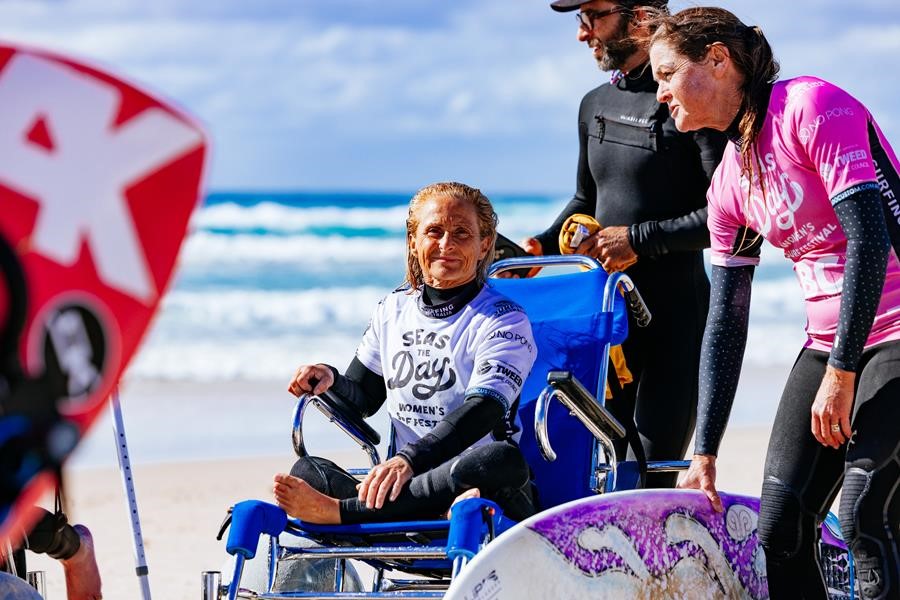


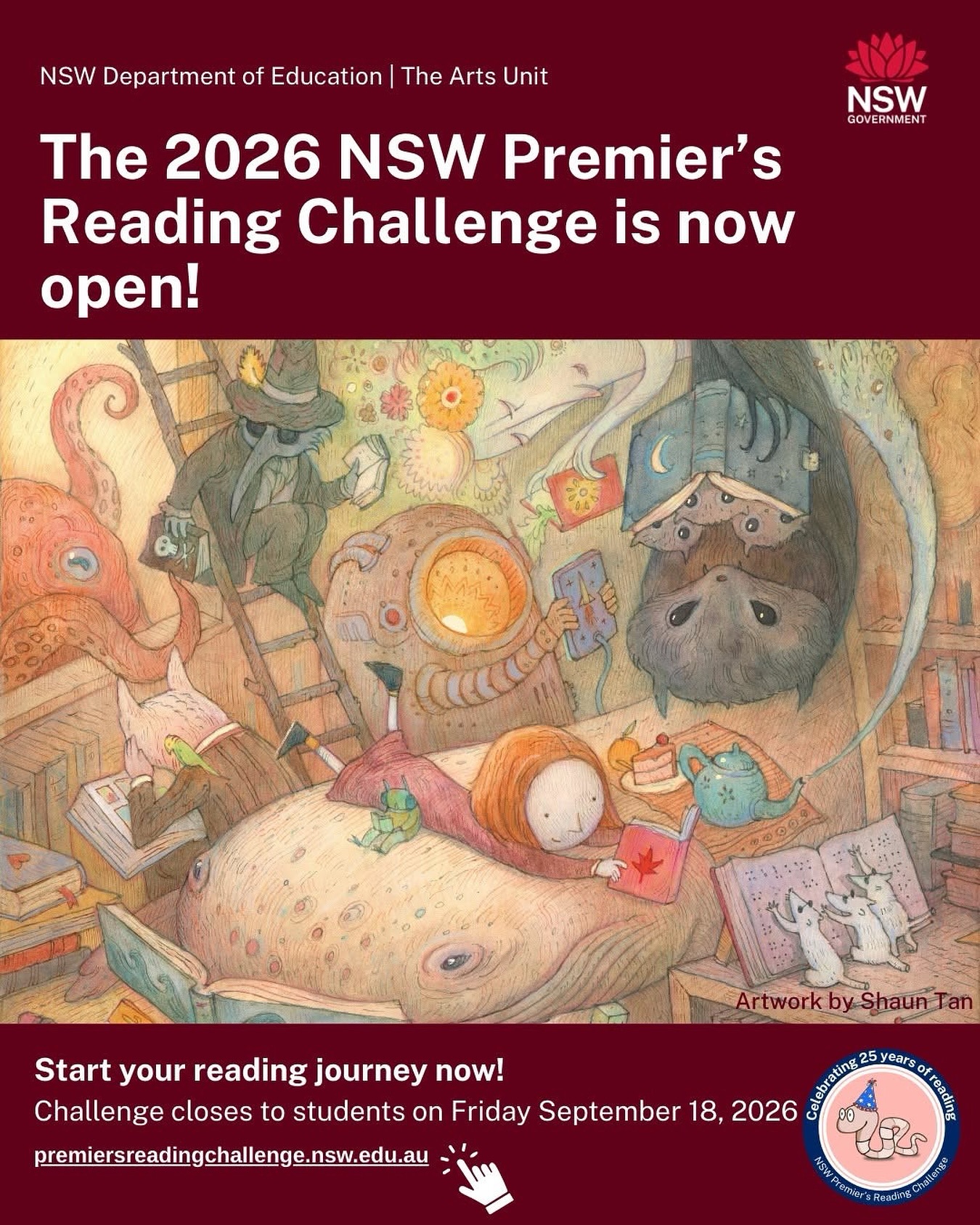












































sm.jpg?timestamp=1778817356458)
sm.jpg?timestamp=1778874017980)

























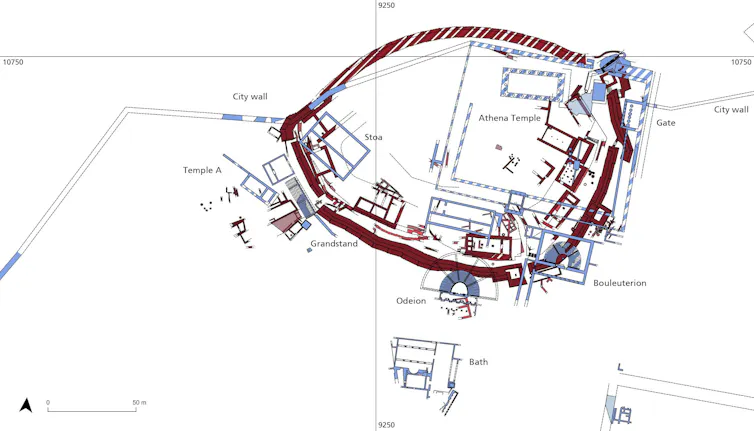



































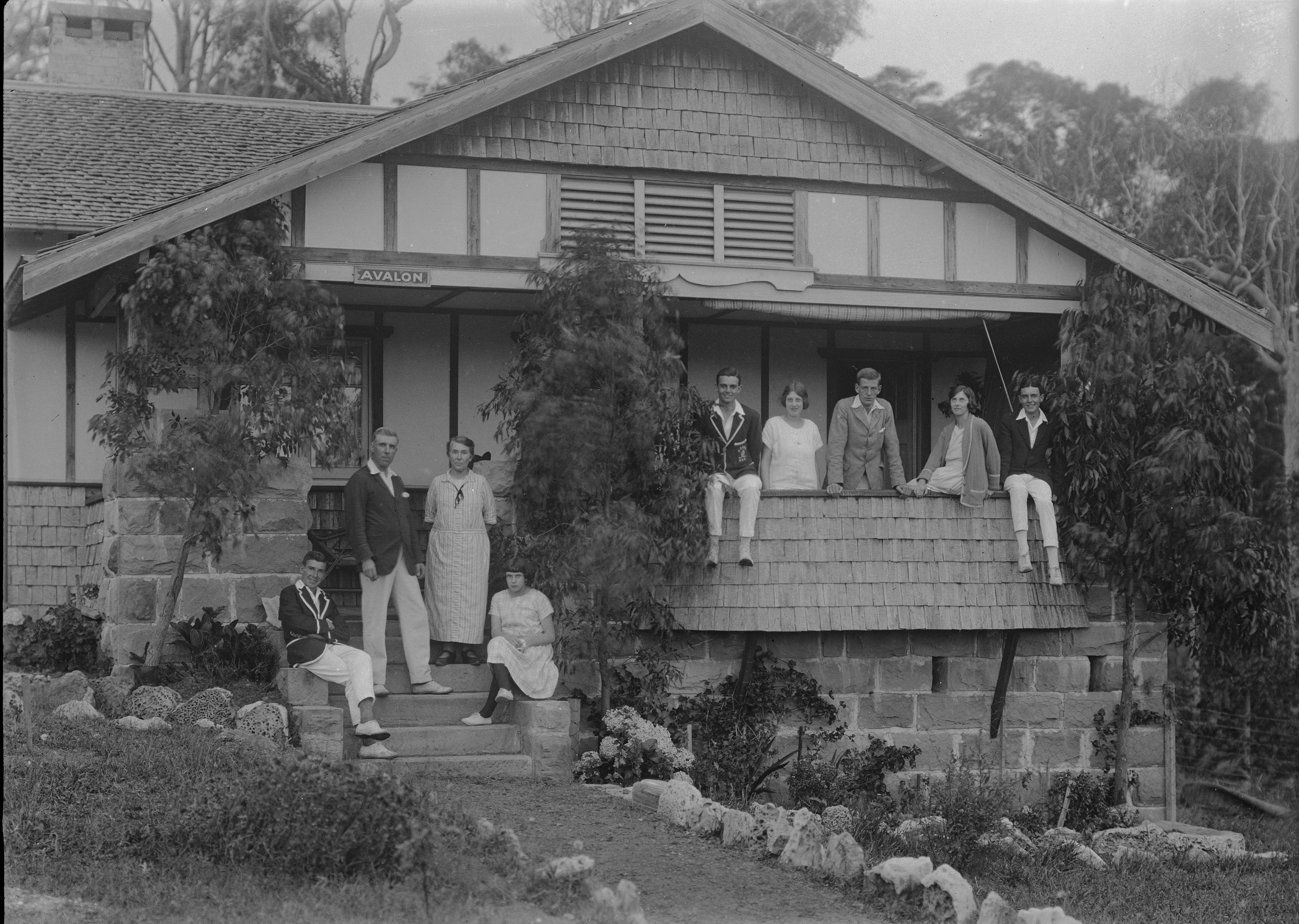



























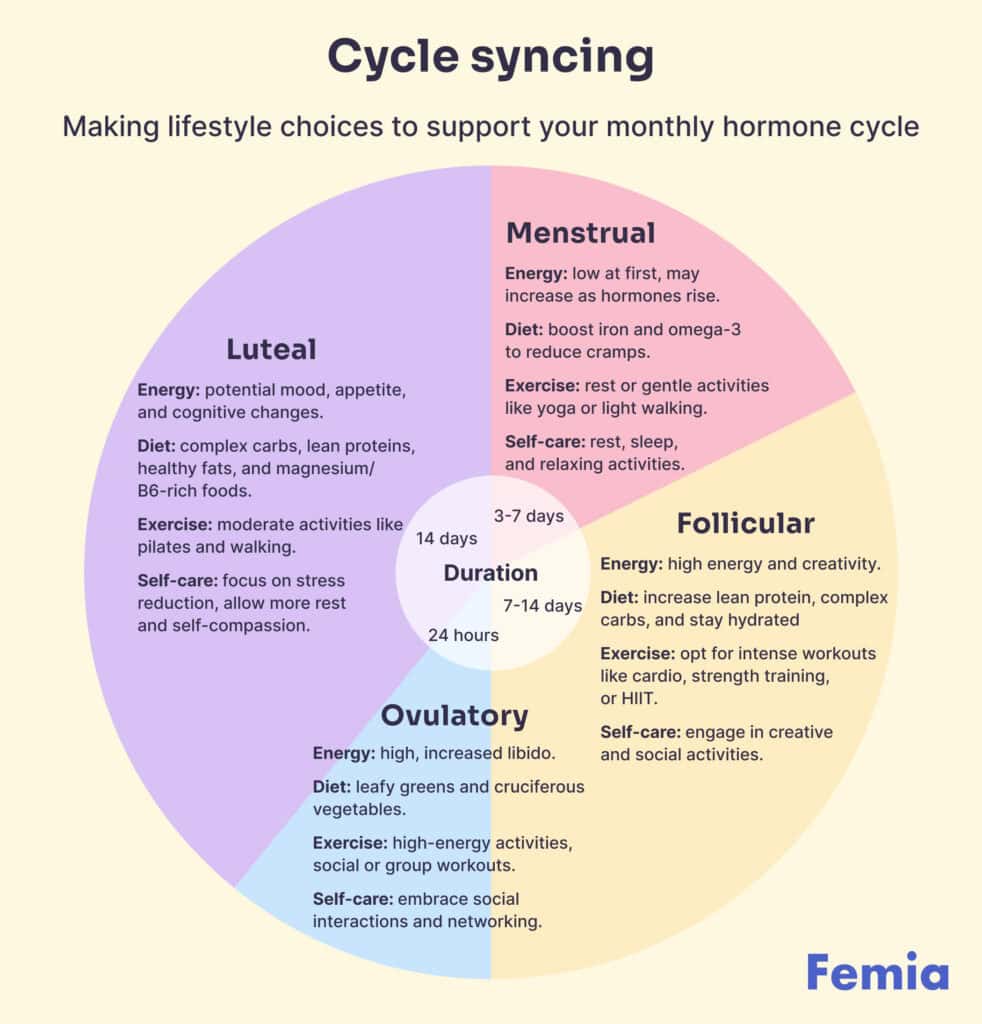
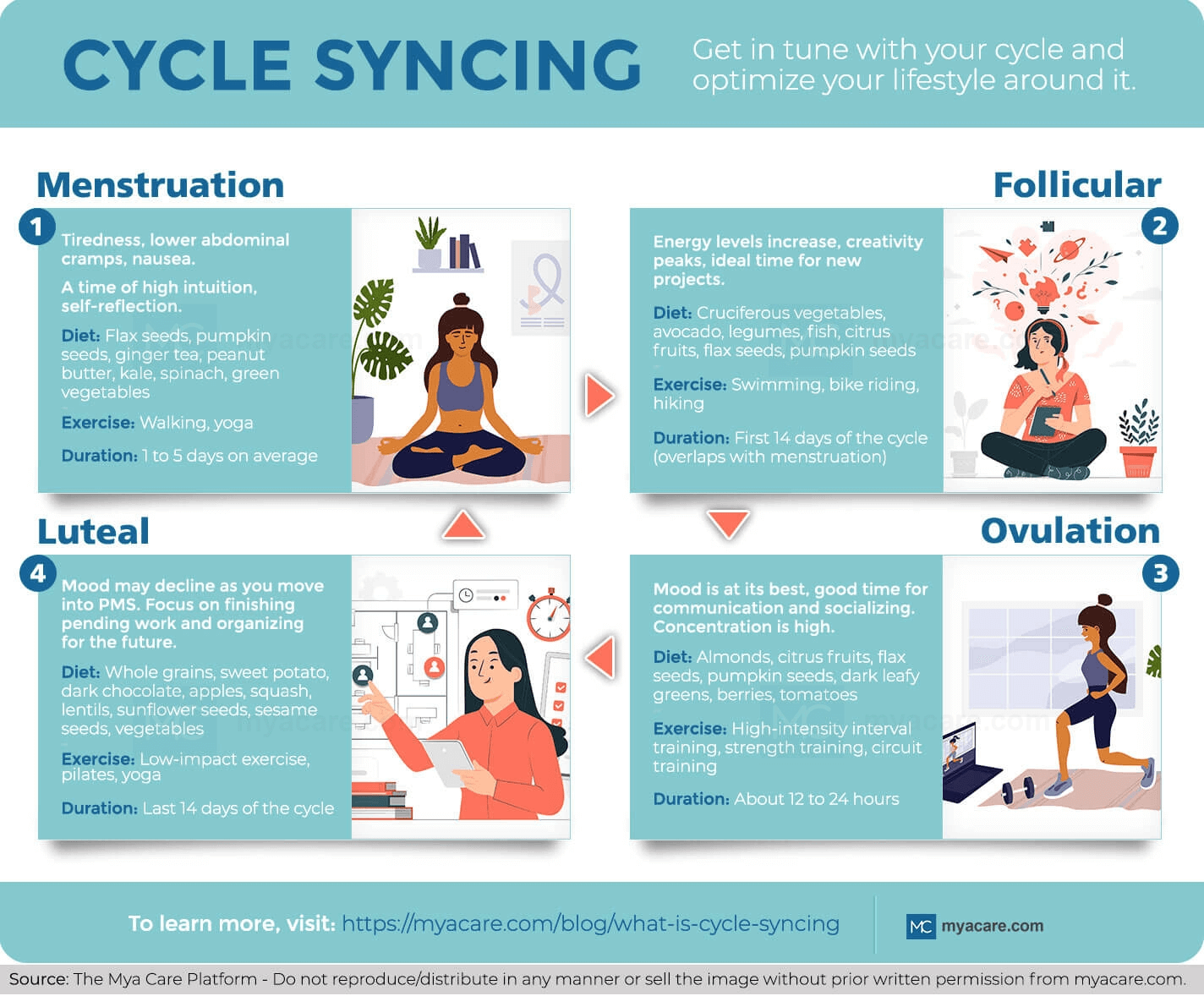


_2.jpg)

.jpg)


