sm.jpg?timestamp=1777758409414)
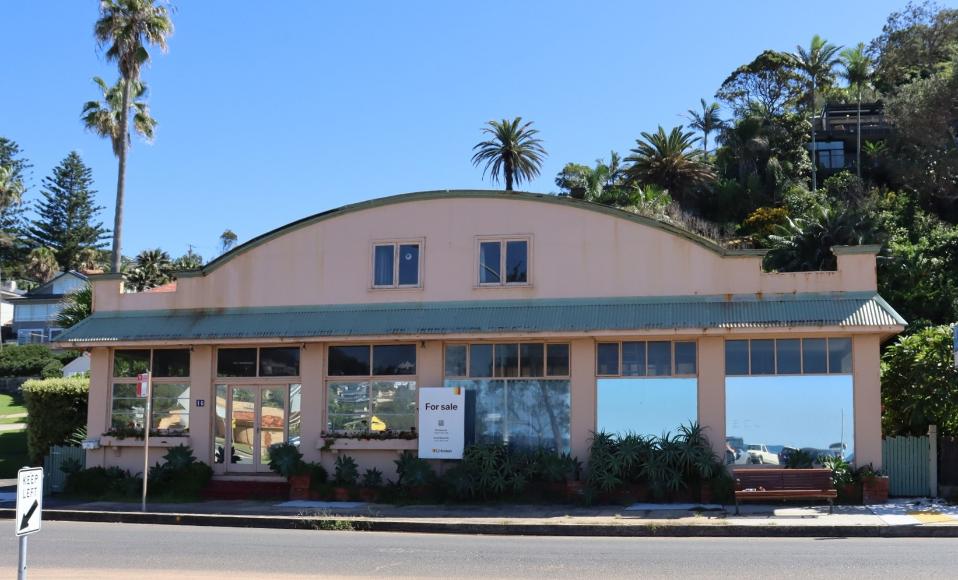
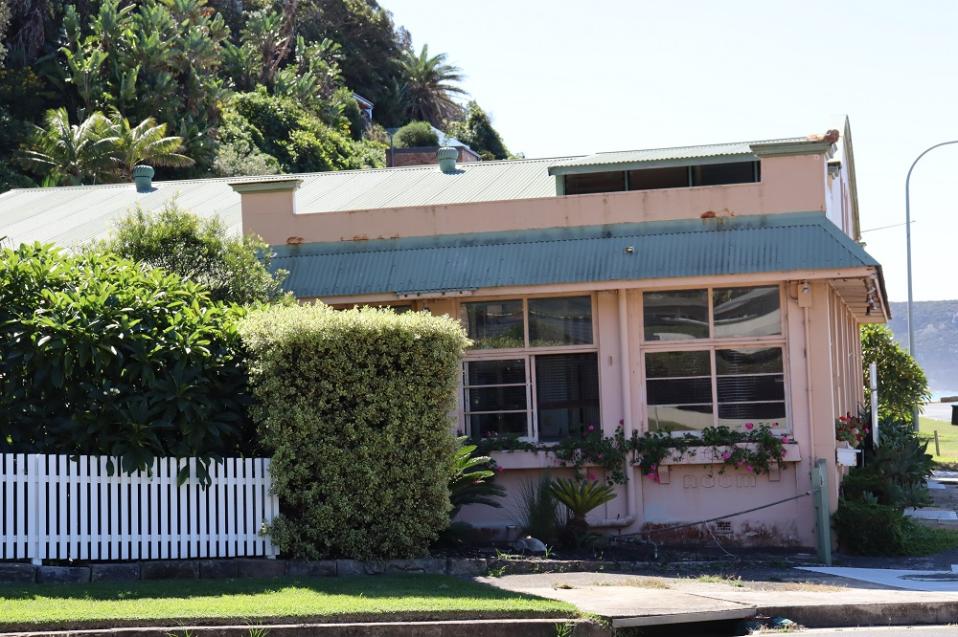
The Palladium, the Palm Beach Pictures studio, in being placed on the market March 2026, signals the end of an era.
Although one of the owners and long-term resident David Elfick will still be around Pittwater, it may not be the same for the many here who recall the parties they've attended at the Palladium, or know the films that exist due to those who used this old building as a base.
David Elfick, founder of Tracks magazine alongside John Witzig and Albe Falzon, made two iconic surf movies; Morning of the Earth and Crystal Voyager. These signalled the beginnings of decades of work in Australian cinema and gave us iconic and award-winning films such as Newsfront, Starstruck and Rabbit-Proof Fence.
These films stand the test of time, are enjoyed by a new generation of Australians, even though no AM or AO or even an OAM has been awarded for this decades of service to Australian film.
Mr. Elfick remains pretty self-deprecating despite a long list of Producer, Editor, film and television Writer credits.
Perhaps it's because he's never strayed too far from the saltwater and has been a part of Palm Beach since 1968, when everything was much more laid back and you could see the trees and hillsides because they hadn't been covered in concrete.
Despite his successes, David Elfick is always friendly, kind and generously shares a few insights into his decades in one of the toughest industries there is.
Where were you born?
Maroubra Junction Hospital, which no longer exists, possibly condemned for health reasons, but who knows.
Did you grow up there going to the beach?
The thing about growing up at Maroubra was we didn’t have a lot of money, but we were able to just run down the road and swim in the wonderful Mahon pool and all go down to Maroubra Beach. You don’t need money when you live near a beach because you have everything that life could ever offer you.
Oh, To Be A Boy Again!
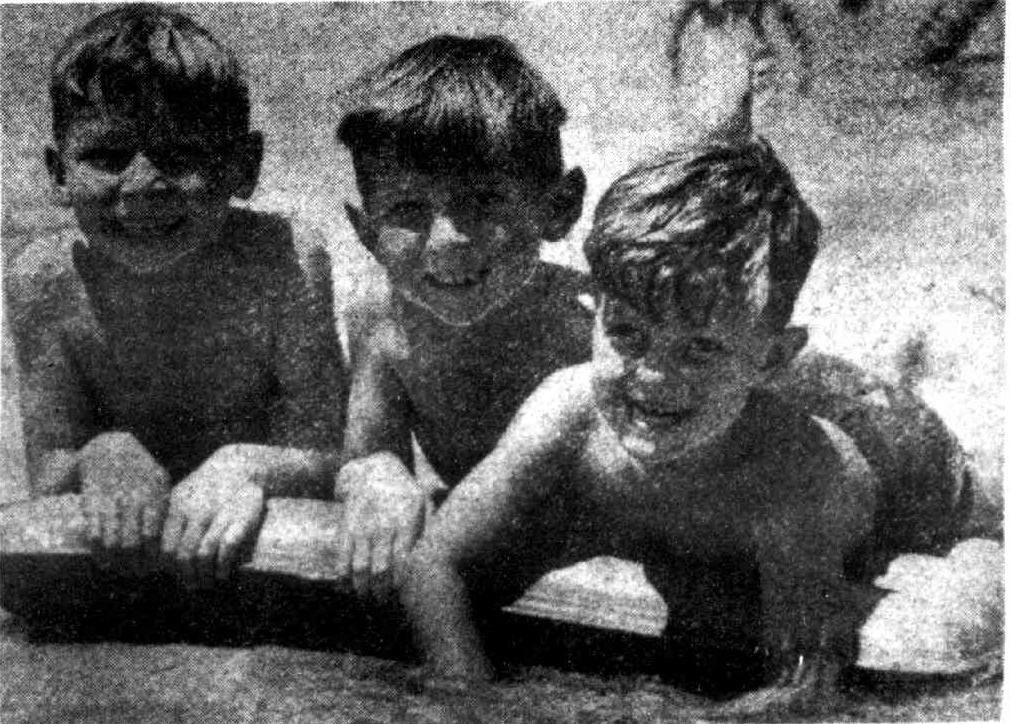
Not a care in the world as they laughingly romp on their surf-float, David Elfick (6), left, David Brydson (6), and Terry Redford (4), are pictured on their local beach, Maroubra, yesterday. Oh, To Be A Boy Again! (1951, November 21). Daily Mirror (Sydney, NSW : 1941 - 1955), p. 1 (Late Final Extra). Retrieved from http://nla.gov.au/nla.news-article275662413
I was very happy growing up there but when I was 12 we moved away from the beach to an inner south-west suburb of Sydney, Oatley, and I didn’t like it there at all.
Swimming in the muddy Georges’ River wasn’t my idea of how to recreate in the heat of Summer, especially after living at Maroubra.
When I went to University I moved into a shared house at Randwick, so we were able to access Bronte and Coogee beaches. Bodysurfing and swimming were my main water sports then.
You left school as a teenager?
Yes. I didn’t do that well at school and had troubled teenage years. I then did the HSC at night school and got a scholarship to the University of NSW studying Drama, English, History and Political Science.
Why did you choose those subjects?
UNSW was the only university offering a Bachelor of Arts degree with Drama as an academic subject. There were no Film courses at that time.
In the late 1960’s the UNSW was a very exciting place to be. It had a dynamic Architecture faculty that was very creative, and it had NIDA (The National Institute of Dramatic Art) on campus.
As drama students, we were all able, a to see the rehearsals of all their productions so that was very educational and exciting.
You also became involved with the Opunka film society. What does ‘Opunka’ mean or stand for?
The UNSW student newspaper was called ‘Tharanka’ which was meant to be aboriginal for ‘message stick’ so it may have derived from there. You would have to ask an indigenous person if they recognise the word.
Opunka decided to make a film, ‘The Hard Word’. I auditioned for a role in ‘The Hard Word’ and ended up getting the lead role, the only lead role I ever got I must say, and we made this 25-minute black and white film about university life. I played a very unattractive chauvinist character. It was a student film and none of the dialogue was recorded properly, so we recorded a stream of consciousness voice-over, which became the dialogue for the film.
What it did do was capture what the University of NSW looked like in the late 1960’s, which is very different to the way it looks today. It also captured student life, what being a student was like in those days.
You also took a job teaching at Marrickville then?
I did that while I was finishing university. It was funny that I could be teaching the Higher School Certificate when I didn’t even have a Degree. I wasn’t much older than the students so we had a good camaraderie together. One highlight was when we entered the Genesian Theatre drama competition for schools. I produced a Wolf Mankowitz play, ‘It Shouldn’t Happen to a Dog’, which my students acted in, and we won a prize. There was great excitement at Marrickville as I don’t think they’d won too many prizes at anything prior to that.
I only taught for two terms, but it was interesting and it helped me realise that being a Teacher probably wasn’t the career I wanted.
You were also Editor at Go-Set during 1968-69 while still at uni – how did that begin?
Go-Set came out of Melbourne originally. The music scene was very buoyant in Melbourne but most of the Record Companies were based in Sydney. There was just a small office with one person running it in Sydney. The Go-Set editor Phillip Frazer’s girlfriend Anne lived in the share house in Randwick that I lived in at the time. I was Vice-President of DramSoc, which was the university drama society, and Phillip saw I was putting on these plays and other things at university, and so he offered me the job of Go-Set Sydney editor.
What did the work entail?
I was doing everything to start off with, I was the only employee in Sydney. The first thing I had to do was learn to type. I was covering gigs, writing stories, going to radio stations to promote Go-Set, meeting the guys who ran recording companies, going to recording sessions, it was a very exciting life and I was only 21.
Very soon Go-Set Sydney expanded to have a staff of 4 and became an integral part of the whole Go-Set empire.
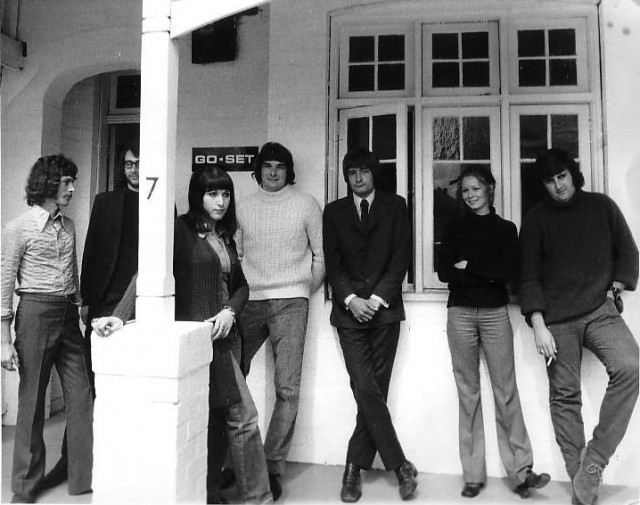
Go-Set Sydney office and staff, 1968, l to r: Philip Morris (photographer), Michael Edmonds (writer), Cleo Calvo now Clelia Adams, David Elfick, Alan Earthy (ads), Vicky Popplewell, and Greg Quill (singer and feature writer). Photo courtesy Phillip Frazer
Where was the music being played in Sydney then – what years are we speaking of?
We’re talking about 1968, ’69 and 1970. There were lots of places- the Bondi Lifesaver was a great venue for gigs, the Here Disco in North Sydney – lots of discos in the city – and lots of dances being staged by entrepreneurs in public halls – for example someone would put on a gig in Hornsby Police Boys Club hall with 4 or 5 bands. We’d go and cover it, take photographs. It was a very interesting time. Local bands we covered based on the peninsula would be Tamam Shud, the Bilgola Bop Band were also starting up, Tully with their West Coast free form music. Phil Jones’ Quintessence was another one with local roots which went to England and did quite well. I liked The Chain, a blues band led by that amazing guitarist Phil Manning. and the La De Dahs who relocated here from New Zealand.
That was also when I met Paul Witzig who’d made a surfing movie ‘Evolution’ (1969). Paul came to me and said ‘would you promote my surf movie?’ and we just hit it off, he’s a terrific guy.
So I came up to his house at Whale Beach and subsequently promoted the movie in Go-Set and asked him ‘are you going to put out a record?’ and Paul said ‘I don’t know how to get that organised, I’m a surf movie maker and don’t know how to deal with that sort of thing’.
Tamam Shud had done the soundtrack of ‘Evolution’ so I arranged for CBS Records and Rondor Music to publish the music and re-record the soundtrack album.
Through that I got interested in surf movies.
How did that evolve?
When you’re that age, you want to travel. By that stage I’d done 3 years at Go-Set and that is quite a grind because we not only did Go-Set we did a monthly magazine called ‘Gas’ and another magazine called ‘Evolution’, so we were turning out six publications a month, or one every 5 days, and going to all the gigs and writing and trying to get the advertising in, it was hard work.
I sold the back page to Pan Am, the American airline, so we had lots and lots of free travel via a contra deal, wherein we exchanged the back page for airline tickets. So I left Go-Set with the proviso that my parting thank you would be to keep all the travel tickets.
I travelled to the West Coast of America and England and did stories for a great little tv program called ‘GTK’ - (standing for "Get to Know"), broadcast on ABC Television from 1969 to 1975. That gave me a chance to make short films and do music video clips, which was interesting training as there was still no Film School at that time.
The counter-culture was booming in the late 1960’s. I’d left Go-Set and wanted to start a kind of counter-culture magazine but knew it needed a core market. I thought surfing, very much a sub culture, would provide this. I joined forces with two guys who were editing the two leading surfing magazines at the time John Witzig, Paul’s brother, who was editing ‘Surf International’, and Albert Falzon, who edited ‘Surfing World’.
They left those magazines and together we started ‘Tracks’. For the first cover we didn’t have a guy riding a surfboard but a picture of the Newcastle steel works belching out black smoke. We did a humorous story on the Newcastle surf competition.
.jpg?timestamp=1777716158147)
Tracks - First edition, Front Page
Where were the first issues of Tracks pulled together?
We started off with Tracks in the Go-Set office, I think it was August or September 1970 for the first Issue. We rented a place on Whale Beach Road about 80 meters south from where the shops were and on the high side. It was one of those great old beach houses with enclosed verandahs all around the outside. We put all the layout tables on the verandah so we could lay all the pages and look out at the surf. We put a dark room in the bathroom.
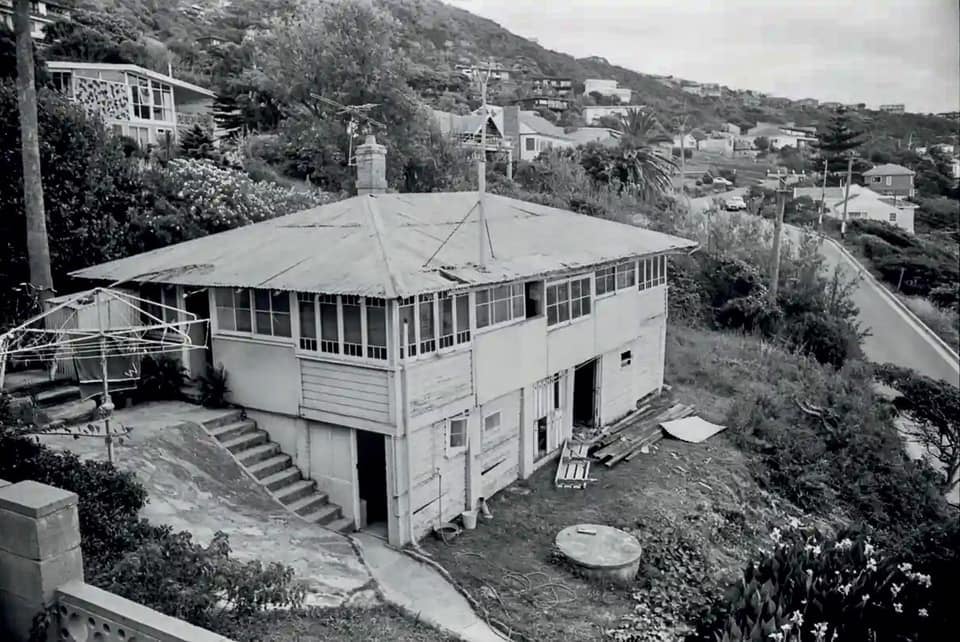
Tracks office in Whale Beach road. Photo by and courtesy John Witzig
Albe had started shooting footage for his own surfing movie, which he was going to call ‘The Sea is Mine’. I suggested I help him with it and work on the music and other parts of the show, and be the Producer for it, and use my fistful of airfares to go to Hawaii and Bali – and that became ‘Morning of the Earth’.
I think that’s the first time surfing at Bali appeared in a surf film?
That’s right – they’d just opened the airport at Bali. As we were landing Albe looked out the window and saw the break at Uluwatu. He got on a little motorbike and road out on the dusty tracks to Uluwatu, came back to Kuta where we were staying, very excited; “Look, there’s this fantastic break at Uluwatu, we’ve got to film there.”
We took two surfers with us, Rusty Miller, who was a former US Champion and a bit older and more experienced surfer, and a hot young Narrabeen surfer 15 year old Stephen Cooney.
So Albe, Stephen, Rusty and I went on an expedition to Uluwatu. A little van dropped us off and we walked several kilometres, carrying everything, to the cliff face at Uluwatu. We couldn’t work out how to get down to the water.
Then some local Balinese people showed us this little valley and cave that you could climb down to water level. That was the first time, as far as we know, that anyone rode the reef break at Uluwatu.
That night, after those first waves, I think it was me that made the rather stupid decision, to “camp on the beach rather than carrying everything, all that camera equipment, through the cave and back up the bamboo ladders”. Of course, what I‘d forgotten was high tide. About 2am all four of us were pinned against the cliff clutching camera equipment as the water lapped around our ankles. So the moral of that story would be – ‘if you make a movie, get a smart Producer’.
‘Morning of the Earth’ was a huge success, mega, and still loved by many and now a new generation of surf film fans. What came next?
Albe and I then made another surf film ‘Crystal Voyager’ which we did with George Greenough, I was trying to put a bit more conventional narrative into the film – it’s really a biopic about George’s life and the building of his ocean-going boat ‘The Morning Light’. I managed to get, using up those air tickets again, to go to London and talk Pink Floyd into giving us the final 23 minutes of music for the film subtitled ‘Echoes’.
In those days the goal of surfing was to get inside the tube of the wave. George developed all this incredible camera equipment so he could film inside the tube of big grinding waves and that is the last 23 minutes of that movie. It premiered at the Sydney Opera House on December 5 1973, so over 50 years ago now.
George had an extraordinary genius, coming up with all this self designed camera equipment to capture what was happening – he could think laterally. For example, he could take a camera out of an American Vietnam era fighter plane, saw the casing in half with a hacksaw, reconfigure the insides of the camera, build a waterproof housing, mount it on his back and shoot inside a wave.
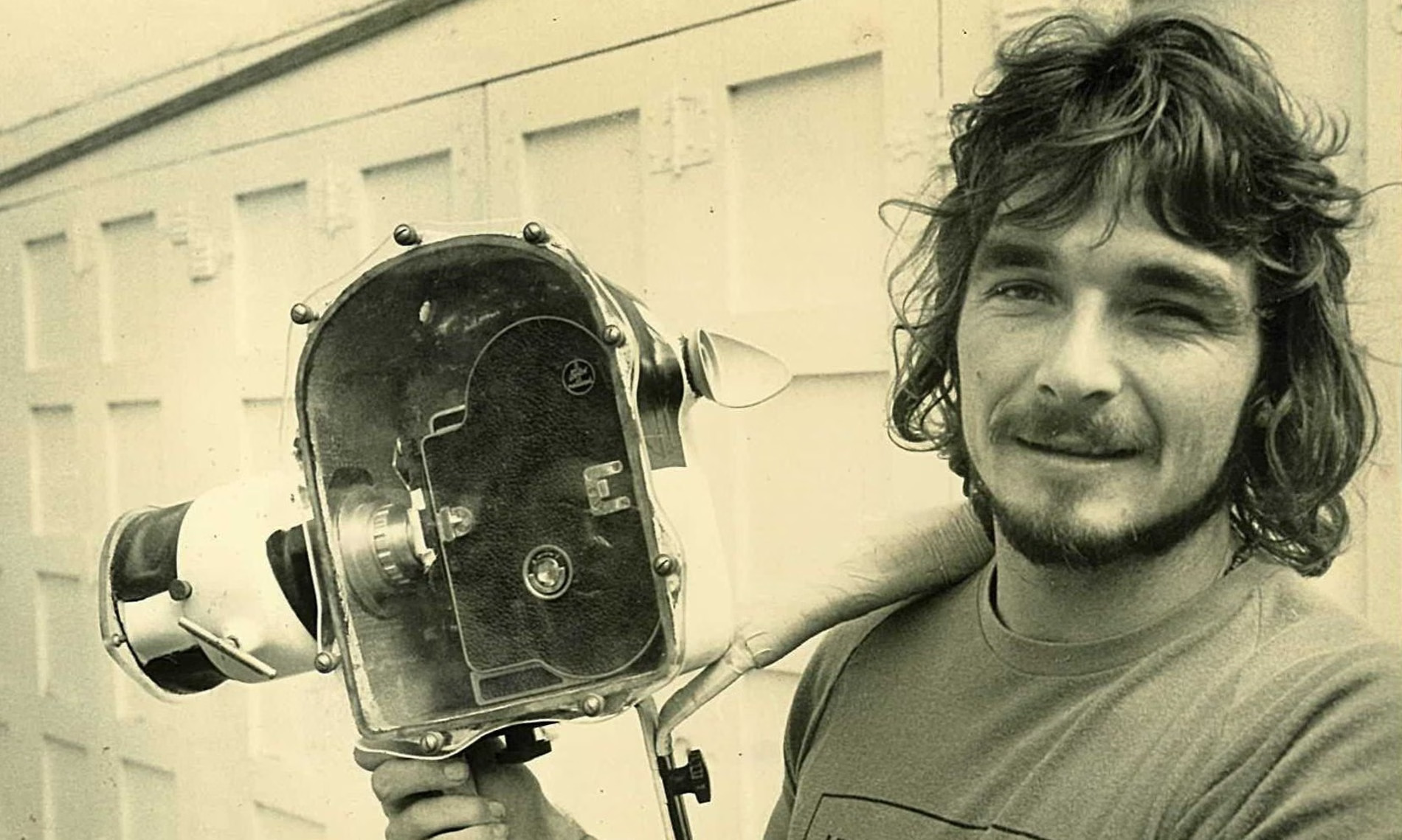
David Elfick during the Crystal Voyager film shoot. Photo courtesy Sydney Opera House
Were you struggling financially to put these films together?
Not really, Crystal Voyager did well and it had been preceded by The Moring of the Earth which was a hit, and we also were running a successful magazine in Tracks.
There is also the aspect that money had a different value in the 1970’s and when you’re in your 20’s, the challenge to do something exciting is more interesting than money. Some people go bungee jumping – we were interested in creating things. So we created ‘Tracks’ which was a very different magazine and a big success, we created ‘Morning of the Earth’ and ‘Crystal Voyager’ and that was a great period. Albe and I were a great team for 3 years.
I wanted to move into feature film making so I relinquished my share of ‘Tracks’ and continued on with the film company.
Originally this was called ‘Voyager Films’ after ‘Crystal Voyager’, and then this became ‘Palm Beach Pictures’.
What were the first projects?
We did a few short films and did little promo films for Levi jeans and various other things to keep working. ‘Crystal Voyager’ was an international success - it played in London, Germany and Japan - and I travelled a bit with that film and met some interesting young film makers from around the world. Two of them were Englishman Jeremy Thomas and Australian Director Phillippe Mora. In 1974 they were making their first feature film in Australia ‘Mad Dog Morgan’ starring Dennis Hopper, David Gulpilil, and Jack Thompson. I got the job to make a half hour documentary for Channel 7 on the making of this film, which ended up being more a half hour on Dennis Hopper, and was called ‘To Shoot a Mad Dog’.
From that came the idea of ‘Newsfront’.
For my first feature film I wanted it to have real excitement – having made surfing movies, I knew that part of going to the cinema is seeing something on a big screen which draws you in, catches you and takes you with it – so I didn’t want to make a film about four people sitting around a Paddington terrace having an argument. At the same time I knew we had very limited budgets for film in Australia – so how do you get that excitement without that big spend?
As a child I’d been taken to the newsreels – which were like babysitting then; your parents would drop you off at the newsreels and go shopping and pick you up an hour later.
I loved the newsreel so I thought ‘what about the idea of taking the newsreels and putting fictional characters back into real events?’ – and that was the idea for ‘Newsfront’. I was fortunate enough to meet Phillip Noyce, who was in the first intake of the new Australian Film School, he’d just graduated from there and was also a member of the Sydney Filmmakers Cooperative. I was really aware of the Cooperative because Albie Thoms, who was a great experimental filmmaker, had been influential in making ‘Morning of the Earth’. He’d helped with the editing and suggested certain experimental techniques which we built into the film.
Phillip and I became a team, Producer and Director, I raised half a million dollars, made our first feature film, ‘Newsfront’ and somehow we managed to pull it off.
Newsfront was a huge success and multi-award-winning film David – …
Yes, it was a huge success, the highest grossing film of the year and won a heap of the AFI awards including best film and best director. If was the first Australian film to open the London Film Festival.
And still is a great film, it stands up past any test of time – had you moved to Palm Beach by then?
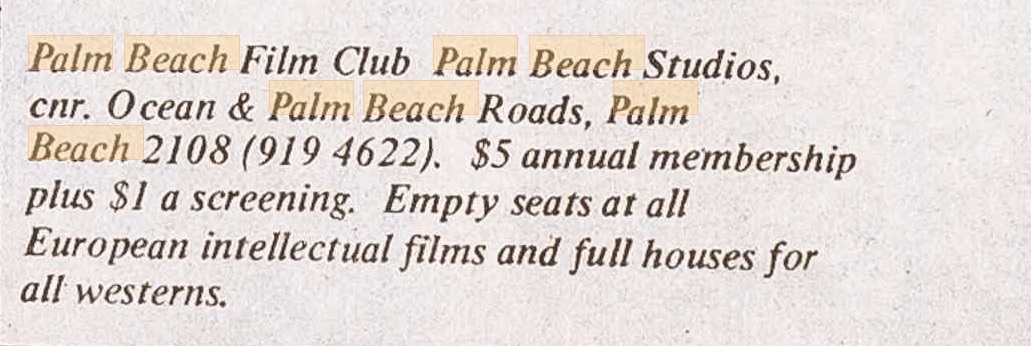
During the end of my Tracks era I’d rented the Palladium at Palm Beach with two other local creative guys. The building was falling into disrepair at that stage. The three of us fixed the building up and used that as a creative base, and then a fourth partner came in who suggested we try and buy the building. We succeeded in buying the Palladium. Over the next 10 years there were various ownership changes – and during this time I continued making films. We’d renamed the building ‘Palm Beach Studio’. I used it as the editing room for ‘Newsfront’ and various other uses in the films that followed
And your career went on from there?
I went on to make many more feature films as well as television series, documentaries, music videos and stage musicals. So yes, there was a lot of work done, I’ve been very lucky, it has been a lot of fun. I have also enjoyed mentoring young filmmakers.
If you had to nominate just 3 of these great films that you’re particularly happy with, what would they be and why those ones?
I’m proud of the two surfing movies because they have stood the test of time, they’re over 50 years old and they’re still interesting films and represent an era. 'Newsfront' will always be on that list for standing the test of time as well, and it’s very important Australian film. To be part of that was great; it began my wonderful life-long friendship with Phillip Noyce, which has been terrific. Phillip and I went and made a couple of films in Indonesia after that, some documentaries for Qantas, and then of course we did ‘Rabbit-Proof Fence’ together many years later.
And ‘Starstruck’ is up there because it was an amusing film, written by my old Go-Set reporter friend Stephen MacLean, who spent lots of time at Palm Beach working on the script, among other things. So ‘Starstruck’ directed by the dynamic Gillian Armstrong, who read Go-Set as a teenager, has a place in my heart, as all my films do.
Recently Randwick cinema has been re-showing Australian films made on celluloid and we rescreened ‘No Worries’ (1993 – Produced and Directed), written by a great English playwright, David Holman. I was quite surprised by how well that film stands up, so I’m really proud of that film. It’s a simple tale but it tells it well – it’s the story of Australia’s journey from its rural Anglo-Saxon past to its urban multicultural present. He’s a great writer, David Holman, so I was very privileged to be able to direct his screenplay. To get to work with actors like English actor Geraldine James and the late great John Hargreaves, Harold Hopkins and Ray Barret, they were the wonderful actors who were in ‘No Worries’.
And of course ‘Rabbit-Proof Fence’ (2002), was a gamechanger bringing with it an awareness about the Stolen Generation to the Australian public. I was very happy to play a part, as one of the many Producers of RPF.
More recently, in ‘Jungle Hideaway’, you’ve delved into a musical again, only this time it’s for youngsters?
Yes, we’ve been developing that. We’ve done some workshops in Singapore and with NIDA in Sydney. I’ve been lucky to work with two fabulous musicians and composers Yunyu Ong, and Peter Dasent,
We’ve also been working with NIDA on a stage version of ‘Starstruck’. NIDA put on a full student production just before COVID hit..
After decades in the creative industries as a successful Editor, Publisher, Producer, Director, Writer and even getting in front of the camera, and you’re still going, still coming up with something new and exciting, what would you put your longevity down to? How do you do it?
The first thing would be you’re doing something that’s a challenge and you enjoy – and that you’re working with people who are often much more talented than you are.
So I suppose longevity is about recognising talent, and working with it, and perhaps the instinct of when you hear a good story you work out a way to do something with it.
But you have maintained creative relationships over decades too...
Well, maybe it’s that crazy old building at Palm Beach – maybe when people come there it’s so much a part of my personality, because I’ve been there for 50 years, that people come there and just love it – that building, people love it. It’s a great old building and it just lets people in.
I’m now in the twilight of my career, to the point where I’d say my career is now my hobby, but I think when you can hang out at Palm Beach, you can jump into the surf, swim in the ocean, use that outdoor shower, roam a big back garden full of native vegetation, sit up on the platform up the back of the property and look out at the ocean, something else transfers. Everyone enjoys it. So maybe there’s something in all that, maybe that’s what I bring to a relationship with someone.
The 'Board Room' in the Palladium:
sm.jpg?timestamp=1777718665359)
sm.jpg?timestamp=1777718690996)
Main room - some may recall this fitted with desk during 1980s parties:
sm.jpg?timestamp=1777718736840)
%20sm.jpg?timestamp=1777718768804)
Every nook and cranny has iconic Australian art and works - Martine Sharp for instance:
sm.jpg?timestamp=1777718839830)
co-owner of the Palladium, Jeremy Thomas's Buddha for 'Little Buddha' (1993):
sm.jpg?timestamp=1777718871839)
What are your favourite places in Pittwater and why?
I used to love sitting in Wayne and Kieren’s little Palm Beach shop, which was opposite the ferry wharf and sadly now has been demolished. I loved my Saturday ritual, ride my pushbike over the hill, get my copy of the Sydney Morning Herald, have a cup of Wayne and Kieren’s coffee and just sit there reading the paper. Sadly that’s gone now, as has the fish shop.
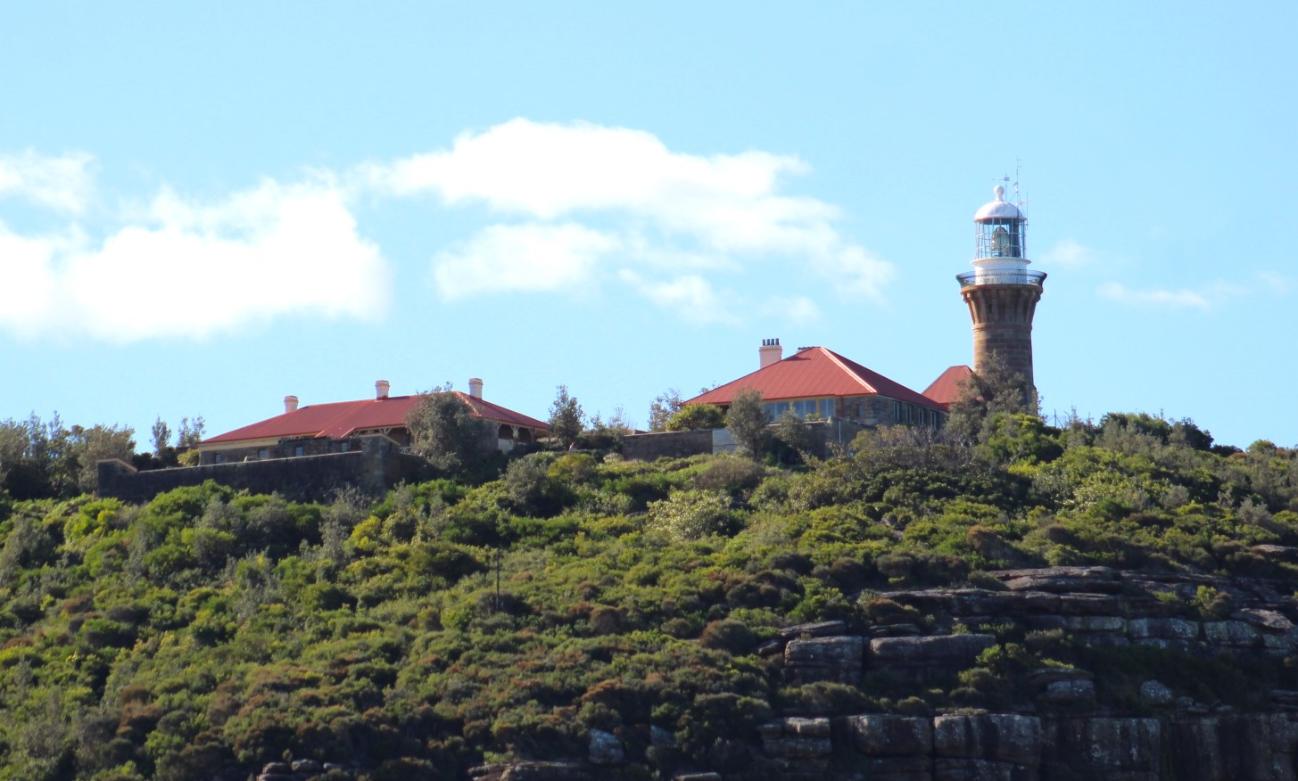
And getting in the surf every day at Palm Beach – being able to walk along this beach to Barrenjoey will remain what I love doing.
What is your ‘motto for life’ or a favourite phrase you try to live by?
Relax, Think Positive, Enjoy.
sm.jpg?timestamp=1777718901831)
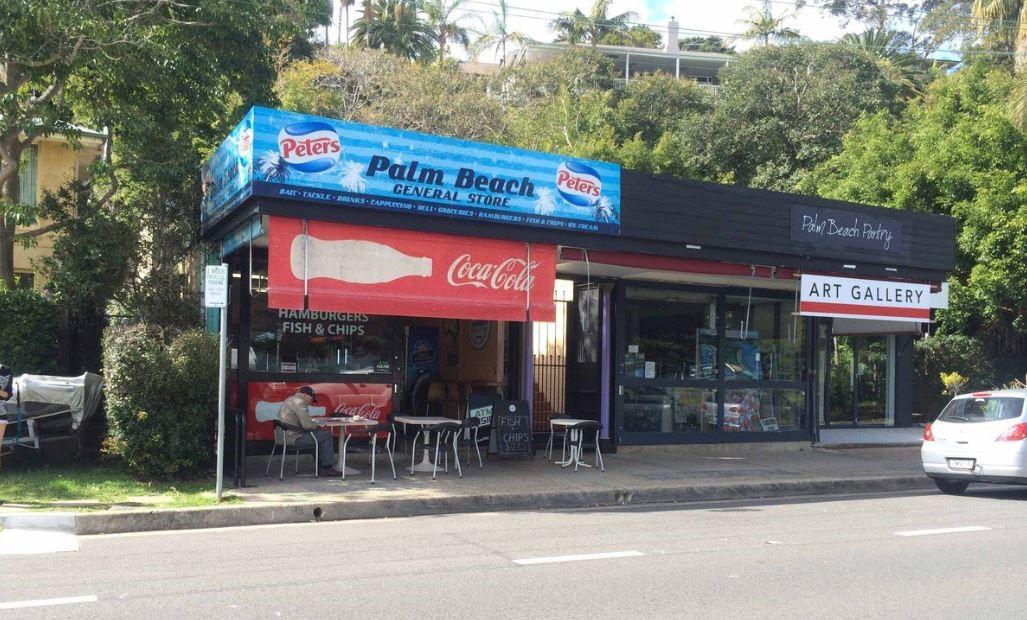
David Elfick on the Palladium and Palm Beach Studio; Talk given at the March 2024 ABHS Meeting
.JPG?timestamp=1711017180603)
.JPG?timestamp=1711017222871)
.JPG?timestamp=1711017603981)