Baby Bandicoot with Mum at North Narrabeen - August 5 2026: first of the new bubs
One of our local wildlife rescue volunteers sent in this video this past week of a baby bandicoot out foraging for food with its mum. The sight of this pair is a good reminder that Spring is beginning in our area - you may have noticed when looking at bushes and trees these past few weeks that new growth and new leaves are starting to appear.
In the D'harawal peoples in New South Wales, a temperate zone like we live in, August is the time of Wiritjiribin.
Season indicators are:
- Tugarah Gunya'marri – cold and windy
- Lyrebird building mounds
- Marrai'uo flowering
- Boo'kerrikin flowering
- Gentle spring rains
The lyrebird's calls ring out through the bushland as he builds his dancing mounds to attract his potential mates. The marrai'uo (Gossamer Wattle) flowers, which is a sign fish are swimming in the rivers.
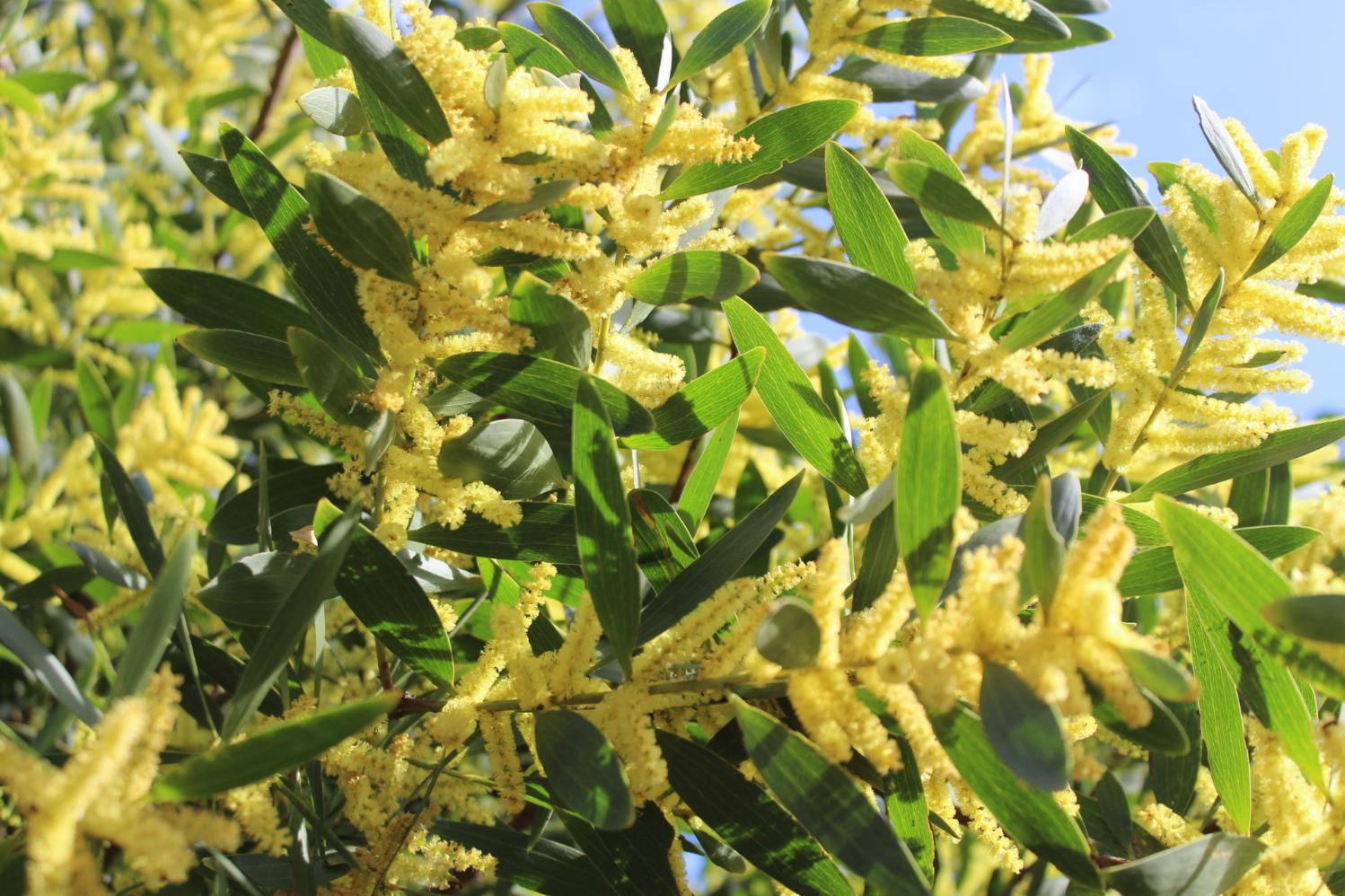
Marrai'uo is the D'harawal name for the White Sallow Wattle (Acacia floribunda), a shrub that blooms in Winter and early Spring.
Boo'kerrikin is the traditional D'harawal name for the Sydney green wattle (Acacia decurrens), a native tree featuring fragrant golden-yellow flowers.
So, we're already starting to head into those weeks of the year when we will see golden flowers such as the coastal wattle beginning to bloom.
Next will come the Time of Ngoonungi which runs from the European calendar months of September to October.
Season indicators are
- Murrai'yunggory – cool, getting warmer
- Flying foxes appear
- Ceremonial time
- Miwa gawaian in flower
Ngoonungi is known as time of the gathering of the flying foxes. It’s a magical time of year when the flying foxes gather in the darkening skies over D'harawal Lands. They come in from the north-east, the north, the north-west and the west, and swirl over the Sydney area in a wonderful, sky-dancing display just after sunset. Then, they set off for the night-time feeding grounds to the south.
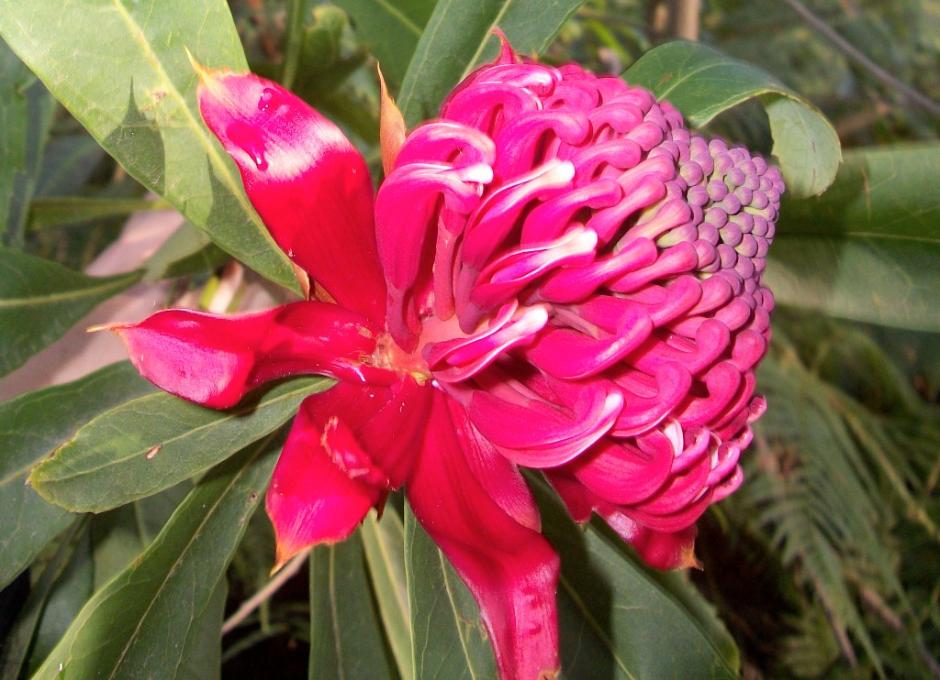
Waratah - blooming in Clareville-Avalon Beach bushland, Pittwater. Photo: A J Guesdon
It's also a very important ceremonial time for the D'harawals, which begins with the blooming of the bright red miwa gawaian (New South Wales Waratah) in the bushland.
Bandicoots who live in Pittwater include the Long-nosed Bandicoots (Perameles nasuta) or occasionally Southern Brown Bandicoots. These are nocturnal marsupials (they come out at night) who leave distinct cone-shaped holes in lawns while foraging for insects and grubs, and rely on low ground cover and bushland reserves for safety.
The long-nosed bandicoot is primarily a sandy-brown or greyish colour. Its body length is around 40 centimetres, including a tail length of 14 centimetres, and it weighs around 1.5 kilograms. It has a prominent long nose and small pointed upright ears, a hunched-looking posture, a short tail, a rear-facing pouch, and three long, clawed toes on front feet.
The long-nosed bandicoot has a high-pitched squeak when scared or disturbed. You may also hear them snuffling to each other when a family group is having a feed in your yard.
Although faring better than many other native mammal species in the face of human impact, the long-nosed bandicoot vanished from much of Sydney in the 1960s. It is restricted to the outskirts such as the upper North Shore and Ku-ring-gai Chase National Park in the north, Blue Mountains in the west, Holsworthy in the southwest and Royal National Park in the south.
The species can be a common visitor to gardens of people living near Garigal and Ku-ring-gai Chase National Parks. Two small populations remain in the inner Sydney urban area: A population at North Head has been designated as endangered by the New South Wales government - we've run some reports on the great work being done there. Data suggests that bandicoots there number around 200 individuals. Sydney's Taronga Zoo is undertaking a breeding program to bolster the population.
See a December 2021 report: World's First Biodegradable ‘Flat-Pack’ Homes To Help Wildlife Survive After Bushfires Launched At North Head Sanctuary In Manly
The long-nosed bandicoot forages for insects such as beetles and beetle larvae (grubs), plants, including the roots of monocots, and fungi. Invertebrates make up most of the diet year-round, with spiders, caterpillars, leaves and seeds more common food items in Summer and cicada larvae, blades of grass, bracts (tiny true leaves) of wattles, and underground items such as roots and fungi eaten more in Winter. So, they are great at keeping our local environments healthy too - not only to they help aerate soil, which is great for composting, they also eat keep a check on insects that, if there were too many, would damage local ecosystems.
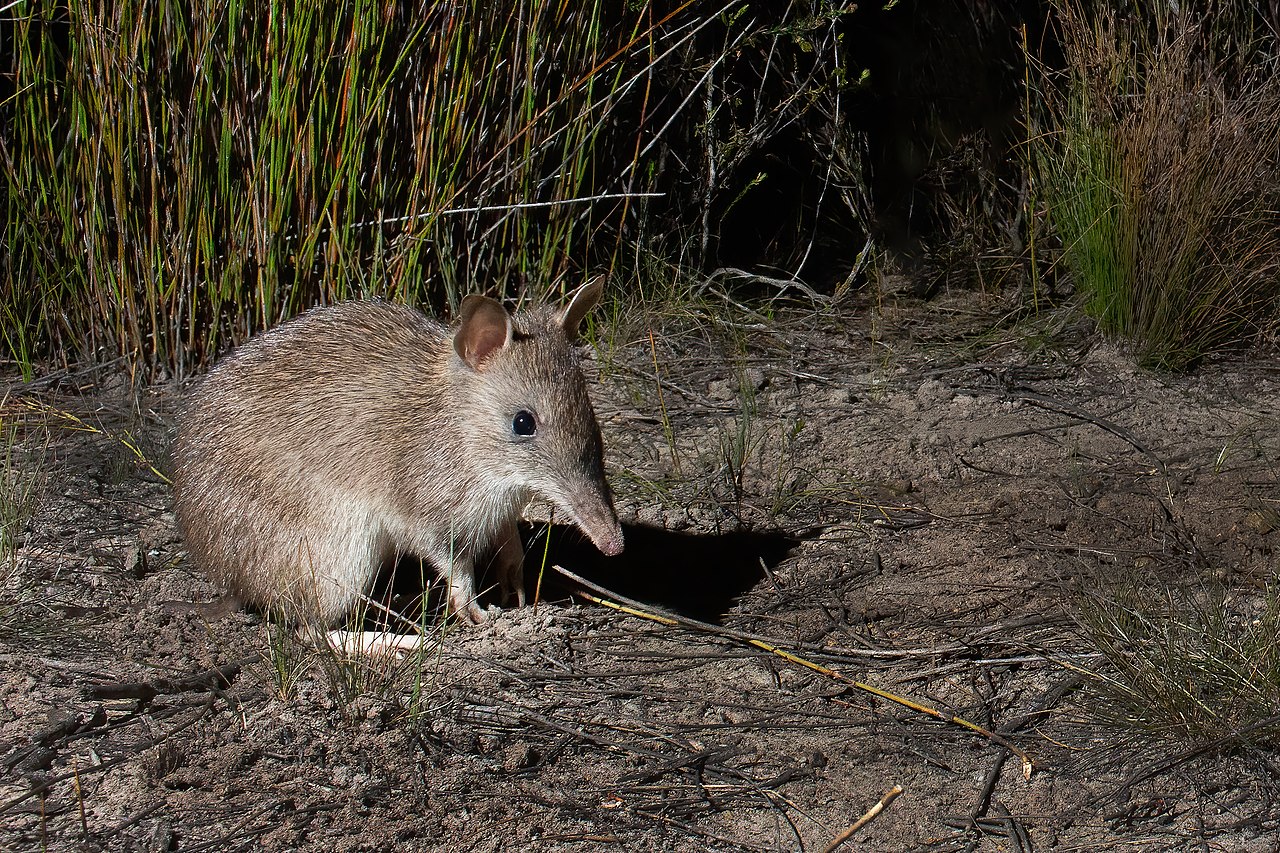
Long-nosed Bandicoot, photo taken here, New South Wales. Photo: JJ Harrison
After a bandicoot egg is fertilised it takes just 12 days before the young bandicoot is born. This is one of the shortest pregnancies recorded for any mammal. At birth the bandicoot is a little smaller than a jelly bean. It attaches to a nipple inside its mother's near-opening pouch and grows rapidly on her rich milk. At nine weeks old, the young bandicoot leaves the nest and becomes independent. The young spend another 50 to 54 days in the mother's pouch before being weaned. There are usually 3-4 young each time and Bandicoots generally live for 2 to 4 years in the wild.
Australia had 11 bandicoot species – three are now extinct; the Perameles bougainville fasciata (Liverpool Plains Bandicoot), Perameles bougainville notina (South-eastern Striped Bandicoot) and Perameles papillon (Nullarbor Barred Bandicoot) - primarily due to the spread of introduced cats and European red foxes, although dogs attack them too. In the NSW Dept of Environment Wildlife Rescue data 494 bandicoots were rescued in the 2024-2025 period, with an equal number of those coming into care due to dogs and cats attacking them. There were 71 of these rescued in our area, including long-nosed and 2 southern brown (eastern) bandicoots. The southern brown bandicoot is listed as endangered under the EPBC Act. Just 12 were released back into their home grounds.
Adult Southern Brown Bandicoots have a body length of about 300 mm, a short (120 mm), thin tail with a pointed end, and weigh between 400-1600 grams. The species has a relatively short nose and ears, dark grey or yellowish brown fur on its upper body, tail and feet and a creamy white belly. In contrast the Long-nosed Bandicoot has a long nose and ears, pink tail and white feet.
_2,_Vic,_jjron,_09.01.2013.jpg?timestamp=1786050588689)
Southern brown bandicoot (Isoodon obesulus) in the Royal Botanic Gardens, Cranbourne, Victoria. Photo: John O'Neill
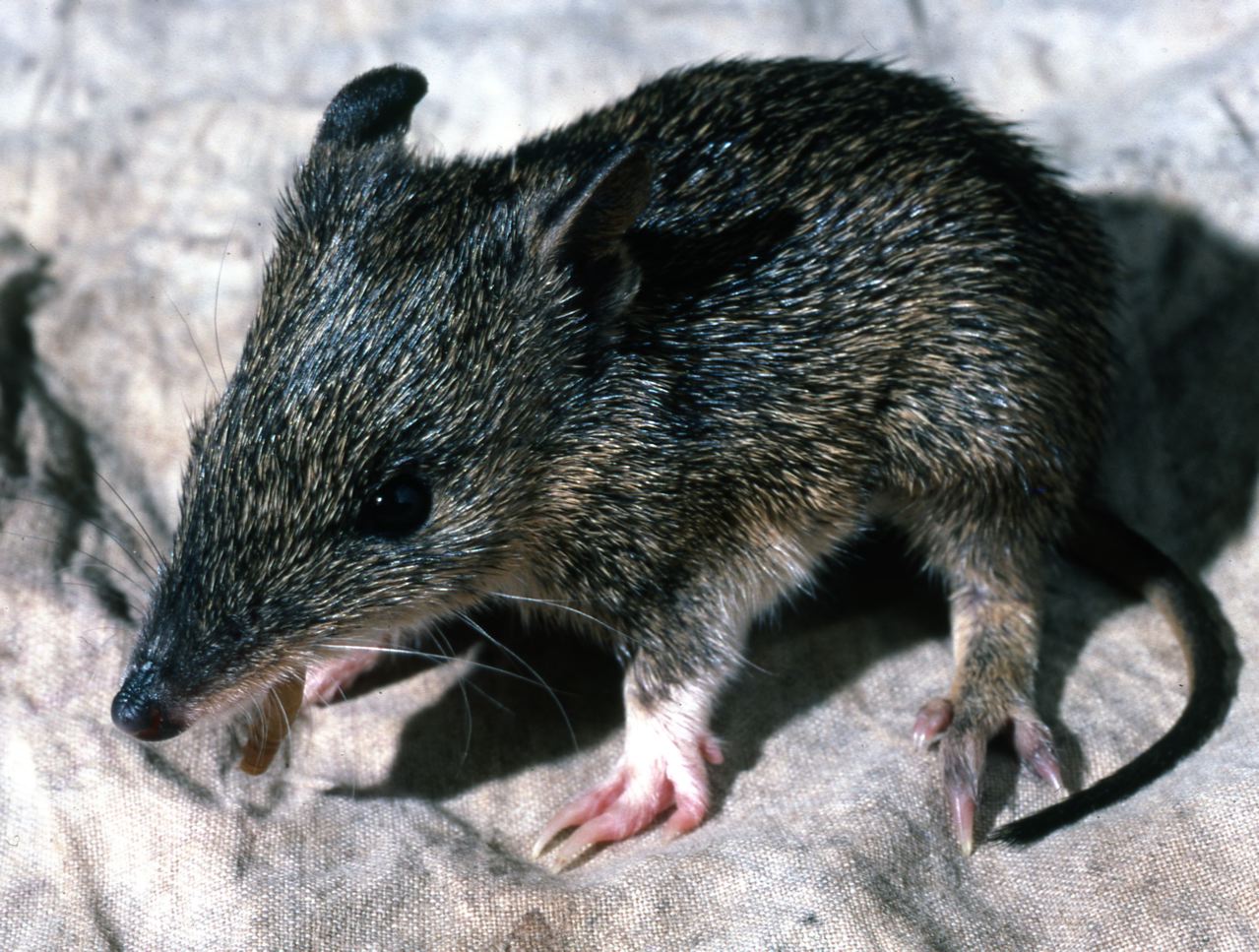 Littlie - Juvenile southern brown bandicoot. Photo; Bertram Lobert
The NSW Department of the Environment has a permanent call out to locals to help protect bandicoots as the peninsula from Manly to Palm Beach, and particularly Pittwater from Narrabeen north and to the east, is one of the few places left in Sydney where they are still surviving. Pittwater is Sydney's 'Ark'.
The Department's webpage states:
Reporting fox sightings
Foxes remain an active threat to the endangered population of long-nosed bandicoots at North Head. NPWS runs a continuous baiting program in Sydney Harbour National Park to control foxes and better protect the endangered population of long-nosed bandicoots. Further emergency baiting and other predator control activities are implemented as soon as fox presence on the headland is detected. A mortality register of bandicoots killed by foxes or on roads in Manly is also maintained. Members of the community are asked to report any fox sightings and any dead bandicoots in the Manly area, particularly at North Head, to the Harbour North Area (Parks and Wildlife Group) by phoning 02 9960 6266.
Join a bandicoot survey
NPWS closely monitors the southern brown bandicoot to measure its response to fox control and other management actions. All sightings of southern brown bandicoots should be reported to NPWS, noting the location, date, what the bandicoot was doing and any other information which may help. Even dead southern brown bandicoots should be reported and where possible specimens submitted to a museum; bone, hair and DNA samples can all be used by researchers to help inform us about this species. (Remember they can be distinguished from the common species by their small round ears.)
Volunteers are invited to assist NPWS staff with bandicoot monitoring surveys in Garigal and Ku-ring-gai Chase national parks. Email NPWS.MetroNorthEast@environment.nsw.gov.au to join the volunteer program. This species is so rare that only a few are found each year and there are none in zoos in New South Wales. Seeing or catching one is a unique experience.
Bandicoots and ticks
A wide range of native and introduced animals are hosts for the paralysis tick, which can also afflict humans. Highly mobile animals such as foxes, dogs and domestic and feral cats are particularly susceptible to picking up ticks as they wander long distances through bushland areas and backyards. Ticks increase in response to weather and climatic conditions and where fire has been absent from an ecosystem for a long time.
Bandicoots act as hosts for ticks; their hind feet have a syndactylous (joined) toe, like a comb, evolved for effective grooming and tick removal. However, because they tend to roam over a comparatively small range, often staying within half a hectare of their nests, they don't spread ticks as far as many other animals. Although some people associate bandicoots with ticks, this may be because humans tend to pick up ticks most easily in long grass or thick scrub, which happens to be the type of habitat favoured by bandicoots.
You can help to reduce the spread of ticks in your area by:
- regularly maintaining your garden to control tall grass and weeds, particularly the noxious weed lantana
- spraying yard areas with a malathion-based spray, which lasts for about 2 days. A natural alternative to chemical sprays is a mixture of chilli (cayenne pepper), garlic and vinegar. After being left to brew for a few days, the mixture will discourage most pests if sprayed around the garden. However, remember that any such treatment will also harm beneficial garden invertebrates
- regularly grooming and inspecting pets
- encouraging small, tick-eating birds into gardens by planting species and forming a habitat they can live in.
See: Attracting Insectivore Birds to Your Garden: DIY Natural Tick Control
And now, that video of the first of the last month of Winter new bubs - welcome bubba!: