On Thursday December 11 the NSW Government announced businesses and community sector providers will be spared significant increases to workers compensation premiums after agreement was reached on reforms to the state’s workers compensation scheme.
The agreement builds on the breakthrough compromise put forward by crossbench members in the Lower House.
The compromise agreed to includes:
- A legislated 18-month restriction on average premium increases.
- Retaining the Whole Person Impairment (WPI) thresholds moved by Lower House crossbenchers.
- A new “Return to Work” intensive program that provides an additional year of medical benefits and income replacement.
- New powers enabling the Treasurer to lower the WPI threshold, if in the public interest.
- A replacement program to Business Connect.
- Changes to terminology surrounding the reasonable management action defence.
Without these reforms, premiums for employers facing no claims against them were expected to rise by at least 36 per cent over three years.
The most significant reform to workers compensation in a generation will prioritise prevention and improve return to work. This work over the past year includes:
- Giving essential public-sector workers the right to seek court orders and damages to stop workplace bullying and sexual harassment.
- Agreeing to a definition for psychological injury
- Establishing a $344 million workplace mental health package.
- Funding to appoint 50 new SafeWork inspectors, including 20 new psychosocial focused inspectors and five psychosocial investigators.
- Commissioning the Chief Psychiatrist to devise a better system for psychiatric assessment in workers compensation claims.
- Clarifying and strengthening the Industrial Relation Commission’s powers to resolve industrial disputes and facilitate return to work for injured employees in the public sector.
- $15 million funding focused on delivering wraparound psychological services to provide earlier, more tailored support for injured workers to return injured workers back to work.
The announcement follows extensive consultation with business and unions, as well as the community and not-for-profit sector over the past year.
Charities, community organisations and business groups who have supported the reform include:
- The St Vincent de Paul Society
- The Mental Health Coordinating Council
- The NSW Council of Social Services
- National Disability Services
- Royal Australian College of GPs
- The Pharmacy Guild of Australia
- Business NSW and the Business Council of Australia
- Australian Hotels Association
- Clubs NSW
The agreement will allow the Workers Compensation Legislation Amendment (Reform and Modernisation) Bill 2025 to pass the Upper House in February.
Treasurer Daniel Mookhey said:
“This compromise position allows us to stabilise the workers compensation system and return it to a secure footing.
“The scheme has been in dire need of modernisation. It has been failing injured workers, employers, the non-profit sector and taxpayers for too long. Continuing to do nothing was not an option.
“I want to thank all those members of parliament who have worked collaboratively with the Government to help solve this diabolically complex problem. Especially Alex Greenwich and the other independent members of the Lower House crossbench.
“I also want to acknowledge Business NSW, and all of the state’s major business organisations, as well as NCOSS and the state’s leading charities and not-for profits for their strong and relentless advocacy.
“Finally, I acknowledge the massive role the Labor caucus has played in delivering this reform. As well as the state’s union movement for its professionalism and engagement through many difficult conversations we had during 2025.”
Minister for Industrial Relations Sophie Cotsis said:
“This agreement ensures early support to injured workers, a road to recovery and return to work.
“It puts the scheme on the path to sustainability so that it can continue to care for injured workers and be affordable for business to fund.
“The reforms will help small businesses and not for profits, especially in regional areas, retain staff and create jobs.
“They are supported by a $344 million investment in injury prevention and a more person-centred claims management process.
“The hard work of implementation has already begun, and we will work in collaboration with all stakeholders to ensure the reforms are delivered effectively for workers and businesses.”
Minister for Customer Service and Digital Government Jihad Dib said:
“We are providing certainty to ensure workers have the cover they need and through this sensible reform they can now get on with the job knowing that a secure safety net is in place.
“We welcome support to enable us to protect the scheme for generations to come. We can now get on with reform, as we scale up prevention efforts and wraparound support services for people navigating the claims process.
“It’s important that we continue to support injured workers and help them recover. To achieve this goal we are delivering a sustainable workers compensation scheme and we will continue to work with all stakeholders to deliver exactly that.”
Independent Pittwater MP Jacqui Scruby says the resolution of the long-running workers’ compensation deadlock is a huge relief for small businesses and community organisations, who were staring down steep premium hikes next year.
Ms Scruby said the final position was the result of negotiations and amendments between the Government, independents and the Opposition, which will deliver savings for business and put key protections for injured workers in place. The final resolution includes agreements put forward by independents and supported by Business NSW, and further negotiations by the Coalition. It incorporates the removal of retrospectivity, a hold on increases whilst Whole Person Impairment (WPI) for psychological injury is reviewed, clearer definitions around unsafe workloads, fairer WPI thresholds and stronger safeguards against drawn-out court challenges.
“The announcement is a huge win for a collaborative approach to reforming policy. It was unfathomable that the Liberals held up this deal, putting businesses at risk and their new position is a positive step forward. It means businesses can keep their doors open, community services can keep operating, and injured workers get better support than was originally proposed by the NSW Government,” Ms Scruby said.
“In August, I secured the Premier’s commitment in question time that if Workers Compensation passed, the NSW Government would reinstate a new and improved Business Connect. It’s great to see that a deal has been reached, and that commitment will be delivered. I now look forward to local businesses being able to take advantage of this useful extra support, which was otherwise going to be axed.
“Independents worked hard to push both sides towards a practical, sensible solution – and I’m glad it worked and common sense finally won.
“We all want a system that protects workers, helps them recover and keeps premiums stable. Today’s agreement gives everyone certainty and a path forward.”
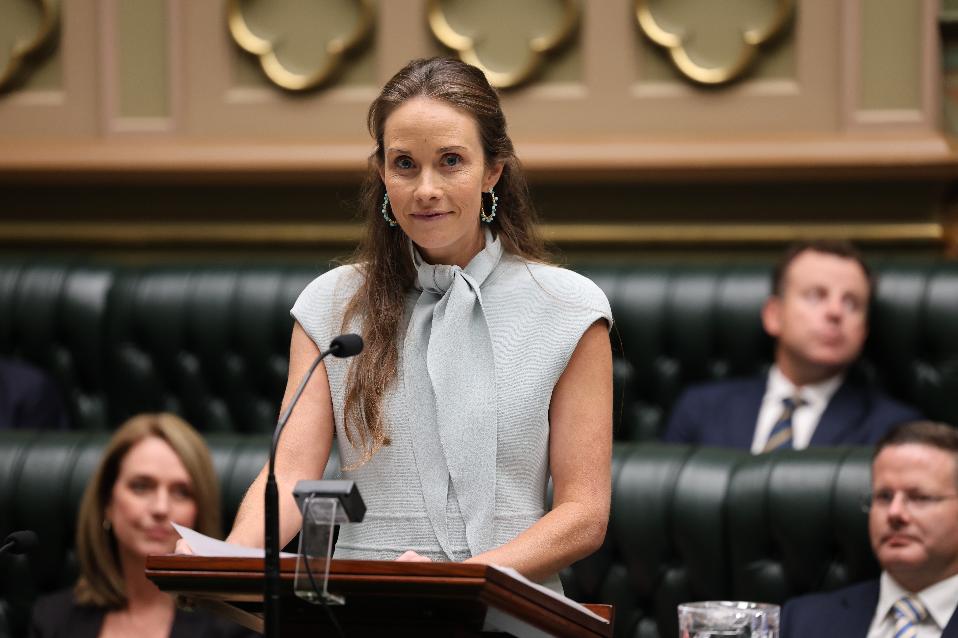
Leader of the Opposition Kellie Sloane said from the outset the NSW Liberals and Nationals mounted a case against Labor’s original plan to cut entitlements for injured workers, particularly those with permanent psychological injuries.
“Our consistent position has been that reform should focus on the front end of the scheme, targeting rorts, inefficiencies, and poor return-to-work outcomes that drive premium increases and productivity losses. That remains our position today,” Ms Sloane said.
However, the Opposition states the prolonged uncertainty was no longer sustainable.
“Small businesses and charities should not be heading into Christmas facing unknown premium shocks, and injured workers must have certainty of support and recovery pathways. NSW must also have a sustainable Workers Compensation system,” Ms Sloane said.
“As new Leader, my priority was to reset negotiations with the Treasurer to stabilise premiums for business while strengthening protections for workers with psychological injuries,” she said.
“Neither side achieved everything it sought. But this agreement represents a clear and material improvement on the Government’s original position.”
Ms Sloane said the resolved framework delivers stronger protections for the most seriously injured workers, including enhanced return-to-work support and increased access to medical benefits.
The arrangements will remain in place while the State’s Chief Psychiatrist develops a new, clinically robust test for permanent psychological injury.
Ms Sloane made it clear the Opposition does not endorse Labor’s broader handling of the workers compensation system.
“This agreement resolves immediate instability, but it does not fix the underlying structural weaknesses in the scheme,” she said.
“The Opposition does not support the Government’s overall approach, and we remain committed to pursuing meaningful, long-term structural reform to ensure NSW has a Workers Compensation system that is fair, compassionate, and financially sound.”
“We will continue to hold the Government to account until that reform is delivered.”
NSW Nationals Leader Gurmesh Singh said this deal is a win for business, and a win for injured workers.
“Small business is the lifeblood of regional NSW, and right now they're doing it tough.” Mr Singh said.
“The Liberal and Nationals amendments put a firm limit in the legislation, making sure the government can't approve any rise in premiums. It’s a safeguard for employers and a reminder that affordability must stay front and centre.
"More work is needed to shield businesses from bogus claims, but our amendments give employers some certainty as we head into the Christmas period."
The NSW Liberals and Nationals state that under their proposal, the NSW Government has agreed to the following:
1. The Whole Person Impairment (WPI) thresholds at 25% (in July 2026) rather than the original 31% proposed by the Government.
2. The reasonable management action defence may be triggered where it is the significant cause of injury.
3. A legislated restriction on iCare premiums, under which no average premium increases may be approved. Existing premium settings will apply with no additional increase.
4. A legislated cap on iCare premiums, which will sunset in 18 months, by which time the Chief Psychiatrist’s report is expected to be completed.
5. The Treasurer will be given a regulation-making power to adjust the WPI threshold to present settings below the legislated cap where it is in the public interest.
6. The establishment of a new “Return to Work Intensive” year, under which a worker with
7. WPI above 20% but below the maximum WPI threshold will receive:
1. An additional 52 weeks of medical benefits
2. An additional 52 weeks of income replacement at 60% of PIAWE
3. Appropriate training, mentoring, and other supports to facilitate a return to work
8. Increased funding for return-to-work programs, including retraining, mentoring, and specialist case workers.
9. The development of a successor program to Business Connect with a comparable budget, informed by expert consultation.