The Natural History Museum's Wildlife Photographer of the Year competition revealed its 2026 winners on Wednesday October 14 2026 Australian time, with an extraordinary image of an elephant carrying a deceased calf crowned the year's best wildlife photograph.
Selected from a record-breaking 65,403 entries from 121 countries and territories, this year's winners showcase powerful stories from the natural world and the urgent need to protect it.
For more than six decades, Wildlife Photographer of the Year has used the power of photography to connect people with nature, celebrating its beauty while highlighting the challenges wildlife faces around the world.
In a first for the competition's 62-year history, both the adult and young overall winners were recognised for black-and-white photography, demonstrating the enduring power of monochrome imagery to tell compelling wildlife stories.
Wildlife Photographer of the Year 2026
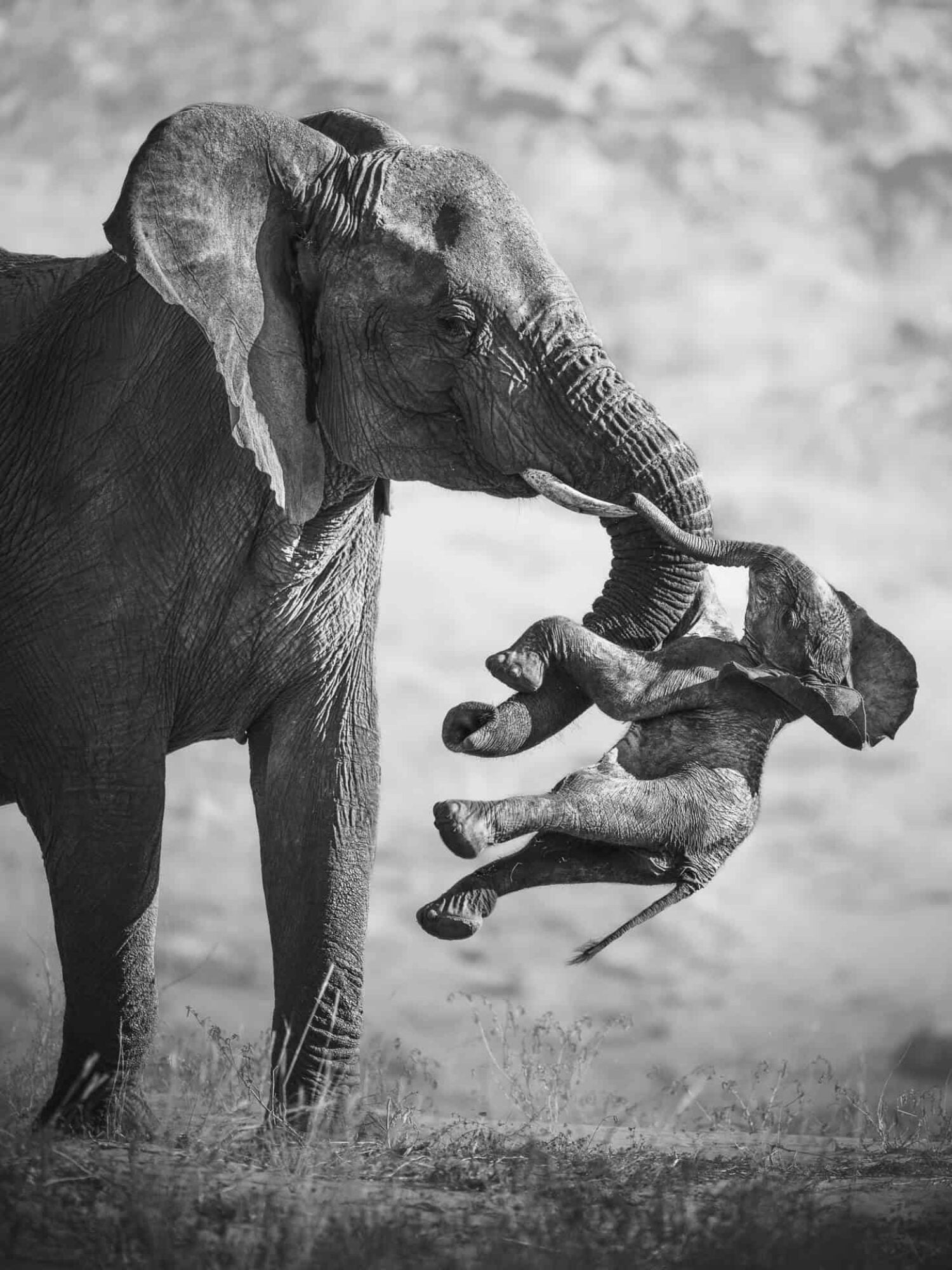
‘The Aftermath’ © Federico Veronesi, courtesy Wildlife Photographer of the Year 2026
Italian wildlife photographer Federico Veronesi has been announced as Wildlife Photographer of the Year 2026 for his powerful image, ‘The Aftermath’.
Featuring a female elephant carrying her deceased calf in Huab River Valley, Namibia, Federico's photograph is a challenging yet impactful insight into complex animal behaviour. Leading to the capture of this image, Federico was tracking elephants when he came across an unusual pattern of drag marks in the sand of a dry riverbed. The source became clear when he caught up with a family group. A female emerged with the calf, its leg wedged between her tusk and trunk.
Behaviours centering on death have been observed in both Asian and African elephants, including vocalisations, guarding the dead, inspecting and handling bones, and carrying the deceased. Some researchers suggest these behaviours could indicate an elephant’s journey to understanding death, while others interpret these actions as possible displays of grief.
Kathy Moran, Chair of the Wildlife Photographer of the Year Jury, says: “This photograph works on so many levels. Emotionally it’s a gut punch, heartbreakingly poignant. Intellectually it’s proof that animals have cognition. This photograph says it all!”
Young Wildlife Photographer of the Year 2026
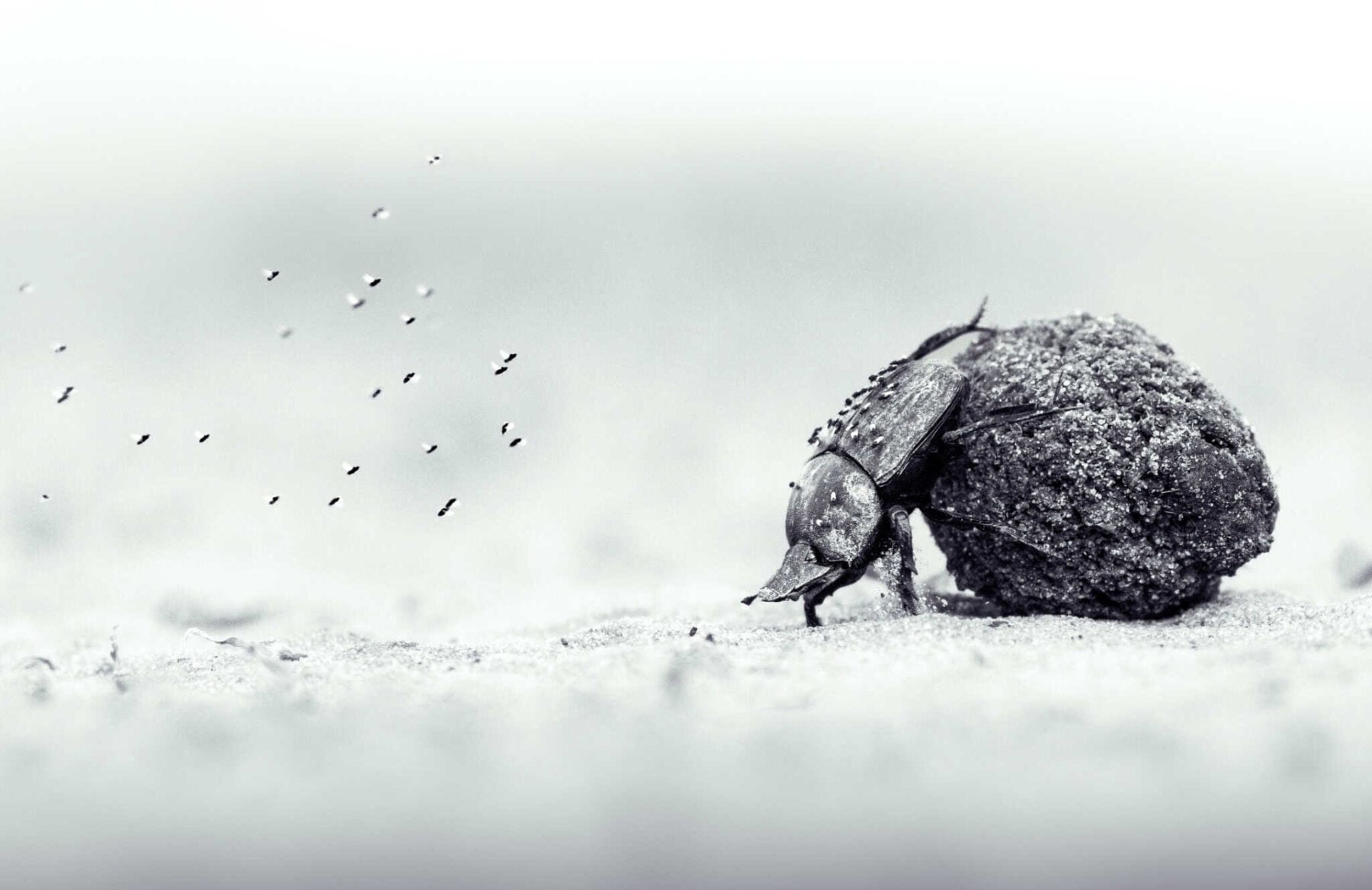
'Labour of Love’ © Oscar Whitfield, courtesy Wildlife Photographer of the Year 2026
The competition’s Young Wildlife Photographer of the Year 2026 was announced as Oscar Whitfield, a young British photographer residing in Zimbabwe.
The winning image, 'Labour of Love’, captures the arduous exertion of a dung beetle pushing its precious cargo. Using a fast shutter speed and high light sensitivity, Oscar lay flat on the ground to photograph the beetle at eye level, with the sunshine and heat creating dry dust all around him.
There are more than 5,000 species of dung beetle found around the world, and they play a vital role in their environments. Breaking up dung and burying it prevents the conditions required for methane production, reducing the quantity of greenhouse gas emissions. Burying dung also helps it decompose faster, reducing the number of pests affecting livestock and wildlife.
Jasper Doest, Jury Member for the sixty-second Wildlife Photographer of the Year competition, says: “This is exceptionally well done. Photographing such a small, constantly moving subject is challenging, yet the image feels so intentional. The composition reveals an entire story and by doing so the photograph quietly reveals how life cycles depend on what we often overlook or dismiss.”
Australian Koala with Joey Aboard Chased by a Dog
Among the gallery of brilliant images is Michael Snedic's (Australia) 'High Wire Danger' which documents the rescue of a koala from its hazardous post in southeast Queensland.
Michael watched trained koala handlers – and an engineer on a cherry picker – as they coaxed the koala down. Panting from the heat, at risk of electrocution and harassed by a crow, she had fled up the pole to escape being chased by a dog.
A post-rescue vet check-up of this koala revealed a joey in her pouch. Both koala mum and joey were returned safely to the wild.
The Wildlife Photographer of the Year competition noted:
'In southeast Queensland, the koalas’ eucalyptus-forest homes are under threat from growing urban development and in 2022 the Australian government listed koalas as endangered.'
The photograph also records Australia's continuing problem with the impact of domestic pets on wildlife.
Michael's photo was 'Highly Commended' by the judges.
Michael Snedic's photo was entered into the 'Urban Wildlife' category, focusing on nature’s occupation or cohabitation in a human-dominated environment, whether capturing the magic of the commonplace or the surprise of the unexpected or normally unseen.
Michael is a wildlife and nature photographer, tutor, writer, speaker and photo competition judge. His photos and photographic articles have been published in numerous publications both in Australia and internationally. He’s a Nikon School tutor in Australia and the founder of WildNature Photo Expeditions, presenting hundreds of photography workshops and tours across Australia and the world.
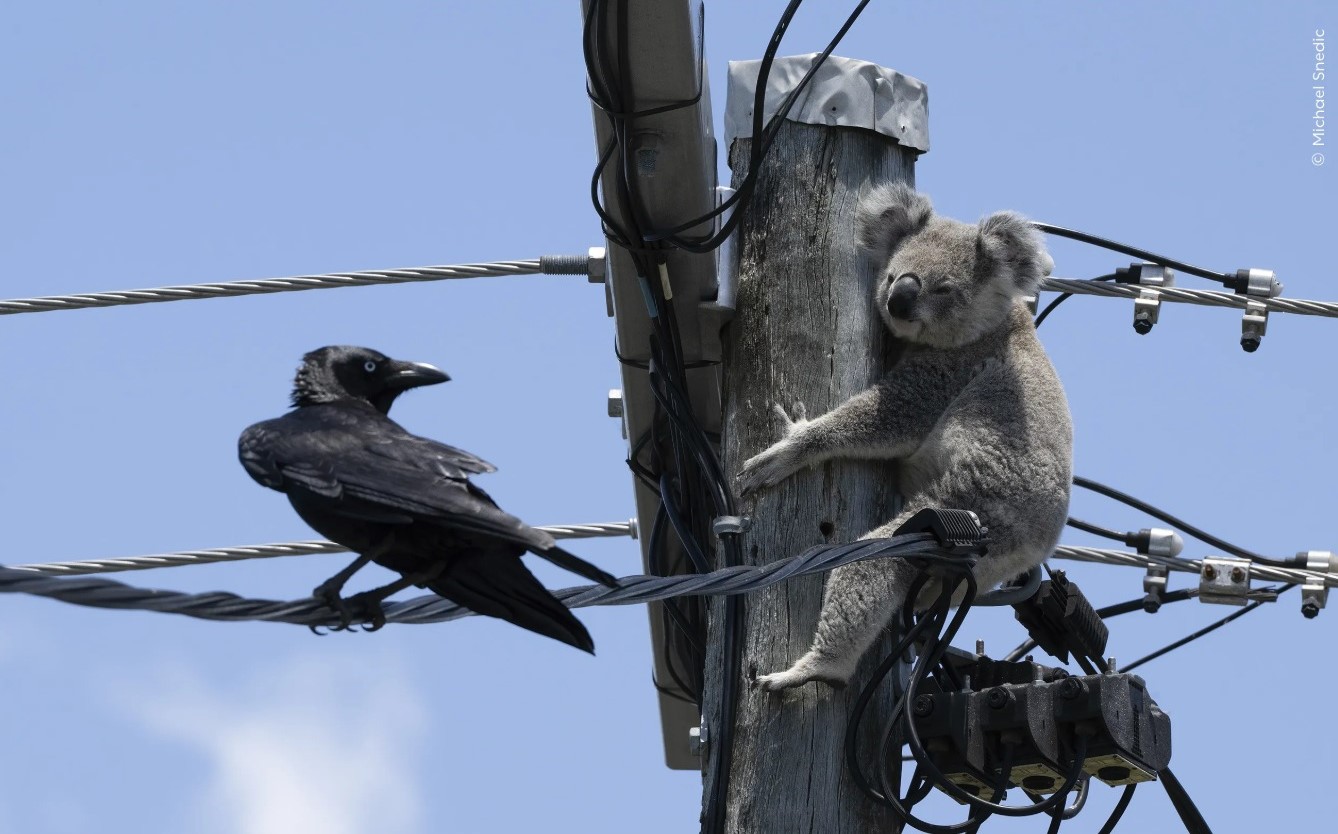
'High Wire Danger' © Michael Snedic, courtesy Wildlife Photographer of the Year 2026
Category Winners and the 62nd Wildlife Photographer of the Year Exhibition
The winning photographs will be showcased in an exhibition at the Natural History Museum, London, from Friday 16 October 2026, including category winners across topics ranging from underwater to urban wildlife, and photojournalism to mammal behaviour.
The exhibition will also help visitors understand how our planet’s habitats are changing. Alongside the award-winning photographs, the sixty-first exhibition will provide insight into some of the habitats pictured by including the Natural History Museum’s ground-breaking metric, the Biodiversity Intactness Index (BII). BII measures how much of a region’s natural biodiversity remains on a scale of 0 to 100%. Adopted as an official Global Biodiversity Framework indicator for decision-making, it is an essential tool for understanding, monitoring and communicating biodiversity changes on a global scale and tracking international progress towards conservation goals.
Dr Doug Gurr, Director of the Natural History Museum, says: "This year's winning photographs demonstrate the extraordinary power of wildlife photography to help us see nature differently. From a deeply affecting image of an adult elephant carrying a dead calf to the determination of a dung beetle rolling a ball many times its own size, these photographs capture moments that are at once intimate, surprising and profoundly revealing. Together they remind us that every species plays a role in the complex web of life, and why understanding and protecting the natural world has never been more important."
The category winners, as well as the full set of images selected for the competition’s sixty-first portfolio, were selected anonymously by an international panel of experts across the disciplines of wildlife photography, filmmaking, conservation and science. The images were selected for their originality, technical excellence, ethical practice and creativity.
A few of these run below. A gallery of highly commended and winning photographs is available online at the Natural History Museum website HERE
The category winners across young and adult categories are:
10 Years and Under: Amelie Davis (UK)
Amelie's great capture highlights a common carder bee suspended in mid-air as it flies in to land and feast on a flower in Surrey. On this August afternoon the garden was ‘teeming with bees’. Without her camera, she borrowed her dad’s smartphone and was able to record the delicate detail of a single wingbeat. Bees perceive plants and flowers in many ways. Distinguishing one colour for nectar and another for pollen helps them make rapid decisions when foraging
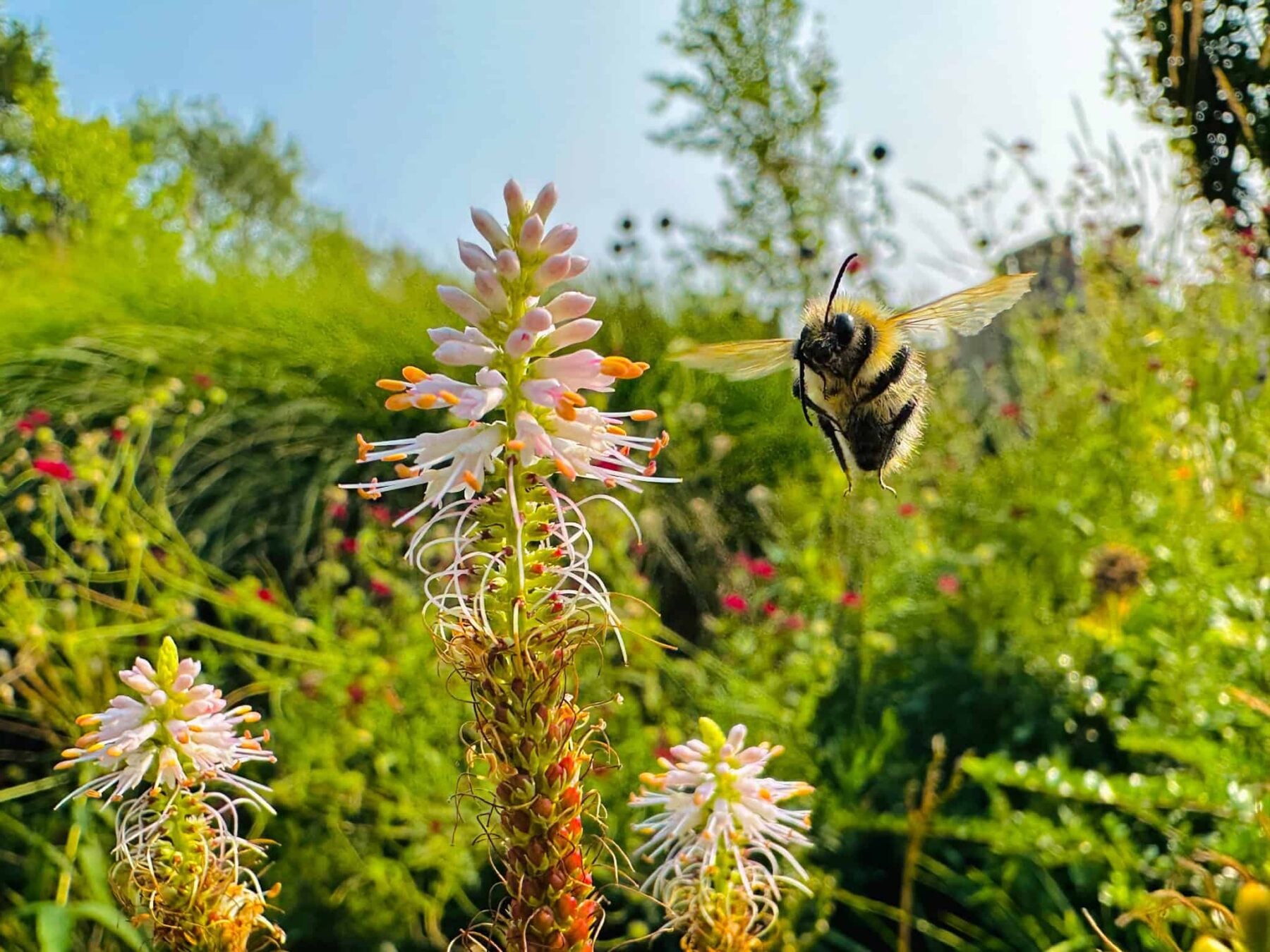
'Flight of the Bumblebee' © Amelie Davis, courtesy Wildlife Photographer of the Year 2026
11 – 14 Years: Oscar Whitfield (UK/Zimbabwe)
15 – 17 Years: Konrad Gräeter (Germany)
Konrad's picture highlights a male blackbird singing in a vineyard early one April morning. He had to crouch down low on the steep slope of the vineyard and point his camera through a gap in the foliage to frame the blackbird within its landscape. Blackbirds can be heard singing at different times of day, but their songs have the most complex compositions at dawn.
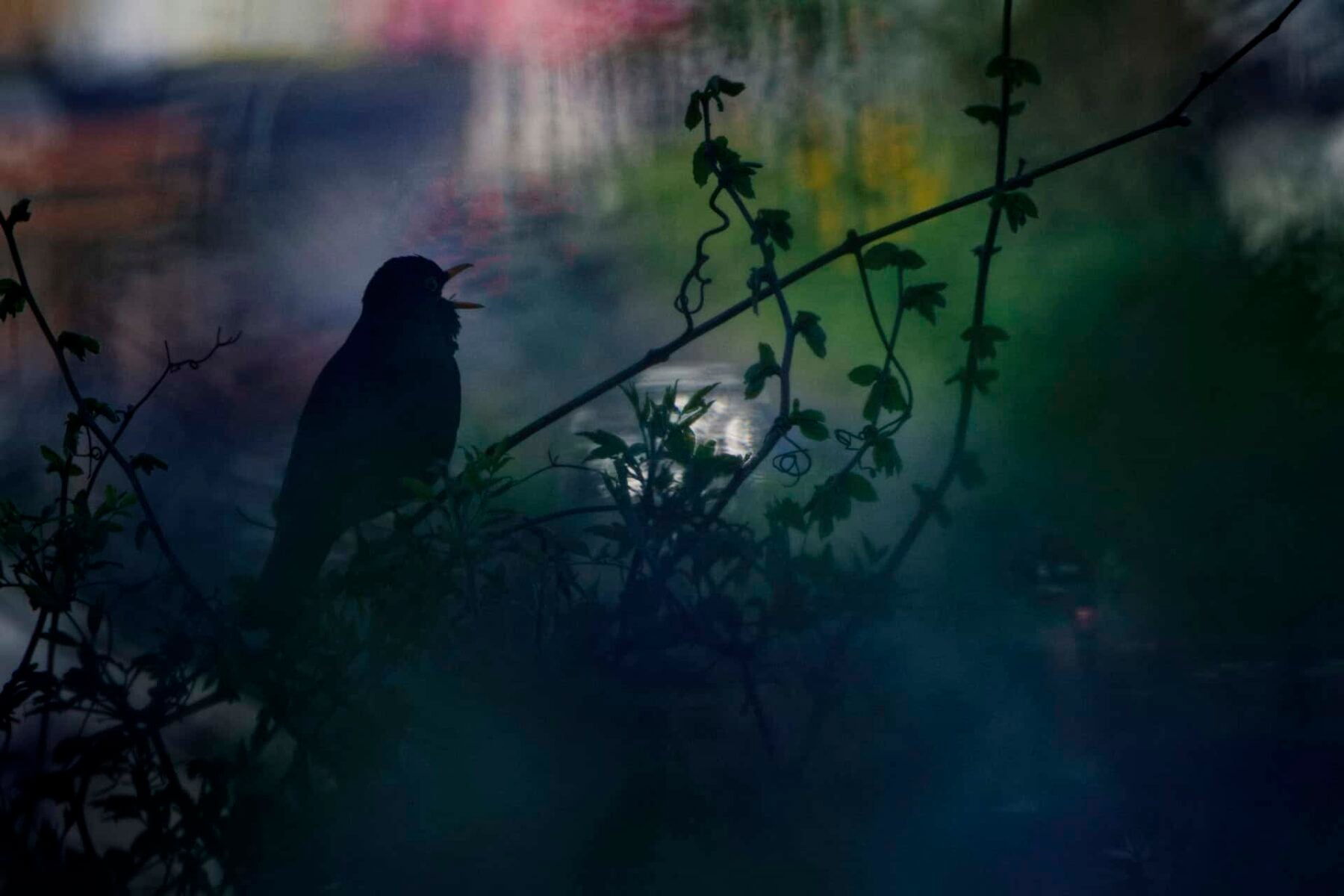
'Birdsong Painted in Light' © Konrad Gräeter, courtesy Wildlife Photographer of the Year 2026
Animals in their Environment: James Lewin (UK)
James captured a young bull elephant spray a group of zebra as they congregate in Kenya’s Chyulu hills. While there was no shortage of subjects and action around this waterhole, he had to deal with the harsh, unforgiving light. He chose to soften the light using a camera converted to infrared, creating this dream-like scene.
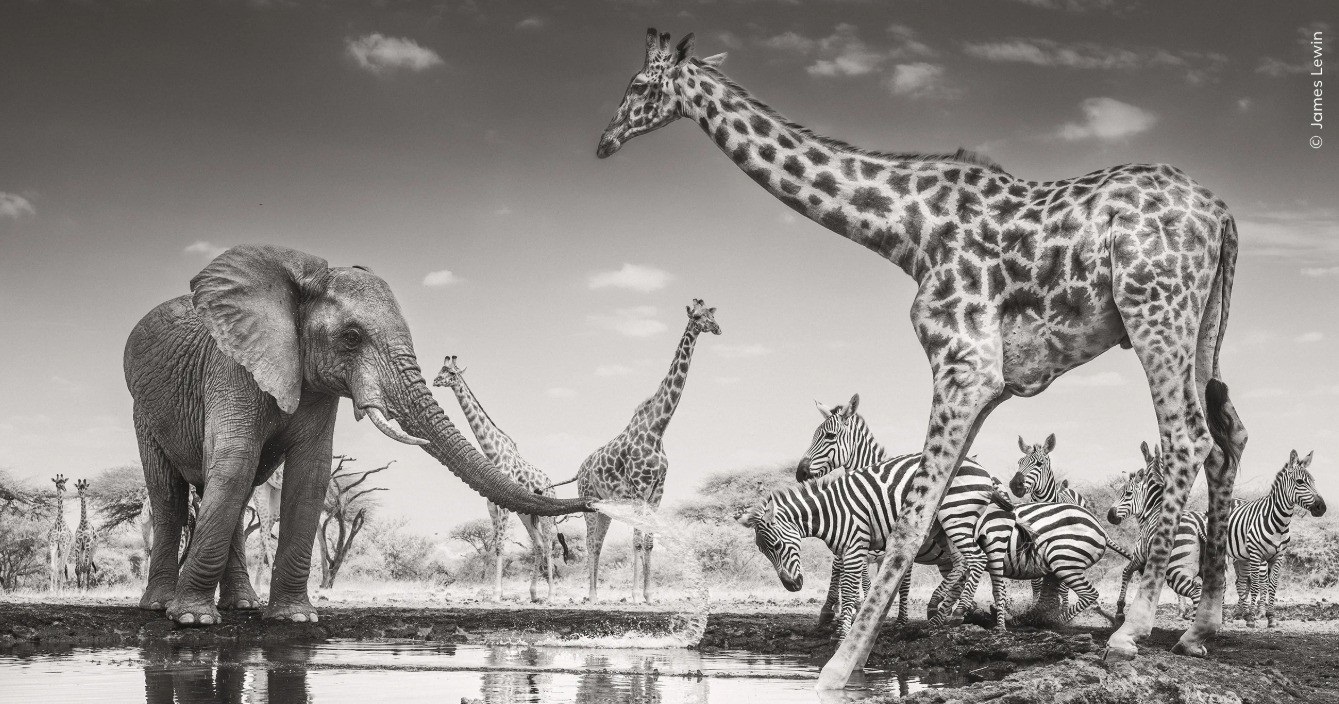
'The Meeting Place' © James Lewin, courtesy Wildlife Photographer of the Year 2026
Animal Portraits: Aaron Sanders (UK)
Behaviour: Birds – Isak Pretorius (South Africa)
Isak Pretorius chanced upon two elusive shoebill storks among wetland vegetation, while exploring the swamp in a narrow canoe with a guide. The birds pulled out vegetation, dropped it and then repeated the process several times. It is likely this is a breeding pair gathering nesting material. Though often called the shoebill stork, these large birds are more closely related to pelicans, herons and ibises. Fewer than 5,300 mature shoebills survive across their entire range and their numbers are decreasing.
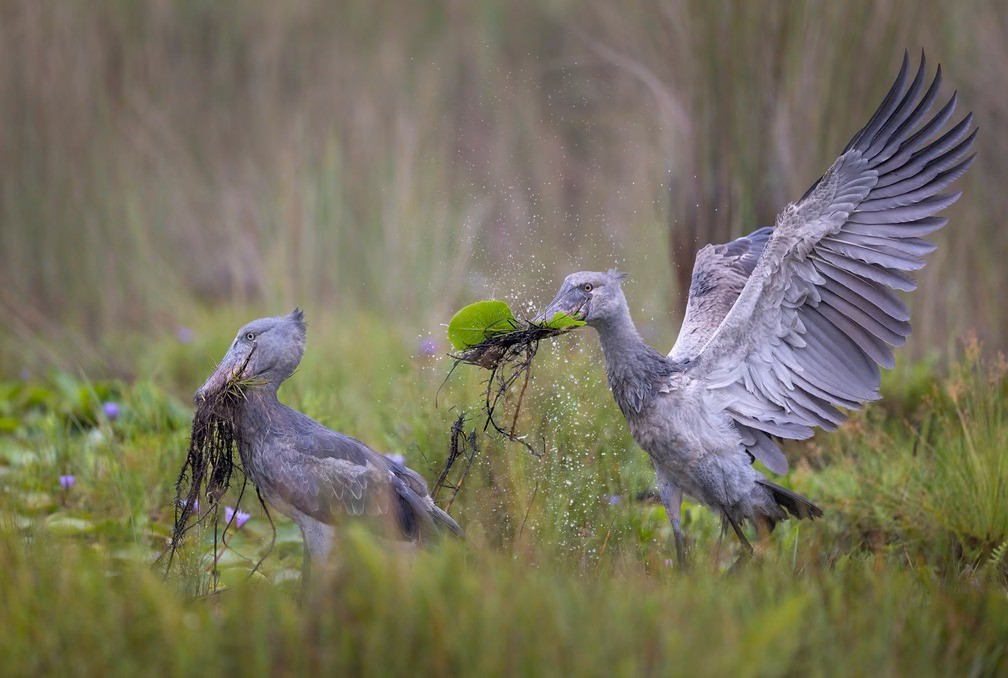
'Scenes from the Swamp' © Isak Pretorius, courtesy Wildlife Photographer of the Year 2026
Behaviour: Mammals – Federico Veronesi (Italy)
Behaviour: Amphibians and Reptiles – Anton Sorokin (USA)
Behaviour: Invertebrates – Sitaram Raul (India)
Oceans: The Bigger Picture – Alex Lindbloom (USA)
Plants and Fungi: Agorastos Papatsanis (Greece)
Natural Artistry: Michał Michalski (Poland)
Underwater: Tony Wu (Japan/USA)
Urban Wildlife: Seth Forestson (USA)
Wetlands: The Bigger Picture – Alex Visbal (Colombia)
Alex Visbal (Colombia) documents how a single engineered line can reshape an entire wetland.
This photograph is part of Alex’s long-term project documenting the industrial footprint on bodies of water.
The distinctive pink colour on the left is caused by bright pink microbes that thrive in extremely saline water, which happens when an area is cut off from a supply of fresh water. The ecology of the lake is in sharp decline due to industrial use, upstream diversions and climate change. Since this image was taken, the State of Utah has brought the area under conservation management.
Wetlands - The Bigger Picture: Communicating the vital role of freshwater ecosystems, from mountain-tops-bogs and peat uplands, rivers and lakes to deltas, floodplains, marshes and mangroves. Images can be powerful through their impact or beauty or illustrate an environmental or conservation story that reveals the importance of wetlands for nature and/or for people.
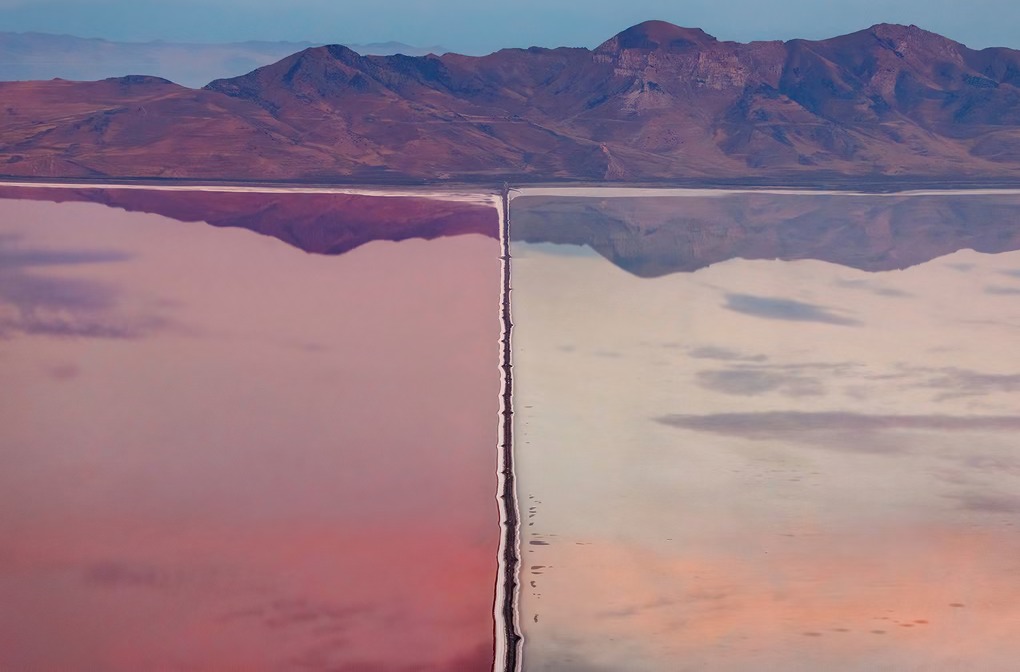
'The Great Divide' © Alex Visbal, courtesy Wildlife Photographer of the Year 2026
Photojournalism: Francisco Negroni (Chile)
Photojournalist Story Award: Loren Elliott (USA)
Loren Elliott (USA) opens a window into the lives of the often-misunderstood coyotes living in the environs of San Francisco on the West Coast of the United States.
A coyote pads along a trail in Bernal Heights Park, overlooking the city and bay of San Francisco. This individual is part of a resident pack that Loren observed hunting rodents in the park, which is also popular with people and dogs.
Telling a powerful story, these images should have both individual quality and combined narrative power. Pictures can be challenging, uplifting, provocative or revelatory and should illustrate how our attitudes, decisions and actions impact the natural world.
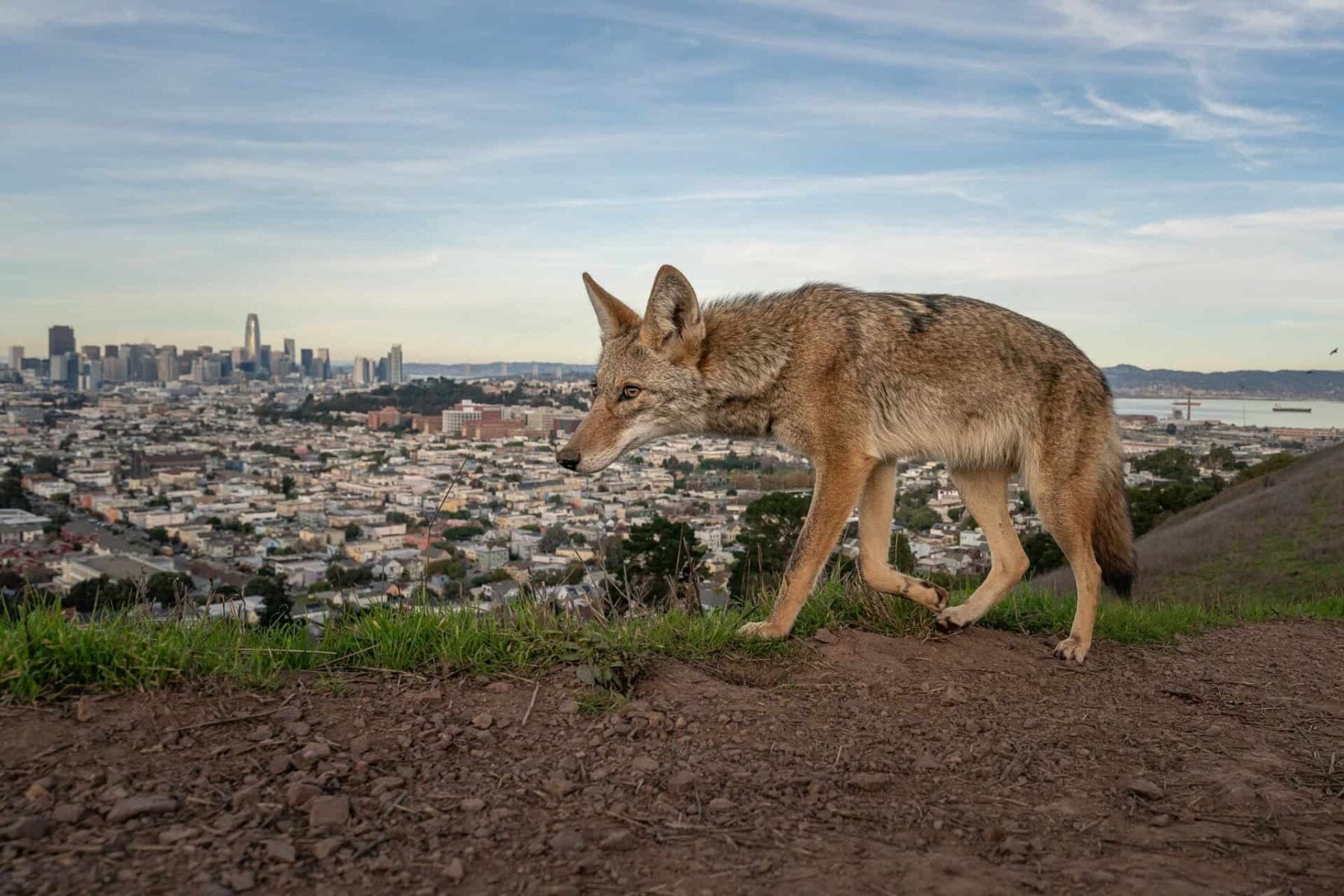
'On the Outskirts' © Loren Elliott, courtesy Wildlife Photographer of the Year 2026
Rising Star Award: Alexis Tinker-Tsavalas (Germany)
Alexis Tinker-Tsavalas (Germany) reveals the exquisite beauty of the tiniest of animals in the finest of detail.
When Alexis spotted this robber fly, it had already impaled the flesh fly with its needle like mouthparts. The bubbles forming in the victim’s eyes indicate that the robber fly has injected digestive enzymes that liquefy its internal tissues before they are sucked out.
Rising Star Portfolio Award: Demonstrating style and artistic intent, this body of work should show a breadth of skill and vision while illustrating consistent quality.
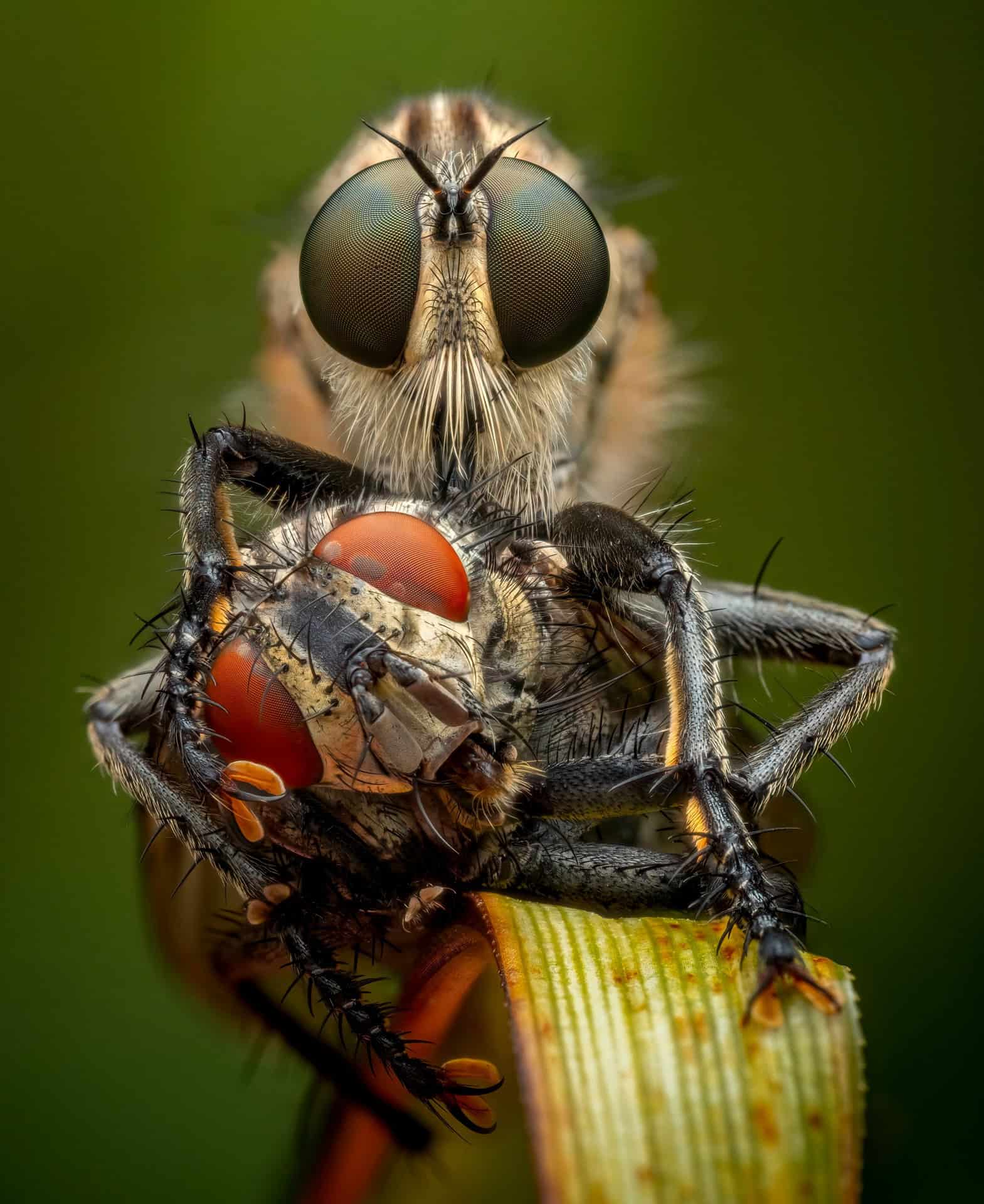
'Afternoon Snack' © Alexis Tinker-Tsavalas , courtesy Wildlife Photographer of the Year 2026
Portfolio Award: Kutub Uddin (Bangladesh/UK)
The sixty-second Wildlife Photographer of the Year exhibition at the Natural History Museum, London, will run until Sunday 11 July 2027. The exhibition will also embark on a UK and international tour to inspire millions to appreciate and conserve the natural world.
The Australian National Maritime Museum in Darling Harbour hosts the prestigious Wildlife Photographer of the Year exhibition from May to October annually.