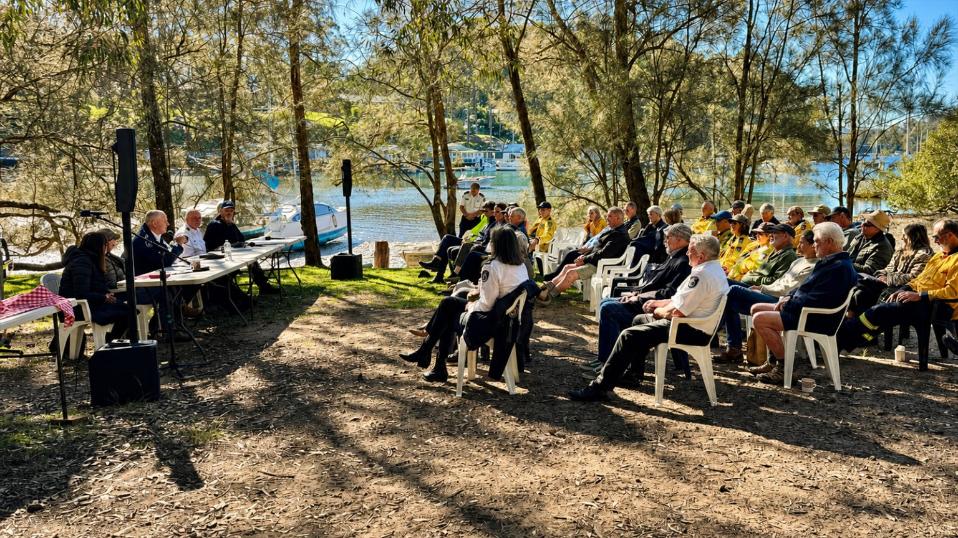
AGM Held: Sunday July 26 2026 at Elvina Fireshed, Elvina Bay, Pittwater
West Pittwater Rural Fire Brigade marked seven decades of community service at its 2026 AGM, welcoming Geoff Nimmo as Captain and paying tribute to Andrew Cutler after 13 years in the role.
On a beautiful, if chilly, Sunday morning, the Elvina Boat carried a special passenger across Pittwater to join West Pittwater Rural Fire Brigade for its 70th anniversary Annual General Meeting.
The Brigade’s fireboat is a hardworking operational appliance with few creature comforts, but Dr Sophie Scamps MP, Federal Independent Member for Mackellar, happily made the journey to the Elvina Bay Fire Shed for the occasion.
Her attendance was warmly appreciated by Brigade members. Dr Scamps spoke about the value of West Pittwater as a brigade and the important contribution its volunteers make to the resilience and safety of the western foreshore communities.
For a small, remote brigade, her decision to attend was itself regarded as a meaningful acknowledgement of the volunteers, past and present, who have protected the community for seven decades.
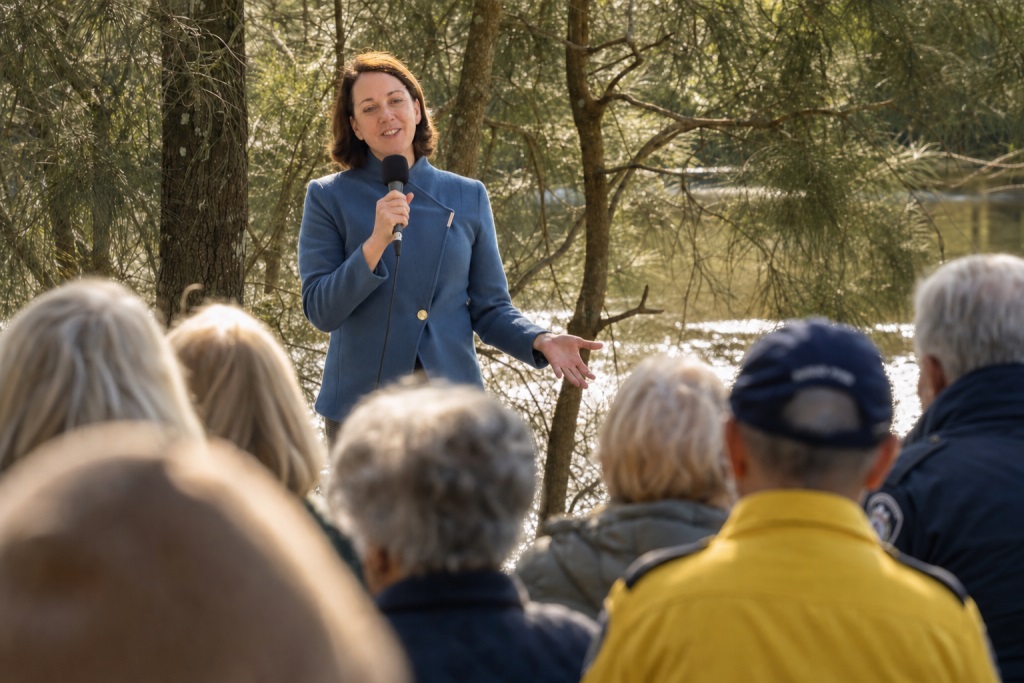
Dr Sophie Scamps MP, Federal Independent Member for Mackellar addresses AGM
The AGM was also attended by Superintendent Guy Baddock, Wes Brown, CISS Chaplain; Group Officers Sean McLoughlan and Kate Pinder; and Jim Boyle, Captain of Mackerel Beach Rural Fire Brigade.
Seventy years of community service
Opening his President’s report, Paddy Broughton reflected on the similarities and differences between the Brigade of 1956 and the organisation it has become today.
After reading the original minute books and talking to some of the Brigade’s “old timers”, Paddy concluded that one quality has remained constant: West Pittwater is still very much a community-driven organisation.
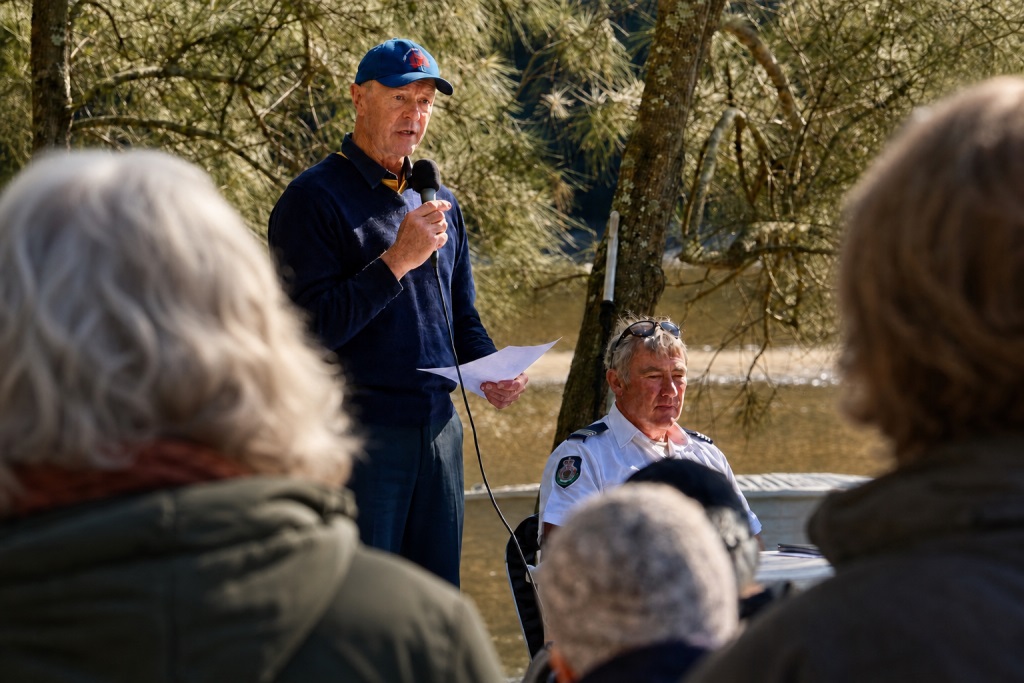
Brigade President Paddy Broughton opens proceedings
The Brigade began with residents wanting to protect themselves, their homes and their neighbours. Seventy years later, that same motivation remains at its heart.
What has changed is the growth of the wider NSW Rural Fire Service, which now provides the Brigade with training, equipment, resources, structure and specialist expertise.
“We provide the people power; the RFS provides the structure and expertise,” Paddy said.
He thanked members for the many different contributions that keep a volunteer brigade functioning—from responding to incidents and completing courses to doing the homework, maintaining equipment and washing up after fireshed dinners.
Paddy also recognised those who had taken on particular roles during the year, along with the Brigade’s strong group of Deputy Captains, many of whom have been trained and developed within West Pittwater.
The Brigade’s success and longevity, he said, are built on members continuing to turn up, take part and give their time.
A significant change of command
One of the most important moments of the AGM was the election of Geoff Nimmo as Captain, succeeding Andrew Cutler after a noteworthy 13 years in the Brigade’s senior operational role.
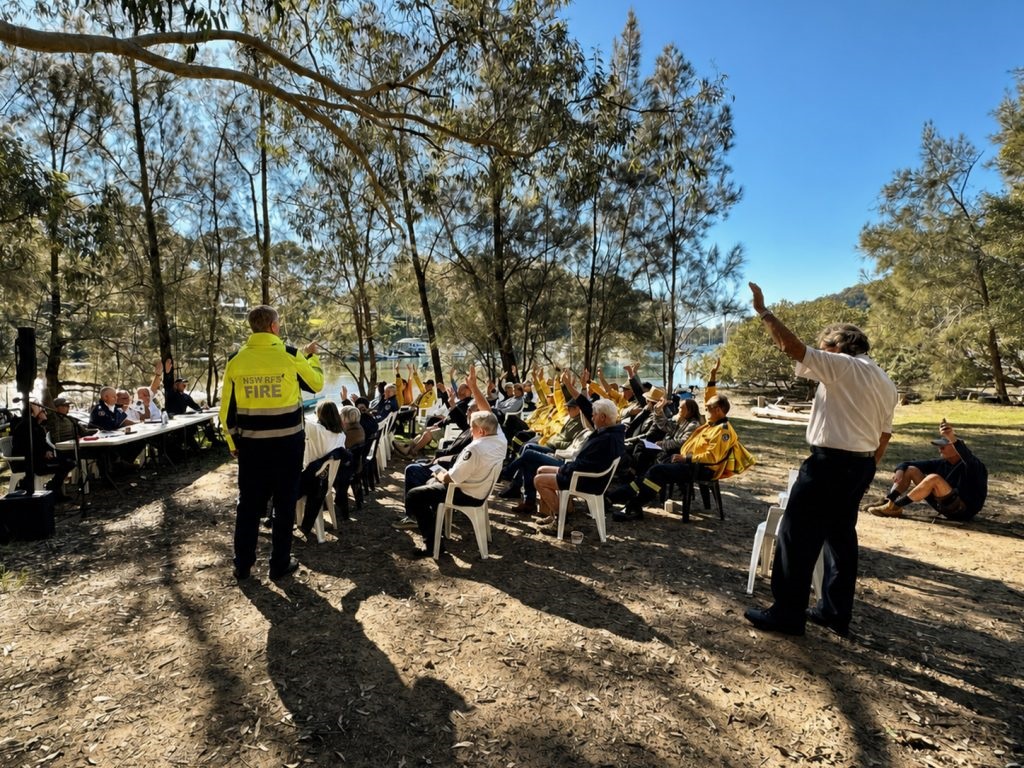
Scrutineers Kate Pinder and Jim Boyle count the votes
Group Officer Sean McLoughlan marked the change of command with a maritime quip, wondering whether the fireboat might also need a new name under Captain Nimmo.
Andrew will continue to serve the Brigade as Senior Deputy Captain, allowing his considerable experience and knowledge to support Geoff and the incoming leadership team.
Paddy Broughton was re-elected President, Louise Longhurst was re-elected Secretary and Heather Loewenthal was re-elected Treasurer. Caryn Thomson was elected Training Officer.
The field officers elected for the coming year are:
Captain: Geoff Nimmo
Senior Deputy Captain: Andrew Cutler
Deputy Captain: Glenn Andrews
Deputy Captain: Paddy Broughton
Deputy Captain: Caryn Thomson
Deputy Captain: Vince Greck
Deputy Captain: Jon Matthews
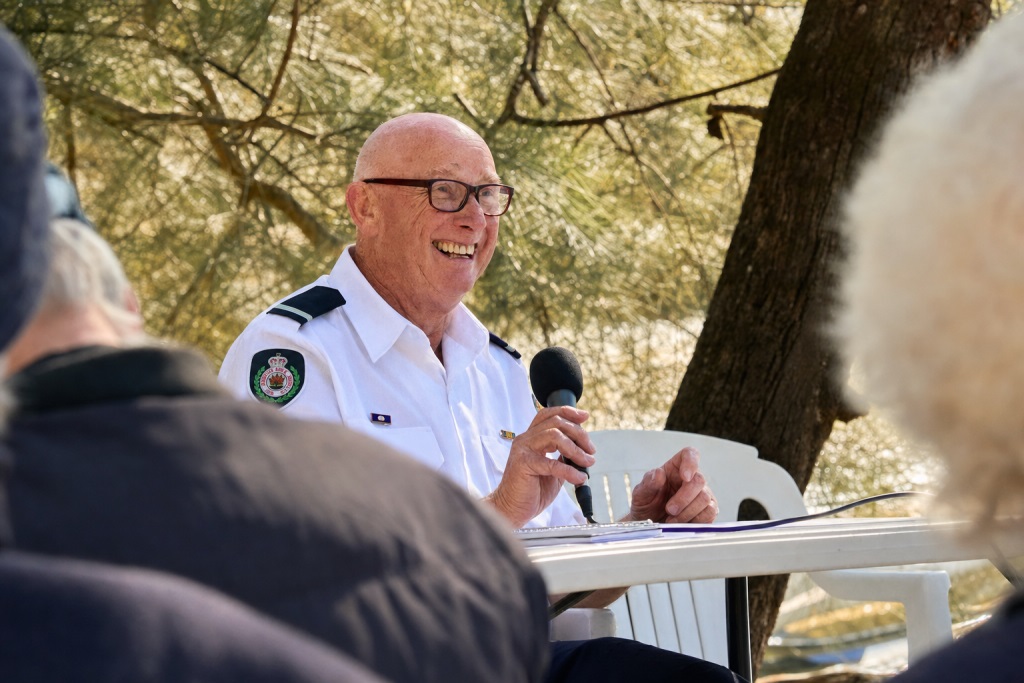
Geoff Nimmo
The transition from Andrew to Geoff brings to a close one of the longest periods of operational leadership in the Brigade’s history.
Andrew’s 13 years as Captain encompassed countless local call-outs, weeks of deployments outside the district, extensive technical training and the many hours of meetings required to coordinate a modern RFS brigade.
His time as Captain included the demanding 2019–20 Black Summer, as well as boat incidents, medical evacuations and continuing efforts to improve the Brigade’s training, equipment and operational capacity.
Former Brigade President Wayne Lazarides delivered a personal tribute, describing Andrew as a determined leader who consistently led from the front and was always prepared to respond when the Brigade or the community needed him.
The tribute also recognised the less visible demands of command—the time, responsibility and difficult decisions involved in leading a volunteer brigade. Wayne thanked Andrew for his resilience, compassion and unwavering commitment to Brigade members and the wider community.
Paddy added his own warm tribute, thanking Andrew for the call-outs he had led, the knowledge he had gained and shared, and the enormous amount of time he had devoted to the Brigade.
He also shared stories of the seafaring exploits he and Andrew had experienced together over the years. The stories brought a more personal note to the occasion and made clear the friendship behind their long service together.
“As all Captains try to do, and where you have succeeded, the Brigade is in a better place thanks to your stewardship,” Paddy said.
Andrew’s skills and experience will remain available to the community through his new role as Senior Deputy Captain and his continuing support for Captain Nimmo.
From air-raid sirens to RFS ACTIV
Andrew began his final Captain’s report by taking members back to the Brigade’s beginnings and the events that shaped firefighting on the western foreshore.
West Pittwater Bush Fire Brigade was established in 1956, initially protecting the entire western foreshore of Pittwater, including Coasters Retreat and Mackerel Beach.
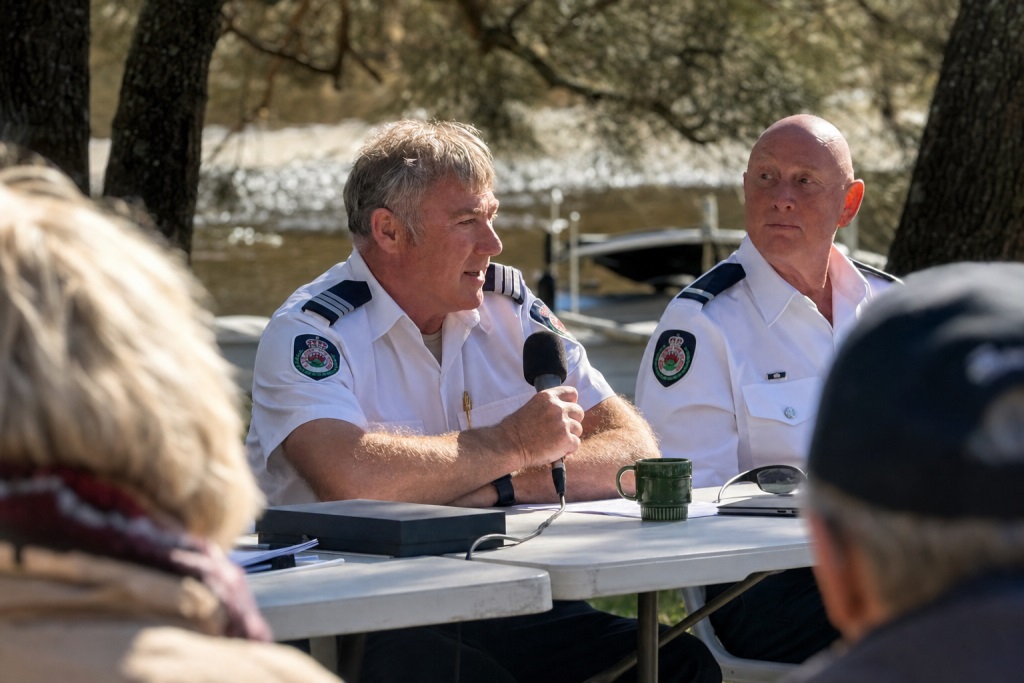
Captain Andrew Cutler – talks about the the unique nature of the West Pittwater Brigade
As those communities grew, Coasters Retreat and Mackerel Beach established separate brigades in 1979. West Pittwater now serves Elvina Bay, Lovett Bay, Morning Bay and Douglass Estate at McCarrs Creek.
The original West Pittwater station stood at Lovett Bay, near the present station. In the Brigade’s early years, an old Second World War air-raid siren from George Street in Sydney served as the call-out alarm. It could reportedly be heard as far away as Mona Vale, long before pagers and the RFS ACTIV system were introduced.
The extensive fires at Elvina Bay during the summer of 1964–65 were a turning point in the development of dedicated firefighting capability on the western shore.
The 1994 fires again demonstrated the area’s vulnerability. Eleven houses were lost—10 in Lovett Bay and one in Elvina Bay—primarily through ember attack. The lessons of that fire remain highly relevant and reinforce the importance of preparing properties, educating residents and maintaining strong local firefighting knowledge.
A unique water-access brigade
West Pittwater is classified as a remote village brigade and operates in one of the most unusual environments in the NSW Rural Fire Service.
Its communities are accessible to residents by water, and the Brigade operates from stations at Elvina Bay and Lovett Bay. Although the stations are about 45 minutes apart by fire trail, the journey takes approximately seven minutes by boat and on foot.
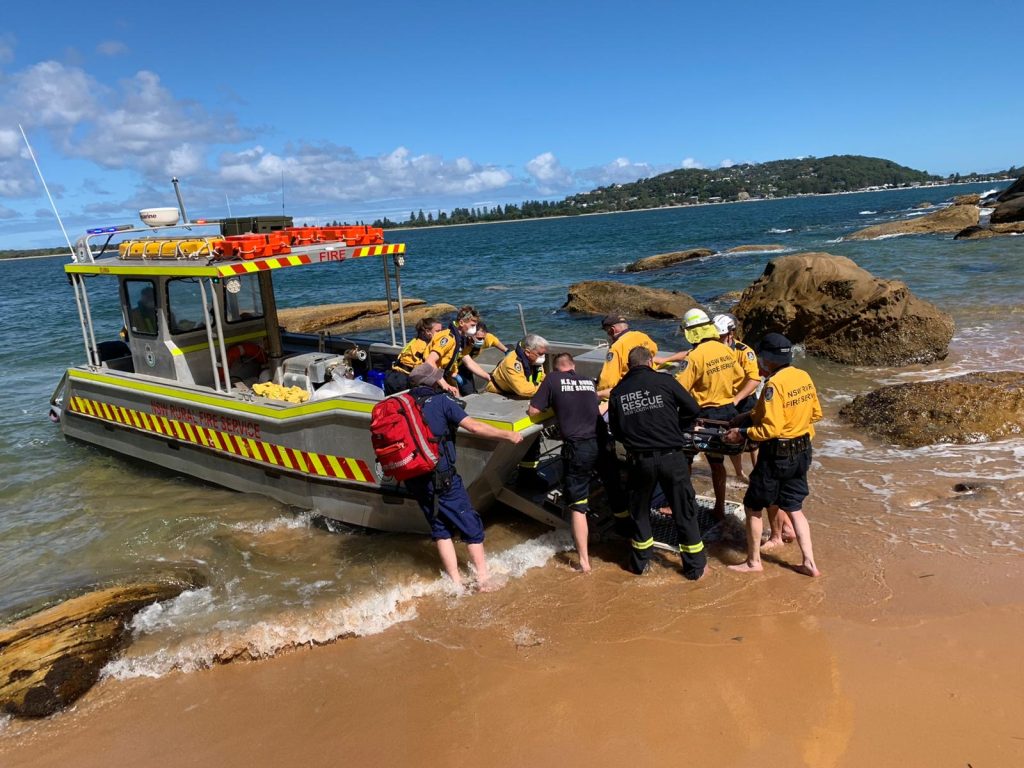
Elvina Boat during medivac at West Head
The Brigade’s operational resources include the Elvina 15 fireboat, two Category 7 firefighting appliances based at Elvina and Lovett, and a personnel carrier.
Members respond to far more than bushfires. Calls can involve structure and boat fires, storm damage, power-pole incidents, hazardous conditions, searches and rescues, medical evacuations and assistance to other emergency services.
The Brigade attended 30 incidents during the preceding 12 months. These included four fire and explosion incidents, nine good-intent calls, three hazardous-condition incidents, four motor vehicle, rescue or emergency medical calls, eight service calls and two incidents recorded as undetermined.
Although the four months immediately before the AGM were unusually quiet, West Pittwater members retain considerable experience from major operations.
Members have supported incidents at West Head, Sandy Point, on the Central and Mid North Coast, during the Hawkesbury floods and throughout the 2019–20 Black Summer.
More than 30 West Pittwater members took part in the 2019–20 fire season. Fifteen served for more than seven days and three served for more than 30 days, with deployments including Tenterfield, Bilpin, Cooma, Bargo, Port Macquarie, Dorrigo and the Snowy Mountains.
A brigade closely connected to its community
West Pittwater now has 184 members, comprising approximately 100 RFS members and 84 Community Fire Unit members.
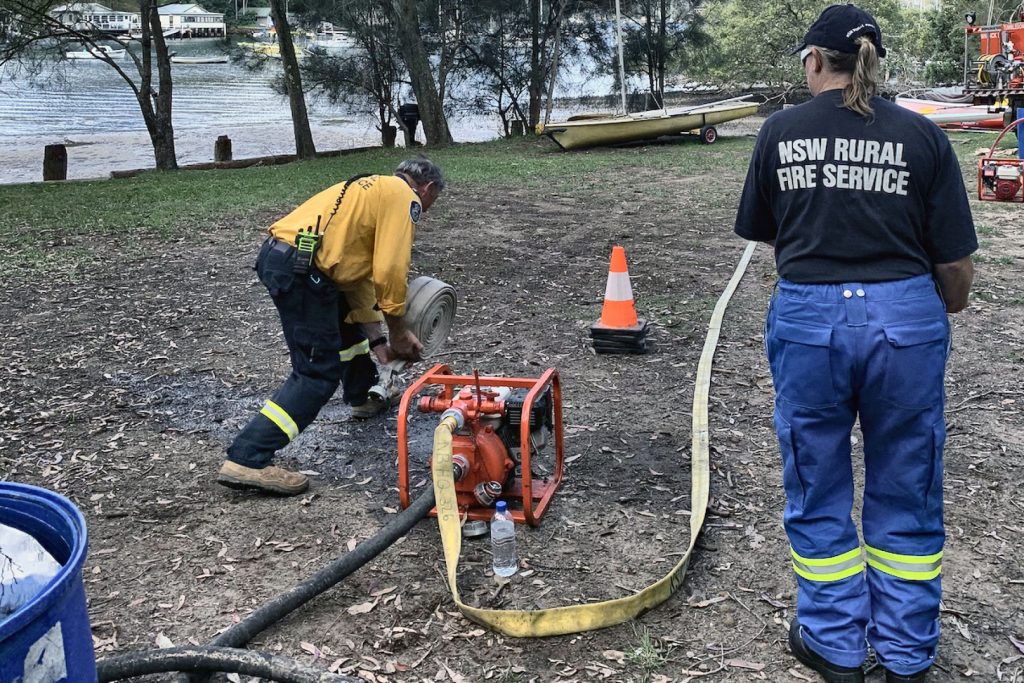
CFU Training
More than 80 per cent of homes in the Brigade area are reported to have either an RFS or CFU member in residence. That extraordinary level of participation adds greatly to the community’s resilience and ensures valuable local knowledge is available when an emergency occurs.
The Brigade supports one of the largest Community Fire Units in New South Wales, with nine cabinets and trailers strategically positioned around the bays.
Monthly fireshed dinners held during daylight-saving months bring residents together and provide opportunities to discuss preparedness. Pump days and practical training sessions are also held throughout the year.
Training remains central to the Brigade’s future. Seven new firefighters qualified in 2024, four qualified in 2025 and another seven are working towards qualification in 2026. In total, 18 new firefighters have been trained during the past three years.
A continuing challenge is helping members progress into Village Firefighter, Advanced Firefighter and Crew Leader roles.
Paddy reinforced the importance of members maintaining their operational skills. Completing the initial Bush Firefighter course is only the beginning, he said: skills must be practised, developed and reinforced so members remain ready to work safely as part of a crew on a difficult fireground.
Art auction delivers magnificent result
The AGM also provided an opportunity to recognise the success of the Brigade’s art auction in March.
Paddy thanked Bob Storey for the extraordinarily generous contribution of much-loved artworks in memory of Susan. The donation set the tone for the event and made a meaningful contribution to its success.
The auction raised approximately $18,000 for the Brigade.
Many people helped organise and support the event, but Paddy singled out Wayne Lazarides for particular recognition, describing his work as a “sterling effort—clear-sighted and well thought through”.
The proceeds contributed to a strong financial year for the Brigade, alongside funds raised through fireshed dinners, subscriptions and donations.
Preparing for the next fire season
In his final report as Captain, Andrew cautioned against complacency following several wet seasons.
He urged residents to prepare their properties and refresh their firefighting skills well before summer, particularly given the heavy fuel loads across parts of the western foreshore.
Of particular concern is the large area between the Bairne and Towlers trails, which has not experienced a major fire since 1994. The Brigade continues to advocate for an appropriate hazard-reduction strategy while recognising the difficult terrain and environmental challenges involved.
Andrew also outlined several infrastructure priorities being pursued with Fire Control and Group Officers.
At the top of the list was the long-awaited pontoon for the Elvina Boat. Superintendent Baddock brought an encouraging update on that project.
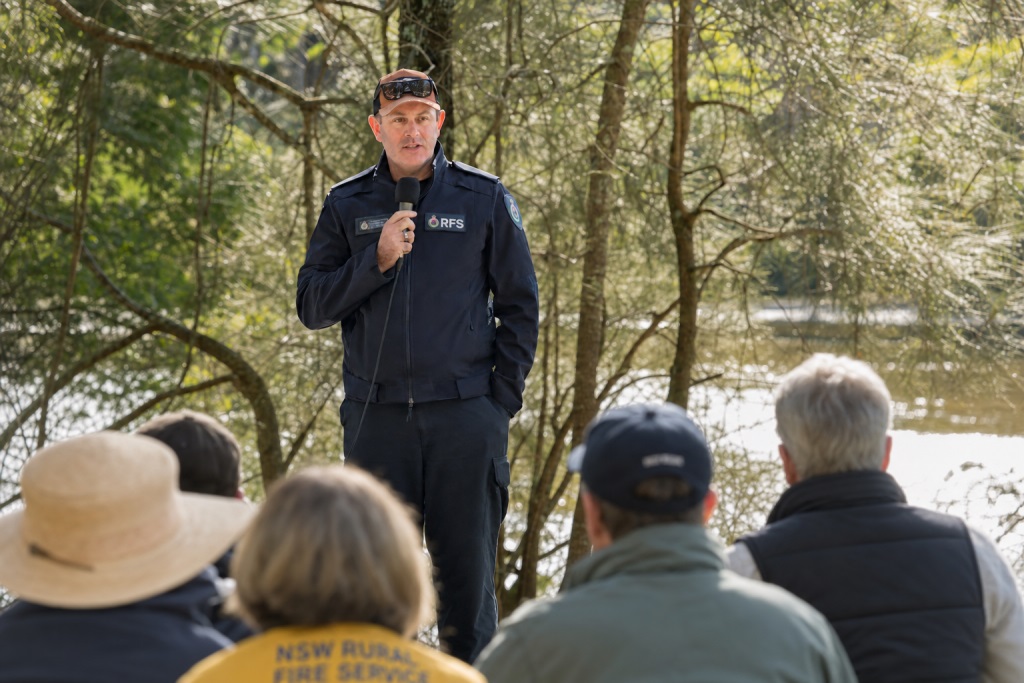
Superintendent Guy Baddock updates members.
He said the anniversary dinner had proved particularly opportune. During a conversation with Northern Beaches Mayor Sue Heins, they discovered that the pontoon project had inadvertently been omitted from Council’s infrastructure rollout.
Superintendent Baddock said the oversight would be rectified, allowing the project to proceed. Once completed, the pontoon will provide a much safer home for the Elvina Boat—whatever name it may sail under during the Captain Nimmo era.
Other priorities include:
- Replacement of the Brigade’s ageing firefighting vehicles
- Replacement of the personnel carrier with a Category 9 appliance
- A sympathetic and slightly larger replacement for Elvina Bay Station
- Refurbishment of Lovett Bay Station
- Lightweight breathing apparatus for use on the fireboat
The list is ambitious for a small brigade and the projects may take time, but Andrew said he believed the Brigade was moving in the right direction.
Participation and governance
Formal AGM business included the Brigade’s annual administrative, operational, training, equipment and financial reports.
Members also considered updated Brigade Rules and Standing Orders following a consultation process that began at the 2025 AGM.
Paddy drew particular attention to the proposed minimum participation criteria. These recognise that operational readiness requires more than completing an initial qualification: members need to attend training, practise their skills and remain familiar with teamwork and the hazards of the fireground.
The wider governance documents address voting eligibility, meetings, training, duty days, communications and the responsibilities of elected and support officers.
Honour board emerges from the “catacombs”
A highlight of the anniversary was the presentation of the Brigade’s restored honour board, recording its Captains and Presidents back to its foundation in 1956.
After being excavated from the catacombs of the Brigade, the ancient, previously incomplete board was brought back into the light for the 70th anniversary.
Mel Broughton undertook the considerable detective work needed to complete it, delving through old minute books, speaking with long-term members and circulating requests for information.
Ron Thiessen then brought his professional signwriting skills to the task, masterfully restoring the board and adding the names and dates uncovered through Mel’s research.
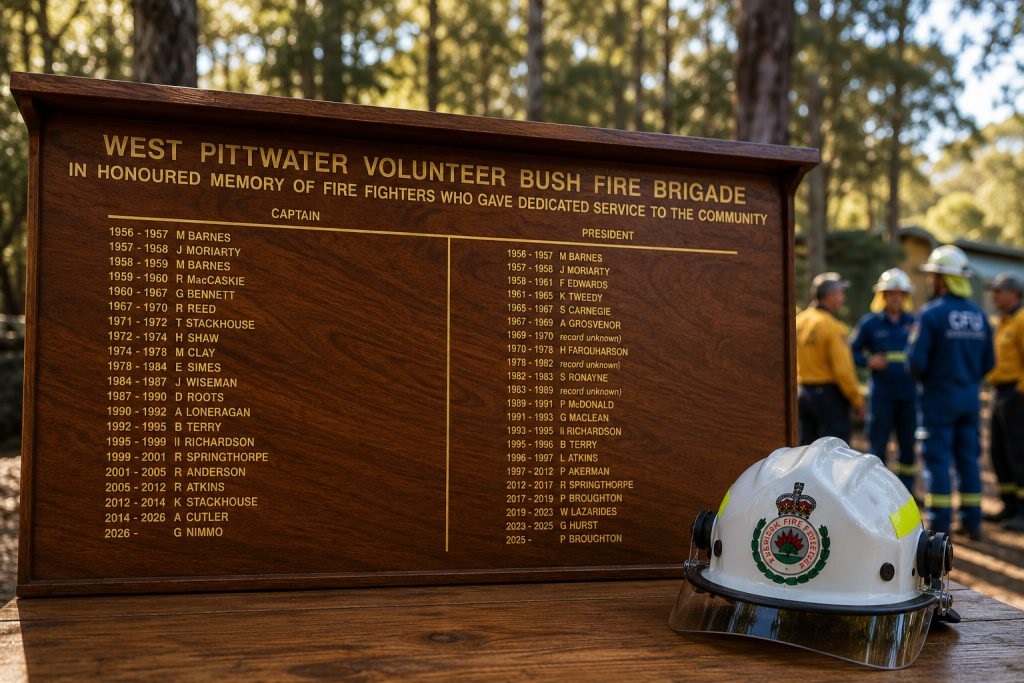
The new improved Honour Board
Paddy thanked them both for ensuring the honour board could finally take its proper place in the station.
It will now serve as an ever-present reminder of the generations of volunteers who have given their time and effort to leading and sustaining West Pittwater Brigade.
Paddy closed by returning to the theme with which he began.
“We live in an extraordinary place, alongside extraordinary people,” he said.
Volunteering with the NSW RFS deepens that sense of place and belonging. It allows residents to protect themselves, look after their neighbours and support their community.
After 70 years, West Pittwater remains what it has always been: a brigade built on neighbours helping neighbours and volunteers prepared to answer the call—whether it comes by siren, pager, radio or phone.
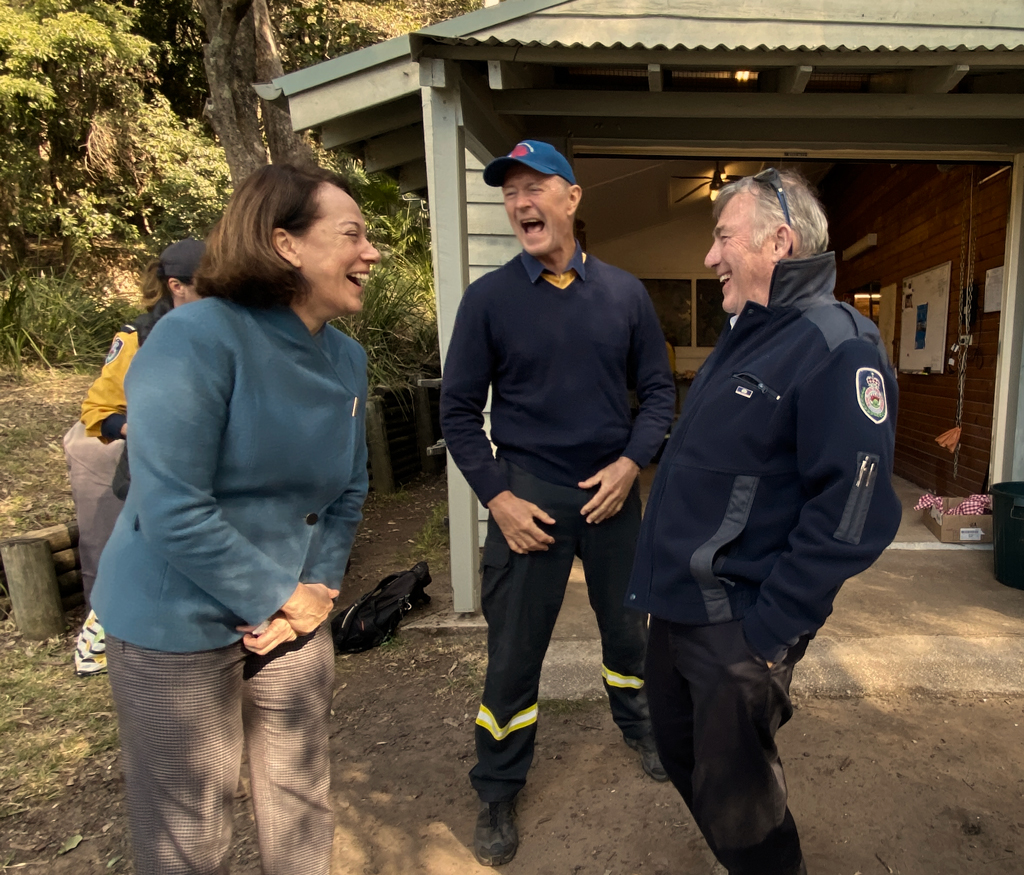
Dr Sophie Scamps, Paddy Broughton and Andrew Cutler discussing the finer details of the AGM