The Warringah electorate office of Independent MP Zali Steggall has become Australia’s first electorate office to adopt a Reconciliation Action Plan (RAP) - a framework that seeks to advance reconciliation through practical, everyday actions.
The plan (available online here) was launched on Friday June 12 at Steggall’s Manly electorate office.
The event began with a smoking ceremony. Speakers include Aunty Millie Ingram and Aunty Donna Ingram, with a Welcome to Country by Yvonne Weldon. Invited guests included representatives from Reconciliation Australia, the Uluru Dialogue and local mayors.
The RAP establishes practical commitments across parliamentary advocacy, policy development, constituent services and community engagement, providing a model for how elected representatives can embed reconciliation into every aspect of their office's work.
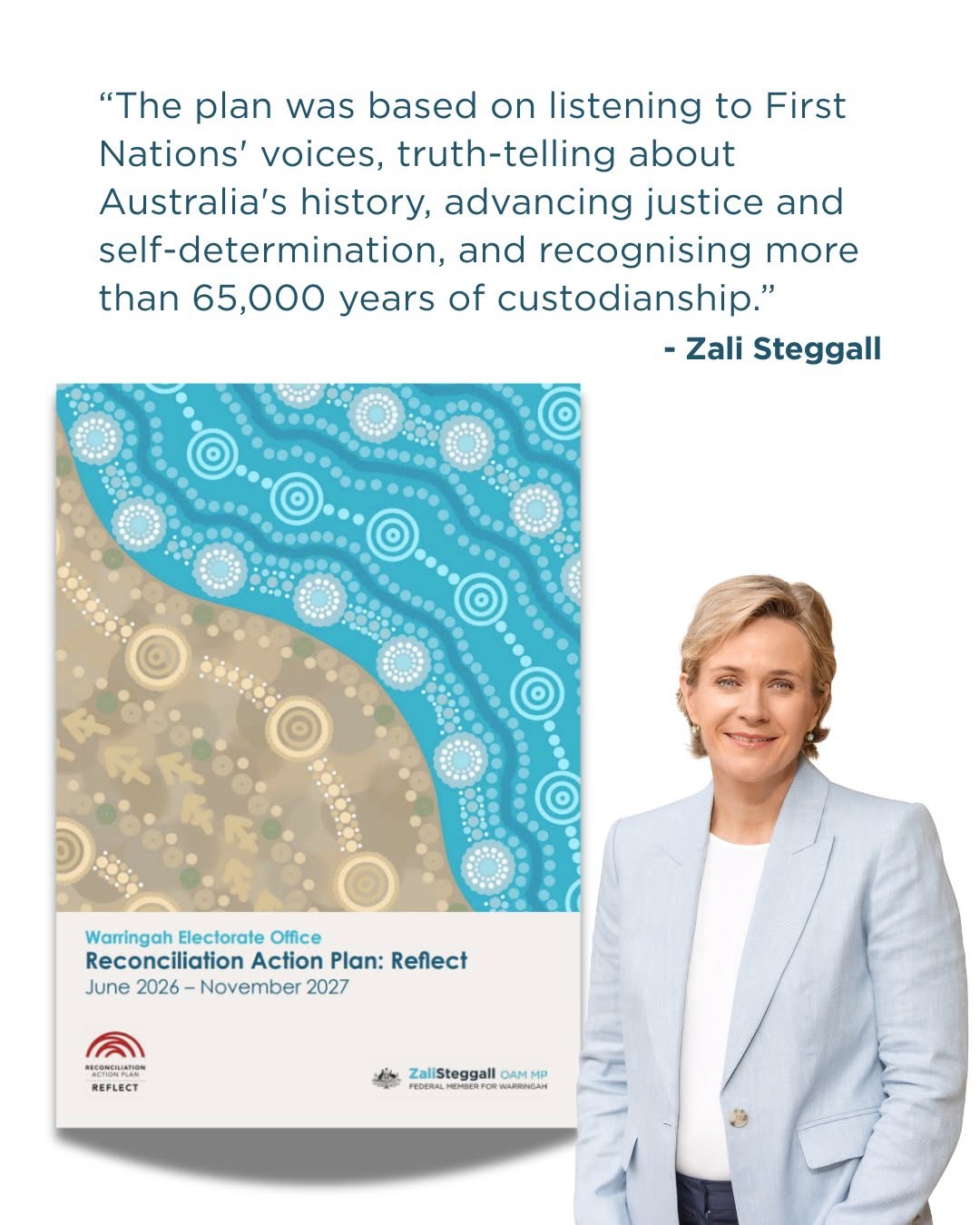
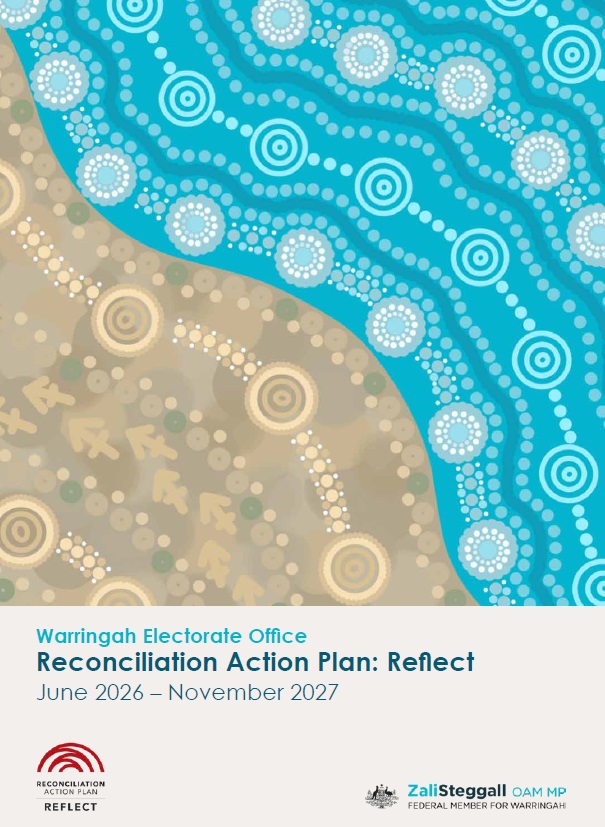
The document’s cover features an artwork by a young local Aboriginal artist and Mosman High student, Nalani Spencer, titled My Country, My Culture, My Home.
The RAP comes almost three years after the Voice referendum. It reflects the strong support for reconciliation shown by the Warringah community, where almost 60 per cent of voters backed the Yes campaign.
"While the referendum did not deliver the outcome many Australians hoped for, it didn’t diminish the importance of reconciliation or the need for action," Steggall said. "The people of Warringah made it clear that they want to see progress continue. This Reconciliation Action Plan is a way to honour that commitment and turn it into action."
Steggall’s office is the first federal or state electorate office in Australia to develop and adopt a RAP. Steggall hopes it demonstrates that meaningful reconciliation is not limited to governments or large organisations, adding “every workplace, institution and parliamentary office can play a role."
What does the RAP do?
The RAP’s vision of reconciliation is based on listening to First Nations voices, truth-telling about Australia's history, advancing justice and self-determination, and recognising more than 65,000 years of continuous custodianship and cultural knowledge.
The document is a “Reflect” RAP – an introductory strategic document outlining first steps toward reconciliation with Aboriginal and Torres Strait Islander peoples in Australia.
It builds on the office's longstanding advocacy on issues including the Voice to Parliament, Closing the Gap, justice reform and climate action.
Key commitments include:
• Building stronger relationships with Aboriginal communities and organisations
• Embedding cultural learning, awareness and protocols across the office
• Creating pathways for First Nations participation, including internships, volunteering and work experience opportunities
• Leveraging parliamentary influence to advance equity.
Steggall said the RAP will help guide the day-to-day work of her office. “What does it mean for the issues we raise in Parliament? For how we engage with community? For how we communicate, make decisions, and listen before we act? This RAP helps us begin answering those questions through clear actions,” she said.
The RAP also connects to broader policy work including climate action and environmental protection.
"For more than 65,000 years, Aboriginal and Torres Strait Islander peoples have cared for Country. Their knowledge and leadership have an important role to play in addressing some of the greatest challenges facing Australia," Steggall said.
First Nations voices guiding the RAP
The RAP was developed with guidance from a community-based RAP Working Group comprising First Nations leaders and community members.
RAP Working Group member Chloe Wighton, an archaeologist and Wiradjuri Galari woman, said a RAP was “far more than a document – it is a commitment to action.”
“A meaningful RAP moves beyond words. It sets clear expectations, creates accountability and demonstrates a willingness to turn good intentions into tangible outcomes,” she said. “As an archaeologist, I am particularly hopeful that this RAP contributes to a deeper understanding and appreciation of Aboriginal cultural heritage on the Northern Beaches and lower North Shore.”
RAP Working Group member Benjamin McGrory, a Cammeraygal man, said the initiative captures the spirit of Barangaroo, a proud Cammeraygal woman and powerful cultural and political leader who advocated for change and social progress in the 18th century.
"I am proud to support Zali and the Warringah community to see volunteering opportunities for Aboriginal students to gain internship experience in public policy and parliamentary representation,” he said. “On the national stage, I hope this will lead to practical action from other members of Parliament to commit to reconciliation.”
RAP Working Group member Jarin Ingram Baigent - a Wiradjuri woman and CEO of Aboriginal Aged Care in Redfern - said the Warringah RAP showed how local leadership could create genuine impact.
“[This is a] first by a federal politician. That leadership really mattered and made me want to be part of it,” she said. “It gives me hope for the kind of community my children are growing up in.”
Ingram Baigent wants to see more Aboriginal community organisations and 100% Aboriginal-owned businesses visible and thriving in Warringah, and more organisations moving towards reconciliation.
Steggall said the RAP was a first step, not a destination. "Reconciliation is not a single event or symbolic gesture,” she said. “It’s an ongoing responsibility that requires listening, learning and action.”