February 1-28, 2026: Issue 651


Zali Steggall Calls For Royal Commission into Domestic Violence: 6 Women lost in 2026, so far

Independent Warringah MP Zali Steggall is calling the Albanese Government, asking in Parliament on Tuesday February 3rd:


'In recent times, federal governments have called royal commissions into veteran suicide, aged care, anti-Semitism and social cohesion. Last year, the Prime Minister said Australia faced a domestic violence crisis, with one woman being killed every four days. Will the government elevate the safety of women and children to the same level of urgency and attention by calling a royal commission into femicide and domestic violence?'

The Minister for Social Services, the Hon. Tanya Plibersek, acknowledged the query, stating:

I want to thank the member for Warringah for her question. I know the member for Warringah and for Kooyong and for Mackellar have written to the Prime Minister in similar terms and I absolutely understand where they're coming from and the intent of their letter. ... the government absolutely agrees with the urgency of the issues that the member for Warringah is raising. 

But the truth is and frontline workers will tell you this, we don't need another royal commission to tell us what's happening with the deaths of women in Australia and what we need to do. In fact, frontline workers have been very clear that they don't want another report, they want the implementation of the work that we're doing right now. 

Last year, the domestic Family and Sexual Violence Commissioner's annual report to parliament pointed out that we have 1000 recommendations from at least eight major royal commissions, inquiries and reviews. Most recently, we had the rapid review that the National Cabinet commissioned on the behest of the Prime Minister and the premiers. 

We're implementing that work right now. We've had the South Australian royal commission most recently, the NT coronial inquest, many parliamentary inquiries, the Victorian royal commission. We need to get on with the work of implementing these recommendations and we are right now there are 583 initiatives happening around the country, 122 of those are Commonwealth led. 

Every family violence peak body in this country released a statement that said, and I quote, 'Royal commissions have an important role in the Australian system, including gathering evidence when we have no other way to get to the root of a problem'. 

That is not the situation here. The evidence is clear. We know what needs to be done to prevent, respond to and help people heal from family violence. That's why this government has invested $4 billion in those 122 initiatives that I spoke about a minute ago. It's why we're working so closely with the states and territories that are responsible for policing, for courts, for the justice system and the day to day operation of domestic violence refuges. And it's why we're about to start the consultation on the Second Action Plan, on the National Plan on violence against women and their Children. 

That will be a very important opportunity to say what comes next in the implementation of these recommendations. The member for Warringah and other members will have the opportunity of making contributions at that time. Frontline workers absolutely will be part of designing that Second Action Plan, as will victims and survivors of family, domestic and sexual violence. 

We agree with you, the member for Warringah and the members for Kooyong and Mackellar, about the urgency of this, and I would say that every Member of Parliament agrees with the urgency, but we don't need more reports. We need to we need to focus on the actions that will make a difference.''

Zali Steggall said in a released statement on February 2nd:

''The NSW Government’s decision to prevent offenders from using “good character” references in sentencing hearings is a step forward. It will help ensure convicted criminals are held fully accountable - especially domestic violence perpetrators.''

I have long called for a review of sentencing laws, in part to ensure domestic violence offenders do not receive leniency when a character reference is provided. The NSW reform shows what can be done when governments act. Other states and territories must follow NSW’s lead.'' Ms Steggall said

''But more is needed. Across Australia, far too many women are being killed by current or former partners. Less than two weeks ago, a man released on bail allegedly murdered three people at Lake Cargelligo in NSW, including a pregnant woman with whom he was previously in a relationship. There are too many examples to name them all. But Australians are furious and they have had enough.''

''Meanwhile in Queensland, police reportedly plan to scrap a specialist unit supporting domestic and family violence cases. And across the country, crisis shelters cannot keep up with demand from women and children fleeing family violence.''

''This is why I am calling for a royal commission into domestic violence. It should examine sentencing, bail laws, policing, gun laws and systemic failures across all states and territories.

Only a far-reaching inquiry of this type can bring about the change Australia so desperately needs. It would elevate the problem of domestic violence to a first-order national priority alongside other issues examined by royal commissions such as veterans suicide, aged care, and now, antisemitism and social cohesion.

Domestic violence victims and their families deserve to be heard at a royal commission, so the nation can respond with the seriousness this crisis demands. Australia urgently needs federal leadership on domestic violence. Many lives depend on it.''

New protections for domestic violence victim survivors: NSW Government

The NSW Minns Government has introduced numerous measures since being voted in and continues to introduce measures to protect those impacted.

On September 29 2025 high-risk domestic violence offenders were targeted by a new civil protection scheme that came into effect.

The Serious Domestic Abuse Prevention Order (SDAPO) scheme allows courts to impose any conditions considered necessary to prevent domestic abuse perpetrators from using violence. 

It’s modelled on a scheme to combat organised crime and aims to keep relatives, children, and former, current or potential intimate partners of high-risk offenders safe from abuse and harm. 

SDAPOs can last for up to five years and require the person who has the order imposed on them to report to a police station at a particular time, notify police when commencing an intimate partner relationship or of any dating profiles they create or use. 

People who breach these orders face up to five years’ imprisonment and/or a $33,000 fine.

These orders can be sought when: 

  • Someone has been convicted of two or more domestic violence offences with a maximum penalty of at least seven years imprisonment; or
  • They have been charged with a ‘serious domestic violence’ offence against a relative or a current or former intimate partner. This applies whether the person has been tried, acquitted, or had their conviction quashed or set aside. 

The NSW Government stated it is investing $9.3 million to implement the SDAPO scheme created as part of amendments to the Crimes (Domestic and Personal Violence) Act 2007 in 2024, and added to other reforms, including: 

  • Requiring more scrutiny for alleged domestic violence offenders applying to get bail and introducing electronic monitoring for those who are bailed, overseen by Corrective Services NSW.
  • Bringing in tougher penalties for serious, repeat breaches of Apprehended Domestic Violence Orders.

In August 2023 Attorney General Michael Daley launched a website that provides information to broaden the public’s understanding of coercive control in current or former intimate partner relationships. The website provides accurate descriptions and examples of coercive control and includes information about what the legislative reforms mean, who they apply to, how to recognise patterns in behaviour that could lead to this abuse and where and how to seek help.

“The Domestic Violence Death Review Team found that about 97 per cent of intimate partner domestic violence homicides in NSW between 2000 and 2018 were preceded by coercive control where the perpetrator used emotional and psychological abuse towards the victim,” Attorney General Daley said.

“And on average, one woman is killed in Australia every 10 days by an intimate partner. It is for this reason that the NSW Parliament passed the Crimes Legislation Amendment (Coercive Control) Act 2022-  to criminalise coercive control in current and former intimate partner relationships.”

On September 19 2025  the NSW Bureau of Crime Statistics and Research (BOCSAR) released the Coercive Control Monitoring Report June 2025. This report presents data from the first year of recorded coercive control offences following the introduction of the legislation in NSW, which came into effect on 1 July 2024.


Key findings from the first year
  • NSW Police recorded 297 incidents of coercive control in the 12 months since the legislation came into effect
  • On average, each coercive control incident involved four distinct controlling behaviours. The most frequently recorded controlling behaviours were:
    • harassment, monitoring or tracking (recorded in 59% of coercive control incidents)
    • threats or intimidation (53%)
    • financial abuse (48%)
    •  shaming or humiliation (45%).
  • Regional NSW recorded a higher rate of coercive control incidents (5.9 per 100,000) compared to Greater Sydney (2.3 per 100,000). Areas such as the Far West and Orana and Central West showed rates three times the state average. 
  • 62% of coercive control of incidents were accompanied by another offence type, most frequently: intimidation or stalking (37%), domestic assault (35%), malicious damage (12%).
  • 94% of victims were women, and 92% of incidents involving a female victim and male alleged offender.
  • Nearly half the victims (47%) had a prior history of domestic violence recorded by police, and 31% had previously experienced domestic violence involving the same alleged offender.
  • 23% of victims of coercive control had an Apprehended Domestic Violence Order (ADVO) in place at the time of the incident, while a further 57% had an ADVO issued following the event.
  • Between July 2024 and June 2025, 9 coercive control charges had been laid: 5 were laid by NSW Police and 4 were laid by the Office of the Director of Public Prosecutions. Of these, three charges have been finalised in court: two were withdrawn by the prosecution, and one was proven (the defendant received an Intensive Correction Order).

This had been preceded by the September 2024 NSW government announcement that alleged perpetrators charged with serious domestic violence offences in New South Wales will now be required to wear ankle bracelets and have their movements tracked if they are granted bail. The NSW Government said the changes would take effect on Friday October 11, and would involve corrective services electronically monitoring alleged perpetrators against geographic bail conditions using GPS technology.

The NSW Police launched an innovative new mobile phone application designed to discreetly document abuse and provide better access to support services. NSW Police Domestic and Family Violence Portfolio Owner, Assistant Commissioner Stuart Smith, unveiled the ‘Empower You’ app on Sunday 23 July 2023, which was developed as part of the commitment to ensuring better outcomes for victims of domestic and family violence across the state.

On Sunday, 30 July 2023 the NSW Police Force announced it has established an Australian-first specialist policing team to drive targeted prevention, disruption, and investigation responses to domestic and family violence in NSW. 

Following the release of the NSW Auditor-General’s Report ‘Police responses to domestic and family violence’, then NSW Police Commissioner Karen Webb initiated the Domestic and Family Violence (DFV) Reform Project to change the way police respond to and prevent domestic violence.

In June 2023 Minister for the Prevention of Domestic Violence and Sexual Assault, Jodie Harrison MP announced during Parliament question time that four self-contained units for women and children escaping domestic and family violence will be located in Mona Vale. The works were planned for completion by December that year, increasing the available shelters in our area.

NSW Government strengthens protections against deepfakes - image-based abuse

In September 2025 the NSW Government passed legislation strengthening protections against image-based abuse by outlawing the creation and sharing of sexually explicit deepfakes.

The Government stated it has zero tolerance for image-based abuse, which is disproportionately targeted at women and girls and is the latest frontier in gender-based abuse.

AI-generated sexually explicit deepfakes are increasing in prevalence and have become more realistic amid advances in technology.

The material can be used as part of sextortion schemes, including where perpetrators threaten to release further explicit content unless victims comply with demands.

The circulation of this material can be extremely distressing, humiliating, degrading or intimidating.

The reforms expand offences related to the production and distribution of intimate images without consent, including covering those created entirely using artificial intelligence.

The amendments to the Crimes Act 1900 make the production of a sexually explicit deepfake designed to be a genuine depiction of a real, identifiable person an offence punishable by up to three years’ jail.

Sharing or threatening to share such images, even if the person hasn't created them, is also a crime punishable by up to three years’ jail.

In addition to these new offences, the Government has criminalised the non-consensual creation, recording and distribution of sexually explicit audio, whether real or designed to sound like a real, identifiable person.

The Crimes Amendment (Intimate Images and Audio Material) Bill 2025 passed the upper house late Thursday.

It is already a crime in NSW to record or distribute intimate images of a person without their consent or to threaten to do so. This includes distributing photos that have been digitally altered, but not images wholly created using AI.

Existing court takedown powers will apply to these expanded offences.

Premier of New South Wales Chris Minns said:
“There is no place for gender-based abuse in NSW, and that includes through the use of deepfakes.

"These are important changes to keep women safe from this insidious form of abuse.

“This legislation sends a clear message: those who seek to target women using this technology now face serious consequences."

Support: Anyone impacted by this form of violence can contact the NSW Sexual Violence Helpline 24/7 on 1800 424 017

NSW Government launches strategy to address the perpetration of domestic and family violence

On December 10 2025 the NSW Government launched its landmark strategy to respond to the perpetration of domestic and family violence in New South Wales.

Building Better Responses: NSW Strategy to Respond to the Use of Domestic and Family Violence 2026–2030 is NSW’s first dedicated plan aimed at disrupting domestic and family violence and focusing on those who cause or may cause harm.

The government stated the purpose of this strategy is to drive a whole-of-government, coordinated approach to respond to people who perpetrate domestic and family violence and integrates prevention, intervention, response and recovery efforts.

The NSW Government allocated $5 million in the 2024/25 Budget for perpetrator research and effective interventions. Part of that funding was to develop this Strategy, with an Action Plan for implementing it.

New South Wales is only the second state to have a strategy dedicated to addressing the use of violence and holding perpetrators to account, while prioritising victim-survivor safety.  

In 2024, NSW Police recorded more than 100,000 domestic violence–related crimes, and 39 people in New South Wales were killed in domestic violence-related murders.

BOCSAR data reveals that in the last 10 years, domestic violence sexual offences increased by 103 per cent, domestic violence assaults by 31 per cent and breaches of Apprehended Violence Orders increase by 90 per cent.

The strategy focuses on stopping, disrupting and changing perpetrators’ harmful behaviours.

Actions under the strategy will be rolled out over time, including continuing work that is already underway, such as the Men's Behaviour Change Program, strengthening services, building evidence on effective interventions, improving collaboration between services and evaluating progress.

The government consulted with more than 300 stakeholders, including people with lived experience, service providers, peak bodies, academics and regional communities in developing this strategy, with all calling for stronger, earlier action to prevent the use of violence.

The strategy highlights six priorities to better target the drivers of domestic and family violence:

  1. Supporting children and young people
  2. Preventing the use of domestic and family violence
  3. Strengthening interventions and behaviour-change options
  4. Ensuring all services and systems work together
  5. Building the workforce’s skills, resources and capacity to work with or refer people who use violence to appropriate services
  6. Strengthening data and evidence to guide best practice.

The strategy complements whole-of-government efforts already underway through the NSW Domestic and Family Violence Plan 2022–2027 and Pathways to Prevention Strategy 2024–2028, creating a more holistic and evidence-driven response to domestic violence.

This includes being the first state in Australia to legislate a specific non-parole period for intimate partner homicide and the implementation of NSW’s first dedicated Primary Prevention Strategy alongside record investment in crisis support.

To find out more, see: https://dcj.nsw.gov.au/service-providers/domestic-family-sexual-violence-plans-and-strategies.html

Minister for the Prevention of Domestic Violence and Sexual Assault Jodie Harrison said:

“Domestic and family violence demands urgent action on all fronts. As a government we continue to ensure victim-survivors receive the crucial wraparound support they need when escaping violence.

“However, safety should not rest on the shoulders of those who have been harmed. More must be done to keep our communities safe.

“It is essential to prevent violence from happening in the first place, with work having already begun in primary prevention.

“This strategy is the next step. Real change requires addressing the perpetration of violence, to strengthen our responses to people who use domestic and family violence.

“There is no room for domestic and family violence in our community. The NSW Government is working to stop violence at its source so that everyone can live free of fear and violence.”

NSW Women’s Safety Commissioner Dr Hannah Tonkin said:

“We need action on multiple fronts to address the shocking rates of domestic and family violence we see in NSW. Policies and programs focused on people who use violence are essential to improve accountability, prevent further violence, and keep women and children safe.

“This new strategy represents an important step towards a more holistic approach to addressing domestic and family violence that includes prevention, early intervention, response and recovery efforts. I welcome this strategy and believe it has the potential to make families and communities safer.”

CEO No to Violence Phillip Ripper said:

“No to Violence welcomes this historic moment in Australia’s efforts to end men’s use of family violence.

“The release of NSW’s first dedicated strategy to stop violence at the source is a landmark achievement by the Minns Government and a significant shift toward genuine prevention.

“By placing responsibility back on the source of harm, the Minns Government is leading the nation. We now call on the Commonwealth and all other states and territories to follow NSW’s lead and develop a coordinated national approach focused on people who use violence.

“We thank Premier Chris Minns, Minister for the Prevention of Domestic Violence and Sexual Assault Jodie Harrison, and the NSW Cabinet for their leadership and commitment in delivering this important reform.”

CEO Domestic Violence NSW Delia Donovan said:

“We welcome the state’s first strategy dedicated to addressing people who use violence. It offers a significant opportunity to build a more effective, accountable and holistic approach to preventing and responding to domestic and family violence.

“As the strategy is implemented, it’s essential that the specialist domestic and family violence sector is recognised and engaged as a key expert in designing and embedding programs and responses for people who use violence. Genuine impact will also depend on meaningful and sustained funding to ensure that services are properly resourced to deliver the actions proposed and meet the strategy’s objectives.

“With these essential elements in place, this strategy has the capacity to drive long-term change, strengthen accountability, and ultimately contribute to a safer future for victim-survivors across NSW.”

Six Women Have Lost their Lives to Domestic Violence so far in 2026

Counting Dead Women Australia keeps a continually updated register of women killed by violence in Australia every year. The register begins in 2012 and they add the latest information to their annual registers as soon as it is received and verified.

On January 1st 2025 Counting Dead Women Australia researchers of Destroy The Joint stated their register for 2025 now stands at 53.

By January 15 their register for 2026 was 6.

On January 22nd Sophie Quinn (25) and a friend, John Harris (32), were found unresponsive in a car. Despite treatment efforts, they died at the scene of gunshot wounds. Police then attended a nearby home where they found the body of 50-year-old Nerida Quinn, Sophia's aunt, who also died of gunshot wounds. 

Sophia Quinn was seven months pregnant with a boy her family say she planned to name Troy.

The NSW Coalition introduced legislation in 2022 creating standalone offences for "Causing the loss of a foetus" where the perpetrator causes a car crash or commits an assault that kills the unborn child, with penalties up to 28 years.

Following inquiries, officers commenced Strike Force Doberta to investigate the incident and issued an arrest warrant for Julian Ingram over the alleged murders.

Police are still searching searching for Ms Quinn’s former partner, Julian Ingram (37) and have appealed for help from the public.

On January 13 2026 Domestic Violence NSW stated ''NSW has once again recorded the highest number of women killed in a domestic violence context in the country. The failure to invest in frontline services, many of which have not received an increase to their base operational funding in more than a decade, is placing lives at risk.''

Delia Donovan, CEO of DVNSW said the situation is untenable and requires immediate government action.

''In early 2025, our members reported average wait times of up to two months for people seeking support. This is essential work and for some women and children, it’s the difference between life and death. Imagine the public outcry if there were a two-month wait to be treated in the Emergency Department. Where is that same urgency when women and children are trying to access safety?'' Ms Donovan said.

Days of Activism Against Gender-Based Violence is Now of Importance Every Single Day

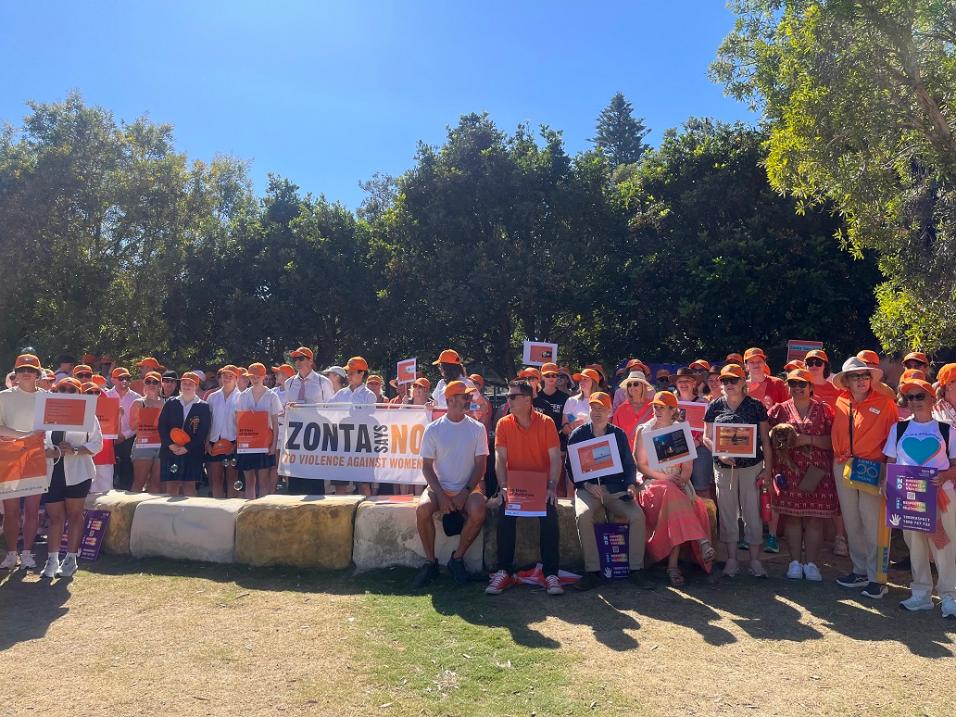
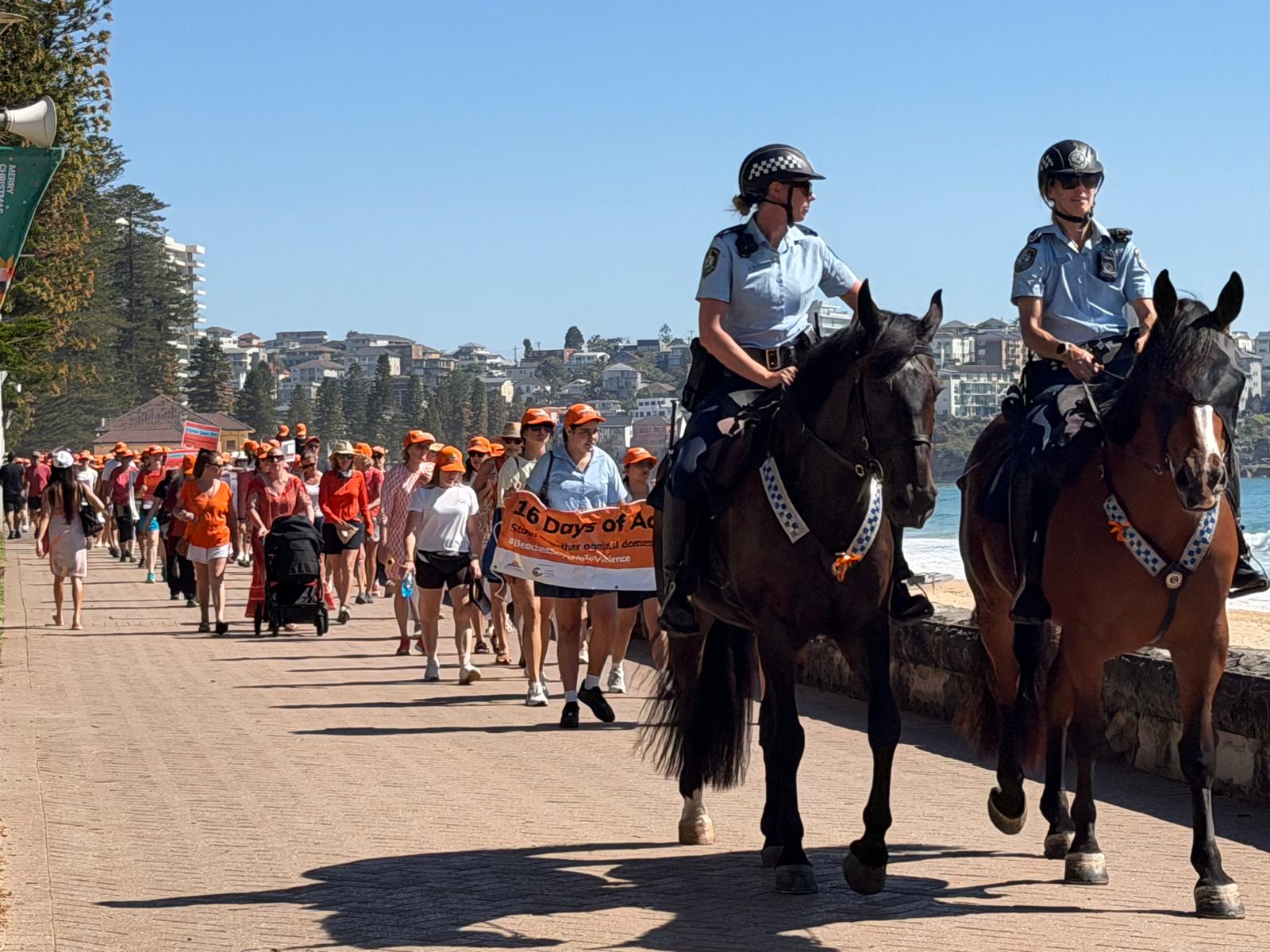
On December 5 2025 Federal Warringah MP Zali Steggall joined more than 100 community members on a symbolic walk to mark the 16 Days of Activism Against Gender-Based Violence campaign.

The walk brought together residents, service providers, police and community leaders. It began at Queenscliff Lagoon and concluded with a touching ceremony at Shelly Beach to honour the women and children whose lives have been tragically lost to domestic and family violence this year.

The event was organised by the Northern Beaches Domestic Violence Network, Zonta Northern Beaches and the Rotary Clubs of the Manly to Barrenjoey peninsula. 

Addressing the crowd, Steggall said domestic violence in Australia was a crisis that urgently needs collective action.

“All too often, it is women and children who are impacted. We have to be united as a community in saying no,” Steggall said. “We also need more funding for crisis accommodation and access to legal services, and laws must change to be tougher on perpetrators.”

Steggall thanked local police for joining the walk, noting an overwhelming number of police callouts were domestic-violence related. She called for federal government action to address the prevalence of gambling and alcohol use, which evidence shows exacerbates domestic violence.

Ms Steggall also underscored the importance of early education and engaging men in domestic-violence prevention, acknowledging the work of organisations such as Mentoring Men.

“Educating young people is incredibly important. We need to have those uncomfortable conversations – and in particular, we need male champions of change.”

Other political leaders at the event included state MPs James Griffin, Michael Regan and Jacqui Scruby, and Mayor Sue Heins.

Ms Steggall highlighted the importance of cross-community leadership on domestic violence, saying “regardless of political ideology, we are united in wanting a safer, respectful community.” 

“This is not a fight that will be over in a day,” Steggall said. “But we can keep chipping away, and if we work together we can make a real difference.”

Support:

For information on Men’s Behaviour Change Programs operating in your local area, contact the Men's Referral Service- on 1300 766 491.

If you or someone you know are in immediate danger, call the Police on Triple Zero / 000.

If you or someone you know is experiencing domestic and family violence, call the NSW Domestic Violence Line on 1800 65 64 63 for free counselling and referrals, 24 hours a day, 7 days a week.

For confidential advice, support, and referrals, contact 1800 RESPECT- or 13 YARN

NSW is ditching good character references in sentencing. Will the rest of the country follow?

Vicki Lowik, CQUniversity Australia and Amanda-Jane George, Bond University

New South Wales is set to become the first jurisdiction in the country to end the use of good character references in the sentencing of convicted criminals.

The government will introduce a bill this week to amend the state’s sentencing laws. The amendment will stop people submitting references of their “good character” to lobby for more lenient sentences.

References attesting to the convicted criminal’s prospects for rehabilitation and their likelihood of reoffending will still be permitted.

The move acknowledges the potential re-traumatisation faced by victims when unsubstantiated character references from family and friends are submitted for consideration during sentencing hearings. Victims have stated the process can make them think the courts don’t care about or take seriously the harm they have experienced.

It’s a decision that aligns with expert evidence, so might other states follow suit?

What is a good character reference, exactly?

Good character references are letters presented to a court during the process of sentencing someone convicted of a crime. They are often provided by friends and family members, though references may be sought from employers, priests and other respected community members.

The references usually describe how the person is a valuable family or community member, has a good work record and no criminal history.

Character evidence can help a judge more fully understand the person they are sentencing and decide if they can be rehabilitated. Demonstrated prior good character enables the judge to ensure the appropriateness and fairness of the sentence.

But contemplating the subjective opinions of non-professionals regarding the possibility of rehabilitation can be problematic.

Such references have promoted people being sentenced for sexual assault and rape as having “high moral values”, being a “kind-hearted, loving father” or having a “good work ethic”.

Since 2009, NSW hasn’t allowed good character references for child sexual offenders who used their position of influence to gain access to victims.

But two sexual abuse victims, Harrison James and Jarad Grice, have led a campaign for more substantial change. Called Your Reference Ain’t Relevant, the campaign protested against convicted child sex offenders being able to produce glowing character references to reduce their sentence.

What does the evidence say?

The Australian Law Reform Commission has been reviewing justice responses to sexual violence. In its 2025 final report, the commission said it received submissions describing the provision of good character references for convicted sexual violence offenders as a “problematic” practice.

The commission noted the NSW Sentencing Council was reviewing the use of character evidence. It said the outcome of the NSW process would inform any suggestions for future reforms at a national level.

The New South Wales Sentencing Council’s report was released on February 1. It recommended legislation to prevent the court from using evidence that goes solely to a finding of good character. This legislation, however, may permit the court to consider other relevant evidence in sentencing.

The report states “there is no settled definition of what good character is, or what it reflects”. The council said the concept “has been criticised as being vague and incoherent […] lacking a settled definition”.

The council’s recommendations go beyond child sexual offences. They apply to all convicted offenders.

And for NSW at least, they would overrule a 2001 High Court decision allowing character to be considered in providing “some leniency” in sentencing.

Will other states do the same?

A report by the Queensland Sentencing Advisory Commission into the sentencing of sexual assault and rape recommended that some types of good character evidence be limited. It said good character evidence should only be used to assist the court in deciding on the rehabilitation or the potential recidivism of the convicted criminal.

The report recommended that courts have the option, depending on the nature or seriousness of an offence, to disregard character references when determining sentencing.

In September 2025, Queensland parliament passed legislation addressing the recommendations. The references can now only be considered to inform a judge’s assessment of the likelihood of rehabilitation or recidivism.

But as some frontline sexual assault services submitted in consultations this left open ways to circumvent the rule. Friends and family could provide references mentioning the prospects of rehabilitation.

So while there’s some movement on the issue in Queensland, if the NSW recommendations are to lead the way in nationwide reform, the task will not be easy.

Significant differences exist between the states. This is because apart from Commonwealth offences, criminal law remains primarily a state matter. This has produced divergent offence labels, maximum penalties and sentencing regimes.

Even on the specific issue of character evidence in child sexual offence proceedings, there are substantial differences in laws and contexts across the country.

These contrasts in approach to legislating the use of good character references in sentencing will, as observed by the Law Council of Australia, likely result in similar cases attracting different outcomes in different states.

But sometimes it just takes one bold attempt at reform to inspire action in others. As advocates have succeeded in NSW, it’s likely others will attempt similar change. State and territory governments have been put on notice.The Conversation

Vicki Lowik, Adjunct Research Fellow, School of Nursing, Midwifery and Social Sciences, CQUniversity Australia and Amanda-Jane George, Associate professor, Bond University

This article is republished from The Conversation under a Creative Commons license. Read the original article.