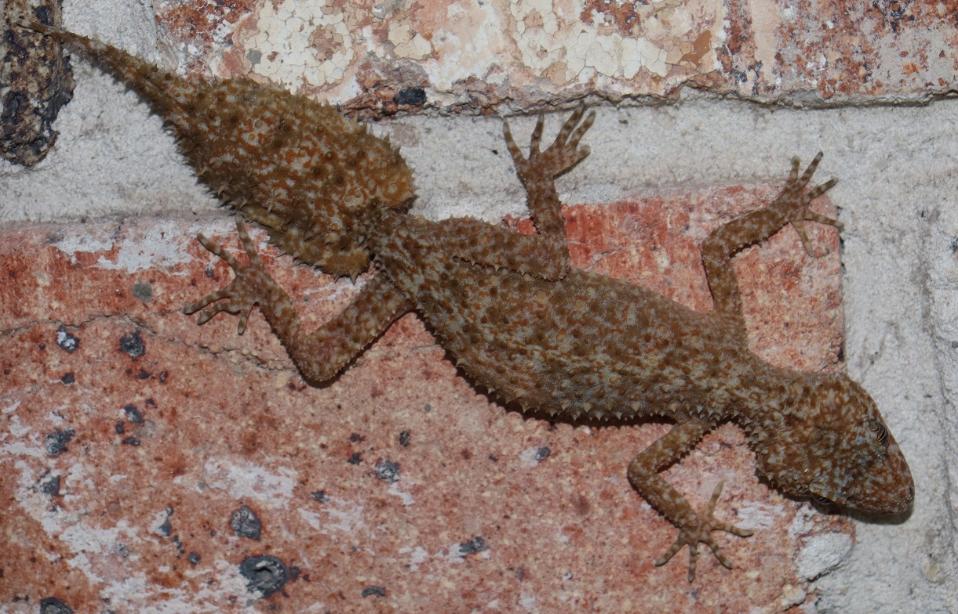
On Wednesday, October 28 2026, we spotted the Southern Leaf-tailed Gecko again, still living in our laundry, and took another photo. She is much bigger then when we first saw her.
We sent the picture through to Marita Macrae of Pittwater Natural Heritage Association, our 'go to' lady for any plant, insect or animal we don't recognise, and Marita kindly confirmed, again, it is a Southern Leaf-tailed Gecko.
As you can see by the size of this gecko in the first and second pictures, when measured against the brick wall of the laundry, it has grown quite a bit in the last six years.
 our laundry.jpg?timestamp=1793151207126)
in 2020
sm.jpg?timestamp=1793151241315)
in 2026
Southern Leaf-tailed Geckos are a native reptile and can live for 7 to 9 years in the wild (with an average of 8 years), and can live for 10 to 20 years in captivity (some people buy them and keep them as pets apparently).
The Field of Mars Environmental Education Centre tells us:
Southern Leaf-tailed Geckos are secretive native reptiles that hide among rocks, bark and leaf litter in forests and bushland along eastern Australia. The species most often called the southern leaf-tailed gecko in the Sydney region is Phyllurus platurus, also known as the broad-tailed gecko or Sydney leaf-tailed gecko. The Darug name for southern leaf-tailed geckos is bayagin. These geckos are well known for their flattened, leaf-shaped tails and excellent camouflage.
Southern Leaf-tailed Geckos are nocturnal, which means they are active at night. During the day they shelter in rock crevices, beneath loose bark or inside cracks in old trees. Their mottled brown and grey colours help them blend into bark, sandstone and leaf litter, making them difficult to spot.
Unlike many geckos, Southern Leaf-tailed Geckos do not have sticky toe pads for climbing smooth surfaces. Instead, they use sharp claws to grip rough bark and rocks.
Their diet includes moths, beetles, cockroaches, spiders and crickets. They are ambush predators, meaning they usually wait quietly for prey before quickly striking and catching it.
These geckos play an important role in controlling insect populations in bushland ecosystems. By feeding on nocturnal insects, they help keep ecosystems balanced and also become food for larger predators such as owls, snakes and mammals.
Females do not have hemipenal bulges, making the base of the tail area relatively flat or smooth compared to the male. Females are typically larger and heavier than males. Mature females reach a mean snout-to-vent length of about 86.2 mm, with a maximum of around 97 mm. Adult males have a noticeable double bulge (hemipenal bulges) just behind the vent at the base of the tail.
So it looks like this one may be a girl - we'll keep an eye out for babies!
Females lay one or two eggs in sheltered crevices during warmer months and young geckos hatch after several weeks.
When they emerge from their eggs, hatchling southern leaf-tailed geckos typically measure between 4.8 cm and 6.4 cm (48 to 64 mm) in total length from snout to tail tip. Adults usually grow to about 15 centimetres long including the tail.
After hatching, young geckos are fully independent and begin hunting tiny insects within a short time. Juveniles gradually grow larger over several years before becoming adults. Like many reptiles, southern leaf-tailed geckos grow more slowly during colder winter months when activity levels decrease.
Southern leaf-tailed geckos have excellent camouflage that helps them blend into bark, rocks and leaf litter. Their flattened bodies and mottled patterns make them difficult for predators to detect during the day. Their broad tails look like dead leaves or pieces of bark, helping complete the disguise.
These geckos also have large eyes that help them see in low light while hunting at night. Strong claws allow them to grip rough surfaces such as sandstone and tree bark. If attacked, they can shed their tail to distract predators while escaping. Over time a new tail grows back, although it often looks different from the original.
These geckos are an important indicators of healthy bushland habitats. Because they rely on shelter such as old trees, sandstone crevices and leaf litter, their presence can show that native habitat is still supporting wildlife. Protecting bushland areas around Sydney helps protect species like the southern leaf-tailed gecko.
Australian Geckos
Australia is home to more than 190 native species of geckos. Famous native examples include:
• Marbled Gecko (Christinus marmoratus): Common across southern Australia and urban gardens.
• Thick-tailed Gecko (Underwoodisaurus milii): Known for its defensive barking sound and bulbous tail.
• Knob-tailed Geckos (Nephrurus species): Famous for their short, swollen "knob" tails and desert habitats.
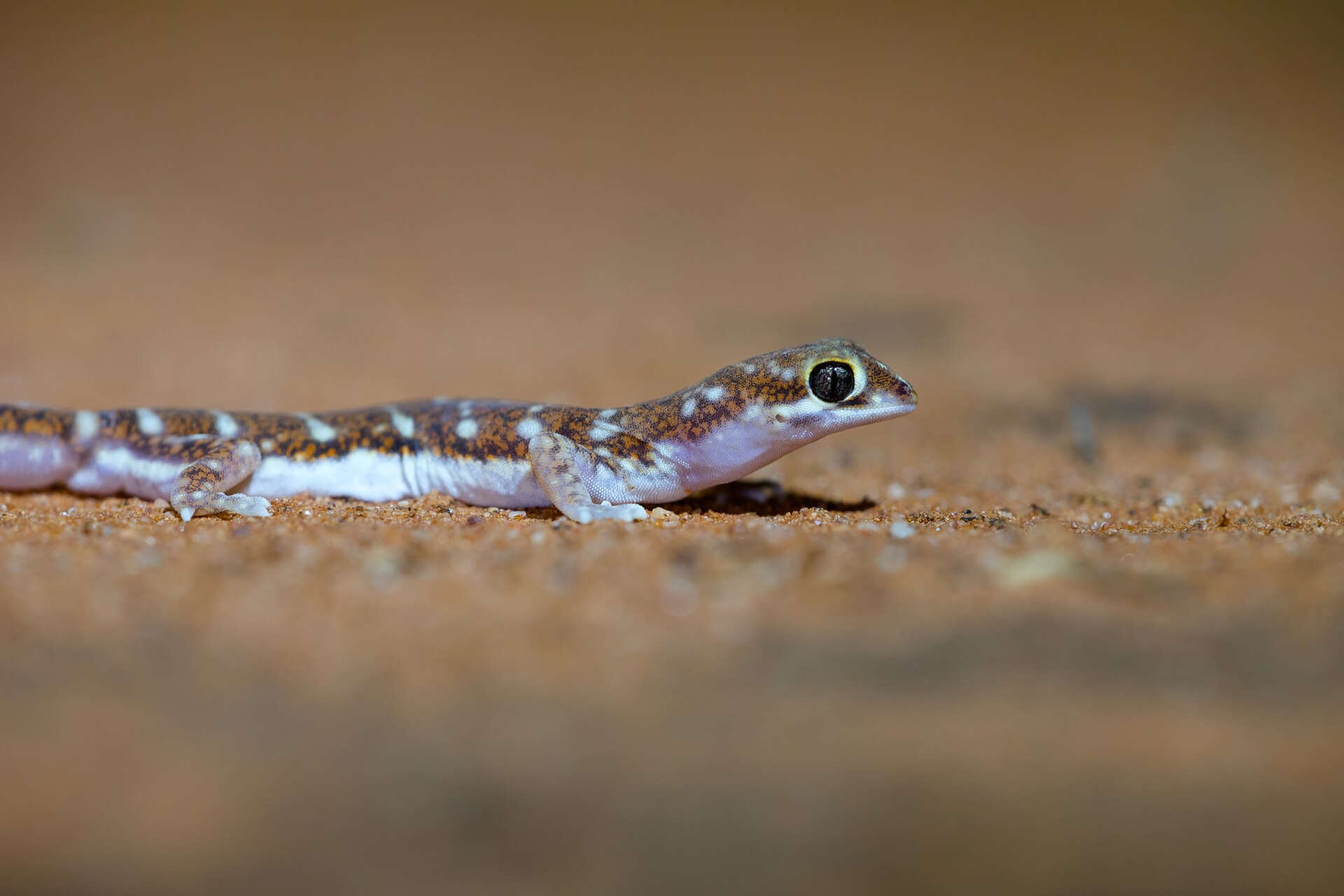
The Border Beaked Gecko (Rhynchoedura angusta) - mostly found on dry open terrain. They occur in arid to semi-arid regions of central inland eastern Australia, from the Eyre Peninsula, SA, through the Lake Eyre basin to south-eastern NT and south-western QLD and also nocturnal (feed and run arond at night). Photo: Kym Nicolson - https://www.inaturalist.org/photos/62836079 CC BY 4.0
How can you help Southern Leaf-tailed Geckos?
People can help southern leaf-tailed geckos by protecting bushland habitats and leaving natural shelter such as rocks, logs and leaf litter undisturbed. These places provide safe hiding spots and hunting areas for geckos and many other native animals.
People can also help by staying on walking tracks in bushland areas, keeping cats indoors at night and reducing pesticide use around gardens and parks. Supporting native habitat restoration projects helps create healthier ecosystems for reptiles and other wildlife across Sydney.
Let's look after our Sydney Gecko!