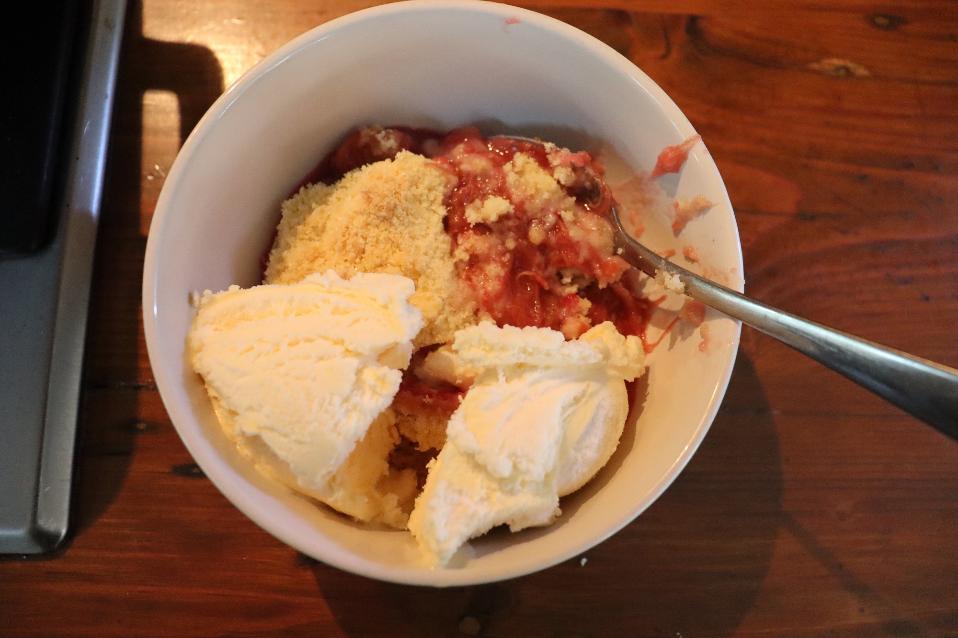
Rhubarb is the fleshy, edible stalks (petioles) of species and hybrids (culinary rhubarb) of Rheum in the family Polygonaceae, which are cooked and used for food. The plant is a herbaceous perennial that grows from short, thick rhizomes. Historically, different plants have been called "rhubarb" in English. The large, triangular leaves contain high levels of oxalic acid and anthrone glycosides, making them poisonous and therefore inedible. The small flowers are grouped in large compound leafy greenish-white to rose-red inflorescences.
The precise origin of culinary rhubarb is unknown. The species Rheum rhabarbarum (syn. R. undulatum) and R. rhaponticum were grown in Europe before the 18th century and used for medicinal purposes. By the early 18th century, these two species and a possible hybrid of unknown origin, R. × hybridum, were grown as vegetable crops in England and Scandinavia. They readily hybridize, and culinary rhubarb was developed by selecting open-pollinated seed, so its precise origin is almost impossible to determine. In appearance, samples of culinary rhubarb vary on a continuum between R. rhaponticum and R. rhabarbarum. However, modern rhubarb cultivars are tetraploids with 2n = 44, in contrast to 2n = 22 for the wild species.
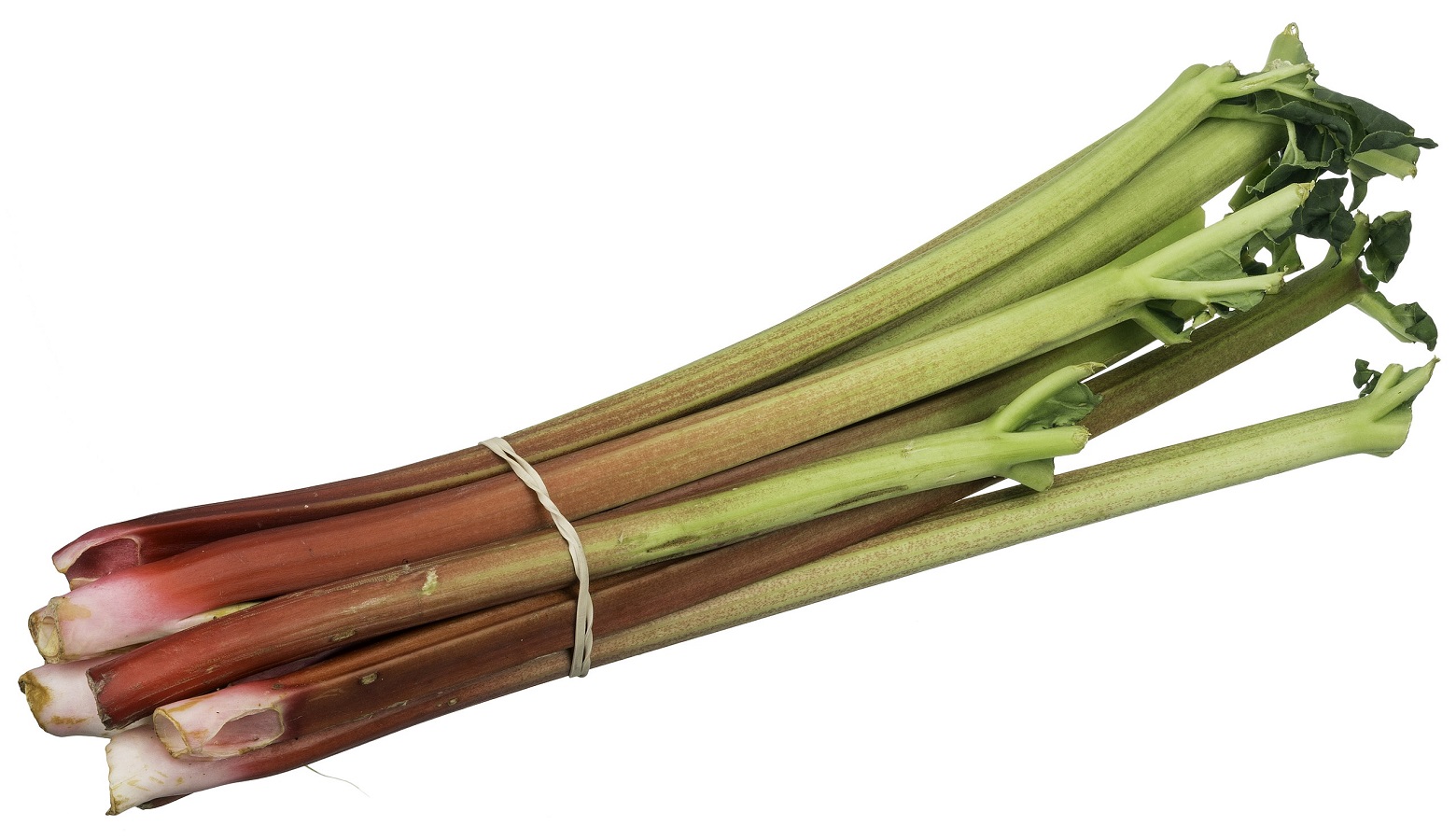
Rhubarb is a vegetable but is often put to the same culinary uses as fruits. The leaf stalks can be used raw while they have a crisp texture, but are most commonly cooked with sugar and used in pies, crumbles, and other desserts. They have a strong, tart taste. Many cultivars have been developed for human consumption, most of which are recognised as Rheum × hybridum by the Royal Horticultural Society.
The word rhubarb is likely to have derived in the 14th century from the Old French rubarbe, which came from the Latin rheubarbarum and Greek rha barbaron, meaning "foreign rhubarb". The Greek physician Dioscorides used the Greek word ῥᾶ (rha), whereas Galen later used ῥῆον (rhēon), Latin rheum. These in turn derive from a Persian name for species of Rheum. The specific epithet rhaponticum, applying to one of the presumed parents of the cultivated plant, means "rha from the region of the Black Sea" or the river Volga, rha being its ancient name.
The Australian rhubarb crop is impacted by climate, with cool-climate regions like Tasmania being ideal, while hot, humid areas face challenges like reduced Summer production and disease. The best crops are produced between April and July. The stalks show the most colour from May to December. There may be a shortage of rhubarb in the late Winter and early Spring when demand is highest and production is affected by lower temperatures. Prices are usually highest from June to September and lowest from November to March.
In Australia the rhubarb crop now coming in is in great fresh condition and a high quality product. At around $3 a bunch, this makes an easy and healthy alternative to introducing the family to an ingredient tat can be used in both sweet and savoury dishes. This week, a few recipe ideas.
How to cook Rhubarb: for a sweet fruit
Method
- Wash, then top and tail rhubarb stems to remove the leaves and where they attach to the plant. ...
- Cover with boiling water and stand for up to 10 minutes.
- Drain all of the fluid off, and add sugar.
- Cook until soft (8-10 minutes).
You can simply have it this way with ice cream or custard.
Rhubarb, almond and ginger crumble
1 bunch (about 7 stems) rhubarb, ends trimmed, washed, cut into 1.5cm lengths
2-3 tbsp white sugar
1 tbsp finely chopped glace ginger
Vanilla ice-cream, to serve
Biscuit crumble topping
115g (3/4 cup) plain flour
100g chilled butter, chopped
100g (1/2 cup, firmly packed) brown sugar
100g Unibic Anzac Biscuits, coarsely chopped
1/4 cup of almonds
Step 1
Preheat the oven to 180C/160C fan forced. Remove the leaves from the rhubarb and discard. Wash the stems and trim the ends. Cut stems into 1.5cm lengths to ensure the rhubarb cooks evenly.
Step 2
To make the filling, place the rhubarb, sugar and glacé ginger in a large bowl. Use a wooden spoon to stir until well combined and the rhubarb is evenly coated in the sugar, as this will sweeten it.
Step 3
For topping, place flour in a bowl. Use your fingertips to rub in butter until mixture resembles coarse crumbs (don’t use your palms as the butter can melt and make the topping cakey). Stir in sugar, almonds and biscuit.
Step 4
Divide filling among six 250ml (1 cup) ovenproof dishes. If you don’t have individual dishes, use one 1.5L (6 cup) ovenproof dish. Leave enough room at the top of each dish for the crumble topping.
Step 5
Spoon, or use your hands to sprinkle, the topping over the rhubarb mixture. Make sure the topping is evenly distributed and goes right to the edges to ensure your crumble has a crisp, golden crust.
Step 6
Bake the crumbles for 30-35 minutes or until the topping is golden and rhubarb is tender. To test, insert a small sharp knife through the crumble and into the rhubarb. Serve with ice-cream, if you like.
.jpg?timestamp=1764647916203)
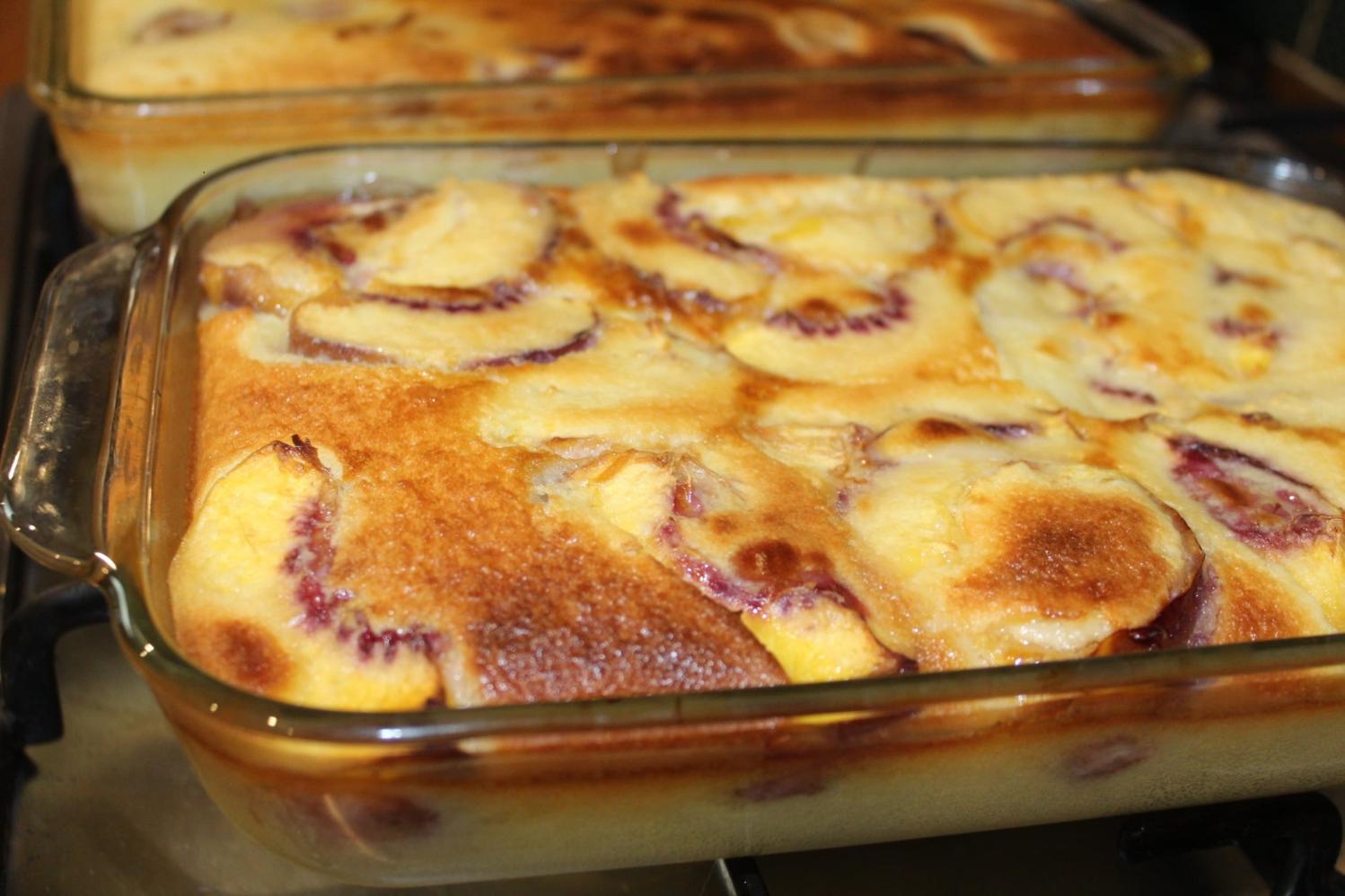
Rhubarb Clafoutis
Ingredients
1 bunch rhubarb
A little ground cinnamon (optional)
Grated zest of 1/2 orange and the juice of the whole fruit
1 cup superfine sugar
1/3 cup all-purpose flour
A pinch of sea salt
3 large eggs, lightly beaten
1 cup whole milk
Confectioners’ sugar for dusting (optional)
Method
Preheat the oven to 180°C. Cut the rhubarb into 2-inch lengths and put in a baking pan with a good pinch of cinnamon, if using, the orange juice, and 2 tablespoons of the sugar. Toss well and roast in the oven for 10 to 15 minutes, or until tender and just beginning to caramelize around the edges. Let cool completely and then drain in a sieve.
Turn the oven temperature down to 150°C. Lightly butter a 10-inch round baking dish or an 8-by-10-inch rectangular one. Make the batter by sifting the salt and flour into a bowl and stirring in the sugar. Make a well in the centre and add the beaten eggs. Gradually stir in the flour from the sides, mixing well, then beat in the milk, a little at a time, mixing well. Stir in orange zest and a pinch of cinnamon, if you like.
Arrange the drained rhubarb in the buttered dish and pour the batter over. Bake for 35 to 40 minutes, until golden and puffed up. Clafoutis is best when eaten warm, but it's not bad when cold, either. When you are just about to serve, mix together about 1/2 teaspoon confectioners’ sugar and 1/2 teaspoon ground cinnamon, if you like, then sift a light dusting over the top of the clafoutis. Serve with or without cream.
Savoury Rhubarb and Cinnamon Red Lentil Curry
Ingredients
200 g Rhubarb (very finely sliced)
2 Large Onions (finely diced)
4 Cloves Garlic (finely diced)
2 Teaspoons Caster Sugar
2 Teaspoons Cinnamon
2 Tablespoons Garam Masala
1/2 Teaspoon Cayenne Pepper (or generic chilli powder)
750 ml Vegetable Stock
300 g Split Red Lentils
150 g Spinach
30 g Fresh Coriander (roughly chopped)
1 Tablespoon Vegetable Oil
Method
Heat the tablespoon of vegetable oil in a large saucepan over a medium-high heat. Pour in the chopped onions and garlic. Fry for about 2-3 minutes until the onions are nice and soft.
Add the 200g of sliced rhubarb into the frying pan along with the 2 tablespoons of garam masala, 2 teaspoons of cinnamon, 2 teaspoons of caster sugar and 1/2 teaspoon of cayenne pepper. Cook for around a minute, stirring well to combine.
Tip in the 300g red lentils and 750ml of vegetable stock. Bring the pan to the boil, then turn down to a simmer, cover and cook for around 13 – 15 minutes until the lentils are cooked and the stock has reduced to a thick sauce.
Remove the pan from the heat and season to taste. Then stir in the 150g spinach and 30g chopped coriander. Stir the spinach and coriander until they have wilted sufficiently.
Serve the curry immediately. I recommend eating it with fluffy pilau rice or a fresh naan. Alternatively it can be eaten on its own as a semi-dhal. Enjoy!