Review of insurance settings for e-micromobility devices in NSW By NSW Productivity Commission finds 'costs outweigh benefits': Leaving Injured People to continue picking up the medical fees - Rehabilitation Expenses
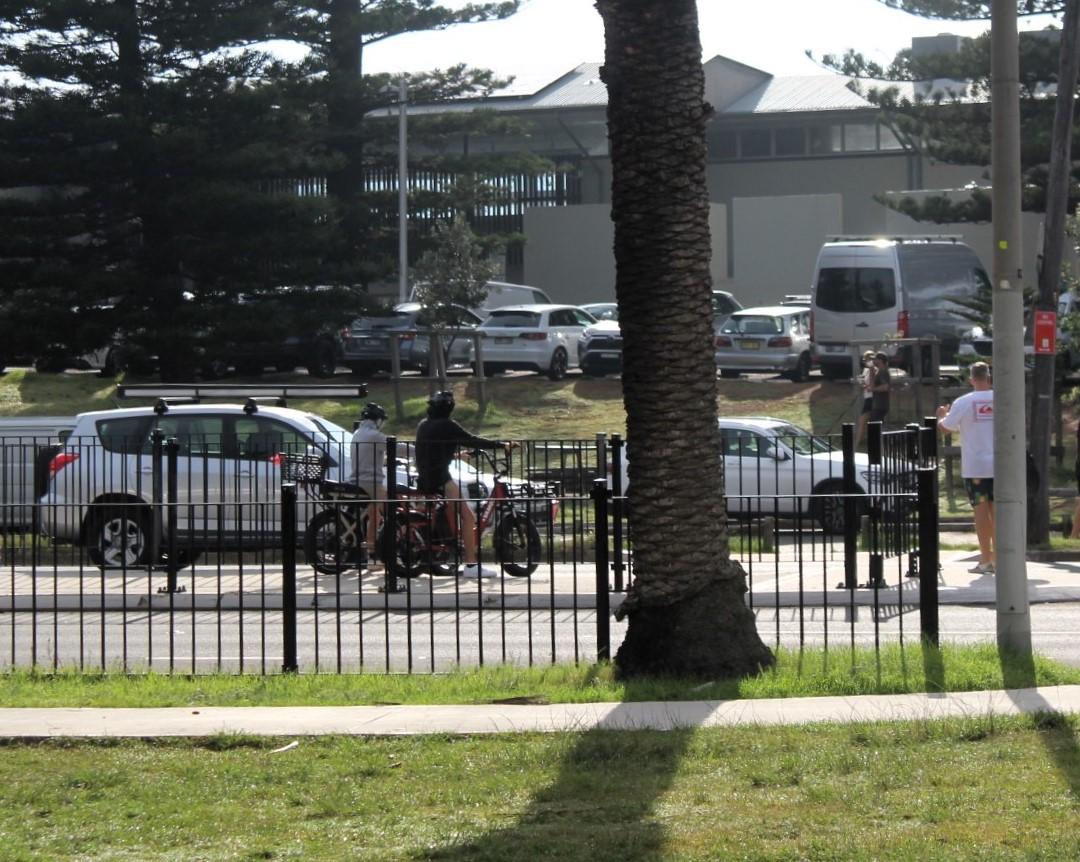
The NSW Productivity and Equality Commission has reviewed insurance settings for e-micromobility devices in NSW, education and stated enforcement outweighs mandatory insurance.
The NSW Productivity and Equality Commission stated on Wednesday August 26:
''E-micromobility is becoming an increasingly important part of the NSW transport system, providing people with more travel choices, helping connect communities, encouraging active transport and reducing congestion and emissions. E-bike ownership in NSW has increased from around two per cent of households in 2019 to approximately eight per cent in 2025.
''In June 2026, the Minister for Transport asked the NSW Productivity and Equality Commission to review the appropriateness and effectiveness of current insurance settings for e-micromobility riders, and to explore options for rider insurance.
'' Measures that improve rider safety through education and enforcement would deliver a $55 million net benefit to NSW, while mandatory insurance schemes for e-bikes and other e-micromobility devices would cost the community hundreds of millions of dollars more than they return.'' the NSW Productivity and Equality Commission said in a released statement
''The Commission has presented six policy options to the Minister for Transport, addressing concerns about safety, accountability and compensation associated with e-micromobility devices.
Key findings determined the costs of administering, enforcing and complying with insurance schemes outweigh the benefits, imposing net costs on the NSW community of between $470 million and $1 billion. By contrast, the Commission found that better outcomes would be achieved for the NSW community by improving safety through education and enforcement.
Rather than introducing mandatory insurance requirements for private device owners, the Commission recommends prioritising measures that prevent crashes before they occur, including:
- expanded public education campaigns promoting safe and lawful riding.
- targeted enforcement of existing road rules and device standards.
- greater coordination between government agencies, schools and community organisations.
- increased visibility of enforcement activities in high-risk areas.
- data-driven interventions to identify emerging risks and improve compliance.''
Readers can access the Review of e-micromobility insurance options (PDF 2.14MB) here
Peter Achterstraat AM, NSW Productivity and Equality Commissioner, stated:
“E-bikes and other e-mobility devices are becoming an increasingly important part of the NSW transport system.
“By targeting unsafe behaviour and illegal devices, we can increase the significant benefits e-micromobility brings to our communities while improving safety for riders, pedestrians and other road users.
“NSW already requires insurance for higher-risk e-micromobility activities, including shared schemes and food delivery riders. But for private e-bikes, the main concerns are illegal devices and unsafe riding. The most effective response is to target these through education and enforcement.
“There are growing concerns about safety, accountability and compensation for injuries as e-micromobility use increases. It is important to also consider the substantial benefits these devices provide to the community.
“In 2027, NSW is forecast to gain an estimated $237 million in benefits from e-micromobility usage, and this can be expected to grow as further with increased integration in the transport system.
“The vast majority of e-bike riders do the right thing and ride safely. However, a small number of ‘Hoon Boy Harrys’ behave recklessly, and they selfishly put the enjoyment of other people at risk”
Bills for Injuries to be Paid by the injured: Pittwater MP Maintains Licence - Registration Required
However, those who have been struck by an e-bike point out this is simply a continuation of handing on all the costs of accidents and rehabilitation to those injured, and disregards the reason other measures have long been a part of NSW safety supports.
For instance, a NSW Green Slip (Compulsory Third Party or CTP insurance) covers the cost of personal injuries and death caused to people in a motor vehicle accident.
In 2025, e-bikes and e-scooters claimed more than 15 Australian lives and contributed to hundreds of injuries, according to state data.
The NRMA has supported increased enforcement for some time, and recently backed a NSW government announcement extending police powers to confiscate non-compliant or modified devices.
The NRMA is also supportive of introducing a light-touch identification and registration scheme, such as that proposed first by Pittwater MP Jacqui Scruby and taken up by the NSW opposition as well.
On June 5 2025 Pittwater MP Jacqui Scruby had tabled a Notice in the NSW Parliament to move—
That a bill be introduced for an Act to amend the Road Transport Act 2013, the Road Rules 2014 and other legislation to provide for the regulation of the sale, ownership and use of e-bikes; and for related purposes.
Ms Scruby's Road Legislation Amendment (E-Bike Regulation) Bill 2025 Long Title reads:
An Act to amend the Road Transport Act 2013, the Road Rules 2014 and other legislation to provide for the regulation of the sale, ownership and use of e-bikes; and for related purposes.
See: Scruby-Scamps Bring Community Together to Tackle E-Bike Safety - August 2025
Ms Scruby reiterated this when the state government backed up changes the federal government have announced.
December 2025 report: NSW Coalition Announces it will introduce license plate scheme for e-bikes if elected: Pittwater MP Scruby Urges They back her Bill for same
March 2026 Report: Scruby Launches Legislation to Tackle E-bike Safety: E-bike training at Local school proves education and registration works
Various forms of identification and registration schemes already exist in overseas jurisdictions, and e-mobility advocacy group calls for ID plates here are rising as well.
Germany, where Riders must obtain insurance from a private insurer and display an annual insurance sticker to use an e-scooter legally on public roads, alongside identification and enforcement mechanisms to support compliance, is considering stronger liability arrangements. Proposed reforms have been driven by concerns that injured parties may face difficulties obtaining compensation where fault cannot be established or riders cannot be identified.
Germany's experience suggests that compulsory insurance alone may not guarantee straightforward access to compensation and may need to be supported by effective identification, liability and enforcement arrangements. [1.]
NRMA head of media Peter Khoury, is implementing light-touch identification and registration, which would include e-scooters should they become legal in NSW in the future.
“We need to improve rider behaviour and device traceability, and there’s also a liability and insurance gap that needs to be addressed,” he stated earlier this year.
The devices have also drawn the ire of the community, with concerns about anti-social riding and pedestrian safety, with 'ride-outs' on public roads underlining a device with wheels and a motor is not a bicycle anymore, it is a motorbike. Anyone struck by a device made of steel travelling at 20 kilometres an hour will sustain serious injuries.
Data from St Vincent's Hospital Sydney released in February 2026 shows serious injuries from e-bikes doubled in 2025 compared to the previous year and jumped 350 per cent since 2023.
St Vincent’s Hospital Sydney’s Director of Trauma, Dr Tony Grabs, said e-bike injuries are more severe than traditional bikes, often involving high-speed collisions with cars or fixed objects.
He said more than half of the cases presenting to the St Vincent’s ED had self-reported speeds of more than 25 kph.
“E-bikes are heavier and faster than regular bikes and many have been illegally modified to go even faster, which only increases the severity of the injuries,” he said.
The St Vincent’s ED data also shows more than half of injuries occurred at night with alcohol and other drugs often a factor. Both the Australian and NSW governments took action towards the end of 2025 and early 2026 to make e-bikes safer, including a major tightening of e-bike import regulations to align with the European EN-15194 standard. These regulations require e-bikes to cut off the motor at 25kph, have a 250-watt continuous power limit, and an anti-tampering requirement to stop users modifying bikes for higher speeds.
“We welcome the steps taken by the authorities aimed at reducing e-bike related injuries. We hope it will deliver some positive impact on our ED numbers in the months ahead,” Dr Grabs said.
However, only the Pittwater MP, Jacqui Scruby, continued to call for registration and identification for e-bikes.
Labor’s report backs e-bike identification scheme
Natalie Ward, Shadow Minister for Transport, stated on Wednesday 26 August 2026, that the Minns Government's own report has once again confirmed identification is essential if you are serious about enforcing e-bike laws, exposing Labor’s continued refusal to act and protect the community.
The NSW Liberals and Nationals are calling on Labor to deliver an effective identification scheme after the Productivity and Equality Commission's report reiterated concerns a lack of identification makes it harder to identify riders and devices, enforce rules and ensure accountability.
Shadow Minister for Transport Natalie Ward said the report reinforces what the Opposition has been saying for months.
“The Commission says identification makes non-compliant e-bikes ‘easier to detect and enforce against’. That reinforces the Opposition’s call for a proper identification regime,” Ms Ward said.
"Labor has spent months dismissing identification and registration while announcing reviews, taskforces and crackdowns."
"The Minns Labor Government should now act on the review it commissioned and deliver the identification scheme which the Opposition put forward almost a year ago."
Ms Ward said the report also cites identification and registration schemes operating in Germany, China, and France.
“Identification is being used as an enforcement tool globally. NSW Labor can’t keep pretending identification is some radical proposition,” Ms Ward said.
“This isn’t about punishing the overwhelming majority of people who ride responsibly. It’s about giving police and enforcement authorities the tools to identify illegal e-bikes and riders, and deal with dangerous behaviour."
The NSW Liberals and Nationals state they have proposed a clear and practical regime to introduce low-cost identification plates attached to an e-bike when in use for specific rider cohort, including:
- Riders under the age of 18;
- Riders who use e-bike for commercial purposes; and
- Commercial shared service schemes.
The Coalition states its policy also includes penalties for non-compliance and safety education.
Government dumps e-bike insurance, must now act on laws already passed but not enforced
Independent Member for Pittwater Jacqui Scruby has slammed the NSW Government's decision to abandon mandatory e-bike insurance, following the release of the NSW Productivity and Equality Commission's review.
Ms Scruby said, “The Premier is effectively telling pedestrians who are seriously injured, "too bad, so sad" — and that's not a position that sits well with the community.”
The review also confirmed that pedestrian victims struck by non-compliant or unidentified riders face immense distress, protracted legal delays, and unrecovered out-of-pocket costs when seeking compensation.
"I remain concerned that walking away from insurance leaves victims of dangerous riding without a clear path to compensation — one that is often fraught and complex through the court process," Ms Scruby said.
The Commissioner's own report points to jurisdictions that do have insurance requirements, warning that without a reliable identification mechanism, enforcing insurance requirements and recovering compensation from uninsured riders may be more difficult and costly.
"It’s not impossible and NSW should lead. Japan requires bicycle insurance, and Germany has compulsory insurance for e-scooters, with devices identified by stickers, as do other jurisdictions. On top of that, we have an illegal e-bike problem, and registration helps distinguish legal from illegal bikes for enforcement purposes."
"The Northern Beaches has led the way, with the school-based E-Bike Safety Australia identification trial at St Luke's showing that licensing and registration works — we now need it more broadly."
Ms Scruby said more should be done to crack down on illegal e-bikes.
"Ruling out insurance doesn't let this Government off the hook — it raises the stakes. If the Government and the Commissioner say education and enforcement is the answer, where is the enforcement plan? – currently enforcement laws sitting on the shelf."
"I'm reintroducing my bill to have a proper debate on this important issue."
Ms Scruby's latest Questions on Notice on e-bike injuries are due for answer by the Health and Transport Ministers on 10 September.
- Sources: (European Parliament, 2019); (Ponzel, 2025); (Bundesministerium der Justiz und für Verbraucherschutz, 2026); (LEVA-EU, 2026); (Toll, 2026)