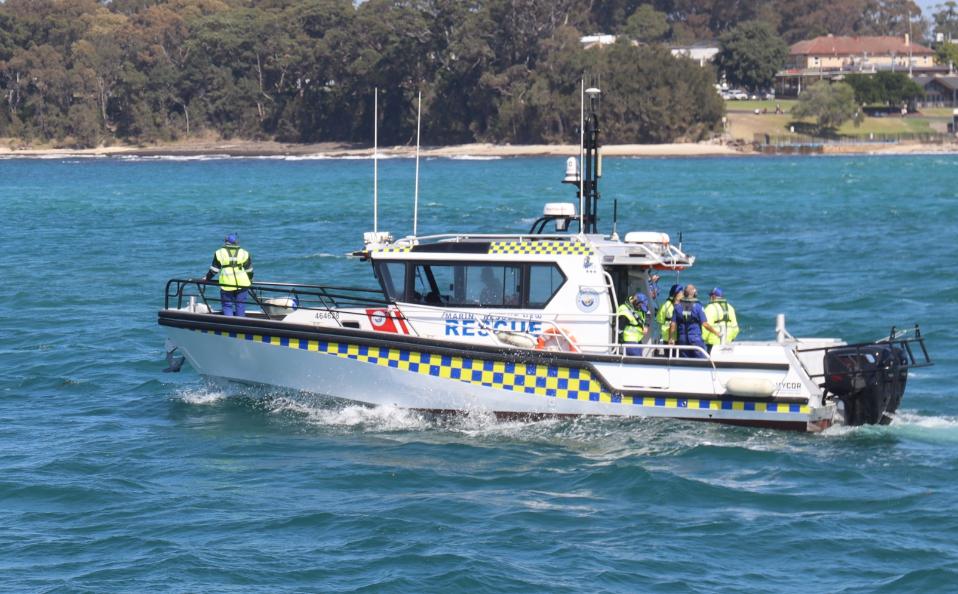
Marine Rescue NSW volunteer crews performed 338 search and rescue missions across the state during October, including 93 emergency responses, safely returning 671 people to shore.
Greater Sydney was the busiest region in the state with crews completing 152 missions during October across all 7 Great Sydney Units. Volunteers on Sydney Harbour also responded to a vessel fire at Double Bay with crews monitoring the exclusion zone.
Volunteer radio operators also managed 17,000 radio calls, including 13 MAYDAYs and two Pan Pans, while keeping watch over more than 20,000 people on board vessels logged on with the Service.
Marine Rescue NSW Commissioner Todd Andrews said demand for assistance remained steady throughout October, with varied weather conditions across the state.
Commissioner Andrews praised boaters for making sensible decisions and staying off the water when conditions were unfavourable.
“The majority of boaters clearly checked and monitored the weather and conditions, choosing not to put themselves or others at risk for a day on the water when conditions were unsuitable.
“Rescue demand was lower on days when conditions were unfavourable, which is extremely pleasing. It is not worth risking your life for a catch or a day on the water.
“Making the decision to stay ashore when conditions deteriorate is one of the most important safety decisions a skipper can make.”
While boaters are increasingly demonstrating an understanding of weather-related risks, Commissioner Andrews said vessel maintenance remained an important area of concern.
“Just over half of all our mission responses last month involved engine or battery failure.
“We would like to see this number reduced. While some mechanical failures are unavoidable, others can be prevented through regular maintenance and routine checks of batteries and engines.
“It doesn't take much for an unsuspected battery problem to leave a vessel stranded and quickly turn into a dangerous, potentially life-threatening emergency.”
A recent rescue off Swansea Heads highlighted the risks of an apparently straightforward mechanical failure.
Two anglers on board a 5.1-metre runabout called for assistance after their battery failed while they were anchored off Moon Island.
As Marine Rescue Lake Macquarie volunteers made their way to the disabled vessel, its anchor rope snapped in choppy conditions, leaving the anglers paddling to avoid being blown towards nearby rocks.
The disabled vessel was in serious danger of being swept onto a bommie, approximately 30 metres away, and the skipper reported the pair were beginning to fatigue.
Marine Rescue NSW vessel Lake Macquarie 31 arrived in time to secure the disabled vessel, check on the anglers' welfare and safely return them and their boat to Pelican boat ramp.
Commissioner Andrews said the incident was a timely reminder that even a seemingly minor mechanical problem could quickly escalate when conditions changed.
“This is exactly why we urge boaters to make sure their vessel, particularly its engine and battery, is in good working order before heading out.
“The two anglers found themselves in a potentially life-threatening situation through what initially appeared to be a battery problem. When their anchor rope snapped, they were suddenly at risk of being swept onto rocks.
“Our Lake Macquarie volunteers responded swiftly and their actions ensured both people and their vessel were safely returned to shore.
“Boaters should never underestimate how quickly circumstances can change on the water.”
Commissioner Andrews also reminded skippers to make logging on with Marine Rescue NSW part of their pre-launch routine.
“When boaters log on with Marine Rescue NSW, they provide details of their trip and expected return time. If they fail to return as planned, our radio operators can escalate efforts to locate them.
“Boaters can log on using the free Marine Rescue NSW app or via VHF channel 16.
“We cannot stress enough that layers of safety save lives. Carrying a personal locator beacon (PLB), having an emergency position-indicating radio beacon (EPIRB) on board, wearing a lifejacket and logging on with Marine Rescue NSW all improve your chances of being found and rescued if something goes wrong.
“These simple precautions also give loved ones peace of mind, knowing important steps have been taken to help keep everyone safe on the water.”
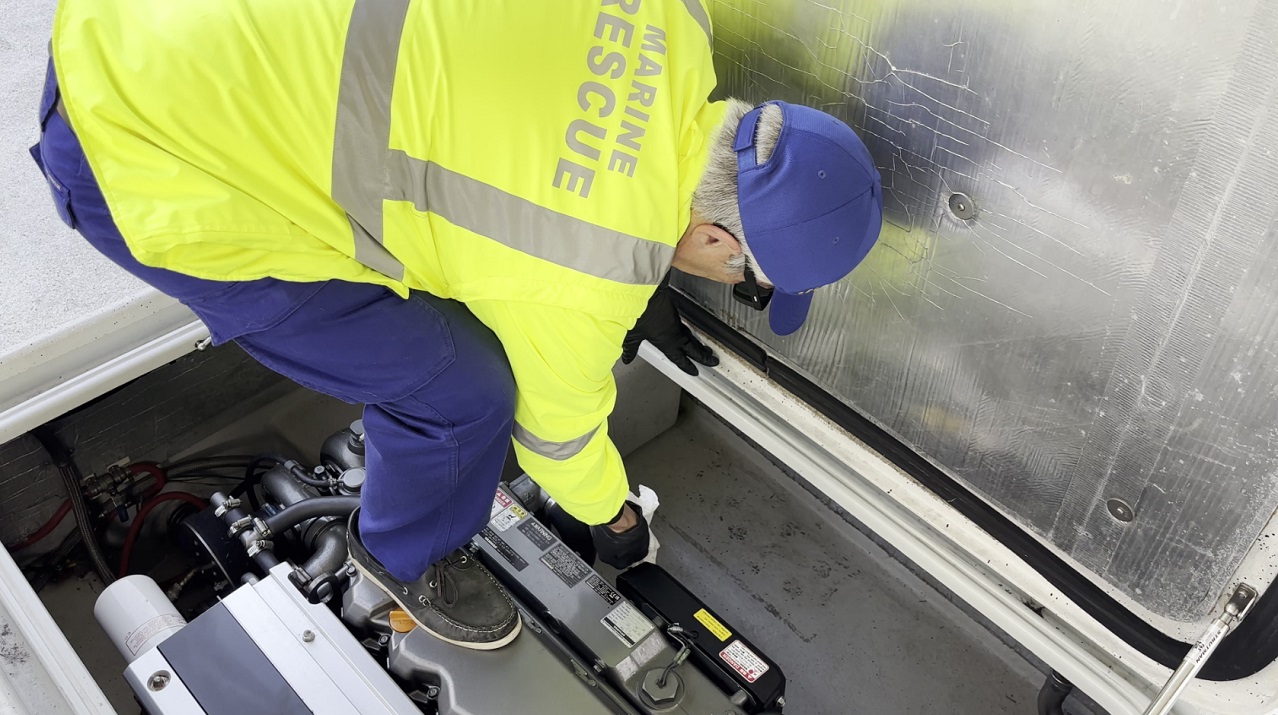
Boaters are encourage to conduct regular vessel maintenance
October 2026 by the numbers:
- 338 search and rescue missions
- 93 emergency responses
- 671 people safely returned to shore
- 16,939 radio calls managed
- 20,196 people on board Logged On vessels
- 4,783 Log Ons
October 2026 search and rescue missions by region
GREATER SYDNEY: 152 search & rescue missions including 30 emergency responses with 347 people safely returned to shore across all 7 Greater Sydney units – Hawkesbury, Cottage Point, Broken Bay, Sydney – State Communications Centre, Port Jackson, Middle Harbour & Botany Port Hacking.
Locations of highest demand: Sydney State Communications Centre 50, Botany Port Hacking 40, Port Jackson 22
HUNTER CENTRAL COAST: 102 search & rescue missions including 20 emergency responses with 176 people safely returned to shore across all 8 Hunter Central Coast units – Port Stephens, Lemon Tree Passage, Newcastle, Lake Macquarie, Norah Head, Tuggerah Lakes, Brisbane Water & Terrigal.
Locations of highest demand: Lake Macquarie 47, Brisbane Water 23, Port Stephens 21
NORTHERN RIVERS: 20 search & rescue missions including 9 emergency responses with 42 people safely returned to shore across all 7 Northern Rivers units – Point Danger, Brunswick, Cape Byron, Ballina, Evans Head, Iluka Yamba & Wooli.
Location of highest demand: Point Danger 11, Iluka Yamba 5, Ballina 2
MID NORTH COAST: 17 search & rescue missions including 8 emergency responses with 26 people safely returned to shore across all 9 Mid North Coast units – Woolgoolga, Coffs Harbour, Nambucca, Trial Bay, Lord Howe Island, Port Macquarie, Camden Haven, Crowdy Harrington & Forster Tuncurry.
Locations of highest demand: Coffs Harbour 5, Forster Tuncurry 4, Crowdy Harrington 3, Camden Haven 3
ILLAWARRA: 28 search & rescue missions including 11 emergency responses with 49 people safely returned to shore across all 7 Illawarra units – Port Kembla, Shellharbour, Shoalhaven, Jervis Bay, Sussex Inlet, Ulladulla & Kioloa.
Locations of highest demand: Shoalhaven 6, Jervis Bay 6, Port Kembla 6
MONARO: 19 search & rescue missions including 15 emergency responses with 31 people safely returned to shore across all 8 Monaro units – Batemans Bay, Tuross Moruya, Narooma, Bermagui, Merimbula, Eden, Alpine Lakes & Moama.
Locations of highest demand: Batemans Bay 11, Narooma 2
Marine Rescue NSW is a volunteer based, not for profit professional organisation dedicated to keeping boaters safe across the state. Our 3,400 trained volunteers support communities through search and rescue operations, marine radio monitoring and boating safety education.
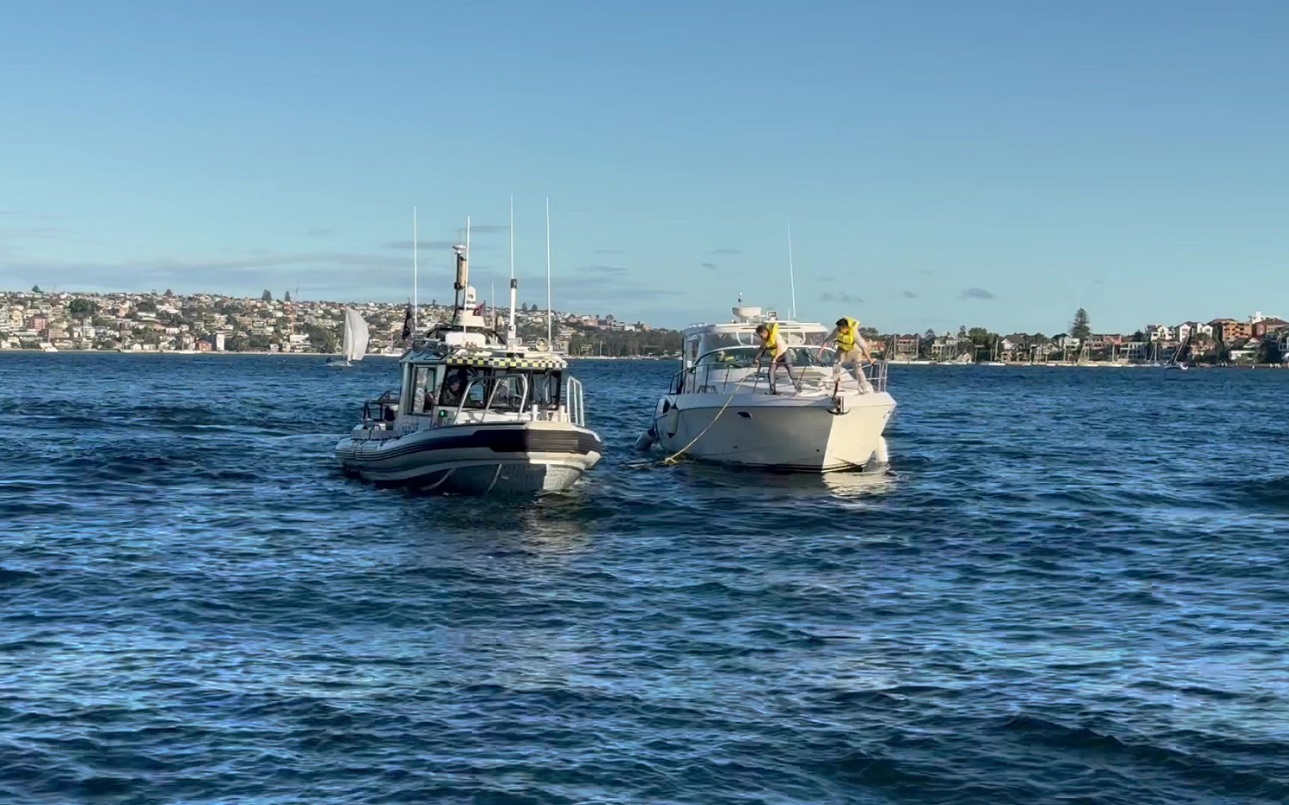
Greater Sydney was the busiest region in the state last month. Photos supplied.
Here's how easy it is to Log on - Log off;
Log On to make every journey safer
Log On & Off with Marine Rescue. It’s quick, simple and free. Log On whenever you’re heading out on the water and Log Off when you return. We’ll stand watch. If you don’t Log Off as planned, our volunteers will start searching for you.
Download from the Apple store Download from the Google play store
To Log On, call your Marine Rescue NSW base on VHF Channel 16 or use the free Marine Rescue App. You can download the App at the App Store for Apple devices or Google Play for Androids.
You can always Log On, whether you’re out for a morning’s fishing, a day trip around your local area or cruising along the coastline. And it doesn’t matter if you’re on a tinnie, a cruiser, a yacht, a kayak, a canoe or a jet ski.
When you Log On via, our radio operator will ask you for some basic information about your vessel, your destination and contacts.
You’ll enter the same details on your smartphone or other device if you’re using the Marine Rescue app. If you don’t Log Off, this information will help us find you, whether you’ve simply forgotten to Log Off when you returned to shore or you’re caught in an emergency and need help fast.
Tell us:
- Your boat registration number
- Where you’re leaving from
- Where you’re heading
- What time you plan to return
- The number of people on board
- Your mobile phone number
If the fish are biting and you decide to stay out longer, simply call the base on VHF Ch 16 or use the Marine Rescue App to update your arrival time.
Remember to Log Off when you’re back on shore. If you haven’t let us know you’re back safely, we’ll start to look for you. We’ll try calling you first up, just in case you’ve forgotten to Log Off and headed home with your catch. That’s the best outcome. If we get no answer, we’ll step up the response.
When you Log On via the App, choose the live safety tracking option so your position is updated in our vessel tracking system every 30 minutes. This means that in an emergency, our rescue crews will have a starting point for a search operation, based on your last known position, saving valuable time when minutes can mean the difference between life and death.

Skeds
If you’re travelling along the coastline, we encourage you to establish a voyage plan with Marine Rescue NSW and an offshore tracking schedule for you to check in (to ‘sked’) with our bases along your route. This lets us know that you’re travelling safely, on schedule and not in need of emergency help. We’ll keep track of your progress until you safely arrive at your destination in NSW or we hand you over to the marine rescue service in the next State if you’re travelling further north or south.
Preparing to go on the water
As the skipper, you're responsible for safety of the vessel and people on board. Be prepared to keep everyone safe and enjoy time on the water.
Carry enough lifejackets
Wearing a lifejacket can save your life. Make sure your vessel is carrying enough approved lifejackets for everyone on board. They must be in good condition and quick and easy to access.
Always wear a lifejacket while on the water. This means that you'll be more prepared for unexpected events, such as suddenly falling into the water.
The rules for wearing a lifejacket depend on your vessel, where you are and the level of risk.
Know the rules
Before you go out, make sure you know the rules and regulations for using NSW waterways. Key rules to help you stay safe and avoid collisions including:
- keeping a proper lookout for hazards
- knowing who you must give way to and when
- identifying and obeying navigation marks, lights and sounds
- travelling at a safe speed and keeping a safe distance between your vessel and other people, vessels and objects
- staying under the legal limit for alcohol
- knowing the rules for towing a person on the water and towing a trailer on the road.
Check the weather
Always check the weather before you head out. Be aware of warnings, marine conditions, storms, winds, waves and tides. This can make the difference between an enjoyable day and an emergency situation. If in doubt, don't go out.
Let someone know
Before you leave, contact a friend or relative or use your marine radio to log on with a coastal radio base. Tell them:
- where you're going
- your estimated return time
- your vessel details
- how many people are on board.
Take extra care to let someone know if you are going out alone.
Report in if you extend or change your trip.
You can also use the Marine Rescue app to log on and log off with Marine Rescue NSW.
Know what to do in an emergency
Being on the water can be unpredictable and dangerous. Be prepared for an emergency or incident, and know what to do and who to contact if you run into trouble.
If you're involved in or witness an incident, you must always stop and give as much help as possible. Depending on the severity of the incident – for example, if someone is injured – you may need to give information to authorities.
Marine Rescue NSW provides important services, including safety education, marine radio communication, and emergency search and rescue services.
Check your vessel
Check your vessel is in good working order, including the engine and lights. Check you have all the correct equipment on board before you leave home or launch your vessel.
If your vessel is registered, check the registration has not expired.
Check your vessel is suitable for the waterways you want to travel on. For example, if the vessel is designed for enclosed waters, it may not suit open waters or along the coast where waves are larger.
Check all hatches can be opened from both the inside and outside of the vessel. Keep all hatches unlocked while the vessel is underway.
Anyone driving your vessel should have the skills and experience to handle the vessel on the waterway you're using.
Have the correct safety equipment
Check you have the correct safety equipment on board for where you're going and your vessel type.
Make sure every item is in good condition and easy to access. Everyone on board should know its location and how to use it.
Plan where you want to go
Plan where you're going and know how long the trip will take. Be aware of any special waterways or designated areas. Check the location of harbours, ports and potential refuges from bad weather.
Take extra care in cold water, especially alpine waters, where your risk of cold shock and hypothermia are increased.
Build your experience by starting out on calm, quiet waterways. Take a more experienced person with you, if possible.
Make sure you have enough fuel. Plan to use a third to get there, a third to get home, and have a third in reserve for unexpected events.
Make sure you have a compass and up-to-date chart (or map) for the waterways you will be using, especially if you're going out on open waters.
You must have a chart or map if you plan to go out on open waters.
Prepare children
If you're taking children out on your vessel:
- Make sure they have a lifejacket and are wearing it when required.
- Teach them emergency procedures and drills, such as what to do if they fall overboard or the vessel capsizes.
- Show them where the safety equipment is, and teach them how to use emergency items, such as the marine radio, EPIRB and flares. Make sure they understand they must only use them in an emergency.
- Show them how to get in and out of dinghies and small boats while keeping them stable.
- Make sure they do not have any part of their body out of the vessel when it's underway.
- Teach them about keeping a proper lookout and a safe distance from other vessels.
- If you're planning to tow, make sure they know the rules for towing people aged under 16.
- Carry everything they need to be prepared for all types of weather.
- Consider the risk of seasickness, especially if you're going out on choppy water.
- Teach children about lifejackets and sunscreen.
Download boating apps
Boating apps give you quick access to helpful information about waterways on your smartphone or tablet. For example, boat ramps, speed zones, navigation aids, weather, special events and safety advice.
Transport for NSW endorses Deckee, available for free via the Apple Store and Google Play. The Deckee app includes maps showing boat ramps, speed zones, navigational aids. It also has access to a live data feed from Transport for NSW that captures alerts, marine notices and campaigns.
Marine Rescue NSW
Marine Rescue NSW is the State’s official volunteer marine rescue service. The Marine Rescue App allows you to register details of your next boating trip.