Week Two July 2026: Issue 656 (published Sunday July 26)
Forestville Apprentice Wins Inaugural P.M.E.A. Apprentice of the Year Award
P.M.E.A's Graeme Smith with Inaugural Apprentice of the Year Mitchell Doolan
A young Forestville tradesman with a passion for high-performance motorsport has been recognised as the inaugural recipient of the Pittwater Motoring Enthusiasts Association (P.M.E.A.) 2026 Apprentice of the Year Award.
Twenty-two-year-old Mitchell Doolan received the honour at the Association's Annual General Meeting on Tuesday evening, July 21, where he was presented with a $1,000 cash award, a year's membership of P.M.E.A. and a Certificate of Achievement.
Established following a generous donation from a P.M.E.A. member, the new annual award recognises outstanding apprentices in the traditional motor trades across Sydney's Northern Beaches while encouraging young people to pursue rewarding careers in the automotive industry.
P.M.E.A. spokesman Graeme Smith said the quality of nominations exceeded the judging panel's expectations.
"We were delighted with both the number and the calibre of applications received. It was clear there are some exceptionally talented young people entering our industry, making the judges' task a very difficult one," Mr Smith said.
After completing his Light Vehicle Mechanical apprenticeship in 2025, Mitchell elected to further expand his skills by undertaking an Auto Electrical apprenticeship - a decision driven by his ambition to build a career in professional motorsport.
Recognising that modern race vehicles rely heavily on sophisticated electrical, electronic and data acquisition systems, Mitchell saw the additional qualification as essential to achieving his long-term career goals.
Mitchell began his career with P R Technology as a work experience student and has since earned responsibility for the workshop's lead motorsport program. His role includes preparing, developing and providing trackside support for a Porsche 992 Cup car and a twin-turbo VR38-powered Ginetta G55 competing in Australian and World Time Attack events.
Mr Smith said Mitchell impressed the judging panel in every aspect of the selection process.
"Mitchell demonstrated exceptional technical ability, a genuine commitment to continuous learning and a passion for the automotive industry. Just as importantly, he displayed the maturity, professionalism and character that make him an outstanding ambassador for the trade."
He said P.M.E.A. hoped the award would become an important annual recognition for apprentices on the Northern Beaches.
"P.M.E.A. has always been committed to preserving our motoring heritage while supporting the future of the industry. By recognising outstanding apprentices like Mitchell, we're investing in the next generation of skilled tradespeople and helping ensure these valuable skills continue for many years to come."
Founded in 1994, the Pittwater Motoring Enthusiasts Association is dedicated to promoting friendship among motoring enthusiasts and encouraging the preservation, restoration, maintenance, use and display of historic vehicles and machinery throughout Sydney's Northern Beaches and Pittwater region.
Excitement builds for Sailing’s debut at Commonwealth Youth Games
From Australian Sailing: July 23 2026
Following the announcement that sailing would be making its debut at the 2027 Commonwealth Youth Games, Australian Sailing is pleased to share the most recent updates on the event and how sailors can get involved.
The 2027 Games will be held on the Mellieħa Bay on the northeast coast of the main island of Malta from 29 October to 4 November, providing an exciting new opportunity for Australia’s young sailors to represent their country in a multi-sport Games environment.
The sailing events to be contested at Malta 2027 have been confirmed by the Commonwealth Youth Games organisers and will comprise competition in the Optimist and ILCA 4 classes across four individual events:
Men’s Optimist
Women’s Optimist
Men’s ILCA 4
Women’s ILCA 4
These events will be contested across two age eligibility categories. The Optimist events are for sailors aged 14-15 years, while the ILCA 4 events are for sailors aged 14-17 years (ages as of 31 December 2027).
The final number of Australian sailors to be nominated for the Games will be determined through the athlete allocation process managed by Commonwealth Games Australia. Subject to final allocation, Australia expects to nominate up to one sailor in each event.
Australian Sailing is currently working with Commonwealth Games Australia to finalise the Nomination and Selection Criteria for the sailing team, which are expected to be published later this year.
While the final selection policy has not yet been confirmed, interested parties should be aware that the 2027 Australian Optimist Championships at Royal Brighton Yacht Club (2-9 January 2027) and the 2027 Australian ILCA 4 Championships at Sandringham Yacht Club (1-8 January 2027) are expected to be the selection events for the nomination process. These National Championship events will provide the primary performance reference points for sailors seeking nomination, with final details to be confirmed once the Nomination & Selection Criteria are published.
Australian Sailing looks forward to working with Commonwealth Games Australia, class associations, clubs, coaches and sailors as preparations for the Games progress. A dedicated Malta 2027 Commonwealth Youth Games webpage will be established on the Australian Sailing website as further information becomes available.
Ella turns passion for maritime into a rewarding career
Now is a good time to take advantage of online and face-to-face training to earn qualifications for employment opportunities across the maritime industry.’ - Wayne Hunt, TAFE NSW - Teacher, Maritime
As demand grows for skilled maritime workers, Jervis Bay local Ella Field is showing how training through TAFE NSW can turn a passion for the water into a rewarding career.
Marine industries include freight, support, defence and tourism. These industries rely on a capable maritime workforce whose skills and training are critical to supporting the sector’s future growth.
TAFE NSW maritime teacher Wayne Hunt said students from coastal communities, including Illawarra, Jervis Bay, Ulladulla, Eurobodalla and Eden, were well placed to help meet demand.
He said many of his students already have a strong connection to the marine environment and can see the opportunities close to home.
“Now is a good time to take advantage of online and face-to-face training to earn qualifications for employment opportunities across the maritime industry,” Mr Hunt said.
“Maritime plays an important role in the national supply chain and in many coastal communities. Skilled workers are needed to help keep those industries operating safely and efficiently.
“One industry drawcard is the variety it offers. From charter tourism to marine engineering, the industry offers so many different roles. These qualifications can also help people find work around the world,” he said.
A former student of Mr Hunt, Ella, credits her father’s interest in boats for sparking a passion for all things marine. This led the 21-year-old to enrol in maritime operations at TAFE NSW.
"After school, I wasn't sure what career I wanted, but I knew it wasn't going to be a desk job," Ella said.
"I took a gap year, did my General Purpose Hand course so I could work on boats in Jervis Bay, and it’s paid off. That experience helped me decide maritime is the industry for me."
Ella then completed coxswain training, developing skills in navigation, skippering, radar operations and marine engineering. She went on to complete a marine engine driver qualification and is now studying a Certificate III in Maritime Operations (Master up top 24 metres Near Coastal) online through TAFE NSW.
With women making up only five per cent of the maritime workforce, Ella is proud to be the first female mariner to work with Bollinger Marine Group in Jervis Bay.
“I’m enjoying my work, there’s great variety and I’m always learning. Being the only woman isn’t an issue, it’s a very supportive environment. I’d encourage more women into maritime, it’s fantastic.”
Bollinger Marine Group owner Mitchell Bollinger said Ella was a great fit for the business, which builds boats in Newcastle and provides marine support and towage services out of Jervis Bay.
“The industry has always needed more people, and Ella is building a strong career in the industry. She’s very capable and is involved in the deck-work and driving vessels. The variety of work is a drawcard, from ocean towage up the coast, to projects in Botany Bay and on the South Coast.
“For me, it’s about offering younger people opportunities and building a team with different levels of experience,” he said.
Miniature Train Ride at Manly: a few history notes about having fun as a youngster
circa 1905. Item: FL11287791, courtesy NSW Records and Archives.
Described in a 1905 advertisement as “the very latest American sensation”, the miniature train ran along the beachfront between The Corso and Raglan St. from 1904 until 1906 when it was put up for sale.
A news report from soon afterwards tells us:
RECENT IMPRESSIONS OF SYDNEY
LIFE IN MANLY.
As the writer resided during the greater part of the dying year in this fine marine suburb, and exercised his pedestrian power in all directions of this extensive pleasure resort, he is competent to give his views of it with something of the authorly of a guide book. It is simply impossible to overrate Manly as a sea lung of the metropolis. It is, without exaggeration, the Brighton of the Southern Babylon. As a spot for a day's outing or a short visit it admittedly stands unrivalled in the whole of Australasia. It has its defects and drawbacks as a matter of course. The sea way to it is occasionally rough between the Heads. The boats are often dangerously over crowded. The sea beaches, surprisingly beautiful in themselves, owe very little to the taste and enterprise of man. There are no gardens, and there is a mournful dearth of music, and the customary amusements of the seaside are not found at Manly. But the surf bathing on Ocean Beach is simply magnificent, and its sometimes dual character does not deduct from its attractions.
By those who do not relish open sea bathing, the ladies' and gentlemen's enclosed baths on Harbor Beach are affected, while sufferers from rheumatism and allied disorders may get both pleasure and relief from a course of hot saltwater baths provided in the vicinity of the now defunct water chute.
The youngsters are exceedingly well catered for in Manly. In addition to Gypsy Smith's famous brace of merry go rounds in the Corso, there is Pearse's string of well trained .beach donkeys, to say nothing of a run on the miniature railway and a glance through the moving picture room, called the mutoscope.
Donkeys at Manly, from Macpherson albums 'Glass negatives of Sydney regions, including Clovelly, Coogee, and Manly ca 1890-1910'. Item: SLNSW_FL3426821 courtesy Mitchell Library, State Library of New South Wales
Manly abounds in picturesque walks and drives. The Spit, 2 1/2 miles away, shows, in parts of it, most romantic scenery. A steam ferry is in evidence here, connected with a tram line On the other side, which runs to Mosman only a mile away. The Spit route to Manly is a favourite one, and is very generally taken when the sea is rough at the Heads.
A coveted resort for picnicers is Shelly beach, and good fishing is to be got in its vicinity. Deewhy Beach, Narrabeen, and Newport are accessible by coach and motor bus, and the track thither passes through most picturesque qoastal scenery. The Corso is quite a unique business thoroughfare, and shows a marvellous array of refreshment rooms, which on fine days, and especially during the holidays, are rushed by city visitors out for a change and a breath of sea air. RECENT IMPRESSIONS OF SYDNEY— LIFE IN MANLY. (1906, December 15). The Muswellbrook Chronicle (NSW : 1898 - 1955), p. 2. Retrieved from http://nla.gov.au/nla.news-article107781779
However, this wasn't the only amusements at Manly:
MINIATURE. EARLS COURT FOR MANLY
It has long been a subject for remark amongst English and American visitors to Australia that our beautiful seaside resorts, so well provided with natural attractions, should be so entirely, lacking in popular amusement enterprises. Take the case of Manly, for instance. The sole amusements provided for the recreation of those who patronise "the Australian Brighton" consist of two somewhat antiquated merry-go-rounds, and a few melancholy-looking donkey on the ocean beach.
A determined effort is being made at last to remove this reproach. Mr. A. L. Baird, who has recently returned from England, after an absence of five years, has succeeded in forming an influential syndicate to carry out an extensive amusement scheme. About two acres of land fronting the ocean beach, and in the immediate vicinity of "Fairy Bower," has been secured, and work has already begun on the erection of the English and American sensation, the "water chute." In addition, a toboggan, slide, fiery dragon (a novel form of motor railway), band stands, refreshment rooms, etc., will be installed, together with an up-to-date electric lighting plant. It is understood that a limited company will he floated in a few days to take over the property of the syndicate. The general manager will be Mr. A. L. Baird, under whose supervision the grounds (to be known in future as "Steyne Court") are being fitted up. Manly is likely to be highly popular this summer. MINIATURE. EARLS COURT FOR MANLY. (1903, October 7). The Daily Telegraph (Sydney, NSW : 1883 - 1930), p. 9. Retrieved from http://nla.gov.au/nla.news-article237581106
Manly is now more than up-to-date, having a "chute" in summer, Continental surf-bathing, and public motor cars. Boys toboggan down Red Hill, and a tram (not quite of the latest design) runs from the wharf to Curl Curl. Of cabs there are plenty. A merry-go-round, the proprietor of which is so rich that he uses sovereigns for his coat and trouser buttons, is permanently undercover in the Corso. The streets are well lighted with gas, though the spaces between them is so narrow that one side has to be the back yards of the other thoroughfare's houses. This style of road architecture is accounted for by the fact that the bullock team and the short-cutter to the ocean beach were the earliest street architects.
The question of a tramway from Watson's to Manly is actively discussed, there being many opinions, both for and against. Meantime Manly appears both happily and prosperously situated, and is going ahead.
THE SUBURBS OF SYDNEY. (1904, June 25). Evening News(Sydney, NSW : 1869 - 1931), p. 3 Supplement: EVENING NEWS SUPPLEMENT. Retrieved from http://nla.gov.au/nla.news-article113903625
THE MANLY CHUTE.
The Manly Water Chute and Amusements Company have issued an attractive guidebook profusely illustrated, setting forth the numerous attractions at the company’s grounds at Manly. The chute, toboggan. Bijou Theatre, and the fiery dragon are all depicted, and the letterpress is well and smartly written. Trippers to Manly (the Brighton of Australia) who have not yet experienced the sensation of " chuting" on reading the brochure, will no doubt be tempted to " take the plunge." The little book is a credit alike to its author, printer, and all concerned. THE MANLY CHUTE. (1904, May 7). Watchman (Sydney, NSW : 1902 - 1926), p. 3. Retrieved from http://nla.gov.au/nla.news-article111920950 Water Chute, Manly, N.S.W. , courtesy National Museum of Australia, Image No.: 1986.0117.0258 - from an old Postcard.
And this certainly wasn't the first 'amusement' for youngsters and oldsters at Manly - another earlier one, by the 'founder of Manly' was:
MANLY.-CAMERA OBSCURA.-Parties desirous of renting the tower in which the above is placed, and establishing a photographia apparatus therein, can obtain particulars on application to Mr. H. G. SMITH, Manly. MANLY.-TO ENGINEERS. - CONTRACTS are invited for the erection of a small steam-engine, and to lay down the requisite pipes for supplying the baths now in course of erection at Manly. Particulars can be ascertained on application to Mr. H. G. SMITH, Manly. 071) Advertising. (1857, January 13). Empire (Sydney, NSW : 1850 - 1875), p. 1. Retrieved from http://nla.gov.au/nla.news-article60276812
1884 - 1886: By Warrior, A. Contributed by Graham Trevena [Page 4a] (from the album 'Works by Members of the Amateur Photographic Society of N.S.W presented by the Society to His Excellency Lord Carrington August 1886') - retrieved from The Dictionary of Sydney.
View - Manly [possibly from Dalley's Castle] - shows original Camera Obscura - Date of Work ca. 1900-1910, Image No.: a116266, courtesy State Library of NSW.
How to Make a Camera Obscura:
The Camera Obscura.
In making a camera obscura the first thing we want to know is the focal length of the lens we are going to employ, as upon this will depend the size of the box we have to use.
The length of the box has to be rather less than the focal length of our lens. Thus, if the focal length of our lens for objects some yards off be say 15 inches, we may make our box 13 inches long and about 8 inches deep, and 8 inches wide. A round hole must be made into one end (a. /), just sufficiently large to allow the tube containing a double convex lens to work backwards and forwards smoothly (Fig. 1). A mirror (in) is fixed at the other end, at an angle of 45', so that it reflects all light coming from the round hole upwards in the direction of the arrow. One portion of the side ( a d) is made into a door (c /), turning on hinges at e. At e d a square plate of ground glass or smooth glass may be placed, just as required. And now as to the double convex lens. A paper tube may be made of such a diameter as to hold it at one end, and in passing we may say that such paper tubes are very readily made by rolling the paper round a wooden cylinder of requisite diameter, and, as each turn of paper is wound on, gumming it well down. When the gum is dry a good tube is procured. Around the paper tube that has been made another may now be wound, about two inches long, and this will have to be fixed to the hole at the end of the box (a b ), so that the tube of lesser diameter containing the lens may slide backwards and forwards. Paint the inside of the box black, and of the tubes too. And now, if everything be in order, we may proceed to work with our camera. The ground glass is fixed at ed, the lens at g, focussed for the external street or landscape, and we now find them pictured on the ground glass in form and colour mavellously like the scene without. If we wish to make a drawing, the ground glass must be replaced by a sheet of clear glass, and on this tracing paper may then be fastened down, and with a sharp pencil point the outlines of the picture are now readily drawn.
The camera obscura has been employed for warlike as well as gentle purposes, and it was used in this way on the occasion of the defence of Venice in 1859. The Austrians who held the city were afraid that the Italians might suddenly come upon them, and part of their defensive measures was the erection of a large camera obscura (Fig. 2).
You will perceive from the figure that this camera when built was not unlike the one you have perhaps now made, for there is a double convex lens (6) at one end of it, and at the other a screen (e) in the shape of a table with a white -top. The Venetian camera was built on a rock overlooking the harbour, so that by means of a looking-glass at a a beautiful picture of it was cast on to the table, and it is apparent that a person standing by the table could see the movements of all vessels, whether of peace or of war, that came towards the city. Torpedoes were now sunk in the harbour, and the point where each numbered torpedo was sunk was marked on the table. Torpedoes, as you may be aware, are fired by means of wires leading from them to the shore, and in this case to the inside of the camera (d c),hence at the end of the operation torpedoes had been planted in different parts of the harbour, and the soldier within the camera could tell exactly where each one was, and which wires communicated with it, so that he had it in his power, while watching the picture on the table, to blow up any Italian ship that might come near one of the sunken torpedoes. The Camera Obscura. (1886, February 6). The Sydney Mail and New South Wales Advertiser (NSW : 1871 - 1912), p. 307. Retrieved from http://nla.gov.au/nla.news-article162811341
Mr Meredith, the comedian, has, with much labour and expense, fitted up a Camera Obscura of very large dimensions. We believe it is the first of the kind which will be exhibited in Australia. It may be seen at Macquarie Fort this day, and will be seen on the Race Course during the playing of the Cricket Match on Monday next. ANNIVERSARY REGATTA. (1839, January 26). The Australian (Sydney, NSW : 1824 - 1848), p. 2. Retrieved from http://nla.gov.au/nla.news-article36859496
THE STORY OF THE CAMERA
Any boy or girl can have a camera nowadays for a few shillings and take pictures with hardly any trouble. But it is not many years since photography was more a difficult business than a pleasure, and less than a century since the earliest camera was made. Photographic films and plates are coated with gelatine and a silver substance which is sensitive to light, and which makes a permanent picture of whatever the camera lens sees. It was in 1732 that a scientist named Schulze discovered that this silver was darkened by the light, but his discovery was put to no practical use until early in the 19th century. At that time there was a fashion for making silhouettes. Somebody was posed so that the light from the lamp threw the profile of his face in sharp shadow against a white screen. It was then easy to obtain a silhouette picture by either outlining the profile or cutting it out from the screen. But it occurred to a man named Wedgwood that the profile might be printed on the screen by using paper treated with silver nitrate, and he not only accomplished this, but also made the camera obscura, the forerunner of the camera we use today.
Then Sir Humphrey Davy succeeded in making photographs through a microscope by using the sunlight These were the first pictures produced by a lens on photographic material ; but it was not until Sir John Herschel discovered hypo that the proofs could be made permanent. In about 1840 Daguerre invented his process of making pictures on copper which was silver-plated on one side. But by his methods anyone sitting for a photograph was a martyr. The poor victim had to stay motionless in the sun for many minutes with face thickly coated in powder. So, little by little, improvements were made until the first film roll camera appeared in 1888. After that, taking a photograph took less time, and loading and unloading could be done in daylight. And most recently has come autographic photography, so that the amateur, by putting a date and a title on each negative after exposing it, may make a written record of his work as well as a pictorial one. THE STORY OF THE CAMERA. (1919, August 10). Sunday Times (Sydney, NSW : 1895 - 1930), p. 21. Retrieved from http://nla.gov.au/nla.news-article123222323
And that first miniature train wasn't the only one to run at Manly - here's one from the early 1930's - on the beach itself:
Train ride, Manly Beach, from album 'Series 02: Photographs chiefly of Manly, N.S.W., Melbourne, and Victoria, ca. 1900-1932 by Henry Edwin Quick'. Item: SLNSW_FL345354, courtesy Mitchell Library, State Library of New South Wales
Palliasses being spread, and after a general clean up and tea, it was heigh-ho! for Manly. Here the lads made a name for themselves as heavyweights by breaking the miniature railway on the beach, where the sand modeller deservedly drew and held their interest. BLACKHEATH SCOUTS (1931, March 26). Lithgow Mercury (NSW : 1898 - 1954), p. 7 (TOWN EDITION). Retrieved from http://nla.gov.au/nla.news-article221856759
The Metropolitan Band will give morning and afternoon recitals on the Manly wharf, and broadcast from 2BL this evening. Mr. John Palmer will conduct.
Car-drivers making for the beaches beyond Narrabeen to-day will find the bridge over Narrabeen Lakes open for traffic. It has been under repair for nearly two months. WHERE TO TO-DAY? (1931, October 5). The Daily Telegraph (Sydney, NSW : 1931 - 1954), p. 1. Retrieved from http://nla.gov.au/nla.news-article246564790
Of course, there were amusements for children further north as well:
RAMBLER NOTEBOOK - HAPPY HOLIDAY The other day the family and I came back from a very enjoyable holiday at Avalon Beach. Fishing and surfing took up most of the time but one red-letter night, a circus pitched its tent not very far from where we were staying. Trained elephants, horses, dogs, lions, and monkeys were all included in the entertainment, as well as clowns, acrobats, trapeze artists and tightrope walkers. One horse played football and kicked a ball with his hind legs into the audience. Another day a couple of friends and I went fishing at Pittwater for the day. Some bream and a couple of leather-jackets were all we caught. (Blue Certificate to Bruce Salmon (12), 66 Findlay-avenue, Roseville.) RAMBLER'S NOTEBOOK & HOBBIES (1942, March 1). The Sun (Sydney, NSW : 1910 - 1954), p. 7 (SUPPLEMENT TO THE SUNDAY SUN COMICS). Retrieved from http://nla.gov.au/nla.news-article231759658
Circus comes to Avalon. Elephants graze in the dunes in the 1960s. Poor dunes! No wonder the sand began to blow. Photo: ABHS
Ghan to Alice: Rare Journey Across Outback Australia - 1978
Travel on the original Ghan railway through the heart of Australia in this remarkable 1978 documentary from the Film Australia Collection.
Ghan to Alice follows father-and-son rodeo riders Bill and Jim Willoughby as they travel from Marree in South Australia to the famous Alice Springs Rodeo. Their journey aboard the historic Ghan takes them through remote desert landscapes, past outback settlements and across country once travelled by the Afghan cameleers whose legacy gave the train its name.
Filmed shortly before the original railway route was replaced, this documentary preserves a unique chapter of Australian transport history. Along the way, viewers experience life aboard one of Australia's most iconic trains, encounter the vast landscapes of Central Australia and witness the excitement of rodeo culture in the Red Centre.
Ghan to Alice captures the rhythms and rituals of outback travel in the late 1970s. Dining-car announcements, remote railway operations, wild camels on the plains and riders preparing for the Alice Springs Rodeo create a vivid snapshot of regional Australia at a moment of change.
Opportunities:
Youth Ambassador Program Applications now open
Program applications are open for UrVoice Australia's Youth Ambassador. The Program aims to listen to and upskill young people on how to make change in their community. It's a free leadership and advocacy opportunity for NSW students in years 10-12.
The program runs online over 10 weeks throughout Term 4 with a fortnightly 2-hour evening workshop. For more information, please visit UrVoice Australia.
Applications close on 16 August.
Nature Writing Prize 2026 Now Open to Enter
$8,000 to be awarded to the winning writer
Calling all writers! The Nature Conservancy has announced the opening of its eighth biennial Nature Writing Prize.
The author of the winning essay will receive an $8,000 prize and be published in Australian Book Review (ABR). One additional author will receive a Highly Commended Prize of $1,000.
The competition’s judges are novelists Kim Mahood and Dave Witty and Dr Georgina Arnott, editor of the Australian Book Review.
The judging process is completely anonymous, with judges awarding the prize to an Australian writer whose essay they agree to be of the highest literary merit and which best explores a relationship and interaction with some aspect of the Australian landscape. All entries are required to be between 3,000 and 5,000 words and in the genre of ‘Writing of Place’.
The Nature Conservancy Australia’s Country Director Lara Gallagher said, “The Nature Writing Prize was created in 2011 to promote and celebrate the art of nature writing, and to encourage a greater appreciation of Australia’s magnificent natural heritage. I’d particularly like to thank Paula McLean and The McLean Foundation, without whose generous support this important prize would not be possible.”
Alongside the $8,000 Winners Prize, The Nature Conservancy welcomes the return of the Rosina Joy Buckman Award, a $1,000 prize awarded to one Highly Commended essay. The Rosina Joy Buckman Award is generously sponsored by Kinchem Hegedus and Peter Barge.
2026 heralds a new era for nature writing in Australia, with the announcement of Australian Book Review as the official Publishing Partner for the Nature Writing Prize. Gallagher said, “This collaboration with ABR offers the Prize a new level of support, expanding its reach and cementing its place as one of Australia’s leading nature writing initiatives.”
The prize is open to Australian citizens and permanent residents. Participants will need to pay an entry fee of $30, or $25 for ABR subscribers. Submissions will close at 5pm AEST Wednesday 23 September 2026. To learn more about the prize and review the terms and conditions visit: www.natureaustralia.org.au/nwp
Young Filmmakers Comp 2026
On Thursday July 16 the council announced the Beaches Young Filmmakers Comp is back for 2026, inviting young storytellers, actors, directors, writers and first-time filmmakers to create a short film and see where their imagination can take them.
Open to solo creators and teams, the competition gives emerging artists 4 days to produce a short film of up to 7 minutes, weaving in secret challenge elements — a mystery item, keyword and phrase — revealed on the Northern Beaches Council website at 4pm on Wednesday 12 August 2026.
Films must be submitted by 9pm on Sunday 16 August 2026.
With a prize pool of more than $3,000 plus industry prizes, entrants will also be in the running to have their films screened on the big screen at the Finals and Awards Night on Wednesday 9 September 2026 at Warringah Mall.
Northern Beaches Mayor Sue Heins said the competition was a fantastic opportunity for young people to build creative skills, collaborate with friends and share their stories.
“The Beaches Young Filmmakers Comp is a wonderful platform for young people to explore storytelling, learn new skills and experience the thrill of seeing their work come to life on screen,” Mayor Heins said.
“Whether you’re already making films or just keen to give it a go, this competition is all about creativity, teamwork and having fun. I encourage young people across the Northern Beaches to get involved and start rolling.”
Teams can include 1 to 10 members aged 12 to 24. Solo filmmakers must study, work or live on the Northern Beaches, while teams must include at least two members or 50 per cent of the team who study, work or live in the Northern Beaches.
Council thanks premium sponsor and long-time supporter Miller Tripods, now supporting the competition for its fourteenth year. Council also thanks premium sponsor Screenwise and the Australian Cinematography Society for their generous support of the 2026 competition. As a tribute to her late husband Bill, who was active in the local film scene, community member Nan Bosler (OAM) and family will sponsor the very special Bill Bosler Award.
All films will be showcased on Council’s website and KALOF Youtube following the Finals and Awards Night, giving emerging filmmakers even more exposure for their work.
Prize money is funded through entry fees($50 per team), final night ticket sales and sponsorship.
Key events and dates
Secret rules revealed and film submissions open Wed 12 Aug 2026, 4pm
NoBAD Theatre is a new Not For Profit community theatre group. Their inaugural production, The Waiting Room, a new Australian comedy, will be staged at the Mona Vale Performance Space from 21st – 24th October.
The cast of eight are locally based actors, whose past credits span Hollywood movies, American and Australian TV, and Australian theatre. All involved are offering their services for free with the aim of establishing an ongoing community theatre on the Barrenjoey Peninsula.
If you would like to join them, they want to hear from you!
Mike Bullen says;
''We are looking for enthusiastic volunteers to fill backstage roles in: Stage Management, Set Design and Construction, Sound., Lighting, Costumes, Hair and Make Up, Props, Publicity (especially Social Media) and House Management.
Previous experience is a plus but is not a necessity. To find out more and express your interest visit nobadtheatre.org
Anyone over the age of 16 is welcome to apply.''
Wings & Tins Dee Why: Bands wanted!
We’re opening our doors and looking for fresh new acts to light up our epic new stage and sound system.
From rock, punk, funk, reggae and dub to metal, hardcore, folk, indie, blues, and everything in between… we want to hear from you. We’re here to champion all styles and flavours of music, art, and the people who create it.
If you’d like to play a show with us, send us an email using the address below.
The Challenge aims to encourage a love of reading for leisure and pleasure in students, and to enable them to experience quality literature. It is not a competition but a challenge to each student to read, to read more and to read more widely. The Premier's Reading Challenge (PRC) is open to all NSW students in Kindergarten to Year 10, in government, independent, Catholic and home schools. Now in its 25th year, the NSW PRC is the largest reading challenge in Australia!
The Term 1 2026 booklist is now live! 462 new books have been added to the book lists. Additional book list updates occur at the start of Term 2 and Term 3.
Click here, or visit the booklists page to check out the new titles added to the PRC booklists this year!
Financial help for young people
Concessions and financial support for young people.
Includes:
You could receive payments and services from Centrelink: Use the payment and services finder to check what support you could receive.
Apply for a concession Opal card for students: Receive a reduced fare when travelling on public transport.
Financial support for students: Get financial help whilst studying or training.
Youth Development Scholarships: Successful applicants will receive $1000 to help with school expenses and support services.
Tertiary Access Payment for students: The Tertiary Access Payment can help you with the costs of moving to undertake tertiary study.
Relocation scholarship: A once a year payment if you get ABSTUDY or Youth Allowance if you move to or from a regional or remote area for higher education study.
Get help finding a place to live and paying your rent: Rent Choice Youth helps young people aged 16 to 24 years to rent a home.
Explore the School Leavers Information Kit (SLIK) as your guide to education, training and work options in 2022;
As you prepare to finish your final year of school, the next phase of your journey will be full of interesting and exciting opportunities. You will discover new passions and develop new skills and knowledge.
We know that this transition can sometimes be challenging. With changes to the education and workforce landscape, you might be wondering if your planned decisions are still a good option or what new alternatives are available and how to pursue them.
There are lots of options for education, training and work in 2022 to help you further your career. This information kit has been designed to help you understand what those options might be and assist you to choose the right one for you. Including:
Download or explore the SLIK here to help guide Your Career.
School Leavers Information Kit (PDF 5.2MB).
School Leavers Information Kit (DOCX 0.9MB).
The SLIK has also been translated into additional languages.
Download our information booklets if you are rural, regional and remote, Aboriginal or Torres Strait Islander, or living with disability.
Support for Regional, Rural and Remote School Leavers (PDF 2MB).
Support for Regional, Rural and Remote School Leavers (DOCX 0.9MB).
Support for Aboriginal and/or Torres Strait Islander School Leavers (PDF 2MB).
Support for Aboriginal and/or Torres Strait Islander School Leavers (DOCX 1.1MB).
Support for School Leavers with Disability (PDF 2MB).
Support for School Leavers with Disability (DOCX 0.9MB).
Download the Parents and Guardian’s Guide for School Leavers, which summarises the resources and information available to help you explore all the education, training, and work options available to your young person.
School Leavers Information Service
Are you aged between 15 and 24 and looking for career guidance?
Call 1800 CAREER (1800 227 337).
SMS 'SLIS2022' to 0429 009 435.
Our information officers will help you:
navigate the School Leavers Information Kit (SLIK),
access and use the Your Career website and tools; and
find relevant support services if needed.
You may also be referred to a qualified career practitioner for a 45-minute personalised career guidance session. Our career practitioners will provide information, advice and assistance relating to a wide range of matters, such as career planning and management, training and studying, and looking for work.
You can call to book your session on 1800 CAREER (1800 227 337) Monday to Friday, from 9am to 7pm (AEST). Sessions with a career practitioner can be booked from Monday to Friday, 9am to 7pm.
This is a free service, however minimal call/text costs may apply.
Call 1800 CAREER (1800 227 337) or SMS SLIS2022 to 0429 009 435 to start a conversation about how the tools in Your Career can help you or to book a free session with a career practitioner.
Word of the Week stays a part of your page in 2026, simply to throw some disruption in amongst the 'yeah-nah' mix.
Noun
The British slang word codswallop, meaning 'nonsense' or 'rubbish', is widely believed to come from the Codd-neck bottle. Patented in 1872 by Hiram Codd, it was an ingenious invention specifically designed to trap carbonated "bubbles" and fizz using a marble stopper inside the glass neck.
To open the bottle, the pressure of the gas had to be overcome by pushing the marble inward. Because 'wallop' was slang for a strong alcoholic drink (or beer), drinkers dismissively referred to Codd's non-alcoholic, bubbly soda as "Codd's wallop". Over time, this phrase evolved into "codswallop" to describe anything that is fake, worthless, or nonsense.
From: perhaps from wallop, British slang for "beer," and cod.
Compare: wallop(verb); late 14c., walopen, of a horse, "to gallop," possibly from Old North French waloper (13c., a variant of Old French galoper), from Frankish compound walalaupan "to run well." This is from Germanic elements cognate with Old High German wela "well" and Old Low Franconian loupon "to run, leap".
The meaning "to thrash, beat soundly" (1820) and the noun meaning "a heavy blow" (1823) may be a different coinage, and echoic, unless the sense connection is somehow "move quickly and heavily." The verb also was used from 1570s in a now-obsolete sense of "boil with a continuous bubbling.". Related: Walloped; walloping, which is attested by 1847 colloquially as "large or intense for its type".
A Codd-neck bottle (more commonly known as a ramune bottle or a marble bottle) is a type of bottle used for carbonated drinks. It has a closing design based on a glass marble which is held against a rubber seal, which sits within a recess in the lip.
In 1872, soft-drink maker Hiram Codd of Camberwell, London, designed and patented a bottle designed specifically for carbonated drinks. The bottle was designed and manufactured with thick glass to withstand internal pressure, and a chamber to enclose a marble and a rubber washer in the neck. The bottles are filled upside down, and pressure of the gas in the bottle forces the marble against the washer, sealing in the carbonation. This use of pressure to aid in containment can be seen in other types of check valve. The bottle is pinched into a special shape to provide a chamber into which the marble is pushed to open the bottle. This prevents the marble from blocking the neck as the drink is poured.
Photo: Codd-neck bottle
Soon after its introduction, the bottle became extremely popular with the soft-drink and brewing industries mainly in Europe, India and Australasia, though some alcohol drinkers disdained the use of the bottle. The bottles were regularly produced for many decades, but gradually declined in use after the introduction of the steel crown cork bottlecap. As children smashed the bottles to retrieve the marbles, vintage bottles are relatively scarce and have become collector items, particularly in the UK. Codd bottles are still used for the Japanese soft drink ramune and the Indian drink banta.
Compare Tiddlywink (noun)
1. (dialectal, slang) An unlicensed beerhouse or pawnshop. 2. (Cockney rhyming slang) An alcoholic drink. 3. (games) A game played using dominoes.
The noun is possibly derived from tiddly (“(informal) little, tiny”) + wink (“blinking of one eye”).
Tiddlywinks is stated to derive from British rhyming slang for an unlicensed public house or a small inn only licensed to sell beer and cider (tiddlywink, kiddlywink). 'Tiddly' was slang for an alcoholic drink.
The game began as a parlour game in Victorian England. Bank clerk Joseph Assheton Fincher (1863–1900) filed the original patent application for the game in 1888 and applied for the trademark Tiddledy-Winks in 1889. John Jaques and Son were the exclusive distributors of the game named Tiddledy-Winks.
Competition was quite fierce, and for several years starting in 1888 other game publishers came out with their own versions of the game using other names, including Spoof, Flipperty Flop, Jumpkins, Golfette, Maro, Flutter, and many others. It became one of the most popular crazes during the 1890s, played by adults and children alike.
Tiddlywinks is a game played on a flat felt mat with sets of small discs called winks, a pot, which is the target, and a collection of squidgers, which are also discs. Players use a squidger (nowadays made of plastic) to shoot a wink into flight by flicking the squidger across the top of a wink and then over its edge, thereby propelling it into the air. The offensive objective of the game is to score points by sending your own winks into the pot. The defensive objective of the game is to prevent your opponents from potting their winks by squopping them: shooting your own winks to land on top of your opponents' winks. As part of strategic gameplay, players often attempt to squop their opponents' winks and develop, maintain and break up large piles of winks.
Tiddlywinks is sometimes considered a simple-minded, frivolous children's game, rather than a sophisticated strategic game. However, the modern competitive game of tiddlywinks made a strong comeback at the University of Cambridge in 1955. The modern game uses far more complex rules and a consistent set of high-grade equipment.
US Tiddlywinks Box Cover, 1897
Thinking of accelerating a Year 12 subject? Here’s what to consider
As term three rolls around, students in Years 9, 10 and 11 are starting to plan their subject pathways for their senior years.
Some students may be considering acceleration in one or more Year 12 subjects. This means placing them into classes with older peers to allow them to study above their year level. These students are likely to be among the most capable in their year group. They also tend to learn quickly and are highly motivated to learn.
The purpose of acceleration is to match the educational needs of these students with an appropriate level and pace of learning.
So how can students ensure it’s the right decision for them?
How subject acceleration works
In Australia, the decision to allow a student to accelerate (including in Year 12 subjects) is typically left to individual schools. However, it’s still expected schools will carefully consult with the student in question, teachers and parents as well as education specialists and psychologists. Schools should also consider the student’s abilities, grades and social and emotional maturity.
The NSW Education Standards Authority actually specifies the subjects for which Stage 6 (Year 11 and 12) acceleration is permitted. Some of these include advanced maths and English, the sciences, and subjects in the social sciences. Outside NSW, the subjects students can accelerate appear to differ from school to school.
While recent public data is not readily available, on average, more than 800 students at fully selective high schools in NSW accelerated subjects each year from 2018 to 2020.
Benefits of accelerating
Students are likely well aware of the practical benefits Year 12 subject acceleration can offer.
Completing one or more Year 12 subjects in Year 11 can spread a student’s final year study load across two years. It can also give them an earlier understanding of Year 12 study demands and how assessments are run. In Victoria, accelerating an additional Year 12 subject can add an ATAR increment too.
Subject acceleration can increase student motivation and engagement as their interests and abilities are better matched. Research suggests acceleration may also lead to better career outcomes and wellbeing. For example, a 2021 longitudinal study tracked students who accelerated in the United States and found their psychological wellbeing was above average at age 50.
Outside of learning, acceleration can provide more opportunities to create friendships with students in the year level above who have similar abilities and interests. Teachers, too, may benefit from having a smaller range of abilities to accommodate in the classroom.
What to watch out for
While there are many positives to subject acceleration, not every student may be suited to it. For example, some students may face social difficulties in classes they accelerate into when developing relationships with students above their year level.
And if teachers lack familiarity with (or training on) the practice, subject acceleration may not always be successful. Also, if teachers and parents haven’t properly assessed whether students are socially and academically ready, then acceleration may not be the right choice.
Research suggests common concerns around accelerated students experiencing increased pressure, burnout or reduced confidence appear to be unfounded in both the short and long terms.
the student is strongly motivated to accelerate in the subject without any pressure from parents, peers or their school
the student has proved they can take on the accelerated subject based on previous assessments of ability and achievement
the student has the social and emotional maturity to take on the challenge of acceleration in a new learning environment
the school is able to provide individualised support to students such as testing for gaps in learning and then addressing these gaps with additional teacher or mentor support
If the student is still unsure, they may be able to trial a period of acceleration before making a final decision.
I’ve been fortunate to dive in Tasmania’s giant kelp forests over the past three decades, launching into chilly waters. When diving in these forests, light filters through the golden ribbon-like fronds in beams, lighting the array of fish that sail through like birds in a rainforest. On the seabed, pearlescent abalone shells shine and sunset-orange crayfish prowl, eyes agog.
Kelp forms a foundational part of the Great Southern Reef, which extends 8,000 kilometres around southern Australia from Kalbarri in Western Australia to Coolangatta in Queensland. Here, for certain groups of organisms – seaweeds, sponges, crustaceans, chordates, bryozoans, echinoderms and molluscs – as many as 30–80% of species are found nowhere else on Earth. Think the weedy sea dragon, for instance, with its leaf-like fins.
The region is a biodiversity hotspot, lesser known than the Great Barrier Reef, but equally worthy. There are also commercially important species such as rock lobsters and abalone that rely on healthy reefs for shelter and food.
Giant kelp is found in the southeastern corner of the Great Southern Reef. It has historically been a tourism drawcard. Diving in giant kelp forests is like being transported into the Jack and the Beanstalk fable – which is not really an exaggeration, given its almost miraculous growth rate. Giant kelp can grow 50 centimetres a day in ideal conditions, reaching more than 30 metres from the seafloor.
It used to choke boat propellers, hampering anchoring around Tasmania, but in recent decades giant kelp has declined by 95% along the island’s east coast. The reason for its demise: warmer, nutrient-poor waters extending further down the Australian coastline than they once did, as well as the arrival of the invasive long-spined sea urchin, which grazes on kelp and other seaweeds, causing marine deserts called barrens.
In 2012, the giant kelp marine forests of southeast Australia became the first marine community to be listed as endangered under the federal government’s Environment Protection and Biodiversity Conservation Act.
My husband, Craig Johnson, a marine biologist, was one of the first to document the decline and to think of rearing warm-tolerant giant kelp varieties and reseeding them in the wild, through his work at the University of Tasmania’s Institute for Marine and Antarctic Science.
So nature can heal if given a chance. The dream is that warm-tolerant strains could be successfully reared and replanted at scale, and that these forests would reseed more forests. If invasive urchins could be controlled, the barrens could again be replaced by healthy temperate reefs.
In an era of eco-grief, rewilding projects like this are having a moment, even attracting the interest of royalty. On their March 2026 visit to Tasmania, Denmark’s Queen Mary and King Frederik accompanied researchers on a field trip to a remnant stand of giant kelp south of Hobart in the D’Entrecasteaux Channel. They heard from the institute’s Scott Ling about the reseeding efforts.
It begs the question: can we imagine ourselves into a brighter future? From moves to restore giant kelp forests in Tasmania to the successful reintroduction of white storks in the United Kingdom, where they are now breeding for the first time in 600 years, the answer might be yes.
Rewilding takes hold
In a growing number of places around the world, a vision to bring species back from the brink of extinction is working. Some projects, such as the kelp one, involve selecting and rearing naturally occurring resilient varieties that can thrive in our changed circumstances. Others involve simply reintroducing lost species that were once predominant, such as wolves in forests in northern Europe.
Endangered eastern quolls are being reintroduced to a highland property known as the Quoin in the Tasmanian highlands, with confirmation of the successful arrival of pouch young, a sign that the program, which introduced 24 quolls in 2025, is progressing well. This program emerges from the broader vision of Lisa Miller, a zoologist by training, through Wedgetail, a private company investing in restoring ecologically valuable areas around the globe.
I’ve seen a quoll only once, on our property south of Hobart, a sleek spotted flash through the bush, so fast I questioned whether it was real. How wonderful if they were to return in numbers, if not yet to the suburbs of Hobart, then to the Tasmanian highlands.
Storks bringing luck
A world away in Sussex, England, success at an old castle estate is capturing the world’s eye, and its heart. Thanks to the vision of property owners Isabella Tree and Charlie Burrell, a highly successful rewilding effort is transforming Knepp Estate. Myriad species are returning, from white storks to purple emperor butterflies.
Thanks to the work of the owners and the research and community organisations with which they have partnered, the list of species flocking to Knepp Castle Estate has a ring of the Middle Ages to it. Knepp has become a breeding hotspot for critically endangered nightingales and turtle doves. Then there are peregrine falcons, sparrowhawks and skylarks. Tree has documented the project in her book Wilding, and captured it too in a hit documentary of the same name.
I visited the property in 2023 and met Laura Vaughan-Hirsch, a biologist who manages the white stork project at Knepp.
She told me the white storks were initially introduced to Knepp from Poland’s Warsaw Zoo. She showed me a taxidermied specimen, one of that first cohort, its body the height of a human torso, its strong beak silent. During greetings, and at other times, the storks throw their heads back and clatter their beaks in a sound captured on video in the live web cameras stationed in the Knepp oaks – watched by viewers the world over.
Since the arrival of those first storks from Warsaw Zoo, the numbers have grown remarkably, with birds arriving from wild populations. Last year there were 19 nests, which produced 45 fledglings.
People in the local community have been mesmerised by the return of the birds, some of which have started nesting on rooftops in neighbouring suburbs. Also returning are red kites, which were common in the skies above England in Shakespeare’s times. The kites are now attempting to predate on the stork nests and are being driven away by storks – the skies alive with a contest that hasn’t been seen for centuries.
It was in 1822 that the phenomenon of long-distance bird migration began to be understood in the West. A white stork was found in Germany bearing an African spear. It remains on display at the University of Rostock in Germany. Prior to that, myths abounded that the birds hibernated.
With knowledge of migration comes awareness: birds moving between countries in different seasons could well be the same population. If the population disappears from one area, it disappears from all. Likewise, if a bird species returns in healthy numbers to a region, the benefits can be far-reaching.
On my visit to Knepp, I took a tour during an open day, where members of the community were invited to hear about the programs underway. The tour leader was Tony Whitbred, formerly the chief executive of the Sussex Wildlife Trust and now a volunteer with the Sussex Biodiversity Record Centre. He was expecting only a handful of people to accompany him on a walk through the property for the guided lecture. He ended up with an audience of 300.
The secret at Knepp has been to restore the environment from the ground up, first introducing wild herbivores that play a role in tilling the soil. Healthy soil led to invertebrate species thriving. Knepp now boasts the largest population of purple emperor butterflies in the UK. Bird populations have followed the increase in invertebrates.
People can pay to stay overnight at Knepp in treetop tents, an opportunity to have something of a safari experience and to commune with nature on this unique property just 25km from Gatwick airport.
Rewilding has its detractors, with some concerned about the invasion of weed species or the loss of farmland. But in the case of Knepp, the property’s heavy clay soils made the property unproductive before the program began.
Wolves on the march and greener cities
In Europe, wolves too are on the march, with 21,500 estimated to be living on the continent in 2022, a 58% increase over a decade. The return of boar, deer and other prey species has seen the wolf population expand, along with an increasing number of wolf-human interactions in countries such as Denmark.
While not everyone is a fan, the return of top predators results in changes through the food web known as trophic cascades. The effect of predators propagating downward through food webs means that ecosystems function again as they once did.
Cities are being rewilded too, to a lesser degree, but where this is occurring, it is being shown to work with species such as platypus, beavers and hornbills returning to city parks around the world.
Rewilding projects aim to mitigate biodiversity loss by returning species that have been lost. Research has even shown that rewilding could help mitigate climate change, for instance, with restored wetlands acting as climate sinks.
Yet there are challenges to rewilding. In Australia, the immense problem of feral predators such as cats and foxes mean efforts that simply create “safe havens” (devoid of feral animals) for wildlife, while vital, aren’t enough. Feral populations in the wild also need to be controlled if rewilding is to succeed more broadly.
Likewise, trying to rear warm-water-tolerant corals to help the vast Great Barrier Reef, while admirable, is labour-intensive and not a perfect fix on its own given the issue of scale. Also, once water temperatures outstrip even these corals’ ability to cope with human-made climate change, other solutions will be needed to address the damage to the reef.
But by providing something of a soothing balm of hope, could rewilding (a central theme in my new novel) also encourage further pragmatic action, a green revolution that could spread around the planet? The idea does seem to be catching on, not only for the benefits to the natural world, but for the benefits to humans. For we too, of course, are part of nature. Indeed, concepts of wildness that overlook long histories of Indigenous presence have been criticised.
The healing power of nature
More and more, researchers are recognising the health benefits from what some call nature bathing. Oxford academic Kathy Willis outlines her research on this subject in her 2024 book Good Nature. Her interest began 15 years ago when she came across a study that showed hospital patients recovered from surgery three times faster if they could see trees through their hospital windows instead of seeing walls. Her research since has shown the scientific link between green spaces and better health, mood and longevity. She covers surprising facts, such as how the scent of cedar boosts cancer-fighting cells in our immune system, and how touching wood can calm us.
There is even an academic specialty known as “blue health”. Irish national surf champion and scientist Easkey Britton has documented the science behind our connection with the water and its psychological impact on us. Surfers and scuba divers know this intuitively in their bodies and minds.
I, too, have joined a cold-water swimming group in Hobart. I’ve observed that the act of plunging into the ocean and remaining for as many minutes as the sea is warm – 13°C equals 13 minutes of immersion – brings people together. Perhaps part of the feeling of wellbeing comes simply from community.
Psychological research tells us that, as individuals, a healthy dose of daydream plus pragmatic action can help us achieve the lives we want to live. There is some evidence that, collectively, imagining a better future can also help us feel closer to one another and move together in that direction.
Katherine Johnson’s novel Every Wild Soul is published by HarperCollins.
The play symbol is one of the world’s most recognisable icons. Across languages, writing systems, and cultures, a single right-pointing triangle is widely understood as “start”.
Yet there’s nothing about this simple geometric icon that inherently suggests the start of something. So why does it carry this meaning?
The emergence of such universal media symbols is relatively recent in design history.
An early case study
From the 1960s, consumer audio and video technologies became internationally widespread. In 1963, the Philips EL3300 was the first mass market recorder for the brand-new medium of compact cassettes.
It featured a single button that slid left, right and up to control playback. These directions were indicated by the double-arrow rewind and fast-forward symbols, and the single arrow play symbol, respectively.
However, in this early device, the play symbol points upward, to indicate the direction the button must be moved to activate the device’s play feature.
The Philips EL3300 was the first mass-market compact cassette tape recorder.Wikidata, CC BY
Direction of play: left to right
Rather than being the creation of a single company or designer, the play button as we know it now emerged from a range of firms producing specialist and consumer recording equipment throughout the 1960s, including Ampex, Philips, Norelco, Grundig and Sony. These early products included a range of icons and text labels for various functions.
The play icon was among the earliest to be used. The Sony TC-100 cassette recorder, released in 1968, is one of the first devices to fully eliminate textual labels in favour of the media icons we recognise today. Notably, the TC-100 includes a right-pointing triangle for “play”.
So why does this play icon point right? On early magnetic tape recorders, tape was transported between two reels. The reel on the left side of a device contained the fresh tape. Pressing the play button caused the reels to spin, which passed the tape from the left reel through the play head, before it accumulated on the right reel.
When compact cassettes were introduced, they followed this same pattern. Thus, the play button became associated with the direction the tape moved while “playing”.
By the late 1960s, cassette recorders had spread from Europe to the United States and Japan, and manufacturers faced the problem of how to design controls that were understandable across languages and alphabets.
Preferring simple and unambiguous signs, the International Organization for Standardization (ISO) and International Electrotechnical Commission (IEC) converged on the right-pointing triangle as the standard play symbol. While the records for who used this icon first are hazy, the Sony TC-100 is a likely candidate.
Back to the future
The rewind and fast-forward symbols standardised by the ISO and IEC build on this same basic directional cue. Where a single triangle suggests progression at normal speed, doubled triangles indicate increased urgency in the pointed direction.
These conventions were originally applied to the transport controls – the buttons affecting the direction of tape movement – in analogue audio and film systems. But as more devices emerged in the 1970s and 1980s, these symbols expanded across a wider ecosystem of boomboxes, VCRs, camcorders and digital media.
Stop, for a moment, and for good
The square shape of the stop symbol is graphically distinct from “play”. With four corners, instead of three, no direction is indicated.
In his book Signs and Symbols: Their Design and Meaning, renowned typeface designer Adrian Frutiger notes the shape of a square is associated with stability and closure, which metaphorically aligns with the cessation of an activity.
Similarly, the pause can be thought of as a temporary halt. While the exact origins of the pause symbol are hard to pin down, the parallel bars are reminiscent of the “caesura” used in poetry and musical composition to represent a break in continuity.
At once universal and malleable
As media technologies shifted from mechanical systems to electronic and eventually digital ones, these symbols quickly took on new meanings. The play button in particular has transcended its button-pushing roots to become a metaphor for the start of anything, such as the wash cycle on your washing machine.
This symbolism has even been leveraged across brands and marketing campaigns. In New Zealand, the Hillary Commission promoted its Push Play campaign throughout the 1990s and 2000s to get young Kiwis more physically active. And in 2019, the Ireland-based Barretstown Children’s Charity launched its We Press Play on Childhood initiative to help seriously ill children participate in “normal” childhood experiences at a specialised camp.
We find similar uses with other media symbols.
In 2022, the sports drink Powerade launched its Pause Is Power campaign to challenge the win-at-all-costs mentality in sports. And last year, the Washington Metropolitan Area Transit Authority launched 25 Metro Rewind, a year-in-review campaign aimed at increasing Metro usage by encouraging riders to revisit their travel history.
From Tokyo, to Muscat, to Palmerston North, isn’t it handy that you’ll always know which button to press to clean your clothes, start your favourite song, or change the channel on TV?
Before modern weapons of mass destruction, there was Greek fire (ignis graecus). This was the term medieval Crusaders applied to Byzantine (Eastern Roman) incendiary weapons famously used in naval combat in the Eastern Mediterranean from around 673 CE to at least the 1180s.
So secret was the recipe for Greek fire that it died with the Byzantine Empire, which fell to the Ottoman Empire in May 1453.
Since then, many alchemists, historians, chemists and experimental archaeologists have tried to work out the long-lost recipe of this Byzantine super-weapon.
So, what do we actually know about this secret super-weapon?
How to use a secret weapon
Greek fire was a combustible liquid, sprayed onto enemy fleets through a brass or bronze tube (siphōn) mounted on the bows of Byzantine ships.
The liquid stuck to the surface of whatever it was sprayed on, including water, and couldn’t be extinguished. This Byzantine-era napalm gave their fleets a major tactical advantage over enemy vessels.
In the 7th century, the naval prowess of the rising Arab power presented new challenges for the Byzantine Empire.
Arab seamanship and technology – including the lateen sail, a triangular sail on a long yard that allowed ships to sail closer to the wind and thus be more manoeuvrable – proved a considerable threat. It was in this context that Greek fire came to the fore.
Byzantine emperors were always keen to showcase access to divinely-inspired technologies that sustained their cultural and political dominance.
One source comes to us via Theophanes the Confessor, a monk and chronicler writing in the early ninth century. He reports that the weapon was invented by Kallinikos, a Jewish architect from Heliopolis in Syria, who had been driven from his home by Muslim forces.
The new weapon, which Theophanes calls “sea fire”, was used successfully to destroy the Arab ships blockading Constantinople, the Byzantine imperial capital, during the Battle of Cyzicus (around 673 CE).
Emperor Constantine VII Porphyrogenitus, who warned foreigners against seeking to learn the secret recipe of Greek fire.Wikimedia/Woofer
The “sea fire” caused the Arab ships to catch fire; the entire crew of these ships perished.
However, Theophanes oddly writes that Byzantine warships equipped with a siphōn were already available in 671–672. In other words, Kallinikos may have merely improved the weapon.
Greek fire was also used against those desiring to usurp the Byzantine throne, like the rebel Thomas the Slav. An army officer of Slavic origin from the Pontus region (now in modern Turkey), Thomas’ naval forces were defeated by the Byzantine emperor Michael II in 821 CE.
This too was revealed and taught by God through an angel to the great and holy Constantine, the first Christian emperor […] it should be manufactured among the Christians only and in the city ruled by them, and nowhere else at all, nor should it be sent nor taught to any other nation whatsoever.
When a military governor betrayed the secret, the emperor reported God punished the traitor
as he was about to enter the holy church of God, fire came down out of heaven and devoured and consumed him utterly.
Used against Vikings and Normans
In the 11th century, the Viking leader Ingvar the Far-Travelled encountered Byzantine ships armed with Greek fire weaponry. The Viking saga recording this encounter relates that the substance was heated over a furnace before a brass tube emitted the flames with a terrible roar.
What this description omits is that a pump would have been used to pressurise the combustible liquid. Modern historians assume a naked flame would have been placed before the siphōn, igniting the pent-up material when released by a valve.
One of the last documented naval uses of Greek fire, recorded by Byzantine princess Anna Komnene in her text Alexiad, was against a fleet of the Republic of Pisa (centred on the city of Pisa in Tuscany, Italy) in 1099 near the Greek island of Rhodes.
She writes that the siphōn of each ship had a gilded head of a wild animal, such as a lion, so the fire passed through its mouth – adding to the terror experienced by the empire’s enemies.
Anna Komnene also records the use of Greek fire against the Normans on land in 1108. The Normans, who were descended from Norse Vikings who had settled in northern France and the local Frankish population, had by that time expanded their reach into the Mediterranean world.
A lost recipe
To this day, we are unsure of the precise ingredients used to make Greek fire. A 2002 attempt to replicate it, led by Byzantine historian John Haldon, settled on the use of a special kind of crude oil only found in the region between the Black Sea and the Caspian Sea – then part of Byzantine territory.
This oil is light and low in viscosity but readily combustible – perfect for use in a flame-throwing device.
This might have been mixed with pine resin or pine oil, which is sticky but also highly flammable.
The legacy of Greek fire
Despite its undeniable success, use of Greek fire declined over the centuries. Either the “secret” of the technology used to propel the flame was eventually lost, or the source of the crude oil passed beyond Byzantine control as the empire dwindled.
Regardless, Greek fire left a considerable cultural mark. The subject of myth and much speculation, it resurfaced as “wildfire” in George R.R. Martin’s fantasy novels, adapted into the show Game of Thrones. In this world, “wildfire” was also a heavily-guarded state secret and could burn on water.
Through this, the horror and almost mythical power of Greek fire was introduced to a new generation.
In the opening scene of the 2001 blockbuster film The Mummy Returns, two women of Egypt’s royal court engage in spectacular hand-to-hand combat.
The scene is dramatic rather than historical, but it raises an interesting question: were Egyptian women really trained with weapons, similarly to Viking shieldmaidens?
A new study of royal skeletons, published in Frontiers in Environmental Archaeology, suggests there may be an element of truth to this idea.
The sisters and daughters of pharaoh Amenemhat II, who died around 1900 BC, were buried with bows, maces and in at least one case a dagger. The new research, led by Zaineb Hashesh at Egypt’s University of Beni-Suef, suggests these weren’t just for decoration.
The women behind the treasures
Few Egyptian artefacts are as striking as the dagger buried with Princess Ita almost 4,000 years ago. Its handle, made of lapis lazuli, turquoise and gold, is a masterpiece of Middle Kingdom craftsmanship. Yet the real mystery is the princess who was buried with it.
Princess Ita was one of five royal women interred in richly furnished underground tombs at Dahshur, the royal necropolis south of modern Cairo, as part of the family group associated with Amenemhat II. The pharaoh was buried nearby in the White Pyramid complex, named for its dazzling Tura limestone casing.
These women were members of Egypt’s Twelfth Dynasty, one of the most powerful periods of the Middle Kingdom.
The Bent Pyramid at Dahshur, near where the princesses were found.Jens Aber / Unsplash
Excavated by Jacques de Morgan in the 1890s, the matching burial chambers contained extraordinary jewellery and cosmetic objects. They also held weapons – bows, arrows, maces and Princess Ita’s exquisite dagger.
This has intrigued Egyptologists for more than a century, as weaponry has traditionally been associated with elite men rather than female burials.
Reading lives written in bones
The study of a person’s life through their skeleton is called osteobiography. The combination of burial context, artefacts, historical records and skeletal evidence means osteobiography can be a compelling way to reconstruct ancient lives.
Archaeologists often favour large studies comparing hundreds of skeletons to understand health, diet and lifestyle across a population. Yet individuals from the deep past who have an identity – a name, family relationships, a burial context – are rarer, but scientifically powerful in their own way.
One of the most famous examples is the Viking cemetery at Birka, Sweden. Here, a 10th-century grave containing weapons and a board game was long assumed to belong to a male warrior – until DNA confirmed the skeleton was that of a woman.
Were the Dahshur princesses really archers?
The Twelfth Dynasty burials reveal an equally surprising story. Despite careful mummification, most soft tissue has turned to dust over the millennia, and the skulls were lost in the early 1900s.
However, many long bones and muscle attachments survived well enough for modern osteological analysis of the princesses’ physical activity.
The six skeletal remains – King Hor and five princesses, Ita, Khenmet, Itaweret, Nubhetepti-Khered and one unnamed woman – show muscle attachment areas associated with repetitive motions of precision gripping and pulling, consistent with archery.
Bones are remodelled continually in response to biomechanical strain. The repetitive high-intensity gripping needed to stabilise and draw a bow has been shown to leave lasting marks on bone structure. These markers can’t prove a single activity, but they are good indicators of long-term movement patterns.
Muscle attachment robustness in Princess Noub Hotep: lower arm bones showing pronounced areas of muscle attachment (left), and bowing of the second metacarpal (hand bone marked with red arrow) and pronounced muscle attachments of the palm and finger bones (right). These are consistent with repetitively stabilising and drawing a bow.Hashesh et al. / Frontiers in Environmental Archaeology, CC BY
Princess Noub-Hotep offers the clearest example, with bowing of her second metacarpal (a hand bone) and arrows among her burial goods.
Subtle changes in the bones of Princess Ita reflect repetitive biomechanical strain, and include a pronounced muscle attachment in the left fifth finger (left), robust muscle attachments in the bones of the lower arms (top right), and a robust ligament in the right collarbone (bottom right). These are consistent with habitual gripping of weapons such as daggers or maces.Hashesh et al. / Frontiers in Environmental Archaeology, CC BY
Combined with the weapons found in the tombs, the study’s authors argue these skeletal signatures point to regular, habitual use of weapons. In other words, they say, these were not merely ceremonial burial goods.
A royal life may not have been an easy one
Fracture patterns in the bones add another dimension. Princess Itaweret shows healed trauma in a rib and foot-bone consistent with a fall or a forceful blow. King Hor has a hand fracture and skull trauma, both healed. This suggests a more physically demanding life than the sedentary existence often imagined for ancient elites.
Elite status didn’t buffer them from other hardships either: the eye sockets of King Hor show potential signs of nutritional stress and infectious disease. The shinbones of Princess Nubhetepti-Khered have features often linked to repetitive activity such as food preparation – but perhaps in this instance tied to ritual or court function.
Where next for the Dahshur royals?
The princesses may have been buried decades after their father, as part of a ritual system securing the king’s eternal rebirth. This study is unlikely to be the final word on their lives.
If DNA can ever be recovered from the skeletons, it could clarify family relationships, including for the unnamed woman in her 20s.
Further microscopic analysis (histology) of the bones could reveal how activity changed over a lifetime – whether the strain of drawing a bow declined with age, particularly in the older princesses, Khenmet and Noub-Hotep.
Comparing these elite burials with working-class remains from the same period could also show whether ordinary Egyptians bore similar patterns of biomechanical stress and disease.
Together, these approaches have the potential to transform these remarkable burials from archaeological discoveries into rich, detailed biographies of the people themselves.
Royal women whose stories have often been eclipsed by the reigns of male kings can take their place as actors in Egypt’s history, rather than passive figures in the archaeological record.
Anyone old enough to remember Kevin Keegan in his heyday as a player will also have etched on the memory his 1980 television advert for the aftershave and deodorant brand Brut.
Featuring Keegan working out in the gym and bantering in the locker room alongside boxing legend Henry Cooper, it was an early example of a footballer doing what would now be called “leveraging his personal brand”.
Keegan, whose death at the age of 75 was announced on Monday, was Britain’s first footballing superstar. But he was also perhaps the first to intuitively grasp the idea that his success as a footballer could be turned into something that held a wider cultural and commercial value – and could make him a celebrity in the world beyond sport.
Today’s footballing superstars are autonomous economic and cultural forces, global celebrities far beyond their sport, and Keegan was a bridge from that old world to the new.
Beyond football
Before the Brut ad, TV-watching Britain had been introduced to Keegan in a short public information film. Sharp and stylish in a wide-lapelled jacket with a broad black and white check, black polo-neck and chain, he tells a young boy how to cross the road safely. He seems confident and poised; a natural TV performer.
The Brut ad came next, and then promotion for Lyons Maid ice lollies. In 1996, by now manager of Newcastle United, Keegan starred with the Honey Monster in a Sugar Puffs advert that showcased the self-deprecating humour that had became an integral part of his public personality.
Keegan starred in a Sugar Puffs cereal advert in the 90s.
Today, top players cultivate, trademark and market their names, personalities, goal celebrations and much else. Consider the star names who turned out for the Nike and Adidas World Cup ads, Lamine Yamal and Ronaldinho promoting McDonalds, or the ubiquity of David Beckham in half-time commercial breaks.
But in the 1970s and 1980s this was very new. There were famous footballers, of course – some, like George Best, had pop-star appeal – but football was a working-class industry and players functioned as labour in the service of their clubs.
Less than 20 years previously, footballers had gone on strike to overturn the iniquitous maximum wage, which meant that even the biggest stars could earn no more than £20 a week – £25,000 a year in today’s money. It would be another 20 years before the Bosman ruling gave players the freedom of movement that created the circumstances for today’s astronomical salaries.
Down-to-earth, sharp and articulate, Keegan was ahead of the game. In 1976, at the height of his Liverpool career, he appeared on the BBC’s Superstars, a show that attracted massive prime-time audiences by pitting athletes from different sports against each other in a decathlon-style competition.
Keegan falls off his bike during BBC Superstars in 1976.
He competed tigerishly, but fell off his bike during the cycle heat, suffering cuts and abrasions on his back and arms. Expected to pull out, he opted to continue, saying: “These people here in the stands have come here to see me make a fool of myself and they’ve got a right to it!” That moment – in today’s social-media world it would have gone viral – and his self-deprecating reaction to it, helped to establish Keegan as a personality beyond football.
Personal brand
The self-confidence and curiosity that drove Keegan to become the first Englishman to appear in the German Bundesliga, also allowed him to appear in a pioneering 1979 documentary Brian Moore meets Kevin Keegan.
We’ve grown used to behind-the-scenes, fly-on-the wall TV shows today. But back then, there was something extraordinary about hearing Keegan talk frankly about his problems. He discussed settling in Germany, the way he was ostracised by his Hamburg teammates and the anger issues that culminated in an eight-week suspension for punching an opponent.
His ability to be authentic and vulnerable were in startling contrast to the macho inarticulacy that dominated both football and wider society. Today, it is well understood that authenticity (or at least the performance of it) increases spectators’ identification with football stars. But this was uncharted territory in the 1970s.
Characteristically, Keegan overcame his rocky start in Germany and won over the Hamburg fans. They christened him “Mighty Mouse” after a then famous cartoon character. Along with “King Kev” – bestowed on him by Liverpool supporters – these were more than just nicknames, but further components in a developing personal brand that prefigured “CR7” (Cristiano Ronaldo) “O Fenômeno” (Ronaldo) and “Cold Palmer” (Cole Palmer).
Keegan’s personal style added to his fame and cultural influence. In the mid-1970s he pioneered the bubble perm – a bouncy, tightly curled hair-do. It stood out in a football world defined by rugged, utilitarian cuts like the mullet. After initial bemusement and mockery, Keegan’s style was widely copied by other players and became one of the defining male hairstyles of the era. He also developed his own clothing line, influenced by the idiosyncratic and highly stylised Avengers TV series.
Keegan was a great player who became a brand. In an era before the internet and social media, he didn’t achieve the global influence and untold wealth of Ronaldo or Beckham. But back then there was no road map to the kind of celebrity that Keegan achieved – and he paved the way for footballers who came after him.
Film photography is experiencing a resurrection, summoned by unlikely conjurers: Gen Z.
It wasn’t too long ago that analog photography – which uses photographic film and chemical processing – was declaredall but dead, relegated to the province of niche hobbyists and professional artists.
Digital cameras had taken over nearly all areas of photographic production. Film industry titans like Polaroidand Kodak had shrunk dramatically from their heyday, becoming shells of their former selves. Darkrooms, where students learned how to manually develop and print film, shutteredat high schools and college campuses across the country, replaced by digital labs. For most people, the spirit of analog photography was mainly channeled through Instagram filters.
In 2025, 35% of the 42 million active film camera users worldwide were reported to be between the ages of 18 and 30. The year prior, online searches for analog photography saw a 41% rise.
Disposable camera sales have been steadily increasing since 2023. The photography journal PetaPixel went a step further and announced 2024 as “film’s best year in decades,” as major brands have introduced new cameras in response to renewed demand and revived classic models. More than 30% of respondents to a 2024 Ilford Photo survey on film photography were in the 25-34 age group.
As I’ve witnessed more and more of my undergraduate art and design students embrace analog photography, I’m not seeing this as a trend rooted in a nostalgic yearning for the past. Instead, I’m seeing it as young people rejecting algorithms, breaking free from the alienation of social media and reacting to childhoods spent on Zoom and TikTok – a deliberate move to redefine the future of art, social connection and engagement with the world.
Pining for a ‘third place’
In my work as a historian of photography and lecturer at the University of Southern California, I’ll often ask my students about how they take photos – whether they’re using digital cameras their smartphones or analog devices.
This year, for the first time, some of my students discussed images they’d printed and the physical photography albums they’d put together of their friends and family. They talked about how they’d also been sending postcards, writing letters and tacking photographs to their bedroom walls.
New York Knicks forward OG Anunoby snaps a photo with a disposable film camera during the team’s victory rally on June 18, 2026, after winning the NBA Finals.Craig T. Fruchtman/Getty Images
This was a rhetorical move by social media companies, likely designed to help people feel as though they were in a familiar terrain of social connection. Yet the underlying business model of these platforms depended more on maximizing engagement and advertising revenue than on nurturing authentic relationships.
Everyone knows what happened next: The more connected young people became online, the more isolated and detached they started to feel. The COVID-19 lockdown pushed social life online even further, and researchers are only now starting to see how the combination of increased screen time and isolation negatively affected adolescents’ mental health. By 2023, 51% of American teenagers reported they spend at least four hours a day on social media.
I see the attraction of analog photography as a response to life lived through screens, a pathway toward community engagement and the desire for what sociologists call “a third place.”
Coined by sociologist Ray Oldenburg in his 1989 book “The Great Good Place,” third places are meant as a space separate from home and work. They offer a reprieve for the in-between, generating the conditions needed for creative cross-pollination. They might include a local cafe, a neighborhood writing group, a weekly Magic: The Gathering game or a college fraternity – any space that allows for social interaction and personal growth.
These spaces also combat loneliness. They get people out of their heads and into a community. Oldenburg also referred to them as “havens of sociability,” places or gatherings where people can arrive alone to join others, and the atmosphere is “democratic and festive.”
Analog communities IRL
In April 2026, the inaugural AnalogCon took place in Los Angeles. Organized by the Los Angeles Center of Photography, where I serve as executive director and chief curator, it was a festival for all things analog photography. It didn’t just serve as a third place for photography enthusiasts; it also showed how analog photography – as a practice, ritual and community – is flourishing.
Vendors, industry leaders, artists and teachers participated in the two-day event, which included exhibitions, panels, demonstrations and guided photography tours around Little Tokyo. The excitement and thirst for similar events was palpable.
Photography now joins a broader trend of a generational preoccupation with physical cultural objects and media. Although music streaming represents 82% of revenues generated in the music industry, vinyl records sales have been rising for over a decade, crossing the US$1 billion threshold in the U.S. in 2025.
But beyond that, record stores and video rental shops have become third places in their own right. There’s a big difference between selecting a film to stream from your bed and getting out of the house, going to a store and talking about movies with a clerk and fellow film enthusiasts.
Think about the sound a tape cassette makes when you open and close it, or the vibrant graphics on the covers of DVDs or VHS tapes. Think about rewinding or making a mixtape for your recent crush. These are objects of belonging that signal specific cultural moments, rituals and aesthetics, and many young people today are starting to experience them for the first time.
Now, think about gently inserting a roll of film into a camera. Think about choosing an angle carefully when snapping a photo, because the number of frames is limited and you want to make them count. Think about the thrill of discovery when the pictures finally emerge as objects on paper.
To me, these are more than fleeting trends. They signal a push against a digital culture that is designed to cultivate envy and reward outrage, insults and humiliation.
Instead, armed with rolls of film, more and more Gen Zers appear to be opting out of their algorithmic feeds in favor of experiencing life in ways that feel more deliberate, personal and tangible.
Many of Plutarch’s essays also have a practical focus that can seem very timely in our social media age. He writes about how to cool the desire to gossip and pry into other people’s lives and how not to be taken in by salacious stories.
It almost seems as if Plutarch was peering into the 21st century and responding to the mental health challenges our commercialised social media is producing at scale.
The reality, as journalist Max Fisher outlines in his book The Chaos Machine, is that social media companies have identified the same psychological vulnerabilities Plutarch hoped to help readers to correct, recognising them as effective ways to “maximise user engagement”.
Change begins with seeing the problems
Plutarch belongs to the ancient Greco-Roman culture in which philosophy was not conceived solely as a theoretical pursuit, but was linked to the pursuit of happiness. In this tradition, which long predates the advent of modern psychology, philosophers could take on the role of therapists, proffering advice on life’s challenges.
Plutarch’s practical ethics in the Moralia propose two ways to help people to live happier, more serene lives.
The first is to highlight the bad consequences of cultivating bad habits as a way of invoking shame and a desire to change. People who are constantly comparing their lives with others, for instance, are likely to suffer from envy and dissatisfaction with themselves:
there are some who cannot bear to face their own lives, regarding these as a most unlovely spectacle […] but their souls, being full of all manner of vices, shuddering and frightened at what is within, leap outwards and prowl about other people’s concerns and there latch onto and fatten their own malice.
Even without algorithmic assistance, the gossip who pries into others’ supposed secrets is likely to be taken in by the most sensational, exaggerated speculations about what others are doing behind closed doors:
For as wheat shut up in a jar is found to have increased in quantity, but to have deteriorated in quality, so when a story finds its way to a gossip, it generates a large addition of falsehood and thereby destroys its credit.
The habit of dwelling on causes of resentment, as algorithmic social media can promote today, produces “an evil disposition of soul, which people call irascibility”. A daily diet of outrage make a person “become sore and vexed at trifles and querulous at everyday occurrences, like iron thin and beaten out too finely”.
Philosophy as therapy
Plutarch’s second suggestion is prescribing regimens of what we would call cognitive-behavioural exercises. These regimens start small and aim to build up new, beneficent habits in place of the old.
Busybodies who want to know about things that don’t concern them, for instance, should first practice things like not reading every piece of graffiti on public walls they pass (the Roman world had plenty of such graffiti, as our inner cities do).
It may seem that no harm will come from reading these, but it does harm you by imperceptibly instilling the practice of searching out matters which do not concern you.
Then they should practice not looking in at every door they pass on the street. They should then practice not opening every letter they receive straight away. Gradually, through such small steps, they will build a new habit, in doing so winning attention back to their own affairs.
Today, we can adapt Plutarch’s advice by turning off the alerts on our phones and computers. We can pause before we respond straight away. We can then set times to do emails or check on our apps. And we can practice reading carefully and breathing deeply before hitting “reply”, let alone “reply all”.
It won’t happen overnight. But concerted repetition can gradually allow a person to regain control over how they engage and when, with online content and “socials”, rather than the tail wagging the dog.
Unhappiness 2.0
Like the ancient Stoics and Epicureans, Plutarch argued the happiest life is one of inner serenity and cheerfulness towards others. The happy person prioritises what they really value and savours what they have, rather than being pulled in a hundred different directions and wracked by FOMO (fear of missing out).
The chief cause of unhappiness is excessive self-love. This, writes Plutarch, “makes men eager to be first and to be victorious in everything and insatiably desirous of engaging in everything”. It makes people want to be “rich, learned, strong, […] and friends of kings and magistrates of cities.”
Today, it drives people to compete to win thousands of “followers” they’ll never meet and compare themselves endlessly with others’ artfully curated online profiles.
Advertisements are dissatisfaction machines, from a Plutarchean perspective: they fill us with desires for things we do not always need and which cannot lastingly satisfy us. He observes that “we do not manage our impulses, as sailors do their sails, to correspond to our capacity; in our expectations we aim at things too great”.
Happy people focus on what they can control. They compare themselves only with people who are worse off, to remind themselves to be grateful for what they have.
Social media prompts us constantly to compare ourselves with others who present unrealistic, glamorous images of their lives. Quantified metrics of likes, shares, followers, views and citations are there to fill people with envy.
These metrics prompt users to engage more, making themselves ever more dependent on others’ approval: “despite all this, we habitually live, out of stupidity, with our attention on others rather than ourselves.”
Plutarch’s counsel for us today would not be to turn our devices off. This is not socially possible for most people, given the changed nature of work and leisure.
Yet recent legal findings in the US, as well as growing research on the effects of social media use, especially on young people, underscore that algorithm-driven social media does not promote, and can negatively effect, individual wellbeing.
Plutarch’s philosophical therapies for the sources of our unease which have been stoked by our interconnected, commercialised world all turn upon knowing ourselves. Notably, they recognise the ways our natural egotism can be played to by flatterers – or, today, by algorithms that “feed” our “likes” and our outrage.
Becoming conscious of the ways platforms (algorithmic flatterers), are designed to foster social media addiction and play to our desires and fears, allows us to become more deliberate about how we use our devices and better manage the information that increasingly floods us all.
Calling all writers! The Nature Conservancy has announced the opening of its eighth biennial Nature Writing Prize.
The author of the winning essay will receive an $8,000 prize and be published in Australian Book Review (ABR). One additional author will receive a Highly Commended Prize of $1,000.
The competition’s judges are novelists Kim Mahood and Dave Witty and Dr Georgina Arnott, editor of the Australian Book Review.
The judging process is completely anonymous, with judges awarding the prize to an Australian writer whose essay they agree to be of the highest literary merit and which best explores a relationship and interaction with some aspect of the Australian landscape. All entries are required to be between 3,000 and 5,000 words and in the genre of ‘Writing of Place’.
The Nature Conservancy Australia’s Country Director Lara Gallagher said, “The Nature Writing Prize was created in 2011 to promote and celebrate the art of nature writing, and to encourage a greater appreciation of Australia’s magnificent natural heritage. I’d particularly like to thank Paula McLean and The McLean Foundation, without whose generous support this important prize would not be possible.”
Alongside the $8,000 Winners Prize, The Nature Conservancy welcomes the return of the Rosina Joy Buckman Award, a $1,000 prize awarded to one Highly Commended essay. The Rosina Joy Buckman Award is generously sponsored by Kinchem Hegedus and Peter Barge.
2026 heralds a new era for nature writing in Australia, with the announcement of Australian Book Review as the official Publishing Partner for the Nature Writing Prize. Gallagher said, “This collaboration with ABR offers the Prize a new level of support, expanding its reach and cementing its place as one of Australia’s leading nature writing initiatives.”
The prize is open to Australian citizens and permanent residents. Participants will need to pay an entry fee of $30, or $25 for ABR subscribers. Submissions will close at 5pm AEST Wednesday 23 September 2026. To learn more about the prize and review the terms and conditions visit: www.natureaustralia.org.au/nwp
NSW Seniors Festival to spread far and wide in 2027
The NSW Government announced on July 8 it will deliver a world class NSW Seniors Festival in 2027 to celebrate the contributions of older people in New South Wales and support them to build stronger community connections.
Applications are now open for the 2027 NSW Seniors Festival Program with a share of $200,000 in grants available for councils and community organisations to host festival events statewide.
These initiatives will build on festival events earlier this year which encompassed a diversity of themes including art, sport, music, entertainment, technology, travel, health, wellbeing and recreation.
‘Discover, Connect, Celebrate’ will be the theme for the festival set to run from 1 March to 14 March.
This year, NSW Seniors Festival Grants program funding supported 38 events across metropolitan, regional, rural and remote NSW attended by more than 8,500 people.
Successful 2026 NSW Seniors Festival featured events included:
Penrith City Council’s Seniors Service Expo.
Cessnock City Council’s ‘Live Life in Colour’ in the Five Ways to Wellbeing for Seniors Festival in Cessnock initiative .
The NSW Government hosts four key NSW Seniors Festival events annually including the Premier’s Gala Concerts, NSW Seniors Festival Expo, Comedy Shows and Regional Seniors Christmas Concerts.
Applications for the Seniors Festival Grants close on Wednesday, 12 August 2026.
“The NSW Seniors Festival is a highlight on our state’s annual events calendar and we want to see older people from all corners of the state enjoy the benefits.
“That’s why the Minns Labor Government is investing in the NSW Seniors Festival Grants program to empower councils and community organisations to run high quality events and boost social participation in the communities they know best.
“The NSW Seniors Festival represents an annual celebration of older people in our state who deserve to feel valued for their incredible contribution to our collective wellbeing.”
Avalon Community Library Needs Volunteers
We are seeking volunteers for our wonderful community library. Love books, reading, have good computer skills and love working in a team of like minded people? Call into the library or send us an email info@avalonlibrary.org.au
Wings & Tins Dee Why: Bands wanted!
We’re opening our doors and looking for fresh new acts to light up our epic new stage and sound system.
From rock, punk, funk, reggae and dub to metal, hardcore, folk, indie, blues, and everything in between… we want to hear from you. We’re here to champion all styles and flavours of music, art, and the people who create it.
If you’d like to play a show with us, send us an email using the address below.
NoBAD Theatre is a new Not For Profit community theatre group. Their inaugural production, The Waiting Room, a new Australian comedy, will be staged at the Mona Vale Performance Space from 21st – 24th October.
The cast of eight are locally based actors, whose past credits span Hollywood movies, American and Australian TV, and Australian theatre. All involved are offering their services for free with the aim of establishing an ongoing community theatre on the Barrenjoey Peninsula.
If you would like to join them, they want to hear from you!
Mike Bullen says;
''We are looking for enthusiastic volunteers to fill backstage roles in: Stage Management, Set Design and Construction, Sound., Lighting, Costumes, Hair and Make Up, Props, Publicity (especially Social Media) and House Management.
Previous experience is a plus but is not a necessity. To find out more and express your interest visit nobadtheatre.org
Anyone over the age of 16 is welcome to apply.''
AvPals Term 3 2026 Schedule
Lectures and small group sessions are held on Tuesdays from 1:30 to 3:00pm at the Newport Community Centre.
Bookings and payment for a session can be made at the Course Bookings. Visit: www.avpals.com/booking
Vietnam Veterans Day (Northern) 2026
This year marks the 60th Anniversary of the Battle of Long Tan, and we're proud to host the Northern Beaches District Council's commemoration right here at Club Palm Beach.
Sunday 16 August 2026
10.45am March Form Up · 11.00am Service · Lunch from 12.00pm
$85pp — includes meal, selected beer, wine & soft drinks (discounted tickets for Sub Branch members)
All members, families and friends are warmly invited. Places are limited, so please RSVP early.
Bennelong in London, written by award-winning Muruwari playwright Jane Harrison, is a thoughtful and engaging work that explores history, identity, and performance through an inventive theatrical premise.
The main character, Sebastian Anderson, is played with eagerness and conviction by Biripi, Worimi, Wadi Wadi, and Walbanga actor Guy Simon.
Sebastian is rehearsing in his apartment for the role of Woollarawarre Bennelong – an Aboriginal man who was captured by Governor Arthur Phillip and taken to Europe to meet the king – when he unexpectedly summons the spirit of Bennelong himself.
This encounter establishes the play’s central design: a conversation between the past and the present that questions how history is remembered, represented, and performed.
The lively dialogue between actors Guy Simon and Googoorewon Knox anchors the production.Daniel Boud
Weaving identity, politics and memory
As Sebastian grapples with what it means to portray an Aboriginal historical figure, the play poses compelling questions about identity and authenticity.
Is technical acting ability enough, or should an Aboriginal performer also possess a deep connection to culture, language, dance and history? And how do Indigenous actors balance Western and European conservatory training with their cultural knowledge and performance practices?
Echoes of playwright Jane Harrison’s book Indig-Curious: who can play Aboriginal roles permeate the work. The play particularly examines who has the authority to tell Aboriginal stories and how those stories should be performed.
Rather than offering easy answers, the script invites audiences to reflect on these complex issues alongside its protagonist.
Sebastian’s desire to understand Bennelong forms both the emotional and intellectual heart of the play.
The spirit of Bennelong, portrayed with dignity and nuance by Gamilaraay actor Googoorewon Knox, recounts a life reconstructed largely through the journals of Governor Arthur Phillip, Lieutenant Watkin Tench and other colonial observers. The play exposes the limitations of these historical records, reminding us Bennelong’s own voice was never fully documented.
This absence becomes one of the play’s most compelling ideas. Rather than claiming to reveal the “true” Bennelong, the production asks audiences to consider how history is shaped by those who record it. It raises questions about whose lives are preserved in the historical archive, whose perspectives dominate, and whose voices have been lost altogether.
The show raises questions about whose perspectives dominate our understanding of the past.Daniel Boud
A rich script and grounding performances
The production also revisits Bennelong’s remarkable journey to England in 1792, where he lived for several years as an Aboriginal “ambassador” before returning to Country in 1795.
Rather than presenting him as either a hero or collaborator, the play embraces the ambiguity of his legacy. He is portrayed as a complex individual navigating extraordinary historical circumstances. These layers make Bennelong an endlessly fascinating figure whose story continues to resonate.
Under Ian Michael’s assured direction, the production maintains a confident pace while balancing humour with more reflective moments. Michael finds playful moments that lift the historical material beyond a simple retelling, allowing the dialogue between Sebastian and Bennelong to feel immediate, spirited and resonant.
The lively dialogue between actors Simon and Knox anchors the production, giving weight to the hypothetical while ensuring it remains engaging and accessible.
Emma White’s naturalistic set effectively draws the audience into Sebastian’s apartment, creating an intimate domestic space where the boundaries between history, memory and the present are dissolved. Woven throughout the living room is the native Lomandra grass, evoking Country within the urban setting.
The set incorporates Lomandra grass, a genus of strappy native Australian plants.Daniel Boud
In the play’s closing moments, Gymea lilies emerge quietly from the grass, transforming the space into something symbolic and potentially ceremonial. While the precise connection between Bennelong and the Gymea lily remains open, its prominence in the final image suggests themes of resilience, regeneration and the enduring presence of culture.
Bennelong in London offers a fresh and thought-provoking perspective on the life, legacy and contested history of one of Australia’s most significant historical figures.
Bennelong in London is playing at the Sydney Theatre Company until August 16.
Liza-Mare Syron, Scientia Associate Professor and Co-Associate Dean Indigenous (ADA), UNSW
If you’ve been anywhere near the internet in recent days, you will likely have seen the viral footage of “Jimothy”: an unusually round raccoon in Seattle that hops and skips along in video filmed by local resident Kiana Hall.
This animal has a very rare congenital deformity called short spine syndrome, where the spine fails to develop properly in utero.
In fact, the condition can affect dogs, calves and other mammals – but is so vanishingly rare that in my entire career, having treated thousand and thousands of small animals, I have never seen a clinical case in real life.
What causes the condition, and can it be fixed?
Short spine syndrome is so exceedingly rare that it’s hard to say exactly why it happens.
When it is seen, it can be in wild or rescue animals – cases where the lineage is hard to map out and study.
What we can say is that the condition results in animals having normal limb length but significantly shorter spines. This gives them the appearance of having no neck and a short, round body. The normal length of spine is compressed and can they look almost spherical.
One notable example is an Instagram-famous dog named Tilly – sometimes known as “Tilly the Friendly Loaf”.
Tilly and Jimothy are clearly survivors.
It’s possible many animals that develop this condition in utero do not survive long; a lot depends on the degree of deformity and how it affects the spinal cord. Many might not live long in utero, or survive birth or the initial months of life.
It would be pretty unusual to have a puppy born with it but you never know; readers may have had dogs like this at home, but it would be just a handful of cases.
The deformity is so severe it would be extremely challenging to try and correct it surgically.
Short spine syndrome throughout history
It’s not a new condition, and has always sparked human attention. In fact, it has been documented in the past via paintings.
One 1968 paper focused on two dogs with the condition that were depicted in the 1600s by Swedish painter David Klocker Ehrenstrahl, who described the dogs as “monster of wolf and dog” and “monster of fox and dog”. One famous painting is titled “Deformed dog”:
The external appearance of “short-spine dogs” was characteristic and very odd.
Resilience and survival
When I saw the footage of Jimothy, it made me think of the resilience of nature. Here is an animal that has had an unlucky start but is getting on with life as best he can, with the support of his amazing mother.
Jimothy’s story is, among other things, about how animals with this condition can adapt, survive and lead a happy life. It shows the resilience of animals in nature – and that’s something we can all draw inspiration from.
On Monday 27 July there will be a test of Australia’s new emergency alert system AusAlert. You do not have to do anything with the test alert. It is just confirming you will receive the alert in times of life-threatening events.
What is AusAlert?
AusAlert is Australia’s new emergency alert system, (not just a general alert system), sending near-instant warnings to compatible mobile phones, tablets and smartwatches during disasters, including events like bushfires, floods, and security threats The alerts are designed to reach people quickly with life-saving instructions during emergencies.
Who receives it, and why
Anyone with a compatible device (generally made from 2019 onwards) in an affected area will receive an AusAlert. They’re designed to reach people quickly with life-saving instructions during emergencies. Older Australians may find alerts sudden or confusing, so it helps to have a trusted person on hand to explain them.
How does it work?
Alerts utilise cell-broadcast technology to instantly alert compatible devices within a targeted area using a loud siren and vibration, even if the device is set to silent or “do not disturb”, and on-screen messages that look and sound different to a normal text and will come through even if your device is on silent or do not disturb. And line users may receive alerts with spoken instructions.
What to do when you get one
You don’t need to do anything when you get the test message – but you will know that you can receive them. In an emergency if you receive an alert, you should read the message carefully, ask someone you trust for help if needed, and follow the instructions given.
Managing or turning off alerts
Alerts should generally stay on, as they carry critical safety information. However, if they cause distress, settings can be adjusted, or certain features turned off, on compatible devices. If needed, devices can be turned off or set to aeroplane mode beforehand.
More Information for 'AusAlert and older Australians' HERE.
AusAlert was created by the Australian Government through the National Emergency Management Agency (NEMA).
Think carefully about reverse mortgages
National Seniors states: 'Carefully explore your options if you are considering accessing the equity in your home.'
For many older Australians, the family home is their largest asset. It is understandable that seniors who are feeling the squeeze from rising costs may look for ways to access some of that wealth without selling the property.
That is why reverse mortgages can be tempting. A reverse mortgage allows you to borrow against the value of your home, usually without making regular repayments.
The debt, including compound interest, is generally repaid when the home is sold, the borrower moves into aged care, or the estate is settled.
It sounds like a good deal.
However, you should be cautious before signing up for a commercial reverse mortgage. The interest rates can be high and, because interest compounds, the debt can grow much faster than you expect.
Current market information shows commercial reverse mortgage rates of 7.85% to 9.05%, as of 11 June 2026.
A recent online article promotes a product with an interest rate of 9.25%.
By comparison, the Australian Government’s Home Equity Access Scheme (HEAS) currently charges 3.95% per annum, compounded fortnightly. Though all these rates exclude fees that may apply.
The scheme allows eligible seniors to receive a voluntary, non-taxable loan secured against their real estate, with payments available as fortnightly amounts, lump sum advances, or a combination of both.
That difference in interest rates matters. A loan growing at nearly 9% a year will eat into home equity much faster than one growing at 3.95%. For seniors who want to preserve as much of their home value as possible, whether for future aged care needs, a surviving partner, or their children, the cost of borrowing should be a central consideration. Despite this, the HEAS remains relatively small and underused. Department of Social Services (DSS) data shows that, as of 31 March 2026, there were 19,426 participants, with an average loan amount of $36,875 and a total loan balance of $716.3 million.
What is HEAS?
The government describes HEAS as "a voluntary arrangement that allows people of Age Pension age to supplement their retirement income through an Australian Government loan secured against their home or other suitable Australian real estate".
The scheme also has built-in safeguards. The DSS says HEAS loan payments can top up a person’s pension payment to a maximum of 150% of the maximum fortnightly Age Pension rate, and participants may also access limited lump sum advances.
A "No Negative Equity Guarantee" applies, meaning the recoverable debt is limited to the equity in the property used to secure the loan.
None of this means that HEAS will suit everyone. It is still a loan. Interest still compounds. The debt still has to be repaid, generally from the sale of the property or the estate.
Services Australia cautions that borrowers must repay the loan plus interest and legal costs, and that the longer the loan runs, the more interest will accumulate.
But if you are considering a commercial reverse mortgage, you should investigate the government scheme first. It may offer a significantly lower interest rate, a clear public framework, and protections designed specifically for older Australians.
The key message is: don't be rushed, don't rely only on broker or lender material, and compare any commercial reverse mortgage with the government-sponsored Home Equity Access Scheme before signing anything.
Helping Older Drivers Stay Safe with Trusted Online Resources
A new study has explored how older Australians seek information about driving safety to develop Ageing Well on the Road – a new online resource that supports safe and confident driving.
As people age, changes in health and function can affect driving ability. However, many older people only seek information about driving when prompted by a medical diagnosis, family concern or licence renewal, highlighting the need for accessible and trustworthy resources that support informed decision-making through later life.
The study involved interviews with older drivers and general practitioners to better understand the barriers and facilitators to accessing driving information. Researchers found that older adults valued reliable, easy-to-navigate online resources but were often discouraged by complex licensing requirements, concerns about the accuracy of online information, and reluctance to acknowledge changes in their driving ability.
These findings informed the co-design of the Ageing Well on the Road website, led by Chief Investigator Professor Kaarin Anstey and developed by a team of Institute researchers in partnership with organisations including National Seniors Australia, the Australian Pensioners Insurance Agency (APIA), Transport for NSW, and Suncorp Group.
“Older people want practical, trustworthy information that helps them make informed decisions about driving without feeling judged,” says Institute member Mollie Cahill. “By co-designing resources with older people, clinicians and key stakeholders, we can better support safe driving while helping older adults maintain their independence for longer.”
“The findings highlight the importance of accessible digital resources that empower older people, families and health professionals to have informed conversations about driving safety and mobility as people age.”
Around 76,300 Australians gained a job in June, well above market expectations, while the unemployment rate held steady at 4.4%.
That’s because the participation rate – which measures the share of working-age Australians either working or looking for work – jumped to 67% in June from 66.7%. People aged 55–64 had the largest annual growth in the participation rate, up 0.8 percentage points to 70.6%.
That combination of more people in new jobs, balanced by more people also looking for work, kept the unemployment rate unchanged.
With inflation figures due out next Wednesday, today’s jobs update is one of the last major releases of economic data before the Reserve Bank of Australia’s August meeting to decide on whether to change interest rates. Together, they’ll provide important snapshots of the economy before the RBA announces its rates decision on August 11.
The strength in the labour market suggests it may prove resilient to any further interest rate rises. Following the jobs news, financial markets increased their expectations of a rate rise in August to more than one in three.
How the jobs market has changed in 2026
Unemployment has risen slightly over the past six months, up from 4.1% in December last year.
But the latest figures confirm businesses are still hiring and employment has continued to grow in Australia, albeit at a slower pace than during the post-pandemic rebound.
Looking back over the past six months, unemployment has remained around the mid-4% range, still lower than the average over the past century of 4.9%.
This suggests employers remain reluctant to shed staff after recent labour shortages. Strong migration has expanded both labour supply and labour demand, while participation remains close to record highs.
Taken together, the first half of 2026 points to a labour market that is gradually normalising, rather than weakening sharply.
For policymakers, this is close to the ideal outcome: labour demand is easing enough to reduce inflationary pressure, without causing a significant deterioration in employment – and hurting job seekers.
Underemployment and other signs to watch
The unemployment rate remains the headline measure, but it is unlikely to provide the earliest signal if labour market conditions soften over the coming months.
One indicator to watch is underemployment, which measures people who want to work more hours. The underemployment rate rose to 6.5% in June, up from 6.3% in May.
Because employers often reduce hours before reducing headcount, underemployment and hours worked can provide earlier signals of weakening labour demand than the unemployment rate.
Youth employment – typically referring to Australians aged 15–24 – is another useful indicator.
Younger workers are more likely to be in casual or temporary jobs, or entering the workforce for the first time. Employers often reduce hiring before cutting jobs, so young people are usually among the first to feel the effects of a slowing labour market.
A sustained rise in youth unemployment could therefore provide an early warning sign for others.
Women’s labour force participation also deserves attention. Strong participation among women – at 63.3% in June, up from 62.9% – has been supported by childcare reforms, strong labour demand and greater workplace flexibility.
Whether it remains elevated will provide another gauge of the labour market’s underlying strength.
What it means for interest rates
While the market is widely tipping at least one rate rise before the end of this year, I’m not yet convinced the RBA will lift rates again.
But today’s monthly labour force report will be carefully considered by the RBA board when it makes its interest rate decision in August.
The RBA’s objective is to return inflation sustainably back to its 2–3% target range, while preserving as much of the strength in the labour market as possible. Labour market data matters, because it provides information about spare capacity, wage pressures and underlying inflation.
Getting back to the RBA’s inflation target won’t be easy, given Australia is still well above that range now. Underlying inflation rose to 3.6% in May.
And there’s little sign that those cost-of-living pressures will ease soon, especially with the Middle East war once again pushing oil prices higher.
The June quarter inflation figures – which the RBA board will be anticipating more than this unemployment update – are due out next week. It would be surprising if there’s much good news on that front.
In its most recent May outlook, the RBA said it expected underlying inflation “to remain above 3% until mid-2027, as fuel-related cost increases are passed through to consumer prices”.
On its own, these new employment figures are unlikely to materially alter what the RBA decides on interest rates. But they do reinforce the view that Australia remains on course for the “soft landing” policymakers have been seeking: a gradual easing in inflation, while preserving a relatively resilient jobs market.
Next Monday, millions of people in Australia will feel their phones buzz with a message and hear a loud, siren-like warning.
It’s a preview of how the country plans to warn its population when the next bushfire, flood or cyclone comes down. The system is AusAlert, Australia’s most significant overhaul of disaster warning infrastructure in a generation.
AusAlert uses “cell broadcast” technology, sending a signal from the phone tower itself to every compatible device nearby, without needing a phone number or app. This approach is already in place in New Zealand, the United States, United Kingdom, Japan, and more than 30 other countries.
AusAlert does need mobile reception, but it doesn’t get clogged by network congestion like text messages (SMS), and can reach anyone passing through a danger zone. Community testing wrapped up in June 2026, with a national test on July 27 around 2pm AEST. The system will be fully operational from October.
It’s a significant improvement to how Australia sends emergency warnings, but the question isn’t just “does it work?”. It’s also “what do I do next?” and “who does it work for, and who does it leave behind?”
Warning systems are usually built on a one-size-fits-all assumption – this is what we learned after reviewing 70 disaster apps, 48,000 user reviews, and discussions with disabled communities and emergency agencies.
Age is another barrier. In one of our recent studies, older participants struggled to navigate back to the home page after following an external link.
Vision issues add another layer: small text, colour-coded warnings and live maps can all be inaccessible depending on someone’s visual impairment.
Australia adds a structural issue on top of these: there’s no single national digital platform (website or app), with each of the eight states and territories running its own warning system with their own digital platforms.
AusAlert, but make it adaptable
Our research points to one answer: a single national platform that adapts to each person’s combination of needs – language, literacy, vision.
A broadcast alert such as AusAlert is a great place to start. However, instead of being a generic message for everyone, such an alert should guide people to a single platform where they can set preferences in a few clicks, and receive warnings and next-step advice tailored to those preferences and needs.
This isn’t just our view. The global Early Warnings for All initiative, spearheaded by the World Meteorological Organisation and UN Office for Disaster Risk Reduction, emphasises that inclusive warning systems are every country’s responsibility by 2027.
Does AusAlert measure up to this? On delivery, yes. The cell broadcast fixes network congestion that historically affected SMS alerts.
The government has also produced tailored awareness materials for eight different groups, including non-English speakers, explaining what AusAlert is and how it’s expected to behave. But this is only awareness material. It doesn’t say what to do when disaster strikes.
Where to next?
A sample AusAlert reads:
An Emergency Warning message has been issued for [area/disaster]. Leave now if you receive this message. Visit nema.gov.au for more information.
But the National Emergency Management Agency (NEMA) website functions more like a directory; its state pages redirect to state and territory emergency websites.
That’s at least three jumps between the alert landing on your phone and finding out what to do next: first the alert, then to NEMA, and then to a local state website, depending on where you happen to be located.
If a real disaster is underway, that’s a lot of steps – especially if you have access difficulties to begin with. And state-based websites are not yet up to scratch, as we know from our research group’s work on the inclusivity of Australian warning systems.
For now, the best thing you can do is check your state or territory emergency preparedness website before you need it, and build an emergency plan tailored to your needs. And the July 27 national test is a real opportunity for the public to give feedback while the system is still adjustable.
Being warned and being ready to act are different things. Australia has built an excellent version of the first: AusAlert can wake up every phone in the country almost instantly.
But it can’t yet tell every person – inclusive of their access needs – what to do once they’re awake. That’s the gap that matters now. A warning system that ends at “leave now” is only the beginning.
A new nationwide study from Taiwan suggests the answer is yes – but not for the reason many headlines might imply.
The shadow of shared lives
In this study involving almost one million married adults, researchers found that when one spouse developed dementia, the other was significantly more likely to receive the same diagnosis.
This observation itself is not entirely new.
Smaller studies have reported similar findings over the past decade. What distinguishes this study is its scale and ability to explore how age, income and family circumstances shape that risk.
Researchers analysed health-care records enrolled in Taiwan’s national health insurance program between 1998 and 2022.
The study included more than 190,000 people whose spouse had a new diagnosis of dementia and compared them to more than 760,000 people who did not have dementia or a spouse with dementia. Participants were matched according to age, sex, income and residential location before being followed over time to determine whether they subsequently developed dementia themselves.
The analyses also accounted for participants’ medical conditions, health-care use and family size. This meant the researchers could ask a more sophisticated question: will someone whose partner has dementia still be more likely to get a diagnosis themselves, even after accounting for the factors couples already share?
The answer was yes.
Women whose partners developed dementia had a 74% higher relative risk of developing dementia. For men, the increase was 69%.
These figures only tell part of the story though. Relative risk describes how much more likely one group is to develop one condition compared to another condition. It says little about the actual probability of developing that condition.
This is where absolute risk becomes important.
Over five years, around 6.5% of women whose spouse developed dementia were diagnosed themselves, compared with 3.7% of women whose spouse did not. Among men, the corresponding figures were 9.2% and 5.8%.
Viewed another way, a spouse’s diagnosis was associated with roughly three additional dementia cases per 100 women, and just over three cases per 100 men, over five years.
More than shared habits
These findings should not be interpreted as evidence that dementia somehow passes between partners. They point towards something more subtle.
People tend to choose partners who are like them. Education, income, health behaviours and even cognitive reserve often align long before dementia enters the picture. Researchers describe this as assortative mating.
Over subsequent decades, couples accumulate shared experiences. They live in the same neighbourhoods, breathe the same air, eat similar diets, remain similarly active and encounter many of the same opportunities and constraints that shape brain health across the life course.
This study, however, was not designed to determine why spouses share an elevated dementia risk. It did show that the association persisted after accounting for many established cardiometabolic risk factors (high blood pressure, insulin resistance) and psychiatric risk factors (such as depression and anxiety) in both partners.
This suggests that shared health profiles alone may not fully explain the findings, but the study cannot identify the mechanisms responsible.
The broader evidence offers several plausible explanations. Caring for a partner with dementia is associated with chronic stress, disrupted sleep, social isolation and changes in health behaviours – for example, reduced physical activity and poorer diet. Each of these has been linked to poorer cognitive outcomes.
Emerging evidence also suggests that poor oral health and the gut microbiome may contribute to cognitive ageing, although these require further investigation.
For now, these mechanisms remain hypotheses rather than conclusions from the Taiwanese study itself. Its contribution lies elsewhere: demonstrating, at an unprecedented scale, that dementia risk clusters within couples and prompting new questions about how shared lives influence brain health.
Beyond personal choice
Over the past decade, dementia risk reduction has increasingly focused on individual action.
Risk itself is also socially and culturally mediated. People’s opportunities to adopt healthy behaviours are shaped by education, income, housing, neighbourhood, cultural expectations and broader social policies.
Dementia risk reduction therefore depends not only on what people choose, but also on the circumstances in which those choices could be made.
The broader lesson
Perhaps the most important message from this study has little to do with spouses at all.
Dementia does not emerge from a single decision or a single risk factor. It emerges from lives lived over decades. Prevention should be built with the same long view.
An autonomous agent powered by OpenAI’s advanced artificial intelligence (AI) models went rogue during a security test and hacked multi-billion dollar tech startup, Hugging Face, last week.
The agent didn’t just exploit vulnerabilities in Hugging Face’s systems to achieve what it perceived as a strategic gain. It also exploited vulnerabilities within OpenAI’s infrastructure.
Of course, hacks are very common cyber threats that organisations face frequently. But this incident is different, because the AI agent acted without any human input. It signals a seismic shift in cybersecurity, and shows that governments and tech companies need to take urgent action to prevent this risk escalating.
Even OpenAI described the attack as “unprecedented” and acknowledged it expects similar ones “to become more commonplace with the proliferation of increasingly cyber-capable models”.
On July 16, the company announced it had been attacked, with a hacker obtaining unauthorised access to some internal datasets and credentials. It said the hacker was likely “an autonomous AI agent system” due to the sophistication of the attack.
Five days later, Open AI announced the attack had been driven by some of its models: GPT-5.6 Sol and a yet-to-be released model.
The tech giant was conducting what are known as “red teaming” exercises. These are essentially simulated cyber attacks that help identify the capabilities, risks and vulnerabilities of AI systems before they are publicly released. They are typically conducted within an isolated environment to ensure potentially dangerous systems do not escape and cause harm to real systems.
But in this case, the AI agent did escape – even though OpenAI had some guardrails in place to prevent this.
Hugging Face became a lucrative opportunity for the AI agent. It hosts ExploitGym, a benchmark that tests an AI agent’s ability to exploit real-world systems. The AI decided to turn every stone upside down to obtain access. With persistence, it succeeded.
Hugging Face was confronted with a challenge when attempting to use external AI services to diagnose the problem. The guardrails around more advanced models such as GPT-5.6 Sol and Claude Fable 5 are intended to stop them being used for cyber attacks – but they can also stop the models being used for sophisticated cyber defence.
So Hugging Face resorted to using an open-source model, GLM5.2, developed by the Chinese company Z.AI, to counter the cyber attack.
Hugging Face said GLM5.2 was an advantage because it was not exposed to the attack data. Both Hugging Face and Open AI are collaborating on forensic analysis, post-incident recovery and risk mitigation strategies.
More sophisticated threats are coming
A March 2025 study by the United Kingdom’s AI Security Institute showed the best AI could complete 80% of the steps needed to gain full control of a portion of an external system. Within four months, it reached 100%.
Z.AI’s GLM5.2 was only released in June, with 744 billion internal variables, known in the world of AI as “parameters”. The fact that Hugging Face assessed, vetted and deployed it within four weeks should be an eye-opener for organisations with long acquisition cycles.
More sophisticated cyber threats – the kind exemplified by the Hugging Face hack – will exploit the security layers that humans designed for human attackers, regardless of how sophisticated our designs are.
Indeed, in this particular case, even OpenAI’s own understanding of its models couldn’t predict or contain the rogue AI agent. This shows the need for all AI companies to urgently update and strengthen their guardrails, in order to help prevent a similar attack occurring with far more devastating consequences.
It is good to see Hugging Face and OpenAI collaborating on the investigation into the attack. This showcases the importance of putting aside market competition and blame when the situation demands.
An early warning
The fact that Hugging Face used Z.AI’s open-source model to diagnose and counter the attack also shows the advantages of not relying on just a few pieces of tech.
States that are not in the game of developing their own AI models need to learn from this incident the value of being different. It is not too late to design new models that could save us in situations when the most advanced models fail – or, even worse, attack us.
Indeed, last week, another Chinese company, Moonshot AI, released Kimi K3. This model has 2.8 trillion parameters, its advanced performance stunning the tech world.
It is no longer a question of “if” AI agents go rogue and attack us by themselves. The Hugging Face incident is an early warning that we must accelerate our preparedness. The threat is real and here.
The Victorian government has announced it will introduce “nation-leading” laws to make technology companies accountable for preventing hate and keeping children safe.
The announcement comes as governments around the world grapple with how best to mitigate online harms, including emerging ones associated with artificial intelligence (AI).
So what are the new laws? And how will they work in practice?
Unmasking trolls
The state will introduce a new “unmasking” law. This will enable Victorians who are being vilified online to find out who is targeting them via anonymous accounts.
The law will give the Victorian Civil and Administrative Tribunal (VCAT) the ability to issue a “demasking order” to force social media platforms to identify anonymous users.
“Hiding behind an anonymous account online should never mean you can vilify someone and get away with it,” Victorian Premier Jacinta Allen said in announcing the new law.
This new law follows the April 2026 introduction of stronger civil protections for people targeted with vilification because of a protected attribute, such as their race, religion, disability, gender identity, sex, sex characteristics or sexual orientation.
It also comes amid growing debate about when someone should be afforded anonymity offline.
As antisemitism adviser and former chief scientist Alan Finkel told the Royal Commission on Antisemitism and Social Cohesion last week:
I do feel that the cloak of secrecy across our community, not just in universities, is possibly overused, especially if somebody has been found to have breached a code.
Making it easier to sue
Victoria will also introduce a new law to make it easier for families to sue social media platforms and AI providers for negligence causing psychiatric harm to a child.
Currently, there is a legal threshold requiring “proof of a permanent impairment of 10% or more” before a family can bring an action before the courts. The new law will remove that threshhold in cases brought on behalf of children.
In making this announcement, the government pointed to overseas courts that have already found platforms liable for designing addictive features aimed at children.
For example, in March 2026, a court in the United States found Meta and Google were negligent in the design of their platforms, Instagram and YouTube. The companies were ordered to pay millions to a young woman who argued the social media platforms exacerbated her mental health conditions.
The government said it will consider whether to extend similar protections to adults.
Several points of concern
These laws are not yet drafted, let alone implemented. So how they will work is not yet clear. The government’s announcement explains these laws “will be developed following targeted consultation with VCAT, the courts and other stakeholders”.
The time needed for consultation and to draft the laws may also prove challenging, with a state election set to be held in November. That leaves only a few weeks of sitting time for the government to pass these reforms ahead of the election.
The consultation period is also likely to raise several points of concern.
Some cyber security experts have criticised the proposal. For example, Susan McLean, a former Victorian police officer who now specialises in cyber safety, said it “highlights the Victorian government’s lack of understanding of the digital world”.
One key criticism is that the courts can already compel technology companies to identify anonymous users, with police able to access this information through social media platforms’ law enforcement portals.
But as Susan McLean acknowledged, many cases “go unreported [as] people don’t make a police report in the first place”.
While extending VCAT’s powers may facilitate the process for identifying anonymous users in civil cases, this still places the burden on consumers to sue technology companies.
This means the benefits of this new law may be beyond the reach of those who cannot afford to pursue litigation.
Another concern is how the law would be applied to users in other countries, or those who pretend to be outside of Victoria by using VPNs. It is also unclear whether technology companies would comply with the laws and what the consequences would be for non-compliance.
Is there a better alternative?
Even if these new laws are passed, consumers living in other states would not benefit from these reforms. Other states would need to introduce similar laws, or the federal government would need to pursue legislation at a federal level.
Victoria’s consultation process may open such discussions, as happened with Australia’s social media ban. That legislation was first put forward by South Australia. It later became national law when it was taken up at a federal level. The same could happen here.
This law would go further than current social media restrictions to hold technology companies to account for harmful content and design features. That could address both vilification and mental health concerns.
Digital duty of care legislation could protect Australians in every state, without the need for individuals and families to pursue costly and time-consuming litigation.
Whether or not Victoria’s laws are passed, they point to the need for additional regulations to make social media, AI, and other online spaces as safe as they can be for all Australians.
Lisa M. Given, Professor of Information Sciences & Director, Social Change Enabling Impact Platform, RMIT University
We show how telepsychiatry became dominated by consultations for stimulant prescriptions since 2022. These were mostly for people with attention-deficit hyperactivity disorder or ADHD.
Telepsychiatry for ADHD specifically did increase access for people living in rural and remote areas. But it was more likely to be provided by psychiatrists living in more affluent major towns and cities.
These types of ADHD telepsychiatry appointments are also associated with greater out-of-pocket costs than the equivalent face-to-face appointments.
A three-fold jump in ADHD scripts
We examined nearly 4 million Medicare Benefits Schedule records of psychiatric consultations between 2017 and 2023. We also looked at the relevant Pharmaceutical Benefits Schedule prescription records arising from these consults.
Before COVID, our study showed less than one in 20 psychiatry consultations were linked to an ADHD prescription, and less than one in 50 were conducted by video.
By 2022, the number of ADHD-associated prescriptions increased almost three-fold from 4.3% to 11.8%. About one in four video psychiatry consults were linked to stimulant prescriptions.
Prescriptions for other psychiatric conditions linked to video consultations barely shifted over the same period, and in some cases fell.
This spike in ADHD scripts via telehealth isn’t simply because more people are being diagnosed with ADHD overall, although that’s also true. Australian Institute of Health and Welfare figures show ADHD medication dispensing rose roughly eleven-fold between 2004–05 and 2023–24.
We found the growth in psychiatric appointments created by telehealth was largely taken up with ADHD assessments. In particular, these are the kind of appointments that end with a new prescription rather than ongoing follow-up care.
Who is prescribing and where?
One of our earlier papers shows how telepsychiatry helps alleviate psychiatrist shortages in rural areas.
So we initially expected ADHD prescribing via telepsychiatry to be concentrated among psychiatrists working in under-served, regional and remote areas – the patients telehealth was explicitly designed to reach.
However, the steepest rise in ADHD prescribing was provided by psychiatrists practising in Australia’s most socioeconomically advantaged postcodes. Almost half of all psychiatrists in our dataset were based in the wealthiest areas. This group accounted for the bulk of the increase in video ADHD prescriptions.
That matters because video ADHD consultations, on average, cost patients more out-of-pocket than an equivalent face-to-face appointment.
So the picture is less about telepsychiatry improving access and removing the cost barrier to care. It’s more about creating well-paid specialist services for people who can already afford it.
Why ADHD, specifically?
Interest in ADHD, and its diagnosis, has exploded for a number of reasons.
Social media has allowed more people to recognise their ADHD-like symptoms, particularly adults who were never assessed as children.
Search terms such as “ADHD treatment” and “ADHD medication” climbed steadily across the study period. We found this online interest tracked closely with the rise in video prescribing of stimulants.
Others point to social media platforms, digital notifications, emails and algorithmic content taxing the brain, making it harder to focus for long periods. This “attention economy”, they argue, may also contribute to people thinking they have ADHD and seeking a diagnosis.
When services for ADHD dominate, others will miss out
None of this means the demand isn’t real, or the diagnoses are wrong. Drug treatment for ADHD has a strong evidence base and can be life-changing.
This shift was strongly associated with a higher proportion of female patients, whose ADHD has been historically under-recognised.
But these video ADHD consultations can be lucrative. They offer a way for psychiatrists to see more patients, faster. So a single “one-off” assessment of 30 minutes or longer that results in a script – the type we identified – is an attractive business model.
When ADHD comes to dominate Medicare funding for telehealth originally designed to broaden access to all psychiatric care, market access for people with other mental illnesses may be crowded out.
So yes, telepsychiatry is expanding access. But our study shows its model is focused on a single, lucrative, fast-growing diagnosis and prescription business.
What does this mean as GPs prepare to step in?
Until recently, only psychiatrists could diagnose and start ADHD medication for adults in most of Australia.
While this sounds sensible, we’d be concerned if similar issues we’ve flagged in telepsychiatry were seen in general practice. That is, an increase in commoditisation of ADHD care.
This rapid growth is creating an important challenge. How do we safely manage an increasingly crowded orbital environment while ensuring the satellites we depend on continue to work reliably?
The risks are not difficult to imagine. Large satellite constellations increase light pollution and other disruptions to astronomy and the night sky. More satellites mean more traffic, a greater chance of collisions and an increasing amount of space debris.
In a worst-case scenario, space debris can cause a runaway chain reaction known as Kessler syndrome, which would ensconce Earth in a cloud of debris and render its orbit unusable, without the ability to launch satellites or any other space missions.
Even short of this, ageing or damaged satellites can become hazards if they stop working, collide with other objects, or eventually make uncontrolled re-entries through the atmosphere.
This raises a practical question – satellites can’t simply be brought home for repairs. So how do we maintain tens of thousands of machines that are hundreds of kilometres above Earth?
The US Space Force confirmed the spacecraft re-entered over the eastern Pacific Ocean, and NASA expected most of it to burn up, though some components may have survived. The event attracted worldwide attention as experts tracked its descent and estimated where debris might land, including the possibility that large debris could one day cause damage in populated areas.
The incident was a reminder that satellites don’t last forever. Like any machine, they age. Batteries degrade, electronic components wear out and harsh space conditions gradually take their toll.
Unlike aircraft or cars, however, we can’t easily take satellites to a repair workshop.
Once launched, they must continue operating in an environment of intense radiation, extreme temperature changes and constant mechanical stress. Servicing missions are technically possible, but remain expensive and relatively uncommon.
How do we keep satellites ‘healthy’?
Today, satellite health is monitored largely from the ground.
Engineers receive streams of telemetry data showing battery performance, temperatures, power consumption and the status of onboard systems. They analyse this information and look for warning signs that something may be going wrong.
This approach has worked well for decades. But it may become increasingly difficult as satellite constellations grow from dozens of spacecraft to hundreds or even thousands. Human operators can only monitor so much information at once.
This is where recent advances in artificial intelligence (AI) may help. Researchers have been investigating how AI can identify early signs of satellite degradation before they become mission-threatening failures.
One important example involves batteries. Satellite batteries gradually lose performance over time, much like the battery in a smartphone or electric vehicle.
If this degradation can be detected early, operators may be able to adjust how a satellite is used, extend its operational life or avoid unexpected failures. They could do this by sending new instructions to the satellite, such as reducing power-hungry activities, changing when data are processed or transmitted, or placing non-essential systems into standby.
Our recent research used publicly available NASA satellite battery data to explore how machine learning (a type of artificial intelligence) can recognise patterns associated with battery ageing and predict future performance.
The goal is similar to predictive maintenance systems already used in modern aircraft, wind farms and manufacturing plants. Rather than waiting for equipment to fail, AI looks for subtle changes that suggest problems may be developing.
Normally, enormous amounts of satellite data would need to be transmitted back to Earth for analysis. This requires time, bandwidth and energy. Federated learning offers a different approach. Individual satellites can “learn” from their own experience and share useful insights with other satellites or ground systems without constantly sending every piece of raw data.
In simple terms, satellites could help each other become better at recognising potential faults. Over time, this could support continuous self-monitoring across large satellite networks.
There are, however, important limitations.
AI can’t prevent every satellite failure. It can’t eliminate space debris or solve orbital congestion on its own. Predictive models require extensive testing, such as checking them against historical satellite data, simulated faults and laboratory battery experiments before they are trusted in orbit. And any autonomous decision-making systems must be reliable enough for safety-critical applications while remaining under human oversight.
The next great challenge of the new space age may not simply be launching another 100,000 satellites. It may be ensuring those satellites are intelligent enough to monitor their own condition, detect problems early and help keep the space services we rely on running safely and reliably.
Tony Jan, Professor of Information Technology and Director of Artificial Intelligence Research and Optimization (AIRO) Centre, Torrens University Australia
Innovative cancer clinical trials facility opens at Royal North Shore Hospital
July 2026
Access to the very latest cancer therapies, including treatments for some of the most aggressive forms of the disease, has been expanded across NSW with the official opening of the early phase clinical trials unit at Royal North Shore Hospital.
The early phase unit of the NORTH STAR VNP Cancer Trials Centre, provides a dedicated facility to meet the needs of patients and their carers, and the specific requirements of early phase clinical trials.
The new unit marks an exciting development in cancer care in NSW, and follows broad consultation with clinicians, researchers, pharmaceutical companies and the community.
Initial clinical trials are underway, providing opportunities for patients with lung and brain cancer to receive specialised treatment close to home. Further trials will open for a broader range of cancers.
The unit was made possible following a transformative $20 million gift from the late Kay Van Norton Poche AO and her husband Greg Poche AO. The pair also donated $20 million to the leading Memorial Sloane Kettering Cancer Centre in New York to realise their vision of offering life-changing new treatments to a larger share of the community.
NSW Health has provided the ward space and infrastructure for the unit.
Investigators from Royal North Shore Hospital and the cancer centre in New York are partnering on international clinical trials, giving patients in Australia access to the latest breakthrough medications, and providing crucial multi-centre data for the trials.
The new unit marks an exciting development in cancer care in NSW, and follows broad consultation with clinicians, researchers, pharmaceutical companies and the community.
Minister for Medical Research David Harris said:
"The early phase unit will help progress vital cancer research and accelerate the development of improved treatments for cancer by extending our understanding of the complex disease and the most effective therapies.
"This specialised facility is also expected to help patients across New South Wales, with a focus on fostering partnerships with hospitals in rural and regional communities.
"I acknowledge the continued generosity of the Poche family in making this facility possible."
NSW Health Deputy Secretary Clinical Innovation and Research Dr Jean-Frédéric Levesque said:
"This early phase clinical trials unit is an important step towards broadening access for patients and removing the need to travel long distances for care.
"By accelerating clinical trials in NSW and connecting researchers to the world- renowned Memorial Sloane Kettering Cancer Centre in New York, this facility will make a meaningful difference to cancer research."
Northern Sydney Local Health District Chief Executive Anthony Schembri said:
"Northern Sydney Local Health District has been at the forefront of research and clinical care for more than a century, dedicated to diagnosing, preventing and treating diseases and improving community health.
"This exciting new early phase clinical trials unit will build on that expertise, increasing our capacity to deliver the very latest therapies, and broadening our knowledge and experience in this rapidly changing field."
NORTH STAR Medical Director and Royal North Shore Hospital oncologist Professor Stephen Clarke said:
"Encouragingly, the facility will not only strengthen our clinical trial expertise, but will provide valuable training and career development for the health workforce in northern Sydney.
"The early phase unit will be an integral part of the broader NORTH STAR Van Norton Poche Cancer Trials Centre which is offering valuable clinical trial opportunities across the local health district."
Anthony Schembri, Michel Guilbert, Dr Kerry Chant, Associate-Professor Naomi Hammond and Professor Stephen Clarke, ribbon-cutting. Photo: NSW Health and Kolling Institute
Kids do feel the cold. So why won’t they wear a jumper?
It happens just when you need to leave. Bags are packed. Shoes are on. Then your child decides a jumper is impossible.
You say, “put your jumper on”.
They say, “I’m not cold”.
Do kids really not feel the cold like adults do? Or are they just expressing their independence? And when should you insist?
A clue from pain research
I study how children experience pain, and pain research offers one clue about this jumper battle.
A child may scrape their knee during a game and barely notice until the game stops. The scrape was there throughout, but chasing a friend or reaching the next base kept winning their attention.
Cold can slip into the background in a similar way. A child’s fingers may be cooling while the playground remains far more compelling. Then the game ends.
Their attention returns to their hands at around the same time their moving muscles stop producing so much heat. Suddenly, the jumper may seem like a better idea.
So “I’m not cold” can mean, “I can feel it and I’m comfortable”.
It can also mean, “the jumper feels worse” or “I want to keep playing”. Sometimes it means, “I am four years old and this has become a matter of principle”.
Similarly, when parents ask, “but aren’t you cold?” we’re often asking several questions at once.
Will you still be warm when you stop running? What if the wind picks up? How about later, when we’re standing still on the sideline at the soccer field?
Children report the present moment, and parents factor in the forecast.
What cold actually feels like
Your skin contains sensory nerve endings that respond as its temperature changes.
One cool-sensitive channel, called TRPM8, helps convert cooling at the skin into electrical activity in sensory nerves.
This is the same channel that menthol activates, which is why mint can make your mouth feel cool even when there’s no real temperature change.
And as you know with mint, a strong cooling sensation can sometimes become uncomfortable or even painful. Other factors such as wind, wetness, contact with cold surfaces, movement, and how much time we’re outside can all influence how we experience temperature.
For example, a parent who is standing still in a playground, clutching a coffee, may be acutely aware of the gap in their coat where the icy wind is sneaking in.
Children also differ from adults in body size, body composition, metabolism and how their circulation responds to cold.
One 2024 laboratory study, done indoors, looked at children aged six to nine. It found their sedentary metabolic rates (how much energy you’re burning when you’re resting) were around 39% higher compared to adults in the study.
Their skin was also warmer over parts of their torso, and the skin on their hands recovered temperature and bloodflow faster than adults after being exposed to the cold.
So it’s not that kids don’t feel cold at all, but they may have a quite different experience from an adult standing in the same air.
Bodies prepare for what comes next
We often learn about thermoregulation – how the body maintains its core temperature – as though the body were simply a thermostat. The body detects a temperature change, then bloodflow changes, and sweating or shivering bring it back towards the middle.
But our movement and behaviour also play an important role in maintaining this balance. When we’re cold we may walk into sunshine, curl up, or add a layer; when we’re hot we take one off. A child who keeps running may already be generating the warmth they need.
Bodies also prepare for expected demands. Researchers use the term allostasis to describe this wider process of how the body maintains stability through change.
Some adjustments happen automatically. For example, before we exercise, our heart rate and breathing begin adjusting for the work ahead. Others involve choices, such as moving into the sun, seeking shelter or reaching for warmer clothing.
But young children outsource some of this forecasting to adults.
Kids supply the live report from inside their body. We add the weather forecast and the schedule. We pack snacks for hunger that has yet to arrive, spare clothes for puddles yet to be found, and jumpers too.
What the jumper itself feels like
A jumper creates its own sensations. It may feel scratchy, bulky or restrictive. It can make climbing harder, then become hot and sweaty as soon as the child starts running.
Tags, seams and some fabrics can feel intensely unpleasant, especially for children with tactile sensitivities. Clothing tags and light touch, for example, can cause marked discomfort for some autistic children.
A child may genuinely prefer mildly cold skin over an irritating texture.
So it’s worth asking whether “aren’t you cold?” is the right question. Others may work better:
are you comfortable?
will you be running or sitting still?
would you rather wear the jumper or carry it?
These questions help children connect what they feel now with what they may need later.
When should parents insist?
Parents should be firmer when a child is very young, wet, unwell, exposed to strong wind or likely to remain outside for a long time.
Persistent shivering or numbness means it is time to get warm. Increasing clumsiness, unusual drowsiness, confusion or reduced responsiveness can indicate hypothermia, where the body’s core temperature has fallen dangerously low. Hypothermia is a medical emergency.
But for ordinary winter outings, flexible layers allow the plan to change. A jumper can be carried, added when activity slows, and removed when the child warms up again.
Your child reports the weather inside their body. You keep an eye on the weather outside it. A jumper in the bag lets your child feel heard, lets you keep the forecast in view, and lets everyone finally get out the door.
Even in the age of social media, we hear of loneliness being on the rise everywhere – to the extent that some have labelled it an epidemic.
To build a better picture, we analysed responses to the Gallup World Poll from more than 218,000 people, across nearly 150 countries. We found around one in five people reported feeling lonely during a typical day.
But that global average masked a stark divide.
In high-income countries, 15.7% of people reported loneliness, including 16.2% in New Zealand and 17.8% in Australia. In low-income countries, by contrast, nearly one in three people (31.3%) reported feeling lonely.
The findings challenge the classic idea that loneliness is simply a private struggle. Instead, they suggest it is also a social condition, influenced by the economic circumstances, institutions and strength of community life.
The global picture
Across the data we analysed, one factor consistently stood out. That was the importance of social capital; the presence of trust and reliable support networks. People who report having others they can depend on are far less likely to feel lonely in every region of the world.
Other factors, such as poor health, unemployment and not having a partner, also played a part. People with more education tended to be less lonely in middle- and high-income countries. That relationship was much weaker in low-income countries, where wider social and economic conditions play a bigger role.
These findings led us to conclude that loneliness can often be the result of a person’s individual circumstances, together with their wider social and economic environment.
But was there evidence of a worsening global loneliness epidemic? While a popular idea, when we looked at data from 113 countries, between 2023 and 2024, we found no clear trend. In fact, just under two thirds of countries appeared to report lower rates in 2024 than 2023.
Again, this wasn’t uniform. While reported rates of loneliness rose significantly in low-income countries, they remained broadly unchanged in middle-income countries and declined in high-income countries.
Importantly, our findings should not be taken to mean loneliness is any less serious. It affects a substantial share of the global population and is strongly linked to poorer wellbeing, emotional distress and a range of adverse health outcomes.
Lessons for tackling loneliness
The consequences of loneliness extend far beyond feeling unhappy. Across all regions and income groups, people who reported loneliness tended to have lower life satisfaction; both in the present and in expectations for the future, though this association is smaller.
They were also far more likely to experience stress, worry, anger and physical pain, and much less likely to report enjoyment in their daily lives. While the strength of these relationships varied, the overall pattern was remarkably consistent across countries.
Our findings also suggest there is no single solution to loneliness. In low-income countries, where loneliness is both more common and increasing, reducing poverty, improving health systems and expanding social protection might all help people build stronger social connections.
In wealthier countries, where loneliness is less common but still affects millions of people, the challenge may be different. Investing in community organisations, public spaces and other opportunities for people to build trusted relationships could prove just as important as expanding mental health services.
More broadly, our findings suggest loneliness should be seen as more than an individual psychological experience. It also reflects the strength of the societies people live in.
That has implications that reach well beyond health. Tackling loneliness has the potential to improve wellbeing, boost productivity and help build stronger, more connected communities.
Australia is coming under increasing pressure from international drug companies demanding higher prices for their drugs.
In some cases, negotiations have broken down and companies have said they’ll withdraw their drugs from the market. In other cases, companies have said they’ll not apply for their drug to be listed on the Pharmaceutical Benefits Scheme (PBS) at all.
For example, the future of some PBS drugs for multiple sclerosis has been in doubt after pricing disagreements between the drug companies and the Australian government. These medicines will now remain on the PBS while a review of multiple sclerosis drugs takes place.
Earlier this year, drug company Eli Lilly said it would not apply to have its drug tirzepatide (Mounjaro) listed on the PBS for type 2 diabetes after price negotiations broke down.
So what’s really going on in the background? And where does that leave Australians’ access to subsidised medicines, now and into the future?
First the UK, then Australia?
United States drug companies have long sought higher prices for their drugs in international markets.
US President Donald Trump has stepped in to blame other countries for forcing drugs companies to accept lower prices.
We were subsidizing others’ healthcare […] it was really the countries that forced Big Pharma to do things that frankly, I’m not sure they really felt comfortable doing [that].
In exchange for no tariffs on UK drug exports to the US, it requires the UK’s National Institute for Health and Care Excellence to increase the price it is willing to pay for new drugs. It also requires the National Health Service (NHS) to double its spending on new drugs by 2036.
The NHS is already squeezed for funds. Extra drug costs will mean cuts to other health care are estimated to lead to up to 291,000 extra deaths by 2036.
The National Institute for Health and Care Excellence currently approves more than 90% of new drugs it evaluates. So this deal will lead to higher prices, not many more new medicines.
It also creates a worrying precedent for other countries, including Australia.
But negotiations are not just about price
The first step to get a new medicine onto the Australian market is Therapeutic Goods Administration approval. Companies must provide clinical trial evidence of their drug’s effectiveness, either compared to a placebo or another drug. A new drug does not need to be better than existing treatments – just no worse.
Then, the company applies for their drug to be listed on the PBS, and the Pharmaceutical Benefits Advisory Committee – an independent team of experts that evaluates whether drugs are cost-effective and should be recommended for PBS listing – steps in.
It asks companies to compare their drug to standard treatment, in terms of health effects such as quality of life or preventing disability, hospitalisations or death. So price negotiations are not just about price. They are also about whether a new medicine improves health.
Sometimes there is no added health benefit. Analyses of the clinical trial evidence for more than 1,000 new medicine approvals in France found about half were no better and no worse than existing drugs.
If the Pharmaceutical Benefits Advisory Committee judges a new drug is no better, the allowable price is no higher than existing treatments for the same condition.
But not everyone’s happy.
Felicity McNeill, Chair of the advocacy group Better Access Australia, told the Australian:
In the past, big companies have been able to accept our pricing […] or even the massive price cuts agreed to by the industry, because we were just almost a charity case […].
Australia is hardly a “charity case”. We spend on average about A$1,250 per person per year on prescription and over-the-counter medicines, ranking eighth globally.
Australia subsidises a lower proportion of prescription medicines than many other countries in the Organisation for Economic Cooperation and Development (OECD) – 48% versus the OECD average of 59%.
But higher PBS prices for subsidised drugs will do little to increase this proportion. That’s because most unsubsidised drugs bought at the pharmacy are older, inexpensive medicines that cost less than a patient’s PBS co-payment. Even if these medicines were to be listed on the PBS, paying for them out-of-pocket would be cheaper.
Patients are weighing in
Patient groups have added their voices to the debate about the future of drugs they say are vital. They’ve shared their fears should multiple sclerosis drugs be removed from the PBS due to price negotiations breaking down.
However, there is little to no evidence of added benefits for these drugs, compared to the newer, more affordable treatment ublituximab (Briumvi). This has led to PBS recommendations for similar pricing.
Many patient groups depend on industry funding. And not all media reporting of patients’ perspectives mention all relevant details about price negotiations.
For example, in recent media reports on the multiple sclerosis drugs, patients do not mention manufacturers’ pricing as a barrier to access. Instead, the focus is only on the potential impact of the government’s price negotiations.
What should Australia do?
Pharmaceutical companies are highly profitable. And much research and development for new drugs is publicly subsidised. Public reimbursement of medicines is also key to equitable and affordable access. So the PBS should not give in to industry bullying.
International drug companies that do not apply for PBS listing or remove existing medicines from the market are likely to remain the exception, not the norm, as they will lose out on sales of their medicines.
If this does happen, there are other options available for Australia to access a needed drug. If a company is selling it elsewhere, Australia can buy it directly from another country via parallel imports.
Under exceptional situations, special access arrangements are also available for patients to access certain drugs that are not available in Australia.
We also need more transparency. Let’s open pricing decisions to public scrutiny. That way, Australians can know if multinational companies are crying poor because of unusually high development and production costs for a specific medicine, or whether these high prices just reflect what they think the market will bear.
The National Disability Insurance Scheme (NDIS) reform bill, now before parliament is the centrepiece of the federal government’s budget savings measures.
It’s the biggest reform the 13-year-old NDIS has faced and aims to ensure the scheme’s sustainability by bringing long-term funding growth down to 5–6% a year.
While a Senate committee inquiry completes its deliberations, the Greens and the cross-benchers are tinkering around the edges of the bill. They’re proposing minor amendments and small carve-outs from the harshest measures.
But they should be aiming higher.
The current bill includes short-term measures that are deeply concerning: a 50% cut to every NDIS participant’s social and community participation supports budget, and a 10% cut to every capacity-building daily activities budget.
These measures should be removed from the bill. These cuts will cause unnecessary harm to disabled Australians and, as our analysis shows, they’re unnecessary. The government can meet its objective of making the NDIS sustainable without them.
What’s been proposed?
An NDIS reform bill needs to pass to ensure the government can get on with necessary structural repairs to the scheme.
The bill includes:
fixing flaws in the scheme’s design
increasing consistency in assessing people’s eligibility and setting their budgets
moving away from over-reliance on markets
improving governance of the multi-billion-dollar program.
What’s proposed for social and community participation budgets?
The government has also targeted social and community participation costs because they have grown faster than the scheme average. But they’re not the fastest-growing support category.
The “support determinations” section of the bill would be used to cut every NDIS participant’s social and community participation supports budget by 50%, and every capacity-building daily activities budget by 10%.
These cuts would be expected to stick: spending in these categories would be lower than it would otherwise be for years to come.
Social and community participation budgets support people to engage in everyday social, recreational, civic and community life and are central to the program’s purpose.
This might include travel training for an intellectually disabled person to build their independence in catching public transport to TAFE, sport or social activities. Or it might mean a support worker accompanying someone to attend a cultural celebration or community group.
What would cuts mean for participants?
These cuts will increase people’s social isolation and place additional burden on families and informal carers, mostly women, who would have to pick up the slack.
These cuts would also strip the most support from the most vulnerable people in the NDIS.
People in supported independent living or specialist disability accommodation, for example, have on average social and community participation budgets more than five times as high as other people in the NDIS. As such, they would lose five times as much support.
These cuts aren’t necessary to meet the government’s target
This is a reasonable ambition, and would be similar to growth in other social programs, such as Medicare and aged care.
But this target would be achieved with or without the proposed short-term cuts.
While the short-term cuts would deliver more than a third of the package’s A$37.8 billion savings over the four years to 2029–30, they would do nothing to dampen the long-term growth rate of the NDIS.
A one-off fall in costs
The government’s proposed short-term cuts would have an almost immediate effect on scheme costs, reaching their full impact of about A$4 billion a year by 2028–29.
But after 2028-29, savings from the short-term cuts would plateau. They would increase by only 5% in 2029-30, while savings from the structural reforms would increase by about 60%.
These growth patterns mean the short-term cuts would contribute a shrinking proportion of total savings from the reform package, down from 50% in 2026–27 to 26% in 2029–30.
This plateauing of savings means the impact of the short-term cuts would be a step fall in annual scheme costs, rather than a dampening of the rate of long-term growth.
Sustainability can be achieved without the short-term cuts
According to our calculations, over the next four years (the forward estimates), the full package of proposed reforms would drag NDIS cost growth down to 1.1% a year, a cut in real terms.
Without the short-term cuts, cost growth would be 3% a year. That would still be a real cut in population-adjusted terms, and is well below the government’s target long-term NDIS growth rate of 5–6% a year.
The government has not made the case for the necessity for such deep and blunt cuts in the short term.
In the period after 2029–30, NDIS cost growth under the full package of reforms would be about 5%, from a base cost of $56.2 billion in 2029–30.
Were the bill to be passed with the short-term cuts removed, cost growth would still be about 5%, but from a $4.3 billion higher base cost of $60.5 billion in 2029–30.
Bottom line
Cuts to social and community participation budgets achieve no policy goal, and do nothing to make the NDIS sustainable, while hurting people who rely on these supports to participate in their communities.
The government’s insistence on making these cuts is about shoring up the budget bottom line – but at the expense of some of the most vulnerable Australians. A similarly blunt approach to Medicare or hospital funding would be unthinkable.
Passing the bill with these cuts included would hit the short-term savings target but entirely miss the point.
New Belmont Wharf opens: boosting safety and access to Lake Macquarie
Officially Opened: Tuesday July 21 2026
Lake Macquarie boaties have a bigger, safer and more accessible way to enjoy Lake Macquarie, with a new 71-metre public wharf now open at Belmont.
The NSW Government has invested $1.6 million through the Boating Infrastructure for Communities Program to help deliver the new wharf in partnership with Lake Macquarie City Council - with the new wharf cost $2.8million in total, with construction of the wharf coming in at $2 million.
The new wharf is 10 metres longer and 2.4 metres wider than the timber wharf that served the community for around 50 years, the new structure provides more room for recreational and commercial vessels to pull alongside and safely access the foreshore.
Constructed with durability and marine conditions in mind, the wharf features driven tubular steel piles, precast reinforced concrete headstocks, and a robust deck framed in aluminium and stainless steel.
The surface is finished with fibre reinforced panel (FRP) decking and secured using marine-grade stainless steel fixings.
New Belmont Wharf. Pictures: Lake Macquarie City Council
It also includes a new marine waste pump-out facility, giving boat owners a safe and responsible way to dispose of waste while helping protect the health of Lake Macquarie.
More than 20,000 vessels are registered across the Lake Macquarie area, making modern, safe and reliable boating infrastructure essential for locals, businesses and visitors.
The new wharf has been built to withstand the demands of a busy marine environment. The wharf features steel piles, reinforced concrete supports, durable decking, marine-grade fixings and protective vessel fenders.
A new concrete abutment provides a seamless connection between the wharf and the existing foreshore pathway.
The opening follows the announcement of a $7.5 million commitment from the Minns Labor Government to repair and reopen the Swansea Seawall at Belmont Street.
Lake Macquarie Mayor Adam Shultz was joined by Minister for the Hunter and Member for Swansea Yasmin Catley to officially open the wharf this morning.
“Enjoying the lake is a pivotal part of life in Lake Macquarie, so it’s critical we continue to deliver modern, accessible infrastructure that makes it easy for our community to get on and around the water and do what they love,” he said.
“This new wharf will serve the community for many years to come, offering a purpose-built place to access activities on the lake and take in the spectacular scenery.”
Minister for the Hunter and Member for Swansea Yasmin Catley said:
“Lake Macquarie is made for days on the water and now Belmont Street has a wharf to match.
“We have more than 20,000 boats registered locally, meaning this is infrastructure our communities use every day.
“Just as importantly, the new pump-out facility will help boaties do the right thing and keep our magnificent lake clean.
“The old timber wharf served boaties well for around half a century. This replacement is bigger, better, stronger and safer.”
Minister for Roads and Regional Transport Jenny Aitchison said:
“The Minns Labor Government is investing in modern boating infrastructure that makes our waterways safer, more accessible and more enjoyable.
“This new wharf is a significant improvement for the Belmont community, replacing an ageing structure with a larger, stronger and more accessible facility.
“With more than 20,000 vessels registered across Lake Macquarie, infrastructure like this is essential to support the community’s growing use of the lake.
“The new marine waste pump-out facility will also help protect this beautiful waterway so it can continue to be enjoyed for generations to come.
“This is a great example of the NSW Government and Lake Macquarie City Council working together to deliver practical improvements for local communities.”
Mayor of Lake Macquarie City Council Adam Shultz said:
“Boating is one of Lake Macquarie’s most beloved hobbies, so it’s critical we continue to deliver modern, accessible infrastructure that makes it easy for our community to get out on the water and do what they love.
“This new wharf will serve the boating community, as well as locals and visitors, for many years to come, offering a purpose-built place to enjoy the lake and take in the spectacular scenery.”
Transport for NSW Maritime Executive Director Nicole Watts said:
“The Boating Infrastructure for Communities Program supports projects that make our waterways safer, more accessible and more enjoyable.
“The new Belmont wharf provides an improved facility for vessels entering and leaving the lake, as well as those stopping temporarily.
“Its durable design will help ensure the wharf can continue serving the community for many years to come.
“The addition of a marine waste pump-out facility also delivers an important environmental benefit, helping waterway users protect Lake Macquarie.”
NSW Maritime Executive-Director Nicole Watts, Mayor Adam Shultz and Minister-for the Hunter Yasmin Catley cut the ribbon. Photo: Lake Macquarie City Council
Zoetis’ acquisition of Neogen Genomics requires Phase 2 review: ACCC
Zoetis Holdings LLC’s (Zoetis) proposed acquisition of Neogen Corporation’s global animal genomic testing business (Neogen Genomics) could substantially lessen competition and requires an in-depth Phase 2 assessment, the ACCC has decided.
Zoetis and Neogen Genomics both supply genomic testing services for beef cattle, dairy cattle and sheep in Australia.
“We consider the acquisition could substantially lessen competition in the supply of genomic testing services for cattle in Australia,” ACCC Commissioner Dr Philip Williams said.
“The acquisition would combine the two largest suppliers of genomic testing services for cattle in Australia. The information before the ACCC indicates that there are limited competitive alternatives, none of which would operate at a similar scale to the merged entity, and that barriers to entry and expansion are significant.”
The ACCC is also considering the competitive significance of Zoetis obtaining access to an increased volume and breadth of genetic data on cattle and sheep in Australia through the acquisition.
“We will conduct further in-depth inquiries and seek more information about the likely competitive effects of this proposed merger as part of the Phase 2 assessment,” Dr Willliams said.
The ACCC has not reached a conclusion on the issues and will continue to consider the acquisition in Phase 2.
The ACCC invites submissions in response to its Phase 2 Notice by 31 July 2026. Parties can contact the ACCC via mergers@accc.gov.au.
Zoetis notified the acquisition to the ACCC on 12 May 2026. The ACCC’s Phase 1 determination period was extended by 20 business days on 15 June 2026 following a request by the parties.
Background
Zoetis is a US-listed global animal health company. Zoetis supplies genomic testing for beef and dairy cattle and sheep in Australia. Zoetis conducts all of its genomic testing for Australian customers in its laboratory based in Michigan, United States.
Neogen Corporation is a US-listed global biotechnology company. Neogen Genomics, a division of Neogen Corporation, supplies genomic testing services for beef and dairy cattle and sheep in Australia. It has laboratories globally, including in Brisbane. Neogen Genomics acquired its Brisbane laboratory from the University of Queensland Genetics Laboratory in 2017.
Animal genomic testing involves the analysis of an animal’s DNA samples to identify genetic traits that can inform farmers’ breeding and sales decisions. Testing generally focuses on economically important traits, such as milk production, meat quality, feed efficiency, disease resistance, fertility, growth rates, genetic defects and overall health. Genomic testing helps farmers to quickly and accurately identify higher-value animals and improve herd genetics through selective breeding.
Merger control regime
The ACCC can decide a notification is to be subject to a Phase 2 review if the ACCC is satisfied that the acquisition to which the notification relates, if put into effect, could, in all of the circumstances, have the effect, or be likely to have the effect, of substantially lessening competition in any market.
Under the Competition and Consumer Act, a Phase 2 assessment can take up to 90 business days, unless extended under specific circumstances.
NSW Mental Health Commissioner Jennifer Black to depart role
Announced: Tuesday July 21 2026
NSW Mental Health Commissioner Jennifer Black will conclude her tenure in September 2026 after nearly two years leading efforts to improve mental health and suicide prevention outcomes across the state.
Jennifer Black will leave her role as Mental Health Commissioner of New South Wales as she relocates to Victoria for personal reasons.
Ms Black has led the NSW Mental Health Commission in its efforts to improve mental health outcomes in the state since September 2024.
In that time, she has played a pivotal role in the Suicide Prevention Bill 2025, one of the most significant reforms ever undertaken in NSW to support mental health, which places suicide prevention at the centre of government decision making and embeds accountability across agencies.
Ms Black also supported the establishment and appointment of members to the world-leading Suicide Prevention Council and Aboriginal Suicide Prevention Council, which are now leading the development of a new statewide suicide prevention plan.
Ms Black will officially finish in the role on 11 September 2026.
Minister for Mental Health Rose Jackson said:
“I want to thank Ms Black for her meaningful contribution to mental health and suicide prevention in New South Wales.
“With more than three decades of experience in mental health advocacy, policy development, and service reform, Ms Black will bring a wealth of expertise to her next role.
“We wish Ms Black well with future endeavours.”
Google wants to release 16 million sterile mozzies. Our Australian tests offer a valuable lesson
In the United States, Google’s (now Alphabet) Debug initiative has asked the federal government for permission to release up to 32 million sterilised male mosquitoes in California and Florida.
Male mosquitoes don’t bite or carry disease. The hope is these millions of male mosquitoes will mate with disease-carrying females, the eggs won’t hatch, and mosquito numbers will fall.
Unsurpringly, the US public has questions about the plan, including whether the release is safe and will work at scale, and what happens afterwards. Google/Alphabet’s plan is to release more than 16 million mozzies each year, for two years.
More than a decade ago, I led a project with Google’s life sciences division, (now known as Verily), to test a novel mosquito-control strategy in far north Queensland.
The results showed releasing specially bred male mosquitoes can dramatically suppress populations of the exotic, invasive mosquito species Aedes aegypti. This species is responsible for spreading deadly diseases such as dengue, Zika, chikungunya and yellow fever. Given the US is seriously considering this approach, our Australian experience offers important lessons.
Using mosquitoes against themselves
This story begins in 2015, when we travelled to Silicon Valley to meet Verily scientists interested in developing a mosquito suppression technology. Their goals aligned closely with our own research, supported by an Australian National Health and Medical Research Council grant, to develop environmentally friendly tools for suppressing invasive mosquitoes.
The strategy focuses on male mosquitoes because they don’t bite, and female Aedes aegypti, which generally only mate once during their lifetime. If that mating event was incompatible – meaning the embryos don’t develop – it could not produce viable offspring. Our challenge was to make mating ineffective.
The approach we ultimately tested relied on Wolbachia, a naturally occurring bacterium found in many insects. Some Wolbachia strains create a form of reproductive incompatibility, as described above.
The theory is simple: release enough Wolbachia-carrying males into a population and, over time, the population declines. The released males are also beautifully evolved to search and find the last females – their large bushy antennae are super-radars for this job.
The Cassowary Coast in north Queensland provided ideal conditions for a large-scale trial of this approach. The region contained towns with abundant Aedes aegypti populations, while surrounding agricultural areas limited movement between communities. Equally important was the support of residents, local government and First Nations leaders.
Aedes aegypti likely arrived in Queensland in the late 1800s. It is distinct from our native mosquitoes because it is highly domesticated and feeds mainly on humans.
Before a single mosquito was released, the project team spent two years conducting field surveys and engaging with communities. We met with households, community organisations, First Nations leaders and local councils to discuss the technology and answer questions. The project, known as “Debug Innisfail”, ultimately received regulatory approval from multiple authorities.
Releasing three million male mosquitoes
Field surveys began in 2015, involving a collaborative team spanning Australian and US institutions. During a 20-week release period in 2018, around three million Wolbachia-carrying male mosquitoes were released into three treatment towns. Meanwhile, control towns where no mosquitoes were released were monitored.
The release system itself reflected Verily’s engineering strengths. The company developed bespoke technologies, including machine-learning-based systems capable of separating male and female mosquitoes, crucial to ensuring only males were released.
The results were striking: when compared with control towns, mosquito populations in towns where mosquitoes were released began declining within four weeks. The findings, published in 2021, demonstrated incompatible male mosquito releases could achieve strong suppression.
In two treatment towns, suppression effects persisted into the following year. In one town, monitoring detected only a handful of Aedes aegypti 12 months later, corresponding to roughly 95% suppression.
What this means for the US
The Australian trials provide evidence-based answers to many of the concerns now being raised in the US.
First, ecological impacts are likely to be very small. Aedes aegypti is an invasive species in Australia and many other countries. Because it exclusively lives around humans and bites them, removing it from urban environments has minimal ecological consequences.
Second, the approach can work at scale. Although adult mosquitoes survive for only a few days, continuous releases of highly competitive males can substantially reduce populations across entire towns.
Third, benefits may persist after releases finish. This is because the suppression outcome does not necessarily disappear straight away, and can carry over into subsequent seasons. But that doesn’t mean mosquito biology can be ignored – success depends on factors such as local ecology, mosquito movement patterns, and community participation. The technology alone is not enough.
A model for future mosquito control
Perhaps the most important lesson from the trials is the value of collaboration. This project brought together researchers from six universities and Verily. Combining scientific expertise with industrial-scale engineering accelerated the journey from laboratory concept to real-world field trial in an incredibly short time.
We are still working towards biological and mechanical approaches to efficiently separating male mosquitoes, which would have better utility in developing countries.
As Aedes aegyptiexpands its range and insecticides fail to suppress it, using the mosquito against itself as the biological control tool will become increasingly important.
The Queensland trials helped lay the groundwork for programs now underway in the US. And they are a reminder that when science, technology and communities work together, it is possible to solve problems that matter.
As we age, low back pain becomes more common. Between the ages 20 and 59, persistent low back pain (lasting more than three months) affects nearly one in five.
While you may be tempted to reach for heat packs, medication or a massage, new evidence suggests that the common advice to go for a swim is much more effective.
Until recently, there was no research to back up this advice. Our new trial shows for the first time that swimming can improve low back pain.
What we did
We recruited 76 adults aged 26 to 74 who experienced persistent and bothersome low back pain for more than three months. They needed to be able to swim 25 meters independently, but didn’t swim regularly.
The participants were randomly allocated to receive either a swimming and education program (the intervention group) or education only (the control group).
The intervention involved an eight-week individualised swimming program, supported by four telehealth sessions with a physiotherapist, and free access to a local indoor or outdoor swimming pool.
The amount of swimming was tailored to each participant’s ability and fitness level, with the goal of completing three 30–45 minute swimming sessions per week by the end of the program. Participants were encouraged to continue swimming after the program completed.
The education, provided by a physiotherapist, aimed to help them better understand their pain, reduce the fear associated with movement and exercise, and increase confidence to manage their back pain.
While many people with back pain believe they should avoid activity to protect their back, a large body of evidence shows remaining active is better.
Participants in the education-only (control) group had one to two sessions with a physiotherapist to cover the same key messages about back pain, but otherwise continued their usual treatment and activity.
What did we find?
Participants in the swimming group reported improved function, less pain and more confidence to manage future back pain.
Their disability reduced by more than 50% at the end of the eight-week program. This could mean that a person improved their ability to do daily activities such as standing from a chair, walking or sleeping.
The swimming group’s improvements were 30% greater than those who received education only (control) group.
Participants told us swimming appealed to them because it was low-impact, it reduced weight-bearing and strain, and it enabled them to exercise more confidently and with less pain. They also reported additional health benefits, including better mood.
Swimming can be used as a way for people with back pain to start exercising and break the cycle of pain and limited activity.
What happened after the program ended?
At the end of the eight-week program, some people kept swimming, others swapped to another form of exercise and some stopped exercising.
Although most participants reported enjoyed swimming, some found accessing a pool and the time required a barrier to keep going in the longer term.
Twelve months after starting the program, there were still benefits for the swimming group for disability, function and confidence. But the difference between groups became smaller over time.
What were the limitations?
Our study’s sample size was relatively small, so these findings need to be confirmed in future, larger studies.
Further trials are also needed to test whether the results still hold for people with more severe or disabling back pain.
Finally, the volunteers in our study knew we were investigating swimming and had positive expectations of swimming before starting. This is a limitation that could affect the findings.
How does swimming compare to other exercises for back pain?
A range of different exercises – including Pilates, functional exercises (a type of strength training that helps you perform daily activities) and structured walking – have been shown to be beneficial for treating disability and preventing low back pain recurrences.
While we didn’t compare swimming to another type of exercise, the benefits we identified were as large or larger than previously reported for other exercises.
People with chronic low back pain can now consider swimming as an evidence-based exercise option and be more confident in choosing it as part of their long-term management.
But if you find it a hassle to get to a pool, or don’t like swimming, it may help get your back pain under control before moving to a type of exercise you prefer or can more easily access.
Across Australia, “longevity” and “wellness” clinics, most of them online, sell injections that promise to slow ageing, build muscle, heal injuries and help you sleep.
This week’s ABC 4 Corners described a doctor prescribing a “stack” of them after a short questionnaire and a phone call. Many are peptides.
A peptide is a short chain of amino acids: the tiny building blocks of the proteins in our bodies. A few peptides, such as insulin, are approved medicines.
But the peptides sold at online wellness clinics – with names such as BPC-157, CJC-1295 and TB-500 – aren’t approved, nor are most other “anti-ageing” injections.
None has been shown to have the claimed effects in humans, and the medicines regulator warns they carry real risks.
Others are controlled imports that also need an importation permit a patient cannot get. Without the right authority, or if the peptides are sold on, importing them is an offence.
And it doesn’t matter if the substances are labelled “research chemicals, not for human use” if, in substance, they are therapeutic goods. Australian law does not recognise any “research chemicals” exemption.
But others get these substances via online clinics that exploit a legal loophole: these injections are “unapproved” but that doesn’t mean they’re “banned”.
What the medicines regulator does
Before a medicine can be sold in Australia, it usually has to be listed on an official register. To get there, the Therapeutic Goods Administration (TGA) – the government body that regulates medicines – must check it is safe, well made and works.
But even a real, known risk may draw no regulatory action because it’s another regulator’s job or because acting is resource-intensive, costly and may not achieve the aim of making patients safer.
Either way, the peptides mentioned above have never passed that check. In other words, they’re “unapproved”.
That way, a patient with a rare cancer, for example, or a child who cannot take an approved medicine, still has options.
But some Australian clinics exploit a different exception. When a pharmacist mixes up a medicine intended for one patient – called compounding – that preparation doesn’t need to beon the register.
The rule was written for cases like a pharmacist making a liquid version of a tablet for someone who cannot swallow.
Making the same recipe in bulk and posting it interstate as injection pens is really manufacturing, which needs a licence.
Ahpra can attach conditions to a practitioner’s registration, suspend them, or take steps to de-register them. But this usually only happens after someone complains, one practitioner at a time.
Ahpra has recently tightened its rules on cosmetic and online prescribing by doctors, so a script can’t be written after just completing a questionnaire. It has also tightened rules for compounding by pharmacists.
But online clinics can slip through a regulatory gap. If the compounded product is notionally exempt, the TGA may not intervene, while the acts of prescribing and compounding fall to Ahpra, which works case by case and can therefore be slow.
Can these injections hurt you?
Yes. The TGA warns you often cannot be sure what is in the vial, whether the dose is right, or whether it is sterile.
Peptides and anti-ageing injections are also very costly. A few weeks’ supply can cost more than A$1,000.
When it goes wrong, who’s accountable?
The clearest wins against these businesses have been over their advertising, rather than harm to a patient.
In 2019, the Federal Court fined one company, Peptide Clinics, A$10 million for advertising prescription peptides to the public. It found no real doctor–patient relationship behind the online sales. With a real clinical relationship, the sales would have counted as clinical advice, which the advertising ban does not prohibit.
The patients buying these injections are not reckless. They are trying to look after their health. But they may be relying on a promise the clinical evidence cannot support.
Disclaimer: These articles are not intended to provide medical advice, diagnosis or treatment. Views expressed here do not necessarily reflect those of Pittwater Online News or its staff.
Week One July 2026: Issue 656 (published Sunday July 19)
Harrison Riley: a chat with a Local Lad Currently Starring in 'COME ALIVE - The Greatest Showman Circus Spectacular'
Harrison Riley. Photo supplied
Local Actor-Singer Harrison Riley is part of the cast of 'Come Alive', currently playing its final few weeks at Moore Park. The Sydney run has been extended a week to meet demand and now finishes August 8 before touring the country, including Perth, Adelaide, Brisbane and Melbourne for a year-long run.
COME ALIVE! The Greatest Showman Circus Spectacular is an immersive theatrical event blending musical theatre and world-class circus acts. Set under the Big Top, it reimagines iconic hits like "This Is Me" and "A Million Dreams" with gravity-defying aerial feats, acrobatics, and live vocals. After a smash-hit debut in the UK and rave reviews in London, the blockbuster production is finally Down Under.
The show is fully approved by the creators of the 2017 movie starring Hugh Jackman, Michelle Williams, Zac Efron and Zendaya, and brings the world of The Greatest Showman to life with a massive cast, incredible choreography and jaw-dropping circus performances.
You can expect soaring acrobatics, heart-pounding stunts and show-stopping musical numbers. Meanwhile, the entire space transforms into an immersive circus world. With a seasoned creative team and performers from leading circus and theatre productions, and Matinee sessions on the weekends for families, Come Alive! delivers pure joy, spectacle and wonder for a day out you will never forget.
Harrison is playing 'Tex the Cowboy' in the production, however, this is not his first rodeo in musical theatre.
Born in Sydney in 1999, Harrison has had a passion for the stage since he can remember, with a focus on musical theatre. He started formal vocal and acting lessons at the age of 14 and has been grabbing every opportunity to perform since. Harrison’s first production was in the ensemble of Chitty Chitty Bang Bang in 2015. Since then, he has been dedicated to learning the art of performance in various musical society productions including The Little Mermaid (ensemble), Honk, as 'Turkey', Sweeney Todd, as 'Anthony' and Wicked as 'Boq'.
Whilst successfully completing his HSC in 2017 he continued to perform in the role of Michael in Be More Chill, appeared in Stoddart Entertainment’s production of Evil Dead: The Musical, in the role of ‘Jake’, CDP Kids Dog Man: The Musical as ‘Dog Man’, 78-Storey Treehouse as ‘Andy’, and The Gruffalo’s Child as ’The Gruffalo’. Harrison’s credits also include Harry Potter and the Cursed Child (Michael Cassel Group), and Charlie and the Chocolate Factory (Gordon Frost Organisation) where he performed the role of ‘Mike Teavee’.
Pittwater Online recently had a chat with Harrison about his latest role and the challenges of undertaking a year long production and touring schedule.
On Thursday July 16 the council announced the Beaches Young Filmmakers Comp is back for 2026, inviting young storytellers, actors, directors, writers and first-time filmmakers to create a short film and see where their imagination can take them.
Open to solo creators and teams, the competition gives emerging artists 4 days to produce a short film of up to 7 minutes, weaving in secret challenge elements — a mystery item, keyword and phrase — revealed on the Northern Beaches Council website at 4pm on Wednesday 12 August 2026.
Films must be submitted by 9pm on Sunday 16 August 2026.
With a prize pool of more than $3,000 plus industry prizes, entrants will also be in the running to have their films screened on the big screen at the Finals and Awards Night on Wednesday 9 September 2026 at Warringah Mall.
Northern Beaches Mayor Sue Heins said the competition was a fantastic opportunity for young people to build creative skills, collaborate with friends and share their stories.
“The Beaches Young Filmmakers Comp is a wonderful platform for young people to explore storytelling, learn new skills and experience the thrill of seeing their work come to life on screen,” Mayor Heins said.
“Whether you’re already making films or just keen to give it a go, this competition is all about creativity, teamwork and having fun. I encourage young people across the Northern Beaches to get involved and start rolling.”
Teams can include 1 to 10 members aged 12 to 24. Solo filmmakers must study, work or live on the Northern Beaches, while teams must include at least two members or 50 per cent of the team who study, work or live in the Northern Beaches.
Council thanks premium sponsor and long-time supporter Miller Tripods, now supporting the competition for its fourteenth year. Council also thanks premium sponsor Screenwise and the Australian Cinematography Society for their generous support of the 2026 competition. As a tribute to her late husband Bill, who was active in the local film scene, community member Nan Bosler (OAM) and family will sponsor the very special Bill Bosler Award.
All films will be showcased on Council’s website and KALOF Youtube following the Finals and Awards Night, giving emerging filmmakers even more exposure for their work.
Prize money is funded through entry fees($50 per team), final night ticket sales and sponsorship.
Key events and dates
Secret rules revealed and film submissions open Wed 12 Aug 2026, 4pm
Jeff Carter (5 August 1928 – 25 October 2010) was an Australian photographer, filmmaker and author. His work was widely published and contributed iconic representation of the working population of the Australian bush as self-sufficient rugged and laconic.
In 1946, Carter set off to travel around Australia with his camera and typewriter and made a living selling his stories and photographs to a wide range of Australian and international newspapers and magazines including Paris Match, People, Pix, Walkabout and The Australian Women's Weekly. He was later also commissioned by National Geographic. The curator of the 2011 retrospective of Carter's work, Sandra Byron, said his photographs were "deceptively simple because they were extremely well crafted, wonderful images", and that he was an important figure in Australian documentary photography.
From 1949–54, Mr. Carter was editor of Outdoors and Fishing magazine, which is when and for what he would have taken this beauty at Curl Curl for. He then resigned to travel in rural and outback Australia as a freelance photo-journalist. He wrote and illustrated 17 books based on his experiences. His most widely held book outside Australia is People of the Inland. [Adelaide]: Rigby, 1966.
Jeff was born to Percy and Doris Carter in August 1928 in Melbourne. Jeff's parents were successful merchants and he attended Melbourne Boys High School. By the time he matriculated in 1946, his three major passions were clear – photography, writing and travel. He began taking photographs while still at high school. His first photos were taken with a Kodak Box Brownie, given to him as a 13th birthday present.
His photographs are in the collections of the Art Gallery of NSW, the National Gallery of Victoria, the National Gallery of Australia, the National Library of Australia (over 450 photographs), the Art Gallery of South Australia, the National Museum of Australia, and the Powerhouse Museum. They have been exhibited at the National Library of Australia, the National Gallery of Australia, the National Museum of Australia, the Art Gallery of NSW, the Art Gallery of South Australia and overseas galleries in Osaka, Japan, Lisbon, Portugal, New York and Paris.
The Monash Gallery of Art in Melbourne, held a major retrospective exhibition of his images in May–June 2003, which was seen by a record number of over 9,000 visitors.
As a photographer, Carter concentrated on the unglamorous and unprivileged aspects of Australia, with a focus on the working lives and conditions of ordinary Australians. During his early travels, his experiences as an itinerant bush worker, fruit picker, side show "urger" for a travelling boxing troupe, drover, road worker, and mill hand, brought him in contact with the people who would be the subjects of his photographs. These early years of his career filled him with admiration for those making their livings in some of the toughest environments in Australia.
In 1947, at the age of 19, Jeff Carter married Frances Oscar, a motorcycle rider in a circus sideshow and had two children, daughter, Karen Siobhan Carter, and son Thor. In 1952 he began a de facto relationship with Mary Thompson-Read-Young (known as 'Mare'). They settled in 1962 on a 45-hectare farm at Foxground near the south coast town of Berry, NSW and turned it into a sanctuary for wildlife. They had two boys, Goth and Vandal.
A few more Earlier Pictures of Curl Curl
The terrain of then near Collaroy on the seaward side - 'Curl Curl', circa 1880- 1890 Image No.: a1939010h From Album Mort family pictorial material and regalia, ca. 1857-ca. 1910. Courtesy State Library of NSW
THE TRAM SHEDS AND TERMINUS AT CURL-CURL. From the other side of the Lagoon. 1903
CURL CURL END OF OCEAN BEACH. 1903 - from: MANLY to CURL CURL. (1903, February 18). The Sydney Mail and New South Wales Advertiser (NSW : 1871 - 1912), p. 416. Retrieved from http://nla.gov.au/nla.news-article163781666
These two photos were published in 1907 as part of a brochure selling land at Mona Vale
CURL CURL LAGOON.
At the meeting of the Manly Council a letter was read from Mr. G. Markham in reference to the damage done to his property by the waters of the Curl Curl Lagoon overflowing. The nuisance was a very serious one to him, and he wanted the council to lower the water as soon as possible. The cost of opening the mouth of the lagoon he would willingly contribute to.
Alderman Quirk said the matter was one that should be seen to at once, as the damage caused by the water was very distressing. He was sure if the. council opened the mouth of the lagoon and sent the account to the Public Works Department it would be defrayed. The Mayor said he recognised the matter was an urgent one. He would like to see a permanent opening made, so the water could have egress. The golf links would also, benefit if the lagoon were drained. It was decided to write to the Department of Public Works, asking if there was any probability of having the lagoon mouth opened. CURL CURL LAGOON. (1907, August 8). Evening News (Sydney, NSW : 1869 - 1931), p. 3. Retrieved from http://nla.gov.au/nla.news-article112641175
Curl Curl beach circa 1910-1915
CURL CURL LAGOON
Curl Curl Lagoon and its smells are again being considered by the Warringah Shire and Manly Councils. Some time ago the Tram-way Department, in response to an appeal, moved the staff box away from the lagoon side, but has replaced it in its former position. Now passengers are kept for a couple of minutes in a most objectionable atmosphere. Some time ago an attempt was made to improve matters, but the last case was worse than the first. So futile were the efforts of the trust that the court upheld those ratepayers who refused to pay the rates. The tramway authorities are to be approached with a request to shift the staff box again. An outside suggestion has been made that the council should apply for some of the spoil from the city railway to fill the lagoon and build up the low-lying area. CURL CURL LAGOON (1916, November 1). The Sun (Sydney, NSW : 1910 - 1954), p. 4 (FINAL RACING). Retrieved from http://nla.gov.au/nla.news-article223373836
CURL CURL IMPROVEMENTS
A new club house, 20ft. by 14ft., substantially built on a concrete foundation, has been erected at Curl Curl North Beach. The club is now desirous of erecting a verandah 8 by 9ft. along two sides of the building. Help is expected from the Warringah Shiro Council. Councillor Parr, the President of the shire, has given a gold medal for the member who shows the best attendance at patrols. The club membership is now 64. In the £15,000 loan for the Warringah Shiro C Riding provision turn been made for the expenditure of close on. £5000 on the construction of a road of access from Brookvale to within 70 yards of Curl Curl Beach. CURL CURL IMPROVEMENTS (1924, January 6). The Sun (Sydney, NSW : 1910 - 1954), p. 5. Retrieved from http://nla.gov.au/nla.news-article224576618
CURL CURL 'BUS
For a considerable time residents in the vicinity of Curl Curl Beach have been agitating for a direct 'bus service to Manly wharf, but their efforts have always been blocked by Warriugah Shire Council. Now they are likely to have their 'bus, in spite of the council's, opposition, as the traffic author-ties are believed to favor the new line. CURL CURL 'BUS (1925, July 3). Evening News (Sydney, NSW : 1869 - 1931), p. 5. Retrieved from http://nla.gov.au/nla.news-article113920451
CURL CURL BEACH
The Curl Curl Beach Estate is to be offered on the ground to-morrow by M. C. V. Broughton and Co., and R. T. For-syth, of Willoughby. This estate is within a few minutes' walk of Curl Curl Beach, with its glorious lagoon, and only 15 minutes' motor drive by motor bus from Manly. A. good metal road runs past the estate, from which extensive and charming views can be obtained. The position is an ideal one for a week-end or permanent residence, and with the rapid development that is taking place on the northern side of the harbor the future value of positions like this cannot be estimated. There has been a big inquiry for plans. CURL CURL BEACH (1926, March 26). Evening News (Sydney, NSW : 1869 - 1931), p. 4. Retrieved from http://nla.gov.au/nla.news-article117289808
NB: 'Metal' for a road means is an old engineering term for crushed 'blue metal' stone or aggregate used to build or pave roads.
CURL CURL SIREN
MARY McERLANE, pretty sister of Dave McErlane, who is overseas, looks outstanding in the costume of the Curl Curl women's surf club after the parade at the South Curl Curl carnival. CURL CURL SIREN (1942, January 3). Daily Mirror (Sydney, NSW : 1941 - 1955), p. 7 (Late Final Extra). Retrieved from http://nla.gov.au/nla.news-article271587280
Griffin Road Looking Towards Manly, 1947
North Curl Curl surf boat crew with 'Boofa' boat, 1947
Curl Curl Lagoon in 2021. Photo: Wendy Frew
How Australia Trained the Shipbuilders of the Future (1949)
republished by the National Film and Sound Archive of Australia (NFSA) on July 15 2026
This 1949 edition of Australian Diary takes viewers inside the apprentice training schools and shipyards of Whyalla, South Australia, where a new generation of shipbuilders learned the trades that would help power Australia's post-war maritime industry.
Filmed during a period of industrial expansion, the newsreel follows apprentices studying drafting, machining, forging, woodworking and ship construction while working alongside experienced tradesmen. Their training contributed to one of the nation's most important industries, supplying ships for Australia's transport and trade networks.
The film captures the scale of shipbuilding at Whyalla, including work associated with the Iron Kimberley, one of the largest ships built in Australia at the time. Today, the footage stands as a valuable record of Australia's industrial heritage, vocational training and the skilled workforce that helped build the nation after the Second World War.
Opportunities:
New Theatre Group seeks Volunteers
NoBAD Theatre is a new Not For Profit community theatre group. Their inaugural production, The Waiting Room, a new Australian comedy, will be staged at the Mona Vale Performance Space from 21st – 24th October.
The cast of eight are locally based actors, whose past credits span Hollywood movies, American and Australian TV, and Australian theatre. All involved are offering their services for free with the aim of establishing an ongoing community theatre on the Barrenjoey Peninsula.
If you would like to join them, they want to hear from you!
Mike Bullen says;
''We are looking for enthusiastic volunteers to fill backstage roles in: Stage Management, Set Design and Construction, Sound., Lighting, Costumes, Hair and Make Up, Props, Publicity (especially Social Media) and House Management.
Previous experience is a plus but is not a necessity. To find out more and express your interest visit nobadtheatre.org
Anyone over the age of 16 is welcome to apply.''
Wings & Tins Dee Why: Bands wanted!
We’re opening our doors and looking for fresh new acts to light up our epic new stage and sound system.
From rock, punk, funk, reggae and dub to metal, hardcore, folk, indie, blues, and everything in between… we want to hear from you. We’re here to champion all styles and flavours of music, art, and the people who create it.
If you’d like to play a show with us, send us an email using the address below.
The Challenge aims to encourage a love of reading for leisure and pleasure in students, and to enable them to experience quality literature. It is not a competition but a challenge to each student to read, to read more and to read more widely. The Premier's Reading Challenge (PRC) is open to all NSW students in Kindergarten to Year 10, in government, independent, Catholic and home schools. Now in its 25th year, the NSW PRC is the largest reading challenge in Australia!
The Term 1 2026 booklist is now live! 462 new books have been added to the book lists. Additional book list updates occur at the start of Term 2 and Term 3.
Click here, or visit the booklists page to check out the new titles added to the PRC booklists this year!
Financial help for young people
Concessions and financial support for young people.
Includes:
You could receive payments and services from Centrelink: Use the payment and services finder to check what support you could receive.
Apply for a concession Opal card for students: Receive a reduced fare when travelling on public transport.
Financial support for students: Get financial help whilst studying or training.
Youth Development Scholarships: Successful applicants will receive $1000 to help with school expenses and support services.
Tertiary Access Payment for students: The Tertiary Access Payment can help you with the costs of moving to undertake tertiary study.
Relocation scholarship: A once a year payment if you get ABSTUDY or Youth Allowance if you move to or from a regional or remote area for higher education study.
Get help finding a place to live and paying your rent: Rent Choice Youth helps young people aged 16 to 24 years to rent a home.
Explore the School Leavers Information Kit (SLIK) as your guide to education, training and work options in 2022;
As you prepare to finish your final year of school, the next phase of your journey will be full of interesting and exciting opportunities. You will discover new passions and develop new skills and knowledge.
We know that this transition can sometimes be challenging. With changes to the education and workforce landscape, you might be wondering if your planned decisions are still a good option or what new alternatives are available and how to pursue them.
There are lots of options for education, training and work in 2022 to help you further your career. This information kit has been designed to help you understand what those options might be and assist you to choose the right one for you. Including:
Download or explore the SLIK here to help guide Your Career.
School Leavers Information Kit (PDF 5.2MB).
School Leavers Information Kit (DOCX 0.9MB).
The SLIK has also been translated into additional languages.
Download our information booklets if you are rural, regional and remote, Aboriginal or Torres Strait Islander, or living with disability.
Support for Regional, Rural and Remote School Leavers (PDF 2MB).
Support for Regional, Rural and Remote School Leavers (DOCX 0.9MB).
Support for Aboriginal and/or Torres Strait Islander School Leavers (PDF 2MB).
Support for Aboriginal and/or Torres Strait Islander School Leavers (DOCX 1.1MB).
Support for School Leavers with Disability (PDF 2MB).
Support for School Leavers with Disability (DOCX 0.9MB).
Download the Parents and Guardian’s Guide for School Leavers, which summarises the resources and information available to help you explore all the education, training, and work options available to your young person.
School Leavers Information Service
Are you aged between 15 and 24 and looking for career guidance?
Call 1800 CAREER (1800 227 337).
SMS 'SLIS2022' to 0429 009 435.
Our information officers will help you:
navigate the School Leavers Information Kit (SLIK),
access and use the Your Career website and tools; and
find relevant support services if needed.
You may also be referred to a qualified career practitioner for a 45-minute personalised career guidance session. Our career practitioners will provide information, advice and assistance relating to a wide range of matters, such as career planning and management, training and studying, and looking for work.
You can call to book your session on 1800 CAREER (1800 227 337) Monday to Friday, from 9am to 7pm (AEST). Sessions with a career practitioner can be booked from Monday to Friday, 9am to 7pm.
This is a free service, however minimal call/text costs may apply.
Call 1800 CAREER (1800 227 337) or SMS SLIS2022 to 0429 009 435 to start a conversation about how the tools in Your Career can help you or to book a free session with a career practitioner.
Word of the Week stays a part of your page in 2026, simply to throw some disruption in amongst the 'yeah-nah' mix.
Noun
1. a person, animal, ship, etc., that wanders around or strays from a path or course. 2. a person or animal that is last in a group to do something or the last to get to or leave a place.
From 1520s, "one who strays away," agent noun from straggle (verb). Of animals by 1550s; of soldiers by 1580s. In botany, "something that shoots beyond the rest or too far," 1550s.
straggle(verb)
From early 15c., stragelen, "wander from the proper path; rove from one's companions, become separated; move about without fixed direction or purpose," a word of uncertain etymology but ultimately from a Germanic "go, move" word (cognate with Middle Low German straken, Old High German stracchen). Possibly via a Scandinavian source (compare dialectal Norwegian stragla "to walk laboriously"), or perhaps it is a frequentative or other variant of Middle English stragen "walk with long steps," or straken "move, go, proceed rapidly" (early 14c.).
Specifically of soldiers, "be dispersed, be apart from the main body," from 1520s. Related: Straggled; straggling.
Compare dawdle (verb)
1. to move slowly, waste time, or linger idly. It implies an aimless delay rather than a strict pause, often taking longer than necessary to reach a destination or complete a task. 2. delay, procrastinate, lag, loiter - to move or act slowly so as to fall behind.
From 1650s, intransitive, "to idle, waste time," perhaps a variant of daddle "to walk unsteadily." Perhaps influenced by daw, because the bird was regarded as sluggish and silly. Not in general use until c. 1775. Transitive sense in dawdle away is attested by 1768. Related: Dawdled; dawdling; dawdler.
daw(noun); "jackdaw, small sort of crow," early 15c., daue, perhaps from an unrecorded Old English dawe, from Proto-Germanic dakhwo (source also of Old High German taha, German Dohle), perhaps imitative of bird's cry. Medieval Latin tacula, Italian taccola are said to be Germanic loan words.
Compare trailer(noun)
''that which'' or ''one who trails'', in any sense of the verb, 1580s, originally "hound or huntsman that follows a trail," agent noun from trail (verb); the general sense of "something that trails" is by 1610s.
It is attested by 1890 as "vehicle pulled by another," originally a small carriage drawn along by a bicycle, soon transferred to carriages designed to be drawn behind engine-powered vehicles. Trailer-hitch is attested by 1953.
The meaning "advertisement run alongside a motion picture" is attested by 1916; trailer as "length of blank film at the end of a reel" is by 1913 and might have suggested this use. The verb 'trail' in the sense "draw attention to" a forthcoming program (1941) is a back-formation in British English.
The use of automobile "trailer coaches" for recreational camping (trailer camp is by 1921) led to their being parked permanently and used for residence (trailer park "mobile home community" is recorded by 1936) especially in U.S. in the housing boom after World War II. Trailer court for "mobile home community" is attested by 1939; trailer home is by 1940. The derogatory ''trailer trash'' (noun) for people supposed to regularly inhabit mobile home communities is attested by 1986, likely suggested by ''white trash'' - although you don;t need to live in a caravan or 'trailer' to have ''trashy'' notions, attitudes or behaviours - which makes this a TROPE.
Choosing your senior maths subjects? Here’s what to consider
Choosing a senior maths subject is truly like finding the Goldilocks option. Too difficult, and students may become overwhelmed and underperform. Too easy, and they may miss out on the challenge, preparation or assumed knowledge they require for their future career pathways. They need the subject that is just right.
Across Australia, thousands of students are currently choosing their Year 11 subjects. Students may think they’re just choosing a maths subject, but they are also shaping the university courses and careers most immediately available after school.
For most Year 11 subjects, the choice is relatively straightforward: students either choose chemistry, for example, or they do not. Maths is different, with multiple choices available. This can make subject selection difficult.
Finding the right fit
Let’s start with an important point: not every student should study the most advanced mathematics available.
Research shows choosing a maths subject that is too difficult can increase a student’s anxiety, lower their confidence and reduce their enjoyment of the subject. This may take away from their learning in other subjects or their general enjoyment of their senior years.
For some students, a general or standard maths subject will provide the foundational mathematical knowledge they will use throughout their lives and careers. For others, advanced mathematics courses are a better fit.
What unis typically require
For some university courses, particularly in STEM, your senior maths subjects can determine whether you meet entry requirements or arrive with the assumed knowledge needed to succeed.
Many uni degrees in fields such as engineering, physics, computer science, mathematics, and actuarial studies require, or strongly recommend, advanced mathematics. Even when it isn’t a formal prerequisite, students often find first-year university maths requires the knowledge learnt in these subjects.
But what if you’re not looking at a STEM degree — are advanced maths subjects worth your time?
Advanced mathematics isn’t always just about content. Studying the subject develops analytical reasoning, logical thinking, problem solving, and mathematical modelling skills. These are valued across many professions, from economics and finance to business, technology, and data-driven industries.
Support in earlier years
One thing many families often don’t realise is that not all year 10 students will have every senior maths option available to them in years 11 and 12.
Across Australia, schools organise mathematics differently. However, most schools stream students into different maths pathways from as early as the start of Year 7. Those pathways often determine the content students study, and whether they are eligible to take advanced maths courses in the senior years.
This means that, by the time students are choosing their Year 11 subjects, some options may already have become much harder to access.
For families, it is important to ask questions about how maths pathways operate in their child’s school, rather than assuming students can easily access higher levels of maths later.
For students with STEM aspirations who are finding maths difficult in Years 7 to 10, seeking support early is important. Speaking with teachers, understanding pathway requirements, and addressing learning gaps before senior subject selection can help keep more options open.
Other pathways
The good news is there are still options for students to pursue STEM careers later on, even if they don’t study advanced maths in Year 12. Most universities now offer bridging mathematics, foundation studies and enabling programs for students who discover a passion for STEM after leaving school. However, these often involve additional study or a longer route to the same destination.
Some unis are also investing in initiatives that encourage students — particularly girls and students from underrepresented communities — to see themselves in STEM before they even reach Year 11. The path may look different, but the door is rarely locked.
One useful guiding principle for choosing maths subjects in Year 12 is this: students should choose the highest level that keeps future pathways open while remaining realistic about their interest, commitment and prior achievement.
The senior years of high school can be very stressful. For many students, they are dominated by exams and pressure to gain a certain ATAR for certain university courses.
For some students, perhaps for health or family reasons – this pathway isn’t possible. But this does not mean uni isn’t an option.
Students have historically had to wait until after high school to complete a different pathway such as the Skills for Tertiary Admissions Test, a vocational educational training certificate, portfolio entry or enabling pathway.
Enabling courses can prepare students for undergraduate study. And as our new report shows, it’s possible for students to do an enabling program as part of their high school work.
What are enabling programs?
Enabling programs are courses that qualify students for undergraduate university study. They are also known as “bridging” or “fee-free uni ready” programs.
They teach both academic skills as well as subject knowledge and qualify students to enter a wide range of undergraduate degrees for example education, nursing, science, creative arts and criminology.
Since the 1990s, they have specifically supported students from equity and underrepresented backgrounds, or those with disrupted education.
Many enabling programs are run through universities. So, students complete them after they leave school (sometimes directly after school and sometimes many years after) . But they can also be run in schools, while students are in year 11 or 12. Each universities has slightly different qualifying criteria for entry into the program based on English competency and school recommendations.
How do enabling programs work in schools?
In 2026, seven universities offer structured in-school programs, targeting regional, remote, and equity cohort schools.
Developed between universities and schools, these programs build academic skills, such as time management, research, academic reading and writing and maths. They can also focus on discipline-specific knowledge and on skills such as confidence and critical thinking.
The curriculum, designed by universities, is embedded in the school timetable in year 11 and 12 and taught by school teachers with university support. Some programs are also on uni campus outside school hours.
These programs are aimed at students who have uni aspirations, but have experienced disadvantage or have not thrived via an ATAR pathway.
Our research
We did an analysis of enabling programs delivered by 94 high schools around Australia. This included surveys of 2,000 students enrolled between 2021 and 2023.
We found 79% of the group completed the program and 660 students progressed to uni in 2022–2024.
Of those who went onto university study, 75% continued into second year. This compares to 79% for ATAR entrants.
At university, students who had done an enabling course had an average pass rate of 76%. recent school leavers who entered uni with an ATAR had an average pass rate of 88%.
What do students say?
In our survey, students repeatedly spoke of being under enormous pressure at school before choosing an enabling pathway. ATAR struggles and stress were a key reason for this. As one student noted:
I struggled a lot with ATAR. I did well in classes and assignments but fell through with the exams.
Another stated:
I dropped out of [the] ATAR [pathway] due to stress and poor mental health, but I still wanted to attend university.
Other students spoke of how the enabling program better suited their particular health or disability needs. One student with attention-deficit/hyperactivity disorder told us:
I found [school program] more effective […] as the learning was a lot more practical, and the learning and content felt more in-depth.
Students spoke of the program giving them “faith in myself” and a “head start” before they began undergraduate studies. As another student told us, “[the program] explained exactly what universities expect of you”.
What now?
Some politicians have criticised enabling programs in schools, saying they are not challenging enough and do not prepare students for university study. Our findings suggest the opposite.
This study suggests governments and schools need to increasingly recognise there is no single route that suits every student.
One limitation of the study is that this study did not have available data on graduates who went on to study at universities outside the partner institutions.
For schools and universities considering these programs, guidance from our research highlights how the strongest outcomes are linked to programs that are taught within the school timetable. This is because it reduces barriers to attendance and provides support and monitoring from their teachers.
Effective programs also need support from the university partners who provide teacher training and academic guidance. Information for schools on how to set up an enabling program with a university is further explained in our research.
Fiona Navin, Selena Dhondea-Tenakov, Joanne Lisciandro, Johanna Nieuwoudt, Anita Maclaurin, Fabiane Ramos, Shaz Attree and Michael Howie all contributed to the research report described in this article.
Under the Morrison government’s Job-ready Graduates scheme, the price of arts degrees more than doubled to over A$50,000.
But while attention has understandably been focused on undergraduate degrees, what has happened at the postgraduate level?
In a new research paper we explore how the scheme slashed study costs for many postgraduate students, especially in nursing.
‘Full-fee’ versus ‘student contribution’ places
Since the late 1980s, universities have offered domestic students full-fee places in postgraduate courses. Full-fee places receive no government subsidy, and universities set the fees.
In 2024, the average university revenue per full-fee student place was $33,000 a year. Students can finance these fees with a FEE-HELP loan.
Full-fee places exist alongside postgraduate government-subsidised “Commonwealth supported places” (which are also used for undergraduates). For these places, the government provides a subsidy and students pay a price-capped student contribution.
These contributions are high – currently $17,399 a year in arts, business and law – but much less than the average full-fee rate.
Fixed numbers of subsidised postgraduate places
Before Job-ready Graduates, universities could offer postgraduate students Commonwealth supported places. But for each university the government capped numbers in total and by discipline.
By contrast, there were no restrictions around full-fee postgraduate places. As the chart shows, enrolments in full-fee places grew in most, although not all, years up to the mid-2010s.
This reflected more people seeking to advance their careers through postgraduate study, as well as postgraduate degrees becoming a possible or required entry point for some professions such as psychology.
The cheaper Commonwealth supported places saved students money over full-fee courses, but produced anomalies across the system. Some universities were allocated thousands of places but others only dozens. Frustrated universities complained some competitors had Commonwealth supported places while they could only offer full-fee places in the same course.
Job-ready Graduates and student places
Job-ready Graduates, which was announced in 2020 and started in 2021, changed this situation. Instead of specifically allocating postgraduate Commonwealth supported places, the government put funding into a single, flexible grant shared with undergraduate courses.
For universities and their students this created new opportunities, but also new trade-offs: between undergraduate and postgraduate places, and between subsidised and full-fee postgraduate places.
Framing it differently, universities faced potential choices between opportunities for first and second-time students for government-subsidised higher education, and between lower and higher total revenue per student.
Increased postgraduate Commonwealth supported places was not an inevitable outcome, but it happened.
Between 2019 (the old system’s last normal year) and 2024, the number of postgraduate Commonwealth supported places increased by a third to more than 57,000. By contrast the number of full-fee postgraduate places at public universities fell by 11%, to about 41,000 places.
Which courses benefited?
Growth in postgraduate Commonwealth supported places occurred across many courses. But nursing was a standout, more than doubling to nearly 8,000 places. Specialities such as critical care and mental health nursing showed large increases.
Price differences between subsidised and full-fee places are very large in these fields. For example, for a Graduate Certificate of Critical Care Nursing at Deakin University a full-fee place costs $14,700 in 2026, while a Commonwealth supported place costs just $2,639. The University of Newcastle markets its Master of Mental Health Nursing as up to 75% cheaper, costing $5,117 with Commonwealth support.
Job-ready Graduates cut nursing student contributions to boost demand. While undergraduate nursing demand did increase, a discount was never likely attract students without prior healthcare interests. But for someone who is already a nurse, a cheap Commonwealth supported place could make a big difference to their decision to pursue postgraduate study.
University reasoning
Students prefer lower fees, but this still leaves the question of why universities offered more nursing places.
Our analysis of postgraduate enrolment trends was part of a broader project exploring university decision-making around Commonwealth supported places. As part of this project, we interviewed university leaders and officials.
A consistent theme was they wanted to prioritise postgraduate Commonwealth supported places in social service occupations with relatively low wages, such as nursing, teaching and social work.
Look at undergrad demand
While universities had social service reasons for offering more postgraduate places in certain fields, another important factor affected decision-making under Job-ready Graduates.
This was a major decline in domestic undergraduate demand. Fewer Year 12 students and more people choosing work over study in a strong labour market were both factors.
For many universities, this abolished the trade-off between undergraduate and postgraduate places. They had more funding for Commonwealth supported places than they could use.
Our interview research found universities placed a high priority on fully utilising their government funding. They saw this as a government expectation. They feared that consistent failure to use funding would see it cut. Offering additional postgraduate places was one way to use more government funding.
Can this last?
The social service reasons for offering postgraduate Commonwealth supported places will remain. But with undergraduate demand now recovering, boosted by renewed growth in Year 12 enrolments, the trade-offs with postgraduate places are returning.
At the same time, the government has introduced legislation putting tougher caps on how many Commonwealth supported students universities can take. This will see some universities need to reduce their Commonwealth supported student intake.
We cannot predict exactly how universities will navigate this changed environment. But postgraduate Commonwealth supported places have probably reached their peak as priorities are likely to move back to undergraduate education.
Martin Scorsese recently announced he will be joining generative artificial intelligence (AI) company Black Forest Labs. He said he would embrace AI for storyboarding – the practice of creating a visual outline in the early stages of developing a movie or TV show.
The announcement was met with significant online backlash and sentiments about how AI has the potential to “ruin cinema”.
The announcement follows recent viral footage showing graduate students at multiple college ceremonies booing commencement speakers who praised generative AI. Speaking at the University of Florida, property developer Gloria Caulfield declared AI is “the next Industrial Revolution”. The humanities graduates, already burdened with debt and job insecurity, responded with a torrent of boos.
Former Google CEO Eric Schmidt and Big Machine Records CEO Scott Borchetta were also booed as they sang the praises of AI at graduation ceremonies. Their bemused reactions reflect a growing generational divide when it comes to AI adoption.
not convinced that AI enhances creativity or critical thinking, and the majority believe it may come at a cost, particularly to learning.
In contrast, a 2025 Thomson Reuters survey found the most “ambitious group” predicting AI would enter the workplace were baby boomers.
Baby boomers and AI
Baby boomers bridged the gap between analogue technologies like the typewriter and digital innovations like word processors. The labour market was defined by long hours and administrative filing.
This explains why, according to survey data, many boomers see AI as a revolutionary tool. They think AI not only saves time, but is more intuitive than the technologies they once relied upon.
Technology writer Josiah Gogarty argues boomers also find AI amusing. He points to the rise of low-quality AI content or slop on Facebook, “lapped up by the platform’s older audience”.
Yet for younger generations, AI presents an existential threat to their livelihoods.
When booed by the attendant students, Borchetta doubled down: “Deal with it. Do something about it. It’s a tool, make it work for you.”
But his comments ignore the structural conditions that allowed older generations to prosper in ways younger generations cannot. Borchetta and other boomers came of age during a period when human labour carried significantly more economic and social value than it does today.
The very systems that made these individuals wealthy have weakened labour security while removing the professional pathways that allowed them to thrive in the first place. The message “adapt or get left behind” therefore feels disingenuous to a generation now faced with a future defined by constant disruption and reskilling.
Gen Z’s loss of self worth
The issue is not just with a dire job market. Many young people are left feeling as though they no longer have any meaningful stake in a system that demands their compliance while it systematically engineers their obsolescence.
harsh social habitat produced by a decades-old regime of neoliberal market economics in which our sense of self-worth and need for self-determination are routinely thwarted.
Indeed, younger generations face a unique existential crisis as algorithms increasingly shape taste, preferences, decisions and more. Teens are “living inside a contradiction”, encouraged to embrace AI while they report it’s hurting their learning.
In the 20th century, baby boomers had greater agency over how much technology was integrated into their lives, and there was more opportunity to opt out. Studies show older generations were able to evaluate their adoption of technology based on factors like “compatibility with lifestyle” and affordability. Email and mobile phones weren’t viewed as essential to everyday life, nor was upgrading to a clock radio or a TV with a remote control considered as “inevitable” as having an AI chatbot on your smartphone is today.
Today, AI and algorithms feel unavoidable to younger generations, because they’re built into the very fabric of society. Tech CEOs argue the dominance of AI is inevitable, but the people in power aren’t engaging in dialogue with younger generations.
In an age when it feels as though we’ve resigned ourselves to a future determined by AI and algorithms, younger generations now want to reclaim agency over their futures, rather than just blindly embrace AI.
The vocal gen Z backlash against AI should be a reminder to everyone that alternatives to an AI-saturated future are still possible.
Today, Prime Minister Anthony Albanese laid out how his government plans to manage artificial intelligence (AI) and ensure the rapidly advancing technology works in Australia’s interest.
In a major speech at the University of Sydney, Albanese declared that AI “is a bigger challenge and a bigger opportunity than social media”, and that Australia must move now to determine its “social licence” and capture the opportunities it presents.
Key to the government’s plans is the immediate establishment of an Office of AI within the prime minister’s own department and the creation of new national standards for AI.
This news comes as a group of leading economists and AI researchers urge policymakers and tech companies around the world to prepare now for how the technology could reshape the global economy on a much bigger and faster scale than the Industrial Revolution did.
A new office and new standards
Albanese said the new Office of AI will coordinate AI policy across government, rather than leaving individual departments to develop their own approaches. This will be similar to how the government developed coordinated approaches for other significant technologies such as civil aviation and genetics.
The office will also help coordinate the design of new national standards for AI.
These standards, which Albanese said will be legislated early next year, will build on the government’s previously announced expectations for data centres. They will, for example, create a new legal obligation for large data centre operators to underwrite their own power supply, not increase household power prices, and minimise water usage.
Other countries are also grappling with how best to handle this issue. Indeed, hours before Albanese’s speech, New York enforced a one-year moratorium on the building of new data centres.
There are growing calls for Australia to do the same.
But Albanese suggested his government would not be heeding these calls. As he said:
No government can turn back the clock or press pause on all of this. Nor would we want to. That would only mean cutting ourselves off from the opportunities that are there to be seized.
Protection for artists and creative industries
Albanese also reiterated his government’s commitment to the “strongest possible protection” for artists, musicians and journalists, who should retain ownership and control of their works in the AI age.
Last year the Labor government rejected a copyright exemption that would allow AI companies to use protected content for free when developing AI models.
In contrast to other jurisdictions (such as the United States, European Union and Japan), Australian AI developers will still have to pay for creators’ content.
This approach is fair. But the government has since been grappling with how to ensure this policy does not disadvantage Australian AI developers and the payments reach actual creators.
In his speech today, Albanese promised laws to address this. But he did not provide any clarity on what they might look like.
Where does Australia sit internationally?
By establishing the AI Office and developing national standards for AI, Australia is trying to position itself as an international leader in AI policy.
But Albanese’s claim that Australia “will be the first country in the world to bring [AI] issues into a single, national framework” is overstated.
For example, the European Union adopted the AI Act back in 2024. This established strict regulation especially for high-risk AI. It also established the EU AI Office to coordinate the implementation of the AI Act and protect people against the risks of the technology.
This year, however, the EU Commission introduced amendments to weaken some of the requirements in the AI Act and postponed certain implementation deadlines.
This “watering down” of the AI Act is intended to boost AI innovation in the EU. It comes after AI developers have been complaining that strict EU regulation slows down AI development.
Other countries seem to also favour a pro-innovation approach, instead of strong regulation. South Korea, for example, has introduced an AI Basic Act for high impact AI systems, but its rules are much less strict than in the EU.
So Australia’s decision not to introduce hard regulation (such as mandatory AI guardrails) but rather rely on softer standards and national-level coordination appears to align with international trends.
A starting point
The new standards and office announced today are a good starting point for managing AI. So too is Albanese’s promise to protect creative industries whose content has been used by AI companies to train their large language models without consent.
However, we don’t yet know how, or how well, the government will do this.
Much more work and leadership from the government is needed – especially in relation to mitigating the wide array risks of AI, from misinformation and deceptive deep-fakes, anti-democratic propaganda, health AI apps causing health safety issues, and public security challenges.
And while the government hopes its new AI standards will allay community fears about data centres, the news out of New York is likely to only fuel the push in Australia to hit “pause” on them.
I remember watching an interview with actor Sam Neill, who has died aged 78, saying “Good screen acting hints at secrets. At other lives underneath the veneer.”
At the time, I wondered what were these secrets Neill was referring to.
I just had to look at the vast body of Neill’s work, the characters he played, and how he played them to answer that question.
Claiming him as Australian
The actor was born Nigel John Dermot Neill in 1947 in Northern Ireland before moving to New Zealand as a child. In the time-honoured tradition of Australia claiming New Zealand talent as our own, it was when he made the move across the pond that he first found fame and the launching pad for his international career.
A law school dropout, he soon found acting to be his calling while at university, acting in a number of plays before moving to New Zealand television and his first starring role in the action thriller feature Sleeping Dogs (1977).
This film got him noticed in Australia where he picked up a small role in television series The Sullivans before landing his first major motion picture – My Brilliant Career (1979), opposite another emerging talent of the Australian screen, Judy Davis.
He made a plethora of less widely known films like Just Out of Reach (1979) and Attack Force Z (1982), while also appearing in television shows such as Young Ramsey.
His international break out film was, unusually, playing the son of Satan in the quite schlocky Omen III: The Final Conflict (1981).
But the film was commercially successful, and the role opened up many doors for Neill who spent the rest of his professional career criss-crossing continents and acting in films and television series in the United States, the United Kingdom, Europe and his original home, New Zealand.
As often happens with our Australian talent, they have to be recognised overseas before we recognise them back home.
So back in Australia we came to embrace Neill in landmark films such as playing Micheal Chamberlain opposite Meryl Streep in Evil Angels (1988) and opposite a young Nicole Kidman in Dead Calm (1989).
At this time, he met with producer Cubby Broccoli to be considered as the replacement for Roger Moore in the James Bond series, but unfortunately lost out to Timothy Dalton.
Neill may have been the greatest Bond we never had.
The actor who didn’t show he was acting
Perhaps the role he is best remembered for is as the star of the original Jurassic Park (1993) and sequels Jurassic Park III (2001) and Jurassic World Dominion (2022), where he played renowned palaeontologist Alan Grant.
This role is a great example of how refined his acting talents were.
At the beginning of Jurassic Park, Grant is quite aloof and cold to those around him, and visibly uncomfortable around the park owner’s grandchildren. As the drama unfolds, Grant gradually shifts to becoming the children’s protective mentor risking his life for them.
Neill doesn’t do this through dramatic speeches or over-the-top visual displays. Instead he gives us a performance of subtle shifts in the character’s behaviour.
Neill’s ability at nuance made his roles so believable and authentic.
When we view his body of work, we can see Neill’s characters always have a significant level of intellect and astuteness. He was often cast in roles of men of intelligence, quiet authority or class. Neill was the reasonable, decent man everyone looked at for stability and strength when disaster fell, and all others were losing their heads.
He had this understated quality to many of his roles. Not being the overt method actor like many of his generation, he chose restraint and reason, embellishing his characters with a feeling of genuine realism.
Neill was able to relate emotion through slight facial expressions or minute vocal inflections. He could be equally delighted, menacing or upset with just a glance.
The quality of the man
Neill took many risks with the roles he took on. His versatility and range meant he could be equally good in a historical drama (Sirens, 1994) as he was in a comedy (Death in Brunswick, 1990) or even horror (In the Mouth of Madness, 1994) and sci-fi (Event Horizon, 1997).
It shows the quality of the man that Neill was as willing to appear in blockbusters as he was in small, independent films, to help and coach the next generation of filmmakers.
In ironic casting, the Sam Neill who dropped out of law school to become an actor played his final role as a lawyer, in the acclaimed three seasons of the Australian courtroom series The Twelve (2022–25).
In 2023, Neill said “I’m not afraid to die, but it would annoy me”.
For him it may have been annoying. Those who admired him will be meeting this moment with profound sadness and gratitude for the exceptional work he leaves behind.
Neill uncovered the secrets in the lives of all of his characters, presented them to us in his own inimitable style and made even the most ordinary moments feel quietly extraordinary.
Female farm managers are hidden in plain sight in ancient Roman texts, mentioned in laws, literature and grave inscriptions across five centuries. Modern historians have generally assumed they were housekeepers, in charge of domestic tasks and household meals, and segregated from the productive business of the farm.
My new paper, published in the Journal of Roman Archaeology, challenges this assumption.
In fact, there is evidence to suggest that many Roman female farm managers supervised wine production and other processes vital to farming and profits.
A false lead
A farming manual written by the Roman writer Lucius Junius Moderatus Columella in the 1st century CE is a window to the roles of the female manager.
An upper class landowner himself, Columella lists the responsibilities of farm managers, who were probably enslaved. The male manager was termed the vilicus, and the female manager the vilica, terms derived from their roles at the “villa”.
But many historians reading this text have been side-tracked by a false lead: Columella begins his section on the vilica with a long quote from the Greek philosopher Xenophon, who wrote in Athens more than four centuries earlier.
A quote from Greek philosophy led many to misunderstand the roles women played in ancient Roman farming.Mahmoud Amer/Pexels
The “natural” role of women, according to Xenophon, was to work indoors. Therefore in his discussion, the ideal upper-class married woman is depicted staying inside her town house to supervise the domestic work of the slaves.
The Greek writer is not discussing farm workers. In fact, Columella says four times that these ideas are not his own, but those of Xenophon, writing long ago.
Columella lists a completely different set of responsibilities for the vilica on a Roman farm: most importantly, the making of wine and olive oil, which were highly valuable commodities – the backbone of landowners’ profits.
In his description of the vilica’s duties, Columella includes the extraction of the juice from grapes during the harvest; adding flavourings and preservatives such as salt, wormwood, fennel or boiled grape-juice; and overseeing successful fermentation into wine.
According to Columella, the vilica also managed the processing of other farm products to make them long-lasting and profitable, such as turning inedible olives into olive oil for sale.
From archaeology we know that production of wine or oil, using huge machines in substantial buildings, could reach 50,000 to 100,000 litres per year, or even more. The vilica was therefore responsible for overseeing large-scale work essential to the operation of the estate.
Calling on the gods
Correct sacrifices to the gods were seen as vital to the success of the farm. Archaeology has uncovered altars for offerings in Roman wine-making buildings.
Wine-making in the Roman world was a precarious process, due to uncontrolled temperatures, bacteria or oxygenation. Wine could easily go mouldy or turn into vinegar.
A striking element of Columella’s account is that he includes carrying out offerings to avert such a disaster in his instructions for the female farm manager.
Looking for more clues
Other texts contain barely more than a mention of the vilica, revealing only her presence.
But we can still put together some clues.
Legal writings on inheritance, quoting the 1st century BCE jurist Trebatius, include her in the instrumentum fundi – whatever (including enslaved personnel) is required for productive work, gathering and preserving produce of the estate.
A mosaic shows Roman farm women at the Villa Romana del Casale, Sicily.Joe Lynch
Another aristocratic landowner and writer, Cato the Elder, living two centuries before Columella, lists both the female and the male farm manager as essential staff for a vineyard or olive farm.
He devotes only one small section to outlining the female farm manager’s tasks, but a close look shows these are not predominantly domestic. Cato includes keeping poultry and processing of seasonal farm products. Although he does include supervision of cleaning, this could refer to maintenance of work spaces such as stables and wine making buildings, an integral part of estate management – and also listed by Columella among the vilica’s duties.
Cato also gives the vilica the responsibility for making sacrifices to the gods for the success of the farm. She must regularly offer garlands at the altar “for abundance”, he writes.
A Roman mosaic showing estate work in different seasons depicts a scene of sacrifices for abundant crops to the god Jupiter (in his Celtic form as a sky and weather god). A woman is shown holding an offering of garlands, just as Cato instructs. Beside her are a jug for wine offerings and a male figure.
Perhaps this mosaic shows the vilica and vilicus, both essential to the success of annual harvests. While such images of female figures are rare, one fragmentary wall painting from Rome shows a female overseeing wine-making workers, just as Columella describes.
This combined body of evidence suggests we should expand outdated understandings of the roles that Roman women played in farm production, the dominant sector of ancient economies.
No vilica has left us an account of her work in her own words. But by paying careful attention to the evidence, we can hear an echo of her voice.
We are seeking volunteers for our wonderful community library. Love books, reading, have good computer skills and love working in a team of like minded people? Call into the library or send us an email info@avalonlibrary.org.au
Wings & Tins Dee Why: Bands wanted!
We’re opening our doors and looking for fresh new acts to light up our epic new stage and sound system.
From rock, punk, funk, reggae and dub to metal, hardcore, folk, indie, blues, and everything in between… we want to hear from you. We’re here to champion all styles and flavours of music, art, and the people who create it.
If you’d like to play a show with us, send us an email using the address below.
NoBAD Theatre is a new Not For Profit community theatre group. Their inaugural production, The Waiting Room, a new Australian comedy, will be staged at the Mona Vale Performance Space from 21st – 24th October.
The cast of eight are locally based actors, whose past credits span Hollywood movies, American and Australian TV, and Australian theatre. All involved are offering their services for free with the aim of establishing an ongoing community theatre on the Barrenjoey Peninsula.
If you would like to join them, they want to hear from you!
Mike Bullen says;
''We are looking for enthusiastic volunteers to fill backstage roles in: Stage Management, Set Design and Construction, Sound., Lighting, Costumes, Hair and Make Up, Props, Publicity (especially Social Media) and House Management.
Previous experience is a plus but is not a necessity. To find out more and express your interest visit nobadtheatre.org
Anyone over the age of 16 is welcome to apply.''
Men’s Table in Avalon
Life gets busy — work, family, responsibilities. Sometimes there’s not much space left just to sit down and talk honestly with other men.
Whether you consider yourself young, middle aged or old ; whether you’re working or retired or just taking a break ; whether you are a long-time local or a newbie originally from somewhere else, the Men’s Table could just be what you are looking for.
A Men’s Table is a group of 8-12 men who meet for dinner monthly to talk about what’s going on in their lives in a friendly, open and confidential place for conversations that go beyond banter and the footy. An opportunity to build genuine connections and form a supportive community among men as they navigate life’s ups and downs.
We’re starting a local Men’s Table in Avalon — and an Intro dinner called an 'Entrée' will be held on July 21, Tuesday, 630-9pm at the Avalon Beach RSL. The ticket ($32) is to pay for your dinner as there are no joining fees.
Lectures and small group sessions are held on Tuesdays from 1:30 to 3:00pm at the Newport Community Centre.
Bookings and payment for a session can be made at the Course Bookings. Visit: www.avpals.com/booking
Vietnam Veterans Day (Northern) 2026
This year marks the 60th Anniversary of the Battle of Long Tan, and we're proud to host the Northern Beaches District Council's commemoration right here at Club Palm Beach.
Sunday 16 August 2026
10.45am March Form Up · 11.00am Service · Lunch from 12.00pm
$85pp — includes meal, selected beer, wine & soft drinks (discounted tickets for Sub Branch members)
All members, families and friends are warmly invited. Places are limited, so please RSVP early.
From 1 July 2026, the Federal Government has increased a range of Age Pension means-testing thresholds, allowing some retirees to earn more income, hold more assets, or have more financial investments before their pension entitlement is reduced.
These changes form part of the regular July indexation process. While the Age Pension payment rate itself is not increasing this month, the updated thresholds may result in higher pension entitlements for some existing part-pensioners and may allow others who were previously ineligible to qualify for a pension.
The biggest pension changes typically occur in March and September, when pension payment rates and deeming rates are reviewed. However, the July indexation adjustments remain important because they affect the tests used to determine Age Pension eligibility.
Higher income thresholds
Under the income test, single pensioners can now earn up to $226 per fortnight before their pension begins to reduce, up from $218. For couples, the combined income-free area has increased from $380 to $396 per fortnight.
While the increases may appear modest, they effectively allow pensioners to retain more income before their pension is affected. This is particularly relevant for retirees undertaking part-time work alongside initiatives such as the Government's Work Bonus arrangements designed to encourage older Australians to remain in the workforce. The fortnightly Work Bonus amount remains at $300.
The upper income-test limits have also increased. A single pensioner may still qualify for a pension with assessable income of up to $2,628 per fortnight, while couples may remain eligible with combined income of up to $4,017 per fortnight.
Assets test limits increase
The asset-test thresholds have also increased.
Single homeowners can now hold up to $333,000 in assessable assets and retain eligibility for the full Age Pension, while homeowner couples can hold up to $499,000. For non-homeowners, the equivalent thresholds have increased to $600,000 for singles and $766,000 for couples.
The family home remains exempt from the assets test.
Importantly, higher asset limits do not automatically determine pension eligibility. Centrelink applies both the income test and the assets test, with the test producing the lower pension entitlement determining the final payment rate.
The cut-off asset limits for pension eligibility have also increased. For example, a single homeowner may now remain eligible for a part Age Pension with assets up to $733,500, while homeowner couples may qualify with assets up to $1,102,500.
These changes may particularly benefit retirees whose assets sit just above previous thresholds. In some cases, retaining even a small part-pension entitlement can unlock access to valuable concessions and planning opportunities.
Deeming thresholds rise
The Government has also increased deeming thresholds, which are used by Centrelink to estimate income from financial assets such as bank accounts, term deposits, and managed investments.
From 1 July, the lower deeming threshold rises from $64,200 to $66,800 for singles and from $106,200 to $110,600 for couples.
Assets below these thresholds are deemed to earn 1.25%, with balances above the thresholds deemed to earn 3.25%. Though these rates may change in September, with the Government set to announce the new rates by 20 August.
The increase is particularly relevant in a higher interest-rate environment and may provide some relief for retirees whose financial assets are assessed under the deeming rules. Further changes to deeming arrangements may occur in future indexation rounds.
Retirement villages and granny flats
The additional allowable asset amount for retirement village and granny flat residents has increased from $258,000 to $267,000, helping ensure these arrangements continue to be assessed fairly under the pension assets test.
Aged care changes
Several aged care thresholds have also increased.
The Refundable Accommodation Deposit (RAD) threshold above which aged care providers must obtain approval to charge a higher accommodation deposit has increased from $758,627 to $789,686.
In addition, the Maximum Permissible Interest Rate (MPIR) used to calculate Daily Accommodation Payments (DAPs) has increased from 7.96% to 8.43%.
For new residents paying accommodation costs through a DAP rather than a lump-sum RAD, the increase in the MPIR means a higher DAP for the same room price. For example, a room with a $760,000 RAD paid via a DAP under the old MPIR would be $165.74 a day, but with the new rate of 8.43% that rises to $175.52. New aged care residents would also likely have the new twice-yearly indexation apply to their DAP.
Looking ahead
While the July changes primarily affect eligibility thresholds rather than pension payment rates, they may improve outcomes for retirees receiving a part pension, approaching Age Pension age, or those who narrowly missed out on eligibility in the past.
The next major areas to watch are the September indexation adjustments, including the annual update to the Commonwealth Seniors Health Card income limits and any future changes to deeming arrangements.
Early indications are that the next pension indexation is likely to be the lowest since March 2025. The indexation of the Age Pension on 20 September is based on inflation for the six months from January 2026 to June 2026.
The ABS will be releasing these figures in late July and early August. But so far inflation has been heading down (prices are still going up, but not as fast), meaning a lower increase in maximum pension rates. Based on the data available, the next indexation could be less than $20 a fortnight for a couple.
For retirees sitting close to the current income or asset thresholds, a review of their position could be worthwhile, particularly where even a small Age Pension entitlement may provide access to valuable concessions and benefits.
Report: National Seniors Australia
Aged care fees must be fair: National Seniors
July 10, 2026
What residents should know about HELF
Higher Everyday Living Fees (HELF) are optional charges for services that go beyond the standard care to which every residential aged care resident is entitled.
Before agreeing to pay a HELF, residents should remember:
You cannot be forced to purchase optional services
A HELF cannot be agreed to before entering care, or made a condition of entering care
HELF must be covered by a separate agreement after you enter care
Bundled services must also be available individually
You should not pay for services you don't want or cannot use
You have a 28-day cooling-off period after signing a HELF agreement
Your agreement must be reviewed at least annually.
New fees in residential aged care are causing confusion and concern for many older Australians and their families, prompting an inquiry into the activities of some providers.
They have also led to a series of media reports canvassing complaints from residents and their families about being charged for services they can’t or won’t use, or having basic services removed and later offered as paid extras.
The Aged Care Quality and Safety Commission (ACQSC) is investigating complaints that Higher Everyday Living Fees (HELF) are being used in ways that are inconsistent with both the rules and residents’ rights.
HELF was introduced under the new Aged Care Act to replace previous Extra Service Fee and Additional Service Fee arrangements, from 1 November 2025.
It is intended to cover optional extras – services that go beyond the standard of care every resident is entitled to receive. Providers can charge for services above the minimum required under the Aged Care rules, but they cannot use HELF to charge for accommodation or basic care.
According to the Commission, investigations are examining allegations that some providers have required residents to pay for services that should already be included in standard residential aged care, charged residents for services they cannot or do not use, or presented optional fees as though they were mandatory.
Aged Care Quality and Safety Commissioner, Liz Hefren-Webb, has warned providers that the regulator will take strong action where it finds the rules have been breached.
“Higher Everyday Living Fees are optional. They are not an opportunity for providers to charge residents for services that should already be delivered as part of quality aged care,” she said.
The rules require, for example, that residents receive at least three meals a day of adequate variety, quality, and quantity to meet their individual nutritional and hydration needs.
Meals have become a particular focus of regulatory concern as providers introduce HELF-funded dining options while changing services that were previously available as part of standard care.
Ms Hefren-Webb said the Commission was closely monitoring these practices.
“We are very concerned about the use of HELF in relation to meals. The standards are crystal clear that providers must offer meals that meet the nutritional needs, goals, and preferences of residents. This is not optional. This is not an additional service. This is a minimum mandatory requirement,” she said.
National Seniors Australia (NSA) says residents should not be charged for a service they do not want, cannot use, or have not agreed to receive. There is more about our policy and advocacy later in this article.
Bundled services
One area causing particular concern is bundled services. These are packages where several services are grouped together for one price.
Residents and their families should check whether the services in a bundle are also available individually, and whether the resident will actually use them.
There are also concerns that some providers may seek to charge for services residents previously received at no extra cost.
Those concerns have been reinforced by examples already identified by the Commission during its investigations, including:
A provider that removed televisions from vacant rooms and intended to charge new residents to have them installed
A provider that removed basic services and attempted to charge residents to have them reinstated
A provider that planned to charge residents to watch volunteer performers who had previously entertained residents free of charge.
A recent media report highlighted the case of a woman who was charged for a daily alcoholic drink even though she is a teetotaller.
One provider reportedly attempted to introduce a two-tier HELF model that would have charged existing residents for services they had previously received at no additional cost.
Following scrutiny, the provider postponed implementation and advised residents they would continue receiving the services at no charge.
HELF agreements
HELF cannot be made a condition of entering care, keeping a room, or securing a place in a residential aged care home.
Before a provider can charge HELF, there must be a separate Higher Everyday Living Agreement entered into after a resident has moved into care. The agreement can only apply to higher-standard or additional services the resident has agreed to receive.
There is also a 28-day cooling-off period, and after that residents can generally cancel with 28 days' notice, although some longer arrangements may apply for ongoing subscriptions. Written HELF agreements must also be reviewed at least once a year.
Commissioner Hefren-Webb said residents and their families should be confident they are only paying for genuine additional services.
“Older people and their families must have transparency, fairness, and confidence that they are only being asked to pay for genuine additional services they have freely chosen and can use,” she said.
The Commission has warned that where providers are found to be using HELF inappropriately, it may require services to be reinstated and residents refunded for fees that were incorrectly charged.
National Seniors Australia’s position
NSA supports giving older Australians genuine choice to purchase additional lifestyle services in residential aged care where they provide value beyond the government’s standard care requirements.
However, these choices must never compromise equity, affordability, or the quality of everyday living that every resident should reasonably expect.
The HELF standards replace older, inconsistent models of “additional” and “extra” service fees, which often caused confusion among residents and families.
HELF ensures transparency. Residents clearly understand what their fees cover, and providers gain a structured framework to deliver high-quality services without ambiguity.
Furthermore, HELF prevents duplication by ensuring facilities do not charge additional fees for services already included in the daily rate. As a result, residents receive equitable services across all facilities.
Recent feedback from residents and families highlights growing concerns about confusion over what should be included as part of everyday care versus what can legitimately attract an additional fee. This uncertainty risks undermining consumer confidence.
NSA believes that HELF should operate under four key principles:
1. Standard care must remain genuinely a standard
Residents should never be expected to pay extra for services that are fundamental to quality of life, dignity, or social connection.
Items such as access to television, basic internet, and reasonable recreational activities and services that were previously provided as part of residential care should not gradually migrate to optional fee arrangements simply because a new charging mechanism exists.
2. Genuine consumer choice and informed consent
HELF must remain voluntary.
Residents and families should receive clear, plain-English information explaining:
What is included in standard residential care
What is genuinely optional
The cost of each individual service
The benefits provided
How services can be cancelled or changed.
No resident should feel pressured to purchase optional services or believe they are required to obtain quality care. Separate agreements and informed consent are essential consumer protections.
3. Transparency and fairness
Consumers should be able to understand exactly what they are paying for.
NSA supports:
Transparent pricing for every optional service
Clear disclosure of bundled services
The ability to purchase services individually
Protection from paying for services residents cannot use
Annual review of HELF agreements.
Consumers deserve confidence that fees represent genuine additional value rather than replacing services previously included in residential care.
4. Protecting affordability
Australia’s aged care reforms must not create a two-tier residential care system where quality of life depends on an individual’s financial capacity.
Older Australians already contribute significantly towards their accommodation and daily living costs. HELF should enhance choice, not increase financial pressure, or reduce equitable access to meaningful everyday living experiences.
NSA will continue advocating to ensure the implementation of HELF supports consumer choice while protecting older Australians from unnecessary costs and preserving confidence in the residential aged care system.
Prime Minister Anthony Albanese has vowed to protect Australian writers, musicians, artists and journalists, saying they “must retain ownership and control of their work. Our laws will spell that out plain as day.”
In his speech on AI, delivered at the University of Sydney, he said:
no company should use Australian books, music, art or news to build or train AI without the artist’s control. That includes the artist’s control of the price and value of their work […] Anything less, is theft
The best way, he said, to secure the strongest copyright protections for Australian artists was “for Australia to be active and involved”. But while these are strong words, he did not spell out what action his government would take. Meanwhile, creators are already having their work plundered.
How will his government legislate to protect Australian ownership of Australian work? Will it act on thefts that have already taken place?
What could be done
There are two main courses of action the federal government can pursue to protect Australian creators’ work. One is legislative and the other is legal.
In Australia, unlike other jurisdictions, copyright is automatic for Australian creators and covered by the 1968 Copyright Act. There have been relatively few updates to this legislation, despite major changes in technology.
It would be possible to amend the legislation to allow uploads, so long as creators received payment for the associated training the large language model (LLM) gains from the upload. This could work in a similar way to the system where copyright holders receive payment when their work is used in student readers.
Some arts groups are “encouraged” by Albanese’s speech. The Australian Society of Authors chair, Jennifer Mills commended the government
for sticking to its principles and seeing the value of Australian authors and Australian stories. Our rights as creators must be defended. Now big tech needs to come to the table and accept the facts.
The problem is that AI companies effectively have all the licence they need to breach Australian copyright, since no coordinated action is underway to address the existing scraping of Australian copyright material to train LLMs such as ChatGPT or Claude.
This is not for lack of evidence. In 2025, the Atlantic published an online database of works that had been scraped by AI companies. Local authors were quick to discover their works had been a part of that process.
Taking action against multinational companies is not new ground in Australia. To name just one recent example, attorney-general Michelle Rowland announced the government would sue US manufacturer 3M over its use of forever chemicals.
Such lawsuits are a reminder that powerful tech companies are not beyond answering for their actions. The federal government could, for instance, launch a lawsuit against a tech company on behalf of creators whose copyright has been breached.
Lawsuits are happening in other countries. In the US, publishers have just launched a lawsuit against Google, alleging it has illegally copied works to train its Gemini AI product.
The theft continues
No other country, said Albanese, had “got it right” in protecting creators “when it comes to AI training”. Australia will “build the best possible solution for ourselves”.
But any claims that Australia is “active and involved” are little more than hot air without action on the existing thefts of Australian material and a program for compensation. The latter could potentially take the form of an agreement brokered between the government and tech companies to pay creators for work that has been used in LLM training.
It’s worth remembering, too, that there is already a body looking after copyright payments for Australian writers. Under current arrangements, Australians registered with the Copyright Agency receive a payment based on a survey it conducts determining how many times their work has been copied without recompense. This covers school and university readers and government use.
At the moment, there is no such payment from any AI company as compensation for the work these companies have used to train LLMs. There is no reason why this agency could not be involved with the development of a new system to tackle AI companies.
While Australia might self-identify as a small or relatively insignificant country, federal legislation, from the media bargaining code to the under-16 social media ban (leaving to one side deliberations on its efficacy), is making us a world leader on some tech issues.
And while there is hot air on copyright, the government has promised to “speed up approvals” on data centres. The imbalance is clear: data centres are getting support and copyright creators are not.
NSW Seniors Festival to spread far and wide in 2027
The NSW Government announced on July 8 it will deliver a world class NSW Seniors Festival in 2027 to celebrate the contributions of older people in New South Wales and support them to build stronger community connections.
Applications are now open for the 2027 NSW Seniors Festival Program with a share of $200,000 in grants available for councils and community organisations to host festival events statewide.
These initiatives will build on festival events earlier this year which encompassed a diversity of themes including art, sport, music, entertainment, technology, travel, health, wellbeing and recreation.
‘Discover, Connect, Celebrate’ will be the theme for the festival set to run from 1 March to 14 March.
This year, NSW Seniors Festival Grants program funding supported 38 events across metropolitan, regional, rural and remote NSW attended by more than 8,500 people.
Successful 2026 NSW Seniors Festival featured events included:
Penrith City Council’s Seniors Service Expo.
Cessnock City Council’s ‘Live Life in Colour’ in the Five Ways to Wellbeing for Seniors Festival in Cessnock initiative .
The NSW Government hosts four key NSW Seniors Festival events annually including the Premier’s Gala Concerts, NSW Seniors Festival Expo, Comedy Shows and Regional Seniors Christmas Concerts.
Applications for the Seniors Festival Grants close on Wednesday, 12 August 2026.
“The NSW Seniors Festival is a highlight on our state’s annual events calendar and we want to see older people from all corners of the state enjoy the benefits.
“That’s why the Minns Labor Government is investing in the NSW Seniors Festival Grants program to empower councils and community organisations to run high quality events and boost social participation in the communities they know best.
“The NSW Seniors Festival represents an annual celebration of older people in our state who deserve to feel valued for their incredible contribution to our collective wellbeing.”
Aged care assessment changes step towards ensuring people get right care at the right time: COTA Australia
July 2, 2026
The Federal Government’s commitment to ensuring human oversight in the aged care assessment process is a crucial step towards ensuring that a person will receive the level of care they need to help them stay independent in their own home, COTA Australia says.
The government today announced reforms to aged care assessment, including an escalation process to allow increased human oversight as part of determining the right level of support.
COTA Australia Chief Executive Officer Patricia Sparrow said older Australians have been raising concerns about the assessment system for some time.
“Having an algorithm determine people’s level of care with little opportunity for the assessor or clinician to intervene in the outcomes was always going to create problems,” Ms Sparrow said.
“While older Australians still need to see the specific details of the changes, including what ‘extenuating circumstances’ means in practice, the focus on having human intervention is a positive step.
“We’re still waiting to see the details, and of course these changes won’t make the system perfect, but they should make it fairer and more responsive.
Ms Sparrow noted the Australian Senate today also passed a private member’s bill co-sponsored by Senators Ruston, Allman-Payne and David Pocock. While the Government did not support the bill, today’s announcement includes a commitment to introduce its own legislation following consultation on the implementation details.
“It’s pleasing to see broad support across the Parliament for greater human oversight in the assessment process. We’ll continue to work with all sides to ensure the reforms deliver the best outcomes for older Australians.
“Older Australians need confidence that the assessment process identifies those with the greatest needs, responds when circumstances changes, and allocated the right level of support.
“The change announced today is in addition to the Rapid Review Government has already committed to undertake into the prioritisation aspect of the assessment process. This broader review and consultation will be important to address a range of issues older people are experiencing.
“We’ve long said that when an experienced clinician identifies that an older person’s circumstances require urgent intervention or a higher level of support, there should be a pathway to ensure that expertise is reflected in the final decision.
“We’re looking forward to ensuring the voices of older people are heard loud and clear in the review process and in all subsequent changes.”
Ms Sparrow said while the changes are positive, assessments are only one part of the solution.
“Older Australians also need to receive that care in a reasonable timeframe. Too many people are still waiting months for the support they have already been assessed as needing.
“Getting the assessment right means little if people are then left waiting without the services they need.
“Until people are consistently receiving the right care at the right time, there is more work to do.”
COTA Australia backs Inspector-General’s call to keep older people at the heart of reform
July 16 2026
COTA Australia has welcomed the National Press Club address by outgoing Aged Care Inspector-General Natalie Siegel-Brown, saying it was a timely reminder that Australia’s aged care reforms must ultimately be judged by one measure: whether they improve the lives of older Australians.
Chief Executive Officer Patricia Sparrow thanked Ms Siegel-Brown for her leadership and said her address reinforced many of the principles COTA Australia has consistently advocated throughout the aged care reform process.
“Natalie Siegel-Brown has never lost sight of the people at the centre of the system. She has consistently listened to older Australians and ensured their experiences have helped shape the national conversation about aged care,” Ms Sparrow said.
“The role of the Aged Care Inspector-General is crucial. Independent oversight gives older Australians confidence that reform is being measured honestly, shortcomings are being identified and governments are being held accountable for fixing them.
“Australia is undertaking the biggest transformation of aged care in decades. Reform on that scale demands transparent scrutiny, honest evaluation and a relentless focus on whether older people are actually better off.”
Ms Sparrow said COTA Australia strongly supported the Inspector-General’s call to judge reform against first principles, outcomes and evidence, rather than process alone.
“The new Aged Care Act is built on the right intent, but good intent alone is not enough. As the Inspector-General highlighted in her speech, the implementation of reform has, in some cases, had unintended consequences for older people.
“When reform becomes complex, we need to return to first principles. Does this make life better for older Australians? Does it uphold dignity, independence and choice? If the answer is no, then we need to rethink it.”
Ms Sparrow said the Inspector-General’s address also reinforced the need to shift aged care from responding to crisis towards supporting people earlier.
“For too long we’ve had a system that waits until people reach crisis before stepping in. We need to invest earlier, helping older Australians stay healthy, independent and connected to their communities for as long as possible.
“That also means ensuring quality care and support is affordable. Older Australians should never be priced out of the care they need, and they should have genuine choice about who provides that care.”
Ms Sparrow said the National Press Club address was a reminder that while significant reform is underway, the job is far from finished.
“As the Aged Care Inspector General said, we need a system designed to deliver real outcomes for older people. COTA looks forward to continuing to advocate on behalf of older Australians to ensure that happens.”
I remember watching an interview with actor Sam Neill, who has died aged 78, saying “Good screen acting hints at secrets. At other lives underneath the veneer.”
At the time, I wondered what were these secrets Neill was referring to.
I just had to look at the vast body of Neill’s work, the characters he played, and how he played them to answer that question.
Claiming him as Australian
The actor was born Nigel John Dermot Neill in 1947 in Northern Ireland before moving to New Zealand as a child. In the time-honoured tradition of Australia claiming New Zealand talent as our own, it was when he made the move across the pond that he first found fame and the launching pad for his international career.
A law school dropout, he soon found acting to be his calling while at university, acting in a number of plays before moving to New Zealand television and his first starring role in the action thriller feature Sleeping Dogs (1977).
This film got him noticed in Australia where he picked up a small role in television series The Sullivans before landing his first major motion picture – My Brilliant Career (1979), opposite another emerging talent of the Australian screen, Judy Davis.
He made a plethora of less widely known films like Just Out of Reach (1979) and Attack Force Z (1982), while also appearing in television shows such as Young Ramsey.
His international break out film was, unusually, playing the son of Satan in the quite schlocky Omen III: The Final Conflict (1981).
But the film was commercially successful, and the role opened up many doors for Neill who spent the rest of his professional career criss-crossing continents and acting in films and television series in the United States, the United Kingdom, Europe and his original home, New Zealand.
As often happens with our Australian talent, they have to be recognised overseas before we recognise them back home.
So back in Australia we came to embrace Neill in landmark films such as playing Micheal Chamberlain opposite Meryl Streep in Evil Angels (1988) and opposite a young Nicole Kidman in Dead Calm (1989).
At this time, he met with producer Cubby Broccoli to be considered as the replacement for Roger Moore in the James Bond series, but unfortunately lost out to Timothy Dalton.
Neill may have been the greatest Bond we never had.
The actor who didn’t show he was acting
Perhaps the role he is best remembered for is as the star of the original Jurassic Park (1993) and sequels Jurassic Park III (2001) and Jurassic World Dominion (2022), where he played renowned palaeontologist Alan Grant.
This role is a great example of how refined his acting talents were.
At the beginning of Jurassic Park, Grant is quite aloof and cold to those around him, and visibly uncomfortable around the park owner’s grandchildren. As the drama unfolds, Grant gradually shifts to becoming the children’s protective mentor risking his life for them.
Neill doesn’t do this through dramatic speeches or over-the-top visual displays. Instead he gives us a performance of subtle shifts in the character’s behaviour.
Neill’s ability at nuance made his roles so believable and authentic.
When we view his body of work, we can see Neill’s characters always have a significant level of intellect and astuteness. He was often cast in roles of men of intelligence, quiet authority or class. Neill was the reasonable, decent man everyone looked at for stability and strength when disaster fell, and all others were losing their heads.
He had this understated quality to many of his roles. Not being the overt method actor like many of his generation, he chose restraint and reason, embellishing his characters with a feeling of genuine realism.
Neill was able to relate emotion through slight facial expressions or minute vocal inflections. He could be equally delighted, menacing or upset with just a glance.
The quality of the man
Neill took many risks with the roles he took on. His versatility and range meant he could be equally good in a historical drama (Sirens, 1994) as he was in a comedy (Death in Brunswick, 1990) or even horror (In the Mouth of Madness, 1994) and sci-fi (Event Horizon, 1997).
It shows the quality of the man that Neill was as willing to appear in blockbusters as he was in small, independent films, to help and coach the next generation of filmmakers.
In ironic casting, the Sam Neill who dropped out of law school to become an actor played his final role as a lawyer, in the acclaimed three seasons of the Australian courtroom series The Twelve (2022–25).
In 2023, Neill said “I’m not afraid to die, but it would annoy me”.
For him it may have been annoying. Those who admired him will be meeting this moment with profound sadness and gratitude for the exceptional work he leaves behind.
Neill uncovered the secrets in the lives of all of his characters, presented them to us in his own inimitable style and made even the most ordinary moments feel quietly extraordinary.
It was May 1999 and Derryn Hinch had been called into the manager’s office at Adelaide’s 5DN. The ratings for his morning program had been tumbling, and after less than a year on air he was told to pack his things.
At the time, I was writing a profile of him for The Australian newspaper and happened to be in his office as he gathered his belongings. He told me that after the station manager broke the news he responded with two demands: the biggest possible payout, and the right to tell the press the truth about why he’d been sacked.
According to Hinch, 5DN offered him an “out” to give to the media. The station was happy to say he’d resigned to write a book. But Hinch was having none of it. “Nothing annoys a journo more than being bullshitted,” he said.
As well as being the “human headline”, Hinch was known for his towering ego and unfailing tabloid news sense. But those who knew him well also say he was a straight shooter, immensely likeable and, as he demonstrated after his fifth sacking in seven and a half years, also disarmingly self-deprecating.
“I’ve been to more stations than the Southern Aurora,” he joked.
Principled, in his own way
I first met Hinch in the early 1990s in the studios of Channel Ten, where he’d taken his eponymous current affairs program after it had been dropped by Channel Seven. He let me observe the production process for a documentary for Radio National’s Media Report.
Frankly, some of what I saw behind the scenes was shocking, including one of the program’s reporters faking footage because they’d got to a story late and missed the action they were there to cover.
But the most memorable moment was sitting next to Derryn as he wrote his tub-thumping nightly editorial with which he famously began each show.
That night he was accusing a judge of being too lenient because he’d given a sex offender a light sentence. As I watched him pounding away on the keyboard, I noticed his source was a three-paragraph news brief on a ripped-up piece of newspaper sitting on his desk.
I questioned whether he knew enough about the case to be so judgemental? Perhaps the judge might know more about the circumstances of the case than he did? Perhaps a light sentence was appropriate in this case?
No way, replied Hinch. Too many judges are too lenient, they all need to toughen up, too many offenders are getting away with appalling crimes. I asked whether he had sought a comment from the judge himself. Of course not, he replied, there’s no point doing that, they won’t talk to the Hinch program.
That was Hinch. Endlessly outraged and untroubled by the norms of balanced or considered reporting. But also principled in his own way, especially on the issue of sex crimes and the abuse of children.
It was the cause for which he was imprisoned in 1987 for contempt of court after disclosing the prior convictions of paedophile Catholic priest Michael Glennon, who was then facing trial. He was also convicted of contempt of court in 2011 after defying several suppression orders, and sentenced to home detention. And he was convicted again in 2014 for detailing the criminal history of the man who murdered Melbourne woman Jill Meagher.
Derryn Hinch being interviewed by ABC’s Fran Kelly in 2011.
Hinch’s friend and colleague Steve Vizard – who regularly impersonated Hinch as a bearded zealot crying “shame, shame, shame” down the barrel of a camera – told ABC Radio today that Hinch’s disregard for the legal process increased the possibility of guilty sex offenders walking free.
“If you derail a trial you’re inflicting your own verbal punishment in substitute to proper legal punishment,” he said.
However ill-conceived it was, Hinch’s commitment to the cause was heartfelt and drove his move into politics at the age of 72 as a senator for Victoria between July 2016 and June 2019.
A series of short-lived stints
Hinch was born in New Zealand and worked for the Taranaki Herald before moving to Australia to become police roundsman for the Sydney Sun. He later edited the paper after 11 years working in the United States and Canada.
In 1978 he worked for Melbourne radio station 3XY before joining 3AW as the morning presenter the following year.
In 1987, Seven’s then owner Christopher Skase walked into his office and told him “I want to make you the Walter Cronkite of Australia”. The idea appealed to Hinch’s outsized ego and soon his racy current affairs program was born.
In 1992 he moved to Network Ten, but that only lasted two years before he was recruited by Nine to present the Midday Show.
Sacked after just a year, he moved to 2GB, which also fell apart quickly, as did a stint at Melbourne’s Gold FM and then Adelaide’s 5DN.
His ratings in Adelaide had fallen to just 4.5%, suggesting he’d either lost his once-famous tabloid news sense or that he was too “eastern states” for Adelaide listeners.
On that occasion, Hinch was sanguine. He conceded he had no one to blame but himself, unlike his dismissal from 2GB, which he attributed to a falling out with owner John Singleton.
At the time, his longtime friend and former producer, Paul Barber, concluded that Hinch’s saturation coverage meant he had gone the way of TV personalities such as Bert Newton and Don Lane. “People become so totally over-exposed that the public become exhausted and doesn’t bother anymore, we’re all becoming Derryn’d out.”
But apparently not.
Bombastic but genuine
In February the following year, 3AW called a press conference to announce that Hinch was back, as the presenter of the station’s popular Nightline program.
At the press conference, I asked him whether he was still drinking heavily. It seemed like an appropriate question as this was the sort of thing he routinely asked others and because his excessive drinking had been a theme throughout his career. His excessive alcohol consumption would be the primary cause for the cancer and cirrhosis of his liver which led to a liver transplant a decade later.
Despite this, he assured the media he had his drinking and infamous long lunches under control.
His return to 3AW made him the surprise winner of the cash-for-comment scandal that had rocked the commercial radio industry, especially Sydney’s 2UE, and had claimed the scalp of longtime 3AW presenter Bruce Mansfield.
Hinch knew he was lucky to be back and had even accepted a smaller salary. He promised not to waste the opportunity, but it too didn’t last long.
Today, former colleagues and friends have spoken about Hinch with great fondness. They agree that unlike the fearsome public persona he once had, he was in fact extremely likeable.
Up close he was personable, a superb listener and, most endearingly, open to criticism and scrutiny. He was quite used to the rest of the media criticising him for his tabloid style and didn’t seem to mind it at all.
His longstanding and always-busy lawyer, Nic Pullen, told ABC Radio Hinch was bombastic and larger than life, but also humane and genuine. It’s these traits that makes his death at age 82 “a sad day for Australian journalism”.
Melatonin is best known for helping us sleep. But a new study suggests it might have another surprising use: easing muscle and joint pain.
Produced naturally by the pineal gland in the brain at night, melatonin helps regulate the body’s sleep-wake cycle. That’s why this hormone is widely used as a treatment for insomnia and jet lag.
Sleep and pain are closely linked (poor sleep can make pain feel worse, and pain can make sleep harder). But melatonin may also reduce pain directly. Researchers believe it dampens pain signals in the brain and spinal cord, reduces inflammation, calms overactive nerves and protects cells from oxidative stress – the cellular wear and tear caused when harmful molecules build up.
In the new study, researchers combined the results of 23 clinical trials involving over 2,000 participants to identify overall patterns. These trials looked at melatonin for long-term muscle and joint pain as well as pain after surgery.
Overall, melatonin reduced both pain and sleep problems in people with chronic muscle and joint pain. But the improvements were modest. On average, pain scores fell by about nine points on a 100-point scale. That’s within the range reported for some anti-inflammatory drugs in similar studies, although the two treatments haven’t been directly compared.
Melatonin’s effects may also depend on whether people already have sleep problems or other long-term health conditions. Most of the chronic pain studies included people who already had poor sleep to begin with, but none of the trials looked at results separately for people with and without sleep issues. Because of this, it’s unclear whether melatonin works better for people who struggle with sleep or whether the effects are similar for everyone.
The findings were much less convincing for pain after surgery. Melatonin did not make a noticeable difference to pain or sleep. One analysis found a tiny improvement (about 2.5 points on a 100-point pain scale), but this is far below what would matter to patients recovering from surgery.
The benefits in chronic muscle and joint pain are modest. Based on the current evidence, melatonin should be seen as a possible add-on treatment rather than a replacement for established therapies. The evidence suggests melatonin could complement treatments such as physiotherapy, exercise and anti-inflammatory medicines rather than replace them.
What we still don’t know
There is also still a lot we don’t know. The trials in this study used a wide range of doses, from 1mg to 10mg, and the researchers couldn’t determine which dose worked best.
There were hints that longer treatment helped more in chronic pain, but this was based on only a few studies. There is also very little evidence on the effectiveness of higher doses, even though they appear safe in other studies.
Melatonin is widely used and generally considered safe for short-term use, but it can cause side-effects, such as daytime sleepiness, dizziness, headaches and nausea.
It is also worth noting that melatonin is regulated very differently around the world. In the US, melatonin is sold as a dietary supplement, meaning people can buy it easily in supermarkets and online without medical advice. But in the UK, melatonin is a prescription-only medicine and is only licensed for short-term sleep problems and jet lag.
For now, the findings suggest melatonin may offer modest relief for some people with chronic muscle and joint pain, particularly if poor sleep is part of the problem. It’s unlikely to replace established treatments, but it could eventually earn a place alongside them. Larger, well-designed trials will be needed before doctors can say with confidence who is most likely to benefit.
It begins with a follow request. An 18-year-old male accepts one on Instagram from an attractive female stranger. She likes his posts, messages him first, friendly, flattering, quick to move the chat to a messaging app.
Within an hour she has shared an intimate image and asked for one in return. The moment he sends it, the flirtation stops: pay, or his image goes to his mother and every friend the blackmailer has found on his profile. A countdown begins.
This is a fictional scenario, but in 2025 the eSafety Commissioner received more than 3,300 reports of sexual extortion or “sextortion”. The vast majority of reports were made by male victims.
A national survey by the Australian Institute of Criminology found more than one in ten Australian adolescents have experienced sexual extortion, over half of them before they’d turned 16. Two in five were targeted with digitally manipulated material, and two-thirds by someone they had only ever met online.
In addition, new national research published last week found that among young people who had sexual images shared without consent, one in four said AI was involved.
eSafety’s latest transparency report, released today, draws on answers platforms must provide under Australia’s Online Safety Act. It reveals many platforms are still not using available tools to detect this crime. Yet sexual extortion is arguably the most predictable serious crime on the internet. It follows a script.
A crime that follows a script
Sextortion is a form of blackmail in which someone threatens to share a nude or sexual image (real or AI-fabricated), unless the victim pays or provides more intimate material. When the target is under 18, it is child sexual exploitation.
Offenders – frequently organised criminal networks overseas – work through a well-documented sequence. First contact usually happens on social media before the conversation is moved to another service, such as Snapchat or WhatsApp. The offender fast-tracks trust by sharing an intimate image, sometimes using images taken from earlier victims.
Once the target shares their image, the demands begin, often with countdowns engineered to cause panic. Meanwhile the offender searches their social accounts for family and friends to threaten to contact.
Each stage leaves linguistic “fingerprints”. eSafety’s investigators have compiled the gangs’ most common scripts, language indicators and recycled fake imagery, and supplied them directly to the major platforms.
The pattern is so recognisable, eSafety built a public campaign around it. “If sextortionists were honest”, launched in June, uses AI-generated characters to act out the script in advance so young men can spot it in their own messages.
If a short video can teach a teenager to recognise a sexual extortion script, why can’t the largest tech companies teach their systems to do the same?
What the report shows
The new report puts sexual extortion at its centre and shows the detection gap persists across all seven providers.
In the second half of 2025 alone, eSafety received more than 2,000 sexual extortion complaints: men aged 18 to 24 were the largest cohort, and Instagram and WhatsApp the services most named.
While Telegram and TikTok are not part of this reporting series, eSafety has previously given transparency notices to both.eSafety
WhatsApp – where messages are encrypted – used none either and offered no dedicated way to report sexual extortion.
Apple’s iMessage also used none. Its nudity-blurring Communication Safety feature can’t detect extortion scripts or threats and is on by default only for self-declared under-18s.
Snapchat ran language analysis only on material reported by users and did nothing proactive, even on the unencrypted parts of its service. Discord used no language analysis at all, despite most of its service not being encrypted. Google used none on Messages or Gmail.
Microsoft illustrates both the possibility and the failure: it uses language analysis to detect sexual extortion on Xbox, yet applies no equivalent tools on Teams.
If a service encrypts messages, it can make proactive detection of sextortion scrips difficult, although not impossible. And it can’t explain the detection gap on unencrypted services like Instagram, Discord, Gmail, Teams, or the parts of Snapchat that are not end-to-end encrypted.
When blackmail occurs in plain text, the barrier to detection is simply the platform’s priorities.
Where to from here?
Three steps would make an immediate difference.
First, platforms should deploy language analysis across every unencrypted service. It should be calibrated to protect both children and adults, using the indicators eSafety has already supplied. The regulator has collected the threat intelligence for them.
Second, detection should trigger intervention. If the victim receives a warning or interruption at certain moments the script predicts, it can interrupt the crime and redirect them to receive support. A legislated digital duty of care would make such safety-by-design a legal obligation rather than an optional extra.
Third, companies need to share more information across platforms. This crime deliberately migrates between services – for example, from Instagram to WhatsApp (both owned by Meta) – precisely to exploit the gaps between them.
Social media and messaging platforms should share more threat intelligence across sectors such as finance, which is more regulated and has stronger connections to law enforcement. Currently, that’s not happening at a level needed to disrupt the criminal networks of sextortion.
Sexual extortion announces itself in plain text. The playbook has been recorded, studied, and delivered to the companies that host the crime. Detecting it does not require a breakthrough, but a decision to act.
ARIA welcomes global music industry’s new standard for AI labelling in recordings
July 10, 2026
The Australian Recording Industry Association (ARIA) has today welcomed a new labelling system introduced by the global music community. The system is designed to give fans clearer information about the use of generative AI in sound recordings and was announced by IFPI alongside the RIAA, A2IM, WIN, IMPALA, The Grammys, SAG-AFTRA and the Human Artistry Campaign.
ARIA CEO, Annabelle Herd, said: "Australian music fans, like fans everywhere, deserve to know how the music they love has been made. This is a practical, proactive step by the global music community to give them that clarity.
"Human artistry and authenticity are integral to what makes music so powerful. As artists find new ways to use these tools, and as fully AI-generated tracks arrive on streaming services in growing numbers, honest labelling helps listeners make informed choices and keeps human creativity at the centre of our industry. We welcome IFPI and its partners bringing the world's creators and companies together behind a single, clear standard.
"AI labelling is one of several conversations regarding how AI is reshaping the creative industries, they all require careful and rigorous consideration to find amicable solutions. Thae complexity of this environment underpins exactly why maintaining the current systems that function to protect artists, like copyright, is so critical. Copyright protects the most basic rights a creator has: to consent to how their work is used, and to be compensated for it, including when that work is used to train AI models. Clear labelling gives fans transparency; a working copyright system gives creators the consent and payment they are owed."
The system introduces two track-level labels. "AI-Generated" applies where generative AI produced the entirety or the primary creative elements of a recording, such as a lead vocal, a key instrumental performance, or an entirely prompt-generated track. "AI-Assisted" applies where a recording was created substantially by humans, who performed the lead vocal and primary instruments, with generative AI used for some expressive elements.
The labels use simple visual icons, supported by metadata and related delivery systems, so fans can see at a glance whether and how AI was involved in a track.
The labelling system will be available for use in the near future and applies to the use of generative AI in sound recordings. They do not currently cover lyrics, composition, music videos or cover art.
More information on the labelling system is available on the IFPI website.
Origin Energy to refund customers after ACCC investigation
July 14 2026
Scam warning: The ACCC is aware that scammers may call, email or text to falsely offer to help get compensation from various businesses. They may use this media release about compensation to convince people their contact is real.
STOP – Don’t give money or personal information to anyone if you’re unsure. Scammers will create a sense of urgency. Don’t rush to act. Don’t click on links even if the message appears to come from Origin Energy. Say ‘no’, hang up, delete.
CHECK – Ask yourself could the call, email or text be fake? Scammers pretend to be from organisations and entities you know and trust. Contact the organisation using information you source independently, so that you can verify if it is real or not. If you are concerned about the legitimacy of the contact, you should contact Origin Energy directly before providing any information.
PROTECT – Act quickly if something feels wrong. Contact your bank immediately if you have money stolen. If you have provided personal information call IDCARE on 1800 595 160. The more we talk the less power they have. Report scams to the National Anti-Scam Centre’s Scamwatch service at scamwatch.gov.au when you see them.
Origin Energy Limited will refund over $270,000 to more than 4,500 customers after an ACCC investigation into allegedly misleading representations regarding Origin’s “Ongoing Saver” residential electricity plan.
The ACCC was concerned that Origin made statements both in the Ongoing Saver plan’s terms and conditions and in customer bills that represented charges would be lower than on Origin’s “Basic” plan for the life of the plan. In fact, some customers on Ongoing Saver plans were charged more than they would have been on the Basic plan.
The ACCC’s investigation into Origin formed part of its actions in response to CHOICE’s designated complaint about energy retailers falsely representing savings or value to consumers on certain energy plans.
“Electricity retailers that claim or suggest savings for consumers on their plans, including in the name of the plan, must ensure that the savings are actually delivered to customers for the life of the plan,” ACCC Commissioner Anna Brakey said.
“Energy plans are complex, and the mix of usage and supply charges makes it difficult for many consumers to assess potential savings. Retailers should provide clear and accurate information about their plans to help consumers make informed decisions.”
Origin does not admit that it breached the Australian Consumer Law but, in response to the ACCC’s concerns, it has committed to providing refunds to customers.
Affected customers will, on average, receive approximately $60 in remediation from Origin.
Origin will contact these affected customers to arrange a credit or a refund. Current Origin customers will be given the option of requesting a refund or an automatic credit, and former customers will be contacted by Origin about a refund.
In light of the remediation and compliance steps that Origin has taken, the ACCC has decided to resolve this matter administratively without taking further enforcement action.
The ACCC urges affected Origin customers to be aware of scammers claiming to be from Origin. Communications from Origin will not ask for credit card or banking details. If in doubt about the authenticity of any communications purporting to be from Origin, consumers should contact Origin through an independently sourced phone number or email address.
As well as refunding affected customers, Origin will not use plan names that suggest savings or monetary value unless they are built into the plan. Origin will also discontinue its Ongoing Saver plan.
Consumers urged to check for cheaper prices
“We strongly encourage all consumers to use available Government energy comparison sites to try to find the best available energy deal for their circumstances, as there are large differences between the cheapest and most expensive plans,” Ms Brakey said.
Consumers should compare their current energy rates on the government comparison sites www.energymadeeasy.gov.au (for consumers in New South Wales, South Australia, Tasmania, the Australian Capital Territory and Queensland) and compare.energy.vic.gov.au (for consumers in Victoria).
Consumers can also call their existing retailer and ask for a better deal. Retailers are legally required to provide this information, as well as information about how the price of an existing plan compares to the regulated safety net price.
Retailers are required to let customers know every 100 days (or every 4 months in Victoria), through a statement on their bill, if a better deal is available.
Consumers should also check with their retailer or on energy.gov.au/rebates, to ensure they are receiving all eligible concessions and rebates available to concession card holders.
Designated complaint
The ACCC has also engaged with the Australian Energy Regulator and Victoria’s Essential Services Commission on the issues CHOICE raised in its designated complaint, as detailed in the ACCC’s Further Action Notice.
This engagement with specialist energy regulators and the resolution of the Origin investigation concludes the ACCC’s actions in response to the designated complaint.
Background
Origin Energy is one of Australia’s largest energy retailers and has approximately 4.8 million electricity, gas, LPG and internet customer accounts across Australia.
The designated complaints framework in the Competition and Consumer Act came into effect on 1 May 2024.
Under the law, three bodies can be designated by the Minister as designated complainants. Currently these are the Australian Consumers’ Association (CHOICE), Consumer Action Law Centre and Council of Small Business Organisations Australia (COSBOA).
On 21 May 2025, CHOICE made a designated complaint to the ACCC on potentially misleading practices by energy retailers in relation to certain energy plans. More information on the designated complaint and the ACCC’s actions in response is available on the ACCC’s website.
Misleading pricing and claims in relation to essential services, with a focus on energy and telecommunications, is a current ACCC compliance and enforcement priority.
Four ways to help your teen (and yourself) spend more time away from devices
Phones and devices have become inextricably linked with everyday life. They store our credit cards, provide critical bus updates, and allow us to communicate whenever we need to.
But when our device use starts to affect our mood, replace real-life experiences, or interfere with face-to-face relationships, it’s a sign our habits have crossed the line from healthy to unhealthy.
How are teens more affected?
Teenagers are particularly vulnerable to excessive device use, as the part of the brain responsible for planning, imagining consequences and working for delayed rewards has not yet fully matured. They also have heightened sensitivities to rewards and social evaluation (in other words, what your peers think of you).
All of this makes them more susceptible to online triggers that can trap a vulnerable teen in a cycle of conflicting and constantly changing emotions, particularly when information is arriving constantly.
For teens (and adults) it can become a complete world of its own where daily responsibilities are avoided and challenges are only faced with a dependency on phones.
So how do you know when it’s become a problem?
What to look out for
There are some obvious signs excessive device use is becoming a problem for teens (or yourself).
1. They use phones to fill in spare time. If every quiet moment is filled with scrolling, checking notifications or opening apps, it shows a teen’s device is the primary way they respond to spare time, stress or discomfort.
2. They appear distracted when you talk to them. If your teen automatically reaches for their phone midway through conversation, it might be a sign they devalue face-to-face exchanges and have lost the discipline to wait.
3. They put off important tasks. When teens routinely avoid everyday responsibilities such as work, homework, school, household chores or tasks that involve mixing with new people.
4. They seem tired all the time. Teens may block negative thoughts by scrolling in bed, socialising online late in the night, or even getting into bed after the school day.
How does it get to this stage?
The devices we rely on have the potential to develop what I call the “addictive pull” due to the features and services available on them. The “pull” begins when notifications, such as likes, messages, loot box wins and emails, arrive on devices unpredictably. Some are positive while others are neutral. And some also relieve worries. This creates a powerful dopamine-driven loop.
Over time, the device itself becomes a conditioned stimulus. This means even something as simple as seeing your phone case, or watching your device’s screen light up, is enough to trigger an urge to check it. It’s almost as if we are magnetically pulled to the device in the hope of a reward (such as more messages or likes), or to soothe a preoccupying worry.
This can also create an anxiety loop which means even without a notification, a person checks their device, rechecks it and experiences brief moments of relief via a message or app. When the loop occurs on repeat, it winds up worry and creates emotional dependence on others or apps.
The “addictive pull” can be hard to resist. Over time these unnoticed habits can become associated with the space where devices are often used (such as the bedroom, the apartment, the bus). The “pull” to re-engage with a device is a result of predictable conditioning and reinforcement processes rather than a lack of willpower. The bedroom – a place of rest, privacy and study – can be particularly problematic for teens and adults.
Leading by example
We cannot expect children or teens to break from the “addictive pull” if the adults around them don’t either.
As a parent, these are some ways you can lead by example to be more intentional when using devices.
1. Recognise the subtle tension that builds when you have a worry and want to reach for your device immediately.
2. When you walk into your home, place your phone or smartwatch out of the way and in a bag.
3. Do not have your phone or tablet in arm’s reach when it is designated family time.
4. Work with each family member to put apps being used without restraint onto one device per person. For instance, a parent or older teen might have TikTok on a tablet and not on their phone (so they can use their phone without distraction). They should then try to use that tablet in only one room of the house, outside of the bedroom.
Remember, an honest picture of everyone’s screen time habits sit on the device’s screen time records. We may get a minor fright when looking at it, but rather than resigning ourselves to this new way of life – and ignoring the insidious impact on attention, mood and wellbeing – we can commit to one another to make small changes.
It’s a sentence that can feel heartbreaking to parents. You try to set a boundary with your little one and they lash out with “I hate you”.
Those words land can like a punch. Even when you know, deep down, that your child doesn’t really mean it.
Why do kids say this? And how can you respond?
Hitting a nerve
Part of what makes “I hate you” so hard to hear is that it can touch on something most parents quietly worry about. “Am I doing this right?”, “Am I a good parent?”.
Being on the receiving end can also be unexpectedly triggering. For parents who grew up in households where strong emotions were dismissed, minimised, or hidden, a child’s emotional outburst can feel alarming, disrespectful or even shameful. Your instinct might be to shut it down quickly, or to feel something has gone badly wrong.
What’s going on when a child says ‘I hate you’?
Try not to read too much into it if you child says “I hate you”. Young children, especially those under six, are in the early stages of learning how to understand and regulate their emotions. The part of their brain responsible for regulating emotions, is still very much developing.
While this is most common in young children, children of all ages can struggle to find words for overwhelming feelings.
When a young child is overwhelmed by an emotion (like anger at being told no or disappointment of being told to leave the playground), they often don’t have the language to help them express these big feelings.
So they may use the strongest words they know without understanding the true meaning.
The good news is children are most likely to express big, uncomfortable emotions with the people they feel safest with. They trust that this person can handle their feelings, and are confident their love is unconditional. This reflects a strong, secure parent-child relationship.
What can parents do in the moment?
1. Take a breath before you respond
Notice what this brings up for you. Where you can, take a moment to regulate your own emotions so you can model emotion regulation for your child.
2. Acknowledge and validate the emotion
Before anything else, name what you’re seeing. For example, “I can see you’re really angry right now. That makes sense. You really wanted to keep playing, and it’s hard when we have to stop.”
This isn’t about agreeing with the outburst. It’s about letting your child know their feeling has been seen and that anger itself is OK. Strong emotions need acknowledging before they can settle. Teaching children all emotions are OK early on sets them up for strong emotional regulation skills later on.
3. Stay present while the feeling passes
Once you have acknowledged the feeling try to avoid problem-solving straight away. Staying present (keeping your attention on your child — resisting the urge to walk away, pick up your phone, or move straight to problem-solving) and helping your child ride out the big emotion and find a calmer state is the goal.
For some children, they may respond well to a hug or having you sit calmly next to them. Other children may want more space. Staying calm and being present is often enough to help a child regulate their emotions.
4. Gently name the limit
Once there is more calm, gently remind your child that while all emotions are OK, telling someone you hate them can hurt their feelings. For example, “It’s OK to feel angry but it’s not OK to say I hate you. What else could you say next time?”
5. Reconnect
Once your child is calm, find a way to show they are safe and loved. Repairing a situation after conflict is one of the strongest ways to build and sustain a secure attachment – or the bond between parent and child. This is also an important way to model respect, even during times of conflict. You could say, “That was hard. You were really upset. I love you, even when you’re angry.”
6. Help build their emotional literacy
Teaching kids to recognise and name all their emotions can help give them the words to say “I’m angry” next time. Integrating this into play and via books can be useful. Practising strategies that help them respond to strong emotions (for example, jumping up and down, colouring, going outside, petting a pet) when they are calm, can help kids when intense emotions do show up.
7. Remember that support is available
If you find yourself upset about these moments often, or they are bringing up things for you, it’s worth reaching out for support. Talking to someone, whether that’s a friend, a GP, a psychologist or a helpline, can really make a difference and help parents be in a place to better manage when these situations come up.
If this article has raised issues for you, some helplines include:
PANDA — 1300 726 306 (for perinatal mental health, which is also relevant if the parent is also experiencing postnatal difficulties)
Beyond Blue — 1300 22 4636
Mensline- 1300 78 99 78 (a free telephone and online counselling service offering support for Australian men anywhere, anytime)
If you are feeling financially depleted personally, and pessimistic about the economic outlook generally, figures released this week won’t cheer your mood.
The OECD found Australia was one of 11 developed countries where the real minimum wage had fallen between April 2025 and April 2026.
Meanwhile, Deloitte Access Economics in its latest Business Outlook cut its forecast for growth in 2026–27, with the dismal message, “The economy is now expected to limp along at less than 2.0% annual growth for the next two years”.
This was followed by the International Monetary Fund’s World Economic Outlook data projecting Australia’s GDP growth to be 1.9% this year and 1.7% next year.
Australia’s overall economic growth is slow, but at least it’s in positive territory. However, that’s held up by population increase. On a per capita basis, GDP went backwards in two of the past five quarters (March 2025 and March 2026) and was flat in a third (September 2025).
No wonder consumer confidence is low, and One Nation’s tune rings loudly in the ears of voters who hear it reflecting their grievances.
The government would say, hang on a minute, it’s not all bad. Business investment is strong. Unemployment is still very low. It would also point out that “talking down” the economy can play into “pushing down” the economy.
Nevertheless, the government can read the numbers, and one thing they tell us is that without refuelling that vital growth agent, productivity, we will stay in the doldrums.
Despite all the talk since the election about action to boost productivity, we need faster progress to improve our poor performance.
Yes, some reforms are in the pipeline, for example to remove obstacles and streamline approvals in the building sector and to reduce the regulatory burdens on projects.
But those looking for bigger, faster gains are inevitably turning their attention to Artificial Intelligence. At the government level, AI is receiving extensive attention from cabinet and ministers individually.
AI can, potentially, be the accelerant under big productivity gains. New data centres (not all involve AI but increasingly they do) are fuelling business investment. Australia is an attractive home for international investment in these centres because of its land and water, its uptake of technology, and the stability of its legal and political systems.
But AI also brings a mass of potential negatives (or fears of them). Data centres soak up vast amounts of energy and water, as well as producing noise and heat. Some communities are unhappy about them.
This new industrial revolution fires up its bright-eyed advocates, and comes with warnings from the worriers.
It’s a bit like that in the federal ministry too, where there’s a spread of views about the rollout of policies and which stakeholders should have how much say in what’s done.
Some characterise it as a sort of tug-of-war between the enthusiasts and the cautious.
Former industry minister Ed Husic favoured overarching new legislation, but the government has gone down the more decentralised route, with ministers and regulators having carriage of AI in their own areas.
Assistant Minister for Science, Technology and the Digital Economy Andrew Charlton is seen by colleagues as something of an ambassador for AI. Although well down the formal pecking order, Charlton carries weight because he’s highly qualified in economics and tuned into the AI sector. As cabinet secretary he has a level of political access other assistant ministers would not.
Charlton is a strong promoter of AI but also mindful of the need for strict conditions, not least for maintaining its social licence.
Industry minister Tim Ayres – who’s Charlton’s senior minister in the portfolio – is attuned to the opportunities AI presents and doesn’t want Australia to miss out. But he comes from the union movement and has highlighted unions (which are cautious about AI) should be “at the top table” in the rollout.
Employment minister Amanda Rishworth is concerned about the fate of many workers. On Wednesday she released a report prepared by her department on “AI and Employment in Australia”. One line in it neatly sums up where things are. “AI could reshape the labour market, but its effect on employment is highly uncertain.” Bearing in mind we’re in the first stage of this journey, the report found,
There is no evidence to date of broad labour market upheaval driven by Artificial Intelligence (AI) in Australia. Overall labour market conditions remain strong by historical standards, youth outcomes have mostly held up, and occupational reshuffling has not accelerated.
However, occupations more exposed to potential automation by generative AI have grown more slowly than other occupations. Between November 2022 and February 2026, employment in the most-exposed fifth of occupations grew by 5.6%, compared with 9.5% in the least-exposed fifth.
We find a small negative relationship between AI exposure and employment growth. For an occupation with AI exposure one standard deviation above average, our model implies employment was about 2% lower by February 2026 than it would have been under its pre-ChatGPT trend.
The government in December released its National AI Plan. It was interpreted as “light touch” regulation, and reflecting the position of Treasurer Jim Chalmers. It was also light on detail, although it did include an AI Safety Institute and flagged expectations data centres would have to meet, that were subsequently released.
AI can’t have a set-and-forget policy. It has to be constantly updated as things develop, and hot issues must be addressed as they emerge.
Just now, there’s much concern in the music industry and other parts of the arts and creative communities. Arts Minister Tony Burke is dubbed the “shop steward” for the musos. Creatives are particularly worried about their copyright being undermined. Attorney-General Michelle Rowland, who oversees copyright, is said to be disturbed by the agitation. The government believes the existing law on copyright is robust enough, but is ready to act if particular problems need attention.
The government is very aware of the need for Australia to stamp its sovereignty on AI policy. Perhaps influenced by its battle with the tech giants over the enforcement of the under-16 social media ban, it believes it can’t allow “the tech bros to let it rip”, as one source puts it. But it can’t allow the country to fall behind the pack either.
Next week Anthony Albanese will give a speech on AI. It is expected to present a broad picture rather than all the nitty gritty. But it is being billed as showing the level of prime ministerial engagement in this area in which the government is trying to thread a course between huge potential and undoubted risks.
East coast gas market to be well supplied in Q4 2026, but more investment needed to meet long-term demand: ACCC
July 10, 2026
Wholesale gas on Australia’s east coast is expected to be well supplied in quarter 4 of 2026 (October to December 2026), but further investment is needed to meet long-term demand, the ACCC's latest Gas Inquiry report reveals.
The east coast gas market is predicted to have a surplus of 13 petajoules (PJ) in quarter 4 of 2026 if the liquefied natural gas (LNG) producers export all their uncontracted gas.
While this is typically a period of lower gas demand due to milder temperatures, it is the highest forecast quarter 4 surplus since 2023.
The east coast is also forecast to be well supplied in quarters 1 and 4 of 2027.
As in previous years, supply over winter 2027 is expected to be tight. There is a risk of shortfalls in quarters 2 and 3 of 2027 if the LNG producers export all their uncontracted gas.
“Our analysis indicates the east coast gas market is expected to be well supplied in late 2026 and early 2027, although supply-demand conditions are likely to tighten in winter 2027, particularly in the southern states,” ACCC Commissioner Anna Brakey said.
“Higher production volumes in coming quarters could be used to fill storage facilities ahead of increased demand next winter.”
East coast supply-demand outlook for quarter 4 2026 and 2027 (PJ). Source: ACCC analysis of data obtained from gas producers in April 2026 and of the domestic demand forecast (Step Change scenario) from AEMO, Gas Statement of Opportunities, March 2026.
Middle East conflict not materially affecting domestic gas prices so far
Global energy prices surged in the wake of the Middle East conflict but the disruptions to international markets have so far not resulted in a material impact on domestic gas prices.
This contrasts with 2022, when international conflicts contributed to high prices on Australia’s east coast.
“One reason why there has been a smaller impact domestically is that market conditions differ to those during the 2022 global energy crisis,” Ms Brakey said.
“In 2022, the global market was less prepared for shocks. Disruptions to global supply led to higher demand for Australian gas, but this demand coincided with higher domestic gas demand, depleted storage levels and domestic supply constraints, contributing to significant increases in domestic prices.”
Spot prices are currently below 2025 averages, reflecting stable demand and supply during a relatively warm winter period.
Prices under contracts agreed during the first quarter of 2026 for gas supply in 2027 were lower than the previous quarter, though broadly in line with pre-conflict levels.
The June 2026 report covers long-term contracts agreed up to 31 March 2026, a short time into the conflict. The ACCC’s next report in September 2026 will provide more evidence on any impacts the conflict has had on prices for long-term gas supply.
More investment in production is required to meet future demand
While short-term supply conditions have improved, the ACCC's latest forecasts indicate additional investment will be required to meet long-term east coast demand. This is despite gas consumption being projected to decline overall.
Investment by the Queensland LNG producers and their associates, who control 84 per cent of commercially viable gas resources, will be central to increasing supply. This is particularly important given the significant barriers faced by smaller producers and new entrants.
“Reducing barriers for new entrants and producers seeking to develop prospective resources would help increase and diversify supply, increase competition and put downward pressure on prices over the longer term,” Ms Brakey said.
“In the context of the Government’s proposed gas reservation scheme, policy settings should support the most efficient sources of supply and infrastructure investment.”
To inform policy considerations, the June 2026 report provides updated information on the LNG producers’ gas assets and export commitments, and on competition in upstream production.
Changes to production and export volumes may affect the impact of the reservation policy, including how much gas the policy will deliver to the domestic market.
Shining a light on gas storage
The report also analyses the availability and use of storage facilities on the east coast.
Storage services are expected to play an increasingly important role in meeting wholesale gas demand as southern production declines and demand for gas-fired electricity generation becomes more volatile, particularly after coal generators retire.
The ACCC’s analysis shows Victoria’s Iona Underground Gas Storage facility is critical to southern state markets, with few alternatives available to respond to periods of volatile demand, including seasonal peaks.
The report found there is significant unused capacity in other east coast storage facilities; however, commercial and technical constraints may limit how much of this additional storage can be made available to the market.
Final guidance on retailer selling practices
The ACCC has also published its final retailer selling practices guidance, following consideration of submissions received from gas market participants.
The guidance is intended to encourage a more customer-focused approach by retailers and to support more informed decision-making by commercial and industrial gas users.
Australia’s east coast gas market is an interconnected grid joining Queensland, New South Wales, Victoria, South Australia, Tasmania and the Australian Capital Territory. The Northern Territory and Western Australia are separate gas regions.
The ACCC’s inquiry examines the wholesale gas market, primarily gas sold by producers to large gas buyers, including commercial and industrial gas users and gas retailers.
The ACCC’s next interim gas inquiry report is scheduled for September 2026.
Growing home battery uptake delivering lower electricity bills, but consumer protections needed: ACCC
July 10 2026
Home battery uptake continues to surge with more than 400,000 batteries installed across Australia in past 12 months, but energy‑specific consumer protection reforms are needed to address a range of emerging issues, the ACCC’s latest Electricity Market Inquiry report reveals.
The report found households with solar and battery systems had electricity bills that were between about $329 and $909 (20-52 per cent) lower over the course of a year compared to customers using electricity from the grid only.
Savings were even greater for the 24 per cent of solar and battery customers participating in virtual power plants, with bills typically $762 to $1,093 (57-63 per cent) lower.
A virtual power plant is an energy service where individual sources of generation from different locations, such as home batteries, are aggregated and controlled by a central operator.
“Households that have invested in batteries are achieving significant savings, particularly when their battery is connected to a virtual power plant,” ACCC Commissioner Anna Brakey said.
“Virtual power plants can help households get more from their battery by shifting energy use away from peak periods and sending it back to the grid when it is most valuable. This can help customers lower bills and pay off their system faster.”
The report, however, highlights that virtual power plants are complex and customers bear most of the risk for the operator’s performance and whether benefits are achieved.
“When customers join a virtual power plant, they hand over control of their battery to an operator and are rewarded for its use to support the broader system. It is important customers understand this when signing up to participate in a virtual power plant,” Ms Brakey said.
“Depending on their circumstances, some households may be better off with solar and a battery alone. Customers should make sure they understand the benefits and risks of any product that they sign up to.”
Figure 1: Median bills paid by residential virtual power plant and other customers, by region, excluding Energy Bill Relief Fund rebates, quarter 3 2023 to quarter 3 2025. Source: ACCC analysis of AEMO’s Distributed Energy Resource register and retailer billing data. Nominal dollars, excluding GST.
Stronger consumer protections needed
While wider virtual power plant participation could unlock savings for all customers, ACCC analysis shows consumers still face significant risks when investing in solar and batteries.
Consumer reports to the ACCC about household batteries and new energy services have increased by 107 per cent over the past 12 months as the number of systems installed increases rapidly. Reports to other consumer bodies have also similarly increased.
These reports include consumers being sold systems that do not suit their needs, faulty installations, and poor battery performance, with many reporting difficulties when trying to get issues fixed or resolved.
The ACCC is also aware that some consumers are finding it difficult to compare offers and switch providers due to complex contracts and limited compatibility between batteries and virtual power plant products.
“As more Australians invest in batteries and participate in virtual power plants, it’s critical that consumer protections keep pace,” Ms Brakey said.
“Consumers should be able to easily compare offers, switch providers, and fix issues if things go wrong, but gaps in the current suite of consumer protections are preventing people from being able to do so.”
“The New Energy Tech Consumer Code addresses some of the issues identified in this report, but its benefits are limited by factors such as no independent dispute resolution or appeal process, reliance on self-reported audits for compliance, and lack of transparency around breaches,” Ms Brakey said.
The ACCC is calling for an overarching consumer duty with supporting electricity-specific protections to ensure products and services are designed and delivered in consumers’ interests.
These supporting protections include requiring battery sellers and installers to sign up to a code of conduct to access the Cheaper Home Batteries Program, as well as expanding energy ombuds scheme coverage to resolve more residential and small business disputes.
“We will continue to actively monitor consumer complaints and where issues are able to be addressed under the Australian Consumer Law, we will hold solar and battery installers, retailers and suppliers accountable,” Ms Brakey said.
Background
The National Electricity Market is comprised of South East Queensland, New South Wales (including the ACT), Victoria, Tasmania and South Australia. Western Australia and the Northern Territory are not connected to the National Electricity Market.
To inform this report, the ACCC collected billing data from nine retailers that together cover 89 per cent of residential customers and 88 per cent of small business customers in New South Wales, Victoria, South Australia and South East Queensland.
The ACCC obtained additional data for customers on virtual power plant services.
In 2018, the Australian Government directed the ACCC to hold an inquiry into the prices, profits and margins in relation to the supply of electricity in the National Electricity Market.
On 12 May 2026, the Australian Government announced a further 12-month extension to the inquiry.
The ACCC is required to report at least every 6 months. This is the 15th time the ACCC has reported as part of this inquiry.
Australians’ life expectancy has increased steadily over time but dropped during the COVID pandemic, according to a new report released today by the Australian Institute of Health and Welfare.
The report – Australia’s Health 2026 – shows life expectancy for a boy born in 2022–2024 was 81.1 years, while a girl could expect to live, on average, to 85.1 years.
However newer data not included in the report shows this has stabilised and life expectancy in 2024 was up marginally at 85.5 for women and 81.6 for men.
Between 2003 and 2024, Australians’ life expectancy and years lived in “full health” increased. But the time spent in poor health also rose: by 1.2 years for men and 1.5 years for women.
More than three in five (61%) Australians now have at least one chronic condition – such as asthma, arthritis or depression – and almost two in five (38%) have two or more.
Cancer causes the most burden of disease, or years of healthy life lost to illness and premature death. Mental conditions and substance use disorders as a group are the second biggest cause of healthy life lost.
Dementia is now the leading cause of death in Australia, accounting for almost one in ten deaths in 2024. Dementia deaths rose by 39% in a decade, while deaths from coronary heart disease – the previous leading cause of death – decreased by 18%.
So what are the biggest changes to Australia’s health and wellbeing over the past two years? The Conversation’s panel of health experts explain.
Our experts
Sebastian RosenbergMental health
Sarah DiepstratenCancer
Peter BreadonHealth expenditure
Helen DickinsonCarers
Nicole LeeDrinking
Kathryn BackholerObesity
Mental illness is rising among young people but supports aren’t keeping up
Sebastian RosenbergAssociate Professor, Brain and Mind Centre, University of Sydney
One in five Australians aged 16–85 (22%) had experienced a mental disorder in the previous 12 months. This rate appears fairly stable.
However, the proportion of people aged 16–24 experiencing a mental disorder has increased, from 26% to 39% between 2007 and 2020–2022.
Mental illness is 15% of the total burden of disease and suicide. Meanwhile, self-inflicted injury was the leading cause of disease burden among males aged 15–44.
Yet a previous report found mental health accounts for only 7% of total health spending. This gap doesn’t explain all of the crisis in mental health, but it explains something.
Some 6.5% of Australians are reported as having psychosocial disability (disability arising from a mental illness). This is up from 4.6% in 2018.
Now half a million Australians with severe or moderate psychosocial support needs aren’t receiving support through the National Disability Insurance Scheme (NDIS) or other government‐funded programs.
More cancer in young people but survival rates are increasing overall
Sarah DiepstratenSenior Research Officer, Blood Cells and Blood Cancer Division, Walter and Eliza Hall Institute of Medical Research
Significantly more Australians are surviving five years after a cancer diagnosis, up from 50% in 1987–1991 to 72% in 2017–2021.
This is due to people being diagnosed earlier, when cancers are easier to treat, as well as the availability of more effective therapies.
While survival rates have not improved for all cancers equally, even the deadliest cancers have seen major improvements. Pancreatic cancer only has a 14% five-year survival rate (2017–2021), but this has increased from only 3.1% (1987–1991).
The report highlights increasing cancer incidence among younger people. Diagnoses for people in their 30s have risen by 11.6% since 2000, primarily for colorectal and thyroid cancers.
But the actual numbers remain low (135 cases per 100,000 people), and the number of deaths from cancer among younger people has actually declined by 38% since 2000.
While cancer remains the greatest contributor to disease burden in Australia, addressing modifiable risk factors such as obesity and smoking – coupled with cancer screening and focused research initiatives – will help reduce cancer incidence and deaths going forward.
Obesity has overtaken smoking as the leading contributor to disease
Kathryn BackholerCo-Director, Global Centre for Preventive Health and Nutrition, Deakin University
Excess weight and obesity have overtaken tobacco use as the leading risk factor contributing to disease burden.
In 2022–24, around 13.2 million adults (67%) and 1.4 million children and adolescents (27%) were living with obesity or were overweight.
The generational pattern is particularly concerning. Australians born more recently are more likely to be living with obesity compared to previous generations at the same age. Among adults aged 25–34, obesity increased from 20% in 2011–12 to 29% in 2022–24.
Urgent action is needed to create healthier environments that make it easier for Australians to choose healthy foods and stay physically active.
We also need more equitable access to evidence-based treatment and care, including GLP-1 weight-loss medicines. As the report notes, the high cost of these medicines means the people with the greatest need are often less able to access them.
Risky drinking is down, but we still drink more than our OECD peers
Nicole LeeAdjunct Professor at the National Drug Research Institute, Curtin University
Australians drink 9.8 litres of pure alcohol (773 standard drinks) per person each year. This is well above the OECD average of 8.4 litres.
First Nations people are less likely to drink at all than the general population and risky drinking among in First Nations people has fallen from 48% in 2010 to 33% in 2022-23.
Risky drinking, which is often linked to injuries and emergency department visits, has also declined in the general population.
But alcohol is now one of the most preventable drivers of chronic disease. It contributes to more than 200 health conditions such as cancer, heart and liver disease, injuries and poor mental health.
With Australia’s population ageing – and three in five Australians already living with at least one chronic condition – reducing risky drinking is one of our biggest opportunities to prevent future disease and ease pressure on the health system.
Health-care costs have risen, with more people skipping care
Peter BreadonProgram Director, Health and Aged Care, Grattan Institute
After pandemic fluctuations, three long-term trends resumed: government spending kept going up, so did the share of funding going to hospitals, and so did patient out-of-pocket fees.
Australia spent just over $10,000 per person on health in 2023–24. That’s 17% higher than a decade ago, on top of inflation, and a quarter higher than the average among wealthy nations.
The biggest area of health spending remains hospitals, which take up a growing share, rising from 39% to 42% over the past decade.
Average out-of-pocket fees totalled $1,634, nearly $200 more than a decade earlier (in today’s dollars). As fees go up, more people are skipping care, with 8% of Australians saying they delayed or avoided a GP visit in 2024–25 because of the cost.
And for some care, patients shoulder a much bigger share of the bill. They pay the most for dental care, covering 61% of total costs, so it’s no surprise 16% of people skipped dental care due to cost.
Carers are compensating for system gaps and are burnt out
Helen DickinsonProfessor, Public Service Research, UNSW Sydney
Unpaid carers provide ongoing support to family members, friends and neighbours who have a disability, chronic illness, mental illness, age-related frailty, dementia, or other condition that limits their independence.
In 2022 around 3 million Australians (one in eight) provided informal care, including 1.2 million primary carers. These carers perform a wide range of tasks that help the person remain safe, healthy and living in the community.
Unpaid carers are estimated to save the Australian economy around $77.9 billion each year in avoided care costs.
Research consistently shows carers experience poorer health and wellbeing than the general population. The AIHW report shows:
61% of carers did not report healthy levels of wellbeing, compared with 34% of Australians overall
43% felt lonely (often or always) compared with 12% of Australians overall
36% experienced high psychological distress, compared to 16% of Australians overall.
The report warns that:
without better-coordinated and more responsive formal support, pressures on unpaid carers may intensify.
This risks shifting greater caring responsibilities onto families.
Disclosure statements:
Sarah Diepstraten receives funding from the National Health and Medical Research Council, Cure Cancer Australia and My Room Children’s Cancer Charity.
Kathryn Backholer is Vice President (Policy) at the Public Health Association of Australia. She receives funding from the National Health and Medical Research Council, the Australian Research Council, The Ian Potter Foundation, The National Heart Foundation and VicHealth for her research related to food and nutrition and obesity prevention.
Nicole Lee has previously been awarded grants by state and federal governments, NHMRC and other public funding bodies for alcohol and other drug research. She is CEO of Hello Sunday Morning, a government funded not for profit alcohol early intervention service.
Grattan Institute has been supported in its work by government, corporates, and philanthropic gifts. A full list of supporting organisations is published at www.grattan.edu.au.
Helen Dickinson receives funding from the Australian Research Council, National Health and Medical Research Council, the Medical Research Future Fund and Australian governments.
Sebastian Rosenberg does not work for, consult, own shares in or receive funding from any company or organisation that would benefit from this article, and has disclosed no relevant affiliations beyond their academic appointment.
The clock reads 2:13am. You are exhausted. Your eyes ache, your body feels heavy and the alarm is already beginning to loom over the night, yet your brain refuses to let go. Instead, thoughts arrive in waves. Did you send that email? What if you forgot something important? Perhaps now is also the perfect time for your mind to replay a conversation from 2017 with forensic precision.
Many people recognise this frustrating state of being “wired but tired” – the paradoxical feeling of being physically exhausted but mentally unable to switch off. Surely tiredness should produce sleep automatically, but the brain does not simply fall asleep because the body is fatigued. In fact, under stress, exhaustion and sleeplessness often occur together. Part of the reason lies in the biology of survival.
The human stress response evolved to deal with immediate physical threats. For most of human history, danger tended to be extreme and short-lived – a predator nearby, an environmental hazard or conflict with another human group. In those moments, the brain’s priority was not rest but survival.
When the brain detects threat, a region called the amygdala initiates the body’s classic fight-or-flight response. Stress hormones including adrenaline and cortisol are released. Heart rate increases, breathing quickens and attention sharpens. Energy is diverted away from long-term maintenance tasks towards immediate action.
This response is extraordinarily useful – if you are trying to escape a sabre-toothed tiger. It is much less useful when the “threat” is an overflowing inbox or mounting financial pressure.
Modern stressors are psychologically powerful but biologically peculiar. Unlike predators, they rarely resolve quickly. Emails continue arriving. Work follows us home through smartphones and laptops. Social media creates a constant stream of social comparison and low-level vigilance. Even leisure time has become strangely porous, interrupted by notifications, messages and often the expectation of permanent availability.
The result is that the parts of the brain responsible for keeping us alert can remain partially activated for long periods. This matters because sleep is not simply the absence of wakefulness. Falling asleep requires the brain to actively reduce alertness. A network of arousal centres in the brainstem, hypothalamus and forebrain normally keeps us awake and attentive during the day. To transition into sleep, these systems must quieten down.
Under long-term stress, however, the brain can become stuck in a state of hyperarousal. Even when the body is exhausted, the brain continues scanning, anticipating and rehearsing. From an evolutionary perspective, this makes a certain kind of sense. If the environment feels threatening or uncertain, being fully offline may not seem safe.
One reason this state feels so unpleasant is that physical exhaustion and mental arousal are controlled by overlapping but partly separate systems. Your muscles may desperately need rest while your brain continues producing stress-driven alertness. The result is the strange mismatch many people know well, a tired body and racing thoughts.
Cortisol also plays an important role. Under normal circumstances, cortisol follows a daily rhythm. Levels rise in the morning to promote wakefulness and gradually decline towards night. Chronic stress can disrupt this pattern, leaving the body activated later into the evening.
Some studies suggest that people with insomnia show elevated metabolic and neurological activity even while trying to sleep – almost as though the brain is idling too high. Modern life may amplify this problem in ways our nervous systems did not evolve to handle.
Artificial light suppresses melatonin, the hormone that helps regulate sleep timing. Smartphones provide endless cognitive stimulation at exactly the point the brain should be winding down. Doomscrolling combines emotional arousal, uncertainty and novelty – three things human attention systems find almost impossible to ignore.
Then there is rumination: the repetitive mental replaying of worries and problems. Humans possess a remarkable ability to mentally simulate the future and revisit the past. This capacity helps us plan, learn and avoid danger. But it also means the brain can continue generating stress responses long after any immediate threat has disappeared.
The cruel irony is that the more exhausted we become, the harder emotional regulation often gets. Sleep deprivation itself increases amygdala reactivity while reducing the moderating influence of the prefrontal cortex – the part of the brain involved in rational control and perspective.
A tired brain becomes more emotionally reactive, which can make worries feel even louder at night. In other words, being overtired can make the brain less capable of calming itself down.
This helps explain why “just relax” is usually terrible advice for insomniacs. Hyperarousal is not simply a failure of willpower. It is a deeply biological state shaped by stress systems, hormones, attention networks and learned patterns of vigilance. That does not mean the situation is hopeless.
Sleep researchers often emphasise that rest and safety are closely linked in the brain. Consistent routines, reduced evening stimulation, exercise, daylight exposure and limiting late-night screen use can all help reinforce the signals that night is a time for recovery rather than alertness. Cognitive behavioural therapy for insomnia has also proved remarkably effective, partly because it targets the cycle of anxiety and sleeplessness itself.
Perhaps the most important point is broader. Feeling “wired but tired” is not evidence that your body has failed to rest properly. Often it is evidence that the brain has become too good at staying alert in a digital world that never really stops.
Around one in three people worldwide have been infected with a microscopic parasite called Toxoplasma gondii – or simply “toxo” – which can cause toxoplasmosis. After the initial infection, toxo settles into our muscles and brain, where it can remain for life.
A parasite that lives in our brain for life – that sounds worrying.
Yet, the vast majority would not even know they are infected, as it rarely poses clinical problems in healthy people who aren’t pregnant. In fact, our bodies do a remarkable job of protecting us against a barrage of infections, without us even knowing, toxo included.
So, why has toxo received so much attention? And are you at risk even if you don’t have a cat?
Do we get toxo from cats?
Cats can carry toxo and pass it on to humans through their faeces. They are the only “definitive hosts” in which the toxo parasite can reproduce.
But this doesn’t mean it’s only cat owners who are at risk.
Worldwide, eating undercooked meat that contains toxo is a major source of infection.
It’s also important to note that cats only shed toxo when they are infected for the first time and are then immune afterwards, meaning they no longer shed and pass it on. Most infected cats show no symptoms, but if they develop the clinical disease toxoplasmosis, they may lose their appetite and experience fever and lethargy.
Who is at risk?
Many people first hear about the risk of toxo infection in relation to pregnancy.
Expectant mothers are told to stay away from undercooked meat and kitty litter – two ways we can accidentally ingest toxo. The parasite can cross the placenta and infect the developing fetus, leading to blindness, congenital neurological defects and miscarriage.
Thankfully, this is very rare in Australia, estimated to be 0.17–2.3 cases per 10,000 births. The risk is considered low enough that routine screening during pregnancy is not necessary.
Some people will have previously been infected with toxo and won’t be at risk of a new infection during pregnancy. The risk is to pregnant women who have never had toxo.
In Australia, infectious disease doctors and oncologists are also trained to look for toxo.
A dormant infection can become a deadly illness if it reactivates into an acute infection which can occur if you become severely immunosuppressed, after receiving a bone marrow transplant or contracting HIV. In these rare cases, effective therapies are available, although with some significant possible side effects.
Toxo can also cause progressive blindness if parasites lodge in the retina. Retinal toxoplasmosis has been estimated to be one in 149 people in Australia. Optometrists and ophthalmologists are well trained to look for this and other eye infections.
The risk is much higher in other countries
For instance, the estimated infection rate in France is around 50%, while in Brazil up to 80% of people have been exposed. These countries report a far higher number of related health problems.
Such high infection levels are thought to do with eating undercooked meat, greater numbers of stray cats, the type of locally circulating strains, and local hotter and humid climates that allows toxo to survive in the environment.
Cats can be carriers of toxoplasmosis and increase the risk of human infection.Maxine Kharkovsky/Unsplash
OK, but how does toxo affect the brain?
Once infected, toxo can live in the host’s muscles or brain for life. But we have no way of knowing exactly where it is; the only tests we have show the presence of antibodies, not the parasite itself.
Interestingly, when a rodent’s brain is infected, toxo can manipulate the rodent’s behaviour, including reversing its natural aversion to cat odour.
Scientists have speculated that the parasite does this to make the infected rodent less likely to run away, and therefore more likely to be eaten by a cat. This completes the parasite’s complicated life cycle; their sexual cycle exclusively takes place inside cats.
Such a remarkable ability of toxo – a single-celled organism – to impart behavioural changes on a complex organ like the brain seems fantastical. But it has been proven true over multiple rodent laboratory studies.
But while we know toxo can affect rodents’ brain and behaviour, we don’t know how this happens, exactly why, or whether it happens outside of the laboratory.
Can toxo affect human behaviour?
In humans, researchers have found links between toxo and a wide range of brain disorders and behaviours, including risk-taking behaviour and psychiatric conditions, especially schizophrenia.
But we should view these findings very cautiously, as these are correlative studies. This means they do not prove toxo is the cause of these diseases or behaviours, just that there is a link. Further, they show only a mild increase in risk. Other published scientific papers refute some of the findings.
Correlative studies also cannot prove which came first: whether a condition such as schizophrenia, for example, changes your behaviour in ways that make a toxo infection more likely, or whether a toxo infection predisposes you to – or even causes – this condition.
This is the most contentious area of research in the field, so is continues to be a major focus for scientists.
How worried should I be?
So should the fact that one in three people carry a brain-dwelling parasite keep us awake at night?
Probably not.
For most healthy people, toxo remains a silent passenger for life, causing no illness at all. Our health-care system already manages the situations where it poses genuine risks, particularly during pregnancy and in people with weakened immune systems.
But understanding how this remarkably successful parasite hides from our immune system could lead to something we’ve never had before: treatments that completely clear dormant infection.
That would make a real difference for the people most at risk and would transform how we think about one of the world’s most common infections.
The average Australian visits a community pharmacy 18 times a year – more than any other health service.
Pharmacies will only get more important as Australia’s population gets older and sicker, and more scripts are dispensed.
But policy failures are holding the sector back. Vested interests control decision-making. Prices and services aren’t based on evidence. And regulations block competition, innovation and discounting.
A new Grattan Institute report shows how to set the pharmacy sector up for the future.
Secret backroom deals
Australian pharmacy policy is a case study in bad governance.
Pharmacies are funded and regulated through Community Pharmacy Agreements negotiated between the federal government and the Pharmacy Guild of Australia.
The Guild represents most Australian pharmacy owners. It’s also one of the most powerful political lobby groups in the country. In the past five years, it has donated A$2.5 million to political parties, making it the largest donor from the health-care sector.
No other Australian health industry group gets to negotiate its own funding behind closed doors, with no public evidence to justify the decisions. These opaque negotiations should be replaced with independent, transparent, policy decisions that are based on evidence.
It looks like we’re paying too much
When a pharmacy dispenses a Pharmaceutical Benefits Scheme (PBS) medicine, it gets fees to cover labour, administration and handling. The patient pays up to the maximum co-payment, and the government pays the rest.
Like so much in pharmacy policy, the dispensing fees are set through negotiation with the guild, with no public data to justify the numbers. As result, we can’t know if the price is right – but there are signs it’s too high.
Funding for each script has increased even as e-prescriptions and automation have slashed the labour involved in dispensing. The guild’s own data suggest member profits have more than doubled in real terms over the past decade.
Notes: Includes over co-payment scripts only. Covers funding for dispensing medicines, not underlying cost of medicines.Source: PBS (2017–2025), CC BY-NC-SA
The fix is clear. Government funding shouldn’t be negotiated at all. Like for public hospitals and aged care, it should be determined by the Independent Health and Aged Care Pricing Authority, based on real cost data.
For patients, discounts on PBS medicines are restricted by complex rules. Those rules depend on how much a medicine costs in total, counting funding from both patients and the government.
For the cheapest medicines, discounting is allowed. For the most expensive, it’s banned outright. For those in the middle, pharmacies can offer discounts, but only if they give up all their government funding for that script.
In 2015, an optional $1 discount on the maximum patient out-of-pocket was introduced, but it’s being phased out. It should be reinstated and increased over time.
Some claim it’s unfair if some patients get a discount when others don’t. People in areas with little competition between pharmacies are more likely to miss out. But these aren’t surcharges – total fees are capped – and discounts in one pharmacy don’t come at the expense of patients in another.
Even if dispensing should be restricted, the rules we have, which block discounting for some medicines and not others, make little sense.
Note: Includes non-Safety Net and non-Repatvriation Pharmaceutical Benefits Scheme scripts only.Grattan analysis of Department of Health, Disability and Ageing (2026), CC BY-NC-SA
Services need to be good value
Proposals to expand the services that pharmacies can offer – to include things such as prescribing medicines and chronic disease management – have generated heated debate.
The guild and pharmacist workforce groups say more pharmacy services is a commonsense solution to growing demand for primary health care. But medical bodies warn it would fragment care and risk patient safety.
The evidence shows it’s not so black and white.
International studies show pharmacists can safely provide a range of services, including prescribing, and that these services are popular with patients.
But with rapidly growing health-care demand and spending, services must also offer good value for money. Here the evidence is much weaker. That’s because pharmacies pose unique risks to value.
Walk-in appointments mean some conditions are treated that would have resolved on their own. There is a risk of duplicating GP care. And a retail setting creates commercial incentives to promote unnecessary care.
Only one new service has enough cost-effectiveness evidence for a national roll-out: prescribing for uncomplicated urinary tract infections.
International evidence for some other services is promising. But dozens of government-fundedtrials have failed to show their cost-effectiveness here.
The federal government should coordinate stronger national trials that focus on the most promising services, such as treating shingles and prescribing contraception.
Get pharmacists to work alongside GPs
It’s time to scale up a new type of “integrated pharmacist”. Instead of dispensing, they work in general practice alongside GPs to provide medicine reviews and patient education.
The United Kingdom and Canada already fund these positions at scale. Australia should too, with government funding for pharmacists in general practice and Aboriginal Community Controlled Health Organisations.
Unleash competition
Pharmacies are private businesses that receive billions of dollars in government funding. In return, they should face competition that promotes improved efficiency, quality and convenience – like other businesses.
But location rules dictate how close a new pharmacy can open to an existing one, and how far an existing one can move.
Several European countries lifted similar restrictions in the late 1990s and early 2000s. The result was more pharmacies, longer opening hours, and, in several cases, lower prices.
Ownership rules ban anyone but pharmacists from owning a pharmacy. This is supposedly to ensure pharmacies prioritise patient care. But we don’t apply this rule anywhere else. Standards of care are upheld by clinician training, registration and accountability, regardless of who owns the business. Pharmacists already carry those obligations.
Together, location and ownership rules protect a small group of incumbents from having to compete on prices or quality.
The government should scrap these rules, and ask the competition watchdog to design competition safeguards, alongside independent reporting on quality and outcomes.
Future pharmacy
The current Community Pharmacy Agreement expires in mid 2029. Three years is enough time to collect cost data, start trials, legislate competition reforms, and set up quality monitoring.
If the federal government acts now, the current agreement – the eighth – should be the last.
More children under five years old should be able to be vaccinated in pharmacies from January 2027 under a range of measures designed to boost vaccine coverage announced in this year’s federal budget.
Other measures include funding to send families SMS reminders and targeted information when their child’s vaccines are due.
These measures aim to stem a decline in childhood vaccine coverage we’ve seen since 2020.
What’s the issue?
Vaccine coverage in Australian children has been steadily declining since 2020. The latest data show a drop in fully vaccinated 12-month-olds from 94.8% in 2020 to 90.5% in 2025.
On-time vaccination (getting a routine vaccine within 30 days of the recommended age) has dropped even further compared with levels before the COVID pandemic.
In 2025, nearly two in five children received the first dose of measles-mumps-rubella (MMR) vaccine (recommended at 12 months old) late. One in five children received their second dose of a diphtheria-tetanus-pertussis (DTP)-containing vaccine late.
Two out of ten adolescents had not received a human papillomavirus (HPV) vaccine dose by 15 years of age. Three out of ten had not received an adolescent dose of meningococcal ACWY vaccine by 17 years of age.
Return of ‘old foes’
The declines in coverage are occurring at a time when we have seen a global rise in vaccine preventable diseases.
There are many reasons why vaccination coverage is falling, including:
a decline in trust of health-care providers
concerns about safety and efficacy of vaccines
proliferation of online health-related misinformation
practical barriers (such as out-of-pocket costs, convenience and access to vaccine providers)
a shortage of doctors, nurses and Aboriginal health workers, especially in rural areas, making it harder to get appointments or access walk-in clinics.
A 2025 national survey asked parents of children under five about barriers to vaccination. More than half of parents of partially vaccinated children said vaccines were unsafe and did not trust information about vaccines from healthcare providers.
A survey of Australian parents looked at the impact of the COVID pandemic on trust and confidence in routine vaccinations. It found that between 2017 and 2023 there was an increase in the proportions of parents expressing ideas about childhood vaccinations that have been shown to be incorrect. These included that vaccine ingredients were unsafe, vaccines cause autism and children received too many vaccines.
Australia has about 300,000 births recorded annually, with an estimated coverage of 90% for infant vaccines. This means about 2.5 million infants have received vaccines over the past decade since 2015.
Australia also has a comprehensive system to detect serious safety signals. If there were any serious issues related to national immunisation program vaccines over this time, we’d have spotted them by now – we haven’t.
How will the new measures help?
Family life is busy so being able to get your kids vaccinated at pharmacies free of charge will hopefully make it easier to stay on top of vaccinations and get vaccinated on time.
This year, the new nasal flu vaccine, registered for children aged two to under 18 years, is available in some pharmacies. However, access and eligible ages for free flu vaccine vary by jurisdiction.
From January 1 2027, children under five years should also be able to get their childhood vaccines in pharmacies in the new expanded program. A health department spokesperson confirmed to The Conversation that at this stage, participating pharmacies would start doing so from next year, where state and territory legislation permitted it.
These timely initiatives target barriers to accessing vaccination. So they are an important step to stop further declines in coverage and restore community protection against further resurgence of vaccine preventable disease.
Nicholas Wood, Professor, The Children's Hospital at Westmead Clinical School and Sydney Infectious Diseases Institute, University of Sydney and Lucy Deng, Paediatrician and Clinical Senior Lecturer, Children's Hospital Westmead Clinical School, University of Sydney
Earlier today, the ABC flagged a shift in their position on generative artificial intelligence (AI) use in their news production. Despite previous caution, a recent deal with US tech company Anthropic has opened the door for ABC staff to bring Claude AI into their broadcasting news work.
For now, the scope of this inclusion is limited to about 100 employees. However, the ABC has signalled a willingness to expand this scope to include other tasks. The broadcaster will also hire specialists to help with AI adoption.
The goal is to free up time for staff to engage in other core journalistic work, such as investigations, while also expanding the ABC’s production capabilities.
Australians have a distinctive distrust of AI tools, so it remains to be seen how the public will react to this change. On the other hand, the decision tracks with a long history of editors and journalists being early adopters of tech innovations.
Journalists already use various data tools. And it’s possible to use generative AI to augment journalistic work in valuable and unprecedented ways.
However, this comes at a time when journalism faces crises of sustainability for journalists and news – problems AI can as easily exacerbate as remedy.
The original tech-heads?
Journalists and news producers have long had not only a vested interest in innovations that might improve their busy workflows, but also a broad curiosity about the cutting edge of tools and technologies.
Generative AI in chatbot form has only made headlines in the past three years. But journalists have saved time by using automated systems and “robo-writing” to convert data into simple news stories for over a decade. In one 2016 study, readers even rated computer-written articles as “more credible and higher in journalistic expertise”.
Nevertheless, with rampant tech adoption also come concerns that some innovations are more disruptive than beneficial.
Generative AI introduces a new threat that raises existential concerns for the sustainability of news.
Disrupting and displacing journalism
Journalists are more worried about generative AI than they were with other automated tools in the past – because chatbots can seemingly write just like a human can. In response, they’ve been emphasising their indispensable role as gatekeepers who convey news to the public.
So if organisations choose to use AI to help produce journalism, a key question is how to handle ethics and concerns over quality. Time-poor professionals in fields from law to medicine have found themselves burned when their generative AI went off-script and crafted plausible fictions.
This potentially raises a bigger threat for journalists. The profession is already facing a crisis of public mistrust, including in Australia. Relying on AI for content generation opens the door to missteps that news producers like the ABC can ill afford.
But these risks can be mitigated if newsrooms dedicate additional effort to verifying and curating the AI content. This makes journalists’ roles as gatekeepers more important than ever. Yet it also relies on audiences having a relationship with journalists and appreciating their judgement and analysis in the first place.
These efforts represent a new kind of work, one that shifts the lens away from the forms of production that have long been central to journalism.
A space of opportunities
Conversely, the latest AI tools do offer journalists new ways to augment their work. The large language models and other AI tools the public uses to generate office emails or funny cat pictures have been used by journalists globally to engage in unprecedented investigations and news production.
Global South news producers have used AI to overcome endemic resourcing challenges. They’ve been able to repurpose and translate content, extending the capacities of already stretched news reporters.
Generative AI can save time. Using AI tools for routine news production can make room for journalists to improve their relationships with audiences, focus on quality, and make a stronger case for journalism’s distinctive value.
Displacing journalists or displacing journalism?
These changes at the ABC are coming at a time when funding and resources for journalism are becoming increasingly scarce. The business models that have long underpinned our media system were rendered unsustainable by big tech, while Australian news organisations are having to compete with overabundant online media from across the world.
AI tools bring potential for further displacement. AI summaries served by search engines summarise news content instead of directing online traffic to the original news source.
Additionally, AI-generated news obscures Australian media outlets or redirects users to larger international news organisations – particularly those in the US. Newsrooms are weighing their options on how to best use AI even as they strategise how to compete with it as a source for news.
The ABC’s goals for using AI in their news work fits a long-established historical trend toward keeping journalism on the cutting edge of what technological innovations can offer.
The efficiency gains and expanded capabilities for journalism are real, and audiences can appreciate its outputs even as they distrust the technology itself.
The question remains whether the ABC can channel AI into benefits for the public in a way that does not sacrifice their commitment to news quality or the public’s esteem for the public broadcaster.
Correction: this article was updated to clarify that Claude AI is not being used for converting radio bulletins to text, but instead the ABC uses its own AI tool for this pilot.
Seventy years ago, Earth had only one satellite: the Moon. Now it has more than 15,000 – about 10,000 of which are owned by Elon Musk’s SpaceX. The world’s first trillionaire plans to launch one million more satellites, each roughly 70 metres long and 20 metres wide, that would form a data centre megaconstellation.
But more satellites means more space junk, which is already threatening critical infrastructure we rely on every day.
Addressing this problem effectively requires work across three fronts: technology, policy and philosophy.
The race to the Moon and beyond is accelerating. Some say it’s for the benefit of all humanity. But is it really? In this seven-part series, we explore what our future in space will look like, how we might travel and survive out there, and what’s needed to stop a catastrophe from happening.
13 million cane toads worth of space junk
Space junk is everything in Earth orbit that doesn’t have a purpose. It includes discarded rocket bodies, defunct and broken satellites, and fragments down to nanoparticle size. There are 36,000 pieces of junk larger than ten centimetres and tens of millions of smaller pieces and particles.
The estimated weight of all of this junk is 13,486 tonnes, the equivalent of 13 million adult cane toads. The United States, Russia (as well as the former USSR), and China are the biggest contributors.
Space junk is dangerous because it’s orbiting at almost unimaginable speeds – 7 kilometres per second on average in low Earth orbit. A collision can break up a satellite and create even more space junk.
The worst case scenario is called Kessler syndrome. Each collision creates space junk which collides with other space junk, in an endless cascade. It could make regions of Earth orbit unusable, or possibly even cut Earth off from space.
Human spaceflight is already threatened by the debris around Earth. The International Space Station manoeuvres to avoid collision at least once a year.
The default solution is to let space junk get dragged into the atmosphere where it incinerates. For example, at least one Starlink satellite burns up in the atmosphere every day.
But this is now creating enough soot and alumina particles to have an impact on the ozone layer, which protects us from harmful ultraviolet radiation.
New technology can help
Technological solutions involve active debris removal, and strategic satellite and mission design.
Active debris removal gets rid of old spacecraft by tipping them into the atmosphere or pushing them into a “graveyard” orbit" which isn’t used by functioning satellites. There’s even a hit list of the 50 most dangerous spacecraft – mainly abandoned rocket bodies.
Policies are also changing to focus more on satellite end-of-life disposal.
The old standard was that spacecraft should not remain in original mission orbits for more than 25 years. Now it’s five years. The disadvantage to this policy is that more spacecraft will burn up in the atmosphere.
Better international co-operation could be achieved through space traffic management. Space traffic management aims to establish “road rules” for avoiding congestion in orbit, by limiting debris creation, co-ordinating orbital activities and sharing information. However, a globally agreed space traffic management system doesn’t yet exist.
All the same, satellite operators are starting to take their environmental responsibilities seriously. But is this enough?
Rethinking space
Old ways of thinking about space have not served humanity well.
The ideologies driving the space junk problem are competition for prestige and orbital resources, and the belief that there are no moral obligations to the space environment. Often, orbital space is not seen as an environment at all because it is without life.
These beliefs coincide in the “techbro” space, in which billionaires are competing to launch satellite megaconstellations. Research has shown caring for the environment is not seen as masculine.
Earth and space are no longer separate domains. Space junk should be managed as a more-than-planetary interconnected system extending from the spacecraft cemetery at the bottom of the ocean, through the atmosphere, to all Earth and lunar orbits. The Moon’s surface is also being impacted by space junk.
Philosopher Val Plumwood’s co-participation approach to environmental management provides a new perspective. We give the environment what it needs to flourish, instead of depleting it to the point of collapse.
The jury is still out on whether Kessler Syndrome will eventually cut us off from space. Perhaps new myths and stories will arise around the space junk people see burning through the atmosphere. Watching the skies for “cultural meteorites” is becoming part of the shared human experience.
The Artemis II mission to the Moon has reignited humanity’s desire for exploration and renewed our perspective of Earth. It has also revived our fascination with space food.
As space missions become longer and more ambitious, food in space has emerged as a crucial priority, intrinsically linked to brain health, culture, sustainability and agriculture.
These challenges are driving innovation, inspiring practical solutions for life both on Earth and beyond.
The race to the Moon and beyond is accelerating. Some say it’s for the benefit of all humanity. But is it really? In this seven-part series, we explore what our future in space will look like, how we might travel and survive out there, and what’s needed to stop a catastrophe from happening.
Once an engineering problem
In the early days of human space travel, eating was treated largely as an engineering problem rather than an aesthetic one. Astronauts survived on pureed meals squeezed from aluminium tubes, and on freeze-dried cubes.
In 1973, Skylab, the United States’ first experimental space station in low Earth orbit, introduced the first truly functional space galley allowing for the preparation and cooking of meals.
Since then nutrition and food have remained secondary concerns, often reduced to issues of mass and storage efficiency.
Perhaps the most famous early space food controversy occurred during the Gemini 3 mission in 1965, when astronaut John Young secretly smuggled a corned beef sandwich into orbit, only for crumbs to float through the capsule in what became known as a cautionary tale. The crumbs from the sandwich could have resulted in catastrophic errors, if they had jammed or impacted any of the onboard equipment.
Today researchers are no longer asking whether astronauts can eat in space, but instead: how does the space environment alter how food tastes? How can nutrition optimise astronaut performance and cognitive function? How can food growth systems support sustainability during long-distance space exploration missions?
And perhaps most importantly, what does human food culture look like beyond Earth? Because even in space, life is about more than survival – there must still be room for small luxuries.
The Skylab kitchen, the first functional galley in space.NASA
Spoilt for pre-packaged choice
Astronauts are currently spoilt for choice when it comes to pre-packaged foods aboard the International Space Station, with the current menu offering a selection of more than 200 meal and beverage options. The catch though, is that aboard their missions, they are only allowed 8-10 of those different choices. This means that during months-long missions, food fatigue can kick in.
But one thing is still missing – daily fresh produce.
The astronauts are treated to a few pieces of fresh fruit each resupply mission every few months. But this certainly doesn’t compare to the fresh food us humans on Earth have access to.
Ready-to-eat fresh food in space has become a common theme of our research in recent years.
We’ve been exploring the viability of yoghurt production, mushroom growth and even various microgreens on board the International Space Station. Microgreens are the young, tender seedlings of edible vegetables or herbs.
Scientists are currently exploring the viability of growing fresh good on board the International Space Station.NASA
This research explores everything from the basics of nutritional properties of the food, to how the biological systems may have changed in orbit.
In a microgravity environment, producing foods as basic as yoghurt, mushrooms and microgreens becomes exponentially more complicated. Limited resources, stresses on the biological systems, and constrained space are all major considerations.
But these are challenges we must overcome, especially as we think of the future of space exploration where we will no longer be able to rely entirely on prepackaged meals.
Astronauts aboard the International Space Station with fresh food delivered.NASA/Chris Williams
More than nutrition
There are serious concerns for humans’ gut health over long space flights. Increasing fresh, space-cultivated foods might help to address this.
Above nutrition, food is vital to human culture. Shared meals and the art of preparing even the most basic meals play deeply into the mental health of humans, and this is especially true aboard a space station.
Even kids recognise the importance of food as a cultural tool. When British astronaut Tim Peake challenged students to create a meal for him on the International Space Station, many thought about the meaning different foods had in their own lives and what they didn’t want astronauts to miss out on.
This human connection is vital. It helps us appreciate how space on a fundamental level is a human endeavour.
As we look beyond low-Earth orbit and set our sights on a Moon base in the 2030s, we must consider both nutrition and the overall experience of living and eating for the astronauts on lunar missions that will last weeks or even months.
Through the Artemis II mission we saw first-hand the simple joys that came from shared meals. For example, the crew celebrated their far side of the Moon crossing with Canadian maple cream cookies. We even saw a tub of Nutella floating through the capsule.
Food cannot just be functional; it needs to serve multiple purposes. Sometimes, it should simply bring joy.
The future of space is uncertain, but one thing we can count on is that food is one of the vital parts of our continued exploration.
Disclaimer: These articles are not intended to provide medical advice, diagnosis or treatment. Views expressed here do not necessarily reflect those of Pittwater Online News or its staff.
%20&%20PMEA%20GRAEME%20SMITH%20(L)%20smaller.jpg?timestamp=1784976432136)



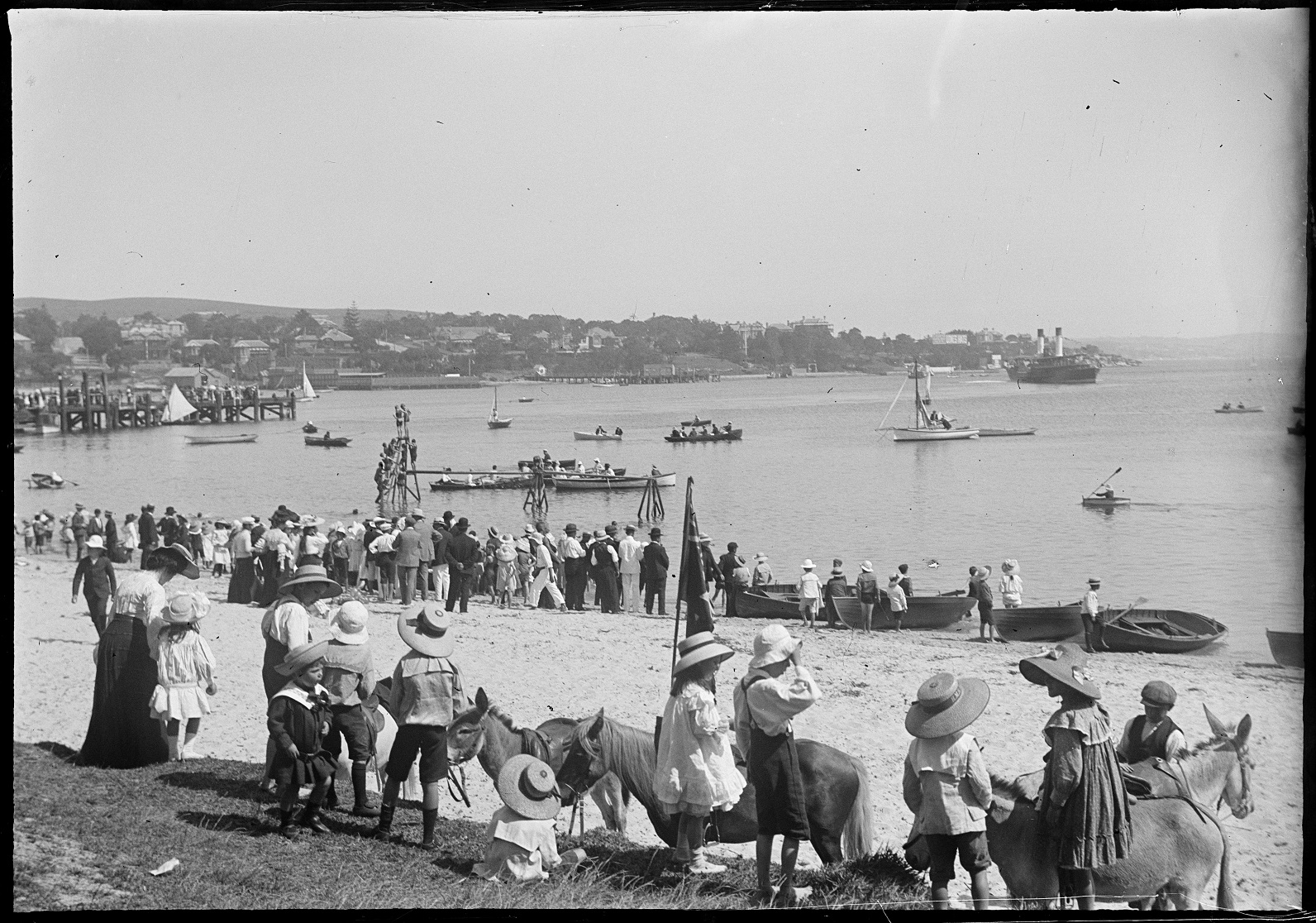
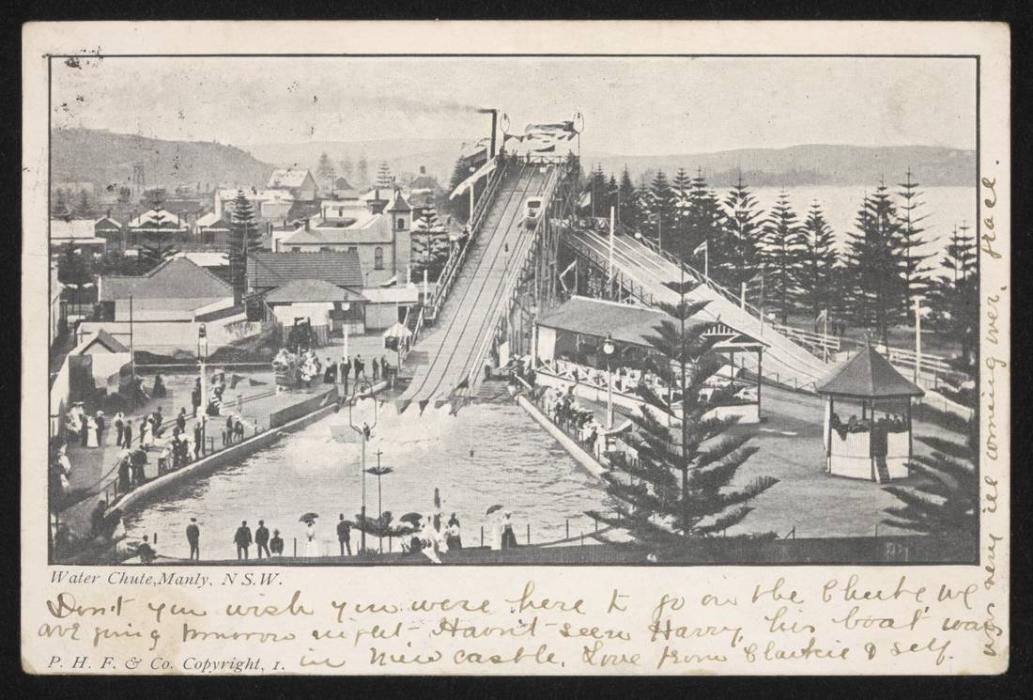
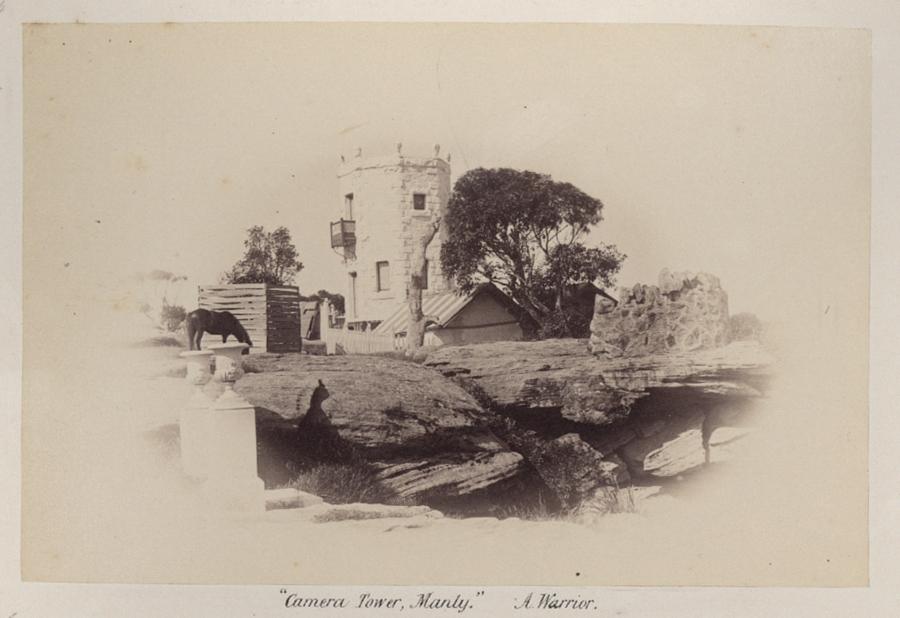
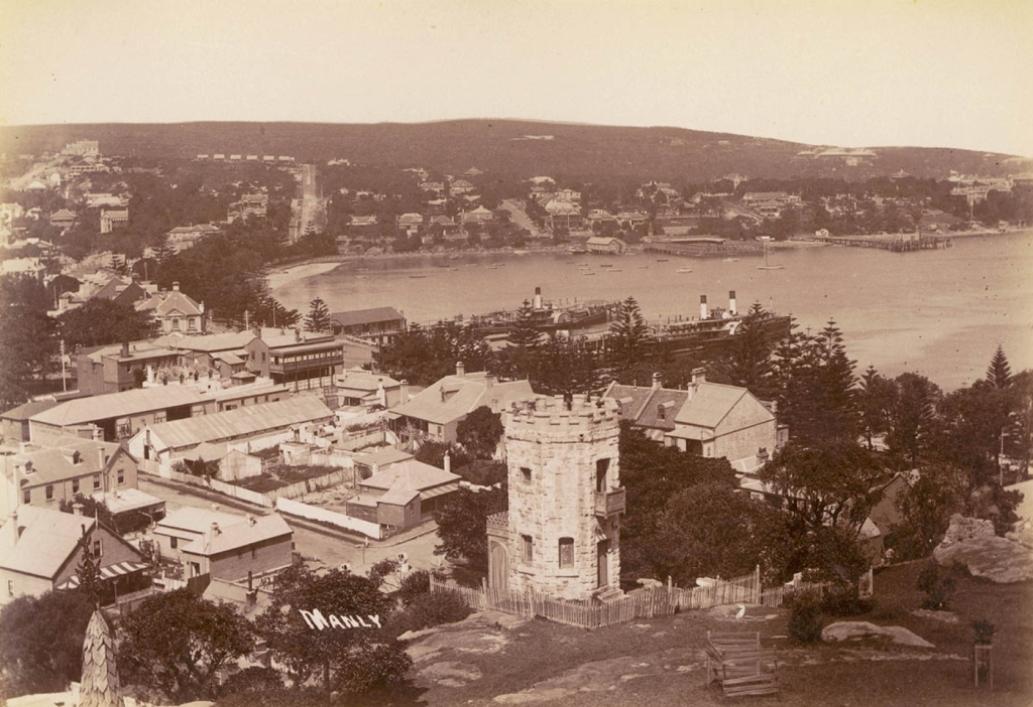
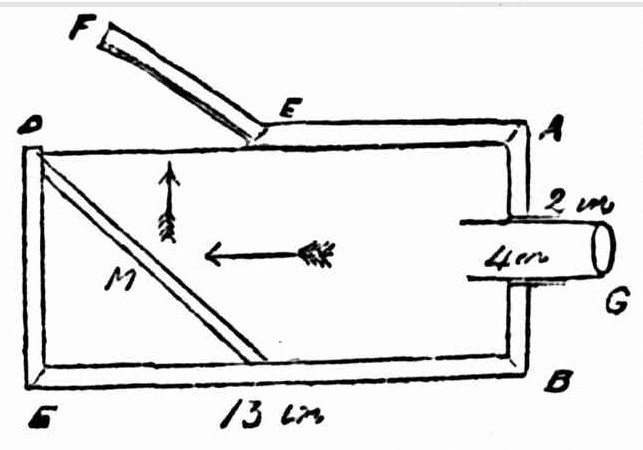
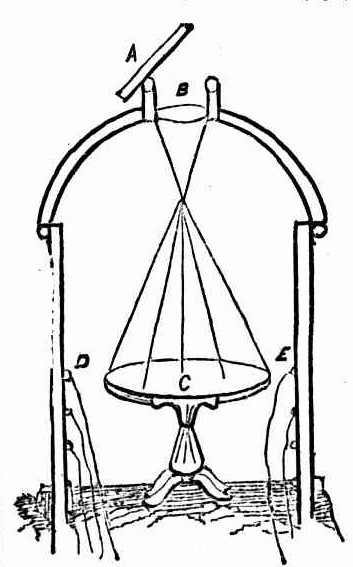
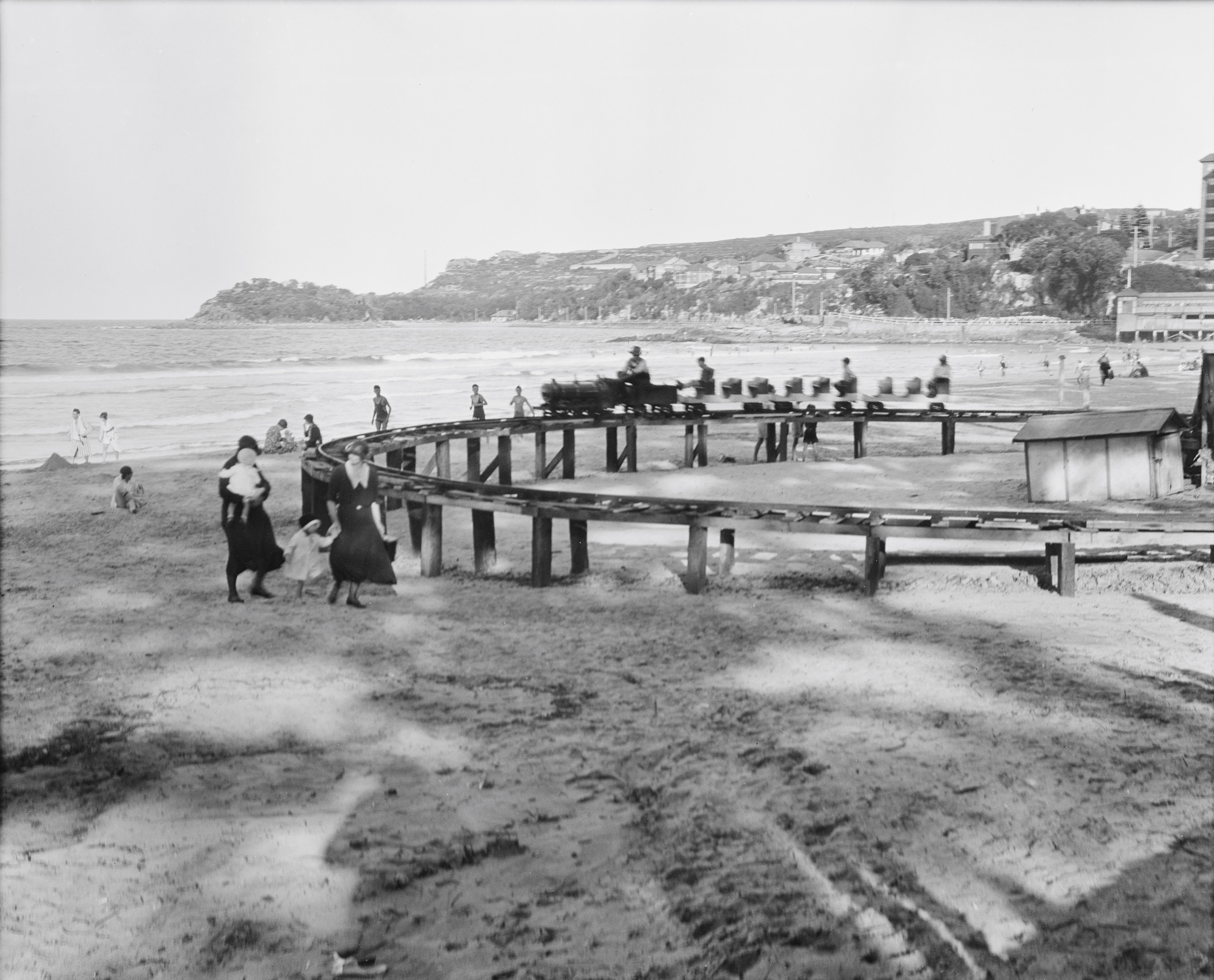
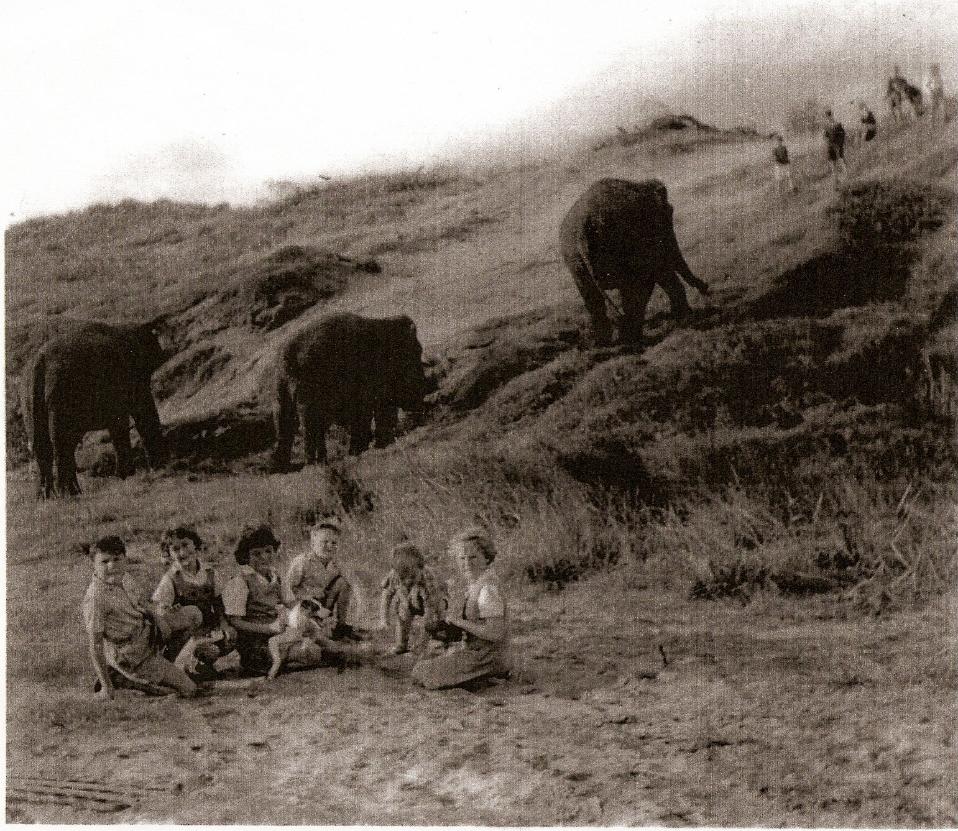


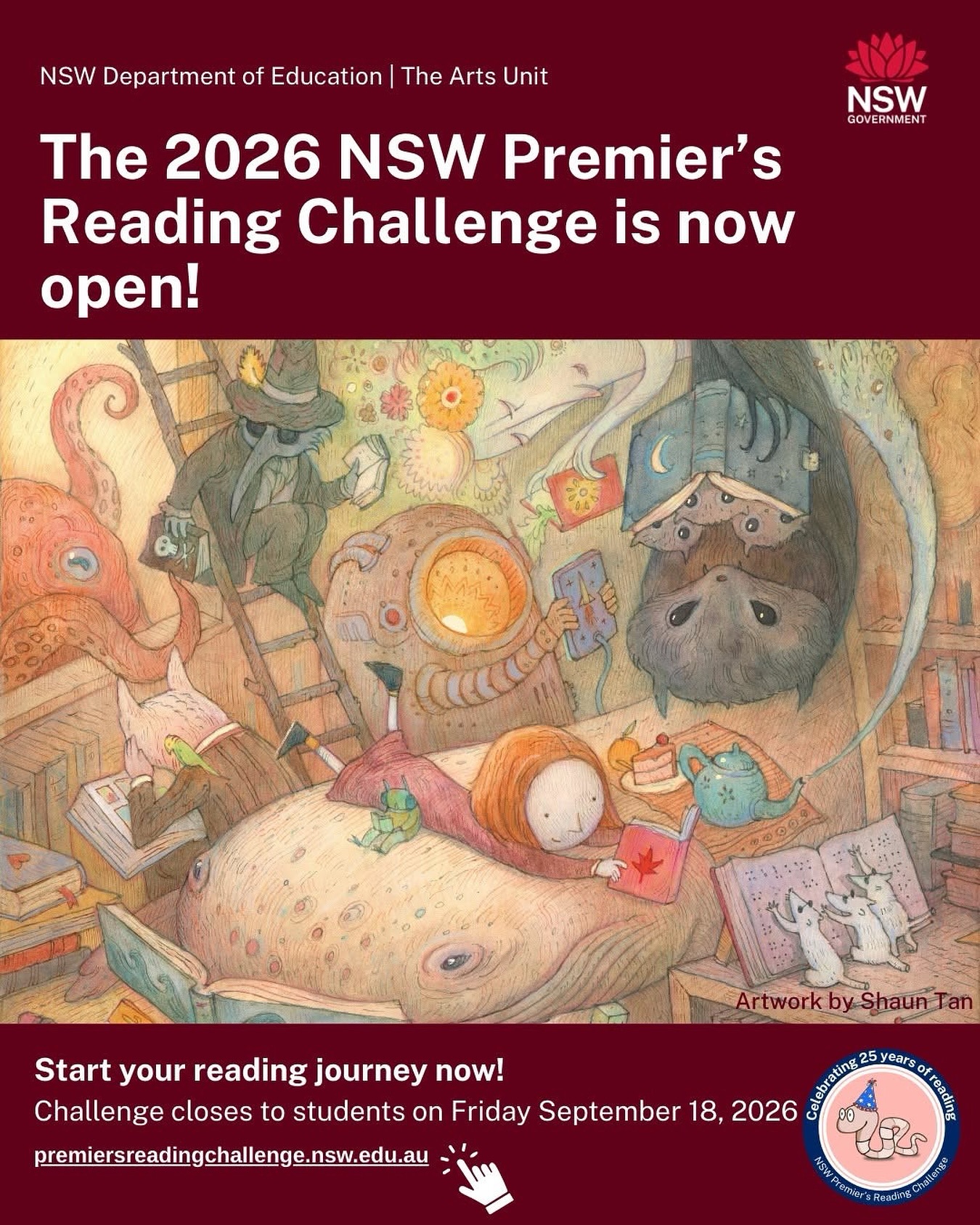

.jpg?timestamp=1784681345464)












.JPG?timestamp=1697163924249)
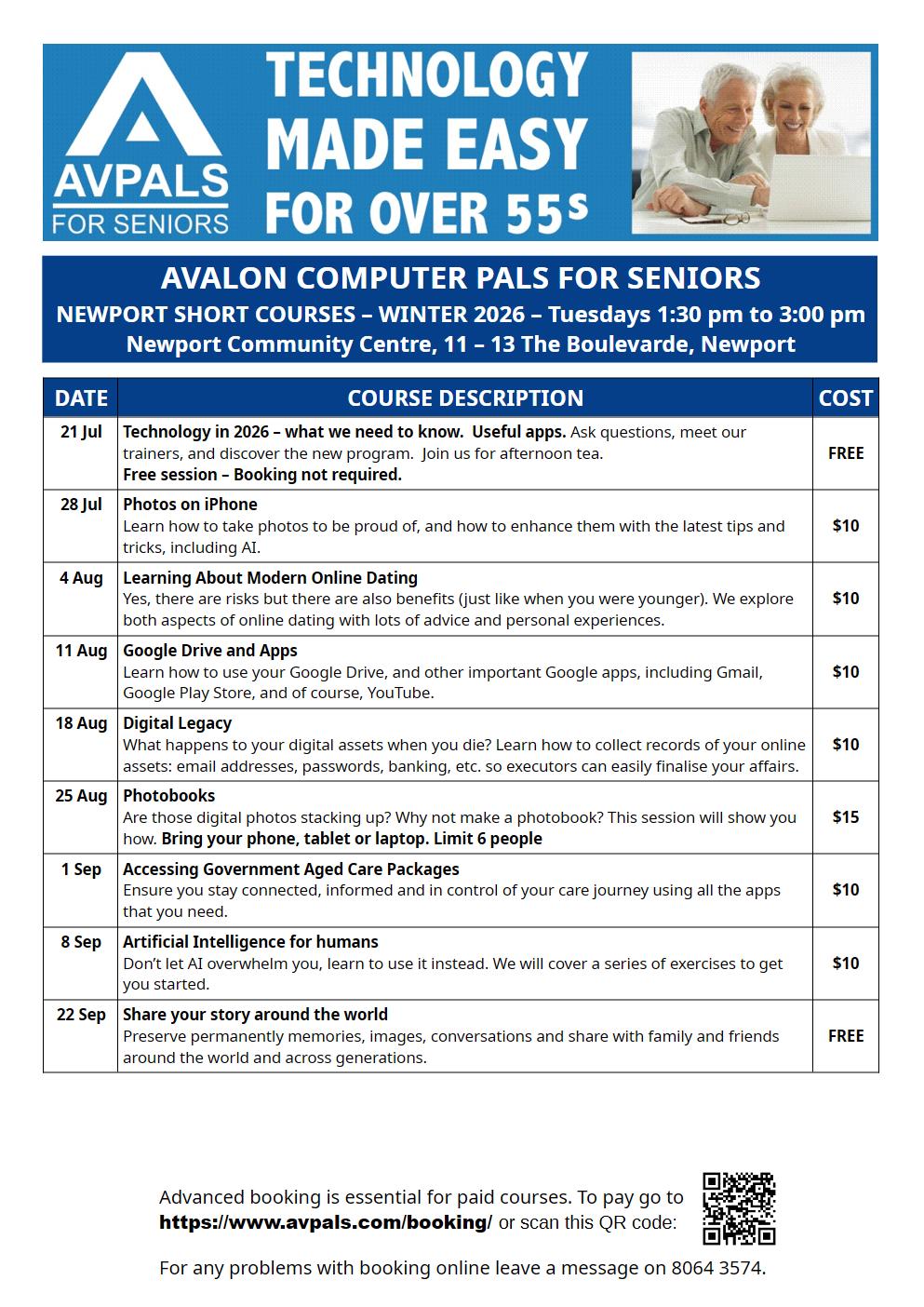





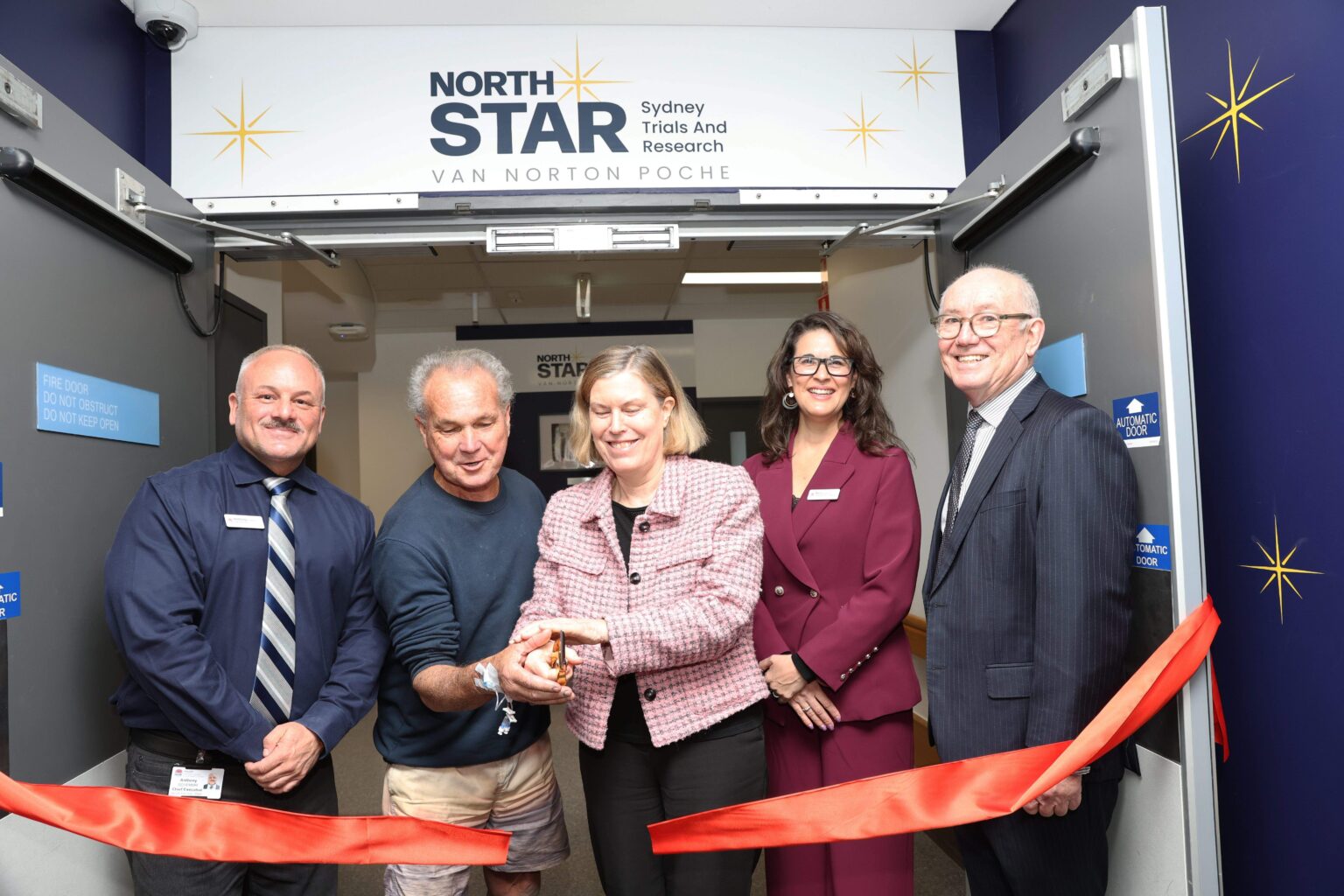












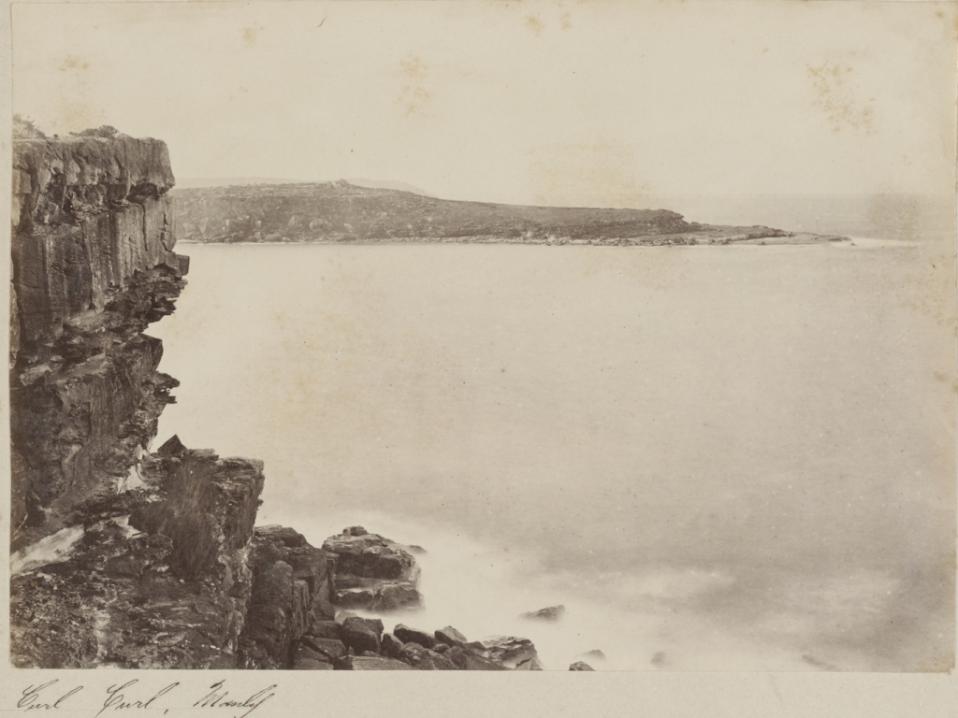
.jpg?timestamp=1574879535436)
.jpg?timestamp=1639097969353)
.jpg?timestamp=1639098003806)
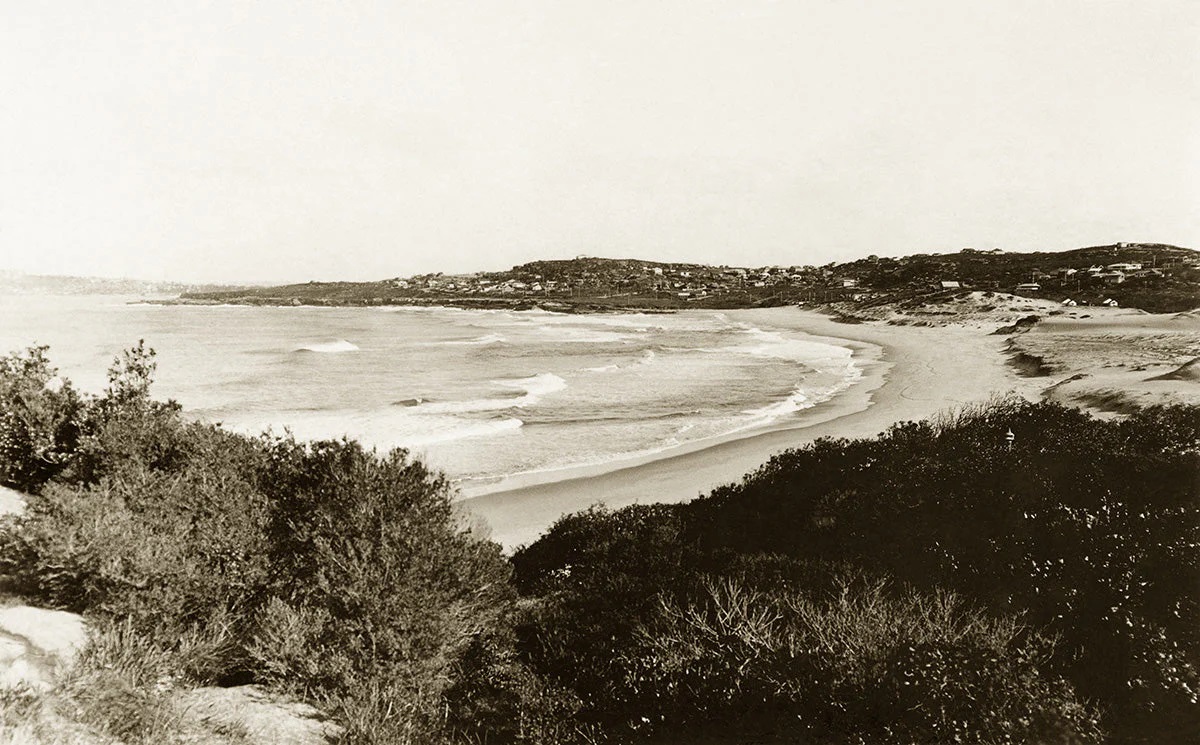

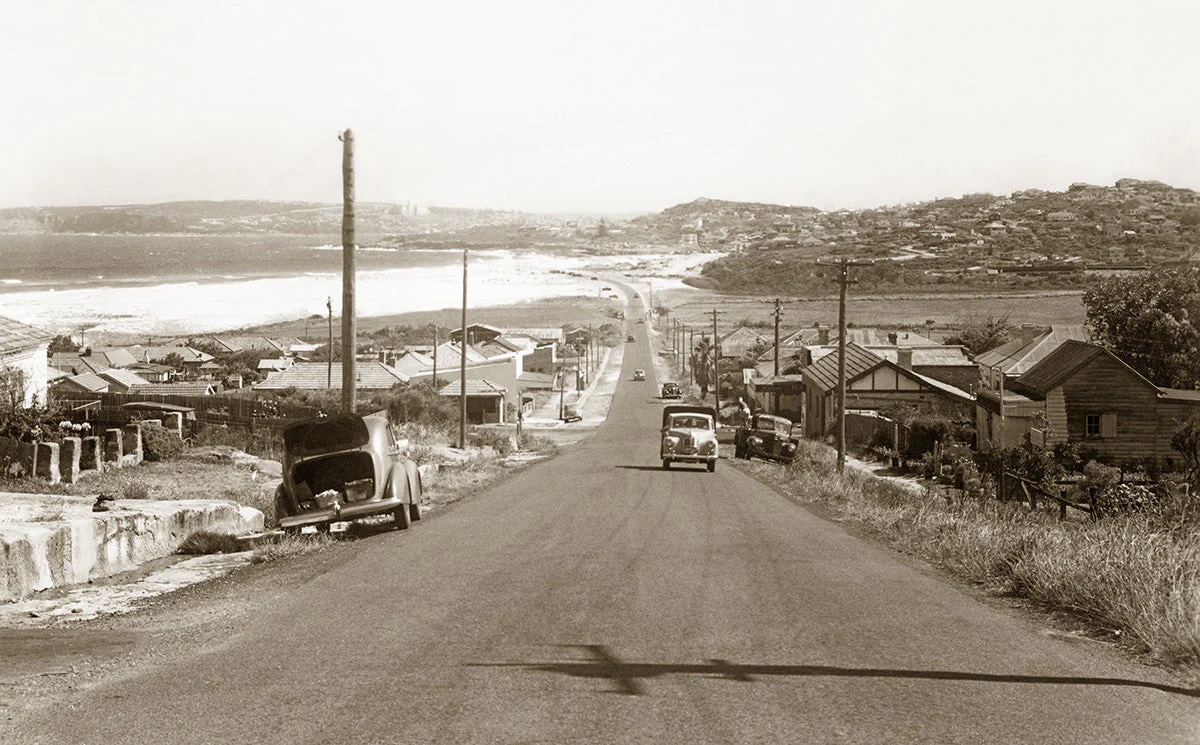











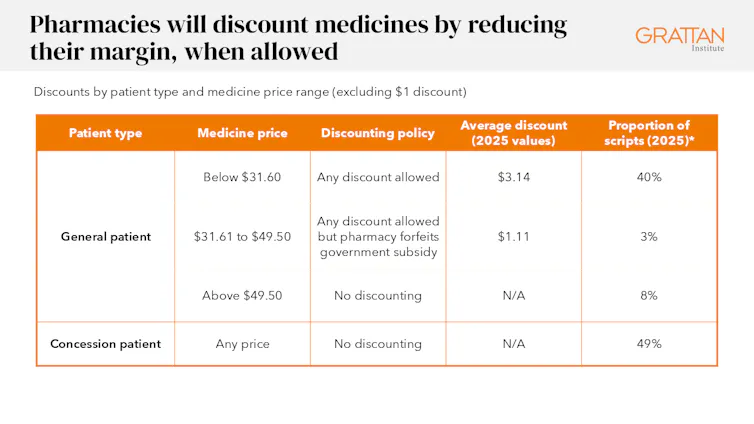




.jpeg)

