Horizontal Rainbow On Pittwater + Other Rainbows
Palm Beach artist Anne Spencer sent in the following a few weeks back, sharing:
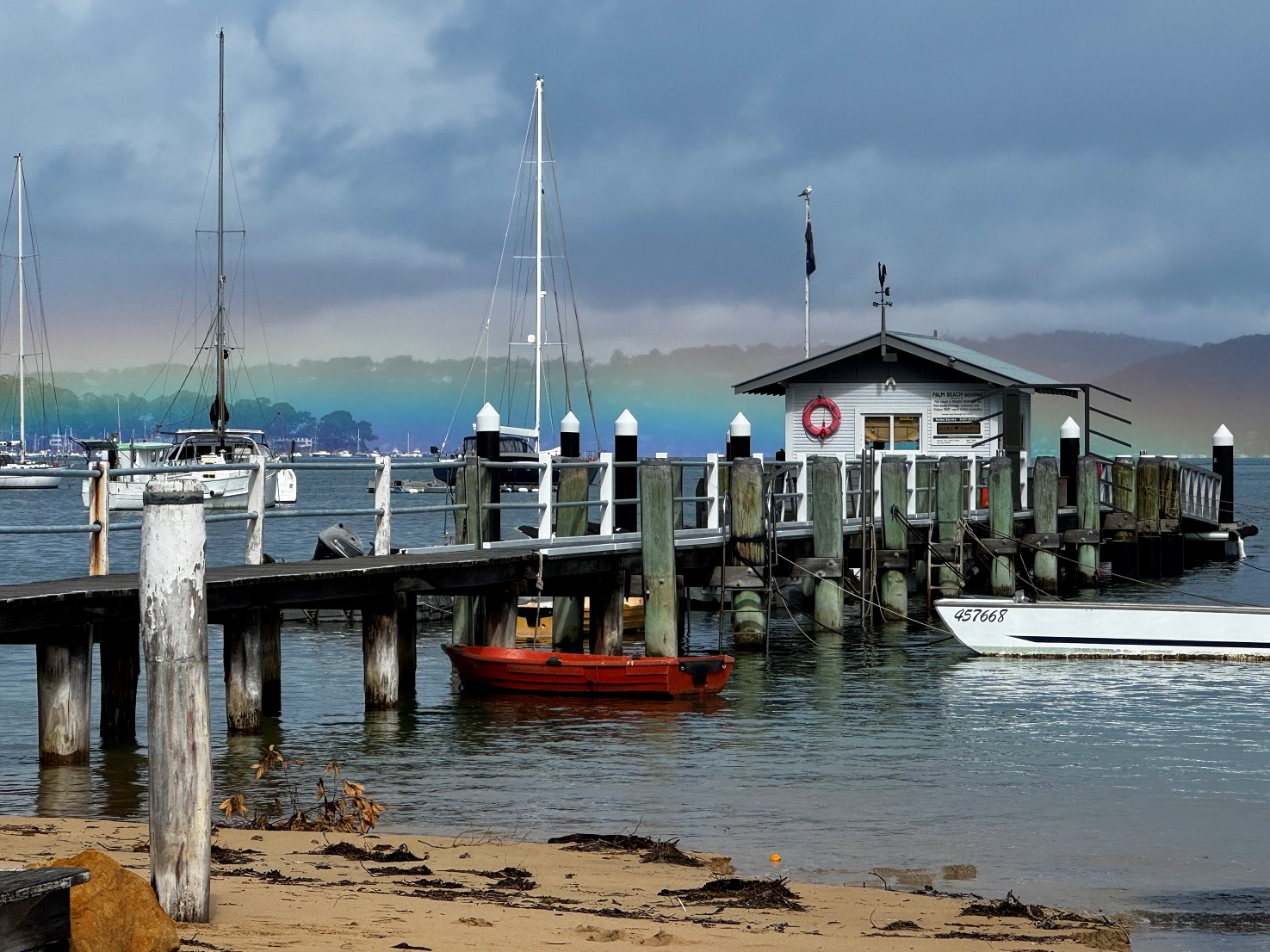
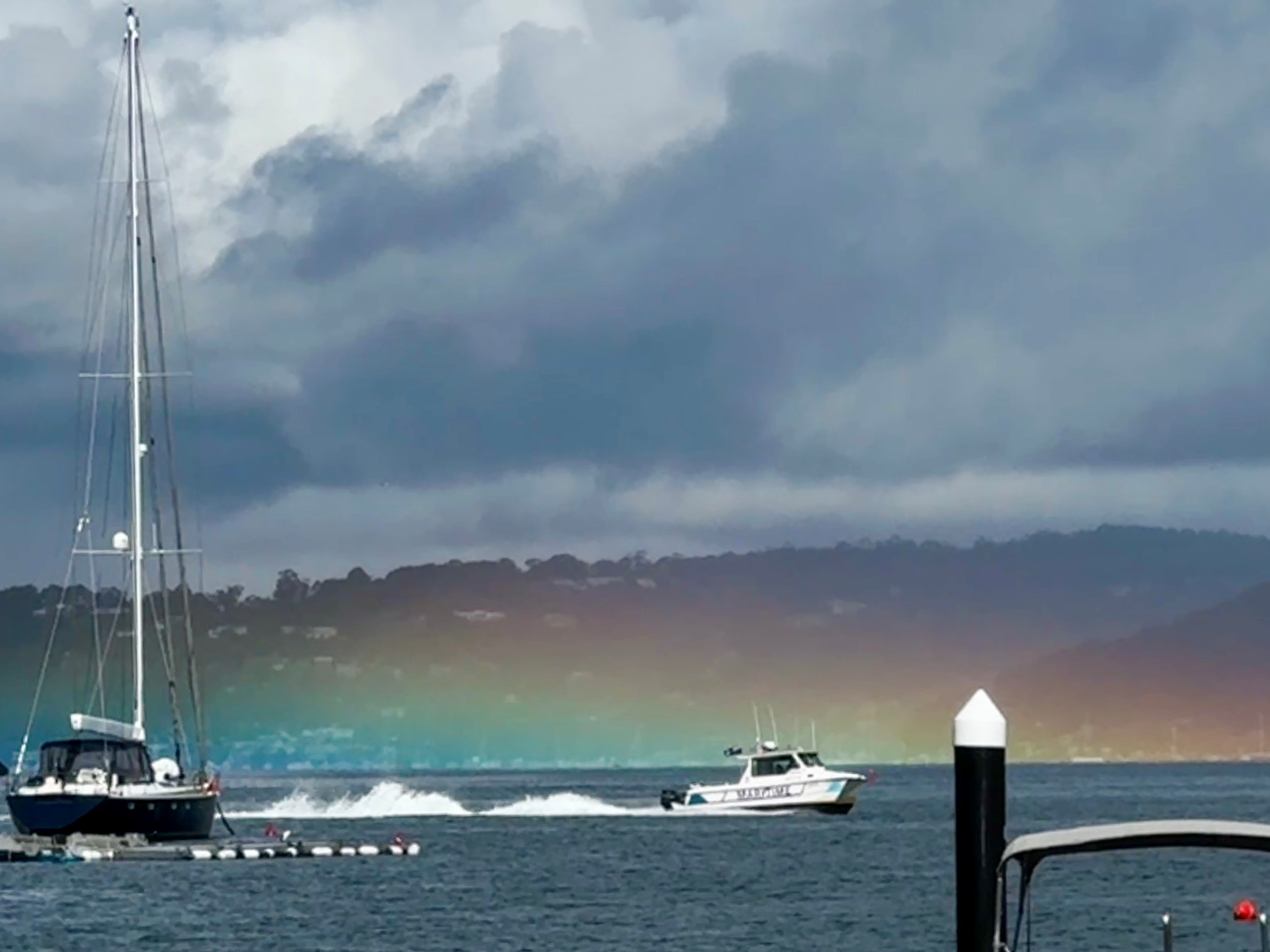
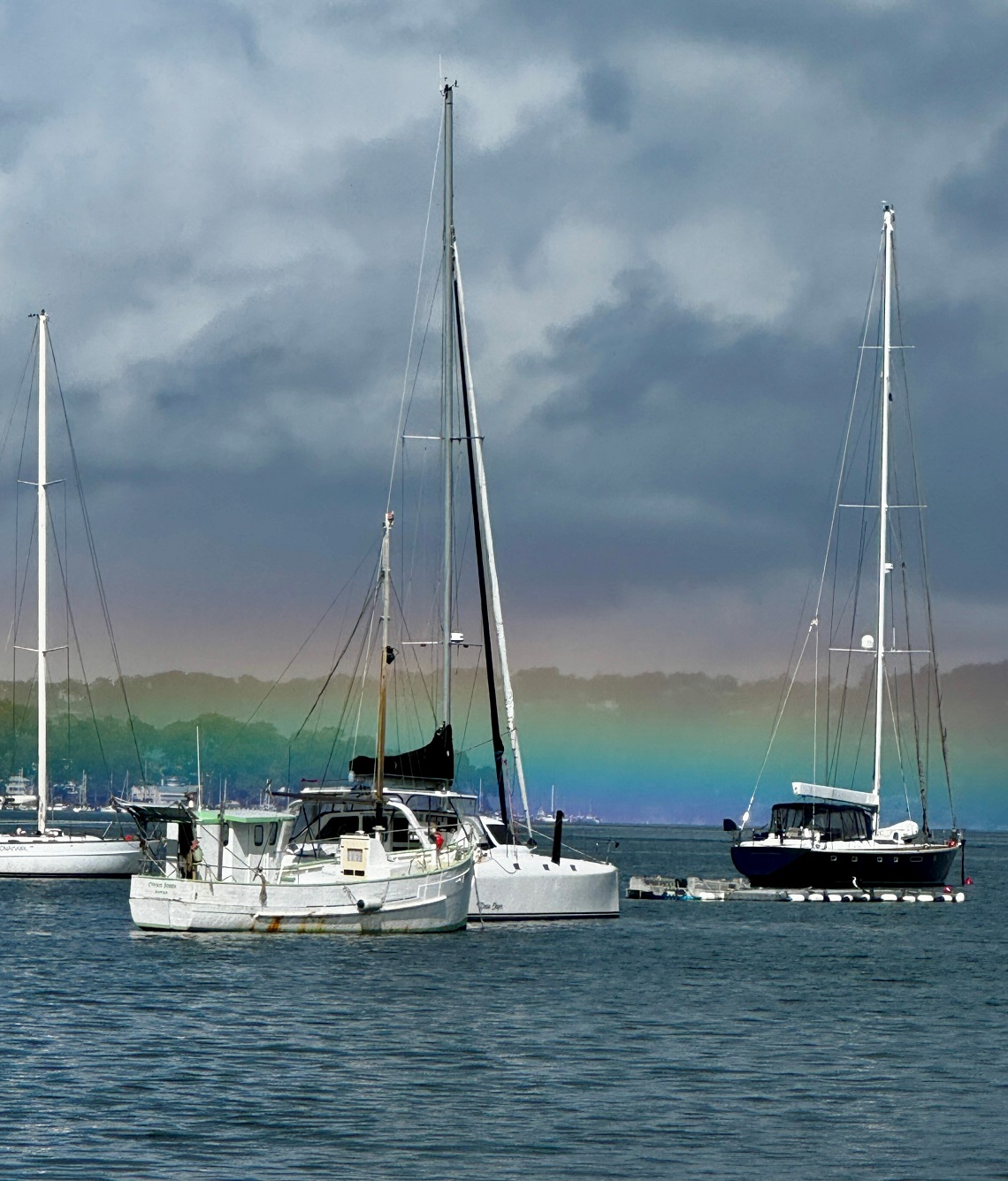
''My horizontal rainbow photos at ground/sea level, which I took at Sand Point!!! - I sent these off to Prof Fred Watson - the answer back from Fred'':
“They’re definitely a rainbow, with a rain shower between you and the distant trees. The fact that it’s at ground level tells you that the Sun was directly behind you and 42 degrees above the horizon!”
Horizontal rainbows are rare optical phenomena and are a traditional rainbow formed by a low sun, but with a twist of perspective.
The Physics: Rainbow geometry dictates that the height of a rainbow's arc is inversely related to the height of the sun. If the sun is very low on the horizon behind you, so is the rainbow.
The Illusion: When a dark rainstorm cell forms a narrow curtain of water droplets over the open ocean or an estuary, the rainbow collapses visually. Because the horizon is flat and open, the arc appears exceptionally low, wide, and stretched horizontally across the water's surface, making it look like a glowing, flat ribbon.
Anne's pictures inspired a look at other kinds of Rainbows:
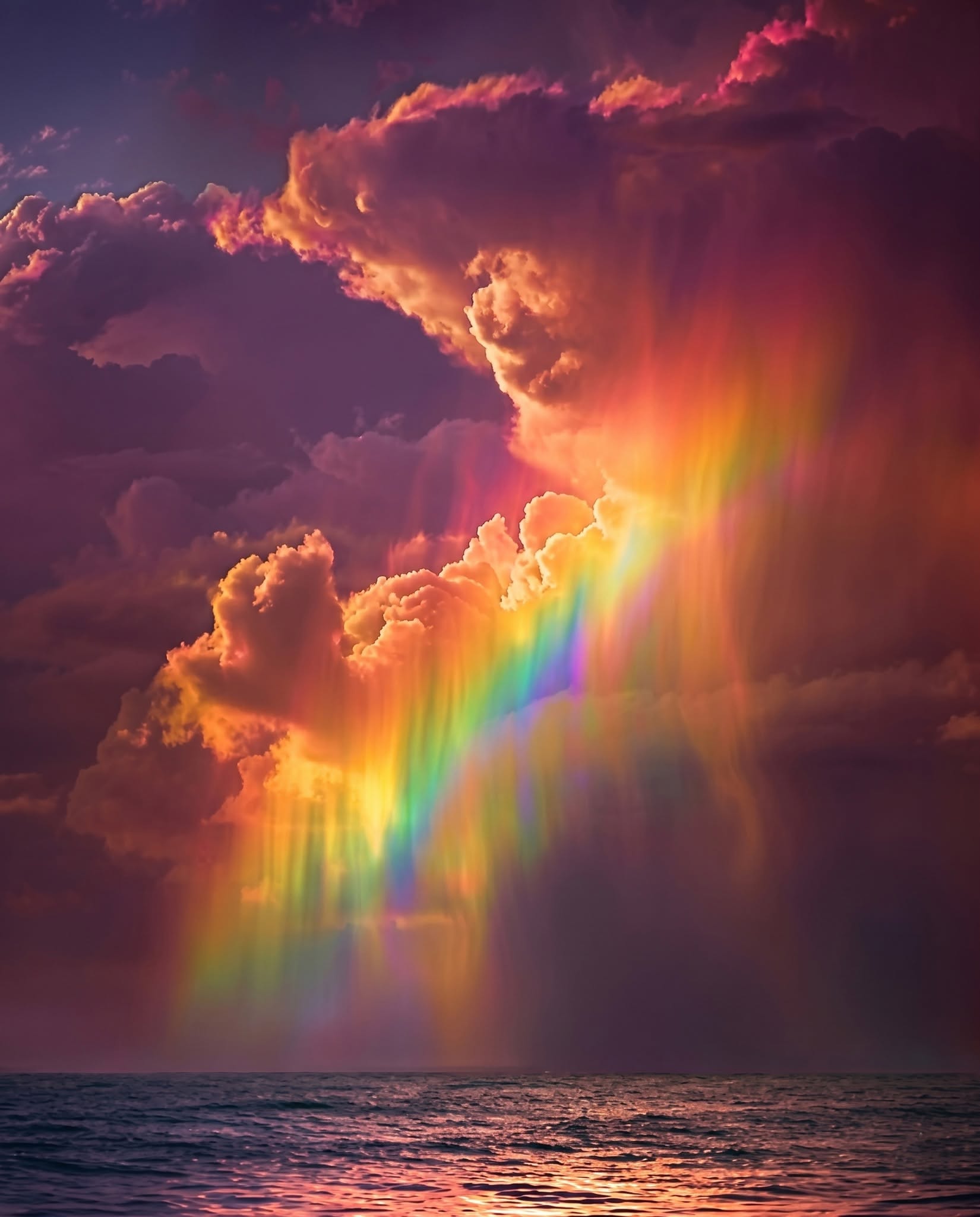
Rainbow Curtain
This is an ocean scene where a storm cloud opens at sunset and drops a glowing curtain of rainbow-colored rain toward the sea.
This effect happens when low sunlight hits falling rain, sea mist, or fine droplets inside the storm. The droplets bend and split the light into bright bands of red, yellow, green, blue, and violet. Because the rain is falling in vertical streaks, the rainbow color looks like it is pouring down from the cloud instead of forming a simple arc.
The warm sunset clouds make the colours even stronger, while the dark ocean below gives the whole scene a powerful storm-afterglow feeling.
A view like this fits tropical coastlines, open ocean horizons, island beaches, and stormy bays .. especially after heavy rain when the Sun breaks through low clouds near sunset. - Info/Photo: AstroNature
Circle rainbows - and Double Rainbows
Rainbows are actually complete 360-degree circles, but they look like arches from the ground because the horizon blocks the bottom half. Bernadette Kelly sent in this Double Rainbow photo she took at south Avalon Beach a few years back:

A double rainbow, or secondary rainbow, is caused by a double reflection of sunlight inside the raindrops, and are cantered on the sun itself. They are about 127° (violet) to 130° (red) wide. Since this is more than 90°, they are seen on the same side of the sky as the primary rainbow, about 10° above it at apparent angles of 50–53°. As a result of the "inside" of the secondary bow being "up" to the observer, the colours appear reversed compared to the primary bow. The secondary rainbow is fainter than the primary because more light escapes from two reflections compared to one and because the rainbow itself is spread over a greater area of the sky. Each rainbow reflects white light inside its coloured bands, but that is "down" for the primary and "up" for the secondary. The dark area of unlit sky lying between the primary and secondary bows is called Alexander's band, after Alexander of Aphrodisias who first described it.
A rainbow is an optical phenomenon caused by refraction, internal reflection and dispersion of light in water droplets resulting in a continuous spectrum of light appearing in the sky. The rainbow takes the form of a multicoloured circular arc. Rainbows caused by sunlight always appear in the section of sky directly opposite the sun. Rainbows can be caused by many forms of airborne water. These include not only rain, but also mist, spray, and airborne dew.
Rainbows when viewed from the ground typically appear as an illuminated arc, but when flying, if there is enough mist they can be seen as full circles. The centre of the curve is always on a line from the Sun to the observer's eye.
In a primary rainbow, the arc shows red on the outer part and violet on the inner side. This rainbow is caused by light being refracted when entering a droplet of water, then reflected inside on the back of the droplet and refracted again when leaving it.
In a double rainbow, a second arc is seen about 10° outside the primary arc. Its colours are perceived to be in reverse order, with red on the lower side of the arc.
Double rainbow and supernumerary rainbows on the inside of the primary arc. The shadow of the photographer's head at the bottom of the photograph marks the centre of the rainbow circle (the antisolar point).
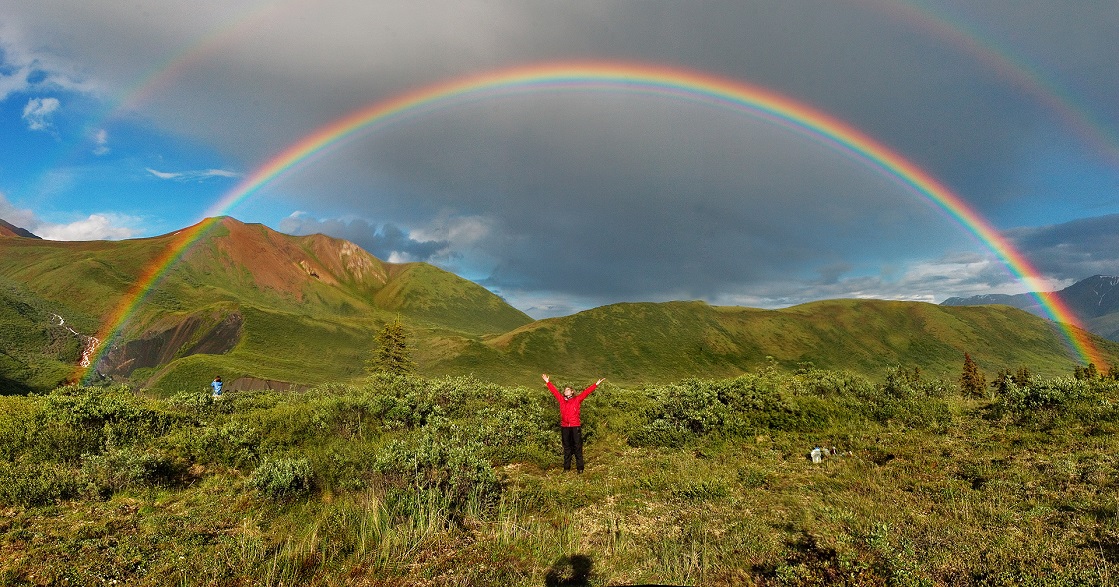
Double rainbow and supernumerary rainbows on the inside of the primary arc. The shadow of the photographer's head at the bottom of the photograph marks the centre of the rainbow circle (the antisolar point). Photo: Eric Rolph
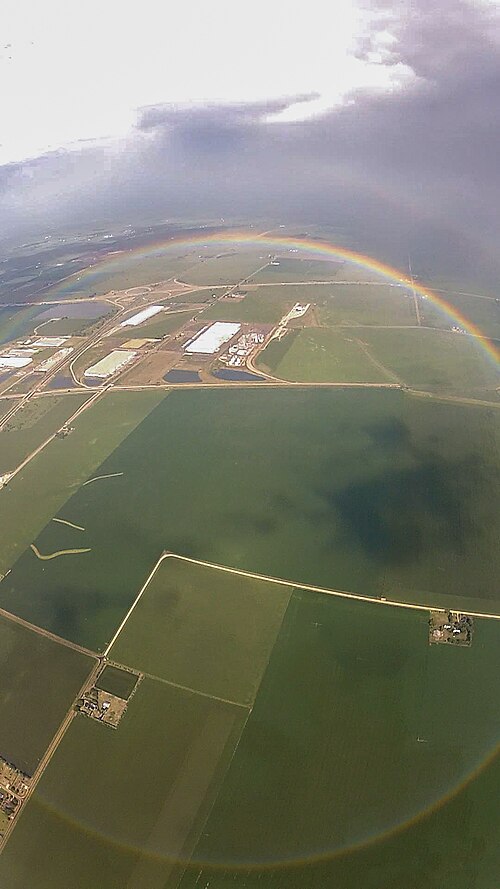
Circular rainbow. Photo: Steve Kaufman