Family History Month 2026: Find out More about Where You Came From
There was some interesting news from Kiama Library this past week - who tells us:
''It seems the library has its own Odyssey legend. Last weekend, this long overdue book finally made it's way home to Kiama Library - around 150 years after it was last borrowed. It was found in an old tea chest bricked into a fireplace in a house on Manning Street.
We're unsure of the date it was last borrowed, but it was from the time when the library was housed in the old Kiama School of Arts, between 1872 and 1890. At that time, the collection consisted of less than 1000 volumes, this one being number 506.
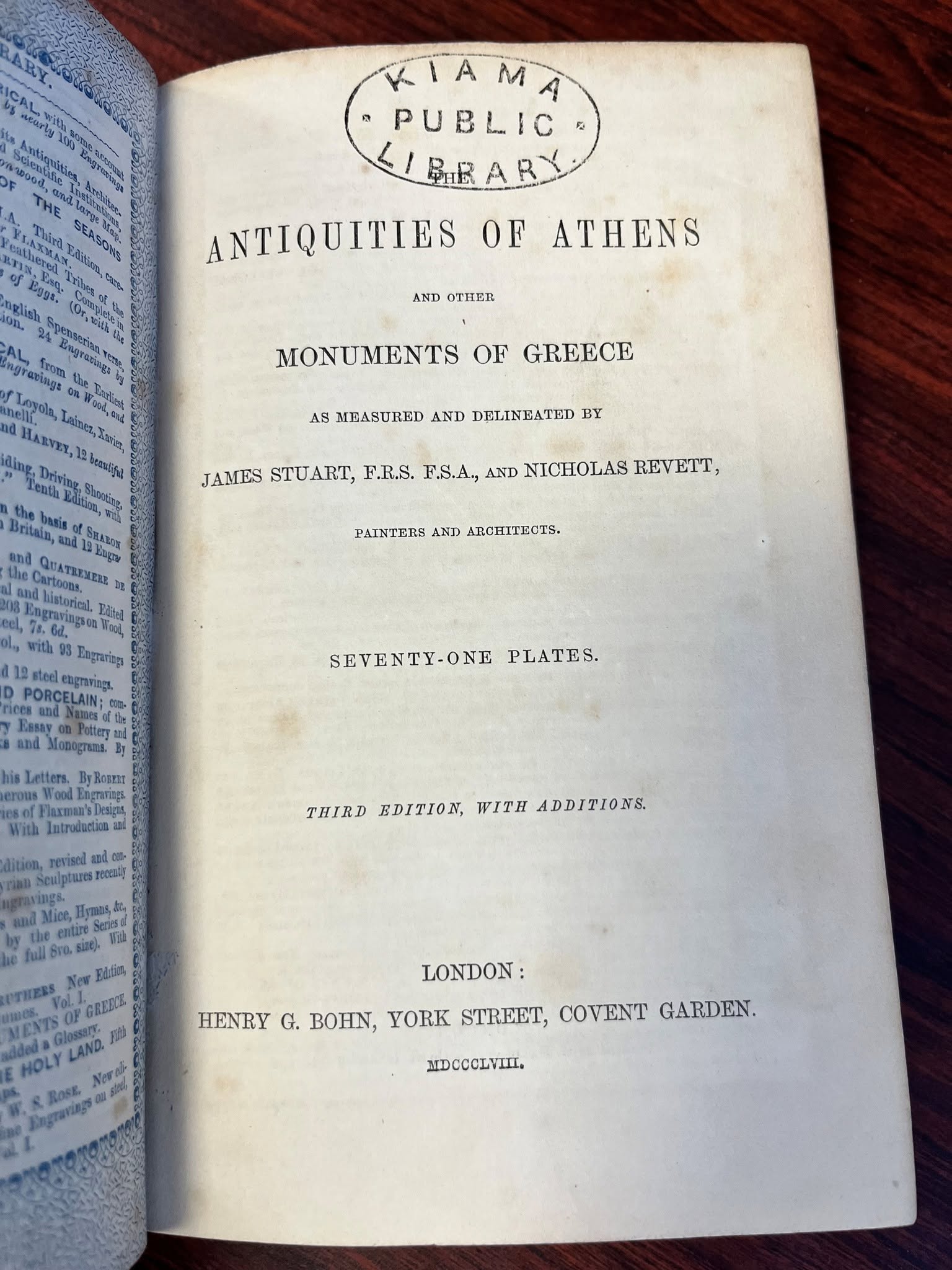
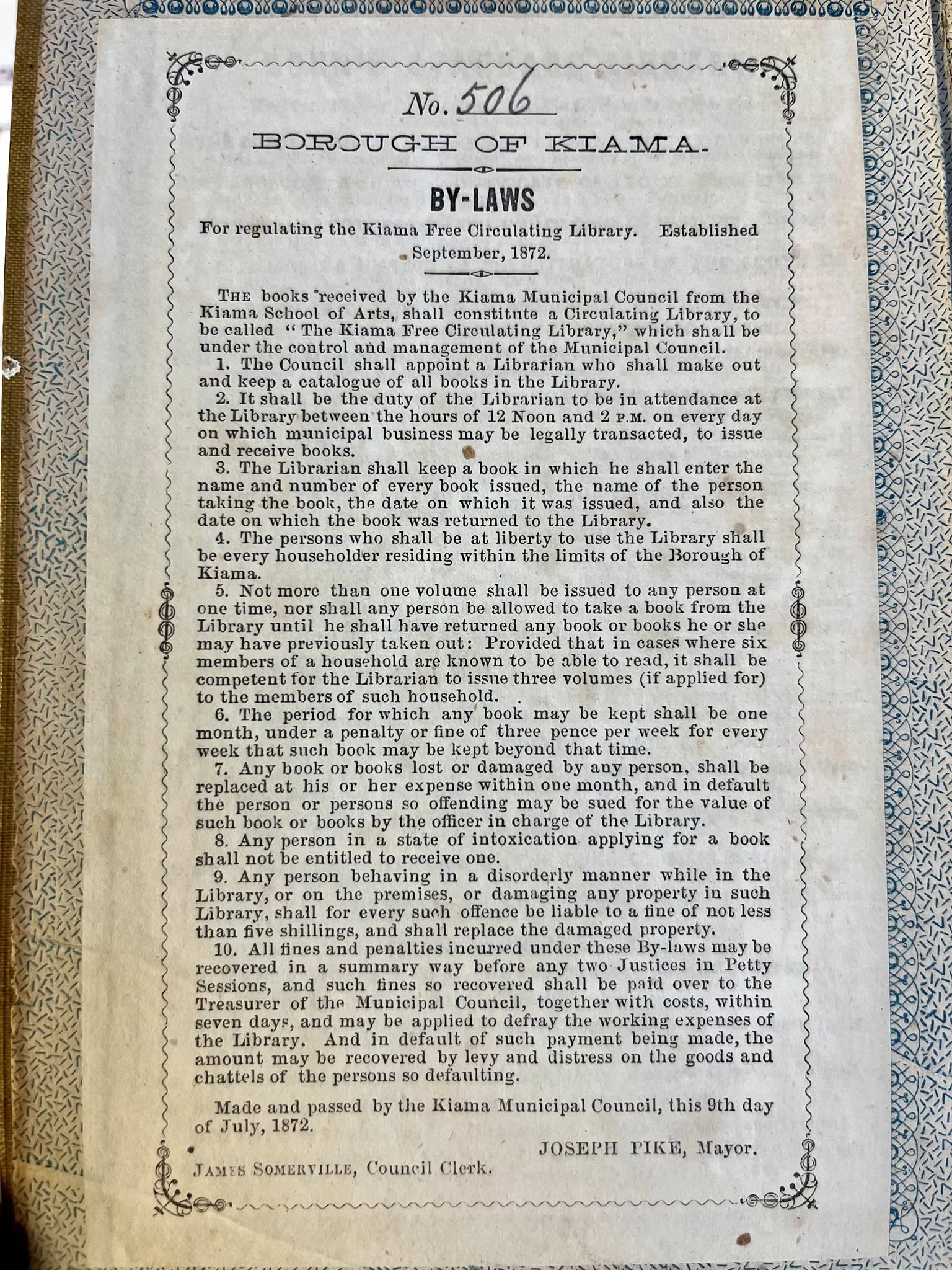
According to the by-laws stated in the frontispiece, the borrowing period was one month, with a fine of three pence per week for items returned after that time. Over 150 years, this adds up to 97 pounds, or $28,000 in today's value (accounting for inflation). Just as well the library no longer charges fines! Although it may have gone some way to solving the library's financial woes. 😆 We can now appreciate why it was bricked up in a fireplace - the Odyssey with a crime thriller twist!
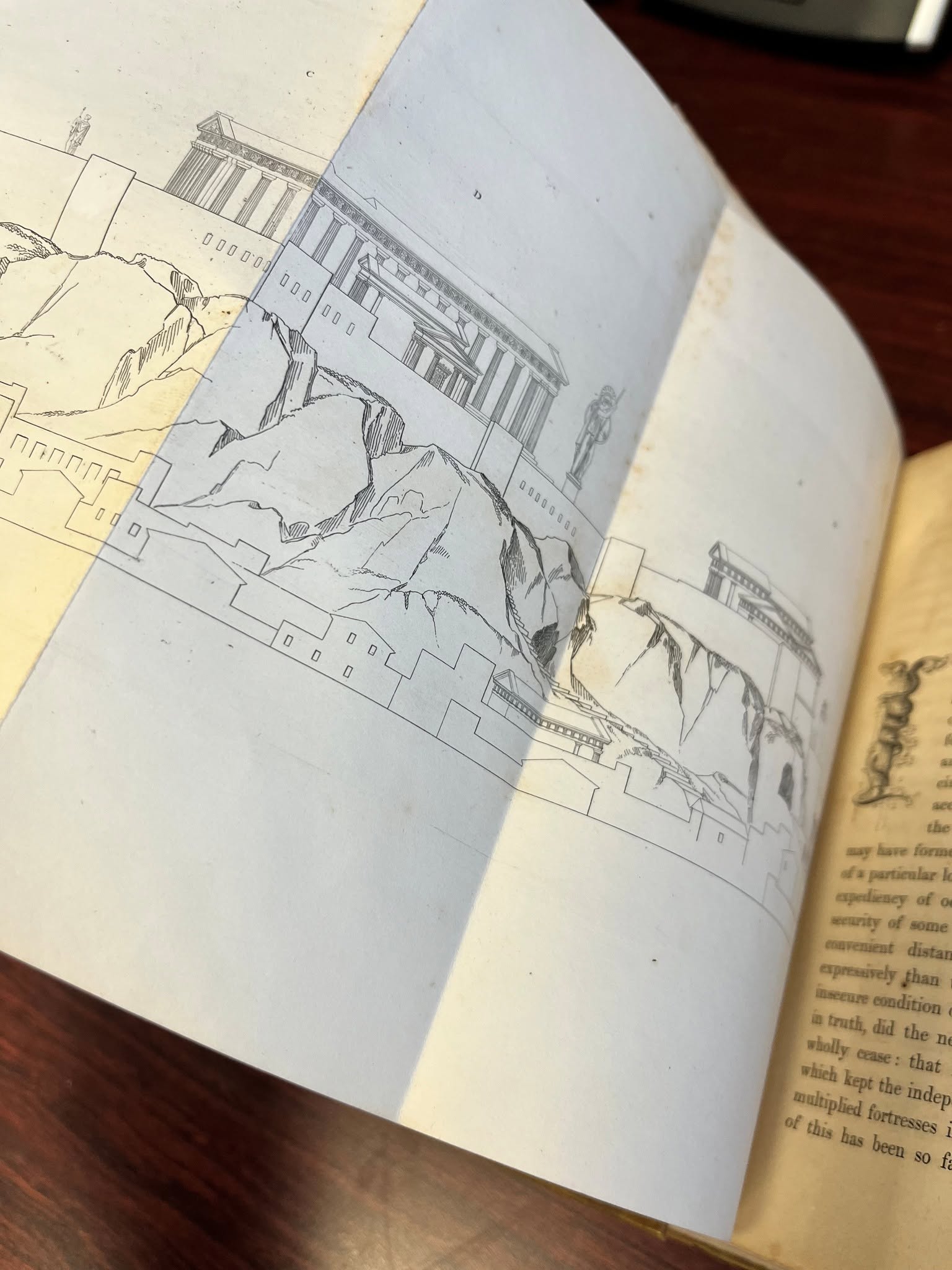
The book itself - The Antiquities of Athens - was published in 1858 and contains 70 black and white plate illustrations, including some that fold out. It is in remarkably good condition, although is no longer available for loan.''
Family History Month
While on libraries, Family History Month is celebrated throughout August in Australia and featuring the theme in the ACT of "Ancestors: Mundane to Magnificent" to explore genealogical connections through local library events, webinars, and historical records.
The National Family History Month theme is "Family as a Community – Together We Can Do So Much More".
This reminds us of The Basin Regattas of the 1890's and our Great-Great Uncle who was a member of the Royal Sydney Yacht Squadron during that decade - members of this club, based on Sydney Harbour, used to come out here to host these regattas which local fishermen would race in and win money in, which was great during times when Pittwater was a farming and fishing community and some extra funds were always welcome - especially those won through sailing and rowing. The RSYS was focussed on supporting community - so that theme of "Family as a Community – Together We Can Do So Much More" still rings true here.
Uncle Charles passed away in 1906 - and when we researched a little we found:
Mr. Chas. A. Guesdon, an old and popular member of the Royal Sydney Yacht Squadron, passed away yesterday morning, at his residence, Karraba-road, Neutral Bay. Mr. Guesdon was well known in yachting circles, and at the time of his death was the secretary of the Royal Sydney Yacht Squadron, the duties of which office he took up upon the resignation of Mr. Armitage. Previously, he was for some years secretary of the Athenaeum Club.
Mr. Guesdon was for many years an active member of the yacht squadron, in fact he made yachting his chief source of amusement and recreation. He was the owner of the yacht Midget, and although he was not a racing member, he took the keenest interest in all aquatic contests. His genial temperament and sterling qualities gained him unusual, popularity, and his familiar figure will be missed by all those who had the privilege of knowing him. Mr. Guesdon leaves a widow and three daughters, one of whom is at present on a trip to England. PERSONAL. (1906, May 26). The Sydney Morning Herald (NSW : 1842 - 1954), p. 11. Retrieved from http://nla.gov.au/nla.news-article14774911
His brother, our Great Great grandfather, would also come to Sydney - although one of the funniest things we've learned about him so far along the 'giving and building community' Family History Month theme was he formed a music group called the 'Filibusters' in his younger years, with Charles, to raise funds for what would become the Royal Hobart Hospital in Tasmania. This becomes even funnier when we found out he became an Independent Politician there in the years before political parties in Australia existed and read a newspaper report of him 'raging in the chambers' when the first political party was being formed, with him saying; 'parties form factions within them and factions are no good for the democracy of any nation, including Australia'.
A 'filibuster' is a political delay tactic used in a legislature to stop or prevent a vote on a bill. It most commonly involves giving a very long speech, but can also be done through other stalling rules.
The 'Filibusters' didn't run concerts just for the hospital though - as finding these little insights showed us:
FILIBUSTER CONCERT.-The Filibuster Band came out last night from a seclusion of some four or five months, and gave a concert at the Town Hall in aid of the funds of the Sailors' Home. There was a large and fashionable audience, of which the ladies formed a large proportion. The programme was not exclusively instrumental, but was varied by vocal selections by members of the band, and proved one of the best that the "Busters" have yet been able to present to the public. The numbers performed by the band, half-a-dozen in all, showed that they have not been idle during their retirement, and have profited greatly by the tuition of the bandmaster, Herr Schott. The instrumentation through-out was a palpable improvement upon any previous efforts made by the band in public. The selections rendered were:-Slow March, Fest; selection, Maritana (in which Mr. H. Westbrook performed a cornet solo in "Scenes that are brightest"; waltz, "La Reine des Prés;" selection, Boccaccio; waltz, "Aus Dem Hochwald;" waltz, "Sooner or later." In the vocal portion of the programme, Mr, C. Pitfield sang "The fog bell;" Mr. W. Benson, "For her dear sake;" and Mr. C. H. Westwood, "Queen of the earth." Each of the trio was heartily encored, but Mr. Westwood was perhaps the most successful in the very pretty ballad that fell to his share, giving ns an encore, "True love will never fade." A quartette, "When the hues of daylight fade," was sung by Messrs. Benson, Hudson, D'Emden, and E. Hannaford with much acceptance, as was also another in the second part, "Must I then part from thee," by Messrs. Westwood, Pitfield, Hudson, and Lovett. The concert altogether was a most creditable one, alike to the performers and their leader, and ample evidence was given by a rather critical audience of their appreciation of the programme, not the least pleasing feature being that the performance was in aid of a good cause, and that a handsome sum will be added to the fund now being raised for the erection of a new Sailors' Home in Hobart. ... THE MERCURY. (1885, February 5). The Mercury (Hobart, Tas. : 1860 - 1954), p. 2. Retrieved from http://nla.gov.au/nla.news-article9099973
The late Mr. W. A. Guesdon was, apart from his other activities, keenly interested in music. He was a good pianist, a sympathetic accompanist, and a musician whose helpful criticism, especially in the matter of operatic music, was eagerly sought. Forty years ago he was the conductor of a large and enthusiastic amateur brass band, known as the "Filibuster Band" (or, more familiarly, the "Busters"). The badge was a skull and cross bones. The band gave chiefly invitation and charity concerts, and played a number of times at the Botanical Gardens. Among the members were Messrs. Charlie Guesdon (brother of the deceased), E. M. and A. H. Hannaford, H. E., F. E., and Charlie Westbrook, Fred Rolfe, Frank Lovett, and Walter Hunter. Music & Drama (1926, December 29). The Mercury (Hobart, Tas. : 1860 - 1954), p. 3. Retrieved from http://nla.gov.au/nla.news-article29470923
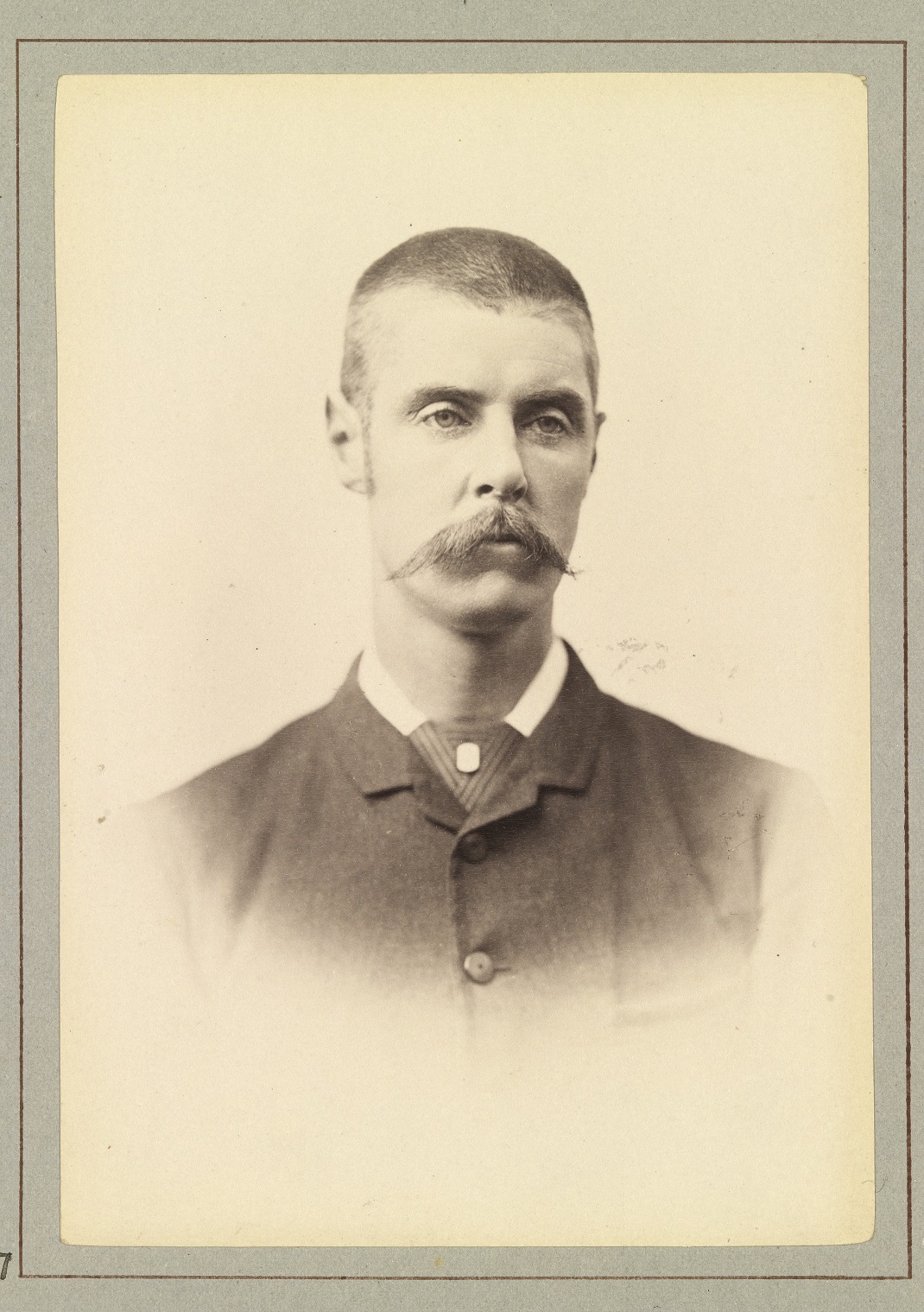
Great Great Grandfather during his 'Filibuster' days - a few of them cut their hair short like this apparently - were they an 1880's forerunner of the 1980's 'punk' era?
Successive relatives on that side of our family also came to Pittwater, mainly to the Barrenjoey end of the peninsula, and especially during the 'Season' at Palm Beach, as well as having a farm in Western Sydney, a shop at Turramurra, and a home in eastern Sydney's beach areas - meaning your Editor is a 5th generation 'Pittwaterian'. Nieces are a 6th successive generation and a line of people stretching back over 130 years who have dipped their toes in the waters of the Pittwater estuary and Palm Beach - there may even be another who was here in the 1870's as a teenager - he played football and cricket very well apparently - but we haven't finished researching that yet.
On the other side of the family, Errol Flynn, a once famous film star and cousin of your Editor's mum, departed from Careel Bay in 1930 at the start of an adventurous coastal voyage on his yacht 'Sirocco'. He had first been in our area when just six months old and his parents were staying at Manly Beach with an anecdote about how a wave rolled over him and he just laughed forming part of family records. He had an aunt who lived at Queenscliff whom he would visit when here in the 1920's and 1930's.
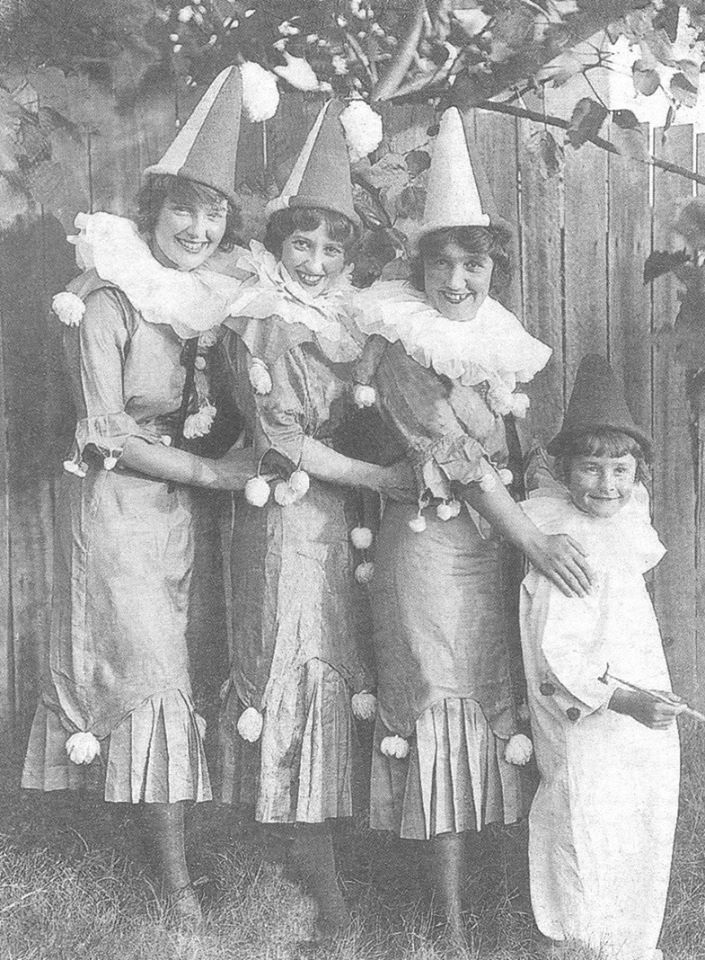
Errol Flynn aged 6 - apparently a performance in Manly in 1915 - his mum Lily on far left, looks like our mum did when younger. Photo: courtesy Robert towns
Go Explore where you came from: ask questions
These few examples are what you can find out when you delve into where you came from and some of the adventures or just everyday things your relatives did.
Our local libraries at Mona Vale and Avalon hold lots of materials and books that can help you find out more about your family connections to this place and other places, and what they may have helped out in the community with - were they members of the local surf lifesaving club? Did they help plant those trees that now give us lovely shade when it's hot? Did they help with sailing regattas on the Pittwater estuary so people could learn how to have a great time and handle a boat safely?
You can also ask mum and dad or your grandparents - these will be the best anecdotes you will ever hear as they're all about you and where you came from.
Do they have photos? Do your relatives look like you did when younger?
Ask yourself; are these Tall Tales - or True Tellings? How can I find out? Where are the records?
Or maybe you want to do a little investigating of other families that live and lived here - what can the records tell us? How did this community, and all it can do when we all work together, grow from all these people who came before us did?
Council Supporting Family History Month
Perhaps you may want to let older people in your family know about the 'Unlock you Family History Workshops' the council is running this August.
Council states:
Curious about your family history but not sure where to start?
August is National Family History Month and it’s the perfect time to explore your own families story.
Join the Local History team for an introductory workshop on how to navigate online databases to uncover the secrets of your family tree.
Bring along your iPad, tablet or laptop to follow along.
Free: Bookings essential, limited spaces.
Workshops available:
- Thursday 13 August, 1pm - 2.30pm at Mona Vale Library
- Wednesday 19 August, 1pm - 2:30pm at Warringah Mall Library
- Wednesday 26 August, 1pm - 2:30pm at Glen Street Library
Please note this is the same workshop delivered at multiple locations. Only one booking is needed.
If you require further one on one assistance with your research, please book in to a Family History Friday session. Enquiries: 8495 5024
Book in at: events.humanitix.com/history-month-unlock-you-family-history-workshops
We highly recommend finding out more about your own family - it's great fun, you learn new skills and get to see how this place and other places were before you came along, AND it lets you gain insights into how our great community was built through the thoughts, ideas and deeds of those who came before us.
Be a little bit curious this August about your family and its history; what Odysseys did they go on? Is anyone returning to stand where they stood, or seeing what they saw - 150 years on?