NSW Councils unite to oppose half a billion dollar reduction in Government Financial Assistance Grants
Financial Assistance Grants are provided by the Australian Government to local government under the Local Government (Financial Assistance) Act 1995. Funding is provided to NSW and distributed to councils based on recommendations made by the NSW Local Government Grants Commission to the Minister for Local Government.
Financial Assistance Grants are untied and comprise two components:
- the General Purpose Component, which is intended to recognise differences in councils’ relative expenditure needs and revenue-raising capacity; and
- the Local Roads Component, which assists councils with the cost of maintaining their local road networks.
For 2025-26, around $1.052 billion in Financial Assistance Grants was allocated to NSW, comprising approximately $744 million for the General Purpose Component and $307 million for the Local Roads Component.
The Local Government Grants Commission has commenced a broader review of its allocation methodology. The Commission was undertaking consultation sessions with councils during August and September 2026 and has invited formal submissions by 9 October 2026.
The four councils, who represent the four largest councils by population in the region just over the pond of Pittwater, warn the proposal would divert more than $33 million away from their communities next year alone. The funding is required to fund increasing infrastructure and service demands.
The Local Government Grants Commission is proposing that the stripped funding be reallocated to other councils whose residents can less afford a rate increase.
Lake Macquarie, Newcastle, Central Coast and MidCoast councils say the proposed methodology shifts funding pressure between councils, when what is needed most is an overall increase in Local Government funding.
Lake Macquarie City Council is facing a projected reduction of at least $7.2 million a year under the proposed methodology, equating to an estimated $85 million lost funding over the next decade. Financial Assistance Grants, which are made by the NSW Government using Federal Government money, currently provide almost $21 million annually to Lake Macquarie City Council to support the delivery of essential infrastructure, community facilities, environmental programs and services.
Lake Macquarie CEO David Hughes said the proposed changes would have significant consequences for communities that rely on councils to deliver essential services and infrastructure.
"As one of the fastest-growing regional cities in New South Wales, Lake Macquarie is facing increasing demand for roads, community facilities, sporting infrastructure, environmental management and other essential services,” Mr Hughes said.
"With our population expected to grow by more than 50,000 people to reach 277,000 by 2066, councils like ours need funding models that recognise and support the challenges of growth."
"A recurring reduction of this scale would place significant pressure on Council's ability to continue delivering the infrastructure and services our community expects and deserves."
City of Newcastle currently receives around $15.5 million annually in Financial Assistance Grants. Under the proposed changes its grant allocation would be more than halved, creating a shortfall of at least $9.5m each year and more than $108 million over the next decade.
City of Newcastle CEO Jeremy Bath said the changes would threaten the delivery of key community services and the renewal and maintenance of infrastructure used not only by Novocastrians but residents from across the region.
“City of Newcastle delivers cultural and recreational facilities, major transport assets and coastal infrastructure that support communities well beyond our council boundary,” Mr Bath said.
“We fund regional assets such as the Civic Theatre, the Newcastle Art Gallery, the Newcastle Ocean Baths, the Newcastle Museum and even our swimming pools, which are majority used by people who don’t pay their rates in Newcastle. The grants commission can't simply say that Newcastle residents will just have to pay more in rates to offset a $9.5 million reduction in our annual grants income.
“The proposal to redistribute funding away from councils predominantly on the coast to regional and rural councils is just robbing Peter to pay Paul. We need the State Government to hit the pause button on this and urgently rethink how it should be helping struggling regional councils.”
The Central Coast is one of the fastest-growing regions in New South Wales, and funding models must recognise the significant infrastructure, service and disaster recovery demands that come with supporting a growing community. In addition to investing in roads, community facilities and essential services, councils must also be prepared to respond to and recover from natural disasters that can have lasting impacts on local communities. A reduction of up to $20 million per year in Financial Assistance Grants would place substantial pressure on Council's ability to deliver the infrastructure, resilience and community outcomes our residents rely on.
Central Coast Council interim CEO, Jamie Loader, said any reduction in the Financial Assistance Grants would have a significant negative impact on Council.
“Central Coast Council is the third largest LGA in NSW, an area which also includes more than 2200 km of roads, servicing a rapidly growing population of around 370,000 people. The support of government grants and funding is vital for us to be able to maintain the infrastructure needed for this growth. Quality roads, sporting facilities, water and sewer infrastructure and crucial safety features such as lighting and pathways for a vibrant night-time economy as well as cycling and walking infrastructure for schools, leisure and the general community are essential," Mr Loader said.
“While Central Coast Council is an $800M organisation – the grants we receive enable us to meet those community demands and expectations. To have a year-on-year reduction of up to $20M would have extraordinary consequences.
“Council undertakes a huge range of services and functions, many on behalf of other levels of government at the expense of ratepayers.
“With $13 billion in assets to maintain the growing community, there will be no option other than reducing services or passing on costs to the ratepayer should the funds be reduced. The timeframes provided do not allow for appropriate community engagement to inform future budget allocations or reductions.”
For MidCoast Council, one of the largest regional councils in the state, serving a community spread across 10,000 square kilometres and a road network spanning 3,600km, the impact is similarly significant. MidCoast currently receives $23.9 million in Federal Assistance Grants, which will be reduced to $18.9 million under the proposed changes.
Facing a projected reduction of $5 million per year, MidCoast’s General Manager Adrian Panuccio said the loss will have a big impact on the region. Over a 10-year period it will equate to a $55 million hole for a community, which is still reeling from a one in 500-year flood event in May last year.
“This is not the type of loss that can be absorbed, we will have to look at reducing services and options for increasing costs. This is the last thing our community need to be facing,” Mr Panuccio said.
“We had almost 4000 properties across our region requiring rebuilding, restoration or repair and numerous public spaces damaged that we still haven’t had any assistance with repairing for our community. We have an estimated $320 million of damage sustained to our road and bridge network that we are working through.”
Mr Panuccio said the reality of the proposed funding reduction would mean Council will have to consider how key services are delivered and will reduce the level of maintenance and repairs on key community infrastructure.
“We are still battling on behalf of our community to attract funding for key projects as a result of the flood, we cannot expect our community to pick up the tab for this as well,” Mr Panuccio said.
The four councils support efforts to ensure fair funding outcomes for rural and regional communities but say this should not come at the expense of other communities facing significant growth pressures. Instead, they are advocating for an increase in the overall funding available to local government consistent with motions passed for many years at the NSW and National Local Government Annual Conferences.
In July this year the Australian Federal Government and the Australian Local Government Association (ALGA) secured increased untied federal funding to address local council resource pressures. Until its known how much additional funding will be provided to the NSW Government for distribution in assistance grants, no redistribution should take place that strips tens of millions of dollars annually from local coastal councils.
The proposed methodology by the NSW Grants Commission assumes that residents in Lake Macquarie, Newcastle, the Central Coast and MidCoast can afford to pay more in rates than other councils in the Hunter.
The methodology calculations include income the councils have received such as emergency grants used to rebuild after natural disasters along with levies councils collect on behalf of the NSW Government. In the case of Newcastle, the new methodology even includes the income of Newcastle Airport despite the Airport being a separate legal entity whose income is entirely invested into airport operations.
The four councils are calling on the NSW Government to pause the proposed changes until the Federal Government's commitment in July this year to increase Financial Assistance Grant funding has been implemented. No council in NSW should be worse off simply to prop up another council who is struggling financially.
Proposed Changes to General Purpose - Local Roads Components
Lake Macquarie City Council, City of Newcastle, Central Coast Council and MidCoast Council are not the only councils reviewing their bottom line prior to making submissions.
Based on modelling provided as part of the consultation, North Sydney Council’s annual Financial Assistance Grant would reduce by approximately $385,000, from approximately $2.570 million to $2.185 million, representing a reduction of approximately 15%.
The estimated reduction in the General Purpose component is relatively minor at approximately $14,000. The revised methodology assesses councils’ expenditure needs and revenue capacity and is not expected to have a material financial impact on North Sydney.
The significant impact is in the Local Roads Component, which is estimated to reduce by approximately $371,000, or 58%.
The review proposes changes to both components of the Financial Assistance Grant. The purpose of the reform is to develop a methodology that is more transparent, consistent and based on reliable data when assessing the relative financial needs of councils.
Under the proposed methodology, there would be separate revised approaches for the General Purpose and Local Roads components.
The proposed General Purpose methodology moves towards an assessment of each council’s relative expenditure need and revenue capacity. In broad terms, the methodology estimates the expenditure required to provide services and compares this with a council’s capacity to generate revenue. Councils with greater relative financial need receive a larger share of the available needs-based funding, subject to the statutory minimum grant arrangements.
The proposed Local Roads methodology has a substantially greater impact on local councils.
Under the existing methodology applicable to metropolitan councils, 95% of the Local Roads allocation is distributed based on:
- 60% road length; and
- 40% population.
The remaining 5% is distributed based on bridge length.
The Commission proposes to replace this methodology with an approach based primarily on:
- establishing a construction cost index using Rawlinsons data;
- determining road expenditure need using the extent of each council’s road network and the applicable cost index; and
- allocating available Local Roads funding based on relative assessed need.
North Sydney Council states the use of a standard external index has merit because it reduces reliance on inconsistent council-reported cost data and provides a common basis for comparison between councils.
The reduction in a council’s Local Roads Component is primarily because of the shift away from population being a contributor, with all focus being on road infrastructure. In relation to road infrastructure, North Sydney is not classified as 'remote' under the Rawlinsons Cost Index and therefore does not receive an increased road cost factor.
The Australian Government has stated in 2026-27 the Government will provide over $3.6 billion in untied funding to local governing bodies under the Financial Assistance Grant program. This includes $2.9 billion which was brought forward from the 2026-27 estimate and paid to states and territories on 19 June 2026.
The remaining 2026-27 allocation to states and territories will be paid in four equal quarterly instalments scheduled for August, November, February and May.
The allocation for New South Wales is:
General purpose: 785,023,983
Local roads: 324,464,882
Total: 1,109,488,865
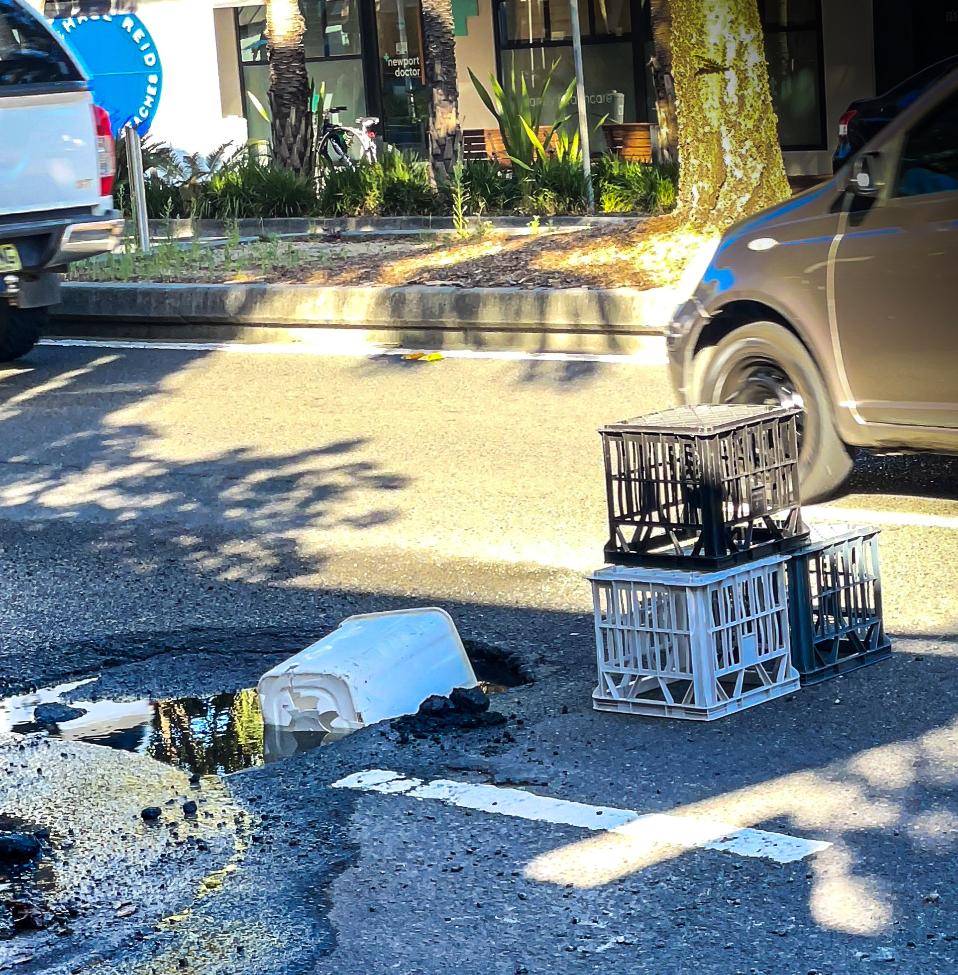
Although the council for this local government area hasn't disclosed how much they would no longer receive to fulfil their obligation to maintain local roads (all those that stem from Main roads), with funding to be reallocated to councils whose residents can less afford a rate increase, and Pittwater residents having copped a rate increase of thousands of dollars per annum in some cases from July 2025 because it was judged residents had an 'ability to pay ', those who spot a pothole everywhere they go will not be happy.
The partially approved application from the Northern Beaches Council for the first two years of the SRV of permanent approved an increase of 12.1% in 2025-26 and 11.7% in 2026-27 - or 25.2% according to IPART and the NBC's original application document, with the annually pegged increase atop that.
This was stated to generate additional annual income of $23,920,000.00 in 2025-26 and $25,928,000.00 by the 2026-27 financial year and then ever after as a permanent increase. This, in turn, increased annual rates by thousands of dollars for many Pittwater residents, especially those with waterfronts or beachfront homes who have had them since they were simple little shacks and they were fishermen and their wives those who 'manned' local shop counters.