Councils Across Australia Doubling down on AI Smart Glasses Use in Facilities: Bans Implemented
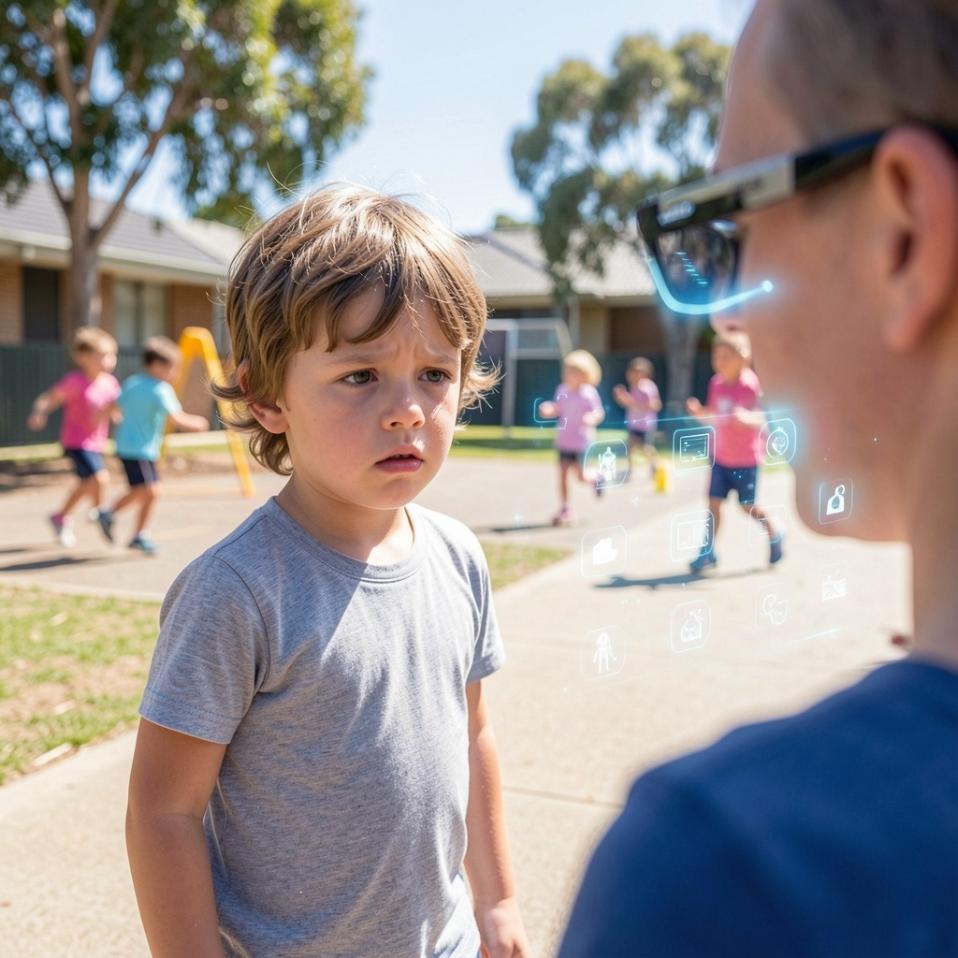
Federal Attorney-General, the Hon. Michelle Rowland, when speaking to ABC News Breakfast on September 1 on updating Australia’s privacy laws for the digital age, and 'smart glasses' - wearable computer eyewear that add digital features like audio, cameras, or visual displays to regular-looking frames - stated:
''.. as someone who came from a local government background, I'd like to commend those councils who have or who are considering imposing terms and conditions on the entry to their facilities on the basis of whether there is some type of technology like this that is being used.
''I think that is highly commendable for two reasons. Firstly, it is immediate and secondly, councils are used to being able to enforce these types of measures and bylaws. So, I commend that. I also commend businesses who understand that good privacy is good business and whether they are considering, for example, having restrictions on certain parts of of their facilities, such as change rooms or other areas where vulnerable people and women might be particularly at risk, I commend that as well.''
Councils Banning Use of Smart Glasses at Council Facilities
The City of Sydney Council, at its Monday September 21 meeting, banned smart glasses in their pools, libraries and childcare centres.
Carried unanimously, the decision empowers their Chief Executive Officer to:
(i) review and update, if necessary, Council’s conditions of entry and other policies to ensure there is a ban on the use of “smart glasses” at Council leisure centres, libraries, council-run childcare centres, and community centres, subject to any necessary carve outs for people with disability, including people who are D/deaf or are blind or have low vision
(ii) communicate any change in policy and procedure to users and relevant stakeholders as required, including by installing signage as necessary and providing relevant training to staff at these facilities.
The Inner West Council stated it will ban AI smart glasses and other wearable recording devices in its venues and facilities, including pools, change rooms, childcare centres and public toilets.
''Council resolved at its meeting on Tuesday night to prohibit the devices and has asked staff to report back on how the ban will be implemented, including conditions of entry and signage requirements.'' a Wednesday September 23 released statement says
''Exemptions will be provided to people who rely on the technology as accessibility devices.''
The move follows similar action by a growing number of councils, including the City of Sydney and Randwick Council, to address the privacy risks posed by AI-powered devices.
At the same time, the Inner West Council also resolved to develop a comprehensive AI strategy.
Inner West Councillor Kerrie Fergusson said:
“The technological landscape is changing at breakneck speed, and that comes with benefits and risks. AI smart glasses are the perfect example.”
“For people with vision or hearing impairments, they offer a new level of independence. But they can also discreetly record high-definition video and live-stream, creating genuine privacy concerns.
“AI smart glasses are likely just the beginning of many new challenges for local councils. That's why Inner West Council is taking a proactive approach by developing a broader AI strategy.
“This isn't tearing down new technology like a bunch of 19th-century luddites, but ensuring AI technology properly serves our community without compromising its privacy or civil liberties.”
Smart glasses have also been restricted in other local government areas in Australia.
Canterbury-Bankstown Council voted in favour to ban smart glasses from its leisure centres and pools, in a motion passed on Tuesday September 15.
Brisbane City Council banned the non-consensual use of camera-enabled devices, including wearable technology, phones and cameras, from their 21 public swimming pools. Gold Coast City Council is considering adopting a similar model to Brisbane
Yarra City Council have also banned smart glasses from their facilities.
The news service has been informed the Northern Beaches Greens Councillors have submitted a motion about banning smart glasses at Council aquatic centres and other Council run facilities. It's currently being reviewed by staff.
The next council meeting is scheduled for October 20 2026.
WA School Ban on Smart Glasses
On Tuesday Western Australia's Education Minister Sabine Winton said students, staff, parents, carers and even contractors would be forbidden from wearing or storing the devices on school premises under the nation's "most comprehensive" ban in public schools from term 4 onward.
The new rules will apply to all school activities including sports events and excursions.
"We know that smart glasses are becoming more accessible and can have a detrimental impact on people's privacy and wellbeing.'' Ms Winton said
"Students should be able to focus on learning, and teachers should be able to do their jobs without worrying they are being secretly recorded.
"Technology can be a great asset to teaching and learning, but there needs to be clear boundaries when it comes to devices that can make others feel unsafe."
WA's Department of Education Director General Jay Peckitt said:
"The misuse of smart glasses can have dangerous and long-lasting implications for school staff and students.
"I am confident schools, staff, students and families will support this change, which is designed to protect privacy and help keep school communities safe."
The NSW Government has not announced a statewide ban on smart glasses in public schools as yet, however, from 27 February 2026, restrictions on the use of personal devices apply under Part 6A of the Children (Education and Care Services) National Law.
In NSW, these operate alongside the Education and Care Services (Supply, Authorisation and Use of Devices) Order 2026, a Regulator Direction issued by the NSW Early Learning Commission under Section 261A of the National Law (NSW).
Together, these requirements:
- restrict the use of personal devices capable of taking, storing or transmitting images or videos when working directly with children
- extend obligations to all relevant persons involved in the provision of an approved ECEC service
- impose strengthened restrictions in family day care services to support adequate supervision
- introduce offences for the possession and control of personal devices while working directly with children (if not authorised).
Further restrictions my be introduced. New South Wales Education Minister and Deputy Premier, Prue Car, has not issued an official state-wide ban on smart glasses for NSW schools as yet, but has been actively reviewing school technology and generative AI policies.
On Tuesday an investigation by ABC News revealed the new generation of ultra-cheap smart glasses is exposing Australians' sensitive data, images and videos to hackers.
"Another person with the same app can log into the glasses without a password [because] there is no password," said David Crees, the lead researcher in testing conducted for the ABC by NSB Cyber and Abstract Shield.
Key flaws identified were:
- When the smart glasses are switched on but the owner is not connected, an attacker can "race" them to connect first, with no password or barrier to stop it
- Once inside, the attacker can control the device to take new photos and recordings, and copy any photos or videos that are already stored
- Audio and images can be intercepted while they're being transmitted from the owner's glasses to their phone
- An attacker can impersonate glasses they don't own and use them to connect to the owner's mobile app
- The device ID number is visible to others within bluetooth range while the glasses remain unpaired, and can be used to look up the user's email address and date of birth via a separate failure on the app's website
The eSafety Commissioner has published a webpage, 'Smart glasses and online safety: When the camera disappears' which provides a comprehensive overview of the product and its potential impacts.
Updating Australia’s privacy laws for the digital age
On August 31 the Australian Government released a consultation paper and draft legislation to modernise and strengthen Australia’s privacy laws for the digital age.
The Privacy Amendment (Personal Data Protection) Bill 2026 (Draft Bill), if passed in its current form, would be the most significant overhaul of Australia's privacy framework since the Australian Privacy Principles (APPs) were introduced in 2014.
'The reforms will bolster privacy protections for Australians and help tackle emerging risks from new technologies including Artificial Intelligence, and wearable devices such as smart glasses.' the government said
'Australians are also facing growing risks from data breaches, identity theft and scams. The misuse of personal information can disproportionately harm vulnerable Australians and, at scale, pose national security risks. AI-powered tools and devices, such as those used in connected vehicles which continuously collect and process personal information, are amplifying these risks.'
'Stronger privacy protections help Australians stay in control of their personal information, make informed choices, participate in society with greater certainty about how their information is used, and better protect our country. This will be achieved through a range of key initiatives, including:
- a fair and reasonable test, so companies can no longer justify collecting more information than they need or using it for purposes Australians would never expect.
- a right to erasure, allowing individuals to request destroying personal information from large digital platforms like social media and search platforms.
- stronger, more meaningful standards for consent, to ensure Australians are making an informed choice about the information they share, without hidden terms, or take-it-or-leave-it conditions.
- measures to stop businesses from trading in personal information without clear permission, meaning shopping habits, online interests or location data cannot be bought and sold behind Australians’ backs.
In addition to the Children's Online Privacy Code, the amendments propose a 'best interests' factor for all collection, use and disclosure of personal information involving children. While not determinative, this factor is intended to carry significant weight.
Some examiners (Allens law firm) of the draft have stated that with the development of the Children's Online Privacy Code, it may be premature to include this factor at this stage. The OAIC’s Children’s Online Privacy Code is currently being finalised, with the final Code required to be registered by 10 December 2026.
The Bill would also classify precise geolocation tracking data as a new category of sensitive information. Entities would need to obtain consent before collecting precise geolocation tracking data unless an exception applies.
The Bill proposes a hard 72-hour deadline for notifying the Office of the Australian Information Commissioner (OAIC) once an entity has reasonable grounds to believe an eligible data breach has occurred, which is a significant tightening of the current rules, which requires notification only ‘as soon as practicable’.
Recognising that a complete picture may not be available within that window, the Bill would permit phased notification: an incomplete statement could be provided to the OAIC within 72 hours (setting out what is known, what is missing, and why), with a complete statement to follow as soon as practicable.
Impacted individuals would need to be notified at the same time as the OAIC where feasible, and otherwise as soon as practicable after.
As well as this, new standalone obligations would require all APP entities to maintain breach response practices, procedures and systems, and to take reasonable steps to prevent or reduce harm as soon as a breach, or suspected breach, is identified – regardless of whether it meets the eligible data breach threshold.
If enacted in its current form, the 72-hour deadline would eliminate most of the ad hoc responses Australians have experienced thus far. Organisations would need to consider whether their existing breach response plans would be adequate under the proposed timeframe, including whether escalation pathways, phased reporting processes and pre-drafted incomplete statement templates are fit for purpose.
'The reforms will also provide greater regulatory clarity and improve the efficiency of the privacy regulator, the Office of the Australian Information Commissioner.' the government stated
'These measures have been developed following extensive consultation including feedback received through the Privacy Act Review and the 2024 reforms to the Privacy Act, with the Government now seeking views on how the reforms might operate in practice.
Australians, businesses, academics and community organisations were encouraged to have their say by visiting the Attorney-General's Department Consultation hub website. Submissions closed 18 September 2026.
Legal experts, Corrs Chambers Westgarth (Corrs), stated the Bill does not address several key areas anticipated following the 2022 Privacy Act Review Report. Notable omissions include:
- reform or removal of the employee record exemption;
- removal of the small business exemption;
- a direct right of action for individuals;
- a prescribed whitelist of countries and contractual clauses for overseas data transfers;
- a Data Protection Officer requirement;
- expansion of the right of erasure to all APP entities; and
- other individual rights the government agreed to in principle, including the right to object to the handling of personal information and the right to request de-indexing of search results.
Attorney-General, the Hon Michelle Rowland MP, said:
“The Albanese Government is modernising Australia’s privacy laws to ensure they are fit for purpose in the digital age.
“Australians expect their personal information to be protected, not exploited. Yet almost four in five Australians report they have very little or no control over how their personal information is collected or used.
“As more of our lives move online, these reforms will help strengthen privacy protections, boost accountability, and ensure Australians can embrace technology with greater confidence.
“Getting Australia’s privacy settings right and building trust in our digital world is good for people and good for business.
"We have opened public consultation to hear from regulated entities, experts and civil society about the design and implementation of these measures to protect Australians, while supporting innovation."
Exposure Draft—Online Safety Amendment (Digital Duty of Care) Bill 2026
On September 8 2026 the Australian Government released an exposure draft of the Online Safety Amendment (Digital Duty of Care) Bill 2026.
The Exposure Draft proposes to introduce an overarching digital duty of care (DDC), placing proactive obligations on online services to, so far as is reasonably practicable, maintain a safe online environment.
To provide feedback on the draft Bill, email digitaldutyofcare@communications.gov.au. The closing date for feedback is 12pm 22 September 2026.
The Exposure Draft sets out that a safe online environment is one in which:
- Australians are protected from seriously harmful material and conduct (which largely encompasses illegal content and activity, such as child exploitation material and terrorism-related content);
- children are protected from material that is harmful to children (such as pornography, material or conduct that encourages disordered eating and online bullying); and
- for social media services, design features with negative behavioural impacts (such as recommender features, logged-in features, endless-feed features, time-limited features and feedback features), do not operate for children under 16.
As part of complying with the DDC, persons responsible for online services would be required to: (i) manage such design features of the service appropriately (including by providing user empowerment tools as required); (ii) conduct risk assessments (in the case of providers of online services) to identify all reasonably foreseeable risks that could be posed by the service; and (iii) take effective measures as necessary to address those assessments.
Failure to comply with the DDC could attract civil penalties of up to A$109.2 million for corporations and the eSafety Commissioner would also have the power to issue formal warnings and remedial directions.
The Federal Coalition has stated it will oppose the Online Safety Amendment (Digital Duty of Care) Bill 2026 in its current form, citing its concerns that 'protecting children cannot become an excuse to hand politicians sweeping powers over lawful speech, news, political debate and what Australians are allowed to see online'.
Labor’s exposure draft goes too far, contains inadequate safeguards for free speech and journalism, and leaves too much power in the hands of the Communications Minister.' the coalition stated listing their main concerns with the draft as:
- ''Ministerial power to define new harms. Anika Wells has given herself unfettered powers to make regulations governing categories of harm, including material that may be completely lawful, representing a significant threat to free speech. The draft separately allows the Minister to determine additional material that may cause harm to children and additional platform features deemed to have “negative behavioural impacts”.
- The risk to free speech and journalism. The duty is not confined to social media. It applies across a wide range of online services, including potentially websites carrying news, commentary and political debate. The exposure draft does not contain the clear protections for journalism, democratic debate and freedom of expression found overseas.
- Vague and subjective tests. The draft includes concepts such as material that “encourages or promotes hostile attitudes towards women or gender equality” and “harmful practices”. Protecting children is essential, but poorly defined tests risk catching legitimate political, religious, cultural and social debate.
- A powerful incentive to censor first and ask questions later. If online services face legal duties to identify and mitigate broadly defined harms, the obvious commercial response will be to remove, suppress or restrict borderline lawful material rather than risk regulatory action.
- The algorithm promise is not actually guaranteed. Labor says Australians will be able to turn off personalised recommendations for their social media feeds. But the exposure draft instead gives the Minister power to specify “user empowerment tools” through future legislative instruments. The law Parliament is being asked to consider does not itself guarantee the precise choice Anthony Albanese and Anika Wells are promising Australians.
- The impact on small businesses has not been considered. Thousands of Australian small businesses rely on content recommendations and digital platforms to find customers. At a time when family businesses are already battling rising costs, Canberra should not rush major changes without understanding the consequences.
- Labor’s record should give Australians little confidence. Its under-16 social media ban has fallen well short of the government’s rhetoric, with eSafety finding the proportion of under-16s still using social media had fallen by just 4.4 percentage points three months after commencement. Now, before it has made its existing regime work properly, Labor wants Parliament to hand it a much broader set of powers over the online world.''
Shadow Minister for Communications and Digital Safety Sarah Henderson said the Coalition has consistently supported stronger protections for children online and tougher accountability for Big Tech.
“Protecting children online is one of the most important jobs we have, but it does not give Anika Wells a blank cheque to determine what lawful material Australians should be protected from seeing. These powers are far too broad and the safeguards are simply not good enough,” Senator Henderson said.
“We need to protect children, empower parents, force greater transparency from Big Tech and protect free speech. Labor’s approach is to give unfettered powers to the Minister and ask Australians to simply trust that it won’t be abused.”
Amendments to Social Media law passed
Australia's federal parliament moved amendments in September 2026 to strengthen the Online Safety Amendment (Social Media Minimum Age) Act 2024 by giving the eSafety Commissioner stronger investigative powers.
The amendments were passed on September 11.
'Amendments to the social media minimum age law passed by Parliament ensure the eSafety Commissioner has the right tools to enforce compliance with the law.' the government stated
'This includes doubling the maximum penalty to $109.2 million, which is in line with penalties available under consumer and competition law.'
The amendments strengthen the independent regulator’s information-gathering powers by:
- enabling eSafety to demand information and documents from social media companies and third parties, such as age assurance or app-store providers, as evidence of compliance
- giving eSafety the power to summon a person, such as an executive or former employee of a social media platform, to give evidence and answer questions to assist with investigations into platform compliance.
The legislation also significantly increases the infringement notice amount the eSafety Commissioner can use to fine social media platforms for not meeting their obligations under the law.
'Breaching the social media minimum age obligation or failing to provide an alternative to government ID for age assurance could attract a fine of up to $21.8 million under the changes, while failing to comply with an information-gathering notice could result in a $364,000 fine.
These fines can be applied as a quick and effective alternative to court proceedings, with the increased amounts providing a more meaningful deterrent to non-compliance.'
Minister for Communications, the Hon. Anika Wells, stated:
“Today the Albanese Government has doubled down on our efforts to hold social media companies to account for harming young Australians, giving eSafety the tools and fines needed enforce our world-leading law.
“Australian parents and teachers know that social media companies are pulling out every trick in the big-tech playbook to keep kids on social media.
“The Coalition did everything they could to block these changes – proving once again they will always put politics before parents and Australian families.
“Our message to big tech could not be clearer – if you want to do business in Australia, you must follow Australian laws.
“I expect the eSafety Commissioner to use these new powers to the fullest extent to hold big tech accountable.
“Together with the Digital Duty of Care, we are creating basic safety standards with big fines, just like every other industry has. Australia is once again leading the world when it comes to online safety.”