We are buzzing with excitement!
The Rotary E-Club of Greater Sydney has erected five Bee Poles.
By Judith Charnaud OAM,
President and Environment Director of the Rotary E-Club of Greater Sydney
At last, after a year or two of designing, planning and construction the Bee Pole idea seems to have taken off. Over the last few months we have placed Bee Poles in Harbord, Curl Curl North, Kinma, Tea Gardens Public Schools and one in the Coastal Environment Centre, Narrabeen.
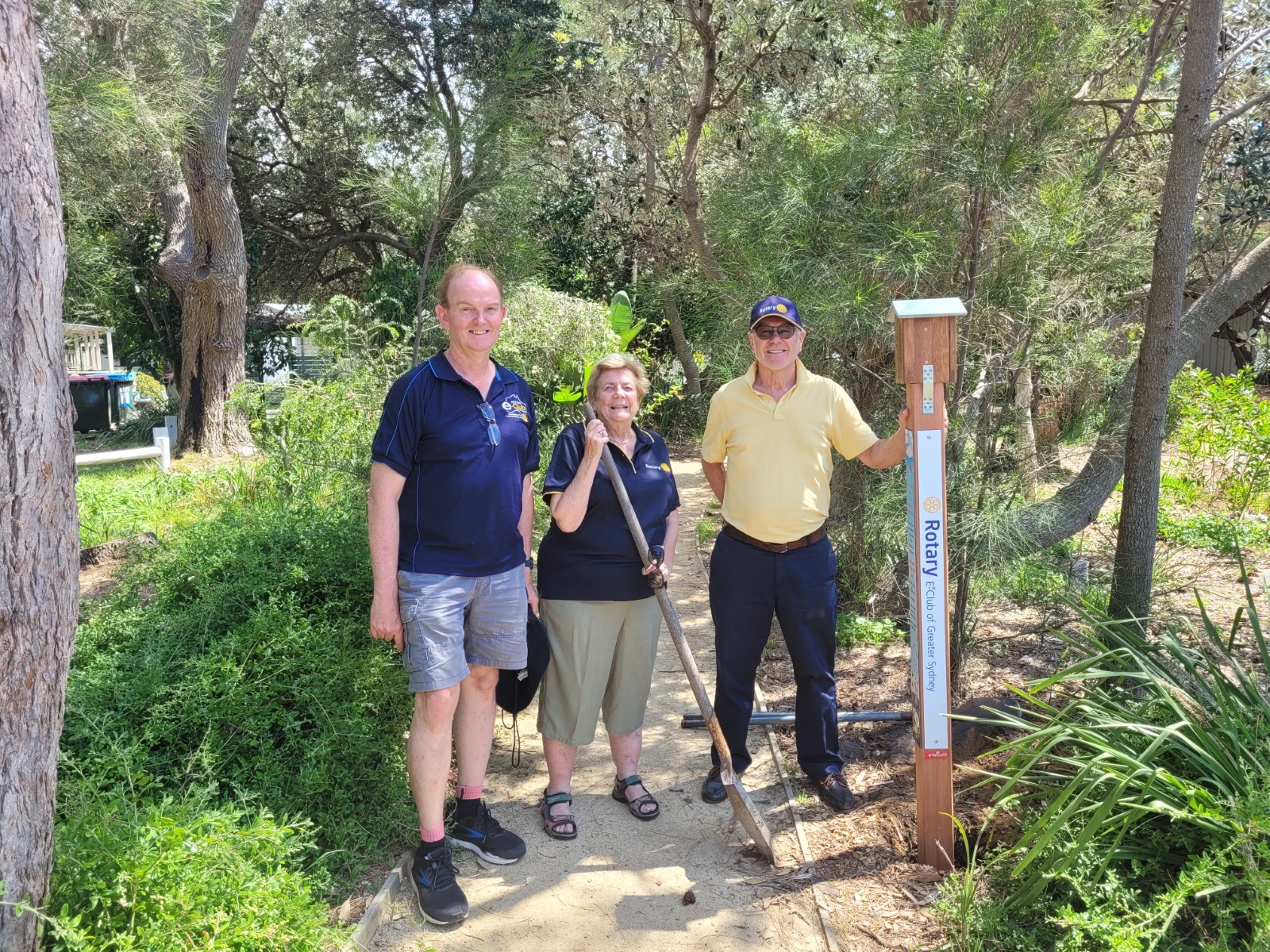
Coastal Environment Centre Narrabeen Bee Pole installation
What is a Bee Pole?
The idea for the Bee Pole came from the Peace Poles of Rotary Clubs across the world which is a special project promoting peace – our club thought a Bee Pole in schools could be used to promote environmental sustainability and the importance of ecosystems.
The Rotary E-Club of Greater Sydney is a member of Rotarians for Bees and our members are working on ways to encourage the survival of Australia’s native bees. We have carried out a lot of research in order to find out the best ideas and design for the Bee Pole.
Each of the schools we have worked with has very enthusiastic teams of students – Garden Gurus, Eco Warriors, Bee Teams, Gardening Clubs, and of course the students are encouraged by amazing staff members.
The bee pole placements have been extremely successful, each beginning with an Acknowledgement of Country read by a student, followed by me speaking about the importance of our native bees then students helping place the pole in the ground, pouring cement, rocks and water around the pole to ensure it will stand firmly.
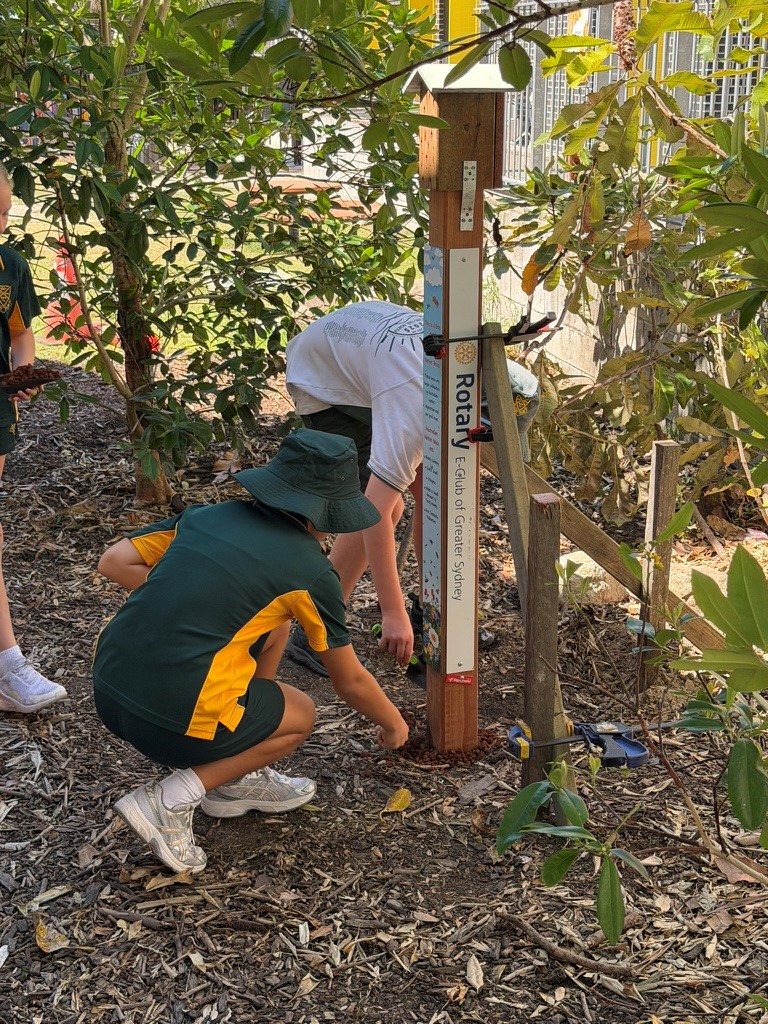
Harbord Public School Bee Pole installation
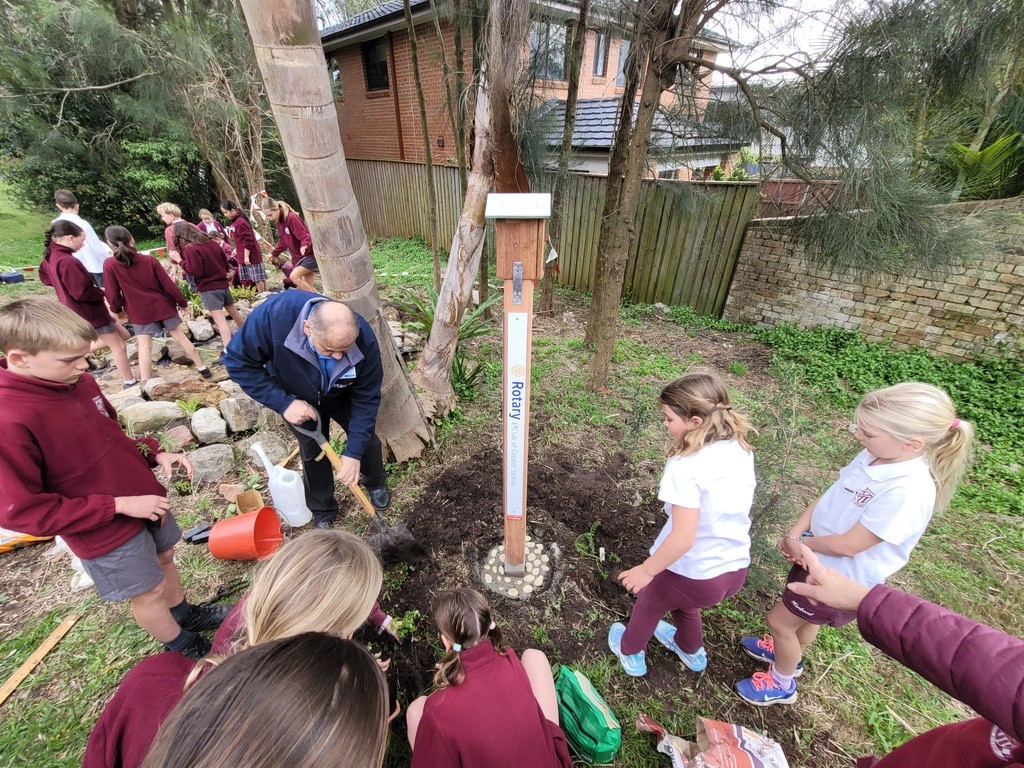
Curl Curl Public School Bee Pole installation
Students asked very meaningful questions about the importance of bees, why our native bees are better pollinators than the introduced species and all were interested to learn more about our bees – which are generally solitary, stingless, do not produce a lot of honey and some are very small about the size of a fruit fly so even if they are in and out of the trees many people do not recognise them as bees. (note Some Australian bee species do live in a hive and produce very tasty honey which, as scientists have recently discovered, has amazing medicinal properties.) The students were particularly interested in the design of the Bee Hotel which sits atop the pole, we are all so used to seeing a hive of active bees not a block of wood with straight holes of varying sizes bored into it!
Once the poles were cemented in place the students decorated around them with river pebbles or crushed rock and will plant native flowering grasses and vines to attract the bees. In each case we left the grounds feeling very happy with the morning’s work, thrilled by the enthusiasm shown by students and pleased that many more young Australians know about our important Native Bees! Now we wait for the bees to find their way to the hotel and set up their solitary residence in the holes bored into the wood.
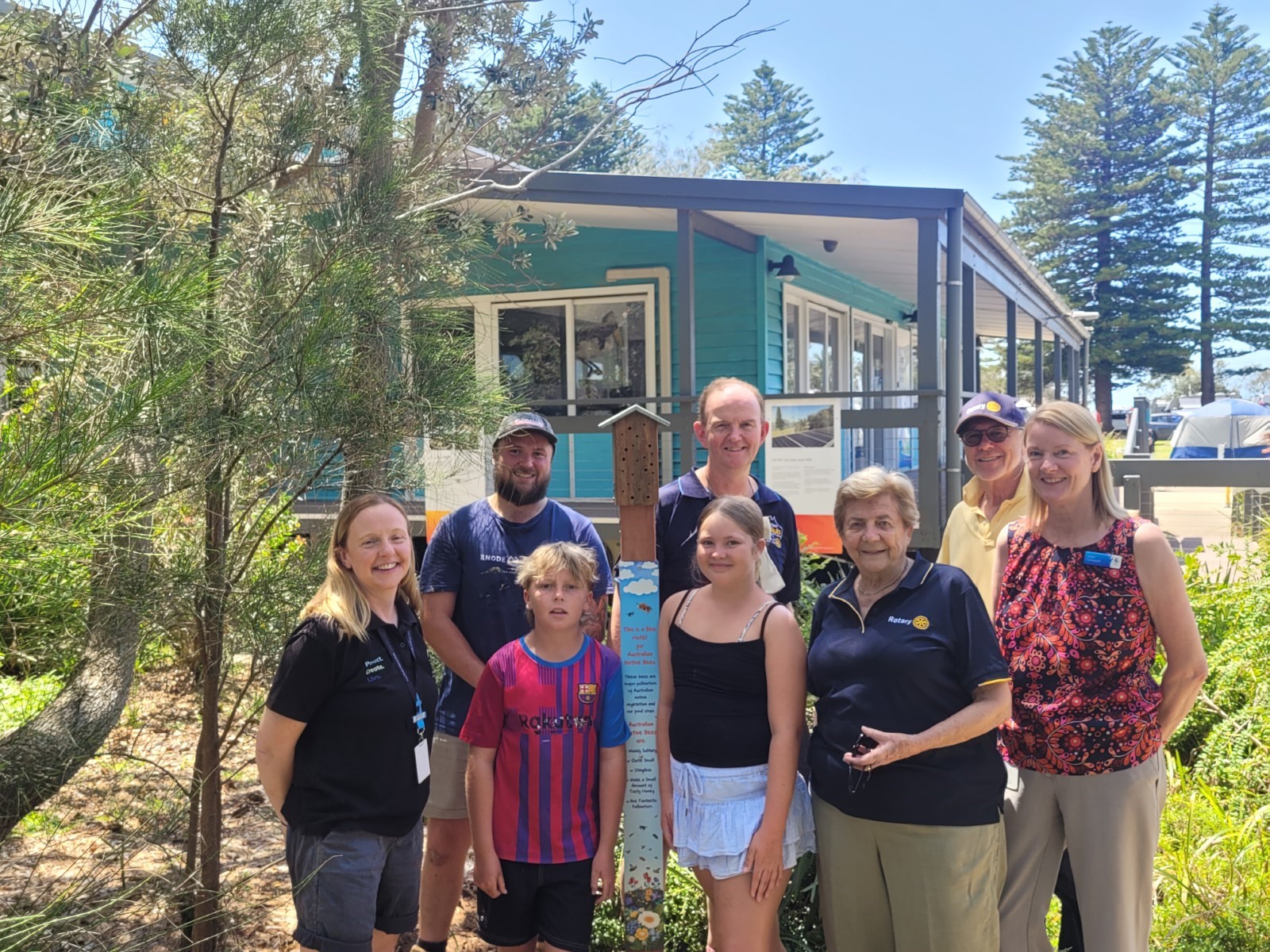
Coastal Environment Centre Narrabeen Bee Pole installation crew
I would like to thank members of our Rotary E-Club who have helped in placing Eco poles – Dee Stewart, Ross Johnson, Lucian Keegel, Lucy Hobgood-Brown, Marilyn Mercer and Geoff Appleton – all good drivers, lifters, carriers and enthusiastic supporters! I would also like to thank the school students and staff for their enthusiasm and eagerness to learn about and encourage our very important native bees to thrive.
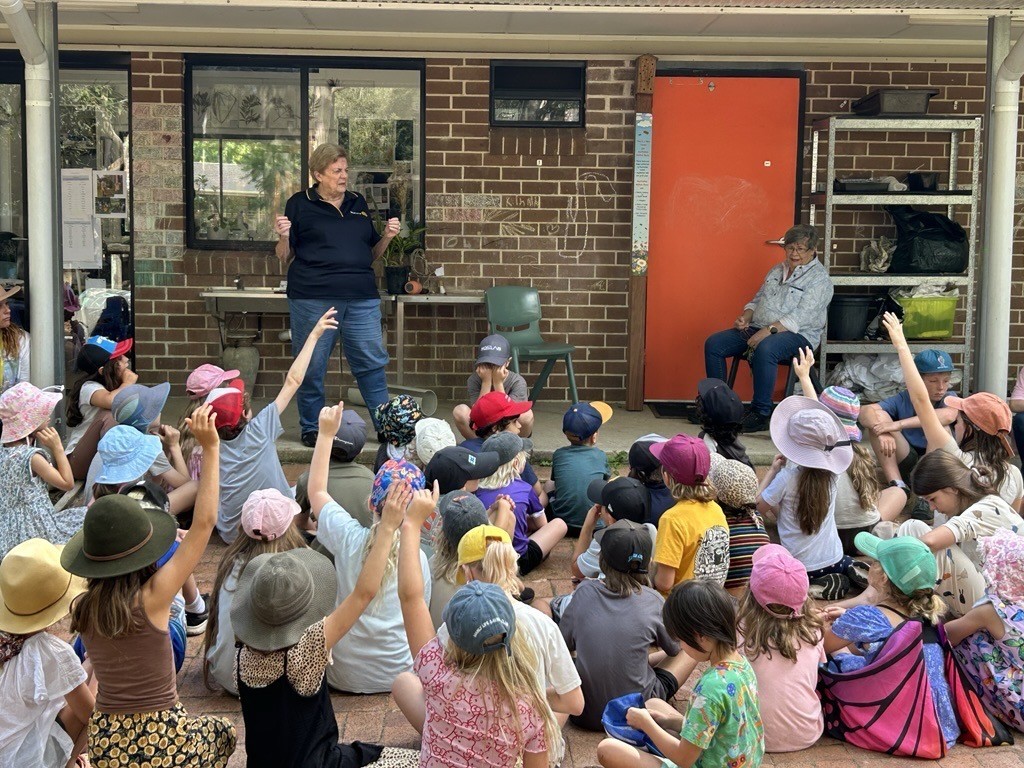
Kinma School Bee Pole installation questions!
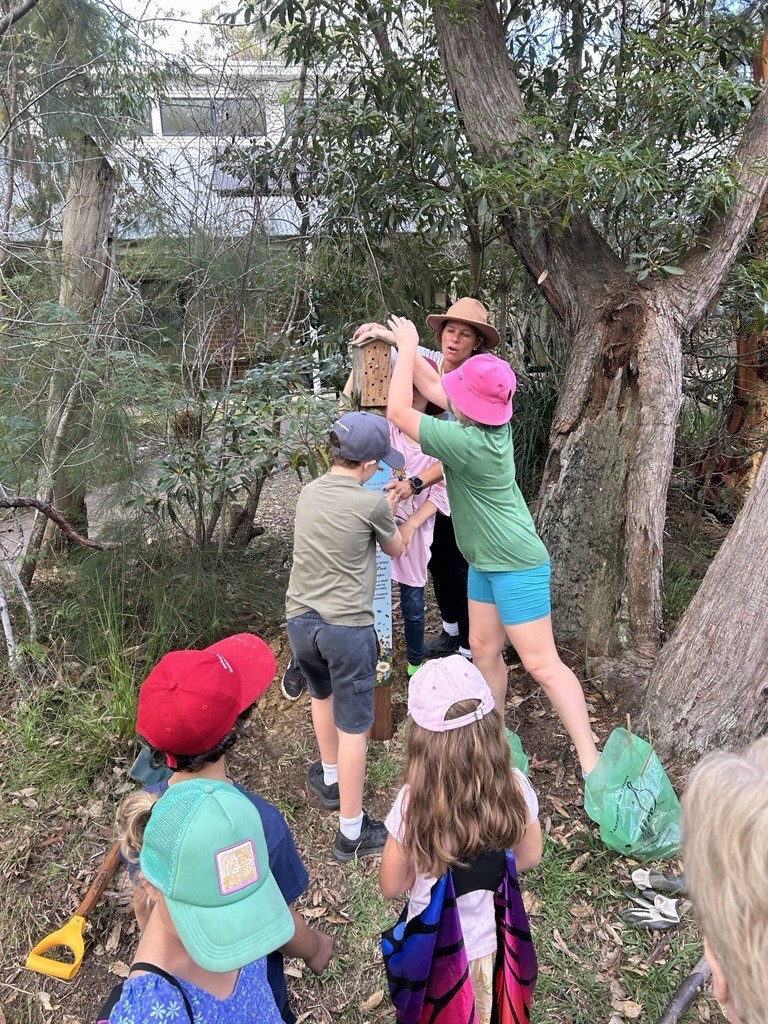
Kinma School Bee Pole installation