Richard Lewer wins Archibald Prize 2026 for portrait of Pitjantjatjara Elder Iluwanti Ken
Melbourne-based artist Richard Lewer has won the Archibald Prize 2026 and $100,000 for his portrait of Pitjantjatjara Elder, senior artist and ngangkari (traditional healer) Iluwanti Ken.
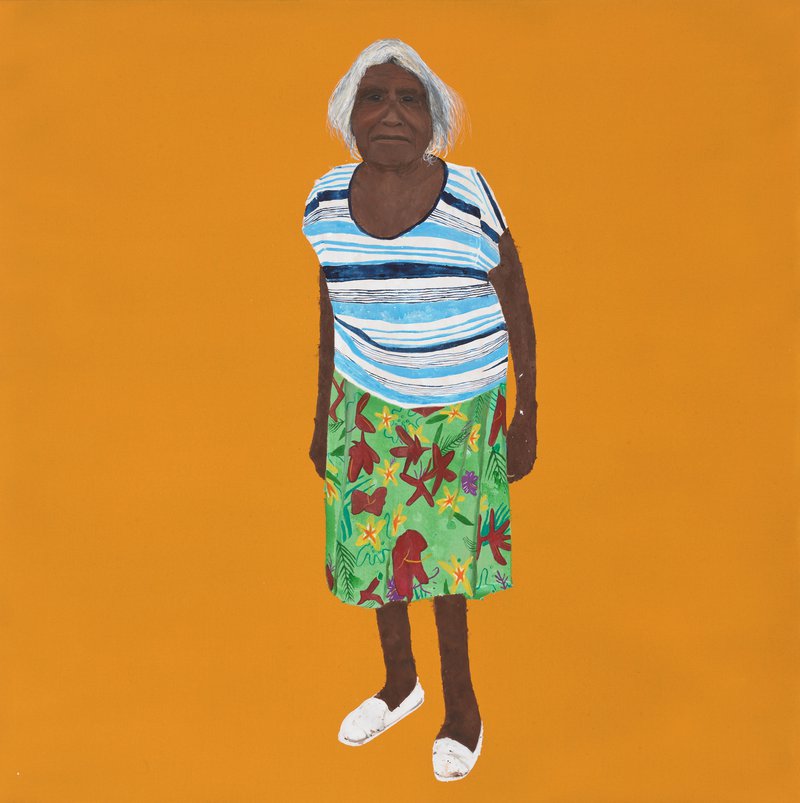
Winner Archibald Prize 2026, Richard Lewer Iluwanti Ken (detail), synthetic polymer paint on canvas, 198 x 198 cm © the artist
Lewer’s work was selected from 1034 entries for the Archibald Prize in 2026 and is one of 59 finalist works on display at the Art Gallery of New South Wales.
A portrait that speaks powerfully to presence and cultural responsibility, the work was painted by Lewer following time spent on Country with Ken in the Aṉangu Pitjantjatjara Yankunytjatjara (APY) Lands of South Australia, where she lives and works. The painting captures her strength as both a cultural custodian and a contemporary artist; she is also a finalist in this year’s Wynne Prize.
A six-time Archibald finalist, Lewer said he was happy and proud to receive the phone call from Art Gallery of New South Wales director Maud Page informing him of his win.
‘I am really proud, both for Iluwanti and for myself. I feel deeply humbled to have won the Archibald Prize, and especially happy that this recognition brings a spotlight to Iluwanti, which was always my intention with this portrait. Iluwanti is the most beautiful woman, and it was a complete treat to spend time with her and to be able to paint her on Country. I hope this work recognises her role as a healer, artist and custodian of the knowledge she carries and so generously shares,’ said Lewer.
‘I have been a finalist many times and never expected to win, but that’s what makes this so exciting.’
Late last year, Lewer travelled to Amata in the APY Lands to spend time with Ken at her art centre, Tjala Arts, and work alongside her. Although the pair had known one another for years through shared exhibitions, being together on Country deepened Lewer’s understanding of the responsibilities Ken carries to kin, community and culture. Their conversations ranged from family and loss to the protection of fragile knowledge, reinforcing Lewer’s appreciation of the immense weight borne by Elders in maintaining continuity and care.
The portrait is rendered life-size, allowing Ken’s presence to meet the viewer directly. A yellow ochre ground evokes the heat, light and warmth of her Country, while her clothing reflects her love of bright colours and vitality. Flecks of paint on her arm acknowledge her as a working artist, suggesting she has momentarily stepped away from the studio.
‘Though small in stature, Ken carries what Lewer describes as a ‘quiet authority’, commanding space with calm attentiveness. Her own work, informed by the walawuru tjukurpa (story of the eagles), speaks of care, protection and resilience, particularly for women and children. These teachings guided Lewer’s approach, resulting in a portrait that honours not only an individual but the enduring role of Elders as watchers, teachers and protectors of culture.
Born in Aotearoa New Zealand in 1970, Lewer has lived and worked in Melbourne since 1996. He is a painter, draughtsman, printmaker, sculptor and video artist, whose work presents an unsparing vision of the human condition. He studied at the Elam School of Fine Arts, Auckland and the Victorian College of the Arts, Melbourne. He has been a multiple time finalist in the Archibald (2026, 2025, 2022, 2021, 2020, 2017) and Sulman Prizes (2023 and 2019), and has been awarded the APW Collie Print Trust Fellowship (2020), Paul Guest Prize for Drawing (2020), Basil Sellers Art Prize (2016), Blake Prize (2014), National Works on Paper Drawing Award (2010) and Wallace Art Award (2008). He has exhibited his work extensively in Australia and New Zealand, and his work is represented in major public and private collections, including the Art Gallery of New South Wales.
Established in 1921, the Archibald Prize is Australia’s most prestigious art prize and is awarded annually to the best portrait, ‘preferentially of some man or woman distinguished in art, letters, science or politics, painted by any artist resident in Australasia’.
Speaking of the winning work, Art Gallery director Maud Page said: ‘Richard Lewer has a seemingly spontaneous and instinctual practice, but he has a masterful control of paint. He presents Iluwanti Ken as if she’s emerging out of the ochre, with no conventional perspective, yet her presence as both an artist, healer and matriarch is powerfully realised. Her eyes are particularly striking – her gaze is direct and conveys her strength and warmth,’ said Page.
The winners of the Archibald Prize and the Wynne Prize are decided by the Art Gallery’s Board of Trustees. Board president Michael Rose congratulated all the finalists in the Archibald, Wynne and Sulman Prizes 2026 and praised the exceptional standard of work entered this year.
‘All the trustees were immediately drawn to Richard Lewer’s portrait of Iluwanti Ken. It’s a powerful and energetic portrait by an accomplished artist and has captured the energy of another artist that he admires and respects greatly. You can sense that admiration in the work,’ said Rose.
The Archibald, Wynne and Sulman Prizes 2026 exhibition and the Young Archie competition are generously supported by presenting partner ANZ.
Mark Whelan, Group Executive, Institutional at ANZ said: ‘The Archibald Prize is one Australia’s most coveted art awards, and we congratulate Richard Lewer on this prestigious honour. As a proud supporter of the Archibald, Wynne and Sulman Prizes exhibition for 17 years, ANZ celebrates the incredible depth of artistic talent showcased through these distinguished prizes.’
Gaypalani Waṉambi wins Wynne Prize 2026
Yolŋu artist Gaypalani Waṉambi has won the Wynne Prize 2026 and $50,000 for her etching on metal, The Waṉambi tree, depicting Wuyal, an important ancestor of the Marrakulu clan.
Waṉambi’s work was selected from 773 entries for the Wynne Prize in 2026 and is one of 52 finalists on display at the Art Gallery.
A first-time Wynne finalist, Gaypalani Waṉambi’s large-scale double-sided work details the artist’s songlines of the Marakulu clan and the ancestral honey hunter, Wuyal, with intricate markings of the life cycle of bees, honey and stringybark blossom found in her homeland in the Northern Territory.
After receiving the news that she had won the Wynne Prize 2026, Waṉambi said: ‘My father was a great artist and I learnt by his side. He made bark paintings, video and metal. He passed away too young and we miss him. We are descended from the honey spirit Wuyal. He cut the tree at Gurka’wuy and the honey flowed to the sea.’
Speaking about the work, Waṉambi said: ‘Wuyal was the first man to look for a homeland for the Marrakulu people. He began a journey from Ŋilipitji through Gurka’wuy, travelling via Yuḏuyuḏu to Cape Shield, up to Trial Bay and along the Goyder River until he came to Nhulun/Mt Saunders.
He felled the ancestral Waṉambi tree, causing a river of honey and thus founded the Marrakulu clan homeland at Gurka’wuy. the Marrakulu dance as bees in their ceremony, elbows extended, hands clutching stringybark leaves, which vibrate as wings.’
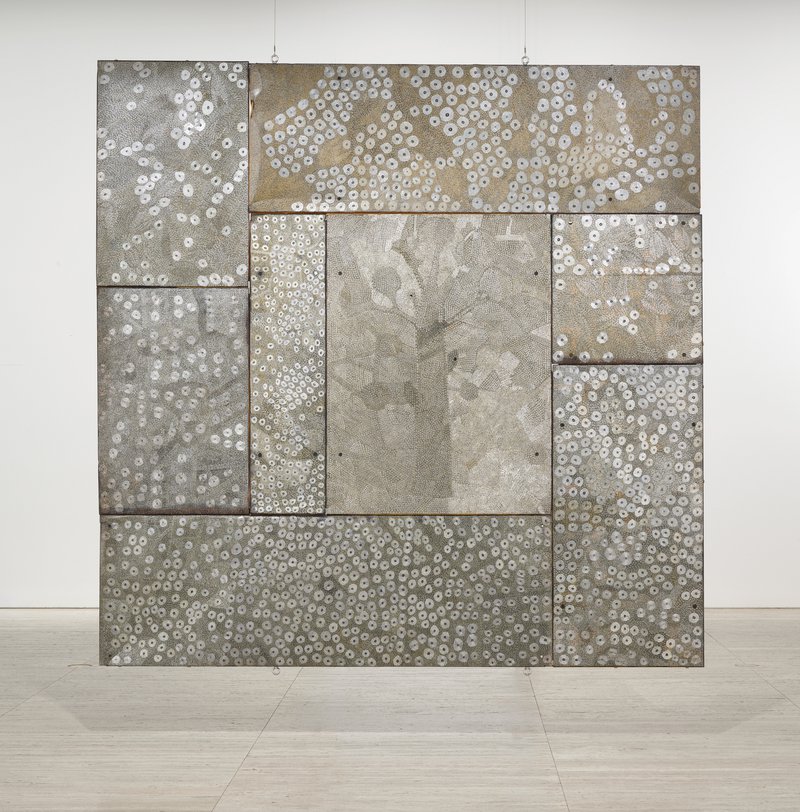
Gaypalani Waṉambi, The Waṉambi tree - spray paint on etched steel, 240 x 240 cm
Waṉambi works from the Buku-Larrŋgay Mulka Art Centre in Yirrkala in Northeast Arnhem Land in the Northern Territory and she is the eldest daughter of the renowned artist Mr Waṉambi. Growing up in an artistic family, Waṉambi learnt to paint and etch with her father and brothers. She has now developed her own distinctive style and is the leading female practitioner of the Found movement, which sees artists repurpose discarded roadside materials into extraordinary works of art.
In 2025, Waṉambi was awarded the Telstra National Aboriginal and Torres Strait Islander Art Award (NATSIAA), the longest running and most prestigious Aboriginal and Torres Strait Islander art award in the country.
The Wynne Prize is Australia’s oldest art prize and is awarded annually for ‘the best landscape painting of Australian scenery in oils or watercolours or for the best example of figure sculpture by Australian artists’.
Highly commended – Wynne Prize
This year, a highly commended honour was awarded to Blue Mountains artist Sanné Mestrom for her sculpture What the body knows. A two-time Wynne finalist, Mestrom was acknowledged for her bronze and fibreglass sculpture that the artist says is ‘both a maternal body and a sculptor’s body’ that ‘learns from the inside’.
Trustees' Watercolour Prize – Wynne Prize
Finalists in the Wynne Prize are also eligible for the Trustees’ Watercolour Prize valued at $5000. Melbourne artist Jennifer Mills has won the 2026 Trustees’ Watercolour Prize for her work ET home, which was a created in collaboration her adult son Darcy Luker.
Lucy Culliton wins Sulman Prize 2026
Lucy Culliton has won the Sir John Sulman Prize 2026 and $40,000 for her work Toolah, artist model, an intricately detailed painting of Toolah, one of her beloved rescue greyhounds. This is Culliton’s seventh time as a Sulman Prize finalist, with her 2026 winning work selected from 26 finalists.
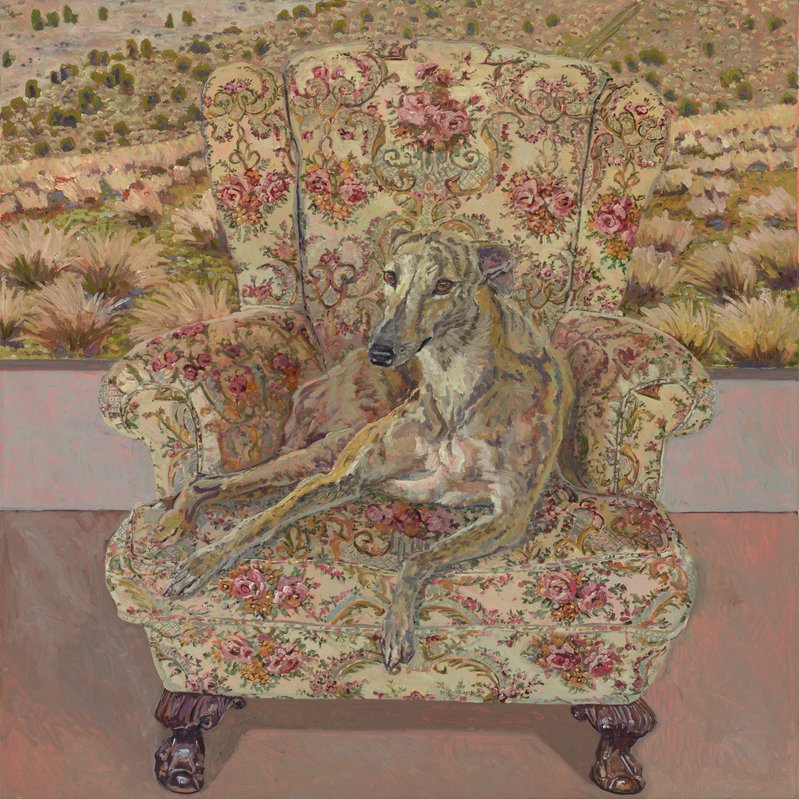
Toolah, artist model, oil on canvas - 137.6 x 137.1 cm, © the artist
Hearing of the news, Culliton said she was overwhelmed and had not expected to win.
‘This painting of Toolah means so much to me. Besides painting, I rescue animals in need. Toolah is one of seven greyhounds who live with me that come from the greyhound racing industry. This is my quiet protest against greyhound racing,’ said Culliton.
Born in Sydney, Culliton is a contemporary painter known for her vibrant and observant depictions of landscapes, still life and animals. She trained at the National Art School and has exhibited professionally since the late 1990s. She is widely recognised for her distinctive realist style grounded in everyday rural life. Living and working in Bibbenluke, a small village in the Snowy Monaro region of southern NSW, Culliton’s subject matter is strongly informed by her surroundings, gardens and menagerie of animals.
Culliton’s work has regularly been selected for major Australian art prizes, including the Archibald and Sulman Prizes, where she has been a finalist seven and nine times respectively, and her work is held in major public collections around Australia.
The Sir John Sulman Prize is awarded to the best subject painting, genre painting or mural project by an Australian artist and is judged by a guest artist each year. This year’s Sulman Prize judge is Sydney artist Del Kathryn Barton, who selected Culliton’s winning work from 717 entries in 2026.
‘This is a painting by Lucy at the peak of her powers. Pictorially ambitious and technically consummate, it generously offers audiences a tender moment of gorgeousness from Lucy’s life. Just wow!’ said Barton.
Sir John Sulman was an Australian architect. Born in Greenwich, England, he emigrated to Sydney in 1885. From 1921 to 1924 he was chairman of the Federal Capital Advisory Committee and influenced the development of Canberra.
All finalists in Archibald, Wynne and Sulman Prizes 2026 will be exhibited at the Art Gallery from Saturday 9 May to Sunday 16 August 2026.
These include portraits by local artists and of a local creator.
See last Issue's report: Stephanie Galloway Brown's Portrait of Layne Beachley + Andrea Wilson's Portrait of Richard Leplastrier AO are Archibald 2026 Finalists
Following the exhibition at the Art Gallery, the Archibald Prize 2026 finalist works will tour to six venues across New South Wales and Victoria, offering audiences beyond Sydney the opportunity to experience this nationally celebrated portrait prize.