Then Landcom CEO and former Liberal Leader John Brogden said the 4,000 square metre site on the corner of Pittwater Road and Lakeside Crescent, will be re-purposed for around 35-38 studio, one and potentially two bedroom apartments, with a minimum of 10 per cent made available for affordable rental housing.
“Landcom is very excited to have the opportunity to repurpose this perfectly located building into a residential development that will fit in seamlessly with the character and beautiful natural environment of the local neighbourhood,” Mr Brogden said.
“Landcom is committed to deliver 5 to 10 per cent affordable rental housing on all of its projects for key workers on low to moderate incomes such as nurses, child care workers, cleaners and retail workers.
“Landcom is also aware of the local 1,500 women aged 55 and over in the northern beaches who are in housing stress and at risk of homelessness due to family breakdown, underemployment and a lack of superannuation, so we would welcome Community Housing Providers that cater to this group to tender to partner with us on this project.”
Mr Brogden said that as the State Government’s land and property development organisation, Landcom is best placed to lead with a whole of Government approach on projects such as Queenscliff.
“Landcom’s Queenscliff project is a great example of the NSW Government working together to repurpose a surplus government site for more affordable housing and delivering a new local NSW Health facility nearby at Brookvale,” Mr Brogden said.
“The project will also have significant sustainability benefits as the adaptive reuse rather than the demolition of the existing building will minimise the construction footprint on the site.
“Other sustainability initiatives will also be delivered through the redesign of the existing building which will also translate to a reduction in ongoing living costs for households, once the project is completed.”
Member for Manly, James Griffin MP, said he was proud that Landcom’s Queenscliff project will demonstrate to the rest of Metropolitan Sydney that successful partnerships between the community housing sector and Government can effectively address housing affordability concerns.
Then Northern Beaches Council Mayor Michael Regan welcomed the increase in affordable housing for the LGA.
“Using this site for much needed affordable housing was an initiative I started with the state government almost two years ago,” Cr Regan said.
“The closure of the Queenscliff Health Centre was an opportunity to increase the range and supply of affordable rental housing so badly needed in our area.
“We constantly hear stories of our key workers travelling long distances to work or couch surfing because of the critical shortfall of affordable housing here. That’s why initiatives like this are so important.”
Mr Brogden said then that Landcom will also work with the successful Community Housing Provider through a co-design process ensuring the development’s innovative design is fit-for-purpose.
Gender Pay Gap 2026: Still 11+%
The Super[annuation] Members Council found in its 2025 report, 'Mind the gap: How unpaid super is deepening retirement inequality for women', that women are $26,000.00 poorer in retirement due to a combination of lower lifetime earnings, time out of the workforce for unpaid caregiving (children/elderly), and higher rates of part-time work, resulting in roughly 25-33% less superannuation than men, and that's before it's taken into account some aren't paying that superannuation at all, or do so at a lower rate than they should. Structural issues, including the gender pay gap and unpaid superannuation, further widen this gap.
''New analysis shows one in four working women in Australia are underpaid super each year, with a typical working woman missing out on an average of $1,300.'' SMC stated
''Collectively, Australian women were underpaid a staggering $1.9 billion in super contributions in a single year. Over the past decade, that adds up to $15.5 billion in unpaid super owed to women.
Young, low-income women are the worst hit by unpaid super. About half of women in their 20s and 30s earning less than $25,000 were not paid some or all of the super they earned.
Half of women affected by unpaid super are community and personal service workers, professionals, and clerical and administrative workers – which includes childcare workers, aged care workers and nurses.
The current gender gap in super balances is already stark, with women retiring with a quarter less super than men due to time out of the workforce to care for children and other family members, underscoring why women are hit harder when their super goes unpaid.'' the Super Members Council stated
Although these factors have been well known for generations, measures in some quarters have been taken during this generation to shift that.
On Tuesday March 3 2026 the Workplace Gender Equality Agency (WGEA) published gender pay gap results for 10,500 Australian employers.
The WGEA Annual Report informs the Minister for Women, Parliament, relevant employers, and the public about the performance of the Agency and is prepared according to parliamentary reporting requirements.
Nearly 5.9 million Australian workers can use WGEA’s Data Explorer to access their employer’s gender pay gap. The gender composition and average pay of high earners and low earners in their workplace is also available.
In 2026, for the first time, Commonwealth public sector employer gender pay gaps have been released at the same time as the private sector.
WGEA’s analysis of the results, published in the Employer Gender Pay Gaps Report, found more employer gender pay gaps are smaller today than they were a year ago.
The number of employers with a gender pay gap in the target range has increased. WGEA considers gender pay gaps within and including –5% and +5% as an optimal target range. This range allows for normal fluctuations in the workforce.
WGEA CEO Mary Wooldridge said the publication of employer gender pay gaps has motivated employers to act on gender equality after progress had previously stalled.
“Many employers have told us publishing their information has helped them prioritise fairness and equality and led to deeper engagement from the C-Suite and Board,” Ms Wooldridge said.
“Results since 2024 show more employers now analyse how managers recruit employees, decide their pay and performance bonuses and determine promotions. Many are also looking past composition and pay to examine women and men’s different experiences of access to parental leave, flexible working arrangements or safety in the workplace.”
While many employers should be celebrating progress, Ms Wooldridge said there is more work to do to ensure Australian workplaces are truly gender-equal.
More than 50% of employers have a gender pay gap larger than 11.2% in favour of men.
Employers in high-paying and men-dominated industries were more likely to have the largest gaps.
“The fact that men are nearly twice as likely as women to be in the highest paid roles and that women still dominate the lowest paid roles should offer a reality check for anyone who thinks Australia has achieved equality in the workplace,” Ms Wooldridge said.
Large differences in discretionary payments, like performances bonuses and overtime hours, remain a key driver of many employer gender pay gaps.
“Employers should treat gender equality like their other business goals. Do a detailed analysis to find the issues, create an action plan to address them and set targets to be accountable for ensuring progress happens,” Ms Wooldridge said.
“Publishing employer gender pay gaps is part of a suite of WGEA reforms designed to accelerate positive change. Shortly, large employers will select and commit to achieve 3 Gender Equality Targets over the next 3 years, in a world-first initiative requiring demonstrated improvement in outcomes.
“Women and men want a fair and equal opportunity to use their full range of skills and capabilities, hold the most senior and highest paying roles, feel safe at work and have some flexibility to manage other responsibilities, such as caring, outside of work.
“Progress on gender equality benefits workers, families, employers and the Australian economy as a whole.”
Employer results: what’s been achieved?
- in the past year, broad collective action by employers has seen the size of employer gender pay gaps reduce. WGEA’s analysis shows half of employers have an average total remuneration gender pay gap smaller than 11.2% (down 0.9pp)
- more employers have a gender pay gap in the target range of +/-5% (22.5%, up from 21.4% in 2023-24)
- there’s more women in high-paid roles (up 1pp), but men are still 1.8x more likely than women to be in the upper quartile of earners on an average salary of $221,000. On the other hand, women are 1.4x more likely than men to be in the lowest quartile of earners (down 1pp) on an average salary of about $60,000 a year
- more employers each year are conducting a gender pay gap analysis and consulting their employees on gender equality to inform their decisions around improving performance.
Read the full report and find the full list of employer results on the WGEA website.
Current NSW Government Over 55's Women Housing
On February 18 2026 the current NSW Minns Labor Government announced 'work has begun to transform an abandoned building into safe and secure housing for up to 45 residents'.
The release from the government said 'The multi-million-dollar project complements the Minns Labor Government’s historic $6.6 billion Building Homes for NSW program, which is creating thousands of new public homes in well-located areas across the state.
The former Queenscliff Health Centre will be turned into 37 new social homes comprising studios, one- and two-bedroom units, with priority given to women over the age of 55.
Designed to honour the building’s 40-year history and original architecture, the new complex will pay homage to many of the authentic features.
The project has been made possible by $6.5 million in NSW Government assistance, as well as a contribution from the Community Housing Provider Link Wentworth who will own and manage the complex.
It is a leading example of Government and the sector working innovatively by leveraging multiple funding streams to create much needed housing.
Construction is expected to be completed by the end of 2026 and ready for residents to move in.'' the release states, and;
'The Minns Labor Government has delivered the largest housing and planning reform agenda in the state’s history, including:
- Delivering over 8,400 new social homes, at least 50% of which will be prioritised for victim survivors of domestic and family violence.
- Introducing a world leading Pre-sale Finance Guarantee to fast track construction and increase housing supply.
- Establishing the Housing Delivery Authority to make sure there is an enduring, state-wide focus on housing delivery.'
NSW Minister for Housing and Homelessness Rose Jackson said:
“This is such a fantastic outcome for the Northern Beaches who have waited a long time to see plans for this site come to life.
“We’re not only preserving a historical building that means a lot to this community, we’re also turning it into the kind of housing people desperately need right now.
“Social housing is essential in every part of Sydney, including the Northern Beaches where those on low incomes are facing increasing housing insecurity.
“Many of the new homes are going to women aged over 55, one of the fastest-growing group at risk of homelessness, and that’s exactly who we need to be supporting with secure, long-term housing.”
Member for Manly, James Griffin MP, said seeing the project halfway towards completion is a proud moment for the local community.
“This is a wonderful outcome for Manly,” Mr Griffin said.
“The Queenscliff Health Centre was a much-loved and valued community asset that had sat vacant for far too long.
“When the former Coalition Government secured the site, we recognised that social and affordable housing was desperately needed ...
“This milestone is a proud moment for our community and represents a major step forward in addressing local housing needs.”
Mr Griffin said the project also demonstrates the power of strong collaboration between government and the community housing sector.
“Delivering affordable housing requires strong partnerships, and this redevelopment is a great example of what can be achieved when government works constructively with community housing providers, councils and stakeholders to deliver practical solutions with real outcomes for people.
“I want to acknowledge all those who have played a part in bringing this to fruition, and in particular Link Wentworth CEO Andrew McAnulty, who has championed this project for many years,” Mr Griffin said.
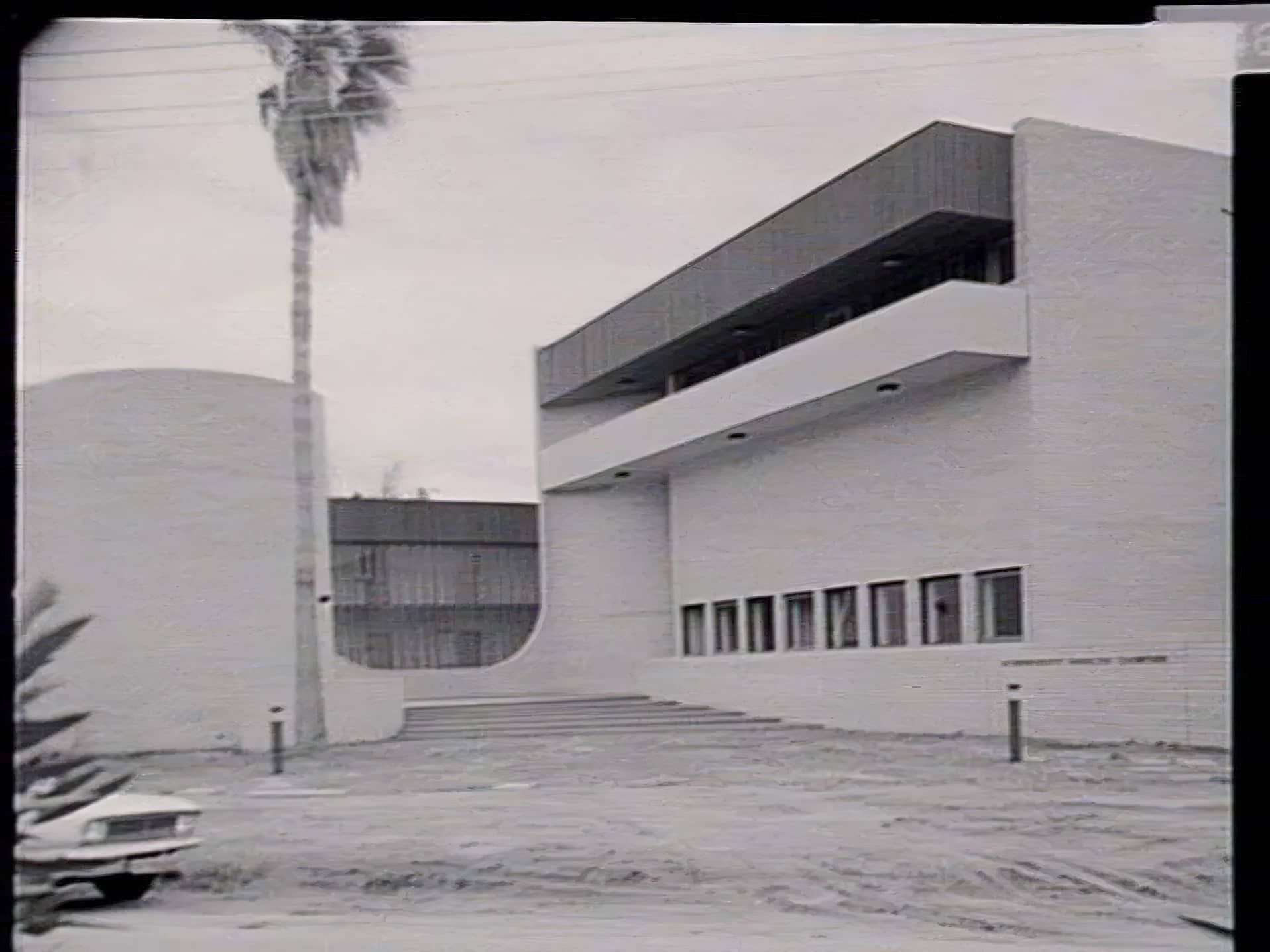
Queenscliff Health site as it was - courtesy Office of Manly MP, James Griffin
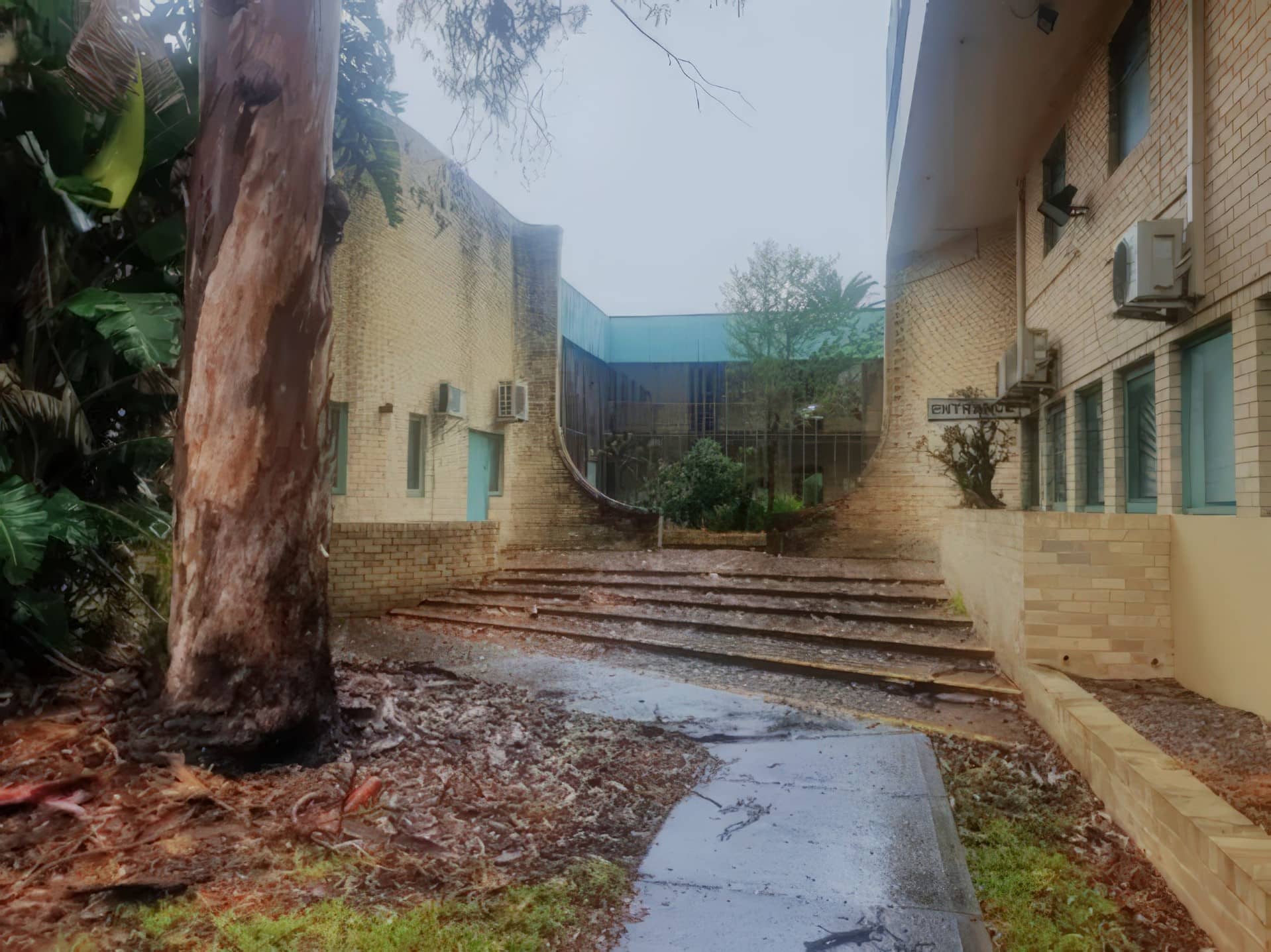
Queenscliff Health site currently - courtesy Office of Manly MP, James Griffin
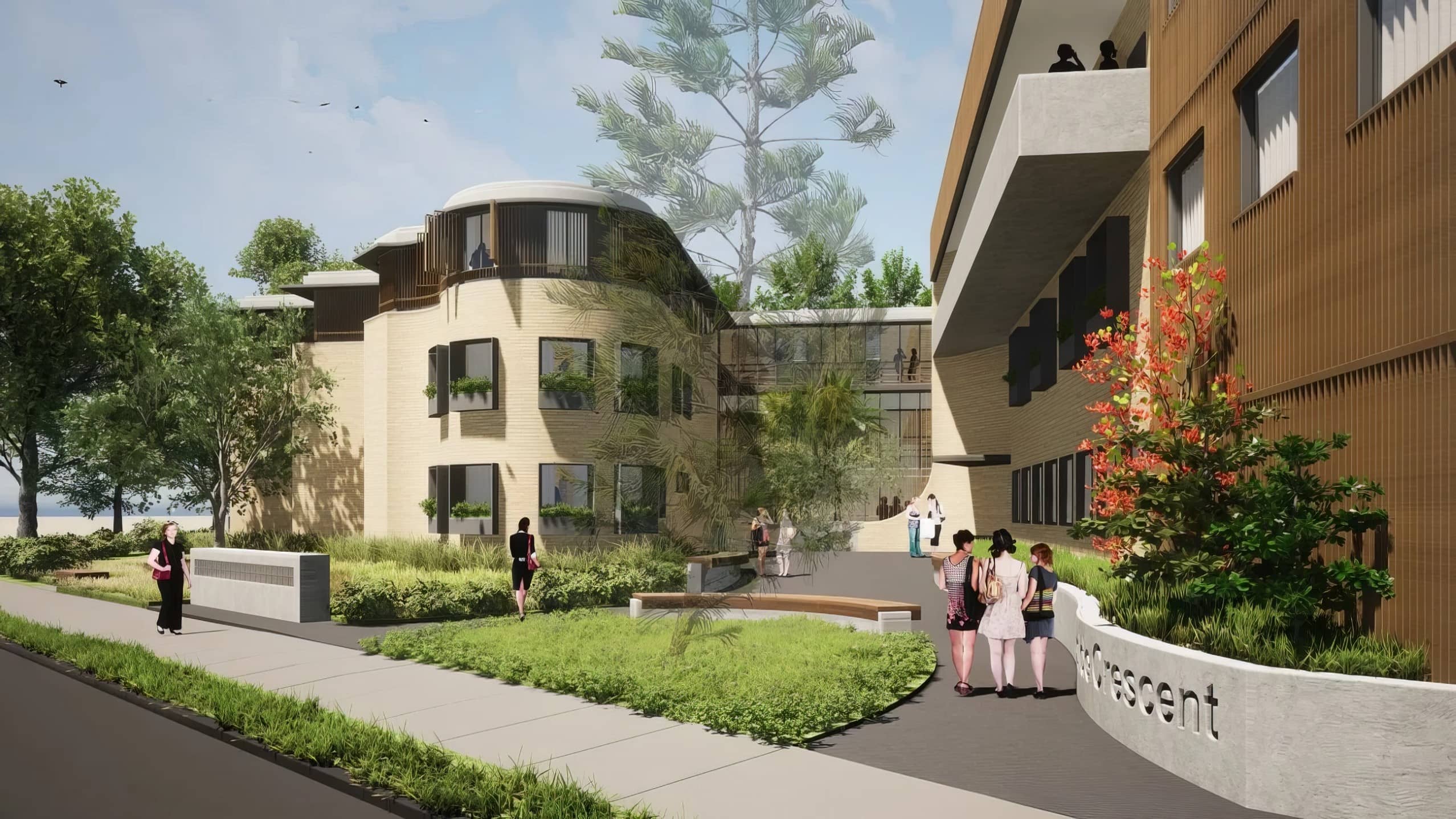
Queenscliff Health site as it will look after the changes - courtesy Office of Manly MP, James Griffin
Link Wentworth CEO Andrew McAnulty stated:
“The old Health Centre was at the heart of the Queenscliff community for more than 40 years and by re-imagining and transforming the building it will continue to serve as an asset for the community, we will turn it into a place to call home for some of our most vulnerable.”
Independent Federal Member for Warringah, Zali Steggall, also welcomed the halfway construction point of the Link Wentworth affordable housing development in Queenscliff, describing it as a vital step in addressing the growing housing and homelessness crisis in the local area.
Ms Steggall attended an event to mark the milestone on Wednesday 18 February, alongside NSW Housing Minister Rose Jackson and colleagues across state government and local council.
“We are facing a domestic violence crisis in Australia, and we know women over 55 are among the fastest-growing groups at risk of homelessness,” Steggall said. “When women and victim-survivors of domestic violence are forced to choose between remaining in an unsafe situation or facing homelessness, that is not just a housing issue - it is an indictment on our society.”
Ms Steggall said projects such as the Queenscliff development demonstrated how innovative partnerships and adaptive reuse of existing buildings can deliver practical, community-based solutions.
She congratulated Link Wentworth for their work and said all levels of government must work with the community housing sector to identify and adapt more suitable properties for affordable housing.
Link Wentworth chief executive Andrew McAnulty said getting the project off the ground had been a long road which required perseverance over many years. He said the project, once complete, would be used for affordable housing in perpetuity. “It will provide amazing, high-quality homes forever. It’s an accolade which everyone should be extraordinarily proud of,” Mr. McAnulty said.
Zali Steggall noted that while housing stress is often associated with outer metropolitan areas, the North Sydney area is experiencing increasing demand for social and affordable housing as well.
“The challenge now is ensuring social and affordable housing funds are directed to communities like ours - areas not always considered to be suffering housing stress, but where the need is real and growing,” she said.
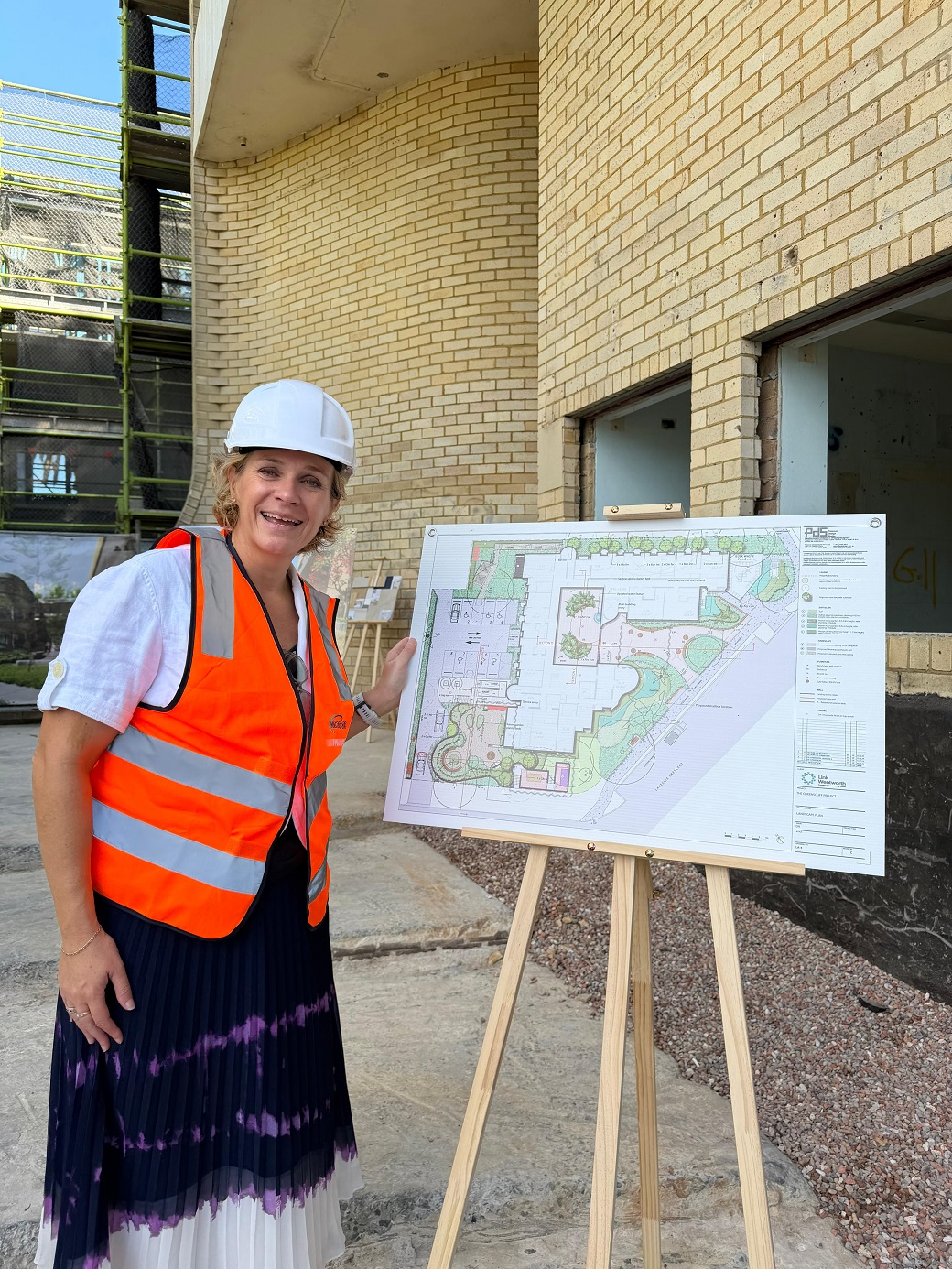
Warringah MP Zali Steggall at the Queenscliff affordable housing on Feb. 18 2026. Photo supplied
‘Hear our voices’ – supporting reporting abuse of older women
The day before, February 17 2026, and as the lead into Womens Week and Womens Month was approaching, the Commonwealth and NSW Governments announced they are building a safer New South Wales for older women, with the launch of new training and resources to improve supports for those who have experienced sexual violence.
Developed with over $500,000 funding from the Sexual Violence Project Fund, the Older Women’s Network NSW has created a package of resources, including four moving videos to raise awareness of sexual violence experienced by older women, and tools and guides to assist specialist sexual assault services respond to reports of abuse.
The 2021-22 Personal Safety Survey by the Australian Bureau of Statistics estimated that 3.2 per cent of women over 65 years had experienced sexual harassment in the last 12 months, and 0.5 per cent of those over 55 had experienced sexual violence in the last two years.
The February 24 2026 updated summary on Family, domestic and sexual violence by the Australian Institute of Health and Welfare found:
According to the 2021–22 PSS, since the age of 15:
- 1 in 5 adults (20% or 3.8 million adults) had experienced physical and/or sexual violence from a partner, boyfriend, girlfriend or date, or family member.
- 1 in 7 adults (14% or 2.8 million) had experienced sexual violence (defined as the occurrence, attempt and/or threat of sexual assault).
The 2021–22 PSS estimates showed that since the age of 15, of all adults:
- Over 1 in 10 (11.3% or 2.2 million) had experienced physical and/or sexual violence from a partner (current or previous cohabiting)
- 1 in 5 (19% or 3.6 million) had experienced emotional abuse from a partner
- 1 in 8 (12% or 2.4 million) had experienced economic abuse (ABS 2023a).
More women than men reported experiences of partner violence and abuse.
Of all FDV hospitalisations (9,300) in 2023–24:
- 76% (7,000) were for females and 24% (2,300) were for males
- 62% (5,700) had the perpetrator reported as a spouse or domestic partner
- 39% (3,600) had the perpetrator reported as a parent or other family member (AIHW 2025a).
Sexual violence is often under-reported usually due to shame, fear, or guilt. Older women face similar barriers, as well as those related to ageism, positioning them as asexual, less credible and less valuable, creating a context in which disclosures are minimised or never made.
The “Hear Our Voices” initiative challenges this, and includes resources to support reporting:
- A report documenting key themes and barriers to help-seeking
- A ‘body mapping’ gallery documenting older women’s experiences of sexual violence, disclosure, healing and resilience
- Practitioner fact sheets
- An audit and planning tool
- Guides for frontline services and specialist workers
- Guide for trainers, educators and facilitators to deliver training safely and effectively.
The resources and training package were co-designed with older women, putting victim-survivor voices at the centre and ensuring a trauma-informed approach that is responsive to the needs of older women.
The training package is available to all service providers at: https://voices.ownnsw.org.au
The $10 million Sexual Violence Project Fund is jointly funded by the Commonwealth and NSW Governments for one-off, time-limited early intervention and response projects that address sexual violence.
It is part of the NSW Government’s wider effort to address sexual violence and elder abuse in our community. This includes funding for the NSW Sexual Violence Helpline and the NSW Ageing and Disability Commission.
Federal Assistant Minister for the Prevention of Family Violence Ged Kearney said:
"Women have fought for decades to have sexual violence addressed at every life stage. This funding recognises that older women deserve specialised, trauma-informed supports tailored to the unique barriers they face when accessing care.
“We know that sexual violence is underreported and under recognised, and this is especially true for older women. Age does not protect women from harm, often it can hide it and exclude them from supports. I want older women to know that we are determined to change that.
“The Albanese Labor Government has made the largest investment in Australia’s history to end family, domestic and sexual violence, $4 billion, and that commitment includes support for older women. We will continue to work in partnership with state and territory governments so that no women are left behind.”
NSW Minister for Seniors and the Prevention of Domestic Violence and Sexual Assault Jodie Harrison said:
“Sexual violence has a devastating impact on victim-survivors and those around them. Early intervention is critical to reducing the prevalence of sexual violence and improving responses.
“The Older Women’s Network project will close a gap in raising awareness in our community about elder sexual abuse, as well as making sure that frontline services are in a position to respond in a trauma-informed way.
“Thank you to the Older Women’s Network for its thorough approach to addressing this issue with the ‘Hear our Voices’ project.”
CEO Older Women’s Network NSW Yumi Lee said:
"For too many older women, sexual violence has been carried alone, dismissed because of their age, doubted because of stereotypes, or shamed into silence.
“This project says clearly and publicly: we hear you, we believe you, and we are building systems that will respond properly.
“I encourage all services to access these resources so older women can be better seen, heard and supported as they navigate their journey following sexual assaults, whether perpetrated in the distant past or now."
Support:
If you or someone you know are in immediate danger, call the Police on Triple Zero / 000.
If you or someone you know is experiencing sexual violence, call the 1800 FULLSTOP (1800 385 578) for free counselling and referrals, 24 hours a day, 7 days a week.
For support for elder abuse, call the NSW Ageing and Disability Commission on
For confidential advice, support, and referrals, contact 1800 ELDERHelp (1800 353 374), 1800 RESPECT (1800 737 732) or 13 YARN(13 92 76).
For information or to report concerns of abuse, neglect and exploitation of older people and adults with disability in their family, home or community, contact the NSW Ageing and Disability Abuse Helpline.
- Call 1800 628 221 from Monday to Friday, 9am to 4pm.
Online form
- If you prefer you can submit a report online. You can choose to remain anonymous.